Community Tool Box

Chapter 33. Conducting a Direct Action Campaign | Community Tool Box

Chapter 33. Conducting a Direct Action Campaign
mloewenstein Wed, 12/12/2012 - 12:52
Section 1. Writing Letters to Elected Officials
mloewenstein Wed, 12/12/2012 - 12:53
Main Section
admin Thu, 01/10/2013 - 14:34

Hands on a laptop
 

What is a letter to an elected official?

By now you are probably looking for ways to get your issue noticed by people who have the power to help you. To get the best results, you will probably want to try several of the direct action methods discussed in this chapter. In this section, we will show you the best way to write a letter to your elected officials.

A well-written personal letter may be the most effective way to communicate with elected officials. They want to know how their constituents feel about issues, especially when those issues involve decisions made by them.

Your elected officials usually know what advocacy groups are saying about an issue, but they may not understand how a particular decision affects you. A well-written letter describing your experiences, observations, and opinions may help persuade an official in your favor.

Until a short time ago, you had two options if you wanted to contact an elected official: telephone and the mail. In the last several years, e-mail has been added and become the medium of choice. It’s fast, it gets read, and – at least in the U.S. – virtually all elected officials, from town councils to the President, use and welcome e-mail communication.

Any guidelines for writing letters in this section – the style to use, the information to include – apply to e-mail as well. A letter to your Congressman, whether it’s sent through the post office or electronically, should be formal and as well-written as you can make it. A political communication, to be taken seriously, should send the message that you care enough about the subject to take some care in writing about it.

In the days before e-mail, officials generally considered letters more important than phone calls, because they took more thought and effort. A proper e-mail letter carries the same message – this person has really thought about this, and has put some work into sending his opinion.

Why write to elected officials?

Maybe you're not convinced that writing a letter to your elected official is the best way to spend your time. There are several reasons it’s worth your while, including:

  • To explain to an official how a particular issue affects you or your group.
  • To express support for a proposed law, policy, or course of action.
  • To oppose a proposed law, policy, or course of action.

In any of the above cases, the letter may include information about the issue that the official may not have, or suggest an alternate course of action that she hasn’t previously heard about.

  • To demonstrate to an official that his constituents are aware of an issue and have a real interest in the outcome.
  • To inform an official about an issue or situation, giving background and history that she may not have.
  • To attempt to persuade an official to vote in a certain way on an issue, or to take other related action.
  • To build your reputation as a thoughtful person in the eyes of the officials, and thus make your criticism or support more influential, or to put yourself in the position of the person to be consulted when the official needs information about your issue.
  • To request a meeting to discuss the issue or some related matter of concern.
  • To thank an official for support given, or action taken.
  • To criticize an official for a past vote or action.
  • To put an official on notice that you and your group are watching his actions, and that he needs to take your votes into account at election time.
  • To ask an official to state her position on a particular issue, or to reveal her voting record.
  • To ask for help or support.

This type of letter often falls under the heading of “constituent support,” and concern individual problems with government – being denied military disability payments, for example, or being singled out for harassment by a local official.  The reason it’s included in this list is that it can sometimes lead an official to work to change procedures, policies, or laws that discriminate against or make life harder for a whole class of people – veterans, farmers, widows, etc..

Another purpose of this type of letter is to enlist the official’s support in a community or larger initiative of some sort.  This may be a request that he become a legislative champion for the effort, that he simply lend his name to the initiative’s list of public supporters or sponsors, or that he serve on a board or steering committee for the effort.

The letter may include information about the issue that the official may not have, or suggest an alternate course of action that she hasn’t previously heard about.

This type of letter often falls under the heading of “constituent support,” and concern individual problems with government – being denied military disability payments, for example, or being singled out for harassment by a local official. The reason it’s included in this list is that it can sometimes lead an official to work to change procedures, policies, or laws that discriminate against or make life harder for a whole class of people – veterans, farmers, widows, etc..

Another purpose of this type of letter is to enlist the official’s support in a community or larger initiative of some sort. This may be a request that he become a legislative champion for the effort, that he simply lend his name to the initiative’s list of public supporters or sponsors, or that he serve on a board or steering committee for the effort.

When should you write letters to elected officials?

When would you want to write that letter? Whenever an issue arises that concerns your group, but especially when:

  • You want an official to consider a certain action or policy (e.g., increasing funding for a program for senior citizens).
  • There is an upcoming vote on a policy that concerns your group. Letters are most effective when the vote is about to be taken. This is a good time to use e-mail.
  • You want to respond (positively or negatively) to a completed action or a change in policy (e.g., enacting a law that requires people to wear seatbelts).
  • You want to point out a deficiency or need in a particular area (e.g. more public transportation to the community health clinics, more police patrols through your neighborhood).
  • You need information (e.g. about what happened the last time a certain issue came up for a vote).
  • You need advice (how to approach another official, what kind of event will attract large numbers of officials to take notice, etc.). In this instance, you’d probably be writing to an official that you’ve already had positive contact with.

Another way to look at this question is to think about when a letter will have the most effect. There are particular times when letters are more likely to be carefully considered, and when officials are more likely to be responsive.

  • Just before an election. Most elected officials become extremely anxious to please when they’re running for reelection.
  • Right before an important vote. Officials will usually be receiving communication from many people on both sides of the issue when an important vote is coming up, so this is an especially crucial time to let your opinion be known.
  • Just before and in the midst of the budget process. One of the most important things that legislators, town councils, and some other bodies do is set the budget for the coming year. Whether your concern is local, regional, state or provincial, or nationwide, most of the coming year’s policy and action related to health and human services, the environment, public safety, education, transportation, and a number of other important issues is determined, not by laws, but by the amount of money allowed for them in the annual budget. If you have priorities for funding, now is the time to make them known.
  • Immediately after an official has done something you approve or disapprove of. There are two reasons why this communication should be immediate. The first is so that the action is still fresh in the official’s mind, and he can respond to your support or criticism. The second is that he will be hearing from folks on the other side, and he needs to know either that not everyone approves of his action, or that, regardless of all the negative letters, there are people out there who think he’s doing the right thing. Officials need to know who supports or objects to which of their positions. It can help them continue to work for the things you care about in the face of opposition, or can push them in that direction if they’re not doing it already.

The really crucial times to write this sort of letter are when an official is under attack for doing something you believe in – think of officials in the American South in the 1950’s and ‘60’s who supported racial integration – or has just done something outrageous – given out a billion-dollar contract in return for a huge bribe, for example. In either of these cases, the official needs to know either that you support her wholeheartedly, and will work to help her, or that you want her to resign now, and will work to have her prosecuted and jailed.

How do you write letters to public officials?

So how do you write letters to public officials, anyhow? We have a number of guidelines that should help you not only write the letter, but increase the chances that it will be actually read and taken seriously.

Decide on the recipient.

Get the name, title, and address of the official who will make the decision about your issue. Watch to make sure that all names are spelled correctly and that you have the proper address. An incorrect name counts against you. An incorrect address may mean your letter might not arrive at all.

If you’re concerned with politics or issues at all, you should make it your business to know the names and contact information (address, office phone, and e-mail) of all those who represent you, from the most local to the federal government. In the U.S., at least, you can get to know your representatives at any level of government if you make the effort. If you’re an activist, you may meet with them, or at least speak to them or their aides fairly regularly. If that’s the case, letters from you will be taken seriously.

Open the letter in an official manner.

If you are writing to an elected official, show respect for the position by using the title of the office, and the official's full name. In any other letter, use the familiar term "Dear," the title Mr., Mrs., Ms., Miss, or Dr., and the official's full name.

Example:

January 5, 2008

Title [Name of Representative or Senator]

House of Representatives [OR] U.S. Senate

Office Address

Washington, D.C. 20515

Explain the purpose for your letter.

Let your reader know immediately what your letter is about. Tell him/her why you are concerned or pleased that a particular decision is being considered.

Example: The proposed increase in the gasoline tax will make the cost of transportation unreasonably high for commuters in the metropolitan area.

Summarize your understanding of the issue/decision being considered.

State the general impact that you expect to occur if a particular decision is made.

Example: The creation of a peer-counseling program at our high school will help reduce the number of teen pregnancies in our community.

Explain your position on this issue.

Describe in detail why you feel the decision made will lead to the impact you foresee.

Example: This will provide opportunities for our high school students to discuss pressures they experience with their peers at this critical time in their lives.

Describe what any changes will mean to you, and to others.

Describe specifically the positive or negative effects the decision will have on you personally and on those you represent. The more people affected by the decision, the more convincing you may be.

Example: This program will help provide career opportunities for teenagers in our community.

Identify others who may be affected by this decision.

Tell the official which, and how many, people will be affected. Statistics can be very helpful here.

Example: A recent study showed that 80% of minors who smoke obtain cigarettes at stores that do not ask for any identification. Increased enforcement of the existing laws prohibiting tobacco sales to minors could significantly reduce the rate of smoking among our youth.

Acknowledge past support.

Mention appropriate actions and decisions the official has made in the past and express thanks for them.

Example: We appreciate your past support of the bill protecting the rights of emergency medical crews to not be tested for HIV.

Describe what action you hope the official will take.

State specifically what action you (and those you represent) hope the official will take--and by what date, if there is a deadline.

Example: We hope you realize the best course of action to protect our community's infants and young children is to vote "yes" to House Bill #689b.

If you have written a letter that opposes some action, offer an alternative.

Example: I believe that rather than increasing the number of police cars patrolling our neighborhood, a cheaper and more effective alternative would be to work with our community to develop a community-policing program.

If you have time and you are committed, ask how you can help

Example: Our group is more than willing to explore the various options in helping make our community a safer place to live.

Close and sign your letter.

Thank the official and sign your full name. Make sure your address, and phone number are included.

Check your letter for spelling and grammatical errors.

Correct spelling and grammar won't do the job by themselves, but they can help. Why not give your letter every possible advantage?

Letter-writing campaigns

So far, we’ve discussed individual letters. A letter-writing tactic that can be particularly effective is a letter-writing campaign, where dozens, hundreds, or even thousands of people write either to the same official (if they’re all in, or somehow represent people who are in, her district) or to many officials about a specific vote, policy, or budget item. This can be extremely effective, especially when the letter-writers are people who don’t usually contact their elected officials.

In Massachusetts, when funding for Adult Basic Education (ABE) and English as a Second or Other Language (ESOL) was being debated in the state legislature, over a thousand ABE and ESOL students wrote letters to their representatives explaining why funding was important to them personally. At the same time, program staff and administrators, volunteers, and advocates wrote letters to their own representatives explaining why ABE and ESOL were important to their communities and to the state.

The letters from students were particularly powerful, many of them explaining that a year or two earlier, they couldn’t have written those letters. It was the opportunity to enter an ABE or ESOL program that had made the difference. Legislators responded, and funding for adult education was significantly increased.

If you want to engage in a letter-writing campaign, you have to prepare properly. Many people, especially people who see themselves as powerless and unimportant, and who may have little education, are intimidated by the thought of writing to someone in power. In many countries, writing such a letter can carry a certain amount of economic, social, or physical risk. (After a State House rally in the same year as the letter-writing campaign described above, one ESOL student was overheard to remark, “In my country, they shoot you for this.”) Even in democracies governed by the rule of law, people may be fearful of being punished for speaking out.

In addition to reluctance based on feelings of fear and intimidation, many people affected by an issue – especially those with low levels of education – can be embarrassed by their poor writing skills, or feel that they don’t have anything convincing to say. They need help putting their letters together, and they need a model to go by. The coordinators of the letter-writing campaign should be aware of what they have to do to meet these needs.

First, the campaign should contact potential letter writers with a request for letters, and a simple but complete explanation of why the campaign is needed, and what the important issues relating to it are. People can’t write letters that make sense unless they understand clearly why they’re writing. The chances are that, while advocates can – and perhaps do – go over the politics of the issue in their sleep, most people affected by it know very little about how it plays out politically, or even about how the political system handles issues. The better they understand what’s happening and the specific job their letters are expected to do, the more persuasive the letters they can write.

Along with this, the campaign should provide one or more templates for letters. A template is a pattern for the letters, illustrating the form of the letter on the page, with the sender’s and recipient’s addresses and date in the appropriate places at the top, and a formal signature at the bottom, as well as a sample of the content of the letter.

A template literally means a cut-out pattern that is used to make several identical pieces of wood, metal, or some other material that are part of something larger. A builder might use a paper or wooden template to cut a number of identical rafters to hold up a roof, for example.

In general, people affected by the issue should include:

  • A description of who they are – single working mother, person with a disability, job training participant, ex-Marine.
  • The fact that they’re residents of the official’s district, or participants in a program in his district.
  • What they want the official to do.
  • Their connection to the issue – program participant, staff person, community volunteer, parent of a child with disabilities.

Anywhere from one sentence up to a paragraph or two explaining what the issue means to them and/or how it has affected them personally. For program participants and others affected by the issue, this is by far the most important part of the letter. Officials are more often swayed by personal stories than by impersonal statistics, no matter how telling those statistics may be. If people can explain how a program changed their lives for the better, or how the lack of services has been a barrier for them, it’s likely that officials will pay attention.

Finally, campaign coordinators should make sure that those for whom letter-writing is difficult have access to help. In the Massachusetts adult education campaign, that was easy: letters were often written as part of a class, and students approached them as writing assignments, completing two or three drafts before the letter was ready to be sent. In other situations, you’ll have to make sure that program staff and others are available to encourage and empower people, and to help them write the best letters they can.

Should you use e-mail?

With the speed and ease of delivery, it's common to use e-mail and send your correspondence via the computer. Doing so, particularly for formal letters, has several advantages:

  • It is much faster than normal mail. This also makes it possible for the official to respond much more quickly.
  • It saves the trouble of addressing an envelope, buying a stamp, and mailing your letter.
  • Electronic mail is less likely to get lost on the receiver's desk.

However, note that the last can also be a disadvantage. Unless the recipient goes through the trouble to print your message, it may be gone with one tap of the delete key – and out of mind as well. If you are going to use e-mail for your correspondence, be particularly clear and emphatic about your message from the beginning.

In Summary

Writing letters to elected officials is a good way to explain how an issue affects you or your group. It also can build your reputation as a thoughtful person, giving you more influence with the people in power. A letter is also a good way to get your issue noticed by people who have the power to help you.

Contributor

Jenette Nagy

Resources

Online Resources

Action Tips provides information for communicating with public officials, and the webpage includes an example letter.

Contact Officials is a site provided by the United States government with links that give you contact information for the official you’re interested in contacting.

Early Childhood Advocacy Toolkit provides resources on framing your message and communicating with the media as well as policy makers and elected officials.  

Effective E-mail Communication from the University of North Carolina provides tips on professional e-mail writing and communicating via e-mail. 

How Do I Write an Effective Advocacy Letter? Is a webpage from the Hearing Loss Association of America, Delaware Chapters, and it provides information specific to drafting advocacy letters to elected officials.

10 Tips provides 10 tips on effectively communicating with legislators to make your message stand out to them.

Writing Your Elected Official is a guide provided by the Children’s Defense Fund, and it provides information on effectively communicating with elected officials.

Print Resources

Bates, D. J.(1985). Writing with precision. Washington, DC: Acropolis.

Fitch, B. (2010). Citizen’s Handbook to Influencing Elected Officials: Citizen Advocacy in State Legislatures and Congress: A Guide for Citizen Lobbyists and Grassroots. The Capitol Net, Inc. This book offers practical guidance for reaching elected officials with a variety of different communication strategies.

Homan, M.(1994). Promoting community change: Making it happen in the real world. Pacific Grove, CA: Brooks-Cole Publishing Co.

Managing correspondence--Plain letters, [available from the Superintendent of Documents, Washington, DC: 20402]

Roman,K., & Raphaelson, J. (1992). Writing that works. New York, NY: Harper Collins.

Seekins, T., & Fawcett, S. The Research and Training Center on Independent Living.(1984). A guide to writing letters to public officials: Contributing to important decisions affecting you and others. University of Kansas.

Stonecipher, H. (1979). Editorial and persuasive writings: Opinion functions of the news media. New York, NY: Hastings House.


Checklist
mloewenstein Wed, 12/12/2012 - 12:54

___You have decided who you will write to

___The official you have chosen has the authority to make a decision about your issue

___You have begun the letter in an official manner, including the official’s full name and title

___The purpose for which you are writing is clear

___You have summarized your understanding of the issue

___The general impact that you expect to occur if a particular decision is made is stated

___You have explained your position on this issue in detail

___The positive and negative effects the decision will have on you are described

___You have identified others who may be affected by the decision

___Statistics have been included if available and appropriate

___You have told the official about appropriate actions and decisions he or she has made in the past

___The action that you want taken is stated specifically

___If your letter opposes some action, you have offered an alternative

___You have offered your help if you have available time

___You have thanked the official for their time

___The letter is signed with your full name

___Your address and phone number are listed under your name at the end of the letter

___The letter you have written is free of spelling and grammatical errors

___You communicate with all potential letter writers at the start of a letter-writing campaign to inform them about the issue and the need for the campaign.

___You provide a template for the letters to be written.

___You make sure there’s help available for those for whom letter-writing is difficult.

___You use e-mail if you can.

Examples
admin Thu, 01/10/2013 - 14:35

Example 1: Proposed Actions to Protect Vulnerable Groups in Spain during the COVID-19 Crisis

The sample letter details a message to the City Council in Seville, Spain, in the midst of the coronavirus pandemic. The correspondence is written by a research team at the University of Seville in collaboration with a group of NGOs, and addressed specifically to the city's mayor, Juan Espadas. The community-based organizations recognize that the mayor is empowered with the capacity and privilege to make a difference in the functioning of the city's most vulnerable neighbors, comprised largely of Roma and migrant settlements. Multiple organizations, detailed in the attached letter, ask of actions being taken to comply with recommendations adopted by the Spanish government and offer their support in urgent efforts to protect the lives of these at-risk populations during a time of unpredictability.  ​

Link to PDF Copy of Letter 

Download PDF Copy of Letter

Example 2: Supporting a Proposed Policy Change

1324 114th St. Suite #174
Norwalk, CT 06801

March 24, 1999

Honorable Mayor Cala Milan:

I was pleased to hear that the City Commission was considering a proposal to strengthen the handicapped parking ordinance. I urge your support for it.

I am a disabled American veteran who uses a wheelchair. Despite my disability, I drive my own van, as many other disabled citizens do. I value being as independent as I can possibly be.

The new ordinance is designed to discourage non-handicapped persons from parking in spots that are reserved for those with physical disabilities. The proposal has already led to publicity about the problems citizens with disabilities have getting a convenient place to park. This has increased the sensitivity of the general public. Further, an occasional $250 ticket ought to keep those important spaces open for those who need them.

For me, this new ordinance will mean that I can drive anywhere in town I need to go and have a fair chance of being able to park and go in. The latest census statistics indicate there are over 1,200 people in our community who are similarly affected and who have similar needs.

Your votes on the architectural accessibility ordinance in the past have demonstrated your support for disability issues. I urge you now to vote in favor of the new parking ordinance. It will mean a lot to me personally, and to the many others in our community who are disabled. It may also bring in some additional revenue to the city.

If there is any way I might be of assistance, please don't hesitate to call on me. Thank you for your support.

Sincerely,

Stergios Hardage
14 Cottage Avenue
Norwalk, CT 06801
(203) 555-8630

Example 3: Opposing a Proposed Policy Change

7862 Seneca
Wichita KS, 67134

Honorable Mayor Madio Smolanka:

As the coordinator of the Pleasant Rock Teen Pregnancy Prevention Program. I am writing to express my strongest concern over the proposed city funding cuts for the Teen Activities Center (TAC). Closing the Center would have several negative consequences for the youth of the city and the city itself. It would give our youth one less place they can go to relax and have a good time in a safe, healthy environment.

For my coalition, the closure of the center would have other, more direct consequences as well. Currently, our Teen Mothers' Support Group meets at the center on a weekly basis to discuss the challenges of motherhood, finishing school, and getting jobs. More than two-thirds of the (25) participants do not have their own means of transportation; so it is imperative that meetings be held in the neighborhood of the participants (the Potwin area, where the TAC is located), or at least on a major bus route. No public building is nearly as well suited to meet both of these requirements, as is the TAC.

In addition, the Teen Center hosts a variety of activities that are athletic, artistic, or just plain fun for young people. Their ability to participate in these activities is vital to helping them acquire the self-esteem needed to say "no" to potentially unsafe behaviors, such as engaging in sex prematurely or experimenting with drugs, as well as stay in school and prepare for meaningful work.

You have always been sensitive to the needs of our young people, and have been quick to recognize that they are the future of our community. I urge you to vote against this new proposal to cut the funding for the Teen Activities Center. Surely cuts can be made that will be, in the end, less costly to all of us than threatening the well-being of our children.

If I can help in any way to defeat this proposal, let me know. Thank you.

Sincerely,

Mary K. Steinert
1001 Park Walk Road
Wichita, KS 67134
(316) 555-2685

Contributor

Jenette Nagy

PowerPoint
mloewenstein Wed, 12/12/2012 - 12:54
File Upload
A PowerPoint presentation summarizing the major points in the section.
Section 2. Writing Letters to the Editor
mloewenstein Wed, 12/12/2012 - 12:55
Main Section
admin Thu, 01/10/2013 - 14:39
  • What is a letter to the editor?

  • Why should you write a letter to the editor?

  • When should you write a letter to the editor?

  • Should you use e-mail to send your letter?

  • How do you write a letter to the editor?

  • How do you get your letter accepted?

Photo of person writing letter

What is a letter to the editor?

You feel strongly about an issue, and you want to let people know what you think. You believe you can even influence people to take some action if you speak your mind. But, you want to reach an audience larger than just your friends or your group membership. Letters to the editor can be an effective way to get the word out.

A letter to the editor is a written way of talking to a newspaper, magazine, or other regularly printed publication. Letters to the editor are generally found in the first section of the newspaper, or towards the beginning of a magazine, or in the editorial page. They can take a position for or against an issue, or simply inform, or both. They can convince readers by using emotions, or facts, or emotions and facts combined. Letters to the editor are usually short and tight, rarely longer than 300 words.

Using a few carefully placed letters, you can generate plenty of community discussion. You can also keep an issue going by preventing it from disappearing from the public eye. You can stimulate the interest of the news media and create more coverage for the matters you're working on. You can also send a "good news" letter to bring recognition to people who deserve it or acknowledge the success of an effort.

Why should you write a letter to the editor?

Letters to the editor are among the most widely read features in any newspaper or magazine. They allow you to reach a large audience. You can probably think of many more specific reasons why you might want to write to the editor, but here are a few general ones:

  • You are angry about something, and want others to know it
  • You think that an issue is so important that you have to speak out
  • Part of your group's strategy is to persuade others to take a specific action

Or you want to:

  • Suggest an idea to others
  • Influence public opinion
  • Educate the general public on a specific matter
  • Influence policy-makers or elected officials directly or indirectly
  • Publicize the work of your group and attract volunteers or program participants

When should you write a letter to the editor?

Letters to the editor can be written any time you want to shape public opinion, tell others how you feel about people, programs, or ideas, or just inform the public on a certain issue. They are a great way to increase awareness of the issues that you or your organization are working for, as well as to advocate for your cause.

Letters to the editor can also be used to start a community conversation about an issue important to you. A planned series of letters to the editor can stimulate public interest and media coverage. It's up to you to determine when is the best time to start writing the letters, allowing time for them to be published.

The larger the newspaper or magazine, the more competition there is for letters-to-the-editor space. This means your letter will need to stand out in order to get printed. The tips in this section will help you write a letter that will be effective and stand out on the editor's desk.

Keep in mind that if you want to inform the public of a certain action your organization is about to take, you may want to think of issuing a press release instead. If newspapers consistently ignore your news releases, your best choice may be a letter to the editor.

How should you send your letter?

The reality for virtually every print publication is that they’d prefer to get letters and other material by e-mail, since everything they publish is set up on a computer and printed straight from software. If you send your letter electronically, all they have to do is transfer it directly to the “letters” page in the software in order to print it.

You can still send a postal letter, of course, but someone has to type it into the computer before it can be printed, and so it may not only arrive later than an e-mail, but may wait longer after it’s received to be printed.

How do you write a letter to the editor?

Open the letter with a simple salutation.

Don't worry if you don't know the editor's name. A simple "To the Editor of the Daily Sun," or just “To the Editor:” is sufficient. If you have the editor's name, however, you should use it to increase the possibilities of your letter being read.

Grab the reader's attention.

Your opening sentence is very important. It should tell readers what you’re writing about, and make them want to read more.

Explain what the letter is about at the start.

Throughout your letter, remember the rule:

  • Be quick,
  • Be concise, and then
  • Be quiet.

Don't make the editor or the general public wait to find out what you want to say. Tell them your key point at the beginning.

Explain why the issue is important.

If you are motivated enough to write a letter to a newspaper or magazine, the importance of your topic may seem clear to you. Remember, though, that the general public probably doesn't share your background or the interest. Explain the issue and its importance simply. Use plain language that most people will understand

Give evidence for any praise or criticism.

If you are writing a letter discussing a past or pending action, be clear in showing why this will have good or bad results.

State your opinion about what should be done.

You can write a letter just to ''vent," or to support or criticize a certain action or policy, but you may also have suggestions about what could be done to improve the situation. If so, be sure to add these as well. Be specific. And the more good reasons you can give to back up your suggestions, the better.

Keep it brief.

Generally, shorter letters have a better chance of being published. So go back over your letter and see if anything can be cut or condensed. If you have a lot to say and it can't be easily made short, you may want to check with the editor to see if you could write a longer opinion feature or guest column.

Sign the letter.

Be sure to write your full name (and title, if relevant) and to include your address, phone number, and e-mail address. Newspapers won't print anonymous letters, though in some cases they may withhold your name on request. They may also call you to confirm that you wrote the letter before they publish it.

Check your letter to make sure it's clear and to the point.

A newspaper may not print every letter it receives, but clear, well-written letters are likely to be given more serious consideration.

How do you get your letters accepted?

How likely your letter is to be published depends to a certain extent on the publication you’re sending it to. The New York Times probably receives hundreds, if not thousands of letters a day, only ten or so of which make it into print. A small-town newspaper, on the other hand, may print every letter it gets, since it may get only two or three a day.

In general, newspapers and magazines will publish letters that are well-written and articulate, and that either represent specific points of view on an issue, or that thoughtfully analyze complex issues and events. Most publications stay away from publishing rants, although they may publish short-and-to-the-point letters that make the same points as a rant might, but in a much calmer and more rational way. Publications also tend to stay away from attacks on particular people (although not from criticism of the actions of politicians and other public figures), and anything that might possibly be seen as libel.

Legally, libel is the publication of a false statement about someone that damages that person’s reputation. Thus to falsely accuse someone of a crime would be libel; to inaccurately print that someone had won an award for citizenship would not be.

Here are a few helpful tips for getting your letters accepted by the editor:

  • Keep your letter under 300 words. Editors have limited space for printing letters, and some papers have stated policies regarding length (check the editorial page for this).
  • Make sure your most important points are stated in the first paragraph. Editors may need to cut parts of your letter and they usually do so from the bottom up.
  • Refer to a recent event in your community or to a recent article – make a connection and make it relevant.
  • Use local statistics and personal stories to better illustrate your point.
  • Make sure you include your title as well as your name – it adds credibility, especially if it's relevant to the topic being discussed. If you are a program director, your title may lend credibility to the letter.

Including your title is also important to showing that you’re not trying to hide your interest in the topic. If you’re a program director and you don’t mention that in your letter, there may be a letter the next day accusing you of dishonesty for not revealing it.

  • Editors may want to contact you, so include your phone number and e-mail address.
  • If your letter is not accepted the first time around, try again. You might submit a revised version with a different angle on the issue at a later date.

You do not have to be the only one to write the letter: letters are often published with multiple signers. You also don’t have to be the only one to write a letter. Several people may write letters on the same topic with the same or slightly different points, and submit them a few days apart, so that the issue stays on the Letters page for a period of time. If you have talented writers in your group, you might encourage one of them to write an editorial article or an "Op-Ed" – that is, an opinion editorial that is usually printed on the citizen opinion page. Most of all, don't limit your communications. Brainstorm for ideas in your group – how can you further your goals by speaking to the readers of your community paper?

Contributor

Jenette Nagy

Resources

Online Resources

Advocating for Change is an online PDF provided by the Treatment Advocacy Center with tips to writing and submitting an effective letter.

Advocates for Youth provides this guide to writing a letter to the editor and gives ten tips and a sample letter.

Effective E-mail Communication from the University of North Carolina provides tips on professional e-mail writing and communicating via e-mail. 

Media Advocacy Basics is a mini-guide for hospice advocates and professionals.

Media Communication Tip Sheet provides tips on contributing to the local news, tailoring language and style for the media, developing messages to reach the public, and evaluating media coverage.

Using Effective Communications from UNISON is a guide to communicating effectively in both formal and informal settings. 

Using Print Media as Advocacy is an article titled, “How to Write a Letter to the Editor,” with tips on effective communication with the media.

Print Resources

Bates, J. (1985). Writing with precision. Washington: Acropolis.

Homan, M. (1994). Promoting community change. Making it happen in the real world. Pacific Grove, CA: Brooks

Martinez, B., & Weiner, R. (1979) Guide to public relations for nonprofit organizations and public agencies. The Grantmanship Center.

Roman, K., & Raphaelson, J. (1992) Writing that works. New York, NY: Harper-Collins, 1992.

Ryan, C. (1991). Prime Time Activism. South End Press.

Seekins, T., & Fawcett. S. (1984). A Guide to writing letters to the editor: Expressing your opinion to the public effectively. Lawrence, KS: Research and Training Center on Independent Living, University of Kansas.

Stonecipher, H. (1979). Editorial and persuasive writings: Opinion functions of the news media. New York, NY: Hastings House.

U.S. Government. Managing Correspondence - Plain letters, Washington, DC: Superintendent of Documents

Wallack, L., Dorfman, L., Jemigan, D., &Themba, M. (1993). Media advocacy and public health. Newbury Park. CA: Sage Publications.

Checklist
mloewenstein Wed, 12/12/2012 - 12:57

___You know what a letter to the editor is.

___You know why you should write a letter to the editor.

___You know when to write a letter to the editor.

___You understand the pros and cons of using e-mail to send your letter.

___You know how to open the letter.

___You grab the reader's attention.

___You explain what the letter is about at the start.

___You explain why the issue is important.

___You give evidence for any praise or criticism.

___You state your opinion about what should be done.

___You keep it brief.

___You check your letter to make sure it's clear and to the point.

___You know how to get your letter accepted.

Examples
admin Thu, 01/10/2013 - 14:40

Example 1: Writing a letter in favor of a proposed action

To the Editor of The Herald:

The U.S. House of Representatives has recently proposed a law (H.R. no. 396) that will ban the sale of cigarettes from vending machines. This is a landmark piece of legislation that everyone in our community should support right now.

Many people don't realize it, but vending machines are one of the main places that children are able to purchase cigarettes. In fact, it is estimated that 10% of all cigarettes purchased by minors take place at these machines. If this new legislation goes into effect, it will not only make it more difficult for youth to break the law by buying cigarettes, it will lower the chances of young people smoking in the first place

There are many reasons (besides the legal ones) why we should try to curb smoking by our children. 1) Research shows that most people who smoke started when they were underage. 2) Many people fear that smoking cigarettes serves as a "gateway" to harder drugs. 3) Smoking is a very expensive addiction (particularly for a teen who makes minimum wage) And, finally, 4) smoking can cause many life-shortening or fatal health problems (such as lung cancer and emphysema). Our young people would not smoke before they are really able to understand or accept the long-term consequences.

The vending-machine bill has been proposed, but now it needs to be passed. Your voice will count here. We encourage you to write or call the representative for your district (for those of us in District 8, that's Congresswoman Fisher) and let her know that you support her as she tries to get this legislation passed. The more support she gets, the more likely it is that this bill will become law. Contact Tobacco Free Youth for further information about this important issue.

Sincerely,

Jonathan Friedman, Director
Tobacco Free Youth
123 Forest Road

Example 2: Writing a letter opposing a proposed action

To the editor of the Lawrence Journal World:

Bulldozers began moving dirt last week at Lawrence High School and the Centennial Virtual School, but city commissioners and school district officials have been bulldozing this community for months with an athletic facilities expansion plan that is fiscally irresponsible, unnecessarily redundant and probably illegal. Our elected officials have misled the public, violated zoning codes and set taxpayers up for a $10.3 million loan that will take 10 years to pay off and cost taxpayers $2.25 million in interest.

Why was the public repeatedly told that this project could be built with leftover bond money when those funds don’t even represent a third of the proposed budget?

Why is it necessary to build two separate football stadiums at a cost of $4 million?

Why is it inconceivable to parents that both teams could play in a shared stadium at FSHS? The situation would be no different than it is in swimming, where both schools compete at the Indoor Aquatic Center.

Why are city commissioners allowing the school district to build a stadium for 4,000 spectators at LHS without also requiring the district to provide the 1,300 parking spaces required by city zoning ordinances?

Why did the school district repeatedly assert that the proposed facilities would only disrupt neighbors a few nights a year when it clearly intended to lease the fields for nightly city softball, baseball and soccer games?

We need new leaders with a clear vision, a commitment to fiscal responsibility, and the ability to balance community and educational needs.

Jerry Schultz, Bob Tryanski, Jeanne Klein and 10 other signers,

Lawrence

Example 3: Writing a letter opposing a completed action

To the Editor of The Herald:

I am outraged by the County Commission's recent decision to terminate the lease of the Head Start program at the County Court House. With this decision, a much-needed, already under-funded program may simply have no place to go!

Head Start is a fantastic program. It makes sure that poor and other at-risk pre-school children will have the nutritious food and special attention they just may not get elsewhere. It gives these children a true "head start" in a world where they may not get many other chances. And there is plenty of evidence to show that Head Start makes a big difference to kids later in life.

The Commission's recent decision to oust the program to make more room for a ''state Gifts Shop" is ridiculous! If the leaders of our community would like to run a store to sell Kansas-made goods, I'm all for it. However, neither my Kansas pride nor my greed run so deep as to wish to take away the breakfast of 30 hungry three-year-olds. And I am deeply saddened to see that the County Commissioners value profits over people.

This decision is shameful to all who live in Dade County. The County Commissioners should reconsider the situation and revoke their decision immediately. I hope all readers will let the commissioners know how they feel about this terrible situation by calling them at 913-432-1200 or writing to them at the County Court House.

Sincerely,

Victoria Stein
3960 Mount Hope Drive
567-8095

Example 4: Writing a letter opposing a completed action

To the Editor of the Lawrence Journal World:

Are we to praise our City Officials and their crews for hauling away all of the remnants of a homeless site on our river east of the Northern Santa Fe Depot? Is this supposed to be retaliation for notifying our City authories of yet two more deaths on City premises--these of an 18-year-old and a 29-year-old--in their "sophisticated" (J-W, Nov. 1) homeless campsite down by our river?

Do we really think clearing out this makeshift campsite (four City dump trucks full) will solves our City's (and nation's) homeless crisis? --Or lessen the number of vulnerable people dying way before their time for lack of treatment and shelter in our community? Are these people being punished for suddenly coming into eyesight of our authorities by having reported these unfortunate --(and preventable) deaths?

How many homeless deaths will it take for this caring community to come up with constructive answers?

Perhaps the best we can do before winter sets in is to designate SOME area where the building of makeshift wood and cardboard shelters will NOT be razed--and some of us even might be willing to help in its rebuilding...

Perhaps these deaths and the devastation of their only "shelter" will spur us on to building that warm and decent shelter--able to serve more than the 31 hapless people now sleeping on thin mats, wall-to-wall, at our present homeless shelter --with winter coming...

Hilda Enoch

Example 5: Writing a letter in favor of a proposed action

Opinion Piece to the Jackson Free Press

The Center for Disease Control currently ranks Mississippi second in highest infant mortality rates in the nation—in 2016, the state lost 325 babies before their first birthday. Data from the American Academy of Pediatrics shows that more than 900 infant lives per year may be saved in the United States if 90 percent of mothers exclusively breastfed for six months. This shows that if we want to improve the health outcome of babies and increase the number of those that reach their first birthday and beyond, we must center our efforts on removing systemic barriers to breastfeeding.

Moving the marker on breastfeeding and infant health takes the coordinated efforts of communities, hospitals, the government and industries to ensure that mothers’ rights to breastfeed are protected through policy, support, space and time. That is one reason why the Mississippi Urban League has partnered with the University of Mississippi Medical Center and the Mississippi State Department of Health to take on the important work of developing and sustaining a culture of breastfeeding here in Mississippi. Our partnership, which the national BUILD Health Challenge funds, wants to change systems so that they will support, and never inhibit, our community’s efforts to be healthy.

We see the value of a supportive environment for breastfeeding as we work with parents who come to our SIPPS Baby Café, a place where moms and dads not only receive important health and wellness information, but also support from each other. Moms who come to the café say the network of support they receive helps them make the decision to start breastfeeding and motivates them to continue. Knowing that those women, many of whom are the only ones in their family to breastfeed, have someone to call or if they have questions or need encouraging words makes this work fulfilling. This is how we build sustainable support within the community.

In an effort to normalize breastfeeding, we bring breastfeeding out of the café and into the community. SIPPS M.O.B.s (Mothers Out Breastfeeding) provides opportunities for moms to breastfeed in public in a supportive group setting. These outings are designed to educate and sustain a culture of breastfeeding.

Our partnership also works with businesses to develop policies that allow mothers to use their break time to pump and store milk or breastfeed; and have lactation rooms and lactation education programs on site. We know that due to the absence of universal paid maternity leave, many mothers must return to work shortly after giving birth.

The World Health Organization and the United Nations Children’s Fund launched the Baby-Friendly Hospital Initiative, a global program to encourage implementation of the “Ten Steps to Successful Breastfeeding and the International Code of Marketing of Breast-milk Substitutes,” in 1991. The BFHI assists hospitals in giving mothers the information, confidence and skills necessary to successfully initiate and continue breastfeeding their babies or safely feed with formula, and gives special recognition to hospitals that have done so.

The University of Mississippi Medical Center is among the few Mississippi hospitals to be designated a “Baby-Friendly Hospital” and refers mothers to the SIPPS Baby Café to support and educate pregnant mothers, and support breastfeeding in a community setting. We understand that some mothers are unable to or choose not to breastfeed, and no one should infringe upon their rights to access breast-milk substitutes. Our collaborative effort is aimed at providing education, creating policies and developing supports to ensure that systemic barriers do not influence a mom’s decision not to breastfeed.

We know what is best for the long-term health of Mississippi children. All babies need a head start to have a healthy future. We know breastfeeding the future generation of babies is a part of making that future a brighter one. We must not let our nation’s stance on the World Health Organization’s breastfeeding resolution discourage us. We will continue from the ground up with the momentum we have created to ensure a healthy future for Mississippi children.

Beneta Burt

Example 6: Writing a letter opposing a proposed action

Opinion Piece to The Lawrence Times

“Our people are more important than buildings. It’s our people that make this school district what it is.” — Lawrence Public Schools Superintendent Anthony Lewis

I call bull.

When Dr. Lewis said those words to a room full of press, teachers, parents, members of the Lawrence community, and even a handful of kids, you can imagine a collective eyeroll from the audience. These words were pulled nearly word-for-word from the equity impact analysis from the district’s Futures Planning Committee. Those words were, “Equity resides in the people in the buildings and the community around it — not the building itself.”

The district’s argument for the closure of four of the community’s poorest schools continued to come down to the size and shape of these buildings. And in the days after the board meeting, as other parents like me read the reports on these schools, we discovered complete candidness in the district’s shortcomings. The district was clear they hadn’t heard from the families who rely on the resources in these schools, and the only data they had to make this recommendation was based largely upon arbitrary mathematical data, which the district paid six figures for a consultant to grade.

In fact, a report from the committee’s equity impact analysis read, “We are making assumptions on student representation. Some decisions just need to be made — even without direct representation,” as well as, “Are the east-side voices representing the east side? Are they the rich, privileged voices?”

And so, once again, the community’s poorest schools are again on the chopping block. Same song, different verse.

It’s clear to the families in these schools that the district was not proactive in speaking to the people it claims to serve. Their only solution involved forcing working parents — parents working shift jobs, single parents with no access to child care outside of Boys and Girls Club — to figure out how to attend board meetings and planning sessions. When you’re scrambling to put food on your table or pay a power bill, there’s not much capacity left for attending a school board meeting that you were supposed to read about in the newspaper you can’t afford to buy.

It is once again painfully obvious our administration hasn’t taken any efforts to understand the culture of these schools. And now they’re pinning these decisions on lack of engagement from the community that doesn’t have the capacity to engage.

Read more.

Melody Alexander

Example 7: To Protect Budget Cuts, Young Scientists Try Letters to the Editor

New York Times Article 

Letters to the editor can be an effective way to shape public opinion. 

In 2025, as the Trump administration was drastically reducing science funding, graduate students and scientists just starting careers organized the McClintock Letters project, encouraging scientists to write letters to the editor of their hometown papers. They are focusing on their smaller, hometown newspapers so that the letters feel more personal. “’Publishing in local newspapers gives us a chance to speak directly to the people who raised us, the people we grew up with, the people who, in many cases, we are working for,’ said Miles Arnett, a graduate student studying bioengineering at the University of Pennsylvania.” 

Named after Barbara McClintock, the McClintock Letters are bringing awareness to the impact Trump’s funding cuts are having on research. In 1983, Barbara McClintock made history when she became the first female to win an unshared Nobel Prize in Physiology. Her namesake letters hope to share needed research from across the country. So far, more than 550 McClintock Letters have been sent to newspapers across the country. 

Among them is Erin Morrow’s letter to The Marietta Daily. Erin studies the relationship between memory and stress at UCLA. Recently, she wrote to her local paper about how slow scientific innovation, which might seem pointless, actually saved her life. Erin Morrow’s pacemaker is the result of decades of research into the role of electricity in managing heart palpitations. 

For many researchers, advocating for their research can be difficult. However, they are speaking out about the importance of their work. Projects like the McClintock Letter to the Editor Project are bringing awareness to the importance of scientific research in the face of recent threats. 


To read the full New York Times article: https://www.nytimes.com/2025/06/16/science/science-budget-cuts-protest-…;

To read Erin Morrow’s Letter to Marietta Daily Journal: https://www.mdjonline.com/opinion/wellstar-cobb-hospital-is-where-scien…


Tools
Anonymous (not verified) Thu, 03/27/2014 - 09:06

Tool #1: Letter-writing party

The responsibility of writing a letter to the editor can be shared. One way to do this is to hold a letter-writing party, at which you and your friends or colleagues write a planned series of letters that will be sent to the editor. At the party

  • Pick your topic.
  • Have each friend write a letter addressing the topic--these are Group #1 letters.
  • Have each friend write a draft letter in response to letters from Group #1--these are Group #2 letters. These will be left incomplete so that specific references to Group #1 letters can be filled in.
  • Make a few of your letters provocative so that others will respond.
  • Get permission from others to sign their names so that one person can handle the campaign.
  • Use different types of stationery.
  • Send copies to the "signer" as the paper may call him or her.
  • Let the "signer" know if the letter is published.
  • It may require only 5 or 6 people to develop a huge community response.
  • Mail Group #1 letters. Some may be published. Mail Group #2 letters, with specific information related to those published added, in response to them soon after the Group #1 letters are published. This exercise is great for group morale. It can be fun, too.
PowerPoint
mloewenstein Wed, 12/12/2012 - 12:58
File Upload
A PowerPoint presentation summarizing the major points in the section.
Section 3. Criticizing Unfavorable Action
mloewenstein Wed, 12/12/2012 - 12:59
Main Section
admin Thu, 01/10/2013 - 15:07
  • What is criticizing unfavorable action?

  • Why criticize unfavorable action?

  • Who should criticize unfavorable action?

  • When should you criticize unfavorable action?

  • How do you criticize unfavorable action?


What is criticizing unfavorable action?

In community work, you will often encounter situations where despite your best efforts, someone has taken actions that are unfavorable to your cause or target population. As an advocate, you have to protest and criticize those actions, but in a way that will be heard, and lead to a positive change in the situation.

Criticizing unfavorable action is protesting - usually publicly - action that you believe is unwise, unfair, ineffective or contrary to the public interest. Both your criticism and the actions you might criticize can take a number of different forms.

Some ways you might criticize unfavorable action include:

  • Bringing your criticism directly to those who are responsible - policy makers, CEO's, etc. If there's an opportunity to change the situation by working behind the scenes - i.e., not involving anyone besides yourself and the party who initiated the unfavorable action - it's often worth it to take advantage of it. You eliminate embarrassment and the need to save face for the other party by not alerting the public or anyone else to the criticism, and perhaps increase the chances that your points will be heeded.
  • Directing it to regulators, courts, or other oversight bodies
  • When laws or regulations have been broken or disregarded, or when you've tried the private method and it hasn't worked, appealing to an oversight body - or, sometimes, even the threat of doing so - can often serve your purpose.
  • Informing the public, through the media, fliers and posters, and other avenues, in order to make sure everyone in the community knows what's going on. Your aim here might be to mobilize public and political opinion, to warn the community of a threat, to embarrass the person or entity responsible for the action, to bring to light an illegal or unethical dimension to the situation, or some combination.
  • Holding public meetings to discuss the situation, and further inform the community.
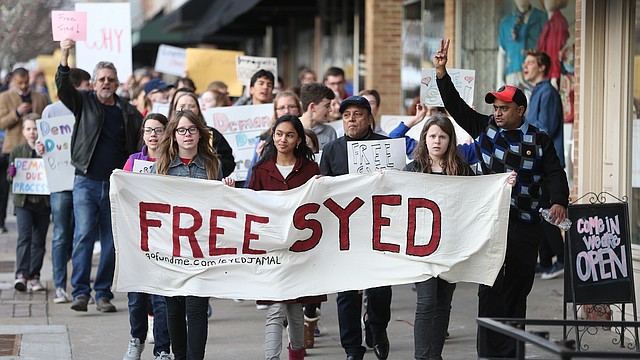
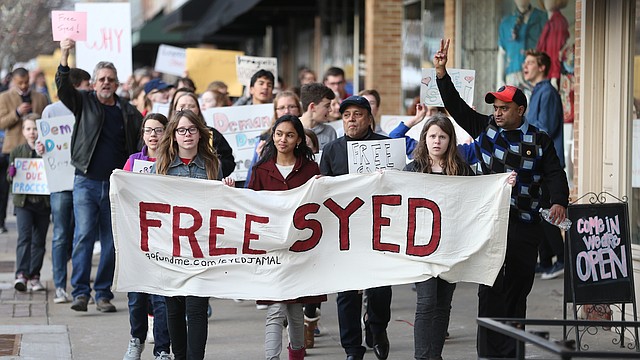
  • Staging public demonstrations to call attention to the unfavorable action and to embarrass that action's originators.
  • Combining two or more of these methods.

Some of the forms an unfavorable action might take:

The majority of unfavorable actions are some variation on this theme. Most of the time, policy makers, officials, or others who set something in motion really do want to address an issue or solve a problem. They may not know what to do, however, or how to do what they know needs to be done. Or, for reasons of politics, economics, or difficulty, they may not be willing or able to do what needs to be done. For example, the "obvious" solution - if we just jail drug users, we'll have no more drug problem - is all too often no solution at all, or only involves the symptoms, rather than the cause of the problem. Those who enact such non-solutions are not bad people who are trying to cause trouble: they simply don't have the knowledge or the background or the perspective that would allow them to see the situation more clearly, and to make better decisions.

  • Action meant to resolve a particular problem or condition may be well-meaning, but ill-conceived. The Planning Board in the Parkersfield situation, for instance, believes that what it's doing is in the best interests of the town.
  • Some entity, public or private, may put its own narrow interests before the good of the community. An elected official engineers a law to benefit his donors, a paper mill decides to dump its poisonous sludge into the river, an institution discriminates against a particular group - these are all instances that cry out for public criticism.
  • Uninformed public opinion may force or support action that harms a particular cause or target population. During the national debate over welfare reform in the US in the 1990's, for instance, a majority of the public thought that welfare and other entitlement programs accounted for a majority of the federal budget, when, in fact, they amounted to less than 2% of it. Public ignorance on this issue led to demands for legislation that some thought would correct the "overspending" on welfare.
  • An action that takes the path of least resistance, or that is really no action at all, may be an indication that a problem is being swept under the rug. Often, the appointment - by a government official or body - of a commission to "study the issue" is just such an action. The commission may take a year or more to do its work, and will then issue a report which, in many cases, is ignored. The appointment of the commission can be seen as "doing something," while the result is the same as paying the issue no attention at all.
  • An action may be an unthinking expression of prejudice or an ethnocentric world view. The proposal of a referendum limiting the rights of gays and lesbians, choosing a demeaning caricature of a Native American as the high school football team mascot, or scheduling a "Brotherhood Meal" for lunchtime during Ramadan (the Islamic month of daytime fasting) are all examples of this kind of action.

These types of actions - and the fact that you find them unfavorable - may spring from profound philosophical differences. Many who support limiting gay rights, for instance, believe they are justified in doing so on religious grounds. Many other controversial issues - abortion, military spending, the role of religion in public life - are rooted in such philosophical differences, most of which have an emotional component that make them difficult to resolve.

It's important to recognize when an unfavorable action is based on religious, moral, and/or philosophical grounds, and to prepare your criticism accordingly. It's unlikely to have much effect if it attacks the opposition's strongly held beliefs. If possible, the best course may be to argue that there are religious or moral principles on your side that represent a more powerful position. (The sanctity of human life is generally considered a more important moral and religious principle than the sanctity of property, for instance.)

Why criticize unfavorable action?

The essential point of criticism is to stop or change the action you find unfavorable. In the service of this overriding goal, there are a number of more specific reasons - several of which might exist in a particular instance - for criticizing unfavorable action:

To inform those responsible for the action, those who have oversight of the action, or the public (or all three) of that action and its consequences.

Criticism of an action is useless if no one realizes that it's happening, or what its effects are.

To question the assumptions behind the action.

Does one individual or group benefit to the detriment of others? Is there a conflict of interest involved? What was the rationale behind the choice of this particular course of action? The answers to questions like these can often demonstrate the real reasons behind an action that is not in the public interest, or that doesn't take some important aspect of the situation into account.

To correct incomplete or false information.

That information may be about you or your cause, or it may simply be mistaken information about the issue. In either case, it may be one reason the action was taken, and therefore needs to be corrected if you're going to stop or change what's happening.

To make clear what's wrong with the action.

"What's wrong" can cover a lot of ground.

Some of the more likely possibilities include:

  • It's based on mistaken premises. The situation has been misinterpreted, or the assumptions behind how it can be corrected or changed are wrong.
  • It won't work well. The research may show that this approach has little or no effect. Or you may know from experience that the action in question comes at the issue in the wrong way - an intervention that's planned without considering the nature of the target population or unintended consequences, for instance.
  • It's too costly or not cost-effective. The costs might be financial, but they might also be measured in physical or other risk, human suffering, logistical difficulty, lack of consideration for the disruption of people's lives, etc.
  • It may clearly be self-serving, of benefit to those who took it, often at the expense of others. A politician pulling strings to see a state contract awarded to a firm run by her husband would be a particularly blatant example.
  • It may actively injure others - physically, economically, politically, or otherwise. An industry practice that causes a health hazard, or a redistricting plan that intentionally disenfranchises a particular group could be targets of criticism, for instance.
  • It may be unethical, or just plain illegal. You may have agreed to take or not take a specific action if another group also agrees to a specific condition, but the other group fails to keep its end of the bargain, even though you do your part. Or an entity may knowingly violate the law, hoping it won't get caught.

To spell out and advocate for what ought to be done instead.

Criticizing an action as unfavorable implies that there is a more favorable course of action. It's your responsibility not only to criticize, but to explain the alternatives, and why they're preferable to what's happening now, and to sponsor their adoption.

To garner support.

Your criticism may or may not have an immediate effect on the situation, but it can serve to build support against the current action, for an alternative or for your initiative, for the target population, or against those who've knowingly taken an action that's harmful, unethical, or illegal.

Who should criticize unfavorable action?

In general, criticism is more likely to be believed and accepted if it comes from a credible source that is perceived as being both knowledgeable and objective. Walter Cronkite, the dean of US TV newscasters during the 1960's and '70's, was known as the most trusted man in America, because no one could imagine him being biased or lying. Once Uncle Walter said that it appeared Nixon had engineered a Watergate cover-up, the President's guilt became believable to much of the public. That's credibility, and it's that kind of credibility that's most valuable when delivering criticism.

Unfortunately, you probably don't have a Walter Cronkite to call on. You can summon people, however, who have experience with the issue, and have a reputation for integrity. They may be members of the target population, those who work with the target population and the issue (e.g., medical professionals), policy makers and public officials, experts and researchers in the field, or just ordinary citizens known and respected for their honesty and fairness - or, better yet, several or all of the above. Whoever they are, they can be effective in conveying criticism of an action that goes counter to the goals of your advocacy effort.

Watchdog organizations and activists can be credible criticizers if they're seen as generally accurate and fair-minded. If they're known as having a political or ideological axe to grind, people tend to take their pronouncements with a grain of salt. If you're offering the criticism, make sure you know what your reputation is, and whether anyone is likely to listen to you. If not, find someone else to be the public voice of your effort in this situation.

Who might actually be your most effective spokesperson depends both on the situation and on whom you're trying to reach. Most people are generally skeptical about the criticism of those who are known to hold a position different from their own. In addition, most people assume, probably rightly, that rabid believers in a particular ideology or political philosophy (see box above) often delude themselves or lie in favor of what they want to see. It's hard to know when they're accurate, and when they're simply trying to support their chosen position.

People respond best to those who seem to be like themselves, who are not known to be in a particular camp, and who are credible or have an air of credibility. Among those who are seen as believable critics are those who have some reason to support the action being criticized (that's why anti-smoking ads featured the former Marlboro Man, who died of smoking-induced lung cancer). Admired people - astronauts, sports figures, and some other celebrities - also tend to be believed. If Michael Jordan had chosen to, he probably could have sold environmental consciousness or AIDS awareness in the same way he sold Nike Air Jordans.

When should you criticize unfavorable action?

The actual criticism of unfavorable action has four elements: timing (when you criticize); magnitude (how severely you criticize, and how publicly and loudly); content (what you say); and tone (how you frame the criticism - anywhere from "the opposition is evil incarnate" to "we're just about in the same place, but we'd like to suggest some small changes.") This part of the section deals with timing. The other three elements are discussed in "How do you criticize unfavorable action?" below. Although we've chosen not to structure the section around these four basic elements, they might provide some Tool Box users with a convenient way to look at the topic.

Guidelines for timing your criticism:

The best time to criticize unfavorable action is before it takes place. Prevention, as the proverb points out, is the best form of cure. Thus, calling attention to the potential for harm if a particular action were to be taken is often the best way to stop it from being taken. Paying careful attention to the discussions and behavior of policy makers, any opponents in the community, and others who are able to take unfavorable action can help you anticipate and react against possible bad decisions on their parts.

Unfortunately, even with vigilance, preventive criticism isn't always possible - you often don't know about a decision to act until it's already been set in motion. Furthermore, preventive criticism doesn't always work: the action may be taken anyway.

Whether you can anticipate unfavorable action or not, speed at responding is important. If you can't stop something from happening, you can still protest it as soon as it happens. If you wait too long, the action will be seen by most people as part of the landscape. It's much harder to change something ongoing than something that's barely started and hasn't had time to gain a foothold in the consciousness of the community.

Protest immediately when a hitherto hidden unfavorable maneuver comes to light. If an action is illegal, unethical, or likely to anger a large number of people, those taking it often try to keep it quiet. When that information surfaces, the appropriate response should be immediate and loud.

Once people realized that police in many areas were officially engaged in racial profiling - i.e., stopping, and often harassing, members of particular groups, especially African-Americans, on "suspicion" - many organizations raised an outcry, the media trumpeted the story, and the practice was declared unconstitutional.

Make your voice heard when evidence - or new evidence - of the unfavorable nature of an action becomes available. As an advocate, you may have tried to stop this from happening in the first place, or you may not have seen the problem with it. If new information makes the unfortunate nature of the action clear, use that information to protest.

Immediate criticism is necessary when time is a factor, and injury will result from the action going unopposed. If the action is likely to cause harm to the community or a particular population - the dumping of industrial waste, the elimination of a children's nutrition program - it has to be addressed before the situation becomes any more serious.

Protest at every opportunity until you turn the situation around. Your criticism, once launched, should continue for as long as is necessary to change what needs to be changed: that's what advocacy is about.

There may be a point beyond which criticizing unfavorable action becomes less promising. A US Supreme Court decision or a law that institutionalizes what you're protesting may make further resistance beside the point. You can continue to criticize and work for change, but the chances of it happening depend largely on the social and political climate.

How do you criticize unfavorable action?

Do your research ahead of time. Unless the unfavorable action is what sets off your effort, you, as an advocate, should be up-to-the-minute on any information that relates to your issue and to the situation in your community. That means:

  • Know the laws and policies that relate to the issue and to the action you're criticizing. The action may be regulated, or may go against precedent or accepted practice, or may be illegal. If you've done the research, you'll know.
  • Know the background of the situation. You'll want to know the history of the issue in general and this situation in particular, including what led up to the action and who made the decision setting it in motion.
  • Know the research on the issue, so that your criticism has substance behind it, and so you can offer reasonable alternatives.
  • Know the community. Who are your allies? Who are your opponents? What is the opinion of the majority in this situation? What is the community likely to respond to?

Make your criticism clear and specific. Don't give your opponents the chance to nit-pick your argument to death. Point out exactly where the problems lie and why, what needs to be changed as a result, and the potential results if changes aren't made.

Couch your criticism in language your intended audience can understand. That may mean using plain, simple English, or using other languages instead of, or in addition to, English, depending upon whom you're trying to reach.

Support your arguments. You may not always be able to prove indisputably that you're right, but you should try to do so when you can. When that's not possible, there are other types of evidence and other arguments you can use.

  • Where facts or solid evidence are available - details of past performance, promises made publicly, photographs or videos of illegal or otherwise unacceptable practices - find and present them.
  • Sometimes, there are no indisputable facts. The appropriateness of the action may be a matter of conflicting philosophies or opinions, or you may have experience and theory behind you that show you're right, but no "proof." In those situations, you can use expert opinion, firsthand testimony from those affected by the action, and/or overwhelming anecdotal evidence to back up your criticism.

Anecdotal evidence - stories of individual instances that illustrate a particular point about an issue - is generally not really evidence at all. Anecdotes are just what they seem: stories of individual instances. They don't necessarily prove any universal truths. The fact that the woman down the block cheats on welfare doesn't mean that all welfare recipients do. Just because one hospital amputated the wrong leg of a patient, it doesn't follow that hospitals in general don't have safety procedures to keep that from happening.

The fact that anecdotal evidence doesn't prove anything doesn't diminish its power, however. Many people - perhaps a majority - find it more convincing than more substantial evidence, and citing anecdotes can be useful in your criticism.

Overwhelming anecdotal evidence can be another story, however. If tens of thousands of people come forward with stories about having the wrong leg amputated or the wrong kidney replaced, then hospital procedures in general can and should be called into question. If hundreds of families in the city become homeless right after welfare reform kicks in, it's a good bet that the system is flawed.

If you're going to use anecdotal evidence, it's preferable that it be overwhelming. While many people may be convinced by anecdotes, policy makers are seldom moved unless there are hard facts to back it up, or unless the anecdotal evidence is strong enough to prove the point by itself.

  • Where appropriate, appeal to common values: fairness, justice, decency, social responsibility, the Golden Rule. If the action withdraws necessary services, threatens the health or safety of a particular segment of the population, forces the powerless to bear the burden of economic or other problems, conflicts with the public interest, or is otherwise contrary to those common values, then those values should be invoked in its criticism.

The issue of fairness is one that can be a problem, since it can mean different things to different people. Conservative politicians often characterize it as "unfair" that the rest of the society should contribute to the support of those in poverty. Many others would argue that "fair" doesn't mean that everyone gets exactly the same thing, but that everyone gets what she needs. Thus, it's not unfair that publicly-funded programs in the US pay for heating fuel in the winter. Rather, it's unfair that anyone should, in the richest country in human history, be in danger of freezing to death because she's poor.

  • Appeal to logic when you can. Sometimes, an action simply makes no sense. If you can point that out, most people will respond. When Ronald Reagan tried to convince the American public that trees were the worst polluters of all, for instance, it was easy for environmentalists to point out that, logically, that argument was silly.

It's important to know your audience here. One person's logic can be another's voice of Satan. What may seem "common sense" to some is appalling ignorance to others. Who is your audience? Are they educated, religious, urban, working-class, native-born, etc? Culture, education level, religious belief, political sophistication (not to mention self-interest), and many other factors can have an effect on what they consider logical. You have to know whom you're addressing to use logical argument to your advantage.

Present clear, understandable, feasible alternatives. Your criticism gains enormous legitimacy if you can present proposals for fixing whatever's wrong with the action under discussion. Whether that involves merely going back to the situation as it existed before, altering the current action in some way, or taking an entirely different action, you should be ready with a plan and a solid rationale for it.

If you can show that your alternative is similar to, but better than, what your opposition says it wants, your position will be stronger. If you can show that your solution is more effective, less costly, deals with the causes instead of the symptoms, or reaches more people (or all of these), it will make it difficult for the opposition to mount serious arguments against it.

Offer to work with opponents to change the situation. In addition to offering alternatives, offer help. You could end up being allies, or at least able to work together.

Assume that your opponents are of good will unless you have evidence to the contrary. As mentioned above, most actions grow out of a desire to improve matters and help people, rather than the reverse. For that reason, no matter how problematic the action itself is, it usually makes sense to follow some guidelines in your criticism:

  • Give your opponents credit where they deserve it. If they initiated addressing the issue, if some part of what they're doing is effective or potentially effective, if they have some good points or interesting ideas, don't be afraid to say so. You'll lessen their ability to accuse you of being blind to reason, you'll demonstrate your integrity, and you'll make them less defensive and more willing to discuss the situation.
  • Attack the action rather than the actor. Criticize the action and its potential results, not the people who made it happen. It may help to acknowledge that your opponents were trying to do the right thing. That might make it easier for them to retreat if your arguments are convincing.
  • Argue against ideas, not people. If the action is based on opinion, philosophy, inadequate knowledge, etc., criticize that, rather than the motives or character of those responsible. It's one thing to say, in essence, "These folks were trying to do a good job here, but they lacked the right information," and quite another to say, "These folks hate poor people."
  • Don't vilify or demonize your opponents. The nastier you are, the worse it reflects on you. Furthermore, in a community, you may have to work with these folks again. They may be your allies on another project. They may even be your allies in this effort once you convince them that their action was misguided. Don't drive them away by accusing them of being evil or mean-spirited.

The awful truth is that, in politics, although both politicians and the public say they're against personal attacks, those attacks often work. Statistically, politicians who broadcast attack ads usually benefit from them, while those who take the high road are seen as weak or unconvincing - or, worse, as having no dirt to smear their opponents with. Nonetheless, in community issues, it's generally a bad idea to make permanent enemies and be seen as a mudslinger. You'll have to live with both the people you attack and your own reputation long after your advocacy effort, or your criticism of a particular action, is over.

The exception here is when the action has been taken to benefit a particular individual or group at the expense of the public good and/or of harm to others. Laws that favor contributors to the legislators who sponsor them, regardless of their economic consequences, or policies that are meant to keep any power from the powerless, for instance, are not actions taken in good will to solve a community problem or to address an issue. They are selfish, unethical, often illegal actions taken for the advancement or convenience of the actor with no regard for their effect on others or on the community as a whole. Those who are responsible should be attacked directly, and held accountable. In these cases, being a pit bull is not only appropriate, but necessary.

Just what does that mean? Is it appropriate to try to ridicule an opponent and make him look like a fool? Is it appropriate to engage in name-calling (anything from "reactionary" to "slimeball")? Should you stand up in a public meeting and accuse an official of lying or of unethical or illegal behavior? Should you ever picket the homes of the Parkersfield Planning Board? The answer to all of these questions is that it depends on the circumstances, but that there are times when these and other aggressive tactics may be the right thing to do.

Use the media and whatever other channels are necessary to broadcast your criticism to those who need to hear it. As always, your message isn't much use if it doesn't reach its audience. Depending on your intended audience and your resources, you might try anything from a full-fledged media campaign to putting up posters on telephone poles and in laundromats.

You might need to use the Spanish-language radio station, or convince the priest at St. Stanislaus to deliver your message to his congregation in Polish. The local-access cable channel may be the way to reach most of the community easily, or you may have to use a number of avenues to get to everyone who needs to hear. In some communities (a university, for instance), a website or e-mail list would be ideal; in others, it would be useless. There may be situations in which word of mouth is the only reliable way to spread information. You have to know your audience and plan accordingly.

Going public doesn't always mean going to all the public. You may not need a full frontal attack to get your message across. If leaflets in one neighborhood will do it, then that's what you should use. If one radio or TV station reaches your desired audience, use that one station. You don't have to start a war in order to accomplish something that you could just as easily do by merely showing your weapons.

Keep at it for as long as necessary. You may be able to postpone or cancel or change the action almost immediately...but it's more likely that you won't. You may have to continue your criticism for some time before you get results. In fact, you may not get results at all on this particular action, but that shouldn't end your criticism or your advocacy. Political climates and public opinion change, but not overnight. Changes take place because advocates keep at it, month after month, year after year. You may have to do the same.

In Summary

Criticizing actions that endanger or run counter to your effort is an important part of your role as an advocate. While the majority of such actions are well-meaning, if misguided, you may also be called upon to react to actions that are self-serving, unethical, harmful to the public welfare, and/or illegal.

The ultimate purpose of any criticism of an action is to rescind or change it, so that it actively serves to resolve a problem or issue, or ceases to do harm. In pursuing that purpose, you might also try to inform the public of the situation, question the assumptions behind the action, correct false information, pinpoint what's wrong with the action, suggest alternatives, and/or garner support for your position.

The best critics of unfavorable actions are those who are perceived as knowledgeable and trustworthy. It also helps if they are seen as similar to the target audience. If they are known to the target audience, either indirectly (celebrities, public figures) or directly (community leaders), that's also often a plus. The choice of a spokesperson to deliver the criticism can therefore be a crucial strategic decision.

When you can anticipate unfavorable action, the best time to criticize it is before it happens. If you can nip it in the bud, you've more than done your job as an advocate. If you can't anticipate it, you should start your criticism immediately on learning of the situation. The less time that passes between the inception or revelation of an action and your protest, the more likely people are to listen to you. Thus, it's also important to make your voice heard immediately when a hidden action becomes known, when new evidence surfaces about the negative results of a particular action, or when it becomes clear that action must be stopped in order to prevent harm. If you're not immediately successful, then your criticism should continue as long as the action remains an issue.

To criticize unfavorable actions effectively, you should:

  • Do your research on all aspects of the situation.
  • Be clear and specific in your criticism.
  • Support your arguments with facts, expert and firsthand testimony, appeals to common values, and logic.
  • Present well-thought-out alternatives.
  • Offer to work with opponents to change the situation.
  • Assume good will on the part of your opponents if you have no specific reason to do otherwise, and criticize the action and its rationale rather than the people behind it.
  • Use the media and other public channels to spread your criticism to your intended audience.
  • Keep at it for as long as is necessary - indefinitely, if need be.

Contributor

Phil Rabinowitz

Resources

Online Resources

Bolder Advocacy has information on both praising and criticizing elected officials on their actions with regard to advocacy.

Constructing Criticism is an article from CBS News that provides five ways to get your point heard.

Dealing with Criticism, written by Gregg Walker of the Department of Speech Communication at Oregon State University, has two lists of guidelines: one for the critic, and one for the individual being criticized..

How do you offer criticism and live to tell about it?, by Bob Rosner, the "Working Wounded" columnist.

How to Give Positive Criticism is an article that appeared in TIME magazine in May 2013, and it gives five tips for effectively giving and receiving criticism.

Public Criticism: Environmental Concerns. A case study of an environmental engineering situation from the National Institute for Engineering Ethics.

12 Ways to Criticize Effectively is an article written by Power to Change.

Print Resources

Meredith, C., & Dunham, M. (1999). Real Clout. Boston: The Access Project.

Checklist
mloewenstein Wed, 12/12/2012 - 12:59

What is criticizing unfavorable action?

You protest - usually publicly-that the action is:

___Well-meaning, but ill-conceived action.

___A public or private entity putting its own interests ahead of the public good.

___Action, spurred by uninformed public opinion, that harms a cause or target population.

___Actions that sweep problems under the rug.

___Actions that are the result of unthinking prejudice or an ethnocentric world view.

Why criticize unfavorable action?

___You criticize unfavorable action primarily to cancel or change it.

In pursuit of that goal, you may try to:

___Spread the word about the situation.

___Question the assumptions behind the action.

___Correct false information.

___Pinpoint what's wrong with the action.

___Offer alternatives.

___Garner support.

Who should criticize unfavorable action?

___You choose spokespersons who are viewed as knowledgeable and trustworthy, with whom the audience can identify, and with whom they may be familiar.

When should you criticize unfavorable action?

___You anticipate unfavorable action when possible, and criticize it before it begins.

___You react to unfavorable action as quickly as possible in all instances.

___You make your voice heard immediately when a previously unknown action comes to light.

___You protest when new evidence of the unfavorable nature of an action surfaces.

___You criticize immediately when necessary to prevent harm.

___You continue to criticize until your succeed.

How do you criticize unfavorable action?

___Do your research ahead of time

___Be clear and specific

___Support your arguments

___Present clear alternatives

___Offer to work with opponents

___Assume the opponents are of good will unless you know otherwise

___Use media to inform

___Keep it up as long as necessary

Examples
pschneider Wed, 03/07/2018 - 14:03

Example: Crowd marches downtown in Lawrence, Kansas, to support detained scientist Syed Jamal

Photo of Naheen Jamal, 12-year-old daughter of Syed Jamal, center, flanked by her friends Elizabeth Anderson, left, and Anna Anderson as they lead a Free Syed Jamal march on Thursday, Feb. 8, 2018 at Lawrence Creates.

Earnest chants filled Massachusetts Street on Thursday as dozens of people marched in support of Syed Ahmed Jamal, a Bangladeshi-born Lawrence scientist who was detained by Immigration and Customs Enforcement on a deportation order after 30 years of residency in the U.S.

Shouts of “Free Syed Jamal” and “Say it loud, say it clear, immigrants are welcome here” rang out as marchers carried signs through downtown Lawrence to raise awareness for a local family that associate pastor Eleanor McCormick of Plymouth Congregational Church said has been “shaken to its core.” Read more.

PowerPoint
mloewenstein Wed, 12/12/2012 - 13:00
File Upload
A PowerPoint presentation summarizing the major points in the section.
Section 4. Filing a Complaint
mloewenstein Wed, 12/12/2012 - 13:01
Main Section
admin Thu, 01/10/2013 - 15:31

Serious woman in long line
 

What is filing a complaint?

A complaint is a formal statement of your dissatisfaction with an issue. You are asking others to take action--action you do not have the power to take solely by yourself. A formal complaint is almost always put into writing.

Filing a complaint is an advocacy tactic designed to convince those in authority to take a specific action. With this tactic, you and your group are taking a public, official stand with respect to your dissatisfaction. Normally, you might file a complaint when other more informal or less-vigorously-applied techniques intended to produce the same action have not succeeded.

Why file a complaint?

  • If you quietly accept the status quo, you are certainly not going to resolve the issue.
  • Filing a complaint underscores the seriousness of the issue and your resolve to get action.
  • Filing a complaint can increase the visibility of your organization or group.
  • When you put something in writing, it is harder to ignore.
  • Filing a complaint will usually get people's attention, because no one wants to be the head of an organization that ignores their customers or clients' concerns --leaders like that don't stay at the head of an organization for very long.
  • Most of all, filing a complaint may lead to a fair hearing of your grievances and to your getting the action you want.

When should you file a complaint?

Should you file a complaint every time something doesn't go your way? A complaint can be filed at any time you have a grievance. However, writing a good, effective complaint letter takes time; and sometimes more informal techniques (phone calls, for examples) might be just as effective; so it's usually better to file a written complaint following unsuccessful informal tactics to get what you and your organization want.

Here are some times it might be worth the effort to file a written complaint:

  • When the issue is an especially important one to you or your group.
  • When the cost of your loss, or the intensity of your dissatisfaction, is greater than the cost of filing the complaint.
  • When you need a permanent record of your actions.
  • When actions others have taken are a clear violation of established policy or law.
  • When people have been harmed--physically or emotionally--or are at risk of being harmed.
  • When simpler tactics, such as phone calls or informal conversations have not worked.

Where should you file a complaint?

Suppose you went to a fancy restaurant for dinner one evening, and the waiter was unforgivably rude to you. Writing a complaint letter to that person is unlikely to get you an apology, or to change the way that restaurant operates. However, if you address your letter to the owner of the restaurant, your letter will have more of an impact. You will be more likely to get a positive response.

The moral to the story is that owners or heads of organizations have much more at stake in taking your complaint seriously. Their reputation or career can be affected; while for lower-level staff, their work may just be a job. And often, lower-level staff have little power to make the changes you want; it's the top executives who can do what it takes to meet your demands.

Thus, the number one rule on where to file a complaint is: Write to the Top

This means you may need to do some research to check out the decision makers on the issue. It may be an individual, who makes the decisions. Or it might be an administrative body. When you write the letter, make sure it is addressed to a specific person. Generic or impersonal letters are often ignored. They simply do not get people's attention or response the way a personal letter does.

Depending on the situation, copies of the complaint and other supporting information can be sent to other responsible parties, such as trade organizations, local media, consumer groups, or even legal firms and the state attorney general. This can often increase your influence, in the eyes of the complaint recipient.

One possible exception to this rule is if you specifically know the person who is responsible for resolving complaints, and/or also know that person to be someone who would give you a fair hearing.

How should you file a complaint?

Following these guidelines should set you on the right path:

Know where to address your complaint.

You will want to send it to the decision makers who can take the action you want. And it will help to know not only their titles and addresses, but also, if possible, something about them as people. Who are they? What are they about? And if you know something about how they have dealt with complaints in the past, so much the better.

Know what form your complaint should take.

If you are complaining to a large organization--especially a large public organization, such as a consumer commission or a housing authority--the organization may well have specific procedures for filing a complaint. These may also include specific forms for you to fill out and documentation to provide. So, it's up to you to find out what those procedures might be.

How do you find out whether specific procedures do exist? Either ask someone with experience dealing with that organization, or call and ask the organization directly. If you decide to call them yourself, you don't have to tell them your name or reason for calling yet--you may not want to tip your hand.

But if specific procedures are not in place--and often even if they are--use the following steps as a guide to filing your complaint:

Know what it is you want your complaint to accomplish.

What would you like to see happen? Just venting your frustration may make you feel a little better, but has no direction and little purpose. If you are very clear on what you want from the start, chances are it will be easier to write your letter; and the letter will be more effective, too.

Write and refine your letter.

Now, let's start putting that letter together. Here are five basic ingredients that you should include:

  • State your purpose - Start by letting the recipient know that this is a formal letter of complaint. Don't beat around the bush on this point. Put your purpose right out in the open.
  • State your reasons - State the specific reason or reasons behind your complaint. Why are you complaining? What is the substance of the complaint? What actual events happened?
  • State the importance - Show why these reasons justify your making a formal complaint at this time. What loss did you or others suffer? Who was harmed, and how? What laws might have been broken or procedures violated?

Not many people really like to complain, and you can imply or even state as much when you are writing. But perhaps your reasons are so important and so powerful that you have no other choice. If so, make this clear in your letter.

  • State your request - Make a specific request for what you want. What specific action or actions do you want the recipient to take? Are you seeking enforcement of a law; a refund or other financial compensation; a public statement; or something else? Be clear and explicit.
  • Ask for a reply - Request a written reply, by a specific date. This request both shows the recipient your seriousness of intent, and increases the recipient's accountability for acting on your request.

Making the most convincing arguments

The previously mentioned steps and ingredients of an effective complaint letter should make your complaint more successful. But we have not yet spoken about how to be most convincing in your letter itself. When you sit down and write your letter, what kinds of arguments should you use? Some arguments will be more convincing than others. And in general a recipient is more likely to be convinced if you can show that the action you are complaining about is:

  • Ilegal (an actual law is being broken)
  • In violation of established policies or agreements
  • Inconsistent with past practices
  • Inconsistent with the recipient's self interest
  • Inconsistent with the image that the recipient wishes to convey
  • Causing people to be at greater risk of harm
  • Causing actual harm to people (especially severe harm, or harm to many people)
  • Likely to result in legal, fiscal, or other sanctions against the recipient's organization
  • Likely to result in bad publicity for the recipient's organization
  • Likely to result in loss of future votes or other public support (especially true for public organizations)

Sometimes, more than one of these arguments may apply. Use them all (being careful, though, to avoid overwhelming the recipient, or "overkill"). For each argument you do use, cite the specific reasons why it is true.

More tips for successful complaint letters

  • Keep your letter short--one page, or two at the most, unless there is a very good reason to run longer. Most people will not have much time to read your letter, and are not interested in every tiny detail. So stick to the main concepts and the big ideas. If you want to enclose relevant documentation (receipts, contracts, previous correspondence), do so separately, as an attachment.
  • Make sure the recipient knows who you are, and your connection to the complaint. If you are a well-known person, or a loyal customer or supporter, don't be shy about stating your credentials. And make sure the recipient knows how to contact you--include your address and a daytime telephone number.
  • Demonstrate that you have support behind you. The more support you have, and the more powerful your supporters are, the better. One person filing a complaint may be dismissed as an exception, or worse, as an oddball; but several complaints from different people are not as easily ignored. Some ways to do this are:
    • Have several people sign your complaint letter.
    • Have several people write separate, individual complaint letters of their own.
    • Have the most powerful or credible person in your group (in the eyes of the complaint recipient) write the letter.
    • Get support from other relevant organizations, such as (for example) consumer protection agencies or other advocacy groups. (Unless these are groups you are actually filing a complaint about!) Ask them to write letters on your behalf.
    • Get political support, such as local legislative support, or even support from the state attorney general's office. Ask these supporters to follow up with phone calls or other contacts.
  • Be polite. Capitalize on the good will the recipient may have toward you or your cause. Even if there is little or none, it is still the recipient's job to deal with complaints like yours; showing politeness and respect is more likely to get you a fair hearing. (You can be polite, and still be very forceful.)
  • Avoid irrelevant criticism and especially avoid personal attacks. (This is the flip side of being polite.) Such criticism and attack is worthless 99.9% of the time, and may in fact be counterproductive. Stay away even from comments that may be perceived as insulting, as they almost never pay off. Instead, keep your comments focused on the complaint itself.
  • Should you use humor in your complaint letter? Some "experts" recommend you use a little, to convey the sense that you are an ordinary person, and to help defuse a tense or unpleasant situation. The best answer is it depends on who you are writing to, and what you are writing about. If people have become physically ill, or if actual crimes have been committed, that's not a situation to joke about. But, in a less extreme situation, a touch or two of humor, lightness or colloquialism, may help without distracting from the seriousness of your complaint.
  • Be prepared to raise the stakes. You could state in the letter that if favorable action is not received by a specific date, you will pursue the complaint to the next higher level of authority, and/or take further action not in the recipient's best interests. Will this be effective? It could be, depending on your knowledge of the next levels of authority, how likely they are to be effective for you, and how much your mention of them will influence the recipient to act.
  • Keep a copy of your letter. Letters do get lost, and you may need to send one to a higher authority. You don't want to have to start all over from scratch.

How do you follow up on your complaint?

If you don't get what you want, then it's time to regroup. Take a hard look at whether the complaint is worth pursuing further. Perhaps it is. Then some of your options will include:

Strengthen your tone

You may want to follow up your first letter with a second letter which is more strongly worded. This doesn't mean you should be emotional or insulting; you are just letting the recipient know that you mean business and that you will not give up until the issue is resolved to your satisfaction.

Strengthen your case

Did you present all the relevant evidence in your first letter? Perhaps you can make a stronger case by providing more detailed and/or more specific documentation. And if the recipient has given you reasons why favorable action has not yet been taken, here's your chance to provide additional facts and make your case airtight.

Investigate the procedures for taking the complaint to the next higher level of authority

Some organizations will have a procedure for filing complaints at higher levels of authority. Or, you may need to do some fact-finding and see who has power over the person or persons who denied your initial claim, then send a copy of your complaint to that person. Review the guidelines above to be sure you have covered all your bases.

Get more supporters and/or more powerful supporters

You may want to involve more people who are affected by the issue--the more people affected, the less likely you are to be ignored. You may also want to involve people who have some power over the decision makers, at least in their eyes. This might be a board of directors, a regulatory agency, a legal firm, or a consumer advocacy group.

More specifically, you may also want to include a "cc" line at the bottom of your letter and list appropriate agencies and individuals that you are sending copies of your complaint to. You may not even have to actually send copies to these people--just the implication that you will do so may prod some people into action. If you do in fact send copies to third parties, you will want to include a cover letter explaining the situation.

Use the media to publicize or dramatize your complaint

This is where having friends in the media can really help. Many local radio, television, and newspaper outlets have consumer action hotlines to address complaints and problems. Bad publicity can result in lost business, decreased political support, and even outright public outrage at a group or organization. Good media coverage can also increase public sympathy for your group or your cause.

All these tactics may be helpful. But if you deeply believe your complaint is legitimate and that an injustice has been done, there are few substitutes for simple persistence. People who get complaints resolved in their favor are people who just won't quit.

When you get what you want, thank those who acted on your behalf. Preferably, thank them in writing. You never know when you might need to call on these people again. But more than that; it's the right thing to do.

Contributor

Eric Wadud

Resources

Online Resources

Complaint Writing is a guide from the New Hampshire Department of Justice that includes a sample complaint letter.

Effective E-mail Communication from the University of North Carolina provides tips on professional e-mail writing and communicating via e-mail. 

Using Effective Communications from UNISON is a guide to communicating effectively in both formal and informal settings. 

Print Resources

Bobo, K., Kendal J., & Max, S. (1991). Organizing for social change: A manual for activists in the 1990s. Cabin John, MD: Seven Locks Press.

Phillips, E. (1998). Shocked, Appalled, and Dismayed! How to Write Letters of Complaint that Get Results. This book is a guide to writing letters of complaint, specifically letters to corporations.

Tunney, B. (2014). Communication Skills: Improve Effective Communication Skills and Learn How to Communicate & Influence People. This book provides tools and techniques to becoming a better communicator.

Westheimer, P. (1990). How to write complaint letters that work. Glenview, IL: Scott, Foresman.

Checklist
mloewenstein Wed, 12/12/2012 - 13:06

Before you file your complaint

___You know who the person is to address your complaint to.

___You know the form that your complaint should take.

___You are aware of what you want to accomplish.

Writing your complaint

___You have stated your purpose clearly.

___The reason you are making the complaint is obvious.

___You have demonstrated the importance.

___You have requested what you would like to see happen.

___You have asked for a timely reply.

___Your complaint is short and to the point.

___You were polite.

___You refrained from criticism and personal attacks.

___You demonstrated that you have support.

___You have determined the appropriateness of humor.

___You are prepared to raise the stakes if necessary.

___You have a copy of the complaint.

Examples
mloewenstein Wed, 12/12/2012 - 13:05

This heading includes longer, more detailed examples of the key concepts discussed in this section. Portions of these are adapted from Patricia Westheimer's How to Write Complaint Letters that Work (1990).

Example #1: General format for writing complaint letters

This example summarizes the rules and format of a standard complaint letter.

Today's Date

Your Name
Your Address
Your City, State, Zip Code

Mr./Mrs./Ms.______________[or other title]
Title
Company Name
Company Address
City, State, Zip Code

Dear Mr./Mrs./Ms.

[Let the recipient know this is a formal letter of complaint] (Ingredient #1 )

[State the substance of your complaint as clearly and concisely as possible. Why are you complaining? Avoid being emotional. Just stick to the pertinent facts.] ( Ingredient #2)

[Show why the reasons justify your complaint. What loss did you suffer? What harm was done? Give amounts, dates, and any other relevant information. Use a positive tone if possible. Angry, rude letters get negative, defensive reactions.] (Ingredient #3)

[State the action you expect the target to take. If you believe the target owes you something, say so. Be very clear and unambiguous at this point.] (Ingredient #4)

[Request a written reply, by a specific date. Close in a friendly, positive, manner. Assure the reader that you believe he/she will help you. Keep your letter to one page, unless it is absolutely necessary to make it longer.] (Ingredient #5)


Sincerely,


Your Name (signature above)

Enclosures (such as copies of previous correspondence, receipts, etc.)

cc: (If you are mailing copies to third parties, state to whom they were sent


Example #2: Sample of a well-written letter of complaint

This is an example of a well-written, successful complaint letter to a business. George Jones, had trouble with an auto body repair shop. The work was sub-standard. The shop manager would not correct the problem. George called the local Chamber of Commerce and got the name of the owner of the shop. He then wrote the following letter:

George Jones
1234 Belleview Dr.
Kansas City, KS 59999

November 17, 1999

John Burns
Smitty's Auto Body
1098 3rd Street
Kansas City, KS

Dear Mr. Burns:

I am writing to you to complain about the lack of service I received from your shop on November 10. (Ingredient #1)

I am not at all satisfied with the work your shop has done on my 1989 GMC truck. The paint job is uneven, and the running boards are still dented noticeably. I paid you in full to have these items corrected. (Ingredient #2)

Your shop manager, Frank Wilson, has not been at all helpful in this regard. He refused to consider finishing the job he started, and he refused to give me your name. Is this the way you want to do business? (Ingredient #3)

I would like you to either redo the work, or else refund my $765.58 so I can go to another shop. (Ingredient #4)

Mr. Burns, your shop's advertising guarantees 100% satisfaction. I am sure you will be willing to live up to your claims. I look forward to hearing from you within the next two weeks. (Ingredient #5)


Sincerely,


George Jones

Enclosures:

Copy of receipt for work done on November 10th, 1992

Copy of original service agreement, November 5, 1992

cc:

Kansas City Chamber of Commerce

National Association of Auto Body Repair Shops

Whitley, Jones & Moore

George's letter is specific, reasonable and well written. He stated what the problem was, and exactly what he wanted from the body shop. The inclusion of the "cc" and a number of relevant third parties may have provoked some prompt attention, too. Two weeks later, George received a check for $765.58 in the mail, along with a written apology from Mr. Burns.


Example #3: Sample of a poorly-written letter of complaint

This is an example of a poorly written complaint letter, with analysis, followed by an example of a properly written letter.

Karen Young, the newly appointed and somewhat inexperienced head of a community coalition in Cooper County, learned of the county health clinic's plans to reduce the number of services offered, and its plans to increase fees for other basic services. Upset, she decided to write on behalf of the coalition to let the clinic know the coalition's opinion.

August 20, 1995

Cooper County Health Department
12 Main Street
Waynesville, MO 60999

Dear Sir:

I am writing to you on behalf of the concerned citizens of the Cooper County Coalition for Health Care. Once again you are cutting the services offered by your clinic. And you plan on increasing the fees on the few services you are keeping.

This is ridiculous. Where are we supposed to go for our health care? The closest hospital is over 70 miles away! My husband just had surgery and we're $10,000 in debt. We can't afford to pay your fee increases.

Don't expect to keep your job much longer, my cousin knows the county commissioner's brother's dentist, and when he hears what you've been doing to us, he'll fire you for sure.


Sincerely,


Karen Young, Director
Cooper County Coalition for Health Care


This letter lacks the "five ingredients" of a complaint letter, and is therefore, ineffective. It is just asking for an unsatisfactory response, and that's what it got. The Health Department Director (also in charge of the clinic), Shelly Marks, had her secretary write a weak apology for the policy changes, and suggested Ms. Young get in contact with her government representatives.

Karen made several mistakes in her letter:

  • She did not personalize the letter. "Dear Sir" could have been addressed to anyone--let alone the fact that the director of the Cooper County Health Department was a woman.
  • Shelly, the director, was not at the top level of decision making when it came to deciding the clinic's budget. She had little influence on how much funding it actually received. That decision came from higher up in the government.
  • Karen was not specific about what changes she wanted made, if any. It almost appears that all she wanted to do was complain about her personal problems. Life's rough.
  • She makes part of the letter a personal attack, implying that the Health Department director cannot do her job, and will soon be fired.

Here's how Karen should have written the letter. First of all, she should have obtained the name, title and address of the key decision maker on this particular issue. Let's suppose it was the local representative to the state legislature. Then she could have written the following: (A copy would also be sent to Shelly Marks.)

August 20, 1995

David Brenner
Representative, 23rd District
Missouri State Legislature
Jefferson City, MO 01675

Honorable Representative David Brenner,

This letter is a formal complaint about the proposed cuts in the budget of the Cooper County Health Clinic. These cuts are totally unacceptable to all 150 members of our coalition, as determined by a recent vote. (See membership list attached.) (Ingredient #1)

Ninety-five percent of the residents of Cooper County use the Cooper County Health Department clinic for their general health care. The proposed cuts will force many of these people to drive over 70 miles to receive necessary care. (Ingredient #2) The proposed fee increases will also put the cost of health care beyond the reach of many of our community members. (Ingredient #3)

We understand that in this day and age budget cuts are sometimes necessary. However, cutting the budget of our health clinic will have serious negative health impact for many of your constituents. We strongly urge you to restore the budget to its original level. (Ingredient #4)

We look forward to your prompt favorable action on this matter, and to your response before this matter is put to a vote. (Ingredient #5)

Sincerely,


Karen Young
Director, Cooper County Coalition for Health Care


This letter makes the same general point, but is directed to the key decision-maker, is more professional, and is slightly less aggressive. Karen is specific about what the problem is, and what she and the coalition want done. The letter is written by someone who seems to be reasonable. She doesn't threaten anyone, although the threat of not being re-elected hangs in the air. Hopefully, Rep. Brenner will be able to make the necessary changes.


Example #4: Dot Nary: Celebrating a nation with disability rights

Photo of Dot Nary with a quote from this article.

Twenty years ago, my husband and I traveled to California to attend a wedding. After landing in San Francisco, we rented a car, drove north, and arrived at a chain motel where we had reserved a wheelchair-accessible room. 

We checked in and entered the room only to discover that I, as a wheelchair user, could get inside the door but no further due to the furniture arrangement and the narrow bathroom door. Although we’d reserved an ADA (Americans with Disabilities Act of 1990) room, the one we were assigned did not permit access beyond the entrance. 

I called the manager.

Read the full article on the Lawrence Times website here.

PowerPoint
mloewenstein Wed, 12/12/2012 - 13:06
File Upload
A PowerPoint presentation summarizing the major points in the section.
Section 5. Seeking Enforcement of Existing Laws or Policies
mloewenstein Wed, 12/12/2012 - 13:07
Main Section
mloewenstein Wed, 12/12/2012 - 13:08
  • What do we mean by enforcement?

  • Who is responsible for enforcing laws and regulations?

  • When might be the best times to seek enforcement of existing laws and regulations?

  • Why might laws and regulations not be enforced?

  • How do you seek enforcement of existing laws and regulations?

  • How do you maintain enforcement of existing laws and regulations?

There was no doubt about it: Patterson Paper Products, Inc. (3P), the largest employer in town, was dumping sludge into the river again. After decades of foul-smelling water flowing through the center of Patterson, decades of warnings to fishermen not to eat the fish they caught, the river had, in the past ten years, been cleaned up. Children waded in it, kayakers braved its white water, and many of its trout ended up on dinner tables. Thanks to environmental laws, the paper mill shipped its waste elsewhere, and the river was no longer an open sewer.

Now, something had gone wrong. The laws hadn't changed. What 3P was doing was still illegal, but no one was doing anything about it. The state agency that monitored pollution in the river didn't seem to be enforcing the anti-dumping laws that were on the books.

The Patterson Environmental Coalition, which had been involved in passing the antidumping law more than ten years ago, was up in arms. At a noisy meeting, members of the coalition decided to try to get the existing laws enforced, and fast, before the river once again turned poisonous.

They were angry, but, at the same time, they knew they had to proceed cautiously. Three P was a powerful economic force in the area, and many of Patterson's citizens worked there. While they wanted the mill to stop dumping, they didn't want it to shut down or reduce production. They had to solve the problem in a way that wouldn't create a worse problem in the long run.

Sometimes, even though laws or regulations exist to keep individuals, institutions, or businesses from harming others, those laws or regulations aren't enforced as they were meant to be. In that situation, it may fall to citizens, as individuals or as members of a group like the environmental coalition in the above example, to call attention to the problem and make sure that the laws are observed. This section will help you decide whether you need to take action, and what kinds of action to take to gain enforcement of existing laws and regulations.

What do we mean by enforcement?

It may seem that this question is unnecessary. Enforcement is enforcement, right? If someone's violating a law, and the law specifies the penalties for that, then what's left to discuss?

Actually, there may be quite a bit left to discuss. Sometimes there are circumstances that make absolute, strict enforcement of a law unfair. What if the violation was an accident, or if the violator isn't actually at fault?

A situation currently exists, for instance, where a law governing superfund sites states that anyone who produced the waste dumped at such a site is responsible for paying for the site's clean-up. In one particular case, when a licensed hazardous waste disposal company didn't do its job, many small businesses - mom-and-pop gas stations in particular - were asked to pay enormous sums to clean up waste that they paid the licensed company to dispose of properly.

Many of these businesses will be forced into bankruptcy if the fines are collected, even though they did the right thing in the first place by hiring the licensed company to dispose of their waste the way the law required. Strict enforcement of the law here seems obviously unfair, and of little benefit to the public.

Another problem posed by strict enforcement in a situation like the one above is that a law that exists for a good purpose - the cleanup of environmental hazards - can be seen as a bad law and a candidate for repeal because it punishes people who have done nothing wrong.

One remedy, of course, is to change the law, but that's a long-term process. You need action now. There are other ways to think about enforcement, and how you ask for enforcement may determine how it's applied.

Some considerations:

  • Enforcement of the spirit, if not the letter, of the law. What, in fact, was the law meant to accomplish or change? Are there ways in which it can be used to achieve its ends without hurting anyone unnecessarily?
  • Enforcement that deals with the underlying problem. In the example at the beginning of the section, for instance, a judge could order the paper mill to stop dumping, but could also order that 3P work with an environmental consultant to find safe, acceptable, and reasonably cheap ways to dispose of waste.
  • Enforcement that works to the benefit of the largest number of people. Enforcement works best when it's a win-win situation. If the violator and the community each gets some benefit from it, it's both more likely to be effective and less likely to cause bad feeling and make permanent enemies.

To use the 3P example again, if the violator is stopped from dumping by having its plant closed, it will hurt the community as much as, or more than, it will hurt the polluter. Rather than putting half the town out of work, it would make more sense to come up with a solution that kept the plant running at full capacity and solved the pollution problem.

Who is responsible for enforcing laws and regulations?

There are various ways to go about gaining enforcement of laws and regulations, but almost all of them involve at some point contacting the government agency or department in charge. It's not always easy to figure out which that is, however. In the tangled web of interrelated agencies, bureaus, federal, state, and local departments and boards, it may be difficult to find the particular level or person who is in charge of the enforcement you're seeking. You may be passed from office to office before you find the right one. Be persistent, and you'll find the right place.

The first step is to know the source of your law or regulation. For people working in the United States, laws will originate at either the federal, state, or local level. Once you know where the law comes from, you can follow the guidelines below.

General guidelines for finding the right entity to enforce the rules

For federal laws and regulations

The federal level can be the most confusing, for at least two reasons.

First, many federal laws and regulations are in fact enforced by the states... but many aren't. Most federal bureaus and agencies have offices in the states, and some either have no state equivalents, or work independently of them. It's sometimes difficult even for the bureaucrats to tell who's in charge of a particular area.

The other reason is that there's so much overlap among agencies. Some environmental laws, for instance, may be administered by the Environmental Protection Agency, others by the Department of Agriculture, others by the Corps of Engineers! Finding out which agency is directly responsible can be a puzzle.

Some federal agencies, like the Interstate Commerce Commission (ICC), the Federal Communications Commission (FCC), or the Bureau of Alcohol, Tobacco, and Firearms (ATF), have specific powers that only they can exercise. Others, like the Department of Health and Human Services (HHS), depend largely on state agencies to carry out programs and enforce laws and regulations.

Make sure you have a copy of the law. The wording of a federal law itself will tell you which agency is officially in charge of enforcement. Contacting that agency is the place to start, but you may find yourself directed to a state agency that handles the issue.

For state laws and regulations

Each state has its own set of laws and regulations covering many of the same areas as the federal government's. These may be more or less lenient than the federal, or may address different issues. Most California environmental laws, for instance, are far stricter than the federal laws covering the same activities, and some refer to areas that federal laws don't include at all.

State laws and regulations are generally handled by the state agency in charge, but, as in the case of federal agencies, there's often a good bit of overlap. In addition, since each state has its own administrative structure, a law that's handled by a particular agency in one state - the Department of Public Health, say - might be handled by a totally different agency in another - the Department of Environmental Management, for instance.

Once again, a reading of the law will tell you which agency is responsible for enforcement, but won't tell you how it's actually handled. You'll have to go to the agency for that information.

For local ordinances and regulations

Local laws are generally the responsibility of the county or community boards that oversee the area they pertain to. Non-smoking ordinances in restaurants are ordinarily enforced by Boards of Health, for instance. A trip to the city hall or the county administrative office will usually tell you which board or officer to contact about a particular ordinance.

Professional regulatory associations

There is one other kind of enforcement body that should be mentioned here: the professional or licensing association. The American Medical Association, the American and state Bar Associations, the American Psychological Association, and many others are made up of professionals in their particular fields, and oversee much of the licensing and regulation of the profession. The licensing exams that lawyers take are conducted by their professional (i.e. bar) association, as is the licensing procedure for psychologists.

In cases of violation of the ethical or competency standards of a profession, it is usually the professional association that polices the situation and decides on guilt and punishment. Where you're dealing with ethical violations by an individual - discrimination by a physician, for instance, or the sexual exploitation of clients by a mental health professional - you may have to approach the professional association. Its ethical standards can often be used to address areas not covered by the law, or in addition to the law, and to both stop current violations and prevent future ones.

Another kind of professional association is the Better Business Bureau and its relatives, organizations that have no specific power to regulate, but that can advise the public about whether a business or non-profit is trustworthy and competent. It may not be against the law to spend less than half the money you collect directly on the charity for which you collected it, for instance, but it's also not against the law for someone to tell the public when you do.

When might be the best times to seek enforcement of existing laws and regulations?

The simplest answer here is "when they're being violated, " but there are times when enforcement is particularly necessary or likely.

  • When an appeal to violators has been ignored. As we'll discuss below, the simplest means of enforcement is to convince violators that it's in their self -interest to obey the law. When they don't respond to that argument, however, and ignore requests to stop their violations, it's time to seek more formal measures.
  • When new information or a new situation has shed light on or created a problem. A new study or government report may uncover previously hidden violations, for instance. A corporation may have just started illegal activity, or an agency may have suddenly stopped enforcing a particular regulation. These situations call for action.
  • When public pressure has built to the point where lack of enforcement can no longer be ignored. If particular violations have been ignored for a long period for political or economic reasons (see below), the public may decide it has had enough. At that point, appeals for enforcement are apt to be attended to.

Why might laws and regulations not be enforced?

Understanding why a law or regulation is not being enforced will help you decide how to go about getting it enforced.

Violations might be unknown

Many violations of laws or regulations are subtle, or happen in out-of-the-way places, or are covered up by clever bookkeeping or other methods. It's common for even a serious violation to go undetected for a long time.

The enforcing agency may not have adequate resources or personnel to enforce the laws

At all levels - federal, state, and local - agencies are often underfunded and understaffed. There are often too few inspectors to find more than a small percentage of violators, and not enough enforcement officers to deal with violators once they 're found.

Violations might be known, but not deemed serious enough to address

If understaffed agencies have to make choices about which violations they'll enforce, they will generally choose only those they judge most severe or harmful. Less dangerous or less blatant violations are often ignored.

Violations might be known, but enforcing them might be seen as too damaging to the economy, or too politically risky As we pointed out above, a polluter might also be the largest employer in the community. A powerful political figure may be closely connected to - or economically beholden to - a corporation or individual that violates various laws. The jobs of the agency head, and perhaps many others in the agency, as well as its funding, may be dependent on ignoring violations in these circumstances.

There might be outright collusion between the violators and enforcers.

This collusion could take several forms:

  • Bribery. The violator might simply be paying enforcers to look the other way. The risk to both the violator and the enforcer here is great - bribery is a crime, and they could go to jail - but so might be the rewards.
  • Personal loyalty. Violators and enforcers might be connected through an "old-boy (or old-girl) network, " or simply be friends, or even relatives. In some cases, this might be considered a conflict of interest on the part of the enforcer, but in many it would not.
  • Political pressure. Enforcers may be told directly by superiors, by legislators, or even by the White House to ignore violations on the part of an individual or corporation that's a large campaign donor or is otherwise politically well-connected.
  • Conflict of interest. Local government figures may have investments in a polluting factory, or relatives who work there. It would then be in their or their family's financial interest not to enforce laws that harm the factory's bottom line.

The enforcers might not care

They might see the problem as one that doesn't affect them directly, and therefore makes no difference, or they may be ignoring violations because they don't agree with the law in the first place. Either of these is a failure to do their jobs, but that may not be uppermost in their minds.

Agencies might be trying to enforce the law, but violators might not care

Often the penalties for flouting laws - environmental laws particularly - are simply not serious enough to make obedience worth it to large violators. If a factory can save millions annually by dumping illegally or discharging poisons into the air, paying a fine of a few thousand dollars is more than worth it. Enforcement is impossible without teeth.

How do you seek enforcement of existing laws and regulations?

There are two phases of actually seeking and gaining enforcement. The first involves doing some research, and learning what you'll need to know. The second is a series of steps, each of which may gain you the enforcement you want. Each step is to be taken only if the one before it doesn't work, and the order described here is from the most desirable and least disruptive to the least desirable and most disruptive.

That doesn't mean that the most desirable will necessarily be the most effective, but rather that the most desirable causes the least amount of trouble and bad feeling in the community, and the least desirable does the opposite. The reasoning here is that the less the violator is damaged, the more willing he'll be to support health and community development initiatives. It's almost always better to create an ally than an enemy.

There are exceptions to this rule. Some corporations, for instance, especially those with no real connection to the local area, couldn't care less about the communities in which they do business. They see their time there as limited, and are not concerned with the harm they may do to the local health or environment in that limited time. If that's who you're dealing with, and it's clear that they have no interest in the well-being of the community, then there may be no point in trying not to alienate them. They'll play hardball - you better, too.

The same is true if the violation is flagrantly criminal. There are some situations in which cooperation is simply not an appropriate strategy.

Regardless of what the issue is and who your adversaries and allies are, one element of seeking enforcement for existing laws and regulations is always relevant: prepare to keep at it forever. If you win this battle - or if you lose it, for that matter - there will still be others. Times and conditions and the political climate all change, and those changes often bring changes in laws, policy, and public opinion. You'll undoubtedly face this or a similar issue again. A huge percentage of success in changing or maintaining any public policy is accounted for by showing up... again and again and again.

What you should find out before you start:

Know the relevant laws and regulations inside out

  • Understand their purpose and intent. What exactly were they meant to regulate, and in what way? What is the spirit of the law? What is the result that they were meant to achieve? Whom were they meant to benefit, and how? What is the philosophy behind them? Why were they phrased the way they were?
  • Understand their provisions. Who is subject to the laws? What are the exceptions? What exactly constitutes a violation? What is the geographical area covered? Are the laws permanent, or time-limited? Do their provisions change with time? If so, where are you in the cycle? Do their provisions make for unintended consequences?
  • Understand their penalties. What exactly are the maximum and minimum penalties for violations? Are they the same for everyone, or are they proportional, depending upon the violation and the financial or other responsibility of the violator? How is fault determined? Who will (actually - not necessarily according to the intent of the law) lose and who will (actually) gain through the penalties imposed? What are the intended consequences? Are there unintended consequences? Are the penalties adequate to assure obedience to the law?

Learn whatever background information you need 

If you're concerned with environmental violations, for instance, it's important to understand enough of the science behind them to talk intelligently with regulators and violators, to explain the arguments for enforcement to bureaucrats and the public, and not to be fooled by faked or incompetent "scientific evidence." You don't need a doctorate in chemistry, but you do need enough knowledge to be taken seriously and to understand the issue clearly.

Know the history and context of the violation and its enforcement

  • How long has this been going on?
  • Is it common knowledge in the community? Among enforcement agencies?
  • Have there been past attempts at enforcement? What happened?
  • Why is the law not being enforced now?
  • If past practice didn't include enforcement, what made that acceptable to the public and the regulating agency?
  • Why does this violation seem to be going on? How does it benefit the violator? Does it benefit anyone else?
  • Whom does it harm? In what way?

The answers to these questions will give you a sense of whether or not you have an uphill battle to fight to gain enforcement. They'll also probably tell you who your allies and adversaries are, and give you some idea of how to proceed if you're to have any chance of success.

Learn about the organizations involved

Most of this section is based on the assumption that violators will generally be organizations of some sort - corporations, institutions, government agencies, non -profits, etc. There are obviously cases where violations are largely individual - child abuse, drunken driving, racial or gender discrimination by individual physicians or other professionals - and are not enforced. Except where noted, the procedures for seeking enforcement are generally similar.

  • The violator. Who owns the corporation/institution/organization? What does it do? How is it run - what's the structure and hierarchy? Who's actually in charge? What's its history in the community (and elsewhere, if it has several sites)? Does it have a history of this type of violation? If it's a large corporation, what other companies does it own?
  • The regulatory agency. What is its mission? What is its structure, and how is it run? What are the rules for formal procedures - complaints, grievances, etc.? What's its record for effectiveness, aggressiveness, and success in enforcing laws and regulations?

Determine whom to contact about enforcement

As with so much advocacy work, a key here is personal contact. It's important to make connections with the individuals involved, so that you're more than just a name, or - worse - an annoyance. You'll want to know not just the position, but the actual person who's responsible for overseeing this issue, both at the violator's end (assuming the violator is an organization of some sort, rather than an individual) and at the regulatory agency. And you might want to meet and talk to them, informally, before you get involved in formal petitioning or negotiation.

If the violator is an individual, talking to him may not be in the cards, depending upon the nature of the problem. It's unlikely that discussing the issue with a domestic abuser, for instance, would be either particularly effective or completely safe. The owner of a small store who seems to treat customers differently based on their race might be more approachable... or might not. This is where understanding the history and the context of the issue becomes important.

In the violating organization, you'll need to find out who's in charge of the area in which the violation is taking place, but also who actually makes the decisions that that person oversees. It may be the person herself, or it may be someone higher up in the organization. In any case, it will ultimately be the decision maker whom you'll have to deal with.

In the regulatory agency, the issue may also be complicated. Final decisions might be made by an administrator, but it may be the people in the field - inspectors, case workers, nurse practitioners, etc. - who decide what information that administrator gets. In that way, they might have as much control over those decisions as she does.

Steps to take to gain enforcement of existing laws or regulations.

Each step should be taken only after the one before it has failed to produce results.

Step 1. Start at the level closest to the problem, i.e. with the violator.

The idea here is that if you can convince the violator to change voluntarily, everyone is better off. There's no great disruption in his organization, regulatory agencies don't have to get involved, and the community will benefit. In the ideal, this could be a relatively informal contact. Given the nature of many organizations, you may in fact start with someone other than the person you actually need to speak to, and have to make a number of appointments before you get to him. (There is also the possibility that no one will speak to you at all, but it's worth the try.)

For all of these meetings - whether it's one or several - it's important to be cordial and polite. Don't assume ill will on the organization's part: if there is any, you'll find that out soon enough. You're much more likely to get cooperation if you're friendly and not accusing the person you're talking to of being a criminal or a monster. Invoking shared values ("I know we both want what's best for the community ") is one way of emphasizing common ground rather than differences, which may be helpful.

There are some elements that ought to be part of the conversation, however:

In all of the following scenarios, it's important to record in writing what went on. The date and time, name(s) of those you spoke with, what was said, what, if anything, was decided - all of these can be important in drafting or holding someone to an agreement, or in a lawsuit. Take careful notes.

  • Explain the problem, referring to the laws. Again, don't accuse. Stating the problem as such, and using "we" may help make the situation feel less tense. ("We seem to have a problem. X is happening here, and it's having an effect on some of the folks in the community. We ought to be looking at it.")
  • Explain clearly the result you want. If you're unclear, you can get involved in a game of "But I did what you wanted!" Be specific about what you want the violator to do or stop doing.
  • Offer to work with the violator to reach a reasonable solution, if that's appropriate.
  • Set a deadline for action. This can be done jointly ("When is a reasonable time for you to be able to start implementing this?"), but is absolutely necessary. It can't be left that something will happen sometime.
  • Explain politely that if the violator won't cooperate, you're prepared to go to the next level and seek enforcement.

Rather than couching this as a threat, simply state it as a fact. You can also state your preference for solving the problem cooperatively. ("This situation has to be resolved. It would be better all around if we can do it together, without getting the regulatory agency involved, and I'd certainly prefer to do it that way. That's why I came to you first. But if we can't come to some agreement, the agency is my next stop."

Step 2. Meet with the enforcement agency to report the violation.

Your research should have told you which individual in the agency to meet with. In the case of many federal and state agencies, you may report violations via e-mail or over a telephone hotline. If you're fairly sure that this will get results, then it's a convenient way to go. If, however, you're addressing an ongoing problem and you want to have some contact with an actual human being, a meeting is a better strategy.

What your meeting should cover:

  • Describe the violation in as much detail as possible. Your description should include (to the best of your knowledge) the violator, the nature of the violation, how long it's been going on, times and places it has occurred, the relevant law being broken, and the effect on or danger to individuals or the community.
  • Ask for action. As with the violator, be specific about what you want the result of action to be.
  • Find out what will be done, and by when. Be persistent. Agencies are often reluctant to commit themselves either to a particular course of action or to a time limit.
  • Ask to be told when action has been taken, and to be informed about the result.

If the agency can't or won't take any action, go to Step 3.

Step 2a, 3a, 4a or 5a: Go public.

If you still see no action after taking this step or any of the steps below, you have a decision to make. One of the steps you can take at any point in this process is to go public, particularly through the media, and try to arouse the community. The target of your publicity may be the violator, an enforcement agency that's not doing its job, or both.

The ultimate goal of media and other public attention is to stop the violation, but it usually has other consequences as well. At its best, it can serve to educate the public to the issues surrounding the violation. It can counter the arguments made by the violator or the agency that no violation exists, or that the violation isn't serious.

On the negative side, publicity may make it harder to reach a solution. It can embarrass its target, and brand it as incompetent, evil, or worse. And, in calling attention to the violation, it can make it politically impossible for the agency to work out some alternative solution with the violator.

The media and public opinion are powerful tools. They can serve your advocacy effort well, and you should use them. But you have to be aware of the possible consequences when you do. You may need the violator and/or the regulatory agency as allies for work on this issue in the future. Are you willing to alienate them now?

At what point is stopping the violation more important than maintaining community harmony? If people's lives or health or livelihoods are clearly in danger from a violation, that point is very early in the process, perhaps even at the beginning. If the violation has a less immediate effect, you might want to wait longer before going public with the issue.

On the other hand, if the situation is one of those where there is collusion between the violator and enforcer, or where political or economic pressures are preventing the enforcing agency from doing its job, going public may be the best - indeed, the only - way to expose the sleaze, and force the parties to act in the public interest.

The Tool Box doesn't advise any particular course here. Your action has to depend on the issue itself and your knowledge of your community. If you do decide to inform and mobilize the community, there are at least three things you can do:

  • Alert the media. Use press conferences, contacts with individual reporters and editors, letters to the editor, op-ed pieces, etc. to get the word out through all the media channels.
  • Hold public meetings and other events to get the word out.
  • Use posters, fliers, local newsletters, websites, etc. to inform the public.

Step 3. File a formal complaint.

Your research should have acquainted you with the agency's formal complaint procedure. If you don't file the complaint exactly right - and that often includes timing (within a certain time period after the violation, for instance) - you could run into problems later. The complaint may not be able to be used if there's legal action; or you may have to refile it, losing time and momentum.

Step 4. Take your complaint to the next level.

If your complaint goes nowhere, you may be able to carry it farther up the ladder yourself. That might mean going directly to the head of the agency; going to a community or other oversight committee; going to the mayor's or governor's office; or going to an agency that oversees the one in question.

Step 5. Apply political pressure.

If you've done your work in other areas of advocacy, you may be able to move the regulatory agency through local officials; state or federal legislators; the state or federal cabinet office under which the agency operates; or the office of the county administrator, mayor, or governor.

The author once had the experience of asking a state agency to restore program funding which had been cut inadvertently. I arrived in the commissioner's office accompanied by two state representatives and a state senator. One of the legislators opened the meeting by saying "We want some money." The commissioner's response was, in essence, "How much, and to whom shall I make out the check?" Political pressure can be very effective.

Step 6. Take direct action.

By this point, going public is no longer optional. Now, if not before, you should be beating down the doors of every media outlet you can reach, and informing the public by any other means at your disposal. Both of the strategies listed under this step in fact require media attention and public pressure in order to succeed.

There are a number of possibilities here, but the two major ones are:

  • Hold public demonstrations. These should be attention-getting, relevant to the issue, and designed to attract as many people and as much media attention as possible.
  • Institute a boycott. If it's appropriate to your situation, a boycott can be a potent political and economic weapon. Boycotts, when they're successful, serve a double purpose. They both call attention to your group and your issue, and hit the violator where it hurts - in the pocketbook.

Step 7. Take legal action.

Some quick definitions here:

Sue: To sue means simply to file a civil (non-criminal) case against someone in court. Although the word is often used as if a lawsuit always involves money, it may not. (To sue literally means "to ask" or "to beg". A "suitor" asks a woman to marry him.)
Plaintiff: The party that sues. (The one who issues a "plaint, " or complaint.)
Defendant: The party that is sued. (The one who "defends " against the complaint.)

Depending upon the situation, there are a number of possibilities for a lawsuit here. You can sue the violator under the law you've been trying to enforce, or under some other statute. Some examples for the latter:

  • Danger to public health or safety.
  • Civil rights violations.
  • Sexual harassment.

In addition, you might have the choice of suing for a particular result, such as a stop to an illegal practice; for money damages, either to pay back real costs (including your lawyer's fees), or to pay as a penalty for ignoring the law and harming the community; for the government to fine the violator; or for the violator to perform particular services to the community, or repair whatever damage it caused.

Another possible choice is to sue the government - in the form of the regulatory agency, or in the form of its parent body - for not doing its job. There may be different purposes here: to force the agency to enforce the law; to change the agency's structure so it is better equipped to enforce the law; to increase the agency's resources so it can enforce the law more vigorously and widely; to expose conflict of interest or criminal activity on the part of specific people in the agency; or even to highlight the need for a change in the law itself.

You might sue, either alone, or with a small number of other individuals or organizations, on your own behalf. But you might also try to initiate a class action suit, where the legal action would represent a whole class of people - passengers on a particular airline, a racial group, people who have undergone a specific medical procedure, or smokers, to name a few groups represented in recent suits - who have been harmed by the violation.

A lawsuit may be the step that most quickly comes to mind when you think of enforcement, but it's the last step here.

We see it as a last resort for several reasons:

  • Lawsuits can be incredibly expensive. Unless you have very deep pockets, or can find a lawyer or law firm that's willing to risk a huge loss (often millions of dollars in the case of a large class-action suit), you might as well not bother suing a large defendant. Governments and big corporations have lawyers or law firms on staff, and they have more money than you do. Their lawyers are very good at dragging these cases out to make it as expensive as possible for the other side. If you win, there's a chance you can convince a judge to make the defendant pay your legal bills. If you lose, you - and probably your lawyer - are out of luck.
  • Lawsuits - even those against smaller defendants that you might be able to afford and win - take a long time. If the situation you're concerned with is one that needs to be fixed immediately - if people are being physically, psychologically, or economically injured - you don't have the time to spend years in court, unless you're trying to create some permanent and far-reaching change. (The decisions in many cases that set important precedents - including Roe v. Wade, the case in which the Supreme Court supported a woman's right to choice - took place long after the reason for the suit was still an issue for either side.)
  • It may be hard to prove standing. In order to sue, you have to show that you have standing in the case, i.e. that you're directly affected in some significant way. If you're just an interested party, or one that wants justice, that's usually not good enough. It may be hard to find someone with standing who's willing to be the plaintiff, especially if the violator controls many of the jobs in the community.
  • If anyone on your side has ever broken the law or done anything the least bit questionable, it may be brought out in court. Tax records, extramarital affairs, drunken driving arrests - all can become fair game under certain circumstances.
  • There's no guarantee that, after all the time and money, you'll win, or that the defendant will settle in a reasonable way.

Most cases of this sort, especially those involving large organizations, institutions or corporations (or insurance companies) never in fact get to court. If the defendant has the slightest fear of losing, it, or its insurance company, will usually offer to "settle, " i.e. to give the plaintiff a certain amount of money (less than the suit calls for) and/or a promise to behave in certain ways. The settlement may also call for complete silence about the facts of the case (not so good if you're trying to change things), or for complete disclosure, or for one party or the other to assume or deny blame.

Almost everyone connected to these cases - with the occasional exception of the plaintiff - would prefer that they be settled out of court. Judges urge the parties to settle, their lawyers operate on the assumption that that's the goal, and it's generally easier for the parties themselves. Both of them save the cost and nastiness of a drawn-out court battle, and the terms of the settlement give each of them some of what they wanted.

All that being said, there are times when nothing else will work. If you've exhausted all the other possibilities, you may have to decide whether a lawsuit is possible for you, and whether it has a chance of success.

How do you maintain enforcement of existing laws and regulations?

Assuming that you have been successful at some level of the process, and that the laws or regulations in question are now being enforced, how do you make sure that things stay that way? The ideal is to negotiate some sort of maintenance as part of the enforcement. Some points that could be discussed might be:

  • Inspection or oversight rights for your group or some other mutually agreed upon neutral body. The agreement might include community representation on the inspection team, or might specify expertise (scientific knowledge, for instance) for some members. The agreement might also include a regular (or irregular) schedule for inspection or oversight.
  • Availability of the results of inspection or oversight to the public. Results might be published in the paper, be released to the media, or simply be available to anyone who asks to see them (at the public library, perhaps).
  • Timelines for accomplishment of specific benchmarks. The agreement might set goals for the future, with deadlines for their accomplishment. A formerly all -white public university, for instance, might be held accountable for increasing its non-white enrollment to 2% after one year, 10% after five years, and 24% (reflecting the state's population) after ten years.
  • Appropriate penalties, spelled out and made public, for violations. The penalties might be designed to be harsh enough to assure that the violator continues to pay attention to the law for the foreseeable future.

Even if all these provisions are included in an enforcement agreement, you'll still have to continue to be vigilant. As we discussed earlier, there's never an end to maintaining the enforcement of existing laws and regulations.

In Summary

When an undetected or ignored legal or other violation is harming individuals or the community, you may have to actively seek enforcement. If you do, it's important to understand the implications of what you ask for. Strict enforcement might not always be the best solution to the problem, and some alternative might be called for.

It's important to know exactly what body is responsible for enforcing the laws or regulations you're concerned with. Laws are not always enforced at the level at which they're passed (some federal laws are enforced at the state level, for instance), and it's not always clear which agency has jurisdiction. At the county and municipality level, it's often easiest to check at the administrative offices to see which board or official is in charge. Professional organizations, such as the bar association, may also have a say in particular situations.

Although seeking enforcement is appropriate whenever there's a violation, it might be particularly appropriate - or welcomed - when the violator is resistant, when new information or new circumstances draw attention to the violation, or when the public becomes exasperated with the situation.

Often, when violations of laws or regulations aren't addressed, the reason is that they're undiscovered, or that the oversight agency hasn't the resources to investigate or pursue them. Other reasons might include bribery or other dishonesty on the part of the violator, the agency, or both; conflicts of interest; economic considerations (when a polluter is also a town's largest employer, for example); or pressure on the regulator from politically powerful people or organizations.

In order to seek and gain enforcement, you have to educate yourself to the law; to the appropriate background information (science, medicine, social issues, etc.); to the structure and operation of both the violator and the regulatory agency; to the context and background of the issue in the community; and to the specific individuals, in both the violating and regulatory organizations, who would be the most effective to negotiate with. Once you've done that, you're ready to start the process of gaining enforcement.

Each of these steps might be effective in itself; the next step is to be taken only if the one before has failed to achieve your purpose. (At any point in the process - from the beginning if you know there's collusion or dishonesty involved in the lack of enforcement - you may want to bring in the media, and use other methods to inform and mobilize the public on the issue.)

  • Approach the violator, and see if you can convince him to stop the violation voluntarily.
  • Report the violation to the regulatory agency.
  • File a formal complaint with the regulatory
  • Bring your complaint to the next level.
  • Apply political pressure.
  • Take direct action.
  • Take legal action.

As with any advocacy activity, even after you've achieved your goal, you have to maintain both your vigilance and your activity to make sure that enforcement continues indefinitely. Your work as an advocate is never finished.

Contributor

Phil Rabinowitz

Resources

Online Resources

Examples of web sites of government enforcement agencies.

The Child Support Enforcement Agency of the U.S. Dept. of Health and Human Services.

The Departmental Enforcement Center of the Department of Housing and Urban Development.

Information on equal opportunity enforcement from the Equal Employment Opportunity Commission.

The Federal Communications Commission Enforcement Bureau. Includes instructions on filing consumer complaints.

The Federal Energy Regulation Commission's enforcement hotline.

Massachusetts Environmental Police (Dept. of Fisheries, Wildlife, and Environmental Law Enforcement.

New Jersey Election Law Enforcement Commission.

The Securities and Exchange Commission's Enforcement Division.

The U.S. Environmental Protection Agency's Office of Enforcement and Compliance Assurance.

Print Resources

Berkowitz, B., & Wolff. T. (2000). The Spirit of the Coalition. Washington, DC: American Public Health Association.

Meredith, C., & Dunham. M. (1999). Real Clout. Boston: The Access Project.

Checklist
mloewenstein Wed, 12/12/2012 - 13:08

What do we mean by enforcement?

___You understand the difference between strict enforcement and other possibilities, and have determined whether you seek strict enforcement or:

  • Enforcement of the spirit of the law
  • Enforcement that deals with the underlying problem
  • Enforcement that works to the benefit of the largest number of people.

Who is responsible for enforcing laws and regulations?

___You know how to find the agency or organization responsible for enforcement at the federal, state,local, and professional levels.

When might be the best times to seek enforcement of existing laws and regulations ?

___You seek enforcement, if appropriate, whenever individuals or the community are being harmed by the breaking of laws or regulations.

___You seek enforcement when violators refuse to respond to pleas to stop their violations.

___You seek enforcement when new information or situations highlight violations.

___You seek enforcement when the public is fed up with lack of enforcement.

Why might laws and regulations not be enforced?

You understand possible reasons for lack of enforcement:

___Violations are undiscovered.

___Enforcers lack the resources to track down or control violators.

___Enforcers choose to use limited resources only in the most serious cases.

___Enforcement might be economically or politically risky to the enforcers or the community.

___Violators and enforcers might be in collusion.

___Enforcers don't care.

___Violators don't care - penalties are less of a problem than stopping the violation.

How do you seek enforcement of existing laws and regulations?

___You educate yourself to the laws or regulations.

___You study the necessary background information well enough to discuss and explain the situation intelligently.

___You learn the context and history of the issue.

___You learn about the structure and operation of both the violator and the regulatory agency or association.

___You identify and establish relationships with the people at both the violating and regulatory organizations with whom you can work most effectively to gain enforcement.

___You decide, in the course of taking the following steps, if and when to alert the media and make the issue as public as possible.

___You take each of the following steps if the one before it fails to achieve results:

  • Convince the violator to voluntarily cease the violation.
  • Report the violation to the regulatory agency.
  • File a formal complaint.
  • Take your complaint to the next level.
  • Apply political pressure.
  • Take direct action.
  • Initiate legal action.

How do you maintain enforcement of existing laws and regulations?

___You negotiate inspection or oversight rights for your group or some other mutually agreed upon neutral body.

___You negotiate the availability of the results of inspection or oversight to the public.

___You negotiate timelines for accomplishment of specific benchmarks.

___You negotiate appropriate penalties, spelled out and made public, for violations.

___You remain vigilant and active in overseeing enforcement forever.

PowerPoint
mloewenstein Wed, 12/12/2012 - 13:08
File Upload
A PowerPoint presentation summarizing the major points in the section.
Section 6. Using Personal Testimony
mloewenstein Wed, 12/12/2012 - 13:09
Main Section
mloewenstein Wed, 12/12/2012 - 13:10


This video highlights the power of personal testimony in the #IAmAPreexistingCondition video campaign.


What is personal testimony?

Someone who gives personal testimony at a public hearing (such as community groups, church, non-profit groups, AA meetings, etc.) describes to decision-makers or the people in power how changes in a law or policy will impact his or her life. Our lives are affected every day in some way by the laws and policies of our federal, state, and local governments and their agencies. Our lives become better or worse as these regulations change or new ones go into effect. Luckily, before laws and policies can be altered, public hearings are often held to give citizens a chance to voice their support for or their concern about proposed changes. Of course, testimony also can be given in places other than public hearings. What we say can make a difference. This section tells you how to do it.

Why does personal testimony work?

Personal testimony works because it provides a personal, first-hand account of how laws and policies have a real, daily impact on the average Joe. Often, policy makers are removed from the effects of their decisions and can't really know the harm or good they cause. Personal testimony gives those who are in power a more "human" perspective on how effective, ineffective, beneficial or problematic a policy is or could be for a community. Personal testimony can influence the passage, revision, or defeat of policies and regulations proposed by state or federal legislatures, county commissions, city councils, or school boards because it shows law makers how "average Americans" feel about the job elected officials are doing.

How do you prepare to use personal testimony?

When you first find out about pending legislation or run up against a policy that you believe or know affects you, you have a gut reaction. You feel excited because this regulation may give you a break on taxes. Fantastic! Or you may be alarmed because the regulation will make it more expensive for you to take an ambulance to the hospital when you really need to. Uh-oh! Remember your gut reactions to this policy, because they will fire you up for your testimony. Before you step up to the podium to say your piece, you need more than just raw emotion. You've got to have substance. Or proof. You've got to prepare a testimony that talks about the actual or potential effects of a policy, not just about how you feel about it. Answer the following questions to help prepare yourself to face the lions!

 Write down or record what really makes you happy or mad about this policy

Set aside 10 to 20 minutes to get your thoughts and feelings down on paper. When you start writing, don't stop, even if your grammar, spelling and organization are terrible. At this point, you don't care if your testimony looks pretty. It's always better to first think about what you want to say, and then write it down. Some people, however, like to write down their ideas as they come. Choose whatever style works for you, as long as your final copy has thought-out and clear ideas about what you want to say.

Reread and edit what you wrote

Take a break and come back in a little while. Now is when you should cross out bad spelling, poor sentence structures, and swear words. It's time to organize your thoughts. Practice reading out loud to get used to your voice delivering a speech, and get comfortable with the language you will be using.

Think about how this proposed policy change will help or hurt you and others

This is where you will make your point clear to decision-makers about the policy. Illustrate how the voters who elected them will benefit or not from the change in policy. Think about specific examples, present a story of yourself or someone you know related to the policy's impact. Talk to people that feel like you in the community and collect their stories.

Back up your emotional story with facts

Before you step up to speak your mind, you need more than just raw emotion. You need evidence or proof. Prepare a testimony that addresses the actual or potential effects of a policy, not just your feelings. For example, how will this decision, policy or regulation impact local groups or community groups? How will citizens be helped or harmed by it? What will this policy mean to the generations of children who will follow you? For instance, suppose a city commission decides to grant a tax break to a large discount business that plans to build a store in your town. Supposedly, the store will bring tons of new jobs to the area. However, you disagree. For you, this corporation is already very rich, and doesn't really need to save on a tax break. You believe that letting this discount corporation come into your town will kill the small, individual-owned business that help your neighbors and friends to earn their living. You must start your research. Collect data about this company, find out what is their profit and why they don't need the tax break. Find numbers, graphs, flow charts. Find information about what happened when other big corporations came to your community. Prepare a future projection study to evaluate the effects this company may have in your community in the future. Find out which specific business may close down if this corporation comes to town. Talk to their owners, get their numbers, too. Arm yourself with facts for any question you may be asked.

Write a conclusion

Sum up your testimony, hitting on the punch lines of your talk, that is, how this proposed regulation is good or bad. Find out how much time you will have available to speak, and trim your speech to that time frame. Personal testimonies normally last about two to three minutes, but there's much variation in this.

Answer these questions while you prepare for your testimony

To whom are you speaking when you give your testimony?

Ultimately, you want to persuade law or decision makers to adopt your point of view. But you may want to stir up the fiery emotions of other citizens who can back up your claims and give you strength in numbers. Who will witness your testimony--just law makers, or community members as well? If you suspect that you'll draw a large crowd, it can't hurt to play up the emotional, human side of your testimony while you defend your position.

What do you know about the attitudes of decision-makers towards the proposed changes?

Even if a new policy or proposed changes will really make your life difficult, you may have a hard time convincing officials to reject the measure if they are true-blue supporters. Once you know what part(s) of the measure lawmakers are particularly attached to, maybe you can build your testimony around some 'weak link', or less popular aspect, of the proposal.

What are the responsibilities of committee members as office holders? Who are the people who elect them to office?

For example, suppose you want to give testimony to the school board on how important it is to provide instructional materials on family planning and contraception to school children. Consider what kind of voters live in that particular district. If your neighbors are dyed-in-the-wool conservatives, they may not like such a curriculum. You may have to be careful with the kind of arguments you present to the school broad and how strongly you voice your disagreement with whatever your neighbors say, or you may turn the decision makers against you !

What does the current policy say and how does it affect you?

In order for you to make a case for your viewpoint, you need to show how your life is right now because a certain policy does or doesn't exist. For example, you may be against an initiative that repeals that state mandate on safety belt use. Perhaps you can bring in pictures of your last auto accident in which you and your children would have been seriously injured had you all not been wearing your seat belts.Is there anything more effective than color photos?

What are the proposed changes and how will they impact your life?

Just as you may need to show how beneficial a policy is for you, you may need to show how harmful an existing policy could be for you and why proposed changes should be passed. For example, suppose you suffer from horrendous asthma and are always fighting off respiratory infections because the people with whom you work in city hall smoke like chimneys. One of your city commissioners just proposed a no smoking ban in all city buildings. How will the passage of this provision help you?

After you have found answers to these questions, prepare your testimony. This means writing out before hand what you want to say and what's at issue:

  • What are the proposed changes, and do you support them or are you against them?
  • What are the reasons why you feel the way you do? How do or will the changes affect you? Give examples.
  • How do or will the changes affect your neighbors, your friends, your community, state, etc.? If you can, provide statistics on how many people could be or are affected by a policy.
  • What do you suggest in lieu of the proposed changes, if you disagree with them?
  • Write out your thoughts and notes on paper, as you might write a letter to the editor.
  • Practice explaining your position out loud to an imaginary audience. Double check your testimony with a friend, asking her to comment on how well you testify and how well you support your arguments.
  • Time yourself. How long does it take you to tell your side of the story? Personal testimonies normally last about two to three minutes.
  • Memorize your comments as much as possible before you give your testimony. Being familiar with what you want to say helps convey the important information to the right people in a short amount of time.
  • Make notes on index cards of the important points you definitely want to include in your testimony. That way, you won't forget them once you're standing in front of an audience. Remember, you only have one chance and two to three minutes to get your point across.
  • If you have never given personal testimonies before, you may want to attend a few committee meetings in advance to get an idea of how people present their arguments and tell their stories in front of the decision makers. Believe it or not, the style in which you present your side can help or hurt your cause, and watching others will clue you in to what works and what doesn't.

What do you do at a hearing?

  • Get to the meeting early, so that you can sign up to speak. Sometimes, testimony is given in a first-come-first-serve basis. Getting to the venue early can also give you a sense of the event.
  • Wait your turn to speak and listen politely to opponents speaking before or after you.
  • When you reach the podium or microphone in front of the deciding committee, wait until the room is quiet and all committee members have their eyes on you.
  • Make quick eye contact with each member of the committee before you begin. This is one way to 'connect' with the policy makers to whom you're speaking, making your speech more personal, more one-on-one.
  • State your name.
  • Make a statement about yourself. For example, tell the panel what you do for a living, in which neighborhood you live, or some other autobiographical fact that is somehow related to the policy changes at hand.
  • Describe your circumstances. Illustrate to the hearing committee members the situation surrounding the personal information you just mentioned.
  • Tell how this situation happened or about the events leading up to it.
  • Describe how this affects your everyday life (or how it affected your life).
  • Every now and again, pause in your narration to give emphasis to what you're saying.
  • Explain how the proposed changes will affect you personally.
  • Tell how the new policy will affect people you know. Being able to provide several examples helps emphasize how important this regulation or policy decision will be to many instead of just one; it spreads out the impact of any changes.
  • Ask a value question that evaluates the nature of the policy changes. Are these changes really good? Why? Who are they good for? What's really important here?
  • Make sure you direct your comments to the committee chairperson or president of the hearing. This person usually sits in the middle of the panel.
  • Thank the committee for providing you with the opportunity to speak.

Resources

Online Resources

Storytelling, from Frameworks Institute, is designed to help advocates distinguish between more and less effective ways of establishing a narrative that sets up policy thinking.

Testifying Before Lawmakers provides a variety of resources including information on preparing your testimony, delivering your testimony, and distributing your testimony.

Video: How words change minds: The science of storytelling In his talk, Nat Kendall-Taylor, PhD, breaks down the science of framing for philanthropy and nonprofit communications. He explores how people think about social issues and how advocates, experts, and strategic communications professionals can use an understanding of culture, storytelling, and science to communicate about social and scientific issues, shape policy, and lead change.

Video: The power of the personal voice in media advocacy, from the Berkeley Media Studies Group, shares three steps that advocates can take to get better at articulating the problems in their communities and what can be done to address them.

What is advocacy? is from the National Coalition for Cancer Survivorship

Print Resources

Seekins, T., & Fawcett., S. (no date) A guide for personal testimony: The art of using your personal experiences to influence policy decisions [Brochure]. Research and Training Center on Independent Living. Lawrence, KS.

Checklist
mloewenstein Wed, 12/12/2012 - 13:11

___You understand what a personal testimony is

___Your personal testimony works

___You know what you need to write in your testimony

___You know to whom you are speaking when you give your testimony

___You understand the attitudes of decision-makers toward the proposed changes

___You know what the responsibilities of committee members as office holders are

___You know what the current policy is and how it affects you

___You know what the proposed changes are and how they will impact your life

___You know what to do at the public hearing

Examples
mloewenstein Wed, 12/12/2012 - 13:10

Example #1: Testifying in support of public radio funds

Good evening. My name is Rusty Cameron and I live within the broadcasting range of KLXR. I farm wheat and milo west of Perry. I work fifteen hours a day to help support my wife, two daughters, and a baby who's expected to arrive during the fall harvest. It's important that I keep up with the farm and financial news every day. But I'm legally blind. I can see well enough to drive my tractor in an open field of 100 rows of wheat, but I can't read the masthead on my town paper. I can pick out the shapes of my little girls playing in the front yard as I sit in the porch swing, but I can't read the instructions on my tax forms. And that's why I depend on KLXR. KLXR radio gives me the information I need when I need it; I don't have to take time out of my day to get to town and pay 75 cents for a newspaper. I can listen to the farming news on KLXR while I drive the combine or slop feed to the hogs. At night before going to bed at 11:00 p.m., I can turn on KLXR and hear world news and then listen to a couple chapters from a history book that I can't read by myself.

So you see, cutting the amount of matching funds that you can give to this wonderful, needed radio service would jeopardize the amount of information that I get each day, and therefore jeopardize how well I can do my job. My neighbor down the way has an elderly mother, who, like me, can no longer read regular sized print. Yet she still can enjoy the books and newspapers she used to when she was a librarian by listening to KLXR. And one of my daughter's schoolmates has a reading disability; but volunteers at KLXR record books for her so she can learn in her own way while she tries to overcome her dyslexia.

I depend on KLXR like some people depend on the telephone or the television. I hope you'll reconsider cutting these funds and taking such a valuable service away. Thank you.

Example #2: Testifying against a bridge closing

Hello. My name is Barbara Anderson and I run a home daycare in Eudora. I have seven families who send their children to me five days a week, ten hours a day. Many of these families live north of the Kill Creek Bridge and drive seven to ten miles southwest to my home halfway between Eudora and Lawrence. If you close the Kill Creek Bridge, the families that I serve will have to drive 35 miles out of their normal routes, around Ottawa down Highway 40, to reach their babysitter. Closing Kill Creek Bridge will add up to another hour on to their commute, taking up time that could be better spent at work, going grocery shopping, or spent with their families.

Not only will closing the bridge put a lot of extra stress and hassle on these families, but it will kill my business. I provide childcare for their kids and they provide me with my own business and way of life. Closing the Kill Creek Bridge will destroy my livelihood and add the extra burden of these families either having to drive an extra hour to get to my home or having to find new childcare. And the closest registered daycare is forty miles away, in Liberty. Please don't close Kill Creek Bridge. Thank you.

Example #3: Testifying from personal experience

Scene: A public hearing concerning a change in educational policy that would reduce the requirment for public schools to provide equal education to all students. A woman took the floor. There was a moment of silence as she looked at the panel of officials who were charged with the decision.

She said, "My name is Barbara Krieder. It may not look like it to you, but I'm disabled. I have a learning disability. I can't read. When I was a child, my disability was not diagnosed, and I didn't get the special kind of help from my teacher that could have helped me learn how to read. Now I can't go to a restaurant alone, because I'm too embarrassed to tell the waitress I can't read the menu. I can't drive, because I can't read the sign on the road. I can't even read stories to my own children. I'm not stupid. I just never learned how to read."

She paused for a moment. "Now, whatever you do won't change things for me. It's too late for me. But it's not too late for those young kinds. If you change the law, the way I hear it, the kids whose lives were looking brighter than mine will end up suffering the same as I did. Teachers won't know how they have a disability. They'll push the kids too hard, or in the wrong way, or most likely they'll give up on them like they gave up on me. Those kids will just turn into shadows. So, what do you tell a kid like me? Where's the justice in it? What kind of progress have we made when kids like me still can't learn to read?"

She stopped and looked at each member on the panel. Then she returned to her seat.


Example #4: From Homelessness to Housing in San Francisco: Portraits and Oral History​

As we build collaboration across sectors, storytelling and art that lifts up success stories become more and more important. A moving new multi-media art project called “Everyone Deserves a Home” on display in San Francisco’s Public Library asks 40 formally homeless residents in supportive housing, “what does home mean to you?”


Image of the gallery in San Francisco.


Example #5: Everyday Sexism Project


As she was growing up, Laura Bates, a British feminist, was developing an increasing awareness of the gender inequality around her. In April of 2012 she started the Everyday Sexism Project website, which documents instances of sexism, women around the world face daily.

Read more about Laura Bates here.

Contributed by Lia Thompson, University of Kansas, Community Tool Box Intern.


PowerPoint
mloewenstein Wed, 12/12/2012 - 13:11
File Upload
A PowerPoint presentation summarizing the major points in the section.
Section 7. Lobbying Decisionmakers
mloewenstein Wed, 12/12/2012 - 13:12
Main Section
mloewenstein Wed, 12/12/2012 - 13:13

Who, me? A lobbyist?

Yes, quite possibly. It could be you. Perhaps it should be you. Let's get our premises right out on the table:

Lobbying has a bad image. Some of it is deserved. But lobbying is not necessarily something to avoid. Quite the contrary, lobbying can be a socially responsible thing to do. What is more, you have probably been a lobbyist before, in one form or another -- even though you may not have used that label. And if you've never lobbied for a cause, maybe you ought to learn how; so that if and when the time is right you can be an effective lobbyist, in a way that is doable and ethical for you.

What do we mean by lobbying?

By lobbying, we mean persuading someone with more decision making power than you, in a particular situation, to take a course of action that you support. It's that simple. No more (or less) than that.

"Lobbying" is a broad term. The people you lobby, the decision makers, can vary widely. Much (though not all) lobbying is political, and involves persuading political decision makers. On a local level, this could mean a member of the town council, or the head of the zoning board, or the director of the library. It could also be a state representative, or a holder of higher elected or appointed office.

But the decision makers need not be in politics. They could be the editors of newspapers, the ministers of churches, the presidents of hospitals, the CEO's of businesses, a college board of trustees, or the officers of a volunteer organization. These people make decisions, too. And if you want to persuade them, in a real sense you'll be lobbying, in a broad but accurate meaning of the term.

In this Toolbox section, our primary emphasis will in fact be on political lobbying, though many of the points we make will apply to other decision makers as well.

Over and above your lobbying target, (i.e., who you lobby) lobbying can take many forms. It can occur face-to-face, over the phone, through the mail (e-mail or postal), and in many combinations or permutations. This is of course true for persuasive attempts in general. In this section, we will focus on more personal types of lobbying, other than mail. Other Toolbox sections should also be useful here, in particular Encouraging Involvement in Community Work, Sections 2-5, which focus on identifying and contacting potential members.

Why should you lobby decision makers?

  • Because you have a point of view, and you think it is correct
  • Because some other decision maker, and not you, has the power to turn that point of view into policy, and make it a reality
  • Because you believe that decision maker is not as well-informed as you on this particular issue
  • Because you also believe that if you advise that decision maker effectively, it will increase the chances that he or she will decide in your favor
  • And because you believe that if the right decision is made, both you and the community will benefit

In very plain language, you want to lobby decision makers because you believe that lobbying will get you (and the people you represent) what you want.

Hold on a second... Is lobbying really ethical?

It should be. Ethical lobbying is the only kind of lobbying we aim to discuss here.

Just to clarify: We're not talking about payoffs, bribes, under-the-table favors, kickbacks, cronyism, sweetheart deals, or tit-for-tat arrangements, either expressed or implied. We're certainly not talking about expensive lunches, even inexpensive gifts. Nor are we talking about paid lobbyists, who can be as ethical as anyone, but who lobby for a living and operate on a different level.

Rather we're talking about smokeless, no-frills, citizen-based lobbying, where you attempt to persuade largely on the merits of your position. We mean occasions when you attempt to persuade a decision maker that your position, A, has more value than an opposing position, B, or other positions, C, D, and E; because if A is chosen, the overall benefits for the community (and perhaps for the decision maker, too) will be the greatest.

Under those conditions, lobbying is fair persuasion, and in our view is certainly ethical. We are tempted to go further and say that lobbying is then responsible, desirable, and useful--or to go further still and suggest that it is necessary. That is, at least in some cases, one might feel a duty to lobby decision makers for your cause. Would you agree?

When should you lobby decision makers?

It's rarely a bad idea. Especially when:

  • The issue at hand is controversial.
  • There are others with opposing views.
  • The opposition is engaging in lobbying efforts of its own.
  • The decision is highly important for you or your group.
  • The decision makers, in your view, have not made up their minds.
  • You know specific facts about the issue, unknown to the decision makers.

If the decision maker knew your opinions, you think they would have a significant effect on the decision makers' opinion.

But are there times when you should avoid lobbying a decision maker? There probably aren't many, yet there probably are a few:

  • When the decision maker already has all the relevant information.
  • When the decision maker has heard from you very frequently and recently before.

You don't want to overdo it, or wear out your welcome. (In such cases, other allies can convey a similar message.)

  • When the decision maker gives you signals that he or she has heard enough, and doesn't need to hear anymore. At some point, lobbying can become counterproductive, and no longer helps your cause. Be attentive to cues that tell you when to stop.
  • When you are firmly convinced that no matter when you do, you will lose (or, possibly, that you will win.) In those slam-dunk type cases, you might want to save your lobbying efforts for another issue, or for another day.

How should you lobby decision makers?

A lot of wisdom needs to fit under this heading. We'll try to present it in four basic categories. You might consider these as your "secrets of success."

The issue

Lobbying works best when you have the right issue. What does that mean? It means an issue which is compelling, sympathetic, and winnable. Let's elaborate a bit.

Suppose your issue is to get the bumblebee recognized as the official state insect; or to ban alcohol in local restaurants; or to declare the first Monday in August as Parking Ticket Amnesty Day. You may have very good reasons behind your convictions, and, for purposes of argument, let's suppose they are also good ideas.

Our practical point, though, is that these are not ideal issues. The bumblebee issue is not very compelling, the alcohol issue is probably not sympathetic, and the parking ticket issue is unlikely to be winnable if someone stops to count the potential lost revenue.

Suppose, though, you want to raise the penalties for domestic abusers; or ban smoking in restaurants, rather than alcohol; or give seniors tax credits for community service. These issues are likely to have very different ratings on the compelling, sympathetic, and winnable scales.

Can you give more details, please? From the decision maker's point of view (the main one that counts here), a compelling, sympathetic, and winnable issue is one which does two or more of the following:

  • Responds to and corrects a current scandal that has outraged an important segment of the public
  • Provides the decision maker with plenty of "hero opportunities" (the chance to be a local hero) with important constituencies, with the local press, and with voters in the district
  • Allows the decision maker a chance to gain visibility, stature and influence in the legislative or community leadership, or in the administration
  • Avoids unpleasant conflict with important constituencies, the leadership, or the administration
  • Invests and protects taxpayers' money by restructuring or increasing the efficiency of a necessary public program.

How do your own issues rate on these criteria? Perhaps not as high as you'd like them to be. In that case, you can work on increasing their legislative or decision maker appeal. High-quality and consistent publicity can make your issue more compelling to readers. And mobilizing a community base of support will generate more public backing for your issue, while increasing the chances that you will eventually win. (For more on mobilizing support, see below.)

Two more hints:

  • Once you've got a good issue, you want to follow it closely. Through metropolitan and local newspapers of course, but also through specialized newsletters; a subscription or two may pay off. There may also be regional e-mail networks or web sites with up-to-the-minute news on your issues; do a little research, so that you can provide the decision maker with specific and reliable information he or she would not otherwise know.
  • If you are part of a larger group, create a "public policy" committee (or designate a public policy specialist), whose special job it is to track relevant policy issues, recommend actions to the full group, and communicate your group's recommendations to key decision maker

The Base of Support

From a lobbyist: "Legislators will vote because of good arguments, but the real difference is your ability to organize and mobilize a district-based grassroots effort."

You can have the best issue in the world, but you also need other people who agree with you. This is because decision makers respond to groups they are accountable to. These groups, or constituencies, may be voters, customers, readers, clients, advertisers, contributors, or others whose support is ultimately connected to that decision maker staying in power. You're familiar with the saying, "There's strength in numbers." It is true.

So, to lobby effectively, you need to find others who agree with you. More than that, you need to organize them into a group who will take some action on behalf of your common issue. In other words, you want to generate and mobilize an active and powerful base of support.

The details of organizing a base of support--that's a big topic in and of itself. But they are very similar to those in recruiting members for any organization.

There's one more point to add, though. While decision makers do respond to groups they are answerable to, they will respond still more positively if they know those groups are looking over their shoulder. As one lobbyist puts it, "When legislators are aware that informed constituents are watching their vote, they behave differently. "

So it's okay to let the decision maker know you are watching, in clear and direct terms. That's part of the process. It is ethical. For issues you care deeply about, it may be your responsibility to watch, and then when necessary, to show your strength. Your implied message is, in effect:

"We're here, in your district; we vote; we care about these issues. We're watching you. We're not like most people who have no idea of what goes on at the State House every day, and don't know how you vote. We're organized. We know. We will know. And we want you to vote the way we want you to vote, or we won't vote for you anymore..."

That kind of message is very powerful indeed.

The Decision Makers

Step 1:

The #1 step here is knowing who the decision makers for your issue are. This is relatively easy for political issues, at least those requiring legislation, because the names of the legislators who will decide on your issue must be public knowledge.

However, this does not mean that you have that knowledge. Do you know the names of all your elected local legislators? If you don't, sad to say, you are in the majority. And if you don't, it's up to you to find out. Fortunately, this is not hard to do. Many citizen advocacy groups or taxpayers associations produce lists of legislative names and numbers and make them available. You can also get them from the local library, the phone book, and (almost always) from the government itself.

For county, state, and higher levels, matters can get more complicated, because proposed legislation often goes to one or more committees for review and recommendation before a full legislative vote is taken. It's not unusual for the legislation to get stuck in those committees and never emerge. So it's also your task to know both:

  • The current status of your legislation
  • The names of the committee members who will be most influential in getting a favorable report.

Of course, while knowing committee members may be helpful, it's not the same thing as knowing how that committee works in practice. That takes experience, some of which you can gain by talking to well-connected friends or acquaintances, or to people who have gained that experience through possibly-painful trial and error.

If your issue involves non-political decision makers, you may have a slightly tougher row to hoe. If you want the state university to open its gym to the public; or if you want public computers in post offices; or if the children's library should be open on Sunday; or if the recycling program should be expanded -- who makes those decisions where you live? You may need to do some checking around to find out. Some discreet inquiries will often do the job, but occasionally you may need to dig a little deeper to learn how those kinds of decisions actually get made.

Step 2:

Once you know who your decision makers are, you need to know how to contact them. How do you go about it? In legislative situations, there are two basic ways. Legislators can come to you, or you can go to them.

They can come to you? Is that a real possibility? Actually, it is. Many legislators have community office hours when they are available to their constituents. This is true even for legislators who work out of town, in county seats or state capitals. Check this out. Even if they don't have such regular hours, you may be able to schedule an appointment in your town when the legislator is back home, or at some other location not far away. This is also a good place to get acquainted if you haven't met already.

Better yet, you can invite the legislator to come to a meeting of your group. Not possible, you say; the legislator is far too busy. But have you given your legislator a good reason to be there? And have you asked? The answer may surprise you. If you ask well in advance, if you have some persistence, and if the legislator sees the meeting in his or her self-interest (e.g., will there be enough voters in the room?) the legislator may indeed come.

Reminder: Legislators expect to be contacted, and actually need to be contacted in order to do their job well. They may be helping you; but you are also helping them. If you are part of an ongoing group with ongoing legislative interests, it may not be realistic for your legislator to attend all the time, but don't let a year slip by without creating the opportunity for a legislative visit. Some ways to encourage visits are to arrange special events--legislative breakfasts, meet -the-candidate nights, panel discussions, even a legislative awards dinner--where your legislator will feel motivated and/or obligated to be there.

Going to them. But you can also make contact on the legislator's home ground. If your experience is like ours, you may find there is no uniform best way to do so. Some legislators like postal mail, to see things in writing. Some legislators (especially when a vote is coming up soon) will record and log phone calls, yea or nay. An increasing number have e-mail and/or Internet access, and would just as soon hear from you electronically.

When you are just getting started, and don't know your legislator well, it's perfectly fine to call in directly, and say, "We want to get a message to X. What's the best way of doing it?" Alternatively, you can ask others who are experienced in this area, who have contacted this legislator before, and whose word you trust.

If you are making phone calls, you need to be careful about boundary issues - when you should call, where you should call, and so on. The following example illustrates why this is important.

Example: Once we were calling a state legislator on an issue that was important to us. It was late on a Friday afternoon, and she wasn't at her office, so we tried her at home. She picked up right away. While she was polite, she was also making spaghetti sauce for dinner, and told us as much. She didn't come right out and say it, but she let on that it would be better to call her at work.
We got the point. We learned that if you call a decision maker at home, you either need to know that person very well, or have a very good reason, and in any case avoid the dinner hour.
But you want to make sure that your message is conveyed to the legislator as accurately, swiftly, and as personally as possible; so it will help if you get to know the decision maker's key aide (or aides) by name. Senator Bigshot may be in conference, but Mr./Ms. Constituent Service Person may be right next to the phone and happy to assist you. An aide can also advise you on the legislator's preferences and idiosyncrasies, and on how to make your actual contact with the legislator most effective. Some aides can also attend your local meetings when the legislator is not available -- some might actually like to attend. So if you can develop a professional and friendly and mutually-helpful relationship with those aides, so much the better.A valuable point here is to get to know the decision maker's aides. If you are calling, or trying to set up an appointment, or sending documentation, the chances are relatively small that you will reach the decision maker directly. This is especially true on a higher-than-local level. You are much more likely to reach a legislative aide, an administrative assistant, a receptionist, or even a student intern.


The persuasive message

When you do make contact with the decision maker, you want to be concerned both with what you say and how you say it. The details will vary, depending upon your method of contact--in person, over the phone, or by writing--and depending of course upon your particular issue.

But here's the basic framework. In almost all cases, it will help if you include the following points:

Who you are

  • If contacting legislators, include your address and phone.

What group or organization (if any) you represent

  • For legislative issues, you are presumably part of a network in the district and state that is following a bill you care very much about.

Your reason for making the contact

  • What is your concern? What is your connection to the issue?
  • If you have particular expertise on the issue, here's a good place to cite it.

The name, number, and current status of the bill if it is pending legislation

  • The specific action you would like the decision maker to take.

The reasons you would like the decision maker to take action

  • Here's the place to give your facts.
  • Make sure they are clear, brief, relevant, accurate, and, if possible, new.
  • Highlight the main points. Be selective.
  • If you've got more documentation, include it as an appendix, or separate communication.

The reasons why the actions you recommend will advance the decision maker's interests. For example:

  • If contacting a legislator, how will the action help constituents?
  • If contacting a business executive, how will it help improve profits, and/or the economy, and/or create jobs?
  • If contacting an agency director, how will it improve quality, quantity, or appropriateness of service?
  • Are there any perceived downsides to the action? If so, show how they can easily be overcome.
  • Do others support you? Let's hope so! Comment on this here.

"Thank you for your consideration." And some optional additions:

  • "Please contact me if you need further information."
  • "We look forward to your positive action on this matter."

Keep it short.

  • Attention spans are limited. Know when it's time to stop.

Keep it polite.

  • There's little to be gained otherwise.

Show your appreciation.

  • Do you ever get tired of appreciation? No? You're not alone.

You are probably not the only one who should be sending a message. So encourage those working with you to follow the same steps above.

These general principles above apply regardless of your method of contact. It's good advice, though, not to get too caught up on the details, or on rigidly following a script. Decision makers (often, but not always) tend to respond to human feelings; they sometimes respond to feelings as much as or more than fact. Particularly when it comes to writing letters, one professional lobbyist has this perspective:

"When people write, they shouldn't get stuck on the fine points. You can say, "Dear Representative XXX, I really care about this issue, and I know it's coming up next week. And I vote for you, and I grew up in this town, and I knew your dad. Thank you very much. Name, address, phone number." What legislators love best are these mom-and-pop letters. You know, that end "God bless you, sir." They love those. Well, not all of them read all of their mail. But for sure their aides spot form letters, where everybody says the same thing."

Writing can be very effective; but at the same time, as in other persuasion situations, the best way to lobby decision makers is through personal contact--especially personal contact by people known to be influential with that decision maker:

"The best way to advocate is personally. You know, your legislator goes to the barbershop, and you talk to him, personal contact. Personal, direct contact that's specific. If I can get my organization to have one concerned constituent have a one-on-one meeting with a legislator, in the district, during office hours."

Imagine coming to somebody's house and meeting with five parents of disabled children, and they say to you, "Here is this line-item budget, the budget's going to be debated next week, and here is this line item we are about, and we know Representative Such-and-Such is offering this amendment, and we sure hope you'll support it."... "Yeah, okay."

And sometimes legislators will come out and say, "You didn't tell me that the mother of my high school teacher was going to be there." And I go [little voice], "No, I didn't know." And then they really feel fingered. But--too bad.

For more information, see the Examples, Tools, and Resources below. Books and other sources on persuasive techniques in general will also be helpful; for lobbying decision makers is one of many real-life cases where persuasion is called for.

In the larger scheme of things, your goals are simple: first, to find good reasons why the decision maker should do what you want, and then to show the decision maker why that action is also in his or her best interest. But back again to lobbying. And to summarize in one sentence the key points raised in this section:

"We must identify, organize, and mobilize key community opinion leaders into a coordinated district-based grassroots network capable of participating in a series of compelling winnable public policy campaigns designed to restore and repair key building blocks of human service infrastructure."

Thanks to Judy Meredith for much of the information and many of the quotes above.

Resources

Online Resources

Grant & Lobbying- What Funders Need Grantees to Know (PDF) from Alliance for Justice

Guidelines on Lobby and Advocacy is an excellent 50-page resource to lobbying.

How to Lobby is from United to End Genocide, and it provides steps to successfully lobbying for a cause.

How to Lobby for your Cause provides an outline for the time you spend with legislators and how to most effectively reach legislators

The Nonprofit Lobbying Guide Second Edition (1999) is a downloadable book that is now out of print written by Bob Smucker.  The book demonstrates many ways that charitable organizations can use lobbying to advance their causes in federal, state, and local legislatures.

Public Charities Can Lobby (PDF) from Alliance for Justice

10 things: How to better connect with your legislators, from the Vancouver Business Journal, offers seven state legislators discussing what local business owners can and should do to ensure that their voices are heard.

Print Resources

There's much more to learn about lobbying decision makers, more than we can convey in this Toolbox section. Fortunately, there are many other good and inexpensive print sources available to enhance your own learning. These are some of the best:


Avner, M., & Smucker, B. (2002). The lobbying and advocacy handbook for nonprofit organizations: Shaping public policy at the state and local level. Amherst H. Wilder Foundation. This book offers a clear step-by-step guide to implementing a successful advocacy program at both the state and local levels.

Daly, J. (2012). Advocacy: Championing ideas and influencing others. New Haven, CT: Yale University Press. Throughout the book, Daly provides practical knowledge for how to transform advocacy ideas into practice, emphasizing the power of action-oriented marketing.  Daly draws off of current research in the fields of persuasion, power relations, and behavior change to explain how to successfully advocate for a cause.

Homan. M. Promoting community change (Pacific Grove, CA: Brooks/Cole, 1994) has been cited many other places in Tool Box Resource sections, and for good reason; it's an excellent all-around source. Chapter 15, which is specifically on lobbying, is especially worth reading.

How--and why--to influence public policy, a 40-page guide, is about as sophisticated a publication as you'll find short of a full-length textbook. It's available for $5 from the Center for Community Change, 1000 Wisconsin Ave., NW, Washington, DC 20007, (202) 342-0567.

Libby, P. (2011). The lobbying strategy handbook: 10 steps to advancing any cause effectively. SAGE Publications, Inc. This book provides a 10-step framework that walks readers step-by-step through the elements of a lobbying campaign. Three separate case studies are used to show how groups have successfully employed the model.

Meredith. J. Real clout: Influencing public policy in the 90's (with Hugh C. Munoz) is an excellent lobbying primer, from which many materials in this section have been adapted. Single copies are available without charge from Meredith & Associates, 30 Winter Street, Boston, MA 02108, (617) 338-0954.


Checklist
mloewenstein Wed, 12/12/2012 - 13:13

Before you begin lobbying:

___You have chosen an issue that is compelling

___The issue is sympathetic to the audience

___The issue is winnable

___You have followed the issue closely

___If you have a larger group, you have created a public policy team to track relevant issues

___You have a strong base of support

___You know who the decision-makers are for your issue

___You are aware of the current status of any relevant legislation

___You know how to contact decision-makers and/or aides

While you are lobbying:

___You stated your name and if appropriate your address and phone number

___You have stated the group or organization (if any) you represent

___Your reason for contact is clear

___You know the name, number, and current status of the bill if it is pending legislation

___You stated the specific action you want taken

___The reason for taking this action is clear

___The reason why the action you recommend will advance the decision-maker's interest is stated

___You have kept the type of contact short and to the point

___You were polite throughout the contact

___You have showed appreciation to the person(s) the contact is directed at

___You have thanked the person(s)

Examples
mloewenstein Wed, 12/12/2012 - 13:13

Example #1: Knowing your legislators

Candy Lightner, the woman who started the national organization Mothers Against Drunk Driving, recounts this story which illustrates the importance of knowing your legislators:

When I first decided to start the organization, one of the first people I went to was an old and dear friend, and he said to me, "What is it you want to do? "

And I said, "Well, I've started this organization, and I want to do something. "

And he says, "Do you know what?"

And I said, "Not really. What do you think I should do?"

And he said, "Well, I think you should go see your assembly person."

And I said, "Who's that?"

And he said, "Well, what district are you in?"

And I said, "I don't know."

And he said, "Well, what are you, a Republican or a Democrat?"

And I said, "I'm not either."

And he says, "Well, don't you vote?"

And I said, "No, I don't."

And he got so angry with me he sent me out of the office, and said, "Don't you even come back until you're registered to vote." And I didn't know how to register to vote....

But Candy Lightner learned fast. Eventually, she succeeded admirably in getting tougher laws against drunk drivers. But she never would have gotten anywhere until she learned something about her local decision-makers and the legislative process.

[From Bill Berkowitz, Local Heroes (Lexington, MA: Lexington Books, 1987), pp. 127 -128.]
 

Example #2: Developing a base of support

Judy Meredith, a professional human service lobbyist, describes the necessity of developing a grass-roots base of support:

"Yes, I am a full-time lobbyist. But I spend half my time organizing and mobilizing my clients into district-based grass-roots networks, because that's where the power is. So I'm going to a meeting tomorrow morning around the kids access issue to health care. We're doing two things. One, we're identifying reps who are most likely to vote for this, who might be undecided, or who might know nothing at all. And the professional lobbyist will walk up to the State House and drop off factual materials for every one of those people.

But at the same time, we will be telling various organizations -- the teachers, the hospital association, the Medical Society, everybody, saying, "Next week, we think this vote's coming up. Your job is to call your rep, with this specific message." So the rep knows exactly how this affects his district. How does he know? Because maybe 30-40 people have called him. Saying something like, "You know me. I'm on the board of the community hospital. We think this is an important piece of legislation, and we know it's going to be up next week, and we really hope you're going to vote for it, we hope we can count on you." And this legislator comes in and finds maybe 50 more pink slips on his desk. Then the bill comes up, and it's time to vote yes or no -- he is much more likely to vote yes.

Judy continues by describing why this grass-roots support really does count:

"You see, a legislative body makes decisions where opinion is weighted equal to fact. Because there's too much to know. The legislators are up there, the calendar has 150 items on it, they see the title of a bill and they go, [whispers] "What the hell is this bill about?". And they say to the guy next to them, "Do you know anything about this?" They can see it's sponsored by somebody who is generally trustworthy. So unless they've been lobbied to say "This is a terrible bill," they don't know any better. So they make most of their decisions based on opinion, the more so than fact. And our job is to get the fact in there and change their opinion.

It's a human place. I mean, human beings are good, and if you give them the right information, they'll make the right decisions...

Adapted from an interview with Judy Meredith

Example #3: A Successful Lobbying Effort

One of the best examples we know comes from a lobbying project carried out in Illinois. The issue there was a proposal to require safety seats for young children in cars. The state senate was scheduled to vote on the bill; sentiments were mixed. But two university researchers studied the issue, collected some new facts, and sent this written message to all state senators:

"As you know, the Child Passenger Protection Act (House Bill 608) is likely to be brought before the Illinois State Senate within the next month. We would like to provide you pertinent data that we hope will be useful to you as you consider this piece of legislation.

"Tom Rose and I, 2 investigators at DePaul University, have been collecting data over the past eight months and have found that 93% of children 4 years and less are not placed in appropriate restraints when riding in automobiles. These data were collected in the Chicago metropolitan area and are based on looking at whether children in 1450 cars were in appropriate restraints. To obtain information about citizen attitudes concerning the issue of child restraints in automobiles, in March of 1982, Mr. Rose and I interviewed a sample of Illinois citizens and found that 78% of adults in the Chicago metropolitan area would support the passage of the Child Protection Passenger Act.

"Illinois traffic statistics indicate that 140 children were killed and 25,828 children injured in automobile accidents during the period from 1975-1981. Not only do these statistics represent a tragic loss of human life and potential, they also represent a tremendous cost in rehabilitative care. For example, a 3-year-old who sustains a spinal injury in an automobile accident-- not an infrequent injury -- and is rendered a paraplegic will require $724,240 dollars in rehabilitative care over his or her life. If this child were rendered a quadriplegic, costs would exceed $3,317,929 for rehabilitative care over his/her lifetime.

"Finally, states that have adopted child restraint legislation have experienced significant increases in the use of restraint devices. In Tennessee, for example, twice as many children were placed in appropriate restraints after the Tennessee Child Passenger Protection Act became law on January 1, 1978.

"We hope this information is useful. Please feel free to contact me if you have any further questions. I can be reached at 312-[xxx-xxxx]."

When the actual vote was taken, this bill passed by a close-to-unanimous majority and became law. The written communication here--lobbying, in the best sense of the word--clearly made a big difference. The form and content of the message are excellent illustrations of many of the points we have made above. [From Leonard Jason and Thomas Rose, American journal of community psychology, 1984.]

You may not be a university researcher, and you may not be able to collect original data. But by presenting your facts in a clear, forceful, and respectful manner, your own work in influencing decision-makers is much more likely to be successful. 

Tools
mloewenstein Tue, 10/01/2013 - 10:15

Tool #1:

Here's a general-purpose outline for communicating with a decision-maker which you can use to think about and shape your own persuasive message:
 
My name is ________________.
I represent/(I am a member of) _______________, which is involved in _______________.
 
I'm contacting you because we are concerned about _______________.
 
This matter is contained in Bill # _____, which is also called _______________, and which is now located in _______________.
 
We hope that you will [recommended action].
 
Because [give your reasons].
 
And also because [state the benefits].
 
We appreciate your attention to this matter, and look forward to _______________.
 
Thank you for your consideration.
 
 
Guides like this can be helpful. But of course you want to do more than fill in the blanks. It's best to avoid formula. Decision-makers are human beings, and they respond well to human touches, within the suggestions given above.
 
PowerPoint
mloewenstein Wed, 12/12/2012 - 13:14
File Upload
A PowerPoint presentation summarizing the major points in the section.
Section 8. Establishing Lines of Communication with the Opposition's Traditional Allies
mloewenstein Wed, 12/12/2012 - 13:15
Main Section
mloewenstein Wed, 12/12/2012 - 13:16

Green vintage telephone with green wall.


You're a health advocate working with a local clinic to find local public funding for a well-baby program. You're opposed by a group calling itself the Concerned Taxpayers Association (CTA), whose members don't believe that any but the most basic services - roads, bare-bones education, police, fire protection - should be publicly funded. Yet among those groups that usually align with CTA are some that you think might be interested in the well-baby idea.

A right-to-life organization, whose members worry about public funding for abortion, is one; a group of seniors, many of whom have young grandchildren or great-grandchildren is another. Since you've almost always been on opposite sides in the past, you don't have any regular communication lines with these groups. How can you contact them and sound them out on their thoughts about the proposed program?

In advocacy work, you often want all the support you can get. You can think of possible support as arranged in concentric circles. The innermost circle contains you and your closest, most committed allies - your core group. The next circle out contains your natural allies - those individuals and organizations that share your beliefs and values, and stand to benefit or to see their values confirmed by the success of your advocacy effort. The third circle encompasses those who are neutral - because they know nothing about the issue, because they're not sure where they stand on it, or because they don't believe it concerns them in any way.

The last two circles are the least likely to be supportive. In the fourth circle out are the opposition's traditional allies, who occupy the same position in relation to your opposition as your natural allies do in relation to you. And finally, in the farthest circle, are your opponents, those who are unalterably against what you're in favor of.

Yet, advocates know that you sometimes find allies in unexpected places. One of those places is among those who normally line up with opponents to your advocacy efforts. Taking direct action - the subject of this chapter - may mean making contact with your opposition's allies. This section is devoted to opening and maintaining communication with some of those folks, actions that may in turn lead to friendly relations and seemingly unlikely alliances. We'll look at what establishing such communications actually consists of, why you'd want them, and how to accomplish the task.

What is establishing lines of communication with the opposition's traditional allies?

Your opposition's traditional allies are those who would be expected to side with your opponents and/or work for the results your opponents favor. They're not necessarily the same as the opposition. All their views aren't necessarily the same as the opposition's, either, but they're similar enough that you might expect them to be allies in most situations.

"Most situations" leaves lots of room for exceptions, however. Many seniors, especially those dependent on fixed incomes, often find themselves in the same camp as those who oppose new taxes and increased school funding. If they have grandchildren in school, however, they may feel and act differently. Fiscal conservatives may nonetheless be willing to sponsor relatively liberal social initiatives. Conservative Catholics, who might oppose such social agendas as gay rights and easily-available birth control, may also oppose the death penalty on religious grounds. In other words, "traditional" alliances depend upon "traditional" situations.

Individuals or groups may also become disillusioned or alienated by some of your opponents' positions. Moderate Republican women often find themselves at odds with their party over the issue of choice, for instance. Many hunters may join with conservative forces to protest the regulation of guns, but may break with them over environmental protection.

People also change their attitudes and opinions as they grow emotionally and intellectually, gain more information and experience, and/or are exposed to more, and more complex, situations in their lives. One of the pieces in Studs Terkel's book Working profiles a former Ku Klux Klansman who, through contact with Black people and broader ideas, dropped his racist, ultra-right-wing philosophy, and ultimately became a union organizer.

Establishing lines of communication means just that, nothing more: creating a means to talk to folks who might be expected to be of a different mind from you on many issues. Your goal, almost undoubtedly, is to build an eventual alliance, or at least a friendly relationship. But the start is simply to open up communication.

A line of communication may not lead to anything concrete: it may be no more than an opening in the fence through which you can exchange occasional conversation, or a way to reach the other party when it's important. Lyndon Johnson, for example, pioneered the "red phone," a direct line between the leaders of the US and the Soviet Union, so they could stave off hostilities in an emergency, and keep the world from nuclear holocaust. The phone line was actually used on several occasions by Johnson and subsequent US presidents.

Contact may or may not lead to an alliance, but it's an important step in any case. It allows for the possibility that you can find points of agreement, and that you can approach one another as human beings who are trying to do what they see as right, rather than faceless "opponents" or, worse, "enemies."

Why would you establish lines of communication with the opposition's traditional allies?

As is implied directly above, communication is the first step to understanding and possible change. If the only communication individuals or groups engage in is hurling insults or fighting over their disagreements, they're talking at, not with each other. Actual communication demands listening to and considering others' points of view, and accepting them as human beings.

Once you've established lines of communication, you can use them for a number of purposes, some pragmatic, some political, and some personal, including:

To alleviate misunderstandings

Misunderstandings can arise in several ways:

  • False information and rumor. Someone may, intentionally or unintentionally, put out false information or rumors about you or your issue, or the media may have gotten something wrong. In either case, it may be important to correct it as quickly as possible. A direct line of communication makes this much easier and more reliable.
  • Errors in judgment. You or the other party may have made an unthinking public statement or done something that will affect or anger the other. If there's immediate contact and explanation, you may be able to defuse the situation.
  • Misinterpretation. One or the other of you may misunderstand something the other has said or done. A line of communication makes it possible to clear up the situation.
  • Lack of information. Your actions or assumptions may not make sense to someone else who doesn't have the same information you have.
  • A true crisis in communication.

One of your staff has just been arrested, caught in the act of committing an anti-Semitic hate crime. You have a short time to react before the community erupts and accuses your organization of discrimination, racism, and who knows what else. You issue a statement, making clear that the organization's policy is in direct opposition to what has occurred. Then you call a Jewish organization, normally allied with your opponents, to sincerely express your sorrow for what happened and your apologies for unknowingly hiring and working with someone who could commit such a crime. You offer to work with the other organization to increase understanding and respect for diversity in the community.

 Your action in this scenario is both common decency - it's what you ought to do in any case - and good politics. It opens a communication channel with the other organization, offers it an opportunity it would be difficult to justify turning down, and gives you an opportunity to prove your good will and your distance from the act that was the source of your call. It gives you a chance to turn a crisis into a positive situation.

It makes sense to look for allies wherever you can find them. If you have common ground with the opposition's traditional allies on this issue, then they are, or could be your allies, at least in the current effort. The first step toward any alliance is communication.

If you're talking with their allies, you may be weakening your opponents by reducing their power base. By developing relationships with your opponents' allies, you may be bringing them closer to your position, thus depriving the opposition of previously reliable support.

This isn't to imply that you're likely to "convert" your opponents' allies, but you might make it easier for them to understand and respect your positions, and, at least occasionally, to agree with them. In the past, without communication, your opposition may have been able to depend on them absolutely to oppose those positions.

By the same token, you may be expanding your own power base. If you can convince your opponents' allies to support your position once in a while, that's more support than you had in the past.

Your opposition's allies may have and provide links to individuals and groups you'd otherwise have no connection with. You may be able, through the communication you've established, to further expand your communication network.

Through their allies, you may be able eventually to bring the opposition around to your position. If your opponents hear your arguments from their friends' mouths, they might be more inclined to listen, and perhaps to see the logic in them. (The same thing could also happen in reverse - you might find yourself agreeing with some of your opponents' arguments as well.)

The above assumes that you and your opposition disagree based on differences of opinion about methods or priorities. If you're trying to stop the opposition from engaging in activities for personal or organizational gain at others' expense, or if they're knowingly harming or endangering others (knowingly poisoning water supplies with industrial dumping), it's unlikely that either of you will be convinced by the other's reasoning.

It also assumes that your disagreement is not a moral conflict. In their book, Moral Conflict, W. Barnett Pearce and Stephen W. Littlejohn discuss what happens when conflicts are based on deeply-held moral or religious principles. These conflicts are not resolvable by logic or mediation or other conventional conflict-resolution methods. There are sometimes ways to ignore, bypass, or transcend the disagreements (given good will on both sides), but not ways to eliminate them. It is not likely that Osama bin Laden will suddenly have a change of heart about the moral stature of the United States - or vice versa.

Communication may lead to alliances in the future, and perhaps a whole new relationship with some of your opposition's traditional allies. If you form an alliance on one issue, it leaves the door open for working together again, and mutual help and cooperation become easier and easier.

Why would you not want to contact your opposition's traditional allies? Given all the good reasons for establishing lines of communication with them, are there reasons not to do so? In fact there are, and you should consider them.

  • If you already have all the support you need to accomplish your goals, it may be unnecessary, at least for the moment.
  • It may get in the way of your courting the support of the uncommitted, who may be far more likely to join your effort.
  • It may be costly. Some of your current allies may object so much that you'll lose their support.
  • It may take too much of your time and resources. Establishing communication with opponents' allies can be a long and delicate process, and you may simply not be able to afford the effort.
  • It may be too much of a long shot, or too improbable. Positions may be entrenched, and the amount of effort necessary to change that may be unrealistic.

If one or more of these is in fact the situation, then establishing contact is probably not a good plan right now. That doesn't mean you can't try at another time, but rather that your efforts now are better spent elsewhere.

How do you establish lines of communication with your opposition's traditional allies?

The step-by-step guidelines below are often useful, especially if you've had no contact with the people you're interested in. In many cases, however, it may make more sense to simply pick up the phone, call the appropriate person, and say, "Hi. I was wondering if we could meet. There are some things that it would make sense for us to talk about." Don't get so caught up in guidelines and protocol that you forget the appeal of a direct personal approach when it feels right.

Once you've decided to try to open communications with some of your opposition's allies, how do you go about it? How do you make a first contact? Who should do it, and when? These are the questions we'll discuss below, as we go through some step-by-step guidelines that can be used in many different situations, but are particularly relevant to this one.

Know the players

The more you know about both your opponents and those you want to contact, the more likely you are to be successful in establishing communication, and in avoiding unnecessary mistakes.

  • Identify your opposition first. Do you know exactly who they are, or are you simply assuming that certain individuals and groups will oppose you because it seems logical that they would? Don't make unfounded assumptions - find out if you're not certain. Why are they your opponents? Are their positions based on deeply-held (and hard-to-change) moral or religious principles; on self-interest; on politics; on ideology or philosophy; on apparent evidence; on prejudice toward particular groups; or on opinions about what is most effective or best for the public good?
  • Identify your opposition's traditional allies. Are these individuals and groups who've agreed with your opposition in the past, or are they simply those similar in outlook and philosophy? What's their history on issues and on activism? Are there areas where they disagree or might disagree with your opposition?
  • Identify those among your opposition's usual allies who are likely to be open to establishing communication. They may be individuals or groups who are willing to discuss ideas, and whose main purpose is to get the job done (even though they may disagree with you on the best way to do that). They may be those with whom you share common ground, or those who have disagreements with your opposition on some issues (remember those pro-choice Republican women).
  • Identify the individuals or groups within organizations who should be the targets of your initial contact. If you're approaching an individual, can you reach him directly, or do you have to go through an aide or assistant? In a large corporation or organization, who controls the area you're interested in? In a smaller organization, who is the appropriate person to contact - the director? the board president? the receptionist? (That last one isn't a joke: in many organizations, the support staff members act as gatekeepers, and really do determine whose messages get through.)
  • Identify your own allies. Again, don't make assumptions, or take anyone for granted. Your opponents may also be establishing communication. Ask individuals and organizations to join your effort even if you're sure they'll support you. Include them in planning and strategy sessions, and maintain your relationships.

Use timing to your advantage

Just as timing is the key to much of humor, it can also be the key to contacting people. If you reach them at just the right moment, you may have a better chance of establishing long-term communication.

Sometimes, that moment is beyond your control. If you happen to know that the individual you're contacting just learned that her daughter is graduating summa cum laude, or that the organization you're reaching out to has just received a huge contribution, now might be the time to approach. But you can't always be aware of those instances - you may get lucky, or you may call on the unfortunate day that Oscar, the office gerbil, gets out of his cage and eats all the files.

There are some aspects of timing that you can control, however. Here are some especially good times to initiate communication:

  • When the other party contacts you. Unless you have an awfully good reason to suspect foul play (unlikely in most circumstances), this one's a no-brainer.
  • When you know that the individual or group is, or might be, sympathetic to your cause or your point of view. You've heard it from a mutual friend, there was a public statement, the other party put out a feeler to you - however you know, seize the moment.
  • When your opposition has done something to alienate one or more of its traditional allies. If the opposition has made a misstep (angering its Hispanic constituency with an anti-immigrant public statement, for instance), you may be able to capitalize on it.
  • When you've just learned of or gained a particularly good contact. The spouse of one of your board members just joined the other party's board, or vice versa, for example.
  • When you have something to offer, or can do them a favor. You may be able to help the other party in some way, or may have important information to volunteer (a statement you're about to make that you don't want to surprise them with, for instance, or an alert about an upcoming grant). Their asking something of you, although perhaps less probable, provides an equally good opening.
  • When you have something specific to communicate about. If you need to clear up a misunderstanding, correct some false information, pass on new information, etc., you have a perfect excuse for making contact.
  • At the beginning of an initiative. Depending on the circumstances, you may want to try to pull one or more of your opponents' allies into your initiative. If that's the case, the time to try is right at the beginning, so they can be involved in the conception and planning of the effort, and take some ownership of it. That makes them full partners, and also decreases the possibility that they'll change their minds partway through.

Decide who will make the initial contact

The first contact may or may not be the same as the first conversation between the parties. Its purpose is often to set up the first significant communication between the parties. The initial contact may not have the credentials or skills necessary for a successful first meeting.

Some considerations in choosing someone to make first contact:

  • Identify those in your own organization or among your allies who have direct ties - familial, social, professional, political, community - to the individuals and groups you want to contact, and find out who is willing to make an initial approach.

As with so much advocacy work, the best approach is almost always personal. People respond most readily to those whom they already know and trust. If you can find a personal connection among those you hope to reach - someone whose kids play soccer with yours, your wife's cousin, a fellow member of a community board, someone you see often at conferences in your field - it can make your initial contact much easier.

  • If there's no direct connection (somewhat unlikely in a small community, but quite probable in a larger one), the next best option may be a neutral intermediary known to both parties. This might be almost anyone - the United Way director, a dentist you share, the principal of the school both your children attend, a mutual friend.
  • Where even an intermediary isn't a possibility, you'll have to make a "cold" approach by simply contacting the individual or someone in the group you're interested in. Whoever does this should be comfortable with making this kind of approach, and with interacting with people she doesn't know. Don't ask the shyest member of your group, or the least congenial, or the most confrontational. (And if you fit any of these descriptions, don't take on the task yourself.)
  • If you're approaching someone in a large organization, or at the level of a legislator or the CEO of a large corporation - or a federal Cabinet secretary - your first contact will probably be with an aide or assistant. These folks can be important contacts in themselves, since they have direct access to their bosses, and may be important decision-makers and advisers. Always being pleasant and considerate to aides, assistants, receptionists, and others is a matter of both simple human decency and wisdom: don't abuse the gatekeeper if you want to get through the gate.

There's also a question of how manipulative you want to be here. You can often meet someone by placing yourself where you know he'll be - a conference, his place of business - or taking part in activities you know he'll participate in - a gallery opening, a softball game. You could even get your beautiful sister to start a conversation with him at a concert or his favorite bar.
While there's nothing intrinsically wrong about meeting someone "accidentally on purpose," it would be somewhat less than honest to pretend that you didn't know who he was, or that you had no interest in talking to him. (The beautiful sister strategy is inherently dishonest, and could easily backfire. What if he finds out you put her up to it? Worse, what if your sister runs off with him?)
If you do use this method or one like it, it's probably best to be straightforward about your purpose. "I'm glad I ran into you here, because I've been thinking about calling you about..." You don't have to explain that you engineered the meeting, but don't pretend that it isn't something you find useful.

Decide how to make the initial contact

Consider carefully what form your first contact will take: a face-to-face meeting ("accidental" or not), a phone call, a letter, an e-mail. Your form of contact might depend to some extent on the position of the person you're contacting. A federal Cabinet secretary or minister will probably require more formality -- you'll go through an aide; you may need an introduction from a state legislator or other politician - than the director of a community-based organization, for instance.

Distance and accessibility are also issues here. You're not going to "bump into" that Cabinet secretary or minister unless you live in the capital area, for instance. She's also seldom alone, but is apt to be surrounded by aides, other officials, Secret Service men, etc. most of the time she's out in public. Her office may not pass on phone calls or make appointments with people who haven't been pre-approved in some way. You may have to start with a formal letter (perhaps with that introduction included) in order to get a foot in the door.

In less formal situations, a phone call -- ideally made by someone with a direct connection (see #3 above) -- may be fine. If your contact person knows the other party reasonably well, a drop-in visit may also serve the purpose.

For many people, e-mail has become second nature, and is used constantly for both personal and professional messages. In academia, for example, people regularly email colleagues and others they've never met to communicate or discuss ideas.   There are still some, however, who consider email too informal or trivial for serious communication.  If you e-mail them as a first contact, they are likely to see it as as betraying a lack of seriousness on your part. That's why it's important to know all you can about the other party before you begin.

Another consideration is the nature of the occasion of first contact. If an intermediary is involved, one way she might operate is to invite you and the other party to the same social function or event, so that you'll be formally introduced. You might find yourself at anything from a formal dinner party to a pickup game of basketball. (This is the more legitimate variation of meeting "accidentally on purpose".) The real question here is what would be the most effective way to meet in order to set up a substantive conversation.

Decide who will represent you in the first real communication between the parties

Some things to consider when choosing someone (either an individual or a small group) to take part in that first significant communication, usually a face-to-face meeting:

  • Interpersonal and communication skills. Your representative(s) should be comfortable in conversation and able to connect genuinely with other people. She should be an attentive listener and a careful and capable speaker. Perhaps most important, she should be able to put others at ease and disperse tension.

Even if your first substantive communication is in writing, the same skills apply. The difference, of course, is that your representative needs the writing skills to make the same kind of impression on paper that she'd make in person.

Background and information. If the conversation concerns your cause or your advocacy effort, your representative should be well versed in both the big picture and the details. He should know the facts of the situation, the research that supports your position, the arguments for what you're advocating, and the answers to your opposition's arguments. 

  • Flexibility. Don't send an ideologue, someone who's so convinced of the rightness of your position that she can't hear good ideas that aren't part of the party line, or concede that even some arguments she disagrees with are important for those with a different point of view. Flexibility is a key to human relationships in general, and to communication of this type in particular.

If the conversation concerns your cause or your advocacy effort, your representative should be well versed in both the big picture and the details. He should know the facts of the situation, the research that supports your position, the arguments for what you're advocating, and the answers to your opposition's arguments.

Flexibility doesn't mean that you have to agree with arguments made by the other party. You should, however, be willing to understand and consider the reasons for supporting the opposing view, and to think about ways to resolve the differences those reasons rise.
Some critics of US welfare reform, for example, reacted in fury to the idea that welfare recipients should work or perform some community service in return for benefits. Many welfare recipients themselves, however, saw work or community service as an opportunity to gain skills and enter the job market. The critics might have done better to advocate for support services -- child care, job readiness training, etc. -- to help those recipients do a decent job and move off the welfare rolls as a result.

  • Status. In some cases, you have to pay attention to the status of the representative you send. If the party you're trying to establish communication with is the CEO of a major corporation, for instance, or a US Senator, she'll want to know she's talking to someone who can speak for your organization -- the director, the board president, a governing committee. Furthermore, if there are decisions or commitments to be made -- or even suggested -- in an initial meeting or conversation, the person involved should have the authority to do that.

If you're a collaborative or collective organization, this issue may be irrelevant, or it may not. Unless you're deliberately making a statement of your philosophy by your choice of representatives -- which may be totally appropriate -- you should pay careful attention to the other party's assumptions. If that corporate CEO will automatically write you off unless you send someone with an impressive title, you may -- at least initially -- decide to comply. In either case, your representative still ought to be one who can speak for the organization, at least to some extent. (On the other hand, everyone in a collective organization is by definition a co-director...)

  • Familiarity with the other party's world. If you're talking to a corporate law firm or a large corporation, it's unwise to be represented by someone who'll be overly impressed by large rooms full of expensive furniture and long views over the city. By the same token, if you're contacting a grass roots group whose headquarters are in the basement of a housing project, don't send someone who won't want to get his pants dirty by sitting on a donated couch. Even if your first conversation is by phone or letter, it's important to have an understanding of the other party's assumptions about the way things are. It can be the deciding factor in whether you're able to establish communication or not.

A single person or a group? If your first significant encounter is in a face-to-face meeting, another choice here is whether to send an individual or a group, and whether to ask to meet with an individual or a group. To some extent, that depends on the content of the meeting. In some cases, for instance, it might make sense for a staff group from one organization to meet with a staff group from another to discuss common issues that relate to your advocacy cause. This may be less threatening to both organizations than a meeting of directors or boards, and may lead to further meetings.


In other situations, it may make far more sense to start with individuals on each side who can state their positions well, and who operate at a fairly high political level. Advocacy coalitions, when meeting with legislators or other officials, often send delegations representing a variety of constituencies, so that a group from one party meets with an individual from the other.

If you're requesting the meeting -- and that's what this section is about -- you'd do well to be guided by the preferences, if any, of the other party. The more comfortable they feel, the more likely the meeting is to lead to something more.

Decide on the content of your first substantial communication.

However you make contact and arrange a first meeting or phone call, you have to have something to talk about. The substance and form of your first conversation can set the tone for whatever follows -- as well as determine whether anything follows.

Some possibilities for content include:

  • Starting an open-ended conversation -- perhaps, but not necessarily, about the advocacy issue -- with no specific goal. The point here would be to make a connection, which could then be built upon in further conversations. Topics might include ways you could work together, the difficulties of dealing with the issue, the nature of the community, or even mutual friends or your kids' schools -- almost anything of common interest.
  • Establishing common ground.The other party -- or for that matter, you as well -- may not have realized how much you had in common. Exploring your areas of agreement could lay the foundation for a relationship.
  • Offering help or counsel to the other party in some way. If you have something to offer, it presents you with an ideal way to begin communication. Just be careful that the offer isn't condescending, and that there's no implication of your superiority attached to it.
  • Asking for something specific. You may need information or help with a task, or want the other party to cosponsor an event with you. Whatever the request, it not only provides you with an opening, but gives the other party the opportunity to feel good about helping.
  • Discussing common problems or issues, with an eye toward a solution. If you both work with the same population, for instance, or struggle with a common difficult funder or funding situation, this can provide the basis for an ongoing dialogue of mutual help and support.

This is the kind of situation where a first or subsequent conversation could evolve into regular meetings of program staff members who work with some of the same people, or who share similar frustrations and concerns.

  • Apologizing for or explaining an error on your part or a misunderstanding on the other's. This can be a tricky situation, depending upon what was said or done, and why. If you're obviously backpedaling, you can easily be seen as insincere, and even less trustworthy than you were already thought to be. But if the apology is sincere and reasonable, or if the explanation is convincing and makes sense, it can establish a basis for future communication.
  • Letting the other party know about something you're about to say or do. Providing advance information that will allow the other party to avoid, or at least anticipate, embarrassment or other problems is often an ethical course of action. It also opens a communication channel, which can then be used for other purposes later.
  • Asking for noninterference, cooperation, or collaboration. Here, you're actually opening the conversation with advocacy concerns, and seeking either neutrality or an alliance on the other's part. This can be risky, for a first try at communication, but it may also be what you need to do.

Actually make the first contact and engage in the initial significant communication. You've planned it all out -- now do it!

What about failure?
 
There is always the possibility that your efforts at a first contact will come to nothing, or that once you make contact, the other party will refuse the offer of communication. There is also the chance that your first significant communication will be unsuccessful, and that the effort will go no further. One of these negative scenarios is very possible -- these folks haven't been your friends in the past, after all.
Even if your effort at establishing communication fails, don't look at the failure as permanent, or write the attempt off. There may be another time when it will be possible. Situations and circumstances change, and people do as well. Continue to put out feelers when it's appropriate, and your efforts may bear fruit.

Follow up on the first communication.

The ideal here is that one of the topics at a first meeting ought to be how to continue the communication. The most desirable outcome would be the creation of an agreed-upon structure for continuing communication. You might decide that communication will continue on a regular schedule. This could mean anything from the directors of two organizations having lunch together once a month to daily e-mails, depending upon the nature of the communication and the relationship. It would also encompass the meetings of line staff described in the box above.

You might also decide that communication will be regular, but unscheduled. This is similar to two acquaintances agreeing to "keep in touch". As we all know from our own experience, sometimes that works and sometimes it doesn't. If both of you pay attention to the relationship and to communicating, everything's fine. If neither of you is a diligent communicator, then it simply doesn't happen. If one of you is good at sustaining communication, then you'll probably keep it up, but it will almost always be a situation of person A initiating and person B responding.

If no regular schedule comes out of your first conversation, and you want to keep the communication channel open, you'll have to be person A. (If the other party behaves similarly, so much the better.) You'll need to follow up on your initial meeting (and use your follow-up to schedule a second meeting). Perhaps the most common method is a note, e-mail, or phone call, expressing some variation of "I enjoyed our conversation the other day. It opened up a lot of possible avenues for discussion, and I'd like to follow up on them. Can we meet again? How about the week of the 19th?"

In addition, it's vital to assure that any concrete promises or tasks that came out of your first conversation are kept or done within the time frame agreed upon. If some or all of the promises or tasks were yours, then it's simply your responsibility to see that they're fulfilled or accomplished. If they were the other party's, it's a bit more difficult, since you don't want to sound like you're nagging or don't trust them to do what they've agreed to. One method is to arrange a check-in as part of your original conversation ("I'll call you on Thursday to see where you are with that, and if we can help in any way.")

Maintain and build upon your lines of communication over time.

Remember, these are your opposition's traditional allies. Building trust with them may be a long and involved process. Successfully opening communication is only the first step. You have to continue communicating to keep the lines open and working properly. As with any advocacy work, you have to stay at it indefinitely, and never take it for granted.

Opening lines of communication to your opposition's traditional allies can serve you -- and them -- well in many ways. It can eventually lead to changes in their points of view; it may help you see some things more clearly; and it can help to assure that information that flows between you, as well as information that goes to the public, is accurate and timely. If you can establish these communication channels, it should make your advocacy effort easier, and increase your chances of long-term success.

In Summary

Establishing lines of communication with your opposition's traditional allies means just that: creating a communication link with people who are usually on the opposite side from you, either on the issue you're advocating for, or in general. The expectation is not that you'll necessarily make them into allies, although that's obviously a desirable goal, but rather that you can begin a dialogue. People and circumstances change with time and experience. If you can listen to and respect one another, you'll certainly improve relations, and you may improve your advocacy position as well.

Opening lines of communication can be the first step to real understanding between two parties previously at odds. It can also serve to clear up misunderstandings of all kinds, and to make you new allies in unusual places. It may reduce your opponents' power base, by decreasing the people and organizations they can count on to support them unconditionally. Setting up communication channels can help you expand your own power base, as well as your advocacy network. It may even bring your opponents around to your point of view, and lead to future alliances.

To establish communication with opponents' traditional allies you first should identify and get to know everything you can about your opponents, their allies, and your allies, so you'll have some idea whom to contact and how. Consider the timing of your attempt -- you're more apt to succeed when your opponents' allies are disaffected, for instance, or when you have something specific and important to communicate about.

Next, decide who will make the first contact, and how. This first contact isn't the same as your first real significant conversation -- you have to decide who'll represent you there, as well, and what that conversation will be about. Then, once the decisions are made, do it if you can -- make the contact, have the initial conversation.

Make sure to follow up on your first effort, so the momentum won't be lost, and to try to schedule, or at least structure, future communication. Finally, work to maintain your lines of communication over time, so they don't wither from neglect.

Establishing lines of communication with your opposition's traditional allies should, at the very least, improve relations and your position in the community. Ultimately, it could lead to new alliances, and greatly improve your chances for successful advocacy.

Resources

Online Resources

Basic Advocacy Skills is a guide that provides basic information to being a good advocate, including information on how to open lines of communication. 

Identify Allies and Opponents. This advocacy planning model provides information on how to establish a group or individual as an ally, opponent, or neutral/unknown group.

Now Hear This is a guide provided by FENTON Communications that offers information on communicating in advocacy.  The guide discusses the “9 laws of successful advocacy communications.”

Print Resources

Kretzmann, J., & McKnight, J. (1993). Building communities from the inside out: A path toward finding and mobilizing a community’s assets. ACTA publications. This book provides case studies of successful community-building initiatives across the U.S. In addition to this, it outlines how a community can move toward asset-based development. 

Meredith, C., & Dunham. C. (1999).  Real Clout. Boston: The Access Project.

Robinson, J. & Green, P. (2010). Introduction to community development: Theory, practice, and service-learning. SAGE Publications, Inc. This book provides both theoretical and practical approaches to community development, as well as case studies and supportive materials to develop community development skills.


Checklist
mloewenstein Wed, 12/12/2012 - 13:17

What is establishing lines of communication with the opposition's traditional allies?

___You establish lines of communication with your opposition's traditional allies in order to create a channel through which you can talk with one another when there is important information to be passed on or discussed, and to develop understanding and a basis for possible cooperation or alliance in the future.

Why would you establish lines of communication with the opposition's traditional allies?

You establish line of communication with the opposition's traditional allies to:

___Alleviate misunderstandings.

___Find allies wherever you can.

___Reduce your opposition's power base.

___Expand your own power base.

___Expand your network of contacts.

___Change your opposition's minds through their allies.

___Set up future alliances, and perhaps new relationships, among your opposition's traditional allies.

How do you establish lines of communication with the opposition's traditional allies?

You have conducted gathered background information and information about the interests of these groups:

___Your opponents.

___Their allies.

___Your allies.

You have timed your initial communication with the opposition when (may be one or more of these):

___Your opposition's traditional allies contact you.

___You know that the opposition's traditional allies are sympathetic to your cause or your point of view.

___Your opposition has done something to alienate one or more of its traditional allies.

___You've just learned of or gained a particularly good contact.

___You have something to offer.

___You're at the beginning of an initiative.

___You decide who will make the initial contact.

___You decide how to make the initial contact.

You have decided who will represent you in the first significant interchange based on:

___Interpersonal and communication skills.

___Background and information.

___Flexibility.

___Status.

___Familiarity with the other party's world.

You have decided on the content of the first real interchange, choosing one or more from among:

___Starting an open-ended conversation - perhaps, but not necessarily, about the advocacy issue - with no specific goal.

___Offering help or counsel to the other party in some way.

___Asking for something specific.

___Establishing common ground.

___Discussing common problems or issues, with an eye toward a solution.

___Apologizing for or explaining an error on your part or a misunderstanding on the other's.

___Letting the other party know about something you're about to say or do.

___Asking for noninterference, cooperation, or collaboration.

___You take action on making contact and holding a first significant communication.

___You follow up on your conversation, and try to schedule future communication.

___You maintain communication lines indefinitely.

PowerPoint
mloewenstein Wed, 12/12/2012 - 13:17
File Upload
A PowerPoint presentation summarizing the major points in the section.
Section 9. Conducting a Petition Drive
mloewenstein Wed, 12/12/2012 - 13:18
Main Section
mloewenstein Wed, 12/12/2012 - 13:18

Female volunteer greeting woman at donation facility
 

What is a petition drive?

A petition is a collection of signatures from people supporting your issue. The petition is then presented to decision-makers that have the power to create the change you want. A petition drive is the method you use to collect your signatures. This can be a useful tactic to influence others to implement, change or cancel a regulation or action.
Example: Your group might petition the fast food restaurants in your community to post the nutritional content of their menu items in their restaurant, or you might petition the local government to install crosswalks at a particularly dangerous intersection.

What types of petitions are there?

Not all petition drives are the same, however. There are two basic types--governmental, and non-governmental. Here's the difference:
 
The governmental petition: These are most often petitions to local government, or sometimes to county, state, or federal government levels. Some uses of these are:
  • To put a particular issue on the ballot, such as through a ballot initiative, or through a binding or non-binding referendum.
  • A ballot initiative is used to submit a proposed ordinance, resolution or order to the voters in the community. This does not create the change itself, but puts the change up for voting.
  • A non-binding referendum is used to advise local government on a specific issue or public policy, but does not actually create or change laws.
  • A binding referendum does. It is used to have a legal ordinance, resolution, order, or vote enacted, suspended, or repealed by the elected government or other public agencies, such as school boards.
  • To support the placing of a candidate for office on the ballot
  • To recall a candidate from office
  • To support or oppose proposed legislation or regulations
Governmental petitions have their own rules--municipal, county, state, or federal, as the case may be. Clear procedures for taking out, collecting signatures for, and submitting such petitions are legally in place. In order for the petition to be effective, they must be followed with little leeway. If they are not, your petition could be declared invalid. On the other hand, once these procedures are followed, your petition -- if it has the proper number of signatures -- automatically becomes successful. For example, the initiative or the candidate must legally be placed on the ballot.
 
The non-governmental petition: These are petitions to non-governmental organizations, such as businesses, industries, or private organizations. They differ from governmental petitions in that:
  • They vary much more in content.
  • There are few or no official rules for how signatures are collected, or for how the petition is submitted.
  • Once the petition is submitted, there is no guarantee that further action will occur.
Non-governmental petitions are meant to show an organization or person the amount of support you have--grassroots or otherwise. The implication is that a lot of people support your cause, and that the recipient of the petition should act on what the petitioners are saying.
 
Example: A group of consumers didn't like the fact that the local restaurant took low fat items off its menu. Their interest in healthy dietary choices for everyone led them to conduct a petition drive asking the restaurant to restore the healthy choices.

Why should you conduct a petition drive?

The main reasons that you should conduct a petition drive are:
  • To heighten community awareness of your issue
  • To bring visibility and recognition to your group
  • To lead you to new members and future contacts for your group
  • To demonstrate widespread community support for the changes you seek
  • To help bring about the changes you are seeking
Petition drives are a possibility when others hold the decision-making power on an issue you care about, and when you need those others to create the changes you want. By addressing the petition to those decision-makers, you can involve a large number of people relatively easily.
 
Beyond that, some good indicators for a petition drive are when:
  • There is strong, or at least significant, public support for your issue.
  • You believe that a petition could sway key decision-makers.
  • Petitioning has not been an overused tactic in your particular setting.
  • There are enough people available to collect the necessary signatures in the time you have available.
By itself, a petition drive is not usually a sufficient tactic. However, you may want to start a petition drive when you and your group are conducting other actions and tactics to create the community change you want. For example, combined with a boycott of a particular corporation, a strongly worded petition would convey a powerful message to the leaders of that company. Or, if you were lobbying your local government for a particular law or regulation, a petition with many signers would show community support for that action.
 

How should you conduct a petition drive?

Conducting a petition drive does not have to be difficult, especially if it doesn't take too many signatures to do the job. But it does involve a little more than just asking people to sign a piece of paper supporting your cause.
 
First and foremost, you have to decide "What are you trying to accomplish?" Who is the petition aimed at, and what is your group asking for? Be clear about what it is you want done, and who needs to do it.
  • If you and your group want the president of a local paper products company to start using recycled paper in 75% of its products, instead of just 50%, this needs to specifically be stated in your petition.
  • If you and your group want the city to help control the traffic flow through your neighborhood, you might draft a petition for a stop sign to be placed at each intersection, or for the speed limit to be reduced to 20 m.p.h.
 
Secondly, include the rationale about why you are trying to accomplish this goal. What are the positive economic, social, or environmental impacts of your change? How might these changes benefit the people being petitioned? And what could be the consequences of no action being taken on your issue?
Example: Your group's goals are to reduce the amount of waste sent to the landfill. An increase in usage of recycled products would result in less landfill space being used, as well as fewer natural resources being used to produce completely new products. You should include both of these advantages in your petition.
 
Once you have answered these questions, the rest of the petition will depend on the type of petition drive you are conducting, and on many of your specific circumstances.

Governmental petitions

Success in conducting a governmental petition drive is to follow the rules set out by the governmental authority. To start with, you will have to know what the rules are before you begin. For example:
  • How many signatures will you need?
  • Must all signatures be on certified petition sheets?
  • How should people's names be signed (printed, by signature, or both?)
  • Should addresses or wards/precincts be included?
  • What other information must be included by the signer, or by the submitter?
  • Are there limitations you must adhere to, or quotas you must meet (for example, signatures per district)?
  • When must the petitions be returned, and to whom?
  • What happens then?
If you are collecting signatures for this type of petition, find out the answers to these questions in advance. The petition drive is important to you and your cause so the last thing you want to happen is for your petition to be disqualified because you have not followed the rules. The more your petition deviates from established opinions, the more important it is to make sure you follow the rules exactly. Your petition could fail to be certified because of a technicality, especially if the petition certifiers don't happen to like what you stand for. It has happened before. Don't let it happen to you.
 
Therefore, it is important to dot all your i's, cross all your t's, and get advice from local people who have conducted petition drives in your community before. And also:
  • Make sure the petition is clearly worded.
  • Make sure all petition signers are eligible to sign the petition.
  • Make sure each signer signs legibly, with the full information required.
  • Signatures should be legible and identifiable with a specific person (for example, not just "Mrs. Smith," but "Helen J. Smith").
  • Collect more signatures than the minimum required, even up to 50% more. Petition certifiers are likely to check each name and make sure the signer is eligible to sign (e.g., is the signer a registered voter?) They will look for duplicates, and for illegal signatures.
  • Be sure to keep a copy of the petition and its signatures (usually the original petition is the one that is submitted).

Non-governmental petitions

For governmental petitions, you must follow the rules, but for non-governmental petitions, the "rules" are largely up to you. In other words, the circumstances surrounding your petition may be at least as important as the number of signatures on it.
 
You will need to publicize the petition, and present it to the decision-makers in a way that gets their attention and cooperation. You will gain by taking advantage of other events occurring at the same time. Finally, you are going to want to follow up the petition with other actions. Here are some tips to use in organizing this type of petition drive (some apply to governmental petitions as well):
  • Make sure the target of your petition can take action on the change you want. Do your homework and choose carefully! Petitions take a lot of time and effort. It would be quite disappointing to discover that your petition was ineffective simply because you targeted the wrong organization.
  • The content of the petition should not only express sentiment. You may want to make requests or demands for a particular action to be taken by a specific date.
  • Publicize the petition drive. Use the petition drive as a public relations tool to gain visibility and support for your organization and its cause. By doing this you may give your target time to counter your move, but the target may also recognize the strength of your organization and take action in your favor, or make concessions.
  • Present the petition in a dramatic manner. You could call a press conference, create a news release, or hold a demonstration. Ideally, the petition drive should be presented in person by as many actual signers as possible. The key point is to attract attention to your cause.
  • Engage in advocacy actions in addition to the petition. The petition alone should not be expected to get you everything you want. For example, you may want to combine your petition drive with a letter writing campaign--the petition signers can write individual letters as well. In another example one group that had members write a short, personal, comment about the issue, together with their petition signature.
  • Follow up your demands persistently. If your request or demands have not been met, you may need to take other steps. The recipients of the petition should know you are not just going to go away, but that you will persist until you get what you want. If your petition is not met with satisfactory results, your group may want to consider stronger responses, such as boycotts or other visible public actions.

Getting people to sign the petition

The points above compose an important first step in conducting a petition drive--you definitely need to think about and decide on your petition strategy in advance. Once you and your group have figured out what you need and want from your petition, you can start recruiting people to sign it.
 
Certainly you want people from your organization to sign your petition--that's easy. But many potential signers are going to be citizens "in general," perhaps people on the street, and many will also be strangers to you. But if your petition is to be successful, they, too, will need to take pen in hand and write down their names. But how do you find these willing strangers? And how do you get them to sign?
 
Here are some basic steps:
  • Decide how many signatures you want or need.
  • Obtain enough copies of the petition to capture at least that number of signatures. It's a good idea to have more copies than you think you will need. If it's a government petition, make sure all of the copies are legal.
  • Identify your target audience, and think about where it might be found. For instance, are there existing groups already favorable towards your cause? And will they be meeting before your petition deadline? If so, this would be a prime opportunity for signature collection--it's time-efficient, and you are almost ensured a fairly large amount of signatures. The right local conference could also be a good opportunity. As a rule of thumb, however, it's easier to collect signatures indoors than outdoors.
  • Find and recruit enough petition carriers to collect signatures. You can figure out exactly how many you need by estimating a reasonable number of signatures each carrier could probably collect in your given time frame, and divide the total number of signatures needed by that estimate. For example, if you need 500 signatures, you might estimate that one carrier could collect 50 signatures, which would give you a recruitment target to of 10 to shoot for. And a few extra carriers wouldn't hurt either.
  • Train the carriers in both the petition rules and guidelines, and in how to collect signatures. A group meeting would be a good place to initially train, supplemented with specific written instructions.
  • Assign the carriers to locations. Think "indoors" if you can--signatures are usually easier to collect. However, if you will be collecting outdoors, choose settings where crowds are relatively dense and where people will be most likely to give you their attention. Scheduled outdoor events are one possibility, such as picnics, parades, or athletic events. If this is not an option, choose places where people are usually not in a hurry--in front of post offices, libraries, or courthouses, for example. Shopping centers are also possible, if local conditions permit.
  • When approaching potential signers, some common-sense guidelines apply:
  • Be dressed appropriately, though probably not "dressed to kill."
  • Smile. Make eye contact.
  • Be assertive and polite in your approach. Both are equally essential.
  • Explain your general purpose, as well as what the specific petition is intended to do. Plan your opening words carefully, as the first words you speak are probably your most important in convincing someone to sign.

Ask if your target person would be willing to sign the petition. A basic framework might be:

Excuse me, (sir or ma'am), we are collecting signatures to ___________. The petition will be presented (or sent) to ______________, and our goal is to _______________.
 

Do you think you would be able to sign the petition?

Remember: If it's a governmental petition, you would also need to verify that your target person is eligible to sign.

  • Answer questions, but be brief. It's not a good use of time to get into long conversations--and it's neither efficient nor effective to get into arguments. If someone opposes your petition, and some people will, say "thank you" and move on. In petition drives, rejection comes with the territory. Don't take it personally.
  • For people who are interested in your issue, but unwilling to sign, you might hand them a short piece of literature elaborating on your organization and its intent. You never know--you might catch the very same person the next time around.
Example: A petition drive can be effectively combined with public education. However, if the public is generally uninformed about your issue, you might consider doing public education before actually starting your petition drive.
  • Finally, make sure that the petition carriers know where and when to return the completed petition forms.
There may be other pointers that apply to your particular situation, but these should be enough to get a successful petition drive started.
 
Remember, the most important thing you need to do is make sure people know what your issue is, what you are trying to accomplish, and that you are conducting a petition drive--make yourselves and what you are doing as visible and specific as possible.
 

Resources

Online Resources

How to Conduct a Petition Drive is a guide for conducting a petition drive, specifically through your church. 

How to Start a Petition has information on the dos and don’ts of petition-writing, as well as how to create a successful petition.

How to Start a Winning Petition is a website provided through the National Association of Realtors.

Online Petition Tools provides a free and easy way to start an online petition.

Print Resources

Altman, D., Balcazar, F., Fawcett, S., Seekins, T., & Young, J. (1994). Public health advocacy: Creating community change to improve health. Palo Alto, CA: Stanford Center for Research in Disease Prevention.

Avner, M., & Smucker, B. (2002). The lobbying and advocacy handbook for nonprofit organizations: Shaping public policy at the state and local level. Amherst H. Wilder Foundation. This book offers a clear step-by-step guide to implementing a successful advocacy program at both the state and local levels.

Bobo, K., Kendall, J., & Max, S. (1996). Organizing for social change: A manual for activists in the 1990s. Cabin John, M.D.: Seven Locks Press.

Center for Community Change (1996). How and why to influence public policy: An action guide for community organizations. Washington, DC.

Fitch, B. (2010). Citizen’s Handbook to Influencing Elected Officials: Citizen Advocacy in State Legislatures and Congress: A Guide for Citizen Lobbyists and Grassroots. The Capitol Net, Inc. This book offers practical guidance for reaching elected officials with a variety of different communication strategies.

Homan, M. (1994). Promoting community change: Making it happen in the real world. Pacific Groove, CA: Brooks/Cole.


Checklist
mloewenstein Wed, 12/12/2012 - 13:19

___You know what a petition is.

___You know what a petition drive is.

___You know the various types of petition.

___You understand why you should conduct a petition drive.

___You know when to conduct a petition drive.

___You know how to conduct a petition drive.

___You know the differences between governmental and non-governmental petitions.

___You know how to get people to sign the petition.

Examples
mloewenstein Wed, 12/12/2012 - 13:19

Example # 1: The Recall Petition

In Prairie Town, Kansas, the school board was considering the closure of four elementary schools for budgetary reasons. Over the course of several months, one school board member, who was against the school closings, alleged that he and other board members violated the Kansas Open Meetings Act by discussing the selling of these properties during a closed-door meeting. The Act states that "discussions relating to the sale of real property by a public body must be held in an open meeting."
 
Several concerned community members formed a committee to file petitions with the Prairie County clerk to seek the recall of those board members who had violated the Act through petition. The first step was for the committee members to determine the proper procedures for this type of government petition. The committee members enlisted the aid of the county counselor to make sure all legal requirements for the petition were met. They learned that they had 90 days to gather 3,250 signatures of registered voters in order to force a recall election. The petition would be submitted to the county clerk.
 
The committee members recruited 30 people as petition carriers. The names of these people were also submitted to the clerk, as they had to be registered voters. After the petition carriers were approved, the petition to recall the three board members was drafted. Basically, the petition sought the recall of the board members on the grounds of misconduct in office, specifically violation of the Kansas Open Meetings Act.
 
Three months later, the committee was successful in collecting the required number of signatures. A recall vote was therefore held in the county. The community members of the county voted to recall the board members who had violated the law and three replacement board members were selected. This petition drive was successful.
 

Example #2: 100% for Kids Campaign Petition

The following is the text included in an on-line petition sponsored by the Kansas Action for Children. Its purpose is to make it easy for anyone to become an advocate for children, simply by filling out the petition on-line and clicking the "Sign Petition" button that appears at the bottom of the screen. This process will add the signer to a list of signatures currently being compiled by the site, which will then be sent on to Kansas Governor Bill Graves, as well as certain members of the Kansas Legislation.
 
Dear Governor Graves and Kansas Legislators:
 
The Kansas portion of the master tobacco settlement provides us with an unprecedented opportunity to make an investment in our children that will benefit our state for generations to come. We urge you to invest 100 percent of the tobacco settlement to support outcomes-based community programs designed to protect the health and future well-being of Kansas children.
 
Name:
Organization, if applicable:
Address:
City:
State:
Zip Code:
Phone Number:
Fax Number:
E-mail:
 
Name of State Representative, if known:
 
Name of State Senator, if known:
 
__ YES! I would like to receive the KAC Legislative Updates via e-email during the legislative session.
 
__ YES! I would like more information about the Kansas Action for Children.
 
__ YES! I would like more information on how I can become involved in advocacy efforts on behalf of Kansas children.
 

Example #3: Support for detained scientist Syed Jamal in Lawrence, Kansas

Photo of Naheen Jamal, 12-year-old daughter of Syed Jamal, center, flanked by her friends Elizabeth Anderson, left, and Anna Anderson as they lead a Free Syed Jamal march on Thursday, Feb. 8, 2018 at Lawrence Creates.

Earnest chants filled Massachusetts Street on Thursday as dozens of people marched in support of Syed Ahmed Jamal, a Bangladeshi-born Lawrence scientist who was detained by Immigration and Customs Enforcement on a deportation order after 30 years of residency in the U.S.

Nearly 60,000 people have signed a Change.org petition urging authorities to return Jamal to Kansas. Organizers of the march encouraged attendees to continue calling congressional representatives and the Department of Homeland Security and include Jamal’s case number. Read more.


Tools
mloewenstein Tue, 10/01/2013 - 12:39

Tool # 1: A finance report petition

A sample petition adapted from a Common Cause petition for bipartisan campaign finance reform, adaptable to your own issues.
 
We, the undersigned, in order to reclaim our democracy, demand that Congress declare independence from the influence of special interest money by passing an effective bipartisan campaign finance reform.
 
The McCain-Feingold bill, currently pending in Congress, provides the framework for effective campaign finance reform.
 
Please sign you full legal name, and print your name and full address below.
 
Signature:
Name:
Street Address:
City and State:
Zip:
 
 
Signature:
Name:
Street Address:
City and State:
Zip:
 
Signature:
Name:
Street Address:
City and State:
Zip:
 
Signature:
Name:
Street Address:
City and State:
Zip:
 
Signature:
Name:
Street Address:
City and State:
Zip:
 
Signatures Collected By:
Print your name:
Street address
City and State:
Zip:
Phone:
 
 
Project Independence
c/o Common Cause
1250 Connecticut Avenue, NW
Washington, D.C. 20036
Phone: 800-926-1064
PowerPoint
mloewenstein Wed, 12/12/2012 - 13:20
File Upload
A PowerPoint presentation summarizing the major points in the section.
Section 10. General Rules for Organizing for Legislative Advocacy
mloewenstein Wed, 12/12/2012 - 13:21
Main Section
mloewenstein Wed, 12/12/2012 - 13:21
  • What is legislative advocacy?

  • Why should you engage in legislative advocacy?

  • When should you engage in legislative advocacy?

  • How to organize for legislative advocacy

  • How to approach legislators and other policymakers

How many times have you looked at the front page of a newspaper and seen a picture of a politician posing with some local folks and taking credit for saving a plot of woodland, or passing a bill that gave handicap access to a public space, or appropriating money in the state or federal budget for services to a group of constituents in need? Chances are that whatever the people in the picture are celebrating came about as the result of a lot of hard work by a well-organized group engaged in legislative advocacy. Chances are also that that group couldn't have accomplished what it did if it hadn't been well organized, and able to mobilize when it needed to.
 
Organization is a key to all kinds of operations, but it's especially important in advocacy work. An advocacy group has to be a group, with common goals and a common purpose, and it has to have reliable ways of deciding on action, communicating that decision to everyone involved, and then carrying out the action systematically and effectively. Without organization, an advocacy group may be nothing more than several individuals who agree on some large issue and try to react to threats to what they believe in. With organization, that group can be focused, unified, proactive, and effective--a force to be reckoned with.
 
Other sections in this chapter discuss how to conduct advocacy and particular advocacy activities. This section deals specifically with building an organization that can help you and your initiative or cause gain support from elected officials. In this section, you'll find information on
  • What legislative advocacy is
  • Why--and when--you should engage in legislative advocacy
  • How to organize for advocacy
  • How to approach policy makers
  • An explanation of who policymakers are and how they really work (following the section proper).

What is legislative advocacy?

In its simplest terms, legislative advocacy is working with individual lawmakers and lawmaking bodies to gain support for your cause or initiative, for the needs of a specific population, for an organization or group of organizations, or for specific services. Lawmakers' support can take several forms:
  • A bill with funding attached. You might want to advocate with state or federal legislators to sponsor a bill which, if passed, would provide money to work on your issue or benefit your target population. Much government-sponsored AIDS research has resulted from funding legislation that passed largely through the work of advocates and other activists.
  • A bill with wording that supports a particular philosophy or helps to legitimize your issue. Such a bill might affirm the responsibility of government to deal with a particular problem or provide a particular service. Even if there's no money attached, having that wording pass into law makes it easier to get funding later, and makes the importance of the issue clearer to the community at large.
  • A bill with regulations that benefit your target population or advance your cause. A welfare reform program that includes education and training for recipients, continued medical insurance for a period after people get off welfare, and other support services is far more likely to work to the long-term advantage of recipients, for instance, than one that simply pushes people off the rolls after a certain period of time.
  • A local ordinance that supports your cause. Town Councils, Boards of Health, Conservation Commissions, and other local bodies can make regulations that promote particular health, social, or environmental agendas. For example, in the past few years, many town Boards of Health have banned smoking in restaurants in order to protect non -smoking patrons from the effects of second-hand smoke. In some instances, local housing authorities evict from public housing the families of tenants who take part in racist activity.
  • Budget advocacy. Federal, state, and local governments approve budgets each year. Groups often advocate to put new or more money in the budget for their issue; to get proposed funding levels approved by the whole legislative body and signed into law by the executive; or to reverse proposed cuts in funding.
  • Simple political, intellectual, or moral support. This might be the support of lawmakers, like Congressmen or state legislators, or it might be the support of other powerful people who don't directly make laws themselves, but are listened to by those who do. A governor of a state, or the President, for instance, can't make laws; but he can propose and veto bills, push for specific policies, and set policy through the ways laws are implemented and enforced by his office.
  • Links to other contacts. Through their own networks, lawmakers and other government officials can often introduce you to other legislators or people who can be more directly helpful than they themselves can, or can call in favors to support your issue.
Actual legislative advocacy can involve anything from working personally with a legislator or aide on the wording of a bill to mobilizing hundreds, or even thousands, of supporters to bombard a legislature with phone calls about an issue. It includes educating legislators, supporters, and the public about the issue; working with the media; continuously seeking out allies; and being persistent over long periods of time.

Why should you engage in legislative advocacy?

Advocating for what they believe in comes naturally to many people, but there are a host of good reasons for legislative advocacy in particular.
  • Often legislative action--making something into law or appropriating public money--is the most effective way to bolster a cause or make the gains you hope for.
  • Sometimes legislative action is the only way to accomplish your goal. Appropriating public money, for instance, can only be done by legislative bodies, at least at the highest level. (Funding may come from a state or local agency, but that agency's funding comes from the state, county, or municipal budget. We'll discuss state budgets further later in this section.) If you want to assure public funding for something, the best way to do it is to build that funding into the federal, state, or local government budget.
  • Legislative advocacy lends focus to your issue. Advocacy, if you do it right, forces your group to define clearly what it needs, and to communicate that clearly to others. It also makes it necessary for everyone to speak with one voice, and to stick to a common purpose in order to accomplish what you set out to do.
  • Advocacy creates its own positive publicity. Speaking out on behalf of an issue, conducting various kinds of public events, and getting coverage in the media all add to public awareness and understanding of what you're advocating for.
  • Legislative advocacy often gains you powerful allies. Working with and getting to know lawmakers and familiarizing them with your concerns can make them into advocates for your cause as well, and will increase the likelihood that they'll listen to you and your constituents on other issues. Establishing personal relationships with legislators gives you credibility with other lawmakers and with the community at large.
In addition to legislators, you may find yourself in other powerful company. Depending upon your issue, you may find yourself thrown in with business and corporate leaders, officials of national organizations, celebrities, and others who can be important allies.

When should you engage in legislative advocacy?

Real estate agents often say that the three most important factors in selling a house are location, location, and location. By the same token, the three most important factors in conducting effective legislative advocacy are often timing, timing, and timing. Legislative memories can be short, and today's all-important issue can be tomorrow's item of no concern. While good advocates keep at it all the time, deciding when to do a real push can be crucial to success. Times when advocacy efforts are particularly important include:
  • When the lawmakers are about to take up something crucial to your issue. If someone has filed, or is about to file a bill that's particularly favorable or unfavorable to your cause or your target population, or if someone is proposing funding increases or cuts that will affect you, it's definitely time for action.
  • Just before and during budget time. If you have funding concerns, the time to make them known is when legislators are actually working on the budget for the next fiscal year. At the same time, if they're thinking of making cuts in your area, you want your voice to be heard while they're deliberating.
  • When your issue or target population is drawing attention. The adage "Strike while the iron is hot" applies here. If a book about your issue has just been published and is being widely read and quoted, it's a perfect time to add the voice of your advocacy group--as an "expert" to the discussion. If there's suddenly an epidemic of what ought to be a controlled disease, it's a perfect opportunity to advocate for funding for vaccinating all children, or a particular group of children. If there's a debate about welfare, advocates need to make sure that the voices of welfare recipients are heard, and that legislators think about the real effects of suggested policies.
  • When a vote on a crucial bill is likely to be very close. In that case, you may have to pull out all the stops in order to try to influence the votes of a few key lawmakers.
  • When a bill or budget--or the veto of a bill or budget--that hurts your cause has just been passed or signed, but can still be changed by an amendment, a veto, or an override. Now, when you have to act quickly and decisively, is the time when careful organizing can really pay off. If your group can produce a flood of phone calls and visits to legislators, all with the same message, you're more likely to accomplish your goal.
  • When it's important to make legislators aware that your issue exists. Many areas that are now regularly discussed and funded by legislative bodies--environmental preservation, adult literacy education, services for the homeless--were unmentioned and, often, unheard of until concerted efforts by advocates brought them to lawmakers' attention.

How to organize for legislative advocacy

It cannot be said too many times that having an effective organization is crucial to successful legislative advocacy. You have to gather your allies, create a coordination structure, do your homework on the issue, define your message, establish and maintain a communication network, and cultivate media relationships so that you can use everything you have when you need it. Finally, legislative advocacy demands that you take the long view, and expect that you'll be at it for a long time.
 
What follows is a series of organizing steps that are generally in the order in which they should be carried out. In some cases, it might make more sense to do several things at once, and you don't always--in fact, hardly ever--complete the first step before starting the second, or even the third. It is never too late to add allies, for instance: you'd never tell an individual or group that they couldn't help you because you'd already done that step. But trying to put together a group is the first thing you need to do, creating a structure the next, etc.


Step 1: Marshaling your allies

There is strength in numbers. Identifying the people in your camp and getting them to commit to an advocacy effort are your first steps toward building a powerful organization. Who are the people you need to bring in?

  • Any legislators who are already in favor of your position. Approach those who've voted to fund or support your issue in the past, or with whom you've had recent positive conversations. Legislators who have a personal interest are natural allies. If you're advocating for more physical access for those with disabilities, for instance, a legislator who is herself in a wheelchair, or who has a hearing-impaired family member, is likely to understand the issue and be sympathetic.
  • Actual or potential beneficiaries of the policy or funding you're advocating for. Make sure that all these folks are registered to vote, if they're citizens and 18 or older.
  • People who work in organizations offering services aimed at the issue or the population in question. In addition to being sympathetic, these are the people who usually know the most about the issue.
  • Recognized "experts" in the field. Academics, former legislators who've dealt with the issue, beneficiaries of the policy in question who've turned their lives around, and long-time providers of services are the types of believable, authoritative voices that legislators often listen to.
  • Supportive community and business leaders and other citizens who understand the issue. These include the community opinion leaders--business people, clergymen, heads of organizations, newspaper columnists--who are able to influence large numbers of others because of their standing in their field or in the community at large. They also include people who simply have the time and inclination to work on the campaign, and will stuff envelopes, man phones, and act as go-fers when they're needed. Such people are often the heart of a grassroots advocacy campaign.
  • Credible celebrities who are sympathetic to the issue
  • Professional or other organizations concerned with the issue or with the population affected. Labor unions and other organizations which already engage in advocacy themselves are especially helpful.
  • Be careful not to write off people with whom you may disagree on other issues. If they're in favor of this one, and support your position, they're allies. Furthermore, the ties you establish as a result of this advocacy campaign, may mean that you'll be allies again in the future, or even that they'll be more willing to listen to your arguments about the issues on which you disagree.
Putting together a core group for an advocacy campaign takes some serious work. It means using your network--or creating one--to reach an ever-widening circle of concerned people and organizations. Generally, you start with those you already know, or who you know are allies. It helps to have some connection (approach sympathetic legislators, for example, through people in their districts, where possible, or people who know their aides), but sometimes you simply have to call and ask for an appointment, or collar someone you don't know at a meeting.
 
When you find recruits to your advocacy cause, you are also finding, through them, the folks who are part of their networks. Ask each recruit to become a recruiter, so the more allies you find, the faster the circle grows. You may be alone, or almost alone, at the beginning; but if you can interest a few key people, your advocacy campaign can grow quickly.
 
As you collect allies, make sure that everyone agrees on the basics of what you're advocating for. It's better to have a smaller group that's rock-solid than a larger one that's split into factions, or that can't agree on a reasonable message.


Step 2: Creating a coordination structure

It's vital to have a single coordinating individual or body at the core of your advocacy effort. This facilitates communication and decision-making, but, most important, it puts at the center of the effort one person or small group whose business it is to know what's going on, and to act or react quickly, decisively, and effectively. The coordinating individual or group should, of course, involve all the participants as much as possible, but there may be times when the whole advocacy group will need to trust the coordinator to make a decision and mobilize support for it.

As you gather supporters, you may want to explore forming a coalition. A coalition of equals can sometimes serve the purpose of coordination without raising the concerns about who has power that often wreck advocacy efforts before they get started.
 
Whether you form a coalition or not, it's usually a good idea to have a coordinating body that represents a number of the different groups and interests involved in the advocacy effort. The individual coordinator might then come out of that group.
 
The coordinator should serve as the focal point for the campaign, orchestrating communication, direct action, or whatever else needs to be done. She might also be responsible (either personally or by enlisting others) for acting as the coalition's spokesperson, writing and distributing press releases, drafting public statements or position papers, contacting sources of information, keeping track of and passing on the latest information about legislative developments, etc.


Step 3: Doing your homework

  • Know your issue inside out. If you're going to advocate effectively, you and everyone else involved has to learn as much about your issue as possible. You should have all the statistics available, both at your fingertips and on the tip of your tongue. If there's science or political philosophy or history involved, you should know it well enough to explain it in a way understandable to the average person.
  • Know the other side. If you have opponents, or if there are drawbacks to what you're advocating for, you need to know the arguments against it as well as you know your own, and to develop point-for-point answers to them. If there are legitimate arguments that you can't answer, you should at least consider rethinking your position on those issues. If that's not possible--i.e. if you see what you're advocating for as far more important than its negative consequences--then you should at least acknowledge those arguments as problems, and offer to work toward solutions with your opponents.
It's absolutely essential to be honest in these situations, because your credibility is at stake. If you downplay or ignore arguments unfavorable to your issue, people will assume that you're exaggerating, or even inventing, the favorable arguments as well. Successful advocacy depends in part on legislators' and the public's trust in you and what you tell them. The best way to assure their trust is to tell the truth.
It's important to know the other side personally as well. If you have opponents, either legislators or others, you need to know who they are, why they are opposed, and what they'll respond to. If you can maintain a personal relationship with them regardless of your disagreement, all the better. You may be allies in the future, and they're more likely to deal reasonably with you if they see you--and you see them--as reasonable people.
 
On a local level, a good way to accomplish this is by attending public meetings, hearings, and legislative sessions--City Council, selectboard, or School Committee meetings, for example. You'll at least get an opportunity to see how these policy makers behave in public, and, often, the chance to meet them as well.
  • Know the committees that are important to your issue and who's on them. Find out who among those legislators are supportive, who needs to be convinced, and what will convince them.
  • Know who other key legislators are, and their positions on your issue. Chairs of important committees (Rules, Appropriations), legislators who serve on the Conference Committee that reconciles the House and Senate versions of the annual budget or of important bills, legislators who are willing to take up your issue as a personal cause, individuals whom other lawmakers respect and listen to -- learning who the players are should be an important part of your preparation.
All this is true for local lawmakers as well. Knowing which County Commissioners or Finance Board members are key can be extremely helpful in getting regulations or ordinances passed. Being aware that a particular City Councilor has supported your issue in the past may be crucial.


Step 4: Defining your message

You need to be specific and crystal clear about what it is you're advocating for, whether it's funding, legislative language, a new policy or a change in policy, recognition of a particular need or concern, or some combination. In order to be sure that your message is one that all your allies can happily support, you can develop it through a process involving representatives from all constituent groups. Alternatively, if there's an advocacy group that everyone supports, it could be agreed that the message developed by that group will be the message voiced by everyone.
 
The advocacy message has to make sense, be easily understandable to those unfamiliar with the issue, and effectively address the issue in reasonable ways. If it offers solutions, they should be feasible, given the economic and political climate and the resources available to the state or federal government, or to the agencies which will implement laws or administer funding.
 
There are several reasons why a clear and specific message is so important:
  • A well-defined message is easier to pass on to your allies, easier for them to understand, and less likely to be misstated.
  • A clear message is easier for legislators and the public to understand, especially if they're unfamiliar with the issue.
  • A message that's specific and concise is more likely to be heard favorably by legislators, especially if it asks for some specific action. Legislators dislike ambiguity; if there's something they can actually do that will benefit constituents and that they can then take credit for, they're apt to favor it if it's not too controversial. If it is controversial, they will appreciate the fact that you're being absolutely clear about what they'll have to do if they support you. They can then weigh the consequences of that support, and know what they're getting into.
The clearer and better your ideas, the better your chances of success. If you can make a powerful argument that's easy to understand and difficult to counter, you're more than halfway home.
Often, if it's a piece of legislation you're after, the best strategy is to write the legislation yourself and try to recruit legislators to sponsor it. If you've already thought everything out carefully and done the work, legislators appreciate the savings to them of time and effort. In Massachusetts, an adult literacy advocacy group wrote a bill affirming the state's responsibility to educate all of its citizens, regardless of age. They found legislators to sponsor it, and, after several tries, it was passed--word for word as they had written it--as part of an Education Reform bill. As an eventual result, state funding for adult literacy education was increased over a period of five years by a factor of six, with a great increase in services.
  • An advocacy effort must speak with one voice. Having a clear and specific message that everyone agrees on makes that possible.


Step 5: Creating a communication network that works

It's vital that you and your allies be able to reach one another quickly, and to mobilize for immediate action. You'll often have a day or less to make an impact, and you have to make every minute count. The best way to insure effective action (putting together an urgent strategy meeting, calls to legislators, organizing a public event on short notice, etc.) is through an effective communication system. Effective systems vary with circumstances, but they have a few features in common:
  • An individual or small group responsible for coordinating communication. A communication system needs someone at its hub to manage it. The logical person for this is usually the advocacy coordinator, but it could be a separate communication coordinator who works with him, or it could vary from situation to situation. If it isn't possible for one person to play this role, then it should be shared among as few people as possible to minimize errors and missed opportunities. Being at the center doesn't mean that the communication coordinator should do all communication himself, but rather that he should oversee and manage it.
  • A fast and reliable way of getting information out to everyone who needs it. E -mail is probably the best if it's possible, because it's instantaneous and can be sent to large numbers of people at once with a single keystroke. A well-maintained website with an e-mail link may also be an excellent--and nearly instantaneous--source of information. A distant second are phone trees, where one person calls another, who in turn calls someone else in a prearranged order. This method only works as long as everyone completes her calls, and the coordinator knows exactly who hasn't been reached. A very distant third is a mass mailing, which--although slow, costly, and lacking in feedback--can be a reasonable way to transmit information that doesn't have to be acted upon immediately.
Communication methods obviously need to be geared to what's possible. E-mail can't be used if most of the people in the loop don't have access to it. Even phone trees are a problem when a large percentage of those who need to be contacted don't have phones, which may be the case in low-income communities. Communication needs to be adapted to the needs of the people involved; if the only way to reach them is to drive to their houses, then someone needs to get behind the wheel.
  • A feedback loop so the coordinator can determine whether a requested course of action -- phone calling to legislators, information-gathering, etc.-- is being carried out and what its results are. If people report back to the coordinator about the results of their contact with legislators, for instance, she'll have the information that will allow the group to decide what to do next.
  • Messages to the whole group originate at the central point, so there will be no doubt about their content or accuracy. If someone has new information or a message for the whole group, it should go through the communication coordinator.
  • Links not only to the advocacy group or coalition, but to the media, allies in the legislature and elsewhere, and other outlets and resources--other coalitions, sympathetic celebrities, national groups, etc.
  • Regular updates. People and organizations change jobs and staff people, move, switch their Internet service providers, get new phone and fax lines, etc. The communication system has to be constantly checked so that everyone's information is accurate and they can be reached on the first try.
  • A crisis management plan. If something happens that results in adverse publicity or scandal attached to your advocacy group, a plan will help you minimize the damage.


Step 6: Cultivating the media

Publicity is often a major element in an advocacy campaign, and the best way to get it is through the media. In order to make sure you have access, you need to develop and maintain relationships both with newspapers and radio and TV stations and with individual editors, columnists, reporters, producers, and broadcasters, so that you can get your message out quickly and at the right time.
 
In particular, you might want to arrange some or all of the following before there's an emergency or an all-out campaign, so that you'll have the procedure down when you really need it.
  • Press releases.
  • Press conferences.
  • Stories you write or arrange.
  • Op-ed pieces, columns, or editorials you write or arrange.
  • Public events the media will cover.


Step 7: Taking the long view

One of the most fundamental pieces of a solid advocacy effort is the understanding that advocacy takes time. A particular success--getting money in the budget for your issue, for instance--can often be accomplished in a short burst of furious activity. But it may take years to get a bill passed, or to have your message become common knowledge among policy makers. Your group has to be willing to keep at it, even in the face of apparent defeat, or worse, indifference. There is no guarantee that sustained effort will lead to success; but there is an absolute guarantee that a lack of sustained effort will lead to failure.
 
Perhaps the hardest fact for advocates to swallow is that success doesn't mean it's all over. Once you've achieved a goal, it doesn't mean you can relax. Legislators change, social movements grind to a halt, memories--especially those of politicians--are short. As soon as advocates turn their backs, their issue ceases to exist for legislators (and, to a great extent, for the public as well), to be replaced by the issue of the moment. A solid advocacy effort never ends and never stops for a rest. It has to continue all the time, essentially forever.

How to approach legislators and other policymakers

The final element in organizing for advocacy is approaching legislators and others. Advocates don't have to--and in fact shouldn't--wait until there's a burning issue to make contact with policymakers. Establishing and maintaining regular contact with as many legislators, staffers, and other influential people as possible will serve you well when the crunch comes.
 
There are three basic rules for this kind of contact: approach policymakers personally; have a clear goal in mind to talk to them about; and make sure they understand the advantages of supporting you and the costs of not doing so.


Approach policy makers personally

  • Make sure that everyone involved in the advocacy effort knows who his state representative, state senator, Congressman, and U.S. Senator are, and that he has a personal relationship with someone in each person's office. (On the local level, the same is true for City Councilors, County Commissioners, Selectmen, town administrators, chairs of town boards, etc.) The ideal is to have enough contact with either the legislator or an aide so that that person recognizes your name and will answer or return your calls.
  • Make sure that key advocates establish relationships with key legislators. It is best if the advocates involved are actually constituents of those legislators, or, if this isn't possible, that they can be identified as officers or representatives of a coalition or formal advocacy group. Sympathetic legislators can also be helpful here, in arranging introductions and vouching for advocates and their legitimacy.
  • Use your constituency. Mass visits to legislators' or other policy makers' offices (scheduled, or at least routine, rather than invasive or threatening) can be extremely eye-opening for legislators. They often don't realize the strength of grass roots support for an issue until they actually have a large group of people facing them and asking for action.
  • Try to create, with the help of allies in the legislative body, a caucus to deal specifically with your issue. A group of interested legislators and aides who meet on some regular basis, and who are well-grounded in the needs of the target population, the goals of your initiative, the intricacies of the issue, etc. can be tremendously helpful in getting support made into law.
  • Make it personal. Introduce policy makers to people who are or will be directly affected by their policies, and let those people tell their own stories. Presenting the real stories of real people and putting faces on "welfare recipients" or "AIDS patients" or "the homeless" is perhaps the most powerful way to get policy makers to think about the effects of the decisions they make. It's even more effective if the people they meet are their constituents, or people they actually know.
One of the legislators most influential in passing the Massachusetts affirmation of the right of adult students to educational services, and, later, in appropriating money for adult literacy services, became interested in the issue because he found out--from the person himself--that a high school friend had graduated unable to read, and had learned to read later in an adult literacy program.
  • Get policymakers to the sites their policy affects. A tour of a currently-used, 100-year-old school building might be a more effective argument for money for new schools than a description of the problem.
  • Stage educational events for legislators. Hearings, information sessions, presentations--at the State House, or in the field--can help to educate legislators and gain allies for your cause. A caucus or individual sympathetic legislators can be tremendously helpful here. Legislators are more likely to attend such an event if they are invited--formally, by letter--by other legislators.
  • Hire a lobbyist, if that is financially and legally feasible, as another way of establishing personal contacts with legislators.
Advocates and lobbyists
 
Legislators and staff people may be influenced by advocates, private citizens or groups who take it upon themselves, on their own time, to contact legislators with information and persuasion. Advocates may be potential beneficiaries of policy; administrators or staffers of organizations that work with specific populations or issues; or simply citizens supporting what they believe in.
 
Committees, individual legislators, and their staffs are also often influenced by lobbyists. These are people who are paid--by organizations (often representing a whole industry or large group of other organizations), large corporations, and even health and human service advocates--to convey information to lawmakers and to try to convince them that it is in their interest and/or the interest of their constituents to vote in certain ways or to pass or defeat certain laws. (The term "lobbyist" comes from the fact that such people used to wait in the lobbies of Congress outside the House and Senate chambers, to buttonhole legislators.)
 
Despite all the cries against "special interests" and "Washington lobbyists" that we hear from politicians at election time, it is actually perfectly legal for lobbyists to try to influence legislators and their staffs as long as:
  • They register and identify themselves as lobbyists, so that everyone knows that they are paid by particular groups, and are therefore likely to have particular points of view.
  • They do not try to bribe legislators, staffers, or other government officials with money, gifts, campaign contributions over and above what's legal, travel, large loans, business partnerships, or other material or personal favors.
  • They don't break any tax laws (Non-profit, 501(c)3 corporations, for instance, are limited in the percentage of their budgets that can be used for lobbying).
Lobbyists are generally extremely knowledgeable about the issues they're concerned with, and are often called on to testify in legislative hearings about those issues, or consulted when bills or other actions concerning those issues are being considered. They also have advantages over advocates in that they are paid to do what they do, and can therefore spend all their time doing it; and they tend to get to know and become friends with those they lobby, since they usually move (in fact, may be paid and subsidized to move) in the same social circles as the politicians and aides they work to influence. Advocacy groups that can afford it may hire their own lobbyists for just these reasons.
 

Approach policymakers with a clear goal in mind

Your goals should be clear, specific, and involve something a lawmaker can actually try to accomplish. As we discussed earlier, clear goals are easier to understand for both those you are trying to convince and those working with you. Legislators and other policymakers have many demands on their time, and many people asking them to do something. If your message isn't clear, specific and accomplishable, they're not likely to want to spend much time on you.
 
It's particularly helpful if you can come up with something substantive that a legislator can use or do: an already-drafted version of a bill you want passed; a list of items you want included in legislation; a specific sum of money you want appropriated in a specific budget item or bill (and be sure you know the line-item number or bill number); a letter you'd like the legislator to sign on to.
Most legislators think only from election to election; if you can give them the chance to do something they can take credit for when they next run for office, they'll be far more liable to try to make it happen.

Approach policy makers with the consequences of their actions

Make sure that legislators and other policymakers understand how their support of your issue will benefit their constituents. It's particularly helpful if you can give them real numbers of people in their districts who are currently in need of the services you're advocating for, or who fall into the categories of people whose needs are at issue. Once a legislator knows that your coalition represents 11,000 people who oppose development of a natural area, or that her district contains 27,000 children who lack immunizations, she may be more willing to listen to you.
 
In general, the issue of consequences should be brought up only subtly. Letting legislators know the extent of the problem and the number of people affected in their districts, or currently being served is one way to address this issue. Another way is to see to it that legislators receive a steady stream of phone calls, letters, and e-mail from constituents who care about your cause (and make sure that they ask for information on how the legislator ultimately votes on the issue). Yet a third, more dramatic possibility is to gather thousands of signatures on a petition and to have as many of the signers as possible present it to the legislator(s) in person.
Regardless of how a legislator votes in a given situation, maintain contact and good relations. Today's opponent may be tomorrow's ally, depending upon the issue and upon the circumstances of the issue and the legislator's life. (Tip O'Neill, Speaker of the House in the Vietnam War era, for instance, changed his position on the war as a result of many long and painful conversations with his children.) Your ability to keep talking to someone may ultimately mean that he'll see you as a friend, and be willing to listen to and support you.
Whether a legislator has been swayed by your arguments or supported you from the start, be sure to thank him formally if he voted with you, especially if the legislation or funding you advocated for was passed. If a major hurdle has been cleared, it might make sense to write a letter to be sent to each state legislator or Congressman, thanking all of them for recognizing and understanding the problem they addressed in their vote, and telling them what will happen as a result of their action (the number of children who will receive medical care, the amount of land to be protected from development, the number of new schools that can be built, etc.). Lawmakers want to know not only that they have done the right thing, but that someone has noticed, and will remember at the next election.

In Summary

Successful legislative advocacy depends on the existence of a well-organized advocacy group. In addition to paying careful attention to the timing of its efforts, there are several basic things an advocacy group must do:
  • Gather its allies.
  • Create a coherent structure for coordination of the effort.
  • Do its homework to build a solid foundation on the issue and on its contacts.
  • Define its message.
  • Create an effective and reliable communication network.
  • Cultivate the media.
  • Take the long view, and be prepared to keep at it tenaciously for as long as the issue exists.
In addition, advocates need to establish, maintain, and update their alliances and communication with, and approaches to, legislators and local lawmakers. By forming ongoing personal relationships with legislators and aides, and by acquainting legislators with the real people affected by their policy and the consequences of their votes, advocates can make sure that their issues are understood and considered.
 
If you can develop and sustain an organized effort that incorporates all or most of these suggestions, you have an excellent chance of engaging in successful legislative advocacy.
 

Resources

Online Resources

These Internet sites are arranged in two groups. The first includes examples of the ways advocacy organizations can use websites to keep advocates informed, involved, and aware of new developments. The second group is composed of sites which are general resources for legislative advocates, with constantly-updated information about Congress and the state legislatures and other government issues.

Group 1: Advocacy organization websites

American Bar Association legislative action page. A well-set-up page including information for ABA members, information on current legislation, etc.

American Social Health Association. A good example of how to use a web page to support advocacy efforts. Includes some information on coalition building.

California School Boards Association. A multi-purpose site with legislative priorities, current issues, "alerts," and links directly to legislators.

The Christian Coalition. A guide to Congress: complete contact information, thumbnail biographies, photos, find-your-Representative-by-zip-code, and more.

Congressional E-mail Directory. House of Representatives e-mail addresses.

Congressional E-mail Directory. Senate e-mail addresses.

Oregon School Boards Association. Includes tips for effective advocacy, suggestions about communicating with legislators, and information on the legislative process.

A Guide to Legislative Advocacy is a guide specifically designed as a resource for advocating for youth with disabilities, though the information is widely applicable to other causes.

Network--A National Catholic Social Justice Lobby. A site detailing the organization's legislative and social priorities, as well as suggested action on major issues.

Prevent Child Abuse New York. Information on a legislative advocacy conference -- one way to get legislators, advocates, and members of the target population all together in one place and talking to one another.

Group 2: General resources for legislative advocates

Legislative Advocacy. From Health Links: University of Washington. Links to a lot of information about advocacy at the federal, state, and local levels from  the U. of Washington.

A Legislative Advocacy Guide for Members. Another legislative advocacy manual, this one from the American Library Association.  Gives an idea of how the association makes advocacy information available to members, and alerts them when they should take action.

Legislative Advocacy 101, a guide for members from the Pacific Alliance on Disability Self-Advocacy.

Legislative Advocacy Handbook is a resource provided by the Nevada Coalition to End Domestic and Sexual Violence, and it offers practical information for legislative advocacy.

Legislative Training Manual. Advocacy manual for health care professionals, specifically for lobbying at the U.S. federal level.

Minnesota Legislative Reference Library. Links to lots of sites having to do with state legislatures, including all official state Internet web pages.

THOMAS. The Library of Congress legislative branch resource page. Everything you'll ever need to know and more: e-mails, committees, ins and outs of Congressional operations, and links to a myriad of other important sites. An excellent site.

THOMAS - The Library of Congress. The absolutely indispensable website for advocates. Named for Thomas Jefferson, this Library of Congress site has the actual texts of all federal bills, budgets, pending and passed legislation (all this from 1993 on), as well as that currently or recently under discussion, and access to everything else.

State and Local Government on the Net. A resource for all 50 state legislatures. Information for each state on each legislator, each legislative committee, texts of bills and budgets, etc. The site also includes the other branches of government, pending and passed legislation, and other information, depending on the state. A huge resource, especially for groups working in more than one state

University of Michigan Library. Another terrific site, including links to information for the federal and all 50 state governments--laws, courts, executive branches, and everything else.

Print Resources

Avner, M., & Smucker, B. (2002). The lobbying and advocacy handbook for nonprofit organizations: Shaping public policy at the state and local level. Amherst H. Wilder Foundation. This book offers a clear step-by-step guide to implementing a successful advocacy program at both the state and local levels.

Fitch, B. (2010). Citizen’s Handbook to Influencing Elected Officials: Citizen Advocacy in State Legislatures and Congress: A Guide for Citizen Lobbyists and Grassroots. The Capitol Net, Inc. This book offers practical guidance for reaching elected officials with a variety of different communication strategies.

Libby, P. (2011). The lobbying strategy handbook: 10 steps to advancing any cause effectively. SAGE Publications, Inc. This book provides a 10-step framework that walks readers step-by-step through the elements of a lobbying campaign.  Three separate case studies are used to show how groups have successfully employed the model.

Checklist
mloewenstein Wed, 12/12/2012 - 13:22

Lawmaker's support

___a bill with funding attached

___a bill with regulations that benefits target audience

___a bill that makes issues legit

___local ordinance

___budget advocacy

___simple political, intellectual, and moral support

___link with other contacts

Reasons to engage in such

___to gain powerful allies

___to create positive publicity

___to lend focus to your issues

___it is an effective way to bolster a cause

How to organize

___get as many people involved as possible

___be competent of various aspects

___make all goals clearly understood

___network

___be patient

Tools
mgrove Thu, 12/11/2025 - 12:45

Tool: Preparing an Elevator Speech for Advocacy

This tool helps community members create a short, powerful message—an elevator speech—that clearly states who they are, the issue they care about, and what action they want. It’s designed to be delivered in 30–60 seconds to a legislator, policymaker, funder, or stakeholder anytime, anywhere.

Download Here: Elevator Speech (PDF) 

PowerPoint
mloewenstein Wed, 12/12/2012 - 13:22
File Upload
A PowerPoint presentation summarizing the major points in the section.
Section 11. Developing and Maintaining Ongoing Relationships with Legislators and their Aides
mloewenstein Wed, 12/12/2012 - 13:23
Main Section
mloewenstein Wed, 12/12/2012 - 13:24
  • Why are relationships with Legislators and aides important?

  • Who are legislators and their aides?

  • Whom do you need to develop a relationship with?

  • What exactly do we mean by developing a relationship?

  • How do you meet legislators and their aides?

  • How do you establish and maintain relationships?

Let's look at a couple of situations.

The state legislature is discussing the annual budget. You want an increase in spending for drug treatment programs. You call an aide to a legislator you've worked with who's familiar with the issue. She agrees to talk to her boss; the legislator, in turn, agrees to sponsor an increase, and goes off to call in some favors and twist a few arms. When the budget is announced, the increase is in it.
 
A major source of funding for your job training program has just been redirected to another area, even though your program is highly effective at training people and finding them jobs which, according to your follow-up studies, they still hold a year later. You call your state representative and state senator, both of whom have visited your program and know you well. The next day, you and they are sitting in the office of the head of the state agency in charge of the funds in question, and he -- looking nervously at the legislative firepower arrayed before him -- is saying he'll find the money to continue your funding.
 
These are, in fact, actual situations. In both cases, the advocates were successful because they already had good relationships with aides or legislators who knew and trusted them. It's important and useful, no matter what your goals are, to develop and maintain good relationships with legislators and their staffs. For effective legislative advocacy, it's absolutely vital. This section will give you some information about legislators and aides, and will discuss some ways to develop those relationships and keep them fresh over time.
This section deals specifically with federal and state legislators. All of it, however, is equally relevant to members of the executive branch and their staffs and to policymakers at the local level.
Although members of the executive branch (the president and cabinet departments at the federal level, the governor and cabinet departments at the state level, and the mayor or town manager and municipal departments in cities and towns) and local officials - city councils, county commissioners - may not be called legislators, some may have the power to enact laws and regulations, and all have the power of persuasion. Many local officials and bodies - mayors, local elected and appointed boards and agencies, county governing bodies, etc. - have the power to allocate funds, and therefore may be very important to your organization and your issue. These officials and bodies vary from state to state, and even from community to community, and we're not going to generalize about or try to describe them here. (In much of the Northeast, for instance, county government is all but nonexistent; in states in many other parts of the country, it is extremely powerful.)
 
The guidelines and suggestions for forming and maintaining relationships with federal and state legislators and their aides discussed in this chapter can - and should - be used on the local level. Where the methods of contacting or establishing and maintaining relationships with local officials are different from those suggested for state and federal legislators, we'll include them as well. If you're an advocate - and if you care about an issue or are involved in a grass roots or community-based organization, you are an advocate, like it or not - the more and better relationships you can develop with decision makers at all levels, the more effective you'll be.
 
More information about legislators and aides, as well as other policy makers, and about how the real work of Congress and state legislatures gets done, can be found in General Rules for Organizing for Legislative Advocacy.

Why are relationships with legislators and aides important?

All politics, almost no matter how you define the term, comes down in the end to personal relationships. That's what Tip O'Neill meant when he said "All politics is local;" that's what the proverbial smoke-filled room is about; that's one of the reasons that lobbyists take legislators out to dinner and play golf with them; and that's why so many matters of policy are decided by only a small number of people.
In the long run, all of us listen particularly to those we know, like, and trust. We may try to keep open minds, but when we hear conflicting arguments, both of which make sense, we're more likely to agree with the one presented by someone with whom we have a good relationship.
 
Relationships, at the most fundamental level, provide access to decision makers. If they know you, know whom and what you represent, and respect you, they'll listen to what you have to say. They'll pay more attention when they hear from you than when they hear from someone they don't know.
 
Furthermore, a relationship is a process that develops its own history over time. If you've done favors for someone else, she's more likely to do favors for you, and vice versa. As your relationship with a legislator or aide progresses, it accumulates a weight of favors done and support tendered in both directions, and makes continued mutual favors and support more and more possible and probable.
 
Human beings are social animals: relationships are important to us, and are one of the main ways we negotiate our lives. The importance for community activists and social change agents of understanding and developing relationships cannot be overstated. It's the foundation of all such work at every political level, as we'll see throughout this section.

Who are legislators and their aides?

In general, there are two levels of legislators in the U.S.: federal, i.e. members of Congress; and state. Most of us know something about Congress from that high school Civics class we now wish we had paid more attention to. State legislatures are harder to generalize about, since they vary, sometimes greatly, from state to state. Let's quickly review who's who in the federal and state legislative branches of government.


Congress.

The U.S. Congress, like almost all state legislatures, is bicameral, i.e. having two chambers, the House of Representatives and the Senate.


House of Representatives.

Representatives are elected from Congressional districts that vary somewhat in size from state to state, but are generally of 550,000 to 600,000 people. They serve two-year terms.
Each state must have at least one Congressman. Currently, Wyoming, at a population of about 458,000 is the only state that would lack a Congressman if it had to meet a population standard. There are a few other one-seat states, including Alaska and North and South Dakota.


Senate.

There are two Senators from each state, regardless of its size. Senators serve six-year terms.
 
Representatives, coming from smaller districts, often view government in relatively narrow terms: What effect will it have on my district (and my chances of reelection)? Senators are expected to take a broader perspective, looking to the good of the whole state and of the country. (It is no accident that Senatorial terms are longer than those of Presidents. Senators are expected to transcend politics and administrations, and take the long view.)


Congressional and legislative staffs.

Each Senator and Congressman has a staff of aides who do much of the research and other work necessary to legislation. These staffers may substitute for the legislator at meetings, talk to interested parties, research policy issues, and suggest and draft legislation. They often know more about the issues than the legislators do, and may have a great deal of influence over what gets adopted as policy, what bills are proposed, how bills are worded, and how much money is appropriated for specific areas of the budget.
The Congressional Quarterly publishes a Congressional Staff Directory (see Resources) three times a year. Most states either publish similar state legislative staff directories, or have widely-available directories published by advocacy organizations.
 
Just how much influence staffers have depends upon the individual legislators. Some trust their staff people entirely, follow their suggestions, and ask them to draft legislation which the legislators will then sign. Others use their staffs only as sources of information, and make all their own decisions about policy or legislation without staff advice.
It is important to understand that an individual legislator at either the state or federal level doesn't - and can't - know very much about most of what she votes on. An annual state budget is hundreds, or even thousands, of pages long, with each page containing perhaps 20 or 30 individual line items. The federal budget is even longer. Because there is too much for any one person to be familiar with, legislators often pick a small number of issues that interest them or are important to their constituents, and become knowledgeable about them. Often, colleagues will defer to their judgment on those issues in which they are known to have expertise. If the legislator relies heavily on staff, however, it may well be the staff person who becomes the expert on, or even picks, the issues the legislator will tackle. So it's not only legislators, but their staff people as well, who need to be approached by advocates.
The size of a federal legislator's staff depends upon her position: committee chairs and floor leaders (whips, majority and minority leaders, etc.) are allotted more funds for staff. Even a first-year Congressman, however, employs a staff of several people, some of whom work in his home district, and others in Washington. Usually one or more travels with the Congressman, and all will probably do some traveling between the Congressman's district and his Washington office.
 
Generally, a Congressman or Senator appoints a chief of staff or chief aide who oversees the staff and functions as a political and policy advisor. The more powerful the legislator, the more important this chief staff person is, both in Washington and as a contact for advocates. This person is often politically experienced, generally at least in his 30's, and usually well paid. He may have been in his position for several years, and expect to stay there for the foreseeable future.
 
By contrast, junior staff -- the low people on the totem pole -- tend to be either interns or fresh out of college, to be underpaid, and to turn over quickly, often leaving after a year or two. Particular people on the staff have particular policy responsibilities, with one overseeing education and health issues, for instance, another foreign policy or economics. Knowing whom in the office to contact -- i.e. which person is likely to know something about your issue -- can often make advocacy much easier.
 
Most staffers work for a relatively short time and then go back to school or into the private sector. People who remain in Congressional staff positions, however, if they're competent, eventually get promoted to senior staff positions, or hired as senior staff by other legislators. They may stay in senior staff
positions, go on to work for government agencies or in the administration, or even run for office themselves. They are the real Washington insiders, since they remain through administration after administration, and often outlast their Congressional bosses.


State legislatures

As explained above, it's difficult to generalize about state legislatures, since they vary so greatly from state to state. Called by various names (California's, for instance is the State Assembly; in Massachusetts it's the Great and General Court of the Commonwealth) and taking various forms, most state legislatures nonetheless do have some features in common.
 
Except for that of Nebraska, all state legislatures, like Congress, are bicameral. They have a house and a senate, and like their federal counterparts, representatives and senators represent different constituencies. Representatives' districts are smaller (the difference in size generally ranges from about two-to-one to four-to -one), and representatives' terms are often shorter than senators' (typically, two years as opposed to four).
 
Many states, particularly the more populous ones, have full-time legislators for whom their political service is their job. Many others, however, have part-time legislatures that meet only a few months a year, or only one or two days a week. Legislators in these states are often paid very little (in Arizona, for instance, the salary is $15,000 a year, plus expenses), while some full-time legislators are paid quite well. In some states (Vermont is one), legislators don't even have offices, and pay their own travel expenses back and forth to the capital. Most part-time legislators have full-time jobs elsewhere, a circumstance which may complicate their political, as well as their personal, lives.


State legislative staffs.

Many full-time legislators have staff budgets, though their staffs are usually small (one to three people, perhaps not all full-time). If there is more than one aide, one may staff a district office, while the rest work at the state capital. In states which are geographically compact, there may be little difference, since the state capital may be no more than an hour or two from anywhere else in the state. In large states where driving to the capital may take a full day, the location of a staff member's main workplace matters much more.
 
Particularly in states where the legislature is part-time-- and where there is a tradition of citizen legislators, as opposed to state politicians -- legislators may have no staff people at all, and simply do their own research and homework.
 
Legislative aides vary tremendously in age, experience, and influence. In some states, many legislators start out as aides to others, learn the political system and make important contacts in that way, and then run for office themselves. In others, aides are little more than interns, and so underpaid that few stay for any length of time.
As in many organizations, much of the work in Congress and state legislatures is actually done in committees, rather than in the full legislative body. Most of these committees have their own staffs, members of which sometimes set policy for the committees, and can be very powerful in their own right. Getting to know these committee staffers can be an important advocacy tool.

Whom do you need to develop a relationship with?

The short answer to this question is everyone you can, but that isn't necessarily the best answer. Certainly, the more legislators and staff people you know, the better; but you probably don't have an unlimited amount of time to network. You have to make some choices, and those choices depend upon what level of advocacy you're concerned with, and what kind of support you'd like from legislators and aides. Here are some guidelines for deciding whom you'd like to meet and get to know.
The absolute first step here is to make sure that everyone involved in your advocacy effort knows who her own state and federal legislators are, and - if they're not the same - who the legislators are who represent the beneficiaries of your organization or initiative.
Who needs you? You have a better chance of developing a relationship with someone who sees it as a possibility for mutual benefit, rather than a chance for you to exploit her. In legislative terms, that means:
  • Your own federal or state legislators. Any politician worth his salt knows that he's never talking to just one voter. He knows you have friends, relatives, and colleagues who are likely to hear whether you think he's God's gift to democracy or the political equivalent of the Swamp Thing. For that reason alone, the people who actually represent you are going to be willing to talk to you. If you can also show them how support of your issue or the work you do will benefit their districts, they'll want to be on your side, because what's good for the district is good for their reelection.

This may sound cynical, but even the politicians who are most sincere and most concerned with the fates of the human beings they represent think constantly about reelection. Representatives, particularly, because their terms are only two years, are always concerned about the next election, and start running as soon as they're elected. If you can offer them something that will help keep them in office, they'll be willing to offer something in return. If their support would be forthcoming anyway, all the better -- that's a reason you want them reelected.

  • Legislators who represent many of your participants or beneficiaries, even if they don't represent you personally.
  • Legislators to whom your issue is crucial. Someone who's run on a platform of protecting the environment needs to pay attention to that goal. If you're a community land trust, or an environmental coalition, then you're an important ally, and a source of useful information. You're also a potential source of pressure in support of legislation.
  • Legislators or aides with a personal passion for your issue. Someone who's lost a relative as a result of the lack of affordable health care is likely to be very interested in community health and universal health care, for instance, and to want to work with you to expand or institute programs in those areas.
  • Aides, particularly committee staff, who need the information you have at your fingertips. If you've established yourself as a reliable source, you can make these people's jobs infinitely easier by saving them hours of research.
Whom do you need? Who are the key legislators and aides whom you have to know, if you're going to be an effective advocate? They're the people in positions that are crucial to your issue, and some of them are the same people who need you:
  • Chairs or vice-chairs or members of key committees, and/or their aides. If your organization is oriented toward education reform, it's important to know people on the education committee. If you do job training for welfare recipients, you might want contacts on both the Commerce and Labor and Human Services committees.
  • Individual legislators and staffs and chairs of committees or that are important to any issue. The Speaker of the House, the Senate President, the chair of the Ways and Means Committee or the Rules Committee.
The Ways and Means Committee (there's one in the House and one in the Senate) makes up the chamber's annual budget recommendations, and ultimately decides how much money gets allotted for what in the federal or state budget. If you want money for your issue, someone has to talk to the Ways and Means Committee. The chief staff person of Ways and Means may have as much influence as the chair in making up the annual budget, and deciding how much funding goes to specific areas of the budget.
 
The Rules Committee, which oversees how the legislative body runs, has to pass on every single bill before it gets to the floor to be voted on. The Rules Committee can be tremendously powerful, because it has the ability to hold anything up for as long as it sees fit. It can kill a bill, at least for the year, by holding it up until the end of the legislative session, after which it has to be refiled. Often, bills die in the Rules Committee not for opposition to them, but for lack of vigorous support.
  • Aides of your legislative champions or of legislators who are particularly powerful, particularly those aides with responsibility for your issue. Some legislators have staked out strong positions on particular issues and are known as experts on them by other legislators. Others, especially in the U.S. Senate, are powerful enough that their sponsorship of any issue is worth a great deal, whether they are seen as knowledgeable or not. These people are not always easily reached, but their aides usually can be. Furthermore, the aides may have as much to do with setting policy in your area as the legislators do.
On the local level, figuring out who needs your support, or whose support you need, is at least partially a function of knowing your community and local area. Officials who are themselves from a district where a number of your organization's beneficiaries live, or who have experienced circumstances in their lives similar to those of your target population, may have a vested interest in working with you. Others may have a master plan for the community or the area that includes your issue. For still others, it may be a simple matter of votes, or even of pressure from a family member or close friend. It's up to you to find out who's who, to understand local politics and the local political system.
 
Another difference on the local level is that many, or perhaps most, local officials have no aides. They may have subordinates, but these folks usually have specific jobs, rather than simply being part of the official's staff, to be deployed as he sees fit. Thus, it's often the official himself that you want to get to know. (But not necessarily... Again, that depends on the particular community and how the system works.)
 
Because local systems are so different, there's a vast range of people who might be allies and friends. Those in the abbreviated list below - except for the obvious ones like mayors or county commissioners - might be town, city, county, or regional officials, depending on the system in your area.
  • Mayors
  • Town managers
  • Selectmen
  • Town or city councilors
  • County commissioners
  • Boards of Health members
  • Conservation Commission members
  • Planning Board members
  • School Committee members
  • Town, city, county, or regional planners
  • Finance Board members
  • County administrators
  • Precinct representatives

What exactly do we mean by developing a relationship?

When you hear the word "relationship," it probably raises images of either the therapist's couch or arguments over communication and taking your partner for granted. There are, however, all kinds of relationships. The word, as used here, refers to a working arrangement that will foster pleasant and effective two-way communication between you and a legislator and her staff. The relationship doesn't have to be highly personal, or a friendship -- although it may develop in those directions, depending on the personalities involved -- but it needs to be one of mutual trust and respect, and to be based on mutual interest in a particular set of issues and on mutual benefit.
 
There are a number of goals you should be aiming for in establishing a relationship. In many cases, all or most of them may be out of your reach, but they're ideals to strive for.
  • The legislator's staff people -- and the legislator herself -- should recognize your name (in the ideal, with pleasure), and be willing to take or return your calls promptly.
  • If you want to speak to the legislator in person, you'll have the opportunity.
State legislators, if they know you fairly well, will often pick up the phone or call you back if you ask to speak to them. Congresspersons seldom will, unless they know you extremely well or perceive you as wielding a great deal of power. Their aides, however, can often arrange meetings or calls with them. For a U.S. Senator, the best you can probably do is to speak to the aide in charge of your issue.
  • You should be the first person the legislator's office thinks of to call when she needs information about your issue.
  • The legislator should be willing to support your issue when you need it, and quickly. That may mean trying to override a veto, pushing a vote, trying to get a bill passed at the last minute, etc. (By the same token, you should realize when that's politically impossible for her, and be willing to take no for an answer on that basis.)
  • The legislator or her staff people should call you to alert you to crisis points, situations where you need to mobilize your constituency, impending problems or opportunities, etc. 
The degree of responsiveness called for in points 4 and 5 implies either that the issue is one close to the legislator's heart, or that she has enough of a relationship with you (and understands your clout and constituency well enough) that she'll act on your request. If, of the several legislators with whom you try to establish relationships, you can find one who'll act in these ways, you've more than done your job as an advocate.
  • The legislator should be willing to visit your organization or community, or support you in other ways - speaking at an organizational function, explaining the legislative process to participants, etc.
Especially if you present this as an opportunity to meet constituents (new voters, particularly), legislators are likely to jump at the chance. They may send aides instead of coming themselves, but you may also be surprised at how often a legislator will agree to attend these kinds of events.
  • You should be willing to help the legislator and her staff when they need it.
    • Act as a resource, information finder, etc.
    • Get behind their pet projects (where they're in agreement with your principles), and encourage your colleagues to do the same.
    • Say good things about them wherever you go.
    • Invite them to community or professional functions where they can meet people.
    • Give them awards.
    • Thank them publicly for their help.
    • Mention them in the media.
    • Contribute money to them and/or work on their reelection campaigns.
  • You should have enough of a personal relationship with at least one person in the office -- ideally the legislator herself -- that you can chat for a few minutes about family, music or movies, sports, politics, etc. You don't have to be close friends, but it's good to have at least some personal connection.

How do you meet legislators and their aides?

Okay, you're convinced -- you need to make contact with at least your state legislators and their aides, and perhaps with your Congresspersons and U.S. Senators as well. How do you arrange that first meeting?
 
The best option is a face to face meeting, but that may not always be possible. A phone conversation may have to do for the initial contact. In some cases, this may actually be preferable, because it will give the legislator or aide some context for when you do meet in person. There are a number of ways to arrange a meeting:
Make a formal appointment, either in the district or at the state capital. Most legislators are willing to see constituents or advocates when they have the time. (Everyone wants to see his legislator at budget time. That's why it's a good idea to get to know her when there's no particular crunch, so she'll be available when there is.) There is a pecking order, however.
  • You almost never get to see a U.S. Senator (at least a powerful one, or one from a large state), unless you have an in (which may come through meetings with an aide), or unless you officially represent a large or powerful constituency. You can easily get an appointment with an aide, however, and that's often just as effective. In general, Senate aides are the people in the office most concerned with policy, and they can often influence the Senator on issues.
  • You can often get to see a Congressman, especially in the district. Congressmen are usually more attentive to constituents because they have to run every two years, and their districts, in most states, are much smaller than the whole-state constituencies of the Senators.
You can always get a meeting with a Congressman's aides in the district. Their primary job is constituent service, so they're all too happy to talk to voters. This is a good chance to educate an aide on your issue, and to set yourself up for a meeting with the Congressman.
  • You can usually get to see a state senator, but not necessarily for a long meeting, and it may take at least one meeting with an aide to set it up. You have a better chance for more time as part of a group that represents your issue.
  • You can almost always meet with a state representative. In most states, legislative districts contain fewer than 50,000 people, so every voter is important. Representatives usually have regular office hours in the district, although sometimes they're so swamped there that it's easier to see them at the state capital.
In rural districts or small towns, you may be able to catch the representative when he picks up his mail at the post office on Saturday morning, or when he holds court at the local coffee shop on Friday (in many states, Friday is traditionally a day spent in the district), or at a community event. It's even likely that his home phone is in the book, if you have trouble getting hold of him in another way. (If you use these avenues, however - particularly his home phone - make sure not to abuse the privilege. If you annoy him by invading his privacy, your chances of establishing a relationship will diminish.)
 
Another factor here is that, in such districts, you're much more likely to have some personal connection with a state representative -- to know a relative, a neighbor, a colleague, someone he went to school with. That kind of contact makes a meeting much easier to arrange.
  • You can always get a meeting with an aide to a state senator or state representative, either in the district or at the State House. We've already discussed how aides may actually be the key people in policy decisions. If you don't know the particular person you want, ask to meet with whoever handles your issue. How helpful a meeting with an aide is will depend on both the competence of the particular aide and the degree to which the legislator relies on her for information and advice.
  • Know what you want to talk about. It should be clear, concise, and focused on your issue. If you have printed material, it should be short and to the point -- a fact sheet.
  • Identify the issue clearly. Don't overload the legislator or aide with information; keep it simple enough that she'll understand and remember most of what you tell her.

If you're asking for the legislator's help, be as specific as you can. If there's an immediate concern, highlight it. ("Those of us in the field are concerned about House bill 2374, which would limit the number of people we could serve.") Explain why it's a concern, how it would affect constituents and the district, and what action needs to be taken. ("Would it be possible for you to approach the leadership and the sponsors, explain the unintended consequences of this bill, and ask them to table it?")

  • Identify yourself with the issue, and establish your credentials as a spokesperson. ("I've been the director of a community health program for 11 years, and I'm on the Board of the state professional organization, where I chair the public outreach committee.") If you can identify yourself as the spokesperson for, or a member of, a group or coalition, it gives you more credibility.
  • Remember that you have knowledge that legislators and their aides don't have, because you spend all your time on this issue. If they know anything about it at all, it's probably secondhand; it may be conventional wisdom, which often has little to do with reality. Take advantage of the fact that you represent reality for them.
Don't, however make the mistake of underestimating someone because you haven't asked. A legislator or aide may have personal experience of your issue that you don't know about, or may have dealt with it in the past. Don't assume ignorance -- you may offend someone unnecessarily.

Invite legislators or aides to visit your organization or town. Arrange for them to meet with participants, or with members of your coalition. If you're concerned with the town as a whole -- supporting residents' initiative to improve neighborhoods, preserving green space, increasing opportunities for youth -- take them on a tour. If you use an invitation as a way to make contact with a legislator or his aide, remember to:

Give him a reason to come. 
  • Ask him to speak at an event, or to present something: certificates, diplomas, awards.
  • Give the legislator an award for something good he's done, or for spearheading a bill that helped the issue or the community.
  • Ask him to explain the legislative process to participants, or to a meeting of practitioners.
  • Invite him to see something specific -- an exhibit, or a community problem.
  • Invite him to talk with a focus group (of teen parents, welfare recipients, environmental activists, etc.).
  • Get the media there.
Give him a reason to come back. 
  • Thank him for his visit and his contribution, both at the time and later, by letter. Legislators use such thank-you letters to demonstrate their good work in the district.
  • Invite him back to follow up on something specific. ("We're planning a community day to clean up this lot on Saturday the 14th of next month. We'd love to have you join us, and see the coalition in action.")
  • Invite him back to continue discussions with participants.
  • Invite him back to preside or speak at a particular event or occasion.
Give him a reason to remember you. 
  • Give him something to take away -- an award (see above), a journal of participants ' writings, a photo, a fact sheet, a report or position paper, etc.
  • Provide an unusual experience for him (a walk along the route of a proposed rail trail, a tour of a housing project, a simulated welfare registration).
  • Have people affected by your issue on hand to tell their own stories.

Bring participants or a community group to meet with the legislator for the first time. The meeting shouldn't be intimidating or threatening -- merely a group of citizens visiting their legislator, either with a specific request, or simply to discuss issues of concern. Legislators find it hard to turn down meetings with sizeable groups of constituents.

Start with a phone conversation. State legislators will usually be free to talk on the phone -- many answer their own phones, at least some of the time. Federal legislators generally are unlikely to talk to you unless they know you already, but you can have a phone conversation with a staff person, and start the contact that way.

Testify at a Congressional or state legislative hearing or public comment session. You'll probably have to wait at the hearing for several hours to do this, but it may be worth it for the recognition it will bring. The more often you do it, the more recognizable you become.

Hold a state legislative briefing on your issue. You may need at least one legislator to sponsor this (a good idea in any case, since legislators are more likely to respond to their colleagues than to outside sources). Often legislators send aides to these briefings, which is fine. Make sure to have a sign-up sheet at the door, and to try to either talk to or get back to everyone who attends.

Another event may also be appropriate here, depending upon the issue and the circumstances. The advantage of a legislative briefing is that you can legitimately invite all legislators, and, if scheduled carefully, it can draw a number of legislators and aides. A champion, or even a legislative caucus, for the issue may emerge from such a session.

Get an introduction from a mutual acquaintance. It can be helpful, as in any relationship, if you're recommended as a reasonable and knowledgeable person by someone the legislator or aide knows.

Attend events where legislators and aides are likely to be present, and take the opportunity to introduce yourself. In Washington, that may mean getting on someone's "list." In a state legislative district, it usually has more to do with keeping track of community events or finding someone who knows the person you're hoping to meet.

All of the above methods go for meeting local officials as well. In smaller communities, you're likely to have a direct connection to almost all officials through friends, family, or business associates. In addition, officials in smaller communities are much more receptive to being called at home than a state legislator is likely to be.
 
If you have a personal connection, and it's someone you know reasonably well, it might be a good idea for that person to be present at a first meeting. An official might be more comfortable - and therefore more receptive - if she's meeting with someone she knows. There's also the unspoken sponsorship that goes with being accompanied by someone who's already accepted as a friend.

How do you establish and maintain relationships?

One meeting doesn't make a relationship. As with any other relationship, you have to make an effort to get to know the other person, and develop mutual respect and understanding. How can you do that?
  • Keep contact after the initial meeting. Tell the legislator or aide that you'll keep her informed about whatever you've discussed, and then do it. Call, write, or e-mail regularly with updates and new information.

Try to talk to the same person each time -- the legislator if you can, with an aide if that's who met with you the first time or if the legislator is unavailable. (You don't have to talk to the legislator every time, even if you met with her initially. For most conversations, an aide might be fine. Save the legislator for when you really need her.)

If possible, meet face to face periodically, as well as by phone. Your contact should be often enough that folks remember who you are, and seldom enough that they don't say, "Oh, no -- not him again," whenever you call.

  • Attend fundraisers and other events honoring the legislator. This means being political and putting out your own money on your own time. If you're serious about being a player, this is the game. You may not like it, but it's where the action is. If the legislator knows your face from these events, she'll be more open to being approached for help (after all, you're a supporter.)
If the legislator is someone you enthusiastically support, you may even find yourself on a list of sponsors for such an event. The legislator will remember you if your name is on the masthead of a fundraising letter. You know you've arrived when you run into her out of context -- on the street or in the halls of the state capital -- and she greets you by name.
  • Have real conversations. Don't just say your piece and hang up. Be genuinely interested in what the other person has to say, in the peculiarities of her job, etc. Discuss issues in general when appropriate, not just your immediate interest. Often, the legislator or aide may be pressed for time, or simply too busy to have a conversation, and it's important to pick up on that situation and respect it. But there will also be times when they will be free to talk, and that's when you can develop an actual personal relationship.
It's nice if you can develop a real friendship, but you can't make that happen. It either will or it won't, depending upon who you both are as people, and upon how much contact you have. But it's a good idea to establish, over time, who you are, and what your outlook and priorities are. The goal is mutual respect. If you can go the next step and become friends, that's fine... but it's not necessary for a good working relationship.
  • Ask legislators' and aides' advice -- and follow it when you can. If you're planning a legislative campaign, enlist the legislator to help you design it. If you're approaching other legislators or if you have strategy questions about addressing an issue, ask for pointers on how to do it effectively. If you're trying to get funding or a funding increase in the state or federal budget, ask for input about how much would be appropriate or possible.
  • Establish yourself as an absolutely reliable source of information. Be accurate, be quick, and never exaggerate or misstate anything to make your argument stronger. If you don't know something, say so, promise to find it out, and then do. You've reached your goal when legislators and aides start calling you for information and advice.
  • Thank legislators for their help, publicly and privately, formally and informally, at every opportunity. Write letters from your organization or coalition, put it in the paper, announce it at public meetings. Take every chance you get to make them look good.
  • Respect a legislator's or aide's limitations and priorities. If you're not sure how something will affect her, ask before you make a decision about it. Don't do anything that will put her in an awkward position or a bad light, especially as a result of something she's done as a favor to you. That would be unethical, and it could terminally damage the relationship. She might work with you again, but she'd never trust you.
You need to be absolutely honest about the consequences of actions and policies -- yours and theirs. If you can't support her on a given issue, it's far better for the legislator to know she can always trust you to tell the truth, rather than to be unpleasantly surprised because you were unable to give her bad news. If she knows she can believe you when you disagree, she'll also assume that what you tell her is true, rather than self-serving.
  • Don't abuse the relationship. Don't ask for help unless you really need it. Don't be an annoyance: keep your contacts to a reasonable and businesslike level. Never demand -- ask if help is possible. And be understanding if the answer is no.

In Summary

Establishing relationships with federal and state legislators -- U.S. Senators and Congressmen, state senators and representatives -- and local officials can make your advocacy effort a great deal easier. If legislators answer or return your phone calls, trust your information, and are willing to go out on a limb for you, you're much more apt to reach your goals, whether they center on funding or legislation.
 
At the same time, developing relationships doesn't happen without effort. You have to understand who the key legislators and aides are, make initial contact with them, and then follow up over time. Maintaining regular contact, getting personal when you can, establishing yourself as both trustworthy and a reliable source of information, and respecting legislators' and aides' limitations and priorities will all help to win and keep their support.
 

Resources

Online Resources

Communication Tools for Advocacy from the National Association for Gifted Children provides information on different ways to communicate with policy makers.

The Christian Coalition. A guide to Congress: complete contact information, thumbnail biographies, photos, find-your-Representative-by-zip-code, and more.

Project Vote Smart. Voting records of Congress and state legislators, among other political information.

University of Michigan Library. Another terrific site, including links to information for the federal and all 50 state governments -- laws, courts, executive branches, and everything else.

U.S. House Leadership Web Services -- web links to House Leadership.

State and Local Government on the Net. A resource for all 50 state legislatures. Information for each state on each legislator, each legislative committee, texts of bills and budgets, etc. The site also includes the other branches of government, pending and passed legislation, and other information, depending on the state. A huge resource, especially for groups working in more than one state

10 things: How to better connect with your legislators, from the Vancouver Business Journal, offers seven state legislators discussing what local business owners can and should do to ensure that their voices are heard.

Writing Your Elected Official is a guide provided by the Children’s Defense Fund, and it provides information on effectively communicating with elected officials.

Print Resources

Avner, M., & Smucker, B. (2002). The lobbying and advocacy handbook for nonprofit organizations: Shaping public policy at the state and local level. Amherst H. Wilder Foundation. This book offers a clear step-by-step guide to implementing a successful advocacy program at both the state and local levels.

Berkowitz, B., & Wolff T. (2000). The Spirit of the Coalition. Washington, DC: American Public Health Association.

Congressional Quarterly, Congressional Staff Directory. Congressional Quarterly Press, Washington, DC. Updated three times yearly.

Fitch, B. (2010). Citizen’s Handbook to Influencing Elected Officials: Citizen Advocacy in State Legislatures and Congress: A Guide for Citizen Lobbyists and Grassroots. The Capitol Net, Inc. This book offers practical guidance for reaching elected officials with a variety of different communication strategies.


Checklist
mloewenstein Wed, 12/12/2012 - 13:24

Why are relationships important?

You understand that:

___Politics is personal.

___Legislators and aides, like others, respond to those they know and trust.

___Relationships give you access to legislators and their aides.

___Relationships foster a web of mutual favors and support.

Who are legislators and their aides?

___You understand the structure of Congress: House and Senate, and the differences in their functions and length of terms.

___You understand the structure of your particular state legislature.

___You know which committees are important to your issue and to all issues, and who their chairs, important members, and staffers are.

___You know what legislative aides do.

___You've identified the legislators and aides who have power or influence over your issue.

Whom do you need to develop a relationship with?

___You've identified the legislators and aides who need you.

___You've identified the legislators that you need.

What do we mean by developing a relationship?

You understand the ideal goals of relationships with legislators and aides, and are working to accomplish one or more of the following:

___The legislator and staff recognize your name and will take or return your calls.

___The legislator will speak to you in person.

___The legislator's office thinks first of you when it needs information on your issue.

___The legislator will support your issue when you need it.

___The legislator's office will call to alert you to crises, situations where you need to mobilize support, opportunities, etc.

___The legislator is willing to visit your organization or community.

___You are willing to help the legislator and her staff when needed.

___You have enough of a personal relationship with at least one person in the office (ideally the legislator) that you can spend a few minutes chatting about family, sports, movies, etc.

How do you meet legislators and aides?

You know how to do the following:

___Make a formal appointment to meet in the district or in the capital.

___Invite the legislator to visit your organization or community.

___Arrange a meeting between the legislator and a community group or a group of your organization's participants.

___Have an initial phone conversation with the legislator or aide.

___Testify at a legislative hearing or public comment session.

___Organize a legislative briefing or other similar event.

___Get an introduction from a mutual acquaintance.

___Introduce yourself to legislators and aides at functions where they're present.

How do you establish and maintain relationships?

___You keep contact after your initial meeting.

___You attend fundraisers and other events honoring the legislator.

___You have real conversations with legislators and their aides.

___You ask for and follow legislators' and aides' advice.

___You establish yourself as an absolutely reliable source of information.

___You thank legislators for their help at every opportunity.

___You respect legislators' and aides' limitations and priorities.

___You don't abuse the relationship.

PowerPoint
mloewenstein Wed, 12/12/2012 - 13:25
File Upload
A PowerPoint presentation summarizing the major points in the section.
Section 12. Registering Voters
mloewenstein Wed, 12/12/2012 - 13:26
Main Section
mloewenstein Wed, 12/12/2012 - 13:26

Image of man holding a sign, saying "Register to Vote."


  • Why register voters?

  • Who can register voters?

  • How to register voters

  • How to convince people to register to vote

  • Increasing voter turnout

  • Following up

  • Appendix: What a 501(c)(3) can and can't do

Our government was founded on democratic principles; on the idea that everyone has an equal voice, through their votes, in the direction our society takes. Over the years, that right has become more truly universal. African American men were given the right to vote in 1870 with the passage of the 15th Amendment; white women were given the right to vote with the passage of the 19th Amendment in 1920. In 1965, the Voting Rights Act was enacted to overturn decades of racial and gender discrimination at the polling booth; and in 1971, the 26th Amendment gave 18 year olds the right to vote. Additionally, poll taxes, restrictions on property ownership, and other barriers to voting have all melted away over the years. In 1995, the passage of the "Motor Voter" bill made it easier than ever for people to register to vote.
 
Ironically, although voting has been made possible for more and more people, fewer and fewer Americans are actually exercising that right. In 1994, less than 40% of the voting-age population in the United States actually voted in any election. Compare that figure with democracies in Europe, which consistently have voter turnout rates of 70, 80, or even 90%. As Americans we like to pride ourselves on being part of the world's leading democracy, but that claim becomes a bit hollow in the face of these statistics.
 
It's easy to forget, with the general level of voter apathy that exists, the importance of voting, and how powerful even a single vote can be. But our votes can and do change our history. They have consequences we may not have ever imagined. And as long as many people who could vote don't, many possibilities will remain unrealized.

Why register voters?

Registering voters:
  • Helps build a strong democracy.
  • Influences politicians' decisions, and thus it increases your ability to influence policies. For example, if your collaborative is interested in improving the rights of migrant farm workers, your position with state legislators will be stronger if many or the majority of the farm workers in your area are registered and poised to vote in the upcoming election.
  • Helps people who have traditionally been marginalized impact systems and processes, giving them a stronger voice in government.

Who can register voters?

Rules regarding voter registration vary from state to state. Some (but not all) states, for example, require people who register voters to be deputized. To find out the regulations for your area, check with your Election Commissioner or County Clerk.
 
No matter where you live, however, you can encourage people to register, help them to obtain and fill out the forms, and participate in get-out-the-vote campaigns. Many nonprofit organizations also register voters as a matter of course. They might, for example, promote voting as a part of their activities.
 
For example, in a class teaching English as a Second Language (ESL), the teacher might assign an article on the importance of voting for students to read as homework. Then, the class might have a discussion about voting in the United States as compared to their countries of origin, or about the advantages of voting once you become a citizen. The class might even take a field trip to the Town Clerk's office to learn more about the process.
 
Many nonprofit groups choose to register voters because this aligns with their mission. However, since the "Motor Voter" bill went into effect in 1995, many social service agencies are also required to offer nonpartisan voter registration to people who come in as a matter of course.
 
Where to Register: Understanding the "Motor Voter" Law
In 1991, the National Voter Registration Reform Act was introduced in the U.S. Senate. This bill, which is commonly known as the "Motor Voter" bill, was designed to make it easier for people to register to vote. It was passed in 1993, and was fully implemented in 1995. The bill states that driver's license offices and other public assistance agencies must offer voter registration as a regular part of their services. It also creates a standardized mail-in registration form and requires states to allow registration by mail. According to law, certain places are required to offer nonpartisan registration. These places include:
  • Motor Vehicle Bureaus
  • All public assistance offices
  • Offices that provide state-funded programs primarily for persons with disabilities
  • Military recruiting offices
  • Any agency that provides services to disabled persons in their homes must also provide voter registration services in those homes
Each state may also decide to designate other agencies and offices to offer voter registration. These places include:
  • Public libraries
  • Public schools
  • Government revenue offices
  • City or county clerk's offices
  • Unemployment compensation offices
  • Federal and nongovernmental offices (with their agreement)
At agencies where voter registration is required by the new law, staff or volunteers must provide the following services:
  • Distribute voter registration application forms when they distribute their own forms. In public assistance offices, the form also must state that the applicant 's decision will not affect the amount of assistance provided.
  • Offer help in filling out the forms
  • Accept completed forms from clients, and take or send the completed forms to the elections office
  • The agency must offer its clients the mail voter registration form (or a combined form for the agency's services and voter registration) with each service provided.
Finally, people who provide voter registration services at these agencies:
  • Can't display a political or party affiliation
  • May not try to influence an applicant's choice of party affiliation, discourage an applicant from registering, or make any statement that registration will affect their ability to receive other services or benefits

How to register voters

If your organization has decided to register voters, it will probably be able to do so easily. Usually, doing so can be merged seamlessly with other activities your group already does.
 
Example: The Literacy Project in Greenfield, MA simply registered students when they signed up. Staff and volunteers discussed students' objections and insecurities with them, helped them fill out the registration post card, and students became voters. And, almost universally, once they were registered they did vote, and became excited about elections and referendum questions. It became an ongoing part of the program.
 
The experience was often used as a learning tool. A group of students would go to the Town Clerk's office to register, and get the spiel about voting from the (well -prepped) Town Clerk, who was generally only too happy to be part of all this. Students would also find out what else went on at Town Hall and watch as their names were recorded as voters.

In order to make registering voters a part of your organization's work, follow these steps:

Appoint someone to coordinate activities. If you are working from an agency, this person can develop the best method for routinely offering voter registration. For example, it might be offered in the intake process, at your reception desk, or during orientation sessions. This person should register clients -- but he or she can make sure that your own staff and volunteers are registered as well. He or she might also develop publicity for what you are doing

Set voter registration goals. This will help you determine if your program has been a success. Some of the things you might want to set goals for include:

  • How many people you want to register.
  • Who you want to focus on reaching. Do you want to focus on certain neighborhoods, or a certain part of town that traditionally has very fewer voters?

Do your research: Find out local registration rules. Registration rules vary from state to state. For example, how long before an election you need to register varies from state to state. Also, in some places you can register at 17 if you will be 18 for the election, but that's not always true. Finally, some states require voters to declare a party affiliation.

See Tools for a list of commonly asked questions you should be able to answer for your area. If you are unsure of the answers, the County Clerk's office or Election Commissioner in your town should be able to help.

Obtain forms for clients to fill out. Most states will accept the national form (available from the Federal Election Commission); or you can contact your state or local elections office to receive registration forms or cards.

Using the National Forms
 
While state voter registration forms may be obtained locally, your organization can also use the national form. In most states (see below), the state and national form can be used interchangeably. If your organization is going to use the national form, here is some basic information about it:
  • An organization may mail completed Voter Registration Applications to the appropriate election office(s) individually or in a bundle. (If you register a lot of people, this can really help on postage.)
  • If you work with people for whom English is not their first language, it may be easier for them to fill out the form in their native tongue. The national form has been translated into: Spanish, Chinese, Japanese, Vietnamese, Tagalog (Filipino).
The translated forms are available as a matter of course in some areas, or you may receive them from the Federal Election Commission's Office of Election Administration.
  • The national form can be photocopied in some states. According to the Federal Election Commission, 23 states currently accept a photocopied voter registration application. They are: Alabama, Alaska, Arizona, California, Colorado, Connecticut, Hawaii, Iowa, Kansas, Louisiana, Michigan, Minnesota, Montana, Nebraska, New Jersey, New York, Oklahoma, Pennsylvania, South Carolina, Texas, Utah, Washington, and Wisconsin.
States that don't accept photocopies will only take the National Mail Voter Registration application when it has been printed according to Federal Election Commission regulations.
  • While you can't register online, you can download and print the form from the Federal Election Commission and use it to register to vote if your state accepts photocopied forms.
  • You can register to vote in almost any state (and also in the District of Columbia) using the national form. However, there are four exceptions:
    • North Dakota does not have voter registration.
    • Wyoming does not accept the national form.
    • Mississippi will only accept the form to register individuals for Federal elections.
    • New Hampshire town and city clerks will accept the national form only as a request for their own mail-in voter registration form

Publicize the fact that you are registering voters. There are many ways to do this, including:

  • Ask clients if they want to register today. You might ask when they first come in, make it part of your intake/outtake interview, or add it to your organization's forms.
  • Develop posters or flyers encouraging people to register, and hang them in your office or even throughout town.
  • Develop and use a phone bank to get the word out. In a phone bank, your organization gets a group of people together (often staff or volunteers) to call a large number of people (perhaps clients of your organization) to get certain information across. A phone bank has many different uses; it can also be used to poll voters on their preferences or to remind them to vote.
  • Send a mass email alert asking people to register. A caution, here: this will limit your potential audience to people with easy access to the internet.
  • Go door-to-door (with registration cards) asking people to register. This can be time intensive, but this option may be particularly useful if you want to concentrate your efforts in a certain neighborhood.
  • Give incentives to people who register. This might be especially useful for a voter registration drive. Small things such as pens, buttons, etc., can be very helpful in convincing people to take the time to do it.
  • Get the word out about voter registration in your organization's newsletter and also in the newsletters of groups or faith communities with whom you partner.

Be clear that your registration policies are nonpartisan. If your organization is a 501(c)(3) organization, there are certain regulations you will have to comply with. One of these is that you must be sure that a sign is posted or written notice is permanently displayed that states: "Our voter registration services are available without regard to the voter's political preference."

Extend help. Offer to assist people in completing their registration forms, making sure the form is completed correctly, and getting it in the mail (or taking the completed forms where they are going).

Record the names and phone numbers of people who register. There are two major advantages of doing this. First, you can contact people in a few weeks to make sure they have heard from the state election office, and follow up if they haven't. And second, this will help when it comes time for Get-Out-The-Vote efforts. You can contact the people who have registered to vote by phone or with a post card, for example, to remind them to go vote in the upcoming election and make sure they have transportation.

In Tools, you will find a blank form that can help you record registrants' names and phone numbers.
 
Holding a Voter Registration Drive
Most of this section is meant for organizations that want to make voter registration a part of their group's normal practices. However, there will be times when a group wants to run a drive to register the maximum number of people in a short period. For these campaigns, most of the steps above will still apply. Additionally, however, you will need to do the following:
  • Choose a day or days to hold the registration drive. Be sure to pick a date that meets the registration deadline for your area. This varies from state to state. Some states only require voters to register about 10 days before the election, but most require closer to 30.
  • Decide where and how to reach your audience. You might want to coordinate your drive with an event where you will be able to reach a large number of people from your target audience. For example, Rock the Vote, a nationwide campaign to encourage voting among young adults, did a lot of their registration work at huge rock concerts. A smaller example is a group working for better health care for Hispanics might conduct their registration drive at an annual fiesta. Arts festivals, sports events, and shopping malls are three other places you might use to conduct your drive.
  • Recruit volunteers to help with the drive, and make sure they have all of the information and understanding they need to be effective. You might have an orientation meeting with all of the volunteers, or contact them each by phone to review questions about the registration process and to confirm logistics. That is, be sure they are clear about when you need them, where, for how long, and what they will need to bring.
You might also give them a "cheat sheet" with answers to commonly asked questions about voter registration. (See Tool #1). Also, be sure people know what to do if they get questions they can't answer. For example, should they refer people to your office? Will someone be nearby who might be able to help them? Should they offer to find out and call the questioner with the answer?
 
To recruit volunteers, you might consider asking people who have recently registered. Oftentimes, the best convincers are people who have recently voted for the first time. They're still excited about it, and are very familiar with the excuses people give for not registering.
  • Remind volunteers that the effort is nonpartisan. Remember, if your organization is a designated voter registration agency under the "Motor Voter" bill or a 501(c)(3) charitable organization, volunteers may not advocate particular candidates or suggest how a person should vote. If you can swing it, it's a good idea to have volunteers from more than one political party taking part in the drive.

Increasing voter turnout

Make it easy for people to register and vote. This is the first thing you will want to do. Here, you are taking away potential barriers to registration and voting. Go where people are, so that they can register without disrupting their normal schedule. 

Also, think about other barriers to voting, and consider in advance ways to get around them. Some potential barriers to registration are:
  • Transportation
  • Language
  • Literacy
  • Accessibility

Make voting more accessible.

Many people can’t make it to the polls because of accessibility challenges. Fortunately, some states have systems in place to allow more people to vote. All states must send absentee ballots to military and overseas voters for federal elections, but many states have different absentee ballot policies for domestic voters. Thirty-four states (and Washington D.C.) permit voting by absentee ballot for any voter. Colorado, Hawaii, Oregon, Utah, and Washington mail an absentee ballot to all registered voters in their state (called “all-mail elections”). The remaining sixteen states permit residents to vote using an absentee ballot but require an “excuse” for why voting in-person is not possible. Depending on your state, these “excuses” may need to be notarized. Notary services are available for free at a variety of locations, like independent shipping stores. Some libraries, banks, and court houses will also offer free notary services.

Some states offer early voting where voters can cast their ballot before election day. Not all polling stations in early voting states are open before election day, but voters can go to any polling location to cast their ballot during the early voting period. Early voting polling places are often open later hours, on the weekends, and have shorter lines. These policies help increase voting access for many voters who cannot stand in long lines due to ability or time constraints, take time off work on election day to cast their ballot, or work during typical business hours. Some early voting polling places have a drive-through option for disabled or elderly voters where polling center staff bring the voter’s ballot to their car. When registering and following-up with voters, explain to them the policies in your state (e.g., early voting rules) that can make voting more accessible and convenient. Also, make sure to cast your own ballot for policies that increase voting accessibility in your state.

How can your organization best deal with these potential barriers?

Find out why people aren't registered now. If you want people to change their habits, the first thing you need to do is understand where they are at now--what is causing them to behave as they do. Otherwise, you probably won't get anywhere.

For example, a volunteer might talk earnestly with someone for twenty minutes about the importance of voting, civic responsibility, etc. The listener might nod politely, agree with the volunteer, not register, and move on. He might be completely in agreement about civic responsibility, but knows he won't have reliable transportation to the polls on election day.

Some of the most commonly given reasons and possible responses include:

  • My vote doesn't make a difference - Your vote can make a huge difference, especially in local elections. There have been many times when an election has been determined by just one or a very few votes.
  • I'm too lazy/I've never gotten around to it - Now's your chance--it will only take a couple of minutes!
  • I don't know how or where to register - You can register right here, right now, and we'll help you do it.
  • I don't want to be called for jury duty - Voter registration listings are not the only ones used to select potential jurors. They're mostly used together with driver's licenses lists and merged to avoid name repetitions. We've never heard of anyone not wanting to drive because it might lead to jury duty!
  • I'm disgusted with (or just don't care about) politics - Then change it! You have the power to take a situation you hate and make it much better. The decisions politicians make affect you directly every day. For example (use a major issue in your area). Wouldn't you like to have some control over that?
  • I don't have transportation to the polling places - We will be happy to provide transportation for you on election day if you don't have any.
  • I don't know what's going on/I don't know enough to make an educated decision - We'll help you. We'd be happy to give you summaries of the candidate's views on major issues. If you get the local newspaper, they usually provide a lot of information on this, too.
  • I didn't know I could vote - If you are a U.S. citizen, over the age of 18, and have not been convicted of a felony (applicable in some states, not all), you definitely can! (And we hope you will, too!)
  • I don't pay any attention to politics; it has nothing to do with me - The decisions politicians make affect you directly every day. For example (use a major issue in your area). Wouldn't you like to have some control over that?
Some of these reasons may be easy for people to tell you. Others, such as transportation problems or the inability to read, may not be something you will hear from people. You might consider telling people as a matter of course about the help your organization or other groups routinely offer, such as help filling out the registration card or transportation to the polls.
 
Another issue to consider is the fact that some people may not be able to vote, but aren't willing to tell you that. For example, in most states, people with felony convictions can't vote. However, that may not be something that a person wants you to know about them. Or, you might be trying to convince someone to vote who is undocumented.
 
Dealing with these issues can be difficult, and will take some sensitivity. It's important to know when to accept "no" as an answer, and understand you may not get the real reason.
 
Find a way to respond to get around the problem. Most of the time, however, the people you talk to will be able to register. And so when people give you a reason for not voting, you should be able to suggest a way to get around it.
 
Thank the people you talk to. Even if, despite your best efforts, people still refuse to register, thank them for taking the time to listen to you. A simple, "Thanks for your time. I do understand you don't want to register today, but I hope you will reconsider your decision at some point," can be a positive way to end the conversation. If you are doing a registration drive, be sure people know where they can go in the future if they do change their minds.

Following up

When you have registered people to vote, the battle is half won. However, every election, a tremendously large percentage of people who are registered to vote don't make it to the polls. How can your organization change that, and help convince registered voters to cast their ballots?
 
There are a lot of ways in which your group can do a "Get-Out-The-Vote" (GOTV) campaign. Look at the list below as some possibilities; what other ideas can members of your group come up with?
 
  • Send a postcard the week before the election reminding people to vote and listing polling times and places.
  • Set up a telephone tree several days before the election, reminding people to vote.
  • Organize rides to the polls for people who may need assistance in getting to a polling place. Be sure to publicize the fact that these rides are available. If you send a postcard or do a telephone tree, for example, be sure to include this information.
  • Start a "Kids Voting" campaign (see Example #2)--in many communities, the number of voters goes up significantly when these are implemented. Plus, you are helping to increase awareness and understanding among future voters, too!
  • Hold a mock vote to familiarize people with the process.
  • Conduct issues forums, either with candidates, or with their position papers, using people on both sides of the issues, or representing several different views.
  • Develop public service announcements (PSA's) for local television or radio stations encouraging people to vote. These might feature first-time voters who are excited and energized about the process, or situations where one vote made the difference in an election.

Appendix: What a 501(c)(3) can and can't do

The following was reprinted with permission from Playing by the Rules: Handbook on Voter Participation and Education Work for 501 (c)(3) Organizations. We thank them for allowing the use of this.
 
Special case of voter registration rules and regulations comes into play for 501 (c)(3) charitable organizations that have decided to register voters. That's because the Internal Revenue Service (IRS) places some very strict limitations on lobbying by 501(c)(3) organizations. These organizations are absolutely prohibited from intervening in a political campaign. Because voter registration activities and campaigning can be related, there's a lot of confusion as to exactly what an organization can and can't do. It's a gray area, with a lot of confusion as to what is acceptable and what isn't.
 
The next few pages will offer some basic information on what charitable organizations can do regarding voter registration and informing voters. The lists of what a 501 (c)(3) organization can, can't, and might be able to do are all reprinted here with permission from Playing by the Rules: Handbook on Voter Participation and Education Work for 501(c)(3) Organizations (see Resources to learn where to obtain a copy).
 
However, the information that follows is meant to be a general overview: we strongly suggest you talk with a lawyer about your group's specific situation. This information is not meant to take the place of legal advice.
 
Basic idea: A 501(c)(3) organization can register people and try to convince them to vote. However, they can't tell people who to vote for, or even what party to vote for. They are absolutely prohibited from intervening in any political campaign for or against a candidate. Even if it looks like members of the organization might be suggesting these things indirectly, the group could run into serious legal challenges.
 
What it can do:
  • Conduct nonpartisan voter registration and get-out-the-vote ("GOTV") efforts. (A C3 must follow the special standards of section 4945(f) if it is to be eligible for private foundation funds).
  • Conduct nonpartisan "candidate forums" on issues of concern to its constituency. The forum must be open to all candidates, be run in a balanced way, and include a nonpartisan panel of questioners.
  • Sell mailing lists to candidates, but only on the same terms as such lists are routinely sold to other customers. (The IRS takes the position that a C3's income from the sale or rental of mailing lists is subject to unrelated business income tax. However, the IRS has recently been unsuccessful pressing this claim in court. Several cases addressing this issue are currently in litigation.)
  • Make substantive issue-oriented presentations to platform committees, campaign staffs, candidates, media, and the public.
  • Take advantage of the increased attention that policy issues enjoy during an election period to focus public attention on the C3's issues and agenda.
  • Circulate questionnaires to candidates if they cover a broad range of issues, the questions are unbiased, and the results are distributed only through the C3's routine channels.
  • Conduct training on issues and organizational skills, so long as the training is genuinely nonpartisan.
  • Continue the organization's normal lobbying activity during election periods, and report on its lobbying and substantive activities (including permitted activities listed above) in the usual way to the usual recipients of its publications.
  • Report to its normal constituency, as part of continuing lobbying, on votes of all legislators (not just candidates) on issues of interest to the C3, and indicate whether they support its position.
  • Allow its staff to participate as individuals in political campaigns, on their own time and not as representatives of the organization.

What it can't do:

  • Give endorsements to candidates for office--either explicit or implicit.
  • Make contributions to candidates or parties (including "in-kind" contributions, publicity, staff time, use of facilities or assets.)
  • Set up, fund, or manage a PAC.
  • Evaluate candidate positions (except in certain circumstances where the evaluation pertains to a candidate's position on pending legislation that is the subject of lobbying by the organization).
  • Coordinate activities with a campaign.

What might be okay for a 501(C)(3) organization to do:

Again, the basic idea is that a nonprofit organization can continue doing what it normally does to get its message out, but it cannot support or oppose individual candidates or political parties. The concept itself is pretty simple, in theory. However, in practice, things tend to get complicated. Activities done by your organization in support of an issue may seem to make an impact on a candidate's or political party's chances of being elected.
 
For example, the Republican Party has traditionally opposed abortion. A 501(c)(3) organization working to end abortion would have to be very careful about what activities they did and how they did them, in order that it doesn't look like it is lobbying for certain candidates or a certain party.
 
Unfortunately, there's not a clear answer as to whether or not the activities listed below are legal. Depending on how they are done--and also, on how many of them are done--by an organization, they may or may not be legally acceptable. The fact is that the law here is so ambiguous in most cases that it's difficult to know what anyone will look askance at.
 
And so, the following activities may or may not get your organization in trouble. The authors of Playing by the Rules call these "red flags"--they are things that the IRS watches out for. If an organization does them, it will increase the chance of an IRS investigation into the organization's policies. And, of course, the more "red flags" that are flying, the likelier that investigation becomes.
 
  • Appearance of implied endorsement of candidates (or opposition to candidates).
  • Concentration of activities during peak election periods or in geographical areas of special election interest.
  • Communications with or distribution of materials beyond the C3's normal audience or focused on particular election districts.
  • Coordination of a C3's activities with those organizations (C4s, PACs, campaigns) having explicit political aims.
There's also the issue of public perception--not only whether what you're doing is legal and OK, but whether it looks legal and OK. That is, how will people in the community perceive your organization and the candidates if you go through with these activities? For example, will people believe that you and the candidates are somehow linked--even that you have "dirty politicians" in your pocket? Even if your organization is completely on the up-and-up, be sure you have considered how others will perceive your organization as well.
 
Truth and Consequences:
So what can happen if the IRS looks at your organization's work and decides you have violated the ban on political activity? There are some very stiff consequences that might occur. The IRS could:
  • Revoke your organization's tax-exempt status.
  • Charge your organization a 10% excise tax on each "political expenditure" it has made.
  • Charge the nonprofit's managers (personally) a 2% excise tax on each "political expenditure" they agreed to knowingly and without reasonable cause.
The bottom line here? Be careful. Understand what you are doing and how it might be perceived by the IRS. Talk to legal counsel, and try to keep your nose clean.

In Summary

Voting can be one of the most powerful statements we make as citizens. By helping to register voters, your organization can help all of us live in a democracy that is truly governed by the people.
 

Resources

Online Resources

Ballotpedia is a nonpartisan online encyclopedia that offers detailed information about elections, candidates, and political issues in the U.S. It provides data on federal, state, and local elections, including candidate profiles, ballot measures, and election results.

The Civics Center provides educational resources and tools to help high school students and young adults understand the voting process, register to vote, and engage in civic activities.

Election Line provides comprehensive, nonpartisan information on election administration and voting issues. It offers resources and analysis on various aspects of the electoral process, including voting laws, procedures, and access.

Fair Vote is a nonpartisan organization that researches and advances voting reforms to make democracy more functional and representative for every American.

The Federal Election Commission is the independent regulatory agency charged with administering and enforcing the federal campaign finance law.

The Federal Voting Assistance Program provides tools and resources for service members, their eligible family members, and overseas citizens to vote from anywhere in the world.

The Health & Democracy Index is an analysis conducted by the nonpartisan initiative Healthy Democracy Healthy People. It compares 12 public health indicators and voter turnout to the restrictiveness of voting policies in each state.

Know Your Rights: Voting Rights is an online guide provided by the American Civil Liberties Union. It contains information on exercising your voting rights, resisting voter intimidation efforts, and accessing disability-related accommodations and language assistance at the polls.

National Voter Registration Day is nonpartisan initiative established to boost voter participation by encouraging people to register to vote. Each year, the organization runs awareness campaigns, partners with community groups and businesses, and hosts events to simplify and promote voter registration. National Voter Registration Day is also a civic holiday celebrated annually in September.

RockTheVote is a nonpartisan organization dedicated to increasing young voters’ participation in U.S. elections. Resources provided include instructions for voter registration in your state, checking your voter registration, and contacting your Federal and Local elected officials. It also offers clear, engaging, and accessible articles on a variety of historical and current topics and issues designed to help voters understand and navigate the complexities of the democratic process.

Vote 411 provides voters with essential information about elections. It offers details on how to register, where to vote, and what identification may be required. It also provides information about candidates and ballot measures, helping voters make informed decisions.

VoteRiders is nonpartisan organization dedicated to ensuring that all eligible voters have the proper identification needed to cast their ballots. It provides practical, legal, and financial assistance with obtaining all necessary documents.

Vote Smart Facts for All provides free, factual, unbiased information on candidates and elected officials. It offers a variety of tools and resources available including elected officials’ biographies, voting records, speeches, funding sources, public statements, and committee memberships.

Vote.Gov provides information on voter registration for all U.S. elections including how to register and update your registration, voter registration deadlines, and instructions on how to check your voter registration and how to complete the National Mail Voter Registration form. You can also find answers to common questions about registering and voting such as voter ID requirements, voting as a new U.S. citizen, voting with a disability, voting while unhoused, and voting after a felony conviction.


Print Resources

The Disability Voter Guide (pdf) was developed by The Arc. It provides information about who can vote, how to register, how voting works on election day, what to do if your rights are violated, and more.

Know Your Voting Rights (pdf) is a guide provided by the U.S. Justice Department. It contains brief overviews of federal voting rights laws and frequently asked questions.

Nonprofit Power: Building an Inclusive Democracy (pdf) is a guide provided by Nonprofit Vote. It highlights the role of nonprofits in fostering a more inclusive democracy by engaging underrepresented communities in the voting process.

The Nonprofit Voter Engagement Playbook (pdf) was developed by Independent Sector. It is designed to support the development and implementation of voter engagement strategies that can be tailored to meet the unique needs of every nonprofit, regardless of experience, expertise, or organizational capacity.

Realizing a More Inclusive Electorate: Identity, Knowledge, Mobilization (pdf) is a policy brief that synthesizes research from the Haas Institute Diversity and Democracy affiliated faculty at The University of California, Berkeley. It provides lessons from recent research on how to confront voter disaffection, support inclusive identities, and increase democratic participation among underrepresented groups.

The Voter Engagement Toolkit for Private Foundations (pdf) was developed by Nonprofit Vote. It provides strategies, guidelines, and case studies to help private foundations conduct voter education and participation activities while staying within legal boundaries.

Your Vote Counts: A Self-Advocate’s Guide to Voting in the U.S. (pdf) is a toolkit developed by the Autistic Self Advocacy Network. It focuses on the process of voting and understanding how to prepare to vote on election day. It is available in both an easy to read and a plain language version.


Telephone Resources

Election Protection Hotline

English: 866-687-8683

Spanish: 888-839-8682

Chinese, Vietnamese, Korean, Bengali, Hindi, Urdu, and Tagalog: 888-274-8683

Arabic: 844-925-5287

The Election Protection Hotline provides comprehensive information and assistance at all stages of the voting process including registration, absentee and early voting, casting a vote at the polls, and overcoming obstacles to participation.


Federal Voting Assistance Program

1-800-438-VOTE (8683)

DSN: 425-1584

The Federal Voting Assistance Program provides tools and resources for Service members, their eligible family members, and overseas citizens to be able to vote from anywhere in the world.


Voter's Research Hotline
1-888-VOTE SMART (1-888-868-3762)


Your own personal researcher can answer your questions instantly over the phone. Open from 8 a.m. to 8 p.m. EST, Monday through Friday, the Hotline has information on candidates and elected officials at the following levels:

  • President and Vice President
  • Congress
  • Governors
  • State Legislators

Information Available Includes:

  • Voting records
  • Campaign finance data
  • Performance evaluations by special interest groups
  • Issue stances
  • Biographies
  • Contact information
  • Status of legislation
  • Help navigating the vote smart web
  • Voter registration information
  • Request free publications
  • What district you live in

Staff will also do customized research for you at no charge.

Checklist
mloewenstein Wed, 12/12/2012 - 13:27

___Your organization wants to register voters because:

  • It helps to build a strong democracy
  • It increases the power of your organization to influence policies
  • It increases your involvement
  • It helps people to realize that they can have an impact
  • It can be educational and self-esteem-building

___You have found out if you need to be deputized before you can resister voters by contacting your Election Commissioner or County Clerk.

___If you are not allowed to register voters, you have considered other things to do:

  • Encourage people to vote
  • Help people obtain and fill out the forms
  • Participate in get-out-the-vote campaigns

___Your organization has decided to register voters.

___You have appointed someone to coordinate the activities.

___You have set voter registration goals

___You know what the local registration rules are.

___You have plenty of forms for clients to fill out

___You know how to use the forms

___You have publicized the fact that you are registering voters

___You were clear that your registration policies are nonpartisan

___You have extended your help to those who needed it

___You have kept a record of the names and phone numbers of people who you registered .

___You have decided to run a voter registration drive

___You have chosen a day or days to hold the registration drive

___You have decided where and how to reach your audience

___You have recruited volunteers to help who understand that the effort is nonpartisan

___You want to persuade people to vote by employing some of the following strategies :

  • Making it easy for people to register and vote
  • Finding out why people aren't registered
  • Find a way to respond to reasons for not voting
  • Offer incentives to people who register

___You have thanked the people you have talked to.

___You have considered the possible ways to get people who have registered to actually vote.

Examples
mloewenstein Wed, 12/12/2012 - 13:27

Example #1: Registering College Students as Voters in New York City

This example is an edited version of a press release from The City University of New York. We thank CUNY officials for allowing its use here.
 
CUNY Mounts Massive Voter Registration Drive for 1996
 
The City University of New York has mounted a massive non-partisan voter registration initiative this fall that includes a University-wide promotional campaign supported by Barnes and Noble, the distribution of voter registration forms to more than 200 ,000 current students, and making the forms available both on-line and to all applicants.
 
"CUNY places a high priority on citizen participation in the voting process," Chancellor W. Ann Reynolds said. She urged students at the University's 21 campuses to register by the October 11 deadline in order to be able to vote in the November elections.
 
Through Barnes and Noble, four nationally acclaimed authors--Amy Tan, Bill Moyers , Alice Walker, and Anne Rice--contributed their photographs and their statements on the importance of voting for posters distributed widely on each CUNY campus as part of the 1996 campaign.
 
Other CUNY-wide activities include:
  • Thousands of promotional, non-partisan buttons, pens and brochures were distributed this fall on CUNY campuses.
  • Gannett Outdoor provided space at selected bus shelters to display posters about Project Vote.
  • For the first time this fall, every CUNY freshman application and transfer guide included a tear-out registration form so that all students applying to CUNY, whether they enrolled or not, had the opportunity to register to vote.
  • Student newspapers have been provided by the University with reproductions of the voter registration form for publication.
  • By mid-fall, CUNY students will be able to request a voter registration form through the CUNY home page on the Internet.
  • For students who are not yet U.S. citizens, citizenship information brochures were distributed throughout the University.
  • CUNY-TV has produced a half-hour citizenship show, which was aired and distributed to the campuses.
  • Voter Registration Coordinators at every CUNY college are working with student government and other student organizations to plan and promote campus voter registration activities.
The efforts have had a positive impact. According to Board of Election figures , the CUNY voter registration drive earlier this year accounted for 71% of newly registered New York City voters who were processed through city and educational agencies between November 1995 and May l, 1996.
 
"Voter registration and involvement in the electoral process are vital to a strong democracy, and we will continue our efforts on a year-round basis to help encourage participation," said Chancellor Reynolds.
 

Example #2: Kids Voting

By Harold Crowley, Executive Director, Kids Voting Massachusetts
 
Our purpose is twofold: to educate kids about voting and citizenship, and to increase adult turnout at the polls. We piloted Kids Voting last year in Quincy, in a local election. It worked out so well, we're expanding to Plymouth. About 22-23,000 kids are involved.
 
The program works K through 12. The whole procedure is the same as for adults . The kids have to fill out a form, then they get a card, saying that they are a registered kid voter. Kids register other kid voters in the schools; older kids act as the registrars. We have found the high school kids are just as interested as the elementary school kids.
 
On Election Day, the polls for kids are open at the same time and the same place as for adults. If the adult votes at the firehouse, so will the kid. And the kids--ballot is just the same as the adult one. In high school, maybe down to grade 4 , the kids will vote on all the issues, the local referendum questions; everything is exactly the same. The kindergarten ballots have photographs on them, so that the kids can recognize who the candidates are.
 
A parent or other responsible adult must take the kid to the polls. Many times kids show their parents how to vote, because the parents have never voted before ; the kid understands how to do it better than the parent. Then when they vote, the kids get a sticker that says, "I voted."
 
In Quincy, with the Kids Voting program, we also registered parents at the school open houses. Adult registration was up by 400%, from 200 to 800. Actual voter turnout at the polls was up by 8%. A lot of people who never voted in their lives have voted because their kids voted. In Quincy, there are a lot of Asian families who had never voted, or who are not citizens. So you would have the Asian kids going to the polls to vote, and their parents beaming. It was a citizenship lesson, and encouraged many of them to become citizens. Candidates also take this with seriousness. One candidate held rallies for the kids. Another candidate didn't show up for a kids--debate, and that was shown 14-15 times on cable TV, with that candidate missing.
 
We raise our own money, from businesses and community organizations. Newspapers have supported us, and companies like Nynex and Stop and Shop. Our annual budget is $66,000, which comes out to a cost of $2.50 per kid.
 
It's a great program. It could happen in any community. The school superintendent has to buy in, and so does the Town Clerk, in preparing the lists. But kids are excited about it. They look at the elections like the World Series. One kid said he was lying awake all night thinking about who we was going to vote for.
 
As you know, voting among young adults is the lowest of any age group. When kids are 18 years old, they sometimes think they know everything. And they don't want to look dumb. If they haven't had the exposure to voting, and don't know how to do it, they are less likely to show up. But now that they've been exposed to voting , they are more likely to go; hopefully, this will carry over into other elections.
 
For more information, see the Kids Voting USA website: http://www.kidsvotingusa .org/
 
Or, contact the organization at:
 
Kids Voting USA
398 South Mill Avenue
Suite 304
Tempe, Arizona 85281
(602) 921-3727
(602) 921-4008 fax
Email: kidsvotingusa@kidsvotingusa.org 
 

Example #3: A Get-Out-The-Vote Campaign in Kansas City

By Anastasia Nagy, Campaign Assistant
 
While a GOTV campaign is often nonpartisan in nature it can also be run by candidates seeking election. Here, we describe one such campaign run in Kansas City, Missouri.
 
One of the most important parts of a successful political campaign is getting your vote out--that is, making sure your supporters get to the polls. When you organize efforts to get your vote out, you run a "Get-Out-The-Vote" (GOTV) campaign. Working on a campaign for city council in Kansas City, Missouri, I planned just such an operation.
 
In order to run a GOTV campaign, you must know who your supporters are. One of the ways to determine this is by completing a telephone poll of the voters in your area. After obtaining a list of all of the frequent voters in our area (approximately 12,000 households), we organized a group of volunteers and paid staff to call from the list. Each caller was given a script at the beginning of the evening. Scripts should be short, as calls should take a minimal amount of time.
 
It can be difficult to find enough people to volunteer for any type of phone banking , so you might consider hiring people from an organization that specializes in telemarketing or taking out an ad in the local paper for part-time help. Volunteers often cannot stay the entire time, or may not show up at all. These problems are less persistent with paid callers. In addition, you may have twenty different volunteers over the course of a week. If so, each new volunteer requiring training on a nightly basis , whereas paid staff tend to remain constant. If you do not have the resources to pay a phone bank staff, you might request assistance from groups that have endorsed the candidate in finding volunteers. When we polled, the callers consisted of Union employees that supported our candidate, paid staff, and volunteers from our volunteer list. Our target was eight callers each night. By minimizing the number of paid staff, we saved money.
 
After completing the poll, we sorted the information into four groups: those who planned to vote for our candidate ("yes" votes), those who planned to vote for the other candidate, those who were undecided, and those who would not say or who hung up. We planned to target only the yes voters in our Get-Out-The-Vote phone bank.
 
The GOTV phone bank was held twice. We called people the weekend before both the primary and the general election from 9 a.m. until 3 p.m. Each election was held on a Tuesday, so we reached voters 48 to 72 hours before they would be going to the polls. It is important that calls are made immediately prior to election day; calling a week in advance is not as beneficial as calling in the two or three days before the election. Because there were a large number of calls to make in a short span of time, we more than doubled the amount of callers we used from the poll, with over 20 people calling. The GOTV phone bank script was short, and not only reminded supporters to vote, but also gave poll hours and offered rides to the polls. We coordinated with Unions to provide these rides. A sample GOTV script is found in Tools.
 
A GOTV effort is essential in running a successful campaign. People who plan on voting for your candidate cannot make a difference if they do not go vote. Identifying your voters and getting them to the polls can be the push that you need to win on election day.
Tools
Anonymous (not verified) Thu, 03/27/2014 - 16:02

Tool #1: List of commonly asked questions about registration to vote and their answers

How do I register if I am homeless? All you need to do is name a place where you "live" --a shelter, train or bus station, park, doorway, etc. --and a mailing address (for example, a soup kitchen or a relative who would be willing to accept mail for you).
How do I know if I am a U.S. citizen? You are a citizen if you were born in the continental United States, Guam, Puerto Rico, or the U.S. Virgin Islands. You can also become a citizen through naturalization. Holders of green cards are not eligible to vote.
If I register, am I permanently registered? Yes, unless you move or change your name. Even if you move to a different apartment within the same building you must re-register to vote. As of January 1, 1995, federal and state laws prohibit registered voters from being removed from the rolls for not voting.
If I vote in a party's primary election, do I have to vote for that party in the general election? No. In the general election (no matter what party you chose to enroll in), you have the right to vote for the candidate of any party--or even write in your own candidate.
Can I vote absentee? Generally, all U.S. citizens 18 years or older who will be residing outside the United States during an election period are eligible to vote absentee in any election for Federal office. In addition, all members of the Armed Forces, members of the Merchant Marine, and both groups' family members, who are U.S. citizens, may vote absentee in state and local elections.

The following questions have different answers depending on where you live. Check with local election officials for their answers.

  • How will I know if I'm registered?
  • Where do I vote?
  • How do I get an absentee ballot?
  • Do I need an I.D. card to vote?
  • Can I register to vote at age 17 if I will be 18 on election day?
  • Do I have to choose a political party when I register?

The above material was adapted from work done by Human SERVE.

Tool #2: Form for names and addresses

When running a registration drive, it's a good idea to keep a list of people who have registered, in order to be sure they have received their registration material and/or as part of a GOTV campaign. Use the form below to record names and addresses.

                 Names and Addresses of Newly Registered Voters 

Name Address Phone Number Already Contacted?


Tool #3: Get-Out-The-Vote Phone Bank

Adopt this for you (partisan) GOTV efforts. Thanks to Anastasia Nagy for allowing the use of this Tool.

Get-Out-the-Vote Phone Bank

[Ask for the name on the card.]

Hello, Mr./Ms. ____________________. My name is ____________, and I am a friend of (insert candidate's name), who is running for City Council in your district.

(Candidate's name) asked me to call you today because her race is very close. She wants to be sure that her supporters get to the polls this Tuesday.

Do you need a ride to your polling place?

If yes, say:

Someone will contact you to set up a time to pick you up. I know (candidate's name) will appreciate your support!

If no, then say:

Don't forget that the polls are open until 7 p.m. Tuesday evening, and remember to go vote! I know (candidate's name) will appreciate your support!

[Politely terminate call.]

PowerPoint
mloewenstein Wed, 12/12/2012 - 13:27
File Upload
A PowerPoint presentation summarizing the major points in the section.
Section 13. Conducting a Public Hearing
mloewenstein Wed, 12/12/2012 - 14:05
Main Section
mloewenstein Wed, 12/12/2012 - 14:06

Microphone in town hall meeting
 
Different people have many different ideas about what constitutes a public hearing, so keep that in mind whenever you're talking about these things with other people. For the purposes of this section, we're going to define public hearings in two ways:
  • A public hearing may be a formal meeting for receiving testimony from the public at large on a local issue, or proposed government action. Testimony from both sides of an issue is usually recorded for public record, and a report summarizing the key points is generated. All levels of government hold public hearings - from city on up to the national level. Sometimes, formal public hearings are mandated by law (on the environmental impact of a proposed highway project, for example). In other cases, government officials use them to gather information that will help them in making decisions or drafting legislation.
  • A public hearing may be less formal - it may or may not be sponsored by a government body - and it doesn't require that both sides of an issue get time to speak. You may choose simply to have a panel of people discussing an issue, with or without a question-and-answer period.
Public hearings are sometimes also called accountability sessions or study sessions. In official, formal hearings, laws may require high standards of fairness and the whole thing may feel more like a courtroom.

Why conduct a public hearing?

There are a number of reasons why you may want to hold a public hearing; for example:

  • To open discussions about the issue and your advocacy campaign.
  • To communicate and clarify needs.
  • To communicate a sense of community concern about an issue.
  • To increase community awareness about the issue
  • To attract media attention
  • To bring more of the public over to your way of thinking
  • To recruit new members
  • To show your side of controversial issues
  • To re-open public dialogue on issues that have fallen out of the public mind
  • To counter your opponents' arguments against your group or initiative
  • To find a solution to a community problem or issue
  • To gather information
  • To take the pulse of the community
Public hearings generally don't cost a lot in terms of staff time and money, and they're a great way for your organization or initiative to get your message out to the public, the media, and elected officials.

When do you conduct or testify at a public hearing?

A public hearing, if you have any control over when it happens, is best saved for a time when you really want to attract some attention to your cause or need to hear from many different viewpoints to help you decide what to do in an upcoming activity or campaign. You should not hold these events too often because attendance tends to fall and their impact is diluted when they happen too frequently. Also, convening a public hearing lends your group an aura of authority and credibility, and holding them too often may tarnish that image.
 
You may have no control over when a public hearing happens - for example, your city, county, or state government might decide that a public hearing should be held on a particular issue (for example, a utility rate increase) and then ask you to take part in it. If you are not asked, but you believe that you have something to offer, you should try to be listed as a witness.
 
At other times, you might be able to put together a public hearing to bring attention to an issue or proposal in which your organization or initiative is involved. This can take place at the start of an initiative, organization, or program. It can be tied to an upcoming or current event or done at a time when your issue is receiving a lot of public attention. Or you might call for a public hearing at a time when your opposition is garnering a lot of attention, in order to present your side of things.

How do you conduct or testify at a public hearing?

Let's say that you're working on a proposal to enact a citywide one cent sales tax increase, the proceeds of which will go to establishing after-school workshops, midnight basketball, and other youth programs. The city commission has agreed to consider the issue and calls for a public hearing. You are asked to represent your side, and representatives from local merchants who say the tax could hurt business are your opposition. Or let's say that the city hasn't called for an official hearing, but you want to organize a public hearing on the issue to raise public awareness and help you decide what your stance should be.
  • Before the public hearing. Generally, you'll want about a month to plan something like this and get the word out, but if the date is being determined by another party you might not get that much time.
  • Get on the agenda. When there's a hearing on your issue, no matter how inconveniently it's scheduled or how peripheral your group may be politically, you should do your best to make sure your stance is represented in the testimony. As you appear at every one of these things, the people in power get to recognize and then know you: if you have good things to say and are knowledgeable, they may even come to depend on you. Showing up is very important.
  • If your organization or initiative hasn't already been asked to provide testimony at a public hearing, you should make sure you're on the agenda. Call whatever organization or institution is sponsoring the hearing - for example, if it's a municipal hearing, call City Hall - and then find out who you should talk to about being included in the testimony.
  • Getting on the agenda may not be easy. If the hearing is time-limited, the folks conducting it have probably already chosen their presenters, and to get yourself included - or chosen in the first place - may be well-nigh impossible, or extremely political. You may have to know the right legislator or power-broker, or simply be known as someone who's a royal pain in the neck when you're left out.
  • In that kind of situation, you still have some options: (a) see if your political friends can get you included; (b) see if the chosen spokesperson for your issue will include you or your point of view in his or her presentation; (c) talk to the media and anyone else who'll listen about your exclusion (keep in mind, though, that this one's a tough call, because it makes enemies).
A somewhat more common situation is that in which a hearing goes on for a long time -- several hours, or sometimes even days -- and you have to sign up to speak. Supposedly, everyone who wants to gets heard, and everyone gets a set amount of time to present, usually two to five minutes. In actuality, what often happens is that the people with friends on the committee or group conducting the hearing get to sign up days in advance, come with slide shows and dancing bears, and take an hour and a half. This means that, unless you're particularly savvy and call in days in advance (even if it says that they won't take any sign-ups till the day of the hearing, you usually can sign up in advance if you're persuasive), you end up being number 240 on the list. Even if they honor their commitment to hear everyone you could end up speaking to an empty hall at 2:30 a.m. One way or another, either by using your political connections if you have them, or by getting to the hall at 6:00 in the morning on the day of the hearing, you've got to get your name in early.
 
  • Establish goals for the hearing. First and foremost, you should know what you want to accomplish with this event. Knowing your goals will also help you choose the best possible people to testify.
  • Of course, if it's a public hearing your main goal is probably to get your message across about whatever issue or problem is being discussed. This might mean convincing the city commission to vote in your favor on a public issue, or convincing the general public to vote a particular way in a referendum. You may decide that you have other goals, as well- for example, to attract new volunteers or increase local media coverage of your cause. You might also have the goal of increasing understanding between your side and the opposition.
  • Whatever your goals may be, it's important to keep them in mind when planning your hearing because that will help you select the speakers who are best suited to your purposes and it will help you stay clear about why you're doing this throughout the process.
Example: Forming goals for a hearing
Jose is the head of the coalition we mentioned earlier that is working to establish a one cent sales tax increase to raise funds for youth programs. The city commission has called for a public hearing on the matter, and a referendum will send the issue to the voters the next month. Jose and the other leaders of his coalition take this into consideration when forming their goals for the hearing. Here's what they come up with:
 
  • Goal 1: To show that there is a need for the proposed youth programs.
  • Goal 2: To show that the sales tax is needed in order to fund them.
  • Goal 3: To show that the sales tax won't be a burden on citizens.

Find people to testify and prepare them well.

You have to carefully pick the people who can best gear their testimony to your message, whether they're highly articulate experts in the field or program participants with compelling real-world experience of the issue. You'll want to find folks with whom you feel comfortable as representatives of your cause, because they're likely to be seen that way, even if they're not involved in your organization.

Keeping your goals in mind at all times, look for different kinds of testimony - a mixture of expert opinion (for example, a scientist who specializes in your issue or topic) and personal narratives (stories from people who are directly impacted by the issue) works much better than having only one or the other. If at all possible, it's best to have people that represent a cross-section of the community - people of different ages, ethnic backgrounds, and socioeconomic status.
 
If this seems like it might be hard to do, some creative thinking might be in order. For example, let's say your initiative is working to establish a senior center in your town. You might think that means you can only have senior citizens testify, but think about including others who care about that population - e.g., a teenager who has helped take care of an elderly relative.
Example: Deciding what kind of people should testify
 
Keeping the goals in mind, Jose set out to choose people to testify. He came up with several possible testifiers:
 
Goal 1: To show that there is a need for the proposed youth programs.
  • Youth who can talk about how they need things to do to keep them from getting into trouble
  • Experts who can show the benefits of youth programs, such as child psychologists, teachers, counselors
  • Parents who are concerned about their kids not having positive things to do
Goal 2: To show that the sales tax is needed in order to fund them.
  • Representatives from various agencies and organizations that work with youth who can explain why they don't have enough funding to put together these kinds of programs themselves
Goal 3: To show that the sales tax won't be a burden on citizens.
  • Local business people who feel the tax won't drive away customers
  • Local financial experts who can point out that the town is in good shape economically and looks like it will stay that way for some time
  • Someone from the Chamber of Commerce or another merchants' association
Rehearse anyone who's not used to public speaking (people who are will do their own rehearsing). Make real sure that anyone who testifies is ready to blow them away.
 
  • Book a location and set a date and time for the event. Of course, if this is an official public hearing, your local government may determine this for you and you can skip this step. If it's up to you, however, it's important to choose a good time and an appropriate venue for the event.
Early in the evening on a weeknight will probably make for the best attendance, as most people work during the day. Try to find a location that can accommodate an audience, but don't pick a place that is too big, either. A room that is too large will end up making it look like very few people were there in any photos or videos taken by reporters.
 
If at all possible, the hearing should be held in the neighborhood or area that is being affected by the issue - this will draw in more local folks who are really invested in the issue. For example, if the hearing is related to hate crimes in local high schools, holding it in a high school will have more emotional impact and bring in more people who really care about the issue than if you had it at a hotel conference room somewhere downtown.
  • Make arrangements to ensure accessibility. Do you have a sign language interpreter for this event? Is the building accessible to people who use wheelchairs or other assistive equipment? If there are going to be any written materials handed out, will you have large-print or Braille copies available for people with visual impairments? In any publicity materials you send out (see step 6 below), be sure to mention any steps you've taken to make this event accessible.
  • Choose a facilitator. This is another step that you might not have to worry about for a public hearing - if others are organizing the event, they will probably be facilitating it as well. However, if you are making all the arrangements, you will want to designate a facilitator. This person should not be one of the panelists and, if both sides of an issue or problem are being represented, he or she should be an impartial party not affiliated with either side. The facilitator's job is to introduce the speakers, guide the discussion, and make sure that all participants are heard.
Some tips for the facilitator:
  • If any of the speakers are folks you don't know, get acquainted. Call them up a couple of days before the hearing and chat for a few minutes to get a feel for who they are. Doing this will help you find out any information you need for your introductions and help you remember who's who when the hearing takes place.
  • Familiarize yourself with both sides of the issue. Talk to the leaders of both sides and know what their main points are and where they stand.
  • Be fair, and don't be afraid to be assertive. If it's an especially heated hearing, you may have to step in to make sure both sides get a chance to be heard and you may have to break in if things degenerate into a shouting match.
  • Keep time carefully, especially if the time for the hearing is limited. Make sure that people don't run over their allotted time, if that's an issue, and that both sides get approximately equal exposure. Let participants know how much time is left, or how much they have left as they get close to the end.
  • If there are questions from the audience, you're the gatekeeper. Watch for overflowing hostility, questions that deal in personalities rather than issues, etc. Try to maintain a tone of respect for everyone
Publicize this event well! Send out a press release to the local media alerting them about this event. If you have enough time, you should also try to arrange for public service announcements about the hearing on local radio and television statements, and put up flyers about the event. If you have any contacts in the press, get in touch with them personally and ask them to consider covering the hearing. The Related Sections list at the end of this chapter will help you find more information in the Community Tool Box on how to do these things.
Example: Publicizing a public hearing
 
When the city informed Jose about the upcoming hearing, he only had about three weeks to get the word out. He sent out a press release the following day. He didn't have time to use many of the usual methods of getting the word out, but he did send a short "live copy" public service announcement about the hearing to local radio stations, got the city newspaper to allow him and the leader of the opposition to write point-counterpoint guest columns and made up fact sheets on his coalition's position to distribute to the audience at the hearing.
  • Try to ensure a supportive audience. This is particularly important for a public hearing, because people will be paying attention to how many people show up for either side and your opposition is bound to have a lot of people there, too.
In addition to just making your side look good, having a lot of people there is also helpful for the people who are testifying. Speaking out publicly about a community issue can be frightening, especially if anyone is talking about a traumatic personal experience such as illness or discrimination. Having as many friendly faces in the crowd as possible makes it easier.
 
Get the word out to people involved in your organization - call people on your phone list, send out e-mails, or both - and encourage them to be there to support your side.
 
Pack the audience with your people. Bring as many of your troops as you can, and make sure they know what your salient points are and applaud when you make them. Also make sure they know the counterarguments to and embarrassing points in your opponents' plans, and prime them to ask questions that will highlight those. If the hearing or part of the hearing is broadcast or reported on, this is the kind of stuff that will make the news.


At the public hearing

The day of the hearing, you should not only be prepared - you should be incredibly over-prepared, especially if there are questions on the agenda. You need to know all your facts cold, understand the arguments for and counterarguments to your and your opponents' positions, and be able to answer any question with more than rhetoric. If you can appear relaxed, and have the answer to anything anyone brings up, you 're going to look good, which means your issue will look good.

  • Start with a brief introduction.If this is a public hearing, this part may be handled by the city or whatever body is sponsoring the event. Whatever way it happens, it's important to take a few minutes at the beginning to give a brief description of the issue, the process that will be used to discuss the issue, and the goals of the discussion. If you're only having a few people testify, you might want to go ahead and introduce them at the beginning, but if you have many, it's probably best to introduce them (or let them introduce themselves) individually just before each one speaks.
  • Allow each side to offer testimony.There are two ways you can go about this. You can either have each side take turns offering testimony, or you can have one side offer all of its testimony and then the other side take its turn. Setting a limit for how long each person can testify can help keep the hearing from becoming too lengthy, if you'd like to do that.
  • Take thorough notes. This means not only taking notes on who testifies and what is said, but also getting a general idea of how many people attended, what prominent or influential people were present (getting some idea of where those folks stand on your issues is always important), and whether anyone from any relevant agencies or other groups that might be interested in your cause were there.


After the public hearing

  • Offer support to testifiers, if necessary. If people are going to be testifying about something particularly difficult - for example, the hearing is over funding for a rape crisis center and you plan to have rape survivors speak out about their experiences - you should consider ways that you can offer support to them after their testimony if they need it. You may want to arrange for a professional counselor to be present to offer support to people after they testify. Contact a counselor - one that you know and trust or who is part of your organization or initiative, if possible - and see if he or she will volunteer to provide this service.
  • Deal with the news media. Following a public hearing, your coalition or organization will most likely be approached by the news media for comment on how you think it went. This is your opportunity to put your "spin" on the hearing and present the results in a way that portrays your side of the issue or problem in the best possible light. You should probably focus on things your side said that made a lot of impact. It may seem negative if you only rebut statements your opponents made during the course of the hearing, but if they really seemed to make an impact you should be sure to address them.
In talking to the press about the hearing, keep your original goals for the evening in mind. 
 
Example: Talking to the media after a public hearing
Shortly after the hearing ended, Jose was approached by a reporter from the local newspaper and asked for his thoughts on the evening's events. Here's what he told the reporter; note how Jose emphasized the points that were his coalition's goals:
 
"Well, I think it was really enlightening for people to hear from some of the kids about how bored they are here in our city and how that boredom can often translate into risky behaviors and criminal activities. And I think that having Dr. Cash from the university and Ms. Carey from the Chamber of Commerce explaining the finances of the proposal made it much clearer for everyone that this is a manageable proposal that won't hurt our economy or discourage business."

Get together with your staff and discuss the outcome.

While you should of course already have some idea of how things went before you talk to the press, it will be in the days following the hearing that you really have the time to sit down and figure out how things went and where to go from there. Did the people who were present seem to understand and support your side of the issue? Did the press? Did the decision-makers?
 
Getting an idea of where you stand after the hearing will help you better decide how to proceed from here. You may want to check out other sections here in Conducting a Direct Action Campaign for ideas.

In Summary

It's often important to testify at or conduct public hearings in order to get your point across, highlight your issue, or get your organization recognized. If you prepare your testimony and testifiers well, publicize the hearing, make sure that your supporters attend, and use what you've learned to help plan your next steps, you can make public hearings work for you and your cause.
 

Resources

Online Resources

Conducting Public Meetings and Public Hearings is a guide put together specific to the state of New York, though much of the information is applicable to conducting public meetings in other states.

Governmental Accounting Standards Board offers information on public hearings, including why public hearings are held and what occurs at public hearings.

Public Hearings: When and How to Hold Them is a detailed guide to holding a public hearing with tips, detailed information, and additional resources.

Print Resources

Bobo, K., Kendall, J., & Max, S.(1996) Organizing for social change: a manual for activists in the 1990s. Minneapolis, MN. Midwest Academy.

Heffron, J.  (1989, March-April). Building consensus in public hearings. Colorado Municipalities.

McKnight, C., Kelley, M., Pursley, P., Wolfe, M., Meister, E., Rasmussen, M., Bell, B., Shapiro, N., & Mathews, C. (1995). Out against the right: An organizing handbook. New York, NY: The Lesbian Avengers Civil Rights Organizing Project.

National Model Cities Community Development Directors Association.(1975). A guide to meeting citizen participation requirements for community development. Washington, DC.

Checklist
mloewenstein Wed, 12/12/2012 - 14:07

___You understand what a public hearing is.

Before the Public Hearing

___You have used your political connections, persuasion, and/or arrival time to get your name early in the agenda.

___You know what you want to accomplish with the public hearing.

___You have found and prepared people to testify.

___You have booked a location and set a time & date for the event, if you have control over it.

___You have made arrangements to ensure accessibility at the location.

___You have chosen a facilitator.

___You have publicized the event well.

___You have ensured that you will have a supportive audience present.

At the Public Hearing

___You prepared a brief introduction.

___You allowed each side to offer testimony.

___You took thorough notes.

After the Public Hearing

___You have offered your support to those testifying.

___You know how to deal with the news media.

___You have discussed the outcome with your staff.

Examples
mloewenstein Wed, 12/12/2012 - 14:06

Example: Interview with B.L. Hathaway

B. L. Hathaway is the coordinator of the Lower/Outer Cape Community Coalition; she spoke with the Community Tool Box about her experiences with public hearings.
 
CTB: Tell me a little about where you work and what you do there.
 
Hathaway: Sure! I work at the Lower/Outer Cape Community Coalition, and we are a coalition whose origins are within the health and human services community. We've been around for the last 13 years, which makes us sort of one of the elders these days in the community coalition efforts. And of course as times have changed and we recognized that it was important to bring all the sectors into the community, we made it our business to try to recruit others to be involved in the work of the coalition. The way we get our work done is to engage people around a community identified issues of concern and bring the people and stakeholders to the table and facilitate problem identification and strategic planning. We've been very successful over the years in coming up with those community-based solutions that are representative of the needs of our broad-based coalitions.
 
CTB: What kind of public hearings have you been involved with?
 
B.L: Well, the one we've been most recently and directly involved with was a hearing on access to dental care. This was really probably our most direct involvement. We have a dental commission that had been looking into the issues that was made up of state legislators. And they decided to take the hearings out into the community at six different places around the commonwealth, which I thought was a really wonderful idea. I know it's always difficult for all of us to go to the capital and give our testimony, so it was much easier for community involvement to have them come to us. We have an on-going relationship with our statewide advocacy organization, Health Care For All, and they were the folks that were providing the technical assistance to the commission to set these hearings up statewide. And because of our ongoing relationship, we were asked to assist them in putting the hearings together.
 
CTB: What kind of things did you have to do to prepare for the hearing?
 
Hathaway: I think that what we found to be the most successful way in actually recruiting and getting people engaged to come and participate in these hearings was to ask for them to be co-sponsors of the event. We had probably 20 different organizations that had signed on as co-sponsors. The lack of dental care is a very serious and ongoing issue on the Cape, and so I made personal calls to these organizations and agencies who are very well aware of this need and said this is the issue, this is when the hearing is, would you be willing to consider yourself a co-sponsor of the hearing? Now, obviously they are not literally sponsoring a legislative hearing, but that's how we framed it... All that was requested of them then was to have their name on this flyer and also to guarantee that they would bring community representatives the meeting. We found it a very successful way to get people who had either been directly affected by the lack of dental care or were well aware of this in an advocacy or provider role to come to the meeting. Part of it was that each of the co-sponsors would bring up to five people, and that each would identify at least one who would be willing to testify. So each of the co-sponsors got up to five people to come, and one or more of those five made a commitment to testify...
 
I think the idea of having our legislators or our commissions come out into the community (for the hearing) as opposed to asking us to go to them was really positive. This co-sponsoring thing really, really helped. Plus it was an issue that our community was really concerned about, and we had already had begun to explore this area, so the timing was really right for us. People were more than happy to come in and speak and address it.
 
CTB: Great. You may not know this since it was done by other folks, but I'm wondering what kind of preparation people who are testifying went through.
 
Hathaway: The people who were testifying? To be honest with you I don't think there was a lot of preparation because what we felt in asking people to testify was that each of them was an expert about their personal circumstance, and so what we were asking them to address was their own experience in dealing with the lack of dental care. And we had a wonderful range because we had consumer patients, we had dental providers themselves, we had advocates, so we really got it from all perspectives. I think that the only thing we really did to prepare people was to help allay any anxiety they have by telling them, You are the expert on your circumstances, whether you're a provider or a patient or whatever, and all that we're really asking you to do is talk about your own personal circumstances. I did from my perspective as an organizer try to ask people, direct a little bit, and guide people, give a little bit of direction depending on who they were. Like obviously elder services, I said, If you could have your person speak from an elder perspective, for example, so that we could sort of get that range of input. But there was really no preparation for them beyond that. But our coalition commonly has public meetings and public forums where people come and express their concerns. So, we sort of have a history of doing this and people see this as something the coalition does. So it wasn't really perceived as something out of the norm of what the coalition typically sponsors.
 
CTB: How long did the process of planning the hearings take?
 
B: I would say, from the time we actually scheduled the thing, it was probably two months. And then, of course, as things got closer, and we were trying to promote it and get people there and do press releases and all that, the last month was really when we were very much engaged in the effort.
 
C: Did you feel like that was enough time to do it well?
 
B: Yes!
 
C:. About the hearings themselves? how long did each one last, what kind of format did they take on??
 
B: They were in the evening. Ours began at 7:00 p.m., and we were hoping they'd last from 7:00 to 9:00 p.m.. However, we went longer than that just because we had so many people that wanted to testify and we wanted to give everybody an opportunity who wanted to speak. So it did run actually about two and a half hours.
 
C:. The only other question I have is what sort of advice you might have for anyone else who involved in planning a public hearing?
 
B: I think you've probably already heard it. If there's any way to get folks, you know, legislators to come to the community as opposed to vice-versa - I know that's a challenge in of itself, but boy did it make it easier, because we were getting people here on Cape Cod to come to. You know, everybody on Cape Cod lived within 40 or 50 miles of the hearing location, as opposed to driving all the way to Boston. I think the co-sponsoring thing really helped us, because people wanted to be recognized as being supportive of this issue and that way I didn't feel I was responsible for getting 70 people there, or 80. Each co-sponsor was responsible for getting a certain number of people there, and also identifying people to actually testify. And I think that turned out to be I think our best strategy.
PowerPoint
mloewenstein Wed, 12/12/2012 - 14:07
File Upload
A PowerPoint presentation summarizing the major points in the section.
Section 14. Organizing Public Demonstrations
mloewenstein Wed, 12/12/2012 - 14:08
Main Section
mloewenstein Wed, 12/12/2012 - 14:08
  • What is a public demonstration?

  • About public demonstrations

  • Why might you want to organize a public demonstration?

  • When might you want to organize a public demonstration?

  • How to organize a public demonstration


What is a public demonstration?

Certain images are printed on the brains of most Americans: labor union pickets in front of a Depression-era factory, with signs demanding living wages and workers--rights; Black men, women, and children marching into the teeth of police dogs and the nozzles of fire hoses in their quest for civil rights and human decency; long -haired young people in tie-dye and beads protesting the Vietnam War.

These are all examples of public demonstrations, groups of people organized to come together at a specific place and time to call attention to a specific issue. Although we often think of demonstrations as negative--against "something," they can also be positive, supporting particular politicians and their ideas, specific initiatives, or existing programs. They are usually meant to influence the way things are done, or the way people think. Whether they're aimed at politicians, bureaucrats, corporations, or the general public, they can take many forms. From large, media -covered marches, to small gatherings to buttonhole legislators in the State House, to street theater on the town common, Americans have long used public demonstrations as a way of getting their points across to those in power.

Can--and should--your organization or initiative use a public demonstration to further its cause? If it can, what do you have to do to get all the right people together in the right place at the right time? After the demonstration, what do you do to build on it?
 
In this section, you'll learn...
  • The many possible goals of a public demonstration
  • What forms a demonstration can take
  • Why and when your organization or initiative might want to organize a demonstration
  • How to organize a public demonstration
  • What kind of follow-up needs to take place when the demonstration is over

About public demonstrations

Possible goals of a demonstration

Demonstrations may be meant to serve one or more different goals, depending upon the timing of the demonstration, the issues involved, who's doing the organizing, and what else has gone before. Setting out your goal clearly is important, because it will often dictate what form the demonstration should take, at whom it should be directed, and other crucial elements. Common goals for demonstrations include...
  • Advocacy: To urge legislators or the public to look favorably on a bill, adopt a particular idea or policy or service, or pay attention to the needs of a particular group of people (welfare recipients or people with disabilities, for instance).
  • Support: To express agreement or solidarity with a person or group, with an idea or policy, or with a particular issue. For example, a group of organizations offering different services might hold a community demonstration to support the proposed establishment of more and better services for the homeless in the community.
  • Protest: To speak against some injustice, event, public figure, potential occurrence, etc. A group might demonstrate against the possible establishment of a hazardous waste treatment plant in their community, or to protest the treatment of community residents by police.
  • Counter-demonstration: To respond to a demonstration or other public event already scheduled by another, antagonistic organization. A civil rights group might organize a demonstration to balance one by the Ku Klux Klan, for instance; or a group of demonstrators might organize to counter a rally for a politician whose views they disagree with.
  • Public Relations: To advertise or put in a good light an event, issue, organization, segment of the population, etc.
  • Action: To actually accomplish a specific substantive purpose, prevent or change a particular event, or to influence the course of events. Such actions might include workers on a picket line blocking replacement workers' access to a factory, or peace activists chaining themselves to the gates of a military base; it can also include demonstration participants breaking up into constituent groups to visit their legislators.
  • A combination of any or all of the above.
In reality, most demonstrations serve more than one purpose. Regardless of their other goals, most organizers seek media coverage for the demonstration, for instance, in order to draw attention to their cause. Most demonstrations either advocate for and support, or protest against, something. The difference is in the emphasis, which may have a great effect on the form and timing of the demonstration.

Some forms a demonstration might take

While many of us are used to thinking of demonstrations in the form of mass marches or gatherings, often with signs, there are actually several ways to shape a demonstration. Some, especially those which address very local issues, such as the use of a neighborhood empty lot, don't require huge numbers of people in order to be effective. Others don't aim directly at issues, but use humor, theater, music, or other methods to make a point. The most common forms of demonstration are...
  • Marches and parades. These are the classic images: numbers of people marching on a route from one significant site to another to highlight their commitment to a particular issue. On a local level, such a demonstration could involve a march from the proposed site of a free clinic to City Hall, where the marchers' concerns are expressed in speeches or other ways. Marches and parades are usually associated with advocacy, support, or protest, and often serve as well for public relations. In some cases, they may also serve as counter-demonstrations.
  • Rallies. Demonstrators gather on their own at a particular place, where they listen to speeches or participate in other activities expressing their concerns (music, skits, and/or remarks by celebrities are common). Rallies, like marches, are usually associated with advocacy, support, protest, and counter-demonstration, in addition to providing opportunities for powerful expressions in the media.
In Massachusetts, a rally to advocate for adult literacy funding was held on the steps of the State House. Several hundred students, staff, and supporters of adult literacy programs came from around the state to watch the organizers roll out a petition with thousands of signatures of adult learners asking for funding so that they could continue their efforts to gain the skills they needed. Afterwards, students and staff broke up into senatorial districts and went inside to visit their state senators. The rally served several purposes: It demonstrated that there was a large and active constituency for adult literacy; it drew media attention; it energized people in the field; it was very effective as an advocacy activity, with many senators who had been lukewarm becoming firm supporters of adult literacy funding; and it gave learners the opportunity to practice democracy. One student of English as a Second Language remarked to a friend as he left his senator's office, "In my country, they shoot you for this."
  • Picketing. More classic images: a group of people carrying signs expressing their concerns and, often, identifying their allies and antagonists, stands or walks in front of a building or facility that is the target of their demonstration. In a labor dispute, the effort may be to convince replacement workers not to enter during a strike; a consumer group may picket a store in an effort to persuade potential customers that they're better off shopping elsewhere. Unlike the previous two forms, picketing always involves direct action, and sometimes carries with it the possibilities of both violence and arrest.
  • Sit-ins. In a sit-in, demonstrators do just that: occupy a space in a government office, a street, a particular building, a park, etc. and sit down. Sometimes, a sit-in is accompanied by speeches or other activities; sometimes it is silent. It may involve trespassing, and thus be illegal, it may simply be a statement of people's right to be in a particular place, or it may be meant as a moral statement.
When demonstrators act in a way they know is illegal in order either to make their point extremely strongly or to point out immorality or error in the law itself, they are engaged in civil disobedience. This strategy was used by Gandhi and Martin Luther King and their followers, for instance, to give notice that they would not tolerate laws or conditions that were so clearly morally wrong that they had to be resisted. Civil disobedience is in the best American tradition--Henry David Thoreau wrote the essay "Civil Disobedience" in the mid-19th century while in jail for refusal to pay a poll tax which he felt was unfair to the poor. But it carries with it the obligation to face the consequences of one's actions, i.e. arrest, trial, and possible punishment. Otherwise, it's simply breaking the law, and carries no moral force.
  • A vigil is similar to a sit-in, but seldom challenges the law, and is often silent. Demonstrators generally gather to call attention or bear witness to an event or situation, to remember or honor an individual and her ideas, and/or to gain strength and moral force from one another. They may engage in some activity--lighting and /or marching with candles, holding portraits of people jailed for political crimes. Vigils are most frequently employed when the issue is seen as a moral one. (Silent vigils by Right-to-Life activists at abortion clinics are an illustration of this.)
  • Street theater. The use of actors or puppets, often in fantastic costumes, to make fun of or otherwise discredit politicians and others in power goes back at least to ancient Greece. Street theater can be effective because it draws a crowd, often makes points in a humorous way that people can easily understand, and appeals both to people's mistrust of authority and their sense of fun.
Another aspect of a demonstration that has to be considered is its tone, the character of the emotions that it is meant to produce in its participants and in those who witness or hear about it. Demonstrations can be positive or negative in tone, regardless of whether they are positive or negative in content. For instance, protest can have a positive tone if it invites the opposition to work with the demonstrators to solve a problem, for instance; on the other hand, a supportive demonstration can be negative, if it attacks the opposition for their apparently unfeeling and evil nature. An organization can try to occupy a high moral position, or it can try to look tough and combative. If it's really good, it might accomplish both, but that's difficult.
 
Organizers can set up a structure to maintain the tone they want. Food and entertainment can keep a crowd happy, even in nasty weather, while incendiary speeches can make it angry and potentially violent. The presence of marshals (people who don't look threatening, rather than Hell's Angels) and non-violence buttons tells demonstrators what organizers are expecting of them; so do signs referring to the opposition as less than human. Whatever their decisions, demonstration organizers must be aware of the tone they're fostering, of the effect it will have on demonstrators, and of the way the demonstration--and therefore their issue--will be viewed in the long run.

Why might you want to organize a public demonstration?

There are many different ways to accomplish the goals that can be addressed by a public demonstration. Why use that method instead of another? The answer depends upon the history of your efforts, the timing of particular events, who you want to reach, and what, specifically, you hope to accomplish. Why might your organization want to employ a public demonstration?
  • Other methods haven't succeeded. You may have tried a number of different methods to bring your message to the public or to convince lawmakers to change or institute a policy, and gotten nowhere. A public demonstration may be necessary to gain the kind of attention you need to push your initiative.
  • Timing. The time is a particularly crucial one: the Legislature or Town Council is about to vote; welfare benefits are about to be cut for some of your organization's participants; budget decisions are being made. You have to get your message out in a powerful way at this particular time.
  • Public impact. You want to make the biggest impression possible on the public consciousness. A well-planned and well-executed demonstration can provide that impression.
  • You want to energize your constituency. Sometimes the public effect of a demonstration may be less important than its effect on those who already support and are working for your cause. The emotional impact of a demonstration on those who take part in it can energize an initiative for the long haul, and keep people working and hopeful even through those periods--and every cause or initiative has them--when nothing seems to be happening.
  • To draw public and media attention to a neglected issue or to your organization or initiative. An effective public demonstration can wake people up to the existence of an issue or problem, the need to do something about it, and the existence of support for that position. It can also raise the profile of your organization, and identify it as a power to be reckoned with when it comes to your issue.
Example: AIDS, even after it was detected and diagnosed in the early 1980's, wasn't considered a research priority by either the government or the general public. Many people saw it as affecting "only" homosexual males and intravenous drug users. The public and lawmakers felt it didn't affect them, and felt that those it did affect were not worth worrying about. AIDS activists, through marches, demonstrations by ACT UP, the Washington exhibit of the AIDS quilt (also a kind of public demonstration), etc., changed the country's attitude toward the disease and research.
 
By putting a human face on the disease, these demonstrations effected a turnaround in attitudes not only toward AIDS sufferers, but toward the gay community in general. Although they took the chance that they might alienate people, AIDS activists, through demonstrations, were able to profoundly affect the course of public health policy.

When might you want to organize a public demonstration?

So, you've decided that you have some good reasons for using a public demonstration as part of your initiative. We've already seen that timing is important. Later, we'll discuss how much time you might need to plan your demonstration: that's a major concern. But assuming that that's taken care of, when will a demonstration be most effective? If you can, it makes the most sense to schedule it to coincide with an event or time that will help draw attention to your cause, or that needs to be brought to public attention. Some possibilities include...
  • Just before or during a major event that the demonstration can influence. A local, state, or national vote on a bill affecting your issue, an election, or a campaign for the establishment of a local service might all provide appropriate times to stage a public demonstration.
  • The local visit of a political or controversial figure or group. The visitor might be seen as an ally, an antagonist, or as someone who could be influenced by a demonstration. The character of the demonstration itself would of course depend on how you view the person or group.
  • A demonstration by another group opposed to your cause or point of view. In this circumstance, you might plan your counter-demonstration to begin before the other group's, thus drawing media attention away from their message and to yours. Scheduling your major speaker or event toward the middle of your demonstration may also serve to hold the media there during the start of the other demonstration.
  • A national day honoring or commemorating your issue. May 1st, Labor Day in every country but the United States, has traditionally been the occasion for marches of workers and speeches by labor advocates in much of the world. National Literacy Day, in September, often sees upbeat public demonstrations by literacy programs and advocates.
  • As part of a funding drive for your organization or issue. In the late 1980's, when public human service budgets were being cut and money was scarce, a county human service coalition kicked off a local fundraising effort with a well-staged piece of street theater about some of the things that were actually being funded instead of human services. The cleverness and timeliness of the performance attracted statewide attention, and enhanced local fundraising efforts.
  • As part of a publicity campaign for your organization or issue. A group trying to immunize all toddlers in the area might hold a public demonstration emphasizing the importance of immunization, and trying to make the whole process look like non -threatening fun for kids. Such an event could include clowns, facepainting, people in hypodermic costumes, etc., as well as information for parents on where, when, and how to get shots for their children.

How to organize a public demonstration

If your demonstration is to go smoothly and to accomplish its purpose, you'll need to organize it carefully. There are really four major bases to cover in putting together a public demonstration:
  • Planning, planning, planning
  • Lead time
  • Communication
  • Follow-up

Planning, planning, planning: Thinking it through

If there is a single most important piece to organizing a demonstration, it's planning it completely beforehand. The demonstration must have a coordinator and a group of organizers who work together before, during, and after the event to plan and carry it out. They need to decide what the demonstration will be like, and to anticipate potential problems and plan for them as well.

Decide what you want to accomplish. What is (are) the exact goal(s) of the demonstration? It's important to decide whether you're advocating for or supporting a position, protesting something, or planning a specific action. Your purpose will help to determine the tone and shape of the demonstration. If advocacy is your goal, the demonstration might be upbeat, singing the praises of whatever you're advocating for. If your purpose is protest, or righting a wrong, then its tone will be different. Tone is important, because what you accomplish might depend on how the demonstration is viewed. If your demonstration leans too much toward entertainment and feel-good sentiment, it may not be taken seriously. If it's frightening, people may not listen to its message.

Decide on what specific things you'd like to actually happen -- and not happen -- at the demonstration. How do people get to the space where the demonstration will be held? How easily can they leave? How do you want them to behave while they're there? Will there be some sort of action, and will it possibly lead to arrest or other confrontation with the authorities? How will you handle that? A crowd can be kept happy with food and entertainment, or angered by aggressive speechmaking: it's up to the organizers to think through what they want.

It's important to confer with the authorities beforehand about use of space, to obtain the proper permits, and to work out with police and other officials how things will be handled, so that there are no misunderstandings. Make sure that those who are likely to attend the demonstration know what to expect and what you expect of them. If people understand that violence is unacceptable, or that it's important that everyone follow a certain route, they're more likely to behave accordingly.

Decide who you're trying to reach with the demonstration's message, and who you want to attend. Contact other organizations, coalitions, etc. long before and get them to endorse (and attend) the demonstration. The time, place, and program should be geared to the desired audience.

  • Legislators or other elected officials: The demonstration should be where they are -- City Hall, the State House--on a day when they're in session. Elected officials pay attention to voters. This is a great situation for members of the target population, especially those from key legislators' districts, to tell their stories, and for advocates to use their knowledge of statistics to underline the magnitude of the issue and the size of the constituency affected by it.
  • General public: If you're aiming your message at the general public, then you might want a very large demonstration, or one that's particularly unusual or interesting, staged in a public place at a busy time, so that it will attract both onlookers and media attention. It's even better if there's a draw, in the form of entertainment and/or celebrities. And the demonstration should be advertised publicly, through flyers and posters in neighborhoods, public service announcements on radio and TV, clubs and churches, etc.
  • Target population: If you're trying to publicize an initiative with those you hope will take advantage of it, it should be in their neighborhood, and in their language as well. It might help if children and families are encouraged to come, and if familiar figures from the target group itself are part of the program. Presentations should be aimed at providing practical information and helping people understand the issue and how it relates to them.

Plan your program. What you're actually going to do at the demonstration also depends upon what you want to accomplish and who your audience is. There needs to be a clear structure for what will happen, and everything in the program should be geared directly to the desired results of the demonstration. Block out the schedule to the minute, and let participants know well beforehand how long they have in the program.

Some possibilities for programs or program elements:
  • Speeches may convince some people and bore others, although some speakers and speeches (Martin Luther King's "I Have a Dream" comes immediately to mind) are so powerful that they electrify anyone hearing them. Celebrity speakers may draw people and attention to the demonstration and to your issue. Speeches may be meant to convey information, convert the unconvinced, or simply fire up the crowd and supporters. Members of a target population (people who've learned to read as adults, AIDS sufferers, etc.) may be the most eloquent spokespersons for their issue.
  • Marches or other movement of demonstrators can serve to show the extent of support for your issue, and can dramatize--by the route chosen--where a problem is located, and who should be involved in a solution. They can also help to build group spirit, to expose large numbers of people to the existence of the issue, and to attract media attention.
  • Entertainment. Music may energize people, address their emotions, and help to develop group spirit. It's usually geared to the subject of the rally, with songs written for the occasion, for instance. Theater can be used to ridicule ideas being protested, as was done very effectively for years by such groups as the San Francisco Mime Troupe. If the entertainment is particularly good or includes celebrity performers, it's almost sure to attract media and bystanders.
  • A symbolic activity, such as each person lighting a candle, group song or chanting of slogans, the display of a picture or document, prayer, etc. can be a powerful way to communicate a message, solidify a group, and gain public attention. It can also be seen as nothing more than an attention-grabbing device. This kind of activity has to make sense for your particular issue and demonstration.
  • Picketing may be used simply to make a point, or to discourage people from entering or patronizing a particular building or space because of their sympathy with the picketers' issue. In either case, it requires a high degree of organization, but it creates a vivid picture in people's minds, and makes a strong point. It can also make your organization seem more militant than it is, or than you want it to be perceived.
  • Civil actions or civil disobedience can range from legal actions designed to accomplish a specific purpose (large numbers of people witnessing an event that the perpetrators would have preferred to keep quiet, such as the destruction of a neighborhood landmark) to a few people engaging in a symbolic action designed to get them arrested or otherwise challenged (chaining themselves to the gate of a government building, refusing publicly to pay taxes, etc.) to mass actions like civil rights marches or the blocking of troop movements in Tien An Men Square. Demonstrators taking part in civil disobedience must be willing to be arrested and face punishment, and organizers must train them beforehand to respond appropriately to the police and to the whole arrest procedure. Organizers must also be aware of the impact of these actions on how their issue is perceived by the public.
Decide where the demonstration will be. Your decision will depend on timing, on how large a space you need (How many people do you expect or hope for?), on whether your demonstration is a reaction to something specific in a specific place, and on who you want to reach with your message. However, there are some important general questions you need to answer in choosing a place. Is it available for the time you need it? Do you need, and can you get, a permit to use it? Will it cost you anything, and can you afford it? Is it accessible to those with disabilities? The answers to these questions will help you determine where to hold the demonstration.
 
Decide on a specific day, date and time. Sometimes, the day, date, and time are determined for you: a counter-demonstration, for example, will happen at the same time as the demonstration it is meant to counter; a particular vote in the legislature will take place on a particular day. But in general, these elements are determined by three things:
  • The availability of the people you want to reach (A rally at the State House on Saturday won't attract many legislators, nor will the 'solidarity with Working Mothers' demonstration attract many working mothers if it's on Tuesday at 2:00 PM... when most of them are working.)
  • The weather (You might not want to hold an outdoor demonstration in Minnesota in January... or in Florida in July). Do you need a rain or snow date?
  • Conflicts with other events (You don't want to compete with the free Rolling Stones concert in Central Park).

Decide on how you'll get people to come. To some extent, this depends on how much time and money you have to publicize the event, and how many people you want to attract. You have to reach people through methods they'll pay attention to, in language they're comfortable with. If possible, it's best to get the message out many times in different ways, and to reach as many people as possible personally. Methods might include flyers, posters, phone calls, mailings, ads in newspapers and local church and organizational newsletters, public service announcements on local radio and TV, announcements in churches, clubs, and agencies, etc.

Work out the logistics. Logistics are the nuts and bolts of any event, the who and how and when of what gets done. Each demonstration presents its own logistical questions, but some important ones are:
  • Do you need, how will you pay for, who will be in charge of, and where will you get... A sound system that works? Toilets? Medical facilities and personnel in case of emergency? Parking? Trash disposal? Signs or banners? A way of getting speakers or performers to and from the demonstration and the platform?
  • How do people in general get to and from the demonstration, and in and out of the space?
  • How do they get home?
  • Is there a need for crowd control (i.e. a potential for violence, or for horrendous traffic problems), before during, and/or after the demonstration?
  • Is clean-up needed? Who cleans up, and how?
  • What are the plans for meeting with the media before, during and after the event?
  • Are there plans for post-demonstration activities (constituent meetings with legislators, on-site vaccination of young children, registration for literacy classes, etc.)? If so, how will all this be handled?
Try to think of every possible thing that can go wrong that you haven't already addressed, and figure out what to do about it. Where are you going to get toilets if the ones you ordered aren't delivered? What if there's a counter-demonstration? What if only a few people show up? What if the media doesn't show, or leaves too soon? Anything you can anticipate and plan for is another crisis you don't have to worry about: you'll know what to do.

Lead time

If possible, it is best to allow more than enough time in planning a demonstration to handle all the details and pull everything together. Celebrities or public figures of any kind generally are booked far ahead, and unless (or even if) this is their pet project, they're not going to show up without adequate advance knowledge (at least several months, not several weeks). Sometimes acquiring, or even finding, a space to use can take longer than you'd think possible. Planning how to handle large numbers of people is difficult, and carrying out your planning is even more so (the sound system you need may not be available from the first or second company you talk to; and what do you do when it doesn't appear on the agreed-upon day?)
 
It's vital to build extra time into your planning if you can. More than enough lead time is usually measured in months, and there's no such thing as too much.
 
Sometimes, however, a demonstration has to be planned in days, or even hours. The key to planning something successful under any circumstances is to be honest with yourself. What can you really do effectively in the time you have? Don't overreach, and there's a good chance you'll end up with a demonstration that may be modest, but accomplishes your goals. Aim for the moon without adequate time to get there, and you're likely to miss entirely.

Communication

Design an effective general communication system. The most important thing you can do when you begin planning a demonstration is, if you don't already have one, to set up an efficient and usable communication system. This system should be available not only for demonstrations and emergencies, but for general use as well among people directly involved in and connected to your issue.
Systems like this prove their worth when there is a need to quickly sway the opinion of legislators. One person, emailing or calling a number of organizations, can, in a matter of hours, generate hundreds, or even thousands, of phone calls and letters to government offices. Fifty letters or calls on an issue is generally considered a large number by legislative staffs. If they get hundreds, that's a groundswell; a thousand or more is a landslide.
The ideal communication system has an individual or small committee as a central coordinator. In the best of all possible worlds, the coordinator would use email, which can reach large numbers of people with a single transmission, for fast and efficient communication. If email isn't available to everyone in the loop, the next best possibility is a phone tree that the coordinator can activate by calling a small number of reliable individuals who then call a number of others who then call others, until everyone on the list has gotten the message. These systems aren't perfect, but they greatly increase the chances that you'll be able to quickly reach everyone you need to. The coordinator should also maintain an up-to-date, computer -based if possible, mailing list from which to do mailings of general interest or importance.
 
Develop a plan for publicizing the demonstration. The coordinator would be the point person in informing supporters, the desired audience, and the public about the demonstration. Depending upon whom you were trying to reach, the coordinator could make up and assign the distribution of flyers; send out one or more large mailings from the computer list of supporters and relevant organizations; prepare and distribute press releases, news stories, and/or print, radio, and TV ads; post to an email list; activate the phone tree; and facilitate anything else necessary to get the word out. The coordinator doesn't have to do everything himself; but it's important that there be one place where the publicity and communication buck stops.
 
Orchestrate media coverage of the event. Again, one person--probably either the communications coordinator or an organizer of the demonstration--should oversee media coverage. One good way to guarantee accurate coverage before the event is to write your own stories about it, either as press releases, or, if you have a good relationship with media representatives, in some other form.
If you haven't already done so, you should begin to cultivate a long-term relationship with the media, so that when you need them--as you do now--they'll respond. Be generous with your time and information when they ask for it, and volunteer information when you can. Position yourself as the "expert" on your particular issue, so that you're the person they'll turn to when they want information about it. Try to establish personal relationships with reporters from different media; they're more likely to be sympathetic to your cause if they know your organization and have some direct contact with the issue.
Make sure that reporters and media outlets know exactly when and where the demonstration will be, and what they're likely to find there. Make organizers, speakers, celebrities, members of the target population, etc. available for comment before, during, and after the event. Think about photo and TV opportunities: if you want pictures or TV coverage, the demonstration has to provide the visual images. Try to make it as easy as possible for media representatives to do their jobs: find them places from which they can see, hear, film, etc. easily; assign a person (perhaps the same person who has coordinated media coverage) to take care of their needs; introduce them to the appropriate people; help them get around. If you want good coverage, then it's up to you to make the event as media-friendly as possible.
 
Ensure good communication before, during, and after the demonstration. It is vital that organizers be able to communicate with one another, with program participants, and with the crowd while the event is forming, going on, and winding down, especially if it's being held in a large outdoor area. Explaining changes in program, relaying instructions about traffic flow or trash pickup, and contacting individuals in emergencies are only some of the reasons why good communication is essential. Organizers and other key individuals should have cell phones, pagers, or some other means of quick communication with them. It might also make sense, depending on the situation, to appoint a group of "runners," people who can carry messages and run errands while the event is going on. Good communication could mean the difference between a successful demonstration and a disaster.

Follow-Up

Immediate follow-up: Your job isn't done when the demonstration is over. There's making sure the demonstration breaks up in an orderly way, that everything's cleaned up, that people are able to get home. There may be other events scheduled right after the demonstration (visiting legislators, signing up for immunizations, etc.) It might be important to make sure that media representatives get to talk to celebrity participants, members of the target population, and/or demonstration organizers. And there may be organizational or legal issues -- paying suppliers or government permit offices, for instance -- that have to be taken care of before you can call it a day.
 
Long-term follow-up: The demonstration itself is only a first step toward something. If you don't continue the work you've started, you might as well not have bothered. First, it's important to go over the demonstration with organizers and others who were involved, to assess how things went, and to evaluate the event as a whole. Questions that need to be answered include...
  • Was the demonstration successful (i.e. did it come off the way you intended, and did it accomplish what you wanted it to)?
It's important to remember that a demonstration is usually only one piece of a larger effort to publicize and/or affect policy on your issue. The law might not change right away; the service might not become available instantly. A successful demonstration may not immediately show obvious results, but it may help to build a foundation for what will happen later. If it runs smoothly and seems to have strong public support, then your organization might be seen as a force that the powers that be need to deal with. You might find yourself invited to meetings you couldn't get into before, and asked for advice by policy makers who formerly ignored you. That's success, too. You may need to wait a while before you can determine exactly how successful your demonstration was.
  • What went well, and what didn't? How could you do things better in the future?
  • Who did their jobs well, or particularly well? (You might want to give them more responsibility next time.)
  • Was a demonstration the right way to get your point across? Should you have used some other method instead?
  • Would you do it again, and what would you change?

The next step in long-term follow-up is to build on the success and momentum of the demonstration. There are a number of possible ways to do this:

  • Follow up with the intended audience of the demonstration (legislators, for example) by continuing to bring up the issue, and referring to the demonstration as evidence of support for it.
  • Follow up with your own constituents (target population, supporters, etc.), using the energy generated by the demonstration to get them involved in keeping the issue before the public.
  • Publicize your success. Use your contacts with the media to publicize how big and powerful your demonstration was.
  • Try to get the media to do a series of stories on the issue. If there are celebrities who are willing, they might also be involved in this effort.
  • Organize other events to address the issue.
  • Institutionalize the demonstration. Many cities have walks to raise money for hunger, AIDS, or other causes that started out as demonstrations. Now they happen every year, attract thousands of walkers and tens of thousands of sponsors, raise huge amounts of money, and bring the issue to the public in an unavoidable way.

In Summary

A successful demonstration -- one that accomplishes its goals either immediately or over the long term, and that runs the way organizers envisioned -- depends upon clarity of purpose, getting people there, getting the message to those who need to hear it, and leaving a sense of success and support for the issue with your target audience, your constituents, the public, and the media.
 
If you consider beforehand whether a demonstration is the right vehicle for you to get your point across, plan it carefully, carry it out well, and follow up diligently, then you should be able to stage a successful public demonstration.
 

Resources

Online  Resources

Activists' Center for Training in Organizing and Networking (ACTION) (1998). Environmental Background Information Center.

Swearingen, Terry and Lipsett, Brian (1997). Generic Strategy Guide. Environmental Background Information Center.

How to Organize a Protest is a blog post on the Occupy Wall Street website, and it offers six steps to organizing a protest.

Environmental Policy Task Force (1999). How-to Guide #2: How to Organize Effective Demonstrations. National Center for Public Policy Research.

Floegel, Mark (1993). Speaking Truth to Power--No. 362. Rachel's Environmental and Health Weekly.

Tools for Organizers, Activists, Educators, and Other Hell-Raisers (1999). Progressive Politics Webring.

Print Resources

Rogers, S. (1998, Winter). Organize a Demonstration to Make Your Voice Heard. The Key, 4, 5-9.

Sen, R. (2003). Stir it up: Lessons in community organizing and advocacy. Jossey-Bass; 1st Edition. In this book, Sen goes step-by-step through the process of building and mobilizing a community and implementing key strategies to affect social change.  Using case studies to illustrate advocacy practices, Sen provides tools to help groups tailor his model for their own organizational needs.

Shragge, E. (2013). Activism and Social Change: Lessons for Community Organizing. University of Toronto Press, Higher Education Division; 2nd Edition. This book discusses community organizing in a post-9/11 context, and includes a discussion of national and transnational organizing efforts.

Milkman, R., Bloom, J., Narro, V. (2010). Working for Justice: The L.A. Model of Organizing and Advocacy. ILR Press. Working for Justice provides eleven case studies of recent low-wage worker organizing campaigns in Los Angeles. This information was acquired through interviews, access to documents, and participant observation.

Thoreau, H. (1998). Civil Disobedience, Solitude and Life Without Principle. New York, NY: Prometheus Books.

Checklist
mloewenstein Wed, 12/12/2012 - 14:09

___You know what a public demonstration is.

___You know the goals of a public demonstration, including:

  • Advocacy
  • Support
  • Protest
  • Counter-demonstration
  • Public relations
  • Action

___You know which goal(s) you would like your demonstration to accomplish.

___You know the different forms a demonstration can take:

  • Marches/parades
  • Rallies
  • Picketing
  • Sit-ins
  • Vigils
  • Street theater

___You know which form you would like your demonstration to take.

___You know why you might organize a demonstration:

  • Other methods have failed
  • Timing
  • Public impact
  • To energize your constituency
  • To draw attention

___You have decided when to have your demonstration.

The four bases of putting together a public demonstration have been covered:

___Planning, planning, planning

___Lead time

___Communication

___Follow-up

Planning, planning, planning -- you have:

___Decided what you want to accomplish

___Decided on specifics you would like to see happen at the demonstration

___Decided who you are trying to reach

___Planned your program

___Chosen a place for the demonstration

___Decided on a specific date and time

___Figured out how to get people to attend

___Worked out the logistics

___Been proactive in your efforts to confront possible problems

Lead time -- you have:

___Allowed yourself plenty of time to reach your demonstration goals

___Found a large space in advance

___Booked guests far in advance

Communication -- you have:

___Designed an effective communication system

___Developed a plan for publicizing the demonstration

___Orchestrated media coverage

___Ensured good communication before, after, and during the demonstration

Follow-up -- you have followed up, both immediately following the demonstration and on the long-term by:

___Contacting your intended audience

___Keeping up with your constituents

___Publicizing your success

___Attempting to attain media coverage

___Organizing other events with the same focus

___Institutionalizing the demonstration

Examples
pschneider Wed, 03/07/2018 - 13:20

Example 1: Crowd marches downtown in Lawrence, Kansas, to support detained scientist Syed Jamal

Photo of Naheen Jamal, 12-year-old daughter of Syed Jamal, center, flanked by her friends Elizabeth Anderson, left, and Anna Anderson as they lead a Free Syed Jamal march on Thursday, Feb. 8, 2018 at Lawrence Creates.

Earnest chants filled Massachusetts Street on Thursday as dozens of people marched in support of Syed Ahmed Jamal, a Bangladeshi-born Lawrence scientist who was detained by Immigration and Customs Enforcement on a deportation order after 30 years of residency in the U.S.

Shouts of “Free Syed Jamal” and “Say it loud, say it clear, immigrants are welcome here” rang out as marchers carried signs through downtown Lawrence to raise awareness for a local family that associate pastor Eleanor McCormick of Plymouth Congregational Church said has been “shaken to its core.”
Read more.

Example 2: Lawrence Indigenous, queer communities and allies mourn death of nonbinary Oklahoma teen Nex Benedict

Members of Native American and queer Lawrence communities joined in solidarity for a vigil in honor of Nex Benedict, a 16-year-old nonbinary student from Oklahoma who died February 8th, 2024, after suffering injuries from a fight in the girls’ bathroom at school — the bathroom state law required them to use.

Nex, of Choctaw descent, lived within the Cherokee Nation reservation and “deserved love, support and to be kept safe,” Cherokee Nation Principal Chief Chuck Hoskin Jr. said in a statement.

You can read the full article at this link to the Lawrence Times.

PowerPoint
mloewenstein Wed, 12/12/2012 - 14:09
File Upload
A PowerPoint presentation summarizing the major points in the section.
Section 15. Seeking a Negotiator, Mediator, or Fact-Finder
mloewenstein Wed, 12/12/2012 - 14:10
Main Section
mloewenstein Wed, 12/12/2012 - 14:11
  • Before you start...

  • What is a negotiator?

  • What is a mediator?

  • What is a fact-finder?

  • Why would you need a negotiator, mediator, or fact-finder?

  • How do you go about seeking (and finding) a negotiator, mediator, or fact-finder?

"Negotiation" sounds formal, but actually it's an everyday activity for all of us. We negotiate with our families and friends - about what to have for dinner, about where to go on Saturday night, about whether we can afford to buy a piece of furniture or not, or about whether one of our kids can stay up late. We negotiate at work about our job conditions and salaries - sometimes informally, in conversation with bosses and co-workers; sometimes formally, in union bargaining. We negotiate in our communities about how our tax money will be spent, what town services we need, what kinds of industries and jobs we'll welcome or reject, and what we want for the future.
 
Just as we all negotiate individually, organizations, coalitions, initiatives, institutions, and governments negotiate as well. Health and human service organizations may negotiate the conditions of a collaboration, or negotiate about which one will provide which services to which population. Environmental advocates may negotiate with developers or polluters about how to protect the natural environment while still allowing economic profit. Youth organizations may try to help gangs negotiate with one another to prevent violence. Businesses negotiate deals with other businesses and with local governments. And, of course, national governments negotiate treaties, trade agreements, border disputes, and just about everything else that goes on among them that isn't decided by war.
 
As an advocate, in order to reach an agreement, you might feel that you need a negotiator to conduct the process for you - to know when to bargain, when to compromise, and when to play hardball. If you and the other parties can't reach an agreement, or don't trust one another, you might decide to call in a mediator, or to ask (or convince an authority to appoint) a fact-finder to examine the situation and make recommendations. This section will explain the differences among these three possibilities, and help you decide which, if any, would make the most sense in your circumstances. It will also discuss when and how to seek one of these options, and what to look for when you do.
When do you need a dispute resolution professional to help you resolve a conflict, and when can you do it on your own? Most Tool Box users probably have some dispute resolution skills, and some may be particularly talented in that area. They may, in most circumstances, be able to resolve conflicts, negotiate agreements, and otherwise deal with disputes on their own.
 
Even for those who have these skills, however, there are times when a neutral - or not-so-neutral - professional can be helpful. When the parties distrust each other, for instance, or when emotions can keep one or the other from focusing on the issue, the objective view of a dispute resolution professional is often helpful. Please see the segment below titled "Why would you seek a negotiator, mediator, or fact-finder?" for more on this topic.

Before you start...

Some background information that relates to all of what follows:

  • Although only one of the three positions in the title of this section is called a negotiator, all three pertain to negotiations. According to the American Arbitration Association (AAA), the best-known and largest of American alternative dispute resolution organizations, negotiation is "a process in which disputants communicate their differences to one another through conference, discussion, and compromise in an effort to resolve them." In other words, it's a process of give and take, aiming at an agreement satisfactory to both parties.
Negotiation is a form of alternative dispute resolution (see #3 below), but not all negotiation involves disputes, or has winners and losers. Much, in fact, deals with situations where a settlement can be of benefit to both parties. Businesses working on an arrangement for mutual profit, organizations involved in a collaborative proposal, countries hammering out a trade agreement - all are aiming at a final result that will be good for all parties. The purpose of negotiation is, ideally, to reach an agreement in which each party feels it got the best it could out of the deal.
 
Most Tool Box users probably won't be spending too much time on international trade agreements, but, in some parts of the world, Tool Box users do negotiate with local or national governments on arrangements for refugees, or on food distribution to drought-stricken communities. In the US, community groups often negotiate with banks or industries about providing loans or jobs in the community; organizations or coalitions negotiate with funders or state agencies about the amount of money available for services, or about reporting or oversight requirements; health advocates negotiate with health or insurance providers about services or costs; etc.. In many of these cases, a negotiator, mediator, or fact-finder may be unnecessary; in others, nothing may happen without one.
 
  • To employ a negotiator, mediator, or fact-finder implies that you've reached a position of strength that's equal, or at least close to equal, to that of the other party. That may mean you have the level of organization and the number of supporters to affect his business, election, or freedom to act. It may mean you're working out the specifics of a collaboration or other deal that you both want. It may mean that you have convinced him to deal with you because he knows you're in the right, and that it would be in his interest as well as yours. It may mean you have the goods on him - the evidence that he's been doing something shady, embarrassing, or otherwise that he doesn't want exposed. Or it may mean that a judge, a regulatory agency, or some other authority has ordered him or both of you to negotiate. In any case, it's usually unlikely that the other party will agree to any kind of negotiation until he has conceded your peer status, and knows he has to deal with you.
  • Negotiation, mediation, and fact-finding are all types of alternative dispute resolution, or ADR, terms we'll use throughout this section. Alternative dispute resolution refers to these and other techniques that provide alternatives to legal action, which, in the opinion of the Community Tool Box, should generally be thought of as a last resort. (In short, it's generally expensive, time-consuming, risky, and nasty.) There are, however, times when it's necessary.
  • Getting to Yes. Finally, a short book review. The bible of alternative dispute resolution is Getting to Yes, by Roger Fisher and William Ury. If you have any expectation of ever entering into any kind of negotiation (including with your family over which TV channel to turn to), if you are consulting this section for any reason other than idle interest, read Getting to Yes. It's the touchstone for ADR professionals all over the planet, including most top-level diplomats, and has sold over 25 million copies. This small book has changed the whole concept of dispute resolution over the past 20 years, with its combination of insight into the negotiation process, common sense, and principle. Its guiding principles pervade this section, and, indeed, all of the Community Tool Box. (For more information, you can visit the Harvard Law School Project on Negotiation.)
Principled negotiation
 
Fisher and Ury's book and techniques are so influential because they present clear and better alternatives to traditional methods of dispute resolution. Some negotiators assume a bulldog style. Seeing a negotiation as a battle of "sides," where the two (or more) are at odds, and anything one gains is at the cost of the other, they bully, threaten, and refuse to compromise on their positions. Others, trying to be reasonable and accommodating, may give away too much too easily. Neither of these styles does much to arrive at fair agreements that satisfy all parties. Getting to Yes describes what its authors believe is a better way.
 
Principled negotiation is what Fisher and Ury call the method they describe in Getting to Yes. It is meant to be a way to get the best possible outcome for yourself while being fair and reasonable to the other party. Fisher and Ury's assumption is that the closer you can come to meeting the other party's needs as well as your own, the better the agreement you'll end up with, and the more carefully both sides will adhere to it.
 
Principled negotiation concerns itself with four aspects of the negotiation process: people, interests, options, and criteria. We'll briefly examine each, and see how it fits into the overall scheme.
  • People. The key concept here is "Separate the problem from the people." All negotiations, even friendly ones, start with a problem: How can the differing needs of two or more parties be reconciled in an agreement that will work well for everyone? All too often, negotiators see the people involved as the problem. "He's blocking me from getting what I want." "She refuses to be reasonable, even when I offer to compromise." "Their team is rude, and treats us with disrespect."
Fisher and Ury don't advise focusing solely on the problem, or ignoring the problem and trying to manipulate the people. Rather, they see it as a matter of separating the two and paying attention to both. Use what you understand about other parties as people - who they are, and what they need - to get them to work with you on solving the problem.
  •  Interests. The catchphrase for this element of negotiation is "Focus on interests, not positions." The positions of the parties are the specifics of what they demand or aim for: "I won't take a penny less than $300.00." The interests of the parties are the reasons they take those positions: "I need $300.00 to pay the rent by Thursday." If you understand and respond both to your own interests and those of the other party, positions become more flexible, and you can negotiate an agreement that serves everyone's interests. (You can often determine interests by asking "Why?" when parties state their positions.
  • Options. The idea here is not to get stuck in a particular position, or in seeing a single outcome as the only possibility. Continue to generate options throughout the negotiation, and encourage the other side to do the same. That way, you're much more likely to come up with something that meets everyone's needs.
  • Criteria. Insist that the result be based on some objective standard. If you're involved in a dispute, how do you decide on a fair resolution? Fisher and Ury's answer is to look at the research, at what others are doing in similar situations, at standards developed by third parties, etc. to find an objective criterion on which to base your agreement.
What do other communities pay for the same service? What level of a particular substance in drinking water do scientists agree is safe? What do similar businesses in similar communities pay in taxes? The answers to these kinds of questions yield the kinds of objective criteria upon which you can base an agreement. Fisher and Ury's conception grew out of their own and others' varied experiences in high-stakes negotiation (major coal industry labor/management disputes, international diplomacy, etc.) Its effectiveness has been borne out in the experiences of professionals over the years since the publication of Getting to Yes, to the point where some variant of principled negotiation is now the preferred method for a great majority of professional negotiators.

What is a negotiator?

A negotiator represents one party to a negotiation. If the parties are organizations or businesses or institutions, she may be a staff member or other employee. Many corporations and universities, for instance, employ staff lawyers who act as negotiators for them in most circumstances. In the case of a community-based organization, it may be the director, either by default or because she has the experience. Where the resources are available, one or more parties may hire outside lawyers or professional negotiators to negotiate for them.
Most negotiations in a community are on a smaller scale. Neighborhood disputes, landlord-tenant issues, who gets ice time when at the skating rink - these all need negotiation, but it's usually carried out by the parties themselves or by community volunteers. Professional negotiators are generally sought where the stakes are high, at least one of the parties is large or politically or economically powerful, and the negotiations promise to be difficult and complex.
A negotiator represents only one party, and his job is to make the best deal possible for that party. He is not expected to be impartial. As we shall see, this characteristic sets him apart from mediators and fact-finders.
 
Depending upon the circumstances and the parties involved, negotiators might emerge from a variety of backgrounds. Probably the largest number - of both those who make their living solely from negotiation, and those who engage in it as representatives of their employers - are attorneys. This is hardly surprising, since negotiation is a large part of what attorneys do, and they are trained in it from law school on. Negotiators, however, might also come from the ranks of labor organizers, business executives, community and political activists, psychologists, administrators, public officials, diplomats - in short, nearly anyone who has the experience and temperament to engage in high-stakes bargaining, and is familiar with the issues involved in a particular negotiation.
 
A good negotiator helps you develop your conception of what you want and need. She can come up with suggestions about what should happen, about where to go next, and about how you can get what you want. She may have the final word on coming to an agreement (if she's the director of a negotiating organization, for instance). If not, you might authorize her to make or accept offers on your behalf, or she might have to confer with you about any possible offer.
 
A good negotiator also pays careful attention to what the other party wants and needs. Understanding the other party's interests, rather than focusing only on his positions, can help her reach an agreement that leaves both parties feeling they got a good result. Such an agreement is not only fair, but is more likely to be kept.


When is a negotiator needed?

Negotiators may be needed in a variety of situations. In addition to those beyond the scope of most Tool Box users - international agreements and disputes, for instance - there are a number of situations in which you may find yourself where a negotiator would be useful in either resolving a dispute or drafting an agreement:

  • Interactions between and among organizations, businesses, institutions, etc. These may include mergers, collaborations, sponsorship agreements, capital support, etc.
  • Legal issues. Settlement of potential lawsuits, insurance claims, small claims, etc.
  • Labor/management negotiations. These may involve formal contract issues (salaries, working conditions), or may be attempts to resolve grievances or other workplace disputes. (These often take place in the public - among communities and school employees, police, and firefighters, for instance - as well as in the private sector.)
  • Divorce and child custody. Who gets the house? Visitation rights for the dog? What does joint custody consist of?
  • Estate settlements. Where there's no will, where a will is unclear, or where a will is contested, the heirs usually end up negotiating how the estate will be divided.
  • Landlord/tenant disputes over rent, behavior, the condition of the apartment.
  • Very large private purchases. When a multi-million-dollar painting or piece of real estate is at stake, negotiations on price may be relevant. Although most Tool Box users may never be involved directly in such a purchase, non-profits may be indirectly involved if their donors buy or sell an artwork, say, with an eye toward endowment.
  • Any negotiation to resolve a conflict or gain agreement among organizations, communities, states, and nations. Whether it's a matter of community advocates negotiating with town officials over cleaning up a park, activists negotiating with a government agency to stop illegal practices in an industry it oversees, communities negotiating with potential businesses about taxes and community responsibilities, or watchdog organizations negotiating with the federal government over election fraud, negotiators are needed, and - if they do their jobs well - can turn a potentially deadlocked situation into an arrangement that makes everyone reasonably happy.

What is a mediator?

While a negotiator represents one party or the other, a mediator is an impartial facilitator with no link to either party in a negotiation. He has no interest in the substance of an agreement itself, but is, rather, concerned with the process of helping the parties reach a satisfactory agreement on their own. Although most mediators undoubtedly would prefer agreements that are as fair as possible, ensuring fairness is not specifically the mediator's job.
 
The website of Stephen Marsh, a lawyer who practices and teaches mediation, features these five elements that define mediation as a practice:
  • An impartial, third-party facilitator.
  • A third party who protects the integrity of the proceeding: confidentiality, the fact that parties maintain control over arriving at agreement, etc.
  • The good faith of the parties: their willingness to seek solutions, rather than abuse or take advantage of the other party, or avoid responsibility.
  • The physical presence of the parties (although not necessarily in the same room).
  •  An appropriate site or venue that's comfortable and safe for both parties.
Depending on the circumstances, mediators may work in a number of ways. They may, for instance, act as go-betweens for parties that are too angry or frightened or emotional to face each other. They may act, with both parties in the room, as impartial negotiators for both sides. They may function as interpreters, helping each party understand its own and the other's needs and interests, pointing out what's actually happening in the process, etc. In some cases, their job - imposed, for example, by the federal government in a labor dispute - may be to push both sides toward an agreement to end a situation that is dangerous or inconvenient to the smooth functioning of society.
 
In any of these cases, however, mediators generally try to ensure that:
  • Each party defines what it actually wants out of the negotiation - its real interests, in other words.
  • Each party understands the positions and needs of the other.
  • Each party operates in good faith.
"Good faith" is an important concept in any type of negotiation. If one party simply doesn't care about the truth, about being honest in its offers, or about carrying out its part of an agreement, there is little point in negotiating at all. Even if there's bad feeling or outright hatred between the parties, if they're willing to negotiate fairly and to follow through on whatever they agree to, then there's a good chance for a final result that is acceptable to all. But if one is negotiating to buy time, or to satisfy some authority, and has no intent to abide by the result of the negotiation - or no intent to reach a result - then all might as well go directly to their lawyers.
 
Fisher and Ury suggest several methods for getting around the other party's bad faith, but if they're truly unwilling to play, your options are limited. This is particularly true if that party believes it holds all the cards. If you or the authorities have nothing credible to threaten it with - something that will cause it economic, public relations, personal, or legal pain - it will probably see no reason to negotiate in good faith.
  • The parties come up with their own solution to the problem.

Mediators, like negotiators, might come from a variety of backgrounds. Some of the most common:

  • Lawyers, especially in matters of divorce, child custody, and other family law.
  • Counselors, psychotherapists, and psychologists, particularly in parent-child and similar disputes.
  • Trained community volunteers, who often mediate small claims cases, landlord-tenant disputes, and other issues that arise in community mediation.
  • Labor-management specialists.
  • Trained mediators from specific backgrounds who mediate only in situations related to those backgrounds. A police department may have an internal mediator with a law-enforcement background, for instance, or a corporation's human resource department may employ a mediator with experience working in a corporate environment.
As you might guess from this list, mediation is used in a broad range of circumstances. In many court systems, all small claims and family cases are either initially referred to mediation or given the opportunity to try it before actually going to court. Divorce mediation is becoming increasingly common, as either a substitute for or in addition to negotiation by both parties' lawyers. Mediation has long been a standard fixture in labor disputes, especially in contract issues. Perhaps its widest and most important application is in public education: thousands of middle- and high-school students in the US are trained and serve as peer mediators in their schools. These youths not only reduce violence and improve the climate of their schools, but they bring an enhanced understanding of conflict resolution to their lives and to society as they become adults.

What is a fact-finder?

Like a mediator, a fact-finder is impartial, but there the similarity ends. Fact-finding, according to the American Arbitration Association, "is a process by which both parties present the arguments and evidence to a neutral person who then issues a nonbinding report on the findings, usually recommending a basis for settlement."
 
Thus, fact-finders are not concerned with involving the parties in the solution, as a mediator is, or with not judging the substance of the case. They are, on the contrary, extremely concerned with the substance of the case. Their job is to sort out objective reality from each party's interpretation or version of it, and then to apply that reality to recommend next steps, or actual solutions.
 
Fact-finders gather and assess information given to them by the parties, discovered through investigation, and gleaned from consulting with experts and others close to the situation. The goals of fact-finding may vary, depending on the situation:
  • A fact-finder may, as in the AAA definition above, be asked to come to some determination in a negotiation in which the participants have agreed that they are unable to agree.
  • Fact-finding may be used in an internal investigation of irregularity or illegality. If an organization is unable to account for funds, for instance, or is accused (or accuses itself) of discrimination, it may either appoint an internal fact-finder or hire one from outside to determine the details of the issue and recommend corrective action.
  • A fact-finder may be trying to determine which party to a dispute (if either) is representing the facts accurately. That information may, in itself, resolve the issue. If an environmental group claims that a housing development will foul the town's drinking water and the developer claims the opposite, the truth - if it can be discovered - will obviously affect whether the development can be built or not.
  • The facts themselves may not be at issue, but the best possible solution to the situation may. A fact-finder, by examining comparable situations, consulting with experts, and other means, might be able to present some objective criteria for a possible resolution.
  • Often, the real question is what should happen next. A common use of fact-finding is to determine whether a lawsuit or potential lawsuit has the grounds to be heard. If the fact-finder determines that it does, the judge will usually accept her recommendation.
A particularly effective use of this type of fact-finding is in the use of CASAs (Court-Appointed Special Advocates). The hundreds of local CASA programs use trained community volunteers as advocates for the best interests of abused and neglected children. Much of their work consists of fact-finding, both to determine the reality of the children's situations and histories, and to find and recommend to Family Court appropriate placements and services for children whose needs are often monumental. CASA volunteers work with their charges at least until the children are permanently placed (back with their families, in long-term foster care, or in adoptive homes) and receiving the necessary services.
A fact-finder's recommendations are non-binding. The parties - or the judge or other third party who appointed the fact-finder, if that's the case - need not adopt them. They are merely meant, by clarifying the situation, to provide some guidance in resolving a dispute or determining what should be done next. Thus, a fact-finder can be seen as a consultant, of sorts, setting her apart from both negotiators and mediators.
The fact-finder's role also sets her apart from an arbitrator. Arbitration is similar to fact-finding, except that when parties submit a dispute to an arbitrator, it is with the understanding that the arbitrator will impose a solution. His decision is binding, and the parties are usually legally obligated to accept it. Salary disputes in professional baseball are commonly arbitrated, for instance, with the arbitrator deciding between the player's demands and the team's offer, based on the player's performance, promises made, and other factors.

Why would you seek a negotiator, mediator, or fact-finder?

In many instances, you'll be able to do your own negotiation without a problem. Why, then, would you look for a professional to help you? The answer lies in those instances when your own efforts wouldn't be adequate.
 
How do you know when you're faced with a negotiation you can tackle on your own? There's no simple formula to tell you this, but some factors to consider include:
  • You have a generally decent relationship with the other party.
  • You're negotiating a mutually beneficial arrangement.
  • You're not far from agreement in an adversarial negotiation.
  • The stakes are small, and would hardly justify hiring a professional.
  • The circumstances are such that you're expected to do your own negotiation.
  • You understand principled negotiation. (That doesn't necessarily mean you've read Getting to Yes, although that wouldn't hurt. The ideas in that book, after all, were developed from the experiences of the authors and others who learned their skills through time and experience, as you may have.)
  • You, or others in your organization, have experience in conducting negotiations, and reasonable principled negotiation skills.

In addition to these and similar issues, you also have to consider the time available to reach a conclusion, your resources, your history with (and the reputation of) the other party, and the skills you and others in your organization can draw on.

There are a number of reasons why you might decide to seek a professional:

 
Negotiators
  • You need a negotiator because you don't think you have the skills to negotiate for yourself. You may be afraid the other party will take advantage of you. Or you may know that you don't have good ADR skills, and want to be sure that the process adheres to the precepts of principled negotiation.
  • You need a negotiator to protect your interests. You may not trust the other party (or vice-versa), and may feel it lacks good faith. Your interests may be at odds, either because of a conflict of values, or because one or the other of you assumes the other is doing or planning to do something that will prove harmful. Your positions may be so far apart that you feel it's impossible to bring them closer together without a negotiator who knows what she's doing.
  • You need a negotiator because the other side has one. You feel your interests will be overmatched unless you have a professional negotiator also.
  • You need a negotiator because you've already tried to negotiate the issue yourself and found it too difficult. You believe there can be a solution, but you don't think you can reach it.

Mediators

  • You need a mediator because you want to devise your own agreement, but you don't trust the other party. Mediation will allow you to negotiate with the facilitation of someone who's impartial and who can help to assure that no one is misunderstood or overpowered.
  • You need a mediator because you specifically want to avoid an adversary negotiation. Rather than risking a confrontation that could turn nasty, you'd prefer to concentrate on reaching the best agreement possible.
  • You need a mediator because you don't feel the other party (or you) can negotiate fairly face to face. Either emotions are running too high, or there's too much bad feeling to guarantee a reasonable negotiation without intervention.
  • You need a mediator because your negotiations are stalled, and you don't know where to go next. If negotiation has reached a brick wall, a mediator can help break it down.
  • You need a mediator because the other party has requested mediation.
Fact-finders
  • You need a fact-finder to determine the realities of the situation, because you and the other party disagree on the facts. In a situation where you're negotiating an agreement, a contract, or a settlement, you may disagree with the other party on the facts that are the basis for the negotiation, or on other crucial information. In that circumstance, employing a fact-finder might be an appropriate way to resolve the issue.
  • You need a fact-finder because you believe the other party isn't forthcoming about a crucial part of a negotiation or a piece of information. This is a difficult situation, because if you're right, the other party obviously isn't going to want to agree to use a fact-finder. It may, in fact, take considerable negotiating skill to get this to happen.

How do you seek a negotiator, mediator, or fact-finder?

What kind of seeking are we talking about?

"Seek" has three possible meanings here.
  • The first is the simplest. You can seek (i.e., try to find) a negotiator, mediator, or fact-finder - either an outside professional or someone with professional skills within your own sphere - to help you resolve a dispute or come to a negotiated agreement.
  • A second meaning of "seek" in this context refers to seeking to persuade the other party to agree to negotiation, mediation, or fact-finding. This involves making a case that the effort would be better than the alternatives (which might range from doing nothing to being the defendant in a lawsuit), or would be of positive benefit. Such benefits would include not only the possibility of a positive outcome, but the ability to control the process and the ultimate agreement.
  • The final meaning involves seeking to have an authority recommend or order the appointment of someone to help resolve an issue that affects the public. You might try, for instance, to have a federal agency urge or mandate mediation to facilitate the settlement of a labor dispute that threatens to shut down public transportation in a city. In a somewhat different vein, if you have evidence that another party is doing something illegal or contrary to the public interest (threatening public health, discriminating, failing to provide appropriate services, etc.) you might try to persuade a regulatory agency to appoint a fact-finder to investigate the situation.
Two important points here:
 
1) While a regulatory agency or other authority might order or recommend ADR at any time, a judge cannot do so until after a lawsuit has been filed. Judges have no jurisdiction until legal action has been taken. You won't have to file your own lawsuit, however, if the judge already has authority in the situation because of a previous legal action - if the other party is violating a judge's order that was handed down previously, for instance.
 
2) Mediation can only occur with the consent of both parties. A judge or other official may order two parties to attempt mediation, but if one or both don't buy into the process, it will probably be unsuccessful. Mediation only works if all parties to it cooperate. A fact-finder, however, could be imposed by a judge, agency, or internal authority if a situation seems serious enough, and the fact-finder's recommendations could be used to settle the dispute. In the case of a judge's order, the fact-finder is almost always a lawyer, and the issue at stake is almost always whether there are grounds for legal action.

We'll look at each of these types of seeking separately.

Seeking a negotiator, mediator, or fact-finder to help you resolve a dispute or come to a negotiated agreement

The task here is relatively straightforward: finding public or private sources of professional ADR practitioners, and choosing one who you believe will handle your particular dispute or negotiation well. Depending on your financial resources, the context of your negotiation, and your preferences, there are a number of places to look.
  • Let your fingers do the walking - check the Yellow Pages. Many mediators and mediation programs, particularly, are listed in the phone book. Professional negotiators, at least in some fields, may be in the phone book also.
  • Look on the Internet. A large number of ADR practitioners maintain websites to advertise their services. In addition, there are many websites that provide lists of ADR providers, some with qualifications, style of working, and other information. (See Resources below for some of these web sites, and how to find others.)
  • Consult the Federal Mediation and Conciliation Service. A US government agency, originally limited to labor-management negotiation issues, it has become involved in other areas, such as youth violence prevention and ADR through the use of technology. It provides services and conducts training in ADR and related areas.
  • Check with your state alternative dispute resolution agency. Most states have such an agency that offers alternative dispute resolution services and training within and among public entities in the state, and sometimes in other circumstances as well. The Georgia Office of Dispute Resolution website contains links to most other state programs at http://www.state.ga.us/gadr/more_adr_links.html.
  • Ask the court system for a referral. In many states, courts at various levels use ADR as a means of resolving disputes cleanly and reducing caseloads. These courts keep lists of court-approved ADR professionals, usually with qualifications and contact information. These often include community mediation programs and others that charge relatively low or no fees. (Many states, and even counties or other smaller administrative areas, have websites for court-run ADR programs.)
  • Look for local community mediation programs. In many areas there are publicly-funded or private mediation programs that handle neighborhood quarrels (barking dog complaints, children being picked on), small claims, family disputes, and other similar issues. These may be staffed by both professional and trained volunteer mediators, and usually provide services at an affordable cost or free.
  • Check nearby universities. Many universities, usually in their law schools, support centers for research and practice in ADR. (The Harvard Law School Program on Negotiation, for example, was the home base of Roger Fisher and William Ury, authors of Getting to Yes.) Most such university centers offer ADR services for a fee, and may also keep lists of practitioners.
  • Ask your local bar association. Most bar associations maintain lists of lawyers who practice various kinds of ADR, and a majority of lawyers consider negotiation a facet of their jobs.
  • Contact the American Arbitration Association, which has hundreds of ADR professionals on call.
  • Contact other professional associations, such as the Association for Conflict Resolution. They can offer advice and lists of their members, often with information on specialties, training, experience, etc.
  • Ask individual professionals you know to refer you to appropriate ADR providers.
  • Use word of mouth from friends, colleagues, or others in the community who've employed ADR. They can be an excellent source of information.
Simply getting a name, or hearing that someone is "good" is not necessarily enough. Be sure to interview anyone you're considering, to find out whether she's the right person for your negotiation or situation.
 
What kind of negotiation do you want? Some negotiators, for instance, always try to engage in principled negotiation; others may use a combination of principled and "traditional" (i.e., adversary) negotiation; still others may rely solely on traditional methods. Some mediators act only as intermediaries; others offer suggestions about possible agreements.
 
The style of the person you eventually choose is important: it should both match the needs of the situation and be comfortable for you.
While principled negotiation, for instance, is the method preferred by the author, both philosophically (it's fairer and involves less conflict) and pragmatically (it usually works better), it's not always the best method. If the other party is untrustworthy, isn't really interested in coming to an agreement, or is only interested in a one-sided agreement in his favor, you may want a negotiator who can play his game, and play it well. Analyze the situation, and pick someone who can do what needs to be done.
You should also find out beforehand what ethics potential negotiators, mediators, or fact-finders subscribe to; what kind of training and experience they have; and how they set their fees. Any one of these might influence whether you want to employ them or not.
 
A final note: if you're looking for a mediator or fact-finder, involve the other party. Both parties must trust that the mediator or fact-finder chosen is truly impartial, and the process should be one that both can feel reasonably comfortable with. Without these conditions, the process is unlikely to be successful.

Seeking to convince the other party to agree to negotiation, mediation, or fact-finding

As explained earlier in this section, if someone is to negotiate with you, she probably must believe that you're on an equal footing. She also must feel that she's not placing herself in a position of weakness. If you choose a particular ADR provider and/or method, then present her with it, she could easily suspect that you're trying to gain an advantage, and may refuse to accept your offer.

To avoid suspicion, start with the concept of ADR. Think about why the other party would want to accept negotiation, mediation, or fact-finding. For many of the same reasons you would, the reasons we discussed above in "Why would you seek a negotiator, mediator, or fact-finder?" Some arguments that might prove successful:

  • You might present it as a matter of mutual benefit. The benefits involved might be financial, public relations-related, political, social, or some other. A developer might see negotiating with an environmental group as a way to build a development that potential buyers see as "green," and the environmental group might see the negotiation as a way to assure the preservation of a particular piece of open space. Both can benefit by a carefully-crafted agreement.
  • You may have a carrot or stick to offer. In the same developer-environmental group situation, the environmental group may be willing to endorse a development that meets the conditions of an acceptable agreement. On the other hand, it may be willing to engage in a long-term extended protest if the developer isn't willing to discuss the nature of the development with it. Given the choice between a possible endorsement and an ongoing nuisance and embarrassment, the developer would probably agree to negotiate.
In a situation like this, you don't have to present both the carrot and the stick (assuming you have both). It makes far more sense to start with the carrot, and use that as your argument. The stick should be held in reserve, and only used if needed. People are generally more likely to respond to offers than to threats; mutual benefit is much more attractive than conflict.
  • You might have a convincing cost-benefit argument, based on the amount of time, money, and/or trouble an alternative to some form of ADR will cost. If the alternative is, as it often may be, a lawsuit, it will automatically cost both sides at least several months and several thousand dollars in attorney's fees. Negotiating the situation would probably take much less time, be much cheaper, and provide a better outcome for both parties.
In reality, negotiating an agreement is probably what your lawyers will end up doing, anyway. Lawyers - and judges - almost always prefer that cases be settled rather than go to trial. In the process, however, they'll file numerous motions, have to appear in court several times, and depose (question and get statements from) witnesses on both sides, all of which will eat up time and money. If you sit down together in the first place with expert negotiators or a mediator, you might resolve the issue - and achieve a more satisfactory outcome - in a day or two at a tiny fraction of the potential cost of a lawsuit.
  • "This is frustrating for both of us - let's find someone who can guide us through it." In a situation in which you've attempted to negotiate and been unable to come to an agreement, or in which one or both parties have steadfastly refused to negotiate, a mediator or fact-finder may be able to help.
Demonstrate your good faith by involving the other party equally in choosing and structuring the process. In addition to extending an offer of a mediator or fact-finder, make sure that all the terms of the negotiation are jointly agreed upon:
  • The particular mediator or fact-finder chosen.
  • The place.
  • The time.
  • Who'll be present.
  • Who actually has the authority to approve an agreement.
  • How long you'll continue the attempt before going to the next step.
If it's clear that you're acting in good faith, and that he has equal control over the process, the other party may be willing to cooperate. By sharing control, you create ownership of the process for both parties, and point the way toward a positive outcome.


Seeking to convince a court, regulatory agency, or other authority to recommend or order alternative dispute resolution, or appoint a mediator or fact-finder

In general, you'd seek to have an authority impose or recommend ADR in a situation where a lawsuit is the alternative, where the other party refuses to engage with you, and where he is doing, or about to do, something you believe is not in the public interest. The issue can range from the other party's engagement in something outright illegal (misuse of public money, sexual harassment, flouting environmental laws) to disagreement over what constitutes an appropriate method of delivering services. Whatever the case, the goals would be to avoid going to court, to get the other party to deal with you, and to come to some satisfactory agreement as to how the issue will be settled.
 
Where the other party is engaged in illegal or unethical activity, you can often appeal to authority by filing a formal complaint or invoking existing laws or regulations - which may call for ADR, at least as a first step. The authority in question might be a judge, a public regulatory agency or board, or a professional oversight body.
Also possible is an appeal to the organization, corporation, institution, or other entity that the other party represents or works for. If that entity is concerned either with maintaining its integrity or with avoiding a lawsuit and the attendant bad publicity - or both - it will want to investigate the situation and to negotiate an agreement with you outside of court. It may appoint a fact-finder, or order the other party to come to a settlement with you.
You might also appeal to an outside authority if negotiations are stalled or broken down. Judges, particularly, are often eager to see matters settled by negotiation rather than litigation. They may order or urge further negotiation or mediation (usually with a time limit), or appoint a fact-finder to gauge the situation and recommend options. Judges or federal officials often order mediation in labor disputes, for instance.
 
Alternative dispute resolution is almost always a better way of settling a dispute or negotiation than going to court. It is more likely to produce an agreement that all parties can accept and uphold. It's not the end of the process - any agreement has to be maintained over time, and perhaps changed to respond to changes in circumstances. But it's a good beginning, and, when conducted well, can lay the groundwork for the development of a lasting and positive relationship.
 
ADR won't be effective when the other party is unwilling to proceed in good faith, when he is unwilling to adjust his position, or when he is so opposed to what you're advocating for that he's ready to fight you to the end. In those situations - and advocates, unfortunately, often run into them - a lawsuit may be the best answer. We'll explore that avenue of settling disputes in the next section, Initiating Legal Action.

In Summary

Negotiators, mediators, and fact-finders are all positions designed to help the parties involved in a negotiation or dispute come to an agreement. They're all practitioners of alternative dispute resolution (ADR), in that negotiation, mediation, and fact-finding are all alternatives to a lawsuit.
 
A negotiator is employed by one party to a negotiation or dispute, and is not expected to be impartial. His job is to get the best deal he can for his client. In most situations, however, this goal is best served by attending to and satisfying the interests of all parties, so that everyone walks away feeling he got the best agreement possible. Principled negotiation, a method explained in Getting to Yes, by Roger Fisher and William Ury, is aimed at accomplishing this result.
 
A mediator is an impartial facilitator who works with both parties to help them arrive at their own agreement. She is less concerned with the substance of the agreement - although fairness is often an issue - than with the process itself. She tries to make sure each party is heard by the other(s), that all have a chance to understand and clarify their own and others' needs, and that they arrive at an agreement themselves. Some mediators may actually suggest compromise positions, while others leave all problem-solving up to the parties.
 
A fact-finder is also impartial, but his job is to determine, to the extent possible, the objective reality of a situation, and to make recommendations for resolving it. Unlike those of an arbitrator, the recommendations of a fact-finder are usually not binding on the parties. A fact-finder might be used to discover what actually happened in a situation where wrong or harm was done, or to resolve the truth in a dispute in which the parties disagree about where that truth lies.
 
You might need a negotiator:
  • To protect your interests.
  • Because you don't have the skills to negotiate yourself.
  • Because the other side has one.
  • Because you've already tried negotiating yourself and found it too difficult.
You might need a mediator:
  • Because you want to devise your own agreement, but you don't trust the other party.
  • Because you want to avoid an adversary negotiation.
  • Because the parties are too distrustful or agitated to be able to negotiate face to face.
  • Because your negotiations have stalled or broken down, and you need help to get them back on track.
  • Because the other party has requested mediation.
You might need a fact-finder:
  • To determine the facts, because you and the other party disagree on them.
  • Because you believe the other party is not forthcoming or is lying.
There are three ways you might seek a negotiator, mediator, or fact-finder. First, you might simply look for one to help you resolve a difficult negotiation or dispute. In that case, you might consult the Yellow Pages; the Internet; federal, state, and court-sponsored public ADR programs; community mediation programs; university law schools; the bar association and other professional associations; individual professionals in other fields; and word of mouth.
 
In the second case, you might be trying to persuade other parties to agree to negotiation, mediation, or fact-finding. Here, your best strategies are emphasizing the positive aspects of the process - mutual benefit, low cost, saving of time and trouble, the opportunity to craft your own agreement, the advantages over the alternatives - and to make sure to involve the other parties in choosing a mediator or fact-finder and structuring the process.
 
In the final situation, you might try to convince a judge or other authority to order or recommend mediation or appoint a fact-finder. You'd use this avenue if the other party simply refused to deal with you or the issue, if there was a question of illegal or unethical action on his part, or if you had reached an impasse in negotiations, and could go no further without help. Filing a formal complaint or urging the enforcement of existing laws or regulations might help, as might detailing the results of a failure to settle the dispute or negotiation in question.
 
Alternative dispute resolution is almost always preferable to a lawsuit if it can be made to work. It can bring about an agreement that is mutually beneficial and will be kept by all parties, and can lay the groundwork for lasting relationships. Its results must be maintained and reexamined over time, however, if its effects are to be lasting.

Resources

Online Resources

The ABCs of Negotiation is an advocate’s guide to negotiating with providers to improve access to healthcare services. 

The American Arbitration Association. The oldest and largest of ADR organizations. Membership, training, etc. AAA maintains over 11,000 mediators, arbitrators, and fact-finders, who engage in over 200,000 cases a year, mostly with larger entities.

The Association of Family and Conciliation Courts. An international, interdisciplinary membership organization for professionals focused on family conflict resolution and the best interests of the child.

The Association for Conflict Resolution, a merger of the Academy of Family Mediators, CRENet (Conflict Resolution Education Network), and SPIDR (the Society of Professionals in Dispute Resolution). One of the major ADR professional associations, with listings of professionals by state and city.

Advocacy Skills: Tips for Selecting a Good Mediator provides a variety of criteria that need to be taken into consideration when selecting a mediator for an advocacy campaign.

The Advocate's Mediation Checklist is an excellent resource with detailed information on mediation and advocacy.

The national website of CASA (Court Appointed Special Advocates), a volunteer program of court-appointed, trained fact-finders representing the interests of neglected and abused children.

The Climate Change Knowledge Network: A survival guide for developing country climate negotiators. Although the material here is specific to climate change, much of it can be relevant to local advocacy groups and coalitions as well, especially if they're negotiating with forces much more powerful than themselves.

Family Mediation Canada. A Canadian professional association of family mediators - interdisciplinary, focused on the best interests of the child.

Georgia Alternative Dispute Resolution links to most other state ADR programs.

The Mediation and Conflict Resolution Office (MACRO) of the state of Maryland.

Mediate.com. Links to information on selecting a mediator from one of the largest ADR-themed sites on the Internet. Also on this site: The Electronic Negotiator, an article on negotiating by e-mail from Harvard Business Review, Jan.-Feb., 2000, pp.16-17.

Te National Arbitration Forum. A provider of fee-based mediation in commercial, financial, and business situations. All mediators have at least 15 years of experience, and are qualified under any local laws or rules.

The Negotiator Magazine. Ten negotiating tips from Ed Brodow.

Negotiator Pro. Negotiation games and software. One game downloadable free; others from $12.95.

The Program on Negotiation at Harvard Law School. The home of Getting to Yes.

The US Federal Mediation and Conciliation Service. FMCS provides mediation, conciliation, and voluntary arbitration in labor-management disputes; works with government agencies and public stakeholders to facilitate the formulation of public policy; runs programs in technology-assisted dispute resolution and youth violence prevention; and trains organizations and government agencies in ADR and other areas.

The website of Stephen Marsh, an attorney who teaches and practices mediation. Information on mediation, links, other ADR material.

Print Resources

Beer, J., Packard, C., & Stief, C. (2012). The Mediator’s Handbook: Revised and Expanded Fourth Edition. New Society Publishers. This book provides a time-tested, adaptable model for helping people deal with conflict.

Beer. J., & Stief. E. (1997). The Mediator's Handbook. (3rd edition) Gabriola Island, BC, Canada: New Society Publishers.

Cohen, H. (1982). You Can Negotiate Anything: The World’s Best Negotiator Tells You How to Get What You Want. Bantam. This book provides information on how to successfully negotiate. 

Fisher, R., & Sharp, A. (1998). Getting it Done: How to Lead When You’re Not in Charge. Harper Business. Fisher and Sharp provide an explanation as to why collaboration with others is difficult, and they suggest a new strategy to working with others.

Fisher, R., Ury, W., & Patton. B. (1991).  Getting to Yes. (2nd edition) New York, NY: Penguin.

Meredith, C., & Dunham. C. (1999).  Real Clout. Boston: The Access Project.

Spence, G. (1996). How to Argue & Win Every Time: At Home, At Work, In Court, Everywhere, Every Day. St. Martin’s Griffin. Spence offers advice on optimizing oral presentation of an argument through use of story-telling and visual imagery.


Checklist
mloewenstein Wed, 12/12/2012 - 14:11

___You realize that negotiators, mediators, and fact-finders all actually work in some form of negotiation, which is a process of give and take, aiming at an agreement satisfactory to both parties.

___You understand that negotiation, mediation, and fact-finding are all facets of alternative dispute resolution, or ADR, which provides alternatives to going to court.

___You know that another party is unlikely to engage in any of these activities with you unless he perceives you as a peer, or as having the power to benefit or harm him.

___You prefer to use principled negotiation, the guidelines of which are:

  • Separate the people from the problem.
  • Focus on interests, not positions.
  • Continue to generate options throughout the process, and encourage the other side to do the same.
  • Insist that the agreement be based on some objective standard.

What is a negotiator?

___You employ a negotiator to represent your interests in a negotiation or dispute.

What is a mediator?

___You employ a mediator as a neutral facilitator to help you and the other party come to your own agreement.

What is a fact-finder?

___You employ a fact-finder to determine, to the extent possible, the objective realities of a situation when the facts are in doubt or in dispute.

Why would you need a negotiator, mediator, or fact-finder?

You need a negotiator:

___To protect your interests.

___Because you don't have the skills to negotiate for yourself.

___Because the other party has one.

___Because you've tried negotiating yourself, and found it too difficult.

You need a mediator:

___Because you want to come to your own agreement, but don't trust the other party.

___Because you want to avoid an adversary negotiation.

___Because the parties are too distrustful or agitated to be able to negotiate face to face.

___Because your negotiations have stalled or broken down, and you need help to get them back on track.

___Because the other party has requested mediation.

You need a fact-finder:

___To determine the facts, because you and the other party disagree on them.

___Because you believe the other party is not forthcoming or is lying.

How do you go about seeking (and finding) a negotiator, mediator, or fact-finder?

___You look for a negotiator, mediator, or fact-finder to help you settle a negotiation or dispute by consulting:

  • The Yellow Pages.
  • The Internet.
  • Federal, state, and local public ADR programs.
  • The court system.
  • Community mediation programs.
  • University law schools.
  • The bar association.
  • The American Arbitration Association and other professional associations.
  • Individual professionals.
  • Word of mouth.

___You persuade the other party to enter into negotiation, mediation, or fact-finding by presenting the positive aspects of the process:

  • Mutual benefit
  • Low cost
  • Saving of time and trouble
  • The opportunity to craft your own agreement
  • The advantages over the alternatives

___You demonstrate good faith by fully sharing with the other party the choosing of an individual mediator or fact-finder and the structuring of the process.

___You persuade an authority to order or recommend ADR by:

  • Filing a formal complaint.
  • Seeking enforcement of existing laws and regulations.
  • Pointing out the consequences of the failure to settle the dispute or issue in question.
PowerPoint
mloewenstein Wed, 12/12/2012 - 14:11
File Upload
A PowerPoint presentation summarizing the major points in the section.
Section 16. Initiating Legal Action
mloewenstein Wed, 12/12/2012 - 14:12
Main Section
mloewenstein Wed, 12/12/2012 - 14:13

Black-and-white image of a gavel.


For a long time, the Petersburg Fair Housing Coalition (PFHC) had been convinced that local realtors were "redlining" - practicing racial discrimination in housing sales by refusing to sell houses in certain neighborhoods to minorities. The West Side was virtually all white, for instance, and there just never seemed to be any houses available there when minority buyers came looking, no matter how good their credit or how much they were willing to spend.

 
PFHC decided to put its theory to the test. It recruited a number of white, Black and Latino families to pose as house hunters. Each of them went to various realtors, all looking for houses on the West Side. In almost every case, there were houses available for the white families to look at, but not for the others.
 
The Black and Latino families were urged to consider other neighborhoods, where there were "great deals." If they insisted, realtors told them they would call as soon as something came up on the West Side, but the calls never came, at least not while PFHC was monitoring the situation.
 
The Coalition contacted the Realty Association to protest, but the Association, as well as individual realtors that Coalition members talked to, denied that any discrimination was taking place. When PFHC grew insistent, the realtors refused to talk at all, and stopped taking or returning calls. What the realtors were doing seemed clearly illegal, and it was harming the community. At a spirited meeting, the Coalition decided the matter was serious enough to take it to court.
 
Sometimes, the preferred means of resolving a dispute, righting a wrong, or solving a problem simply don't bring results. When people are being injured or when the public interest is threatened - as when community members are being discriminated against - it may be necessary for advocates to take legal action to correct the situation. In this section, we'll explain exactly what that means, look at the advantages and disadvantages of taking legal action, and discuss how to go about it.
Two rules about legal action that are important enough to draw your attention to:
 
Rule Number 1: If you can avoid legal action, do! As we repeatedly state in the Community Tool Box - in the previous section, for example - going to court is a last resort, to be used only when nothing else works. It is almost always expensive, time-consuming, and risky. Because it is an adversary process, it can result in lasting anger and bad feeling that can be destructive to your work in the community. Use it only when you have exhausted your other options, or as a tactic to allow you to exercise one of those options (e.g., persuading a judge to appoint a fact-finder or arbitrator.)
 
Rule Number 2: Don't try this on your own, boys and girls! Don't even think about entering into a lawsuit without an attorney. You can bet the other side will have (at least) one.
 
Lawyers spend three years in law school just learning to understand the basic concepts of law; then they spend many more years learning how to use those concepts in practical situations, and how to find their way through the jungle of legal conventions, court procedures, filings, and negotiation with other attorneys. Unless you are an expert on the legal issues in your own right and understand both the law and the legal process completely, you have almost no chance.
 
Find an attorney before you do anything about filing a lawsuit. Lawsuits for Dummies may help you in Small Claims Court, where most people argue their own cases, but in a high-stakes legal action, it will only remind you why they used that title for the book.
Note: Throughout this section, we refer to the other party in a legal action as "he" or "she." Remember that the other party might be an organization, a corporation, a government agency, or some other entity that includes a large number of people - as may you and your group. Although we use the singular for convenience, civil lawsuits based on advocacy usually involve groups rather than individuals. In a criminal case, those charged are usually individuals, since most criminal punishment has to be applied to someone specific: you can't put a corporation in jail (although you can fine it).
 

What is legal action?

"Legal action," for the purposes of this section, is another term for a lawsuit. Lawsuits come in different forms, can be filed in different courts, and can have different goals and outcomes. Perhaps your first choice, once you decide to file suit, is whether to pursue a civil or criminal action. The fundamental differences between civil and criminal actions lie in the parties to the suit and the range of decisions available to the court.
Some definitions
 
The two parties to a lawsuit are the plaintiff - the party that initiates the suit (the accuser) - and the defendant - the party against whom the suit is brought (the accused).
  • A settlement in a civil suit is an agreement worked out between the parties before the suit is decided in a trial. In most cases, a settlement involves a payment by one party to the other. It may include other elements as well or instead - an agreement not to disclose the amount of the payment, for instance, or a promise to continue or cease certain actions.
  • The prosecutor is the government lawyer who brings criminal charges and represents the government in a criminal trial. The term refers both to an actual person - a District Attorney or State's Attorney - and to her office, which comprises a staff of lawyers, any of whom might actually try the case in court.
 
An indictment (in-dite-ment) is the formal accusation that the state makes when it actually charges someone with committing a crime. An indictment doesn't mean that the defendant is guilty - only that there's enough question about the matter to bring him to trial.

Types of legal action

  • Criminal action. The two parties to a criminal action are the defendant and the government. A crime is a violation of the laws of government, whether federal, state, or local. There are two levels of crime: felony - serious crime, punishable by a prison term and/or large fine - and misdemeanor - less serious, usually punishable by small fine, community service, or other jail alternative.
Because the government is always the offended party in a crime (it's the government whose laws are broken), it must be the government that files the suit. If you have, or believe you have, evidence that someone has committed a crime, and want that individual or organization charged, you can't do it yourself. You have to go to the police, the FBI, or the government prosecutor - the District Attorney (local or state law) or the State's Attorney (federal law) - and ask that a case be filed. The prosecutor then decides whether the case is strong enough and/or important enough to pursue.
  • Civil action. Civil actions are brought by private entities - individuals, corporations, nonprofit organizations, institutions, families, etc. They go to court because they believe that the other party has injured them, or is about to injure them, in some way, and should compensate them for or prevent the injury. Some typical reasons for civil lawsuits:
    • To settle disputes or disagreements (usually over money or property)
    • To recover property or money that one party believes to have been unjustly or illegally taken or claimed from it by the other party
    • To punish the other party for violating a contract or other agreement (or to force the other party to honor the agreement)
    • To punish the other party for reneging on a promise (or to force the other party to fulfill the promise)
    • To regain money or property obtained by the other party under false pretenses
    • To collect damages from the other party for knowingly exposing the first party to harm
Since a civil suit concerns the violation of the civil behavior that makes it possible for a society to function, civil penalties are not concerned with payment to the state (jail terms, fines, or other court-imposed sentences spelled out in the laws). Rather they consist of money or other types of payments to the wronged party to reimburse him for actual financial loss and/or for hardship, pain, suffering, etc. caused by the actions of the other party.
 
You might consider either a criminal or a civil suit, depending on the circumstances. Initiating criminal action is not a sure thing, since you can't file the charges yourself, but must convince a prosecutor to do so - not a sure bet, unless you have some convincing evidence or testimony that a crime has been committed. It may be harder still if you're up against powerful interests. And even if you clear this hurdle, a Grand Jury (see Tool #1) may decide there's not enough evidence for an indictment.
 
On the other hand, the threat of a criminal action may get a quicker and more desirable response from the other party. If there's some chance that a corporate CEO might be facing a jail term, she might be more willing to negotiate or otherwise be reasonable.
By the same token, you can sometimes use a civil suit to recover money damages in what looks more like a criminal case. Although O.J. Simpson was acquitted of murder, the parents of the victims in the case sued him in civil court for wrongful death and won a multi-million dollar judgment. The Southern Poverty Law Center,  has used civil suits to bankrupt groups that commit violent hate crimes, including several chapters of the Ku Klux Klan. (See Example for a longer description of how SPLC uses civil law to bring violent racists and hate criminals to justice.)

The court system

In the United States, the federal court system deals with issues of the Constitution and federal law, while each state has its own court system that deals with state law and civil issues. Each of these systems, in general, has four levels:
  • Specific-jurisdiction courts, which only handle cases of a particular type. At the federal level, these include bankruptcy court, and courts that handle customs cases. At the state level, specific areas might encompass traffic, housing, or probate (wills and estates, divorce, child custody, etc.) Each state may have different specific-jurisdiction courts.
  • General-jurisdiction courts, which hear a variety of criminal and civil cases.
  • Courts of appeals, which review judge's decisions when there are questions of procedure or adherence to the federal or state constitution.
  • A supreme court, which is the court of last resort, and the final appeal on constitutional questions.
(For more on the U.S. court system, please see Tool #2.)


Possible outcomes of legal action

The goal of a legal action can vary tremendously, depending upon the circumstances. Among the most common:
  • Money damages. Payment may be to your organization, but is more likely to be to someone else, either for specific outlay or injury (payback to consumers who bought a defective product; medical expenses for people who were made ill by the other party's actions), or as compensation for pain, suffering, trouble, etc.
  • Other types of payment or actions. You may want a developer to keep a particular area open as green space, or for a corporation to change its sales practices. You may want an organization to apologize for its actions, or a government agency to reveal information that should be public. You may want almost any entity to change some of its policies. The possibilities here are many.
  • njunction. You may be able to get a temporary injunction to stop something from happening, or to make sure something keeps happening, until the case is decided (or for a shorter period). The result of your winning the case - or of a settlement - might be a permanent injunction (perhaps accompanied by money damages), if that results in a reasonable resolution of the issue.
After money damages, most common goal of a civil suit is probably an injunction, a judge's order that one or both of the parties must do, continue doing, stop doing, or not start doing something. A permanent injunction may come as the judgment in a suit, and specify what action may or may not take place for the foreseeable future. A preliminary or temporary injunction may be issued to guard against harm while the case, or some phase of it, is decided, but is not meant to hold indefinitely.
 
In a situation where a group sues a developer because her project may endanger an important community source of drinking water, for instance, a judge may order the developer to stop work until the truth of the charge can be determined. This temporary injunction will stand until it is either determined that there is no threat and the work can continue (in which case the injunction is lifted), or that the threat is real (in which case the injunction might be made permanent).
  • Mediation or arbitration. A judge can order a mediator, fact-finder, or arbitrator to help resolve a case. A mediator works with both parties to help them come up with a mutually acceptable agreement or resolution to their dispute. A fact-finder tries to establish the truth of the claims in the case, and make recommendations (usually non-binding) to the judge about whether there is reason to go to trial. An arbitrator generally considers both sides of the case, and then comes up with a binding resolution.
  • Punishment of the other party for causing harm to others and/or to the public good for the sake of his own profit or self-interest. In some instances, the other party's disregard of the welfare of others may have been so blatant and callous that it seems worthwhile to sue simply to restore the social balance. This situation may call for a criminal complaint, if there are grounds for one.

Why would you - and why wouldn't you - initiate legal action?

If going to court is so complicated and expensive, why would you do it? Although taking legal action should be your last resort, sometimes you reach the point where it's the only choice left, short of giving up entirely. Some reasons you might decide to take the step:
  • The other party refuses to deal with you at all. He won't answer your phone calls, talk with you about the issue, or respond to public appeals or public embarrassment.
  • You've tried negotiation and/or mediation, and found that the other party wouldn't deal with you in good faith. For whatever reason, the other party is dishonest, fails to honor commitments, refuses to explain what she wants, etc., and sabotages any chance of reaching a mutually acceptable agreement.
  • You want a judge to order mediation, fact-finding, or arbitration to resolve an issue. There may in fact be a solution other than going to court, but if the other party refuses to consider it, it's unavailable. For a court to order such a solution, however, you have to file suit first. Until you do, the judge has no jurisdiction in the matter.
  • The other party has made it clear that legal action is the only course it will accept. He may have a history of not changing his behavior until forced to do so by a court, he may see the issue as a matter of principle, or he may simply want to cause you as much trouble as possible. Whatever the reason, he leaves you no choice.
Beware of accepting such a challenge simply because it is a challenge. Consider carefully whether the matter is important enough to bear the difficulty of a court case.
You may choose to use a similar tactic, threatening to take legal action if the other party doesn't agree to some other course of action - negotiation, or changing his behavior, for instance. That then potentially puts you in the same situation, however: you've issued a challenge, and, if it's accepted, you may find it difficult to back down, even if that's the best course to take.
  • You know or believe that the other party is about to initiate legal action against you. One way to throw her plans off balance is to get there first, assuming you have a legitimate case.
  • The other party is doing, or about to do, something so harmful that you have to act quickly and pointedly. If public health or the public interest - or the health or interest of a particular group of people - is threatened, and the other party won't consider alternatives or discuss the matter, a lawsuit may be your only recourse. The goal here might not be to sue, but to obtain an injunction, which will give you breathing room to continue to push for some other solution. If the other party remains immovable, the case can go forward, and the injunction will protect the public while that's happening.
The issues you might address in this kind of situation are many and varied. The marketing of an unsafe product (think of the Firestone Tire/Ford Explorer controversy), the closing of a necessary program (advocates were able to stave off and ultimately defeat an attempt by the Governor of Massachusetts to discontinue an independent-living program for mentally retarded adults), the dumping of toxic waste (Love Canal) - all these and other situations might convince advocates to file suit.
A similar, but not identical, situation is one in which the other party is about to take an irrevocable action - one whose consequences are permanent. The demolition of a historic building, for instance, or the logging of old-growth forest are actions that can't be reversed once they're taken. The building is gone forever; the forest may grow again, but it will take hundreds of years to reach the state it's in now, and then only if it suffers no human interference. Again, a temporary injunction can stop the action until you can negotiate an alternative, or convince a court that the public interest demands that the action not be taken at all.
  • Taking legal action is part of a larger strategy to keep the opposition off balance while you work to get a law passed that will make your suit unnecessary. You may be using everything you can think of to keep things from getting worse while you work legislatively to make them better.
  • If you win, you may set a legal precedent that helps your cause over the long term. In some legal cases, new interpretations of the law can have profound social and political consequences. Remember that it was a court case that established that school segregation was unconstitutional. If your case has implications for the way your issue is handled legally, you may be able to advance your cause in a fundamental way.
A legal precedent is a court decision that is later used as a benchmark to guide future decisions.

Why not to initiate legal action

While there are legitimate reasons to take legal action, there are many not to as well. It's important to consider all your options before you make the decision, and to be sure that you have the resources - and the stomach - for a long court battle. Some elements that might serve to discourage you from pursuing a lawsuit:
  • Expense. As we've said many times, legal action is expensive. If you're up against an opponent with considerable resources - a large corporation or institution, the government, a wealthy individual - the cost of going to court can be incredible.
The largest cost, of course, is lawyers' fees (which, in urban centers, typically run into hundreds of dollars an hour) but there may also be the costs of other professionals who assist the lawyers - researchers, investigators, expert witnesses, etc. There are also court costs, filing fees, and the like, which, in a long suit, can come to a large amount of money. Finally, you have to consider the cost of the time that you and other colleagues spend in strategizing, research, conferring with attorneys and others, giving or attending depositions, and sitting in court. A major lawsuit can easily cost each side hundreds of thousands of dollars...or even more.
There are ways some of these costs can be reduced. You may, for instance, be able to find an attorney who'll work for you pro bono - i.e., free - as a public service or because she believes in what you're doing. (This expression is short for pro bono publico, and means "for the public good" in Latin.) Another possibility in a civil suit is that an attorney will work for a percentage of the final settlement, called a contingency fee. If you lose, the lawyer gets nothing, providing him with an incentive to do everything he can to win the case.
 
Another scenario is that you find an "angel" to finance the case. Angels in this sense are individuals or organizations with deep pockets who are concerned enough about your issue that they're willing to pay for a lawsuit to see it resolved satisfactorily. There are some organizations that do this sort of thing regularly, or that provide attorneys to help others filing suit in the areas they're interested in. The American Civil Liberties Union is perhaps the best known of these. Yet another option is that you may be able to work with a Legal Services office or other low-cost alternative to a private attorney.
  • Time. Lawsuits, especially if contested by high-powered lawyers on one or both sides, can drag on for decades.
A friend of the author's spent a college year off working on what was then a 15-year-old water rights case involving a Native American pueblo in New Mexico. Several years later, after graduating from law school, he went to work for the U.S. Justice Department in Washington...where he worked for several years on the same case. His next job was in the U.S. Attorney's office in New Mexico - where he continued working on the same case for several years more. When the case was finally resolved, my friend - who was 20 when he first came in contact with it - was well into his 40's. The water rights case had lasted for nearly 40 years.
  • Unpleasantness. In a high-stakes lawsuit - one involving large sums of money and/or the reputation and public image of either party - attorneys will often do whatever they can to discredit the other side. They may employ investigators to find any violations of law, unethical or unsavory private behavior, financial dealings, unguarded remarks, etc., that could make the other party (you, in this case) look bad or foolish or dishonest. If you - or anyone else in your organization - have any skeletons in your closet, you may find them exposed to the public eye.
By the same token, your attorneys may be doing the same thing to the other party. Do you want to be involved in a mud-slinging contest? What will it do to your overall effectiveness as an
  • Destruction of current or potential relationships. A lawsuit can build barriers not only between you and the other party, but between you and the whole class of entities he belongs to. If you sue a corporation, other corporations may not want to deal with you, let alone support you. If you manage to settle a dispute without a lot of publicity or going to law, however, they may see you as reasonable.
Realistically, this may work the other way as well. If you sue a corporation, other corporations may see you as someone they have to deal with, because you'll play hardball if they don't.
  • The effort you put into the lawsuit may take away from your other work as an advocate. In some instances, a lawsuit could - and should - be the real focus of your advocacy work (see the example about Morris Dees and the Southern Poverty Law Center). In others, however, it may be only one aspect, and a small one at that, of what you need to accomplish. It could take up a great deal of your time and energy, leaving little for the rest of your work.
  • There's no guarantee that, after all the expenditure of money, time, good will, reputation, etc., you'll win. Judges or juries don't always see the situation the same way you do. You could end up pouring years into an action, only to lose. Even if you win, the judgment can be appealed, and you could lose on appeal, after years of expense.
  • If you lose, you may set a legal precedent that hurts your cause over the long term. Just as winning an important case can set a positive precedent, losing one - and there's always that chance, no matter how good your case seems - can have the opposite effect.
Given these pros and cons, you should consider your situation, the strength of your case, the stubbornness of your opponent, the costs to the community or the society of the situation you're hoping to change, your resources, your stomach for a fight - in short, all the things we've listed - to decide whether legal action is the right course for you.

How do you initiate legal action?

You've considered all the pros and cons, and decided that you're going to take your issue to court. Now what? Here's a step-by-step guideline to how to proceed.
  • Find a lawyer. As explained at the beginning of the section, you'll need a lawyer - and not just any lawyer. You need someone (or some law firm) with real expertise in the area of law (consumer, environmental, health, education, etc.) your suit concerns. She also has to be familiar with the court system you'll be using, and skilled in both negotiation and litigation (actually trying a case in court) as well as legal strategy. Finally, she has to be someone you can afford - someone who'll take the case pro bono or on contingency, so you don't bankrupt yourself before you've even started. Here are some places you might look.
    • Your local Bar Association. Bar associations generally keep lists of attorneys that include their experience and areas of expertise.
    • Your own attorney or others you know. The lawyers you're acquainted with may not have the credentials you're looking for, but they'll probably know who does, and can probably tell you who's really good.
    • The Martindale-Hubbell Law Directory, in most libraries and online.
    • News of other, similar cases. Who the attorneys in those cases were and how well they performed is a matter of public record in newspaper archives and, often, on the Internet. (Be aware that not every attorney will be willing - or able - to practice in your state, and that knowing the court system and judges he'll be dealing with is a big advantage for an attorney. It's usually wise to hire someone local, or at least in-state.)
    • Others in your field, other advocates, professional associations, and community word of mouth. Reports from others who've used lawyers in the past can be your best source of referral.
    • You can find a lawyer in the phone book or on the Internet, but you may have to interview several to find the right one. Some Internet sources will give you information about individual attorneys and firms.
Don't be afraid to interview potential attorneys to make sure you find the right one. Unless the attorney or firm is taking your case as a favor, you're paying the bill. You should approach hiring an attorney the same way you'd approach hiring a staff member.
 
  • Determine whether you have a case. Once you've found an attorney, you and she have to be sure that you have a strong enough case to make legal action worthwhile. Most attorneys won't take a case (except perhaps for a criminal defense) unless they believe there is at least a reasonable chance of winning. If you're determined to sue, you may have to talk to more than one lawyer before you find one who's willing. If too many turn you down, perhaps you should try to find another way to address the situation besides legal action.
Steps 3, 4, and 5 below are in a logical order, but not the only order possible. All of them will be taken as the result of discussions with your attorney, and not necessarily in the order given. Some may not be choices at all - you may not have the basis for a class action suit, for instance, or you may have no choice about which court system to use. They all address issues you might need to be aware of, however.
  • Decide what you want to get out of taking legal action. As an advocate, more often than not your goal will not be something for yourself, but rather either an action or change of action on the part of the other party, and/or payment or other compensation to someone else who was injured by the other party's actions.
  • Decide whether you're suing in your own right, on behalf of a single or small number of plaintiffs, or whether you want to institute a class action suit. A class action suit is one that is brought on behalf of a whole class of people. The meaning of "class" here is not socio-economic, but much broader, and refers to any group of people who have something in common which has caused them to be injured - physically, economically, or politically - by the actions or policies of the defendant. Some examples of a class in actual class-action lawsuits:
    • Smokers who died or were made ill by their use of tobacco.
    • Families of victims of the 9/11 World Trade Center attack.
    • California buyers of certain Microsoft software, who won a settlement reimbursing them because Microsoft unfairly used its virtual operating-system monopoly to fix prices and force the purchase of its operating systems.
    • Retired armed forces veterans who've lost their free health benefits, and are suing the government to get them back.
    • Investors who lost money when the Enron Corporation collapsed. They allege Enron engaged in schemes to cover up its actual financial situation and defraud investors.
    • African American farmers who were discriminated against in farm loan programs operated by the US Department of Agriculture.
    • Ukrainians forced by the Nazis to work as slave laborers during World War II filed a class action suit against German companies that benefited from their labor.
As you can see, classes can be defined in many ways, can represent both individuals and larger entities, and can range from a relatively small number of members to millions. Generally, the class is itself represented by a single or a small number of plaintiffs that belong to it, who are actually named in the suit.
An important issue here is standing. A suit can't be filed unless the plaintiff has standing in the matter. That means that she must actually have experienced or been exposed to whatever injury is in question. If, for example, you know about a situation where consumers were knowingly sold defective goods, but you didn't buy any, you may not have standing to bring suit. Only someone who has actually bought the defective goods can act as the plaintiff.
 
Advocates, watchdog groups, and attorneys who want to file class action suits sometimes have to search for someone with standing who's willing to be named as a plaintiff. That can be difficult if potential plaintiffs are afraid of reprisals of some sort (losing jobs, having loans cancelled, being exposed to physical or other threats, the disapproval of their neighbors).
Attorneys in class action suits - which often involve huge amounts of money, since a class may consist of thousands of people or organizations - generally work on a contingency basis, so that their fees are a percentage of the total settlement. That means that, where a major settlement looks possible, you may be able to obtain the services of world-class attorneys.
 
As an advocate, you may want to file a class action suit because it will attract more public attention and interest, because it will provide restitution to most or all of the people actually affected, or because its outcome will mean a greater financial burden for the defendant - or all three.
  • Decide where and in what court to file suit. You may have choices about what geographical area - what state or county - you can file a case in, as well as a choice as to whether to use the state or federal court system.
    • Geographical area. In general, the case has to be filed where the action it addresses took place. In a situation where actions occurred in a number of places - different instances of industrial pollution by the same company, nationwide sales of a defective or dangerous product - there may be a choice of locations in which to file. You'd probably make that choice based on where you felt you had the best chance both to win the case and to accomplish your goals. One state might have the reputation of being more sympathetic to claims of consumer fraud than another, for instance, or may have tougher environmental laws.
    • Federal vs. state court. If both state and federal laws or regulations pertain to the case, or in some other circumstances, you may have the choice of filing in either state or federal court. Once again, you'd probably try to determine which system might be more sympathetic to your side and/or more likely to help you achieve your goals for the case. Another consideration might be where you could get a quicker trial. Some courts are so busy that you might wait more than a year before the case could even begin, and a trial, if the case got that far, might be several years off.
Still another issue might be that of which appeals court would hear your appeal if you lost the initial case. Some state appeals courts, and some federal Circuits, have reputations of being particularly liberal or particularly conservative, or of being sympathetic to certain issues. If you have a choice, the possibility of an appeal might figure into it.
  • Be prepared to counter the other side's arguments. This is another way of saying "Do your research." You're the expert on the issues that the lawsuit is about. You can help your attorney and your case tremendously if you have all the information you need - the history of the case, documents or other tangible evidence, knowledge of the issue (both academic and practical), government regulations, etc.
  • Anticipate what the other side may throw at you. As mentioned above, you personally or your organization (or the plaintiffs in your class action suit, if you're not the plaintiff yourself) may be the target of questions meant to discredit you. The other party may dig up information about you or your organization that you'd just as soon not see made public, and there may be nothing you can do about it.
What you can do is prepare for the worst. Be honest with your attorney about anything the other party's lawyers might find, and work out strategies for dealing with the situation if they do. Develop reasonable answers (and possible countermoves) for any charges or embarrassing revelations. (One answer - often an excellent one - might be that they're irrelevant to the case. Sometimes, lawyers who try to embarrass or discredit the other side can end up hurting their own case, if it's clear that they're looking for anything to distract the judge or jury from the facts of the suit.)
 
  • Decide on when and whether to settle, and on the minimum amount or concession you find acceptable.
If you're involved in a civil suit, it will probably never go to court at all. Most cases involving money damages are settled before the case goes to trial. Most lawyers would prefer not to risk a trial if possible, unless they have an absolutely overwhelming case, and - equally important - one that will touch a typical jury.
 
When large corporations or institutions get sued, they usually try to settle out of court because juries often tend to favor the underdog...and large corporations and institutions are seldom seen as the underdog. The plaintiffs are afraid that a jury will not only decide against them - which can be a public relations disaster, especially if the trial is a high-profile one - but will award enormous damages. If the plaintiff can settle, even for a large sum, he can often avoid the adverse publicity and save money as well. The two parties' lawyers negotiate in these cases. If the settlement offer is reasonable, the plaintiff's lawyer will usually advise the plaintiff to accept, since there's no guarantee that a judge or jury will find in the plaintiff's favor. The lawyer wants to assure a decent amount of money for herself - her contingency fee will be a percentage of the settlement - and a decent amount of both money and satisfaction for the client. A well-negotiated settlement is generally a way to get both.
  • Be aware that this suit may be part of your life and that of your organization for as long as it goes on, which may be years and years. There may be stretches of time - months, even years - in which nothing at all happens. The best coping mechanism here is to go through the steps above, and - once you've found a lawyer in whom you have confidence, and done what you can - leave the lawsuit to your attorney. She'll let you know when you're needed.
If taking legal action is the right choice in your particular situation, it can have
long-lasting positive results. It can mean a change in laws that favor the long-term resolution of your issue, payback to your target population for injury suffered, the removal of an organization's ability to harm the public interest or to cause harm to individuals or groups. It's likely to be expensive and risky, but it can be worth it.

In Summary

Lawsuits are expensive, time-consuming, and risky. As a result, they should only be used as a last resort. There are times, however, when taking legal action is the only available means of accomplishing your advocacy goals.
 
If you do institute a suit, don't do it without a lawyer. By and large, those who act as their own attorneys - even if they're attorneys themselves - are at a serious disadvantage. (There's a saying in the legal profession that an attorney who represents himself has a fool for a client.)
 
If you do initiate a suit, you may have some choices. First, there is the question of whether a criminal or a civil action is most appropriate. A criminal action generally would be brought against an individual, rather than a larger entity, and would have to be filed by the state or federal government, since it involves the breaking of state or federal law. As a result, even if you give evidence of a crime to the police, FBI, or state or federal prosecutor, there's no guarantee that a case will be brought. Penalties in criminal cases - depending partially on whether the crime is serious (a felony) or minor (a misdemeanor) - could range from community service to fines to jail time to execution. (As an advocate, you're unlikely to be involved in a death-penalty case.)
 
A civil suit is a matter between individuals or entities in their own right, and can be filed by the plaintiff (the accuser) directly. In most cases, civil suits are about one party seeking money - either as repayment or damages - for a financial, physical, or other injury caused by the other party.
 
There are reasons both for and against taking legal action. Some reasons for doing so:
  • The other party refuses to deal with you at all.
  • You've tried negotiation and/or mediation, and found that the other party wouldn't deal with you in good faith.
  • You want a judge to order mediation, fact-finding, or arbitration to resolve an issue.
  • The other party has made it clear that legal action is the only course it will accept.
  • You know or believe that the other party is about to initiate legal action against you.
  • The other party is doing, or about to do, something so harmful that you have to act quickly and pointedly.
  • Taking legal action is part of a larger strategy to keep the opposition off balance while you work to get a law passed that will make your suit unnecessary.
  • Winning could set a legal precedent that helps your cause over the long term.
Some reasons not to take legal action:
  • Expense.
  • Time.
  • Unpleasantness.
  • Destruction of current or potential relationships.
  • The effort you put into the lawsuit may take away from your other work as an advocate.
  • There's no guarantee that, after all the expenditure of money, time, good will, reputation, etc., you'll win.
  • Losing could set a legal precedent that hurts your cause over the long term.
If, after considering all your options, you decide taking legal action is the right one, follow these steps to get started and to do what you can to make success more likely:
  • Find the right attorney, through a thorough search (and perhaps interview) process.
  • Determine whether you have a strong enough case to proceed.
  • Decide what result you want from the lawsuit - criminal penalties, money damages, an injunction, arbitration, etc.
  • Decide whether a class action suit would be appropriate in this case, and whether it would accomplish your purpose.
  • If you have the choice, decide on where, and in what court system, you should file suit.
  • Be prepared to counter opposition arguments - do your research.
  • Anticipate whatever nastiness the opposition might throw at you.
  • Be prepared to live with this suit for years, if necessary.
Taking legal action can be difficult and expensive, but it can also have lasting positive results if you have the right case.

Resources

Online Resources

The number of Internet sites relating to the law and legal issues is enormous. We've tried to provide a few that contain both general and specific information, and that can lead you to other sites as you need them:

Action Resources – When directed to this page, a variety of links are available, and there is a section specific to taking legal action with related resources.

Columbia Law School Library Online Resources houses a variety of documents and information related to initiating legal action.

An explanation of the lawsuit process.

Gallagher Law Library from the University of Washington School of Law provides a free law library online that offers a variety of legal resources.  

All about grand juries from the University of Dayton Law School. 

Free Legal Web Resources is a service provided by Emory University Law School, and it is organized by subject.

FindLaw. Articles, guides, and other information on a broad range of legal issues.

How to Research a Legal Problem is a guide intended for non-lawyers, and it offers information for a person with a legal problem to find legal rules that can resolve or prevent conflict.

The Legal Advocacy Fund seeks to challenge gender discrimination in higher education and the workplace; this website provides resources for legal case support and legal referrals.

The Lectric Law Library. An irreverent and useful site, including a legal dictionary with definitions of thousands of legal terms, articles, and other material on hundreds of legal topics.

The Legal Information Institute at Cornell Law School. One of the best legal information sites on the web, including all US state laws and all federal laws.

Martindale-Hubbell, including the Martindale-Hubbell Law Directory.


Checklist
mloewenstein Wed, 12/12/2012 - 14:14

Legal Action

___Your group has met and determined that taking this legal action is your last resort.

___You have retained the right attorney.

___You determine whether you have a case.

___You have decided whether a class action suit is appropriate, both for the situation and for achieving your goals.

___You have determined that your legal action is a ____criminal lawsuit or a ____civil lawsuit, by deciding what you want to get out of the lawsuit.

___You decide where to file suit, and whether to use the state or federal courts (if you have choices in any of these areas).

___If you want to file a criminal action, you have taken your evidence to the police, the FBI, or the prosecutor's office.

___If a criminal lawsuit you have worked with a state or federal prosecutor who has decided to pursue the lawsuit.

___If a civil suit, your group has decided to file suite against other parties (who may be either private or public entities).

___Your group has, with advice from your attorney, filed suit for money or other payment for injury caused by the defendant.

___In a civil case, you have decided to not pursue money or other payments, but instead seek an injunction, an apology, or some action on the part of the defendant.

___You do your research, so you can counter opposition arguments.

___You anticipate whatever the other side may throw at you.

___You make allowances for having this legal action in your life for a long period.

Why would you - and why wouldn't you - initiate legal action?

You initiate legal action because:

___The other party refuses to deal with you at all.

___You've tried negotiation and/or mediation, and found that the other party wouldn't deal with you in good faith.

___You want a judge to order mediation, fact-finding, or arbitration to resolve an issue.

___The other party has made it clear that legal action is the only course it will accept.

___You know or believe that the other party is about to initiate legal action against you.

___The other party is doing, or about to do, something so harmful that you have to act quickly and pointedly.

___Taking legal action is part of a larger strategy to keep the opposition off balance while you work to get a law passed that will make your suit unnecessary.

___If you win, you may set a legal precedent that helps your cause over the long term.

You hesitate to take legal action because:

___It's expensive.

___It's time-consuming.

___It can be extremely unpleasant.

___It can destroy current or potential relationships.

___The effort you put into the lawsuit may take away from your other work as an advocate.

___There's no guarantee that, after all the expenditure of money, time, good will, reputation, etc., you'll win.

___If you lose, you may set a legal precedent that hurts your cause over the long term.

Examples
mloewenstein Wed, 12/12/2012 - 14:14

The Southern Poverty Law Center

Founded in 1971 by attorneys Morris Dees and Joe Levin, the Southern Poverty Law Center (SPLC) has been in the forefront of using the law to advance civil rights and fight racism and intolerance. In addition to filing - and winning - a number of important civil rights suits, the Center has been a pioneer in using the civil lawsuit as a means to disable hate groups.
 
By filing "wrongful death" suits against organizations like the Ku Klux Klan, the Center has been able to strip these organizations of their assets, and thereby destroy their effectiveness. In cases where a hate organization may not have been directly involved in a murder or act of violence, the Center has been able to show that it nonetheless was involved in the act by its advocacy of violence to those who actually committed it. The hate organizations have therefore been forced to pay damages to victims or their families. The Center doesn't stop at the courthouse door, however; it researches the organizations' assets so they can be seized, even if they've been cleverly hidden by accounting practices or transfers to sympathizers.
 
A case in point is one that played out in Portland, Oregon. In 1988, three young skinheads - members of a group called East Side White Pride - used a baseball bat to beat an Ethiopian student to death. The three were caught and convicted - that was the easy part. The important fact for SPLC, however, was that East Side White Pride was affiliated with a much larger and more powerful group called the White Aryan Resistance (WAR), based in California.
 
Tom Metzger, WAR's leader, trained young racists in techniques of violence and incitement, and then sent them out to other areas to train others in their turn. The Center's staff felt that they could make a significant contribution to curbing racist violence - as well as providing some justice to the family of the murder victim - by putting WAR out of business.
 
One of the three youths convicted in the case had, in fact, at 16 been recruited and trained by John Metzger, Tom Metzger's son and the leader of WAR Youth, and then dispatched to Portland to make contact with East Side White Pride. SPLC was even able to obtain the letter of introduction he brought from WAR to ease his acceptance into the Portland group. Another of the killers - the one who actually swung the bat - called Tom Metzger from jail after his arrest. There was enough evidence to pursue the Metzgers and WAR for their responsibility in the crime.
 
Using Oregon's existing wrongful death statute, the Center sued WAR on behalf of the murdered student's family. SPLC was able to demonstrate that, even though the Metzgers were 1,500 miles away at the time of the murder, and didn't know it was being committed, they nonetheless shared in responsibility for it as a result of their urging and training the ringleader to commit this sort of violent, hate-inspired act. By careful detective work, and by gaining the help of the ringleader, who gave evidence against his former mentors, The Center obtained a $12.5 million settlement for the Ethiopian student's family, and effectively put WAR out of business.
 
Morris Dees and Ellen Bowden, in an article about the lawsuit published on the SPLC website explain the point of this kind of legal action:
 
"Our goal in the Portland case and similar lawsuits has been to hold the leaders of hate groups responsible for the violent acts of their members. First, we aim to bankrupt the organizations or individuals responsible for hate crimes. Second, we seek to separate the footsoldiers from the leaders, whose combined charisma and intelligence make them less replaceable. Through these means, we hope not only to put hate groups themselves out of business, but to stop their leaders from encouraging so many youths to perpetrate hate violence."
Tools
Anonymous (not verified) Fri, 03/28/2014 - 11:16

Tool #1: More on criminal and civil law

Criminal law includes felonies and misdemeanors.

Felony. A felony is a serious crime, usually defined as punishable by one year or more in prison. Felonies include such violent crimes as murder, armed robbery, and rape, and also some non-violent crimes - embezzlement, burglary, drug dealing, etc. The fact that the possible penalty for a felony is a year or more in jail doesn't mean that someone convicted has to receive that sentence. Actual punishment for a felony can vary from the maximum sentence - which, for a first-degree murder conviction in some states or the federal system, could be death - to probation, community service, restitution (repayment, either in money or some other form), or some other alternative to jail.
Misdemeanor. A misdemeanor is a less serious crime, punishable by a short jail term and/or a fine, restitution, community service, probation, or another alternative to jail time. Misdemeanors are usually non-violent - although being involved in a bar brawl or street fight may be classed as a misdemeanor - and include such actions as drug possession, drunk driving, and shoplifting.

In federal cases, and in many states, the prosecutor must bring any serious criminal case first to a Grand Jury to determine whether there is enough evidence to bring an indictment. Federal and most state grand juries are chosen from the same pool of jurors - usually registered voters and/or holders of drivers' licenses - as trial juries. A grand jury, however, meets over a longer period of time (6 months to as long as 36 months for a federal grand jury) than a trial jury, and may do its own investigation as well as hearing witnesses and considering evidence.

The federal government and 23 states (Alabama, Alaska, Delaware, Florida, Kentucky, Louisiana, Maine, Massachusetts, Minnesota, Mississippi, Missouri, New Hampshire, New Jersey, New York, North Carolina, North Dakota, Ohio, Rhode Island, South Carolina, Tennessee, Texas, Virginia, and West Virginia), as well as the District of Columbia have to present serious felonies to the grand jury for possible indictment. In 25 other states, prosecutors have various options, one of which is to seek a grand jury indictment. In the final two states, Connecticut and Pennsylvania, grand juries no longer indict, but are only investigative.

Civil law.

Any jury or judge has to make judgments - that's what they're there for. However, the judgments in criminal and civil trials are very different. In a criminal trial, the law is clearly spelled out, and the jury or judge has to decide whether the government has shown "beyond a reasonable doubt" that the defendant has actually violated the law. This may often be a difficult decision to make, but the lines around it are cleanly drawn.

In a civil action, the judgments are of a different nature. First, the jury or judge has to decide - by considering the evidence and testimony - which of the parties is telling the truth (or something closer to the truth), and whether there has actually been an injury to one of the parties. If there has been, then the judgment shifts to deciding on a reasonable compensation for that injury.

This last can open a huge can of worms. Juries angered by the callous behavior of a defendant - or simply angered by the apparent general attitude of large corporations or government agencies - may award huge amounts in damages. Juries and judges may also find that there has been injury, but that it isn't worth any money damages to speak of. You sometimes hear of cases in which the winner is awarded a dollar, or perhaps attorney's fees (which can amount to a large sum if the case has been a long one). Either type of judgment can lead to years of appeals and a big win...for the lawyers.

In short, while all trials are, in some sense, crapshoots, with juries and even judges often influenced by factors other than the law and the facts of the case, civil trials are even more so. This is one of the reasons that the Community Tool Box advises that you exercise extreme caution before deciding to file a lawsuit.

Perhaps the most common outcome of all in a civil suit is that its outcome is not determined as the result of a trial. Even if it goes to the point where a trial is going on, attorneys on both sides are generally negotiating behind the scenes, trying to come to some agreement before the judge or jury beats them to it. The vast majority of civil suits are settled out of court by an agreement negotiated between the parties.

Judge or jury?
The defendant in a civil or criminal action usually has the right to refuse (waive her right to) a jury trial. Defendants in civil suits may do this because they feel a jury will be more likely than a judge to favor an underdog plaintiff, or to be emotionally swayed, rather than attending to the facts of the case. In a criminal case, a defendant who's accused of a particularly nasty crime might feel, again, that a jury will be more emotionally affected by the case than a judge will. Only the defendant has this choice, because US law gives the accused both the benefit of the doubt and the right to be tried by a jury of peers.

Tool #2: The court system

Federal courts. The federal court system has three levels, as well as three special courts.

  • The Supreme Court of the United States decides Constitutional issues, and handles cases between or among states, and between or among states and the federal government. It is the "court of last resort," i.e., the highest court of appeals, for any case involving a Constitutional question or a matter of federal law.
  • The 12 Circuit Courts, or Courts of Appeals, cover the 50 states, Puerto Rico, the Virgin Islands, Guam, and the Northern Marianas. They do not decide cases, but hear appeals on questions of the Constitution and of federal law. There is also a 13th Federal Circuit, which has nationwide jurisdiction to hear appeals in special cases, including patent law and cases from the Courts of International Trade and Federal Claims (see below).
  • The 94 Federal District Courts, covering the same geographical area as the Circuit Courts, are the trial courts of the federal system. They hear all serious felony cases dealing with violations of federal law, as well as civil cases with more than $75,000 at stake where the parties are citizens of different states or US citizens and foreign governments. They also try cases where Constitutional issues are raised, and have jurisdiction in matters of maritime law.
  • Special courts include Bankruptcy Court (the federal government has jurisdiction over all bankruptcies); the Court of International Trade, which has jurisdiction over international trade and customs issues; and the Court of Federal Claims, which handles trials and some appeals for all claims - money damages and others - against the federal government.

State courts. The court system of each state deals with the laws and constitutional issues of that state. While there is considerable variation in state court systems, the general structure in most cases provides three or four levels of courts:

  • State Supreme Court. The court of last resort on appeals involving state law and the state constitution. In some states, the Supreme Court is the only appeals court, with all other state courts being trial courts.
  • Appeals Court. In states that have an Appeals Court, it functions similarly to the federal Circuit Courts, hearing appeals from the trial courts on issues of law and state constitutionality.
  • General jurisdiction trial courts (District Courts). These courts, located, as you might guess, in different districts around the state so as to be accessible to citizens in all areas, try most civil and criminal cases. In some states, there are two levels of general trial courts, with one handling only the more serious cases.
PowerPoint
mloewenstein Wed, 12/12/2012 - 14:14
File Upload
A PowerPoint presentation summarizing the major points in the section.
Section 17. Organizing a Boycott
mloewenstein Wed, 12/12/2012 - 14:15
Main Section
mloewenstein Wed, 12/12/2012 - 14:16

Black-and-white image of a person's hand out in front of their face as if to stay "stop!"


We live in a world that is increasingly corporate. Fears of Big Brother are being replaced by the reality of Big Business; all too often, the only thing that seems to matter is how much money is made. Taking care of anything else--such as human rights, animal rights, or the environment--is often a secondary concern at best.
Fortunately, consumers and activists do have the means to change policies and practices they disagree with. One of the most powerful tools for change is the boycott.
Boycotting a person or an organization isn't a new idea. Throughout much of the past century, boycotts have been a popular, effective way to bring about changes to improve our world. Think about the following examples:
  • A tired Black woman by the name of Rosa Parks refused to give up her seat near the front of the bus to a white man. This sparked the Montgomery Bus Boycott, which deprived the bus company of 65% of its income and led to the landmark decision by the Supreme Court that bus segregation is unconstitutional.
  • Cesar Chavez led the Farmworkers' Boycotts on California grapes in the 1960s and 70s, forcing land owners to improve working conditions for their employees.
  • Boycotts on tuna that wasn't "dolphin safe" in the 1980s led all major sellers of canned tuna to change their tune.
Boycotts work because so many people are willing to take part in them. According to an article in Newsweek (see Resources), it's estimated that almost twenty percent of Americans take part in boycotts for something (or somethings) they believe in. What's more, people who take part in boycotts are usually people with a lot of formal education. From a business leader's point of view, that means people with deep pockets. And you can bet that if there's one thing business leaders pay attention to, it's deep pockets.

What is a boycott?

Quite simply, a boycott is an effort to convince a large number of consumers not to do business with a particular person or business. Occasionally, a boycott of a country may occur, when another country refuses to engage in trade.
A boycott does two primary things. First, it creates a lot of negative publicity against the organization being boycotted. Second, as a result of this negative publicity, it threatens to the organization's bottom line--its profits.
A successful boycott will convince a person or corporation to change certain policies.
Example: A successful boycott
 
In the 1970s, the Nestle Corporation attracted world-wide criticism for its practice of selling infant formula in underdeveloped nations. This practice was responsible for the deaths of many, many children. Instead of feeding babies breast milk, mothers would use the formula from Nestle. Unfortunately, the water used to mix with the formula wasn't always clean, so it caused many infections. Additionally, many mothers didn't have enough money to buy the proper amount of the formula for their children, and would give them formula that had been significantly watered down. These two factors often led to malnourishment and to death.
 
Appalled by these practices, consumers around the world began to boycott Nestle in 1974. After ten years, the corporation relented and agreed to change their practice of marketing formula to mothers in the developing world. A sobering side note to this victory, however, is that the company has not lived up to its promises. The boycott has been reintroduced in the past few years.
There are two kinds of boycotts: primary and secondary boycotts. A primary boycott is a decision not to buy goods or services produced by a certain company whose policies you disagree with. For example, the Southern Baptist Convention has asked its members to boycott the Walt Disney Company because Disney has adopted supportive policies towards its gay, lesbian, bisexual, and transgender employees. Generally, when people talk about a boycott, they mean a primary boycott.
A secondary boycott is directed at a third party. That is, you refuse to purchase anything from someone who sells products made by the company you are boycotting. For example, in the early and mid 1990s, there was a boycott against Nike. Its goal was to put an end to the human rights violations that were happening in Nike's facility in Indonesia. That's still a primary boycott, as we discussed above.
However, if people who were angry with Nike boycotted a store, such as the Foot Locker, that carries Nike shoes, that would be a secondary boycott. Secondary boycotts are illegal under U.S. labor laws.
Finally, when a boycott is instituted against an employer by stopping or slowing work by employees, it is called a strike.
A bit of history:
The word boycott first appeared in the late 19th century, when Irish tenants became furious at the ruthless rent-collection policies of an English land agent, Captain Charles Boycott. The angry tenants refused to work the lands and ostracized Boycott both economically and socially.

Why organize a boycott?

Although many boycotts are usually organized in the same way, they may be used for different reasons, in search of different ends. Some of the most common uses are:
  • As an end in itself. Sometimes, a group may organize a boycott without really expecting the organization being boycotted to make any changes. In this case, the group members may feel that making their point--expressing their disapproval with the company--may justify the time and effort a boycott takes. A boycott may be conducted, quite simply, as a publicity stunt. For example, an environmental group may want to go on record as being against the practices of a certain company.
Another way a boycott can be used as an end in itself is when a group wants people to stop purchasing a certain product. Members of the group may not necessarily be angry at a given company; they simply want consumers to stop buying something. The product, not the people behind it, is the focus of this type of boycott. For example, a group might ask parents to stop buying disposable diapers. Instead of asking all of the companies that make disposable diapers to stop making them (not a very likely scenario), the group would be asking for consumers to change their practices.
 
This use of a boycott as an end in itself is especially common in a case of David vs. Goliath--that is, when the group organizing the boycott feels they may be able to make a small difference, but they probably won't be able to change the policies of a much more powerful corporation.
  • To destroy an individual or corporation. Boycotts can also have a much deadlier goal--to force a corporation or individual out of business. While boycotts are rarely used this way, this can be the organizers' ultimate goal.
  • As a bargaining chip. The most common use of a boycott is found between these two extremes. A group uses a boycott to convince an individual, company, or country to change certain practices they disagree with. In this scenario, a boycott is used as a tool to force policy changes. Boycotts might ask the company to develop more environmentally-friendly containers for their products; to force them to treat employees better; or to do a variety of other things.

Advantages of a boycott

The biggest advantage of a boycott is, of course, the success it can have in forcing an individual or business to change policies your organization wants to see changed.
Why can boycotts be so effective? Basically, because a boycott is an economic tool--and it's being used against those who are accustomed to holding the economic cards. Dollars and cents is the language for-profit corporations understand best; a boycott speaks to them in their terms (even if they don't want to hear the message!). In fact, a nationwide survey conducted in 1991 found that business leaders considered boycotts more effective than letter writing campaigns, lobbying, or even class action suits in convincing them to modify their practices. (See Mousy Magazine in Resources.)
There are other advantages to using a boycott that aren't so obvious. While none of these reasons is probably enough to start a boycott, they are important benefits to be aware of.
  • Boycotts let people put their money where their values are. Boycotts offer people in the community a way to stand up for what they believe in. If the boycott is well organized, it allows people to stand up for their beliefs in a way that is easy and relatively painless. In short--a boycott encourages civic responsibility for community members.
  • Boycotts bring a lot of attention to you and your cause. When people begin boycotts, others take notice. A boycott is an event that is usually considered worthy of being reported on by the local media. In the spotlight a boycott brings, you have a good place to stand and explain your group and its position to everyone in the community.
  • Finally, other businesses will learn that negotiation with you is preferable to risking a boycott.

When should you organize a boycott?

Boycotts are, in a very real sense, an act of war. You are attacking the "enemy" --where it is most vulnerable. And so, we recommend that you organize a boycott as a last resort--when gentler steps just won't work. Whether you are fighting a local grocery store or a multinational corporation, trying to work together to find common ground should be your first step.
Sometimes, however, that doesn't work. It's not always possible to convince the other guys to see things your way, or even to compromise, without pulling out all the stops. In cases like these where nothing else seems to work, your organization may consider organizing a boycott.
If you are considering a boycott, be sure that you've looked at all the angles. Answering the following questions can help you decide if the time is right to go to battle.
  • Could a boycott alienate anyone that has supported your organization and therefore threaten your own economic interests? For example, perhaps your group wants to boycott a small local company that mistreats its workers, who are mostly recent immigrants. However, a larger area corporation--one that has supported your group extensively in the past--is a silent partner with the smaller group. If you go ahead with the boycott, your risk angering the group that has supported you, and being cut off from further funding. If so, then what? Does your organization want to go through with the boycott; find other, less aggressive ways of addressing the problem; or fight a different battle all together?
  • Is there any possibility that an organization or business you wish to boycott might have legal recourse for damages resulting from boycott action? Could your organization be sued? Primary boycotts are legal in the United States and Canada, as well as in many other parts of the world. Still, we recommend sitting down with a lawyer and being certain you understand the possible consequences of this action.
  • Does your organization have the time and resources it will take to undertake a boycott? A boycott takes a lot of time and energy--resources that could be spent on other efforts, other goals. And boycotts don't succeed overnight--most take years to be successful. Some never are. Are you willing to put all of that effort into it?
There probably aren't any easy answers to these questions--and alone, answers to any one of these questions may not mean a definite decision to boycott or not to boycott the organization. But by looking at the whole picture, your organization should be able to determine whether or not you want to begin a boycott right now.

How do you organize a boycott?

If you've thought about the advantages and difficulties we talked about above, and made a measured decision to go through with a boycott, then let's go! The steps below give an overview of what you'll need to do to conduct a successful boycott.


Have goals that are clear and realistic.

As we discussed earlier in this section, there are generally three reasons a group might decide to hold a boycott: as an end to itself, to bring about specific changes, or to put a person or company out of business. What does your group hope to accomplish? Also, think about what (if anything) your group might be willing to give up or to compromise on. For example, you might want a company to increase the number of women and minorities in management positions by 100%, but would be willing to settle for a smaller number.
Alternatively, you might have one long-term goal, but be willing to settle for something smaller, especially in the short-term. For example, a small city-wide effort might have the ultimate goal of forcing a national corporation to stop packaging anything using polyvinyl chloride, the second best-selling plastic that makes recycling much more difficult. However, you may also have smaller goals that you believe the group has a better chance of obtaining. You might have the goal of educating the public about what PVC is, the need for recycling, and what your organization does. Even if the large corporation does not change all of its policies because of your boycott, you might consider your efforts a success.
Whatever your goal, you need to have a good understanding of what makes a boycott effective. According to Cesar Chavez, who led the highly successful boycotts against California grape growers in the 1960s and 1970s, you need to convince approximately five percent of consumers to boycott an organization to make a financial impact. If you can convince ten percent of consumers, the effect on a business is devastating.
Sometimes, however, that's not necessary. Just the idea of a boycott is very threatening to organizations, especially if it is being organized by an organization that is seen as capable of pulling it off. This threat of a loss in business can be enough to bring business leaders to the table to negotiate.

Do your research.

If you are going to boycott an organization, you should know all about that organization--who they are, what they are doing, and why they are doing it. You should be prepared to answer tough questions of all shapes and sizes, whether they come from scientists or soccer moms.Be sure your facts are solid. Generally speaking, people who care enough to participate in social action are thinking people. They want to look carefully at a situation and make a measured decision about what should happen. While emotional appeals can be very strong, they should always be undergirded with facts and logic.
Also, be sure that your facts are supported by trustworthy, accepted resources. For example, a liberal may be less than excited about the newest findings reported in The National Review ; a staunch Republican may scoff at your report from Mother Jones.

  • Know everyone you want to boycott. This point is especially important if you are boycotting a very large corporation. That's because larger groups often own many smaller companies. For example, in the case of Nestle, they are the parent organization of a huge number of subsidiaries. If you wanted to take part in the boycott against Nestlé, you would want to know all of the brands and products--from Stouffer's to Libby's to Friskies to Perrier--that you would need to ask people not to buy.
  • Partner with other groups who share your point of view. While this step is important for local boycotts, it's essential in order for a boycott of a huge corporation to succeed. Whether your boycott is against a local grocer or a multinational corporation, the more people who are involved in the boycott, the more likely it is to be effective. It makes sense to partner with groups who have a lot of people who listen to them.

There are already many lines of communication open throughout our communities-- through clubs, organizations, churches, et cetera. Use them. Think how much more powerful the boycott could be if four or five or fifty groups like yours asked all of their members to join in the boycott. Meet with groups who can and will put out a call in their monthly newsletter, talk about it at their board meetings, or discuss it in their church. The lesson here? Don't overlook the power of collaboration

  • Let the perpetrators know what you intend to do. When you've done your research, found partners, and are ready to roll, it makes sense for you to start by telling the company what you are going to do. This threat is sometimes (though rarely) all you need to do. When the company sees you are absolutely serious about boycotting them, they may decide to come to the table and work with you.

The best way to inform the organization you wish to boycott is through a letter, either mailed or faxed to the group's office. Phone calls may not get returned, and e-mail may not be taken as seriously. Letters can get passed around the board room, and there is less room for misinterpretation than a report of a phone call.

When you are writing the letter, keep these tips in mind:

  • The letter should be clear and professional in tone. Don't overtly threaten the organization, but at the same time, be clear about what you are going to do and what the likely consequences of that action will be.
  • The letter should be written on agency letterhead. This could be that of the group actually organizing the boycott, or of the most powerful or best known person or organization taking part in the boycott. But the overall effect should be to let the people who you are going to boycott know that your efforts have weight.
  • If several groups are collaborating on the boycott, the letter should include that information.
    • The letter should clearly state:
      • Why the boycott is taking place;
      • What you plan to accomplish by the boycott; and
      • When you intend to officially begin the boycott. You might consider giving the group two weeks to respond before the official start. However, be careful not to give into "delay" tactics, where the company continues meeting with you to try to stall your efforts indefinitely.
  • The letter should be signed by the head of the group or groups organizing the boycott.
  • Check and recheck the letter for spelling or grammatical errors.
  • Send the letter to the CEO or company president and/or to the Chair of the Board of Directors, or their equivalents (different businesses, organizations, and agencies may use different titles for those offices.) . In any case, you will always want to send the letter to the CEO or president. For larger groups, you may want to cc the letter to the person in charge of complaints/customer relations, and to whoever is in charge of the particular grievance you have against the organization. For example, if you want personnel policies to change, send the letter to the director of personnel as well. You might also want to send the letter to members of the press, as a "heads up," but don't expect any direct press at this point.
  • Let everyone else know that you are organizing a boycott, that you want them to be part of it, and why they should do so. When you have let the organization you plan to boycott know what's going on without receiving a positive response (that is, an invitation to negotiate), it's time to let everyone else in on your plans.
    • Let your friends and colleagues know. If they don't see the point of the boycott, you will probably have a hard time convincing others.
    • Hold a press conference to let everyone know what you are doing, and that you want them to join.

When planning a press conference, you'll want to understand when and how to approach the media and develop a strong visual component for your campaign.

  • Picket the organization you are boycotting, or hold another type of demonstration.
  • Write a letter to the editor of your local paper.
  • Use paid advertising.
  • Develop posters and flyers that explain what your group is doing.
  • Write about the boycott in your newsletter, or ask other groups to write about it in theirs.

When you are letting people know what you are doing, it is equally important to explain why it's happening.

This may be the most important bit. Not only do people need to know the boycott is going on, they need to know why it is worth supporting.

And so, make sure your education efforts...

  • Give solid reasons why consumers should take part in the boycott.
  • Are updated as new information becomes available. If new information does come out -- on the company being boycotted, on the results of what you're doing--the organization responsible for the boycott should get that information out to everyone.
  • Remain simple enough to be easily understood. If you want to convince many people, information has to be simple enough that people don't need advanced degrees to understand what is going on. Of course, the people organizing the boycott should understand all of the technicalities involved in the issue--as we said above, be ready for hard questions. However, you can't expect most people on the street to spend that much time trying to understand it.

Offer alternatives to what you are boycotting.

If someone told you to boycott water, it probably wouldn't make any difference to you why you should boycott it--you simply wouldn't do it. No matter how compelling the reasons--child labor, animal rights, a clean environment--the fact is, you need to drink. It wouldn't work.
Although the different things that a group might choose to boycott aren't as necessary as that water, the point should be clear--if you are boycotting something people are used to having, make sure you can give them an alternative they like. The simple fact is, most people want to do the right thing--but they don't want to go out of their way to do it.
Make boycotting easy for them. If you are asking people to boycott a certain company's products, suggest similar products for a similar (or lower) price. If you are boycotting a store, suggest other nearby stores, and talk about what is best about them. (This tactic could win those stores over as friends for your boycott as well!)
Be careful, however, to research the companies that you are suggesting as alternatives. If they are committing the same sins that you want the boycotted company to correct (or if they're committing even worse crimes), your boycott could do more harm than good.

Praise publicly.

If the corporations you are boycotting make some changes, let people know. A successful boycott shovels a huge amount of negative publicity on a company. If they do cave in, thank them publicly. Now isn't the time to hold a grudge. Let everyone know what a swell neighbor they now are, and how pleased your group is to support their efforts to clean up the environment or whatever they've agreed to do. Not only is this good sportsmanship, it's good publicity for your organization and your cause. If possible, you might even hold a press conference to thank them and ask that everyone now starts to buy their products.

Be relentless.

Keep at it. A boycott is not a short-term scheme. Especially when you're going up against a larger organization, it may take years and years before you achieve results. Be prepared for this, and be sure to celebrate small landmarks along the way.
One good sign is if you are encountering resistance. If you get a lot of flak from the organization you are trying to change, this is a sign your boycott is successful, and that your opponent is running scared.
Although it's important to keep at a boycott, it's also important to remember that sometimes a boycott doesn't work. At some point, you may want to cut your losses and pack it in. This will be a different point for every group--yours will need to decide what is most important, and when enough's enough.

Another option: Holding a "buycott"

A boycott is a well-known way to change things you don't like. But how about when things are going well? What about the companies who are developing policies that you do like? A company may make steps to stop polluting a local river; a restaurant in town may become completely "smoke-free." Organizations that take steps you believe in deserve your support. And just as a boycott is the ultimate economic tool to use against an organization, a "buycott" can be a powerful boost for local businesses. By a buycott, we mean becoming a careful consumer, and buying from companies whose policies you agree with. Then, a buycott goes a step further--as in a boycott, you try to convince other people to do business with that organization as well.

In Summary

It's easy to feel that we are powerless to change anything in our society. That's one of the reasons that a boycott can be such a strong tool--it gives us the power to live out our ideals, and--if the boycott is well-run--to really change things. The Boycott Action News reminds us:
"But it doesn't make any difference what I do, I'm just one person," the rationalizers say. It makes all the difference in the world. Live your life as though it matters, and it will matter. You do have power, as a consumer. In fact, in the times we live in, consumer action is at least as powerful as political action. Yes, register and vote, but also, be a wise consumer, for in changing your thinking, and then your actions, you are changing the world."

Resources

Online  Resource

Boycott Organizer's Guide is an excellent resource for planning a boycott and deciding who to target with the boycott. 

The Quick Start Guide to boycotts provides information specific to starting a consumer boycott.

On Boycotts Organized through the Internet is a study published by Paul Sergius Koku.  In the article, he analyzes use of the internet in boycott organization.

Print Resources

Altman, D., Balcazar, F., Fawcett, S., Seekins, T., & Young, J. (1994). Public health advocacy: Creating community change to improve health. Palo Alto, CA: Stanford Center for Research in Disease Prevention.

Avner, M., & Smucker, B. (2002). The lobbying and advocacy handbook for nonprofit organizations: Shaping public policy at the state and local level. Amherst H. Wilder Foundation. This book offers a clear step-by-step guide to implementing a successful advocacy program at both the state and local levels.

Biklen, D. (1983). Community organizing: Theory and practice. Englewood Cliffs, NJ: Prentice-Hall.

Bobo, K., Kendall, J., Max, S.(1996). Organizing for social change: A manual for activists in the 1990s. Minneapolis, MN: Seven Locks Press.

Kahn, S. (1982). Organizing. New York, NY: McGraw-Hill.

Miller, A. (1992, July). Do Boycotts Work? Newsweek, 58-61.

Shragge, E. (2013). Activism and Social Change: Lessons for Community Organizing. University of Toronto Press, Higher Education Division; 2nd Edition. This book discusses community organizing in a post-9/11 context, and includes a discussion of national and transnational organizing efforts.

Sen, R. (2003). Stir it up: Lessons in community organizing and advocacy. Jossey-Bass; 1st Edition. In this book, Sen goes step-by-step through the process of building and mobilizing a community and implementing key strategies to affect social change.  Using case studies to illustrate advocacy practices, Sen provides tools to help groups tailor his model for their own organizational needs.

Milkman, R. J., & Narro, V. (2010). Working for Justice: The L.A. Model of Organizing and Advocacy. ILR Press. Working for Justice provides eleven case studies of recent low-wage worker organizing campaigns in Los Angeles.  This information was acquired through interviews, access to documents, and participant observation.


Checklist
mloewenstein Wed, 12/12/2012 - 14:17

___You understand the two ways boycotts work -- by creating negative publicity and threatening to hurt an organization's bottom line.

___You know the difference between a primary and a secondary boycott.

You know the basic ways a boycott can be used:

___As an end in itself.

___To destroy an individual or corporation.

___As a bargaining chip.

You know the advantages of organizing a boycott:

___Achieving success by forcing an individual or business to change their policies.

___Letting people put their money where their values are.

___Bringing a lot of attention to you and your cause.

___Making other organizations rethink their policies.

___You have exhausted your other more gentle options and are turning to a boycott as a last resort.

You have taken extra time to answer the following questions:

___Could the boycott alienate any of my current supporters?

___Could legal action be taken against my organization because of this boycott?

___Am I willing to put in the time and effort required to make this endeavor successful?

___You have come up with goals that are clear and realistic.

___You have a good understanding of what makes a boycott effective.

___Solid facts and trusted sources have been used in your research.

___All of the groups you want to boycott have been identified.

___You have made partnerships with other groups who share your opinions.

__The perpetrators have been informed of your intentions, preferably through a letter.

The letter to your perpetrators has met the following criteria:

___It is clear and professional in tone, without being overtly threatening.

___It has been written on agency letterhead.

___Information has been included about other groups collaborating on the boycott.

___The who, what, and when of your boycott have been clearly stated.

___It has been sent two weeks prior to the date listed for your boycott to begin.

___It has been signed by the head of your group or groups.

__It has been checked and rechecked for spelling and grammatical mistakes.

___It has been sent to the CEO or President of the organization, as well as any other personnel directly involved with the issue.

___You have run your ideas by your friends and colleagues to make sure they make sense, and have also invited and encouraged them to join your efforts.

___You have held a press conference to let the rest of the community know about your efforts, and their benefits in joining.

You have examined other sections of the Toolbox for additional information on boycott strategies, such as:

___Organizing Public Demonstrations, Chapter 33, Section 14.

___Writing Letters to the Editor: Chapter 33, Section 2.

___Using Paid Advertising: Chapter 6, Section 9.

___Creating Posters and Fliers: Chapter 6, Section 11.

___Arranging a Press Conference: Chapter 6, Section 8.

___Communications to Promote Interest: Chapter 6.

You have made efforts to explain why you are sponsoring the boycott, and have included in your explanations:

___Solid reasoning.

___Updated information.

___Simple explanations.

___You have offered alternatives to whatever you are boycotting, and have made the boycott easy to participate in.

___You have praised the boycotted organizations publicly following any of their attempts to meet your demands.

___You have kept at your boycott over time, and celebrated your smaller landmark victories.

Examples
mloewenstein Wed, 12/12/2012 - 14:17

Example #1: Betty Patton, Recycling Advocates

Boycott of PVC in Portland, Oregon
 
In this interview, Ms. Patton talks to the Community Tool Box about a successful boycott by members of her organization, Recycling Advocates, against companies that used packaging containing polyvinyl chloride (PVC). We thank Ms. Patton for sharing her time and expertise.
 
CTB: Tell us about your group and its experience with boycotts.
 
BP: Recycling Advocates is an all-volunteer organization; a grassroots kind of thing that has about 130 members. We do exactly what our name implies: we advocate recycling as well as waste prevention. Part of the instigation for this PVC boycott was the fact that we were just beginning recycling plastic bottles in the region, and PVC was a huge contaminant. We realized, for the most part, that PVC didn't need to be out there.
A few of our members were interested in [organizing a boycott]. So we got them together and we got some ideas about why we would do it and how we would go about it. We decided that there are three basic steps to a boycott. One is to educate the public on why we need to do this. The second is to give them specific actions to take. The third is to inform the manufacturers of what our actions are.
First off, we decided to target four of the major grocery chains in our area, and we sent volunteers out to each of them to canvass the grocery store shelves and see what was actually packaged in PVC. We got product names as well as sizes of containers, and we wrote all of these companies saying, "You've got a good product, but we don't like your packaging. Is it possible to change that? We see that there are other competitors who are [also] doing a good product, but aren't using PVC."
We had a press conference and [used] a lot of visuals; mountains of plastic bottles showing that one PVC bottle in this whole mountain ruined the recyclability of the entire mountain. We also showed that here are multiple products that are comparable, and only one is packaged in PVC. That means that manufacturers can use other things.
Then we got volunteers to stand out in front of grocery stores (we got permission, of course, to stand out front of grocery stores) with sandwich boards and hand out literature; do some face-to-face talking with consumers, getting them to start considering the packaging of a product, not just the brand or the functionality. [The volunteers were] handing out prearranged post cards to get them to write to companies. This went on for a month.
So we wrote all of these companies. We heard back from some of them saying that they are considering changing, or that they are probably going to change. We instantly put that word out in our newsletter. We wrote the company letters saying, "Hey, great community action. Thanks for being such good corporate citizens."
Then we were able to get some more press when we got good feedback from various companies. Ralston-Purina decided to not package their Deli Cat cat food in PVC anymore--they went to a natural HDPE which is much more recyclable.
We immediately wrote them a letter and said, "great deal, thanks a lot" and then talked about it in a press conference and got the local plastic recycler to say, "hey, that really helps our process a lot; thanks." So we got as much free advertising as we could.
 
CTB: After you had a positive response from one of the companies, you would have another press conference?
 
BP: If we could, yes; that wasn't always the case. But we would definitely write it up in our newsletter and send some information to local newspaper columnists that might be on our side and at least put a little blurb in the paper about it.
We just kept sending out information, and we tried to keep it extremely positive. So that was the nice thing about it. Yeah, we're concerned about the packaging, but, boy, there are some companies out there making progress and doing the right thing, and that positive part of it went as an example to those companies who weren't doing it right. We would write these other companies back and say, "Hey, we've got a new convert, you know, how 'bout you?"
 
CTB: Were these national corporations you wrote?
 
BP: Yes, yes.
 
CTB: So your local effort actually did make a national impact.
 
BP: Yes. We were surprised at how much impact just a few letters, postcards, or phone calls could make. And that was kind of fun. But I think the most important thing for our boycott was the fact that not only did we educate the local populace about it, but we made sure that that information got directly back to the manufacturer.
We sent to all of the companies all of the literature that we were passing out to people, and told them we were concerned about PVC.
 
CTB: So, how long has the boycott been going on now?
 
BP: It started in April of '94. We inventory the groceries every year, and put out a new list in our newsletter and to any other people who are interested. We're listed in the Boycott Quarterly, and we send out information to anyone who writes from there. So it's still active, and we encourage anybody and everybody either in our organization or within our sphere of influence to write us or call us, and tell us about any product changes that they see on the shelf, good or bad.
 
CTB: How many changes have you seen since the boycott began?
 
BP: Well Ralston-Purina, Helene Curtis; Proctor and Gamble, believe it or not, did made some changes in some of their lines. We were surprised at that. Another company whose headquarters is local has decided to remove PVC from their products, Nike. We've been working with them pretty heavily, so we're hoping that there's some influence there.
I don't think we can take credit for all of it, but I do think that we can at least take credit for encouraging what might have already been in the process. There's an organization that has a much larger sphere of influence than we do, Greenpeace. And they have been working on PVC also. So that educational avenue is helping our boycott.
 
CTB: For a group who has never done a boycott before, and who would like to try to start one, what advice would you give them?
 
BP: Don't think too small. Use every avenue you can for getting the word out. Doing your research is important because we need to be able to say, "these are the reasons why polyvinyl chloride is bad." We need to be able to answer all levels of questions, from the chemists as well as from the consumer.
 
For more information, contact: Recycling Advocates--32 NE 44th Ave., Portland, OR 97213-2301, (503)230-9513.
 

Example #2: A sample letter to be sent to a company being boycotted

                                                                         Lara Wilkinson, J.D.
                                                                         Coalition for Justice
                                                                         1234 Main Street
                                                                         Overland, Missouri 63114
 
Michael Barge, CEO
Clothes for Less Corporation
5678 Elm Street
Overland, Missouri, 63114
 
January 31, 2000
 
Mr. Barge,
 
I am writing you on behalf of the Coalition for Justice to inform you that our Coalition intends to begin a boycott against your stores on February 21 of this year, due to your company's continuing policies of racial discrimination.
 
During the past two years, we have watched and documented a consistent policy of discrimination that occurs against African-Americans who choose to shop in your stores. They are consistently followed by security and are forced to show additional identification when purchasing an item. Neither of these occurrences happens with your other customers. We are outraged. Unless there is an immediate change in policy, we will follow through with this boycott.
 
As you know, we have attempted to negotiate with representatives from your store in the past six months without success. Therefore, we feel we have no recourse but to follow this path. We are being joined in our efforts by the following organizations:
  • The National Association for the Advancement of Colored People
  • The Simply Equal Coalition
  • The St. Louis Interfaith Council
  • The National Organization for Women
  • The Student Government of University of Missouri-St. Louis
  • The American Civil Liberties Union
  • And, of course, we fully expect the support of individuals of conscience in Overland and throughout the St. Louis metropolitan area. We intend to maintain the boycott until such a time as you acquiesce to treat all people with dignity within your stores, or until our efforts force their closing.
 
If you wish to negotiate with the Coalition for Justice, please contact me immediately at (314) 555-1234. If an agreement has not been reached by February 21, the boycott will proceed as planned.
 
Sincerely,
 
 
Lara Wilkinson, J.D.
President, Coalition for Justice
 
Cc: Jerilyn Van der Tuig, Director of Personnel
 

Example #3: The Buycott Project

 
This article, written by Laura Brown, was taken from the 7/17/97 web issue of Atlanta's Southern Voice newspaper. It is reprinted here with permission from the editor.
 
"Buycott" project identifies gay-friendly businesses
 
A new program by the Georgia Equality Project will help consumers and potential employees identify businesses that do not discriminate based on sexual orientation.
 
Volunteers for the "Buycott Project" will survey companies ranging from small "mom and pop stores" to large national corporations about their non-discrimination practices and publish results of the surveys in a widely-distributed handbook, said Cindy Abel, GEP executive director.
 
"Our goal is to have 100 local names and then put out the first edition of the Buycott Project handbook for Georgia, followed by monthly and quarterly updates," she said.
 
GEP will also distribute stickers that businesses can display to show support for "fairness and equality" and small cards customers can leave behind to show their "conscious choice" to patronize stores listed in the guide, Abel said.
 
While many large companies publish their employment practices, volunteers will ask small businesses without written non-discrimination policies to sign a card stating they treat customers and employees "equally and fairly, regardless of race, gender, age, religion, disability status, sexual orientation or identity, national origin, and marital status."
 
Abel said the project will help educate businesses about the discrimination lesbians and gays face, and can "ultimately help legislative debates by providing a way of supplying candidates with documentation of their constituents' and businesses' support for fairness."
 
The survey card also gives businesses the opportunity to request diversity training or help from GEP in developing non-discrimination policies.
 
"From the standpoint of employers, [having these policies] lets employees know you value their skills, training, and other qualities related to how they perform in the workplace more than other qualities which aren't related," Abel said. "Productivity itself is enhanced because all of your employees' energy can be focused on their job, not on keeping a secret."
 
"This is an opportunity for the gay community to show its strength by directing business to those that don't discriminate based on sexual orientation in services or employment," said Don George, volunteer Buycott Project chair.
 
GEP introduced the Buycott Project at its quarterly Town Hall Meeting in June and is currently seeking additional volunteers. Though initially scheduled for July 16, special volunteer training for the program will be held August 5 from 7-9 p.m. at the Atlanta Lambda Center.
 
PowerPoint
mloewenstein Wed, 12/12/2012 - 14:18
File Upload
A PowerPoint presentation summarizing the major points in the section.
Section 18. Organizing a Strike
mloewenstein Wed, 12/12/2012 - 14:19
Main Section
mloewenstein Wed, 12/12/2012 - 14:19
  • What is a strike?

  • Why would you want to organize a strike?

  • How do you organize a strike?

In 1877, when the Baltimore and Ohio Railroad cut its employees' wages for the second time in 8 months, employees in Martinsburg, West Virginia were steamed. In the railyards, employees milled around, talking about the impact the cuts were having on their families and how cheated they felt. Eventually, late in the day, workers told railroad officials that there would be no more trains leaving Martinsburg until the pay cut had been revoked. When the sheriff and, later, the mayor tried to get the employees back to work, they were shouted down by the crowd. Galvanized by their anger and frustration, the workers of the Baltimore and Ohio Railroad had started the first nationwide strike in American labor history.
 
The spontaneous strike became more organized quickly. Workers stood together to keep railroad officials and potential strikebreakers away from the trains. Troops were sent in, but many were sympathetic to the workers, so that tactic failed. The strike quickly spread to the entire Baltimore & Ohio line. In Baltimore, more than 15,000 workers - many of whom were supporters from other industries - forced the trains to stop. In St. Louis, workers from almost every industry marched en masse, spreading the strike from neighborhood to neighborhood.
 
While what is now remembered by historians as the Great Upheaval of 1877 eventually sputtered out due to growing opposition from the government, military, and industry, it accomplished a great deal. Many workers prevented further wage cuts and some won concessions. Most importantly, workers showed a unified front to employers, proving that strikes could have a huge impact on business. Today, strikes are a vital tool for workers trying to come to agreements with powerful employers.


What is a strike?

A strike is a form of direct action used often, but not solely, by labor unions in which workers band together to refuse to work until certain demands are met. For example, workers might strike to demand salary increases, better benefits, or safer working conditions.
 
Striking is the most powerful way of forcing employers to deal with workers' demands. This tactic will not work, however, unless all workers participate and efforts are made to prevent new replacements from being brought in. Workers need to feel secure that the union will make sure they don't lose their jobs for striking.
 
As you might imagine, orchestrating a general strike is almost always a massive undertaking, and it requires months of planning.


Why would you want to organize a strike?

There are many reasons why a well-planned strike is a powerful, effective tactic:

  • Striking shuts down operations at a factory or other work site, forcing the employers to answer workers' demands.
  • Striking attracts a great deal of public attention to your cause.
  • Striking shows how committed workers are to what they're negotiating for.
  • Striking tests your ability to effectively confront the company (of course, you should feel certain that you will be able to rise to such a test!).
  • Striking mobilizes and unifies your membership.
Keep in mind that a poorly-planned strike, however, can be disastrous. Not only might your demands not be met, but workers could lose their jobs, public opinion might sour, and the workers might find themselves in legal hot water.


How do you organize a strike?

If you are affiliated with a national union or some other sort of overseeing organization, notify the national offices and find out whether they have any requirements or suggestions for you. Your national office may or may not be needed to approve of even having a strike in the first place. They will definitely need updates and reports throughout the duration of the strike, and they can inform you what form those should take.

Set up committees to handle the various planning responsibilities for the strike. Below are listed some of the committees commonly used in organizing a strike:

  • General strike committee
  • Negotiating committee
  • Picketing committee
  • Publicity committee
  • Financial/fundraising committee
You may find that, for a smaller strike, a single general strike committee may be able to accomplish all the needed tasks. Or you may decide to combine the publicity committee with the financial/fundraising committee, or even split one of the suggested committees in two. Whatever you decide to do, it's less important that you follow these suggested duties for each committee than it is that you be sure each of your committee's duties are clearly defined before you start.
General strike committee:
The general strike committee oversees everything. They appoint all the other committees and coordinate communication between the committees.
Other responsibilities of the general strike committee can include:
  • Retaining an attorney to handle any and all legal issues that might be brought about by the strike.
  • Approving all publicity.
  • Scheduling general membership meetings to keep members apprised of what's going on with the strike
  • Making and keeping a budget and overseeing finances
  • Making records of everything done during the strike - decisions made, who was on which committees, etc.

Negotiating committee:

The negotiating committee will be the people who deal directly with the employers throughout the strike. Their duties include:

  • Presenting and negotiating for workers' demands
  • Informing the general strike committee of all progress
  • Working with the general strike committee to reach any compromises.
Picketing committee:
This committee will oversee all picketing activities. Picketing is the most visible part of your strike -- it's the part that the general public sees on the 6 o'clock news, the part seen by people who drive by on the street, and the thing reporters flock to. Therefore, conducting your pickets in an orderly and effective manner is very important. The picketing committee's duties might be:
  • Assigning all members to a picket group and designating a Picket Captain for each group.
  • Forming a schedule for picketing to make sure you have enough picketers present at all times to be impressive. A picket line with only two or three picketers is a sad sight, and makes it look like your group isn't really united and full of conviction. If you are picketing a single plant or location, you should try to have picketers at all entrances and exits to the building or property.
  • Providing picketers with signs or sign-making materials, if necessary.
  • Keeping records on who pickets and for how long.
  • Keeping the picket lines orderly and legal. For example, keep booze off the picket line at ALL times!
  • Documenting the pickets to counteract legal challenges. Videotaping your picket areas can prove to be very worthwhile.
  • Persuading those not picketing to do so.
  • Setting up entertainment and speakers to appear at the picket lines. This can do wonders for morale! Work with the publicity committee on this one, and try to get press coverage whenever you have a speaker or entertainer.
Example: Documenting your picket area
In 1996, striking employees of the Detroit News were fired for supposedly blocking the entrance to the paper during a peaceful sit-down demonstration. Videotapes made by the union showed that the newspaper's security guards had barricaded the door before the protest even began.
Publicity committee:
The publicity committee must communicate your position to both strikers and the public. Some of the things the publicity committee might do include:
  • Informing strikers of any changes in your negotiating position, how negotiations are progressing, rumor control, important meetings, etc. Some of this can be accomplished with strike bulletins - short newsletters that can be distributed to the members.
  • Portraying strikers as ordinary, hardworking people to the public and showing that their demands are more than reasonable
  • Exposing any threats and misinformation being spread by your opposition
  • Creating brochures, leaflets, press releases, and other materials explaining the reasons for the strike to the general public
  • Coordinating appearances by strike leaders on local radio and television news programs.
Financial/fundraising committee:
Depending on the scope of your strike and how long you think the strike may go on, the cost for a strike might only be a few hundred dollars, or it might run into the tens of thousands. Your financial and fundraising committee might not decide to do all of the following, but give some thought to each one before deciding:
  • Starting and maintaining a strike fund. Start way ahead of time on this! As a matter of fact, it's a good idea to have a strike fund even if you're not planning on having a strike anytime soon.
  • Creating and sending a form letter to creditors and landlords explaining the reasons for the strike and asking that strikers be granted some leeway in paying bills during the strike.
  • Setting up a fund to loan money to workers who need help with payments of their utilities and rent or mortgage
  • Assisting strikers with food purchases during the strike, either by working in conjunction with a local food bank, setting up your own food center, or distributing vouchers that can be used at a grocery store.
  • Arranging for sympathetic local health care providers to handle workers' medical and dental needs during the strike.
  • Finding out what your workers' Medicaid eligibility requirements are and strongly suggesting that those who qualify apply, if needed, during the strike.
  • Including payment of back insurance premiums and medical and dental bills in your strike settlement.
  • Providing transportation (buses, etc.) or vouchers for gasoline or public transportation to strikers if the strike goes on for more than a week or two.

Come up with a budget.

This may be very hard to guess at before the strike begins, but after it starts you can always make revisions. The financial/fundraising committee should come up with the initial budget, and it should be approved by the general strike committee. Things to include are:

  • Legal expenses - mostly dealing with court injunctions and bailing out arrested picketers.
  • Publicity and advertising expenses
  • Food, rent, utility, transportation, and other financial assistance for strikers
  • Printing expenses
  • Any additional expenses, such as rent for strike headquarters, if it's somewhere other than your usual offices.

Draw up a list of demands and set a deadline.

You must be absolutely clear on what you want and why you are threatening to strike. Have a good argument in place for why you want what you want. In addition to whatever key issues the strike focuses on, be sure that your demands include a guarantee that striking workers will not suffer any negative consequences for taking part in the strike and a guarantee of payment of back insurance premiums and medical and dental bills.


Negotiate as much as you can before picketing.

You may be able to resolve your demands without anyone having to walk off the job.

Negotiation is a fine art. It requires skills that you may need to find outside of your organization, so consider hiring a negotiator or arbitration service. Check your phone book for negotiation, mediation, arbitration, or conflict resolution. You may also contact the business school of a nearby university.
 
The following are some books on the subject of labor negotiations that may help you at this point as well:
  • Beyond the Walls of Conflict: Mutual Gains Negotiating for Unions and Management by David S. Weiss
  • Negotiating at an Uneven Table: A Practical Approach to Working With Difference and Diversity by Phyllis Beck Kritek
  • The Union Steward's Complete Guide by David Prosten (Editor)
  • Organizing to Win: New Research on Union Strategies by Kate Bronfenbrenner, Sheldon Friedman, Richard W. Hurd, Ronald L. Seeber, and Rudolph A. Oswald (Editors)
  • The Common Law of the Workplace: The Views of Arbitrators by Theodore J. St. Antoine (Editor)
  • Employment Dispute Resolution and Worker Rights in the Changing Workplace (Industrial Relations Research Association Series) by Adrienne E. Eaton and Jeffrey H. Keefe (Editors)
  • Front Stage, Backstage: The Dramatic Structure of Labor Negotiations (Mit Press Series on Organizational Studies) by Raymond A. Friedman
  • How to Prepare and Present a Labor Arbitration Case: Strategy and Tactics for Advocates by Charles S. Loughran
  • Getting to Yes (2nd edition) by Roger Fisher, William Ury, and Bruce Patton
Get your picketers out there! If negotiations have not produced the results you want, it's time to put some muscle behind your threats. See the description of the picketing committee's duties for more on what to do in this step.


Negotiate further with management until you reach a mutually acceptable conclusion.

Handling Injunctions:
An injunction, generally, is a legal order requiring a defendant - in this case, striking workers - to refrain from committing a specific act - in this case, picketing, instead of working. Getting an injunction to force striking workers back to their jobs or limit the number of picketers allowed at any given location is a tactic often used by employers, so you'd better be ready for it in case it happens.
 
If your opposition threatens an injunction, get legal representation pronto. While there is a federal law that prohibits employers from obtaining injunctions during strikes, there are some ways to get around it and employers exploit these - claiming that strikers are being violent or blocking access to a plant or building, for example.
 
Counteract this by having the picketing committee make sure that the environment at the pickets is peaceful and orderly. You can further cover your bases by videotaping your pickets, especially anytime that members of your opposition are around.
 
The court will hear evidence from your opponent's lawyer, then set a hearing date to determine whether the injunction will be issued - generally about a week later. At that hearing, you will get to present your side. The opposition can also ask for a temporary restraining order; that is up to the judge.

While this section of the Community Tool Box focuses on general strikes, there are other related methods you may wish to try.

  • Sit-down strikes are usually used when workers are trying to win a single concession from employers. These can be won in a matter of minutes. Everyone simply stops working at once and waits for the employer to give in.
  • Good work strikes are a tactic sometimes used by workers in the service industry in which workers provide their services for free or cheap - cutting into the employers' profits and winning the support of the general public at the same time. For example, bus and train workers in Lisbon, Portugal who were demanding a wage increase in 1969 gave free rides to all of their passengers. They quickly won their raise.
  • Sick-ins happen when all or most workers call in sick at once. This tactic is most effective for single departments or work areas. It is often used by public employee unions, for whom striking is against the law. You may find that the mere suggestion of a sick-in gets results. During a dispute over a fired union worker at a hospital in New England, a shop steward said to a supervisor, "There's a lot of flu going around... wouldn't it be a shame if so many people were sick that we didn't have enough staff to run the wards?" That day, dozens of workers called the personnel office to ask how much sick time they had left. The hospital quickly reinstated the fired worker.

In Summary

As you can see, there are a variety of strategies you can use to get your point across to employers. While striking can have a huge impact on labor negotiations, it should never be taken on lightly. Organize well and organize carefully, however, and you may find that a strike is just what is needed to bring your opposition to its senses.

Resources

Online Resources

Bay Area Industrial Workers for the World. (1998). How to fire your boss: A workers' guide to direct action.

Employee Rights is a PDF provided by the United States government, and it offers information on legal rights surrounding unionization and participation in a strike.

How Chicago Teachers Got Organized to Strike is an article published on October 19, 2012 by Norine Gutekanst. 

198 Methods of Nonviolent Action is a resource provided by A Force More Powerful that lists 198 different methods of nonviolent action.

Organizing a Strike for Better Working Conditions is an article by Survival in Sight that discusses using strikes as an effective tool in the workplace. 

Print Resources

Brecher, J. (1997). Strike! Cambridge, MA: South End Press.

Chenoweth, E., & Stephan, M. (2012). Why Civil Resistance Works: The Strategic Logic of Nonviolent Conflict. Columbia University Press. Using statistical analysis and case studies Chenoweth and Stephan discuss the factors of different civil resistance campaigns that cause some to succeed and others to fail.

Roberts, A., & Ash, T. (2011). Civil Resistance and Power Politics: The Experience of Non-Violent Action from Gandhi to the Present. Oxford University Press. Civil resistance is an inadequately understood feature of world politics, and Roberts and Ash identify and discuss peace struggle as a key phenomenon in international relations. 

Rothman, J., Erlich, J. L., & Tropman, J. E. (1995). Strategies of Community Intervention. Fifth edition. Itasca, IL: F.E. Peacock Publishers, Inc.

Milkman, R., Bloom, J., & Narro, V. (2010). Working for Justice: The L.A. Model of Organizing and Advocacy. ILR Press. Working for Justice provides eleven case studies of recent low-wage worker organizing campaigns in Los Angeles.  This information was acquired through interviews, access to documents, and participant observation.

United Electrical, Radio, and Machine Workers of America. (1989). Preparing for and conducting a strike: A UE guide. Fourth edition. Pittsburgh, PA: UE Publishing.

Checklist
mloewenstein Wed, 12/12/2012 - 14:20

___You understand what a strike is

___You know why you want to organize and how to negotiate a strike

___You notified the national offices, and made sure you'll be able to update and report throughout the duration of the strike

___You have set up committees to handle the various planning responsibilities for the strike:

  • General strike committee
  • Negotiating committee
  • Picketing committee
  • Publicity committee
  • Financial/fundraising committee

___You came up with a budget including all strike expenses

___You made a list of demands including:

  • What you want
  • Why you are threatening to strike
  • Why you want what you want
  • A guarantee that striking workers will not suffer any negative consequences

___You have negotiated as much as you can before picketing

If negotiations fail...

___You got your picketers out

___You have negotiated further with management until you reach a mutual conclusion

PowerPoint
mloewenstein Wed, 12/12/2012 - 14:20
File Upload
A PowerPoint presentation summarizing the major points in the section.
Section 19. Using Social Media for Digital Advocacy
mloewenstein Wed, 12/12/2012 - 14:25
Main Section
mloewenstein Wed, 12/12/2012 - 14:30

Image of diverse young adults socializing with laptops while leaning against a wall.


Social media can help amplify advocacy efforts by reaching more people, in more places, faster than ever before. To use social media effectively, you should have a clear plan in mind of who your audience is, which social media platforms are most suited to that audience, and what results you hope to gain.

What is using social media for digital advocacy?

Digital advocacy is the use of digital technology to contact, inform, and mobilize a group of concerned people around an issue or cause. The purpose of digital advocacy is to galvanize supporters to take action.

Digital tools have become a central component of almost any movement. Some of the most-used digital advocacy tools include websites, blogs, Facebook, Instagram, X, email, and texts. Literally hundreds of social media applications exist that could be used for digital advocacy, but to get started, spend your time and resources where your supporters are most likely to be. 

Why use social media for digital advocacy?

The advantages of using social media include: low (or no) hard costs for set-up; potentially wide reach; quick/instantaneous sharing of messages; and new opportunities to listen, engage, and monitor progress.

When might you use social media?

Any time you are working to engage people that utilize some form of social media, you may want a social media presence to amplify your ability to reach supporters quickly. 

To use social media as part of a direct action campaign, it is helpful to have set up the social media tools and gathered supporters in advance of making a specific request. No matter where you are in the process, you can use social media to help support your cause.

You can join and participate in social networks at any time. However, timing is important to consider when carrying out specific tasks. Email is typically better read on Tuesday, Wednesday, and Thursday mid-morning and mid-afternoon, for example. So think about and research when your potential supporters are most likely to receive and give thought to your messages.

Before beginning to use social media, consider your goals. For example, are you hoping to: recruit volunteers; brand your organizational staff as experts; disseminate information about an issue; promote an event; solicit donations; get people to take particular action; and/ or tell stories about your work? 

Who should use social media?

Almost every advocacy campaign can benefit from some form of social media. The perception is that social media reaches young people primarily, but its growth is explosive and far-reaching. People of all ages around the world are using social media.

Specialized tools exist to help organize volunteerism, donate, fundraise, bring people together for rallies and meetings, to boycott or support businesses, participate, discuss, and subscribe to updates.

Four skills needed to use social media to drive social change:

  • Focus – hatch a goal that will make an impact
  • Grab attention – stick out in an overcrowded, over-messaged, noisy world
  • Engage – make people connect with your goal
  • Take action – empower others, enable them, and cultivate a movement

- From The Dragonfly Effect, by Jennifer Aaker and Andy Smith

How do you use social media for digital advocacy?

Conduct a brief strategic review

Clarify your main goals and your social media objectives. In the cluttered world of social media, the most important thing to remember is to stay focused on your advocacy objectives – what are the actions and outcomes you want to achieve? Don’t get caught up in pursuing every “shiny new tool” or participating in ways that don’t support your goals (directly or indirectly).

Research and evaluate where your supporters are most likely to be online. With digital advocacy, you’ll want to identify who is most likely to support your cause, and go to them wherever they are—use the social media tools they use.

Evaluate what time and resources are available to you and your team.

Be realistic about your ability to engage on any specific platform. Determine which platforms your target market is using most, and focus on those. Choose a central channel for online advocacy efforts, and use additional social efforts to point people toward your main channel. Determine how you will measure success at the start of the project. Begin by envisioning “the big picture” outcomes of how you’d like your social media efforts to turn out, then develop specific success metrics that will help you evaluate each platform you plan to use. Be sure to develop SMART goals -- specific, measurable, actionable, relevant, and time-based. Fortunately, it is easy to track data through many free analytic tools for websites and social marketing tools, which are often built into the tool itself. (Once you have decided upon which social media tools you will use, you may want to explore what built-in analytics they offer, and whether you will need additional analytics or monitoring capabilities. For example, some of these monitoring sites may be of use: Google Analytics, Google Alerts, HootSuite).

Social media lessons from the Obama campaign: 

Start early 

Build to scale 

Innovate where necessary 

Make it easy to find, forward and act 

Pick where you want to play 

Channel online enthusiasm into specific, targeted activities that further the campaign’s goals 

Integrate online advocacy into every element of the campaign 

“The Social Pulpit: Barack Obama’s Social Media Toolkit,” Edelman Digital Public Affairs, January 2009

Sign up for social media accounts

Select one central social media platform. This will likely be your website or blog site or your Facebook cause page. If you don’t already have something like this, create it. It will be the hub of all your online advocacy work, at least initially.

Then, choose the combination of social media tools that will be most likely to help you communicate with and engage supporters and potential supporters. Use the information from your research in step 1 to decide what you can pursue with the resources you have now.

List of  Tools / Instrutions for Set-Up 
Your overall strategy—based upon your knowledge and expertise of your cause and your supporters—will determine how you use digital tools and what follow-up steps you will take to spur needed action. Following is a list of easy tools you can use and links to instructions for set-up.

Websites
These sites can help you create “drag and drop” or “point and click” websites with no technical skills. (You can create a blog space within each of these.)

  • Weebly
  • Squarespace

Blogs

  • Wordpress
  • Moveable Type
  • Typepad
  • Blogger

Facebook
Learn how to set up a Facebook page for a cause.


Using Social Media

There are many social media platforms that you can use to engage the public and build your client base, such as Facebook, Instagram, and LinkedIn. Almost all social media sites will allow users to join for free, although some advanced features might be available with a paid account.

While some people might use multiple social media platforms, each of these platforms draws a slightly different audience. When considering what platform to use, you may want to consider the audience that you want to reach.

Analytics. Many social media platforms will offer some type of analytic services. Analytics may include things like the number of people who viewed your posts, “liked” or clicked on your posts, or shared your posts. Analytics can be useful for determining what types of posts tend to get the most attention.

Managing Multiple Accounts. It can be daunting to maintain several social media accounts. If you have multiple accounts, there are several things you can do to make the workload a bit easier:

  • Consider using a platform such as Hootsuite to streamline your social media posts. A platform like Hootsuite will allow you to simultaneously post on multiple social media platforms.
  • You can also schedule posts in advance. For instance, if you have a fundraising drive coming up, you can schedule several posts in advance leading up to and on the day of the drive.
  • Some social media platforms allow you to add multiple people to the account as “Editors” or similar administrative roles, to assist with managing content.

If you are struggling with identifying regular content (e.g., relevant news items) to post, consider signing up for a Google alert. You can have headlines with pre-identified content sent to your email, which will cut down on the need to seek out relevant news to share.

Become familiar with the tools

As you are creating accounts, familiarize yourself with the typical behavior of users – know the “dos and don’ts” and customs of the platform.

Resist the urge to solely promote your cause. Instead, listen and monitor the activity of other users, just as you would do if you were walking into a room and speaking to people in person. Once you have a good sense of the ongoing conversation or interaction, begin to engage. Likewise, as you begin to interact with others, develop a tone of voice that is authentically your own – you don’t want to come across as promotional, corporate, or bureaucratic. Share your point of view in a way that is open, positive, and enthusiastic. Be sure to credit others when repeating information.

When you are ready to ask something of the community, do so in a clear and direct manner.

Develop content and systems for managing your digital advocacy efforts

Building followers and engagement. Building followers (the number of people who follow or “like” your social media page) and engagement (the number of people who interact with your social media content) is easy, with a bit of effort. While various social media platforms work differently, here are some general tips for building followers and engagement:

  • Post compelling, interesting, and engaging content.
  • Post frequently. Social media platform analytics can be useful in determining how the time of day impacts engagement with your posts. Generally, evening and weekend posts tend to have high engagement, as that is a time when many people are naturally on social media.
  • “Like” or “follow” the pages and accounts of related organizations, as well as relevant county, city, and federal government offices. For instance, if your organization works with LGBTQ people, you may want to follow similar organizations, such as PFLAG Chapters in your area, the Human Rights Campaign, GLSEN, and the Trevor Project. Re-post, share, or re-tweet their posts, when possible. When an organization that does similar work follows your page, be sure to follow theirs back.
  • When you see someone “like” your social media post, invite them to follow your page, if the platform you are using allows you to do so (Facebook has this feature).

Engage with comments and promptly respond to questions. Make sure to moderate discussions to the extent that you can.

To stay on top of your social media objectives, develop a single content plan or editorial calendar of topics to post, which will include the timing of advocacy requests and key dates for desired outcomes. This can be a "skeleton" framework -- you can always add to it as time goes on. Allow enough flexibility to react to current events and topics the social community cares about. Your ratio of non-self-interested material to self-interested material should be roughly three to one.

Integrate and streamline social media efforts, while retaining an authentic presence on each platform. Meaning, don’t “spam” your users with the exact same content, but do consider opportunities to share key information across platforms easily. For example, you might post an article to your blog and automatically tweet that new content is there.

You’ll also want to integrate any online efforts with your offline efforts (printed materials, public relations, media outreach) to maximize success. Make sure you include social media reference points on printed materials, and promote content from printed materials online.

Monitor your efforts and tweak as needed. Remember to use the tools you have set up to monitor your traffic. Use Google Alerts, Facebook stats, and RSS feeds to stay informed and be responsive.

In Summary

Keep in mind that like all technology, social media is constantly changing and growing, and you will need to keep evaluating your social media plan to make sure that you are maximizing your reach and meaningfully engaging your audience.

Resources

Contributors

This section was contributed by Heather Bowen Ray, a social change marketing consultant and technical advisor serving a variety of organizations and agencies. Visit her website The Habits Whisperer for more information. Additional text was supplied by Michele Schlehofer, Chair of the Psychology Department at Salisbury University, in Cumberland, MD.

Online Resources

10 free social media monitoring sites you should try - An overview of ten analytics sites you can use to track your blog or website's traffic.

50 (More) Social Media Tactics for Nonprofits - This session provides 50 beginner-level to intermediate-level tactics to better engage supporters, communicate your mission, and inspire action using the social web.

A YouTube video from the Connecticut Network: Advocacy & the Media - The power of print & broadcast; “do’s & don’ts” for social media advocacy, and some final advice. (5 min.)

Beth’s Blog is a blog written by Beth Kanter, social media for nonprofits expert and author of The Networked Nonprofit: Connecting with Social Media to Drive Change.

Blogging tips for media advocates, from the Berkeley Media Studies Group, shows how blogs can help establish your online identity, build credibility on an issue, share expertise, discover new allies, bring new viewers to your website, and, ultimately, advance your social change goals

Cause Collaborative: Social Media Strategy for Nonprofits - Utilizing your brand within social media to increase awareness. Focusing on 30% of your posts to promote your own organization while keeping the rest of your content focused on your community, partners, and relevant news within your field.

Cause Collaborative: Social Media Strategy for Nonprofits - Determining what is social media worthy; creating an infrastructure that determines what content is appropriate and where it should be published. Featuring Cause Collaborative guest panelists (L to R): Jason Moore, Principal & Creative, Fulcrum Creatives; Lourdes Barroso De Padilla, Executive Director, City Year; Jami Goldstein GCAC, Vice President of Marketing, Communications & Events; Chris Hurtubise, Sr. Director of Marketing & Communications, COSI.

Choosing the Right Tools - A brief overview from e.politics about how to maintain a successful online presence.

Creating a Social Media Policy for Your Nonprofit - In this presentation creating a social media policy for your organization is discussed, including examples from real world policies from nonprofits large and small. They also discuss critical elements you need in your own policy and share with you several resources that can help you on your path to developing a common sense social media policy for your organization.

Facebook for Nonprofits contains tools and tips to help your cause and build your community.

How Nonprofits Can Use Social Media was an article published in the Chronicle of Philanthropy on February 20, 2011 by Maureen West.

Nonprofit Tech For Good is a social and mobile media blog for nonprofits that includes webinar on use of social and mobile technology for the purpose of training nonprofit staff. 

How Nonprofits Use Social Media to Engage with their Communities is an article published on March 13, 2014 in Nonprofit Quarterly that reviews the success of social media usage and discusses practical social media applications for nonprofits. 

How a Small Nonprofit Effectively Used Facebook Ads - This article explores how placing ads on Facebook helps provide a targeted advertising strategy because Facebook knows the demographics and interests of its millions of users.

HOW TO: Curate Nonprofit Videos on YouTube, from Nonprofit Tech for Good, offers steps to create a YouTube Channel, then select and organize videos relevant to your nonprofit’s mission and programs.

Introduction to Social Media for Nonprofits: Select a social media platform - As part of the 2010 Day of Giving on PittsburghGives, The Pittsburgh Foundation has hosted workshops on the basics of social media to assist nonprofit organizations. For those that have been unable to attend, they have created a series of webinars. This is the introductory video to social media.

The Future of Social Activism: How Young Adults Are Supporting Causes, and Why You Should Care from TBWA/Worldwide and Take Part.

Promotion of Advocacy Campaigns Through Social Media is a YouTube video by Janette Toral that was streamed live on September 25, 2013 and answers several important questions regarding use of social media for advocacy.

RadioActive - The Magic Sauce of Social Media, Activism and Social Change is a streaming audio feed from Natalie Kivell.

Search Engine Journal has interesting infographics on the growth of social media worldwide, social media demographics, and basics on social media security.

5 Social Fundraising Alternatives to Facebook Causes - An overview of 5 alternatives to Facebook Causes to help kickstart your fundraising.

A sociologist's adventures in social media land. On her blog, sociologist Deborah Lupton describes how she has used a wide variety of social media platforms to enrich her research, as well as her ability to interact with and receive feedback from readers. The blog post also links to Digital Sociology: An Introduction, a collection of several articles she has written on the subject.

e-Nonprofit Benchmarks Study is an infographic that shows top trends in online messaging, social media, and mobile programs for 2011.

Pew Research Center's Internet and American Life Project - From the Pew Research Center, this website produces reports exploring the impact of the internet on families, communities, work and home, daily life, education, health care, and civic and political life.

The Power of Social Media: Connecting for Good - The Case Foundation highlights the ways nonprofits and foundations can use social media and technology to make an impact on our world for good -- online and offline.

Social Media is a site provided by the National Council for Nonprofits, and it offers 30+ resources for various aspects of social media including use of Facebook, Twitter, and YouTube.  

Social Media For Nonprofits is an organization website dedicated to including up-to-date information regarding use of social technology for social media.

Social Media Monitoring -- 5 Tips To Make It Easier (video).

Social Media Strategy for Beginners: Principles of Social Content & To-Dos - From CanadaHelps and BethKanter.org: So you've dipped your toes into social media: you've got a Facebook page, Twitter feed, YouTube channel and CEO blog set up. So now what?

Ten Tips for Non-Profits on Facebook - Provides ten simple but effective tips to strengthen your organization's Facebook presence.

The Ultimate TweetDeck Tutorial (video)

Top 5 social media mistakes we see nonprofits making - from Fenton Studios, a social change communications agency.

Top 10 Social Media Mistakes [2009-12-02] - This webinar will discuss some common social media mistakes that others have made so you don't have to.

Using Social Media as a Tool to Complement Advocacy Efforts - This article presents findings from an extensive literature review to serve as a resource for community practitioners on ways to enhance advocacy efforts with social media.

Using Social Networking for Advocacy - From the National Alliance on Mental Illness, this article describes how you can use social media platforms to reach a large audience of existing and potential supporters, inspire public dialogue, and influence key decision makers.

Worksheet: Crafting your media advocacy plan, from the Berkeley Media Studies Group, can help you identify key moments in the political process or opportunities — such as holidays, anniversaries or other key dates — far enough in advance that you can prepare and act effectively.

Mike Kujawski’s Writing a social media strategic engagement plan.

Print Resources

Aaker J. & Smith A. The Dragonfly Effect.

Kanter, B., Fine, A., & Zuckerberg, R. (2010). The Networked Nonprofit: Connecting with Social Media to Drive Change. Jossey-Bass. This book shows nonprofits a new way of operating under a network approach enabled by social technologies.

Kapin, A., & Ward, A. (2013). Social Change Anytime Everywhere: How to Implement Online Multichannel Strategies to Spark Advocacy, Raise Money, and Engage Your Community. Jossey-Bass. This book is written for nonprofit staff as a guide to social media, email communication, and mobile use.

Mansfield, H. (2011). Social Media for Social Good: A How-To Guide for Nonprofits. McGraw-Hill. This book includes 100 practices for Web 1.0, Web 2.0, and Web 3.0 nonprofit communications and fundraising.

Mathos, M., Norman, C., & Kanter, B. (2012). 101 Social Media Tactics for Nonprofits: A Field Guide. Wiley. This guide is broken into five key areas, and it provides 101 actionable social media tactics for nonprofit organizations, most of which are free.

The Social Pulpit: Barack Obama’s Social Media Toolkit, Edelman Digital; Public Affairs, January 2009.

Checklist
mloewenstein Wed, 12/12/2012 - 14:32

Conduct a brief strategic review

___Be clear about your main goal – what direct action are you trying to prompt?

___Evaluate where your supporters are most likely to be online

___Evaluate the time and resources available to you and your team

___Determine how you will measure success (And check out these monitoring sites, some of which may help you establish metrics: Google analytics, Google Alerts, Technorati, Addictomatic, Twazzup, Social Mention, Workstreamer, HootSuite, Klout, Web2express Monitoring, BoardTracker, and Monitter.)

Sign up for social media accounts

___Create a central platform (most likely a web or blog site or facebook cause page)

___Choose social media tools that will help you communicate with supporters and potential supporters (facebook, twitter, instagram, pinterest, foursquare, online petition sites, etc.)

___Sign up for accounts, enter profile information

Become familiar with the tools

___Listen and monitor activity

___Engage in conversations

___Develop a voice that is authentic, transparent, and contagiously enthusiastic

___Request the action you are seeking in a clear and direct way

___Build in metrics for evaluating progress

Develop systems for managing your digital advocacy efforts

___Develop a single content plan / calendar of topics to post, outlining timing of advocacy requests and desired outcomes

___Integrate and streamline social media efforts, while retaining an authentic presence on each platform

___Integrate online and offline efforts for maximum success

___Use established metrics to evaluate your progress

___Keep listening to your supporters

___Encourage and support the most active participants – they can become evangelists for your cause

___Review other social media tools that support your cause and add them to the mix as needed

___If you stop using a social media tool, take the content down or redirect supporters to an area where there is active engagement

___Evaluate and revise strategies as necessary

Examples
mloewenstein Wed, 12/12/2012 - 14:31
Countless examples exist across all social media platforms of non-profit organizations and community movements using the Internet to not only get their message out, but to use social media to unify people across the country and internationally to take action. Below are several examples:
 

Example 1: Facebook

ASPCA

The American Society for the Prevention of Cruelty to Animals uses their Facebook page to encourage involvement in many ways. They post videos of cats and dogs that are up for adoption through the Humane Society and other shelters, calling on their followers to help the animals find a home, either by adopting themselves, or simply sharing the videos with their networks to spread the word. They also call for direct action, such as signing a pledge to fight puppy mills by boycotting any pet stores that sell puppies. They also use the Facebook page to share inspiring news stories that align with their followers’ interests.
 

Livestrong

The Livestrong Facebook page shares information on Livestrong events across the country, including fundraising activities that help fund cancer research, shares links to relevant news articles about cancer prevention, and provides a place for cancer survivors to share their stories and inspire others.
 

JDRF Advocacy

The Juvenile Diabetes Research Foundation’s Facebook page provides the latest information on advances in Type 1 Diabetes research, and allows people to share their stories, and tell why they support the Juvenile Diabetes Research Foundation. The page also tracks developments in legislation that affect diabetes research and the JDRF, such as votes on funding.
 

Children's Foundation of Mid-America

The Children’s Foundation of Mid-America is an organization in Missouri that provides social, psychological, and educational services to children and families. The organization uses their Facebook page to share news stories that can help improve children’s lives, such as an examination of why kids drop out of school, or why children bully and how to end the cycle. They also share information about local events, and encourage people to share their stories.
 

The “Occupy Wall Street” Movement

Occupy Wall Street is a people-powered movement that began on September 17, 2011 in Liberty Square in Manhattan’s Financial District and has spread to over 100 cities in the United States and actions in over 1500 cities globally, and a large part of the success of the movement has been the use of social media. Throughout the movement, the Facebook page has been used to share information about where Occupy movements were taking place across the country and even the globe and to share encouragement in the form of quotes from civil disobedience activists such as Martin Luther King, Jr. and Gandhi. Participants in the Occupy rallies would post pictures and videos to the Facebook page or write on the page’s wall to share their experiences.
 

Example 2: Twitter

The “Occupy Wall Street” Movement

Twitter was also a big part of the success of the Occupy Wall Street movement. Occupy participants used tweets to tell people where to gather, share up-to-the-minute news of what was happening at Occupy events across the nation, share inspiring quotes, even post pictures of what they were experiencing.
 

Arab Spring Cairo 2011

Perhaps the earliest demonstration of how much social media could influence and strengthen a movement was the Arab Spring in 2011. In late 2010, a man in Tunisia burned himself to death in protest at his treatment by police, and protests quickly spread across Tunisia in solidarity. After several weeks of protesting, the Tunisian President, Zine El Abidine Ben was removed from power, and a movement had begun. Protests began in Egypt, Yemen, Bahrain, Libya, and Syria. Social media played a vital role in these movements - Twitter provided a way to quickly communicate where protests were taking place, and reach large numbers of people at once. And in these areas where journalism was often censored, foreign journalists were not welcome, and the information that reached the global community was often controlled by the government, Twitter provided a way for protestors to share their unfiltered experiences with the world, and helped capture international attention and support. And even after the protests waned, the example of social media’s power to help effect change stayed in people’s minds. An Egyptian blogger and Twitter user, Mahmoud Salem (@SandMonkey) decided to use the power of Twitter to help a local non-profit organization to raise funds to offer basic services in an impoverished neighborhood of Cairo. Ezbet Khairalla is one of the largest unplanned communities in Egypt, with a population close to 650,000 inhabitants, and lacking most basic services; not only sewage and garbage collection, but also inadequate education, poor health and social services.  Mahmoud Salem partnered with an organization already working in the area, Peace and Plenty, to raise funds for the community. Salem called his initiative “tweetback” (@tweetbackevent), and it relied on the social capital of 20 of power-Twitter users who collectively have around a quarter of a million followers. They each raised money from donors in exchange for giving contributing companies PR among their followers. They raised EGP 2 million Egyptian pounds (over $330,000 US dollars) as well as awareness for the community.
 

Avoiding gang violence in Veracruz, Mexico

In Mexico, Twitter is vital to many citizens, but for a different reason than the Arab Spring or Occupy Wall Street – for those movements, Twitter provided a way to unify people across geographic areas and spur change. In Mexico, Twitter has become an important tool for simply getting through the day safely. In areas ravaged by cartel violence, Twitter is often used to provide real-time information about dangerous locations to avoid. But this innovative use of Twitter is not without drawbacks – public officials believe that if such messages contain false information, they can spread public panic for no reason, sometimes creating problems where there were none. But others argue that drug cartels often successfully enforce information blackouts at the local level by intimidating the police and reporters, and that decentralized methods of communication such as Twitter are the only way to effectively get information out to keep people safe.
 

Example 3: Change.org

Change.org is a social action platform where anyone can start a petition about an issue they feel passionate about. Change.org provides a guide for getting started, with examples of past petitions. The website has several categories that they consider “Top Causes” – animals, criminal justice, economic justice, education, environment, gay rights, health, human rights, human trafficking, immigrant rights, sustainable food, and women’s rights. One of the most successful recent petitions was started by the parents of Trayvon Martin, calling for a full-fledged investigation in the case, as well as the arrest of the acknowledged shooter, George Zimmerman.
 

Example 4: Petitions

iPetitions is another website that allows users to create their own petitions. A recent successful petition was A Call for the Islamic Republic of Afghanistan’s President Hamid Karzai for the Immediate Release of Gulnaz. In 2009, Gulnaz, an 18-year old girl in Afghanistan, was raped, impregnated as a result of the rape, and subsequently put in prison for adultery. Gulnaz (who was a virgin and unmarried) was raped by her cousin’s husband. She and her baby daughter, who was born in prison, had been imprisoned for almost two years when the petition was created. The petition helped bring international attention to the situation, and in December 2011, Gulnaz was released.
 

Example 5: MoveOn.org

MoveOn.org Civic Action is a 501(c)(4) nonprofit organization, set up in 2001, that has raised over $20 million dollars, all in small dollar contributions. Moveon.org works with allies and other non-profit organizations to build a strong, unified voice, with campaigns on a variety of issues. And when Oxfam America, an international relief organization, requested donations for food aid for Iraq, MoveOn.org raised over $500,000 in less than a month by simply sending out a message to the folks on its e-mail list asking them to contribute online. Browse MoveOn.org's current campaigns.
 

Example 6: Tumblr

A hybrid of ordinary blogging platforms, such as Typepad or Wordpress, and of the microblogging site Twitter, Tumblr gives users the ability to post photos, videos and messages and share with people they don’t know. We Are the 99 Percent is a blog prompted by the Occupy Wall Street movement that allows people to share their stories – about homes being foreclosed on, medical bills that pile  up, poor job security, etc., and support the Occupy movement.


Example 7: Foursquare

Foursquare is essentially a social city guide with the ability to recommend places based on your activity, that of your friends and other foursquare users. You use your phone to “check in” at different places you visit, from bars and restaurants to parks, museums, etc. But your account can also help you find and mobilize a base of willing volunteers and donors.  For example, Big Love Little Hearts, an organization which helps children in developing countries with heart defects, raised $25K in just 24 hours by getting a donor to contribute $1 when someone checked in with Foursquare or tweeted using the hashtag #100by100. The money raised was enough to pay for 12 heart surgeries.
 

Example 8: Integrated Social Media

Organizing Bone Marrow Drives using Facebook, Google Docs, and YouTube

When Stanford graduate Sameer Bhatia and his friend Vinay were diagnosed with leukemia, they decided to use social media and the vast reach of the internet to fight the disease. Doctors said the odds of a bone marrow match were 1 in 20,000, so they used web services like Facebook, Google Docs, and YouTube to mobilize and empower others to organize bone marrow drives all over the country. In 11 weeks, Sameer and Vinay’s supporters registered 24,611 South Asians into the bone marrow registry and found a match for both. And the 7,500 people they registered in the San Francisco Bay Area, where Sameer lived, yielded 80 matches for other leukemia patients.  Both Sameer and Vinay received transplants, but tragically, both passed away some months later, succumbing to AML. The changes they effected did not end with their deaths, however. The potential lives saved in the past two years because of the 24,611 South Asians now in the registry numbers over 250.
 

2008 Campaign: Obama's Social Media Advantage

The 2008 Presidential election was unique in many ways, one of which was the influence and power of social media. There are many articles that explore how social media may have strengthened Barack Obama’s campaign by helping him connect to voters on a more personal level. By using social media tools such as Facebook, Twitter, and YouTube to spread his message, he created a sense of connection and engagement among his followers. Grassroots movements and local community organizations were instrumental in getting out the vote, fundraising, even creating their own Youtube videos, tweets, and Facebook posts to show their support. In other words, the online movement was powerful enough to create offline engagement.
 

Example 9: The Food Babe's Integrated Approach

In February 2014, Food Babe Vani Hari (of foodbabe.com) mobilized an army of supporters to successfully petition Subway to stop using “azodicarbonamide (ADA)” in their breads. ADA is a chemical compound found in plastics, synthetic leather, and ceramics. Her integrated approach included a blog post, video, petitions on her website, twitter appeals integrating the hashtag #NoWaySubway, and a Facebook page.

See this foodbabe.com web page for an example of work done during this advocacy effort.

PowerPoint
mloewenstein Mon, 10/28/2013 - 09:59
File Upload
A PowerPoint presentation summarizing the major points in the section.
Section 20. Advocacy Over and For the Long Term
mloewenstein Wed, 12/12/2012 - 14:33
Main Section
mloewenstein Wed, 12/12/2012 - 14:34

Black-and-white photo of a long, hilly road with tall trees on either side.


In nearly all the previous sections of this long chapter on direct action, we've mentioned the need for maintaining an advocacy effort over the long term.
Any action or policy, even one that's embedded in a law or government regulation, can be changed, diluted, or eliminated in the future because of inattention or a determined opponent's action. Although the need to address your issue may have been accepted as one that is as important as the need for public safety or public education, the tide of public opinion could turn tomorrow, and you could find that your support has drifted away.
Unfortunately, as short as the attention span of the public sometimes is, that of legislators and other policy makers is often even shorter - for many, no longer than the time between elections. Furthermore, sympathetic policy makers themselves often disappear, either through voluntary retirement or political defeat, and may be replaced by people who know nothing about you or your issue. Once again, support that you thought solid can vanish.
The only way to make sure that your issue doesn't fall off the radar screen - and to make sure that policy makers, funders, and the public understand what is needed, and why - is to keep at advocacy indefinitely. Long-term advocacy is both similar to and different from advocacy for a specific and immediate purpose. Advocacy for the long term involves planning and organization on a different scale, and an understanding that the context of your issue - and therefore the substance of your advocacy - will change as circumstances and the world change.
In this section, we'll depart from our familiar what?-why?-who?-when?-how? format to discuss long-term advocacy - how to look at it, plan for it, prepare yourself to engage in it, and commit to it.

Looking at the long term

Let's say that you've engaged in a successful advocacy effort to gain recognition and funding for the homelessness issue in your community. Local and state officials have pledged to open a 15-bed family shelter, and to hire an outreach worker to bring homeless people into a support network. Does that mean your advocacy work is over?
Not by a long shot. Fifteen beds are hardly adequate for all the homeless families in the community, for one thing. For another, what about the vastly greater number of homeless individuals, who have no family or other ties of any kind? And what about the issue of homelessness itself? Is there a plan to address that, through financing affordable housing, seeking help and community support for the homeless mentally ill, and dealing with the other issues that created a homeless population in the first place? Furthermore, what will happen if money gets tight - will the shelter be threatened with closing, the outreach worker laid off?
The reality is that your successful campaign has only started the process of addressing homelessness. There's still a long way to go, and it's going to take time and a continuing, unrelenting effort even to keep what you've gained, let alone to take the next step, or to eliminate homelessness as a social issue in your community. As an advocate, you have to take the long view...but what, exactly, does that entail?


Vision: seeing the whole.

Looking at the long term means having an ultimate goal, and a series of lesser goals along the way, the achievement of each of which will bring you closer to your destination. Reaching that ultimate goal is a journey that's as important as the destination. The long view is the view of that whole journey - of the length of it, the twists and turns, and the steps you have to take to reach the end.

Your vision for homelessness, for instance, might be to eliminate it entirely in your community. As a realist, you know you can't do that right away - it's too big a task, and the community is unlikely to be ready to take on the level of commitment necessary to accomplish it. (Remember how hard you had to work just to get those 15 beds and an outreach worker.)

Rather, your next step might be a comparatively simple and specific one: adding one more outreach worker, or 10 or 20 shelter beds for individuals. Future steps might include a push for a small number of units of affordable housing, recruiting community mentors, making it easier for homeless people to gain access to services, etc. Each step is one toward that ultimate goal, but provides a benefit in itself as well.


Flexibility: an understanding that circumstances, needs, etc. will change over time, and that your advocacy may have to change in response to them.

You've already changed things by gaining the establishment of a family shelter and an outreach program. As a result, homelessness in the community may become a "hot-button" issue, and there may be far more funding available than you ever expected. Conversely, the number of homeless people in the community might still increase, or conditions might get worse for those without families.

Any of these circumstances demands that you adapt to a new situation. Taking the long view means being flexible, knowing that change is inevitable, and being willing to change direction when that's appropriate.


Constant vigilance: maintaining your gains.

Often, changes are negative. Your issue may take a back seat to something that seems more important to policy makers at the time. Or they may think they've done enough, and that the issue is resolved. Whatever the reason, you may have to put out an enormous effort just to keep the gains you've made.

As an advocate, you should always be alert to signs that the wind is shifting, and ready to act to keep that from happening. While there will be times when you'll have to respond to something that's already happened - a funding cut, a change in policy that hurts those whose welfare you're concerned about - the best way to stave off trouble is to act before it happens. If you keep your eyes open, you won't be taken by surprise.


Patience

taking it slow. Most change is incremental - small step by small step - and takes longer than you expect it to. You have to continue your advocacy even when it seems that nothing is happening. It's often very difficult to tell just when and why an issue seeps into public consciousness, or becomes important to policy makers. They may be reacting to something they heard from you a year ago. Just keep at it - you never know when you'll have an impact.

Perseverance

keeping at it indefinitely. Just like the Energizer Bunny, you have to keep going and going and going... According to Woody Allen, 80% of success is showing up, and that's really what we're talking about here. You have to see advocacy as something that never stops. Politicians won't forget you if you contact them regularly, especially if you're offering information, rather than asking for something. The same is true for the media, or for that matter, for that employer who knows he'll have to deal with you if he abuses migrant workers, or continues to maintain an unsafe workplace. You have to be there, every day, for as long as it takes - that's what makes lasting change.

A comprehensive view of advocacy as a long and complex process is important both to managing that process, and to keeping you going for the long term. Knowing that each victory is a step closer to the ultimate goal, and that each defeat is only a temporary setback makes it easier to sleep at night...and to persevere.
Even reaching the ultimate goal doesn't mark the end of advocacy. New goals may arise, and, just as with earlier gains, the final goal has to be maintained. If you allow yourself to think that you don't have to continue to remind policy makers and funders that your issue is important, or that the work your constituency does is both socially and economically crucial, you'll find yourself facing funding cuts and a lack of interest. In Boston, in the mid-to-late 90's, an anti-violence campaign reduced the youth homicide rate enormously. At one point, the city went more than a year without a youth-violence-related murder. Since everyone thought the problem was solved, much of the energy and attention that had gone into the campaign was diverted elsewhere...and the murder rate went right back up. Advocacy isn't a one-time thing - it's forever.

Planning for the long term

So how does all this translate into a long-term advocacy effort? For openers, you need a plan to guide you. The plan won't be written in stone - after all, you have to maintain flexibility - but it should give you both some general and some specific direction, and keep you moving toward your ultimate goal.
 
A long-term plan starts, as implied above, with a vision. And a vision starts not with one person, but with many. The long-term vision for your effort may not be obvious, or there may be differences of opinion among stakeholders (those involved in or affected by the issue in question) about what it should be. It's worth it to take the time to involve as many stakeholders or stakeholder groups as possible in working out your vision for the issue. A shared vision will go a long way toward keeping people committed to an effort that may go on for many years.
A participatory process - one in which everyone who might be involved in or affected by the effort participates as an equal partner - is an important element in creating a shared vision. Hashing out differences and coming to agreement about the endpoint and the goals of an advocacy effort may be difficult, but it will pay huge dividends in the long run.
Your vision will help you to identify a goal or goals to be reached over the long term, and those goals will, in turn, imply shorter-term objectives that will lead you to them. Being able to see the whole pattern over a long period will make it possible to keep your effort on track, and, ultimately, to achieve your overall advocacy goals.


Here are some important elements in developing a vision and strategies for carrying it out:

Consider the issue in context.

What role does it play in the community? In society as a whole? Given that context, what will you have to change in order to reach the ultimate resolution you envision?

To return to homelessness, for instance, some of the questions you might examine are:
 
  • What is its history in the community? Have there been efforts to address it, and how successful were they? What have community attitudes toward homelessness been?
  • What are some of the factors that might be causing it, and can they be addressed? (You probably can't do much about national or international economic trends, for example.)
  • How do people in the community feel about the issue? Are they sympathetic? Angry? Frightened?
  • Are there community assets or resources that could be turned toward addressing homelessness?
The answers to these and similar questions will help you chart your course for both the short and long term. They'll tell you both what is possible now, and what will have to change for you to realize your ultimate vision.


Anticipate trends and attitudes.

Looking at your issue in its historic context should also give you a picture of where it's going - in the public consciousness, in the ways it's addressed, etc. Again, using homelessness as an example, some questions you might ask:

  • What are the community, state, and national trends in the way citizens and policy makers feel about and deal with homelessness?
  • What are funders concentrating on, and in what direction are they moving? Services for the homeless mentally ill? Shelter beds? Affordable housing?
  • How can you position yourself in the forefront of the trends you see? Can you use that position to lead policy makers, funders, and public opinion in the directions that you think they should be heading in order to eliminate homelessness?
  • Where do you want things to go? It's important to remember that history and events aren't the only forces driving issues - your advocacy can be a driving force as well.
Anticipating trends and attitudes will help you understand what to concentrate on. If you believe, for instance, that eliminating homelessness depends ultimately on supporting and educating homeless people about their choices, and linking them to life skills and job training, you may need to start by trying to change the attitudes of funders and policy makers. By predicting where thinking about the issue is headed, you can aim your efforts where they can have the greatest effect.
 
Like so much advocacy, this type of anticipation isn't a one-time thing. It's a constant: you should continually monitor public attitudes, images in the media, newspaper and magazine articles, policy maker's statements, and funders' requests for proposals (RFPs) to determine what you have to contend with, who your allies might be, and what your logical next steps are.


Develop short- and long-term objectives and strategies.

Considering context and anticipating trends and attitudes are both aimed at understanding the issue and its place in society as well as you can. Setting objectives and strategizing is the work of putting your knowledge and your goals together. It's mapping out a route to your long-term goals that includes the stops you'll have to make along the way.

It would be unrealistic to assume that you could start an advocacy effort today, and - to continue the use of our example - end homelessness forever in three months or a year. Instead, you'd plot out a long-term strategy, identifying the short-term objectives you'd need to reach on the way to your ultimate goal.
 
You'd also understand that, as with a long-distance drive, your route might have to change. Road construction, a short cut, a new source of funding, a change in official policy - any of these might temporarily send you off in an unexpected direction. But your long-term goal - San Francisco, Paris, eliminating homelessness in your community - would remain unchanged.
 
Some suggestions for developing objectives and strategies:
 
  • Pick short-term objectives that you're fairly certain can be reached in a reasonable amount of time. A series of modest successes will do a great deal to keep your allies and constituents motivated for the long term, philosophical about an occasional defeat, and willing to put out extra effort when there's a larger gain at stake.
  • For each of your objectives, develop an action plan that includes a timeline for its accomplishment. Then follow it, making adjustments as they become necessary.
  • Make sure your long-term goal can actually be achieved. As noted above, if the root cause of homelessness in your community is tied to the global economy, you're unlikely to be able to affect it.
Some goals may be worth pursuing regardless of whether they seem realistic or not. Permanent world peace has never come close to realization, but many people strive toward it, in the hope that their work will provide a base for that of others who may be successful, two or three or ten generations from now. If your issue is similar, you may choose to see "long-term" as longer than one, or perhaps many, individual lifetimes. All objectives in this situation will then be "short-term," even those that may take decades to achieve.
Efforts like these are difficult to sustain, but they're not futile. Each generation learns a little bit more, and gets a little closer to the goal. These kinds of efforts have resulted, in the U.S., in a greater measure of equality for minorities and women, and, on a worldwide basis, in the creation of several bodies that have attempted to mediate among nations. The latest of these, the United Nations, may or may not ultimately be truly successful - but it has so far been more successful than its predecessors, and will provide a higher starting point for whatever comes next.
  • Be proactive. Don't wait for the government or someone else to come up with a program to advocate for, or a bad suggestion to react against. Make your own proposals at each step of your long-term effort.

Preparing for the long term

You've envisioned the long-term prospects for your issue, you've developed a strategic plan - now you need to prepare to do the work. That means preparing yourself by getting organized; preparing your allies and other supporters by making clear that you're embarked on a long-term advocacy effort, and helping to provide motivation for it; and preparing the public and policy makers by using the media and other channels.


Prepare yourself by getting organized

Getting organized can have different definitions in different situations. If you're already an organization, or part of one, you might want to review and refine your organizational structure. If you're part of a loosely organized grass roots group, it's time to add more structure to your effort, and to become a formal organization. If you're an individual, or part of a very small group, you may want to try to form a larger coalition as a base for long-term advocacy.

If you're embarking on a long-term advocacy campaign, one that may last for years, you're going to need a clear structure - i.e., a formal organization - to sustain it. Organizations come with their own set of problems - deciding whether there will be paid staff, finding money to pay them, finding appropriate space, recruiting a board, etc. - but the structure they provide can be the necessary ingredient in a successful effort. Grass roots groups often resist forming an "official" organization, in the fear that they will lose their community focus. The reality, however, is that they can build the community focus into any organization they create, while without a coordinated and coordinating structure, they are likely to lose all focus.
Whatever your circumstances, organization - in the literal sense of being able to keep track of what you're doing, making sure phone calls are answered and things get done on time, being able to alert your constituency when quick action is necessary, not losing or forgetting to pay bills, etc. - is an absolute key to long-term advocacy. The larger your effort, the longer it's likely to take, the more organized you have to be.
 
Some of the areas to pay attention to:
  • Overall coordination. Someone or some small group has to coordinate the effort. A coordinator can assure that the group speaks with one voice, that the message is clear, that statements or actions come at the appropriate times, and that everyone involved knows what she has to do and when. A coordinator can also function as a clearinghouse for information, which leads to the next important area.
  • Communication. It is absolutely crucial that any advocacy effort have a central communication point. That point is usually the coordinator, but could be some other individual or group, as long as everyone is clear that all communication needs to flow through the center. In this way, you'll know any statement issued by your group has been considered and approved, that information you receive or give out is accurate (or at least that someone has thought about it, and believes it to be accurate) and timely, and that everyone is contacted quickly when there's a need for action. Effective advocacy efforts function in many different ways, but none without reliable communication.
  • Day-to-day management. Even if all your materials and labor are donated, someone has to find donors and volunteers, and coordinate their time. If a local business is delivering to you all the paper you'll ever need, someone has to be there to receive it at the right time, and has to store it somewhere. Volunteers won't last long if no one knows what they are supposed to do. Paid staff require supervision, coordination, and logistical support - and need to be paid on time, as do bills. If you're raising money from the community, that takes an orchestrated effort. If there's money passing through your organization, it has to be carefully recorded and tracked. Whether you're a large organization, a small grass roots group, or even an individual who only occasionally calls on the help of others, you can't avoid management issues.

Prepare and motivate allies and other supporters.

To sustain advocacy over the long term, it's important that everyone involved understand the nature of a long-term effort. Engaging in a participatory planning process, as described above, can help a great deal - if the people you depend on are part of the planning, they'll have a very clear picture of how long the effort might take, and what the intermediate steps are. In addition, they'll feel they own the effort, and be more likely to stay with it.

Some other ways to keep your troops motivated:
  • Expect setbacks...but create success. You won't reach every benchmark, or convince policy makers that you're right every time. But if you to pick your battles and initiatives carefully, you'll be successful more often than not. That will help to keep allies working when something doesn't go well, because there's always the expectation that the next try will go better - after all, most of them have in the past.
  • Maintain your enthusiasm. If you can continue to be optimistic and forward-looking even when things aren't going well, it will help to keep those around you thinking that way also.
  • Be liberal with praise. People remain motivated when they know the work they do is valuable - they need to hear that they're doing a good job. It's up to you to tell them that constantly, and to praise them - individually and collectively, publicly and privately - for their efforts and their dedication.
Celebration of success goes along with praise as an agent that bonds people to the effort and keeps their fires stoked for the next push. A party or other recognition of success - either when you've reached a particular goal, or, sometimes, just to mark the fact that you've all been working hard - can bring people together and do much to prevent burnout, that ever-present threat to advocacy.

Prepare the public and policy makers.

Here's where having a good strategic plan can really help to guide your efforts. At every success, you have to make clear that this is only a step. Statements like "We won't rest until homelessness is history in this community," help to remind the public and policy makers that there's a long term goal at stake. The opening of the new shelter or program doesn't mean that the task is done - it's only one step in a long process.

The next step is in fact laid out in your strategic plan...and you can prepare the community for taking it. "Now that we have enough shelter beds to keep most homeless people from freezing to death in the winter, it's time to talk about affordable housing in this community." By keeping the issue in front of the community, you present it as a given - something the community will want to deal with as a matter of course. Say it enough (and persuade the media to say it enough), and it becomes true.
 
Policy makers are also responsive to repetition, especially when it's backed up by research. If you have a legislative champion, or if you're just trying to bring legislators or other policy makers on board, stating your vision regularly can help them start thinking in the same terms. Let your policy-making friends - legislative allies, aides, and others - in on your long-term goals and the guiding vision of your effort. After a while, it will seem second nature for them, as it does for you, to look at the long term as well as the next step.
 
The major avenue for getting your vision and message out to the public and policy makers is, of course, the use of the media. If you can get even one major media outlet on your side for the long term, you'll have gone a long way toward influencing public opinion and policy.
 
Another important channel is computer-based, encompassing e-mail and the Internet. Through websites, listservs, and e-mail lists, you can not only keep in touch with your allies and stimulate action, but you can also remind them why they're doing this work, and refresh their memory about the vision that guides it.

Committing to the long term

Commitment to long-term advocacy takes, as we have discussed, persistence, optimism, planning, and organization. It also takes resources of various kinds, the drive to continue to take action over a long period, constant reexamination and adjustment of your plan, and constant maintenance of both past gains and your effort as a whole.


Resources 

Committing to a long-term effort means that you need resources to sustain an effort for what may be decades, or lifetimes. The commodities that you generally can't do without, at least to some extent, are people, money, and time.


People

An advocacy effort is all about people, but people take time and energy (and often money). Depending on the circumstances, you may need researchers, media contacts, public spokespersons, outreach workers, fundraisers, grant writers, phone callers, people to do the "grunt work" - stuffing envelopes, cleaning the office, answering the phone, tacking up posters, filing, fetching and carrying, etc. - and, as explained above, a coordinator to pull it all together.

If you depend on volunteers, you have to find people who can do what you need done, and then hope they'll stick around for a while. Volunteers' lives change (marriage, babies, new jobs, illness), and, often on short notice, they're not there anymore. What that means in the long run is that outreach, recruitment, and training for new volunteers has to go on almost constantly. Furthermore, volunteers have to be coordinated and supervised, new volunteers have to be integrated into the operation, and everyone has to be kept informed.
 
If you rely mostly on paid staff, you have to recruit and hire well to find the people with the necessary skills, dedication, and "fit" for the organization. Once you've hired them, you have to train, coordinate, and supervise them, solve problems among them, keep them happy enough to stay and do good work, and find the money to pay them.
 
For a long-term advocacy effort, you have to make a special attempt to find staff, whether volunteer or paid, who have the passion for the issue that will compel them to stay with it for as long as it takes. Continuity is an important factor in successful long-term advocacy, and continuity comes from people.


Money

Money will probably be necessary at least at some points in your long-term effort, and may be a constant issue. If you have even one staff person, you have to pay her. You'll need some supplies (paper, printer cartridges, etc.) to get the word out, a phone system (or at least a line or two), a computer and Internet service. You may have to pay rent for an office, pay for printing and/or media ads, transportation, and other "incidentals."

Even if much of the materials and labor for your effort is donated, what's left can add up to many thousands of dollars, pesos, pounds, or Euros - money that you'll have to raise from donations, grants, or other sources. Many larger advocacy organizations either employ a full-time fundraiser (or fundraising staff), or hire a fundraising organization to raise money for them. In smaller organizations, including most community-based and grass roots groups, fundraising may be part of everyone's job description, or may be largely the job of the Board. In either case, the community (or state or nation) - through donations, funding organizations, and other sources - has to be willing and able to supply what's needed.
The key to sustaining funding is diversification. While you should certainly seek and accept large donations, it's a good idea to build a funding base from many sources, so that the loss of any one doesn't cripple your effort.

Time

Two kinds of time come into play here. First, and more simply, people have to have (and give) the time to make the effort successful. Staff and volunteers have to provide enough hours to make any action effective, and have to be willing to stay with the effort over the long term - years, or even decades - to see their work bear fruit.

The second time issue concerns the aims of your advocacy. Is a long-term effort the appropriate way to address your cause? In some cases - eliminating racism, for instance, which could easily take a generation or more - it may be the only way. In others - addressing the health problems caused by an environmental disaster - it may make more sense to put all your advocacy efforts into a shorter-term, all-out push to resolve the situation and remove people from harm.
 
Your time resources - whether in the form of time that people are willing to spend or the time that you have to resolve an issue before its consequences become too serious to contemplate - have to be adequate for the campaign you're planning.


Drive to continue the effort

The ultimate success of a long-term advocacy effort depends on the willingness of those involved to keep at it, often with no visible result, over a long period of time. That willingness comes from their personal commitment, but it also comes from the shared vision that was generated as part of the planning, and the ability of the leadership - you - to continue to articulate that vision and renew the passion that drew people to the cause in the first place.
The word passion is not used lightly here. Real commitment to a cause - and that's generally a characteristic of persistent advocates and advocacy organizations - comes from a passionate belief in its usefulness or practical necessity or justice or moral rightness. In general, advocates are people who care deeply about what happens in the world, and are willing to put their money where their mouths are to improve conditions or right wrongs. That passion supplies the drive we're talking about here, and is a quality you should be looking for in volunteers and staff, and a quality that should be nurtured and maintained in anyone involved with your effort.
One way to continue to reinforce the vision is to make sure that there is always a specific action for people to focus on. If you're following the guidelines in this section, you have a long-range strategic plan that includes intermediate steps. You should always be working toward one of these steps, so that your advocacy always has a short-term (and realizable) as well as a long-term focus. It may be hard for people to see progress toward a distant and all-encompassing goal, but it's easy to see a success in, or at least a struggle toward, a smaller and more reachable one.
Your plan should be constantly in play, and revisited at least annually for readjustment (see below). At the same time, you should make a plan for the coming year that fits into the larger plan. The annual plan may already be part of your strategy, something you've been looking forward to for a while. Or it may be a new strategy that grew out of new events or possibilities. Whatever the case, an annual plan serves to keep the focus on what's happening now, as well as what might happen in the future, and to keep people from getting frustrated at how far away the ultimate goal seems to be.

Reevaluation and adjustment of the plan

A strategic plan is only a document, a guide for action. It must be used in order to have any effect. Thus, your plan, as it says in the box above, should be constantly in play. That includes regular - at least yearly - monitoring of what you're doing. Are you following the plan? If not, why not? If so, is what you're doing effective? If not, what needs to be changed to make it effective?
There are four chapters of the Tool Box - 36, 37, 38, and 39, a total of 31 sections - devoted to evaluation of programs and initiatives. You don't have to do a full evaluation every time you look at your effort; if you're small or strapped for resources, you may never do one. You can, however, ask the kinds of questions suggested above, and use reactions from stakeholders and others in the community, as well as your own impressions, to get reasonably accurate answers.
Just as a plan is no good unless it's carried out, monitoring isn't worth much unless it leads to appropriate adjustments. If your monitoring seems to show that what you're doing is effective and leading in the direction you want to go, then there's little to be adjusted...for now. If there's a problem - your message isn't getting out, a group you've seen as an ally opposes you on cultural grounds, your message is heard but has no impact, you're advocating for a policy change that has unintended negative consequences, etc. - your monitoring should tell you that, and give you some direction about how to change what you're doing in response to it.
 
Consistent and regular monitoring of your advocacy's action and direction will also give you the chance to change direction when new information becomes available. There may be research that shows that what you were planning to work toward is less effective in bringing about your long-term goal than another course of action, or that it would make more sense to aim your advocacy at a different target. Being able to take advantage of such information can only increase the power of your message.


Maintenance of past gains and of the effort as a whole

Finally, a long-term effort takes constant attention and care. As discussed above, any gains you make can be temporary if you don't work to sustain them. Volunteers and staff need support and encouragement all the time, not just occasionally. You have to keep up your contact with policy makers, donors, and other supporters continually, not just when you need something from them. You should be distributing any new information that you get to all the folks who have reason to care about your efforts.
 
Advocacy is a long-term commitment by definition. Even after you've reached what you think of as your final goal, you're not finished. There may be another goal beyond that to work toward. The task of maintaining what you've won may be full-time - turn and walk away, and all your gains could be lost. Either way, your work as an advocate is never really done.

In Summary

Advocacy is a long-term process. While you may make specific gains, the chances are that your long-term vision is just that: a vision of a community or a world in the future, with changes that will take a long time to accomplish. Thus, your advocacy effort has to keep its eyes on the ultimate goal, while working to accomplish intermediate steps that lead to that goal.
 
A long-term effort rests on several elements:
  • A vision that looks at the whole road ahead, both the intermediate achievements and the ultimate goal.
  • The flexibility to change short-term goals and objectives in response to changes in circumstances and needs, while still keeping hold of the vision.
  • The vigilance to maintain gains and address threats and opposition.
  • The patience to keep at it when it may seem little is happening.
  • The perseverance to keep focused for the long term, and to work to turn your vision into reality.
A long-term effort takes a strategic plan that covers both short- and long-term advocacy goals and objectives. Planning, which includes the development of the vision mentioned above, should be participatory, involving all stakeholders from the beginning. Good planning includes considering your issue in its social, political, economic, and historical context; anticipating trends and attitudes among the public, policy makers, and funders; and developing both short- and long-term strategies and objectives for your effort - short-term goals that can be reached, creating success, an achievable long-term goal, and a proactive stance toward generating solutions.
 
Preparation on a more basic level is also vital. You have to prepare yourself or your group for a long-term effort by increasing your level of organization (perhaps to the point, if you haven't done so already, of creating a formal organizational structure); prepare your allies, supporters, and constituents by involving them in planning, feeding their enthusiasm with yours, praising and celebrating them and their accomplishments, and keeping them focused on the vision; and prepare the public and policy makers through networking and judicious use of the media.
 
Commitment to a long-term effort means committing to find and maintain resources of people, money, and time (all related) adequate to the scope of your advocacy. It means fostering and nurturing among staff, volunteers, allies, and supporters the drive to continue to work toward a long-term vision. It means regularly monitoring and adjusting both your plan and your strategies and goals and objectives in response to real-world changes. And it means working indefinitely to maintain your gains and move forward with new ones. In short, it means never giving up until your vision is realized, and then continuing to maintain that realization.
 
None of this is easy, but the rewards can be great, and can define dedication to the good of the community.
 

Resources

Online Resources

The Democracy Center. "Strategy Development: Key Questions for Developing an Advocacy Strategy," by Jim Shultz, Democracy Center director.

Ensuring Success for the Long Run is an article by the Institute for Sustainable Communities discussing sustaining yourself and your campaign throughout the advocacy process.

A Guide to being a Successful Advocate is a legislative guide with practical advice to create a lasting effect through advocacy work.

The Human Rights Connection. Lots of information on advocacy and advocacy planning, including a short piece on setting long-term and short-term goals and objectives, and a number of interesting case studies.

Strategic Advocacy for Lasting Results is a toolkit focused on creating an advocacy campaign with lasting results.

Successful Stories and Advocacy Case Studies has a variety of stories of successful advocacy campaigns with lasting effects. 

The UNICEF Advocacy Toolkit  is an extensive resource for creating long-term advocacy strategies.

What Makes an Effective Advocacy Organization is a guide that discusses both the short-term and long-term needs for an advocacy campaign.

Print Resources

Meredith, C., & Dunham.C. (1999) Real Clout. Boston: The Access Project.

Checklist
mloewenstein Wed, 12/12/2012 - 14:34

You look at the long term:

__ You develop a vision that guides your long-term effort, and allows you to see the road ahead as one that may be long and winding, but that leads inevitably to a chosen end.

__ You remain flexible so you can respond to changes in attitudes, circumstances, and needs as time goes on, in order to keep moving toward the fulfillment of your vision.

__ You maintain your gains, and don't get complacent, so that you're always moving forward, rather than trying to make up lost ground.

__ You're patient, and continue to work at advocacy, even when it may seem that nothing is happening as a result of your efforts.

__ You persevere over the long term, continuing to work indefinitely in the service of your vision.

You plan for the long term:

__ You create a participatory strategic planning process.

__ You consider the issue in its historical, political, economic, and social context.

__ You anticipate short- and long-term trends and attitudes.

__ You develop short- and long-term goals and objectives.

__ You choose short-term goals that are achievable, and can be used to motivate your allies and supporters to persist in their advocacy.

__ You make sure that your ultimate goal is realistic, not a huge global vision that you can't possibly influence without world-wide or nation-wide organization and support (unless a feasible part of your goal is to construct that organization and support through your advocacy).

__ You are proactive, offering ideas for resolving issues, instead of waiting for others to propose plans.

You prepare for the long term:

__ You prepare yourself by creating organization or an organization, paying attention to:

  • Coordination
  • Communication
  • Day-to-day management.

__ You prepare and motivate allies and other supporters by:

  • Being honest about the need for perseverance and the probability of at least occasional setbacks.
  • Maintaining and demonstrating optimism and passion for the cause.
  • Liberally handing out public and private praise
  • Celebrating successes and effort.

__ You prepare and educate policy makers by establishing and maintaining relationships with them, and giving them the benefit of your research and knowledge of the issue.
__ You prepare and educate the public by working closely with the media.

You commit to the long term:

  • Resources
  • Drive to continue the effort
  • Reevaluation and adjustment of the plan
  • Maintenance of past gains and of the effort as a whole
Examples
pschneider Thu, 05/11/2023 - 16:27

Example: Lawrence activist Mattie Bell’s environmental advocacy centers both the planet and people

Photo of Mattie Bell.


“It can feel really overwhelming to be like, ‘Oh my goodness. If my individual actions don’t mean anything because I’m living in these giant systems that are contributing to climate change, then what’s even the point?’” Bell continued. “It’s a long-haul thing and no one person can fix it. I think my biggest recommendation is to find community — find people who you have affinity with, who have the same worries or thoughts, and then figure out something you can start doing together.”


When Mattie Bell advocates for a thriving environment, they simultaneously advocate for human rights. This fervent passion for social justice began at a young age.

Read more from the Lawrence Times.

PowerPoint
mloewenstein Wed, 12/12/2012 - 14:35
File Upload
A PowerPoint presentation summarizing the major points in the section.
https://ctb.ku.edu/en/table-of-contents/advocacy/direct-action
CC BY-NC-SA 4.0
© 1994-2026 The University of Kansas. All Rights Reserved.