Community Tool Box Community Tool Box

Chapter 41. Rewarding Accomplishments | Community Tool Box

Chapter 41. Rewarding Accomplishments
mloewenstein Thu, 12/13/2012 - 09:28
Section 1. Arranging Celebrations
mloewenstein Thu, 12/13/2012 - 09:29
Main Section
mloewenstein Thu, 12/13/2012 - 09:30
  • Why is this section in the Tool Box?

  • When should you throw a party?

  • How do you throw a party?


Why is this section in the Tool Box?

Celebrating the work done by its members is a vital part of the health of any organization. Too often, we treat celebrations like our good china, only dusting it off once a year for a holiday. Rather than rare occasions, rewarding hard work should be an integral part of any community effort. So, if you're looking for an excuse to throw a party, here are a few:

Arranging celebrations strengthens relationships

Celebrating fosters communications between different members of an initiative. Having regular social gatherings takes working relationships beyond simple business partnerships and into friendships, which improves functioning and morale. It may also provide much-needed fun in an atmosphere that may sometimes be a little too serious.

Arranging celebrations rewards hard work

It is a chance to recognize those who may be taken for granted and acknowledge their effort. Celebrations are an opportune time to invite community members, (potential) funders, and influential others. Parties are a great way to gather everyone involved in community change and celebrate progress.

Arranging celebrations provides a moment to stop for reflection

It is structured time to discuss accomplishments and to see what could be done in the future to improve success. It is also beneficial to throw a party when things have not been 100% successful. Gathering and sharing what successes have stemmed from an initiative, even when you have not yet seen the improvements in outcome you'd hoped for, is very powerful. Connections are made with influential others that will further affect change. Celebrations in a time of perceived failure are an excellent way of pointing out how far the effort has come. It is also a time for honest reflection about where the group can go to improve results. Often times, discussing problems in a formal boardroom setting only adds to the tension. In a laid-back, celebratory atmosphere it is easier for people to be frank about what they perceive the problems are and how they feel the effort can improve.

When should you throw a party?

  • After reaching an important goal. It is important to recognize achievements in every stage of the organizational process, including brainstorming, planning, organizing, and implementing. The goals could pertain to employees, fiscal matters, completing a project, beginning a project -- you get the picture. Some goals to recognize include the hiring of a new employee, the completion of a grant proposal, the creation of a new task force, testifying in front of the city council or school board, and more.
  • At the end of the year.
  • When you don't quite reach a goal. It's great to gather everyone together to boost morale.
  • Moments of transition. When employees leave, or when they begin work, the promotion of a co-worker or new leadership on a project -- all are great times to have a celebration. All of those events are important to the ones most directly involved, and it is nice to include everyone else in the excitement.
  • Any time! Sometimes, it's great to celebrate for no real reason at all. Not having an agenda can be the best agenda because it allows people to sit back and enjoy themselves, getting to know the people around them in the process.

How do you throw a party?

Check the budget

The amount of money you have to spend on a party changes the celebration tremendously. That's not to say, however, that you can't have a blast on a small budget! Here are some ideas for all sorts of celebrations catering to all sorts of budgets.

Low budget

  • A casual park retreat with brown-bag lunches
  • A swimming party at the local pool (with water volleyball, of course)
  • A potluck at the office during lunch, or directly after work
  • A basketball tournament at the local community center
  • An office talent show
  • A BBQ at the boss's house
  • TGIF at a local restaurant
  • A Superbowl party with a Super Fan contest
  • Coffee and doughnuts on a really cold Monday morning
  • Birthday celebrations for every employee's birthday (even if it is just a card and "Happy Birthday" sung off-key)
  • A Halloween costume contest, with the winner receiving a pumpkin

Moderate budget

  • Have lunch catered for all office employees
  • Host a community coffee to discuss current achievements
  • Buy tickets to a community theater production for office workers
  • Have an ice cream social for all volunteers
  • Throw a winter party complete with food and drinks
  • Cater a BBQ at the local park
  • Have high tea for community influentials
  • Turn the office into a Haunted House for the local children to trick-or-treat
  • Take everyone miniature golfing
  • Have an old-fashioned party on tax day complete with pin-the-tail-on-Uncle Sam
  • Have a pie-eating contest
  • Buy a case of Girl Scout cookies for the office and run a flavor-of-the week until they run out
  • Have an office tennis/volleyball/soccer/softball/flag football tournament
  • Challenge City Hall to any of the above tournaments
  • Have a pizza party for teens who helped out the organization
  • Take the afternoon off of work as a group and invade a karaoke bar

Robust budget

  • Rent out the city pool for an evening and have a party for everyone who has helped the initiative
  • Turn the parking lot into a community carnival
  • Hire a local band or DJ for a party at the community center
  • Have a banquet
  • Take all office workers to an amusement park
  • Hire the local bungee jumping expert and his/her equipment for the day
  • Go on a weekend camping trip
  • Take the group horse-back riding
  • Cater a sushi dinner for important contributors, with office staff dressed the part as servers
  • Fly a group to Broadway to catch a show
  • Take the group sailing
  • Go to an improv comedy show
  • Take everyone to the zoo
  • Rent out a facility with racquetball courts, basketball courts, climbing walls, etc. for a lock-in
  • Go to a paint-your-own ceramics place and let everyone make their own coffee mugs
  • Sponsor a community prom
  • Buy everyone tickets to a local concert
  • Sponsor a check-point at a charity walk/run

Decide the scale

Now that you have ideas in mind for what type of celebration you should have, it's time to think about who to invite.

  • For a small gathering, focus on the purpose of the party, and then form the guest list from there. For example, if this celebration is to reward office productivity, the staff should comprise the bulk of the invitation list. In general a small gathering will have guests from one category in your organization. Some of those categories include office personnel, funders, city officials, key youth leaders, community leaders, the media, church leaders, school officials/teachers, etc.
  • A larger gathering is composed of a mixture of groups that are important to the organization. For example, after successfully reducing adolescent tobacco use, it might be a good idea to invite youth leaders, school officials, funders, and other community careholders.


Pick a place

The place you decide to have the party dramatically influences the type of interactions your invitees will have. 

Here are a few suggestions of places to have a celebration:

  • The office
  • A restaurant
  • The community center
  • A pool
  • A person's house
  • An amusement park
  • A park
  • An indoor gym
  • A banquet hall
  • A school
  • A church
  • A ball room
  • A camp site
  • A baseball field
  • Tennis/basketball/volleyball courts
  • Miniature golf course
  • A lake
  • A shopping mall
  • A bar
  • A tea room
  • An ice-skating rink
  • A bowling alley
  • A movie theater

Invite the people

This is crucial. Without people, a party just doesn't have the same ring. Seriously, though, it is important to think carefully about your guest list. Do you want to invite the media to attend? Is this going to be strictly for co-workers? Are your volunteers going to be there? Will they receive special recognition? Do you want to invite people you would like to impress (like city officials)? Are you going to invite people whom you would like to have join your initiative in the near future? If you are going to turn your celebration into a formal affair, it is important that your guest list reflect the nature of your party.

Get food

Food and drink are essential for a gathering. Sharing food is probably humankind's oldest and most basic expression of friendship and common ground. It creates the mood of celebration and relaxation that you want a party to have. Food gives people something to comment on, a way to entertain themselves, and a central gathering point (around the table). It also provides guests with a clue as to the type of party they are attending.

Here are a few suggestions of the types of food you could have at a party:

  • Picnic theme: fried/BBQ chicken, mashed potatoes, corn, fruit, fruit pies
  • BBQ (a close relative to picnic)
  • Movie theme: popcorn, Milk Duds, Twizzlers, M&Ms, fountain drinks
  • Ball Park: hot dogs, pretzels, peanuts, cracker jacks, chocolate malts, beer, soft drinks
  • Tea Party: tea, finger sandwiches, cookies, little cakes
  • Vegetarian Delight: any dish sans meat!
  • Appetizers: chips & dip, veggies & dip, little sandwiches, shrimp cocktail, and anything else that is easy to grab
  • Confections: cookies, cakes, pies, and anything else with the first ingredient sugar
  • Breakfast of Champions: eggs, bacon, waffles, pancakes, omelets, French toast
  • Tropical Paradise: specialty drinks, fresh fruit, kabobs, and anything with a tiny umbrella
  • Catered anything
  • Potluck

Get entertainment

  • Entertainment is important because it adds flavor to your gathering, even if its purpose is only to provide background noise for the conversations taking place at the celebration. Most anything can be entertainment, from an old stereo to Elvis impersonators!
  • A few ideas to get you started:
  • Have a theme party - 60s, 70s, 80s, Halloween, sports, animated heroes - anything that will bring your group together with a common idea in mind
  • Have a talent show
  • Bring in musicians
  • Have a DJ or bring your own stereo
  • Decorate the place you are hosting the gathering
  • Bring in a karaoke machine
  • Rent/go to movies
  • Hire a band
  • Rent inflatable sumo wrestler suits for people to wrestle in (also available human bowling, Velcro wall, and other games)
  • Zoo animals (if going to the zoo)
  • Amusement park rides
  • Set up a dance floor
  • Fireworks
  • A string quartet
  • A swing band
  • A performance by the local elementary school (vocal, plays, etc)
  • Art (if hosting in an art museum)
  • Beach balls, volleyballs, basketballs, tennis balls, footballs, etc.
  • Board games, card games, drawing games, guessing games
  • Making arts and crafts
  • Costume contests, baking contests, eating contests
  • Stand-up comedy

Get organized

A good party is planned by the skilled organizer in the office, the one who can simultaneously deal with guest lists, food, timing, logistics, and all of the other things that will inevitably go wrong at the last minute. Organization is the key to a good party because a party that flows smoothly won't interrupt the festive mood that a celebrations supposed to put everyone in.

Thank everyone

The party should focus on the people who gave the organization a reason to celebrate. It is important to recognize the volunteers, community members, youth, co-workers and influential others who made creating a reason to celebrate easy. Also, don't forget to thank the people who put the celebration together!

In Summary

Celebration is an important aspect of any community initiative. People are proud of the work they do, and want to have a venue to express that. Sharing feelings of celebration with the community is powerful, showing others what you have done and how happy you are to be doing the work that is vital to the community. Finding reasons to throw a party boosts morale and increases social ties inside the workplace. Volunteer recognition, crucial for attracting and maintaining an active volunteer population, is a natural in a festive atmosphere. There are a million reasons to throw a party, so create one and go have fun!

Resources

Print Resource

Vineyard, S. (1989). Beyond banquets, plaques, and pins. Downers Grove, IL: Heritage Arts Publishing.

Checklist
mloewenstein Thu, 12/13/2012 - 09:31

Why should you arrange a celebration?

___It strengthens relationships in your workplace

___It is a good way to recognize the hard work by those involved in every aspect of your organization

___There is much to be gained through reflection

When are some good times to arrange a celebration?

___After reaching an important goal

___At the end of the year

___You didn't quite reach a goal

___During a moment of transition

___Anytime!

How should you plan your celebration?

___Decide on the budget

___Make a guest list of who you would like to attend and be sure that it reflects the nature of your party

___Choose a place to have the party, keeping in mind the type of atmosphere you want

___Make sure the venue matches the agenda for the party

___Decide on the appropriate food and drink

___Make sure you have entertainment, whether it is live music, wall decorations, or games to play

___Send invitations to the people you would like to attend

___Have a skilled organizer plan the party to keep things running smoothly

___Recognized everyone and thank them for their contributions

___Feel proud of your work

Examples
mloewenstein Thu, 12/13/2012 - 09:31

Example 1: Recognition dinner

I used to work for the University of Kansas Upward Bound Program that does college prep work with high school students who are from low income families and/or are potential first-generation college students. During the school year, participants attended a variety of educational workshops, visited college campuses, and received tutoring assistance. In the summer, students attended a summer camp where they took college preparatory classes and got a taste of campus life.

Every year, KU Upward Bound celebrates the conclusion of the summer program with a formal banquet. The annual awards banquet is primarily a celebration for the students and their parents, but attention is also given to showing appreciation for program staff.

Since the banquet was an annual event, we would choose the date several months ahead of time. This allowed us to reserve a location (either the ballroom at the university's student union or a banquet room at the alumni center) well in advance. It also gave us plenty of time to line up a keynote speaker - for high school kids, local sports figures are always a good bet - which was always more difficult than we thought it would be! If you're trying to get anyone notable, you may find the process takes several months, so start early.

The banquet gave the kids a chance to dress up and feel appreciated for their efforts over the past year, and their parents just ate it up. Most of these students had rarely, if ever, attended any formal occasions, so it was a big deal to them. However, we did have to make some adjustments to make them more comfortable. For several years, we tried having fancy foods on the menu, until one year some kids showed up with McDonald's bags! That was a big enough hint for us. We decided to go with foods that had more appeal to the kids; after all, the banquet was for them, and it worked out well because it was cheaper than the fancy meals anyway. We found that by having something simple (roast beef or turkey and dressing, for example), we were able to afford a big dessert buffet, and the students absolutely loved that!

Over time, we learned to keep the speeches by staff members and university officials to a minimum, and we started incorporating speeches and performances by the students themselves into the program. It made for a more entertaining evening, and made the students feel more like they were really a part of the banquet. Teachers of the summer classes presented awards to students who had done well in their classes, but we also gave awards to students who may not have done so well in the classes but had shown leadership and positive behavior in the residence hall. To make sure everyone felt recognized, certificates of participation were given to all students.

We also recognized staff members at the banquet, to a degree. Staff were thanked by the director, and the teachers and residence hall staff participated by presenting the student awards. However, since this event was supposed to be for the students and their parents, we didn't do any sort of staff awards at the banquet. That was saved for a separate, end-of-summer staff party.

The annual awards banquet takes a lot of advance work, but we found that if we started early and planned well, it wasn't too hard to pull off.

Example 2: Arranging a party

A medium-size organization is putting together an end-of-the-year party, and they have completed this chart for the party organization.

Budget: How much can you spend?

  • $1000

Who do you need to contact?

  • DJ
  • Caterer
  • Community center
  • Key speakers
  • Guests

Place:

  • Community center

Time:

  • Saturday, Dec. 22, 6 p.m.

Who's helping with the organization? What are their functions?

  • Mark - decoration
  • Anne - contact DJ
  • Star & Trey - buy food/beverages
  • Myself - contact the community center, caterer
  • Diana - contact guests, send out invitations
  • Jean - clean-up

Food:

  • Pizza, chips, sandwiches, desserts, gelatin + caterer

Beverages:

  • Soda, beer, wine, coffee, juice

Entertainment:

  • DJ

Other details:

  • Select music for DJ
  • Buy recognition plates
  • Get fireworks

Guest list:

  • Dr. Stone
  • Prof. Carvey
  • Mayor
  • Mr. Delaway

Contributor

Chris Hampton

Tools
mloewenstein Fri, 01/25/2013 - 09:49

Tool 1: Reasons to celebrate

As we learned in this chapter, celebrating is an important part of any initiative or project. But sometimes the reasons to celebrate are not so apparent and this tool will help you go beyond the obvious party reasons and will show you that pretty much any effort is worth celebrating.

You should celebrate:

  • If your goal was accomplished
  • If your goal was not accomplished, but you are on your way
  • If your goal was not accomplished, but you and your team worked hard
  • If your goal was not accomplished, but you and your team put effort into it
  • If your goal failed miserably, but you and your team tried all you could
  • If you decide to set another goal
  • If a team member is leaving the group (good-bye party)
  • If a new team member is joining the group (welcome party)
  • If your team received a grant, an award, a recognition prize, a contribution
  • If a team member did something outstanding
  • If a team member tried to do something outstanding
  • If you want different sections of your team to get to meet each other
  • If you want to recognize the work of a volunteer
  • If you notice that people are feeling down
  • If you notice that people are excited at the end/start of a project
  • If your team needs to thank somebody
  • If you have any reason at all to celebrate!

And of course, don't forget to:

  • Celebrate holidays (Christmas parties, Hanukkah parties, Easter parties, 4th of July celebrations, and any other date that may have significance for you and your team members)
  • Celebrate meaningful anniversaries, such as the date your group was formed, the date you achieved an important goal, the date an important grant was received
  • Celebrate birthdays (if not all of them, have a monthly party for all whose birthday is on that month)
  • Celebrate the end/beginning of the year
  • Celebrate the birth of team member babies
  • Celebrate the sheer existence of your group

Tool 2: Arranging the party

We all know that arranging a party can be an exhausting, frustrating experience if you're not organized. But if you get things straight, the arranging of the party can be as much fun as the party itself. Here, we offer a chart to guide you through the arduous and rewarding task of being a party manager.

Budget: How much can you spend?

Who's helping with the organization? What are their functions?

Place:

Time:

Who do you need to contact?

Food:

Beverages:

Entertainment:

Other details:

Guest list:

Tool 3: Budget

Budget can make or break your party. It's important to stick to the budget plan so that your celebration doesn't get out of hand. This budget guide will help you keep track of the money and plan your party within the boundaries of your budget. Of course, the items in the budget will vary accordingly to the kind of celebration you'll organize.

Budget item Estimated cost
Food  
Beverage  
Entertainment  
Location  
Decoration  
DJ  
Services (caterer, clean-up, etc.)  
Other expenses  


Total expenses:  
Total budget:  

Tool 4: Reflect

Of course, there's more to celebration than the party itself. You need to have an underlying reason to put this party together, whether it is to thank somebody, celebrate an occasion, or recognize a success. Here is a list that can help you focus on what the party is all about.

Reason:

  • What is this party for?
  • Why are you celebrating?

Reflect on:

  • How you achieved success.
  • How you can improve.
  • How to reorganize in times perceived as failure.
  • How each team member contributed.
  • How important your goal is/was.

Characters:

  • Are you celebrating somebody in special?
  • What did this person do?
  • Is this person leaving your team?
  • Is this person joining your team?
  • What was/is this person's contribution?

Next step:

  • Final thank-yous
  • So, what's next?
  • What is going to be your next goal?
PowerPoint
mloewenstein Thu, 12/13/2012 - 09:32
File Upload
A PowerPoint presentation summarizing the major points in the section.
Section 2. Providing Incentives for Staff and Volunteers
mloewenstein Thu, 12/13/2012 - 09:33
Main Section
mloewenstein Thu, 12/13/2012 - 09:34
  • Why should you develop a plan for providing incentives?

  • When should you provide incentives?

  • Examples of incentives

  • How do you design and implement an incentive plan?

  • Sustaining the incentive program

Why do we do what we do? What causes us to help someone out, or work at a particular place, or even get out of bed on a rainy Monday morning?

A lot of things work together to help us form the choices we make - even those that are so ingrained that they no longer feel like choices. We roll out of bed without seriously considering the alternative of staying there. We skip breakfast because we're not hungry, or because the clock tells us that we are already running late. We buy a different brand of dishwashing detergent because we have a "buy one, get one free" coupon. We take a different route to work because the radio announcer tells us it will be faster.

We make these choices in an effort to be rewarded (free detergent!), avoid negative consequences (getting yelled at for being late), or both. These decisions are made in all aspects of our daily lives, but nowhere are the consequences of our choices as clear as they are in the professional world. If you don't show up, you don't get paid - and you might even get fired. If you do a particularly good job, you might get a promotion or some other type of recognition.

Likewise, the people who work for your organization, whether paid employees or volunteers, choose to work for you. And, obviously, it's in the best interest of your organization that you hang on to them. But, holding on to staff and volunteers can be difficult. How can you make them want to stay?

This section is based on the belief that a uniform system of positive incentives can be used to the advantage of recipients and of your organization as a whole. Incentives can be used to motivate volunteers and paid employees alike, and can help you retain your workers - and even draw in new ones. Read on to find out how an organized incentive system can benefit your whole organization!

Why should you develop a plan for providing incentives?

How can a plan for providing incentives help you, your employees, and your organization as a whole?

  • Incentives increase morale. A simple "thank you" or "good job" from a supervisor can go a long way in making a person feel confident and proud in his or her job, as can more sophisticated incentives. That confidence and pride can help make an even better volunteer or employee.
  • Incentives enable you to keep good help and attract more. It's pretty simple - incentives give the best people in the organization reasons to stay. And good news travels fast - as others in the community are looking for paid jobs or volunteer opportunities, they will naturally turn towards your organization as a place they want to work.
  • Incentives increase the productivity (or safety, or anything else you wish to promote) of members of your organization. If it is understood that increased productivity, or a decrease in accidents, or longevity as a member of the organization gets fairly (or even handsomely) rewarded, then people will do their best to be productive and safe, or to remain with the organization. Bottom line? Things that are rewarded get done.
  • An incentive program can decrease real and perceived favoritism by rewarding employees equally for actions or longevity. Jealousy or envy can deeply harm an organization, and are sure to spring up when employees are rewarded unequally. By having a program, you can be sure that one employee isn't taken for a hamburger lunch to celebrate five years of service, and the other to the Tour d'Argent.

When should you provide incentives?

So if you have decided to provide incentives for your staff and volunteers, when should you do so? This will depend greatly on your organization, but two general rules apply:

  • Reward staff, paid and volunteer, at certain clearly defined milestones. For example, your organization might reward people after a certain amount of time with the organization (after 3, 5, 10, 15, 20, 25 years); at the end of a difficult project; when a challenging goal has been met; or after the successful completion of a training session. These milestones should be decided on before they occur, as much as possible - you don't always know when or how hard work will pay off. They will also vary greatly depending on the organization.

For example, a local symphony might wish to celebrate the end of the concert season, winning a prestigious award, or a particularly generous donation. An advocacy group for children's rights might offer rewards to those who helped ensure the passage of an important piece of legislation, or to staff members who worked overtime to publish the annual report. Both might wish to celebrate the contributions of people who have been with their organizations for several years.

  • Reward regularly and promptly. Whatever events you have decided to celebrate, don't wait six months after a goal has been met to congratulate someone. Rewards and incentives should be given as soon as possible upon reaching a goal. If you wait until six months after the grant has been won to have the party, you will have lost much of the momentum and excitement.

Examples of incentives

So, what makes a good incentive? A good incentive could be almost anything! Consider how much the term incentive includes - almost anything that human beings value, from simple praise to an elaborate gift.

To get you started thinking about the best incentives for your organization, here is a list of incentives that you might use or modify for your organization. They have been broken down into material and nonmaterial (or less material) incentives. Don't believe that your organization must have a lot of money to provide proper rewards and incentives to its staff and volunteers - there's a lot that can be done on a very small budget.

Primarily material incentives

Pay

  • Straight pay
  • Promotions (with higher pay)
  • Raises (with or without promotion)
  • Merit pay
  • Bonus pay (for performance, attendance, or other action)
  • Incentive pay
  • Profit sharing (including stock options)
  • Indirect pay (e.g., gift certificates)
  • Contests (one-time pay)
  • Randomly determined pay (e.g., drawings, lotteries)

Benefits

  • Standard benefits packages, such as vacation time, health insurance, et cetera
  • Hiring into a paid staff position (for volunteers)
  • Extra vacation days
  • Perks (better office locations or parking spaces; coffee, juice, and doughnuts at the Monday morning meeting)
  • Sick leave buybacks
  • Tuition, training, or other educational reimbursements
  • Flex time - Allowing employees to choose their hours (to the extent possible) can be a huge incentive to busy people, such as those with young children or those working two or more jobs.
  • Release time for various functions, possibly including service work - It's becoming more and more common for employers to give their employees time (on the clock) to take part in other community volunteer opportunities (such as mentoring, coaching, working at the local homeless shelter, et cetera).

Less material or nonmaterial incentives

  • Praise - this can take place in person, both verbally and nonverbally (for example, a thumbs up at the end of a presentation), or in the form of an e-mail congratulating someone on their outstanding work
  • Honors, such as naming someone employee or volunteer of the month/year, or nominating them for honors outside of the organization
  • Awards and prizes, such as plaques, pins, certificates, clothing with the organization's name, mugs, etc.
  • Banquets, potlucks, and picnics
  • Training - this can be a very powerful incentive for people who hope to gain useful skills or certification from their work with your organization
  • Public recognition, in the form of a feature article about the person and her work in the organization's newsletter or in the local press
  • Staff outings/retreats - these can serve as an excellent opportunity for people to reflect together on the work they are doing, and reaffirm their commitment to the work and to each other
  • Social events - from planned celebrations to casual drinks after work, these can do a lot to make coworkers more comfortable where they work. As a result, productivity may increase (as coworkers are more comfortable working together on projects and suggesting their ideas), and a comfortable working atmosphere may convince people to keep their jobs longer as well. Remember: people may work on ideas and projects, but they work with other people.
  • Increased autonomy - allowing people to be self-directed and free from constant scrutiny shows confidence in an employee or volunteer and his/her abilities to do a job well
  • Networking opportunities - give people the opportunity to meet others and thus grow professionally. This can happen through conferences or by introducing people to others who can be helpful to them personally or professionally.

How do you design and implement an incentive plan?

So far, we have given only a partial list of possible incentives. Clearly, there are many alternatives from which your organization can choose. How can you decide among them and implement them in the best manner possible?

  • Decide if you need and want an incentive plan.
    • Although such a plan has many advantages, you may decide that it is unnecessary at this point. This is especially true if your organization is still fairly small and informal. For example, if your group is an informal neighborhood organization that meets mainly over iced tea while watching the kids play, a formal "incentive plan" is probably not needed - or even desirable - at this point. Members of slightly larger groups might consult at this stage, and throughout this process, with representatives of comparable agencies or groups. They can let you know how they have addressed this issue, and what their experience has been.
  • Consult with possible recipients of incentives
    • How do you know what people want most? By asking, of course. You may have ideas about what people in your organization will want, only to find that the truth is very different.

For example, leaders of a small environmental advocacy organization in the Northwest thought that its staff members would really appreciate more public recognition, so they suggested to a small group of staff and volunteers the possibility of having an "employee of the month," and asking the local newspaper to do a short article on that person. However, the employees said that while it wasn't a bad idea, it wasn't that much of an incentive for them, personally. They suggested that, as many people in the agency were parents of school-age children, more flexible hours would be a bigger incentive. Further, they thought that allowing paid staff to spend some of their time at other local nonprofit organizations would allow them to fulfill their desires to help the community as a whole, and would also increase the visibility of the organization.

If you have a lot of ideas for possible incentives, you might draft a list of possibilities, and then ask some staff members and volunteers to critique it and suggest which ones they would particularly appreciate. Alternatively, you might ask staff and volunteers to come up with a list from which you or other organizational leaders can choose the incentives that make most sense for your organization.

  • Write a draft of your incentive program, including:
    • Your goals: What do you want the plan to accomplish? Do you hope to decrease the attrition rate of volunteers? Make employees happier in their work? More productive? This is an important step that many people forget. But you won't be able to tell if the program is working if you haven't decided what "working" means. You may want to decide on some baseline measures - that is, measures that tell you how things are now, so you will be better able to measure your progress later on.
    • The behaviors to reward - and how to reward them consistently. This sounds simple enough, yet day-to-day practices and unwritten codes of behavior sometimes unintentionally reward the very behaviors you are trying to avoid. For example, an official goal might be organizational loyalty, but new recruits are given higher salaries than people who have been with the organization for years.
    • The right incentives. Set criteria for the incentives you will choose (for example, the incentives send a clear message to the recipient and should be affordable, fair, and easy to follow through upon), and choose incentives that meet those criteria. Picking the right incentive can be very difficult, so it is especially important to get employee/volunteer feedback on this point. Whatever incentives you choose, be sure to keep the plan relatively simple - the less work it is to carry out, the more of an incentive you will have to keep it going!
  • Consult again with recipients
    • After you have developed this draft, ask a small group of people - possibly the same group who originally gave you feedback on the incentives - to comment on the plan.
  • Revise the plan as needed, incorporating as much of the feedback as possible.
  • Implement the plan.
  • Review the program after a predetermined period of time.
    • This might take place six months after it has been implemented. You should pay particular attention to its effect on the goals you articulated in your plan.
  • Continue to revise the plan as needed.

Sustaining the incentive program

Even the best of plans will eventually fall apart or trickle down to nothing if it's not well sustained. How can you ensure your program will continue, even when the person (or people) who developed it moves on?

Four things can help keep it going:

  • Consistency: People should be rewarded in the same way for the same thing. A program that clearly states what should happen in what circumstances diminishes the possibility of favoritism, and helps ensure that all employees are honored for what they have contributed. For example, the plan might state that all employees are given a note of appreciation and gift certificates for a "night on the town" after five years; after ten, they receive a commemorative plaque and a weekend at an area bed and breakfast; and so on. But by giving these same incentives to everyone from the executive director to the volunteer cook, a sense of fairness can be fostered in the organization.
  • Follow-through. If plans that have been made for celebrations or other incentives are not carried through, paid staff and volunteers alike will quickly become disenchanted and skeptical.
  • Involvement. By involving many members of the organization, you ensure two things: first, that the program will not fall apart if a key person leaves; and second, that your program will be more representative of what members of the organization want.
  • Review. By undergoing periodic review, the incentive program will stay relevant and effective. A given incentive may become stale or wear out its welcome; a new one might become available.

For example, when a small theater company began, funding was a constant battle for the organization. Therefore, their original incentive plan was almost entirely free for the organization. It included two free passes to each show for every staff member and volunteer; a yearly awards potluck, with handmade awards specially tailored to each personality; and constant parties for everyone who could fit into the director's apartment. However, the company was well run, and now has an annual budget of almost half a million dollars. As their assets changed, so did the incentives they were able to give to staff and volunteers. Volunteers still get two free tickets, but as demand has soared, those tickets are now for the dress rehearsal. Volunteer and staff appreciation dinners are now held after each show at a favorite Italian restaurant, and the theater picks up the cost, with the restaurant owner giving a hefty discount. Awards are still handmade - although the money is certainly there now to have them made professionally, people appreciate the effort too much to change it. Finally, everyone who has worked at the theater during the year has her name entered in a yearly raffle for two package tickets (entry, airfare, and hotel) for an independent film festival in the Southwest.

In Summary

A well-run incentive program can help make your organization more effective and attractive by encouraging and rewarding your organization's most important resource - the people who run and support it. By providing incentives that are meaningful and appropriate, you are supporting these people in return, and showing them that the organization recognizes just how valuable they are.

Contributor

Jenette Nagy

Resources

Print Resources

Klubnick, J. (1995). Rewarding and recognizing employees: Ideas for individuals, teams, and managers. Chicago, IL: Irwin.

LeBoeuf, M. (1985). The greatest management principle in the world. New York, NY: Putnam's.

Nelson, R. (1994). 1001 ways to reward employees. New York, NY: Workman.

Vineyard, S. (1981). Beyond banquets, plaques and pins: Creative ways to recognize volunteers and staff.

Checklist
mloewenstein Thu, 12/13/2012 - 09:35

___You understand the advantages of an incentives plan

___You understand that incentives should be provided regularly and promptly at certain clearly defined milestones

___You know some possible incentives

___You have decided if you need and want an incentive plan

___You have consulted with possible recipients of incentives

___You have written a draft of your incentive program

___You have consulted again with recipients

___You have revised the plan as needed

___You have implemented the plan

___You have reviewed the program after a predetermined period of time

___You continue to revise the plan as needed

___You understand that consistency, follow-through, involvement, and review are necessary to sustain the incentive program

Examples
mloewenstein Thu, 12/13/2012 - 09:35

Example 1: United Nations Honors Volunteers with Online Awards

The United Nations Volunteers (UNV) programme contributes to peace and development through volunteerism worldwide.

The award recognizes the important contributions UN Online Volunteers are making to the work of the UN, NGOs and governments, and demonstrates how active citizens engage in addressing global challenges.

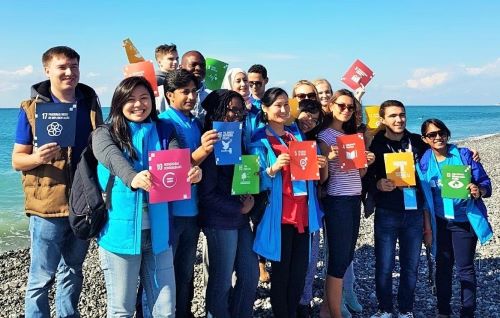
UN Volunteers stand together with their awards.

“Being on this year’s jury for the award has been an eye-opener for me. I read so many inspiring stories of how UN Online Volunteers are engaging in the Sustainable Development Goals through the Internet – volunteering their skills, time and commitment from wherever they are to seek to end poverty, reduce inequality, and help keeping people safe. On this International Day of Happiness, the winners of the 2017 Online Volunteering Award demonstrate how volunteering is a vehicle for innovative change and contributes to a more inclusive, equitable and balanced approach to sustainable development, happiness and the well-being of all peoples.”  

Executive Coordinator: Olivier Adam

The United Nations Volunteers (UNV) is a website-based volunteer program. It connects local needs to worldwide volunteers who have the resources and talents to meet those needs. The website empowers those who have a voice and dreams to put them to great use. Many new programs have been implemented thanks to the knowledge and power of local people.

A main task any volunteer-based organization has is to keep volunteers engaged. This is a great example of recognizing the hard work and achievements of the volunteers. Awards and recognition help the volunteers to feel seen and appreciated. The UNV names the team and the members within the team and gives them credit for what they created. Honoring the volunteers online not only provides public acknowledgment of the volunteers’ work, but also allows others to see their innovations.


Example 2: Johanna Woodchild discusses volunteer recognition

Johanna Woodchild of the Greenville County Chapter of the American Red Cross in South Carolina knows the importance of recognizing volunteer service. She works with more than a thousand volunteers, and celebration is a year round business for her. From Christmas drop-ins to recognition dinners, Johanna is always organizing ways to thank volunteers and allow them to meet, have refreshments, and keep in touch with each other.

One way for Johanna to recognize her volunteers is to offer recognition ceremonies. That is what Johanna was doing when we talked to her. She was expecting a couple hundred people to show up the annual business meeting and recognition dinner. "We invite all of our volunteers, and there are several steps that go along leading up to this. In the past, we've had pretty interesting entertainment, and we encourage the volunteers to bring their families. It's a volunteer committee who selects what were going to do and what the menu is and so on. This year they decided to dispense with outside entertainment and have a huge icebreaker game, because they think we are too isolated in our services and need to meet Red Cross volunteers that work in other areas of service. We don't have very many expenses regarding the place (they had it in gyms churches, cafeterias), or the food (donations), or the preparation of the food. The teen volunteers serve the food. Most of our expense comes in the awards. I believe we spent twelve hundred dollars last year. Some of them are large framed certificates, and we give quite a few plaques."

"We have so many really dedicated and hard-working volunteers. For any of them to be singled out as being the epitome of what a Red Cross volunteer should be is something that means a lot to them," Johanna said. "I talked with two volunteers recently about their awards, each of them had won the Outstanding Male Volunteer of the Year Award. One of the gentlemen has his plaque on his wall in such a place that as soon as you open the door to his apartment that is the first thing you see. The other gentleman, who is a retired businessman who has served on many boards, is involved with us through a Learn to Swim program. He centered [his plaque] over his living room couch. So, the award itself is very prestigious, and it's a very high honor."

To recognize its volunteers, the chapter gives away various types of awards: competitive awards, top male and top female volunteer, diversified service volunteer, and new outstanding volunteers. Awards to organizations and companies are also given. The number of awards varies from eight to 50. "We give pins, year pins, (five, ten, fifteen, twenty) to volunteers who have been with us those numbers of years. This year, I was just going over the list, we have 66 people who have been active volunteers for five years. That's always the largest category but it's never been that large before. We give award recognition for people who have given the most hours in disaster services. Last year's winner was 1,452 hours. Armed Forces volunteers are also given certificates in recognition of hours of service given. We're retaining people better, and that's real encouraging."

Recognition goes beyond her organization's frontiers, Johanna said. "It's an ongoing process, and we nominate our volunteers for awards outside of Red Cross. For example, the Jefferson Award is a big award that is given to five people in a three to four county area and, in the past five years, we've had three winners. In the past two years our youth volunteer has been the winner of the Youth Volunteer of the Year Award, given by "Volunteer Greenville" (an arm of the United Way) and the J.C. Penny Co."

Johanna understands that recognizing and thanking volunteers is one of the most important ways to keep them. "One of the big things is the awards," said she. "We try to get people recognized in newspapers and on TV. Every time there's a disaster that's away from here, one that is a national level disaster, the local TV stations come over and film our national level volunteers as they drive away in the emergency response vehicle. That's neat, to see us on the news. People feel valued. We also have a newsletter that comes out four times a year. It's very folksy and it highlights volunteers and tries to educate the volunteers about what the different areas do. We're trying to build a family, so we all need to know who each other are, and what we are doing."

Example 3: Thank you note

Johanna also sends a thank you note to volunteers every year. One year, the following text was on the cover.

Our Red Cross Chapter is like a large extended family. Each service area represents a smaller, nuclear family. We don't see each other on a day-to-day basis, and are not even aware sometimes of what the other members of our family, the other services of our chapter, are doing. Our annual recognition dinner is our family reunion. We greet, we hug, we applaud the work that each of us does.  We celebrate the enormous impact for the good that our family, all 1,200 of us, does for the Greenville community, for America, and for the world. Thank you for being a vital part of that celebration! Thank you for making our family reunion such a special event - an event that we will cherish always.

On the inside of the card, Johanna included a personal message.

PowerPoint
mloewenstein Thu, 12/13/2012 - 09:36
File Upload
A PowerPoint presentation summarizing the major points in the section.
Section 3. Recognizing Goal Attainment
mloewenstein Thu, 12/13/2012 - 09:37
Main Section
mloewenstein Thu, 12/13/2012 - 09:38
  • What kinds of goal attainment should you recognize?

  • Why recognize goal attainment?

  • Whom should you include in the recognition of goal attainment?

  • When is the best time to recognize goal attainment?

  • How do you recognize goal attainment?

As the end of its first year approached, the North Quabbin Community Coalition had become a going concern, with over 60 people having attended meetings and served on task forces. Funding for an Information and Referral service - one of the area's greatest needs - had been proposed and obtained, and planning for new initiatives was under way. Now it was time for the Coalition to mark the occasion, and to tell the community of its success at achieving its first-year goals.

After some debate, the Steering Committee decided on a year-end luncheon, and put together a subcommittee to organize it. The subcommittee found a local caterer whose prices were reasonable, set a modest ticket price for the luncheon that would pay most of the costs, and worked out a method by which people who couldn't afford the charge could nonetheless attend without embarrassment. In addition to invitations to everyone on the Coalition's mailing list, it sent out press releases and invitations to the media.

The luncheon featured a keynote speaker, short addresses by state and local politicians, awards for exceptional community service and for contributions to the Coalition's first-year successes, and, most important, a celebration of the fact that the Coalition had reached its initial goals.

When an organization or initiative achieves a goal it has set for itself, it should call attention to the fact. It's important for the community to know that it's home to an effective organization, one that can do what it sets out to do. And it's important for the organization to recognize and congratulate itself for its accomplishment, so that it can prepare to move on to the next one. This section, part of a chapter about the celebration of work well done, focuses specifically on marking goal attainment. It will help you think about what you want to achieve by highlighting success, and how to go about doing it.

What kinds of goal attainment should you recognize?

There are a number of different types of goal attainment that are worthy of recognition. They include organizational time milestones; organizational accomplishments; specific events; and goal attainment by individuals or teams in the organization.

Organizational time milestones

A major goal, especially of community -based and grass roots organizations and initiatives, is survival. For such organizations, getting through the first year is a big hurdle. Only about 15% make it through their first five years, and only about 2% are still around after ten years. Reaching an anniversary, particularly a significant one, is a goal in itself, and should be acknowledged.

For example, one adult literacy organization held an open house on its first anniversary, and invited both the press and all the learners, staff, and volunteers who had participated. In subsequent years, there was always a party to celebrate the anniversary, and a news item in the local paper outlining the program's successes and growth over the years.

On its tenth anniversary, the organization staged a party, inviting everyone who'd been involved over the course of its history, as well as the media. In addition to pure celebration, a scrapbook of the organization's history - press clippings, snapshots, fliers, brochures, copies of grants, etc. - was displayed and ultimately given to the founders, and key people in the organization's development were recognized and formally thanked.

The celebration served several purposes: it provided great publicity for the organization; it alerted the community to the fact that the program had survived for ten years and had achieved wide respect; it honored those who had been responsible; it made even new learners and staff members feel that they were part of something special; and it allowed those with a longer organizational connection to celebrate their work, and feel that their efforts had been worthwhile.

Organizational accomplishments

Some examples of goal attainment that are worth making a fuss over:

  • Reaching service goals. These goals are usually stated in terms of specific results that the organization had aimed at (teen pregnancy down 15%, e.g.), but may also encompass the number of people served, or the provision of a new type of service.
  • Reaching membership goals. This is usually expressed as a number, but it could also involve qualitative measures, such as including more youth or residents of a certain neighborhood.
  • Reaching fundraising goals. Local United Ways often erect a sign (usually an image of a thermometer) in a prominent place - in front of City Hall, for example - on which they can record the level of contributions as they come in, with the goal clearly marked at the top. When contributions reach the goal, it's obvious to everyone, and some acknowledgment is placed on the sign.
  • Receipt of a particular grant or other funds. A new state appropriation for the field or for a particular organization, a foundation grant, a large individual donation, or a corporate or other donation from the community may all be goals whose realization should be celebrated.

In Massachusetts, when the state begins a new grant program, it often stages ceremonies for the awarding of the first grants. State officials - sometimes even the Governor - go to organizational sites with oversized checks for the amount of the grant, and present them to organizational representatives amid the popping of newspaper photographers ' flashbulbs and the lights of TV cameras.

  • Awards or other recognition of the organization from outside sources. While these may not have been specific organizational goals, they often mark important milestones in organizational acceptance and development, and can be seen as goals that any organization strives toward.

Important events

These events themselves often mark the attainment of an organizational goal. The signing of a treaty among rival street gangs, an adult literacy or job training graduation, or the opening of a local clinic or mental health center may all represent the fruit of years of work with that goal in mind. It's time to tell the world that the goal has been reached.

Attainment of specific achievements by staff members or other significant people in the organization

Examples of achievements to recognize might include:

  • Significant anniversaries (ten years as director; five years as a volunteer)
  • Receipt of a higher education or graduate degree
  • Election to offices in or awards from a professional organization
  • Promotion within the organization

Why recognize goal attainment?

There are reasons for celebrating reaching your goals that touch on both the external and internal needs of your organization.

  • Public recognition of goal attainment can provide your organization with good public relations. Informing the community that you've reached specific goals can do several things for your organization:
    • Provide general information, in reminding the community of who you are and what you do
    • Attract new participants, volunteers, or contributors
    • Show the community that you're effective - that you get done what you set out to do
    • Draw attention to the needs of your target population
    • Highlight your organization's need for volunteers or contributions
    • Explain your issue to the community
  • Public or private observance of goal attainment can provide staff members and volunteers with motivation.
    • Realizing they've reached an important goal makes people proud of their work.
    • Explicit or implicit commemoration of goals achieved recognizes and praises staff and volunteers for what they've accomplished. (Explicit is better.)
    • Calling attention to reaching goals reminds staff and volunteers that success is possible, and energizes them for future work.
    • Celebration in general is important. Health and community service work is hard and often frustrating, even depressing. You should seize chances to celebrate, both to provide a break from routine, and to remind people why they do this work.
  • Celebration of goal attainment contributes to and sustains the organization's culture, history, and myth.

Every organization has its own culture - the way in which it sees itself and the world, shaped by its philosophy and personalities - its own history - the facts of its founding and development - and its own myth - the organizational and personal stories that provide its image of itself and its work. These three elements endow the organization with its identity and continuity. They are constantly added to as the life of the organization plays out, and are either sustained or changed by the realities of that life.

  • These occasions mark important achievements in the organization's history and leave an impression so people remember those achievements.
  • Anecdotes that stem from these occasions help to build the organizational history and myth. Anecdotes from the past that are referred to on these occasions help to maintain that history and myth.
  • Inclusion in these celebrations helps to initiate new staff, volunteers, members, and/or participants into the organizational culture and incorporate them into the history and myth so they feel they belong.
  • A public celebration makes the story of the organization public, and includes the community in it.

Whom should you include in the recognition of goal attainment?

There are many different ways to acknowledge that you've reached a goal (see below). Whom you invite to witness or participate in your recognition depends upon which way you choose. In some cases - a simple news release to announce a milestone reached, for instance - you won't invite anyone. In others, you may want to keep whatever you do within the organization. In still others, you may invite the whole community.

If your purpose has to do with the internal workings of the organization, you probably want a private celebration. If your purpose has more to do with public relations and informing the community, then your recognition should be as public as possible.

Internal recognition

Don't overlook an announcement over the e-mail system or a memo placed in people's mailboxes, but if you're planning something more, you have some choices about whom you might ask.

From the narrowest to the widest range, possible invitees are:

  • The staff members directly responsible for reaching the goal.
  • All staff. This includes all every staff member, with no distinctions. Don't assume that the clerical staff will answer phones while a party or presentation is going on. Let the machine get it, or find someone else to cover.

"All staff" assumes a relatively small organization. If you work in a university, a large hospital, or other organization with hundreds of employees, in most cases you'd involve only the particular department or unit whose goal was met. Within that group, however, inclusiveness should still apply

  • Volunteers. They may be at the very heart of reaching this goal. Even if they're not, you might want to include them, especially if they're considered an integral part of the organization.
  • Participants or beneficiaries of service. If you provide services, you may want to include those who take advantage of them. Without them, after all, you 'd have no goals to strive for, and many of them they may be as much a part of the functioning of the organization as staff members are.
  • Board members. Involving your board members helps to increase the morale and cohesiveness of all involved in your effort. It might also provide board members with more insight into your achievements, helping them become better advocates for the organization or initiative.
  • Members, if you're a membership organization. Especially if members' financial or other contributions helped to achieve this goal.
  • Supportive officials and community members, especially if they were instrumental in this accomplishment.

Public recognition

For some sort of public ceremony or celebration, you'd probably start out inviting all or most of the people above, and adding some or all of the following:

  • Community officials. This includes all appropriate community officials, even those who have been less than supportive in the past. This may be a chance to gain their support, or at least their good will. Never pass up the chance to create an ally.
  • Specific community leaders, depending upon the event. If you're officiating at a clinic opening, for instance, logical guests would be the hospital director, members of the medical community, and the Board of Health, as well as those business leaders and clergy who sponsored the idea and helped make it happen.
  • Other community members who contributed to the effort.
  • The general public. You may want to have an open celebration, rally, or other event to which the whole community is invited.
  • The media. The media should be invited to, or at least officially informed of, all of these events, even if the events themselves are kept within the organization. You want publicity for every good thing your organization does.

How you want to involve the media depends upon the size, atmosphere, and significance of the event. If it's an internal affair, you might just take your own photograph and send it out with a news release about the accomplishment. (Editors, especially on small newspapers, often love to get press releases with photographs and well-written copy.) If you're staging a large public event, work to get representatives of all the media there - TV and radio as well as newspapers. Persuade them to interview the organization's director, participants, the community member who started the campaign that led to this achievement, etc. You can't have too many stories about what your organization does and how effective it is.

When is the best time to recognize goal attainment?

In general, it's best to recognize goal attainment as close to the actual achievement as possible. If the achievement is a specific event that you know about in advance - an anniversary, or the opening of a new clinic, for instance - the event itself can double as the recognition, so there's no separation at all. When the achievement can't be perfectly anticipated - the awarding of a grant, the release of a report showing that your program is highly effective, successful fundraising over time - try to commemorate it as soon after it's known as possible.

If there's too much time between the achievement and its recognition, the significance of the recognition is weakened, and much of the value to the organization may be lost. The media won't be as interested in the story, the people who actually accomplished reaching the goal may no longer feel connected to the work that led to it, and the community won't find it as immediate or compelling.

How do you recognize goal attainment?

So - you know why it's a good idea to mark the fact that you've achieved an important goal, you know whom you want to invite, you have a date and time picked out. Now, what are you going to actually do for this recognition? Before you get specific, it's helpful to make a few decisions:

Decide on your purpose in recognizing the attainment of this goal

There are really three possibilities here:

  • Purposes related to the internal working of the organization, such as:
    • Acknowledging the hard work and achievement of staff and/or volunteers
    • Fostering a sense of ownership of the organization and its work among staff and/or volunteers
    • Creating an organizational marker to indicate you've reached a particular point in the organization's development
    • Building organizational unity
    • Pure celebration
  • Goals related to the community and other elements outside of the organization, such as:
    • Public relations - it's important to keep reminding the community of your existence and of what great things you're doing
    • Recognition of your organization's work by the community
    • Thanking the community for help and support
    • Creating an opportunity to get the support of influential people in the community
    • Building organizational credibility
  • All or some combination of the above

Decide whether you want a public or private recognition - or both

  • Private recognition. If your purposes for marking the occasion are specifically internal, or if you want to celebrate just with the people who made the achievement possible, some sort of private observation is probably best. The more emotional the occasion, the more likely it is that a private commemoration is appropriate. It will forge stronger bonds, and be more meaningful to those attending if it's not diluted by people who have little or no connection to the work.
  • Public recognition. A public ceremony or event may result in some of the same internal results as a private one, but is most appropriate if your intent is good public relations, public recognition for the organization and its work, and/or giving the community a stake and a sense of participation in the organization.
  • Both. Having some sort of large public recognition, with a separate, private one at a different time, may serve both the internal and external purposes of the organization.

Decide what kind of commemoration you have the resources for

If you're going to do anything more than a press release, you'll need at least some resources. The most obvious is money, but there are other possibilities as well: donated supplies, personnel, specific skills (entertainment, audio-visual skills), space, and equipment (a sound system, for instance). In general, a large event will be expensive. If you have, or have access to, some of these other resources, you may be able to pull one off without much money. If not, you're probably better off considering something more modest.

Decide on the tone you want to set

Once you've decided on your purpose, whether you want to go public or keep it private, and what you can afford, you should have a pretty good idea of what form your celebration might actually take. It could be extremely modest - a simple press release or other announcement to let the community know you've met a goal - or as flashy as a big barbecue with the public invited.

An event can be formal or informal, informative or just fun (or both), upbeat or sober. What kind of event you choose and how you structure it will determine how both those in the organization and those in the community react to it. Two important considerations in this regard are whether food will be part of what you do, and what activities comprise the event itself.

  • Food and drink. Whether your event is public or private, the presence or absence of food may be an important element. Often, the lack of food tells people that the occasion is serious. A catered dinner is more formal than a picnic or a barbecue or take-out from the pizza place or Asian restaurant next door, but any of them will make the occasion more festive. Sharing food is a time-honored way of bringing people together in almost all cultures, and it tends to break down barriers.
    • On the other hand, food can take the focus off the reason for the event. The moment at which you make it available might be crucial: you might want to make sure that public acknowledgements or other pieces of information are communicated before the food and drink come out.

If you have the resources to host a large public picnic or barbecue, it's a good idea to figure out how many people you can accommodate and limit it to that number. You can, for instance, make (free or not) tickets available at several locations, and limit the number of tickets to the number you want to feed. It's important to match the number of people with the amount of food. A lot of people going hungry won't be very festive, and will make your organization look bad. A lot of food left over is wasteful, and will cost you, either in money that you could use for your work, or perhaps in good will, if the food was donated.

Whether or not to include alcohol is a question worth asking. Many health and human service programs serve participants who are current or recovering alcoholics, and it's unfair (and unwise) to put them in temptation's way. A public event is likely to include minors, and it may be hard to police who gets served. Someone may drink too much, and then get into an accident driving home. Your organization's philosophy or purpose may be such that serving alcohol makes you look hypocritical. For all these reasons, it's often wise to make events run by your organization - even if they're limited to staff and volunteers - non-alcoholic.

  • Activities. Is this purely a celebration? If it is, then it will probably be informal. There may be no planned activities, or only activities that are fun - eating, games, dancing, music. A celebration, public or private, might also entail recognition of specific staff, volunteers, or community members who made it possible for the organization to reach this goal.

Recognition in this situation could mean simply that - a public introduction and thank you - or it could involve an award, a gift, or even a "roast" of the person in question.

  • Organizational stories, a scrapbook, news clippings, and other pieces of the organization's history would also fit into a celebration. They help, as described above, to cement the organization and give it continuity.
  • If the event is meant to provide information to the community and/or publicity for the organization, activities will probably span a much broader range. They may include presentations or speeches by some of the organization's participants or target population, by leaders of the organization or the community, by celebrities, or by local or state officials. Once again, recognition of individuals might be an element of this type of occasion.
  • A film, video, or other audiovisual display, a performance, a ceremony, or a parade may also serve to draw both public and media attention to the organization's mission and accomplishment. In some cases, a symbolic action may be appropriate (bursting a pinata to represent "exploding myths about Mexican-Americans," for instance).

Decide on a specific way to recognize goal attainment

What will your event actually consist of? There are as many possibilities as there are goals and people planning recognition of them. Some of the most common are:

A party or meal for staff, volunteers, and/or others connected to the organization.

It could be as small as the few people who actually worked on reaching the goal being celebrated, or as large as a picnic or barbecue in the park for 100 people, depending on your resources and purposes. Besides the obvious - get together at someone's house and crank up the stereo - there are some specific possibilities:

  • A themed party. The theme could have to do with the goal you've achieved (see the box above about the 10th anniversary celebration of the adult literacy organization), or simply be a way to break the ice and have a good time (games, movies, etc.)
  • A dinner dance, with a live band or DJ
  • A sit-down dinner, either in a restaurant, catered, or prepared by someone in the organization
  • An informal buffet, either pot luck or take-out
  • A picnic or barbecue

Other types of in-house recognition. Depending upon the importance of the goal you've reached, and the resources you have available, you may want to stage a smaller or different sort of recognition.

The following will give you a start:

  • An after-work or during-work gathering, with snacks or dessert
  • An in-house awards presentation, or another type of ceremony specifically recognizing those who contributed to reaching this goal
  • A (one-day) hike, canoe trip, or other outing
  • A day or half-day off for those who worked overtime to make this achievement happen

An occasion designed to convey information and/or bring you publicity. A large public celebration, like the barbecue in the park, could attract attention, but if you want to make the community more aware of what you do and how well you do it, there are better choices. One assumption here is that you will do everything you can to assure the presence of the media.

  • News release. This is the least you can (and should) do to let the world know that you've been successful. It costs nothing, but it usually goes only to newspapers, and the newspapers you send it to may not run it. In smaller papers, it's more likely to run if you can include a picture.
  • News Conference. A press conference also costs nothing, but takes more groundwork than a press release. Usually, it means you'll have prepared some things to say, and anticipate that the members of the media will ask questions as well. You may have a program, in which you introduce some program participants or members of the target population, staff members who worked on the project you're recognizing, or others who've had a significant role in reaching this goal.

If you've been doing your homework with the media - establishing and maintaining relationships with reporters, editors and others at all or most of the local media outlets - you should be able to use attaining your goal to arrange stories and interviews. Radio interviews, if they run on local shows that people listen to, are particularly good for getting your message out to those who might not normally hear it. You can often suggest questions to the interviewer, or even tell her what areas you'd like to discuss, thus making sure that you tell the audience what you most want them to know.

  • Reception. A reception can be invitation-only or open to the general public. In either case, it generally involves some refreshments, and serves as a vehicle for the announcement of your organization's achievements. You might want to incorporate a program of speakers, entertainment, or other elements to focus people's attention on your organization and its success. In addition, it gives you a chance to meet or renew your acquaintance with members of the community and draw them into the circle of your organization.
  • Public ceremony. The opening of a new facility or the beginning of a program are occasions that are often celebrated by some sort of public ceremony. A ribbon-cutting or a symbolic lifting of a shovel of earth, accompanied by speeches and photo opportunities, and sometimes followed by a reception, is a familiar occasion for politicians and the media. Such a ceremony can serve to draw attention to your organization, and can be used to explain the nature and importance of the issues you work with. It's also an opportunity to invite local officials and other key people to show their support.
  • Rally. Especially if your goal was highly public and involved the work of many community supporters, you may want to hold a rally to serve several purposes: to celebrate and advertise your accomplishment; to thank supporters for the work they did; and to fire them up for the work still to be done. Organizing and controlling a rally takes some work, but it has the advantages of being highly visible and of emphasizing the amount and enthusiasm of your public support.

A public celebration

A celebration of this kind is the public equivalent of the in-house celebration described above. It can take the form of a public party, perhaps featuring a local band or name entertainer; a picnic or barbecue in the local park or playground; a block party; or practically anything else you can think of or afford. Or it can be much more specific to the goal itself, focusing on the achievement. Depending upon your resources and the character of the organization and the goal, you have a variety of choices as to how to arrange things.

  • You can provide food, either by buying it or getting it donated.

A community-based organization developed a relationship with the owner of a local supermarket. He would donate food for celebrations and events as a "starter." The organization would then ask other markets, mentioning the supermarket that had already donated, and assuring them that they would, of course, acknowledge food donations publicly. The other markets, not wanting to look as if they didn't support community organizations, would almost invariably agree to donate as well. As a result, the organization always had plenty of food for its events, none of the markets had to donate a great deal, and all were recognized as generous, community-minded businesses.

But keep in mind that typically businesses will only continue to be generous if they're not asked too often, probably not more than once or twice a year. And second, always, always acknowledge donations of food or any other gift by businesses as loudly and publicly as you can. You owe it to them, and it will be good both for their business and for your future relationship with them.

  • You can provide food at a small cost (i.e. charge people only what the food costs you)
  • You can ask people to bring food for a community pot luck
  • You can charge (or not charge) food vendors to set up at your event. At the annual Lowell Folk Festival in Lowell, Massachusetts, for instance, community organizations raise funds by providing a variety of ethnic foods at reasonable prices.
  • For an outdoor event, you can ask people to bring their own picnic, while you provide structure, games, balloons, entertainment, hay rides, etc.
  • You can pay for professional entertainment
  • You can ask professional entertainers to donate their services
  • You can seek out good amateur entertainment. There are many people who perform at professional or near-professional levels for their own satisfaction. Almost every organization seems to have, or to know, at least one.
  • You can present entertainment that's specific to the occasion. Staff members or volunteers might perform a skit about the organization, or about reaching the goal you're celebrating, for example.
  • You can structure a situation where people create their own entertainment. Games, sports, sing-alongs, folk or line dancing, etc.
  • You can rent movies or computer games, or provide toys for children to play with while adults socialize.

Other types of public celebrations might involve the goal itself. If you've finally assured the protection of an untouched area from development, for instance, an open-to-the-public hike or birding expedition might be an appropriate recognition of your accomplishment. The restoration of a historic building could be celebrated by a tour. A clinic opening might be recognized by a free blood pressure and cholesterol screening.

Make sure that your celebration achieves its goal

The content and structure of whatever sort of recognition you undertake is limited only by your imagination and your resources. What's really important is that you achieve the ends for which you staged the recognition in the first place.

In general terms, those are likely to be:

  • People within the organization - staff, volunteers, and others - feel good about their achievement, and feel that they've gotten some credit for their hard work.
  • The public has a better understanding of and respect for your organization and its work.
  • The community knows that you've achieved this particular goal, and also understands that that achievement doesn't mean that your work is done.
  • Everyone - both inside and outside the organization - is ready to support your work toward reaching your next goal.

If your recognition has any or all of these effects, then - regardless of what form it takes - it's done its job, and so have you.

In Summary

When you've reached a goal that your organization or initiative has worked toward for a long time, or that acts as an organizational milestone, it's important to recognize that achievement. In the community, recognition increases public understanding of your organization and its work, and helps to establish its credibility. Within the organization, such recognition helps to build commitment and to provide motivation to staff and volunteers. In addition, recognition adds to and maintains the organizational culture, history, and myth.

Whatever type of recognition you opt for, you should include, at the very least, those involved in accomplishing the goal. From there, depending upon your purpose, you might invite other or all staff and volunteers, others significant to the organization, key officials and community leaders and members, members of the target population, or the general public. Recognition should take place as close to or as soon after the actual goal attainment as possible, so that its effects aren't dulled by time.

The actual form of the recognition you stage is limited only by your creativity; your purposes for doing it; the resources you have access to; and the tone you want to set. Your event may be as low-key as the issuance of a press release, or as high-profile as a huge public rally with the mayor, or even the governor, as the keynote speaker. In between are private and public celebrations - with food and, perhaps, entertainment - public receptions and ceremonies, and events organized specifically around the goal achieved.

The basic purposes most recognitions of goal attainment hope to achieve are credit and increased motivation and commitment for staff and volunteers, and increased knowledge of and support for your work in the community. If whatever form of recognition you choose can accomplish these, it's been successful.

Contributor

Phil Rabinowitz

Resources

Online Resources

The article A Denver Boy Scout troop celebrates 100 years describes how one Boy Scout troop used the celebration of a very important anniversary to involve previous members and increase enthusiasm among current members.

Energize! Inc has an area where organizations can share their ideas for volunteer recognition.

“Exploding the Big Banquet Theory of Volunteer Recognition: An Incendiary Analysis,” by Ivan Scheier is an essay that argues for not holding large formal banquet-type recognition ceremonies, but replacing them with more informal occasions and day-to-day recognition and appreciation.

The Minnesota Nonprofit Awards are presented by two nonprofit associations, the Minnesota Council of Nonprofits and MAP for Nonprofits (a management assistance resource.) Awards are offered in innovation, excellence, and other areas.

The Rainforest Alliance Releases New Verification Mark to Recognize Achievements in Sustainability describes how The Rainforest Alliance developed a way to recognize groups that have reached sustainability milestones.


Checklist
mloewenstein Thu, 12/13/2012 - 09:39

What kinds of goal attainment should you recognize?

___Organizational time milestones

___Organizational accomplishments, such as reaching service goals, reaching membership goals, reaching fundraising goals, the receipt of a particular grant or other funds, and organizational awards or other recognitions

___Important events

___Achievements by staff members or other significant people in the organization, such as significant anniversaries (ten years as director; five years as a volunteer); receipt of a higher education or graduate degree; offices in or awards from a professional organization; or promotion within the organization

Why recognize goal attainment?

___Public recognition of goal attainment can provide your organization with good public relations

___Public or private observance of goal attainment can provide staff members and volunteers with motivation

___Celebration of goal attainment contributes to and sustains the organization's culture, history, and myth

Whom should you include in the recognition of goal attainment?

___If you're recognizing goal attainment only within the organization, you include some or all of the following:

  • The staff members directly responsible for reaching the goal
  • All staff
  • Volunteers
  • Participants or beneficiaries of service
  • Board members
  • Members, if you're a membership organization
  • Supportive officials and community members

___If you're recognizing goal attainment publicly, you include, in addition to those above, some or all of the following:

  • Community officials
  • Specific community leaders, depending upon the event
  • Other community members who contributed to the effort
  • The general public
  • The media

When is the best time to recognize goal attainment?

___As close to the actual goal attainment as possible.

How do you recognize goal attainment?

___Decide on your purpose in recognizing the attainment of this goal

___Decide whether you want a public or private recognition, or both.

___Decide what kind of recognition you have the resources for.

___Decide on the tone you want to set

___Decide on a specific way to recognize goal attainment, such as:

  • A party or meal for staff, volunteers, and/or others connected to the organization
  • Another type of in-house recognition
  • An occasion designed to convey information and/or bring you publicity
  • A press release
  • A press conference
  • A reception
  • A public ceremony
  • A rally
  • A public celebration
PowerPoint
mloewenstein Thu, 12/13/2012 - 09:40
File Upload
A PowerPoint presentation summarizing the major points in the section.
Section 4. Holding Awards Ceremonies
mloewenstein Thu, 12/13/2012 - 09:41
Main Section
mloewenstein Thu, 12/13/2012 - 09:41
  • Why should you hold awards ceremonies?

  • When should you present an award ceremony?

  • How do you organize and conduct an award ceremony?

Somebody in your initiative has been doing an excellent job and has just achieved a professional victory. Everybody knows about it, and you have all congratulated your colleague for the good work. But you'd like to do more; you'd like to publicly recognize that person's achievements and accomplishments. After all, this person is an example for everybody on the team.

It's time to hold an awards ceremony. Presenting awards at a special ceremony is a good way to honor staff members and volunteers who have shown outstanding commitment and accomplished big things.

Achievements that deserve to be rewarded include many different types of victories. A successful international fundraiser is an achievement for the person in charge of it, and preparing cookies is an exemplary accomplishment for Girl Scouts. But no matter how big the success, all exemplary accomplishments and achievements have in common a great deal of determination, hard work, and commitment.

In this section, we'll be discussing how your organization can conduct awards ceremonies to recognize special achievements. We'll talk about why you should publicly present awards for unusual accomplishments, and when you should think about conducting an awards ceremony. Finally, we'll take you step-by-step through organizing a ceremony that will leave your awardees feeling recognized and your entire organization energized.

Why should you hold awards ceremonies?

There are many good reasons to present awards for outstanding achievements. For example:

  • An awards ceremony makes people feel that their work is valued. It shows approval and gratitude for each person's good job, and it makes people aware that good work will be rewarded. It shows others, such as the general public and other staff members, that you're aware of outstanding accomplishments. Recognition motivates others to strive for excellence and we all benefit from it.
  • Recognition motivates people. For instance, if a social worker receives an award for an outstanding performance in the outreach program, other social workers will strive to do better also, so that they too can be recognized. Being rewarded for doing well is one of the biggest incentives anyone can receive.
  • An awards ceremony or activity is a chance for celebration and reflection. People will get a break and a party, getting their minds away from everyday work, allowing them to see the bigger picture. At the same time, they will have the chance to discuss the importance of their work and the achievement of the person being awarded. Gathering and sharing experiences is a very powerful means of encouragement.

When should you present awards for exemplary accomplishment and achievement?

How often and under which circumstances your organization presents awards is entirely up to you. Some organizations hold an annual awards banquet to recognize outstanding work; others present awards only occasionally, and only in response to truly outstanding achievements.

You may choose to give an award during another event not designed specifically for this purpose. For example, if your organization has an annual board of directors meeting, you may wish to present one of the directors with a special award during the meeting. Planning for this type of presentation mainly involves incorporating the presentation into the agenda of the event.

Who should receive awards?

Deciding who receives awards may be done by an individual or a committee. In many organizations, more routine awards, such as plaques for 5, 10, or 25 years of volunteer service, are given out at ceremonies alongside larger awards for outstanding acts of service. However your organization chooses to do it, it's important that you be fair and consistent. For example, if you present an award to one person for recruiting 100 new volunteers to your program, you can't neglect the next person who does the same thing!

Awards ceremonies are also a great way to recognize people such as volunteers without whom an organization would be unable to run. Volunteers' accomplishments may not always be "extraordinary," but their value to the organization might be such that recognition and reward is important. For example, the Lied Center theater at the University of Kansas holds an annual award-giving ceremony for its ushers. All the ushers there work on a voluntary basis and without their help, the theater performances would not run as smoothly. The Lied Center feels that recognizing its volunteers is a way to show them how it appreciates their help and recognizes their achievements. Although their achievements may not be mark-setting, their work is essential.

How do you organize and conduct an award ceremony?

When we think about awards ceremonies, the Academy Awards come to mind. Not all awards ceremonies have thousands of guests gathered in a gala atmosphere, but all award ceremonies surely have their stars and memorable moments. Usually, there's more to an awards presentation or activity than meets the eye. There are many details that must be arranged beforehand, without which this rewarding opportunity may not be as successful as you want it to be.

Of course, an awards ceremony isn't only speeches. Keep it going and keep it fun. An awards presentation must be entertaining; at the same time, it should remind all participants of the significance of the occasion.

Keep in mind that you don't have to be "formal" to deliver an award. Formal ceremonies are certainly a very common way to present an award, but there are other possibilities. A concert, a play, a picnic, a party, a movie, or a press conference might be more appropriate or more to the liking of the person being recognized. Most of these activities involve the same kind of planning and execution as a formal ceremony.

Organizing the awards ceremony

One of the best things in life is when an awards ceremony works; the speakers are good (and nobody canceled on you), the ceremony is upbeat (and never boring), and the one(s) receiving the award feel really recognized (and not just fake-happy). But for everything to run smoothly you need to put effort into planning the ceremony. There are many details, and they are all important. Depending on the size and what kind of event you have in mind, you might want to delegate chores to a committee or to a "point person" who will recruit helpers. It can be dangerous to take the responsibility all on yourself, because the organizing of an event can become overwhelming.

The planning of a presentation goes hand in hand with the budget. Are you going to have a fancy reception or not? What kinds of awards are you going to give -- certificates, gifts, recognition plaques? Who are you going to invite? Are you going to bring a special keynote speaker, or are you going to do the presentation yourself? All these details should be planned in advance so that there are no unhappy surprises during the ceremony.

Elements to consider when planning an awards ceremony

Money

First of all, decide on your budget. How much you spend on an award presentation can vary a lot; be sure you can afford what you're planning. If your initiative has a lot of resources, you may have a big budget to spend on a ceremony. On the other hand, smaller organizations have to be creative and make do with a limited amount of money. Deciding your budget will determine the menu, the number of guests, the venue of the event, and other details that involve spending money.

Location

Before planning anything, decide where to hold the ceremony. Think about what kind of event you're going to hold and then try to find a location to match. Before choosing a place, take into consideration all the next items so that you don't limit yourself choosing the place before determining what you really want. Does your company have a recreation center? A presentations room? Will you need to rent a room somewhere else? Are you going to serve food? What do you need in the room? Tables? Podium? Hook-ups? A kitchen? How big does the place have to be? A big hall will look empty if there are only a few people in it, and a small one will limit how many people you can have.

Type of award

They say that awards should fit the action being recognized. It also should fit the person and the occasion. For some, a donation to a particular organization may be most appropriate, for instance, volunteers for an AIDS project may want their award to be converted into a contribution to the project. For others, a new title or job definition will be the perfect award. What sort of symbol you choose says a lot about what and whom you are recognizing.

Here are some types of recognition you might consider:

  • Pins
  • Statuettes
  • Certificates
  • Prizes
  • Plaques
  • Framed recognition citations
  • Gifts
  • A promotion
  • Complimentary tickets

Something else to have in mind is the surprise element. Is the recipient going to be told beforehand that he is going to receive an award? Surprises can be fun, but you don't want the honoree to have a heart attack from shock before reaching the podium to accept the award.

Number of guests

So, is this going to be a blockbuster, everybody's-invited type of party, or an invitation-only, intimate awards ceremony? You need to consider the immediate guests and their guests (family, friends, significant others?)

Food

Ceremonies are fun, but people can get cross if there isn't anything to nibble on. You'll want to serve some sort of refreshments. The size of the event and the resources the facility offers will help determine what kind of food you'll serve. You're not going to serve a sit-down dinner someplace where there's no kitchen

When considering food for your ceremony, you have two options: plan it yourself, or get help from a catering service. Doing it yourself can save money, but do you have the manpower and expertise to put on a spread for the number of people invited? Remember, you have to plan, buy, prepare and serve the food, and clean up, all of which the caterers will do. On the other hand, you're paying the caterer for a pre-established number of people, whether they show up or not. If more show up, you're out of luck.

Waiters and other support staff

Speaking of food, you'll probably need people to set up the place, serve the food, put the water glass close to the speakers, serve the guests, and clean up afterward. You may need to hire support staff to help you, or you may have to assign some people from the organization committee (if you have one) to divide the labor. You can consider hiring specialized help, such as caterers.

Tables/chairs arrangement

No matter how small the ceremony, you don't want people tripping over tables or sitting with their backs to the podium. If the ceremony is large, then you need to be even more careful. Who will sit where? Who will sit with whom? Who needs to be close to the podium? You need to consider all these questions.

Decorations

This part is fun but, beware: it can make or break your presentation. Decorating is hard work, especially if you're dealing with a large space. Your choice of decorations will depend to a large extent on the tone you want the ceremony to take; for example, silly balloons and festive noise-makers would be inappropriate for a sober, dignified ceremony. Here's a list of things you may wish to consider when thinking about decorations for a formal awards ceremony:

  • Flowers
  • Balloons
  • Bows
  • Tablecloths
  • Center pieces
  • Pictures on the wall
  • Banners
  • Posters
  • Plants
  • Candles

Key speakers

Who is going to actually present the awards? Is it going to be you? The director of your initiative? The awarded person's best friend? A nationally known motivational speaker? A choice could be made depending upon the recipient's job or accomplishment. It could be a colleague, the recipient's spouse, parent, or child. Whoever it may be, you need to contact that person in advance and to allow time for preparation. If necessary, arrange a rehearsal to fine-tune length and tone of speeches.

Order of presentation

Who is going to speak first? How are you going to start the ceremony? When will it end? At what time will the award be presented? The presentation schedule doesn't have to be followed to the minute, but you want to know who speaks after whom, so you can print a program for the guests. Also, people should know how much time they have to present their speeches and comments. If you expect everyone to take about three minutes, and someone takes 30, it can not only be boring for the audience, but it can throw off the timing of the whole event, and change the feeling of it. In general, the clearer you can be about timing, the more likely you are to get close to what you want.

Preparing your presentation

You've secured a location, arranged for refreshments, ordered the awards, and planned the decorations. But who is going to present the awards? If that job falls to you, don't worry!

Tips for a smooth, confident presentation

  • Be sure to be warm and friendly in your presentation. Remember, this is not a business presentation, so you shouldn't be too formal. You're supposed to put the audience and the awardees at ease.
  • Even if you wrote a speech, make it sound like you're saying it, not reading it. Use language you're comfortable with. You don't have to memorize the speech word-for-word, but try to deliver it from notes rather than from a full text.
    • Use simple words. Say begin instead of commence, and after instead of subsequent to
    • Use contractions - didn't, won't - to make your speech sound more relaxed
    • Use voice inflections and hand gestures
    • Use personal pronouns such as I instead of one, and we instead of you
  • Your speech should be interesting, creative and exciting. Do you know any stories about the person receiving the award that the audience at large is not aware of? Or an anecdote? Choose these stories carefully so as not to embarrass or ridicule the awarded person. If the story doesn't put the awardee in a positive light, forget about it.
  • Tell brief stories, and use quick examples. The audience is interested in knowing more about this person receiving the award: her personal life, what she does in her free time, how you met her, any story that people can identify with. Use your presentation to show the personality of the person being awarded. Demonstrate how her life is inspiring to others, and illustrate it with authentic examples.
  • Be attentive to your body language, eye contact, speech rhythm and mannerisms.

What not to do during a presentation:

  • Be pompous and monotonous
  • Be formal and stuffy
  • Be vague and complex
  • Start hyper-intense or be unenergized
  • Be unsure and nervous
  • Read, and sound like you're reading
  • Talk for a long time. This is your awardees' day, not yours.

Should you invite the press?

Media attention is usually good and desired for this type of activity. Depending upon the size and scope of the event, you probably want as much public notice as possible, both for the honoree(s) and for your initiative. For example, it may be a good idea for a gay, lesbian, bisexual and transgender rights association to invite the press when presenting an award for the association's straight allies. It would bring visibility to the group and energize allies, not to mention how glad the awardee would be to be mentioned in the press.

Audio-visual aids

If you have slides of the awarded person doing his or her work, a home video of this person that describes perfectly his or her personality, or taped testimonies of people thanking the recipient of the award, these are great ways of keeping the audience interested, bringing new perspectives to the ceremonies, and pleasing the person receiving the award. Make sure you have arranged the necessary equipment (overhead projector, slide projector, screen, TV set, stereo) if you decide to do a presentation like this.

In Summary

Finally, everything is ready for the ceremony or the activity you chose to recognize someone's exemplary accomplishment and achievement. Now you just need to relax so that you look your best for the big day, especially if you are presenting the award. Sleep well before the presentation so you feel rested and refreshed.

Recapping, here is a list of things to pay attention to when presenting an award:

  • Know why you're doing it
  • Think about what you want to do
  • Plan carefully
  • Relax - make it as upbeat as possible

Conducting ceremonies to reward outstanding achievement is a great way to show the people you work with that their work is appreciated and admired. And by letting them know this, you will undoubtedly strengthen your organization as a whole.

Contributor

Marcelo Vilela

Resources

Print Resources

Hamlin, S. (1989). How to talk so people listen. New York, NY: Perennial Library.

Quattrini, J. (1990). Successful business presentations. Blue Ridge Summit, PA: Tab Books.

Vineyard, S. (1988). Beyond banquets, plaques and pins: Creative ways to recognize volunteers. Downers Grove, IL: Heritage Arts.

Wilder, C. (1994). The presentations kit: 10 steps for selling your ideas. New York: John Wiley & Sons, Inc.

Checklist
mloewenstein Thu, 12/13/2012 - 09:42

___You understand why should hold awards ceremonies

___You know when you should present an award ceremony

___You know how to decide who should receive awards

___You know how you organize an award ceremony

___You decided on a budget for the ceremony

___You decided the location

___You chose the type of award to be presented

___You determined the number of guests

___You decided what to do about food, decorations and arrangements

___You chose people to present the award

___You know how to conduct an award ceremony

PowerPoint
mloewenstein Thu, 12/13/2012 - 09:43
File Upload
A PowerPoint presentation summarizing the major points in the section.
Section 5. Honoring Colleagues
mloewenstein Thu, 12/13/2012 - 09:44
Main Section
mloewenstein Thu, 12/13/2012 - 09:45
  • Who are your colleagues?

  • Why honor colleagues?

  • Who should honor colleagues?

  • When should you honor colleagues?

  • How do you honor colleagues?

At the annual meeting of a coalition of adult educators, a high point is always the announcement of the Teacher and Administrator of the Year awards. In a recent year, the administrator chosen was the long-time director of a program in a correctional institution. Both the director and the program as a whole had the reputation of being both caring and effective - difficult in a prison setting - and unfailingly supportive of staff members. Those staff members had nominated him, and their tribute to him was read as part of the presentation.

When the award was announced, the administrator was stunned and deeply moved. He thanked his staff and the coalition for the honor, swallowed the lump in his throat, and made a brief acceptance speech. "You have no idea how much this means to me," he said, "because it comes from people who really know what I do, who know me for what I am. To know that I'm appreciated is wonderful, but to know that I'm appreciated by colleagues I respect is gratifying beyond words."

Whether you're surprising a colleague with a major award, as above, or just leaving notes of thanks on coworkers' desks, honoring colleagues should be an important part of celebrating and publicizing the work you do. This chapter is about celebrating and rewarding the accomplishments of health and community work. In this section, we'll discuss why and how you might go about celebrating colleagues.

Who are your colleagues?

You may think of colleagues specifically as co-workers, and your coworkers certainly are your colleagues. There are many contexts in which you have coworkers, however; they're not only the people who work with you in an organization, or people on the same level within that organization. There are a variety of ways to define "colleagues":

  • Others in your organization. Like the "standard" definition referred to above, this applies to those you work with. But it applies to all those you work with, not just those who do the same job as you or something similar. Line staff (those who work directly with participants, or fulfill the day-to-day mission of the organization), administrators, support and clerical staff - all are colleagues.
  • Leaders and/or staffs of other organizations in your field or community. If you're the director of an agency, you might consider the directors of similar agencies, or the directors of other agencies in your community to be your colleagues. Or you might consider anyone who works in your field, or in health and human services in your community, to be a colleague. The link is the common focus to your work.
  • Co-members of a coalition or community group. This might narrow down further to those with whom you serve on committees, those with whom you work directly to organize an event, etc.
  • Fellow volunteers, or fellow members of a community board of directors.
  • Co-collaborators on a project. The Community Tool Box team, for instance, is made up of colleagues who are academics and non-academics - teachers, students, administrators, writers, and human service professionals - from both Kansas and Massachusetts, many of whom are involved in other projects as well.
  • People with whom you work on an initiative or campaign at the local, state, or national level. Whether you're committed to "Save Our Neighborhood Park," Greenpeace, or an effort to elect a legislator or get a bill passed, you have colleagues there.

The people you consider colleagues might be paid staff or volunteers, from your own community or from all over the world, professionals or unemployed. The key is that they care about and work for the same things you do.

Why honor colleagues?

It goes without saying to let them know you appreciate them and that they've done a good job. In addition to that, however, there are other good reasons to honor colleagues. Some of the best:

  • They deserve it. The best reason to honor colleagues, of course, is that they deserve it, for reasons such as:
    • They have done something particularly praiseworthy. Colleagues may have come up with a new prevention strategy that's had an effect on community health, written a terrific anti-violence curriculum that's being used in the schools, or convinced developers to set aside and protect large tracts of open land.
    • They have been mainstays of the community or field over a long period. You know who they are - the folks who always show up when there's work to be done, who take responsibility and always follow through, who never worry about whether they'll get the credit, and who keep at it, year after frustrating year, to make things better for everyone. They deserve some recognition.
    • They have initiated something successful. An intervention that really worked, a new program that everyone knew was needed, a community coalition - they've had a real impact on the well-being of the community, and ought to be thanked for it.
    • They've turned something around. Perhaps they've taken over an organization or program in trouble and made it successful. Perhaps they've finally brought those two warring agencies together on a project, and shown them how they can work together. In any case, they've earned their colleagues' respect.
    • They've been responsible for achieving a particular goal. A colleague may have headed up that fund drive that went way over the top, or a group of colleagues may have been responsible for that city council ruling that saved the community center. Those and similar accomplishments are worthy of appreciation.
    • They've been persistent. Sometimes someone deserves recognition simply because she has done her difficult job competently and well for far longer than anyone had a right to expect. It's fitting to reward that kind of dedication.
    • They've been good leaders. Good leadership is often a rare quantity, and should be acknowledged. The staff of an organization may honor a colleague for leadership within that organization, or a group may honor a colleague for exemplary leadership within the field. (The Administrator of the Year award described at the beginning of this section is actually a combination of the two.)
  • Honoring colleagues motivates them and others. Seeing their work recognized is good not only for those who are directly honored, but for all of those who do similar or related work. The fact that those in the field or in their own organization understand that they're good at what they do, that what they do is important enough to deserve notice, can help keep people going. Frustration, exhaustion, and their ultimate result, burn-out, can eat up people's energy and send them looking for other types of work. The opportunity to honor colleagues, or to be honored themselves, reminds them of why they still care, and why the work is important.
  • Honoring colleagues creates role models. For people new to the field or the community, or for those who may be realizing that the way they've been operating simply doesn't work, a colleague who's clearly successful can represent an ideal to strive for. Honoring a particular colleague makes the statement that she is to be emulated.

The fact that those honored may function as role models is only as positive as the choices of whom to honor. Many organizations or professional associations or community groups reward only those who cleave to a party line, or who uphold an accepted, but not a particularly effective or functional, way of doing the work. Setting up as role models only those who do things in predetermined ways isn't likely to produce any new and better methods or inspire anyone on the verge of burnout. Unless those honored are truly exemplary - whether they subscribe to a particular system or not - they won't be of much value as role models

  • To celebrate and publicize the work of the organization, initiative, or field. Celebrating what you do is important. A little self-congratulation helps to confirm that what you do is necessary, that it needs to continue, and that those who do it are worthy of respect and recognition. It energizes those doing the work, renews their commitment to it, and gets them ready for the next challenge.

At the same time, an occasion when colleagues are honored is also an occasion for public celebration. It affords an opportunity to explain what you do and why, offers an example of someone who does this work exceptionally well, and puts everyone doing the work in a good light. It also gives you the opportunity for some community advocacy, reminding the public that they can provide your work with support of many kinds, or asking them for help in a specific effort.

Who should honor colleagues?

What kind of position do you have to be in to honor colleagues? The most meaningful recognition comes from those who work closely with the person honored. As the adult education administrator quoted at the beginning of the section noted, they're the ones who really know what he does and how he does it. If they believe that he's deserving of recognition, he must be doing something right.

There are a number of ways in which a group may honor a close colleague, and a number of different groups that may choose to do so. Some of these groups may be close colleagues themselves, and others may act as middlemen, presenting honors suggested by close colleagues. Still others may honor people in the field without knowing them directly.

Some groups that typically honor colleagues:

  • An organization
  • Staff members of an organization. In this situation, there may not be an "official" event, but simply something people want to do for a colleague
  • A coalition or initiative
  • Co-members of a board of directors, or the board itself
  • A professional association
  • Practitioners or organizations in a particular field
  • Community groups or institutions

When should you honor colleagues?

Although any time is a good time to honor colleagues, there are some occasions when it's particularly appropriate.

Special occasions

These may have to do with the life of the organization, the life of the person being honored, or both. Some examples:

  • Retirement. Unfortunately, the reality is that most organizations and groups seldom honor colleagues until they leave.

If it is worth honoring a colleague, it is worth doing it before she is about to move on. It's great to have support for your work after it's done, but it's a lot better to have that support while the work is going on.

  • A significant anniversary. A number of years on the job, for instance, or a particular anniversary of the organization itself.

The staff members of an organization decided to honor their director, who had been in his position for ten years. To thank him for his leadership, his support and mentoring of staff, and his activism in the field, they held a reception to which they invited not only everyone in the organization, but directors of many other similar organizations, funders, and state bureaucrats - colleagues from several different contexts. The staff and others presented him with gifts, and many of the guests spoke of his contributions to the field and to their lives.

  • A personal milestone - a birthday, a wedding, the birth of a child.

We tend to think of pleasant occasions as the appropriate ones to honor colleagues, but others may provide a truer test of our respect for them. To have the support of colleagues at a funeral or while going through a difficult divorce may be honor of a different kind, but it's the kind that isn't forgotten.

  • The attainment of a personal or professional goal - a long-sought degree, a promotion, a certification.

The conclusion of something successful, or the achievement of a goal

The opening of a new facility, the culmination of a fundraising campaign, the passage of a favorable town ordinance - all might be good times to honor the colleagues who made them possible.

Regularly scheduled occasions

The annual meetings of coalitions, organizations, community groups, and professional associations are often times when colleagues are recognized or given awards for the work they've done in the past year. The adult education coalition mentioned earlier is a prime example, but the Human Resource Center and the North Quabbin Community Coalition, just to cite organizations that appear in other sections in this chapter, did or do the same thing. When reviewing a year's accomplishments, people often find it fitting to honor those responsible for them.

To say thank-you for a job well done or for support and mentoring

Despite the fact that there are particularly appropriate times to honor colleagues, sometimes it's right to honor colleagues simply because you want to. The realization that a particular colleague has been working effectively for a long time with no acknowledgement, or that she has been consistently helpful and supportive to others over a long period, might lead to a gift, or to some formal ceremony. This sort of appreciation is often the most powerful, because it is so obviously sincere.

Honoring colleagues doesn't have to be formal. It can happen every day in small ways. One coalition director used to send "thank-you" postcards to people to let them know she had appreciated something they did, or their ongoing work. A spoken word of praise, an acknowledgement of someone's hard work - perhaps most prized when that work hasn't yielded much - can make someone's day or week or year. Everyone needs to know she's valued, and it's important, both to an organization and the individuals who work in it, to remember and act on that as much as possible.

How do you honor colleagues?

There are a variety of ways to honor colleagues, but there are some general guidelines that apply to all of them.

General guidelines

Make it personal

Unless this is an award presented by a national or statewide organization to someone most of the members don't know personally, honoring colleagues is, in fact, highly personal. By honoring her, people in an organization or field are telling a colleague, someone they work with closely, that they appreciate her and consider her worthy of special recognition. Feelings of affection, gratitude, mutual dependence, and respect all come into play to varying degrees.

That being the case, any ceremony, gift, or simple recognition should be tied to the person receiving it as closely as possible. It's often a good idea to involve those closest to the honoree - close family, colleagues, mentors - and to make sure that the occasion includes stories about the person's significant accomplishments, about her personality, and about her as a human being. A gift should be something that fits both the person and the occasion. Every effort should be made to show that you're honoring this particular person, not just her achievements.

Give the honoree something

It may be a meaningful or significant gift (a photo of her with participants, a beautiful book or print, a super-light backpacking tent, etc.), a plaque or certificate, or a humorous gift with a personal story behind it. Whatever it is, there should be something material that the honoree can keep and look at later to remember the occasion.

A gift like this can be almost anything. At one celebration, the director of an organization was given a number of hats - a chef's hat, a baseball cap, a football helmet, etc. - to represent the different hats he had to wear to do his job. Another director, who collected them, was presented with a number of small, inexpensive wind-up toys that did silly things (a walking building, a tiny Godzilla that lurched and breathed sparks, a marching band of gorillas).

Obviously, whatever you give will be limited by your resources. Organizations sometimes collect from each staff member to buy a gift for an honoree, where that's appropriate (more common for a personal occasion - retirement, birthday, etc. - than for an organizational or professional award). Resources also have to be considered when deciding what kind of ceremony or celebration to have.

Record the occasion

Not only is this an important part of the work life of the person honored, but it's important in the life of the organization as well. Make sure to take photographs, or make a video or audiotape of the occasion, and give the honoree a copy, as well as keeping copies for the organization. If you have a digital camera or digital video camera, you can easily put photos or video on computer disks or CD's.

Think about the guest list

Whom will you invite? Who are the important people in the honoree's life? Will you invite dignitaries - politicians, people important in the field - or will you restrict the list to those who have real personal and/or professional connections to your colleague? Will you invite people he doesn't like because they "should" be there?

Consider inviting the media

If you want to publicize this occasion or award, if you want to use it to draw attention to your work or your organization, then the media should definitely be there. If honoring your colleague is a more private issue, and you feel that using the occasion for publicity would be exploitation, then you probably would not invite the media to be present. That doesn't mean, however, that you shouldn't issue a press release or try to get a media story about the honor after the fact. It's both a further honor to your colleague and a chance to let people know more about what you do.

Specific ideas

There are as many ways to honor colleagues as there are those who deserve to be honored and organizations or groups to do the honoring. Your options are really limited only by your budget and your imagination (and some considerations of taste: mud wrestling is probably out).

Make a personal gesture to show your colleague you appreciate him or her

A mention at a staff meeting and in the newsletter, a small gift left on a desk or chair, or an e-card are all ways to say "thank you" to a valued colleague. Small, personal gestures - especially if they're sincere, and not just a means to keep people satisfied - are an important way to let colleagues know you appreciate the work they do.

Present an award. There are really two choices here:

  • An award presented at regular intervals (usually annually) for a general purpose - Teacher of the Year, Innovation in Youth Work, etc.
  • A special award presented to the specific person for his unique contributions to the organization or the field

An annual award is usually more formal, more competitive (in that only one person a year gets it, although many may be worthy), and more prestigious. The other type may be more meaningful to the honoree, however, because it recognizes his personal talents, skills, and value to the presenting group.

Sometimes, a group may combine the two by occasionally presenting, along with its "regular" awards, a special recognition award to someone whose accomplishments don't necessarily fit into any category, or who has achieved something extraordinary. One coalition, at its annual awards ceremony, always presented several personalized awards to unsung colleagues who had made a difference that year in the life of the community.

Give a gift

We discussed gifts above, and the possibilities here are almost limitless.

In addition to the expected or ordinary, there are gifts you may not have considered:

  • Name something for them. A room, a program, a scholarship, a grant, an award - any of these and a host of other prospects might be fitting candidates to be named for an honoree.
  • Have a day in their honor proclaimed by the legislature, the county or city council, the Board of Health. In many states, the governor, if asked by the legislature, or the legislature itself, can proclaim a single day to be named in honor of a deserving person. If you know your state representative and/or senator, it's likely that she would be willing to sponsor such a proclamation for your honoree. The same may be possible - and more appropriate, depending upon the accomplishments and the person being honored - at other levels of government.
  • Give them time. Extra vacation time, more flexibility, or a backup for evening work might be the best gift you could give someone.
  • Grant a wish. Has she always wanted to perform at a local club? Is his dream to take batting practice with the minor (or major) league baseball team? If you ask the right people, there's a good chance you could make it happen.

Particularly meaningful are gifts that indicate colleagues' respect. An item that has some significance to the person's work, or a scrapbook, signed by everyone she works with, may mean much more than an expensive book or print. By the same token, something that was obviously carefully chosen with the person in mind has more emotional impact than something that might be more expensive, but is also impersonal.

Whatever you give, make sure, as mentioned above, that there's at least a small tangible item attached to it, even if it's an in-joke, so that the person will have something to commemorate the occasion.

Throw them a party

Once again, the potential here is boundless. Depending upon your resources and how much work you're willing to put into it, you could stage anything from snacks after (or during) work hours to a small dinner for staff to a huge bash for lots of people. Even the latter doesn't necessarily have to cost a lot - a barbecue in a public park can be inexpensive and fun, and the food can be great.

A party might be particularly apt when you're honoring a group of colleagues rather than an individual. A team that has accomplished wonders, an entire staff that's worked long hours at difficult jobs to make an organization effective - these groups deserve recognition in the same way that individuals do, and a party is a good way to make sure you can invite all the appropriate people, and have enough different activities so that everyone can have a good time.

Elements to consider:

  • Food. Let's face it: a party's not a party without food and drink. Does your colleague love ethnic food (burritos, or the Korean food he ate as a child), or is there a particular flavor of ice cream he craves? This is his party - he should have a chance to eat what he likes, and introduce it to his colleagues.

The issue of alcohol invariably comes up here. For some organizations, it's not an issue at all - get-togethers include alcohol, and everyone's comfortable with that. For others, it's not so simple. The staff of a drug- and alcohol-abuse treatment center may not feel comfortable having alcohol at any organization-sponsored function: it sends the wrong message to participants and the public. Any organization whose participants or target population may have alcohol problems should seriously consider making organizational events alcohol-free, both because that allows the organization to act as a role model, and because participants may attend events without being tempted. What's the organizational message you want or need to send about alcohol use?

  • Music. You might hire a band or DJ, but you might also find that some people in the organization might be able to provide the music for little or no cost. What does the honoree like? If she hates loud rock or rap, or doesn't like to dance, then that should be taken into account in your planning.
  • The special interests of the honoree. Perhaps your party should include watching the local college play basketball, or should take place on Demolition Derby night at the racetrack. Perhaps it should happen on a hilltop under a tree, or on a cross-country ski trail. Or it might entail an excursion to see the latest Star Wars film, or be a party with a particular theme close to the heart of your colleague.

Hold a formal ceremony

In this situation, there are usually speeches, perhaps by the board chair of the organization or by other organizational or community dignitaries, and probably by the honoree as well. The ceremony may or may not accompany an award, but is a formal recognition of your colleague's contribution to the organization or the community. The media are generally present, and are, in fact, far more likely to cover a formal event than an informal one.

There are advantages and disadvantages to this type of ceremony. It carries the weight of seriousness, and therefore may feel more important or more of an honor than something less formal. On the other hand, it gives the honoree less chance to enjoy the appreciation of and socialize with his close colleagues. It is less likely to include the sorts of stories and anecdotes that bring laughter and recognition, and strengthen the bonds of those who work together.

One way to reconcile these differences is to hold both types of events: a formal ceremony followed or preceded (usually not immediately) by a more informal one. Another is to have a reception that encompasses elements of both.

Honor colleagues every day

You don't have to put on a special celebration or give an award to let colleagues know how grateful you are for the work they do or the support they give you. Everyone needs to know how much his efforts mean to the community and his colleagues. The work of health and community development is often hard and frustrating: it's vital to know that someone cares, and cares enough to celebrate a colleague's contributions.

In Summary

Honoring colleagues - those who work with you toward common goals in an organization, a community, or a field - is important in several ways. It properly expresses appreciation for those who do their work well; it energizes and motivates others doing similar work, while providing them with role models; and it publicly acknowledges the importance of the work to the community and society.

While a colleague might be honored by any group affiliated with her, the honor is usually more meaningful if the group includes those who work closely with her. The occasion might be a milestone - personal or professional - for the honoree; the beginning of something the honoree was instrumental in starting, or the achievement of a long-sought goal; a regularly-scheduled award; or simply the need to say thank-you to a valued, and perhaps unacknowledged, associate.

Regardless of what sort of event or presentation you employ - whether a personal gesture, an award, a gift, a party, a formal public ceremony, or some combination - there are general guidelines to follow.

  • Personalize. Structure the situation or occasion so that it's clear that the honoree is being recognized as a person, and not just as a representative of his work or his colleagues
  • Give the honoree something tangible
  • Record the occasion, on video- or audiotape, in photographs, with a guest book or journal, etc.
  • Consider the guest list carefully, with the preferences and relationships of the honoree in mind
  • Consider inviting the media, unless media coverage of the occasion would seem exploitative

Finally, honor colleagues every day. The hard and emotional work of health and community development is made easier if people know their contributions to it are appreciated by their colleagues.

Resources

Online Resources

Recognition of colleagues' accomplishments and honors by the California Emergency Nurses Association.

Recognition provides tips on recognizing colleagues in small ways from the Human Resources Department at the University of Arizona.

Checklist
mloewenstein Thu, 12/13/2012 - 09:46

Who are your colleagues?

___Colleagues are those who work toward the same goals as you, whether you have in common the organization you work for, the initiative or coalition you are members of, the community you work in, or your field

Why honor colleagues?

___Because they deserve it

___Because it motivates them and others

___Because it creates role models

___Because it publicizes the work of your organization, initiative, or field

Who should honor colleagues?

___An organization, or a staff member of an organization

___A coalition or initiative

___A board of directors, or as a member of a board

___A professional association

___A practitioner or organization in a particular field

___A community group or institution

When should you honor colleagues?

___On their special personal or professional occasions

___When they've achieved a goal or accomplished something significant

___At regularly-scheduled award ceremonies

___To say thank you for a job well done or for support and mentoring

How do you honor colleagues?

___Personalize the occasion

___Give them something tangible

___Record the occasion

___Think about the guest list carefully

___Consider inviting the media

___You honor colleagues more specifically by doing one or more of the following

  • Making a personal gesture of recognition and gratitude
  • Giving them an award
  • Giving them a gift
  • Throwing them a party
  • Holding a formal public ceremony for them

___You honor colleagues every day

Tools
mloewenstein Fri, 01/25/2013 - 14:41

Tool: Certificate of Achievement

You can honor your colleagues in many ways, formally or informally. You can send an e-card, make an announcement in the newsletter, give an award, throw a party, or hold a formal public ceremony to honor both individuals and groups. The certificate below is just one option for making an honor visible.

PowerPoint
mloewenstein Thu, 12/13/2012 - 09:47
File Upload
A PowerPoint presentation summarizing the major points in the section.
Section 6. Honoring Community Champions
mloewenstein Thu, 12/13/2012 - 09:48
Main Section
mloewenstein Thu, 12/13/2012 - 09:48

The annual meeting of the Human Resource Center (HRC) always accompanied a catered luncheon, presided over by the organization's director and the chair of its board. HRC was actually the community multi-service center, offering mental health and substance use counseling, parenting classes, programs for children at risk and teen offenders, and community and family mediation. Its director and staff had their fingers on the pulse of the town, and knew all the players among health and human service providers.

As the short, post-luncheon meeting drew to a close, the board chair announced that the last item of business would be the presentation of the Community Hero Award. The award, in its third year, was designated for "the person who, in the past year, has gone far beyond what was or could have been expected in contributing to the quality of life in our community." The previous winners had both been seen as excellent choices, directors of human service agencies who worked many more hours than they were paid for, attended and contributed to numberless committees and task forces, and made their influence felt throughout the region.

This year, the award was to be different, the board chair said, because it was going to a resident who had redefined community service. He was someone with a vision of a better place, a place where people helped one another and anyone else who needed help, where people cared about all their neighbors, not just those who looked or acted like them. More important, this person had acted on his vision, and pulled many others along with him, changing the way they thought and acted.

People started looking around the room, eventually settling their gazes on the minister of the Congregational Church, who was, himself, still clearly trying to figure out who this great leader was. When, in fact, the minister was named as the year's Community Hero, he simply refused to believe it. Although he had worked tirelessly, convincing his congregation to start a food bank, to open its heart and its building to the homeless, and to reach out to low-income families, he didn't see what he had done as either visionary or unusual. True community heroes seldom do.

When people - either in the course of their jobs, or in the course of their lives - enhance the well-being of the community, it's important to acknowledge their contributions in some way. This section will help you think about who community champions really are, and how you can recognize them for their work.

What is a community champion?

A community champion is anyone - a public official, a community leader, a concerned citizen, a health or human service worker, a volunteer - who works hard and well to start and/or support an initiative or intervention, to bring a program or idea to reality, or to otherwise improve the quality of life of a particular group or of the community as a whole. She might be a true community hero - an inspired visionary like the minister described above - or she might be the volunteer who's always there and willing to do whatever has to be done to keep things going.

Some community champions work directly with or for an organization or initiative. Others start movements or organize people or fight city hall on their own. Whatever they do, they think of the community before themselves: they're committed to making things better for everyone. Like the minister in the opening story, they rarely think of what they do as being unusual or praiseworthy. It's just part of their definition of being a good citizen.

Some real-life examples:

  • A group of college students began going into the worst neighborhoods of the nearby large city every evening, getting to know the homeless. They brought blankets and food, offered rides to shelters, and checked on those most at risk to make sure they were all right. They put themselves in difficult and sometimes dangerous situations night after night, making sure that people had something to eat and didn't freeze to death, simply because they thought it was the right thing to do.
  • After a teenager was beaten up by a gang of youths on his way home from school, his mother decided it was time to do something about the violence in the community. With phone calls and posters, she gathered 40 parents and teens at a meeting, and started a parent-teen discussion group about the issue. The original members reached out to others, and the founder - a working class woman who had only recently received her high school equivalency certificate - eventually got a grant that made it possible to continue and expand the organization. She had a lasting effect on the way people in the town viewed and approached violence of all kinds.
  • When a tree farm was in danger of development, a forester gathered together a small group and persuaded them to start a land trust to protect the thousand acres that had served the town for recreation and wildlife habitat for generations. The group was able to buy the land and then to convince the state to buy it back from them and designate it a conservation area. From this small beginning, the organization - with the founder as chair of the board and guiding spirit for over ten years - went on to buy, put into conservation easements, or otherwise protect over 100,000 acres in the region.
  • A woman hired to provide information about and referrals to health and human services in the community took the job to another level entirely. She became a tireless advocate for those who hadn't yet learned to advocate for themselves, never quitting till she could find an agency or program that would meet their needs. Cutting through red tape became her specialty, and she regularly worked until late in the evening, both in her office and at home, to find housing for the homeless, food for the hungry, or a safe and nurturing place for a pregnant teen who'd been thrown out of her parents' house.

Why honor community champions?

Besides the obvious - because they deserve it - and the self-serving - if we give them something, they'll keep doing what they're doing - there are many reasons to honor community champions.

  • Honoring a community champion creates an example for the rest of the community to follow. It emphasizes that community service is important, and, through the choice of whom to honor, makes it clear what community service means. It may inspire others to take on community service, and even become community champions themselves.
  • Honoring a community champion provides an occasion to highlight and explain community issues.
  • Honoring a community champion demonstrates that even one person can be an effective agent for change, and encourages democratic action.
  • Honoring a community champion makes not only that person, but others engaged in community service feel that they and their work are valued and appreciated. It helps, in that way, to stave off burnout, and to keep people going.
  • Honoring a community champion shows the community who the real heroes are. If a hero is someone who strives mightily and selflessly toward a goal that benefits many, rather than himself, the community champion certainly fits the description better than the sports figures, entertainers, and tycoons who so often are seen as heroes.
  • Honoring a community champion can help to prepare the community for future initiatives. It accentuates the need for ongoing work, and for more community champions.

If you make honoring a community champion a practice on a regular basis - annually, or even monthly - it keeps people thinking about community service all the time. It leads them to consider what is going on in the community, and who is doing work that deserves the award. It may plant the notion that they themselves should be more involved in the community as well.

The Orange Revitalization Association in the town of Orange, Massachusetts, instituted a Citizen of the Month award. Those chosen received only a certificate and a picture in the local paper, but the award served to draw attention to the work of the honorees. They ranged from active community volunteers to people who seemed to spend their every waking minute working for the betterment of residents' lives.

More to the point, because of the size of the town - 6,000 people - award recipients were known to everyone else. Each month, area citizens were presented with an example of what one of their neighbors was doing to benefit the community.

Who should honor community champions?

Who is in the position to designate someone a community champion? The answer is almost anyone in the community with some sort of following. Who makes the choice, however, will have a large effect on who is chosen. The Chamber of Commerce, for instance, is far less likely to honor someone who takes on the establishment to protect the rights or health of low-income or minority citizens than is a community human service coalition.

The Chamber of Commerce and other business and social organizations, as well as community institutions, honor their own champions all the time. Sometimes they're people who perform true community service, and sometimes they're just good business people, or people with a lot of power in the community, or people who've helped the presenting organization. The only way to make sure that your real heroes are recognized is to do it yourself.

Another possibility is to persuade others to do the formal recognition - issue the press release, present an award, etc. You might want to consider this possibility if your organization is seen as extreme by some in the community, or if you're definitely on one side of a major political or social split. If a party seen as neutral - perhaps the newspaper, or the YMCA - confers the honor, it might seem less biased than if you conferred it yourself.

There is, of course, a flip side to this scenario. If you want to make absolutely clear that the person being honored is someone whose work you support - and perhaps vice versa - then your group should make the appropriate announcement or presentation itself.

Some typical groups that honor community champions:

  • Health and human service agencies
  • Local coalitions or initiatives
  • Local, or local branches of state and national, advocacy organizations that focus on the disadvantaged, the environment, health and social issues, or other community concerns
  • United Way and other charitable organizations
  • Schools
  • Self-constituted citizen oversight or advocacy groups
  • Neighborhood associations

When should you honor community champions?

Although it's fine to honor a community champion at any time, the gesture will be more noticeable if it seems relevant to an event or announcement or accomplishment, or if it's expected. Given that, there are three types of situations when recognition of community champions is particularly fitting.

  • The achievement of a goal in which the champion has been deeply involved. The goal may be an endpoint, or just one of several on a long path to social change.
    • The reaching of a particular benchmark
    • The announcement of a new official policy, or of new funding
    • A clear change in attitude on the part of officials or the public
    • The successful completion of a project or initiative
  • Community champions are honored on a regular basis. As described above, this might be an annual, or even a monthly, award. It might also be part of an annual meeting or celebration. One coalition, at its annual luncheons, presented awards to several people who had made exceptional contributions to the community in the past year.
  • Special occasions. These often provide the perfect vehicle for showcasing the hard work and dedication of community champions. Some are ready-made, while others are natural occasions of celebration.
    • National issue days. Earth Day, National Literacy Day, Martin Luther King Day - these and many others present opportunities to praise those who work on the issues they represent.
    • The beginning or end of a fundraising or other community campaign. Local chapters of the United Way often hold kickoff dinners or receptions and celebrations when they reach their goals. These events generally feature people who have been particularly effective at doing community service work, or who have been exceptionally good at raising the money to support that work.
    • A public ceremony marking the beginning of something new, or the achievement of a goal. The opening of a new program or service, the groundbreaking for or opening of a new facility, or the formal dedication of a piece of forest or historic building that's been protected from destruction all afford chances to honor the community champion(s) who helped make the accomplishment possible.

How do you honor community champions?

Once you've decided to honor a community champion, what are you actually going to do? "Honoring" covers a lot of ground, from a simple public thank-you to a major gift and/or a public ceremony attended by hundreds of people. Below are some general guidelines for honoring a community champion, and some specific ways in which to do so.

General guidelines

Consider your resources

This is always an important step in planning anything. You'll need some or all of the following: space, money, time, people, food, materials and equipment, and skills (someone who can decorate a cake, for instance). What and how much you have access to will determine what you can actually do.

Determine your process for selecting and notifying honorees

Some groups call for nominations from their membership and establish formal selection procedures, including written applications. Others may leave the choice to a committee, or conduct informal polling of members, or simply find the decision makes itself. Another step you should consider: whether or not to notify the honoree before the celebration. Some organizations even give nominees a chance to accept or decline the nomination; the tone and character of your group will probably clarify your direction here. Whether or not your champion knows what's coming, you'll want to make sure he'll be present to receive the honor if there's a ceremony associated with it.

Involve the media

Whatever you choose to do, make sure the media are either notified - through a press release, usually - or that representatives of the media are there. The latter is always better, because then they can interview the honoree, talk or write about the issue, and generally convey more information.

The presence of the media serves a dual purpose: It lets the honoree know that her community service is important enough that the public should know about it, and can make her feel doubly appreciated (and perhaps doubly embarrassed as well). It also provides publicity for the work she's doing and for your organization.

Personalize

Try to make the recognition as personal as possible. If you have some sort of ceremony, tell anecdotes about the person himself, or stories that illustrate his dedication to his work. Include those he cares about - family, close friends, colleagues - as an integral part of the recognition. Do everything you can to make it clear that it is the person you are honoring, not just the work.

Give them something

What you give doesn't have to be big or expensive, but it should be something that will allow the honoree to remember the recognition, and know that she and what she did were appreciated.

Record the occasion

Make a record of the proceedings in some way - photographs, video or audio recording, a guest book or journal - and make sure that the honoree gets a copy or the original.

Specific ideas

Here are some actions you can take or sponsor to honor your champion:

  • Issue a press release, detailing the person's contribution
  • Hold a press conference
  • Voice a public thank-you, at an organizational event, a community meeting or presentation, in a radio interview, etc. This should either be covered by the media or accompanied by a press release.
  • Publicize community champions and/or community champion awards on your website, Facebook, Twitter, etc.
  • Write or get published a newspaper article, an editorial focusing on the person 's contribution to the community, or a letter to the editor.
  • Present a small gift or award at a public event, such as an annual meeting. Gifts on such occasions are often symbolic of the person's work - an appropriately printed T-shirt, a miniature gavel, an item signed by people involved in the project - but could also be a book or other small item. A small award might be a framed, computer-generated certificate. In situations like this, several people might be honored at the same presentation.
  • Present a major, unique award or gift, where the presentation is either the reason for the event, or an important element of it. In this situation, an appropriate award would be an engraved plaque or an elaborate, nicely-framed, hand-lettered certificate. Gifts could be such things as an art-quality framed photograph or a weekend at a resort. Whatever the actual presentation consists of, the community champion and her contribution are the focus of and reason for the event, and the award is not one of a series, but one given specifically to honor its recipient and her work.

Other types of gifts a community champion might be offered, especially if the presenting organization doesn't have much money:

A day named in his honor by the city or state government. Local legislators often do this sort of thing for constituents. The city council or Legislature will issue a proclamation that "in recognition of his outstanding contributions to the town of Pennywell, June 12, 2002 be proclaimed Melvin Smith Day."

A room, program, building, or street named for the honoree.

  • Have a party.
  • Hold a roast. Gathering all of a community champion's colleagues, friends, and family in one place to make fun of him may seem an odd way to show respect and affection, but it is a time-honored method. In fact, such an event usually serves to showcase the best in the honoree's character, and gives everyone the chance to tell their treasured stories about him and his work.
  • Regularly schedule community champion awards - the annual "Community Hero " award described at the beginning of this section, for instance, or the Orange, Mass. "Citizen of the Month" award. Institutionalizing this type of award in community life both makes a statement about what's important in the community, and keeps the idea of public service in people's minds all the time.

If the award is annual, there might be several, rather than just one. There could be a few service awards and one "Citizen of the Year", or simply a number of awards for exemplary contributions.

  • Continue to honor community champions forever. You can introduce past award recipients at award ceremonies, continue to consult and enlist community champions in community work, and list past award recipients or important contributors to community efforts in press releases and stories, or on awards themselves. Give community champions a ring, a pin, or something else that they can wear or carry to identify them, so that "community champion" (or whatever you call it in your community) becomes like "Phi Beta Kappa" in identifying people as exceptional in a particular way.

The ideal is that the community champion designation is something that people can be rightly proud of. They can put it on their resumes, and have potential employers be impressed. If being a community champion is something everyone in the community aspires to, then you're on your way to becoming a truly healthy community, one where everyone is a community champion.

In Summary

Community champions are those who selflessly initiate and maintain the often difficult and frustrating work that sustains the psychological, physical, and social health of a community. Honoring them highlights not only their character and achievements, but the work they do and the issues they grapple with. It serves as inspiration and motivation to others to support their work, or to become community champions themselves.

Community champions might be honored by private or public organizations, by local, state, or federal officials or agencies, by churches and other institutions, by advocacy groups, by professional associations - in other words, by practically anyone who has an interest in calling attention to particular efforts. The best way to make sure your champions are honored is to do it yourself.

In general, honoring community champions is most appropriate either at the time that their efforts are realized - the opening of a new facility or service, the ceremony preserving a tract of land or a historic building, the signing of a bill into law - on a regular basis - annually, at an annual meeting of a coalition, for instance - or on special occasions related to the honoree's work - national commemorative days, for example. How you honor a community champion really depends upon your resources, your imagination, the honoree's work and personality, and your, or your organization's, relationship with her.

There are myriad ways to recognize a community champion's efforts - awards, gifts, public and private ceremonies, parties, roasts, annual or otherwise regular presentations - but the general guidelines are similar for all of them:

  • Consider (and stay within) your resources
  • Develop a process for selecting and notifying honorees
  • Involve the media
  • Personalize the event
  • Give the honoree something
  • Make a record of the occasion

If you make honoring (a) community champion(s) a regular event, you can keep the attention of the community on both the concept of community service and the specific issues that community champions wrestle with. If being a community champion becomes a goal for many in the community, resolving those community issues will be much easier in the long run.

Resources

Online Resources

Champions in Action is an innovative program launched in 2002 by Citizens Bank: Personal Finance and Online Banking and WMUR-TV to recognize and support nonprofit organizations that are making a difference in the community.

The insurance company Prudential engages in community outreach and involvement in several ways, under the umbrella term of Corporate Citizenship. This includes programs such as the Prudential Spirit of Community Awards, a global youth recognition program honoring secondary students for outstanding volunteer service; the Prudential CARES Volunteer Grants Program, which recognizes Prudential Financial active and retired associates and agents/affiliates who volunteer in their community and provides award moniesto organizations for which the winners serve as volunteers; the Prudential Foundation, which is an independent nonprofit grant-making organization funded by Prudential; Social Investments, which originates and manages investments designed to revitalize neighborhoods, and invests in projects that benefit communities around the country; and Local Initiatives, which coordinates volunteer efforts by Prudential associates and works to address needs in specific communities.

Checklist
mloewenstein Thu, 12/13/2012 - 09:49

What is a community champion?

___A community champion is a person who works hard and well to start and/or support an initiative or intervention, to bring a program or idea to reality, or to otherwise improve the quality of life of a particular group or of the community as a whole

Why honor community champions?

___It creates an example for the rest of the community to follow

___It provides an occasion to highlight and explain community issues

___It demonstrates that even one person can be an effective agent for change, and encourages democratic action

___It makes not only that person, but others engaged in community service feel that they and their work are valued and appreciated

___It shows the community who the real heroes are

___It can help to prepare the community for future initiatives

Who should honor community champions?

___Health and human service agencies

___Local coalitions or initiatives

___Local, or local branches of state and national advocacy organizations that focus on the disadvantaged, the environment, health and social issues, or other community concerns

___United Way and other charitable organizations

___Schools

___Self-constituted citizen oversight or advocacy groups

___Neighborhood associations

When should you honor community champions?

___When a goal is achieved in which the honoree has been deeply involved

___On a regular basis

___On appropriate special occasions related to their work

How do you honor community champions?

___Consider your resources

___Determine your procedures for selecting and notifying honorees

___Involve the media

___Personalize the occasion

___Give the honoree something

___Record the occasion

___Choose an appropriate method:

  • Issue a press release
  • Hold a press conference
  • Announce community champions on your website
  • Voice a public thank-you
  • Write or get published a newspaper article or editorial focusing on the person 's contribution to the community
  • Present a small gift or award at a public event
  • Present a major, unique award or gift, where the presentation is either the reason for the event, or an important element of it
  • Have a party
  • Hold a roast
  • Regularly schedule community champion awards

___Continue to honor community champions forever

Examples
pschneider Tue, 08/06/2019 - 13:38

Example 1: United Nations Honors Champions with Online Volunteer Awards

The United Nations Volunteers (UNV) programme contributes to peace and development through volunteerism worldwide.

The award recognizes the important contributions UN Online Volunteers are making to the work of the UN, NGOs and governments, and demonstrates how active citizens engage in addressing global challenges.

UN Volunteers stand together with their awards.

“Being on this year’s jury for the award has been an eye-opener for me. I read so many inspiring stories of how UN Online Volunteers are engaging in the Sustainable Development Goals through the Internet – volunteering their skills, time and commitment from wherever they are to seek to end poverty, reduce inequality, and help keeping people safe. On this International Day of Happiness, the winners of the 2017 Online Volunteering Award demonstrate how volunteering is a vehicle for innovative change and contributes to a more inclusive, equitable and balanced approach to sustainable development, happiness and the well-being of all peoples.”  

Executive Coordinator: Olivier Adam

The United Nations Volunteers (UNV) is a website-based volunteer program. It connects local needs to worldwide volunteers who have the resources and talents to meet those needs. The website empowers those who have a voice and dreams to put them to great use. Many new programs have been implemented thanks to the knowledge and power of local people.

A main task any volunteer-based organization has is to keep volunteers engaged. This is a great example of recognizing the hard work and achievements of the volunteers. Awards and recognition help the volunteers to feel seen and appreciated. The UNV names the team and the members within the team and gives them credit for what they created. Honoring the volunteers online not only provides public acknowledgment of the volunteers’ work, but also allows others to see their innovations.

PowerPoint
mloewenstein Thu, 12/13/2012 - 09:50
File Upload
A PowerPoint presentation summarizing the major points in the section.
https://ctb.ku.edu/en/table-of-contents/maintain/reward-accomplishments
CC BY-NC-SA 4.0
© 1994-2026 The University of Kansas. All Rights Reserved.