
Community Tool Box

Chapter 11. Recruiting and Training Volunteers | Community Tool Box

Chapter 11. Recruiting and Training Volunteers
mloewenstein Tue, 12/11/2012 - 13:08
Section 1. Developing a Plan for Involving Volunteers
mloewenstein Tue, 12/11/2012 - 13:15
Main Section
mloewenstein Tue, 12/11/2012 - 13:18

Multiracial hands reaching together in a circle.


The time energy and resources that volunteers offer are critical to the success of most nonprofit groups, and the jobs done by volunteers are as varied as the people who do them. This section of the Toolbox provides a guide for developing a program to involve volunteers in your organization.

Why should you engage volunteers?

Maybe you're not sold on the merits of volunteers, at least for your organization. "Volunteers are too much trouble," you might think; "they're not reliable; it takes too long to train them, and once you do, they just leave. Also, we're liable for their actions--that's a problem that we just don't need right now. It's easier to do our work with paid staff."

Despite these challenges, however, consider some of the different advantages of using volunteers as part of a thoughtfully developed plan.

  • Volunteers save money. This obvious advantage of volunteers can be a lifesaver for some organizations. The "dollar value" of volunteer time in 1997 was $13.74 per hour. Many organizations, such as the Red Cross, function almost entirely on volunteer labor--and by doing so, they can to do a lot of very good work without a lot of money.
  • Volunteers bring needed skills. Many volunteers have specialized knowledge such as computer programming, advertising, or conflict mediation that your organization occasionally needs, but not often enough to hire someone to do the work full-time. A volunteer who donates their skills on an "as-needed" basis can be the perfect complement to your office staff.
  • Volunteers bring renewed energy and excitement. Even the most dedicated people can get burnt out working on the same thing when they are doing it 40 (or more) hours a week. Volunteers can bring a fresh perspective and enthusiasm for the work. This can help revitalize staff, and may help move projects in exciting new directions.
  • Volunteers increase community ownership. The more community members are involved in your project, the easier it will be to gain support for your work. Also, by using volunteers from throughout the community, you can be sure that your goals are "in tune" with what the community wants, and not just what organization members think they want.

Simply put--involving volunteers helps you do (and do well)-- what you set out to do.

Why should you plan?

Why should you plan the involvement of your volunteers? As with anything else your organization does, planning your volunteer program will help it run more smoothly and easily. Additionally, a well-developed plan helps stop potential problems before they start. That way, you can have all of the advantages of volunteer help without most of the headaches.

For example, above we talked about some of the problems of having volunteers, such as liability, a lack of reliability, and a tendency of volunteers to not stay long with a given organization. By planning, you can take these problems into account: the organization might take out insurance against liability; consequences of being unreliable can be decided upon and written down to be given to volunteers; and ways to keep good volunteers can be discussed and put into practice.

Who should develop the plan?

Your organization's plan for volunteer involvement will touch many people, so it's often best to include many voices when designing it. Some of the key players might include:

  • Organizational leaders, such as the director or key board members.
  • Staff members. These are the people who know best what work needs to be done, so their involvement is vital. Also, by involving staff members in the planning process, you help alleviate fears that volunteer workers might replace them.
  • Prospective volunteers. If your organization already has volunteers, or you know whom you would like to recruit, ask them to help develop the plan. That way, your plan is sure to be developed in the volunteers best interest, as well as in the interest of agency staff.

For example, a prospective volunteer might say that they would love to work at your agency --but only if there is childcare available during the training sessions, because their spouse or partner works when the training is scheduled to take place. Without her suggestions, staff members of the organization might not have thought about the need for childcare, and could have lost several very good volunteers.

  • If your organization doesn't already have one, you might consider appointing a volunteer coordinator or director. This person, who often reports to the director, may be a staff member, or could be a volunteer themself.

Typical tasks of a volunteer coordinator:

  • Recruits volunteers
  • Communicates with different departments and program coordinators to find out what needs to be done and how much volunteer time is needed to do it
  • Educates staff on the roles and responsibilities of volunteers
  • Interviews and screens potential volunteers
  • Takes charge of volunteer orientation and training
  • Expresses volunteer opinions and ideas to other staff members, and facilitates collaboration between volunteers and paid staff members

Smaller organizations, groups which need fewer volunteers, or those whose future is uncertain may find that a volunteer coordinator is unnecessary for their purposes. For them, the duties usually assumed by the coordinator can be split among other members of the organization in ways that make sense for the organization.

How do you plan the involvement of volunteers?

First of all, use the principles of strategic planning. Strategic planning is a process of determining how to get from "here" (where we are now) to "there" (where things ought to be).But planning for the involvement of volunteers will have important steps of its own. These steps are listed below. These are especially applicable for organizations having the resources and need for a comprehensive program for volunteer involvement. Smaller organizations, or organizations that rely less heavily on the use of volunteers, may want to adapt the plan suggested below, or might simply pick the parts which make most sense for their organization.

Essential steps of an effective volunteer program:

  • Have reasons and a rationale for wanting volunteers
  • Develop job descriptions
  • Recruit volunteers
  • Screen potential volunteers
  • Conduct orientation of volunteers
  • Train volunteers
  • Supervise volunteers
  • Retain volunteers
  • Evaluate volunteers
  • Recognize efforts and achievements

Let's go through these one by one.

Have a rationale and reasons for wanting volunteers.

You may have several reasons for wanting volunteers in general, and other reasons for asking for the help of specific people. It's important that you can articulate these; you might even want to write them down. When a potential volunteer asks, "Why do you need volunteers?" or "Why do you need me?" you should have answers ready.

These are two different questions, and should be thought about separately. First, what is your rationale for your organization having volunteers in general? To increase the quality or amount of services you provide? To increase community involvement? There are many good reasons for welcoming new volunteers into your agency; which are true for you?

Some examples of different rationales include:

  • "We think community involvement is really important to helping us stay on track."
  • "We want every child in our community to have caring adults to talk to, and we're a long way from that goal."
  • "Volunteers can help us reach our goal of financial independence."
  • "We believe that by using volunteers, we can establish a network of tutors who can significantly reduce the rate of limited literacy in our city."
  • "Our organization wants to become financially independent, and none of us have the first idea of how to do it."

Your rationale doesn't need to be terribly specific, and it isn't meant to be unchangeable. As your organization grows and develops, so will your need and reasons for having volunteers.

Along with the general rationale behind your program, you need a good idea of what you want volunteers to do. What skills are needed? Do you just need people to help clean up the park after the local arts festival, or do you need people with specific talents, such as experience with newsletter layout, or public speaking skills? If you don't have distinct reasons for having volunteers, your program may reflect that. Volunteers may feel unneeded--and eventually, they may feel like leaving.

Develop job descriptions.

Now that your organization has decided exactly why it wants volunteers, you may want to write a formal job description. This is unnecessary for some tasks, especially those that are one-time events, such as passing out water to runners at your annual 10K run. But for more involved jobs that are longer term, a written description is an excellent way to explain the details to potential volunteers. It also shows that your office is professional and well-organized --the type of place where people want to work. Also, this is a good way for you to think even more clearly about how many volunteers you need and what you need them for.

A volunteer job description, much like the description of a paid job, should include the following:

  • Title
  • Rationale/Purpose
  • Nature of job/Responsibilities
  • Qualifications
  • Time requirement
  • Proposed starting date (and, if applicable, end date)
  • Boundaries: Authority invested in position, reporting relationships/supervision
  • Benefits

Recruit volunteers.

The next step in the process is to find the people you need--and convince them that they need you, too.

Recruitment is covered in the next section of this chapter, so we won't go into too much detail on it now. The two main components of recruiting, however, are worth mentioning here.

First, find out what potential volunteers want. What do they want to do? What things will make it easier for them to do that? What will make your agency more attractive? One excellent way to find this information is to conduct a needs assessment with potential volunteers.

Susan Ellis, an expert in the field of volunteer management, offers some advice. She writes, "Divorce, single parenthood, and caregiving to aging parents are only a few factors to which successful volunteer programs will adapt. Volunteer opportunities that respect people's limited time, welcome children to come along, and meet the social needs of adults to make new friends of both sexes (not to mention safer ways to meet a potential date!) will be the ones that attract today's volunteers."

Second, find ways to tell potential volunteers how volunteering for your agency can give them what they want. Recruiting can take place in many different ways: volunteers can tell their friends about the organization; you can have informational meetings; ads can be placed in the local paper; and there are many, many other possibilities. It's up to your organization to choose the recruitment tactic (or tactics) that make most sense for your program, budget, and needs.

Screen potential volunteers.

A well-run recruitment effort should dig up many people offering their services to your organization. That's terrific, it's just what your organization needs. But some of these people may not be appropriate for your agency, or for the job they offer to do.

Why not? Well, some of them may not be suited for the job they apply for, and others may actually pose a threat to your agency. Additionally, as with paid staff members, your organization is legally responsible for what volunteers do while they are on the job. Organizations (and, in some states, individual executives and board members) are responsible for the actions committed by their volunteers while working.

What does this mean? Well, if a volunteer is going to the store to get paper for the newsletter, runs a red light, and hits someone, they may be personally liable for the accident. However, the person they hit could choose to sue the organization they work for as well, hoping that the organization is richer than the individual.

Here's another example: if a volunteer has a history of sexually harming children, you don't want them to run the childcare center at your clinic. First of all, the children may be at risk. And as with the situation above, the parents of any child who is harmed at your clinic may choose to sue the organization for allowing such a person to work with children--even if you didn't know about their history. In this case, too, most states have laws that forbid a person with a history of child sexual harm to work with children--and again, even if you didn't know the person's history, you would still be breaking the law.

Screening volunteers is a good way to minimize these risks. For example, if the position involves a lot of driving, you might want to ask about a candidate's driving record. If it turns out they have had several speeding tickets in the last year, you might decide that a different job would be more appropriate.

Different agencies choose to screen volunteers in different ways. How you choose to screen your volunteers is especially dependent on what the volunteer will be doing, how much responsibility they will have, and the duration for which the volunteer will be working. Some of the most common screening tools include:

  • A written application
  • An interview with organization staff members and/or volunteers
  • Letters of reference
  • Essay questions can tell you more about the person as well. These may be part of the written application form, or may be offered individually. Some typical examples include, "Why do you want to work for our agency?" and "What are the values that guide what you do?"

Essay questions can also be tailored to the job a volunteer will be doing. For example, a crisis counseling hotline essay question might be, "What would you tell someone who calls and says that her boyfriend never listens to her, and doesn't seem to care about her feelings?"

  • Criminal checks, which are done through the police department, are called for in some cases, such as when the volunteer will be working with children.
  • Some organizations ask that the volunteer sign a work agreement, usually with the director of the organization or the volunteer's supervisor, which lays out what the volunteer will and will not do.

Conduct orientation of volunteers.

When you have chosen volunteers from your pool of candidates, the next thing to do is explain to the new volunteers the basics of the organization, its philosophy, and what they will be doing. For larger volunteer programs, those that require extensive training, or those that will include a long time commitment with the agency, this often takes the form of a formal orientation session. These generally lasts for an hour or two and includes a tour of the facilities, and introduction to important staff members. Volunteers are often given copies of written materials (for example, a volunteer training manual, or brochures describing the group's work).

Less formally, someone in the agency might introduce a new volunteer to others in the office, show them around, get them started working, and offer to answer questions as they arise.

Train volunteers.

More complex tasks may require extensive training of volunteers. For example, Headquarters, a crisis-counseling center in Lawrence, Kansas, requires over 100 hours of training before volunteers speak with clients. Other types of programs, too, might have long training programs before volunteers actually go into the field.

Supervise volunteers.

Even though volunteers aren't on the payroll, you won 't want to leave them to their own devices, without any sort of supervision and direction. Many people look on their volunteer experience as a time to learn, and gently delivered constructive comments can help the volunteer to grow. Further, what your volunteers do will certainly reflect back on your organization as a whole, so it's important that someone (the volunteer coordinator, if you have one, or perhaps the director in a smaller organization) keeps tabs on what people are doing.

Retain volunteers.

Once you have excellent people working with you, you want to keep them. Just having a well-run program will go a long way to keeping volunteers--people like to feel they are involved with something useful, and not that they are wasting their time in an ineffective organization.

There are also more specific things that the group can do to make sure that volunteers want to stick around. These include:

  • Paying special attention to the jobs that volunteers are given. The volunteers-- tasks should include challenges that build on skills the volunteer already has while allowing them to learn even more. For example, if a volunteer is artistic, you might ask them to help design the agency brochure. That way, they can use their talent as an artist, and they also have the chance to learn about layout.
  • When trying to match jobs with volunteers, it might be a good idea to have a database that has the names of all of the organization's volunteers, their availability, and their interests. That way, when a specific job comes up, you can see who might be available and interested in doing it, before going outside of your organization.

It's important, however, not to give a volunteer more work (or more challenging work) than they can realistically take on. The volunteer and their supervisor should talk together honestly about how much they can sensibly hope to accomplish while still feeling they are getting the challenge or satisfaction they desire. This is a delicate balance, and one that both the volunteer and their supervisor should think about thoroughly.

  • Recognizing and thanking volunteers is also very important in convincing people to stay. This is talked about more in #10 below.

Evaluate your program.

In a comprehensive volunteer program, you should evaluate how well volunteers are doing. This includes how well they are meeting their goals, as well as how well their work is helping to fulfill the agency mission. Often, volunteers (like paid staff) are evaluated every six months or year.

An important part of the process is self-evaluation by the volunteer. How well do they feel they are doing? What would help them work more effectively? Are there other programs or projects at the organization that they would like to take part in? A self-evaluation is often forgotten by supervisors, but is often enormously helpful in increasing volunteer productivity.

How do you fire a volunteer?

Sometimes, a volunteer simply isn't working out the way you hoped. Often, people are wary of firing someone, especially when that person isn't paid. But when someone isn't doing the job they agreed to, you need to take action. Often, you can come to an understanding of why things aren't working out, change those conditions, and the volunteer can turn into a fantastic resource in that position.

But sometimes, our best efforts fail, and you need to take a person off of the job they are doing. How do you do that? Different things may be appropriate, depending on the reason you need to let them go. Be simple and honest. You might say:

  • "I think we have a job better suited to your talents than the one you are doing now."
  • "I'm afraid your actions aren't in keeping with the agency's philosophy. You might be happier volunteering somewhere else."
  • "We've found someone better suited to the job you're doing."
  • "We no longer need your help on this project."
  • "I'm sorry, we need to let you go."

Recognize efforts and achievements.

This is one of the most important things you can do for your volunteers. It's always important to recognize the work of your employees, and this is especially true for volunteers, who don't, after all, receive monetary compensation for what they do. Everyone wants their efforts to be noticed! If someone feels important to the organization, too, it's much more likely that they will remain an active member.

You can recognize the work of your volunteers in many different ways. Some of the more common possibilities include:

  • Awards (e.g., plaques and certificates)--these can be agency awards, or you might nominate your volunteers for other awards, such as those which are city or statewide competitions.
  • Celebrations, such as lunches or award dinners.
  • Media attention--you might have a "volunteer of the month" whom you write about in the organization's newsletter, or you might submit a story about an outstanding volunteer to the local newspaper or television station. Many local newspapers have regular columns celebrating the accomplishments of community volunteers.
  • A personal touch. Greet volunteers by name--people appreciate being remembered.
  • Gratitude. Don't forget to smile and say thank you--and say it often!
  • Sometimes, you might ask an outstanding volunteer to take on more responsibility, or even offer them a paid position with the agency.

In Summary

Volunteering can be a tremendously rewarding experience, both for the individual who offers their time and for the organization to which they give it. Many people are willing to help out, if they feel that their contributions will be well used and useful. By developing a plan of action for involving volunteers, you will be better able to tap into this rich resource.

Contributor

Jenette Nagy

Resources

Online Resources

Community Building Institute at Xavier University features success stories that focus on volunteer involvement in building community.

Idealist, a project of Action without Borders, posts volunteer opportunities around the globe. Topical discussion boards include a volunteering focus.

Independent Sector is a national leadership forum, working to encourage philanthropy, volunteering, not-for-profit initiative and citizen action that help us better serve people and communities.

The International Association for Volunteers offers training and information to encourage and strengthen volunteering worldwide.

Network for Good helps nonprofit organizations reach new audiences through Internet strategies. You can recruit volunteers online using a volunteer match database.

Service Leader offers guidance on all aspects of managing volunteers, as well as advice on becoming a volunteer. A virtual (online) volunteering link is also offered.

The United Nations Volunteers Program supports human development globally by promoting volunteerism and mobilizing volunteers.

VolunteerMatch is a nonprofit, online service that helps interested volunteers get involved with community service organizations throughout the United States..

Print Resources

Ellis, S., & Noyes, K.  (1990). By the people: A history of Americans as volunteers. (Rev. ed.). San Francisco, CA: Jossey-Bass.

Herman, R. (Ed.). (1994). The Jossey-Bass handbook of nonprofit leadership and management. San Francisco, CA: Jossey-Bass.

Morrison, E. (1994). Leadership skills: Developing volunteers for organizational success. Tucson, AZ: Fisher Books.

Checklist
mloewenstein Tue, 12/11/2012 - 13:19

___You understand the advantages of volunteers:

  • They save money
  • They bring needed skills
  • They bring renewed energy and excitement
  • They increase community ownership

___You understand that a plan for volunteer involvement will help the program run more smoothly

___You have involved organizational leaders, staff members, and prospective volunteers in the planning process

___You have considered the advantages of a volunteer coordinator/director

___You have reasons and a rationale for wanting volunteers

___You have developed job descriptions

___You have recruited volunteers

___You have screened potential volunteers

___You have conducted an orientation for volunteers

___You have trained your volunteers

___You understand how to supervise volunteers effectively, and do so

___You understand how to retain volunteers

___You have evaluated volunteer efforts

___You continuously recognize volunteer effort and achievements

Examples
mloewenstein Tue, 12/11/2012 - 13:18

Example 1: United Nations Recognizes Volunteer Efforts with Online Awards

The United Nations Volunteers (UNV) programme contributes to peace and development through volunteerism worldwide.

The award recognizes the important contributions UN Online Volunteers are making to the work of the UN, NGOs and governments, and demonstrates how active citizens engage in addressing global challenges.

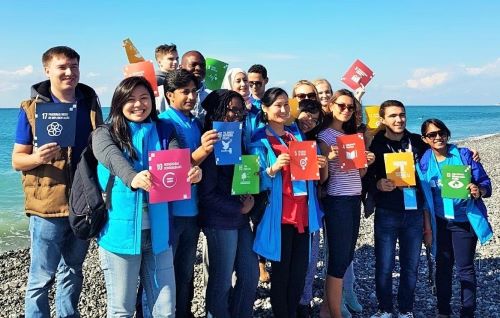
UN Volunteers stand together with their awards.

“Being on this year’s jury for the award has been an eye-opener for me. I read so many inspiring stories of how UN Online Volunteers are engaging in the Sustainable Development Goals through the Internet – volunteering their skills, time and commitment from wherever they are to seek to end poverty, reduce inequality, and help keeping people safe. On this International Day of Happiness, the winners of the 2017 Online Volunteering Award demonstrate how volunteering is a vehicle for innovative change and contributes to a more inclusive, equitable and balanced approach to sustainable development, happiness and the well-being of all peoples.”

-Executive Coordinator, Olivier Adam

The United Nations Volunteers (UNV) is a website-based volunteer program. It connects local needs to worldwide volunteers who have the resources and talents to meet those needs. The website empowers those who have a voice and dreams to put them to great use. Many new programs have been implemented thanks to the knowledge and power of local people.

 A main task any volunteer-based organization has is to keep volunteers engaged. This is a great example of recognizing the hard work and achievements of the volunteers. Awards and recognition help the volunteers to feel seen and appreciated. The UNV names the team and the members within the team and gives them credit for what they created. Honoring the volunteers online not only provides public acknowledgment of the volunteers’ work, but also allows others to see their innovations.

Example 2: Volunteer recognition and retention

Johanna Woodchild of the Greenville County Chapter of the American Red Cross in South Carolina knows the importance of recognizing volunteer service. She works with more than a thousand volunteers, and celebration is a year round business for her. From Christmas drop-ins to recognition dinners, Johanna is always organizing ways to thank volunteers and allow them to meet, have refreshments, and keep in touch with each other.

One way for Johanna to recognize her volunteers is to offer recognition ceremonies. That is what Johanna was doing when we talked to her. She was expecting a couple hundred people to show up the annual business meeting and recognition dinner. "We invite all of our volunteers, and there are several steps that go along leading up to this. In the past, we've had pretty interesting entertainment, and we encourage the volunteers to bring their families. It's a volunteer committee who selects what were going to do and what the menu is and so on. This year they decided to dispense with outside entertainment and have a huge icebreaker game, because they think we are too isolated in our services and need to meet Red Cross volunteers that work in other areas of service. We don't have very many expenses regarding the place (they had it in gyms churches, cafeterias), or the food (donations), or the preparation of the food. The teen volunteers serve the food. Most of our expense comes in the awards. I believe we spent twelve hundred dollars last year. Some of them are large framed certificates, and we give quite a few plaques.

"We have so many really dedicated and hard-working volunteers. For any of them to be singled out as being the epitome of what a Red Cross volunteer should be is something that means a lot to them," Johanna said. "I talked with two volunteers recently about their awards, each of them had won the Outstanding Male Volunteer of the Year Award. One of the gentlemen has his plaque on his wall in such a place that as soon as you open the door to his apartment that is the first thing you see. The other gentleman, who is a retired businessman who has served on many boards, is involved with us through a Learn to Swim program. He centered his plaque over his living room couch. So, the award itself is very prestigious, and it's a very high honor."

To recognize her volunteers, the chapter gives away various types of awards; competitive awards, top male and the top female volunteer; diversified service volunteer, and new outstanding volunteers. Awards to organizations and companies are also given. The number of awards varies from eight to 50. "We give pins, year pins, (five, ten, fifteen twenty) to volunteers who have been with us those numbers of years. This year, I was just going over the list, we have 66 people who have been active volunteers for five years. That's always the largest category but it's never been that large before. We give award recognition for people who have given the most hours in disaster services. Last year's winner was 1,452 hours. Armed Forces volunteers are also given certificates in recognition of hours of service given. We're retaining people better, and that's real encouraging."

Recognition goes beyond her organization's frontiers, Johanna said. "It's an ongoing process, and we nominate them for awards outside of Red Cross. For example, the Jefferson Award is a big award that is given to five people in about a three or four county area and in the past five years we've had three winners. In the past two years our youth volunteer has been the winner of the Youth Volunteer of the Year Award, given by Volunteer Greenville (an arm of the United Way) and the J.C. Penny Co."

Johanna understands that recognizing and thanking volunteers is one of the most important ways to keep them. "One of the big things is the awards," said she. "We try to get people recognized in newspapers and on TV. Every time there's a disaster that's away from here, one that is a national level disaster, the local TV stations come over and films our national level volunteers as they drive away in the emergency response vehicle. That's neat, to see us on the news. People feel valued. We also have a newsletter that comes out four times a year. It's very folksy and it highlights volunteers and tries to educate the volunteers about what the different areas do. We"re trying to build a family, so we all need to know who each other are, and what we are doing."

Example 2: Mock job description

HEALTHY MOTHERS, HEALTHY BABIES PROJECT

VOLUNTEER JOB DESCRIPTION

Title: Garden coordinator/teacher

Purpose: Start and take responsibility for agency garden; teach mothers about gardening

Responsibilities:

  • Teach weekly class on advantages and "how-tos" of gardening to new and expectant mothers
  • Coordinate the planting and upkeep of a demonstration garden at the agency

Qualifications: A green thumb; gardening experience; comfortable talking in front of people

Time requirement: Class is two hours a week; additional time in the garden (variable, depending how much help you get)

Proposed starting date: May 15

Proposed ending date: Mid-September (approximate; after harvest time)

Boundaries: n/a

Benefits:

  • A share of vegetables grown
  • Use of agency tools, seeds, and other supplies
  • Volunteers are granted complimentary membership at the YMCA
  • The knowledge that you can help mothers and their young children lead healthier lives
Tools
mloewenstein Mon, 12/31/2012 - 10:54

Tool 1: Application Form

The following form can be filled out by new volunteers and signed by both the volunteer and his or her supervisor when the volunteer begins working.

(Adapted from Leadership skills: Developing volunteers for organizational success.)

APPLICATION FORM

Agency Name__________________________________________ Date______________

Volunteer Information

Name:_________________________________ Social Security Number:_____________

Address: _______________________________ Date of Birth: ____________ Sex: ____

Home phone: ________________________ Work phone: ________________________

Organization represented (if applicable): ______________________________________

Current occupation: _______________________________________________________

Previous volunteer experience: ______________________________________________

Applicable professional experience: __________________________________________

Applicable educational experience: ___________________________________________

Particular interests or hobbies: _______________________________________________

Why would you like to volunteer here?________________________________________

_____________________________________________________________________

What type of service would you prefer? _______________________________________

Please indicate the days of the week and hours you could serve:

Day: _____________________ From: ___________________ To: _________________

Day: _____________________ From: ___________________ To: _________________

Day: _____________________ From: ___________________ To: _________________

Day: _____________________ From: ___________________ To: _________________

Time limit commitment: ___________________________________________________

Do you have a current driver's license? # _____________ Chauffeur's? # ____________

Do you have transportation? ______________ Could you furnish it for others? ________

Do you have minimum automobile insurance required by law? _____________________

In case of emergency, please notify: __________________________________________

Address: _________________________________________ Phone: ________________


For office use only:

Interviewed by:____________________________ Date: __________________________

Comments:

Tool 2: Blank Job Description

VOLUNTEER JOB DESCRIPTION

Oganization:_______________________________________________________

Title:

Purpose:

Responsibilities:

Qualifications:

Time requirement:

Proposed starting date:

Proposed ending date:

Boundaries:

Benefits:

PowerPoint
Anonymous (not verified) Tue, 12/11/2012 - 13:19

A PowerPoint presentation summarizing the major points in the section.

Section 2. Recruiting Volunteers
mloewenstein Tue, 12/11/2012 - 13:20
Main Section
mloewenstein Tue, 12/11/2012 - 13:21

Happy volunteer group pointing towards camera
 

What does it mean to recruit volunteers for your organization?

Recruiting volunteers means asking people to work in your organization without pay. You can recruit them formally (asking them to fill out application forms, offering them a job title, etc.) or informally (by asking your sister to help build an agency float, for instance), or anything in between.

You might need volunteers for a specific task at a specific time, or in a much more general role, for any help they can give. Recruitment does not have any set time limits -- you might recruit for a certain event, for a certain block of time such as six months, or for an indefinite period. It is helpful to seek volunteers who reflect the diversity found in the community, and who have ties with other community groups or agencies.

Although volunteers work without pay, they do it to receive something – no one does things for no reason. Some reasons that people might be willing to volunteer include:

  • Someone asked them. Most people respond when someone tells them they’re needed.
  • They care deeply about the issues your organization addresses, and/or about social change.
  • They have personal experience of the effects of your organization’s issues, and want to do something about them. Former gang members, for example, might want to be involved in an effort to reduce and prevent youth violence.
  • They are motivated by their view of the world – because of religion, ethics, politics, philosophy, etc. – to try to improve the quality of life in their communities.
  • They seek the external recognition and internal good feeling that may come with volunteering.
  • They feel a need to pay back society for help or opportunities that were extended to them. Successful people who grew up experiencing poverty in neighborhoods with underrepresented populations often return to those or similar neighborhoods as volunteers with youth, to try to reach children or adolescents who might have the same potential they had.
  • They have untapped skills that they can use by volunteering with your organization.
  • They want experience and/or training in your field of work.  They might want to try out the work to see if it’s a career possibility, or they might want the experience as a credential for another kind of job.
  • They actively enjoy the kind of work that their volunteering entails: it’s fun for them.
  • They enjoy the social situation, and value the contacts with other volunteers, participants, and staff members. This is often true for people who don’t work outside the home, and don’t have the daily social contact that such work brings with it – older adults, stay-at-home parents, etc.
  • It makes them feel needed and useful.

Recruitment, as the military will be the first to explain, is a sales job. Unlike military recruiting, however, volunteer recruiting offers no guarantee that someone will stick as a volunteer just because they’ve signed up.  Your sales job has to accurately point out the advantages of volunteering with your organization, so that people will not only be eager when they begin, but will stay enthusiastic and continue to volunteer for a long time.

Why might you recruit volunteers?

  • To give your organization the power to do more work
  • To reduce the burden on paid staff members
  • To give your group a larger, more diverse membership
  • To increase awareness and understanding of your organization through your recruiting as well as through the work the volunteers do
  • To get as much done as possible within the confines of your budget
  • To act together to achieve a shared purpose

When should you recruit volunteers?

Anytime is a good time to recruit volunteers, but you might step up your efforts when:

  • You have upcoming products, events, etc., with which you will need special assistance.
  • You are expanding your organization's services.
  • Your staff has become smaller or is not able to handle the amount of work you do.
  • You are holding an annual "volunteer drive."
  • During National Volunteer Week or any official national day/week that corresponds to your organization mission (e.g., a coalition that works to reduce tobacco usage might increase volunteer efforts before the Great American Smokeout).
  • You need volunteers to staff a booth at a fair, hand out leaflets at a demonstration, help on a school field trip, etc.

How to recruit volunteers: Some basic steps

Research sources of potential volunteers in your community

Determine the makeup of your community, and its community sectors. Some community sectors include schools, churches, neighborhoods, businesses, service organizations and clubs, youth groups, older adult groups, media, grassroots groups, etc. Having a thorough understanding of the sectors in your area will help you to be aware of who is available as a volunteer in your community. It is essential if you wish to focus your recruiting on a specific population.

Learn who is interested in volunteering in your community, and who might be interested specifically in volunteering for your program. Determine:

  • Why current volunteers volunteer (both for your organization and for others)
  • What motivates them
  • How they were recruited
  • What their demographics (age, gender, income, etc.) are

You might do this by simply asking current or potential local volunteers, or by looking for information from local and national studies on volunteers. Check with local researchers or a local volunteer center to see what data are available on volunteers in your community.

Plan and implement your recruitment strategy

Think about potential volunteers as consumers. There are a lot of ways motivated individuals can give their time and talents in any particular community. Decide what your agency offers that is special and might draw in potential members. This step might include implementing a recruitment strategy. Your strategy might include:

  • Defining priority groups to recruit
  • Defining particular people within each priority group
  • Defining a specific strategy to recruit both the priority groups and the individuals within the groups
  • Implementing the strategy
  • Evaluating the strategy

Finding volunteers

When looking for potential volunteers, brainstorm different ways to reach the greatest number of people. Some ways to find potential volunteers might include:

  • Hold an annual appeal for volunteers that is modeled after traditional fund-raising drives.
  • Set up booths at local art fairs, carnivals, etc.
  • Write letters to the editor in the local newspaper, or ask if you could write a guest column.
  • Broadcast a PSA on a local radio or television station.
  • Use personal contact with current volunteers and staff. (This is the primary way people become involved in volunteer activities).
  • Ask current volunteers to participate in a presentation to another group that they are involved with (e.g., the Rotary Club, a church singles group, the health class at a volunteer's high school).
  • Ask for help from existing volunteer agencies, local scout groups, the National Honor Society, or other bodies at least part of whose mission is community service.

In addition, consider posting notices at:

  • Laundromats
  • Grocery stores
  • High schools
  • University dorms, student unions, cafeterias, and academic buildings
  • Houses of worship
  • Recreation centers and sports clubs
  • Community centers
  • Performing arts centers
  • Post offices
  • Drug stores
  • Doctors’ offices, hospitals, and health clinics
  • Libraries

Remember that both everyday experience and well-documented research suggest that the best way to recruit a potential volunteer is to make personal contact. Ideally the contact should be:

  • Face-to-face (a phone call is second best with a personal letter falling third)
  • With someone the volunteer knows, likes, and respects

It is usually helpful to make a very specific request with a smaller request as back-up when the first option is not possible. (If you can’t volunteer regularly, can we call on you to help when we have a mailing to get out?)  A follow-up call or letter can be very helpful for those who are uncertain.

If people are uncertain, you may not want to push them too hard unless you feel strongly that they’d make good volunteers, and are simply nervous about the prospect.  It’s not good for the volunteer or your organization if you talk them into something that they really don’t have enough time for, or that – as they’ve told you – they really aren’t good at or don’t want to do. A potential volunteer may really care about your work, and may be a terrific person, but if they don’t have the time, energy, or talent for the volunteer job you’re suggesting, it’s better for everyone if they don’t accept it.

Convincing potential volunteers to become active volunteers

Once you’ve made contact with potential volunteers, and they’ve shown some interest, you have to “complete the sale” by convincing them that volunteering with your organization will be a good decision for them. Some things you can do toward that end:

  • Invite potential volunteers to meet staff members and other volunteers and get a real "feel" for the organization.
  • Invite volunteers to observe and/or try out the volunteer job they’re interested in, with help from a staff member or experienced volunteer.
  • Write a letter to potential volunteers – either a general letter, if you are recruiting a large number of people, or a warm, personalized note. Both types of communication should explain what your organization does, why you need help, and why you need their help in particular.
  • Be flexible in scheduling, so that volunteers can work the hours that are most convenient for them, can work when their friends are working, and/or can work with  particular staff members or participants.
  • Show that you take volunteers seriously. Ask volunteers to sign a contract to work for a specified amount of time and to find replacements for themselves if they can’t make a scheduled volunteer commitment.  Provide coordination and supervision for volunteers, so that they can improve their skills and performance.  Emphasize how important their contribution is to the organization.

As we’ve discussed, people need reasons to volunteer.  Some ways to give them those reasons include:

  • If you can, show that volunteering with your organization offers both tangible and intangible rewards.   You may, for instance, be able to offer both a professional credential and internal fulfillment.  (“We’ll train and certify you as a trained community mediator, and you’ll have the satisfaction of providing a real community service – helping people learn how to resolve conflicts peacefully and equitably.”)
  • Pick specific volunteers for specific jobs that you know they’ll like and be good at.
  • Offer volunteers their choice of jobs, or, let the volunteers create their own job descriptions.
  • Offer both initial and ongoing training and supervision.
  • Provide opportunities for volunteers to assume leadership roles in particular projects or situations, and encourage and help them to expand their skills.
  • Ask current volunteers to describe the benefits and satisfaction they get from volunteering, and compile their responses to give to potential volunteers.
  • Include volunteers in any social activities – lunches, lunchtime card games, after-work gatherings, etc. – that occur when they’re volunteering.
  • Hold Volunteer Appreciation celebrations, and give volunteers small gifts for completion of each contracted period of service (often a year, but it’s up to the individual organization.)

Building a diverse group of volunteers

A diverse group of volunteers can broaden the range of opinions and ideas to which your organization has access.  They bring knowledge of the cultures and circumstances of the population groups they come from, so that your organization will have a better understanding of those groups, and be better able to relate to them.  Furthermore, they enrich the organization with their perspectives and the variety of their experiences and backgrounds.  A diverse group of volunteers also makes possible heightened cultural sensitivity within the organization, and allows for the kinds of interchanges that make it possible for people with very different backgrounds to understand, respect, and cherish one another’s differences as well as their similarities.

By encouraging diversity in your organization, you also increase its appeal; different ethnic and racial populations are much more likely to respond if they believe that your group has members who share a similar heritage.

Recruiting members of specific populations

  • In promotional materials, conversations, etc., explain how your organization's goals are in keeping with the interests and beliefs of a particular potential volunteer's background and beliefs.
  • Highlight the achievements of volunteers from different cultural groups in your local newspaper.
  • Do what you can to make your organization accessible for people for whom English is an additional language. For example, if your organization is in an area with a large Hispanic/Latino community, consider writing brochures, newsletters, etc., in Spanish, and hiring Spanish- speaking staff (or actively recruit Spanish-speaking volunteers!)
  • Actively recruit a diverse paid staff.
  • Make your agency an appropriate, comfortable place for potential volunteers to "check out."
  • Offer opportunities for families to volunteer together.

Possible barriers to be aware of when recruiting from specific populations:

  • Many potential volunteers may speak English as an additional language or not at all.
  • Many potential volunteers whose socioeconomic status is lower might like to volunteer, but are unable to afford related expenses, such as travel costs and childcare.
  • Potential volunteers from some ethnic groups, such as African Americans and Hispanic/Latino people, are often particularly sensitive to screening, particularly if they perceive the screening process to be a means of excluding them. If your agency does use an extensive screening process, make sure it is used both fairly and flexibly, and explain the meaning of each step of the procedure.
  • Some of the things your agency does might seem strange to some ethnic groups, and will need additional explanation. For example, it may seem alien to some groups of potential volunteers to volunteer outside of their own church or faith.
  • Some organizations or meetings may be located in places that are not accessible to people who use wheelchairs, and assistance may not be available for volunteers who are blind, deaf, or hard of hearing.

In Summary

Volunteers may be the backbone of your organization, or they may simply make it possible to do an extra mailing or get the office clean.  Whatever the situation, it’s important to take them seriously, recruit them as if you were recruiting paid staff, and treat them as an integral part of your organization.  If you think carefully about what you want volunteers to do, explain accurately what the job entails, and provide some reasons for their wanting to volunteer, you’ll have no problem finding good people to help you, and to spread the word about your organization – and its volunteer opportunities – to the community.

Contributor

Jenette Nagy

Resources

Print Resources and Videos

Bock, K. (1990). Volunteers: The hands, head, and heart of a shepherd's center. Retirement Research Foundation.

Fisher, C., & Cole, M. (1993). Leadership and management of volunteer programs. San Francisco: Jossey-Bass.

Furano, K., Roaf, P., Styles, M, & Branch, A., (1993). Big Brothers/Big Sisters: A study of program practices. Philadelphia, PA: Public/Private Ventures.

McCurley, S., & Vineyard, S. (1988). 101 tips for volunteer recruitment. Downers Grove, IL: Heritage Arts.

Roaf, P., Tierney, J., & Hunte, D., (1994). Big Brothers/ Big Sisters: A study of volunteer recruitment and screening. Philadelphia, PA: Public/Private Ventures.

Schindler R., & Lippitt, R. (1974). The volunteer community. Fairfax, VA: NTL Learning Resources.

Vineyard, S. Basic volunteer management training packet. Heritage Arts, phone (708) 964-1194 fax (708) 964-7338.

Wilson, M. Recruiting and interviewing volunteers. Video and Audio Cassettes. Volunteer Management Associates. To order, call (800) 944-1470; for inquiries, call (303) 447-0558.

Monthly, Bimonthly, or Quarterly Publications

Citizen Participation and Voluntary Abstracts
Association for Research on Nonprofit Organizations
And Voluntary Action (ARNOVA)
Route 2, Box 696
Pullman, WA 99163
(509) 332-3417
Staff Leader

Aspen Publishers
7201 McKinney Circle
P.O. Box 990
Frederick, MD
(800) 638-8437

Grapevine
1807 Prairie Avenue
Downers Grove, IL 60515
Phone: (708) 964-1194
Fax: (708) 964-7338
A free catalog, "Volunteer Marketplace," is available on request.

The Journal of Volunteer Administration
Association for Volunteer Administration
P.O. Box 4584
Boulder, CO 80306
(303) 541-0238

Organizations

Kansas Association of Nonprofit Organizations
P.O. Box 780227
400 North Woodlawn, Suite 212
Wichita, KS 67278-0227
(316) 685-3790
fax (316) 686-1133

Association for Volunteer Administration
P.O. Box 4584
Boulder, CO 80306
(303) 541-0238

Center for Creative Leadership
P.O. Box 26300
Greensboro, NC 27438-6300
(919) 288-3999

National Training and Information Center
810 N. Milwaukee Avenue
Chicago, IL

Checklist
mloewenstein Tue, 12/11/2012 - 13:23

___You understand what it means to recruit volunteers for your organization

___You understand why you should recruit volunteers

___You know when you should recruit volunteers

___You are familiar with the basic steps to recruit volunteers

___You researched sources for potential volunteers in your community

___You planned and implemented your recruiting strategy

___You found volunteers

___You convinced potential volunteers to become active volunteers

___You understand the challenges and benefits of recruiting volunteers from varied cultural and ethnic groups

___You understand why you should recruit people from different groups to be volunteers

___You know the ways to recruit members of specific populations

Tools
mloewenstein Mon, 12/31/2012 - 11:27

Tool 1: Tips for Recruiting, Retaining, and Recognizing Volunteers

Research sources of potential volunteers in your community

Don't forget schools, churches, neighborhood groups, businesses, service organizations and clubs, youth groups, senior groups, media and grassroots groups.

Define target groups to recruit

Ask current members why they volunteered, what continues to motivate them, and how they were recruited as you begin to map out your recruitment strategy.

Get your message out there

Never underestimate the power of simply letting people know that you need their help. Try holding an annual appeal for volunteers, set up booths at local fairs, write letters to the editor, and ask current volunteers to make an appeal on your behalf to local civic clubs. Also consider posting notices at all the places community members regularly visit (grocery stores, post offices, the public library, etc.).

Encourage diversity

Remember that promoting diversity within your organization will broaden the range of opinions and ideas to which your organization has access. Try highlighting the achievements of volunteers from different cultural groups in your local newspaper, offer families opportunities to volunteer together, and actively recruit a diverse paid staff.

Welcome volunteers into your organization

Taking time up-front to make sure that volunteers feel genuinely welcome is the first step toward keeping them involved. Try pairing volunteers with paid staff. Encourage paid staff to take the time to answer volunteers' questions and get to know the person.

Challenge volunteers

Brainstorm about the possible tasks volunteers could perform within your organization. Listen to volunteers' interests and assess their abilities. Then provide volunteers with opportunities that meet them where they are. Volunteers who feel successful and have an opportunity to stretch their abilities are more likely to hang around and to serve the organization well. With this approach, everybody wins!

Appreciate and respect volunteers

Remember that volunteers are giving generously of their most precious resource-their time. Communicate your appreciation and respect by inviting volunteers to be part of the decision-making process when appropriate and honoring the constraints on their time.

Celebrate!

Make sure that your organization recognizes the invaluable work of volunteers by acknowledging the important contributions they make. Try an annual awards luncheon, feature volunteers in your organization's newsletter, or partner with the media to highlight the work of local community members in the newspaper on or television.

Tool 2: Volunteer application form

FITCHBURG SAFE & HEALTHY NEIGHBORHOOD COALITION

Building Safer Neighborhoods: A Cooperative Response

"Offer To Help"

Name: ____________________________________________________________

__________________________________________________________________

Address: __________________________________________________________

_________________________________________________________

Phone Number -Home: _____________________Work: ____________________

I would like to continue to be involved in the issue(s) of:

( ) Violence in the Community

( ) Violence in the Schools

( ) Violence in the Family

( ) I would like to be involved in my neighborhood


-Thank You-

Tool 3: 101 ways to give recognition to volunteers

by Vern Lake, Minnesota Department of Public Welfare

Smile • Put up a volunteer suggestion box • Treat to a soda • Reimburse assignment related expenses • Ask for a report • Send a birthday card • Arrange for discounts • Give service stripes • Maintain a coffee bar • Plan annual ceremonial occasions • Invite to a staff meeting • Recognize personal needs and problems • Accommodate personal needs and problems • Be pleasant • Be of use in an emergency situation • Provide a baby-sitter • Post an Honor Roll in the reception area • Respect their wishes • Give informal teas • Keep challenging them • Send a Thanksgiving card to the volunteer's family • Provide a nursery • Say "Good morning" • Greet by name • Provide good pre-service training • Help develop self-confidence • Award plaques to sponsoring groups • Take time to explain • Be verbal • Motivate agency VIPs to converse with them • Hold rap sessions • Give additional responsibility • Afford participation in team planning • Respect sensitivities • Enable to grow on the job • Send newsworthy information to the media • Have wine and cheese tasting parties • Ask client-patient to evaluate their work-service • Say "Good afternoon" • Create pleasant surroundings • Welcome to staff coffee breaks • Enlist to train other volunteers • Have a public reception • Take time to talk • Defend against hostile or negative staff • Make good plans • Commend to supervisory staff • Send a valentine • Make thorough pre-arrangements • Persuade "personnel" to equate volunteer experience with work experience • Admit to partnership with paid staff • Recommend to prospective employer • Provide scholarships to volunteer conferences or workshops • Offer advocacy roles • Utilize them as consultants • Write them thank you notes • Invite participation in policy formation • Surprise with coffee and cake • Celebrate outstanding projects and achievements • Nominate for volunteer awards • Have a "Presidents Day" for new presidents of sponsoring groups • Carefully match volunteer with job • Praise them to their friends • Provide substantive in-service training • Provide useful tools in good working conditions • Say "Good night" • Plan staff and volunteer social events • Be a real person • Rent billboard space for public laudation • Accept their individuality • Identify age groups • Provide opportunities for conference and evaluation • Maintain meaningful life • Send impromptu fun cards • Plan occasional extravaganzas • Instigate client-planned surprises • Utilize purchased newspaper space • Promote a "Volunteer of the Month" program • Send a letter of appreciation to employer • Plan a recognition edition of the agency newsletter • Color code name tags to indicate particular achievements (hours, years, unit, etc.) • Send commendatory letters to prominent public figures • Say "We missed you" • Praise the sponsoring group or club • Promote staff smiles • Facilitate personal maturation • Distinguish between group and individuals in the group • Maintain safe working conditions • Adequately orientate • Award special citations for extraordinary achievements • Fully indoctrinate regarding the agency • Send Christmas cards • Be familiar with details of assignments • Conduct community-wide cooperative, interagency recognition events • Plan a theater party • Attend sports events • Have a picnic • Say "Thank you" • Smile

Tool 4: If you want my loyalty, interest, and best efforts, remember that:

By President J. Donald Philip, Hillsdale College, Hillsdale, Michigan

  • I need a sense of belonging, a feeling that I'm honestly needed for my total self, not just for my hands, not because I take orders well.
  • I need to have some sense of sharing in planning our objectives. My need will be satisfied only when I feel that my ideas have had a fair hearing.
  • I need to feel that the goals and objectives are within reach, and that they make sense to me.
  • I need to feel that what I'm doing has real purpose or contributes to human welfare; that its values extends even beyond my personal gain, or hours.
  • I need to share in making the rules by which, together, we shall live and work toward our goals.
  • I need to know in some clear detail just what is expected of me: not only my detailed task, but where I have the opportunity to make personal and final decisions.
  • I need to have some responsibilities that challenge, that are within the range of my abilities and interest, and that contribute toward reaching my assigned goal, and that cover all goals.
  • I need to see that progress is being made toward the goals we have set.
  • I need to be kept informed. What I'm not up on, I may be down on. (Keeping me informed is one way to give me status as an individual.)
  • I need to have confidence in my superiors, confidence based upon assurance of consistent fair treatment, on recognition when it is due, and trust that loyalty will bring increased security.
  • In brief, it really doesn't matter how much sense my part in this organization makes to you. I must feel that the whole deal makes sense to me. I would add, hopefully, the whole deal makes sense to everyone involved: the client, staff, volunteer and you.
PowerPoint
Anonymous (not verified) Tue, 12/11/2012 - 13:26

A Power Point presentation summarizing the major points in the section.

Section 3. Developing Volunteer Orientation Programs
mloewenstein Tue, 12/11/2012 - 13:26
Main Section
mloewenstein Tue, 12/11/2012 - 13:27

Happy young people volunteer t-shirts posing camera, social teamwork, help


If your group is like many others, you depend on your volunteers for many things. Their jobs may range from doing the agency taxes to taking care of children, or from licking stamps to running career fairs. Whatever jobs they do, however, one thing is almost always true: your organization needs volunteer help to function effectively.

We've discussed how to recruit new volunteers, but once you've got them in the door, your work has only just begun. Your volunteers need to be received like guests and shown around the organization. You need to carefully explain what's happening (and what might happen), because if the coast looks dark and unwelcoming, the new recruit might turn around and walk right back out that door.

To help welcome new volunteers into the organization, some groups hold orientation programs to start new volunteers on the path of becoming seasoned veterans.

What is an orientation program?

First, let's think for a moment of what we mean by orientation. Even though we might not think of it this way, orientation truly starts at our initial contact with the new volunteer.

When you speak to a prospective volunteer over the phone, or when you meet that person for an interview, orientation has already begun. You are giving your recruit a sense of what your organization is all about. More than that, you are communicating something crucial about:

  • The way your organization does business
  • Your attitudes toward the outside world
  • Your seriousness of purpose
  • Your sense of humor
  • Your general expectations about the content of the job
  • Your general expectations about the way in which the job should be performed

You communicate much of the information in this initial orientation non-verbally, and you may not even be aware that you're doing it. But this "informal" orientation is important because your recruit's first impression of you and your organization will be based on it. Scientific research exists that suggests first impressions are formed very quickly, and that once established, those impressions are hard to get rid of.

You probably wish to supplement this implicit orientation with more explicit and formal instruction in which you will systematically communicate certain general information about your organization and the job. That formal instruction is what we mean by an orientation program, and that is the focus of this section.

We will discuss why your organization should hold an orientation program, how to design and present orientations that make the most sense in your circumstances, and finally, how to evaluate what you've done.

Before we go any further, an important distinction to make is that an orientation program is not the same as a training program. A training program, as discussed in the next section, goes into great detail about how to do a specific job--information that is usually over and above what you're trying to get across in an orientation session.

For example, a program in which volunteers tutor people for literacy might have a training program with several different sessions. These sessions could explain how to best teach people to read and give an overview of phonetics and adult learning.

An orientation program, on the other hand, would take place before this training. It would tell new volunteers how long the program has been in existence, where they will be doing the tutoring, who they will be tutoring, what is expected of them, the benefits they can expect to receive, et cetera. It should not, however, teach them how to teach.

Why should you have orientation programs?

What are some of the advantages of a structured orientation program?

  • Imparting knowledge. The orientation program will help new volunteers learn about your organization and its mission and goals, and it may instruct the volunteer on policies and procedures in your organization.
  • Increasing confidence. An orientation program can make future volunteers more comfortable and confident in their work by helping the volunteer better understand what the agency does, and may help them see the purpose of what they are doing.
    • For example, Vaiju, a second grade teacher, signs up to help collect donations for a local community task force a bit hesitantly, as she is not used to asking for donations. However, after the orientation session, she understands that the donations she will be collecting will help make sure some local children will have enough clothes to keep them warm in the winter months ahead. After understanding the goal and her part in it, she sets aside some of her usual reserve, and becomes an excellent champion for the cause.
  • Increasing enthusiasm. Volunteer orientation is an important part of maintaining the motivation and enthusiasm that caused people to want to help to begin with. A positive orientation session affirms people's decisions to work for your organization. It reminds them that what they are doing is worthwhile, and shows them that your organization is the place to help.
  • Avoiding future problems. By explaining important information from the start, you save time and energy that would be spent on questions, misunderstandings, and misconceptions.

What kind of orientation should you give?

Orientation programs, as defined above, vary widely in terms of length, structure, method of delivery, and amount of detail. They can range from one-on-one casual conversation in the corridor, to highly structured classroom sessions in large groups lasting several days. So which to choose? Some criteria in making decisions about your orientation program:

  • The number of people who need to be oriented right now
  • The number of people available to do the orienting (and their available time and expertise)
  • The complexity of the job to be performed
  • The prior experience of the new volunteer in performing that job or a similar one
  • The presence (or absence) of an orientation program that someone else may already have established

Larger organizations, or those that have many volunteers, will generally have a more formal orientation program. This might take place over an hour or two and is often a requirement for becoming a volunteer. It might take place during the recruitment phase of your volunteer program, or on the volunteer's first day on the job.

Smaller groups who employ volunteers on one-time assignments, such as helping cook at the annual fundraising chili feed, may orient new volunteers individually. In these cases, the volunteer director or another member of the organization may simply show the new volunteer around, and (for simpler tasks) show them what they'll be doing.

This section will talk primarily about larger, more official orientation programs. Many of the ideas that follow, however, can be easily adapted to smaller, less formal situations.

How do you run orientation programs?

Again, this will depend on your organization's needs. But here are some things to consider in coming up with a solution that meets your group's needs.

Decide what you want to accomplish with your orientation program. When new volunteers leave after you have completed the orientation, what should they know? What should they be prepared to do? It sometimes helps to write down these goals. Then, you can plan how you are going to reach them.

Decide how large and formal you want the orientation to be. Will you recruit many volunteers together, or only one or two at a time? Will new volunteers have to come at a specific time for the orientation program, or will it be a part of the their first day? How much time and how many resources do you want to devote on the program?

There are no set answers to these questions. It's up to your organization to answer them in ways that make the most sense in your circumstances.

Decide who will be responsible for the orientation of new volunteers. The responsibility for orientation may fall to the volunteer coordinator (if you have one), it can be split between two or more people, or different individuals can take on the task at different times. However, if you are planning on having a more formal orientation program, or one that will probably be repeated, it often makes sense to have one person in charge of the orientation. That way you can be sure that the orientation program is consistent and that new volunteers hear the same things. Also, it's human nature to get better at things the more we do them. Practice may not always make perfect, but it certainly helps!

Get the word out. A brilliant and well-executed plan won't do much good if you don't have an audience. Posters might help, and postcards sent out as a reminder of the orientation session can be very helpful for busy people who might have forgotten to write the date on their calendar.

Arrange the logistics of the situation, especially when you're hosting a more formal orientation session. Will the meeting room be free when you need it? Do you have enough copies of the volunteer manual for everyone who is supposed to come, plus a few extras? Enough chairs? Is the meeting area accessible for people with disabilities? The devil is in the details, so try not to get caught unaware!

Be sure you have taken care of everyone's physical comfort when they arrive. Is the room too cold? Too hot? Do they need something to drink, and do they know where the bathrooms are? If people are physically uncomfortable, they will have a hard time listening to you and participating in the discussion and activities. And when they are uncomfortable, most people become less open to new ideas, both of their own and those of other people.

Even if you can't do much, you'll probably find that there are some basic comforts everyone will find important, and you will want to take care of them before the meeting. Some possibilities include:

  • Soft lighting
  • Comfortable chairs
  • Access to restrooms
  • Making sure the temperature is comfortable for everyone
  • Taking breaks when the orientation goes on too long
  • Refreshments (at an absolute minimum, you'll want to be sure there is water available)

Set people at ease. Often, orientation sessions are made up of people who don 't know each other, and they may be a bit shy about really getting involved in the discussion or asking questions--even important questions that everyone needs to hear the answers to.

Icebreaking activities can be used to alleviate this tension, and the person in charge of the orientation program may choose to use one if the participants are uncomfortable.

Cover the information you have decided is important for the orientation session. Evaluate what you have done.

What information should you cover during an orientation session?

A lot of different things might be appropriate, depending on the size, goals, and functions of your organization.

Some of the items that are more commonly discussed include:

  • A description of your organization's programs, the community you serve, and your organization's relationships in the community.
  • The structure of your organization, including an introduction to key staff members and an explanation of their roles.
  • What is expected of the volunteers, including a general overview of the jobs they will be doing.
  • A brief history of your organization. Help them understand your organization's mission, policies and main goals, as well as how the volunteer can contribute.
  • An explanation of your organization's policies, rules, and procedures.
  • A tour of the facilities. Make sure you show the volunteer offices, phones, rest rooms, parking, et cetera.
  • The volunteer training schedule, if one exists.
  • The volunteer evaluation and performance review system.
  • Volunteer benefits. These may be tangible, such as free membership in a nearby gym or free coffee and doughnuts for breakfast. But the job also has more abstract benefits, such as personal growth or the opportunity to obtain new skills. For example, a group helping to build housing for people with lower incomes may teach volunteers the basics of construction--a skill they will be able to use throughout their lives. A mentoring relationship might give the mentor the satisfaction of having helped a young person succeed in school, or having opened their protégé's eyes to new life possibilities.
  • Emergency procedures, such as where to go in case of a storm, where to find the first aid kit, and related information, should always be explained.

An orientation session should be a time to make new volunteers feel welcome and part of the group. Any orientation, formal or otherwise, should close with a sincere expression of appreciation and welcome.

Written materials for new volunteers

It is often helpful to have some orientation materials in writing. These can range from a one-page tip sheet to a full-length orientation manual. The more complex the job and orientation, the more complex the material should be. (One variation of this, in large organizations, is to include one or more instructional videos, describing the organization and how it works.)

Some organizations have orientation manuals (sometimes called personnel manuals or policy manuals) which are given to new recruits, or at least made available to them. If your organization is large or formal, such as an established agency, school,or church, you might consider developing something comparable. Such development can take place over time, with new policies or other information being added gradually, possibly in a loose-leaf binder format. Loose-leaf binders are particularly good because new information can be inserted in its proper place and outdated information removed.

Warning: Written orientation materials should supplement, not replace, in-person orientation. More personalized orientation can deal with topics that printed materials do not address. It can also communicate which points in the written material are just there for the record, and those which really need to be followed to the letter. Most importantly, of course, talking with someone can answer questions and allay any fears the new volunteer might have.

Information that might be covered in a volunteer manual:

  • Copies of publications such as brochures, articles, et cetera, that have been written or produced by the organization
  • Staff and volunteer directory
  • A list of the Board of Directors
  • Record keeping forms and paperwork
  • Reimbursement policy
  • Termination procedure
  • Dress code
  • Scheduling changes
  • Insurance (if necessary)
  • Grievance procedure
  • Definitions of technical terms and jargon used by your organization
  • Information on client rights, confidentiality, legal restrictions, etc.
  • Volunteer promotion opportunities
  • Use of agency facilities, equipment, and services
  • A written copy of information discussed during the orientation

Evaluating your orientation

At the end of your orientation session, you want to know how well it went and if new volunteers learned what you hoped they would. Give yourself some credit for taking the time to orient new members--but remember that the fact that you are providing orientation does not necessarily mean it is valuable to them.

An evaluation component should normally be built into any orientation you deliver. It can be as simple as asking newly oriented members to rate the clarity and value (or other aspects) of the orientation, either right after the orientation, and/or at some time in the future. Evaluation could also involve observations of orientation sessions by other staff, or measurement of some aspect of job performance directly related to the orientation. For an example evaluation form, see the Tools at the end of this section. The next and last step once your evaluation data has been collected, is to use it in practice. Use what you've learned from orientation feedback to strengthen your orientation program, and make it the best program possible.

Orientation is ongoing

Your organization will experience the natural process of change over time, which means that volunteers will need to be kept aware of changes in the organization. The larger and more hierarchical your organization, the more this is true.

In other words, orientation is an ongoing process. It does not end with an orientation session, but rather in a real way it continues as long as a member is part of your group. How can this ongoing orientation best take place? As before, this will depend on the nature of your particular group, and especially on its size. Here are some options open to you:

Developing an orientation manual (see above), and making it someone's job to update it regularly.

Holding "general staff" meetings on a periodic basis for everyone in the organization regardless of function. Use these meetings to present new policies, procedures, developments, and to answer questions. This is also a good place to get useful feedback from your volunteers.

Distributing an organizational newsletter, which can accomplish some of these same purposes via print. Remember that none of this is in any way a substitute for clear day-to-day communication with your volunteers. But these more formal structures can be used to supplement that communication, and to provide added insurance that all your volunteers are "on the same page."

In Summary

Community organizations often depend on a constant influx of new volunteers to survive and thrive as they try to obtain their goals. To do so, however, it is important that your new volunteers understand that you really are welcoming them with open arms. By skillfully managing orientation programs, you are effectively institutionalizing that welcome and making sure that everyone who wants to help will understand what they are doing and why they do it. Ultimately, you are showing your volunteers how important their help is to the organization. Making sure they understand their positive impact on the organization is one of the best ways to make sure that the volunteers you orient today remain dedicated volunteers in the months and years to come.

Contributor

Jenette Nagy

Bill Berkowitz

Eric Wadud

Resources

Online Resources

Creating an Orientation Manual for Volunteers was developed in Canada by The Volunteer Centre Society of Camrose and District.

A Guidebook for Working with Volunteers, by the U.S. Fish & Wildlife Service, provides a step-by-step look at the mechanics of initiating and running a volunteer program. Techniques, alternatives, and samples are offered for use and adaptation.

Independent Sector is a national leadership forum, that encourages philanthropy, volunteering, not-for-profit initiatives and citizen action that help us better serve people and communities.

Volunteers of America is one of the nation's largest and most comprehensive charitable non-profit human services organizations. Founded in 1896, today Volunteers of America is active in more than 220 cities and towns in 37 states. Our community-based affiliates offer programs that serve those most in need, including abused and neglected children, homeless individuals and families, the frail elderly, youth at risk, people with developmental and physical disabilities and chronic mental illness, and ex-offenders returning to society, among many others.

Print Resources

Furano K., et al, (1993). Big Brother/Big Sister: A study of program practices. Philadelphia, PA: Public/Private Ventures.

Haines, M. (1977). Volunteers: How to find them? How to keep them! Vancouver, BC: The Vancouver Volunteer Centre.

Herman, R., & Associates. (1994). The Jossey-Bass handbook of nonprofit leadership and management. San Francisco, CA: Jossey-Bass.

McCurley, S. (1986). 101 Ideas for volunteer programs. Downers Grove, IL: Heritage Arts.

Morrison, E. (1994). Leadership skills: Developing volunteers for organizational success. Tuscon, AZ: Fisher Books.

Roaf, P., et al, (1994). Big Brother/Big Sister: A study of volunteer recruitment and screening. Philadelphia, PA: Public/Private Ventures.

Checklist
mloewenstein Tue, 12/11/2012 - 13:28

___You know what an orientation program is

___You know what you can communicate during an orientation session.

___You know why you should have orientation programs

___You know what kind of orientation should you give

___You understand how to run orientation programs

___You know what information you should cover during an orientation session

___You know about written material for new volunteers

___You know how to evaluate your orientation

___You understand that orientation is an ongoing process

Examples
mloewenstein Tue, 12/11/2012 - 13:27

Example: Sample Table of Contents from a volunteer training manual

Peace by Peace: Reducing youth violence--a little at a time

Volunteer information manual

Letter from the President 1
Peace by Peace mission and vision statements 3
Current programs and activities 4
Past accomplishments 8
Record keeping forms (examples) 12
Directory of partner programs 15
Volunteer and staff directory 18
Board of Directors 22
Grievance procedure 25
Termination procedures 26
Definitions 28
Information from Orientation session 30


Tools
mloewenstein Mon, 12/31/2012 - 12:00

Tool 1: Orientation evaluation form

This form can be given to new volunteers at the end of the orientation session to determine how well the session went from the volunteer's perspective.

Volunteer Orientation Session Evaluation Form

You do NOT need to put your name on this form.

Date of orientation session:

Facilitator/Orientation leader:

What are 3 things you learned about the organization from this session?

  1.  
  2.  
  3.  

What did you like about most about today's orientation?


What did you like least about today's orientation?


What would you recommend for future orientation sessions?


What additional information would you like us to know?


PowerPoint
Anonymous (not verified) Tue, 12/11/2012 - 13:28

A Power Point presentation summarizing the major points in the section.

Section 4. Developing Training Programs for Volunteers
mloewenstein Tue, 12/11/2012 - 13:30
Main Section
mloewenstein Tue, 12/11/2012 - 13:31

Happy volunteers stacking hands together


Many volunteers are charged with complicated tasks that take a lot of understanding and knowledge to do properly. Sometimes, your organization will get lucky and someone with perfect training will show up and be ready to offer their talents for just what you need: an accountant offers their services to help with payroll; a social worker offers to talk with people who have just lost their homes in a terrible flood.

Unfortunately, this is not always the case, nor is it even often the case. Many times, well-meaning people will offer to help your organization, but are lacking many of the skills you need most. A person comes in to be a mentor, but has no experience with young people. People sign up to help and support people who have experienced sexual violence after a "Take Back the Night," march, but have little idea of what that entails. In situations like these, when you need many people with the same skills, your group might want to have some sort of formal training program. Because, while enthusiasm for your cause is fantastic, it needs to be gathered and focused to truly meet your organization 's objectives.

Does this mean you will always need to have training programs when you use volunteers? Absolutely not! There is a lot of good work that can be done with minimal or no training. Selling drinks at a concession stand, running the nursery at the annual meeting, and helping to clean up the church grounds after the annual bazaar are times when volunteer help can be used with very little training required.

This section, then, isn't really geared towards those types of volunteer efforts. While such volunteers probably will need some type of orientation, as discussed in the last section, formal training isn't really going to be necessary for their purposes.

This section has been written for organizations in which at least some of the volunteers do work that requires more extensive training. Examples of these kinds of volunteers include peer and crisis counselors, volunteer health workers and teachers. If your group has volunteers like these, let's continue.

In this section, we will discuss the advantages of a formal training session, decide who should conduct the training, and explore different ways to train volunteers. We'll also include a discussion of the principles of adult learning, to help ensure that people are really getting what you hoped out of the training sessions.

Why should your organization have training programs for volunteers?

Sometimes your organization doesn't really have a choice; volunteer training is an absolute necessity. To be a lifeguard, for example, a volunteer will have to be trained in CPR.

But, for many groups, the decision whether or not to have a training program is not so clear-cut.

Some of the issues to consider when deciding whether or not to have a training program include:

  • Training helps new volunteers get to know the people, the program, and the job quickly and efficiently.
  • Training your volunteers establishes that there is a minimum competency that all volunteers are expected to obtain.
  • Many volunteers see training as a benefit of being part of an organization. Training teaches them skills that may be helpful to them elsewhere, and may even help them get a paying job.
  • Training publicly acknowledges a necessary level of proficiency. By training your volunteers, you are making the statement that the organization is professional and capable of doing important work and doing it well.
  • Some organizations use training as a "weeding out" technique, making sure that volunteers who have signed up will be likely to live up to their commitments.

Who should train new volunteers?

Once your organization has decided that it wants an official training program for volunteers, you should next decide who should run it. Of course, this will depend greatly on your situation: how many volunteers need to be trained, how much training they need, and the resources you are able to put towards training, to mention just a few of the variables. So it will be up to you, or another member of your organization, to decide what makes the most sense.

Some organizations have a director of training as a member of the staff. This makes particular sense for organizations that do trainings year round for moderate-sized or large groups of people. An organization may also have someone on staff for whom one of their duties is to coordinate new volunteer trainings.

If your organization has a volunteer coordinator or director, they will almost always play a role in training sessions, and may take charge of the trainings in smaller organizations.

Other volunteers are often an integral part of training, although they rarely run the programs. In smaller organizations, the entire training might take place by one volunteer shadowing another for a few days; for larger, more formal trainings, volunteers can give trainees an important perspective on "what it's really like."

Incorporating volunteers into training programs has benefits for the volunteer trainers as well as for the organization and trainees. As training director Lisa Rasor puts it, "We encourage experienced volunteers to be trainers because that's one way for them to refresh their skills and to feel more connected to the agency -- to have more of a stake in what's going on."

If no one in the group excels at the task for which you are training volunteers, you might even want to go outside of the group to find someone to run the training. This could be someone you hire on an ad hoc basis -- or would they be willing to offer their services for free?

How do you develop training programs?

As with any other plan you will develop, there are certain steps to developing a training program.

Decide what you want to teach volunteers

Why are you training volunteers? When new volunteers finish training, what should they know? And just as importantly, what do they want to know? Both the trainer and the trainees will have goals for the training program; it's important that the trainer develop a training program that focuses on both of these. It might even help the person doing the training to write these goals down. If the trainer doesn't have clear ideas of what volunteers should leave knowing, chances are the volunteers will leave the training session pretty confused.

Typically, a training session will try to impart four things to new volunteers:

  • What to do: What is expected of them as new volunteers? What will their responsibilities be?
  • How to do it: It's one thing to tell someone to "pour cement for the porch," but if you don't explain how to do it, things will likely be very messy indeed. Explaining how volunteers can best accomplish their tasks is the crux of training, and will probably take up the largest chunk of time.
  • What not to do: Are there certain things volunteers are not allowed to do? For example, should they not talk about clients, for the sake of confidentiality? Are there situations in which they should automatically call for staff backup? Training should make a volunteer's (and the agency's) limits very, very clear.
  • What to do in an emergency: if the volunteers had an orientation before training began, they will have already heard this information, but it's worth going over again. The location of the first aid kit (and possibly some first aid techniques as well) should be known by everyone, as well as what to do in a fire or a severe storm.

Decide how you will teach them

What kind of training program do you want to give new volunteers? Simpler possibilities are good for smaller organizations, simpler tasks, and groups that don't have the resources for a full training program. Two such possibilities are the use of the "buddy system" and shadowing. In the "buddy system," a new volunteer works with an experienced person at first, and the experienced person answers questions and makes suggestions. Shadowing is very similar, but the new volunteer is more passive, and watches more than they take action at the beginning.

For a larger group of people, more challenging work, and groups with sufficient resources, a more extensive training plan is often more appropriate. This may take a few hours, a few months, or anywhere in between. The amount of material to be covered and the resources available should be your guide.

[Note: The following steps are specific to a larger, more formal training plan. Smaller training programs may be able to adapt them to their needs.]

Write a budget for your training

Trainings can be done fairly inexpensively, but they are rarely free. Typical expenses include equipment or room rental, trainer fees, staff time, food and beverages, and supplies.

Decide what materials you would like to use that will fit into your budget

You may find videos, workbooks, recorded material, web pages, or other materials helpful. Depending on the type of training you are doing, you should be able to find helpful materials from national clearinghouses, organizations similar to yours, or other sources.

Get the word out

Send a note out to new volunteers reminding them of the times and places of training sessions. Also, be clear about how much time training will take. If your training is particularly long, ask for written or oral confirmation that they will be able to make all (or most) of the training sessions.

Make sure all of the logistics have been worked out before each training session

That is, that the room is empty and prepared; there are enough chairs; the speakers know what time to show up, and similar details.

Pay attention to the physical comfort of trainees

This is the first thing you should do when people arrive. Is the room too cold? Too hot? Do they need something to drink? Do they know where the bathrooms are? If people are physically uncomfortable, they will have a hard time listening to you and participating in the discussion and activities.

Set people at ease

When trainings begin, people may be shy about getting involved in the discussion or about asking questions. Understand this nervousness and try to find ways to reduce it. A comfortable learning environment can help put people at ease (it's hard to be really uncomfortable on a soft sofa, for example), as can icebreakers.

Start training!

Once you have completed your preparations and are certain that the participants will be relatively comfortable, it's time to get to work! Before you write up your lesson plans, however, it can be helpful to understand how adults learn best. Understanding certain ideas and techniques, sometimes called "principles of adult learning," can help in developing a highly effective training program.

Principles of adult learning

Adults must feel a need to learn. It's important that they understand the relevance of what is being taught to what they will be doing. For example, if the trainer is explaining group dynamics to a group of people who will be health educators in local clinics, they will probably have a better audience if the trainees know they will be talking to groups, and not just doing one-on-one counseling. If trainees understand that, the information automatically becomes useful, not just another lecture they need to sit through before they can get to the "real work."

Allow adults to share their previous experiences and relate them to the present situation. Everyone likes to feel that they have something to bring to the discussion; by relating past experiences to the current topic, your trainees will not only feel that they have something to add, but will also have a better understanding of the subject being discussed. It's no longer academic to them -- it's something they have experienced, something they know.

People learn better when lessons are centered around solving problems. Instead of a lecture, presenting a problem and helping trainees find the answer is a much more effective way of teaching. People like to puzzle things out and by presenting a problem, you ask people to think, not just passively accept what they are told.

Training should be interactive. You should lecture very little when training adult volunteers, and you should supplement your lectures with other methods as much as possible. Studies show that we retain only 20% of what we hear in a lecture setting, so consider incorporating discussions, observations, role-playing, demonstrations, and writing into your training program.

Balance support with challenging the learner. This is a delicate balance, which will come more naturally with experience. Try to convey to the trainee -- through words of encouragement, written policies, or other methods -- that they will always have the support necessary to do the job well. At the same time, however, challenge the volunteer to take on more complicated tasks as confidence and understanding grow.

Urge volunteers to use their creativity. Encourage suggestions, ideas, and improvements that the trainees might come up with, both to improve the training and to improve the program or organization as a whole. Since most trainees are probably new to the organization, they will certainly see things differently than people who have been there a while. Be sure to take advantage of their enthusiasm and fresh points of view!

Remember that people aren't the same. People learn in different ways, and may respond better to different approaches. The trainer should pay attention to how people are responding and try to modify the training accordingly.

Develop lesson plans

Now that you understand the principles of adult learning, it's time to write lesson plans. These are very helpful in keeping you on task, keeping an eye on the time, and making sure you cover everything you have intended to cover. A lesson plan may cover several hours of training time: if your training has been broken up into several (or many) different time slots, each one may have an individual lesson plan. A shorter training may only need one lesson plan; if your training is taking place over a large chunk of time (for example, at a weekend retreat), different ideas may be separated into different lesson plans, much like a grade school teacher might do for their different classes.

Individual lesson plans should state:

  • The learning objectives (i.e., the intended result of the lesson). For example, "At the end of this lesson, trainees will be comfortable talking about condoms in front of a small group of peers, and will know current slang terms for them."
  • The time allotted for each activity. Although there are no absolutes, this is usually fairly short -- typically under an hour. That way, trainees don't have time to get bored and are kept on their toes by constantly changing activities.
  • A detailed explanation of each activity.
  • Ways to evaluate trainee understanding. For example, a quiz at the end of the lesson, asking trainees to do something based on what they learned.
  • A list of resources needed to carry out the activities (e.g., markers, workbooks).

Evaluate trainees

Evaluation is a very important last step in your training program. By doing a simple evaluation, you will be able to learn what trainees learned and understood from the training. Some possibilities for evaluation include:

  • Field testing. Give them the chance to demonstrate what they have learned under careful supervision
  • Small group evaluation. Gather trainees to talk together about what they gained from the training
  • Pre-test/post-test score comparison. The same test is given to trainees when they enter and when they finish training. This is particularly helpful when you want trainees to get a lot of facts out of the training session, and it can also be useful when you are uncertain of the knowledge trainees originally bring to the classroom. For example, a group training to become HIV educators might come to a training session with widely different levels of knowledge about HIV. A pre-test/post-test allows the trainer to understand what trainees already know (and modify the training program accordingly), and also how much they learn during the sessions.

Keep in mind that evaluation is a two-way street. Trainees should have the chance to give you feedback as well. At the end of the training (or possibly, at the end of specific lessons), you should give trainees the chance to give you specific and anonymous feedback. Then, you should be sure to incorporate this feedback in to future trainings, to make sure that your organization is constantly improving, that your volunteers are as well-prepared as possible, and that they will remain happy and productive at your organization. A blank form that trainees can use to give feedback can be found in the Tools at the end of this section.

Celebrate the end of training, but remember that training should be ongoing

Especially if the training has been long or very challenging, you might want to celebrate the successful completion of training. Some groups even give awards such as certificates of achievement or gift certificates to further recognize the occasion.

After the certificates have been passed out and the crumbs swept up, however, training is still not over. Training often continues for as long as the volunteers work at your organization. Annual retreats, classes, or conferences may all serve to refresh and enhance a volunteer's knowledge. Sometimes, these trainings are mandated to renew certification (as in First Aid certification). They may also be given sporadically, as new information or techniques become available.

The important point to remember is that volunteers, like paid staff, can benefit from additional training as they continue at their jobs. And, by giving additional training, you show volunteers how valuable they are to your organization. Training offers the chance to grow and change within the organization; volunteers don't need to leave the group to find new challenges.

In Summary

Teaching new volunteers the skills they need to function effectively as part of your organization can be difficult work. By creating a training plan, however, you can cut down on potential headaches while making sure volunteers have the most comprehensive, effective learning experience possible. And, in the long run, your work will pay off in the form of skillful volunteers who really are making the goals and dreams of your agency happen.

Contributor

Jenette Nagy

Resources

Online Resources

Developing Accredited Training for Volunteers is from Volunteer Now in Northern Ireland and is a useful guide to developing a well-structured training for volunteers.

Independent Sector is a national leadership forum that encourages philanthropy, volunteering, not-for-profit initiative, and citizen action that help us better serve people and communities.

Volunteers of America is one of the nation's largest and most comprehensive charitable non-profit human services organizations. Founded in 1896, today Volunteers of America is active in more than 220 cities and towns in 37 states. Our community-based affiliates offer programs that serve those most in need, including abused and neglected children, homeless individuals and families, the elderly, youth at risk, people with developmental and physical disabilities and chronic mental illness, and ex-offenders returning to society, among many others. Each year, more than 1.4 million people are served by Volunteers of America.

Volunteer Manual and Training Curriculum for Adolescent Sexual and Reproductive Health Counseling/Education is from Volunteer Now.

Print Resources

Ellis, S., & Noyes, K. (1990). By the people: A history of Americans as volunteers. (Rev. ed.). San Francisco, CA: Jossey-Bass.

Furano K., et al, (1993). Big Brother/Big Sister: A study of program practices. Philadelphia, PA: Public/Private Ventures.

Herman, R. (Ed.). (1994). The Jossey-Bass handbook of nonprofit leadership and management. San Francisco, CA: Jossey-Bass.

Morrison, E. (1994). Leadership skills: Developing volunteers for organizational success. Tucson, AZ: Fisher Books.

Roaf, P., et al, (1994). Big Brother/Big Sister: A study of volunteer recruitment and screening. Philadelphia, PA: Public/Private Ventures.

Checklist
mloewenstein Tue, 12/11/2012 - 13:31

___You understand why your organization should have training programs for volunteers

___You know who should train new volunteers

___You know how to develop training programs

___Decide what you want to teach volunteers

___Decide how you will teach them in the training

___Write a budget for your training

___Decide what materials you would like to use for the training

___Get the word out about the training

___Consider the logistics of the training

___Pay attention to physical comfort during the training

___Set people at ease during the training

___Develop lesson plans for the training

___Evaluate trainees

___Celebrate the end of training

___You know the principles of adult learning

___You understand that training is an ongoing process

Examples
mloewenstein Tue, 12/11/2012 - 13:31

Example 1: Counseling training program

Lisa Rasor is the former volunteer training coordinator at Headquarters Counseling Center in Lawrence, Kansas. Headquarters is a nonprofit, 24-hour crisis counseling and community information telephone and walk-in center. All counselors at the center are volunteers, and the center does three 100-hour trainings per year.

My name is Lisa Rasor. I'm the outgoing training director at Headquarters Counseling Center. I've been a training director for two years, and before that I was a volunteer. I have been a volunteer counselor and volunteer trainer since 1988. So, for the past ten years, I've been involved with Headquarters Training.

All of our volunteers first go through a screening process where they attend an informational meeting to learn more about the agency and the types of services we provide. Then, if they're still interested in volunteering, they sign up for a volunteer interview. This is like a job interview but more informal. The prospective volunteer will also fill out an application that is pretty much unlike any other. Prospective volunteers [write] about their experiences and values, so it's a way for us to get to know them better, and to see what kinds of experiences they have had.

The interviewers, who are usually experienced volunteers, will review the applications. There will be a 30--60 minute interview of the prospective volunteer, and then all of the interviewers get together and select applicants who will be in the next training group. Usually we don't have to turn away a lot of people. A lot of times, after the informational meeting and reading over the application, the prospective volunteer will say, "This is way too much time," or, "This is not for me," and so they'll screen themselves out. What we're looking for is someone who is interested in learning and who is able to learn basic counseling and communication skills.

[We are looking for volunteers] who are at a stable time in their lives. If they're overwhelmed with school, work, or family obligations, or they just moved here and they're still settling in, or if they've recently been very, very depressed or suicidal themselves, maybe it's not a good time right then for them to be a volunteer [at Headquarters]. We're not saying that [they could never volunteer], but right now things are overwhelming or too recent to really get involved in an intensive training program. We don't want training to overwhelm someone.

After the group is selected, all of the group members are invited to become volunteers. We'll start with a group of between fifteen and twenty-five people. There are fifteen five-hour training sessions, and each session builds on the previous one. Plus, they do readings from the handbook, and weekly 3.5 hour observation shifts.

The first session is devoted mainly to getting to know each other, a more detailed explanation of the training program, and what they'll need to do. [We work on] getting comfortable and making a group out of fifteen strangers. We do that with various group-building exercises. Then everybody signs an agreement to keep the information learned in training and from the center confidential.

I think it's important that every single training session has no wasted time. We don't want people sitting around feeling like their time is being wasted. I plan every session out basically to the minute. At 4:00 we begin, we start "check in" which we do every week. Basically it's how people are doing, how are they feeling, what 's been going on in their lives. We do "check in" from 4:00 to 4:30. 4:30 to 5:00 is when we talk about what happened on their observation shifts the previous week. Then, there's a ten-minute break to sign up for the next observation shift from 5:00 to 5:10, and it continues like that. It really is planned out. It is an intensive learning experience, and we're immersing people in it each session.

Each session is set up to meet certain goals, and, for the most part, I think we succeed. The overall goal [is] having the trainees feel comfortable and competent with the skills and the information to work counseling shifts at Headquarters. We are looking for a certain competency of skills, and we will work extra with somebody to achieve that level. We want people who use our services to [find that] basically whoever answers the phone is going to be competent, caring, and helpful.

I would say [the best part of training] is seeing the changes that people go through when they participate in the program. Not radical personality changes, just the opening up of people's worlds, and seeing the connections people make with each other. I've seen lifelong friendships develop in training. The one thing we all have in common from the beginning is that we're in training to because we want to help in some way. Starting from that commonality, we're creating community among these people.

Example 2: Sample lesson plan

A blank version of this form can be found in Tools.

STD/AIDS Peer Educator Training Program

Lesson 3: Familiarity with condoms

Learning Objectives

At the end of this lesson, trainees will:

  • Know how to correctly use a condom
  • Be comfortable using and discussing condoms

Demonstration

The trainer will demonstrate the correct manner in which to use a condom. (S)he should encourage questions from the audience.

  • 10-15 minutes
  • Will need condoms and model penis or banana

Condom race

Trainees are broken into two teams. Team members break into pairs; one person of the team must properly put a condom on the model and take it off, while the other explains what (s)he is doing. If the pair makes a mistake, they must do it again. The team that finishes first wins. This exercise also serves as an evaluation of whether or not trainees learned the important parts of condom usage.

  • 20-25 minutes, depending on number of participants
  • Will need enough condoms for each pairs, plus a few extras
  • Will need 2 model penises/bananas; possibly a prize for winning team (condoms, red ribbon pins)

Discussion

The trainer should facilitate a discussion of what just took place. People's feelings (e.g., embarrassment, nervousness) when demonstrating the condom should discussed, and the trainer should underline the fact that the condom is simply a method of preventative medicine, and should be no more embarrassing to purchase or discuss than any other kind of medicine.

  • 30-45 minutes
  • Chairs should be placed in a circle, so all participants may look at each other

Homework

The trainer should ask that before the next session, all the trainees should demonstrate condom usage to a friend or family member to become more comfortable.

  • Will need condoms for all trainees
Tools
mloewenstein Mon, 12/31/2012 - 12:28

Tool 1: "Icebreaker" activities

This activity was suggested by Lisa Rasor, Former Director of Volunteer Training at Headquarters Counseling Center, Lawrence, KS

Forced choice exercise

In this exercise, the facilitator puts signs in three different parts of the room. The facilitator will ask the trainees if they would consider themselves a listener, a talker, or a doer. Those are the only three choices, so it's a forced decision -- you have to choose one of those areas. Sometimes, trainees might say, "Well I can be any of those." But, they still have to choose just one possibility.

The groups that gather in the different areas will talk about why they chose that area over the other ones. The participants may be surprised to find that they have much in common with the other trainees.

Additional forced choice questions include:

  • Do you consider yourself compassionate, just, or philosophical?
  • Are you a realist, an optimist, or a dreamer?
  • Are you punctual, serious, or spontaneous?
  • Do you consider yourself adventurous, creative, or idealistic?

Tool 2: Lesson plan form

This form can be copied and filled out with your own lesson plans. A completed version can be found under Examples.

Lesson ___________________________________:

Date:

Learning Objectives

At the end of this lesson, trainees will:

Information and activities:

  • Activity
  • Explanation
  • Time
  • Materials needed

Tool 3: Trainee evaluation form

Trainee Evaluation Form

In the interest of anonymity, we ask that you do NOT put your name on this form.

Training Session Title:

Session Presenter/Facilitator:

Date:

On a scale of 1--5, with 5 being most useful, how useful did you find this information?

1       2       3       4       5

On a scale of 1--5, with 5 being excellent, how well presented was this session?

1       2       3       4       5

What did you like most about this training session?


What did you like least about this training session?


What would you change about the training session?


PowerPoint
Anonymous (not verified) Tue, 12/11/2012 - 13:32

A Power Point presentation summarizing the major points in the section.

https://ctb.ku.edu/en/table-of-contents/structure/volunteers
CC BY-NC-SA 4.0
© 1994-2026 The University of Kansas. All Rights Reserved.