Community Tool Box Community Tool Box

Chapter 23. Modifying Access, Barriers, and Opportunities | Community Tool Box

Chapter 23. Modifying Access, Barriers, and Opportunities
mloewenstein Wed, 12/12/2012 - 09:40
Section 1. Overview of Tactics for Modifying Access, Barriers, and Opportunities
mloewenstein Wed, 12/12/2012 - 09:41
Main Section
mloewenstein Wed, 12/12/2012 - 09:42
  • What do we mean by modifying access, barriers, and opportunities?
  • What constitutes access to community services?
  • What are the barriers to access to community services?
  • What do we mean by opportunities for access to services... and for access to or use of unsafe or unhealthy behaviors or circumstances?
  • What tactics might be useful in modifying access, barriers, and opportunities?

When you begin an initiative or intervention, you have participants in mind. They may be members of a specific group – defined by geographic or language characteristics, by social or economic factors, or by needs – or participants may include all members of the community. In either case, your initiative or intervention is unlikely to be successful if your intended participants don’t get involved in it.

In other words, your effort will be fruitless unless participants have access to it. That doesn’t mean only physical access – being able to reach or get into a building, for instance – but informational, social, and psychological access as well. People have to know that what you’re offering exists, to see it as important to them, and to be willing to use it. In addition, the physical, social, and psychological barriers to their using it have to be reduced or eliminated, and their opportunities to use it have to be maximized. Otherwise, many of them will be shut out, a situation both unfair and contrary to your goals.

Chapter 23 is about ways to improve access – for specific groups or for everyone – to the services that enhance life in the community. Those services extend to products (medication, for instance), practices (daily exercise, voting), amenities (libraries, parks, etc.), information, and institutions (government, higher education). In this section, we’ll discuss what that means in general; the following sections will examine in detail a number of ways to reach the goal of improving access to service.

The following video on the obesity epidemic beautifully illustrates the importance of modifying access, barriers, and opportunities:


What do we mean by modifying access, barriers, and opportunities?

Access to what? Barriers to what? Opportunities for what? What exactly are we talking about here?

Access

In general terms, this chapter is about making sure that people who need them have the ability to take advantage of the full range of community services – health services, education, human services, recreation, the arts, etc. That’s what access to community services is. It includes the need for universal access to those things that contribute to a high quality of life in a community – decent employment, a healthy and enjoyable environment, participation in public issues, and responsive and honest government, to name a few. It encompasses access to healthy practices and products. And it also implies access to the information that will make much of this possible – information about nutrition, for example, about the positions of candidates, about the environmental effects of various courses of action.

Barriers

The barriers here are the conditions, policies, or attitudes that prevent or make difficult the use and enjoyment of these services, amenities, practices, products, and information, as well as those personal and social hurdles that many people have to surmount in day-to-day life.

Opportunities

“Opportunities” is not simply another word for “access,” but refers to something slightly different. By making access easier, and by removing barriers, you can create more opportunities for people to use community services. Remember, however, that an opportunity is only the ability to take advantage of something: it’s up to the individual to decide whether to do it or not. You can create opportunities for people to further their education, to quit smoking, to train for jobs, or to become home owners; but you can’t guarantee that people will seize those opportunities, even with your encouragement.

Modifying access, barriers, and opportunities

To modify something is to change some aspect of it – here, we mean changing it for the better. That may mean increasing, decreasing, replacing, or removing it, depending upon what the goal is. In most of the cases here, we’ll be talking about increasing access and opportunities, and decreasing barriers, but there are large exceptions. Most communities, for instance, would want to limit access – especially for young people – to alcohol, tobacco, drugs, and handguns. A community health organization might want to find ways to decrease access to unhealthy foods and practices, in order to promote healthy lifestyles.

That community health organization might try to cut down on opportunities for people to eat junk food by convincing local stores to replace some of their chip and candy displays with healthier snacks – nuts and fruit, perhaps. By the same token, a group working on the reduction and prevention of youth violence could try to decrease opportunities for violence by installing more streetlights, encouraging people to be out on the streets in the evening, and organizing neighborhood patrols.

In all of these cases, barriers are being created, rather than being lifted, in order to make it more difficult for people to engage in unhealthy or dangerous practices. The ultimate goal, whether increasing or decreasing access, barriers, or opportunities, is change that leads to healthier communities and an enhanced quality of life for everyone.

In this section, we’ll look at access, barriers, and opportunities, and then discuss how they can be modified to help assure that enhanced quality of life.

What constitutes access to community services?

There are several different ways to look at access, all of them relevant here.

  • Availability of services, amenities, or products. If a necessary service doesn’t exist, then those who need it have no access to that service. If a service can only accommodate a small number of those who need it, then most have no access to that service. If a service can only be used by those who speak a particular language, then those who don’t speak that language have no access to it. If a service exists, but those who need it don’t know about it, then they don’t have access to that service. If a service exists, but is not available at a time when those who need it can use it (no evening or weekend hours for those who work full-time day jobs, for example), then they have no access to that service. If a service is limited to a particular small group by funding or organizational policy, it isn’t accessible to many who need it. These conditions also hold for such amenities as sports facilities, cultural programs, and libraries, and for information. They hold as well for healthy products – whole grain bread, fresh fruit and vegetables, clean water, etc.
  • Literal, physical access to a service or amenity. This may mean the ability to enter or use a site – wheelchair ramping or elevators, for instance, automatic doors, or bathrooms and seating designed for people with disabilities. It may also refer to the ability to get to a site, as exemplified by a central location, convenience to public transportation, the response to a far-flung rural population, etc. Finally, folks who have no phones or computers, who have difficulty reading or speaking English, or who are hearing- or sight-impaired could have difficulty finding or using services, especially those such as teleconferences or distance-learning courses.
  • Access to information. In many ways, this is similar to physical access. Information must be in a form accessible to those who need it – the right language, the right medium (a radio ad or a picture for those who can’t read, for instance), etc. It has to be placed where those who need it can find it – local newspapers or newsletters, for example, the Spanish-language radio station, or the laundromat bulletin board. Most important, those who have the information have to be willing to share it. Many a community initiative has centered around simply getting information on important issues to the public, because officials, corporations, or others who had it didn’t want it to get out.
  • Effectiveness. If a service exists, but doesn’t accomplish its purpose – a drug rehabilitation program a high percentage of whose graduates start abusing drugs again, for instance – then those who need it have no access to a service that can help them.

What are the barriers to access to services, amenities, practices, products, and information?

Barriers to access come in all shapes and sizes. The essential differences among them depend on who creates them – the society, particular institutions or organizations (including government), or those who need access themselves.

Societal barriers.

These are barriers that exist because of “the way things are,” and because of the assumptions that a majority of people in a community or a country make about the nature of the world. They include:

  • Education. Inequalities in public education – in the countries where public education exists – often place enormous barriers in the way of low-income or minority populations. Even where education is readily available, those who don’t do well as children often find themselves at a permanent disadvantage for the rest of their lives.
  • Employment. There are societal forces that strongly influence who gains employment and who doesn’t. Some of these have to do with stereotyping and prejudice (see directly below), but others are related to where employers are located, and the messages they and the media send to certain groups about employment. Forces may also exist within the groups themselves that make employment difficult. All of these forces probably combine, for instance, to make it more than just coincidence that unemployment for young Black men in the U.S. is considerably higher than the overall unemployment rate.
  • Stereotyping and prejudice. Even in places where unequal treatment is illegal, members of certain groups are often treated differently, simply because of the way they are viewed by the society at large.
  • Lack of understanding of the need for services. Often, the lack of services stems from a general lack of understanding about the need for those services. Most people may assume that services are readily available (everyone can easily get health care) or are not needed (illiteracy isn’t a problem in America). Inadequate funding for services can stem from the same lack of understanding.
  • The choices the society makes. The society often chooses tax cuts over improved services, or decides to fund military initiatives rather than fighting hunger or poverty. In a democratic nation, these are choices that the people make, with their ballots and their approval or disapproval of government policy.

A related issue here is that of the choices the society makes for people, rather than with them. Professionals and politicians often assume they know what particular groups should need and want, and set out to give it to them. Although they usually do this with the best of intentions, it is generally a bad idea to create programs or interventions without at least consulting with those for whom they are intended. People are unlikely to flock to a program that they see as irrelevant to their lives

Institutional barriers.

Institutions – schools and colleges, government bodies, hospitals, organizations, workplaces, businesses, etc. – often intentionally or unintentionally make it difficult for particular individuals or groups (or sometimes for anyone) to take advantage of what they have to offer. While institutions usually reflect the attitudes and practices of the society, many may react to those of their particular constituents, board members, or other internal powers. Some of the ways in which they may deny access:

  • Location. Institutions may assume that everyone can reach them, not realizing that for many people, transportation can be difficult or too expensive. In rural areas, in cities where there is inadequate public transportation, or for people for whom even a dollar or two a day is a major cost, transportation may present an all-but-insurmountable obstacle.
  • Physical access. Individuals with permanent or temporary disabilities, seniors, and small children and their parents are among those who may need elevators, ramps, wide corridors, special bathroom facilities, or other accommodations. If institutions are not equipped with these, and are not willing or able to make adjustments, these folks can be denied access to them.
  • Administrative barriers. Some institutions and organizations seem to make rules just to make it harder for people to use their services or facilities. Long, complicated forms – difficult for everyone, but especially for those with less education – long waits for service, hard-to-use or frustrating phone systems, and complex or intimidating procedures, for example, all get in the way of easy access. The same is true for blindness to the needs of the population in question (e.g., scheduling).
  • Poor or no communication. Institutions are sometimes staffed by bureaucrats who use “insider” language that average people find hard to understand, or by people who don’t speak the language of many of the people they deal with. They may also communicate disapproval of those they speak with, or make little effort to communicate with members of some groups.
  • Lack of cultural sensitivity. Institutions that don’t understand, or don’t realize they don’t understand, the cultures of groups other than the majority can easily adopt procedures or communication styles that drive members of those groups away. Such institutions may also expect individuals of all backgrounds to behave according to a limited set of (generally middle class) standards, or to have skills they may not have.

Personal barriers.

Some of the barriers to access are personal to those who are trying to gain it.

  • Psychological barriers. Shame or embarrassment about what they need (basic skills, treatment for STD’s) or fear of failure keep many people from seeking services, from using such public amenities as libraries, or even from registering to vote.
  • The uncertainty of poverty. Disadvantaged individuals have a higher incidence of chaos in their lives than middle class people. Health care crises are more frequent (and health care often more difficult to obtain), transportation more of an issue (cars that break down frequently, or no car at all), communication more difficult (no phone or e-mail), housing less secure (low-income people typically spend a much larger portion of their income on housing), and financial disaster always looming.
  • Cultural or religious issues. Some cultures object to the education or employment of women. Some cultures or religions have restrictions against or ethical concerns about some or all medical care, borrowing money, allowing children to participate in after-school or recreational activities, eating particular foods, etc. These cultural standards may conflict with various services in the community.
  • Family concerns. In addition to the ever-present need for child care, many potential users of community services and amenities hesitate or refuse because of other family issues. Spouses or other family members – or the individual himself – may object to the time an individual spends in receiving services, or to the resulting changes in the family routine. Sometimes new independence or skills, or a change in roles as a result of an intervention (a previously dependent wife becoming employed, for instance) can lead to conflict.
  • Lack of basic skills or education. The inability to read and write the majority language, or to do at least basic math, is likely to keep people from accessing needed services.
  • Lack of job and personal skills. In addition to educational gaps, some people find themselves with few skills required to get and keep a job –– and thus reduce their chances of gaining income or forming personal networks.

What do we mean by opportunities for access to services…and for access to unsafe or unhealthy behaviors or circumstances?

Communities, organizations, and individuals can modify services, amenities, products, and information to provide more opportunities for access for everyone, or for specific groups. They can also, often unintentionally, encourage unhealthy or otherwise harmful behavior by providing opportunities to engage in it. And, by the same token, they can discourage unhealthy or otherwise harmful behavior by cutting down on the opportunities to engage in it.

Increasing opportunities for access may involve addressing such issues as availability or affordability or effectiveness, but it may also rest on simpler changes. Providing basic information, persuading a merchant to stock new items, or posting new signs might go a long way toward your goal. It’s important to analyze the situation, and determine what’s blocking access. It could be something major, or a complex combination of factors, but it could also be a smaller matter that can be more easily addressed.

Decreasing opportunities for access to unhealthy or dangerous practices and products calls for analysis. You should try to understand which practices and products can be affected by actions you can take, and also how those practices and products get to the people you want to reach.

What tactics might be useful in modifying access, barriers, and opportunities?

This chapter examines five tactics – action plans – for modifying access, barriers, and opportunities:

  1. Reducing access to unhealthy products and practices
  2. Enhancing access to services, healthy practices and products, and information
  3. Extending opportunities for people of lower income
  4. Increasing access for people with physical disabilities
  5. Using outreach to increase access

Each of these tactics will be treated in detail in its own section in this chapter. We’ll introduce them briefly here, and discuss how each can be part of a larger strategy for long-term change.

1. Reducing access to unhealthy products and practices

Limiting the opportunities for behavior unhealthy or harmful to either the individual or the society as a whole is a way to increase opportunities to engage in healthy behavior, just as eliminating barriers increases the opportunities to gain access to services. Some examples of limiting access to unhealthy or dangerous behavior or products:

  • Increasing street lighting, to make undetected violence and other crime harder to commit.
  • Banning smoking in public buildings and restaurants.
  • Regulating the sale of weapons.
  • Enforcing age regulations for alcohol sales in restaurants and stores.
  • Encouraging food vendors to eliminate some unhealthy products and to replace them with equally tasty, more nutritious ones.
  • Turning abandoned buildings – often a source of crime – into affordable housing.
  • Using taxes to discourage the use of particular products. Common examples are levying high taxes on gasoline (to encourage conservation), cigarettes, or alcohol.

A campaign to change behavior – to promote healthy nutrition and exercise, for instance – might use a combination of this and other tactics in an overall strategy to increase the use of healthy products, and cut down on the use of less desirable ones.

2. Enhancing access to services, amenities, healthy practices and products, and information.

This usually means addressing one or more of the issues described earlier as elements of access, and may also involve limiting access to some activities or products.

Some ways to increase access:

  • Adjusting the schedules, locations, and structures of services, activities, etc. to best meet the needs of those they’re meant to reach.
  • Developing new forms of transportation
  • Providing physical and communication access for people with disabilities and speakers of other languages.
  • Using cultural sensitivity and knowledge to make services and amenities more attractive to members of non-majority cultures.
  • Forming support groups and other supportive services for those trying to change unhealthy behavior.
  • Working with the community to replace unhealthy products with healthy alternatives. We’ve already mentioned changing snack food displays in stores. You might also convince restaurants to offer healthy selections.

These types of actions are perhaps among the most commonly used in a strategy to enhance access. They can stand alone, or be used in combination with others to fill out a larger strategic plan.

3. Extending opportunities for the poor.

Many of the specific actions here might be the same as those for enhancing access, but there are some that aim more closely at this target. Some examples:

  • Programs and services with means-tested admission requirements. Entry to such programs is dependent on a participant’s income being below a certain level. A variation is programs designed for and/or limited to welfare recipients or other closely-defined low-income populations. Examples in the U.S. are many basic education and job-training programs (often including job-readiness), Pell grants for higher education, and Medicaid (federal medical insurance for people of low-income).
  • “Development zones” and similar programs, whereby industries and businesses receive tax breaks and/or subsidies for locating in low-income communities and employing residents.
  • Affirmative action. This policy takes factors including "race, color, religion, sex or national origin” into consideration in order to benefit an underrepresented group, usually as a means to counter the effects of a history of discrimination.
  • Social entrepreneurship. This can take the form of small business loans to impoverished people, or sponsorship of creative new or already-existing entrepreneurial programs for the poor by such international organizations as Ashoka or Oxfam. In a developing country, a loan as small as $25.00 can allow a family to go from desperately poor to healthily self-sufficient. In some cases, such loans can transform a whole village, in both economics and attitude.

These tactics, coupled with those aimed at enhancing access in general, can be particularly useful in an anti-poverty initiative.

4. Increasing access for people with physical disabilities.

It may seem that this kind of access is merely a matter of making some specific changes in physical facilities. The Americans with Disabilities Act (ADA) provides guidelines for those physical changes. In fact, there’s more to it than that. The physical changes are really all-encompassing, if they’re to be done right, and there are other changes involved as well. Some of those changes include:

  • Acceptance. An organization, business, or institution needs to work on viewing people with disabilities as normal human beings, rather than defining them by their disabilities. Creating an accessible environment involves developing attitudes that recognize disabilities and the needs of those who have them, but also recognizing those folks as human beings with the same makeup as everyone else, and treat them that way.
  • Communication. People who have sight, speech, or hearing impairments may need accommodations in order to understand or be understood. These can include TDD devices that translate speech into print over the telephone and sign language interpretation at meetings or events for people with hearing impairments; raised letters on signs, and recorded materials and minutes for those with impaired vision; and sensitivity to communication needs, so that everyone gets necessary information.
  • Physical access. To be truly physically accessible, a site needs more than a ramp or elevator so that people in wheelchairs can get in. Doors have to be openable, bathrooms have to be large enough for a wheelchair and have appropriate fixtures and handrails, corridors and doorways have to be wide enough, there has to be an alternate exit and escape plan in case of fire or other emergency, meeting rooms and offices have to be set up to make it easy for people with disabilities to use them, etc. Physical accessibility takes a lot of thought and effort, and sometimes a fair amount of money as well. (More information on complying with the Americans with Disabilities Act can be found here.)

The Americans with Disabilities Act requires any facility or organization that receives public money to either make itself physically and otherwise accessible, or to make “reasonable accommodations.” This phrase is open to interpretation, but generally means that such facilities and organizations have to make a good-faith effort, within the limits of financial reality, to ensure that people with disabilities receive the same level of service or the same opportunities as those without disabilities. ADA can be used to bring suit in cases where negotiation fails.

The U.S. Supreme Court has recently ruled (2004) that people with disabilities can sue a state when no effort at accommodation is made, and the lack of accessibility is obvious. The case in question was one in which a man in a wheelchair had to leave his chair and crawl up two flights of steps to reach a courtroom where a case in which he was involved was being heard. When he refused to perform this feat a second time later in the same day, he was cited for contempt of court, and successfully sued the state for violation of his rights under ADA.

5. Using outreach to increase access

The term “outreach” covers a lot of ground. It can mean anything from putting information where you hope people will see it to delivering services directly to them in their homes or on the street. The key here is that, in order to use a service, people have to first know it exists, be willing to use it, and be able to use it (i.e., have access to it). Outreach can be used to address any or all of these necessities. An outreach plan is therefore crucial to the use of the other tactics discussed here.

  • Outreach to increase awareness. If people don’t know about a service, they’re obviously not likely to use it. Outreach – through the media, public meetings and presentations, home visits, postering, working with community opinion leaders, etc. – can help them find out about what’s available. Such awareness outreach often includes training people from the population you’re trying to reach to act as community educators. Because they have an understanding of the population’s needs and attitudes, and because they are trusted as community members, they can often be more effective than outsiders.
  • Outreach to increase willingness. You might reframe a service to make it more acceptable (e.g., more convenient or less embarrassing) to potential users. You might, for example, adjust the way the service is presented or provided to eliminate aspects of it that are objectionable to the culture of potential users.
  • Outreach to reduce barriers. Here is where you might bring the service directly to users, either by setting up satellite offices or sites, or by going into homes or the streets with personnel and equipment. Outreach workers who serve the homeless or gang members, for instance, are engaging in this type of outreach.

These outreach workers often demonstrate as well how a combination of all three types of outreach may be needed to serve a particular population. The homeless, for instance, may need information to understand both that they may have a need for, say, TB screening, and that such screening and treatment, if necessary, are available. Outreach workers in this case may be equipped to provide both information and the service itself.

In Summary

For an intervention or initiative to have an impact, people have to participate in it. The same is true for community amenities – libraries, cultural facilities, hiking trails, etc. – information, and institutions. Healthy products and practices have to be used if they’re to have a positive impact on the lives of individuals or the community.

In all these instances, the important issue is access: the ease with which people can gain it, the barriers that keep them from it, and the opportunities provided for them to take advantage of it. By addressing each of these – and understanding also the factors that lead people toward unhealthy or negative products, practices, and situations – you can enhance access and increase the likelihood of positive social change in your community.

Contributor

Phil Rabinowitz

Resources

Online Resources

The full ADA accessibility guidelines.

The Access Project “works to strengthen community action, promote social change, and improve health, especially for those who are most vulnerable. By supporting local initiatives and community leaders, The Access Project is dedicated to strengthening the voice of underserved communities in the public and private policy discussions that directly affect them.”

The Ashoka Foundation and the Grameen Bank of Bangladesh, probably the two best examples of organizations practicing social entrepreneurship.

CDC Video on the obesity epidemic; this video highlights access, barriers, and opportunities related to healthy nutrition and physical activity.

Center for Health Care Access of the League for the Hard of Hearing. Access to health care for the deaf, deaf-blind, and hard-of-hearing.

Closing the Gap. Information sheet on improving access to and outcomes from health and human services for Queensland, Australia, native people.

The Curb-Cut Effect by Angela Glover Blackwell. Laws and programs designed to benefit vulnerable groups, such as the disabled or people of color, often end up benefiting all of society.

Estimating Community Health Outcomes with An Equity-Informed Social Capital Measure: Inclusion of Informal Organizations, Gathering Places is Key (pdf). This resource offers strategies to promote inclusivity by addressing systemic barriers and ensuring equitable access to services. It emphasizes the importance of providing clear information, building community capacity, and fostering fair opportunities for all individuals.

Full text of the Freedom of Information Act (FOIA).

Health Care Access. News releases, commentary, and articles on health care access issues from the Rand Corporation.

The Health Care Action Campaign of the Universal Health Care Action Network.

New York Daily News story on Mayor Bloomberg’s signing of a bill to provide translation to improve access to New York City human services for non-English speakers.

United Way 211. Information on the possibility of a national human service access phone number (211). People in need of human services could dial 211 and be connected to a local information center that would help them find and contact the appropriate service.

The Uninsured and Their Access to Health Care. A fact sheet outlining the uninsured problem from the Kaiser Commission on Medicaid and the Uninsured.

This helpful Worksite CSA Toolkit, developed by the Lawrence-Douglas County Health Department, shares practical guidance on how to start a Community Supported Agriculture program to make subscriptions to fresh, locally-grown produce available at your workplace.


Print Resources

McKnight, John. (1995).  The Careless Society. New York, NY: Basic Books.

Checklist
mloewenstein Wed, 12/12/2012 - 09:43

What do we mean by modifying access, barriers, and opportunities?

___You understand that access refers to access to positive and healthy services, products, practices, amenities, information, and institutions.

___You understand that, in order to enhance access, barriers to it have to be removed or changed.

___You understand that creating opportunities for access doesn’t guarantee that people will take advantage of them.

What constitutes access to community services, amenities, practices, products, and information?

___You’re concerned with physical access, not only for the disabled, but for those with transportation or other issues that prevent them from using services and amenities.

___You work toward access to information for everyone.

___You understand that access is denied if services are unavailable, whether because they don’t exist, because they are limited in scope by funding, because they are limited to certain groups, because people don’t know about them, or because they are unresponsive to the time and place needs of their intended users.

___You know that people also are denied access when services exist, but are ineffective.

What are the barriers to access to services, amenities, practices, products, and information?

___You recognize the societal barriers to access:

  • Lack of education
  • Lack of decent employment
  • Stereotyping and prejudice
  • Lack of services for particular issues
  • Choices the society makes

___You recognize the institutional barriers to access:

  • Location
  • Lack of physical access
  • Administrative roadblocks
  • Poor communication
  • Lack of cultural sensitivity

___You recognize the personal barriers to access:

  • Psychological
  • Lack of organizational skills
  • The uncertainty of life in poverty
  • Cultural or religious issues
  • Family concerns
  • Peer pressure
  • Lack of job and personal skills

___You understand that barriers can be positive when they’re erected to keep people from using unhealthy or dangerous practices and products. These kinds of barriers include smoking bans in public buildings, regulation of handgun sales, and laws against selling alcohol to minors.

What do we mean by opportunities for access to services, amenities, practices, products, and information…and for access to or use of unsafe or unhealthy behaviors or circumstances?

___You understand that improving opportunities for access to positive services, practices, and products, as well as limiting opportunities for access to unhealthy practices and products, requires careful analysis of both what you can affect and how and where to apply your efforts in order to reach potential users.

What tactics might be useful in modifying access, barriers, and opportunities?
You’re aware of the following tactics:

___Reducing access to unhealthy products and practices, through such actions as encouraging food stores to eliminate some unhealthy snacks and replace them with healthier alternatives.

___Enhancing access to healthy products and practices through such actions as forming support groups for those trying to adopt healthier behaviors.

___Extending opportunities for the poor through, for instance, development zones and social entrepreneurship programs.

___Increasing access for people with physical disabilities.

___Using outreach to increase access, perhaps by bringing services to where users are.

Examples
pschneider Mon, 01/30/2017 - 11:53

Example #1: The Brandywine Center: In Pennsylvania, Wealthy County’s Poorer Residents Get A Healthy Place To Live

Although Chester County, Pennsylvania, has been considered one of the richest counties in the country, seven percent of its half-million residents live in poverty. Coatesville, a city of 13,000 people, is one such low-income pocket. To combat this problem, the Brandywine Health Foundation (BHF) constructed the Brandywine Center, a community hub. The four-story building houses health and dental services on the first floor, behavioral care on the fourth, and 24 units of affordable senior housing on the two middle floors. The BHF is committed to working toward both improved neighborhood conditions and improved health in this low-income community.

Photo of Brandywine Center.

Contributed by Lia Thompson, University of Kansas, Community Tool Box Intern.


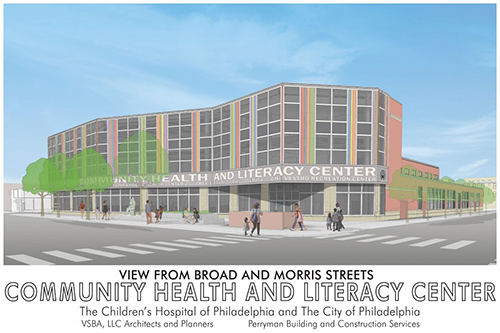
Example #2: Community Health And Literacy Center: A Health, Literacy & Recreation Hub

The Community Health and Literacy Center, formed out of a collaboration between the Children’s Hospital of Philadelphia (CHOP) and the City as unexpected partners, worked together to bring a neglected neighborhood both improved access to health care and health, promoting recreation and literacy opportunities.

The center, which opened in the spring of 2016, is a first-of-its-kind hospital-city partnership. The project includes a CHOP pediatric clinic; a full-service community health center run by the city’s department of public health; a branch of the Free Library of Philadelphia; and a modern recreation center with a playground and green space, run by the city’s Department of Parks and Recreation. It offers welcoming outdoor space for the neighborhood and an indoor community meeting space. The location has excellent public transit access, with a subway stop on site. CHOP and the city are working to integrate services and programming as a way to have more of an impact on improving population health.


Photo of proposed community center.

Contributed by Lia Thompson, University of Kansas, Community Tool Box Intern.


Example #3: Under One Roof: Health Care and Social Services in the Same Place

The Chicanos Por La Causa (CPLC) is the largest community development corporation based in Arizona. CPLC is committed to building stronger, healthier communities as a lead advocate, coalition builder, and direct service provider. CPLC helps more than 200,000 people through programs in four areas–housing, economic development, education, and health and human services. CPLC recognizes that the needs of the families it serves are complex as a family rarely approaches the CDC with only one need. As a result, CPLC sought to establish cross-sector partnerships that would more effectively and holistically meet the needs of families.

Read more about CPLC on Rooflines - The Shelterforce Blog, from the National Housing Institute.

Contributed by Lia Thompson, University of Kansas, Community Tool Box Intern.


example #4: building belonging through multilingual wayfinding

A group of women discussing with a paper in one woman's hands.

Finney County, Kansas, is home to many migrants and refugees. LiveWell Finney County aims to make the community more welcoming and connected. They have partnered with local agencies, including the hospital and nonprofits, to install wayfinding signage in multiple languages, helping all residents feel included and navigate community spaces more easily.
 

PowerPoint
Anonymous (not verified) Wed, 12/12/2012 - 09:44

A PowerPoint presentation summarizing the major points in the section.

Section 4. Expanding Opportunities for People Experiencing Poverty
mloewenstein Wed, 12/12/2012 - 09:45
Main Section
mloewenstein Wed, 12/12/2012 - 09:45

A Story of Change

Raymond had been in and out of the justice system since age 13. Jessie often faced a painful choice at the end of each month—pay the rent in full or buy milk for her kids. Maureen had spent years living on the street while struggling with alcohol use. Felix had crossed the border from Guatemala at 15 and worked low-wage jobs ever since.
When they stood together in their graduation robes, they shared three things: they had all experienced poverty, they all had tears in their eyes, and they all believed their lives were changing for the better.
They were completing a comprehensive program designed to help participants overcome barriers to economic stability. They learned how to apply for jobs, interview confidently, manage workplace relationships, and budget their money. Jessie and Maureen earned their GEDs (Raymond had earned his earlier), and Felix had become fluent in English. Jessie was paying rent consistently and feeding her children well; three of the four were newly registered voters, and Felix was studying for citizenship.
Just as important, they built a community. They supported one another—sharing meals, childcare, and encouragement. Raymond found a job through Maureen’s uncle’s plumbing business. Jessie’s daughter, a talented artist, enrolled in a charter school another participant had recommended. Felix’s volunteer mentor was helping him explore college options.
For some people, the path out of poverty starts with access to a decent job. For others, it requires education, training, and emotional support to rebuild confidence and a sense of agency. And for everyone, relationships and community matter. A strong network of support opens doors that few can open alone.

Understanding Poverty Today

This section explores how communities can expand opportunities for people to move out of poverty and the challenges that often come with it—unstable housing, unsafe environments, chronic stress, preventable illness, family strain, and social isolation.
In the U.S., the word poor has largely been replaced by terms like low-income, under-resourced, or economically marginalized. For clarity, we’ll use people experiencing poverty—those who lack the resources needed to meet basic needs and fully participate in society.
Poverty looks different around the world, but the core experience is similar: being excluded from the standard of living enjoyed by most of one’s community. Whether in rural Tanzania, Mumbai, or a struggling neighborhood in Chicago, people feel that same gap between themselves and the rest of society.
 

Who Experiences Poverty and Why?

People experience poverty for many interconnected reasons. Some face temporary setbacks—job loss, illness, divorce, or displacement—while others encounter long-term systemic barriers that limit access to education, jobs, and healthcare. Often, these causes overlap and reinforce each other.

Limited access to education and skills

Many adults lack the basic literacy, numeracy, or digital skills needed for today’s jobs. Others face language barriers that prevent them from accessing training or advancement. Without these skills, people are often limited to low-wage, insecure work.

Low-wage or unstable employment

Millions of “working poor” individuals hold one or more jobs but still can’t earn enough to cover basic needs. Many lack health insurance or paid leave, leaving them vulnerable to eviction, hunger, or medical debt when emergencies arise.

Health challenges and disability

People with physical, developmental, or mental health conditions often face barriers to stable employment, especially when support systems are weak. For some, assistive technologies and accommodations open doors; for others, the lack of access to care or public assistance deepens hardship.

Substance use and recovery

Addiction often both results from and contributes to poverty. While some turn to drugs or alcohol to cope with stress, trauma, or hopelessness, substance use can quickly lead to job loss, strained relationships, and homelessness. Recovery requires compassionate, nonjudgmental support and long-term care.

Mental health and trauma

Mental health issues like depression, anxiety, or post-traumatic stress disorder (PTSD) can make it difficult to maintain work, relationships, or stability. Veterans, survivors of violence, and those who have experienced chronic adversity may need trauma-informed care to heal and move forward.

Economic shocks and instability

Even middle-income families can fall into poverty after a major setback—such as medical debt, job loss, divorce, or disaster. Without savings or social safety nets, a single crisis can trigger a downward financial spiral.

Generational poverty

When families experience poverty over generations, they may not have access to the networks, education, or role models that support upward mobility. This “cycle of poverty” can be broken—but it requires a shift in opportunities, mindset, and support at both individual and community levels.

Poverty Among Children and Families

Children are particularly vulnerable to the effects of poverty. In the U.S., roughly one in six children lives below the federal poverty line, with rates higher among Black, Hispanic, and Native families. Growing up in poverty often means attending under-resourced schools, facing food insecurity, and living in unsafe or unstable housing.
The consequences ripple outward: children in poverty are more likely to experience poor health, fall behind academically, and struggle to envision a path to higher education or stable employment. Family supports—such as affordable childcare, strong schools, and community mentors—play a critical role in breaking this cycle.

Breaking the Cycle: What Works

Helping people move out of poverty requires both individual supports and systemic change. Effective strategies include:

  • Education and training: Expanding access to quality K–12 education, GED programs, vocational training, and college opportunities.
  • Living-wage jobs: Creating pathways to employment that offer fair pay, benefits, and opportunities for advancement.
  • Affordable housing and childcare: Reducing the financial strain that keeps families from saving or pursuing education.
  • Healthcare access: Ensuring affordable physical and mental health services, including substance use treatment.
  • Social connection: Building networks of trust and mutual aid that help people find jobs, share resources, and navigate crises.
  • Empowerment and leadership: Supporting people with lived experience of poverty to lead change efforts and influence policy.
     

The Bigger Picture

Extending opportunity isn’t about charity—it’s about equity and inclusion. Real progress happens when communities address the structural barriers that keep people from reaching their potential: low wages, systemic racism, limited access to healthcare and education, and a lack of affordable housing.
By investing in people’s potential and creating pathways for education, employment, and community connection, we can move from managing poverty to ending it. As Raymond, Jessie, Maureen, and Felix learned, when opportunity meets support, transformation follows.

Contributor

Phil Rabinowitz

Resources

Online Resources

ACORN, the Association of Community Organizations for Reform Now (originally Arkansas Community Organizations for Reform Now). ACORN has worked on poverty eradication in various communities for several decades.

The Ashoka Foundation, an international organization that funds micro-lenders and others engaged in poverty eradication in the developing world

The Asian Development Bank, addressing poverty in Asia and the Pacific.

The Boston Foundation. Among this Foundation's many publications are a Community Building Curriculum, designed in large part to train community leaders how to organize their neighborhoods to help reduce poverty and maximize community opportunity.

The Center for Community Change, an organization that has fostered coalitions that, in turn, have been instrumental in establishing the Food Stamp program, the Community Reinvestment Act, and the preservation of affordable housing.  Some organizations that CCC has spawned that provide opportunities for the poor include:

  • The Coalition on Human Needs
  • The Coalition of Essential Schools home page and the organization's common principles of excellence in education
  • The National Committee for Responsive Philanthropy, which works with funders to educate and advocate about the kinds of initiatives that will actually help people overcome poverty.
  • The Rural Coalition.
  • The Workforce Alliance, which advocates for workforce development.

The Curb-Cut Effect by Angela Glover Blackwell. Laws and programs designed to benefit vulnerable groups, such as the disabled or people of color, often end up benefiting all of society.

The Gates Foundation, wealthiest in the U.S., focuses largely on global health issues, but this can indirectly have a strong poverty-reduction impact in that healthier people are significantly more likely to engage in economic activity.

The Grameen Bank, the brainchild of Muhammad Yunus, originator of micro-credit. Makes small loans (as little as $10 to $25) to poor individuals and groups in Bangladesh.

The website of the Harlem Children's Zone, a comprehensive community initiative intended to reduce poverty and also promote overall community development in of some of Harlem's poorest neighborhoods.

The Opportunity International Network. Australia-based micro-credit lender, with training and mentoring for borrowers.

The website of the Poverty and Race Action Council, whose self-described purpose is "to link social science research to advocacy work in order to successfully address problems at the intersection of race and poverty."

SolvePoverty. Australian for-profit, originally affiliated with Opportunity International, that trains poor Southeast Asian youth for jobs in the computer industry.

Print Resources

Center for Community Change [no date given]. Getting Ahead: New approaches to generating jobs and opportunities for residents of low-income communities. Washington, DC: Author. A short how-to manual, with many examples, drawn from the work of this leading anti-poverty advocacy organization.

David K. (2004). The Working Poor: Invisible in America. New York, NY: Knopf. A detailed journalistic account of the working poor, and of how their situation might be bettered.

Ehrenreich, B. (2001). Nickel and Dimed: On (Not) Getting by in America. New York, NY: Henry Holt. The author's insightful first-person experiences in working three different low-wage jobs.

Jonathan Kozol (1995). Amazing grace: The Lives of Children and the Conscience of a Nation. New York, NY: Crown Publishers. This case study of the Mott Haven area of the South Bronx (and a best seller) is one of Kozol's many works describing the effects of poverty on children.

Ken A. (1982). The Underclass. New York, NY: Vintage Books. Though by now an older book, Auletta's work is rich in illustrative detail and distinctive in describing the promises and pitfalls of job training programs as a method for emerging from poverty.

Lisbeth B. (1997). Common Purpose: Stengthening Families and Neighborhoods to Rebuild America. New York, NY: Doubleday. A comprehensive study by a leading scholar on the subject.

Meyer, A., Blake,L., Caine, H., & Williams P. (2000). On the Ground with Comprehensive Community Initiatives. Columbia, MD: The Enterprise Foundation. Many examples of such programs from across the country, and how they work in practice.

William J. (1996). When Work Disappears. The world of the new urban poor.  New York, NY: Knopf. Wilson's by-now classic exposition of the effects of the disappearance of industrial jobs from our central cities.

Checklist
mloewenstein Wed, 12/12/2012 - 09:45

Use this checklist to assess how your community, organization, or partnership is helping individuals and families build pathways out of poverty.

Understand the context
    ___ Learn about poverty in your community—who is most affected, and why.
    ___ Examine local data on income, education, housing, health, and employment.
    ___ Listen to people with lived experience to understand barriers and assets from their perspective.
    ___ Recognize how racism, discrimination, and policy decisions contribute to persistent poverty.
Build comprehensive supports
    ___ Offer education and skills training programs that align with real employment opportunities.
    ___ Partner with local employers to create paid apprenticeships and living-wage jobs.
    ___ Connect participants to affordable housing, childcare, transportation, and healthcare.
    ___ Include mental health and recovery supports as core program elements.
    ___ Provide access to financial literacy training and credit-building opportunities.
Strengthen community and relationships
    ___ Foster peer networks that provide encouragement, childcare exchange, and resource sharing.
    ___ Build partnerships among nonprofits, government agencies, businesses, and schools.
    ___ Create mentorship programs linking participants with professionals or community leaders.
    ___ Celebrate milestones (graduations, new jobs, certifications) to reinforce progress and pride.
Empower and involve participants
    ___ Engage people with lived experience of poverty as leaders, advisors, and co-designers.
    ___ Use trauma-informed approaches that emphasize dignity, trust, and choice.
    ___ Encourage civic engagement—such as voting, advocacy, and community leadership.
    ___ Focus on strengths and assets, not deficits or “fixing” individuals.
    ___ Measure success not only by income but also by increased stability, confidence, and connection.
 

Examples
pschneider Mon, 01/30/2017 - 10:52

Example #1: A Tour of Mariposa: Equitable Transit-Oriented Development

The Mariposa Project led by the Denver Housing Authority is an affordable and transit-oriented housing development in which health outcomes and community-level improvements are evaluated. The new mixed-income community has revitalized the surrounding areas, breaking down physical barriers between the public housing units and the rest of the community and infusing the area with community-informed retail and services. The Denver Housing Authority has transformed 10th Street into a promenade that connects the rail station to the nearby Art District on Santa Fe, drawing visitors from across the city to an area that was once overlooked.


Photo of DHA Executive Director Ismael Guerrero at the Mariposa development in Denver, Colo.

Contributed by Lia Thompson, University of Kansas, Community Tool Box Intern.


Example #2: The Brandywine Center: In Pennsylvania, Wealthy County’s Poorer Residents Get A Healthy Place To Live

Although Chester County, Pennsylvania, has been considered one of the richest counties in the country, seven percent of its half-million residents live in poverty. Coatesville, a city of 13,000 people, is one such low-income pocket. To combat this problem, the Brandywine Health Foundation (BHF) constructed the Brandywine Center, a community hub. The four-story building houses health and dental services on the first floor, behavioral care on the fourth, and 24 units of affordable senior housing on the two middle floors. The BHF is committed to working toward both improved neighborhood conditions and improved health in this low-income community.

Photo of Brandywine Center.

Contributed by Lia Thompson, University of Kansas, Community Tool Box Intern.


Example #3: Community Health And Literacy Center: A Health, Literacy & Recreation Hub

The Community Health and Literacy Center, formed out of a collaboration between the Children’s Hospital of Philadelphia (CHOP) and the City as unexpected partners, worked together to bring a neglected neighborhood both improved access to health care and health, promoting recreation and literacy opportunities.

The center, which opened in the spring of 2016, is a first-of-its-kind hospital-city partnership. The project includes a CHOP pediatric clinic; a full-service community health center run by the city’s department of public health; a branch of the Free Library of Philadelphia; and a modern recreation center with a playground and green space, run by the city’s Department of Parks and Recreation. It offers welcoming outdoor space for the neighborhood and an indoor community meeting space. The location has excellent public transit access, with a subway stop on site. CHOP and the city are working to integrate services and programming as a way to have more of an impact on improving population health.


Photo of proposed community center.

Contributed by Lia Thompson, University of Kansas, Community Tool Box Intern.


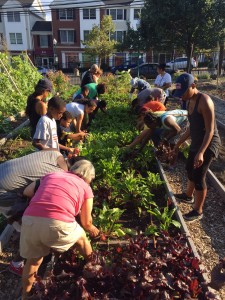
Example #4: Vita Health & Wellness District: Health at the Center of a Neighborhood Transformation

The Vita Health & Wellness District project was established through a partnership between the Stamford housing authority and Stamford hospital to revitalize an impoverished inner city area, in Stamford Connecticut, into a mixed-income community with expanded neighborhood services centered around a sustainable urban farm. Addressing the social determinants of health provide a framework for managing the neighborhood transformation in ways that would support and strengthen the existing community.

The Vita project is a great example of how a hospital can fulfill the Affordable Care Act’s mandate to engage its community by partnering to address the social determinants of health. The project also demonstrates how a forward-thinking community development organization can effectively partner with the health sector to pursue comprehensive community revitalization that could not have been achieved otherwise. These are still early days in what promises to be a fruitful and long-lasting partnership.

Image of the community gardening.

Read more about the Vita Health & Wellness District project on the Building Healthy Places Network blog.

Contributed by Lia Thompson, University of Kansas, Community Tool Box Intern.


Example #5: Rolling Hills Apartments: Weaving Together Opportunities for Healthier Lives for a Diverse Immigrant Community

Photo of Rolling Hills Apartments

Twin Cities LISC, a local community development financial institution, has partnered with local organizations and city agencies to create quality affordable housing with improved healthcare access, including constructing a Federally Qualified Health Center. LISC also employed community health advocates to weave together the isolated health-related efforts in the neighborhood of focus into a cohesive health agenda. More specifically, they connect and help support existing efforts, identify and help address gaps, and facilitate the conversations and activities that sustain collaboration.

Learn how social determinants of health are being addressed to build healthier lives for immigrants in St. Paul, Minnesota in this Community Close-Up from the Building Healthy Places Network.

Contributed by Lia Thompson, University of Kansas, Community Tool Box Intern.


Example #6: Community Development 2.0—Collective Impact Focuses a Neighborhood Strategy for Health

The East Bay Asian Local Development Corporation (EBALDC) has built health into its strategic plan, and in the neighborhood revitalization work of The San Pablo Collaborative (SPARC), convened by EBALDC, health is the first priority. The San Pablo Area Revitalization Corridor neighborhood that stretches between downtown Oakland and Emeryville is considered to be one of the poorest and most disadvantaged areas of Oakland, California. Life expectancy in this area is up to 20 years lower than the neighboring area, Oakland Hills. SPARC works tirelessly to address the physical, social and economic factors-“social determinants”- that shape residents’ health in the San Pablo Avenue Corridor. SPARC partners work collectively in order to create an overall healthier environment for residents throughout the neighborhood. The California Hotel has been successfully preserved as affordable housing and a grocery store has been brought to this long abandoned neighborhood.

Learn how social determinants of health are being addressed to build healthier lives for the most disadvantaged areas of Oakland, California in this Community Close-Up from the Building Healthy Places Network.

Contributed by Lia Thompson, University of Kansas, Community Tool Box Intern.


Example #7: Revitalizing People and Place with a Healthy Food Hub Origin

Photo of woman in grocery store.

Following the devastation of Hurricane Katrina in New Orleans, the founders of what became Broad Community Connections (BCC) began to attend community meetings, and investigate with their fellow community members how to rebuild a city in disarray. These discussions highlighted many of the problems that many central New Orleans resident had faced even before the storm, including but not limited to economic disadvantage, community disinvestment, health disparities, and lack of access to many needed goods and services. BCC was designed to revitalize Broad Street, a commercial thoroughfare running through the heart of the city and to connect several of the central city neighborhoods.

Founded in 2008, BCC set its sights on improving health and improving economic vitality in the area. Ultimately, the ReFresh project provided a high-quality grocery store to a low-income food desert and created a multi-faceted hub to improve healthy food access and local food systems, foster community connectivity, support youth development, and anchor economic development.

Read more about the ReFresh project in New Orleans on the Building Healthy Places Network blog.

Contributed by Lia Thompson, University of Kansas, Community Tool Box Intern.


Example #8: Supporting Childhood Wellness Through Healthy, Affordable Housing

In a low-income Philadelphia community, for-profit and non-profit developers have partnered to create Paseo Verde, a high-quality housing development highlighting resident and community health. The development prides itself on making healthy housing accessible even for families in poverty. This one-, two-, and three-bedroom apartment complex, Paseo Verde, supports children’s health through its environmentally sustainable design, on-site health center and pharmacy, resident service programs, and social service programs.

Read more in the profile from How Housing Matters.

Contributed by Lia Thompson, University of Kansas, Community Tool Box Intern.


Example #9: Building Strong Neighborhoods with Affordable Housing


Image of buildings in a neighborhood.

The New Settlement Apartments project began in 1990 with the acquisition and restoration of fifteen abandoned buildings, the construction of a new building, in addition to the acquisition of a seventeenth building to provide over 1,022 affordable homes for a community of more than 3,500 people, in which thirty percent are formerly homeless. Presently, the eighteenth building is under construction to provide sixty additional affordable apartments. This project has played a monumental role in transforming one of the worst areas of New York City into a vibrant mixed-income neighborhood.

Read more from the Settlement Housing Fund.

Contributed by Lia Thompson, University of Kansas, Community Tool Box Intern.


Example #10: Scholarships for Every Student

In 2005, Baldwin community leaders learned about a plan that had been implemented in the Michigan City of Kalamazoo to provide every high school graduate a full scholarship to attend any public college in the state. The program, called the Kalamazoo Promise, was made possible by a group of anonymous donors. Unlike Kalamazoo, Baldwin didn’t have any local prospective big businesses or deep-pocketed philanthropists. As written, “Rick Simonson, a Baldwin native who chaired President Gerald Ford’s election campaign in Michigan and later served as a legislative staffer and lobbyist in Michigan, told them about a law that the legislature had just passed aimed at creating 10 “promise zones” in the state to offer Kalamazoo-like scholarships.” If communities raised sufficient seed money, they would be allowed to support the scholarships by keeping a portion of annual property tax revenues that they would otherwise have to pass on to the state. Astonishingly, within a year, Baldwin had raised enough money to initiate the scholarship program. The Baldwin Promise is an extraordinary representation of a small town’s aspiration to provide a better opportunity for its youth. While there are promise scholarships in various communities across the nation, Baldwin was the first place to raise the seed funds through grassroots contributions.

Read more about Scholarships for Every Student.

Contributed by Lia Thompson, University of Kansas, Community Tool Box Intern.


Example #11: The Hunger Hack

After a storm led to the cancellation of a church event in the Washington, D.C., suburbs last year, Tierney Screen found herself in a room filled with 3,600 unclaimed paper lunch bags, each containing a sandwich, fruit, chips, and cookies. Unable to distribute them by herself and the thought of having to toss them in the garbage pained her. A few months earlier she met a student who spoke about a website she and some other students created in which restaurants and community establishments could donate excess food to organizations that feed the hungry. Screen decided to call the student, Maria Rose Belding, who explained how to post the lunches on the site and within four hours, a nearby food pantry claimed them. The bags would be handed out to homeless people in Washington D.C.

Read more about The Hunger Hack.

Contributed by Lia Thompson, University of Kansas, Community Tool Box Intern.


PowerPoint
Anonymous (not verified) Wed, 12/12/2012 - 09:46
File Upload
A PowerPoint presentation summarizing the major points in the section.
Section 5. Increasing Access for People with Physical Disabilities
mloewenstein Wed, 12/12/2012 - 09:47
Main Section
mloewenstein Wed, 12/12/2012 - 09:47
  • What do we mean by increasing access?

  • Why should you make your organization or initiative more accessible?

  • When should you make your organization or initiative more accessible?

  • Who can help you increase access?

  • How do you go about increasing access?

With over 54 million citizens making up their ranks, people with disabilities are the largest minority group in the United States. Worldwide, about one in ten, or 650 million people, live with disabilities that affect their daily lives. The vast majority – about 80% -- live in developing countries, are poor, and lack educational and other resources that could help them change their situations.  It's also a group that is always growing because of lengthening lifespans -- as people age, they become more likely to develop a disabilities. In spite of their numbers, people with disabilities continue to experience discrimination and marginalization that are only slowly changing for the better with the help of the modern disability rights movement. One of the biggest battles faced by people with disabilities is the struggle for increased access. Accessibility issues can take many forms. For example:

  • Jamahl had long been interested in doing some sort of volunteer work, and when he heard that the local anti-drug coalition was bringing in a famous author to do a lecture on volunteerism, he was really excited about going. But when he went to the lecture, no sign language interpreter was present. Annoyed that such a large event didn't make it possible for him to enjoy the lecture, Jamahl left before applications and brochures on volunteering were handed out.
  • Katrina wanted her son Ricky to get involved with a citywide afterschool tutoring program. Transportation was provided for students in the program, but none of the buses used to take students to and from the tutoring site were wheelchair-accessible. While Ricky really could have used the help in his math classes, he was unable to participate in the program.
  • When Emilio's wife died, he started attending a local support group for people who had lost loved ones. The support group facilitator always gave out lots of articles and other clippings that the other support group members said were very helpful, but Emilio was unable to use them because he had a visual impairment, and the facilitator never made any copies available in large type. Discouraged, he stopped attending the support group.

Some accessibility accommodations are simple, some are complex, but all are important and add diversity to your organization. We hope that this section will give you enough information to get you started on making your organization or initiative more accessible and enough links and resources to help you find out more when you've finished with this section.

What do we mean by increasing access?

Increasing access means creating an environment that can be used by all people, including those who have disabilities. When we talk about accessibility, people often assume we mean making a building or other space accessible to wheelchair use and don't think beyond that. True accessibility, however, means giving thought to many different types of disabilities and how you can change things within your organization or initiative to make the people who have them feel welcome--not just the physical structure of your office or meeting spaces, but the attitudes and communication styles of people within your organization or initiative.

So when we talk about increasing access, we mean doing it by:

  • Changing attitudes within our organization or initiative;
  • Changing the way we communicate with others, and
  • Changing physical things, such as the structure of the spaces we use and the formats in which we present information.

Why should you make your organization or initiative more accessible?

The most apparent answer to this is that making your organization or initiative more accessible is simply the right thing to do. With the advent of the Americans with Disabilities Act, it's also the law.  (More than 50 other countries besides the U.S. have either passed laws regarding the rights of people with disabilities – many based on the ADA – or have incorporated those rights into their constitutions.) But making increased accessibility a priority in your organization or initiative also makes for a larger pool of potential volunteers, members, and staff. Providing access for people with disabilities is another way you can increase diversity in your initiative or organization. Additionally, it makes it possible for more people to make use of any services or programs you provide.

When should you make your organization or initiative more accessible?

Any time is a good time to work on increasing access, but there are some times that you might not have thought about including accessibility issues in your plans but should:

  • When you are looking to increase your numbers--whether that means people your organization or initiative serves or people who are involved as volunteers, members, or staff.
  • When you are thinking about new spaces - for example, moving to a new office building or finding a new place to hold a weekly public meeting.
  • When you're planning a conference, retreat, or some other special gathering.

Sometimes people make the argument that making changes to increase accessibility is impractical, because they've been operating for years with few or no people with disabilities as part of their organization or initiative. The following story, from Joseph S. Shapiro's No Pity: People with Disabilities Forging a New Civil Rights Movement (1993), illustrates why this reasoning is flawed:

The postmaster in a small town was told that he would have to make his post office building accessible to people in wheelchairs. There were twenty formidable steps leading to the only public entrance, and the revolving door there was too narrow for even the smallest wheelchair. The postmaster objected to any renovation for disabled patrons. He sputtered in protest, "I've been here for thirty-five years and in all that time I've yet to see a single customer come in here in a wheelchair." (p. 142)

Clearly, the postmaster is a man who just doesn't "get it", but his ignorance represents an important point: just because you haven't ever had a lot of people with disabilities involved in your organization or initiative right now doesn't mean that it's not a good time for improving accessibility.

Who can help you increase access?

Knowing whom to turn to is very important when dealing with something like accessibility, which can be complicated for those who don't know a lot about it. With some experienced assistance, however, any organization can make itself more accessible.

Your best bet for accessibility advice is to find your local independent living center. Independent living centers (or ILC's) are non-profit, non-residential organizations that are resource centers on disability issues for both people with disabilities and the rest of the community; they are not focused on any single disability or condition. ILC's use a peer approach: at least 51% of the board and the staff of an ILC must be people with disabilities, so they have plenty of personal experiences and insight with regard to disability issues. This makes an ILC a great place to go for practical, useful information on your accessibility concerns.

ILC's can be hard to find in the phone book, but sometimes they are listed under "Disabled Persons Services" (the phone company has yet to start fully using "people first" language!) or "Social Services". You may have more luck calling your local information and referral service, the social work department of your local hospital, or your state vocational rehabilitation agency. There is also a very comprehensive list of ILC's available at Design Linc, and Independent Living Research Utilization.

Another good resource is your nearest Disability and Business Technical Assistance Centers (DBTAC). Funded by the National Institute on Disability and Rehabilitation Research, there are ten regional centers that provide information, training, and technical assistance to employers, people with disabilities, and other entities with responsibilities under the ADA.

Many national and regional organizations deal with accessibility issues and there are also several governmental agencies that may have helpful information for you. Here are links to the web sites for a few such organizations and agencies:

  • DRM Regional Resources Directory can help you find disability resources in your area:
  • U.S. Department of Labor Office of Disability Employment Policy
  • U.S. Architectural and Transportation Barriers Compliance Board: ADA Standards Homepage (this site includes the Americans with Disabilities Act Accessibility Guidelines [ADAAG])
  • Center for Universal Design
  • The Job Accommodation Network (JAN)

There are other places to find assistance with accessibility issues. Many attorneys specialize in disability issues; they may be able to offer guidance and referrals in addition to information on what sort of accessibility changes you may be required to make under the law. If you are working on changes to the physical structure of your building, many architectural firms now specialize in universal design (the concept of designing spaces so that they are accessible to everyone). A lot of architects may claim to have knowledge about universal design who don't, so check with your local ILC to find out what architects in your area have a good record on building truly accessible structures.

Finally, a source of assistance you should not overlook is people with disabilities in your community, and especially those who are already involved in your organization or initiative. Getting together with these folks--informally or in a more structured manner such as a focus group - to get their suggestions and concerns regarding your approach to accessibility can be immensely helpful.

How do you go about increasing access?

Change attitudes within your organization or initiative.

The first step is to change the way you and others involved in your organization view people with disabilities. Of course, this is easier said than done, but there are things you can do to learn more about disability issues, how people with disabilities would like to be treated, and the basics of disability etiquette.

One way to start is to reach out to people with disabilities and simply ask for their help in improving accessibility. Are there any people with disabilities already involved in your organization? Is there at least one person with a disability on your board of directors or advisory council? Ask those people for their input and assistance in bringing about change at your organization; they might want to form a task force or committee on accessibility and accommodation issues. Of course, people with disabilities who are asked to take these types of roles should not just be chosen as tokens or "window dressing", but should really be viewed and treated as equal partners in your organization or initiative.

Another step might be to do some staff training on disability issues. For this, you might want to bring in an outside consultant with expertise in this area; check with your local ILC, as they almost always can provide this type of service. You might also look in the phone book under "professional development" or "diversity training." There are also many agencies and organizations that deal with disability issues. You might want to call the Job Accommodation Network (JAN), a service of the President's Committee on Employment of People with Disabilities, at 1 800 JAN -7234 or the Inclusion Network at (513) 287-6530.

Disability etiquette is a concept based simply on treating people with disabilities with courtesy and respect. At the end of this section, under Tools, we have some basic disability etiquette information, but here are some things to keep in mind:

  • Treat adults like adults, and treat people with disabilities like you would treat anyone else.
  • Don't make assumptions about people with disabilities. If you have a question about what to do, just ask. People with disabilities will generally appreciate your honesty and would rather have you ask about their needs and wishes instead of making assumptions.
  • Understand that two people with the same disability may have very different access needs. People with disabilities should be viewed as individuals, and their needs should be addressed accordingly.
  • Not all disabilities are immediately apparent. "Hidden" disabilities--such as hearing impairment or a chronic medical condition like diabetes  -- may cause a person to not respond when you speak to him or her, or act in a way that may seem odd or inappropriate. Again, don't make assumptions. If someone behaves in a way that seems unusual at first, wait to find out more.
  • Treating staff members or volunteers with disabilities the same way you would non-disabled people also means that you should evaluate them the same way as anyone else (this is something that is discussed in the example interview at the end of this section). Non-disabled folks can sometimes be too reticent to be honest with disabled folks about their shortcomings on the job. This usually comes from good intentions, but it only does a disservice to a staff member or volunteer who has a disability. Be up-front with all of your staff about areas in which they can improve their performance.

Change the way you communicate with regard to disabilities.

The language we use when talking about or with people with disabilities is closely tied to disability etiquette. Some basic things to consider about how we communicate:

  • Use "people first" language. This means referring to the person first before referring to the disability: "a woman who is deaf" rather than "a deaf woman". It's sometimes considered okay to say the disability first in conversation, as people first language can become very wordy, but don't ever just refer to the person as his or her disability (for example, calling someone "a paraplegic"). The emphasis should be on the fact that this is a person and his or her disability is one of many things about him or her; a person's disability does not define him or her as a human being.
  • Don't point out disabilities, but don't ignore them either. If someone's disability isn't pertinent to the conversation, don't discuss it unless the person with the disability brings it up. If it is relevant, though, it isn't impolite to bring it up. Hesitating to address a person's disability can imply that the disability is something wrong or bad--that it's an uncomfortable or unpleasant topic. It shouldn't be. A disability is something that person has and deals with every day, and it's fine to acknowledge that.
  • Many words associated with disabilities in the past are now recognized as loaded and biased and should no longer be used because of their negative connotations. For example, the word "handicap" comes from the British image of a beggar with his "cap-in-hand" held out for money. People with disabilities were long portrayed as needing charity and pity. Other words to avoid: referring to people with disabilities as "crippled" or as a "victim" of his or her disability, saying someone "suffers from" his or her disability (say he or she "lives with" it instead), and referring to nondisabled folks as "normal."
  • Find out how the person with a disability communicates best. For example, while many people who are blind can use Braille, the majority of people who are blind do not. By the same token, not all deaf people can lip-read, and even when they do, it is only 30% to 50% effective, because so many words look similar (for example, "Friday" and "fried eggs" look almost identical to a lip-reader). Lip-reading has to be supplemented with gestures, facial expressions, and written notes. Some people who are deaf are able to speak; others are not. When in doubt, just ask, "What way is best for us to talk with each other?"

A good resource on how to communicate about disabilities is a brochure called "Guidelines for Reporting and Writing about People with Disabilities" from the Research and Training Center on Independent Living.

Change the physical structure of the spaces we use and make information available in alternative formats.

Changing attitudes and language are very important, but if people with disabilities can't actually make it into your building or meeting spaces or use your services, those things aren't very meaningful.

This is the stage at which you're most likely to hear naysayers who protest, "But it's too expensive!" This is often said before anyone has even looked into the costs. Many accessibility adjustments are less expensive than you might think. Some changes are very simple and easy, such as moving copiers to areas where people who use wheelchairs can get to them more easily. Furthermore, grantmakers and funding partners are often very willing to provide funds for improving accessibility, or you might be able to find further financial assistance through additional sources. Again, your nearest ILC is a good place to start seeking this information.

According to June Isaacson Kailes, whose A Guide to Planning Accessible Meetings is a good practical guide, you should consider making a formal policy regarding accessibility. This policy should show a commitment that all meeting places your organization or initiative uses will be accessible, no matter how few or how many people are expected to attend.

For example: "[Name of organization] will not hold any meeting, conference, or professional gathering where the facility has barriers which exclude persons with disabilities from attending and participating." (Kailes, 1998)

This means you may have to sometimes make changes. If the hotel where you've been holding your annual conference for the last 15 years isn't accessible, you may just have to choose a new facility. Before you do that, though, try to use your clout as a repeat customer to convince the management that increasing accessibility would be a good business policy.

If you are in the process of building a new facility or making changes to an existing structure, consider using Universal Design. Universal Design is a method of designing buildings, rooms, and other spaces with the following principles in mind:

  • Equitable use: The design is useful and marketable to any group of users.
  • Flexibility in use: The design accommodates a wide range of individual preferences and abilities.
  • Simple and intuitive use: Use of the design is easy to understand.
  • Perceptible information: The design communicates necessary information effectively to the user.
  • Tolerance for error: The design minimizes hazards and the adverse consequences of accidental or unintentional actions.
  • Low physical effort: The design can be used efficiently and comfortably.
  • Size and space for approach and use: Appropriate size and space is provided for approach and use.

Even if you don't go with Universal Design, there are many resources available on making structures accessible. Building and Facility Design Guidelines from the Access Board has loads of specific guidelines for measurements, placement, and other details you will need when getting down to the nitty-gritty of designing a space to be accessible.

When you're looking outside your own offices for facilities for meetings, training sessions, retreats, or other such gatherings, it's important to be sure that the places you use are accessible. The most important rule to remember here is never assume a location is accessible just because the owners or personnel say it is (hotels, especially, are notorious for this). This doesn't necessarily mean these folks are being dishonest; they simply don't always understand all the things accessibility encompasses. To be considered truly accessible, the structure must be in compliance with the Americans with Disabilities Act Accessibility Guidelines (ADAAG).

So how do you get around this? If you have the resources, it's best to check the facility out yourself. If possible, having people with disabilities who have a firsthand knowledge of accessibility needs is preferable, but if you don't have a disability yourself or are unable to find someone who does to help you with this, then get a good accessibility checklist and a tape measure and go investigate.

The Americans with Disabilities Act Accessibility Guidelines (ADAAG) is perhaps the most comprehensive checklist you can use. We also have a more simple accessibility checklist included in Tools at the end of this section.

Another tool you may want to use when trying to judge accessibility is the ADA Accessibility Stick II. This is a portable yardstick-like device marked to help you measure various ADAAG minimums like threshold height, ramp and curb slopes, doorway widths, and so on. It expands from 17 inches collapsed to a 32 inch ruler and also has an air-bubble level indicator. For more information on this tool, write Access Inc., 416 Nancy Court, Lawrence, KS 66049-4601; you can also call (785) 841-0321 or email sales@adastick.com.

If you are absolutely unable to check out a building or facility yourself, send a letter and a checklist to the possible facility requesting specifics about their accessibility.

Before any meeting or event, be sure that any announcements, invitations, or advertisements include a statement about what sort of accessibility arrangements have been made (i.e., whether the site is wheelchair accessible, whether any alternative formats of written or spoken information will be available, etc.). Announcements should also include any information about accessible parking or accessible public transportation. More suggestions on what to include in your meeting or event notices are included in the Tools at the end of this section.

A contact person should be designated and included on any announcements for questions or information regarding accommodations. If you have a registration form for your event, be sure the form includes a space for persons with disabilities to make their needs known.

Basic Logistics:

  • Print materials to be used at the event/meeting should be available in advance, on request.
  • Seating space should be set up with intermittent seating for wheelchair users (remove chairs so that space is available for wheelchairs to fit in).
  • Aisles and hallways should be wide enough for two people using wheelchairs to pass one another.
  • When doors that are difficult to open can't be adjusted or propped open for the duration of the event, assistance should be provided at the door during the event.
  • Films and slide shows should be captioned, whenever possible.
  • Microphones, speaker's table, podium, stage areas, and the paths to those places should be accessible.
  • If you will be presenting any information in alternative formats (see below), be sure you've planned far enough in advance to have these materials ready.
  • If sign language interpreters will be used, they should be provided an advance copy of the materials presented at the event/meeting, whenever possible.
  • Many hotels, convention sites and event areas have sound enhancement systems available for your use. Check with them. Also review with them the physical accessibility and event logistics checklists.
  • On the day of the event, be sure that any temporary access arrangements, such as portable wheelchair ramps, have been put in place.

Multiple Chemical Sensitivity -- also sometimes called environmental illness -- is a condition in which the sufferer can get sick from chemicals in things like fragrances, cleaning products, inks and dyes, food additives, tobacco smoke, etc. MCS is now recognized as a legitimate disability by many agencies, and people with MCS are now protected by the Americans with Disabilities Act. To be accessible to people who have MCS, you should strive for a scent-free environment; ask the facility not to use air fresheners or harsh cleaning materials, and ask in all written materials for your event that people not wear colognes, perfumes, or scented toiletries, and that they refrain from smoking at the event.

      You can learn more about MCS at the following sites:

  • MCS Referral and Resources
  • National Coalition for the Chemically Injured

Alternative formats for information

Many people with disabilities need to receive information in alternative formats. The following are a few of those formats and how you can accommodate people who need them.

Sign language interpreters translate spoken words or audio into sign language. They can be found in the phone book under "Translation Services"; you may have to check in the nearest large city. They usually charge about $25 to $40 per hour with a two hour minimum, but some will donate services to nonprofit organizations. If a meeting or event will last longer than 2 hours, hire two interpreters so they can take breaks. You might have someone volunteer to provide sign language interpretation for an event, but if that happens be sure the person is really fluent in sign language and has experience in interpretation; sometimes well-meaning people who have a little sign language experience think they can translate for an event, and their skills just aren't adequate for this big a job.

There are sign languages for virtually every language group.  In the U.S. and Canada, for example, you’ll find American Sign Language, or ASL, which is, like most sign languages, a true language, with its own grammar and internal structure, neither of which is based on English.  British Sign Language, in fact, is entirely different from ASL, and users of one don’t understand the other.

Audiorecordings of meetings and printed materials should be available for people with visual impairments or people whose disabilities prevent them from easily taking notes. Many meeting facilities provide taping services, or you might wish to hire a professional taping service. Look in your phone book under "taping services" or you might find one at Yahoo's page on recording services. If you're going to make audio recordings of printed materials available, be sure that whoever records the materials reads at a moderate speed, speaks clearly, identifies him or herself at the beginning of the recording, and identifies the document and page numbers where he or she is reading.

Large print versions of printed materials should also be available. In this format, print is enlarged for persons with visual disabilities and persons with learning disabilities. On a computer, a font size of 18 to 24 point will produce large print. For directional signs and door markings, raised letters and numbers 5/8" high or larger should be used. Materials should be formatted so that people with disabilities can read them easily. Use narrow text columns with ragged right margins. Simplifying the formatting to include as little centering or columns as possible is also helpful. Double or triple space between lines to make it more readable, and use black lettering on off-white or pale yellow matte paper (colored paper or shiny papers can be harder to read).

Braille versions might also be made available. Braille is used for people who are blind; it translates printed letters into raised dots, which can be read by fingertips. To find a Braille transcription service, check with local organizations for blind or visually impaired folks, your nearest ILC, or The New York Institute for Special Education's "Braille On the Internet" page on the web.

Computer diskettes, CD-ROMs or DVDs can be utilized by visually impaired individuals, and those with certain learning disabilities, who have access to computers with voice output and/or text enlargement capabilities. Be sure all written materials are saved in ASCII text format. You may have to do some reformatting with things like tables, tabs, and indentations.

Assistive listening devices are devices that make sound louder. They're slightly different from hearing aids in that hearing aids usually amplify all the sound in a particular environment, where assistive listening devices usually amplify a specific, desired sound (a lecturer's voice, for instance). There are several different types of assistive listening devices available; check with your local ILC or the American Speech-Language-Hearing Association for further information to help you figure out what type will best suit your needs.

Captioning provides written text on the lower portion of the screen of films, videos, slides and public service announcements, and any other audiovisual programming, or on a screen for people attending events. There are three types of captioning styles generally used. Realtime captioning is provided mainly for programs that are live, where there is little or no advance information provided on what will be said. A trained stenographer types the words as they are spoken so that they're shown almost instantly. Video productions that have been closed captioned require a separate decoder unit (in the United States, all television sets are manufactured with closed captioning receivers in them). Open captioning places the text at the bottom of the screen, at all times, often in a black reader box. Subtitling differs from open captioning in that it allows for the printed text to be placed anywhere on the screen in a variety of print fonts and colors.

Telecommunication Device for the Deaf (TDD), sometimes called TTY, is a telephone communications unit that an individual uses by typing words in place of using voice. The caller and the receiver of the call should both have a TDD to communicate with each other. However, if one party does not have a TDD, an alternative is to use a telephone relay service where an operator is available to translate for the party without the TDD. By law, every state in the U.S. must have a relay service, so look in the front of your phone book under "Special Services for the Hearing/Speech Disabled." Your staff--especially receptionists or others who often use the phone--should be trained in how to use a TDD.

In Summary

More and more, people with disabilities are being recognized, understood, and valued. People with disabilities are not only as a population your organization should strive to serve, but also a valuable pool of potential staff, volunteers, and contributors. For anyone who is looking to increase accessibility for people with disabilities, we hope that this section of the Community Tool Box has given you a good start as well as some ideas for where you can go for further assistance.

Contributor

Chris Hampton

Resources

Online Resources

The Curb-Cut Effect by Angela Glover Blackwell. Laws and programs designed to benefit vulnerable groups, such as the disabled or people of color, often end up benefiting all of society.

Disability Social History Project.

Dot Nary: Holding events that welcome all is a column from the Lawrence Times that addresses disenfranchised groups, such as people with disabilities and chronic conditions, whose needs for accommodation to participate at the tables are often overlooked, misunderstood or, worse, ignored.

The Inclusion Network.

Job Accommodation Network.

The City of San Antonio, Texas Planning Department and the Disability Advisory Committee. (1997). Disability etiquette handbook.

U.S. Department of Labor Office of Disability Employment Policy.

The Virtual Volunteering Project's article on Working with Online Volunteers Who Have Disabilities

What You Should Know About Medical Examinations video produced by Able South Carolina presents information about how to ensure equal access to health care for people with disabilities.

Print Resources

American Friends Service Committee. (1997). Guide to etiquette and behavior for relating to persons with disabilities.

Kailes, J., & Jones, D. (1993). A guide to planning accessible meetings. Houston, TX: Independent Living Research Utilization.

National Organization on Disability (1997). That all may worship: An interfaith welcome to people with disabilities. Thornburgh, G. (Ed.). Washington, DC: National Organization on Disability.

Paraquad, Inc. (1999). Disability etiquette. St. Louis, MO: Paraquad, Inc.

Rife, J., & Thornburgh, G. (1996). From barriers to bridges: A community action guide for congregations and people with disabilities. Thornburgh, G. (Ed.). Washington, DC: National Organization on Disability.

White, G., Froehlich, K., & Knight, V. (1997). Youth Volunteer Corps training manual for working with youth volunteers who have disabilities. Lawrence, KS: University of Kansas Research and Training Center on Independent Living.


Checklist
mloewenstein Wed, 12/12/2012 - 09:48

What do we mean by increasing access?

___Changing attitudes within our organization or initiative

___Changing the way we communicate with others

___Changing physical things, such as the structure of the spaces we use and the formats in which we present information

Why should you make your organization or initiative more accessible?

___It's simply the right thing to do

___Makes for a larger pool of potential volunteers, members, and staff

___Increase diversity in your initiative or organization

___Makes it possible for more people to make use of any services or programs you provide

When should you make your organization or initiative more accessible?

___With the advent of the Americans with Disabilities Act, it's also the law

___When you are looking to increase your numbers of volunteers, members, or staff.

___When you are thinking about new spaces

___When you're planning a conference, retreat, or some other special gathering

Who can help you increase access?

___Local Independent Living Centers (ILC's)

___Disability and Business Technical Assistance Centers (DBTAC)

___Attorneys

___People with disabilities in your community

How do you go about increasing access?

___Change attitudes within your organization or initiative

___Change the way you communicate with regard to disabilities

___Change the physical structure of the spaces we use and make information available in alternative formats

Examples
mloewenstein Wed, 12/12/2012 - 09:48

Example #1: Interview with Brigid Schwilling

Brigid Schwilling is a graduate student at the University of Kansas who has extensive volunteer experience. She spoke with the Community Tool Box about her experiences as a person with a disability volunteering with a variety of nonprofit organizations and community health agencies. To learn more about the agencies at which she volunteers, just follow the links within the interview.

CTB: Can you tell me about your experience with organizations that do community health and development work, either as a volunteer or a staff member or as a recipient of services?

Schwilling: Well, I do a lot of volunteer work. Most of the places where I have volunteered are accessible. Some organizations, due to lack of funding, haven't been able to make it accessible. And I'd say in a case like that I'm pretty understanding, but I've also been in situations where other organizations have not been willing to do things just because they're being jerks.

I do think it's important to consider accessibility for your staff as well as your clients. I volunteer for places like the Kansas Audio-Reader Network and Independence, Inc. and they're accessible. But I remember when I first started volunteering for Audio-Reader the doors weren't constructed so that a person with a wheelchair could go over. And they had to fix that, mainly because I complained about it.

One thing I have found in terms of accessibility is that people that are designing these things often just don't think. When people are thinking about accessibility issues, if they don't have employees (who are disabled), they need to get themselves a wheelchair and get in it and try navigating around the facility in that wheelchair. Can they make it through the door? Can they get into the bathroom? Are they able to use the toilet? Are they able to get behind their desk? Or if they want to transfer to a chair, do they have room to do that?

CTB: In terms of the places you volunteer, can you tell me a little bit more about what kind of accommodations they'd need to make in order to make it more possible to volunteer there?

Schwilling: Taking Headquarters [a telephone and walk-in crisis counseling center where Schwilling volunteers] for example, if they were going to make their present location more accessible, they would need to have a ramp, either at the front door or the back door. If they did it in the back door, they'd have to widen the back door. I don't have to take my scooter, but if I did, that's what I'd need. Even if I didn't want to take my scooter, a ramp would be a lot more convenient, because those steps in the back are really narrow, and in bad weather both the steps in the front and the back can be slick.

And I know that there is an upstairs area and they don't have an elevator, but what they do is they make an effort to accommodate their staff downstairs, so that works. And the downstairs bathroom is really nice and roomy, but if you were going to accommodate a person in a wheelchair, you would want to widen its door and get rid of things being stored in there that block parts of the floor.

CTB: So it's not just a matter of having it built the right way--you also have to maintain it.

Schwilling: I want to make it clear, I know they're doing the best they can, and I'm really appreciative of how they accommodate me in what ways they can.

CTB: Well that's actually the other thing I thought maybe you could talk about--that accessibility is more than physical stuff, it's also attitude and language. Could you tell me what kind of attitude you look for when you're thinking about volunteering some place, and if you have any anecdotes about things that have been said to you or the way people have dealt with you?

Schwilling: Well, as a volunteer or a paid employee, one of the things I do look for is whether they're willing to work with my needs. And to be honest with you, sometimes as a person with a disability it's really tempting for me to want to say, "I don't have any special needs!" because I feel like some people do look at being disabled as a disadvantage. But I just have to find those people that don't see it that way, that see I have some unique needs, but I also can offer a lot. And I feel like Headquarters has been good about that. In terms of their attitude, on occasions when I couldn't get there because of transportation, they've been great about getting somebody else to work for me. That's not an ideal thing, but it has happened, and they do understand that. And in terms of scheduling, I have to schedule my rides literally a week in advance, so I've worked out something with the scheduler where I can just say, "Okay, on this particular week, I'd like to work this shift." And they schedule me for that shift. If it doesn't work for them, they tell me with plenty of advance notice. But that's something they don't do for everyone. So that's an example of taking my needs into account, because I can't just jump in car and be there in 15 minutes. I have to plan it out so that I have a ride.

So they're very accommodating to what I need. That allows me to give them what they need. Beyond the whole ride thing, I have a service dog, and he has blankets that he lays on when he's there, and they let me keep his blankets there under the desk. And I know that he sheds, and they tolerate that too. And also, I notice that when I am there, if I need help with something or if I look like I need help with something, the staff and other volunteers are great about offering to help - like getting a file for me or if it's faster for them to jump and answer the door. I find that to be a very accommodating environment.

I've been in environments that were not accommodating, and ended up being a failure for me. For example, my undergrad degree is in elementary ed, and when I got to my student teaching, I got placed with a teacher who was very negative and she didn't want me there and she wasn't helpful at all.

CTB: What kinds of things happened?

Schwilling: Well, I was having a lot of physical problems, and when you're having physical problems it's hard to concentrate on what you need to do. And so I was having problems, and she didn't try to make anything easier or in any way ask what she could do to help me make it a successful experience. I don't expect people to do things for me because that's just real life--you have to be able to be an asset to whatever organization you're working for--but she was unwilling to do absolutely anything, and her attitude made it harder for me.

CTB: It sounds like her attitude was the real roadblock to accessibility there.

Schwilling: The school itself had maybe one accessible door, but I didn't have my scooter at the time. So to me the issue wasn't accessibility in terms of the physical, but it wasn't accessible in terms of attitude. I ended up from actually withdrawing from the program. That was my choice, but like I said it was such a negative experience, and she had told me at one point that the only reason she accepted me as a student teacher was because she wanted my dog in her classroom.

CTB: That's so demeaning!

Schwilling: Yeah, my confidence took a shot, and I really questioned who I was and what I was doing, and it's really scary as a person with a disability when I think about employment because I never want to be in that position again. I'm studying social welfare right now, and I'm going to be doing practica in a year, and that's one thing I have to keep in mind; not only is the facility accessible, but what are their attitudes? Are they going to believe in me? Are they going to encourage me?

CTB: What would be a few tips you'd give people about their attitudes?

Schwilling: A tip I would give to employers would be to keep an open mind. So many people see people with disabilities and they automatically assume that they can't do something. Don't assume that. Keep an open mind, sit down and talk with the person, and talk to them about their capabilities. Most people with disabilities are not going to be offended by talking about their disability or what their needs are or what their capabilities are. And assure them that if they have any needs that need to be addressed that you're willing to talk with them about it and try to make accommodations. Just like with any person, there are people with disabilities that take advantage  - some people, if you give them an inch, they'll take a mile. But most people with disabilities will just ask for what they need because they want to succeed just like somebody who doesn't have a disability. They want to have a job or volunteer and feel good about what they're doing. Don't just have that talk once, go up to them every so often and say, "How are things going?"

One thing that really has bothered me in employment settings is when I have not done something right, my employers almost always don't say anything. I wonder if because I have a disability they think they're going to just shatter me if they say, "We need to work on this." So I think that another tip would be that if you have an employee with a disability and there's something they need to improve on, you should go to them and say nicely, "You know, I've noticed you're having a problem with this. Let's talk about it." Get their perspective, and maybe then you can figure out ways to help them do their job better.

It's just like anybody else's working environment -you want to make it pleasant, and it's pleasant if you communicate, and it's not pleasant if you don't. It's the same thing with people with disabilities, except there might be some unique issues to them that need to be addressed.

CTB: Is there anything else that you'd like to add?

Schwilling: I wish in general that people could get over their own discomfort and talk to people with disabilities. I've had friends that have told me, "Oh, you know, when I first met you I was really nervous. I could see your disability and now I know you so well I don't even see it." I'm just like everybody else; I have dreams, desires, goals, and people with disabilities just want other people to talk to them, to treat them like normal human beings instead of assuming that they can't do things. Even if you're feeling uncomfortable, take a chance and talk to them, and you're going to find that you're talking with somebody that you have a lot in common with. And I think that if employers did that, it would be so much better.

I do have an anecdote I want to share with you... I had a friend with cerebral palsy, very smart, who's studying to be a lawyer. He was applying for this job, and they set up an interview with him. So he gets ready for his interview, and before he goes to his interview he checks his mail. In the mail there was a letter from this place he was going to go interview at that said, "Thank you for your interview, but we've decided to accept somebody else."

CTB: Before he'd even gone?


Example #2: A Warrior’s Workout

Dave Vobora challenges wounded vets to push themselves beyond what they believe could ever be possible. He separates himself from other trainers, as he doesn’t use sophisticated equipment specifically designed for rehabilitation programs. Many workouts are improvised activities involving balancing pipes filled with water, flipping giant truck tires, standing on modified surfboards, and hauling a sled stacked with weights – all to the deafening bass of rock and rap music. Vobora who is in fact not a certified trainer possesses two important traits that enable him to train disabled veterans: a strong desire to help, and the ability to put a smile on his client’s faces as they perform feats that most four-limbed people would find impossible.

Read more about A Warrior's Workout.

Contributed by Lia Thompson, University of Kansas, Community Tool Box Intern.


Example #3: Employing the Full Spectrum

John, a businessman who had developed a successful document-management technology used by several large New York City law firms, had saved money to pay for, his Autistic son, Andrew’s ongoing care. But he decided he needed to do more. One day, while at a car wash John said, “I’m watching this zoo, a disorganized array of nonsense, where one car’s moving, one car’s not, three guys on this car, one guy on that car, everybody getting antsy waiting for their car,” he recalls. “But I’m thinking to myself, ‘Andrew can do this.’” John thought that if Andrew was to thrive at such a job, it would be a good idea for him to work with a few other young people with autism, and in order to make that happen, he thought it best to own the car wash. His goal went beyond employment, as he desired to also profit from this business. He wanted to set up a moneymaking operation that would prove that autistic individuals could be efficient employees.

Read more about Employing the Full Spectrum.

Contributed by Lia Thompson, University of Kansas, Community Tool Box Intern.


Contributor

Chris Hampton

Tools
Anonymous (not verified) Tue, 03/18/2014 - 08:53

Tool #1: Disability Quiz for the Non-Disabled

This quiz can be distributed as part of a staff development exercise on disability issues, or you can just take it yourself to get an idea about how much you do and don't know about disability issues. It's a good exercise to do at the beginning of training on disability issues, as it gets people's misconceptions out in the open and can stimulate dialogue.

True or false (circle one)

1. Using a wheelchair limits one's capacity for having a fulfilling life.

 T     F

2. Slow speech is a sign of a slower-than-average mental process.

 T    F

3. When you are introduced to someone who has an artificial arm, you should not offer to shake hands.

 T    F

4. Most people who are deaf read lips.

T     F

5. Being blind means a person lives in total darkness.

T     F

6. Deaf people can have excellent speech.

T    F

7. People who have a visual disability make up for it in part with more highly sensitive senses of smell, taste, hearing, or touch.

T    F

8. People paralyzed from the waist down cannot have children.

T    F

9. Someone who has a disability may be mistaken for a person who is drunk.

T   F

10. Most blind people read Braille.

T   F

Answers:

1. False. Using a wheelchair means that person gets around in some way besides walking, but people who use wheelchairs can and do have lives just as fulfilling as anyone else's.

2. False. Slow speech can be caused by a variety of disabilities, such as cerebral palsy or other neurological disorders, and does not mean that a person has any sort of slowed mental process.

3. False. Use the same social courtesies with people with disabilities as you would with anyone else. If that person is unable to shake hands, he or she will let you know.

4. False. Research has shown that less than 30% of spoken English sounds are visible , and 50% of spoken English sounds look like another sound and can therefore easily be mistaken. Therefore, lip reading cannot be relied upon as the only method of translation for people who are deaf or hearing impaired.

5. False. Many blind people have limited sight capability and can make out shapes , light, and colors. Some may have only peripheral vision, while others may only be able to see things directly in front of them. The term blind refers to a variety of severe visual impairments.

6. True. Many deaf people are able to speak, either through being taught or because they became deaf at some point in life after learning how to talk.

7. False. They learn how to make better use of their other senses, but those other senses are no more sensitive than anyone else?s. People who are blind do not, for example, have super-sensitive hearing.

8. False. Spinal cord injuries that cause lower body paralysis impact the feeling and mobility of those parts of the body, but they do not stop the reproductive system from working. Many people who are paralyzed from the waist down go on to have children after their injuries.

9. True. Communication disabilities may cause speech to become slurred or difficult to understand, and some disabilities can cause people to walk in an unsteady way that makes it look as if they are drunk.

10. False. The use of Braille has declined considerably in the past few years, mainly due to the increased use of computers for the communication needs of blind people . According to the American Foundation for the Blind, only 85,000 out of 1 million legally blind people in the United States use Braille. This means that your organization or initiative should consider using more alternative formats than just Braille to get information out to people who are blind.

Tool #2: Disability Etiquette Tips

Meeting someone                When you meet someone with a disability, offer your hand for a handshake. If someone is unable to shake hands, he or she will let you know, but people with limited hand use or who wear an artificial limb can usually shake hands. Shaking hands with the left hand is perfectly acceptable.
When first encountering a person who is blind, identify    yourself and anyone with you before launching into a conversation: "Hi, it's Judy from the coordinating committee . My boyfriend Bob is to my right. How have you been?" You may have to offer a little information to jog his or her memory, since he or she isn't able to rely on visual cues.
Helping It's okay to offer assistance to someone with a disability, but wait for a response before doing it. Then listen to, or ask for, instructions.
When you do offer assistance to a person with a disability, offer your arm. This lets you guide without pushing or pulling the person around awkwardly.
If you are helping to orient a person with a visual impairment, be very descriptive and be sure to tell him or her what's coming up: "Okay, step up onto the curb here," or "There's a garbage can partially blocking us on the left," for example.
Be specific when giving instructions to a person who has a visual disability: "Then you will turn right and go about a hundred yards," for example.
You might offer to read printed information for a person with a visual impairment : "There is a bus schedule posted here. Would you like me to read it to you? "
If asked to carry, fold, or store a wheelchair or other assistive device, treat it with respect and care. These types of equipment are expensive, difficult to get repaired, and cause real inconvenience to their users when they aren't working properly . Try to store mobility equipment as close to its user as possible, in case it's needed in an emergency.
Conversation When you are talking to a person with a disability, address that person, not his or her companion or assistant or sign language interpreter.
Listen attentively when you're talking with a person who has difficulty speaking . Be patient and wait for the person to finish. If necessary, ask short questions that require short answers, a nod or a shake of the head. Never pretend to understand if you don't--instead, repeat what you understand and allow the person to respond to you. Ask the person to write down a word if you're not sure what he or she is saying.
When talking to someone who is blind or has a visual impairment, be clear about who you are addressing if there is a third person present, when the conversation is over, or if you've moved from one spot to another.
When talking to someone who uses a working dog (either a seeing-eye dog or any other type of service dog), keep in mind that if the dog is on its leash or harness , that animal is working and should not be distracted with whistling or petting. You shouldn't approach a working dog as you would a regular pet. If the dog is off-leash , ask the owner first for permission to pet the dog. Don't feel sorry for working dogs--they love what they do, and they get plenty of time off-leash to play and just be a pet!
When talking to someone who is deaf or has a hearing impairment, you may have to get their attention first with a wave or a tap on the shoulder. Look directly at the person and speak clearly and not too quickly. Use written notes or gestures if necessary, but don't resort to shouting.
Talking with your mouth full isn't just something your mother said was rude! When talking to someone who lip-reads, don't smoke, chew gum, or eat while speaking, because it makes your speech harder to understand. Don't stand with a window, the sun, or any other source of bright light behind you--the glare can make it difficult to see your face.
If you talk to a person who uses a wheelchair for more than a couple of minutes , put yourself at eye level with that person.
For people with hearing impairment or learning disabilities, one-on-one conversation is usually easier than talking with two or more others at once. If you are taking part in a group conversation, lots of interjections and interruptions can be make the discussion hard to follow. If someone asks, "What did you say?" don't answer , "Nothing," or "It's not important" --that is insulting and belittling. Make the effort to fully include the person in the conversation, even if that means taking the time to repeat or explain things.
Socializing

Don't feel awkward using common figures of speech like "See you next week" or "I've got to run" --folks with disabilities use the same expressions.
Don't touch or lean on someone's wheelchair--that's a lot like leaning on someone's shoulder without asking. The chair is part of the personal body space of the person who uses it.
Relax. Just as in any new situation, everyone will feel more comfortable if you just be yourself.

 Tool #3: Accessibility Checklist

If parking is provided, are there reserved parking places that are clearly marked with the access symbol on a raised sign? Y        N    
Is there an unobstructed path of travel from the parking space to the curb cut to the building entrance or the event area? Y N
Is the entrance to the building at least 32" wide in order to accommodate a wheelchair user? Y N
Is the doorway threshold no higher than 1/2"? Y N
Do entrance doors open easily (with automatic doors, a door opener button, or levered handles and a minimum of force needed)? Y N
Are directional signs in large print and/or Braille present? Y N
Are building corridors at least 36" wide and free of obstructions? Y N
Is the meeting room or event area on the building entry floor or accessible by elevator? Y N
If the event is an open-air event, is it being held on a flat outside surface? Y N
Are any ramped or steep areas sloped 1:10-1:12, with handrails on either side? Y N
Are there Brailled numbers on the elevator control panels? Y N
Are drinking fountains no higher than 48" from the floor? (If higher, then drinking cups should be provided). Y N
Are telephones no higher than 48" from the floor and equipped with sound amplifiers? Y N
Is there an accessible outdoor area set aside where service animals can relieve themselves? Y N
Are TDD's available? Y N

Are there accessible restroom facilities near the meeting or event? In order to be accessible, a restroom facility should have the following factors:

  • Signs that indicate accessibility
  • Entries free from obstructions
  • Doorways with 32" minimum clearance width
  • Doorway threshold no higher than 1/2"
  • Easily opened door(s)
  • Restroom stall doors that swing outward; at least 32" clearance width.
  • Stall at least 56" wide, 60" deep
  • Grab bars in stall
  • Raised commode 17-19" from floor
  • Faucets with lever type handles
  • Basin with 30" clearance underneath and wrapped pipes
  • Towel dispensers and mirrors no higher than 40" from floor
Y N

 Tool #4: Information to include on meeting and event notices

  • These are suggested ways of wording information on accessibility in notices, invitations , press releases, etc.:
  • Sign language interpreters will be present.
  • A sound enhancement system will be available at the meeting/event.
  • Minutes of the meeting will be available in large print/audio form and/or readers upon request. If you require the use of a reader, please contact ___________________ at ________________, at least 72 hours in advance of need.
  • To allow individuals with environmental illness to attend the meeting/event, individuals are requested to refrain from wearing perfume or other scented products.
  • The meeting/event will be held at ______________________. The closest accessible bus station is located at ___________________. Accessible subway lines serving this location are ______________________.
  • There is accessible parking available at the following location: _____________________.
  • Accessible integrated seating for persons with disabilities (including those using wheelchairs)will be available.
  • For additional information about the meeting/event prior to the meeting, people who are deaf or hard of hearing can contact the office on the following TDD (Telecommunications Device for the Deaf) phone line at _____________ or by using the local relay service at ____________.

Tool #5: SOAP Assessment

Periodically reviewing your accessibility efforts can really help you see how well you're doing. The SOAP model (which stands for "Subjective, Objective, Assessment, Plan") is a strategy that has been used for a long time by medical professionals to record an individual patient's history, present situation, and future possibilities .The Youth Volunteer Training Corps Training Manual for Working with Youth Volunteers Who Have Disabilities suggest using SOAP as follows:

Subjective: What people who receive your services, staff, volunteers, board members, funding partners , and other involved parties say about your efforts in their own words. For example : Kyoko is a volunteer who has a disability. She really likes volunteering for our project but sometimes feels left out. She says, "I hate that I can't attend the annual planning retreat. I'd like to go but it's an all-day thing and the restrooms at the campground where we have the retreat aren't accessible. That really makes me angry!"

Objective: What these folks think are the positive and negative elements of the program. They may assess the program's quality, size, longevity, inclusivity, diversity, etc. For example: Kyoko is a smart and committed volunteer who uses a wheelchair. She is unable to attend the annual planning retreat because the retreat facility doesn't have accessible restrooms.

Assessment: What the leadership of the organization sees to be as the strengths and weaknesses of the program, based on the above observations. For example: Knowing that Kyoko's absence from the annual retreat is contrary to the organization's goals of diversity , inclusivity, and team spirit, team leader Calvin measures Kyoko's wheelchair and then goes to the campground and measures the restrooms, doorways, and halls to get an idea of what might be done to remedy the problem.

Plan: What plan of action will be taken to address weaknesses or enhance strengths, and how this will be evaluated. For example: Calvin plans to talk to his local ILC to find out what sort of change the campground would need to make to become ADA compliant, meet with the campground management to request that they make their facilities more accessible , set a date by which such changes should be completed, follow up to see if they have made those changes, and decides what should be done if the facility hasn't made the requested changes (such as finding a different location that is accessible). He also plans to meet with Kyoko and other volunteers with disabilities to find out if they're satisfied with these actions.

Using the above model and example as a reference, you can use the worksheet below to map out solutions to accessibility problems using the SOAP method:

SOAP Component

Brief description of your strength or weakness

Subjective  
Objective  
Assessment  
Plan  
Additional Comments  
PowerPoint
Anonymous (not verified) Wed, 12/12/2012 - 09:49

A PowerPoint presentation summarizing the major points in the section.

Section 6. Using Outreach to Increase Access
mloewenstein Wed, 12/12/2012 - 09:49
Main Section
mloewenstein Wed, 12/12/2012 - 09:50
  • What is outreach?

  • When is outreach needed?

  • What are some common methods of outreach?

  • How do you implement outreach?

If you build it, they will come -- right?

It worked for Kevin Costner in the movie "Field of Dreams," but in the real world of creating healthier communities, the definitive answer is "Maybe." In one Midwestern town, for example, a nonprofit health care clinic that provides free service to the uninsured discovered it was reaching only 10 percent of the people who qualify for its services.

This reflects a similar problem on the national scale. Despite eligibility for health coverage through Children's Health Insurance Program (CHIP), as many as 7 million children remained uninsured in 2000.

Both facts highlight the difference, and sometimes the great divide, between a person's eligibility for a service or program and her actual use of it.

When a gap like this exists, outreach is often the next step. In order to carry out your program to improve the health or well-being of people in your community, you might need to carry it to them in some way.

Or, put another way, in order to serve the "hard-to-reach," it will help to change your thinking. Your goal is to reach the "yet-to-be-reached."

What is outreach?

It can be:

  • Providing new needles and bleach in an area frequented by intravenous drug users
  • Bringing a mammography van into a rural area without a hospital
  • Demonstrating correct child car seat installation at a busy discount store on the weekend
  • Handing out coupons for condoms at a coffee shop that is popular with teens
  • Training individuals to provide health education in their own communities

They all involve reaching out -- but the type and degree of outreach depends on an effort's purpose, goals and target population.

People use the word "outreach" to describe a wide range of activities, from actual delivery of services to dissemination of information. As a tool to help expand access to healthy services, practices or products, outreach is most often designed to accomplish one of the following (or some combination):

  • Directly deliver healthy services or products
  • Educate or inform the target population, increasing their knowledge and/or skills
  • Educate or inform people who interact with the target population (often called community health advisors)
  • Establish beneficial connections between people and/or organizations

When is outreach needed?

In some fields and with some populations -- such as the elderly, or minorities, or intravenous drug users -- outreach is the primary method of service. Decisions in this case focus more on which type of outreach is most effective. In a study of reproductive health outreach programs for young adults, for example, Judith Senderowitz compares efforts that are designed to reach young people by attracting them to centers with those that reach out to them where they already gather for social, vocational, and recreational activities (see Internet Resources below).

In other situations, outreach can be one component of a program or a support structure to the main endeavor. If you aren't sure whether or not outreach will help achieve your objectives, it is probably time to analyze your target population again (or for a first time if you haven't). Before reaching out, take a step back and consider:

  • Have you determined who your users are (or should be)?
  • Do you know what the best ways are to reach and serve your users?
  • Have you identified any gaps in use of your program or service?

Many health programs in the U.S. are designed for a seemingly homogeneous population -- usually financially comfortable whites. But what if the people who need your services represent a different group, in terms of culture, language, race, values, education, economics, or some other trait?

You need to know who you are trying to reach in order to know how to reach them. You can gather information about your constituents and their environments in numerous ways, including conducting surveys, focus groups, and interviews.

This information in turn will help you determine if the essentials for program success are in place. In order for any program to accomplish its purpose, users or participants must:

  • Know that the program, service or product exists
  • Be willing to use it (cultural norms, for example, sometimes impose stigma)
  • Be capable of using it (have access)

If you determine that one or more of those pieces is missing or flawed, outreach in some form can help you bridge the gap by focusing on one of these goals, which are elaborated on below:

  • Outreach to increase access for users (enhance a person's ability to use, acquire or employ your healthy service, product, or practice)
  • Outreach to expand peoples' willingness to use your service or product
  • Outreach to increase awareness of your service among potential users or those who will refer them

Outreach to increase access for users (enhance a person's ability to use, acquire or employ your healthy service, product, or practice)

Some access problems can be fixed through programming changes. In the case of the health care clinic mentioned above, limited clinic hours did contribute to low use, so the clinic created more evening and weekend hours for clients.

Other access problems can be addressed with outreach. If lack of transportation is keeping some of your users away, find volunteers to drive them to your site, or work with a local taxi company to provide reduced fare rides. Similarly, if lack of childcare is keeping users at home, provide on-site childcare during visits.

Making sure you have a translator on-site -- and that your brochures are printed in the language of your users -- might be another way of improving access. And in all of these cases, of course, you'll need to let your users know the services are available.

Outreach to expand peoples' willingness to use your service or product

Is a personal or cultural stigma attached to using your service or product? Do potential users fully understand the benefits?

If low use of your program is related to user attitudes or values, you might need to focus on a social marketing campaign to explain the benefits of your service or initiative.

Marketing is a form of outreach in that it requires you -- once again -- to find out who your users are, where to reach them, and how to communicate with them. After reaching out to understand your users with surveys, interviews, or focus groups, you can reach out again with a marketing campaign that helps change attitudes and correct misperceptions. (Of course, you might also revise parts of your program based on the information you gather.)

Some marketing-type outreach takes the form of incentives. If you distribute coupons for condoms at the local teen hangout, you are not only reducing the cost, but you 're also increasing awareness of a product or service while providing an incentive to behave differently.

Outreach to increase awareness of your service or product among potential users or those who will refer them.

Let's consider the case of the underused free clinic again. Access, in the form of limited clinic hours, was one problem. But the clinic's board of directors also realized that lack of awareness contributed to low use.

The board members understood that the people who typically use this type of service also have the least access to communication, including newspapers and television. Therefore the clinic has relied on word-of-mouth publicity and referrals from other health professionals in the community. They also inform eligible patients with outreach programs through soup kitchens and the Salvation Army.

But the clinic still needs to reach further to inform and attract those who would benefit from their service. How? Once again, social marketing and outreach are likely partners for improving the situation. If the clinic's services themselves will not be delivered in a different way -- such as literally taking the services to the users -- the word about services must be spread more effectively, both to potential users and to those who can guide them to the clinic.

There are many vehicles for informational outreach (beyond paid advertising) that can help you spread your word more widely, or to target certain populations. See the Tools section for suggestions.

What are some common methods of outreach?

You've decided that outreach will help your effort. Now you need to decide just how to reach out. These common methods are discussed here:

  • Outreach to deliver healthy services or products
  • Outreach to educate or inform the target population, or those who interact with the target population (often using community health advisors)
  • Outreach to establish beneficial connections between people and organizations
  • A combination of outreach efforts to deliver services, enhance skills and knowledge, and raise awareness

The nature of your initiative should determine what type (or types) of outreach you use. Although we discuss these methods by category, the divisions are not rigid. Be creative in adapting and combining to serve those "yet-to-be-reached" people.

Outreach to deliver healthy services or products.

Outreach often means bringing health and human services to someone's home turf -- as with the mammography van that visits rural areas. It often involves one-on-one interaction or support, as in a program where job counselors work with the unemployed to complete applications and conduct their job searches.

"Delivery" outreach commonly serves people who are hampered by barriers such as lack of transportation, low income, lack of health insurance, and cultural differences. It is frequently used in working with people who live in rural areas, underserved urban areas, and on Native American reservations. (Telemedicine has become an important component in reaching people in rural and low population areas.)

Visiting nurse programs are one well-known form of delivery outreach in urban areas as well as rural. Direct delivery of services or products can be an effective strategy for serving population groups that lack power or resources, such as youth, intravenous drug users, the disabled, or the elderly.

Outreach to educate or inform the target population, or those who interact with the target population (often using community health advisors or workers).

The acts of "educating" and "informing" are part of the same continuum. Educating typically involves more sustained interaction with your target population.

If your goal is to disseminate information and raise awareness about a service, product, or practice, outreach can take several forms. A public health department that seeks to reduce teen pregnancy, for example, might send representatives into area schools to make presentations on the risks of unprotected sexual activity. The purpose of these sessions might also be to inform teens of the services available to them at the health department.

For this health department, an alternate -- and complementary -- form of informational outreach could be to post flyers in coffee shops and record stores that are popular with teens, including those coupons for condoms or other birth control. Like the lecture, the flyer raises awareness (in a non-confrontational way) of the health center's support for teens, while the coupon reinforces safe sex messages.

A third form of outreach that would make it even easier for the teens to use health center services involves actually bringing them to the center. Some health centers have developed programs with their local school districts that incorporate a school-sponsored visit to the center. Once a teen has been to the center, a repeat visit is more likely.

Another way to translate information into action is through instructional outreach that is delivered one-on-one or in small group settings. Many public health programs use community health advisors or outreach educators to take training into neighborhoods and communities, either directly to the target population or to others who are influential in their lives.

Community health advisors or workers (CHAs or CHWs) play an essential role in helping minorities in underserved communities to obtain health care. According to a study in the U.S. funded by the Annie E. Casey Foundation and the Healthy Start Program of the government's Maternal and Child Health Branch, CHAs help low-income and minority people gain access to the nation's health care system in affordable, more familiar ways. (See Internet Resources for this study.)

This study also found that CHA's are particularly critical in rural areas due to the lack of culturally competent mental and physical health services. But whether your environment is rural or urban, a culturally attuned, personal approach works best in communities where people experience barriers to accessing health care.

Outreach educators or CHAs can empower their target audience to care for themselves (or their children or neighbors) by increasing their knowledge and skills. Whether they are paid professionals or trained volunteers, the Casey Foundation study found that the most productive CHAs share these traits: they possess communication skills, interpersonal skills, service coordination skills, capacity building skills, teaching skills, organizational skills, and a knowledge base.

A positive ripple effect is at work in these outreach initiatives that use some type of community health advisor.

All are listed in Internet Resources.

  • In Spanish speaking communities in the U.S., "promotora" or lay health educator programs have helped expand health service access. As described by Lisa Duran in "Health Care, Equity and Access: Promotora Programs in Latina Populations", these programs use existing social networks to recruit informal leaders, often women, who are trained to do health education outreach in their own communities. Promotora programs not only help increase positive health outcomes, but also foster community empowerment.
  • In Atlanta, Georgia, the ZAP Asthma program trains residents as community health workers (CHWs) to help reduce asthma deaths among children and young people, especially African Americans. The CHWs educate other members of their community to assist them in becoming more responsible for their health. Home visits are the most important part of the educational process for ZAP Asthma families. CHWs conduct audits of the home environment and teach parents about the environmental conditions in the home that trigger asthma and how to control them.
  • Internationally, Global Health Action has used educational outreach to stimulate the creation of sustainable, community-based health programs. GHA has trained more than 5,000 health and community leaders from 85 countries worldwide over a 30-year period, and estimates that these graduates and those they teach now serve the health care needs of more than 70 million people.

Outreach to establish beneficial connections between people and organizations.

Some outreach efforts take shape as programs intended to create opportunities and prevent problems. If you see an immediate or long-term need, outreach can be used to cultivate healthy habits, skills, and interests in your target population.

This type of outreach usually involves working through existing channels -- schools, clubs, churches, and other organizations -- to reach your desired audience.

A state university sponsors "Project Outreach," a program that pairs minority junior high students in the city with college students who serve as their tutors and mentors. The purpose is to help first generation college students (those will be the first in their family) prepare for higher education at a critical intervention stage.

The strategies of the program are multiple. It helps students with academics, but also exposes them to the college experience (including football games). The mentors provide after-school tutoring at the junior high, and also invite the younger students to campus once a month to learn about its resources and opportunities. Parents are involved through parties and other events.

The director of the program describes the outreach effort as a collaboration with "ally" organizations. The Office of Multicultural Affairs at the university sponsors the program, drawing volunteers and some funding from the student senate. Community organizations are essential to helping carry out activities, though. The director works with representatives in the local school district, the Boys and Girls Club, and several churches to identify junior high participants and to continue developing beneficial outreach.

A combination of outreach efforts to deliver services, enhance skills and knowledge, and raise awareness.

If outreach is the primary strategy of an initiative, some combination of outreach methods is usually employed. In Massachusetts, a comprehensive, multi-faceted outreach program was used to close the gap between eligibility for health insurance and actual enrollment that was mentioned in the opening of this section.

This highly successful outreach program involved numerous stages, and paid community-based outreach workers were the backbone of the effort.

The first step was to locate people who were eligible for health insurance coverage but not enrolled -- that involved some aggressive and creative outreach in the areas of raising awareness and connecting with people. The next steps were to actually enroll eligible people in health care programs and then help them learn how to use their coverage.

In the beginning phases, the outreach workers gave group presentations, distributed localized information, and held one-on-one meetings. As families were enrolled, the outreach workers followed through personally with their clients, making sure individuals understood and knew how to use the available services.

This involved regular one-on-one meetings with family members and well-organized follow-up. Sometimes that meant the outreach worker made phone calls to a doctor's office to check the status of a claim or helped a parent fill out paperwork. In one case, incorrect information had not been removed from a child's records; the outreach worker helped locate that error as the source of a problem (denial of coverage) and to correct the records. The worker also helped her clients find other health coverage options for the parents because although their children qualified for insurance, the adults didn't.

This outreach worker not only delivered service, but taught her clients a range of skills that built their self-confidence. The parents gained understanding of the health insurance system (including the paper trail from doctor's office to insurer) and, perhaps more important, developed problem-solving skills (how to gather information, follow through, and persist to resolution of a problem).

How do you implement effective outreach?

The following guidelines and strategies for outreach are adapted from Outreach Works. While that program focused on health insurance coverage, many of the elements can be applied to other health promotion and community development efforts.

Guidelines for effective outreach.

  • Meet people where they are
  • Be respectful
  • Listen to your community
  • Build trust and relationships
  • Get the word out in a non-stigmatizing manner
  • Offer service and information in a variety of locations (including home visits) and at non-traditional times, especially after work hours
  • Make written information friendly and easy to understand
  • Provide information in the primary language of those who will use the service
  • Follow-up, follow-up, follow-up!

Planning and implementing effective outreach.

Depending on the nature of your initiative and the type of outreach you think is needed, consider the following steps as you begin or expand your outreach.

Determine the purpose and methods of outreach for your initiative (based on discussion above).

Determine staffing needs. If you use trained outreach workers, it helps if they come from the community they work in and are familiar with its characteristics. Outreach workers can play a vital role in developing community trust and a good reputation "on the street." Workers who live in the community they serve will understand the needs, concerns, and questions of the people they serve, and understand the barriers they face. They are better equipped to develop strategies designed to address the specific needs of your population, especially in minority communities.

Whether your staff is paid or volunteer, they must be well-trained and knowledgeable. Provide training through modeling by other workers experienced in outreach, time on the job, a formal training program, supervised case review for education purposes, identifying resources for keeping current and distance learning, Internet access, or other innovative methods for workers in rural or isolated areas.

Choose physical space carefully (if you need it). The location and feel of an outreach office sets a tone. Look for a space that:

  • Is on a major transportation line
  • Is accessible to the disabled
  • Has a private area for meeting with clients
  • Provides a cheerful environment
  • Accommodates children

Plan your services or activities. Develop strategies and action plans using principles for effective program design.
If a local, national or international organization can provide resources or programming (such as for breast cancer awareness week), take advantage of their materials and marketing. For an outreach plan, organizational preparation should include:

  • Developing systems and making information available in manuals or other formats
  • Establishing protocols
  • Integrating services with other organization or agencies to increase effectiveness.

Consider potential partners. Partnering, of course, can influence your services or activities, so this step might come earlier in the sequence for your effort. Again, depending on your purpose, find people and organizations to work with as your allies. Identify their motivations (how they will "profit") and work to develop win-win partnerships. Depending on your initiative and target population, you can look for partners in:

  • Community leaders
  • Churches, synagogues, mosques, temples and other places of worship
  • Hospitals (including emergency rooms)
  • Health centers (including office staff such as medical secretaries)
  • Doctors' office (including office staff and billing managers)
  • Pharmacies
  • Billing agencies that serve medical providers
  • Health-related clinics (such as immunization, blood pressure, smoking cessation)
  • Visiting Nurse Associations
  • Schools (nurses, counselors, health coordinators). This might require the initial support of the superintendent, principal, or PTA
  • Childcare centers and home daycare (including "unofficial care providers")
  • Housing authorities
  • Courts, police and public safety departments
  • Local businesses and employers
  • Local agencies or local offices of state or national associations that provide services to your population
  • Programs for those in need (shelters, job training, literacy programs)
  • Local media (print, radio, TV, billboard)
  • "Satisfied customers" of your services. Word of mouth is the best source of referrals

Expand your outreach gradually. There are many possible avenues for outreach, so new outreach programs are wise to develop a prioritized strategy for raising awareness. The authors of Outreach Works suggest a gradual expansion of outreach by moving through "zones."

Start with activities that are easier and most comfortable and move toward less familiar and more challenging ones. Here are some sample activities for gaining and building on success in outreach:

Examples for Zone one: Most comfortable/easiest

  • Conduct outreach activity for a community group well known to you.
  • Provide in-service or referral information for other programs in your organization.

 Examples for Zone Two: Moderately familiar/more challenging

  • Offer a training or information session to a local school, medical provider, neighborhood group, or human service agency.
  • Participate in joint outreach activities with another organization.

Examples for Zone Three: Least familiar/most challenging

  • Establish relations with informal community leaders not known to you, and ask them to sponsor an outreach activity at which you will speak.
  • Conduct a presentation for a human service agency that already has outreach workers, but is unfamiliar with your program, to determine how you can help them.

Make the most of your outreach. Even if you have great sums of money for outreach (which most of us don't), it is possible for outreach to fail if you don't understand the issues of access and barriers to access for your population.

Inefficient outreach doesn't reach the desired individuals or group. It may be presenting its message in the wrong language, or in a form that does not communicate well with its intended audience.

And remember that people need to hear about something three to seven times before they act, so outreach needs to be varied and constant. In addition to "Follow-up, follow-up, follow-up," the keywords for an effective outreach program are, "Repeat, repeat, repeat!"

In Summary

Outreach can be the foundation of an effort to improve the health and well-being of a population, or one component of it. In whatever measure you employ outreach, it will be most effective if you know your users and community, and are creative, trustworthy and very determined.

No single outreach practice works for all initiatives. Likewise, in one initiative, what works in one community might not work in another. A broad repertoire of options increases the chances of success in an outreach effort.

Practitioners of outreach identify certain factors that seem to impact success:

timing; credibility and sensitivity of outreach staff; organization and publicity of the outreach effort; and the local culture and attitudes. People need to hear about your program and efforts from several different sources before they will use your service or contact you.

While your initiative might not have the magical allure of the cornfield ballpark in "Field of Dreams," you can definitely build it outwards to reach those you want to serve. The better you know your potential users, the more effective your outreach will be.

Contributor

Val Renault

Resources

Online Resources

Chapter 18: Dissemination and Implementation in the "Introduction to Community Psychology" explains why “validated” and “effective” interventions are often never used, effective ways to put research findings to use in order to improve health, and advantages of participatory methods that provide more equitable engagement in the creation and use of scientific knowledge.

Community Partners, Inc., provides other resources on health care access in addition to the publication Outreach Works.

"Health Care, Equity and Access: Promotora Programs in Latina Populations." Abstract of article by Lisa Duran, student in the Graduate School of Public Affairs, University of Colorado at Denver.

Mobile Health Map
The Mobile Health Map shows some of the estimated 2,000 Mobile Health Clinics across the country providing key health services to an estimated 7 million people annually. Mobile Health Map is both a resource for research and a forum for collaboration. The project links researchers with health care providers to share best practices and demonstrate the impact of Mobile Health Clinics.

Mobile Health 2011. Mobile mammography service.

"Reproductive Health Outreach Programs for Young Adults." In this paper Judith Senderowitz discusses projects that are not based in clinics or schools but are designed to reach young people both by attracting them to centers or reaching out to them where they gather for social, vocational, and recreational activities.

The U.S. Department of Health and Human Services funds a Rural Health Outreach program.

We Recover Together: Family Friends, and Community. National Alcohol and Drug Addiction Recovery Month. U.S. Department of Health and Human Services, Substance Abuse and Mental Health Service Administration, Center for Substance Abuse Treatment. 

Tom Wolff & Associates offers many helpful resources.

Using Community Health Workers in ZAP Asthma, an outreach program in Atlanta, Georgia.

Print Resource

DeChiara, M., Unruh,E., Wolff ,T., Rosen.A., with Community Partners, Inc. Outreach Works: Strategies for Expanding Health Access in Communities. 24 South Prospect St., Amherst MA 01002, 2001. Includes detailed descriptions of community-based outreach to increase health insurance coverage in Massachusetts, as well as "Steal This Section" pages for implementing and reporting activities.

(To order, call 413-253-4283 or go to Amazon.com Outreach Works)

Examples
mloewenstein Wed, 12/12/2012 - 09:50

Example #1: American Lung Association of Kansas

In the U.S., asthma is the leading cause of missed school days due to a chronic illness.

With a program called "Open Airways," the American Lung Association of Kansas takes asthma education to children where they are--in public and private schools--to help them gain better control of their illness. This outreach program also expands the knowledge of adults who care for them.

The program provides training to school nurses and community volunteers, who then conduct sessions for children ages 8-12 on how to manage their asthma. The children learn how to take their medicines, what their medicines are, and how to use a peak flow meter to monitor their breathing capacity.

"We're reinforcing the work of their doctors," says Lynne Crabtree, Outreach Program Director. "Many families hear the diagnosis of asthma, but everything that follows doesn't quite sink in."

Open Airways is a national program that is implemented statewide. It was created at Columbia University, so workers at the state level begin with a well-researched program. The Kansas Lung Association is able to offer the program free to schools through funding from grants and individuals.

Implementing the program begins with recruiting the educators. Usually the partner in this outreach effort is a school nurse, but in Kansas many schools are phasing out or reducing the position of school nurse in response to tight budgets. If a nurse isn't available, Crabtree contacts other medical folks in the community--respiratory therapists from local hospitals or people in emergency medical services, such as ambulance workers and firefighters.

Through eight weekly sessions held during the school day, the children become a support group for each other, and the older kids also teach the younger ones. Each school decides what time of day to hold the sessions, so they need not infringe on academic work or recess.

Parents are involved, too. Handouts are sent home to encourage child-parent interaction about asthma management and to inform parents how to avoid asthma activators, such as smoke, dust and mold.

"Like diabetes, it is so important for people to understand and manage this disease. No amount of prescribed medicine will help if a child sleeps in a moldy, damp basement," Crabtree notes.

How does the Kansas Lung Association let people know this program is available? "We usually start at the interest level. It could be the school nurse, parents, families, the PTA, or the district office," says Crabtree.

And how do they evaluate the success of the program? "School nurses, who serve as volunteer Open Airways facilitators for the American Lung Association of Kansas, evaluate the program by the number of children with asthma who are better able to manage their disease after completing the classes," Crabtree explains. Success is measured by the facts that children are attending school more consistently, actively participating in sports, and spending less time in the nurse's office for asthma-related symptoms.

In addition, parents report to school nurses that they have a better understanding of their child's disease after reading the handouts and they appreciate the active role their children take in monitoring their asthma symptoms.

Along with Open Airways, the Lung Association markets an EPA-approved program to check the school building itself for activators of asthma and headaches. Any improvements made as a result of the check help the school's staff as well as the students.

The "Tools for Schools" outreach effort teaches school representatives to see with new eyes by walking them through the building to inspect for mold, poor circulation, dirty vents, and radon. Take, for example, that hamster cage in the kindergarten classroom, right next to the return air vent. This could adversely affect someone with allergies, while a simple move of the cage could prevent problems.

Or what about the wonderful school remodeling that was just completed? Yes, it offered more room--but did it also stir up mold and mildew? Did the architects' moving of walls also allow for proper movement of air?

Tools for Schools is marketed to people responsible for the building. In a large school district, that might be the district's risk manager, while in small schools or districts, the contact could be the maintenance person. "This program doesn't put any requirements on the school, but it does help them identify triggers," Crabtree says.

Both programs seek to improve health by bringing education to the people who will benefit. In order to accomplish successful outreach, Crabtree offers the following tips from her experience:

"Our outreach is only as effective as our networking with contacts. Therefore, follow up on all leads and welcome volunteers from all walks of life, including parents, interested individuals, healthcare professionals and community leaders. Often a contact will be a resource for more than one program. For example, someone calling for information about asthma will probably also be interested in second-hand smoke as an irritant and may want to participate in more than one project."

And on a larger scale: "Share information freely with other organizations and welcome coalition building to help strengthen your mission."


Example #2: Breaking the Prison Pipeline

An ex-convict, Susan Burton, furnished her house with bunk beds to accommodate ten women and within a few weeks, all ten beds were occupied. Her guests slept in the bedrooms and she slept in the dining room. With no fixed rent, the women chipped in to the best of their abilities with welfare money – if their benefits hadn’t been eliminated because of drug convictions – to help pay the mortgage. They shared their food stamps to stock the refrigerator. Most importantly, they stayed as long as they needed. Burton helped these women transition back into regular life by providing services and opportunities to get a driver’s license, addiction treatment, a job, and a sense of self-worth. Before long, she noticed a change. Women who would have gone without assistance in their old neighborhoods or maybe even be in trouble with the law again were beginning to thrive. Burton claims, she saw the re-emergence of life, right there in front of her. Astonishingly, that was eighteen years ago and since then, Burton has expanded her efforts to five houses in South Central Los Angeles and provided more than 1,000 women a chance to rebuild their lives after prison. In California, about sixty-five percent of former prisoners are re-incarcerated within three years, according to a 2012 report by the state’s department of corrections. Strikingly, last year, the recidivism rate of the women Burton took in was just thirteen percent.

Read more about Breaking the Prison Pipeline.

Contributed by Lia Thompson, University of Kansas, Community Tool Box Intern.


Contributor

Val Renault

Checklist
mloewenstein Wed, 12/12/2012 - 09:51

___You have analyzed your target population and initiative to determine what type and degree of outreach can help you achieve your objectives.

___You have determined staffing needs.

___If you decide to use Community Health Advisors or Workers (some form of trained outreach educator), you look for workers who live in the community who understand the needs, concerns, and questions of the people they serve, and know the barriers they face.

___You have developed training for staff.

___You have chosen a physical space carefully if you need one

___You have developed strategies and action plans for your effort using principles for effective program design.

___You have used existing resources for your initiative (such as those made available by national organizations).

___You have identified and contacted potential partners, people and organizations to work with as your allies.

___You have chosen and implemented appropriate (and creative) strategies to reach your target population. These might include:

___You have followed up!

PowerPoint
Anonymous (not verified) Wed, 12/12/2012 - 09:51

A PowerPoint presentation summarizing the major points in the section.

https://ctb.ku.edu/en/table-of-contents/implement/access-barriers-opportunities
CC BY-NC-SA 4.0
© 1994-2026 The University of Kansas. All Rights Reserved.