

Information about the core functions of leadership, management, and group facilitation.
mloewenstein
-
What do we mean by the challenges of leadership?
-
When are the challenges of leadership most obvious?
-
What are some of the specific challenges that many leaders face, and how can you cope with them?
Leadership constantly presents challenges to a leader and their abilities. These challenges are an incitation to rise to another level, to test yourself and improve in the process, and to show that you can accomplish something that may seem difficult or even impossible. This section describes the kinds of challenges a leader faces, and suggests some ways in which leaders can weather and benefit from them.
What do we mean by the challenges of leadership?
Being a leader is in itself a challenge. The challenges of leadership are really of three kinds: external, coming from people and situations; internal, stemming from within the leader themself; and those arising from the nature of the leadership role.
External challenges
It's almost impossible to imagine a situation where a leader doesn't have to cope with external challenges. In an organization, such issues as lack of funding and other resources, opposition from forces in the community, and interpersonal problems within the organization often rear their heads. Social, economic, and political forces in the larger world can affect the organization as well. To some extent, the measure of any leader is how well they can deal with the constant succession of crises and minor annoyances that threaten the mission of their group. If they are able to solve problems, take advantage of opportunities, and resolve conflict with an air of calm and a minimum of fuss, most of the external issues are hardly noticeable to anyone else.
If the leader doesn't handle external challenges well, the organization probably won't, either. We've all seen examples of this, in organizations where everyone, from the director to the custodian, has a constantly worried look, and news is passed in whispers. When people feel that leaders are stressed or unsure, they themselves become stressed or unsure as well, and the emphasis of the group moves from its mission to the current worrisome situation. The work of the group suffers.
Internal challenges
While leadership presents to each of us the opportunity to demonstrate the best of what we are, it also exposes our limitations. In many cases, good leaders have to overcome those limitations in order to transmit and follow their vision. Fear, lack of confidence, insecurity, impatience, intolerance (all can act as barriers to leadership. At the same time, acknowledging and overcoming them can turn a mediocre leader into a great one.
It's often very difficult for people, especially those who see themselves as leaders, to admit that they might have personality traits or personal characteristics that interfere with their ability to reach their goals. Part of good leadership is learning to accept the reality of those traits, and working to change them so they don't get in the way.
Sometimes, what seems to be an advantage may present a challenge as well. A leader who's extremely decisive may alienate followers by never consulting them, or by consistently ignoring their advice. A leader who's terrific at developing relationships with others in the organization may be unable to tell someone when she's not doing her job. Some characteristics can be double-edged swords, positive in some circumstances and negative in others. The real challenge is in knowing the difference, and adapting your behavior accordingly.
Challenges arising from leadership itself
Real leadership makes great demands on people. As a leader, you are responsible for your group's vision and mission, for upholding a standard, often for being the group's representative to the rest of the world and its protector as well. These responsibilities might be shared, but in most organizations, one person takes the largest part of the burden.
In addition to its responsibilities, leadership brings such challenges as motivating people - often without seeming to do so - and keeping them from stagnating when they're doing well. Leaders also have to motivate themselves, and not just to seem, but actually to be, enthusiastic about what they're doing. They have to be aware of serving their group and its members and all that that entails. In other words, they have to be leaders all the time.
When are the challenges of leadership most obvious?
One obvious - and correct - answer to this question is "all the time," but in fact some times are more likely than others. Leadership is usually the most difficult when the situation is changing or unstable. When a grassroots group is doing well - gathering allies, getting its message across, attracting funding - no one much notices what the director does; but when something unexpected happens, she's expected to take care of it, often in a very public way.
Some particular times when challenges may arise:
- When something new is about to start. When you're beginning a new intervention, trying something different in a program that's been running for a while, stepping up to another stage in your initiative, or hiring a new leader, no one is quite sure what's going to happen. Systems and relationships can break down, and it's often a matter of leadership as to whether the new situation is successful or not.
- When something is about to end. Often at the end of a school year, a particular project or initiative, a training period - anytime when something is coming to an end and things are, by definition, about to change - times get difficult. That may be because of a big push to get finished, or because it's tough to tell what's coming next, or because a close-knit group is splitting up. Whatever the reason, it often takes leadership skills to make sure that the project ends successfully, and everyone moves on to the next phase, whatever that is.
- When times are tough. If there's not enough funding, or an organization or group is being publicly criticized, for instance, its leader usually has to try to solve the problem in some way: find money, reduce expenses, defuse the attacks. Leaders are tested when times are difficult.
- During transitions. There are many ways in which a group can be in transition. It may go - because of a grant or because of other circumstances - from a loosely organized, grassroots collective to a much more formally structured organization. It might grow quickly...even too quickly. It might be losing some key people, or changing leaders. One of the most difficult tasks a leader faces is trying to keep a group stable through a period of change.
One community-based organization faced all of the above circumstances at once. The organization had gone from a staff of three - the founders - to a staff of ten in less than a year, as a result of a drastic expansion in its operations. During that year, it had also changed its structure, from a corporation owned by the three founders to one owned by a Board of Directors. As if that weren't enough, at the end of the year, the director - one of the original three - became extremely ill and resigned, and another of the founders took over as director. It was up to him to pull the staff together, learn how to work in the new system, manage a larger and more complicated budget, deal with everyone's feelings about losing one of the founders, and at the same time establish himself as the leader of the organization.
The challenges of leadership are ongoing and occur daily. Knowing when the greatest challenges are likely to arise, however, can prepare you to meet them successfully.
What are some of the specific challenges that many leaders face, and how can you cope with them?
As we discussed above, there are challenges that come from external sources (other people, situations), from internal sources (within the leader themself), and from the circumstances of leadership. We'll examine each of these categories, and consider some strategies for addressing them.
External challenges
The world surprises us at every turn, throwing up barriers where the way seems clear, and revealing broad highways where there seemed to be only brick walls. Both kinds of surprises - sometimes the positive more than the negative - present opportunities for exercising leadership, with all the challenges they entail. Some common situations that call for leaders to use their resources include:
- Public criticism, especially uninformed criticism, of your group or mission.
- Flare-ups of others' interpersonal issues, either within the group or outside it.
- Crises, which could be tied to finances, program, politics, public relations (scandals), legal concerns (lawsuits), even spiritual issues (loss of enthusiasm, low morale).
- Disasters. These are different from crises, in that, in a crisis, something important (usually negative, but not always) seems to be happening, and you're trying to control the situation. In a disaster, the worst has already happened, and you're trying to deal with that in some way.
- Opposition and/or hostility from powerful forces (business groups, local government, an influential organization, etc.)
- A financial or political windfall. Sometimes an unexpected benefit can be harder to handle than a calamity.
- Collaboration with another group or organization may call upon a leader to define clearly the boundaries within which they can operate, and to balance the needs of their own group with those of the collaborative initiative as a whole.
This is by no means a comprehensive list, and most Tool Box users will be able to think of many other possibilities from their own experience. It's clear, however, that leaders are often tested by external events and people. What are some of the general strategies they can use to cope with these and other external - and therefore often unpredictable and uncontrollable - circumstances?
How to cope with external challenges
Be proactive.
Regardless of the situation, it's important for leaders to do something. Waiting is occasionally the right strategy, but even when it is, it makes a group nervous to see its leader apparently not exercising some control.
At the beginning of his first term, in the depths of the Depression, Franklin Roosevelt created government agencies and programs, took steps to control the economy, and generally looked like he was in charge. Not everything he tried worked, but the overall - and accurate - impression people got was that he was trying to control an awful situation, and they took comfort from that. Throughout his long presidency, Roosevelt continued to be proactive, and history has largely proven the wisdom and effectiveness of his strategy.
Be creative.
Try to think "outside the box," i.e. in unexpected but effective ways. If disaster has struck (you've just lost a major source of funding, perhaps ), how can you turn what looks like the end of the world into a new beginning? Can you change the way the organization operates to deal with the loss? Can you use the fact that you're about to lose services to gain community and political support? Is this an opportunity to diversify your funding? Can you expand your horizons and your reach through collaboration? Don't just look at the obvious, but consider a situation from all perspectives, and search for unusual ways to make things work.
An important piece of information, one that's often quoted in community work, but which can't be overstated: the Chinese character for "crisis" combines the characters for "danger" and "opportunity."
Face conflict squarely.
This doesn't mean come out fighting, but rather identify and acknowledge the conflict, and work to resolve it. This is true both for conflict within your group, and conflict between the group and others outside it. Far too many people, leaders included, act as if conflict doesn't exist, because they find it difficult or frightening to deal with. As a result, it only grows worse, and by the time it erupts, it may be nearly impossible to resolve. If it's faced early, nearly any conflict can be resolved in a way that is beneficial for everyone involved. It's a function of leadership to have the courage to name the conflict and work on it.
If there's a philosophical difference among the staff of an organization, for instance, it's important that it be acknowledged and discussed. If that's done in a matter-of-fact way, without any finger-pointing or accusations about lack of political correctness or philosophical purity - before it gets to the point where people are angry with one another - it can lead to an exchange of ideas instead of insults and rancor. The mix of ideas in the organization can become richer, everyone can feel that their point of view is taken seriously, and the whole staff can benefit.
Always look for common ground.
If there's opposition to what you're doing, it may only be to one specific part of it, or may be based on misunderstanding. There are few groups or individuals who don't have some common interests. If you can find those, you may have a basis for solving problems and making it possible for people to work together.
Retain your objectivity.
If you're mediating a conflict within the organization, don't take sides, even if you think you know one side is right. That will come out if you mediate objectively and well.If you're faced with detractors or opposition, don't automatically assume they're villains. What are their concerns, and why do they disagree with what you're doing? Don't get sucked into a fight unless there's really no alternative. Even rabid opposition can often be overcome through a combination of respect, political pressure, and creative problem solving.
When you do feel you have to fight, pick your battles carefully. Make sure you have the resources - money, political and other allies, volunteer help, whatever you need - to sustain conflict. Battles can advance your cause, or they can kill your initiative once and for all. Don't get into a fight you have no chance to win.
Look for opportunities to collaborate.
This is important both within and outside your group or organization. Within the group, involve as many people as possible in decisions, and make sure they have control over what they do. The more they own their jobs and the organization, the more enthusiastic they'll be, the more effective the organization will be, and the more effective you'll be as a leader.
Outside the organization, try to forge ties with other organizations and groups. Let them know what you're doing, get and give support, and work with them to the extent you can. Make common cause with other groups that have similar interests. In numbers, there is strength, and you'll be stronger as an alliance of groups than any one of you could be individually.
As is stated often in the Community Tool Box, it's important that any collaboration you enter into be consistent with your mission and philosophy. Being part of a community coalition that includes organizations and groups with very different goals and philosophies is usually not a problem. You can work together on issues on which you agree, and choose not to where you disagree. But entering into a contract or collaborative grant arrangement with an organization whose philosophy is very different from yours can be disastrous.
Internal challenges
Leaders are human. That's hardly news, but it means that they come with all the same problems and failings as everyone else. One of the greatest challenges of leadership is facing your own personal issues, and making sure they don't prevent you from exercising leadership. Acknowledging the attitudes and tendencies that get in your way, and working to overcome them, is absolutely necessary if you're to become an effective leader. Among the most common personal traits that good leaders have to overcome or keep in check are:
- Insecurity. Many people feel, at least some of the time, that they're not up to the tasks they face. They may even believe that they're fooling people with their air of competence, when they know they're really not very capable at all. Insecurity of that sort keeps them from being proactive, from following their vision, from feeling like leaders. It can be crippling to both a leader and their group or organization.
- Defensiveness. Also born of insecurity, defensiveness shows up most often as an inability to take criticism (other people might catch on to the fact that you're as incompetent as you know you are), and continuing hostility to anyone, even an ally, who voices it. Defensiveness often also includes a stubborn resistance to change ideas, plans, or assumptions, even if they've been shown to be ineffective.
The administrator of a state agency constantly voiced his commitment to listening to the opinions and judgments of those in the field. To his credit, he often consulted with providers about new directions or new initiatives that the agency was planning. When the advice from the field was negative, however, he invariably ignored it, and got angry if anyone suggested that he was not really being collaborative if he only listened to advice when it confirmed his plans or beliefs. He behaved the same way with his subordinates in the agency, often to the point of screaming at people when they disagreed with him.
The result was that, far from providers feeling included, they felt shut out and cheated by the administrator's actions. He instituted a number of regulations and reforms that didn't work because of his inability to listen to negative feedback, and his relationships with those in the field deteriorated drastically. He continued to tout his willingness to ask for opinions and advice from providers, but was never able either to accept disagreement, or to accept the suggestion that he was anything but completely open and collaborative.
- Lack of decisiveness. Sometimes it's hard to make a decision. You never know till later - and sometimes not even then - whether you made the right decision. Maybe if you had a few more facts... The reality is that leaders are called on to make decisions all the time, often with very little time to consider them. It is important to have as much information as possible, but at some point, you just have to make the decision and live with it. Some decisions are reversible, and some are not, but in either case, it's important to learn to make a decision when necessary and understand that living with the consequences is part of being a leader.
Harry Truman made the decision to drop the A-bomb on Hiroshima, and then went to bed and slept all night. Regardless of what you think about the decision - the human costs were staggering, and historians still dispute whether it saved lives in the long run by eliminating the need for an Allied invasion of Japan - Truman's response to it is instructive. He struggled with the decision itself...but once he made it, he accepted that it was done, and there was no point in agonizing further.
- Inability to be direct when there's a problem. Many people want so badly to be liked, or are so afraid of hurting others, that they find it difficult to say anything negative. They may be reluctant to tell someone they're not doing their job adequately, for instance, or to address an interpersonal problem. Unfortunately, by letting these things go, they only make them worse, which makes them still harder to address. It's essential to learn when firmness is necessary, and to learn how to exercise it.
- Inability to be objective. Neither looking at situations through rose-colored glasses nor being always on the edge of hysteria is conducive to effective leadership. Just as objectivity is important in dealing with external issues, it's important to monitor your own objectivity in general. There's a difference between being an optimistic individual and being unable to see disaster looming because it's too painful to contemplate. By the same token, seeing the possible negatives in an apparently positive situation is not the same as being paralyzed by the assumption that calamity lurks around every corner. The inability to accurately identify the positive and negative in any situation and react appropriately can create serious problems.
- Impatience - with others and with situations. It may seem, given the importance of decisiveness and firmness, that patience is not a virtue a leader needs. In fact, it is perhaps the most important trait to develop. Situations do not resolve themselves instantly, and anyone who's ever been involved in an organization knows that Rule #1 is that everything takes longer than you think it will. People in unfamiliar situations need a while to orient themselves. Leaders who are impatient may make rash decisions, may alienate staff members or volunteers or allies, and can often make situations worse rather than better. It's hard to be patient, but it's worth the effort.
In addition to character traits that can get in a leader's way, there are the effects of health and personal crises. The director of a health care organization who was being treated for liver cancer decided to resign because she felt she needed to put all her energy into recovery, and couldn't do justice to her leadership position. The director of a community-based organization continued to work while his wife was being treated for cancer, but found himself making serious mistakes in a variety of situations. Divorce, deaths, personal financial reverses - in short, any of the same personal issues that anyone else might have to face - can beset any leader at any time. It's important to understand that those kinds of crises will probably have an effect on your leadership, unless you're extremely good at separating the different areas of your life.
Again, this list is far from complete, but it includes many of the most common stumbling blocks that leaders throw in front of themselves. Fortunately, there are some strategies that can be used to identify and remove those stumbling blocks, or at least cut them down so you can jump over them more easily.
Coping with internal challenges
Listen.
Listen to people's responses to your ideas, plans, and opinions. Listen more than you talk. Listen to a broad range of people, not just to those who agree with you. Probe to find out why they think or feel the way they do. Assume that everyone has something important to say. If you hear the same things from a number of different and diverse sources, you should at least consider the possibility that they're accurate. If they're about things you do that you can change, you might give it a try.
Ask for 360-degree feedback...and use it.
This is feedback (people's views of you) from everyone around you - staff, volunteers, Board, participants, people from other organizations or groups yours works with - anyone you work with in any way. As with listening, if you hear the same thing from a lot of different sources, it's probably true. Act on it. All the feedback in the world won't do you any good unless you do something with it.
Look at what's going on around you.
Are you the center of controversy and chaos? Or do calm and good feeling seem to reside wherever you do? The chances are that the answer lies somewhere in between these extremes, but it probably should be closer to the calm and good feeling side. Even if you're involved in a battle with the forces of evil, you can foster calm in yourself and those you work with. At the same time, your group could be on top of the world, and you and your colleagues could still be climbing the walls if that's the kind of atmosphere you create.
Another question to ask is whether the people you work with are happy and enthusiastic. If you're meeting their needs, the chances are they will be. If you're insensitive and impatient, if you play favorites, if you're disengaged from them and from the cause, or if you're downright nasty, they'll probably wish they were somewhere else. Taking a look around will tell you a lot about what - and how - you're doing as a leader.
Reach out for help in facing internal challenges.
Most of us find it difficult to change entirely on our own. A psychotherapist, a good friend, a perceptive colleague, or a trusted clergy member might be able to help you gain perspective on issues that you find hard to face. Many people find meditation or some form of self-discovery helpful in understanding themselves and in getting through change. Don't feel you have to do it all on your own.
The difficulty here is that, if you're defensive, you're likely to be defensive about being defensive. If you're insecure, you may well be insecure about finding help - there's always the chance that you'll find out that your insecurity is well-founded.
One of the greatest challenges of leadership is shouldering the responsibility it confers. Part of that responsibility is the responsibility to deal with those aspects of yourself that can keep you from being an effective leader. That's not easy, but the rewards are great.
Challenges stemming from the nature of the leadership role
A leadership position brings with it unique demands. Leaders can be looked on as authority figures, as saviors, as fixers of things that are broken, as spiritual guides, as mentors, as models, as inspirers, as teachers...in short, they may be seen however others choose to see them. This in itself carries a set of challenges, in addition to those posed by what all leaders indeed have to do in order to keep things going. Some of the issues that leaders have to cope with specifically because they're leaders are:
- Keeping an eye on, and communicating, the vision. As the guardian of a group's vision, it's up to the leader to remind everyone of what that vision is, to keep it in mind in everything the group or organization does, to protect it from funders or others who would try to change it...and to make sure it does change, if necessary, with changes in circumstances, the needs of the priority population, or the available information. That means not being distracted from the bigger picture by day-to-day issues (even as those issues are addressed and resolved). It also means not substituting another, lesser goal (getting enough funding to start a specific program, for instance) that may be contrary to the true vision of the organization.
- Keeping the everyday under control while you continue to pursue the vision. You can't maintain the vision without making sure that there's paper in the printer, that you understand the legal implications of an action you plan to take, that people know what they're supposed to be doing on a given day, that there's enough cash in the bank to meet payroll, and that there's someone there to answer the phone, to pay the bills, and to look for funding. These aren't necessarily all things a leader has to do themself (although there are certainly organizations where that's what happens), but they're responsible for making sure they get done, and that things run smoothly. No matter how transformative they are, no leader can accomplish much if the infrastructure doesn't work.
- Setting an example. If you want others in the group to show mutual respect, to work hard, to embrace the vision and mission of the organization, to include everyone in their thinking and decisions, you have to start by doing those things yourself, and behaving in the ways you want others to behave. A leader who yells at people, consults no one, and assumes their word is law will intentionally or unintentionally train everyone else in the group to be the same way. A leader who acts collaboratively and inclusively will create an organization that functions similarly.
- Maintaining effectiveness over time. One of the hardest lessons of leadership is that you're never done. No matter how well things go, no matter how successful your group or organization or initiative is - unless it's aimed at accomplishing a very specific, time-limited goal - you have to keep at it forever. Even if you get a bill passed or manage to get money for your cause included in the state budget, you have to work to maintain your gains. If you're running a community intervention, you have to recruit participants, refine your methods, do community outreach, raise funds...indefinitely. Maintaining effectiveness is a matter both of monitoring what you do and working to improve it, and of keeping up enthusiasm for the work within the group. It's part of the leader's role to maintain their own enthusiasm and drive, and to communicate and transfer them to others.
- Avoiding burnout. This is a challenge not only for leaders, because a burned out leader can affect the workings of a whole organization. Leader burnout is a product of being overwhelmed by the workload, the frustrations, the stress, and the time demands of the position, multiplied by the number of years spent in it. It can reach a point where the leader no longer cares about the vision, the work of the group, or anything but when they can go home. By that point, the rest of the group is likely to be struggling, feeling rudderless and uncertain. It's crucial that leaders learn to recognize the signs of burnout and - depending on where they are in their lives and a number of other factors - either find ways to renew their commitment or leave.
Perhaps even more threatening than burnout is "burn-down" - the loss of passion and intensity that can come with familiarity and long service. You may still care about what you're doing, but the enthusiasm just isn't there anymore. In many ways, this condition may be even harder to deal with than burnout. At least if you're burned out, it's obvious: if you're burned down, especially if it's happened over a long period, neither you nor others may have realized it.
- Finding support. Cliches often become cliches because they're true. It is lonely at the top, largely because a good leader tries to make things go smoothly enough that others aren't aware of the amount of work they're doing. The leader may have no one to share their concerns with, and may have to find their own satisfaction, because others don't recognize the amount and nature of their contribution. The buck may stop with them, but where then do they unburden themself? As mentioned earlier, leaders are human. They need support and comfort as much as anyone else, and it's important that they find it.
Coping with challenges stemming from the nature of the leadership role
So how can you continue to be a leader and also continue to be a functioning human being? There are things you can do to retain both your sanity and your competency.
Create mechanisms to revisit your vision.
Hold occasional meetings and at-least-yearly retreats to discuss vision and renew commitment. These will serve both to review the vision to see if it still resonates (and to rework it if necessary), and to renew your and others' purpose and pursuit of it. They'll help to remind you of why you're doing this in the first place, give you an opportunity to work on group solidarity, and - ideally - leave you feeling refreshed and ready to carry on.
Share the burden.
Surround yourself with good people who share your vision. If you can find others who are competent and committed to whom you can delegate some of the tasks of leadership, it will both remove pressure from you, and make your group stronger. One of the greatest mistakes a leader can make is to be threatened by others' abilities. In fact, sharing responsibility with capable people makes all of you more effective, and strengthens your leadership.
Having competent people to depend on also means that you can develop systems and know they'll work. Organizational maintenance becomes much easier, and you have more time to devote to the actual pursuit of your vision.
Find an individual or group with whom you can discuss the realities of leadership.
In many communities, some heads of organizations meet on a regular basis to talk about the difficulties and rewards of their situations with others who truly understand. Some such arrangement can be a valuable hedge against burnout, and can also help you gain insight into how you function as a leader. It can introduce you to alternative ways of doing things, as well as giving you a chance to vent, and to realize you're not alone.
Make sure you have personal time.
The founder and director of a prominent think tank once went seven years without a day off - including Sundays. That's 2,557 straight days of work. (That includes two leap year days, for those of you doing the math.) Even if that doesn't cause burnout, it's not good for your creativity or your understanding of the world. Everything becomes work or related to work: the world holds no other reality, and leadership becomes all you do.
In order to maintain perspective and to keep yourself fresh, you need to take time away from being a leader, and away from your organization or initiative. It's important to have an activity that gets you away from your daily concerns, and to take days off from time to time. Some people meditate every day, others play music regularly, others participate in sports or fitness activities. Your getaway doesn't have to be an everyday thing, but it should be something you love and look forward to, and it should be frequent and regular. It may be as simple as taking a walk with your kids for an hour every evening - whatever it is that relaxes your mind and feeds your soul. Rather than detracting from your effectiveness, your time off will increase it.
A program director at a community college negotiated a month off every summer when he wouldn't be on call, or even reachable, no matter what happened. He and his family would go away, not telling the college where, and he would do his best to forget about work for that month. He came back recharged, often with new ideas, and ready to get on with the year.
Depending upon how you approach it, leadership can be a hard and lonely road, or an exciting and collaborative trip to a new place. The more, and more useful, strategies you can find to cope with its challenges, the better leader you'll be.
In Summary
Leadership poses a host of challenges. They come in three categories: external (from people and situations); internal (from within the leader themself); and stemming from the circumstance of being a leader. They often arise in periods of instability or change, such when a program or period of work is beginning or ending, or when a group or organization is in transition. Some are concrete and limited - dealing with a particular situation, for instance - but many are more abstract and ongoing, such as keeping your group focused on its vision over the long term.
For each category of challenge, there are strategies that can help leaders cope. For the external, these include:
- Be proactive
- Be creative
- Face conflict squarely
- Look for common ground
- Be objective
- Be collaborative
For internal challenges, some strategies are:
- Listen
- 360-degree feedback
- Look at what's going on around you
Finally, strategies for coping with those challenges that stem directly from the circumstance of leadership:
- Create mechanisms to review the vision
- Share the burden
- Find mutual support with those who share your experience
- Take time for yourself
If you can employ some or all of these strategies to cope with the challenges that leadership brings, you're likely to be an effective and successful leader.
Contributor
Phil Rabinowitz
Resources
Online Resource
The Center for Creative Leadership
The Center for Strategic Management
The Connective Leadership Institute
The Challenges Leaders Face Around the World: More Similar than Different is a white paper from the Center for Creative Leadership by William A. Gentry, Regina H. Eckert, Sarah A. Stawiski and Sophia Zhao.
Emerging Leadership in Nonprofit Organizations: Myths, Meaning and Motivations by the Leadership Academy of the Center for Creative Leadership.
Leadership styles and problem solving - deBono's Six Hats
Strategic CaseMaking in a World That Won’t Stand Still emphasizes effective social change requires not just raising voices but making stronger, more adaptive arguments that resonate with shifting public sentiment. It calls for strategic "casemaking," blending bold leadership, coalition-building, and tailored messaging to create a compelling vision for a just and thriving future.
Print Resources
Burns, J. (1995). Leadership. New York, NY: Harper Collins.
Gardner, H. (1996). Leading Minds: An Anatomy of Leadership. New York, NY: Basic Books.
Gardner, H., & Howard G. (1998). Extraordinary Minds. New York, NY: Basic Books.
Gardner, J. (1993). On Leadership. New York, NY: Free Press.
Greenleaf, R. (1983). Servant Leadership: A Journey into the Nature of Legitimate Power and Greatness. Mahwah, NJ: Paulist Press.
Machiavelli, N. (1998). The Prince. Chicago: University of Chicago Press.
___You look for the challenges of leadership in external forces (people, situations, politics, etc.)
___You look for the challenges of leadership within yourself (insecurity, defensiveness, indecisiveness, impatience, intolerance, lack of objectivity).
___You look for the challenges of leadership in the circumstances of being a leader (communicating the vision, managing day-to-day, setting an example, avoiding burnout, etc.)
To cope with the external challenges of leadership, you:
___Are proactive
___Are creative
___Face conflict squarely
___Look for common ground
___Remain objective
___Are collaborative
To cope with the internal challenges of leadership you:
___Listen
___Invite 360-degree feedback
___Look at what's going on around you
To cope with the challenges that arise from the position of leadership itself, you:
___Create mechanisms to review the vision
___Share the burden
___Find mutual support with those who share your experience
___Take time for yourself
There are many opportunities for leadership and the development of leadership capacity in a person's life. Some become leaders early -- eighth grade class president, general instigator of neighborhood games and mischief, captain of the high school basketball team. A few of these may continue on to become the movers and shakers of their generation , but many may never take leadership positions or act as leaders again. Others develop into leadership more slowly, taking what we might consider the "normal" route: higher education, a succession of increasingly responsible jobs and experiences, ending in a formal leadership position (vice president or CEO of a company, director of a health or human service organization, school principal.)
Many people are late bloomers, finding themselves as leaders much later in life , perhaps even in old age. A large number never assume leadership at all, except perhaps briefly in informal situations (choosing teams for softball, finding the path when everyone's lost in the woods, coming up with the solution that saves the contract ). Some are put in leadership positions (teacher, coach), but vary in how well they carry out their charge. The variations are endless, just as the variations in individuals are endless.
Good leaders are always needed. They make things happen on every level from families to national governments. While some people may have more leadership potential than others, very few can develop as leaders without experience and support. This section discusses how leadership can be encouraged at different periods in people's lives.
Who are potential leaders?
If you've been reading Chapter 13 all the way through, you're probably tired by now of hearing that very few people are born leaders...but it's true. Most leaders become so by learning how to lead, often painfully and over a long period of time. Many don't even think of themselves as leaders, but simply do what seems right, and others follow. Many others only lead in specific situations, or only very few times in their lives.
A great number of people, probably the vast majority, never become leaders at all. A life of obedience to authority, a need to conform, fear of risk, or a wish to avoid responsibility may cut some off from the possibility of leadership. Others may simply never see the opportunity, may feel they don't have the skills, or may be quiet and shy and not see themselves as "the leader type."
This section assumes that nearly everyone is capable of being a leader at some time and place in their life. That doesn't mean that everyone will assume a leadership position, but merely that the possibility is there. Potential leaders are everywhere, although their moment may not come for a long time. For that reason, it makes sense to assume that everyone needs to develop leadership skills, as well as the confidence and ability to use them when that moment comes.
At the same time, it's important to look for those who have "natural" leadership skills: good communicators, initiators (or instigators), reasonable risk takers, serious listeners, people who see beyond the immediate horizon. These folks are especially in need of cultivation, because many of them will be thrust into leadership positions whether or not they want to be. They need to be ready.
Why look for and encourage potential leaders?
Almost everything significant that happens in the world starts with a leader or a group of leaders who care enough about something to organize and get others moving toward a goal. The goal may or may not be admirable -- Martin Luther King galvanized the Civil Rights Movement; Hitler was a genius at mobilizing Germans to the wrong ends -- but it is unlikely to be realized without a leader to steer others toward it.
Not all leaders are needed for lofty goals, however. Sometimes a person with the right combination of characteristics is in the right place at the right time: to short-circuit panic and help people find their way out of a burning building, for instance, or to buoy up spirits or find the right strategy in the midst of an exhausting and frustrating advocacy campaign. There are times when 30 seconds of leadership is just as important as the months or years that we usually picture.
During the War of 1812, an American invasion of Canada was stymied in a few minutes by one ordinary man. At the battle of Queenston Heights in Ontario, the defending British commander, General Brock, was killed early in the fighting. The British line wavered, but a local militia officer, a young lawyer named McDonald, rallied the troops with a fiery speech and led them forward. Although McDonald, too, fell in the battle, the Americans were defeated because of his action. Had it not been for him, and his half hour or less of leadership, history might be considerably different.
Nor does leadership have to be dramatic. A respected high school athlete may lead his friends by his example of not drinking or of doing his homework and asking good questions in class. A senior citizen, by convincing her friends to form a walking group, may lengthen and improve all their lives. Someone who writes two or three well-reasoned letters to the Editor may start to be seen as a community spokesperson .
Communities, advocacy efforts, and grassroots and community-based organizations need these people, just as the larger society needs the Martin Luther Kings. They make positive growth and change possible, and improve the quality of life for everyone. But they don't come out of nowhere: the right people are much more likely to step up as leaders when they've had some experiences that make them feel they're capable.
Leadership development across the life span
It's never too early to start helping people understand leadership and their own potential for it. Any time -- both any time in a person's life, and any particular experience or situation -- is an appropriate time to address and encourage leadership development. An individual's personal and cognitive (thinking) development, however, have a lot to do with what kinds of experiences will be significant for them. As you consider leadership development at different ages and stages of people's lives , it's important to think about what's appropriate both to what they can understand and where they are in their lives' journeys.
In this part of the section, we'll discuss leadership at different stages of people's lives and look at some ways to encourage leadership development at each of those stages.
Childhood
Among young children, there is often competition for leadership -- to be a team captain (and get to pick the other players), to be first to do something, to walk at the head of the line. For children, however, leadership usually means little but privilege or attention, without any accompanying responsibility. (There are those for whom this concept extends into adulthood.) Nonetheless, you can still work on leadership skills with young children, using examples and experiences that are appropriate to the development of their logical, interpersonal, and moral reasoning.
Opportunities for encouraging leadership development
- Sports and games. For pre-teen children, leadership possibilities often arise in sports and games. Some children seem to know instinctively how to lead, while others, who may be more talented, are concerned only with their own performance and with gaining recognition for it. By praising the child who runs over to offer encouragement to the goalie who's just been scored on, and who takes responsibility for her own shortcomings and works to correct them -- or by suggesting she'd be a good captain -- we can begin to make clear what kind of behavior defines a leader.
- School, camp, and other institutional situations. In school, camp, or other situations where projects and meetings are the norm, we can give each child the opportunity to lead a different activity or gathering. As children get older, they may be able to assume more and more of the responsibilities of such leadership, such as actually planning the activity, or helping to set the agenda for a meeting.
- Community projects. Encouraging children to take on community projects, or to try to correct problems in appropriate ways, is another way of fostering leadership development. Children can take leadership roles in projects as diverse as cleaning up a vacant lot and conducting a community advocacy campaign.
Two Massachusetts 11-year-olds initiated and successfully carried out a campaign to eliminate smoking in town buildings and restaurants. They wrote and circulated a petition, rallied supporters, and ultimately brought their request to the City Council, which passed a smoking ban. The two girls were quoted in the paper as saying that they didn't think what they'd accomplished was any big deal : they'd simply seen an issue that was important to them, and done something about it.
In all of these cases, it's important to help children learn to plan so that they have a chance of success. We can also point out much of the process and the idea of good leadership, emphasizing some of its characteristics as they come up: service, responsibility , listening, setting an example, including everyone, trying to help everyone do their best, sharing power, keeping everyone moving toward the goal, etc.
We can also leave children alone to work out solutions to their own problems a lot of the time. Constantly being bailed out by adults is not conducive to the development of leadership abilities. Perhaps most important, we can demonstrate good leadership in dealings with young children, by treating them with respect and acknowledging their abilities while still providing a structure in which they can operate safely .
Adolescents
Working with adolescents is complicated. Most are still children trapped in adult bodies. They're totally confused about which world they ought to be in (although they think they know), and the fact that they're often treated like children but expected to behave like adults does little to help resolve the issue. They're herd animals who insist, in unison, that they're totally different from one another, even as they struggle not to be seen as different by their peers. They're tremendously self-centered, and they sleep too much. Despite -- or because of -- all this, they have some wonderful characteristics that make this a prime time of life for leadership development.
- They're idealistic. The concept of fairness, although not always clearly understood , is uppermost in their minds, and they're usually ready to go to the mat for what they care about. While this can be frustrating to the adults around them, it is, in fact, an admirable trait, and one that can be used to help them learn to think as leaders.
- They're tireless. Try to keep up with 16-year-olds doing anything. They have boundless energy when they're engaged.
- They're enthusiastic. If they find the right thing to get involved in, they'll give it their all, and pull in their friends as well.
- They don't have enough experience to assume they can't do something. This may sound presumptuous, but it's not meant to be. Starting with the assumption that you can succeed at something is half the battle. There are certainly children who've already been beaten down to the point where they don't see themselves as capable of much of anything, but there are many more who just don't see that as a problem.
- They work cheap. What most adolescents crave are other adolescents and food. If you provide those, you can keep them interested.
Given these characteristics, how can you introduce adolescents to leadership?
Opportunities for encouraging leadership development
- Athletics. Athletic teams provide an outlet for some, but by adolescence, athletic ability becomes much more necessary for leadership in this area. For those who are talented, sports can provide a way to demonstrate and test leadership.
Since athletics is often what people think of when they envision springboards for adolescent leadership development, it is worth some attention here. It is a platitude that sports creates leaders. It is also a platitude that sports creates -- or attracts -- and encourages insensitive, hard-drinking, sexist, intolerant bullies. Both stereotypes have some truth to them. Much depends on the atmosphere created by coaches and communities .
If the leadership that adolescent athletes see is based on core values -- hard work, respect, tolerance, honesty, doing one's best -- and if it is clear that the "jock" stereotype of behavior is unacceptable, the adolescents are likely to absorb those core values. If the leadership they see -- from coaches, team captains, parents, and others -- is based on winning at any cost, on their unacceptable behavior, being ignored because they're athletes, and on being macho (regardless of their gender), then those are the values they are likely to absorb.
The positive lessons of athletics -- working hard to attain a goal, always putting out your best effort, learning that you can accomplish more than you expected, teamwork, appreciation of others' abilities -- can, and do, contribute to leadership development in all genders. There are abusive coaches and communities with questionable values in both men's and women's sports. It is up to parents and others who have close contact with adolescents, and to communities, to ensure that sports do provide opportunities for the development of good leaders. It takes a village to raise a child, and to help that child learn to become a leader.
For the vast majority of adolescents who aren't athletically gifted, there are many other outlets for leadership development.
- Music and theater. Musical and theater organizations, within and out of school, can help adolescents overcome shyness and learn communication and technical skills, and even give them opportunities to write, direct, stage, or design performances. Music and theater, whether you're involved as a performer, a technician, or as part of the stage crew also breed an intense sense of teamwork and community, and an understanding of how everyone's contribution fits into the success of the whole.
- Youth groups and clubs. Church and community youth groups and clubs connected to community organizations and schools provide another avenue for leadership development. Depending upon the purpose of the organization, they can teach adolescents how to run meetings, reach consensus, accomplish tasks collectively and individually, and reach goals. Organization-run retreats and group-building experiences enable adolescents to step into leadership roles, and to learn the importance of planning, collaboration , encouraging others, keeping everyone moving toward a goal, and other elements of good leadership.
- Involvement in community and political issues. Among the most powerful experiences for adolescents are those in which they can have some effect on the larger world . They may organize to try to bring about something important to them, such as the building of a skate park, or the lifting of a curfew. Involvement in community volunteer efforts -- to clean up vacant lots in the neighborhood, to canvass for a political candidate or a cause, to provide services for older adults with disabilities, to participate in a violence prevention initiative -- put adolescents in close contact with caring adults, make them feel -- rightly -- that they're doing something substantive for the community, and give them the opportunity to take leadership positions.
In Flint, Michigan, adolescents at risk helped create and run a successful community garden program. In Santa Barbara, California, current and former gang members who have agreed to forgo violence receive a $50,000 grant for community development. In the program’s first year, participants chose to use their grant dollars to provide food for younger children in the community, helping ensure they did not go hungry. Adolescents can surprise you when given the chance.
- Challenging outdoor activity. Outward Bound and other similar programs can build confidence and provide numerous opportunities for developing leadership skills. They help adolescents understand the necessity of both teamwork and self-reliance, give them responsibility, and also give non-athletes a chance to shine in physical pursuits. They demonstrate to adolescents that they can exceed what they thought were their limits, improve their confidence and self-control, and help them learn to deal with adversity, all of which are vital to good leadership.
Scouting, under a cloud because of its exclusion of gay people, has traditionally provided adolescents of all genders with chances to earn and exercise leadership. Many local councils have disavowed or challenged the national position, however. These are modeling ethical leadership, while continuing to provide adolescents with the traditional scouting experiences in leadership development.
College students and other young adults
Young adults of college age and beyond (approximately 18-25) still have much of the idealism and enthusiasm of adolescents. Because of both their physical and emotional development and their increased experience and freedom, however, they generally have better judgment and a somewhat more realistic understanding of how the world works . Many are ready to, and do, take on real leadership positions at this time.
Ironically, while young adults probably occupy the bulk of entry-level positions in human services, they also make up one of the most resistant groups among priority populations. Often concerned with jobs, sorting out their adult identities, relationships, and parenting, they seem to have little time or inclination to participate in community interventions or initiatives. For young adults in this position, this may be a time to step temporarily off the track: leadership development or actual leadership opportunities may simply hold no attraction for them at this point.
Opportunities for encouraging leadership development
- Entrepreneurship. During the technology boom of the late '90s, particularly, many people as young as 20 started their own companies while still in college (or left college to do so). The Internet portal Yahoo, for instance, was started by a group of undergraduates. Young adults have also functioned as social entrepreneurs, starting or guiding community interventions and organizations.
- Politics. In the '60s, college students, some of whom gained national prominence while still in their adolescents, provided much of the staff and volunteer capacity and leadership of both the Civil Rights and the anti-Vietnam War movements, as well as Gene McCarthy's 1968 presidential campaign. Some, like John Lewis and Tom Hayden, went on to continued national prominence in later life. Young adults run for elective office as well - one local school committee, for instance, has elected at least two members at 21 in the past two decades.
- Service learning. Many colleges have traditionally sponsored voluntary community service organizations staffed by students, and continue to do so. In addition, service learning - students receiving instruction in, and credit for, providing community service, or having to fulfill a community service requirement to graduate - has become a fixture on numerous campuses. In addition to introducing students to a part of the real world they may have been unaware of, these programs, often student-run, provide a variety of leadership possibilities.
I participated in college in a student-run, volunteer social service organization, which operated a variety of programs for priority populations ranging from children experiencing systemic barriers to incarcerated people to older adults. After becoming a team leader in a student-founded settlement house, I eventually, as a college senior, founded and ran an educational program for young children. The experience was by far the most educational and important of my college years, both steering me to my life's work and demonstrating to me many of the rewards and difficulties of leadership.
- Employment. Many young adults and college students enter on career paths at this time of their lives. First jobs, summer jobs, or cooperative education jobs may acquaint them with particular career paths and give them their first taste of leadership. Work study jobs at school may evolve into supervisory positions over time. Those who don't attend college may find themselves cast as group leaders, supervisors, or even employers when they are hardly out of their adolescence. The high-tech industry still regularly offers (often high-paid) leadership positions to people just out of college.
- Government-sponsored service programs. Peace Corps, VISTA, and AmeriCorps positions have placed large numbers of young adults in situations where they have had to learn and exercise leadership. The result of being thrust into an unfamiliar culture -- often without a real grasp of the language -- with, more often than not, an amorphous mission, can be the development of impressive self-reliance and leadership skills.
Many human service agencies, faced with the choice of two equally qualified applicants, one of whom served in the Peace Corps, will almost always take the former Peace Corps volunteer. They know they'll be self-starting, adaptable, able to relate well to just about anyone, and cheerful about the often adverse conditions that accompany community human service work.
- Nonprofit and non-governmental organizations. College students and other young adults form much of the support and do much of the legwork for such organizations as the Public Interest Research Group (PIRG) and Amnesty International. This work can afford supervisory opportunities and expose young adults to the dedication and styles of the leaders of these types of organizations.
A number of people who've gone on to prominence as policymakers and advocates for progressive causes in the U.S., for instance, began their careers as members of Nader's Raiders, college students and young adults who spent short periods of time working as researchers and operatives for Ralph Nader. These young people uncovered government and corporate misdoing, investigated consumer complaints and issues, and made it possible for Nader to be, for a period, the nation's ombudsman and watchdog . The opportunities for leadership development for the Raiders were enormous, and many grasped them and never looked back.
Parents and other adults through midlife (25-50)
This is the time of life when people most often assume leadership. Both men and women generally seem to experience a drive, at about age 30, to get their lives in order and to pursue long-term goals. In their mid-30s, people of all genders seek independence, often starting their own businesses, or changing their lives to be more consistent with their visions of themselves. At midlife, generally in the 40s or early 50s, many people change their focus. Those who have been work-oriented may slow down and pursue other interests or spend more time with their families. Those whose lives have been consumed with relationships, whether raising children or in other ways, may reach out into the larger world.
These are generative years, the time when people are most likely to start to create -- through raising children, through their work, through their contributions to the community, or a combination -- the legacy they will leave in the world. It is a period when people are most willing and eager to take on leadership positions, and most ripe for the development of good leadership.
Many older people in this age group and the ones following act as mentors to younger colleagues or friends. This relationship can occur in almost any situation, from an older worker helping a younger one learn their job, to a CEO of a large corporation advising the person she sees as her eventual successor. The mentor role can be an important one in community activism or development, with those who have been engaged for years advising and supporting newcomers. More experienced people in this situation can help to moderate and channel the enthusiasm of those with a lot of passion and somewhat less grasp of when to be passionate and when to take a lower-key attitude.
Opportunities for encouraging leadership development
- Community activism. Finding a local issue that members of a community or a priority population feel passionately about is a way to get them involved in leadership development opportunities and in actually taking on leadership.
- Organizations and associations. Churches, sports or other activity-based groups, service clubs (Lions, Kiwanis, Rotary, etc.), and work-related organizations all provide the opportunity for people from all walks of life to take leadership positions, from team captain to chair of the entertainment committee. Professional associations and unions also recruit leaders from among their ranks, and often provide people with their first experience of leadership.
Some people are seen as community leaders simply by their positions, whether they choose to be leaders or not. Clergy often find themselves in this situation, as do certain members of the business community (who they are may vary from community to community), some community officials (police and fire chiefs, for instance), school and college administrators, and directors of some health or human service agencies or organizations (hospital administrators, e.g.).
- Parenting. Perhaps the most unrecognized leadership position, because it's so common, is that of the parent. Parents are leaders -- and mentors -- whether they want to be or not. What they model and teach is what their children will learn, and probably carry into the rest of their lives. Good parents are likely to be the children of good parents, just as parents who harm their children have often experienced harm from their own parents. It is ironic that the most widespread and important leadership role in the society is seldom acknowledged as such.
- Parenting-related experiences. Parenting often leads to other opportunities for leadership. The desire to help their children in school may lead people to the PTA or School Committee. They may see the need for a community playground or other facility, and go about getting it built. Or they may take the lead in trying to prevent community violence or substance use.
- Volunteering. Many adults at this stage volunteer in community programs as literacy tutors, mediators, mentors to children and youth experiencing increased risk, soup-kitchen workers, soccer coaches, etc. Many others volunteer in community and national initiatives and political campaigns, or on nonprofit boards or community advisory committees. These volunteer positions can become leadership opportunities (board chair, for example) or even permanent positions (program director).
- Local politics. In small communities, particularly, political office is a volunteer or near-volunteer position. As a result, it is often seen as more accessible than in a community where it carries considerable financial reward and prestige. Election to a town board, a school committee, or a city council may be an adult's first experience of leadership.
Elder statespersons (50-65)
While not substantially different from the members of the previous group, and while fitting into many of the same leadership and leadership development circumstances, people in this age group have lots of experience and expertise. They may command a good deal of respect in their community by this time in their lives, and thus qualify as leaders simply because they've been around long enough. They are often very willing to take leadership positions in the community. Their children are often older or gone, and they may, thus, have more time for community service.
This group is referred to here as elder statespersons because, while they're not retired or elders, most have accumulated some wisdom. They're often less concerned with the way they appear to others than with actually dealing with issues in effective ways. They may also have a good deal of influence among those who know them, and may thus be able to help sway the balance of opinion.
Folks at this age, whether members of priority populations or the community at large, are likely to have had some experience of leadership in their lives, often similar to that of the previous group.
Opportunities for encouraging leadership development
- Employment. Members of this group often have leadership positions at work, if only because of seniority. They've been around long enough to have demonstrated their ability and have been promoted.
- Organizations and associations. Many have belonged to some organization long enough to have become an officer at some point.
- Volunteering and community service. The boards of community-based and grassroots organizations are often filled with people from this group. Their volunteer work tends to be in this vein, although they may volunteer to work in community programs and interventions as well.
- Local politics. They may have already been elected to office, or have been outspoken on a community issue. As a result, they may be more willing to take on political leadership again, unless their experience has been totally negative. In addition , because of their knowledge of the community and of practical matters, they may make up a majority on town boards and committees.
Retired people and older adults
Many retired and older people remain deeply involved in community life. They have more time than other groups, and they want to fill it with something meaningful. Those who've spent their lives immersed in work and family may discover, sometimes for the first time, community-centered interests. As volunteers, as mentors, as part -time workers in agencies and community-based organizations, and in numerous other ways, they continue to serve their fellow community members.
Older adults in general are an untapped resource in too many communities. Even those who are physically frail are often intellectually acute, and have much to offer. In priority populations, it is often seniors who have the clearest sense of community history and who know where the bodies are buried. They can be the most important individuals to a community intervention or initiative in helping it to avoid the pitfalls of the past and to embrace methods and directions that are likely to be effective.
Opportunities for encouraging leadership development
Numerous opportunities for leadership and leadership development exist for this group.
- Community service. Community boards and committees offer many older people an outlet for their talents
- Advocacy. Advocacy organizations sometimes find an unexpected resource in older adults who have the interest and passion - and the time - to work on issues they may have long been concerned with.
- Local politics. Again, time is often the issue here. People who are retired may be more willing than others - especially in small communities where elective office is essentially a volunteer job -- to serve on town boards or as elected officials .
- Volunteering. Many retired and older people volunteer in community agencies and for such organizations as Meals on Wheels. They participate in Foster Grandparent programs, providing relationships with caring adults for children experiencing increased risk. In addition , they join organizations such as RSVP (Retired Senior Volunteer Program) and SCORE (Service Corps Of Retired Executives), which offer retired people the chance to pass on their accumulated knowledge and offer community-based and other nonprofit organizations both program-level volunteer time and free consultation with experts in business, accounting, law, and other fields.
Some general guidelines for encouraging leadership development across the life span
How do you get people at any age involved in leadership? There are a few basic rules:
Ask them.
Many people would never consider the possibility of volunteering, much less assuming leadership, unless it's suggested to them. The best way to make them aware that they could be helpful is to ask them. Leadership might be part of your initial request, or it might grow out of another role. Follow up on your request to make sure that someone who's interested actually gets involved.
Start where people are.
Provide opportunities at the level at which people feel comfortable. Someone who has never before even spoken up at a meeting is unlikely to be willing to lead an advocacy effort. If secretary of the bowling league is what someone is ready for, then that's a good first step. Once they're comfortable in that position, they may be convinced to go on to something broader.
Provide real-world opportunities.
The most powerful leadership experiences are those that have an impact on people's lives and the lives of those around them. Being involved, simply as a participant, in a successful effort to support a syringe services program to stop HIV transmission among people who use heroin, or to stop the development of a wilderness area, can be a powerful spur toward taking leadership in similar efforts.
Challenge people with reachable goals.
It's far better to begin by succeeding at something small than by failing at something huge. Small successes are not always easy to come by, either, especially for those who've never tackled them before. Challenges should be real, but not so great that they can't be overcome.
Provide training.
Don't ask anyone to assume a leadership role without helping them gain enough of the skills to discharge that role successfully. Among the areas in which people might need training:
- Communication skills
- Planning
- Group facilitation
- Problem solving
- Conflict resolution
- Coalition building
Especially for members of a priority population who may have never had leadership experience, and who may not have had the common middle-class experience of sitting on committees or participating in meetings, training is crucial. People need the right tools for the job.
Build on success.
Continue to provide leadership opportunities with increasing levels of responsibility as people become ready for them.
Provide peer support.
A mechanism by which leaders - especially those who are in leadership positions for the first time - can receive support from others who understand their situation can keep enthusiasm high and prevent discouragement and burnout over the long term.
Where possible, provide an institutional structure for leadership development opportunities.
Some examples are college community service offices, volunteer clearinghouses, and the community service programs of some Chambers of Commerce. These structures should afford not only recruitment, but training, placement of volunteers in appropriate situations, a support network, and the possibility of increasing responsibility.
Provide models of effective leadership.
Participatory, respectful, and visionary leadership are not intuitive for most people: they have to be learned, ideally through experiencing them. If potential leaders have been exposed to examples of the kind of leadership that both works and empowers others, they are far more likely to learn to practice it.
In Summary:
The possibility of leadership and leadership development experiences exists for people throughout their lives. In childhood, adolescence, college and young adulthood, parenting and adulthood, the midlife "elder statesman" years, and beyond, there are opportunities for virtually everyone to exercise leadership of some sort, particularly community leadership. Encouraging people to take leadership positions of any sort, and providing some training to help make their leadership more successful, can bring them to leadership in community efforts.
Contributor
Phil Rabinowitz
Resources
Online Resources
Giving and Volunteering, a survey by the Independent Sector on contributions of money and time to charitable institutions (1999).
Website of Leadership Development -- articles on leadership development.
The Pew Partnership's publication "Ready, Willing, and Able."
Print Resources
Levinson, D. (1978). et al. Seasons of a Man's Life. New York, NY: Ballantine Books.
Sheehy, G. (1977) Passages. New York, NY: Bantam Books.
Volunteer Leadership magazine, published by the Points of Light Foundation, 1400 I Street NW, Washington, DC 20005.
Example: Tireless 'Ms. Jessie' Cultivates Next Generation of Neighborhood Leaders
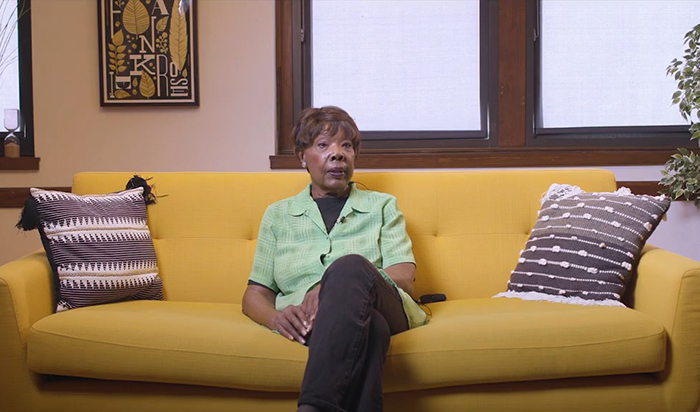
Jessie Jefferson, 79, is developing a new generation of neighborhood leaders as a consultant and community organizer for a host of neighborhoods: Town Fork Creek, Oak Park, Vineyard, South Roundtop, Seven Oaks, Blue Valley, McCoy, Washington Wheatley, and Independence Plaza.
And she fights for them, arguing for commitments from city department heads and council members to carve out financial support for these neighborhood associations so they can do the work of preserving and growing community power. Read more.
Who are potential leaders?
You know that:
___Leadership skills are learned.
___Nearly everyone is capable of being a leader at some time and place in her life.
___People with “natural leadership skills” – good communicators, initiators, risk takers, etc. – particularly need to be ready to be thrust into leadership.
Why look for potential leaders?
___You know that the right people are much more likely to emerge as leaders when they’ve had some experiences that make them feel capable.
Leadership development across the life span
___You’re aware of leadership development opportunities for children:
- Sports and games
- School, camp, and other institutional situations
- Community projects
- Letting children solve many of their own problems without adult intervention
- Modeling good leadership by treating children with respect while providing a structure in which they can operate safely
___You’re aware of leadership development opportunities for adolescents:
- Athletics
- Music and theater
- Youth groups and clubs
- Involvement in community and political issues
- Challenging outdoor activity
___You’re aware of leadership development opportunities for college students and other young adults:
- Entrepreneurship
- Politics
- Service learning
- Employment
- Government-sponsored service programs
- Non-profit and non-governmental organizations
___You’re aware of leadership development opportunities for parents and other adults:
- Community activism
- Organizations and associations
- Parenting
- Parenting-related experiences
- Volunteering
- Local politics
___You’re aware of leadership development opportunities for “elder statespersons”:
- Employment
- Organizations and associations
- Volunteering and community service
- Local politics
___You’re aware of leadership development opportunities for retired persons and seniors:
- Community service
- Advocacy
- Local politics
- Volunteering
Some general guideline for encouraging leadership development across the life span
___You ask people to take leadership positions
___You provide real-world opportunities
___You challenge people with reachable goals
___You provide training
___You build on success
___You provide peer support
___You provide an institutional structure for leadership development opportunities
___You provide models of effective leadership
-
Why do you need a plan for building leadership?
-
When do you develop a plan for building leadership?
-
How do you develop a plan to build leadership?
In working to improve our communities, leadership is our most important resource. It is the engine that pulls the train.
If you are involved in any group or organization, you will need to develop leadership in order to accomplish anything of significance.
Why? Because it is leaders who make things happen. It is leaders who have a vision, take initiative, influence people, make proposals, organize logistics, solve problems, follow-up, and - most of all - take responsibility.
The complex problems we have in our communities will require many people who are willing and able to lend an active hand and work together to solve them. Whether you want to create more jobs in your community, stop child maltreatment, improve tenants' rights, or accomplish any other community goal, you will need many leaders working together. The old model of one leader on top, with many followers at the bottom, isn't workable anymore.
That is why leadership development should be a central activity for any leader.
You can develop a team of leaders around you. Leadership doesn't have to be a lonely business. You can train people to competently share your responsibilities, vision, and commitment.
In this chapter, we will focus on many aspects of leadership development. In this first section, we will talk about how to develop an overall leadership plan for your group or organization. We will also give you some practical ideas for how you, as a leader of your organization, can train others to lead.
Why do you need a plan for building leadership?
So, why do you need a plan in order to develop a team of leaders? As with any endeavor, a plan will get you where you want to go. It doesn't have to be complicated or technical. Here is an example of a part of an organization's leadership plan:
| Goal | Leadership Development Activities | Timeline |
|---|---|---|
| Volunteers should learn skills in giving speeches about Bakersville's historic sites | Training given by Amy Nakamura, Outside Trainer | This Month |
| All volunteers will learn how to recruit other volunteers | Training given by Troy Bray, Volunteer Coordinator | Next Month |
| Increase ability to work as a leadership team | Schedule volunteer group planning meetings | This Year |
As you can see, a simple leadership plan is just a list of leadership development goals, with a timeline and some actions for accomplishing the goals. You and potential leaders can put one together after some discussion.
In general, it’s a good idea, for several reasons, to involve the people you hope to train as leaders in planning their leadership development.
First, it lets them know that you value them, respect their potential, and think they would be good leaders, which can help them believe in their own possibilities.
Second, it models the kind of inclusive leadership that good leaders practice. Perhaps the most powerful lessons leaders learn come from watching the behavior and actions of leaders they respect. If you want someone to learn a leadership skill, you should be practicing that skill yourself and be making sure that other leaders in your organization or initiative do so as well.
Third, the people you’re training may have a better grasp on what they need than you do. If they’re included in planning their training, it’s more likely that the training will be appropriate.
Finally, it’s a mark of respect and fairness to include potential leaders in decisions that have a bearing on their work and perhaps on their lives.
When do you develop a plan for building leadership?
You do it at the very beginning. But if you haven't done it already, the best time to do it is now. The sooner you start thinking about how many leaders you want and with what skills, the sooner you can begin to move toward your goals. In fact, you can put aside an hour or so a week to think about building leadership in your organization.
You may feel that you don't have time to think about developing leaders. It may feel impossible to step back from the minute-to-minute crises that confront you in order to think about something that sounds like a frill. However, taking the time to think about leadership may be the key to helping you prevent many of these same crises. It is time well spent.
Leadership development is an ongoing project. Every person, no matter how much they already know and how well they already function as a leader, needs to continue learning and growing in order to meet the ever growing challenges around her.
How do you develop a plan to build leadership?
Envision your leadership team
Whether you are part of a small or large group or organization, it is useful to envision your ideal leadership team. Answering the questions below can help.
- How many leaders do you want on your team?
- What kinds of skills will they have?
- Will your leadership team reflect the community which your organization serves or works in?
- How will your leadership team support each other and you?
- How will your leaders be committed to the goals of your organization?
Questions like “How many leaders do you want?” can be limiting if you make too many assumptions about them. The ideal in most organizations is that an individual or small group has overall leadership responsibilities, but that many people take leadership roles in different situations. You may have a picture of your ideal leadership team, but that doesn’t mean that others – perhaps all staff members – shouldn’t get leadership training as well. You may find untapped potential, or may be preparing people for the one time they need to step up and take charge.
Set leadership development goals for your group or organization
To start, think about the group you have right now, and compare it to what you envision your ideal leadership team to be. What are the strengths of your group, and how do they fit in with your vision? What are its difficulties? Comparing your vision to the reality of your group, you can determine the areas for which your group as a whole can use leadership development. Do people need to increase their awareness of diversity issues? Do they need help in working together as a team?
Once you've identified these areas of need, choose specific goals to address those areas. For example, if everyone needs to improve facilitation skills, figure out a list of priorities for who needs to learn what kind of facilitation skills. Then set up a training that will help you reach your goals.
Below is one example of a part of an organization's leadership plan for its staff and volunteers. The organization, Sunnyside Metro Food Pantry, has five staff members and eight volunteers.
| Goal | Leadership Development Activities | Timeline |
|---|---|---|
| Support staff will learn basic e-mail and Internet skills | Training given by Jerome, Operations Manager | This Month |
| Mobilizers will learn how to lead effective meetings | Training given by Jasmine, Program Director | Next Month |
| Increase ability to work as a team among all staff members | Have group rotate leadership in community development projects; Executive Director, Carmine, will teach people how to support each other's leadership | This Year |
| Increase diversity awareness among all program leadership and staff | Ongoing diversity awareness program; bring in an outside facilitator | Meet monthly throughout this year |
Your organization may have a very different plan than the one shown above. It isn't crucial what the plan looks like physically -- sketching it out on the back of a napkin may be just fine. The point is, if you think ahead and plan your goals, actions, and timelines, you will be more likely to get the kind of leadership team you want.
Pick your methods
There are different methods for developing leaders. Here are some of them:
Sharing your thinking about what you are doing and why you are doing it can be an invaluable learning experience to someone you are training.
Modeling good leadership
The most important thing you can do to develop leaders is to demonstrate what a good leader looks and acts like. If you have good leadership skills, the chances are that staff members or volunteers will be aware of and copy them. If you’re not a good leader, potential leaders will also probably copy your behavior, and your teaching of good leadership skills may not help much.
Teaching as you lead
You can teach people about almost anything you are doing -- as you are doing it. If you are handling a delicate negotiation, seize the opportunity to teach someone about the art of negotiating. Bring along your assistant or another person who is ready to learn. When you have a moment alone together, tell your assistant what you are thinking about the negotiation. What is your strategy? What else do you consider? What are your hunches?
Sharing your thinking about what you are doing and why you are doing it can be an invaluable learning experience to someone you are training.
Mentoring
Mentoring means you take someone under your wing and teach them one-on-one over a period of time. It includes teaching people as you lead, as described above, but it is a bigger and more significant process. When you mentor someone, you make a commitment to them. You help them become a leader by teaching them what you've learned and by encouraging them as they take on new challenges.
For example, you might sit down and listen to someone you are mentoring after they try to lead a focus group for the first time. Listening can really help them think through their experiences so they are ready for the next challenge.
Your confidence in another person and commitment to them as a developing leader is one of the most effective ways to help them become a leader. It is also an important contribution, because you are helping to develop a person who has the potential to be leading for years to come.
Exchange programs
Sometimes it helps to do a leadership exchange with another group or organization. You can trade staff or volunteers for a period of time, so each group gets to learn how another group works. People can learn skills that aren't available in their own organization. Even a visit to another organization can give people a picture of new possibilities.
Orientations
Whenever a new person becomes part of your organization, whether as a staff person, volunteer, or member, an orientation is important to help them get on-board quickly. People want to feel that they are doing a good job, and they need the information and training in order to do their jobs well. Giving people the help they need early on is a worthwhile investment of your group or organization's time. If people are left on their own when they first begin, they can often feel left-out or resentful.
Make sure the new person gets:
- The training they need to get the job done
- A history of the organization
- A chance to learn about the mission, policies, and procedures of the organization
- An understanding of what help is available and how to get it
- A chance to meet people in the organization
- A warm welcome
Workshops and training sessions
Workshops can help your whole group move forward on key issues. Perhaps your group needs a workshop on decision-making, fundraising, or creating an action plan. Having a workshop that addresses key issues can set the organization on the right track. If the workshop solves a long-term problem, it also has the potential of lifting morale and renewing commitment.
Retreats
Retreats can be excellent for revitalizing or refocusing groups or organizations. A retreat can help a group identify new goals or plan new strategies. A retreat can also be used when the organization is poised to take a new direction and when everyone must understand the coming changes in order to make the change successful.
Retreats can help people recommit to the mission of the organization. They can also help people remember the importance of their relationships to each other as they work together.
To insure the success of a retreat you should:
- Check with the group to verify that this is something they want to do
- Get a commitment from members to attend
- Set the date well in advance, so that people will be able to come
- Find a comfortable and accessible retreat location--preferably away from your regular workplace
- Have clear goals
- Be realistic about what can be accomplished in the period of time allotted
- As much as possible, get input in planning the retreat from participants
- Make sure there is active participation
- Make sure people have enough time to connect
- Make sure the facilitators are competent
Leadership groups
Leaders need ongoing development too. Leaders need relationships with other leaders to help them keep growing and get through the difficulties they face. As leaders, we sometimes feel isolated in our jobs; we need others to listen to our thinking, and we need to listen to others' ideas.
To do this, you can set up a peer leadership group. Invite leaders from other organizations to meet every other week or once a month. In these meetings you can talk about your experiences of being a leader, both the rewards and the difficulties.
Leadership groups can also be valuable for a group of leaders inside your organization. If you regularly convene a group in which people can support one another's individual leadership, that can help them focus on their work and keep growing.
Now that we've examined some different leadership development activities, lets see how to develop a leadership plan for individuals in your group or organization.
Set leadership development goals for individuals
In addition to developing a leadership plan for your organization as a whole, it is useful to develop a leadership plan for each person in your organization. But first, let's look at how your view of leadership can affect how people grow as leaders.
Expecting people to act like leaders
If you expect people to act like leaders, they are much more likely to do so.
Leadership is an activity in which everyone can participate at some level. Everyone has a point of view that is valuable. Everyone has talents to share. When we think about whom to train for leadership, it's easy to overlook people who don't fit our stereotypical image of a leader.
For example, we often don't consider quiet or shy individuals to be potential leaders. Many of us also make inaccurate assumptions about an individual's leadership potential based on the cultural, racial, gender, or income groups that a person belongs to.
Of course, in reality, potential leaders come in every imaginable size, shape, and background. There are leadership riches all around us. Your expectations can go a long way in helping people stretch their perceptions of themselves and what they can accomplish.
In the words of John Gardner in his book On Leadership: "Most men and women go through their lives using no more than a fraction -- usually a rather small fraction -- of the potentialities within them. The reservoir of unused human talent and energy is vast, and learning to tap that reservoir more effectively is one of the exciting tasks ahead for humankind".
What individual leadership skills do you need in your group or organization?
Do you need someone to be able to take charge of a fundraiser? Do you need a person who can recruit volunteers? To develop a leadership plan for individuals, first list the leadership skills you need in your organization. Then, think about which individuals would be best suited to learn those skills.
In matching people to needed skills you should consider:
- Who already has many of the skills needed for this position?
- Who will be able to successfully handle the leadership responsibilities?
- Who would be interested in and excited by this challenge?
- Is there someone who will grow and blossom in this position?
Investing in each person
Each person needs to be supported to grow as a leader. Your encouragement and support will help people feel enthusiastic and hopeful about their work and about their group or organization.
In order to grow strong and sturdy leaders, you will need to give them some tending, thought, and care. This doesn't have to take a lot of time. You just have to get in the habit of thinking about each person.
You can meet with each person periodically to talk about their leadership development goals. Ask them to brainstorm ways in which they would like to make contributions in their workplace or community. Ask them what leadership skills they would like to learn. You may not be able to supply all the training or opportunities they want; however, you may determine ways to challenge them which will keep them engaged in their volunteer position or job, and perhaps keep them from leaving your organization.
You can also challenge people to try things they may not be able to imagine themselves. People often need lots of persistent encouragement to lead; many, many people in our society have been discouraged from seeing themselves as having important ideas, taking action, or making a contribution to others.
Writing the individual leadership plan
So now it's time to sit down with the folks in your group or organization and write individual leadership plans with them.
| Goal | Leadership Development Activity | Timeline |
| Learn how to run a small donor campaign | Have Lisa teach them one-on-one | Next month |
| Develop more confidence as a leader | Give them opportunities to lead staff meetings | Next six months |
As you can see, writing down a plan for leadership development is not a complicated endeavor. However, the plan will keep everyone moving towards the goals of both the individuals and of your organization.
Recruiting new people to lead
Recruiting new members and volunteers is a key element of leadership development. It should be part of your leadership development plan. Why? Here are a few reasons.
First, new members are your next generation of leaders. People always leave groups or organizations for a variety of reasons. They move to another city, or take a demanding new job, or their interests simply change.
Therefore, you need new people who are ready and willing to take the lead. Otherwise, the loss of one or two active leaders can seriously hurt a group or organization.
Second, bringing new people into an organization keeps new ideas coming in and keeps your group vital. New people will test your assumptions and challenge you to think about your ideas afresh.
Third, bringing new people into your organization is the foundation of community building. The more people you have working for your cause, the more powerful you will be.
When you recruit a new member or volunteer, give them a job that brings them into the center of the organization as soon as possible. That way they will feel welcome and needed. Ask them what they think about organizational issues.
Develop yourself as a leader
Remember, you are in this picture, too. You will need leadership development in order to continue to grow. The more you succeed at leading, the more difficult challenges will come your way. People will see you as a resource and they will bring you harder and harder problems to solve.
So, draw up a leadership development plan for yourself. Get additional training when you need it; go to conferences that address issues that concern you; and form relationships with other leaders who can give you a hand when you need it. Paying attention to your own leadership development will not only make you a better leader, but will also make your organization a better organization, as well.
In Summary
"It takes a village to raise a child," is popular African proverb. By the same token, it takes an organization to raise a leader. Developing leadership is a serious endeavor, but it's worth the time and effort because leaders are valuable. Look at some of the great leaders in history - Martin Luther King, Jr., Susan B. Anthony, and Mahatma Gandhi. If we had many more of their kind, functioning at their abilities, what would the world be like?
Contributor
Marya Axner
Resources
Online Resources
The Biography of John Gardner and John W. Gardner Center provide information and links related to a great teacher of leadership.
Building Leaderful Organizations: Succession Planning for Nonprofits, by Tim Wolfred, seeks to continue detoxifying the topic of nonprofit succession planning so that executives, boards, staff, and funders can take up these activities without unnecessary fear or concern. Second, it hopes to provide nonprofit boards and executive directors a framework for their own succession planning activities.
The Greenleaf Center for Servant-Leadership provides resources for understanding the principles and practices of servant leadership.
The Leadership Challenge is a learning community with discussion forums that incorporate activities to analyze your own leadership experiences and style.
The Leadership Learning Community is a national organization of people who run, fund, study, and provide service to leadership development programs. "Knowledge Pools" and Learning Circles are offered in addition to resources.
Nonprofit Leadership Development: What’s Your “Plan A” for Growing Future Leaders? by Kirk Kramer and Preeta Nayak of the Bridespan Group.
CIO Magazine has a helpful article on Total Leadership.
Print Resources
Axner, M. (1993). The community leadership project curriculum. Pomfret, CT: The Topsfield Foundation.
Gardner, J. (1990). On leadership. New York, NY: The Free Press.
Jackins, H. (1987). The enjoyment of leadership. Seattle, WA: Rational Island Publishers.
Kahn, S. (1991). Organizing: A guide for grassroots leaders. Annapolis JCT, MD: NASW Press.
Ideal Leadership Team
Here is what one organization came up with when members tried to envision their ideal leadership team.
| How many leaders do you want on your team? |
An overall leader, someone in charge of fundraising, someone in charge of media relations, someone in charge of programming, and someone in charge of recruiting, training, and overseeing staff and volunteers. |
|
What kinds of skills will they have? |
Great organizational skills, good communication skills, computer skills (we'd like to start our own web page), a strong understanding of and appreciation for the fine arts. |
|
Will your leadership team reflect the community in which your organization serves or works? |
Bakersville has large Asian-American and Italian -- American communities; we would like them to be represented. |
|
How will your leadership team support each other and you? |
Weekly meetings to keep each other up to date, including "debriefing" time for each member of the leadership team. The overall leader will formally evaluate the others every six months/year. Finally, we'll try to get together more casually (perhaps for lunch) at least once a month. |
|
How will your leaders be committed to the goals of your organization? |
Each of our leaders must have a firm belief in the importance of enhancing the arts in Bakersville, as well as a sense of community. Together, we will define our goals in concrete terms, and form an action plan detailing how each of us (and those we work with) can work together to reach those goals. |
Contributor
Marya Axner
___You have identified the number and types of leaders needed for your team.
___You have identified desired skills.
___The leadership team reflects the community in which your organization serves or works.
___The leadership team knows how to support each other and you.
___The leaders are committed to the goals of your organization.
___You have identified the strengths of your group.
___You have identified the difficulties of your group.
___You have identified the areas for your group as whole can use leadership training.
___You have identified the added skills that will move your organization ahead most quickly.
___You have identified skills that are not already present in your organization.
___You have identified individuals ready to learn the needed leadership skills.
___You have identified individuals interested in learning the needed leadership skills.
___You have chosen the appropriate leadership development method for each goal.
___You have decided who will be responsible for training.
___You have chosen a date by which each goal will be accomplished.
___You have determined how long will it take to achieve each leadership development goal
___You have made sure that your organization has the resources to achieve these goals.
___You have made sure your timelines are realistic.

-
What are the qualities of the servant leader?
-
How do you become a servant leader?
-
How do you find inspiration?
Note: The idea of servant leadership comes from the pioneering work of Robert K. Greenleaf.
Let's face it, leadership has a bad rap. From sex scandals to embezzlement, from the power hungry monster to the inept bureaucrat, many people have a difficult time putting faith in their leaders, and working with them efficiently to reach shared goals.
And yet, there are people leading for what we might call the "right" reasons; people who use leadership as a means to help others, instead of as a way to gain personal power. These people come to leadership because they want to be to serve others better.
How is that? In their service, they have found that they can do the most good by accepting the responsibilities and possibilities of leadership. We call these people who become leaders out of a desire to serve more effectively servant leaders.
In the next few pages, we will explore some of the ideas of servant leadership. Next, we'll look briefly at how someone becomes a servant leader. Finally, we'll discuss an equally important topic--how the servant leader can maintain their desire to serve over the long run.
What are the qualities of the servant leader?
Many of the other sections in this chapter of the Tool Box have discussed different qualities of leadership, such as influencing others, decision-making, and identifying needs. All of these qualities are true of servant leaders as well. But the term servant leader asks for something more; a different mindset, perhaps. It is truly a unique take on the idea of leadership.
What follows is a list of some of the most important qualities of servant leadership. Some of the following ideas and actions are unique to servant leadership. Others, while they may be found in all types of leadership, are simply emphasized more strongly by servant leaders.
The servant leader believes themself "first among equals."This idea is at the very core of servant leadership. A servant leader does not consider themself above those they lead. Rather, he is primus inter pares from Latin, meaning "first among equals." That is, they see those they lead as peers to teach and to learn from. He is willing to lead others in order to reach an agreed upon goal, but he doesn't believe that being the leader makes him better than others.
Because of this, the servant leader is a consummate team builder. She will draw on the strengths of followers, and be a follower herself when appropriate. Such a leader doesn't lead by decree or dictate. Instead, he or she leads by allowing everyone to do what they do well. In this sense, she might be like the ringmaster at the circus--directing people to their proper position, then stepping out of the spotlight and letting them shine.
This idea is hardly new--in fact, it was captured several thousand years ago in the following verses adapted from the Tao Te Ching:
The reason why rivers and seas receive the homage of a hundred mountain streams is that they keep below them. Thus they are able to reign over all the mountain streams. So the sage, wishing to be above others, stays below them; wishing to be before them, the sage stays behind them. Thus, though the sage be above others, they do not feel the weight; though the sage be before others, they do not count it as an injury.
Like the sage, the servant leader's style of leadership might well be called unassuming. And this style of guidance--where people, as equals, are able to voice their concerns and work to their potential--is not a heavy weight on followers. Instead, the servant leader shares burdens and benefits equally with these peers. Everyone involved benefits.
The servant leader uses power honestly. A servant leader uses leadership and power legitimately, for the good of the people they serve. She sees leadership as a means to obtain the general good, not as a desired personal end.
For those of us watching people in power, the difference is very clear. We don't look up to the loan shark who uses his muscle and brags of his brawn, nor to the politician who uses slick talk and brags of his skill. We look up to the Mother Theresa's of the world; the Nelson Mandela's They are servant leaders who have filled their positions with integrity.
Robert Greenleaf, in his essay The Servant as Leader, puts it this way: "It begins with the natural feeling that one wants to serve, to serve first. Then conscious choice brings one to aspire to lead. The difference manifests itself in the care taken by the servant--first to make sure that other people's highest priority needs are being served."
Do our leaders always succeed in this arena? Hardly. They may fall from this--and we, as servant leaders, may fall from it as well. We're human. Nonetheless, it is an ideal we look up to in our public institutions and in our leaders. And by continuing to try, we may inspire our followers to a life of service as well.
The servant leader understands the importance of day-to-day details. When we think of great leadership, many of us think about what may be termed, "The Great Talk." We think about Martin Luther King's dream; we think about what we can do for our country. We think about fire and brimstone, or slogans from revolutionaries.
And yet, the truth of the matter is these speeches make up a very small portion leadership, and their need is even smaller for a servant leader. Being a servant leader is more about the one-on-one discussions and in taking care of the every day details.
Exercise:
Think about a group of people you have worked with or witnessed that was particularly effective. Things got done and done well, and members truly seemed to enjoy their work. Who was the leader, officially or unofficially? What did they do? What was their style of management?
The servant leader listens to and cares for their constituents. Servant leaders are willing to take the time to listen to what others have to say. In fact, they are more than willing--they actively seek out the opinions and ideas of these followers. This is of top importance to the servant leader.
And from this listening, a relationship of mutual respect can grow. Listening is innate to the servant leader--caring about others is a part of who they are. They can use that skill and learn from their followers; they aren't only teachers.
The servant leader helps people get what they want. The servant leader cares about people; and so she will naturally find out what they want, and help them to get it.
Sometimes, however, a servant leader seems to want something very different than her constituents. What happens then?
Often the greater goal may be the same, but people will have different ideas in mind of how to get it. For example, a servant leader may want to meet diplomatically with leaders of the opposition in a case of environmental pollution, while others in the group want to confront them.
When faced with this type of situation, a servant leader tries to phrase things in the proper terms, or put them in the right light to help people see things their way. You catch more flies with honey than with vinegar, goes the old adage; an effective leader explains and discusses things in a manner so that common goals are clear, or the advantages of doing things a certain way become obvious.
Wait a minute, you might say. This is all starting to sound a little bit negative--all of this talk of selling things, and putting them in the right light. Does a good leader, then, essentially dupe their followers?
Not at all. Remember, we said at the beginning that the servant leader must lead honestly, for the right reason(s). But if you speak English, and want to hold a discussion with someone from Brazil, you would have to change the way you speak to them. You would need to learn Portuguese. Then, you could go ahead and have a good talk.
While most cases aren't that extreme, the message is clear: a servant leader knows--and uses--the language of their constituents. Take the following example:
The leader of a adolescent pregnancy prevention program wanted the support of the local Catholic priest. However, he knew he probably wouldn't get very far by discussing the program's "condom sense" campaign. Instead, he and the priest talked about their common work. They both promote abstinence, and both of them have a strong desire that young people's lives are as full and healthy as possible. In leaving the discussion, they agreed to work on several projects together, and the priest agreed not to loudly oppose other work by the group that he did not agree with. In the end, a great alliance was formed.
The lesson? Start where people are. Before we go on, it's important to note here that the servant leader is not closed minded. He will do his best to convince others to see things his way; that much is true. However, as we have said, the servant leader listens and learns from his constituents. He is open to improvement. So, if he is convinced that the other is right, he will gracefully accede to the other's suggestion.
The servant leader stretches their constituents. While, as we saw in the last point that the servant leader starts where people are, he doesn't stop there. Instead, the servant leader helps others see the potential that exists. This can be personally (I know you can finish a marathon), as well as in the community (can you just imagine what this neighborhood would look like with fresh paint and some trees?). A servant leader helps people to do things they didn't know they could. She sits down with her constituents to set goals that are both feasible and challenging.
The servant leader inspires others to service. Finally, a servant leader knows she can't do it all alone--and frankly, she wouldn't want to if she could. A servant leader wants to work with and for others. To do so, then, the leader must be able to inspire those she serves to serve others.
How does the servant leader inspire people? The methods he uses to inspire people to serve aren't necessarily any different from methods used by any leader to inspire others to do anything--or really, by anyone who inspires people. The desire of a servant leader to help others may be inspirational in itself, but people may be inspired by many, many different things.
We might answer this question, then, by looking briefly at inspiration in general. We can start on a personal level. What causes us to jump out of our seat when a speaker is talking; that convinces us to send money to a child we'll never meet ? What is this fountain of inspiration? What do we need to do?
Exercise:
Before you go on, write down a list of five leaders you either know personally or know about--five people whom you admire tremendously. Why do they grab you as they do? What do they do? How do they do it? What do you like about them? Do they all have the same style of leadership? If not, how do they differ?
Chances are the five people whose names you have in front of you are very different. One might be quiet, another brash. One might yell, another question. One might love publicity, another have a healthy distaste for (or distrust of) the media. Perhaps you have someone on the list that you have never even seen, but something he wrote sent chills of excitement running down your spine.
In any case, the folks you have in front of you are probably quite different. That's true among leaders in general, and even among servant leaders. If you look closely, however, some qualities might occur again and again. A partial list of qualities that inspire include:
- Honesty
- Awareness
- Empathy
- Passion
- Ability to overcome obstacles, especially obstacles that followers have grappled with
- A sense of joyfulness
A servant leader adapts to fit the situation. If your house is on fire, you don't want the firefighter to say, "Now what do you think would be the most optimal use of time and direction at the present moment?" Rather, you probably want to hear, "The ladder is right there, and we're going to get you and the kids out of here."
On the other hand, if you are at work discussing a major change in your organization, "What do you think we should do?" becomes an appropriate question. In fact, you might become pretty angry if you aren't asked.
To inspire, then, a servant leader gauges each situation and responds to each individually. When appropriate, she will pass over the reins to someone whose leadership style is more appropriate to the situation--she works with people's strengths. A good leader understands when she is not necessarily the best person for the job; she knows her strengths as well as her weaknesses, and can gracefully pass on opportunities best suited to other individuals.
How do you become a servant leader?
As you can see, becoming a servant leader is more a state of mind than a set of directions. So unlike many of the other sections in the Tool Box, becoming a servant leader does not follow a step by step process. (First, you become honest. Second, you care about people...). However, there are things that the servant leader does, rather than simply believes. You can work on these skills to keep the servant part of servant leader fresh in your mind. Many of these are discussed in detail in other sections, and so we will simply mention them here. They include:
- Listening to others
- Involving others
- Promoting teamwork rather than individual decision making
- Enhance problem-solving skills
How do you find inspiration?
The servant leader, as we have discussed, is someone who wants to help others first--and thus, by definition, take care of themself second. However, maybe that is sometimes a problem. Perhaps, as a leader, you feel you are losing your edge. You want to help people--or at least you used to. But you're wearing down. You're getting tired. The problem you took on seems larger than ever, and the only thing larger is the pile on your desk. You don't remember the last time you saw your spouse. You want to hand over the reigns. You don't want to serve, you want to be spoiled for a while. You want to run off to Jamaica, and not ever, ever return.
Sound familiar? And if so, what can be done about it? What inspires--or reinspires--the servant leader? Where do we get the energy, the excitement, and the persistence to enthrall others and lead them to be active champions of our cause? What moves us to move others?
For the leader on the road to burn out--or for someone who wants to stay away from that path altogether--it's not always easy to remain inspired, and full of excitement about the cause. And yet, it may be the most important thing you can do. Burning out and giving up is all too real a possibility. Think of it this way--if you allow yourself to burn out, a light has gone, robbing your cause of a powerful weapon.
A good leader, then--a strong, in-it-for-the-long-run leader--takes care of themself along with helping others. It's easy for many of us to get caught up in our work, and not consider our own needs. Or, if we do take care of ourselves, we do so haphazardly, when levels of frustration are high and the floodgates finally burst.
To avoid that, then, the servant leader thinks about their needs on a continuous basis. They take care of themself before disaster strikes.
This sounds contradictory, you might say; I just read that the servant leader serves first. True. But a leader must get something out of her work, and she must acknowledge that gain, or the path to giving up becomes very short. Both elements must be there. Think about two overlapping circles:
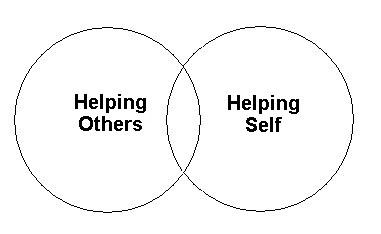
One of these circles represents the servant leader's desire to help others; the other represents her need to help herself. Ideally, a servant leader should find herself doing both of these things, in a place where these circles overlap.
So what are some things that the leader can do to remain inspired and excited about their work? Answers are as individual as every leader is. However, consider these possibilities, which have worked for many leaders. Might any of them work for you?
- Take time for you. You may think you don't have time for a vacation, or for an afternoon off: but can you really afford not to? You need time to regroup, and to replenish your well. There are many ways you can do this. It could be in daily meditation or on a jog, or by taking a day to do something you love. It could be almost anything: going to a play or enjoying a picnic; taking a pottery class or watching a football game. Whatever you do, it should be something just for you that you will enjoy and find renewing. And it should have nothing to do with work.
- Read -- and not simply news and your work. Read novels, biographies, or anything else you enjoy. One constant among many of our historical leaders is how much they read. Reading inspires creativity and helps you to see the "big picture" more clearly. By doing so, you make associations you wouldn't have otherwise. In short, it helps you keep all of life in your consciousness.
- Have others to sustain you. We've all heard the phrase, "It's lonely at the top." That can be true for servant leaders, too. In fact, when you get right down to it, it can be lonely wherever you are in the pile. All of us need people who can help us and who support us in our challenges and our joys.
For servant leaders, it is important that we choose these people well. That's because unfortunately, if we don't consciously choose these people, we often hoist our needs on the wrong people.
We might get a lot of this support from people in our personal lives: spouses, family members, and friends. Sometimes, however, it's helpful to get support from people within your field, who have dealt with some of the same challenges and excitements as you have. Two ways to have such relationships are:
- Having a mentor. We are always learning; hopefully, our education never ends. By standing on the shoulders of those who came before us, our view is much broader. Thus, maintaining a mentoring relationship can be an excellent way you to help you continue growing professionally.
- Developing strong peer relationships.Talking with other leaders, especially in your field, can be very helpful. This is one way in which professional meetings and conferences can be useful. By speaking to other leaders, you start understanding that other people have the exact same problems you are dealing with. It can help you realize you are not alone.
Exercise:
Think of someone whose leadership you admire or who you admire professionally in other ways. Preferably, choose someone who has been working in their field for many years. Ask them where they receive their support. When they are frustrated, who do they turn to? Are there similar possibilities or people in your own life? Would the same forms of support work for you?
- Challenge yourself. When the "old routine" doesn't work for you any longer, find new mountains to climb. Challenge yourself with new directions and possibilities. This could be by starting a new program, forming a new collaboration, or revamping an existing project. Anything that will get your excitement flowing again can work; the possibilities are boundless.
- Look at the whole picture. That is to say, remember the whole forest, and don't let yourself get hung up in the trees. Sometimes, we can get hung up in the daily frustrations of our work. That's when it's time to remind ourselves of our broader vision, whether it is an end to child maltreatment, a thriving neighborhood, or a world without prejudice. In doing so, we may be more willing to see these frustrations as small obstacles we are willing to hurdle, instead of impossible mountains that aren't worth our efforts.
- Celebrate the small wins. World peace, for example, is a lofty goal. It's not one you or even your organization will achieve alone. In fact, it may never be completely achieved, but many of us feel it's still worth striving for. So when you do accomplish a piece of that peace, celebrate your accomplishment.
In Summary
The servant leader sees leadership much in the same way a carpenter sees a hammer. A hammer is a tool -- and a very important tool at that. It can be used build; to create; to realize a dream. And with one wrong hit, a very painful thumb.
Leadership, too, allows one to develop dreams. It opens doors and allows opportunities to be realized. However, it's something to be careful with. For like the hammer, mistakes can be costly. Worse yet, leadership, like that hammer, can be used to destroy instead of create; to hurt people instead of help them. And without paying proper attention to ourselves, it can destroy the leader as well.
The wise servant, then, is as careful with this power as she would be with that hammer, always trying to make sure to hit the nail on the head.
Contributor
Jenette Nagy
Resources
Online Resources
Becoming a Servant Leader: Do You Have What It Takes? by John E. Barbuto and Daniel W. Wheeler, is a NebGuide that introduces servant leadership; the 11 dimensions that typically characterize a servant leader, including inherent traits and learned skills; and several practical ways to develop skills necessary for this leadership style.
Building Leadership from Within: Effective Succession Planning in Three Basic Steps by Susan deGranpre, June Juliano and David Pease.
Greenleaf Center for Servant Leadership provides resources for understanding the principles and practices of servant leadership.
The Heartland Center for Leadership Development
Print Resources
Covey, S. (1992). Principle-centered leadership. New York, NY: Simon and Schuster.
Greenleaf, R. K. (1976). Servant leadership: A journey into the nature of legitimate power and greatness. New York, NY: Paulist Press.
Murphy, Frederick. (Ed.) (2013). Community Engagement, Organization, and Development for Public Health Practice. New York: Springer.
Example 1: Interview with Ann Liprie-Spence, Director, Servant Leadership Center of the Southwest, McMurry University (Abilene, TX)
Ms. Liprie-Spence is the Director of the Servant Leadership Center of the Southwest at McMurry University in Abilene, Texas. Here, she talks about their program and the meaning of servant-leadership.
McMurry is so special; it's a small [Methodist] liberal arts college. We have about 1400 students. It's hard to say what makes us unique. If you're here, you can feel it. It's a very caring atmosphere.
[A professor] said, "We've got to find some way to build our niche, because we are a very special place." He came back from a conference that had some information on servant leadership. This [was] in 1990. We devised a program in Servant Leadership, sought funding and then got our program under way.
One large component of our program is the course, "Concepts and Techniques in Servant Leadership." For the first two years, the class was free and students were encouraged to take it by invitation. After the grant ended, students were given the opportunity to enroll in the course. The last three years, enrollment has just soared.
What we do in the course is use the philosophy of Robert K. Greenleaf. We try to instill in our students [the idea] that the best leaders are those that serve others. By leading them, you're also serving them, and all of their concerns should be taken into consideration when you make decisions. We try to instill throughout the semester that everything you do is for the greater good of others. I think sometimes in society, the examples of leadership that some students see are examples where people have gained prestige and power because of more selfish purposes.
What we do on Mondays is lecture on the principles of leadership. We look at topics such as conflict resolution, team building, and time management. A second session each week is a small group seminar/discussion led by upper class students who have been specially trained in the servant leadership concept and in group dynamics.
One of the things we do the first day of class is ask them to list the characteristics of a servant. Then, we ask them to list the characteristics of a leader. Very seldom is there anything that is the same. Then we start trying to talk about what it means. To some people that term is a turn-off until they really understand it. You don't want these macho guys being called a servant leader--What would their friends think!--until they really understand what it means.
At the beginning of the semester I get eight agencies to come on campus, they talk about their agency, and we have a specific project lined up with each. The students pick a team that they're going to work with by picking an agency.
[So] their team is based on the fact that they all wanted to work with Abilene State School or with Habitat for Humanity or whatever. Then on their own each individual must give 30 hours to that project. They have to keep a journal. What we think is most important [is that] they reflect on what they learn in that project on a daily basis. Whenever they go out and they look at what they learned in class, can they relate those things? Did any of those issues come up?
They go through a training session where they're given a broad view of the agency. Then, the students look for need and for areas where they can be of value and of service to that agency. They make proposals; they take them back to the agency. If the proposals are approved then they have to find the means to carry them out using all the leadership principles [they have learned].
We want them to realize that need to go out there and make a difference, look for things to change and try to propose changes. Look for ways to do things rather than just walk in and say, "What do you have for me to do today?" or, "We want to see what we can do. Suggest ideas ways we can make things better, things that we might do that you hadn't thought about."
Some of their ideas have been shot down. We tell them welcome to the real world, that problem creates an opportunity for you to get back together and create another idea. So I can't tell you it's always roses. Their ideas are not always met with, "This is a wonderful idea, get started, what can we do for you." Sometimes they're told, "It's great but you're on your own. We don't have any resources. "
After they [finish] the class I send students a letter inviting them to be part of what we call the servant leadership mentors. So they get to extend their leadership beyond the class. The mentors go out and interview agencies because they know what it's like to be a team member. If the mentors say this project won't work, we don't do it. Part of the idea behind servant leadership is listening to others. I'd be less than honest with them if I say come with me and I ignored what they had to say. They learn by doing.
We've got a saying that we put in our co-curricular transcripts. It says: We believe in demonstrating our commitment to human potential by adding spiritual values, leadership and service to human kind. We've created a program believed to be unique in college setting: McMurry University Servant Leadership Program.
Here's what we tell the students is most important. We say the program is designed to equip our students with a firm moral and ethical foundation, one which they can make sense of the dilemmas they will face. Ones from which they can become leaders who give something back to the world.
The year before last on our campus alone faculty, staff and students gave 24,000 hours in one year of community service. That's on a campus of 1,400 students. I think a lot of it extends from once they see [this approach] as a way of life. They actually go out there and experience it and see how good it makes them feel. That's comment I get all the time, "I never knew how good it would make me feel, to truly live a life as a servant leader."
Example 2: Interview with Nancy Larner, Program Director at the Greenleaf Center for Servant-Leadership.
Nancy Larner is Program Director at the Greenleaf Center for Servant-Leadership. Here, she talks about the organization and their philosophy
The Greenleaf Center is [an international] non-profit organization. We are interested in trying to foster more caring and humane organizations. We work with health care, higher education systems, religious organizations, for profit/non-profit organizations--basically the whole gamut. We don't try to focus in one area--we try to reach out to everybody.
Our logo is the Mobius strip. The whole idea behind the Mobius strip and how it signifies servant-leadership is that there is not a beginning or an end. It all flows together--leading lends itself to serving, serving lends itself to leading. Servant-leadership is a hyphenated word because leading and serving are on equal levels.
Servant leadership is really a practical philosophy. It supports people who wish to serve first, and then lead as a way of expanding service to individuals and institutions. And it's not necessarily people who are in a position of power. Anybody can lead in the servant-leadership philosophy. What it takes is a lot integrity, trust, caring, and also some vulnerability. That is, you aren't the only one making the decisions. It's not about having all the answers. Servant leadership encourages a lot of collaboration, trust, listening and the ethical use of power.
It's kind of like [in jazz] where it's somebody else's turn to play their instrument and do an improv, or if somebody has an idea on how to take the music a little bit further. You let them go. They might not be the leader of the band but they've got a great idea and they're going with it. It's very subtle. It's hard to say exactly when you step down as leader and let someone else take over.
Robert Greenleaf is the gentleman who wrote about this philosophy back in the 1960s. His whole idea was that you take people where they spend the most time, whether it's in a religious institution or at work or whatever, and you teach or try to foster these basic principles. His hopes were that these would transfer into community at large so that you do create or you try to create a more caring and humane society.
Some people really get it from reading the material [written by Greenleaf]. Saying "Oh my goodness, this is how I've been feeling all of my life and I didn't know that there are people and organizations out here that really foster this sort of leadership." In some ways, that's a transformation, in the sense that you really feel like there's hope out there, that organizations can be run in a more humane way.
Are there things people can do to become servant-leaders or to become better servant-leaders?
People look for the bullet points or the ten step program to become servant leaders. And the fact of the matter is it's just working on your people skills. It's not so much OK, I need to do X,Y, and Z and then I'm a servant leader. It is more honing skills like empathy and listening, and trying to work with consensus and persuasion rather than coercion. I think that everybody can be a servant leader if they choose to.
If someone came up to you and said, "I would like to start using the principles of servant-leadership in my work or personal life." What advice would you give them?
Begin to be just a little more caring and supportive of your colleagues, perhaps by showing interest in their lives outside of work, or, if somebody comes to you and they're really bogged down with work, maybe you help them out a little bit. People start to feel a sense of empathy and trust, and maybe they will then treat their co-workers in the same manner. Servant-leadership can begin anywhere at any time. The choice is up to the individual.
Contributor
Jenette Nagy
___You are ready to accept and maintain the call of service
___You developed the qualities of the servant leader
___You see yourself as first among equals
___You use power honestly
___You know the importance of day-to-day details
___You care for your constituents
___You help people get what they want
___You reach your constituents
___You try to inspire others
___You adapt to fit situations
___You listen to others
___You involve others
___You promote teamwork
___You enhance problem-solving skills
___You know how to find inspiration
___You know that helping other is part of helping self
Tool 1: Personal Plan for Learning and Serving
The Personal Plan for Learning and Serving is a dynamic, living document to guide learning and service. Completing this guide can help you discern what matters to you, what your particular gifts are and to what ends they can be directed, and how to enhance your abilities to use them in serving others. As part of an ongoing process of reflection, it can and should be reviewed and revised periodically.
Tool 2: Active listening
As we come to understand ourselves and our relationships with others better, we rediscover that "communication is not just saying words; it is creating true understanding." Active listening is an important skill in that process. Chances are that those who influence us most are powerful listeners. Whether instinctively or through practice, they have developed the skill of empathy. Special thanks goes to the Center for Rural Studies for granting us permission to use this activity.
Use the directions that follow to practice some of these basic active listening skills:
- Attending Skills (verbal and non-verbal)
- Questions, Reflections, Summarization
- Skills of Self-expression: "1-2-3 Pattern"
- Practice Session on Effective Confrontation
The group should be divided into subgroups of three. There will be three roles in each subgroup: speaker, listener, and observer. Everyone will take each role once in this practice, so divide into your subgroup and decide who is going to take which role first.
Directions:
Objective - The point of the practice session is to give each person the opportunity to learn how to use verbal and non-verbal minimal encouragers and become a better listener.
To the speaker - Your task is to talk about something that is important to you: your job, your family, a decision, or a question. The practice will be more helpful if you talk about something you really care about, although role-playing is possible. You may find yourself in the midst of discussing something important when the allotted time runs out. If this happens, you could make an agreement with the person listening to carry on later, after work or during a break.
To the listener - Your task is to practice the skills of the session: eye contact, body language, silences, and verbal minimal encouragers. Don't panic! Just concentrate on following the speaker's train of thought. Try to limit your responses to the skills discussed in this session.
To the observer - Your task is to observe the listener's verbal and non-verbal skills. Observe and count only as many behaviors (eye contact, body posture, verbal minimal encouragers, topic jumps) as you can manage and still be relatively accurate.
Procedure:
The first speaker will talk with the listener for three or four minutes. The listener will then discuss the listening experience with the two other members of the subgroup. (To the listener: What was comfortable? What was difficult? Did you stay with the speaker?) Then the speaker will share his or her feelings about the listener's listening. (To the speaker: Did you feel listened to? Was it helpful? Did the listener have any habits you found distracting?) The observer will then share observations. This sharing process should take about three or four minutes.
Now everyone change places. Have the listener become the speaker, the speaker the observer, and the observer the listener. Go through the five minutes of talking and listening and five minutes of exchanging remarks twice more so that each person takes each role once. The entire practice session should take about 25 minutes.
When you are finished, form a large group. Your facilitator will help you share your practice experiences. How are these skills relevant to your work? Where else would they be useful? Go around the group, so that the participants have a chance to share at least one thing they have learned about themselves in this practice session.
The following exercises discuss the principles of leadership and conflict resolution. They look at time management and team building. They are situational-type exercises to let people evaluate what to do in the presented situations.
Tool 3: Team building
Create a situation based on a school board meeting. Chose random names for the characters. In this fictitious case, one of the leading employees in the school district called a meeting about a particular change they wanted to make. The change is controversial and is causing a bit of conflict in the community. Some opposed the change and some thought it was a good idea. So, the meeting is scheduled to see how folks feel about the proposed change. All the parents came to the meeting but the individual who called the meeting was late. That created hostility right off, coupled with the conflict that was already in the air. When this individual walked in, he was rattled to start with because he was late and knew he would meet a hostile audience, and the night didn't go very well. Create a script on the addressed issues, how the parents treated those issues and how the school representative treated those issues.
Divide the group into two sides. One representing the school district, the other representing the parents. This will help look at it from both perspectives. Bring the groups back into a larger group and discuss the conflict resolution process. Talk about how the conflict could have been solved better.
Here are some questions to help the discussion:
- What did your group think?
- What suggestions did you make?
- You know what were some of the issues here?
- What are some of the things that you think could have been done differently and why?
- What would have been a better approach?
- What could that official have done as a leader?
- How could he have done things that would have resolved some conflicts?
- How could he have made everybody feel a little bit better when they got there?
- What would you do in a situation like that?
- What might a servant-leader have done?
- Did that individual act like as a servant-leader?
- How the individual could have handled the situation better?
Tool 4: Tower of Babel
This exercise is called the Tower of Babel, and it's a case on communication. It gets participants excited and helps them learn the importance of including others. Gather a small group and distribute sheets containing different roles. The participants cannot look or talk to anybody else. Each role sheet has very specific instructions such as "all you can do is speak Spanish," "all you can do is be sarcastic and negative." You know that everyone has a different role, but the students don't know what the others' roles are. One of them gets a role that says, "you are the leader. You must communicate to your group without talking that they have to build the tallest tower they can that will support a book on top of it when they finish. They can't talk and they can't write, unless specified in their role sheet. They have to find some way to communicate and there are all different dynamics going on. One of them is being really sarcastic, another one is being really positive, the other one can only babble, another one only speaks French, another one is blind, another one is paraplegic. See if the leader tries to include everybody.
When the activity is completed, talk about it in the group. Sometimes the group that had the least communication will have the smallest, sloppiest tower. These are exaggerated handicaps but everybody has strengths and weaknesses and if you're communicating you need to find ways to let everybody participate and consider everybody's thoughts and ideas. Stress the importance of getting everyone's input because they may have some very important things to say and great ideas. Stress the importance of inclusion. Talk about some of the problems that they had with communication. Did they even realize that that was a problem?
-
What is leadership style?
-
Why pay attention to leadership style?
-
What are some conceptions and methods of leadership?
-
What are some ways of looking at leadership style and what are their effects on an organization?
-
How do you determine what is an appropriate style?
-
How do you choose and develop a leadership style?
Leadership styles are the ways in which a leader views leaderships and performs it in order to accomplish their goals. This chapter provides a guide for understanding what different styles look like, which ones are more and less effective, and how you can develop or change your style to come closer to the ideal you aspire to.
What is leadership style?
According to John Gardner, in On Leadership, "Leadership is the process of persuasion or example by which an individual (or leadership team) induces a group to pursue objectives held by the leader or shared by the leader and their followers." If we accept that definition, then leadership style is the way in which that process is carried out.
Leaders' styles encompass how they relate to others within and outside the organization, how they view themselves and their position, and - to a very large extent - whether or not they are successful as leaders. If a task needs to be accomplished, how does a particular leader set out to get it done? If an emergency arises, how does a leader handle it? If the organization needs the support of the community, how does a leader go about mobilizing it? All of these depend on leadership style.
Much of the material in this section looks at individual leaders, but leadership can be invested in a team, or in several teams, or in different people at different times. Many - perhaps most - organizations have several levels of leadership, and thus many leaders. Regardless of the actual form of leadership, however, leadership style is an issue. Whether you're the leader of a large organization or a member of a small group that practices collective leadership, the way that leadership plays out will have a great deal to do with the effectiveness and influence of your work.
Why pay attention to leadership style?
The style of an organization's leadership is reflected in both the nature of that organization and its relationships with the community. If a leader is suspicious and jealous of power, others in the organization are likely to behave similarly, in dealing with both colleagues and the community. If a leader is collaborative and open, this behavior is likely to encourage the same attitudes among staff members, and to work collaboratively with other organizations.
In many ways, the style of its leader defines an organization. If the organization is to be faithful to its philosophy and mission, its leader's style must be consistent with them. An autocratic leader in a democratic organization can create chaos. A leader concerned only with the bottom line in an organization built on the importance of human values may undermine the purpose of its work. For that reason, being conscious of both your own style as a leader and those of others you hire as leaders can be crucial in keeping your organization on the right track.
We've all known and seen different types of leaders. (We'll look more closely at some specific styles later in this section.) One of the enduring images of the 20th century is that of hundreds of thousands of Germans wildly cheering their Fuhrer in Leni Riefenstahl's brilliant and terrifying 1930's Nazi propaganda film "Triumph of the Will." Franklin Roosevelt comforted a nation paralyzed by economic depression by explaining that "We have nothing to fear but fear itself." John Kennedy electrified a generation with his exhortation to "Ask not what your country can do for you; ask what you can do for your country."
All of these are representations - for various purposes - of great motivational leaders working their magic through their speeches. Our concept of leadership tends to linger on such examples, but there are other kinds of leaders as well. Gandhi sitting and spinning in a dusty Indian courtyard; John Lewis and other Freedom Riders being brutally beaten in Mississippi; Vaclav Havel refusing to take revenge on the former Communist bureaucrats of Czechoslovakia; Nelson Mandela sitting in prison on Robben Island - these also are pictures of leadership.
Conceptions of leadership
The leadership style of an organization may be concerned with less dramatic issues than these examples, but it nonetheless has profound effects on the people within that organization, and on everything the organization does. Styles have to do with a leader's - and organization's - ideas of what leadership is and does. Possible conceptions include:
- Exercising power. Leadership is a matter of pursuing one's own ends. Asserting power over others is an end in itself, and symbolizes one's position as a leader.
- Gaining and exercising the privileges of high status. Leadership is about getting to the top, and being recognized as having the highest status.
- Being the boss. Leadership is overseeing the work of the organization by telling everyone what to do when, and rewarding or punishing as appropriate.
- Task orientation. Leadership is getting the job done - that's all that matters.
- Taking care of people. Leadership is looking out for those you lead, and making sure they get what they need.
- Empowerment. Leadership is helping those you lead gain power and become leaders.
Taking these last two together, we might add a conception whereby one aspect of leadership is the fostering of personal (and professional) growth in others.
- Providing moral leadership. The leader, by force of character and their own high standards, creates expectations and pulls others up to her level.
- Providing and working toward a vision. Leadership is the ability to envision a goal, and to motivate others to work with you toward that goal.
Methods of leadership
In many, or perhaps most, organizations, more than one of these conceptions may define leadership. Each implies particular ways of leading, and leaders may use a number of different methods.
- Pure exercise of power. "My way or the highway." If you don't do what the leader demands, no matter how unreasonable, you're gone. The leader's decisions are not open to question or discussion, and no one else gets to make decisions.
- Political scheming. The leader plays people off against one another, creates factions within the organization, cultivates "allies" and isolates "enemies," and builds up (through favors or overlooking poor performance) personal debt which can be cashed in when needed, in order to manipulate people and events as they wish.
A school superintendent bragged to voters about how little was spent on the school system, and then explained to teachers how they couldn't have raises because the community was too cheap to invest in education. He set principals at odds with one another and with teachers, played favorites among system administrators, postured in public, did his best to charm particular school committee members, and generally kept everyone off balance. He did it so well that, for most of his long term of employment, almost no one noticed that he exercised no educational leadership whatsoever, and that the schools deteriorated both physically and educationally under his administration.
- Using relationships. The leader develops strong positive relationships with all or most of the people in the organization, and uses these relationships to steer people in particular directions. People do what they're asked because of their relationships with the leader, rather than for reasons connected to the tasks themselves.
- Setting an example. The leader may or may not demand or request particular behavior or actions, but she will demonstrate them, and expect or imply that others will follow.
In Sicily, a young archeologist was the dig supervisor, given the task of negotiating with and organizing local workmen for a dig. The workmen, most of them nearly twice the supervisor's age, saw the job as an opportunity to make some money without doing much work (and had been given to understand as much by the local mafioso who recruited them).
The supervisor surprised them by speaking their dialect, and by treating them with respect. But the biggest surprise was that, after explaining carefully what needed to be done and how, he didn't stand over them or tell each person what to do. Instead, he simply turned away and went to work. The older men, impressed and embarrassed, started to work as well. They were surprised once more when they realized that the young archeologist was willing to do any job, no matter how hard or dirty, and that - although they were farmers, accustomed to labor - they couldn't outwork him no matter how they tried. Contrary to their original expectations, they worked hard for the time they were employed...without the supervisor ever giving orders.
- Persuasion. The leader convinces people through argument, reasoning, selling techniques, or other persuasive methods that what the leader wants is, in fact, the best course, or in line with what they want to do.
- Sharing power. Some leaders choose to exercise at least some leadership through the other stakeholders in the organization. In this situation they may give up some personal power in return for what they see as more ownership of decisions, goals, and the organization itself by those involved in the decision-making process.
- Charisma. Some leaders are charismatic enough to simply pull others along by the power of their personalities alone. They may, in fact, advocate and accomplish wonderful things, but they do it through people's loyalty to and awe of them.
Alexander the Great was only 18 when he succeeded his murdered father as King of Macedonia, and only 32 when he died, but he was able in the short time in between to conquer much of the known world. His personal magnetism was such that his soldiers - who knew him well, and fought beside him - thought him immortal, and followed him for years through battle after battle, and through one unknown country after another. As he lay dying, his whole army - 50,000 men - filed past to say goodbye personally to the leader they loved and revered. That's charisma.
- Involving followers in the goal. The leader gets others to buy into her vision for the organization, and to make it their own. She may accomplish this through charisma, through the force of her own belief in the power and rightness of the vision, or through the nature of the vision itself.
Various combinations of these and other methods.
The combination of the leader's and organization's conception of leadership and the leader's way of leading does much to define leadership style. In addition, the characteristics of the leadership are almost always reflected in the relationships within and among the staff, participants, Board, and others related to the organization, as well as in its policies, procedures, and program. We'll return to this idea in more detail when we examine specific styles later in this section.
There are also other factors that come into play in defining leadership style. In some organizations, for instance, leaders are expected to shake things up, and to foster and support change. In others, they are expected to sustain the status quo. In some, they are expected to be proactive, and assertive; in others, more passive. All of these elements - concepts of leadership, methods of leading, attitude toward change, assertiveness - combine with personalities and individual experience in different ways to create different styles of leaders.
There are a number of theories about leadership style, many involving a continuum - two opposite styles with a number of intermediate stops between them. We'll try here to present four styles that summarize many of the existing theories, and to show how they interact with another, all-embracing way of looking at leadership style.
Some ways of looking at leadership style, and their effects on an organization
There are a number of theories about leadership style, many involving a continuum - two opposite styles with a number of intermediate stops between them. We'll try here to present four styles that summarize many of the existing theories, and to show how they interact with another, all-embracing way of looking at leadership style.
Four leadership styles:
Keep in mind that each of the styles below is a stereotype that actually fits very few real people. Each is meant to outline the characteristics of a style in very simple and one-sided terms. Hardly anyone actually sees or exercises leadership as inflexibly as laid out here. Most leaders combine some of the characteristics of two or more of these styles, and have other characteristics that don't match any of those below. You can find many descriptions of other leadership styles as well. What this list really provides is some useful ways to think about your own and others ' leadership.
It's also important to remember that people can be either effective or ineffective in any of these categories. An autocratic leader might simply, through his behavior, serve to strengthen the very forces that he's trying to squash. A managerial leader may be an excellent or a terrible manager. Adopting a certain style doesn't necessarily imply carrying it off well.
There are also some styles that are by their nature less effective than others. One which appears in the literature, for instance, is laissez-faire, which means letting things happen as they might, and providing neither vision nor direction nor structure. This may work for a short time in an organization that has already devised successful ways of working, but it won't suit even the best organization over a long period of time, and will be disastrous in an organization that needs direction and structure.
1. Autocratic. Autocratic leaders insist on doing it all themselves. They have all the power, make all the decisions, and don't often tell anyone else about what they're doing. If you work for an autocratic leader, your job is usually to do what you're told.
An autocratic leader often maintains his authority by force, intimidation, threats, reward and punishment, or position. Although he may or may not have a clear vision, and may or may not be steering the organization in the right direction, he's not concerned with whether anyone else agrees with what he's doing or not.
Autocratic leadership allows quick decision-making, and eliminates arguments over how and why things get done. At the same time, however, it may reduce the likelihood of getting a range of different ideas from different people, and can treat people badly, or as if they don't matter. If, as is often true, the leader is concerned with his own power and status, he'll be looking over his shoulder, and moving to squelch any opposition to him or his ideas and decisions. Innovation or the use of others' ideas is only permissible if it's part of the leader's plan.
Effects on the organization. Autocratic leaders often leave fear and mistrust in their wake. Others in the organization tend to copy their protection of their position, and their distrust of others' ideas and motives. Often, autocratically -led organizations are not particularly supportive of personal relationships, but much more keyed to chain-of-command. Everyone has her own sphere, and protects it at all costs. Communication tends to go in only one direction - up - as a result of which rumor can become the standard way of spreading news in the organization.
At its best (and there are decent autocratic leaders - see the box directly below ), autocratic leadership provides a stable and secure work environment and decisive, effective leadership. All too often, however, it can sacrifice initiative, new ideas, and the individual and group development of staff members for the predictability of a highly structured, hierarchical environment where everyone knows exactly what he's supposed to do, and follows orders without question.
Although the above paints a pretty bleak picture, many autocratic leaders are not hated and feared, but rather esteemed, and even loved. It depends on their own personalities - like anyone else, they can be nice people, or highly charismatic, or even willing to listen to and act on others' ideas - on the organization itself (in the military, most soldiers want someone firmly in charge), on the quality of their decisions, and on the needs of the people they lead. If they're generally decent and not abusive, make good decisions for the organization, and fulfill the parent-figure or authority -figure image that most people in the organization are looking for, they can be both effective and well-respected.
2. Managerial. The leader who sees herself as a manager is concerned primarily with the running of the organization. Where it's going is not at issue, as long as it gets there in good shape. She may pay attention to relationships with and among staff members, but only in the service of keeping things running smoothly. Depending upon the nature and stability of the organization, her main focus may be on funding, on strengthening the organization's systems and infrastructure (policies, positions, equipment, etc.), or on making sure day-to-day operations go well (including making sure that everyone is doing what he's supposed to).
If she's efficient, a managerial leader will generally be on top of what's happening in the organization. Depending on the size of the organization and her management level, she'll have control of the budget, know the policies and procedures manual inside out, be aware of who's doing his job efficiently and who's not, and deal with issues quickly and firmly as they come up. What she won't do is steer the organization. Vision isn't her business; maintaining the organization is.
Effects on the organization. In general, a well-managed organization, regardless of its leadership style, is a reasonably pleasant place to work. Staff members don 't have to worry about ambiguity, or about whether they'll get paid. As long as oversight is relatively civil - no screaming at people, no setting staff members against one another - things go along on an even keel. Good managers even try to foster friendly relationships with and among staff, because they make the organization work better.
On the other hand, good management without a clear vision creates an organization with no sense of purpose. The organization may simply act to support the status quo, doing what it has always done in order to keep things running smoothly. That attitude neither fosters passion in staff members, nor takes account of the changing needs (and they do change) of the priority population or the community. The organization may do what it does efficiently and well...but what it does may not be what it should be doing, and it won't be examining that possibility any time soon.
Obviously, the leader of any organization - as well as any other administrator - has to be a manager at least some of the time. Many are in fact excellent managers, and keep the organization running smoothly on a number of levels. The issue here is the style that person adopts as a leader. If she sees management as her primary purpose, she's a managerial leader, and will have a very different slant on leadership than if her style is essentially democratic, for instance.
3 Democratic. A democratic leader understands that there is no organization without its people. He looks at his and others' positions in terms of responsibilities rather than status, and often consults in decision-making. While he solicits, values, and takes into account others' opinions, however, he sees the ultimate responsibility for decision-making as his own. He accepts that authority also means the buck stops with him. Although he sees the organization as a cooperative venture, he knows that he ultimately has to face the consequences of his decisions alone.
Democratic leadership invites the participation of staff members and others, not only in decision-making, but in shaping the organization's vision. It allows everyone to express opinions about how things should be done, and where the organization should go. By bringing in everyone's ideas, it enriches the organization's possibilities. But it still leaves the final decisions about what to do with those ideas in the hands of a single person.
Some models of democratic leadership might put the responsibility in the hands of a small group - a management team or executive committee - rather than an individual.
Effects on the organization. Democratic leadership, with its emphasis on equal status, can encourage friendships and good relationships throughout the organization. (In more hierarchical organizations, clerical staff and administrators are unlikely to socialize, for instance; in a democratically-led organization, such socialization often happens.) It helps people feel valued when their opinions are solicited, and even more so if those opinions are incorporated into a final decision or policy.
What a democratic leadership doesn't necessarily do - although it can - is establish staff ownership of the organization and its goals. Although everyone may be asked for ideas or opinions, not all of those are used or incorporated in the workings of the organization. If there is no real discussion of ideas, with a resulting general agreement, a sense of ownership is unlikely. Thus, democratic leadership may have some of the drawbacks of autocratic leadership - a lack of buy-in - without the advantages of quick and clear decision-making that comes with the elimination of consultation.
4. Collaborative. A collaborative leader tries to involve everyone in the organization in leadership. She is truly first among equals, in that she may initiate discussion, pinpoint problems or issues that need to be addressed, and keep track of the organization as a whole, rather than of one particular job. But decisions are made through a collaborative process of discussion, and some form of either majority or consensus agreement. Toward that end, a collaborative leader tries to foster trust and teamwork among the staff as a whole.
A collaborative leader has to let go of the need for control or power or status if she is to be effective. Her goal is to foster the collaborative process, and to empower the group - whether the staff and others involved in an organization, or the individuals and organizations participating in a community initiative - to control the vision and the workings of the organization. She must trust that, if people have all the relevant information, they'll make good decisions...and she must make sure that they have that information, and provide the facilitation that assures those good decisions.
Effects on the organization. Collaborative leadership comes as close as possible to ensuring that members of the organization buy into its vision and decisions, since they are directly involved in creating them. It comes closest to the goal of servant leadership explored in the previous section, and it also comes closest to reflecting the concepts of equality and empowerment included in the philosophy and mission of so many grassroots and community-based organizations. It thus removes much of the distrust that often exists between line staff and administrators.
David Chrislip and Carl E. Larson, in Collaborative Leadership - How Citizens and Civic Leaders Can Make a Difference, equate collaborative leadership not only with servant leadership, but with transformational (see below) and facilitative leadership as well. They identify four characteristics of the collaborative leader:
- Inspiring commitment and action. The collaborative leader helps people develop the vision and passion to start and maintain the work.
- Leading as a peer problem solver. The collaborative leader facilitates problem solving by modeling and teaching a process, and by helping others bring their experience and ideas to bear.
- Building broad-based involvement. The collaborative leader invites everyone concerned into an inclusive process.
- Sustaining hope and participation. Reaching goals may take a long time. The collaborative leader both helps the group set interim goals so it can see progress, and, by example and in other ways, helps to maintain the passion and commitment to keep going when there's no end in sight.
Collaborative leaders also generally foster close relationships among staff members, making for more communication and cross-fertilization in their work, and leading to more effective ways to accomplish the organization's goals.
On the down side, management can be neglected in favor of building a collaborative organization. Even more to the point, collaborative decision-making can be excruciating. Depending upon the group, ideas can be talked to death, and insignificant disagreements about insignificant areas of policy can take hours to resolve.
Collaborative decision-making can be democratic - based on a majority vote after discussion - or dependent on arriving at consensus, with a range of possibilities in between. Consensus decision-making is particularly difficult, in that it requires everyone to agree before a decision can be made. A single determined individual can derail the process indefinitely. Even at its best, a consensus process can take inordinate amounts of time, and try the patience of all involved. It's not impossible to employ, but it takes real commitment to the ideal of consensus, and enormous patience. In practice, true consensus decision-making is most often used in collective organizations, which are significantly different from collaborative ones, and often involve everyone in leadership.
Styles of leadership
A different view, popularized by James MacGregor Burns, contrasts two styles of leadership: transactional and transformational.
Transactional leadership, as its name implies, views leadership as based on transactions between leader and followers. The leader sees human relations as a series of transactions. Thus rewards, punishments, reciprocity, exchanges (economic, emotional, physical) and other such "transactions" are the basis of leadership. In simplest terms, I lead this organization by paying you and telling you what you need to do; you respond by doing what you need to do efficiently and well, and the organization will prosper.
Transformational leadership looks at leadership differently. It sees a true leader as one who can distill the values and hopes and needs of followers into a vision, and then encourage and empower followers to pursue that vision. A transactional leader thinks of improvement or development as doing the same thing better: an organization that reaches more people, a company that makes more money. A transformational leader thinks about changing the world, even if only on a small scale.
Combining the two views of leadership style
These two ways of looking at leadership style are not mutually exclusive: in fact, it's easier to look at leadership in the context of both. Assuming, as almost all leadership theorists do, that transformational is either better than, or a necessary addition to, transactional leadership, what elements go into creating a transformational leader? What styles are transformational leaders likely to employ, and how?
Elements of transformational leadership
The transformational leader conceives of leadership as helping people to create a common vision and then to pursue that vision until it's realized. She elicits that vision from the needs and aspirations of others, gives it form, and sets it up as a goal to strive for. The vision is not hers: it is a shared vision that each person sees as his own.
Martin Luther King's overwhelming "I Have A Dream" speech derived its power not only from the beauty of his oratory, but from the fact that it crystallized the feelings of all those community members, of all races, who believed that racism was a great wrong. In that speech, King spoke with the voices of the hundreds of thousands who stood before the Lincoln Memorial, and of millions of others who shared in his vision. That speech remains as the defining moment of the Civil Rights struggle, and defined King - who had already proved his mettle in Birmingham and elsewhere - as a transformational leader.
The conception behind transformational leadership is thus providing and working toward a vision, but also has elements of empowerment, of taking care of people, and even of task orientation. The job of the transformational leader is not simply to provide inspiration and then disappear. It is to be there, day after day, convincing people that the vision is reachable, renewing their commitment, priming their enthusiasm. Transformational leaders work harder than anyone else, and, in the words of a spiritual, "keep their eyes on the prize".
The methods that transformational leaders might use to reach their goals can vary. They'll virtually always include involving followers in the goal, as well as charisma, which comes, if not from personal characteristics, from the ability to put a mutual vision into words, and to move a group toward the realization of that vision. Transformational leaders may also use sharing power, setting an example, and/or persuasion to help move a group toward its goal.
What style does all that imply? The managerial style is perhaps least appropriate to transformational leadership, since it pays no attention to vision. The autocratic pays little attention to the ideas of others, and is not generally congenial to the transformational leader. On the other hand, there was Hitler, who tapped into the deepest emotions of those he led, and voiced them in a frightening but highly effective way. There is no guarantee that a transformational leader will work for the betterment of humanity, although he may couch his vision in those terms. The intersection of the transformational and the autocratic is not impossible, but it usually has, at best, mixed results.
Fidel Castro initiated and has maintained desperately-needed land, education, health, and other reforms in Cuba, for which he is still revered by much of the island's population. He also eliminated any vestige of political freedom, imprisoned and executed dissenters and political opponents, and was at least partially responsible for destroying much of Cuba's economic base in the name of ideological purity. As with the four styles described earlier, there is no guarantee that either a transactional or transformational leader will be an effective one.
The democratic and collaborative styles are both better possibilities for transformational leadership. Both allow for input from everyone, and both encourage participation in the realization of long-term goals. It can be difficult for a highly motivated, charismatic leader to operate in the collaborative mode, but it can also be tremendously satisfying. There is an argument to be made that, because of the high degree of ownership of the vision in a collaboratively-run organization, the collaborative style could be the most successful for transformational leadership. As noted above, David Chrislip and Carl Larson actually see collaborative and transformational leadership as essentially the same.
How do you determine what is an appropriate style?
All that said, it is probably true that any leader, even a highly collaborative one, uses a range of different styles at different times - even, perhaps, in the course of a single day. Decisions have to be made, major and minor crises have to be met, situations and conflicts have to be resolved, often right at the moment. It is important to realize that different styles may be appropriate at different times, and for different purposes.
In an emergency, no one would suggest sitting down and making a group decision about what to do. There has to be decisive action, and one person has to take it as soon as possible. As long as it's clear who that person is, there should be no question about the philosophical issues involved. By the same token, it's counter -productive to make decisions about how people should do their jobs without at least consulting those people about what might work best. Good leaders usually have a style that they consciously use most of the time, but they're not rigid. They change as necessary to deal with whatever comes up.
There are at least two other factors that have to be considered when choosing a leadership style. The first is that leadership style - at least at the beginning - must, to at least some extent, be consistent with what people in the organization expect. You can try to change their expectations and perceptions of how an organization should be run - that's part of leadership - but you have to start by meeting them at least halfway, or you'll never get close enough to talk about it.
If you're trying to turn a system that's been autocratic into a collaborative one, you have to accept that most people in the system not only won't welcome the change, and that some won't even understand what you're suggesting. You also have to accept that they've probably developed their own methods of getting around the rigidity of the system that they'll continue to use, even if the system is no longer rigid. It can take a long time just to get your ideas across, and longer to help people overcome their suspicions and break old habits. A few may never be able to. You need patience, and the willingness to act occasionally in ways you'd rather not.
In the second story at the beginning of this section, the school principal was on the side of the angels: he was trying to be a collaborative, transformational leader who would inspire and support teachers to become the best educators they could, and who would make the school into a model of excellence, learning for all, and collegiality. The problem was that the teachers expected something entirely different. They wanted someone to tell them what to do, and then leave them alone to do it. They saw the principal's plans as just another way to trick them into doing things they didn't want to do, and to get them to work longer hours. The more he tried to explain how what he was asking was for their benefit, the more they resisted - they'd heard that line before.
If he had started where the teachers were, the principal might have been able to be more successful. That would have meant his "running" the school as his predecessor had, and introducing reforms slowly over a long period. Suggestions to receptive teachers might have started the process; professional development could have helped it along. He might have used incentives of some sort to encourage teachers to try new things, rather than assuming they would be happy to be more independent and creative. Paying attention to the expectations of the staff might have paid off for the principal in the long run.
Finally, your style needs to be consistent with the goals, mission, and philosophy of your organization. As mentioned earlier - and in numerous places elsewhere in the Community Tool Box - an organization cannot remain faithful to its mission if its internal structure is at odds with its guiding principles. An organization dedicated to empowerment of the priority population, for instance, must empower its staff as well. For most grassroots and community-based organizations, this consistency would mean using some variation of a democratic or collaborative style.
How do you choose and develop a leadership style?
What kind of leader do you want to be? Perhaps even more important, how would you be most effective as a leader? What kind of leadership style would be of the most benefit to your organization, and would allow you to be the best leader you could be? The leadership styles described in this section aren't the only ways to look at leadership. As we've already discussed, most real leaders use a combination of styles, and there are others that haven't really been touched on here.
It's possible that Alexander the Great was a born leader, but how much are you like Alexander the Great? Be honest now...it's doubtful, isn't it? Just about all leaders, even great leaders, have to learn how to lead, and have to develop their skills over a period of time. You can do the same, especially if you have a clear idea of what you think leadership is about, and if you have good models to learn from. Here are a few things you can do to choose and develop your own effective leadership style:
Start with yourself.
Use what you know about your own personality, and about how you've exercised leadership in the past. Neither of these has to determine what you choose now - people can change, especially if they believe that what they've done before was ineffective or inconsistent with their values - but it's important to be honest with yourself about who you are. That honesty has two aspects.
First, be clear with yourself about what your natural tendencies and talents are. If you want to be a collaborative leader, but you tend to tell people what to do, you have to admit that and think about ways to change it. If you want to be a directive leader, but you have trouble making decisions, you need to deal with that issue. Not everyone can be charismatic, but almost everyone can learn to distill and communicate a vision that reflects the hopes and needs of a group. Knowing who you are is the first step toward both choosing a style and understanding what you'll have to do to adopt it.
Being truly honest with yourself is a difficult task. For most of us, it may take some time with a counselor or a trusted friend, or the willingness to hear feedback from colleagues, co-workers, and/or family members. It also takes an honest self -assessment, which can mean stripping away defenses and facing insecurities.
Some questions you might ask yourself to start:
- How great is my need to be in control? (When you're in a car, are you uncomfortable if you're not driving, assuming the driver is competent? Would you let someone else order for you in a restaurant? If you were teaching a class, would it be a lecture? Would you follow tangents that were interesting to class members? Is there a right way to do most everything? If your answers to these questions are yes, no, yes, no, and yes, you probably have a pretty high need to be in control of things.)
- How willing am I to trust others to do their jobs? (Are you uncomfortable delegating work, so that you just try to do it yourself? Do you tell people exactly how to do things, even when they have experience doing them? Do you think supervisors should spend a lot of their time checking the work of those they supervise? "Yes" answers to these questions could mean that you don't have much confidence in others.)
- How patient am I? (If someone is having trouble doing something, do you just do it for them? Do you interrupt with your comments before others are finished speaking? Do you want the discussion to end because you want to start doing something? If all these are the case, patience may not be your greatest virtue.)
- How organized am I? (Can you almost always find whatever you need without having to search for it? Is your desk clean? Are your files alphabetized and orderly? Are your books alphabetized? Do you have a place for nearly everything? Is your appointment book readable by anyone but you? Are you always on time, and hardly ever miss appointments?)
- How good are my people skills? (Are you comfortable with other people? Do people seem to comfortable with you? When you're with others, do you spend most of your time talking? Listening? About even? Do people seek you out for help or advice? Do you consider yourself a good judge of people, and has that been borne out by your experience? Do you try to consider others' needs and feelings in any decision?)
These few questions are obviously just a beginning, but they should help you think about some important leadership issues. If you have a high need for control, for instance, it doesn't mean you can't be a collaborative leader, but it does mean that you'll have to learn some new behavior, and perhaps a whole new way of looking at things. If you're not well-organized, it doesn't mean you can't be a good manager, but you'll have to find strategies to keep you on top of everything.
Second, acknowledge and be true to your beliefs. If you have a real philosophical commitment to a particular leadership style, it will probably be easier for you to change your behavior to match that style than to live with knowing you're betraying your principles.
Think about the needs of the organization or initiative.
A community coalition almost has to have collaborative leadership, or it will fall apart amid turf issues and accusations of discrimination. An organization that responds to situations where it has to act quickly - an emergency medical team, for example - may need more decisive and directive leadership. Some groups may have an impassioned vision, but don't have the practical skills - financial management, scheduling, etc. - to achieve it.
You can adapt most styles to most situations, but don't neglect the real needs of the organization in your calculations. You may need to practice a different style at the beginning from the one that you want to assume over the long term, in order to solve problems in the organization, or to get people on board. In the example at the beginning of this section, for instance, the school principal might have had more success if he had started by making very little change and moved more slowly into the role and philosophy he wanted.
Observe and learn from other leaders.
Think about how leaders you've worked for or with exercised leadership. What were their styles, and were they effective? How did they handle different kinds of situations? How did what they did make you and others feel? Try to watch others in action, and talk to them about how they see what they do. What do you like about how they operate? What don't you like? What can you incorporate into your own style?
Find a mentor. If there's a leader whom you particularly admire, and that person is accessible (Nelson Mandela might have trouble fitting you in), talk with her about leadership issues - about how she perceives what she's doing, how she'd handle particular situations and why, etc. Most people, especially if they're good leaders and conscious of what they do and why, welcome the opportunity to help others develop their own leadership skills.
Use the research on leadership.
There are lots of resources available on leaders and on both the theory and practice of leadership. Many are included at the end of this section, and there are hosts of others you can find yourself. They 'll give you a lot more ideas about leadership styles, and help you refine your own thinking about what leadership is and what kind of leader you'd like to be.
Believe in what you're doing.
If you've thought it through carefully, and believe in the way you practice leadership, that will be projected to others. If you believe in yourself, they'll believe in you, too.
Be prepared to change.
Although this may seem at odds with some of the above, it is probably the most important element to good leadership. No matter how well you're doing, it's not perfect - it never is, and never will be. Be prepared to find for yourself or hear from others the negative as well as the positive, to consider it carefully and objectively, and to make corrections if necessary. That way, you can not only become a good leader, but continue to be one.
In Summary
Leadership style is the way in which a leader accomplishes their purposes. It can have profound effects on an organization and its staff members, and can determine whether the organization is effective or not.
Leadership style depends on the leader's and organization's conception of what leadership is, and on the leader's choice of leadership methods. Depending how those fit together, a leader might adopt one of a variety styles, each reflected in the way the organization operates and the way its staff members relate to one another. Some (very stereotyped) possibilities:
- Autocratic - totally in control, making all decisions themself
- Managerial - concerned with the smooth operation, rather than the goals and effectiveness, of the organization
- Democratic - consulting with others, encouraging equality within the organization, but making final decisions themself
- Collaborative - sharing leadership, involving others in all major decisions, spreading ownership of the organization.
Another way of looking at leadership is to categorize it as either transactional (based on transactions such as pay in return for work) or transformational (based on enlisting people in pursuit of a vision voiced by the leader, but based on their own needs and aspirations, which aims at real change). Combining this view with that based on the four styles makes it easier to understand how leaders operate and make decisions. It also makes clear that different styles may be appropriate for different purposes, and that most leaders shift back and forth among several in the course of a day, even if there is one that characterizes them.
You can choose and develop leadership styles and skills by assessing your own tendencies and talents; understanding the needs of the organization or initiative; observing others leaders and finding a mentor; believing in yourself, and being prepared to change.
Contributor
Phil Rabinowitz
Resources
Online Resources
The Center for Creative Leadership
The Center for Strategic Management
Chapter 10: Empowerment in the "Introduction to Community Psychology" addressed the different levels of empowerment, how to contribute to power redistribution, and ways to take action to make changes in communities.
Connective Leadership and Achieving Styles
The Greenleaf Center for Servant-Leadership
Leadership styles and problem solving - deBono's Six Hats
The Pew Civic Entrepreneur Initiative
Power and Leadership Practices by the Superintendent: What Do They Mean to Leaders and Followers?
Spokes: Resources for Non-profits
Style of Management and Leadership
Print Resources
Bass, B. (1995). Leadership and Performance Beyond Expectations. New York, NY: Free Press.
Burns, J. (1985). Leadership. New York, NY: Harper Collins.
Chrislip, D. & Carl E. (1995). Collaborative Leadership - How Citizens and Civic Leaders Can Make a Difference. San Francisco: Jossey Bass Publishers.
Gardner, H. (1996). Leading Minds: An Anatomy of Leadership. New York, NY: Basic Books.
Gardener, H. (1998). Extraordinary Minds. New York, NY: Basic Books,
Gardner, J. (1993). On Leadership. New York, NY: Free Press.
Greenleaf, R. (1983). Servant Leadership: A Journey into the Nature of Legitimate Power and Greatness. Mahwah, NJ: Paulist Press,
Macchiavelli, N. (1998). The Prince. Chicago: University of Chicago Press.
Wheatley, M. (2001). Leadership and the New Science: Discovering Order in a Chaotic World. Barrett-Koehler Publishing.
What is leadership style?
___You understand that a leader's style is the way in which she carries out the process of convincing people to pursue particular goals, and to keep them at that task until the goals have been reached.
Why pay attention to leadership style?
___You know that its leader's style usually sets the tone for an organization.
___You know that the style of an organization's leader needs to be consistent with the organization's philosophy and mission if both the leader and the organization are to be effective.
Conceptions and methods of leadership.
___You're familiar with the following conceptions of leadership:
- Exercising power.
- Gaining and exercising the privileges of high status.
- Being the boss.
- Task orientation.
- Taking care of people.
- Empowerment.
- Providing moral leadership.
___You're familiar with the following methods of leadership:
- Pure exercise of power.
- Political scheming.
- Using relationships.
- Setting an example.
- Persuasion.
- Sharing power.
- Charisma.
- Involving followers in the goal.
- Various combinations of these and other methods.
___You understand that a leader's conception(s) of leadership and his preferred method(s) of leading do much to create his leadership style.
Some ways of looking at leadership styles and their effects on an organization
___You can recognize four leadership styles and their effects on an organization :
- Autocratic
- Managerial
- Democratic
- Collaborative
___You understand the difference between transactional and transformational leadership .
___You understand that a transactional or transformational stance can interact with any leadership style.
How do you determine what is an appropriate style?
___You know that different styles are appropriate at different times and in different circumstances.
___You know that a style, to be effective, has to be consistent with the expectations of people in the organization, at least initially.
___You know that a style needs to be consistent with the goals, mission, and philosophy of the organization.
How do you choose and develop a leadership style?
___You start with yourself.
___You think about the needs of the organization or initiative.
___You observe and learn from other leaders.
___You use the research on leadership.
___You believe in what you're doing.
___You are prepared to change.
-
What are teams and team building?
-
What are the advantages and disadvantages of teams?
-
When should you build teams?
-
What makes a good team?
-
How do you build a team?
In sports, some teams win simply because they have the best players. However, other teams with equally good players regularly finish far from the top, and some teams with only average players nonetheless become champions. Part of the secret is teamwork: no matter how good the individual players are, if they don't operate as a unit, they won't win as many games.
What's true in sports can be true in community work as well. Successful community leaders often have good teams behind them. In many situations, teams can accomplish what individuals can't.
Working on a successful team is an important learning experience for future leaders. It demonstrates that not everything can be done by one person, and shows them what it takes to create a team. A leader who's been part of a good team will be able to build good teams because they know what they look and feel like.
One of the most important tasks of leadership, in fact, is being able to put together a good team and to support its members in doing their best. This section will provide a guide for assembling and building teams that can help your organization or initiative be effective
What are teams and team building?
What is a team?
The answer to this question isn't as obvious as it might seem. Everyone knows what a team is: a group of people working together toward a common goal, right? Well, yes and no. A team is a group with a common goal, but lots of groups have a common goal. And a team works together, but lots of groups work together. The members of the United States Congress work together toward a common goal (making the laws that are best for the country), but each member has her own private interests and beliefs -- her own agenda. The Congress is no more a team than is a soccer "team" of six-year-olds, each of whom plays as if he's the only person on the field.
A team is a group of people with a commitment to one another, to the team, to a high level of achievement, to a common goal, and to a common vision. They understand that team success depends on the work of every member.
A good team functions as a single organism. Not only do members work together toward a common goal, but they complement and support one another so that their work seems effortless. Compare that soccer team of six-year-olds and their individual agendas with the Brazilian national team in its heyday. Everyone seemed to know not only what all his teammates were doing, but what they were going to do. Passes always hit their mark, as if there were some sort of mysterious force among team members that directed their kicks. Obviously, their "magic" was the result of endless practice, but it was also the result of a shared passion for accomplishment and a shared vision of just that effortless, automatic play that made all other teams look clumsy.
So a team has a shared interest in accomplishment and a shared vision, both of which are different from a shared goal. The need for accomplishment provides a driving force. The vision provides not only a goal, but directions and a compass for reaching it. It keeps everyone moving in the same direction, at the same speed, working together to create as little friction and as efficient a journey as possible.
One of the ways that teams reduce friction is through their members' commitment to working as a team. They're willing to give up most of their need for individual recognition for success in reaching the goal. It's the accomplishments of the team as a whole that become important, and members of good teams hold themselves and one another accountable.
When it's working well, a team is more like a single individual doing a lot of things at once than it is a conglomeration of single individuals, each doing their own thing. The whole becomes greater than the sum of its parts: the team can accomplish more as a team than all its individual members could achieve if each were working alone.
What is team building?
So how do you create that kind of team, a group of individuals that functions as a single unit, even if each has a different task? There are really two ways to look at team building. The first is putting together a team from scratch for a specific purpose. That purpose may be for the short term (e.g., running a fundraising campaign with a limited scope ) or much more momentous and lengthy (starting and staffing a long-term initiative meant to change the community permanently).
Members of teams need three kinds of skills: technical or functional (i.e., the expertise in the field that they and the team are working in); problem-solving; and interpersonal. The ideal would be to find individuals who embody all these skills, but the reality is you'll probably have to choose some people specifically for each of these strengths. All are obviously important. Effectively accomplishing the tasks of the team requires technical and functional skills; approaching those tasks in a reasonable way calls for a high level of problem-solving skills; and keeping the work of the team from being derailed by internal conflict, jealousy, or other similar issues demands a great deal of sensitivity and interpersonal skill.
In addition to looking for skills, you have to find the right people for the right jobs on the team, and assemble a group that fits together well. Judging how people will fit in with one another is a matter, to some extent, of following hunches, listening to what your instincts tell you about personalities and the ways people present themselves, the kinds of words they use, their body language, etc. These are often as important as their backgrounds and training for determining whether they would be good additions to a particular team.
Jon Katzenbach and Douglas Smith, in The Wisdom of Teams, specifically advise choosing people for their skills, rather than for their personalities. For an industrial production team, this may well be sound advice, but community work requires a different mindset. Personality, both as it relates to team "fit" and to the contact of team members with others in the organization and in the community, is in fact extremely important.
So much of the success of community work relies on relationships -- with participants, with colleagues, with officials, with the community at large -- that personality and personal style cannot be ignored here. Hiring someone who's uncomfortable with the priority population, for instance, can be disastrous to the work of an organization. Choosing a team member who can't get along with her teammates, or who disagrees with them on philosophical issues or on the importance of the team's goal, can be equally troublesome. It's absolutely vital to be keenly aware of the ways in which people will affect other team members and the community when choosing a team.
In some ways, assembling a team from scratch is easier than the second type of team building, which requires turning that group you've just hired or an already-existing group into a real team that works well together. In the case of an already-existing group, you have few choices about who's going to be a member. There may be long-standing antagonism or conflict between some of the people involved, or some may be difficult personalities to deal with. If people weren't chosen to fit together in the first place, they may or may not fit together well now.
Building a team in this second sense takes strong leadership and a vision that the team can buy into. In addition to trying to help team members learn to work together as a unit, you have to find ways to build commitment to the idea of a team and to the team itself, as well as to meeting the challenge the team has been given. Sometimes, an existing group is already a team, or almost a team. They may already share a vision, and have some idea about how to realize it. If that's not true, however, it can take a lot of time and effort to make it true, and you have to be willing to be patient.
What are the advantages and disadvantages of teams?
Putting together a team of skilled people may be the best choice for accomplishing a particular task . . . or it may not. Like most other ways of addressing tasks, teams have advantages and disadvantages. Some of their strong points include:
- A team broadens what individuals can do. Team members gain from the fact that being part of a group makes it possible to do things they couldn't necessarily do alone. A good team supports and enhances the skills and learning of its members, and brings out the best in them. Humans are, after all, social animals, and, as a species, we've worked in teams for a long time. Try killing and butchering a mammoth single-handedly.
- Several heads mean a wider range of ideas. Teams can be more imaginative than individuals, and come at things from a larger number of perspectives.
- Teams can have a greater array of talents and skills than can be found in a single individual. That obviously increases both their effectiveness and the variety of what they can address.
- Team members learn new skills from their colleagues. This increases their own range, and also constantly broadens the team's capabilities.
- Teamwork is more efficient than a number of individuals working solo . The members of a good team know how to assign tasks to the appropriate people, and how to coordinate what they're doing for the maximum effect.
- Teamwork provides relief when someone is having a problem. There is always backup and help available, and the stress is less because you're not the only one doing the job.
- By the same token, the fact that each member knows they're responsible to others works to make them more effective. No one wants to let others down, or to be seen as the weak link. When a team is working well, all its members are aware of their parts in the overall mission, and try to make sure that others' work isn't wasted because of them.
- A team member has more ownership of what they're doing. She's involved in the planning of the team's actions, and she can see how her job fits into the larger purpose of the team and the organization. She doesn't feel like she's working in a vacuum.
- Good teams can build leaders. They give everyone a chance to show what they can do, and to exercise leadership when that's appropriate.
- A shared vision keeps everyone moving forward.
That's a pretty impressive array of strengths, but there are weaknesses as well.
- Team decision-making takes longer than individual decision-making, and can be a great deal more difficult.
- Depending upon the task or problem, team effort can be wasted effort. Some things can be more easily dealt with by individuals.
- The team's success may hang on the work of the weakest or least effective team member.
- Once a team gets rolling in a particular direction, even if it's the wrong direction, it develops momentum. It may be harder for a team than for an individual to get back on a better track.
- Especially at the beginning when members are still getting familiar with one another, the work of teams can bog down in interpersonal issues, resentments, and blame.
- On the other hand, once team members are bonded and committed to one another and the team, they may be reluctant to tell others when their work is unsatisfactory or to point out that the team isn't getting anywhere.
- Individuals on the team may lose motivation because of the lack of individual recognition for the value of their work. The balance between team effort and individual recognition is a delicate one.
A question that could be asked here is "Why build teams, as opposed to groups?" The answer is that a group is simply a number of people assembled to work toward a goal. Its members may have very little connection to one another, may care little or nothing about actually accomplishing the goal, and may have no interest in the goal itself or its implications. A group may provide some of the advantages ascribed to teams above, but that's not a given. It is a given that it won't have a common vision, and that it probably will have most of the disadvantages that teams can have.
A group becomes a team when it has created a commonly-held vision, developed a sense of itself as a team, dedicated itself to the quality of its accomplishment, embraced mutual accountability, and become invested in its goal and purpose. A team becomes a "high-performance team," in Katzenbach and Smith's view, with the addition of the commitment of members to one another's personal growth and success. And it is that commitment that can create some of the greatest benefits a team can offer.
When should you build teams?
Social psychologists have looked at the differences between the ways people perform when there are others around and when there aren't. From these observations have come some general guidelines for when a team is likely to be more effective than an individual. Some of the most important are:
- The people in the team, in general, have the skills to tackle the task at hand.
- The task requires the complementary skills of a number of people.
- The task specifically requires several people (moving a piano, for instance).
- The success of the task is not based on the performance of the weakest team member.
- Team members have experience working in teams.
- The perceived importance of the task is high.
- Group commitment to the task is high.
Not all of these conditions need to be obtained for a team to be a good choice, but some should. The more of them that are present, the more likely that a team will be successful.
By the same token, the negatives of these guidelines (e.g, people in general don't have the skills to handle the task) indicate that a team is not likely to be an effective way to deal with the task at hand. In addition to those negatives, teams are unlikely to be necessary or successful when one expert member alone is capable of handling the task, and/or when there is an immediate deadline.
Given those guidelines, a team can be used in almost any situation that requires the work of several people. There are, however, some particular times when teams might work especially well.
- Creating a strategic plan for addressing community issues. A participatory approach to planning would involve building a community team to develop a strategic plan.
- Starting up a new organization or initiative. You might form a community team to plan for a new entity.
- Starting a new program or intervention within an organization or initiative. A community team might plan or begin to implement a new intervention.
- Starting a coalition. Once again, a community team might be helpful in getting a new coalition planned and going.
- Planning and carrying out a community assessment. A diverse team to plan, communicate with the community, gather and analyze information, and report on findings would make for an accurate and efficient assessment.
- Evaluating an organization, initiative, or intervention. Evaluation is often best accomplished by a team of evaluators who bring different perspectives to the process.
- Spearheading an advocacy campaign with a specific goal. Here, a team to handle communication, outreach to the community, and contact with legislators and other policy makers could make all the difference.
- Running a fundraising event or campaign. Whether you're putting on a tag sale to finance a new printer, or trying to raise $50,000 to support your initiative, a good team can spread the work around, and make success more probable.
- Staffing and running an organization or initiative. Staff members might be organized into teams with each team having responsibility for some area of the work of the entity. Another possibility here, especially in smaller organizations, is that the whole staff functions as a single team, working toward a shared vision.
- Engaging in ongoing advocacy. A team approach might make advocacy more effective, especially if team members represent different elements of the population.
- Performing a particular function within a community program or initiative. Many health and human service organizations form teams to address specific issues or populations. A health clinic might have a physician, a social worker, a nurse -midwife, one or two physician's assistants or nurse practitioners, and some RNs all working together as a team to assess and treat families. Mental health centers often take a team approach, with a case manager and several therapists serving a number of people. Childcare providers, teachers (especially in middle schools, where the team approach is standard), street outreach workers, and others often also work in this way.
- Changing the community over the long term. Community organizing and community development are long-term processes. They're often difficult and frustrating, and they rely on the dedication of those engaged in the work. A team approach not only makes more activity possible, it keeps everyone involved aware of what everyone else is doing. This means that the team can be more efficient and not duplicate services, and that it has the ability to change what it's doing as new information comes in. Mutual support can also add to a team's effectiveness and staying power over the long haul.
What makes a good team?
Every good team is not the same, but really good ones often have a number of similar characteristics. In their book, Organizing Genius: The Secrets of Creative Collaboration (Reading, MA: Addison-Wesley Publishing Company, Inc., 1997), Warren Bennis and Patricia Ward Biederman looked at six famous groups, including the Manhattan Project team, to understand the factors that foster creative collaboration. Here are their 15 "Take Home Lessons" (pp. 196-218) about "Great Groups" (thanks to Steve Fawcett). A "Great Group" is Bennis and Biederman's version of Katzenbach and Smith 's "high-performance team":
- Greatness starts with superb people. Those who see things differently, have a knack for finding interesting and important problems, have skill in problem solving, see connections, and are "deep generalists" with broad interests and multiple frames of reference.
- Great Groups and great leaders create each other. The best leaders create and maintain situations in which others can make a difference.
- Every Great Group has a strong leader. Leaders might act as "pragmatic dreamers" with original but attainable visions, as "curators" who recognize and select for excellence in others, as coordinators of volunteer associations around "great projects," or as "conductors" who understand the work and what it takes to produce it.
Bennis and Biederman base their conclusions on the six teams they studied. In other cases, successful teams have functioned well with collaborative leadership of various sorts. It is probably fair to say that some sort of leadership is necessary, and it may be that a single strong leader is the most effective embodiment of that leadership.
- Leaders of Great Groups love talent and know where to find it. Talented people smell out places full of promise and energy where the future is being made. Leaders help connect groups to networks of people, ideas, and resources that enhance the group's work. More diverse networks increase the chances that new connections will be made. Participants know that their inclusion in the group is a sign of excellence.
- Great Groups are full of talented people who can work together. Members accept their responsibilities to share information and advance the work. They tolerate personal idiosyncrasies, and try to be good colleagues who advance the common purpose.
- Great Groups think they are on a mission from God. Members believe that they are doing something vital. The work is more a crusade than a job. A powerful vision helps them see losses as sacrifice. Their clear, collective purpose makes everything they do seem meaningful and valuable. Members of older generations tell newer ones what they are doing and why, and how new members can contribute.
- Every Great Group is an island, but an island with a bridge to the mainland. People trying to change the world need to be isolated from it, free from its distractions, yet able to tap into its resources. The work should be intense and fun.
- Great Groups see themselves as winning underdogs. They are feisty. They are Davids slinging fresh ideas at Goliath. They see themselves as wily opponents in the face of bigger competitors.
- Great Groups always have an enemy. They are involved in a "War on Drugs" or a "War on Poverty." This raises the stakes of the competition, helping the group rally and define itself.
- People in Great Groups have blinders on. They have a passion for the task at hand. They are unusually devoted to the work.
- Great Groups are optimistic, not realistic. They are talented people who believe that they will accomplish great things together. The difficulty of the task adds to its joy.
- In Great Groups the right person has the right job. Talented people are allowed to do the work they are best suited to doing.
- The leaders of Great Groups give them what they need and free them from the rest. Leaders help bring in a "worthy challenge," a task that enables people to use their talents fully. They provide the tools needed for the work, and help share information and ideas by convening weekly colloquia in which problems and dilemmas are addressed and new ideas are explored. They help members manage stress, model and support a climate of civility, and protect the group from the broader institution and environment.
- Great Groups ship. They are places of action, not merely think tanks. They do hands-on work that delivers products and services by deadlines.
- Great work is its own reward. They are engaged in solving hard, meaningful problems. The work matters to people -- to those served and to those doing it
How do you build a team?
Building a good team involves a great deal more than simply choosing members. That's only the first step, and you may not even have the chance to do that if you're working with an already-existing group. Developing and communicating a vision, planning the team's mission to match the vision, working out how people will function together, and then fine-tuning it over time are only some of the other elements of team building.
The following are guidelines, and are not meant to be a step-by-step guide to team building. Some elements of the process may get worked out over time in the course of the team's activities. Others may reach critical points and be dealt with then. Each team is unique, and there is no single formula for success or excellence.
Choosing team members
The factors below are stated as if one person will be choosing the team. Often, this is the case, but perhaps equally often, teams choose their own members, or team members participate in choosing the rest of the team as they come on board. This is, in many ways, ideal, as long as everyone understands what's important for the task and has at least a basic understanding of how a team needs to fit together.
Whether you're hiring new staff people especially for a team, or choosing from among the existing staff members of an organization, there are a number of factors to consider.
- Start with the best people you can find. No team is any better than its members, and finding the best people for the jobs at hand is tremendously important. "Best " doesn't always simply mean someone who can do the work better than anyone else, however. Someone may be a terrific practitioner, but difficult to work with, or jealous of others' successes. It may make more sense to choose someone who's only second best (although still very good) at the work, but better at being a member of a team.
- Choose team members so they'll have a good fit. The issue of fit was mentioned earlier, and it can't be overstressed. In order for team members to fit together well, they must connect on a number of levels.
- Personality. People don't necessarily need to become best friends, but they need at least to respect, and, better yet, to like one another. They're going to be spending a lot of time together: it's far more conducive to the team's success if time spent together is seen as pleasant. In addition, the more people like and respect one another, the more they'll communicate, and the more loyalty they'll feel to the team and its work. Both of these conditions add to the effectiveness of the team. As team members are chosen, therefore, it's essential to consider whether each person is likely to get along well with the others, and what she'll add to or take away from the personality of the team.
- World view. Especially in health, human service, and community work, it's important that the overall goals of everyone involved be similar. If some team members see participant empowerment as paramount, and others see participants as annoying and obstructive, there will be friction. Not only will team members disagree and perhaps work against one another, but the whole purpose of the team's work will be weakened. It's vital, therefore, that the basic vision of the team's purpose be shared. In choosing team members, people's attitudes and general world views need to play a large role.
- Work ethic. Team members don't have to be workaholics, but they need to have similar work ethics and similar conceptions of what doing a good job means. If that 's the case, then no one will get upset because he's doing more work than others, or because one person isn't pulling his weight.
- Ability to use disagreement and conflict well. Team members need to be able to disagree positively, and to use their disagreements and differences about the work to come up with better solutions. They have to be willing to voice those disagreements, because disagreement is often a wellspring for good ideas. At the same time, they have to be able to remove such disagreements from the personal, and look at them as problems to be solved with creativity and mutual respect.
- Look for members with a diversity of backgrounds and perspectives. It seems obvious that the more different frames of reference that can be brought to bear on an issue or a community, the better. Teams that are diverse in a number of ways -- background, training, culture, etc. -- bring a range of skills and perspectives to the work they do. Choosing team members with an eye for what they bring to the mix can create a more dynamic and creative group.
- Look for members with a commitment to the concept of working as a team. Teamwork often requires that people put aside their individual interests in order to accomplish the team's goals. Team members need to understand just what it means to work as part of a team. They have to be willing to compromise -- especially when they know they 're right -- and to maintain a team atmosphere of civility and mutual respect. More to the point, they have to check their egos at the door if the team is to work well.
- Look for team members committed the team's guiding vision. The vision may be one that's jointly developed (see below), or it may already exist before the team is formed. In either case, belief in it and a willingness to strive toward its realization are a large part of what will make a team successful in the long run. Anyone you choose needs to have the passion needed to make that kind of commitment, and the sense of the world that will allow commitment to the team's particular vision.
- Find people with a sense of humor. The work of community-based and grassroots organizations and initiatives is always hard, often frustrating, and seldom pays well, if at all. People need a sense of humor and fun attitude to maintain their enthusiasm, and to deal with the disappointments or failures that are an inevitable part of even the most successful efforts. The gallows humor that some people find appalling in health and human service situations is often just as necessary to the smooth functioning of the organization as the competence and devotion of the staff in the work they do.
In the TV series "MASH," doctors and nurses in a Korean War field hospital faced horrendous conditions and the agony of horribly-wounded patients. Humor was their way of keeping themselves sane. If they hadn't been able to joke about their situation, it would have been unbearable for both them and the viewers.
Building the team
Once a group of team members is assembled (whether by hiring, by choosing from among the staff of an existing organization, or by taking an existing group) has to be turned into an actual team. The less care taken in assembling the group, the more difficult this task will be. All of what follows applies both to teams chosen carefully for specific purposes and to preexisting groups that must become teams. Some of the points, however, (working out personal issues, or making the team concept clear) are particularly relevant for those groups not as carefully selected.
- Start with the vision. As mentioned several times above, a team needs a vision to be passionate about. ("Great Groups think they are on a mission from God.") This vision can be developed in a number of ways:
- It may be the vision of a strong and creative leader. A transformative leader has a vision that draws others with it.
- It may simply be putting flesh on the bones of what the team is already doing. Changing the form of the work of an organization to a team approach, for instance, may not involve a change in vision, but simply a clearer statement of, or a new commitment to, what has already been the organization's goal and purpose.
- It may be a group vision. One way to start building the team is to get it to develop its guiding vision. For a team where the leadership is collaborative, the vision almost has to come out of a group process. Where there is a designated leader, she can simply join the group in developing the vision, so it will be hers also.
- It may come out of an organization-wide or community-wide strategic planning process. The vision may speak directly to the needs of the community or of the priority population.
Regardless of how the vision is arrived at, the team needs to buy into it if it is going to be successful. That means either the vision has to be consistent with what team members are already committed to, or that they have to be part of its development.
- Build team bonds. At the outset, it's often useful to build cohesiveness through some type of bonding activity appropriate to the nature of the group (e.g., You wouldn't take a team of older adults on a rigorous wilderness experience.) Some possibilities:
- A retreat. A full-day or several-day meeting in a place where team members can get to know one another and develop their commitment to the team and its purpose.
- Specific bonding activities. Activities where success is only possible through teamwork. Where it's physically possible, Outward Bound-type activities like rock climbing, mountain hikes, or cooperative games can serve these ends. Group problem-solving, perhaps centered on the team's task, is another possibility. Laughter is an important element here, as well as the chance to work together.
- Socializing. Preparing and eating meals together, doing some enjoyable activity such as a picnic, making music, going to a play, etc. with or without families, can create ties among team members.
- Creating team traditions. Eating lunch together, a regular lunchtime or after work card game, fake "awards," or a continually passed-on e-mail story that everyone contributes to can help cement the team.
- Make sure that the concept of a team is absolutely clear, and that everyone understands what that means for themselves.
- Involve the team in jointly planning how it will function and what the team and each of its members will do. The more control team members have over their work, the more likely they are to do it well.
- Address personal issues. (This may be an ongoing necessity. It should start at the formation of the team in order to try to resolve issues as early as possible.) Any personal issues that get in the way of the smooth functioning of the team need to be confronted and resolved at the beginning. Some of these can be worked out privately with a single person, while others may need the whole group's attention. Some common issues to address:
- Conflicts or other issues between or among members of the group. You can't necessarily make people like each other. But you can insist that they face and resolve conflicts, that they be civil, and that they not let their antagonism get in the way of the work of the team.
- A need for individual recognition. Individuals may put themselves forward constantly (correctly or incorrectly) as the originators of ideas, the solvers of problems, the driving force behind team successes, etc. There are times when this is appropriate, but if it's constant, it can destroy the cohesiveness of the team.
- An inability to compromise or let go of ideas. Flexibility is a prime characteristic of a good team member. It's important to put ideas on the table, but it's also important to understand when to let go of them, or to incorporate some aspects of them into someone else's conception for the sake of progress.
- Lack of commitment to the work. In order for a team to function well, every member has to believe in what they're doing, and do their job as well as they can. If folks aren't committed to the work, that simply won't happen.
Problems arising from these kinds of issues can be the hardest to solve, but if they're left to fester, they can destroy a team.
- Establish team norms. Teams should be in agreement about the ways members treat one another and how issues are resolved. The team standards should be generated by the team as a whole, and hashed out so that everyone sees them as fair and reasonable.
- Areas that might be covered include:
- Civility. Even in the heat of argument, there should be general agreement that name-calling, personal attacks, threats, and the like are off limits. Discussion can be heated, but shouldn't threaten the glue that holds the team together.
- Conflict resolution. There should be clear avenues for dealing with conflict that minimize the possibility of leaving it unresolved, or of it resulting in permanent splits between or among team members.
- Communication. Team members need easy and direct access to one another, and also need to pass information around quickly and efficiently, so that no one is left out of the loop. Establishing systems to maintain this level of communication is an important piece of team formation.
- Responsibilities. Team members already know their job responsibilities, but they also need to understand their personal responsibilities for maintaining the team. Someone having a problem with another team member's behavior, for instance, should be responsible for bringing it up in the appropriate way, rather than waiting for the other to change, or for someone else to notice and take care of it.Other similar responsibilities might include helping to keep everyone focused on the task, offering help when others are struggling, calling attention to problems in the work or among team members, etc.
- Importance of the team and the mission. It can't be forced, but it adds greatly to team effectiveness if one of the norms is that the collective goal comes first, and if everyone on the team buys into it. If that can be established, the team is almost sure to be successful.
- Areas that might be covered include:
- Hash out the logistics of working as a team. How does a team work best? Your team needs to establish how it can do its best work. Who's going to be responsible for what? (Remember that a good team assigns its members the tasks at which they're most competent.) What kind of meeting, conference, and consultation schedules can you establish to make sure that everyone always knows everything they need to know? How can you keep team thinking and decision-making dynamic, i.e. able and ready to change a course of action or an idea when needed? All of these and many other questions must be addressed in order for the team to work smoothly and well.
One possible way to approach some of these issues is to confer with other successful teams, either within or outside of your organization. They may be able to help you avoid some of the mistakes that they made, and to guide you to some questions you may not have thought of asking.
- Start the team with a task that is both doable and requires teamwork to accomplish. As in spring training for baseball, this will give people a chance to practice working as a team on something relatively simple. Starting with a success will help cement the team, and give it a positive outlook upon which to base its work.
- On a regular basis, go back over both successes and failures to understand what happened and learn for the future. It's important to look at errors and failures as chances for learning, not occasions for blame.
A story is told about Tom Watson, founder and original CEO of IBM. An executive had made an error costing the firm $30,000.00, at the time a considerable sum of money. Watson called him in and grilled him about how the error had been made and what he'd learned from what he'd done. The executive, sure he was simply being toyed with, finally burst out, "Why don't you just fire me and get it over with?" Watson, genuinely surprised, answered, "Fire you? We've just spent $30,000.00 training you."
- Provide both individual and team support. Make sure that everyone has what they need to do their job. Pay attention to team members' personal needs as well. They'll work better if they don't have other things gnawing at them. If they need flexibility because of the needs of small children or older adults, make sure they have it. If it will help the team to have food or amusement, or just space available for breaks, see what you can do about accommodating it. If people need resources such as a library, access to particular Internet sites, etc., try to provide it for them. If someone needs an afternoon off, make sure they take it. In other words, do everything you can to make people happy, comfortable, and functional. It will pay dividends in quality of work life and quality of work for everyone.
- Give people something extra for working as a team. You can pay people more . . . if you have the money to. More likely, you can offer them more flexibility, more power over their jobs, a better chance at successfully achieving their shared vision, better working conditions and quality of working life. Whatever it is, offer something to let people know you appreciate what they're doing.
- Reward accomplishments like crazy. Reward the whole team for successes, and reward individuals for particularly good work. You may want to institute a system whereby team members recommend their colleagues for recognition. Use praise unsparingly, and criticism only when it's absolutely necessary, and your team will accomplish wonders.
In Summary
A team is more than just a group of people working together toward a common goal. It's a group that functions as a single unit, working toward a powerful shared vision of accomplishment. In situations where teams are called for, a team that works well can accomplish more than all of its individual members working alone, because each member's work supports and complements the others'.
Building a team involves both choosing the members (if you have that option), and forging those individuals into a working unit. That involves thinking about how people fit together, and helping them to establish group and individual bonds.
Team building also requires looking at the characteristics of good teams. It means providing or generating with the team at the outset a vision that everyone can be passionate about. The next step is clearly defining the concept of a team, and making sure everyone knows how they fit into that concept. Once that's in place, the team needs to plan jointly how it will function (who will do what, how everyone will communicate effectively, what the team's norms will be). Any personal issues need to be addressed at the beginning and resolved as quickly as possible.
Teams need to examine their work and understand the reasons for successes and failures, so they can continue to improve and develop. Teams need recognition for their accomplishments, so they'll know their work is appreciated. If you can build a team of good people using these guidelines, the achievement of your goals is practically in the bag.
Contributor
Phil Rabinowitz
Resources
Online Resources
Note: These first two sites are oriented to the corporate world, but include ideas, resources, links, etc. that can be valuable to health, human service, and community work as well.
Building Healthy and Effective Nonprofit Leadership Teams by Leslie Bonner. This report includes key findings, recommended “remedies” and it also provides self-diagnostic tool that nonprofit organizations can use as a first step in building healthier and more effective leadership team.
Print Resources
Baron, A. R., & Donn B. (1997). Social Psychology (8th edition). Needham Heights, MA: Allyn and Bacon.
Bennis, W., & Ward, B. (1997). Organizing Genius: The Secrets of Creative Collaboration. (Pp. 196-218, "Take Home Lessons"). Reading, MA: Addison -Wesley Publishing Co.
James, G. (1996). Success Secrets from Silicon Valley: How to Make Your Teams More Effective. New York, NY: Times Books (Random House).
Katzenbach, R., & Douglas, K. (1993). The Wisdom of Teams: Creating the High - Performance Organization. Boston: Harvard Business School Press.
Kidder, T. (1995). The Soul of a New Machine. New York, NY: Avon.
Example #1: Building leadership within historically marginalized populations
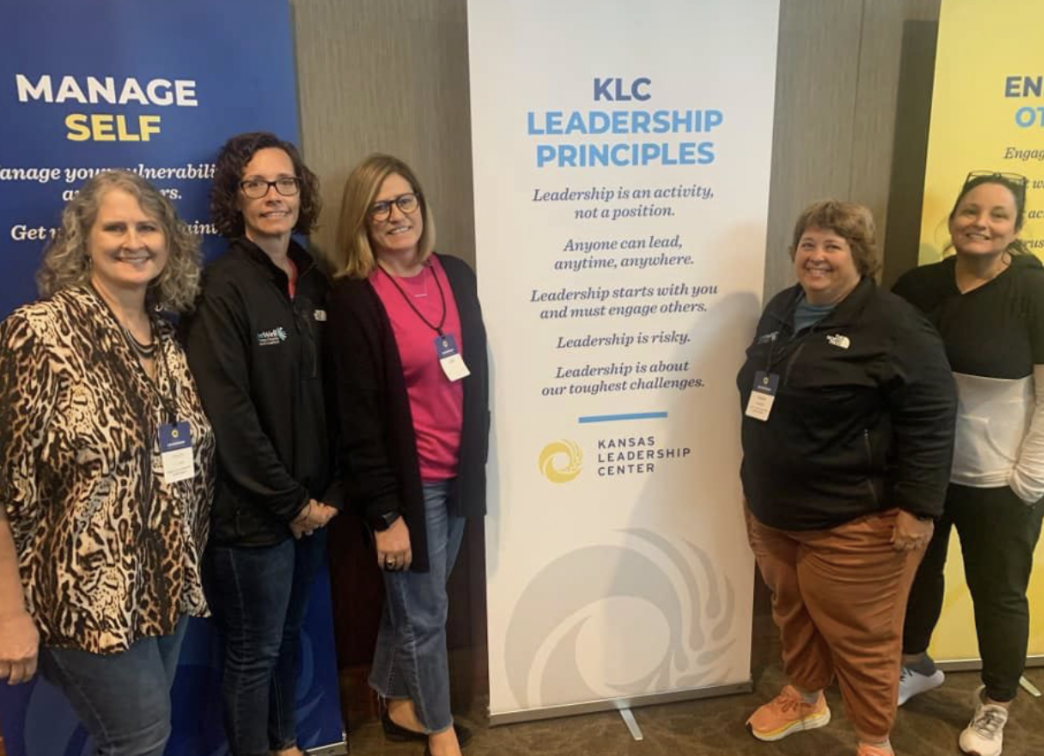
In Finney County, Kansas, where over half the population is Latinx, women and people of color have historically been underrepresented in local leadership, with decisions often made by a small, non-diverse group. To promote community decision-making that reflects everyone’s needs, LiveWell Finney County focused on expanding leadership opportunities and gender equity, especially for Latinx women.
With support from the Kansas Health Foundation, LiveWell hosted an on-site Latinx leadership training in Finney County. They worked with Tyson plant leadership to make it possible for shift workers to attend, and further removed barriers by providing childcare and food for attendees and their families. Recruitment was supported by local promotoras and trusted community partners to ensure strong community participation.
___You know that a team is a group of people with a commitment to one another, to the team, to a high level of achievement, to a common goal, and to a common vision.
___You know that team members need three kinds of skills:
- Technical
- Problem-solving
- Interpersonal
___You pay attention to how people fit together.
What are the advantages and disadvantages of teams?
___You know that advantages include:
- A team broadens what individuals can do.
- Several heads mean a wider range of ideas.
- Teams can have a greater array of talents and skills than can be found in a single individual.
- Team members learn new skills from their colleagues.
- Teamwork is more efficient than a number of individuals working singly.
- Teamwork provides relief when someone's having a problem.
- The fact that each member knows he's responsible to others works to make him more effective.
- A team member has more ownership of what she's doing.
- Good teams can build leaders.
- A shared vision keeps everyone moving forward.
___You know that disadvantages include:
- Team decision-making takes longer than individual decision-making.
- Depending on the task or problem, team effort can be wasted effort.
- The team's success may hang on the work of the weakest or least effective team member.
- Once a team gets rolling in a particular direction, even if it's the wrong direction, it develops momentum.
- The work of teams can bog down in interpersonal issues, resentments, and blame.
- Once team members are bonded and committed to one another, they may be reluctant to tell others when their work is unsatisfactory, or to point out that the team isn't getting anywhere.
- Individuals on the team may lose motivation because of the lack of recognition for the value of their work.
When should you build a team?
___You know the guidelines for when a team is more effective than individuals working alone:
- People have the skills to tackle the task at hand.
- The task requires the complementary skills of a number of people.
- The task specifically requires several people.
- The success of the task is not based on the performance of the weakest team member.
- Team members have experience working in teams.
- The perceived importance of the task is high.
- Group commitment to the task is high.
___You recognize times when teams might work well:
- Creating a strategic plan for addressing community issues.
- Starting up a new organization or initiative.
- Starting a new program or intervention within an organization or initiative.
- Starting a coalition.
- Planning and carrying out a community assessment.
- Evaluating an organization, initiative, or intervention.
- Spearheading an advocacy campaign with a specific goal.
- Running a fundraising event or campaign.
- Staffing and running an organization or initiative.
- Engaging in ongoing advocacy.
- Performing a particular function within a community program or initiative.
- Changing the community over the long term.
What makes a good team?
___You're familiar with the Rules for Great Groups from Bennis and Biederman:
- Greatness starts with superb people.
- Great Groups and great leaders create each other.
- Every Great Group has a strong leader.
- Leaders of Great Groups love talent and know where to find it.
- Great Groups are full of talented people who can work together.
- Great Groups think they are on a mission from God.
- Every Great Group is an island -- but an island with a bridge to the mainland.
- Great Groups see themselves as winning underdogs.
- Great Groups always have an enemy.
- People in Great Groups usually have blinders on.
- Great Groups are optimistic, not realistic.
- In Great Groups, the right person has the right job.
- The leaders of Great Groups give them what they need and free them from the rest.
- Great Groups ship (deliver real tangible results).
- Great work is its own reward.
How do you build groups?
Choosing a team:
___You start with the best people you can find.
___You choose team members so they'll have a good fit.
___You look for members with a diversity of backgrounds and perspectives.
___You look for members with a commitment to the concept of working as a team.
___You look for team members committed to the team's guiding vision.
___You find people with a sense of humor.
Building a team:
___You start with the vision.
___You build team bonds.
___You make sure the concept of a team is absolutely clear.
___You involve the team in jointly planning how it will function, and what the team and each of its members will do.
___You address personal issues.
___You establish team norms.
___You hash out the logistics of working as a team.
___You start the team with a task that is both doable and requires teamwork to accomplish.
___On a regular basis, you go back over both successes and failures to understand what happened and learn for the future.
___You provide both individual and team support.
___You give people something extra for working as a team.
___You reward accomplishments like crazy.
-
What is service-learning?
-
What is a community leadership corps?
-
Why develop a community leadership corps?
-
When is a good time to develop a community leadership corps?
-
Who should be involved in developing a community leadership corps?
-
How do you go about developing a community leadership corps?
What is service-learning?
Service-learning is an educational method that emphasizes learning through community service. You're likely to find as many different ways of organizing service-learning experiences as there are people who believe in it, but the following characteristics are generally accepted as being parts of the concept of service-learning:
- Students or youth participate in carefully organized community service placements.
- They receive some sort of orientation or training.
- Placements are coordinated by your organization, along with an educational institution, community service program or organization, and other groups in the community.
- Students or youth usually earn some sort of class credit or are paid for their service.
- Having the students or youth report on their experiences--through journals, group discussions, and other methods--is an important component that helps them learn from their corps experiences.
Service-learning can be carried out in a wide variety of ways. For example, a church leader could set up an arrangement with the local school district in which youth are recruited to work at a shelter for people experiencing homelessness, or a high school could set up a program in which students in the accelerated English classes could help out with an adult literacy program. In this section we will describe a service-learning project that may serve as a model for you. We call it the community leadership corps.
What is a community leadership corps?
A community leadership corps connects students with organizations or initiatives in their communities. Corps participants work for the organizations or initiatives for a pre-determined period of time -- often over a summer break -- and are given the opportunity to do hands-on community health and development work in communities in which they may have a sense of investment (often their hometowns). Most of these are set up as short-term arrangements, but the relationships between student, community organization, and corps coordinators can last much longer (see our example), as hosts and corps members develop working relationships and friendships.
Here at the KU Center for Community Health and Development, we have had our own community leadership corps for several years. The Kansas Community Leadership Corps is a 2-month summer field experience for 10 KU students in creating healthy communities in Kansas. The project recruits, trains, places, and supports students with local community-based organizations and support organizations, such as Kansas Regional Prevention Centers and neighborhood associations. During their placements, corps members communicate with one another through weekly Internet chat room meetings and forums, and they use technical assistance resources available through the Community Tool Box.
Why develop a community leadership corps?
There are many reasons why you might want to think about developing a community leadership corps. A community leadership corps can do many things:
- Provide a relevant, significant, "real world" educational experience for students who participate
- Teach positive values, leadership, citizenship, and personal responsibility
- Invite and encourage students to become active members of their own communities
- Teach job skills and prepare students for life after school
- Contribute your outreach efforts to local community, the state, and beyond
- Increase school-community collaboration and partnerships
- Help with community education
- Contribute many hours of service to people in need, nonprofit agencies, private sector companies, and governmental agencies
- Give students a greater understanding of the issues in their communities, and equip them to make intelligent decisions about those issues in their later careers and civic lives.
When is a good time to develop a community leadership corps?
While you can set up service-learning opportunities any time, a community leadership corps may be most useful for you after your organization has created its strategic plan and developed relationships with strategic partners. You can use these partners as host groups for the corps members and the corps members can give your partners a boost in carrying out strategic activities: a perfect win-win situation.
Who should be involved in developing a community leadership corps?
For a community leadership corps to work, it is crucial to have strong, well-established partnerships in place. At the very least, you will need to have partnerships between the institution or organization that recruits and supports the students or youth and the individual organizations where they will be placed. At the other end of the spectrum, a partnership may be a full-scale community collaboration in which schools, agencies, community members, youth, city government, and businesses all work together to design and implement a system-wide service learning initiative.
How do you go about developing a community leadership corps?
If possible, secure resources and support.
A community leadership corps doesn't require a lot of resources or funds, although having them really enhances the effort. At the least, it will take some of your time to develop the relationships between your organization, sources of youthful talent such as churches or schools, and the host organizations where the corps members will be placed. You will also need to provide some training (but that may only be an afternoon orientation) and provide some support to both the corps members and the host organizations as needed.
On the other hand, when it comes to giving resources to support youth development, community businesses and civic groups often find a community leadership corps attractive. A local civic group or the host organization itself may be willing to provide support: perhaps an honorarium, or a minimum wage salary for the corps member during the placement could be arranged. Regional foundations may find this an interesting project as well. The KU leadership corps was supported by a grant from a state agency and our corps members were placed in communities across the state. A community leadership corps benefits not only the youth and host organization, but can help your organization or partnership reach its goals, too. Given these benfits, it might be well worth the effort to raise the resources.
Identify host organizations and any additional partners.
The first step is to find organizations that will host a corps member. This should start simply, with inquiries to a handful of organizations you know. The KU program, for example, connected students with regional prevention centers throughout the state. (The Center for Community Health and Development had worked previously with many of them, knew their need for more people, and wanted to support theirefforts.) Ideally, these would be organizations with which you've already established some sort of working relationship, but you may well find that the offer of setting up an organization with a community leadership corps volunteer is a great way to begin a relationship between your office or organization and theirs.
Other partners will be the organizations where potential corps members can be found, such as educational institutions or churches.
Approach your potential host organizations and any other potential partners with your proposal. This approach might take the form of a simple phone call, if you know people in the organization well, or it might involve a more formal written proposal. Explain what sort of arrangement you'd like to enter into, and the responsibilities that each of you would take on to make it work. Once the corps is established you may find that organizations come to you requesting the opportunity to host a corps member.
A worksheet to help you identify potential partners appears in Tools at the end of this section.
Identify host organization needs.
The next step is for your and the host organization to develop a list of goals or activities the community leadership corps volunteers can help with. What short-term projects do they have that a student volunteer might be able to help with during a leadership corps placement? Are there any ongoing projects with which students might be able to get some hands-on experience? Are there any projects the host organization has always wanted to take on, but has never had the staff to attempt them (and could such projects be conducted by student volunteers)?
Make sure the host organizations remain realistic in terms of the corps members’ abilities and how much time they will have to complete their tasks. Giving students too little to do (e.g., merely answering phones and copying ) doesn't afford them the experience they need to truly learn from their corps placement; giving them too much (e.g., managing a large or complex project without much guidance) can be overwhelming and frustrating. You and the host organization should carefully work through – in more than one conversation – what kinds of help they need, what kinds of opportunities they can offer, and what kinds of support they can provide.
If a host organization is at a loss for ideas for projects for its corps participant (s), you may need to assist it with some suggestions. You might also come up with things for students to do based on their own backgrounds and experiences after they've been placed; we will offer some suggestions for this later on in this section.
Recruit students.
Finding students to participate in your community leadership corps depends largely on the scale of your efforts. If you only seek a few students, you can simply talk to professors or teachers in the appropriate departments or subjects (for example, public health, civics, social work, psychology) and ask them to recommend students they think would be good candidates for the leadership corps. For example, if you are recruiting from a high school, then classes for gifted students, school counselors, or service clubs may be places to recruit from. If your corps is going to be larger in scale, you may decide to advertise or use other methods of getting the word out. The Kansas Community Leadership Corps, which places about 10 students each summer, recruits its students through flyers, word of mouth, and classified advertisements.
Be careful not to focus only on the best students, especially in a high school program. Look also for students who may not be high achievers or involved in extracurricular activities, but who might benefit greatly from the being given responsibility and asked to do something meaningful. A great deal of human potential is wasted because it’s never recognized. Don’t fall into the trap of creating a program only for those who are already successful. The opportunity for community service may bring out the unseen talents and potential of those who’ve already been written off by school and society. Don’t waste the chance to let them shine.
That said, be careful not to set anyone up for failure, either. Make sure that all volunteers, and especially those who haven’t shown the work ethic and persistence they might need as corps members, get the support and encouragement they need, and aren’t handed tasks they can’t accomplish. Look for students that you think can be successful if they’re given that support and encouragement, even if they haven’t been successful in a school context.
Having an application form for students to complete makes the entire process equitable by having all potential participants submit the same information. It provides a means by which you can judge the applicants' readiness for this type of intensive field experience. The Kansas Community Leadership Corps requires each applicant to fill out a form, write an essay on building healthy communities, and submit a college transcript, a resume, and two letters of reference.
After application materials are collected, select the students who best possess the qualities you see as important for work in your leadership corps. Here at KU, we look for students who are academically solid and have demonstrated experience or interest in community service. You may find that other characteristics are important to you, depending on your goals and the goals of your corps partners.
Identify student interests.
You will want to personally interview all corps applicants to further assess their qualifications and potential, as well as to determine their interests. Their interests are often related to experiences they have had in other community or volunteer activities, but you will want to learn more about their values, as well as their personal and career goals and how they might fit with the opportunities available with your host partners. This information should help you screen the applicants. Experience, commitment, and capacity are criteria you might use in the selection process.
If you’re including students who have potential, but may not have yet shown the level of commitment and capacity described here, you’ll have to think about recruitment in a different way.
Have students shown commitment in other areas of their lives? (You don’t learn skateboard tricks without an enormous amount of commitment, for example, even if you show no commitment to finishing your homework. A dedicated skateboarder has the commitment and capacity you’re looking for, although they may not apply it to school activities.) Could responsibility change the student’s perspective on themself and the world? Might the service experience help them understand their own potential and cause them to change their priorities? These are the kinds of questions you should ask if you’re recruiting students who may seem, in some ways, to be unlikely prospects for a community service corps.
Now that you've decided which students will be involved with your community leadership corps, it's time to start figuring out where their placements will be. The first part of this is identifying the students' interests.
Part of this can be discerned from the student's application essay and interview; you can learn more about what sort of work the students may wish to do by talking with them about their personal goals, issues they care about, and in what communities they'd like to do their corps work.
When you put this information together, be sure to make a note in each student's file of their individual interests. This will help you make good placements later on. Your task is to match applicant interest with host organization need. If you’re recruiting high school students who haven’t taken on responsibility before, you’ll have to think carefully about which organizations can provide the kind of support they need, and can allow them to grow into the job.
You should also think about matching student personalities with organizational cultures. A student who has little patience for authority probably won’t do well in a hierarchical organization, whereas a more democratic one might not only be comfortable for them, but might also help them understand that authority is not always unnecessary or power-oriented.
Train students.
How you train your corps members -- and how much training you give them -- depends on how much time and funding you have, who they are, and what kinds of placements they’re likely to go into. One way to give college students some academic background in community development is to have them take some related college courses before doing their corps placements. Kansas Community Leadership Corps participants usually take such classes as "Building Healthy Communities", "Community Leadership", or "Community Health and Development" the semester before their corps placement.
Kansas Community Leadership Corps members also take part in a two-day orientation institute after their placements have been determined, but before they go into the field.
Some of the topics covered in the Kansas Community Leadership Corps orientation include:
- Corps roles and responsibilities
- Service and leadership
- Building healthy communities
- Models for community change
- Group discussion about skills and tasks
- Group exercises for getting to know your community, facilitation skills and leadership, and strategic planning and planning interventions
- Community evaluation
Some other areas that might be covered in a training might be interpersonal skills (particularly treating everyone with respect and establishing relationships with people from other cultures or backgrounds); conflict resolution skills; and basic facts about the living conditions of people experiencing poverty, particular diseases or medical conditions, political situations, and other real-world issues they might encounter.
The amount and level of training depends on the type of corps applicants (e.g., college students, high school students, church youth). You will need to gauge the amount of training they need to prepare them for the placement. The training you provide should be broad and general in nature. Training and support for the specific activities (e.g., web page design, developing a directory of services, coordinating a public event) during the placement is the responsibility of the host group. You will need to motivate as well as allay fears. Some leadership training can also be an important component here. Part E of the Community Tool Box is devoted to Leadership, Management, and Group Facilitation and may be useful to you in this.
Match students with host organizations.
Aim for a "win/win" arrangement--one that is beneficial for the student as well as the host organization. In matching students with their host organizations, there are several factors to keep in mind:
- Each student's experiences, goals, and interests
- The goals of the host organizations
- Location of host organization (we try to match students with organizations in their hometowns or other communities in which they feel personally invested); keep in mind that transportation may be an issue for youth.
There are many ways you can creatively match student interests and background with an appropriate host organization. For example, a student who has worked on a campus committee that does entertainment programming could be matched with a host organization that hopes to have them organize a benefit concert, or a pre-vet student might work with the county humane society to set up a pet therapy program in local nursing homes.
Here are a few examples of things that Kansas Community Leadership Corps (KCLC ) participants have done during their placements:
- Melinda Carden, who was a KCLC participant in the summer of 1999, was interested in working with Latino communities as well as the aging. One of the things she did as part of her placement with the Wyandotte County Regional Prevention Center was to develop (including writing and translating) Spanish language training materials for foster grandparents in the Hispanic community of Wyandotte County.
- Christina Harms participated in the summer of 1998. Before her KCLC placement she had volunteered with various agencies and organizations that help people experiencing homelessness, and she had also been involved in peer sexual health education. During her placement with the Regional Prevention Center of Wichita/Sedgwick County, Christina worked with youth experiencing homelessness in Wichita to promote HIV awareness and reduce drug use.
- Ameshia Tubbs, who participated in the KCLC during the summer of 1999, was involved in several student organizations at KU that centered around African American issues and culture, and she was also very involved in her church. In her placement with Big Brothers/Big Sisters of Douglas County, she worked on recruiting mentors from local churches and also prepared a report on recruiting people from diverse ethnic and cultural groups.
Once matches are made, a good way to help the corps member and host create a successful experience is to have them work together to negotiate and write up a service-learning agreement that lays out the responsibilities of each. This way, everyone is clear on what is expected of them before the work begins. It helps them clarify their goals, plan the steps to reach them, determine the level of support needed, and describe how each of them will tell whether they've succeeded. You can find a template for one of these agreements in the Tools at the end of this section.
Monitor, support, and supervise students during their placements.
Even with agreements signed in advance, it's important to monitor corps participants during their work in the field. All volunteers – and especially high school and college students, who may not have a great deal of work or life experience – need support and supervision. The ideal is regular (perhaps wekly or every other week) individual or group meetings with a supervisor from your institution (usually the person who coordinates the program from your end). Here, they can describe their experience, lay out problems to work on, receive feedback, and get praise and support for their effort and their progress toward their goals.
Supervision here doesn’t mean someone looking over students’ shoulders waiting for them to make mistakes, but rather feedback and the opportunity to think through their work, examine what they’ve done, and determine how they might better handle difficult situations or people. It’s a time to talk through problems both with the work itself and with the people they work with. The goal is to improve performance, not to find fault. If it’s done properly, supervision should be immensely helpful for those supervised. It should be enjoyable and satisfying enough that they look forward to it.
The KU program reviews progress halfway through the summer, revisiting the agreements to see how well the goals of the corps members and the host organizations are being met and how best to support both hosts and volunteers. We also stay in regular contact with representatives of the host organizations to make sure they are pleased with their corps participants’—work, and we try to make at least one site visit. The more corps members are clustered in a single town – as they would be if the program consuisted of high school students – the easier it is to make site visits and meet regularly with students.
Allow students, hosts, and sponsors to reflect on the experience.
One of the benefits to corps members is the learning they gain from the experience. In order for that learning to take place, there has to be thoughtful reflection on the experience, reflection that takes place in serenity, not in the heat of the moment. In addition to the weekly or biweekly supervision sessions described above, you can support reflective learning in a number of ways:
E-mail, Web-based forums, and chat rooms or instant messaging can be easy ways to contact supervisors or other students for support, advice, or help thinking through problems in between meetings.
Journals kept daily, provide a record of students’ work while it’s still fresh in their minds, and help them both reconstruct events and their reactions to them, and to think about how they might have done things differently. These journals could be turned in at intervals for feedback from supervisors and as a record of the work, and could also serve as a base for supervision by providing topics to discuss.
Online or print information, of which the Community Tool Box is a perfect example, can also be extremely helpful when particular issues arise or particular problems need to be solved.
Celebrate!
This may seem like a step you could possibly skip, but we feel it's vital. Having a celebration of some sort allows all the partners in your leadership corps -- host organizations, students, community leaders, educators, and others -- to come together to recognize the students for their hard work and the host organizations for giving the students this learning opportunity.
Your celebration might take the form of a big party or an awards banquet (which is what the Kansas Community Leadership Corps does), or you may come up with your own unique way to applaud everyone's efforts. However you decide to do it, this is a celebration of community effort.
Example: Kansas Community Leadership Corps Recognition Dinner
The Kansas Community Leadership Corps held its second annual recognition dinner in the fall of 1999 at the Eldridge Hotel, a charming and historic old hotel in downtown Lawrence.
The evening opened with a welcome and introductions from Jerry Schultz, the director of the corps, and then everyone enjoyed dinner together. After the meal there were remarks given by Reginald Robinson, the chair of the KU Public Service Taskforce, and Andrew O'Donovan, the commissioner of the Kansas Office of Prevention. Representatives of the host organizations each took a few minutes to honor their corps members. This part of the evening meant the most to the corps members, as these representatives of the host organizations had developed the closest relationships with the participants.
The evening concluded with presentations from corps members about the work they did during their placements and what they learned from their experiences.
Here are a few examples of some of the things students did as part of their placements:
- Emily Williams, who was placed with Safe Streets, organized?Night Out?, a community -wide event that brought together neighborhoods, law enforcement, and city services in Topeka.
- Erica Swanholm, who was placed with Rosedale Development Associates, organized a neighborhood beautification project.
- Fermin Santos, who was placed with the Regional Prevention Center of Johnson, Miami, and Leavenworth Counties, developed a media literacy course on alcohol and tobacco.
- Kristen Elliott, who was placed with the Social Norms Media Campaign, conducted focus groups to develop media messages to prevent binge drinking.
Parents were also on hand to watch their sons and daughters receive their certificates of achievement. Host organizations also received certificates of recognition for their support of corps members.
In Summary:
Using service-learning is a great way to positively impact your community while teaching future leaders the skills they'll need to continue the effort to build healthy communities. The most powerful learning experiences occur when ideas are put into practice. The corps members return from their placements matured and tempered by their experiences. If you decide to start a community leadership corps, we're sure you'll find it to be rewarding for yourself, the host organizations that get involved, and the participants.
Contributor
Chris Hampton
Jerry Schultz
Resources
Online Resources
Community colleges and service learning. American Association of Community Colleges. (1995).
Encore Leadership Corps: Promising Practices from Year One by the University of Maine Center on Aging.
Teen Leadership Corps, an example syllabus.
Print Resources
Crews, R. (1995). The University of Colorado at Boulder service-learning handbook. Boulder, CO: The University of Colorado--Boulder Student Employment and Service -Learning Center.
Whitaker, U. (1989). Assessing learning: Standards, principles and procedures. Philadelphia, PA: Council for Adult and Experiential Learning.
What is service-learning?
___Service-learning is an educational method that emphasizes learning through community service
What is a community leadership corps?
___A community leadership corps connects students with an organization or initiative in his or her community
Why develop a community leadership corps?
___Provide educational experience for students
___Teach positive values, leadership, citizenship, and personal responsibility
___Encourage students to become active community members
___Teach job skills to students
___Contribute your outreach efforts to local community, the state, and beyond
___Increase school-community collaboration
___Help with community education
___Contribute many hours of service to people in need, non-profit agencies, private sector companies, and governmental agencies
When is a good time to develop a community leadership corps?
___A community leadership corps may be most useful for you after your organization has created its strategic plan and developed relationships with strategic partners
Who should be involved in developing a community leadership corps?
___The institution or organization that recruits and supports the students or youth
___The individual organizations where the students or youth will be placed
How do you go about developing a community leadership corps?
___If possible, secure resources and support
___Identify host organizations and any additional partners
___Identify host organization needs
___Recruit students
___Identify student interests
___Train students
___Match students with host organizations
___Monitor and support students during their placements
___Allow students, hosts, and sponsors to reflect on the experience
___Celebrate!
Example #1: A Corps Participant's Weekly Journal Entry
Each participant writes an entry for his or her Critical Reflection Journal. Each week's entry is prepared before the end of the week (1-2 double-spaced typed pages total). A journal entry consists of weekly comments on an idea important for building healthy communities, overall reflections on problems or challenges in carrying out the work, and overall how insights from the ideas could be used to improve your efforts to build healthy communities.
A copy of each journal entry has to be faxed or emailed to the director by the end of each week. Each journal entry is reviewed by the director and returned the following week. Participants are encouraged to use a loose leaf binder to store journal entries for the summer.
The following is an excerpt from one participant's journal.
Through my second week at the initiative, I have discovered that each of the tasks, or activities, performed by the staff members, as well as myself, is a small building block through which wide and encompassing visions are established. I began the week completing the county substance use report. The work was very involved, and at many times seemed tedious, but I have begun to see the value of this very time consuming process. These substance use reports were composed of carefully selected data from a huge bulk of information, gathered through surveys and compiled into thick, heavy, notebooks. Each of the county notebooks contained a wealth of information, including an enormous amount of statistics that could be extremely useful in defining and analyzing community problems, yet they were so very cumbersome.
The staff members of the initiative were quite familiar with the facts presented within the notebooks and the areas of concern pertaining to substance use within the community, yet the task of distributing this data was nearly impossible. The initiative needed something that would simplify the process of informing a mass number of people about the significant facts pertaining to youth within the community. These substance use reports, which I spent so many hours forming, would be used in many group meetings and discussions, programs, and grant requests. The single sheet of paper would help to educate and influence, while proceeding toward an action plan to better the situations defined through the data.
Besides the extensive work with the substance use reports, I attended and recorded the city prevention coalition meeting that was held in a conference room of the initiative. The coalition is formed of representatives from various prevention organizations, such as county regional prevention centers, MADD, and court services. I was impressed with the proficiency and involvement of the meeting. All of the individuals present were very informative, flexible, and committed. Each representative volunteered services and was engaged within the coalition's goals and task at hand. At this particular meeting, the organization of a workshop pertaining to methamphetamines was intensively discussed.
Towards the end of the week, I was asked to observe an educational program taught by Barbara, one of the initiative's staff members, at the county juvenile detention center. The class focused on the harmful effects of alcohol. I was amazed at the behavior of many of the, youth whom attended the class, as I was admirable of Barbara's patience and collected manner in which she spoke. Although there were many guards within the room, the juveniles often blurted out inappropriate comments or personal testimonies, made fun of others who asked questions, or simply ignored Barbara altogether. However, I watched with appreciation as Barbara tried to help change the views of many of these individuals. They will never make any improvement if they are not exposed to the harmful consequences of their behavior as well as to the healthy alternatives to these behaviors. These youth are still quite young and can definitely turn their lives around. It may be an extremely difficult change in direction, yet there is a tremendous amount of hope and possibility that they will each progress.
Lastly, I was also invited to attend a town meeting in Anytown. This was very beneficial to me, as I am not quite familiar with small towns and the order in which they are run and organized. I found the issues discussed and the opinions of the attendees very interesting. Even though Anytown is a much smaller community than I am used to, I found that they are faced with many of the same problems, such as substance use and poor communication between adults and youth. However, the methods suggested to improve these situations were somewhat different from that which might work within larger communities. I found that because all communities are different, there is no best way to approach a problem. Each issue should be viewed and addressed as contextual.
Example #2: Interview with Wendy Wilson
Wendy Wilson is the Director of Rosedale Development Associates (RDA). She has been working with RDA for eight years. RDA served as a host organization for the Kansas Community Leadership Corps in the summer of 1999. RDA is a neighborhood revitalization organization in the Kansas City, Kansas metro area.
CTB: What interested you in becoming a host organization for the Kansas Community Leadership Corps?
Wilson: We need all the hearts we can get to help us do what we are trying to do in this community which is to improve the community and make it more livable-- safe from crime, economically viable, helping people fix their homes, those kind of things. So, any opportunity I have to have someone else involved, I'm going to reach out for that. And also it was an opportunity to mentor and develop other people to do the work that we do which is important. There's nothing that tells people how to do it, you just have to jump in and do it.
CTB: So it gives you an opportunity to learn how to do the work hands on. Could you tell me about your Leadership Corps member and what she did during her placement with your organization?
Wilson: Her name was Erica Swanholm. And the same day that I got the call about Erica coming here, I also got a call from the Board of Public Utilities here locally and they were going to make a grant to us to have a summer youth employment program. We, we're pretty much a two-person office: myself and then a staff secretary. And my fear was how in the world are we going to get this done, how are we going to manage this program, this is not something we had planned. And we had to get this program up and running within two weeks. And so I said, "Erica, have I got a deal for you" and turned it over to her. So she ran that program very, very well. We did interviews with youth, we found job placements for youth and their parents that were in their area of interest if we could. We ended up being able to pay twenty-two youth and then another thirty youth were tutored over the summer. So we impacted fifty-two youth.
CTB: Was the tutoring some sort of apprenticeship or actual tutoring?
Wilson: No, like school. They taught math and other subjects. They were young kids. Some of the students that we hired worked in a program where they tutor younger children in reading and math, those kind of things. We had Erica come in and fill out an application form; she also met with the employers... Most of these youths were from fourteen to sixteen, and we had a couple that were eighteen. And some of them worked in area businesses, like a veterinary hospital and a printer.
CTB: How did you advertise?
Wilson: We had no time to really advertise. What we did was call up some people that I knew had been active with youth projects in our community and had them put the word out for us to the youth in the area, and that was great. We had plenty of youth, we had a diverse group. We ended up sharing some of our money with the neighboring community which is Argentine. Our youth were African-American, Hispanic, Latino, and Anglo-American. We didn't plan it that way, but our community is diverse enough and communication is diverse enough we ended up that way.
So it was a wonderful program. Erica did the payment scale, made sure they got their paycheck legally, figured out their timesheets, dealt with their employers and with the students. We also had a couple of sessions where all the students got together and talked about issues of drug and alcohol usage and avoidance and other issues that they wanted to talk about.
CTB: Was it modeled after any other program?
Wilson: Nope. It was out of my head. But we thought it would be good for the kids in getting them ready to be active members of the workforce down the road. Erica also organized a Paint a Barrel project. We had decided before she came an to do an Adopt a Barrel where neighbors adopt a fifty-five gallon trash barrel, put it out in a high traffic area, and they're responsible for changing the bags out when it's full and putting it in the back.
We had families who wanted to adopt the barrels but we didn't have the actual barrels yet--so Erica also organized that and then the playground across from our office. We had I think it was twenty-six youths that came, some with parents, on a Saturday morning to do artwork on the trash barrels. Erica also brought in an artist from Manny Rhodes Center, which is a local non-for-profit group, and the artist worked with some of the kids. She went to the library and got books for the kids to get some ideas about what they wanted to do. We went and bought the materials because I had some money for that. And the kids had a wonderful time. There was paint everywhere, but they had a wonderful time and it really developed a sense of pride. Now the barrels are out in the community--it was a sense of kind of bringing them in and now when they go by the barrels they painted they see they're a part of our community--instead of doing an art project that you can just go home and hang on the wall, this is something that's now out in the community.
CTB: You definitely make an investment in the aesthetics of the community if you have a piece of it that you can see.
Wilson: Erica also worked with a student who couldn't figure out what she wanted to do, but she had considered writing. So Erica worked with her to develop a youth newsletter that we've since had published. And was distributed through the local schools.
CTB: What benefits does your organization receive as a host for the Kansas Community Leadership Corps?
Wilson: Well, it would have been very difficult for us to have summer youth employment. I really don't know how we would have done that program without someone from Kansas Community Leadership Corps.
CTB: So will it be continued next summer?
Wilson: Well, this was the first time (for the summer job program). But it was so successful with us and other groups they did it with that they are making it year -round starting in January, although I think the focus still will be summer. And they've increased the monies a little bit. So we would love to have another volunteer from the leadership corps' It was wonderful having her here. She still is in contact with the President of my board and the community police officer here. I think we made a long-term relationship here. And we did a lot of things. It isn't a large agency--it's a very small, very intimate group of people and she got to see all the people from the community that would walk in and need help.
CTB: What advice would you have for someone who works with an organization similar to yours who is thinking about getting involved in hosting a leadership corps participant?
Wilson: What advice would I have for them? Do it. I mean, it was such a wonderful experience. Erica is really bright, and very mature. She just took it over with little direction, was very creative. It was wonderful.
CTB: I think it's a great opportunity for everybody involved. You really get a chance to benefit from the help of apprenticing somebody to get involved in the work first hand.
Wilson: Erica was struggling with what she wants to do in graduate school. She had three or four areas, so I set up interviews with her, several, in those areas. She met with the Dean of the School of Social Welfare at KU, she met with the city administrator here and she talked with to another gentleman who is in urban planning. And so she got to sit down with them and talk to them about what those jobs entail are the areas she was thinking of going into, and I think she also got a good idea of what sort of thing she doesn't want to do as well.
Example #3: Interview with Vicki Collie
Vicki Collie was a participant in the Kansas Community Leadership Corps in the summer of 1998.
CTB: What interested you in participating in the Kansas Community Leadership Corps?
Collie: I think that my interest was rooted in the fact that I always wanted to work in an RPC--since high school. That's what I was going to school to do: to work in a regional prevention center.
CTB:What organization did you work with and what did you do there?
Collie: I worked at the Johnson, Miami, and Leavenworth Regional Prevention Centers and I did many different things. One of the things I did was I designed a resource manual that was distributed around 54 sites in Johnson County.
Another thing was when the secretary of Health and Human Services designed a program called Girl Power that was being being implemented in Johnson County. The neat thing about Girl Power is that every community can use it any way they want. And Johnson County had decided to do an essay contest, and so I designed a day-planner that could be distributed that was designed to reinforce girls' abilities and accentuate the strengths of being a girl.
I went to the juvenile detention center every other Thursday and observed the discussions that went all around drug and alcohol abuse prevention there, and I was a model for the Kansas Anti-Tobacco Coalition on one of their billboard campaigns.
CTB: Nice!
Collie: Yeah, so, I think that was a pretty unique experience for the leadership corps. (Laughs).
CTB: What sort of skills did you learn or improve on during your placement?
Collie: I learned a lot about community interventions. I don't think I had the knowledge of how vastly a community can work together. And I learned a lot, I mean a lot, about alcohol and drug abuse prevention, which is exactly what I wanted to learn. I learned about risk factors and protective factors and then also strength -based practices.
CTB: Was the community mobilized on its own or did you do a lot with mobilizing the community or building on the foundation?
Collie: Actually, I forgot to tell you one of the things I did. I worked with Merriam, Kansas. They had a coalition there that was really unique. About 3 years before I started working there they had a shooting that killed two kids at the swimming pool, and they were kids from the inner-city part of Kansas City, and the whole community pretty much detested kids after that. It was very strange; they were not trusting at all! So there was this coalition that the RPC was helping lead that was working to promote good relationships between the adults and children. So I worked with that coalition a little and we did do some mobilization in terms of trying to get different events that would bring adults and be trans-generational events. So, that's what I did, and it was really nice to see the community come together on that one.
CTB: Do you think the relations between the adults and kids have improved?
Collie: I think so, yeah, you could see definite changes. One of the things we did was we hosted painting parties. For example, we painted a house that was going to be used by developmentally-disabled people in Merriam and then the house of an elderly gentlemen who couldn't do it himself and stood to get fined by the city if he didn't paint his house.
CTB: That's wonderful!
Collie: It was really nice to see parents and their children and other parents and other children working together on that project--then one of the things that we wanted to do was have a pool party, and the pool was exactly where the shooting happened.
CTB: That must have been really high emotion.
Collie: Right. It almost didn't get passed because there were just too many concerns of safety issues and our country has seen more shootings of this sort and everything. Anyway, it got passed, which was a really big achievement because it said a lot about how the community is beginning to restore its faith in the youth.
CTB:What do you see as the benefits your host organization received for taking part in the corps?
Collie: I think that they had extra people power for one, and I think they also liked getting a different point of view--I was 18 at the time. I think I carried a different perspective, and I think that in teaching me they developed a sort of critical consciousness of what they were doing. The whole point of the resource manual and the reason why I designed it was because they kept telling me how in Johnson County they had the money to do tons of different programs, but they couldn't get the people to come to them. The knowledge wasn't getting out. So the idea of the resource manual was to take the information on all the programs that were available to the people--put in waiting rooms and employee break rooms and so on.
CTB: Is there anything that you'd like to add?
Collie: Hmm... I think that one of the things that I really valued about the leadership corps is that I got to meet some amazing professionals that were very influential in my understanding of community development and drug and alcohol abuse prevention. It was completely invaluable to me. I really enjoyed myself, and I learned so much !
Example #4: Kansas Community Leadership Corps 1999 Recognition Dinner Program
|
Kansas Community Leadership Corps Recognition Dinner 7:00 p.m. Tuesday, October 5, 1999 The Eldridge Hotel Lawrence, KS
Engaging future generations of leaders in creating healthy communities in Kansas
7:00 p.m. Welcome and introductions - Jerry Schultz, Ph.D., Director
7:10 p.m. Dinner
7:30 p.m. Speaker Presentations Reginald Robinson, Counsel to the Chancellor and Chair of the Public Service Taskforce at the University of Kansas Andrew O'Donovan, Commissioner, Kansas Office for the Advancement of Prevention 7:50 p.m. Recognition of Corps members by Host organizations 8:00 p.m. Kansas Community Leadership Corps Presentations and Recognition Ceremony Melinda Carden From Lenexa, KS. Worked with the Wyandotte County Regional Prevention Center Brooke Draper From St. Francis, KS. Worked with the Regional Prevention Center of Northwest Kansas. Kristen Elliott From Westchester, IL. Worked with the Social Norms Media Campaign. Amanda Langley From Salina, KS. Worked with Kansas Action for Children, Inc. Lori Legg From Olathe, KS. Worked with the Regional Prevention Center of Johnson, Miami, and Leavenworth Counties. Larisa Roemisch From Andover, KS. Worked with Kansas Family Partnership, Inc. Fermin Santos From Shawnee, KS. Worked with the Regional Prevention Center of Johnson, Miami, and Leavenworth Counties. Erica Swanholm From Stilwell, KS. Worked with Rosedale Development Associates. Ameshia Tubbs From Lawrence, KS. Worked with Big Brothers, Big Sisters of Douglas County. Emily Williams From Milford, IA. Worked with Safe Streets *Melinda Carden, Kristen Elliott, and Erica Swanholm participated in the Corps, but are currently not at the University. 8:45 p.m. Conclusion Our Thanks to... Host Community Organizations: Liz Baehner: Johnson, Leavenworth, & Miami Counties Jannette Berkley-Patton, Social Norms Media Campaign Sue Evans: RPC of Northwest Kansas Mary Beth Karlin: Big Brothers, Big Sisters of Douglas County Linda Stewart: RPC of Wyandotte County Michelle Voth: Kansas Family partnerships, Inc. Dodie Wellshear Johnson: Kansas Action for Children Wendy Wilson: Rosedale Development Associates Sally Zellers: Safe Streets Executive Advisory Board: Judge John Barker Debbie Castell Andrew O'Donovan Corelia "Cokie" Diggs Clay Edmands Elaine Johannes Harriet Lange James Tangeman Michelle Voth Technical Assistance: Preston Caprez Elayne Cinalli Judy Donovan Duane Dyer Barbara Gibson Mike Lowther Patty Martin Suzanne Woods The Kansas Community Leadership Corps is sponsored by the Center for Community Health and Development at the University of Kansas, and is funded through a grant from Alcohol and Drug Abuse Services of Kansas.
Our thanks to everyone who helped make this year's Kansas Community Leadership Corps project a success. |
Contributor
Chris Hampton
Jerry Schultz
-
What is ethical leadership?
-
Why practice ethical leadership?
-
When and by whom should ethical leadership be practiced?
-
How do you practice ethical leadership?
-
Specific components of ethical leadership
Consider a dilemma: You’re the director of a community-based human services organization that includes sites in several towns. A state budget crisis is threatening to reduce your funding by 30%. The head of the state funding agency suggests to you that you simply close down a site. That means both laying off dedicated staff members and denying services to a community and a group of people that has come to rely on you. Perhaps more important, it means deciding among several communities, to all of which you’ve made a commitment. How do you handle the situation?
Or think about this: You get wind from a contact at a foundation about a grant possibility that would be perfect for a collaboration with another organization. At the same time, you realize that your organization could probably successfully apply alone, and end up with a much larger amount of money than if you applied with a partner. In that case, the service you’d provide would be somewhat narrower, but still helpful to the people you work with, and the funding would help with your administrative expenses. On the other hand, the other organization, with which you have a good working relationship, is in financial difficulty, and a grant like this would do a great deal to help it survive. What will you do?
These are ethical questions. Leaders of organizations, initiatives, and institutions – not to mention politicians – face them nearly every day, and have to make decisions. The decisions they make, as well as the ways by which they make those decisions, determine whether or not they are ethical leaders. Whether you direct a small organization, are in charge of a group in a larger organization, head a large agency or institution, or simply sometimes take an informal leadership role in your daily life, the issue of ethical leadership is one you can’t avoid. This section is about ethical leadership: what it is, why it’s important, and how to practice it.
What do we mean by ethical leadership?
We can’t really discuss ethical leadership without looking first at ethics. Ask 100 people – or 100 philosophers, for that matter – what they mean by ethics, and you might get 100 different answers. The struggle to define ethical behavior probably goes back to prehistory, and serves as a cornerstone of both ancient Greek philosophy and most major world religions.
Ethical behavior, in its simplest terms, is knowing and doing what is right. The difficulty is in defining “right.” Different individuals, different cultures, and different religions define it in different ways. The accepted treatment of women and attitudes toward slavery in different cultures and at different times in history provide prime examples of how what’s “right” can vary.
Many people would define ethics and morality as identical, but it is helpful to view them somewhat differently. Ethics are based on a set of social norms and/or logically coherent philosophical principles; morality is based on a (usually broader) set of beliefs, religious and cultural values, and other principles which may or may not be logically coherent. Morality can, however, form the basis for an ethical system.
John Rawls, one of the most important ethical philosophers of the 20th century, makes a distinction between comprehensive moral systems, such as religions, which cover not only behavior, but such issues as humanity’s place in the universe, and less comprehensive systems, which cover the political, social, and/or economic spheres. Ethical leadership, at least for the purposes of this section, falls into the second category.
Even the meaning of “ethics” is open to interpretation. Some of the different ways that the term is defined:
- Situational ethics. What’s right depends on the context of the situation. What’s right in one situation may be wrong in another.
- Cultural relativism. Whatever a culture deems right is ethical for that culture. No one has any right to judge the ethics of another culture except on its own terms.
- Professional ethics. Many professions – law, medicine, and psychotherapy are perhaps the most familiar, but the list is long and varied – have their own specific codes of ethics, which all members of those professions are expected to follow. Members of those professions are considered ethical in their practice if they adhere to the code of their profession.
- Value-based ethics. The assumption here is that everyone has a set of values they live by. A person is behaving ethically if their behavior matches their values.
- Rule-based ethics. If you follow the rules – of your organization, your peer group, your culture, your religion, etc. – you’re behaving ethically.
None of the conceptions in this list is perfect, but these last two, in particular, have a glaring problem: not all value systems or rules reflect what is right, by most people’s definition. In the 1980’s, for instance, many people considered the ideas in Robert Ringer’s 1977 book, Looking Out for #1 – which explains human behavior in terms of selfishness and self-preservation – to be an excellent foundation for a value system of self-centeredness. In a more extreme case, Hitler’s value system, which many Germans adopted in the 20th century, glorified “Aryan” supremacy, and resulted in the murders of millions of people.
Although the law is a set of rules, simply acting legally is not necessarily the same as acting ethically. Many actions that are in themselves not illegal – using other people emotionally, treating your employees as disposable objects – are nonetheless unethical by most standards. By the same token, breaking an unjust law – sitting in at a segregated lunch counter, for instance – could be supremely ethical.
- Ethics based on fairness. Ethical behavior consists in making sure everyone is treated fairly.
- Ethics based on a set of coherent, generally-accepted principles. These are meant to be principles that most rational people can accept: honesty, justice, fairness, avoiding harm to others, taking responsibility for your actions, putting the greater good ahead of your own interests, etc..
There are problems with each of these conceptions, the main one for most of them still being the issue we started with: exactly what is right, and who defines it? At the same time, most of these ideas of ethics have their strong points as well, and those ideas can perhaps be incorporated into an ethical framework that isn’t so easily set out, but covers a broad range of situations.
The author’s attempt at a definition of ethical behavior, based on what seems to be the general thinking on the subject, is this:
Ethical behavior reflects a value system that grows out of a coherent view of the world, based on equity, justice, the needs and rights of others as well as oneself, a sense of obligation to others and to the society, and the legitimate needs and standards of the society.
This is hardly meant to be a perfect definition. Just what constitutes the legitimate needs and standards of society, for instance, has been argued over for centuries, and is constantly changing as societies evolve.
So, given that even the definition of ethics can be unclear, how do you ensure that your decisions and actions are ethical? Again, there seem to be as many answers to this question as there are people willing to answer it. One good set of answers comes from the West Virginia University Extension, in a course for volunteer leaders devised by Patricia Pinnell and Shirley Eagan. It takes the form of four questions to ask yourself about any decision or action you take:
- Kid on Your Shoulder: Would you do it if your kids were watching?
- Front Page of the Newspaper: Would you like to see it published on page 1 of your local newspaper?
- Golden Rule: Would you be happy being on the receiving end of the decision or action? (i.e., “Treat others as you would like them to treat you.”)
- Rule of universality: Would it be okay if everyone did it?
If you can honestly answer “yes” to all or most of these questions, then it’s likely that your decision or action is truly ethical.
Ethical leadership
Ethical leadership really has two elements. First, ethical leaders must act and make decisions ethically, as must ethical people in general. But, secondly, ethical leaders must also lead ethically – in the ways they treat people in everyday interaction, in their attitudes, in the ways they encourage, and in the directions in which they steer their organizations or institutions or initiatives.
Ethical leadership is both visible and invisible. The visible part is in the way the leader works with and treats others, in their behavior in public, in their statements and their actions. The invisible aspects of ethical leadership lie in the leader’s character, in their decision-making process, in their mindset, in the set of values and principles on which they draw, and in their courage to make ethical decisions in tough situations.
Ethical leaders are ethical all the time, not just when someone’s looking; and they’re ethical over time, proving again and again that ethics are an integral part of the intellectual and philosophical framework they use to understand and relate to the world.
Some important components of ethical leadership (we’ll discuss these more later under “How do you practice ethical leadership?”):
- The ability to put aside your ego and personal interests for the sake of the cause you support, the organization you lead, the needs of the people you serve, and/or the greater good of the community or the world.
- The willingness to encourage and take seriously feedback, opinions different from your own, and challenges to your ideas and proposed actions.
- The encouragement of leadership in others.
- Making the consideration and discussion of ethics and ethical questions and issues part of the culture of the group, organization, or initiative.
- Maintaining and expanding the competence that you owe those who trust you to lead the organization in the right direction and by the best and most effective methods.
- Accepting responsibility and being accountable.
- Perhaps most important, understanding the power of leadership and using it well – sharing it as much as possible, never misusing it, and exercising it only when it will benefit the individuals or organization you work with, the community, or the society.
Why practice ethical leadership?
Most people would probably agree that leaders ought to be ethical (although there might be a lot of disagreement about what that means), but there are a number of good reasons why ethical leadership makes sense.
- Ethical leadership models ethical behavior to the organization and the community. Leaders are role models. If you want your organization or initiative – and those who work in it – to behave ethically, then it’s up to you to model ethical behavior. A leader – and an organization – that has a reputation for ethical behavior can provide a model for other organizations and the community, as well.
- Ethical leadership builds trust. Leadership – except leadership gained and maintained through the use of force and intimidation – is based on trust. People will follow an ethical leader because they know they can trust them to do the right thing as they see it.
- Ethical leadership brings credibility and respect, both for you and the organization. If you’ve established yourself as an ethical leader, individuals and groups within and outside the organization, will respect you and your organization for your integrity.
- Ethical leadership can lead to collaboration. Other organizations will be much more willing to collaborate with you if they know that you’ll always deal with them ethically.
- Ethical leadership creates a good climate within the organization. If everyone in the organization knows that power will be shared and not misused, that they’ll be dealt with respectfully and straightforwardly, that they’ll have the power to do their jobs, and that the organization as a whole will operate ethically in the community, they’re likely to feel more secure, to work well together, and to be dedicated to the organization and its work.
- If you have opposition, or are strongly supporting a position, ethical leadership allows you to occupy the moral high ground. This is especially important if your opposition is ethical as well. You can look very small in comparison if your ethical standards are not up to theirs, discrediting your cause and alienating your allies.
- Ethical leadership is simply the right way to go. Everyone has an obligation to themselves, to their organization, to the community, and to society to develop a coherent ethical system that seeks to make the world a better place. Leaders, for the reasons already stated, and because of the responsibilities of leadership, have a particular obligation in this respect.
- Ethical leadership affords self-respect. Because you know that you consistently consider the ethics of your decisions, actions, and interactions, you can sleep at night and face yourself in the morning without questioning your own integrity.
When and by whom should ethical leadership be practiced?
The general pattern of most Tool Box sections includes these “when?” and “who?” questions. In this case, they are easily answered. Ethical leadership should be practiced all the time by anyone in a leadership position – whether that position is formal or informal, intentional or unintentional. There are no times when it’s more appropriate than others, nor are there people for whom it is more appropriate than for others.
There are definitely times when ethical leadership is more difficult than not – when there are hard choices to make, or when the right choice is clear but unpleasant (confronting a nice person who’s simply not doing their job, and making everyone else’s harder as a result, for example, or acting against your own self-interest). In fact, the difficult times are when ethical leadership is most important, because the stakes are high.
The stakes in ethical leadership may also vary widely, depending on the level and responsibilities of the leadership in question. Few directors of community-based organizations find themselves faced with the kinds of life-and-death decisions that may be experienced by national leaders, for instance. Yet their decisions can still have serious ethical and human consequences, even though those consequences may play out in a more limited sphere.
Ethical leadership is part – although by no means all – of the definition of good leadership. Being an ethical leader is a full-time job – it isn’t something you can put on and off at will. You either are or you aren’t, and if you are, you have to try to be one all the time.
How do you practice ethical leadership?
While this section generally refers to leaders as if they were the people at the head of organizations, initiatives, and communities, the Tool Box recognizes that anyone might take on a leadership role at any time. The question of ethical leadership isn’t only to be considered by people with official leadership titles – Director, Coordinator, Chair, etc.. The general guidelines for ethical leadership, with only a little adjustment, could double as general guidelines for ethical living. Putting the greater good above your own personal interests, for instance, is one of the ways that most societies and cultures define heroism. Thus, this section isn’t only for those who are designated as leaders: it’s for everyone.
Just as most people aren’t born leaders, but learn to be so through experience and hard work, people – even highly ethical people – learn to practice ethical leadership over time. Here, we’ll present some general guidelines for ethical leadership, and then look more specifically at what being an ethical leader entails.
Ethical leadership requires a clear and coherent ethical framework that the leader can draw on in making decisions and taking action.
A coherent ethical framework or philosophy doesn’t pop into your head overnight. It develops over time through your experience, your background, what you’ve been taught, and the actions of role models. In other words, your ethical framework is built from everything that’s gone into making you who you are.
That doesn’t mean that your personal history has to include a lot of instruction in ethics, or even role models who demonstrated highly ethical behavior. For some people, ethical standards arise in opposition to what they’ve seen and experienced. For others, they grow out of cultural or religious teaching, or out of academic learning in such areas as philosophy, history, psychology, or literature. For most of us, an ethical framework probably incorporates a combination of several of these factors, and others as well.
An ethical structure is necessary because it provides a guideline for making ethical choices. Its content – the actual standards that each of us holds themself to – may vary from person to person and, to some extent, from situation to situation. What’s important is that having an ethical framework provides you with a basis for making difficult ethical decisions, rather than leaving you to struggle with each separate decision in a vacuum. It’s like the difference between building a house from a set of plans, and building it from guesswork, one piece of wood at a time.
Many situations or problems just don’t allow for simple solutions, or even satisfactory ones. The first situation at the beginning of this section – close down a site to keep a program functioning at a high level in the face of budget cuts – is one in which people are likely to be hurt no matter what decision is made. A coherent ethical framework may not present you with a clear decision, but it will tell you what factors you must consider, and help you sort out which are more important. That process may still leave you with an array of choices, none of which seems totally acceptable. Ultimately, hard decisions are made not by ethical structures, but by people, who bring their ethical standards and their human feelings – as well as the opinions of others – into the mix.
Three necessary characteristics of a useful ethical framework are:
- Internal consistency. Each of its principles should fit with all the others, rather than contradicting any of them.
- Proactivity. It should tell you what to do, not what not to do.
- Dynamism. It should be constantly reexamined and readjusted as your ethical thinking evolves.
Having such a foundation doesn’t make you an ethical leader, but it helps your development as an ethical person, a necessary characteristic for an ethical leader.
Your ethical framework should agree with that of the ethical framework, vision, and mission of the organization or initiative.
If you don’t buy into the ethical stance of the organization, you shouldn’t take the job in the first place. An organization that is dedicated to collaborative decision-making and equal status as an ethical principle, for instance, can’t be ethically led by someone who truly believes their ethical duty is to make decisions for everyone.
An exception here is when you’ve been hired to change the ethical framework and/or the culture of the organization. This might happen if a previous director proved to be highly unethical – misusing funds, treating staff members harmfully or with disrespect – and a major shift in the organizational climate is called for. In that case, you’re expected to model and import a different set of ethical standards and assumptions, in order to restore the integrity of the organization.
An implication for ethical leadership here is that the vision and mission of the organization must be uppermost in any decision-making. An ethical leader does nothing to compromise the philosophy or the vision and mission of the organization. You should not, for example, accept funding that would require the organization to do something contrary to its best interests or ethical standards (e.g., use methods that it believes are ineffective or harmful).
An interesting ethical question arises when an organization is offered money by a funder whose philosophy or world view is contrary to that of the organization (a corporate foundation whose parent corporation has an anti-gay stance, for instance, or mistreats its workers in some way). One way of looking at this situation is that it’s simply unethical to take money from such a source. Another is that, as long as the funder doesn’t require you to endorse or act on its unethical stance or behavior, it’s better that the money goes to your organization than to one that does in fact support the funder’s philosophy. Some would see this as taking money under false pretenses, others as using it well. The “right” answer here really depends on the ethical standards of the organization.
Ethics should be a topic of discussion.
Just as an ethical framework must be constantly reexamined, both the ethics of an organization and the ethics of everyone in it should be regularly discussed by all concerned. Everyone’s ethical assumptions, including the leader’s, should be open to questioning, and everyone should be willing to hear that questioning without defensiveness and to consider it seriously. Only by serious discussion of ethical questions, and being willing to examine your own ethical assumptions can you continue to develop your ethical understanding. It was mentioned above that an ethical framework grows out of all you learn and experience. If you extend that statement to its logical conclusion, it follows that your ethical framework continues to grow as you continue to learn and have experiences, and that process – if you’re consciously examining ethical questions – goes on throughout life.
Ethics should be out in the open.
You should be able and willing to explain your ethical framework and your ethical decisions, and to stand by them (unless you’re convinced by someone else’s argument that they’re wrong or lacking in some way). Furthermore, you have a responsibility to stand up for what you believe in, not just to talk about it.
Ethical thought must be connected to action.
The best intentions in the world mean nothing if they remain intentions. Just holding an ethical viewpoint or philosophy doesn’t constitute ethical leadership. That viewpoint or philosophy must be translated into action, in both general and specific instances (i.e. in the way you treat people and steer the organization over time, as well as in the individual decisions you make).
Ethical leadership is a shared process.
Everyone in an organization or community should have the chance to exercise it – and to follow through with exercising it – when appropriate. That may be a matter of questioning a decision or action, of initiating one, of being a role model in a given situation, or of upholding the integrity of the organization.
Remember that, as a leader, you’re a role model whether you choose to be or not. People will take their cues about the way the organization should be, about organizational culture, and about what constitutes ethical behavior, from you. Remember that, and act accordingly. (That means paying attention not only to what you say and do, but to the appearance of it: regardless of the reality, you shouldn’t do anything that looks or could be interpreted as unethical.)
As an ethical leader, you should encourage others to take leadership roles, and mentor them when they do. This fosters the development of ethical leaders within the organization or community, which improves its functioning and gives it more resources when a problem or crisis arises. In addition, it trains a new group of leaders who can assume more responsibility as time goes on – thus relieving pressure on you – and take over leadership when you move on to something else.
Specific components of ethical leadership
Put the good of the organization and the general good before your own interests and ego.
One of the true tests of ethical leadership is making the decision that’s best for the organization even when it’s not in the leader’s self-interest to do so. (An organization’s director might cut their own salary in lean times, for instance, or, less drastically, expand others’ decision-making power at the expense of their own.)
It can sometimes be hard to distinguish the good of the organization from the good of the leader. A director taking on a new task might seem important for the organization, but might be counter-productive if it leaves them without enough time to carry out other necessary tasks, or leads to burn-out. Leaders, especially in small, community-based organizations, sometimes have to be careful not to sacrifice themselves beyond the point of usefulness.
In some ways, putting the greater good before your own can be thought of as the definition of ethical leadership, since it underlies so many of the other components. Leaders who sacrifice themselves for a cause or for others are often seen as heroic, but you don’t have to die in battle or go to prison – or fast as Gandhi and Cesar Chavez did – to qualify as an ethical leader. You simply have to be willing to put your ego and self-interest aside, and do what’s best for the organization or those for whom you’re responsible.
Encourage the discussion of ethics in general and of the ethical choices involved in specific situations and decisions as an ongoing feature of the organizational culture.
Everyone in the organization should be accustomed to analyzing the ethical implications of a given decision or action, and deciding whether and how those implications should influence their approach.
Institutionalize ways for people to question your authority.
Unless the goal of your organization is pure profit, warfare, or world conquest – and perhaps even then – the chances are that autocratic leadership will be bad for you (you won’t get the feedback and information you need to become more effective and make good decisions), bad for those you lead (many will be unhappy and resentful, and may intentionally or unintentionally become less effective as a result), and bad for the organization (much of the input and creativity of staff other than you will be lost, and lack of ownership of decisions and philosophy on their part could lead to a less successful organization and lots of turnover.) All should have some share in decision-making – at least in areas that affect them directly – and should have at least enough power to do their jobs well without interference.
A word – actually more than a word – here about power and its uses:
Erich Fromm, in Escape from Freedom (New York: Henry Holt [Holt Rhinehart and Winston], 1941, 1969) distinguishes between power over and power to. Power over is the ability to control other human beings, and to use them to achieve one’s own ends. Power to is the capacity to accomplish one’s goals without needing power over others. (That doesn’t necessarily mean without needing help, but it does mean that that help isn’t forced.)
Power over involves some degree of force and/or intimidation, whether physical, psychological, economic, social, political, or a combination thereof. In an organization or a community, the exercise of such power can lead to enormous negative consequences – the need to continue indefinitely the application of force or intimidation at the cost of other goals (and often at the cost of the leader’s humanity), and, among followers, resentment and rebellion, turf- and self-protection, lack of concern for others or for the work, a power vacuum when the leader is absent, etc.. (Fromm describes the human taste for this kind of power as psychological cannibalism.)
Power to implies none of this. In the context of ethical leadership, it can be seen as both the personal power – i.e. the internal resources of knowledge and self-knowledge, learned skills, talent, determination, work ethic, empathy, interpersonal skills, etc. – and the ability to marshal other resources – i.e., assistance from others, adequate time, funding, etc. – that enable you to get things done. Gaining and exercising this kind of power takes working at personal development (interpersonal skills, self-knowledge and understanding, empathy, an ever-expanding world view, unselfishness, objectivity) and being willing to share power.
Ethical leaders are concerned with power to: in fact, that’s the only kind of power they see. Any authority is only legitimate insofar as it makes it possible to accomplish goals. Power isn’t, or shouldn’t be, a means of gaining status or of advancing your self-interest, or – worst of all – of proving you’re stronger or better than others. It’s a means to accomplish positive goals that are meant to benefit a large number of people, not only the leader themself.
As a result, ethical leaders encourage and mentor others to lead, and share power when it’s appropriate, on the assumption that such sharing will speed the development of new leadership and increase the possibility of success. Power is a positive force in their philosophy, to be used for the accomplishment of goals that lead to healthier communities and better quality of life, rather than to more power for themselves, self-aggrandizement, or the advancement of their own self-interest. Using power properly and well – sharing it and never misusing it – is a basic feature of ethical leadership.
Don’t take yourself too seriously.
In addition to the serious business of understanding and making ethical choices, ethical leadership encompasses maintaining your perspective and a sense of humor. Leaders are human, and need to remain so. Once you start protecting your leadership turf too vigorously, your effectiveness – as well as your claim to ethical behavior – is likely to diminish.
Consider the consequences to others of your decisions, and look for ways to minimize harm.
Rushworth Kidder (How Good People Make Tough Choices) New York: William Morrow, 1995) describes a moral dilemma as the choice, not between right and wrong, but between two rights. Trying to decide what’s more important in a situation where something is gained at a loss to something else that may seem equally worthy is a real challenge for ethical leadership.
Two rights may sometimes also seem to be two wrongs. Laying off a staff member in order to maintain services in another area can be viewed as benefiting some participants by cutting back personnel in other areas or as harming the staff member and other participants. The same applies if you make the opposite decision, and cut back services – some people seem to benefit, some are harmed. Decisions like this require the application of your ethical framework, as well as a dose of human sensitivity. There’s no good solution here, short of finding more funding, but there may be one that’s less bad than the alternatives.
Treat everyone with fairness, honesty, and respect all the time.
This seems almost too obvious to include here, but it’s one of the most important pieces of ethical leadership. The way you’re viewed – and who you actually are – can be judged by how you treat others, regardless of how society views them. “All men are created equal” doesn’t mean that everyone’s the same, or has equal potential and talents, but it does mean that everyone’s of equal worth, and deserves to be treated so.
Treat other organizations in the same way you treat other people – with fairness, honesty, and respect.
That means being open in all your dealings, informing other groups of what you’re doing that may affect them, being a good and reliable collaborator, etc.. If you’re known as someone who’s always honest and fair, that reputation will attach itself to your organization as well, and other organizations will want to work with you.
Collaborate inside and outside the organization.
Collaboration brings more possibilities and more ideas into whatever you do, builds bonds among organizations and among people within an organization, spreads power and responsibility so that more voices are heard and stress is reduced, and increases opportunities for funding and creative programming. Collaboration also establishes you as someone who’s willing to share power and resources, and who’s more concerned with doing a good job and providing the best services possible than with protecting turf and authority.
While collaboration is often desirable, we don’t mean to imply that you have an obligation to collaborate in every situation – especially when it would bring no benefit to your group or organization, or would involve other entities with which you would prefer not to work. When collaboration can be mutually beneficial, when it can lead to better outcomes for the people you work with, or a more powerful alliance for your cause, or when it can afford gains to all the collaborating groups, it’s generally the way to go. Refusing to collaborate simply because of turf issues or reluctance to admit that another organization might be able to do a good job is not generally the stance of an ethical leader.
Communicate.
Set up and maintain communication channels with and among all those you work with. If everyone knows that you’ll let them know what you’re considering, as well as any important information you have that they don’t, it will increase their trust in you, and make rumor, innuendo, suspicion, and resentment far less likely.
Work to become increasingly interpersonally competent.
Depending upon where you’re starting from and what’s necessary, this might include:
- Improving your understanding of nonverbal communication – body language, facial expression, tone and pitch of voice, etc..
- Using nonverbal communication to indicate attention and respect (or other attitudes when appropriate).
- Maintaining or improving active listening skills.
- Striving for clarity in all communication, spoken and written, so that there are no misunderstandings.
- Learning how you’re perceived by others and other groups, and using that learning to adjust your behavior if necessary.
- Increasing empathy.
- Constantly striving for a better understanding of interpersonal relationships.
- Constantly striving for a better understanding of yourself.
Try to become culturally sensitive and culturally competent.
Learn about and become comfortable with the diverse cultures in the community, and get to know individuals from those cultures. Other efforts here might include:
- Learning, or improving your grasp of, the language of the population with which you work.
- Learning about the traditions, behavioral and communication norms, and history of the cultural groups in the community.
- Joining in ethnic and other celebrations and rituals.
- Making an effort to hire people from various cultures.
- Learning how to deal with cultural traditions that are at odds with the majority culture, and the dislocation that can mean for some immigrant groups.
- Identifying and establishing a working relationship with other organizations that serve the same populations you work with, for purposes of both cross-referral and consultation.
Work to be inclusive.
That means working with – and being willing to hire – people from all ethnicities, races, classes, cultures, sexual orientations, etc.. It also means using diversity creatively, by encouraging people to learn about and value one another’s traditions and views, and to be willing to discuss them openly when there’s conflict or disagreement.
Take your leadership responsibility seriously, and be accountable for fulfilling it.
One director of a community-based organization included as part of their job description “Catch the flak and pass on the praise.” As a leader, you are responsible for what happens under your leadership. Just as you hold others accountable for doing their jobs and for their errors in judgment, you have to hold yourself – and allow others to hold you – accountable as well. As an ethical leader, you should build accountability into your position, whether it’s formal or informal, and be prepared to deal straightforwardly with the consequences of your decisions and actions.
Taking responsibility and working to correct mistakes and improve unacceptable performance are part of a leader’s job, as is making sure that the organization’s dealings with everyone are ethical. Blaming others – even though others may have made the mistakes or failed to do their jobs in specific situations – doesn’t remove the leader’s overall responsibility for making sure that those things don’t happen, and simply makes them look like a coward.
That’s the reason that a jury convicted the Chairman and CEO of Enron, Ken Lay and Jeffrey Skilling, regardless of their defense that they didn’t know about the illegal accounting that inflated the company’s standing. Even if that were true, they should have known – it was their responsibility, and the jury held them accountable.
Constantly strive to increase your competence.
People depend on leaders to be competent: it’s the reason for the trust that is placed in them, the reason for their leadership in the first place. It’s your responsibility as an ethical leader to maintain and increase your competence, so that you can continue to steer the organization in the right direction, and those you lead can continue to trust your leadership.
Part of that responsibility is recognizing and admitting what you’re not good at, and either getting better at it, or delegating it to someone who is good at it. (Few CEOs would think of handling the financial management of their companies; that’s why they hire financial officers.) Another aspect of competence is not taking on responsibilities you can’t handle, or tasks you don’t have the time or resources to do.
Maintaining and increasing competence can be accomplished in many ways. Continuing education (actual courses, either at an educational institution or online), attendance at conferences and workshops, professional reading, regular meetings with others in similar positions to discuss leadership issues, keeping a journal of lessons learned on the job, acquiring knowledge and ideas from a variety of people – all these and other methods can be used to help you become a more effective leader.
Don’t outstay your usefulness.
Organizations, particularly community-based organizations, need to grow and change as they mature. Ethical leaders recognize when they’ve done all they can, or when the organization simply needs someone else at the helm if it’s to continue to develop.
“Founder’s disease” is the name given to the all-too-familiar refusal of a leader to recognize that the organization they founded needs to grow beyond their influence. Many such leaders, thinking mistakenly that the organization or initiative they started can’t function without them, believe they’re nurturing their baby when, in fact, they’re stifling it. Organizations and other groups, like children, need to take on more and more responsibility for themselves as they mature. Just as parents who can’t let go keep their children from growing up (or face rejection as the children struggle for independence), leaders who can’t let go damage their organizations.
Never stop reexamining your ethics and your leadership.
As we’ve pointed out several times in this section, ethical leadership doesn’t end – it’s practiced all the time and over time. Cincinnatus, a 5th Century B.C. Roman, was called from plowing his field and made dictator in order to save a Roman army in danger of defeat. Quickly defeating the enemy, he gave up his dictatorship after only 16 days and went back to his farm...but he remained a leader regardless, simply because people saw him as one. He was so much regarded as a leader, in fact, that, according to the Roman writer Livy, he was called upon again to be dictator 20 years later, when he was over 80.
Ethical leadership doesn’t end, and neither should your effort to continue to explore and practice ethical leadership.
In Summary
Leadership is a privilege and a responsibility that demands a good deal from those who practice it, whether formally or informally. High on that list of demands is the need to be ethical, both in personal life and in leadership. Because leaders are role models whether they choose to be or not, they set the tone for the ethical stance of their individual followers, of the organization or group they lead, and, to some extent, of the larger community.
Ethical leadership requires from the leader a coherent ethical framework that will guide their decisions and actions all the time, not only in specific situations. Among the most important of the characteristics that define an ethical leader are openness and honesty; the willingness to make the discussion of ethical issues and decisions a regular part of the organizational or group conversation and culture; the urge to mentor others to lead; the drive to maintain and increase competence; the capacity to accept and seriously consider feedback, both positive and negative; the ability to put aside personal interest and ego in the interest of the cause or organization; the appropriate use of power, which is never misused or turned toward the leader’s own ends; and consciousness of the human beings behind the labels of “opponent,” “ally,” “staff member,” “participant,” etc..
Finally, and perhaps most important, an ethical leader never stops reexamining their own ethical assumptions and what it means to be an ethical leader. Like so many other important tasks, maintaining ethical leadership is ongoing; like only a few others, it can last a lifetime.
Contributor
Phil Rabinowitz
Resources
Online Resources
Brochure for student organizations at the University of Nebraska at Omaha.
Center for Ethical Leadership,a non-profit corporation based in Seattle. Consulting, training, etc., for nonprofits, schools, government, business, etc..
Center for Ethical Leadership at the LBJ School of Public Affairs at the University of Texas at Austin.
“Ethical Leadership in Turbulent Times”, Darden School of Business, University of Virginia. A Powerpoint presentation summarizing several styles of leadership.
A Bridge Paper of the Business Roundtable Institute for Corporate Ethics, “Developing Ethical Leadership,” R. Edward Freeman and Lisa Stewart.
ERIC Digest 107, June 1996: “Ethical Leadership,” by Larry Lashway, on ethical leadership in schools.
Exploring Ethical Leadership. Instruction for volunteer leaders in ethical leadership from the West Virginia University Extension Service, developed by Patricia Pinnell and Shirley Eagan.
Workforce, a management journal. Five Standards of Leadership Practiced by Ethical Leaders, Editor’s Choice article on ethical leadership of companies.
Print Resources
Community Links, Ph. VIII, No. 3, Issue 12, Summer 2000.
Fromm, E., Holt H., Holt, R., & Wiston. (1941, 1969). Escape from Freedom. New York, NY.
Kidder, R. (1995). How Good People Make Tough Choices. New York, NY: William Morrow.
Lucas N. Global Leadership: A Turn of the Kaleidoscope. Chapter 4 of Concepts, Challenges, and Realities of Leadership: An International Perspective.
MacGregor, B., Sorenson, G., & Matusak L. (edited) Selected Proceedings from the Salzburg Seminar on International Leadership.
Rawls, J. (1971). A Theory of Justice. Cambridge, Massachusetts: Belknap Press of Harvard University Press.
“What Exactly Does Ethical Leadership Mean These Days?” An interview with John Hawkins, Leadership Edge, a leadership consulting firm.
What is ethical leadership?
___Ethical leadership involves both acting and leading ethically over time all the time.
Why practice ethical leadership?
___Ethical leadership models ethical behavior to the organization and the community..
___Ethical leadership builds trust.
___Ethical leadership brings credibility and respect, both for you and the organization.
___Ethical leadership can lead to collaboration.
___Ethical leadership creates a good climate within the organization.
___If you have opposition, or are strongly supporting a position, ethical leadership allows you to occupy the moral high ground.
___Ethical leadership is simply the right way to go.
___Ethical leadership affords self-respect.
When and by whom should ethical leadership be practiced?
___Ethical leadership should be practiced all the time by anyone in a formal or informal leadership position.
How do you practice ethical leadership?
General guidelines:
___Ethical leadership requires a clear and coherent ethical framework that the leader can draw on in making decisions and taking action.
___Your ethical framework should agree with that of the ethical framework, vision, and mission of the organization or initiative.
___Ethics should be a topic of discussion.
___Ethics should be out in the open.
___Ethical thought must be connected to action.
___Ethical leadership is a shared process.
Specific components
___Put the good of the organization and the general good before your own interests and ego.
___Encourage the discussion of ethics in general and of the ethical choices involved in specific situations and decisions as an ongoing feature of the organizational culture.
___Institutionalize ways for people to question your authority.
___Don’t take yourself too seriously.
___Consider the consequences to others of your decisions, and look for ways to minimize harm.
___Treat everyone with fairness, honesty, and respect all the time.
___Treat other organizations in the same way you treat other people – with fairness, honesty, and respect.
___Collaborate inside and outside the organization.
___Communicate.
___Work to become increasingly culturally and interpersonally competent.
___Take cultural sensitivity and cultural competence seriously.
___Work to be inclusive.
___Take your leadership responsibility seriously, and be accountable for fulfilling it.
___Constantly strive to increase your competence.
___Don’t outstay your usefulness.
___Never stop reexamining your ethics and your leadership.
A collaboration among several groups and individuals is often needed to address a complex issue, and collaboration requires collaborative leadership. Collaborative leadership means maintaining a process that includes everyone involved in an issue or organization. A process that depends on collaborative problem solving and decision making. In this section, we will explore collaborative leadership, why it is useful, and how to practice in effectively.
What is collaborative leadership?
Collaborative leadership is really defined by a process, rather than by what leaders do. It has much in common with both servant leadership and transformational leadership. It starts, according to David Chrislip and Carl Larson, in Collaborative Leadership, from the premise that "...if you bring the appropriate people together in constructive ways with good information, they will create authentic visions and strategies for addressing the shared concerns of the organization or community."
Collaborative leadership can be employed in almost any situation, and indeed is practiced in some businesses with great success, but is seen more often in community coalitions and initiatives, in community-based health and human service organizations, or in alternative education. People often find it particularly useful in situations where "no one is in charge," where there are issues or problems so complex that no one person or entity has either the information or the power to change them. (This does't mean that no one has responsibility, but rather that sharing responsibility for the issue is necessary in order to arrive at a successful resolution of it.)
While it can be practiced in a number of ways, good collaborative leadership is almost always characterized by some specific traits. Among the most important:
- Collaborative problem-solving and decision-making. It's not the leader's job to decide what to do and then tell the group. Rather, the group considers the problem, decides what to do, and counts on the leader to help them focus their effort.
- Open process. The leader - or some other interested party, like Putnam's mayor - doesn't just start with his goals in mind and steer the group in that direction. Collaborative leadership means that the process of decision-making is truly collaborative, and has no set end-point when it begins. The end result is worked out among all the participants: that's collaboration.
- Leadership of the process, rather than the group. The purpose of collaborative leadership is to help the collaborative process work, rather than to lead the people involved toward something - to a particular decision, for instance, or in a particular direction.
There are some differences between collaborative leadership within an organization and collaborative leadership among organizations. In the first case, a leader may have to spend much of her time initially trying to coax people to take leadership roles in certain circumstances, or even to participate in collaborative decision-making. In the second instance, a leader's biggest task may be to keep everyone from trying to lead in different directions all at once.
There are really two ways to define collaborative leadership. In this section, we will focus on the first of these situations, though the orienting principles are the same in both cases.
- Collaborative leadership: leadership of a collaborative effort. This definition refers to taking a leadership role in a coalition, organization, or other enterprise where everyone is on an equal footing and working together to solve a problem, create something new, or run an organization or initiative. The leader is not in control of the group, but has responsibility for guiding and coordinating the process by which the group decides upon and carries out actions to accomplish its goals.
- Leading collaboratively: leadership as a collaborative effort. In this case - usually in an organizational rather than a coalition or community setting - leadership may shift, by group decision, from one person to another as different talents or abilities are called for, or (more often) leadership is permanently shared by all, or several, members of the group. Here, there is no one leader: the group functions as a true collaborative, and guides itself.
Why practice collaborative leadership?
A coalition or other collaboration will nearly always function best with collaborative leadership. Most other organizations and enterprises may function without collaborative leadership, but there are benefits that collaborative leadership can confer even in situations where there are other possible choices.
Advantages of collaborative leadership include:
- Buy-in. Collaborative leadership encourages ownership of the enterprise, whether it's a coalition, an organization, a business, or a community project. By involving everyone in decision making and problem solving, it makes what people are doing theirs, rather than something imposed on them by someone else. The sense of ownership builds commitment to the common purpose.
- More involvement in implementation. Members of a collaborative group are more likely to be willing to take responsibility for implementing the group's action plan, because they were part of developing it.
- Trust building. Collaborative leadership, by its use of an open process and its encouragement of discussion and dialogue, builds trust among those involved in the enterprise.
- Elimination of turf issues. Similarly, collaborative leadership can help to address turf issues through establishing mutual trust, making sure everyone's concerns are heard, and helping organizations, factions, or individuals find common ground and work together.
Turf issues arise when individuals or organizations feel someone else is invading their "turf," their professional or philosophical or personal territory. In a community, this can mean competition among organizations for prestige, credibility with a target population, or - worst of all - funding, and can result in organizations that should be natural allies working against one another. In an organization, it can mean individuals asserting "ownership" of information, the use of equipment, or administrative procedures, and can cause disastrous splits among staff and ineffective and inefficient operation.
- Access to more and better information and ideas. When all involved in an issue are party to addressing it, they bring with them a wealth of information, as well as a variety of perspectives. As a result, the solutions they arrive at are likely to be better than those developed in a vacuum, or by only a small number of people.
- Better opportunity for substantive results. The combination of ownership of the process and its results, trust, real collaboration, and better planning yields real success in the real world. In looking at successful community development efforts, Chrislip and Larson found that nearly all were characterized by collaborative leadership.
- Generation of new leadership. Collaborative leadership helps to train new leaders from within the group, thus assuring continuity and commitment to the issues the group is addressing.
- Community or organizational empowerment. The inclusion of all stakeholders - anyone with an interest or involvement in an issue or organization - in problem-solving and decision-making not only prepares potential leaders, but leads to people taking more responsibility and caring more about what they do. It leads to better functioning in every sphere.
- Fundamental change for the better in the ways communities and organizations operate. Collaborative leadership breeds more collaborative leadership and more collaboration, leading to a different way of looking at solving problems. This in turn brings more willingness to find common ground and common cause with others, more willingness to tackle new issues, and more effective and wide-reaching solutions.
For all its advantages, there are disadvantages that go with collaborative leadership as well. It can be frustrating, and there's no guarantee that it will work with a particular group.
The major difficulties with collaborative leadership include:
- It's time-consuming. Collaboration takes time, and decision-making that involves a large number of people and organizations may seem to proceed glacially - very slowly, and with a great deal of friction.
- It demands the ability to face conflict directly and mediate it to a resolution acceptable to everyone. Collaborative leadership is not a job for people who like everything calm and who would prefer that no one ever raise her voice.
- It may mean trying to overcome resistance to the whole idea of collaborative leadership. Many people, particularly in organizations, would prefer a leader to tell them exactly what they need to do, so they know they're doing the right thing. Being asked to share leadership just makes them resentful, and leaves them feeling that the leader isn't doing her job. Selling the concept may be the hardest part of the job.
At the beginning of Chapter 13, Section 3: Styles of Leadership, there is a true story of a high school principal who tried for several years to be a collaborative leader. His overtures were roundly rejected by a majority of the school's faculty, who preferred to do what they had always done, and to know exactly what the rules were. He eventually left the school, having succeeded only marginally in convincing teachers to become more collaborative, and to take more control of their teaching.
- It can lead to groups taking what seems to you to be the wrong path. As a collaborative leader, you have to be able to let go of your own ideas and biases, and maintain a process that will guide the group to its own goals, strategy, and action plans.
- It demands that leaders subordinate their egos. You're not the boss in this situation, and furthermore, you may not get any credit if the group is successful.
Whether or not these last two possibilities actually play out depends on the situation. In an organization, the opinions and status of a collaborative leader might still carry more weight than those of other staff members, regardless of how hard he tries to eliminate any hierarchy. In a coalition or community-wide collaboration, even though there may be more and more varied participants, it may be easier for the leader to be seen as a peer.
When is collaborative leadership appropriate?
Collaborative leadership is not always the best solution for a particular group. In the military, for instance, particularly in a combat situation, collaborative leadership would be fatal: while the group carefully worked out its plans, it would be overrun. There are numerous other situations - often related to how quickly decisions have to be made and how decisively people have to act - where collaborative leadership wouldn't work well. Time is clearly a factor, as is the ability of a group to gather and digest information, its level of experience and judgment (you wouldn't put pre-schoolers in charge of their own safety, for instance), its freedom to act, etc.
So how do you know when to employ collaborative leadership? Here are some possibilities to consider:
- When the timing is right. Good timing is often necessary for collaborative leadership to succeed. When circumstances conspire to bring a situation to a crisis point, that can break down barriers and convince otherwise-reluctant stakeholders that they need to collaborate. By the same token, when things are going well, there may be the time, the funding, and the common will to take on a new collaborative effort.
- When problems are serious and complex, and both affect and require attention from a number of individuals and groups. This is the kind of situation, referred to earlier, when no one is in charge. It's impossible for any one individual or group to solve the problem by tackling it alone. At the same time, the seriousness and complexity of the problem mean that it's in the self-interest of the individuals and groups involved to put turf issues and the like aside, and to collaborate on dealing with it.
- When there are a number of diverse stakeholders, or stakeholders with varied interests. In order for these stakeholders to work together, collaborative leadership is needed to build trust - both among stakeholders and in the process - and to make sure that everyone's agenda is heard and honestly considered.
- When other attempts at solutions haven't worked. Individual organizations or officials may have tried to deal with an issue and failed, or a coalition may have faltered because of internal conflict and/or inability to generate effective action.
- When an issue affects a whole organization or a whole community. If everyone's affected, everyone needs a voice. Collaborative leadership can provide the opportunity for all to be heard and involved.
- When inclusiveness and empowerment are goals of the process from the beginning. A coalition that has set out, for instance, to broaden political participation throughout the community would do well to operate with collaborative leadership and a collaborative process. Such a structure would give it credibility among those it's trying to reach, and would also provide that target population with the opportunity to develop its own voice, and to increase its ability to participate fully.
Who are collaborative leaders?
While no one walks around with a name tag saying "Hi, I'm a collaborative leader," potential and actual collaborative leaders are everywhere in a community or organization. They may be independent consultants hired for their facilitation skills, or they may emerge from unexpected places - the corner office of a powerful business, for instance, or a three-room apartment in a public housing complex. Regardless of who they are or where they come from, collaborative leaders usually have some characteristics in common.
Collaborative leaders are - or quickly become - trusted and respected by all the groups and individuals they have to deal with.
Depending on the circumstances, this may mean that they're viewed as neutral, unconnected to any of the interests involved in the collaboration, or having no prior history with any group, and therefore unbiased. Or it may mean that they have a solid reputation for fairness and integrity. It almost always means that, while they may stand to gain from the success of the collaboration, they have nothing personal to gain from their leadership position.
Collaborative leaders relate to diverse groups and individuals with respect and ease.
The necessity of approaching everyone with openness and without condescension, and of being trusted by people of diverse backgrounds and experience, make this quality a great asset for a collaborative leader.
Collaborative leaders have good facilitation skills.
Because they have to deal with whatever comes up in the collaborative process, collaborative leaders have to be skilled at facilitating more than meetings. Facilitation skills include:
- A tolerance for and understanding of how to use conflict.
- The ability to involve everyone and make sure all voices are heard.
- The capacity to restate arguments, ideas, or issues so that everyone's clear on them. This includes the gift for reframing debate to disarm or enlist as allies many who might otherwise be opponents.
- An understanding of group process.
The words "group process" often conjure up graduate school courses and psycho-social models of how a group works. Some people may not have this educational or professional background, but have an intrinsic understanding of what's happening in a group, and of how to intervene to address whatever needs to be addressed. If that's the case, groups quickly learn to trust their judgment.
- An ability to see the big picture. A good facilitator can both view the process that the group is going through, and consider and act on it in light of what's needed to realize the group's goals.
Collaborative leaders are catalysts.
They bring the right people together at the right time to make things happen, and continue to sustain the process that will lead the collaborative to success.
Collaborative leaders nurture new leadership within the collaboration and the community.
Rather than trying to protect their leadership positions, good collaborative leaders encourage potential leaders. They provide opportunities for them to hone their leadership skills, and afford mentoring and support. Collaborative leaders know that new leadership is the life breath of a collaboration.
Collaborative leaders have a commitment to the collaborative process and to finding real solutions to problems.
Good collaborative leaders have to believe in the process, and to champion and maintain it, often in the face of strong opposition. At the same time, they have to keep everyone moving toward the group's goals, even when it feels like nothing's happening.
Collaborative leaders keep the focus on what's best for the group, organization, or community as a whole.
Just as the leader has to be willing to let go of his ego or specific concerns, he tries to help group members learn to do the same, and to focus on solutions that address the broadest, rather than the narrowest, interests.
How do you practice collaborative leadership?
There are a number of elements that need to be mentioned in any discussion of the practice of collaborative leadership: leadership of the process; understanding of the context of leadership in a particular situation; the role of motivator; flexibility and persistence; and the importance, already referred to more than once, of the leader's willingness to put aside her own ego. We'll look at each of these elements in turn.
Lead the process, not the people.
As a collaborative leader, your most important task is not to make sure that the group comes up with the "right" ideas or plans, or to produce single-handedly the vision or goals that it needs to follow. Your main job is to establish, maintain, and safeguard the collaborative process that allows everyone to participate fully in the group's work. In order to fill your role well, there are a number of things you need to do:
Help the group set norms - for meetings, communication, and general operation - that it can live by, and that encourage respect, participation, and trust.
Norms may be stated or unstated, depending on the group and its needs, but in general, the more explicit they are, the better. They can range from, say, the formality of Robert's Rules of Order as a structure for meetings, to the arrangement of seating (chairs in a circle - often an unstated norm), to the responsibilities of particular subgroups or individuals, to guidelines for discussion (no interruption until someone's thought is finished, no name-calling, etc.)
Assure that everyone gets heard.
That means not just letting people speak in meetings, but actively soliciting the opinions of those who haven't spoken, and recording and reviewing with the group everyone's concerns and ideas as you discuss possibilities. Between meetings, it means communicating any news and developments to people on a regular basis and giving them a chance to respond, and making sure they communicate with one another.
Encourage and model inclusiveness.
As a collaborative leader, you have an obligation to invite participation from all segments of the community or organization, to welcome new participants and make sure they meet others (and to encourage other members to do the same), to include them in discussion and subgroups, to help them gain whatever skills they need to participate fully, etc. Perhaps most important, you should be instrumental in creating an atmosphere where all these things happen automatically, without your intervention.
Help people make real connections with one another.
In order to develop trust, especially in those who might formerly have been seen as competitors or enemies, people need time to get to know one another. It's up to the collaborative leader (as well as others) to make sure they get it, in an atmosphere that's safe and open. The leader must exhibit trust as well as encouraging it
As is probably obvious here, the collaborative leader must set an example by practicing what she preaches. To a large extent, the group will become what the leader models, and therefore, she must model what she wants the group to become. Modeling all the functions on this list will help a leader to institutionalize the collaborative process.
Mediate conflicts and disputes.
In any group, conflict is almost inevitable. Trying to ignore it and hoping it will go away is probably the absolute worst way to handle it. In collaborative groups, especially, it needs to be faced head-on and not only resolved, but used constructively, to build trust and further the work of the group. Creative dispute resolution is a vital function of collaborative leadership.
Help the group create and use mechanisms for soliciting ideas.
Suggesting and teaching, if necessary, such techniques as brainstorming; introducing research or other relevant ideas from outside the group; gaining the help of knowledgeable non-members (university faculty or graduate students, for instance) - these are some of the ways that a collaborative leader can assist the group to examine complex issues and come up with potential solutions.
Maintain collaborative problem-solving and decision-making.
The leader must guard against an individual, organization, or small group running away with the process. In many circumstances, it's not only reasonable but necessary to ask a small group to come up with suggestions or plans. But the larger group should instruct them to do so in the first place, and their results should come back to the larger group for discussion and approval.
Push the group toward effectiveness by:
- Urging it to come to decisions after there's been enough discussion.
- Helping it to devise appropriate action plans.
- Making sure that people take and honor responsibility for implementing action plans in a timely and competent way.
- Holding people accountable to their implementation (and other) responsibilities.
- Reminding the group to evaluate, adjust, and reevaluate both plans and their implementation, based on results.
Help the group choose initial projects that are doable, in order to build confidence and demonstrate collaborative success.
It's important that the collaborative leader do all she can to encourage the group to take on tasks that can be accomplished with the available time and resources. Initial success will both motivate the group and give it legitimacy.
Help the group identify and obtain the necessary resources to do the work.
Insist on and protect an open process, one that has no expected outcome when it starts, no predetermined decisions demanding only the group's rubber stamp. The process should belong to the group from the very beginning.
Keep the group focused on what's best for the organization, collaborative, or community as a whole, rather than on individual interests.
Know the leadership context
The context of leadership - all the elements that affect what a leader may have to face and what will be required of him - is unique to each situation. As a collaborative leader, you need to understand your particular situation fully, so that you're not caught by surprise by a development that you could have anticipated
The community. Important factors here are:
- The current circumstances. What are the issues that the coalition or organization is responding to, and why are they issues?
- History. What brought the community to this point? What is its history of trying to deal with the current issues? Are there roadblocks that might be thrown up as a result of what happened in the past?
- The stakeholders and other interested parties. What are their relationships to the issues? Perhaps more important, what are their relationships to one another? How might those relationships help or hinder the effort?
- Community attitudes. Are there things you need to know about how most people in the community view particular issues, or about what they'll respond to and what they won't accept?
The nature of the problem. The nature of the problem can be considered in two ways. The first is problem type. Chrislip and Larson, following Ronald Heifetz and Riley Sinder, put problems in three categories:
- Type I is an obvious, clearly-defined problem with an equally obvious, clearly-defined solution that can be exercised by an expert. (The remedy for a broken window is to replace the glass, which can be done by anyone who knows how to glaze windows.)
- Type II is a clearly-defined problem, but one whose solution requires both an expert and effort on the part of those affected as well. (If your windows are always broken because you keep hitting baseballs into them during backyard games, they not only need glazing, but you need to take your games farther away from your windows.)
- Type III problems have neither a clear definition nor a clear solution. (All the windows in the neighborhood are continually broken, and no one knows why.)
Barriers to collaboration. Collaborative leaders are often confronted with situations or factors that work against collaboration. It's important to anticipate the most common of these, and to be aware of some ways to eliminate them.
- If people don't know how to work together, teach them. A community development effort in Newark, NJ, brought in a consulting firm to facilitate group building and to teach collaborative problem-solving and other techniques.
- If there are turf issues, emphasize the benefits to everyone of collaboration. Show people that they're better off collaborating, and the chances are that they will.
- If there's unfortunate community history, either among organizations and individuals, or with the issue itself, mediate disputes; point out the differences between now and then; point out the differences between collaboration and groups working separately; and structure the situation so that groups and individuals can interact and make connections.
- If professionals or some other elite seem to be dominating the collaboration, work with that group to emphasize the importance of inclusiveness, while modeling it yourself. At the same time, provide support and, if necessary, training for others so that they feel more comfortable participating. Structure face-to-face situations (meetings, workshops, etc.) to equalize input from everyone.
- If there are poor links to the community, forge new ones. Bring people together through introductions and events. Encourage organizations and groups to reach out with active solicitation of help and advice, publicity, public education, and events.
- If there is little organizational capacity, find resources to hire a coordinator, or tap the collaboration's internal resources for one. Create, with the collaboration as a whole, structures that address this issue.
- If there seems to be no funding available, look for unusual sources, as well as looking within the collaboration for ideas. At the same time, work on projects that are significant, but require little or no funding to complete.
As is mentioned in many places in the Tool Box, resist applying for or accepting funding that isn't directly relevant to what the collaboration wants or needs to do, and that isn't consistent with the goals, mission, and philosophy of the group. Selling your principles will cause far more problems than the money will solve.
The group's capacity for change. Organizations, groups, and communities vary greatly in their acceptance of change in general and in their openness to particular kinds of change. It's important to start where the group is, rather than at some point which most members may see as radical or impossible. Knowing how ready a group is to try something new can mean the difference between a highly successful collaboration and a group that breaks up with recriminations and a certainty that collaboration doesn't work.
Motivate, motivate, motivate
Keeping the collaboration or organization enthusiastic and eager to continue its work is a significant part of the collaborative leader's role. Being upbeat, even when things look bleak, keeping the group focused on the future and on the larger picture, and identifying and celebrating even the small successes all act to strengthen commitment and guard against discouragement and burn-out.
At the same time, the leader has to ensure that there continue to be reason for optimism and successes to celebrate by being realistic. It's also part of her job to act as a reality check, and keep the group from taking on more than it can accomplish. Success is usually incremental, step by step. In guiding those steps, and making sure that the group doesn't try to run before it can walk, the collaborative leader not only safeguards the group's effectiveness, but provides motivation as well.
Be flexible; be unyielding -
Be flexible in:
- Trying out new ideas, and ideas from unusual or unlikely sources
- Changing course when the situation demands it
- Letting go of something that's not working
- Creating opportunities for more participation
- Protecting the integrity of the open, collaborative process
- Inclusiveness
- Keeping the group on track
- Advocating for what's in the best interests of the organization or community as a whole
Be unyielding in:
Check your ego at the door
As a good collaborative leader, you have to let go of your own ego, and forget about taking credit or being seen as a hero. The role calls for contributing to problem-solving and decisions, but only as a member of the group. The group has to go through its own process, and you, as leader, have to accept the decision it comes to.
This doesn't mean you can't argue for a different position, or that you can't refuse to participate in something you consider unethical. It's important, and is in fact your duty, to model reason and integrity. But while you shouldn't budge on integrity, your reasoning may be faulty, or may simply fail to convince others. If you make your argument forcefully, and people don't buy it, integrity dictates that you respect the process and go along with what's decided.
If you're absolutely certain that the group's plan is suicidal, you can, of course, refuse to participate. But you can't force a collaborative enterprise into a path it's not willing to take.
In addition, you have to encourage ideas from all quarters, and encourage new leadership from within the group. Often, you may step aside while others assume leadership on particular issues. In some situations, it may be best for you to step aside permanently, and cede leadership entirely. The ability to do that may be the true mark of a collaborative leader.
In Summary
Collaborative leadership is the leadership of a process, rather than of people. It means maintaining a process that allows for the inclusion of all stakeholders involved in an issue or organization or community effort; that depends on collaborative problem-solving and decision-making; and that is open and open-ended, with no foreordained conclusions. It is particularly valuable in situations where "no one is in charge," where the size and complexity of problems make it impossible for any individual or organization alone to effect change.
Collaborative leadership encourages ownership of the collaborative enterprise, builds trust and minimizes turf issues, allows for more and better information, leads to better and more effective solutions, encourages new leadership from within the collaboration, empowers the group or community, and can change the way a whole community operates. It can also take inordinate amounts of time, and requires that leaders deal with conflict and resistance to the collaborative process, bite their tongues as the group moves in directions they don't agree with, and subordinate their egos to the process of the group.
In general, the advantages far outweigh the disadvantages, but not in every situation. The best times for collaborative leadership are when the timing is right; when complex and serious problems arise; when stakeholders are characterized by diversity and/or a variety of interests; when other solutions haven't worked; when an issue affects a whole organization or community; or when empowerment is a goal of the process from the beginning.
While collaborative leaders may come from anywhere, they usually have in common community credibility; the ability to relate comfortably to everyone in the community; good facilitation skills; the ability to be catalysts; a commitment to the collaborative process; and a commitment to the common good, rather than to narrow interests.
To be a good collaborative leader, you have to lead, maintain, and safeguard the collaborative process; understand and use the leadership context (the community and the nature of the problem you're facing); be a motivator with a firm footing in reality; be flexible in your dealings with people and inflexible in your defense of the inclusiveness, openness, and collaborative nature of the process; and leave your ego needs at home. If you can do all that, the chances are good that your collaborative effort will succeed.
Contributor
Phil Rabinowitz
Resources
Online Resources
Chapter 10: Empowerment in the "Introduction to Community Psychology" addressed the different levels of empowerment, how to contribute to power redistribution, and ways to take action to make changes in communities.
Critical Issues in Leadership from the North Central Regional Educational Laboratory (NCREL).
Print Resources
Bryson, M., & Crosby, B. (1992). Leadership for the Common Good: Tackling Public Problems in a Shared-Power World. San Francisco: Jossey-Bass Publishers.
Chrislip, D., & Carl, E. (1994). Collaborative Leadership: How Citizens and Civic Leaders Can Make a Difference. San Francisco: Jossey-Bass Publishers.
Herman, D. (ed.) (1994). The Jossey-Bass Handbook of Nonprofit Leadership and Management. San Francisco: Jossey-Bass Publishers.
Siefer, H. Leadership Ensemble: Lessons in Collaborative Management from the World's Only Conductorless Orchestra, Times Books/Henry Holt, 2001. A book detailing the collaborative leadership style of the Orpheus Chamber Orchestra, which rehearses and performs without a conductor. Includes Orpheus's eight guidelines for collaborative leadership.
Example: Remembering the Work of Broderick Crawford, 1961-2022

Broderick Crawford, the executive director of the NBC (New Bethel Church) Community Development Corp., sees possibilities in deterioration. He envisions children biking to the playground, perhaps to play pickup basketball, and families who can enjoy the outdoors in safety.
The NBC Community Development Corp. is one part of a multifaceted coalition that includes Healthy Communities Wyandotte, Community Health Council of Wyandotte County, FreeWheels for Kids, UG Parks and Recreation, the University of Kansas School of Architecture, the Latino Health for All Coalition and other organizations that are working to improve the health of Wyandotte Countians. Read more.
What is collaborative leadership?
You know that important characteristics of collaborative leadership are:
___Insistence on collaborative problem-solving and decision-making.
___Maintenance of an open process.
___Leadership of a process, rather than of people.
Why practice collaborative leadership?
You know that advantages of collaborative leadership include:
___Buy-in.
___More involvement in implementation.
___Trust building.
___Elimination of turf issues.
___Access to more and better information and ideas.
___Better opportunity for substantive results..
___Generation of new leadership.
___Community or organizational empowerment.
___Fundamental change for the better in the ways communities and organizations operate.
You recognize some disadvantages of collaborative leadership:
___It's time-consuming.
___It demands the ability to face conflict directly
___It may mean trying to overcome resistance to the whole idea of collaborative leadership.
___It can lead to groups taking what seems to you to be the wrong path.
___It demands that leaders subordinate their egos.
When is collaborative leadership appropriate?
You practice collaborative leadership when:
___Problems are serious and complex, and both affect and require attention from a number of individuals and groups.
___There are a number of diverse stakeholders, or stakeholders with varied interests.
___Other attempts at solutions haven't worked.
___An issue affects a whole organization or a whole community.
___Inclusiveness and empowerment are goals of the process from the beginning.
Who are real and potential collaborative leaders?
You recognize collaborative leaders as people who:
___Have community credibility.
___Relate respectfully and easily to all groups in the community.
___Have good facilitation skills.
___Can act as catalysts for the collaborative process.
___Nurture new leadership.
___Have a commitment to the collaborative, open process.
___Focus on the good of the organization, collaborative or community as a whole.
How do you practice collaborative leadership?
You lead the process:
___You help the group set norms that it can live by, and that encourage respect, participation, and trust.
___You assure that everyone gets heard.
___You encourage and model inclusiveness.
___You help people make real connections with one another.
___You mediate conflicts and disputes.
___You help the group create and use mechanisms for soliciting ideas.
___You maintain collaborative problem-solving and decision-making.
___You push the group toward effectiveness by:
___You help the group choose initial projects that are doable, in order to build confidence and demonstrate collaborative success.
___You help the group identify and obtain the necessary resources to do the work.
___You insist on and protect an open process,
___You keep the group focused on what's best for the organization, collaborative, or community as a whole, rather than on individual interests.
You recognize and use the leadership context:
___You know (or learn about) the community:
- Its history (including its history with the current issue).
- Its people and organizations and their relationships with one another.
- Its current situation.
___You understand the nature of the problem, including factors unique to the community.
___You understand potential barriers to collaboration, and how to overcome them.
___You know how open people are to change, and where you have to start in order to be successful.
___You motivate the group and keep them focused on the goals.
___You are realistic about what the group can take on at any given time.
___You are flexible in your dealings with people and ideas.
___You are inflexible in your protection of the inclusive, open, collaborative process.
___You forego the need to satisfy your ego.
___You encourage new ideas from others.
___You encourage new leadership from within the group.
___You step aside, temporarily or permanently, when appropriate.

-
What is a vision?
-
Why do you need to communicate a vision to others?
-
When do you need to communicate your vision?
-
How do you create a vision?
-
How do you communicate a vision to others?
In his 1961 Inaugural address, John F. Kennedy said,
"Let both sides seek to invoke the wonders of science instead of its terrors. Together let us explore the stars, conquer the deserts, eradicate disease, tap the ocean depths, and encourage the arts and commerce."
Every leader has a vision. For Nelson Mandela, it was a South Africa without Apartheid. For Lech Walesa, it was a Poland run by workers and common people. For Susan B. Anthony, it was a United States in which women had the right to vote.
Even though these are examples of famous leaders, they are not much different from community leaders who have visions for their communities.
If you are a community leader, you probably already have some kind of vision. Perhaps you want older adults to be able to live decently and independently. Or maybe you want your school district to give children from all backgrounds an equal chance at academic achievement. Or perhaps you want a community that has the skills and commitment to discuss hard issues and solve tough problems cooperatively.
Whatever your vision of your community is, it is important. Why? Because nothing happens until it happens in someone's mind first.
In this section, you will learn how to take a dream and turn it into a vision. You will also learn how to use your vision to lead--to mobilize and inspire people so that others want to join you in making your vision a reality.
But first let's take a closer look at the different steps in developing and communicating a vision. There are three steps in the vision process:
- Developing your own vision
- Communicating your vision to others
- Developing the group's vision, within the group
This section focuses on the first two steps: How, as a leader, you develop your own vision and communicate it to others. It also focuses on how to use your vision to move people toward a common goal.
The next section focuses on step three, developing the group's vision. Included in that section is an outline of how to develop a vision statement for your group or organization.
Now, we will look at you and your vision.
What is a vision?
A vision is your big picture of the way things ought to be. It is your billboard image of what you are working towards.
For example, you may have a picture of all the different ways you want your neighborhood to be better. You may want a neighborhood that has clean streets. You may want people to watch out for each other so that crime is less likely to take place. You may want a neighborhood in which people know each other well enough to be able to solve problems together.
Everyday, as you go about your life, you may find yourself thinking about all the ways things could be better. If you put together all the pieces of how things should be, you have an overall vision.
Once you put together all those pieces, your overall vision might be: A neighborhood that is friendly, safe, and clean; one in which neighbors know, like, support each other, and work out differences together.
Your overall vision is like a billboard: It is a picture of your ideal neighborhood or community that gets your ideas across powerfully, accurately, and quickly.
Once you have a vision, you tell people about it and use it to lead people.
Why do you need to communicate your vision to others?
Why communicate your vision to others? Because no one can decide to follow you until they know what direction you're headed in.
If your vision is one that touches a chord with many people and if you can communicate it well, people will join you in reaching towards your goals.
In the words of the Syracuse Cultural Workers, "No matter what our attempts to inform, it is our ability to inspire that will turn the tides."
Sharing a vision is a central role of a leader--a vision gives people a bigger picture of what things can be like. It helps people raise their hopes and expectations; it inspires them. When people are inspired, they are more likely to work on something.
When do you need to communicate your vision?
All the time. Whenever you talk to people about your group or organization, tell people what you are working towards. The more you do it, the better you will get at it, and the more people will be willing to support you.
Even before you have formed a group or organization, it is important to talk about your vision. As you communicate it to others, you are creating a community of people who know about your idea and who potentially will support you.
How do you create a vision?
Dream big
Dreaming is the first step. Go ahead and dare to dream about what you can do and what is possible to accomplish. Don't be afraid to dream big. You can always scale down to meet the realities of the situation, but dreaming big allows you to think about ideas that may not seem likely, yet are in fact possible. Thinking big also forces you to think about the long term, always a useful thing to do.
You have nothing to lose; it doesn't cost a nickel.
Can you recall a time when you got a wild idea in your head and your heart started beating fast and you wondered what it would be like if you could make that idea happen?
Maybe you intermittently think, "Oh, that's impossible. How can I be so foolish as to think that!" However, often the ideas that feel foolish may have the most potential. They are often ideas that are new to the world. Learn to value and trust your hunches. If you get an idea that makes your heart sing, chances are good that others will come to sing along with you.
How to dream big:
We'll start with an imaginary example of how things are already in your community:
Imagine that you presently live in a neighborhood in which people are frightened of those different from themselves. Children are considered a nuisance. People come home from work and quickly run into their houses without saying hello to their neighbors. Some people struggle with alcohol and no one knows about it or helps them. In some homes there is domestic violence
Now here's a dream for how things can be different:
Imagine that you live in a neighborhood in which people from different cultures really know and like each other. In this neighborhood, people visit each other often. They eat dinner at each other's houses and know each other's children. People communicate often enough to know when one family is in trouble or need. When someone is in trouble, others come to their aid, sometimes without being asked.
If you have such a dream, don't let it go! Turn it into a vision and make it happen!
Lili Fini Zanuck, a film director and producer, said, "Nothing happens without a dream. The daydreaming mind will wander to something greater than the conscious mind could ever have imagined... The more you visualize your dream, the more you understand it. That's how you begin. Soon you're on the road to realizing your dream."
Develop your personal vision
How do you start developing a vision? Let's start with ourselves for practice.
Everyone has a personal vision. Everyone has a picture in their minds of what they want for themselves in the future. Perhaps you would like a better job, would like to have enough time in your life to think about what you want to do next, or become more influential in your community.
Exercise:
What do you envision for yourself in the next five years?
- How do you want to grow?
- What do you envision for your work?
- What do you envision for your family life or friendships?
- What do you envision for where you live?
- What do you envision for fun and recreation?
- What do you envision for yourself as a leader?
A vision for your own life is simply a picture of where you want to be in the future. And a vision for your community, group, or organization is simply your picture of where you want that group to be in the future.
Develop a vision for your community, group, or organization
So now that you've had some practice creating a vision for yourself, try creating and articulating a vision for your community, group, or organization.
How do you articulate your vision of how things should be? Jump in and try.
And remember, the way you see things is what matters in this first stage of developing a vision. Don't try to think like anyone else. Trust your vision of the way things should be. Even though you may be creating a vision for your community, a vision is your personal view.
The more a vision reflects what you really think and care about, the more powerful it will be. People will be more likely to respond to your message if they see you care about an issue, rather than seeing you as a political figure talking about an abstract issue.
So go ahead and picture what you would like your neighborhood, community, or group to be like in the future.
Exercise:
Imagine your community the way you would like it to be. Write out your ideas. Don't worry about how they sound. This is sort of like a personal brainstorming session--get everything in your head out on paper without judging it. You can clarify and focus later. Use some of the questions below to help you think or make up your own questions:
- What does your community look like physically? What kind of buildings are there? What kind of public spaces? Is it safe to walk around it during the day and at night?
- What kind of work do people do? Who has what kind of jobs? Do people like their work? Why?
- How do people get along with each other? Do people from different groups communicate and get along? Do younger and older people have contact and good relationships with each other?
- How do decisions get made? Are things fair for different groups? Does every group have a fair say? Are many people involved in sharing their ideas and solving problems?
- What do families look like? Do people within families get along? Are there places where women and men can get help if they need it? Is there childcare available? Do neighbors help each other? Do single people feel there is a place for them in the community?
- Where do people play? Do people in the community go to recreational events together? What possibilities are there for young people, older adults, and everybody in between?
Clarify your vision
Once you have lots of ideas down on paper you have a good start. Now, sift through everything you wrote down and pick out what is most important to you. (Don't throw away the details, though--they are important for later when you are communicating your vision.) Now, are there some general statements that express your most important ideas? Are there some powerful or compelling phrases or words that get to the heart of what you care about?
Let's go back to a previous example:
"Imagine a neighborhood in which people from different cultures really know and like each other. In this neighborhood, people visit each other often. They eat dinner at each other's houses and know each other's children. People communicate often enough to know when one family is in trouble or need. When someone is in trouble, others come to their aid, sometimes without being asked."
How can you boil this vision down to a few powerful phrases?
Here are some examples:
- A caring neighborhood where people from many cultures know their way around each other's kitchens.
- In this neighborhood, "a friend in need is a friend indeed."
- An extended family neighborhood--people talk, eat, and celebrate together. People help each other out when times are hard.
- A "guardian angel" neighborhood--people care and watch out for each other.
- Of course, everyone's vision for their community will be different. What phrases or words get to the core of what you care about?
- Do you want a neighborhood in which each person is secure, welcome, and involved?
- Do you want a child-friendly community?
- Do you want economic justice for all?
- The more you put your own heart into your words, the more other people will be able to relate to what you have to say. Then they will be more likely to follow your lead.
How do you communicate a vision to others?
Get feedback on your vision
Talk to people about your vision as much as you can. Tell them what you are thinking. Give them your big picture of things. Then listen. See if other people are concerned about the same things you are concerned about. See if people are interested in your picture of how things could be.
The more you talk to people and listen to them, the clearer your vision will become. First of all, you will get some practice speaking. Whenever a person talks, they have a chance to hear their thoughts out loud; as they listen to themselves, they get clearer on what they are trying to say.
Secondly, after listening to people respond to your ideas, your vision will probably change somewhat. You may want to incorporate some of their thinking into your own. Other people's ideas will help you make your vision stronger.
After talking to people about your vision for a period of time, you will get an idea of how strong your vision is. You will have a sense of whether other people get excited when you speak. Everyone doesn't necessarily have to agree with your vision for it to be a good one--but if people get animated and interested in talking with you about your vision, that is a sign that you are onto something.
Develop and communicate the details
After you test and reshape your big-picture vision, you should develop the details. You need to give people some specifics as to what your big picture will mean on a day-to-day level. You also have to tell people what steps you will take to get there, i.e., develop a plan. People may think your big picture is a meaningless mirage if you don't give them some ideas as to how you think things will actually change.
You don't have to have all the answers, but you need to have some ideas. If you have a vision of your neighborhood as one in which people from different cultural and racial backgrounds work together to prevent crime, what has to happen to get there? Do you need different church groups to set up a task force first? Do you need to set up some cultural sharing events? Do you, at some point, need to build a neighborhood group that can challenge city hall to provide better police protection for your neighborhood?
Write up some tentative ideas for how to get things done. The better your plan for reaching your vision, the more likely people will take you seriously and be willing to follow your lead.
Once you have some confidence that your vision is sound, begin to put it out as a way to gather support for your leadership and what you and your organization want to accomplish. Use your vision as a way to inspire people to act.
Help people take ownership of a vision
As a leader, you have to help people take your vision and make it their own. This is an important step in bringing people together to work toward a common goal. Members of a group need to have a shared vision and a sense of ownership in order to be committed to the group. That is key in helping people stay with a group for the long haul.
People don't need to agree with all the details of your vision in order to follow your lead. They will have different ideas about how to put a vision to use. That is fine and healthy. But in order to work together, people need to share an overall vision and some basic goals.
To help people take your vision and make it their own, you need to talk and listen. You shouldn't talk too much. You should mostly listen to people's thinking. If you really sit back and listen to people, they will tell you what is most important to them.
It may take people a long time to get to the point of telling you what is really important to them. They may have to tell you first about their children or a crummy experience they had with a politician. However, if you can listen long enough, people will tell you their thinking about how things should change.
A balancing act: Meet people where they are and challenge them at the same time
At times people may not be ready to hear your vision of how things can be. Some people may disagree. Some may have so much of their attention taken by surviving day-to-day that it is difficult for them to listen to how things can be better. Also, people sometimes feel mistrustful, hopeless, discouraged, and cynical. Some people depend on a narrow picture of the world in order to feel secure.
Communicating a vision to people through that obstacle course can be tough. You often have to meet people where they are in order to establish some trust. As we talked about earlier, listening is an important tool in doing that.
But you also have to communicate the parts of your vision that people can relate to. They may not be ready to think about an overall plan for transforming your neighborhood. However, they may be able to think about doing something about the potholes in the streets. If so, talk about potholes. Talk to people "where they're at." Speak to their conditions and their personal needs. This will help you build some trusting relationships. Later you can do more.
On the other hand, it is sometimes important to say things that people are not quite ready to hear. People need to think about new ideas over a period of time before they can make sense of them. New ideas are important to introduce, even if they engender initial resistance. Often the strongest and most important ideas meet with resistance.
A leader has to lead. And the most important aspect of leadership is winning over the thinking of people to a vision of what things can be like.
This can take time. You may need to be gentle, but also persistent.
Be courageous
In order to create and communicate a vision, you must be courageous. People who communicate a vision of what things should be like are often the people who are courageous enough to state what is obviously wrong and unjust. It can be difficult to say out loud that the prince has no clothes. However, once you say it, people will see that it is true.
If, for example, you see some clear problems in your community, be courageous and start talking about them to others. Ask people how they think things should be. You may find that you have more in common with people than you had thought.
You should also be prepared for people to attack you for what you are trying to do. Ideas that lead to fundamental changes are frightening to people. People may actively campaign against you. Often, these campaigns can get quite personal. People may try to make your personal problems or shortcomings the issue, rather than the issue you are trying to put forward.
If this happens, gather your close friends and allies around you. Together, come up with a plan to handle the attack and direct the discussion back to the real issues. Don't try to handle an attack by yourself. When an attack is being directed at you, you will need the perspective of friends. It will help if you can anticipate and plan for such attacks before they happen, but sometimes that is not possible.
Modify your vision
As you lead, you will modify your vision. The more you lead, the more you will learn about what needs to change. You will also learn from the people you lead.
Your vision should be flexible enough so that you can change it as circumstances change. That doesn't mean you give up your principles or your hopes about what is possible. But as you collect information and advance your thinking you should adjust your vision to keep it up to date.
Use your vision to act
Developing and communicating a vision is just the beginning. Once you have a workable vision, you need to use it to get where you want to go. You need to organize, draw up an action plan, and go!
In Summary
As you lead, you should be communicating your vision all the time. People look to leaders to inspire them and keep them on the right track. The more you are enthusiastic and clear about where you are going, the more likely it will be that people follow your lead.
Don't underestimate the power of your ideas and words. You, as much as anyone, have what is takes to lead others and to help them envision a better neighborhood, community, country, and world.
Contributor
Marya Axner
Resources
Online Resources
How Leaders Develop and Communicate a Vision by Bates Communications breaks down the process of articulating a vision into four steps.
Leadership in Systems of Care: Creating and Communicating a Shared Vision, by the Child Welfare Information Gateway, includes a series of action briefs on key leadership topics for administrators and program managers responsible for systems change initiatives.
Print Resources
Bennis, W. (1989). On becoming a leader. Reading, MA: Addison Wesley Publishing Company, Inc.
DePree, M. (1989). Leadership is an art. New York, NY: Bantam Doubleday Dell Publishing Group, Inc.
Gardner, J. (1990). On leadership. New York, NY: The Free Press.
Hancock, T. (1994). Guide for vision workshops. Indianapolis, IN: Institute of Action Research for Community Health/Indiana University.
Heifitz, R. A. (1994). Leadership without easy answers. Cambridge, MA: The Belknap Press of Harvard University.
Hesselbein, F.,Goldsmith, M., & Beckhard, R. (eds.). (1996). The leader of the future: New visions, strategies, and practices for the next era. San Francisco, CA: Jossey-Bass Publishers.
Jackins, H. (1987). The enjoyment of leadership. Seattle, WA: Rational Island Publishers.
Karnes, F. A. & Bean, S. (1993). Girls and young women leading the way. Minneapolis, MN: Free Spirit Publishing Inc.
Nanus, B. (1992). Visionary leadership. San Francisco, CA: Jossey-Bass Publishers.
Organizations
The Institute of Action Research for Community Health
1111 Middle Drive, NU 236
Indianapolis, Indiana 46202
Phone: (317) 274-2285
E-Mail: citynet@indyvax.iupui.edu
___Dream big in creating a vision
___Trust your hunches
___Think without limits
___Develop a vision for your community, group, or organization
___You have brainstormed many ideas without censoring them
___You have looked at many different aspects of your neighborhood or community
___You decided this is your view of the way things should be
___Your vision is a powerful and compelling statement
___It's at the heart of what you care about the most
___It's stated in a few phrases or sentences
___You have talked to many different people about your vision
___Other people are excited about the same things as you
___You used other people's ideas to strengthen your vision
___You have told people the specifics of your vision
___You have told people what steps need to take place to achieve your vision
___You have developed a plan for achieving your vision
___You have said what you think even if it unpopular
___You have prepared yourself for attacks
___You modify your vision as circumstances change
___You are ready to act to make your vision a reality
-
What is creativity for a community leader?
-
How do you discover and create possibilities
-
How can you use a group to discover and create possibilities?
-
How do you choose among all the possibilities?
What is creativity for a community leader?
To be human is to be creative. And to be an effective leader you have to be creative.
What is creativity for a leader? It is thinking in ways that are new. It is imagining innovations and solutions that have never existed before. It is going beyond the paths that lead to known destinations and carving out uncharted paths to unknown destinations.
As a leader you may have specific goals about where you are going, but you also should be open to new possibilities. Why? Because we need new answers for our changing world. Let's face it, our world today is different from what it was 50, 20, and even 10 years ago. Our technology, culture, economics, and community life are significantly different than they used to be. And the changes are only accelerating.
Those changes present new challenges and often demand new solutions. If we know something that has worked before is likely to work again, we don't have to reinvent the wheel. But in order to find workable solutions to some new problems, we need to be open to possibilities that might not have been tried before.
Luckily for us, the possibilities are endless. As leaders, we can begin to think like inventors and artists do. Buckminster Fuller invented geodesic domes. Leonardo da Vinci drew up plans for airplanes. The impressionist painters helped us see color and light in entirely different ways.
And as a community leader you can think about things that no one has before: Could adolescents become neighborhood leaders instead of gang leaders? Could two groups with opposing views form a coalition? Can we turn a neighborhood experiencing high levels of crime into a model neighborhood? Can we eliminate poverty in our city?
Examples:
- An organization brought together people from highly charged opposing views to talk about what they have in common. Among the groups, pro-life and pro-choice activists met for discussions and found out that they cared deeply about many of the same issues.
- To illustrate the need for physically accessible buildings, 50 people in wheelchairs showed up for dinner on the same night at a famous restaurant. The lack of accessibility immediately became more apparent to the restaurant, the media, and the public.
- A grammar school principal wanted children and teachers to take risks in learning. He gave students coupons that said "I tried something new, and I made a mistake. This coupon is redeemable for one mistake without any bad grade."
You too can discover and create possibilities. And you don't have to wait for anyone to give you permission to think and act. You can do it now. You can take initiative and try things out. It doesn't have to resemble anything that has been tried before.
Go ahead and make mistakes. That is an essential step in the process of creativity. The more things you try, the more likely you will eventually hit upon something that works. The author Ellen Gilchrist said that successful writers are the ones who stand out in the rain all the time and eventually get hit by lightning.
The same is true for leaders -- the more you try, the more likely you will be to succeed.
How do you discover and create possibilities?
There are many steps you can take that will help you think in new ways about what is possible:
Start with yourself
You probably have millions of good ideas located right there in your head, already. You just have to get hold of them and pull them out. There are many different methods you can use to catch the good ideas that are zipping around in your brain.
Here are some techniques that you can try to generate creative ideas:
Keeping a journal
Writing down your ideas and experiences can help you get the thoughts out of your head and onto paper where you won't forget them. Also, when you are writing in a journal, you don't have to censor or judge your thoughts, so they often flow more freely. Later, you can go back and read your journal entries and pick out the ideas that have the greatest potential.
Keeping a dream diary
Nighttime dreams hold hidden treasures. Your unconscious mind is busy producing all kinds of new ideas. If you write down your dreams when you wake up, you can record your unconscious thoughts. Later you can read them over and cull out the treasures.
Getting someone to listen to you
One way to capture your creative ideas is to get people to listen to you, without interrupting, while you think out loud. Talking to a friend who knows how to listen can help you think courageously and creatively; it can clear a path to your best thinking.
Setting aside a regular time in the day to focus on creating new possibilities
In our busy lives, we often don't have time to think. If you make time to think new thoughts, you might be surprised at what ideas emerge. Being creative is a discipline - the more regularly you do it, the easier it will become.
Carrying a notebook or recorder most places you go
Ideas often come to us right in the middle of our busy lives - in a meeting, on the train, or while you are washing dishes. It is easy to forget those thoughts if you don't record them immediately. Carrying a notebook or even a recorder can allow you to hold onto these inspired thoughts.
Sketching or doodling
Drawing and doodling is one more entry way to our unconscious thoughts. Many ideas first come to us as images. Sketching those images is another way to record them. And remember, you don't have to be an artist to draw and doodle. Sketching can be a tool for thinking - not just a way to produce art.
Jogging, walking, or any other form of exercise
When going for a run or walk be yourself, those endorphins kick in and can get your mind moving. The solitude and scenery can also be a help in letting your thinking run free.
Taking a break
Einstein said that you can often find the answer to a difficult question in the bite of an apple. He would turn away from a difficult problem and take a break. As he would bite into his apple the answer he was looking for appeared in his mind.
Taking time to rest
You need time to rest, relax, and chill out. Once you get caught up with yourself, thoughts may more easily surface.
Other ways for generating ideas
You probably already have many of your own techniques for generating ideas. Some people do their best thinking in the shower. Other people have thoughts come to them while they pray. Whether you access your best ideas while you are gardening, singing in a choir, or doing your morning stretches, try to make sure you can make some time regularly to do the activity that works best for you.
Now that we've looked at different techniques to generate ideas, let's explore other tools to help you create and discover new possibilities.
Learn about your community
In order to discover and create possibilities as a community builder, it helps to find out what is going on in your community. You need to gather enough information to form an overall picture of people's interests, struggles, similarities, values, and differences. Once you have an overall picture of your community, creative ideas will naturally form in your head.
There are many different ways to collect information and some can be quite enjoyable. You can collect information by getting out and asking people what they think. If you really listen to people, they will be happy to fill your ear with what's on their minds.
You can also visit organizations, attend public meetings, go to cultural events, volunteer, and read the local paper. Don't be afraid to get to know people different from yourself. Most people are eager for someone to overcome barriers and get to know them.
The more information you collect, the more detailed a picture you will get about what is going on in your community. You may find out how people feel about the tax increase, or why there are so many more people experiencing homelessness in town. You may learn about the important issues among the different cultural communities, or how older adults spend their time.
As you put this information into a larger picture, you can begin to think about new possibilities. For example, you may consider whether the newer immigrant communities and the more established immigrant communities have something in common and can be brought together for a dialogue. You may talk to the city arts council to see if they are aware that the local youth organization is trying to get an art program going. You may think up an economic venture that could bring in funds from both government and businesses, while training local workers in technical skills.
Build relationships
Building relationships is an important step in creating possibilities. In fact, establishing a new relationship is often the catalyst in helping people to consider doing things they never did before.
Why? First, because people often give each other confidence and hope. With borrowed confidence and hope, we can become more daring in our thinking. If someone has confidence in you, it will help you have more confidence in yourself.
Second, because when people get to know each other they often think about the work they might do together. People love to work with friends on a project. Often the opportunity to work closely with a friend is their main reason for getting involved. The spirit of camaraderie is often what fuels many creative endeavors.
Think about the future
It's true that none of us has the crystal ball that can determine exactly what is going to happen in the future, but we can make some educated guesses. And those guesses may help us figure out next steps that work for our communities.
As a leader, you can get in the habit of anticipating changes and thinking about their implications for your community. For example, you can think about whether the industry in your town is likely to move to an overseas plant. If so, what will that mean for community members?
Considering the future can help view changes as opportunities. You can also prevent crises from taking place and help people see themselves as powerful in dealing with change.
Research resources inside your community
Find out what treasures your community already has. New possibilities might reveal themselves when you notice what people or organizations have to offer. Are there retired people who have skills or connections that could help your community or organization? Are there businesses who would like to contribute to the community where their employees are based? Is there a university nearby whose teachers might be able to lend their expertise, and whose students could participate in community service?
Research resources outside your community
For a community leader, researching outside resources is especially important, and especially cost-effective. This is because some of the best ideas often come from what other people are doing in communities other than your own, both near and far. You hear about an idea, and you say, "Whoa, that's really interesting. Maybe we could think about doing something like that right here."
Another point about those outside resources is that generally they are free. Community ideas are not patented. In other words, you can be an importer of innovative community ideas, without tariffs, or import duties. This is free trade.
All this means is that you need to be in a position where you can most easily find out about what other people are doing, and be able to import those ideas you like. How do you do this? There are several different ways.
It helps to:
- Subscribe to journals and newsletters in your field.
- Read or at least look at recent books in your field.
- Get on mailing lists of groups similar to yours.
- Check out Internet sites that feature new community ideas.
- Investigate and subscribe to list-servs in your field, using electronic mail.
- Go to conferences, both regionally and nationally, to meet new colleagues and learn more about what they are doing.
- Develop a network of professional contacts, who may both directly and indirectly send valuable ideas your way.
And when you do run across a new idea, it helps to write it down someplace, so that you won't lose track of it. It's frustrating if you've ever thought, "Gee, I remember hearing something about that sometime, but I don't know exactly where." You may not be able to do anything with that new idea right now. But maybe someday you will. And if you do ever need it, you'll be able to find and use it.
Test old assumptions
When discovering and creating new possibilities, it is helpful to reexamine your assumptions about a situation. You can sit down and take each assumption and see if you can find a crack in it that might reveal a new possibility.
Here are some assumptions that people or institutions sometimes make that can be reexamined in order to open up new possibilities:
- When people don't get involved, it is because they are apathetic.
- In health care, diagnosis and treatment are what is important, not prevention.
- There aren't the resources available to make this change.
- Some people just don't want to cooperate.
- Bigger is better.
- It's too complicated for people to understand.
- People from that ethnic group want to keep to themselves.
- We tried it before and it didn't work.
- In order to motivate people, you have to scare them about the consequences of inaction.
It's good to test any assumption you have in order to think in new ways. If you change some assumptions, you might be pleasantly surprised. Let's say, for example, that you question your assumption that people don't get involved because they are apathetic. Then you can explore the alternatives. Maybe they don't get involved because they don't feel welcome. If so, you can figure out ways to help people feel that they have something to contribute and that they are wanted and needed.
Get beyond hopelessness
Often, people have a difficult time being creative and thinking about new possibilities because they feel hopeless or discouraged. Sometimes we are not even aware on a conscious level that this feeling of hopelessness holds us back from thinking creatively. Instead, we just believe that we don't care, or that nothing is possible, so we conclude that we shouldn't invest our efforts in trying.
If you suspect that hopelessness is holding you back from thinking creatively try the following:
- Get a friend to listen to you while you brainstorm possibilities. When you are brainstorming let your brain think of different ideas quickly, so you don't censor your thoughts. Don't give those feelings of discouragement a chance to interrupt your thinking.
- Tell a friend why you feel hopeless. Were there particular events that clouded your thinking? Did something happen in your personal life that held you back from thinking of wild ideas? Was there something about society at large that made you feel passive? Whatever your experience was, if you can tell someone about what happened, you can heal from it, and develop a new outlook that will help you think afresh about possibilities.
Be courageous
In order to be creative you may have to be courageous. You may have to dare to think in ways that are different from others.
We all know what it was like to go to school and have to think and act within the bounds of what our teachers thought was appropriate. We all have had experiences, when we were children, of having our creative and wonderful ideas belittled by adults.
Having had those experiences, it is no surprise that we get in the habit of thinking in ways that others will find acceptable. Breaking those habits can be a challenge. Thinking beyond prescribed boundaries is a great act of courage. And thinking creatively is the first step to acting courageously.
Go ahead and think courageously. You may surprise yourself by what can happen.
So, now you have some methods to discover and create possibilities. In this next section, we will show you how a group can help you come up with possibilities even better and more quickly than you can on your own.
How can you use a group to discover and create possibilities?
The more people you have thinking together, the more possibilities you can unearth. When people come together they often inspire each other to think in new directions. People often come up with more and better ideas in a group than they do working by themselves.
There are lots of different methods of generating ideas in groups. Here are a few:
A discussion
What could be better than a good old-fashioned discussion or talk among friends, neighbors, or coworkers? Some of the best ideas are produced when people get together and talk.
Sometimes a little structure can help more ideas surface; sometimes people do better without much structure. What is your own group like? How much structure would work best for you?
One of the main challenges of a group discussion is getting the quieter people to talk and keeping others from dominating. There are different ways of structuring a discussion to help with this. One way is to have a guideline that everyone in the group should speak once before anyone speaks a second time.
Brainstorming
Brainstorming is a tried-and-true way to come up with ideas in a group. The method is simple. A problem is stated or a question is asked. The facilitator stands in front of a room with some newsprint or a blackboard. People in the group say whatever ideas pop into their minds. No idea is too outlandish. The facilitator writes all the ideas down. Nobody comments on how good or bad the ideas are and there is no discussion about them. People keep producing all kinds of ideas for a period of time.
Brainstorming works because one idea stimulates another and because no one judges the ideas that are generated. Discussion, analysis, and idea selection come later. This allows participants to think without the worry of being put down for their thinking. It helps people overcome their own censoring mechanisms so they can come up with new ideas.
Idea writing
Idea writing is especially helpful to people who like to write. It also helps many people generate and comment on ideas in a short amount of time.
Large groups should be divided into small groups of five or six. A problem is presented or a question is asked. Each person writes their response on their own pad of paper. Then each person puts their pad on a table in the middle of the group. Next, everyone takes someone else's pad and comments on the idea. People keep doing this until everyone in the group has commented on everyone else's idea. During or after the meeting, all the ideas are discussed or summarized into a report.
Support Groups
Bringing people together with common goals and interests can produce all kinds of possibilities. Together, people who face the same problems can gain perspective on understanding those problems. People can see that they are not the only ones facing a difficulty; then they can stop blaming themselves for the problem. This frees people up to look for solutions.
Example: Troubleshooting a town's funding problems
A group of grant writers in a small town started meeting for lunch on a monthly basis. At first they talked about their own experiences as grant writers in their own organizations. After some meetings, they noticed problems they had in common. They began to suspect that money from foundations was not being awarded to programs in their town as much as in other towns.
They decided to research foundation funding patterns for their town in comparison to others nearby. They found out their town's organizations received significantly less funding than other comparable communities. Using that information, they invited several foundations to learn more about the problems, strengths, and needs of their town. Their efforts improved relationships with foundations and resulted in more funding for the town's organizations.
Bringing people together
Just bringing together a new mix of people can reveal possibilities that were not previously apparent. People may find that by virtue of living in the same community they have a lot in common.
If people from different organizations and interests come together for a discussion or social event new relationships are formed. Those relationships become fertile ground for ideas to emerge.
How do you choose among all the possibilities?
Now that you have thought of all those possibilities, what do you do with them? How do you choose which possibility is the one to invest your precious time and resources into?
Choosing which path to follow is often a painful process. Picking one possibility often means you have to say goodbye to another. If you decide to expand the youth center this year, it may mean that the mentoring program will have to wait. However, once you make a clear decision you are free to pursue that goal wholeheartedly.
In order to make a decision about which possibility to choose, you have to consider many factors. For example, you may have to assess whether you can raise the funds to expand your youth center. You may have to decide if the timing is right. Thinking through all the factors carefully will improve your chances of success once you begin to work towards your goal.
Here are some criteria that might help you narrow down the possibilities and decide which ones to pursue. Some of these criteria may not apply to all projects. Use the ones that are helpful to you:
Which possibilities will bring about the most desired results?
- This may seem obvious, but you need to choose ideas that are going to accomplish your goals and get the results you want. Which possibility will do that for you and your group or organization?
Which possibilities are most likely to succeed?
- In choosing possibilities, you have to consider how likely it is that your effort will be successful and also how much you have to lose if it doesn't work. For some endeavors there will be nothing to lose by trying something. For others the loss can be great.
- Once you estimate how great your gains and how great your losses could be, you have to balance that with the importance of the initiative and all the other potential benefits. Then you can decide whether the risk is worth it.
- You should also consider the history of your organization. If your group does not have much of a track record, or if it needs a victory at this moment, then you might go the high-chance/lower-risk option this time. But if you have a strong group with a good history, and you can absorb a possible loss, that's an argument for going for the riskier/less safe option.
- Sometimes big risks are well worth it. During the Montgomery Bus Boycott, thousands of African Americans and risked their jobs and sometimes their lives to secure their rights. After the boycott it was obvious that their work was well worth it, but before it began no one could predict what would happen.
- It's OK to risk and lose; however, if you know what risk you are facing you can prepare for that possibility. You can be ready with Plan B or have damage control lined up in case you need it.
Which possibilities are you and your group most interested in or passionate about?
- Without passion and interest, a great idea can go nowhere. In taking on a new project, there needs to be excitement to fuel the work that lies ahead.
Which possibilities have the greatest organizational commitment?
- Are people committed to this project? If not, can they be won over? Do they understand how long it will take and what they will need to contribute? Are they clearly ready to take on the challenge?
Which possibilities have the greatest potential of spin-off benefits?
- Sometimes the side benefits are as important as your main goal. For example, you can consider if the project will attract new supporters to your cause. Will the project give your group a more positive standing in the community? Could it open up some other doors? All the indirect but important extras should be considered in choosing an initiative.
Do you have the resources to carry out a possibility?
- You want to succeed, don't you? It is better to assess ahead of time whether your group or organization has the necessary people, money, time, political power, and other resources to successfully complete the initiative. If it doesn't, can the resources be rounded up? Assessing your resources ahead of time is important in deciding which possibilities to pursue.
Are the external factors favorable, outside of your own organization?
- Are people in the community concerned about the issue? Is there support outside your organization? Are the local politicians likely to help, at least in spirit, if not by giving funding? Is the timing right for this initiative?
Which possibilities will you learn the most from?
If you can learn while you are working on something, it will make your organization more skilled and powerful. Learning will make you all stronger for the next challenge.
In Summary
Now you have gone through the process of narrowing down and choosing the possibilities. Are you excited about what lies ahead? As you set forth on your adventure, more possibilities are likely to reveal themselves. Keep your eyes open. You never know what might turn up.
Human beings are amazing in what they can imagine and carry out. Our technological advances are just a small part of what we can create. What people can do as community leaders has at least as much potential for building the kind of society we all hope to live in.
Contributor
Marya Axner
Resources
Print Resources
Bennis, W. (1989). On becoming a leader. Reading, MA: Addison Wesley.
DePree, M. (1989). Leadership is an art. New York: Bantam Doubleday Dell Publishing Group, Inc.
Gardner, J. (1990). On leadership. New York: The Free Press.
Heifitz, R. (1994). Leadership without easy answers. Cambridge, MA: The Belknap Press of Harvard University.
Hesselbein, F., Goldsmith, M.. & Beckhard, R. (Eds.). (1996). The leader of the future: New visions, strategies, and practices for the next era. San Fransisco: Jossey -Bass.
Jackins, H. (1987). The enjoyment of leadership. Seattle: Rational Island Publishers.
Moore, M. (1987). Group techniques for idea building. Newbury Park, CA: Sage Publications
Sher, B., & Gottlieb, A. (1979). Wishcraft: How to get what you really want. New York, NY: Ballantine Books.
Organizations
Study Circles Resource Center
P. O. Box 203
Pomfret, CT 06258
(860) 928-2616
Start with yourself:
___Write a day journal
___Write a dream journal
___Get someone to listen to you
___Set aside a regular time in the day to focus on creating new possibilities
___Carry a notebook or recorder to most places you go
___Sketch or doodle
___Jog, walk, or try any other form of exercise
___Take a break
___Take time to rest
Other steps in discovering and creating possibilities:
___Gather information about your community
___Listen to people
___Build relationships with people in your community
___Think about the future
___Research resources inside your community
___Research resources outside your community
___Test old assumptions
___Challenge feelings of hopelessness
___Be courageous in your thinking
Use a group to discover and create possibilities through:
___A group discussion
___A brainstorming session
___An idea-writing session
___A support group
___Bringing different people together
When choosing among all the possibilities, consider:
___Which possibilities will bring about the most desired results
___Which possibilities are most likely to succeed
___Which possibilities are you and your group most interested in or passionate about
___Which possibilities have the greatest organizational commitment
___Which possibilities have the greatest potential of spin-off benefits
___If you have the resources to carry out a possibility
___Are the external factors favorable, outside of your own organization
___Which possibilities will you learn the most from

What is a community leader? Are you one?
Community leaders take responsibility for the well-being and improvement of their communities. Are you a community leader? Are you interested in becoming one? Try answering the questions in this leadership quiz. Are you someone who:
- Wants to improve your community?
- Has something to contribute?
- Doesn't wait around for someone else to get the job done?
If you have answered "yes" to any of the above questions, you are most likely a community leader already, or on your way to becoming one. You don't have to run for office or be given a title to be a leader. All you need to do is decide to take responsibility for some corner (or bigger chunk) of your community.
Community leaders are often self-appointed. Even people who run for office first make a decision that they want to be a leader. You can probably take as much responsibility for your community as you are willing to.
Many community leaders learn by trial and error. That's not a bad way to go; people mostly learn from experience. Nonetheless, flying by the seat of your pants can be a bumpy ride. So why not get some help along the way?
Why should you be a community leader?
Why should you be a community leader? Leadership can be good for you. In fact, many people enjoy leading. You don't have to lead out of obligation. You can choose to lead and participate in ways that energize you and help you grow, instead of leading in ways that drain you. You can choose to work on issues that you care about. You can take on challenges that are fun, rewarding, or interesting. It's up to you.
Let's take a closer look at what you can gain from being a leader:
You can make a difference
Do you ever daydream that you are the one to save the day? Perhaps you are the passerby who dives into the water to rescue a drowning child. Maybe you are the person who deftly persuades the terrorist to put down the gun, just in the nick of time. It is human to want to make a significant difference in the world. And you can.
The day-to-day acts of community leadership are usually not as dramatic as described above, and they usually don't inspire a chorus of recognition. Still, as a community leader, you can make a profound contribution. Establishing a childcare center, increasing job opportunities in your community, getting rid of a toxic waste dump, or empowering others to lead are all activities that are heroic in their own way.
When Isis Johnson of New Orleans was four years old she saw a news report about starving children in Ethiopia which made her feel the need to act. At five, with her grandmother at her side, she went knocking on doors asking for food donations for people experiencing poverty in her community. When she was six she collected 1,600 items to give to people in need. The next year, she collected 4,000 items. When Hurricane Andrew hit she collected 1,648 pieces of clothing to send to people affected by the storm. Shortly after the hurricane, Isis's grandmother suggested she start a foundation. With the help of her grandmother and a lawyer she established the Isis Johnson Foundation. Isis was then eight years old. (from Karnes and Bean, Girls and Young Women Leading the Way, 1993.)
We may not all establish our own foundations by the time we are eight, but we can make a significant difference if we put our minds to it. Doing so can be infinitely satisfying.
You can grow
Often, people lead because it helps them grow and expand their lives. There is almost nothing as challenging as leading groups of people. As a leader, you may need to communicate to large numbers of people, negotiate, and handle dicey situations. You will become more confident in yourself and in your world if you take action to lead others around you.
Many successful leaders started without confidence or skills. Some people that are leaders today once had a hard time saying anything in a small group. If you are a shy person, take heart. You're not alone. You can figure out how to make your voice heard. It just takes some practice.
Leadership skills are built step-by-step. No matter what your skills are right now, you can become a better leader if you work at it. You may find yourself doing things you never imagined you would!
We need many community leaders
There is room in this world for more community leaders. The model of one leader at the top with everyone else at the bottom just doesn't work for communities. One or two leaders can't possibly solve all the complex problems that our communities face. With more community leaders, our communities will do better.
The more people become leaders, the more problems we will solve. We need community leaders to think about and organize around many issues: youth development, economic growth, substance use, crime, the environment, health care -- the list goes on and on. Each issue will require a troop of skilled leaders to handle them. We need leaders who are women, young people (we were all young once), people of color, people with lower incomes, immigrants, people with disabilities and many others that have been told that they should follow others, not lead. We need leadership from all walks of life in order for ours to be a truly democratic society.
How will all those leaders work together? That is a skill that community leaders need to learn. We all have to learn to cooperate. We all need to put aside longings for turf, status, and power in order to achieve goals that benefit everyone.
Here are some community leadership examples:
- A community member speaks up at the city council open meeting. Her words reveal the key issue regarding a local problem; the resulting discussion leads to a workable solution
- A few people in the neighborhood successfully organize to protest the cutting down of trees by the city
- A family member generates a plan to help a loved one to stop smoking, enlisting the support of other family members
- A young person organizes a kick-the-can game after dinner on the block
Of course, having a title can be useful, at times. The following are some examples of community leadership carried out by leaders who have formal positions or titles.
- A group of ministers creates an anti-drug initiative in the community
- A teacher periodically invites their students' parents to a potluck dinner to talk about school issues
- A member of the city council proposes a task force to provide services for people experiencing homelessness
- The president of the high school drama club organizes students to do a play that addresses racial conflict among adolescents
What is true about all of the examples above is simply this: One or more people took responsibility for their communities.
When should you lead?
You can always lead. As we've said earlier, you can "lead" whether you are the designated leader or not. You can always think and act like a leader.
For example, while you are sitting in a committee meeting you can think about what will help move the group forward. Does the designated leader need some encouragement? Do people need a nudge to follow through? Do you need to take an unpopular stand on an issue?
People are hungry for others to help. If you take initiative to improve a situation, you will almost always delight, relieve, and surprise people.
You don't have to take over someone's leadership role in order to help things go well. In fact, one way of helping a group function better is by supporting the official leader. You can do this by organizing others to help with the work, by listening to the leader, and by encouraging the leader when they feel discouraged.
How do people learn how to lead?
Do you have to be a "born leader" in order to lead?
No. People learn how to lead. Even the people who seem to do it naturally had to learn the skills of leadership. They might have learned by watching their parents, teachers, or clergy. They might have been given a lot of responsibility when they were young and might have been expected to take charge. They might even have taken classes in "leadership development."
The point is this: If you don't feel that you are a "born" leader, don't let that stop you. You can become a leader by:
- Jumping in and practicing
- Observing others lead
- Finding a mentor
- Taking a class or workshop
- Reading books about leaders and leadership
- Remembering that people who are now successful leaders, once weren't leaders at all
Below is a list of what community leaders do. You don't have to be able to do all of these things right now. But most likely you are already doing some of them. You can pick up other skills as you go.
Dream big to create your personal vision
Maybe you didn't think that day dreaming was part of being a leader. Well, it is ! In fact, day dreaming is one of the first things you need to do as a leader.
If you are going to be a leader, it is necessary to dream big for yourself and for what you want to accomplish.
Lili Fini Zanuck, a film director and producer, said, "Nothing happens without a dream. The daydreaming mind will wander to something greater than the conscious mind could ever have imagined. The more you visualize your dream, the more you understand it. That's how you begin. Soon you're on the road to realizing your dream."
Young people often have big hopes and dreams for what they can do to improve their worlds. If each one of us could remember our dreams as children, we might recall that we had some ideas too.
Try these exercises:
- Interview a young person. Ask them what they would do to change the world if they could. Ask them what they wish were different.
- Try to remember when you were an adolescent. What did you want to change in the world?
- Put aside practical considerations and fears. Brainstorm a list of dreams you would like to see come true.
So how do you take your dream and make it a reality?
You can start by creating your own personal vision statement. You put your dream into words that communicate to others a picture of what you want to do. Organizations have vision statements; and you, as a leader, can have your own vision statement, too.
Martin Luther King, Jr. said, "I have a dream that my four little children will one day live in a nation where they will not be judged by the color of their skin but by the content of their character." Now that's a vision statement!
Now it's your turn. Write out a few sentences of how you want some part of your world to be. Your vision statement will remind you of where you want to be going. As you wade through the day-to-day tasks of community organizing, sometimes without recognition or encouragement, remember to, "keep your eyes on the prize."
Listen to people
Listen to what people have to say. You need their thoughts and input. They will grow in confidence and become more engaged if they know their opinions are valued.
Even the most difficult people have some important things to say. We just have to learn to listen well enough to find the kernels of truth among all the chaff.
Decide that you are the person to take responsibility for your community
You have to make a decision to lead and view yourself as a community leader. No one else can contribute what you can. You have a point of view that no one else has. You have a set of skills that is unique. Your corner of the world will be different if you decide to act on its behalf.
Set goals
Give your vision a sharper image. Turn up the focus. Set some long-term and short term goals. That is how you carve a real path to your vision.
For example, if your vision is: "To create a community where every person can enjoy city parks in safety," then you might set goals like these:
Long-term goals:
- Create more city parks
- Reduce crime in city parks
Short-term goals:
- Find out where the city parks are, who uses them, and what the crime levels are
- Establish good working relationships with community police officers and park officials
- Identify what actions might reduce park-related crime
- Decide whether it will be preferable to start a new organization or work through existing organizations
Think about the individuals in the group
As a leader, you need to think about how each individual is affecting the group. Are there individuals whose talents are not being well used? Is someone acting in a way that is divisive or is draining the group of its energy? Is there a person who needs some help learning how to work in a team?
Think about the group as a whole
Someone has to think about the group as a whole. Is the group cohesive? Do people in the group have a shared vision? Is there trust and a sense of mutual support? Does the group need some training to help it function better? Are there some policies the group needs to strengthen it?
Propose programs and policies
Groups need direction and policies to keep them moving towards their goals. You don't have to be a dictator to make proposals. You can make proposals, then listen to people's responses and then make appropriate changes. Someone needs to take responsibility for moving the whole group forward.
Get the work done
Someone has to wade through the mud and do whatever it takes. This includes getting others to help, and making sure that all the bases are covered so that the job gets done right; when need be, it also means printing out labels, cleaning up the kitchen, making those extra phone calls, staying up late, or getting up very early.
Recruit and teach others to become leaders
Last, but not least: One of the central and long-term jobs of a community leader is to develop other leaders. Developing leaders is how we build a strong community of individuals that can work together to achieve goals. It is the basis for how a democracy works.
Developing leadership is a way you can have a legacy behind you – people who will continue to advance your cause and your goals after you have left the scene.
Community leaders should spend a good chunk of their time recruiting, encouraging, training, mentoring, and supporting others to become leaders.
Here are some steps you can take:
- Find people who have leadership potential. There are people all around you who would love to be invited to lead something.
- Help people view themselves as leaders. You can do this by helping them notice the informal leadership they have already taken in their lives. Are they parents? – that is certainly a leadership position.
- Help people identify the reasons they want to lead. Listen to people talk about what is important to them and what they wish they could change.
- Assist people to choose leadership goals that are attainable and that will help them build their confidence. Nothing succeeds like success.
- Support people while they work to reach their goals. Listen to them talk about their successes and their feelings of discouragement; appreciate them and encourage them to keep going.
- Support people when they make mistakes. Everybody needs help when they make mistakes. Help them get on the right track and encourage them to stick with it.
- Challenge people to take the next step.
Leadership development is a long-term investment. Often community leaders have to put the development of other leaders ahead of achieving short-term goals. For example, it may be more important to take the risk of letting a relatively inexperienced person chair a small meeting and acquire new skills. If the meeting gets messy, perhaps that is not so bad. Leadership development is not a tidy endeavor.
So now we have a preliminary job description for a community leader. Does it seem overwhelming? Remember: You don't have to know how to do all these things when you start. You have the rest of your life to master them.
What are some qualities of successful community leaders?
You don't have to be a perfect human being to be a community leader, either. That's good, since none of us are. But it might be helpful for you to know a few of the characteristics that successful community leaders often have:
- Integrity: To trust you, people have to know that you say what you believe and act accordingly. If people trust you, they may follow you to the ends of the earth.
- Courage: It's okay to shake in your boots, but someone has to go slay that dragon, and it might as well be you. Leadership means that you show others the way through the dark, scary, forest. Go ahead and speak the truth--even when it's not popular.
- Commitment: You have to stick with a task through the good times and the bad. Your commitment will serve as a model.
- Ability to care about others: People will follow you if they know you care about them and about others. The greater your ability to care about all types of people, the more confidence they will have in you.
- Creativity and flexibility: Every situation will call for a different response. Be ready to change and come up with new solutions.
Those are a few qualities of successful leaders. What are other leadership characteristics that you think are important?
Getting and giving support as a leader
All leaders need support from others to help them keep growing and get through the fears and discouragement they face. Also, leaders sometimes feel isolated in their jobs; they need others to listen to their thinking, and they need to listen to others' ideas.
You can develop relationships with people for sharing your leadership successes, discouragement, and for processing the pile of information you are exposed to in your leadership role. You can set up a regular time where you and another person or group of people can talk about being a leader.
This process can be informal and unstructured. However, sometimes a little structure in a leadership group can be helpful.
Here are some suggestions for leadership groups:
- Start the meeting with each person having a chance to talk about what is going well – this starts you out with a positive tone.
- Give each person a chance to talk about their leadership without being interrupted and without being given advice. Five to ten minutes works well. (This provides people a period of time to follow their own train of thought from beginning to end.)
- At times you might use the following questions to help each person focus: (again, let each person answer them without being interrupted)
- What have you accomplished in the last period of time? (week, month)
- What is the state of your group or organization?
- Where do you have difficulties as the leader?
- What are your goals during the next period of time?
A word on emotions
All humans that live in the modern age get stressed out now and then. And the demands of leadership can pile on even more stress.
Leaders have to figure out how to handle emotions due to the stress of their jobs. You might feel crabby after a day of dealing with a myriad of problems. In fact, the more challenges you take on as a leader, the more emotional fallout you may experience, and it isn't surprising that it becomes harder to think straight.
Under stress, we may all become frozen or confused in our fears, worries, and discouragement. When that happens it is easy to react without thinking. Sometimes our feelings cause us to avoid taking actions when actions are called for. Sometimes our fears drive us to act in ways that are unworkable.
It is not unusual for people in leadership positions to deal with built-up emotions by hurting themselves. We all are familiar with people who take drugs or alcohol, overeat, smoke, get sick, etc., when stresses get too overwhelming. Most of us have struggled with these issues ourselves.
But you are too important to let bad feelings damage you. Your own well-being is at least as important as the causes and people you are fighting for. Don't wait until you are in trouble before you deal with your emotions.
So, what do you do when stresses build-up? One thing you can do is unload them. Find someone you can talk to about what is going on. Tell someone what gets hard for you. If you get some good attention, then you can cast off some of the weight that hangs on you. You may feel renewed in your commitment and more able to think afresh about those difficult problems.
Talking helps. So does crying and laughing. A good cry or hearty laugh with a coworker or friend can clear a space in your brain to sort out some of those knotty problems.
And chances are, if you can tell someone else what is going on for you, they will be more than happy to come to you when they need some help. In fact, when you ask for help you are modeling effective leadership.
Here is a more formal version of the listening exercise described above:
- Find a friend or coworker you trust.
- Ask your friend to listen to you without giving advice or interrupting. Ask them to not judge you for your feelings.
- Ask them to keep your conversation confidential.
- Take a specific amount of time to talk.
- Ask the listener if they would like a turn to talk when you are finished.
Setting up listening exchanges may feel awkward and embarrassing at first. Listening well to what people have to say is different from everyday conversation. The exercise above will take some practice, but it will definitely help you to think more clearly and feel more positive about the work you are doing.
In Summary
It's just possible that community leadership is a job that is made for you. Remember, you are the one, and the only one, who can decide what kind of responsibility you would like to take to make sure things go well in your corner of the world.
Go ahead and dare to take hold of your dreams and do the work that is meaningful to you. You have the ability to make significant changes in the lives of the people with whom you work, live, and play. Don't deny the universe your unique contribution.
Contributor
Marya Axner
Resources
Online Resources
Am I a Transformative Leader? prompts 10 “yes” or “no” questions to determine if the respondent is a transformational coalition leader.
Biography of John Gardner and John W. Gardner Center provide information and links related to a great teacher of leadership.
10 Concise Qualities of Great Community Leaders is an Infographic by Mother Nature Network.
Four Types of Community Leaders contains short descriptions of each type and what they have to offer, by Covering Communities.
A thorough Guide for Conducting Community Leader Interviews, compiled by New Jersey Library Trustee Institute.
The Greenleaf Center for Servant-Leadership provides resources for understanding the principles and practices of servant leadership.
The Leadership Challenge is a learning community with discussion forums that incorporate activities to analyze your own leadership experiences and style.
The Leadership Learning Community is a national organization of people who run, fund, study and provide service to leadership development programs. "Knowledge Pools" and Learning Circles are offered in addition to resources.
CIO Magazine has a helpful article on "Total Leadership."
Print Resources
Axner, M. (1993). The community leadership project curriculum. Pomfret: CT. The Topsfield Foundation.
Gardner, J. (1990). On leadership. New York, NY. The Free Press.
Jackins, H. (1987). The enjoyment of leadership. Seattle: Rational Island Publishers.
Kahn, S. (1991). Organizing: A guide for grassroots leaders. Anapolis JCT, MD. NASW Press.
Karnes, F., & Bean, S.(1993). Girls and young women leading the way: 20 true stories about leadership. Minneapolis, MN. Free Spirit Publishing, Inc.
Example: Lawrence activist Mattie Bell’s environmental advocacy centers both the planet and people

When Mattie Bell advocates for a thriving environment, they simultaneously advocate for human rights. This fervent passion for social justice began at a young age.
“I don’t remember a time that I wasn’t aware of it. I remember being like 7 years old and arguing with my grandpa on whether climate change was real or not,” Bell said. “I believe social justice is an aspect of climate change because climate change exacerbates all social justice issues.”
Factors such as race and class are directly related to environmentalism, they said.
“One example in the history of the U.S. is that Black and Brown communities have been redlined into certain neighborhoods, and those neighborhoods have been either selected as where industrial infrastructure will go, like factories and stuff like that, or highways will be built through them,” Bell said.
Why do you want to be a community leader?
___To make a difference
___To grow
___To fill a large need for community leaders
How can you best learn to lead?
___By jumping right in and practicing
___By observing others
___By finding a mentor
___Through a class or workshop
___By reading books about leaders and leadership
How can you best lead?
___Dream big to create your personal vision
___Listen to people
___Decide that I am the person to take responsibility for my community
___Set goals
___Think about the individuals in the group
___Think about the group as a whole
___Propose programs and policies
___Get the work done
___Recruit and teach others to become leaders
What are some important characteristics of community leadership?
___Integrity
___Courage
___Commitment
___Ability to care about others
___Creativity and flexibility
___It's important for leaders to give and get support from one another
___Be sure to take care of your own well being, too
-
What kinds of needs do people have?
-
Why should the leader try to understand people's needs?
-
How can a leader best understand people's needs?
In earlier sections of this chapter, we discussed the leader's vision: how they develop it and how they will communicate it to followers. Certainly, sharing a vision is an important part of leadership. People follow people they can believe in, who they trust to help them achieve their goals.
But what are those goals? What do people want from a leader? What do they need, or what do they think they need?
Understanding the answers to these questions is another thread in the tapestry of effective leadership. This understanding is also inseparable from other qualities of leadership we discuss elsewhere in this chapter. For example, it will inform the leader's vision, and then it will show them the best way to inspire followers. Ultimately, a thoughtful understanding (and responsiveness to) followers' needs can result in strong relationships with a committed group of people, and final success, in more ways than the leader had originally imagined.
Because of the importance of this topic, this section will focus entirely on understanding what people need and want from the leader and the organization. The next few sections in this chapter will build on this knowledge, incorporating it as part of the base of a strong relationship between the leader and their followers.
More specifically, in this section we will look at some of the general types of needs that the leader should be aware of. We'll then discuss in a bit more depth why it's important for a leader in particular to be aware of people's needs. Finally, we'll look at some specific ways of how to best understand the needs of people the leader wishes to serve.
What kinds of needs do people have?
We all know what needs are--things that are necessary, that are required for some reason. They are similar to wants, and in fact, for those of us doing community work, there's quite a bit of overlap. If we want someone to do something for us, for example, they may say that they need something in return. A secretary might need extra cash if you want them to work overtime. A reporter might need your word that they will be given the "inside scoop" on future goings-on if they give you good press this week. And so, while this sections is properly titled "Understanding people's needs," it's important to realize that a good leader will understand what people just really want, too.
There are also a lot of different types of needs, both for the community as a whole and for individual members, that a conscientious leader should be aware of. These can be broken down into five general categories.
Large-scope community needs
What does the community need, overall, to promote its own well-being? For example, is there a need for affordable housing? Is ending youth violence what the community needs to see happen? Do many people in the community need jobs --or better jobs?
Sometimes, understanding what a community needs is obvious to everyone. If there has been an earthquake, for example, there is an immediate need for food, water, and housing for people whose homes were affected.
However, much of the time, the needs of a community aren't that clear. For example, there might be many competing needs, so that a community group doesn't know what it should try to do first. Or all too often, there is a lack of complete information available, and organizations and their leaders are left trying to understand what's necessary without having all the facts.
Root or causal needs
These are the "real needs" --the underlying causes of what more obvious needs might be. For example, if a child comes into the emergency room with whooping cough, their immediate need (and that of their community) is for medical attention, so they will get better and not spread the disease to others. But the root need might be their need to be immunized. Going back a step farther, public health officials might say there is a need for an immunization campaign in their community, if a larger number of the children there haven't been properly immunized.
For another example, take the case of a community with a high rate of pregnancies among adolescents. A coalition might say that there is a need to decrease that rate. But what needs to happen for that to occur? For example, is there a need for better access to contraceptives? Is there a need for young people to have more supervised activities, or to have better sexual education at school?
Obviously, these needs are harder to understand. They aren't always apparent, and often, it seems like there are several root causes a group might need to consider.
Informational needs
Here, we are just talking about the need for basic facts and knowledge. These are some of the simpler needs for a leader to understand and respond to. For example, do members know how to run a meeting? Write a newsletter? Do community members have enough information about the candidates to vote intelligently in the upcoming election?
Another reason that these needs are relatively easy to deal with is that they are easy for people to talk about. Some the other needs might be more difficult to bring up. For example, it's a very rare volunteer who will tell the organization's leader, "I don't feel appreciated. I need you to tell me how much I mean to this organization," even though many volunteers have felt that way at one time or another. It's much easier for a volunteer to say, "Sure, I'd be interested in counseling women at the shelter, but I've never done it before. Can you show me how?"
Physical needs
These are the needs that you can see; things that you can physically touch. Fulfilling these needs, because they are so concrete, can give a very tangible sense of accomplishment.
Some examples of these needs include:
- More money for the organization
- More staff or volunteers
- Better lighting for the community
- More safe homes for foster children
Personal needs
Finally, there is the need for appreciation, understanding, personal caring, etc. Most members of grassroots organizations are there (either as staff members or volunteers) for reasons that have little or nothing to do with money, including fellowship, personal fulfillment, and many other things. While less tangible than some of the other needs, it is equally important that these needs be fulfilled if the organization and its goals are to flourish.
Before we move on, it's important to remember that leaders have needs, too. We're just as human as any other member of our organization is. As leaders, however, we may not always have the freedom to lean on other members of the organization. We may have to find other places to fulfill some of our own needs. However we choose to do so, though, it's important that leaders do take care of themselves as well as the needs of others in the organization.
Why should the leader try to understand people's needs?
Many of the advantages to understanding what people need and want are probably already clear to you. To be complete, however, let's look here at the major advantages:
- Clear needs identification and response to those identified needs keep the group moving forward toward shared and desired goals. There is a sense of ownership among members--we all want the same thing, and we're working together to get it.
- Reaching these goals can create a sense of accomplishment among group members.
- This sense of accomplishment (and having a sense of being a real, necessary part of that success) will strengthen individuals' connections with the group and will increase the likelihood of the group being successful in future efforts.
- All of this will also serve to keep the morale of the group high.
- Finally, it will reinforce group members' belief in the leader. A leader who has shown they understand and try to meet the needs of the members of their group is more than likely to have a group that will try to meet their needs as well.
How can a leader best understand people's needs?
There are many methods that can be used for a leader to understand the needs of individuals, the organization, and the larger community. The general idea behind all of them, however, is for the leader to plan the best ways of collecting feedback, and then to make this a normal part of the everyday life of the organization. This might include occasional (for example, monthly) formal opportunities to obtain information, which are then supplemented by more informal feedback collected on a day-to-day basis.
Of course, the leader doesn't need to do all of this collection of information themself (although doing at least some of it is probably a good idea). Some of this "information collecting" can be formally or informally delegated to others.
A central idea here is that being able to learn what people think and need will depend on trust. People need to trust that they won't be criticized, yelled at, or in danger of losing their job if they speak up. We all know this happens. Even in fairly open organizations, a preferred strategy is often to keep one's mouth shut. This may be true for a variety of reasons, but one of them is certainly the risks involved in disclosure.
Even more than this, people need to feel there is a real possibility that some good will come out of their telling the leader what they need. If someone knows their needs are impossible to meet, or if they believe they will just be ignored anyway, there's a real fear that apathy will stand in the way of what could be a very helpful suggestion. Thoughts of "Why bother?" need to have the immediate answer, "Because if I open my mouth, I really can change things."
So for the leader to get the feedback they want and need, thoughtful and persistent effort is necessary. Trust once again is central to the process; the leader needs to establish and institutionalize a trusting organizational climate. Unless the leader is trusted, the informal methods won't work well, and the formal ones are less likely to work. But in a climate of trust, people are a whole lot more likely to tell you what's on their minds. They often do so spontaneously and at many noninstitutionalized times and places --whether you've asked for their feedback or not!
This chapter is centered around the idea of leadership, and so ideas about understanding the needs of other people are discussed here primarily from that perspective. However, we should mention here that it's not just the leader of an organization who can and should have an active role in identifying and understanding the needs of others. People who have much less formal roles may have a very good idea of what's going on, and may be the perfect people to speak up about what's really happening and what should occur. It may even be better that way, because then more people become "stakeholders" in the group's well-being.
So, not only should the effective leader have a good understanding of people's needs, they should also be open and encouraging of having others identify individual and group needs as well.
Let's look now at some specific ways leaders (and others!) can better understand what people need.
Ask people what they need
When you want to know something, there is simply no replacement for asking people --and then really, completely, listening to their answers, and not just to what you want to hear. There are many different ways to ask people things. Depending on what information you want, different ways are more or less appropriate. Some include:
- Needs assessment surveys are a particularly good way to find out the needs of large groups of people, such as residents of a large neighborhood.
- Focus groups are a good way to find out the needs of a specific group as they relate to a particular issue. For example, an organization might hold a focus group on educational needs with Hispanic/Latino adolescents, or a focus group with older women on their health needs.
- Formal interviews are another way to ask people about their needs.
- One-on-one conversations are often excellent ways to ask people in a less formal manner what they need. A casual conversation in the hallway or over coffee can give you an excellent idea of what's going on with others in the organization.
- A suggestion box or a wish list in an area that's easy for everyone to get to offers people the opportunity to make suggestions and requests in an anonymous manner. This may be particularly helpful in a very large organization, where people don't know each other as well, and so trust and comfort levels may not be as high as they are in smaller organizations.
Note that these different techniques for needs identification won't work equally well for each for the five needs listed at the beginning of this section. For example, you probably wouldn't expect a needs assessment survey to reveal too much about personal needs. By the same token, maintaining a good relationship with others in the organization might not tell you too much about root or causal needs, as this often requires a more thoughtful and formal type of analysis. And so for different situations, you will want to choose carefully the method that makes the most sense to get the information you want.
It can also be helpful to use more than one technique to obtain information. For example, your group might conduct a needs assessment survey to find out what members of your organization want, and use information you get from the survey in casual follow-up conversations with members.
Another important consideration is the number of people whose needs and concerns you are interested in learning about. If you have a very small group, you might be able to talk to everyone about their point of view. However, if you want to know what everyone in a community of 20,000 people thinks, that's not always going to be possible.
If you run into a situation like this, where you are unable to ask everyone their needs, try to decide the best people to ask. These might be "key informants" --people from whom you have gotten reliable information in the past --or other community or opinion leaders. Part of knowing who to go to simply comes with experience. Usually, after working with an organization for a long time, you know who to go to in order to find out what's happening --what the word is on the street or behind the camera.
However, if you don't know who usually has the inside scoop on what's going on, you can ask about people about that, too. It's especially important when you are an official group leader (the director or project manager, for example) or an outsider to the community to learn as quickly as you can who others see as unofficial leaders.
A word of caution: Be careful when you are choosing your "key informants" or other opinion leaders that you are getting an honest representation of what the majority of people you are interested in learning about need. Choosing certain people to listen to either primarily or completely can introduce bias --you may hear only what a few people think, instead of the majority of opinions.
Maintain good relationships
If people feel comfortable with a leader, they will come up and tell them what's needed (whether the leader wants to hear it or not!).
Some of the most important things a leader can do to build and maintain relationships are:
- Build relationships one at a time. Fortunately or unfortunately, there are no short cuts. Sending out a newsletter helps you keep in touch with lots of folks, but it's no substitute for getting to know the people you work with.
- Be friendly and make a connection. This may seem self-evident, but a friendly word or smile can make someone's day. Try to find something in common --all of us want to have close connections with our fellow humans.
- Ask people questions. People love to talk about themselves and about what they think. If you ask people about themselves and then take the time to listen attentively, they can become your fast friends.
- Tell people about yourself. People won't trust you unless you are willing to trust them. Tell them what you genuinely care about and what you think.
- Go to places and do things. When asked why he robbed banks, the robber replied, "Because that's where the money is." If you want to make friends, you have to go where the people are: picnics, conferences, events, fund raisers, parties, playgrounds, bowling alleys, Little League games, bake sales, etc.
- Accept people the way they are. You don't have to agree with them all the time in order to form a relationship with them. No one likes to be judged.
- Be persistent. People are often shy and suspicious. It takes a while to win trust. You can usually form a relationship if you stick with it.
- Invite people to get involved. People want to become part of something bigger than themselves. Many people are looking for an opportunity to meet other people who share common goals. At the worst, people will be flattered that you invited them to join.
- Enjoy people. If you genuinely enjoy people, others will be attracted to your attitude. People will more likely want to be around you.
Do your research
This is especially true if you are trying to identify community or causal needs. You will want to look up data, studies other people might have done in the community, and other information. You might also want to do a comparison: how closely are what people think are needs in the community supported by statistics? For example, community members might tell you in a needs assessment survey that they think there is a need for additional police officers to decrease the crime rate in the community. When you look at the hard data, however, you might find that other communities similar to yours actually have fewer police officers but a lower crime rate. The problem --the need -- in your community is different from what people perceive it to be.
While doing a lot of this research is very important for groups trying to find the needs of an entire community, it can certainly be scaled back and done on a more casual level to learn about the needs and wants of individual members of the group. For example, a boss can pay attention to what employees like and don't like, and take the time to learn about their interests and their families. While this isn't necessarily scientific research, it can help a lot in understanding what group members want. For example, if the leader of an organization knows that many of the volunteers have small children, they might consider setting up childcare when there are many volunteers working together.
Make connections between people, our work, and the larger community
This is important not only for understanding needs, but for filling them as well. As much as we might get caught up in it, our work and our relationships don't exist in a vacuum. They are touched and shaped by many different forces. A savvy leader will learn how to make connections between things they see and hear in different parts of their life: on the news, at their child's school, or at work. By looking at the community first in community problems, needs and solutions will occur when they are least expected.
For example, maybe your organization is interested in starting an after-school program to offer safe activities for children to do after school, but the program director is having a hard time coming up with activities. Then, you see a story on the news about Native American storytellers. It sparks your imagination to have storytellers from different cultures come in once a week, giving the students something fun to do that will teach them respect for other cultures.
Be accessible
It's essential for the leader to be available and accessible. The leader should be right on the scene, at least some of the time, not always at business meetings, or at out-of-state conferences, or hidden away in an office. The leader needs to walk the floor, pick up the phone, talk to people in the halls. By being available and accessible (and by showing some personal caring) members will develop trust in the leader. They are then likely to open up much more freely.
Institutionalize the process of getting feedback from group members
That is, find a way that works for your organization to get constant, honest feedback from people you want to hear from, and then develop a way to make sure that continues to happen.
How do you get this feedback? Some general ways to do this include:
- Regular informal checking-in with members
- Scheduling a formal feedback time at the end of meetings. How does everyone think it went? What did people think?
- There are two basic variations of this you might consider using. The first is to use what is sometimes called a "plus-delta technique." At the end of a meeting, the facilitator asks members to list the things they liked about the meeting, and also the things that should be improved or changed. These are, respectively, the pluses and the deltas. They are written down, and presumably used as corrective feedback for the next meeting. A similar technique can be applied to events other than regular meetings.
- You might also have written feedback forms that can be filled out at the end of the meeting. It doesn't have to be long, or complex; a few simple questions might do the trick. One advantage of these is that they can be anonymous; people are more likely to give their true opinions of what has happened, including negative or critical opinions that they might not have been comfortable saying aloud.
- Schedule an occasional-but-regular full meeting around feedback. A school in the Northeast, for example, held "general staff meetings." They were held monthly, and everyone was invited. The Superintendent made a few opening announcements; then the floor was open. Everyone who worked there, from top administrators down to custodians, could comment about whatever issue was on their mind, and many did just that. Not only did useful feedback get expressed, but these meetings were also general morale-builders for the organization. And not surprisingly, the Superintendent (the official leader here) gained respect for holding these meetings and opening up the process.
- In another variation that is best suited to larger organizations, it's possible for the leader to hold regular office hours that are open to anyone. For example, in Massachusetts, former Governor Weld used to have community office hours. Anyone, in theory, could call up and make an appointment, and spend a few minutes telling the government what was on their mind.
- Finally, the organization might consider the use of retreats, which give longer and more extensive ways to get more detailed feedback.
In Summary
One of your most important responsibilities as a leader is to understand the needs of those around you --both the people you work with and the community you serve. Understanding the needs of your staff and volunteers will help you build morale and reach shared goals, while understanding the community's needs is a crucial first step in addressing them. To understand people's needs, you usually need to ask what they are, and then be prepared to act on what they tell you. Your staff --and your community --deserve no less!
Contributor
Jenette Nagy
Marya Axner
Resources
Print Resources
Covey, S. (1992). Principle-centered leadership. New York, NY: Simon and Schuster.
Gardner, J. (1990). On leadership. New York, NY: The Free Press.
Greenleaf, R. (1976). Servant leadership: A journey into the nature of legitimate power and greatness. New York, NY: Paulist Press.
Tool: Participant Feedback Form
At the end of the meeting, the facilitator or recorder can pass out the following sheets to be filled in anonymously by meeting participants in an effort to get honest thoughts and feelings from meeting participants.
Participant Feedback Form
Date of meeting:
Overall, how useful did you find the meeting?
What did you like best about the meeting?
What did you like least about the meeting?
Was the proper amount of time spent on each subject? If not, which subjects took too long? Which weren't given enough time?
What should be different about future meetings?
Additional comments:
We appreciate your help and feedback at and about today's meeting. The facilitator will address concerns brought up on these feedback sheets and send a letter to all participants in the next two weeks.
___You understand that needs are things that are required for some reason
You know what the different kinds of needs are:
___Large-scope community needs
___Root or causal needs
___Informational needs
___Physical needs
___Personal needs
You understand why the leader should try to understand people's needs:
___To keep the group moving forward towards shared and desired goals
___To create a sense of accomplishment among group members
___To strengthen individuals' connections with the group and increase the likelihood of success
___To keep morale high
___To reinforce group members' belief in the leader
You understand how a leader can best meet people's needs:
___You have asked people what they need
___You maintain good relationships
___You have done your research
___You are constantly making connections between people, your work, and the larger community
___You are accessible
___You have institutionalized the process of getting feedback from group members
-
What is commitment?
-
Why do you need to mobilize and sustain commitment?
-
When is a good time to build and sustain commitment?
-
How can you mobilize and sustain commitment?
What is commitment?
Commitment is dedication to a particular organization, cause, or belief, and a willingness to get involved.
People who are committed to an organization or effort truly believe that it is important, and they show up, follow through, and stick with it.
The more people who are committed to your organization, the greater the momentum you can generate to get the job done.
Why do you need to mobilize and sustain commitment?
Commitment is the backbone of a group or organization. It is what gives a group its strength.
Here are several reasons it is important:
- The more committed people there are, the more effective they are in influencing others. If a whole group acts with determination and commitment, great numbers of people will really pay attention.
- People who are committed are the ones who don't take discouragement seriously -- they don't give up. They set an example for those who don't have the confidence or experience to go through the hard times and hold out for the rewards of success.
- People cooperate at a higher level when they share commitment. Commitment fosters camaraderie, trust, and caring -- the stuff a group needs to keep it going for the long run.
- If people are committed to an effort for a period of time, they will learn what they need to know to be more effective. People need time to try things out, make mistakes, and then figure out a strategy that works.
When is a good time to build and sustain commitment?
All the time, any time. Commitment doesn't usually occur at one moment. It grows within people over time.
Commitment grows when people:
- Work together
- Feel successful at what they do
- Make decisions together
- Work through conflicts
- Support one another's leadership
- Have fun and play together
- Overcome obstacles
- Hold each other to high principles
- Appreciate and respect one another
- Challenge one another to take the next step
- Build relationships
- Experience a victory together
- Learn from mistakes and setbacks
- See their leaders model commitment
Commitment can decrease when people when the opposite is true – when they don’t communicate well, don’t build relationships and support one another, become embroiled in unresolved conflicts, don’t live their principles, and don’t see leaders demonstrating commitment.
Although commitment grows in a natural way, you, as a leader or group member, can foster commitment in your organization. You can build commitment into your organizational culture. Although it is invisible, commitment is a very real quality that you can do something about if you are willing to focus your attention on it.
How can you mobilize and sustain commitment?
How do you build and sustain commitment? How do you get your hands on that invisible quality and make it grow in your organization?
First, let's think about why people become involved in and committed to a group or organization. Start with yourself: Why are you are committed to your project or organization?
What is most important to you?
- The goals of your group?
- Your vision of what is possible?
- The people with whom you work?
- The length of time you've invested in this group?
- Your role in your group or organization?
- What you've learned in this group?
- The satisfaction you get from doing significant work?
- Other reasons?
People commit to a group or organization because they gain something important from their involvement. When you invite them to become involved, you are not only asking for their help, you are offering them an opportunity to:
- Work on an issue that is important to them
- Benefit the community
- Meet and spend time with like-minded people
- Expand their skills
- Be a part of a team
- Learn how to lead
- Rise to a challenge
- Meet high standards
- Accomplish something significant
You can be proud when you invite people to be committed to your organization. You’re not imposing on them; you’re offering them something of value.
Below are some specific ideas about how to build and sustain commitment, many of which will also strengthen your organization as a whole.
Welcome people into your organization
Sometimes, all people need in order to become involved is to feel genuinely welcome. If they don't feel welcome, they’ll soon leave. As a leader, you can set an example by personally welcoming whoever walks through the door or asks about joining your organization or initiative. Ask them questions and get to know them, and make them feel valued. That not only gives people a good feeling about the effort and encourages them to become involved, but it also provides the basis for developing a relationship that helps you function as a leader and acts to cement commitment in the future.
Example:
A new member of a community organization dropped by the director's office to say hello. The director took 45 minutes to find out about the member and get to know her. The new member felt welcome and quickly got involved in the program committee. She became an active, committed member, and a few years later she became President of the Board of Directors.
Teach everyone in your organization to welcome new people. Make it part of your organizational culture. You can also set up a Welcoming Committee for open meetings or special events, or you can set up a buddy system. People in your organization will understand that welcoming is a job to be taken seriously.
Be open and clear about the mission, principles, and goals of your organization
People have to know what they are committing to. They want to join an organization if they share similar principles and goals. Make sure that everyone in your organization is familiar with its mission, principles, and goals.
As a leader, talk openly about why you care about these principles and goals. For example, if you are working to develop a mentor program for adolescents in your community, talk about why that program is important to you. You might tell people how your life would have been different if an adult had not committed some time and attention to you when you were an adolescent.
Model commitment yourself
Everyone looks to the leader of a group or project to see they are committed. If you care about the work, it will show in your attitudes and actions. People will watch to see how you act, and they will follow your lead. If they can count on you, it is more likely that you will be able to count on them. If you stay late to send out a mailing, others will be willing to do so. Commitment is contagious.
On the other hand, if you are working so hard that you are burnt out and always unhappy, people will take note of that too and they will shy away from following your lead. Try to strike a balance: don’t make commitment look like an impossible burden.
Give people work to do
If someone shows interest in becoming involved in your group, don't wait too long to give them something to do. People need to feel that they are making a significant contribution in order to feel committed. Find out what they are interested in doing and see if you can match their interests to some work that needs to be done.
Also, give new people a job that brings them in contact with other people in the organization. That will draw them into the group sooner and more easily.
Pick out the right level of challenge for people
People need to feel successful and they also need to stretch their abilities. Both are important. When you are first getting to know someone, try to match them with work in which you think they can achieve some success. This will help people to feel good about themselves and will encourage them to stay.
As you get to know them better, give them gradually increasing challenges. Being challenged keeps people excited about the work they are doing. Sometimes people will need encouragement to try things they have never before considered. Sit down and talk to people to find out what jobs they would like to try. It is a worthwhile investment of time, because they will know that you care about them and their development, not just about what they can produce for you.
Build an organizational culture in which staff, volunteers, and members appreciate and respect each other
People need to feel respected and appreciated in order to stay connected and committed to a group or organization. This is simple and important, but sometimes not easy to remember. Still, there are several steps you can take to build a group or organizational culture in which people treat each other well:
- Model appreciation and respect: Take the time to think about the people with whom you are working and openly appreciate them and their work. Although some people may be surprised when you do it, everyone likes to be appreciated. Treat everyone the same way you would have others treat you – with respect and good humor. You may be the leader, but that doesn’t mean you’re more important as a human being than the person who answers the phone or helps with a mailing.
- Teach people in your organization to notice what is going well, rather than just noticing what needs to be improved. For example, you can open meetings by having each person talk about what they have done well since the last time you met. You can also have people show appreciation to each other as a way to close meetings.
- In heated discussions or conflicts, make sure people continue to show respect for each other. Conflicts can be important growing periods. To ensure they are useful rather than destructive, do not let people personally attack each other. Keep discussions to the issues. If people have personal conflicts, mediate the conflict or bring in an outside person to do so.
Listen, listen, and listen
Listening is a powerful tool. Everyone could use someone to listen to them. When you listen to others with respect, they sense that you have confidence in them and are interested in what they think. In turn, your interest and confidence helps them to think clearly and creatively.
If you want young people, older adults, immigrants, people with lower incomes, people of color, or anybody else to be committed to your organization, listen to them. Try asking an adolescent or young person to share their thinking on a topic with you. How do you think we should design this community center? What is the key issue in this neighborhood? That adolescent may be surprised, at first, because adults so rarely care about what they think. However, if you can break through their "cool," adolescents will be delighted to tell you what they think.
Support people’s leadership
To help sustain commitment in your group or organization, think about each person as a potential leader and train them to lead. If people view themselves as a leader of a group, they will view the group as theirs. They will have a feeling of ownership, and will be more likely to take initiative to make sure things work well.
We traditionally think of leaders as the people who are the directors of the organization and make all the important decisions, but you can expand your definition of leadership. For example, you can view the event organizer as one of the key leaders, but the person who informally resolves conflicts is a leader, too. Even the person who gets everyone in the room laughing when the energy bogs down is performing an important leadership function.
Help people to recognize their leadership talents, and encourage them to try out more. Invite them to speak in public or chair a meeting. You don't have to give people leadership titles, but sometimes it helps them to take themselves seriously.
Even though people have different levels of leadership skills, everyone can contribute something of importance. Everyone has a point of view that is valuable. Everyone has talents to share.
Celebrate
Don't forget to celebrate. Any excuse will do: a victory, an organization's anniversary, a time to give out prizes or certificates to volunteers or workers, or a cultural sharing time are all good reasons for people to get to together, relax, and enjoy each others company.
A few extra tips
- Commitment grows steadily but often slowly. Be patient. It will come.
- Appreciate whatever level of commitment a person can make. People will vary greatly in their level of commitment and that's okay. Some people will have more time, more interest in the your goals and mission, and a greater understanding of the value of commitment than others.
- You can always invite and encourage people to do more. If they do, great. If they don't, appreciate them for what they can do.
- Don't guilt-trip people into commitment. It generally doesn't get the long-term results you want. People need to feel that their contribution matters, even if it is small. If they feel that they are a disappointment to the leader, they may not stick around.
- People are often yearning for meaning in their lives. When you ask people to commit to an effort, cause, or organization, you are offering them something of high value.
And remember: Commitment takes time!
In Summary
In the words of John Gardner, "Commitment requires hard work in the heat of the day; it requires faithful exertion in behalf of chosen purposes and the enhancement of chosen values."
Contributor
Eric Wadud
Resources
Print Resources
Bennis, W. (1989). On becoming a leader. Reading, MA: Addison Wesley Publishing Company, Inc.
Gardner, J. (1990). On leadership. New York, NY: The Free Press.
Garrow, D. (1978). The Montgomery bus boycott and the women who started it: The Memoir of Jo Ann Gibson Robinson. Knoxville: the University of Tennessee Press, p. 61.
Jackins, H. (1987). The enjoyment of leadership. Seattle, WA: Rational Island Publishers.
Example: The Montgomery Bus Boycott
In the book The Montgomery Bus Boycott and the Women Who Started It: The Memoir of Jo Ann Gibson Robinson, Ms. Robinson talks about the sense of power that she and others felt when determined and committed Black people joined together for the bus boycott.
"Before Monday was half gone, Negroes had made history. Never before had they united in such a manner. There was open respect and admiration in the eyes of many whites who had looked on before, dubious and amused. Even clerks in dime stores, all white, were more cordial. They were heard to add, after a purchase by a black customer, "Y'all come back and see us," which was a very unusual occurrence. The black customers held their heads higher. They felt reborn, important for the first time.
A greater degree of race pride was exhibited. Many were themselves surprised at the response of the masses, and could not explain, if they had wanted to, what had changed them overnight into fearless, courageous, proud people, standing together for human dignity, civil rights, and, yes, self-respect! There was a stick-togetherness that drew them like a magnet. They showed a genuine fondness for one another. They were really free --free inside! They felt it! Acted it! Manifested it in their entire beings! They took great pride in being Black."
___You know what commitment is
___You understand why you need to mobilize and sustain commitment
___You know when it is a good time to build and sustain commitment
___You know when commitment grows and when it decreases
___You know how you can mobilize and sustain commitment
___You know you should welcome people into your organization
___You are open and clear about your mission
___You model commitment yourself
___You give people work to do
___You pick out the right level of challenge for people
___You build an organization culture
___You understand the importance of listening
___You support people's leadership
___You understand the importance of celebrating

As leaders, we do a lot. We inspire. We mediate. We decide. We direct. And we do countless other things as part of a day's work. Along with all of this, however, we have another job--one that is sometimes obvious, sometimes subtle--that is always part of what we are doing. That job is influencing other people.
Influence is the ability to persuade someone to think or act in the way you want. This ability is an essential part of leadership. After all, someone who can't convince people of things isn't a leader--no one is following them. Therefore, it's important for an effective leader to understand influence. That way, they can use this understanding to become even more skilled at getting things done.
Influencing people is something leaders do on many levels with many different people. All of us try to influence almost everyone we meet in different ways--we try to convince people to like us or to leave us alone, to sign our petition or to think about the educational system. Here are some other things a leader might try to convince people to do:
- "Join our coalition"
- "Give us money"
- "Respect our group"
- "Work harder"
- "Stop smoking"
- "Support youth in the arts"
What other ideas or actions do you, as a leader, try to influence people to believe or do?
The influence a leader has extends far and wide--from "average community members" to other community leaders and possibly, even to other national leaders. It is especially strong within the organizations leaders head or are part of. Volunteers or staff members, for example, may be perfectly willing (or sometimes, grudgingly willing ) to do something simply because "the boss said to." While this may or may not be the ideal of most community leaders, it happens all of the time.
These questions of influence--how a leader can effectively and ethically influence others--is what this section is all about, and we'll look at these ideas at some length in the pages that follow.
We'll start with an understanding of the different elements of influence. Then, we'll discuss some general behavior that will leave you well poised to influence others. These are "preparatory steps" to do even when you don't want anything right now. Then, we'll look at different techniques to influence people that are sometimes useful, and we'll follow that up with a step-by-step list of how to go about influencing someone in a given situation. Finally, we'll end the section with some suggestions for influencing people in more challenging situations.
What are elements of influence?
At the simplest level, influence is simply the effective combination of three elements:
- A communicator -- the person who wants to influence someone
- A message -- what the communicator wants the audience to do or believe
- An audience -- the recipient (or recipients) of the message. Throughout this section, we will refer to the person or people you want to influence as the audience, even if your audience is just one person.
The communicator has a message they want understood and accepted by the audience. It's pretty simple, and we see it happen all the time.
For example:
- A son (the communicator) wants his mother (the audience) to stop smoking (the message).
- A company (the communicator) wants adolescents (the audience) to buy a certain brand of soda pop (the message).
- A coalition chair (the communicator) wants community members (the audience) to become active members (the message).
So the different parts of influence are pretty simple. The harder question is, how do we make it work? What helps the message get through? What makes influence effective?
How might you influence people?
All three of those elements taken together will decide the overall effectiveness of an attempt to influence someone. The audience (who may or may not consider themselves followers) ultimately determines how well and easily they are going to be influenced. Even if you were born with a golden tongue and have the facts behind you, you probably still won't convince everyone of everything you would like. Remember: it took centuries before everyone came to accept the fact that the world was round.
However, that's not to say that the communicator and the message aren't very important as well. A strong communicator with an important message can win over most audiences. And since this section is written from the community leader's perspective, it will focus most specifically on the communicator and the message--the two parts of the puzzle over which the leader has most control.
Laying the groundwork
First, there are some general tips to work on even when you are not trying to influence a specific person to do (or believe) something right now. These suggestions help you form the groundwork for later influence, making future efforts easier and more likely to be successful.
Network
Always look for chances to form new relationships and to strengthen ones that already exist. There are at least two good reasons to do this. First, it gives you instant access to the people you want to influence, or whom you might want to influence in the future. If you don't know personally the person you want to influence, you still may be friends with a friend of theirs who would be willing to put in a good word or set up a meeting.
If you want to influence someone you don't have any connection to, you may be out of luck. You may not even be able to get a foot in the door to see them. And it's no small task to convince someone to do something without talking to them.
A second reason to network is that people are always more willing to listen to and help someone they consider a friend or an ally. Even if someone who doesn't know you is willing to talk, they probably won't listen as well as they would if you had a strong connection. There is less invested in the relationship.
Think about the following for a moment: you're walking down the street, and someone stops you and asks you to take a pamphlet--the city council is talking about razing a historic building to make room for a new parking garage. "Isn't that terrible," you might murmur, while trying to remember what it was you were supposed to pick up at the store. The activist, obviously very passionate on this issue, talks for a few moments about what needs to be done, and you more or less listen, politely, still trying to remember what you need. "Well, I'll see what I can do," you say in an attempt to escape, and you move on, relieved.
Sound familiar, or at least realistic? Then ask yourself this:
- How might it be different if the activist, instead of being a stranger, is the head of an organization you work with, and who has helped you out on numerous occasions?
- Our guess is the grocery store would have seemed a lot less important.
Understand that credibility counts
Unfortunately, you don't always have the luxury of knowing every person you want to influence. This is especially true when you are trying to influence a lot of people at the same time. The more people you need to convince of something, the less likely it is that you can know all of them.
When people don't know you, it becomes even more important that what they know about you is positive. Being credible, or believable, to your audience is very important. What gives someone credibility?
The following characteristics help:
- Appearing to know what you're talking about
- Having high status in the community
- Being trusted by the audience
- Being liked by the audience
- Being similar to the audience--for example, expressing opinions and/or values that are shared by the audience
As you can see, these points are interrelated; each of them affects the others. For example, it's much more likely the audience will like you if they feel they can trust you; it's also more likely if you are expressing opinions or values they share. Or, for another example: status and knowledge are sometimes seen as being interchangeable; if someone holds an important position in the community, other people are likely to believe they are knowledgeable, even if that's not the case.
Does this mean you can't appear credible without status or an advanced degree? Certainly not, although those things can help. Take a very famous, very old example: that of Joan of Arc. As a young French girl in the 1400s, she certainly had neither education nor status. But her ability to persuade others was tremendous --as a girl of 17, she successfully amassed and led an army against the English. And talk about influence! She became a saint!
Be trustworthy in your personal and professional affairs
This is related to our last point on credibility, but is important enough to be talked about explicitly as well. If you have a history of honesty and of following through with your part of the bargain, word will get around. People will be more easily influenced, because they can take what you say at face value. They won't be looking for a "hidden agenda."
Remember: the ability to influence others is not a one time event, or even something you work on occasionally. It's not separate from what you do in your "normal" life: how well and easily you will influence others is directly related to how you act all of the time.
Be open to suggestions and possibilities
Being flexible is always a good idea. It's certainly true for times when you are trying to convince people of a certain thing. If you go into a meeting with a hard-line, "we'll do it my way or no way at all" attitude, you may well find yourself leaving empty handed.
But beyond that, try and make it a habit. Make it a point to listen to people's ideas and thoughts and to consider what they have to say. In doing so, you'll become a better communicator, because you'll be able to make connections and specific points to persuade the person you're talking to from things that they have said. What's more, you may get some very good new ideas out of the bargain.
Speak up!
This point is especially important for people who want to influence others in group settings, such as at meetings and forums. To a large extent, how much you say in these settings is related to how much influence you have. You might even call it the "squeaky wheel syndrome." Being shy and retiring --or even quietly confident--simply doesn't work.
Research has shown that in groups (and especially in business meetings), women tend to talk much less than men, and so women should be particularly aware of this. But the point is important for both genders--while listening is very important, don't let it be all that you do.
Again, be careful that you do strike that balance between listening and talking. If all you can hear is the sound of your own voice, you've taken this point too far.
Remember that people hear what they want to hear
That is, they generally won't go out of their way to listen to an opposing opinion. For example, if you give a talk at the public library on how to keep big businesses from coming in and destroying local businesses, who do you think will be in the audience? That's right --local business owners, or people who want to preserve the unique flavor of the town. Other people, such as those who are excited about the possibility of a big department store, or people who simply don't much care, aren't likely to show up.
The lesson here? The people who you really want to reach, whose opinions and ideas are very different from your own--probably won't be knocking on your door. Rather, you will need to seek out them if you want your voice to be heard.
Don't expect overnight results
Things take time if they are going to be done well, whether we like it or not. Author Stephen Covey writes, "I see people trying to do it all over a weekend--trying to rebuild their marriage on a weekend, trying to rebuild an alienated relationship with their son on a weekend, trying to change a company culture on a weekend. But some things just can't be done on a weekend."
Opinions may take a long time to change. That makes sense--people may have had a lifetime to form them; they usually won't change after a single conversation. Influencing people to change their actions can take even longer. Even if someone knows they should do something, it's not always that easy. Ask any smoker who is trying to quit--change takes time.
Leaders need to remember this, especially leaders in the fields of community health and development work. It takes time. Some things it may take a lifetime--or longer--to change. Think of creating world peace, ending hunger, or having a clean environment. None of these will happen overnight. The important thing for community leaders to remember is to keep working at it, and to take pleasure in the small successes we win along the way.
Tactics for influencing others
In the last few paragraphs, we've looked at some everyday things you can do to be ready to influence people when the need arises. Now, let's jump briefly to some simple tactics that can be used when that moment does come up. Although it's always helpful to have "primed the pump" as we discussed above, the following tactics are very simple. Many of these can be used even if you've never seen the person you want to influence before--they are simple "street corner" tactics that can stand on their own.
Use comparison.
If everyone else were doing something, would you do it, too? Well, according to the laws of persuasion, you very well might. People like to do what everybody else is doing. If everyone else is signing your petition, passersby will be drawn to it as well. If half the people in town are sporting bumper stickers for your organization, the other half will probably want to know where they can pick up one as well. And so on.
Give something away.
As a small child, you learn that when someone gives you something, you should give something back. If someone smiles at you, you smile back. If someone gives you a Christmas present and you don't have anything for them, you feel bad.
This idea of reciprocity can be very powerful for people trying to persuade others to do something, especially if you want them to donate to your work. By giving people something small, they may feel required to respond, and then think, "Oh, it's something good to support, anyway," and make a nice-sized contribution.
For example, a group trying to raise money for breast cancer research developed a list of potential donors. Then, they sent each of those people 100 personalized return address labels with a pink ribbon. In a cover letter, they thanked donors for past support, asked them to use the labels to support awareness, and (by the way!) if they felt it was worth it, please send a small contribution--whatever they felt the labels were worth. As you might imagine, this campaign was quite successful.
Get people in the habit of saying yes.
Then, make whatever you want to convince people of agree with what they have been saying. Generally, when people take a stand, they want to be consistent. So, if you can get someone to agree on several points related to what you want them to do or believe, it's harder for them to turn you down when you come in for the punch.
Make sense? Steve Booth-Butterfield, an expert on persuasion, explains this idea with the following example:
Earnest Salesperson: "Excuse me, but do you think that a good education is important for your children?"
You: "Yes, of course."
ES: "And do you think that children who do their homework will get better grades?"
You: "Yes, I'm sure of that."
ES: "And reference books would help children do better on their homework, don't you think?"
You: "I'd have to say yes to that."
ES: "Well, I sell reference books. May I come in and help improve your child's health education?"
You: "Ahhh, wait a minute"
Influencing someone: The general approach
The tactics above give you some simple ways to influence people, especially for small or short term ends. But when the stakes are higher, or you are looking for long-term changes, how do you bring that about? One possibility is an approach similar to the one given on the next few pages. As you consider the following points, however, remember that every person and every situation are different. Take these points as suggestions, and modify them to fit your situation.
Decide what you want
This includes deciding what is essential--what you absolutely, positively want to see happen. It also includes what you might be willing to give up. Consider possible compromises that might be acceptable.
Your situation might not have any of this middle ground. For example, you might want people to believe your organization is very important--period, end of discussion. That's probably not something you are willing to compromise on. But in situations where you want people to do something, and not just believe something, the art of compromise can be very important. For example, you might be fund raising for your organization with a goal of obtaining at least $100 from each donor. However, you would be happy to get a smaller donation as well, or a gift in-kind instead of cash.
Decide whom you want to influence directly and indirectly
This may be obvious--for example, you may want to convince a member of your staff to work harder, and can best do so by speaking with them personally. However, sometimes the people whose behavior or attitudes you want to see changed may not be the ones you are best suited to talk to. Sometimes, it is best to influence people indirectly.
For example, a new pregnancy prevention project in the town of Quinnsville wants adolescents in town to abstain from having sex, and to protect themselves if they do become sexually active. In this instance, however, the project leader may not be the best person to walk into each classroom and talk to the students. It would take too much of her time, and the students don't know her--she lacks credibility with them.
Instead, she might try to convince the teachers and school administrators to enhance the sexuality curriculum. In that way, teachers, who already have a relationship with the students, can teach them necessary information. More work with the students can occur than the director could have ever done on her own--and it can continue well after she and the project are gone.
Start in a friendly manner
By putting people at ease, they are much more likely to listen to your point of view. There are a number of ways to do this, including:
- Praise. Everyone likes to be appreciated. Also, by verbally assuming the best about the other person, you give them something to live up to. You're appealing to their nobler motives. Try starting a conversation by saying, "I've been looking forward to this discussion. You have a reputation as being excellent to work with, (or very fair, or an excellent negotiator, or so on) and I'm sure we can come to an agreement we are both happy with." Chances are the other person will be flattered, and will work hard to live up to the compliment.
Compare that way of starting the conversation with someone who says, "We have to do things my way. I really don't know why I agreed to talk with you -- we've got nothing in common, and I'm certainly not going to change my mind." Whom would you rather work with?
- Be interested in their interests. People love to talk about things they enjoy, and rarely get to talk about them enough. By spending a few moments on what your audience enjoys, you will have captured their interest as well as their good will, giving you an excellent atmosphere in which to continue.
- Call people by name. Everyone loves to hear their name--it's most people's favorite word. By using their name, you show people you are aware of them as an individual-- it shows respect for the person. Also, remembering the names of people you don't know well can be very flattering.
- Be careful of criticism. Generally, it's not going to do any good, and it can do a lot of harm. For example, criticism caused the author Thomas Hardy to give up writing novels. If you must criticize, do so gently, and in a constructive manner. You might even try calling attention to your own mistakes first--that way, you're saying, "Hey! We're all human--we're in this together."
Learn what your audience wants and believes
That is, try to understand where they are coming from before you start. Do your research before you meet with them, and ask questions when you are together. Otherwise, your suggestions and ideas might be ignored or understood for reasons you aren't even aware of.
For example, an American health educator working in Sub-Saharan Africa was trying to convince young people to use condoms to protect themselves against the raging AIDS epidemic in their country. Early efforts were politely listened to, but without much success. By chatting with the teens, she slowly understood that ideas of family and of having children before you die were very important to them, and that they were a major block to condom usage. Additionally, a sense of hopelessness came out. "God will take me when He wants me, and that's that," she heard.
After understanding that these ideas were much more a cause of the problem than was simple ignorance, she was able to adjust what she said to address these issues. When she started speaking to them on their terms, her efforts found much greater success.
Emphasize points in common
Try to get the other person in a habit of saying "yes." There will always be differences in opinion on subjects between any communicator and their audience. But by focusing on points that are similar, the wall between "us" and "them" becomes lower, and your audience is more likely to see that you are all working together for the same thing.
If you're wrong, admit it
This goes back to what we said above about being trustworthy. If you are discussing an issue with someone and they bring up new information, or a point of view you hadn't considered, don't be afraid to say, "I didn't know that," or, "Well, that certainly changes things." Admitting it when you're wrong gives you greater credibility. You're not a fanatic--you are a reasonable person with whom smart agreements can be made. Even if you lose the day's battle, you've probably created a strong ally for future wars.
Inoculate your audience against counterarguments, if they are likely to hear them
When someone gets a flu shot, or vaccinated against a given disease, what really happens is they are given a weakened version of that illness. That way, their body will be ready to attack the real disease if they are exposed to it.
If you are trying to convince your audience of something that is particularly controversial, it's likely that they will hear arguments to the contrary. Like a nurse giving a shot, you can immunize your audience against that point of view. Simply say, "Other people will tell you X, but this is why that's not true/not the best thing to do/just plain wrong." You have acknowledged other points of view, pointed out their weaknesses, and brought people back to what you believe.
Speak logically and with emotion
Some people will respond best to statistics; others to an emotional appeal. By using both, you will appeal to the largest number of people possible.
Also, using them together is a powerful combination--a one-two knockout that will convince most people. For example, think of an advertisement trying to raise awareness of child maltreatment. Showing a picture of a child who has experienced maltreatment, or telling their story will bring about an emotional response in most people. Following that up with statistics--for example, "there are X children in our community who experience the same maltreatment," --can be enough to motivate many people to action.
Tell people what they'll get out of it
Explain clearly the benefits of doing what you ask, or alternatively, the disadvantages of not doing it. Most people when asked to do something want to know, "What's in it for me?" That may seem somewhat self-centered, but it's a natural question. If you think about it, all of us do things for a reason. There's always something in it for us, or we don't do it.
This doesn't mean we (or our audience) need to get money or prestige out of doing or believing something. What we get might be feeling good because we are helping out. Or, we might be avoiding something we don't want to happen. But as simple as it might be, there is always an answer to "what's in it for me?" And it's an answer that you should give before this question is asked.
Use repetition and redundancy
This is what advertisers do; that's why you see the same advertisements over and over again. The more often you say something, and the more ways in which you say it, the more likely people will begin to believe it.
What's the difference between these two terms? Well, repetition is saying or showing the exact same thing over and over. If you see the same advertisement for McDonalds so many times that you have it memorized, that's repetition. Repetition is helpful because it allows people to see or understand new and different things about the message. The audience can pick up details they didn't catch the first time.
However, too much repetition just becomes annoying. We've all had the experience of really liking an ad or a song, and then having it played so often on the radio or television that we want to scream. There's definitely a point of diminishing returns with repetition that you need to be careful not to cross.
Redundancy can take care of some of this problem. In redundancy, you want to get the same message across, but you are doing so in different ways. For example, if McDonalds is having a sale on hamburgers, they might develop ten different advertisements for that sale. Seeing the same ad over and over is repetitive; seeing different ads for the same things is redundant.
Both of these techniques can be used effectively by community leaders when trying to influence people. For example, if you are giving a talk, you might make your main point at least three times--at the beginning, in the middle, and at the end of your talk. And you might make it in different ways throughout the speech. But in almost any situation, remember--repetition and redundancy can be very powerful tools of influence.
Don't argue, if at all possible
Generally speaking, you can't win an argument. Even if you win, you may lose. People don't like to be wrong. By arguing, you're telling other people just that--they are wrong. This could seriously harm the relationship, especially if you don't know the person very well.
Sometimes, of course, you will disagree. It's human nature--we won't always see things eye to eye. When this happens, first decide if the disagreement is worth pursuing. Is it really necessary to show the other person they are wrong? If you feel it is, always try to do it calmly and simply, and without making personal attacks.
Make the idea seem simple
The more you ask people to do, or the more drastic the change in opinion you are asking for, the less likely it is people are going to do it. Try to make what you want people to do seem simple and logical. Explain how they can do what you ask with very little change or effort beyond what usually occurs in their lives.
If the change of opinion or action you are working for is complicated, or very long term, break it into pieces you ask people to do. For example, if you want more neighborhood children to go to college, you might concentrate first on getting them to go to class. Then, they might think about graduating from high school. And as that looks more likely, they might be willing to consider college more seriously. But telling a seventh grader that they can finish college and earn a fantastic salary as an engineer or a doctor may not seem very realistic. Take big ideas one step at a time.
Thank your audience
This is something you should never fail to do. Even if it didn't work; even if you felt like it was a waste of time. It's very important that people feel acknowledged and appreciated. Thanking them is a way to keep the lines of communication open for the next time you want to influence your audience.
In difficult situations
Just trying to influence an open, friendly audience to do something they aren't strongly opposed to takes time and work. Undertaking the logistics of finding the person, deciding how to present your case, figuring out exactly what to ask, and having enough time together to accomplish your goals is already a large task.
Everything becomes much more difficult, however, when you are trying to influence people under more trying circumstances. For example, if you and your audience don't know each other, or (worse yet!) you don't especially like each other; or if you are asking people to do something that will be particularly difficult, or that you know they don't want to do.
When the going gets rough and the stakes are high, it's easy to get frustrated, angry, and in the end, do more damage than you thought possible to a relationship. Is it time to give up? Absolutely not! Rather, it's time to step back, take a deep breath, and remember all of the great tricks you learned about influence. In particular, try to do the following:
Try to keep things in perspective
It's easy to lose sight of the big picture, especially when the situation becomes tense or even explosive.
A young American was traveling in North Africa, and found herself in a bazaar in Casablanca. Having found a pair of sandals to replace the pair she was wearing, she started bartering with the salesman. Considering herself a master bargainer, she took it as a point of pride to get the lowest price possible. But after a few moments, it became clear the shop assistant wasn't going to go any lower, despite her repeated pleas, and she began to get very angry. Just then, she took a moment and thought about the price. She realized that, when she converted the amount from Moroccan Dirhams to U.S. dollars, they had been arguing for ten minutes about the difference between $3.00 and $3.50.
Keep your emotions in check
Getting angry, frustrated, or upset won't do either of you any good. The other person will probably just get angry or frustrated as well, or annoyed with the entire situation. Also, and just as importantly, you don't think as clearly when you're upset, and may say things or make decisions that you will later regret. In short--getting upset won't do anyone any good.
If you feel yourself in danger of losing your cool, try one of the following techniques to help yourself calm down:
- Ask if you can take a quick break to collect your thoughts. Or go to the bathroom, or pour yourself a fresh cup of coffee. But if you're afraid of what will come out of your mouth the next time you speak, make sure that you don't talk for a few minutes.
- Switch topics. If you are really getting nowhere in your conversation, talk about something else for a few moments. You might go back to something you do agree with, or talk about something completely unrelated for a few moments--the weather, lunch plans, or anything else.
- If you are in a meeting with a group of people, let someone else from your group talk for a few moments while you cool off.
Don't personalize the situation
It's very difficult for people to hear personal attacks without taking them personally. And when people are offended are upset, or feel their back is up against the wall, they will be less likely to hear the points you have to make, even if they are completely valid. If you must be critical, be critical of a program or an action, not your audience.
For example, consider these two statements, both given in response to the same problem:
"I disagree with the statement that the corporation isn't really hurting our local environment. Studies show that fish no longer live downstream from where waste from the company is being dumped."
"You are just a bunch of greedy old men who don't care at all about what your stinking company does to our river!"
The second statement riles up your audience, and gives members of the audience the perfect chance to say, "we can't discuss anything with you." Then, they can leave superior--because the communicator, in this instance, was reduced to name calling.
The first statement, on the other hand, gives clear facts that are not so easily ignored, and requires a response from members of the organization.
Understand why people are behaving as they are
A person may be acting in a way that is perfectly ridiculous to you. Remember, though: it's probably not to them. The more you can understand their motives, the better you can change your tactics to meet them--and eventually, get what you want.
Change your tactics
If what you are trying isn't working, try something different. Think about magnets--if they are facing each other the wrong way, they repel each other, and you can't put them together for anything. However, if you turn them around, you can't keep them apart.
The lesson here? Know when to change tactics and try something from a completely different angle. If you have been using carefully gathered statistics on child maltreatment to convince people to donate to your Children's Safe House, try some pictures and stories of children who have come through your doors. If local restaurants are against a ban on smoking sections, despite all of your pleas for better health, show them statistics on restaurants whose business increased when they went smoke-free. Whatever you are doing, try to have many different perspectives in mind when you get together with your audience.
Take a break
Take a few moments to regain composure, or even break for the day. This can help a lot when tension gets too high or discussion has gone on for too long. Both the communicator and the audience can use the opportunity to reassess the situation.
Come back to a point of disagreement
Sometimes, if someone says no to something you find critical, the best thing to do is to go back to some points you have in common, discuss them for a while, and come back to it later. Sometimes, people will change their minds during the course of a conversation; new thoughts will come up, ideas sink in. If it's important enough to you to have agreement on this issue, this tactic can also work to simply wear them down. In the general tips above, we talked about the importance of repetition. This is another way that might occur.
Try to find other people who might be able to influence the person
If you find yourself unable to make any headway, who do you know who might have more luck? Sometimes, as we discussed above, you won't be the best person to get the message across. Unfortunately, you might not know that until you are in the thick of conversation with your audience. However, other people will have more weight with the person or people you are trying to influence. Find out who the person respects or will listen to, and ask them to try to convince the person.
Consider the use of a trained mediator
If your message simply isn't being accepted and it's very important that you come to an agreement, you might consider the use of a trained mediator. This is a person who's not from your group or the other party's group, but whom you both trust to be fair. They can help both sides agree upon a standard by which you'll judge your resolution. Standards are a way to measure your agreement. They include expert opinions, law, precedent (the way things have been done in the past), and accepted principles.
For example, let's say you're building a new playground for your town's elementary school. You disagree with the superintendent about what kinds of materials you'll use to build the playground. The superintendent wants to use chemical treated wood, but you feel it's unsafe. A mediator might read the current guidelines of the lumber industry and tell you which kinds of wood are considered safe for children. Maybe you and the superintendent will agree to follow the lumber industry's advice--in other words, to use that as the standard.
Of course, there are often many kinds of standards. There may also be a national parent group that suggests certain safety guidelines for playgrounds. A mediator might help you and the superintendent negotiate about whose standard you'll use.
Your mediator could also, for example, run your brainstorming session. Here are some other possible jobs for a mediator:
- Setting ground rules for you and the other party to agree upon (for example, you might both agree not to publicly discuss the dispute)
- Creating an appropriate setting for meetings
- Suggesting possible ways to compromise
- Being an "ear" for both side's anger and fear
- Listening to both sides and explaining their positions to one another
- Finding the interests behind each side's positions
- Looking out for win-win alternatives
- Keeping both parties focused, reasonable, and respectful
- Preventing any party from feeling that it's "losing face"
- Writing the draft of your agreement with the opposition
Many trained mediators are also lawyers. A list of people with training in mediation can be found in your local yellow pages.
Know when it's time to give up or temporarily retreat
Whatever you are trying to convince your audience to do or believe, there are times when even the most effective leader won't be able to convince them to accept the message. Or, you may be able to convince them, eventually, to do what you want, but at a price tag (in time, energy, or lost goodwill) that is just too high. When trying to influence someone, then, know when to bow out gracefully, and to save your armor for another day.
In Summary
The ability to influence someone successfully is one of the most important and challenging jobs any leader will face. This section gives an overview of some general ideas behind this science of persuasion. By fully understanding this information, a leader can become very effective in their work. We encourage you to think carefully about your use of influence, and to use it wisely and ethically as you pursue your goals.
Contributor
Jenette Nagy
Rebecca Wolff
Resources
Online Resource
Steve's Primer of Practical Persuasion and Influence
Print Resources
Berkowitz, W. (2000). Community and Neighborhood Organization. In J. Rappapport and E. Seidman (Eds) Handbook of Community Psychology. New York,NY: Plenum.
Carnegie, D. (1981). How to win friends and influence people (Rev. ed.). New York, NY: Simon and Schuster.
Cialdini, R. (1993). Influence: Science and practice. (3rd Ed.). New York, NY: Harper Collins).
Covey, S. (1992). Principle-centered leadership. New York, NY: Simon and Schuster.
McRae, B.(1998). Negotiating and influencing skills: The art of creating and claiming value. Thousand Oaks, CA: Sage Publications.
Nelson, R. B., & Economy, P. (1995). Better business meetings. Burr Ridge, IL: Irwin Professional Publishing
Pratkanis, A., & Aronson, E. (1992). Age of propaganda: The everyday use and abuse of persuasion. New York, NY: W. H. Freeman.
Zimbardo, P., & Leippe, M. (1991). The psychology of attitude change and social influence. New York, NY: McGraw-Hill.
Example: President Obama reunites with Edith Childs, who inspired ‘Fired Up, Ready to Go’ Chant during 2008 campaign
President Obama shared this message, reflecting on his meeting with Edith Childs:
I met Edith in 2007, at a small get-together in Greenwood, South Carolina. It was the early days of my campaign for president, and I was still finding my way as a candidate.
I walked into the event in Greenwood after an hour and a half in the car. It was raining that day and there were only 20 people.
But as I went around the room to shake people’s hands and thank them for coming, I suddenly heard this voice cry out, “Fired up!”
And people shouted back, “Fired up!”
Then I heard, “Ready to go!”
And everyone shouted, “Ready to go!”
I looked to see where the voice had come from, and there was Edith. I later learned that she had been active in the local NAACP and served on the Greenwood County Council. She was known in the community for raising people’s spirits.
___You understand the purpose of influence and the role it can play in your organization
___You can define and identify the three basic elements of influence, and the role each plays
___You understand the role the audience plays in your attempts to influence
You understand your daily activities can the lay the groundwork for being able to X influence others effectively:
___You have a "network" of relationships with people that you continue to expand
___You understand the importance of credibility
___You are honest and trustworthy in your private and professional affairs
___You make it a point to listen to the ideas of others and remain flexible in your options, while also speaking out when you need to
___You make an effort to "seek out" people with different viewpoints
___You understand that most large-scale changes take years to complete, and continuously recognize and relish smaller-scale accomplishments
You understand various tactics you can use to influence others, such as:
___Using comparison
___Giving something away
___Getting people in the habit of saying yes
You understand the general approach to influencing others:
___You have decided what exactly you want, as well as what you can give up
___You have decided who you want to influence directly and indirectly
___Praise and interest have been employed while non-constructive criticism has been avoided
___Your audience's wants and beliefs have been defined
___You have found and emphasized common ground with your audience
___When you've been wrong, you've admitted it
___You have inoculated your audience against pertinent counter-arguments
___Logic and emotion have both been utilized in your persuasive attempts
___You have explained to your audience "what's in it for them"
___You've stated your main point at least three times
___Argument has been avoided whenever possible
___Your ideas have been simplified
___You have thanked your audience
When situations have become difficult, you have handled them appropriately by:
___Keeping things in perspective
___Keeping your emotions in check
___Attempting to understand why your audience is behaving as it is
___Changing your tactics after they have failed
___When necessary, taking a break to regain your composure
___Coming back to points of disagreement
___Attempting to find other people to influence those people on whom your efforts did not succeed
___Considering the usage of a trained mediator
___Knowing when it is time to give up or temporarily retreat
What is relationship building all about?
Relationships are the building blocks for all community organizing activities. Whether you want to organize a volleyball game or get rid of unfair housing practices in your town, you will need lots of good relationships. Why? Because the relationships we have with our coworkers, the communities we serve, and even our adversaries are the means for achieving our goals. People don't work in isolation: we need to be working together! It is our relationships all added together that are the foundation of an organized effort for change. We need lots of people to contribute their ideas, take a stand, and get the work done.
It is also the people who motivate us to reach our goals. As community builders, we care deeply about people and caring is part of our work. It is our caring for others that motivates us to work as hard as we do. It is often the health and happiness of our children, neighbors, and coworkers that we hold fixed in our minds as we push ourselves to overcome obstacles and take on challenges that can feel overwhelming.
If you are the official leader, or an active community member without an official title, you will be most effective if you establish many strong relationships around yourself in the community.
In this section, we will talk about building and sustaining relationships and give you some practical tips and general guidelines.
And remember: ordinary people learn the skills of establishing and maintaining relationships all the time. You don't need to be particularly charming, witty, or talented. However, if you are charming, witty, or talented, these guidelines may help you, too!
Why do we need to build and sustain relationships?
Let's look at this example:
Organizing a block party
Suppose you want to organize a block party. What kind of relationships do you need to make it happen?
Who will help you plan the block party?
You don't want to do all the planning and legwork by yourself, do you? It would be much more fun, not to mention easier, to work with a few neighbors to make this block party happen.
How do you get local approval and cooperation?
In many towns, you need the city council or government groups to approve block party permits. Having a friend or two in local government might help you figure out how to work your way through the bureaucratic hoops to get your permit. If you don't know anyone, you can build some relationships along the way.
Who else might lend a hand?
If you already have a relationship with your corner grocery store owner, she might donate some watermelon or drinks for the block party. If you know your neighborhood firefighters, they may be willing to bring over a fire engine for the children to climb on. Do you have a friend who is a clown?
Who will come to the block party?
Last, but not least, in order to have a successful block party, you want as many people from your block to come as you can get. If your neighbors know you or anyone else on the planning committee, they will be much more willing to overcome their shyness and show up.
Overall, the more people you know, the easier it will be to organize a block party and the more fun it will be for everyone.
Fundamental reasons to build relationships:
- Community building occurs one-to-one. You need to build relationships with people one-to-one if you want them to become involved in your group or organization. Some people become involved in organizations because they believe in the cause. However, many people become involved in a community group or organization, just because they have a relationship with another person who is already involved.
- We need relationships in order to win allies to our cause. In order to get support from people outside our organizations, we need to build relationships in which people know and trust us.
- Our relationships give meaning and richness to our work and to our lives. We all need a community of people to share the joys and the struggles of organizing and making community change. A little bit of camaraderie goes a long way.
What kinds of relationships are we talking about?
Every relationship is different, but they all matter. If you smile and say hello to the school crossing guard on your way to work every day, you have formed a relationship. That crossing guard may be the one who will be watching out for your children or grandchildren when they are old enough to walk to school by themselves. The guard will remember you and your warm smile when escorting your child across the street. And maybe the crossing guard will be the one you eventually recruit to head up the community traffic safety committee.
Your relationship with the crossing guard may be quite different from the relationships you have with people involved in your neighborhood park-cleaning committee. The relationships you have with the mayor's aide, with your staff, with members of your board of directors, and with your spouse will all be different but they all play an important role in community organizing.
The more relationships you have, the better. You never know when they will come in handy. A local gang member might be just the person you need to help you organize a group to build a new playground in your neighborhood. Whether they are government officials, school teachers, business people, older adults, gardeners, children, people with disabilities, people experiencing homelessness or whoever else--building friendships will pay off in ways you may never have anticipated.
You are at the center
Imagine a wheel in which you are at the hub or center and each spoke represents a relationship with another person. Does that sound egotistical? It doesn't need to be. It takes a lot of spokes to hold the wheel together and the wheel is what helps move the initiative along. There is enough room in the group for everyone to create their own wheel of strong relationships.
The point is that you have to take the time to set up and sustain relationships. If you wait for others to establish relationships with you first, you may spend a lot of time waiting.
One reminder: It doesn't make sense to form relationships just to get people to do work for you. That won't work because people will feel used. Community builders approach relationships with integrity. We form relationships because we genuinely like someone, because we have something to offer that person, or because we share some common goal.
When do you build and sustain relationships?
You do it all the time. If you take an extra five minutes to ask the person who is stuffing envelopes how they think the baseball team is doing this year, you will have built a stronger relationship.
Some relationships require more time than others. You may want to meet for lunch once a month with all the other directors of youth organizations in your town. You may need to meet twice this week with a staff member who has some built up resentment about the job. You may want to call your school committee representative every now and then to check in about issues of common concern.
As community organizers with few resources, we are often under enormous pressures that distract us from paying attention to relationships. We feel the urgency of achieving important goals. We mistakenly feel that spending time on relationships is the fluffy stuff that makes a person feel good, but doesn't get the job done. Often, however, relationships are the key to solving a problem or getting the job done. Building and sustaining many solid, strong relationships is central to our work as community leaders.
Relationships are the groundwork
Often building relationships is the groundwork that must be laid before anything else gets done on a project. The bigger the project, the more relationships you will usually need as a foundation.
For example, if you are organizing a coalition of community groups that will work to create a multicultural arts center, it would be a good idea to get to know people in each organization before trying to get them together to work on the project.
Ask yourself: "Would you be more persuaded by someone you know, or by a complete stranger?" Then be guided by your own answer.
When you plan a project, you need to include the time it takes to build relationships into your plan. People need time to build trust. Whenever people work together, they need to have trusting relationships. When trust is missing, people usually have a difficult time functioning cooperatively. They worry about risking too much. Disagreements seem to erupt over no important reason. Investing time, resources, and one's organizational reputation can be risky. At the least people want some return for their investment. They have to feel like you know them as a person, understand their interests, and will not let them down.
Back to the multicultural arts center example--if creating one will involve several community groups, and if you don't know them well (and they don't know each other), start working together on a smaller project first. For example, you can jointly sponsor an evening of cultural sharing. If the evening is successful, you will have gained some shared trust and confidence on which to build. You can plan several similar events that will build trust over a period of time.
If things are not going well, back up and try an easier challenge. If you begin to hold discussions on the multicultural arts center and people show signs of apprehension rather than excitement, slow down the process. Take on an easier challenge until strong relationships are better established.
Establish relationships before you need them
It's always better to build relationships before you need them or before a conflict arises. If you already have a good relationship with the grocery store owner in your neighborhood, you will be in a better position to help solve a dicey conflict between him and some neighborhood adolescents. If you have already established a relationship with your school committee representative, she might be more willing to respond to your opinions about special education funding.
Establishing relationships in a crisis
It is not impossible to establish relationships during a crisis, and often a crisis can bring people together. While it may seem unusual, make the most of your organization's crises. Call for help and people will rise to the call. You can build relationships when you are in need, because people often want to help.
How do you build relationships? An 11-step program
Here are some tips for getting your relationships off the ground. Some of these ideas we learned in the first grade but, as adults, we sometimes forget.
- Build relationships one at a time. Fortunately or unfortunately, there are no short cuts. Sending out a newsletter helps you keep in touch with lots of folks, but it's no substitute for getting to know a real person.
- Be friendly and make a connection. This may seem self-evident, but a friendly word or smile can make someone's day. Try to find something in common: all of us want to have close connections with our fellow humans.
- Ask people questions. People love to talk about themselves and about what they think. If you ask people about themselves and then take the time to listen attentively, they can become your fast friend.
- Tell people about yourself. People won't trust you unless you are willing to trust them. Tell them what you genuinely care about and what you think.
- Go places and do things. When asked why he robbed banks, the robber replied, "Because that's where the money is." If you want to make friends, you have to go where the people are: picnics, conferences, events, fundraisers, parties, playgrounds, bowling alleys, little league games, bake sales, etc..
- Accept people the way they are. You don't have to agree with them all the time in order to form a relationship with them. No one likes to be judged.
- Assume other people want to form relationships, too. Underneath the crabbiest looking person is often a lonely soul hoping someone will make a crack in their shell.
- Overcome your fear of rejection. Most of us suffer from a fear of rejection, and there's only one thing to do about that: get over it. If you want to form relationships, plan on being rejected some of the time. You will be richly rewarded the rest of the time with the new relationships you have made.
- Be persistent. People are often shy and suspicious. It takes a while to win trust. You can almost always form a relationship if you stick with it.
- Invite people to get involved. People want to become part of something bigger than themselves. Many people are looking for an opportunity to meet other people who share common goals. At the worst, people will be flattered that you invited them to join.
- Enjoy people. If you genuinely enjoy people, others will be attracted to your attitude. People will more likely want to be around you.
How do you build relationships with people of different cultural backgrounds than your own?
Here are some common-sense guidelines:
- Learn about the person's culture. Any effort will go a long way in showing that you care enough to find out about the reality of another person's life.
- Put yourself at the center of another person's culture. Especially if you are getting to know someone who is not a part of majority culture, try going to their cultural events where you are the minority. If you are willing to take risks and put yourself in a situation in which you might feel uncomfortable, people will be more inclined to want to get to know you.
- Actively challenge discriminatory practices or barriers affecting the person. Actions speak louder than words. People who experience oppression need allies to speak out against injustice. Strong relationships are forged when people act courageously on behalf of each other.
- It's okay to make mistakes. You may have to make mistakes as you build relationships with people who have different cultural backgrounds than your own, but people are generally forgiving, especially if your intentions are good. Remember, hang in there even if you feel rejected.
How do you build relationships with people who hold positions of political power?
Here are some guidelines for forming relationships with elected officials, business leaders, and heads of large organizations.
- Don't be intimidated. People who hold titles or positions of political power are humans, too. They like to form relationships just like everyone else does.
- Listen and withhold judgment. People with titles rarely get a chance to be listened to. They rarely get a chance to think through an issue without someone pressuring them to vote one way or another. One way to befriend such a person is to take the time to listen to them. See what you can offer them, not just in a political context but as a sympathetic human being.
How do you sustain relationships?
Okay, now you've built some relationships. Relationships, like any other living thing, need care to keep them alive and healthy. So what do you do with them to keep them going?
- Pay attention to people. Check in with people when you need to. This may take only a few minutes a week, but those few minutes can make the difference in helping your friend or co-worker remember the importance of the work you are doing together.
- Communicate openly. People need to communicate. It's a good idea to set aside some time just to talk about the way things are going. When people don't have a chance to talk about important issues, misunderstandings can occur and tensions often build up. Communication is a discipline that has to be practiced regularly; it's like taking vitamins or doing push-ups.
- Appreciate each other. Everyone needs to be appreciated in order to keep relationships going. If you notice that someone did a stellar job of collecting the necessary data for the committee, say so. If you enjoy working with someone, let them know. We are all human beings and appreciation helps us thrive.
- Extend yourself. Go a little out of your way, at least once in a while. If your co-worker needs to spend some extra time with their daughter, you might tell them to go home early and you'll finish up the grant proposal.
- Volunteer to do some work for their organization (if they are not already in yours). If you lend them a hand, they are likely to think well of you and give something back in return.
- Challenge each other to do better. We all need a buddy to help us stretch ourselves beyond what we think we can do. We can also build stronger relationships by challenging our work partners to take on bigger challenges.
- Back each other when things get tough. Loyalty is essential to keeping relationships healthy. We may not agree with a co-worker or friend, but we can stand by them when they are in a jam.
When relationships get messy
Many relationships get messy sooner or later and that's not necessarily a bad thing. In fact, sometimes people need a good fight or a clearing of the air in order to get a relationship back on track. A conflict doesn't mean the relationship has to come to an end. Remember: we often fight with the people we care about the most and with whom we share our greatest hopes.
Here are some ideas that might come in handy when things get hard:
- Take time to listen to each other. This is not always easy. Each person should take time some time to listen without interrupting, while the other person talks.
- Put yourself in the other person's shoes. Everyone in a conflict has distinctly different views of a situation. In the thick of a fight, people are usually convinced they are absolutely right. Try to see why the other person sees things the way they do. Just your attempt to do so will help the other person see that you are trying.
- Look at what is true about what the other person is saying. See if you can correct the situation. If you need to apologize, go ahead. It may feel horrible, but an apology can often help a relationship get back on the right track.
- Separate emotions from reality. Everyone has emotions that surface intermittently. People often say things they don't mean when they are in the middle of an emotional upset. Allow time and space for people to feel their emotions before you try to work things out.
- Continue to appreciate and respect each other. Even though it may be difficult, focus on the positive aspects of the relationship. If you model appreciation, the other person will often follow.
- Speak from your heart. As you try to unravel the difficulty, keep focused on what you and the other person care about most: the goals of the project, each other, the community, etc.
- Don't give up your principles. Don't sacrifice what you believe in just to make a relationship work. If you give up on your principles, you won't be effective and the relationship won't work anyway.
- Hang in there when things get hard. You can take some breathing room, but try not to give up on the relationship altogether. When things are the toughest, there are important lessons to be learned. It's best to keep a relationship that you've invested your time and caring into?
- You can act independently to improve any relationship. Even if the other person or group of people is acting rotten, you can act in a way that is positive, respectful, constructive, and thoughtful. This may surprise people, and they may follow your lead.
Is all this easier said than done? Yes. Managing relationships may be hard, but it is not impossible. Think of yourself as an explorer, charting your course through the mysterious and murky waters of relationships. Treasure lies ahead!
Relationships with adversaries
Yes, you can even have relationships with the people who disagree with you and who may even be working against you and the goals of your organization. You can use the same guidelines listed in the "When relationships get messy" section above, with these additions:
- You can disagree and still build relationships with individuals who are working against your goals. If you do so, members of the other camp will begin to see you as human rather than viewing you as the enemy. In turn you will get a picture of their humanity as well. You might try inviting someone from the "other" camp to lunch and find out what you have in common.
- You can set up a dialogue group to hear why adversaries view the issues the way they do. You can hire a neutral facilitator to come in and lead a discussion about the areas of disagreement. With a skilled facilitator, people may start to understand the values and caring that others bring to their opinions, and find areas of common interest.
In Summary
Building and sustaining relationships are at the heart of organizing communities. The strength of community lies in the strength of the connections that we have with each other. With strong connections, people have the power to make real change. Building these connections takes time; but it is worth it.
Relationships are the often the source of our greatest joys and greatest challenges. Understanding relationships is no simple task. People are so unique and complex that there is no easy formula.
Central to almost every religion is the idea that we should treat our neighbors the way we would like to be treated. If you keep that in mind, you will most likely succeed in building relationships that you can depend on.
Whether you are a "leader" or a follower, you have the ability to build a community of friends, colleagues, associates, allies, partners, and buddies around you. Together, there is no telling what you can do.
Contributor
Marya Axner
Resources
Resources
Online Resources
The Principles of Trustworthiness Toolkit from AAMC Center For Health Justice
Print Resources
Axner, M. (1993). The community leadership project curriculum. Pomfret: CT. The Topsfield Foundation.
Bennis, W. (1989). On becoming a leader. Reading, MA. Addison Wesley Publishing Company, Inc.
Brown, C. (1984). The art of coalition building: A guide for community leaders. New York, NY. The American Jewish Committee.
Fisher, R., & Brown, S. (1988). Getting together: Building relationships as we negotiate. New York, NY. Penguin Books.
Gardner, J. (1990). On leadership. New York, NY. The Free Press.
Jackins, H. (1987). The enjoyment of leadership. Seattle, WA. Rational Island Publishers.
Example: Tireless 'Ms. Jessie' Cultivates Next Generation of Neighborhood Leaders
Jessie Jefferson, 79, is developing a new generation of neighborhood leaders as a consultant and community organizer for a host of neighborhoods: Town Fork Creek, Oak Park, Vineyard, South Roundtop, Seven Oaks, Blue Valley, McCoy, Washington Wheatley, and Independence Plaza.
And she fights for them, arguing for commitments from city department heads and council members to carve out financial support for these neighborhood associations so they can do the work of preserving and growing community power. Read more.
Tool: Tips for Building and Sustaining Relationships
Building and sustaining relationships is the key to successfully mobilizing your community. There are no shortcuts, but the ideas that follow might help you get off to a solid start.
Think strategically
Remember relationships are an investment of both time and energy. You cannot build and sustain effective relationships with the entire community. Choose your potential allies wisely!
Make time, ask questions, and listen
Build time in your schedule to meet individually with potential allies. Ask them questions about themselves, and listen to what they tell you! In other words, really get to know the people that you hope will eventually be avid supporters.
Be persistent
Relationships are not built overnight. Building and sustaining effective relationships will take time over many months-or even years! If you do not connect with someone the first time, be persistent! Prioritize time the following month to pay them another visit.
Communicate regularly
Building relationships can be challenging, but it's nothing compared to sustaining them. Don't let potential allies slip away from you-keep in touch! Prioritize time to make a telephone call to solicit feedback, drop-in occasionally, and/or find time to "do lunch." Receiving a monthly newsletter, in addition to personal contact, will also support the relationships you have built.
Identify small, short-term projects of mutual interest
Planning is an important part of every initiative. However, the sustained involvement of community members will depend heavily on your ability to offer opportunities for action and small wins! Keep individuals that you have developed strong relationships with in mind as project needs arise that might interest them.
You know who you need to have relationships with in order to reach your community building goal:
___Potential members
___Members
___Potential board members
___Volunteers
___Community members
___Leaders of community organizations
___Members of other community organizations
___Members of diverse communities
___Elected government officials
___People in Media
___People who work for foundations
___Others
___You have built time into your schedule to meet with them
___You have identified small, short-term projects of mutual interest
___You know and practice the 12 step techniques for building relationships
___You know and practice techniques for cross-cultural relationships building and for powerful people
You know who to sustain relationships with in order to reach your community building goal:
___Potential members
___Members
___Board members
___Staff
___Volunteers
___Community members
___Leaders of community organizations
___Members of other community organizations
___Members of diverse communities
___Elected government officials
___People in Media
___People who work for foundations
___Others
___You know and practice techniques for sustaining relationships
___You know how to handle problems in relationships when they arise
___You know how to develop relationships with your adversaries
-
The role of the leader
-
The role of constituents
-
Working together
Leadership is a transaction between leaders and followers. Neither could exist without the other. Leaders pay attention as well as catch it. Even though they are commanding figures, the interaction between leader and led is far more complicated than the simple command: they each bring out the best in the other. The new style of leadership is not arbitrary or unilateral, but rather an impressive and subtle sweeping back and forth of energy, whether between maestro and musicians or CEO and staff. The transaction creates unity. Conductor and orchestra are one....That unified focus flows from the communication of a vision.
-Warren Bennis and Joan Goldsmith, Learning to Lead
A lot has been written about leaders: growing them, grooming them, maintaining them, ousting them. But leadership doesn't occur in a vacuum. Presidents preside over people; speeches are given to spectators, else they remain unknown. And in many ways, it is the strength and actions of the people they lead that pave a leader's path to greatness.
In short, leadership is a two-way street. In the best of worlds, leaders and their constituents work together to get things done. By constituents, we mean those who follow the leader; the term includes both those who may work for or under the leader (for example, the staff of an organization) and also the priority population the leader is trying to help. Together, the leader and their constituents create a synergistic whole; the one providing inspiration and guidance, the other the energy and power to accomplish things. And those qualities go both ways – sometimes the followers provide the inspiration. Different types of power might be provided by leaders and constituents in the same situation.
Also, the roles of leader and follower aren't set in stone. Instead, they follow a more fluid continuum. They change from situation to situation and from day to day. For example, the executive director of an organization may be a follower to the communications director when discussing the new newsletter, the leader at an organization-wide meeting discussing the group's action plan, and a follower in the cooking course she is taking at night.
In this section we will look closely at this relationship, and discuss ways to smooth out the wrinkles that will naturally occur. The relationship between a leader and their constituents has its peaks and valleys, its opportunities and challenges, as does any personal relationship. To better understand these, we'll look specifically at the leader's role in working with constituents, and we'll touch on the part those constituents play as well. Then, we'll round the section out with a discussion of how they can work together most effectively.
The role of the leader
As we've seen throughout this chapter, leadership is a complex phenomenon. It occurs on many levels, and involves many things. Many of the attributes of leadership are talked about in other sections of this chapter. For example, communicating a vision, identifying needs, and making decisions are all things that an effective leader does continuously.
Of course, a leader doesn't do all of this alone. By definition, a leader is someone who is followed by others. The leader needs someone to communicate the vision to; to identify the needs of people or of groups of people; and to make decisions that will affect their constituents.
As such, the leader is inexorably linked with the people who follow them. But how does that (or, perhaps more important, how should that) play out in day-to-day contact between individuals? What is the role of the leader when looked at in the context of working with their constituents? There are four things that we believe are central to the leader's work with their constituents:
- Listening to constituents
- Responding to their hopes and concerns
- Inspiring constituents to thought and action with their own vision or ideals
- Delegating work
How does a leader do these things? Let's look in some depth at each of them.
Listening to constituents
To lead, you need to first understand the people who will be led. And so learning to listen--and listen well – is a critically important attribute for a leader to have. As President Woodrow Wilson once said, "The ear of the leader must ring with the voices of the people."
Two techniques a leader can use to become a better listener are active listening and nonverbal communication.
Active listening
Most people can hear fairly well. Fewer, however, really know how to listen. Listening is simply a more active phase of hearing. It makes good communication and understanding possible. By active listening, we mean paying full attention to what a person is saying, thinking about their comments, and asking questions or making comments that reflect the thought you are putting into what they are saying. It's both an art and a skill, and it takes practice to do it effectively.
Tips for active listening:
- Maintain eye contact. This is simple but very important; it's one of the most basic ways of showing attention.
- Pay attention to your facial expressions and body language. They might be sending a message very different from the one you intend.
- Try to start sentences with "I" instead of "You." This is less threatening to the listener.
Importance of using "I"
It is usually a good idea to start sentences with "I" instead of "You" when you want to get a point across. It offers a soft way for confrontation and correction. That's because "I" is perceived as being gentler than "you." For example, compare the following two statements:
You really aren't making any sense at all.
I'm having a very hard time understanding what you are talking about.The second statement is easier for the listener to respond to, because it doesn't attack them directly. Of course, there are exceptions – for example, "I think you are stupid" probably will put the listener directly on the defensive. So be sure to watch your language in general, too.
- Using disclosure. Sometimes, it can be helpful to show the listener that you understand where they are coming from. For example, if they are describing a problem in their office, it can be helpful to explain how you have worked through the same difficulties.
- Use statements that validate and support what the person is talking about. Comments such as "I can tell you have put a lot of thought into this proposal," or "It sounds like you are doing a good job in a very difficult situation," can help people feel more comfortable in talking about what's on their minds.
- Be quiet. It seems obvious, but remember – you can't talk and listen at the same time.
- Remove distractions – don't doodle, tap your pen, or shuffle papers.
- Try to put yourself in the other person's place. How would you feel in the same situation? Try to understand their point of view.
- Be patient. Some people talk very quickly; others will open up more slowly. Allow people the time to say what they need to say, and try not to interrupt.
- Hold your temper. By arguing or criticizing people, you will most likely just put the talker on the defensive.
- Ask questions. This encourages the talker to continue, helps you get a better grasp of what they think, and, of course, it will demonstrate that you are really listening and trying to understand what you have heard.
- Summarize what you have heard. Again, this very simple technique can result in a huge payoff. Sometimes, just repeating back the gist of what someone has said can help them to clarify what they are thinking.
- Use "minimal encouragers." These are small comments that let the listener know you are "with them" without interrupting the flow of what you are saying. Examples are "Aha," "I see," "Go on," and, "Mm-hhmm."
Nonverbal communication
Another important part of listening is hearing what people don't say – that is, what their body language tells you. Nonverbal communication is always present – we're always telling people things with our expressions, how we move our arms, et cetera, even if we don't realize what we are doing. And even if it's not done consciously, people pay attention. Some research suggests that 70, 80, even up to 90 percent of what we communicate to others is said without words. And so, by paying attention to the basics of nonverbal communication, leaders can listen to their followers much more thoroughly than if they just hear the words.
What are some of the characteristics of nonverbal communication? First of all, it's important to remember that much of it is culturally derived – what people do varies in meaning from culture to culture. For example, in American culture, we find people "suspicious" or think that they are hiding something if they don't look us in the eye. However, in some Asian cultures, direct eye contact when you are speaking with someone is considered to be very rude.
It's also almost impossible not to use nonverbal communication. (Have you ever tried to quit blushing?) Whether we like it or not, it's an everyday part of the way we "talk" as well as "listen."
One of the challenges with nonverbal communication is that there isn't a dictionary. You can't look something up to see what it means, and it may be difficult to ask for clarification. It can also be embarrassing, because you can't always control it. For example, we may start to sweat when we're nervous – certainly not something we're trying to do!
Responding to constituents' hopes and concerns
Once the leader has listened and tried to understand what followers think and want, the next step is to respond to these hopes and concerns. A couple of points are particularly important here.
First, leaders need to be very careful to wield their influence wisely and honorably. The power a leader has gives the capability to do a lot of harm as well as good. They will make decisions that affect many people, for better or worse. Therefore, they will need to be thoughtful and careful in their actions, making sure they help people for the right reasons, and that they understand as well as possible the side effects their actions will have.
Second, a leader will often be in the position of needing to chose between competing wants and desires. For example, in a group with a limited amount of money (and very few community groups don't fall under that umbrella), the group's leader may need to decide between different equipment needed by different staff members. How can they best make this decision?
Part of this, of course, is using influence carefully, as we discussed above. Another partial answer might be to try to make the decision in a group, with all of the people involved discussing what would be best for the organization. The leader might also ask what sacrifices the would-be winner might be willing to make in exchange for obtaining this resource.
These are, of course, only part of the story. Responding to hopes and concerns is one of the challenges of leadership. It is sometimes pretty easy (and enjoyable, if you can give people what they want!), and sometimes more difficult. Unfortunately, however, there aren't any set guidelines or easy answers as to how to do it. By working justly with constituents and through good old-fashioned practice, though, it should start to come together for you.
Inspiring constituents to thought and action with his or her own vision or ideals
Another part of the leader's role with their constituents is inspiring them to thought and action. How can a leader inspire others – get the fire going under them and convince them to do the hard work necessary to achieve success?
One way is through personal modeling of the behavior that you would like to see constituents undertake. It's the old idea of leading by example. For example, if you really want people to come in on Saturdays, you probably should do it yourself. If you really want to organize the neighborhood, you might want to be out on the streets mixing it up with people.
A good example is the story of Herb Kelleher, the CEO of Southwest Airlines. It's said that he will work the baggage claim for the airline on Thanksgiving and Christmas. More local examples are a volunteer crisis clinic where the director works hard -to-fill shifts on holidays, or the head of an organization who is the first to sign up to give blood in a local drive.
The leader should also be an ethical model for the people they are working with. The leader might make independent moral choices, even very courageous ones, and stick with them. For example, he might choose to support a very unpopular candidate for city government because he believes that candidate will do the best job, even if that support could harm his own reputation. Or she might go out of her way for someone, doing things that are above and beyond the call of duty. For example, if a trusted volunteer has applied for a job where the leader knows people, she might independently call friends at that organization to recommend hiring that volunteer.
Delegating work
Delegation – the sharing of work among people at the organization – is at the very heart of working with constituents. But by delegate, we don't just mean the leader says, "do this," or, "do that." Rather, the idea that we want to get across is that when you apportion the work, you want to do so in a way that strengthens and empowers the person who will be doing the task to the full extent that is possible. A good leader uses opportunities to share work to strengthen their team, and to help members grow in their work without unduly pressuring them with tasks they can't handle.
It's not easy. There's a fine line between "too much" and "not enough" work and responsibility. The leader needs to walk a careful tightrope here. However, by following the step-by-step method outlined below, it's more likely that the process will be successful.
Find out what needs to be done
For example, perhaps the organization wants to become financially sustainable. The leader knows that this will include developing a strategic plan that will help the group generate a constant flow of revenue.
Divide work into manageable tasks
The leader doesn't need to do this alone; instead, it makes sense that they might discuss with others what makes most sense. The first step is very broad; but how does the organization actually want to become financially sustainable? Through grants? By offering some services on a fee-for -service basis? Through investments?
In this case, the organization's leader might work together with members of their board or financial sustainability committee to decide on the best strategies for the organization, and what specifically needs to be done to carry them out.
Decide who would be the best person to tackle each task
This, too, is often done together with others, as part of a work group; the leader doesn't have to go it alone here. You might identify several people who would be a good fit for each job before you ask them to help. That way, you're ready with a back-up plan if your first choice doesn't work out. It also allows some breathing room – if the person can't or doesn't want to do the job, there is less pressure on them to do it anyway.
When deciding whom to ask, consider people with some experience, but who would be "stretched" by the opportunity as well. That allows growth, and keeps people from getting bored with their work and the organization.
Communicate that decision to the chosen person(s), using all of your infinite tact and charm
Depending on the organization this may be an order or, more often, it will take the form of request. In either case, reciprocity may be an important part of it.
Explain completely what you are asking the person to do
Here, the leader should be specific and give a lot of details. This will include what you want them to do, by when they should do it, what support is available, and why you want them to do it.
Help the person(s) best do the job possible
If you are asking someone to do something that will be challenging to them, there is certainly a chance that they will fail. And that failure can lead to discouragement, which could lead to future failures as well. By giving appropriate support, you minimize the chances of that happening. Not only will that help your group in the short term, you are also effectively increasing the capacity of your organization to do more and better things in the future. You are enabling that person, and by extension your organization, to move towards even greater success.
How can you best support the person in their work? The following four suggestions can help:
- Make sure that the original instructions you give are clear, easily followed, and complete.
- Stay in touch with that person, in a friendly and supportive way. An effective leader doesn't simply delegate work and disappear – they stick around and help the person throughout the entire process.
- Ensure or create the right conditions for optimal task performance. For example, make sure people have a pleasant work space, plenty of supplies, enough time, flexibility, accessibility to you or others who can be helpful, and that they are allowed some individual decision-making.
- Monitor performance, and adjust your instructions as necessary. But be careful not to overdo this, so that you become heavy-handed; nor to under-do it, so that things get sloppy. It's finding and maintaining the right balance that is the mark of a leader who is skilled at working with constituents, an accomplishment that requires finely-honed sensitivity, as well as grace.
How else can you, as a leader, support your followers in their work?
Thank them!
Everyone likes to be appreciated. When someone has done a good job or really put a lot of effort into their work, be sure to let them know how much their work means to the organization. You can thank people in many ways--by saying thanks, by giving them a small gift, or taking them out to lunch, to give three examples.
Spread out the work
Don't ask the same people over and over again. Instead, try to offer different opportunities to a variety of individuals. Again, this keeps work interesting for people, and enhances the capacity of the organization as a whole.
The role of constituents
In community and organizational settings, people often focus on the role of leaders. However, effective change depends just as much on the contributions of constituents, members, volunteers, collaborators, and other participants. While the terms constituents or followers are sometimes associated with passivity or unquestioning acceptance, meaningful participation is quite the opposite.
Author Ira Chaleff describes the concept of the "courageous follower" as someone who actively supports a shared purpose while also thinking independently and constructively challenging decisions when needed. Most of us move between leadership and participant roles throughout our lives. Each role offers important opportunities to contribute to positive change.
Some ways to be an engaged and courageous participant include:
- Show initiative. Effective groups rely on members who identify opportunities, contribute ideas, and take action. Rather than waiting for direction, engaged participants help advance shared goals and address emerging challenges.
- Take responsibility. This includes fulfilling commitments, following through on tasks, and contributing to the success of the group. Participants share responsibility for creating a healthy, effective, and accountable organization.
- Hold leaders accountable. Respectfully question decisions, policies, or behaviors that may undermine the group's mission, values, or well-being. Constructive feedback and honest dialogue help organizations remain responsive, ethical, and effective.
- Recognize the humanity of leaders. Leaders, like all people, are imperfect and will make mistakes. While accountability is important, so are empathy, understanding, and a willingness to learn together.
- Step into leadership when needed. Leadership is not limited to formal titles. When a situation requires action and you have the capacity, expertise, or perspective to help, consider taking the initiative to guide efforts forward.
- Know when it is time to move on. There may be times when an organization's direction no longer aligns with your values or principles. Before leaving, it is often important to share concerns and seek constructive solutions. However, when differences cannot be reconciled, stepping away may be the most responsible course of action.
Working together
When an organization is effective, there exists a type of symbiosis between the leader and their followers. But even more that that, when the leader listens, responds, inspires, and delegates well, there's a kind of synergy that occurs. Leader and follower can each bring out the best in the other; they can elevate each other – both in terms of spirit and in terms of the work they do. Leadership of this kind can elevate us behaviorally, in terms of our moral and spiritual development, too. It becomes leadership of the highest order.
When looking at our common work, several things are apparently very important in understanding the duality of this relationship:
- An understanding that each role shapes the other. That is, what the leader does will affect followers’ thoughts and actions, and vice versa. The two roles aren't independent; as in a marriage, each individual will feed and grow off what the other does.
- The importance of seeing the other as a human being, not simply in respect to their role. It's important that we understand there is a person behind the "boss" or the "disgruntled employee." By looking at the whole person, we have a better view of what's really going on when they say or do something.
- The importance of working together in a climate of mutual respect. Although one person may have some control or authority over the other, it's important that respect goes both ways. If the leader doesn't hold followers in high regard, two things are lost. First, chances are good that the followers will hold the leader in less high esteem, too. Also, the leader is depriving themself of followers’ gifts and skills that they will never know about.
- An appropriate level of decision making. How much structure should there be in the relationship? How much autonomy should followers have? There are no easy answers to these questions; individual situations will call for different responses from both leaders and constituents.
Leaders might do well to remember, however, that Americans, in particular, tend to be distrustful of authority; in many cases, a lighter hand and/or more group decision making are often effective choices.
- An understanding of the common purpose that draws them together. As the saying goes, "keep your eyes on the prize." By remembering our goals – what we are working together to achieve – we can find it easier to get beyond the everyday frustrations that naturally occur as we work with other people.
In Summary
Working with constituents is one of the most challenging tasks of leadership. It is also, however, one of the most rewarding. A leader who understands how to effectively work with constituents is able to create something magical--something greater than what individuals working alone could have thought possible.
Contributor
Jenette Nagy
Resources
Online Resources
Common Cause is a nonprofit, nonpartisan citizen's lobbying organization promoting open, honest, and accountable government. Supported by the dues and contributions of over 250,000 members in every state across the nation, Common Cause represents the unified voice of the people against corruption in government and big money special interests.
Print Resources
Berkowitz, W. R., & Wolff, T. J. (1999). The spirit of the coalition. Washington, DC: American Public Health Association.
Burns, J. M. (1978). Leadership. New York, NY: Harper and Row.
Chaleff, I. (1995). The courageous follower. San Francisco, CA: Berrett-Koehler.
Covey, S. R. (1992). Principle-centered leadership. New York, NY: Simon and Schuster.
Gardner, J.W. (1989). On leadership. New York, NY: Free Press.
Matusak, L. R. (1997). Finding your voice: Learning to lead...Anywhere you want to make a difference. San Francisco, CA: Jossey-Bass.
Example: She gets things done! The art of delegation
The following piece is reprinted from The Neighborhood Network. Thanks go out to the organization for allowing its use here.
Emily Erdman is the mother of friends that I grew up with in my home town. Everyone knew her because she was active in her church, the school, and the community. People said, "When Emily is in charge, things get done!" Some said, "When you work with Emily, she does all the delegating, and you do all the work." Others responded, "Yes, but when Emily is our chair person, things get done. And frequently more things get done than when Emily is not involved." The people in my home town knew Emily's dominant leadership style. She is a delegator, and she does it well. She accomplishes things with and through the efforts of other people.
I was often one of those recruited by Emily. Maybe I was asked because I was around or because she and Mom are friends. Or maybe it was because I did what I agreed to do. I did the tasks because I was asked and because she never asked me anything unreasonable. I never thought much about it at the time, but Emily taught me a lot about delegation that has helped me – “Get things done!"
Emily began by defining what needed to be done, divided what needed to be done into manageable tasks, and identified several people who might be able to do each task. If the first person said no, she would have someone else in mind to call.
When she asked me to do something, she would say, "Dave, I need your help." and then explain what the project was, what she needed me to do, and the date that she needed it. I could always say no. She never made me feel guilty for doing that but made it clear that when she needed help in the future, she would call on me because I could get things done.
At first she asked me to do small tasks like helping clean up after a community dinner. It grew from there. As I learned more, she told me less and less about how to do what was needed and left that up to me. Sometimes I had to find others to help. One the last tasks that Emily asked me to do was to have 100 tables in the park for the barbecue at the annual Harvest Festival. I couldn't do it by myself, but I knew that each church in town had folding tables. I also had classmates who were members of each church that lived on farms. Farmers have pick up trucks. It was a breeze and I didn't have to lift a table. I had learned how to delegate from Emily.
Emily Erdman is in her 80's now. She doesn't chair as many projects as in the past. People in my home town frequently say, "You know, we need someone like Emily Erdman to chair this project. We need someone who will get things done." Fortunately, others learned delegation skills from Emily because there are people there to take her place. She delegated herself out of business. And "things are still getting done!"
Contributor
David P. Olson
You understand the four central elements of the leader's work with his constituents:
- Listening
- Responding to hopes and concerns
- Inspiring constituents
- Delegating work
___You understand that active listening means paying full attention to what a person is saying, thinking about their comments, and asking questions or making comments that reflect the thought you are putting into what they are saying
___You understand the importance of nonverbal communication
___You understand how to respond to constituents' hopes and concerns
___You understand how to inspire constituents to thought and action
___You know how to delegate work
___You understand the role of constituents
___You understand how leaders and constituents can best work together
-
Importance of decision making
-
Styles of decision making: Who gets to decide?
-
How do you make decisions?
-
Changing the scale of the process
-
A last word: Deciding not to decide
Making decisions, and supervising those who make decisions beneath you, are two basic tasks of leadership. A well-crafted decision helps your organization move in the right direction and systematizing how these decisions are made can ensure that the choices made are the best ones for your group. This section provides a guide for crafting a systematic, fair way of making decisions within your organization.
Importance of decision making
What are the implications of the decisions we make? The direct consequences of our decisions may be obvious, but additionally, it's important to remember:
- Our decisions affect people. Nearly every decision we make will affect different people in one way or another. It's important to be aware of the influence our decisions will have, and understand what the "human cost" will be.
- The decisions we make demonstrate our values. Our actions testify more powerfully than our words what we believe in. For example, if a senator speaks in favor of "family values" but has a history of well-documented extramarital affairs, we'll be pretty skeptical of his stated values.
- Our decisions will set an example for those who follow us. As leaders, we must understand that what we say and do will be looked up to by our followers; that our actions will be copied and modified by those who respect us. For example, whether or not you serve alcohol at a fundraiser sends a powerful message to those who attend, and it may be copied by others as they hold fundraisers. In a very real sense, "follow the leader" is a game many people continue to play all their lives.
- It demonstrates a desire to lead. By making decisions, we prove to our followers that we are willing to take the reins, direct the action, and get things done. We have shown that we are willing to put our necks on the line and accept the consequences of our actions.
- Not deciding is a decision in itself.
Because decision making is an important part of leadership, as well as being something we can't avoid, it's a good idea to know the best way to go about it. The first step in doing so is to understand what the possibilities are.
Styles of decision making: Who gets to decide?
When there's a decision to be made, who gets to make it? Should decisions be made by a single person, by a committee, or by the entire group? Each of these methods is valid, and each may be appropriate for your group under different circumstances. In general, when determining who will make decisions for your organization, consider the following:
- The perceived importance of the decision to the group
- The time available to make the decision
- The number of other decisions that have to be made
- The degree to which the decision requires specialized expertise
- The interest and time others have in making the decision
When the decision is important, when there's plenty of time, when other matters are not pressing, when less specialized expertise is involved, and when others express their interest in making the decision -- these are all situations in which decentralized decision-making or a group decision may be appropriate. But when opposite conditions hold -- in an emergency, for example, or when expert information must be processed, or when no one cares very much -- the decision might be better made by a smaller group, or even just one person.
There are three basic decision-making paradigms your group may follow, each of which has its own variations, and each of which may be appropriate for your organization under different circumstances:
A single person decides
When a single person has responsibility for making a decision, the decision can be made either with or without input from other members of the group. Decisions made without input are most often made by a leader or an expert, or simply by the person most involved in the issue. For example, an administrative assistant who is writing the organization's newsletter may not ask for opinions on what font to use; she'll simply pick one.
Although this choice may sound a little dictatorial, and remind you of that boss you really hated, sometimes, it's the one that makes most sense. Every organization functions because of the thousands of tiny decisions made by members every day. Some are so small, even the person making them barely notices them--how the phone is answered, how a letter is signed, what colors of construction paper to buy for the supply closet. Given all of the decisions that occur, it's simply not realistic to think that we will discuss every decision with every person in the group.
A person deciding with input may ask the entire group for their thoughts; ask a small group (such as the advisory board) for their recommendation; or tap a few individuals with expertise on the issue.
Finally, it's important for leaders to know when it's most appropriate to leave decisions up to others. If a leader doesn't know when to delegate, her time (and potentially, that of many other people) will be taken up by many details that could better be handled by others. For example, the Executive Director may decide what the letters to members of the advisory board should say, but leave such decisions as to who buys the stationery, at what store, etc., to the office manager.
Additionally, if other members of the organization feel they have some power or "say" in the group, they will be more likely to invest their time and energy into what they are doing. A leader who makes all of the decisions is robbing herself of the expertise of her staff, and she is robbing staff of their ability to grow and make meaningful contributions to the organization.
How does a leader avoid the phenomenon of "micromanaging" that can be so harmful? Several things can be helpful:
- Open communication with others in the organization. There is simply no substitute for talking with people and learning their strengths, weaknesses, and the level of responsibility with which they feel comfortable. Communicating with followers is very important: there is absolutely no substitute for clear, open communication between a leader and their followers.
- Recognize expertise. If a member of your coalition works full time as a graphic artist, you might ask them to design a logo for the group. The intelligent leader knows that sometimes, the best decision they can make is to hand the decision over to someone better equipped than they are. Remember: we're all followers in some things.
- Make opportunities equal to experience. Start by giving followers a small amount of freedom and power in making decisions, and as they grow and become ready for increased responsibility, give it to them. You didn't begin reading with Shakespeare; you started with alphabet books and Dr. Seuss. Decision making skills take time to develop, too; over time, the intelligent leader gives more and more decision making power to a follower who shows they are ready for it. Not only does this allow the follower to build their skills slowly and carefully, it allows them to do so in a manner that doesn't put an overwhelming amount of pressure on them (or too much worry on the leader!)
A group decides by consensus
In a consensus, the entire group will agree upon a certain course of action. There are different variations on this as well. For instance, there is "hard consensus," in which everyone has to overtly agree; that is, every member will say or write, "Yes, I am in agreement that we should do that." We also see "soft" consensus, where everyone may not agree, but at least they don't vocally object. "Soft" consensus is quite common, especially when groups have a lot to do. It says, "Okay, we can all live with this, so that we can move on to the next item."
But even "soft" consensus may be difficult to achieve as groups get larger. Sometimes, it's hard enough to get two people to agree on something, let alone two hundred. And for this reason, many groups move on to the third possibility:
A group decides by voting
When people vote, there are several ways to determine the minimum vote necessary. The minimum vote might be:
- A plurality -- that is, the greatest number of votes carries the decision, even if that number is less than half of the total votes. Pluralities are used in cases where there are three or more possibilities to choose among.
- A simple majority -- more than half the votes are cast for the same thing.
- Two-thirds or more of the vote in favor of a certain choice.
A fourth possibility, worth mentioning briefly, is that a decision can be achieved using more than one of these styles. For example, a group might first want to aim for consensus. If that cannot be achieved, then it might vote -- or it might choose to study the issue some more before even taking a vote.
How do you make decisions?
So, how does the leader go about making decisions? Although each leader will have a distinct style, the following steps are helpful in most circumstances, especially for larger or more important decisions.
Decide who will decide
This choice is one that is usually made by the leader. They might consider the list of characteristics listed in "Who should decide?" above to help them with this initial decision.
See to people's comfort
If the decision will be made by a group of people, it is the job of the group leader to make sure that the level of comfort is high among members of the group. It's difficult for many people to speak openly in a group, especially if they do not know other members well. Remember: the silence of group members is an automatic loss to your organization.
Once you have set the stage, so to speak, you're ready to start looking at the situation in front of you. The decision maker(s) should:
Look at the decision as part of the big picture
It's easy to get caught up in the moment. However, it's important to look at the place the decision has in the "grand scheme" of what you are doing. Quite simply, the decision makers should have a basic understanding of how this decision will affect the issue you are working on, as well as your organization as a whole.
Example: Looking at the big picture
Let's say your group is considering whether or not members of the coalition should give skills training presentations at local schools on ways to reduce violence. You have the resources to give the presentation, and you know it could only mean good press for the group.
So, an easy decision, right? There is, however, a catch -- your group sees itself as a catalyst for change--members have worked very hard for years to get other members of the community motivated, and not do all the work themselves. They have tried to keep the organization from falling into what they see as the "trap" of becoming a service organization. Giving these presentations would definitely put you in the category of a service provider, at least for the present. In the long run, is giving these presentations really best for the organization?
Gather information
Information can come from a wide variety of sources--from the press, from people who are affected by the problem, from people who have a lot of influence in the community, from statistics, and from many other sources. The important thing to remember is that whatever you do, don't skip too quickly over this step. An uninformed (or underinformed) decision is most likely one you will come to regret. Try to find out everything you can about the decision and its consequences, including:
- The likely outcome
- Possible outcomes
- Side effects
- Possible solutions
- The opinions of others on the decision and its possible solutions
- The ideas of others who have gone through similar experiences
Although we do suggest gathering as much information as possible, understand that you probably won't have all of the information you would like when you make a decision. Frankly, there may never be a time when all of the information is in, and waiting too long turns into stalling, and isn't helpful for anyone. So when you have all of the information you deem essential, or that is readily available, you are probably ready to move on to the next step.
Consider all of the possible solutions
Using all of the information you have gathered, make a list of all of the decisions imaginable.
If the decision requires a yes/no or either/or response, this step is less necessary, but even then, it shouldn't be completely overlooked. A decision that appears to be a simple this-or-that choice may actually have other possibilities lurking underneath the surface.
Considering all possible solutions
For example, if the decision is whether Jim or Chris should be elected to the Board, it sounds like there are only two possibilities, right? But actually, those deciding might do any one of at least six different things:
- Elect Jim
- Elect Chris
- Elect Jim and Chris, even if that means changing the traditional number of Board members
- Elect neither Jim nor Chris
- Put off the decision
- Decide that Jim and Chris should share a seat
And so on.
The lesson here? When weighing your options, don't be shortsighted.
If there are many possibilities, this point is even more important. And if you, the leader, have decided to make this decision on your own, we suggest that you consult with others at this point, to see what other suggestions they may have. You might even consider a brainstorming session where several of you come together and try to think up as many possibilities as you can.
Evaluate the possibilities
When you have prepared your list of possible choices, you should sit down and evaluate which ones make most sense for your organization at this time. Questions the decision maker should ask include:
- How much time and effort will each of these options take?
- What can we afford to do, financially?
- What can we afford to do, politically?
- What options do we absolutely NOT want to pursue?
- What information are we still missing that could change our decision?
- What are the likely reactions of other members of our group?
- What are the likely reactions of people outside of our group?
- What looks like the best option for our group at this time?
It's a good idea to write down your answers to these questions; sometimes, a decision is easier when you have all of your thoughts organized in front of you in black and white.
Decide
After the information is in and you've evaluated the possibilities, it's finally time to decide. If you have followed the steps outlined in this chapter closely, the decision should be fairly clear -- even if it's not always easy, and even if regrets remain. Let's face it, choices rarely are easy in any aspect of our lives; unfortunately, our work for our communities is no different.
Follow through on the decision
Finally, it is the responsibility of those deciding to make sure the decision is carried out, and all your hard work is not lost.
Changing the scale of the process
The decision making process, as outlined above, is focused mainly on larger, more difficult decisions, with consequences that lay more heavily on leaders and have a large effect on the organization as a whole. But the process can be used on a smaller scale as well, using the parts that are most necessary in a more casual day-to-day manner.
Using the decision-making process for a smaller project
Tom, the head of a student leadership project, wants to make T-shirts for the participants, but is unsure of what the design should be. Let's look at how the steps of this process might be useful to him:
- Decide who will decide -- Tom has decided that, as head of the project, he is the best person to decide. However, he's not a fantastic artist, so he knows he will need to get input from others, such as a graphic designer and possibly some of the students.
- See to people's comfort -- Since Tom will decide alone, this step is less necessary.
- Look at the decision as part of the big picture -- The T-shirts will give some publicity to the group, so it's important that any message they carry is in keeping with the group. They are also a "thank you" to the students, so it's important that the shirt is one they will like.
- Gather information -- Tom can talk to the students about what they like and dislike in T-shirts ("I'm sick to death of white T-shirts"); find out if other members of his organization have suggestions as to what to do and how to do it; find out how much money the organization has for shirts; and identify someone who might be willing to design the shirts at a reduced cost.
- Consider all of the possible solutions -- Tom can work with a friend with artistic talent to design several possibilities.
- Evaluate the possibilities -- Taking into account financial considerations and what people like (he might ask several of the students), he can determine which design makes most sense for the student leaders' T-shirts.
- Decide -- At this point, Tom's decision should be clear.
- Follow through on the decision -- The choice has been made, but Tom still has to work with the T-shirt shop to design the shirts, pay them, get the shirts, and distribute them to the students.
A last word: Deciding not to decide
Through this section, we have discussed the importance of a good decision. However, there are times when you may want to put off a decision, or avoid it entirely. Why is that?
Well, when faced with a difficult choice, you don't want to be so "decisive" that you decide too soon, and close off input and discussion too early. This can be seen as being more "impulsive" than decisive, and can have negative consequences for your group. You could decide before you have all of the important information, for example; or you might decide before everyone has had a chance to fully explain their views or come to terms with a decision they disagree with.
So sometimes, a conscious decision "not to decide" can be the way to go. After careful deliberation, the decision maker(s) involved might decide it's better to wait until there is more information; or until members have had a chance to "cool off" if an intense debate has been waged on the topic.
In Summary
Making decisions, and supervising those who make decisions beneath you, are two basic tasks of leadership. By systematizing the way you make decisions, you can ensure that each decision will be the best one possible. Members of your organization will appreciate a systematic, fair way of making decisions, and your organization will benefit more thoroughly from their expertise.
Contributor
Jenette Nagy
Resources
Print Resources
Gardner, J. (1990). On leadership. New York, NY: The Free Press.
Tool 1: Brainstorming Techniques
Brainstorming is a tried-and-true way to come up with ideas in a group. The method is simple. The problem is stated, and the recorder stands in front of a room with some newsprint or a blackboard. People in the group say whatever ideas pop into their minds. The recorder writes down all of the comments made.
Helpful hints to keep in mind when brainstorming:
- Watch out for assumptions; every unnecessary assumption reduces the number of potential solutions. If your group is looking for entertainment for an upcoming celebration, for example, don't assume that there isn't talent within the group. You might have an outstanding singer who is just too shy to bring his talents up unasked.
- Simply giving instructions that people can or should be creative in the brainstorming session may help raise the number and quality of solutions created.
- No idea is too outlandish. The meeting recorder writes all the ideas down. Why? An idea that seems ridiculous on first hearing it might turn out to be possible, even desirable. Or it might be modified by other members of the group, and end up being the perfect solution to the problem.
- Nobody should comment on how good or bad the ideas are; there should be no discussion about them at this time. People keep producing all kinds of ideas until everyone runs out of steam.
- Ideas can be "piggybacked" or combined as people see connections during the process.
- The facilitator should keep the energy high, and constantly ask for more and different ideas. This might even be done in the manner of an auctioneer, with constant chatter and a fast-paced discussion.
- If the group gets off the subject, the facilitator or recorder can gently remind them of why they are there.
- Discussion, analysis, and idea selection come later.
Variations on brainstorming:
- A period of individual brainstorming can precede the group activity. Each person generates his/her own ideas privately and later shares them with the group.
- If idea generating is done on a day after you defined and analyzed the problem, group members can be asked to generate solutions as "homework" between the two sessions.
Tool 2: Worksheet: Evaluating the Possibilities
You can use the following worksheet to try and decide which possibilities make most sense for your organization at this time. If you are deciding in a group, there are different ways you can use this sheet.
- Everyone can fill out the sheet individually and discuss the answers as a group.
- Questions can be written on poster paper before the meeting begins (one question per page), and the facilitator or recorder can list people's responses on the page as they are brought up.
| Evaluating the Possibilities | |
| How much time and effort will each of these take? | |
| What can we afford to do, financially? | |
| What can we afford to do, politically? | |
| What options do we absolutely NOT want to pursue? | |
| What information are we still missing the could change our decision? | |
| What are the likely reactions of other members of our group? | |
| What are the likely reactions of people outside our group? | |
| What looks like the best option for our group at this time? | |
Tool 3: Tamarack Institute's Gradients of Agreement
The Gradients of Agreement tool, by Tamarack Institute, helps groups make decisions by offering a range of responses, not just a simple "yes" or "no." Participants indicate how strongly they support or oppose an idea, revealing areas of consensus and points requiring further discussion. This approach encourages inclusive dialogue, reduces pressure to conform, and builds trust, making it ideal for community engagement and collaborative planning.
___You understand why decision making is important
___You understand the three styles of decision making:
- A single person decides
- A group decides by consensus
- A group decides by voting
___You understand the decision making process
___You have decided who will decide
___You have seen to people's comfort
___You are looking at the decision as part of the big picture
___You have gathered information
___You have considered all of the possible solutions
___You have evaluated the possibilities
___You have decided
___You have followed through on the decision
___You understand how to use this process for smaller decisions
___You understand that sometimes not deciding is the better alternative
-
What do we mean by setbacks and adversity?
-
Why is it important to focus on overcoming setbacks and adversity?
-
When should you work to overcome setbacks and adversity?
-
How do you, as a leader, overcome setbacks and adversity?
Leaders must provide real leadership by communicating well, and keeping the organization and its staff and volunteers focused on the future. However, the true measure of a leader depends on how they handle setbacks and adversity. This section provides a guide to help you and other leaders within your organization work to overcome setbacks.
What do we mean by setbacks and adversity?
For the purposes of this section, we’ll consider setbacks and adversity as distinct from each other. Each demands something slightly different from a leader, as we’ll explore in the rest of the section.
Setbacks
A setback is a single event or specific series of events that impedes your forward progress as an organization. Perhaps the city knocked down a historic building you were trying to protect. The Legislature slashed the budget of your major funder, despite your advocacy efforts. After two years, evaluation of your adolescent pregnancy prevention program shows an increase in pregnancy among adolescents among members of the population you’re working with. The local TV station inaccurately accuses your organization of misusing public money.
These are all setbacks. They’re one-time, one-of-a-kind occurrences that may leave you wondering why you’re doing health or community work at all. They haven’t exactly defeated you, but they’ve caused you to pull back and regroup. Even in the last of the examples above, where the news story is inaccurate, you’ll have to deal with people’s memories of the story and their assumptions that it was true, at least for a while.
Adversity
Adversity, rather than a distinct occurrence, is more likely to be an ongoing unfavorable condition. It may or may not set you back, but it often makes it harder to move forward. You might, for instance, have ongoing difficulty reaching the population you’re concerned with, or your organization might never have quite enough money. The community, or a particular group, might oppose your work. (Think of trying to establish shelters for people experiencing homelessness or transitional housing for people recently released from incarceration in residential neighborhoods.) Unlike setbacks, which are often single events, adversity can last a long time, and encompass many events and changes in circumstances.
One human service program struggled for the first several years of its existence with inadequate funding. Staff members were paid so little that many were eligible for some form of public assistance. There were no insurance benefits, and the Executive Director worked full time for several years for 80% of their official salary. Paying the rent was always a struggle, and the Director sometimes had to negotiate payment plans with the phone company and others in order to make sure that payroll checks would clear. It took nearly ten years before finances were reasonably stable.
As you might expect, setbacks and adversity require different responses from leaders. A setback often needs a quick and specific response. It’s as if you’re driving children to school, and come to a tree fallen across the road. You’ll have to stop quickly, so as not to hit it, and then either turn around and find another route, or move the tree so you can go on. Either way, the children will be restless and excited, and they’ll probably be late for school. If the obstruction is large, it may take some concerted effort over a period of time, and perhaps a lot of interpersonal skill, to keep the organization on an even keel while you absorb and move beyond whatever has fallen in your path. The effects of many setbacks, however, are limited in time: once you’ve dealt with them, you can move on.
Adversity is more like a long family trip on a bad road in bad weather: you’ll need a steady hand on the wheel and a steady focus on the road, the traffic, and the conditions until the trip is over. Your concentration has to be on getting your family safely to the end of the journey. That’s more like a leader’s role in adversity: they have to keep moving steadily forward through difficulty, bringing the rest of the organization with them.
Setbacks and adversity can also be internal to an organization or movement. When a respected and competent leader leaves or – worse – dies, there is often confusion and uncertainty for a period of time: that’s a setback. When staff members don’t communicate, insist on protecting their turf, and continually try to undermine the leader and one another, that’s an adverse situation that can poison an organization for a long time.
Why is it important to focus on overcoming setbacks and adversity?
Just about any health or community service organization experiences setbacks and adversity from time to time. It comes with the territory. Why worry about it specifically? The answer is that these can be critical situations in the life of an organization, and how a leader handles them can make or break it. There are several reasons why coping well with and overcoming setbacks and adversity are important.
To keep the organization moving forward
Organizations, like individuals, have to keep learning and changing for the better if they’re to remain healthy. Setbacks and adversity, if they’re not handled properly, can stop an organization from moving forward, and even throw it into reverse. Regardless of how difficult life may be at a given time, the organization has to keep moving toward its goals, and trying to improve its work and functioning every day, in small ways and large. In hard times, a leader can set a tone that ensures progress, even while everyone’s picking themself up off the floor.
To avoid discouragement and despair
When things go wrong, it can be easy to start feeling as if there’s no point to your work. Furthermore, when one person – particularly a leader – gets discouraged, their attitude can quickly spread to others. When an organization, like a person, gets depressed, it becomes much harder to work, to see small successes, and to put up with everyday problems and frustrations. When the going is rough, leaders can bolster people’s spirits, and help them believe that troubles will end and things will get better.
To keep staff and volunteer morale high
It isn’t enough just to keep an organization from despair. If you are to continue to do high-quality work, staff members and volunteers have to retain their passion and dedication. A leader can set the tone by demonstrating their own passion for the work, and by encouraging everyone to do their best, despite any difficulties that might be plaguing the organization.
To maintain standing in the community
Overcoming setbacks or adversity can help your reputation in two ways. First, by maintaining a high standard of service, performance, or advocacy, you establish yourself as an effective organization. Second, if the community is aware of your difficulties, your ability to overcome them can demonstrate your organizational competence, your dedication to your work, and your determination to continue to serve the community through bad times as well as good.
To add to your and the organization’s store of knowledge
Setbacks and adversity often present the best opportunities for learning. Just as children learn by experimenting and making mistakes, organizations do, too. When you’ve run into trouble, whether through your own doing or because of outside forces, you’ve learned something valuable, and can usually figure out how to avoid that trouble in the future. Finding a way out of your present trouble also leads to learning that will strengthen your organization over the long term. Many management consultants and business experts see setbacks and adversity as potential advantages rather than drawbacks, because of what you can learn from them and the opportunities for growth they represent.
To enhance your development as a person and as a leader
Facing setbacks and adversity is a character- and leadership-building experience that all leaders – in fact, all humans – go through. Each time you have to deal with difficulties, you gain new knowledge and new skills, personal as well as professional. Being tested in this way is how great leaders become great leaders, and it’s how you can begin to realize your leadership potential.
To maintain the organization’s faith in its leadership
Here’s where true leadership shows itself. If you can handle a difficult situation or condition and keep things on an even keel, your organization will be more likely to follow you anywhere. If you fall apart when things don’t go smoothly, you’ll have less credibility as a leader in the future.
To keep the focus on your mission, and continue to serve or work for those at whom the effort is aimed
The purpose of your organization is to serve the community, whether as a health or other service provider, an advocate, a watchdog, or in some other capacity. When faced with setbacks or adversity, it’s vital that you not forget or ignore your mission, and continue to pursue your vision for the organization and for social change.
When should you work to overcome setbacks and adversity?
The question here is one of time, rather than timing. Setbacks and adversity each require a different kind of time sense from a leader.
Setbacks
In the case of a setback, action should usually be immediate, and geared specifically to removing the obstacle or reversing the situation, whatever it is. What can you do to turn things around and find yourself in the positive column again?
If something you’ve worked for simply isn’t going to happen – that historic building has already been demolished – you have to find a new goal that’s related to the one that just got away, and use what you’ve learned in the current situation to make sure you reach it. Work to preserve other historic buildings in the same neighborhood, for instance, and find a lawyer who has experience in this area to help you pro bono (i.e., for no fee, as a community service).
When the situation is reversible, you should quickly make an effort to turn it around. If an evaluation reveals that your approach to an issue isn’t working, determine what’s at fault – the approach itself, the way you’re implementing it, cultural differences between staff and participants, etc. – and fix it as quickly as possible. That may mean anything from a minor change in method to a complete overhaul of a program. Whatever it entails, it usually needs to be done as soon as possible, before the organization’s ineffectiveness causes it permanent damage.
If you act quickly and decisively enough, you can turn a setback into a victory. At the very least, you can keep it from paralyzing your organization and seriously harming those your organization seeks to benefit.
Adversity
With adversity, your action may be longer term and ongoing. You’re working to overcome not a single event, but a condition: it may take a while, and call for various kinds and levels of action. The important factor here is perseverance – you have to keep at it until things get better. Sometimes an adverse situation can call for quick action to keep it from getting worse, but generally it requires steadiness and a commitment to moving forward regardless of the difficulty.
Sometimes, there are obvious ways to forge ahead. If your organization is in debt or financially strapped, you shouldn’t be operating out of a high-rent office full of new furniture, unless both the space and the furnishings are donated. You’ll have to be thrifty for as long as it takes to pay off any debts and put the organization back on firm financial footing.
Slow and steady generally wins the race here. Your actions as a leader don’t have to be quick or flashy – unless the situation calls for it, as it might in the case of an emergency, or a grant possibility or other opportunity – but they do have to keep the organization moving toward with both its long-term goals and the goal of overcoming its adverse circumstances.
Sometimes, on the other hand, even in the case of a setback, the best course is to take the time you need to understand the situation before you take specific action to counter it. It’s important, as we’ll see, to take action, but it doesn’t necessarily have to be directly related to resolving the immediate problem in order to have a positive effect on the organization.
Delaying too long isn’t a good idea, but taking enough time to ensure that you’re going in the right direction might be, if the circumstances call for it. If you don’t quite know yet what the best course of action is, it may be wise to step back and analyze your options before you commit yourself.
How do you, as a leader, overcome setbacks and adversity?
As a leader, you have special responsibilities in difficult times. No matter what style of leader you are – even, or perhaps especially, if you’re highly collaborative – people will look to you to see how they should react to the situation, and to find out what to do. They’ll expect you to have some ideas, and to guide them through what may be a frightening period. (After all, staff members may be faced with the possibility of losing their jobs.) If you fall apart, or make it clear you have no idea what to do, the organization can easily fall into despair or worse, and your reputation as a leader will erode, perhaps never to return.
On the other hand, if you approach setbacks and adversity as opportunities for growth, you can not only keep your organization steady, but move it forward. Even if you make mistakes – perhaps especially if you do – the experience can lead to a greater understanding of your situation and your work, and help to advance the organization. Remember that the Chinese symbol for “crisis” is made up of the symbols for “danger” and “opportunity.” You may not be in crisis, but any setback or adverse situation presents both danger and opportunity. If you keep opportunity in the foreground, the chances are good that you’ll easily overcome or skirt the danger by moving the organization to another level.
Although setbacks and adversity may call for slightly different approaches, there are some general guidelines that should prove useful in dealing with both. We’ll discuss these, and look at how you might respond differently in different situations. Remember that we’re talking about you as a leader here – although these are not bad rules for organizations in general, they’re particularly relevant for those in leadership positions.
The first eight of the guidelines below refer to how a leader should present themself and behave in difficult circumstances. The rest suggest ways in which they might change the situation.
Stay calm
It’s essential that you maintain a calm and confident manner, no matter how difficult or bleak the situation may seem. Everyone else will key on you: if you stay calm and seem to be in control, the rest of the organization will as well. If you panic, or seem harried, the rest of the organization will imitate that, too. Then you’ll have two adverse situations to deal with: the original one, and the mood of panic in the organization.
The other obvious reason for staying calm is that it will allow you to assess the situation and decide what to do about it. If you're panicking or thrown off by the seriousness of whatever you have to cope with, you’re not likely to be able to think clearly and make good decisions.
This rule works for both setbacks and adversity. In the case of a setback, panic, while it might be appropriate, is exactly the wrong reaction. It will disrupt the organization’s work, cause staff members and/or volunteers to lose heart, and make it that much more difficult to reverse, manage, or prevent whatever damage the original event might cause.
In a long-term adverse situation – opposition from another group, a chronic lack of funding – calmness on the part of a leader makes everyone feel that someone’s in control and knows how to get through the difficulty.
Communicate
Let everyone know exactly what’s going on, and keep them informed as the situation develops. If you don’t, rumors will take the place of real information, and panic may set in. The stories that people make up are usually much worse than the reality. Even if they’re not, not knowing what’s going on is generally far more frightening than knowing the truth, even when the truth is unpleasant.
Take action
Do something – it’s crucial that people see that someone is taking charge and addressing the situation. The action may not be an immediate solution to the problem at hand, but it should at least convey the impression that you’re working on it. It might involve setting up a planning committee (see below) or a communication system so that everyone keeps informed. Whatever steps you take, take them as soon as possible.
When your organization has just experienced a setback, it’s important to establish the fact that both you, as a leader, and the organization will be active – you won’t wait for something positive to happen, you’ll make something positive happen to offset the blow you’ve just received. In adversity, the goal is the same – to both appear and be active – but the kind of action needed may be somewhat different. Adversity may call for determining and doggedly pursuing a goal over time, taking action along the way as necessary. In both cases, it’s important that both you and the organization choose your course and follow it, rather than letting events or external forces choose it for you.
When Franklin D. Roosevelt was sworn in as President of the U.S. in 1933, the country was in the depths of the Great Depression. 25% of the workforce was unemployed, every city was filled with people experiencing homelessness and food insecurity, and the nation was on the verge of social chaos. Roosevelt was unfailingly upbeat in the face of the worst financial conditions the U.S. has ever faced, giving people hope in such speeches as his Inaugural, when he promised that “the only thing we have to fear is fear itself.” But he did more than give speeches.
On his second day as President, FDR acted to save the nation’s banks, which were besieged by depositors demanding their money in the fear that if they didn’t withdraw it immediately, it would all be lost. By declaring a “bank holiday,” closing the banks for eight days until the money situation could be brought under control, he established himself as a decisive and able leader and a man of action.
In his first 100 days as President, Roosevelt started much of the New Deal, a complex of agencies and projects that pumped federal money into addressing unemployment and poverty. By the end of that three-month period, the U.S. had already decided that it had the leader it needed to pull it back from the brink of disaster. Roosevelt continued to take action in the face of adversity throughout his presidency. At least partially as a result, he became the only President elected to four terms, and is considered by most historians to be, along with Washington and Lincoln, one of the three greatest and most inspirational of American presidents.
Determine what went wrong, and use your analysis to fix the problem if it’s within your control, or to cope with it, if it’s not
Were you or the organization responsible for the situation? If you, as leader, take care of finances, and you overspent your budget, that’s your responsibility. If your program proved ineffective, that’s the organization’s responsibility. Whatever the case, you have to be fearlessly honest in assessing the situation, so that you can understand how to fix things.
If the situation is beyond your control – the state fiscal crisis resulted in a cut in funds; the transit authority rerouted the bus so that it now stops six blocks away instead of at your front door; there’s a new drug on the street that’s resulted in a huge increase in both violence and overdoses – what seems to have caused it? Are there ways around it? Are there things you could do that would affect it? Try to analyze the situation so you can understand how to deal with it.
The other result of understanding how you got into this situation should be a strategy for not getting into it again. That may be a matter of installing better controls on your finances, communicating better with the community, creating a new program structure or method – whatever addresses a way of preventing this problem in the future. In some cases, that may require a whole new way of thinking about your work, your funding, or your organization. Remember that the purpose of the organization is to fulfill its mission. You should do whatever is necessary to make sure that the organization can continue to accomplish that purpose, as long as it’s ethical and doesn’t violate the principles on which the organization was founded.
The one exception to this last rule occurs when the organization is founded on principles that are flawed to begin with. Many organizations originally served only white people, for example, often as a result of conditions written into a will or deed. In a case like that, violating the original principles of the organization may be an ethical and moral duty.
Develop a strategic plan for coping with the situation
This plan should cover the whole organization, even if the setback or adverse circumstances only affect part of it, and should include a way to keep the current situation from recurring. If it’s caused by something beyond your control, look for a way to take over control of that area of your work. If it’s a funding issue, for instance, perhaps you can diversify your funding (i.e., find a variety of funding sources instead of depending on only one or a small number) so that a cut from any one source won’t affect you seriously.
Involve everyone in the organization in planning your strategy
If you’re a small group, you might all plan the course of the organization together. If you’re large, with many employees and volunteers, or a number of departments, you could either draft an overall plan with representatives of the various areas of the organization, or the staff and/or volunteers in each department or site might draft plans for their own area, with representatives coming together regularly to blend these plans into a larger plan for the organization as a whole.
Involving all staff and/or volunteers brings many minds to the planning process, often resulting in better ideas and more information. If staff members and volunteers collaborate in planning the organization’s future, they’ll take ownership of the plan and the organization, and work hard to make both succeed. More important, people feel a great deal less helpless when they can be part of the solution to a problem. It’s far more likely that the work of the organization will maintain, and even increase, its quality if staff and volunteers are part of the solution to whatever problems are plaguing them. In many cases, it may make sense to enlist program participants in planning as well, both because they can bring a valuable perspective to the task, and because they, too, can benefit from feeling that they have some control over their situation.
Involving staff members and volunteers in difficult situations also gives you the opportunity to encourage them to take responsibility and develop leadership skills. Developing new leadership within the organization (or the community) is part of the job of a good leader, and adverse situations offer a great chance to do it.
Ask for help from outside the organization if you need it . . . and sometimes even if you don’t
If there isn’t the expertise or knowledge within the organization to address the situation, there are others out there who can help. Other leaders of nonprofits who’ve been through something similar, funders, academics, business people – all may have ideas and strategies to offer, depending on the situation you’re grappling with. The advantage of bringing in outside help is that, in addition to providing what the organization lacks, it can gain you greater community understanding of your work and your needs, and thus greater community support.
Emphasize moving the organization forward
Set a goal to replace one that wasn’t fulfilled, or to advance the organization. It should be reachable, so the organization can have some success, but not so easy that achieving it doesn’t feel like an accomplishment.
Any organization, whether it’s struggling or highly successful, has to keep developing and striving to improve if it’s to become or remain effective. You may have been pushed back, or you may be stalled by adverse circumstances, but your thrust should always be forward, rather than just to retain or regain ground. Everyone in the organization should be concentrating on the future and on moving ahead, as well as on coping with current troubles. That will both keep everyone focused on the organization’s real goal – fulfilling its mission – and put it in a better position to overcome present problems and prevent future ones.
Accentuate the positive
Keep things upbeat and focused on what’s going right, not what’s going wrong. You can’t ignore the problem or the difficult situation, but you can emphasize that that’s not all that’s happening. If you’re having fiscal problems, but participants are receiving good services, for instance, praise staff members for the good job they’re doing, and encourage them to keep up the quality of their work. It’s much easier to face and address setbacks and adversity if all in the organization are convinced of the value of what they’re doing and are receiving positive reinforcement for it. Emphasizing the positive will strengthen staff and/or volunteer morale, and keep the organization heading in the right direction.
A related step you can take here is to build on individuals’ and the organization’s strengths, rather than expending all your energy trying to correct their weaknesses. This will help morale, as well as build on what you already do well. It may be that you’re trying to do the wrong things. If you can discover that in the course of dealing with a difficult situation, you’ve been given a huge gift, and you have a chance to change the approach of the organization for the better.
As leader, share the hardships of the situation with the rest of the organization
In that example of adversity mentioned earlier, the Executive Director – who didn’t make much more than the rest of the staff – took a pay cut to keep the organization solvent. Military commanders in the field often take pains to live under the same conditions as their troops, in order to emphasize that they’re all in it together, and that they wouldn’t ask anyone to endure hardship without enduring the same hardship themselves. This kind of action and attitude strengthens your credibility as a leader, and increases the dedication with which staff members and volunteers will work to improve the situation.
Use the situation to build solidarity within the organization
None of you will be able to overcome setbacks and adversity unless you all work together and support one another. You may actually be able to increase staff and volunteer morale and dedication to one another and the organization by emphasizing that fact. The more you back up your words by involving everyone in finding solutions to problems and in helping one another, the more likely it is that the organization will come out the other side of the current difficulty stronger and more able than before.
Despite the seriousness of what you’re going through, make sure to make time to socialize and have fun together occasionally. You might schedule a weekly staff brown bag lunch, go out for pizza, have a volunteer appreciation party, or just gather late in the day to talk over coffee. Do whatever you can to build a sense of shared commitment; it will pay huge dividends in the long run, and will make work more pleasant for everyone, including you.
Make sure everyone in the organization – including you – gets the emotional and other support that is needed
Either as part of the process of building solidarity described just above, or through other mechanisms, give staff, volunteers, participants, and board members a chance to talk about the current situation, and to work through feelings of frustration or powerlessness. They need to know that you support them and appreciate what they do, and they need to support one another, so that no one feels that they’re trying to cope with a trying situation all alone.
That includes you, as a leader. You don’t have to – and shouldn’t – bear the whole weight of the organization on your shoulders. Find a source of support for yourself – a counselor, a fellow director, a spiritual advisor, a close friend – who can listen to and empathize with your frustrations and exhaustion, and remind you of what you’re doing right. It can make a world of difference both for you and for the organization.
Don’t be too serious
Humor is often the best response to tough times. It helps people understand that this isn’t the end of the world, but only a temporary condition that you can overcome and move on from. It also keeps everyone from dwelling on the negative, and gives staff and volunteers leave to vent their frustrations in humor as well. It’s a good outlet, and a good morale booster.
Point out the learning that came out of the situation
What you’ve learned about the organization as a result of this process can be a valuable tool for the future. This isn’t the last time you’ll face a setback or an adversity. You’ve used what you learned in the past to approach the current situation, and you can use what you’ve learned from this one to address situations that arise in the future.Try to ensure that everyone in the organization understands the lessons of the current situation, and record it in some way if you can, so it will be accessible to the organization after you and many of the others involved have left.
Always keep the big picture in mind
Remember that this situation is probably only temporary. Don’t allow it to cloud your vision or derail your mission. As a leader, it’s your responsibility to keep the organization focused on its main goals.You can do that by always steering the organization toward problem-solving strategies and actions that are consistent with its larger vision and mission, and constantly checking that any steps you take are aimed at those ends. If you weather a setback by violating the basic principles of the organization, you haven’t succeeded in overcoming an obstacle. Rather, you’ve let adversity mold your organization into something it wasn’t meant to be.
Don’t let up
Even after the situation has changed for the better, continue working to ensure that you don’t fall into the same circumstances again. Many of the guidelines above are just as valuable when things are going well as they are when you’re facing setbacks or adversity: staying calm, communicating within the organization, moving forward, accentuating the positive, being honest about mistakes, planning – all of these are highly desirable traits in a leader, and highly desirable characteristics in an organization. They can not only help you overcome setbacks and adversity, but can help you reach and maintain excellence when times are good.
In Summary
The real measure of a leader comes when things aren’t going well. How they handle setbacks and adversity determines both how good a leader they are, and how people will view their leadership.
Setbacks – generally a one-time occurrences that may be serious, but not ongoing – and adversity – a longer-term difficult condition – are different and make different demands on leaders. The first often responds to quick and decisive action, the second to a steady style of leadership that keeps long-term goals in view.
In either case, leaders must provide real leadership by projecting calmness and competence, keeping the organization and its staff and volunteers focused on the future, communicating well, providing emotional support, and involving people in resolving the problems that have led to the current situation. As with most leadership tasks, overcoming setbacks and adversity also requires continuing effort, even after the immediate difficulty is left behind, to make sure a similar situation doesn’t place the organization in jeopardy again.
Contributor
Phil Rabinowitz
Resources
Online Resources
Leadership and Management: Turning Adversity to Advantage provides quotes on failure and the uses of adversity.
“Navigating Change and Adversity,” by Jim Clemmer, management consultant. How to be a Navigator, rather than a Survivor or a Victim.
What to do when things go wrong outlines a list of problems with corresponding symptoms and solutions for groups, specifically coalitions.
Wired to Inspire: Leading Organizations Through Adversity, by Meena S. Wilson and Susan S. Rice, LIA, 24, no.2, May/June 2004.
What do we mean by setbacks and adversity?
___A setback is a single event or specific series of events that impedes your forward progress as an organization
___Adversity, rather than a distinct occurrence, is more likely to be an ongoing unfavorable condition
___Setbacks and adversity each make different demands on a leader
Why is it important to focus on overcoming setbacks and adversity?
___To keep the organization moving forward
___To avoid discouragement and despair
___To keep staff/volunteer morale high
___To maintain standing in the community
___To add to your and the organization’s store of knowledge
___To enhance your development as a person and as a leader
___To maintain the organization’s faith in its leadership
___To keep the focus on your mission, and continue to serve or work for those at whom the effort is aimed
When should you work to overcome setbacks and adversity?
___In the case of a setback, action should usually be immediate, and geared specifically to reversing the situation, whatever it is
___In adversity, you have to move forward steadily, both to get the organization through difficulties and in order to overcome them
How do you, as a leader, overcome setbacks and adversity?
___Stay calm
___Communicate
___Take action
___Determine what went wrong, and use your analysis to fix the problem, if it’s within your control, or to get around or cope with it, if it’s not
___Develop a strategic plan for coping with the situation
___Involve everyone in the organization in planning your coping strategy
___Ask for help from outside the organization if you need it . . . and sometimes even if you don’t
___Emphasize moving the organization forward
___Accentuate the positive
___As a leader, share the hardships of the situation with the rest of the organization
___Use the situation to build solidarity within the organization
___Make sure everyone in the organization, including you, gets the emotional and other support he needs
___Don’t be too serious
___Point out the learning that came out of the situation
___Always keep the big picture in mind
___Don’t let up

-
What is a management plan?
-
Why does your organization need a management plan?
-
How do you develop a management plan?
-
How do you evaluate and adjust a management plan?
Whether your organization is a one-person volunteer operation or a multi-program giant with dozens of staff, it needs a management plan to make sure that it operates smoothly and gets everything done. The plan for a tiny organization can obviously be a lot simpler than that for a huge one, but the intent in both cases is still the same: to carry out the mission of the organization and the day-to-day tasks needed to support that mission and keep the organization running as effectively as possible.
What is a management plan?
A management plan is a blueprint for the way your organization is run, both day-to-day and over the long term. It includes the standard methods for doing various things -- handling money, dealing with the actual work of the organization, addressing the way people in the organization do their jobs -- and the overall philosophical and intellectual framework in which these methods operate.
The management plan for your particular organization depends on a number of factors:
- What is the organization trying to accomplish? A neighborhood initiative that exists to achieve a single goal -- keep a historic building from being torn down, preserve a piece of open space, build a playground -- has very different management needs than, say, a health clinic that plans to serve the community for years. Issues that are both important and ongoing for the clinic (staff pay and benefits, for instance) may simply not exist for the other organization.
- What actually needs to get done day-to-day to keep the organization running? The actual tasks that keep the organization alive, maintain its standing with funders and the community, and allow it to accomplish its goals, need to be carried out efficiently and on time. Who's responsible for that, how many people will it take, and what are the mechanisms that will allow it to happen for your particular organization?
- What degree of freedom do people at all levels of the organization need in order to do their jobs well? If nothing can get done without going through several layers of management, the organization isn't going to be very effective.
- What are the resources available for carrying out a management plan? How many administrators could the organization support, given its finances? If the answer is one (or one part-time), your management plan will look very different than it would if the answer were three.
- How does the management plan fit in with the mission and philosophy of the organization? It's important, both for the internal workings of the organization and for the way it's viewed in the community, that there be consistency between what the organization says about itself and the way it runs. If an organization claims to be democratic, but keeps its staff totally powerless, it is not only violating its own principles -- and thereby making it less likely it will accomplish its goals -- but also compromising its reputation.
Why does your organization need a management plan?
Granted, a lot of work goes into keeping an organization going. Why can't it just get taken care of as it comes up? Why go to the trouble of creating an actual plan for just doing what needs to be done?
Except for the last, the points below all apply to organizations with a number of staff members. But even a one-person organization needs some management planning. When do bills get paid? How do you relate to other organizations and entities? Will you have a bank account? These are all management issues. If you are a really small organization, you may not need a formal plan, but it's still important to do some planning.
The general answer here is that your organization is too important for you to leave things to chance. If there's no plan, everyday tasks may fall through the cracks, emergencies may arise with which no one knows how to cope, responsibilities may not be clear, and--the bottom line--the work of the organization may not be done well or at all. A good management plan helps you accomplish your goals in a number of ways:
- It clarifies the roles and responsibilities of everyone in the organization so that everyone knows what they and everyone else is supposed to do. Staff members know who they need to go to for information, consultation, supervision, etc. They also know what the boundaries of their own positions are -- when they can do something without checking with someone else, and when they can't.
- It divides the work of the organization in reasonable and equitable ways, so that everyone's job is not only defined, but feasible.
- It increases accountability, both internally (when something doesn't get done, it's obvious whose responsibility it was) and externally (the better the management of the organization, the better it will serve the community).
- It ensures that necessary tasks are assigned to the appropriate staff members, and creates a time schedule to get them accomplished. Bills get paid on time, staff members are where they're supposed to be to provide the organization's services, funding proposals get written and submitted, problems are dealt with, and the organization functions smoothly as a result.
- It helps the organization define itself. By developing a plan that's consistent with its mission and philosophy, an organization can be clear on what it believes in and communicate this with clarity to its staff, its priority population, and the community as a whole.
This is the second reference in this section to consistency between the organization's philosophy and its management plan, and it won't be the last. This issue has been the downfall of many an organization. Some organizations that are inconsistent on this matter simply fall apart amidst wrangling among staff, director, and board. Many more change to become exactly what they initially hoped never to be: dictatorial, or more concerned with income than with the services or support they provide to their priority populations and the community.
For an organization, as for an individual, living your principles is not a small matter. It is what defines you as either a respected and admired member of the community, or as a hypocrite who isn't worthy of attention. You simply cannot give too much thought to how your management structure mirrors the principles of your organization: it could be a matter of life and death for the organization.
How do you develop a management plan?
In this part of the section, we'll go step by step through the formation of a management plan.
Decide on a management model (or determine what you already have)
The management philosophy of your organization defines how you view management and how you want your organization to function. What will work best for, and best reflect the character of, your organization? If the organization is very small -- one or two people -- this may simply not be an issue. But if it's larger, what do you need and want? Is it important that the organization be extremely efficient, and that decisions can be made at the drop of a hat? Is it important that the organization be open, and that staff and others feel valued? You need to think carefully about what kind of model will get you what you want, and not get you what you don't want.
Some common management models are:
- Classic hierarchy: Authority is top-down, typically from the director or board chair. As in the military -- a textbook example of a hierarchy -- there is a "chain of command." Everyone knows exactly where they are in that chain, from whom they take orders, and to whom they can give them. In general, people can act only in a very limited sphere without instructions or express permission from above.
- Democratic hierarchy: Final authority still resides at the top, but managers and administrators at all levels confer with those affected before making decisions. Many nonprofits and some corporations operate in this way, with decisions made at the level of those who actually do the work and see the results. This model generally allows people the authority to oversee their own work, and encourages incentive.
- Collaborative management: The whole group -- which usually includes all staff and may include participants as well -- takes part in major decisions, and everyone takes part in decisions which affect them directly. At the same time, everyone has enough authority to fulfill their own responsibility and do their job effectively. The collaborative model allows everyone to feel a sense of ownership in the organization. (A food co-op or other cooperative business often functions in this way, with everyone having a vote in major decisions.)
A community-based literacy program with several sites was in danger of losing a large amount of funding because of state budget cuts. The organization convened a meeting to which all interested stakeholders, staff, students, board, and supporters were invited. The group discussed the situation and decided that the bottom line was that no sites should be closed, and that any cutbacks should reflect this thinking. The board and director took this decision as organizational policy, and made contingency plans accordingly. Even those staff members who were in danger of being laid off as a result of the cuts felt good about the decision because they knew it had been arrived at through careful discussion involving elements of every part of the organization, including themselves. (Funding ultimately came through, and no program cuts were necessary.) This is how collaborative management can work.
- Collective management: Everyone takes part in all decisions, and the organization is jointly "owned" by the whole collective as a unit. Usually, as a result, consensus (universal agreement) rather than a majority vote, is needed for a decision to be made.
If you're a new organization, and just forming, you'll need to make some serious choices. If you're designing a plan for an organization that's already operating, your choices may be easy or they may be even more difficult. Does your current model work for you? If the answer is "Not as well as we'd like," then you might consider making some changes. But how much can you change, and how fast?
Before you make changes, it's important to negotiate them with those who'll be affected. If they don't agree to a new set of rules, you'll have a difficult time putting those rules in place. Try to look at change as a process that occurs over time. If you want to change the style or philosophical structure of your organization's management -- especially if you want to change it drastically -- you may have to start with small elements and work toward a larger change. That may seem frustratingly slow, but it may lead to better results in the long run.
Although the number of management models described in this section is limited, there are, in fact, infinite varieties combining aspects of two or more. The issue here is not what box you can fit into, but what you think will work for your organization, given the people involved and the work that needs to be done. You might want to be collaborative in some areas and not in others. Your board may set some, but not all, policy. Try to consider what results particular aspects of a model will have, and don't be afraid to try something new.
Define the roles and relationships among the board, director, and staff
Roles and relationships are crucial to the smooth operation of the organization. There are a number of questions you need to ask as you define these in a way that suits your organization and gives you the management results you want:
- Where are the limits of everyone's authority?
A classic problem in nonprofit organizations of all sorts is the struggle for power between the director and the board. Such struggles are not inevitable -- in fact, many, perhaps most, organizations never experience them -- but they are common enough that avoiding them should be a priority. Good directors are usually strong individuals, and good boards are usually made up of strong individuals. If they all work together, they can create a powerful organization; if they wrestle for control, they can handicap, or even destroy, an organization. Therefore, clearly describing the scope and limits of everyone's authority is extremely important.
- How and when are they expected to work together?
- On which, if any, issues is decision-making a shared process? Shared by whom?
- What are the lines of communication among them? (Can the board give instructions directly to staff, for instance? Can staff contact the board directly about issues in the organization? Or does all communication go through the director or some other specific person?)
- How will disputes among them be resolved?
- Do board, director and staff agree about how the organization is run? Conflict in this area can quickly cripple an organization.
A young organization that was essentially a collaborative had a board chair who had had considerable experience on the boards of other, more traditional, organizations. She viewed her role, and that of the board in general, as "The Boss," and felt that it was her and their prerogative to dictate policy without discussion. The director, on the other hand, was passionate about the collaborative nature of the program, and saw the board as only one element of many in the governance structure. Although they were personally quite fond of each other, the clashes between board chair and director were monumental and often public. The conflict was difficult for everyone, and wasn't effectively resolved until the board chair's term ended, and she was replaced by someone much more sympathetic to the collaborative model. It was only at that point that the organization actually jelled, and was able to plan its future development.
Spelling out the answers to these questions in job descriptions, board information, employee handbooks, etc. is one way to address this area of concern. Another is to be extremely careful to describe the roles and relationships when hiring a director or staff person, or when taking on new board members. Most important is to try to hire people who share the organization's concept of how it should operate.
Prepare carefully to hire the right people for management positions
If you hire an authoritarian as the director of a collaborative organization, you will have serious difficulties (no "may" or "might" here). By the same token, if you hire someone who doesn't clearly understand what kind of management philosophy you have in mind, or who isn't capable of fostering the relationships necessary to make your model work, it won't work. Hiring the right people is probably the most important thing you can do to make sure that the management plan you've devised is successfully carried out.
An alternative to choosing and developing a particular management structure is to hire the person you're sure you want and go with their management preferences. This works best if the organization (and the staff) has no passionate philosophical leaning toward one model or another. Hiring a terrific person who's a bad fit with the organization is often worse than hiring someone far less competent who's a good fit with the organization.
The right person, on the other hand, can -- with charisma, excellent interpersonal skills, and effective management -- bring a resistant organization around to a new way of thinking. It's a tough call, especially since it's seldom possible to get a complete picture of the person you're hiring from a resume, some references, and one or two interviews.
How can you be sure that the people you hire will do the job you want them to do? The short answer is that you never have an absolute guarantee, but there are a number of things you can do to increase your chances.
- Explain the organization's management model as precisely as possible, so no job applicant will have any question about what they're walking into, and won't find any surprises (beyond the inevitable ones that go with every job) if they take the position.
- Try to structure the interview so it mirrors as closely as possible the management model you have in mind. In this way, you can get a sense of the applicant's comfort with the situation, and of their skill in handling it. This information should be helpful when you make your choice.
- Ask questions and use probes that really get at the applicant's philosophy of management. What does their past experience tell you? What would they be willing, and not willing, to do as a manager or administrator?
- Use the applicant's references well. Ask their former employers and colleagues about their management style, their relationships with others in the organization, the ways in which they might solve a particular problem, etc.
- Listen to your instincts. If someone makes you uncomfortable or feels "wrong," that's significant: don't ignore it, no matter how great their resume looks. If you have a sense of the people you're looking for, you'll know at least some of them when you see them.
Examine what needs to be managed
Whatever the management looks like, there is usually some agreement about what in an organization needs to be managed. The broad categories are people; money; supplies and equipment; activities; and relationships with the outside world (funders, the media, the community, priority population, etc.) Each of these categories should have a set of policies and procedures that addresses whatever you can think of that might come up in that area.
Another, and extremely important, responsibility of management is to pursue the goals of the organization. In general, these goals are subsumed in the five areas mentioned. If a goal, for instance, is the acceptance of the organization in the community, that goal becomes part of relating to the outside world. If a goal is to provide ever-improving service to a particular population, that goal becomes part of the management of the organization's activities. The reality is that you should never lose sight of your organizational goals, because they define all five of these categories of management for your organization.
Not all of these management areas have to be addressed by the same person, although in small organizations they probably will be. In larger organizations, there are often assistant directors or program directors who oversee one area or another. If the organization is large enough, the director may delegate much of this work.
As with the rest of this section, considering each of these management categories has to be done with an eye toward the mission and philosophy of the organization. There is plenty of room here for making policy that's inconsistent with what you say you believe in, so it's important to ask yourself how what you're developing will fit in with your mission statement. If you're an empowerment organization, a restrictive and punitive personnel policy doesn't make sense, for instance. If one of your goals is to help people with lower incomes learn how to manage money, your own money management should be as organized and efficient and frugal as possible (no fancy furniture or expensive offices). You need to practice what you preach, or the lesson is lost.
People: personnel management
People are the most valuable part of any organization, and often the most difficult to manage. Personnel management encompasses a number of areas:
- How, and how well, staff members do their jobs.
- Relationships among people in the organization.
- Supervision: who supervises whom and how often, what supervision means for the organization, what kinds of records are kept, what is done with them, and who has access to them.
- Quality-of life issues: staff compensation and benefits, work hours, leave policy, etc.
- Staff training and ongoing professional development.
- Hiring, firing, appeal, and grievance procedures.
- Legal or other regulations involving personnel, such as ADA (Americans with Disabilities Act), funders' requirements, non-discrimination in hiring, etc.
Money: fiscal management
Although you may hate the thought of it, your organization is, in many ways, a business, and you have to manage your finances just as any other business does if you're going to continue to operate. Fiscal management includes:
- Day-to-day management of the money you actually have: taking care of payroll, paying bills, billing others, handling cash flow, deciding where and when to make purchases of materials, supplies, and equipment.
- Accounting: keeping the books.
- Financial planning: finding new resources, tying financial planning to organizational goals, looking for sources of income to replace others that may be drying up, deciding what to do if money is short.
- Fundraising.
- Banking, investment, and capital development: taking care of the money you have, dealing with a surplus, and handling money specifically meant to be used for the long-term health and development of the organization.
Goods and services
Just buying what you need for your organization to run isn't the end of the story.
- Equipment maintenance and repair: keeping track of regular service schedules for copiers and other office equipment, as well as specialized machinery your particular organization may use to do its job (medical devices, for instance, or vehicles); getting equipment fixed or replaced when it breaks down.
- Training and updates for those who need to use particular equipment, whether computers and software or something more complicated.
- Ordering materials and supplies when needed, with an eye toward the total amount of money available for them.
- Keeping track of the price and quality of goods and services, and changing suppliers when necessary.
- Establishing and maintaining relationships with the companies and individuals from whom the organization buys goods and services.
- Defining who gets what when: who has access to what equipment, how much does each staff member get to spend for supplies for their position, etc.
Activities
What your organization actually does is usually the reason it exists. Keeping careful track of what goes on and how is therefore fundamental to the success of the organization. Among the management necessities here are:
- Making sure that the organization's activities are carried out in the way they're meant to be.
- Tracking the results of what you do, and attempting to find ways to improve your effectiveness, even if it's already high.
- Evaluating the organization's activities, with input from staff, the priority population, and, if appropriate, the community at large.
- Planning for change and improvement, based on evaluations and assessment of results.
- Continually reassessing the needs of the priority population, the field, or whatever is appropriate, to make sure that what you're doing is, in fact, aimed at accomplishing what's necessary.
- Keeping up to date on best practices and processes, so that you can take advantage of new and proven ideas, methods, and techniques.
- Updating staff training as the organization's activities or methods expand or change.
Relations with the outside world
If your organization aims to serve the community in some way (or is dependent on the community for resources or good will) then your management plan better include some ways for the organization to become recognized as part of the community. If your organization gets funding from state agencies, foundations, or other funders, it's important to establish and maintain good relationships with both the individuals who oversee that funding and with the funding institutions as a whole.
In reality, organizations don't deal with other organizations or communities: people deal with other people. The positive personal relationships that your organization's director, board, and staff members establish go a long way toward strengthening your organization's credibility and standing with funders and the community. A management plan that addresses this issue might include:
- Encouraging the director or other staff to be members of community and/or other organizations, and to assume positions of responsibility in those organizations where appropriate.
- Establishing, where possible, collaborative relationships with other groups and agencies (e.g. referring participants back and forth, sharing staff and equipment, or writing joint proposals, funding for which would benefit both organizations).
- Keeping a high profile in the community.
One program director made it a point never to turn down an opportunity to speak to a community group or to publicly support other agencies (delivering a keynote to United Way major donors, participating in a Big Brother/Big Sister fundraising event, turning out at a rally for a shelter for people experiencing homelessness, etc.). He tried to make sure that the organization's name appeared in the newspaper on a regular basis, if only in public service announcements about program activities. As a result, most people in the community were aware of the program and the services it offered, and thought of it in a positive way.
- Making it a matter of policy to assist other community groups and agencies whenever possible.
- Making sure that the director and staff establish and maintain personal relationships with directors and staff of other organizations.
- Establishing and maintaining personal relationships with the appropriate people at funding agencies.
- Cooperating with funders by getting paperwork in on time, conforming to rules if you have agreed to do so, and generally trying to make their work easier.
- Establishing and maintaining relationships with representatives of the media (reporters, editors, station managers, etc.).
Write policies and procedures for each management area
Policies are the official rules, structures, and philosophical principles that guide an organization. Procedures are the actual ways in which policies and the work of the organization are carried out. (Equal opportunity in hiring, particularly with regard to candidates from underrepresented groups, might be a policy of an organization. Advertising in urban newspapers, adding "Candidates from underrepresented groups encouraged to apply" to all job ads and postings, and specifically searching out possible candidates from underrepresented groups are procedures that carry out this policy.) It makes life in an organization much easier for everyone -- and much less subject to legal and other challenges -- if policies and procedures for every aspect of its functioning are spelled out as clearly as possible, and everyone has access to them.
Not every organization needs a formal set of policies and procedures. If you're a small group with very little budget and few staff or rotating volunteers, you may be able to operate perfectly well with an informal set of norms and methods. As you grow, you can institute policies and procedures as they become necessary. Sometimes it's hard to tell when that moment comes: often you realize it only when there's a problem because you don't have the appropriate structure to cover something that's already happened.
The best way to assure that policies and procedures in the various areas make sense and are workable is to draft them with the participation of those who will be subject to them and who will carry them out. As has been mentioned several times in this section, it is essential that everyone in the organization feel some ownership of the management plan if it is to work reasonably well. In this instance, it simply makes sense to include those who will be affected by particular policies and procedures, because they are best qualified to understand what will work in those areas and what won't. (For the same reason, it makes sense to hire the director and other administrators before you develop policies and procedures.)
Once again, when you're finished, consider how the policies and procedures you've generated match your philosophy and mission, and reexamine any that don't.
With the writing of your policies and procedures, your management plan is done, except for one element: a plan for evaluating and improving it.
How do you evaluate and adjust a management plan?
No plan of any sort is complete without a mechanism for evaluating and improving on it. This is especially true for a management plan, which may be the foundation for an organization's success or failure. If a management plan works well in practice, then it's likely that staff will be reasonably happy and the organization's work will get done well. If the plan doesn't work well, then the reasons for that need to be understood, and management needs to be changed accordingly.
There are both formal and informal ways of telling whether a management plan is working, and both can be used as part of an evaluation plan. An informal assessment of the plan might include answers to the following questions, among others:
- Do time-sensitive tasks -- funding proposals, reports, etc. -- seem to be completed on time?
- Are there any staff grievances?
- Is there a significant number of -- and that might mean any -- complaints from the community or from funders about the organization or what it does?
- Are participants dropping out of programs or services in large numbers?
- Is the organizational atmosphere one of calm, or one of chaos? Do staff and participants seem excited or contented, or stressed and unhappy?
Staff discontent, apparent inefficiency, significant participant or community dissatisfaction, widespread stress -- these can all be warning signs that all is not right with the organization. You should take them seriously and search for their causes, so they can be addressed.
An informal evaluation is not enough, however. It's important to evaluate your organization's management just as you evaluate its work on a regular basis (typically once a year). Once again, the format and basis of your evaluation and adjustment strategy should be consistent with the philosophy and mission of your organization. Some formal ways to accomplish an evaluation could include:
- Some form of structured feedback from all constituents of the organization -- staff, board, participants, volunteers -- as well as from managers and administrators themselves.
- An organizational self-assessment, through which the organization develops a list of desired results, and checks itself against the list on a regular schedule (e.g. annually).
- The use of someone outside the organization -- a consultant, the director of another organization -- to evaluate the management function and suggest refinements or changes. (This could be part of a larger evaluation of the organization as a whole.)
- Regularly comparing policies and procedures to what really happens in the organization in the circumstances they cover. If there is not general agreement between what happens and what is supposed to happen, then something needs to be done. (That"something" could be changing policies and procedures to match practice, or vice-versa, or some other solution that might involve elements of both.)
However you choose to do it, creating a regular process for evaluating and adjusting your management plan should be an integral part of the plan itself. Once you've nailed down that process, your management plan should be complete, and it's time to get to work and put it into practice.
In Summary
The management of your organization is too important to be left to chance. Having a management plan will allow you to shape the organization the way you want to, and will make it much more likely that your work -- the reason for the organization's existence -- will be effective.
To develop a management plan that works for your organization, you should think carefully about what's consistent with your mission and philosophy (and what your organization says about itself). Then, with that in mind:
- Consciously choose or design a management model that will comfortably fit the organization and will accomplish your purposes.
- Define the relationships among director, board, staff, and volunteers to conform to the needs of effectively operating the management structure you've chosen.
- Develop, with appropriate input from those affected, a comprehensive set of policies and procedures to cover the five essential management areas: people; money; supplies and equipment; activities; and relations with the outside world.
- Design a regular system and schedule for evaluating and adjusting your management plan, so that it will continue to function successfully.
When you have a management plan that seems right for your organization, you've completed a necessary step on the road to effective action.
Contributor
Phil Rabinowitz
Resources
Online Resources
The Center for Nonprofit Management: consultants on management issues (they charge fees).
The Frances Hesselbein Leadership Institute links, readings, information, Fellowships, etc. in nonprofit management from the guru of same.
Free Management Library. A free management library from the Management Assistance Center for Nonprofits, with 69 basic topics, broken down into 675 more specific subtopics. A wealth of information, of varying depth.
A Guide: Developing a Street and Park Tree Management Plan is just one example of how to develop a management plan.
Nonprofit Charitable Organizations. Links to many nonprofit topics, including management and boards.
The Nonprofit Expert. Articles, ideas, and links to management topics, including an on-line Compendium of Federal and State Regulations for US Nonprofit Organizations.
Nonprofit Support Center Provides leadership, consulting and training to help nonprofits do their work better.
Sample of Nonprofit Management Plan, from DeLapa Consulting, outlines key elements and steps of a management plan.
A great links page from the Urban Institute.
Tool 1: Management Models
In order to construct a management plan that's right for your organization, you need to decide exactly what management means to you. There are a number of philosophical models that management can take. Those most widely used in non-profit organizations are probably the following:
Classic hierarchy
In this model, all leadership and control comes from the top (typically, in the case of a non-profit organization, from a director or Board chair). In general, there are layers in the organization, and each layer is responsible to the one above it and in charge of the one below it.
There are advantages and disadvantages to all management systems, but in most cases, especially for grass roots and community-based organizations, this is the least appropriate. The top-down nature of the structure often means that the creativity and ideas of those at lower levels are lost. It also encourages protecting one's position and real or imagined privileges, and discourages initiative (people, except at the highest management levels, are unlikely to try anything new for fear of doing something wrong). The effectiveness, vision, and functioning of the organization depend almost entirely on the individual in charge: if she is unimaginative, rigid, a bully, opposed to all change, or simply a less-than-ideal leader, the organization probably won't flourish.
A hierarchical structure carries the added disadvantage of being inconsistent with the ideals of most grass-roots and community based organizations. These organizations generally exist to help people gain more power over their lives, or to foster positive social change -- concepts unthinkable in classical hierarchies -- which thrive on power-based relationships and lack of change.
Democratic hierarchy
Management still comes from the top in this model, but managers at all levels consult with those affected before making decisions. Everyone's opinion is asked for, and ideas are expected to come from all levels of the organization. There is an attempt to give everyone the power necessary to control the things she's responsible for, and to do her job as effectively as possible.
All staff in a democratic hierarchy, from director to receptionist, usually treat one another as equals. Staff friendships often cross management lines (unusual in a traditional hierarchical organization) and, while people have different responsibilities, that doesn't necessarily translate to differences in status within the organization.
Democratic hierarchies are far more common in non-profit especially community based and grass-roots organizations than they are in business or government. They allow for more initiative, make it easier and more pleasant for people to do their jobs, and are more likely to reflect the principles of the organization. They are probably somewhat less efficient than traditional hierarchies, in that decisions may take longer to make, and there is usually more discussion about nearly everything. What they lack in efficiency, however, democratic hierarchies often make up in staff satisfaction (which leads to increased effectiveness), innovation, idealism, and a general sense of shared organizational vision and purpose.
Total Quality Management (TQM) is a management structure that bears some similarity to both classic and democratic hierarchies. TQM as a whole is not necessarily a good system for a community-based or grass-roots organization, but it has many features that can be useful in thinking about non-profit management.
Collaborative management
In this arrangement, while people still occupy different positions in the organizational structure, management is a result of collaboration. Major decisions, often including those determining such matters as salary levels, are made jointly by all staff. The organizational vision and mission is often also worked out among all staff, and may be under constant discussion and revision. In a collaborative organization, everyone has a say in the direction of the organization.
Collaborative management is difficult to put into operation. As with a democratic hierarchy, everyone must have the authority necessary to carry out his job; but that also has to be balanced with the need for input when a decision affects the organization as a whole, or concerns its basic philosophy. Effective collaborative management calls for everyone being well informed about issues affecting the workings of the organization, and calls also for a large commitment on the part of those whose jobs are not administrative to try to understand and stay current on administrative issues. Perhaps, most important, collaboration demands that people check their egos at the door, and base their deliberations on the good of the organization and the advancement of its mission.
On the other hand, when it works well, a collaborative management system provides a very high sense of ownership among staff, spreads responsibility for the success of the organization over a broad range of people (thus increasing the total amount of attention being paid to making sure that things go well), and actually reflects the principles of an organization that supports empowerment.
Collective management
Collective management is extremely difficult to operate successfully. Collectives can work in different ways, but the essential idea is that the collective as a whole owns the organization, and therefore everyone has an equal voice in everything having to do with the organization. Decisions are often made by consensus, which means everyone (and "everyone" may refer to all staff, or to all staff and participants, or even to some larger group) has to agree before anything can be acted upon. Administrative roles may revolve among several or all members of the collective, or may simply not exist, in which case everyone shares in completing administrative tasks as they come up.
There are many successful collectives, and the collective philosophy is one that rightly appeals to organizations that are concerned with empowerment and equality. But there are enormous barriers to collective success, the largest of which is that everyone in the organization has to be totally dedicated to collective ideals, and must be willing to subordinate his own needs to the good of the organization. One stubborn, self-centered individual can make consensus a joke either by holding out until everyone agrees with him out of exhaustion or frustration, or by making it impossible to make decisions at all. One person who doesn't do her job can make life miserable for everyone else, and it's difficult in a collective to create philosophically consistent mechanisms for dealing with such a situation. Effective collective management is by no means impossible, but it takes so much unselfishness and such careful planning, and it's so hard to sustain, that the author would recommend that an organization just developing a management plan look at it as something to evolve toward, rather than a place to start.
Tool 2: Roles and Relationships
How your organization sees the roles of director and Board, and their relationships with each other and with the rest of the staff, are crucial to any management plan. When everyone works well together, and understands and respects the boundaries of their own and everyone else's roles, the organization is probably going to function well regardless of the management structure. But if there is confusion or conflict over who has what authority, the organization is less likely to accomplish its goals effectively, and life within it will be difficult.
Role of the director
There are several possible definitions of the director's role in an organization. While a collaborative organization obviously needs a collaborative director, the other definitions could really apply to any management model that includes a director.
The terms "strong," "weak," and "collaborative" in the following descriptions of directors and Boards don't refer to personal characteristics: they are simply ways of describing how the director's and Board's positions are viewed in different circumstances.
- A strong director truly runs the organization. The Board and others (the CFO, or Chief Financial Officer, for instance, or even staff members) may have a consulting or oversight role, but the strong director makes most of the decisions for the organization. She doesn't have to look over her shoulder to make sure that everyone approves of what she does (although she may choose to).
- A weak director is merely the arm of the Board of Directors. The Board makes all important decisions, and the weak director carries them out and performs whatever administrative tasks are necessary to keep the organization running.
- A collaborative director works in concert with the Board and staff. He may be responsible for the day-to-day running and overall management of the organization, but he participates in collaborative decision-making and isn't necessarily the final authority in all situations.
- Some organizations may choose to have joint directors, perhaps an executive director, who are in charge of the fiscal and administrative aspects of management, and a program director, who oversees the actual work the program (providing services, advocacy, etc.). These directors may be strong, weak, or collaborative, depending upon how the organization functions. In any case, they must be able to work together well, and their positions and responsibilities must be clearly defined so that there's no conflict over who's in charge of what.
In any of these cases, depending both upon how the organization operates and upon the preferences of the director, she may do most management chores herself, or may delegate much of the work to others.
Probably as important as the role the director plays in an organization is her personal management style. Is she a leader, with the vision and the passion to motivate staff and move the organization ahead? Is she a boss, who sees herself as the person who's in control and who must tell everyone else what to do? Is she a friend, who builds personal relationships with everyone on the staff, and cares about them as individuals (but who, as a result, may have some difficulty dealing with a staff member who isn't doing his job well)? Is she collaborative and inclusive, trying to involve everyone in decision-making and paying attention to others' ideas and concerns? Is she secretive and private, never sharing information, problems, or decision-making?
Most directors probably combine some or all of these styles, or employ them at different times. While a certain amount of management style depends on personality, those who are uncomfortable with others are unlikely to build strong relationships with everyone on staff; it can also be the result of conscious choice on the director's part. Organizations can choose as well, making sure by careful hiring and clear communication that they get the kinds of directors they want.
Role of the Board of Directors
Boards of Directors may act as advisors, may make organizational policy, or may actually run the organization.
- Strong Boards essentially run their organizations. They make most decisions, and Board members often do much of the work of the organization. The director, if one exists, simply carries out the will of the Board and performs whatever tasks are necessary to keep the organization functioning.
- Policy-making Boards may or may not be strong Boards as well. They set general policy for the organization, and determine, or help to determine, its mission and goals. In most cases, they don't involve themselves directly in the day-to-day operation of the organization.
- Engaged Boards, common in non-profits, share some responsibility for the running of the organization with the director. They are usually policy-makers, and have to approve major decisions. The Board chair and/or committee members meet regularly with the director and other staff, and may oversee at least part of the actual work of the organization.
- Weak Boards exist largely to rubber-stamp the decisions of the director (or collaborative).They may also function in an advisory capacity, but take little initiative or responsibility for the oversight of the organization.
- Advisory Boards usually have no power, but exist to help provide information and perspective to the organization and its director and staff. Their voices may be listened to and highly respected, or they may be a façade, depending upon the organization.
Most non-profit Boards have other functions besides their part in the management of the organization. They often engage in fundraising, public and community relations efforts, advocacy, and other activities. Thus, some weak Boards may be weak only in the sense of their control over the organization: they may, in fact, be extremely successful and dynamic in their fundraising or other abilities, and may be of tremendous value to the organization. The role of a Board in a particular situation depends upon both the personalities involved and the needs of the organization.
Relationships among Board, director, and staff
Given the many possible roles for directors and Boards, and the many possible combinations they represent, relationships among directors, Boards, and staff can be complex and confusing. If those relationships aren't well-defined and appropriate for the organization, they can cause enormous problems, and even wreck the organization.
It is not unusual for directors and Boards to have different views about where the power should lie. Good directors, after all, are usually forceful and confident people, and good Boards are also made up of forceful and confident people. Director and Board may engage in a long-term wrestling match to determine who will actually guide the organization. Unfortunately, such a struggle usually detracts from the effectiveness of the organization, and creates tension that filters down to everyone. It's vital that organizations define the relationship between director and Board clearly; otherwise, they're asking for trouble.
Exactly what that relationship should be depends, first of all, on how the organization views itself. Does it want one strong leader who will set the direction and tone of the organization, or does it want more voices to be heard? Does it want a collaborative arrangement between Board and director? Does it want a "flat" structure where everyone (staff and participants as well) has a say in the running of the organization?
For organizations which are not collaboratives, the most common arrangement is one in which the director has the authority to run the organization day-to-day, and the Board sets policy. The Board must therefore be consulted before the director commits the organization to a course of action that is substantively different from what it's done before. This type of management structure gives the director the power he needs to do his job, and at the same time provides a check on that power to prevent him from committing the organization to something inconsistent with its mission, or to something it doesn't have the resources to do.
For collaboratives, the question of relationships is much trickier. If the Board makes policy, it needs to consult not only with the director, but with staff. The staff's and director's roles are not as distinct as in hierarchies, and authority or power (and the two are not always the same thing) can get muddy. In a collaborative situation, it is absolutely crucial that the organization defines the boundaries for everyone, and that policies and procedures describe clearly who has what responsibilities and authority. It is also crucial that everyone in the organization be dedicated to the same goals, and be willing (at least some of the time) to compromise or to back down in order to keep the organization running smoothly.
In any circumstances, organizations almost always work best when everyone, from the maintenance person to the director, feels that she has a reasonable amount of control over her own job, and that she has a chance to be heard about decisions that affect her. If people are part of a decision, it becomes their decision, and they are much more likely to accept and carry it out. They are also more likely to feel that they "own" the organization, and to do their best work in order to make sure it flourishes. Wherever the power in the organization lies, it makes sense to include staff members in at least some of the decisions that affect their working lives.
Tool 3: Policies and Procedures
Areas for which your organization might need policies and procedures:
- Management strategy: who participates in decisions, where the lines of authority reside, etc.
- Relationships among director, staff, Board, and participants
- Personnel: pay schedules and benefits; working hours and conditions; leave policy; staff orientation and training; boundaries of, and relationships among, positions and individuals; communication; hiring and firing; supervision; evaluation of performance; grievance and appeal procedures; legal issues, etc.
- Fiscal management
- Day-to-day concerns: who can use which equipment and when, procedures for opening and closing the office, computer security, etc.
- The actual work of the organization: what methods are to be used, if there are specific requirements; scope of the work (who gets served, what issues will be addressed ); limits to numbers of participants who can be served; ethical issues (personal relationships between therapists and clients in a mental health center, for example); how particular circumstances should be handled (racist remarks, e.g.); etc.
- Record keeping and confidentiality
- Emergency procedures, for everything from fire to violence to counseling and political issues
- Security and personal safety for everyone involved with the organization
- Insurance and organizational liability, indemnification of staff and Board
- Office procedures: what gets filed where, which files are confidential, who does what, checking in and out, phone issues, etc.
- The ordering and management of goods and services
- Non-discrimination, ADA (Americans with Disabilities Act), etc.
- Relationships with the media
- Relationships with other agencies, funders, and the community
You understand what a management plan is:
___A blueprint of how organizations run
You understand that a management plan should cover the following topics:
___The organization's goals
___A plan to keeping organization running
___Information about how people will do their jobs
___List of available resources
You understand why a management plan is needed:
___To clarify role and responsibilities
___To divide work
___To increase accountability
___To help the organization define itself
You understand that when hiring, you should:
___Explain the management model in detail
___Structure the interview to fit model
___Ask good questions
___Use the applicant's references well
___Listen to your instincts
You understand the types of management models:
___Classic hierarchy
___Democratic hierarchy
___Collaborative management
-
What is providing supervision for staff and volunteers?
-
Why should you supervise staff and volunteers?
-
When should you provide supervision?
-
How do you supervise staff and volunteers?
Pilar, who had once been a teenager experiencing homelessness, was a counselor for children experiencing homelessness. She was trying to understand why she couldn’t seem to connect with one particular adolescent girl, a girl who seemed a lot like Pilar herself had been at that age. She brought up the issue in her biweekly meeting with her supervisor. They discussed the girl, her own feelings about the relationship, what she had tried so far. The supervisor suggested some techniques for using body language and other non-verbal signals to tell the girl that Pilar cared about her needs and was on her side. They also talked about Pilar’s own experiences, and about how her work with this girl might be bringing up things that were difficult for Pilar to deal with At the next meeting, Pilar told her supervisor that she had tried several of the techniques they had discussed, and that she had also begun to better understand how her own feelings played into her counseling. All in all, she felt things had improved, and would continue to.
Alejandro had been at the housing office for nearly a year, but he was still struggling to learn his job. He couldn’t seem to keep paperwork straight, and he had, as a result, made life difficult for a number of people trying to find affordable housing whose lives were difficult enough already. Furthermore, rather than apologizing when he made mistakes, he treated clients as if his errors were their fault. He and his supervisor had talked about the situation once before, and now the supervisor called him in again. “Your work has been unsatisfactory, and this is the second time I’ve had to tell you so,” the supervisor said. “If it continues this way, you could lose your job.” Before Alejandro could protest, the supervisor continued, “Let’s look at what you’re having problems with. We should be able to come up with some ways that you can improve your performance and do your job well, and I’ll try to help however I can. But we’ve already had this conversation twice; if we have it again, that will probably be the last time.”
Both of these scenarios are examples of supervision. In this section, we’ll discuss what supervision means, and how to go developing good supervision for staff and volunteers.
What is providing supervision for staff and volunteers?
When you hear the word “supervision,” you may picture a large, mean person looking over your shoulder trying to find fault with everything you do. There may be some supervisors who fit that description, but, in health and community service organizations, supervision is usually the opposite. It’s helpful, and often welcomed by supervisers as a source of advice, information, and emotional support for work that can be demanding and difficult. At the same time, supervisors are responsible for making sure that the people they supervise are doing a good job – that they’re where they’re supposed to be when they’re supposed to be there, and that the work they do is of high quality.
There are really two kinds of supervision, often both practiced by the same person, sometimes at the same time. One puts the supervisor in a teacher/counselor/mentor role, providing helpful and constructive feedback, developing a good relationship with the supervisee, and working with them to continually improve their understanding of and competence in their job. The other casts the supervisor in their role in the organizational chart, as an administrator responsible for making sure that those in their department do their jobs. The two are not necessarily contradictory, but they do occasionally place supervisors in an uncomfortable position, as the case of Alejandro above illustrates.
The duties of a supervisor may include training new workers, supporting and mentoring supervisees, providing professional development, assigning and creating projects, making sure plans are being carried out effectively, providing support, assisting with projects or activities, and identifying and addressing unsatisfactory performance. All of these duties have the same goal: to help those supervised do the best job they can, and continue to learn and improve.
Each of the paid staff members in your organization probably has (and should have) a job description laying out their responsibilities. Many volunteer programs also provide job descriptions for volunteers, but staff supervision and volunteer supervision are different. Staff members are expected, perhaps after some initial training, to be professionals who know their jobs and can function independently. They understand the workings of the organization, know the field, and often are expected to make complex decisions about their actions without consulting with a supervisor.
Volunteers, on the other hand, are unpaid, and have chosen to help the organization for their own reasons – usually because they believe in what it’s doing, and want to have a role in it in some way. They are generally not professionals in the field, don’t necessarily know the workings of the organization (they may spend as little as an hour or two a week on their volunteer assignments), and may need a lot of ongoing guidance from a supervisor in order to perform well. A supervisor of volunteers may also have to pay more attention to logistics – scheduling, making sure everyone knows about meetings or changes, checking with people to ensure they fulfill their commitments, etc. – because volunteers aren’t tied to the organizational schedule in the same way employees are.
Both staff members and volunteers should meet regularly with their supervisor. Depending on the position and the size and resources of the organization, these supervision meetings may always be individual, or may often be in a group. In the latter case, the group can often be helpful in identifying and working out problems or making suggestions about resolving difficult situations. Whatever the situation, supervisors should have a chance to meet with supervisees individually at least a few times a year to review performance, call attention to problem areas, and provide support or – where necessary – explain and try to help improve unsatisfactory work.
Here’s where supervision becomes difficult. The supervisor should be an important source of comfort and help to anyone they supervise. At the same time, it usually falls to them to be the bearer of bad news when a supervisee’s job performance is, or has become, unsatisfactory. The supervisor is expected to – and should – provide as much support as possible in that situation, helping the staff member or volunteer to bring their efforts in line with the standards of the organization. Neither the supervisor nor their supervisee can ignore the fact, however, that they may be the person who decides that – despite repeated warnings and efforts to correct the problem – performance has simply become or continued to be unacceptable, and the employee or staff member must be asked to leave.
As must be obvious by now, supervision – which is considered an afterthought in many organizations – is both an important and a difficult job, one that requires a lot of thought and effort. That’s perhaps the most important point of this section: don’t take supervision for granted. It can be the difference between an organization that functions smoothly and one that’s continually in crisis.
Why should you supervise staff and volunteers?
Good supervision benefits both the individuals supervised and the organization:
- Supervision geared toward helping staff members and volunteers gain competency makes them feel supported and valued, and makes the organization more competent and effective as well.
- Supervision can explain the requirements and responsibilities of staff members’ and volunteers’ positions, the methods they’re expected to use, and the organizational norms and culture, so that expectations are clear from the beginning. This can prevent problems later, or if they arise, provide a standard against which performance, behavior, and relationships can be measured.
- Poor performance by staff or volunteers reflects poorly in the community and with fundraisers. Proper supervision can not only catch poor performance, but prevent it, by identifying areas of concern and working on them with staff and volunteers.
- Adequate supervision can help to recognize and address potential problems, such as staff burnout, before they become actual problems.
- Good supervision keeps staff and volunteers with the organization.. It makes them feel that someone cares whether or not they do a good job, and that there’s a solid structure supporting them if they run into problems. These are factors that keep people happy with their jobs, and encourage them to stay.
- Good supervision models the type of relationship that should exist throughout the organization. Supervisors who understand their job treat all employees and volunteers with respect, focus on the professional and personal needs and development of those they supervise, and inspire enthusiasm for the work and loyalty to the organization’s vision and mission.
- Supervision, coupled with constructive feedback, can result in better employees who feel they are a more fully integrated part of the group. Again, the end result of this is a stronger, more effective organization.
When should you provide supervision?
Supervision for new staff members and volunteers should begin as soon as they join the organization, and should continue on a regular basis throughout their stay. Regular supervision provides the opportunity for staff and volunteers to work out problems, to get to know the organization well, and to establish a good and productive relationship with their supervisor. By the same token, it allows the supervisor to get a clear picture of supervisees’ strengths and needs, to let them know how they’re doing, to help them work on areas where they’re not as strong, and to praise them for what they do well.
In situations where supervision is largely supportive and professional – counseling and psychotherapy, health, etc. – the ideal is that staff members, should meet with supervisors, either in a group or individually, once a week, or once every other week. (The staffs of some medical facilities, particularly teaching hospitals, may conduct a short group supervision session every day.) With volunteers in somewhat similar positions – school or adult literacy tutors, peer counselors, hotline staffers – the same might be true. For staff members and volunteers whose work may not be directly with participants, but whose supervision is geared more toward making sure they understand and can do their jobs, sessions may be less frequent – monthly or quarterly. Frequency may also depend on the number of staff or volunteers a supervisor is responsible for, the flexibility of people’s schedules, and the resources of the organization.
How do you supervise staff and volunteers?
Although staff and volunteers both need support, the differences in their jobs, as we’ve discussed, imply differences in the ways and the frequency with which they’re supervised. In order to ensure good supervision, it’s important to identify the right people to provide it and then train them, so that they have a clear understanding of what supervision is, the aspects of it that they should attend to, and the interpersonal skills they’ll need to practice in order to do it well.
Who should supervise staff members and volunteers?
In general, staff members should be supervised by whoever is ultimately responsible for the work they do. If your organization is large enough to have a number of departments, for instance, then the people in each department may be supervised by the head of that department, or the members of each team within the department may be supervised by that team’s leader. In smaller organizations, the director may supervise everyone else, or may share supervision duties with (or delegate them to) an assistant director and/or one or more program directors.
Having the person in charge be the supervisor isn’t always the best plan, however. Remember, we explained earlier that there are two kinds of supervision. The teacher/counselor/mentor version, which is really about professional development, requires a supervisor who has direct and successful experience in the field. Where staff members have responsibilities that involve specific professional skills – counseling or psychotherapy, teaching, medicine, wellness promotion, occupational therapy, etc. – a supervisor with knowledge of the field can help them examine what they’re doing, spot and deal with areas of potential concern, and suggest alternatives based on experience. (You wouldn’t, for instance, want a hospital administrator with a degree in business supervising the clinical practice of doctors. )
If your organization promotes people from within, or specifically hires administrators and managers with experience in the field, this may not be an issue for you. If not, you’ll have to decide how to provide good professional supervision. One possibility, if administrators don’t have field experience, is peer supervision, usually in a group. In this circumstance, there’s no question of one person or another being in charge. Group members might rotate facilitating meetings, or might appoint one person to facilitate because they’re particularly good at it.
For most people who exercise it, supervision is only one aspect of their jobs. It’s an important enough aspect, however, that they should receive both initial and ongoing training in it. In many fields where supervision duties are assumed – particularly counseling and clinical psychology – there are graduate courses in supervision that virtually all practitioners are expected to have taken.
What should supervision training cover?
Some topics that might be included in a supervision training:
- How to involve all volunteers and staff members effectively
- How to enhance the value of volunteers to a program and to the paid employees
- How to include all volunteers and staff members in program planning and decision making
- How to evaluate performance
- How to provide performance feedback to volunteers and staff
- How to hold volunteers and staff members accountable for job performance
- How to help workers avoid burnout
- How to create a climate in which volunteers and staff will be most productive
- How to build teams that include both volunteers and paid employees
- How to minimize tension between paid staff and volunteers
- The difference between formative (helping the supervisee to improve and develop professionally through discussion, advice, and occasional counseling) and summative (judging employee performance) supervision. This might include some discussion – and perhaps role play – about what’s appropriate when, and how to combine the two if both are part of the supervisory role in the organization.
Practical supervision
The standard view of the supervisory relationship, as we’ve mentioned, is often negative. Supervisors are seen as overseeing and criticizing – perhaps in a hostile manner – the work of those they supervise. The reality is that effective supervision is a partnership. The supervisor provides professional and emotional support, information, advice, and a connection to the larger organization (passing on concerns, helping to obtain supplies and equipment, etc.), and supervisor and supervisee work on and solve problems together. For health and community service organizations, this type of supervision makes sense not only practically, but philosophically. The supportive, partnership supervisory relationship reflects the democratic and humanistic ideals of most organizations of this type, and models and promotes the sort of relationship that staff and volunteers should develop with one another and with program participants.
At the same time, supervisors in most organizations have responsibilities that go beyond support and advice. They’re responsible for making sure their supervisees have the knowledge, materials, space, etc. they need to do a good job, and they’re responsible as well for making sure work gets done well and on time. That’s the practical side of supervision, and it can determine whether or not the organization reaches its goals. What does good practical supervision consist of?
Welcome new staff or volunteers and distribute basic information
As soon as someone makes the commitment to work for your organization, whether as a staff member or volunteer, hey should receive a job description that clearly delineates their responsibilities, their place in the organizational chart, whom they will be supervised by and whom they will supervise, etc. New staff members might be sent or given a card or note signed by all staff welcoming them to the organization; volunteers might get a similar card thanking them for joining the organization.
Meet with new supervisees as soon as possible
Supervisors should meet with a new staff member on their first day on the job, if possible – both to get acquainted and to get staff member’s most pressing questions answered. Part of the supervisor’s responsibility here might be to take them around and introduce them to other staff members, to show them the site’s facilities and procedures, and to make sure they have what they need to start work. One of the most important functions of this meeting is to give the new staff member an “anchor” – a person they feel they know and can go to for help or information in those first few nervous days on a new job.
First days for new volunteers might be different, since they’re likely to be supervised by whatever professional or staff member they’re working with, instead of, or in addition to, a volunteer coordinator. A new volunteer’s initial meeting is more likely to be with the supervising staff member, to get acquainted and to go over what the volunteer will actually do.
Orient new supervisees
People new to the organization should receive an orientation, either individually or in a group. Because of the ways they’re recruited, it’s probably more likely that a new staff orientation will be individual (perhaps part of the initial meeting with the supervisor) and a new volunteer orientation will be in a group. Orientation should include:
- The background of the organization
- Projects the organization is currently involved in
- A brief introduction to other staff and volunteers, and their general responsibilities
- Location of supplies, equipment, and facilities
- Organizational culture – whether people tend to eat lunch together, for instance, how staff and volunteers interact with one another and with participants, how serious work time is expected to be, how people dress for work, etc.
- What kinds of decisions staff and volunteers are expected to make for themselves and what they should discuss first with supervisors
Train staff and volunteers
There should be both initial and ongoing training for staff and volunteers. Good training makes both staff and volunteers more confident and more competent, and helps keep the organization moving forward. Training should cover such areas as:
- Methods or techniques that the organization uses in its work
- General information about the field – essential theory, new discoveries, current work, etc. This might include visits to or from people from other organizations engaged in similar efforts.
- Information about the population or issue the organization is concerned with
- Interpersonal skills – communication, conflict resolution, problem solving, cultural sensitivity, etc.
Monitor supervisees
Once new staff and volunteers have received their initial orientation and training, a large part of their supervisor’s job is to remain aware of what they’re engaged in, whether they’re having difficulties with it, whether they need more training in particular areas, and whether they’re actually doing what their job descriptions and the norms of the organization demand. A staff member may be struggling with one aspect of a particular project, or have a hard time relating to a particular participant. A volunteer may do a great job when they’re there, but may not always show up when they’re scheduled. These are practical supervisory concerns, and supervisors have to keep on top of them and intervene when necessary to make sure that the staff member or volunteer keeps doing their job.
You can monitor supervisees in a number of ways:
- Keep a file for every staff member or volunteer which includes:
- Progress on their assigned projects, tasks, or duties
- A job description (the staff member or volunteer should also have a copy)
- A record of volunteer hours
- Any written performance evaluations
- Records of conversations about the staff member’s or volunteer’s performance
- Records of any grievances filed by the volunteer or staff member
- Records or copies of any awards, commendations, letters of praise, etc., received by the staff member or volunteer, or by the organization on behalf of work that staff member or volunteer has done.
- Records of individual professional development – courses, continuing education units, conferences, etc. – by the staff member or volunteer.
- Copies of any contracts between the supervisee and the organization.
Performance evaluations should be conducted once or twice a year. They are important for a number of reasons. Good ones are formative, helping the staff member or volunteer to do the best job they can. They provide a record of the supervisee’s progress in their job – their professional development, what they’ve learned, and what they do particularly well. They let them know that the organization cares about the job they’re doing, and that it’s important. On the other hand, if a staff member’s work is unsatisfactory, they provide a basis for firing them.
In the U.S., at least, it’s fairly difficult to fire someone unless you have good cause. If that cause is well documented – the nature of the problem, the number of warnings, the number and nature of attempts to correct the problem, etc. – then there’s much less threat of a lawsuit or other action by the employee.
- Supervisors should at least occasionally observe supervisees’ work, if that’s appropriate.
It generally isn’t appropriate for a supervisor to observe a counseling or therapy session, for instance, unless the supervisee is new to the field and still training. Even then, most supervision depends on audiotape, and informed participant permission is necessary even for that. Some teaching and counseling may be observed unannounced through a one-way mirror or on videotape, but, again, a blanket permission from particpants is necessary.
Other observations – of doctors and nurses, for example – take place as a matter of course. In many health and human service situations, personal observation is relatively uncomplicated, and takes place regularly. Some workplaces allow for almost constant observation, since supervisors and supervisees may occupy the same working space, or do the same work at the same time.
- Revisit the supervisee’s job description with her on a regular basis, to make sure that it accurately reflects her actual work. If not, depending on the circumstances, either the work should be adjusted to more closely adhere to the job description, or the job description should be rewritten to better describe the real character of the job.
- Talk with the supervisee’s co-workers – or in the case of volunteers, the staff members they work with – to catch problems before they become major, and to gather praise to offer as well.
Supporting those you supervise
In addition to knowing what your staff and volunteers are doing, you should be working with them as well. This includes giving them new responsibilities, and keeping communication with them open. The following tips will all help make your supervision more effective and your organization more productive.
Build new leadership
Constantly challenge workers to try new things and accept new responsibility. Delegate responsibility whenever you can. By encouraging professional growth, you will encourage staff members and volunteers to fully buy into your organization, and that is what can help your agency take off.
Make sure that the lines of communication are wide open
This is absolutely necessary to ensure satisfied, dependable staff and volunteers who get the job done and make your organization successful.
To ensure effective communication:
- Make sure you are an active listener – focus all your attention on the speaker, making sure there are no distractions, and that you are concentrating on the message the speaker is trying to get across.
- Try to keep those you are talking to from taking the defensive. A great way to do this is by using "I" instead of "you" to start sentences. For example, "I'm not sure I understand the approach you're taking on the media campaign. Could you explain it to me?" is likely to get a clearer, more open response than "You aren't getting anywhere on the media project, are you?"
- Make sure communication is complete; never assume that staff members or volunteers know what is supposed to be done or how you feel about a certain issue.
Provide regular feedback both formally and informally to those you supervise
Formal feedback may take place on an annual, biannual, or quarterly written evaluation forms. Informal feedback may not be much more than aa simple "Hey! That looks great! Have you thought about adding this?" when going by someone's desk.
When providing formal feedback (either oral or written), you should strive to:
- Describe a worker's behavior instead of judging it
- Always appraise workers on how they are meeting or exceeding clear, predetermined standards
- Praise, praise, praise, the worker for strong or increased performance
- Decide whether other forms of feedback, such as self-assessment or peer review, would be appropriate at your organization to complement supervisory feedback
Informal feedback shouldn’t be a sometime thing. There’s the offhand comment described above, but informal feedback can and should include regular meetings to discuss the job, the staff member’s or volunteer’s feelings about it, whatever questions they have, what they’d like to add to their responsibilities (or get rid of), etc. In many situations, it’s also important to help supervisees sort out the personal issues they bring to their work (remember the example about Pilar), and how those issues affect what they do.
This kind of supervision, as we discussed earlier, should take the form of a partnership. Supervisor and supervisee work together to find the best ways for the supervisee to learn and practice new skills, solve problems, resolve conflicts, and continue to improve in their job. This partner relationship should be the basis for all supervision, and even when the supervisee is being held accountable for poor performance or unprofessional behavior, supervision shouldn’t feel like a power play, but rather like an interchange between equals with different responsibilities.
If there is a problem, intervene
Sometimes, even in the best of agencies, a staff member or volunteer isn't working up to potential or is causing interpersonal or other problems. In either situation, it’s the supervisor’s job to intervene, with sensitivity to everyone’s needs – the person in question, the other staff and volunteers affected, and the needs of the organization:
- Cool off first. Words spoken in the heat of the moment often become personal criticism instead of an objective comment on the problem.
- Seek privacy. Don't confront the employee or volunteer in public or in a degrading manner. (And don’t make it obvious to everyone that you’re about to confront them – no “I want to see you in my office NOW!”)
- Be as supportive as possible: this is a chance to find out why they are not working as well as you might like, or why they’re disruptive. You may be able to find out what’s behind the problem, and in doing so, find a way to help them transform into a real asset to the organization.
Holding supervisees accountable
Occasions do arise that require a supervisor to step in and deal with a problem. You should have set guidelines to cope with any problem that may surface.
If the problem is poor job performance, you should:
- Clearly state what it is that you find deficient. Give specific examples. "You're not working hard enough," isn't as helpful as, "You often don't have the newsletter articles written by the weekly deadline." It's also harder for the employee to refute.
- Give the employee the opportunity to describe their perspective, and really listen to what they have to say. It may well be there are reasons for the problem that you aren't aware of.
- Note the requirements to fix the problem; then solicit employee ideas on corrective measures.
- Notify the employee of the consequences of continuing problems.
- Monitor the employee's progress and explain (and apply) the consequences of failing to correct the problem.
If the problem is a policy violation, you should:
- Listen. Give the employee the chance to explain their actions. You may want to deal very differently with problems that occurred for different reasons. For example, the employee who took a four-hour lunch because his three year old broke her arm and he forgot to call might elicit more of your sympathy than the employee who took a four-hour lunch for that great sale at the clothing store.
- Act objectively. Concentrate on dealing with the problem, rather than the personalities involved.
- Assume responsibility. Do not hide behind the rules or apologize for what you are doing. Your job is to enforce the rules.
- Give a clear warning that defines what will happen if such behavior happens again. Be sympathetic, but also be firm.
- The second time something of a similar nature happens, the consequences defined earlier should be carried out in an immediate, consistent, and impersonal manner.
Role of the supervisee
The supervisors are not the only ones in your group who have responsibilities to the group. The following are some of the responsibilities of a good employee or volunteer.
- Be open and honest with other members of the organization regarding intent, goals, needs, and skills
- Understand the duties and time requirements of assignments before accepting them, and fulfill the commitment to the best of your ability
- Work to deserve being treated as a recognized and respected member of the team
- Take the commitment seriously enough to participate in planning and evaluating the program and in training and learning opportunities
- Share ideas with others
- View other staff members and volunteers as allies that you can learn from
- Respect the confidentiality of the organization and its clients
- Seek, accept, and use honest feedback on performance
- Serve as goodwill ambassadors for your organization and its services to the community
- Be informed of change when it is needed
Contributor
Eric Wadud
Jenette Nagy
Resources
Online Resources
The Florida Literacy Coalition’s Chapter 7: Supervision and Management of Volunteers, by Noemi Aguilar, is an example of how to create a volunteer management program and why it is crucial.
The 10 Keys to Effective Supervision: A Developmental Approach is a white paper from Rising Sun Consultants, by Richard A. Piers, Ph.D. and James S. Rowell, M.S.Ed.
Managing Volunteers: Balancing Risk and Reward, by Nonprofits’ Insurance Alliance of California and Alliance of Nonprofits for Insurance.
On Target: Combined Instructional Supervision and Staff Development by John N. Colantonio.
Successful Strategies for Recruiting, Training and Utilizing Volunteers: A Guide for Faith- and Community-Based Service Providers, by the Substance Abuse and Mental Health Services Administration.
Stress-Free Volunteer Supervision by Massachusetts Service Alliance, contains share worthy tips that will increase the likelihood for staff members to view volunteers as a way to ease their workload, not add to it.
United Way of King County’s Volunteer Management: Challenges and Opportunities Facing Nonprofits by Rick Lynch and Nikki Russell.
Print Resources
Blanchard, K., & Johnson, S. (1982). The one minute manager. New York, NY: William Morrow.
Fisher, J. C., & Cole, K. M. (1993). Leadership and management of volunteer programs. San Francisco: Jossey-Bass.
Goehring, E. (1993). Building a better staff: Vol. 2. Developing and keeping top notch staff. Frederick, MD: Aspen.
Vineyard, S. Basic volunteer management training packet. Heritage Arts. To order: phone (708) 964-1194 fax (708) 964-7338
Westheimer, I. J. (1977). The Practice of Supervision in Social Work. London: Ward Lock.
Wilson, M. (Speaker). How to motivate volunteers and staff; How to plan for volunteer and staff success; and Recruiting and interviewing volunteers. Video and Audio Cassettes. Volunteer Management Associates. To order, call (800) 944-1470; for inquires, call (303) 447-0558.
Wolf, J. (1991). Making things happen: How to be an effective volunteer. Washington: Island Press.
Monthly, Bimonthly, or Quarterly Publications Citizen Participation and Voluntary Abstracts
Association for Research on Nonprofit Organizations and Voluntary Action (ARNOVA)
Route 2, Box 696
Pullman, WA 99163
(509) 332-3417
Staff Leader
Aspen Publishers
7201 McKinney Circle
P.O. Box 990
Frederick, MD (800) 638-8437
Grapevine
Heritage Arts
1807 Prairie Avenue
Downers Grove, Illinois 60515
Phone: (708) 964-1194
fax: (708) 9647338
A free catalog, "Volunteer Market place," is available on request.
The Journal of Volunteer Administration
Association for Volunteer Administration
P.O. Box 4584
Boulder, CO 80306
(303) 541-0238
Organizations
Association for Volunteer Administration
P.O. Box 4584
Boulder, CO 80306
Phone: (303) 541-0238
Center for Creative Leadership
P.O. Box 26300
Greenboro, NC 27438-6300
(919) 288-3999
National Training and Information Center
810 N. Milwaukee Avenue
Chicago, IL 60647
(312) 243-3035
Tool: Employee Evaluation Form
This is an evaluation form to be used to provide feedback to employees and volunteers.
Employee Evaluation Form
Employee Name__________________________
Date___________________________________
Date Started_____________________________
Date Last Evaluated_______________________
Job Title________________________________
On a scale of one to five (one being best), I rate the above employee as follows:
He/She is conscientious about coming in on time, working scheduled hours, and about notifying others in advance about time off.
1 2 3 4 5
He/She performs all job duties quickly and completely.
1 2 3 4 5
He/She produces high quality work.
1 2 3 4 5
He/She is pleasant and courteous to coworkers and clients.
1 2 3 4 5
Additional comments (please use the back of this paper as necessary)
Supervisor's Signature____________________________________Date______________
Employee's Name_______________________________________Date______________
You understand that to provide supervision for employees, you must:
___Choose someone to supervise the staff and volunteers
___Ensure that He/she has had adequate training in supervisory skills
You understand that to direct those you supervise, it is important that:
___You have given the volunteer/employee a written explanation of their responsibilities and expectations
___You have given the volunteer/employee an orientation program
___You have made sure that training was thorough and clear
___The worker has a clear understanding of their responsibilities and available help
___You keep a file for every staff member and volunteer
You understand that to support those you supervise, it is important that:
___You constantly challenge your workers to try new things and accept new responsibilities
___The "lines of communication" are wide open
___You provide regular feedback to those you supervise
___The employee/volunteer clearly understands his/her role in your organization
You understand that to discipline those that you supervise, it is important that:
___You are capable of handling general problems
___You have specific guidelines for poor job performance
___You have specific guidelines for a policy violation
-
What is support?
-
Why should you give support to staff and volunteers?
-
When give support to staff and volunteers?
-
How do you provide support for staff and volunteers?
What is support?
The most important part of building a house is getting the foundation right, because a house needs proper support to maintain its structure. Proper support maintains the staff members and volunteers of groups and organizations as well, keeping them focused and determined over time and through difficulties. Support for volunteers and staff helps workers to do their jobs more quickly, effectively, and comfortably.
In the previous section, we discussed the importance of supervising staff and volunteers. Supervision is one form of support, but support goes beyond just that. It can take a variety of forms – physical, professional, emotional, intellectual, and financial. Supporting staff and volunteers mean providing them with the right training, backing them up, rewarding them for their work, supervising them properly and regularly, keeping their morale high, and making sure they have whatever they need to do their jobs successfully.
Why should you give support to staff and volunteers?
There are as many reasons to support the people that work with you as there are reasons to care about them. When your staff and volunteers feel they're being supported, they’ll work better and more efficiently, care more about their jobs, and want to do their best because the organization treats them well..
Other reasons to provide support include:
- To maintain a high level of morale within your group
- To prevent burnout
- To show appreciation
- To keep lines of communication open
- To make your organization appealing to potential members
- To keep quality staff members, and by doing so, maintain and improve the quality of the service you provide
When should you provide support?
There is never a time you shouldn't give support to your staff and volunteers. Skilled, contented workers are what makes an organization effective and worthwhile, and a great amount of care should be taken to see that talented people remain with your agency or community group.
However, at certain times, workers will need or appreciate more support than usual. These times include:
- When they are new. Almost everyone feels uncertain when they begin a new job, whether it is paid or volunteer. Show workers right from the start that they are an integral part of your agency, and bend over backward to ensure that they get what they need to do the best job they can.
- When they are going through difficulties or change in their personal life (such as a divorce or the death of a loved one). Make sure your employees or staff members know you care about them as people, not just as a set of hands, and that you are concerned about what happens to them.
- On special occasions such as birthdays and graduations. Again, it's important that you and the organization demonstrate its concern for staff members and volunteers as people as well as workers, and that they see administrators and board members as fellow human beings, not just “the boss.”
- When the organization is experiencing difficulties. When you’re in a financial crunch, when you’ve received – rightly or wrongly – bad publicity, when people opposing your goals seem to be winning, staff and volunteers can get discouraged and question their commitment to the work. It’s important that they feel that they’re not alone, that the organizationj is not about to give up on them or on its issue, and that they’re supported in what they do.
How do you provide support for staff and volunteers?
As support can mean many things, it makes sense that there are various ways you can provide it. In providing support for volunteers and staff, consider the issue from these different angles:
- A supportive work environment
- Support for the work done by the staff member/volunteer
- Support for the worker in their personal life
Create a supportive physical environment
We all know how the environment affects us, especially our work environment. The stress of working in an uncomfortable, unhealthy, or unsafe space can not only make workers less productive, but also leave them feeling that nobody cares about their well being. Acknowledging the need for windows, healthy air and clean surroundings is critical to any kind of work. First and foremost, make sure the physical environment is safe.
A comfortable work environment has to be comfortable psychologically as well as physically. That means that there should be plenty of light to work by. (Natural light from windows is best; when that’s not possible, make sure there’s plenty of light to work by and brighten up the space.) Any supplies that people need should be easily accessible. Everyone should have enough room to move around, and enough private space to feel that they can organize, store, and find whatever they need for their job. Furniture needn’t be new and expensive, but it should be comfortable (and movable, so that people can change it around as they need to for meetings, conversation, and collaboration.) Having coffee, tea, water, and snacks available – whether the organization supplies them or staff and volunteers share the cost – relaxes the atmosphere, as can a casual dress code and informal, democratic office culture.
Your space shouldn’t suffer from “sick building syndrome,” often caused by fumes given off by new carpeting, paneling, glues, and other materials containing volatile organic compounds (VOC’s.) If possible, choose space that’s light, airy, and has windows that open. If tap water isn’t drinkable, try to have bottled water on hand, and keep the space reasonably clean (particularly rest rooms.) Encourage staff members and volunteers (and participants) to stay home and recover if they’re ill, and do the same yourself, to avoid spreading sickness through the organization. A healthy workplace is also one where relationships are healthy – where people don’t resolve conflict by yelling, where there’s a good deal of humor, and where people actively enjoy spending time.
To create a safe workplace, you have to consider the possibility of accidents, emergencies, and crime. You should regularly check the space for exposed wiring (that might either shock or be tripped over), electrical problems, loose carpeting, protruding nails, broken furniture, etc., and problems corrected. Any safety issues that might affect people with disabilities need to be dealt with to the extent that the organization can afford.
The organization should develop and make sure that everyone is familiar with emergency procedures for fire, electrical outage, storms, flooding, chemical spills – whatever might be a possibility in the area where you work. You should also make sure that there’s plenty of light in corridors and parking lots and on the street outside, and that there’s emergency lighting available if it’s needed (this could be anything from candles or flashlights to automatic lighting that runs off an emergency generator.
Depending on the kind of work you do, or the neighborhood where your space is located, you may also want to establish clear guidelines about locked storage for particular materials or equipment (drugs, for example), and about people not working or leaving alone. Emergency numbers – police fire, ambulance, hospital – should be posted or readily available, and policies made for how to deal with real or threatened violence.
Support the work itself
No environment is supportive enough if we are not supported in the work we do. Show your staff and volunteers that you support them in their tasks. For instance, involve volunteers and staff members in all decisions that will affect them. This way, you can help foster a sense of ownership that will enhance their connection to the work and to the organization.
Another way to support the work of your staff is to put aside funds to send them to out-of-office seminars, conferences, and other events. Attending these activities will lead to a greater sense of purpose, and tell them that they are an important part of the organization.
Even a small step, such as matching people with tasks and situations that relate to their interests, will make a big impression on your staff and volunteers once they recognize you care about them and about their interests. This way, you can also keep a record of volunteer activities that the volunteer participated in. Your volunteer will be able to use that for a resume, eventually.
Here are some other steps you can take to show support for staff and volunteer work:
- Train workers thoroughly, including a clear explanation of:
- Their job duties
- Expected standards of performance
- What the agency does and why
- The people they’ll be working with
- The nature of the community
- Problems they might encounter in their work, and what to do about them
- Any particular techniques or methods they need to use
- Policies and procedures – use of phones, computers, Internet; where supplies are; who has access to what; when and how they get paid; benefits, and how to claim them; grievance procedure; dress code, if any
- Organizational culture – how people relate to one another and to participants, the unspoken “rules” about how the organization functions day to day
- Foster personal initiative. When someone suggests trying a different procedure, for instance, encourage them to experiment with it. If it works well, recognize the owner of the idea. Don't let staff or volunteers feel like their ideas are never accepted, or taken without credit.
- Apply organizational policies equally to everyone.
- Involve volunteers and staff in major agency decisions and problem-solving sessions. Schedule regular meetings when staff and volunteers can raise issues of concern to them.
- Be sure your organization allows for advancement of volunteers as well as paid staff to help foster a sense of pride and self-worth, and to recognize the fact that experience helps people improve their work.
- Have a mechanism to give regular feedback to volunteers and staff regarding their work.This may include oral or written feedback such as regular evaluations.
- Make sure that everyone in the organization gets regular helpful supervision.
- Give the staff and volunteers a chance to evaluate their supervisor and the agency, either personally or anonymously.
- Criticize privately and praise publicly.
- Recognize work that is well done. This may be done in a variety of ways, including:
- A "Volunteer of the Week" column in a local newspaper
- A plaque with an agency "Worker of the Month"
- Nominations for awards
- Thank you notes
- Assign tasks that will challenge staff and volunteers, and allow them to shine.
Support the person doing the work
Personal support is always welcome. Only computers work well without some praising once in a while and without any human warmth. People enjoy feedback and it won't take much of your time to praise your staff for something they did well, or to offer help when they’re struggling. Make sure staff and volunteers know that you are approachable and willing to listen to personal problems as well as work-related problems.
Also:
- Make an effort to know more about the worker than just their name and agency duties: try to learn about them as a person: their family, interests, ideas, history, etc. On the flip side, be sensitive to and respecting people’s desire for privacy.
- Send birthday cards, remember holidays, etc.
- Remember workers in times of crisis. If your agency is facing problems, make sure that everyone has accurate and up-to-date information on the situation, and knows how it might affect them and others.
- Reimburse work-related expenses, such as travel or formal lunches
- Recommend staff members and volunteers to potential employers
In Summary
To provide support is fundamental if you want to have productive and satisfied staff members and volunteers. Staff members and volunteers are key to successful community efforts. The people that work in your organization should be treated as assets, with respect and caring. There are many ways of showing and providing support. You can support the people who do the work, you can support the work they do, and you can create a supportive work environment. There are occasions in which support is fundamental, but there's no right time to do it. Whatever you do, remember that assisting your volunteers, and providing your staff with the support they need, will make your job much easier in the long run.
Contributor
Jenette Nagy
Marcelo Vilela
Resources
Print Resources
Bock, K. (1990). Volunteers: the hands, head, and heart of a shepherd's center. Retirement Research Foundation.
Fisher, J., & Cole, M. (1993). Leadership and management of volunteer programs. San Francisco: Jossey-Bass.
Goehring, E., (1993). Building a better staff, volume II: developing and keeping top notch staff. Frederick, MD: Aspen.
Schindler, E., & Lippitt, R. (1974). The volunteer community. Fairfax, VA: NTL Learning Resources.
Vineyard, S. "Basic Volunteer Management Training Packet." Heritage Arts, phone (708) 964-1194 fax (708) 964-7338.
Wilson, M. How to Motivate Volunteers and Staff; How to Plan for Volunteer and Staff Success; and Recruiting and Interviewing Volunteers. Video and Audio Cassettes. Volunteer Management Associates. To order, call (800) 944-1470; for inquiries, call (303) 447-0558.
Monthly, Bimonthly, or Quarterly Publications
Citizen Participation and Voluntary Abstracts
Association for Research on Nonprofit Organizations and Voluntary Action (ARNOVA)
Route 2, Box 696
Pullman, WA 99163
(509) 332-3417
Staff Leader
Aspen Publishers
7201 McKinney Circle
P.O. Box 990
Frederick, MD (800) 638-8437
Grapevine
Heritage Arts
1807 Prairie Avenue
Downers Grove, Illinois 60515
Phone: (708) 964-1194
fax: (708) 9647338
A free catalog, "Volunteer Market place," is available on request.
The Journal of Volunteer Administration
Association for Volunteer Administration
P.O. Box 4584
Boulder, CO 80306
(303) 541-0238
Organizations
Kansas Association of Nonprofit Organizations
P.O. Box 780227
400 North Woodlawn, Suite 212
Wichita, KS 67278-0227
Phone: (316) 685-3790
Fax: (316) 686-1133
Association for Volunteer Administration
P.O. Box 4584
Boulder, CO 80306
Phone: (303) 541-0238
Center for Creative Leadership
P.O. Box 26300
Greenboro, NC 27438-6300
(919) 288-3999
National Training and Information Center
810 N. Milwaukee Avenue
Chicago, IL 60647
(312) 243-3035
Tool: Evaluating staff
One way to support your staff members is providing them with feedback and evaluations for their work. Here we provide an evaluation model. The specific items under each category are to give you an idea of what would fall under each heading. Feel free to note specific areas on which you are basing your rating. Be specific on your comments and suggestions. They'll be very important to give feedback to your staff members.
Employee Evaluation Form
This is an evaluation of _______________________(name) for ________________(time period). Please rate your satisfaction with this staff member in each category and the importance you place on each category. If you give a rating of one or two, please provide specific comments. Feel free to comment on other items as well. The values for the rating scale follow:
1 - Poor 2 - Fair 3 - Average 4 - Good 5 - Excellent
| Skill | How satisfied are you with the staff person's performance? | How important is it to you that the staff person show competence in this area? |
|
Timeliness: The staff person is conscientious about working scheduled hours and is consistent in notifying others in advance regarding time off.
|
1 2 3 4 5 | 1 2 3 4 5 |
|
General Office Skills and Knowledge: The staff person is familiar with and competent in using the computer system and software. The staff person is knowledgeable about the location of materials in the office.
|
1 2 3 4 5 | 1 2 3 4 5 |
|
Productivity: The staff person is productive in his/her day-to-day work. He/she accomplishes reasonable amounts of work quickly and efficiently.
|
1 2 3 4 5 | 1 2 3 4 5 |
|
Quality: The staff person produces high quality work and returns documents with all expected work completed.
|
1 2 3 4 5 | 1 2 3 4 5 |
|
Self-Initiative: The staff person needs minimal supervision. The staff person works conscientiously on his/her own.
|
1 2 3 4 5 | 1 2 3 4 5 |
|
Responsiveness: The staff person responds to requests for assistance in a pleasant and professional manner. He/she provides the assistance or makes sure the request is taken care of in a reasonable amount of time.
|
1 2 3 4 5 | 1 2 3 4 5 |
|
Interpersonal skills: The staff person has a good working relationship with all other staff members and is pleasant to those who call or visit.
|
1 2 3 4 5 | 1 2 3 4 5 |
|
Overall: Taking all aspects of the positions and requirements into account, how is the staff person doing overall?
|
1 2 3 4 5 | 1 2 3 4 5 |
|
(If applicable) Please comment on improvement since the last evaluation:
|
1 2 3 4 5 | 1 2 3 4 5 |
|
Have earlier improvements been maintained?
|
1 2 3 4 5 | 1 2 3 4 5 |
|
Please provide any additional comments and/or suggestions that you feel should be incorporated into the staff person's evaluation:
|
___You understand what support is
___You know why you should give support to staff and volunteers
___You know when you should give support to staff and volunteers
___You understand how to provide support for staff and volunteers
-
What does day-to-day maintenance consist of?
-
Who's responsible for the day-to-day maintenance of an organization?
-
What do you actually have to do to maintain an organization from day to day?
You've been asked to serve on the Board of a local community-based organization, and you're visiting its offices for the first time. You notice that the floor doesn't seem to have been swept in months, and when the receptionist looks for a piece of paper to write down your name, he can't find one. Participants are milling around, apparently, as you hear from their conversation, because a staff member hasn't shown up for their meeting. You realize you haven't heard much about this organization from friends and acquaintances, except for rumors that it's constantly in financial difficulty; you've never seen it represented at any of the numerous community events and meetings you've attended. You've only been in the office for a minute, and you're already wondering whether you want to be associated with it.
Your impression of this organization has been colored by its apparent lack of day-to-day management. Section 1 of this chapter is intended to help you develop a management plan for your organization. But all the plans in the world won't do you any good unless you carry them out efficiently every day. The day-to-day maintenance of an organization - the nitty-gritty tasks that carry its work forward - is what really determines whether it will be successful or not.
These tasks cover not only the obvious details - getting the organization's work done each day, keeping track of money and supplies, cleaning the office - but the larger issue of relationships, both within the organization and between the organization and the community. It's been said that God is in the details, and that's just as true for managing an organization as it is for raising children or running a country. This section will help you think about how to keep those details under control.
What does day-to-day maintenance consist of?
Nearly all areas of management require at least some day-to-day attention.
The work of the organization
Each day, whether your organization runs programs, provides services, or pursues advocacy, you have to make sure that the right people are in the right places at the right times to do the work of the organization. In addition, someone has to carry out the everyday procedures (record keeping, attention to how well particular techniques are working, etc.) that make evaluation possible.
Fiscal management
Someone has to keep track of finances and make sure that the books are kept properly, that employees and bills get paid, that income gets to the bank, and that there's enough money in the checking account to keep operating. Someone also has to keep track of grants and contracts, and be responsible for contact with funders.
Personnel management
Handling problems among staff, keeping current on what everyone's doing, maintaining a positive organizational climate, arranging or overseeing supervision, organizing staff development, evaluating staff performance, and generally making sure that everyone's happy and focused on their job - all of these demand daily attention.
Board maintenance
Maintaining regular contact with the Board and keeping it informed, assisting Board involvement in the organization, and sustaining relationships with individual Board members are all ongoing tasks that need to be addressed regularly.
Relationship with the larger community
The organization's relationship with the community it serves needs to be fostered constantly. You must continually keep the organization's profile high, inform the community of what you do and of the needs of the priority population, make friends and allies, and communicate with the media if you're going to get the community support you need.
General logistics
Somehow, in the midst of everything else, the floors have to get swept, equipment has to be maintained and repaired, paper and other supplies have to be ordered before they run out, errands have to be run...in short, life has to go on for the organization.
The spirit of the organization
An invisible maintenance task is that of maintaining the passion for the work and the belief in the vision and mission that drive most grassroots and community-based organizations. This is almost always the work of the leader, and, though not always conscious, is among the most important of their day-to-day tasks.
Who's responsible for day to day maintenance?
It's beginning to look like the day-to-day maintenance of an organization requires a lot of work. Who's going to do it all? The answer to that question depends on a number of factors: the size of the organization, its structure, its geography (i.e. whether everything happens in one office or space, or whether the organization is spread out over several spaces, or even several towns), and the particular talents of its staff members.
In a smaller organization, or one that doesn't have a large administrative structure, most of the day-to-day management will probably fall on the director or coordinator. If the organization really is small - a couple of staff, one office - that's usually not a problem. If the organization is administratively understaffed, it can become a very large problem, because it can lead to a lot of the work simply not getting done. In a larger organization, or in one where the director simply can't handle everything themself, there are creative ways to ensure that everything necessary is accomplished.
- Delegate work to other administrators. Administrative staff can split up responsibilities for day-to-day management.
- Hire a bookkeeper/accountant. Many organizations have such a person on staff, but others may contract with an independent bookkeeper who works only a few hours a week. That way, they get the money-management services they need without having to pay more than they can afford.
- Split day-to-day management duties among several staff members. Some people on staff may have skills in management areas, or may simply gain satisfaction from particular tasks. This solution may be especially useful in situations where parts of the organization are geographically separated.
- Share some functions among all staff (or staff and Board) in rotation. Serving on community committees, making public presentations, cleaning up at day's end, buying the coffee - these are all tasks that could be handled in turn by many people in the organization.
- Hire a cleaning service or other outside concern to take some of the burden
- Share services with another organization
There are even more creative ways to get the messy stuff done. You can ask everyone to stay late and clean once a month or so, and follow the clean-up with a party. You could even invite families in and buy or chip in for pizza or something similar.
In some community-based organizations, participants help out, either as volunteers or as paid workers. You may even be able, in some circumstances, to pay them out of grant money. Other possibilities are to recruit volunteers particularly to help out with maintenance tasks, or to find a community business that's willing to give you some service in return for a tax write-off or the publicity value. While most maintenance tasks need to be done by staff members, most of the chores that fall under logistics can be delegated to someone else.
Regardless of how you parcel out the work, however, it's important that some individual - usually the director - oversees the day-to-day management. Someone has to understand the overall view of the situation, so they can intervene if there's a problem or a gap, and make sure that the functioning of the organization isn't disturbed or interrupted.
What do you actually need to do to carry out the day-to-day maintenance of an organization, and how do you do it?
Now that you've figured out the areas you need to address and who'll be responsible for each, what do you actually have to do to make sure everything goes smoothly? What exactly do you have to pay attention to daily, or on most days? And how do you make sure that attention gets paid and necessary tasks get done?
In many cases, you can set up systems to make sure that things get done on time. Some may be as simple as deciding that when the last box of copier paper is down to four reams, it's time to order more. Others may be far more complicated, and may need official organizational policies to guide them, along with a policies and procedures manual so that everyone will know what those policies are. Whatever the situation, it makes sense to try to anticipate problems and snags and to set up systems, where possible, to counter them before they become emergencies.
In general, the tasks of maintenance come under eight headings:
- The actual work of the organization
- Financial management
- Personnel management
- Board maintenance
- Community relations
- Logistics
- The spirit of the organization
- The big picture
The work of the organization
There are a number of areas that must be attended to if the everyday work of the organization is to get done effectively.
Making sure the work gets done
In the event of illness, a personal emergency, weather, etc., the right systems can be lifesavers.
- A system for notifying administrators, participants, other staff, and anyone else who needs to know when something is canceled or delayed, or when someone is unable to be where they're supposed to. In addition to specifying to every staff member whom they should call in that situation, some possibilities are:
- Designated phone callers
- Staff and/or participant phone or contact chains (a participant without a phone might be contacted by another who lives nearby)
- E-mail lists
- Radio and/or TV announcements (for weather cancellations)
- A system for substituting for staff who can't make it. To avoid canceling programs or services when staff members are sick or unavailable, a common strategy is for an off-duty staff member to cover another's hours, and then have the other return the favor later. Many organizations that can afford it include money for substitutes in their budgets. If you lack the resources for this, it may be possible to create a pool of volunteers to cover for absent staff members.
Record Keeping
Most organizations need to keep records, whether for tax purposes, for internal evaluation, for accountability to funders, for external evaluators, or for use in publicity, fundraising, or advocacy. These records can range from simple notations of staff or participant hours to long discussions of activities and achievements. They may include test results, samples or descriptions of participant work, medical reports, etc.
If record keeping is to be accurate, it needs to be timely, with staff members making entries each day they work. Everyone has to know what they are responsible for recording and when, and someone has to make sure that record keeping doesn't fall by the wayside in the crush of other tasks. No one likes to do paperwork, and it's often the first thing to be ignored when work piles up. Once you fall behind in it, however, it's difficult to catch up. If recordkeeping is important for the organization, you have to attend to it in day-to-day management.
Regular staff meetings
Staff meetings - weekly if possible - give staff members and administrators a chance to keep informed about what's happening in the organization, to share ideas and successes, to help one another with problems, and to take on organizational tasks. In order for meetings to be effective and reasonably enjoyable, you have to engage in some preparation.
Someone - it might always be the director, but it could also be someone else, or be a rotating position - needs to take responsibility for leading meetings, and for generating and/or gathering agenda items. That could mean taking calls or e -mails from other staff during the week before the meeting, or posting a paper or electronic agenda sheet where anyone can add to it. It could also mean distributing the agenda in advance of the meeting, or distributing materials that relate to particular agenda items (spreadsheets, letters from other organizations, etc).
If you want food or drink at meetings, someone has to buy it, whether the organization pays for it or staff members take turns providing it. Finally, someone has to take care of any specific preparations: getting an easel and newsprint, for instance, or making sure that staff members have completed assignments from the last meeting. (For more on staff meetings, please see Section 4 of this chapter, Promoting Internal Communication.)
Staff development and information-sharing
No matter what your organization does, staff members will be more effective if they have the chance to learn new ideas and techniques that will help them become better at their jobs and to share experiences and ideas with one another. Offering everyday encouragement here might mean programming some time into staff meeting for discussion of what people are actually doing, what's been working for them, new ideas they've encountered, etc. It might also mean developing an in-house list-serv, specifically for exchanging this type of information. You might start an in-house staff development program, which either brings in presenters or rotates responsibility for staff development presentations among staff members.
In any case, someone - again, whether the director, some other individual, or staff members in rotation - has to take responsibility for polling staff members about their staff development needs and preferences, finding presenters, and scheduling or preparing presentations. This becomes even more of a day-to-day task if staff development meetings are frequent (e.g. weekly or biweekly).
Program development
It's important to realize that no matter how well you do your job, it can always be improved. Good program development (working on ways to improve what you do, planning new initiatives, incorporating new ideas, etc.) is a daily activity. At the same time, it depends on the organization and everyone in it taking a long-term perspective that views the organization as dynamic and subject to constant change.
Program development requires that anyone involved in the work of the organization - particularly program directors, grant writers, and line staff - be ready each day to make suggestions or enter into discussion about new possibilities or changes to make the organization's work more effective. That can be institutionalized through regular meetings or through a written or e-mail discussion system, or both. In any case, it should be part of the day-to-day work of the organization.
Advertising and/or recruitment
The organization might as well not be doing its work if no one knows it's there. A constant task is to make sure that the public and the priority population are aware of the organization's name and work. If you offer programs or services, then part of that task is informing the priority population and recruiting participants. Everyday attention to all this requires:
- Keeping in touch with the local media, placing press releases and stories about organizational activities, writing or renewing advertisements when necessary, holding press conferences, etc.
- Maintaining a presence in the priority community (through the work of line staff, regular contacts with key individuals, street outreach, whatever it takes.)
- Enhancing the organization's image through public speaking, attendance at meetings and forums, service on committees and boards, etc.
Fiscal management
Perhaps no other aspect of organizational management needs as much day-to-day attention as the financial aspect. Fiscal responsibility requires keeping control of your money in a number of different ways.
Bookkeeping
Whether you do it yourself, have an in-house bookkeeper or accountant, or hire it out, day to day bookkeeping and accounting have to be correct and current. Expense and income journals have to be kept up to date (usually within a few days, ideally daily), and the general ledger - the overall financial record of the organization - has to be updated and balanced regularly. In addition, you have to keep daily or almost-daily track of your budget, so you know just where you are in relation to what you planned for income and expenses. Perhaps most important, you have to manage your cash flow, so you don't run out of operating money; this is also a daily or almost-daily chore.
"Cash flow" refers to the actual flow of money through the organization, as opposed to what's on paper. If you're owed $500.00 by your friend, but he hasn't paid you yet, and you only have $5.00 in the bank, that's a cash flow issue. You can't pay your electric bill with the fact that your friend owes you money.
Organizations deal with this issue all the time. Money from grants and contracts often flows slowly, and fundraising is unpredictable. Bills, on the other hand, come regularly, and salaries have to be paid. How well your organization manages cash flow can make a tremendous difference in its health, financial and otherwise.
Billing/receiving, paying bills, and payroll
There should be a regular payment and billing schedule, so that bills get paid on time, there's a steady flow of income, and cash flow stays relatively healthy. The daily details here seem obvious, but, especially in a large organization, they can easily get lost. You have to ensure that someone gets the mail every day, that the bills get to the right person on time, that checks get deposited quickly, and that bills are paid with a constant eye, not only on the bank account, but also on what's about to come due.
Payroll, in just about all organizations, is handled on a regular schedule, but there need to be ways to address holidays, payment during vacations, and other issues that break the pattern. Some organizations have their payroll taken care of by a payroll service or a bank, which takes the burden off staff members, but may be complicated in a situation like those mentioned. How flexible are you prepared to be about payroll?
Tracking grants and contracts
Each grant or contract that funds the organization brings with it daily responsibilities. You'll need to track each grant or contract separately, so that you can compare it to your budget, and decide whether your original spending plan was adequate, or whether it needs to be changed. The funder expects you to know how much of your funding you've spent at a given time, and in what categories you've spent it. If you're billing on a contract, particularly, you'll have to provide documentation for your spending, which means that you have to copy all receipts, payroll stubs, etc. that pertain to that contract. Much of this tracking and record-keeping requires daily or almost-daily attention.
Ordering and purchasing materials and supplies
Especially where materials and supplies may be crucial - in a community clinic, for instance, or a child nutrition program - the staff members who use or distribute them must have an avenue for making their needs known. In some cases, the responsible staff members may do their own ordering; in others, they may have to submit their requests to someone else. In either case, there should be a system so that materials and supplies are constantly available (i.e. get ordered often enough so that they never run out), at least as long as the money lasts.
An efficient day-to-day ordering process has several elements:
- The person closest to the particular materials or supplies in question has a guideline for when more is needed
- That person first checks with whoever knows whether there is enough money available, and where it will come from
- If there is enough money, depending upon organizational procedures, they either places the order himself, or asks the appropriate person in the organization to do so
- When the order is placed, the cost is conveyed to the bookkeeper or whoever is responsible for making sure that expenses get recorded properly
Many organizations streamline this process by having the bookkeeper or director do the ordering. They will know if the money for ordering is available, and can then record the amount as soon as the order is placed. They might also monitor the use of materials, and ask questions if it seems significantly different from past use.
Banking
The day-to-day issues here include:
-
Who goes to the bank when there's money to deposit or other banking to be done.
Your bank may be able to provide you with a direct deposit option for at least some of your daily banking needs. Thus, funders or purchasers of your service may be able to send checks directly - either through the mail or electronically - to your bank to be deposited in your organization's account. You may be able to arrange for automatic payment of some bills as well. Depending upon how efficient this system is and how accommodating your bank is willing to be, such an arrangement can save large amounts of time and trouble for your organization.
-
Who can actually write checks. In some smaller organizations, both the director and a Board member may have to sign each check, or any check over a certain amount. This can create logistical problems if one of the signers is unavailable at a crucial time. In most organizations, checks are normally signed by one of two or three individuals, with someone having oversight over the whole process.
If, for instance, both the director and bookkeeper can sign checks, the bookkeeper might pay the bills, but the director will decide which bills should be paid before the bookkeeper gets them. Another standard procedure is one person normally signs all checks, but one or two others are authorized to sign if that person is unavailable.
- Someone needs to keep track of cash flow and make necessary adjustments (e.g. holding up on ordering or waiting to pay certain bills until more cash is available ).
- Guidelines for transferring money between and among accounts (interest-bearing and non-interest-bearing, high and low interest, Certificates of Deposit, etc.) should be developed and followed.
Personnel management
Day-to-day personnel management has to operate on two levels: one is the actual management of both regular and unexpected personnel issues; the other is maintaining an organizational climate conducive to staff job satisfaction and enthusiasm, and - as a result - organizational effectiveness.
Day-to-day management of personnel issues
In order to keep everything running smoothly, someone must oversee:
- Supervision. Making sure that supervision happens for everyone on a regular basis, and that supervisors know for whom and for what they're responsible.
- Awareness of - and attendance to - potential problems before they become more urgent. Such problems might include:
- Interpersonal problems among staff or among staff and participants or community members
- Issues of poor staff job performance
- Issues of job satisfaction, compensation, work hours, supervision, etc. that relate to the enthusiasm of staff members for their jobs and the work at hand
- Philosophical differences among staff or between staff and administration, staff and Board, administration and Board, etc. about the mission and methods of the organization
- Handling actual personnel problems and crises. For most of these, there should be organizational policies, but policies only outline the actions to be taken. Addressing these issues capably demands tact, interpersonal and listening skills, patience, flexibility, tolerance, fairness, firmness, openness to unusual solutions, and a sense of humor. These issues might include:
- Official grievances
- Interpersonal disputes
- Official warnings or reprimands
- Firing (for insubordination or poor performance)
Firing a staff member, both because of the organizational disruption it causes, and because of the possibility of a lawsuit, is not something to be entered upon lightly. There should be a clear procedure of warnings, documentation, etc. so that the staff member in question understands exactly what the problem is, what they can do to correct it, what kind of help is available, and what the time limits are.
Maintaining a favorable organizational climate
Organizational climate is the way an organization "feels," both to those who work in it, and to those whom it serves or who have contact with it in other ways. The ideal for most grassroots or community-based groups is an organizational climate that's comfortable, welcoming, and relaxed. In order to establish and preserve such a climate, there are some steps you can take every day:
- Make time every day for informal conversation with staff members, both individually and in groups. You don't have to talk to everyone every day, but lunch, five minutes at the copier, a shared task - all are occasions for human contact. These conversations can strengthen the organization in several ways:
- Life in the organization will be seen as comfortable and pleasant, and the trust that is built in these interactions can carry a long way in times of trouble. Organizations work better when everyone feels a human connection to others in the organization.
- You can learn of conditions in people's lives that are affecting their jobs, and that can be eased by adjustments at work - increased time flexibility, a change in title, etc.
- Professional issues may also surface. Philosophical differences, feelings about work or the organization, new ideas, etc. can turn into productive discussion and organizational growth if they're acknowledged, rather than simmering into resentment and anger if they're ignored or unmentioned.
- Provide opportunities for staff members to socialize and play together. This doesn't have to happen weekly, but an optional social occasion or recreational activity a few times a year can do a lot toward creating a relaxed and friendly climate, and helping people work together.
- Pass around praise and credit freely, both in private and in public. Tell staff members how much you appreciate what they do, and especially single them out for what they do well. If you can give them credit in the community - through newspaper articles, "employee of the month" awards, citations by other organizations - so much the better.
- Set the organizational tone by your own behavior. If you're the director, you can imply the dress code - formal, "business casual," or none - by what you wear. If you want to hear the truth from staff members, you have to be willing to give out the truth in turn, and to deal reasonably with the consequences in both instances. If you want the organization to be a warm and friendly place, you have to be warm and friendly. If you want people to work hard, you have to demonstrate that by your own work ethic.
Slightly different from organizational climate is organizational culture. The organizational climate is the way the organization feels day to day; the organizational culture is the way the organization is. It develops over a long period of time, and consists of the assumptions that the organization makes about itself. The ideas that go into its makeup are those not only of the people who work there, but of all the people who have worked there in the past.
Whether your organization is established or new, you and its current staff are creating its culture from day to day. What kind of organizational culture do you want to foster? Do you want to be known as a great place to work, as one that accomplishes its goals in an atmosphere of harmony and shared enthusiasm? If so, you have to think about that every day, talk about it, make it apparent, and model it, working with others in the organization to achieve a climate and culture that will make the organization what you want it to be.
Board maintenance
Boards are not self-sustaining, but need care and feeding, just as staffs do. There are some everyday things you can do to keep your Board productive and running smoothly.
- Someone, almost always the director, must keep Board members - particularly the officers - informed about the organization and what it's doing. (Board members, in general, don't need to know about day-to-day operation or management, except to understand the organization, but should be informed about any major positive or negative events or conditions that affect the organization as a whole, and about changes in financial matters.)
- The director should meet regularly - often weekly or biweekly - with the Board chair to discuss ongoing issues and projects, to plan meetings, set agendas, etc.
- Meet with individual Board members (perhaps only once or twice a year, but if you have a large Board, this means a meeting every other week or so) to make sure that they have Board work that they enjoy and that matches their talents, that their ideas are being heard, and that they feel satisfaction about being part of the organization.
- Keep track of and plan for Board training needs. Monitoring training needs is especially necessary with Boards that include participants or members of a disadvantaged priority population. They may not have had experience on Boards or committees, or even in meetings, and may need not only training, but support and mentoring in order to feel comfortable as Board members, and in expressing their ideas and opinions.
Community relations
Maintaining good relations and credibility in the community can greatly increase the health and effectiveness of your organization. While a good bit of this task usually falls on the director, larger organizations may split it up among several administrators and staff members. Whoever in the organization engages in community involvement, there are some specific actions they can take in the service of good community relations.
- Attend and participate in meetings of open community groups - economic development coalitions, human service agency councils, health promotion committees, etc. Be willing to take responsibility in these groups if you have the time, and to demonstrate your ability to generate good ideas and to carry them out competently.
- Network, network, network! Try to forge relationships with individual community members and leaders - business people, elected officials, doctors, clergy, educators - so you'll have friends and allies who are respected voices in the community, and who understand what you do and why it's needed.
Having personal relationships can solve a whole host of problems. One organization had outgrown its quarters, and desperately needed inexpensive space. The director called the most important real estate broker in town, whom he knew from United Way and other functions. Through the broker's intervention, the organization found exactly the space it needed at a price it could afford.
- Make and maintain connections with other organizations and agencies, community groups, individuals, etc. to ensure smooth referrals and transitions from one program to another for participants, and to strengthen recruitment. These connections may be at many levels - administrators, line staff, support staff, and volunteers.
- Develop and maintain relationships with the media, and with individual reporters, columnists, and editorial writers. Call them with interesting stories or information, and get their help in composing ads, press releases, etc.
- Be willing to serve on organizational and community boards - human services, hospitals, foundations, etc.
- Speak in public at every opportunity where you can call attention to the work of the organization, or to the needs of the priority population. Possibilities include service clubs (Kiwanis, Lions, etc.), religious organizations, community forums, and public hearings on matters that concern the priority population or the work of the organization.
- Encourage everyone connected to the organization - staff, participants, volunteers, Board members - to participate in the life of the community, both as community members and as representatives of the organization.
Logistics
The daily concerns here are really basic:
- Keeping the office or workspace clean and relatively neat, which may mean doing it yourself; staff, volunteers, or participants (paid or unpaid) or a combination sharing the responsibility; or hiring an individual or cleaning service
- Ensuring that everyone knows who's opening and closing the office or workspace and when
- Dealing with security issues
There should be clear security guidelines, but someone has to handle day-to-day concerns and deal with actual situations - a disappearing key, a participant's abusive ex-husband at the door, a broken car window. Depending upon what's needed, that "someone" might be the director, the person in charge at the time, a large male staff member, etc.
- Paying attention to the condition of equipment - copiers, computers, phones, etc. - and maintaining, repairing, or replacing it when necessary. Everyone should know who's responsible for equipment, and whom to report problems to.
Equipment use may be an issue as well. If computers are at a premium, for instance, everyone should know who gets priority, whether it's participants at certain times of day, or the director when they're writing a grant proposal. There may be times when someone has to referee a conflict or potential conflict over who gets to do what when.
- Monitoring services, from phones to the organization's law firm, to make sure that everything is working properly and getting done when it's supposed to.
- Addressing daily emergencies - not just security, but flooded bathrooms, illness, power failures, bad press...whatever has the potential to seriously inconvenience or harm people or the organization.
The spirit of the organization
Most grassroots and community-based organizations (and many more "establishment " organizations and agencies as well) have a sense of mission and purpose and a belief in what they do that goes far beyond merely liking the work. The success of much health, human service, and community work depends upon a passion that keeps people going even when things look bleak, and keeps them from becoming complacent when things are going well.
It's largely the responsibility of the organization's leader to nurture and support this passion, and to inspire it by example. They have to be endowed with the passion itself, and to communicate that. But they also have to have the courage to uphold their and the organization's principles in the face of opposition, the ethical compass that allows her to choose the route that keeps to the moral high ground, the strength of character to remain optimistic in tough times, the creativity to keep the organization moving forward and improving, and the tenacity and commitment to stay with it for as long as it takes. All of this can be viewed as part of the daily maintenance of the organization.
This is not the sort of thing that can be taught in courses, but it is what keeps an organization going from day to day, week to week, and year to year. In order to sustain an organization in this way, a leader probably needs to do most or all of the following:
- Find a personal outlet of some sort - anything from psychotherapy to weightlifting to a regular informal meeting with other organizational leaders to discuss the trials of organizational leadership. Burn-out is the greatest danger of intense, active leadership.
- Strive constantly to be proactive rather than reactive. Engage in, and engage others in, planning and other forward-looking activities. Maintenance, on some level, must be seen as moving forward: maintaining momentum, rather than just holding place.
- Cultivate and train new leadership, so that the burdens of leadership and the spirit of the enterprise are carried by many, and there are others in the organization capable of filling the leader's shoes if and when they decide to leave.
- Remind people every day about why they're there, and try to continue to provide reasons for them to stay. Maintaining workplace quality of life, and maintaining a shared sense of mission are part of building and sustaining a successful organization.
The big picture
An often-neglected part of management, whether day-to-day or long-term, is monitoring the organization as a whole. All of the day-to-day management items above add up to a whole greater than the sum of its parts. As a manager, you need to be aware of how everyone and everything in the organization works together, and of when something isn't working right. You need to set up feedback systems so that you can understand relationships within the organization, the relationships of the organization with the rest of the world, and how these influence one another. You must have an understanding of the whole as a whole, and be able to see how intervention in one place will affect other areas.
This section presents day to day management as a series of tasks and proven principles, but it's also an art. You have to act on your gut feelings as well as your intellect; if something feels wrong, it probably is. Every organization needs someone - usually the director, but perhaps someone else, especially in a collaborative or collective organization - who is responsible for noticing when something feels wrong and acting to defuse it before there's a crisis...and for noticing when something feels especially right, and following up on it to help the organization develop. An organization, like an ecosystem, must be understood and nurtured as a whole if its parts are to remain healthy.
In Summary
For a management plan - and the organization it sustains - to work properly, its elements have to be carried out every day. It helps to develop systems for day-to-day maintenance, and to make clear who's responsible for what. The general areas that need attention if the organization is to run smoothly include:
- The actual work of the organization
- Finances
- Personnel matters
- Board maintenance
- Community relations
- Logistics
- The spirit of the organization
In order to keep all this together, it's important that someone - usually the director - have an overview of the organization as a whole, and be able to recognize and act to address both potential trouble and potential opportunity. Attending to the big picture in this way is perhaps the most important daily management task of all.
Resources
Online Resources
The Center for Nonprofit Management: consultants on management issues (they charge fees).
The Frances Hesselbein Leadership Institute: links, readings, information, Fellowships, etc. in nonprofit management.
A free management library from the Management Assistance Center for Nonprofits - 69 basic topics, broken down into 675 more specific subtopics. A wealth of information, of varying depth.
National Center for Charitable Statistics is a great links page from the Urban Institute.
Nonprofit Charitable Organizations provides links to many nonprofit topics, including management and Boards.
The Nonprofit Expert provides articles, ideas, and links to management topics, including an on-line Compendium of Federal and State Regulations for US Nonprofit Organizations.
The Nonprofit Genie home page: links and information of all kinds for nonprofits. An extremely useful site.
Nonprofit Nuts and Bolts, a magazine offering practical tips for nonprofits.
Nonprofit Support Center provides leadership, consulting and training to help nonprofits do their work better.
"Open House" by Mark Henricks, from Entrepreneur, May, 1995. An article about a technique that could be useful in daily management.
___You know what day-to-day maintenance consists of.
___ You know who is responsible for day-to-day maintenance.
___You have assigned management duties to appropriate staff.
___You have made a plan to deal with everyday work of the organization in an effective manner.
___You have a fiscal management plan that deals with daily financial tasks like bookkeeping, bills, payroll, grants, contracts and supplies
___You can deal with banking issues
___You can manage your day-to-day personnel issues
___You maintain your board updated about current issues
___You organization can manage logical day-to-day issues like neatness, scheduling security, equipment, services and emergencies
___You can effectively monitor your organization as a whole
-
What is internal communication?
-
Why promote internal communication?
-
How do you promote internal communication?
-
How do you monitor and improve internal communication?
Worst-case scenario: It's 3:45 p.m., and your organization has scheduled a rally in favor of the new Youth Center at 4:00. The press is there, the folks pushing the Youth Center are there, the politicians are there...where are all the people from your organization? In a panic, you call the office to ask where the rest of the staff is. "Rally? What rally? Nobody told us about it," they say."We're not prepared for any rally."
Even-worse-case scenario: You're the director of a community health clinic, and you're about to open on Monday morning. Suddenly, all the clinic's nurses are lined up in front of you. "Working conditions at this place are terrible. We've experienced harm and exploitation long enough! We're all handing in our resignations...right now!" You stammer, "But you never told me you were unhappy. Let's discuss it!" Then you realize that you're talking to the slamming door.
Each of these situations results from poor communication within an organization. They're particularly awful examples, it's true, but poor internal communication has plagued many grassroots and community-based organizations, and has been the downfall of quite a few. It's tremendously important that your organization foster an atmosphere of openness and create systems that will lead to the freest flow possible of, not only information, but ideas, feelings, and a sense of shared purpose.
A lot of the information and suggestions in this section assume a staff of at least five or six members, which is the number at which sustaining internal communication can become particularly difficult. This is not meant to imply that smaller organizations don't have internal communication needs, or that the need for good internal communication is any less in an organization with three staff members than in one with 30. If your staff is larger than one, internal communication is an issue that you can't afford to ignore. Most of the material that follows is relevant to small organizations as well as large ones. This section will help you establish an atmosphere and set up systems that will lead to good internal communication and to the effectiveness of your organization.
What is internal communication?
In its simplest terms, internal communication is communication within an organization. It encompasses both "official" communication -- memos, guidelines, policies and procedures, etc. -- and the unofficial communication that goes on among and between the staff members of all organizations -- the exchange of ideas and opinions, the development of personal relationships, and the proverbial conversation around the water cooler. It goes in all directions among line staff (those who do the specific work of the organization and work directly with the priority population), administrators, supervisors, clerical and support staff, volunteers, and, perhaps, even the Board of Directors.
Internal communication is a lot more than people talking to one another, however. It's the life blood of any organization, the way in which everyone gets the information they needs. It means that anyone can easily get their question answered, as well as that no one gets left out when there's a birthday celebration for a staff member.
Good internal communication can:
- Provide people the information they need to do their jobs effectively
- Make sure they know about anything that concerns them
- Provide people with clear standards and expectations for their work
- Give people feedback on their own performance
- Provide them emotional support for difficult work
- Suggest new ideas about both their work and their lives
- Allow them to take the pulse of the organization and understand its overall situation
- Help them maintain a shared vision and a sense of ownership in the organization
In many ways, internal communication is the glue that holds an organization together. Without it, you're just a collection of disconnected individuals each working individually at their own job. With it, you're a unit with power far beyond the sum of your parts.
Communication, in general, is the process of transmitting ideas, thoughts, information, emotions, etc. between and among people. Regardless of the context in which this transmission occurs, there are certain basic ideas about communication which always apply, and which should be understood when reading this section.
- Communication is not one-sided. You can blanket the organization with information, but if that information isn't understood, or isn't understood in the way you meant it, you might as well not have bothered. Any good communicator has to empathize with the audience and try to anticipate what they will think and how they will feel about a message they receive.
- Communication involves more than words. It can include body language, facial expression, and tone of voice, as well as the attitude and general tone that are projected in speech, writing, or actions. The condescending or hostile message sent by someone's tone or stance may be stronger than the supportive message sent by their words.
- Communication can either be direct (i.e. go directly from the source to the recipient of the message) or indirect (i.e. either go through a third -- or fourth or fifth -- party). While indirect communication is often necessary, it always carries the possibility that its message will be distorted as it goes through the network between the source and the recipient, and it also eliminates the source's non-verbal communication. (E-mail and memos do the same.)
- Different individuals and groups communicate using different styles and assumptions. People's personal experience, gender, racial and cultural background, education, and perception of who has power all influence how they send, receive, and interpret communication.
- All communication has three aspects: its content; the tone in which it's delivered; and the structure through which it's delivered. All of these together contribute to what the communication's actual message is, how well the communication is understood, what effect it has on the person or group to whom it's directed, and what its ultimate result will be.
To communicate effectively, organizations and individuals have to take all of these ideas into account.
Why should you promote internal communication?
So good internal communication is a good thing. But there's so much to do. Why spend a lot of time on this stuff? Can't the organization do just fine by leaving people alone to do their jobs and let internal communication take care of itself?
The short answer to that last question is "No." Unless you're a one-person organization, communication is one of the most important aspects of managing what you do. What can internal communication do for you? Here's a short list:
- It can improve the effectiveness of the organization. The more information people have, the more quickly they get it, and the better connections they have with others in the organization, the better the work of the organization gets done, and the better jobs individuals do. The better jobs they do, the better they feel about their jobs and about the organization. The ultimate beneficiaries of all this are the priority population, the community, and the organization, which finds itself with committed and efficient staff members, satisfied participants, and community respect.
- It keeps everyone informed of what's going on in the organization. No one gets any unpleasant surprises, and everyone has the chance to deal with changes, good news, and bad news together.
- It allows the organization to respond quickly and efficiently to change, emergencies, etc.
- It makes problem-solving easier by providing a channel for everyone's ideas and opinions. Solutions can come from unexpected directions, but only if there's the possibility that they'll be heard.
- It creates a climate of openness within the organization. If everyone feels they have access to whatever information they need or want, and can talk to anyone in the organization about anything, it encourages good relations among people, promotes trust, and forestalls jealousy and turf issues.
Turf issues arise when people feel insecure and believe they have to defend their "turf," their own little piece of the organization. That can translate into their hoarding information or materials, or becoming jealous of (or hostile to) anyone else who tries to do any of what they do, even in attempts to help them. Defending turf can poison the atmosphere of an organization, ruin the relationships among staff, and make it harder for the organization to do its work. The more secure everyone feels -- and knowing that communication is open is a big part of security -- the less likely turf issues are to arise.
- It promotes an atmosphere of collegiality, and makes the organization a pleasant place to work. Good internal communication means that problems among people get resolved and the workplace is generally a pleasant place to be. This, in turn, leads to job satisfaction and organizational stability (people will be less likely to leave their jobs if they're happy in their work and working conditions).
- It gives people more of a sense of ownership of the organization, and more of a feeling that everyone is working together toward the same goal. The combination of openness and the easy flow of communication to everyone combine to make people feel like part of a coherent whole, and to feel that their ideas and opinions are listened to and valued.
- It promotes fairness and equity within the organization. If everyone has equal access to information and to everyone else, it's harder for anyone to feel that they're particularly privileged, or that they're being left out of the loop. It ultimately should lead to everyone feeling they're part of a team of equals, all of whom are treated similarly.
- It shows respect for everyone in the organization, by assuming that everyone's ideas and information are valuable.
- It gets problems and potential problems out in the open, rather than letting them fester and turn into something far harder to deal with. You can't deal with a problem if you don't know it's there; exposing it is the first -- and often the hardest -- step toward resolving it.
The director of a small organization was constantly being told "in confidence" about problems among other staff members or issues that staff members had with the way he was doing things. The informants, who wanted to avoid conflict, would explain that he couldn't act on any of their information, because that would expose them as informants: they just "thought he ought to know." After a short time, he made clear that he would no longer consider himself bound by confidentiality, since their information was worse than useless if it meant he couldn't act on it. It simply made him feel totally powerless, and made them powerless as well, because the issues they raised continued and worsened.
He raised the issues he had been told about at a staff meeting, and groups were formed to deal with each. The groups arrived at resolutions that everyone could live with, and that both reduced tension among staff and greatly increased the effectiveness of the organization. The director had proven his point: open communication about problems does far more to relieve anxiety than avoiding conflict does.
- It forestalls the spread of rumors by making sure that accurate information is constantly being communicated to everyone.
- It improves the work of the organization by increasing the likelihood that ineffective practices, problems, etc. Can be identified by those closest to them, and replaced or resolved by things that work better.
How do you promote internal communication?
There are three interrelated issues that an organization needs to address in promoting internal communication. The first involves the organizational climate and culture. The organization has to be a place where open communication is accepted and encouraged. The second concerns establishing clear definitions of what needs to be communicated, and by whom. If you assume that everyone always needs to know about absolutely everything, the staff would spend all its time merely receiving and passing on information. There need to be guidelines about what and how information gets passed. The last issue is that of the systems that the organization creates to get its work done and to enable internal communication. Are they structured to encourage communication in all directions, or to discourage or channel it in particular ways?
Organizational climate and culture
To foster internal communication, the first and most important step is to establish a climate of openness that encourages the free flow of communication and information in all directions. This means that the organizational culture has to embrace internal communication, and that individuals -- particularly key individuals, who might be the director and other administrators, or who might simply be the people that others respect and listen to -- have to feel comfortable with, and model communicating regularly and clearly with, anyone and everyone else in the organization.
The culture of an organization consists of accepted and traditional ways of doing things, particular relationship structures, how people dress, how they act toward one another, etc. People get used to that culture, and, just as in a society, changing it can be difficult. If the culture of an organization has encouraged hoarding information and lack of contact among staff, switching to a culture of openness and free exchange may take time and a lot of tact. Whether you're a director, and want to initiate change from above, or you're a staff member frustrated with the ways people relate to one another in your organization, you need to be patient and celebrate small victories. It won't happen all at once, unless everyone's ripe for change.
The suggestions below about creating an appropriate climate for communication apply to everyone in an organization, but are particularly applicable to directors and managers. No matter how democratic an organization is or claims to be, people still tend to look for leadership to those with the most responsibility. Especially if the establishment of internal communication involves a real change in organizational culture, leaders have to set a very high standard of real openness and respect if they expect others to follow.
Ultimately, the organizational climate becomes the organizational culture.
Creating a climate that fosters internal communication includes:
- Practice what you preach, i.e. listen to others, and act quickly and appropriately on their questions, complaints, suggestions, issues, etc. This is probably the most important aspect of developing an atmosphere of openness. People have to be consistently treated as if they and their ideas and opinions matter. If that doesn't happen, you might as well forget the rest of this section.
Don't assume anything is trivial if someone is concerned enough to talk to you about it. On the other hand, there are people in the world who like to see conflict, or who feel it's their right to complain about everything, whether their complaints are justified or not. If there's one on the staff of your organization, you and everyone else will know it soon enough. You need to be respectful in any case, but you can also use some judgment in how you respond without compromising the atmosphere of the organization.
- Treat everyone similarly, regardless of what job they have in the organization, or of how you feel about them personally.
- Be sensitive to your -- and others' -- style of communication. Ideally, the people on both ends of a communication are partners. Being open and offensive or condescending is probably worse than not being open at all. Many people are apparently born expert communicators; others need to be trained to communicate appropriately (see the description of "Staff training" below); and still others simply need to be informed that -- often because of differences in age or gender -- their style of communication is bothering others. Again, leaders need to set a clear example here, but part of good internal communication is the willingness of people to speak out when they feel uncomfortable or offended. Often, that can be enough to solve the problem.
- Be culturally sensitive. This encompasses a large area, and runs both ways. The people on both sides of a cultural divide -- whether it's a divide of race, ethnicity, religion, or something else -- need to be sensitive to the assumptions and needs of the other. Something as simple as how far apart they stand can create tension, and the use of some terms that seem innocent on the part of one -- "you people" is a prime example -- can cause anger and lasting bad feelings on the part of the other.
- Make sure information flows in all directions. The organization should ensure that people learn immediately about things that interest or affect them, and should set up systems to make sure that happens, as well as mechanisms to make sure that less timely information gets passed around (see "Systems" below). Information flow might include -- in larger organizations -- an internal newsletter or bulletin that contains interesting or important information (this could be circulated as either print or e-mail).
Clear definitions of what needs to be communicated and by whom
Much of the information an individual gets is directly related only to them or their job. They obviously can't relay all of it to everyone else. What does need to be communicated to others, and who is responsible for doing it? The answers to those questions will vary from organization to organization, but here are some broad guidelines:
- Any information that anyone needs to do his job or to better understand the context of the work should be communicated to him immediately by whoever has the information. Some possibilities here include information from another staff member about a participant that both are working with; information from another staff member about a situation that they are about to encounter as part of their job; or new rules, regulations, guidelines, etc. that affect their work (from the director or their supervisor if they are internal; from whoever learned about them if they are external, e.g. federal laws).
People often forget that, in order to do their jobs, receptionists or others who may take messages for them need to know such things as when they're available, where they're going to be, and when they'll be back.
- Anything that directly affects the work, employment status, working conditions, or working relationships of an individual should be immediately communicated to them. A potential layoff, a raise in pay, a change in job conditions, a promotion -- all of these fall into this category. Under most circumstances, the communication should take place before the situation is set in stone, so that they, and perhaps others as well, can be part of a discussion about what's going to happen. They should never hear about this type of situation from rumor or from anyone other than the director or their supervisor (depending upon the management structure of the organization). And they should hear about it first -- as soon as the director knows about it, and before anyone who's not affected.
- Any problem or issue with someone's job performance should be communicated to them as soon as it becomes apparent. Rather than "You're messing up. You better get your act together," it should take the form of a supervisory session. The staff member should be informed by their supervisor of exactly what the problem is, and the two should work together -- with others if appropriate -- to find ways to solve it, and to improve on performance. If the problem is serious enough to be a potential reason for dismissal, the staff member should be told that, and the procedure by which he might be fired explained to them. (This procedure should be part of the personnel policy, if the organization has one.) The assumption should be that the situation will improve, but if it gets worse, neither the seriousness of it nor the consequences should come as a surprise.
Besides its benefits to both the organization and the individual, there is another, more pragmatic, reason for clear communication here. It is actually very difficult to fire an employee for not doing their job. In order to avoid a lawsuit or an adverse ruling from the Labor Relations Board, an organization needs to have, and to follow, a clear procedure for recording unacceptable performance over time, informing the employee of the problem, and giving them a number of chances to improve. Thus, an organization's ability to dismiss an ineffective employee may hinge on its communication.
- Any problems that arise between or among staff members should be addressed immediately. As discussed above, the ideal is that all parties would be capable of simply dealing with the issue in person. If they can't or aren't willing to, there should be an organizational procedure by which the situation can be mediated by someone trusted by everyone involved. In either case, it's vital that the situation be identified by at least one of the parties involved as quickly as possible, so that it can be addressed and resolved before it affects the work of the organization.
Training has a role here. If staff members have tools with which to communicate (conflict resolution skills, I-messages, etc.), they are more likely to be willing to address problems or conflicts directly than if all they can envision is a screaming match.
"I-messages" are just that: a way of explaining things by referring to one's own feelings and perceptions about what has happened, rather than a more general -- and blaming -- pronouncement. It is easier for someone to hear and respond to "I felt hurt when you said that," than to "You never think about anyone but yourself."
- Any problems between staff and the organization as a whole, or general staff dissatisfaction with any aspect of their situation ( pay, working conditions, the running of the organization, etc.) needs to be communicated reasonably and quickly to the director or other person designated to handle those issues. (In a large organization, there may actually be a human resource director or other administrator who deals specifically with personnel issues. In smaller organizations, the director may be the only administrator, and may do everything that line staff don't.)
- Any information important to the working of the organization as a whole -- a funding cut or increase, a visit by a celebrity, a staff resignation, a new program possibility, etc. -- should be communicated to everyone, usually by the director. (In the case of a resignation, the staff member may want to write a general note or tell others herself at a meeting or individually.)
- Positive information, praise, etc. should be communicated as often as possible by anyone who has it to give, but especially by directors or supervisors. People in grassroots and community-based organizations too often deal with bad news. They need to hear good news and get credit for what they do. In situations where an individual is being praised for a job well done, they should be praised twice: once privately by their supervisor or the director, and then again publicly (at a staff meeting or awards presentation). And every opportunity should be taken to pass around that kind of praise.
Systems
Just about every organization sets up systems of different kinds to make it easier or more effective to complete some parts of its task. Internal communication can be stifled by your organization's systems, or it can be promoted and strengthened through both existing systems and new ones you create for the purpose. It helps both to understand what you can do, and what you'd be better off not doing. Some ways that systems that can be used to promote and strengthen internal communication:
Hiring
You may already have a plan for hiring staff members. It can easily include making clear to all applicants -- for every job in the organization -- that communication is absolutely necessary to what goes on in the organization, and that openness is part of the organizational culture. Your hiring plan can also include searching for people with the qualities that foster openness and communication -- comfort with oneself, friendliness, a sense of humor, a relaxed attitude, among many others. You may be able to devise questions and structure the interview situation to find those qualities. An important piece of this process is to be sure that your communication with applicants, including the interview itself, models what you're seeking in the working of the organization.
A good way to make sure that you don't hire the wrong person is to put candidates through an experience of anxiety and harassment. That will demonstrate to them that the organizational culture is high tension, survival-of-the-fittest. The person who looks best in that kind of situation is probably exactly the wrong person to help establish an atmosphere that encourages internal communication.
Staff training
As with hiring, you may already have a staff training plan or program. You can adapt it for promoting internal communication by adding or enhancing training in the communication needs of the organization and individuals:
- Some explanation of what ideal internal communication for the organization might look like.
A caution here: the ideal of openness in communication should be balanced with the necessities of getting the organization's work done. It doesn't make sense for a staff member to communicate an issue straight to the director if the person who'll have to handle it gets bypassed by that communication. It should be made clear in training, and in general discussion, who has responsibility for what, and people should be encouraged to direct their communication to the individuals with the appropriate areas of responsibility.
- Listening skills. More than just asking people to listen to others, training here might include specific instruction and practice in active listening.
Active listening is a process by which you learn to temporarily turn off the voices in your own head and simply pay close attention to what another person is saying. Most of us "listen" by preparing our reply to what someone else has said, a reply that usually concerns our own experience. By learning to concentrate on the whole of what the other person is saying, we can learn a great deal not only about what they really mean (often lost as we listen to our own thoughts), but also about its importance to them. This makes it far more likely that we'll respond in a meaningful way that opens up communication, rather than closing it off.
The simplest and most common active listening exercise is one where several people hold a conversation with certain rules. It's often a more powerful learning experience if the topic is one on which people disagree. No one can interrupt anyone else, everyone gets a chance to speak, and each person must correctly summarize what the last speaker has said (according to that speaker) before they can offer their own thoughts. Knowing you must summarize the last person's message encourages real concentration, and a much more controlled and profound conversation than if everyone is simply fighting to state their own opinion.
- An assessment of the trainee's own communication style. (Please see Tool # 1 for one way of doing this.)
- Cultural sensitivity. As discussed above, cultural differences can be a difficult obstacle in communication. This is not only an issue of place of birth, but of race, ethnicity, religion, class, sexual orientation, gender, disability...each of these brings with it its own set of cultural norms and values, and it's important to be aware of them. Training here can and should involve as diverse a group as possible from the organization, should draw on trainees' and others' own experiences, and should include asking questions when you don't understand why something is happening or being said. Role playing is an essential part of training in this area, as is the understanding that good will, and admitting when you don't know. A willingness to learn will usually go a long way toward eliminating discomfort on all sides.
Some things need to be mentioned here. One is that true cultural sensitivity demands a certain level of personal development. In a small Massachusetts town, the high school mascot was a harmful stereotype of a Native American person. A Native American group was brought in by a student to explain why the mascot was offensive to them, and why it might be appropriate to change it. The town's reaction was that the mascot was fine, and Native Americans had no right to be offended by it. Most citizens were simply incapable of understanding that anyone could be offended by something they weren't offended by, and that there could be differing opinions or feelings about something. Some staff members may simply not understand the issue of cultural sensitivity, and may need time -- a long time...in some cases, forever -- to get to a point where they can understand it.
Another important point is that cultural sensitivity needs to be considered from both sides. When it's not a question of offense (If someone is seriously offended by particular words or actions, that is generally -- although not always -- enough reason for everyone else to avoid them.), there needs to be the potential for compromise on both sides. If one person's culture involves speaking loudly and another's speaking softly, the way to accommodation may be for both to speak in a moderate voice.
Finally, it's important for everyone to understand that offensive or inappropriate communication is seldom intentional, and is therefore not likely to stop unless someone calls attention to it. Just as the offender must take responsibility for changing their behavior, the offended must take responsibility for speaking up in a reasonable way. And both must at least start with the assumption that the other is not a bad person.
- Examples of appropriate and inappropriate communication, and of the kinds of things that need to be communicated.
- Some instruction in conflict resolution. When there are problems among staff members, it is always preferable that the participants settle them in person. It is easier and more constructive for someone to approach a person with whom they have an issue if they also have a set of skills for dealing with face-to-face conflict. If everyone on the staff is trained in conflict resolution, it both makes for better communication and reduces the amount of mediation that administrators or others have to do.
- Lots of opportunities to practice different styles and kinds of communication through role play, and lots of supportive, but honest, feedback.
Training, like every other aspect of the organization, should reflect the values you want to communicate. If all training is lecture, or is passed down as "truth " by an authority figure, it is unlikely that trainees will feel that the organizational culture is one of openness, or that their opinions matter. If people are encouraged to share their own experiences, to discuss any information given, to challenge the trainer if they disagree, not only will the training be more valuable, but new staff members will learn what the organization wants and expects from them. In short, the form and the content of the training have to go together.
Supervision
The form that supervision takes in an organization can easily either foster or stifle internal communication. If supervision is seen as intrusive and punitive (like looking over people's shoulders and trying to catch them doing something wrong) internal communication, particularly among supervisors and supervisees, probably won't benefit. If supervision is seen -- and practiced -- as supportive and helpful, a way to continually enhance the quality of one's work, then internal communication is more likely to flourish. Another role that supervision plays here is that it can help staff and volunteers to examine and improve their own communication, and thus improve communication within the organization.
Regular meetings
A staff of any size, particularly one that operates out of a variety of places (different communities, for instance), should meet regularly, ideally every week. Such meetings are often slighted because they appear to take time away from the work of the organization, or because most people dislike them. But they are, in fact, vital to the work of the organization, allowing people the chance to share ideas (and thus improve their own work by applying what they've heard ), hear what's going on in the organization as a whole (and confirm their commitment to the work), and renew relationships with one another (making it easier to work together).
When people dislike attending staff meetings, it's often because the meetings feel like they're imposed by the administrator who runs them. They may not deal with issues that are important to most of the staff, and, all too often, they consist of only one person talking -- the administrator. A meeting that takes this form sends exactly the wrong message in an organization that's trying to foster open communication.
If you want to make meetings more conducive to real communication, you can try one or some combination of the following ways to make them more interesting and enjoyable:
- Add food. Make them breakfast or lunch meetings; ask different people to bring special, perhaps ethnic, food each time; provide, or encourage people to bring, coffee and snacks. Food changes the whole tone of a meeting: breaking bread together breaks down barriers as well, and turns a meeting into something more congenial.
- Rotate the responsibility for running the meeting among all staff members. This way, it doesn't have to be seen as the director's or administrator's meeting, but as one that reflects the concerns of everyone on staff.
- Make sure the agenda is open to everyone. Anyone should be able to put items on the agenda, and have them attended to with the same priority as any other items. The person running the meeting could check with everyone beforehand, asking for agenda items.
At a large mental health center, with over 100 employees, The Superintendent took it upon himself to call a General Staff Meeting once a month. At those meetings, the Superintendent would make some opening announcements and share some general news, but the bulk of the meeting was set aside for any staff member to ask any question or raise any issue at all. The meetings were open to anyone who worked there, from Chief Psychiatrist to groundskeeper. Everyone was encouraged to attend and speak, and many did. These meetings were almost always lively and sometimes controversial; but more often than not, they were also productive. Unfortunately, when the Superintendent left his position, the tradition of the General Staff Meeting left along with him.
- Contributed by Bill Berkowitz
- Build in a mechanism for everyone to get a chance to talk about what they're doing and what's currently exciting about the job for them. This makes it possible for people to feel that their experience is valued, and for others to pick up ideas that they can use in their own work.
- Keep meetings informal. Don't be afraid to use humor, or to make at least occasional fun part of the organizational culture.
At a community college, the Dean of Students was famous for running long, boring staff meetings. One staff member took it on himself -- with the unacknowledged cooperation of the Dean -- to be the court jester at these meetings. He would make jokes at the expense of the agenda, tease the Dean about his clothes, and concoct terrible puns based on the meeting's information. The point of this was to keep people interested...and it worked. Years later, both the Dean and others told the "jester" that one of the things that kept people alert during meetings was wondering what he would come up with next, and whether the Dean would get angry.
- Hold meetings in places that have nothing to do with the organization. Meetings can be held outdoors in good weather, in cafes, in people's homes, or in other institutional spaces (a library or college, for instance). Sometimes getting out of the office can help to change perspective and give birth to new ways of looking at things as well.
- In organizations where there's a distinction, line staff might have regular meetings without administrators or supervisors present. They could freely discuss their particular concerns and raise issues about, say, working conditions, which could then be brought up with the appropriate administrators later.
Other avenues of communication
An organizational newsletter -- either printed or e-mailed -- can be a way of getting large amounts of information to people so they don't feel left out, and at the same time give them the choice of how much of that information they want to digest. That and any other communication (bulletins, memos, etc.) should embody in their style and the method of their distribution the same principles of openness and general respect as the rest of the organization's functioning.
Everyone should have easy and direct access to the means of communication, i.e. mailboxes, phone and voice mail, phone numbers, e-mail addresses for everyone else in the organization, and both electronic and actual bulletin boards and newsletters.
E-mail is a particularly effective method of internal communication. It's possible to create an internal list-serv, so that everyone can receive e-mails sent by any other person in the organization. There should be guidelines for using list-servs, so that messages meant only for a particular person and non-work-related messages are not sent over them.
In addition, people may ask to be put on specialized lists that cover their area of work (counseling, grant information, new medical developments, etc.).
Procedures and clear lines of communication for dealing with out-of-the-ordinary situations
When problems arise, communication is made easier - and more likely - if there are systems that help people understand exactly what to do to deal with the situation. Some of the more common instances:
Problems among staff. Unresolved conflicts in an organization make life harder and more tense for everyone. The ideal here is always that a staff member at least tries to resolve issues by approaching the person with whom they have difficulties. If that's not possible, a well-drawn procedure for addressing the conflict (First, tell X, who will try to mediate. If X is involved in the issue, go to Y. Etc.) makes it more likely that it will be brought out in the open and that it will be resolved.
Problems, or potential problems, in the organization that need to be discussed and addressed. As in the story about the director who was told about organizational problems "in confidence," issues unacknowledged are issues unresolved. It's possible to create procedures for flagging problems that take the responsibility off the reporter, and outline clear, inclusive steps for dealing with the situation. One possibility, for instance, would be to refer issues to a small group which could then come up with one or more potential solutions to be discussed by the whole staff. In order for problems to be dealt with effectively, or, even better, nipped in the bud, people have to believe that:
- Problems can be resolved, but only if they're identified and acknowledged
- There are no organizational repercussions or blame for identifying a problem
- There are organizational systems that work for addressing problems quickly and resolving them fairly and effectively
- These systems require the participation of everyone in the organization
- Conflict can lead to organizational and personal growth if it's faced squarely and resolved in reasonable ways
Some ways to ensure that conflicts and problems in an organization don't get communicated or resolved:
- Make sure that all problems are resolved by orders issued by an administrator or someone else in authority, without consulting anyone else
- Call in the person(s) at the core of the problem, yell at them, and record the scolding in their personnel files
- Call an emergency staff meeting and blame everyone for what's going on
- Encourage people to flag problems in the organization, but deny it or don't do anything about it when they do
- Blame the person making the report for starting trouble
Emergencies. These can take many forms, from an attack on the organization in the press to an injury on the job to a security problem that results in a rape. There need to be clear lines of communication for reporting the situation, and the person to whom it's reported needs to know exactly how to respond, both to the reporter -- who may be injured, terrified, or shaken up -- and to the situation.
Accessibility of everyone in the organization
This is a fairly simple concept that is sometimes difficult to effect. In essence, it means that anyone should be able to speak to anyone else in the organization without permission from anyone else (a common example is a staff member needing permission to attend a Board meeting or to speak to a member of the Board).
All too often, the opposite of "good internal communication" is the "chain of command." This metaphor, borrowed from the military, lines out who can speak to whom in an organization, and defines the scope of each person's authority. In a proper chain, you can contact anyone below you, but only the person immediately above you. If you need to talk to the director, you have to go through your immediate supervisor (who then has to go through their supervisor, etc.) to get permission. This model and its variants are not exactly conducive to free and open communication.
At the same time, it's important to understand when it's appropriate to bring particular issues to an administrator or Board member. If there's been no attempt to resolve the issue at the level on which it exists, for instance, then it shouldn't be going anywhere else until that attempt takes place. That's the reason for creating systems of communication that everyone understands.
Occasional or institutionalized opportunities to socialize, either at work or elsewhere
One way to encourage communication is to set up ways for people to get to know one another well. Many organizations grab any excuse they can find to have a party, a celebration, or just time to relax and talk about things other than work. Some staffs eat lunch together as a regular daily ritual, which can be fostered by the presence of a refrigerator, coffeemaker, and hotplate. Celebrating birthdays, organizational anniversaries, and particular successes is another way to bring people together. The goal is not necessarily to make staff members best friends who spend all their time together out of work, but rather to make people comfortable with one another.
How do you monitor and improve internal communication?
As with so many aspects of organizational management, developing plans, systems, pathways, and a conducive climate for internal communication is only the beginning. The hard part is getting and keeping it going, essentially forever. In order to maintain internal communication and continue to make it better, you have to look at it regularly to see how you're doing. Monitoring it on a regular basis will help you identify where it's working and where it's not, and to keep working toward your communication goals.
Analyzing something as vague as "communication" can be difficult: it often falls into that realm of "I know it when I see it." Sociologists use complicated research strategies to map communication among individuals in a group, but it's unlikely that most organizations have either the resources or the desire to go to those lengths. There are a number of simpler ways to look at your internal communication that will give you at least a general picture of how well it's working.
Some ways of monitoring internal communication:
- Check staff satisfaction on the level, speed, and inclusiveness of the information and other communication they receive. (Depending upon how formal you want or need to be, this could involve conducting a formal staff survey, written or otherwise.) Do they feel included in the working of the organization? Are they the last to know about things that affect them? Do they always, or almost always, have the information they need to do their jobs as well as possible?
- If you're afraid they won't answer honestly, you can give people the option of answering anonymously -- less useful information, but better than inaccurate information. On the other hand, if people aren't willing to answer honestly under their own names, or even if you think they aren't, that probably tells you a great deal about the quality of your internal communication.
- Ask for feedback at the end of staff meetings, either on the meeting itself, on the decision-making process, or anything else of concern. You could also, on a regular basis, devote all or part of a staff meeting to a review of internal communication procedures and how well they're working.
- Make internal communication a topic at whatever staff retreats or evaluation sessions you hold to look at the organization as a whole.
- See how long it takes to actually run a piece of information through the organization, and whether it can be done accurately. In other words, play a game of organizational Telephone by putting some information into the network (in this case, the network of all staff members) and see how long it takes to get to everyone, and what it looks like when it gets there. If it's fast and reasonably accurate, congratulations. If it's sluggish and distorted, you still have some work to do.
- Try to determine whether internal problems over the period of time you're assessing (a year, perhaps) have decreased in frequency and/or severity compared to the previous period. If there's a noticeable change for the better, it's likely that at least some of that change is due to improved communication.
- Try to identify and rectify sticking points. These might be individuals, systems, or organizational inertia.
- Individuals: If particular people seem to be bottlenecks in the flow of communication, you can try to pull them into the network by enlisting them in seeking solutions to the problem; trying to address the issues that keep them from communicating effectively; or, if all else fails, bypass them in some way so that they don't hang everyone else up.
- Systems: You can work as a staff to modify or change systems to be more responsive to the communication needs of the organization. This may mean changing the form of a staff meeting, as described above; instituting alternative ways for people to get information or have contact with one another; rewriting policies and procedures to include or encourage communication at particular steps; etc.
- Organizational inertia: the organization as a whole may have made a commitment to a policy of open communication, but if there are attitudes or preconceptions or procedures left over from what the organization was like before, they may work against the new order. Individual staff members and the organization as a whole have to look at these outdated ways of functioning and find ways to change or eliminate them. This kind of change is never easy, and is often slow. It is more apt to happen if everyone works together to understand the ways in which the organization and individuals are working against themselves, and to come up with solutions. In addition to bringing everyone's ideas into the mix, this process has the advantage of people then being able to keep one another honest when someone backslides.
Like all aspects of an organization, communication should be monitored on a regular basis, at least annually.
In Summary
Promoting internal communication is one of the most important things you can do to make sure that your organization runs smoothly and effectively. Good internal communication will flourish if you can create an organizational climate of openness that is conducive to the free flow of communication and information in all directions; adjust your organization's systems or develop new ones to encourage, rather than discourage, internal communication; and create clear definitions of what needs to be communicated and by whom. Monitoring and adjusting your internal communication will help to maintain it at the level you need over the life of your organization.
Contributor
Phil Rabinowitz
Resources
Online Resources
Basics in Internal Communication from the Free Management Library.
“Internal Communication Strategies – The Neglected Strategic Element”, by Robert Bacal, Bacal and Associates.
Internal communication tips from the Mission Based Management Newsletter.
Talking Internal Communication is a blog on internal communication from Lee Smith, of Gatehouse, a British management consultant. The August 24, 2010 post on ITS (Ivory Tower Syndrome) is particularly interesting.
Print Resource
Johnson, W., & Frank P. (1997). Joining Together: Group Theory and Group Skills. Boston: Allyn and Bacon.
Tool: A Quiz for Assessing and Discussing Your Communication Behavior
Adapted from Joining Together by David W. Johnson and Frank P. Johnson
Begin a discussion of communication in groups by answering the following questions as honestly as possible.
- If I, as a group facilitator, were giving information, and the other group members sat quietly with blank faces, I would
___state the instructions clearly and precisely and then move on.
___encourage members to ask questions until I was sure that everyone understood, and knew what was expected of him.
- If a group facilitator gave information that I didn't understand, I would
___keep silent and later ask another group member what the facilitator meant.
___immediately ask the facilitator to repeat the instructions and answer my questions until I was sure I understood and knew what was expected.
- How often do you let others know when you like or approve of something they say or do?
Never Always
1 2 3 4 5 6 7 8 9
- How often do you let others know when you are irritated by, impatient with, embarrassed by, or opposed to something they say or do?
Never Always
1 2 3 4 5 6 7 8 9
- How often do you check out what others are feeling and how they are reacting, rather than assuming that you know?
Never Always
1 2 3 4 5 6 7 8 9
- How often do you encourage others to let you know how they are reacting to your speech and actions?
Never Always
1 2 3 4 5 6 7 8 9
- How often do you check to make sure you understand what others mean before agreeing or disagreeing?
Never Always
1 2 3 4 5 6 7 8 9
- How often do you paraphrase or restate what others have said before responding?
Never Always
1 2 3 4 5 6 7 8 9
- How often do you keep thoughts, ideas, feelings, and reactions to yourself?
Never Always
1 2 3 4 5 6 7 8 9
- How often do you make sure to pass on whatever information you have about the topics of importance or topics under discussion?
Never Always
1 2 3 4 5 6 7 8 9
The first two questions look at whether your communication is two-way. Questions 3 and 4 focus on your willingness to tell others about the effect of their messages on you; 5 and 6 on your willingness to ask for and receive the same information about your own messages from them. Questions 7 and 8 deal with how you take in others' messages. And 9 and 10 concern how willing you are to give information out.
- Looking at the whole picture, how would you describe your own communication pattern?
___You understand what internal communication is
___You understand the advantages of using internal communication and have promoted it
Organizational climate and culture:
___You have practiced what you preach
___You trust everyone similarly
___You made sure information flows in all directions
Clear definitions of what needs to be communicated and by whom:
___You have communicated issues affecting anyone's work conditions or status to the individual or individuals
___You have made sure problems between staff members are addressed immediately
___You have made sure pertinent and important information is communicated to everyone involved
Systems:
___You have used systems to promote internal communication
- Hiring
- Staff Training
- Supervision
- Regular Meetings
- Procedures and clear lines of communication for dealing with out-of-the-ordinary situations
- Accessibility of everyone in the organization
- Occasional or institutionalized opportunities to socialize, either at work or elsewhere
Monitoring and improving internal communication:
___You have checked staff satisfaction with the information they receive
___You have gathered feedback from staff meetings
___You've made internal communication a topic at organization meetings
___You have tested information flow though the organization
What are effective meetings?
Sometimes it seems as if we're always meeting. We have our regular monthly organization meetings, special task force meetings to work on, urgent actions, and committee meetings for projects our group has taken on. Meetings take up so much of our time because they're the way we make our decisions, plan our actions, and move the work we are doing along.
But how many of us hate meetings? We all of have memories of meetings (maybe even last night's committee meeting) that seem to last forever and no decisions ever get made. Someone kept interrupting and moving everyone off of the agenda, the chair had too many of their own opinions, the meeting ran overtime, and by the time it was over, everyone went home tired and unsatisfied.
Well, while there's no magic wand to make every meeting more effective, meetings can really help in decision making and planning. They don't have to be painful. They can even be fun. And you can learn how to make your meetings both useful and enjoyable for everyone there. Effective meetings help your group reach its goals.
Why do you need effective meetings?
Did you know that how you manage and run your meetings is one of the biggest "risk factors" for participation and member investment in your organization? All of the parts of a meeting are important--planning (especially thinking through agendas and goals); logistics; and meeting facilitation skills and principles. All of these parts impact on member participation and involvement.
Each "phase" needs to be paid attention to and taken seriously because good meeting management is critically linked to participation. It is through meetings that the group is or is not able to get things done, solve problems, manage itself in a way that promotes inclusion and safety, and creates a sense of community.
How do you run an effective meeting?
Running or facilitating a meeting means more than just moving the group through the agenda. When you facilitate a meeting, you are responsible for the well-being of the group and the members in it. That demands a certain amount of attention be paid to "group dynamics" and other process issues. All of that "touchy feely" stuff is important!
Remember: Running meetings is a skill, not something you are born knowing how to do. Just as with any skill, you will get better with practice--and more confident, too!
When someone says, "Nice job. That was a good meeting," what do they really mean? A truly good meeting happens when attention is paid to the four phases of meeting management:
- Planning for the meeting (Agenda and goals)
- Setting up the meeting (Logistics)
- Running the meeting (Leading/Facilitating)
- Following up (After the meeting ends...)
Phase 1: Planning the meeting
If you pay attention to planning your meeting, you can avoid the "meeting killers" like:
- Wasting meeting time
- Wasting people's time
- Boring meetings that go nowhere
- Meetings for meeting's sake
Decide the goal of the meeting
Is it to revise the by-laws, plan volunteer recruitment, or something else? No clear goal? A boring and unfocused meeting may result! Come up with a clear goal and the agenda becomes your road map to getting there.
Do your homework!
If you need information or research for the meeting, better have it done before the meeting starts. What happens when you show up at a meeting where important information is missing? It's usually a big waste of time!
Decide who needs to be there
If you are working on a billboard campaign, does the whole membership need to attend or just the Billboard Committee? Think before you send out those meeting notices!! When people come to a meeting where they don't care about the agenda, guess what? They usually don't come back!
Plan with others
This is a great way to develop new leaders and get other people more invested in the work of your group! Just get three or four interested folks together and hash out the agenda--it won't take more than an hour!
And most important...
Good agendas count!
List the amount of time you plan for each item. If someone other than you is presenting some part of the agenda, list that too, and send it out at least a week ahead of time. Members of any group should know what they are coming to do!
If the agenda is your road map, than make sure it has all of the stops listed on it, without too many unnecessary side trips. Let everyone know what's going to be discussed; don't keep it a secret!
Phase 2: Setting up the meeting
Start and end on time
It's disrespectful to misuse members' time and about the biggest turn-off there is! If you must start late because only three people are in the room when you're supposed to start, at least apologize! Better yet, get into the habit of starting on time EVEN if there are only three people in the room. Word will get around and eventually, people will come on time or won't come at all. If people keep showing up late, or not showing up at all, this may be a hint to change your meeting time, or your meeting pattern, or both.
Sign them in
Sign-in sheets do more than tell you who came. They also help update your membership list and give you names for phone trees. Be sure to include name, organization, address, and phone number!
Do your best to make everyone comfortable
Meeting spaces should be comfortable and convenient. The room should be centrally located, and the right size for the size of your group. Get there early to set up and try to use a space where you can make a circle, not sit in rows like an auditorium. If the meeting space is hard to get to for older adults or others, try to arrange transportation or perhaps a volunteer "escort" service (a great adolescent/older adult project!).
All work and no play is no good!
Have informal time before and after the meeting for people to talk and socialize. That's a big reason people joined your group in the first place, and it's where you can recruit volunteers. Remember, sometimes "the meeting after the meeting" is where people get attached to the group--and also get their best ideas to bring to the next meeting!
A regular cycle
If you have a regular meeting cycle, people will start to save the date (e.g. the first Monday of the month); but don't have a meeting just to meet! Always have a clear goal or don't have the meeting.
Phase 3: Running the meeting
Being a meeting chairperson is more than one task; it's many jobs in one. If you take it from the top, your job as a chairperson means it is up to you to:
Do introductions
That includes getting everyone to introduce themselves, as well as introducing yourself and your role. When there's a special speaker, their introduction is your job too.
Don't forget how good icebreakers can be to loosen everyone up! An icebreaker is something short at the beginning of the meeting to help people get to know each other or dig out some important piece of information in a fun or interesting way. For example, your group could do a "Scavenger Hunt" where people "scavenge" information about each other.
Get agreement on agenda and rules
Remember, it's everyone's meeting, so everyone needs to "buy in" to the agenda. You can ask for feedback on the agenda before you begin. Rules like no interrupting, etc. can also be helpful if you have some potential "disrupters" in the house.
Keep the discussion on track
If someone's going off the agenda or is speaking too long, pull 'em back in! Be gentle but firm: people respect a meeting that's run well and remember all too clearly the meetings where someone was allowed to go on and on and on.
Watch the time!
Remember about starting and ending! Honor agenda time limits. If the group seems to want to go beyond the agreed upon time on an issue, ask for agreement from all members. A statement such as, "We've already used our allotted time for this issue. Would everyone like to continue on the topic for another ten minutes, or shall we go on to the next item on the agenda?" can be a good way to take the group's pulse on the matter.
Summarize what you hear
Wrap-up each agenda item by summarizing any conclusions out loud. Then move on when no one objects or everyone agrees.
Encourage participation
If a usually quiet person speaks, show your appreciation. Try to draw everyone in and not just let the usual suspects speak!
Use the power of your position wisely
Watch what you say and how and how much you say it! Don't take sides, and be fair to everyone.
Develop new leaders by handing over the gavel
Try rotating meeting facilitation responsibility. The only way others will learn is by watching you and then doing.
Some tips for managing people in the meeting:
- Have a sense of humor, and don't be defensive
- Use open-ended questions that require people to say more than "yes" or "no"
- Look around the room and watch for signs that you should slow things down or speed them up
Phase 4: Following up on the meeting
Just because the meeting is over, it doesn't mean your work is done! In order for you to successfully follow up after the meeting, you will need to:
Gather feedback from the group
You will want to gather information about how the participants felt about the meeting, what could be improved, etc. You may not want to do this at every meeting, but at least once in a while; making sure that people have clear assignments, setting or reaffirming the date for the next meeting, and maximizing opportunities for people to stay around and talk after the meeting (which is very important).
Make follow-up calls
The Chair or a designated person may want to make follow-up calls, send out follow -up correspondence, and/or take some follow-up actions. These after-the-meeting activities often serve as the glue that hold the group together.
Summarize the meeting
It's helpful to have a list of the decisions made, with follow-ups. Formal minutes are valuable for many (not all) organizations--they contain announcements, informational items, etc., that are important to report even though they are not "decisions. "
Writing up minutes can be boring, and so can reading them. But that's part of the job the secretary took on.
Some alternatives can include:
- Have a volunteer do a meeting summary sheet, in addition to the minutes
- Have the minutes read more like a story than a formal roman-numerals-type report. Also, place the decisions made in boldface or ALL CAPS, so they stand out. Ditto for follow-ups.
Tips on handling difficult members
Interventions
Interventions are techniques to use when you are confronted with disruption or problems during the meetings. They can be used separately, but are usually more effective when used in combination. Interventions attempt to be low on the confrontation scale but still are effective in getting disrupters under control.
- Have the group decide:
- If someone refuses to stick to the agenda, keeps bringing up the same point again and again, challenges how you are handling the meeting, etc.
- Use the agenda and ground rules:
- If someone keeps going off the agenda, has side conversations through the whole meeting, verbally attacks others, etc.
- Be honest: Say what's going on:
- If someone is trying to intimidate you, you feel upset and undermined, you need to enlist the help of the group, etc.
- Use humor:
- If there is a lot of tension in the room, people are resistant to being at the meeting, scared/shy about participating, you are seen as an outsider, etc.
- Accept, deal, or defer:
- If someone keeps expressing doubts about accomplishing anything, is bitter and puts down every suggestion, keeps bringing up the same point over and over, has power issues, etc. This means: ACCEPT that what they are saying is true, don't ignore it; DEAL with it right there by spending some time on it, or DEFER it to the group for a decision about what to do. Also see points G and H below.
- Use body language (if possible):
- To quiet side conversations, help quiet people participate, re-focus attention, etc. You can speak volumes by making eye contact, by smiling (or not smiling), or by a change in your seating position.
- Take a break: Confront disrupters outside the meeting room:
- When less confrontational tactics haven't worked, someone keeps verbally attacking other participants, shuffling papers, having side conversations or cutting people off. You can deal with this issue outside the room, at a naturally-occurring break in the action.
- Confront in the room:
- If it's appropriate and will not create backlash, if the group will support you, if you've tried less confrontational tactics already, etc.
Preventions
Preventions are techniques that can help you avoid disruption from the start. If you use these "preventions" from the start of your meetings, you should keep disruption away.
- Listen to understand
- Don't just pretend to listen to what someone is saying. People can tell when you are not paying attention. Listen closely to understand the points the speaker is making, and restate these points aloud if you are unsure.
- Stay in your role
- You cannot be a participant and the chair of the meeting at the same time. When you blur the lines, you risk alienating participants, causing resentment, and losing control of the meeting. Offer strategies, resources, and ideas--but not direct opinions.
- Remember: "Chairperson" doesn't mean "participant." If you are passionate about an issue on the agenda and want to speak, make an arrangement BEFORE the meeting for someone else to chair that section.
- Don't be defensive
- If attacked, criticized, etc., take a "step backwards." Think about what was said before you respond. Once you become defensive, you risk losing the group's respect and trust, and may well make the situation worse.
In Summary
Now you have the keys to planning and getting through effective meetings in your organization. A good meeting that is well prepared, focused and conducted efficiently can make yours a quality organization, while one that is poorly planned or run will cause a lot of difficulties for your group.
Contributor
Gillian Kaye
Resources
Online Resources
Inclusive Facilitation for Social Change from FSG provides assistance in facilitating inclusive meetings to create effective and empowering experiences for everyone involved.
Making Meetings Work from the Collective Impact Forum is a blog post from Paul Schmitz discussing lessons we can apply to ensure that meetings are purposeful, engaging, and advance our work in ways that people anticipate with enthusiasm instead of dread.
On the Art of (Re)Gathering from the Collective Impact Forum is a blog post from Deb Halliday about what it means to gather in our post-pandemic world.
Print Resources
Bobo, K., Kendall, J., & Max, S. (1991). Organizing for social change: A manual for activists in the 1990s. Minneapolis, MN: Midwest Academy.
Daniels, W. (1993). Orchestrating Powerful Regular Meetings: A Manager's Complete Guide. San Diego, CA: Pfeiffer & Co.
Human Resources. (No date). Meetings that matter. Lawrence, KS: University of Kansas.
Milo, F. (1989). How to run a successful meeting in half the time. New York, NY: Simon & Schuster.
Paine, A., Balcazar, Y., & Fawcett, S. (1990). Self help leaders handbook: Leading effective meetings. Lawrence, KS: University of Kansas, Research and Training Center on Independent Living.
Thomsett, M. (1989). The little black book of business meetings. New York, NY: AMACOM, American Management Association.
Tool 1: Conducting Effective Meetings
Humorist Dave Barry has said, "If you had to identify, in one word, the reason why the human race has not achieved, and never will achieve, its full potential, that word would be 'meetings.'"
It is possible, however, to conduct effective meetings. If you plan for each of phases described here, your time and that of your members will be spent purposefully, and your meetings will contribute to the momentum of your initiative.
Phase 1: Planning
- Decide the goal of the meeting
- Do your homework
- Decide who needs to be there
- Plan with others
- Take care in setting the agenda (good agendas count)
Phase 2: Setting up the meeting
- Start and end on time
- Sign attendees in
- Have adequate space
- Build in social time
- Establish regular meeting cycles
Phase 3: Running the meeting
- Do introductions
- Get agreement on the agenda and rules
- Keep the discussion on track
- Watch the time
- Summarize what you hear
- Encourage participation
- Use the power of your position wisely
- Develop new leaders by rotating facilitators
Phase 4: Follow-up
- Gather feedback from the group
- Make follow-up calls
- Summarize the meeting
Tool 2: Meeting Summary
Meeting summaries need not be fancy, but they should be an accurate and complete record in order to support the ongoing work of your initiative. The form of your meeting summary is up to you, but a summary sheet works well because of its clarity. If your members prefer a traditional minutes format that includes summary of discussions, you can still make sure to record the following key items.
Basic Information
Meeting of: (Name of your coalition, organization, subcommittee, etc.)
Date and Time: (Don't forget the year!)
Place:
Person Presiding:
Persons Present: [First and last names]
Decisions Made:
a.
b.
c.
d.
Don't forget to include the decision on when the next meeting will be (time and place)
Follow-Up Responsibilities
(who will do what by when)
| Task | Point Person(s) | Due |
| Focus on action verbs - Arrange, call, send out, identify, etc. | This could be an individual, group, or committee | Specify a date if possible |
Incomplete Items (next steps)
| Task | Point Person | Due |
| Focus on action verbs again! | ||
Meeting Checklist:
___There is a written agenda which everyone had received a copy of in advance
___Copies of the agenda available for everyone or there is a large piece of newsprint in the front of the room with the agenda written on it
___People feel welcome and valued. Remember to not open the meeting by saying "Where is everybody?" but instead, thank those who did give up their time to participate
___The routine reports are kept brief. Remember to have them written up and sent to members before the meeting
___Prime time is given to planning further action on important issues and/or projects
___You have made time for announcements, special requests, etc., for the end of the meeting
___The meeting is focused on real problems rather than being a gripe session
___The meeting begins and end on time (so members with family and other responsibilities can plan their time)
___Each member of the group is treated with respect, despite differences in viewpoint, age, experience, sex, race, income and formal education
___You have assigned responsibilities for each decision made
___You have set plans and a tentative agenda for the next meeting
___You have gotten feedback about the meeting
___People stay around and talk after the meeting
Writing Minutes of the Meeting:
___Include when the meeting took place (Date & Time)
___Include the participants' names and titles
___Discuss each agenda topic covered briefly
___State the issues brought up
___What ideas were offered and who offered them?
___What solutions were agreed upon?
___What assignments were made and to whom?
___What deadlines were stated?
___What follow-up actions will be taken after the meeting? Who is responsible?
Evalute the Meeting (Leaders):
___Prepare thoroughly
___State the purpose and goals of the meeting
___Circulate an agenda in advance of the meeting
___Invite the people needed to accomplish the goals
___Did you use pre-meeting discussions to ensure participants were prepared?
___Confront the issues
___Lead the group through the issues
___Take a stand on tough issues
___Seek definition of the solution
___Bring the meeting to the point of decision
___Ensure that assignments are made and deadlines set
___Perform the way you wanted to
___Establish and adhere to participation guidelines
___Be firm and assertive, yet, at the same time, fair to all participants
___Encourage others to speak out and state their new ideas
___ You are open minded to the possibilities when new ideas are expressed
___Adhere to the start and stop times
___Follow-up your leadership
___Confirm assignments and deadlines by memo
___Confirm assignments with the individuals supervisor if the individual is outside your reporting chain
___Distribute minutes of the meeting within 48 hours
___Acknowledge help and significant contributions by others
___Identify ways to improve your leadership next time
Evaluate the Meeting (Participants):
___Prepare thoroughly
___Know the purpose and goals of the meeting
___Obtain an agenda in advance of the meeting
___Determine what is applicable to your position and department
___Formulate a position on each agenda topic
___Develop a rationale for your position, addressing the pros and cons
___Develop a compromise
___Confront the issues
___Speak out and state your position when the opportunity presents itself
___Support your position with facts
___Employ tact
___Include the input of others when warranted
___Perform the way you want to
___Help the leader achieve the meeting's purpose
___Be an active listener and speaker
___Volunteer for assignments
___Speak briefly when making your points
___Contribute your ideas in response to presentations of others
___Clarify the assignments & deadlines for which you are responsible
___Follow-up your participation
___Begin immediately on your assigned task
___Meet with other participants to follow-up discussions as needed
___Acknowledge help provided by others
___Identify ways to help improve your participation next time
What are facilitation skills?
Community organizations are geared towards action. There are urgent problems and issues we need to tackle and solve in our communities. That's why we came together in the first place, isn't it? But for groups to be really successful, we need to spend some time focusing on the skills our members and leaders use to make all of this action happen, both within and outside our organizations.
One of the most important sets of skills for leaders and members are facilitation skills. These are the "process" skills we use to guide and direct key parts of our organizing work with groups of people such as meetings, planning sessions, and training of our members and leaders.
Whether it's a meeting (big or small) or a training session, someone has to shape and guide the process of working together so that you meet your goals and accomplish what you've set out to do. While a group of people might set the agenda and figure out the goals, one person needs to concentrate on how you are going to move through your agenda and meet those goals effectively. This is the person we call the "facilitator."
So, how is facilitating different than facilitating a meeting?
Well, it is and it isn't. Facilitation has three basic principles:
- A facilitator is a guide to help people move through a process together, not the seat of wisdom and knowledge. That means a facilitator isn't there to give opinions, but to draw out opinions and ideas of the group members.
- Facilitation focuses on how people participate in the process of learning or planning, not just on what gets achieved
- A facilitator is neutral and never takes sides
The best meeting chairs see themselves as facilitators. While they have to get through an agenda and make sure that important issues are discussed, decisions made, and actions taken, good chairs don't feel that they have all of the answers or should talk all the time. The most important thing is what the participants in the meeting have to say. So, focus on how the meeting is structured and run to make sure that everyone can participate. This includes things like:
- Making sure everyone feels comfortable participating
- Developing a structure that allows for everyone's ideas to be heard
- Making members feel good about their contribution to the meeting
- Making sure the group feels that the ideas and decisions are theirs, not just the leader's.
- Supporting everyone's ideas and not criticizing anyone for what they've said.
Why do you need facilitation skills?
If you want to do good planning, keep members involved, and create real leadership opportunities in your organization and skills in your members, you need facilitator skills. The more you know about how to shape and run a good learning and planning process, the more your members will feel empowered about their own ideas and participation, stay invested in your organization, take on responsibility and ownership, and the better your meetings will be.
How do you facilitate?
Meetings are a big part of our organizing life. We seem to always be going from one meeting to the next. Other parts of the Tool Box cover planning and having good meetings in depth. But here, we're going to work on the process skills that good meeting leaders need to have. Remember, these facilitation skills are useful beyond meetings: for planning; for "growing" new leaders; for resolving conflicts; and for keeping good communication in your organization.
Can anyone learn to facilitate a meeting?
Yes, to a degree. Being a good facilitator is both a skill and an art. It is a skill in that people can learn certain techniques and can improve their ability with practice. It is an art in that some people just have more of a knack for it than others. Sometimes organization leaders are required to facilitate meetings: thus, board presidents must be trained in how to facilitate. But other meetings and planning sessions don't require that any one person act as facilitators, so your organization can draw on members who have the skill and the talent.
To put it another way, facilitating actually means:
- Understanding the goals of the meeting and the organization
- Keeping the group on the agenda and moving forward
- Involving everyone in the meeting, including drawing out the quiet participants and controlling the domineering ones
- Making sure that decisions are made democratically
How do you plan a good facilitation process?
A good facilitator is concerned with both the outcome of the meeting or planning session, with how the people in the meeting participate and interact, and also with the process. While achieving the goals and outcomes that everyone wants is of course important, a facilitator also wants to make sure that the process is sound, that everyone is engaged, and that the experience is the best it can be for the participants.
In planning a good meeting process, a facilitator focuses on:
- Climate and environment
- Logistics and room arrangements
- Ground rules
A good facilitator will make plans in each of these areas in advance. Let's look at some of the specifics.
Climate and Environment
There are many factors that impact how safe and comfortable people feel about interacting with each other and participating. The environment and general "climate" of a meeting or planning session sets an important tone for participation.
Key questions you would ask yourself as a facilitator include:
- Is the location a familiar place, one where people feel comfortable? Face it, if you're planning to have an interactive meeting sitting around a conference table in the Mayor's office, some of your participants might feel intimidated and out of their environment. A comfortable and familiar location is key.
- Is the meeting site accessible to everyone? If not, have you provided for transportation or escorts to help people get to the site? Psychologically, if people feel that the site is too far from them or in a place they feel is "dangerous," it may put them off from even coming. If they do come, they may arrive with a feeling that they were not really wanted or that their needs were not really considered. This can put a real damper on communication and participation. Another reminder: can people with disabilities access the site as well? Ensure the meeting site is accessible to all.
- Is the space the right size? Too large? Too small? If you're wanting to make a planning group feel that it's a team, a large meeting hall for only 10 or 15 people can feel intimidating and make people feel self-conscious and quiet. On the other hand, if you're taking a group of 30 folks through a meeting, a small conference room where people are uncomfortably crunched together can make for disruption: folks shifting in their seats, getting up to stretch and get some air. This can cause a real break in the mood and feeling of your meeting or planning session. You want folks to stay focused and relaxed. Be sure to choose a room size that matches the size of your group.
Logistics and Room Arrangements
Believe it or not: how people sit, whether they are hungry and whether they can hear can make or break your planning process. As a facilitator, the logistics of the meeting should be of great concern to you, whether you're responsible for them or not. Some things to consider are:
- Chair arrangements: Having chairs in a circle or around a table encourages discussion, equality, and familiarity. Speaker's podiums and lecture style seating make people feel intimidated and formal. Avoid them at all costs.
- Places to hang newsprint: You may be using a lot of newsprint or other board space during your meeting. Can you use tape without damaging the walls? Is an easel available? Is there enough space so that you can keep important material visible instead of removing it?
- Sign-In sheet: Is there a table for folks to use? Would it be helpful to provide nametags?
- Refreshments: Grumbling stomachs will definitely take folks' minds off the meeting. If you're having refreshments, who is bringing them? Do you need outlets for coffee pots? Can you set things up so folks can get food without disrupting the meeting? And who's cleaning up afterwards?
- Microphones and audio-visual equipment: Do you need a microphone? Video cameras? Be sure to have someone set up and test the equipment before you start.
To build a safe as well as comfortable environment, a good facilitator has a few more points to consider. How do you protect folks who are worried their ideas will be attacked or mocked? How do you hold back the big talkers who tend to dominate while still making them feel good about their participation? Much of the answer lies in the Ground Rules.
Ground Rules
Most meetings have some kind of operating rules. Some groups use Robert's Rules of Order (parliamentary procedure) to run their meetings while others have rules they've adopted over time. When you want the participation to flow and for folks to really feel invested in following the rules, the best way to go is to have the group develop them as one of the first steps in the process. This builds a sense of power in the participants ("Hey, they aren't telling us how to act. It's up to us to figure out what we think is important!") and a much greater sense of investment in following the rules. Common ground rules are:
- One person speaks at a time
- Raise your hand if you have something to say
- Listen to what other people are saying
- No mocking or attacking other people's ideas
- Be on time coming back from breaks (if it's a long meeting)
- Respect each other
A process to develop ground rules is:
- Begin by telling folks that you want to set up some ground rules that everyone will follow as we go through our meeting. Put a blank sheet of newsprint on the wall with the heading "Ground Rules."
- Ask for any suggestions from the group. If no one says anything, start by putting one up yourself. That usually starts people off.
- Write any suggestions up on the newsprint. It's usually most effective to "check -in" with the whole group before you write up an idea ("Sue suggested raising our hands if we have something to say. Is that okay with everyone?") Once you have gotten 5 or 6 good rules up, check to see if anyone else has other suggestions.
- When you are finished, check in with the group to be sure they agree with these Ground Rules and are willing to follow them.
Facilitating a meeting or planning session
The facilitator is responsible for providing a "safe" climate and working atmosphere for the meeting. But you're probably wondering, "What do I actually do during the meeting to guide the process along?" Here are the basic steps that can be your facilitator's guide:
Start the meeting on time
Few of us start our meetings on time. The result? Those who come on time feel cheated that they rushed to get there! When latecomers straggle in, don't stop your process to acknowledge them. Wait until after a break or another appropriate time to have them introduce themselves.
Welcome everyone
Make a point to welcome everyone who comes. Don't complain about the size of a group if the turnout is small! Nothing will turn the folks off who did come out faster. Thank all of those who are there for coming and analyze the turnout attendance later. Go with who you have.
Make introductions
There are lots of ways for people to introduce themselves to each other that are better than just going around the room. The kinds of introductions you do should depend on what kind of meeting you are having, the number of people, the overall goals of the meeting, and what kind of information it would be useful to know. Some key questions you can ask members to include in their introductions are:
- How did you first get involved with our organization? (if most people are already involved, but the participants don't know each other well)
- What do you want to know about our organization? (if the meeting is set to introduce your organization to another organization)
- What makes you most angry about this problem? (if the meeting is called to focus on a particular problem)
Sometimes, we combine introductions with something called an "ice breaker." Ice breakers can:
- Break down feelings of unfamiliarity and shyness
- Help people shift roles--from their "work" selves to their "more human" selves
- Build a sense of being part of a team
- Create networking opportunities
- Help share participants' skills and experiences
Some ways to do introductions and icebreakers are:
- In pairs, have people turn to the person next to them and share their name, organization and three other facts about themselves that others might not know. Then, have each pair introduce each other to the group. This helps to get strangers acquainted and for people to feel safe--they already know at least one other person, and didn't have to share information directly in front of a big group at the beginning of the meeting.
- Form small groups and have each of them work on a puzzle. Have them introduce themselves to their group before they get to work. This helps to build a sense of team work.
- In a large group, have everyone write down two true statements about themselves and one false one. Then, every person reads their statements and the whole group has to guess which one is false. This helps folks get acquainted and relaxed.
- Give each participant a survey and have the participants interview each other to find the answers. Make the questions about skills, experience, opinions on the issue you'll be working on, etc. When everyone is finished, have folks share the answers they got.
When doing introductions and icebreakers, it's important to remember:
- Every participant needs to take part in the activity. The only exception may be latecomers who arrive after the introductions are completed. At the first possible moment, ask the latecomers to say their name and any other information you feel they need to share in order for everyone to feel comfortable and equal.
- Be sensitive to the culture, age, gender and literacy levels of participants and any other factors when deciding how to do introductions. For example, an activity that requires physical contact or reading a lengthy instruction sheet may be inappropriate for your group. Also, keep in mind what you want to accomplish with the activity. Don't make a decision to do something only because it seems like fun.
- It is important to make everyone feel welcome and listened to at the beginning of the meeting. Otherwise, participants may feel uncomfortable and unappreciated and won't participate well later on. Also, if you don't get some basic information about who is there, you may miss some golden opportunities. For example, the editor of the regional newspaper may be in the room; but if you don't know, you'll miss the opportunity for a potential interview or special coverage.
- And don't forget to introduce yourself. You want to make sure that you establish some credibility to be facilitating the meeting and that folks know a bit about you. Credibility doesn't mean you have a college degree or 15 years of facilitation experience. It just means that you share some of your background so folks know why you are doing the facilitation and what has led you to be speaking up.
Review the agenda, objectives and ground rules for the meeting
Go over what's going to happen in the meeting. Check with the group to make sure they agree with and like the agenda. You never know if someone will want to comment and suggest something a little different. This builds a sense of ownership of the meeting and lets people know early on that you're there to facilitate their process and their meeting, not your own agenda.
The same is true for the outcomes of the meeting. You'll want to go over these with folks as well to get their input and check that these are the desired outcomes they're looking for. This is also where the ground rules that we covered earlier come in.
Encourage participation
This is one of your main jobs as a facilitator. It's up to you to get those who need to listen to listen and those who ought to speak. Encourage people to share their experiences and ideas and urge those with relevant background information share it at appropriate times.
Stick to the agenda
Groups have a tendency to wander far from the original agenda, sometimes without knowing it. When you hear the discussion wandering off, bring it to the group's attention. You can say "That's an interesting issue, but perhaps we should get back to the original discussion."
Avoid detailed decision-making
Sometimes, it's easier for groups to discuss the color of napkins than the real issues they are facing. Help the group not to get immersed in details. Suggest instead, "Perhaps the committee could resolve the matter." Do you really want to be involved in that level of detail?
Seek commitments
Getting commitments for future involvement is often a meeting goal. You want leaders to commit to certain tasks, people to volunteer to help on a campaign, or organizations to support your group. Make sure adequate time is allocated for seeking commitment. For small meetings, write people's names down on newsprint next to the tasks they agreed to undertake.
One important rule of thumb is that no one should leave a meeting without something to do. Don't ever close a meeting by saying "We'll get back to you to confirm how you might like to get involved." Seize the moment! Sign them up!
Bring closure to each item
Many groups will discuss things ten times longer than they need to unless a facilitator helps them to recognize they're basically in agreement. Summarize a consensus position, or ask someone in the group to summarize the points of agreement, and then move forward. If one or two people disagree, state the situation as clearly as you can: "Tom and Levonia seem to have other feelings on this matter, but everyone else seems to go in this direction. Perhaps we can decide to go in the direction that most of the group wants, and maybe Tom and Levonia can get back to us on other ways to accommodate their concerns." You may even suggest taking a break so Tom and Levonia can caucus to come up with some options.
Some groups feel strongly about reaching consensus on issues before moving ahead. If your group is one of them, be sure to read a good manual or book on consensus decision making. Many groups, however, find that voting is a fine way to make decisions. A good rule of thumb is that a vote must pass by a two-thirds majority for it to be a valid decision. For most groups to work well, they should seek consensus where possible, but take votes when needed in order to move the process forward.
Respect everyone's rights
The facilitator protects the shy and quiet folks in a meeting and encourages them to speak out. There is also the important job of keeping domineering people from monopolizing the meeting or ridiculing the ideas of others.
Sometimes, people dominate a discussion because they are really passionate about an issue and have lots of things to say. One way to channel their interest is to suggest that they consider serving on a committee or task force on that issue. Other people, however, talk to hear themselves talk. If someone like that shows up at your meeting, look further ahead in this chapter for some tips on dealing with "disrupters."
Be flexible
Sometimes issues will arise in the meeting that are so important, they will take much more time than you thought. Sometimes, nobody will have thought of them at all. You may run over time or have to alter your agenda to discuss them. Be sure to check with group about whether this is O.K. before going ahead with the revised agenda. If necessary, ask for a five-minute break to confer with key leaders or participants on how to handle the issue and how to restructure the agenda. Be prepared to recommend an alternate agenda, dropping some items if necessary.
Summarize the meeting results and needed follow-ups
Before ending the meeting, summarize the key decisions that were made and what else happened. Be sure also to summarize the follow-up actions that were agreed to and need to take place. Remind folks how much good work was done and how effective the meeting hopefully was. Refer back to the objectives or outcomes to show how much you accomplished.
Thank the participants
Take a minute to thank people who prepared things for the meeting, set up the room, brought refreshments, or did any work towards making the meeting happen. Thank all of the participants for their input and energy and for making the meeting a success.
Close the meeting
People appreciate nothing more than a meeting that ends on time! It's usually a good idea to have some "closure" in a meeting, especially if it was long, if there were any sticky situations that caused tension, or if folks worked especially hard to come to decisions or make plans.
A nice way to close a meeting is to go around the room and have people say one word that describes how they are feeling now that all of this work has been done. You'll usually get answers from "exhausted" to "energized!" If it's been a good meeting, even the "exhausted" ones will stick around before leaving.
Facilitator skills and tips
Here are a few more points to remember that will help to maximize your role as a facilitator:
Don't memorize a script
Even with a well-prepared agenda and key points you must make, you need to be flexible and natural. If people sense that you are reading memorized lines, they will feel like they are being talked down to, and won't respond freely.
Watch the group's body language
Are people shifting in their seats? Are they bored? Tired? Looking confused? If folks seem restless or in a haze, you may need to take a break, or speed up or slow down the pace of the meeting. And if you see confused looks on too many faces, you may need to stop and check in with the group, to make sure that everyone knows where you are in the agenda and that the group is with you.
Always check back with the group
Be careful about deciding where the meeting should go. Check back after each major part of the process to see if there are questions and that everyone understands and agrees with decisions that were made.
Summarize and pause
When you finish a point or a part of the meeting process, sum up what was done and decided, and pause for questions and comments before moving on. Learn to "feel out" how long to pause -- too short, and people don't really have time to ask questions; too long, and folks will start to get uncomfortable from the silence.
Be aware of your own behavior
Take a break to calm down if you feel nervous or are losing control. Watch that you're not repeating yourself, saying "ah" between each word, or speaking too fast. Watch your voice and physical manner. (Are you standing too close to folks so they feel intimidated, making eye contact so people feel engaged?) How you act makes an impact on how participants feel.
Occupy your hands
Hold onto a marker, chalk, or the back of a chair. Don't play with the change in your pocket!
Watch your speech
Be careful you are not offending or alienating anyone in the group. Use swear words at your own risk!
Use body language of our own
Using body language to control the dynamics in the room can be a great tool. Moving up close to a shy, quiet participant and asking them to speak may make them feel more willing, because they can look at you instead of the big group and feel less intimidated. Also, walking around engages people in the process. Don't just stand in front of the room for the entire meeting.
Don't talk to the newsprint, blackboard or walls--they can't talk back!
Always wait until you have stopped writing and are facing the group to talk.
Dealing with disrupters: Preventions and interventions
Along with these tips on facilitation, there are some things you can do both to prevent disruption before it occurs to stop it when it's happening in the meeting. The most common kinds of disrupters are people who try to dominate, keep going off the agenda, have side conversations with the person sitting next to them, or folks who think they are right and ridicule and attack other's ideas.
Preventions. Try using these "Preventions" when you set up your meeting to try to rule out disruption:
Get agreement on the agenda, ground rules and outcomes. In other words, agree on the process. These process agreements create a sense of shared accountability and ownership of the meeting, joint responsibility for how the meeting is run, and group investment in whether the outcomes and goals are achieved.
Listen carefully. Don't just pretend to listen to what someone in the meeting is saying. People can tell. Listen closely to understand a point someone is making. And check back if you are summarizing, always asking the person if you understood their idea correctly.
Show respect for experience. We can't say it enough. Encourage folks to share strategies, stories from the field, and lessons they've learned. Value the experience and wisdom in the room.
Find out the group's expectations. Make sure that you uncover at the start what participants think they are meeting for. When you find out, be clear about what will and won't be covered in this meeting. Make plans for how to cover issues that won't be dealt with: Write them down on newsprint and agree to deal with them at the end of the meeting, or have the group agree on a follow-up meeting to cover unfinished issues.
There are lots of ways to find out what the group's expectations of the meeting are: Try asking everyone to finish this sentence: "I want to leave here today knowing...." You don't want people sitting through the meeting feeling angry that they're in the wrong place and no one bothered to ask them what they wanted to achieve here. These folks may act out their frustration during the meeting and become your biggest disrupters.
Stay in your facilitator role. You cannot be an effective facilitator and a participant at the same time. When you cross the line, you risk alienating participants, causing resentment, and losing control of the meeting. Offer strategies, resources, and ideas for the group to work with, but not opinions.
Don't be defensive. If you are attacked or criticized, take a "mental step" backwards before responding. Once you become defensive, you risk losing the group's respect and trust, and might cause folks to feel they can't be honest with you.
"Buy-in" power players. These folks can turn your meeting into a nightmare if they don't feel that their influence and role are acknowledged and respected. If possible, give them acknowledgment up front at the start of the meeting. Try giving them roles to play during the meeting such as a "sounding board" for you at breaks, to check in with about how the meeting is going.
Interventions. Try using these "Interventions" when disruption is happening during the meeting:
- Have the group decide. If someone is dominating the meeting, refuses to stick to the agenda, keeps bringing up the same point again and again, or challenges how you are handling the meeting:
- First try to remind them about the agreed-on agenda. If that doesn't work, throw it back to the group and ask them how they feel about that person's participation. Let the group support you.
- Use the agenda and ground rules. If someone keeps going off the agenda, has side conversations through the whole meeting, verbally attacks others:
- Go back to that agenda and those ground rules and remind folks of the agreements made at the beginning of the meeting.
- Be honest: Say what's going on. If someone is trying to intimidate you, if you feel upset or undermined, if you need to pull the group behind you:
- It's better to say what's going on than try to cover it up. Everyone will be aware of the dynamic in the room. The group will get behind you if you are honest and up -front about the situation.
- Use humor. If there is a lot of tension in the room, if you have people at the meeting who didn't want to be there, if folks are scared/shy about participating, if you are an outsider:
- Try a humorous comment or a joke. If it's self-deprecating, so much the better. Humor almost always lightens the mood. It's one of the best tension-relievers we have.
- Accept or legitimize the point or deal. If there is someone who keeps expressing doubts about the group's ability to accomplish anything, is bitter and puts down others' suggestions, keeps bringing up the same point over and over, seems to have power issues:
- Try one or more of these approaches: Show that you understand their issue by making it clear that you hear how important it is to them. Legitimize the issue by saying, "It's a very important point and one I'm sure we all feel is critical." Make a bargain to deal with their issue for a short period of time ("O.K., let's deal with your issue for 5 minutes and then we ought to move on.") If that doesn't work, agree to defer the issue to the end of the meeting, or set up a committee to explore it further.
- Use body language. If side conversations keep occurring, if quiet people need to participate, if attention needs to be re-focused:
- Use body language. Move closer to conversers, or to the quiet ones. Make eye contact with them to get their attention and covey your intent.
- Take a break. If less confrontational tactics haven't worked, someone keeps verbally attacking others, shuffling papers, cutting others off:
- In case you've tried all of the above suggestions and nothing has worked, it's time to take a break, invite the disruptive person outside the room and politely but firmly state your feelings about how disruptive their behavior is to the group. Make it clear that the disruption needs to end. But also try to find out what's going on, and see if there are other ways to address that person's concerns.
- Confront in the room If all else has failed, if you're sure it won't create backlash, if the group will support you, and if you've tried everything else:
- Confront the disruptive person politely but very firmly in the room. Tell the person very explicitly that the disruption needs to stop now. Use body language to encourage other group members to support you. This is absolutely the last resort when action must be taken and no alternatives remain!
Contributor
Marya Axner
Resources
Online Resources
Facilitating Political Discussions from the Institute for Democracy and Higher Education at Tufts University is designed to assist experienced facilitators in training others to facilitate politically charged conversations. The materials are broken down into "modules" and facilitation trainers can use some or all of them to suit their needs.
Inclusive Facilitation for Social Change from FSG provides assistance in facilitating inclusive meetings to create effective and empowering experiences for everyone involved.
Making Meetings Work from the Collective Impact Forum is a blog post from Paul Schmitz discussing lessons we can apply to ensure that meetings are purposeful, engaging, and advance our work in ways that people anticipate with enthusiasm instead of dread.
Print Resources
Auvine, B., Dinsmore, B., Extrom, M., Poole, S., & Shanklin, M. (1978). A manual for group facilitators. Madison, WI: The Center for Conflict Resolution.
Bobo, K., Kendall, J., & Max, S., (1991). A manual for activists in the 1990s. Cabin John, MD: Seven Locks Press.
Nelson-Jones, R. (1992). Group leadership: A training approach. Pacific Grove, CA: Brooks/Cole.
Schwarz, R. (1994). The skilled facilitator: Practical wisdom for developing effective groups. San Francisco, CA: Jossey-Bass.
Tool: Facilitating Political Discussions
Facilitating Political Discussions from the Institute for Democracy and Higher Education at Tufts University is designed to assist experienced facilitators in training others to facilitate politically charged conversations. The materials are broken down into "modules" and facilitation trainers can use some or all of them to suit their needs.
Those who want to run all of these modules will need two seven-hour days. The early modules address basic skills: active listening, framing conversations, mapping the trajectory of an effective dialogue, the facilitator's "job description," and troubleshooting. The later modules address the richness and challenges of facilitating groups of people with diverse perspectives, social identities, and lived experiences. Participants will gain the tools for immediate application for better conversations, leadership, and teaching.
You used the three basic principles of facilitation:
___You have brought out the opinions and ideas of group members
___You have focused on how people participate in the process, not just on what gets achieved
___You never take sides
You encouraged participation:
___You have made sure everyone feels comfortable speaking
___A structure that allows all ideas to be heard has been developed
___Members feel good about their contributions
___The ideas and decisions of the group are nominated, not leader dominated
___You have not criticized anyone for what they've said
You have decided what skills and conditions are necessary for successful facilitation:
___Improved planning
___Sustained member involvement
___Aid in creating leadership opportunities
___Increasing the skills of group members
___Better communication
___Conflict resolution
As a facilitator, you:
___Understand the goals of the meeting and the organization
___Keep the group and the agenda moving forward
___Involve everyone in the meeting
___Make sure decisions are made democratically
In planning a good process, have you considered:
___Climate and environment
___Logistics and room arrangements
You have an understanding of the three basic parts of facilitation:
___Process
___Skills and tips for guiding the process
___Dealing with disrupters: preventions and interventions
-
Why should you record a meeting?
-
Options for recording a meeting
-
When should you record a meeting?
-
Who should record the meeting?
-
How do you record a meeting?
-
Following up: What to do with what you have recorded
Have you ever left a meeting saying to yourself, "Wow, that was a great meeting! I heard some excellent ideas," only to find, a week later, that you have forgotten what those ideas were? Unfortunately, so did everyone else. Opportunity is lost, and the issues you met to take care of are left unfinished.
Solving problems is always a challenge, especially when a group is working together to puzzle out the best solution. Trying to remember all of the important points that have been mentioned during a lengthy meeting makes it even more difficult. So particularly when you are trying to work out all of those details, you will want to record, and later review, what is said at your meeting.
That's what this section will focus on--making records of meetings that will help your group get better at solving problems. We will begin by discussing the benefits of recording a meeting. Then, we'll talk about different ways to record, and which might be best for your particular circumstances. We'll continue with how to choose the best person to record. Then, we'll discuss the "how-tos" of recording a problem-solving meeting, including the tools you will need; how to work with the group; what to record; how to record effectively; and finally, what to do with what you have recorded.
Why should the meeting be recorded?
No matter how you decide to record your meeting (and we'll discuss the different possibilities below), there are a lot of advantages to recording in general. They include:
- Recording a meeting lets people know that they've been listened to and really heard.
- It provides a historical record that can be used at future meetings for verification of decisions, and as a reminder of past events and actions.
- It can provide important information to people who were not invited to or able to attend the meeting.
- It helps keep everyone on track. If everything is written down, the group is more likely to stick to the agenda, or to pull itself back onto it. For example, it's quite easy to note that things are off track if the recorder is no longer writing things down, or if they are writing about things unrelated to the day's agenda.
And for visible recording, where the eye can see what's happening, there are these added advantages:
- It provides a visible running record--everyone can see what has happened, and what is happening, as you go along.
- When you are involved in brainstorming, having ideas in front of everyone often help people come up with even more good ideas.
- It can increase people's attention to, and interest in, the meeting.
- People are less likely to repeat themselves if they can see their words right in front of them--and everyone else--in black and white. They might also think more carefully before they speak!
Warning: This last advantage can be a double-edged sword. Some people may be less likely to speak candidly if they know that what they say is going to be recorded. If members of the group you are working with don't know each other well, or are uncomfortable with each other in any way, you might think about doing some icebreakers before the meeting starts, to make everyone more comfortable.
People may also be less likely to speak if they know their remarks will be attributed to them. It's one thing to make an offhand comment, quite another if that comment shows up as a quote in the local newspaper.
In short, be sure everyone knows in advance--and agrees upon--the intended use of the material that is recorded. Is it just for the future use of committee members? Or will it be made public? In order for everyone to be at ease, this should be decided on collectively at the outset.
Options for recording a meeting
Before going further, let's look at the different types of recording most readily available. You can:
- Decide not to record the meeting at all
- Take written notes and minutes
- Record key points visibly, such as on newsprint or a chalkboard
- Record audio and/ or video
Although these approaches overlap, and more than one can be used at a time, this section will focus primarily on visible recording--that is, writing so everyone can see, such as on butcher paper or newsprint in front of the group.
We'd be remiss, however, if we didn't mention some additional, more technologically -oriented variations of those options listed above.
They include:
- Recording the meeting directly over a laptop, and distributing printed written minutes at periodic intervals
- Phone conferences (conference calls) with telephone recording
- Speak-and-type arrangements, where one's voice goes directly into print
When should you record a meeting?
When might each of the options mentioned above be preferable? The basic decisions around recording depend upon the context of the meeting. However, here are some conditions that favor each of the first four options above:
Conditions when recording is less necessary:
- The meeting is short
- The meeting is casual and informal
- Trust among the members is high
- The group meets very frequently, and will meet again shortly
- The group's agenda is primarily or largely social
- No significant decisions will be made
- No significant actions will be taken
Conditions favoring written notes or minutes:
- When the meeting is a regular or routine meeting of a group, committee, or board, with no major decisions or actions on the agenda
Conditions favoring visible recording:
- When the group is engaging in problem-solving
- When the group is engaging in decision-making
- When there are multiple options for solution or decision
- When it is desirable to generate those multiple options, and to put them all before the group
- When the problem or discussion topic is new or unfamiliar to the group
- When the topic is complex
- When the topic is controversial
- When stakes are high; when the decision to be made is important
- When the group members do not know each other well
- When there is low trust among the members, and/or a history of conflict
Conditions favoring audio recording:
- When no skilled recorder is available
- When the discussion moves faster than a recorder can keep up
- When the terminology used in group discussion is technical or complex
- When it is important to capture the exact language used
- When it is important to listen to vocal tone, as well as verbal content
- When other group members, who will be making decisions on the topic, cannot be physically present at the meeting
Finding the best person for the job
So, whom should you choose to record the meeting? (Again, we're talking about visible recording here.) There really is an art to it (think of all of the shorthand secretaries learn!), so usually it's not a good idea to simply designate a recorder. Some qualities to look for when choosing a recorder include:
- Experience doing recording
- Knowledge of your group's affairs
- Clear handwriting
- The ability to work well with the facilitator
Should the facilitator be the recorder? The short answer is, it depends. Especially for a meeting where you are trying to solve a particularly difficult problem, it's a good idea not to combine the roles. That way, the facilitator can concentrate on what they do best, and leave recording for a second person.
However, in the following conditions, the two roles may merge quite nicely:
- The material is relatively simple
- The discussion moves slowly enough that the facilitator has time to encourage it, suggest things, and write it all down
- There is no skilled recorder available to do the job
- Regardless of whether the recorder is pulling "double duty" as the facilitator or not, they will want to do the ensuing steps to get the job done
How to record meetings effectively
To effectively record the meeting, the recorder should pay attention to four things:
- Having the proper tools
- Working effectively with the group
- Deciding what to record
- How to record most effectively
Having the proper tools
In the last section of this chapter, on running effective meetings, we talked about the importance of logistics: making sure you have the room key; that there is water for the coffee pot, and there are napkins for the brownies; that there are comfortable chairs to sit in and tables to write on that don't wiggle.
As a recorder, it's even more important to have the proper tools. Generally, these will include the following things:
- Markers. Use several different colors, and be sure they are water-based --they won't bleed through the paper.
- Butcher paper (or newsprint) and tape. Use newsprint or newsprint-size post-it easel pad sheets for recording notes.
- A whiteboard and eraser can be used as an alternative to paper and pens. With erasers, your material is easier to correct. A disadvantage, however, is that your comments aren't permanent. So make sure you document the notes before they're gone.
- An easel. If the group does a lot of meetings, it's a good idea to own a portable easel. It's also possible to have more than one of them going simultaneously. If you don't have an easel, you can hang the pages on the walls in a pinch.
Tip: Try keeping all of these together in a special box or tote bag, clearly marked as "Recorder's Tools," so you don't forget anything in your haste at the last minute.
- Proper set-up of the room. This is not exactly a tool, but the importance of arranging the room thoughtfully can't be overemphasized. What is being recorded should be clearly visible to the whole group. No one should have to crane their neck or break their back trying to see what's going on. You might try testing out your writing, too, to make sure you can see it (and read it!) from the most distant chair.
Working effectively with the group
If two different people are serving as the facilitator and recorder, the recorder will have somewhat less verbal contact with the group than will the facilitator. That doesn't mean, however, that the interaction between the recorder and the group isn't important. The chemistry between participants and the recorder can have a real impact on how the meeting proceeds, and how effective it is.
Some things to keep in mind:
- The importance of listening. The recorder has to be almost painfully in the "here and now." The role of the recorder may be quiet, but it is anything but passive. They need to listen hard at all times, to make sure quiet comments don't go unheard, and that points briefly made don't go unnoticed.
- Remain neutral. Generally, the recorder doesn't interject their opinions into the conversation. Like the facilitator, they remain "sponge-like," soaking up the opinions of those around them.
- Asks the group to repeat or slow down, as necessary. Don't be shy here. If the group is going too fast to write everything down, or you are unclear about what someone has said, it's perfectly all right for the recorder to step in, and say, "Excuse me. I didn't quite catch that." Or, you can say what you think you heard, and ask, "Is that right?" If the recorder didn't understand something, or didn't have time to write everything down, it's a good bet other members of the group are a few steps behind as well.
- Accept corrections graciously. The recorder may have heard something wrong, or made a spelling mistake that someone feels compelled to point out. They shouldn't lose their cool. The recorder can simply thank the person and go on; no one is perfect, but being perfectly poised when corrected is certainly impressive, and will contribute to a smooth meeting.
- Work with the facilitator. From Abbott and Costello to Rodgers and Hammerstein, the value of teamwork is clear. The facilitator and recorder working in tandem can result in a much better meeting.
Example: The facilitator can repeat or check the speaker's statement before the recorder writes it down. Not only does that clarify what has been said for the recorder; the rest of the audience is now sure to have heard the statement as well.
Deciding what to record
Now, we've come to the real "meat" of recording. The recorder is up there in front of the group, marker in hand, and everyone's talking. What is important to write down, and what isn't?
In general, the recorder will write down what is often called the "group memory." The "group memory" is nothing more than a fancy term for what's being said. If you think about it, though, it's really quite apt. What the recorder writes will be most of what is remembered from this meeting. So it's up to them, with the group's help, to decide what's important.
And just what is that? Well, it depends on the meeting, but can often include:
- Questions
- Answers
- Concerns
- Feedback
- Ideas from brainstorming sessions
- Decisions
How do you decide if a comment or question is important enough to write down? You may find some of the following guidelines helpful, or you might make up some of your own before the meeting begins.
Record a comment if:
- It takes a position, with reasons, on an agenda item before the group
- It is a specific suggestion made by a group member
- It is stated several times, and/or with obvious emotion
- The speaker directly requests that a point get written down, "for the record"
- It introduces a new idea, or gives new information, not previously stated
- It relates to how money has been, is going to be, or should be spent
- It's a decision made by the group
If in doubt, it's perfectly fine to ask something like, "Should I be writing that down?" or, "How should I be writing that down?" or, "How can I best capture that on paper?" The idea is to work with the group to help you decide what to record.
How to record most effectively
The following tips can help make the job easier and the work more clear. If you are the recorder:
- Don't try to write every word; your hand will just cramp, and you'll never keep up. Paraphrase what's been said. If you have changed the speaker's words considerably, check to be sure you have captured the idea correctly.
- Use high-energy words, such as active verbs and nouns. Adjectives can sometimes be accurately and more swiftly indicated by underlining, color, etc.
- Write large, legibly, and fast. This isn't the time to worry about saving paper; comprehension should be most important.
- Don't worry about spelling. You'll still get the point across.
- Leave out words like "the" and "a"
- Label and number your sheets. This will help make your job a lot easier if you have a lot of pages to condense at the end of the meeting!
- Use color, symbols, and underlining to highlight your points. Check all of the colors you are going to use before the meeting, to decide which are most legible.
- Separate thoughts and topics with symbols, such as stars. Don't number different thoughts on the same topic, though, as numbers may establish a priority, or suggest that one idea is better than another. Save the use of numbers for larger things, such as agenda items, new topics, or, as mentioned above, for ordering pages.
Following up: What to do with what you have recorded
After the meeting is over and the crumbs swept up, then, there will probably be quite a few oversized pieces of paper. What to do with them?
Generally speaking, you, or someone else, will want to type up what has been written for your files, and possibly distribute them to all meeting participants. Don't forget, here, to write down what has been decided, as well as future actions of all participants. (e.g., Chris agreed to ask downtown business owners to invite area youth to spend a day learning what it means to run a company, and will tell us the results at the next meeting).
These minutes are an important part of the recording process, and shouldn't be forgotten. Generally, they should follow and parallel the items on the meeting agenda, providing there is one.
These minutes will usually include:
- The name of the group that is meeting
- The date
- The time and place
- The names of those present (unless it's a very large meeting)
- The key points made for each agenda item
- Specific decisions that were made. These might be underlined, or highlighted in another way, for easier reference.
- In more formal meetings, the minutes also note any motions made, with the name of the mover, and the results of any votes taken on those motions.
The minutes then get distributed to those present at the meeting, together with an agenda for the next meeting, as well as other relevant materials. Ideally, this should be accomplished sufficiently in advance of the next meeting (commonly, within one to two weeks) so that members can review the minutes and, more importantly, get ready for that meeting. Remember that many more formal meetings start with review and approval of the previous meeting's minutes; so for that reason alone, it's not good practice to hand out the minutes right at the next meeting.
After the minutes are distributed and approved, they should be filed, but not filed -and-forgotten. They are there to be referred to and used. They are part of your organization's "group memory." More than that, at some point some outside group--funders, lawyers, auditors, interested outsiders--may wish to see them. So it's to your advantage to keep them readily available, up-to-date, and in good shape.
In general, the preparation and timely distribution of accurate minutes can add professionalism to your group, provide a historical record, serve as a source for fact-checking, increase the fairness of its proceedings, and perhaps also lead to better decisions, as well as more effective follow-up to those decisions.
So, the group should adopt its own policy regarding minutes, and stick to it. Not every group needs detailed minutes, and not every meeting may need minutes at all. But the points mentioned above here can be adapted to one's own situation.
And again, it's important that action be taken on the basis of the notes and decisions made. Handing out such minutes serves as a not-so-subtle reminder for group members to follow through on what they agreed to do. Much of the point of recording in the first place is to help ensure that clearer and better decisions do get made and implemented. In the end, that's probably the best sign of all that your meeting was effective.
In Summary
Recording is one of the most important tasks to be done at a meeting. In doing so, you take a lot of individual comments, capture them, and build on them. This will help your group clarify its thinking, and make better decisions. And by having a clear, complete record of the meeting's events, you can be sure that these decisions won't just be forgotten when you turn out the lights and lock the door.
Contributor
Jenette Nagy
Bill Berkowitz
Resources
Print Resources
Burleson, C. (1990). Effective meetings: The complete guide. New York, NY: John Wiley.
Dashiell, K. (1990). Managing meetings for collaboration and consensus. Honolulu, HI: Neighborhood Justice Center of Honolulu, Inc.
Doyle, M. & Straus, D. (1976). How to make meetings work: The new interaction method. New York, NY: Wyden Books.
Interaction Associates, Inc. (1987). Facilitator institute. San Francisco, CA: Author.
Morrison, E. (1994). Leadership skills: Developing volunteers for organizational success. Tucson, AZ: Fisher Books.
Quinlivan, D., & Renner, P. (1994). In search of solutions: 60 ways to guide your problem-solving group. San Diego, CA: Pfieffer and Company.
Tool: Meeting Summary Sheet
Basic Information
Meeting of: (Name of your coalition, organization, subcommittee, etc.)
Date and Time: (Don't forget the year!)
Place:
Person Presiding:
Persons Present: [First and last names]
Decisions Made:
a.
b.
c.
d.
Don't forget to include the decision on when the next meeting will be (time and place)
Follow-Up Responsibilities
(who will do what by when)
| Task | Point Person(s) | Due |
| Focus on action verbs - Arrange, call, send out, identify, etc. | This could be an individual, group, or committee | Specify a date if possible |
Incomplete Items (next steps)
| Task | Point Person | Due |
| Focus on action verbs again! | ||
___You understand the advantages of recording the meeting
___You understand the different options available for recording a meeting
___You understand when recording is less necessary
___You understand when written notes are best
___You understand when conditions favor audio recording
___You understand when visible recording is best
___You understand the qualities necessary for a recorder
___You understand the importance of having the proper tools (Markers, easel paper, tape, an easel)
___You know how to work effectively with the group
___You know what is necessary to record
___You know how to record most effectively
A local coalition forms a task force to address the rising HIV rate among adolescents in the community. A group of parents meets to wrestle with their feeling that their school district is shortchanging its students. A college class in human services approaches the topic of dealing with reluctant participants. Members of an environmental group attend a workshop on the effects of global warming. A politician convenes a “town hall meeting” of constituents to brainstorm ideas for the economic development of the region. A community health educator facilitates a smoking cessation support group.
All of these might be examples of group discussions, although they have different purposes, take place in different locations, and probably run in different ways. Group discussions are common in a democratic society, and, as a community builder, it’s more than likely that you have been and will continue to be involved in many of them. You also may be in a position to lead one, and that’s what this section is about. In this last section of a chapter on group facilitation, we’ll examine what it takes to lead a discussion group well, and how you can go about doing it.
What is an effective group discussion?
The literal definition of a group discussion is obvious: a critical conversation about a particular topic, or perhaps a range of topics, conducted in a group of a size that allows participation by all members. A group of two or three generally doesn’t need a leader to have a good discussion, but once the number reaches five or six, a leader or facilitator can often be helpful. When the group numbers eight or more, a leader or facilitator, whether formal or informal, is almost always helpful in ensuring an effective discussion.
A group discussion is a type of meeting, but it differs from the formal meetings in a number of ways:
- It may not have a specific goal – many group discussions are just that: a group kicking around ideas on a particular topic. That may lead to a goal ultimately...but it may not.
- It’s less formal, and may have no time constraints, or structured order, or agenda.
- Its leadership is usually less directive than that of a meeting.
- It emphasizes process (the consideration of ideas) over product (specific tasks to be accomplished within the confines of the meeting itself.
- Leading a discussion group is not the same as running a meeting. It’s much closer to acting as a facilitator, but not exactly the same as that either.
An effective group discussion generally has a number of elements:
- All members of the group have a chance to speak, expressing their own ideas and feelings freely, and to pursue and finish out their thoughts
- All members of the group can hear others’ ideas and feelings stated openly
- Group members can safely test out ideas that are not yet fully formed
- Group members can receive and respond to respectful but honest and constructive feedback. Feedback could be positive, negative, or merely clarifying or correcting factual questions or errors, but is in all cases delivered respectfully.
- A variety of points of view are put forward and discussed
- The discussion is not dominated by any one person
- Arguments, while they may be spirited, are based on the content of ideas and opinions, not on personalities
- Even in disagreement, there’s an understanding that the group is working together to resolve a dispute, solve a problem, create a plan, make a decision, find principles all can agree on, or come to a conclusion from which it can move on to further discussion
Many group discussions have no specific purpose except the exchange of ideas and opinions. Ultimately, an effective group discussion is one in which many different ideas and viewpoints are heard and considered. This allows the group to accomplish its purpose if it has one, or to establish a basis either for ongoing discussion or for further contact and collaboration among its members.
There are many possible purposes for a group discussion, such as:
- Create a new situation – form a coalition, start an initiative, etc.
- Explore cooperative or collaborative arrangements among groups or organizations
- Discuss and/or analyze an issue, with no specific goal in mind but understanding
- Create a strategic plan – for an initiative, an advocacy campaign, an intervention, etc.
- Discuss policy and policy change
- Air concerns and differences among individuals or groups
- Hold public hearings on proposed laws or regulations, development, etc.
- Decide on an action
- Provide mutual support
- Solve a problem
- Resolve a conflict
- Plan your work or an event
Possible leadership styles of a group discussion also vary. A group leader or facilitator might be directive or non-directive; that is, they might try to control what goes on to a large extent; or they might assume that the group should be in control, and that their job is to facilitate the process. In most group discussions, leaders who are relatively non-directive make for a more broad-ranging outlay of ideas, and a more satisfying experience for participants.
Directive leaders can be necessary in some situations. If a goal must be reached in a short time period, a directive leader might help to keep the group focused. If the situation is particularly difficult, a directive leader might be needed to keep control of the discussion and make
Why would you lead a group discussion?
There are two ways to look at this question: “What’s the point of group discussion?” and “Why would you, as opposed to someone else, lead a group discussion?” Let’s examine both.
What’s the point of group discussion?
As explained in the opening paragraphs of this section, group discussions are common in a democratic society. There are a number of reasons for this, some practical and some philosophical.
A group discussion:
- Gives everyone involved a voice. Whether the discussion is meant to form a basis for action, or just to play with ideas, it gives all members of the group a chance to speak their opinions, to agree or disagree with others, and to have their thoughts heard. In many community-building situations, the members of the group might be chosen specifically because they represent a cross-section of the community, or a diversity of points of view.
- Allows for a variety of ideas to be expressed and discussed. A group is much more likely to come to a good conclusion if a mix of ideas is on the table, and if all members have the opportunity to think about and respond to them.
- Is generally a democratic, egalitarian process. It reflects the ideals of most grassroots and community groups, and encourages a diversity of views.
- Leads to group ownership of whatever conclusions, plans, or action the group decides upon. Because everyone has a chance to contribute to the discussion and to be heard, the final result feels like it was arrived at by and belongs to everyone.
- Encourages those who might normally be reluctant to speak their minds. Often, quiet people have important things to contribute, but aren’t assertive enough to make themselves heard. A good group discussion will bring them out and support them.
- Can often open communication channels among people who might not communicate in any other way. People from very different backgrounds, from opposite ends of the political spectrum, from different cultures, who may, under most circumstances, either never make contact or never trust one another enough to try to communicate, might, in a group discussion, find more common ground than they expected.
- Is sometimes simply the obvious, or even the only, way to proceed. Several of the examples given at the beginning of the section – the group of parents concerned about their school system, for instance, or the college class – fall into this category, as do public hearings and similar gatherings.
Why would you specifically lead a group discussion?
You might choose to lead a group discussion, or you might find yourself drafted for the task. Some of the most common reasons that you might be in that situation:
- It’s part of your job. As a mental health counselor, a youth worker, a coalition coordinator, a teacher, the president of a board of directors, etc. you might be expected to lead group discussions regularly.
- You’ve been asked to. Because of your reputation for objectivity or integrity, because of your position in the community, or because of your skill at leading group discussions, you might be the obvious choice to lead a particular discussion.
- A discussion is necessary, and you’re the logical choice to lead it. If you’re the chair of a task force to address substance use in the community, for instance, it’s likely that you’ll be expected to conduct that task force’s meetings, and to lead discussion of the issue.
- It was your idea in the first place. The group discussion, or its purpose, was your idea, and the organization of the process falls to you.
You might find yourself in one of these situations if you fall into one of the categories of people who are often tapped to lead group discussions. These categories include (but aren’t limited to):
- Directors of organizations
- Public officials
- Coalition coordinators
- Professionals with group-leading skills – counselors, social workers, therapists, etc.
- Teachers
- Health professionals and health educators
- Respected community members. These folks may be respected for their leadership – president of the Rotary Club, spokesperson for an environmental movement – for their positions in the community – bank president, clergy member – or simply for their personal qualities – integrity, fairness, ability to communicate with all sectors of the community.
- Community activists. This category could include anyone from “professional” community organizers to average community members who care about an issue or have an idea they want to pursue.
When might you lead a group discussion?
The need or desire for a group discussion might of course arise anytime, but there are some times when it’s particularly necessary.
- At the start of something new. Whether you’re designing an intervention, starting an initiative, creating a new program, building a coalition, or embarking on an advocacy or other campaign, inclusive discussion is likely to be crucial in generating the best possible plan, and creating community support for and ownership of it.
- When an issue can no longer be ignored. When youth violence reaches a critical point, when the community’s drinking water is declared unsafe, when the HIV infection rate climbs – these are times when groups need to convene to discuss the issue and develop action plans to swing the pendulum in the other direction.
- When groups need to be brought together. One way to deal with racial or ethnic hostility, for instance, is to convene groups made up of representatives of all the factions involved. The resulting discussions – and the opportunity for people from different backgrounds to make personal connections with one another – can go far to address everyone’s concerns, and to reduce tensions.
- When an existing group is considering its next step or seeking to address an issue of importance to it. The staff of a community service organization, for instance, may want to plan its work for the next few months, or to work out how to deal with people with particular quirks or problems.
How do you lead a group discussion?
In some cases, the opportunity to lead a group discussion can arise on the spur of the moment; in others, it’s a more formal arrangement, planned and expected. In the latter case, you may have the chance to choose a space and otherwise structure the situation. In less formal circumstances, you’ll have to make the best of existing conditions.
We’ll begin by looking at what you might consider if you have time to prepare. Then we’ll examine what it takes to make an effective discussion leader or facilitator, regardless of external circumstances.
Set the stage
If you have time to prepare beforehand, there are a number of things you may be able to do to make the participants more comfortable, and thus to make discussion easier.
Choose the space
If you have the luxury of choosing your space, you might look for someplace that’s comfortable and informal. Usually, that means comfortable furniture that can be moved around (so that, for instance, the group can form a circle, allowing everyone to see and hear everyone else easily). It may also mean a space away from the ordinary.
One organization often held discussions on the terrace of an old mill that had been turned into a bookstore and café. The sound of water from the mill stream rushing by put everyone at ease, and encouraged creative thought.
Provide food and drink
The ultimate comfort, and one that breaks down barriers among people, is that of eating and drinking.
Bring materials to help the discussion along
Most discussions are aided by the use of newsprint and markers to record ideas, for example.
Become familiar with the purpose and content of the discussion
If you have the opportunity, learn as much as possible about the topic under discussion. This is not meant to make you the expert, but rather to allow you to ask good questions that will help the group generate ideas.
Make sure everyone gets any necessary information, readings, or other material beforehand
If participants are asked to read something, consider questions, complete a task, or otherwise prepare for the discussion, make sure that the assignment is attended to and used. Don’t ask people to do something, and then ignore it.
Lead the discussion
Think about leadership style
The first thing you need to think about is leadership style, which we mentioned briefly earlier in the section. Are you a directive or non-directive leader? The chances are that, like most of us, you fall somewhere in between the extremes of the leader who sets the agenda and dominates the group completely, and the leader who essentially leads not at all. The point is made that many good group or meeting leaders are, in fact, facilitators, whose main concern is supporting and maintaining the process of the group’s work. This is particularly true when it comes to group discussion, where the process is, in fact, the purpose of the group’s coming together.
A good facilitator helps the group set rules for itself, makes sure that everyone participates and that no one dominates, encourages the development and expression of all ideas, including “odd” ones, and safeguards an open process, where there are no foregone conclusions and everyone’s ideas are respected. Facilitators are non-directive, and try to keep themselves out of the discussion, except to ask questions or make statements that advance it. For most group discussions, the facilitator role is probably a good ideal to strive for.
It’s important to think about what you’re most comfortable with philosophically, and how that fits what you’re comfortable with personally. If you’re committed to a non-directive style, but you tend to want to control everything in a situation, you may have to learn some new behaviors in order to act on your beliefs.
Put people at ease
Especially if most people in the group don’t know one another, it’s your job as leader to establish a comfortable atmosphere and set the tone for the discussion.
Help the group establish ground rules
The ground rules of a group discussion are the guidelines that help to keep the discussion on track, and prevent it from deteriorating into namecalling or simply argument. Some you might suggest, if the group has trouble coming up with the first one or two:
- Everyone should treat everyone else with respect: no name-calling, no emotional outbursts, no accusations.
- No arguments directed at people – only at ideas and opinions. Disagreement should be respectful – no ridicule.
- Don’t interrupt. Listen to the whole of others’ thoughts – actually listen, rather than just running over your own response in your head.
- Respect the group’s time. Try to keep your comments reasonably short and to the point, so that others have a chance to respond.
- Consider all comments seriously, and try to evaluate them fairly. Others’ ideas and comments may change your mind, or vice versa: it’s important to be open to that.
- Don’t be defensive if someone disagrees with you. Evaluate both positions, and only continue to argue for yours if you continue to believe it’s right.
- Everyone is responsible for following and upholding the ground rules.
Ground rules may also be a place to discuss recording the session. Who will take notes, record important points, questions for further discussion, areas of agreement or disagreement? If the recorder is a group member, the group and/or leader should come up with a strategy that allows them to participate fully in the discussion.
Generate an agenda or goals for the session
You might present an agenda for approval, and change it as the group requires, or you and the group can create one together. There may actually be no need for one, in that the goal may simply be to discuss an issue or idea. If that’s the case, it should be agreed upon at the outset.
Lead the discussion
How active you are might depend on your leadership style, but you definitely have some responsibilities here. They include setting, or helping the group to set the discussion topic; fostering the open process; involving all participants; asking questions or offering ideas to advance the discussion; summarizing or clarifying important points, arguments, and ideas; and wrapping up the session. Let’s look at these, as well as some do’s and don’t’s for discussion group leaders.
- Setting the topic. If the group is meeting to discuss a specific issue or to plan something, the discussion topic is already set. If the topic is unclear, then someone needs to help the group define it. The leader – through asking the right questions, defining the problem, and encouraging ideas from the group – can play that role.
- Fostering the open process. Nurturing the open process means paying attention to the process, content, and interpersonal dynamics of the discussion all at the same time – not a simple matter. As leader, your task is not to tell the group what to do, or to force particular conclusions, but rather to make sure that the group chooses an appropriate topic that meets its needs, that there are no “right” answers to start with (no foregone conclusions), that no one person or small group dominates the discussion, that everyone follows the ground rules, that discussion is civil and organized, and that all ideas are subjected to careful critical analysis. You might comment on the process of the discussion or on interpersonal issues when it seems helpful (“We all seem to be picking on John here – what’s going on?”), or make reference to the open process itself (“We seem to be assuming that we’re supposed to believe X – is that true?”). Most of your actions as leader should be in the service of modeling or furthering the open process.
Part of your job here is to protect “minority rights,” i.e., unpopular or unusual ideas. That doesn’t mean you have to agree with them, but that you have to make sure that they can be expressed, and that discussion of them is respectful, even in disagreement. (The exceptions are opinions or ideas that are discriminatory or downright false.) Odd ideas often turn out to be correct, and shouldn’t be stifled.
- Involving all participants. This is part of fostering the open process, but is important enough to deserve its own mention. To involve those who are less assertive or shy, or who simply can’t speak up quickly enough, you might ask directly for their opinion, encourage them with body language (smile when they say anything, lean and look toward them often), and be aware of when they want to speak and can’t break in. It’s important both for process and for the exchange of ideas that everyone have plenty of opportunity to communicate their thoughts.
- Asking questions or offering ideas to advance the discussion. The leader should be aware of the progress of the discussion, and should be able to ask questions or provide information or arguments that stimulate thinking or take the discussion to the next step when necessary. If participants are having trouble grappling with the topic, getting sidetracked by trivial issues, or simply running out of steam, it’s the leader’s job to carry the discussion forward.
This is especially true when the group is stuck, either because two opposing ideas or factions are at an impasse, or because no one is able or willing to say anything. In these circumstances, the leader’s ability to identify points of agreement, or to ask the question that will get discussion moving again is crucial to the group’s effectiveness.
- Summarizing or clarifying important points, arguments, or ideas. This task entails making sure that everyone understands a point that was just made, or the two sides of an argument. It can include restating a conclusion the group has reached, or clarifying a particular idea or point made by an individual (“What I think I heard you say was…”). The point is to make sure that everyone understands what the individual or group actually meant.
- Wrapping up the session. As the session ends, the leader should help the group review the discussion and make plans for next steps (more discussion sessions, action, involving other people or groups, etc.). They should also go over any assignments or tasks that were agreed to, make sure that every member knows what their responsibilities are, and review the deadlines for those responsibilities. Other wrap-up steps include getting feedback on the session – including suggestions for making it better – pointing out the group’s accomplishments, and thanking it for its work.
Follow-up
Even after you’ve wrapped up the discussion, you’re not necessarily through. If you’ve been the recorder, you might want to put the notes from the session in order, type them up, and send them to participants. The notes might also include a summary of conclusions that were reached, as well as any assignments or follow-up activities that were agreed on.
If the session was one-time, or was the last of a series, your job may now be done. If it was the beginning, however, or part of an ongoing discussion, you may have a lot to do before the next session, including contacting people to make sure they’ve done what they promised, and preparing the newsprint notes to be posted at the next session so everyone can remember the discussion.
Leading an effective group discussion takes preparation (if you have the opportunity for it), an understanding of and commitment to an open process, and a willingness to let go of your ego and biases. If you can do these things, the chances are you can become a discussion leader that can help groups achieve the results they want.
Do’s and don’ts for discussion leaders
Do:
- Model the behavior and attitudes you want group members to employ. That includes respecting all group members equally; advancing the open process; demonstrating what it means to be a learner (admitting when you’re wrong, or don’t know a fact or an answer, and suggesting ways to find out); asking questions based on others’ statements; focusing on positions rather than on the speaker; listening carefully; restating others’ points; supporting your arguments with fact or logic; acceding when someone else has a good point; accepting criticism; thinking critically; giving up the floor when appropriate; being inclusive and culturally sensitive, etc.
- Use encouraging body language and tone of voice, as well as words. Lean forward when people are talking, for example, keep your body position open and approachable, smile when appropriate, and attend carefully to everyone, not just to those who are most articulate.
- Give positive feedback for joining the discussion. Smile, repeat group members’ points, and otherwise show that you value participation.
- Be aware of people’s reactions and feelings, and try to respond appropriately. If a group member is hurt by others’ comments, seems puzzled or confused, is becoming angry or defensive, it’s up to you as discussion leader to use the ground rules or your own sensitivity to deal with the situation. If someone’s hurt, for instance, it may be important to point that out and discuss how to make arguments without getting personal. If group members are confused, revisiting the comments or points that caused the confusion, or restating them more clearly, may be helpful. Being aware of the reactions of individuals and of the group as a whole can make it possible to expose and use conflict, or to head off unnecessary emotional situations and misunderstandings.
- Ask open-ended questions. In advancing the discussion, use questions that can’t be answered with a simple yes or no. Instead, questions should require some thought from group members, and should ask for answers that include reasons or analysis. The difference between “Do you think the President’s decision was right?” and “Why do you think the President’s decision was or wasn’t right?” is huge. Where the first question can be answered with a yes or no, the second requires an analysis supporting the speaker’s opinion, as well as discussion of the context and reasons for the decision.
- Control your own biases. While you should point out factual errors or ideas that are inaccurate and disrespectful of others, an open process demands that you not impose your views on the group, and that you keep others from doing the same. Group members should be asked to make rational decisions about the positions or views they want to agree with, and ultimately the ideas that the group agrees on should be those that make the most sense to them – whether they coincide with yours or not. Pointing out bias – including your own – and discussing it helps both you and group members try to be objective.
A constant question that leaders – and members – of any group have is what to do about racist, sexist, or homophobic remarks, especially in a homogeneous group where most or all of the members except the leader may agree with them. There is no clear-cut answer, although if they pass unchallenged, it may appear you condone the attitude expressed.
How you challenge prejudice is the real question. The ideal here is that other members of the group do the challenging, and it may be worth waiting long enough before you jump in to see if that’s going to happen. If it doesn’t, you can essentially say, “That’s wrong, and I won’t allow that kind of talk here,” which may well put an end to the remarks, but isn’t likely to change anyone’s mind. You can express your strong disagreement or discomfort with such remarks and leave it at that, or follow up with “Let’s talk about it after the group,” which could generate some real discussion about prejudice and stereotypes, and actually change some thinking over time.
Your ground rules – the issue of respecting everyone – should address this issue, and it probably won’t come up…but there are no guarantees. It won’t hurt to think beforehand about how you want to handle it.
- Encourage disagreement, and help the group use it creatively. Disagreement is not to be smoothed over, but rather to be analyzed and used. When there are conflicting opinions – especially when both can be backed up by reasonable arguments – the real discussion starts. If everyone agrees on every point, there’s really no discussion at all. Disagreement makes people think. It may not be resolved in one session, or at all, but it’s the key to discussion that means something.
All too often, conflict – whether conflicting opinions, conflicting world views, or conflicting personalities – is so frightening to people that they do their best to ignore it or gloss it over. That reaction not only leaves the conflict unresolved – and therefore growing, so that it will be much stronger when it surfaces later– but fails to examine the issues that it raises. If those are brought out in the open and discussed reasonably, the two sides often find that they have as much agreement as disagreement, and can resolve their differences by putting their ideas together. Even where that’s not the case, facing the conflict reasonably, and looking at the roots of the ideas on each side, can help to focus on the issue at hand and provide solutions far better than if one side or the other simply operated alone.
- Keep your mouth shut as much as possible. By and large, discussion groups are for the group members. You may be a member of the group and have been asked by the others to act as leader, in which case you certainly have a right to be part of the discussion (although not to dominate). If you’re an outside facilitator, or leader by position, it’s best to confine your contributions to observations on process, statements of fact, questions to help propel the discussion, and clarification and summarization. The simple fact that you’re identified as leader or facilitator gives your comments more force than those of other group members. If you’re in a position of authority or seen as an expert, that force becomes even greater. The more active you are in the discussion, the more the group will take your positions and ideas as “right,” and the less it will come to its own conclusions.
Don’t:
- Don’t let one or a small group of individuals dominate the discussion. People who are particularly articulate or assertive, who have strong feelings that they urgently want to express, or who simply feel the need – and have the ability – to dominate can take up far more than their fair share of a discussion. This often means that quieter people have little or no chance to speak, and that those who disagree with the dominant individual(s) are shouted down and cease trying to make points. It’s up to the leader to cut off individuals who take far more than their share of time, or who try to limit discussion. This can be done in a relatively non-threatening way (“This is an interesting point, and it’s certainly worth the time we’ve spent on it, but there are other points of view that need to be heard as well. I think Alice has been waiting to speak…”), but it’s crucial to the open process and to the comfort and effectiveness of the group.
- Don’t let one point of view override others, unless it’s based on facts and logic, and is actually convincing group members to change their minds. If a point of view dominates because of its merits, its appeal to participants’ intellectual and ethical sensibilities, that’s fine. It’s in fact what you hope will happen in a good group discussion. If a point of view dominates because of the aggressiveness of its supporters, or because it’s presented as something it’s wrong to oppose (“People who disagree with the President are unpatriotic and hate their country”), that’s intellectual bullying or blackmail, and is the opposite of an open discussion. As leader, you should point it out when that’s happening, and make sure other points of view are aired and examined.
Sometimes individuals or factions that are trying to dominate can disrupt the process of the group. Both Sections 1 and 2 of this chapter contain some guidelines for dealing with this type of situation.
- Don’t assume that anyone holds particular opinions or positions because of their culture, background, race, personal style, etc. People are individuals, and can’t be judged by their exteriors. You can find out what someone thinks by asking, or by listening when they speaks.
- Don’t assume that someone from a particular culture, race, or background speaks for everyone else from that situation. They may or may not represent the general opinion of people from situations similar to theirs…or there may not be a general opinion among them. In a group discussion, no one should be asked or assumed to represent anything more than themself.
The exception here is when someone has been chosen by their community or group to represent its point of view in a multi-sector discussion. Even in that situation, the individual may find themself swayed by others’ arguments, or may have ideas of their own. They may have agreed to sponsor particular ideas that are important to their group, but they may still have their own opinions as well, especially in other areas.
- Don’t be the font of all wisdom. Even if you know more about the discussion topic than most others in the group (if you’re the teacher of a class, for instance), presenting yourself as the intellectual authority denies group members the chance to discuss the topic freely and without pressure. Furthermore, some of them may have ideas you haven’t considered, or experiences that give them insights into the topic that you’re never likely to have. Model learning behavior, not teaching behavior.
If you’re asked your opinion directly, you should answer honestly. You have some choices about how you do that, however. One is to state your opinion, but make very clear that it’s an opinion, not a fact, and that other people believe differently. Another is to ask to hold your opinion until the end of the discussion, so as not to influence anyone’s thinking while it’s going on. Yet another is to give your opinion after all other members of the group have stated theirs, and then discuss the similarities and differences among all the opinions and people’s reasons for holding them.
If you’re asked a direct question, you might want to answer it if it’s a question of fact and you know the answer, and if it’s relevant to the discussion. If the question is less clear-cut, you might want to throw it back to the group, and use it as a spur to discussion.
In Summary
Group discussions are common in our society, and have a variety of purposes, from planning an intervention or initiative to mutual support to problem-solving to addressing an issue of local concern. An effective discussion group depends on a leader or facilitator who can guide it through an open process – the group chooses what it’s discussing, if not already determined, discusses it with no expectation of particular conclusions, encourages civil disagreement and argument, and makes sure that every member is included and no one dominates. It helps greatly if the leader comes to the task with a democratic or, especially, a collaborative style, and with an understanding of how a group functions.
A good group discussion leader has to pay attention to the process and content of the discussion as well as to the people who make up the group. They have to prepare the space and the setting to the extent possible; help the group establish ground rules that will keep it moving civilly and comfortably; provide whatever materials are necessary; familiarize themself with the topic; and make sure that any pre-discussion readings or assignments get to participants in plenty of time. Then they have to guide the discussion, being careful to promote an open process; involve everyone and let no one dominate; attend to the personal issues and needs of individual group members when they affect the group; summarize or clarify when appropriate; ask questions to keep the discussion moving, and put aside their own agenda, ego, and biases.
It’s not an easy task, but it can be extremely rewarding. An effective group discussion can lay the groundwork for action and real community change.
Contributor
Phil Rabinowitz
Resources
Online resources
Everyday-Democracy. Study Circles Resource Center. Information and publications related to study circles, participatory discussion groups meant to address community issues.
Facilitating Political Discussions from the Institute for Democracy and Higher Education at Tufts University is designed to assist experienced facilitators in training others to facilitate politically charged conversations. The materials are broken down into "modules" and facilitation trainers can use some or all of them to suit their needs.
Project on Civic Reflection provides information about leading study circles on civic reflection.
Print resources
Forsyth, D .Group Dynamics. (2006). (4th edition). Belmont, CA: Thomson Wadsworth.
Johnson, D., & Frank P. (2002). Joining Together: Group theory and group skills. (8th edition). Boston: Allyn & Bacon.
What is an effective group discussion?
___An effective group discussion is one in which the group is able to accomplish its purpose or to establish a basis either for ongoing discussion or for further contact and collaboration among its members.
You understand the elements of an effective group discussion:
___All members of the group have a chance to speak, expressing their own ideas and feelings freely, and to pursue and finish out their thoughts
___All members of the group can hear others’ ideas and feelings stated openly
___Group members can safely test out ideas that are not yet fully formed
___Group members can receive and respond to respectful but honest and constructive feedback
___A variety of points of view are put forward and discussed
___The discussion is not dominated by any one person
___Arguments, while they may be spirited, are based on the content of ideas and opinions, not on personalities
___Even in disagreement, there’s an understanding that the group is working together to resolve a dispute, solve a problem, create a plan, make a decision, find a precept or set of precepts all can agree on, or come to a conclusion
You understand the possible uses for a group discussion:
___Create a new situation – form a coalition, start an initiative, etc.
___Explore cooperative or collaborative arrangements among groups or organizations
___Discuss and/or analyze an issue
___Create a strategic plan – for an initiative, an advocacy campaign, an intervention, etc.
___Discuss policy and policy change
___Air concerns and differences among individuals or groups
___Hold public hearings on proposed laws or regulations, development, etc.
___Decide on an action
___Provide mutual support
___Solve a problem
___Resolve a conflict
___Plan the work or an event
Why would you lead a group discussion?
___A group discussion gives everyone involved a voice
___A group discussion allows for a variety of ideas to be expressed and discussed
___Group discussion is generally a democratic, egalitarian process
___A group discussion leads to group ownership of whatever conclusions, plans, or action the group decides upon
___An effective group discussion encourages those who might normally be reluctant to speak their minds
___Group discussions can often open communication channels among people who might not communicate in any other way
___In some cases, a group discussion is simply the obvious, or even the only, way to proceed
You might lead a group discussion because:
___It’s part of your job
___You’ve been asked to
___A discussion is necessary, and you have the skills to lead it
___It was your idea in the first place
Some people who might find themselves leading a group discussion:
___Directors of organizations
___Public officials
___Coalition coordinators
___Professionals with group-leading skills
___Teachers
___Health professionals and health educators
___Respected community members
___Community activists
When might you lead a group discussion?
___At the start of something new
___When an issue can no longer be ignored
___When groups need to be brought together
___When an existing group is considering its next step or seeking to address an issue of importance to it
How do you lead a group discussion?
___Choose the space
___Provide food and drink
___Bring materials to help the discussion along
___Become familiar with the purpose and content of the discussion
___Make sure everyone gets any necessary information, readings, or other material in plenty of time to study it well beforehand
General guidelines:
___Think about leadership style
___Put people at ease
___Help the group develop ground rules
___Generate an agenda or goals for the discussion
___Lead the discussion
- Set the topic
- Foster the open process
- Involve all participants
- Ask questions or provide information to move the discussion
- Summarize and/or clarify important points and conclusions
- Wrap up the session
___Follow up if necessary.
Do’s for discussion leaders:
___Model the behavior and attitudes you want group members to employ
___Use encouraging body language and tone of voice, as well as words
___Give positive feedback for joining the discussion
___Be aware of people’s reactions and feelings, and try to respond appropriately
___Ask open-ended questions
___Control your own biases
___Encourage disagreement, and help the group use it creatively
___Be a recorder if necessary
___Keep your mouth shut as much as possible
Don’ts for discussion leaders:
___Don’t let one or a small group of individuals dominate the discussion
___Don’t let one point of view override others
___Don’t assume that anyone holds particular opinions or positions because of his culture, background, race, personal style, etc.
___By the same token, don’t assume that someone from a particular culture, race, or background speaks for everyone else from that situation
___Don’t be the font of all wisdom
Tool: Facilitating Political Discussions
Facilitating Political Discussions from the Institute for Democracy and Higher Education at Tufts University is designed to assist experienced facilitators in training others to facilitate politically charged conversations. The materials are broken down into "modules" and facilitation trainers can use some or all of them to suit their needs.
Those who want to run all of these modules will need two seven-hour days. The early modules address basic skills: active listening, framing conversations, mapping the trajectory of an effective dialogue, the facilitator's "job description," and troubleshooting. The later modules address the richness and challenges of facilitating groups of people with diverse perspectives, social identities, and lived experiences. Participants will gain the tools for immediate application for better conversations, leadership, and teaching.