

Information on understanding culture and diversity, how to strengthen multicultural collaboration, and spirituality and community building
mloewenstein

What is culture?
As community builders, understanding culture is our business. No matter where you live or work, you are building relationships with people whose experiences, identities, communities, and cultures influence how they understand and participate in the world.
What is culture? There is no single definition, but here is one useful way to think about it.
Culture refers to shared patterns of meaning, experience, values, practices, traditions, communication, history, and identity that develop within groups and communities. Culture can be connected with race, ethnicity, national origin, language, religion, region, social class, gender, disability, age, profession, family, or many other forms of identity and community.
People may belong to many cultures and communities at the same time, and those relationships can change throughout life. Moving to a new region or country, joining a profession or organization, becoming part of a disability community, changing economic circumstances, or developing new relationships may all shape how a person understands themselves and the communities to which they belong.
Culture is not fixed, and people who share a cultural identity are not all alike. Individuals may participate in cultural traditions differently, identify with several communities, or understand their own cultural experiences in ways that do not match other people's expectations.
Do you agree? How might this apply to you?
Why is culture important?
Culture can be an important part of people's lives. It may influence values, communication, humor, traditions, expectations, relationships, hopes, concerns, and ways of understanding community and the world.
At the same time, culture is only one part of a person. People who share a culture may differ in personality, beliefs, experiences, political views, religion, family life, economic circumstances, abilities, and many other ways.
As we explore culture, it is also useful to remember what people may have in common. People across cultures form relationships, care about others, seek meaning and opportunity, experience joy and loss, and develop hopes for themselves, their families, and their communities.
Recognizing common humanity does not mean ignoring cultural differences. Differences can matter greatly, particularly when they are connected with history, discrimination, unequal access to resources, exclusion from decision-making, or different community experiences.
This chapter will give you practical information about how to understand culture, establish relationships with people from cultures different from your own, act as an ally against racism and other forms of discrimination, create organizations in which people from different backgrounds can work together, understand internalized oppression, and build strong and diverse communities.
This section is an introduction to understanding culture, and will focus on:
- What culture is
- The importance of understanding culture in community building
- Envisioning your cultural community
- How to get started in building communities that encourage diversity
It is important to remember that everyone has a viewpoint and a role to play when it comes to culture. You do not have to be an expert to build relationships with people whose experiences differ from your own. You can continue learning, ask respectful questions, listen carefully, reflect on your own assumptions, and be willing to change what you think when new understanding develops.
Why is understanding culture important if we are community builders?
Communities include people with many different racial and ethnic identities, religions, languages, economic circumstances, abilities, family structures, histories, cultures, and life experiences.
In order to build communities that improve conditions and address shared concerns, we need to understand and respect cultural differences, establish relationships across communities, and make sure that people who have historically been underrepresented or excluded from civic life have meaningful opportunities to participate and lead.
Why?
- Communities are often more effective when people work across differences toward shared goals. Cooperation among different groups can bring together knowledge, relationships, skills, resources, and perspectives that might otherwise remain disconnected.
- Different communities bring different knowledge, histories, experiences, and perspectives. A wider range of voices can help identify problems that others may overlook and develop solutions that are more responsive to the people affected.
- Understanding culture can help communities address misunderstanding, discrimination, and conflict. Cultural understanding by itself does not eliminate racism, prejudice, or structural inequality, but it can support more respectful relationships and more informed efforts to address those problems.
- People affected by decisions should have meaningful roles in making them. Programs and policies are generally stronger when the people who will experience their effects help identify priorities, develop solutions, implement plans, and evaluate results.
- Respect for cultural diversity is connected with equity and belonging. Schools, workplaces, organizations, and communities are more inclusive when people do not have to hide or minimize important parts of their identity in order to participate.
- Understanding the contributions of different communities gives us a fuller view of history and society. Historical accounts that exclude the experiences of particular racial, ethnic, Indigenous, immigrant, disability, religious, gender, or other communities can leave important parts of the story untold.
Understanding culture also means avoiding assumptions. Learning about a cultural group can provide useful context, but it should never become a substitute for learning about the individual people you are working with.
As you think about diversity, it may be helpful to envision the kind of cultural community you want to build. If you hope to strengthen relationships across cultures, address inequities, resolve conflict, or build a diverse coalition, it helps to think clearly about what an inclusive community would actually look like.
What kind of cultural community do you envision?
Can you imagine the kind of cultural community you want to live or work in?
People have different ideas about what a diverse, multicultural, and equitable community should look like. Communities continue to discuss how people can maintain meaningful identities and traditions while also participating in shared institutions, civic life, schools, workplaces, neighborhoods, and public decision-making.
These questions may help start that discussion:
- How can people maintain meaningful cultural identities while also building a sense of shared community?
- Should participation in a larger community require people to assimilate, or can communities make room for multiple identities and traditions?
- Why can racism and other forms of discrimination persist even in institutions or communities that express commitments to equality?
- How can families pass along important cultural, moral, or religious values while also helping children understand people whose beliefs and experiences differ from their own?
- Are there policies, institutions, or economic conditions that create unequal opportunities or contribute to divisions among communities? How might they be changed?
- How can people support their own cultural communities while also participating in broader community life and cross-cultural efforts?
- What roles do laws, institutions, community norms, and individual behavior each play in addressing discrimination and oppression?
- How can communities support people who want to maintain their languages, traditions, and cultural identities while also navigating new institutions and environments?
- If your community or group is excluded from important decisions, what opportunities exist to increase representation, participation, and influence?
- How can families protect children from racism, sexism, ableism, religious discrimination, and other forms of harm while also helping them participate confidently in a diverse society?
- How much can individual changes in attitudes accomplish, and what changes also need to occur in organizations, institutions, policies, and systems?
- How can we recognize and challenge our own assumptions and prejudices?
- What forms of prejudice and discrimination continue today, including those that may be less visible or openly expressed?
- What helps people build respectful relationships when they have different identities, experiences, values, or perspectives?
What do you think about these questions? Which issues do you struggle with? What other issues are important to you or the communities you are part of?
As you envision the kind of diverse community you want, you and your neighbors may want to consider these kinds of questions. They reflect real tensions that arise when communities try to balance difference, belonging, identity, equity, freedom, and shared responsibility.
There are rarely simple answers. Communities may disagree about the best approaches, and people within the same cultural group may disagree with one another as well.
So, what kind of community do you envision for yourself? How will cultural differences be approached? What would meaningful inclusion look like? If your ideal community does not exist yet, what practical next steps could move it in that direction?
Here are some questions that may help you think about your community:
- Who lives in your community right now?
- What kinds of diversity are already present?
- What kinds of relationships exist among cultural groups and communities?
- Which communities have strong organizations, networks, or institutions, and which have fewer opportunities to participate?
- What tensions, inequities, misunderstandings, or conflicts exist among communities?
- What differences or disagreements exist within cultural communities?
- Are these differences and concerns openly recognized and discussed?
- Are there efforts to build relationships, alliances, or coalitions across communities?
- What priorities do different communities share?
- Who participates in important decisions, and who may be missing?
- Are language, accessibility, transportation, scheduling, cost, discrimination, or other barriers limiting participation?
- How are the histories and contributions of different communities represented?
These questions can help you think about how to build the kind of community you hope for. What other questions are important in your community? What might your next steps be?
So, you may ask, “How do we get started?” Here are some ideas that can help create conditions for a diverse and inclusive organization or community.
Helpful tips to start building a diverse community
The following principles can help create an environment where people from different cultures, identities, and experiences can participate meaningfully.
Welcome everyone.
People are more likely to participate when they know that they are valued and that their perspectives matter. A welcoming environment communicates that people do not have to minimize or hide their identities in order to belong.
Welcoming everyone does not mean pretending that everyone has had the same experiences or that every group has had equal access to power and opportunity. It means creating conditions in which people are treated with dignity and have meaningful opportunities to contribute.
Focus on responsibility and growth rather than shame.
Conversations about racism, discrimination, privilege, and inequality can create discomfort. That discomfort does not necessarily mean the conversation is harmful, and it should not be used as a reason to avoid difficult issues.
At the same time, lasting change usually requires more than making people feel personally guilty. It requires opportunities to understand how inequities operate, reflect on one's own role, take responsibility when harm occurs, and identify concrete actions that individuals and organizations can take.
Treating everyone exactly the same does not always produce equitable results.
Fairness does not always mean giving every person the identical response. People and communities may face different barriers because of disability, language, discrimination, economic conditions, history, or other circumstances.
Recognizing those differences can help organizations respond more effectively. It can also help people understand one another more fully without assuming that any cultural identity determines exactly what an individual needs or believes.
Approach difficult issues with both realism and hope.
Racism, discrimination, exclusion, and inequality can be difficult subjects. Effective community building does not require minimizing those problems, but it should also help people identify possibilities for action.
A useful approach might be: “This is a serious problem, and we have strengths and relationships we can build on as we work to change it.”
Build a team around the work.
Institutional and community change rarely depends on one person alone. A group of people who communicate, share responsibility, challenge one another respectfully, and remain committed over time can provide support and continuity.
Build relationships with people who bring different experiences and perspectives. Avoid creating a team in which one person is expected to represent an entire racial, ethnic, religious, disability, gender, cultural, or other community.
Recognize diversity within groups as well as between groups.
Groups that appear culturally similar from the outside may contain significant differences in religion, language, disability, sexual orientation, gender identity, socioeconomic background, age, political views, family structure, region, immigration experience, education, profession, and many other areas.
Recognizing diversity within communities can help prevent stereotyping and create space for people to describe their own identities and experiences.
Listen before assuming.
General knowledge about a culture can provide context, but it cannot tell you everything about an individual. Ask people how they describe themselves, what is important to them, and what they need in order to participate.
Listen especially to people who are directly affected by the issue you are trying to address.
Make participation accessible.
Inclusion depends on more than invitations. Consider whether people can actually participate.
Depending on the community, this may involve:
- Interpretation or translated materials
- Disability accommodations and accessible communication
- Childcare
- Transportation support
- Meetings at different times or through different formats
- Remote participation
- Plain-language information
- Compensation for community expertise when appropriate
Share decision-making power.
Diversity is not only about who is present. It is also about whose ideas influence decisions, who has leadership opportunities, who controls resources, and who is held accountable.
Ask whether people from different communities are participating early enough to shape priorities rather than being invited only after major decisions have already been made.
Expect learning to continue.
Culture changes, language changes, communities change, and people continue learning throughout their lives.
No training or set of guidelines will make someone an expert on every culture. Strong community builders remain curious, recognize mistakes, seek feedback, and continue developing relationships over time.
In Summary
Culture includes shared experiences, histories, identities, practices, values, traditions, and ways of understanding the world. People can belong to many cultures and communities at once, and no cultural group is internally uniform.
Understanding culture is important in community building because people affected by decisions should have meaningful roles in shaping them. Different communities bring knowledge, relationships, experiences, and perspectives that can strengthen programs, organizations, and public decisions.
Cultural understanding does not mean memorizing traits about groups or assuming that people behave a certain way because of their identity. It means listening, recognizing history and inequality, learning how people understand their own experiences, and avoiding stereotypes.
Building a diverse community also requires more than bringing different people into the same room. Communities should consider who participates, whose perspectives influence decisions, whether people face barriers to participation, and whether institutional practices distribute opportunities and resources fairly.
Welcoming people, addressing difficult issues without relying on shame, recognizing that equal treatment does not always produce equitable outcomes, sharing decision-making power, making participation accessible, and continuing to learn can all help create stronger and more inclusive communities.
The goal is not to erase differences or expect people to assimilate into a single culture. It is to create communities where people can maintain meaningful identities, build relationships across differences, participate fully in community life, and work together toward shared goals.
Contributor
Marya Axner
Resources
Online Resources
Brown University Training Materials: Cultural Competence and Community Studies: Concepts and Practices for Cultural Competence The Northeast Education Partnership provides online access to PowerPoint training slides on topics in research ethics and cultural competence in environmental research. These have been created for professionals/students in environmental sciences, health, and policy; and community-based research. If you are interested in receiving an electronic copy of one the presentations, just download their Materials Request Form (found on the main Training Presentations page under "related files"), complete the form, and email it to NEEPethics@yahoo.com.
The Center for Culturally and Linguistically Appropriate Services collects and describes early childhood/early intervention resources and serves as point of exchange for users.
Collins, C. (2018). What is white privilege, really? Teaching Tolerance, 60 : This article explains white privilege, gives the history of white privilege, examines how white privilege differs from racism, and offers guidance on using white privilege for positive change.
Chapter 8: Respect for Diversity in the "Introduction to Community Psychology" explains cultural humility as an approach to diversity, the dimensions of diversity, the complexity of identity, and important cultural considerations.
Culture Matters is a cross-cultural training workbook developed by the Peace Corps to help new volunteers acquire the knowledge and skills to work successfully and respectfully in other cultures.
Diversity, Equity and Inclusion in Nonprofit Organizations by Sean Thomas-Breitfeld and Frances Kunreuther, from the International Encyclopedia of Civil Society.
HealthEquityGuide.org is a website with a set of strategic practices that health departments can apply to more meaningfully and comprehensively advance health equity.
How Communities and Research Institutions Work Together to Dismantle Structural Racism and Advance Health Equity is a special issue of the Journal of Participatory Research Methods that focuses on the complexities of interdisciplinary community-engaged research and the continuous development and refinement of its methods.
"How Studying Privilege Systems Can Strengthen Compassion," a TED talk given by Peggy McIntosh at TEDxTimberlaneSchools
Proclaiming Our Roots: Learn more about the lived experiences of Black and Indigenous folx through their digital stories.
Reframing Childhood Obesity: Cultural Insights on Nutrition, Weight, and Food Systems is a report from the Cultural Contexts of Health and Wellbeing initiative at Vanderbilt University that focuses on three key areas in which cultural insights and global examples can help improve health policy around childhood obesity by understanding how historical and structural factors frame food and weight beyond individual choice.
The International & Cross-Cultural Evaluation Topical Interest Group, an organization that is affiliated with the American Evaluation Association, provides evaluators who are interested in cross-cultural issues with opportunities for professional development.
The Multicultural Pavilion offers resources and dialogue for educators, students and activists on all aspects of multicultural education.
The National Center for Cultural Competence at Georgetown University increases the capacity of health care and mental health programs to design, implement and evaluate culturally and linguistically competent service delivery systems. Publications and web links available.
Study, Discussion and Action on Issues of Race, Racism and Inclusion - a partial list of resources utilized and prepared by Yusef Mgeni.
Organizations:
Center for Living Democracy
289 Fox Farm Rd
PO Box 8187
Brattleboro, VT 05304-8187
(802) 254-1234
National Coalition Building Institute (NCBI)
1835 K Street, N.W., Suite 715
Washington, D.C. 20006
(202) 785-9400
Re-evaluation Counseling
719 Second Avenue North
Seattle, WA 98109
(206) 284-0113
Southern Poverty Law Center
400 Washington Ave.
Montgomery, AL 36104
Print Resources
Axner, D. (1993). The Community leadership project curriculum. Pomfret, CT: Topsfield Foundation.
Banks, J. (1997). Educating citizens in a multicultural society. New York, NY: Teachers College Press.
Brown, C.,& Mazza, G. (1997). Healing into action. Washington, DC: National Coalition Building Institute.
DuPraw, M.,& Axner, M. (1997). Working on common cross-cultural communication challenges. In Martha McCoy, et. al., Toward a More Perfect Union in an Age of Diversity. Pomfret, CT: Topsfield Foundation, 12-16.
Ford, C. (1994). We can all get along: 50 steps you can take to end racism. New York, NY: Dell Publishing.
Kaye, G., & Wolff, T. (1995). From the ground up: A workbook on coalition building and community development. Amherst, MA: AHEC/Community Partners. (Available from Tom Wolff and Associates.)
McCoy, M.,& et al. (1997). Toward a more perfect union in an age of diversity: A guide for building stronger communities through public dialogue. Pomfret, CT: Topsfield Foundation.
McIntosh, P. (1988). White privilege and male privilege: A personal account of coming to see correspondences through work in women's studies. Wellesley, MA: Center for Research on Women, Wellesley College.
Murphy, Frederick. (Ed.) (2013). Community Engagement, Organization, and Development for Public Health Practice. New York: Springer.
Okihiro, G. (1994). Margins and mainstreams: Asians in American history and culture. Seattle, WA: The University of Washington Press.
Takaki, R. (1993). A different mirror: A history of multicultural America. Boston: Little, Brown and Company.
___ Culture is a group or community which shares common experiences that shape the way its members understand the world.
___ Culture is important because it influences their views, their values, their humor, their hopes, their loyalties, and their worries and fears.
___ The world is becoming increasingly diverse and includes people of many religions, languages, economic groups, and other cultural groups.
___ Including many cultures in a community helps communities achieve common goals, represent all members of the community, and overcome racial and ethnic divisions.
___ Welcome everyone to the community.
___ Eliminate guilt because it prevents productivity.
___ Recognize cultural differences.
___ Work together as a team.
EXAMPLE 1: Two Communities Come Together For One Annual Celebration (New York City)
They tend to be insular and lead separate lives as a rule, but for a free, day-long event held in Manhattan’s Lower East Side and Chinatown, two immigrant communities unite to celebrate their diversity and cultural heritage. Jews from Eastern Europe and the Chinese shared the challenge of maintaining their cultures in the face of rapid change and have sought similar things in America: freedom from persecution and prejudice, and opportunities to advance economically and socially.

The annual Egg Rolls & Egg Creams Festival helps to introduce these two diverse communities to each other and to audience members from other cultural groups. By increasing awareness through art, they believe they will create an opportunity for understanding and dialogue. The festival features 30 folk artists and performance groups and pays tribute to the cultural practices of traditional language, arts, music, and dance.

This community-building event is sponsored by the Museum at Eldridge Street, and it fulfills two important aspects of their mission: (1) to preserve Eastern European culture and (2) to promote Lower East Side neighborhood cultural diversity and inter-group understanding. The entire festival incorporates hands-on activities through a variety of games, performances, and crafts, allowing visitors to participate directly and integrate what they are learning.

From the festival’s humble beginnings with 250 neighborhood visitors, attendance has grown to attract more than 9,000 people in 2014. Part of this dramatic increase includes many repeat visitors, attesting to the festival’s importance.

Photos courtesy of the Museum at Eldridge Street.
For more information, please contact www.eldridgestreet.org.

Relationships are powerful. One-to-one connections can help people understand one another, work through differences, and take action on shared community priorities. Building relationships across cultural differences can be especially important in diverse communities where people bring different histories, experiences, identities, languages, and perspectives.
Whether you want to improve education, expand access to health care, strengthen local economic opportunities, address housing or environmental concerns, or work on another community priority, you will likely need to collaborate with people whose backgrounds and experiences differ from your own.
Effective collaboration depends on more than simply bringing different people together. Relationships develop through trust, respect, reliability, curiosity, shared work, and a willingness to listen and learn.
Strong relationships can help people continue working together when disagreements arise, circumstances become difficult, or outside pressures create division. They can also make it easier to recognize when different communities experience the same issue in different ways.
Regardless of your racial, ethnic, religious, linguistic, disability, socioeconomic, or other identities, you will probably work with people whose experiences you know little about.
Each of us can build relationships that connect us with people, organizations, and communities beyond our own immediate circles. Those relationships can expand our understanding and strengthen our ability to work together on shared goals.
In this section, we are going to talk about:
- Becoming more aware of your own cultures and identities as one step toward understanding other people's experiences.
- Building respectful relationships with people from different cultural backgrounds.
But first, let's briefly return to what culture is. Culture is a complex concept with many definitions. One useful way to understand it is as shared patterns of meaning, history, experience, values, practices, communication, and identity that develop within groups and communities.
Culture may be connected with race, ethnicity, national origin, language, religion, region, social class, gender, disability, profession, family, or many other forms of identity and community. People may belong to many cultures and communities at the same time, and those relationships may change throughout life.
Culture is not fixed, and people who share a cultural identity are not all alike. Individuals may participate in cultural traditions differently and may understand their own identities in ways that do not match other people's expectations.
How do you learn about people's cultures?
Start by becoming aware of your own cultures and identities.
Learning about your own experiences can help you recognize that many of the values, expectations, communication styles, and assumptions that feel “normal” to you have also been shaped by family, community, institutions, history, and culture.
Reflecting on your own experiences can also help you listen more carefully when other people describe theirs. If you have experienced discrimination, exclusion, belonging, privilege, cultural pride, migration, disability, economic change, or another significant experience, you may be able to use that reflection to become more thoughtful about experiences that are different from your own.
Reflection does not mean assuming that another person's experience is the same as yours. It means becoming more aware of the perspectives you bring into a relationship.
What cultures and identities are part of your life?
Do you identify with one cultural community or several? What communities, experiences, and identities have shaped how you understand yourself and the world?
Culture can be influenced by family history and ancestry, but it is also shaped by present-day relationships, neighborhoods, institutions, language, work, religion, disability communities, migration, education, and many other experiences.
In addition to cultural communities, people may identify strongly with other groups or life experiences, such as being a parent, athlete, immigrant, student, small business owner, caregiver, veteran, worker, or member of a profession. These experiences may influence how people understand themselves and how others respond to them.
Exercise:
Try listing some of the cultures, communities, identities, and experiences that have shaped you. The examples below are only starting points. Include whatever feels meaningful to you.
What is your:
Religion or spiritual tradition
Nationality or national origin
Race
Ethnicity
Sexual orientation
Gender identity
Occupation
Relationship or family status
Age or generation
Geographic region
Language or languagesAre you:
A woman
A man
Nonbinary, genderqueer, or another gender identity
A person with a disability or part of a disability community
From an urban area
From a rural area
A parent or caregiver
A student
An immigrant, refugee, or person with migration experienceHave you experienced:
Military service
Poverty or economic hardship
Incarceration or involvement with the justice system
Economic security or wealth
Middle-income circumstances
Working-class circumstances
Significant changes in social or economic circumstances
Did this exercise help you think about your identities, cultures, and experiences? Which have had the strongest influence on your life? Which identities are most visible to others, and which may be less visible?
How do you build relationships with people from other cultures?
There are many ways to learn about people whose cultural experiences differ from your own while also building respectful relationships. The following ideas are starting points rather than a fixed sequence.
- Build genuine relationships across cultural differences.
- Participate respectfully in diverse community spaces and activities.
- Examine your assumptions and biases.
- Ask respectful questions when people are comfortable sharing.
- Learn from reliable sources about communities, cultures, and histories.
- Listen to people's experiences without expecting them to represent an entire group.
- Notice differences in communication and participation without assuming one style is the standard.
- Be willing to make mistakes, repair harm, and continue learning.
- Act in solidarity and challenge discrimination.
Build genuine relationships across cultural differences
Relationships across differences often develop through repeated contact, shared activities, work, school, community organizations, recreation, neighborhood life, faith communities, volunteering, or other everyday experiences.
Segregation, economic inequality, transportation, residential patterns, language, discrimination, and institutional practices can limit opportunities for people from different backgrounds to meet one another. Creating more opportunities for interaction can help, but relationships should not be treated as projects in which one person is trying to “collect” diverse friends.
Approach people as individuals. Friendship should develop through mutual interest, respect, trust, and choice, just as any other relationship does.
If someone has experienced discrimination or exclusion, they may reasonably be cautious in a new relationship. Do not assume that caution is something you need to “overcome.” Trust is earned through consistent behavior, respect for boundaries, honesty, and time.
Participate respectfully in diverse community spaces and activities
One way to expand your experience is to participate in public events, organizations, activities, or community spaces that bring together people from backgrounds different from your own.
This might include cultural festivals, public lectures, neighborhood events, community organizations, volunteer activities, sports, arts programs, public meetings, or other spaces where participation is welcomed.
Enter these spaces as a participant or guest, not as an observer studying other people. Pay attention to the purpose of the event, follow community norms, respect leadership, and avoid making yourself the center of attention.
If an event or gathering is intended primarily for a particular community, do not assume that outside participation is appropriate. Look for public invitations or ask respectfully.
Examine your biases and assumptions
Everyone develops assumptions about groups of people. These may come from family, school, media, institutions, personal experiences, or broader cultural messages.
Having learned a stereotype does not mean you must continue believing or acting on it. The important step is noticing assumptions, questioning them, and changing behavior when they are inaccurate or harmful.
One exercise is to think about groups you tend to generalize about and ask yourself:
- What messages did I receive growing up about this group?
- What did family members, peers, institutions, or media communicate through words and behavior?
- Did I have meaningful relationships with people from this community?
- What did I learn – or fail to learn – in school?
- Whose histories and experiences were absent?
- Are there people or situations I avoid because of assumptions or discomfort? Why?
- What evidence supports or challenges the assumptions I have learned?
These reflections can be useful privately, with a trusted group, or as part of structured learning. The goal is not simply to identify stereotypes but to understand how they may influence behavior and decisions.
Ask respectful questions when people are comfortable sharing
Thoughtful questions can help people get to know one another, but no one is obligated to explain their culture, identity, discrimination, family history, or personal experiences.
Consider the relationship and the setting before asking. Questions such as “Would you mind telling me more about that?” or “Is it okay if I ask about this?” give people an opportunity to decide what they want to share.
Avoid asking one person to speak for an entire racial, ethnic, religious, disability, gender, immigrant, or other community.
Learn about other people's cultures and histories
Do some of your own learning through books, articles, museums, oral histories, documentaries, community organizations, scholarship, and other reliable sources.
Background knowledge can help you understand historical context and ask better questions, but it should not lead you to assume you already know an individual's experience because you have learned something about a group they belong to.
People are experts on their own experiences. They are not automatically representatives or experts on every person who shares one of their identities.
Don't forget to care and show caring
Cultural awareness is not a substitute for basic human care. Relationships grow when people listen, follow through, show concern, respect boundaries, and treat one another as whole people rather than primarily as members of demographic groups.
Listen to people tell their stories
Personal stories can help us understand how people experience family, community, identity, discrimination, belonging, opportunity, and change.
Listening should be voluntary and reciprocal. People should have control over what they share and should not feel expected to disclose painful or personal experiences in order to educate others.
Listening to people who have experienced discrimination can deepen understanding in ways that statistics or general descriptions may not. At the same time, one person's experience should not be generalized to an entire community.
Exercise:
If participants are comfortable, invite people in your neighborhood or organization to share an experience that has shaped their identity or understanding of community. Make participation optional and allow people to choose what they want to discuss.
In a workshop or retreat, participants might take several minutes to describe an experience, tradition, community, relationship, or identity that has been important in their lives. In larger groups, smaller conversations may make it easier for more people to participate.
Notice differences in communication and participation; don't assume one style is the right way.
People communicate and participate differently for many reasons, including personality, culture, language, disability, organizational hierarchy, experience, confidence, previous treatment, and the structure of the meeting itself.
Avoid immediately interpreting quietness as disengagement or frequent speaking as leadership. A well-designed meeting provides multiple ways for people to contribute.
Example:
You are in a group discussion. Several people speak frequently, while others contribute very little. The people speaking most often begin to assume that the quieter participants have little to say.
How might the group understand and respond to this?
There may be many reasons people are not speaking. Some may prefer more time to think before responding. Some may be participating in a language that is not their strongest language. Some may have experienced interruptions or dismissal in previous meetings. Others may prefer writing, small-group discussion, or another communication method.
Rather than assigning a cultural explanation to people without asking them, structure the meeting so there are several ways to participate.
For example:
- Have people discuss a topic in pairs or small groups before the larger discussion.
- Invite each person to contribute while allowing anyone to pass.
- Use a guideline that gives people who have not spoken an opportunity before the same people speak again.
- Rotate facilitation and leadership roles.
- Discuss participation patterns openly and respectfully.
- Ask participants what meeting formats help them contribute.
- Provide written, digital, or anonymous ways to share ideas when appropriate.
- Provide interpretation, captioning, accessible materials, or other communication supports when needed.
Example:
A high school basketball player regularly misses some practices because of important family responsibilities and events. The coach is frustrated because the absences affect the team's schedule.
How might this be understood and resolved?
Begin by talking with the student and family rather than assuming that the conflict is caused by culture or that one set of priorities is more legitimate than the other.
Families may place different importance on athletics, academics, employment, caregiving, religious observance, family events, or other responsibilities. Coaches and families can discuss expectations, identify which commitments are flexible, and explore whether scheduling or communication can reduce conflict.
The goal is not to decide whether the team's values or the family's values are “right.” It is to communicate clearly, understand the circumstances, and identify an arrangement that respects the student, family, team, and commitments involved.
Be willing to make mistakes, repair harm, and continue learning
When building relationships across differences, you may say or do something that another person experiences as insensitive or harmful.
Fear of making a mistake should not prevent relationships, but good intentions do not erase impact.
If someone tells you that something you said or did caused harm, listen without immediately becoming defensive. When appropriate, apologize, make the necessary correction, and consider what you can do differently in the future.
Do not expect the person affected to spend extensive time educating you. You can often continue learning through your own reflection and research.
Act in solidarity and learn to be an ally
Relationships across cultures also involve how people respond when discrimination, exclusion, or inequity occurs.
Being an ally can include speaking up when harmful comments are made, supporting fair policies, sharing access or resources, challenging discriminatory practices, amplifying the leadership of people directly affected, and participating in efforts for change.
Allyship is not about acting on behalf of people who are assumed to be unable to act for themselves. Whenever possible, follow the leadership and priorities of the people most directly affected by the issue.
Continue educating yourself about the histories, policies, and current concerns connected with the communities you work alongside. Do not expect individual community members to provide all of that education, but remain open to learning from people when they choose to share their experiences and perspectives.
In Summary
Relationships across cultural differences can strengthen community work, but they cannot be built through formulas or by treating people as representatives of demographic groups.
Begin by reflecting on your own cultures, identities, assumptions, and experiences. Understanding how your perspective has been shaped can make it easier to recognize that other people's perspectives have also developed through complex histories and experiences.
Build relationships through shared activities, mutual respect, curiosity, listening, reliability, and time. Learn about communities and histories through your own research as well as through relationships, and remember that individuals are experts on their own experiences rather than representatives of entire groups.
Avoid cultural assumptions when differences or conflicts arise. Ask what is happening, listen to the people involved, and design meetings, programs, and organizations so people have multiple ways to participate.
When mistakes occur, acknowledge them, repair harm where possible, and continue learning. When discrimination or exclusion occurs, relationships also require a willingness to act rather than simply understand.
Strong communities are built when people can maintain meaningful identities, form relationships across differences, participate in decisions that affect them, and work together without being expected to assimilate or leave important parts of themselves behind.
Contributor
Marya Axner
Resources
Online Resources
Brown University Training Materials: Cultural Competence and Community Studies: Concepts and Practices for Cultural Competence The Northeast Education Partnership provides online access to PowerPoint training slides on topics in research ethics and cultural competence in environmental research. These have been created for professionals/students in environmental sciences, health, and policy; and community-based research. If you are interested in receiving an electronic copy of one the presentations, just download their Materials Request Form (found on the main Training Presentations page under "related files"), complete the form, and email it to NEEPethics@yahoo.com.
The Center for Culturally and Linguistically Appropriate Services collects and describes early childhood/early intervention resources and serves as point of exchange for users.
Chapter 8: Respect for Diversity in the "Introduction to Community Psychology" explains cultural humility as an approach to diversity, the dimensions of diversity, the complexity of identity, and important cultural considerations.
Culture Matters is a cross-cultural training workbook developed by the Peace Corps to help new volunteers acquire the knowledge and skills to work successfully and respectfully in other cultures.
Diverse Teams Feel Less Comfortable — and That’s Why They Perform Better from the Harvard Business Review.
Exploring Community-led Racial Healing Models to Deepen Partnerships between Community Development and Healthcare from the Build Healthy Places Network.
The International & Cross-Cultural Evaluation Topical Interest Group, an organization that is affiliated with the American Evaluation Association, provides evaluators who are interested in cross-cultural issues with opportunities for professional development.
The Multicultural Pavilion offers resources and dialogue for educators, students and activists on all aspects of multicultural education.
The National Center for Cultural Competence at Georgetown University increases the capacity of health care and mental health programs to design, implement and evaluate culturally and linguistically competent service delivery systems. Publications and web links available.
National Public Radio's Life Kit project discusses the importance of having parents talk about social identities with their children.
Study, Discussion and Action on Issues of Race, Racism and Inclusion: a partial list of resources utilized and prepared by Yusef Mgeni.
Unpacking the Invisible Knapsack: Reflect on how your privilege allows you to walk through the world in order to better connect with others in this essay by Peggy McIntosh.
Organizations:
Center for Living Democracy
289 Fox Farm Rd
PO Box 8187
Brattleboro, VT 05304-8187
(802) 254-1234
National Coalition Building Institute (NCBI)
1835 K Street, N.W., Suite 715
Washington, D.C. 20006
(202) 785-9400
Re-evaluation Counseling
719 Second Avenue North
Seattle, WA 98109
(206) 284-0113
Southern Poverty Law Center
400 Washington Ave.
Montgomery, AL 36104
Print Resource
Axner, D. (1993). The Community leadership project curriculum. Pomfret, CT: Topsfield Foundation.
Banks, J. (1997). Educating citizens in a multicultural society. New York, NY: Teachers College Press.
Brown, C.,& Mazza, G. (1997). Healing into action. Washington, DC: National Coalition Building Institute.
DuPraw, M.,& Axner, M. (1997). Working on common cross-cultural communication challenges. In Martha McCoy, et. al., Toward a More Perfect Union in an Age of Diversity. Pomfret, CT: Topsfield Foundation, 12-16.
Ford, C. (1994). We can all get along: 50 steps you can take to end racism. New York, NY: Dell Publishing.
Kaye, G., & Wolff, T. (1995). From the ground up: A workbook on coalition building and community development. Amherst, MA: AHEC/Community Partners. (Available from Tom Wolff and Associates.)
McCoy, M.,& et al. (1997). Toward a more perfect union in an age of diversity: A guide for building stronger communities through public dialogue. Pomfret, CT: Topsfield Foundation.
McIntosh, P. (1988). White privilege and male privilege: A personal account of coming to see correspondences through work in women's studies. Wellesley, MA: Center for Research on Women, Wellesley College.
Okihiro, G. (1994). Margins and mainstreams: Asians in American history and culture. Seattle, WA: The University of Washington Press.
Takaki, R. (1993). A different mirror: A history of multicultural America. Boston: Little, Brown and Company.
___ Culture is a group or community which shares common experiences that shape the way its members understand the world.
___ Defining one's own culture helps to foster the ability to recognize cultural differences.
___ Build relationships and establish friendships with people of different cultures and identities.
___ Establish these relationships by reading, listening and learning.
___ Risk making mistakes.
___ Examine and learn from personally held stereotypes and prejudices.
Example 1: Hands Across the Hills Trailer
Bridging the divide through dialogue, cultural exchange, and community between folks from New England and Kentucky.
Example 2: Inclusive Dubuque
Inclusive Dubuque is a peer-learning network of partners committed to supporting an equitable and inclusive culture to meet the economic and cultural needs of their diverse community. The network works collaboratively to eliminate bias in their community.
Tool #1: Diversity and Community Strengths
Spend some time writing down your thoughts about how the different aspects of your culture or identity (gender, race, nationality, etc., listed below) have affected you as a community builder. For example, write down how being a female or male has given you strengths as a community builder, or how it has made the job more difficult.
This exercise works much better if you do it with another person, or in a group. People should pair up and then spend some time writing down their answers. Once you are finished writing, have one person in a pair talk about their answers while the other person listens. Then have them switch roles. Afterwards, you can discuss the results in the bigger group.
|
Cultural factor:
|
Community-building strengths |
Effect on difficulty of community-building |
| Gender | ||
| Religion | ||
| Race/Ethnic Group | ||
| National Origin | ||
| Geographic Region | ||
| Sexual Orientation | ||
| Religion | ||
| Parent's Occupation | ||
| Your Occupation | ||
| Disabilities | ||
| Parenting Experience | ||
| Age | ||
| Appearance | ||
| Education | ||
| Community | ||
| Marital Status | ||
| Athlete or Non-Athlete | ||
| Military Experience | ||
| Defining Life Experiences | ||
| Other Factors |
Discussion Questions:
- What was doing this exercise like for you? What did you learn? Was doing this exercise fun? Was it awkward or uncomfortable?
- When talking in pairs, did you find you had more in common than you might have imagined? How was your experience different?
- Did you find that there were some areas that you've never had a chance to talk about?
- (If in a group) Would someone like to share what they learned in the whole group?
Most of us didn't go to schools that prepared us to live in a diverse world. People haven't been encouraged to talk about our cultures, or even recognize that they existed. So it is not surprising that talking about culture may be awkward, at first.
Tool #2: Stereotyping Exercise
Think of three common stereotypes you believe or prejudices you have. If you can't think of any right away, try a technique called "free association":
- Across the top of a sheet of paper, write the names of three different groups. (For instance, "Texans," Football players," and Skinheads.")
- Add "all" or "always" to each name. (Examples: "Texans all/always," "Football players all/always").
- Underneath each name, write the first three things that come to mind. Don't stop to think. Just write.
Your examples might look something like this:
- "Texans all own oil wells and wear boots and cowboy hats."
- "Football players all get lousy grades, take steroids, and date the best-looking girls"
- "Skinheads all hate Blacks, Jews, and gays and beat people up all the time."
Where do you think you learned your stereotypes? Do you have classmates, relatives, or friends who feel the same way? How about TV, the movies, the newspaper? (By the way, how many Texans, football players, and skinheads do you know personally?)
Exercise taken form the Community Leadership Project Curriculum. From the book, Respecting Our Differences by Lynn Duvall
Tool #3: What color are your jellybeans?
This resource contains a “jellybean exercise” to help participants explore their patterns of interactions.
What Color Are Your Jellybeans? (pdf)
Discrimination and oppression can affect people in many ways. They can restrict access to education, employment, housing, health care, political participation, safety, and other opportunities. They can also shape the messages people receive about their identities, communities, abilities, and place in society.
Repeated exposure to stereotypes or devaluing messages can sometimes affect how people see themselves or other members of their own communities. Researchers and community practitioners use terms such as internalized oppression, internalized stigma, or internalized racism to describe some of these processes.
These effects are not inevitable. People and communities respond to discrimination in many ways, including resistance, cultural pride, mutual support, advocacy, organizing, creativity, and community leadership.
In this section, we’ll examine discrimination, oppression, and internalized oppression and consider how community members and organizations can respond without blaming or pathologizing the people who experience discrimination.
What is discrimination?
In a social context, discrimination refers to unequal or unfair treatment based on characteristics such as race, ethnicity, national origin, religion, disability, gender, gender identity, sexual orientation, age, socioeconomic status, or other identities and circumstances.
Discrimination can occur between individuals, but it can also be built into organizational practices, policies, institutions, or systems.
Examples may include:
- An employer treating equally qualified applicants differently because of race, disability, religion, gender, or another protected characteristic.
- A person being denied housing, services, or access because of identity or disability.
- Harassment or exclusion based on race, religion, national origin, sexual orientation, gender identity, disability, or another characteristic.
- Policies or practices that create barriers for particular groups even when discriminatory intent is not openly stated.
- Unequal access to resources, opportunities, participation, or decision-making.
Laws in many countries prohibit particular forms of discrimination, but legal protections do not necessarily eliminate discriminatory attitudes, practices, or unequal outcomes.
For our purposes, discrimination involves denying people equitable treatment, opportunity, participation, rights, or respect because of who they are or the groups with which they are identified.
What is oppression?
Oppression refers to sustained patterns of power, exclusion, exploitation, discrimination, or violence that disadvantage particular groups and limit their opportunities, rights, safety, or participation.
Oppression can involve individual behavior, but it is broader than individual prejudice. It may operate through laws, institutions, economic arrangements, cultural norms, political systems, or long-standing patterns of unequal power.
Historical examples include slavery and racial segregation in the United States, apartheid in South Africa, the Holocaust, colonial systems, genocide, political repression, and other systems in which particular populations were deliberately denied rights, safety, resources, or political power.
Different forms of oppression vary greatly in severity and historical context. They should not be treated as interchangeable simply because they involve inequality.
Community work with people affected by oppression should begin with listening to how people understand their own circumstances and supporting their ability to identify priorities, make decisions, organize, and act.
Paulo Freire, a Brazilian educator and writer, used the term praxis to describe the relationship between reflection and action. His work emphasized that people affected by oppression should not be treated as passive recipients of help, but as participants capable of analyzing their conditions and acting to change them.
What is internalized oppression?
People who repeatedly encounter stereotypes, stigma, discrimination, or messages that devalue their communities may sometimes absorb or reproduce some of those messages. This process is often called internalized oppression.
Internalized oppression may affect how a person thinks about themselves, how people within the same community treat one another, or what people come to believe is possible for themselves or others.
It is important not to assume that everyone who experiences discrimination will internalize it. People respond in many different ways, and cultural pride, strong relationships, community organizations, family support, historical knowledge, faith, political participation, and many other sources of strength may help people resist harmful messages.
Membership in a community that has experienced discrimination does not tell you how a particular person thinks, feels, or understands themselves. Do not diagnose someone with “internalized oppression” simply because they belong to a marginalized group or because you disagree with their choices.
Internalized oppression may sometimes operate in two broad ways:
- At the individual level. A person may come to believe negative messages about their own identity, abilities, appearance, language, community, or potential.
- Within a community. People may reproduce stereotypes, status hierarchies, stigma, or forms of exclusion that originated in the larger society.
Examples might include:
- A person avoiding an opportunity because repeated discrimination has led them to doubt whether people like them will be welcomed or treated fairly.
- Someone feeling embarrassed about their accent, language, disability, cultural traditions, appearance, or other part of their identity because they have repeatedly been told that it is inferior.
- Members of a community reproducing colorism, classism, sexism, ableism, or other hierarchies that are also present in the broader society.
- People distancing themselves from others in their own community because they have learned that association with the group will result in stigma.
- A young person lowering their expectations for themselves after repeatedly encountering stereotypes about their community's abilities or future opportunities.
These examples describe possible patterns, not characteristics of particular groups. Similar behavior can have many causes, including individual personality, organizational culture, economic stress, family circumstances, trauma, conflict, discrimination, leadership problems, or other factors.
Internalized oppression should therefore be considered carefully and in context.
Why do community builders need to understand internalized oppression?
Community builders need to understand internalized oppression because harmful social messages can affect participation, relationships, leadership, confidence, and collective action.
At the same time, community work should not define people primarily through the harms they have experienced.
Communities that have experienced discrimination also hold knowledge, leadership, cultural traditions, relationships, organizations, creativity, resilience, and histories of resistance. Effective community building recognizes both the barriers people face and the strengths they use to confront them.
Understanding internalized oppression can help community organizations ask better questions:
- Are stereotypes affecting who feels welcome or qualified to participate?
- Are some forms of leadership valued more than others?
- Are people being interrupted, dismissed, or excluded?
- Are negative assumptions about language, disability, income, race, gender, age, or other identities influencing decisions?
- Are organizational practices reinforcing the same hierarchies the organization hopes to change?
- Do people have meaningful opportunities to influence decisions and develop leadership?
These questions focus on the environment and the organization as well as on individual attitudes.
How can people respond to and challenge internalized oppression?
There is no single method for addressing internalized oppression. People and communities may find different approaches useful depending on their experiences, goals, relationships, and circumstances.
Build supportive relationships.
Trusted relationships can provide encouragement, perspective, practical support, and opportunities for people to be seen as whole individuals rather than through stereotypes.
Friends, family members, coworkers, mentors, teachers, community leaders, and others can support one another by listening, taking people's experiences seriously, recognizing strengths, and challenging harmful treatment.
Support should not be based on the assumption that another person is damaged or needs to be rescued. Ask what support would actually be useful.
A young person who experiences discrimination may benefit from adults and peers who consistently communicate high expectations, provide opportunities, listen to concerns, connect them with resources, and support their goals.
The important principle is not that one supportive relationship will erase discrimination, but that reliable relationships can be one source of strength as people navigate difficult environments.
Take pride in and learn about your culture and community.
Cultural identity can be a source of history, connection, meaning, creativity, humor, language, traditions, values, and belonging.
Learning about the achievements, struggles, everyday lives, and contributions of people in one's community can provide a fuller picture than stereotypes or incomplete historical narratives.
Ways of strengthening cultural knowledge and pride may include:
- Reading and learning about the history and experiences of your community.
- Learning from elders, historians, artists, cultural leaders, family members, and community organizations.
- Participating in cultural celebrations, traditions, rituals, arts, music, language, storytelling, foodways, and other forms of cultural expression.
- Preserving oral histories, archives, photographs, documents, and other community records.
- Supporting cultural institutions and community-led educational programs.
Cultural events may also provide opportunities for people from outside the community to learn when organizers choose to make those events public. Outside participation should follow the expectations of the community hosting the event.
Create spaces for peer support and shared reflection.
Some people find it useful to meet with others who share similar identities or experiences of discrimination.
Affinity groups, peer-support groups, community circles, discussion groups, mentoring networks, or other gatherings can provide places to share experiences, recognize common patterns, exchange strategies, and build relationships.
Useful practices may include:
- Clear agreements about confidentiality and respectful communication
- Voluntary participation
- Opportunities for everyone to speak without pressure to disclose personal experiences
- Shared responsibility for the group's environment
- Attention to both challenges and community strengths
- Connections with practical resources, advocacy, leadership development, or other forms of action when participants want them
Some groups may benefit from a trained facilitator or mental health professional, particularly when participants are discussing trauma, violence, or other difficult experiences.
Peer support should not be treated as a substitute for professional mental health care when someone wants or needs clinical support. At the same time, not every emotional response to discrimination is a mental health disorder. Community, cultural, relational, and political forms of support may also be important.
Take action against discrimination and injustice.
Collective action can help people challenge the conditions that produce discrimination rather than treating its effects as solely individual problems.
Action may include:
- Community organizing
- Civic participation
- Advocacy
- Policy change
- Legal action
- Workplace or organizational reform
- Public education
- Cultural organizing
- Leadership development
- Mutual aid and community support
Historical movements for civil rights, disability rights, labor rights, women's rights, Indigenous sovereignty, LGBTQ+ rights, immigrant rights, and other causes demonstrate that communities experiencing discrimination have long organized to change laws, institutions, and public attitudes.
Collective action can also strengthen people's sense that they are participants in shaping their communities rather than simply subjects of decisions made by others.
When you notice harmful patterns within a group, examine them carefully.
Conflict, criticism, mistrust, leadership problems, or exclusion within a community should not automatically be labeled internalized oppression.
These patterns may result from:
- Organizational structure
- Unclear roles
- Poor communication
- Competition for limited resources
- Unresolved interpersonal conflict
- Unequal power within the organization
- Burnout or stress
- Discrimination or stigma
- Internalized forms of racism, sexism, classism, ableism, colorism, or other oppression
- Several of these conditions operating together
Before deciding what is happening, talk with the people involved and examine the organization's practices.
Questions might include:
- Are people repeating stereotypes or hierarchies about their own community?
- Does the pattern appear throughout the organization or only in a particular relationship or situation?
- Are certain people consistently interrupted, excluded, or overlooked?
- Do formal or informal leadership structures favor particular identities, communication styles, or social positions?
- Are people receiving enough information, resources, support, and opportunities to participate?
- Are external pressures, discrimination, or resource shortages affecting relationships inside the group?
The goal is to understand the problem accurately rather than fitting every conflict into one explanation.
What can you do when harmful patterns are affecting a group?
- Model respect. Listen carefully, recognize people's contributions, avoid personal attacks, and demonstrate the behavior you want the group to practice.
- Recognize strengths and accomplishments. Groups dealing with difficult issues may benefit from periodically identifying what has gone well and what participants appreciate about one another.
- Address problematic interaction directly without shaming people. Name interruptions, disrespect, exclusion, or other behaviors and establish clearer expectations for participation.
- Discuss internalized oppression when there is evidence that it may be relevant. Explain the concept as one possible influence rather than telling people what they must be experiencing.
- Create opportunities for reflection. Pairs, small groups, facilitated discussion, written reflection, or other formats may help people process conflict and return to the work more constructively.
- Set and enforce respectful group norms. Disagreement is normal, but harassment, personal attacks, discrimination, and repeated disrespect should be addressed.
- Welcome new participants. Make it easier for newcomers to understand how the group works, contribute ideas, and take on meaningful roles.
- Examine the organization itself. Consider whether leadership structures, meeting practices, accessibility, language, decision-making, compensation, or distribution of resources are contributing to the problem.
Ground rules can help establish expectations for respectful participation. Examples include listening without interruption, criticizing ideas rather than people, allowing people to pass, protecting confidentiality when appropriate, sharing airtime, and addressing harmful comments rather than ignoring them.
Support young people in understanding and responding to discrimination.
Children and adolescents may encounter stereotypes, exclusion, discrimination, or devaluing messages before they have language for understanding what is happening.
Adults can help young people make sense of these experiences in age-appropriate ways.
Useful approaches include:
- Teaching accurate history, including the histories and contributions of the communities young people belong to
- Helping children understand that unfair treatment is not evidence that something is wrong with them
- Encouraging cultural pride and a positive sense of identity
- Maintaining high expectations while providing appropriate support
- Taking discrimination seriously when young people report it
- Providing mentors and role models from a range of backgrounds
- Teaching young people how to seek help and advocate for themselves
- Creating schools and programs in which different histories, identities, families, languages, abilities, and cultures are represented respectfully
Schools and youth-serving organizations should also examine their own practices. Supporting young people is not only about teaching them how to cope with discrimination; institutions have a responsibility to prevent and address discrimination themselves.
In Summary
Discrimination and oppression can affect access to opportunities, safety, resources, participation, and power. They can also shape the messages people receive about themselves and their communities.
Internalized oppression describes situations in which some of those harmful messages are absorbed or reproduced by people who have been targeted by them. It is one possible response to discrimination, not an inevitable characteristic of people from marginalized communities.
Community builders should be careful not to use the concept to explain every conflict, personal decision, or difficulty within a community. Organizational structure, economic conditions, interpersonal relationships, leadership, stress, trauma, discrimination, and many other factors may also be involved.
Effective responses build on community strengths. Supportive relationships, cultural pride, peer connection, accurate history, inclusive organizations, leadership opportunities, collective action, and changes to discriminatory policies or practices can all help people and communities challenge harmful messages.
When people need mental health or other professional support, those resources should be available and accessible. Community support and professional care can complement one another.
The goal is not to “fix” people who have experienced oppression. It is to help create conditions in which people can define themselves, participate fully, develop and exercise leadership, support one another, and work together to change the systems and practices that create inequity.
Contributor
Marya Axner
Resources
Online Resources
Brown University Training Materials: Power and Privilege Issues with Culturally-Diverse Communities in Research: New Challenges of Partnership and Collaborative Research. The Northeast Education Partnership provides online access to PowerPoint training slides on topics in research ethics and cultural competence in environmental research. These have been created for professionals/students in environmental sciences, health, and policy; and community-based research.
Building strength for the long haul toward liberation aims to bridge the gap between the vast scholarship on resilience and the practical challenge of sustaining and thriving in communities targeted by state-sanctioned violence.
Building strength for the long haul toward liberation - Toolkit
Chapter 9: Oppression and Power in the "Introduction to Community Psychology" explains the concepts and theories of oppression and power, the intersection of oppression and power, and strategies community psychologists and allies use to address oppression and power.
Cultural Somatics Racialized Trauma e-Course: The Cultural Somatics Training & Institute offers a free, 5-session e-course on healing from racialized trauma.
Exploring Community-led Racial Healing Models to Deepen Partnerships between Community Development and Healthcare from the Build Healthy Places Network.
Facing the Divide: Psychology's Conversation on Race and Health is a video series designed to bring psychological science to the conversation regarding the connections among race, racism and health. Presented by the American Psychological Association.
The Global Health Politics Podcast, Season 3, Episode 5, features Monica Wang discussing The Collective Cure, a community-driven approach to addressing health inequities through collective action, relationship-building, and systems change.
Healing Justice Practice Spaces: This how-to guide provides instructions for creating all-gender, all-bodied, inclusive and accessible spaces for practicing and receiving healing that is built in partnership with social justice movement work and sites of political action.
Irresistible Podcast: This podcast teaches how to practice collective healing while fighting for social change through conversations with social justice leaders.
The REPAIR Framework for Community-Institution Solidarity in Racial Healing uses five parts to frame how institutions can implement long-term, sustainable community-institution solidarity for racial healing.
Study, Discussion and Action on Issues of Race, Racism and Inclusion - a partial list of resources utilized and prepared by Yusef Mgeni.
Organizations
Center for Living Democracy
289 Fox Farm Rd
PO Box 8187
Brattleboro, VT 05304-8187
(802) 254-1234
National Coalition Building Institute (NCBI)
1835 K Street, N.W., Suite 715
Washington, D.C. 20006
(202) 785-9400
Re-evaluation Counseling
719 Second Avenue North
Seattle, WA 98109
(206) 284-0113
Southern Poverty Law Center
400 Washington Ave.
Montgomery, AL 36104
Print Resources
Axner, D. (1993). The Community leadership project curriculum. Pomfret, CT: Topsfield Foundation.
Banks, J. (1997). Educating citizens in a multicultural society. New York, NY: Teachers College Press.
Brown, C., & Mazza, G. (1997). Healing into action. Washington, DC: National Coalition Building Institute.
DuPraw, M., & Axner, M. (1997). Working on common cross-cultural communication challenges. In Martha McCoy, et. al., Toward a More Perfect Union in an Age of Diversity. Pomfret, CT: Topsfield Foundation, 12-16.
Ford, C. (1994). We can all get along: 50 steps you can take to end racism. New York, NY: Dell Publishing.
Katznelson, I. (2006). When affirmative action was white: An untold history of racial inequality in twentieth-century America. New York, NY: W.W. Norton and Company.
Kaye, G., & Wolff, T. (1995). From the ground up: A workbook on coalition building and community development. Amherst, MA: AHEC/Community Partners. (Available from Tom Wolff and Associates.)
Kendi, I. X. (2019). How to be an antiracist. London, UK: One World Publications.
McCoy, M., & et al. (1997). Toward a more perfect union in an age of diversity: A guide for building stronger communities through public dialogue. Pomfret, CT: Topsfield Foundation.
McIntosh, P. (1988). White privilege and male privilege: A personal account of coming to see correspondences through work in women's studies. Wellesley, MA: Center for Research on Women, Wellesley College.
Okihiro, G. (1994). Margins and mainstreams: Asians in American history and culture. Seattle, WA: The University of Washington Press.
Saad, L. F. (2020). Me and white supremacy: Combat racism, change the world, and become a good ancestor. Naperville, IL: Sourcebooks Inc.
Takaki, R. (1993). A different mirror: A history of multicultural America. Boston: Little, Brown and Company.
Fed Up Honeys "Makes Me Mad" Report
This research paper, composed by six young, urban women of color from the Center for Human Environments at the Graduate Center of CUNY, is an exploration of the issues stemming from stereotypes, especially of women and racial minorities in urban populations. The project focuses on the following questions:
- What is the relationship between the lack of resources (eg., education) in a community and stereotypes of young urban women of color?
- What are the impacts of stereotyping on young women's well-being?
- How do stereotypes effect and reinforce your self-image? Your understanding of your peers? Your community?
- The "Makes Me Mad' report ends with a call to action for community builders and outlines what the communities of the Lower East Side need from a unique, inside perspective.
___ A person who is targeted, discriminated against, or oppressed over a period of time develops internalized oppression where they make the myths and misinformation that society communicates to them about their group part of their own image.
___ Internalized oppression can operate on individual and group levels.
___ Internalized oppression holds people back from thinking well of themselves (causing mental or physical illness), from living full lives, supporting their own communities, and from standing up against injustice.
___ Celebrating culture helps heal the effects of internalized oppression.
___ Forming groups with others who have internalized oppression can also help the healing process.
___ The strongest antidote to internalized oppression is taking a stand against injustice and oppression.
You're at a restaurant with a group of coworkers after work. You're telling them about your decision to buy a house in Western Heights and how excited you are. One coworker responds, “Are you sure you want to move there? I hear there is a lot of crime in that area. It's mostly a Black neighborhood. Did you consider Eastern Heights? You might fit in better there.”
You are surprised by the comment. The coworker has connected race with crime and assumed that you should live in a neighborhood where residents are more similar to you.
On your way home, you think more about what happened. Challenging one person's stereotype matters, but individual attitudes are only part of the issue. Housing opportunities may also be affected by real-estate practices, lending, zoning, appraisal, discrimination, public investment, and other institutional or structural conditions.
Addressing racial inequity therefore involves both interpersonal and systemic change. Communities may need to challenge stereotypes and discriminatory behavior while also examining policies, practices, institutions, and decision-making systems that create or maintain unequal treatment and opportunity.
This section focuses specifically on racial prejudice and racism. Many of the principles – such as examining bias, sharing decision-making power, changing discriminatory policies, and creating equitable systems – may also be relevant when addressing other forms of discrimination.
What is racial prejudice?
Racial prejudice refers to negative attitudes, assumptions, stereotypes, or judgments about people because of their perceived race, ethnicity, ancestry, or related identity.
Racial prejudice may be explicit and intentional, but it can also operate through assumptions that people have learned without fully recognizing them.
Examples might include:
- Assuming that a person is dangerous, unintelligent, dishonest, or unqualified because of their race.
- Treating someone's accent, name, clothing, hair, or cultural background as evidence that they do not belong.
- Expecting one person to speak for an entire racial or ethnic community.
- Making assumptions about someone's immigration status, income, education, neighborhood, or occupation based on race or ethnicity.
Addressing racial prejudice may involve education, reflection, conversation, relationship-building, accountability, and opportunities to challenge inaccurate assumptions.
Individual conversations can be useful, but they should not require the person targeted by prejudice to educate the person expressing it. Organizations and community institutions can also provide training, policies, expectations, and structures that support respectful behavior.
What is racism?
Racism is broader than an individual prejudiced belief. In this section, we use racism to refer to actions, policies, institutional practices, cultural patterns, or systems that create, reinforce, or maintain racial disadvantage or unequal access to rights, resources, opportunities, safety, or decision-making.
Racism can occur through intentional discrimination, but unequal outcomes may also be produced by policies or practices that appear neutral while creating barriers for particular racial or ethnic communities.
Examples might include:
- Discriminatory treatment in housing, lending, employment, education, health care, policing, or public services.
- Hiring or promotion systems that unnecessarily exclude qualified applicants from particular racial or ethnic communities.
- Housing practices that steer people toward or away from particular neighborhoods because of race.
- Rules, funding decisions, or organizational practices that consistently create unequal access or opportunity.
- Institutions ignoring or inadequately responding to documented patterns of racial harassment or discrimination.
Historical context matters. In the United States, racial inequality has been shaped by slavery, Indigenous dispossession, exclusionary immigration policies, segregation, discriminatory housing and lending practices, unequal access to political power, and other forms of institutional discrimination.
Racial prejudice can occur among people from many racial or ethnic backgrounds. At the same time, understanding racism requires attention to history, institutions, and power rather than treating every racial conflict as identical.
Racism can affect many areas of community life, including housing, education, employment, health, transportation, environmental conditions, media representation, policing, economic opportunity, public services, and civic participation.
Why is it important to reduce racial prejudice and racism?
Racial prejudice and racism can harm individuals, organizations, and communities.
- They can limit people's opportunities. Discrimination may affect access to employment, housing, education, health care, financial services, transportation, political participation, and other resources.
- They can prevent communities from benefiting fully from people's knowledge and abilities. Exclusion from leadership, employment, education, or civic participation can prevent individuals and communities from contributing as fully as they otherwise could.
- They can damage trust and relationships. Stereotyping, unequal treatment, and discriminatory institutions can make collaboration across communities more difficult.
- They can contribute to unequal health and well-being. Repeated exposure to discrimination, exclusion, environmental burdens, economic barriers, and chronic stress can affect health and quality of life.
- They conflict with principles of equal dignity, civil rights, and democratic participation.
- Many forms of racial discrimination are prohibited by law. Organizations should understand the requirements that apply to their work, services, employment, housing, education, or other activities.
- They can weaken community decision-making. Decisions are less likely to reflect the whole community when some groups are excluded from planning or leadership.
Racial prejudice and institutional practices can reinforce one another. Stereotypes may influence policies and decisions, while unequal systems may reinforce stereotypes by making existing disparities appear natural or inevitable.
This is why sustainable efforts usually need to address more than one level at a time.
Examples
- Residents see workers waiting at a common hiring location and assume that they are undocumented, unwilling to seek permanent employment, or otherwise responsible for their circumstances. Rather than relying on assumptions, community members can learn how local labor markets, immigration policy, transportation, employment practices, and worker protections affect the situation and can speak directly with workers and organizations that know the issue.
- A community initiative has difficulty involving Black residents. Instead of assuming that Black residents are uninterested, organizers can examine whether previous exclusion, meeting location, communication methods, organizational reputation, decision-making power, timing, transportation, or other barriers may be affecting participation. They can then work directly with residents and Black-led organizations to determine what meaningful participation would require.
- A community center wants to become more welcoming to residents from different racial and ethnic backgrounds. Changing posters, holding cultural events, or translating announcements may help, but inclusion also requires examining who participates in planning, who holds leadership positions, how decisions are made, how complaints are handled, and whether programs and policies create barriers for particular communities.
Addressing racism means addressing exclusion and inequity while expanding meaningful participation in community institutions and decisions.
How can you reduce racial prejudice and racism?
There is no single activity that eliminates racial prejudice or racism. Sustainable change usually requires work at several levels over time.
Communities may need to address:
- Individual attitudes and behavior
- Relationships among groups
- Organizational culture and practices
- Institutional policies
- Access to leadership and decision-making
- Distribution of resources and opportunities
- Accountability when discrimination occurs
Dialogue, training, cultural events, or relationship-building can be valuable, but they are not substitutes for changing discriminatory policies or practices when those are part of the problem.
Before selecting activities or strategies:
- Learn about the community and its history. Who lives there? What relationships exist among communities? What forms of racial exclusion or cooperation have shaped the area?
- Document the issue carefully. Depending on the situation, useful information may include community experiences, complaints, public records, organizational data, policies, demographic patterns, surveys, interviews, or other evidence.
- Include people directly affected. Do not rely only on established organizations or a single representative from each racial or ethnic group. Include people with different experiences within communities.
- Understand the nature and history of the problem. Is the concern new, longstanding, connected with a particular policy, or part of a broader pattern?
- Identify policies and practices that may need to change.
- Set clear short-term and long-term goals. Goals might involve reducing discriminatory behavior, changing a policy, expanding representation, improving services, increasing accountability, or addressing a racial disparity.
- Decide what meaningful progress would look like. Awareness may be an early step, but sustainable change may also require changes in leadership, policy, resources, representation, or outcomes.
- Identify available resources and needed support. This may include community relationships, facilitation, training, legal expertise, data, funding, staff time, or technical assistance.
- Consider urgency and timing. A discriminatory incident may require immediate response, while institutional reform may require sustained work over a longer period.
- Connect dialogue with action. Review the strategy to make sure it addresses both interpersonal experiences and organizational or institutional conditions when both are relevant.
Appropriate structures and processes are needed to implement and sustain these activities.
Things You Can Do in the Workplace
Use fair and inclusive recruitment and hiring practices.
Review where jobs are advertised, how qualifications are defined, who evaluates applicants, how interviews are conducted, and whether informal recruitment networks unnecessarily limit who hears about opportunities.
Build relationships with professional associations, educational institutions, community organizations, and networks that reach qualified candidates from a wide range of racial and ethnic backgrounds.
Recruitment is only the beginning. Examine retention, pay, promotion, professional development, leadership opportunities, workplace culture, and employee experiences as well.
Expand representation in leadership and decision-making.
Boards, executives, managers, committees, and other decision-making bodies should consider whether they reflect the communities, employees, or constituencies they serve.
Representation alone does not guarantee equity. People also need meaningful authority, access to information, opportunities to influence decisions, and fair pathways into leadership.
Ask employees about barriers and workplace experiences.
Organizations can use confidential surveys, listening sessions, employee-resource groups, interviews, grievance data, or other approaches to identify concerns involving discrimination, exclusion, harassment, promotion, workload, communication, or workplace culture.
Do not expect employees from marginalized communities to provide unpaid diversity expertise simply because of their identity.
Review organizational materials and communication.
Examine websites, reports, advertising, photographs, forms, publications, and other materials for stereotypes, exclusion, inappropriate terminology, or patterns in who is represented.
Create clear systems for preventing and responding to discrimination.
Organizations should have understandable policies, reporting processes, protections against retaliation, consistent investigation procedures, accountability, and appropriate follow-up.
Assign responsibility and monitor progress.
A committee, leadership team, equity office, human-resources function, or other structure may help coordinate the work, but responsibility for fair treatment should not be isolated in one committee. Leadership and the organization as a whole remain accountable.
Track whether policies and practices are producing the intended results and adjust them when necessary.
Things You Can Do in the Media
Respond when coverage relies on racial stereotypes or excludes important perspectives.
Community members can contact editors, reporters, producers, publishers, or other media organizations when coverage uses unnecessary racial identification, relies on stereotypes, excludes affected communities, or presents misleading information.
Letters to the editor, public comments, meetings, corrections requests, and other communication can help identify concerns.
Build relationships between media organizations and diverse communities.
Journalists can benefit from relationships with community organizations, researchers, professional journalism associations, local leaders, and residents who can provide context and identify sources.
Community members should not be treated merely as representatives who explain an entire racial or ethnic group. Journalists should seek multiple perspectives within communities.
Review hiring, promotion, sourcing, and editorial practices.
Media organizations can examine:
- Who works in the newsroom or organization
- Who holds leadership positions
- Which communities are regularly used as sources
- When race or ethnicity is considered relevant to a story
- How crime, immigration, poverty, neighborhoods, and public policy are described
- Whether corrections and complaints are handled consistently
- Whether photographs and headlines reinforce stereotypes
Professional associations such as the Asian American Journalists Association, South Asian Journalists Association, and National Association of Black Journalists may provide useful perspectives and professional resources.
Things You Can Do in Schools
Create opportunities for students to learn about race, racism, history, and diverse communities.
Student organizations, classroom discussions, cultural programs, historical study, speakers, arts activities, and other approaches can expand understanding.
Cultural celebrations can be useful, but anti-racism education should not be limited to holidays, food, or festivals. Students also need opportunities to understand history, institutions, civic participation, discrimination, resistance, and the contributions of different communities throughout the curriculum.
Review curriculum and instructional materials.
Ask:
- Whose histories are included?
- Whose perspectives are missing?
- Are racial and ethnic communities represented only through oppression, conflict, or cultural celebrations?
- Are students learning about the ordinary lives, achievements, ideas, institutions, and contributions of many communities?
- Do instructional materials rely on stereotypes or outdated terminology?
Examine school policies and outcomes.
Schools can review admissions, course placement, discipline, special programs, hiring, promotion, extracurricular activities, family engagement, accessibility, reporting procedures, and other practices for racial disparities or barriers.
Create clear procedures for responding to racist harassment and discrimination.
Students, families, faculty, and staff should know how concerns can be reported, how they will be reviewed, and what protections exist against retaliation.
Include students and families in developing solutions.
Policies are stronger when the people affected by them participate in identifying concerns, developing responses, and evaluating whether conditions improve.
Things You Can Do in Your Neighborhood
Welcome newcomers and communicate that the neighborhood is open to people from different backgrounds.
Neighborhood organizations can provide information about local services, meetings, schools, transportation, recreation, emergency resources, and opportunities to participate.
Welcoming efforts should be voluntary and respectful of privacy. New residents should not feel required to explain their race, ethnicity, religion, immigration experience, or other personal information in order to belong.
Create opportunities for neighbors to know one another.
Community meals, recreation, neighborhood meetings, cultural events, public-space projects, gardens, cleanups, arts activities, and other shared experiences can create opportunities for relationships across racial and ethnic differences.
Interaction can be valuable, but contact alone does not eliminate prejudice. The quality of the interaction, the surrounding power relationships, and how people are treated also matter.
Review housing and neighborhood policies for discrimination or exclusion.
Examine whether lending, real-estate practices, rental policies, homeowners' associations, zoning, neighborhood organizations, public investment, or other institutions create or maintain racial barriers.
Housing discrimination may involve steering, unequal treatment, discriminatory advertising, lending practices, appraisal practices, or other barriers. Communities should use current legal and housing resources when addressing a specific concern.
Organize residents and relevant professionals when a pattern needs investigation.
Depending on the issue, a working group might include residents, tenant organizations, fair-housing organizations, legal professionals, housing organizations, lenders, real-estate professionals, local government, researchers, and others with relevant knowledge.
Neighborhood associations should also consider who participates in meetings and leadership and whether meeting times, language, accessibility, communication methods, or organizational culture create barriers.
Things You Can Do in Your Community
Respond visibly to racist harassment, vandalism, or violence.
When racist graffiti or other hateful material appears, communities can document it, report it through appropriate channels, support people targeted by it, and arrange removal when authorized.
Public art, vigils, educational events, community statements, or other activities may also communicate community values.
Build cross-sector partnerships to examine institutional practices.
Community coalitions may include residents, civil-rights organizations, schools, businesses, health organizations, housing organizations, media, public agencies, faith communities, youth organizations, and others.
Coalitions should include people directly affected by racial inequities and should not rely only on institutional leaders to define the problem.
Areas for review might include:
- Hiring and contracting
- Housing and land use
- Education
- Transportation
- Environmental conditions
- Health and human services
- Public safety
- Civic participation
- Language access
- Public investment
Expand participation in civic leadership.
Candidate forums, voter education, voter registration, leadership-development programs, public boards and commissions, youth civic programs, and other activities can help residents participate more fully in public life.
Communities can also examine whether appointment, election, recruitment, or meeting processes create unnecessary barriers for racial or ethnic groups that have been underrepresented.
Hold community forums, listening sessions, or other opportunities to discuss racism.
These activities can help residents describe experiences, identify priorities, discuss disagreements, connect with others, and develop possible actions.
Skilled facilitation may be helpful, particularly when participants have experienced harm or when significant conflict exists.
Forums should connect with follow-up action. Asking people to repeatedly describe experiences of discrimination without changing conditions can create frustration and reduce trust.
Develop a long-term community strategy.
A sustained strategy may involve local government, community organizations, businesses, schools, health systems, media, housing organizations, and other institutions.
Each participating institution can identify:
- Where racial inequities appear in its own work
- Which policies or practices should be reviewed
- Who should participate in that review
- What changes will be implemented
- How progress will be measured
- How the organization will remain accountable over time
Support community-led cultural events and institutions.
Festivals, museums, arts programs, cultural organizations, historical projects, language programs, and other community activities can contribute to cultural pride, relationships, and public understanding.
Support should reflect the priorities of the communities organizing the activities rather than treating culture as entertainment for outsiders.
Use peaceful civic action when appropriate.
Vigils, demonstrations, rallies, petitions, public comments, community meetings, and other lawful forms of civic participation may be appropriate responses to racist incidents, discriminatory policies, or institutional inaction.
Organizers should consider the goals, people affected, safety, accessibility, applicable laws, communication, and what follow-up will occur after the event.
Things You Can Do as an Individual
Individuals can also contribute to reducing racial prejudice and racism.
- Respond to racist comments and stereotypes. Depending on the situation, you may question the assumption, provide accurate information, state that the comment is inappropriate, support the person targeted, or use an organizational reporting process.
- Continue learning. Read history, journalism, research, literature, and work created by people from different racial and ethnic communities. Cultural heritage months can provide opportunities for learning, but education should continue throughout the year.
- Examine your workplace, school, organization, or community. Notice who participates, who holds leadership, whose experiences are represented, and whether policies or practices create unequal barriers.
- Help children develop accurate and respectful understandings of race and culture. Provide books, history, art, relationships, and experiences that represent many communities without reducing them to stereotypes or occasional celebrations.
- Build relationships across racial and ethnic differences. Approach people as individuals rather than as representatives of a group.
- Listen when people describe discrimination. Avoid immediately explaining away or debating another person's experience.
- Use your role and influence responsibly. If you participate in hiring, budgeting, education, housing, public policy, media, or other decision-making, examine whether your decisions contribute to equitable access and treatment.
- Support people directly affected by discriminatory policies or incidents. Ask what support would be useful rather than assuming what they need.
- Recognize mistakes and change course. People can learn inaccurate ideas or act on assumptions without intending harm. When that happens, acknowledge the effect, make appropriate corrections, and continue learning.
In Summary
Racial prejudice involves stereotypes, assumptions, or negative judgments based on race or ethnicity. Racism extends beyond individual attitudes to include actions, policies, institutional practices, and systems that create or maintain racial inequity.
Addressing racial prejudice and racism therefore requires more than changing individual attitudes. Communities should also examine how decisions are made, who has access to opportunities and resources, who holds leadership, how discrimination is addressed, and whether policies produce unequal barriers or outcomes.
Effective strategies usually work at several levels. Education and relationships can challenge stereotypes. Inclusive participation can strengthen community decision-making. Organizational reforms can change hiring, promotion, services, curriculum, communication, or complaint procedures. Policy and institutional change can address barriers that individual goodwill alone cannot resolve.
People directly affected by racism should have meaningful roles in defining problems, setting priorities, developing solutions, and evaluating results. No single representative can speak for an entire racial or ethnic community.
Anti-racism work should also avoid treating racial and ethnic communities primarily through experiences of harm. Communities hold histories, institutions, relationships, cultural traditions, expertise, creativity, leadership, and longstanding traditions of organizing and resistance.
Sustainable change requires continued attention. Organizations and communities should monitor progress, respond when discrimination occurs, examine unintended effects, and revise strategies when they are not producing more equitable conditions.
The goal is not simply to create more positive attitudes about racial difference. It is to build communities in which people are treated with dignity, have equitable access to opportunity and participation, and can influence the institutions and decisions that affect their lives.
Contributor
Chris Hampton
Kien Lee
Resources
Online Resources
Black Feminism and the Movement for Black Lives: Learn about how social justice movements are rooted in Black feminist theory in this video.
Brown University Training Materials: Power and Privilege Issues with Culturally-Diverse Communities in Research: New Challenges of Partnership and Collaborative Research. The Northeast Education Partnership provides online access to PowerPoint training slides on topics in research ethics and cultural competence in environmental research. These have been created for professionals/students in environmental sciences, health, and policy; and community-based research.
Chapter 9: Oppression and Power in the "Introduction to Community Psychology" explains the concepts and theories of oppression and power, the intersection of oppression and power, and strategies community psychologists and allies use to address oppression and power.
Chapter 17: Social and Political Change in the "Introduction to Community Psychology" details the characteristics of dehumanizing and harmful societal structures, which means are most effective to reduce harm when engages in social and political changes processes, and how to engage in sustainable forms of activism.
Collins, C. (2018). What is white privilege, really? Teaching Tolerance, 60. : This article explains white privilege, gives the history of white privilege, examines how white privilege differs from racism, and offers guidance on using white privilege for positive change.
Diversity, Equity and Inclusion in Nonprofit Organizations by Sean Thomas-Breitfeld and Frances Kunreuther, from the International Encyclopedia of Civil Society.
Facing the Divide: Psychology's Conversation on Race and Health is a video series designed to bring psychological science to the conversation regarding the connections among race, racism and health. Presented by the American Psychological Association.
Learn about "How Studying Privilege Systems Can Strengthen Compassion" in this TED video.
How to Be an Antiracist (video) from the Aspen Institute. This conversation was recorded during the 2019 Aspen Ideas Festival in Aspen, Colorado.
Interview: Bringing an Anti-Racist Approach to Collective Impact from the Stanford Social Innovation Review. Two collective impact leaders, Zea Malawa of Expecting Justice, and Miya Cain of FSG, discuss using the framework to achieve social change and how to put anti-racism at the center of cross-sector collaborations.
The Racial Equity Impact Assessment Toolkit from Race Forward: the Center for Racial Justice Innovation is a tool for conducting a systematic examination of how different racial or ethnic groups will likely be affected by a proposed action or decision.
Center for Democratic Renewal. (1995). Responding to hate groups: Ten points to remember.
Center for Democratic Renewal. (1995). Responding to hate-motivated activity: Monitoring , research, and security.
Study, Discussion and Action on Issues of Race, Racism and Inclusion - a partial list of resources utilized and prepared by Yusef Mgeni.
Southern Poverty Law Center. (1999). Ten ways to fight hate.
Print Resources
Chisom, R. & Washington, M. (1996). Undoing racism. New Orleans, LA: The People's Institute Press.
Clark, R., Anderson, N., Clark, V., &Williams, D. (1999). Racism as a stressor for African Americans: A biopsychosocial model. American Psychologist, 54 , 805-816.
Duvall, L. (1994). Respecting our differences: A guide to getting along in a changing world. Minneapolis, MN: Free Spirit Publishing.
Ford, C. (1994). We can all get along: 50 steps you can take to help end racism at home, at work, and in your community. New York, NY: Dell.
Hair, P. (2001). Louder than words: Lawyers, communities and the struggle for justice. New York, NY: Rockefeller Foundation.
Institute of Democratic Renewal and Project Change Anti-Racism Initiative. (2000). A community builder's tool kit. Available for $1.50 in six languages from: Democracy/Race/Culture Project, Institute for Democratic Renewal, School of Politics and Economics, Claremont Graduate University, 170 E.Tenth Street, Claremont, CA 91711-6163, 909-607-1473.
Kendi, I. X. (2019). How to be an antiracist. London, UK: One World Publications.
Oluo, I. (2019). So you want to talk about race. Berkeley, CA: Seal Press.
Ong, P. (Ed.) (2000). Transforming race relations. Los Angeles, CA: LEAP Asian Pacific American Public Policy Institute and UCLA Asian American Studies Center.
Orfield, G. & Lebowitz, H. (Eds.) (1999). Religion, race and justice in a changing America. New York, NY: The Century Foundation Press.
PBS. (1997). Not in our town toolkit.
Potapchuk, M. (2002). Holding up the mirror. Washington, DC: Joint Center for Political and Economic Studies.
Project Change. Anti-Racism resource guide.
Rivera, F., & Erlich, J. (1992). Community organizing in a diverse society . Boston, MA: Allyn and Bacon.
Saad, L. F. (2020). Me and white supremacy: Combat racism, change the world, and become a good ancestor. Naperville, IL: Sourcebooks Inc.
Sampson, E. (1999). Dealing with differences: An introduction to the social psychology of prejudice. Fort Worth, TX: Harcourt College Publishers.
Shapiro, I. (2002). Training for racial equity and inclusion. Washington, DC: The Aspen Institute.
Study Circles Resource Center. (1997). Facing the challenge of racism and race relations : Democratic Dialogue and Action for Stronger Communities. 3rd ed. Pomfret, CT: Study Circles Resource Center.
___ To be racially prejudiced means to have an unfavorable or discriminatory attitude or belief towards someone else or another group of people primarily on the basis of skin color or ethnicity.
___ Racism occurs when racial prejudice is supported by institutions and laws.
___ Strategies to address discrimination on the basis of race should be thorough and multifaceted so that both individual attitudes and institutionalized practices are affected.
___ Changing a group of people's prejudiced attitudes and an institution's racist actions doesn't happen overnight.
Example: Inclusive Dubuque
Inclusive Dubuque is a peer-learning network of partners committed to supporting an equitable and inclusive culture to meet the economic and cultural needs of their diverse community. The network works collaboratively to eliminate bias in their community.
Tool: What color are your jellybeans?
This resource contains a “jellybean exercise” to help participants explore their patterns of interactions.

"Mind your own business."
Does that phrase sound familiar? Many of us heard some version of it growing up.
There are certainly times when respecting privacy and boundaries is important. But community building also asks us to pay attention when other people are being excluded, mistreated, or denied opportunities. It may require us to listen, offer support, challenge harmful behavior, share resources, and work alongside people whose experiences differ from our own.
That is part of what allyship can mean.
If we want strong partnerships and coalitions, people and groups need to be able to support one another across differences. We may not experience the same forms of discrimination, exclusion, or disadvantage, but we can still work together toward communities in which people are treated fairly and have meaningful opportunities to participate.
What is an ally? An ally is a person who acts in solidarity with people or communities experiencing discrimination, exclusion, or inequity and supports their rights, leadership, priorities, and ability to act for themselves.
Most people have experienced times when support from someone else made an important difference. Perhaps someone believed you when others did not, defended you from unfair treatment, shared information or resources, helped you navigate an unfamiliar institution, supported your leadership, or stood beside you during a difficult situation.
In this section, we will focus on how people can practice allyship across differences in race, ethnicity, culture, religion, gender, disability, sexual orientation, socioeconomic background, age, immigration experience, and other identities or circumstances.
Allyship does not require having experienced the same form of discrimination as another person. It does require listening carefully, learning about the issue, recognizing how power and access may differ, and avoiding the assumption that you know what another community needs better than its members do.
Experience with discrimination can help someone recognize injustice, but it does not automatically make a person an effective ally to every other group. Allyship is an ongoing practice that involves relationships, learning, accountability, and action.
Why do we become allies to others?
One reason is that community well-being is interconnected. Exclusion, discrimination, and inequity affect not only the people directly targeted but also the institutions, relationships, and communities around them.
Allyship can also reflect a commitment to dignity, fairness, shared responsibility, and the belief that people should be able to participate fully in community life.
In this section we will talk about:
- What allies are
- Why community builders should understand and practice allyship
- How to support people and communities across differences while respecting their leadership and priorities
What are allies?
Allyship can take many forms.
- A coworker speaks up when sexist jokes or comments are made at work and supports clear expectations for respectful behavior.
- An experienced employee shares information with a newer coworker about how decisions are made, how to access opportunities, and where to seek support.
- A community member supports a candidate from a historically underrepresented community through fundraising, volunteering, voter outreach, or another form of participation.
- A professional working with a neighborhood organization helps residents develop facilitation, organizing, and planning skills while making sure residents retain decision-making authority.
- Students, families, and school staff work together to address harassment of LGBTQ+ students and create clear policies and support systems for all students.
- A resident challenges stereotypes about immigrant workers and supports the workers and organizations directly involved in identifying the issues and solutions that matter to them.
- A family provides temporary care or practical support to a young person whose household is experiencing a crisis, with appropriate consent and coordination.
Allyship may involve listening, encouraging someone, sharing information, challenging discriminatory comments, supporting another person's leadership, providing access to resources, participating in advocacy, or standing with people during a crisis.
It may also mean knowing when not to speak. Sometimes the most useful role for an ally is to create space, provide support, and make sure that people directly affected have an opportunity to speak for themselves.
Like many community-building practices, allyship involves skills that can be strengthened over time.
If you are not a member of a particular community, your role will be different from that of people who directly experience the issue. You may have access to institutions, information, professional networks, funding, decision-makers, or other resources that can be useful.
Having that access does not mean that you understand the issue better than the people living it. Your contribution is strongest when you combine whatever access or resources you have with the knowledge, leadership, and priorities of people directly affected.
Additional important points to remember about allyship:
- You do not always have to wait to be personally invited before challenging discrimination or changing your own behavior. At the same time, when entering another community's organizing space or taking action that affects that community, pay attention to existing leadership, goals, and boundaries.
- People from any background can support people from other communities. Allyship does not require identical experiences.
- Allies will sometimes make mistakes. When that happens, listen, take responsibility, repair harm where possible, and change your approach rather than allowing fear of mistakes to prevent action.
- Allyship is demonstrated through actions and relationships, not simply by claiming the label.
- Allyship can be reciprocal. People and communities may support one another in different ways and around different issues.
Why practice allyship?
Allyship can strengthen both relationships and collective efforts for change.
- Communities are diverse. Working across differences can help residents and organizations address shared priorities while recognizing that people may experience those priorities differently.
- Support can strengthen relationships and cooperation. People are often more able to work together when they know others will listen, follow through, and respond when unfair treatment occurs.
- Systemic problems usually require broad participation. Coalitions among affected communities, community organizations, professionals, institutions, and other supporters may be needed to change policies or systems.
- Speaking up can help establish community expectations. Challenging discrimination communicates that harassment, exclusion, or unequal treatment should not simply be accepted as normal.
- Allyship can reduce isolation. People experiencing discrimination may feel more supported when others take concerns seriously and act alongside them.
- Communities benefit from broader participation. Institutions and community initiatives are stronger when people with different experiences can contribute knowledge, leadership, ideas, and relationships.
- Allyship can expand understanding and responsibility. Working alongside people whose experiences differ from our own can help us recognize how community conditions affect others and what roles we may have in changing them.
Consider your motivations.
Good intentions do not automatically lead to useful allyship. It can help to reflect on why you are getting involved and what role you are taking.
Avoid approaching allyship as a way to:
- Distance yourself from your own community or prove that you are different from other members of it.
- Relieve personal guilt without changing behavior, relationships, or institutional practices.
- “Save” people or assume that your education, income, professional status, or social position makes you better able to decide what they need.
- Receive praise or recognition for supporting a marginalized community.
- Take over leadership from people who are directly affected.
Discomfort, guilt, or other emotions may arise as people learn about discrimination or recognize ways they have benefited from unfair systems. Those emotions do not need to be ignored, but they should lead toward reflection, responsibility, changed behavior, and action rather than becoming the center of the work.
How do you become an effective ally?
Build genuine relationships across differences.
Friendships and other relationships can help people understand one another as whole individuals rather than primarily through stereotypes or social categories.
Relationships across differences may develop through neighborhoods, work, schools, community organizations, recreation, faith communities, public events, shared projects, or everyday life.
Do not approach friendship primarily as a strategy for learning about an “oppressed group.” Relationships should be mutual and based on genuine interest, respect, trust, and choice.
If someone has experienced discrimination or exclusion, they may be cautious in new relationships or institutions. Do not treat that caution as something that must be overcome. Trust develops through consistent behavior, respect for boundaries, reliability, and time.
If someone tells you that something you or your organization has done caused harm, listen without immediately becoming defensive. Honest feedback can be important to sustaining a relationship.
Learn about histories, communities, and current issues.
Allyship includes doing your own learning rather than expecting people from marginalized communities to provide all of your education.
Books, research, journalism, oral histories, museums, community organizations, documentaries, archives, public lectures, and other sources can provide important context.
For example, someone seeking to understand Japanese American experiences in the United States might learn about the incarceration of Japanese Americans during World War II as well as Japanese American community life, activism, culture, and experiences before and after that period.
Someone interested in age discrimination might learn about how older adults experience employment, health care, transportation, housing, caregiving, social participation, and public policy while also recognizing the wide diversity among older adults.
Historical knowledge should provide context, not create new assumptions about individuals.
Examine your own assumptions and biases.
People absorb messages about race, class, gender, disability, religion, age, sexuality, immigration, and other identities from family, peers, schools, media, institutions, and society.
Those messages can influence expectations and behavior even when people do not consciously endorse them.
Useful reflection questions include:
- What messages did I receive about this community while growing up?
- Which groups were represented positively, negatively, or not at all?
- Whose histories did I learn?
- What assumptions do I make about people's abilities, values, safety, income, education, family life, or behavior?
- Do I respond differently to the same behavior depending on who is doing it?
- Whose leadership do I naturally trust?
- Are there communities I avoid because of discomfort or stereotypes?
- What could I learn that might challenge those assumptions?
There is no single method for examining prejudice. People may use structured reflection, facilitated dialogue, education, affinity groups, workshops, supervision, counseling, community conversations, or other approaches.
The important goal is to recognize inaccurate or harmful assumptions, understand how they may affect behavior, and practice different responses.
Participate in dialogue and reflection.
Small-group dialogue can provide opportunities for people to examine assumptions, hear experiences different from their own, discuss difficult issues, and consider possible action.
These conversations may include participants from different backgrounds or, in some circumstances, affinity groups in which people who share an identity or social position reflect together.
For example, people directly affected by racism may want a space to discuss experiences and priorities without having to explain those experiences to others. White participants may choose a separate space to examine racial socialization, privilege, responsibility, and ways to challenge racism.
Similar approaches may be useful around disability, gender, class, religion, sexual orientation, or other forms of identity and inequality.
Dialogue should be voluntary, respectful, and connected with action when participants want change. No particular emotional response – such as crying, anger, grief, or discomfort – should be treated as proof that someone is learning or changing.
Take action when people are treated unjustly.
One of the most important parts of allyship is responding when discrimination, harassment, exclusion, or inequity occurs.
The appropriate response depends on the situation.
Possible actions include:
- Challenging a discriminatory comment
- Supporting the person targeted
- Reporting harassment through an appropriate process
- Documenting a pattern of discrimination
- Supporting an affected community's advocacy campaign
- Attending a public meeting
- Writing public comments or contacting decision-makers
- Joining a peaceful demonstration or vigil
- Supporting policy or organizational change
- Helping obtain legal, financial, technical, or other resources when requested
Before taking public action on behalf of another community, consider whether people directly affected have already identified priorities or strategies. When possible, support their leadership rather than creating a separate response that competes with it.
Support leadership and remove barriers to participation.
Marginalized communities do not lack leadership. Often the issue is that institutions fail to recognize, support, fund, or share decision-making power with existing leaders.
Allyship can include helping remove barriers that limit people's access to leadership opportunities.
Useful actions may include:
- Inviting people into meaningful decision-making roles
- Providing leadership-development opportunities when participants want them
- Sharing information about how decisions are made
- Supporting campaigns for elected or appointed leadership
- Providing childcare, transportation, interpretation, disability access, or other supports that make participation possible
- Compensating community members for substantial expertise and labor when appropriate
- Examining whether meeting practices, organizational culture, or informal networks favor some people over others
Leadership support should continue after someone enters a new role. All leaders benefit from information, mentoring, relationships, resources, and honest feedback.
Support should not become control. New leaders should have the authority to develop their own approaches rather than being expected to follow the person who helped open the door.
Follow communities' priorities on the issues that affect them.
Do not assume you can identify a community's most important needs after a few conversations.
Ask:
- What issues are people already organizing around?
- What have residents or community organizations identified as priorities?
- What work is already happening?
- What kind of support would be useful?
- What resources can you offer without taking control?
Support might include funding, technical assistance, research, transportation, meeting space, communications support, legal expertise, professional networks, or other resources.
The type of support should come from the situation and from what the affected community identifies as useful rather than from assumptions about what a particular racial, ethnic, immigrant, disability, or economic group needs.
Share resources and access while supporting community self-determination.
Some individuals and organizations have greater access to funding, institutions, professional networks, media, elected officials, technical expertise, or other resources.
Allies can use that access to help communities pursue priorities they have already identified.
This might mean:
- Supporting a community organization in developing a grant proposal
- Connecting residents with technical or legal expertise
- Helping community leaders access decision-making spaces from which they have historically been excluded
- Supporting tenant or resident efforts to preserve housing
- Sharing fundraising or communications resources
- Advocating for community organizations to receive direct funding rather than routing resources through outside organizations
The goal is not to make communities dependent on allies. Whenever possible, allyship should strengthen people's ability to exercise their own leadership and control resources that affect them.
Reduce barriers to participation without demanding assimilation.
People may participate in community life in different ways. Some may have strong connections within their own cultural, religious, linguistic, disability, neighborhood, or other communities and may not want those connections weakened in order to participate in broader institutions.
Rather than trying to bring supposedly “isolated” groups into a cultural mainstream, ask whether institutions themselves create unnecessary barriers.
Barriers might include:
- Language access
- Disability access
- Transportation
- Scheduling
- Cost
- Discrimination
- Lack of representation in leadership
- Unwelcoming organizational practices
- Immigration-related concerns
- Limited information about how to participate
Solutions might include interpretation, accessible communication, transportation assistance, schedule changes, community-based outreach, inclusive programming, leadership opportunities, or changes to policies and practices.
Inclusion does not mean expecting people to abandon their languages, cultures, disability identities, community organizations, or other important relationships.
Work to change systems that create or maintain inequity.
Individual support matters, but allyship should not stop at helping people navigate systems that remain unfair.
Use the "But Why?" technique or another root-cause approach to examine why a problem exists.
For example:
If residents with lower incomes have difficulty accessing job training, ask whether transportation, childcare, eligibility requirements, schedule, cost, disability access, broadband, or other barriers are involved.
If entrepreneurs from historically underrepresented communities have difficulty obtaining financing, examine lending criteria, credit systems, collateral requirements, access to banking relationships, historical discrimination, business-development resources, and other possible factors rather than assuming that the entrepreneurs lack knowledge or ability.
Allies can help examine how institutions distribute resources and opportunities and can support affected communities in seeking changes to those systems.
This might include participating in public decision-making, changing organizational policies, supporting legislation, reviewing lending or hiring practices, improving accessibility, expanding representation, or reallocating resources.
Help other people practice allyship.
One person can make a difference, but large institutional or community changes usually require many participants.
Organizations can create opportunities for people to learn about discrimination, examine their own roles, practice responding to harmful behavior, and develop strategies for supporting communities affected by inequity.
People learning to be allies also need accountability. A group should not become a place where participants congratulate one another for good intentions while avoiding feedback from the communities whose concerns they claim to support.
Build alliances across communities.
Allyship is often reciprocal and may involve many communities working together.
Coalitions may form around housing, education, disability access, worker rights, public health, environmental justice, immigration, racial equity, LGBTQ+ rights, youth opportunity, transportation, or other shared priorities.
Communities do not have to experience the same forms of discrimination in order to cooperate. Strong coalitions can recognize differences among groups while identifying areas of shared interest and responsibility.
When inviting another group to support your issue, explain the concern, listen to their priorities, and recognize that they may have different capacities or strategies. Reciprocal support should grow from relationships rather than obligation.
In Summary
Allyship means acting in solidarity with people and communities experiencing discrimination, exclusion, or inequity while respecting their leadership, knowledge, priorities, and right to speak for themselves.
Allies can challenge discriminatory behavior, share access and resources, support leadership, participate in advocacy, build relationships, examine their own assumptions, and help change organizational or institutional practices.
Effective allyship does not depend on rescuing people, speaking for them unnecessarily, or assuming that outside perspectives are more objective. It begins with listening and understanding how the people most directly affected define the issue.
Allyship also requires attention to systems. Helping an individual navigate an unfair institution may be valuable, but lasting change may require examining why the barrier exists and changing policies, practices, resources, or decision-making structures.
People will make mistakes while learning to work across differences. What matters is being willing to hear feedback, take responsibility, repair harm, and adjust behavior.
Strong alliances recognize both shared interests and differences among communities. They do not require people to assimilate or give up important identities in order to participate.
The goal is not simply to become a person who calls themselves an ally. It is to build relationships and communities in which people support one another, challenge injustice, share access to resources and decision-making, and work together toward conditions in which everyone can participate with dignity and meaningful influence.
Contributor
Marya Axner
Resources
Online Resources
Building strength for the long haul toward liberation aims to bridge the gap between the vast scholarship on resilience and the practical challenge of sustaining and thriving in communities targeted by state-sanctioned violence.
Building strength for the long haul toward liberation - Toolkit
Carpenter, N. (2018). Resources for white people to learn and talk about race and racism. Fractured Atlas. provides guidance for white caucusing. Hosting and participating in white caucuses provides a space for white people to do work on race and racism towards becoming an ally without burdening people of color.
Chapter 9: Oppression and Power in the "Introduction to Community Psychology" explains the concepts and theories of oppression and power, the intersection of oppression and power, and strategies community psychologists and allies use to address oppression and power.
Collins, C. (2018). What is white privilege, really? Teaching Tolerance, 60. : This article explains white privilege, gives the history of white privilege, examines how white privilege differs from racism, and offers guidance on using white privilege for positive change.
Example of Allyship: Read about using whiteness to be an ally to Black folx.
Exploring Community-led Racial Healing Models to Deepen Partnerships between Community Development and Healthcare from the Build Healthy Places Network.
How to be a Strong White Ally to the Black Community: Learn how white people can approach allyship in a way that’s productive and incites change.
Justice in June: Choose how much time you have each day to become more informed as step one to becoming an active ally to the black community. On this document are links to the learning resources and a schedule of what to do each day.
Proclaiming Our Roots: Learn more about the lived experiences of Black and Indigenous folx through their digital stories.
Right to Be is a resource for responding to, intervening in, and healing from harassment. Access free trainings, share your story, or show support for others’ stories.
Study, Discussion and Action on Issues of Race, Racism and Inclusion - a partial list of resources utilized and prepared by Yusef Mgeni.
Print Resources
Axner, M. (1999, January). Interview with Arthur Himmelman.
Banks, J. (1997). Educating citizens in a multicultural society. New York, NY: Teachers College Press.
Brown, C., & Mazza, G. (1997). Healing into action. Washington, DC: National Coalition Building Institute.
Duvall, L. (1994). Respecting our differences: A guide to getting along in a changing world. Minneapolis: Free Spirit Press, Inc.
Ford, C. (1994). We can all get along: 50 steps you can take to end racism. New York, NY: Dell Publishing.
Flavin-McDonald, C., & McCoy, M. (1997). Facing the challenge of racism and race relations. Pomfret, CT: Topsfield Foundation.
Garrow, D.(1986). Bearing the Cross. New York, NY: Vintage Books.
Helmer, D. (1996). When hate comes to town. Teaching Tolerance, 5, (2), 16-17.
Kaye, G., & Wolff, T. (1995). From the ground up!: A workbook on coalition building and community development. Amherst, MA: AHEC/Community Partners. (Available from Tom Wolff and Associates.)
Kendi, I. X. (2019). How to be an antiracist. London, UK: One World Publications.
McCoy, M., et al. (1997). Toward a more perfect union in an age of diversity: A guide for building stronger communities through public dialogue. Pomfret, CT: Topsfield Foundation.
McIntosh, P. (1988). White privilege and male privilege: A personal account of coming to see correspondences through work in women's studies. Wellesley, MA: Center for Research on Women, Wellesley College.
Rose, L. (1996). White identity and counseling white allies about racism. In B. P. Bowser & R. G. Hunt (Eds.), Impacts of racism on white Americans (pp. 24-47). Thousand Oaks, CA: Sage Publications.
Ruenzel, D. (1996). Let's talk. Teaching Tolerance, 5, (1), 20-26.
Saad, L. F. (2020). Me and white supremacy: Combat racism, change the world, and become a good ancestor. Naperville, IL: Sourcebooks Inc.
Sutton, L. (1998). Teaching immigrants to succeed in business boosts the whole community. Doing Democracy, 5, (2), 6-7.
Takaki, R. (1993). A different mirror: A history of multicultural America. Boston: Little, Brown and Company.
Organizations
Center for Living Democracy
289 Fox Farm Rd
PO Box 8187
Brattleboro, VT 05304-8187
(802) 254-1234
National Coalition Building Institute (NCBI)
1835 K Street, N.W., Suite 715
Washington, D.C. 20006
(202) 785-9400
Re-evaluation Counseling
719 Second Avenue North
Seattle, WA 98109
(206) 284-0113
Southern Poverty Law Center
400 Washington Ave.
Montgomery, AL 36104
___ An ally is any person who supports, empowers, or stands up for another person or a group of people.
___ People from targeted or oppressed groups are systematically bombarded by society with discrimination and are in need of support from those people who are not targeted in the same ways.
___ There are many different ways to be an ally, but, overall, being an ally helps build stronger communities.
___ Allies do not fulfill this role due to feelings of guilt or superiority.
___ Being an effective ally means looking at the history of the culture that needs allies.
___ Allies take a stand when groups are targeted with unjust treatment.
___Allies promote leadership in diverse groups and train others to be allies.
Tool 1: #TalkAboutTrayvon: A Toolkit for White People
#TalkAboutTrayvon: A Toolkit for White People is a digital toolkit containing sample content for Facebook, Twitter, and Instagram, as well as images to share with your networks to continue the conversation about the serious implications of anti-Blackness and prejudicial policing and legislation on black people.
-
Why is identifying similarities, differences, and assets important?
-
How can opportunities to identify similarities, differences, and assets be created in your community?
-
How do you initiate a process to help people from different groups find common ground and share their assets?
-
What types of events can you coordinate to celebrate the community's diversity and assets?
-
What activities can you conduct to help people understand the histories and conditions that shape community experiences?
-
What challenges should you be aware of, and how can they be addressed?
Why is identifying similarities, differences, and assets important?
"They are always speaking a language I don't understand. I don't know much about their community. What could we possibly have in common?"
"We both care about our children's education, so I assumed we would have the same experience dealing with the school. I didn't realize that language access, discrimination, or previous experiences with institutions might make that process different."
"I've heard people make negative assumptions about that community. I haven't actually asked residents how they understand the issue themselves."
Comments like these show how easy it is to make assumptions based on either perceived difference or perceived similarity.
If we focus only on differences, we may reinforce stereotypes or treat people as representatives of a cultural group rather than as individuals. If we focus only on similarities, we may overlook important differences in history, identity, access to resources, discrimination, political power, or everyday experience. If we focus only on problems, we may overlook community strengths, relationships, knowledge, institutions, and leadership.
Community building works best when people have opportunities to identify what they share, understand where experiences differ, and recognize the strengths and assets that different people and communities bring.
Consider an effort involving residents and business owners from different racial or ethnic communities in the same neighborhood. If the effort focuses only on learning cultural traditions, participants may gain useful knowledge but still leave with simplified ideas about how members of each community are expected to behave.
If the effort focuses only on similarities, participants may overlook important differences in how people experience housing, employment, education, public institutions, discrimination, or political influence.
And if the effort focuses only on problems, participants may come away seeing communities primarily through deficits instead of recognizing existing organizations, relationships, knowledge, businesses, cultural institutions, leadership, and other assets.
A stronger process can help people:
- Build relationships, trust, familiarity, and empathy
- Identify shared interests and community priorities
- Challenge stereotypes and misinformation about one another
- Understand how history, policy, political power, economic conditions, discrimination, and other factors may shape different community experiences
- Recognize and build on the knowledge, relationships, organizations, traditions, skills, and other assets already present in the community
Helping people recognize similarities, differences, and assets is only one part of community building. Dialogue and learning should connect, when appropriate, with changes in behavior, organizational practice, policy, access, or decision-making.
How can opportunities to identify similarities, differences, and assets be created in your community?
Use a multi-part strategy. Create opportunities for people to identify common ground, discuss meaningful differences, learn about community histories and present-day conditions, recognize assets, and connect what they learn with action.
For example, a community might combine facilitated conversations, cultural or community events, asset mapping, public education, and collaborative projects.
Build on issues that people identify as shared priorities. These might include healthy children, safe and accessible streets, clean parks, affordable housing, care and support for older adults, recreation, education, transportation, economic opportunity, or other concerns.
Shared goals can provide opportunities for people to work together, while still recognizing that the same issue may affect communities differently.
Include the people and communities affected by the work from the beginning. If the effort involves different racial, ethnic, religious, cultural, linguistic, disability, age, gender, sexual-orientation, or other communities, make sure participation is broad enough to reflect important differences within those communities as well.
Keep in mind: Existing organizations may have different relationships with the community. Some may be widely trusted, while others may have histories of exclusion, conflict, or limited representation.
Learn about those histories before deciding how organizations will participate. Do not assume that one organization or one highly visible leader speaks for an entire community.
Existing organizations can still play valuable roles, but their participation should be transparent and should not prevent additional residents or organizations from having direct input.
Do not invite important communities only after major decisions have already been made. Participation is more meaningful when people are included early enough to influence the purpose, structure, priorities, and activities of the effort.
New participants should also be able to join later without being treated as outsiders. Provide orientation, explain previous decisions, and create opportunities for them to contribute meaningfully.
Tip: Avoid placing one person in the position of representing an entire racial, ethnic, religious, disability, gender, or other community. When possible, include several people with different experiences and perspectives.
When scheduling meetings, ask participants about access needs, schedules, religious observances, caregiving responsibilities, transportation, and other considerations.
Do not assume what a particular religious or cultural group needs based only on general knowledge. For example, religious observance during Ramadan may affect meal timing or schedules for some Muslim participants, but individuals and communities may observe differently. Ask participants what would make attendance possible and comfortable.
Pay attention to the meeting location. Choose a space that is physically accessible, easy to reach, welcoming, and not strongly associated with exclusion or control by one group when that association could discourage participation.
Also consider transportation, parking, public transit, restrooms, childcare, interpretation, captioning, sensory conditions, technology access, and remote participation where relevant.
How do you initiate a process to help people from different groups find common ground and share their assets?
Begin with a goal or question broad enough for different people to see themselves in it. Examples might include “What would make this community healthier?” or “What would make this neighborhood a better place to live, work, learn, and participate?”
At the first meeting, allow time for people to become comfortable with one another before moving immediately into difficult issues.
Icebreakers can be useful, but avoid activities that pressure people to explain their names, immigration history, ancestry, religion, identity, or other personal information. Offer questions that participants can answer at whatever level they choose.
For example:
- What is one place in the community that matters to you?
- What is one strength you see in this community?
- What brought you to this conversation?
- What is one thing you hope this community will be like in the future?
Then select a broad topic such as “healthy community,” “belonging,” “opportunity,” or “quality of life” and invite participants to describe what it means to them.
As people describe their experiences, listen for existing community assets: organizations, businesses, faith communities, cultural institutions, informal networks, skills, languages, relationships, meeting spaces, traditions, knowledge, and leadership.
For example, a participant might identify a neighborhood organization that provides language classes, workforce support, youth programming, food distribution, arts activities, or another resource. That organization and the people connected with it are community assets.
Facilitation questions:
- What does “community” mean to you? You can also invite participants to draw or otherwise represent their idea of community.
- Where do you see yourself in the community? What roles do you play?
- In what ways does your community reflect your idea of what a community should be? In what ways does it not?
- What would make the community better for you, your family, or the people you care about?
- What existing cultural resources, organizations, relationships, activities, knowledge, or other assets could help move the community toward that vision?
- What is missing? Why might it be missing? What can residents, organizations, institutions, and public agencies do individually or together?
- Who is not yet part of this discussion but should be?
- Are some people or communities experiencing the issue differently from others?
- What decisions, policies, or institutions may influence the issue?
As one dialogue develops, continue learning from it. Additional conversations may involve different residents or organizations, but avoid creating a process in which participants are repeatedly asked only to recruit “leaders.” People without formal leadership titles may have equally important knowledge and experience.
What types of events can you coordinate to celebrate the community's diversity?
Community events can complement dialogue and collaborative work by creating opportunities for cultural expression, learning, enjoyment, and relationship-building.
Whenever possible, the people whose traditions or histories are being presented should help decide what is shared and how it is represented.
Festivals, holidays, commemorations, arts events, performances, exhibitions, markets, storytelling, and other activities can all create opportunities for learning and connection.
If you create a community calendar, verify dates and names each year with reliable sources or participating communities. Cultural and religious calendars vary. Some observances follow lunar, lunisolar, solar, or other calendar systems, and dates may shift from year to year.
Libraries, community centers, museums, schools, parks, faith communities, cultural organizations, and other public or community spaces may host displays, programs, discussions, performances, or educational activities.
Do not treat cultural diversity only as food, clothing, holidays, or entertainment. These can be meaningful parts of culture, but communities also have histories, institutions, political experiences, languages, artistic traditions, beliefs, challenges, and forms of leadership that deserve attention.
Food-centered events can still be valuable when communities choose to share culinary traditions. Present food as one form of cultural expression rather than as an easy or “non-threatening” way to experience difference.
Communities may also mark heritage months and other recognized periods of cultural or historical significance. These observances can provide useful opportunities for learning, but cultural history and representation should not be limited to one month each year.
Initial questions to guide event planning include:
- What celebrations, commemorations, traditions, or events are important to you or your community?
- How are they observed, and how much variation exists within the community?
- What would you like to share with the broader community?
- Are there connections with traditions or experiences in other communities?
- Are there aspects that should remain private or within the community rather than being presented publicly?
- Who should lead the planning and interpretation?
What activities can you conduct to help people understand the histories and conditions that shape community experiences?
Community education can help people understand why different groups may experience the same institutions, policies, or community conditions differently.
These activities may occur in small groups, schools, workplaces, public forums, community events, media, online spaces, museums, libraries, or public education campaigns.
The goal should not be to define a group only through oppression. Strong education includes histories of discrimination and inequality as well as cultural life, resistance, achievement, leadership, institutions, creativity, and everyday community experience.
Are groups treated differently in your community? What histories, policies, or conditions contribute to those differences?
Photographs, maps, archival documents, newspaper articles, oral histories, public data, artwork, historic places, and other materials can help begin discussion.
Select materials carefully. Avoid repeatedly representing Black communities only through slavery, Asian American communities only through labor exploitation, Muslim communities only through religious symbols, Indigenous communities only through historical images, or any group only through trauma or discrimination.
A community might also examine the meaning of a local statue, street name, school name, neighborhood boundary, historic building, memorial, highway, public institution, or other feature.
Ask participants:
- What does this place, name, image, or symbol mean to you?
- What history does it represent?
- Whose experiences are included?
- Whose may be missing?
- Has its meaning changed over time?
Residents who have recently arrived in a community and people whose families have lived there for generations may bring different but equally valuable perspectives. Learning can be reciprocal rather than treating long-time residents as teachers and newer residents as people who simply need to be introduced to local history.
Public education campaigns can also address misinformation or unequal conditions. Use current, credible evidence together with the experiences of residents and organizations directly connected with the issue.
Possible public education activities include:
- Articles, interviews, podcasts, videos, or other media about the experiences, contributions, concerns, and priorities of communities represented locally
- Community education about racial, ethnic, disability, health, economic, environmental, or other disparities and the factors that may contribute to them
- Posters, exhibits, signs, digital displays, or public art highlighting community histories and assets
- Visits, open houses, or public programs hosted by faith communities, cultural organizations, museums, community centers, and other institutions that choose to welcome outside participants
- Facilitated discussions in schools, neighborhood organizations, businesses, public agencies, and other community settings about racism, antisemitism, Islamophobia, xenophobia, homophobia, transphobia, ableism, classism, and other forms of discrimination
Give people accessible ways to learn more or become involved. Depending on the community, this may include websites, email, text messaging, QR codes, online forms, printed materials, phone numbers, community meetings, or in-person sign-up opportunities.
Collect only the contact information you need, explain how it will be used, and protect it appropriately.
What challenges should you be aware of, and how can they be addressed?
People may have previous experiences – positive or negative – with coalitions, dialogue efforts, public institutions, or cross-cultural initiatives. Those experiences may affect whether they trust a new process.
Do not automatically attribute previous difficulties to “cultural barriers” or communication styles. Conflict may also result from unclear expectations, unequal power, poor facilitation, language access, institutional history, exclusion, competition for resources, discrimination, or other factors.
Learn what happened before. Talk with people who participated in previous efforts, review available records, and ask what would need to be different for people to participate again.
Conversations about racism, discrimination, power, privilege, history, religion, immigration, or other difficult topics can create tension.
Develop clear agreements for discussion. Ground rules might include listening without interruption, criticizing ideas rather than people, avoiding stereotypes, allowing participants to pause or pass, protecting confidentiality when appropriate, and addressing harmful comments directly.
Facilitators should be prepared to respond when stereotypes emerge. For example, if someone repeats a stereotype about Jewish people and money, Asian Americans and academic ability, Black men and crime, immigrants and public benefits, or another community, do not leave the stereotype standing simply because it came up during an open discussion.
Name the stereotype, clarify why it is inaccurate or harmful, and redirect the conversation toward evidence, individual experience, and the actual issue under discussion.
Participants may also compare histories of oppression or argue about which community has experienced the greatest harm.
Avoid turning oppression into a competition. Histories such as slavery, colonialism, caste discrimination, genocide, forced displacement, segregation, and other forms of oppression have different contexts and consequences. Those differences should be understood rather than collapsed into a single ranking.
Facilitators can acknowledge the seriousness of each history while helping participants focus on what they need to understand about one another and what collective action is possible in the present.
Dialogue also needs a clear connection to action when participants are being asked to address a community problem.
Be explicit about why people are being invited, what decisions they can influence, what resources exist, and what outcomes are possible.
Communities can become frustrated when they are repeatedly asked to share experiences without seeing any change in policy, funding, programming, leadership, or institutional behavior.
Before beginning, make sure there is enough time, staff, funding, facilitation, accessibility support, and organizational commitment to carry the process through.
Develop a budget and action plan that matches the available resources. If necessary, work in phases and identify what can realistically be completed in each phase.
At the end of each phase:
- Review what was accomplished
- Ask participants what worked and what did not
- Identify barriers to participation
- Review whether decisions reflected community input
- Identify what should change in the next phase
- Communicate clearly about what will happen next
In Summary
Community-building efforts should help people understand both what they share and how their experiences may differ.
Focusing only on similarities can hide important differences in history, discrimination, access, identity, or power. Focusing only on differences can reinforce stereotypes and make groups seem more separate than they are. Focusing only on problems can obscure the strengths, relationships, organizations, knowledge, culture, leadership, and other assets communities already possess.
Strong processes combine relationship-building, honest discussion of differences, asset identification, community education, and opportunities for action.
Participation should begin early enough for people to influence goals and decisions. No one person or organization should be expected to represent an entire racial, ethnic, religious, disability, cultural, or other community.
Cultural events can contribute to learning and belonging, but diversity should not be reduced to holidays, food, clothing, or entertainment. Communities also need opportunities to understand histories, institutions, discrimination, political and economic conditions, and the ways these factors affect present-day experiences.
Difficult conversations require thoughtful facilitation, sufficient resources, accessible participation, and clear expectations. When stereotypes or harmful statements arise, facilitators should address them rather than allowing them to stand unchallenged.
Finally, dialogue should connect with action when communities are trying to change conditions. Residents should know why they are being asked to participate, what influence they will have, what resources are available, and what will happen with the information they provide.
The goal is not to make everyone the same or to emphasize difference for its own sake. It is to help people understand one another more accurately, recognize community strengths, address inequities, and work together on priorities they share.
Contributor
Kien Lee
Resources
Online Resources
Chapter 8: Respect for Diversity in the "Introduction to Community Psychology" explains cultural humility as an approach to diversity, the dimensions of diversity, the complexity of identity, and important cultural considerations.
Study, Discussion and Action on Issues of Race, Racism and Inclusion - a partial list of resources utilized and prepared by Yusef Mgeni.
Print Resources
Center for Living Democracy. (1997) Interracial dialogue groups across America: A directory. Brattleboro, VT: Center for Living Democracy. (For a copy please write to The Center for Living Democracy, 289 Fox Farm Road, Brattlevoro, VT 05301, call: 802-254-1234
Chavis, D., Lee, K., & Buchanan, R. (2001). Principles for intergroup projects. Gaithersburg, Maryland: Association for the Study and Development of Community.
Lee, K. (2002). Building intergroup relations after September 11. Analyses of Social Issues and Public Policy, 131-141. (A copy of the paper can be obtained by writing the author at the Association for the Study and Development of Community, 312 South Frederick Avenue, Gaithersburg, MD 20877 or at kien@capablecommunity.com.)
National Conference for Community and Justice. (2001). Building bridges with reliable information. Washington, DC: The National Conference for Community and Justice (NCCJ). (For a copy please write NCCJ- National Capital Area Region, 1815 H Street, NW, Suite 1050, Washington, DC 20006; call 202-822-6110; e-mail: nationalcapital@nccj.org)
Quiroz, J. (1995). Together in our differences. Washington, DC: The National Immigration Forum. (For information on how to obtain a copy, contact the National Immigration Forum: 200 Eye Street, NE, Suite 220, Washington, DC 2002, call: 202-544-0004.
Reichler. P, & Dredge, P. (Eds.) (1997). Governing diverse communities: A focus on race and ethnic relations. Washington, DC: National League of Cities (NLC). (For a copy please contact NLC Publications Center: P.O. Box 491, Annapolis Junction, MD 20701 or call 888-571-2939.)
Stephan, W. & Stephan, C. (2001). Improving Intergroup Relations. Thousand Oaks, CA: Sage Publications.
Organizations
Hope in the Cities National Office
Richmond, Virginia
1103 Sunset Avenue
Richmond, VA 23221
Telephone: (804) 358-1764
Fax: (804) 358-1769
Palmetto Project
P.O. Box 506
Charleston, SC 20402
Telephone: (843) 577-4122
Fax: (843)-723-0521
Study Circle Resource Center
PO Box 203
697 Pomfret Street
Pomfret, CT 06258
Phone: (860) 928.2616
Fax: (860) 928.3713
___ Identifying similarities, differences, and assets are important to community group work,
but this process must be followed up by actions.
___ It is important for communities to hold discussions to find common ground and share their assets.
___ Creating opportunities for people to share their similarities, learn about differences,
and celebrate diversity helps bring communities together.
___ Communities can celebrate diversity by recognizing traditions and events of all cultures and discussing how to
build on them.
___ Public education seminars and events can educate people about a group or culture's identity
and current situation.
___ Community should discuss the challenges of creating diverse opportunities and
how to overcome them.
Example: Bridging the Divides in Our Communities and in Our Nation

The Hands Across the Hills experience initiated in the small community of Leverett, Massachusetts, with Letcher County Kentucky was powerful and positive. They listened to each other, learned from each other, and actually left loving each other. It gave them hope that the divisions in this country can be overcome.
A neighborhood is experiencing significant demographic change. Residents who have lived there for many years are increasingly joined by Black, Latino, immigrant, multilingual, and other residents whose experiences and community connections may differ from those historically represented in the neighborhood association.
The neighborhood association has continued using the same communication methods it has used for years: newspaper notices, mailed newsletters, and announcements about meeting times. Yet its membership and leadership have not become more representative of the neighborhood.
Some residents see the association as an organization shaped primarily by the people who have historically participated in it. They may not see their communities, languages, priorities, or experiences reflected in its communication, leadership, programs, or decision-making.
The association therefore needs to do more than invite people to existing meetings. It needs to learn how different residents already organize, communicate, solve problems, build relationships, and participate in community life. It also needs to examine whether its own practices create unnecessary barriers to participation.
Organizational change can be difficult. People may be attached to familiar routines, roles, communication styles, or decision-making processes. Different participants may also hold legitimate but conflicting perspectives.
Building a culturally competent and responsive organization requires patience, learning, honest assessment, flexibility, and a willingness to change both individual behavior and organizational practices.
What is a culturally competent organization?
What is "culture?"
Culture refers to shared patterns of meaning, history, experience, values, traditions, communication, practices, identity, and community that develop among groups of people.
Culture may be connected with race, ethnicity, language, nationality, religion, region, disability, social class, gender, profession, family, age, or many other forms of identity and community.
People may belong to many cultures and communities at the same time. Individuals within the same cultural group may also differ substantially in beliefs, practices, communication styles, identities, and experiences.
Culture is not a fixed set of rules. It changes over time and is shaped by history, institutions, migration, relationships, technology, economics, geography, and individual experience.
Organizations also develop cultures. Policies, routines, leadership styles, decision-making processes, communication practices, expectations, and unwritten norms all shape how an organization operates.
An organization's culture may unintentionally make participation easier for some people than for others. Building cultural competence therefore involves examining the organization itself, not simply learning facts about the communities it serves.
What is the difference between "cultural knowledge," "cultural awareness," "cultural sensitivity," and "cultural competence?"
Organizations such as the Dudley Street Neighborhood Initiative have demonstrated the value of resident leadership, representative governance, and community participation in neighborhood development. The specific strategies an organization uses will vary by community, but meaningful representation and shared decision-making are important parts of building an inclusive community.
These terms describe related ideas, but they should not be treated as a simple ladder that an organization completes once and for all.
- Cultural knowledge involves learning about histories, communities, institutions, identities, traditions, and experiences that may be relevant to the people an organization serves or employs.
- Cultural awareness involves recognizing that our own assumptions, values, communication styles, and organizational practices are also culturally influenced.
- Cultural sensitivity involves recognizing and respecting differences without automatically judging one way of communicating, organizing, or participating as superior to another.
- Cultural competence refers to the ability of an organization to use knowledge, reflection, relationships, policies, resources, and practices to work effectively with people from different cultural backgrounds.
Cultural humility is also important. Cultural humility emphasizes continued learning, self-reflection, awareness of power differences, and recognition that no individual or organization becomes an expert on every culture.
Cultural competence should not mean expecting staff to memorize characteristics of different groups. It means developing organizational practices that allow people to describe their own identities, needs, strengths, and experiences and ensuring that those perspectives can influence decisions.
A Cultural Competence Model: 5 Essential Principles
1. Valuing diversity
Valuing diversity means recognizing and respecting differences both between and within communities. People who share a racial, ethnic, linguistic, religious, disability, or other identity do not necessarily share the same beliefs, behaviors, experiences, or priorities.Individuals may also identify with several communities at once. Race, ethnicity, language, gender, disability, social class, religion, geography, generation, family, profession, and other experiences can intersect in different ways.
Avoid assuming that a person's identity tells you everything about what they value or how they will behave.
2. Conducting cultural self-assessment
Organizations should regularly examine their own policies, norms, assumptions, communication practices, physical environment, leadership, staffing, and decision-making processes.
For example, rather than assuming that physical distance, eye contact, touching, meeting style, or another behavior has one cultural meaning, organizations can ask whether staff are making assumptions about behavior and whether people have multiple ways to communicate and participate comfortably.
Surveys, interviews, focus groups, accessibility reviews, demographic information, service-use data, community feedback, and staff discussion can all contribute to organizational self-assessment.
3. Understanding the dynamics of difference
Historical and present-day discrimination, exclusion, unequal treatment, and previous experiences with institutions can affect how people approach an organization.
For example, Indigenous peoples, Black communities, immigrant communities, people with disabilities, LGBTQ+ people, religious minorities, and other communities may have histories of unequal or harmful treatment by public or private institutions. Those histories may influence expectations and trust, although individuals within each community will respond differently.
An organization that has changed leadership or practices should not assume that the community will immediately recognize or trust those changes. Trust is developed through transparent communication, consistent behavior, accountability, and time.
4. Institutionalizing cultural knowledge
Cultural competence should be reflected throughout the organization rather than limited to occasional training.
Policies, services, staffing, communication, accessibility, evaluation, budgeting, outreach, leadership development, complaint procedures, and decision-making should all reflect the organization's commitment to serving and including diverse communities.
5. Adapting to diversity
Organizations should be willing to change practices when existing approaches create barriers or fail to meet community needs.
Adaptation may involve language access, disability accommodations, different outreach methods, new partnerships, changes in meeting schedules, revised hiring practices, different service-delivery approaches, or changes in who participates in decision-making.
What types of diversity should an organization consider?
Organizations should avoid ranking forms of diversity as inherently more or less important. Which identities or experiences are most relevant depends on the organization's purpose, community, history, and the barriers people encounter.
Relevant dimensions may include:
- Race
- Ethnicity
- Nationality and national origin
- Language
- Gender and gender identity
- Sexual orientation
- Social class and socioeconomic circumstances
- Religion, spirituality, and belief
- Disability
- Age and generation
- Education
- Family and household structure
- Health-related experiences
- Skills, knowledge, and talents
- Ideas, perspectives, and experiences
- Military experience
- Geographic background
- Housing and property-ownership status
- Occupation and employment experience
- Immigration, migration, and refugee experiences
- Justice-system experience
These characteristics may intersect. Organizations should therefore avoid assuming that one identity is always the most important part of a person's experience.
Why is it important to be culturally competent?
Communities and organizations include people with different cultures, identities, languages, abilities, histories, and experiences. Cultural competence can help organizations work more effectively with that diversity.
It is important not because diversity is a new phenomenon, but because organizations may have historically developed around the expectations and experiences of only part of the population they now serve.
Benefits of building an organization's cultural competence can include:
- Increasing respect and mutual understanding
- Bringing a wider range of perspectives and ideas into problem-solving
- Helping organizations identify barriers or unintended effects earlier
- Expanding meaningful participation
- Strengthening trust and cooperation
- Helping staff respond more thoughtfully when differences or misunderstandings arise
- Supporting inclusion and equitable access
- Improving the fit between services and the people who use them
- Strengthening accountability to the communities the organization serves
These outcomes are not automatic. Simply having a diverse staff or holding cultural-awareness activities does not guarantee trust, creativity, inclusion, or equity. Organizations need structures and practices that allow different perspectives to influence decisions.
When does an organization need to become culturally competent?
Cultural competence should be an ongoing organizational responsibility rather than something addressed only when a crisis occurs.
It is especially important when:
- The communities served by the organization are changing
- Some groups use services at lower rates or report different experiences
- Participation or leadership does not reflect the community
- Language or disability access is inadequate
- Complaints or conflicts suggest problems with inclusion or discrimination
- The organization is developing new programs or expanding into new communities
- Policies or practices appear to produce unequal outcomes
- Staff or community members identify cultural responsiveness as a priority
Organizations do not need to wait until they have identified every community need before beginning. A strong process includes ongoing learning, participation, evaluation, and adaptation.
How do you create a culturally competent organization?
Indicators of cultural competence:
- Recognizing that organizational norms, policies, and institutions are shaped by history and culture and may advantage some ways of communicating, leading, or participating over others
- Understanding how our own backgrounds and experiences influence how we interpret other people
- Avoiding assumptions that all members of a cultural group share the same beliefs, practices, or needs
- Recognizing that past experiences with institutions may influence present relationships and trust
- Building on the strengths, knowledge, relationships, and resources of different communities
- Allocating resources for staff learning, accessibility, language access, community engagement, and leadership development
- Identifying and changing discriminatory or exclusionary policies and practices
- Sharing meaningful decision-making authority with people from different backgrounds and communities
- Evaluating cultural competence and responsiveness on an ongoing basis
- Making participation accessible to people with different language, disability, transportation, scheduling, technology, and caregiving needs
- Establishing clear accountability when discrimination or exclusion occurs
Cultural differences can strengthen an organization when people are able to contribute meaningfully and when differences are not treated as problems to be managed. Reaching that point requires deliberate planning and organizational change.
Action Steps for Achieving Cultural Competence
Leadership support matters, but cultural competence is unlikely to become part of the organization if it is treated only as a top-down requirement.
Include staff, leadership, governing bodies, community members, and people who use the organization's services in planning and evaluation.
- Build support and accountability throughout the organization. Who is committed to change? What concerns or resistance exist?
- Identify the people and communities who should participate in planning, implementation, and evaluation.
- Identify barriers. What is making participation, employment, leadership, or service access difficult?
- Assess current strengths and gaps in cultural competence and responsiveness.
- Identify the resources needed, including funding, staff time, translation and interpretation, accessibility, training, community expertise, and technical assistance.
- Develop measurable goals, responsibilities, timelines, and implementation steps.
- Evaluate progress continuously and make changes when results show that the organization is not meeting its goals.
How to begin building a multicultural and culturally responsive organization
Create a structure for accountability.
A committee, working group, leadership team, equity office, or other structure may help coordinate cultural-competence work.
It should include people from different organizational levels and, where relevant, people from the communities the organization serves.
The group should not carry sole responsibility for organizational change. Senior leadership, supervisors, staff, and governing bodies all have responsibilities.
Write or review your mission and values.
Make sure cultural competence, accessibility, inclusion, and equitable participation are connected with the organization's actual mission rather than treated as separate activities.
Learn from other organizations and develop partnerships.
Other organizations may have useful experience with language access, disability inclusion, community engagement, recruitment, service delivery, evaluation, or other areas.
Learn from their approaches, but adapt them to your own community and organizational context rather than copying them without assessment.
Use current technical assistance and professional resources.
Public agencies, universities, professional associations, community organizations, disability organizations, language-access organizations, and other institutions may offer guidance, training, tools, or technical assistance.
Evaluate resources for relevance, evidence, accessibility, and whether they reflect current terminology and practice.
Conduct a comprehensive organizational assessment.
Examine mission, leadership, hiring, promotion, compensation, service delivery, communication, accessibility, language access, community participation, complaints, evaluation, budgeting, and organizational climate.
Use the results to develop a long-term plan with measurable goals.
Understand who lives in the community and who uses your services.
Learn about the racial, ethnic, linguistic, disability, socioeconomic, religious, age, gender, and other forms of diversity relevant to your service area.
Then ask:
- Who currently uses the organization's services?
- Who does not?
- What barriers might explain the difference?
- How do people experience the services?
- Who participates in planning and decision-making?
- Are some communities being reached primarily through other organizations rather than directly?
Do not interpret differences in participation automatically as lack of interest. Examine outreach, reputation, accessibility, eligibility requirements, cost, language, transportation, trust, scheduling, and other possible factors.
Create ongoing opportunities for staff discussion and learning.
Staff meetings, workshops, case discussions, facilitated conversations, supervision, learning groups, and other formats can help people examine assumptions and improve practice.
Cultural competence should not depend on a single luncheon, annual event, or one-time training.
Ask staff about their learning and support needs.
Staff may need support related to cross-cultural communication, language access, disability inclusion, working with interpreters, responding to discrimination, community engagement, trauma-informed practice, inclusive supervision, or other areas relevant to their roles.
Allocate resources for ongoing development.
Review your budget for training, accessibility, interpretation, translated materials, community engagement, evaluation, and other resources needed to implement the organization's goals.
Keep in mind: Discussions about culture, discrimination, power, identity, and organizational practice can create disagreement or discomfort.
Skilled facilitation may be useful, particularly when trust is low or previous conflict exists. Establish clear expectations for respectful discussion and a process for addressing harmful comments or unresolved concerns.
The goal is not to prevent all discomfort. It is to create a process where difficult issues can be addressed constructively and where people understand what will happen after concerns are raised.
Include cultural responsiveness in job expectations where relevant.
Job descriptions and hiring processes can identify skills such as respectful communication, working effectively with interpreters, serving diverse communities, inclusive supervision, accessibility, community engagement, or other competencies appropriate to the role.
Avoid using vague cultural-competence requirements without explaining what effective performance looks like.
Make facilities, programs, and communication accessible and welcoming.
Consider physical accessibility, transportation, operating hours, signage, restrooms, sensory conditions, communication access, language access, cost, safety, privacy, and other factors that may affect participation.
Do not assume that particular seating arrangements, eye contact, forms of address, or decor are appropriate or inappropriate for everyone from a cultural group. Ask participants what helps them feel comfortable and respected.
Maintain current learning resources.
Provide staff with reliable information on communities, histories, language access, disability inclusion, discrimination, communication, and other relevant topics.
Materials should be reviewed periodically because terminology, research, community conditions, and recommended practices change.
Build relationships with community members and organizations.
Residents, cultural organizations, faith communities, disability organizations, businesses, schools, service providers, and other community partners may have valuable knowledge about local priorities and barriers.
Avoid describing community members as “informants.” Treat lived experience as expertise, and compensate substantial community labor or consultation when appropriate.
Do not rely on one individual to represent an entire community.
How to manage the dynamics of building culturally competent organizations
Vision and context
It can take time for organizations and communities with histories of exclusion, discrimination, conflict, or broken commitments to develop trust.
People from marginalized communities may also be asked repeatedly to educate coworkers about racism, disability, culture, language, religion, or other issues. Organizations should not place the responsibility for everyone's learning on the people most affected.
All participants should take responsibility for learning, while also listening carefully when community members choose to share their experiences.
People should not be expected to conform to a single communication style, leadership style, or organizational norm simply because it has historically been dominant.
Include people from different backgrounds in developing the organization's vision, priorities, and measures of success.
Recruitment and outreach
Include people from diverse communities early enough to influence the organization's development rather than recruiting them after major decisions have already been made.
Representation is only a first step. Examine whether people have real authority, access to information, opportunities for leadership, and meaningful influence over decisions.
Outreach should use communication methods that people actually use and should address barriers involving language, disability, transportation, technology, scheduling, childcare, cost, or organizational reputation.
Training and organizational learning
Training can help staff examine stereotypes, learn skills, and understand community experiences, but one-time diversity training rarely changes an organization by itself.
Reinforce learning through supervision, policy, leadership expectations, evaluation, accountability, hiring, service design, and continued community feedback.
Keep in mind: Cultural learning should not become a list of traits associated with racial, ethnic, religious, or national groups. Such lists can easily become new stereotypes.
Organizational structure and operating procedures
Examine how work, information, authority, resources, recognition, and decision-making are distributed.
Create multiple ways for people to participate, including large-group discussion, small groups, written feedback, remote participation, surveys, one-on-one conversations, and other formats where appropriate.
Make sure quieter participants, people using interpreters, people with disabilities, and those who prefer different communication methods have meaningful opportunities to contribute.
Develop and enforce policies that address racism, sexism, ableism, religious discrimination, homophobia, transphobia, xenophobia, harassment, and other forms of discrimination.
Periodically evaluate meetings and decision-making processes. Ask who participated, whose ideas shaped the outcome, who may have faced barriers, and what should change.
Communicating
Use respectful and inclusive language and avoid assuming that everyone understands unwritten organizational rules.
Learn people's names and how they want to be addressed. Do not make judgments about intelligence, professionalism, or competence based on accent, grammar, communication device, speech pattern, or language proficiency.
Listen for what people are actually communicating rather than interpreting behavior through cultural stereotypes.
Ask clarifying questions when needed. Provide information in plain language and accessible formats, and make sure people have several ways to ask questions or contribute.
Tips:
- People may differ in how comfortable they are with confrontation, self-disclosure, public praise, eye contact, silence, disagreement, or speaking in groups. Do not assume the reason is culture without asking.
- Forms of address may differ by person, community, generation, profession, or setting. When unsure, ask people respectfully how they prefer to be addressed.
How to address language barriers:
- Arrange qualified interpreters when interpretation is needed. Bilingual staff or volunteers may help in some settings, but people should not automatically be expected to interpret simply because they speak more than one language.
- Design meetings so participants can contribute in the languages they use most comfortably. Depending on the group, this may involve simultaneous or consecutive interpretation, multilingual small groups, or separate sessions covering the same issues.
- Translate essential organizational materials into the languages needed by the people the organization serves, based on actual language-access needs and applicable requirements.
- Use plain, respectful language and explain technical or organizational terms that may not be familiar to everyone.
- Make interpretation and translated materials accessible to people with disabilities as well, including through captioning, accessible documents, sign-language interpretation, or other communication supports when needed.
Keep in mind:
Words can carry different meanings because of language, history, profession, politics, personal experience, or community context. Rather than assuming that a term has the same meaning for everyone, ask participants how they understand important words and explain how the organization is using them.
Understanding both common ground and difference
Avoid assuming that people have either more similarities or more differences. Both matter.
Shared goals can support collaboration, while important differences in history, identity, access, discrimination, communication, or community experience may affect how people understand those goals and what they need in order to participate.
Maintaining the commitment
Cultural competence requires continued attention. Organizations should periodically review their staffing, leadership, services, communication, accessibility, partnerships, policies, and outcomes.
Public statements about diversity and inclusion can communicate organizational values, but they should be supported by measurable practices and accountability.
Providing strong leadership
Create multiple pathways into leadership and make sure leadership development is available to people who have historically had less access to formal organizational power.
Mentoring, shared projects, committee leadership, training, succession planning, and transparent selection processes can help develop leadership.
Mentoring should support people's own leadership styles rather than expecting them to reproduce the style of an existing leader.
Providing activities
Integrate cultural responsiveness into the organization's regular programs rather than limiting it to occasional heritage celebrations or international events.
Community projects, recreation, public meetings, arts programs, advocacy, neighborhood improvement, education, service delivery, and other activities can all be designed so people from different backgrounds can participate meaningfully.
Cultural events, forums, panels, and dialogues can also be useful when communities themselves help determine the topics, format, leadership, and goals.
If participation does not reflect the community, do not assume that particular groups are uninterested. Examine outreach, trust, accessibility, timing, transportation, cost, language, program relevance, previous experiences, and who has decision-making power.
In Summary
Building a culturally competent organization requires more than changing how individuals think about people from different cultures.
It means examining how the organization communicates, hires, promotes, makes decisions, provides services, distributes resources, responds to discrimination, develops leaders, and includes the communities affected by its work.
Cultural knowledge can be useful, but it should not become a collection of stereotypes about how particular groups supposedly communicate, lead, behave, or make decisions.
People within the same racial, ethnic, linguistic, religious, disability, or cultural community may have very different experiences and preferences. Strong organizations therefore combine cultural knowledge with humility, listening, self-assessment, community participation, and ongoing evaluation.
Representation matters, but simply changing the demographic appearance of staff or leadership is not enough. People also need meaningful authority, access to information, equitable opportunities, and the ability to influence decisions.
Cultural competence also requires practical supports such as language access, disability access, flexible communication, appropriate outreach, staff development, transparent policies, and accountability when exclusion or discrimination occurs.
The work is ongoing. Communities change, organizations change, language changes, and new barriers may emerge. Culturally competent organizations continue learning, measuring results, listening to the people they serve, and adapting their practices over time.
Contributor
Tim Brownlee
Kien Lee
Resources
Online Resources
Authentic Community Engagement to Advance Equity: This tool is intended to help users thoughtfully engage with communities, and avoid unintentionally perpetuating inequities.
Brown University Training Materials: Cultural Competence and Community Studies: Concepts and Practices for Cultural Competence. The Northeast Education Partnership provides online access to PowerPoint training slides on topics in research ethics and cultural competence in environmental research. These have been created for professionals/students in environmental sciences, health, and policy; and community-based research. If you are interested in receiving an electronic copy of one the presentations, just download their Materials Request Form (found on the main Training Presentations page under "related files"), complete the form, and email it to NEEPethics@yahoo.com.
Center for Effective Collaboration and Practice
The Center for Culturally and Linguistically Appropriate Services collects and describes early childhood/early intervention resources and serves as point of exchange for users.
Chapter 8: Respect for Diversity in the "Introduction to Community Psychology" explains cultural humility as an approach to diversity, the dimensions of diversity, the complexity of identity, and important cultural considerations.
Checking Assumptions to Advance Equity: The questions in the linked document are intended to ensure users are on a path to advance equity by reviewing how an action or decision might impact the health & environment of groups of people most likely to suffer preventable adverse consequences. By checking our assumptions in a variety of contexts, we hope to avoid unintentionally perpetuating inequities.
Culture Matters is a cross-cultural training workbook developed by the Peace Corps to help new volunteers acquire the knowledge and skills to work successfully and respectfully in other cultures.Designing Program Evaluation to Advance Equity: This tool is intended to help in designing program evaluation questions and tracking population-level data over time.
Diverse Teams Feel Less Comfortable — and That’s Why They Perform Better from the Harvard Business Review.
Diversity, Equity and Inclusion in Nonprofit Organizations by Sean Thomas-Breitfeld and Frances Kunreuther, from the International Encyclopedia of Civil Society.
Equitable Hiring and Retention Guide
The International & Cross-Cultural Evaluation Topical Interest Group, an organization that is affiliated with the American Evaluation Association, provides evaluators who are interested in cross-cultural issues with opportunities for professional development.
Measuring Performance to Advance Equity: This tool is intended to help measure whether or not an agency, program or project is creating conditions for equitable outcomes.
The Multicultural Pavilion offers resources and dialogue for educators, students and activists on all aspects of multicultural education.
The National Center for Cultural Competence at Georgetown University increases the capacity of health care and mental health programs to design, implement and evaluate culturally and linguistically competent service delivery systems. Publications and web links available.
National Technical Assistance Center (Networks newsletter)
Ohio State University FactSheets (Working with Diverse Cultures)
Parents Helping Parents, Inc.(Indicators of Cultural Competence)
Stanford Social Innovation Review: Practical Ideas for Improving Equity and Inclusion at Nonprofits
Racial and Ethnic Identity from APA Style helps you follow general principles to ensure that your language is free of bias when you are writing.
Study, Discussion and Action on Issues of Race, Racism and Inclusion - a partial list of resources utilized and prepared by Yusef Mgeni.
Using Communications to Advance Equity: This tool is intended to help in planning communications strategies and provides guidance to incorporate an equity lens into your communication efforts.
University of California -- San Diego HR Diversity Education Program. (The Cultural Competence Model)
You're Doing It Wrong: The Evolution of Cultural Competence is a TED Talk by Dr. Raquel Martin. In her talk, Dr. Martin shares the history of cultural competence, how we have lost the original vision of the concept, and ways to remedy this issue.
Print Resources
American Association of Retired Persons. (1994). How to develop a diversity commitment. [Brochure]. Washington, DC: Work Force Programs Department.
Hogan-Garcia, M. The four skills of cultural diversity competence: a process for understanding and practice. Belmont, CA: Wadsworth, 1999.
Carter, R. (Ed.). (1999). Addressing cultural issues in organizations: Beyond the corporate context. Thousand Oaks, CA: Sage Publications.
Hofstede, G. (1997). Culture and organizations. New York, NY: McGraw-Hill.
Hughes, D., Seidman, E., & Williams, N. (1993). Cultural phenomena and the research enterprise: toward a culturally anchored methodology. American Journal of Community Psychology, 21 (6), 687-703.
Kaye, G. & Wolff, T. (ed.). (1995). From the ground up! a workbook on coalition building and community development. Chapter 5: multicultural issues in coalitions. Amherst, MA: AHEC Community Partners. (Available from Tom Wolff and Associates.)
The President's Initiative on Race. (1999). Pathways to one America in the 21st Century. Washington, DC: U.S. Government Printing Office.
Telesford, M. (1994, Summer). Tips for accessing and involving families of color in a significant way. Focal Point. 8, 11.
Tool #1: Exercise - Building Cultural Competence
Answer each of these questions, and then form small groups for discussion. The questions ask about aspects of culture.
Answer each question for yourself (personally) and then for a local community you may be familiar with.
In the small groups, use your answers to discuss either Option A or Option B.
Option A: Reflect on how you would use your understanding of your culture and that of the local community to establish a relationship with people in the local community.
Option B: Reflect on how you would use your understanding of your culture and that of the local community to design an intervention intended to benefit people in the local community
- What is your self-identity? (e.g. female, Hispanic, professional)
- Who resides in the community served by the organization?
- What historical events have shaped your life experiences?
- What have your life experiences been like? (e.g. success, inequity)
- What is valued? (e.g. respect, responsibility, pride, self-determination, interdependence)
- Valued differences from others?
- What gives you a sense of belonging? (e.g. religion, occupation, history)
- Valued relationships between people, genders, generations?
- Valued religious beliefs?
- What language is used?
- What are important customs?
- Valued emotions?
- Important beliefs for solving problems? (e.g. federal government, local community)
- Valued institutions? (e.g. school, church)
- Important features of family?
- Valued features of marriage?
- Most valued form of social organization?
- Value of formal education?
- Most valued community unit? (e.g. neighborhood, city, county)
- Attitudes about others or outsiders helping to solve problems?
- Attitudes about solving problems myself?
- Most valued help-giving person?
- Economic conditions?
If I cannot answer these questions -- how would I obtain information to understand more about these cultural issues?
Tool #2: Personal Competencies
Be nonjudgmental.
This means shutting down the tendency to view another person in a negative light or viewing them with disfavor.
Be flexible.
This means readjusting quickly and effectively to changing situations.
Be resourceful.
Know how to quickly get the things you need to respond well to any situation.
Personalize observations.
Express your personal feelings, thoughts, ideas, and beliefs in a warmly personal way whether or not they are the same as someone else's. Use "I-messages" rather than "you-messages" (e.g. "I disagree" rather than "You're wrong."). Repeat back what you are hearing in conversation ("Am I hearing you say?"). Listen actively by giving verbal indicators regularly while in conversation ("Uh huh" or "yes.")
Pay attention to your feelings.
Take your feelings seriously and keep in touch with how you feel about what the other person is saying in conversation. You put yourself in better charge of yourself and in better command of the interpersonal situation.
Listen carefully and observe attentively.
This helps increase sensitivity to the whole message and not just what is being said in words.
Assume complexity.
Recognize in an ongoing way that in a culturally diverse environment, perspectives and outcomes are multiple.
Tolerate the stress of uncertainty.
In an overlap with #3, avoid showing irritation or annoyance in a culturally diverse situation.
Have patience.
It's a positive way to respond to stress.
Manage personal biases.
Look beyond your personal view so that you can treat the person with you as an individual.
Keep a sense of humor.
Cultivate an awareness of the absurdity that often is part of differences converging. Avoid taking yourself so seriously that you can't laugh at yourself.
Show respect.
Go out of your way to express in a genuine manner your understanding, honor, and esteem of the person with whom you are dealing.
Show empathy.
Put yourself in the other person's shoes. This is critical in the culturally diverse encounter.
Tool #3: Inclusivity Checklist
Use this checklist to measure how prepared your organization is for multicultural work, and to identify areas for improvement. If you cannot check off an item, that may indicate an area for change.
- The leadership of our organization is multiracial and multicultural. (A complication of this issue would be if the target population of an organization is not multiracial or a minority, and with prejudiced attitudes, too. It doesn't mean that multiracial leadership and staff shouldn't be hired, but that they should be prepared for some "hard traveling" for a time. Minority staff members might need to be tough, courageous, and patient, no matter how much support they have.)
- We make special efforts to cultivate new leaders, particularly women and people of color.
- Our mission, operations, and products reflect the contributions of diverse cultural and social groups.
- We are committed to fighting social oppression within the organization and in our work in the community.
- Members of diverse cultural and social groups are full participants in all aspects of our organization's work.
- Speakers from any one group do not dominate meetings.
- All segments of our community are represented in decision making.
- There is sensitivity and awareness regarding different religious and cultural holidays, customs, recreational preferences, and food preferences.
- We communicate clearly, and people of different cultures feel comfortable sharing their opinions and participating in meetings.
- We prohibit the use of stereotypes and prejudicial comments.
- Ethnic, racial, and sexual slurs or jokes are not welcome.
Tool #4: Cultural Diversity Barriers: 5 Assumptions in U.S. Mainstream Culture
There are many barriers to building cultural awareness, cultural sensitivity, and cultural competence in organizations. Awareness of the following themes is key in overcoming cultural barriers.
The United States is a "level playing field" for someone, no matter what his or her culture.
In the U.S. socialization process (and other Western countries) schools and media regularly project institutions as being "color-blind" and present the culture as being fair to everyone (a so-called "level playing field"). The assumption is that if someone doesn't succeed it is because they are lazy or have personal faults -- and that it is the fault of the individual and not the mainstream culture.
Americans don't have a culture.
This is an unconscious norm for mainstream American culture, based on the Wild West pioneer philosophy of the "rugged individual" -- we are "lone rangers" who can self-determine our fate, unaffected by a larger influence. Even though this may be the land of myth and fantasy, many people live there.
If it's different, it's wrong.
This assumption has been referred to as racism, but relates to many "antis", such as anti-Semitism, and to anti-immigrant, anti-Catholic, and anti-non-white biases. The popular belief in the race concept dates back to at least 1600 when Europeans built overseas empires in the Americas, Asia, and Africa. The race concept supported the decimation and impoverishment of the people on these continents.
You shouldn't talk about cultural diversity.
This assumption is based on the policy of "Anglo conformity," which seems ironic in light of the "rugged individual" mindset previously mentioned. Many think that if you talk about cultural differences it perpetuates problems and is "divisive" -- and just brings up problems that are already solved. It also involves the concept of invisibility -- if you don't talk about different groups, they aren't there. This approach included the forced assimilation of many groups including Native Americans and African Americans. This assimilation has brought about a loss of cultural heritage, other than European.
You shouldn't admit to being prejudiced.
This is another age-old approach. If you don't admit to even a perception of prejudice or institutional and system inequities, it supports the idea that life is on a level playing field -- and then you don't have to do anything about it.
Tool #5: Tips for Accessing and Involving People of Color in a Significant Way
(adapted from Telesford, 1994)
Identify community leaders.
These natural leaders can be found in churches, schools, public housing project resident councils, Head Start programs, day care programs, senior citizen centers, teen parent programs, or neighborhood watch organizations.
Respect geographic neighborhood boundaries.
Work with community leaders to identify geographic boundaries that residents respect. While one community might regard its boundaries as extending five or six blocks, a public housing complex may regard the boundaries of its neighborhood as the boundary of the housing facility.
Meeting sites, times, and dates
Hold meetings within each of the identified geographic neighborhoods in a location accessible by walking or public transportation. People may fear muggings after dark, so schedule meetings between 4:30 and 7:00 p.m. if possible. Due to church activities, Sunday is often not a good day for meetings.
Publicity
For those who have them, telephones and regular mail delivery are good methods for publicizing upcoming meetings. For those without those resources, fliers in Laundromats, clinics, churches, schools, grocery stores, public transportation stops, and day care centers are a good idea. Announcements can be made at PTA, church, Head Start, and resident council meetings. Public service announcements can be placed on local radio and television stations. Individuals can be encouraged to spread the word.
Incentives
Publicity and fliers should announce that childcare and food will be provided.
Identification of issues
Ask the people and groups you want to involve what they consider to be the important issues and what they want from an initiative -- don't just assume you know what their issues are and assign issues to them.
Prompt follow-up
Follow up the first meeting with a second meeting within the next month. Do not let time pass or the momentum will be lost. The sooner organization members can address identified issues, the sooner they will develop an appreciation of the group and its investment in success.
Empowerment
It is the challenge of the empowerment process to help participants feel good about themselves and channel positive energy into action that will improve their lives.
Collaboration
Out of the increasing sense of empowerment will hopefully come collaborative working relationships among many cultural groups and participation in community-based decision making.
Tool #6: Culturally Effective Communication
Communication is an essential skill in any cultural competent organization. It is important to identify belief systems of all cultural groups in order to spot blocks to communication.
ETHNOCENTRISM
Inability to accept another culture's world view. ("My way is best.")
DISCRIMINATION
Differential treatment of an individual due to minority status, actual and perceived. ("We just aren't equipped to serve people like that.")
STEREOTYPING
Generalizing about a person while ignoring the presence of individual differences. ("She's like that because she's Asian -- all Asians are nonverbal.")
CULTURAL BLINDNESS
Differences are ignored and one proceeds as though differences do not exist. ("There 's no need to worry about a person's culture -- if you're sensitive you'll do OK.")
CULTURAL IMPOSITION
Belief that everyone should conform to the majority. ("We know what's best for you. If you don't like it you can go elsewhere.")
Concepts for bridging cultural differences (ETHNIC)
- Everyone has a culture.
- Take time to collect relevant cultural information.
- Hold all judgments. Be careful about interpreting culturally different behavior.
- Notice and negotiate differences in understanding.
- Involve cultural resources as appropriate.
- Collaborate to develop objectives and strategies.
___ Culture is defined as the shared traditions, beliefs, customs, history, folklore, and institutions of a group of people.
___ Cultural knowledge is defined as knowing about some cultural characteristics, history, values, beliefs, and behaviors of another ethnic or cultural group.
___ Cultural awareness is being open to the idea of changing cultural attitudes.
___ Cultural sensitivity is knowing that differences exist between cultures, but not assigning values to the differences.
___ Cultural competence means having the capacity to bring into its system many different behaviors, attitudes, and policies and work effectively in cross-cultural settings to produce better outcomes.
___ To become culturally competent, organizations should identify the needs and outcomes required to change.
___ Forming partnerships with similar organizations and using free resources can help facilitate change.
___ Organizational budget and job requirements should address cultural competence.
___ Organizational facilities and resources should respect cultures and educate staff on culture differences.
___ A network of natural helpers can help sustains cultural competence within an organization.
___ Diversity outreach, training, and communication are required to manage a multicultural organization.

Communities and organizations often need to work across racial, ethnic, cultural, linguistic, religious, disability, socioeconomic, and other differences in order to address issues that no single group can solve alone.
Yet simply declaring meetings open to everyone does not necessarily create broad participation. An organization may advertise publicly and still find that some communities do not see themselves reflected in its leadership, priorities, communication, meeting practices, or decision-making.
For example, an organization may say, “We want more participation from communities that are not currently involved, but we don't know why people aren't coming to our meetings.”
Another organization may recognize that the racial, ethnic, linguistic, or cultural makeup of its neighborhood has changed and discover that its established outreach methods no longer reach everyone it hopes to involve.
These situations require more than recruiting people into structures that were designed without them. Organizations may need to examine how they communicate, who has influence, where meetings occur, how decisions are made, what barriers people face, and whether existing community organizations and leaders are treated as genuine partners.
This section discusses how organizations can collaborate effectively across cultural differences while building trust, sharing decision-making, reducing barriers to participation, and respecting the knowledge and leadership of the communities involved.
What is multicultural collaboration?
First, it is useful to distinguish among coalitions, collaborations, and multicultural collaborations.
A coalition generally involves two or more organizations working together around a shared issue or set of issues. Coalition members may coordinate advocacy, services, information, funding, public education, or other activities that are difficult to accomplish independently.
Some coalitions are temporary, while others continue for many years. The structure depends on the issue, the organizations involved, and the goals they share.
A collaboration involves two or more organizations working together in a coordinated way toward shared goals. Collaboration may involve joint planning, programs, funding, services, advocacy, policy development, evaluation, or other activities.
Collaboration usually requires organizations to share information, resources, responsibility, and some degree of decision-making authority. Mutual respect, clear roles, communication, accountability, and trust are therefore important.
Organizations sometimes protect their own funding, authority, relationships, visibility, or areas of responsibility. Those concerns are understandable, but collaboration may require participants to decide where sharing control will produce stronger results while still protecting legitimate organizational responsibilities.
A multicultural collaboration is a collaboration in which participants include people or organizations from different cultural backgrounds or communities, or in which the work affects culturally diverse populations.
Relevant differences may include race, ethnicity, language, religion, nationality, Indigenous identity, disability, gender, socioeconomic background, migration experience, region, organizational culture, or other identities and experiences.
Cultural difference does not automatically create a barrier. Difficulties are more likely when organizations make assumptions about one another, fail to provide language or disability access, overlook histories of exclusion, use unfamiliar or inaccessible processes, distribute power unequally, or expect participants to adapt to one dominant way of working.
Effective multicultural collaboration therefore requires both a shared purpose and organizational practices that allow people with different experiences to participate meaningfully.
Participants may differ in how they understand leadership, disagreement, time, formality, decision-making, or organizational relationships. Those differences should be explored through communication rather than predicted from racial, ethnic, or cultural identity.
Multicultural collaboration requires planning, patience, flexibility, relationship-building, and a willingness to examine established practices. Participants may enter for different reasons and bring different levels of organizational capacity, funding, experience, or authority.
Clear goals, meaningful participation, defined roles, shared decision-making, accessible communication, and realistic timelines can help organizations work through those differences.
Why is multicultural collaboration important?
- It brings together people and organizations affected by a shared issue. Complex community problems often involve several institutions, neighborhoods, or populations. Collaboration can help participants understand how their work and decisions affect one another.
- It helps identify both common interests and meaningful differences. Participants may share goals while experiencing the issue differently because of history, discrimination, language, geography, access to resources, organizational role, or other factors.
- It can improve communication among groups. Working together can help organizations clarify expectations, learn how others understand the issue, and create communication practices that work for participants with different needs.
- It brings different forms of knowledge into the work. Community experience, professional expertise, cultural knowledge, organizational relationships, technical skills, and historical understanding can all contribute to stronger planning and decision-making.
- It can increase collective capacity. Organizations may be able to combine relationships, staff, information, funding, facilities, political influence, technical expertise, and other resources.
- It can strengthen community relationships. Repeated, respectful collaboration can create opportunities for trust, familiarity, and reciprocal support to develop.
- It can support more equitable decisions. Policies and programs are more likely to reflect the community when people directly affected have meaningful roles in defining problems, establishing priorities, and developing solutions.
These benefits are not automatic. Bringing culturally diverse organizations together will not by itself produce trust, equity, or agreement. The structure of the collaboration matters.
When should you commit to multicultural collaboration?
Human connection and shared concern can be reasons to work together across cultural differences. Collaboration may be particularly useful when:
- People directly affected by an issue are not meaningfully involved in developing the response.
- Several organizations are working on related concerns but are duplicating efforts, competing for limited resources, or making decisions without adequate coordination.
- The issue affects several communities or systems and cannot be effectively addressed by one organization.
- Organizations are willing to make a sustained commitment to communication, relationship-building, shared planning, and organizational change.
- A community condition may worsen if organizations continue working separately.
- Participants want to identify additional people and organizations affected by the issue and create meaningful ways for them to join the work.
- Participating organizations understand what the collaboration requires and believe the work is relevant to their missions and communities.
- The collaboration can include multiple perspectives from the communities involved rather than relying on one person or organization to speak for an entire group.
- Leadership is prepared to maintain focus, work through disagreement, communicate transparently, recognize progress, and uphold agreed-upon expectations.
Collaboration should not be undertaken simply because it sounds inclusive. Organizations should understand what each participant is being asked to contribute, what authority the collaborative will have, what resources are available, and whether collaboration is actually the best structure for the issue.
Some partnerships are encouraged or required by funding, policy, public emergencies, or institutional mandates. When organizations have not chosen one another as partners, additional time may be needed to clarify expectations, establish trust, and agree on how decisions will be made.
Disagreement does not necessarily mean collaboration is failing. Participants may have legitimate differences in priorities or strategy. The goal is not unanimous agreement on everything, but a process that allows disagreements to be addressed fairly while participants continue working on areas where cooperation is possible.
What are some guidelines for multicultural collaboration?
Cultural identity and experience can influence collaboration, but they should not be used to predict how an individual will communicate or behave.
- Learn about communities without turning cultural information into stereotypes. Historical and cultural knowledge can provide context, but individuals should be allowed to describe their own identities, experiences, and preferences.
- Develop cross-cultural collaboration skills through practice. Listening, facilitation, interpretation, conflict resolution, inclusive meeting design, and relationship-building improve through experience and reflection.
- Question assumptions about the “right” way to communicate. Directness, formality, eye contact, silence, emotional expression, disagreement, and other behaviors may vary by individual, situation, organizational role, language, disability, personality, and culture.
- Treat communication problems as shared problems to solve. Rather than deciding who communicated incorrectly, ask what changes in process, language, format, interpretation, or facilitation could improve understanding.
- Listen actively and empathetically. Try to understand how another person sees the issue without assuming that you can completely place yourself in their experience.
- Respect people's choices about participation. People and organizations may choose not to participate, may participate only in some activities, or may want more information before making a commitment.
- Examine your own practices when collaboration becomes difficult. Consider whether meeting style, terminology, scheduling, accessibility, leadership, decision-making, or organizational behavior may be creating barriers.
- Be prepared to discuss history. Previous discrimination, broken commitments, exclusion, competition, or institutional harm may affect current relationships. Acknowledge relevant history rather than dismissing it as unrelated to the present.
- Pay attention to power. Organizations may enter the collaboration with different amounts of funding, staff, political influence, institutional status, information, or decision-making authority.
- Remember that cultural patterns do not determine individual behavior. When you are unsure what someone's behavior or communication means, ask rather than interpreting it through a group-based assumption.
- Ask participants about preferences rather than assigning cultural expectations. Meeting times, forms of address, food, decision-making, communication, religious observance, and other practices should be planned with participants rather than based on stereotypes about their racial, ethnic, regional, or cultural backgrounds.
How do you build a multicultural collaboration?
There are three broad steps to developing a collaboration:
- Understand the issue and context
- Establish a shared direction
- Implement, evaluate, and adapt the plan
Multicultural collaboration also requires attention to participation, power, communication, accessibility, leadership, history, and organizational culture.
Formulate and clearly state the vision and mission of the collaboration.
- Make an explicit commitment to meaningful participation from the communities affected by the work. Representation should extend beyond appearance to include influence over goals, strategy, resources, implementation, and evaluation.
- Identify the forms of diversity and experience relevant to the issue.
- Respect differences within as well as between racial, ethnic, cultural, linguistic, religious, disability, gender, and other communities.
- Build an environment in which different histories, languages, cultural expressions, communication methods, and ways of contributing can be present without requiring everyone to work in exactly the same way.
Conduct strategic outreach and membership development.
- Include affected communities early. People should have opportunities to influence the collaboration before its priorities, structure, and strategies are already decided.
- Make broad participation a deliberate priority. Consider who is missing and whether language, accessibility, scheduling, transportation, childcare, cost, technology, organizational history, or other barriers are limiting participation.
- Build relationships with existing community organizations and networks. Attend public meetings or community events when invited, explain the collaboration clearly, ask about community priorities, and follow up personally when appropriate.
- Remember that demographic diversity is only a beginning. Examine whether participants have meaningful authority and whether the collaborative's practices support equitable participation.
- Value different forms of contribution. Community relationships, lived experience, facilitation, technical expertise, language skills, organizing experience, historical knowledge, administrative work, and many other contributions may be important.
- Provide the resources people need to participate. This may include compensation, interpretation, childcare, transportation, meals, accessibility, technology, or scheduling changes. These supports should reduce barriers rather than be treated as incentives for demographic representation.
- Respect organizational autonomy. Some organizations or communities may prefer partnership on selected issues rather than formal membership in the collaboration. Maintain relationships without assuming that full integration is the only legitimate form of cooperation.
- Develop shared expectations for participation. Ground rules should reinforce respectful communication, accountability, confidentiality where appropriate, and procedures for addressing harmful behavior.
- Support patience, empathy, curiosity, accountability, and trust. These qualities are built through consistent behavior rather than simply requested from participants.
In some collaborations, affinity groups or language-specific groups can provide participants with additional opportunities to discuss issues, build relationships, or prepare for larger meetings.
These structures should be voluntary and responsive to what participants identify as useful. They should not be based on assumptions that racial, ethnic, or linguistic groups need to be separated before they can work together.
Establish structures and operating procedures that reinforce equity.
- Create decision-making structures that provide meaningful influence to communities affected by the work, not merely advisory roles without authority.
- Make sure staff, governing bodies, committees, and other leadership structures are responsive to the communities the collaboration serves. Include participants in designing activities and show clearly how their input affected decisions.
- Provide multiple ways to participate, including in-person meetings, small groups, individual conversations, phone, video, email, text, surveys, and written or digital feedback where appropriate.
- Make sure public presentations and leadership roles reflect meaningful participation rather than using people as symbolic representatives of diversity.
- Structure meetings so that no small group of participants dominates discussion. Use facilitation methods that create opportunities for people who have not spoken to contribute while allowing anyone to pass.
- Develop policies and practices that address racism, sexism, ableism, religious discrimination, homophobia, transphobia, xenophobia, harassment, and other forms of discrimination.
- Review meetings and decision-making periodically. Ask who participated, whose ideas shaped decisions, what barriers appeared, and what should change.
Practice accessible and flexible communication.
Ask participants what they need in order to communicate and participate effectively.
Depending on the group, this may include:
- Qualified spoken-language interpreters
- Translated written materials
- Sign-language interpretation
- Captioning
- Large-print or accessible electronic materials
- Audio formats
- Plain-language materials
- Assistive listening or communication technology
- Additional time for interpreted discussion
Do not automatically ask bilingual participants, family members, children, or community volunteers to interpret. Interpretation requires accuracy, confidentiality, and appropriate skill, especially when discussions involve health, legal issues, conflict, or other sensitive subjects.
When several languages are used, meetings may use simultaneous interpretation, consecutive interpretation, multilingual small groups, separate language-specific sessions covering the same agenda, or another approach developed with participants.
- Use inclusive and respectful language and provide different ways for people to communicate.
- Ask participants about communication preferences instead of trying to memorize the “etiquette” of entire cultural groups.
- Communicate sincerely and avoid exaggerated praise or symbolic gestures that are not supported by meaningful participation.
- Do not assume you can interpret someone's silence, eye contact, facial expression, body language, or other nonverbal behavior based on cultural identity. Ask when clarification is needed.
- Explain unfamiliar terms, acronyms, procedures, and references rather than assuming everyone understands organizational language or unwritten rules.
- Do not allow name-calling, stereotypes, harassment, or other disrespectful behavior. Use people's names and forms of address as they identify them.
- Use humor carefully. Responsibility for responding to an insulting joke should not fall only on the person targeted. Facilitators, leaders, and other participants can intervene and reinforce group expectations.
- Review language access regularly as participation changes.
Create leadership opportunities and share decision-making authority.
- Develop multiple leadership roles and ways for leaders to work together, such as steering committees, working groups, rotating facilitation, project leadership, and committee roles.
- Examine whether people from historically underrepresented communities have access to meaningful leadership positions, information, resources, and authority.
- Support leadership development through mentoring, training, shared responsibilities, succession planning, and opportunities to develop new skills. Do not assume that marginalized communities lack leadership; the issue may be whether the collaboration recognizes and supports it.
Engage in activities that support inclusion and challenge discrimination.
- Integrate cultural responsiveness into regular activities instead of limiting diversity to occasional festivals or cultural dinners.
- Hold meetings and events in locations that participants can access and that do not create unnecessary barriers or communicate that one institution controls the process. Consider transportation, disability access, safety, language, technology, and community history.
- Develop projects in which people from different communities can work together around shared goals while recognizing that participants may have different experiences of the issue.
- Allow voluntary affinity groups when participants find them useful for discussion, support, leadership development, or preparation for larger collaborative work.
- Provide forums, workshops, panels, dialogues, and other opportunities for learning about histories, discrimination, community priorities, and cross-cultural collaboration.
- If participation does not reflect the community, work directly with people who are not participating to understand why. Adjust activities, leadership, outreach, location, language access, timing, or decision-making rather than assuming lack of interest.
- Review the collaborative's history and current practices. Examine complaints, discrimination, harassment, exclusion, unequal participation, and previous responses, and identify organizational changes that are needed.
- Use training as one part of a broader strategy. Workshops on bias, cultural responsiveness, communication, or discrimination may be useful, but lasting change also requires policy, leadership, accountability, resources, and continued evaluation.
- Build relationships with organizations addressing discrimination, equity, language access, disability inclusion, civil rights, community development, or related concerns.
Maintain the collaboration over time.
Multicultural collaboration is not completed when diverse organizations join the same committee.
Continue asking:
- Who is participating?
- Who is missing?
- Who has decision-making authority?
- Are language and disability access adequate?
- Are resources distributed fairly?
- Are some organizations carrying more work than others?
- Are community members being asked to provide substantial unpaid labor or expertise?
- Are disagreements being handled fairly?
- Are participants seeing their priorities reflected in the work?
- What has changed because of the collaboration?
- What needs to change next?
Trust can be damaged when organizations ask communities to participate repeatedly without sharing authority, following through on commitments, or producing visible results.
Communicate about progress, explain delays or changes, acknowledge mistakes, and make responsibilities clear.
In Summary
Collaboration occurs when organizations work together toward goals that they cannot achieve as effectively alone. It may involve shared planning, information, resources, responsibility, programs, advocacy, evaluation, and decision-making.
Multicultural collaboration adds an important responsibility: ensuring that people from different cultural backgrounds and communities can participate meaningfully without being expected to conform to one dominant way of communicating, organizing, leading, or making decisions.
Cultural difference itself is not the problem. Barriers often arise from inaccessible communication, stereotypes, histories of exclusion, unequal power, lack of trust, token representation, organizational practices, or failure to provide the resources people need to participate.
Effective multicultural collaboration therefore requires more than demographic diversity. It requires early and meaningful participation, shared authority, accessible communication, attention to history and power, respect for organizational autonomy, leadership opportunities, resources for participation, and clear accountability.
Cultural knowledge can help provide context, but it should never become a list of assumptions about how members of racial, ethnic, religious, linguistic, or other groups supposedly behave. Ask participants about their own experiences and preferences.
Strong collaborations also recognize differences within communities. No individual or organization should be expected to speak for an entire racial, ethnic, cultural, linguistic, disability, religious, or other group.
Finally, collaboration requires continued evaluation and adaptation. Communities change, organizations change, relationships develop, and new barriers may emerge. Participants should regularly examine who is involved, who has influence, how resources and responsibilities are shared, and whether the collaboration is producing the changes it was created to achieve.
Contributor
Tim Brownlee
Resources
Online Resources
The Center for Culturally and Linguistically Appropriate Services collects and describes early childhood/early intervention resources and serves as point of exchange for users.
Chapter 8: Respect for Diversity in the "Introduction to Community Psychology" explains cultural humility as an approach to diversity, the dimensions of diversity, the complexity of identity, and important cultural considerations.
Culture Matters is a cross-cultural training workbook developed by the Peace Corps to help new volunteers acquire the knowledge and skills to work successfully and respectfully in other cultures.
Diversity, Equity and Inclusion in Nonprofit Organizations by Sean Thomas-Breitfeld and Frances Kunreuther, from the International Encyclopedia of Civil Society.
The International & Cross-Cultural Evaluation Topical Interest Group, an organization that is affiliated with the American Evaluation Association, provides evaluators who are interested in cross-cultural issues with opportunities for professional development.
The Multicultural Pavilion offers resources and dialogue for educators, students and activists on all aspects of multicultural education.
The National Center for Cultural Competence at Georgetown University increases the capacity of health care and mental health programs to design, implement and evaluate culturally and linguistically competent service delivery systems. Publications and web links available.
AMPU Guide: Study Circle Session Two. Bonds and boundaries: looking at our communities
Study, Discussion and Action on Issues of Race, Racism and Inclusion - a partial list of resources utilized and prepared by Yusef Mgeni.
DuPraw, M., & Axner, M. (1997). Working on common cross-cultural communication challenges. AMPU Guide.
Print Resources
Anner, J. (1995, June/July). Working together: Building successful multicultural movements. Neighborhood Works, 18, 16-21.
Chrislip, D., & Larson, C. (1994). Collaborative leadership: How citizens and civic leaders can make a difference. San Francisco, CA: Jossey-Bass.
Collaboration handbook: Creating, sustaining, and enjoying the journey. St. Paul, MN: Amherst H. Wilder Foundation. 1996.
The Collaboration Project, Donors Forum of Chicago & John D. and Catherine T. MacArthur Foundation. (1995). A review of literature on collaboration: a language for collaboration [Brochure]. Chicago, IL.
Gardner, J. (1990). On leadership. Chapter 9: Fragmentation and the common good. New York, NY: Free Press.
Gray, B. Collaborating: Finding common ground for multiparty problems. Chapter 2: The impetus to collaborate. San Francisco, CA: Jossey-Bass, 1991.
Kaye, G,. & Wolff, T. (ed.). (1995). From the ground up! a workbook on coalition building and community development. Chapter 2: coalition building: is this really empowerment? and Chapter 5: worksheets. Amherst, MA: AHEC Community Partners. (Available from Tom Wolff and Associates.)
Kritek, P. (1994). Negotiating at an uneven table. Chapter 2: Approaching an uneven table. San Francisco: Jossey-Bass.
Making the grade: community workbook. National Making the Grade Committee, National Collaboration for Youth. Washington, DC, 1991.
___ A coalition is is two or more organizations working together on an issue.
___ Collaboration is two or more organization working together on multiple issues and goals in a long-term commitment.
___ Multicultural collaboration is is two or more organizations comprised of different cultural backgrounds working together.
___ Multicultural collaboration is important because it gets everyone involved, emphasizes common interest, and creates, both, community and a more just society.
___ Multicultural collaboration is built by stating objectives clearly, conducting outreach and membership development, creating leadership positions for everyone, and engaging in culturally sensitive activities.
Example: Defining and Unpacking the Social Determinants of Health and Health Equity–A Culture of Health Webinar
The National Academy of Medicine (NAM) held the first webinar in its Culture of Health Webinar Series on November 29, 2018. The National Academies report Communities in Action: Pathways to Health Equity identified nine social determinants of health and how these determinants impact our health and the health of our communities. It features an example of actively engaging non-English-speaking communities. The report also defines health equity as the state in which everyone has the opportunity to attain full health potential and no one is disadvantaged from achieving this potential because of social position or any other socially defined circumstance. Read more.
Tool #1: Six Fundamental Patterns of Cultural Differences
These descriptions point out recurring causes of cross-cultural communication difficulties. Next time you find yourself in a confusing situation, and you suspect that cross-cultural differences are part of the problem, review this list. Ask yourself how culture may be shaping your reactions, and try to see the world from others' points of view. Remember that the ways people communicate vary widely between and sometimes within cultures.
Different communication styles
- Language usage is one aspect of communication style. Across cultures words and phrases are often used in different ways. For example, even in countries that share the English language, the meaning of "yes" varies from "maybe, I'll consider it" to "definitely so," with many shades in between.
- The degree of importance given to non-verbal communication is a major aspect of communication style. It includes facial expressions and gestures, seating arrangement, personal distance, and sense of time.
- The appropriate degree of assertiveness in communicating can add to cultural misunderstandings. For example, some white Americans consider raised voices a sign of a fight, while some Black, Jewish, and Italian Americans feel that an increase in volume is a sign of an exciting conversation among friends. So, some people may react with alarm to a loud discussion, when others may not.
Different attitudes toward conflict
- Some cultures view conflict as a positive thing, while others view it as something to be avoided. In the U.S., conflict is not usually desirable, but people often are encouraged to deal directly with conflicts that arise.
- Face-to-face meetings customarily are recommended as the way to work through problems that exist in the U.S. But in many Eastern countries, open conflict is seen as embarrassing or demeaning. As a rule, differences are best worked out quietly . A written exchange might be the favored means to address conflict.
Different approaches to completing tasks
- Various cultures move toward completing tasks in different ways. Factors involved are different access to resources, different judgments of rewards associated with task completion, different notions of time, and varied ideas about how relationship-building and task-oriented work should go together.
- When working together effectively on a task, cultures differ regarding importance placed on establishing relationships early in a collaboration. For example, Asian and Hispanic cultures tend to attach more emphasis on task completion toward the end as compared with European-Americans. European-Americans tend to focus immediately on the task at hand, and let relationships develop as they work on the task. This doesn't mean that people from various cultural backgrounds are more or less committed to accomplishing the task, or value relationships more or less, it just means they may pursue them differently.
Different decision-making styles
- In the U.S., decisions are frequently delegated, an official assigns responsibility for a matter to a subordinate.
- In many Southern European and Latin American countries, a strong value is placed on the individual having decision-making responsibilities.
- Majority rule is a common approach in the U.S., but consensus is the preferred mode in Japan.
Different attitudes about open emotion and personal matters
- In some cultures it is not appropriate to be frank about emotions, about the reasons behind a conflict or a misunderstanding, or about personal information.
- When dealing with conflict, be aware that others may feel differently than you about what they are comfortable revealing. Questions that seem natural to you (e.g., What was the conflict about? What was your role in the conflict? What was the sequence of events?) may seem intrusive to others.
- Variation in attitudes toward disclosure should be considered before concluding that you understand the views, experience, and goals of people you're working with .
Different approaches to knowing
- There can be big differences among cultural groups about how people come to know things (epistemologies).
- European cultures tend to believe that information acquired through cognitive means (counting, measuring) is more valid than other ways of gathering information.
- African cultures prefer symbolic imagery and rhythm as a mode of learning.
- Asian cultures tend to emphasize the validity of knowledge gained through striving for enlightenment or perfection.
- Some may want to do library research to understand a shared problem and identify solutions, while others may prefer to visit places and people who have experienced challenges like the one being faced to get a feeling for what has worked elsewhere.
- Research shows that Western society is paying more attention to other ways of knowing, because this can reveal different approaches to analyze and resolve problems.
Adapted from the AMPU Guide
Tool #2: An Exercise: Exploring Myths and Stereotypes
Instructions: This exercise helps people to practice listening and understanding, while simultaneously dealing with the content of some typical stereotypes. It is a useful group-building experience, particularly for people who want to share their ideas about the language of oppression. It requires a group leader/facilitator to provide the directions and help debrief the personal reactions of each pair.
Write the following myths on a flip chart or hand them out to everyone. (You can also have the group generate its own list of myths.)
- Immigrants take jobs that belong to real Americans.
- Blacks ruin every neighborhood they move into.
- Jews are powerful and control the media.
- Asians are model students and have educational advantages.
- All Latino men are macho and hot-tempered.
- Women belong in the kitchen.
Have people select a partner from a different ethnic, color or cultural background, or alternatively, the group leader can put people together in pairs.
Everyone should select one of the myths and discuss it with their partner.
- Person A states their position, opinion, or conflict about the myth, while B listens.
- Person B then restates or summarizes A's position while A listens.
- Person A corrects and clarifies what B said, until A's original position is accurately portrayed.
- Then A and B reverse roles.
The facilitator then reconvenes the full group to discuss:
- How does it make us feel to see and hear these statements?
- What is the impact of these kinds of myths and stereotypes?
- What have you done or what could you do to eliminate these stereotypes?
- How does it feel to listen and be listened to?
Adapted from materials in "Making the Grade: Community Workbook."
Tool #3: Collaboration Checklist
Use this checklist to assess to what degree you or your group is satisfied with the action or changes to be considered/discussed with partner(s).
Rate each factor from 1 to 5. Closer to 1 means "less satisfied" and closer to 5 means "more satisfied."
1. The scope of the project is clear:
- The benefit to clients is clear.
- Overall goals and objectives are defined.
2. Benefits to us are clear:
- Organizational benefits are sought.
- Individual needs/interests are met.
3. Responsibility/accountability is clear:
- Who is going to do what and by when?
- A mechanism for monitoring and correcting/adjusting plans is in place.
4. We can depend on each other:
- The appropriate people are involved.
- There is enough trust and respect for this project to work.
From: Support Center for Nonprofit Management/National Minority AIDS Council
Tool #4: Sample Ground Rules for Multicultural Collaborations
Many groups that collaborate find it useful to create ground rules for group behavior and collaboration operation. Agreeing to abide by these ground rules can help members to develop group norms and design an ideal environment where everyone feels comfortable .
You can create one set of rules that apply to all meetings, or create special rules for different occasions. Make sure that all participants have input into creating or approving the Ground Rules, and give each person a copy, or post them on a poster or on newsprint in a visible location. These rules relate specifically to multicultural issues. Use them with your group to create a climate that will work for you. These are just examples. Your collaborative group can make up its own.
The group agrees to...
- Share information about our groups and learn from others about theirs.
- Be respectful of the way that others want us to treat them. We will not demean , devalue, or in any way put people down (no making jokes at the expense of others ).
- Give new voices a chance, and not dominate the discussion.
- Combat actively and correct misinformation about the myths and stereotypes about our own groups and other groups.
- Keep our discussions here confidential, and respect people's privacy.
- Treat our own and other people's ideas and emotions with respect.
- Listen and not interrupt while one person speaks at a time.
- Not blame, accuse, or make generalizations.
- Disagree as long as nobody's feelings are hurt.
- Treat people as individuals, not as representatives of an entire group.
- Respect everyone's uniqueness and our differences.
Adapted from "From the Ground up! A Workbook on Coalition Building and Community Development."
Tool #5: How to Bridge Language Barriers in a Group
Arrange for bilingual translators or volunteers. Accommodating language differences may be time consuming but it is absolutely essential in a multicultural collaboration .
Determine whether meetings will be bilingual, or how to use translation. If at least half of the group speaks another language, have total translation of each statement. You may want to break up into small groups, each conducted in a different language, to ensure understanding and participation. The "report-back" and summary can be translated. If only a few people do not speak English, someone who is bilingual can sit near them and translate or answer their questions as the meeting progresses.
Encourage participants to raise questions or make statements in their primary language. You can provide translation for the rest of the group.
If a large contingent speaks another language they may want to hold their own separate meetings. In this case, make sure that the same agenda and issues are used in the parallel meetings. Request that answers to specific questions or a list of ideas will be brought back from both groups to connect the separate discussions and move the collaboration ahead.
Make sure that all written materials are produced, read, and used in all languages that the group speaks.
Consciously build a multicultural vocabulary, using terms and phrases that describe cultural relations as they should be. Be prepared for words to change action, and actions to change the collaborative in real ways.
Adapted from: "From the Ground Up! A Workbook on Coalition Building and Community Development."
-
What is conflict transformation?
-
Why is transforming conflicts in diverse communities important?
-
How can conflicts be transformed?
-
What are some of the challenges in transforming conflicts?
What is conflict transformation?
Conflict is a natural part of relationships, organizations, and community life. People may respond to conflict differently depending on personality, experience, culture, power, relationships, previous treatment, and the particular situation.
Conflicts can occur between individuals because of differences in goals, values, opinions, responsibilities, communication, or behavior. In some situations, conflict resolution techniques can help the people involved understand the disagreement, identify possible solutions, and reach an acceptable outcome.
Community conflicts may be more complex. They can involve organizations, neighborhoods, racial or ethnic communities, institutions, governments, or other groups. They may also be connected with unequal power, discrimination, competition for resources, historical harm, misinformation, institutional practices, or disagreement about public priorities.
In those situations, resolving the immediate dispute may not address the conditions that produced or continue to reinforce it.
Conflict transformation is a process for addressing an immediate conflict while also examining the relationships, structures, patterns, and conditions that contribute to it. The goal is not simply to end disagreement, but to create more constructive relationships, fairer processes, and lasting ways to address future problems.
Conflict transformation does not require people to erase meaningful differences or agree on everything. It can involve clarifying disagreement, changing harmful policies or practices, increasing meaningful participation, improving communication, repairing harm where possible, and developing ways for people or organizations to continue working together.
Why is transforming conflicts in diverse communities important?
Diversity itself does not cause conflict. Communities made up of people with different racial, ethnic, cultural, religious, linguistic, socioeconomic, disability, political, or other identities can cooperate effectively.
Conflict may become more difficult when differences interact with:
- Different experiences of the same issue. Communities may be affected differently by housing, education, transportation, public safety, environmental conditions, economic change, or other concerns.
- Histories of discrimination, exclusion, or harmful interaction. Previous experiences may shape current expectations and trust.
- Stereotypes, misinformation, or incomplete information. Media, political messages, institutions, social networks, and personal experience can all influence how groups understand one another.
- Unequal access to power or resources. Groups may have different levels of influence, funding, institutional authority, information, or representation in decision-making.
- Competition over real or perceived scarce resources. Housing, public funding, employment, school resources, land, services, or political influence may become sources of conflict.
- Communication and participation barriers. Language access, disability access, transportation, scheduling, technology, meeting practices, or unfamiliar procedures may prevent some people from participating fully.
Transforming these conflicts can take time, patience, humility, skilled facilitation, sustained participation, and a willingness to examine uncomfortable issues.
The effort can be worthwhile because communities often need continuing ways to make decisions across differences. Demographic change, migration, economic shifts, climate-related events, public emergencies, development, policy changes, and other conditions may bring new issues and relationships into community life.
Strong conflict-transformation processes can help communities respond to disagreement without treating difference itself as the problem.
How can conflicts be transformed?
The following four steps provide a general framework. Conflict transformation is not always linear. Groups may return to earlier steps as new information emerges, circumstances change, or relationships develop.
Participants may also move at different speeds. Do not force people toward reconciliation or agreement before they are ready or before serious concerns have been addressed.
- The people and institutions affected by the conflict recognize that a problem exists and identify who needs to be involved in addressing it. (Acknowledgement)
- Participants examine the conflict's underlying causes, experiences, harms, structures, and power relationships and determine what forms of repair, accountability, or change may be needed. (Reconciliation and Repair)
- Participants develop a shared understanding of what should be different in the future and identify strategies for getting there. (Envision and Strategize)
- Participants develop structures, relationships, resources, and accountability systems that help maintain progress and respond to future conflict. (Sustain)
Acknowledgement: Recognizing that a conflict exists is an important first step. This may be difficult when people disagree about what happened, who was harmed, whether discrimination or unequal treatment occurred, or who is responsible for addressing the situation.
Acknowledgement does not require every participant to accept the same explanation immediately. It does require enough recognition of the problem for people to begin examining it seriously.
Some participants may withdraw from the conflict, deny that it exists, blame another group, or fear that participation will expose them to further harm. Others may believe previous attempts at dialogue produced little change.
Useful questions include:
- What is happening?
- Who is affected?
- How do different participants describe the conflict?
- What evidence is available?
- What previous events or decisions may be influencing the current situation?
- Who has decision-making authority?
- Who has not yet been included?
What are some techniques for helping groups acknowledge the problem and decide whether they can work on it together?
- Facilitate dialogue or listening sessions in which participants can describe the conflict and how it affects them.
- Present relevant information, including community experience, public records, research, service data, or other evidence that can clarify the issue.
- Bring together respected participants, community leaders, institutional representatives, and people directly affected who are willing to publicly support a fair process for addressing the conflict.
- Hold smaller preparatory meetings when participants need additional information, support, or space to clarify their concerns before meeting with other groups.
- Develop a shared statement describing the problem, the purpose of the process, and what participants are committing to do.
Cultural traditions, languages, community organizations, faith communities, social networks, and other community resources may support conflict transformation. At the same time, participation may be limited when meetings lack interpretation, accessibility, transportation, or other needed supports.
Rather than treating culture or language as the obstacle, identify the specific conditions that help or hinder participation.
Example:
Families at a school are in conflict over how limited instructional and student-support resources are being used. Some parents believe their children are not receiving adequate academic attention, while others believe important language, disability, mental-health, or other supports are being unfairly blamed for broader problems at the school.
Instead of organizing parents into opposing racial or ethnic camps, a community organization works with families, students, teachers, administrators, interpreters, and other relevant participants to examine the available data and hear how different families experience the issue.
Separate listening sessions are offered when useful, followed by facilitated discussions involving people with different perspectives. Participants identify areas of agreement – such as wanting students to receive strong instruction and appropriate support – as well as areas where their experiences differ.
The group then identifies questions about staffing, resources, communication, language access, student support, and school decision-making that need to be addressed by the institution rather than attributing the problem to another community.
Reconciliation and Repair: Reconciliation can mean different things in different conflicts. It may involve rebuilding enough trust for people to cooperate, acknowledging harm, correcting misinformation, changing discriminatory practices, making restitution or reparation when appropriate, or creating more equitable relationships and institutions.
Reconciliation does not always mean restoring a previous relationship. In some situations, there was no healthy relationship to restore. The appropriate goal may instead be accountability, changed behavior, safer interaction, fairer institutions, or the ability to work together on specific issues.
Forgiveness should not be required as a condition of participation. People who have experienced serious harm should not be pressured to forgive, reconcile personally, or develop friendships before institutional or interpersonal problems have been addressed.
Conflict-transformation processes can help participants:
- See people as individuals rather than only as representatives of groups.
- Recognize discrimination, unequal treatment, historical harm, or other forms of injustice when evidence supports those concerns.
- Identify personal, organizational, and collective responsibilities for change.
- Find areas where cooperation is possible while respecting cultural identity, disagreement, autonomy, and different experiences.
- Develop strategies to address racism, discrimination, exclusion, or other structural causes of the conflict.
Approaches may include:
- Create voluntary opportunities for participants to spend time together through meals, community projects, recreation, cultural activities, faith communities, or other shared experiences.
- Invite participants who want to do so to share personal experiences related to the conflict. Storytelling, listening circles, a speak-out technique or fish-bowl method, or other facilitated formats may help people understand experiences different from their own.
- Bring together people involved in the conflict to compare their explanations of its causes and identify which concerns can be addressed collectively.
- Conduct public education about the conflict's root causes, including relevant history, institutional practices, discrimination, economic conditions, policies, and community experiences.
- Analyze structural relationships that may contribute to the problem, such as unequal access to services, housing, transportation, health care, education, employment, political influence, or other resources.
- Use cross-group perception exercises carefully. Participants may compare how they understand themselves, how they believe others see them, and what assumptions need clarification. Facilitators should intervene when stereotypes are repeated as facts.
Personal relationships can support conflict transformation, but friendship should not substitute for institutional change. People can care about one another while still disagreeing about policy, resources, accountability, or power.
Envision and Strategize: Conflict transformation looks beyond the immediate disagreement and asks what relationships, policies, institutions, and community conditions should look like in the future.
A visioning process can give participants an opportunity to identify what should change and translate that vision into practical strategies.
Skilled facilitation may be especially important when the conflict involves significant harm, unequal power, discrimination, trauma, or long-standing mistrust.
Questions may include:
- Where are we now?
- What is likely to happen if nothing changes?
- What do we want conditions and relationships to look like?
- What changes would move us toward that future?
- What can individuals, community groups, organizations, and institutions each do?
- Who has authority or resources needed to make those changes?
- How will people affected by the conflict participate in decisions?
- How will progress and accountability be measured?
Sustain: Conflict transformation is not complete once participants reach an agreement or complete a dialogue.
Communities need structures that help preserve progress, respond to new concerns, and prevent harmful conditions from re-emerging.
- Leadership support – Include people with formal authority, community leaders, residents, and others responsible for implementing or sustaining changes.
- Ongoing coordination – Establish a committee, working group, advisory body, or other structure that can monitor progress, respond to emerging conflicts, and maintain communication.
- Communication – Use the media and communication channels that participants actually use, including community media, radio, print, email, text, websites, social media, public meetings, and other accessible formats.
- Evaluation – Regularly examine whether relationships, participation, policies, services, resource distribution, or other conditions have changed because of the effort.
- Reflection and revision – Use evaluation and community feedback to revise the vision, strategies, responsibilities, and future actions.
Build facilitation and leadership teams that have credibility with the different communities and institutions involved in the conflict.
Avoid assuming that one “insider” can represent an entire community or that an “outsider” is automatically more neutral. Instead, consider relevant relationships, lived experience, facilitation skill, institutional role, language, community trust, and potential conflicts of interest when selecting facilitators or leaders.
The conflict-transformation process can be summarized as moving from an understanding of current conditions toward a desired future through intentional steps involving acknowledgement, analysis, repair, strategy, action, and continued evaluation.
| What is happening today? Where is the conflict? | Who and what institutions need to be involved? | What does the desired future look like? |
|---|---|---|
|
|
|
|
Tools for Understanding Listening sessions Applied research Power analysis Community education Storytelling and speak-outs Affinity groups or caucuses Facilitated dialogue |
Tools for Building Community Community organizing Leadership development Asset mapping Mediation and facilitation Cross-group projects |
Tools for Supporting the Effort Community visioning Coalition building Community advisory groups Anti-racism and anti-discrimination learning Policy and systems change Evaluation |
Transforming community conflict is rarely easy. Before beginning, participants should understand that the process may require significant time, funding, staff, facilitation, community expertise, interpretation, accessibility supports, data, and continuing organizational commitment.
What are some of the challenges in transforming conflicts?
It takes time and resources.
Long-standing conflicts are rarely transformed by a single meeting, dialogue, training, or public statement.
Break larger goals into manageable steps. Develop clear responsibilities and timelines, recognize progress, and communicate honestly about what has and has not changed.
Do not ask residents or community organizations to contribute substantial unpaid time indefinitely. Budget for facilitation, community expertise, interpretation, accessibility, outreach, childcare, transportation, data collection, evaluation, and other needs where appropriate.
Trust may already be low.
Participants may have experienced discrimination, previous failed collaborations, broken commitments, institutional harm, or conflict with one another.
Trust cannot be required at the beginning of the process. Begin with transparency, clear expectations, reliable follow-through, and structures that allow participants to hold one another accountable.
Power may be unequal.
One participant may control funding, employment, public policy, land, services, information, or other resources that directly affect another participant.
A process should not treat all parties as equally responsible when the underlying situation is unequal. Facilitators should examine what authority and resources each participant holds and whether additional protections, independent advocacy, or changes in process are needed.
Language and communication access may be inadequate.
A person should not have to be fluent in English in order to understand or participate meaningfully in a community process conducted by institutions serving a multilingual community.
Depending on participants' needs, provide:
- Qualified spoken-language interpreters
- Translated written materials
- Sign-language interpretation
- Captioning
- Accessible electronic or large-print materials
- Plain-language information
- Additional time for interpreted discussion
Consecutive interpretation may work in smaller meetings. Simultaneous interpretation can be more practical when several languages are involved or when time is limited.
Interpretation and translation should be planned and budgeted from the beginning rather than treated as an optional addition after meetings have already been designed.
English-language learning opportunities can be valuable when community members want them, but English classes are not a substitute for providing meaningful language access to public meetings, services, programs, or conflict-transformation processes.
Participants may disagree about the goal of the process.
Some participants may want restored relationships. Others may want a policy changed, resources redistributed, harmful behavior stopped, an apology, compensation, greater representation, or simply a fair way to coexist.
Clarify goals early and revisit them throughout the process.
Dialogue may not be enough.
If the conflict is connected with discriminatory rules, unequal resources, inaccessible services, harmful institutional practices, or other structural conditions, improving communication alone will not resolve it.
Link dialogue with specific action, responsibility, timelines, and evaluation.
In Summary
Conflict is a normal part of community life, but some conflicts involve more than interpersonal disagreement. They may be connected with history, discrimination, institutional practices, unequal power, competition for resources, or different experiences of community conditions.
Conflict transformation addresses both the immediate dispute and the relationships, systems, and conditions that contribute to it.
A useful framework includes acknowledging the conflict, examining root causes and needed repair, developing a vision and strategies for change, and creating structures that sustain progress.
Diversity itself should not be treated as the cause of conflict. Cultural, racial, ethnic, linguistic, religious, disability, and other differences can become relevant when institutions fail to provide access, stereotypes shape decisions, historical harms remain unresolved, or power and resources are distributed unequally.
Reconciliation should also not be confused with forced friendship, forgiveness, or agreement. Depending on the situation, successful conflict transformation may mean rebuilding relationships, changing policy, repairing harm, increasing accountability, redistributing resources, creating safer processes, or developing ways for people with continuing disagreements to work together fairly.
People directly affected by the conflict should have meaningful roles in defining the problem, identifying priorities, developing strategies, and evaluating results. No single individual should be expected to represent an entire racial, ethnic, cultural, or other community.
Effective processes require adequate time, resources, language and disability access, skilled facilitation, attention to power, and a connection between dialogue and action.
The goal is not simply to reduce visible disagreement. It is to create relationships, institutions, and community processes that are better able to address disagreement fairly and prevent the conditions that caused the conflict from continuing.
Contributor
Kien Lee
Resources
Online Resources
Brown University Training Materials: Power and Privilege Issues with Culturally-Diverse Communities in Research: New Challenges of Partnership and Collaborative Research. The Northeast Education Partnership provides online access to PowerPoint training slides on topics in research ethics and cultural competence in environmental research. These have been created for professionals/students in environmental sciences, health, and policy; and community-based research.
Chapter 9: Oppression and Power in the "Introduction to Community Psychology" explains the concepts and theories of oppression and power, the intersection of oppression and power, and strategies community psychologists and allies use to address oppression and power.
Chapter 17: Social and Political Change in the "Introduction to Community Psychology" details the characteristics of dehumanizing and harmful societal structures, which means are most effective to reduce harm when engages in social and political changes processes, and how to engage in sustainable forms of activism.
This site explains the theories behind Future Search and the steps for conducting a community visioning process.
The REPAIR Framework for Community-Institution Solidarity in Racial Healing aims to build on the work to lift up racial healing as an actionable approach to shift power and center a community vision for health and equity.
Study, Discussion and Action on Issues of Race, Racism and Inclusion - a partial list of resources utilized and prepared by Yusef Mgeni.
The Sustainable Communities Network is for those who want to help make their communities more livable. It covers a wide range of topics related to building healthy communities.
Training:
Alliance for Conflict Transformation
P. O. Box 3203
Fairfax, VA 22038
Telephone: 703-691-2261
Institute for the Study of Conflict Transformation, Inc.
37 West 65th
2nd Floor
New York, NY 10023
School for International Training
Kipling Road, P.O. Box 676
Brattleboro, VT 05302-02678
Phone: 802-258-3433
The People's Institute for Survival and Beyond
1444 North Johnson Street
New Orleans, LA 70116
Phone: 504-944-2354
(For information on structural racism and power analysis)
Madii Institute
22218 Chaparral Lane
Rogers, MN 55374
Phone: 763-498-8429
(For assets-based community transformation)
Community Organizations:
Multicultural Collaborative
315 W 9th St.
# 315
Los Angeles, CA 90015
Phone: 213-624-7992
Fax: 213-624-7924
Coming Together Project
1301 Firestone Parkway
Akron, OH 44309-1543
Phone: 330-379-3832
Fax: 330-379-3834
Palmetto Project
P.O. Box 506
Charleston, SC 20402
Phone: 843-577-4122
Fax: 843-723-0521
Print Resources
Chang, H., Louie, N., Murdock, B., Pell, E., & Femenella, T. (2000). Walking the walk. Oakland, CA: California Tomorrow.
Gutlove, P. (1998). Health bridges for peace: integrating health care with community reconciliation. Medicine, Conflict, and Survival, 14, 6-23.
Lederach, J. (1997). Building peace. Washington, DC: United States Institute of Peace Press.
Loderach, J, (1996). Preparing for peace: conflict transformation across cultures. Syracuse, NY: Syracuse University Press.
Perkins, J., & Rice, C. (1995). Reconciliation: Loving God and loving people. In Perkins, J. (Ed.). Restoring at-risk communities (pp. 107-138). Grand Rapids, MI: Baker Books.
Rothman, J. (1997). Resolving identity-based conflict in nations, organizations, and communities. San Francisco, CA: Jossey-Bass.
___ Conflict transformation is important in diverse communities to resolve conflicts and to promote peace among groups of different race, ethnicity, and culture. It is a process that takes time, patience, humility, a long-term commitment, and a willingness to trust and to take risks.
___ Acknowledging conflict is the first (often most difficult) step toward resolving it.
___ Reconciliation allows participants to move past their differences by making amends and offering restoration to bring groups together.
___ Envisioning and strategizing has participants think ahead to the future to move from dialogue to resolving the conflict through action.
___ Sustaining asks how can we ensure that the transformed conflicts and strengthened alliances remain that way?
___ To transform conflict, diverse groups must be brought together to discuss problems and causes and to
work together to address the problems.
___ It is important to create environments for diverse groups to participate in activities and
share common ground.
___ These groups need safe places to envision common goals and strategize for the future.
___ Communities should establish ways to sustain abilities to work together and
prevent future conflict.
EXAMPLE 1: Solidarity Mural in Dubuque, IA
In 2020 the City of Dubuque, IA, was approached by Voices Productions and a local artist Shelby Fry to create the Solidarity Mural as a visual embodiment of unity and message of inclusiveness. City Manager, Michael C. Van Milligen approved the design for implementation on the East side of Five Flags Civic Center on Main Street in downtown Dubuque, providing the opportunity for that visual statement to be placed on a public building, demonstrating the City's support for Black Lives Matter and ongoing effort to inspire a change in the mindset of what Dubuque is and can be.
A full description of the mural, it's creation, and it's meaning can be find at this link to the city of Duquque website.
In order to work effectively in a culturally and ethnically diverse community, a community builder needs to understand how people are already connected, how information moves, where people seek support, and who has influence or responsibility in different settings.
It is not uncommon to hear someone say, “We were not able to engage that community because they are not organized. They have no leaders.”
That conclusion may reflect the observer’s expectations more than the community’s reality. Many communities have formal and informal networks, trusted relationships, institutions, organizations, businesses, cultural groups, faith communities, family networks, online spaces, and other ways of sharing information and providing support. These structures may not look like the organizations or leadership models that outsiders expect.
Understanding those relationships can help community builders identify appropriate partners, recognize existing strengths, avoid duplicating work that is already happening, and create more meaningful opportunities for participation.
What do we mean by social organization? Social organization refers to the relationships, networks, groups, institutions, and patterns of interaction through which people stay connected, share information and resources, make decisions, provide support, and participate in community life.
Within these networks, different people may exercise leadership. Leadership can be formal or informal. A leader may hold an elected or appointed position, coordinate a community organization, organize around a specific issue, provide cultural or religious guidance, connect people with resources, mentor young people, operate a business, or simply be someone others trust and turn to.
No single leader should automatically be assumed to represent an entire racial, ethnic, cultural, religious, linguistic, disability, or other community. Different people may have influence around different issues, and communities may contain substantial differences in experience, politics, class, religion, generation, migration history, geography, and other areas.
In this section, you will learn how to recognize different forms of social organization and leadership and how to build respectful relationships with the people and organizations already active in a community.
Take a moment and think about a community or group you know well.
Where do people go for information or help? What organizations, institutions, businesses, informal networks, or relationships connect people? Who is trusted around different issues?
Now consider a community you know less well.
What assumptions might you be making about how that community is organized? What would you need to learn directly from its members?
How do culture and other factors affect the social organization of a community?
Culture can influence how people understand family, community responsibility, leadership, religion, communication, mutual aid, education, work, decision-making, and other parts of social life.
But culture is only one influence. Social organization may also be shaped by:
- History
- Migration and settlement patterns
- Racism, discrimination, and exclusion
- Economic conditions
- Geography
- Language
- Religion and spirituality
- Age and generation
- Disability
- Housing patterns
- Schools and educational institutions
- Employment and occupational networks
- Technology and social media
- Public policy and institutions
- Relationships with a place of origin or other communities
Cultural knowledge can provide useful context, but it should not be used as a shortcut for predicting how a particular person or community will behave.
Communities change over time. Younger and older generations may participate differently. New organizations may form while others become less important. Migration, economic change, technology, political events, neighborhood change, and new relationships can all reshape social networks and leadership.
Family and kinship networks
Family and extended-family relationships can be important sources of support in many communities. Relatives may help one another find housing, employment, childcare, transportation, financial assistance, health care, or other resources.
The importance and structure of family networks vary widely. Do not assume that a person's racial, ethnic, or national background tells you who they consider family, who makes decisions, or who holds authority.
Instead, ask how people describe their own support networks and relationships.
Mutual-aid, hometown, and regional associations
Some communities have organizations based on a shared hometown, region, language, profession, migration experience, cultural background, or other connection.
For example, some Chinese American communities have historically included regional or hometown associations sometimes known as huiguan. These organizations have served a variety of social, cultural, business, charitable, and community functions.
Similar hometown, regional, mutual-aid, and cultural associations exist in many communities throughout the world.
Their importance varies from place to place. Before assuming that a particular association is influential, ask residents what role it currently plays and who participates in it.
Faith communities
Churches, mosques, synagogues, temples, gurdwaras, and other faith communities can provide spiritual support as well as social connection, education, mutual aid, advocacy, cultural activities, food assistance, youth programs, and other services.
Historically, Black churches in the United States have played important roles in civil-rights organizing, mutual aid, education, political participation, and community leadership. Faith institutions have also played important roles in many immigrant, refugee, Indigenous, rural, and other communities.
At the same time, not everyone participates in a faith community, and the political or social role of a religious institution can vary greatly.
Do not assume that the most visible religious leader is automatically the primary leader for every issue.
Cultural, recreational, and social networks
Sports leagues, arts organizations, cultural associations, dance groups, community gardens, parent groups, neighborhood events, social clubs, and other activities may connect people who do not participate in formal civic organizations.
Soccer, basketball, cricket, baseball, dance, music, and many other activities can create social networks in particular communities. Rather than assuming that one activity is especially important because of ethnicity or nationality, observe what residents actually participate in and ask which activities matter locally.
Savings, business, and economic networks
Informal and formal financial networks can also support community life.
Rotating savings and credit groups exist in many parts of the world and may be known by different names, such as susu, tanda, hui, or other locally used terms.
Businesses may also serve as important gathering places and information networks. Grocery stores, restaurants, barber shops, salons, markets, professional associations, and other businesses may connect residents and help circulate information.
These institutions should be approached as potential partners rather than simply as places to gain access to a particular population.
Schools, language programs, and cultural education
Schools, parent organizations, after-school programs, language schools, colleges, libraries, and other educational institutions may play important roles in community networks.
Some communities establish language or cultural-education programs to help children and adults maintain or develop language skills, cultural knowledge, or relationships across generations.
These organizations can be valuable partners when the issue is relevant to their participants, but participation should be based on mutual goals rather than treating educational programs as convenient places to recruit people.
Digital and online networks
Community organization increasingly occurs through text messaging, social media, messaging applications, neighborhood groups, email lists, online forums, livestreams, and other digital platforms.
Some highly influential community members may have no formal title or physical organization but may connect large networks of people through digital communication.
At the same time, do not rely entirely on digital outreach. Internet access, platform use, disability access, language, privacy concerns, and technology preferences vary.
How do culture and other factors affect community leadership?
Communities rarely have only one kind of leader.
Leadership may include:
- Elected or appointed leaders
- Neighborhood and resident leaders
- Faith leaders
- Business owners and professional leaders
- Organizers and advocates
- Youth leaders
- Older adults with longstanding community relationships
- Cultural leaders, artists, and tradition-bearers
- Educators
- Health and human-service professionals
- Leaders of tenant, parent, worker, disability, immigrant, or other community organizations
- Informal connectors who regularly help others find information or resources
- People with lived experience of the issue being addressed
A person may be influential around one issue but not another. A respected pastor may be an important partner on housing or youth concerns in one community but may have little role in business development or disability advocacy. A business owner may have strong economic relationships but limited influence among young people. A youth organizer may have stronger connections with young residents than a formal neighborhood association does.
Leadership is therefore best understood as a network rather than a single hierarchy.
Ask:
- Who do residents trust on this particular issue?
- Who has direct experience with the issue?
- Who already organizes or communicates with people affected?
- Who has formal decision-making authority?
- Who has relationships across different parts of the community?
- Whose perspectives are often missing from formal leadership?
- Are there younger, less visible, or informal leaders who should also be included?
How can you learn about the social organization and leadership of a community?
Begin with humility and curiosity.
Do not assume that the same organization, institution, or type of leader plays the same role in every community.
Be open about what you do and do not know. You might say:
“I want to make sure we understand how people in this community are already connected and what organizations or relationships are important. I don't want to assume that I know who speaks for everyone. Who do you think we should talk with, and what should we understand before moving forward?”
Asking people to share their knowledge does not mean expecting them to provide extensive unpaid cultural education. If someone is contributing significant time, expertise, facilitation, interpretation, or consultation, consider appropriate compensation.
Look for both formal and informal networks.
Formal organizations may include neighborhood associations, schools, businesses, nonprofits, faith communities, professional associations, advocacy organizations, mutual-aid groups, libraries, cultural organizations, and public agencies.
Informal networks may exist among neighbors, parents, workers, caregivers, young people, tenants, recreation groups, extended families, online communities, or other relationships.
Ask several people rather than relying on one community contact.
Different people may identify different leaders and organizations. That difference can provide useful information about the diversity within the community.
Questions might include:
- Where do people go when they need information or help?
- What organizations or institutions do people trust?
- Where do people gather?
- Who organizes community activities?
- Who communicates with different generations or neighborhoods?
- Who has influence on this particular issue?
- Who may not participate in the most visible organizations?
- What previous community-building efforts have occurred?
- What worked and what created problems?
Identify gathering places and communication networks
Residents may connect through community centers, libraries, cultural events, neighborhood meetings, markets, schools, sports leagues, faith communities, restaurants, businesses, parks, online groups, or other spaces.
Participate in public gatherings when participation is welcomed. Introduce yourself and explain why you are there rather than observing people as though they are subjects of research.
Ask organizers how people learned about the event and what communication channels they use.
Community newspapers, radio, podcasts, newsletters, websites, social media, bulletin boards, and other local communication can also help identify organizations and issues.
Include networks that formal leadership may overlook
Parent and caregiver networks, tenant groups, youth organizations, disability communities, worker networks, mutual-aid groups, neighborhood volunteers, and other informal relationships may contain leaders who are not visible through traditional civic structures.
Do not assume that women should be approached primarily through grocery stores, schools, salons, or caregiving roles. Ask where people already gather and organize rather than assigning networks according to gender.
Work with established leaders without treating them as gatekeepers
Established community leaders can provide history, relationships, knowledge, and credibility. Their involvement may be extremely valuable.
At the same time, no leader should have to give outsiders “permission” to speak with every other member of the community, and no single leader should be treated as the sole representative of the group.
Engage established leadership while also creating direct opportunities for residents, younger leaders, people with different political perspectives, and others whose voices may be less visible.
Some leadership structures may reflect unequal access based on gender, class, race, caste, disability, age, immigration status, or other factors.
Respecting a community does not require ignoring inequity. At the same time, outside community builders should avoid arriving with the assumption that they understand a community's internal relationships better than its members do.
Listen to people affected by the inequity, support their leadership, and examine how your own process can avoid reinforcing exclusion.
Involve young people without making them responsible for adult language access
Young people may have valuable knowledge about schools, social networks, recreation, digital communication, neighborhood life, and relationships across generations.
They should be included as community participants and leaders when appropriate.
However, children and adolescents should not routinely be expected to interpret sensitive information for parents or other adults simply because they are bilingual.
Use qualified interpreters when interpretation is needed, particularly for health care, legal matters, education decisions, public services, conflict, or other sensitive situations.
Connect with organizations that already work with the community
Local, regional, and national organizations may provide useful relationships, research, advocacy, technical assistance, or community connections.
Depending on the issue, relevant partners may include civil-rights organizations, immigrant and refugee organizations, Tribal organizations, disability organizations, cultural associations, professional associations, worker organizations, legal-service organizations, faith communities, or others.
The most useful organization may not be the largest or most nationally recognized one. Local organizations may have deeper knowledge of current relationships and concerns.
Connect through programs when the partnership is relevant to participants
English-language learning programs, citizenship programs, workforce programs, libraries, schools, health organizations, cultural programs, and other services may connect with many residents.
Do not treat service programs simply as convenient recruitment sites. Work with the organization and its participants to determine whether the community-building effort is relevant, whether outreach is appropriate, and how people want to participate.
Learn from culturally significant neighborhoods without treating them as field sites
Places such as Chinatowns, Little Indias, Koreatowns, historic Black neighborhoods, immigrant business districts, Tribal communities, and other culturally significant areas may include businesses, cultural institutions, community organizations, places of worship, public art, community media, and other important resources.
Visit public spaces respectfully, support local institutions, and build relationships with people and organizations rather than simply walking through the area looking for people who can provide access to the community.
What challenges should you be aware of, and how can they be addressed?
Different people may identify different leaders.
A community contact may believe that they are the most appropriate person to represent the community or may have strong opinions about other leaders.
Listen without immediately choosing sides. Explain that you are learning about the community and want to hear from multiple people before deciding how participation will be structured.
Avoid sharing private comments that one person has made about another.
People may have questions about who you represent.
Be transparent about your organization, funding, goals, authority, and what decisions have already been made.
Ask about previous community-building efforts. Who initiated them? What happened? Were commitments fulfilled? Did residents have meaningful influence? Were some communities excluded?
An advisory group or planning group with people from different parts of the community may help guide the effort, but it should not become a substitute for broader participation.
You will not know everything about every community.
Cultural humility is more useful than pretending to be an expert.
Be willing to say that you do not know something, conduct your own research, ask respectful questions, and listen when people explain how they understand their community.
Do not place the full responsibility for your education on community members.
Being part of the community does not mean you understand every member of it.
A community builder may share a racial, ethnic, cultural, religious, language, disability, or other identity with some participants.
Shared identity can provide useful experience, language skills, relationships, or familiarity, but it does not make someone representative of everyone in the community.
Differences in age, class, gender, politics, migration history, neighborhood, religion, profession, disability, generation, or other experiences may still matter.
Diverse community-building teams can bring together different relationships and forms of knowledge, but demographic diversity alone does not guarantee credibility or fairness. Team members also need strong facilitation skills, accountability, cultural humility, and clear roles.
Communities contain disagreement and internal diversity.
Political disagreement, competition for resources, class differences, regional identities, religion, organizational history, personal conflict, or other factors may produce different factions or perspectives within a community.
Do not treat disagreement within a racial or ethnic community as evidence that the community is disorganized.
Reach out broadly, understand the source of disagreement, and avoid creating a process that unintentionally gives one faction authority over everyone else.
Community leaders and organizations may identify needs for additional support.
Some organizations may want assistance with leadership development, fundraising, facilitation, technology, evaluation, coalition building, language access, communications, or other skills.
Ask what support would be useful rather than assuming that local leaders need to be “trained” by outsiders.
Support may involve connecting organizations with funding, technical assistance, peer organizations, consultants, public agencies, universities, or other resources.
Whenever possible, strengthen existing community capacity rather than creating unnecessary dependence on outside organizations.
In Summary
Communities are rarely “unorganized.” People usually have formal and informal relationships through which they share information, provide support, solve problems, maintain culture, and exercise leadership.
Those networks may include families, neighborhood groups, mutual-aid organizations, businesses, schools, cultural associations, sports and recreation groups, faith communities, online networks, advocacy organizations, and many other forms of connection.
Culture can influence social organization and leadership, but cultural identity does not determine how an individual or community will behave. History, migration, discrimination, economics, geography, institutions, generation, technology, and other factors also shape community relationships.
Strong community builders therefore avoid using cultural profiles as formulas. They ask residents how the community is organized, identify several sources of leadership, understand differences within communities, and examine who may be missing from formal decision-making.
Established leaders can be important partners, but no single leader or organization should automatically be treated as the voice of an entire racial, ethnic, cultural, religious, linguistic, disability, or other community.
Relationship-building requires transparency, humility, time, language and disability access, respect for community knowledge, and follow-through on commitments.
The goal is not to learn the “correct” leader or organizing style for every cultural group. It is to understand how people in a particular community are actually connected, recognize the assets and leadership already present, and create opportunities for those people and organizations to shape the work that affects them.
Contributor
Kien Lee
Resources
Online Resources
Brown University Training Materials: Cultural Competence and Community Studies: Concepts and Practices for Cultural Competence. The Northeast Education Partnership provides online access to PowerPoint training slides on topics in research ethics and cultural competence in environmental research. These have been created for professionals/students in environmental sciences, health, and policy; and community-based research.
Chapter 8: Respect for Diversity in the "Introduction to Community Psychology" explains cultural humility as an approach to diversity, the dimensions of diversity, the complexity of identity, and important cultural considerations.
Diversity, Equity and Inclusion in Nonprofit Organizations by Sean Thomas-Breitfeld and Frances Kunreuther, from the International Encyclopedia of Civil Society.
Study, Discussion and Action on Issues of Race, Racism and Inclusion - a partial list of resources utilized and prepared by Yusef Mgeni.
Print Resources
Casinitz, P. (1992). Caribbean New York. Ithaca, NY: Cornell University Press.
Cordoba, C. (1995). Organizing with Central-American immigrants in the United States. In F.Rivera & J.Erlich (Eds.), Community organizing in a diverse society (pp. 177-196). Needham Heights, MA: Simon & Schuster.
Feagin, J. & Feagin, C. (1999). Racial and ethnic relations. Upper Saddle River, NJ: Simon & Schuster.
Hamilton, N. & Chinchilla, N.S. (2001). Seeking Community In A Global City. Philadelphia: Temple University Press.
Hofstede, G. (1997). Culture and organizations. New York, NY: McGraw-Hill.
Karpathakis, A. (1999). Home society politics and immigrant political incorporations: The case of Greek immigrants in New York City. International Migration Review, 31 (4), pp. 55-78.
Lee, K. (2002). Lessons learned about civic participation among immigrants (draft). Report to the Community Foundation for the National Capital Region, Washington, DC.
Lee, P. (1995). Organizing in the Chinese-American community: Issues, strategies, and alternatives. In F.Rivera & J.Erlich (Eds.), Community organizing in a diverse society (pp. 113-142). Needham Heights, MA: Simon & Schuster.
Leonard, K. (1997). The South Asian Americans. Westport, CT: Greenwood Press.
Min, P.G. (2000). The structure and social functions of Korean immigrant churches in the United States. In Zhou, M., & Gatewood, J. (eds.). Contemporary Asian American: A Multidisplinary Reader. New York: New York University Press.
Perkins, J. (Ed.). (1995). Restoring at-risk communities. Grand Rapids, MI: Baker Books.
Warren, M. (2001). Dry bones ratting. Princeton, NJ: Princeton University Press.
___ Culture affects the social organization and leadership structure of groups.
___ Different cultures have different social organization. Communities should identify structural points in order to bring diverse groups together.
___ Meeting with ethnic and cultural group leaders, discussing group members' culture and heritage, and gathering information on the cultural groups in your community can facilitate building community between diverse groups.
___ Various institutions (e.g., churches, families) function differently in different cultural groups. Learning how different groups interact with institutions can help guide efforts to make change.
___ Building on existing cultural traditions in a group is important in order to engage the members.
Example: Communities Driving Health Equity - Kokua Kalihi Valley
Kokua Kalihi Valley is enacting a vision of health that extends beyond the clinic and into the community. It combines health care and culture, such as connecting with the land, to create holistic community health. See how Kokua Kalihi Valley is moving health equity beyond just the clinic.
The information in this section is based on previous work by Chavis, Lee, and Buchanan (2001). This work was supported, in part, by grants from the Ford Foundation, Mott Foundation, W.K. Kellogg Foundation, and American Psychological Association.
Communities are continually changing. Migration, demographic shifts, economic change, development, displacement, public policy, natural disasters, and other forces can bring people with different racial, ethnic, cultural, linguistic, religious, socioeconomic, disability, and other experiences into closer relationship.
Diversity is not new to most communities, nor does demographic change itself create exclusion. The more important question is whether community institutions, organizations, services, public spaces, and decision-making processes allow people with different backgrounds and experiences to participate fully and equitably.
What is an inclusive community?
An inclusive community:
- Respects the dignity, identities, experiences, and contributions of all community members and works to ensure equitable access to resources, opportunities, services, and participation.
- Works to prevent and address discrimination, exclusion, harassment, and other forms of inequity.
- Engages people meaningfully in decisions that affect their lives and communities.
- Values diversity while also recognizing differences in history, access, power, and experience.
- Responds promptly and appropriately to racist and other discriminatory incidents.
- Examines whether policies, programs, institutions, and decision-making practices create unnecessary barriers for particular communities.
- Makes participation accessible through appropriate language access, disability access, transportation, scheduling, childcare, technology, and other supports.
Why is building an inclusive community important?
- Exclusion and injustice based on identity or circumstance can cause harm and limit people's opportunities, participation, safety, and well-being.
- People affected by community decisions should have meaningful opportunities to help shape those decisions.
- Diversity can strengthen community life by bringing together different experiences, relationships, histories, skills, knowledge, cultures, and ideas.
- Inclusive institutions are better able to understand and respond to the people they serve.
- Communities are stronger when residents can participate without being expected to hide, minimize, or abandon important parts of their identities.
Acts of discrimination or hate can reveal problems that communities had not adequately addressed, but inclusion should not begin only after a crisis. Communities can build relationships, equitable systems, and responsive institutions before harm occurs.
When should you build an inclusive community?
An inclusive community can and should be built at any time. Inclusion is an ongoing responsibility rather than a project that begins only after a discriminatory incident.
The need may become especially visible when:
- A discriminatory or hateful incident occurs.
- Residents report exclusion, unequal treatment, or barriers to participation.
- Community demographics are changing.
- Leadership or decision-making bodies do not reflect the communities affected by their decisions.
- Some populations experience poorer access to services, resources, or opportunities.
- Conflict exists among communities or between residents and institutions.
- A new policy, development, institution, or economic change may affect communities differently.
It is useful to understand what is motivating the effort because that motivation may affect:
- The strategies and sequence of activities selected. A community responding to an immediate discriminatory incident may need safety, accountability, communication, or conflict-transformation strategies first. A community beginning proactively may start with assessment, relationship-building, policy review, or public education.
- The resources available. Institutions, foundations, governments, community organizations, businesses, and residents may contribute different kinds of funding, expertise, relationships, space, or staff time.
- The level of support and resistance. Groups and institutions with greater formal power may support, resist, or remain neutral toward proposed changes. Understanding those positions can help communities plan realistically.
- The pace of progress. Progress may occur more quickly when people with decision-making authority and communities directly affected both support the effort.
- The outcomes expected. Raising awareness, changing relationships, improving accessibility, changing policy, redistributing resources, expanding leadership, and reducing disparities are different goals and require different measures of success.
Do your homework and gather information about the community.
Learn who lives, works, studies, owns businesses, uses services, and participates in community life. Consider racial and ethnic identity, language, disability, age, socioeconomic circumstances, religion, migration history, housing status, geography, and other factors relevant to the issue you are addressing.
Also learn about the community's history. How have migration, development, displacement, discrimination, public investment, economic change, housing, transportation, schools, and other institutions shaped present-day conditions?
Sources may include local government and planning agencies, Census data, community assessments, public records, schools, libraries, local media, universities, community organizations, neighborhood groups, businesses, and residents themselves.
Walking, rolling, biking, or traveling through the community can also provide useful information, but observation should not replace conversations with people who live there.
Keep in mind: Community members may associate you with the organization, funder, institution, government agency, or identity group they believe you represent.
Be transparent about who you are, why information is being collected, who is funding the effort, what decisions have already been made, and how community input will be used.
Work with people from different parts of the community, but do not expect a few individuals to represent everyone who shares their identity.
Ask about the characteristics, histories, institutions, and experiences that shape different parts of the community. Avoid treating racial or ethnic identity as the only meaningful difference.
Learn about the social organization of different communities, including formal organizations, informal networks, gathering places, communication channels, mutual-aid systems, institutions, and leaders.
Identify major events and decisions that have affected the community. These might include elections, development projects, closures of major employers, changes in housing costs, natural disasters, public-health emergencies, changes in transportation, school policies, immigration enforcement, environmental hazards, or other events.
Pay attention to whether those events affected different communities in different ways.
Tip: Equitable participation does not necessarily mean collecting the exact same number of interviews from every racial, ethnic, or cultural group.
Instead, develop a sampling and outreach approach that reflects the purpose of the assessment, the size and diversity of different communities, who is most affected by the issue, and whose perspectives have historically been missing.
Use multiple methods – such as interviews, focus groups, surveys, listening sessions, community meetings, observation, and existing data – so that conclusions are not based on one type of participant or one highly visible leader.
Participate respectfully in community events and activities when attendance is welcomed. These events may provide opportunities to learn about community priorities, organizations, histories, and networks.
Do not treat cultural events primarily as opportunities to collect information or recruit people. Be clear about your purpose and respect the event's focus and organizers.
Engage residents, community organizations, and leaders from the beginning.
Do not wait until a plan has already been developed to invite communities that will be affected by it.
Consider establishing a community advisory group, planning committee, resident council, or another structure that brings together people with different experiences and perspectives.
Formal leaders can be valuable participants, but include people without formal titles as well. Young people, renters, people with disabilities, workers, parents and caregivers, residents with lived experience of the issue, small-business owners, multilingual residents, and others may hold knowledge that formal institutions do not.
Be especially attentive to communities that have historically had less access to formal decision-making.
Identify community strengths and assets as well as needs and barriers.
Work with participants to identify entry points and strategies for building an inclusive community.
Ask how different people describe the issue and what they believe is causing it.
When discrimination or exclusion is involved, distinguish among:
- People and communities experiencing harm
- People, organizations, policies, or institutions responsible for the harmful action or condition
- People or institutions with the ability to intervene
- People who may not yet recognize how the issue affects them
Avoid reducing complex situations to fixed categories of “perpetrators,” “victims,” or “bystanders” without examining the actual circumstances.
Some people may be ready to support change immediately, while others may need more information, relationship-building, evidence, accountability, or institutional pressure.
Create equitable opportunities to participate and influence decisions.
Inclusion does not simply mean inviting everyone into the same room.
Consider who has:
- Decision-making authority
- Access to information
- Funding or staff resources
- Time to participate
- Transportation
- Language access
- Disability access
- Childcare
- Technology
- Confidence that their participation will matter
Processes and procedures should help participants contribute meaningfully even when they enter the process with different levels of institutional power.
Provide qualified interpreters, translated materials, captioning, sign-language interpretation, accessible electronic formats, plain-language information, and other communication supports when needed.
Tip: When several concerns have been identified, consider:
- How serious or urgent each concern is
- Who is most affected and how
- What may happen if the concern is not addressed
- Whether the community has the authority, partnerships, resources, and capacity needed to address it
- Whether addressing the concern could reduce significant inequities or remove barriers for people who have been underserved
- What residents and relevant data identify as priorities
A shared goal can help people work together, but a concern should not be prioritized only because it affects the largest number of people. An issue affecting a smaller group may still involve serious harm or inequity.
Create opportunities for people from different communities to identify similarities and differences.
Relationships across differences can help people see one another as individuals rather than as stereotypes or representatives of an entire group.
At the same time, focusing only on shared experiences can hide meaningful differences in history, discrimination, economic conditions, power, language, disability, immigration experience, or access to resources.
Use broad ideas such as “quality of life,” “belonging,” “opportunity,” “healthy community,” or “safe and accessible neighborhoods” as starting points for discussion, and ask participants what those ideas mean to them.
Build in voluntary opportunities for informal conversation, shared meals, community projects, recreation, arts, or other activities that allow relationships to develop naturally.
Community festivals, public art, heritage events, cultural programs, storytelling, and other activities can help residents learn about one another when the communities represented help determine how their traditions and histories are presented.
Help participants understand the conditions that shape different community experiences.
Learning about one another's traditions is valuable, but inclusion also requires attention to structural conditions.
Depending on the issue, those conditions may include:
- Racism and other forms of discrimination
- Housing and land-use policy
- Employment and wages
- Education
- Transportation
- Health care
- Environmental conditions
- Public safety
- Immigration policy
- Disability access
- Political representation
- Access to financial resources
Without attention to these conditions, an inclusion effort may improve relationships while leaving important barriers unchanged.
Identify and build on community assets.
Assets are not limited to cultural traditions or identity.
They may include:
- Residents' knowledge and lived experience
- Community organizations
- Businesses
- Cultural and faith institutions
- Languages
- Artists and cultural workers
- Professional expertise
- Youth leadership
- Older adults' knowledge and relationships
- Mutual-aid networks
- Parks, libraries, schools, and community spaces
- Advocacy and organizing experience
- Community history
- Relationships with public institutions and other communities
Create opportunities for communities to share these assets with one another without reducing people to cultural exhibits or expecting them to provide unpaid education.
Community media, local journalism, podcasts, radio, exhibits, public programs, websites, and other communication channels can help highlight community assets and challenge misinformation.
Identify, address, and transform conflict.
Conflict may arise because people have different priorities, because stereotypes or misinformation shape perceptions, because past harm remains unresolved, or because groups and institutions have unequal access to resources or power.
Cultural difference itself should not be treated as the cause of conflict.
People vary in how they express disagreement for many reasons, including personality, organizational role, previous experiences, language, culture, and power.
Avoid assigning particular conflict styles to whole racial, ethnic, religious, or cultural groups.
The goal is not to eliminate disagreement. It is to create fair processes for discussing disagreement, addressing harm, resolving issues where possible, and working together where shared interests exist.
A skilled facilitator may be useful when conflict is significant.
Select facilitators based on relevant skill, trust, experience, accessibility, language capacity, understanding of the issue, and potential conflicts of interest. Do not assume that a facilitator is more or less neutral simply because of their identity.
Ensure institutional support for inclusion, equity, and justice.
Institutions such as local government, schools, health systems, businesses, media organizations, community organizations, and faith communities can strongly influence whether inclusion efforts succeed.
Their policies, funding, services, facilities, hiring practices, public communication, and decision-making authority can either reduce or reinforce barriers.
Equity involves creating fair access, opportunities, resources, and conditions while recognizing that different people may face different barriers.
Justice involves fair treatment, rights, accountability, and changing conditions or systems that produce or maintain inequity.
Engage institutional leaders where their authority or resources are relevant, but also identify the staff, residents, workers, students, customers, or community members who experience the institution's practices directly.
Ask institutions to identify concrete actions rather than relying only on statements of support.
These might include:
- Policy changes
- Budget commitments
- Accessibility improvements
- Language access
- Changes in hiring or contracting
- Community representation in decision-making
- Improvements to complaint and accountability processes
- Data collection and public reporting
Acknowledge and celebrate successful collective action.
Shared accomplishments can strengthen relationships and show that cooperation produces meaningful results.
Take time to recognize progress, including smaller milestones.
Celebrations may include a shared meal, community event, public recognition, storytelling, an open house, arts activities, or another form chosen by participants.
Make sure recognition reflects the range of people and organizations that contributed, including community members whose work may have been less visible.
Celebration should not replace evaluation. Participants should also examine what remains unfinished and whether some communities experienced the effort differently from others.
Sustain relationships, strategies, and changes at multiple levels.
Building an inclusive community is not a one-time event. Communities, institutions, relationships, and challenges continue to change.
Progress may be uneven. An initiative may succeed in one area while encountering resistance or unintended effects in another.
Sustain the relationships, policies, programs, communication systems, and accountability structures that have been useful.
Create continuing opportunities for cooperation among residents and organizations.
When a successful program or partnership should continue, identify sustainable staffing, funding, leadership, and institutional responsibility rather than relying indefinitely on temporary grants or volunteer labor.
Keep in mind: Inclusive-community efforts are sometimes framed as either/or choices: dialogue or action; assets or needs; race or class; individuals or institutions; relationships or neighborhood improvement.
These approaches often work best together. A comprehensive effort may address relationships, individual behavior, organizational practice, policy, access, resources, and community conditions at the same time.
Establish an accountability group, committee, resident council, or other mechanism to monitor commitments and changes related to inclusion.
Accountability might include:
- Regular public progress reports
- Resident feedback
- Review of participation and leadership
- Evaluation of disparities or barriers
- Tracking institutional commitments
- Public meetings or hearings
- Transparent complaint and response systems
Encourage people who demonstrate commitment to inclusion, equity, accountability, and community participation to take on leadership roles in public institutions, community organizations, businesses, schools, and other settings.
In Summary
Building an inclusive community means creating conditions in which people from different backgrounds and experiences can participate meaningfully, access community resources and opportunities, influence decisions, and be treated with dignity and fairness.
Inclusion requires more than celebrating diversity or inviting people into existing structures. Communities should examine whether those structures themselves create barriers through language, disability access, transportation, scheduling, cost, representation, institutional history, discriminatory practices, or unequal decision-making power.
Effective efforts begin with learning about the community. Gather information from several sources, understand local history, identify formal and informal networks, and include people directly affected by the issues being addressed.
No single leader or organization should be expected to represent an entire racial, ethnic, cultural, linguistic, religious, disability, socioeconomic, or other community.
Strong inclusion efforts recognize both shared goals and meaningful differences. They build on community assets while also addressing discrimination, institutional barriers, unequal access to resources, and other structural conditions.
Conflict should be expected at times, but cultural difference itself should not be treated as the source of conflict. Fair processes, skilled facilitation, accountability, and attention to power can help communities work through disagreement constructively.
Institutions also have important responsibilities. Statements of support should be connected with concrete policies, resources, accessibility, language access, representation, evaluation, and accountability.
Finally, building an inclusive community is an ongoing process. Relationships, programs, leadership, policies, and community conditions need continued attention and evaluation.
The goal is not simply to create a community in which different groups coexist. It is to create a community in which people can participate fully, maintain meaningful identities, influence the decisions that affect them, and work together to create more equitable conditions.
Contributor
Kien Lee
Resources
Online Resources
Actively Addressing Systemic Racism Using a Behavioral Community Approach - a journal article from Behavior and Social Issues.
Brown University Training Materials: Cultural Competence and Community Studies: Concepts and Practices for Cultural Competence. The Northeast Education Partnership provides online access to PowerPoint training slides on topics in research ethics and cultural competence in environmental research. These have been created for professionals/students in environmental sciences, health, and policy; and community-based research. If you are interested in receiving an electronic copy of one the presentations, just download their Materials Request Form (found on the main Training Presentations page under "related files"), complete the form, and email it to NEEPethics@yahoo.com.
Diversity, Equity and Inclusion in Nonprofit Organizations by Sean Thomas-Breitfeld and Frances Kunreuther, from the International Encyclopedia of Civil Society.
Network of Alliances Bridging Race and Ethnicity (NABRE) was a project of the Joint Center for Political and Economic Studies. This website enabled leaders of organizations working towards racial equity and justice to communicate across the country through online seminars, chat rooms, and shared access resources.
Promoting Justice, Diversity, Equity, and Inclusion Through Caring Communities: Why It Matters to Occupational Therapy discusses how social and economic inequalities, occupational deprivation, racism, exclusion, displacement and migration crises, violence, wars, and political oppression all contribute to health and participation inequities.
The People's Practice is a digital magazine grounded in (and often responding directly to) ThirdSpace Action Lab’s anti-racist community development research project.
The Racial Equity Impact Assessment Toolkit from Race Forward: the Center for Racial Justice Innovation is a tool for conducting a systematic examination of how different racial or ethnic groups will likely be affected by a proposed action or decision.
What Does Antiracist Community Development Look Like in Practice? is an insightful piece about how community development along with actions by investors, government, and philanthropy can move the United States toward more racially just financing.
Where We Thrive provides resources for place-based field advocates to talk about resident-centered neighborhood revitalization and how best to execute it through the lens of racial equity.
Other Resources
ColorLines, the first national, multi-racial magazine devoted to covering the politics and creations of communities of color, published by the Applied Research Center.
The Television Race Initiative (TRI), a project of American Documentary, Inc., works with national and community-based organizations to use storytelling-initially in the form of several public television broadcasts-to 'break the ice' and encourage essential conversations that lead to constructive action. You can contact the Initiative at 2601 Mariposa Street, 3rd Floor, San Francisco, CA 94110, phone: 415-553-2841.
Study, Discussion and Action on Issues of Race, Racism and Inclusion - a partial list of resources utilized and prepared by Yusef Mgeni.
Print Resources
The American Heritage College Dictionary. (3rd ed.). (2000). Boston, MA: Houghton Mifflin Company.
Batten, S. & Leiderman, S. (1999). Project Change: Lessons learned. Bala Cynwyd, PA: Center for Assessment and Policy Development (CAPD).
(For a copy, contact CAPD, 111 Presidential Blvd., Suite 234, Bala Cynwyd, PA: 19004, phone: 610-664-4540,
Chang, H., Louie, N., Murdock, B., Pell, E., & Femenella, T. (2000). Walking the walk. Oakland, CA: California Tomorrow.
(To get a copy, contact: California Tomorrow, 436 14th Street, Suite 820, Oakland, CA 94612, phone: 510-496-0220)
Chavez, C. & Strong, S. (1999). Project Change: Lessons learned II. San Francisco, CA: Project Change.
(For a copy, contact: Project Change, P.O. Box 29919, San Francisco, CA 94129, phone: 510-663-0148)
Chavis, D., Lee, K., & Buchanan, R. (2001). Principles for intergroup relations projects. Gaithersburg, MD: Association for the Study and Development of Community (ASDC).
(For a copy, contact Kien Lee, ASDC, 312 South Frederick Avenue, Gaithersburg, MD 20877, phone: 301-519-0722)
The President's Initiative on Race. (1999). Pathways to one America in the 21st century. Washington, DC: U.S. Government Printing Office.
Potapchuk, M. (2001). Steps toward an inclusive community. Washington, DC: Joint Center for Political and Economic Studies.
(To get a copy, contact: Joint Center for Political and Economic Studies, 1090 Vermont Avenue, NW, Suite 1100, Washington, DC 20005, phone: 202-789-3500)
Shapiro, I. (2002). Training for racial equity and inclusion: A guide to selected programs. Washington, DC: The Aspen Institute.
(This guide provides a list of interview questions and checklists for identifying the best training program for your community. To get a copy, contact The Aspen Institute, Fulfillment Office, P.O. Box 222, 109 Houghton Lab Lane, Queenstown, MD 21658, phone: 410-820-5338, publications@aspeninstitute.org).
Wiliams, B.H. (Personal Communication). Information on the South Orange/Maplewood Coalition on Race in New Jersey.
Organizations
Applied Research Center
3781 Broadway
Oakland, CA 94611
Phone: (510) 653-3415
Center for Third World Organizing
1218 E. 21st Street
Oakland, CA 94606
Phone: (510) 533-7583
Fax: (510) 533-0923
Southern Poverty Law Center
400 Washington Avenue
Montgomery, Alabama 36104
Phone: (334) 956-8200
___ The first step to making change is for communities to acknowledge their need to become inclusive and discussing how to make an effort.
___ Strategies to change should target multiple levels-individuals, groups, and institutions.
___ The most influential leaders representing the major groups in the community should be engaged from the start to provide guidance.
___ Community councils can often help identify potential entry points and/or strategies for building an inclusive community.
___ Any effort for change should bring together people representing different groups as equals in terms of power, respect, and importance.
___ Creating opportunities for members of different groups to identify and share their similarities, differences, and assets can foster unity within a team.
___ Conflicts should be identified, respected, and transformed to improve capacity and relations in the community.
___ Involved institutions should support promoting inclusion, equity, and justice.
___ Any successful collective action should be celebrated.
___ Relationships, strategies, and changes at should be sustained at multiple levels, including the individual, group, and institutional levels.
Example: Inclusive Dubuque
Inclusive Dubuque is a peer-learning network of partners committed to supporting an equitable and inclusive culture to meet the economic and cultural needs of their diverse community. The network works collaboratively to eliminate bias in their community.
Tool #1 Association for the Study and Development of Community. A planning guide for valuing diversity. Gaithersburg, Maryland.
Planning Guide
Getting Ready fro Promoting the Value of Diversity:
Issues for Consideration
This guide was produced for the Association for the Study and Development of Community.
The development of this guide was made possible by a grant from the Ford and Mott Foundations.
CONTEXT
An Advisory Committee that comprises a diverse group of leaders and institutional representatives can be useful to advise an organization or project about ways to promote the value of diversity. These members could include staff from the organization and project. They provide the vision for what it would take for their community to value diversity. Their vision lays the groundwork for the valuing diversity project.
USING THIS GUIDE
The purpose of this guide is to help you stimulate further thinking about:
- Establishing the Advisory Committee;
- Planning the process for identifying the focus of your initiative and assessing needs and challenges for valuing diversity; and
- Determining the process for adopting and adapting promising strategies to help your community value diversity.
This guide is not intended to be a prescription for a valuing diversity project, instead it is intended to guide you in developing a process that enables members of your community to come together to develop a way for how they want to value diversity. Examples are provided to clarify each step and dilemmas that might be encountered during the planning process.
THE ADVISORY COMMITTEE
Roles and expectations
It is important to consider the role of the Advisory Committee for your project as early in the process as possible.
The Advisory Committee can have several roles:
Information access
Committee members can be used to access information on several levels, such as to obtain demographic information that has been collected by the city government; to find out about the grassroots leadership in a particular community; to engage a particular community group; and to learn more about available resources for valuing diversity in the community.
Technical assistance
Committee members can be used to assist project staff depending on their areas of expertise, such as cultural understanding, group dynamics, conflict transformation, community organizing, strategic communication, fundraising, and advocacy.
Networking
Committee members can be used as a link to additional and wider networks, such as nonprofit organizations, informal community networks, businesses, government agencies, and private funders. Committee members can also help provide access to grassroots leaders, policy makers and other potential participants.
| Facilitation Committee members can be used to facilitate collaboration, such as among groups that traditionally do not work together; leaders across community sectors (e.g., businesses and youth development groups); and groups that have similar missions. Committee members can also serve as facilitators during learning activities (e.g., small group discussions), help provide translation, and gain access to meeting space in the neighborhoods. Modeling behavior Committee members can become an example or model for cross-cultural collaboration. It represents the possibility of people from diverse backgrounds working together to use the diversity among themselves and in their community as an advantage to accomplish their goals. Advocacy Committee members can be used to advocate for funding and other supports for community issues by participating in other national or local efforts, coalitions, task forces, or steering committees. |
Issues for you to consider when selecting Advisory Committee members:
|
Policy
Committee members can be used to influence policymakers, such as convincing county officials to establish stricter enforcement against absentee landlords
STRUCTURE AND ORGANIZATION
Once the role and expectations for the Advisory Committee have been defined, it is important to establish a structure that works for everyone.
Leadership
The Committee can elect a chairperson. The chairperson can be communicating with the local facilitator, communicating with all the members, determining when it is necessary to meet, and/or developing meeting agendas.
Facilitation and other support
The Committee should decide what is the function of the local facilitator and staff of the grantee organization.
Communication
The members must decide on the best method and frequency of communication. A useful tool for keeping all the members informed of the project's activities is meeting minutes. The minutes not only update members that cannot attend a meeting, it also helps document the process of the project.
Decision-making
The Committee must agree on how decisions are made (e.g., number of votes or by consensus). Some members may not be able to attend meetings or provide feedback and they need to decide if the other members can make the decision.
|
Authority The grantee organization and the Committee must determine the extent of the Committee 's authority. Can the Committee make decisions and if so, regarding which matters. |
It is important to acknowledge what each Committee member brings to the table to increase their sense of ownership for the effort, equality, and adopt an assets perspective. |
Subcommittees or task forces
Subcommittees or task forces can be established to divide the responsibilities of the Advisory Committee. A smaller subcommittee can dedicate more time to a particular issue or component of the project and/or provide a specific expertise. The members must then decide if a subcommittee can make independent decisions, or if the subcommittee merely gathers information to submit to the entire Advisory Committee for final decisions. A staff person or member must be assigned to coordinate the subcommittees or task forces to ensure that there is no duplication of activities and timely progress.
|
Process versus Action It is not unusual to have members with different working styles-some may be more process-oriented, while others may be more task- or action-oriented. For instance, some Committee members may want to develop their own valuing diversity skills, while others may want to focus on decision making. The Committee must be clear on its role and expectations-does it come together for discussions or merely to make decisions? The best approach is a balance of both and to develop a process that leads to action. |
Initially, it is critical to give the Committee members adequate time to share information about each other (e.g., how did they come to live in the community, what do they do) and about their personal vision for a community that values diversity. Their stories must be acknowledged and legitimized by the larger group. |
A common language and key concepts
Coming up with a common vocabulary is one of the most important first steps. The Advisory Committee must come to a consensus on a common language for the valuing diversity work it is about to conduct. For instance, the term "cross-cultural" may be more appropriate than "multicultural" because the former implies more interaction and exchanging across cultures. Or, the term "valuing diversity" can mean relations between African Americans and European Americans (different racial groups), youth and senior citizens (different age groups), or tenants and homeowners (different socioeconomic groups). The Advisory Committee should also keep in mind the ten principles for strengthening intergroup relations and if appropriate, develop additional key concepts. Further, Committee members should not assume that the terms they use mean the same thing to everyone. The common language that the Committee develops for itself should be consistent with the language that will be used to convey the goals of the project to the neighborhoods and/or institutions targeted.
Evolving membership
The planning process must include a periodic reassessment of the Advisory Committee's membership to assess whether the Committee is comprised of the "right" people. The membership can change depending on the needs of the project and its developmental stage. A process must also be established to orient new members. New members can receive an orientation packet and/or meet with a few "older" members to get a historical perspective of the project.
PLANNING
With the assistance of the Advisory Committee and its members' knowledge, skills, and resources, the planning process can begin for identifying the project's focus area and considerations, assessing needs and challenges for valuing diversity, and designing the action process.
FOCUS AREA AND OTHER CONSIDERATIONS
Geographic:
There may be neighborhoods or subsections with:
- A history of conflict,
- Major demographic changes,
- Large number of immigrants,
- Agencies and organizations lacking capacity to adequately address the needs of residents from diverse backgrounds,
- Clear boundaries that have already been drawn, and
- Outside actors who have intervened and had a negative or positive impact on the neighborhoods or subsections.
Institutional:
There may be specific institutions where residents come together and result in conflict. For instance, the project may focus on a housing development where residents are not getting along and there is no forum for addressing the tensions.
Geographic and Institutional:
The program will focus on the nonprofit and public institutions within a neighborhood that are operating independently or lacking adequate capacity to serve the needs of diverse groups.
Issues to consider for target area selection:
- Which neighborhoods or subsections are experiencing an increase or enclaves of a particular racial or ethnic group?
- Which institutions are most affected and are not adequately addressing the needs or tensions of their diverse constituencies?
- Where are the opportunities for residents from diverse backgrounds to come together around an issue?
- Where are the tensions and conflicts-on the systems level because it is traditionally a White-power structure; intergenerational because the youth are loitering on street corners and offending the elderly residents; or interracial because the Koreans have bought out the local convenience stores in a primarily African American neighborhood?
- Is there charismatic and indigenous leadership?
- How will the neighborhoods' leaders and residents deal with the media for wider information dissemination?
STRATEGY DEVELOPMENT
It is important to understand the demographics, tensions, and issues in the area of focus (i.e., neighborhood, subsection, and/or institution), and the challenges of conducting valuing diversity work in that area. The following questions need be answered before the appropriate strategy can be developed:
- What are the issues shared by all residents?
- For example, criminal activities, housing conditions, lack of alternative activities for youth, closing down of a community health center, etc.
What are the challenges of bringing residents together?
Some of the challenges may include:
- More intensive effort (e.g., resources, leadership training, and technical assistance) required to organize the communities;
- Tensions between established gatekeeper organizations and fledgling grassroots groups that serve particular groups, which makes collaboration or access to certain communities difficult;
- Certain communities, particular recent immigrants have more urgent needs that must be addressed first, such as housing, food, clothing, and health;
- Intergroup tensions exist within a larger sociopolitical context (e.g., city government, education board);
- Incompatible civic participation practices among groups; and
- Need for translation services in several languages.
What has been done and what is out there? What are examples of successful organization and projects and what strategies did they use that brought people together?
It is important to explore previous efforts to organize the community or address conflicts and learn from those efforts' successes and failures.
Who are the key players (individuals and institutions)?
Getting acquainted with the key players serve several purposes:
- Ensure that you are not "stepping on someone's toes,"
- Obtain their buy-in to lend credibility to the valuing diversity effort,
- Gain access to their networks,
- Learn from their intergroup relations; and
- Build upon their knowledge and experiences.
In some cultures, a great deal of deference is given to their community leaders. Getting to know the key players who are most likely also the community leaders will demonstrate respect and cultural sensitivity.
How much does the valuing diversity project engage in power structures?
The grantee organization and Advisory Committee needs to consider this question in advance. In some neighborhoods, the intergroup tensions may be nested within a larger power structure and institutionalized racism may be prevalent. In order to strengthen intergroup relations, the valuing diversity project may have to get involved in larger institutions. This involvement can increase the visibility of the project and this may be positive or negative depending on whose perspective. This involvement can also require the grantee organization and Advisory Committee members to take sides on an issue.
METHODS
There are several ways to gather information to respond to the above questions.
Strategy session
Strategy sessions can be conducted with Advisory Committee members, community leaders, and other key players to answer the above questions.
Focus groups
Focus groups can be conducted with different groups-public officials, representatives of nonprofit organizations, grassroots leaders, youth, senior citizens, or by ethnic group.
One-on-one interviews
While this method can be time consuming, it may be more effective when asking about more sensitive issues.
Archival sources
For example, census reports and community assessments.
Reports
There may be existing reports that have been previously conducted by the state, county, or local agency, and nonprofit groups. Programs are usually required to submit annual reports to their funders. Therefore, if you identified any past or current efforts that addressed the needs of residents, be sure to ask for reports that they had to submit to their funders.
Newspaper articles
Newspaper articles, especially local community newspapers are useful sources for information on conflicts and community activities. Local community newspapers also tend to publicize celebrations and ceremonies to recognize activists and leaders, and are a great resource for identifying community leaders.
| ANALYSIS OF INFORMATION The information gathered should be analyzed to identify specific themes in the following areas. Areas of conflict Conflicts may exist within a group (e.g., Latinos with different nationalities), between two racial groups (e.g., African Americans and European Americans), newcomers and long-time residents (e.g., African Americans and Salvadorans), institutions (e.g., police and local businesses, or established nonprofits and grassroots groups), generations (e.g., youth and senior citizens, or first generation Mexicans and second generation Mexican Americans), groups of different socioeconomic status (tenants and homeowners), groups of different religions (e.g., Muslims and Christians), or groups with different political status in their home countries (e.g., Ethiopians and Eritreans). |
It is essential to remember that some cultures, particularly the Asian cultures tend to have members that are less comfortable speaking up in a large group. In this case, one-on-one interviews may be more effective. Some cultures are based on an authoritarian structure and their members are encouraged to please the authority or authoritative figure. Other cultures may have a history of oppression and are suspicious of anyone or any institution that resemble their oppressor. It is important that the Advisory Committee considers and ensures that the messenger for the valuing diversity project is a person or an institution that is perceived with trust and has credibility. |
Common issues faced by residents from different backgrounds
For example, the African American and European residents may be struggling with criminal activities in their neighborhood, Latino and Vietnamese communities may both be struggling with poor housing conditions in a particularly housing development, or a lack of recreational activities for both youth and senior citizens.
Opportunities to meet challenges facing groups through funds and capacity building efforts
The information must be analyzed to see how resources (funds, technical assistance, and training activities) can be used to address challenges groups face and whether the groups have come together before on common issues. For instance, African American and Latino tenants have come together before to try and get the housing management to improve their living conditions. However, because of language barriers and lack of organization, they have been unsuccessful. There is an opportunity for the valuing diversity project to provide funds for translation services and to mediate other cultural barriers.
Existing efforts and community resources
The valuing diversity may be able to build on existing assets. There may be another initiative or coalition in the neighborhood that need additional resources to enhance its efforts.
Communication channels and outreach strategies
What are the best methods for communicating and reaching out to the communities? For example:
- Faith institutions (mosque, temple, church)
- Local community newspapers
- Newsletters distributed by organizations and groups in the neighborhood
- Spanish radio station
- Library
- Asian grocery stores
- Vietnamese cable program
- Social service agencies
- English as A Second Language classes
- Restaurants
This and other sections in the Tool Box chapter on Spirituality and Community Building (Chapter 28) have been written with the support and contributions of experts connected with the Charter for Compassion. For more information about the Charter and its work, visit www.charterforcompassion.org.
Spiritual qualities, such as compassion and justice, are often directly connected with the work of community building. In this chapter, we examine these qualities, or assets, and consider how they may support effective, ethical, and caring community work.
In this chapter, “spirituality” refers broadly to qualities and values that can inspire people to act with care, justice, integrity, and concern for others. These qualities may be rooted in religious or spiritual traditions, secular ethics, cultural values, personal convictions, or other sources of meaning.
We begin by providing some general rationale and background:
Rationale. As many users know, a main goal of the Community Tool Box is to help people become more effective in community work, leading to stronger programs, more equitable conditions, and better outcomes for communities.
To do so, most sections in the Tool Box deal with practical skills or techniques, with guidance for specific action steps that people can take in community building. Examples are found throughout our Table of Contents – assessing needs, forming plans, training volunteers, evaluating results, and many others.
Those skills – those actions and tasks – are essential. Building strong communities, programs, organizations, or policy changes requires practical knowledge and effective action.
Yet effectiveness in community work involves more than skill alone. Technical knowledge is important, but how people use that knowledge also matters.
The role of personal qualities.
Community action requires not only skills, but people applying those skills in relationships with others. Effectiveness may also be influenced by qualities such as empathy, integrity, reliability, courage, patience, humility, generosity, and willingness to listen.
These qualities may be expressed through enthusiasm, a supportive comment, persistence after a setback, the willingness to acknowledge a mistake, thoughtful care for another person, or the courage to challenge an injustice.
These are somewhat different from technical skills such as writing a funding proposal or conducting an evaluation. They describe the values and qualities people bring to those activities and relationships.
In this chapter, we refer to a number of these qualities as spiritual assets. Readers may prefer to describe them as values, virtues, ethical qualities, character strengths, or by another term. The specific label is less important than understanding how these qualities can influence community relationships and action.
Spiritual qualities and assets. In this chapter, our aim is to explore a set of qualities that can contribute to thoughtful and effective community building.
“Spiritual assets” refers here to qualities and values that can guide people toward care, justice, integrity, connection, and concern for the well-being of others. They can be expressed through what we say, how we treat people, the decisions we make, and the policies and practices we support.
There are many such assets, but in this chapter we focus on several that can be especially relevant to community building:
- Practicing Generosity and Mutual Support
- Being Compassionate
- Forgiveness, Accountability, and Reconciliation
- Appreciation and Gratitude
- Spreading Hope
- Sharing Hospitality
- Practicing Humility
- Advocating for Justice
- Patience: Enduring Trials
- Practicing Respect, Tolerance, and Acceptance
Separate Tool Box sections following this overview consider each of these qualities in more detail.
Plan for this Overview section. Our plan and format are similar to those of other Community Tool Box sections:
- First, to clarify what we mean by spiritual assets.
- Then to describe why these qualities may matter in community building and how they can be applied.
- To identify situations in which they may be especially useful.
- To consider areas of community life in which spiritual assets may be especially relevant, together with examples of application.
- To suggest ways these qualities might be developed and supported.
- To discuss challenges, limitations, ethical questions, and boundaries that may arise when applying spiritual assets in practice.
Finally, we introduce the remaining sections in the chapter, each of which considers a particular spiritual asset and how it might be applied in community-building work.
What Is Meant by “Spiritual”?
Qualities such as compassion, gratitude, humility, justice, generosity, and forgiveness appear in many cultures, ethical traditions, religious traditions, and philosophies. They are not limited to a particular religion, denomination, community, or belief in a higher power.
In this chapter, spirituality refers broadly to values and qualities that can deepen people's sense of meaning, responsibility, connection, and concern for others. For some people, those qualities may be connected with faith or religious practice. For others, they may be grounded in secular ethics, culture, family, philosophy, human rights, or personal conviction.
Our intent is not to promote a particular spiritual or religious tradition. Rather, it is to explore how qualities such as compassion, justice, gratitude, humility, patience, and hospitality may support community building. Readers are welcome to understand or name these qualities through the traditions and values most meaningful to them.
How Can Spiritual Assets Facilitate Community Building?
Certain personal qualities – what we call spiritual assets in this chapter – can support effective community building when they are combined with practical skills, appropriate structures, accountability, and attention to community conditions.
Why might this be so?
Community work depends heavily on relationships. People who listen carefully, respond to others' concerns, recognize injustice, communicate respectfully, follow through on commitments, and remain open to learning may be better able to build trust and work constructively with others.
Conversely, indifference to other people's experiences, repeated disrespect, prejudice, unwillingness to listen, or disregard for people's rights can undermine relationships and make collective work more difficult.
These effects are not automatic. Compassion alone will not fix an unjust policy, and goodwill cannot substitute for adequate funding, accessibility, effective planning, or institutional accountability. Spiritual assets are most useful when expressed through concrete action and supported by fair community practices.
Here are two illustrations:
Appreciation and Gratitude. Small expressions of appreciation can strengthen relationships. Greeting a neighbor, thanking someone for their contribution, recognizing a volunteer, or congratulating someone on an accomplishment can communicate that the person is noticed and valued.
These gestures should remain responsive to people's preferences and boundaries. Not everyone wants conversation or interaction in every setting, and respect includes recognizing when another person prefers privacy.
Over time, repeated expressions of appreciation may contribute to a community climate in which people feel more comfortable recognizing one another's contributions.
Respect, Tolerance, and Acceptance. These values can also be expressed at the organizational or community level.
For example, a community's vision or mission might include statements such as:
“We welcome people of different backgrounds, identities, beliefs, and experiences.”
“We will be known as a community where people are treated with dignity and respect.”
“We work to ensure that everyone has meaningful opportunities to participate in community life.”
Statements like these matter most when they are supported by policies, resources, leadership, and daily practice.
Community values can be reflected in hiring practices, accessibility, language access, public participation, staff training, services, complaint procedures, budgeting, and the ways institutions respond when discrimination occurs.
Spiritual or ethical values may also influence others through example. A person who consistently listens respectfully may encourage similar behavior from colleagues. An organization that responds fairly to conflict may establish expectations that carry into future interactions.
These effects may be gradual and are not guaranteed. The important point is that values become more meaningful when they are consistently expressed through behavior and institutional practice.
Are these examples of spiritual assets? We believe they can be. Others may prefer to call them values, virtues, ethical commitments, or character qualities.
The key issue is not the label. It is whether these qualities support relationships, fairness, dignity, and effective community action.
What Conditions Are Most Favorable for the Expression of Spiritual Assets?
Qualities such as compassion, justice, gratitude, and humility can be useful in many situations. They may be especially important when:
- A disaster or serious community event has occurred, such as a disease outbreak, fire, severe weather event, environmental emergency, violence, or another event causing widespread harm.
- A clear injustice has occurred, such as discrimination, a hate crime, exclusion, or another violation of rights.
- Community members are discouraged, distrustful, exhausted, or uncertain that meaningful change is possible.
- Values-based leadership is weak, inconsistent, or unclear and people need leaders willing to act with integrity, compassion, accountability, and concern for the broader community.
- Groups are experiencing conflict and need ways to combine honest disagreement with respect and constructive action.
- Community institutions need to rebuild trust after broken commitments or harmful practices.
Perhaps, on reflection, you can add other conditions to this list.
How Spiritual Assets Can Be Used
The qualities discussed in this chapter can be expressed at multiple levels – among individuals and families, within organizations, and across neighborhoods and communities.
Compassion is one example. A compassionate response may begin with one person listening or offering assistance. At an organizational level, the same value might be expressed through accessible services, flexible policies during emergencies, fair treatment, or support for staff and community members facing hardship.
Individual and institutional expressions can reinforce one another, but neither should substitute for the other.

In our discussion, we give separate attention to spiritual expression on individual and family levels and on organizational and community levels.
On an individual and family level. Daily life provides many opportunities to express values such as compassion, humility, generosity, gratitude, justice, and hospitality.
Earlier we offered examples relating to appreciation, respect, acceptance, and compassion. A few others might be:
- Advocating for justice. Speaking up or taking appropriate action when someone's rights are being violated or when a policy or practice is unfair.
- Practicing humility. Recognizing what you do not know, sharing credit, listening to community expertise, and remaining open to correction.
- Sharing hospitality. Offering welcome, information, food, practical assistance, or other support in ways that respect people's privacy, preferences, safety, and boundaries.
Forgiveness provides another example, but it requires particular care.
In everyday life, forgiveness may involve relatively minor harms – an insensitive comment, a missed commitment, a misunderstanding, or damage that has been acknowledged and repaired.
Forgiveness may help some people move forward, but it should not be required or treated as the only healthy response to harm.
When forgiveness is freely chosen and circumstances are appropriate:
- A relationship may be repaired or strengthened.
- The person responsible for harm may have an opportunity to acknowledge what happened, make amends, and change future behavior.
- The person harmed may experience relief or closure, although people's responses vary.
- The interaction may provide an example of accountability, repair, and reconciliation for others.
Forgiveness does not require forgetting what happened, excusing harmful behavior, restoring a relationship, or remaining in an unsafe situation. Serious or repeated harm may require boundaries, formal accountability, legal action, professional support, or separation rather than reconciliation.
Similar considerations apply to other spiritual qualities. Their value depends partly on how they are expressed and whether they respect people's rights, safety, autonomy, and circumstances.
On an organizational and community level. Spiritual and ethical values can also be expressed through organizational structures and practices.
Examples include:
- Vision statements. A community organization or public institution can communicate the kind of community it hopes to create. For example, “Health for All” may communicate commitments to equity and fairness.
- Mission statements. Mission statements can communicate commitments such as inclusion, compassion, justice, service, or mutual responsibility.
- Value statements. Organizations can identify the values they consider important and explain how those values should appear in everyday practice.
- Planning documents. Strategic plans, goals, and objectives can connect values with measurable action.
- Policies and procedures. Values such as fairness and respect can be reflected in employment, services, accessibility, decision-making, complaint procedures, and accountability.
- Staff orientation and development.
- Daily program operations.
- Public communication and visual materials.
- Evaluation. Organizations can examine whether their practices reflect their stated values. For example, an organization committed to justice might monitor disparities in access, participation, health, education, or other outcomes relevant to its mission.
Expression in different community sectors and settings. Spiritual assets can be relevant in government, education, health care, workplaces, human services, the justice system, the arts, media, faith communities, nonprofit organizations, and other community settings.
Some Examples of Spiritual Assets in Practice
For each spiritual asset described in this chapter, there are many possible applications in daily community life. The following examples illustrate some possibilities while also raising questions about consent, boundaries, effectiveness, and appropriate use.
Hospitality. A neighborhood group develops a voluntary welcome program for new residents. Participants may deliver a welcome packet, provide information about community resources, invite residents to public events, or offer a small gift when appropriate.
Rather than arriving unannounced or expecting interaction, the program respects privacy and allows new residents to decide whether and how they want to engage.
* Is this form of hospitality valuable for community building? What kinds of welcome feel supportive rather than intrusive? How can communities make sure new residents have information and opportunities without pressuring them to participate?
Gratitude. A community-building program includes opportunities for participants to express appreciation for people who have helped them or contributed to the community.
This might include thank-you messages, recognition at a meeting, gratitude journals, appreciation boards, or informal expressions of thanks.
Participation should be voluntary. People should not be pressured to publicly disclose personal relationships or emotions.
* What are useful ways to encourage gratitude without making it feel required or performative? How can organizations recognize people whose work is important but less visible?
Generosity and Mutual Support. Community members contribute food, money, transportation, time, or other resources to neighbors experiencing a need. Mutual-aid networks may allow people both to offer and receive support depending on their circumstances.
* How can generosity address an immediate need while respecting the recipient's dignity and preferences? When should charitable assistance be paired with efforts to change the policies or conditions creating the need?
Justice. In an appropriate case, a school or community program uses a restorative process after harm has occurred. The person harmed and the person responsible participate voluntarily, with trained facilitation and appropriate safeguards, to discuss what happened, its impact, accountability, and possible repair.
Restorative approaches are not appropriate in every situation and should not be used to pressure people who have experienced harm into direct contact, forgiveness, or reconciliation. Safety, consent, legal requirements, power differences, and the seriousness of the harm should all be considered.
* When can restorative approaches support accountability and repair? When might another response be more appropriate? What protections are necessary to ensure that participation is genuinely voluntary and safe?
Compassion. An organization provides staff or community members with opportunities to strengthen skills such as listening, perspective-taking, responding to distress, recognizing bias, and connecting people with appropriate support.
Compassion training may draw on secular methods, religious or spiritual traditions, psychology, reflective practice, or other approaches. Participation should respect people's beliefs and should not require a particular spiritual practice.
Compassion also involves action. Understanding another person's hardship should lead, when appropriate, to practical support, more responsive services, advocacy, or changes in policies and conditions.
* Can compassion be strengthened through learning and practice? What kinds of training are appropriate in a diverse organization? How can compassion be combined with professional boundaries, accountability, and action?
The questions following these examples do not necessarily have simple answers. They illustrate why spiritual qualities should be applied thoughtfully rather than assumed to be beneficial in every form or situation.
Spiritual or values-based action may be valuable at both individual and community levels. At the same time, good intentions do not guarantee good results. Actions can have unintended effects, and community builders should evaluate whether their approaches are respectful, effective, equitable, and appropriate to the context.
Developing Spiritual Assets
People differ in how they express qualities such as compassion, patience, gratitude, humility, justice, and generosity. Those expressions may be shaped by family, culture, experience, belief, community norms, organizational practices, and other influences.
These qualities can also be supported and strengthened through reflection, practice, relationships, and organizational conditions.
How might this be accomplished?
Awareness. Stories, examples, discussion, reflection, and education can help people recognize how spiritual or ethical qualities appear in everyday community life.
Encouragement. Leaders, colleagues, peers, and institutions can encourage behavior consistent with values such as respect, compassion, gratitude, fairness, and service.
Guidelines. Organizations can describe what particular values mean in practice. For example, a commitment to respect may involve listening without interruption, using people's names correctly, providing accessibility, and responding to harassment.
Models. People can learn by observing leaders, colleagues, community members, and institutions that demonstrate the values they promote.
Supportive systems. Values are easier to sustain when organizational structures reinforce them. Recognition, fair policies, adequate staffing, supervision, time for reflection, and accountability can all matter.
Practice and training. People can practice skills connected with spiritual assets, such as active listening, conflict resolution, restorative practices, advocacy, gratitude, ethical decision-making, and compassionate communication.
Training should be voluntary where spiritual or religious practices are involved and should be adaptable to participants with different beliefs and backgrounds.
Some Challenges and Issues in Applying Spiritual Assets
We value the qualities discussed in this chapter and see many opportunities for their use in community building. At the same time, applying them is not always simple.
What challenges, limits, and ethical questions should community builders consider?
1. Desire and readiness. People cannot always be required to feel forgiving, hopeful, grateful, or compassionate.
Emotional responses vary, particularly after conflict, injustice, grief, discrimination, or trauma. Community programs can encourage values and provide opportunities for reflection, but they should avoid pressuring people to display particular emotions.
2. Converting values into action. A person may value compassion or justice yet remain unsure about what to do.
Barriers may include fear, lack of information, uncertainty about responsibilities, limited authority, concern about consequences, or lack of resources.
Clear action steps, supportive relationships, training, organizational backing, and accessible reporting or advocacy processes can help translate values into action.
3. Building consistent practices. Values become meaningful when they are expressed repeatedly rather than only during special events or crises.
Organizations can reinforce consistency through policies, supervision, leadership, routines, evaluation, and accountability.
4. Time and effort. Acting with care, patience, humility, or justice can require time and energy.
Community members and staff may also have family responsibilities, employment, health needs, financial pressures, caregiving, and other obligations. Values-based community work should not depend on endless unpaid labor or personal sacrifice.
5. Exhaustion and boundaries. People who continually respond to community needs, discrimination, crises, or conflict may become physically or emotionally exhausted.
Compassion does not require being available to everyone at all times. Rest, boundaries, shared responsibility, adequate staffing, professional support, and organizational resources can help make caring work more sustainable.
Forgiveness also does not require remaining exposed to repeated harmful behavior.
6. Emotional overload and disengagement. Constant exposure to suffering, injustice, crisis, or distress can make it difficult to remain emotionally engaged.
People may need periods of rest, peer support, supervision, reflection, or professional support. Organizations should avoid relying entirely on individual resilience when workloads or community conditions themselves need to change.
7. Competing responsibilities. People have obligations to family, friends, work, health, and other communities. No one can respond to every need.
Prioritizing does not necessarily mean a person lacks compassion. Sustainable community work requires realistic decisions about capacity, urgency, responsibility, and available resources.
8. Ethical issues. Spiritual or ethical values can sometimes point in different directions.
Compassion may need to be balanced with accountability. Hospitality may need to be balanced with privacy and safety. Patience may be useful in some situations but harmful when urgent action is needed. Forgiveness may be personally meaningful for some people but should never replace accountability or be demanded from someone who has experienced harm.
Questions to consider include:
- Is participation voluntary?
- Are people's safety, dignity, autonomy, and rights protected?
- Are there significant power differences?
- Could the action unintentionally excuse harmful behavior?
- Does the response address the underlying problem as well as the immediate situation?
- Are community members being asked to give more time, emotional labor, or resources than is reasonable?
- Who is responsible for making the situation right?
Ethical questions do not always have simple answers. They are one reason community builders should combine values with careful judgment, community participation, professional standards, and attention to context.
9. Special challenges for organizations and communities: Establishing appropriate structures.
Organizations and communities face an additional challenge: sustaining values when staff, leadership, funding, priorities, and political conditions change.
Values such as justice, inclusion, compassion, and respect are more likely to last when they are supported by clear structures rather than depending on a single leader.
These structures might include a human-rights commission, ethics or equity committee, community advisory group, restorative-practices team, peace and justice coalition, or another appropriate body.
Values can also be reflected in policies prohibiting discrimination and harassment, accessibility standards, language-access procedures, staff orientation, professional development, community-participation requirements, complaint processes, public reporting, and regular evaluation.
Whatever structures are used, they should be clear, transparent, adequately resourced, and supported across changes in leadership.
When values become part of an organization's normal policies, expectations, budgets, and accountability processes, they are more likely to continue over time.
* * *
The challenges discussed here are part of both community life and personal development. Qualities such as compassion, justice, gratitude, patience, humility, and generosity require continued reflection and practice.
No individual can express every value perfectly in every situation, and no organization becomes permanently compassionate or just simply by adopting a mission statement.
Communities can, however, create conditions that make ethical and caring action more likely: strong relationships, fair policies, accessible participation, adequate resources, accountable leadership, opportunities for reflection, and systems that respond when harm occurs.
The other sections in this chapter are designed to support further exploration of individual spiritual assets. As you read them, we hope the guidance helps you consider both their possibilities and their limits in practical community work.
In the meantime, as always, we wish you every success in bringing the values most meaningful to you into the important work of community building.
Contributor
Bill Berkowitz
Editor
Stephen B. Fawcett
Resources
Online Resources
The Charter for Compassion supplies resources, information and communication platforms to help create and support compassionate communities, institutions, and networks of all types that are dedicated to becoming compassionate presences in the world.
Christianity Today advocates for the church, shapes the evangelical conversation, brings important issues to the forefront, and provides practical solutions for church leaders.
Community Building (Part 1) illustrates the importance of community- building in the Qur'an and Prophet Muhammad's efforts to put it into practice. See also Parts 2 and 3 of this series, as well as Al-Islam.org, a digital library of resources about Islam and Muslim people.
Greater Good Magazine from the Greater Good Science Center, turns scientific research into stories, tips, and tools for a happier life and a more compassionate society.
Karuna Center for Peacebuilding innovates approaches for transforming conflict across divides by supporting people in all sectors of society to discover their shared capacity for building peace.
The Neighborhood Movement from SoCe Neighborhood in Wichita, Kansas, nurtures authentic, gifts-focused connections to foster neighbor-centered leadership.
Parliament of the World’s Religions was created to cultivate harmony among the world's religious and spiritual communities and foster their engagement with the world and its guiding institutions in order to achieve a just, peaceful and sustainable world.
The Center for Compassion and Altruism Research and Education investigates methods for cultivating compassion and promoting altruism within individuals and society through rigorous research, scientific collaborations, and academic conferences. In addition, CCARE provides a compassion cultivation program and teacher training as well as educational public events and programs.
Print Resources
Armstrong, K. (2010). Twelve steps to a compassionate life. New York: Random House.
Berkowitz, B. & Scott, V. (2015). A vision for community psychology practice. In V. C. Scott & S. M. Wolfe (Eds.), Community psychology: Foundations for practice (pp. 410-434). Thousand Oaks, CA: Sage.
Brooks, D. (2015). The road to character. New York: Random House.
Chile, L. M. & Simpson, G. (2004). Spirituality and community development: Exploring the link between the individual and the collective. Community Development Journal, 39(4), 318-331.
Dass, R., & Gorman, P. (1985). How can I help? Stories and reflections on service. New York: Knopf.
Jason, L. A. (2004). Community building: Values for a sustainable future. Westport, CT: Praeger.
Lopez, S. J., Pedrotti, J. T., & Snyder, C.R. (2014). Positive psychology: The scientific and practical explorations of human strengths (3rd ed.). Thousand Oaks, CA: Sage.
Manuel, F. E. & Manuel, F. P. (1979). Utopian thought in the Western World. Cambridge, MA: Belknap Press.
McKnight, J. & Block, P. (2010). The abundant community: Awakening the power of families and neighborhoods. San Francisco: Berrett-Koehler.
Moon, S. (Ed.) (2004). Not turning away: The practice of engaged Buddhism. Boston: Shambala.
Todd, N. R. (2016). A community psychology perspective on religion and religious settings. In M. A. Bond, I. Serrano-Garcia, and C.B. Keys (Eds.), Handbook of community psychology (2nd ed., Vol.1, pp. 437-452). Washington, DC: American Psychological Association.
This and other sections in the Tool Box chapter on Spirituality and Community Building (Chapter 28) have been written with the support and contributions of experts connected with the Charter for Compassion. For more information about the Charter and its work, visit www.charterforcompassion.org.

Introduction: The Value of Compassion
Compassion is a concept that is deeply embedded in our human consciousness. It may also prove to be crucial to our well-being in a world now shared by more than seven billion people. Indeed, the capacity for compassion in the human mind and heart, recently a topic of study in the neurosciences and the subject of ongoing discussions in psychology, ethics, literature, and theology, may be key to the very survival of humankind as well as the environment we share with other creatures.
Although we will propose a working definition and discuss practical applications of compassion for our everyday lives, this section begins with two stories intended to provoke your own thinking about the value of this spiritual asset as it might apply to community building. Because compassion is recognized as a significant and powerful value in both ancient and modern cultures, it holds exciting potential for humankind to create compassionate communities and, perhaps, a compassionate global community in which people take responsibility and care for each other, and where peaceful co-existence is a genuine possibility.
The two stories can help us formulate relevant questions—which we will then address in the context of what compassion can mean for community building.
The Story of Ebenezer Scrooge
Ebenezer Scrooge is the main character in a short novel by the English writer Charles Dickens, A Christmas Carol, published in 1843. A familiar story that has been adapted for film and stage in Western society, the story of Scrooge, indeed his very name, calls up images of a businessman who cares only about making and holding on to his money and who even defies the spirit of Christmas with his famous words, “Bah, humbug!”
But Mr. Scrooge’s story is finally one of redemption and transformation. He is visited by ghosts who remind him of the joy and hope of Christmases past, show him the harsh realities of life for people in his community during Christmas present, and give him a glimpse of possible future Christmases including his own death and terrible reputation. After the intervention of the ghosts, he becomes a new man, a man of compassion, who seizes upon opportunities to relieve the pain and suffering of family, friends, employees, and his community. By the end of the story, Scrooge is a man who has learned that empathy and compassion for others can make a positive difference in his own life and in the community.
Lessons and Questions from This Story
This story has important implications for community building, for it implies that personal transformation is possible, and that human beings are capable of developing a compassionate mindset that can affect the well-being of the wider community. It also leaves us to ponder significant questions: How can we (given that we cannot dispatch time-traveling ghosts) help to bring about such a change in human hearts? And taking this idea a step further – what prevents even kind and well-meaning people from acting with compassion within their own communities and beyond?
The Story of Avalokitesvara
Another much older story about compassion, from a Tibetan Buddhist tradition in the third century B.C., may also be useful in examining these issues. Long ago there lived a man named Avalokitesvara, who makes a vow to his spiritual teacher that he will be always mindful of compassion and that he will work to liberate all other beings from suffering. To seal this vow, Avalokitesvara declares that if he ever again has a selfish thought, “may my head be cracked into ten pieces . . . and may my body be split into a thousand pieces.”
After many years of staying true to his vow, Avalokitesvara finally breaks under the strain of seeing so much suffering and feels that his efforts to relieve that suffering have been insufficient. In anguish, he cries out, “What is the use? I can do nothing for them. It is better for me to be happy and peaceful myself.” Avalokitesvara falls apart—his head splits into ten pieces, and his body breaks into a thousand pieces.
Avalokitesvara is visited at this point in the story by his spiritual teacher, who is able to heal and transform him. Avalokitesvara’s new form has ten faces to look out in all directions (symbolizing his ability to view compassionately all the suffering in every direction without getting overwhelmed) as well as a radiant, eleventh head and a thousand arms, each with an eye in its palm indicating compassion’s capacity for vast awareness.
Lessons and Questions from This Story
Avalokitesvara learns from his breakdown not only that he cannot eliminate the world’s suffering despite his passionate intentions, but also that he cannot ignore his own needs by completely devoting himself to serving the needs of others. Today, Avalokitesvara is known to some as the bodhisattva of compassion or, to others, as the embodiment of the compassion of all the Buddhas who ever existed or ever will exist.
Avalokitesvara’s story, too, poses questions for us as community builders to ponder: What impact can we have, or what difference can we really make, when there is so much suffering all around us? How do we keep from compassion burnout (or “compassion fatigue”), that is, from feeling depression or even despair because of our inability to meet the challenge of suffering in our own communities and throughout the globe?
We will attempt to address all of the questions prompted by these stories, first by defining what we mean by “compassion,” then considering when and how this spiritual asset may be helpful in community building, and finally by suggesting how compassion can be developed and promoted in individuals and within the community.
Definition: The Many Faces of Compassion
Like Avalokitesvara, compassion has many faces, and to define it is not easy. We can consider the meaning and origins of the word “compassion” in various languages. We can read about the concept in discussions of ethics and morality. We can take into account the stories, parables, and theologies of various world religions. And in current scientific journals and academic studies as well as popular magazines, articles, and videos, we can read about compassion in the context of various related qualities and concepts.
An initial difficulty in pinning down a definition is that the concept of compassion is not one that translates easily in terms of either language or culture. The Oxford Dictionaries online defines compassion as “sympathetic pity and concern for the sufferings or misfortunes of others” and traces the origin to ecclesiastical Latin’s “compati,” meaning to “suffer with.” Over the centuries, however, the term has become more complex and nuanced, as evidenced by the wide variety of definitions and approaches to this concept published on the website of The Center for Compassion and Altruism Research and Education at Stanford University School of Medicine.
Scientific Approaches to Compassion
A relatively recent approach to understanding compassion comes from scientific research and attempts to map the biological basis of compassion, including taking measurements of activity in the vagus nerve, heart rate, the secretion of the “bonding hormone” oxytocin, and activity in various regions of the brain. The Greater Good Science Center, based at the University of California, Berkeley, which studies the psychology, sociology, and neuroscience of well-being, provides a practical definition and one that may be useful for community builders: “[Compassion] is defined as the feeling that arises when you are confronted with another’s suffering and feel motivated to relieve that suffering.”
And in the same vein, Dan Martin, a professor and researcher in social psychology and business management at California State University, East Bay, proposes that taking action is an essential aspect of compassion. He views compassion as a complex idea that can manifest itself in myriad ways, and poses a three-part definition of compassion to include (1) noticing suffering, (2) feeling empathy, and (3) taking action to ameliorate the suffering, which cues others to see it in actual behavior.
For the purposes of this discussion, we have combined Martin’s definition with that of the Greater Good Science Foundation to provide a practical construct and a good place to begin in considering the importance of compassion in community building: Compassion is a feeling that arises when a person becomes aware of another’s suffering, feels empathy for that person, and takes action to ameliorate that suffering.
The Importance of Compassion for Community Building
The Need for Compassion
Now, in the early decades of the 21st century, we are all witnesses—through the internet, television, radio, and print media if not in actual experience—to the suffering brought about by natural catastrophes and man-made tragedies on an almost daily basis: destructive storms, diseases, acts of political terror, school shootings, soldier suicides, human trafficking, and discrimination against one or another group of people. We observe or hear about homelessness, hate crimes, and too many children living below poverty level or being traumatized by living in war zones.
Everywhere, every day, we learn of people suffering, in our own communities and in communities throughout the world. It is difficult not to be aware of all this suffering, yet most of us manage to keep it from the forefront of our everyday lives.
Possibly because the sheer number of issues and the amount of suffering can seem overwhelming, we tend to “cultivate our own gardens” if not actually bury our heads in the sand. While we often rely on our government and social agencies—local, national, and international—to deal with the many issues that cause people to suffer, it is everywhere evident that something more is needed. In our communities and in the world, we are now confronted with an urgent need to listen to and understand each other, to empathize with all those who suffer, and to act with compassion for the health and well-being of all people. We will explore how we might do this in the text that follows.
The Role of Compassion in Community Building
Community builders will be challenged to both bring awareness and build empathy; but to be successful, they will need to facilitate the design and delivery of compassionate actions among community members. Compassion will be a critical element throughout every stage of the organizing process, from assessment and planning through implementation and evaluation.
During initial assessment, if we do not take the time to really listen—with empathy and compassion-–to those who are affected by a challenge, we risk misunderstanding what the real issues are and what is needed to resolve those issues. A woman who experiences domestic violence, for example, may benefit from the opportunity to go to a safe house with her children rather than the more usual “solution” to have her husband arrested and her children removed from the home. Successful solutions cannot be imposed; they must be developed with understanding, empathy, and compassion for those who are suffering.
The implementation of any plan to relieve suffering also calls for empathy and compassionate action; we know that simply “throwing money” at a problem does not resolve the real issues and underlying causes. An attitude of compassion helps ensure that we do not impose a top-down solution on those who are affected—people experiencing homelessness, the unemployed, youth from underrepresented communities, people living with mental illness, the hungry; rather, we need to take the time to walk in their shoes, to listen, to understand. Compassionate action within a community takes time—to recognize the suffering, to truly empathize with those who suffer, and then to take compassionate action that will improve their situation.
Favorable Conditions for Use of Compassion
Under what conditions is it most appropriate or helpful to be compassionate? That very question may seem a bit strange, for we might well ask when is it not appropriate or helpful to act compassionately. Yet some situations so obviously call for compassion that we may not even be conscious of making a choice to take compassionate action—such as when a family member or a friend asks for help or just a listening ear, when a co-worker makes an error and faces ridicule or worse, when a neighbor has suffered a loss of property or a loved one.
All of these examples are about people with whom we have some personal relationship. Because they inhabit our personal sphere, we find it relatively easy to empathize with them, to feel their pain and want to help—to take compassionate action.
But what about the suffering outside our personal sphere? For many of us, seeing a child or an animal in distress will trigger our empathy and compassion even if we have no previous relationship with them. Similarly, if we notice someone who is relatively helpless (older adults, the injured) and in obvious physical distress, we may also be moved to compassionate action—to provide assistance or comfort, or to call an ambulance. At some point, however, it becomes more difficult to jolt our awareness, our empathy, and certainly our compassionate action.
When and how do we recognize the suffering and extend our compassion to that person experiencing homelessness or that person pushing an overloaded cart down the street? When do we inquire into what services are available to frail older adults, to people with developmental disabilities, to people living with mental illness and their families? When will we go beyond inquiry, and advocate for those services? What moves us to recognize and do something about people who suffer from poverty and hunger in our own communities or in communities far away? What can motivate us to reach out to relieve the suffering of people, perhaps immigrants who live amongst us, whose beliefs and cultures are so different from our own?
Most of us do not view ourselves as similar to either the self-absorbed “Bah, humbug” Ebenezer Scrooge who chooses to ignore the suffering of others in his community or the all-giving and compassionate Avalokitesvara who sets out to relieve all suffering wherever it is found. But like them, we struggle with how much we are willing to empathize, and then make a conscious choice to give of our time, energy, and wealth to improve life for others.
Compassion Predicaments
Laurette Folk, editor of The Compassion Project: An Anthology, gives a name to this struggle. She calls it a “compassion predicament”:
What I have discovered is that compassion is most often a predicament—something we begrudgingly choose (or choose not) to do. When we give eagerly, it’s during the holidays, because there is a bandwagon effect—everyone else is giving as well— and it makes us feel good.
I’ve had many compassion predicaments in my life, and I’m no exception. There was an older adult lady sitting on a bench outside the Stop & Shop with bags full of food who wanted a ride home; the ride she had arranged beforehand had left her stranded. I was taken aback by this proposition and perceived her as brazen, but being the softy that I am, I gave in. We loaded her groceries into the back of my Toyota Rav4, and I dropped her off at her apartment building down the road. She was especially appreciative, and although I initially felt annoyed and inconvenienced, I experienced a sudden rush of joy as I pulled away.
The concept of the compassion predicament can be extended further as we ask ourselves: just what is our responsibility in taking compassionate action? Is it when we happen to be made aware of suffering—getting a late night phone call from a friend or family member who is depressed, seeing an elderly woman sleeping in the cold in a doorway as we hurry down the sidewalk to work, or learning from the internet or a television broadcast about the suffering of families in a war-torn country halfway around the world? Does our responsibility extend to looking for suffering behind “closed doors”—of mental institutions, of prisons and youth detention facilities, of nursing homes? These questions will be important to ponder as we turn to how compassion can play a role in community building.
Whose suffering do we allow into our awareness? When do we allow ourselves to feel empathy? What does another person’s suffering require of us? These are questions that each of us must ask and answer for ourselves in the context of our own lives. Indeed, the answers may change depending on our current circumstances—our age, our sense of security, our abilities, and our own physical and mental health. For example, if you are just getting started in a career, perhaps raising young children, you may find plenty of opportunities for compassionate action within your sphere of family, your community of friends (including children’s activities), and perhaps a faith congregation. You may even make some modest monetary contributions to causes that you believe in; but you will probably not be giving up all your possessions and devoting yourself to help people who are suffering, say, somewhere in a war zone halfway across the globe.
As you age and grow in experience and wisdom—and hopefully compassion—you may find different answers to the compassion predicament, and you may find yourself reaching out more not only within your own community but across the world to strangers. We cannot prescribe a path for you, of course. Like both Ebenezer Scrooge and Avalokitesvara, each of us must make our own choices as we struggle to understand what it is to be human and how we are related to all other beings who share our planet.
How to Use Compassion in Community Building
Let’s remind ourselves here of our definition of compassion as an asset for community building: Compassion is a feeling that arises when a person becomes aware of another’s suffering, feels empathy for that person, and takes action to ameliorate that suffering. The challenges for us as community builders then are how to (1) build awareness, (2) encourage the development of empathy, and finally (3) help move people to compassionate action. We will consider each of these challenges in turn.
Building Awareness
We have all witnessed the outpouring of support that occurs when there is a particularly memorable or well-publicized catastrophe, whether that is a natural disaster or a heinous crime committed against some portion of humanity. We understand that the suffering of other beings can touch the hearts and minds of many people, even those who live thousands of miles away from the disasters. But do we need to wait for the occurrence of a disaster to ignite compassion within our communities?
The immediate challenge in community building is how to get people to pay attention to what is happening every day closer to home, in their own back yards. The pain and suffering that goes mostly unnoticed by many of us does not melt away because we choose not to see it. On the contrary, eventually the pain and suffering of an affected group—a marginalized ethnic population, youth from underrepresented communities, veterans experiencing homelessness, people living with mental illness—will spill over into the wider community, often with tragic consequences. So creating awareness is an essential first step in using compassion for community building. But how do we do it?
1. Include Many Perspectives. One of the major strategies in any community building effort is to engage as inclusive a group as possible—especially those directly affected by the issues—to gain the perspective and support of the various groups and individuals that make up the community. It is not a simple task to bring together disparate (and sometimes hostile) groups in an open discussion and to expose and explore their pain and suffering. Well-meaning community organizers may find that uninvited and negative guests –-anger, misunderstanding, ignorance, apathy, prejudice, privilege, miscommunication, fear, and selfishness—may arrive at a meeting to disrupt their efforts.
At such moments, compassion is needed more than ever by the community leaders, for compassionate listening and understanding of the stories behind all of these emotions and ideas can lead to greater empathy and compassion for all involved. Such compassion can bring about radical change in a community.
An example of how successful this approach can be is the Dudley Street Neighborhood Initiative (DSNI), a non-profit community-based organization rooted in the Roxbury/North Dorchester neighborhoods of Boston. When a small foundation presented its plans to try to revitalize a neighborhood devastated by arson, neglect, illegal redlining practices, and outside speculation, they were surprised when some members of the community objected because they had been left out of the planning process. In the award-winning 1996 documentary, Holding Ground: The Rebirth of Dudley Street, the planners admit, “We made a mistake ... by not including residents.” The entire project was transformed by restructuring the board of directors to include members of each neighborhood ethnic group in addition to representatives of local housing and human services organizations, religious institutions, and local businesses. The 2012 follow-up documentary, Gaining Ground: Building Community on Dudley Street, provides further evidence of the effectiveness of listening to the diversity of voices, including community youth, and of working together to bring about the well-being of all members of the community.
2. Conduct Surveys and Assessments. Many approaches and tools are available to help bring about greater awareness and to facilitate an inclusive community discussion and assessment to identify the most pressing needs within the community. In some situations, a door-to-door survey may be most effective. In others, a facilitated discussion may be helpful.
An additional possibility for building awareness is the use of a checklist, index, or assessment that can provide a snapshot of the community’s status concerning various issues that relate to the wellbeing of the community. One example of such an instrument was the index developed for Santa Monica, California as part of its Wellbeing Project:
The Wellbeing Project measures a city in many ways at once. It digs deep into the city’s own data about what services it provides and programs it delivers. It adds Santa Monica data collected by other public and private agencies, mixes in analysis of social media posts to see what residents are saying about life in Santa Monica, and a survey to see what Santa Monica residents say about themselves. Our research teams invested more than a thousand hours filtering data across five dimensions:
- Community: Often described as “social capital,” a community with strong connections among its inhabitants can flourish in good times and withstand the tough ones.
- Place: The characteristics of the area in which people live—physical, social, environmental and economic –affect how well-being is fostered and supported.
- Learning: Education is linked to virtually all well-being outcomes, but even beyond measures of high school or college graduations, lifelong learning in and out of the classroom is a key factor of well-being.
- Health: Being and feeling healthy—or at least having the tools and resources needed to manage any health challenges—are essential to an overall sense of well-being.
- Economic Opportunity: Economic conditions, including opportunities for upward mobility, are key to creating a community in which a diverse population can live and thrive.
Another helpful tool in the initial stages of community organizing is included in the Charter Tool Box on the website of the Charter for Compassion, within a section called “Compassionate Communities,” as well as our own section on the Tool Box. The Communities Assessment on the Charter’s website currently includes 19 topics with related questions that a community group—especially an inclusive group of formal and informal community leaders as well as people who are affected by existing issues –can use as a starting point to evaluate the status of their community. Going through the topic list and questions under each topic can assist community leaders in a first step toward identifying the issues that are most important to the community. The topics are:
- Age-Friendliness
- Animals, Pets and Well-Being
- Child Care
- Communications, Technology Infrastructure, Media
- Community Advocacy and Outreach Beyond Our Borders
- Cultural Recognition
- Economy
- Education
- Environment
- Food
- Governance
- Healthcare
- Housing
- Human Trafficing and Slavery
- Marginalized Populations: Treatment of People
- Mental, Emotional, and Behavioral Well-Being
- Religious and Interfaith Groups
- Safety
- Transportation
- Water
- Youth Empowerment
3. Share Stories. Another organization, Threshold Collaborative, has developed an approach that uses stories to promote personal, organizational, and community change. Their work integrates “story sharing, photography, video, and public art projects to document, explore and learn about issues from the perspective of the resident experts—the people living, working and going to school in our communities.”
An example of their work is a project (and now also a book) entitled A Picture is Worth, which grew out of Reading, Pennsylvania’s unwelcome distinction in a 2011 New York Times article by Sabrina Tavernise as the American city with the highest poverty rate, elevated high school dropout numbers, and extraordinarily low college-degree attainments:
A Picture is Worth is a collaborative creation that engages people in sharing and crafting powerful stories about their lives. Audio narratives of 1000 words are linked to photographed portraits through easy to access technology, giving voice to the person whose photo hangs before you. The experience is at once intimate and powerful, helping the viewer to listen deeply and develop connections and understanding. A Picture is Worth is being used to share insights and create awareness about issues as diverse as domestic/sexual violence, teen parenting, youth leadership development and local food sustainability.
Encouraging Empathy
For those working to bring positive change and well-being to their own communities, the lesson is clear: people need to see and feel—and to empathize with – the suffering of other beings, to have it made real for them in a vivid and realistic way, in order to tap into their own well of compassion and reach out to help. How can we encourage the development of empathy?
1. Provide First-Hand Experiences. If homelessness is an issue, for example, it is in witnessing the pain and suffering of people experiencing homelessness—perhaps by talking to homeless people, or visiting or volunteering at a shelter–more so than simply getting information about the cost to the local government and taxpayers, or the inconvenience to home or business owners, or the funding strategies and fund-raising goals of local non-profits or charities—that will move people to take compassionate action.
One example comes from a friend who shadowed a volunteer for Meals on Wheels (a nonprofit service that delivers nutritious meals to seniors living at home, unable to prepare their own meals or go out to eat, and having little or no nutritional assistance ) in order to decide whether to become a volunteer herself. As they visited the homes of each person on the list, she was taken aback by what she saw as the isolation of so many frail elderly people, and by their need not only for a nutritious meal but for connection with other human beings. While in theory she had thought it a good idea to help deliver meals, her awareness of the actual situation and the resulting empathy she felt for the receivers of this service made volunteering to help much more compelling and meaningful.
2. Read, Celebrate, and Work Together. The development of empathy in individuals may also be related to what they read, observe, think, and experience. The broader their experience and knowledge of other people, the more likely they are to develop empathy for them. People need to meet the “other” in their community, share their common humanity, and empathize with each other’s situation. Opportunities to share each other’s culture, such as multicultural festivals that offer a variety of music, dance, art, and food, can encourage and increase empathy in a community. Art festivals and dramatic presentations can also serve to promote understanding and empathy in an audience.
Sharing Compassion through Art
One of many such examples of community sharing is the Appleton Art Project, in which a total of 10,436 students from kindergarten through 12th grade in Appleton, Wisconsin, were asked to illustrate their idea of compassion on a six-inch square tile. Showing thousands of different meanings for one word, the artwork within the Appleton Compassion Project, combined with a brief narrative, was turned into a special exhibition at Appleton’s Trout Museum of Art.
A number of recent studies have also cited reading fiction as a way to develop empathy and understanding of people and cultures that differ from our own (e.g., “Your Brain on Fiction” by Annie Murphy Paul). The Charter for Compassion website includes annotated lists of books, short stories, and articles that are related to compassion. By joining the Charter’s book club, people have access to a group on Facebook where they can meet to organize digital or in-person book clubs and share their insights. Some communities have also formed “Compassion Circles”, bringing people together to “be part of creating a 'wave of compassion' to transform how we care for ourselves, each other, and those most vulnerable and needing our support.”
Listening to the stories and diverse perspectives around various topics, and planning a project such as a community garden or neighborhood cleanup can also help to build empathy. As one example, David H. Breaux went on a year-long Compassion Tour to raise awareness of compassion. In Austin, Texas, Dr. Lesa Walker, a leader in the Compassionate Austin initiative, reached out to the Interfaith Action of Central Texas (iACT) who is offering the use of their Red Bench, a portable bench that is used to attract public discussion around a specific topic and asked David to collaborate. David sat at the bench inviting people to share their concept of compassion. Efforts to bring people together in these ways can plant seeds of understanding and empathy that will be helpful in creating a more compassionate community.
3. Appeal to Values. Empathy may also develop out of deeply held religious values, ethical and moral principles, gratitude accompanied by a desire to “give back,” political and economic ideals, and concern for children and grandchildren. An appeal to these sensibilities—in faith communities, in political speeches, in letters to the editor of the local paper, in radio announcements, on billboards, and in public lectures, films, and discussions – may encourage the development of empathy necessary to accomplish the work of community building.
Moving to Compassionate Action
Scientific inquiry and research has demonstrated that performing or even just observing acts of compassion (or kindness or niceness—also referred to as “pro-social acts”) – can be as contagious as a biological virus (e.g., “Cooperative Behavior Cascades in Human Social Networks” by James Fowler and Nicholas Christakis in the Proceedings of the National Academy of Sciences of the United States of America). Instead of causing the flu, however, being infected by experiencing or observing such acts can cause “elevation,” a joyous lifting of one’s heart and mind. To put it more clinically, we experience an emotional response to witnessing others’ acts, which make us feel unselfish, often with a desire to act similarly.
Elevation
You can try out the idea of elevation for yourself by watching a short video about a boy who has no coat and is shivering in the cold at a bus stop in Norway. The video was filmed as an experiment by the Norwegian branch of the SOS Children’s Villages International charity as part of a campaign to provide warm clothing for displaced children in Syria. As you will see, many bystanders were moved to offer their coats or gloves to the child.
The challenge for the SOS Children’s Villages International is, however, to make the connection between that child sitting in the cold and other children who are suffering even more in war-torn Syria. Bystanders could see for themselves that the child was suffering from the cold, which they could feel as well. They were able to empathize, to feel the child’s pain, and that led them to have compassion and offer comfort, even though that meant for some of them that they would be without gloves or a coat themselves. How can we reach people within our own communities? What will move them beyond recognizing and empathizing to taking action?
1. Contagion of Compassionate Actions. One hopeful approach stems from research that demonstrates the contagion of compassionate actions. A research study conducted by James Fowler, associate professor in political science at UC San Diego and Nicholas Christakis, professor of sociology, medicine, and medical sociology at Harvard, provided the first laboratory evidence that cooperative behavior is contagious and that it spreads from person to person to person. They demonstrated that when people benefit from kindness they "pay it forward" by helping others who were not originally involved, creating a cascade of cooperation that influences dozens more in a social network.
Our work over the past few years, examining the function of human social networks and their genetic origins, has led us to conclude that there is a deep and fundamental connection between social networks and goodness," said Christakis. "The flow of good and desirable properties like ideas, love and kindness is required for human social networks to endure, and, in turn, networks are required for such properties to spread. Humans form social networks because the benefits of a connected life outweigh the costs.”
2. Paying It Forward. The research around elevation and the potential to create a chain-reaction of compassion provides hope for the idea that in any community (and perhaps in the global community) we can unleash a revolution of compassion by “paying it forward,” committing to act with compassion for anyone we happen to interact with throughout the day.
- While shopping at the market, for example, we might help someone unload the items from their basket or perhaps take a moment to talk with the cashier who has had to cope with a difficult customer.
- We may listen patiently to the technician at the dentist’s office who is worried about an aging parent or a difficult teenager.
- While driving in traffic, we can make it a point to be especially considerate of other drivers, bicyclists, and pedestrians.
- If we are serving customers in a restaurant, a friendly attitude and willingness to be helpful (even with rude customers) can be the catalyst that influences those customers to act compassionately on their own.
- Attending a meeting at the office, we can be alert to those who are feeling ignored or bullied and provide encouragement or speak up against the bully.
- We can be compassionate in talking with telemarketers, caring for children, or talking to a homeless person on the street. The opportunities for such actions are endless.
Each of our compassionate acts can result in more compassionate actions, thus reaching far beyond the initial action. The spread of compassion from person to person is the topic of a recent documentary film, Kindness is Contagious, directed by David Gaz. The film is based on a simple premise: “…many small acts of kindness may make more of a difference than a few big ones.” The thought is that kindness is viral, and the documentary captures small acts of kindness, interspersed with commentary about the nature of kindness and the benefits it can have for individuals, for health, for social well-being and for community.
3. The Sum is Greater Than Its Parts. In their book Connected: The Surprising Power of Our Social Networks and How They Shape Our Lives, renowned scientists Nicholas Christakis and James Fowler use the metaphor of the “bucket brigade” to emphasize the increased effectiveness of people working in connected networks as opposed to the same number of people working as individuals. For example, if a house is burning and a hundred people (who happen to have buckets) carry buckets back and forth from the river to douse the fire, they will be ten times less effective in putting out the fire than a line of people passing buckets of water from the river to the fire. The immense power of social networks is one that we, as community builders, need to harness.
While individual acts of compassion are to be encouraged, often they may not be enough to influence long-standing, entrenched, and emotionally-laden issues within a community—gang violence, drug use, domestic violence, police brutality, homelessness, racial injustice, chronic hunger, and prejudice against immigrants. Even those of us who feel great compassion around these issues may feel powerless and perhaps hopeless in trying to resolve them on an individual basis.
But once we are able to tap into our capacity for compassion, and join our efforts with others who feel the same—a kind of bucket brigade –we are better equipped to seek ways to relieve the pain and suffering that we may have pushed aside and tried to ignore. Together, the possibility for increasing compassion within the community grows exponentially. At the same time, our compassionate actions have a positive influence on others, not unlike the spread within social media of “viral videos” that depict particularly tender, comic, or heroic moments in the lives of people throughout the world.
Developing and Promoting Compassion
It is certainly true that people within every faith tradition and in every nation across the Earth yearn for a more compassionate and peaceful world in which all people—and the Earth itself—can experience less suffering and greater well-being for themselves, their families, their communities, and their environment. But how can we inspire more people to understand the urgency of joining together with compassion, to take responsibility and care for one another?
Recent developments in positive psychology, emotional intelligence, meditation practices, and mindfulness training all hold out the hope that we humans can teach and learn the skills that will help us extend the hands of compassion to others. We offer a few suggestions here for how to develop and promote compassion in individuals and within the community:
Teach and Learn Compassion
- Scientific research into the measurable benefits of compassion indicates that individuals can benefit personally by learning to be more compassionate. Compassion training programs for adults are underway at several institutions including Stanford University, Emory University, and the University of California, Berkeley. While findings are still preliminary, the research suggests that compassion can be learned, that formal training can help, and also that being compassionate can improve health, well-being, and the quality of relationships.
- The Greater Good Science Center at Berkeley indicates that many scientists believe that compassion may even be vital to the survival of our species. On the Greater Good website you can read about some of their research findings, which include benefits of compassion for the health and happiness of individuals, parents, spouses, friends, and employees. Communities, of course, are made up of all the people and relationships on this list. The hope is that as compassion increases in individuals, that compassion will spread to others—from family members to total strangers—to create a more compassionate community.
- Another useful tool for bringing people together is provided by the Compassionate Listening Project, a non-profit organization that offers the services of independent facilitators who offer training in their Compassionate Listening curriculum. They are dedicated “to empowering individuals and communities to transform conflict and strengthen cultures of peace.”
- Author Olivia McIvor, in her book Turning Compassion into Action, provides some practical suggestions for those who want to reach beyond themselves to develop their compassion. In discussing the sense of loneliness that seems to pervade everyday life in our technological society, McIvor asks, “What would compassion do?” to bridge the gap for individuals who are feeling lonely or isolated. She suggests:
- Create a new circle of friendship
- Meet someone from another generation
- Talk to a neighbor
- Create or join a compassion club
- Reach beyond your current boundaries
- Identify what makes you feel included and forward that to someone else
- Volunteer in your community
- Commit to a conscious act of kindness every week
- Ensure everyone feels valued, respected, and heard
- Acknowledge someone you usually ignore
- Ask, “What do you think?”
- Listen with love
Gain Emotional Intelligence Skills
The skills that contribute to the various components of emotional intelligence (often called EI, or EQ)—self-awareness, self-management, awareness of and interaction with others, and resilience—can provide an excellent foundation for community builders in their work to bring awareness, build empathy, and move people to compassionate action within their communities. Emotional intelligence may be viewed as prerequisites to the development of compassion.
One of the foundational aspects of emotional intelligence, for example, is self-awareness, which includes “emotional literacy,” the ability to identify your feelings and emotions in a given moment so that you can then learn how to manage them. Emotional literacy, like other skills of emotional intelligence, can be taught and learned. Empathy—the ability to recognize and identify with the emotions of others—is another significant aspect of emotional intelligence training. A well-developed sense of empathy, or “emotional resonance” with another, paves the way for the development of satisfying and productive relationships. It can also result in a greater understanding and a more compassionate view of all beings and their suffering.
Build Compassion Education in the Schools
While adding to the school curriculum may not be obviously related to community building, we would be remiss by not mentioning the opportunity to look to the future by introducing compassion and related concepts early and often in schools. Fortunately, there are a number of projects and curricula in many countries that purport to do just that. The Charter for Compassion website includes a great many resources in this vein and also invites schools and institutions of higher learning to sign the Charter for Compassionate Schools.
Join Efforts with Others in a Global Compassion Movement
In the past fifty years or so, largely due to technology and new modes of transportation and communication, we have moved closer to the realization that we can no longer live in isolated communities, that we are indeed interconnected and interdependent. As a species, we can build on and extend familial compassion to an extended or blended family, to friends, and perhaps to acquaintances who share our community (a neighborhood, a school or college, a town or city, a state or province, or even a country). Efforts to foster and build awareness, empathy, and compassion in our own communities may lead to efforts on a larger scale—toward the realization of a world of peaceful co-existence.
It is our task as members of the community to nurture those seeds of compassion in each other, so that they thrive, flourish, and make us capable of assisting all beings who are suffering or in pain in any way, both in our own communities and in every place on Earth.
The Charter for Compassion
In 2008, author and religious historian Karen Armstrong won the $100,000 TED prize for her wish to create, launch, and propagate a global compassion movement based on the golden rule. She worked with a group of scholars and religious leaders from all over the world to write what is now known as the Charter for Compassion, launched in 2009. As a document that sets out the basic principles by which the signatories agree to live, the Charter has inspired many thousands of individuals, who have signed on to it and have committed themselves to “make compassion a clear, luminous, and dynamic force” toward creating a “peaceful global community.”
In addition, the document inspired the establishment of an organization, the Charter for Compassion, which operates as a “network of networks”—our own version of the bucket brigade – to connect individuals, organizations, and institutions, as well as several hundred compassionate communities worldwide, which are already making compassion their focus and motivating force. The vision articulated by Charter for Compassion is the following:
We envision a world in which compassion and compassionate action, as articulated in our Charter, will become a transformative energy, motivating individuals and communities to care for each other, to relieve suffering wherever it is found, and to connect to other communities across the globe to ensure well-being for all beings on the planet.
Charter for Compassion invites individuals, groups and organizations, and communities of all sizes to sign the Charter and join in working for a more compassionate world. The organization’s vision is to connect individuals, organizations, and institutions that are working to make compassion central to their daily activities in their own communities toward realizing its global vision.
Imagine what our 21st-century world would be like if somehow we reached that proverbial “tipping point” where people all over the globe took conscious notice of their everyday thoughts and actions within their local communities so that they treated other beings with compassion. What if individual hearts and minds were transformed so that, like Ebenezer Scrooge, we became conscious of the suffering of all other beings with whom we share the world?
What if we were able to take responsibility and look beyond our differences—of gender, age, educational background, socio-economic status, sexual orientation, religious affiliation, ethnicity, physical or mental ability, or any other difference that keeps us apart—to care for one another? How would this change our communities? How might it transform our world community?
Challenges, Issues, and Reflection Questions
While the vision of a compassionate world is a compelling one, there is much work to be done in developing compassion in individuals, in communities, and throughout the world. We offer the following questions to encourage your thoughts and ideas about how to accomplish this great work:
- In a society in which wealth, fame, possessions, and physical beauty are constantly held up before us in the media, how do we encourage compassion and compassionate action within our communities? How can a modern-day “Scrooge” find that reservoir of inner compassion?
- Should we extend compassion to those who have committed heinous crimes? To people living with mental illness? To those who declare hatred of some other group(s)? To those who have personally injured or offended us or our loved ones?
- Can “pro-social” actions be effective if they are not motivated by compassion? What if such seemingly compassionate actions are based on selfish or self-aggrandizing motives—improving one’s status in the community, for example?
- How do we create healthy boundaries so that, like Avalokitesvara, we don’t experience “compassion fatigue” or fall into hopelessness?
- What about those individuals who did not experience “familial compassion” in their upbringing and might seemingly be incapable of compassion? We know now, for example, that many infants who were abandoned to overcrowded and understaffed orphanages developed later difficulties in relating successfully to other people. Can such people learn compassion?
- When faced with a “compassion predicament,” how do we choose our response? How do we decide on the “limits” for compassion?
In Summary
- Compassion is a quality—an asset—that most of us are born with and that first develops in the caregiver-infant bond. This fact provides hope for further igniting and encouraging compassion in individuals, in groups, in communities, and in the world community.
- Compassion has a fundamental role to play in resolving the challenges of our 21st-century world, and now, more than ever before, is urgently needed to assist the more than seven billion humans on the Earth in finding a way to care for each other and for the planet.
- Experiencing the suffering of others, acquiring empathy for the suffering of all beings, reaching out to help with compassionate action, and feeling the “elevation” that happens when we perform or observe acts of compassion are all qualities that can be developed through awareness, experience, and training. And all are significant concepts to keep in mind in community building, for they can improve the well-being of any community.
- Research findings in the neurosciences and psychology, emotional intelligence, meditation, and mindfulness can also play beneficial roles in developing self-compassion and compassion for others.
- Each individual act of compassion can have far-reaching effects. The everyday compassion we show to family members, friends, and those we interact with daily in business and in the community is the fuel that will carry us to a world of well-being and peace.
Contributor
Barbara A. Kerr
Bill Berkowitz, Editor
Resources
Barbara A. Kerr, Ph.D., whose background includes higher education instruction, administration, and consulting, is the owner of Emotional Intelligence Insights, which offers online courses encouraging emotional intelligence in the workplace. She has recently developed an online course offered through the Charter for Compassion: Emotional Intelligence for a Compassionate World.
Online Resources
Acts of Kindness Spread Surprisingly Easily: Just a Few People Can Make a Difference from Science Daily, University of California, San Diego. March 10, 2010.
Charter for Compassion. This website includes a great many resources, including a Charter Tool Box for organizing compassionate communities, compassion readers and annotated bibliographies in a number of sectors, and continually updated events and stories related to compassion around the world.
Charter for Compassion Tool Box.
The Compassion Anthology by Laurette Folk.
The Compassion Tour and the Red Bench from the Charter for Compassion.
Compassionate Listening Project.
Compassions: Definitions from the Center for Compassion and Altruism Research and Education at Stanford University School of Medicine.
Cooperative Behavior Cascades in Human Social Networks from Proceedings of the National Academy of Sciences of the United States of America, Vol. 107, No. 12, by James Fowler and Nicholas Christakis.
Elevation Mapping: Pro-Social Compassion Maps by Daniel Martin. February 14, 2014.
Emory University compassion training.
Emotional Intelligence Insights.
Gaining Ground: Building Community on Dudley Street is a 2012 documentary film available for rental or purchase.
The Greater Good Science Center studies the psychology, sociology, and neuroscience of well-being, and teaches skills that foster a thriving, resilient, and compassionate society. Based at the University of California, Berkeley, the GGSC is unique in its commitment to both science and practice.
Holding Ground: The Rebirth of Dudley Street is a 1996 documentary film available for rental or purchase.
Kindness is Contagious, directed by David Gaz, is a 2014 documentary film available for screening.
Measuring Compassion in the Body by Emiliana R. Simon-Thomas.
Monica Lewinsky: The Price of Shame is a video from TED of a speech given by Lewinsky about public shaming and the toll it takes. She advocates for a safer and more compassionate social media environment, drawing from her unique experiences at the epicenter of a media maelstrom in 1998.
Reading, PA. Knew It Was Poor. Now It Knows Just How Poor by Sabrina Tavernise, New York Times, September 26, 2011.
Stanford University compassion training.
Wellbeing Project – Santa Monica, California, Project Findings.
What Happened When Strangers Saw a Little Boy Without A Coat by Sarah Barness.
Your Brain on Fiction by Annie Murphy Paul, New York Times, March 17, 2012.
Print Resources
Armstrong, Karen (2010). Twelve steps to a compassionate life. New York: Alfred A. Knopf.
Fowler, James and Nicholas Christakis (2009). Connected: The surprising power of our social networks and how they shape our lives. Boston: Little, Brown.
Keltner, Dacher, Jason Marsh, and Jeremy Adam Smith (Eds.) (2010). The compassionate instinct. New York: W.W. Norton.
Ladner, Lorne (2004). The lost art of compassion: Discovering the practice of happiness in the meeting of Buddhism and psychology. HarperCollins e-books.
Lown, Beth A., (2014). Toward more compassionate healthcare systems. International Journal of Health Policy and Management.
McIvor, Olivia (2013). Turning compassion into action. Lions Bay, BC, Canada: FairWinds Press.
Neff, Kristen (2011). Self-Compassion: Stop beating yourself up and leave insecurity behind. (New York: William Morrow.)
Rogers, Frank (2014). Practicing compassion. (Nashville, TRAIN: Upper Room, Fresh Air Books,)
Tenzin Gyatso, the Fourteenth Dalai Lama (2003). The compassionate life. (Somerville, MA: Wisdom Publications.
Example: Letters of Love
In Cincinnati, they understand that the reason that so many babies are dying in their community is complex. They also know that many women in their community feel alone and frightened during pregnancy.
The majority of infants who die in Cincinnati are born to single moms who report that they don’t have the social or emotional support that they need. Women in the most vulnerable neighborhoods report that pregnancy too often feels like a time of constant judgement. Cradle Cincinnati calls people to “Imagine instead, if it felt like a time of unconditional support from their entire city.” Cradle Cincinnati invites community members to write a letter of encouragement to a currently pregnant woman in the city. They collect the letters and hand-deliver them to women during their prenatal doctor appointments.
This and other sections in the Tool Box chapter on Spirituality and Community Building (Chapter 28) have been written with the support and contributions of experts connected with the Charter for Compassion. For more information about the Charter and its work, visit www.charterforcompassion.org.
-
An introduction to generosity and mutual support
-
A working definition of generosity and charitable action
-
Why generosity and mutual support matter
-
How giving may affect the giver
-
Generosity and its community consequences
-
Potential challenges and ethical considerations
-
How to practice generosity and mutual support

An Introduction to Generosity and Mutual Support
As noted in the Overview section, generosity and mutual support can contribute to community building. Communities depend in part on people's willingness to share time, skills, resources, encouragement, information, and care with one another.
One perspective on interdependence is expressed through the Southern African concept of Ubuntu, a term associated with ideas of shared humanity, relationship, and responsibility to others.
Ubuntu has been expressed in different ways across Southern African philosophical and cultural traditions. Rather than reducing it to a single translation, it can be understood broadly as emphasizing that our humanity develops in relationship with other people.
This idea connects with an important principle of community building: people are not completely independent of one another. Our choices, institutions, relationships, and community conditions affect the well-being of others.
Generosity can take many forms. It may involve giving time or money, sharing knowledge, preparing a meal, offering transportation, mentoring someone, supporting a community organization, checking on a neighbor, or simply listening when someone wants to be heard.
Generosity is most useful when it responds to what people actually need and want. Giving should respect people's dignity, autonomy, privacy, and right to make decisions about their own lives.
A WORKING DEFINITION OF GENEROSITY AND CHARITABLE ACTION
People use words such as charity, generosity, mutual aid, service, altruism, and giving in different ways.
For this section, we use charitable action broadly to mean voluntarily sharing time, skills, resources, encouragement, or other forms of support for the benefit of another person, group, or community.
Related concepts include:
- Altruism: concern for the well-being of others that motivates supportive action.
- Benevolence: a disposition toward kindness or doing good.
- Compassion: awareness of another person's difficulty or suffering together with concern and, when appropriate, a desire to respond.
- Generosity: a willingness to share time, attention, knowledge, money, or other resources.
- Mutual aid: people working together to meet needs and share resources through relationships of cooperation and reciprocity.
The terminology is less important than how support is offered and whether it is useful to the person or community receiving it.
One person may volunteer several hours each month with a community food program. Another may donate financially. Someone else may offer professional skills, transportation, childcare, language assistance, mentoring, or other support.
These can all be meaningful forms of giving.
Four Ways to Give
Some common forms of generosity include:
Time: Sharing time through volunteering, caregiving, mentoring, neighborhood projects, community organizing, disaster response, or other activities.
Giving time should not require ignoring your own responsibilities or boundaries. Sustainable volunteering depends on realistic commitments.
Presence and encouragement: Listening, offering encouragement, expressing appreciation, checking on someone, or being present during a difficult time.
Support does not require having the perfect thing to say. Often, listening and asking what would be useful can be more helpful than immediately offering advice.
Skills and knowledge: Sharing abilities such as teaching, gardening, cooking, technology, financial knowledge, repair work, arts, organizing, translation, professional expertise, or knowledge gained through lived experience.
Money and material resources: Donating funds, food, clothing, equipment, supplies, or other resources to individuals, community organizations, mutual-aid efforts, or causes.
Giving should fit your circumstances. People should not put their own financial security at risk in order to meet an expectation that they must give.
You may want to consider:
- What resources – time, money, skills, relationships, or knowledge – are you realistically able to share?
- Do you prefer direct involvement, financial support, behind-the-scenes work, advocacy, mutual aid, or another form of participation?
- What kind of support has the person or community actually identified as useful?
- Are there existing organizations or community-led efforts you can support rather than creating something new?
There is no single correct way to give. The important questions are whether your contribution is sustainable, respectful, and responsive to actual needs.
THE IMPORTANCE AND BENEFITS OF GENEROSITY AND MUTUAL SUPPORT
Giving Can Strengthen Relationships
Generosity can benefit people receiving support while also strengthening relationships among coworkers, neighbors, families, organizations, and communities.
For example, imagine a coworker whose spouse is receiving end-of-life care while the family is also caring for young children. Coworkers might organize meals, transportation, schedule coverage, childcare, or other practical support based on what the family says would be useful.
Coordinated support can allow people facing difficult circumstances to focus more of their attention on what matters most to them.
It can also strengthen the relationships among the people providing support. But the primary purpose should remain meeting the recipient's needs rather than giving volunteers a particular emotional experience.
Community organizations often help coordinate these kinds of efforts. Mutual-aid groups, caregiving networks, neighborhood organizations, faith communities, nonprofits, and informal groups can all help distribute responsibilities so that care does not fall on one person.
Reciprocity and the Golden Rule
Many religious, ethical, and philosophical traditions contain teachings about treating others with care, dignity, or fairness.
One familiar formulation is the “Golden Rule”: treating others as we ourselves would want to be treated.
This principle can be a useful starting point, but it also has a limitation: another person may not want to be treated exactly as you would.
A complementary principle is sometimes described as treating people as they wish to be treated. In community work, that means listening to people's preferences rather than assuming that our own needs and values are universal.
Traditions around the world have developed teachings related to compassion, reciprocity, justice, hospitality, and responsibility toward others. The wording and meaning vary across traditions, and individual believers may understand them differently.
The important community-building question is how values such as dignity, reciprocity, compassion, and fairness are translated into practice.
Applying Reciprocity
Values of reciprocity can be applied in families, workplaces, schools, health care, businesses, community organizations, and public institutions.
Ask:
- Would I consider this treatment respectful if I were affected by it?
- Have I asked the people affected what respectful and useful treatment looks like to them?
- Do our policies and practices reflect the dignity and fairness we say we value?
- Are people able to contribute as well as receive support?
HOW GIVING MAY AFFECT THE GIVER
Research has examined relationships among volunteering, generosity, social connection, purpose, well-being, and health.
Some studies find associations between helping others and positive outcomes such as greater life satisfaction, social connection, or sense of purpose. Effects vary depending on the person, the activity, motivation, time commitment, relationships involved, and broader circumstances.
Giving should therefore not be promoted as a guaranteed way to become happier or healthier.
Volunteering can be deeply meaningful, but it can also become stressful or exhausting when expectations are excessive, roles are unclear, people lack adequate support, or organizations rely too heavily on unpaid labor.
Institutions such as Stanford University's Center for Compassion and Altruism Research and Education and the University of California, Berkeley's Greater Good Science Center have studied compassion, altruism, generosity, gratitude, empathy, and related topics.
The research continues to develop. Community builders should be cautious about turning preliminary or correlational findings into universal claims about the health effects of generosity.
GENEROSITY AND ITS COMMUNITY CONSEQUENCES
Communities contain many ways of sharing resources and caring for one another.
These may include:
- Volunteering
- Financial donations
- Mutual-aid networks
- Informal caregiving
- Community fridges and food-sharing programs
- Disaster relief
- Mentoring
- Donating professional services
- Neighborhood support networks
- Community fundraising
- Advocacy and organizing
Organizations such as Charity Navigator and other independent evaluators can provide information about nonprofit organizations for people who want to make informed giving decisions.
International surveys and studies have also examined patterns of donating, volunteering, and helping others. These measures can offer useful information, but they do not capture every form of generosity.
Informal caregiving, mutual aid, family support, community organizing, cultural obligations, and other forms of giving may not always be reflected in formal measures of charitable activity.
Communities should therefore avoid ranking people's generosity only by the amount of money donated or hours formally volunteered.
Individual and Collective Well-Being
Some communities and governments have explored broader measures of well-being that go beyond economic output.
Bhutan's Gross National Happiness framework is one well-known example. It considers areas such as health, education, community vitality, living standards, governance, culture, environmental conditions, psychological well-being, and time use.
The broader lesson for community builders is that community well-being cannot be understood through income or economic growth alone.
Social relationships, health, safety, participation, environment, culture, time, and access to resources can also matter.
SOME POTENTIAL CHALLENGES TO GENEROSITY AND CHARITABLE ACTION
Extending Support Beyond Our Immediate Circles
Many people naturally begin by caring for family, close friends, or others with whom they already have relationships.
Community building may also involve widening those circles of concern while still respecting personal capacity and boundaries.
Examples might include:
- Offering to collect mail, water plants, or otherwise assist a neighbor who is away, when they want that help.
- Helping an older neighbor with snow removal or another task if assistance would be useful.
- Mentoring young people through a community program.
- Participating in a park cleanup, tree-planting effort, or other environmental project.
- Supporting a mutual-aid network or neighborhood emergency-preparedness effort.
Before assuming that someone needs help, ask when possible. An offer can communicate care without taking away another person's ability to decide for themselves.
Seeking Models of Generosity
Public campaigns can encourage generosity and remind people of opportunities to contribute.
GivingTuesday, for example, developed as an international movement encouraging people and organizations to support communities and causes through donations, volunteering, advocacy, and other forms of generosity.
Community campaigns are most useful when they connect a day of giving with sustained relationships and action rather than treating generosity as a once-a-year activity.
Moving Beyond “Fixing” People
People who give time, money, or professional expertise should reflect on the relationship between themselves and the people receiving support.
Assistance can become paternalistic when the giver assumes that another person is deficient, incapable, or waiting to be rescued.
A stronger approach begins with the assumption that people have knowledge, strengths, relationships, preferences, and the right to make decisions about their own lives.
Consider three ways of approaching support:
Responding to an immediate problem: Some situations require immediate assistance. After a disaster, people may need food, temporary housing, transportation, medical care, cash assistance, or other resources.
Meeting an urgent need does not require deciding that the people receiving support are incapable of solving problems for themselves.
Helping: Offering assistance can be valuable, but ask what help is actually wanted. Avoid creating relationships in which one person is always positioned as the giver and another only as the recipient.
Serving and partnering: Longer-term community work often benefits from partnership. People directly affected by an issue should help identify needs, develop solutions, control resources where possible, and evaluate whether the response is working.
For example, instead of assuming that parents with lower incomes need budgeting advice, a financial institution might work with residents to identify the financial barriers they actually face, such as high fees, lack of affordable credit, unpredictable income, childcare costs, housing costs, or limited access to banking services.
The question is not simply, “How can I help?” but also:
- What does this person or community say would be useful?
- What strengths and resources already exist?
- Who should make the decisions?
- Is the immediate need connected with a larger policy or structural problem?
- Can the people receiving support also shape or lead the response?
HOW TO PRACTICE GENEROSITY AND MUTUAL SUPPORT
Choosing the Best Way to Give
Financial donations, volunteering, advocacy, mutual aid, professional expertise, and direct community participation can all be valuable.
There is no reason to assume that giving time is inherently better than giving money, or that direct contact is always more meaningful.
In some circumstances, unrestricted financial support to a trusted community organization may be exactly what is most useful. In others, volunteer labor, specialized expertise, advocacy, or direct mutual support may be more valuable.
Ask what the recipient or organization actually needs.
Avoid framing short-term support as a “handout” and long-term support as a “hand-up.” Immediate assistance such as food, housing, transportation, or cash can be essential and dignified. Long-term strategies such as affordable housing, job opportunities, health care, education, or policy change address different needs.
Evaluating Organizations and Giving Opportunities
If you are contributing financially or volunteering significant time, you may want to learn more about the organization or project.
Questions might include:
- Relevance: Is the work responsive to priorities identified by the community or population involved?
- Impact: What evidence suggests that the work is producing useful results?
- Sustainability: Does the organization have realistic plans, resources, and leadership to continue its work?
- Management and accountability: Does the organization use its resources responsibly, communicate transparently, and respond to community feedback?
- Participation: Do people directly affected by the issue have meaningful roles in leadership and decision-making?
- Equity: Does the organization examine who benefits, who may be excluded, and whether its work unintentionally reinforces existing inequities?
Adapt Your Giving Strategy
Some acts of generosity are brief and situational; others require sustained involvement.
Consider the urgency of the need, your capacity, what the recipient wants, whether an existing organization is already addressing the issue, and whether the situation calls for immediate relief, long-term change, or both.
Engage in Socially Responsible Purchasing
Purchasing decisions can also reflect community values.
Questions to consider include:
- How are workers treated?
- What environmental impacts are associated with the product or service?
- Do the organization's practices align with values that matter to you?
- Are there credible certifications, labor standards, public reports, or other information that can help you evaluate those practices?
Fair Trade certification is one example of an effort to establish standards related to working conditions, pricing, environmental practices, and economic relationships in global supply chains.
Ethical purchasing alone cannot solve labor exploitation, poverty, or environmental problems, and consumers may not always have affordable choices. Businesses, governments, producers, workers, and institutions also have important responsibilities.
Teaching Children Generosity and Mutual Support
Children can learn generosity through relationships, observation, conversation, and age-appropriate opportunities to participate.
Adults can help children understand that generosity is not about seeing other people as less fortunate or inferior. It is about recognizing that people sometimes need different kinds of support and that everyone can contribute to community life in different ways.
Possible activities include:
- Encourage age-appropriate acts of kindness without requiring praise or reward.
- Participate together in a neighborhood or community project.
- Learn about community organizations and discuss the problems they are working to address.
- Allow children to help select a cause, mutual-aid project, or organization the family wants to support.
- Talk about kindness, fairness, generosity, and community responsibility at home or school.
- Include children in selecting food or supplies requested by a local food pantry or community organization.
- Read books about people who practice kindness, service, mutual aid, courage, and justice.
- Donate toys, clothing, books, or other items when they are actually useful to the receiving organization.
- Model generous behavior and talk about why you made particular choices.
Service-related holidays and community observances can provide additional opportunities for learning, but generosity should not be limited to special occasions.
Setting a Giving Intention
One way to practice generosity is to decide intentionally how you want to contribute.
You might begin with something small – checking on a neighbor, writing a note of appreciation, volunteering for a community project, donating to an organization, helping a coworker, or supporting a mutual-aid effort.
Consider:
- Make a realistic commitment. Decide what you can contribute without creating unsustainable expectations for yourself or others.
- Use the resources you have. Time, attention, skills, relationships, advocacy, and money can all be useful.
- Ask before assuming. If someone appears overwhelmed or in need, ask what would help rather than deciding for them.
- Combine approaches when useful. Immediate assistance, volunteering, advocacy, and long-term systems change may complement one another.
- Support existing community leadership. Look for organizations and networks already working on issues you care about.
- Start at a scale you can sustain. Small contributions can matter, particularly when coordinated with the contributions of others.
- Build sustainable habits. Regular giving or volunteering can be valuable, but there is no required number of charitable acts a person must perform each week.
- Examine your assumptions. If you notice that you feel uneasy around a particular community or group, reflect on why, learn from reliable sources, and look for respectful opportunities to participate in shared community settings. Do not approach an individual stranger simply to challenge your own prejudice or make them responsible for your learning.
SOME POTENTIAL CHALLENGES AND ETHICAL CONSIDERATIONS
Generosity can strengthen communities, but giving is not automatically helpful simply because the intention is good.
Consider the following:
- Consent: Is the help wanted?
- Dignity: Does the approach respect people's choices, privacy, strengths, and ability to make decisions?
- Power: Does the relationship place the giver in unnecessary control over the recipient?
- Effectiveness: Is the contribution actually useful?
- Equity: Who receives resources, and who decides how they are distributed?
- Sustainability: Can the support continue if it is needed over time?
- Boundaries: Are volunteers, caregivers, or community members being asked to give more time, money, or emotional labor than is reasonable?
- Systems: Is immediate assistance being paired, when appropriate, with efforts to address the policies or conditions producing the need?
Charity and justice should not be treated as opposites. Communities often need both immediate support and long-term structural change.
A food pantry can address hunger today while a coalition also works on wages, food access, transportation, housing costs, or public benefits. Emergency shelter can meet an immediate need while communities also work to expand affordable housing.
Mutual support is strongest when people experiencing a problem have meaningful influence over the response.
In Summary
Generosity and charitable action can involve sharing time, attention, knowledge, skills, relationships, money, material resources, advocacy, or other forms of support.
Giving can strengthen relationships and community life, but good intentions alone do not guarantee that an action is useful.
Effective generosity begins by listening. Ask what people or communities need, respect their choices, recognize the strengths and resources they already have, and support existing community leadership whenever possible.
Giving should also be sustainable. People have responsibilities to themselves, their families, their health, and their livelihoods. Community care should be shared rather than depending on a small number of people continually sacrificing their own well-being.
Immediate assistance and long-term change are both important. A meal, transportation, emergency cash, or temporary shelter may meet an urgent need, while organizing, policy change, accessible services, affordable housing, better wages, health care, or other systemic strategies may address why the need exists.
Generosity can also be reciprocal. People who receive support in one situation may offer knowledge, care, resources, or leadership in another. Community members should not be divided permanently into “givers” and “receivers.”
The goal is not simply to perform more charitable acts. It is to strengthen relationships and community systems in which people can care for one another, share resources, participate in decisions, maintain dignity and autonomy, and work together toward conditions that reduce preventable hardship.
Contributor
Olivia McIvor
Bill Berkowitz, Editor
Resources
Online Resources
Center for Compassion and Altruism Research and Education (CCARE).
Future World Giving: Building Trust in Charitable Giving is a report from the Charities Aid Foundation.
Future World Giving: Enabling an Independent Not-For-Profit Sector is a report from the Charities Aid Foundation.
Future World Giving: Unlocking the Potential of Global Philanthropy is a report from the Charities Aid Foundation.
Golden Rule and Business Ethics from Scarboro Missions.
Helping, Fixing, or Serving? by Rachel Naomi Remen.
New Insights on How Philanthropy Can Improve Community Health.
Print Resources
Keltner, D. (2009). Born to be good – The science of a meaningful life. New York: W.W. Norton.
Luks, A, & Payne, P. (2001). The healing power of doing good: The health and spiritual benefits of helping others. Bloomington, IN: iUniverse.com.
McIvor, O. (2012). Turning compassion into action: A movement toward taking responsibility. Lions Bay, BC, Canada: Fairwinds Press.
McIvor, O. (2014). The business of kindness: Twelve habits of collaborative cultures. Lions Bay, BC, Canada: Fairwinds Press.
Post, S., & Neimark, J. (2007). Why good things happen to good people. New York: Broadway Books.
Wattles, J. (1966). The Golden Rule. Oxford, United Kingdom. Oxford University Press.
Zak, P. (2012). The moral molecule. New York: Penguin Press.
Tool: The Golden Rule: Additional Activities
If you are interested in exploring the Golden Rule further, here are a few additional activities:
- We suggest putting aside particular religious affiliations and concentrating on the message of the Golden Rule. One way to do this is to cover up the actual name of the faith and note only the meaning that has been written.
- Make note if there are particular words or phrases that resonate with you more than others.
- Invite children to express the Golden Rule concept through art and other creative forms.
- Hold a discussion about the Golden Rule. Can you think of times when you have lived up to these words in their entirety, as well as times when you would have chosen a different way?
- You may also want to hold a dialogue about each statement in a group setting, inviting people to explore the statements further and discuss their significance to their community and charitable work.
Contributor
Olivia McIvor
Bill Berkowitz, Editor
This and other sections in the Tool Box chapter on Spirituality and Community Building (Chapter 28) have been written with the support and contributions of experts connected with the Charter for Compassion. For more information about the Charter and its work, visit www.charterforcompassion.org.
-
An introduction to generosity and mutual support
-
A working definition of generosity and charitable action
-
Why generosity and mutual support matter
-
How giving may affect the giver
-
Generosity and its community consequences
-
Potential challenges and ethical considerations
-
How to practice generosity and mutual support
An Introduction to Generosity and Mutual Support
As noted in the Overview section, generosity and mutual support can contribute to community building. Communities depend in part on people's willingness to share time, skills, resources, encouragement, information, and care with one another.
One perspective on interdependence is expressed through the Southern African concept of Ubuntu, a term associated with ideas of shared humanity, relationship, and responsibility to others.
Ubuntu has been expressed in different ways across Southern African philosophical and cultural traditions. Rather than reducing it to a single translation, it can be understood broadly as emphasizing that our humanity develops in relationship with other people.
This idea connects with an important principle of community building: people are not completely independent of one another. Our choices, institutions, relationships, and community conditions affect the well-being of others.
Generosity can take many forms. It may involve giving time or money, sharing knowledge, preparing a meal, offering transportation, mentoring someone, supporting a community organization, checking on a neighbor, or simply listening when someone wants to be heard.
Generosity is most useful when it responds to what people actually need and want. Giving should respect people's dignity, autonomy, privacy, and right to make decisions about their own lives.
A WORKING DEFINITION OF GENEROSITY AND CHARITABLE ACTION
People use words such as charity, generosity, mutual aid, service, altruism, and giving in different ways.
For this section, we use charitable action broadly to mean voluntarily sharing time, skills, resources, encouragement, or other forms of support for the benefit of another person, group, or community.
Related concepts include:
- Altruism: concern for the well-being of others that motivates supportive action.
- Benevolence: a disposition toward kindness or doing good.
- Compassion: awareness of another person's difficulty or suffering together with concern and, when appropriate, a desire to respond.
- Generosity: a willingness to share time, attention, knowledge, money, or other resources.
- Mutual aid: people working together to meet needs and share resources through relationships of cooperation and reciprocity.
The terminology is less important than how support is offered and whether it is useful to the person or community receiving it.
One person may volunteer several hours each month with a community food program. Another may donate financially. Someone else may offer professional skills, transportation, childcare, language assistance, mentoring, or other support.
These can all be meaningful forms of giving.
Four Ways to Give
Some common forms of generosity include:
Time: Sharing time through volunteering, caregiving, mentoring, neighborhood projects, community organizing, disaster response, or other activities.
Giving time should not require ignoring your own responsibilities or boundaries. Sustainable volunteering depends on realistic commitments.
Presence and encouragement: Listening, offering encouragement, expressing appreciation, checking on someone, or being present during a difficult time.
Support does not require having the perfect thing to say. Often, listening and asking what would be useful can be more helpful than immediately offering advice.
Skills and knowledge: Sharing abilities such as teaching, gardening, cooking, technology, financial knowledge, repair work, arts, organizing, translation, professional expertise, or knowledge gained through lived experience.
Money and material resources: Donating funds, food, clothing, equipment, supplies, or other resources to individuals, community organizations, mutual-aid efforts, or causes.
Giving should fit your circumstances. People should not put their own financial security at risk in order to meet an expectation that they must give.
You may want to consider:
- What resources – time, money, skills, relationships, or knowledge – are you realistically able to share?
- Do you prefer direct involvement, financial support, behind-the-scenes work, advocacy, mutual aid, or another form of participation?
- What kind of support has the person or community actually identified as useful?
- Are there existing organizations or community-led efforts you can support rather than creating something new?
There is no single correct way to give. The important questions are whether your contribution is sustainable, respectful, and responsive to actual needs.
THE IMPORTANCE AND BENEFITS OF GENEROSITY AND MUTUAL SUPPORT
Giving Can Strengthen Relationships
Generosity can benefit people receiving support while also strengthening relationships among coworkers, neighbors, families, organizations, and communities.
For example, imagine a coworker whose spouse is receiving end-of-life care while the family is also caring for young children. Coworkers might organize meals, transportation, schedule coverage, childcare, or other practical support based on what the family says would be useful.
Coordinated support can allow people facing difficult circumstances to focus more of their attention on what matters most to them.
It can also strengthen the relationships among the people providing support. But the primary purpose should remain meeting the recipient's needs rather than giving volunteers a particular emotional experience.
Community organizations often help coordinate these kinds of efforts. Mutual-aid groups, caregiving networks, neighborhood organizations, faith communities, nonprofits, and informal groups can all help distribute responsibilities so that care does not fall on one person.
Reciprocity and the Golden Rule
Many religious, ethical, and philosophical traditions contain teachings about treating others with care, dignity, or fairness.
One familiar formulation is the “Golden Rule”: treating others as we ourselves would want to be treated.
This principle can be a useful starting point, but it also has a limitation: another person may not want to be treated exactly as you would.
A complementary principle is sometimes described as treating people as they wish to be treated. In community work, that means listening to people's preferences rather than assuming that our own needs and values are universal.
Traditions around the world have developed teachings related to compassion, reciprocity, justice, hospitality, and responsibility toward others. The wording and meaning vary across traditions, and individual believers may understand them differently.
The important community-building question is how values such as dignity, reciprocity, compassion, and fairness are translated into practice.
Applying Reciprocity
Values of reciprocity can be applied in families, workplaces, schools, health care, businesses, community organizations, and public institutions.
Ask:
- Would I consider this treatment respectful if I were affected by it?
- Have I asked the people affected what respectful and useful treatment looks like to them?
- Do our policies and practices reflect the dignity and fairness we say we value?
- Are people able to contribute as well as receive support?
HOW GIVING MAY AFFECT THE GIVER
Research has examined relationships among volunteering, generosity, social connection, purpose, well-being, and health.
Some studies find associations between helping others and positive outcomes such as greater life satisfaction, social connection, or sense of purpose. Effects vary depending on the person, the activity, motivation, time commitment, relationships involved, and broader circumstances.
Giving should therefore not be promoted as a guaranteed way to become happier or healthier.
Volunteering can be deeply meaningful, but it can also become stressful or exhausting when expectations are excessive, roles are unclear, people lack adequate support, or organizations rely too heavily on unpaid labor.
Institutions such as Stanford University's Center for Compassion and Altruism Research and Education and the University of California, Berkeley's Greater Good Science Center have studied compassion, altruism, generosity, gratitude, empathy, and related topics.
The research continues to develop. Community builders should be cautious about turning preliminary or correlational findings into universal claims about the health effects of generosity.
GENEROSITY AND ITS COMMUNITY CONSEQUENCES
Communities contain many ways of sharing resources and caring for one another.
These may include:
- Volunteering
- Financial donations
- Mutual-aid networks
- Informal caregiving
- Community fridges and food-sharing programs
- Disaster relief
- Mentoring
- Donating professional services
- Neighborhood support networks
- Community fundraising
- Advocacy and organizing
Organizations such as Charity Navigator and other independent evaluators can provide information about nonprofit organizations for people who want to make informed giving decisions.
International surveys and studies have also examined patterns of donating, volunteering, and helping others. These measures can offer useful information, but they do not capture every form of generosity.
Informal caregiving, mutual aid, family support, community organizing, cultural obligations, and other forms of giving may not always be reflected in formal measures of charitable activity.
Communities should therefore avoid ranking people's generosity only by the amount of money donated or hours formally volunteered.
Individual and Collective Well-Being
Some communities and governments have explored broader measures of well-being that go beyond economic output.
Bhutan's Gross National Happiness framework is one well-known example. It considers areas such as health, education, community vitality, living standards, governance, culture, environmental conditions, psychological well-being, and time use.
The broader lesson for community builders is that community well-being cannot be understood through income or economic growth alone.
Social relationships, health, safety, participation, environment, culture, time, and access to resources can also matter.
SOME POTENTIAL CHALLENGES TO GENEROSITY AND CHARITABLE ACTION
Extending Support Beyond Our Immediate Circles
Many people naturally begin by caring for family, close friends, or others with whom they already have relationships.
Community building may also involve widening those circles of concern while still respecting personal capacity and boundaries.
Examples might include:
- Offering to collect mail, water plants, or otherwise assist a neighbor who is away, when they want that help.
- Helping an older neighbor with snow removal or another task if assistance would be useful.
- Mentoring young people through a community program.
- Participating in a park cleanup, tree-planting effort, or other environmental project.
- Supporting a mutual-aid network or neighborhood emergency-preparedness effort.
Before assuming that someone needs help, ask when possible. An offer can communicate care without taking away another person's ability to decide for themselves.
Seeking Models of Generosity
Public campaigns can encourage generosity and remind people of opportunities to contribute.
GivingTuesday, for example, developed as an international movement encouraging people and organizations to support communities and causes through donations, volunteering, advocacy, and other forms of generosity.
Community campaigns are most useful when they connect a day of giving with sustained relationships and action rather than treating generosity as a once-a-year activity.
Moving Beyond “Fixing” People
People who give time, money, or professional expertise should reflect on the relationship between themselves and the people receiving support.
Assistance can become paternalistic when the giver assumes that another person is deficient, incapable, or waiting to be rescued.
A stronger approach begins with the assumption that people have knowledge, strengths, relationships, preferences, and the right to make decisions about their own lives.
Consider three ways of approaching support:
Responding to an immediate problem: Some situations require immediate assistance. After a disaster, people may need food, temporary housing, transportation, medical care, cash assistance, or other resources.
Meeting an urgent need does not require deciding that the people receiving support are incapable of solving problems for themselves.
Helping: Offering assistance can be valuable, but ask what help is actually wanted. Avoid creating relationships in which one person is always positioned as the giver and another only as the recipient.
Serving and partnering: Longer-term community work often benefits from partnership. People directly affected by an issue should help identify needs, develop solutions, control resources where possible, and evaluate whether the response is working.
For example, instead of assuming that parents with lower incomes need budgeting advice, a financial institution might work with residents to identify the financial barriers they actually face, such as high fees, lack of affordable credit, unpredictable income, childcare costs, housing costs, or limited access to banking services.
The question is not simply, “How can I help?” but also:
- What does this person or community say would be useful?
- What strengths and resources already exist?
- Who should make the decisions?
- Is the immediate need connected with a larger policy or structural problem?
- Can the people receiving support also shape or lead the response?
HOW TO PRACTICE GENEROSITY AND MUTUAL SUPPORT
Choosing the Best Way to Give
Financial donations, volunteering, advocacy, mutual aid, professional expertise, and direct community participation can all be valuable.
There is no reason to assume that giving time is inherently better than giving money, or that direct contact is always more meaningful.
In some circumstances, unrestricted financial support to a trusted community organization may be exactly what is most useful. In others, volunteer labor, specialized expertise, advocacy, or direct mutual support may be more valuable.
Ask what the recipient or organization actually needs.
Avoid framing short-term support as a “handout” and long-term support as a “hand-up.” Immediate assistance such as food, housing, transportation, or cash can be essential and dignified. Long-term strategies such as affordable housing, job opportunities, health care, education, or policy change address different needs.
Evaluating Organizations and Giving Opportunities
If you are contributing financially or volunteering significant time, you may want to learn more about the organization or project.
Questions might include:
- Relevance: Is the work responsive to priorities identified by the community or population involved?
- Impact: What evidence suggests that the work is producing useful results?
- Sustainability: Does the organization have realistic plans, resources, and leadership to continue its work?
- Management and accountability: Does the organization use its resources responsibly, communicate transparently, and respond to community feedback?
- Participation: Do people directly affected by the issue have meaningful roles in leadership and decision-making?
- Equity: Does the organization examine who benefits, who may be excluded, and whether its work unintentionally reinforces existing inequities?
Adapt Your Giving Strategy
Some acts of generosity are brief and situational; others require sustained involvement.
Consider the urgency of the need, your capacity, what the recipient wants, whether an existing organization is already addressing the issue, and whether the situation calls for immediate relief, long-term change, or both.
Engage in Socially Responsible Purchasing
Purchasing decisions can also reflect community values.
Questions to consider include:
- How are workers treated?
- What environmental impacts are associated with the product or service?
- Do the organization's practices align with values that matter to you?
- Are there credible certifications, labor standards, public reports, or other information that can help you evaluate those practices?
Fair Trade certification is one example of an effort to establish standards related to working conditions, pricing, environmental practices, and economic relationships in global supply chains.
Ethical purchasing alone cannot solve labor exploitation, poverty, or environmental problems, and consumers may not always have affordable choices. Businesses, governments, producers, workers, and institutions also have important responsibilities.
Teaching Children Generosity and Mutual Support
Children can learn generosity through relationships, observation, conversation, and age-appropriate opportunities to participate.
Adults can help children understand that generosity is not about seeing other people as less fortunate or inferior. It is about recognizing that people sometimes need different kinds of support and that everyone can contribute to community life in different ways.
Possible activities include:
- Encourage age-appropriate acts of kindness without requiring praise or reward.
- Participate together in a neighborhood or community project.
- Learn about community organizations and discuss the problems they are working to address.
- Allow children to help select a cause, mutual-aid project, or organization the family wants to support.
- Talk about kindness, fairness, generosity, and community responsibility at home or school.
- Include children in selecting food or supplies requested by a local food pantry or community organization.
- Read books about people who practice kindness, service, mutual aid, courage, and justice.
- Donate toys, clothing, books, or other items when they are actually useful to the receiving organization.
- Model generous behavior and talk about why you made particular choices.
Service-related holidays and community observances can provide additional opportunities for learning, but generosity should not be limited to special occasions.
Setting a Giving Intention
One way to practice generosity is to decide intentionally how you want to contribute.
You might begin with something small – checking on a neighbor, writing a note of appreciation, volunteering for a community project, donating to an organization, helping a coworker, or supporting a mutual-aid effort.
Consider:
- Make a realistic commitment. Decide what you can contribute without creating unsustainable expectations for yourself or others.
- Use the resources you have. Time, attention, skills, relationships, advocacy, and money can all be useful.
- Ask before assuming. If someone appears overwhelmed or in need, ask what would help rather than deciding for them.
- Combine approaches when useful. Immediate assistance, volunteering, advocacy, and long-term systems change may complement one another.
- Support existing community leadership. Look for organizations and networks already working on issues you care about.
- Start at a scale you can sustain. Small contributions can matter, particularly when coordinated with the contributions of others.
- Build sustainable habits. Regular giving or volunteering can be valuable, but there is no required number of charitable acts a person must perform each week.
- Examine your assumptions. If you notice that you feel uneasy around a particular community or group, reflect on why, learn from reliable sources, and look for respectful opportunities to participate in shared community settings. Do not approach an individual stranger simply to challenge your own prejudice or make them responsible for your learning.
SOME POTENTIAL CHALLENGES AND ETHICAL CONSIDERATIONS
Generosity can strengthen communities, but giving is not automatically helpful simply because the intention is good.
Consider the following:
- Consent: Is the help wanted?
- Dignity: Does the approach respect people's choices, privacy, strengths, and ability to make decisions?
- Power: Does the relationship place the giver in unnecessary control over the recipient?
- Effectiveness: Is the contribution actually useful?
- Equity: Who receives resources, and who decides how they are distributed?
- Sustainability: Can the support continue if it is needed over time?
- Boundaries: Are volunteers, caregivers, or community members being asked to give more time, money, or emotional labor than is reasonable?
- Systems: Is immediate assistance being paired, when appropriate, with efforts to address the policies or conditions producing the need?
Charity and justice should not be treated as opposites. Communities often need both immediate support and long-term structural change.
A food pantry can address hunger today while a coalition also works on wages, food access, transportation, housing costs, or public benefits. Emergency shelter can meet an immediate need while communities also work to expand affordable housing.
Mutual support is strongest when people experiencing a problem have meaningful influence over the response.
In Summary
Generosity and charitable action can involve sharing time, attention, knowledge, skills, relationships, money, material resources, advocacy, or other forms of support.
Giving can strengthen relationships and community life, but good intentions alone do not guarantee that an action is useful.
Effective generosity begins by listening. Ask what people or communities need, respect their choices, recognize the strengths and resources they already have, and support existing community leadership whenever possible.
Giving should also be sustainable. People have responsibilities to themselves, their families, their health, and their livelihoods. Community care should be shared rather than depending on a small number of people continually sacrificing their own well-being.
Immediate assistance and long-term change are both important. A meal, transportation, emergency cash, or temporary shelter may meet an urgent need, while organizing, policy change, accessible services, affordable housing, better wages, health care, or other systemic strategies may address why the need exists.
Generosity can also be reciprocal. People who receive support in one situation may offer knowledge, care, resources, or leadership in another. Community members should not be divided permanently into “givers” and “receivers.”
The goal is not simply to perform more charitable acts. It is to strengthen relationships and community systems in which people can care for one another, share resources, participate in decisions, maintain dignity and autonomy, and work together toward conditions that reduce preventable hardship.
Resources
Online Resources
The Ancient Heart of Forgiveness by Jack Kornfield explains how we can tap into the great human capacity for forgiveness.
Print Resources
Arendt, H. (1958). The human condition. Chicago: University of Chicago Press.
Cantacuzino, M. (2015). The forgiveness project: Stories for a vengeful age. London and Philadelphia: Jessica Kingsley Publishers.
Cantacuzino, M. (2013). Transforming lives through the power of personal narrative. London: Winston Churchill Memorial Trust.
Enright, R. (2008). Forgiveness is a choice. Washington, D.C.: American Psychological Association.
Erikson, E. (1964). Insight and responsibility. New York: Norton.
Exline, J., Worthington, E. L., Hill, P., & McCullough, M. E. (2003). Forgiveness and justice: A research agenda for social and personality psychology, Personality and Social Psychology Review, 7 (4), 337-348.
Gobodo-Madikizela, P. (2004). A human being died that night: A South African woman confronts the legacy of apartheid. Boston and New York: Mariner Books.
Levine, S. (2005). Unattended sorrow. Emmaus, PA: Rodale, Inc.
Luskin, F. (2002). Forgive for good. New York: HarperCollins.
Sawatsky, J. (2007). Rethinking restorative justice: When the geographies of crime and of healing justice matter. Peace Research, 39, Nos. 1-2.
Sells. J. N. & Hargrave, T. D. (1998). Forgiveness: A review of the theoretical and empirical literature. Journal of Family Therapy, 20 (1), 21-36.
Solzhenitsyn, A. (2003). The Gulag Archipelago 1918–1956. London: Harvill.
Tutu, D. & Tutu, M. (2014). The book of forgiving. New York: HarperCollins Publishers.
Wade, N. G., & Worthington, E. L. (2005). In a search of a common core: A content analysis of interventions to promote forgiveness. Psychotherapy: Theory, Research, Practice and Training, 42 (2), 160-177.
Worthington, E. L., & Scherer, M. (2004). Forgiveness is an emotion focused coping strategy that can reduce health risks and promote health resilience: theory, review, and hypotheses. Psychology & Health, 19:3, 385-405
Zehr, H. (2002). The little book of restorative justice. Intercourse, PA: Good Books.
Example #1: Bridging the Divides in Our Communities and in Our Nation
The Hands Across the Hills experience initiated in the small community of Leverett, Massachusetts, with Letcher County Kentucky was powerful and positive. They listened to each other, learned from each other, and actually left loving each other. It gave them hope that the divisions in this country can be overcome.
Example #2: Reconciliation Regina

In 2016, Regina City Council unanimously approved a Referral Motion moved by Mayor Fougere to honour, acknowledge, accept responsibility and participate in actions to address the Truth and Reconciliation Commission of Canada 94 Calls to Action. This led to the creation of Reconciliation Regina, the beginning of a community-led reconciliation journey now comprised of over 85 community organizations.
This and other sections in the Tool Box chapter on Spirituality and Community Building (Chapter 28) have been written with the support and contributions of experts connected with the Charter for Compassion. For more information about the Charter and its work, visit www.charterforcompassion.org.
“Everyone must be committed in the matter of peace, to do everything that they can …
Peace is the language we must speak.” — Pope Francis

Introduction
Peace is fundamental to community well-being. It involves more than the absence of war or visible violence. Peace also depends on whether people can live with dignity, participate in community life, resolve conflict fairly, exercise their rights, and trust that institutions will respond when harm occurs.
Peace-building can take place at many levels: within relationships, families, neighborhoods, schools, workplaces, organizations, communities, nations, and international systems.
It can include:
- Preventing violence
- Resolving conflict constructively
- Protecting human rights
- Addressing discrimination and exclusion
- Building fair and accountable institutions
- Expanding meaningful participation in community decisions
- Strengthening relationships across differences
- Improving conditions that support safety, stability, and well-being
Individual compassion, self-awareness, and nonviolence can support peace, but peace should not be treated solely as a matter of personal attitude. Housing, employment, education, health care, public safety, environmental conditions, discrimination, political participation, and access to resources can also shape whether a community experiences security or conflict.
Throughout this section, examples of peace-building illustrate possible approaches rather than universal solutions. Communities should adapt strategies to their own histories, needs, cultures, institutions, and circumstances.
Definition
Peace can be understood at several levels.
On an individual level, people may associate peace with calm, security, dignity, or freedom from fear.
In relationships and communities, peace involves the ability to address differences and conflicts without violence, coercion, discrimination, or dehumanization.
At a societal level, peace includes institutions and conditions that protect rights, support fair participation, provide ways to resolve disputes, and reduce preventable violence.
Peace does not require complete agreement. Communities can contain political, religious, cultural, economic, and personal disagreements while remaining peaceful when they have fair and accessible ways to work through those differences.
Related principles include:
- Human rights
- Justice and equity
- Safety
- Inclusion
- Accountability
- Democratic participation
- Nonviolent conflict resolution
- Access to resources and opportunities
Peace is strongest when these principles are supported through both relationships and institutions.
The Importance of Peace to Community Building
Communities are better able to thrive when people can participate without fear of violence, discrimination, harassment, or exclusion.
Peace-building can strengthen:
- Trust among community members
- Participation in civic life
- Cooperation among organizations
- Physical and emotional safety
- Access to education, employment, health care, and other opportunities
- Community capacity to respond to conflict and crisis
- Relationships across racial, ethnic, cultural, religious, political, and other differences
Peace and justice are closely connected. A community may appear calm while some residents experience discrimination, intimidation, exploitation, or exclusion. The absence of visible conflict should therefore not automatically be treated as evidence that a community is peaceful.
Ask:
- Do people feel physically and psychologically safe?
- Are conflicts addressed fairly?
- Can people participate in decisions that affect them?
- Are rights protected?
- Are some populations experiencing disproportionate harm?
- Do institutions respond effectively when violence or discrimination occurs?
Situations Favoring the Promotion of Peace
Detection and Action
Peace-building can be incorporated into everyday community work, but organizations can increase their effectiveness by identifying specific concerns, assets, and opportunities.
One useful framework includes four steps:
1. Discover and Assess
Learn about the conditions affecting peace and safety in your community.
Useful information may include:
- Residents' experiences of safety and belonging
- Violent crime and victimization data
- Hate crimes and bias incidents
- Domestic and sexual violence
- Bullying and harassment
- Community conflicts
- Discrimination complaints
- Housing instability and displacement
- Youth opportunities
- Access to behavioral health and social services
- Transportation, lighting, public spaces, and other features of the physical environment
- Community organizations and informal support networks
Use several sources rather than relying on crime statistics alone. Police data reflect reported incidents and enforcement practices, not every form of harm experienced in a community.
Speak with residents, community organizations, schools, public agencies, service providers, businesses, faith communities, youth, people with disabilities, immigrant and refugee organizations, and others who understand local conditions.
Participatory mapping can help identify locations where residents feel safe or unsafe, assets that support community life, and environmental conditions that may affect safety.
Avoid labeling entire neighborhoods as “high-crime” or “dangerous.” Identify the specific conditions, places, times, and experiences involved.
2. Focus and Commit
Work with community members to identify priorities.
Possible areas of focus include:
- Violence prevention
- Domestic and sexual violence prevention
- Youth development
- Bullying and harassment prevention
- Restorative practices
- Interfaith and intercultural collaboration
- Hate-crime prevention and response
- Community-based conflict resolution
- Public-space improvements
- Community-police relationships and accountability
- Support for people returning from incarceration
- Language and disability access
- Peace education
- Environmental and climate resilience
Select priorities based on the seriousness of the problem, who is affected, community-defined needs, available evidence, local capacity, and opportunities for meaningful change.
3. Build and Launch
Identify organizations and residents already working on the issue before creating a new initiative.
Build partnerships that include people directly affected by the problem as well as organizations with relevant authority, resources, expertise, or relationships.
Clarify:
- The goal
- Roles and responsibilities
- Who has decision-making authority
- What resources are available
- What safeguards are needed
- How community members will participate
- How progress will be evaluated
4. Evaluate and Maintain
Establish measurable goals and review progress regularly.
Evaluation should examine both outcomes and equity.
Ask:
- Has violence or harm decreased?
- Do residents feel safer?
- Are people more willing and able to participate in community life?
- Have relationships among institutions and communities changed?
- Are some populations benefiting more than others?
- Have policies or institutional practices changed?
- Are community members satisfied with the response?
- What should be changed next?
Contexts for Promoting Peace
When Defining Community
Peace-building begins with recognizing who belongs to the community and who is affected by its decisions.
Community membership should not depend on citizenship status, language, religion, race, disability, length of residence, housing status, or whether someone participates in formal organizations.
Ask who is not represented in public meetings, leadership bodies, planning processes, and other decision-making spaces, and identify the barriers limiting participation.
When Strengthening Policies and Institutions
Peace requires institutions that are fair, accessible, transparent, and accountable.
Policies should be reviewed for whether they produce unequal treatment or create unnecessary barriers.
In public safety, for example, communities may examine:
- Patterns of stops, searches, arrests, and use of force
- Racial, ethnic, disability, gender, or other disparities
- Complaint and accountability processes
- Community participation in policy development
- Crisis-response practices
- Training and supervision
- Transparency and public reporting
Strong community relationships should not substitute for accountability. Trust is strengthened when institutions communicate openly, address misconduct, and follow through on commitments.
When Community Members Need Additional Support
Some people face circumstances that increase their need for protection, services, accommodation, or institutional support.
These may include:
- Children and young people
- Older adults
- People with disabilities
- People experiencing serious illness
- People in prisons, detention centers, hospitals, residential facilities, or other institutional settings
- Immigrant and refugee residents
- People experiencing homelessness or housing instability
- People experiencing violence or abuse
Avoid treating these populations only as recipients of care. People within each group also contribute knowledge, leadership, relationships, culture, and resources to community life.
Peace-building means reducing barriers and supporting people's ability to make decisions about their own lives.
Environmental Conditions and Peace
Environmental change can affect community stability through displacement, food and water insecurity, disaster, loss of livelihoods, health effects, and competition over resources.
Climate change or resource scarcity does not automatically cause conflict. Conflict usually reflects an interaction among environmental pressures, governance, inequality, discrimination, political decisions, economic conditions, and other factors.
Communities can strengthen peace by incorporating climate resilience, environmental justice, emergency preparedness, and equitable access to resources into long-term planning.
Indigenous Nations and communities have diverse traditions and systems of environmental stewardship. Avoid treating Indigenous knowledge as a single universal tradition. Where Indigenous approaches are included, work with and accurately attribute the specific Nation or community involved.
Steps in Developing and Promoting Peace
Personal Reflection and Self-Awareness
Personal practices can support peace-building.
People may find value in reflection, prayer, meditation, counseling, spiritual practice, journaling, time outdoors, exercise, art, or conversations with trusted people.
Self-awareness can help people recognize fear, prejudice, anger, assumptions, or habits that affect how they treat others.
At the same time, people experiencing trauma, violence, discrimination, or serious conflict should not be told that peace depends on becoming calm or changing their attitude toward the situation.
Personal reflection can complement, but not replace, safety, accountability, justice, or professional support.
Supporting Peace and Safety in Families
Domestic violence, sexual violence, child abuse, and other forms of family violence are community concerns, not private matters that should be ignored.
Effective responses may include:
- Survivor-centered services
- Safe housing
- Accessible health and mental-health services
- Legal assistance
- Economic support
- Prevention education
- Programs addressing harmful behavior
- Policies in schools, workplaces, health systems, and community organizations
- Coordination among community services
Prevention efforts should examine the conditions that allow violence to continue, including unequal power, social norms that tolerate abuse, economic dependence, isolation, and gaps in institutional response.
Use language such as survivor, person experiencing violence, or another term preferred by the individual rather than defining people solely by what happened to them.
Living Peaceably Across Differences
Community members can strengthen relationships by learning about one another, participating in shared projects, addressing stereotypes, and creating opportunities for meaningful interaction.
Do not assume that immigrant or refugee residents need to be “integrated” into a community that belongs to someone else. They are community members whose participation, knowledge, languages, businesses, families, and organizations contribute to local life.
Useful practices include:
- Providing language access
- Supporting community-led organizations
- Creating accessible public meetings
- Learning about barriers identified by residents themselves
- Addressing discrimination and xenophobia
- Building relationships rather than approaching people only when an institution needs their participation
Reconciliation
Reconciliation may be part of peace-building after serious conflict or harm, but it should not be reduced to a choice between revenge and forgiveness.
People may seek justice, accountability, safety, restitution, acknowledgment, policy change, reconciliation, forgiveness, or some combination of these.
Forgiveness is a personal choice and should not be expected as evidence of peacefulness.
Reconciliation processes should be voluntary, attentive to power differences, and connected with concrete accountability and repair.
Advancing Peace in Community Building
Working with Neighbors
Neighborhood peace-building can begin with opportunities for residents to identify shared concerns and work together on practical issues.
Activities may include:
- Community conversations
- Interfaith or interbelief programs
- Arts and cultural activities
- Community meals
- Neighborhood improvement projects
- Youth programs
- Conflict-resolution workshops
- Community safety planning
- Public education about discrimination or violence
These activities work best when they respond to priorities identified by residents rather than assuming that social contact alone will resolve conflict.
Interfaith and Interbelief Collaboration
Religious and spiritual communities can play important roles in peace-building, mutual aid, advocacy, public education, and community relationships.
Include people who are not religious when the activity concerns the broader community. Interfaith work should not imply that every resident belongs to a faith tradition.
Religious leaders and organizations can be especially important partners in responding to religious discrimination, antisemitism, Islamophobia, anti-Sikh hate, anti-Christian violence, and other forms of religiously motivated hostility.
Avoid treating an entire religion as responsible for violence committed by individuals or extremist organizations claiming religious justification.
Working with Schools
Schools can promote peace by creating environments in which students are safe, respected, included, and able to participate.
Strategies may include:
- Bullying and harassment prevention
- Social-emotional learning
- Conflict-resolution skills
- Restorative practices
- Student leadership
- Anti-discrimination policies
- Accessible mental-health support
- Family and community partnerships
- Safe and supportive disciplinary practices
Avoid labeling students as “bullies” and “victims” when discussing behavior. Describe the behavior and identify what support, accountability, or protection is needed.
Restorative Practices in Schools
Restorative practices can provide alternatives or complements to exclusionary discipline in some circumstances.
They may involve facilitated conversations, circles, conferences, agreements for repair, and other approaches focused on harm, responsibility, relationships, and reintegration.
Restorative processes should not be treated as universally effective or appropriate for every incident.
Important considerations include:
- Voluntary participation where direct dialogue is involved
- Safety
- Power differences
- The seriousness of the harm
- Facilitator training
- Disability and language access
- Meaningful accountability
- Follow-up
A restorative process should never pressure a student who experienced harm to forgive, reconcile, or participate in direct contact.
Youth as Leaders
Young people are not simply populations to protect or prevent from causing problems. They are community members with knowledge, creativity, relationships, and leadership capacity.
Involve young people early when developing peace-building initiatives that affect them.
Ask what concerns they identify, what approaches they consider credible, and what roles they want to play.
Organizations and Businesses
Organizations and businesses can support peace through their employment practices, services, purchasing, community relationships, environmental practices, accessibility, public positions, and internal policies.
Questions to consider include:
- Does the organization have policies addressing discrimination, harassment, and workplace violence?
- Are employees experiencing domestic violence able to access appropriate support?
- Are services accessible to people with disabilities and people who use languages other than English?
- Does the organization contribute to community safety and well-being?
- Does it engage communities affected by its operations?
- Are environmental and labor impacts considered?
Social responsibility should be evaluated by actual organizational practices, not only public statements.
Community Civic Leadership
Peace-building is most sustainable when it is supported throughout community institutions rather than assigned to a single program.
Partnerships may include residents, local government, schools, health systems, businesses, community organizations, cultural and faith organizations, youth, researchers, public-safety agencies, and others.
Community members should help shape priorities and decisions from the beginning.
Community Safety
Community safety involves more than law enforcement.
Violence prevention may include:
- Safe and affordable housing
- Youth opportunities
- Street lighting and safe public spaces
- Accessible behavioral-health services
- Domestic and sexual violence prevention
- Community-based outreach
- Violence interruption
- Conflict mediation
- Employment and education opportunities
- Fair and accountable policing
- Support for people returning from incarceration
Use local data and resident experience to understand where and why violence occurs rather than relying on assumptions about particular neighborhoods or populations.
Restorative Justice
Restorative justice focuses on harm, responsibility, needs, relationships, and possible repair.
It may be used in schools, justice settings, workplaces, or communities.
Restorative justice is not simply “healing instead of punishment,” nor is forgiveness required. Depending on the situation, accountability may include restitution, behavioral change, community obligations, restrictions, or other consequences.
People harmed should have meaningful choices about whether and how they participate.
Preventing Mass Violence
Definitions of mass violence vary among researchers and agencies. Because definitions and statistics change, avoid using a single annual count as an evergreen measure of the problem.
Community prevention should focus on identifiable behaviors, threats, circumstances, and opportunities for intervention rather than profiling people by identity or diagnosis.
Strategies can include:
- Behavioral threat-assessment and management
- Clear procedures for reporting concerning behavior
- Domestic violence prevention
- Suicide prevention and crisis services
- Safe firearm storage and other evidence-informed means of reducing access to lethal means during periods of heightened risk
- Community violence intervention
- School and workplace safety planning
- Accessible mental-health and substance-use services
- Appropriate information-sharing consistent with privacy and civil rights
Mental Health and Violence
Mental-health conditions should not be treated as shorthand for dangerousness.
Most people with mental-health conditions are not violent, and people experiencing mental illness are also vulnerable to victimization.
Violence prevention should focus on relevant behaviors and circumstances, such as explicit threats, escalating violent behavior, previous violence, domestic abuse, severe crisis, access to lethal means, and other evidence identified through appropriate assessment.
Communities should expand access to voluntary, culturally responsive, and accessible mental-health care because people deserve support, not because mental illness should be equated with violence.
Extremist Violence and Hate
Extremist violence can emerge from different political, ideological, religious, racial, or other movements.
Avoid attributing the actions of violent extremists to an entire religion, ethnicity, nationality, political community, or other population.
Communities can strengthen resilience by:
- Responding quickly to hate crimes and threats
- Supporting targeted communities
- Challenging misinformation
- Protecting civil liberties
- Building relationships before crises occur
- Providing credible pathways for reporting threats
- Avoiding discriminatory profiling
Firearm Injury and Violence Prevention
Firearm injury is a public-health and community-safety concern that includes homicide, suicide, domestic violence, unintentional injury, and mass violence.
Communities may consider evidence-informed strategies appropriate to their legal and local context, including:
- Safe storage
- Suicide-prevention interventions
- Domestic-violence risk reduction
- Community violence intervention
- Public education
- Improved injury and violence data
- Policies designed to reduce firearm access when a person poses an imminent risk
Because firearm laws and evidence continue to change, time-sensitive policy recommendations and statistics should be reviewed regularly rather than presented as permanently current.
Group and Gang-Related Violence
Some communities experience violence involving gangs, street groups, or other networks.
Avoid assuming that racial, ethnic, neighborhood, clothing, or cultural identity indicates gang involvement.
Assessment should focus on actual behavior and local conditions.
Prevention strategies may include:
- Youth development and recreation
- Mentoring
- Education and employment opportunities
- Family support
- Community-based outreach
- Conflict mediation
- Support for people who want to leave gangs or violent groups
- Trauma-informed services
- Neighborhood improvements
- Focused responses to people and situations associated with serious violence rather than broad enforcement against entire communities
Schools should avoid punishment based only on clothing, symbols, association, or assumptions about identity.
Peace Commissions and Similar Bodies
Some communities create peace commissions, human-rights commissions, violence-prevention councils, interfaith councils, or similar bodies.
These groups may:
- Coordinate responses to violence and hate incidents
- Convene community dialogue
- Support public education
- Strengthen relationships among communities
- Advise local government
- Connect residents with resources
- Monitor community concerns
Their effectiveness depends on clear authority, meaningful community participation, resources, transparency, and follow-through.
Relationships with Other Communities
Sister-city programs, international exchanges, collaborative education, cultural partnerships, and digital communication can help communities build relationships across national boundaries.
International partnerships should be reciprocal rather than treating one community primarily as a recipient of expertise or assistance from another.
Preventing War and Political Violence
Preventing war and large-scale political violence requires work at many levels.
Useful approaches can include:
- Diplomacy
- Mediation
- Conflict prevention
- Protection of civilians
- Human rights monitoring
- Accountable governance
- Economic and social development
- Support for civil society
- Peace education
- Nonviolent civic action
- International cooperation
- Arms control and risk reduction
No single approach works in every conflict. Community builders should be cautious about claims that either military or nonmilitary approaches alone can resolve complex conflicts.
Conflict Resolution and Prevention
Negotiation, mediation, diplomacy, community dialogue, and other conflict-resolution processes can help prevent disputes from becoming violent.
Effective processes should address the causes of the conflict, not simply ask opposing groups to communicate more politely.
Issues may include governance, security, political exclusion, discrimination, land, resources, economic conditions, historical harm, or competing national interests.
Strengthening Civil Society
Civil society organizations can support peace through advocacy, public education, service delivery, human-rights protection, community organizing, research, conflict mediation, and accountability.
Strong civil society also requires protection for civic participation, journalism, peaceful assembly, community organizations, and human-rights advocates.
Nonviolent Action
Nonviolent organizing has played an important role in many movements for political and social change.
Strategies may include:
- Public demonstrations
- Strikes
- Boycotts
- Community organizing
- Civil resistance
- Negotiation
- Unarmed civilian protection
- Public education
Historical figures such as Mahatma Gandhi and Martin Luther King, Jr. are frequently associated with traditions of nonviolent action, but peace-building should also recognize the work of many local organizers, women, young people, Indigenous leaders, labor organizers, human-rights advocates, and others whose contributions may receive less public attention.
Educating for Peace
Peace education can help people develop skills in:
- Conflict resolution
- Media and information literacy
- Civic participation
- Human rights
- Intercultural communication
- Nonviolent action
- Ethical decision-making
- Collaborative problem-solving
Programs should encourage critical thinking rather than requiring agreement with a particular political or religious perspective.
Investing in the Conditions for Peace
Governments and communities make choices about how resources are distributed among defense, public safety, diplomacy, education, housing, health, infrastructure, climate resilience, international assistance, and other priorities.
Rather than relying on budget figures that quickly become outdated, communities should examine current spending and ask whether resources are aligned with their goals for safety, prevention, human development, and peace.
Climate Change and Future Conflict
Climate change may intensify risks involving displacement, food and water insecurity, disaster, infrastructure loss, health effects, and economic disruption.
These pressures do not inevitably result in violence.
Peace-building strategies can include:
- Climate adaptation
- Disaster preparedness
- Equitable resource management
- Protection of displaced people
- Regional cooperation
- Inclusive planning
- Environmental justice
Challenges and Questions for Reflection
Peace-building can be difficult when communities face fear, discrimination, misinformation, unequal power, unresolved harm, resource shortages, or political polarization.
Instead of treating “fear,” “ignorance,” “hatred,” or “greed” simply as personal moral failures, examine the conditions that reinforce them.
Ask:
- What information are people receiving?
- What experiences or histories shape their concerns?
- Who benefits from division?
- Are some groups being dehumanized or scapegoated?
- Are resources or political power distributed inequitably?
- What institutions reinforce or reduce conflict?
- What opportunities exist for constructive cooperation?
Reflection Questions
Look at the organizations, institutions, and community processes in which you participate.
Consider:
- Who is affected by the decisions?
- Who participates in making them?
- Who has the most authority?
- Who may be missing?
- Are participation and communication accessible?
- Are outcomes equitable?
- Are people safer because of the work?
- Does the work address both immediate conflict and its underlying conditions?
- Are people who experience harm able to influence the response?
- How will the community know whether progress has occurred?
How Can Challenges Be Addressed?
Effective peace-building often involves:
- Bringing people together when doing so is safe and useful
- Protecting people who may be targeted or harmed
- Addressing discriminatory or violent behavior directly
- Expanding meaningful participation
- Building partnerships across sectors
- Supporting community-led solutions
- Changing policies or institutions that contribute to harm
- Providing adequate resources for long-term work
- Connecting local concerns with broader regional, national, or international conditions when relevant
In Summary
Peace is more than the absence of war, visible conflict, or crime. It involves safety, dignity, rights, justice, participation, accountability, and the ability to resolve differences without violence or dehumanization.
Personal compassion, reflection, and nonviolence can contribute to peace, but community peace also depends on institutions, policies, resources, and social conditions.
Effective peace-building begins by understanding the community. Use both data and residents' experiences to identify harms, assets, priorities, and barriers.
People directly affected by violence, discrimination, conflict, or exclusion should have meaningful roles in developing responses.
Peace-building should not stereotype communities or assume that immigration, mental illness, religion, race, disability, poverty, or youth automatically creates risk. Focus on specific behaviors, conditions, institutions, and evidence.
Reconciliation, restorative justice, interfaith dialogue, community conversations, youth leadership, violence prevention, and other approaches can all contribute to peace when they are used appropriately. None should be treated as a universal solution.
Accountability remains essential. Peace should not require people experiencing harm to remain silent, forgive, reconcile, or accept unsafe conditions.
Communities can also reduce violence by investing in the conditions that support well-being: safe housing, education, health care, meaningful work, accessible public spaces, youth opportunities, responsive institutions, environmental stability, and fair participation in decisions.
Finally, peace-building is ongoing. Communities change, new conflicts arise, and strategies need to be evaluated and adapted.
The goal is not to create a community without disagreement. It is to build communities capable of addressing disagreement fairly, protecting people from harm, correcting injustice, and working across differences without resorting to violence or dehumanization.
Contributor
Terry Greene
Editors
Bill Berkowitz
Barbara Kerr
Resources
Online Resources
The Albert Einstein Institution is a nonprofit organization founded by Dr. Gene Sharp in 1983 to advance the study and use of strategic nonviolent action in conflicts throughout the world.
General Sources: Paths toward Peace
- The Better Angels of Our Nature by Steven Pinker
- Charter for Compassion
- Conflict Prevention: A Toolbox to Respond to Conflicts and Build Peace
- The Global Alliance for Ministries: an Infrastructure for Peace
- The Karuna Center for Peacebuilding
- The King Center
- Mayors for Peace
- The National Peace Academy
- The Peace & Development Collaborative Network
- The Restorative Justice Project
- September Eleventh Families for Peaceful Tomorrows
- United for Peace and Justice
Faith-based and Interfaith Readings
Healing and Reconciliation
Educating for Peace
- Facing History and Ourselves
- The Karuna Center
- PBS Transformative Teachers
- The Restorative Justice Project
- The Restorative Schools Vision Project
- University for Peace
Military Spending
Print Resources
Farrington, D. P., & Ttofi, M. M. (2009). How to reduce school bullying, Victims and Offenders, 4, 321-326.
Hartsough, D. (2014). Waging Peace. Oakland, CA: PM Press.
Idliby R., Oliver, S., & Warner, P. (2006). The faith club: A Muslim, A Christian, a Jew – three women search for understanding. New York: Simon and Schuster, 2006.
Jeong, S., & Lee, B. H. (2013). A multilevel examination of peer victimization and bullying preventions in schools,” Journal of Criminology, Vol. 2013, 10 pages. Article ID 735397.
Shetgiri, R. (2013). Bullying and victimization among children. Advances in Pediatrics, 60 (1), 33–51.
Solomon, S. (2010). Water: The epic struggle for wealth, power, and civilization. New York: HarperCollins.
Varma, R., & Varma, D. R. (2005). The Bhopal disaster of 1984. Bulletin of Science, Technology & Society, 25(1), 37-45.
THE BIG BOOK: PAGES FOR PEACE
“It’s up to us to teach the children about peace,” was a lesson that middle school teacher Betsy Sawyer took to heart. As leader of an after-school program, she and eight ambitious fifth-graders came up with the plan for a giant book about peace that they hoped would make it into the Guinness Book of World Records. While they did not reach their original goal, they were able to achieve something much more impressive.
The group received more than 3,500 letters from peace leaders, politicians, veterans and other students and teachers from around the world during the creation process. The book is a work of art that represents years of intergenerational learning and teamwork on a global scale. Contributions found in the pages are from some of the world’s most notable peace leaders, including: Nelson Mandela, President Jimmy Carter, the Dalai Lama, Dr. Helen Caldicott, Mother Teresa, and Maya Angelou.
After ten years of work, the book they created was displayed at the John F. Kennedy National Library in Boston. The Big Book went on to be featured at the United Nations Headquarters in New York, to encourage future generations and today’s leaders to actively promote peace.
The Bookmakers and Dreamers club now has over 400 students and volunteers, far from the eight students involved during its humble beginnings as an after school program. Growing up with the project inspired many of Ms. Sawyer’s students to pursue careers that help promote peace and understanding. The Big Book has reached countless people internationally, but more significantly in the Northern Massachusetts community that helped it grow. From the project’s sponsors and donors to the students’ parents, more people are thinking about what they can do to spread peace in their community and around the world.
Contributor
Grace Ezyk
Resources
Pages for Peace. (2016) Retrieved November 04, 2016, from http://www.pagesforpeace.org/

This and other sections in the Tool Box chapter on Spirituality and Community Building (Chapter 28) have been written with the support and contributions of experts connected with the Charter for Compassion. For more information about the Charter and its work, visit www.charterforcompassion.org.
Introduction
Community building can involve long periods of uncertainty. Progress may be slow, setbacks may occur, funding or political conditions may change, and people involved in the work may become discouraged or exhausted.
Hope can be one resource for continuing that work.
In this section, hope does not mean assuming that everything will turn out well. It means recognizing that the future is not completely determined, identifying changes worth pursuing, and taking practical steps toward them even when success is uncertain.
Hope is most useful when it is connected with evidence, realistic planning, community knowledge, shared action, and willingness to change course when circumstances require it.
It should not be used to minimize suffering, pressure people to remain positive, or place responsibility for structural problems on the attitudes of the people experiencing them.
What Is Hope? Some Definitions and Qualities
Hope Is More Than Wishing for Change
In ordinary conversation, hope can mean little more than wanting something to happen.
Community work requires something more practical.
For purposes of this section, hope is the ability to imagine a worthwhile future, recognize that change may be possible, and identify actions that can move conditions in that direction.
This understanding of hope includes both possibility and uncertainty. It does not require pretending that obstacles are smaller than they really are.
Hope is different from forced optimism. A person can recognize injustice, grief, danger, loss, or a serious possibility of failure and still decide that some action is worth taking.
Hope Is Grounded in Reality
Hope does not require ignoring evidence.
Community builders should understand current conditions as accurately as possible:
- What is happening?
- Who is affected?
- What has already been tried?
- What barriers exist?
- What resources and strengths are available?
- Who has authority to make necessary changes?
- What outcomes are realistically possible?
A hopeful approach then asks an additional question: What could be different, and what can we do next?
Realism and hope therefore do not need to be opposites. Good community practice requires both.
Hope Can Support Action
Hope becomes useful when it contributes to action rather than remaining only an expectation or feeling.
Hopeful action may involve:
- Setting a clear goal
- Identifying several possible ways to reach it
- Learning from setbacks
- Building relationships and partnerships
- Sharing decision-making
- Recognizing progress without overstating it
- Changing strategy when evidence suggests another approach would work better
Persistence can be valuable, but persistence by itself is not always evidence that an approach is working.
Community builders should distinguish between remaining committed to a goal and remaining committed to one particular strategy.
Hope Can Coexist with Difficult Emotions
People working for change may experience hope alongside grief, anger, fear, frustration, exhaustion, uncertainty, or disappointment.
There is no emotional state that a person must reach before they can contribute effectively to community work.
People should not be told that they need to experience despair in order to develop “real” hope, nor should they be expected to turn every painful experience into a positive lesson.
Instead, community organizations can create space for people to acknowledge difficult conditions honestly while deciding what action remains possible.
Hope Does Not Require Positivity
Positive thinking can become harmful when it discourages people from naming real problems or makes people experiencing hardship responsible for maintaining everyone else's morale.
Community leaders can support hope while still saying:
- “This is difficult.”
- “We do not yet know whether this will work.”
- “We made a mistake.”
- “The conditions have changed.”
- “People are being harmed and that needs to be addressed.”
- “We may need a different strategy.”
Honest communication can strengthen rather than weaken hope because people are more likely to trust a process that does not hide uncertainty.
Hope Includes Openness to Opportunity
Community projects rarely unfold exactly as planned.
New participants may join. A source of funding may appear or disappear. An institution may change its position. Residents may identify a better strategy than the one organizers originally proposed.
Hope can involve remaining open to these possibilities without assuming that favorable opportunities will automatically appear.
Consider a community seeking emergency and long-term housing for people experiencing homelessness. Organizers may begin with one plan and discover that zoning, funding, property availability, service coordination, or resident priorities require a different approach.
The goal – safe and stable housing – may remain constant even while the strategy changes.
How Hope Can Support Community Outcomes
Hope Supports Goal-Directed Action
Psychological research has explored hope as a combination of goals, a sense of agency, and the ability to identify possible pathways toward those goals.
This framework can be useful in community work.
For example:
- Goals: What change are we trying to achieve?
- Agency: Who has the ability, authority, relationships, or resources to contribute?
- Pathways: What different strategies could move us toward the goal?
This approach does not mean that individuals can overcome every structural barrier through motivation. Agency is also shaped by resources, institutions, policy, discrimination, access, and power.
Effective community building therefore combines personal and collective agency with efforts to change the conditions that limit people's choices.
Hope Can Expand the Range of Possible Strategies
One value of hope is that it can encourage people to ask whether familiar assumptions are limiting the solutions they consider.
For example, a city experiencing rapid population growth may respond by asking how housing, transportation, public spaces, schools, environmental systems, and services can be designed so that both longtime and recently arrived residents can thrive.
Recently arrived residents should not be framed either as a burden or simply as a resource whose value depends on their economic productivity. They are community members with rights, needs, knowledge, relationships, and contributions of many kinds.
A hopeful approach asks how institutions and residents can respond constructively to change rather than assuming demographic change is either inherently threatening or inherently beneficial.
Hope Works Best with Community Knowledge
Community members directly affected by an issue often understand barriers and possible solutions that outside organizations do not.
Hopeful planning therefore involves more than encouraging people to believe change is possible. It also means creating real opportunities for them to shape what change looks like.
Ask:
- Who identified the goal?
- Who is affected by the problem?
- Who has been excluded from previous decisions?
- What knowledge and resources already exist in the community?
- Who has the authority to act?
- How will people know whether conditions have actually improved?
Engaging in Active Hope
Some writers use the term active hope to describe hope as a practice rather than simply an emotion.
A practical community-building version can involve three steps:
- Understand current conditions. Examine available evidence, lived experience, community assets, barriers, risks, and power relationships.
- Identify the direction you want conditions to move. Clarify values, goals, and what improvement would look like.
- Take action and learn. Identify realistic next steps, assign responsibilities, evaluate results, and adjust the strategy as needed.
People may also find reflective practices useful during this process.
Depending on participants and context, these might include:
- Gratitude
- Reflection
- Prayer
- Meditation
- Time outdoors
- Art
- Storytelling
- Journaling
- Group discussion
- Quiet time
These practices should be voluntary. No spiritual or reflective practice is necessary for hope or effective community work.
People should also not be told to feel grateful for injustice, trauma, grief, discrimination, or other harmful circumstances.
Seeing Possibility in the Community
Reflection, Meaning, and Spiritual Practice
Some people understand hope through religious or spiritual traditions. Others understand it through secular ethics, relationships, political commitments, culture, philosophy, or personal experience.
A person may find hope through prayer or a sense of the sacred. Another may find it through relationships, nature, collective action, historical examples, art, or evidence that previous community efforts produced change.
Community organizations should make room for these differences.
Spiritual activities such as blessings, prayer, meditation, or religious readings may be appropriate when participants choose them or when they are part of the organization's mission. They should not be assumed to be appropriate in every public or community setting.
Building Hope Together
Community can be an important source of hope because people can share knowledge, work, resources, responsibility, and encouragement.
Useful practices may include:
- Reviewing progress as well as setbacks
- Recognizing contributions
- Making time for reflection
- Asking what people are learning
- Identifying new partners
- Creating several ways for people to participate
- Connecting people working on similar goals
- Sharing leadership and decision-making authority
Community support does not mean requiring people to remain engaged indefinitely. Rest, stepping away, changing roles, or ending participation can sometimes be appropriate.
Stories of Hope in Community Building
Historical and contemporary examples can illustrate how people have continued working toward change under difficult circumstances.
Stories should be treated as examples rather than formulas. A person's perseverance does not prove that everyone facing similar circumstances can or should respond in the same way.
Martin Luther King, Jr. and the Beloved Community
Martin Luther King, Jr. used the idea of the Beloved Community to describe a society grounded in justice, nonviolence, human dignity, and shared community.
The usefulness of this vision for community builders is not simply that it offers an optimistic picture of the future. It connects a future vision with organized action.
A community vision can help people ask:
- What would justice look like in practice?
- What institutions would need to change?
- What relationships would need to be built?
- What policies and resources would be required?
- What can be done now?
Community builders may draw on King's framework or another vision that fits their own community and values.
Paul Farmer and Persistent Work on Health Equity
Physician and anthropologist Paul Farmer's work is frequently used as an example of persistence in addressing health inequities.
One lesson from this work is that conditions sometimes described as impossible are shaped by systems and decisions that can be changed.
At the same time, community work should not depend on extraordinary personal sacrifice by one individual. Sustainable efforts require teams, institutions, resources, local leadership, and systems that distribute responsibility.
Kay Nakao and Japanese American Community Life after World War II
During World War II, the United States government forcibly removed and incarcerated approximately 120,000 people of Japanese ancestry, most of them U.S. citizens, in camps and other facilities.
Kay Nakao, a Japanese American resident of Bainbridge Island, Washington, was among those forced from their homes.
After returning, Nakao described efforts to rebuild her life and participate in her community despite having experienced racism and exclusion.
Her story can illustrate persistence and the possibility of changing relationships, but responsibility for reconciliation should not be placed solely on people who experienced discrimination.
Meaningful repair also requires recognition of injustice, institutional accountability, historical education, and changes that reduce the likelihood of similar harm.
Nurturing Hope in Organizations and Community Efforts
Several principles can help organizations create conditions in which hope is more likely to be sustained.
Possibility
Possibility means recognizing that present conditions are not necessarily permanent and considering more than one route toward improvement.
In a housing effort, for example, possible strategies might include:
- Affordable housing development
- Preservation of existing housing
- Rental assistance
- Supportive housing
- Emergency shelter
- Zoning or land-use changes
- Tenant protections
- Partnerships with nonprofit, public, or private property owners
The people experiencing housing instability should participate in defining the problem and developing the response.
Agency
Agency means having meaningful ability to influence what happens.
Organizations can strengthen agency by:
- Sharing information
- Providing meaningful decision-making roles
- Supporting resident and community leadership
- Making meetings accessible
- Compensating substantial community expertise when appropriate
- Clarifying who is accountable for implementation
Avoid describing participation merely as obtaining “buy-in.” People affected by a decision should have opportunities to shape it, not simply be persuaded to support a plan developed elsewhere.
Worth and Purpose
People are more likely to remain involved when they understand why the work matters and can see how their contribution connects with meaningful outcomes.
Ask:
- Is the goal worth pursuing?
- Did the community identify it as important?
- Are people's contributions recognized?
- Are responsibilities reasonable?
- Is progress visible?
- Are the organization's practices consistent with its stated values?
Openness
Hope should be supported by transparency.
Organizations should communicate honestly about:
- Risks
- Uncertainty
- Funding limitations
- Disagreement
- Mistakes
- Evidence that a strategy is not working
- Changes in circumstances
Openness does not require assuming that everything will ultimately work out for the best. It means acknowledging current reality while considering what actions remain available.
Connection
Community work is strengthened by relationships among people, organizations, and institutions.
Connection may include:
- Support among team members
- Partnerships with other organizations
- Relationships with people directly affected by the issue
- Communication across differences
- Shared values or goals even when people disagree on other matters
- Connections with broader movements or networks working on similar issues
Strong connections can distribute responsibility and help prevent community work from depending too heavily on a small number of people.
Adapting When Community Needs Change
Hopeful community work includes willingness to revise a program when residents, evidence, or circumstances show that another approach would be more useful.
For example, an organization originally established to provide one service may discover through community participation that people identify different or broader priorities.
Adaptation should be guided by the people affected rather than by assumptions about what is best for them.
When working in communities affected by poverty, HIV, gender inequality, or other serious conditions, avoid describing people primarily through deficits such as being “impoverished,” “terminally ill,” or “beneficiaries.”
Describe the relevant conditions accurately while also recognizing people's agency, leadership, knowledge, relationships, and rights.
Some Challenges and Questions for Reflection
What About Unrealistic Hope?
Not every desired outcome is achievable, and not every strategy deserves continued investment.
Hope can become unhelpful when it prevents people from examining evidence, considering risk, or changing direction.
Ask:
- What evidence supports our strategy?
- What evidence challenges it?
- What assumptions are we making?
- What would tell us that the strategy needs to change?
- Are there alternative pathways toward the same goal?
- Are we continuing because the work remains useful or simply because we have already invested heavily in it?
A community can remain committed to a value or long-term goal while deciding that a particular program, campaign, proposal, or tactic is no longer the best way forward.
When Is It Appropriate to Let Go of a Goal?
Sometimes circumstances change enough that a particular goal is no longer achievable, appropriate, or the highest priority.
Ending or redesigning an effort is not necessarily a failure of hope.
It may allow people to:
- Use limited resources more effectively
- Respond to new evidence
- Protect staff or volunteers from exhaustion
- Focus on a more urgent need
- Develop a different pathway toward the same underlying purpose
Decisions to continue, change, or end an effort should ideally be made transparently with the people most affected.
Avoiding Forced Hope
Community leaders should be especially cautious about telling other people to remain hopeful.
People experiencing poverty, displacement, racism, disability discrimination, violence, illness, grief, or other hardship may have good reasons to feel discouraged, angry, or uncertain.
Their emotional response should not be treated as the problem that needs fixing.
Rather than saying, “Stay positive,” consider asking:
- What is making this difficult?
- What would need to change?
- What support would be useful?
- What remains within our control?
- What responsibilities belong to institutions or decision-makers rather than individuals?
Being Honest with Communities
Organizations should not create unrealistic expectations simply to maintain participation or morale.
Be clear about:
- What you know
- What you do not know
- What you can promise
- What remains uncertain
- What authority your organization actually has
- What barriers may prevent the desired outcome
Honest uncertainty is often more respectful than reassurance that cannot be supported.
In Summary
Hope can be an important resource in community building, but it should not be confused with optimism, prediction, denial, or a requirement to remain positive.
A useful form of hope combines a desired direction with realistic assessment and action.
Community builders can strengthen hope by helping people identify meaningful goals, develop several pathways toward those goals, build collective agency, recognize progress, create supportive relationships, and adapt when circumstances change.
Hope should not place responsibility for structural problems on individuals. People cannot overcome discrimination, inadequate housing, underfunded services, inaccessible institutions, violence, or other community conditions through attitude alone.
People experiencing hardship should also not be required to express hope, gratitude, optimism, forgiveness, or positivity in order for their concerns to be taken seriously.
Spiritual, religious, reflective, or secular practices may help some people sustain hope. These practices should remain voluntary and should respect different beliefs and ways of finding meaning.
Hope also needs accountability. Organizations should evaluate whether their strategies are working, communicate honestly about setbacks, and be willing to change or end approaches that no longer serve the community.
Demographic change should not be framed as an “influx” of people who must prove their usefulness. Immigrant, refugee, and recently arrived residents are community members whose rights, needs, knowledge, cultures, relationships, and leadership should help shape community decisions.
Historical stories of perseverance can inspire action, but they should not imply that people who experience racism, violence, disability discrimination, poverty, displacement, or other harms bear the responsibility for overcoming those conditions through personal resilience.
Ultimately, hope in community building is less about promising that everything will improve than about recognizing that change remains possible, identifying what can be done, sharing responsibility, and continuing to learn together.
Contributor
Reed Price
Editor
Bill Berkowitz
Resources
Online Resources
Beloved community. The King Center. Retrieved on April 19, 2023.
What Exactly Is Hope and How Can You Measure It? by Katie Hanson from PositivePsychology.org.uk.
Print Resources
Armstrong, K. (2005). A short history of myth. Edinburgh: Canongate.
Bainbridge Island Review, June 9, 2008
Buehrens, J. A., & Parker, R. A. (2010). A house for hope: The promise of progressive religion for the twenty-first century. Boston: Beacon Press.
Collins, J. (2001) Good to great: Why some companies make the leap … and others don’t. New York: HarperBusiness.
Hutson, H. & Perry, B. (2006). Putting hope to work: Five principles to activate your organization’s most powerful resource. Santa Barbara, CA: Praeger.
Keller, C. (2008). On the mystery: Discerning God in process. Minneapolis: Fortress Press.
Kidder, T. (2004). Mountains beyond mountains. New York: Random House.
King, M. L., Jr. (1967). Where do we go from here: Chaos or community? New York: Harper & Row.
Loeb, P. R. (Ed.) (2004). The impossible will take a little while: A citizen’s guide to hope in a time of fear. New York: Basic Books.
Macy, J. & Johnstone, C. (2012). Active hope. Novato, CA: New World Library.
Parish of Trinity Church in the City of New York. (1988). Love: The foundation of hope. (The Theology of Jürgen Moltmann and Elisabeth Moltmann-Wendel). New York: Harper & Row.
Porter, E. (2010). Pollyanna: The glad book. epubBooks.
Sitze, B. (2010). It’s not too late: A field guide to hope. Durham, NC: Alban Institute.
Smith, K. L. & Zepp, I. G., Jr. Martin Luther King’s vision of the beloved community. University of Massachusetts Lowell. Retrieved on Oct. 11, 2015.
Taylor, B. B. (2009). An altar in the world: A geography of faith. New York: HarperCollins.
Wallis, J. (2004). Faith works. In P. R. Loeb, (Ed.), The impossible will take a little while: A citizen’s guide to hope in a time of fear. New York: Basic Books, p. 203.
This and other sections in the Tool Box chapter on Spirituality and Community Building (Chapter 28) have been written with the support and contributions of experts connected with the Charter for Compassion. For more information about the Charter and its work, visit www.charterforcompassion.org.
Introduction: The Value of Hospitality
Hospitality can be an important asset in community building. At its simplest, hospitality involves creating conditions in which people feel welcomed, respected, safe, and able to participate.
Hospitality can take many forms: greeting a new neighbor, making a meeting accessible, providing food or transportation, creating opportunities for people to connect, helping someone navigate an unfamiliar institution, or designing public spaces and programs so that more people can participate comfortably.
Hospitality can be understood spiritually, ethically, culturally, or practically. Religious and spiritual traditions throughout the world contain teachings about welcoming guests, caring for neighbors, and responding to people in need. Similar commitments can also be grounded in secular ethics, human rights, cultural traditions, mutual aid, or community values.
No single tradition defines hospitality for everyone.
Effective hospitality is also more than friendliness. A warm welcome matters, but people may still be excluded if meetings are inaccessible, information is available in only one language, transportation is unavailable, discrimination goes unaddressed, or community members have little influence over decisions.
Hospitality therefore has both interpersonal and institutional dimensions.
In this section, we will explore what hospitality can mean in community life, why it matters, how it can be practiced, and what boundaries and ethical considerations community builders should keep in mind.
Hospitality in Religious and Ethical Traditions
Stories about hospitality appear in many religious and cultural traditions. They can provide useful opportunities for reflection when presented as examples rather than as universal instructions.
The Story of Abraham
In the book of Genesis, Abraham is remembered for welcoming travelers by offering food, water, rest, and protection.
Within Jewish, Christian, and Islamic traditions, stories about Abraham have contributed to teachings about hospitality, generosity, faith, and responsibility toward guests.
Community builders may draw a practical lesson from these stories: welcoming people often begins by noticing their immediate needs and making resources available.
That lesson does not require assuming that one religious interpretation should guide every community. In pluralistic settings, participants may connect hospitality with their own faith, culture, ethical commitments, or personal values.
The Parable of the Good Samaritan
The Christian Gospel of Luke tells the story of a traveler who is attacked and left injured. Several people pass him by before a Samaritan stops, provides immediate care, transports him to a safer place, and arranges continued assistance.
The story is often understood as a teaching about compassion that crosses social boundaries.
For community builders, several practical questions emerge:
- Do we notice when people in our communities need assistance?
- Do stereotypes or group identities influence whom we consider deserving of help?
- What resources can we provide directly?
- When should we connect someone with professional or community services?
- How can we help without taking away another person's autonomy?
- How do we balance compassion with appropriate safety and boundaries?
Hospitality does not require unlimited personal risk. Caring for another person can involve calling emergency services, contacting an appropriate organization, offering information, arranging transportation, contributing resources, or asking what assistance would be useful.
Definition: The Nature and Scope of Hospitality
Hospitality generally refers to the welcoming and considerate treatment of guests, visitors, neighbors, or others entering a shared space.
In community building, the idea can be expanded to include the ways people, organizations, and institutions make participation possible.
Hospitality may include:
- Welcome and respect
- Listening
- Food and refreshments
- Information and orientation
- Physical accessibility
- Language access
- Transportation
- Childcare
- Safe and comfortable meeting spaces
- Cultural and religious accommodation
- Opportunities to participate in decisions
- Clear boundaries and expectations
Hospitality should be reciprocal where possible. People should not be permanently divided into hosts who give and guests who receive.
New residents, people using services, visitors, immigrants, refugees, people experiencing homelessness, incarcerated people, and others who may initially receive support can also contribute knowledge, leadership, relationships, culture, labor, creativity, and other community assets.
Why Hospitality Matters for Community Building
People are more likely to participate in community life when they believe they will be treated with dignity and respect.
Hospitality can help people:
- Form relationships
- Learn how a community or organization works
- Access information and resources
- Participate in meetings and activities
- Share their own knowledge and experiences
- Develop trust over time
- Feel a greater sense of belonging
These outcomes are possible, not automatic.
Hospitality cannot by itself eliminate racism, xenophobia, discrimination, poverty, violence, inaccessible institutions, or unequal power.
A welcoming attitude should therefore be connected with policies and structures that remove barriers.
Hospitality and Migration
Migration can change neighborhoods, schools, workplaces, public institutions, and community organizations.
Immigrants, refugees, and recently arrived residents should not be framed primarily as strangers who must be integrated into someone else's community. They are members of the communities in which they live and should have opportunities to help shape local institutions and decisions.
Helpful practices may include:
- Providing interpretation and translated information
- Making services understandable and accessible
- Connecting residents with community organizations
- Supporting immigrant- and refugee-led organizations
- Addressing xenophobia and discrimination
- Learning about barriers identified by residents themselves
- Creating meaningful opportunities for leadership and participation
Hospitality should not depend on whether recently arrived residents prove that they are economically productive, culturally enriching, or otherwise useful to established residents.
Hospitality, Well-Being, and Social Connection
Supportive relationships and social connection can contribute to well-being. Practices such as attentive listening, social support, compassion, mindfulness, and some forms of spiritual practice have also been studied in psychology, neuroscience, and health research.
These findings should not be turned into claims that hospitality directly rewires the brain, produces euphoria, cures trauma, prevents illness, or automatically raises people to a “higher” state of functioning.
Community organizations should be especially cautious about presenting commercial programs, spiritual teachings, or individual authors as providing definitive scientific proof.
When mental-health treatment, trauma support, addiction treatment, or other clinical care is needed, hospitality can complement professional care but should not replace it.
Hospitality and Trust
Hospitality may contribute to trust when people consistently experience respect, reliability, honesty, accessibility, and appropriate care.
Trust is built through behavior over time.
Friendly communication can help, but communities also need:
- Follow-through on commitments
- Fair procedures
- Transparency
- Accountability
- Protection from discrimination and harassment
- Respect for privacy and boundaries
Hospitality and People Experiencing Homelessness
People experiencing homelessness are members of the community and should be treated with dignity.
Avoid assumptions that someone experiencing homelessness is irresponsible, dangerous, dishonest, mentally ill, or “abusing the system.”
Homelessness can result from many interacting circumstances, including housing costs, eviction, job loss, disability, family conflict, domestic violence, health conditions, discrimination, inadequate income, discharge from institutions, disasters, or other factors.
If you want to offer assistance, consider asking what would be useful rather than deciding for the person.
Depending on the situation, support might include:
- Food or water
- Transportation
- Information about shelters or housing programs
- Hygiene supplies
- Financial assistance
- Connection with outreach workers
- Advocacy for housing and services
Community hospitality should not be measured by whether an individual is willing to invite an unfamiliar person into their private home.
Personal safety, household circumstances, children's safety, disability needs, privacy, and other boundaries matter.
Communities can be hospitable by developing safe shelters, permanent housing, public restrooms, outreach services, accessible transportation, health care, and fair policies without asking individual residents to take risks they are not comfortable taking.
Hospitality in Justice and Correctional Settings
People who are incarcerated retain human dignity and may have religious, disability, health, communication, and other needs that correctional institutions are responsible for addressing.
Hospitality in these settings may include:
- Respectful communication
- Access to religious or spiritual services
- Disability accommodations
- Appropriate health and mental-health care
- Access to educational opportunities
- Safe conditions
- Reentry planning
- Protection from humiliation, discrimination, or abuse
People with intellectual or developmental disabilities should be described respectfully and should receive appropriate accommodations and protections.
Hospitality does not require chaplains, volunteers, staff, incarcerated people, or others to remain in unsafe circumstances. Institutions have a responsibility to maintain appropriate supervision and safety.
If unsafe or abusive practices occur, reporting and accountability may be more appropriate than simply responding with calmness or forgiveness.
Favorable Conditions for Hospitality
Hospitality can be valuable in everyday community life, but it may be especially important when:
- New residents are entering a neighborhood or organization
- Community members feel excluded or overlooked
- People use different languages
- Residents are unfamiliar with local services or institutions
- Conflict has damaged relationships
- People have experienced discrimination or harassment
- A disaster or emergency has disrupted community life
- People are returning from incarceration
- Community members are experiencing housing, food, transportation, or other immediate needs
Hospitality is not a substitute for resolving the underlying problem.
A welcoming meeting will not resolve discrimination if policies remain discriminatory. A meal will not resolve homelessness. A kind conversation will not correct unsafe working conditions.
Hospitality can support relationships while communities address those larger issues.
How to Practice Hospitality
Listen Before Assuming
Ask what makes people feel welcome and able to participate.
Different people may have different preferences regarding food, physical contact, conversation, religious practices, privacy, disability accommodations, gender interactions, scheduling, or other matters.
What feels hospitable to one person may feel intrusive to another.
Respect Boundaries
Hospitality does not mean making yourself available without limits.
You can be generous while maintaining boundaries around:
- Your home
- Personal information
- Physical contact
- Money
- Transportation
- Time
- Childcare
- Professional responsibilities
Good community systems distribute responsibility rather than depending on one unusually generous person.
Make Meetings and Events Accessible
Hospitality begins before someone enters the room.
Consider:
- Physical accessibility
- Public transportation and parking
- Interpretation and translation
- Captioning and sign-language interpretation
- Dietary needs
- Childcare
- Meeting times
- Clear directions
- Plain-language materials
- Options for remote participation
Share Food Thoughtfully
Meals can create opportunities for conversation and connection.
Ask about dietary restrictions, food allergies, religious practices, and accessibility.
Do not assume that sharing food has the same cultural meaning for everyone or that people must participate in meals to belong.
Create Opportunities for Reciprocity
People often want opportunities to contribute rather than remain only recipients of assistance.
Ask what knowledge, skills, relationships, traditions, or ideas participants want to share.
Reciprocity should remain voluntary. Someone who needs help should not be required to “give back” before receiving basic support.
Hospitality Across Cultural Differences
Cultural traditions can influence how hospitality is expressed, but avoid assuming that members of a nationality or ethnic community all share the same practices.
A Japanese tea ceremony, for example, can illustrate particular traditions of welcome, attention, ritual, and care. It should not be presented as evidence that “Japanese people are known for hospitality” or as a description of how all Japanese people behave.
Similarly, practices found in a particular Kenyan community should not be presented as customs of “remote Africa” or as evidence that African communities share one approach to hospitality.
When using cultural examples:
- Identify the specific community or tradition where possible
- Attribute information accurately
- Avoid describing one example as representative of an entire country or continent
- Allow community members to describe the meaning of their own traditions
Interfaith and Interbelief Hospitality
Faith communities can create important spaces for connection, service, dialogue, and mutual support.
Interfaith activities may include shared meals, educational programs, service projects, public conversations, and opportunities to learn about different traditions.
In broader community settings, also include people who are nonreligious, secular, agnostic, atheist, or who do not identify with a particular tradition.
Hospitality in pluralistic communities means allowing people to participate without being expected to join in religious practices they do not share.
Teaching Children and Young People about Hospitality
Children and young people can learn hospitality through age-appropriate opportunities to practice welcome, generosity, listening, fairness, and respect.
Useful activities may include:
- Welcoming a new student
- Helping plan an accessible school or community event
- Participating in a neighborhood project
- Learning how to respond when someone is excluded
- Preparing food or supplies for a community organization
- Discussing how different people experience belonging
Hospitality education should not require children to ignore safety rules, interact with unfamiliar adults without supervision, or suppress discomfort in order to appear welcoming.
Developing and Promoting Hospitality
Hospitality can be strengthened through reflection and practice.
People may find prayer, meditation, mindfulness, journaling, spiritual study, or other reflective practices helpful. Others may prefer secular approaches such as communication training, active listening, conflict resolution, perspective-taking, or facilitated discussion.
No particular spiritual practice is required.
Organizations can also develop hospitality by examining their systems.
Ask:
- How are newcomers greeted?
- Is information easy to understand?
- Who feels comfortable speaking?
- Who is missing?
- Are meetings physically and linguistically accessible?
- Are participants expected to understand unfamiliar rules or procedures?
- How are complaints or conflicts handled?
- Are community members treated as partners or merely as guests?
About Meditation and Spiritual Practices
Meditation and other reflective practices may help some people become more attentive, calm, or intentional.
These practices should be described as options rather than as scientifically proven methods for producing hospitality or spiritual transformation.
Organizations should not promise that a particular meditation program will remove unwanted emotions, produce higher consciousness, guarantee safety, or transform behavior without appropriate evidence.
Neighborhood Hospitality Ideas
Community Welcome Events
Neighborhoods can hold community events that create opportunities for residents to meet one another.
Events might include music, food, community organizations, children's activities, local businesses, arts, recreation, or recognition of volunteers.
Avoid assuming that one holiday tradition represents the entire community. Events can be designed to reflect the cultures, religions, and preferences of local residents.
Welcoming New Neighbors
A welcome packet or gift can help recently arrived residents learn about the community.
It might include:
- Contact information for public services
- Libraries and community centers
- Public transportation
- Schools and childcare
- Parks and recreation
- Health and social services
- Local businesses
- Faith and cultural organizations
- Neighborhood associations
- Emergency information
Respect privacy. A new neighbor may appreciate an introduction but not an unannounced visit, repeated follow-up, physical contact, or pressure to socialize.
Other Ideas
Other possibilities include:
- Block parties
- Community meals
- Public art projects
- Neighborhood cleanups
- Welcome tables at community events
- Mutual-aid networks
- Community gardens
- New-resident orientation
- Volunteer projects
- Events supporting local shelters, food programs, or reentry organizations
Lessons for Community Builders
Hospitality becomes most useful when it connects personal values with practical community systems.
Community builders can:
- Reflect on their own assumptions and behavior.
- Ask community members what helps them feel respected and included.
- Identify practical barriers to participation.
- Make programs accessible.
- Share leadership.
- Protect safety and personal boundaries.
- Respond to discrimination or harassment.
- Build on existing community organizations and networks.
- Evaluate whether hospitality efforts are actually reaching people who have historically been excluded.
Challenges, Issues, and Questions for Reflection
Hospitality and Safety
Hospitality should not be defined as fearlessness.
Some situations involve real risks. Community builders can act compassionately while also using sound judgment, professional safeguards, organizational policies, and appropriate boundaries.
No one should be told that spiritual confidence, intuition, love, or a peaceful attitude guarantees physical safety.
Hospitality and Burnout
Hospitality requires time and energy.
The original idea that authentic hospitality creates no fatigue should not be treated as a general rule. Community workers, caregivers, volunteers, faith leaders, and others can become exhausted even when their work is deeply meaningful.
Sustainable hospitality may require:
- Boundaries
- Shared responsibility
- Adequate staffing
- Time away
- Compensation
- Supervision
- Mental-health support
Hospitality and Power
A host often has more control over the setting than a guest.
Community builders should consider who controls:
- The space
- The agenda
- Money
- Information
- Eligibility for services
- Rules for participation
- Decisions
A community can be friendly while still maintaining unequal or exclusionary systems.
Hospitality should therefore move beyond asking whether people feel welcomed to asking whether they have meaningful influence.
Hospitality and Immigration
Avoid portraying immigrant or refugee families as uniformly destitute, frightened, hungry, homeless, culturally disoriented, or dependent.
People's circumstances vary widely.
Some recently arrived residents may need substantial assistance. Others may arrive with employment, education, resources, family networks, community organizations, or professional expertise.
Ask what people actually need rather than using a dramatic imagined scenario as a substitute for their voices.
Hospitality and Conflict
Listening, respect, and welcome can help people navigate disagreement, but hospitality does not mean avoiding necessary conflict.
Sometimes community builders need to challenge discrimination, enforce boundaries, report misconduct, advocate strongly, or disagree publicly.
Civility should not require people to accept harmful behavior quietly.
Hospitality and Consent
Acts intended as welcoming can become intrusive if they disregard another person's preferences.
Ask before:
- Entering someone's home
- Touching or hugging someone
- Taking photographs
- Sharing personal information
- Offering religious practices
- Providing food when dietary needs are unknown
- Making repeated visits
Reflection Questions
Consider:
- Who currently feels welcome in this community or organization?
- Who does not?
- What practical barriers limit participation?
- Are we asking people what they need rather than assuming?
- Are our events accessible?
- Are recently arrived residents included in leadership?
- Do our hospitality practices respect privacy and boundaries?
- Are people expected to perform gratitude in exchange for assistance?
- Are volunteers or staff being asked to give too much?
- Does friendliness coexist with institutional accountability?
In Summary
Hospitality can strengthen community life by helping people feel welcomed, respected, informed, safe, and able to participate.
Hospitality can be rooted in religious faith, spiritual practice, cultural tradition, secular ethics, mutual aid, or other values. No single interpretation should be treated as universal.
Effective hospitality combines interpersonal warmth with practical access. Friendly intentions are not enough if people cannot enter a building, understand information, afford transportation, access interpretation, participate in decisions, or receive protection from discrimination.
Hospitality should also respect autonomy and boundaries. Community members do not have to invite unfamiliar people into their homes, ignore legitimate safety concerns, tolerate harmful behavior, or make themselves endlessly available in order to be hospitable.
People experiencing homelessness, immigrants, refugees, incarcerated people, people with disabilities, and others should not be portrayed primarily through vulnerability or need. They are community members with knowledge, relationships, rights, leadership, and contributions of their own.
Cultural examples should be specific rather than generalized. A practice found in one Japanese, Kenyan, religious, or other community should not be used as a template for everyone who shares that identity.
Spiritual or meditative practices may support hospitality for some people, but they should remain voluntary and should not be presented as scientifically proven ways to guarantee safety, cure trauma, eliminate harmful emotions, or prevent exhaustion.
Hospitality also does not replace accountability. At times, building a healthy community requires confronting discrimination, reporting misconduct, setting boundaries, changing policies, or addressing unequal power.
The strongest form of community hospitality moves beyond welcoming people into existing structures. It asks whether those structures themselves are accessible, equitable, responsive, and shaped by the people who participate in them.
A hospitable community is therefore not simply one that opens the door. It is one that pays attention to who can enter, who feels safe once inside, who has a voice, who has access to resources, and who helps decide what happens next.
Contributor
Linn Moffett
Editor
Bill Berkowitz
Resources
Online Resources
Bruce Lipton, Ph.D. is an internationally recognized leader in bridging science and spirit. Stem cell biologist, bestselling author of The Biology of Belief and recipient of the 2009 Goi Peace Award, he has been a guest speaker on hundreds of TV and radio shows, as well as keynote presenter for national and international conferences.
HeartMath.com was founded by Doc Childre in 1991 to help individuals, organizations and the global community incorporate the heart’s intelligence into their day-to-day experience of life.
History of Samurai and Bushido from the History Channel.
Hospitable Origins by Philologos is an article on the origins of hospitality.
The Neighborhood Movement from SoCe Neighborhood in Wichita, Kansas, nurtures authentic, gifts-focused connections to foster neighbor-centered leadership.
Ngochoni Petals of Africa School.
The Neuroscientific Study of Spiritual Practices by Andrew B. Newberg, from Frontiers in Psychology.
Room at the Table (video) by Carrie Newcomer.
The Science of Being Institute.
With one photo, Europe's refugee debate changes almost overnight from the Christian Scientist Monitor on the refugee crisis.
Print Resources
The Bible. King James Version: Genesis 12-22; Deut 6:5; Lev 19:18; Lev 19:33-34. World English Version: Luke 10:30–34; 36-37.
Kidder, R. M. (1996). How good people make tough choices: Resolving the dilemmas of ethical living. New York: Simon & Schuster.
Pringle, P. (Ed.) (2013). A place at the table: The crisis of 49 million hungry Americans and how to solve it. New York: Public Affairs. (Companion book to the documentary film listed under Online Resources)
TOOL: SEVEN STEPS TO CULTIVATE SPIRITUAL CONSCIOUSNESS – A MEDITATIVE PRACTICE WITH HEALING IN ITS WINGS
This is an invitation to quietly and thoughtfully consider the following Seven Steps to Cultivate Spiritual Consciousness, in order to increase one’s appreciation of hospitality and to promote hospitable actions. These steps are written in a natural sequence, so as to clarify the process and to ignite your own passion.
Immerse yourself in these Seven Steps as often as needed, until they resonate within you as an inward melody. Use them throughout your daily practice of hospitable behavior. Allow fresh inspiration to continually lead you on, as you embark on this great quest to understand your individual nature through hospitality. If you will allow this meditative practice to empower you, it will bring you into greater awareness of present moments, and help you awaken to your own unique style of inner warmth that will radiate into consistently new and welcome expressions of hospitality.
If you are new to this form of quieting the chattering mind, there are four preliminary steps to help you prepare:
- Set aside a minimum of ten minutes at the start of your day.
- Move into a quiet space and restful bodily posture.
- Take a few deep breaths to assist in quieting the mind filled with its to-do lists and judgments – this will help to disengage from distractions.
- And now, with an open heart, begin to realize the fullness of your:
- Desire. Be willing to leave behind all preconceived notions of what you think hospitality is. With the innocence of a child, remain open and receptive, listening for the inner guidance of inspiration. Allow new ideas to flow in and lead thought into a more conscious and expanded awareness of hospitality. To further open your heart with gratitude is to put a powerful two-edged sword into your hand – it receives the new information while simultaneously cutting through resistance and impositions that may appear and put intuition at risk through a conditioned or programmed mindset.
If you stay true to this creative process, it will become second nature and overcome distractions. Avoid negative input, for it is chaotic, incoherent, and meant to confuse every heartfelt desire. Instead, ask yourself, “What am I giving my attention to?” And, if it is not to the original desire or intent, then change the channel.
- Purity. Keep your heartfelt desire pure and focused, in order to know and recognize the true spirit of hospitality. You can silence the chatter of the ego by separating yourself from conflicting desires, the influence of others, or political agendas. Detach from the chaos of assumptions, emotional reactions, and opposing thoughts. Detach from the defenses of fear that would mentally creep in to defraud, destroy, corrupt, or manipulate your pure focus. Allow no mingling of negative concepts that would hinder the unfolding of hospitality.
In other words, do not allow fear to make your decisions. As your new sense of hospitality expands, it will continually clarify and evolve with new inspiration and vision. But don't stop there!
- Identification. Through purity of heart, consider the core spiritual values identified with this newfound clarity. Their innate stability, as defined through qualities found within authentic hospitality, is reflected in a soulful love for humanity, as exemplified in lines from Shakespeare's Sonnet 116:
Love is not love
Which alters when its alteration finds,
Or bends with the remover to remove:
O, no, it is an ever-fixed mark,
That looks on tempests, and is never shaken
These lines wonderfully illustrate how the absolute changelessness and constancy of Love – that from which hospitality is born – is able to restore one's soul. This has been the primary purpose of hospitality throughout the ages, even though diluted by financial concerns in today's markets. As spiritual consciousness is cultivated, intuition is strengthened and humility attained, its voice heard over the din of ego, selfishness, and emotional reactions to worldly events – the tempests of our times.
To maintain the harmonious stability that this tone represents, the remaining elements that create hospitality may be considered sub-tones of Love itself. These are the building blocks that can be investigated in more depth to intellectually grasp, intuitively hear, and emotionally feel the heart of hospitality while never forgetting its overarching nature. They are:
- Spiritual-mindedness, filled with gratitude and kindness
- Compassion and empathy
- Collateral comfort of safety and security
- Interdependence of all living beings
- Grace
- Integrity
- Generosity
- Interpretation. As we begin to understand this seven-fold concept of hospitality, it will begin to operate effortlessly as consciousness for each unique circumstance we are involved in. Spiritual consciousness is an operating system that interprets and reinterprets the nature of hospitality, overturning false material concepts and their physical symbols until wholly governed in the beauty and sanctity of purity and freedom. It may take time before this final stage is realized; but that will depend solely upon the persistence of misinformation, misinterpretation, and missed opportunities to reconnect, revitalize, and renew the web of life within individuals, communities, and our world.
So, an imperative question to self resounds: “Why wait?” Why continue to play unwitting host to misinterpretations, false information, willful deprivations, and theories based on superstition – all designed to keep humanity in fragmentation, separated by and trapped in fear? Instead, why not make each moment count toward that all-important state of consciousness, leading us out of hostile territory into communities of hospitality? Would we not willingly trade misinterpretations and false information for the unburdened joy that awaits and sets free imprisoned thought, if we only understood the system of goodness that already operates within, through, and around each one of us?
- Method. The Seven Steps to Cultivate Spiritual Consciousness are a way of grace, and a method for understanding how spirituality operates, even beyond hospitality. It is alive and well and living within each individual. Actually, we are magnificently encoded with its message. As the door of conscious awareness continues to open, as some level of acknowledging the spiritual nature that makes up our authentic identity and reality is reached, we become awake to the connection between spiritual growth and service within the community. We become the spiritual activists we were meant to be, with hospitality written on the tablet of our hearts.
- Form. At this juncture, a new spiritual question arises from the depths. What form will this idea of hospitality take? How will it appear? What will it look like? Spiritual consciousness is fundamental, as are the ideas springing from it. Their form is as unique and adaptable as required to meet every human need. It is important not to get attached to a limited, conceptual form nor to anticipate how an idea's form should be modeled, unless you are wholly inspired – then trust it.
Too often, humanity wants to stay in a pattern of, “But, it has always been done like this, or looked like that, and worked in the past.” This attitude stifles spiritual growth. Temporary forms are just that, temporary. They can become uninspired and unable to touch the soul of mankind – and therefore obsolete. Hospitality requires the integrity of being heartfelt, alive with fresh ideas that trans-form every opportunity.
It is important to note that not every opportunity will appear transformed at the outset. But again, trust the fact that every act of hospitable kindness is radical and dynamic. It does ripple throughout the whole fabric of consciousness, uncovering and overcoming errors and terrors, animus and hostility, seen or unseen.
- Design of Love. We are woven into the very fabric of existence. This beautiful tapestry is all-inclusive and unites not only all individuals, but all periods and dimensions. It is patient and kind as it carries those along who think they are outside its frame of reference – but no one is or could be. Relish in the good of other's experiences rather than to allow or host the false stimulus of envy or hate.
We should celebrate goodness wherever found, for the spirit of hospitality is most ardently felt when human relationships, familiar customs, and the belief systems of old are undergoing dramatic changes. Embrace these changes with gratitude and appreciation, since this is the path that Abraham walked and is a measure of our spiritual evolution – from mad ambition to intuition, from terrorism to tourism, from hostility to hospitality.
To cultivate spiritual consciousness in the art of hospitality, continued practice of the Seven Steps is the key. A cursory perusal of this teaching and learning tool will accomplish little. The Seven Steps are a meditative practice that requires the journey of persistence, of cherishing, of nurturing the idea of hospitality, in order to bring forward its gifts. Listening to your soul in fulfillment with newfound spiritual understanding will open all doors to the profound enhancement of our lives and of the communities where we live, work, and play.
“Music in the soul can be heard by the universe.” ~ Lao Tzu

This and other sections in the Tool Box chapter on Spirituality and Community Building (Chapter 28) have been written with the support and contributions of experts connected with the Charter for Compassion. For more information about the Charter and its work, visit www.charterforcompassion.org.
Introduction
The Importance of Mindfulness in Community Building
The word mindfulness is widely used in health care, education, workplaces, spiritual communities, and popular culture. It can refer to meditation practices, but it can also describe a more general effort to pay attention deliberately to what is happening in the present moment.
In community building, mindfulness can be useful when it helps people notice their assumptions, emotions, habits, and reactions while remaining attentive to the people and circumstances around them.
Mindfulness is not a requirement for effective community work, and people do not need to practice meditation or follow a particular spiritual tradition to listen carefully, reflect on their assumptions, or communicate constructively.
This section explores mindfulness as one possible tool for strengthening self-awareness, communication, relationships, decision-making, and conflict navigation.
It also considers its limits. Mindfulness should not be used to avoid disagreement, suppress anger, encourage conformity, replace professional mental-health care, or shift responsibility for organizational problems onto individuals.
Mindfulness in a Nutshell
For purposes of this section, mindfulness means intentionally paying attention to present experience with curiosity and enough pause to choose how to respond.
That may involve noticing:
- What another person is saying
- What you are feeling
- Assumptions you may be making
- Physical signs of stress or tension
- Information you may be missing
- How power or group dynamics are shaping the interaction
- Whether a response is likely to help or make the situation more difficult
Mindfulness does not require becoming completely objective or nonjudgmental. People inevitably interpret situations through their experiences, identities, knowledge, and values.
The practical goal is to become more aware of those influences so that they can be examined rather than operating unnoticed.
Mindfulness and Communities
Groups can also develop practices that encourage thoughtful attention.
These might include:
- Pausing before making an important decision
- Asking whose perspective has not yet been heard
- Clarifying assumptions
- Reviewing evidence
- Reflecting on how a decision may affect different communities
- Checking whether participants understand one another accurately
- Reviewing decisions after implementation
These practices do not require participants to enter a shared “collective consciousness” or give up individual viewpoints.
Healthy communities can contain substantial disagreement. The goal is to make decisions thoughtfully and fairly while allowing dissent, minority viewpoints, and different experiences to remain visible.
Goals of Mindful Community Building
Mindfulness may support community-building goals such as:
- Developing goals through meaningful participation
- Strengthening communication and relationships
- Increasing awareness of assumptions and bias
- Making space for different perspectives
- Identifying conflict before it becomes more difficult to address
- Supporting thoughtful decision-making
- Recognizing when a strategy needs to change
- Expanding participation by people whose perspectives have been overlooked
Inclusion requires more than saying “all are welcome.” Organizations should also examine whether people can actually participate.
Consider language access, disability access, transportation, childcare, meeting schedules, technology, cost, safety, representation, and decision-making power.
Some Potential Benefits of Mindfulness
Research has examined mindfulness and mindfulness-based interventions in relation to stress, attention, emotional regulation, well-being, pain, anxiety, depression, and other outcomes.
Findings vary according to the population, practice, program, outcome being measured, and quality of the research.
Mindfulness should therefore not be described as a treatment for a broad range of physical or mental-health conditions without appropriate evidence and clinical context.
For community builders, its most relevant possible benefits are practical:
- Noticing when emotions are influencing a conversation
- Listening more deliberately
- Pausing before reacting
- Recognizing assumptions
- Asking clarifying questions
- Maintaining attention during difficult discussions
- Recognizing personal limits and signs of exhaustion
These skills can support communication, but mindfulness alone does not create fairness, trust, accountability, or effective community institutions.
Begin at the Beginning: A Few Definitions
Mindfulness
Mindfulness can be described as intentional attention to present experience.
It may be practiced formally through meditation or informally by pausing to notice thoughts, emotions, sensations, surroundings, or interactions.
A person can notice a thought or reaction without automatically accepting it as accurate or acting on it.
For example, during a community meeting you may notice yourself becoming defensive.
Instead of assuming that the feeling proves another participant is wrong, you might ask:
- What exactly did I hear?
- Did I understand the speaker correctly?
- What part of this is producing my reaction?
- Is there information I do not yet have?
- Is there an important disagreement that should be addressed directly?
Mindfulness does not mean ignoring disagreement in order to protect group harmony.
Community Building
Community building is an ongoing process through which people strengthen relationships, identify shared or overlapping concerns, mobilize resources, and take collective action.
People directly affected by an issue should have meaningful opportunities to help define the problem, develop strategies, make decisions, and evaluate results.
Community building can occur in neighborhoods, organizations, coalitions, schools, workplaces, faith communities, online communities, advocacy groups, and many other settings.
Putting the Definitions Together
Mindful community building uses deliberate attention and reflection to improve how people communicate, make decisions, handle disagreement, recognize assumptions, and learn from experience.
Useful principles include:
- People are more likely to support work they meaningfully help shape.
- Leadership can come from many places.
- Listening and conversation can reveal information that formal data may miss.
- What is working deserves attention alongside what is not.
- Community knowledge is distributed rather than held by one leader or organization.
- Mistakes and setbacks can provide information for improving the work.
- Relationships matter, but relationships alone cannot substitute for fair systems and accountability.
Mindfulness, Trauma, and Supportive Group Practices
Community groups sometimes include people who are dealing with grief, trauma, stress, mental-health conditions, substance use, interpersonal conflict, or other difficult circumstances.
Mindfulness may be helpful to some participants, but it should not be assumed to be the appropriate response for everyone.
Some contemplative practices – particularly practices involving prolonged silence, closing the eyes, focusing inward, or attending closely to bodily sensations – may be uncomfortable or distressing for some people.
A trauma-informed approach allows people to participate without requiring a particular exercise.
Organizations can:
- Make contemplative exercises optional
- Explain what an exercise involves before it begins
- Allow people to keep their eyes open or leave the room
- Provide alternatives
- Avoid asking participants to disclose trauma
- Connect people with qualified professional support when needed
Community groups should not attempt to provide mental-health treatment unless they have appropriately qualified professionals and a clear role for doing so.
Core Relationships in Mindful Community Building
Mindfulness can be considered in relation to several areas of community life.
Relationship with Self
Self-awareness can help community builders understand how their experiences, emotions, assumptions, identities, interests, and responsibilities influence their participation.
Instead of dividing the self into “authentic” and “false” parts, it may be more useful to ask:
- What am I noticing?
- What assumptions am I making?
- What interests or responsibilities do I bring into this situation?
- How might other people understand this differently?
- What information might change my view?
Personal interests are not automatically harmful. Community members may have legitimate interests that differ from one another.
The goal is transparency and fair consideration rather than asking everyone to eliminate their individual perspectives.
Relationship with Values and Meaning
People may draw meaning from religion, spirituality, culture, family, human rights, professional ethics, nature, community responsibility, or other sources.
Rather than assuming that everyone relates to “the sacred,” community builders can ask what values participants consider important and how those values should shape the work.
Shared values may provide common ground, but people should not be required to share spiritual or religious beliefs in order to participate.
Relationship with Others
Community building depends heavily on relationships.
Mindful interaction may involve:
- Listening carefully
- Asking clarifying questions
- Checking interpretations
- Respecting boundaries
- Recognizing differences in power
- Communicating disagreement directly but respectfully
Compassion can be valuable, but community members should not be expected to love unconditionally, forgive harm, or suppress disagreement.
Relationship with the Physical and Natural Environment
Community work also involves physical environments and resources.
Mindful planning can include attention to:
- Accessibility
- Environmental effects
- Public spaces
- Transportation
- Buildings and facilities
- Technology
- Sustainability
- How resources are distributed
Key Qualities of the Mindful Community Builder
Mindful Listening
Listening is one of the most useful applications of mindfulness in community work.
Mindful listening means giving deliberate attention to what another person is communicating while also noticing your own reaction.
Useful practices include:
- Avoid interrupting unnecessarily
- Ask what the speaker means rather than assuming
- Summarize what you believe you heard
- Allow the speaker to correct your interpretation
- Notice when defensiveness or emotion may be affecting your understanding
- Distinguish observation from interpretation
Body Language and Internal Reactions
Physical reactions can provide information about your own emotional state, but they should not be treated as reliable evidence about another person's intentions.
A “gut feeling” may reflect experience, stress, fear, bias, or incomplete information.
Use bodily reactions as prompts for reflection, not as proof.
Mindful Communication
A simple communication process is:
- Listen.
- Clarify what you heard.
- Notice your reaction.
- Decide what needs to be addressed.
- Respond clearly and respectfully.
Some people benefit from a brief pause before responding. Others communicate more comfortably without prolonged silence.
Do not prescribe a fixed 15- or 30-second pause. Communication styles vary, and long silence can feel uncomfortable or inaccessible in some contexts.
Humility
Humility in community work involves recognizing that no person has complete knowledge and remaining open to learning or correction.
Humility does not mean treating all ideas as equally accurate or useful.
Ideas should be considered respectfully, but decisions may also need to account for:
- Evidence
- Expertise
- Lived experience
- Legal or ethical obligations
- Potential harm
- Community priorities
Leadership
Mindful leaders pay attention to both process and outcomes.
They may:
- Listen before making decisions
- Explain the reasons for decisions
- Invite participation from people who may be overlooked
- Recognize their own limits
- Share authority when appropriate
- Address conflict directly
- Remain willing to change course
- Accept accountability for mistakes
Servant leadership is one possible leadership philosophy, but it is not the only model compatible with mindfulness.
Ethical Principles and Mindfulness
Some mindfulness traditions connect awareness with ethical commitments.
One Buddhist framework discussed by Pema Chödrön emphasizes causing less harm, responding to suffering, and engaging reality as it is.
These ideas may be meaningful for some readers. In a pluralistic community setting, similar questions can be framed more broadly:
- What harms could this decision create?
- Who is most likely to experience those harms?
- What needs or suffering should be addressed?
- What does the available evidence tell us about current conditions?
- What responsibilities do we have?
Reducing Harm
Community programs can unintentionally exclude or disadvantage people even when their goals are positive.
Before implementing a policy or program, ask who might face barriers and how those barriers could be reduced.
After implementation, gather feedback and be willing to make changes.
Responding to Suffering and Need
Community efforts often seek to improve well-being or reduce hardship.
Compassion can support that work, but effective action also requires appropriate resources, evidence, professional expertise, and participation by the people affected.
Examining Current Reality
Mindful decision-making requires looking honestly at current conditions.
That includes recognizing limited resources, competing priorities, unequal power, uncertainty, and unintended consequences.
Being realistic does not require becoming detached from compassion.
A Community Housing Example
Community collaboration around housing can illustrate several useful principles of mindful community building.
For example, a coalition addressing homelessness among veterans might bring together local government, housing providers, health organizations, veterans' organizations, employment services, and people who have experienced homelessness.
Rather than assuming that everyone needs the same services, partners can ask what different people identify as barriers to stable housing.
Responses might include:
- Permanent housing
- Rental assistance
- Health care
- Mental-health or substance-use treatment when wanted
- Employment assistance
- Disability benefits
- Transportation
- Legal assistance
People experiencing homelessness should help shape the response rather than being treated only as recipients of services.
Key Group Factors in Mindful Community Building
Communicating Clearly and Openly
Clear communication helps groups identify misunderstandings, disagreements, and decisions that need to be made.
Approaches may include active listening, facilitated dialogue, Nonviolent Communication, restorative practices, or other communication methods.
No single method is appropriate for every group.
Holding Thoughtful and Accessible Meetings
Meetings can begin with a brief opportunity to focus attention, but contemplative exercises should be optional.
A meeting does not need meditation or silence to be mindful.
Useful practices include:
- Provide the agenda in advance
- Explain how decisions will be made
- Invite questions for clarification
- Prevent a small number of participants from dominating discussion
- Provide language and disability access
- Offer different ways to contribute
- Record decisions and responsibilities
- Provide follow-up information
Consensus and Other Decision-Making Methods
Consensus can be useful when a group has enough time and shared commitment to find an outcome everyone can support or accept.
Consensus is not always necessary or appropriate.
Depending on the organization and decision, other approaches may include:
- Majority vote
- Delegated authority
- Advisory recommendations
- Consent-based decision-making
- Decisions by people with legal or professional responsibility
The important point is to make the decision-making process transparent.
A strong desire for consensus should never pressure dissenting participants to remain silent.
Incorporating Diversity and Inclusion
Diversity includes differences in race, ethnicity, culture, language, disability, age, gender, socioeconomic circumstances, religion, geography, profession, lived experience, political views, and many other areas.
Diversity itself is not a problem to be “managed” or a barrier whose negative effects need to be minimized.
Challenges may instead arise from discrimination, inaccessible systems, stereotypes, unequal power, poor facilitation, or genuine differences in priorities.
Inclusion means more than recruiting people who look different but already share the organization's existing values.
Ask:
- Who is affected by this work?
- Who participates?
- Who has decision-making authority?
- Whose expertise is recognized?
- What barriers prevent participation?
- Are people expected to conform to existing group norms before their perspectives are accepted?
Bias
Individual reflection may help people notice assumptions or patterns in their thinking, but reducing bias also requires attention to group processes and institutional practices.
Organizations can examine:
- Hiring and promotion
- Recruitment
- Leadership selection
- Meeting practices
- Allocation of resources
- Program eligibility
- Evaluation criteria
Mindfulness should complement rather than replace structural approaches to discrimination and inequity.
Finding Common Ground
Common ground can help people work together, but it should not require erasing genuine differences.
Sometimes participants agree on the desired outcome but disagree on strategy. At other times, they may disagree about the goal itself.
Both situations can be legitimate.
Useful questions include:
- Where do our goals overlap?
- Where do they differ?
- What evidence supports each approach?
- Who will experience the consequences?
- Is compromise possible?
- Can we cooperate in some areas while continuing to disagree in others?
Resolving and Managing Conflict
Conflict is a normal part of community life.
Not every conflict can or should be resolved through finding common ground. Some conflicts involve discrimination, harassment, misconduct, violations of rights, incompatible interests, or significant power differences.
Begin by determining:
- What happened?
- Who is affected?
- Is anyone unsafe?
- What power differences matter?
- Are there legal, ethical, or organizational requirements?
- Is facilitated dialogue appropriate?
- What accountability may be needed?
Conflict should not always be approached “without blame.” Sometimes responsibility can and should be established.
Likewise, participants should not be required to forgive others, let go of grievances, disclose fears, or tell personal stories in order for a conflict-resolution process to succeed.
Restorative Practices
Restorative justice and restorative practices focus on harm, responsibility, needs, relationships, and possible repair.
They may involve facilitated dialogue, conferences, circles, restitution, agreements, or other approaches.
Rather than using the terms victim and perpetrator automatically, describe people according to the context, such as person harmed and person responsible for harm.
Restorative processes should consider:
- Voluntary participation
- Safety
- Power differences
- Legal rights
- The seriousness of the harm
- Trained facilitation
- Appropriate accountability
- Follow-up
Forgiveness should never be a required outcome.
Preventing Community-Builder Exhaustion
Community work can be demanding.
Mindfulness may help some people recognize stress or depletion earlier, but exhaustion should not be treated primarily as a failure of self-awareness or self-care.
Organizations should also examine:
- Workload
- Staffing
- Compensation
- Meeting burden
- Emotional labor
- Role clarity
- Unrealistic deadlines
- Whether responsibilities are distributed fairly
Sustainable community work requires organizational responsibility as well as individual care.
Developing Mindfulness and Mindful Communities
The Role of Leadership
Leaders can support thoughtful attention without requiring everyone to adopt a mindfulness identity or practice.
They can model:
- Listening
- Reflection before important decisions
- Openness to correction
- Transparent reasoning
- Respect for dissent
- Willingness to change course
Contemplative Practices: Some Options
Some people find structured contemplative practices useful for developing attention and self-awareness.
Examples may include:
- Sitting meditation
- Breathing exercises
- Walking meditation
- Yoga or tai chi
- Prayer
- Journaling
- Art or music
- Time in nature
- Brief reflective pauses
These activities vary in their origins and purposes. They should not all be treated as equivalent mindfulness interventions.
Participation should be voluntary, especially in workplaces, schools, government agencies, and other settings where participants may have different religious, cultural, disability, or mental-health needs.
People who do not want to meditate can develop many of the same community-building skills through communication practice, facilitation, reflective supervision, journaling, coaching, or other approaches.
Learning and Applying Mindfulness
Mindfulness can be practiced gradually rather than perfectly.
A simple practice might involve:
- Notice what is happening.
- Notice your interpretation or emotional response.
- Ask whether you need more information.
- Decide what response fits the situation.
- Reflect later on what you learned.
People differ in their ability and interest in sustained attention practices. Neurodivergence, disability, trauma, anxiety, pain, medication, caregiving responsibilities, or many other factors can affect what practices are useful or accessible.
There is no single correct way to practice awareness.
Mindfulness in Schools
Some schools use breathing, attention, social-emotional learning, or mindfulness programs with students.
Schools considering these programs should evaluate:
- Evidence for the specific program
- Age appropriateness
- Cultural and religious neutrality
- Trauma-informed implementation
- Disability access
- Teacher preparation
- Student and family feedback
- Options for students who do not wish to participate
Mindfulness should not replace counseling, special education, school climate improvements, anti-bullying work, adequate staffing, or other supports students may need.
Challenges to Mindful Community Building
Mindfulness is not a solution to every community challenge.
Common challenges include:
- Leadership gaps. The organization may need different skills, clearer roles, leadership development, or wider distribution of authority.
- Unequal participation. Some people may dominate discussion while others have fewer opportunities to contribute. Facilitation and meeting structure can help.
- Unclear goals. Groups should periodically review their mission, priorities, outcomes, and whether community members still support them.
- Weak conflict processes. Organizations should establish clear ways to address disagreement, complaints, misconduct, and harm.
- Exclusion. Examine recruitment, accessibility, representation, power, organizational culture, and decision-making – not merely demographic diversity.
- Pressure to conform. A group focused heavily on harmony, consensus, or “common ground” can unintentionally silence disagreement.
- Structural barriers. Some problems require policy, funding, staffing, or institutional change rather than greater individual mindfulness.
In Summary
Mindfulness can be a useful community-building practice when it helps people pay closer attention, notice assumptions, listen carefully, pause before reacting, and make more deliberate decisions.
It is one tool among many. Effective community building also requires facilitation, evidence, resources, accessibility, accountability, leadership, fair procedures, and meaningful participation by the people affected.
Mindfulness should not be presented as a way to make people completely objective, nonjudgmental, compassionate, or free from conflict.
Nor should groups expect individuals to surrender legitimate interests or dissent in order to enter a “collective consciousness.”
Healthy communities can include disagreement. The goal is to create processes through which people can listen, challenge assumptions, consider evidence, communicate differences, and make decisions fairly.
Contemplative practices such as meditation, prayer, breathing exercises, yoga, journaling, or reflective pauses may support some people's mindfulness. They should remain voluntary and should respect religious, cultural, disability, neurodiversity, and trauma-related differences.
Mindfulness can sometimes help people recognize stress, but organizations also have responsibility for workloads, staffing, compensation, emotional demands, and other conditions that contribute to exhaustion.
Conflict should not automatically be resolved through consensus, forgiveness, or common ground. Some situations require accountability, boundaries, formal procedures, or protection from harm.
Diversity should not be treated as a difficulty that mindfulness helps people overcome. Inclusion requires attention to access, representation, discrimination, power, and whose perspectives influence decisions.
Ultimately, mindful community building is less about creating a perfectly calm or unified group than about strengthening people's ability to notice what is happening, understand one another more accurately, reflect on their own assumptions, address disagreement honestly, and act thoughtfully in pursuit of community goals.
Contributor
Vanessa Hurst
Editor
Bill Berkowitz
Resources
Online Resources
22 Mindfulness Exercises, Techniques & Activities for Adults. Positive Psychology Program.
Buddhist Teachings on Mindfulness. Lion’s Roar.
Building Community as if People Mattered. Forbes.
Building Connections, Building Community. Center for Restorative Process.
Community Building Institute, The. Xavier University.
Community Building Process, The.
Five Steps to Mindfulness. University of California Berkeley.
Mindfulness. Psychology Today.
Mindfulness Helps Lower Truancy and Suspensions. A brief video demonstrating how mindfulness has been used effectively in school settings
Puddle Dancer Press: Nonviolent Communication.
Talks about Mindfulness. TED Talks.
Print Resources
Brown, M. J. (2006). Building powerful community organizations: A personal guide to creating groups that can solve problems and change the world. Arlington, MA: Long Haul Press.
Chittister. J. (2011). The monastery of the heart: An invitation to a meaningful Life. New York: Blue Bridge.
Chödrön. P. (2012). Living beautifully with uncertainty and change. Boston: Shambhala.
Kretzmann. J. & McKnight. J. (1993). Building communities from the inside out: A path toward finding and mobilizing a community's assets. Chicago: ACTA Publications.
Laloux. F. (2014). Reinventing organizations: A guide to creating organizations inspired by the next stage of human consciousness. Millis, MA: Nelson Parker.
Lederach, J. (2005). The moral imagination: The art and soul of building peace. New York: Oxford University Press.
Patterson. K. (2014). Crucial conversations: Tools for talking when stakes are high. New York: McGraw-Hill Education.
Quinn. R. (2004). Building the bridge as you walk on it: A guide for leading change. San Francisco: Jossey-Bass.
Wheatley. M. (2006). Leadership and the new science: Discovering order in a chaotic world. San Francisco: Berrett-Koehler.
Wheatley. M. (2009). Turning to one another: Simple conversations to restore hope to the future. San Francisco: Berrett-Koehler.
Example 1: Starting Where You Are: Sowing the Seeds of Community – A Story
The founding of Compassionate Louisville illustrates some of the principles of mindfulness applied to community life. In 2012, a year after Louisville, Kentucky, became a Compassionate City, a group of individuals representing many organizations spent several retreat days creating the mission, values, and vision of Compassionate Louisville. Each person was mindful of how they were living the mission and values, and shared these ideas during the session. Twelve values were eventually named. It was through mindful awareness that the group chose the values that best reflected the newly-formed community.
This group saw itself as seeding a community of greater mindfulness. Its vision statement imagined “a community and world becoming more and more compassionate.” As a collective and as individuals, members reaffirmed the mission “to champion and nurture the growth of compassion.” This articulation of Compassionate Louisville’s mission and values was made possible through strong facilitation of the group and committed leaders intent on bringing the vision of a more compassionate city to life. These leaders became the roots of an ever-growing tree of committed volunteers whose goal was for a more compassionate city to actually come about.
But mindfulness was integral to the process. Without mindfulness, the group would not have reached a level of understanding that encouraged both leadership and consensus.
Through the growing public awareness of this initiative, the group then encouraged other citizens to discover how they might answer the question, “How can compassion best operate in Louisville?” Mindfully building a city of compassion means not giving up when compassion appears to fall short. Conflict is not ignored but recognized, for through conflict comes the opportunity to grow compassionately. Within dynamic, flexible structures, resolutions are identified and initiated. These resolutions have the principles of the community at their foundations.
To this day, the Coordinating Circle of Compassionate Louisville continues to be an organic, dynamic, and evolving community whose key objective is to mindfully observe how compassion is manifesting in the City and to search for ways to facilitate compassion’s presence.
Example 2: Critical Thinking and Compassionate Policies: A Story
Mindful groups and mindful community builders willingly, if not easily, acknowledge where potential conflicts exist. Either the group as a whole or a subset works to identify the conflict and then create potential resolutions. The subset of the group transparently reports its findings and suggestions to the group.
In one case, a group of women who were military veterans created a support group. This group was open to all women who had served in the U.S. military. Over time, they discovered that some of the women carried deep emotional wounds. Their wounds sometimes came to the surface and triggered conflict among group members. The leaders wanted to create a stronger, inclusive community; but they were unsure how to mindfully address the needs of these women in ways that were compassionate and that also empowered them to continue to participate in the group.
With the help of an outside facilitator, guidelines for compassion within the group were defined and put into place. The myth of compassion as being “nice” in ways that potentially created co-dependent behavior was debunked. Two additional items were placed on the application to join, specifying the responsibilities of the member and the community. The group leaders also connected with mental health care providers willing to provide emergency assistance if necessary. In practice, both redefining compassionate actions and the creation of policies helped create a safe environment.
The same group of leaders attended a workshop to improve communication and conflict management skills. As both leaders and members became more adept in listening and responding with compassion, there were fewer escalations of conflict that stemmed from an individual member’s woundedness. Over time, the meetings became known as places of safety.
A valuable lesson from this story is that mindfulness within this group led to the naming of a conflict. The director realized that conflict could not be resolved within the group without external assistance. In addition, what was learned in mindful communication training was shared with the group at large. Modifications in communication styles were an important step in repairing group structure, and stimulated more mindful communication. Instead of focusing on individual conflicts, the group was able to focus on the collective whole. Building upon the values and mission of the organization, the group strengthened the safe and supportive environment for which the organization is now known.
The group incorporated several of Wheatley’s suggestions in resolving conflict. The group of women supported what they created through its evolution. They acted responsibly by hiring a trained facilitator and engaging in open, mindful conversation. The focus was on what was working and on sharing the wisdom of group members. Instead of ostracizing those that were viewed as disruptive, they created a paradigm of forgiveness and love.
Example 3: Taking a Long, Loving Look at the Real: A Story of Community Support
Several years ago, community groups in Louisville, Kentucky, began to address the need to provide housing for approximately 360 military veterans who were homeless in the city. Named Rx: Housing Veterans, the resulting project was headed by the local Coalition for the Homeless and by Louisville Metro Government. More than 15 organizations within the community mindfully came together to create housing strategies.
Using combined government and private resources, the group developed plans that included not only providing housing for displaced veterans but also supplying other help, including securing employment, medical care, and help for addictions. The plan was to have the number of veterans experiencing homelessness at functionally zero by the end of the next year.
The mindfulness of this group of community leaders mirrored the mindfulness in the community. Differences were respected; doors were opened; conflicts were addressed. Through transparency, they created forums where groups not only helped design and implement the programs but were invited to question activities.
Instead of blaming or shaming the group that was experiencing homelessness, the group took a long, loving look at the current situation. They identified the factors that contributed to homelessness of veterans. The group clarified what other needs might be addressed. So, instead of creating a one-size-fits-all solution, a community of support was created to compassionately help veterans integrate in the community at large.
This example shows that mindful community building is mirrored in communication with a listening ear and a welcoming heart. Listening to one another and inviting everyone’s participation resulted in a non-hierarchical approach for formal and informal meetings alike. These mindful leaders created a structured and safe environment for interactions to flourish and connections to thrive. Within this environment, both individuals and the community as a whole could more easily work with a spirit of collaboration. Such collaboration brings us to a new place of understanding – the common ground.
Example 4: Objectively Finding Common Ground: A Story
Two groups of individuals, who worked for the same company but in different divisions, had the common goal of ridding an area of invasive plants. They were tasked with working together to discover the best, most appropriate solution. One group wanted to use herbicides, while the other was vehemently against their use. But instead of each group holding firm on its “right” way to accomplish the desired outcome, both groups approached problem resolution mindfully. They agreed to be open to what the other group was saying.
The process used to resolve the problem was Contemplative Dialogue. In using this process, both sides intentionally named and discussed their beliefs and assumptions. Each made a commitment to listen to what the other side said and to ask questions in nonthreatening ways. All present also agreed to maintain an attitude of mindfulness and to return to mindfulness when gently reminded. Both groups, in addition, were mindful that they weren’t enemies; rather, both wanted the same outcome – a decrease in unwanted plant life. The best pathway to that outcome was the only difference.
One person in the group suggested using herbicides to eradicate the invasive plants; but after the initial application, the area would be seeded with hardy native plants, thus limiting the ability of the invasive plants to regrow. Neither group had independently thought of this solution. The consensus of the group was that this was the best plan of action. As a result, trust increased between the two diverse groups and within the community as a whole. Mindfulness here created the opportunity to reach consensus and gain common ground.
The next time a solution needed to be found, the groups came together not as adversaries but as cooperative members of the same organization. Trust and respect for different ideas had grown. Through mindfulness, all recognized they were all part of the same community, and came to act with the community’s general welfare in mind.
This approach to resolving differences can be applied in many other community settings, in particular to those where active conflict is present.
Tool: Tending the Civic Soil
This sermon guide and toolkit from the United Methodist Health Ministry Fund helps support civic engagement as well as Faith in Democracy, an initiative dedicated to ensuring that every Kansan is able to be an informed, enthusiastic, engaged voter.
Tending the Civic Soil was written by the Neighboring Movement team with the preacher and worship planner in mind. They have designed this tool as a one-stop shop for all the worship components you may have in your congregation. Each week includes ideas and suggestions to fill your bulletin, including songs, prayers, children’s sermon, exegesis, sermon ideas, and creative responses to the sermon.

This and other sections in the Tool Box chapter on Spirituality and Community Building (Chapter 28) have been written with the support and contributions of experts connected with the Charter for Compassion. For more information about the Charter and its work, visit www.charterforcompassion.org.
Introduction
Gratitude and Appreciation in Community Building
Gratitude and appreciation can contribute to community life by helping people recognize one another's efforts, relationships, knowledge, and contributions.
In everyday community work, appreciation may be expressed through a thank-you message, acknowledgment of someone's contribution, recognition of progress, celebration of a shared accomplishment, or simply taking time to notice what people value about a community.
Gratitude may be understood spiritually, culturally, ethically, psychologically, or simply as an ordinary human response to something a person values.
No particular understanding of gratitude is required for effective community building.
Gratitude and appreciation can support relationships, but they should not be treated as substitutes for fair compensation, adequate resources, accountability, meaningful participation, or attention to problems that need to be addressed.
Nor should people be expected to feel or express gratitude in order to participate in a program, receive assistance, maintain a relationship, or have their concerns taken seriously.
In this section, we will consider:
- What gratitude and appreciation mean
- How they may support community relationships
- Ways to express appreciation respectfully
- How organizations can recognize contributions
- How gratitude practices can be offered without pressure
- Cultural, ethical, and organizational considerations
- Situations in which gratitude should not replace accountability or action
Defining Gratitude and Appreciation
The words gratitude and appreciation are often used interchangeably.
For purposes of this section, a useful working distinction is:
Gratitude refers to recognizing or feeling thankful for something a person values.
Appreciation refers to recognizing the value, contribution, qualities, or significance of a person, action, relationship, resource, or experience.
Appreciation may remain private or be expressed through words or actions.
These definitions are not universal. Different people and traditions may understand the terms differently.
Appreciation can focus on:
- A specific contribution
- Effort or persistence
- Expertise
- Leadership
- Care or support
- Creativity
- Community knowledge
- Participation
- A shared accomplishment
Appreciation should be specific enough to be meaningful and should reflect something the person or group actually did or contributed.
It should not be used strategically to manipulate people into working harder, agreeing with leadership, volunteering additional time, or overlooking problems.
Why Gratitude and Appreciation May Matter in Community Building
Community work depends heavily on relationships.
Taking time to recognize people's contributions may help communicate that their efforts have been noticed and valued.
Appreciation may support:
- Relationship-building
- Volunteer and staff recognition
- A sense of belonging
- Awareness of community strengths
- Reflection on progress
- Celebration of shared accomplishments
- Recognition of work that may otherwise remain invisible
These effects are possible rather than automatic.
A thank-you message cannot compensate for inadequate pay, excessive workloads, discriminatory treatment, lack of accessibility, poor leadership, or unsafe conditions.
In workplaces and organizations, recognition is most meaningful when it exists alongside fair employment practices, appropriate compensation, clear communication, reasonable workloads, and opportunities for participation.
Keep in mind: Appreciation can strengthen a healthy organization, but it should not be used to make an unhealthy organization feel more positive without addressing the conditions causing problems.
Appreciation and Volunteers
Volunteers often contribute substantial time, knowledge, labor, relationships, and expertise to community organizations.
Recognition can help communicate that these contributions matter.
At the same time, organizations should not rely on appreciation as a reason to continually ask volunteers for more unpaid work.
Sustainable volunteer programs should consider:
- Reasonable expectations
- Role clarity
- Training
- Accessibility
- Reimbursement when appropriate
- Opportunities to decline additional responsibilities
- Recognition that does not depend on overwork
Appreciation and Community Participation
People are more likely to participate meaningfully when they believe their knowledge and contributions matter.
Appreciation can support participation when community members are treated as partners rather than simply as recipients of programs.
Community builders should:
- Listen to residents' ideas
- Recognize lived experience as a form of expertise
- Explain how community input influenced decisions
- Give credit for ideas and work
- Share leadership where appropriate
- Compensate substantial community expertise when possible
Appreciation should accompany meaningful influence.
Thanking residents for participating in a meeting means less if decisions have already been made and their input cannot affect the outcome.
A Community Program Example
One contributor describes beginning work in an Indigenous community in northern British Columbia without established local relationships.
Community leaders explained why a proposed learning center mattered, while the details of how the program should operate continued to develop through relationships with residents.
Community members gradually began visiting the center and helping shape what it could become.
A useful lesson from the story is not that gratitude itself created participation. Rather, the program began to build momentum through attention to the space, openness to community members, relationship-building, listening, and responsiveness.
When working in an Indigenous community – or any community in which an organization is an outsider – the people who live there should help define the goals, design the program, and determine what successful participation looks like.
Where possible, identify the specific Indigenous Nation or community rather than treating Indigenous communities as interchangeable.
Situations in Which Appreciation May Be Useful
Appreciation can be expressed in many ordinary situations.
Examples include:
- Thanking people who contributed time or expertise
- Recognizing volunteer or staff accomplishments
- Celebrating completion of a community project
- Acknowledging mentorship or guidance
- Recognizing community organizations that contributed resources
- Appreciating people who performed less visible work
- Recognizing relationships developed through a project
- Reflecting on what a group learned during a difficult period
Gratitude can also be spiritual or religious for people who understand it that way.
For example, some people may give thanks to God, a Creator, ancestors, the earth, or another source of meaning.
Others may understand gratitude without a religious or spiritual framework.
Community settings should make room for these differences.
How to Use Gratitude and Appreciation in Community Building
Begin with Welcome and Listening
When people enter a program, meeting, organization, or community process, welcome them and explain how they can participate.
Ask what knowledge, interests, and experiences they bring.
Listen to what they identify as useful rather than assuming that your program already has the right approach.
Make participation accessible through appropriate:
- Physical access
- Language access
- Transportation
- Childcare
- Technology
- Scheduling
- Communication formats
Recognize Contributions Specifically
Appreciation is often more meaningful when it identifies what a person contributed.
Rather than saying only, “Great job,” consider:
“Thank you for organizing the transportation schedule. It made it possible for several residents to participate who otherwise could not have attended.”
Or:
“Your questions helped us identify an accessibility problem we had missed.”
Specific recognition helps people understand why their contribution mattered.
Ask How People Prefer to Be Recognized
Not everyone enjoys public recognition.
Some people appreciate being thanked during a meeting or community event. Others prefer a private message, handwritten note, email, or no formal recognition at all.
When possible, ask people what they prefer.
Preferences can be influenced by personality, culture, disability, professional role, privacy concerns, organizational norms, or many other factors.
Do not assume a person's preference solely from their race, ethnicity, nationality, age, religion, or other identity.
Use Images and Stories with Consent
Photographs, videos, stories, and social media posts can be useful for recognizing community work.
Before sharing them:
- Obtain meaningful consent
- Explain where the material will appear
- Respect requests for privacy
- Avoid revealing sensitive information
- Do not assume permission given for one use applies to all future uses
People should be able to participate fully in a program without agreeing to appear in promotional materials.
Recognize Less Visible Work
Some contributions receive attention more easily than others.
Public speakers and leaders may be highly visible while people responsible for transportation, translation, childcare, setup, food preparation, administration, data entry, cleanup, relationship-building, or informal support receive less recognition.
Consider whose labor may be overlooked.
Recognize Groups as Well as Individuals
When an accomplishment results from shared work, recognition should reflect that.
Excessive focus on one highly visible leader can obscure the contributions of staff, volunteers, residents, partner organizations, and others.
Ask who contributed and how.
Celebrate Accomplishments
Community groups may celebrate milestones through:
- Shared meals
- Community events
- Letters or messages of appreciation
- Certificates
- Art or storytelling
- Public acknowledgment
- Informal gatherings
Celebration should be accessible and appropriate to the people involved.
Recognition also does not always require spending money. Sometimes a specific personal acknowledgment is more meaningful than a gift or award.
Evaluate Alongside Appreciation
Appreciating what went well should not prevent a group from asking what did not work.
After a project or activity, consider asking:
- What worked well?
- What did participants value?
- What problems occurred?
- Who benefited?
- Who may have been excluded?
- What should change next time?
Appreciative Inquiry can be one useful approach, but it should not prevent people from naming harm, failure, dissatisfaction, or unmet needs.
When You Are New to a Community
Community workers sometimes enter communities where they have few existing relationships.
Begin with humility and learning rather than assuming that appreciation or goodwill alone will create trust.
Useful steps include:
- Learn the community's history
- Identify formal and informal leaders
- Ask residents what work is already underway
- Learn which organizations are already trusted
- Ask what residents see as strengths and priorities
- Be transparent about your role and resources
- Avoid promising outcomes you cannot deliver
- Support existing community leadership rather than unnecessarily creating parallel structures
Appreciation can be part of this process, but trust develops through consistent behavior over time.
Gratitude During Crisis or Hardship
Gratitude practices require special care during crises, grief, violence, discrimination, disaster, serious illness, displacement, or other difficult circumstances.
Some people may find reflection on supportive relationships or meaningful experiences helpful.
Others may find gratitude exercises invalidating, intrusive, or inappropriate at that moment.
Do not require people facing a crisis to state what they are grateful for.
Avoid implying that gratitude should replace:
- Grief
- Anger
- Safety planning
- Emergency assistance
- Accountability
- Advocacy
- Professional support
A more appropriate invitation might be:
“Would it be useful to reflect on people, resources, or relationships that are supporting you right now?”
Participation should remain voluntary.
Developing Gratitude and Appreciation
People can experiment with practices that help them notice what they value.
These practices are optional and should not be presented as requirements for emotional health or community effectiveness.
Reflection
A person might occasionally reflect on:
- Something that went well
- Someone whose contribution mattered
- A resource that helped
- Something learned from a recent experience
- An aspect of the community they value
Journaling
Some people enjoy writing down experiences, relationships, or resources they appreciate.
A journal might include details such as:
“I appreciated being able to spend time outdoors today.”
Or:
“I appreciated that my coworker took time to explain a difficult problem.”
There is no required number of entries and no need to practice gratitude every day.
Self-Appreciation
People may also benefit from recognizing their own effort, skills, growth, or persistence.
This might involve asking:
- What did I handle well?
- What did I learn?
- What effort did I make?
- What contribution am I proud of?
Self-appreciation should not be confused with avoiding responsibility for mistakes.
Meditation, Prayer, and Other Reflective Practices
Some people connect gratitude with prayer, meditation, spiritual reflection, breathing exercises, time in nature, music, art, or another practice.
Others do not.
These practices should be voluntary in community and organizational settings.
Avoid presenting a particular spiritual practice as universally appropriate or scientifically necessary.
Savoring Positive Experiences
Some people find it useful to spend a little more time noticing an enjoyable or meaningful experience rather than immediately moving on.
This may increase awareness of experiences a person values.
It should not be described as attracting more positive events or guaranteeing better emotional outcomes.
Developing Appreciation in Groups
Groups can create opportunities to recognize contributions without requiring participants to perform gratitude.
For example, a meeting might occasionally include:
- Recognition of completed work
- A brief review of progress
- Appreciation for a partner organization
- Recognition of less visible contributions
Participation in personal gratitude-sharing should be optional.
Some people may prefer to focus directly on the meeting's purpose rather than discuss personal feelings or experiences.
Creating a Welcoming Environment
Appreciation is easier to express in an environment where people feel respected and able to participate.
Consider:
- Accessibility of the room
- Seating
- Interpretation and translation
- Captioning
- Lighting and sound
- Dietary needs
- Water and refreshments
- Transportation
- Childcare
- Remote participation
Do not assume that bright colors, decorations, food, physical greetings, or other forms of welcome will appeal to everyone.
Ask participants what would make the setting comfortable and accessible.
Collective Expressions of Gratitude and Appreciation
Communities around the world have celebrations connected with harvests, ancestors, religious traditions, seasons, historical events, family relationships, and community accomplishments.
These traditions can provide opportunities for collective appreciation, connection, and remembrance.
Avoid treating a national, ethnic, or religious population as though everyone within it celebrates a tradition in the same way.
When describing a cultural celebration:
- Identify the specific community or tradition
- Verify the description with reliable or community-based sources
- Recognize variation within the community
- Avoid presenting a practice as exotic or representative of an entire culture
Community celebrations can also be newly created around local accomplishments, arts, seasons, neighborhood history, service, or other shared interests.
Challenges, Issues, and Questions
Forced Gratitude
Gratitude should not be required.
People should not be pressured to express thanks for:
- Basic rights
- Services to which they are entitled
- Reasonable workplace conditions
- Accessibility accommodations
- Assistance provided after harm caused by an institution
People receiving services should not have to demonstrate gratitude in order to be considered cooperative, deserving, or successful.
Gratitude and Abuse or Harm
Gratitude should never be used to pressure someone to remain in an abusive, exploitative, discriminatory, or unsafe situation.
A person may appreciate some aspects of a relationship or organization while still deciding that boundaries, reporting, advocacy, separation, or other action is necessary.
Appreciation for a person's past contribution does not excuse current harmful behavior.
Gratitude and Avoidance
Focusing only on what is positive can prevent organizations from recognizing serious problems.
A group should be able to appreciate accomplishments while also discussing:
- Failure
- Conflict
- Discrimination
- Poor performance
- Harm
- Dissatisfaction
- Unmet needs
Gratitude and critical evaluation can coexist.
Appreciation Should Not Replace Compensation
Recognition is not payment.
Employees should not be told that meaningful work, community impact, gratitude from participants, or public recognition makes inadequate compensation acceptable.
Community organizations with limited resources may face real budget constraints, but those constraints should be discussed transparently rather than reframed as opportunities for workers to be grateful.
Recognition and Fairness
Appreciation programs can create problems if recognition repeatedly goes to the same visible people.
Consider:
- Who receives recognition?
- What types of work are noticed?
- Who performs less visible labor?
- Are standards for awards or recognition clear?
- Are people being recognized differently because of favoritism or bias?
Gratitude and Power
Gratitude can operate differently when one person controls another person's employment, funding, services, housing, grades, immigration support, or access to resources.
A person in a less powerful position may express gratitude because they believe it is expected or strategically necessary.
Leaders should therefore avoid interpreting expressions of thanks as proof that a program, policy, or relationship is working well.
Use independent evaluation and provide safe ways for people to offer criticism.
Receiving Appreciation
People also differ in how comfortable they are receiving praise.
Some enjoy public recognition. Others may feel embarrassed or prefer a private acknowledgment.
There is no need to teach everyone to enjoy receiving praise.
Respect people's preferences.
Appreciation and Professional Judgment
Positive feedback can influence judgment.
Community builders should avoid treating praise, public enthusiasm, donor approval, or participant gratitude as sufficient evidence that a project is effective.
Evaluation should also examine:
- Outcomes
- Sustainability
- Costs
- Unintended effects
- Community priorities
- Equity
A Lesson About Appreciation and Due Diligence
One contributor describes participating in an international community project in the Niger Delta.
The visiting organization worked with local partners to develop a library. Community enthusiasm and appreciation were strong, and the project initially appeared successful.
Over time, however, serious challenges became clear. The library was difficult to sustain, some resources did not fit the local context, changes in government support affected operations, and the location presented access concerns for surrounding communities.
The larger lesson is important:
Community enthusiasm and gratitude are not substitutes for shared planning, feasibility assessment, long-term sustainability, evaluation, and local control.
Outside organizations should not assume that a positive response proves that their intervention is appropriate.
Projects should be developed through meaningful community leadership and should examine:
- Who identified the need?
- Who controls the project?
- Who will maintain it?
- What resources will be required over time?
- Who will be able to access it?
- What unintended effects could occur?
- What happens if funding or leadership changes?
Cultural Context and Individual Preference
Gratitude and recognition are expressed differently across families, communities, organizations, cultures, and individuals.
Avoid broad claims such as saying that “Asian cultures” or “Indigenous cultures” generally dislike public recognition.
Practices vary within every population.
Instead:
- Ask people how they prefer to be recognized
- Learn relevant organizational and community norms
- Consult community members rather than relying on cultural stereotypes
- Provide options for public and private recognition
Authenticity
Appreciation should be sincere.
Do not invent positive statements because an organization expects everyone to express gratitude.
At the same time, authenticity involves more than whether an expression “feels” sincere to the person giving it.
Consider whether it is:
- Accurate
- Appropriate
- Respectful
- Wanted
- Free from manipulation
Appreciation and Organizational Accountability
Public appreciation can sometimes reveal that a program, employee, community institution, or service is highly valued.
That information may be relevant when organizations make decisions about budgets, staffing, programs, or priorities.
But appreciation alone should not determine those decisions.
Organizations should also consider evidence, community need, equity, effectiveness, financial sustainability, legal responsibilities, and strategic priorities.
Employees should not be encouraged to violate professional, safety, privacy, or ethical requirements simply because a community member appreciates the action.
Questions for Reflection
- Who receives recognition in our organization, and who tends to be overlooked?
- Do people have choices about whether recognition is public or private?
- Are people receiving services ever expected to demonstrate gratitude?
- Are we using appreciation to avoid discussing pay, workload, discrimination, or other problems?
- Can people criticize the organization without appearing “ungrateful”?
- Are cultural assumptions shaping how we recognize people?
- Are we recognizing people for visible accomplishments while overlooking less visible labor?
- Does our recognition accurately reflect shared work?
- Are gratitude activities voluntary?
- Are we evaluating our work independently of the praise we receive?
In Summary
Gratitude and appreciation can be valuable parts of community life.
They can help people recognize contributions, reflect on relationships, celebrate accomplishments, and communicate that someone's work or presence matters.
Their effects are not automatic. Appreciation does not by itself create trust, participation, resilience, innovation, or successful programs.
Effective community work also requires adequate resources, fair procedures, accessibility, evidence, accountability, and meaningful participation.
Gratitude should remain voluntary. People experiencing crisis, grief, discrimination, abuse, poverty, illness, or other hardship should not be pressured to identify something positive before their concerns are taken seriously.
People receiving services do not owe gratitude to organizations for meeting basic needs, honoring rights, providing accommodations, or delivering services they are entitled to receive.
Appreciation should not replace compensation, reasonable workloads, ethical leadership, or organizational change.
Recognition should also respect individual preferences. Some people value public acknowledgment; others prefer private appreciation or little formal recognition.
Cultural context matters, but community builders should avoid predicting people's preferences from broad racial, ethnic, national, religious, or cultural categories.
Gratitude can coexist with criticism. A person can appreciate an organization while identifying serious problems within it. A team can celebrate progress while acknowledging failure. A community can value a program while still asking whether it is effective or equitable.
Finally, gratitude is most constructive when it accompanies rather than replaces community voice and accountability.
The goal is not to create communities in which everyone feels grateful all the time. It is to create communities in which people's contributions are recognized, relationships are respected, criticism remains possible, and appreciation is expressed freely rather than expected.
Contributors
Suzanne B. Hale
Mary Ella Keblusek
Editor
Bill Berkowitz
Resources
Online Resources
General Sources
- Adult Gratitude Scales includes listing of general sources on gratitude.
Videos
Graphics and Visuals
- Full page graphic of 5 Actions of Gratitude
- Listings of Posters, Flyers, and Cards
- Say Thanks Every Day: The Five Actions of Gratitude
Interactive Resources: Gratitude Quizzes, Games, and Projects
- Gratitude in a Box: Card Game is a download of cards and instructions for Gratitude in a Box.
- Gratitude in a Box: Video is a video describing the social game, where people share stories of unexpected and discovered gratitude
- The Gratitude Lens Project A 30-day challenge to take and share a photo of one thing you are grateful for
- Gratitude Quiz Asks “How grateful are you?”
Applications: Gratitude Practices for Individuals
- 7 Gratitude Exercises You Should Try Today
- 25+ Easy Ways to Practice Gratitude
- 90 Day Gratitude Journal
- Five Ways Giving Thanks Can Backfire
- How Gratitude Can Make You More Creative and Innovative
- Six Habits of Highly Grateful People
Applications in Schools
Applications in Organizations and Workplaces
- Best Practices in Volunteer Management
- Grateful Organizations Quiz
- Gratitude in the Workplace: Additional Resources
Applications to Donor Relations
- 4 Surprising Donor Retention Statistics
- 20 Unique Donor Thank You Ideas
- Anatomy of a “Thank You” Letter
- What My Mother Taught Me and How it Informs My Fundraising Practice
- Why Don't Donors Trust Us, & What Can We Do About It?
Appreciative Inquiry
Appreciative Assessment
Miscellaneous Resources
Print Resources
Emmons, R. A. (2008). Thanks!: How practicing gratitude can make you happier. New York: Mariner Books.
Emmons, R. A., & McCullough, M. E. (2004). The psychology of gratitude. New York: Oxford University Press.
Howells, K. (2012). Gratitude in education: A radical view. Boston: Sense Publishers.
Kaplan, J. (2016). The gratitude diaries: How a year looking on the bright side can transform your life. New York: Dutton.
Kralik, J. (2011). A simple act of gratitude: How learning to say thank you changed my life. New York: Hachette Books.
Sacks, O. (2015). Gratitude. New York: Knopf.
Steindl-Rast, D. (2018). May cause happiness; A gratitude journal. Louisville, Colorado: Sounds True.
Tool #1: Appreciative Inquiry
Appreciative Inquiry (or AI) is a participatory strategy where large numbers of people – citizens, employees, stakeholders, or sometimes entire organizations – are asked very specific questions. People come together to answer these questions by sharing their personal stories and values about what they appreciate within their workplace or community. The resulting heartfelt conversations and sharing of stories are used to guide, inform, and create improvements and new directions for the group to pursue.
Some examples: showing gratitude or appreciation to a team of family caregivers, to members of a youth basketball team, to an organization excelling in community service, to neighbors who have beautified a public park, or to businesses that have sponsored community events. Wherever change or innovation is called for, an Appreciative Inquiry strategy can apply.
A fundamental principle of Appreciative Inquiry is that building upon what is already working, and asking direct questions about what people appreciate, fuels constructive change. The momentum for change comes about through affirmative communications that create positive emotion, social bonding, and program momentum.
By offering stakeholders a direct role and an influential voice to “dream and design,” Appreciative Inquiry builds upon the informed and sustained vision, experience, and commitment of its members. This support and engagement is particularly important during times of change, crisis, or vulnerability. Appreciative Inquiry, both because of its participatory nature and because of its consistent focus on what is beneficial and worthwhile, is particularly effective at guiding and creating positive, sustainable results.
This approach stands in contrast to “problem solving,” where groups are invited to explore the nature of problems, and to solve them. Appreciative Inquiry does not elaborate upon problems, or what is wrong – instead, it elaborates, appreciates, and invokes positive action, seeking to build forward, towards the good. (For an in-depth look, visit this Appreciative Inquiry link at AI Commons.)
Tool #2: Appreciative Assessment
Appreciative Assessment (or AA) is another capacity-building strategy built upon appreciation. In using it, appreciation is directed toward the skills one has, as well as the skills that one is developing. During the Appreciative Assessment process, learners are taught, guided, and challenged to appreciate the growth and application of their own skills. Using AA to bridge a personal strength into a new area of learning creates momentum and confidence. In this way, AA shines a light on the present abilities and emerging future capacities of its students.
As one case in point, Mary-Anne Neal, an Associate Faculty member of Royal Roads University in Victoria, British Columbia, teaches school principals to use AA. She has created a table, below, which offers clear examples of the language of Appreciative Assessment.
Some Examples of Appreciative Assessment in Action
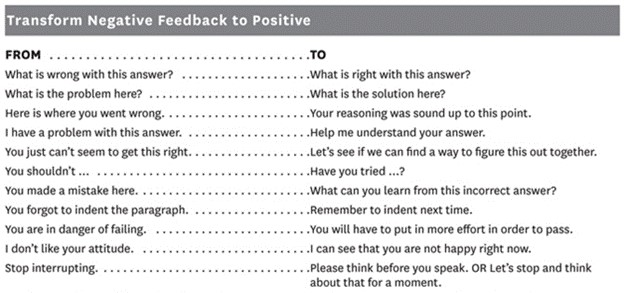
Can you see how the questions in the table can initiate discussion and validate a student’s learning experience? They open a discussion, rather than closing one down in the name of exclusive authority. Actually, Appreciative Assessment shares the authority of learning, allowing self-assessment and the self-awareness of the learners themselves, to guide and nourish their learning process.
Students, or any community learners, also benefit from ongoing feedback about their learning. Here are some examples of techniques through which students can start to recognize and build their own skills:
- Projects
- Self- and peer assessments
- Portfolios
- Holistic rating scales
- Observations
- Student-composed questions
By incorporating some of these examples, teachers may benefit from using Appreciative Assessment in training and capacity development. Learners can come to see themselves as strong, capable, and independent. This can be especially useful for people of any age, who may have experienced consistent barriers to education.
Ultimately, when learners and community members see themselves and their evolving skills with appreciation, then levels of confidence, engagement, motivation, and achievement are enhanced. This is essential for independent learning and thinking. In addition, with an appreciative assessment of their own skills, learners are able to enrich their productivity. In this way, AA enlivens participation, and enthusiasm within community, both of which are likely to lead to greater accomplishment.
Or as Mary-Ann Neal concludes: “Appreciative assessment reaffirms the power of relationships to motivate, inspire, and ignite passion for learning. It facilitates authentic dialogue between teacher and learner, thus engaging the student, strengthening the learning experience, and perhaps illuminating otherwise overlooked aptitudes.”
(Please see this Appreciative Assessment link for a longer article with more strategies and information.)
Tool #3: 90-Day Gratitude Journal
The 90-Day Gratitude Journal is a tool to help individuals build a gratitude habit in their daily lives. Gratitude habits have been shown to increase happiness, self-esteem, and help individuals conquer personal challenges. This document walks through a step-by-step approach to build a habit of gratitude journaling for at least 90 days.

This and other sections in the Tool Box chapter on Spirituality and Community Building (Chapter 28) have been written with the support and contributions of experts connected with the Charter for Compassion. For more information about the Charter and its work, visit www.charterforcompassion.org.
Introduction
Mercy is one way of describing a compassionate response to wrongdoing, suffering, conflict, or another person's vulnerability.
Different religious, cultural, philosophical, legal, and secular traditions understand mercy differently. In some settings, mercy refers specifically to a person with authority choosing not to impose the full punishment available to them. In others, it describes compassion expressed through action.
For community-building purposes, this section uses mercy broadly to mean responding to harm or need with compassion while also considering safety, rights, responsibility, accountability, and appropriate repair.
Mercy should not mean ignoring harm, excusing misconduct, requiring forgiveness, overlooking unequal power, or denying people consequences or protections provided by law or organizational policy.
Mercy can complement justice, accountability, and repair. It should not be used to replace them when they are necessary.
Community builders may find the concept useful when deciding how to respond to mistakes, conflict, suffering, wrongdoing, or situations in which people need assistance.
The aim is not to establish mercy as the answer to every conflict. It is to consider when compassionate responses can reduce harm while respecting the rights and choices of everyone involved.
Mercy, Compassion, and Justice
Mercy and compassion overlap, but they are not identical.
Compassion involves recognizing another person's suffering or difficulty and responding with concern.
Mercy often arises when a person or institution has some ability to impose consequences, withhold assistance, or otherwise affect another person's circumstances.
That difference matters because mercy can involve power.
Community builders should therefore ask:
- Who has decision-making authority?
- Who experienced harm?
- Who is responsible for the harm?
- What rights or protections apply?
- What accountability is appropriate?
- What repair is possible?
- What response reduces rather than increases harm?
Basic rights, disability accommodations, due process, safety, fair treatment, and services to which people are entitled should not be described as acts of mercy.
Part I: Understanding Mercy
Possible Benefits of a Merciful Approach
A compassionate and accountable response to conflict may help people:
- Understand what happened
- Reduce unnecessary escalation
- Protect people from further harm
- Take responsibility for their own actions
- Identify appropriate repair
- Establish clearer boundaries
- Rebuild some forms of trust when participants want to do so
- Improve policies or practices that contributed to the problem
These outcomes are possible rather than guaranteed.
Compassion alone cannot resolve every conflict, and a warm relationship should not substitute for formal accountability when serious harm has occurred.
Mercy in Religious, Cultural, and Secular Traditions
Teachings related to mercy, compassion, forgiveness, restraint, generosity, accountability, and care appear in many religious and philosophical traditions.
No single tradition speaks for all cultures or communities, and mercy should not be described as having one universal meaning.
Some people understand mercy through faith. Others understand similar values through human rights, secular ethics, restorative practice, cultural traditions, professional responsibility, or personal conviction.
Community programs should make room for those differences.
A Working Definition
In this section, a merciful community response has three practical elements:
- Understanding: gathering enough information to understand what happened, who was affected, and what conditions contributed to the situation.
- Accountability: identifying responsibility and determining what obligations follow from it.
- Repair: taking appropriate steps to address harm and reduce the likelihood that it will happen again.
Forgiveness may also be important to some people, but it is personal and voluntary rather than a required part of mercy.
1. Seek Understanding
Understanding can help community members respond more accurately to conflict or harm.
This may involve:
- Establishing what happened
- Distinguishing facts from assumptions
- Listening to people directly affected
- Considering context
- Identifying relevant policies or laws
- Understanding differences in power
- Considering previous incidents or patterns
Understanding another person's circumstances does not require agreeing with their behavior or treating every perspective as equally accurate.
Some claims can be supported by evidence while others cannot. Some people may also bear substantially more responsibility for a harm than others.
Avoid creating false equivalence simply because several perspectives exist.
Listen Carefully
Listening can improve understanding when people have a meaningful opportunity to explain their experiences.
Useful practices include:
- Allow people enough time to speak
- Ask clarifying questions
- Summarize what you believe you heard
- Allow the speaker to correct your interpretation
- Avoid assuming that body language reveals what a person is thinking
- Recognize language, disability, cultural, and communication differences
Eye contact, posture, speech rate, facial expressions, and physical distance vary across people, disabilities, cultures, and situations.
Treat nonverbal behavior as information to consider rather than proof of another person's emotional state or intentions.
Question Assumptions
Community builders can ask:
- What do I know?
- What am I assuming?
- What evidence supports my conclusion?
- What information may be missing?
- Who has not yet been heard?
- How might my own role or interests affect my interpretation?
Reflection can be useful, but people should not be encouraged to reinterpret clear misconduct simply in order to reach a more positive conclusion.
2. Forgiveness Is Optional
Some people experience forgiveness as spiritually, emotionally, or relationally important.
Others do not.
Forgiveness can mean different things, including reducing a desire for retaliation, changing one's relationship to a painful event, or deciding that resentment will no longer shape one's life.
Forgiveness does not necessarily mean:
- Excusing harmful behavior
- Forgetting what happened
- Restoring trust
- Reestablishing a relationship
- Ending legal or organizational accountability
- Giving up boundaries
- No longer feeling anger, grief, or fear
People can heal, pursue justice, establish boundaries, and participate in community life without forgiving someone who harmed them.
No community program, faith leader, facilitator, employer, family member, or institution should require forgiveness as proof of healing, compassion, reconciliation, or good character.
Forgiveness and Reconciliation Are Different
A person may forgive without reconciling.
People may also negotiate, coexist, cooperate, or participate in a community process without personally forgiving one another.
Reconciliation involves decisions about relationships and social conditions. Forgiveness remains an individual choice.
3. Practice Accountability and Repair
Mercy is most useful when compassion is paired with responsibility.
Accountability may involve:
- Naming the behavior that caused harm
- Acknowledging its effects
- Accepting responsibility
- Apologizing when appropriate
- Making restitution
- Changing behavior
- Changing policies or procedures
- Establishing safeguards
- Following legal or professional requirements
An apology may be meaningful, but it does not automatically repair harm.
The person harmed determines whether an apology is meaningful to them and whether they want any future relationship.
Consequences and Mercy
Mercy should not be defined simply as avoiding punishment.
Some harmful behavior requires consequences to protect people, maintain professional standards, enforce rights, or reduce the likelihood of recurrence.
A compassionate process can still ask whether consequences are proportionate, effective, fair, and consistent with the goals of safety and accountability.
Depending on the situation, appropriate responses may include:
- Restitution
- Loss of particular responsibilities
- Supervision
- Required training
- Formal discipline
- Legal consequences
- Separation from a program or organization
- Restorative processes
Mercy and consequences are therefore not necessarily opposites.
Part II: Developing Capacities for Compassionate and Accountable Action
Reflection and Emotional Awareness
People may find it useful to notice how emotions influence their responses during conflict.
Possible practices include:
- Taking a brief pause
- Breathing slowly
- Journaling
- Prayer
- Meditation
- Walking
- Talking with someone trusted
- Professional counseling
These practices are optional.
They should not be presented as scientifically proven ways to release trauma, clear emotional pain, guarantee forgiveness, or produce merciful behavior.
Mindfulness and Contemplative Practices
Mindfulness may help some people notice thoughts, feelings, and reactions before acting on them.
Community organizations should not make meditation or contemplative exercises mandatory.
Some people – including some people with histories of trauma – may find inward-focused exercises uncomfortable.
Provide alternatives and allow people to decide whether a practice is useful to them.
Avoid Unsupported Health Claims
Compassion, kindness, social connection, and mindfulness have all been studied in relation to well-being.
However, community materials should not claim that kind behavior prevents heart attacks or strokes, boosts immune function, extends marriages, or produces other specific health effects without strong and appropriately presented evidence.
The case for treating people with compassion does not depend on proving medical benefits to the person acting compassionately.
Respond to Emotions Without Requiring Emotional Disclosure
People involved in conflict may experience anger, grief, fear, shame, frustration, numbness, or other emotions.
Facilitators can acknowledge those emotions without requiring participants to:
- Cry
- Relive traumatic experiences
- Disclose private information
- Forgive
- Empathize with the person who harmed them
- Complete a particular emotional sequence
There is no universal process through which painful emotions must be “discharged” before clear thinking or healing can occur.
Self-Forgiveness and Responsibility
People who have caused harm may struggle with guilt, shame, or regret.
Self-forgiveness can be useful when it helps a person accept responsibility without becoming permanently defined by a past action.
It should not become a way to bypass accountability.
A constructive process may include:
- Acknowledging what happened
- Understanding its impact
- Making appropriate repair
- Changing future behavior
- Accepting consequences
- Seeking professional support if needed
Boundaries Are Compatible with Mercy
Compassion does not require unlimited access to another person.
People may need boundaries around:
- Physical contact
- Conversation
- Personal information
- Time
- Money
- Home or workplace access
- Future communication
Boundaries may be stated directly.
It can be appropriate to say, for example:
“We need everyone to stop shouting so that the meeting can continue.”
Or:
“That language violates our harassment policy, and it needs to stop.”
Compassionate communication does not require avoiding clear statements about harmful behavior.
Responding to Threats or Violence
When someone threatens or attempts violence, immediate safety takes priority over dialogue, forgiveness, or relationship-building.
Community workers should follow their organization's safety procedures and seek trained assistance when needed.
Depending on the circumstances, this may involve:
- Creating distance
- Helping others leave the area
- Contacting trained security, crisis-response personnel, or emergency services
- Following established de-escalation procedures
- Avoiding unnecessary confrontation when safe to do so
Physical restraint should be used only by appropriately trained people acting within applicable policy and law.
A general community-building resource should not provide improvised physical-restraint instructions.
Listening Does Not Eliminate Accountability
It may be useful to understand the needs or circumstances associated with harmful behavior.
Understanding those circumstances does not excuse the behavior.
A person's unmet needs should not become the responsibility of the person they threatened, abused, harassed, or harmed.
Community Responsibility
Community members and institutions can contribute to conditions that reduce harm.
Depending on the issue, this may involve:
- Accessible mental-health and substance-use services
- Violence-prevention programs
- Housing
- Education
- Employment opportunities
- Anti-discrimination policies
- Effective complaint systems
- Community-based support
Shared community responsibility should not erase individual or institutional responsibility for specific harms.
Restorative Practices and Mercy
Restorative justice is one possible framework for responding to harm.
Restorative practices generally focus on:
- What happened
- Who was affected
- What responsibility exists
- What people need
- What repair is possible
- How recurrence can be reduced
Restorative justice should not be described simply as mercy replacing punishment.
It can itself involve demanding forms of accountability.
Participation should consider:
- Voluntary and informed participation
- Safety
- Power differences
- Legal rights
- The seriousness of the harm
- Accessibility
- Trained facilitation
- Follow-up
The person harmed should not be required to meet, forgive, empathize with, or reconcile with the person responsible.
Accountability and Reintegration
People who have caused harm should not automatically be defined forever by the worst thing they have done.
In appropriate circumstances, reintegration can follow accountability, behavioral change, and appropriate safeguards.
This may be especially relevant in schools, justice settings, workplaces, families, and community organizations.
Reintegration is not the same as restoring every previous role or relationship.
The safety and rights of people harmed remain important.
Mercy in Everyday Community Life
Compassionate and accountable practices can begin in everyday relationships.
Community builders can:
- Listen carefully
- Ask before assuming
- Recognize when they made a mistake
- Apologize specifically
- Make repair where possible
- Respect boundaries
- Challenge dehumanizing language
- Help people access needed resources
- Address policies that repeatedly produce harm
Balancing Care for Others with Personal Limits
Community workers may care deeply about problems that are larger than any one person's capacity to solve.
Mercy does not require continual personal sacrifice.
Sustainable community work may require:
- Boundaries
- Shared responsibility
- Adequate staffing
- Fair compensation
- Rest
- Professional support
- Realistic goals
Part III: Communication Methods
Communication methods can help people organize difficult conversations, but no technique guarantees understanding, forgiveness, reconciliation, or resolution.
Select a method according to the issue, people involved, power differences, safety concerns, time available, and desired outcome.
Active Listening
A simple active-listening process might include:
- One person explains a point.
- The listener summarizes what they understood.
- The speaker clarifies if necessary.
- The listener asks whether there is more the speaker wants understood.
- The participants change roles when appropriate.
Participants should not be expected to interpret another person's breathing, posture, facial expression, or other body language as evidence of a particular feeling.
Nonviolent Communication
Nonviolent Communication is one structured communication approach that emphasizes observations, feelings, needs, and requests.
Some people find this framework useful.
It should not be treated as the only compassionate way to communicate or as appropriate for every conflict.
In situations involving abuse, discrimination, harassment, serious misconduct, or significant power differences, formal reporting, accountability, or protective measures may be more important than facilitated interpersonal dialogue.
Facilitated Circles
Circle processes can provide a structure in which people take turns speaking and listening.
Contemporary restorative circles and other facilitated circle methods may draw inspiration from several sources.
When a practice is derived from a particular Indigenous Nation or cultural tradition, identify that tradition accurately rather than referring broadly to “Native American” or “First Nations” practices.
Do not assume that any object passed around a group automatically becomes a traditional “talking stick.”
Communities can simply use a speaking object, turn-taking object, or another locally appropriate term unless they are intentionally working within a specific cultural tradition.
Appreciative Inquiry
Appreciative Inquiry can help groups examine strengths, successful experiences, and possibilities for the future.
It can be useful alongside other forms of assessment.
Do not require participants to identify something positive before they are allowed to discuss harm, discrimination, failure, or dissatisfaction.
Open Space and Other Participatory Methods
Open Space, World Café, small-group discussions, deliberative forums, and other participatory approaches can help groups organize conversation.
Each approach has advantages and limitations.
Consider:
- Accessibility
- Language
- Time
- Childcare
- Transportation
- Technology
- Power differences
- How decisions will actually be made
Participatory discussion should connect with real decision-making authority whenever possible.
Cultural Traditions and Community Practices
Cultural and religious traditions can offer valuable approaches to compassion, accountability, dialogue, and repair.
Use these practices carefully.
Avoid presenting a practice from Hawaiʻi, a First Nation, a Tribal Nation, Buddhism, Christianity, Islam, or another tradition as though it were a universal community-building technique.
When including a culturally specific practice:
- Identify its community or tradition accurately
- Use credible sources
- Explain its context
- Avoid claiming clinical or spiritual effects beyond what is supported
- Respect community authority over the practice
Ho'oponopono
Ho'oponopono is a Hawaiian tradition concerned with setting relationships right and addressing conflict within particular cultural and family contexts.
Popularized four-line versions circulating outside Hawaiʻi should not be presented as though they represent the entire tradition or as methods that can heal another person's memories or circumstances at a distance.
If Ho'oponopono is retained as an example, describe its Hawaiian context accurately and distinguish traditional practices from later adaptations.
Peer Support and Counseling
Peer-support practices can be valuable, but they should not be described as substitutes for mental-health treatment.
Community members experiencing serious depression, trauma, suicidality, substance-use concerns, or other mental-health needs may benefit from qualified professional support.
Mercy in Digital Communication
Online communication can support community connection while also creating challenges involving misinformation, harassment, rapid escalation, impersonation, and automated content.
Useful practices include:
- Verify information before sharing it
- Distinguish disagreement from harassment or threats
- Avoid amplifying dehumanizing content
- Correct misinformation when appropriate
- Protect privacy
- Use moderation and reporting systems when needed
Compassion does not require continuing online interaction with someone who is abusive or threatening.
Setting the Stage for Compassionate Community Processes
Before convening a difficult conversation, consider:
- Safety: Can people participate without being exposed to preventable harm?
- Accessibility: Are physical, sensory, language, communication, transportation, and childcare needs addressed?
- Power: Do some participants have authority over the employment, housing, services, legal status, education, or safety of others?
- Participation: Are the people most affected meaningfully involved?
- Purpose: Is the goal understanding, decision-making, accountability, repair, planning, or something else?
- Decision-making: Who will determine what happens after the conversation?
- Support: Do participants have access to advocates, interpreters, facilitators, or other support when needed?
Challenges and Limits of Mercy
Mercy Can Reinforce Unequal Power
The language of mercy can imply that one person possesses the power to grant another relief.
In situations involving rights, entitlements, or institutional obligations, language such as justice, fairness, accountability, or repair may be more appropriate.
Mercy Can Be Used to Avoid Accountability
Calls for compassion, understanding, or forgiveness can sometimes be used to discourage reporting or to protect a person or institution from consequences.
Community builders should ask:
- Who benefits from calling for mercy?
- Is anyone being pressured to remain silent?
- Has the harm stopped?
- Has responsibility been acknowledged?
- Has meaningful repair occurred?
Understanding Is Not Agreement
Community builders can seek to understand why harmful behavior occurred without agreeing that it was justified.
Understanding should inform accountability rather than replace it.
Mercy Should Not Require Forgiveness
People experiencing harm should not be characterized as vindictive, self-righteous, emotionally blocked, or unwilling to heal if they do not forgive.
Forgiveness remains theirs to define and choose.
Compassion Does Not Require Neutrality
Some conflicts involve violations of rights, abuse, discrimination, corruption, or clear misconduct.
Treating everyone with dignity does not require pretending that every side has equal responsibility.
Not Every Conflict Needs Reconciliation
Sometimes the appropriate outcome is:
- A firm boundary
- Separation
- Formal discipline
- Legal action
- Institutional reform
- Safe coexistence without a restored relationship
Questions for Reflection
- What does mercy mean to the people involved?
- Would another term such as compassion, accountability, repair, or restorative practice be clearer?
- Who has power in this situation?
- What rights or protections apply?
- Has the harm stopped?
- Is anyone being pressured to forgive or reconcile?
- What accountability is needed?
- What repair is possible?
- What needs to change so that the harm is less likely to recur?
- Are community members directly affected by the issue helping determine the response?
In Summary
Mercy can be a useful way to think about compassionate responses to suffering, wrongdoing, conflict, and human vulnerability.
In community work, mercy is most constructive when it operates alongside safety, rights, accountability, appropriate consequences, and meaningful repair.
Understanding matters, but understanding does not mean agreement or excuse.
Forgiveness may be deeply important to some people, but it is personal and voluntary. No one should be required to forgive in order to heal, participate in community life, receive support, or be considered compassionate.
Accountability means more than remorse. It may require acknowledgment, restitution, changed behavior, safeguards, organizational action, or formal consequences.
Restorative practices may provide useful alternatives or complements to conventional responses to harm, but they should be voluntary, appropriately facilitated, attentive to power differences, and focused on responsibility and repair rather than forgiveness.
Community builders should also be cautious when drawing practices from religious or Indigenous traditions. Cultural practices should be accurately attributed and understood in context rather than generalized or converted into universal techniques.
Reflection, mindfulness, prayer, movement, art, and other practices may help some people approach conflict more deliberately. They should remain optional and should not be presented as substitutes for professional care or as scientifically proven ways to heal trauma.
When there is an immediate threat of violence, safety comes first. Community builders should follow trained procedures rather than assuming compassionate communication alone will resolve the danger.
Finally, mercy should not make injustice harder to name. A compassionate community is not one that eliminates consequences or asks people who were harmed to soften their response. It is one that treats people with dignity while taking harm seriously, protecting those at risk, requiring responsibility, and creating meaningful opportunities for repair and change.
Contributors
Paula Maas
Teresa Cowan Jones
Editor
Bill Berkowitz
Resources
Online Resources
Access to Insight describes the key teachings (also called Dhamma) of the historical Buddha.
Anarchism and Other Essays by the anarchist writer and political activist Emma Goldman.
Be Here Now is an influential book by Ram Dass, drawing upon Indian spiritual tradition and applying it to Western consciousness and social activism.
Bioenergetics is a form of therapy created by Alexander Lowen, M.D., based upon understanding personality through the body and its energetic processes.
Daryl Davis is the website for this musician and social activist.
Desiderata is a short guide for living, in the form of a prose poem by Max Ehrmann.
Implementation of Track Two Diplomacy is an essay by Olga Botcharova presenting a model for forgiveness.
Inter-generational Trauma is a video about inter-generational trauma and how to stop it, with a panel of guests including Gabor Maté.
Just Mercy is a book by Bryan Stevenson describing the work of his Equal Justice Initiative, an Alabama-based human rights organization.
Karen Armstrong describes the work of this well-known scholar of world religions.
Ken Wilber, Integral Theory is a multi-disciplinary approach attempting to integrate many different branches of knowledge, which, according to its founder Ken Wilber, can help create a better future for everyone.
Letter from a Birmingham Jail is a letter written by Martin Luther King, Jr. during the early phases of the Civil Rights Movement of the 1960s, in which King describes the basis for his views on nonviolence and how they can be applied to overcome injustice.
Mirror Neurons is a type of neuron in the motor cortex, discovered by Giacomo Rizzolatti, which responds when someone initiates an action as well as when that same person sees another person perform the same action.
Pema Chodron is a contemporary Buddhist teacher, trainer, and author of many books “to awaken wisdom and compassion in ourselves and the world around us.”
Ram Dass is an American spiritual teacher and author whose recent activities have focused on upon service to others and whose website offers multiple videos, podcasts, and other resource materials.
Restorative Circles is a method for dealing with and resolving conflict through direct face-to-face dialogue among all concerned.
Sacred Space. Based in Tucson, Arizona, Sacred Space is described as “a network of secular and interfaith gatherings whose mission is to cultivate compassion in all communities through reflective practices and contemplative action so that all beings can thrive.”
The Human Condition is a book by the political philosopher Hannah Arendt describing her views on the state of modern humanity.
The Untethered Soul by Michael A. Singer is a book about how the development of consciousness can help us live more in the present moment and also release thoughts and memories that block us from happiness and self-realization.
The Work is a meditation-based practice developed by Byron Katie, based upon the principle that the active questioning of distressing thoughts can lead to inner freedom.
Ushin is an approach for creating clear and compassionate communication through the understanding of eight different forms of meaning.
Why Kindness is Good for You is a book by David Hamilton that cites scientific research showing how kindness can produce both physical and emotional benefits.
Print Resources
Starr, M. (2019). Wild mercy: Living the fierce and tender wisdom of the women mystics. Louisville, CO: Sounds True.
Wachtel, T. (2013). Dreaming of a new reality: How restorative processes reduce crime and violence, improve relationships, and strengthen civil society. Bethlehem, PA: Piper’s Press.
Wilber, K. (2007). Integral spirituality: A startling new role for religion on the modern and postmodern world. Boulder, CO: Shambala Publications.
Chapter 29 is not yet available; we apologize for the inconvenience!