Community Tool Box Community Tool Box

Chapter 27. Working Together for Racial Justice and Inclusion | Community Tool Box

Chapter 27. Working Together for Racial Justice and Inclusion
mloewenstein Wed, 12/12/2012 - 11:19
Section 1. Understanding Culture and Diversity in Building Communities
mloewenstein Wed, 12/12/2012 - 11:20
Main Section
mloewenstein Wed, 12/12/2012 - 11:21

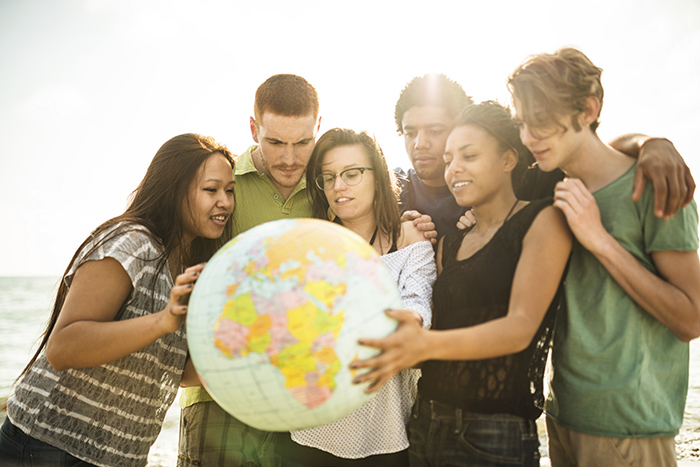
Photo of young people holding a globe
 

What is culture?

As community builders, understanding culture is our business. No matter where you live, you are working with and establishing relationships with people--people who all have cultures.

What is culture? Here is one viewpoint.

"Culture" refers to a group or community which shares common experiences that shape the way its members understand the world. It includes groups that we are born into, such as race, national origin, gender, class, or religion. It can also include a group we join or become part of. For example, it is possible to acquire a new culture by moving to a new country or region, by a change in our economic status, or by becoming disabled. When we think of culture this broadly we realize we all belong to many cultures at once.

Do you agree? How might this apply to you?

Why is culture important?

Culture is a strong part of people's lives. It influences their views, their values, their humor, their hopes, their loyalties, and their worries and fears. So when you are working with people and building relationships with them, it helps to have some perspective and understanding of their cultures.

But as we explore culture, it's also important to remember how much we have in common. People see the world very differently, but they know what it is like to wake up in the morning and look forward to the adventures that of the day. We are all human beings. We all love deeply, want to learn, have hopes and dreams, and have experienced pain and fear.

At the same time, we can't pretend our cultures and differences don't matter. We can't gloss over differences and pretend they don't exist, wishing we could all be alike, and we can't pretend that discrimination doesn't exist.

This chapter will give you practical information about how to understand culture, establish relationships with people from cultures different from your own, act as an ally against racism and other forms of discrimination, create organizations in which diverse groups can work together, overcome internalized oppression, and build strong and diverse communities.

This section is an introduction to understanding culture, and will focus on:

  • What culture is
  • The importance of understanding culture in community building
  • Envisioning your cultural community
  • How to get started in building communities that encourage diversity.

But first, it is important to remember that everyone has an important viewpoint and role to play when is comes to culture. You don't have to be an expert to build relationships with people different from yourself; you don't have to have a degree to learn to become sensitive to cultural issues; and you don't have to be a social worker to know how culture has affected your life.

Why is understanding culture important if we are community builders?

The world is becoming increasingly diverse and includes people of many religions, languages, economic groups, and other cultural groups.

It is becoming clear that in order to build communities that are successful at improving conditions and resolving problems, we need to understand and appreciate many cultures, establish relationships with people from cultures other than our own, and build strong alliances with different cultural groups. Additionally, we need to bring non-mainstream groups into the center of civic activity. Why?

  • In order to build communities that are powerful enough to attain significant change, we need large numbers of people working together. If cultural groups join forces, they will be more effective in reaching common goals, than if each group operates in isolation.
  • Each cultural groups has unique strengths and perspectives that the larger community can benefit from. We need a wide range of ideas, customs, and wisdom to solve problems and enrich community life. Bringing non-mainstream groups into the center of civic activity can provide fresh perspectives and shed new light on tough problems.
  • Understanding cultures will help us overcome and prevent racial and ethnic divisions. Racial and ethnic divisions result in misunderstandings, loss of opportunities, and sometimes violence. Racial and ethnic conflicts drain communities of financial and human resources; they distract cultural groups from resolving the key issues they have in common.
  • People from different cultures have to be included in decision-making processes in order for programs or policies to be effective. The people affected by a decision have to be involved in formulating solutions--it's a basic democratic principle. Without the input and support of all the groups involved, decision-making, implementation, and follow through are much less likely to occur.
  • An appreciation of cultural diversity goes hand-in-hand with a just and equitable society. For example, research has shown that when students' cultures are understood and appreciated by teachers, the students do better in school. Students feel more accepted, they feel part of the school community, they work harder to achieve, and they are more successful in school.
  • If we do not learn about the influences that cultural groups have had on our mainstream history and culture, we are all missing out on an accurate view of our society and our communities.

As you think about diversity, it may be helpful to envision the kind of cultural community you want to build. In order to set some goals related to building relationships between cultures, resolving differences, or building a diverse coalition, it helps to have a vision of the kind of cultural community you hope for.

What kind of cultural community do you envision?

Can you imagine the kind of cultural community you want to live or work in?

People have very different views of what a multicultural society or community should be like or could be like. In the past few decades there has been a lot of discussion about what it means to live and work together in a society that is diverse as ours. People struggle with different visions of a fair, equitable, moral, and harmonious society.

  • How will the world be unified as a cohesive whole, if people separate into many different cultural groups?
  • In order to be a part of that dream, must I assimilate?
  • Why does racism persist in places that are committed to equality and liberty?
  • How can I protect my children from the harmful influences in the larger culture? How can I instill my children with the moral values of my own religion or culture, but still expose them to a variety of views?
  • Are there structural problems in our government or economic system that serve to divide cultural groups? How can they be changed?
  • Should I put my community building and civic energies into my own cultural community, rather than the mainstream culture? Where can I have the biggest influence?
  • Can oppression be stopped by legislation, or does each person have to overcome their individual prejudice, or both?
  • Why do immigrants have to hold onto their own cultures and languages?
  • If my group is excluded, what can I do?
  • How do I protect my children from being targeted by racism or sexism other forms of discrimination if I live in a diverse society? Shall I send them to culturally or racially specific school, or a female-only school, or another appropriate school?
  • If each person overcame their own prejudices, would all the divisions disappear?
  • How do I overcome my prejudices?
  • Is prejudice a thing of the past?
  • Why can't we all just get along?

What do you think about these questions? Which issues do you struggle with? What other issues are important to you or your cultural group?

As you envision the kind of diverse community, you and your neighbors may want to consider these kinds of questions. These are some of the real and tough questions that people grapple with on a daily basis. These questions point to some of the tensions that arise as we try to build harmonious, active, and diverse communities in a country as a complex as ours. There are no easy answers; we are all learning as we go.

So, what kind of community do you envision for yourself? How will diversity be approached in your community? If you could have your ideal community right now what would it look like? If you can't have your ideal community right now, what will be the next steps you will take in building the kind of cultural community you want?

Here are some questions that may help you think about your community:

  • Who lives in your community right now?
  • What kinds of diversity already exists?
  • What kinds of relationships are established between cultural groups?
  • Are the different cultural groups well organized?
  • What kind of struggles between cultures exist?
  • What kind of struggles within cultural groups exist?
  • Are these struggles openly recognized and talked about?
  • Are there efforts to build alliances and coalitions between groups?
  • What issues do different cultural groups have in common?

These are some of the questions that can get you thinking about your how to build the kind of community you hope for. What other issues do you think are important to consider? What are your next steps?

So, you may ask, "How do we get started?" Here are some ideas that will help you set the stage for creating your vision of a diverse organization or community.

Helpful tips to start building a diverse community

In the book, Healing into Action, authors Cherie Brown and George Mazza list principles that, when put into practice, help create a favorable environment for building diverse communities. The following guidelines are taken from their principles:

Welcome everyone.

In order for people to commit to working on diversity, every person needs to feel that they will be included and important. Each person needs to feel welcomed in the effort to create a diverse community. And each person needs to know that their culture is important to others.

Guilt doesn't work in fostering diversity.

Blaming people as a way of motivating them is not effective. Shaming people for being in a privileged position only causes people to feel bad; it doesn't empower them to take action to change. People are more likely to change when they are appreciated and liked, not condemned or guilt-tripped.

Treating everyone the same may be unintentionally oppressive.

Although every person is unique, some of us have been mistreated or oppressed because we are a member of a particular group. If we ignore these present-day or historical differences, we may fail to understand the needs of those individuals. Often people are afraid that recognizing differences will divide people from each other. However, learning about cultural differences can actually bring people closer together, because it can reveal important parts of each other's lives. It can show us how much we have in common as human beings.

People can take on tough issues more readily when the issues are presented with a spirit of hope.

We are bombarded daily with newspapers and TV reports of doom and gloom. People have a difficult time functioning at all when they feel there is no hope for change. When you present diversity issues you can say things like, "This is an excellent opportunity to build on the strengths that this organization has," or "There is no reason why we can't solve this problem together."

Building a team around us is the most effective way of creating institutional and community change around diversity issues.

You will be more effective if you have a group of people around you that works together closely. People often try to go it alone, but we can lose sight of our goals and then become discouraged when operating solo. It is important to take the time to develop strong relationships with a core of people, and then work together as a group.

Recognize and work with the diversity already present in what appear to be homogenous groups.

In working to combat racism and other forms of oppression many people become discouraged when they are unable to create a diverse group. Starting by recognizing differences in religion, sexual orientation, socioeconomics, parenting, and class backgrounds will help create a climate that welcomes differences; it will also lay the groundwork for becoming more inclusive.

In Summary

We've talked about what diversity is, why it is important, how to begin envisioning your ideal diverse community, and how to set up an environment that fosters diversity. This is only the beginning.

In working towards your diverse organization or community there is much more to do. In the next sections we will talk about how to become aware of your own culture, build relationships with from different cultures, become allies to people discriminated against, overcome internalized oppression, build multicultural organizations and coalitions, and other topics as well.

Each of us can build the kinds of communities we dream of. In our families, organizations, institutions, and neighborhoods, we can insist that we won't remain isolated from those who are different from ourselves. We can transform our neighborhoods, institutions, and governments into equitable, non-oppressive, and diverse communities.

Contributor

Marya Axner

Resources

Online Resources

Brown University Training Materials: Cultural Competence and Community Studies: Concepts and Practices for Cultural Competence The Northeast Education Partnership provides online access to PowerPoint training slides on topics in research ethics and cultural competence in environmental research. These have been created for professionals/students in environmental sciences, health, and policy; and community-based research. If you are interested in receiving an electronic copy of one the presentations, just download their Materials Request Form (found on the main Training Presentations page under "related files"), complete the form, and email it to NEEPethics@yahoo.com.

The Center for Culturally and Linguistically Appropriate Services collects and describes early childhood/early intervention resources and serves as point of exchange for users.

Collins, C. (2018). What is white privilege, really? Teaching Tolerance, 60 : This article explains white privilege, gives the history of white privilege, examines how white privilege differs from racism, and offers guidance on using white privilege for positive change. 

Chapter 8: Respect for Diversity in the "Introduction to Community Psychology" explains cultural humility as an approach to diversity, the dimensions of diversity, the complexity of identity, and important cultural considerations.

The Cultural Framework for Health: An integrative approach for research and program design and evaluation.

Culture Matters is a cross-cultural training workbook developed by the Peace Corps to help new volunteers acquire the knowledge and skills to work successfully and respectfully in other cultures.

Diversity, Equity and Inclusion in Nonprofit Organizations by Sean Thomas-Breitfeld and Frances Kunreuther, from the International Encyclopedia of Civil Society.

HealthEquityGuide.org is a website with a set of strategic practices that health departments can apply to more meaningfully and comprehensively advance health equity.

How Communities and Research Institutions Work Together to Dismantle Structural Racism and Advance Health Equity is a special issue of the Journal of Participatory Research Methods that focuses on the complexities of interdisciplinary community-engaged research and the continuous development and refinement of its methods. 

"How Studying Privilege Systems Can Strengthen Compassion," a TED talk given by Peggy McIntosh at TEDxTimberlaneSchools

Proclaiming Our Roots: Learn more about the lived experiences of Black and Indigenous folx through their digital stories.

Reframing Childhood Obesity: Cultural Insights on Nutrition, Weight, and Food Systems is a report from the Cultural Contexts of Health and Wellbeing initiative at Vanderbilt University that focuses on three key areas in which cultural insights and global examples can help improve health policy around childhood obesity by understanding how historical and structural factors frame food and weight beyond individual choice.

The International & Cross-Cultural Evaluation Topical Interest Group, an organization that is affiliated with the American Evaluation Association, provides evaluators who are interested in cross-cultural issues with opportunities for professional development.

The Multicultural Pavilion offers resources and dialogue for educators, students and activists on all aspects of multicultural education.

The National Center for Cultural Competence at Georgetown University increases the capacity of health care and mental health programs to design, implement and evaluate culturally and linguistically competent service delivery systems. Publications and web links available.

Study, Discussion and Action on Issues of Race, Racism and Inclusion - a partial list of resources utilized and prepared by Yusef Mgeni.

Organizations:

Center for Living Democracy
289 Fox Farm Rd
PO Box 8187
Brattleboro, VT 05304-8187
(802) 254-1234

National Coalition Building Institute (NCBI)
1835 K Street, N.W., Suite 715
Washington, D.C. 20006
(202) 785-9400

Re-evaluation Counseling
719 Second Avenue North
Seattle, WA 98109
(206) 284-0113

Southern Poverty Law Center
400 Washington Ave.
Montgomery, AL 36104

Print Resources

Axner, D. (1993). The Community leadership project curriculum. Pomfret, CT: Topsfield Foundation.

Banks, J. (1997). Educating citizens in a multicultural society. New York, NY: Teachers College Press.

Brown, C.,& Mazza, G. (1997). Healing into action. Washington, DC: National Coalition Building Institute.

DuPraw, M.,& Axner, M. (1997). Working on common cross-cultural communication challenges. In Martha McCoy, et. al., Toward a More Perfect Union in an Age of Diversity. Pomfret, CT: Topsfield Foundation, 12-16.

Ford, C. (1994). We can all get along: 50 steps you can take to end racism. New York, NY: Dell Publishing.

Kaye, G., & Wolff, T. (1995). From the ground up: A workbook on coalition building and community development. Amherst, MA: AHEC/Community Partners. (Available from Tom Wolff and Associates.)

McCoy, M.,&  et al. (1997). Toward a more perfect union in an age of diversity: A guide for building stronger communities through public dialogue. Pomfret, CT: Topsfield Foundation.

McIntosh, P. (1988). White privilege and male privilege: A personal account of coming to see correspondences through work in women's studies. Wellesley, MA: Center for Research on Women, Wellesley College.

Murphy, Frederick. (Ed.) (2013). Community Engagement, Organization, and Development for Public Health Practice. New York: Springer.

Okihiro, G. (1994). Margins and mainstreams: Asians in American history and culture. Seattle, WA: The University of Washington Press.

Takaki, R. (1993). A different mirror: A history of multicultural America. Boston: Little, Brown and Company.

Checklist
mloewenstein Wed, 12/12/2012 - 11:21

___ Culture is a group or community which shares common experiences that shape the way its members understand the world.

___ Culture is important because it influences their views, their values, their humor, their hopes, their loyalties, and their worries and fears.

___ The world is becoming increasingly diverse and includes people of many religions, languages, economic groups, and other cultural groups.

___ Including many cultures in a community helps communities achieve common goals, represent all members of the community, and overcome racial and ethnic divisions.

___ Welcome everyone to the community.

___ Eliminate guilt because it prevents productivity.

___ Recognize cultural differences.

___ Work together as a team. 

Examples
pschneider Fri, 10/24/2014 - 14:03

EXAMPLE 1: Two Communities Come Together For One Annual Celebration (New York City)

They tend to be insular and lead separate lives as a rule, but for a free, day-long event held in Manhattan’s Lower East Side and Chinatown, two immigrant communities unite to celebrate their diversity and cultural heritage. Jews from Eastern Europe and the Chinese shared the challenge of maintaining their cultures in the face of rapid change and have sought similar things in America: freedom from persecution and prejudice, and opportunities to advance economically and socially.

Image of the Egg Rolls and Egg Creams Festival parade.

The annual Egg Rolls & Egg Creams Festival helps to introduce these two diverse communities to each other and to audience members from other cultural groups. By increasing awareness through art, they believe they will create an opportunity for understanding and dialogue. The festival features 30 folk artists and performance groups and pays tribute to the cultural practices of traditional language, arts, music, and dance.

Image of Egg Rolls and Egg Creams Festival calligraphy.

This community-building event is sponsored by the Museum at Eldridge Street, and it fulfills two important aspects of their mission: (1) to preserve Eastern European culture and (2) to promote Lower East Side neighborhood cultural diversity and inter-group understanding. The entire festival incorporates hands-on activities through a variety of games, performances, and crafts, allowing visitors to participate directly and integrate what they are learning.

Image of Egg Rolls and Egg Creams Festival makeup.

From the festival’s humble beginnings with 250 neighborhood visitors, attendance has grown to attract more than 9,000 people in 2014. Part of this dramatic increase includes many repeat visitors, attesting to the festival’s importance.

Image of  Egg Rolls and Egg Creams Festival dancing.

Photos courtesy of the Museum at Eldridge Street.

For more information, please contact www.eldridgestreet.org.

PowerPoint
mloewenstein Wed, 12/12/2012 - 11:21
File Upload
A PowerPoint presentation summarizing the major points in the section.
Section 2. Building Relationships with People from Different Cultures
mloewenstein Wed, 12/12/2012 - 11:22
Main Section
mloewenstein Wed, 12/12/2012 - 11:23

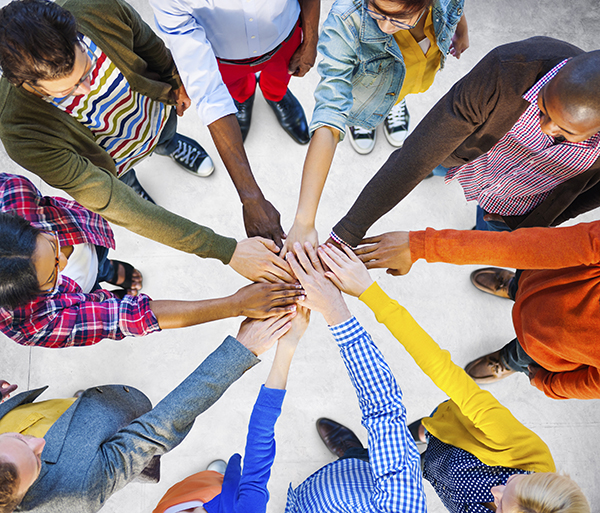
Photo of people in a circle with their hands in the middle


Relationships are powerful. Our one-to-one connections with each other are the foundation for change. And building relationships with people from different cultures, often many different cultures, is key in building diverse communities that are powerful enough to achieve significant goals.

Whether you want to make sure your children get a good education, bring quality health care into your communities, or promote economic development, there is a good chance you will need to work with people from several different racial, language, ethnic, or economic groups. And in order to work with people from different cultural groups effectively, you will need to build sturdy and caring relationships based on trust, understanding, and shared goals.

Why? Because trusting relationships are the glue that hold people together as they work on a common problem. As people work on challenging problems, they will have to hang in there together when things get hard. They will have to support each other to stay with an effort, even when it feels discouraging. People will have to resist the efforts of those who use divide-and-conquer techniques--pitting one cultural group against another.

Regardless of your racial, ethnic, religious, or socioeconomic group, you will probably need to establish relationships with people whose group you may know very little about.

Each one of us is like a hub of a wheel. Each one of us can build relationships and friendships around ourselves that provide us with the necessary strength to achieve community goals. If each person builds a network of diverse and strong relationships, we can come together and solve problems that we have in common.

In this section, we are going to talk about:

  • Becoming aware of your own culture as a first step in learning about other people's culture.
  • Building relationships with people from many different cultures.

But first let's talk about what culture is. Culture is a complex concept, with many different definitions. But, simply put, "culture" refers to a group or community with which we share common experiences that shape the way we understand the world. It includes groups that we are born into, such as race, national origin, class, or religion. It can also include groups we join or become part of. For example, we can acquire a new culture by moving to a new region, by a change in our economic status, or by becoming disabled. When we think of culture this broadly we realize we all belong to many cultures at once. Do you agree? How might this apply to you?

How do you learn about people's cultures?

Start by becoming aware of your own culture.

It may seem odd that in order to learn about people in other cultures, we start by becoming more aware of our own culture. But we believe this is true. Why?

If you haven't had a chance to understand how your culture has affected you first hand, it's more difficult to understand how it could affect anyone else or why it might be important to them. If you are comfortable talking about your own culture, then you will become better at listening to others talk about theirs. Or, if you understand how discrimination has affected you, then you may be more aware of how it has affected others.

Here are some tips on how to becoming more aware of your own culture:

What is your culture?

Do you have a culture? Do you have more than one? What is your cultural background?

Even if you don't know who your ancestors are, you have a culture. Even if you are a mix of many cultures, you have one. Culture evolves and changes all the time. It came from your ancestors from many generations ago, and it comes from your family and community today.

In addition to the cultural groups we belong to, we also each have groups we identify with, such as being a parent, an athlete, an immigrant, a small business owner, or a wage worker. These kinds of groups, although not exactly the same as a culture, have similarities to cultural groups. For example, being a parent or and an immigrant may be an identity that influences how you view the world and how the world views you. Becoming aware of your different identities can help you understand what it might be like to belong to a cultural group.

Exercise:

Try listing all the cultures and identities you have: (This is just a list of suggestions to get you started. Add as many as you think describe you.)

What is your:

Religion
Nationality
Race
Sexual identity
Ethnicity
Occupation
Marital status
Age
Geographic region

Are you:

A female
A male
Nonbinary or genderqueer
Disabled
From an urban area
From a rural area
A parent
A student

Have you ever been:

In the military
Poor
In prison
Wealthy
In the middle class
In the working class

Did this help you think about your identities and cultures? How have these different cultures and identities affected your life?

How do you build relationships with people from other cultures?

There are many ways that people can learn about other people's cultures and build relationships at the same time. Here are some steps you can take. They are first listed, and then elaborated upon one at a time.

  • Make a conscious decision to establish friendships with people from other cultures.
  • Put yourself in situations where you will meet people of other cultures.
  • Examine your biases about people from other cultures.
  • Ask people questions about their cultures, customs, and views.
  • Read about other people's culture's and histories
  • Listen to people tell their stories
  • Notice differences in communication styles and values; don't assume that the majority's way is the right way
  • Risk making mistakes
  • Learn to be an ally.

Make a conscious decision to establish friendships with people from other cultures

Making a decision is the first step. In order to build relationships with people different from yourself, you have to make a concerted effort to do so. There are societal forces that serve to separate us from each other. People from different economic groups, religions, ethnic groups, and races are often isolated from each other in schools, jobs, and neighborhoods. So, if we want things to be different, we need to take active steps to make them different.

You can join a sports team or club, become active in an organization, choose a job, or move to a neighborhood that puts you in contact with people of cultures different than your own. Also, you may want to take a few minutes to notice the diversity that is presently nearby. If you think about the people you see and interact with every day, you may become more aware of the cultural differences that are around you.

Once you have made the decision to make friends with people different from yourself, you can go ahead and make friends with them in much the same way as with anyone else. You may need to take more time, and you may need to be more persistent. You may need to reach out and take the initiative more than you are used to. People who have been mistreated by society may take more time to trust you than people who haven't. Don't let people discourage you. There are good reasons why people have built up defenses, but it is not impossible to overcome them and make a connection. The effort is totally worth it.

Put yourself in situations where you will meet people of other cultures; especially if you haven't had the experience of being a minority, take the risk.

One of the first and most important steps is to show up in places where you will meet people of cultures other than your own. Go to meetings and celebrations of groups whose members you want to get to know. Or hang out in restaurants and other gathering places that different cultural groups go. You may feel embarrassed or shy at first, but your efforts will pay off. People of a cultural group will notice if you take the risk of coming to one of their events. If it is difficult for you to be the only person like yourself attending, you can bring a buddy with you and support each other in making friends. At these events, it is important to participate, but make sure you do not become the center of the event in order to lift up the voices and actions of the people leading the event.

Examine your biases about people from other cultures.

We all carry misinformation and stereotypes about people in different cultures. Especially, when we are young, we acquire this information in bits and pieces from TV, from listening to people talk, and from the culture at large. We are not bad people because we acquired this; no one requested to be misinformed. But in order to build relationships with people of different cultures, we have to become aware of the misinformation we acquired.

An excellent way to become aware of your own stereotypes is to pick groups that you generalize about and write down your opinions. Once you have, examine the thoughts that came to your mind and where you acquired them.

Another way to become aware of stereotypes is to talk about them with people who have similar cultures to your own. In such settings you can talk about the misinformation you acquired without being offensive to people from a particular group. You can get together with a friend or two and talk about how you acquired stereotypes or fears of other different people. You can answer these kinds of questions:

  • How did your parents feel about different ethnic, racial, or religious groups?
  • What did your parents communicate to you with their actions and words?
  • Were your parents friends with people from many different groups?
  • What did you learn in school about a particular group?
  • Was there a lack of information about some people?
  • Are there some people you shy away from? Why?

Ask people questions about their cultures, customs, and views

People, for the most part, want to be asked questions about their lives and their cultures. Many of us were told that asking questions was nosy; but if we are thoughtful, asking questions can help you learn about people of different cultures and help build relationships. People are usually pleasantly surprised when others show interest in their cultures. If you are sincere and you can listen, people will tell you a lot.

Read about other people's cultures and histories

It helps to read about and learn about people's cultures and histories. If you know something about the reality of someone's life and history, it shows that you care enough to take the time to find out about it. It also gives you background information that will make it easier to ask questions that make sense.

However, you don't have to be an expert on someone's culture to get to know them or to ask questions. People who are, themselves, from a culture are usually the best experts, anyway.

Don't forget to care and show caring

It is easy to forget that the basis of any relationship is caring. Everyone wants to care and be cared about. Caring about people is what makes a relationship real. Don't let your awkwardness around cultural differences get in the way of caring about people.

Listen to people tell their stories

If you get an opportunity to hear someone tell you her life story first hand, you can learn a lot--and build a strong relationship at the same time. Every person has an important story to tell. Each person's story tells something about their culture.

Listening to people's stories, we can get a fuller picture of what people's lives are like--their feelings, their nuances, and the richness of their lives. Listening to people also helps us get through our numbness-- there is a real person before us, not someone who is reduced to stereotypes in the media.

Additionally, listening to members of groups that have been discriminated against can give us a better understanding of what that experience is like. Listening gives us a picture of discrimination that is more real than what we can get from reading an article or listening to the radio.

Exercise:

You can informally ask people in your neighborhood or organization to tell you a part of their life stories as a member of a particular group. You can also incorporate this activity into a workshop or retreat for your group or organization. Have people each take five or ten minutes to talk about one piece of their life stories. If the group is large, you will probably have to divide into small groups, so everyone gets a chance to speak.

Notice differences in communication styles and values; don't assume that the majority's way is the right way.

We all have a tendency to assume that the way that most people do things is the acceptable, normal, or right way. As community workers, we need to learn about cultural differences in values and communication styles, and not assume that the majority way is the right way to think or behave.

Example:

You are in a group discussion. Some group members don't speak up, while others dominate, filling all the silences. The more vocal members of the group become exasperated that others don't talk. It also seems that the more vocal people are those that are members of the more mainstream culture, while those who are less vocal are from minority cultures.

How do we understand this? How can this be resolved?

In some cultures, people feel uncomfortable with silence, so they speak to fill the silences. In other cultures, it is customary to wait for a period of silence before speaking. If there aren't any silences, people from those cultures may not ever speak. Also, members of some groups (women, people of low income, some racial and ethnic minorities, and others) don't speak up because they have received messages from society at large that their contribution is not as important as others; they have gotten into the habit of deferring their thinking to the thinking of others.

When some people don't share their thinking, we all lose out. We all need the opinions and voices of those people who have traditionally been discouraged from contributing.

In situations like the one described above, becoming impatient with people for not speaking is usually counter-productive. However, you can structure a meeting to encourage the quieter people to speak. For example, you can:

  • Have people break into pairs before discussing a topic in the larger group.
  • At certain times have each person in the circle make a comment. (People can pass if they want to.)
  • Follow a guideline that everyone speaks once, before anyone speaks twice.
  • Invite the quieter people to lead part of the meeting.
  • Talk about the problem openly in a meeting, and invite the more vocal people to try to speak less often.
  • Between meetings, ask the quieter people what would help them speak, or ask them for their ideas on how a meeting should be run.

A high school basketball team has to practice and play on many afternoons and evenings. One team member is a recent immigrant whose family requires her to attend the birthday parties of all the relatives in her extended family. The coach is angry with the parents for this requirement, because it takes his player away from the team.

How do we understand this? How can this be resolved?

Families have different values, especially when it comes to family closeness, loyalty, and responsibility. In many immigrant and ethnic families, young people are required to put their family's needs first, before the requirements of extra-curricular activities. Young people from immigrant families who grow up in the U.S. often feel torn between the majority culture and the culture of their families; they feel pressure from each cultures to live according to its values, and they feel they have to choose between the two.

As community workers, we need to support and respect minority and immigrant families and their values. It may already be a huge concession on the part of a family to allow a teenager to participate in extracurricular activities at all. We need to make allowances for the cultural differences and try to help young people feel that they can have both worlds--instead of having to reject one set of values for another.

As community builders, it helps to develop relationships with parents. If a young person sees her parents have relationships with people from the mainstream culture, it can help her feel that their family is accepted. It supports the teen in being more connected to her family and her community--and also, both relationships are critical protective factors for drug and alcohol abuse and other dangerous behaviors. In addition, in building relationships with parents, we develop lines of communication, so when conflicts arise, they can be more easily resolved.

Risk making mistakes

As you are building relationships with people who have different cultural backgrounds than your own, you will probably make mistakes at some point. That happens. Don't let the fear of making mistakes keep you from going ahead and building relationships.

If you say or do something that is insensitive, you can learn something from it. Ask the affected person what bothered or offended them, apologize, and then go on in building the relationship. Don't let guilt bog you down.

Learn to be an ally

One of the best ways to help you build relationships with people of different cultures is to demonstrate that you are willing to take a stand against discrimination when it occurs. People will be much more motivated to get to know you if they see that you are willing to take risks on their behalf.

We also have to educate ourselves and keep informed so that we understand the issues that each group faces and we become involved in their struggles--instead of sitting on the sidelines and watching from a distance. Educate yourself about other cultures by doing your own research, don't ask others to do it for you. There are many resources in this chapter to help you learn. 

In Summary

Friendship is powerful. It is our connection to each other that gives meaning to our lives. Our caring for each other is often what motivates us to make change. And establishing connections with people from diverse backgrounds can be key in making significant changes in our communities.

As individuals, and in groups, we can change our communities. We can set up neighborhoods and institutions in which people commit themselves to working to form strong relationships and alliances with people of diverse cultures and backgrounds. We can establish networks and coalitions in which people are knowledgeable about each other's struggles, and are willing to lend a hand. Together, we can do it.

Contributor

Marya Axner

Resources

Online Resources

Brown University Training Materials: Cultural Competence and Community Studies: Concepts and Practices for Cultural Competence The Northeast Education Partnership provides online access to PowerPoint training slides on topics in research ethics and cultural competence in environmental research. These have been created for professionals/students in environmental sciences, health, and policy; and community-based research. If you are interested in receiving an electronic copy of one the presentations, just download their Materials Request Form (found on the main Training Presentations page under "related files"), complete the form, and email it to NEEPethics@yahoo.com.

The Center for Culturally and Linguistically Appropriate Services collects and describes early childhood/early intervention resources and serves as point of exchange for users.

Chapter 8: Respect for Diversity in the "Introduction to Community Psychology" explains cultural humility as an approach to diversity, the dimensions of diversity, the complexity of identity, and important cultural considerations.

Culture Matters is a cross-cultural training workbook developed by the Peace Corps to help new volunteers acquire the knowledge and skills to work successfully and respectfully in other cultures.

Diverse Teams Feel Less Comfortable — and That’s Why They Perform Better from the Harvard Business Review.

Exploring Community-led Racial Healing Models to Deepen Partnerships between Community Development and Healthcare from the Build Healthy Places Network.

The International & Cross-Cultural Evaluation Topical Interest Group, an organization that is affiliated with the American Evaluation Association, provides evaluators who are interested in cross-cultural issues with opportunities for professional development.

The Multicultural Pavilion offers resources and dialogue for educators, students and activists on all aspects of multicultural education.

The National Center for Cultural Competence at Georgetown University increases the capacity of health care and mental health programs to design, implement and evaluate culturally and linguistically competent service delivery systems. Publications and web links available.

National Public Radio's Life Kit project discusses the importance of having parents talk about social identities with their children.

Study, Discussion and Action on Issues of Race, Racism and Inclusion: a partial list of resources utilized and prepared by Yusef Mgeni.

Unpacking the Invisible Knapsack: Reflect on how your privilege allows you to walk through the world in order to better connect with others in this essay by Peggy McIntosh.

Organizations:

Center for Living Democracy
289 Fox Farm Rd
PO Box 8187
Brattleboro, VT 05304-8187
(802) 254-1234

National Coalition Building Institute (NCBI)
1835 K Street, N.W., Suite 715
Washington, D.C. 20006
(202) 785-9400

Re-evaluation Counseling
719 Second Avenue North
Seattle, WA 98109
(206) 284-0113

Southern Poverty Law Center
400 Washington Ave.
Montgomery, AL 36104

Print Resource

Axner, D. (1993). The Community leadership project curriculum. Pomfret, CT: Topsfield Foundation.

Banks, J. (1997). Educating citizens in a multicultural society. New York, NY: Teachers College Press.

Brown, C.,& Mazza, G. (1997). Healing into action. Washington, DC: National Coalition Building Institute.

DuPraw, M.,& Axner, M. (1997). Working on common cross-cultural communication challenges. In Martha McCoy, et. al., Toward a More Perfect Union in an Age of Diversity. Pomfret, CT: Topsfield Foundation, 12-16.

Ford, C. (1994). We can all get along: 50 steps you can take to end racism. New York, NY: Dell Publishing.

Kaye, G., & Wolff, T. (1995). From the ground up: A workbook on coalition building and community development. Amherst, MA: AHEC/Community Partners. (Available from Tom Wolff and Associates.)

McCoy, M.,&  et al. (1997). Toward a more perfect union in an age of diversity: A guide for building stronger communities through public dialogue. Pomfret, CT: Topsfield Foundation.

McIntosh, P. (1988). White privilege and male privilege: A personal account of coming to see correspondences through work in women's studies. Wellesley, MA: Center for Research on Women, Wellesley College.

Okihiro, G. (1994). Margins and mainstreams: Asians in American history and culture. Seattle, WA: The University of Washington Press.

Takaki, R. (1993). A different mirror: A history of multicultural America. Boston: Little, Brown and Company.

Checklist
mloewenstein Wed, 12/12/2012 - 11:24

___ Culture is a group or community which shares common experiences that shape the way its members understand the world.

___ Defining one's own culture helps to foster the ability to recognize cultural differences.

___ Build relationships and establish friendships with people of different cultures and identities.

___ Establish these relationships by reading, listening and learning.

___ Risk making mistakes.

___ Examine and learn from personally held stereotypes and prejudices.

Examples
pschneider Wed, 06/27/2018 - 11:45

Example 1: Hands Across the Hills Trailer


Bridging the divide through dialogue, cultural exchange, and community between folks from New England and Kentucky.


Example 2: Inclusive Dubuque


Inclusive Dubuque is a peer-learning network of partners committed to supporting an equitable and inclusive culture to meet the economic and cultural needs of their diverse community. The network works collaboratively to eliminate bias in their community.

Tools
Anonymous (not verified) Fri, 03/21/2014 - 13:48

Tool #1: Diversity and Community Strengths

Spend some time writing down your thoughts about how the different aspects of your culture or identity (gender, race, nationality, etc., listed below) have affected you as a community builder. For example, write down how being a female or male has given you strengths as a community builder, or how it has made the job more difficult.

This exercise works much better if you do it with another person, or in a group. People should pair up and then spend some time writing down their answers. Once you are finished writing, have one person in a pair talk about their answers while the other person listens. Then have them switch roles. Afterwards, you can discuss the results in the bigger group.


Cultural factor:


Community-building strengths

Effect on difficulty of community-building

Gender    
Religion    
Race/Ethnic Group    
National Origin    
Geographic Region    
Sexual Orientation    
Religion    
Parent's Occupation    
Your Occupation    
Disabilities    
Parenting Experience    
Age    
Appearance    
Education    
Community    
Marital Status    
Athlete or Non-Athlete    
Military Experience    
Defining Life Experiences    
Other Factors    

Discussion Questions:

  • What was doing this exercise like for you? What did you learn? Was doing this exercise fun? Was it awkward or uncomfortable?
  • When talking in pairs, did you find you had more in common than you might have imagined? How was your experience different?
  • Did you find that there were some areas that you've never had a chance to talk about?
  • (If in a group) Would someone like to share what they learned in the whole group?

Most of us didn't go to schools that prepared us to live in a diverse world. People haven't been encouraged to talk about our cultures, or even recognize that they existed. So it is not surprising that talking about culture may be awkward, at first.

Tool #2: Stereotyping Exercise

Think of three common stereotypes you believe or prejudices you have. If you can't think of any right away, try a technique called "free association":

  • Across the top of a sheet of paper, write the names of three different groups. (For instance, "Texans," Football players," and Skinheads.")
  • Add "all" or "always" to each name. (Examples: "Texans all/always," "Football players all/always").
  • Underneath each name, write the first three things that come to mind. Don't stop to think. Just write.

Your examples might look something like this:

  • "Texans all own oil wells and wear boots and cowboy hats."
  • "Football players all get lousy grades, take steroids, and date the best-looking girls"
  • "Skinheads all hate Blacks, Jews, and gays and beat people up all the time."

Where do you think you learned your stereotypes? Do you have classmates, relatives, or friends who feel the same way? How about TV, the movies, the newspaper? (By the way, how many Texans, football players, and skinheads do you know personally?)

Exercise taken form the Community Leadership Project Curriculum. From the book, Respecting Our Differences by Lynn Duvall

Tool #3: What color are your jellybeans?

This resource contains a “jellybean exercise” to help participants explore their patterns of interactions.

Cover of the booklet titled What Color Are Your Jellybeans?

What Color Are Your Jellybeans? (pdf)


PowerPoint
mloewenstein Wed, 12/12/2012 - 11:25
File Upload
A PowerPoint presentation summarizing the major points in the section.
Section 3. Healing from the Effects of Internalized Oppression
mloewenstein Wed, 12/12/2012 - 11:26
Main Section
mloewenstein Wed, 12/12/2012 - 11:26

A recent study found that Black students who were asked to identify themselves by race when taking a standardized test consistently scored lower than other Black students who were not asked to specify their race.

In another study, women taking a test of math ability were randomly divided into three groups. One group was asked to answer a list of questions that clearly identified them as women; one was given a list that identified them as residents of the Northeastern U.S.; and the third answered questions that identified them as students at an elite private college. The women that identified themselves as elite students consistently performed better on the test than the others – often better than male students, who, over the years, have almost invariably scored higher than women. (The results on the test used in this study have been so one-sided that they are often cited as proof that men are genetically superior to women at math.)

Researchers at New York University worked with minority and female middle school students who were about to apply to magnet high schools that required entrance exams. They were able to help students significantly raise their test scores and admission rates (compared to the averages for their race/ethnicity and gender) by helping them understand that that who they were was determined by what they could and did do, not by their racial or gender characteristics.

In none of these cases was there instruction in the subject matter of the tests in question, or in test-taking technique. The crucial difference in all cases was how the test-takers identified themselves. Why should revealing or thinking about your race or gender make so much difference on a test of knowledge or reasoning ability? The answer often lies in the assumptions of society and a long history of discrimination. In this section, we’ll examine the effects that discrimination and oppression have on their targets, and think about how to counter them.

What is discrimination?

The word “discrimination” means simply distinguishing between one thing and another. When we talk about discrimination as a social issue, we refer to distinguishing between population groups defined by specific characteristics – race, gender, religion, national origin, political opinions, sexual orientation, class – and treating groups differently as a result. Although discrimination can be either positive or negative – you can either discriminate in favor of or against a particular group – our focus here is negative discrimination.

Unfortunately, discrimination is all too familiar in all societies, from the age-old discrimination against Untouchables in India to racism in the U.S. White people are favored for jobs – often unconsciously – over Black and Asian people. Middle Eastern workers are harassed in Europe, Black Americans are stopped for DWB – driving while Black – in large American cities. The poor are often blamed for their poverty, and denied basic services because they aren’t “deserving.”

All of this probably dates back to pre-human times, when our ancestors banded together in groups for safety and mutual aid, and any other group was a potential rival for food and other resources. In most modern societies, there are laws against various kinds of discrimination, but it persists, and much of it is so ingrained that we don’t even think of it as discrimination. Gender roles and the treatment of women in general is still unequal: women in the U.S. still earn, on average, less than men for the same work, and women in many other countries are blatantly denied education and other opportunities. According to the United Nations, there is no country where men and women are treated equally.

For our purposes, then, discrimination is the denial of opportunities, rights, and or freedoms to one or more groups that other groups in the society enjoy. It is the failure to treat all people as of equal worth, and to acknowledge their full humanity.

What is oppression?

Oppression is discrimination carried to its extreme. Oppressed people are not only discriminated against, but are also subject to physical and psychological brutality – and occasionally genocide – sometimes for disobeying or displeasing those in power, sometimes to discourage them and others from trying to change their condition, and sometimes out of pure hatred. Modern examples include the treatment of Jews in Germany in the 1930’s, culminating in the Holocaust; the apartheid rule in South Africa between 1948 and 1990; slavery and its aftermath in the American South; the disappearances and other atrocities committed by the military governments against suspected leftists in Argentina and Chile; the genocidal violence in the former Yugoslavia; the slaughter of Tutsis by Hutus in Rwanda; and the wholesale starvation and murder of about 20% of the population of Cambodia by the Khmer Rouge, on the grounds that they were tainted by capitalism.

The distinction between discrimination and oppression is important. In most cases, groups that are discriminated against have some recourse, either under the law or through political action. In many countries, groups that were discriminated against have overcome their situations through education, organization, economic advancement, or some other avenue. For oppressed people, often the only remedy has been force of some sort – either revolutionary action or outside military or economic intervention.

Community developers that work with oppressed people often try to help them understand their situations, so they can decide on what action to take to change them.

Paulo Freire, a Brazilian organizer and educator, in his book Pedagogy of the Oppressed, says that the oppressed can change their circumstances through praxis – reflection and action – and that in order to do that, they have to learn to analyze their lives and to throw aside internalized oppression. Although Freire worked with and wrote about people who were exploited and oppressed, those who are discriminated against may have to deal with internalized discrimination as well.

What is internalized oppression?

When people are targeted, discriminated against, or oppressed over a period of time, they often internalize (believe and make part of their self-image – their internal view of themselves) the myths and misinformation that society communicates to them about their group. Exploited peasants might internalize the ideas that they can’t do any other kind of work, that their lives were meant to be as they are, and that they’re worth less than people with wealth or education. Women might internalize the stereotype that they are not good at math and science, or people of color might internalize the myth that they are not good workers,

When people from targeted groups internalize myths and misinformation, it can cause them to feel (often unconsciously) that in some way they are inherently not as worthy, capable, intelligent, beautiful, good, etc. as people outside their group. They turn the experience of oppression or discrimination inward. They begin to feel that the stereotypes and misinformation that society communicates are true and they act as if they were true. This is called internalized oppression.

Internalized oppression affects many groups of people: women, people of color, poor and working class people, people with disabilities, young people, elders, Jews, Catholics, immigrants, gays, and many other groups.

Not all members of groups that are discriminated against or oppressed necessarily turn stereotypes inward. Many remain proud of their heritage, or are able to take prominent places in the larger society through their exercise of effort, intelligence, talent, interpersonal skill, and self-respect. Many members of oppressed groups try to escape their situations by emigration or other means, and many succeed. Some rise up and overthrow their oppressors, although this can cause nearly as many problems as it solves.

Don’t assume that just because someone is a member of a group that has experienced bias, he is suffering from the results of internal oppression. Individuals are different, and have different experiences and backgrounds. If you assume internal oppression in all cases without getting to know the individual at least a little, you may, in trying to be helpful and empathetic, find that instead you’re being condescending or insulting.

There are two ways that internalized oppression functions:

  • Internalized oppression operates on an individual basis. A person believes that the stereotypes and misinformation that she hears are true about herself. She holds herself back from living life to her full potential or she acts in ways that reinforce the stereotypes and are ultimately self-defeating.
  • Internalized oppression occurs among members of the same cultural group. People in the same group believe (often unconsciously) the misinformation and stereotypes that society communicates about other members of their group. People turn the oppression on one another, instead of addressing larger problems in society. The results are that people treat one another in ways that are less than fully respectful. Often people from the same cultural group hurt, undermine, criticize, mistrust, fight with, or isolate themselves from one another.

In Spike Lee’s 1988 film School Daze, light-skinned Black students at a prestigious Black college look down on their darker-skinned fellow students.

It is important to note that internalized oppression is not the fault of people whom it affects. No one should be blamed or blame themselves for having been affected by discrimination. Nevertheless, as community members, we have to face these barriers in order to achieve our goals.

While the stereotypes that people internalize are imposed by society, we all, whether we are members of the favored majority or the oppressed or unfairly treated minority, have a personal responsibility to confront those stereotypes. As members of the majority, we need to help and support those in the minority to see that their personal worth has nothing to do with society’s current or past prejudice. And as members of the minority, we have a responsibility to listen to those among us who challenge the majority view, and to analyze and challenge it ourselves. We may need support and guidance in doing so – that’s what Paulo Freire provided to those he worked with, and what he wrote about.

Examples of internalized oppression as it occurs in individuals:

  • Women, low-income people, and people of color don't speak up as much in meetings because they don't think their contribution will be important or "correct". Often participants from these groups may have insight into how to solve a problem, but they hold back from sharing it.
  • In response to low expectations and lack of encouragement, some teenagers from oppressed groups believe that they won't succeed; consequently they give up on learning and pursuing their dreams.
  • People from oppressed groups often shy away from taking on leadership roles. They don't view themselves as having leadership capabilities, and their style doesn't match that of "traditional" leadership models.
  • A person who is not able get a job with decent wages may try to dull his disappointment with alcohol.
  • A person who speaks with an accent feels that she should not build relationships with people outside her own culture because she is afraid that others will not want to be friends with her.

Examples of internalized oppression among members of the same cultural group:

  • Women on the board of a charitable organization compete for the attention of the male chair and refrain from taking leadership roles. They see their greatest capability in organizing dinners and creating decorations for events, even though they all have college degrees.
  • The membership of a low-income grassroots organization cannot support anyone from their own community who tries to take a leadership role in the organization. They claim that people in the leadership role become too "business-like" and "authoritative." The role of the leader is discussed endlessly and the organization cannot get to the business of defining and achieving goals.
  • Women who work on construction join men in putting down other women who have child care problems or can't do particular work because they are not as strong as some of the men.
  • When Latino immigrants from different countries of origin try to organize to create a political power base, the mistrust and prejudices among them makes it difficult for them to work together.
  • Fearing that her children will not succeed in the mainstream culture, an immigrant mother is overly harsh in disciplining them so they will "fit in."
  • An Black teenager is not accepted among his group of peers because he works hard and does well in school; he is told he is not Black enough.

As you can see, internalized oppression can have serious consequences for communities. It holds people back from thinking well of themselves, from living full lives, and from standing up against injustice. It can be the source of physical or mental illness and self-destructive behavior. Internalized oppression can serve to divide people within the same group, so they are not as effective in supporting each other and standing together for change. It can also cause people to be suspicious of those outside their own group, making it difficult to build alliances.

Why do community builders need to understand internalized oppression?

Understanding internalized oppression is invaluable for community builders. People simply can't fight effectively for themselves when they believe the problem is their own fault or that something is inherently wrong with them. To empower communities to become more effective at fighting the battles for better health care, good education, a safe environment, and adequate jobs, community members have to learn how to overcome the discouragement, confusion, and divisions that are a result of internalized oppression.

Luckily, there are methods to overcome internalized oppression. People can heal from misinformation they have internalized and help others in their cultural groups heal as well. As people understand and overcome internalized oppression they will become more empowered to overcome the inequities and injustices present in our society at large.

How do you help people heal from and overcome internalized oppression?

There are several different ways that people can work together to overcome internalized oppression.

Become a close friend, ally, or mentor to individuals who are struggling with internalized oppression.

Friendship and caring are two of the strongest weapons we have in combating internalized oppression. All the oppressions have one message in common – that certain people are not valuable. Friendship provides a strong and effective contradiction to that message. What we communicate in our relationships and commitment to one another is more powerful than the message of oppression.

We care about our friends, family members, co-workers, or other community members. It is painful to watch them treating themselves badly or failing to live up to their capabilities. We can help our friends out when we see them acting self-destructively or being passive about conditions that negatively affect them.

For example, if you befriend a young person and make a commitment to spend time with her regularly in activities that she enjoys, you can make a big difference in how that person is able to handle the injustices that she faces growing up in a tough society. If any person knows that just one person is one her side, she can manage to believe in herself, even when everyone and everything else is telling her she’s not OK.

Take pride in and celebrate your culture.

Being a member of cultural group can be a source of strength. Our cultures often give us our values, our sense of ourselves in history, our humor, our identities, and our world views. We depend on our cultures to provide us with a community, a reference point, a home, and a place to get our bearings and remember what is important to us.

Even the discrimination that people have experienced and endured as members of cultural groups gives them strengths. People learn to survive, stand up for themselves, be resourceful, have a sense of humor, and bounce back. People develop a sense of what long-term commitment is all about.

Taking pride in our cultures and celebrating them is essential in combating internalized oppression, because it gives us a more accurate view of our cultures than the one communicated in the media or by the society at large.

What are some ways of taking pride in our cultures?

  • Reading and learning more about their cultures helps people gain perspective on how hard their ancestors fought for themselves, often in the face of great odds. Organizing a study group or book club for this purpose can be especially helpful in building community around cultural pride.
  • Holding cultural celebrations and practicing rituals gives people a sense of hope, joy, pride, and meaning. It helps to remind people of what their cultures stand for, how rich they are, and what they've accomplished. Cultural arts celebrations can buoy people’s spirits and remind them of their strength, goodness, and creativity.

Note: Inviting people from other cultures to these events can also be useful at times. When people from the outside understand your culture, it is an important first step in developing a group of active allies who are willing to go to stand up for your group.

Meet in groups with people from similar backgrounds, to heal from the emotional hurts of internalized oppression.

Re-valuation Counseling has developed a model in which people of similar backgrounds meet in groups to heal from internalized oppression. In these groups people encourage each other to remember that they are good, worthy, capable, intelligent, beautiful, etc. and that others in their culture are good as well. In these groups, people take turns talking about how their cultural oppression has personally affected them while others listen.

One of the most helpful results of meeting in groups of people with similar backgrounds is that people understand that they are not alone in their experiences of oppression or in the way they feel bad about themselves. Sharing, for example, the experience of growing up around racism, anti-Semitism, or classism, helps people understand they have feelings common to others in their group. This removes the illusion that the experience is somehow inherently their problem alone – and that they are the only source of their own difficulties, rather than problems in the society at large.

Here is the format for a healing from internalized oppression group:

  • Meet in groups of 6-10 people at a regular meeting time.
  • It is best to have an agreement of confidentiality.
  • Each group should have one main leader, but everyone should see themselves as responsible for making the group go well.
  • To start, each person has a turn to talk about what they appreciate about their culture/group and something that is has gone well in their lives since the group last met.
  • Each person has a turn each meeting to think/talk/feel while the group pays attention to them. No one interrupts the person during this time. During this turn, the person has a turn to talk about their experiences as a member of this group. It can be helpful to talk about early memories of being targeted or oppressed.
  • People may experience emotional feelings as they talk about these experiences. Feeling emotions is part of the healing process. Laughing, crying, trembling all help people heal from the hurts of oppression and reclaim their pride, humanity, and power.
  • When these groups meet over an extended period of time people build more safety to talk about important issues.

Support groups can be very helpful, but only if members ultimately turn from discussion of how they were victimized to real support for taking control of their lives and developing strategies for doing so. Good support groups can be tremendously helpful; ineffective ones can be nothing but opportunities to share bad experiences and slide deeper into helplessness. A good leader or facilitator can make all the difference

Take action against injustice and oppression.

When people take a stand against injustice and oppression it can be a strong antidote to internalized oppression. Taking charge of an unjust situation and setting it right goes miles in healing people from the oppression and injustice they have endured over time.

In the book The Montgomery Bus Boycott and the Women Who Started It: The Memoir of Jo Ann Gibson Robinson, Ms. Robinson talks about the sense of pride that she and others felt when determined and committed Black people joined together for the bus boycott.

"Before Monday was half gone, Negroes had made history. Never before had they united in such a manner. There was open respect and admiration in the eyes of many whites who had looked on before, dubious and amused. Even clerks in dime stores, all white, were more cordial. They were heard to add, after a purchase by a Black customer, "Y'all come back and see us," which was a very unusual occurrence. The Black customers held their heads higher. They felt reborn, important for the first time. A greater degree of race pride was exhibited. Many were themselves surprised at the response of the masses, and could not explain, if they had wanted to, what had changed them overnight into fearless, courageous, proud people, standing together for human dignity, civil rights, and, yes, self-respect! There was a stick-togetherness that drew them like a magnet. They showed a genuine fondness for one another. They were really free--free inside! They felt it! Acted It! Manifested it in their entire beings! They took great pride in being Black."

When you notice internalized oppression operating in groups, point it out, and help the group change direction.

In some organizations people tend to criticize each other, get into fights, lack discipline, and undermine or attack leadership. These problems have a range of causes. Oftentimes, the cause is, to some extent, due to internalized oppression. This is especially true if all or most of members of the group or organization are from a similar cultural background. Unfortunately, the more harshly a group has been treated, the more these dynamics operate. Again, this is not the fault of the group that has been targeted. Nevertheless, in order to make a group successful, this dynamic should be recognized and turned around.

How can you tell when internalized oppression is the source of the a difficulty a group? Although there is no sure formula, you can look for some clues that might help you make an educated guess. Some questions that might provide clues:

  • Are people acting towards each other in ways similar to how the larger society mistreats them? For example, if the particular group is stereotyped for not being intelligent, do people act towards each other as if they were less than intelligent?
  • Do these problems exist throughout the organization? If the problem shows itself in many different settings, it may be more likely that it is internalized oppression that is the main difficulty, rather than a few individuals’ problems.

Be careful here. Systematic problems in the organization may signal internalized discrimination or oppression, or they may be indications of problems with leadership, structure, or the character of the organization itself. Many organizations that don’t involve people who’ve been discriminated against have systemic problems. It only makes sense that many that do involve marginalized groups also do. Only if the problems seem to mirror the treatment of the group in question by the larger society should you consider that they may stem from that treatment.

  • Do individuals in the organization struggle with self-esteem, have difficulties in taking care of themselves, or treating themselves well in other ways?

Even if you don't know for sure if internalized oppression is the main problem, it may at least part of the difficulty. In any case, many of the following recommendations will help any group that suffers from continual arguing, criticizing, undermining, or other related problems.

What can you do when you notice or suspect internalized oppression going on in a group?

  • Visibly model how to treat others with respect, and set a good tone. For example, if everyone is criticizing the leader, you can point out his good qualities and accomplishments. If you lead the way in doing this, people will notice. One person can often steer the whole group by stepping outside a negative pattern.
  • Take some time in a meeting for people to appreciate each other and notice what the group has accomplished. When people feel discouraged about their progress, they are more prone to treat each other badly.
  • Point out the difficulty without blaming anyone: You can say something like, "Let's take a step back and look at how this meeting is going. Do you think if we all made an agreement to not interrupt or criticize each other, we could accomplish more?
  • Explain to people about what internalized oppression is, and how you see that it operates in your organization. Explain, as you see it, how people are hurting each other; and point out the similarity to how society hurts the group as a whole.
  • If the problem occurs in a meeting, have people break into pairs in which each person gets a turn to vent their feelings while the other person listens. Then have people come back to the business of the meeting.
  • Take a stand and be firm. Whenever group members are putting each other down or acting in a way that has negative consequences, you can take a principled stand against what is occurring. Your stand will set a tone that others may be inclined to follow.
  • Welcome new members into your group. Often groups with similar backgrounds become cliquish. They can tend to exclude new people much in the same way that their group has been excluded by the larger society. Establish a policy to welcome new members and get them into the center of the organization quickly.

Ground rules can be helpful here as well. The kinds of ground rules that are mentioned above for support groups – no interrupting, listening carefully, disagreeing with ideas rather than people, etc. – can set a tone of respect and acceptance that in itself can do a great deal to change people’s views of themselves and others.

Protect young people from the effects of oppression.

Internalized oppression makes its biggest impression on children, because they don't have any context for understanding the injustices of society. It is easy to personalize the negative messages that are coming at you if you don't have a framework for understanding oppression.

There are a few ways to help young people understand oppression and protect them from its effects. First, it helps to explain to children about how and why oppression works so they have a framework for understanding it. This can help a young person make sense of the mistreatment they experience or witness, rather than blaming themselves or others in their own group for it. For example, if you give Black children a history of slavery in the U.S., they will be able to make more sense of why racism operates today.

Teach young people to be proud of who they are and of their background and culture. Equally important, teach them the value of setting and working toward goals, and of not getting discouraged when things don’t go their way. People who’ve internalized discrimination or oppression may quit when faced with difficult circumstances, seeing themselves as incapable of overcoming setbacks. If children grow up with self-respect and with the understanding that occasional setbacks are a normal part of life, to be overcome by planning and hard work, they’ll keep moving forward in both good times and bad.

We can also set up environments for our children in which they and their cultures are cherished. For example, we can make schools become multicultural institutions. Teachers and administrators should understand the importance of integrating the histories and cultures of many groups into the curriculum. School staff should understand how to treat children equitably and have high expectations of every student.

In Summary

Ordinary people are as intelligent and capable as the "experts." We have the capacity to figure out how to solve problems and transform our communities into places in which everyone has opportunities to live a full and satisfying life.

Internalized oppression holds people back, by undermining their confidence and by making it difficult for them to work together. It is painful when people limit themselves as a result of the discrimination and oppression they have experienced.

Fortunately, we can understand how internalized oppression works and what to do to overcome it. Simply understanding how it works can help people turn around some situations. Healing from and overcoming internalized discrimination and oppression will go further in making communities more effective. Undoing internalized discrimination and oppression may be a key issue for fully empowering communities so they can do the work that needs to be done.

Contributor

Marya Axner

Resources

Online Resources

Brown University Training Materials: Power and Privilege Issues with Culturally-Diverse Communities in Research: New Challenges of Partnership and Collaborative Research. The Northeast Education Partnership provides online access to PowerPoint training slides on topics in research ethics and cultural competence in environmental research. These have been created for professionals/students in environmental sciences, health, and policy; and community-based research.

Building strength for the long haul toward liberation aims to bridge the gap between the vast scholarship on resilience and the practical challenge of sustaining and thriving in communities targeted by state-sanctioned violence.

Building strength for the long haul toward liberation - Toolkit

Chapter 9: Oppression and Power in the "Introduction to Community Psychology" explains the concepts and theories of oppression and power, the intersection of oppression and power, and strategies community psychologists and allies use to address oppression and power.

Cultural Somatics Racialized Trauma e-Course: The Cultural Somatics Training & Institute offers a free, 5-session e-course on healing from racialized trauma.

Exploring Community-led Racial Healing Models to Deepen Partnerships between Community Development and Healthcare from the Build Healthy Places Network.

Facing the Divide: Psychology's Conversation on Race and Health is a video series designed to bring psychological science to the conversation regarding the connections among race, racism and health. Presented by the American Psychological Association.

Healing Justice Practice Spaces: This how-to guide provides instructions for creating all-gender, all-bodied, inclusive and accessible spaces for practicing and receiving healing that is built in partnership with social justice movement work and sites of political action.

Irresistible Podcast: This podcast teaches how to practice collective healing while fighting for social change through conversations with social justice leaders.

The REPAIR Framework for Community-Institution Solidarity in Racial Healing uses five parts to frame how institutions can implement long-term, sustainable community-institution solidarity for racial healing.

Study, Discussion and Action on Issues of Race, Racism and Inclusion - a partial list of resources utilized and prepared by Yusef Mgeni.

Organizations

Center for Living Democracy
289 Fox Farm Rd
PO Box 8187
Brattleboro, VT 05304-8187
(802) 254-1234

National Coalition Building Institute (NCBI)
1835 K Street, N.W., Suite 715
Washington, D.C. 20006
(202) 785-9400

Re-evaluation Counseling
719 Second Avenue North
Seattle, WA 98109
(206) 284-0113

Southern Poverty Law Center
400 Washington Ave.
Montgomery, AL 36104

Print Resources

Axner, D. (1993). The Community leadership project curriculum. Pomfret, CT: Topsfield Foundation.

Banks, J. (1997). Educating citizens in a multicultural society. New York, NY: Teachers College Press.

Brown, C., & Mazza, G. (1997). Healing into action. Washington, DC: National Coalition Building Institute.

DuPraw, M., & Axner, M. (1997). Working on common cross-cultural communication challenges. In Martha McCoy, et. al., Toward a More Perfect Union in an Age of Diversity. Pomfret, CT: Topsfield Foundation, 12-16.

Ford, C. (1994). We can all get along: 50 steps you can take to end racism. New York, NY: Dell Publishing.

Katznelson, I. (2006). When affirmative action was white: An untold history of racial inequality in twentieth-century America. New York, NY: W.W. Norton and Company.

Kaye, G., & Wolff, T. (1995). From the ground up: A workbook on coalition building and community development. Amherst, MA: AHEC/Community Partners. (Available from Tom Wolff and Associates.)

Kendi, I. X. (2019). How to be an antiracist. London, UK: One World Publications. 

McCoy, M., &  et al. (1997). Toward a more perfect union in an age of diversity: A guide for building stronger communities through public dialogue. Pomfret, CT: Topsfield Foundation.

McIntosh, P. (1988). White privilege and male privilege: A personal account of coming to see correspondences through work in women's studies. Wellesley, MA: Center for Research on Women, Wellesley College.

Okihiro, G. (1994). Margins and mainstreams: Asians in American history and culture. Seattle, WA: The University of Washington Press.

Saad, L. F. (2020). Me and white supremacy: Combat racism, change the world, and become a good ancestor. Naperville, IL: Sourcebooks Inc.

Takaki, R. (1993). A different mirror: A history of multicultural America. Boston: Little, Brown and Company.


Checklist
mloewenstein Wed, 12/12/2012 - 11:27

___ A person who is targeted, discriminated against, or oppressed over a period of time develops internalized oppression where they make the myths and misinformation that society communicates to them about their group part of their own image.

___ Internalized oppression can operate on individual and group levels.

___ Internalized oppression holds people back from thinking well of themselves (causing mental or physical illness), from living full lives, supporting their own communities, and from standing up against injustice.

___ Celebrating culture helps heal the effects of internalized oppression.

___ Forming groups with others who have internalized oppression can also help the healing process.

___ The strongest antidote to internalized oppression is taking a stand against injustice and oppression.

Examples
admin Wed, 01/09/2013 - 11:14

Fed Up Honeys "Makes Me Mad" Report

This research paper, composed by six young, urban women of color from the Center for Human Environments at the Graduate Center of CUNY, is an exploration of the issues stemming from stereotypes, especially of women and racial minorities in urban populations. The project focuses on the following questions:

  • What is the relationship between the lack of resources (eg., education) in a community and stereotypes of young urban women of color?
  • What are the impacts of stereotyping on young women's well-being?
  • How do stereotypes effect and reinforce your self-image? Your understanding of your peers? Your community?
  • The "Makes Me Mad' report ends with a call to action for community builders and outlines what the communities of the Lower East Side need from a unique, inside perspective.
PowerPoint
mloewenstein Wed, 12/12/2012 - 11:27
File Upload
A PowerPoint presentation summarizing the major points in the section.
Section 4. Strategies and Activities for Reducing Racial Prejudice and Racism
mloewenstein Wed, 12/12/2012 - 11:29
Main Section
admin Wed, 01/09/2013 - 11:30


You're at a restaurant with a group of co-workers after work. You're telling them about your decision to buy a house in Western Heights and how excited you are. One of them says to you, "Are you sure want to move there? I hear that there is a lot of crime in that area, you know, robberies, drugs, and even murder. It's a Black neighborhood, you know, that's probably why. Did you consider Eastern Heights? You may fit in there better! It's a nice middle-class, white suburban neighborhood. Definitely no crime there, if you know what I mean." You're dumbfounded. You can't believe that someone is actually saying this. You start to tell her that she's wrong and ask her what made her think that way.

You think some more about what happened on your way home. You realize that your colleague is but one person; who knows how many other people out there think like her? It helps to change people's racial stereotypes and attitudes, but the only way real change can come about is if our institutions and systems implement policies that promote racial equality. You suddenly feel angry. What if redlining still goes on because real estate companies are filled with people who think like your colleague? What policies exist to stop such institutionalized prejudice?

The above encounter at the restaurant is an example of racial prejudice. Redlining (refusing to sell a property to someone based on his or her race), which is illegal, is an act of racism or institutionalized prejudice. It is important to understand the distinction between racial prejudice and racism because they are affected differently by issues related to power and, therefore, require different levels of involvement and effort to address.

There are many forms of prejudice and oppression, not just based on race, but on gender, class, sexual orientation, etc. This section does not attempt to deal with all the possible forms. The strategies and activities described here for addressing racial prejudice and racism can, however, provide ideas for dealing with other forms of discrimination. As you work on addressing such inequities, think also about ways to prevent them by encouraging and establishing inclusive practices right from the start. Imagine that this work resembles two sides of a coin. One side represents the negative values and practices you are against. The other side represents the positive values and practices you are for. In other words, start thinking about building inclusive communities while fighting the "isms" that exist in our society.

What is racial prejudice?

To be racially prejudiced means to have an unfavorable or discriminatory attitude or belief towards someone else or another group of people primarily on the basis of skin color or ethnicity. For example, John is prejudiced because he believes that the new Hmong refugees in his community are stupid and barbaric because they kill chickens in their backyard. He has reported this to the local police many times.

What do you think should be done in this situation? One possibility is to invite John and Cha (his Hmong neighbor) to a meeting to help John understand the Hmong culture and to help Cha understand the state laws and regulations about killing animals in your home. The meeting should be facilitated by someone who has experience with conflict management and is deemed credible by both John and Cha. This attempt could result in change at the individual level.

What is racism?

When racial prejudice is supported by institutions and laws, racism is present. For example, when the Hmong neighbor, Cha, is arrested and put in jail for killing chickens in the backyard and no attempt is made to understand why he did it or to explain the laws to him (because he does not speak English), racism is present.

What do you think should be done in this situation? One possibility is to invite the police chief and other officers to a discussion about how the newcomers to the community are affecting law enforcement. It is likely that they have tried to explain the laws to the newcomers so that these complaints can stop, but it's not working because of cultural and language barriers. You might want to try and work with the police and local Hmong leaders to develop a strategy for increasing the police department's cultural competence and, at the same time, increase the newcomers' understanding about the laws in this country. This attempt could result in change at the institutional level.

While we can never be entirely free of racial prejudice, we have to be able to identify and address racism because it perpetuates the unearned privileges of some and imposes undeserved restrictions on others. The economic well-being of a group of people is intertwined with racism and unless it is addressed intentionally and thoroughly, a community building effort will not reach its full potential.

Racial prejudice and racism have most been perpetrated in the U.S. by people of European descent against various other groups, such as Black, Latinx, and Indigenous group. However, because of the shifts in our communities' demographics in some parts of the U.S., racial prejudice and racism also lead to tensions between people of non-European descent, such as between Black and Asian Americans. As the U.S. becomes more diverse and the world's residents more mobile, we must be prepared to act in order to reduce the potential for hostility due to differences in our physical traits and other characteristics.

No matter what culture or part of the world you're from, you've seen the results of racial prejudice and racism, even if you've never directly felt it aimed at you. The results of racial prejudice and racism can be seen everywhere: stereotypes, violence, underfunded schools, unemployment, police brutality, shabby housing, a disproportionate number of Black men on death row, etc. Racial prejudice and racism can be found in many different areas of society: in the media, in service organizations, in the workplace, in neighborhoods, at school, in local government, on your block -- in virtually every area of daily life.

Why is it important to reduce racial prejudice and racism?

Here are some further reasons why racial prejudice and racism should be reduced:

  • They impede or prevent the object of racism from achieving his or her full potential as a human being.
  • They impede or prevent the object of racism from making his or her fullest contribution to society.
  • They impede or prevent the person or group engaging in racist actions from benefiting from the potential contributions of their victim, and, as a result, weaken the community as a whole.
  • They increase the present or eventual likelihood of retaliation by the object of racist actions.
  • They go against many of the democratic ideals upon which the United States and other democracies were founded.
  • Racism is illegal, in many cases.

Racial prejudice and racism feed on each other. If racial prejudice is not reduced, it could lead to racism, and if racism is not addressed, it could lead to more prejudice. This is why strategies to address discrimination on the basis of race should be thorough and multifaceted so that both individual attitudes and institutionalized practices are affected.

In addition, here are some examples of why racial prejudice and racism should be addressed in your community building effort if more than one racial or ethnic group is involved:

  • Every participant in your effort has his or her own understanding of the world and how it works. The European American residents in the neighborhood don't understand why the new immigrants from Guatemala have to stand at the street corner to get work (they are commonly referred to as day laborers). They think it is because they are either "illegal" or too lazy to find full-time jobs. Part of the problem is that the residents have not had the opportunity to debunk these stereotypes through direct interaction and contact with the day laborers and to hear their stories.
  • Every participant in your effort is polite, respectful, and empathetic towards each of the others, and understands that in order to address a common concern, they all have to work together; yet, they have not been able to engage a representative from the Black members in their community. It helps to understand why Black folx have traditionally been "left out" and how important it is to keep finding ways to engage them.
  • The board of directors of a local community center gets together to discuss ways to improve the center so that it is more welcoming to people from diverse racial and ethnic backgrounds. They come up with ideas such as hiring more culturally diverse staff, posting notices in different languages, hosting food festivals, and celebrating various cultural events. It helps the participants to understand that even though they are taking the first steps to becoming culturally sensitive, their institutional policies may still be racist because they have not included anyone from the various racial and ethnic groups to participate in the strategic planning process, thereby not sharing their power.

Addressing racial prejudice and racism also means dealing with racial exclusion and injustice. Ultimately, this means that your community building effort is promoting democracy, a value of the United States and its Constitution.

In other words, there are both moral and sometimes legal reasons to act against racism. There are also strong pragmatic reasons as well. Racial prejudice and racism can harm not only the victims, but also the larger society, and indirectly the very people who are engaging in the acts. What's more, some important new research suggests that in some cases, racist actions can cause physiological harm to the victims. For example, a recent review of physiological literature concludes:

"Interethnic group and intraethnic group racism are significant stressors for many African-Americans. As such, intergroup and intragroup racism may play a role in the high rates of morbidity and mortality in this population." (Clark, Anderson, Clark, and Williams, 1999).

While we try not to moralize on the Community Tool Box, let's face it - racial prejudice and racism are just plain wrong.

How can you reduce racial prejudice and racism?

While we try in the Community Tool Box to offer easy, step-by-step instructions for community work, changing a group of people's prejudiced attitudes and an institution's racist actions isn't so simply carried out and it doesn't happen overnight. Reducing racial prejudice and racism is a complex task that varies from community to community, so it doesn't lend itself well to simple, 1-2-3 solutions that can be adopted and applied without having a thorough understanding of the context and environment. Something like this takes knowing your community well and choosing strategies that best fit your community's needs, history, context, energies, and resources.

With that in mind, we offer a variety of activities and strategies you can conduct in combating racial prejudice and racism so that you can decide which of these tactics might work best in your workplace, school, neighborhood, and community.

Note: None of these activities or strategies alone will lead to sustainable change at the individual, institutional, or community levels. In order for such change to occur, you have to take actions that will allow you to consistently affect the different levels over a long period of time.

Before you decide on the best activities and strategies, do the following:

  • Learn about your community (e.g., what groups live there, what has been the nature of their relationships, what incidents have occurred in the past due to racial prejudice or racism).
  • Document activities in your community that reflect racial prejudice or racism. Documentation will show proof that there is a problem, especially when the community is in denial that racism exists.
  • Invite a group of people to participate in the planning process, if appropriate (e.g., the advocates who always take action, the representatives of each group, the people who are affected).
  • Understand the depth of the problem (e.g., it's a new problem because of a group of newcomers, or it's an old problem that won't go away).
  • Identify and understand the kinds of policies that may need to be challenged.
  • Determine the short-term and long-term, if any, goals of your strategy (e.g., change people's attitudes and/or change an institutional policy).
  • Consider how far the selected strategy(ies) will take your community (e.g., as far as initial awareness, or all the way to electing officials from the under-represented groups).
  • Consider what existing resources you can build on and what additional assistance or resources you may need (e.g., anti-racism training, funding, or buy-in from the mayor).
  • Consider how much time you have (e.g., are you responding to a crisis that needs to be dealt with immediately, to the need to curb a festering issue, or to the desire to promote the value of diversity).
  • Review your strategies to ensure that they deal with racial prejudice and racism at the individual, community, and institutional levels, and they link dialogue to action.

Note: Appropriate structures and processes need to be set up in the community to implement these activities

Things You Can Do In The Workplace: From Reducing Racial Prejudice To Reducing Racism

Actively recruit and hire a racially and ethnically diverse staff.

While it's not enough just to fill your staff with a rainbow of people from different backgrounds, representation from a variety of groups is an important place to start. Contact minority organizations, social groups, networks, media, and places where people of different ethnic and cultural groups congregate or access information. If you use word-of-mouth as a recruitment tool, spread the word to members of those groups, or key contact people. Also, consider writing an equal-opportunity policy for hiring and promoting staff.

Actively recruit culturally and ethnically diverse board members, executives, and managers.

Racial prejudice can be reduced if the staff becomes diverse and raises the awareness of each other, but racism is reduced when power is shared by the leadership.

In order to move beyond racial prejudice and ensure inclusiveness, your organization’s board members and executives should reflect the communities or constituencies it serves. For instance, one group decided to reserve a certain number of slots on its governing board for representatives of the cultural and ethnic groups in the community.

Talk to the people of color on your staff and ask them what barriers or attitudes they face at work. Examine your newsletter or other publications and look out for negative portrayals, exclusion, or stereotypes.

Find out how you can improve your workplace for members from diverse racial and ethnic groups that work there. This will not only give you some practical ideas about what you need to work on, but it will also signify that the needs of every group is taken seriously. Look around at any artwork you have in your offices. Are any groups represented in a stereotypical way? Is there diversity in the people portrayed? For example, if all the people in the clip art used in your newsletter are European Americans, you should make an effort to use clip art that shows a bigger variety of people.

Form a permanent task force or committee dedicated to forming and monitoring a plan for promoting inclusion and fighting racism in your workplace.

Racial prejudice is reduced by developing relationships and ensuring that materials are culturally sensitive, but racism is reduced when there is a permanent task force or committee that becomes part of the governance structure to ensure inclusive and just institutional policies.

Things You Can Do In The Media: Reducing Racial Prejudice To Reducing Racism

Write letters to the editor of your local newspaper or contact your local TV and radio station when the coverage is biased or when there is no coverage at all.

The media plays a powerful role in conveying messages to the public. Racial prejudice exists in the media if, for instance, the reporters always reveal the cultural or ethnic background of a group of loitering youth when they are persons of color, but not otherwise. Writing a letter or contacting the local media stations will help increase their staff’s awareness about the implications of the prejudiced way in which they cover the news.

Organize a coalition of leaders from diverse communities and from the local media groups to discuss how they can work together to address the way people from different cultural and ethnic backgrounds are presented in the media.

Having a long-term vision of how the community and media representatives can work together will help address racism at the institutional level. In order to do this, it is advisable to organize the community leaders and media representatives separately to discuss their issues and then facilitate a meeting between them. This will provide you and the facilitator a chance to know about the concerns and challenges before convening everyone.

Contact the local media and organize presentations.

You can contact and organize presentations to educate the staff about the values and traditions of diverse groups and help them understand the negative implications of their coverage related to race and ethnicity.

Pressure the local media organizations to develop and enforce policies for hiring staff from different racial and ethnic background.

You can help broker relationships between the media organizations and organizations that serve a specific cultural or ethnic group (e.g., NAACP, National Council of La Raza) so that networks can be developed to distribute job announcements.

In order to get information about how to cover different cultural and ethnic groups, media representatives can seek advice from the following:

Asian American Journalists Association

South Asian Journalists Association

National Association of Black Journalists

Things You Can Do in the Schools: Reducing Racial Prejudice to Reducing Racism

Form a diversity task force or club. Recognize holidays and events relating to a variety of cultural and ethnic groups.

This can be done in a school or university setting. Your diversity group can sponsor panel discussions, awareness activities, and cultural events to help prevent racism. Observing and conducting educational activities about events like Dr. Martin Luther King, Jr.'s birthday, Juneteenth, and other dates of significance to minority groups provides an opportunity for students to learn about the history of different cultural and ethnic groups and reduce misinformed or inaccurate perceptions.

Conduct field trips to historical places that represent struggles against racism or places that embody the values and traditions of another group of people.

Work to include anti-racism education in your school's curriculum. Develop a strategy to change racist policies in your school.

Recognizing the traditions of other cultural and ethnic groups and developing intercultural relationships will reduce racial prejudice. Examine and change school policies that perpetuate exclusion of some cultural or ethnic groups.

Develop procedures for dealing with racist acts and provide incentives (e.g., extra credits, special recognition) for efforts to promote cross-racial understanding.

Lobby your school board to make changes or additions to the curriculum to teach anti-racism and to provide seed grants to teachers or instructors to help them conduct research and activities about racism and to promote anti-racist values and principles.

Examine the recruitment, application, and admissions process for students, teachers, and staff from different racial and ethnic backgrounds.

Things You Can Do in Your Neighborhood: Reducing Racial Prejudice to Reducing Racism

Welcome all newcomers. Make "safe zone" signs or stickers.

Form a committee to welcome anyone who moves into your neighborhood regardless of what they look like. Send representatives from your committee or neighborhood association over to the new person's house with flowers, a fruit basket, or some other small gift and say, "We're glad you're living here. We welcome you." Some neighborhoods have made small signs or stickers for their homes that read, "We welcome good neighbors of all traditions, backgrounds, and faiths." These stand in contrast to the small signs in many yards that warn would-be intruders of the particular security system they've had installed.

Write articles about different cultures and their traditions in the neighborhood newsletter or newspaper. Place advertisements about different cultural celebrations.

Identify and change policies that are exclusive and maintain the status quo.

Making someone feel a part of your neighborhood helps to reduce racial prejudice. Addressing redlining (the illegal practice of a lending institution denying loans or restricting their number for certain areas of a community) reduces racist policies.

Organize a committee of lawyers, real-estate agents, lending institutions, and community and civil rights leaders to conduct a study and present the facts to the local government. If there is a neighborhood association or council, consider if it is representative of the neighborhood's demographics and diversity. If not, develop strategies for engaging leaders (formal and informal) from the underrepresented groups.

Things You Can Do in Your Community: Reducing Racial Prejudice to Reducing Racism

Organize a cleanup or rebuilding campaign to erase racist graffiti or eliminate vandalism. Put up "Hate Free Zones" signs in the community.

Doing something as a community to repair physical damage done by racism shows that the people in your town won't stand for such displays of hatred. It also can attract media attention to your cause and put a positive spin on a negative situation.

Organize a city-wide coalition of community leaders made up of representatives from the different cultural and ethnic groups, as well as different community sectors (e.g., police, schools, businesses, local government) to examine their existing policies and determine what needs to change.

Doing something as a group of residents demonstrates the individuals' commitment to reduce prejudice. Creating a governing body that represents institutional leaders helps to reduce racism at the institutional level.

Reviewing hiring and contracting policies in the city government will help change institutional norms that could be perpetuating economic disparities.

Identify and support new candidates from different racial and ethnic groups to run for city council and other community-wide governing bodies.

Conducting candidate forums and voter registration drives will increase residents' knowledge about the candidates and what they stand for, and increase the candidates' accountability to their constituents should they win.

Examples:
St. Francis De Sales Central Elementary Cleanup Campaign
In Morgantown, West Virginia, a convenience store had been painted with racist skinhead graffiti. After their teacher showed them a video on how another town had fought hate, a 6th grade class at St. Francis De Sales Central Elementary decided that if the graffiti was left alone, it would give the impression that the community didn't care about racism. The kids got together and painted over the graffiti, earning them the thanks of the state Attorney General and publicizing their point.

Toronto Coalition Against Racism
In the summer of 1993, Toronto experienced a rise in increasingly violent racism, much of which was directed at Tamil immigrants. Much of the violence was being done by neo-Nazis. Eventually, a large protest was held, with 3,000 people led by the Tamil community chanting "Immigrants In! Nazis Out!"

The people who organized the protest went on to form the Toronto Coalition Against Racism. TCAR is a coalition of 50 community-based anti-racist and social justice organizations. According to its website, TCAR has been involved in many community actions since forming, including:

  • Opposing a ban placed on Filipino youth from entering a local mall
  • Working with the Somali community to oppose harassment by security guards and landlords at a housing complex
  • Mobilizing the public through forums and actions in defense of immigrant and refugee rights
  • Supporting the Tamil Resource Center as it struggled to rebuild its library and office after a firebombing in May 1995

Put together a community forum or town event on racism.

Give citizens a chance to talk about how racism affects your community can give you insight into how people feel on the subject, ideas on what you and others can do to combat racism, a chance to let people who share similar concerns to network with each other, and to publicly let racists know that your community will not stand for racism in its midst.

Create an intentional strategy that engages local government, business, education, media, and other leaders to demonstrate the commitment to eliminate racism in the institutions in your community.

Conducting public forums and events will increase awareness and reduce racial prejudice. Working in a coalition made up of cross-sector leaders and developing a clear plan will move your community towards a more sustainable effort to eliminate racism.

Bringing together leaders to create a strategy that deliberately, systematically, and explicitly deals with racism will enable your community to have a longer-term vision for a just and healthy community. Each institution should find a way for how it can contribute to eliminating racism in its policies and practices. The media should be involved to help get the word out. Credible leaders need to take a public stand to promote and validate the effort. Work to ensure that diversity is valued and included in the city government's mission statement

Make an effort to support events that celebrate the traditions of different cultural and ethnic groups.

This can be as simple as including such events on the community calendar and actively publicizing them. Your organization can also co-sponsor these events to show its support.

Organize vigils, anti-racism demonstrations, protests, or rallies.

If a racist group or incident occurred in your community, organizing a vigil, demonstration or public protest will not only give you and others some effective way to respond, but also help give hope to your community by having everyone come.

After September 11, various immigrant communities held vigils to express their sympathy for the World Trade Center and Pentagon victims and their families, speak out against anti-Muslim acts, and show their commitment and loyalty to the United States.

The Center for Healthy Communities in Dayton, Ohio hosted a community forum titled "Race, Ethnicity and Public Policy: A Community Dialogue" in the fall of 1997. This community forum gave a panel of local expert as well as members of the audience the chance to ask mayoral and city commission candidates questions about the impact of racism on the Dayton community and the role it plays in local public policy decisions. More than 150 people attended, including state and local officials, community organizers, clergy, citizens, and students.

South Orange/Maplewood Coalition on Race's long-term vision for an integrated community
The Coalition developed strategies at the individual, community, and institutional levels to foster and support an integrated neighborhood. The Coalition is planning to conduct study circles to provide residents an opportunity to build relationships. A community-wide activity was to invite Beverly Daniel Tatum to a community forum to talk about racism and how it affects our children's education. The Coalition worked with local bookstores to first sell Ms. Tatum's book at a reduced cost and to publicize the community forum. During the community forum after Ms. Tatum's presentation, small group discussions were held by facilitators that the Coalition provided. At the institutional level, there is loan program for homebuyers that is designed to encourage and improve neighborhood diversity in particular areas of the community where one race is underrepresented. They also worked closely with the school district to "reinvent" a school to become a "Lab school," which has attracted a more diverse student population to the school, and increased demand among people of different races for the neighborhood around the school.

Things You Can Do As An Individual: Fighting Racial Prejudice to Fighting Racism

You don't have to form a group to do something about racism. As an individual, there are many steps that you can take to reduce another person's prejudice, including:

  • Make a commitment to speak up when you hear racial slurs or remarks that signal racial prejudice.
  • Take advantage of events and other informational materials during Black History Month or Hispanic Heritage Month and make it a point to learn something new about different cultures.
  • Think about ways to improve your workplace to promote racial understand and equity. Be proactive about making suggestions.
  • If you are a parent, give your child opportunities to attend events about other cultures. Integrate different traditions about parenting and children's festivals into your parent teacher association and your child's school. Work with the teachers to coordinate such opportunities.

Changing people's attitudes and institutional practices is hard but necessary work. A commitment among individuals, organizations, and institutions to valuing diversity is essential for healthy communities. Changes will not happen overnight, but you can begin to take small steps towards making a difference, as suggested in this section. These small steps build the foundation for more organized, deeper, and larger efforts to build inclusive communities, a topic that will be discussed in the next section of this chapter.

Contributor

Chris Hampton

Kien Lee

Resources

Online Resources

Black Feminism and the Movement for Black Lives: Learn about how social justice movements are rooted in Black feminist theory in this video.

Brown University Training Materials: Power and Privilege Issues with Culturally-Diverse Communities in Research: New Challenges of Partnership and Collaborative Research. The Northeast Education Partnership provides online access to PowerPoint training slides on topics in research ethics and cultural competence in environmental research. These have been created for professionals/students in environmental sciences, health, and policy; and community-based research.

Chapter 9: Oppression and Power in the "Introduction to Community Psychology" explains the concepts and theories of oppression and power, the intersection of oppression and power, and strategies community psychologists and allies use to address oppression and power.

Chapter 17: Social and Political Change in the "Introduction to Community Psychology" details the characteristics of dehumanizing and harmful societal structures, which means are most effective to reduce harm when engages in social and political changes processes, and how to engage in sustainable forms of activism.

Collins, C. (2018). What is white privilege, really? Teaching Tolerance, 60. : This article explains white privilege, gives the history of white privilege, examines how white privilege differs from racism, and offers guidance on using white privilege for positive change.

Diversity, Equity and Inclusion in Nonprofit Organizations by Sean Thomas-Breitfeld and Frances Kunreuther, from the International Encyclopedia of Civil Society.

Facing the Divide: Psychology's Conversation on Race and Health is a video series designed to bring psychological science to the conversation regarding the connections among race, racism and health. Presented by the American Psychological Association.

Learn about "How Studying Privilege Systems Can Strengthen Compassion" in this TED video.

How to Be an Antiracist (video) from the Aspen Institute. This conversation was recorded during the 2019 Aspen Ideas Festival in Aspen, Colorado.

Interview: Bringing an Anti-Racist Approach to Collective Impact from the Stanford Social Innovation Review. Two collective impact leaders, Zea Malawa of Expecting Justice, and Miya Cain of FSG, discuss using the framework to achieve social change and how to put anti-racism at the center of cross-sector collaborations.

Political Research Associates

The Racial Equity Impact Assessment Toolkit from Race Forward: the Center for Racial Justice Innovation is a tool for conducting a systematic examination of how different racial or ethnic groups will likely be affected by a proposed action or decision.

Center for Democratic Renewal. (1995). Responding to hate groups: Ten points to remember.

Center for Democratic Renewal. (1995). Responding to hate-motivated activity: Monitoring , research, and security.

Southern Poverty Law Center

Study, Discussion and Action on Issues of Race, Racism and Inclusion - a partial list of resources utilized and prepared by Yusef Mgeni.

Southern Poverty Law Center. (1999). Ten ways to fight hate.

Print Resources

Chisom, R. & Washington, M. (1996). Undoing racism. New Orleans, LA: The People's Institute Press.

Clark, R., Anderson, N., Clark, V., &Williams, D. (1999). Racism as a stressor for African Americans: A biopsychosocial model. American Psychologist, 54 , 805-816.

Duvall, L. (1994). Respecting our differences: A guide to getting along in a changing world. Minneapolis, MN: Free Spirit Publishing.

Ford, C. (1994). We can all get along: 50 steps you can take to help end racism at home, at work, and in your community. New York, NY: Dell.

Hair, P. (2001). Louder than words: Lawyers, communities and the struggle for justice. New York, NY: Rockefeller Foundation.

Institute of Democratic Renewal and Project Change Anti-Racism Initiative. (2000). A community builder's tool kit. Available for $1.50 in six languages from: Democracy/Race/Culture Project, Institute for Democratic Renewal, School of Politics and Economics, Claremont Graduate University, 170 E.Tenth Street, Claremont, CA 91711-6163, 909-607-1473.

Kendi, I. X. (2019). How to be an antiracist. London, UK: One World Publications. 

Oluo, I. (2019). So you want to talk about race. Berkeley, CA: Seal Press.

Ong, P. (Ed.) (2000). Transforming race relations. Los Angeles, CA: LEAP Asian Pacific American Public Policy Institute and UCLA Asian American Studies Center.

Orfield, G. & Lebowitz, H. (Eds.) (1999). Religion, race and justice in a changing America. New York, NY: The Century Foundation Press.

PBS. (1997). Not in our town toolkit. 

Potapchuk, M. (2002). Holding up the mirror. Washington, DC: Joint Center for Political and Economic Studies.

Project Change. Anti-Racism resource guide.

Rivera, F., & Erlich, J. (1992). Community organizing in a diverse society . Boston, MA: Allyn and Bacon.

Saad, L. F. (2020). Me and white supremacy: Combat racism, change the world, and become a good ancestor. Naperville, IL: Sourcebooks Inc.

Sampson, E. (1999). Dealing with differences: An introduction to the social psychology of prejudice. Fort Worth, TX: Harcourt College Publishers.

Shapiro, I. (2002). Training for racial equity and inclusion. Washington, DC: The Aspen Institute.

Study Circles Resource Center. (1997). Facing the challenge of racism and race relations : Democratic Dialogue and Action for Stronger Communities. 3rd ed. Pomfret, CT: Study Circles Resource Center.


Checklist
mloewenstein Wed, 12/12/2012 - 11:30

___ To be racially prejudiced means to have an unfavorable or discriminatory attitude or belief towards someone else or another group of people primarily on the basis of skin color or ethnicity.

___ Racism occurs when racial prejudice is supported by institutions and laws.

___ Strategies to address discrimination on the basis of race should be thorough and multifaceted so that both individual attitudes and institutionalized practices are affected.

___ Changing a group of people's prejudiced attitudes and an institution's racist actions doesn't happen overnight.

Examples
pschneider Fri, 09/17/2021 - 10:02

Example: Inclusive Dubuque


Inclusive Dubuque is a peer-learning network of partners committed to supporting an equitable and inclusive culture to meet the economic and cultural needs of their diverse community. The network works collaboratively to eliminate bias in their community.

Tools
pschneider Fri, 06/26/2020 - 09:05

Tool: What color are your jellybeans?

This resource contains a “jellybean exercise” to help participants explore their patterns of interactions.

Cover of the booklet What Color Are your Jellybeans?

What Color Are Your Jellybeans (pdf)

PowerPoint
mloewenstein Wed, 12/12/2012 - 11:30
File Upload
A PowerPoint presentation summarizing the major points in the section.
Section 5. Learning to be an Ally for People from Diverse Groups and Backgrounds
mloewenstein Wed, 12/12/2012 - 11:31
Main Section
admin Wed, 01/09/2013 - 11:46

Black-and-white illustration of two fists, one black, one white.


"Mind your own business."

Does that phrase sound familiar? Many of us heard that phrase in our families growing up.

As community builders, there may be many times when we really need to mind our own business, but often our work requires us to be involved with other people and make their business ours. We need to get to know people, find out what they're up against, and support them in their struggles. That's a lot of what allies do--get involved and support people, instead of staying on the sidelines.

If we want to develop effective partnerships and coalitions, we need to learn how to be active allies to each other's groups. If we want people to stand up for our concerns and interests, we need to understand and stand up for theirs. If we want to make changes in society so that oppression is not acceptable, we need to learn how to work together as each other's allies.

What is an ally? An ally is any person who supports, empowers, or stands up for another person or a group of people.

Everybody has had the experience of needing an ally. When you were a young person, did you ever have an adult blame you for something you didn't do? Did you ever have so much bad luck that you needed a lot of help from others to turn your situation around? Did you ever get targeted because you were different? Whatever your life story, there are probably dozens of times, when you could have used a person or group to help you when you were in a jam or when you were unfairly blamed, targeted, or left without resources.

In this section we are going to focus on how to be allies to people from diverse backgrounds and oppressed groups.

Why? Because people from targeted or oppressed groups are systematically bombarded by society with unfair treatment, hostility, violence, or other forms of discrimination. People who are targeted need support from those people who are not targeted in the same ways.

Why? Because in order to be an ally to people in groups that have been targeted, it is important to understand how you have been targeted in your life or how your family has been targeted in the past. The history of your own cultural group, often generations back, can influence the way you see other groups. If you are aware of how your own heritage and history has influenced you, you will be better equipped to be an ally to others.

On the other hand, if you are a person who is already aware of your own oppression, some of the information in this section may be familiar. Unfortunately however, our first-hand experience of oppression doesn't automatically teach us how to be allies to members of other groups. In order to work in close partnerships with other groups, we all have to learn how to be effective allies to each other.

Why do we become allies to others?

There are a few important reasons. First, it is in our own self-interest to be an ally. In the long-run, each of our own struggles is tied to everyone else's. In order to live in the kind of communities we hope for, in order to build real unity, and in order to reach our goals of building strong communities, we need to understand that we are all affected when any one person or group is not getting a fair deal or is not able to live a normal decent life. Second, being an ally is simply the right to do. If we want to live in communities that have a high moral standard, we ourselves need to start the ball rolling by doing what is right.

In this chapter we will talk about:

  • What allies are
  • Why community builders should learn to be allies to people from different cultural backgrounds and oppressed groups
  • How to become an ally to people from diverse backgrounds and oppressed groups

What are allies?

There are many different ways to be an ally.

  • A man tells his coworkers that he's no longer interested in telling or listening to any jokes that put down women.
  • An experienced manager gives a new hire from an oppressed group some tactical advice on how to work the system.
  • A individual helps a person of color or a working class person to run for office, through encouragement, fund-raising, and direct campaigning.
  • A college educated man works at a community center in a low-income neighborhood. He trains neighborhood people to lead community meetings, rather than leading the meetings himself.
  • Parents and teachers organize a program about teasing and targeting to help teenagers who are being harassed for being gay in their high school. They also launch a program in which all students can come to small groups to talk about their feelings about sexuality, sex roles, and other related topics.
  • A person stands up in a town meeting and speaks on behalf of an immigrant group that is being scapegoated for "taking jobs" from people who have lived in the community for a longer period of time.
  • A couple helps a teenager by taking him into their home because the teen's family is not able to take care of him.

Sometimes, it's just reaching out and caring; sometimes it means taking a stand against ethnic, sexist, or other oppressive jokes; sometimes it is thinking about a person and encouraging them to keep trying; it can mean helping a person get a seat on an influential board, it could also mean speaking out publicly against injustice; sometimes it means backing a person's leadership; sometimes it entails organizing a demonstration against discrimination.

Whatever the circumstances, as community members, we probably have a greater capacity to be effective allies to each other than we realize. We have the ability to think about each other, empower each other, and act on each other's behalf in our day-to-day lives or in emergency situations.

And like almost anything else, being an ally is a skill. Although being an ally often comes quite naturally, you can learn how to be an ally; and the more you do it the better you get at it.

If you are not a member of a particular cultural group, you have a role to play that is different from the members of that group. You may be able to intervene and be effective in supporting the group in ways that the group members may not.

As an ally, you have a perspective that is different than people directly involved. Have you ever watched an accident take place? Perhaps you stood and watched while two cars crashed. You would certainly have a different perspective on what happened than the people who were in the accident. If you are an ally, you are not directly targeted by that particular oppression or set of circumstances. You can see outside of it and present a different point of view. Your point of view can be helpful to people who are targeted. You are in a distinct position to help.

Additional important points to remember about being an ally:

  • You don't need to wait until someone invites you to become an ally--you can simply take the initiative. You may need to go slowly and learn as you go, but don't assume you are not wanted just because no one asked.
  • Anyone can be an ally to anyone else. No matter your ethnicity, race, religion, country of origin, age, sex, gender, or orientation, you are entitled to be an ally and act on behalf of any group you choose.
  • As you learn to be an ally, remember, allies make mistakes! It is part of the job description. If you are going to get involved, you are going to make mistakes. It's either that or sit on the sidelines.
  • A true ally demonstrates allyship with tangible actions, not by just claiming to be an ally.
  • Being an ally is not only a one-way relationship. It is often reciprocal.

Why should you be an ally to people from oppressed groups?

As we said earlier, it is in our own self-interest to be an ally to people from diverse and oppressed groups. Ultimately, our own struggles are tied to everyone else's. Here is why:

  • We live in an increasingly diverse country. In order to organize, unify, and empower communities, people need to learn how act on each other's behalf.
  • When you give support to others, you are developing allies for your own groups and your own causes--in fact there is probably no better way to make an ally than to be one to someone else.
  • In order to address and change the systemic problems that cause oppression, you will need a lot of people who work together cooperatively and who are not vulnerable to divide-and-conquer tactics. Strong alliances between many groups can provide the necessary people power to make systemic changes.
  • When you are standing up against oppression, you are creating a moral standard in your community. You are putting people on notice that targeting any group will not be allowed.
  • Groups are frequently isolated from each other: "Us" from "them" and "them " from "us." Often groups that are targeted feel that no one cares about "their" issues and they can't get help. Often non-target groups feel that their lives are not impacted by racism, sexism, classism, homophobia, anti-Semitism, etc.; they feel powerless, numb, and distant. Being an ally is an antidote to isolation for those targeted by oppression and those in the targeting role--it empowers everyone involved.
  • Our communities need the voices, opinions, and help of people from many different groups. As we reach out to groups, they will be more likely to become involved in and give their energy to the bigger community.
  • Last, but not least, in the process of becoming an ally, you have an opportunity to regain your humanity in a society that can often be dehumanizing.

Why shouldn't you become an ally?

Not everyone should be an ally in all situations. There are times when our motivations are not useful or can even be detrimental.

Here are some examples:

  • Don't be an ally to diverse groups as a way of avoiding your own group. If you don't like your own group or background, you won't be effective with people in different groups. People will detect your lack of pride and will not trust you. In addition, you have to be open to understanding all groups
  • Don't be an ally to alleviate feelings of guilt. Alleviating guilt is not usually a sturdy long-term motivator. Lillian Roybal Rose, expert in cross-cultural communication, said in Impacts of Racism on White Americans, "If you feel guilty this can eventually lead to anger, and your behavior then becomes reactive and resentful." Rose goes on to draw an analogy between a guilty ally and a parent who is compensating for not meeting her children's long-term needs for attention by bringing the children big gifts. The gifts don't take care of what the children need; they are still not happy and the parent becomes angry because the children are not grateful and appreciative.
  • Don't be an ally in order to "help" people because you are "better" than they are. This may be obvious, but it is important. Sometimes people are motivated by the unconscious belief that oppression is the fault of the oppressed--that if members of oppressed groups were more clever, smart, or harder-working they would not have gotten themselves into this bad situation. If we think we are better than others we are merely reinforcing oppressive messages.

Okay. Now let's get down to the nuts and bolts of how to be an effective ally.

How do you become an ally?

Establish friendships with people who belong to groups that are not usually in the center of mainstream culture.

Establishing a friendship may not be a sensational occurrence that gets reported in newspapers, but it is probably one of the most significant things you can do as a community builder and ally. Each person needs to know they matter--friendship is one the most powerful tools we have to communicate that. One of the most damaging parts of oppression is the message given to people that they don't make a difference to other human beings. Friendship is the antidote to that message.

Also, friendship is the foundation for almost any other step in being an ally. For example, having a friendship with someone in a different cultural group can help you get a first -hand look at the problems people face in their day-to-day lives. Breaking down barriers and mistrust between groups usually occurs between two people, not just in the acts of legislation or policy-making.

So, how do you make friends with people from different cultural groups or oppressed groups? In most ways, it is the same as making friends with anyone. You spend time with people. You try to set up projects in which you can work together so that you can have day-to-day contact. You ask what people are interested in and you listen to the answers. You also open up about yourself and put your trust in the people you want to get to know.

Establishing friendships is a slow process which builds with each interaction. When you are making friends with people who have a different culture, or who have a history of oppression, it is important to be more sensitive, more patient, and make more of an effort. When people have been mistreated by society as a whole or by your group in particular, trust will take more time to establish. That is okay; you can't expect that people will trust you right away.

Also, if people tell you about their disappointments about you or other people in your group, try not to be defensive. It may be a sign that you have earned enough trust for people to be honest with you about the way they see things. You want people to be real with you.

Learn about each other's cultures and histories.

If you want to be useful to people of a cultural group, you should learn something about that group--it's history, religious beliefs, its strengths, or how its people have been oppressed. For example, if you want to be an ally to Japanese Americans, then reading some of books about the U.S. Internment Camps during World War II would be one piece of your self-education plan.

Or, if you want to be an ally to elders, you might ask them what it's like to grow older. How are older people are treated in society? Are they taken seriously? Are they left out of celebrations? And what is it like to have to contend with health care cuts?

Examine your own prejudices.

In order to be effective allies to people that are different from ourselves, we have to face our own prejudices. Otherwise, unintentionally, we can act in ways that are not as helpful as we would like. We have to become aware of the ways that we unintentionally may be racist, anti -Semitic, sexist, homophobic, etc.

We all carry misinformation and stereotypes about people. Especially, when we are young, we acquire this misinformation in bits and pieces from TV, from listening to people talk, from watching the expressions on our parents' faces, and from the culture at large. We also witness people being treated badly because they are people of color or are poor, etc. All these experiences are confusing to young children; they are hurtful experiences that make us feel bad about ourselves and make us feel distant from both those who are targeted and those who are acting out the prejudiced behavior. These experiences, like any hurtful experience, get locked away inside us, but don't disappear. They provide us with a foundation of misunderstanding and fear upon which our prejudices are built.

We are not bad people because we acquired prejudices; no one requested to be misinformed or confused. But once you have them, what how can you undo these prejudices?

You can heal from them. Below are two different methods for overcoming your prejudice:

Re-evaluation Counseling Model:Reevaluation Counseling, an organization that promotes peer counseling, uses a model of healing from prejudices in which people take turns listening to each other. The theory of Reevaluation Counseling states that people are good and no one would develop prejudices unless they, themselves, had been hurt.

In this model, people establish a listening partnership or support group with others who have similar cultural backgrounds. In these groups or pairs, people take turns talking about how they acquired prejudices when they were young, while others listen without judgment.

People often start out by focusing on their experiences being targeted and hurt by others. As each person remembers their own battles with oppression, they are more equipped to face the ways in which other people have been targeted.

When people are ready, they tell about their experiences in acquiring prejudices, or in colluding with discriminatory practices. Surrounded by others who are also taking risks, people are able to overcome their defensiveness. As people tell their stories, they often feel their emotions. People sometimes cry, laugh, or tremble, as they thaw out the parts of themselves that have been frozen in unaware prejudice.

In a group, a man--we'll call him Steve--talked about how he became vulnerable to prejudiced attitudes. As a boy, Steve was consistently targeted for being shorter than other boys. At school no one intervened to help him. He came to expect that the adults would not stand up for him when he was teased or beat up.

He was told to "toughen up." Having to deal with these problems on his own, he began to expect that everyone would have to learn to take care of their problems by themselves. So when Steve's Black, Jewish, or Polish friends got targeted, he did not expect grown-ups to help with the situation. Nor did he feel that he could do anything to help the situation.

After meeting in a support group for awhile, Steve remembered what it had been like to be targeted for being short. He also remembered that early on, he had had friendships with people from many different cultural groups. Eventually, Steve talked and cried about being left on his own to struggle against cruelty directed at him and others.

He began to understand that he had gotten in the habit of distancing himself from others who needed help, and he grieved the loss of his earlier friendships with children of different races and cultures. He made a decision to not let his old experiences hold him back from making friends with people different from himself.

Lillian Roybal Rose, cross-cultural expert, says, in reference to healing from racism"...if white people only confront these issues on a cognitive basis, they will wind up as hostages of political correctness. They will be careful about what they say, but their actions will be rigid and self-conscious. When the process is emotional, as well as cognitive, the state of being an ally becomes a process of gaining one's own humanity. Then there is no fear, because there is no image to tear down, no posture to correct. The movement to a global ethnic point of view requires tremendous grieving. I encourage white people to not shrink from the emotional content of this process,"

What Lillian Roybal Rose says about how white people need to grieve about racism, can also apply to men needing to grieve about sexism, gentiles needing to grieve about anti-Semitism, wealthy or middle-class people needing to grieve about classism, and any other group that needs to overcome their unaware prejudices.

Study Circles Model: Study circles are small-group, democratic, peer-led discussions that provide a simple way to involve community members in genuine dialogue about issues such as race, immigration, and cultural differences. In these discussions people from different backgrounds talk openly about their experiences related to cultural differences, race, immigration, violence and other issues that divide people. Oftentimes in these discussions, people become more aware of their prejudices by listening to the experiences of others and by having a chance to talk about their own experiences and beliefs.

Study circles can take place within organizations such as schools, unions, or government agencies. They have also been used very successfully as large-scale community-wide programs in which sometimes thousands of people address these issues.

A similar model to study circles is caucusing. Caucusing occurs when individuals of the same background engage in small-group, democratic, peer-led discussions. For example, in race-based caucusing, Black individuals (or Black individuals and individuals of color depending on the amount and races of the people forming caucuses) will form one group and white individuals will form another group. These separate caucuses allows for Black folx to debrief their experiences of racism and discuss their needs while individuals in the white caucus can discuss unlearning white supremacy and how to be an anti-racist ally. 

Take a stand when groups are targeted with unjust treatment.

Perhaps the most important way to be an ally is to act, speak out, or take a stand when a individual or group is being targeted.

There are a variety of methods and avenues which people use to take action when injustice is being aimed at a group. The one you choose will depend on the situation. It could be an ad in the paper, a boycott, a demonstration, or using behind-the-scenes negotiations to change the situation.

In Billings Montana, in December, 1993, a series of hate crimes occurred. Someone broke the windows of Jewish families who had menorahs in their windows. The town organized and distributed paper menorahs. All around town people put menorahs in their windows, taking a stand against anti-Semitism.

Taking a stand or speaking out against injustice usually requires courage, but it is the bottom line when it comes to being an ally.

Promote the leadership of people in groups that traditionally don't take leadership positions.

You can be an ally by promoting people into leadership roles. This empowers people, so they can take charge of lives, instead of being dependent on help from others. In particular, you can make leadership opportunities more available to immigrants, women, people of color, low-income people, people with disabilities, young people, and others.

You can promote leaders by providing informal or formal leadership training, mentoring them, by inviting individuals to take leadership roles, or by supporting them in elections for local offices.

The organization "Youth on Board" in Somerville, Massachusetts, trains and supports young people to be involved in decision-making that affects their lives. For example, people in Youth on Board:

  • Have helped establish city commissions for young people (run by youth)
  • Support young people to serve on boards of non-profits and school committees
  • Encourage foundations to create committees of young people who help make funding decisions
  • Have provided coaching to a group of young people to negotiate with architects who were designing their high school

In general, they help young people have a voice in any decision that affects their lives.

 In the example above, an entire organization's goal is to empower young people to lead. However, as individuals, we can also act on a one-to-one basis to support people to lead.

Once you have successfully promoted someone into a leadership position, they will need you as much as ever. Everyone needs support when they are in a leadership role, especially people who don't have a lot of experience. For example, you may need to listen to a leader as she thinks through the challenges she confronts. Or you may need to work with group members to teach them how to support their leader, or overcome any prejudices they may have about her.

Support different groups on the issues that affect them most directly.

This one is rather obvious--help people where they need help. If you ask a few questions or pay attention for a short time you can usually figure out what the key issues are for any group and then you can decide to offer assistance. A group may need short-term emergency aid, information about drug prevention, economic development consulting, or other kinds of help.

In the Uptown neighborhood in Chicago, where economic development is a key issue, a few non-profit organizations worked together to help Vietnamese immigrants become entrepreneurs. The Uptown Center Hull House and St. Augustine College with the Vietnamese Association of Illinois set up bilingual programs to teach Vietnamese immigrants skills in bookkeeping, marketing, licensing, customer relations, how to get a bank loan, and how to set up a business plan. The results have been highly successful. For example, Hero Phan went through the program and started Saigon Auto Repair which attracts customers from the Northside of Chicago and some suburbs. He started with plenty of experience as an auto mechanic, but had no experience operating a business in the U.S. The program to support entrepreneurs provided Phan with the skills he needed to make a go of it.

Support groups to gain power in their communities.

One of the most effective ways of being an ally is lending your financial, technical, or human resources to help groups gain long-term power in their communities. This may mean consulting with groups to help them write grants which will enable them to be independent, it may mean supporting a cultural group to gain more power in local politics, or in may mean helping people gain more control over their housing.

In Minneapolis, a Hmong and Black neighborhood was displaced by a city-sponsored market-value housing and business development. The families were given some compensation, but were relocated throughout Minneapolis, thus dispersing their cultural communities. A Minneapolis group is organizing to support the Hmong and Black families to help them obtain the right to buy or rent housing in their redeveloped neighborhood.

Help bring isolated or marginalized groups into the center of activity: don't leave groups isolated.

Every group should have contact with the larger community. When groups become isolated, they often need help. For example, young people who belong to gangs need help to become engaged in the mainstream community, so they don't get involved with drugs, violence, or other crimes. Also, sometimes new immigrant groups need to be welcomed and encouraged to interact and become involved in the larger community. Immigrants may need ESL classes, employment counseling, or relationships with people outside their group.

As allies we need to bring people and groups into the middle of things. Here is an example of helping a group with a disability become less isolated:

At Kinzie school in Chicago, a group of teachers and parents worked over a period of years to integrate a group of deaf students into mainstream classes with hearing students. The school started out with two entirely segregated programs. Slowly teachers started bringing the children together. Together, hearing and deaf students learned dance, studied drama, did mural painting, and participated in sports. Then, the hearing students began to learn how to sign. Eventually, the classrooms became fully integrated.

Work to change the system-wide problems that may be root causes of inequality and oppression.

People often direct their anger at groups different from themselves, rather than confront the inequalities in our government, economic, and other social systems which often cause much of their anger. It is easier to be angry at groups of people's scapegoating them--than it is to fix a system that doesn't work. Anger is a great motivator for action, but it's important that our anger and our actions are directed at the real causes of problems, which often lie outside of the target groups. Using the "But Why?" technique can help allies get to the root causes of what's going on.

How can an ally make a difference? You can start by looking carefully at how institutions and organizations affect those who are the disempowered, or who may be different from you. Your first step might be to vote for politicians, laws, ordinances, or policies that create conditions that promote tolerance, empower the disadvantaged, and enhance interaction among diverse groups.

Let's look at a couple of examples. Why are poor people poor? Is it because they are lazy? Or is one reason because they can't get the training that will help them obtain better employment? If that's the case, why is training not more accessible to them? Or if minority businesspeople can't afford to open a retail store in their neighborhood, is it because they don't know how to run a business, or is it because they can't get a business loan?

In both cases, some of the members of the disenfranchised group may be advocating for systems change themselves. Helpful changes might make it easier for a low-income person who lacks transportation to get a ride to appropriate training, or the changes might focus on a bank's lending practices. Whatever the change might be, it will be in those institutions and organizations that have a lot of influence and power over the target group, but which the target group has little influence with. And this is where allies often are able to step in, and use their power where it will do the most good, striking at the root causes of problems.

Get help: train other people to be allies.

As an individual you can accomplish a lot as an ally, but there are some bigger goals you can't accomplish by yourself. You can be much more effective if you work in a group with others. For example, you can organize a group that is committed to thinking about race issues and working to end racism. In such a group you can support each other to become effective allies and set goals to work together to handle racism in your community and make the community more aware of race issues.

Develop alliances among groups.

Being an ally is not usually a one-way relationship. It is more often reciprocal and can involve more groups than two. Partnerships and coalitions between Blacks and Jews, laborers and people on welfare, youth and elders, Latinos and Asians, and many more will make our communities stronger. Being an ally is an empowering role.

As you become an ally to an individual or group, invite them to become an ally to you or your group. As you do so, you will probably need to teach people how to be effective allies for you. Don't blame people if they don't already know how, or if they make mistakes--blaming people often scares them away. Learning to be an ally takes time.

In Summary

As we all learn how to be more committed and caring to each other, we will build a strong foundation for change in our communities. The stronger the trust and commitment people have, as individuals and between groups, the more effective they will be in uniting around important issues.

James Banks, a multicultural educator, says that living in a diverse society requires that we "know, care, and act." In other words, we need to learn about people and understand their issues, care about people with our hearts, and take the action necessary to make sure that people are treated well and that justice is done. That is, basically, what an ally does.

We all have the capacity to care deeply about each other. We all have the capacity to learn and take action. Why wait for someone else to invite you or give you permission to take the initiative? You can make a difference to people throughout your community. You can be an ally to anyone at any time, as an individual, or as a member of an organization. It will make a big difference, in the short and long run.

Contributor

Marya Axner

Resources

Online Resources

Building strength for the long haul toward liberation aims to bridge the gap between the vast scholarship on resilience and the practical challenge of sustaining and thriving in communities targeted by state-sanctioned violence.

Building strength for the long haul toward liberation - Toolkit

Carpenter, N. (2018). Resources for white people to learn and talk about race and racism. Fractured Atlas. provides guidance for white caucusing. Hosting and participating in white caucuses provides a space for white people to do work on race and racism towards becoming an ally without burdening people of color. 

Chapter 9: Oppression and Power in the "Introduction to Community Psychology" explains the concepts and theories of oppression and power, the intersection of oppression and power, and strategies community psychologists and allies use to address oppression and power.

Collins, C. (2018). What is white privilege, really? Teaching Tolerance, 60. : This article explains white privilege, gives the history of white privilege, examines how white privilege differs from racism, and offers guidance on using white privilege for positive change.

Example of Allyship: Read about using whiteness to be an ally to Black folx.

Exploring Community-led Racial Healing Models to Deepen Partnerships between Community Development and Healthcare from the Build Healthy Places Network.

How to be a Strong White Ally to the Black Community: Learn how white people can approach allyship in a way that’s productive and incites change. 

Justice in June: Choose how much time you have each day to become more informed as step one to becoming an active ally to the black community. On this document are links to the learning resources and a schedule of what to do each day.

Proclaiming Our Roots: Learn more about the lived experiences of Black and Indigenous folx through their digital stories.

Right to Be is a resource for responding to, intervening in, and healing from harassment. Access free trainings, share your story, or show support for others’ stories.

Study, Discussion and Action on Issues of Race, Racism and Inclusion - a partial list of resources utilized and prepared by Yusef Mgeni.

Print Resources

Axner, M. (1999, January). Interview with Arthur Himmelman.

Banks, J.  (1997). Educating citizens in a multicultural society. New York, NY: Teachers College Press.

Brown, C., & Mazza, G. (1997). Healing into action. Washington, DC: National Coalition Building Institute.

Duvall, L. (1994). Respecting our differences: A guide to getting along in a changing world. Minneapolis: Free Spirit Press, Inc.

Ford, C. (1994). We can all get along: 50 steps you can take to end racism. New York, NY: Dell Publishing.

Flavin-McDonald, C., & McCoy, M. (1997). Facing the challenge of racism and race relations. Pomfret, CT: Topsfield Foundation.

Garrow, D.(1986). Bearing the Cross. New York, NY: Vintage Books.

Helmer, D. (1996). When hate comes to town. Teaching Tolerance, 5, (2), 16-17.

Kaye, G., & Wolff, T. (1995). From the ground up!: A workbook on coalition building and community development. Amherst, MA: AHEC/Community Partners. (Available from Tom Wolff and Associates.)

Kendi, I. X. (2019). How to be an antiracist. London, UK: One World Publications. 

McCoy, M., et al. (1997). Toward a more perfect union in an age of diversity: A guide for building stronger communities through public dialogue. Pomfret, CT: Topsfield Foundation.

McIntosh, P. (1988). White privilege and male privilege: A personal account of coming to see correspondences through work in women's studies. Wellesley, MA: Center for Research on Women, Wellesley College.

Rose, L.  (1996). White identity and counseling white allies about racism. In B. P. Bowser & R. G. Hunt (Eds.), Impacts of racism on white Americans (pp. 24-47). Thousand Oaks, CA: Sage Publications.

Ruenzel, D. (1996). Let's talk. Teaching Tolerance, 5, (1), 20-26.

Saad, L. F. (2020). Me and white supremacy: Combat racism, change the world, and become a good ancestor. Naperville, IL: Sourcebooks Inc.

Sutton, L. (1998). Teaching immigrants to succeed in business boosts the whole community. Doing Democracy, 5, (2), 6-7.

Takaki, R. (1993). A different mirror: A history of multicultural America. Boston: Little, Brown and Company.

Organizations

Center for Living Democracy
289 Fox Farm Rd
PO Box 8187
Brattleboro, VT 05304-8187
(802) 254-1234

National Coalition Building Institute (NCBI)
1835 K Street, N.W., Suite 715
Washington, D.C. 20006
(202) 785-9400

Re-evaluation Counseling
719 Second Avenue North
Seattle, WA 98109
(206) 284-0113

Southern Poverty Law Center
400 Washington Ave.
Montgomery, AL 36104


Checklist
mloewenstein Wed, 12/12/2012 - 11:32

___ An ally is any person who supports, empowers, or stands up for another person or a group of people.

___ People from targeted or oppressed groups are systematically bombarded by society with discrimination and are in need of support from those people who are not targeted in the same ways.

___ There are many different ways to be an ally, but, overall, being an ally helps build stronger communities.

___ Allies do not fulfill this role due to feelings of guilt or superiority.

___ Being an effective ally means looking at the history of the culture that needs allies.

___ Allies take a stand when groups are targeted with unjust treatment.

___Allies promote leadership in diverse groups and train others to be allies.

Tools
Anonymous (not verified) Mon, 03/24/2014 - 09:44

Tool 1: #TalkAboutTrayvon: A Toolkit for White People

Cover of booklet with the title "Talk About Trayvon."

#TalkAboutTrayvon: A Toolkit for White People is a digital toolkit containing sample content for Facebook, Twitter, and Instagram, as well as images to share with your networks to continue the conversation about the serious implications of anti-Blackness and prejudicial policing and legislation on black people. 

PowerPoint
mloewenstein Wed, 12/12/2012 - 11:32
File Upload
A PowerPoint presentation summarizing the major points in the section.
Section 6. Creating Opportunities for Members of Groups to Identify Their Similarities, Differences, and Assets
mloewenstein Wed, 12/12/2012 - 11:33
Main Section
admin Wed, 01/09/2013 - 12:01
  • Why is identifying similarities, differences, and assets important?

  • How can opportunities to identify similarities, differences, and assets be created in your community?

  • How do you initiate a process to help individuals from different groups find common ground and share their assets?

  • What types of events can you coordinate to celebrate the community's diversity and assets?

  • What activities can you conduct to educate people about conditions and forces that help shape a group's identity and current situation?

  • What are the challenges that you should be aware of and how can the challenges be overcome?

Why is identifying similarities, differences, and assets important?

"They are always speaking in a different language. I don't understand them. What could I possibly have in common with them?"

"We all care about our children, no matter where we come from. I don't have a problem getting an appointment with the school principal. Why should you?"

"There is a high rate of alcohol abuse among Latino men. It's because they like to hang out and do nothing."

Have you heard these comments before? They typify the perceptions that people have about others because they assume that they are different or similar.

If we assume that we are different because of our culture, religion, sexual orientation, or ethnicity, we may end up perpetuating stereotypes. But if we focus only on our similarities, we risk ignoring the differences that make our groups special and that are important to us. And if we look only at what is wrong with someone else's group based on what we think is right and wrong, we are ignoring their strengths and values. This section will provide you with guidance on how to create opportunities to help members of different ethnic and cultural groups find common ground, respect their differences, and appreciate their strengths.

Let's consider an effort to bridge differences between African American residents and Korean merchants in a neighborhood. If the effort focuses only on helping both groups understand their cultural traditions (e.g., wedding rituals, celebration of a newborn), we leave the effort with a better understanding of why Koreans and African Americans do what they do, but knowing still that they are different. The next time we meet another Korean family, we may assume that they are typical of any Korean family and without realizing it, expect them to behave a certain way.

If the effort focuses only on helping both groups understand their similarities, then the initial gap between them may actually appear smaller. For example, Koreans and African Americans consider "family" not just to be the immediate family, but also the grandparents, aunts, uncles, and cousins. We leave the effort with a better understanding that Koreans and African Americans share similar values but not fully realizing that a Korean may have an easier time getting a job than an African American due to institutionalized racism.

If the effort focuses only on what is wrong with the two groups, for example, African American children are at risk because they don't have enough male role models or Korean children are at risk because they are caught between the traditional and the American worlds, then we leave the effort with little understanding about the assets of these two groups. Consequently, we might try to force these communities into a mold that is not right for them.

  • Interact and develop trust, friendliness, warmth, and empathy
  • See what they have in common as members of the same community and as hardworking individuals who want a better life for their children
  • Reduce the myths about each other's groups
  • Learn about the things that shape a person's life and cause differences among groups, especially differences related to political power and socioeconomic status
  • Minimize the external influences that perpetuate stereotypes based on physical traits and other qualities

Keep in mind though that helping people to see their similarities, differences, and assets is only one step in the community building process. Unless this process is linked to actions that change the behaviors of groups of people and institutions, change will only occur at the individual level.

How can opportunities to identify similarities, differences, and assets be created in your community?

Think of your approach as a multi-prong strategy with activities that allow people to share their similarities and to learn about the differences.

One example may be to design a discussion process to allow people to share their similarities, coordinate events that celebrate diversity, AND design a public education campaign to educate people about conditions that help shape a group's identity and current situation.

Build on issues that you know affect everyone in the community, such as healthy children, safer streets, clean parks, elderly care, or more recreational centers. Use these issues to create a common goal toward which everyone can work.

Identify the individuals who need to be engaged from each sector of the community that you are trying to build. If you are trying to build a community that has diverse ethnic groups, be sure that each group is included. If you are trying to build a community between people with different sexual orientations, be sure to include all of them.

Keep in mind: Be very careful about how you build on existing events or programs of existing organizations. For example, in one community, the neighborhood organization had a bad reputation of being exclusive and internally conflicted. Building on an event sponsored by the neighborhood organization or inviting more than one representative from this organization could lead others to think that nothing will change. Don't bypass this organization, because it has an important role in the community, but be explicit about its role and who the representative should be at the meeting.

On the other hand, building on an event or organization that has a positive image could give your effort more credibility. For example, ask a credible leader from a particular group to announce your effort at his/her event. This will provide you easier access to that particular group in the future and to demonstrate the blessing that your effort has received from that group.

Do your homework. Find out about events and organizations before you use them for your community building purposes.

Don't let someone from a particular group be an after-thought and invite that person after the second meeting has occurred. That person may think that they were secondary to the rest of the participants. If a key person from a particularly important group has not yet been identified or cannot make the first meeting, it may be wise to delay the meeting.

Additionally, adding a new person after the group has already met could threaten the trust and relationship-building that the group starts to have among its members. If it is difficult for you to decline a new person because this person is critical or a current member of the group insists on bringing a friend, make sure that you take the time to ask the group permission and to orient the new person before the next meeting.

Tip:  The number of persons you invite from each group matters. You don't want one group to dominate. If you are inviting groups that have never come together before, it may be a good idea to invite two representatives from each group to reduce the fear of being a lone voice.

When scheduling the first meeting or discussion, be sensitive to people's schedules and traditions. For example, if you are trying to engage the Muslim community and it happens to be the month of Ramadan, schedule your meetings after they break their fast, or build in a break for them to say a prayer before they can eat. Once you have everyone at the first meeting, you can check future meeting schedules with them.

Pay attention to the meeting location, and make sure that it is not a location that is traditionally perceived as exclusive or representative of certain groups.

How do you initiate a process to help individuals from different groups find common ground and share their assets?

Find a phrase that appeals to all the groups in your community. For example, everyone is likely to want to have "better communities" or "a better quality of life."

At the first meeting, build in some informal social time or structured icebreakers before "getting down to business." For example, you could ask each person how and where they got their names. This exercise will help people learn to pronounce one another's names correctly (e.g., names of people from India, Thailand, Vietnam, Iran, Ethiopia, etc.). It will also be rich exchange as people learn about the value and meaning behind each name.

Then select a phrase or term and ask each person to describe the meaning of the selected phrase (e.g., healthy community) to him/her. Here is a list of questions that can be used to facilitate the discussions. Not all the questions can or should be asked or answered in the first discussion, but the facilitator needs to be very strategic in developing discussion guides and agendas that build on the previous discussion.

Through these discussions, the assets of each group will become evident. For instance, a Latino resident may describe how her church is an existing resource because it coordinates activities to help Latino women develop English and other professional skills. This church and the trained women become assets for the community.

The Hope Community in Minneapolis, Minnesota has developed listening projects that bring together diverse residents in the community to "dream of what a neighborhood can be when children matter." They have used the information gathered through such projects to develop community development strategies.

For more information contact:
Mary Keefe, Associate Director
Hope Community, Inc.
2101 Portland Avenue, South
Minneapolis, MN 55404.
Phone: 612-874-8867

Facilitation questions:

  • What does "community" mean to you? You can also use visual aids and ask the participants to draw a picture of their idea of a community. (This information will help show the participants how much they have in common in terms of their aspirations for a better place to live.)
  • Where do you see yourself in the community? What role do you think you play in the community? (This information will help indicate how each person and the group they belong to contributes to the community.)
  • How does your community reflect and not reflect your idea of a community? (This information will help participants learn about each person's perception of the community they live in, and how and why the community meets or does not meet their expectations)
  • What do you think needs to happen in order for the community to be better for you and your family? (This information will help participants learn about the changes that each person wants to see in the community.)
  • What existing cultural resources, assets, activities, or structures can you build on to make this the community you want? (This information will help identify the strengths of the community, assets of each group, and to recognize previous and current efforts to strengthen the community.)
  • What is missing in the community? Why? And what can you do individually and together to make the changes happen? (This information will help identify needs and to plan action steps that individuals and their groups can take individually and collectively.)

As one dialogue progresses and you learn about how you could improve it, you could start another dialogue with a new group of people. You could ask the participants in one dialogue to identify two other leaders or friends to join a new dialogue.

What types of events can you coordinate to celebrate the community's diversity?

At the same time that you are carrying out a process to help individuals find common ground, you can also plan events that celebrate the community's diversity. You could ask the individuals in the dialogues to help plan these events. These events should be open to everyone in the community. These events will also help to highlight the assets of each group in the community.

Festivals and important occasions are useful subjects for learning about and celebrating different groups' traditions. For instance, you could put together a calendar of new year festivities that each major racial, ethnic, and cultural group in the community celebrates.

Tip: Some groups (e.g., Chinese, Muslims) use the lunar, and not the calendar year. This means that the date of their new year may fall on a different day every year based on the calendar year. Double check before you make any annual plans.

You could then work with the local public library and other public facilities (e.g., YMCA, community center, city hall) to hang decorative items and post information about the new year event, and work with the particular group to plan one activity about its traditions during its new year celebration.

Another way to celebrate the community's diversity is to intentionally acknowledge and appreciate traditions that tend to be overshadowed by historically dominant festivities. For example, during Christmas season, plan events that also celebrate Kwanzaa and Hanukkah.

Things paired with primary reinforcers such as food can also take on reinforcing value themselves. Many groups can use the same ingredients and produce different dishes. These dishes are a form of diversity that is non-threatening and typically welcomed by everyone. One idea is to do research on a particular ingredient and then ask each group to share information and to demonstrate how it uses that ingredient.

Find out how each group celebrates, commemorates, or grieves over significant events in their history and culture. Take one common subject (e.g., birth, death, independence day, war, etc.), educate the community about the meaning and value of the related events, and then share the practices with everyone. Publicize the information and the events.

Some communities make a point of celebrating Black History month, Asian/Pacific Islander month, or Hispanic month as way to promote and appreciate different cultures. There is nothing wrong with this approach, but we must remember that appreciating different groups should be a constant practice and not just during certain times in the year. It is better to have different events for all the major groups in your community throughout the year rather than concentrate them during certain months only.

What do you currently do in your community to celebrate diversity? When do the events usually occur? How can you plan it so that the events happen on a regular basis throughout the year?

Initial questions to guide the planning of events to celebrate diversity include:

  • What are the major celebrations and events in your culture?
  • What do people in your culture do on that day/week/month?
  • What would you like to share with the rest of the community about that celebration or event?
  • Are there similar celebrations and events by the other groups in the community?

What activities can you conduct to educate people about conditions and forces that help shape a group's identity and current situation?

Activities to educate people about conditions and forces that help shape a group's identity and current situation can be conducted in small group settings or for the community-at-large (e.g., a public education campaign). These activities should also be conducted at the same time as the dialogues to identify common ground and the events to celebrate diversity. The main purpose of these activities is to help diverse groups understand the history, oppression, and injustice that form the basis for why groups are treated differently.

Are groups treated differently in your community? What quality or qualities separate groups from one another?

Visual cues, such as images of enslaved Black people, Chinese railroad workers, or mosques could be used to prompt discussion among a small diverse group. Members could be asked to describe what the images mean to them. Someone knowledgeable about the history of the image could be invited to share the information with the group.

Another possibility is to select a significant symbol in the community (e.g., statue of a prominent person in front of city hall, name of a school, historical buildings) and ask each person to describe what that symbol means to him or her. This is a particularly useful exercise for newcomers in a community (e.g., refugees from Laos) to learn about the history of their new residence, and for long-time residents (e.g., African Americans and European Americans who have lived in the community for generations) to have a role in welcoming the newcomers.

Public education campaigns can be a useful strategy to raise the community's awareness about conditions that helped shape a group's identity and current situation. In such campaigns, use research data (e.g., cite statistical evidence about the tax contributions of immigrants to the U.S. economy to dispel myths about the large number of undocumented immigrants that are benefiting from public monies) and stories from actual residents (e.g., how an immigrant in the community started a small business that is now a source of employment for local residents) to make the point.

Examples of ideas for a public education campaign include:

  • A series of articles in the local newspaper about the plight of a group of refugees who recently resettled in the community
  • A series of articles about health disparities between African Americans and European Americans and the possible reasons for the gap
  • Table tents (e.g., for restaurants) and posters that celebrate the community's diversity
  • Planned trips to different faith institutions in the community and discussions about different religious symbols and practices
  • Planned and facilitated discussions in schools, block associations, chambers of commerce, and other community settings about topics such as institutionalized racism, homophobia, xenophobia, and other forms of discrimination

At the end of each article or in the table tents and posters, include a tear-out slip so that individuals interested in participating in your community building effort can send you their contact information. This way, you could expand the circle of people who want to do something about the growing diversity of their community and, at the same time, develop a list of potential volunteers. Postcards could be distributed at the end of discussions and field trips for the same purpose.

What are the challenges that you should be aware of and how can the challenges be overcome?

People could have had positive or negative experiences in the past with processes to get to know each other, build coalitions, or break down group barriers. For example, the Latino administrators in a school may have tried to work with Vietnamese parents in the past through a local Vietnamese organization. The attempt failed because of cultural barriers in communication style. Consequently, the two groups experienced negative feelings about each other.

Do your homework. Find out which individuals or groups have tried to work together before and what were their experiences. Interview key leaders, ask them what would encourage people to work together again or for the first time.

These group processes, particularly during discussions about power differences, could themselves create tension and conflicts. For example, a Jewish man may feel offended that he is perceived to have economic power because the stereotype of Jews is that they know how to make and save money.

The facilitator and the participants must agree on ground rules for discussion and for handling situations when someone may be offended, hurt, or angered. For example, someone can say out loud, "ouch," or hold up an object.

Sometimes, groups tend to compare themselves based on the degree to which they have been oppressed. For example, members of the "untouchable caste" in India may feel that they have suffered oppression of the worst kind because they were discriminated against by people of their own nationality and ethnicity. African Americans may feel that there was no worse oppression than slavery.

The facilitator should call out this behavior when they see it, let the groups know that all forms of oppression are wrong. Help the groups understand that their collective effort could help reduce discrimination of all kinds and not just against one particular group.

It is difficult to link the process of getting to know one another to taking action. The strategy or process must ensure that such a link is intentionally created during the planning stage and not as an afterthought. For example, an African American leader once said to a group of funders and program managers that the African American community is tired of sitting around and talking. They know what they want and all they need is some funds to carry out their actions.

Be explicit about why you are asking people to the table, especially what is in it for them and what is the desired outcome.

There has to be adequate time, resources, knowledge, and skills to support the process. Initiating the process without ensuring enough support to complete it could create more harm than good. For example, one organization put a lot of upfront effort and resources into establishing a group to deal with the misrepresentation of immigrants in the media. This process got the group members all fired up, but by the time they developed the action steps, there was no more money to support the steps. This created a lot of frustration and increased the reluctance of this group to get involved in another effort in the future.

Take the time to develop a budget and a step-by-step action plan. This plan should be guided by the amount of resources available and reasonably projected. To implement the plan work in phases if you have to and evaluate process and affirm future actions at the end of each phase.

In Summary

Effort must be made and opportunities created to help members of different racial groups, and cultural groups to learn about, acknowledge, and respect their similarities, differences, and assets. If an effort emphasizes only one of these components the participating members will get an incomplete picture of one another and the groups they belong to. If resources are limited, you might want to consider ways to conduct a smaller-scale activity that conveys all the components, rather than a large-scale activity that emphasizes one of the components only.

Contributor

Kien Lee

Resources

Online Resources

Chapter 8: Respect for Diversity in the "Introduction to Community Psychology" explains cultural humility as an approach to diversity, the dimensions of diversity, the complexity of identity, and important cultural considerations.

Study, Discussion and Action on Issues of Race, Racism and Inclusion - a partial list of resources utilized and prepared by Yusef Mgeni.

Print Resources

Center for Living Democracy. (1997) Interracial dialogue groups across America: A directory. Brattleboro, VT: Center for Living Democracy. (For a copy please write to The Center for Living Democracy, 289 Fox Farm Road, Brattlevoro, VT 05301, call: 802-254-1234

Chavis, D., Lee, K., & Buchanan, R. (2001). Principles for intergroup projects. Gaithersburg, Maryland: Association for the Study and Development of Community.

Lee, K. (2002). Building intergroup relations after September 11. Analyses of Social Issues and Public Policy, 131-141. (A copy of the paper can be obtained by writing the author at the Association for the Study and Development of Community, 312 South Frederick Avenue, Gaithersburg, MD 20877 or at kien@capablecommunity.com.)

National Conference for Community and Justice. (2001). Building bridges with reliable information. Washington, DC: The National Conference for Community and Justice (NCCJ). (For a copy please write NCCJ- National Capital Area Region, 1815 H Street, NW, Suite 1050, Washington, DC 20006; call 202-822-6110; e-mail: nationalcapital@nccj.org)

Quiroz, J. (1995). Together in our differences. Washington, DC: The National Immigration Forum. (For information on how to obtain a copy, contact the National Immigration Forum: 200 Eye Street, NE, Suite 220, Washington, DC 2002, call: 202-544-0004.

Reichler. P, & Dredge, P. (Eds.) (1997). Governing diverse communities: A focus on race and ethnic relations. Washington, DC: National League of Cities (NLC). (For a copy please contact NLC Publications Center: P.O. Box 491, Annapolis Junction, MD 20701 or call 888-571-2939.)

Stephan, W. & Stephan, C. (2001). Improving Intergroup Relations. Thousand Oaks, CA: Sage Publications.

Organizations

Hope in the Cities National Office
Richmond, Virginia
1103 Sunset Avenue
Richmond, VA 23221
Telephone: (804) 358-1764
Fax: (804) 358-1769

Palmetto Project
P.O. Box 506
Charleston, SC 20402
Telephone: (843) 577-4122
Fax: (843)-723-0521

Study Circle Resource Center
PO Box 203
697 Pomfret Street
Pomfret, CT 06258
Phone: (860) 928.2616
Fax: (860) 928.3713

Checklist
mloewenstein Wed, 12/12/2012 - 11:34

___ Identifying similarities, differences, and assets are important to community group work,
but this process must be followed up by actions.

___ It is important for communities to hold discussions to find common ground and share their assets.

___ Creating opportunities for people to share their similarities, learn about differences,
and celebrate diversity helps bring communities together.

___ Communities can celebrate diversity by recognizing traditions and events of all cultures and discussing how to
build on them.

___ Public education seminars and events can educate people about a group or culture's identity
and current situation.

___ Community should discuss the challenges of creating diverse opportunities and
how to overcome them.

Examples
pschneider Tue, 11/07/2017 - 12:32

Example: Bridging the Divides in Our Communities and in Our Nation

Image of a Kentucky public forum.


The Hands Across the Hills experience initiated in the small community of Leverett, Massachusetts, with Letcher County Kentucky was powerful and positive. They listened to each other, learned from each other, and actually left loving each other. It gave them hope that the divisions in this country can be overcome.

PowerPoint
mloewenstein Wed, 12/12/2012 - 11:35
File Upload
A PowerPoint presentation summarizing the major points in the section.
Section 7. Building Culturally Competent Organizations
mloewenstein Wed, 12/12/2012 - 11:37
Main Section
admin Wed, 01/09/2013 - 12:12

A local neighborhood found itself in the middle of a drastic demographic shift. Its residents, who used to be primarily people of European descent, is now 30% Black and 10% Hispanic. The neighborhood association, which was used to operating within a European cultural context, is struggling with engaging the new residents. The association's board has put ads in the local newspaper about the association's activities, posted announcements about meeting times, and mailed out newsletters. Yet, its membership has not increased nor diversified.

The new residents view the neighborhood association as an organization that is run by and serves the European American residents only. The association has not acknowledged or welcomed the new residents in any of its materials. It has made no effort to contact the Black and Hispanic leaders and to invite them to join the neighborhood association. It was continuing to operate the way it has always operated without realizing that the newcomers have their own forms of social organization and ways to support their members. In order for the neighborhood association to engage the newcomers, it had to learn about the social organization and leadership of the new groups and ways to communicate with them in a culturally appropriate manner.

Each organization and its individual members should keep in mind that change is not easy for humans. Many of us resist it and are dragged into the process kicking and screaming -- and that makes it difficult for everyone else. But when we learn to understand others we improve our chances of making things better in an increasingly multicultural world. There will be situations where people can be right on both sides of an issue or belief -- sometimes there may not be one right answer to a question. It is essential to approach the change process knowing that compromise, patience, and understanding must be a central theme. This leads us to the beginning of building culturally competent organizations.

What is a culturally competent organization?

What is "culture?"

Culture is defined as the shared traditions, beliefs, customs, history, folklore, and institutions of a group of people. Culture is shared by people of the same ethnicity, language, nationality, or religion. It's a system of rules that are the base of what we are and affect how we express ourselves as part of a group and as individuals.

We all develop in some type of culture. Our environment determines what we learn, how we learn it, and the rules for living with others. These rules are transmitted from one generation to the next and are often adapted to the times and locale. The rules are absorbed by children as they develop, whether through word-of-mouth or just "osmosis."

Organizations have a "culture" of policies, procedures, programs, and processes, and incorporate certain values, beliefs, assumptions, and customs. Organizational cultures largely echo mainstream culture in its sense of time orientation, perception, and use of time. An organizational culture may not lend itself to cultural competence, so that's where skill building comes in. A culturally competent organization brings together knowledge about different groups of people -- and transforms it into standards, policies, and practices that make everything work.

What is the difference between "cultural knowledge," "cultural awareness," "cultural sensitivity," and "cultural competence?"

The Dudley Street Neighborhood Initiative in Roxbury, Massachusetts, is an example of a culturally-competent organization (The President's Initiative on Race, 1999). Under the direction of a community-elected board that reflects the diversity of the community, the organization has been able to create an inclusive community that promotes equity and social justice for all its residents.

There are four levels to these concepts:

  • "Cultural knowledge" means that you know about some cultural characteristics, history, values, beliefs, and behaviors of another ethnic or cultural group.
  • "Cultural awareness" is the next stage of understanding other groups -- being open to the idea of changing cultural attitudes.
  • "Cultural sensitivity" is knowing that differences exist between cultures, but not assigning values to the differences (better or worse, right or wrong). Clashes on this point can easily occur, especially if a custom or belief in question goes against the idea of multiculturalism. Internal conflict (intrapersonal, interpersonal, and organizational) is likely to occur at times over this issue. Conflict won't always be easy to manage, but it can be made easier if everyone is mindful of the organizational goals.
  • "Cultural competence" brings together the previous stages -- and adds operational effectiveness. A culturally competent organization has the capacity to bring into its system many different behaviors, attitudes, and policies and work effectively in cross-cultural settings to produce better outcomes.

Cultural competence is non-threatening because it acknowledges and validates who people are. By focusing on the organization's culture, it removes the need to place blame and assume guilt. Since becoming culturally competent focuses on the "how-to" of aligning policies and practices with goals, everyone is involved in the process. This "inside-out" model relieves the outsiders (or excluded groups) from the responsibility of doing all the adapting.

A Cultural Competence Model: 5 Essential Principles

1. Valuing diversity

Valuing diversity means accepting and respecting differences between and within cultures. We often presume that a common culture is shared between members of racial, linguistic, and religious groups, but this may not be true. A group might share historical and geographical experiences, but individuals may share only physical appearance, language, or spiritual beliefs. Our cultural assumptions can lead us to wrong conclusions. As people move to new areas and meld with other cultures it creates a kaleidoscope of subcultures within racial groups. Gender, locale, and socioeconomic status can sometimes be more powerful than racial factors. For example, a Vietnamese couple may immigrate to America, and raise their children in a suburban area. As a result, the children may identify much more with European American popular culture than the Vietnamese culture of their parents. Understanding situations such as this can lead to a better understanding of the complexity of diversity.

2. Conducting cultural self-assessment

The most important actions to be conscious of are usually the ones we take for granted. For instance, physical distance during social interactions varies by culture. If a staff member of an organization routinely touches the arm of whomever she is talking to, this might be misread in some cultures. Such miscommunication can be avoided if the organization does cultural self-assessment. Each organization has a culture. Surveys and discussion can help members become more aware of the organization's way of doing things and can help it adjust to other cultures. This assessment is a continuing process towards cultural competence.

3. Understanding the dynamics of difference

Many factors can affect cross-cultural interactions. Bias due to historical cultural experiences can explain some current attitudes. For example, indigenous peoples and Black folx, among other groups, have experienced discrimination and unfair treatment from dominant cultures. Mistrust coming out of these experiences may be passed on to the next generations of these groups, but ignored within the dominant culture. An oppressed group may feel mistrust toward the dominant culture, but members of the dominant culture may be unaware of it or not understand it. Organizations planning to interact with varying cultures need awareness of such a dynamic if they want to be effective. Remember that organizations can be intergenerational. A group that worked with an ineffective, culturally incompetent organization 15 years ago, may not know that the group has the same name but is in a "second life" -- a new staff, a new board, and a new approach to working with the community. This means the organization has some work to do, and must be aware of this dynamic in order to be newly effective. Being proactive rather than reactive about change produces a synergistic organization. Anticipating change is a basic dynamic in the development of synergy. Synergy is more than just teamwork. It's the magic that happens when people are truly working together, understanding one another deeply, and in total agreement about their beliefs and goals, at least as far as their work goes. Synergy happens only if people treat each other with respect and effectively communicate with each other.

4. Institutionalizing cultural knowledge

Cultural knowledge should be integrated into every facet of an organization. Staff must be trained and be able to effectively utilize knowledge gained. Policies should be responsive to cultural diversity. Program materials should reflect positive images of all cultures.

5. Adapting to diversity

Values, behaviors, attitudes, practices, policies, and structures that make it possible for cross-cultural communication guide a culturally competent organization. When you recognize, respect, and value all cultures and integrate those values into the system, culturally competent organizations can meet the needs of diverse groups.

What are the types of diversity in an organization?

There are all types of diversity in an organization. However, some types of diversity have a larger impact on organizations than others because they have historical significance. These types of diversity are associated with a history of inequity and injustice where not every person or group has been treated equally because of them. These types of diversity include:

  • Marginalized or socially excluded groups
  • Nationality
  • Ethnicity
  • Native language
  • Race
  • Gender
  • Sexual orientation
  • Social class
  • Spiritual beliefs and practice
  • Physical and mental ability

Other types of diversity that should be considered, but tend to be less salient include:

  • Age
  • Educational status
  • Family status
  • Health status
  • Style
  • Skills and talents
  • Customs
  • Ideas
  • Military experience
  • National, regional, or other geographical area
  • Ownership of property
  • Occupational status
  • Socioeconomic status

Why is it important to be culturally competent?

Diversity is reality. We are all connected through the increasing globalization of communications, trade, and labor practices. Changes in one part of the world affect people everywhere. Considering our increasing diversity and interconnected problems, working together seems to be the best strategy for accomplishing our goals. Because social and economic change is coming faster and faster, organizations are understanding the need for cultural competence. We're realizing that if we don't improve our skills we're asking for organizational and cultural gridlock.

Studies show that new entrants to the workforce and communities increasingly will be people of color, immigrants, and white women because of differential birth rates and immigration patterns.

There are many benefits to diversity, such as the rich resource of alternative ideas for how to do things, the opportunity for contact with people from all cultures and nationalities that are living in your community, the aid in strategizing quick response to environmental change, and a source for hope and success in managing our work and survival.

Benefits of building an organization's cultural competence are:

  • Increases respect and mutual understanding among those involved.
  • Increases creativity in problem-solving through new perspectives, ideas, and strategies.
  • Decreases unwanted surprises that might slow progress.
  • Increases participation and involvement of other cultural groups.
  • Increases trust and cooperation.
  • Helps overcome fear of mistakes, competition, or conflict. For instance, by understanding and accepting many cultures, everyone is more likely to feel more comfortable in general and less likely to feel the urge to look over their shoulders to be sure they are being "appropriate" in majority terms.
  • Promotes inclusion and equality.

When does an organization need to become culturally competent?

An organization needs to become culturally competent when there is a problem or crisis, a shared vision, and a desired outcome.

An organization is ready to become culturally competent when groups and potential leaders that will be collaborating have been identified, the needs of the cultural groups are identified, the organization knows what was done before and how it affected the groups involved, and the organization is open to learning and adapting to better fit current needs.

How do you create a culturally competent organization?

Indicators of cultural competence:

  • Recognizing the power and influence of culture, and that most organizations were constructed according to white supremacist culture
  • Understanding how each of our backgrounds affects our responses to others
  • Not assuming that all members of cultural groups share the same beliefs and practices
  • Acknowledging how past experiences affect present interactions
  • Building on the strengths and resources of each culture in an organization
  • Allocating resources for leadership and staff development in the area of cultural awareness, sensitivity, and understanding
  • Actively eliminating prejudice in policies and practices
  • Willing to share power among leaders of different cultural backgrounds
  • Evaluating the organization's cultural competence on a regular basis

Cultural differences can either help or hurt the way an organization functions. Creating multicultural organizations makes us deal with differences and use them to strengthen our efforts. To reach these goals you need a plan for action.

Action Steps for Achieving Cultural Competence

How do you start this process? If achieving cultural competence is a top-down organizational mandate, some would say it's less likely to happen. But support from the top should be part of it. Getting everyone to "buy in" can be aided with a committee representing all levels in an organization. Such a committee can establish and facilitate the following action steps. If people at all organizational levels are involved more people are likely to be influenced to become more culturally competent. But, the process can be complicated by the fact that some people don't want to be more culturally sensitive or don't understand why the issue is important; be mindful of these realities as the process ensues.

  • Develop support for change throughout the organization (who wants change and who doesn't?)
  • Identify the cultural groups to be involved (who needs to be involved in the planning, implementation, and reinforcement of the change?)
  • Identify barriers to working with the organization (what is currently not working? What will stop you or slow you down?)
  • Assess your current level of cultural competence (what knowledge, skills, and resources can you build on? Where are the gaps? )
  • Identify the resource needed (how much funding is required to bring about the change? Where can you find the resources?)
  • Develop goals and implementation steps and deadlines for achieving them (who can do what, when, and how?).
  • Commit to an ongoing evaluation of progress (measuring outcomes) and be willing to respond to change (what does progress and success look like? What are the signs that will tell you that the organization is on the right track?).

How to begin building a multicultural organization

Form a committee.

This Cultural Competence Committee (CCC) within your organization should have representation from policy making, administration, service delivery, and community levels. The committee can serve as the primary governing body for planning, implementing, and evaluating organizational cultural competence.

Write a mission statement.

Be sure that the mission statement commits to cultural competence as an integral part of all of the organization's activities. The CCC should be involved in developing this statement.

Find out what similar organizations have done and develop partnerships.

Don't reinvent the wheel if you don't have to. Other organizations may have already begun the journey toward developing and implementing culturally competent systems. Meet with these organizations, pick their brains, and see if they will continue to work with you to develop your cultural competence. Then adapt the processes and information that are consistent with your needs to your organization.

Use free resources.

Aggressively pursue and use information available from federally funded technical assistance centers that catalog information on cultural competence.

Do a comprehensive cultural competence assessment of your organization.

Determine which instruments best match the needs and interests of your organization. Use the assessment results to develop a long-term plan with measurable goals and objectives to incorporate culturally competent principles, policies, structures, and practices into all aspects of your organization. Among others, this may include changes in your mission statement, policies, procedures, administration, staffing patterns, service delivery practices, outreach, telecommunications and information dissemination systems, and professional development activities.

Find out which cultural groups exist in your community and if they access community services.

What are the cultural, language, racial, and ethnic groups within the area served by your organization? Then find out if these groups access services and if they are satisfied with what they get.

Have a brown bag lunch to get your staff involved in discussion and activities about cultural competence.

The object of this get-together is to get your staff members to think about their attitudes, beliefs, and values related to cultural diversity and cultural competence. Invite a guest speaker.

Ask your personnel about their staff development needs.

Find out what your organization's staff members perceive as their staff development needs with regard to interacting with cultural groups in your area.

 Assign part of your budget to staff development programming in cultural competence.

Analyze your budget to see where there are opportunities for staff development through participation in conferences, workshops, and seminars on cultural competence. Then commit to provide ongoing staff training and support for developing cultural competence.

Keep in mind: When you are asking the staff to come together to discuss their attitudes, beliefs, and values related to cultural diversity and competence, consider an outside expert facilitator. The staff members' comments will typically reflect their exposure to other cultures and their prejudices. Someone might get offended. If hurt feelings, disagreements, or conflicts are unresolved when the meeting is over, the staff members' job performance could be affected.

Include cultural competency requirement in job descriptions.

Cultural competency requirements should be apparent from the beginning of the hiring process. Discuss the importance of cultural awareness and competency with potential employees.

Be sure your facility's location is accessible and respectful of difference.

An organization should be certain that the facility's location, hours, and staffing are accessible to disabled people and that the physical appearance of the facility is respectful of different cultural groups. Be sensitive to the fact that certain seating arrangements or decor might be appropriate or inappropriate depending upon the cultural group. Be aware of communication differences between cultures. For example, in many racial and ethnic groups, elders are highly respected, so it is important to know how to show respect.

Collect resource materials on culturally diverse groups for your staff to use.

There are many free online resources, as well as printed materials. Visit the library and talk with people at similar organizations to learn about resources.

Build a network of natural helpers, community "informants," and other "experts."

They have valuable knowledge of the cultural, linguistic, racial, and ethnic groups served by your organization. Effective organizations must do strategic outreach and membership development. Your organization should set ground rules that maintain a safe and nurturing atmosphere. And the structure and operating procedures that you set should reinforce equity. For example, create leadership opportunities for everyone, especially people of color and women. Your organization should engage in activities that are culturally sensitive or that directly fight bias and domination by the majority culture. Before proceeding, your members should complete

How to manage the dynamics of building culturally competent organizations

Gillian Kaye and Tom Wolff's book, From the Ground Up! Is an excellent source of information about working in diverse organizations.

Vision and context

It can take time and effort for groups with historically negative relationships to trust each other and begin to work together effectively. A common problem is cultural dominance and insensitivity. Frequently, people of color find that when they are in the minority in an organization, they are asked to teach others about their culture, or to explain racism and oppression -- rather than everyone taking an active part in educating themselves. In organizations where white people are the majority, people of color may be expected to conform to white standards and to be bicultural and bilingual. This accommodation takes enormous energy to sustain. Members of a culturally competent organization do not approach fellow members with stereotypical attitudes or generalize about an entire people based on an experience of one person. Involve and include people from all cultures in the process of developing a vision for the organization.

Recruitment and outreach

Include diverse groups of people from your community at the organization's inception. This can ensure that your organization's development reflects many perspectives. It can also minimize real or perceived tokenism, paternalism, and inequality among the people who join later. Recognize that changing the appearance of your membership is only the first step in understanding and respecting all cultures. Develop and use ground rules that establish shared norms, reinforce constructive and respectful conduct, and protect against damaging behavior. Encourage and help people to develop qualities such as patience, empathy, trust, tolerance, and a nonjudgmental attitude.

Diversity training

Become aware of the cultural diversity of the organization. Try to understand all its dimensions and seek the commitment of those involved to nurture cultural diversity. Address the myths, stereotypes, and cultural differences that interfere with the full contribution of members.

Keep in mind:
Diversity trainings are typically one-time events. These trainings alone will not change a staff person's behavior or an organization's practices. It is important to have other strategies that will reinforce and sustain behavioral and policy changes.

Organizational structure and operating procedures

Share the work and share the power. Create systems that ensure equity in voice, responsibility, and visibility for all groups. The usual hierarchy with a group or leader in charge may create a power inequity, so create a decision-making structure in which all cultural groups have a voice at all levels. Find ways to involve everyone using different kinds of meetings, such as dialogue by phone, mail, or e-mail. Structure equal time for different groups to speak at meetings. Develop operational policies and programs that confront and challenge racism, sexism, and other forms of intolerance. Conduct criticism/self-criticism of meetings to build a common set of expectations, values, and operating methods.

Communicating

Communication is the basic tool that the organization can use to unite people. Use inclusive and valuing language and quote diverse sources. Learn and apply the cultural etiquette of your members. Learn to read different nonverbal behaviors. Do not assume common understanding and knowledge of unwritten rules. Prohibit disrespectful name -calling and use of stereotypes. Respect and use personal names. Use humor appropriately -- laugh with each other, not at each other. If humor strikes a sour note, the person bothered should make their feelings known.

Learn to listen for what is being said, and not what you want to hear. Invite others to be part of the discussion. Do not misjudge people because of their accent or grammar. Test for understanding by asking questions to be certain you understand the message. Adapt your communication style to fit the situation -- conflicts sometimes arise simply because of the style of a communication rather than its content.

Tips:

  • Some people come from cultures that do not encourage confrontation, self-disclosure, or self-praise. This is especially true in Asian cultures. Be sensitive to these traditions when you consider activities to help people get to know each other or to confront a problem. Allow sufficient time for people from such cultures to feel comfortable.
  • In some cultures, it is impolite to refer to someone older than you by his or her name. Check with another person from the same culture with whom you feel comfortable or is of the same age as you.

How to bridge language barriers:

  • Arrange for bilingual translators or volunteers for meetings.
  • Determine whether meetings will be bilingual. If at least half of the group speaks another language consider breaking into smaller groups with the groups conducted in different languages as needed. If language groups are large enough consider conducting separate meetings with the same agenda and issues covered.
  • Be certain that all organization materials are produced in all languages used by organization members.
  • Use a multicultural vocabulary with terms and phrases that describe cultural relations as they should be. Be prepared for words to change actions, and actions to change the organization in real ways.

Keep in mind:

Some words can have different meanings and values in different cultures. Words like "action" and "power" in some cultures remind the members of threats from the police, prison camps, war, etc. A word like "asset" typically refers to a house or a bank account. Ask participants to describe the meaning of a word before making any assumptions.

 Understanding "different, but similar"

The members of your organization probably have fewer differences than similarities. An appreciation and acceptance of both commonalities and differences are essential to effective working relationships.

Maintaining the commitment

Your organization will become more connected with the community that it serves if it states publicly that having a diverse work force is a top priority. Continue to re-evaluate the various components that address the awareness, understanding, communication, and nurturing of your culturally diverse organization.

Providing strong leadership

Develop a variety of leadership opportunities and a way for leaders to work together in your organization. Steering committees with different committee chairpersons is a good way to enable many people to function as leaders and encourages the interchange of leadership styles. Include different types of people in leadership positions to further the organization's multicultural vision and values. Cultivate new leadership by helping people gain competence in new areas. These opportunities can be structured in shared tasks and mentoring by pairing up leaders with less experienced people so that skills are transferred and confidence increased.

Providing activities

Integrate aspects of different cultures into all activities, rather than holding isolated "international dinners," for example. Most activities lend themselves to a multicultural approach: social events, sports, street fairs, talent shows, campaigns, neighborhood improvement projects, demonstrations, and lobbying efforts. Consciously develop projects that people from different cultures can work on together. Conduct special activities to educate everyone about different cultural concerns -- e.g. forums, conferences, panels, and organized dialogues. If activities are not attracting a diverse crowd, try running special events geared specifically to different groups, led and organized by representatives of these groups. The organization or community populations should determine the issues and events that they feel are important, so don't assume you know what is best.

In Summary

Building culturally competent organizations means changing how people think about other cultures, how they communicate, and how they operate. It means that the structure, leadership, and activities of an organization must reflect many values, perspectives, styles, and priorities. Changing how an organization looks is only the first step. A culturally competent organization also emphasizes the advantages of cultural diversity, celebrates the contributions of each culture, encourages the positive outcomes of interacting with many cultures, and supports the sharing of power among people from different cultures. To really change, an organization has to commit to continuing programming, evaluation, and the creation of a place that is inclusive of all cultures and celebrates diversity.

Contributor

Tim Brownlee

Kien Lee

Resources

Online Resources

Authentic Community Engagement to Advance Equity: This tool is intended to help users thoughtfully engage with communities, and avoid unintentionally perpetuating inequities. 

Brown University Training Materials: Cultural Competence and Community Studies: Concepts and Practices for Cultural Competence. The Northeast Education Partnership provides online access to PowerPoint training slides on topics in research ethics and cultural competence in environmental research. These have been created for professionals/students in environmental sciences, health, and policy; and community-based research. If you are interested in receiving an electronic copy of one the presentations, just download their Materials Request Form (found on the main Training Presentations page under "related files"), complete the form, and email it to NEEPethics@yahoo.com.

Center for Effective Collaboration and Practice

The Center for Culturally and Linguistically Appropriate Services collects and describes early childhood/early intervention resources and serves as point of exchange for users.

Chapter 8: Respect for Diversity in the "Introduction to Community Psychology" explains cultural humility as an approach to diversity, the dimensions of diversity, the complexity of identity, and important cultural considerations.

Checking Assumptions to Advance Equity: The questions in the linked document are intended to ensure users are on a path to advance equity by reviewing how an action or decision might impact the health & environment of groups of people most likely to suffer preventable adverse consequences. By checking our assumptions in a variety of contexts, we hope to avoid unintentionally perpetuating inequities.

Culture Matters is a cross-cultural training workbook developed by the Peace Corps to help new volunteers acquire the knowledge and skills to work successfully and respectfully in other cultures.Designing Program Evaluation to Advance Equity: This tool is intended to help in designing program evaluation questions and tracking population-level data over time.

Diverse Teams Feel Less Comfortable — and That’s Why They Perform Better from the Harvard Business Review.

Diversity, Equity and Inclusion in Nonprofit Organizations by Sean Thomas-Breitfeld and Frances Kunreuther, from the International Encyclopedia of Civil Society.

Equitable Hiring and Retention Guide

The International & Cross-Cultural Evaluation Topical Interest Group, an organization that is affiliated with the American Evaluation Association, provides evaluators who are interested in cross-cultural issues with opportunities for professional development.

Measuring Performance to Advance Equity: This tool is intended to help measure whether or not an agency, program or project is creating conditions for equitable outcomes.

The Multicultural Pavilion offers resources and dialogue for educators, students and activists on all aspects of multicultural education.

The National Center for Cultural Competence at Georgetown University increases the capacity of health care and mental health programs to design, implement and evaluate culturally and linguistically competent service delivery systems. Publications and web links available.

National Technical Assistance Center (Networks newsletter)

Ohio State University FactSheets (Working with Diverse Cultures)

Parents Helping Parents, Inc.(Indicators of Cultural Competence)

Stanford Social Innovation Review: Practical Ideas for Improving Equity and Inclusion at Nonprofits

Racial and Ethnic Identity from APA Style helps you follow general principles to ensure that your language is free of bias when you are writing.

Study, Discussion and Action on Issues of Race, Racism and Inclusion - a partial list of resources utilized and prepared by Yusef Mgeni.

Using Communications to Advance Equity: This tool is intended to help in planning communications strategies and provides guidance to incorporate an equity lens into your communication efforts.

University of California -- San Diego HR Diversity Education Program. (The Cultural Competence Model)

You're Doing It Wrong: The Evolution of Cultural Competence is a TED Talk by Dr. Raquel Martin. In her talk, Dr. Martin shares the history of cultural competence, how we have lost the original vision of the concept, and ways to remedy this issue.

Print Resources

American Association of Retired Persons. (1994). How to develop a diversity commitment. [Brochure]. Washington, DC: Work Force Programs Department.
Hogan-Garcia, M. The four skills of cultural diversity competence: a process for understanding and practice. Belmont, CA: Wadsworth, 1999.

Carter, R. (Ed.). (1999). Addressing cultural issues in organizations: Beyond the corporate context. Thousand Oaks, CA: Sage Publications.

Hofstede, G. (1997). Culture and organizations. New York, NY: McGraw-Hill.

Hughes, D., Seidman, E., & Williams, N. (1993). Cultural phenomena and the research enterprise: toward a culturally anchored methodology. American Journal of Community Psychology, 21 (6), 687-703.

Kaye, G. & Wolff, T. (ed.). (1995). From the ground up! a workbook on coalition building and community development. Chapter 5: multicultural issues in coalitions. Amherst, MA: AHEC Community Partners. (Available from Tom Wolff and Associates.)

The President's Initiative on Race. (1999). Pathways to one America in the 21st Century. Washington, DC: U.S. Government Printing Office.

Telesford, M. (1994, Summer). Tips for accessing and involving families of color in a significant way. Focal Point. 8, 11.

Checklist
mloewenstein Wed, 12/12/2012 - 11:38

___ Culture is defined as the shared traditions, beliefs, customs, history, folklore, and institutions of a group of people.

___ Cultural knowledge is defined as knowing about some cultural characteristics, history, values, beliefs, and behaviors of another ethnic or cultural group.

___ Cultural awareness is being open to the idea of changing cultural attitudes.

___ Cultural sensitivity is knowing that differences exist between cultures, but not assigning values to the differences.

___ Cultural competence means having the capacity to bring into its system many different behaviors, attitudes, and policies and work effectively in cross-cultural settings to produce better outcomes.

___ To become culturally competent, organizations should identify the needs and outcomes required to change.

___ Forming partnerships with similar organizations and using free resources can help facilitate change.

___ Organizational budget and job requirements should address cultural competence.

___ Organizational facilities and resources should respect cultures and educate staff on culture differences.

___ A network of natural helpers can help sustains cultural competence within an organization.

___ Diversity outreach, training, and communication are required to manage a multicultural organization.

Tools
mloewenstein Tue, 10/01/2013 - 09:11

Tool #1: Exercise - Building Cultural Competence

Answer each of these questions, and then form small groups for discussion. The questions ask about aspects of culture.
Answer each question for yourself (personally) and then for a local community you may be familiar with.
In the small groups, use your answers to discuss either Option A or Option B.

Option A: Reflect on how you would use your understanding of your culture and that of the local community to establish a relationship with people in the local community.

Option B: Reflect on how you would use your understanding of your culture and that of the local community to design an intervention intended to benefit people in the local community

  • What is your self-identity? (e.g. female, Hispanic, professional)
  • Who resides in the community served by the organization?
  • What historical events have shaped your life experiences?
  • What have your life experiences been like? (e.g. success, inequity)
  • What is valued? (e.g. respect, responsibility, pride, self-determination, interdependence)
  • Valued differences from others?
  • What gives you a sense of belonging? (e.g. religion, occupation, history)
  • Valued relationships between people, genders, generations?
  • Valued religious beliefs?
  • What language is used?
  • What are important customs?
  • Valued emotions?
  • Important beliefs for solving problems? (e.g. federal government, local community)
  • Valued institutions? (e.g. school, church)
  • Important features of family?
  • Valued features of marriage?
  • Most valued form of social organization?
  • Value of formal education?
  • Most valued community unit? (e.g. neighborhood, city, county)
  • Attitudes about others or outsiders helping to solve problems?
  • Attitudes about solving problems myself?
  • Most valued help-giving person?
  • Economic conditions?

If I cannot answer these questions -- how would I obtain information to understand more about these cultural issues?

Tool #2: Personal Competencies

Be nonjudgmental.

This means shutting down the tendency to view another person in a negative light or viewing them with disfavor.

Be flexible.

This means readjusting quickly and effectively to changing situations.

Be resourceful.

Know how to quickly get the things you need to respond well to any situation.

Personalize observations.

Express your personal feelings, thoughts, ideas, and beliefs in a warmly personal way whether or not they are the same as someone else's. Use "I-messages" rather than "you-messages" (e.g. "I disagree" rather than "You're wrong."). Repeat back what you are hearing in conversation ("Am I hearing you say?"). Listen actively by giving verbal indicators regularly while in conversation ("Uh huh" or "yes.")

Pay attention to your feelings.

Take your feelings seriously and keep in touch with how you feel about what the other person is saying in conversation. You put yourself in better charge of yourself and in better command of the interpersonal situation.

Listen carefully and observe attentively.

This helps increase sensitivity to the whole message and not just what is being said in words.

Assume complexity.

Recognize in an ongoing way that in a culturally diverse environment, perspectives and outcomes are multiple.

Tolerate the stress of uncertainty.

In an overlap with #3, avoid showing irritation or annoyance in a culturally diverse situation.

Have patience.

It's a positive way to respond to stress.

Manage personal biases.

Look beyond your personal view so that you can treat the person with you as an individual.

Keep a sense of humor.

Cultivate an awareness of the absurdity that often is part of differences converging. Avoid taking yourself so seriously that you can't laugh at yourself.

Show respect.

Go out of your way to express in a genuine manner your understanding, honor, and esteem of the person with whom you are dealing.

Show empathy.

Put yourself in the other person's shoes. This is critical in the culturally diverse encounter.

Tool #3: Inclusivity Checklist

Use this checklist to measure how prepared your organization is for multicultural work, and to identify areas for improvement. If you cannot check off an item, that may indicate an area for change.

  • The leadership of our organization is multiracial and multicultural. (A complication of this issue would be if the target population of an organization is not multiracial or a minority, and with prejudiced attitudes, too. It doesn't mean that multiracial leadership and staff shouldn't be hired, but that they should be prepared for some "hard traveling" for a time. Minority staff members might need to be tough, courageous, and patient, no matter how much support they have.)
  • We make special efforts to cultivate new leaders, particularly women and people of color.
  • Our mission, operations, and products reflect the contributions of diverse cultural and social groups.
  • We are committed to fighting social oppression within the organization and in our work in the community.
  • Members of diverse cultural and social groups are full participants in all aspects of our organization's work.
  • Speakers from any one group do not dominate meetings.
  • All segments of our community are represented in decision making.
  • There is sensitivity and awareness regarding different religious and cultural holidays, customs, recreational preferences, and food preferences.
  • We communicate clearly, and people of different cultures feel comfortable sharing their opinions and participating in meetings.
  • We prohibit the use of stereotypes and prejudicial comments.
  • Ethnic, racial, and sexual slurs or jokes are not welcome.

Tool #4: Cultural Diversity Barriers: 5 Assumptions in U.S. Mainstream Culture

There are many barriers to building cultural awareness, cultural sensitivity, and cultural competence in organizations. Awareness of the following themes is key in overcoming cultural barriers.

The United States is a "level playing field" for someone, no matter what his or her culture.

In the U.S. socialization process (and other Western countries) schools and media regularly project institutions as being "color-blind" and present the culture as being fair to everyone (a so-called "level playing field"). The assumption is that if someone doesn't succeed it is because they are lazy or have personal faults -- and that it is the fault of the individual and not the mainstream culture.

Americans don't have a culture.

This is an unconscious norm for mainstream American culture, based on the Wild West pioneer philosophy of the "rugged individual" -- we are "lone rangers" who can self-determine our fate, unaffected by a larger influence. Even though this may be the land of myth and fantasy, many people live there.

If it's different, it's wrong.

This assumption has been referred to as racism, but relates to many "antis", such as anti-Semitism, and to anti-immigrant, anti-Catholic, and anti-non-white biases. The popular belief in the race concept dates back to at least 1600 when Europeans built overseas empires in the Americas, Asia, and Africa. The race concept supported the decimation and impoverishment of the people on these continents.

You shouldn't talk about cultural diversity.

This assumption is based on the policy of "Anglo conformity," which seems ironic in light of the "rugged individual" mindset previously mentioned. Many think that if you talk about cultural differences it perpetuates problems and is "divisive" -- and just brings up problems that are already solved. It also involves the concept of invisibility -- if you don't talk about different groups, they aren't there. This approach included the forced assimilation of many groups including Native Americans and African Americans. This assimilation has brought about a loss of cultural heritage, other than European.

You shouldn't admit to being prejudiced.

This is another age-old approach. If you don't admit to even a perception of prejudice or institutional and system inequities, it supports the idea that life is on a level playing field -- and then you don't have to do anything about it.

Tool #5: Tips for Accessing and Involving People of Color in a Significant Way

(adapted from Telesford, 1994)

Identify community leaders.

These natural leaders can be found in churches, schools, public housing project resident councils, Head Start programs, day care programs, senior citizen centers, teen parent programs, or neighborhood watch organizations.

Respect geographic neighborhood boundaries.

Work with community leaders to identify geographic boundaries that residents respect. While one community might regard its boundaries as extending five or six blocks, a public housing complex may regard the boundaries of its neighborhood as the boundary of the housing facility.

Meeting sites, times, and dates

Hold meetings within each of the identified geographic neighborhoods in a location accessible by walking or public transportation. People may fear muggings after dark, so schedule meetings between 4:30 and 7:00 p.m. if possible. Due to church activities, Sunday is often not a good day for meetings.

Publicity

For those who have them, telephones and regular mail delivery are good methods for publicizing upcoming meetings. For those without those resources, fliers in Laundromats, clinics, churches, schools, grocery stores, public transportation stops, and day care centers are a good idea. Announcements can be made at PTA, church, Head Start, and resident council meetings. Public service announcements can be placed on local radio and television stations. Individuals can be encouraged to spread the word.

Incentives

Publicity and fliers should announce that childcare and food will be provided.

Identification of issues

Ask the people and groups you want to involve what they consider to be the important issues and what they want from an initiative -- don't just assume you know what their issues are and assign issues to them.

Prompt follow-up

Follow up the first meeting with a second meeting within the next month. Do not let time pass or the momentum will be lost. The sooner organization members can address identified issues, the sooner they will develop an appreciation of the group and its investment in success.

Empowerment

It is the challenge of the empowerment process to help participants feel good about themselves and channel positive energy into action that will improve their lives.

Collaboration

Out of the increasing sense of empowerment will hopefully come collaborative working relationships among many cultural groups and participation in community-based decision making.

Tool #6: Culturally Effective Communication

Communication is an essential skill in any cultural competent organization. It is important to identify belief systems of all cultural groups in order to spot blocks to communication.

ETHNOCENTRISM

Inability to accept another culture's world view. ("My way is best.")

DISCRIMINATION

Differential treatment of an individual due to minority status, actual and perceived. ("We just aren't equipped to serve people like that.")

STEREOTYPING

Generalizing about a person while ignoring the presence of individual differences. ("She's like that because she's Asian -- all Asians are nonverbal.")

CULTURAL BLINDNESS

Differences are ignored and one proceeds as though differences do not exist. ("There 's no need to worry about a person's culture -- if you're sensitive you'll do OK.")

CULTURAL IMPOSITION

Belief that everyone should conform to the majority. ("We know what's best for you. If you don't like it you can go elsewhere.")

Concepts for bridging cultural differences (ETHNIC)

  • Everyone has a culture.
  • Take time to collect relevant cultural information.
  • Hold all judgments. Be careful about interpreting culturally different behavior.
  • Notice and negotiate differences in understanding.
  • Involve cultural resources as appropriate.
  • Collaborate to develop objectives and strategies.
PowerPoint
mloewenstein Wed, 12/12/2012 - 11:39
File Upload
A PowerPoint presentation summarizing the major points in the section.
Section 8. Multicultural Collaboration
mloewenstein Wed, 12/12/2012 - 11:39
Main Section
admin Wed, 12/12/2012 - 11:40

Photo of colorful graffiti on a brick wall.


As our society becomes more culturally diverse, organizations are understanding the need to work with other organizations in order to "turn up the sound," so their voices are heard and their issues will be addressed. This means that individuals and institutions can no longer deny the sometimes uncomfortable realities of cultural diversity. Organizers and activists are realizing that we have to come to grips with our multicultural society, or we won't get anything done. But how do we do that?

One Wisconsin labor activist says, "We want to include communities of color, but we just don't know where to begin. We hold open meetings, but no people of color even show up."

A neighborhood organization member in South Los Angeles, says, "Last year, we decided to move toward organizing in the Latino community for the simple reason that we have a lot of new immigrants from Central America in the neighborhoods. We wanted to make an authentic multicultural organization, but we learned an important lesson -- it doesn't just happen."

Many organizers have begun to come to grips with diversity issues, even though they may not have all the answers. These organizers realize they have to develop new strategies and tactics to attract multicultural interest in their collaborative initiatives. They also know there will be problems to solve if their collaborations are to be effective. This section will discuss how to help organizations collaborate effectively with people of different cultures.

What is multicultural collaboration?

First of all, what's the difference between a coalition, a collaboration, and a multicultural collaboration?

A coalition involves two or more organizations working together around an issue or a common set of interrelated issues that they can't address on their own. The purpose is to harness enough influence and resources to have an impact on an issue beyond the grasp of one group alone. The life of a coalition is usually shorter than the life of the complex issue or issues it faces. When the issue or issues are resolved the coalition disbands and the organizations go their separate ways. Coalition members understand that there will be shared risks, responsibilities, and rewards. The level of commitment is moderate. Diversity in a coalition is a strength as well as a problem because there is often dissension.

A collaboration involves two or more organizations working together on multiple issues and goals in a long-term commitment. This is the highest and most difficult level of working with others, involving formalized organizational relationships. There is a long-term commitment and a focus on a range of issues of wide concern. Turf protection can be high and the ability to let go of control over the direction of the group is critical. Involved organizations share resources (develop, implement, and evaluate programs), establish policy, and jointly conduct educational programs. The core values of collaboration are mutual respect, a valuing of difference, and a high level of trust.

“Turf protection” is guarding what you see as your rightful control over an issue, a funding source, a job function, or other area, even when sharing that control could both make your job easier and make your efforts more effective.

A multicultural collaboration is between two or more groups or organizations, each comprised of members from different cultural backgrounds and orientations (e.g., Latino, Indigenous, White) or with goals or missions oriented to populations with differing cultures (e.g., Black, Asian). The cultural differences among groups may consist of ethnic heritage, values, traditions, languages, history, sense of self, and racial attitudes. Any of these cultural features can become barriers to working together. Unless they become part of the relationship, the collaboration will probably be challenged.

Culture is one of the most powerful forces in our world. It's central to what we see, how we make sense of our world, and how we express ourselves. As people from different cultural groups work together, values sometimes conflict. When we don't understand each other we sometimes react in ways that make a partnership ineffective. Often we're not aware that cultural differences are the root of miscommunication.

In an effective multicultural collaboration, as with any other collaboration, the participants must have a sense of common purpose. But they must consider that different cultural groups may have differing ideas about how leaders are chosen and exercise power, and about how conflict and disagreement should be managed. For example, someone from an American Indian tribe may believe that a leader can be respected only if they are an elder, while this may not be an important factor to someone in another group.

A multicultural collaboration requires a plan, lots of patience, and determination to confront old attitudes in new ways by pulling in partners usually not involved. In order for a multicultural collaboration to be effective, the groups involved must overcome differences to promote a unified effort. Because of different skill levels and expertise, the collaboration may seem uneven at first. And, initially, participants may come for different reasons. For example, some may have been invited to take on responsibilities others don't want; others may want a scapegoat in case things don't work. But if the focus is on the common goal, shared decision making, defined roles, and setting time lines, the organizations involved can make it work.

Why is multicultural collaboration important?

  • It gets everyone to the table. Because most groups have some community-wide concerns, it's essential to get them to the same table, uneven or not. According to John Gardner, the biggest problem of having many groups in society is the war of the parts against the whole. Separately they don’t have the power to resolve a problem, but because they are all tied together, one part can hold up the others for ransom -- everything can be frozen if one group's efforts are focused on thwarting another's
  • It emphasizes common interests rather than differences. Though it's odd and self-destructive, in-fighting has increased dramatically in recent years. Becoming more aware of our similarities, along with cultural differences, doesn't have to paralyze or divide us. Through common interests we can learn to translate "different from me" and "less than me" into "like me in lots of important ways." As a result "difference" becomes less of a barrier to effectiveness.
  • It makes for more effective communication among groups. Understanding how people communicate is the first step toward understanding and respecting each other.
  • It enriches everyone's life when there is shared knowledge of others' cultures. Different communication styles reflect philosophies and worldviews that are the foundations of cultures. New understanding gives us a broader view of our world and the opportunity to see a mirror image of ourselves.
  • It takes advantage of "strength in numbers." History shows that when groups are organized through common purpose they can wield great power and succeed. Because no one group is responsible for a problem, no one group alone can solve it. Competition among groups doesn't aid survival in today's turbulent world.
  • It creates community. As our population becomes more culturally diverse, some cultural groups are experiencing more problems. If we learn to understand and value other cultures and to look at each other as neighbors with similar interests rather than adversaries, we will be more vested in the idea of taking better care of each other. Caring about our neighbors builds a sense of community and unites us in solving community-wide problems.
  • It leads to a more just society. Multicultural collaboration can build collective capacity to help make things better, and promote the consensus that it's important to do so. This offers a good chance at solving complex problems in an atmosphere of trust, cooperation, and mutual respect.

When should you commit to multicultural collaboration?

Vicente, a community activist, suggests a way to think about collaborating with people from different cultures: "To me what's important is where do we make connections? Where do our pasts tie in? We all come from agrarian backgrounds at some point in our past that are very rich with folklore, history, oral history, and values."

Another man, Estevan, says, "If I see that you're hurting, that there's something wrong with you, and I can help you out -- why do I have to care about what color of skin you have, what color of eyes you have, or where you come from? In New Mexico we say, 'Mi casa es tu casa.' My house is your house."

The comments above indicate that the human connection can be reason enough to work at overcoming cultural barriers. The following are other significant indicators of when you should commit to multicultural collaboration:

  • Those most affected by the problem are not participating in a solution. This could mean that one group (possibly the group in power) needs to commit to improving its cultural understanding and appreciation (its cultural competence) with regard to other groups, in order for those groups to feel welcome.
  • There is more at stake than individual organizations, but competing organizations are at each other's throats and coming to unilateral decisions that hurt themselves and others.
  • There are problems among many diverse groups that one organization can't solve alone or in a short period of time.
  • There are several groups willing to make a long-term commitment to work for a change in thinking and to establish a common language and effective communication.
  • Several organizations recognize a bad situation that could get worse if nothing is done.
  • There is a desire to identify others involved in the problem and bring them to the table. Everyone at the table will share a vision and be committed to the process of reaching out to new partners, explaining the rationale, and continuing to recruit group members.
  • All parties involved are clear about what they are getting into, see the tasks as meaningful work that will make a difference, and are strong stakeholder groups in the community.
  • The groups represent every cultural group involved in the problem, are well organized, and are able to speak and act credibly for the groups they represent.
  • The leadership of the process is committed to keeping the focus on the goals, keeping stakeholders at the table through periods of frustration and disagreement, acknowledging small successes along the way, and enforcing the group's agreed-upon rules.

It's important not to go blindly into a collaboration. Organizations should be aware of the potential problems and to realize that all collaborations may not be voluntary. Circumstances may place organizations in partnerships they may not have anticipated. For example, competition for increasingly limited funds, federal or state mandates for the establishment of initiatives, and social crises may create non-voluntary collaborations. Forces such as these may turn a step-by-step process of recognition, initiation, structuring, and definition into one giant leap. A giant leap without forethought can lead to a painful fall.

Finally, organizations thinking about collaborating must ask themselves, given the potential problems, if they should collaborate at all. Is it an impossible goal? On the other hand, the problems shouldn't scare anyone off if there's potential to work them out with special effort. There won't be unanimous agreement on everything. That's OK because healthy disagreement can be productive and desirable. At the same time, there may be lots of ways to work together and experience the many rewards gained through building the relationships needed to do the work.

What are some guidelines for multicultural collaboration?

Cultural questions about who we are and how we identify ourselves are at the heart of multicultural collaboration. Consider these guidelines as you confront the communication barriers:

  • Learn from generalizations about other cultures and races, but don't use those generalizations to stereotype, write off, or oversimplify your ideas about another person. The best use of a generalization is to add it to your storehouse of knowledge, so that you better understand and appreciate other interesting, multi-faceted human beings.
  • Practice, practice, practice. That's the first rule because it's in the doing that we actually get better at cross-cultural communication.
  • Don't assume that there is one right way to communicate. Keep questioning your assumptions about the "right way" to communicate. For example, think about your body language; postures that indicate receptivity in one culture might indicate aggressiveness in another.
  • Don't assume that breakdowns in communication occur because other people are on the wrong track. Search for ways to make the communication work, rather than searching for whom should receive the blame for the breakdown.
  • Listen actively and empathetically. Try to put yourself in the other person's shoes, especially when another person's perceptions or ideas are very different from your own. You might need to operate at the edge of your own comfort zone.
  • Respect others' choices about whether or not to engage in communication with you. Honor their opinions about what is going on.
  • Stop, suspend judgment, and try to look at the situation as an outsider. For example, when you notice blocks or difficulties in working with people, revisit your own beliefs or behaviors that may be holding you back. Also, think about how others view your work relationship and decide on ways you might change your behavior to make them more comfortable. For example, you might be speaking or dressing in a very formal manner. Being more informal in dress and behavior might improve the situation.
  • Be prepared for a discussion of the past. Use this as an opportunity to develop an understanding from "the other's" point of view, rather than getting defensive or impatient. Acknowledge historical events that have taken place. Be open to learning more about them. Honest acknowledgment of the mistreatment and oppression that have taken place on the basis of cultural difference is vital for effective communication.
  • Be aware of current power imbalances. And be open to hearing each other's perceptions of those imbalances. It's necessary to understand each other and work together.
  • Remember that cultural norms may not apply to the behavior of any particular individual. We are all shaped by many factors (ethnic background, family, education, personalities) and are more complicated than any cultural norm could suggest. Check your interpretations if you are uncertain what is meant.
  • To journey with fellow travelers we must prepare ourselves for customs and values that differ from ours. We must understand that we each have customs that may seem foreign to others. For example, in the United States, Midwesterners tend to call colleagues by their first name as a sign of friendliness. Yet in many Black communities, respect is shown by using last names and titles. People on the East Coast arch their eyebrows at the suggestion of a seven-thirty breakfast meeting -- nine is the preferred starting time. In the Midwest, however, early meetings are common. American Indian may begin their meetings by sharing food before business gets started. To others, eating before working seems unproductive.

How do you build a multicultural collaboration?

There are three steps to developing any collaboration:

  1. Define the setting of the problem
  2. Set a direction
  3. Implement your plan

Multicultural collaboration requires considerations that may not be involved in other collaborations. There are 6 components in building a multicultural collaboration:

Formulate and state clearly the vision and mission of the collaboration to model the multicultural relationships.

  • Make a commitment to create an organizational culture that embraces and grows from diversity. Assemble a multicultural team. A group may not appear to be serious about being multicultural when all staff members are from one group. This helps get across the message that you really mean it when your collaborative says it's committed to involving every group in all phases of the initiative. Practicing the principles you champion builds trust, so lead by example.
  • Become aware of what dimensions of cultural diversity exist in your coalition.
  • Respect and celebrate the various ethnic, racial, cultural, gender, and other differences in your group. Make the time and create the space for this to occur.
  • Cultivate a multicultural atmosphere. Incorporate language, art, music, rituals, and ways of working together that derive from diverse cultures. Have appropriate resources and educational materials available, and encourage people to use them.

Conduct strategic outreach and membership development.

  • If possible, include diverse groups at the inception, rather than later. This can ensure that your collaboration's development reflects many perspectives from the very beginning. It can also minimize real or perceived tokenism (e.g., bringing one person of color into a largely white organization and giving her a title with no authority or responsibility, setting her up to look ineffectual and bad), paternalism, and inequality among the people who join later.
  • Consciously give priority to increasing diversity. Consider all the different dimensions of diversity when identifying, selecting, and recruiting prospective collaborative members. Set ground rules that maintain a safe and nurturing atmosphere. Plan to invest significantly more up-front time in outreach and follow-up to build trust.
  • Tap into networks (yours and others'), and use word-of-mouth and personal references to enhance your credibility. Personal contact is important. Ask if you can go to meetings of existing groups -- faith groups, civic associations, coalitions, wherever people meet. Get on their agenda for a few minutes, and make a personal invitation. Then follow up formal invitations with personal phone calls.
  • Recognize that changing the appearance of your membership -- seeing variety -- is only the first step toward attaining an understanding of and respect for people of other cultures.
  • Welcome and highlight different sorts of contributions, special skills, and experiences.
  • Provide incentives and trade-offs to recruit diverse participants. Be prepared to operate in new ways, to share control, and build trust. Make an ongoing commitment of collaborative resources to issues of importance to the diverse group members.
  • Respect the right of member organizations to maintain their own separatism if they wish. Given their own political perspective or stage of organizational development, they may prefer to work strictly on their own, rather than to join a multicultural collaboration. Try to initiate a relationship that might lead to a stronger alliance in the future.
  • Develop and use ground rules for your collaborative that establish shared norms, reinforce constructive and respectful conduct, and protect against damaging behavior.
  • Encourage or help people to develop qualities such as patience, empathy, trust, tolerance, and a nonjudgmental attitude.

A Los Angeles neighborhood collaborative organization called Action for Grassroots Empowerment and Neighborhood Development Alternatives (AGENDA) did this to aid communication and attract new members. The group generally focused on the Black community in its work. Its staff and organizers were mostly Black. The group wanted to attract Latinos to the collaborative initiative, but when they brought monolingual Spanish-speaking members to the general membership and committee meetings it didn't get them involved. But when a separate organization (Latino Organizing Committee) was formed it brought in 90 new members. At the same time AGENDA began conducting separate educational sessions for Black members to talk about how all low-income communities of color face similar challenges and problems.

The members of all of the groups came together for general membership meetings and selected planning meetings. An interpreter sitting in one part of the room with Spanish-speaking members provided translation. AGENDA also planned to add diversity training to its programs. The separate initiation groups enabled the members to get past initial resentment and see the larger interest in uniting minority groups, with the long-range plan of merging the groups after recruiting and educating more members about the initiative.

Establish structures and operating procedures that reinforce equity.

  • Create a decision-making structure in which all cultural groups and genders have a recognized voice, and regularly participate in high-level decision making.
  • Make sure that staff and board reflect and represent the community in which you operate. Invite input from a representative group of participants, if not all of them, in the design of any event. Use their input in noticeable ways, so that they can see their "fingerprints" on the project.
  • Find ways to involve everyone. Use different kinds of meetings, committees, and dialogue by phone, mail, or e-mail as means of including everyone in as active a role, or as informed a position as they want. Give people multiple opportunities to participate.
  • Make sure that your commitment to multiculturalism translates into the public image of the coalition. When running meetings or presentations, be sure the presenters represent the diversity of your collaborative, and not just as tokens, but as substantial participants and leaders.
  • Structure equal time for different groups to speak at meetings.
  • Develop operational policies and programs that confront and challenge racism, sexism, and other forms of prejudice.
  • Conduct reviews of meetings that articulate and build a common set of expectations, values, and operating methods for coalition functioning.

Practice new and various modes of communication and special support.

Find out if anyone needs special support to participate effectively. In any invitations to meetings or events (which could be written in more than one language) or follow-up conversations, ask if there is a need for translators, translated materials, sign language interpreters for the deaf, large-print materials, or audio versions of materials. Many groups automatically communicate through writing and speaking in English. This does not take into account language differences that make it hard for people to understand information or participate equally in discussions and decision making. Special efforts to communicate in multiple languages may be required in order to ensure the full participation of a diverse membership.

 A Providence, Rhode Island community group used this as an icebreaker: Group members were split into small groups. Latino members might be paired with English speakers, with each required to learn a phrase in the other's language. At first there was frustration on the part of Black members at not being able to communicate directly, but this subsided gradually as feelings of mutual support and community grew.

  • Use inclusive and valuing language, quote diverse sources, and readily adapt to differences in communication styles.
  • Learn and apply the cultural etiquette of your members.
  • Avoid false praise or other forms of insincere communication.
  • Learn to read different nonverbal behaviors, and interpret them as part of the dialogue.
  • Make sure that everyone understands words and references that are used. Do not assume common understanding and knowledge of unwritten rules of culture. Spell things out and answer questions so that everyone is up to speed.
  • Prohibit disrespectful name-calling and use of stereotypes. Respect and use personal names.
  • Use humor appropriately and carefully. Don't laugh at each other, but with each other. If someone makes an insulting joke or comment, the person it was addressed to should say it was hurtful. This alerts the group to their discomfort and signals that the joke was not funny. Never let this slide by. At a minimum, take the joker aside and alert them to the hurt feelings.
  • Bridge language barriers in various ways.

Create leadership opportunities for everyone, especially minorities and women.

  • Develop a variety of leadership positions and a mechanism for leaders to work together, such as a steering committee composed of different committee chairpersons. This enables many people to function as leaders and also encourages an interchange of leadership styles.
  • Include different types of people in leadership positions so that your collaborative organization can legitimately articulate a multicultural vision and values.
  • Help to cultivate leadership capacity in others, particularly minorities and women. Help people to gain competence in new areas. Build opportunities into the organizational structure for shared tasks, mentoring, and pairing leaders with inexperienced people so that skills are transferred and confidence is increased.

Engage in activities that are culturally sensitive or that directly fight oppression.

  • Integrate aspects of different cultures into all your activities (rather than holding isolated "multinational dinners," for example). Virtually all activities lend themselves to a multicultural approach, including: social events, sports, street fairs, talent shows, campaigns, neighborhood improvement projects, demonstrations, and lobbying efforts.
  • Hold events in mutually acceptable locations. Organizers should go to the community to hold events, rather than expecting the community to come to them. Some locations will implicitly reinforce power disparities. For example, if a meeting focuses on police/community tensions, you would not want to hold it at the police station. Attend to access issues for those with disabilities. Often an informal environment will help people relax and get to know one another more easily.
  • Consciously develop projects that people from different cultural backgrounds can work on together. Create mixed teams or small groups so that people gain more experience in working together.
  • Sanction the periodic use of single-culture caucuses or teams as a way of valuing the need for each group to solidify its position and fortify its own approach to working with the larger group.
  • Conduct special activities to educate everyone about different cultural concerns (e.g., forums, conferences, panels, organized dialogues).
  • If your activities are not attracting or involving a diverse crowd, try running special events that are geared specifically to different groups. Such events need to be led and organized by representatives of these groups. Let your collaborative organization or community population determine the issues and events that they feel are important. Don't presume that you know what is best.
  • Take responsibility for making sure that your group activities and programs address multicultural concerns. Begin with a needs assessment and review of your collaborative's track record on cultural sensitivity. Examine any racial incidents, insults, harassment, or violence that have plagued the organization or community you work in. Remember if and how the organization responded. Identify strategies or programmatic changes that would strengthen the multicultural capacity and enhance its response to incidents of prejudice or discrimination.
  • Conduct prejudice reduction work, such as diversity training or multicultural awareness training to change assumptions and attitudes among your membership or community. Using skilled facilitators/trainers. Such training can help your collaborative organization appreciate differences and understand how to reduce insensitive behavior.
  • Network and collaborate with other groups committed to multiculturalism, or those fighting discrimination/ promoting social justice.

Building a multicultural collaboration entails changing the way people think, perceive, and communicate. There is a difference between recognizing cultural differences and consciously incorporating inclusive and anti-discriminatory attitudes in all aspects of the organization. Embracing cultural differences is not something separate from your issue-oriented work. It is at the core of the group's perspective on issues, possible solutions, and membership and operating procedures. The organization's structure, leadership, and activities must reflect multiple perspectives, styles, and priorities. Changing how the organization looks and acts is just the first step in the ongoing process of creating a reality that maximizes and celebrates diversity.

In Summary

Collaboration is a process involving organizations working toward a goal they can't reach alone. The process requires long-term commitment and an understanding that there will be shared risks, responsibilities, and rewards. Successful collaboration must be based on mutual respect, a valuing of difference, trust, a plan, lots of patience, determination to adopt new attitudes and pull in partners not usually involved, and, most of all, a sense of common purpose.

Multicultural collaboration adds the challenge of overcoming the communication barriers of different cultures, ethnic heritage, values, traditions, language, history, sense of self, and racial attitudes. These barriers must be conquered in order for the collaboration to succeed. Participants in an effective multicultural collaboration must have inclusive leadership that understands and strives for diversity, while dealing with problems and conflict along the way. If the focus remains on the common goal and equal power for everyone involved, the collaboration will have a great chance of success.

Contributor

Tim Brownlee

Resources

Online Resources

The Center for Culturally and Linguistically Appropriate Services collects and describes early childhood/early intervention resources and serves as point of exchange for users.

Chapter 8: Respect for Diversity in the "Introduction to Community Psychology" explains cultural humility as an approach to diversity, the dimensions of diversity, the complexity of identity, and important cultural considerations.

Culture Matters is a cross-cultural training workbook developed by the Peace Corps to help new volunteers acquire the knowledge and skills to work successfully and respectfully in other cultures.

Diversity, Equity and Inclusion in Nonprofit Organizations by Sean Thomas-Breitfeld and Frances Kunreuther, from the International Encyclopedia of Civil Society.

The International & Cross-Cultural Evaluation Topical Interest Group, an organization that is affiliated with the American Evaluation Association, provides evaluators who are interested in cross-cultural issues with opportunities for professional development.

The Multicultural Pavilion offers resources and dialogue for educators, students and activists on all aspects of multicultural education.

The National Center for Cultural Competence at Georgetown University increases the capacity of health care and mental health programs to design, implement and evaluate culturally and linguistically competent service delivery systems. Publications and web links available.

AMPU Guide: Study Circle Session Two. Bonds and boundaries: looking at our communities

Study, Discussion and Action on Issues of Race, Racism and Inclusion - a partial list of resources utilized and prepared by Yusef Mgeni.​

DuPraw, M., & Axner, M. (1997). Working on common cross-cultural communication challenges. AMPU Guide.

Print Resources

Anner, J. (1995, June/July). Working together: Building successful multicultural movements. Neighborhood Works, 18, 16-21.

Chrislip, D., & Larson, C. (1994). Collaborative leadership: How citizens and civic leaders can make a difference. San Francisco, CA: Jossey-Bass.

Collaboration handbook: Creating, sustaining, and enjoying the journey. St. Paul, MN: Amherst H. Wilder Foundation. 1996.

The Collaboration Project, Donors Forum of Chicago & John D. and Catherine T. MacArthur Foundation. (1995). A review of literature on collaboration: a language for collaboration [Brochure]. Chicago, IL.

Gardner, J. (1990). On leadership. Chapter 9: Fragmentation and the common good. New York, NY: Free Press.

Gray, B. Collaborating: Finding common ground for multiparty problems. Chapter 2: The impetus to collaborate. San Francisco, CA: Jossey-Bass, 1991.

Kaye, G,. & Wolff, T. (ed.). (1995). From the ground up! a workbook on coalition building and community development. Chapter 2: coalition building: is this really empowerment? and Chapter 5: worksheets. Amherst, MA: AHEC Community Partners. (Available from Tom Wolff and Associates.)

Kritek, P. (1994). Negotiating at an uneven table. Chapter 2: Approaching an uneven table. San Francisco: Jossey-Bass.

Making the grade: community workbook. National Making the Grade Committee, National Collaboration for Youth. Washington, DC, 1991.

Checklist
mloewenstein Wed, 12/12/2012 - 11:40

___ A coalition is is two or more organizations working together on an issue.

___ Collaboration is two or more organization working together on multiple issues and goals in a long-term commitment.

___ Multicultural collaboration is is two or more organizations comprised of different cultural backgrounds working together.

___ Multicultural collaboration is important because it gets everyone involved, emphasizes common interest, and creates, both, community and a more just society.

___ Multicultural collaboration is built by stating objectives clearly, conducting outreach and membership development, creating leadership positions for everyone, and engaging in culturally sensitive activities.

Examples
pschneider Wed, 10/06/2021 - 09:18

Example: Defining and Unpacking the Social Determinants of Health and Health Equity–A Culture of Health Webinar

Image of two women of color gardening, along with the title of the webinar.

The National Academy of Medicine (NAM) held the first webinar in its Culture of Health Webinar Series on November 29, 2018. The National Academies report Communities in Action: Pathways to Health Equity identified nine social determinants of health and how these determinants impact our health and the health of our communities. It features an example of actively engaging non-English-speaking communities. The report also defines health equity as the state in which everyone has the opportunity to attain full health potential and no one is disadvantaged from achieving this potential because of social position or any other socially defined circumstance. Read more.

Tools
Anonymous (not verified) Mon, 03/24/2014 - 11:22

Tool #1: Six Fundamental Patterns of Cultural Differences

These descriptions point out recurring causes of cross-cultural communication difficulties. Next time you find yourself in a confusing situation, and you suspect that cross-cultural differences are part of the problem, review this list. Ask yourself how culture may be shaping your reactions, and try to see the world from others' points of view. Remember that the ways people communicate vary widely between and sometimes within cultures.

Different communication styles

  • Language usage is one aspect of communication style. Across cultures words and phrases are often used in different ways. For example, even in countries that share the English language, the meaning of "yes" varies from "maybe, I'll consider it" to "definitely so," with many shades in between.
  • The degree of importance given to non-verbal communication is a major aspect of communication style. It includes facial expressions and gestures, seating arrangement, personal distance, and sense of time.
  • The appropriate degree of assertiveness in communicating can add to cultural misunderstandings. For example, some white Americans consider raised voices a sign of a fight, while some Black, Jewish, and Italian Americans feel that an increase in volume is a sign of an exciting conversation among friends. So, some people may react with alarm to a loud discussion, when others may not.

Different attitudes toward conflict

  • Some cultures view conflict as a positive thing, while others view it as something to be avoided. In the U.S., conflict is not usually desirable, but people often are encouraged to deal directly with conflicts that arise.
  • Face-to-face meetings customarily are recommended as the way to work through problems that exist in the U.S. But in many Eastern countries, open conflict is seen as embarrassing or demeaning. As a rule, differences are best worked out quietly . A written exchange might be the favored means to address conflict.

Different approaches to completing tasks

  • Various cultures move toward completing tasks in different ways. Factors involved are different access to resources, different judgments of rewards associated with task completion, different notions of time, and varied ideas about how relationship-building and task-oriented work should go together.
  • When working together effectively on a task, cultures differ regarding importance placed on establishing relationships early in a collaboration. For example, Asian and Hispanic cultures tend to attach more emphasis on task completion toward the end as compared with European-Americans. European-Americans tend to focus immediately on the task at hand, and let relationships develop as they work on the task. This doesn't mean that people from various cultural backgrounds are more or less committed to accomplishing the task, or value relationships more or less, it just means they may pursue them differently.

Different decision-making styles

  • In the U.S., decisions are frequently delegated, an official assigns responsibility for a matter to a subordinate.
  • In many Southern European and Latin American countries, a strong value is placed on the individual having decision-making responsibilities.
  • Majority rule is a common approach in the U.S., but consensus is the preferred mode in Japan.

Different attitudes about open emotion and personal matters

  • In some cultures it is not appropriate to be frank about emotions, about the reasons behind a conflict or a misunderstanding, or about personal information.
  • When dealing with conflict, be aware that others may feel differently than you about what they are comfortable revealing. Questions that seem natural to you (e.g., What was the conflict about? What was your role in the conflict? What was the sequence of events?) may seem intrusive to others.
  • Variation in attitudes toward disclosure should be considered before concluding that you understand the views, experience, and goals of people you're working with .

Different approaches to knowing

  • There can be big differences among cultural groups about how people come to know things (epistemologies).
  • European cultures tend to believe that information acquired through cognitive means (counting, measuring) is more valid than other ways of gathering information.
  • African cultures prefer symbolic imagery and rhythm as a mode of learning.
  • Asian cultures tend to emphasize the validity of knowledge gained through striving for enlightenment or perfection.
  • Some may want to do library research to understand a shared problem and identify solutions, while others may prefer to visit places and people who have experienced challenges like the one being faced to get a feeling for what has worked elsewhere.
  • Research shows that Western society is paying more attention to other ways of knowing, because this can reveal different approaches to analyze and resolve problems.

Adapted from the AMPU Guide

Tool #2: An Exercise: Exploring Myths and Stereotypes

Instructions: This exercise helps people to practice listening and understanding, while simultaneously dealing with the content of some typical stereotypes. It is a useful group-building experience, particularly for people who want to share their ideas about the language of oppression. It requires a group leader/facilitator to provide the directions and help debrief the personal reactions of each pair.

Write the following myths on a flip chart or hand them out to everyone. (You can also have the group generate its own list of myths.)

  • Immigrants take jobs that belong to real Americans.
  • Blacks ruin every neighborhood they move into.
  • Jews are powerful and control the media.
  • Asians are model students and have educational advantages.
  • All Latino men are macho and hot-tempered.
  • Women belong in the kitchen.

Have people select a partner from a different ethnic, color or cultural background, or alternatively, the group leader can put people together in pairs.

Everyone should select one of the myths and discuss it with their partner.

  • Person A states their position, opinion, or conflict about the myth, while B listens.
  • Person B then restates or summarizes A's position while A listens.
  • Person A corrects and clarifies what B said, until A's original position is accurately portrayed.
  • Then A and B reverse roles.

The facilitator then reconvenes the full group to discuss:

  • How does it make us feel to see and hear these statements?
  • What is the impact of these kinds of myths and stereotypes?
  • What have you done or what could you do to eliminate these stereotypes?
  • How does it feel to listen and be listened to?

Adapted from materials in "Making the Grade: Community Workbook."

Tool #3: Collaboration Checklist

Use this checklist to assess to what degree you or your group is satisfied with the action or changes to be considered/discussed with partner(s).

Rate each factor from 1 to 5. Closer to 1 means "less satisfied" and closer to 5 means "more satisfied."

1. The scope of the project is clear:

  • The benefit to clients is clear.
  • Overall goals and objectives are defined.

2. Benefits to us are clear:

  • Organizational benefits are sought.
  • Individual needs/interests are met.

3. Responsibility/accountability is clear:

  • Who is going to do what and by when?
  • A mechanism for monitoring and correcting/adjusting plans is in place.

4. We can depend on each other:

  • The appropriate people are involved.
  • There is enough trust and respect for this project to work.

From: Support Center for Nonprofit Management/National Minority AIDS Council

Tool #4: Sample Ground Rules for Multicultural Collaborations

Many groups that collaborate find it useful to create ground rules for group behavior and collaboration operation. Agreeing to abide by these ground rules can help members to develop group norms and design an ideal environment where everyone feels comfortable .

You can create one set of rules that apply to all meetings, or create special rules for different occasions. Make sure that all participants have input into creating or approving the Ground Rules, and give each person a copy, or post them on a poster or on newsprint in a visible location. These rules relate specifically to multicultural issues. Use them with your group to create a climate that will work for you. These are just examples. Your collaborative group can make up its own.

The group agrees to...

  • Share information about our groups and learn from others about theirs.
  • Be respectful of the way that others want us to treat them. We will not demean , devalue, or in any way put people down (no making jokes at the expense of others ).
  • Give new voices a chance, and not dominate the discussion.
  • Combat actively and correct misinformation about the myths and stereotypes about our own groups and other groups.
  • Keep our discussions here confidential, and respect people's privacy.
  • Treat our own and other people's ideas and emotions with respect.
  • Listen and not interrupt while one person speaks at a time.
  • Not blame, accuse, or make generalizations.
  • Disagree as long as nobody's feelings are hurt.
  • Treat people as individuals, not as representatives of an entire group.
  • Respect everyone's uniqueness and our differences.

Adapted from "From the Ground up! A Workbook on Coalition Building and Community Development."

Tool #5: How to Bridge Language Barriers in a Group

Arrange for bilingual translators or volunteers. Accommodating language differences may be time consuming but it is absolutely essential in a multicultural collaboration .
Determine whether meetings will be bilingual, or how to use translation. If at least half of the group speaks another language, have total translation of each statement. You may want to break up into small groups, each conducted in a different language, to ensure understanding and participation. The "report-back" and summary can be translated. If only a few people do not speak English, someone who is bilingual can sit near them and translate or answer their questions as the meeting progresses.
Encourage participants to raise questions or make statements in their primary language. You can provide translation for the rest of the group.
If a large contingent speaks another language they may want to hold their own separate meetings. In this case, make sure that the same agenda and issues are used in the parallel meetings. Request that answers to specific questions or a list of ideas will be brought back from both groups to connect the separate discussions and move the collaboration ahead.
Make sure that all written materials are produced, read, and used in all languages that the group speaks.
Consciously build a multicultural vocabulary, using terms and phrases that describe cultural relations as they should be. Be prepared for words to change action, and actions to change the collaborative in real ways.

Adapted from: "From the Ground Up! A Workbook on Coalition Building and Community Development."

PowerPoint
mloewenstein Wed, 12/12/2012 - 11:41
File Upload
A PowerPoint presentation summarizing the major points in the section.
Section 9. Transforming Conflicts in Diverse Communities
mloewenstein Wed, 12/12/2012 - 11:42
Main Section
admin Wed, 01/09/2013 - 13:14
  • What is conflict transformation?

  • Why is transforming conflicts in diverse communities important?

  • How can conflicts be transformed?

  • What are some of the challenges in transforming conflicts?

What is conflict transformation?

Conflicts are natural parts of our lives. Some people tend to shy away from conflicts, while others tend to confront them. Some cultures encourage their members to conform, while others encourage their members to challenge.

Conflicts can occur between two or more individuals because of differences in personality, values, and opinions. When this type of conflict happens, conflict resolution techniques can be employed to help the parties find a peaceful solution to a disagreement. When the conflict is resolved, the two parties may walk away feeling somewhat or very satisfied.

Conflicts can also occur between two or more organizations or community groups. These conflicts may no longer be about individual differences, but also about divisions perpetuated by ignorance and intolerance, discrimination, and a history of fear and animosity. In such cases, conflict resolution between individuals may not be enough. The groups affected not only have to reconcile their differences; they also have to strengthen their ability to value each other, build alliances, and find common ground in order to change the systems that support their division. They have to transform their conflicts.

Conflict transformation, therefore, is the process whereby conflict is both resolved and used to build the capacity of groups to develop alliances that value equitable relationships, promote harmony, and effect systems change.

Why is transforming conflicts in diverse communities important?

In a diverse community composed of two or more ethnic, or cultural groups, conflicts are more likely to occur because of:

  • Differences in group identity, which is shaped by the group's cultural values, history, socioeconomic status, and perceived power.
  • History of hostile interaction and discrimination.
  • Misinformed stereotypes and perceptions caused by prejudiced attitudes and other external influences (e.g., the media).

Transforming conflicts that stem from these causes takes time, patience, humility, a long-term commitment, and a willingness to trust and to take the risk of making mistakes. But the effort is well worth it because diversity enriches our lives and our communities, and diversity is not something you can eliminate. Global changes and natural disasters (climate change, earthquakes, hurricanes), war, economic downturns, and other factors cause different groups of people to move in and out of countries, states, cities, and communities. Conflict is dynamic and always evolving. Therefore, it is important to be able to transform conflicts to create and sustain stronger alliances and communities.

How can conflicts be transformed?

There are four basic steps to transforming conflict. Within each step, different methods can be used move the process toward a positive outcome. Remember, transforming conflict is a process, not a single event or activity. In practice, it is not always clear as to which step you and your group may be in. You may spend a lot of time working on one step before moving to the next step. You and several others may be ready to move to the next step, but the rest of the group may not. When this happens, don't try and move ahead without everyone. Try and work together to figure out what is holding some of the groups back and what it would take to move forward together. The most important function of these steps is to provide you with a general framework and direction for your effort and to remind you of certain components that have to be considered during the process.

  • All groups that are affected by the conflict should acknowledge that there is a problem and commit to working together to deal with the conflict. (Acknowledgement)
  • The root causes of the conflict should be identified, made explicit, and reconciled collectively by the groups. (Reconciliation)
  • The groups involved should develop a common vision for what they can do together and how they can do it. (Envision and Strategize)
  • The groups should determine what they need in order to sustain their ability to continue to work together to manage or eliminate the causes of the conflict, and to promote peace. (Sustain).

Acknowledgement: Acknowledging the conflict is the first step toward resolving it. It’s not an easy step, especially when history and bad relationships have led to painful experiences such as insults or death. Some react by distancing themselves from the conflict, or actively oppose the other group as their solution to it. Some deny their participation in continuing to keep the conflict alive. Acknowledging that there is a problem and that there are other, perhaps better, ways to handle the problem are tough but vital first steps. Without acknowledgement no one will commit to working to solve the problem. Acknowledgment is thus important in being able to move to the next step of reconciling differences.

What are some of the techniques for helping groups acknowledge the problem and commit to working together?

  • Facilitate a dialog between groups clarifying the conflict
  • Present information to the groups to show them how they are all affected by a particular issue and how it serves their purpose to work together, or create a safe place where that dialog can be held.
  • Bring leaders together who will publicly declare that it'’s time to deal with the issues rather than let a bad situation get worse.
  • Hold sessions with group leaders to discuss the importance of reconciliation.
  • Help draft a public commitment statement where groups promise to try to work out their differences.

Acknowledge and include the cultural traditions and resources that can contribute to or obstruct conflict transformation. For example, language differences can obstruct the process. At the same time, the social networks in a group that allows information to be spread quickly by word of mouth can be a resource for sharing knowledge

Can you think of any other ways to help the different groups in your community acknowledge the problem, commit to working together, and identify the root causes of their conflict?

Latino and African American parents are each blaming the other's group for their children's poor performance in school. At recent public events, tempers have flared and accusations have been exchanged. Some parents are afraid that worse things might happen at the school. The African American parents feel that the non-English speaking students are taking the teachers' time away from their children, as a result of which their children are not learning. The Latino parents feel that the teachers are too busy offering risk prevention activities to the African American children, depriving their children of adequate attention. A community organization was asked by the Latino parents to do something about the problem. The community builder collected information about all the students' performance. The community builder recognized that being Latino himself may not help the African American parents to trust him. So, he worked closely with an African American colleague and used their partnership as an example for cross-cultural collaboration. The two of them held separate meetings with both groups of parents. During each meeting they presented the achievement information and asked the participants to share their views about their goals and dreams for their children and their perceptions of the conflict and each other. They gathered together representatives from each of the groups and facilitated a dialogue between the groups to help them clarify and share their perceptions of the conflict. The groups discussed the consequences of continuing conflict and how it would hurt their communities and children. The groups also imagined a variety of possible solutions that didn't entail conflict. The groups issued a joint statement that they would hold a series of meetings to try resolve the conflict and sought community participation. They declared a personal and spiritual commitment to reaching that end.

Reconciliation: Reconciliation is an important part of the conflict transformation process. Reconciliation is difficult to define, but common themes include making amends and offering restoration in order to bring groups back together. The process may include offerings of reparation and redistribution as part of healing and admission that there may have been victims and perpetrators. There is often a need to forgive. With community reconciliation there may be a sense of community brokenness that needs to be repaired. Those who have committed some wrongs may seek some form of repentance and forgiveness. Reconciliation also suggests an atmosphere that allows participants to move past their differences.

Reconciliation requires that two or more groups develop trusting friendships, identify underlying causes of their conflict, work together to develop a common mission, and promote equity and justice. Reconciliation helps members of the conflicting groups to:

  • See each other as individuals and not just as representatives of their group.
  • Admit that injustice exists based on group differences.
  • Make a personal and collective commitment to social change.
  • Envision the future by coming together on common ground, while respecting people's rights to maintain their cultural traditions and values.
  • Develop strategies to address structural racism.

There are various ways to do this, including:

  • Create an intimate atmosphere for members of the groups to "eat, sleep, and play" together. Religious congregations that have diverse membership have played a key role in creating such an environment.
  • Ask members of all the groups to share stories about their experiences with injustice. Sharing stories is an effective method to help dispel stereotypes and to personalize the positive and negative experiences that grow from each group’s identity. You can use a speak-out technique or a fish-bowl method where one group meets in the center and talks about their views on the conflict while the other groups sit in an outer circle to watch and listen, and then all the groups come together to discuss their observations and experiences.
  • Convene the groups that are involved in the conflict to discuss their perceptions of the cause of their conflict and to identify what they can do together to address the problem.
  • Launch a public education campaign that raises awareness about the root causes of the conflict (e.g., disparities between African Americans and European Americans due to institutionalized racism that perpetuates unequal treatment of the groups) and invite people to step forward to help eliminate the causes.
  • Conduct an analysis of the structural relationships that contribute to the conflict (e.g., relationship between the lack of culturally competent mental healthcare and increased mental disorders among the Vietnamese refugee community).
  • Invite the groups to participate in a cross-group perceptions exercise (e.g., ask each group to meet and pool ideas about how they view themselves, how they view another group, and how they think another group perceives them; use the information gathered to identify questions and lessons learned).

J. Perkins gives a great example in the book Restoring At-Risk Communities: In a neighborhood where African and European Americans live side by side, the Voice of Calvary (VOC) church had an interracial congregation where a European American pastor shouted out sermons like an African American preacher. In a series of meetings among congregation members one year, the African American members accused some of the European American members of being racist and argued that VOC's goal was to develop African American leadership and not otherwise. Consequently, they wanted the European American leaders to step aside. This exchange caused many European and African Americans to leave the church. A handful of members from both races decided to stay and work out their differences when they realized that racial hurt and injustice was not any one group's problem, but everyone's problem. Through a small Bible study group, these members got to know one another, create a trusting environment for honest exchange, and share their commonalities. They learned to unload their ethnic and cultural baggage. For example, a European American member came to understand that when the African Americans said, "Step to the side," he heard "step back." Consequently, the European Americans who were used to being in charge felt threatened because they thought that they were being dominated, when in fact, a true partnership between the two groups was the goal. People from both groups had to "own" their feelings and be uncomfortable expressing them. The discomfort was inevitable and was not regarded as negative by either party. This exchange led to a realization that most of their church elders were seminary-educated European Americans and even though an African American minister had played a leadership role in the church, he was never made an elder because he had no formal education. The group had to consider carefully how the church supported the leadership of the African American community.

Envision and Strategize: It is important, as part of the conflict transformation process, to think ahead about the future. Remember, it is not just about resolving the conflict, but transforming the conflict in a way that results in an infrastructure to promote harmony and support equity in the community. You could conduct a "visioning" event or conference to provide the groups with a safe space for them to imagine, share, and articulate what they think is possible by working together across groups. This visioning process helps people to see how they share a common and connected future, and it gives people a chance to develop strategies for individual and collective action. It links their image of the future to concrete steps that they could take to make that image come alive.

You could ask participants to develop individual action plans for themselves and collective plans for two or more groups. It is critical that highly-skilled facilitators are engaged to conduct the visioning process in order to manage conflict and ensure that the participants move from dialogue to action.

During the visioning process, the following questions are essentially asked:

  • Where are we now?
  • Where are we going?
  • Where do we want to be?
  • How do we get there?
  • What can we do individually and collectively?

Sustain: The effort will face many barriers that challenge its success. What are some ways for ensuring that the transformed conflicts and strengthened alliances can be sustained?

  • Leadership support – Engage all levels of leadership (top, middle, and grassroots) in the process.
  • Change agents – Establish and train a committee, task force, or special commission of change agents representing all the groups that are in conflict to call out and transform potential conflicts.
  • Information dissemination – Use all the forms of media that appeal to the different groups (e.g., street theater, radio, television, music, ethnic newspapers) to continuously distribute images that show people from the conflicting groups working together.
  • Evaluation – Evaluate, on a regular basis, the results of the alliances that have been strengthened through the conflict transformation process (e.g., new activities, projects, or resources that came about because of people working together across racial, ethnic, and cultural groups)
  • Reflection and revisioning – Use the evaluation results to revisit the community's vision and to identify any necessary adjustments for future planning and actions.

Develop multicultural teams throughout the conflict transformation process. These teams should include at least one person who is an "insider" to a group and one person who is considered an "outsider." This composition helps to neutralize any misperceptions of favoritism or bias, and models the behavior desired in the community. In some communities, an "outsider" sometimes brings credibility to an effort, especially if it is someone affiliated with a mainstream institution. An "insider" on the other hand, ensures that the group's cultural traditions and value are respected.

The conflict transformation process can be summarized as one that moves people from reality to their desired future through a series of well-planned and intentional steps that began with an acknowledgement of injustice. The following table lays out the process with specific questions that can be used to guide the process strategies for each stage (adapted from Lederach, 1997).

What is happening today? Where is the conflict? Who and what institutions need to be included in order to transform the conflict? What does the future look like?
  • Which racial, ethnic, or cultural groups are immediately affected?
  • If the conflict is not addressed, what are the consequences for each group?
  • What are the most urgent needs?
  • How is the conflict affected by the local political, social, and economic systems?
  • What existing resources can be used at the top, middle, and grassroots leadership?
  • What existing cultural traditions and resources can help or obstruct the conflict transformation process?
  • Who are or has the greatest potential to be bridge builders and change agents?


  • Who has respect, linkages, and knowledge within each racial, ethnic, or cultural group?


  • What additional knowledge and skills do the bridge builders, change agents, and leaders need to work across groups and to prepare for reconciliation?


  • What key social networks and organizations are or have the greatest potential for sustaining the alliances across groups and the infrastructure for transforming conflicts and promoting peace in the future?
  • What is the long-term vision for a diverse and harmonious community?


  • Who are the keepers of this vision (e.g., the media, elected leaders)?


  • What systemic changes are needed to achieve and support the vision?


  • What mechanisms exist or need to be developed to ensure that all the groups are included in decision- and policymaking?

Tools for Understanding

Listening sessions

Applied research

Power analysis

Public education campaign

Speak-outs

Caucusing

Fish-bowl

Tools for Building Community

Community organizing

Leadership developmen

Asset-mapping

Tools for Supporting the Effort

Community visioning

Coalition building

Community advisory board

Anti-racism workshops

Evaluating


For those of you who work in diverse communities, you know that transforming conflicts is not an easy task. There are many challenges that can delay or obstruct the process. It is important for you and others to know what they are before you even embark on the journey. If you are not prepared to deal with challenges, your effort could end up creating expectations that cannot be met and consequently discourage community leaders and residents for further collaboration in the future.

What are some of the challenges in transforming conflicts?

It takes a lot of time and resources.

Don't underestimate the number of people who are committed and willing to volunteer for small tasks. As an example, the Akron Beacon Journal in Akron, Ohio, published a year-long series of articles related to racial disparities in response to the tensions felt by the cities' residents after the 1992 civil unrest in Los Angeles. As part of the articles, a mail-in coupon was included asking people and corporations who wanted to build a harmonious community to step forward. The response from the community was overwhelming; hence the Coming Together Project was conceived.

The forces that work against reconciliation, coalition building, and systems change are so overwhelming that it is easy to give up after an unsuccessful attempt to transform a conflict.

Break the strategies into smaller and more manageable tasks. Develop collective and individual action plans for each member and each group. Build in time to celebrate small successes.

Language is a major barrier when bringing together English-only speakers and people who have limited or no proficiency in English .

You, as the community builder, have to help the groups that are involved in the conflict recognize that language plays a role in maintaining power differences. Not understanding the dominant language decreases access to information, and information is power. There are at least two ways for handling this challenge. First, hire and ask translators to translate out loud after each person speaks. This method gets to be a little cumbersome if there are more than two languages involved. Second, purchase simultaneous translation equipment. You still have to hire translators, but the time is decreased because of the simultaneous translation. It is more efficient to use this equipment when you have more than two languages because some of the transmitters allow up to six channels for different languages.

Another option, and a possible objective for your effort, might be to establish ESOL – English as a Second or Other Language – classes to help the population in question gain access to the power that comes with language facility.

In Summary

Conflict transformation is important in diverse communities to resolve conflicts and to promote peace among groups of different race, ethnicity, and culture. It is a process that takes time, patience, humility, a long-term commitment, and a willingness to trust and to take risks. The key components of the process are: the parties acknowledging the problem and committing to working together, identifying the root causes of the conflict and reconciling group differences, developing a common and connected future, and developing sustainable strategies and actions.

Contributor

Kien Lee

Resources

Online Resources

Brown University Training Materials: Power and Privilege Issues with Culturally-Diverse Communities in Research: New Challenges of Partnership and Collaborative Research. The Northeast Education Partnership provides online access to PowerPoint training slides on topics in research ethics and cultural competence in environmental research. These have been created for professionals/students in environmental sciences, health, and policy; and community-based research.

Chapter 9: Oppression and Power in the "Introduction to Community Psychology" explains the concepts and theories of oppression and power, the intersection of oppression and power, and strategies community psychologists and allies use to address oppression and power.

Chapter 17: Social and Political Change in the "Introduction to Community Psychology" details the characteristics of dehumanizing and harmful societal structures, which means are most effective to reduce harm when engages in social and political changes processes, and how to engage in sustainable forms of activism.

This site explains the theories behind Future Search and the steps for conducting a community visioning process.

The REPAIR Framework for Community-Institution Solidarity in Racial Healing aims to build on the work to lift up racial healing as an actionable approach to shift power and center a community vision for health and equity. 

Study, Discussion and Action on Issues of Race, Racism and Inclusion - a partial list of resources utilized and prepared by Yusef Mgeni.

The Sustainable Communities Network is for those who want to help make their communities more livable. It covers a wide range of topics related to building healthy communities.

Training:

Alliance for Conflict Transformation
P. O. Box 3203
Fairfax, VA 22038
Telephone: 703-691-2261

Institute for the Study of Conflict Transformation, Inc.
37 West 65th
2nd Floor
New York, NY 10023

School for International Training
Kipling Road, P.O. Box 676
Brattleboro, VT 05302-02678
Phone: 802-258-3433

The People's Institute for Survival and Beyond
1444 North Johnson Street
New Orleans, LA 70116
Phone: 504-944-2354
(For information on structural racism and power analysis)

Madii Institute
22218 Chaparral Lane
Rogers, MN 55374
Phone: 763-498-8429
(For assets-based community transformation)

Community Organizations:

Multicultural Collaborative
315 W 9th St.
# 315
Los Angeles, CA 90015
Phone: 213-624-7992
Fax: 213-624-7924

Coming Together Project
1301 Firestone Parkway
Akron, OH 44309-1543
Phone: 330-379-3832
Fax: 330-379-3834

Palmetto Project
P.O. Box 506
Charleston, SC 20402
Phone: 843-577-4122
Fax: 843-723-0521

Print Resources

Chang, H., Louie, N., Murdock, B., Pell, E., & Femenella, T. (2000). Walking the walk. Oakland, CA: California Tomorrow.

Gutlove, P. (1998). Health bridges for peace: integrating health care with community reconciliation. Medicine, Conflict, and Survival, 14, 6-23.

Lederach, J. (1997). Building peace. Washington, DC: United States Institute of Peace Press.

Loderach, J, (1996). Preparing for peace: conflict transformation across cultures. Syracuse, NY: Syracuse University Press.

Perkins, J., & Rice, C. (1995). Reconciliation: Loving God and loving people. In Perkins, J. (Ed.). Restoring at-risk communities (pp. 107-138). Grand Rapids, MI: Baker Books.

Rothman, J. (1997). Resolving identity-based conflict in nations, organizations, and communities. San Francisco, CA: Jossey-Bass.

Checklist
mloewenstein Wed, 12/12/2012 - 11:43

___ Conflict transformation is important in diverse communities to resolve conflicts and to promote peace among groups of different race, ethnicity, and culture. It is a process that takes time, patience, humility, a long-term commitment, and a willingness to trust and to take risks.

___ Acknowledging conflict is the first (often most difficult) step toward resolving it.

___ Reconciliation allows participants to move past their differences by making amends and offering restoration to bring groups together.

___ Envisioning and strategizing has participants think ahead to the future to move from dialogue to resolving the conflict through action.

___ Sustaining asks how can we ensure that the transformed conflicts and strengthened alliances remain that way?

___ To transform conflict, diverse groups must be brought together to discuss problems and causes and to
work together to address the problems.

___ It is important to create environments for diverse groups to participate in activities and
share common ground.

___ These groups need safe places to envision common goals and strategize for the future.

___ Communities should establish ways to sustain abilities to work together and
prevent future conflict.

Examples
prichard Tue, 06/23/2026 - 10:41

EXAMPLE 1: Solidarity Mural in Dubuque, IA

Solidarity Mural in Dubuque, Iowa, showing raised fists of different skin tones spelling out 'SOLIDARITY' on a building wall.

In 2020 the City of Dubuque, IA, was approached by Voices Productions and a local artist Shelby Fry to create the Solidarity Mural as a visual embodiment of unity and message of inclusiveness. City Manager, Michael C. Van Milligen approved the design for implementation on the East side of Five Flags Civic Center on Main Street in downtown Dubuque, providing the opportunity for that visual statement to be placed on a public building, demonstrating the City's support for Black Lives Matter and ongoing effort to inspire a change in the mindset of what Dubuque is and can be.

A full description of the mural, it's creation, and it's meaning can be find at this link to the city of Duquque website.

PowerPoint
mloewenstein Wed, 12/12/2012 - 11:43
File Upload
A PowerPoint presentation summarizing the major points in the section.
Section 10. Understanding Culture, Social Organization, and Leadership to Enhance Engagement
mloewenstein Wed, 12/12/2012 - 11:44
Main Section
admin Wed, 01/09/2013 - 15:55

In order to work effectively in a culturally and ethnically diverse community, a community builder needs to first understand how each racial and ethnic group in that community is organized in order to support its members. It is not uncommon to hear a community leader, a funder, a political representative, or a service provider say, "We were not able to engage that group over there because they are not organized. They have no leaders. We need to organize them first." This statement is not always accurate; most groups have their own network of relationships and hierarchy of leaders that they tap into for mutual support. These networks or leaders may not be housed in a physical location or building that is obvious to people outside of the group. They may not even have a label or a title. There is an unspoken understanding in some groups about when and whom they should turn to among their members for advice, guidance, and blessing. Once a community builder understands the social organization of the group, it will become easier to identify the most appropriate leaders, help build bridges, and work across multiple groups in a diverse community.

What do we mean by "social organization?" Social organization refers to the network of relationships in a group and how they interconnect. This network of relationships helps members of a group stay connected to one another in order to maintain a sense of community within a group. The social organization of a group is influenced by culture and other factors.

Within the social organization of a group of people, there are leaders. Who are leaders? Leaders are individuals who have followers, a constituency, or simply a group of people whom they can influence. A community builder needs to know who the leaders are in a group in order to get support for his community building work.

In this section, you will learn more about the social organization and leadership of different cultural and ethnic groups. The material covered in this section focuses primarily on African Americans and immigrants for two reasons:

  1. Tensions tend to occur among groups that are competing for resources that are already limited and not always accessible to them; and
  2. Most of the struggles facing community builders and other individuals have been with recent immigrants whose culture, institutions, and traditions are still unfamiliar to mainstream groups.

As recent immigrant groups integrate into their new society, their social organization and leadership structures transform to become more similar to those of mainstream groups. This process could take decades and generations; all the more reason why it is important for community builders to understand the social organization and leadership structure of the new arrivals and to build on their values and strengths. While some traditional social structures may prevail, others may adapt to those of the mainstream culture.

Take a moment and think about the most recent group of newcomers to your community.
Who are their leaders? Where do their members go to for help?

Think about the group you belong to. Who are the leaders? Whom do you go to for help? How is your group organized to communicate among its members?

Obviously there are too many groups in this world to include in this section. We will try to share information about as many groups as we can. While the section may not inform you about the social organization and leadership of groups other than the ones described here, we hope it will help you understand enough about the influence of culture on social organization and leadership to ask the right questions of any group.

How do culture and other factors affect the social organization of a community?

There are many definitions of culture. Culture typically refers to a set of symbols, rituals, values, and beliefs that make one group different from another. Culture is learned and shared with people who live or lived in the same social environment for a long time. Culture is captured in many, many ways -- in the way members of a group greet and interact with one another, in legends and children's stories, in the way food is prepared and used, in the way people pray, and so on. Since it is difficult and not always appropriate to change someone's culture, how do you then use culture as a positive force to aid community building?

In the Chinese community:

The Chinese community is the largest and the fastest growing group among Asian and Pacific Islander populations.

Keep in mind: The Chinese community forms a very heterogeneous group that includes people from mainland China, Hong Kong, Taiwan, Singapore, and other parts of South East Asia. There are many dialects spoken among Chinese people and not all Chinese persons can understand one another's dialects. Therefore, make sure you know which Chinese dialect requires translation if you have to provide translation services.

The Chinese culture places heavy emphasis on taking care of one's family. Chinese people believe that taking care of their families is a contribution to civic welfare, because healthy families lead to a healthy society. This belief is based on Confucian values, which emphasize filial piety, or a respect for family. The concept of filial piety is instilled in Chinese children from a very young age. In other words, familial relationships form the basis for Chinese social organization and behavior.

Chinese parents place a heavy emphasis on their children and their ability to become successful. Confucian values include reaching for perfection, and perfection can be achieved through education. This is why Chinese parents invest a lot of resources in making sure that their children excel academically.

How does this value affect the way Chinese communities are organized and participate in their communities?

In Chinese communities in America and other countries, it is common to find local associations or huiguan formed by members from the same province or village in China and Taiwan. These local associations provide capital to help their members start businesses. They also perform charitable and social functions and provide protection for their members. These associations play a key role in community building efforts, particularly in Chinatowns. They are formed because of the Chinese emphasis on the importance of family; in China, you consider the people from the same province or village as your extended family. Therefore, in order to engage any Chinese community in a community building effort, it will be useful to identify and involve the leaders of these associations. How do you find out about huiguans? Look in the Chinese newspapers (if you don't read Mandarin, ask someone who does); attend Chinese events and find out who sponsored them; walk around Chinatown (if there is one in your community or city) and look at the advertisements posted in grocery stores, restaurants, and shops.

Education also becomes an issue that can be used to mobilize the Chinese community. With the heavy emphasis on academic excellence, it is more likely that you can convince Chinese parents to show up for a meeting about the quality of their children's education than for a meeting about a recreational center for the community. This means that you should look for ways to link education to the issue that you are trying to address in your community building effort.

Recent Chinese immigrants fear very much that their children or the next generation will lose touch with their culture. Hence, they do whatever they can to teach their children how to speak and write Mandarin or other Chinese dialects. This desire has led to the creation of many Chinese schools in areas that have large populations of Chinese immigrants. Sometimes, these schools have their own buildings; at other times, they are conducted on the weekends in a public school. These schools can play a critical role in reaching out to the Chinese community.

In the African American community:

A group's history of oppression and survival also affects the way it is organized. The networks and organizations that form to protect the rights of their members influence the way in which members of the group organize for self-help. Enslaved Africans, who were "Christianized" by their European enslavers, used spiritual symbolism to preach freedom and to give their people hope and strength. As a result, in the African American culture, religious institutions, primarily Christian (e.g., the African Methodist Episcopal church), have functioned as mutual-aid societies, political forces, and education centers. While Christian churches are predominant among African Americans, the existence and leadership of the Nation of Islam and Muslim leaders in organizing the African American community should also be considered. Today, African American spiritual leaders are among the most influential leaders in African American communities. Therefore, in order to engage any African American community in a community building effort, it will be important to identify and involve that community's spiritual leaders.

How does this value affect the way African American communities are organized and participate in their communities?

In most African American and Black communities, it is common to find one or more churches that are the focal point for social, economic, and political activities. Spirituality, especially Christianity, provides an effective bridge among African Americans, Latinos, and European Americans.The Allied Communities of Tarrant (ACT) in Fort Worth, Texas, is an example of using spirituality to organize a coalition among leaders from these three communities. African American Baptist ministers, European American Lutheran and Disciples of Christ ministers, as well as Latino and European American Catholic priests who were connected to one another through their spiritual interests decided to work across racial lines in order to improve the quality of life for their members. With the help of the Industrial Areas Foundations (IAF), they struggled to identify their commonalties, differences -- especially related to race -- power, and assets. Eventually, they established ACT and took on the issue of school reform, starting with the African American community. African American church leaders came together to develop initiatives within their own churches to empower and support parents to participate in the effort.

In the Central American community:

Many Central Americans fled the poverty and oppression in their countries to seek a more secure and better life in a new place. As one person settled in the new location and saved enough money, he or she would help family members to migrate. Because of the informal and extended family networks that are part of the Central American culture, natural support systems develop to assist new arrivals.

Aside from culture, what other factors affect the social organization of Central Americans?

The close proximity of Central America to the United States (compared to other continents) plays a role in the social organization of Central Americans. Regional associations that are typically named after a town, a city, or a region in Central America emerge in the immigrants' new geographic setting to provide support in cultural identification, security, and maintenance of connection with their families and friends who remained behind in Central America. These associations are usually affiliated with religious groups, soccer clubs, political parties, revolutionary movements, or social service organizations in Central America. Because of this form of social organization, the Salvadoran community in the United States has been able to raise a large amount of funds to assist earthquake and hurricane victims in their homeland.

How can you build on these forms of social organization to engage the Central American community?

Soccer ("football") is a favorite activity among Central Americans. It is not unusual to see adults and children from Central American countries playing soccer in public parks and school compounds. Central American countries are very proud of their national soccer teams. It's similar to the way American football or baseball is valued in the United States, but it is more than just a game for immigrants. Soccer becomes an avenue for meeting other people from the same country or region and forming a social support network. If you are a community builder who is trying to bring various Central American groups together, try using soccer as the common ground!

The Catholic Church is also a key institution that holds members of the Central American communities together. Even in Central America, the church has played a leading role in political advocacy and organizing. In the immigrants' new country, the church continues to play this role, in addition to providing services and social support, and maintaining a line of communication between the immigrants and their families and friends in Central America. Build on the strength and influence of the church to bring credibility to your community building effort and to reach out to Central American communities.

In the Caribbean community:

Migration patterns can provide important information about a group of people. Typically, most immigrants come because they already have a relative or a friend that lives in the United States. They move in with the relatives or friends who also help them find their first job. In the Caribbean culture, there is a tradition of helping the new arrivals through rotating credit associations or saving clubs, otherwise known as susus. According to this tradition, a group of people pools their money and then loans it to someone who needs it. The borrower pays back the loan over a period of time and commits to stay in the susu until the payment is complete.

How can you build on these forms of social organization to engage the Caribbean community?

If your community building effort focuses on economic development, then it is important for you to identify the person who manages the susu. You could ask a Caribbean business or a mutual aid society for Caribbean immigrants for the contact person.

What do all these organizations and institutions have in common?

They support the social organization of a community. Depending on the community's culture and the context that the community has to survive in and adapt to, they all serve different functions.

How do culture and other factors affect the leadership of a community?

The information above showed that culture and other factors (social, economic, historical, and political) have an effect on the way a community organizes itself for self-help and support. The same can be said about leadership. There are different levels and types of leaders that support the social organization of a community. Sometimes, we make the mistake of assuming that there is only one leader in a community or that a leader has to look a certain way. Just as we respect and value the cultural diversity of communities, we have to respect and value the diversity of leadership.

What qualities do you think a leader should have?

In every ethnic or cultural group there are different individuals who are regarded as leaders by members of the group. Every leader has a place and a role in his or her community. Leaders can be categorized by type (e.g., political, religious, social), by issue (e.g., health, education, economic development), by rank (e.g., president, vice president), by place (e.g., neighborhood block, county, city, state, country), by age (e.g., elderly, youth), and so on.

Let's use the same communities described before. In Chinese communities, the leader is typically the head of the family. If family refers to a grandfather, father, mother, sons and daughters, and grandchildren, then the leader is the grandfather. If family refers to the congregation of a church, the leader is the pastor. If family refers to a clan, the leader is the President of the clan's association (or hui guan).

In African American communities, the leader is typically a spiritual leader. A leader can also be someone who is successful in overcoming the barriers of institutionalized racism and provide opportunities for other African Americans to be treated equally by others in the mainstream society (e.g., a business person, an educator, or an elected official).

In Central American communities, the leader is also typically a spiritual leader. It can also be the coach of a soccer team or the president of an association that links a city in Central America with one in another country.

What do all these leaders have in common?

They provide guidance, they have influence over others, others respect them, they respond to the needs of others, and they put the welfare of others above their own. Every leader serves a specific function within the social organization of a community; however, the same type of leader in one community does not necessarily have the same role in another community. For example, a spiritual leader in a Chinese community is not regarded as a political leader, as he might be in the African American community.

What did you learn from the above information and examples?

How can you, the community builder, learn about the social organization of other ethnic and cultural groups?

  • Go into the process with an open mind.
  • Don't assume that the same leader, organization, or institution serves the same function across groups.
  • Keep in mind that the social organization and leadership of a group is influenced by its culture, history, reasons for migration, geographic proximity to its homeland, economic success, intra-group tensions, and the way it fits into the political and social context of its new and surrounding society.
  • Look for the formal and informal networks.
  • Interview members of a group and ask where and whom they go to for help or when they have a problem.

Keep in mind : Among different groups, the church has different functions. For example, Korean and Chinese churches do not have strong political functions compared to Latino or African American churches. Korean churches serve their members socially by providing a structure and process for fellowship and sense of belonging, maintenance of ethnic identity and native traditions, social services, and social status. Korean pastors consider their churches as sanctuaries for their members and do not wish to burden them with messages related to political or economic issues. Instead, they focus on providing counseling and educational services to Korean families as well as clerical and lay positions for church members. Korean immigrants hold these positions in high regard.

What are examples of social networks and ethnic organizations that a community builder can use to learn about the social organization of a group, to identify and engage its leaders?

The section before emphasized the importance of learning about the social organization and leadership of various groups in a community so that you can tap into the appropriate resources and assets of each group. You understand that different organizations, institutions, and leaders play different roles in each group. Where do you start? How do you go about getting that knowledge?

Identify natural gathering points and traditions related to social gatherings. Tapping into natural gathering points and traditions related to social gatherings are excellent ways to identify and engage the local leaders and build community relationships. For example, in the Filipino community, tea time is a common practice due to historical European influence. Therefore, "tea meetings" in restaurants are useful for attracting community members to discuss issues and to ask how to involve them in community building efforts. Ethnic grocery stores also play a major role in distributing information to large numbers of people. These stores frequently have bulletin boards where notices are posted about all kinds of activities in that community. In addition, cultural celebrations draw large crowds and provide an effective avenue for outreach. Attend these gatherings. Find out who sponsored and organized them. Talk to the people who attend them. Ask them how they found out about the gatherings. Ask them who you should contact if you wanted more information about the gatherings.

Build on the informal networks of women. One way to engage a racial, ethnic, or cultural group is to tap into the informal networks of women. Go to places where women tend to go, such as the grocery store, the school their children attend, and the hair salon. Ask the parent coordinator at the school if you could speak to some of the mothers. It is likely that you will be able to identify one or more women who are respected by their peers and to whom everyone tells their problems.

Mujeres Unidas y Activas, a women's organization was born when a project that brought together women from various cultures showed that the women experienced similar concerns (e.g., public health issues related to their housing conditions, domestic abuse, concern for their children's education). After the project was completed, the women felt the need to continue to meet informally for mutual support. The network eventually became an organization that is involved in addressing issues that concern women.

Gain entry and credibility through traditional leadership structures. The approach is applicable to any group with a traditional leadership structure serving as a gatekeeper to its members. If you already understand the traditional leadership structure, use it to get support for what you are doing.

Keep in mind: Engaging the traditional leadership structures in some communities may perpetuate class, gender, or other differences. For example, the traditional leadership structure in Middle Eastern communities tends to be patriarchal. By choosing to engage the male leaders as a way to involve the larger community, you may be reinforcing that culture's treatment of women. Community builders must always be aware of the extent to which they might encounter and be required to address cultural traditions that reinforce inequities.

At the same time, you have to be aware that by bypassing or trying to expand the traditional power structure, you may be sacrificing credibility with the community or, at the very least, losing some of the most powerful community leaders. If you think there's a need to change some aspects of the culture in a community that is not your own, it makes much more sense to work through members of that community, rather than challenging the leaders directly. Over time, you may be able to convince them, but you have to approach them in a way that doesn't rob them of dignity or belittle customs that have been taken for granted for generations.

Identify and work with the "bridge generation." Young people are the ideal bridge in most communities, especially in immigrant communities, because they are raised in traditional ways but schooled in the ways of the dominant culture. Young people typically accompany their parents to the clinic, school, faith institution, and many other places. Sometimes, they translate for their non-English speaking parents. Therefore, they are likely to know where their parents go for help and who organizes the events in their community.

Ask national organizations that serve and advocate on behalf of different racial, ethnic, and cultural groups for assistance.

National organizations with special concerns have become powerful forces in linking immigrants to mainstream American institutions. Examples include the American Physicians of Indian Origin, Japanese American Citizens League, National Association of Latino Elected and Appointed Officials Education Fund, Mexican-American Legal Defense Fund, National Association for the Advancement of Colored People, and the National Asian Pacific Center on Aging. These organizations play a more extensive role than faith-based institutions, community centers, or cultural programs do in bridging immigrant traditions with mainstream American institutions and values. As a community builder, you might want to engage these organizations if your community building effort is focused on advocacy for a specific issue.

Take advantage of programs that serve large numbers of immigrants. English as a Second or Other Language classes (ESOL) and citizenship workshops often attract large numbers of immigrants, particularly recent newcomers, and provide another way to reach them. Many of these programs are conducted on weekends and evenings.Even though their primary intent is to teach new immigrants how to function biculturally, they can also become social support systems. If you want to talk to or engage large numbers of people, try the ESOL classes and citizenship workshops.

Take advantage of ethnic neighborhoods. In places like Chinatown, Koreatown, and Little India, there are many businesses and organizations that serve the needs of the residents. Go to these neighborhoods, walk through them, and look for community centers, mutual aid organizations, and other businesses that advertise programs or attract larger numbers of people.

How else can you find out more about a community?

  • Find an informant from that community and utilize his or her contacts to guide you toward other community members and leaders.
  • Spend time at places that are frequented by members of the target group and talk to people there.
  • Scan the neighborhood and/or ethnic newspaper for articles about major events and activities in a community and the organizations that sponsor them.
  • Contact the editor of the newspaper to ask his/her opinion about who the leaders are in a community.
  • Go to the ethnic grocery or convenience stores to review the announcements about events and other activities and the organizations that sponsor them.
  • Look in the phone directory or search the Internet for a list of organizations that support a communinty.

Keep in mind: Relationship building and trust building are fundamental parts of the work, especially in cultures that may be less familiar to you and/or those that have experienced racism and other forms of oppression. Getting to know people and gaining their trust takes time, patience, and flexibility.

What are the challenges that you should be aware of and how can the challenges be overcome?

  • During the relationship building and information gathering process, the informant may have expectations about being invited to be part of your community building effort. The informant may think that he or she is the most appropriate person to engage. The informant may also seize the opportunity to talk about the merits or the weaknesses of another leader in the group.

    You must remember NOT to make any promises to the leader about anything until you have had the opportunity to speak to as many individuals as possible and determined the most appropriate leader to involve in the effort. Also, don't get drawn into the discussions about the merits or weaknesses of other leaders. Don't share information about what other leaders might or might not have said already. Just listen.

  • There may be misperceptions in the community about which group you represent and who "owns" the community building effort. Such misperceptions would make it very difficult for you to build relationships in the community.

    You have to consider several factors before you begin to engage any of the leaders in the community. How were previous community building efforts, if any, initiated in the past? Who initiated them? Was the effort effective? If not, what happened? This knowledge would help you understand the attitudes toward you and the community building you are involved in. You might also want to consider establishing an advisory group made up of leaders from different groups to help announce and plan the effort

  • It is impossible for you, the community builder, to know everything about every group and its culture. You may be an outsider to a group.

    Don't be afraid to acknowledge your ignorance. Display humility, respect the influence of each leader, and ask to be educated. You might consider starting off the conversation with a statement such as, "I know very little about your culture, but I understand that it is important to learn about it so that the community building effort I'm involved in can build on your cultural strengths and will not make assumptions about your group's needs. I really appreciate the time you are taking to talk to me and I look forward to learning from you."

  • When working in a diverse community that is made up of two or more racial, ethnic, or cultural groups, it is unlikely that any one community builder will have all the linguistic skills and cultural knowledge needed to relate to all the groups. At the same time, you, the community builder may be a member of one of the groups. You must be aware of the advantages and disadvantages of working with a group of people that share your culture (e.g., a Chinese community builder working in a Chinese community). You have the advantage of already knowing the culture and the language. A disadvantage is that the informant may expect you to play favoritism because you "owe" your community.

A team made up of community builders from different racial, ethnic, and cultural backgrounds would allow for the ability to relate to a wide range of experiences, to speak multiple languages, and to empathize with the variety of challenges that community leaders face. It would also help to avoid some of the expectations and misperceptions about whom you represent and who would benefit from your effort. Furthermore, working in diverse community building teams set an example for the leaders of a group and across groups.

  • There are usually several subgroups within an ethnic or cultural group that compete with each other because of differences in political affiliation, socioeconomic status, ancestry, or regional origins. As a community builder, you have to be careful not to create further tensions.

    Maintain a neutral perspective and don't get drawn into discussions about other leaders. Reach out to as many types of leaders as possible. Explain that you are just in the information gathering stage; however, make note of the tensions so that you can be prepared to facilitate any potential conflicts in the future if those leaders happen to participate more extensively in the community building effort.

  • The process of building relationships and gathering information may lead to the identification of needs in one or more groups. For example, suppose that local and informal leaders in a given group require assistance in strengthening their leadership, coalition building, or cross-cultural communication skills.

    You could identify outside resources and expertise to help them or you could serve as a coach to the local group. This process itself can be a useful community building strategy.

Contributor

Kien Lee

Resources

Online Resources

Brown University Training Materials: Cultural Competence and Community Studies: Concepts and Practices for Cultural Competence. The Northeast Education Partnership provides online access to PowerPoint training slides on topics in research ethics and cultural competence in environmental research. These have been created for professionals/students in environmental sciences, health, and policy; and community-based research.

Chapter 8: Respect for Diversity in the "Introduction to Community Psychology" explains cultural humility as an approach to diversity, the dimensions of diversity, the complexity of identity, and important cultural considerations.

Diversity, Equity and Inclusion in Nonprofit Organizations by Sean Thomas-Breitfeld and Frances Kunreuther, from the International Encyclopedia of Civil Society.

Study, Discussion and Action on Issues of Race, Racism and Inclusion - a partial list of resources utilized and prepared by Yusef Mgeni.


Print Resources

Casinitz, P. (1992). Caribbean New York. Ithaca, NY: Cornell University Press.

Cordoba, C. (1995). Organizing with Central-American immigrants in the United States. In F.Rivera & J.Erlich (Eds.), Community organizing in a diverse society (pp. 177-196). Needham Heights, MA: Simon & Schuster.

Feagin, J. & Feagin, C. (1999). Racial and ethnic relations. Upper Saddle River, NJ: Simon & Schuster.

Hamilton, N. & Chinchilla, N.S. (2001). Seeking Community In A Global City. Philadelphia: Temple University Press.

Hofstede, G. (1997). Culture and organizations. New York, NY: McGraw-Hill.

Karpathakis, A. (1999). Home society politics and immigrant political incorporations: The case of Greek immigrants in New York City. International Migration Review, 31 (4), pp. 55-78.

Lee, K. (2002). Lessons learned about civic participation among immigrants (draft). Report to the Community Foundation for the National Capital Region, Washington, DC.

Lee, P. (1995). Organizing in the Chinese-American community: Issues, strategies, and alternatives. In F.Rivera & J.Erlich (Eds.), Community organizing in a diverse society (pp. 113-142). Needham Heights, MA: Simon & Schuster.

Leonard, K. (1997). The South Asian Americans. Westport, CT: Greenwood Press.

Min, P.G. (2000). The structure and social functions of Korean immigrant churches in the United States. In Zhou, M., & Gatewood, J. (eds.). Contemporary Asian American: A Multidisplinary Reader. New York: New York University Press.

Perkins, J. (Ed.). (1995). Restoring at-risk communities. Grand Rapids, MI: Baker Books.

Warren, M. (2001). Dry bones ratting. Princeton, NJ: Princeton University Press.


Checklist
mloewenstein Wed, 12/12/2012 - 11:45

___ Culture affects the social organization and leadership structure of groups.

___ Different cultures have different social organization. Communities should identify structural points in order to bring diverse groups together.

___ Meeting with ethnic and cultural group leaders, discussing group members' culture and heritage, and gathering information on the cultural groups in your community can facilitate building community between diverse groups.

___ Various institutions (e.g., churches, families) function differently in different cultural groups. Learning how different groups interact with institutions can help guide efforts to make change.

___ Building on existing cultural traditions in a group is important in order to engage the members.

Examples
pschneider Tue, 05/01/2018 - 15:01

Example: Communities Driving Health Equity - Kokua Kalihi Valley

Kokua Kalihi Valley is enacting a vision of health that extends beyond the clinic and into the community. It combines health care and culture, such as connecting with the land, to create holistic community health. See how Kokua Kalihi Valley is moving health equity beyond just the clinic.

PowerPoint
mloewenstein Wed, 12/12/2012 - 11:45
File Upload
A PowerPoint presentation summarizing the major points in the section.
Section 11. Building Inclusive Communities
mloewenstein Wed, 12/12/2012 - 11:46
Main Section
admin Wed, 01/09/2013 - 16:03

The information in this section is based on previous work by Chavis, Lee, and Buchanan (2001). This work was supported, in part, by grants from the Ford Foundation, Mott Foundation, W.K. Kellogg Foundation, and American Psychological Association.

Global changes and natural disasters have led to the migration of people to different communities all over the world. Communities that were once fairly homogeneous are experiencing large influxes of newcomers from different racial, ethnic, and cultural backgrounds.

What is an inclusive community?

An inclusive community:

  • Does everything that it can to respect all its citizens, gives them full access to resources, and promotes equal treatment and opportunity.
  • Works to eliminate all forms of discrimination.
  • Engages all its citizens in decision-making processes that affect their lives.
  • Values diversity.
  • Responds quickly to racist and other discriminating incidents.

Why is building an inclusive community important?

  • Acts of exclusion and injustice based on group identity and other factors should not be allowed to occur and/or continue.
  • All people have the right to be part of decisions that affect their lives and the groups they belong to.
  • Diversity enriches our lives, so it is worth our while to value our community's diversity.

In 1995, the city of Clarksburg in West Virginia experienced a demographic change when the FBI's Fingerprint Identification Services Division moved into the community, bringing along with it more than 2,000 African American employees. One day, a young European American man burned a cross on the lawn of an African American FBI employee's house. This incident made the citizens of Clarksburg realize that it was important to build a community that appreciated its new diversity so that such acts of hate don't occur again. Hence, Clarksburg began its journey towards building an inclusive community. The story of Clarksburg is told in M. Potapchuk's book Steps Toward an Inclusive Community.

When should you build an inclusive community?

An inclusive community can be built at any time. The need to have an inclusive community, however, is most obvious when there has been a decision or an incident that caused harm to a particular group of people.

It is important to consider the motivation behind an individual, a group, or a community's desire to build an inclusive community because the motivation affects the following:

  • Types and sequence of strategies selected – if there were a crisis, you might have to start with a strategy that transforms the conflict. If there were no crisis, but rather the vision of a community leader that sparked the effort, you might consider starting with a public education campaign.
  • Resources available – more resources could be mobilized if the motivation came from a large institution or a local foundation.
  • Amount of support and obstruction – if the dominant group in the community is just as motivated as any other group, there is likely to be more support. If, however, the dominant group has no interest in changing the status quo, there are likely to be more barriers.
  • Rate of progress – if the major leaders and groups support the effort, progress is likely to be faster.
  • Expected outcomes – if the goal is to raise awareness, everyone involved is likely to be satisfied if they learned new things about other groups. If the goal is to promote fair treatment of every group, everyone involved is more likely to be satisfied by policy change.

Do your homework and gather information about the community.

Find out what major groups live in the community and learn their history (i.e., length of residence, migration patterns, changes in political, economic, and social status)

There are a couple of ways to do this.

You can start by contacting local government agencies and planning groups. You could also check out the Census Bureau and/or the website of the city or county; consult the National Neighborhood Indicators Project read the local community newspapers; drive and walk around the community and pay attention to social activities, housing developments and conditions, street life, etc.; attend community activities and talk to people; and meet with local community leaders.

Keep in mind: You may be perceived by the community as representing the organization that hired you to gather the information, or as favoring the identity group that you may be associated with. One way to overcome this perception is to work closely with community citizens that represent different groups. Attend meetings and events with them.

Observe and ask about the characteristics that distinguish the groups from one another. Such characteristics could include cultural tradition and ethnicity, socioeconomic class, employment categories, and/or religion.

Learn about the social organization of the different groups, including their social points, support networks, and major institutions.

Identify the major events (e.g., political, social, and economic) that affect the community. These could include the election of a new mayor who does not value the community's diversity, the closing down of a major factory that cost many residents their jobs, the establishment of a casino, or the expansion of a mental health center. Consider the links between such events and other changes in the community. Pay special attention to how these events have affected the major groups in the community.

Tip: How do you determine if you have heard from every major group in an equitable way?

  • Conduct the same number of interviews or discussions with each major group.
  • You could conduct a survey and ask group members to name their most influential leaders (or the leaders in whom they place the greatest trust), and then speak to those leaders.

Identify and attend the events that signify the traditions of the community. Such events could give you insights into whether or not the community values its diversity, what is important to the community, and which group is most visible and valued. They could also provide an ideal forum for distributing information and demonstrating change.

Engage the most influential leaders representing the major groups in the community from the beginning to provide guidance.

Convene a community council comprised of influential leaders from different groups to help you review, analyze, and summarize the information that you gathered before. Be sure to identify cultural resources and assets as well as needs.

The process of convening this community council is an important consideration when you are working with two or more racial, ethnic, and cultural groups to build an inclusive community. Consider carefully the history of exclusion and power differences. See Tool #1 for a guide on establishing a diverse community advisory board or council.

Work with the community council to identify potential entry points and/or strategies for building an inclusive community.

Consider the way in which a problem or concern was raised and described by different groups and their leaders and the groups that may be associated with being the perpetrators, objects, or by-standers of exclusive practices. This information will give you a sense of the individuals or leaders who are most ready for change and those who are most resistant to change.

Bring together people representing different groups as equals in terms of power, respect, and importance.

Make sure that all groups involved are considered as equals. Processes and procedures, formal or informal, must be put in place to ensure that people are treated equally and that decisions are made collaboratively. A simple and common example is how language differences are dealt with during meetings and other forms of interaction.

Tip: You may find that the community has a list of concerns. In order to prioritize which common concern should be addressed first, you could consider:

  • The concern that impacts the most number of groups.
  • The potential consequences, if the concern is not addressed.
  • The feasibility and practicality of addressing and resolving the concern.
  • Results from past polls and formal surveys.

A common goal helps groups understand that they share certain desires or goals, which compels them to work together rather than against one another.

Create opportunities for members of different groups to identify and share their similarities and differences.

By getting to know someone as an individual, there is less of a tendency to perceive another group as monolithic and homogenous. This allows members of groups to recognize that even though they may differ in some ways, they may share a common identity or common goals and perceptions in others.

Find a phrase that appeals to all the groups (e.g., "better quality of life," "safe streets") and facilitate discussions about the meaning of that phrase to each person and each group. Build in time for informal social opportunities to talk, share a meal, etc. as part of these discussions.

Coordinate activities and events to celebrate the community's diversity.

Educate the different groups and the larger community about conditions and forces that help shape a group's identity and current situation. This is essential, because otherwise, groups can end up appreciating their similarities only and ignoring the structural factors (e.g., institutionalized racism) that underlie and perpetuate their differences. If the root causes for such differences are not recognized and addressed, the change that comes about from your effort will be superficial or short-lived.

Allow for the identification of each group's assets and use and exchange them as part of your effort.

Assets in this context refer to the values, traditions, historical events, art forms, language structure, and other characteristics that make a group of people proud about their identity.

Find opportunities for this type of exchange to occur throughout your effort. For example, you could create such opportunities for members of the community council and during other community discussions. You could work with the editor of the local newspaper to publish a series of articles about the assets of each major group in the community, or you could also work with a popular radio station to allocate an hour a week to share such information.

Use such exchanges as a way to point out misinformed stereotypes or perceptions.

Albuquerque Project Change (APC) in New Mexico was launched in 1991 to build an inclusive community in Albuquerque by promoting equal access to economic resources for people of color in the city. One of the issues identified by the Project was unfair lending practices and poor outreach by local financial institutions to that population. Through community partnerships among different groups, anti-racism training for community groups and financial institutions, and a strong community task force, the Project was able to get local banks to commit to low-interest rates and flexible underwriting that benefited low-income groups of color. For more information, check out Project Change.

Identify, respect, and transform conflicts into improved capacity and relations in the community.

Conflict between two or more groups may be unavoidable if they don't understand or appreciate one another's cultures, have misinformed or negative stereotypes about one another, and/or compete with one another for resources and power.

Recognize that different groups have their own ways of dealing with conflict. Some cultures encourage their members to conform, while other cultures encourage their members to challenge the forces that impinge on their rights. The goal is not to do away with conflict, because that is an impossible task, but rather to use conflict in a constructive way to develop people's capacity to work together.

Consider hiring an outside facilitator who can work with you and the community council throughout the effort to transform conflicts. Recognize that the potential facilitator's perceived group identity (this might be any characteristic from a physical trait to something less visible) could have a positive or a negative effect on the process. Make sure you, the potential facilitator, and the community council discuss this concern before actually getting down to work.

Ensure institutional support for promoting inclusion, equity, and justice.

Equity means that everyone has equal access to economic, social, and educational opportunity. Justice means we uphold fair treatment and due reward in accordance with honor, standards, or law.

Support from institutions (e.g., local governments, schools, community networks, faith groups, the media) are essential for creating an environment that supports your community effort. Because of the status, power, resources, and relationships that these institutions have, they could either sanction or obstruct your effort.

Identify and engage institutional leaders in your effort, if they are not already part of the community council. You could make presentations about your effort or invite them to participate in an event or activity.

Find a way to show the institution how it could benefit by valuing and including all of the major groups.

The South Orange/Maplewood Coalition on Race in New Jersey is advised by a board of institutional leaders in the two communities. Through its multilevel strategies, the Coalition has been able to initiate pro-integrative strategies that value the racial diversity of the two communities and prevent re-segregation. Its efforts have resulted in institutional practices that ensure inclusion and equity for all the racial and ethnic groups that live there. For more information about its work, contact the coalition at (973) 761-6116.

Acknowledge and celebrate successful collective action.

Successful collective action not only improves a community, but also strengthens the groups' relationships. It reinforces the positive experience and outcome of working together. Groups are more likely to want to work together again.

Take time to acknowledge and celebrate even the smallest accomplishment. For example, on a smaller scale, the council members could have dinner together at a restaurant. The council could also make an award to the groups that were part of the success.

On a larger scale, an organization that played a big part in the success could host an open house and invite leaders and members of all the groups to join in the celebration. Invite an important person in the community (e.g., the mayor, school superintendent, faith leader) to inaugurate the event. Write an article for the local newspaper.

In the acknowledgement and celebration, point out the fact that success was possible because the groups built on their strengths, appreciated their diversity, and worked together on a common issue.

Sustain the relationships, strategies, and changes at multiple levels, including the individual, group, and institutional levels.

Building an inclusive community is not an event that has a beginning and an end. It is a process that continuously evolves. Sometimes, it may feel like the community made three steps forward and then took two steps backward. Or, you had three successful actions and six ineffective attempts. What is considered success and progress, as opposed to failure and regression depends on the individual, group, and institution.

Regardless of where you stand, it is important to sustain the relationships, strategies, and changes, no matter how minor or insignificant they may seem to be, because they become the tools for managing the process of building an inclusive community.

Create opportunities to maintain frequent contact and cooperation among the groups. For example, if three groups came together to start a new multicultural after school program and it was successful, encourage them to institutionalize the program. This could mean hiring a grant writer to identify additional funds to continue the program.

Keep in mind: Efforts to build an inclusive community are sometimes conceived in either-or terms. In other words, the effort either focuses on dialogue OR action; assets OR needs; race OR class; individuals OR institutions; social relationships OR neighborhood improvement. The tools and resources that are available also tend to emphasize one focus or the other. While it is not wrong to choose one strategy or focus over another, it is preferable to implement a comprehensive effort that operates on multiple levels-individual, group, and institution.

Establish a task force or committee that could serve as a "watchdog" to hold institutions accountable to changes that affect inclusion.

Encourage leaders who understand and work towards inclusion, equity, and justice to run for office.

In Summary

The work of building inclusive communities is not easy; results will not occur overnight. It takes time, patience, perseverance, and courage, because this work is about transforming attitudes, behaviors, and policies. It requires strategies that operate at multiple levels, including the individual, group, and institutional levels.

Contributor

Kien Lee

Resources

Online Resources

Actively Addressing Systemic Racism Using a Behavioral Community Approach - a journal article from Behavior and Social Issues.

Brown University Training Materials: Cultural Competence and Community Studies: Concepts and Practices for Cultural Competence. The Northeast Education Partnership provides online access to PowerPoint training slides on topics in research ethics and cultural competence in environmental research. These have been created for professionals/students in environmental sciences, health, and policy; and community-based research. If you are interested in receiving an electronic copy of one the presentations, just download their Materials Request Form (found on the main Training Presentations page under "related files"), complete the form, and email it to NEEPethics@yahoo.com.

Diversity, Equity and Inclusion in Nonprofit Organizations by Sean Thomas-Breitfeld and Frances Kunreuther, from the International Encyclopedia of Civil Society.

Network of Alliances Bridging Race and Ethnicity (NABRE) was a project of the Joint Center for Political and Economic Studies. This website enabled leaders of organizations working towards racial equity and justice to communicate across the country through online seminars, chat rooms, and shared access resources.

Promoting Justice, Diversity, Equity, and Inclusion Through Caring Communities: Why It Matters to Occupational Therapy discusses how social and economic inequalities, occupational deprivation, racism, exclusion, displacement and migration crises, violence, wars, and political oppression all contribute to health and participation inequities.

The People's Practice is a digital magazine grounded in (and often responding directly to) ThirdSpace Action Lab’s anti-racist community development research project.

The Racial Equity Impact Assessment Toolkit from Race Forward: the Center for Racial Justice Innovation is a tool for conducting a systematic examination of how different racial or ethnic groups will likely be affected by a proposed action or decision.

What Does Antiracist Community Development Look Like in Practice? is an insightful piece about how community development along with actions by investors, government, and philanthropy can move the United States toward more racially just financing.

Where We Thrive provides resources for place-based field advocates to talk about resident-centered neighborhood revitalization and how best to execute it through the lens of racial equity.


Other Resources

ColorLines, the first national, multi-racial magazine devoted to covering the politics and creations of communities of color, published by the Applied Research Center.

The Television Race Initiative (TRI), a project of American Documentary, Inc., works with national and community-based organizations to use storytelling-initially in the form of several public television broadcasts-to 'break the ice' and encourage essential conversations that lead to constructive action. You can contact the Initiative at 2601 Mariposa Street, 3rd Floor, San Francisco, CA 94110, phone: 415-553-2841.

Study, Discussion and Action on Issues of Race, Racism and Inclusion - a partial list of resources utilized and prepared by Yusef Mgeni.


Print Resources

The American Heritage College Dictionary. (3rd ed.). (2000). Boston, MA: Houghton Mifflin Company.

Batten, S. & Leiderman, S. (1999). Project Change: Lessons learned. Bala Cynwyd, PA: Center for Assessment and Policy Development (CAPD).
(For a copy, contact CAPD, 111 Presidential Blvd., Suite 234, Bala Cynwyd, PA: 19004, phone: 610-664-4540,

Chang, H., Louie, N., Murdock, B., Pell, E., & Femenella, T. (2000). Walking the walk. Oakland, CA: California Tomorrow.
(To get a copy, contact: California Tomorrow, 436 14th Street, Suite 820, Oakland, CA 94612, phone: 510-496-0220)

Chavez, C. & Strong, S. (1999). Project Change: Lessons learned II. San Francisco, CA: Project Change.
(For a copy, contact: Project Change, P.O. Box 29919, San Francisco, CA 94129, phone: 510-663-0148)

Chavis, D., Lee, K., & Buchanan, R. (2001). Principles for intergroup relations projects. Gaithersburg, MD: Association for the Study and Development of Community (ASDC).
(For a copy, contact Kien Lee, ASDC, 312 South Frederick Avenue, Gaithersburg, MD 20877, phone: 301-519-0722)

The President's Initiative on Race. (1999). Pathways to one America in the 21st century. Washington, DC: U.S. Government Printing Office.

Potapchuk, M. (2001). Steps toward an inclusive community. Washington, DC: Joint Center for Political and Economic Studies.
(To get a copy, contact: Joint Center for Political and Economic Studies, 1090 Vermont Avenue, NW, Suite 1100, Washington, DC 20005, phone: 202-789-3500)

Shapiro, I. (2002). Training for racial equity and inclusion: A guide to selected programs. Washington, DC: The Aspen Institute.
(This guide provides a list of interview questions and checklists for identifying the best training program for your community. To get a copy, contact The Aspen Institute, Fulfillment Office, P.O. Box 222, 109 Houghton Lab Lane, Queenstown, MD 21658, phone: 410-820-5338, publications@aspeninstitute.org).

Wiliams, B.H. (Personal Communication). Information on the South Orange/Maplewood Coalition on Race in New Jersey.


Organizations

Applied Research Center
3781 Broadway
Oakland, CA 94611
Phone: (510) 653-3415

Center for Third World Organizing
1218 E. 21st Street
Oakland, CA 94606
Phone: (510) 533-7583
Fax: (510) 533-0923

Southern Poverty Law Center
400 Washington Avenue
Montgomery, Alabama 36104
Phone: (334) 956-8200


Checklist
mloewenstein Wed, 12/12/2012 - 11:49

___ The first step to making change is for communities to acknowledge their need to become inclusive and discussing how to make an effort.

___ Strategies to change should target multiple levels-individuals, groups, and institutions.

___ The most influential leaders representing the major groups in the community should be engaged from the start to provide guidance.

___ Community councils can often help identify potential entry points and/or strategies for building an inclusive community.

___ Any effort for change should bring together people representing different groups as equals in terms of power, respect, and importance.

___ Creating opportunities for members of different groups to identify and share their similarities, differences, and assets can foster unity within a team.

___ Conflicts should be identified, respected, and transformed to improve capacity and relations in the community.

___ Involved institutions should support promoting inclusion, equity, and justice.

___ Any successful collective action should be celebrated.

___ Relationships, strategies, and changes at should be sustained at multiple levels, including the individual, group, and institutional levels.

Examples
anuney Mon, 02/24/2020 - 11:19

Example: Inclusive Dubuque


Inclusive Dubuque is a peer-learning network of partners committed to supporting an equitable and inclusive culture to meet the economic and cultural needs of their diverse community. The network works collaboratively to eliminate bias in their community.

Tools
Anonymous (not verified) Mon, 03/24/2014 - 13:12

Tool #1 Association for the Study and Development of Community. A planning guide for valuing diversity. Gaithersburg, Maryland.

Planning Guide
Getting Ready fro Promoting the Value of Diversity:
Issues for Consideration

This guide was produced for the Association for the Study and Development of Community.
The development of this guide was made possible by a grant from the Ford and Mott Foundations.

CONTEXT

An Advisory Committee that comprises a diverse group of leaders and institutional representatives can be useful to advise an organization or project about ways to promote the value of diversity. These members could include staff from the organization and project. They provide the vision for what it would take for their community to value diversity. Their vision lays the groundwork for the valuing diversity project.

USING THIS GUIDE

The purpose of this guide is to help you stimulate further thinking about:

  • Establishing the Advisory Committee;
  • Planning the process for identifying the focus of your initiative and assessing needs and challenges for valuing diversity; and
  • Determining the process for adopting and adapting promising strategies to help your community value diversity.

This guide is not intended to be a prescription for a valuing diversity project, instead it is intended to guide you in developing a process that enables members of your community to come together to develop a way for how they want to value diversity. Examples are provided to clarify each step and dilemmas that might be encountered during the planning process.

THE ADVISORY COMMITTEE

Roles and expectations

It is important to consider the role of the Advisory Committee for your project as early in the process as possible.

The Advisory Committee can have several roles:

Information access

Committee members can be used to access information on several levels, such as to obtain demographic information that has been collected by the city government; to find out about the grassroots leadership in a particular community; to engage a particular community group; and to learn more about available resources for valuing diversity in the community.

Technical assistance

Committee members can be used to assist project staff depending on their areas of expertise, such as cultural understanding, group dynamics, conflict transformation, community organizing, strategic communication, fundraising, and advocacy.

Networking

Committee members can be used as a link to additional and wider networks, such as nonprofit organizations, informal community networks, businesses, government agencies, and private funders. Committee members can also help provide access to grassroots leaders, policy makers and other potential participants.

Facilitation
 

Committee members can be used to facilitate collaboration, such as among groups that traditionally do not work together; leaders across community sectors (e.g., businesses and youth development groups); and groups that have similar missions. Committee members can also serve as facilitators during learning activities (e.g., small group discussions), help provide translation, and gain access to meeting space in the neighborhoods.

Modeling behavior

Committee members can become an example or model for cross-cultural collaboration. It represents the possibility of people from diverse backgrounds working together to use the diversity among themselves and in their community as an advantage to accomplish their goals.

Advocacy

Committee members can be used to advocate for funding and other supports for community issues by participating in other national or local efforts, coalitions, task forces, or steering committees.

Issues for you to consider when selecting Advisory Committee members:
  • Is the Advisory Committee representative of the groups and institutions that you would like to engage? Are leaders of the most affected groups as well as the most powerful groups invited to participate?
  • What is the level of leadership that is committed? (e.g., is the vice president of a local corporation a member or is it his/her administrative assistant)
  • Is the invited person a legitimate leader in the community (has constituency as part of an informal or formal institution) and what is his/her history of leadership (e.g., ability to maintain momentum, strong ties with government agencies and other large institutions)?
  • How does the invited person frame issues related to demographic changes and other forms of diversity (e.g., is it an asset or is it a conflict)?
  • Does the person have time to participate in the Committee and is willing to work with members from other groups?
  • Is there anyone else who should be invited regardless of the size of his/her community or organization in order to ensure inclusion of all racial and ethnic groups?
  • Have the expectations for membership been communicated clearly to Committee members (e.g., purpose, number of meetings they are expected to attend)?

Policy

Committee members can be used to influence policymakers, such as convincing county officials to establish stricter enforcement against absentee landlords

STRUCTURE AND ORGANIZATION

Once the role and expectations for the Advisory Committee have been defined, it is important to establish a structure that works for everyone.

Leadership

The Committee can elect a chairperson. The chairperson can be communicating with the local facilitator, communicating with all the members, determining when it is necessary to meet, and/or developing meeting agendas.

Facilitation and other support

The Committee should decide what is the function of the local facilitator and staff of the grantee organization.

Communication

The members must decide on the best method and frequency of communication. A useful tool for keeping all the members informed of the project's activities is meeting minutes. The minutes not only update members that cannot attend a meeting, it also helps document the process of the project.

Decision-making

The Committee must agree on how decisions are made (e.g., number of votes or by consensus). Some members may not be able to attend meetings or provide feedback and they need to decide if the other members can make the decision.

Authority

The grantee organization and the Committee must determine the extent of the Committee 's authority. Can the Committee make decisions and if so, regarding which matters.

It is important to acknowledge what each Committee member brings to the table to increase their sense of ownership for the effort, equality, and adopt an assets perspective.

Subcommittees or task forces

Subcommittees or task forces can be established to divide the responsibilities of the Advisory Committee. A smaller subcommittee can dedicate more time to a particular issue or component of the project and/or provide a specific expertise. The members must then decide if a subcommittee can make independent decisions, or if the subcommittee merely gathers information to submit to the entire Advisory Committee for final decisions. A staff person or member must be assigned to coordinate the subcommittees or task forces to ensure that there is no duplication of activities and timely progress.

Process versus Action

It is not unusual to have members with different working styles-some may be more process-oriented, while others may be more task- or action-oriented. For instance, some Committee members may want to develop their own valuing diversity skills, while others may want to focus on decision making. The Committee must be clear on its role and expectations-does it come together for discussions or merely to make decisions? The best approach is a balance of both and to develop a process that leads to action.

Initially, it is critical to give the Committee members adequate time to share information about each other (e.g., how did they come to live in the community, what do they do) and about their personal vision for a community that values diversity. Their stories must be acknowledged and legitimized by the larger group.

A common language and key concepts

Coming up with a common vocabulary is one of the most important first steps. The Advisory Committee must come to a consensus on a common language for the valuing diversity work it is about to conduct. For instance, the term "cross-cultural" may be more appropriate than "multicultural" because the former implies more interaction and exchanging across cultures. Or, the term "valuing diversity" can mean relations between African Americans and European Americans (different racial groups), youth and senior citizens (different age groups), or tenants and homeowners (different socioeconomic groups). The Advisory Committee should also keep in mind the ten principles for strengthening intergroup relations and if appropriate, develop additional key concepts. Further, Committee members should not assume that the terms they use mean the same thing to everyone. The common language that the Committee develops for itself should be consistent with the language that will be used to convey the goals of the project to the neighborhoods and/or institutions targeted.

Evolving membership

The planning process must include a periodic reassessment of the Advisory Committee's membership to assess whether the Committee is comprised of the "right" people. The membership can change depending on the needs of the project and its developmental stage. A process must also be established to orient new members. New members can receive an orientation packet and/or meet with a few "older" members to get a historical perspective of the project.

PLANNING

With the assistance of the Advisory Committee and its members' knowledge, skills, and resources, the planning process can begin for identifying the project's focus area and considerations, assessing needs and challenges for valuing diversity, and designing the action process.

FOCUS AREA AND OTHER CONSIDERATIONS

Geographic:

There may be neighborhoods or subsections with:

  • A history of conflict,
  • Major demographic changes,
  • Large number of immigrants,
  • Agencies and organizations lacking capacity to adequately address the needs of residents from diverse backgrounds,
  • Clear boundaries that have already been drawn, and
  • Outside actors who have intervened and had a negative or positive impact on the neighborhoods or subsections.

Institutional:

There may be specific institutions where residents come together and result in conflict. For instance, the project may focus on a housing development where residents are not getting along and there is no forum for addressing the tensions.

Geographic and Institutional:

The program will focus on the nonprofit and public institutions within a neighborhood that are operating independently or lacking adequate capacity to serve the needs of diverse groups.

Issues to consider for target area selection:

  • Which neighborhoods or subsections are experiencing an increase or enclaves of a particular racial or ethnic group?
  • Which institutions are most affected and are not adequately addressing the needs or tensions of their diverse constituencies?
  • Where are the opportunities for residents from diverse backgrounds to come together around an issue?
  • Where are the tensions and conflicts-on the systems level because it is traditionally a White-power structure; intergenerational because the youth are loitering on street corners and offending the elderly residents; or interracial because the Koreans have bought out the local convenience stores in a primarily African American neighborhood?
  • Is there charismatic and indigenous leadership?
  • How will the neighborhoods' leaders and residents deal with the media for wider information dissemination?

 STRATEGY DEVELOPMENT

It is important to understand the demographics, tensions, and issues in the area of focus (i.e., neighborhood, subsection, and/or institution), and the challenges of conducting valuing diversity work in that area. The following questions need be answered before the appropriate strategy can be developed:

  • What are the issues shared by all residents?
  • For example, criminal activities, housing conditions, lack of alternative activities for youth, closing down of a community health center, etc.

What are the challenges of bringing residents together?
Some of the challenges may include:

  • More intensive effort (e.g., resources, leadership training, and technical assistance) required to organize the communities;
  • Tensions between established gatekeeper organizations and fledgling grassroots groups that serve particular groups, which makes collaboration or access to certain communities difficult;
  • Certain communities, particular recent immigrants have more urgent needs that must be addressed first, such as housing, food, clothing, and health;
  • Intergroup tensions exist within a larger sociopolitical context (e.g., city government, education board);
  • Incompatible civic participation practices among groups; and
  • Need for translation services in several languages.

What has been done and what is out there? What are examples of successful organization and projects and what strategies did they use that brought people together?
It is important to explore previous efforts to organize the community or address conflicts and learn from those efforts' successes and failures.

Who are the key players (individuals and institutions)?
Getting acquainted with the key players serve several purposes:

  • Ensure that you are not "stepping on someone's toes,"
  • Obtain their buy-in to lend credibility to the valuing diversity effort,
  • Gain access to their networks,
  • Learn from their intergroup relations; and
  • Build upon their knowledge and experiences.

In some cultures, a great deal of deference is given to their community leaders. Getting to know the key players who are most likely also the community leaders will demonstrate respect and cultural sensitivity.

How much does the valuing diversity project engage in power structures?

The grantee organization and Advisory Committee needs to consider this question in advance. In some neighborhoods, the intergroup tensions may be nested within a larger power structure and institutionalized racism may be prevalent. In order to strengthen intergroup relations, the valuing diversity project may have to get involved in larger institutions. This involvement can increase the visibility of the project and this may be positive or negative depending on whose perspective. This involvement can also require the grantee organization and Advisory Committee members to take sides on an issue.

METHODS

There are several ways to gather information to respond to the above questions.

Strategy session

Strategy sessions can be conducted with Advisory Committee members, community leaders, and other key players to answer the above questions.

Focus groups

Focus groups can be conducted with different groups-public officials, representatives of nonprofit organizations, grassroots leaders, youth, senior citizens, or by ethnic group.

One-on-one interviews

While this method can be time consuming, it may be more effective when asking about more sensitive issues.

Archival sources

For example, census reports and community assessments.

Reports

There may be existing reports that have been previously conducted by the state, county, or local agency, and nonprofit groups. Programs are usually required to submit annual reports to their funders. Therefore, if you identified any past or current efforts that addressed the needs of residents, be sure to ask for reports that they had to submit to their funders.

Newspaper articles

Newspaper articles, especially local community newspapers are useful sources for information on conflicts and community activities. Local community newspapers also tend to publicize celebrations and ceremonies to recognize activists and leaders, and are a great resource for identifying community leaders.

ANALYSIS OF INFORMATION
 

The information gathered should be analyzed to identify specific themes in the following areas.

Areas of conflict

Conflicts may exist within a group (e.g., Latinos with different nationalities), between two racial groups (e.g., African Americans and European Americans), newcomers and long-time residents (e.g., African Americans and Salvadorans), institutions (e.g., police and local businesses, or established nonprofits and grassroots groups), generations (e.g., youth and senior citizens, or first generation Mexicans and second generation Mexican Americans), groups of different socioeconomic status (tenants and homeowners), groups of different religions (e.g., Muslims and Christians), or groups with different political status in their home countries (e.g., Ethiopians and Eritreans).

It is essential to remember that some cultures, particularly the Asian cultures tend to have members that are less comfortable speaking up in a large group. In this case, one-on-one interviews may be more effective. Some cultures are based on an authoritarian structure and their members are encouraged to please the authority or authoritative figure. Other cultures may have a history of oppression and are suspicious of anyone or any institution that resemble their oppressor. It is important that the Advisory Committee considers and ensures that the messenger for the valuing diversity project is a person or an institution that is perceived with trust and has credibility.

Common issues faced by residents from different backgrounds

For example, the African American and European residents may be struggling with criminal activities in their neighborhood, Latino and Vietnamese communities may both be struggling with poor housing conditions in a particularly housing development, or a lack of recreational activities for both youth and senior citizens.

Opportunities to meet challenges facing groups through funds and capacity building efforts

The information must be analyzed to see how resources (funds, technical assistance, and training activities) can be used to address challenges groups face and whether the groups have come together before on common issues. For instance, African American and Latino tenants have come together before to try and get the housing management to improve their living conditions. However, because of language barriers and lack of organization, they have been unsuccessful. There is an opportunity for the valuing diversity project to provide funds for translation services and to mediate other cultural barriers.

Existing efforts and community resources

The valuing diversity may be able to build on existing assets. There may be another initiative or coalition in the neighborhood that need additional resources to enhance its efforts.

Communication channels and outreach strategies

What are the best methods for communicating and reaching out to the communities? For example:

  • Faith institutions (mosque, temple, church)
  • Local community newspapers
  • Newsletters distributed by organizations and groups in the neighborhood
  • Spanish radio station
  • Library
  • Asian grocery stores
  • Vietnamese cable program
  • Social service agencies
  • English as A Second Language classes
  • Restaurants
PowerPoint
mloewenstein Wed, 12/12/2012 - 11:49
File Upload
A PowerPoint presentation summarizing the major points in the section.
https://ctb.ku.edu/en/table-of-contents/culture/racial-injustice-and-inclusion
CC BY-NC-SA 4.0
© 1994-2026 The University of Kansas. All Rights Reserved.