Community Tool Box

Chapter 4. Getting Issues on the Public Agenda | Community Tool Box

Chapter 4. Getting Issues on the Public Agenda
admin Mon, 12/10/2012 - 00:18
Section 1. Developing a Plan for Getting Community Health and Development Issues on the Local Agenda
mloewenstein Tue, 12/11/2012 - 08:58
Main Section
mloewenstein Tue, 12/11/2012 - 09:04

Often, community members are unaware of serious issues facing their communities. In these cases, it is crucial to raise awareness, gain community support, and put the issue on the local agenda. This section discusses how to plan for informing people in a community about an issue and persuade them of its importance.

What is the local agenda?

The local agenda refers to whatever a community sees as necessary to address.

Road repair, or public building maintenance, may be unrelated to health and community services, while other matters, such as local financial support for childcare, needle exchange programs, public-private cooperation to stop youth violence, have everything to do with them.

Raising awareness and engaging the public, officials, and policy makers is not a simple matter. Depending upon how much they already know, there are several steps to go through, and each takes time.

Bring awareness to the issue.

Community members and officials in the community may not know the issue exists, or may believe it couldn't exist in their community. The first step in getting it addressed is raising public consciousness about it.

The director of an adult literacy program often spoke to community groups about the work of his organization. He would invariably begin his presentation by asking how many people in the audience knew an adult who couldn't read or write very well, or at all. Sometimes one or two people, but more often none, would raise their hands. His next comment would be, "I guarantee that a majority of you are mistaken."

After reciting the standard excuses that adults use to mask their reading, writing, or math difficulties, he'd ask again. How many people now thought they might know someone who had difficulties in those areas? This time, half the hands in the room would go up. Often, after a presentation, or sometimes weeks or months later, people would approach him to say that they had had no idea how widespread literacy problems were in their region, or how many people they actually knew who struggled with reading.

Agenda-setting is essentially a competition for a limited resource: attention.

As James W. Dearing and Everett M. Rogers point out in Agenda-Setting (1996), proponents of specific issues are constantly competing to gain the attention of the media, the public, and the policy makers. Dearing and Rogers also point out that scarcity of attention is a factor in agenda-setting. In one national study, researchers gave individuals a chance to name as many "important issues" as they wished-and most named only four or five. So if the public agenda (the concerns of average community members) contains a limited number of items, agenda-setting is a "zero sum" game: In order for one issue to appear the agenda, it must push another off.

Therefore, if people in your community and the local media are currently focused on incidents of adolescent substance use, you'll have to work doubly hard to get adult literacy on the radar screen.

Ensure understanding of the issue and its importance.

Awareness of an issue is only the beginning. People may understand that it exists, but not understand its implications. They may feel that it doesn't really matter, that it only affects a few people or places far away, or that there's really no proof of its effects.

The next step is to explain the issue clearly; whom it affects and how it works, where it is encountered, and what the significance is. If provided good information, community members and public officials will realize that the issue is serious.

In his presentations, the adult literacy program director spoke about the effects of literacy issues on the community as well as on those who struggled with them. The loss to the community, he explained, was as great as the loss to the affected adults themselves. People with literacy problems were often working in low-skilled, poorly-paid jobs, resulting in a lower community tax base. Local employers were less able to be competitive, because they couldn't find workers with the skills to quickly learn new procedures or new jobs. Fewer and less-informed voters meant fewer community decisions based on good information and consideration of the alternatives available. And, perhaps most telling of all, the children of those with low skill levels often had difficulty in school, perpetuating the pattern.

Once people understood these aspects of the issue, they were much more likely to take it seriously, and to ask whether it was a problem in their own community.

Generate concern about the issue.

Once people are aware of and understand issues, the next step is to foster concern about them. This involves making sure that people understand how issues affect them directly or indirectly, and play out in their communities. It's when they realize their own link to the issue that they'll begin to see it as something that's not only serious, but that needs to be addressed locally.

Even once they perceived it as an important issue, most people still weren't ready to put adult literacy at the top of their lists of problems to attend to. They needed the sense that it actually affected them in some way.

The adult literacy program director handled this in two ways. First, he had fact sheets prepared, which he distributed not only at presentations, but at every opportunity - through personal contact, community bulletin boards, businesses, etc. These informed community members of the extent of the problem both in the state and in the local area, an extent far beyond what most would have estimated.

His other strategy was to arrange talks by current and former learners in the program. In a particularly effective presentation to the Chamber of Commerce, a local man told how he had graduated from high school - in the same class as many of those in the room - unable to read or write, and how he had hidden his problem from everyone, even his wife, for years. He at last, at her urging, sought help, and learned to read. When he described how stupid and worthless he had felt for so many years, and what it meant for him to be able to do something as simple as go to a restaurant and order what he wanted from the menu, much of the room was in tears.

This learner's talk brought the issue home to the Chamber members. It was no longer "out there," but rather a concern for their community, and a personal concern for many of them, who had known this man most of their lives. Now it was on their agenda.

Get the issue on the local agenda.

What does this mean? It can mean many things, including literally placing the issue on the local agenda, in the form of a bylaw (potential or actual), regulation, referendum, or policy statement, which is the ultimate goal.

  • Influence public opinion. Public opinion is an essential factor in setting the local agenda. Issues become items on the local agenda when they reach a certain level of public consciousness, and the community starts to consider them worthy of attention. Stories about them will start to appear in the media, speakers and programs that refer to them will be sponsored by mainstream institutions and organizations (service clubs, churches, universities), and ordinary community members will talk about them in their daily conversation. Once it's clear that the public is concerned about these issues, politicians and other officials will take notice.
  • Affect unofficial public policy. Policy, as discussed by the Community Tool Box, is usually referring to the laws or regulations that formally structure how particular issues are considered and handled. Much of the time, however, especially at the local level, the policy that structures public affairs is informal, and depends on the assumptions, pressures, biases, and influences that form the opinions of elected and appointed officials. Economic development may be a priority as much because the mayor's cousin is out of work as because it's what is most important for the community. Official support for shelters for people experiencing homelessness or adult literacy may stem less from bylaws or regulations, and more from public pressure or officials' personal acquaintance with people who struggle with these problems. Affecting this informal policy is a large part of getting an issue on the local agenda.
  • Change individual responsibility. A final aspect of getting an issue on the local agenda is getting it on the agendas of most individual community members. A recycling program won't work unless householders are committed to it, either out of belief in the need for a cleaner environment, or because it saves them money. Successfully eliminating youth violence may depend on many adults in the community - parents in particular - changing their own attitudes toward violence. When a community reaches a critical mass of individuals taking responsibility for an issue, that issue is on the local agenda.

Thus, getting a health or community development issue on the local agenda means helping the community see the issue as important enough to take action, and making sure that a sense of responsibility for the issue is assumed by the public at large, elected and appointed officials, and each individual community member.

When is the best time to get issues on the local agenda?

Any time is a good time to promote community health and development, but certain conditions make the job easier.

When an important issue surfaces that needs to be addressed immediately. The discovery that the town water supply is tainted by leakage from long-buried gasoline tanks is the perfect time to get a discussion of water pollution and water supply on the local agenda. The advantages are that the issue must be dealt with now, and that it won't go away without some permanent way of addressing it. There's no better time to raise an issue.

When an already-troublesome issue reaches critical proportions. A small child becomes a casualty in a drive-by shooting; a person experiencing homelessness freezes to death in a doorway on a bitter winter night; a factory closes and the local unemployment rate skyrockets. In circumstances like these, it often becomes easier to get a particular issue into the public consciousness. Everyone hopes not to have to reach this point before people pay attention, but changing people's perceptions is difficult. Sometimes it takes a crisis to make getting your issue on the local agenda possible.

When an external source calls attention to your issue. A new government commission report, a New York Times article about a particular problem or community, a presidential remark, a book by a respected author, a mention on Oprah - any of these can make your issue hot, and make it a good time for you to bring it to the attention of people in your community.

When new information reveals or underlines a serious issue. A university study or government report may alert the community to the fact that it harbors a very high number of cases of an unusual cancer. This information may open the way for an investigation of its possible environmental causes and a plan for action.

When political conditions make it easy or appropriate. In an election year, for instance, there are two reasons why it may be possible to call attention to issues and get them discussed.

  • Politicians up for election or re-election are eager to please constituents and show their concern, and may be willing to take up your cause as a campaign issue.
  • Additionally, in many localities, you can put your issue on the ballot.

Even in non-election years, a well-publicized political event or situation may help put your issue in the spotlight.

In many places, a question about an issue can be brought directly to the voters in a referendum. This is a direct vote of the people, which may be binding - i.e. if it's passed, it will become law - or non-binding - it simply acts as an indication of the will of the people.

The mechanism for placing a referendum on a local or state ballot is usually an initiative petition. This is a petition that needs either the signatures of a set number of registered voters, or the signatures of a set percentage of registered voters. In a small town, this may mean gathering as few as a hundred signatures; in a large city, it may mean tens of thousands.

A referendum is usually phrased as a question on the ballot. It may ask voters whether they favor a course of action, whether they approve a particular proposed law, or whether they support a policy position.

Who should plan for getting issues on the local agenda?

Planning is the first step toward action; you'll want to recruit help and support for what you'll do. Choosing a planning group carefully can contribute greatly to the eventual success of your effort.

A planning group should involve everyone who might be affected by the issue, or who might have a hand in addressing it:

Stakeholders; those with a direct interest in the issue.

  • Those directly affected or involved in the issue. Stakeholders in youth violence, for instance, might include young people who have experienced violence, their parents, residents of neighborhoods where violence is common, and/or school personnel threatened by violence. It may even include the participants in violent behaviors; gang members, or others living in violent areas.
  • Those who deal with the issue. Using the same example as above, that would include the police, the court system (judges, probation officers), the schools, hospital emergency room staff and other health professionals, youth and family agency directors and staff, etc.

Those indirectly affected. This category includes such people as merchants whose business has suffered because people are afraid to shop in the evening or to come to their neighborhoods; innocent youth who find themselves painted with the same brush as those engaged in violence because of their age, appearance, or racial or ethnic background; and property owners unable to sell or rent their houses because of the reputation of the neighborhood.

Policymakers. There are really three groups here: those who make formal policy, those who make informal policy, and funders.

  • Formal policy. The group that sets formal policy might include local politicians, planners, and community governing or oversight bodies (the Board of Health). All of these can pass or sponsor local ordinances or official regulations.
  • Informal policy. This group, which may include some local boards or other entities, agencies, schools, the police and courts, and even businesses, can set policy unofficially through organizational policies, practices, and regulations.
  • Funders. Funding organizations can also make informal policy decisions by what they choose to fund.

Influential people and other interested community members. If you include people whose opinions are respected in the community, you are more likely to get community support for your effort. This may include business leaders, leaders of the groups most affected by the issue, clergy and other leaders of the faith community, community activists and advocates, and other individuals with widespread community respect and credibility.

More important is that all of these groups feel ownership of the plan and the effort that your initiative makes to alert the community to your issue, bring it to the forefront, and deal with it. They can bring both information, and, ultimately, an action plan back to their segments of the community, and help to gain support for your initiative. Without their support, there's less chance of actually getting your issue into public consciousness and onto the local agenda.

How do you develop a plan for getting issues on the local agenda?

What steps do you need to take to get your issue addressed?

Identify and recruit a planning group. Put together a representative group that can help to make the best plan possible and carry it out effectively in the community.

Pick and define your issue carefully. It's crucial to define your issue clearly enough so that people can easily understand it, and narrowly enough so that it can be addressed. An example could be an increase in a particular type of cancer in a region. The cancer increase may be complex; you may want to refine the focus on:

  • Early identification and treatment of those affected
  • Searching for a cause
  • Addressing environmental causes of the increase

Choosing and defining your issue carefully will greatly increase the chances that you'll actually be able to do something about it.

Plan for a communication campaign, not just for a one-time barrage of information or persuasion. Envision the whole campaign, not just the beginning.

  • Find out how much the community already knows and cares about the issue. Are community members aware of it? Do they care about it? Are they willing to do something about it? Are they already doing something about it? The answers to these questions will help you start where most community members are.
  • Plan a campaign that focuses on where the community is now, while also planning the next steps.
  • Find "hooks" to pull people into your issue. These may have to do with their own connection to the issue (local statistics, testimony from community members) or with particular aspects, risk and protective factors, etc. that speak to their values and concerns. Many parents may not be willing to stop smoking for their own sake, for instance, but may be willing to quit to protect their children from the effects of secondhand smoke.

Address public opinion. Obtaining support of the public provides advantages; you'll have community support for what you want to do; the media will take notice and further reinforce that support; and policy makers and funders will be more likely to formally consider the issue and provide you with resources. A plan for getting issues on the local agenda, therefore, should include aiming at public opinion.

There are at least three ways to influence public opinion:

  • Contact the public directly. Use posters and fliers, social media, website, presentations, community forums and meetings... any way you can think of to directly reach people.
  • Partner with the media. The media can be incredibly helpful in educating the community about the issue itself, and about your organization or initiative. By publishing statistics and editorials, covering human interest and other relevant stories, and presenting entertainment that deals with the issue, local newspapers, radio, and TV can raise consciousness and help change attitudes about your issue.
  • Partner with trusted intermediaries. Clergy, widely-respected community leaders, local sports figures, community members and public officials who are trusted in the community - all can help you influence public opinion. If you can educate them and get them on your side (or, better yet, if they're already familiar with the issue and agree that it's important), you'll have a much better "in" to the community, and your message will be taken more seriously.

Address unofficial policy. Try to find out why those who set or influence policy believe and act as they do. Approach them with individual stories of the effects of the issue on local people (told by those people themselves where possible). Have conversations with them to discover what their major concerns are. These may inform you about how to frame the issue.

Show people there are things they can do. Volunteering, writing letters to the editor or to policy makers, talking to friends, and speaking out at public meetings are some ways that people can help.

Address public policy. To change official policy - and thus to place your issue permanently on the local agenda - you need to mount an advocacy effort, and work with legislators and local officials. The major elements of such a campaign are:

  • Find a champion among legislators, public officials, or policy makers for your issue.
  • Advocate with legislators and local officials control official policy.
  • Run a media and publicity campaign to get public opinion behind you. This doesn't have to be an expensive series of ads on TV, but can be accomplished with press releases and press conferences, public demonstrations, Public Service Announcements (PSA's), letters to the editor, and other free or nearly-free publicity opportunities.
  • Mobilize those affected by or involved in the issue to call, write to, and visit the appropriate policy makers with a coherent and consistent message.

Follow up. Once there are laws or regulations that address the issue, it is, by definition, on the local agenda. Don't forget to follow up as needed. If your goal is simply to bring the issue to public notice, use that notice to move to the next step in the process. If a law has been passed, maintain contact with policy makers and the public to keep the issue at the top of their consciousness. Getting and keeping issues on the local agenda is not a temporary job: it takes ongoing effort.

In Summary

While the ultimate goal of getting an issue on the local agenda may be to change official policy through laws or regulations, reaching that point takes a plan for educating the community to the existence and importance of the issue. You have to address not only official policy, but also public opinion and unofficial policy.

Success can be assured with two key factors: paying attention to the timing of the effort and to the inclusiveness of the planning processes. Timing includes taking advantage of a political situation, a crisis that must be dealt with, or a situation where new information or media has brought the issue attention. Involve all stakeholders and as many sectors of the community as possible to encourage ownership of the plan - and the issue - among as many people as possible.

The actual planning process itself includes careful selection of a planning group and defining the issue; planning for a long-term campaign; and addressing public opinion, unofficial and official policy, to bring about change. There should be a plan for follow-up once change has been accomplished, so that gains can be maintained.
Contributor

Phil Rabinowitz

Resources

Online Resource

Kansas Action for Children provides an Advocacy Toolkit to support people attempting to change or create policy that supports children. The "Get Involved" section includes material about working with the media.

Print Resources

Dearing, J.,& Everett M. R. (1996). Agenda-Setting. Thousand Oaks, CA: Sage Publications, Inc.

Meredith, J. & Catherine M. (1999). Real Clout. Boston: The Access Project.

Checklist
mloewenstein Tue, 12/11/2012 - 09:05

What do we mean by getting community health and development issues on the local agenda?

You understand that getting the issue on the local agenda involves:

___Educating people about the existence of issue.

___Making sure people understand the issue and its importance.

___Demonstrating the relevance of the issue to themselves and the community.

___Actually getting the issue on the official local agenda (laws and regulations) by addressing:

  • Public opinion
  • Unofficial official policy
  • Individual responsibility

When is the best time to try to get community health and development issues on the local agenda?

___You work to get an issue on the local agenda when an important issue surfaces that needs to be dealt with immediately.

___You work to get an issue on the local agenda when an already-troublesome issue reaches critical proportions.

___You work to get an issue on the local agenda when an external source calls attention to your issue.

___You work to get an issue on the local agenda when new information reveals or underlines a serious issue.

___You work to get an issue on the local agenda when political conditions make it easy or appropriate.

Who should plan for getting community health and development issues on the local agenda?

___You involve in your planning stakeholders, including those directly affected or involved in the issue, and those who have to deal with the issue.

___You involve in your planning those indirectly affected.

___You involve in your planning policymakers, including those who make formal policy, those who make informal policy, and funders.

___You involve in your planning influential people and other interested citizens.

How do you develop a plan for getting community health and development issues on the local agenda?

___You identify and recruit a planning group.

___You pick and define your issue carefully.

___You plan for a communication campaign, not just for a one-time barrage of information or persuasion.

  • You're aware of the level of commitment you can expect from the planning group.
  • You've found out how much the community already knows and cares about the issue.
  • You plan a campaign that focuses on where the community is now, but plan for the next steps as well.
  • You find "hooks" to pull people into your issue.

___You address public opinion.

  • You contact the public directly.
  • You use the media.
  • You go through trusted intermediaries.

___You address unofficial policy.

___You address individual responsibility.

  • You let people know there are things they can do.
  • You create policy sticks and carrots.
  • You use the media.
  • You show people there's something in it for them.
  • You appeal to deeply held values.

___You address public policy.

  • You find a champion among legislators, public officials, or policymakers.
  • You advocate with those who control official policy.
  • You run a media and publicity campaign to get public opinion behind you.
  • You mobilize those affected by or involved in the issue.

___You follow up.

Tools
mloewenstein Tue, 10/01/2013 - 12:08

Tool 1: Communication Basics for Advancing Your Issue

In any plan to get a community health or development issue on the local agenda, effective communication is a must. We recap here some basic principles.

1. Learn and follow the rules of communication. The material in the box below is taken from Promoting Awareness and Interest Through Communication, which paints a complete picture of a communication campaign.

Communication is a two-way street. You have to be sure that what your audience understands is the message that you meant to send. There are several issues that can provide difficulties here.

  • Language. Is the message in a language that people can understand? Effective communication may require putting your message in a language other than English if that's the language of the target community, or it may mean making sure that your message is in clear, simple English.
  • Non-verbal communication. Your body language, tone and pitch of voice, and clothing all send powerful messages of their own about whom you intend to reach. If you're using images - in photographs, music, video, or film - will your audience immediately recognize and identify with them?
  • Culture. Different cultures communicate in different ways, so you have to understand the culture of your target audience to communicate effectively. Looking toward and away from people have different meanings in different cultures, for instance. It's important to be culturally sensitive in order both to be understood and not to offend.

Communication has to be accessible. No matter how creative and potentially effective your message is, it can't do much good if your audience isn't exposed to it. You have to put it where they can't miss it.
Communication has to be noticeable. Even after the message is placed in the right channels, it has to have some characteristics that will help it to break through the barrage of messages that bombards everyone every day. People not only have to be exposed to it, but they have to pay attention to it for it to have any effect.

2. Use the four elements of effective messages:

Channels. You have to put your message where people will see or hear it. That means using the places, media outlets, businesses, agencies, reading matter, and people that members of the community frequent or pay attention to. In a Hispanic community, for instance, you may want to place your message on the Spanish-language radio station, in the monthly neighborhood Spanish-language newsletter, in Hispanic markets, in churches, in Hispanic clubs and institutions, etc.
Design. Your message, whether it's meant to be seen, heard, or delivered in person, should be designed to catch the attention of the audience, to be appropriate to the topic, to tell them exactly what you want them to know, and to stay with them afterward. That may mean bright colors or photographs on a poster, an unusual or arresting image, a radio message accompanied by catchy music, humor, a clever phrase...any or all of these might serve to make your message memorable.

Beware being too clever. Some TV ads - those shown during the Olympic Games seem particularly susceptible - are clever, fun to watch, moving, memorable...and don't really tell you what they're ads for. You may remember the ad for years, and have no idea what product or service it was trying to convince you to use.

Spokespersons. If you're using radio or TV ads, or if you're asking people in the community to make public statements or presentations about your issue, make sure that the people speaking for the issue are respected by the intended audience and believable in relation to the issue itself. The fire chief may be a great guy, but that doesn't make him an authority on teen pregnancy unless he's had - and is willing to talk about - a firsthand experience with it. A recovering addict may have more credibility on drug issues than a business leader in a suit.
Familiar themes and values. Try to couch your message in terms that people are familiar with, especially if the issue you're discussing is unfamiliar to them. Starting a message about teen violence with a statement of a value that most parents would claim ("We all want our kids to grow up safe and healthy.") is a way to get people 's attention and make them sympathetic to what follows. Using a universally recognized setting ("School is for learning...") is another way to accomplish the same goals.

3. Be aware of, and plan to counter, the four most common barriers to an effective communication campaign:

  • Ignorance. People have never heard of, or know nothing about, the issue, and therefore can't really respond to your message.
  • Selective inattention. People are bombarded with so many messages - signs, radio and TV ads, posters, etc. - that they screen out any that aren't of immediate interest to them, or that don't grab them in some other way.
  • Selective inexposure. People simply avoid the channels or messages that they see as "not for them" or disturbing. People who dislike classical music probably don't listen to public radio, for instance. People upset by the sight of blood don't go out of their way to witness surgical procedures, or even to read the New England Journal of Medicine.
  • Cultural, religious, or moral reservations. If your message conflicts with people's world view, you'll have a difficult time convincing them of its importance. Many people object to sex education on religious or moral grounds, for instance, even though research has shown again and again that such education reduces, rather than encourages, pregnancy and sexual activity among teens.
Examples
pschneider Fri, 08/26/2022 - 15:19

Example: H.E.A.T. Report Solutions: Making a difference in local government, and at a policy level - Wyandotte County, Kansas

"Having the local government be intimately involved in trying to improve the health outcomes has really been game changing in terms of bringing people to the table."


PowerPoint
Anonymous (not verified) Tue, 12/11/2012 - 09:09

A PowerPoint presentation summarizing the major points in the section.

Section 2. Communicating Information about Community Health and Development Issues
mloewenstein Tue, 12/11/2012 - 09:11
Main Section
mloewenstein Tue, 12/11/2012 - 09:12

Your voice is one of the most powerful tools you possess. Regardless of the language you speak, sign, or write, what you communicate to others and the way you express your ideas is a reflection of your work, your dreams, and your self. Clear, persuasive communication is vital to your success. What you say gives community members the knowledge to understand and work toward common goals. Strong communication skills walk people down the path from awareness to support to action. They are one of the first tools you must possess to improve your community.

First, let's define some key terms:

Health is a state of well-being that includes the physical, mental, and social aspects of life. Health is not simply a lack of illness, and is not limited to the individual; the concept of health extends to the community as a whole. Those in the field of community health and development work both to build the resilience and organizational capacities of people and also to address community-level health concerns.

Consequences of community health and development issues can be divided into primary and secondary types. The differences between primary and secondary consequences can be divided according to the impact the issue has. Primary consequences affect people directly. For example, if a adolescent becomes pregnant, one primary consequence is the outcome of her pregnancy, another her future. Secondary consequences affect people less directly. In the pregnancy example, one secondary consequence could be the impact of the pregnancy on the adolescents friends, who may all react differently to the situation.

Why is communicating the consequences of health and community development issues important?

To raise community awareness

Often, people are not aware of the extent of community problems. For instance, they might believe that their town water supply is pure, when in reality it contains an unacceptable level of contaminants. Residents cannot gather together to have an impact on an issue unless they understand it. This can actually be more complicated than it seems, for often we received conflicting messages. For example, in the case of smoking, an individual can be told to cut back, try gum or patches, stop smoking for the sake of their children, or just take it outside. All of these messages can quickly become confusing and discouraging for those unsure about the correct path to take, decreasing the likelihood any action will be taken at all. So, it is important for your organization to have a concise message that conveys the problem, shows how it affects people in the community, and describes the best actions to take.

To influence public opinion

Presenting a strong case for your stance on an issue can sway the public closer to your viewpoint. When it becomes obvious that a problem is important, that it is not currently being addressed, and that workable solutions are available, public opinion is likely to swing your way! Some ways to do this are to establish yourself as a community expert, communicate the consequences of the issue you are focused on, and to use the media.

To mobilize support and generate action

Once people have an understanding of the issue and how it affects them, it is much easier to round up support. If a large organization decided to tear down homes adjacent to its headquarters for parking lots, only those homeowners would be aware of the consequences unless an effort was made to educate the community. Once word spread, concerned community members from neighborhoods all over the area could sign petitions and attend rallies. If communication touches people in a rational and emotional way, volunteers will follow. Thus, an accurate and convincing portrayal of a community health issue can bring the support necessary to enact positive change.

To whom do I want to communicate?

Just about everyone may benefit from hearing your message, but unfortunately few organizations have neither the time nor the resources to reach every member of a community individually. Therefore, it makes sense to concentrate your efforts where they will have the greatest impact, or to use a cliché, to get the most bang for your buck. Some of the groups you might want to consider include:

Those most directly affected by the issue

With any health or community issue, some people are more significantly impacted than others. pregnancies among adolescents, for example, has a definite population experiencing increased risk: sexually active adolescents. To reach that group, your message should be directed at adolescents specifically, and tailored to the points they find most important on the topic. It is important to empower this group to solve the problem within their own community. Often, part of the reason why community development messages are not successful is because the people most affected by the problem do not believe they have the power to change their circumstances. A direct, empowering message to this group can do wonders for a community development initiative.

Leaders of institutions

Almost all communities have the same core institutions, including schools, churches, businesses, service organizations, the government, and the media. These institutions hold a great amount of community power. So with very few exceptions, it is a good idea to enlist the support of institutional leaders. Leaders from each of these sectors can help your organization advance its plan for community change, providing volunteers, time resources, and ideas. The basic principle is that institutional leaders have the power to mobilize their constituencies through both formal and informal influence. Any institution that agrees to become involved in your work becomes a tremendous asset. For example, if you are working to reduce substance use in high school, school leaders are a crucial component of your success. By allowing you to come in and educate students or conduct a survey on substance use, they are invaluable to your group's success in communicating to their target audience.

Other community leaders

These people are vital to creating significant change in the community because they are the ones who have the most power to do so. Community leaders can be found leading the Sunday school at the local church, coaching a sports team, leading the neighborhood watch, tending the local business, or taking action on a neighborhood issue. Bringing community leaders on board and convincing them of the importance of your issue increases the chance of support from the groups they represent. It also gives you a foothold with the media, government, churches, businesses, schools, or whatever other institutions the leaders are linked to. It is amazing how rapidly a movement gains momentum at school once the captain of the football team or the student body president gets behind it. Community leaders should be a part of every effort to spread a message through the community.

The community at large

Community problems have wide-spread consequences for the neighborhood experiencing them. Even people who have never directly experienced a problem should be able to understand its' consequences, both for those directly affected and for the community as a whole.

Another advantage of the entire community being aware of a problem is that this mobilizes support from sources that the catalyst organization may not think to contact directly. Mothers Against Drunk Driving (MADD) provides a good example. At one point, a chapter of MADD sent a mailing to an entire community that discussed the dangers of driving under the influence and encouraged people to designate a driver if someone in the group was drinking. They also distributed fliers and red ribbons at a professional football game. These were useful activities because they increased awareness to more people in the area about what MADD does, and brought to the forefront the issues of drinking and driving. MADD is now a name recognized by almost everyone -- a testament in part to the power of including the entire community in activist efforts.

How do I go about it?

Obtain information about the priority populations

Before launching into a campaign to inform a community, it is crucial to understand how members within it view your issue. Much of the information you want to obtain about your community should be available in previously collected data, such as demographic data, prevalent political views, attitudes about a specific issue, and possible obstacles to your initiative's success. To efficiently obtain pre-existing information and collect your own data, it is important to create a plan for amassing it.

After pre-existing sources have been exhausted, interviewing key informants is an effective way to gain knowledge about the community. If you are more interested in the results from a small group of individuals gathering to discuss the issue, a focus group is the research method of choice.

Customize your message to each priority group

After learning about the level of knowledge, demographics, and opinions or the community members you would like to address, you may find that there are different specific categories of people you would like to address, rather than one large group. It is important to customize your message to each category to increase the effectiveness of your message. For example, with pregnancies among adolescents, it is probably important to include adolescent boys, adolescent girls, parent, teachers, and members of the religious community in any initiative designed to change attitudes and behavior. Each group requires a slightly different message with points aimed specifically at what each priority group can do to decrease the incidence of pregnancies among adolescents. Defining the different audiences you want to address, and tailoring your campaign to each group are important steps before delivering your message to the community.

Get the message out

There are lots of ways to communicate information about the consequences of issues, many of which you are aware of already. Some methods we use every day, such of word-of-mouth. This approach is extremely important for getting the message out, specifically because it is so personal and personalized. Often times, a more formal method is also required to get the word out.

In any effort to communicate the consequences of health and development, the media can be a powerful tool, specifically media advocacy. Media advocacy is the use of any form of media to help promote an organization's objectives. Using the media can be helpful for many reasons. Having your opinions printed in the paper or broadcast on radio or television makes you an information source for the issue. It also puts the issue you are focusing on in the forefront of the public's mind, crucial for any widespread effort. Because the media are generally regarded as authoritative, they also have the power to influence opinion on issues, in essence shifting the community debate.

Evaluate your efforts

After you have begun communicating information on your issue to the public, you should evaluate how effective your campaign has been, and how it can improve in the future. By gathering information from influential community members, targets of change, and different groups associated with the effort, you will be able to better inform the public and formulate an improved campaign for the next major phase of your initiative.

In Summary

Communicating information on the consequences of the issues you are working on is vital to the success of your organization. Without a clear message to send, people will not know how to help you or learn what they need to do in order to make their community a safer, better place. You will find the Community Tool Box has devoted several sections to the pieces of the communication puzzle, taking you step by step through the processes you need to effectively get your message out.

Contributor

Catie Heaven

Resources

Online Resources

3 Tips for Telling Stories That Move People to Action, from the Chronicle of Philanthropy, presents research on how to frame stories about social issues and trains advocates to create change based on that research.

Print Resources

Brunswick, NJ: Rutgers.

Center for Substance Abuse Prevention (1993). (You can increase your media coverage).

Dever, G. (1991). Community health analysis. Maryland: Aspen.

Green, L., & Kreuter, M. (1991). Health promotion planning: An educational and environmental approach. Mountain View, CA: Mayfield Publishing.

Minkler, M. (1997). Community organizing and community building for health. New

National Education Goals Panel (1994). Guide to getting out your message.

Technical assistance bulletin. Washington, DC: Arthur.


Checklist
mloewenstein Tue, 12/11/2012 - 09:12

___You have decided that you want to communicate information about health and community development issues

___You have decided which populations you want to communicate with

___You have obtained information about the target population

___The data you collected can come from previously collected reports

___Interviews with key informants have been done if it is necessary to collect more information

___You have determined if a focus group is appropriate for your goal

___You have customized your message to each target group

___You have gotten the message out through various types of communication

___The appropriateness of media has been evaluated

___After you have started, you have evaluated your efforts

Examples
pschneider Mon, 07/03/2017 - 15:54

Example 1: Cowley County’s Data Walk: Mobilizing Community Members to Improve Health

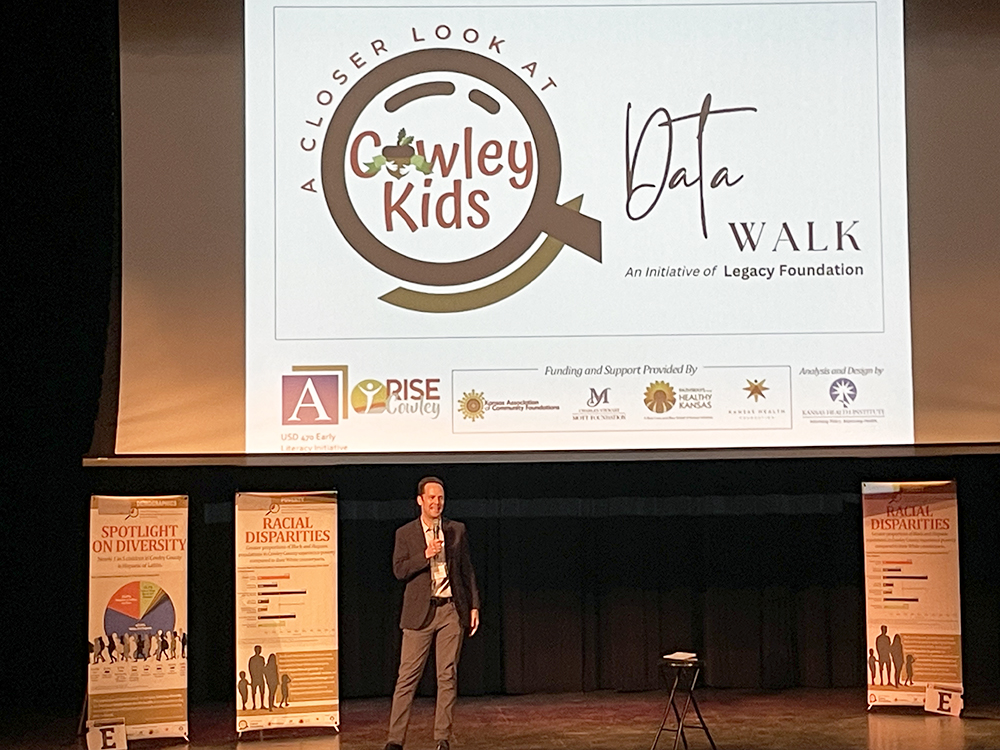
Ed O'Malley speaks at County Data Walk.

Improving health and well-being is a top priority for communities across Kansas. One innovative example of how Kansas counties can mobilize community members to improve health comes from Cowley County.

On November 29, 2022, Legacy, A Regional Community Foundation in Cowley County, in collaboration with RISE Cowley and USD 470 Early Literacy Initiative, hosted an innovative and groundbreaking Data Walk event to engage community partners, including frontline service providers, nonprofit directors, city/county/state officials, school district officials, private philanthropies and passionate community leaders, in a meaningful conversation about improving the health of children in their community.

Read more about Cowley County’s Data Walk, or learn more about organizing Data Walks by visiting: Data Walks: An Innovative Way to Share Data with Communities, a resource from the Urban Institute.

Example 2: Reading Summit Mobilizes Community Members Around Childhood Literacy

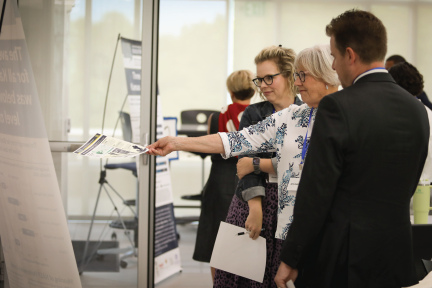
People holding pamphlets, looking at an informational display poster

In Kansas, 7 in 10 4th graders read below a proficient level on National Assessment of Educational Progress (NAEP) standardized tests. To raise awareness and mobilize action toward improving childhood literacy in Kansas, a Reading Summit was held in Andover on June 11, 2024. Approximately 70 educators, community leaders, elected officials and other stakeholders attended the event, where they viewed and discussed seven data posters that spotlighted literacy in Kansas. 

Many factors shape health, including education, economic status, employment and access to essential goods and services. Improving these factors often requires a multifaceted approach that begins with mobilizing the community to act. During the Reading Summit, participants met with other community members and offered new and challenging interpretations of the data as well as unique ideas to get at the root causes of difficulties with reading.

Read the full article at the Kansas Health Institutes website to see the work down by Kansas educators and to see the informational posters presented at the Reading Summit.

Example #3: Data Walk: Strategizing to Advance Kansans' Health

In February 2025, key stakeholders from across Kansas convened for the Kansas Health Foundation's FuseKS event. The event focused on hunger, food insecurity, and poverty across the state. Attendees participated in a Data Walk and were encouraged to interpret the data collaboratively and identify potential policy actions to improve health outcomes in Kansas.

Read more about this information at the Kansas Health Institute website.

PowerPoint
Anonymous (not verified) Tue, 12/11/2012 - 09:13

A PowerPoint presentation summarizing the major points in the section.

Section 3. Gaining Public Support for Addressing Community Health and Development Issues
mloewenstein Tue, 12/11/2012 - 09:14
Main Section
mloewenstein Tue, 12/11/2012 - 09:15
  • What do we mean by gaining public support for addressing community health and development issues?

  • Why do you need public support for addressing these issues?

  • Whose support do you need?

  • When should you try to gain support?

  • How do you gain public support for addressing community health and development issues?

Public support is often the crucial factor in bringing about changes in local conditions. For many issues, the weight of public approval plays a large role in community improvements. This section is about how to gain public support in order to ensure that an issue is addressed. Additionally, this section discusses how to get issues onto the public agenda, where policy change occurs.

What do we mean by gaining public support for addressing community health and development issues?

Real public support is more than people understanding the issue, or even than a number of people being willing to show up and be vocal at a rally or public meeting. You'll have real public support when most people's response to your issue is "Of course we ought to do something about that. What are we waiting for?"

To get to that point, you have to do your groundwork, the work outlined in other sections of this chapter:

  • You have to make sure that the community knows the issue exists.
  • You have to educate community members about the issue, and help them understand its importance.

Once you've accomplished these goals, you're ready to convince people of the issue's relevance to them and the community, so that they'll understand that addressing it is their responsibility and that of the community as a whole. When people accept that responsibility, they'll get behind an effort to address the issue. That's what we mean by public support.

Why should you gain public support for addressing community health and development issues?

This may seem like a foolish question, but it's remarkable how often gaining public support is ignored. Many initiatives or organizations seem to feel that their cause is so obviously just and logical that people will support it automatically. They don't see the need to cultivate that support, and as a result, they often don't get it. Then, when they fail to reach their goals, they can't understand why.

Public support is important for a number of reasons:

  • Public support lends credibility to your campaign for community change. It's not just your organization or initiative that believes your issue needs to be addressed, it's the community as a whole.
  • The more support you gain, the more you'll continue to garner. As Everett Rogers points out, in Diffusion of Innovations, once a certain critical mass of adoption of a new idea is reached, that idea becomes the norm. Once your public support reaches that critical mass, your issue will be, as one perceptive human service provider used to say, "like the fire department." No one will question that it ought to be a community priority, or that community resources ought to be devoted to addressing it.
  • You need support for any action you take. The more public support you have, the more your action seems not only reasonable, but appropriate.
  • If you're striving for a political goal - i.e., a change in law or policy - you need the strength of numbers. Public support means that you can apply more pressure to politicians and officials, and that your pressure is perceived as coming from the mainstream, not from the political fringe.
  • Public support means that the community has taken ownership of the issue, making it more likely not only that it will be dealt with, but that it will continue to be dealt with over the long term. Once the issue is in the community consciousness, it won't disappear.

Whose support do you need?

When we refer to "public support," just whose support are we talking about? The ideal, of course, is that of everyone in the community, but there are some particular individuals and groups to aim at.

The better you know your community and your issue, the more effectively you can target the people and organizations whose support is important to your effort. In the book Agenda-Setting (1996), Everett Rogers and James Dearing point out that on the national level in the U.S., there are two factors that virtually guarantee an issue a place on the agenda: mention by the President (especially in a policy address) and coverage by The New York Times. On the local level, that translates to a mention by the mayor or city council, or an article in the local newspaper.

Conversely, lack of attention by a key person or the media can work against the public's perception of an issue as important, which is often influenced by what the media determines to be important. As Dearing and Rogers illustrate, "In the case of AIDS in the 1980s, President Reagan helped delay the rise of the epidemic on the media agenda simply by ignoring it"

So in your work to gain public support, pay special attention to the following:

  • Community leaders and other influential individuals. Clergy, business leaders, people known for service to the community, local sports heroes or media personalities, and community members with high levels of community credibility all fall into this category. Once you get them on board, many others will follow.
  • Media representatives. The power of the media to further your cause is obvious. If you can enlist some key journalists or media executives, your job will be much easier.
  • People most affected by the issue. Their support also lends credibility to your effort, and gives you a store of firsthand accounts of the issue's effects to use in educating the public.
  • Policymakers. Whether or not you're trying to influence legislation or regulations, it's important to have those who make policy on your side. They can help you keep the issue in the public eye, and their support will gain you that of their supporters as well.
  • Activists. Those who involve themselves in community issues often have a constituency, and know how to make their voices heard.
  • Opinion leaders. In Diffusion of Innovations, Everett Rogers describes these as people who are among the first to try new things or adopt new ideas, and who influence the opinions of others. The more of these forerunners you can attract, the better.

When should you try to gain support?

Gaining public support for your issue is an ongoing process, but there are in fact times and circumstances when a push to gain support can be particularly productive.

When there's a crisis involving the issue.A historic landmark is about to be torn down; the funding for a desperately-needed community health clinic has just been discontinued; the loggers are already starting to clear-cut a patch of virgin forest. Situations like these (unfortunately) present opportunities for gathering public support.

When the issue has reached a point where it can't be ignored. When people experiencing homelessness are freezing to death in doorways because there are no shelter beds available, or when the number of HIV cases skyrockets, people are more willing to endorse efforts to address the issues involved.

When the number of people affected by the issue reaches critical mass. At the point where nearly everyone knows, or knows about, someone affected, the public is generally more than ready to champion attempts to deal with the issue.

When new information calls attention to the issue. A university study showing a local increase in a particular condition or disease, or the publication of an Environmental Protection Agency report uncovering the dumping of pollutants into local waterways can solidify support for what you're doing.

When a publication, or a media story not initiated by you, highlights the issue. A new book or an investigative report can raise public consciousness about your issue, and gain you a larger following.

In 1962, The Other America: Poverty in the United States, by Michael Harrington, galvanized public support for what became Lyndon Johnson's Great Society programs. Harrington brought to the fore an issue that most people had ignored or been unaware of, and changed the political climate to create general acceptance for an anti-poverty campaign.

When a crucial event makes your issue more visible. An event that is not directly related to the issue may nonetheless provide an opportunity for building public support.

With the formation of the European Union came international workplace and product standards. Some American manufacturers realized that they might not be able to compete in the international marketplace unless they addressed the basic skills of their workers. Adult literacy advocates seized the opportunity to gain backing for workplace education.

As a result, many manufacturers formed collaborations with adult literacy organizations or others to provide workplace classes in English as a Second or Other Language (ESOL) and reading, writing, and math to workers. The classes benefited workers individually, but also benefited employers by creating a workforce that could better understand and maintain safety and product standards, and could be more adaptable and productive.

When the political time is right. An approaching election, pressure on politicians or officials to address the issue, or a referendum all might make it a good time to build public support.

How do you gain public support for addressing community health and development issues?

If you've been following the suggestions in this chapter, you've been running a communication and public education campaign to ensure that the community is aware of and understands the issue. Maybe you've found a witty slogan or an eye-catching logo that people identify with your effort. Perhaps you've also been discussing possible actions that could be taken to attend to the issue.

Now you're at the stage where it's important to get the public to take personal and community responsibility for the issue. Achieving that will lead both to officials changing laws and policy, and to individuals changing their behavior to address the issue.

Two types of change

Most changes in the community require a change in official or unofficial policy; others require individual change; and some require both.

Changes in policy are needed where they won't happen otherwise. A few corporations and developers pay attention to environmental considerations, for instance, because they are genuinely concerned about them, and because they see environmental responsibility as part of their responsibility to the community. Most, however, would prefer to be left alone to do as they please, and often don't believe in the seriousness of the environmental consequences of their practices. If they're based elsewhere, they may have little commitment to the communities where they operate. In such cases, laws or regulations are needed to safeguard the public and community resources.

Individual behavior change can lead to community change when the issue is one that's under the control of individuals, at least once they have the right information. Quitting smoking, adopting preventive health practices, and making a commitment to buying organic produce are three examples of actions individuals can take that may result in larger changes in the community.

Usually, however, it takes both policy change and individual change to create change in the community. Recycling won't work unless individuals commit to separating their trash and performing whatever other tasks are associated with it. But it also needs community policies that make it possible - and, even better, easy - to recycle. A parent who harms their child has to come to terms with her anger and learn how to relate to the child in more appropriate ways; but there also has to be a legal mechanism to keep the child from experiencing further harm until that happens, if it happens.

Frame the issue effectively.

Framing the issue means defining both the problem and the context in which it occurs. The way an issue is framed influences how people understand it, whether they see it as relevant to their lives, and whether they are willing to support action. Effective framing helps people connect with the issue and recognize why it matters.

  • Frame the issue in ways that are understandable, relevant, and broadly relatable. Define it clearly and focus on shared values and concerns.

Political battles about issues are often over the framing of them. Michael Dukakis lost the 1988 U.S. Presidential election at least in part because he allowed his opponent to define the major issue of the campaign as one of Liberal vs. Conservative, and to define Liberal as "wanting bigger taxes, soft on crime, and with no respect for the middle class and its values." If Dukakis had instead embraced the Liberal label and framed the election's issues in a different way, he might have had a better chance to win.

  • Avoid unsupported claims or positions that may seem extreme or disconnected from people’s experiences. Ground messages in credible evidence, shared goals, and community perspectives. When strong evidence challenges common beliefs, address those misconceptions clearly. For example, research supports comprehensive sexuality education as a more effective approach than abstinence-only or “just say no” messaging for promoting safer sexual behaviors and reducing unintended pregnancies among adolescents

When misconceptions are widespread, it may be necessary to present clear evidence, reliable data, and findings from trusted research to help people reconsider what they think they know. Effective framing does not ignore facts to avoid controversy; rather, it communicates evidence in ways that are understandable, credible, and meaningful to the intended audience.

  • Where possible, emphasize common ground and universal or near-universal values. "We all want our children to be healthy." "Everyone needs safe drinking water."

Enlist respected community members as representatives and spokespersons.The list of potential spokespersons is long, and similar to that of those whose support your need, given earlier, with a few additions:

  • Clergy and other faith community leaders
  • Business leaders
  • Activists
  • Local entertainment and sports figures
  • Respected community members. These can include people who have no official position, but who are known for their wisdom, dedication to community service, or other good attributes.
  • Elected or appointed officials who are generally believed to put the public good before their own advancement.
  • Opinion leaders
  • Those affected by the issue, either directly (young people who have experienced violence) or indirectly (emergency room physicians who treat young people who have experienced violence.)
  • Recognized authorities on the issue - researchers, academics, professionals, etc.

Make common cause with other groups. Try to draw in other groups that share your concerns about the issue, or that can be convinced that they should.

  • Coalitions.
  • Communities of faith and clergy associations.
  • Neighborhood organizations and other grassroots groups.
  • Agencies or initiatives with purposes or goals similar to yours. A campaign to prevent youth violence, for instance, might find common ground with Big Brother/Big Sister, the schools, youth leadership organizations, and other groups concerned with child welfare.
  • Professional organizations concerned with the issue.

Become the authority. Always do your homework, and be able to counter arguments against your effort. You should know as much as possible about your issue, and should be able to demonstrate why addressing it is necessary, and why it needs to be addressed in particular ways (if that's part of your campaign).

If you can't counter arguments against it, then it may be time to rethink your position. Is some of your thinking inaccurate? It's better to do what's most helpful for the community than to make yourself look good by not admitting that you're wrong.

Take advantage of opportunities. When those events that we discussed above in "When should you try to gain support?" come up, use them. Point out how they demonstrate the need to address the issue. Employ your knowledge and status as an expert to show people what could be done to change the situation. Never let a chance to gain support pass you by.

Use the media. By establishing a mutually beneficial relationship with local newspapers, radio, and TV (including the citizen-access cable station), you can get your message out to the public, and build a base of public support.

Use the Internet. A community website, an on-line forum or chat group or listserv, a large e-mail list - all of these can be effective tools for building community support and keeping people informed. They also provide a fast and easy way to organize supporters for action.

Gain support one individual and organization at a time. Often, public support gets built through many personal contacts over time.

Once you have an individual on board, perhaps you can persuade her to host a house party of her friends and acquaintances to discuss the issue, or to participate in a community presentation. Perhaps she'll just discuss the issue with her friends, who'll discuss it with their friends. You can reach a lot of people that way.

People trust most those whom they know best. You can gain an enormous amount of support, especially in a close neighborhood or small town, just by word of mouth. Don't pass up the opportunity.

Ask people to do something, rather than just telling them about the issue. People are more likely to support you if they can feel effective in doing so. Giving them an opportunity to influence the results of addressing the issue gives them ownership of the process. Some things the public might do:

  • Write, call, or e-mail politicians to advocate.
  • Report instances of abuse, drug dealing, child malnutrition, etc.
  • Join a neighborhood watch or other active group.
  • Change their behavior, if only temporarily: stop smoking for a day, get their blood pressure checked, talk to a person experiencing homelessness.
  • Go to a meeting or rally.
  • Volunteer, either with a direct service organization, or for an initiative or coalition.
  • Hold a house party or home-based meeting to discuss the issue.

Create activities or events that highlight the issue, and also involve the public. Examples include organizing the clean-up of a vacant lot with volunteer labor, and a "Take Back the Night" evening rally against street violence. Each of these events also implies a follow-up: the first could result in turning the now-neat lot into a neighborhood playground; the second could evolve into a neighborhood watch program or a campaign to reclaim the nighttime streets for the law-abiding.

As your support grows, demonstrate it at every opportunity. Most people want to be in the majority. If they're convinced that supporting you is backing a winner, they'll do it.

Recognize and give awards to community members who do things to affect the issue and demonstrate their support for your work.

  • Politicians who support your cause, and try to change policy accordingly.
  • Community volunteers who work on your issue.
  • Organizations - or their directors or staff members - that do an outstanding job on your issue.

When you give an award or hold a recognition ceremony, be sure to have the media present.

Celebrate accomplishments publicly.

Cede control of the effort to the community, if that's feasible. A community may be more willing to support something that's seen as an indigenous, grassroots effort. You and your organization should remain involved, but not necessarily as the leader of the effort. Whether community control makes sense in your community depends upon the situation, and what needs to be done.

Follow up and maintain support. Once you've gained public support, you have to keep it. Don't take the support of any individual or group for granted, but continue to maintain contact, and to court their backing. Continue also to expand your base of support, adding new people and groups at every opportunity. The ideal here is that every single person and organization in the community will support your effort. You'll probably never reach that goal, but if you try, the chances are you'll develop solid and powerful community support that will make sure your issue is addressed.

In Summary

Real public support for addressing issues is more than simply public knowledge of those issues. Rather, it implies that most people see them as needing to be dealt with as quickly as possible for the good of the community.

Public support is crucial, because it lends credibility to your efforts, helps you gain further support, provides strength for action or political pressure, and creates community ownership of and responsibility for measures to deal with the issue. In order to build that public support, you need support first from key individuals and groups in the community - trusted figures from various walks of life to whom people listen, or whose credibility is high because of their involvement in the issue.

Building public support is an ongoing process - indeed, it should never stop - but can be especially effective when the issue is highlighted by a crisis, or by particular events or situations. New information or publications that draw attention to the issue can also be used to advantage, as can political opportunity. Any time the issue is before the public is a good time to try to enlist community support for addressing it.

Actually obtaining community support requires attention to several concerns:

  • Define the issue. This includes framing it properly, recruiting the right people as representatives and spokespersons, making common cause with other organizations, and becoming recognized as the authority on the subject.
  • Communicate with community members. Use every possible opportunity - both those that present themselves by circumstance, and those that you create - and every possible avenue - the media, the Internet, person-to-person communication - to build public support.
  • Ask people to do something that will help them feel they're having an effect on the issue and encourage them to take ownership of finding and executing a resolution to it.
  • Advertise your support and your accomplishments. Stage activities and events, give awards, celebrate your successes, issue bulletins on the extent of your support. Let the community know that you're a public movement, with a broad community foundation.
  • Give over control of the effort to the community, if that's possible, thereby further establishing your grassroots credentials.
  • Follow up and maintain your support indefinitely.

It's almost impossible to address community health and development issues effectively without broad-based community support. If you can use the strategies suggested here to gain that support, you're well on your way to meeting the health and development needs of your community.

Contributor

Phil Rabinowitz

Resources

Online Resources

3 Tips for Telling Stories That Move People to Action, from the Chronicle of Philanthropy, presents research on how to frame stories about social issues and trains advocates to create change based on that research.

Community-Based Projects Help Scholars Build Public Support. An article about community-based research and public support from LOKA, a non-profit in Amherst, MA.

The Collaboratory for Community Support, an Ann Arbor, MI, research and consulting firm that helps communities generate cross-sector, comprehensive approaches to dealing with community issues.

Engaging Public Support for Teachers' Professional Development, An article from the NEA Foundation for the Improvement of Education (the National Education Association is America's largest teachers' union). A description of some local efforts

Healthy Communities Resources from TomWolff.com
Information and links on building healthy communities from Tom Wolff's website.

Print Resources

Dearing, J., & Everett M., (1996). Agenda-Setting. Thousand Oaks, CA: Sage Publications, Inc.

Rogers, E. (1995). Diffusion of Innovations. New York, NY: Free Press.

Checklist
mloewenstein Tue, 12/11/2012 - 09:15

What do we mean by gaining public support for addressing community health and development issues?

___You know that community support for addressing an issue means that most people in the community see resolution of the issue as extremely important to the well-being of the community, and want to accomplish it as quickly and effectively as possible.

Why do you need public support for addressing community health and development issues?

___You seek public support for community credibility.

___You seek public support in order to gain more support.

___You seek public support in order to take action on the issue.

___You seek public support in order to accomplish political goals concerning the issue.

___You seek public support to foster public ownership of solutions and their implementation.

Whose support do you need?

___You seek the support of community leaders and other influential individuals.

___You seek the support of representatives of the media.

___You seek the support of those most affected by the issue.

___You seek the support of policy makers.

___You seek the support of community activists.

___You seek the support of opinion leaders.

When should you try to gain support?

___You seek support when there's a crisis involving the issue.

___You seek support when the issue has reached a point where it can no longer be ignored.

___You seek support when a critical number of people have been affected by the issue.

___You seek support when new information calls attention to the issue.

___You seek support when a publication or media story calls attention to the issue.

___You seek support when a crucial event bring s the issue to the fore.

___You seek support when the political time is right.

How do you gain public support for addressing community health and development issues?

___You frame the issue carefully.

___You enlist respected leaders and other members of the community as representatives and spokespersons.

___You make common cause with other groups.

___You establish yourself as the authority on the issue.

___You take advantage of opportunities.

___You use the media.

___You use the Internet.

___You gain support one individual and group at a time.

___You ask people to do something specific.

___You create activities and events to highlight the issue.

___You demonstrate your broad base of support as often as possible.

___You recognize and reward community members for their efforts.

___You publicly celebrate your successes.

___You cede control to the community if possible.

___You follow up and maintain support.

Examples
pschneider Mon, 07/03/2017 - 15:48

Example: The Kids Who Killed an Incinerator

Destiny Watford was a high school senior, she learned that the country’s largest trash incinerator was going to be built less than a mile from her school and the house where she lived with her family. The proposed facility would be built on a 90-acre tract in her Baltimore neighborhood, and had the eager support of state and local political leaders, who praised it as a job-creating, green-power initiative. Watford, an introverted and diligent student, hadn’t thought much about environmental issues. But a facility that would burn an immense amount of garbage near her community, even with the promised sophisticated air filters, didn’t seem celebration worthy. So she partnered with a handful of her fellow classmates from Benjamin Franklin High School to learn as much as possible about the proposed incinerator. Watford and her classmates caused community activists in Baltimore to target over twenty government agencies that had contracts with the incinerator, ultimately leading to the demise of the incinerator project.

Read more about The Kids Who Killed an Incinerator.

Contributed by Lia Thompson, University of Kansas, Community Tool Box Intern.


PowerPoint
Anonymous (not verified) Tue, 12/11/2012 - 09:16

A PowerPoint presentation summarizing the major points in the section.

Section 4. Talking About Risk and Protective Factors Related to Community Issues
mloewenstein Tue, 12/11/2012 - 09:17
Main Section
mloewenstein Tue, 12/11/2012 - 09:18

As members of coalitions or agencies involved in health promotion or community development activities, one of our goals is often to help change people's attitude toward health from one of treating existing problems to preventing those problems from happening at all. To do so effectively, however, we can't just tell people to not let the behavior happen -- we can't just say, for example, "Don't have a heart attack." Instead, we need to give people the tools they need to be able to prevent that heart attack from happening.

After a problem has occurred, we've all heard someone say, "If only we had acted sooner, we could have prevented that." To be able to do that effectively, it is important to understand when and where we could have acted. To orient people to these appropriate places, we talk about risk and protective factors.

What are risk and protective factors?

Risk and protective factors are aspects of a person's environment or personality that make it more likely (risk factors) or less likely (protective factors) that she will experience a given problem. Some risk and protective factors can be considered flip sides of the same coin. For example, a family history of alcohol use disorder might be considered a risk factor for someone becoming an person with alcohol use disorder, whereas growing up in a family without such a history may be considered a protective factor. You should talk about these risk and protective factors when you are communicating information about your project and the issue it focuses on to community members..

Most of us are aware of the risk factors for heart disease -- including lack of exercise, a high-fat diet, and smoking -- because of the huge educational campaigns that have been conducted. We may or may not have actually changed what we eat and what we do because of that knowledge, but without it, we wouldn't know where to begin.

All issues have risk and protective factors that can lead us to make our communities healthier. Some of them are well known, and have been well documented in existing literature. Others are more difficult to identify, because they are just now being studied.

Some of the risk and protective factors for adolescent substance use, for example, include those identified by researchers David Hawkins and Richard Catalano:

  • Economic deprivation
  • Availability of substances
  • Family history of drug abuse
  • Academic failure
  • Having friends who use drugs

Some of the protective factors they have found for substance use include:

  • Bonding -- that is, having close relationships with people who do not use drugs
  • Skills training -- children are given responsibilities at home, and are also given enough training to carry out those responsibilities
  • Healthy beliefs and clear standards -- that is, being surrounded by people who have beliefs and standards which are clearly against the use of drugs .

For Hawkins and Catalano, risk and protective factors are not flip sides of the same coin; instead, they are various important influences (positive and negative) of a young person's life.

Why should you talk to community members about risk and protective factors?

There are a lot of good reasons to talk to community members about the risk and protective factors for your particular community issue, including the opportunity to reroute the universal focus toward productive mindsets, like those that follow.

Focus on prevention. By focusing on risk and protective factors, you help shift people's focus from a reactive approach to one that is preventive in nature. In the past, the focus in public health and community development has been more of a "clean-up" approach. If someone had a heart attack -- and if he survived it -- then afterwards, he was chided to stop smoking and cut down on butter. Many programs have been set up to help a person with an alcohol use disorder stop using alcohol, and to help former people with substance use disorder maintain recovery. All of this is important, of course, but alone, it's not enough. Fixing what is broken is only half the story; we must prevent the problem from happening altogether.

Focus on costs. There are both financial and social costs that can be reduced. How is that? Consider the following examples:

  • When someone uses drugs, it becomes expensive to repair the resulting emotional, psychological, and monetary damage to his family. Preventing that drug use from happening at all costs much less in many ways.
  • It's cheaper to help a teenager finish high school and get into college than it is to pay for the help she needs to raise a family as an unskilled worker.
  • The financial and human costs of teaching youth about sexually transmitted infections (STIs) such as HIV are much, much lower than paying for the treatment necessary after they have contracted a disease.

Focus on benefits.  By focusing on risk and protective factors, you ask the public to consider what they can do to prevent heart attacks, and how we can keep people from trying drugs at all. It's an approach with a lot of benefits. When young people stay healthy, they grow to be productive community members who are happier, and who can better support their families, friends, and neighbors. Not only is this approach cost-effective, but, more importantly, it reduces human suffering and improves our quality of life. Treating cancer with radiation may work, but the patient's life may still be miserable. It is better, if possible, to prevent the cancer in the first place.

Focus on awareness. By talking about the risk and protective factors, you can increase the public's knowledge of your program and the issue with which you are concerned. If handled correctly, this information can give you the media coverage you are looking for to raise awareness of the issue. Why is this important? Because talking about risk and protective factors helps people understand that there is something they can do, that it's not too late, and that they really can be part of the solution. They can be part of improving -- or even saving -- people's lives. It's a pretty strong lure. Treatment is something doctors do, but almost everyone can be part of a prevention strategy. You don't need a lot of training to volunteer to work with children at your neighborhood school, nor do you need a lot of letters behind your name to work with the Girl Scouts. Both of these activities, though, may well provide the protection necessary against unhealthy actions such as substance use.

How do you talk to community members about risk and protective factors?

So, how do you go about informing the public of these risk and protective factors? It's really quite easy, and probably can be slipped into your current media and communications plan without too much effort. You should:

Know the important risk and protective factors for your issue. Write a list of all of the factors ranked in order of importance. This list might be only for internal use in your agency to clarify the issues involved for yourself or your fellow staff members. It might also be something you'll want to make public, as we'll see later in this section.

Document each risk or protective factor for your issue.The last thing you want to occur is to be talking about a risk factor and not be able to answer the question, "How do we know that it's really a risk factor?" Through published research (such as the example on adolescent substance use given above) or studies of your own, you should be able to give a scientifically valid response to any naysayers you might encounter.

Decide what, exactly, you want to achieve by talking about risk and protective factors.

Do you want to raise awareness of the issue or of your organization?

Then you will want to speak (or write) clearly and concisely about the factors you are discussing. Explain clearly:

  • What these terms mean. For most people outside the fields of public health and community development, the terms risk factor and protective factor are just a jumble of jargon that is difficult to understand and can quickly turn your audience off. Use friendly, everyday language to explain them. Alternatively, you might want to get rid of the shoptalk altogether. A skilled communicator might start by listening to a group's concerns and asking them what is causing the problem, as opposed to talking about risk factors. Instead of protective factors, he might also talk about the things people can do to help lessen the problem.
  • What the risk and protective factors (or whatever you have chosen to call them) are for your problem. Here, you can use the list of factors you developed in step one above.
  • What the significance of the problem is for your community. Going barefoot may well be a risk factor for contracting certain types of intestinal worms in the tropics, but if you live in Alaska, where these worms don't exist, it won't be of much concern. Show people why the problem is important for them and for their neighbors.
  • What your organization is, and what you are doing to correct the problem. Explain why your organization exists, its history, and the activities you are engaged in to solve the problem. This is a great chance for you to further understanding of your program and to garner additional support. Capitalize on the interest you have generated -- you might gain some enthusiastic volunteers in the process!

Do you want people to take action?

Then you will want to give clear, feasible suggestions as to what may be done. Do this immediately after stating each risk or protective factor to emphasize that the issue is a solvable problem, as well as to make sure the factor is still at the front of people's minds. For example, if your goal is to change people's diets in an attempt to reduce the likelihood of cardiovascular disease, you might use the following in an article on health tips in your community newsletter.

Studies have shown that eating too much red meat is a risk factor for cardiovascular disease. What can you do to put yourself at a lower risk for this life-threatening disease?

You can:

  • Eat red meat no more than once or twice a week.
  • Don't waste those occasions you do eat red meat on a greasy hamburger at the office cafeteria. Save them instead for special occasions, such as a steak on your anniversary or enjoying your neighbor's annual barbecue.
  • Think chicken and fish are boring? Think again! Expand your repertoire of recipes using chicken or fish. The following recipe is for salmon steaks marinated in lemon-wine sauce. Delicious!

Choose your battle.Talk about those factors that you have determined are important in your community, and for which you intend to suggest a solution. Spending a lot of time on a risk factor you don't intend to do anything about may make you look ineffectual. Therefore, you may not want to speak about every risk and protective factor you have uncovered. If your plan is to try to reduce pregnancies among adolescents by implementing sexual education in schools, for example, you'll want to talk more about lack of knowledge as a risk factor than about the need to boost girls' self esteem. That doesn't mean playing down the other, no less important, factors, or ignoring them altogether. It just means focusing on the ones you plan on tackling.

There are two exceptions to this: when you are talking to a very specific audience (such as grantmakers who are looking for a holistic view of your problem and program), or when you are simply intending to give a brief overview of risk and protective factors. At both of these times, it is appropriate to discuss all of the known risk factors for your issue.

Know your audience, and tailor your message to those with whom you are communicating. For example, a local businesswoman may not be able to do anything directly about the fact that many young people have friends who use drugs, but she might be able to offer mentoring or possible job opportunities to youth experiencing increased risk.

Think about what else you're saying. When discussing a sensitive topic, a poorly planned turn of a sentence can do a great deal of harm. You might have the best of intentions in mind when you send home a list of risk and protective factors (for substance use, or pregnancies among adolescents, or violence) with a class of fourth graders. The student or parent reading the list, however, might understand it differently. If the student has several of the risk factors on the list, she might feel like there is something wrong with her; a parent might become angry and resentful. Hurt feelings and indignation may result, helping no one and making common goals even harder to attain.

Decide which form of communication is most appropriate and most feasible for you to use when discussing risk and protective factors.

  • One-on-one discussion. You can always talk casually about risk and protective factors when you are discussing your issue with someone. This could take the form of an informal conversation that occurs at the grocery store with a neighbor who is concerned about the recent escalation in youth violence. This doesn't need to be a treatise; it can be as simple as: "You're right, it really has gotten worse. It's a shame we don't have more after-school activities [meaning, this is a protective factor] to keep children busy and off the streets. You don't have any ideas about what activities we could do, do you?" This discussion could also take the form of a more formal talk with another coalition leader. The important thing to remember is that it's always a good time to talk about risk and protective factors.
  • Brochure/Flier/Fact sheet. All of these are good ways to get a lot of information to a broad audience. Specifically, these are excellent when you just want to give an overview of risk and protective factors, or when you want to suggest ways to reduce personal risk factors, such as in the example of cardiovascular disease given above. They are less helpful when you want specific feedback, or you are trying to mobilize people to do something with your coalition.
  • Editorials or articles in the local paper or your newsletter. These have many of the same advantages and disadvantages of brochures, fliers, and fact sheets. If you are writing for the local newspaper, especially, you will reach a very wide audience, but keep in mind that local newspaper can often be battlegrounds if messages are presented inappropriately. Also, be sure to list a phone number or another way to contact you for feedback or more information.
  • Presentations. A final way to communicate information about risk and protective factors is by giving presentations on them as they relate to the issue with which you are working. In addition to providing information, this gives you the added advantage of being able to answer any questions people might have. Further, a good presentation can excite people to action. You have the possibility of "gettin' 'em while they're hot" with a sign up sheet (or similar tool) at the back of the room in which you present. A possible disadvantage is you may reach a smaller audience than you would with a written document.

Evaluate what you have done. Consider how you will determine if your communication has been a success. Does your audience have a clear understanding of risk and protective factors? Did you motivate them to act? How will you decide on these things?

In Summary

Talking about risk and protective factors, in short, is an excellent way to help people begin to think about prevention. Instead of focusing on treatment, more of our efforts can be directed towards preventing problems from occurring at all. Allow yourself to imagine, just for a second, the possibility of a world without the problem you have been struggling to overcome. Maybe it's a world without child abuse; a world where even the word 'alcoholic' has disappeared; or a world where you could safely walk down the streets of any city at any hour of the day or night. This world (where you've worked yourself out of a job!) is one that's worth all of us giving our best efforts to achieve. To reach it, we need to focus our efforts at the places where they will do the most good.

Contributor

Jenette Nagy

Resources

Online Resources

Chapter 12: Prevention and Promotion in the "Introduction to Community Psychology" describes historical perspectives on prevention and promotion, the different types of prevention, examples of risk and protective factors, and various aspects of prevention programs and evaluation.

Print Resources

Benson, P. (1996). A national initiative to embrace kids. Brotherhood Bond.

Dryfoos, J. (1990). Adolescents at risk. New York, NY: Oxford Press.

Gardner, S., Green, P., & Marcus, C. (Eds.). (1994). Signs of effectiveness II. Preventing alcohol, tobacco, and other drug use: A risk factor/resiliency-based approach. Washington, D.C.: U.S. Department of Health and Human Services.

Green, L. (1992). Promoting comprehensive interventions. In H.D. Holder & J . M. Howard (Eds.), Community prevention of alcohol problems: Methodological issues. Westport, CT, and London: Praeger.

Hawkins, J., & Catalano, R. (1993). Communities that care. San Francisco, CA: Jossey Bass.

Kansas Department of Social and Rehabilitation Services and Alcohol and Drug Abuse Services. (1994). Directions. [Brochure]. Topeka, KS: Author.

Massachusetts Department of Public Health, Bureau of Substance Abuse Services. (1994). Community organizing for prevention: The first steps. Boston, MA: Author. [Available from The Medical Foundation, 95 Berkeley Street, Boston, MA 02116]

U.S. Department of Health and Human Services, CDC: National Center for Chronic Disease Prevention and Health Promotion, Work Group on Heath Promotion and Community Development. (1995). Evaluating community efforts to prevent cardiovascular disease. Atlanta, GA: U.S. Department of Health and Human Services.

U.S. Department of Health and Human Services. Planned approach to community health: Guide for the local coordinator. Atlanta, GA: U.S. Department of Health and Human Services, Department of Health and Human Services, Centers for Disease Control and Prevention National Center for Chronic Disease Prevention and Health Promotion

Checklist
mloewenstein Tue, 12/11/2012 - 09:18

___You understand that risk and protective factors are aspects of a person's environment that make it more likely (risk factors) or less likely (protective factors) that she will experience a given problem.

You understand that risk factors for adolescent substance use include:

___Economic deprivation

___Availability of substances

___Family history of drug abuse

___Academic failure

___Having friends who use drugs

You understand that protective factors for substance use include:

___Bonding with non-users

___Skills training

___Healthy beliefs and clear standards

You understand that you should talk about risk and protective factors with community members for the following reasons:

___To focus on prevention

___To focus on costs

___To focus on benefits

___To focus on awareness

You understand how to talk about risk and protective factors:

___You know the important risk and protective factors for your issue.

___You have documented each risk or protective factor.

___You have decided exactly what you want to achieve by talking about risk and protective factors (enhance knowledge or convince people to take action).

___You have chosen your battle.

___You know your audience, and have tailored your message to those with whom you are communicating.

___You have thought about what else you are saying.

___You have decided what form of communication is most appropriate and feasible.

___You have evaluated what you have done.

PowerPoint
Anonymous (not verified) Tue, 12/11/2012 - 09:19

A PowerPoint presentation summarizing the major points in the section.

Section 5. Making Community Presentations
mloewenstein Tue, 12/11/2012 - 09:19
Main Section
mloewenstein Tue, 12/11/2012 - 09:20


Photo of a blank canvas hanging on a brick wall with exposed lightbulbs around it, suspended from the ceiling.


What is a community presentation?

One very effective way to educate and involve people in your community is to make a presentation. A "community presentation" is a live, face-to-face description of your viewpoint to a local group. Community presentations can be done in many formats -- through public speeches, informal talks, town meetings, debates, workshops, or seminars. This is just a partial list.

But all these presentation formats have qualities in common. First, their purpose is to discuss problems, issues, action plans, or goals for the community. And second, their success (and yours) will depend upon use of some basic principles of communication, which we plan to describe in this Tool Box section.

Have you ever fantasized about giving a presentation and receiving loud cheers and a standing ovation? In real life, you may not always be able to move people to their feet; but with preparation and practice, you can certainly become more skilled at moving their hearts and minds closer to your point of view.

Why should you make community presentations?

  • To increase community awareness and understanding of your issues
  • To increase community awareness and understanding of you and your group
  • To increase community support for you and your group
  • To encourage community involvement and action regarding your cause

When should you make community presentations?

So when should you make these presentations? Some situations will certainly be better than others. And among the best situations are when:

  • Community awareness or knowledge about the issue is low
  • You have new or important information about the issue to present
  • The community is receptive to such information, and not locked into an opposing position
  • Action needs to be taken quickly

How do you make community presentations?

Stare into your past, and you probably have some presentation experience, of one kind or another. You may have made presentations at work, for school, or for a community organization you have belonged to. So chances are you already know a few of the basics. But can you increase your current presentation ability, and move up to the next level of skill? We think so.

A successful community presentation has three key elements, or stages: the right background conditions, the right preparation, and the right delivery. Each of these stages has several steps within it. The stages, and the steps, are described below, in order:

Decide on the best communication format

Many different formats for getting your message across are available to you. Certainly, using advertising, local radio or television announcements, mass mailings, door-to-door solicitations, telephone calls, and personal invitations can all be important parts of your communication strategy. You may also want to consider holding town meetings, public forums, listening sessions, seminars, or workshops to discuss issues, goals, and action plans.

Check on who the audience will be

Ask yourself: "Who is likely to attend this presentation?" This is important, because you will want to address their particular needs and concerns. If you expect neighborhood activists, that's one type of audience. If you expect local businesspeople, that may be another situation entirely. What you say, and how you say it, may need to vary accordingly, sometimes by quite a bit.

If you were invited to speak by a particular group (the League of Women Voters, the interfaith association, the local hospital) that invitation will certainly give you a clue. If there's no specific sponsor, you can still make a best guess of your audience, based on your knowledge of the community and on attendance at past presentations. You can also ask other well-placed community members for their insights.

Here are some more specific questions you should ask yourself (and possibly others) about your prospective audience:

  • What will be the audience's likely age range? Education level? Values? Cultural or ethnic background?
  • How have you been described to them?
  • How interested are they in your topic?
  • What (and how much) do they already know about it?
  • What does the audience expect of you?
  • What do they expect from your presentation?

Recruit the audience members you want

Now, ask yourself: "Who do I want to be there?" over and above those who are likely to come. This is especially important, because you can try to recruit those people. You can do this indirectly, by publicizing your presentation to your desired priority groups. Or you (or your supporters) can do it directly by individual letter, by phone, or in person.

Are you talking about street safety?   Recruit crime watch leaders.

...about childhood diseases? Recruit school health nurses.

...about youth sports? Recruit youth leaders and coaches.

Know the presentation setting

In addition to information about your audience, you should also learn about the location and setting of your presentation. For example, how big is the room? How will the room be set up? What audio-visual equipment is available?

The right physical arrangements can go a long way toward ensuring your success. Here is some specific advice:

  • Visit the room well ahead of time. Check the seating arrangements, your own speaker's position, and anything else in the environment that will make a difference to you (such as electrical outlets, lighting controls, ventilation). If you have recommendations for changes, don't be shy; make them; then do your best to see they get attended to.
  • Make sure you have the audio-visual equipment you need. Learn how it works; make sure it is working. Try it out a few days before your presentation, and just before the presentation itself, to reduce the chance of equipment failure. (If using projectors, have a spare bulb on hand.)
  • Find out who can help you with last-minute room arrangements or equipment adjustments. Try to make sure that person will be there before the presentation starts. More than one presentation has suffered because someone forgot the key to the room; don't let this happen to you!

The right preparation:

Now you are ready to plan the presentation.

Clarify your objectives

Before you present to the community, you need to be clear on exactly what you want to get across. What is the basic objective you want to achieve?

For example, you may be trying to gather support for a program to inspect older houses for lead paint. Your specific objective might be to convince the town to fund this program and begin it within six months. (Tip: It helps to write your objectives down.)

How can your presentation help reach this objective? You might decide to speak on lead poisoning of young children in your community. A well-done presentation here could convince others about inspections. In that case, you'll need to decide on the key points you want to make about lead poisoning. These should be directly related to the inspection program you are advocating.

Write down these points. This will help you focus your presentation outline, which is the next step coming up.

Develop an outline

Just as in other presentations you may have done, you will want to develop an outline covering your main points or issues. Your outline is the overall plan that will guide you through your presentation.

Presentation outlines often have a similar sequence, which commonly includes:

  • A general overview
  • A history or background of the issue
  • A description of the current situation or problem
  • Your proposed solutions -- often together with requests for action
  • A summary

Will this sequence work for you? Very likely so. But if you think a different sequence would be better, then by all means try it out.

The content of your outline should be based on your objectives above, and include the main points you want to get across. For more, see Heading #10, "Bring them to their feet," below.

Select your materials

Now that you have an outline, you need to find and develop materials to include in the content of your presentation. You may want to collect things such as newspaper articles, quotes, reports, data, stories, and anecdotes to support your key points . Even for a 10- or 15-minute presentation, having this material available will help you prepare, and will serve as reference backing if audience members have questions for you.

Next, sort through this material and pick out the best items to use. What is most relevant here? What will best support and enhance your presentation?

Creating Visual Aids: Types and Tips

Visual aids in your presentation can improve your audience's attention, as well as its retention of what you have to say. This is because people remember more if they hear and see something, compared to if they only hear it alone. Good visual aids will be simple, clean, eye-appealing, and easy to see or read. Some types of visual aids you might use are:

  • Chalkboards, or whiteboards. These are especially useful in small groups, and can help with participation and audience interaction.
  • Flipcharts. You can prepare these in advance (with multiple colors), and use them as audience participation tools.
  • Overhead transparencies. These are useful to project hand-drawn images, pictures, and text. You'll need to use an overhead projector. Note that transparencies can also be used to write upon while you talk.
  • 35mm slides. Slides can be made for written information as well as for pictures and graphics. These work well with large audiences, as they can be projected on screens.
  • Handouts. Handouts should be short summaries of the key points and information in your presentation, together with contact addresses and numbers. You can distribute them either before your presentation, so people can look them over and follow technical information, or after your presentation is finished. (Don't hand them out during the presentation, because it will distract people from what you are saying.)
  • Live demonstrations. These can be compelling if they are well-rehearsed and visible by the entire audience.

Whatever visual aids you decide upon, here are some basic rules and tips you can use to design them:

  • Limit each overhead, slide, or poster to one main idea.
  • For each graphic, use no more than 6-8 lines of text.
  • Use key phrases rather than sentences. Use plain language. Avoid jargon.
  • Use bulleted lists for key points.
  • Double-space between lines of text.
  • Use large, bold, serif type fonts. (This font has serifs.)
  • Make sure the audience can read the text. (To check on this, look at the graphic from the back of the room.)
  • As you present a graphic, read and clarify it to your audience.
  • Only show information you plan to discuss.
  • In designing graphics:

    * A horizontal bar chart helps compare one category among several others.

    * A vertical bar chart helps focus attention on change over time.

    * A line graph can be used to show data for several time periods, or trends.

    * A pie chart helps show the amount of each variable as a percent of the total.

  • Turn off the lights on the projector when you have no images to project.
  • Keep any visual aid before the audience only as long as it supports your oral presentation. And don't distract the audience with the next slide or visual aid before you are ready to talk about the material on it. Keep it covered.

Practice!

The content of your presentation is very important, and well worth spending extra time on. But equally important is the upcoming delivery of the presentation itself. The key to this is simple: practice. The more you practice, the more you will grow comfortable with the material, and the greater your impact will be.

Tips to help you practice effectively

  • Practice in front of a mirror -- you can see your facial expressions, gestures, and stance.
  • Practice in front of others -- family, friends, colleagues, and anyone else who will listen. A live rehearsal is one of the best forms of practice. Hopefully, your practice audience will give you constructive feedback to improve your presentation when the real thing comes.
  • Practice using a video camera or audio recorder -- again, you will be able to see and hear what you are doing well, and what could be improved. (The camera doesn't lie; it's an excellent teaching technique.)
  • Practice reading aloud -- and when you do, practice sounding relaxed and natural, not like you're reading from a script.
  • Practice breathing and relaxing -- as silly as it may sound, when you are nervous, your breathing becomes shallow; this deprives you of oxygen and makes it harder to think clearly.
  • Practice with a clock -- do a practice run-through of your presentation for time, and see how close you are to the time available to you. You don't want your presentation to be either too long or too short.
  • Practice maintaining eye contact with the audience. Don't keep your eyes locked on your notes or one side of the room. Scan the entire audience frequently.
  • Practice paying attention to how your words are delivered. Are you speaking clearly? Are you speaking too rapidly or too slowly? Are you speaking expressively, rather than in a monotone? Once again, feedback from live listeners or from recording equipment will help you here a lot.

Another powerful practice technique is visualization. Visualize yourself giving the actual presentation, with the real audience there. Visualize how you will bring home your ideas, both in your words and in your manner. Play that mental movie, more than once. Experts have learned that this "visual practice" leads to real performance improvement in areas ranging from singing to skiing -- and in community presentations too.

Use your notes

Now comes the time to deliver your presentation. Your message is important, and you're comfortable with the facts. But you will need more than the facts; you will need to connect with and involve your audience as well. How can you educate, and convince, and inspire them around your issues?

If you are an experienced public speaker, or have presented on the same issue many times over, it may be that all you need for your presentation is your basic outline, or even less.

But if you're like most of us, you will have a longer set of notes, or the written-out talk itself. Keep your notes organized and well-ordered, with each main topic on a separate page (or cue card); with clear headings; with large letters; and with different colors to accentuate key points.

Your notes are the basic foundation of your presentation. They will help you be as convincing and inspiring as is possible. Once you are under way, you can stray from your notes to a degree; but it's always good to have them there to return to!

"Bring them to their feet" (Convince your audience)

Speech-making is thousands of years old. There are a lot of tricks of the trade. Let's put them into a nutshell:

  • Your opening sentences are key to grabbing your audience's attention. First impressions count! Your introduction should be memorable, brief, and to the point. Stories, quotes, and sometimes humor are all ways of getting people's attention and keeping it.
  • Once you've gotten attention, let your audience know what to expect. State your purpose, and preview the rest of your talk.
  • Make eye contact with your audience. Connect with them. They will let you know -- by expression and by posture -- how well you are reaching them. Be guided by their feedback, and make mid-course corrections if needed.
  • In the middle of your presentation, present your key facts and ideas. Again, stories, examples, and evidence will help get your message across. But don't waste words, especially if time is short. Make every word count.
  • Evidence is important. Cite facts and figures. Comparisons with other communities are often effective. But don't overwhelm your audience with too much information, because people may tune out. Keep it simple, relevant, and understandable. Some printed literature you bring with you can provide additional details.
  • Make sure to highlight your main points. Underline them, verbally or through your visual aids. And repetition helps, up to a point; repeating your main ideas, in different phrasing, will increase retention.
  • Speak with personal conviction about your topic. You have it; so show it. And you may have emotions as well as convictions. Use them, too -- which doesn't mean you should let every single feeling show. Generally speaking, you should draw upon your emotions, but keep them under control, and put them in the service of your presentation.
  • Your goal may include action; so as you begin to close, show what action is necessary, and why. The desired actions should flow naturally from the evidence you have presented. Make any desired action steps very specific; and show very clearly how audience members might take them.
  • Your closing is at least as important as your opening. Sum up your main points; repeat the need for action; show how your proposed actions are immediate and doable; appeal to the values and concerns you all share; and (at this time, especially) do it with feeling. Aim for a lasting impression here, and end on a high note.

Explain
The importance of the issue

Present
Facts

Sum up with
Conclusions

Show
Possible actions

Personalize the
Actions we can take

Questions and Answers

Your presentation has ended, and your audience has applauded. Congratulations on a job well done! But the event is not quite over. In the large majority of presentations, the audience will have questions. Your response to those questions can convince many remaining doubters, and bring them over to your side.

The best way to deal with questions? Prepare for them in advance. It's usually not hard to anticipate the questions you're most likely to receive. And if you can do that, you can also prepare general answers to them (once again, notes help), and be ready with them if the question arises. The greater your preparation, the more effective your answer is likely to be.

Some general tips:

  • Listen carefully to each question.
  • Paraphrase the question, to make sure you've heard it right, and for the benefit of those who might not have heard it. Then, respond to the question as asked.
  • Show respect and appreciation for each questioner, even if you think the question is off the mark.
  • Keep your answer relatively short and to the point. (Sometimes a question will give you the chance to make an important point you omitted in your original presentation. In that case, make it briefly. But don't go on too long; other questioners are waiting.)

And some specific situations that may arise:

  • A questioner disagrees with you. This will happen. You can emphasize the areas you do agree upon, while acknowledging that on this particular point you may disagree. Restate the reasons for your position, show understanding of the other's viewpoint, and move on.
  • The questioner gets angry or hostile. The same principles apply. But don't get angry in return. Keep your cool.
  • You don't know the answer. Then say so. You can offer to look it up later, and get back to the questioner. (Sometimes, if you have good factual materials with you, you can look it up on the spot.)
  • A questioner goes off on a tangent. Listen, show understanding of what is being said, and steer the discussion back to your main points. If the questioner persists, repeat the above, thank the questioner, and move on to the next question. Or look to the moderator or host of the event, if there is one, to get the questions back on course.

Follow up

When the question period is over (and especially if things have gone well), you have the chance to follow up. You may now have new supporters in the room, as well as previously-lukewarm supporters who have just become energized. Take advantage of this golden opportunity. Seize the moment. This is an excellent time to build on the momentum you have generated.

How can you do this? You might have:

  • A literature table in the back of the room (bring a friend to help you staff it)
  • A sign-up list for further information, or to get on a mailing list
  • An announcement of your next meeting
  • A reminder to take local action (e.g., phone calling, voting, talking to friends)

And you can stay after the presentation to speak directly with others who would like to learn more or act.

The key point is to look for ways to harness the energy that's there. Do it now. This is because human energy often fades fast. One week later, it will be much harder to spur the same group on to action -- assuming you remembered who they were in the first place!

Resources

Online Resources

All about presentations.com features a helpful and detailed post entitled Master Your Presentation in 25 Steps.

A Wordpress blog called Tweak Your Slides has helpful advice in a post entitled Participation: Action Speaks Louder Than Your Words.

David McCandless's Global TedTalk, "The Beauty of Data Visualization," emphasizes the significance of sharing data through visual components. 

Pivotal Public Speaking offers great advice with “Is your audience switching off when you present data?” This article is published in three sections: Part One, Part Two, and Part Three.

The blog Kate’s Voice contains an article about the human voice as a critical tool in public speaking, entitled The Power of Intention: The secrets your voice reveals.

The Harvard Business Review shares thoughts on nonlinear and real-time presentations in Presentation Tools That Go Beyond “Next Slide Please.”

Better presenting.com’s article, What’s the Problem with “Creating a PowerPoint”?, puts the popular software tool in perspective as an enhancement of your presentation, not the presentation itself.

Print Resources

Altman, D., Galcazar, F., Fawcett, S.. Seekins, T., & Young, J. (1994). Public health advocacy: Creating community change to improve health. Palo Alto, CA: Stanford University. Standford Center for Research in Disease Prevention.

Fawcett, S., Paine, A., Francisco, V., Schultz, J., Richter, K., Lewis, R., Williams, E., Harris, K., Berkley, J., Fisher, J., & Lopez, C. (1994). Work Group evaluation handbook: Evaluating and supporting community initiatives for health and development. Lawrence, KS: University of Kansas, Work Group on Health Promotion and Community Development.

Fawcett, S., Paine, A., Francisco, V., Schultz, J., Richter, K., Lewis, R., Williams, E., Harris, K., Berkley, J., Fisher, J., & Lopez, C.(1993). Concerns report handbook: Planning for community health. Lawrence, KS: University of Kansas, Work Group on Health Promotion and Community Development.

Goodman, Andy. (2006). Why Bad Presentations Happen to Good Causes. Cause Communications.

Toastmasters International (1985). Be prepared to speak: The step-by-step video guide to public speaking. (Video). San Francisco, CA: Kantola-Skeie Productions (1613 Lyon Street, San Francisco, CA 94115).

U.S. Department of Health and Human Services. Planned approach to community health: Guide for the local coordinator. Atlanta, GA: U.S. Department of Health and Human Services, Department of Health and Human Services, Centers for Disease Control and Prevention, National Center for Chronic Disease Prevention and Health Promotion.

Wagner, L. (1990). Presenting your health promotion program. Palo Alto, CA: Stanford University. Stanford Center for Research in Disease Prevention.

Checklist
mloewenstein Tue, 12/11/2012 - 09:21

___You understand that a community presentation is a live, face-to-face description of your viewpoint to a local group.

___You understand that a community presentation can be done in many formats, such as public speeches, informal talks, town meetings, debates, workshops, or seminars.

You understand the reasons to make community presentations:

___To increase community awareness and understanding

___To increase support

___To encourage community involvement and action

You understand when you should make presentations:

___When community awareness or understanding is low

___When you have new or important information about the issue

___When the community is receptive to such information

___When action needs to be taken quickly

You know how to make community presentations:

___You have decided on the best communication format.

___You know who your audience will be.

___You have recruited the audience members you want.

___You know the presentation setting.

___You have clarified your objectives.

___You have developed an outline.

___You have selected your materials.

___You have practiced.

___You have used your notes.

___You "brought them to their feet!"

___You are prepared for questions.

___You have followed up on your talk.

Examples
mloewenstein Tue, 12/11/2012 - 09:21

Example #1: Two success stories

  • A citizen spoke to a public meeting about zoning. She was concerned that if a certain zoning change went through, the land across from her house and her neighbors' houses would become a parking lot. She was definitely not a professional speaker. She said she was simply a working mother, who had grown up in the town, who was trying to raise her kids, and who had had some hard times of her own.

But she spoke in everyday, colorful language, with some self-deprecating humor. And she got across the point that she and her neighbors were just ordinary people trying to make ends meet. More than that, she proposed some alternative solutions, and was willing to compromise. What happened was that she charmed the entire audience. The zoning change did not go through, and the parking lot never got built.

  • At a neighborhood meeting, a town representative spoke about the costs of renovating the middle school. The renovations so far had gone over budget; the voters would have to approve more funds for work to continue. Nobody was happy about the situation. But the town representative spoke directly about the reasons why costs had risen. Soil conditions were different from those anticipated. One construction firm had simply quit.

The town rep laid out the facts. He didn't pull any punches. He said mistakes had been made, which would not be repeated. He took part of the blame. He seemed to answer questions honestly. But he also said the project had to go forward, and that the costs of stopping would be even greater. The voters listening believed him. Town-wide support was given for the renovations to continue.

PowerPoint
Anonymous (not verified) Tue, 12/11/2012 - 09:21

A PowerPoint presentation summarizing the major points in the section.

https://ctb.ku.edu/en/table-of-contents/assessment/getting-issues-on-the-public-agenda
CC BY-NC-SA 4.0
© 1994-2026 The University of Kansas. All Rights Reserved.