Community Tool Box

Chapter 26. Changing the Physical and Social Environment | Community Tool Box

Chapter 26. Changing the Physical and Social Environment
mloewenstein Wed, 12/12/2012 - 10:44
Section 1. Overview of Changing the Physical Structure of the Community
pschneider Thu, 11/02/2017 - 14:06
Main Section
pschneider Thu, 11/02/2017 - 14:10

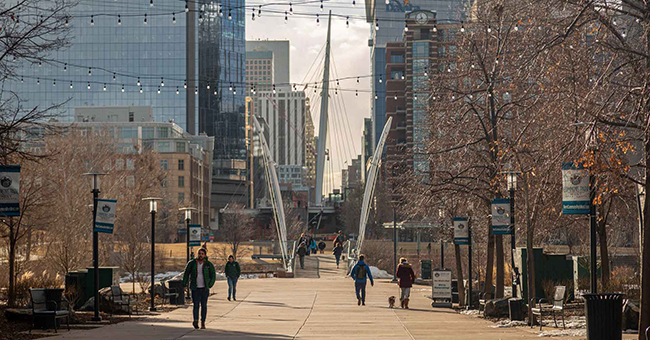
Color-toned image of Roosevelt Island park in NYC.


  • What do we mean by changing the physical structure of the community?

  • Why would you change the physical structure of the community?

  • When would you try to change the physical structure of the community?

  • Who should be involved in changing the physical structure of the community?

  • How do you change the physical structure of the community?


Atlanta, Georgia, is a city designed for automobile travel. An enormous multi-lane highway called the Downtown Connector divides the east and west sides of the city, creating a gulf that’s largely impassable for anyone not in a car. Originally, the highway separated midtown, on the east, from the Atlantic Steel Mill. Once the city’s largest employer, the mill was shut down in the 1980s.

When private developers bought the steel mill site, they faced both environmental and access problems. They planned a complex of residences, retail stores, hotels, restaurants, and office space, all of which would be inaccessible from the east except by car. Both the developers and the city found this unacceptable, and their solution was the 17th St. Bridge. A bright-yellow steel construction that spans the Downtown Connector, the bridge leads directly to Atlantic Station, the new development. The bridge not only provides direct driving access to Atlantic Station as well as public transportation, bike lanes, and wide sidewalks, with a canopy to shade walkers from the hot sun.

In building Atlantic Station, the developers removed thousands of tons of polluted soil, capped other deposits of metals and pollutants, and created what is widely recognized as a “green” development, one that puts as little strain as possible on the environment. It includes white roofs to reduce the heat island effect and air conditioner use, green space and native-species plantings, water conservation methods, and electric shuttle buses that serve the whole complex and carry people to the nearest subway station, minimizing automobile usage.

By changing the physical structure of the Atlantic Steel site, the Atlantic Station developers and their partners in the city, state, and federal governments addressed environmental concerns (the clean-up of a polluted site, conservation of water and fossil fuels), transportation needs (bridging the Downtown Connector, reduction of automobile use and traffic), and individual health (encouragement of walking and bicycling instead of driving), as well as economic development and housing needs.

This section introduces the concept of using changes in physical structure to create a healthy community. We’ll discuss what that means and follow-up with some different ways to achieve it.

What do we mean by changing the physical structure of the community?

While people are not the only animals that alter their environment – think of beavers or termites – we tend to do it in much more -drastic and permanent ways. New York, Singapore, Hong Kong, once wild places thinly populated by hunter-gatherers, farmers, and fishermen, now are covered in concrete and rise with buildings hundreds of meters tall. The residents of those cities have certainly changed the physical structure of their communities over the past centuries in countless ways. What kinds of physical changes can you make in your community that steer people’s behavior in healthy directions, improve their lives, and will continue to maintain a high quality of life for new generations?

Changing the physical structure of a community can refer to a broad range of activities. At the most basic level, it means building or installing or creating something new, altering something that already exists, or eliminating or destroying something in the community:

  • Buildings – residential, commercial, industrial, recreation and entertainment, institutional, educational, cultural, historic
  • Spaces around buildings – plantings, terraces, etc.
  • Roads, sidewalks, and walkways
  • Bridges
  • Parks and open space
  • Playgrounds
  • Squares, waterfronts, street markets, and other public spaces
  • Watercourses
  • Transportation
  • Signs and billboards
  • Streetlights
  • Trees, plantings, and gardens
  • Infrastructure – water and gas mains, electric and phone lines, sewers, sewage treatment facilities

Infrastructure is the organizational structure – often unseen – that makes a community operational. A city’s infrastructure includes - roads and bridges, power plants, water reservoirs, and other physical systems, as well as the people and processes that maintain them. The infrastructure of a small rural community is less complex , but no less vital.

  • Landfills and incinerators
  • Golf courses, cemeteries, sports fields, and other uses of open land

As you can see, the physical structure of a community includes elements of the built environment and the natural environment. In changing the physical structure of the community, we -often replace the natural environment with the built environment, and occasionally we do the opposite. We may clean up the site of a strip mine or landfill and turn it into a park, for instance, or plant trees where there was once a pile of rubble or a parking lot.

Exchanging an industrial site or building for grass and trees is an attempt to bring back the natural environment. In addition to the beautification and biophilia, there are also many added objective benefits such as reduced storm water run-off, storm water retention, providing habitat for insects, birds, and animals, removing contaminants from the soil that could leach into the groundwater, and more. Even though we can never exactly replicate the state of a site prior to human interference and development, we can restore the soil, improve biodiversity and functionality, and target specific benefits for our communities.

A change in one community’s physical structure will have effects in faraway places. When factories in the central U.S. built their smokestacks higher to avoid polluting their direct communities, the prevailing winds carried their pollution all the way to the East Coast, where it caused acid rain in New England. We can’t discuss changing the physical structure of the community without thinking about the global consequences of our actions for all living things.

Changes in physical structure can be relatively minor – the addition of curb cuts and crosswalks to make street-crossing easier for walkers and people with disabilities – or enormous – the construction of hundreds of units of environmentally-friendly mixed-income housing on a reclaimed industrial site, as in the case of Atlantic Station. They may be aimed at goals as different as simple physical comfort – planting shade trees to provide relief from summer heat, for example – and economic development.

As a community activist or advocate, you or your organization can make changes yourself, or you can help community members to do so. For larger changes, such as building commercial developments, you can collaborate with or influence those who might: the federal, state, and local governments; corporations; developers; etc. Through advocacy, public education, and the ballot, you can persuade policy makers, the media, and the public to back changes that will contribute to the development of a healthy community.

A key to thinking about changing the physical structure of the community is to approach it with the healthy community philosophy in mind. You have to consider the community as a whole, not as a series of parts. Every change you make has effects on the whole community, even if it’s aimed at a specific group or a specific issue, and changes should be discussed with that in mind. A seemingly small change can have far-reaching consequences.

So now that you’re thinking about changing the physical structure of your community, what are your goals? Why might you want to make those changes?

Why would you change the physical structure of the community?

  • Health promotion and disease prevention. There are many ways in which physical changes can enable healthier lifestyles, provide healthcare access to more citizens, remove environmental contaminants and toxins from our buildings, and more. Building hospitals or clinics in underserved areas and creating walking and bike paths to encourage heart-healthy activity are two examples. Forcing industries to stop polluting the air or water can also improve the health of the community.
  • Safety/security. Adding streetlights and fire hydrants not only make people feel safer but may save lives as well.
  • Increasing community pride and changing attitudes. Cleaning up an area or renovating buildings can make residents feel more pride in their community in turn resulting in a decrease in littering, vandalism, and overall crime rates, . People react strongly to their surroundings. If those surroundings are abandoned, boarded-up or scarcely populated buildings, people will tend to neglect and ­­abuse those spaces due to a lack of oversight, consequences, and pride. Help people change their surroundings and there’s a good possibility that their attitudes will change too.
  • Assuring access for people with disabilities. Ramps on buildings, curb cuts, and other accessibility options make a community easy to negotiate for everyone.
  • Transportation. Adding public transportation systems or routes will impact a community’s physical structure. Building shelters at stops on those routes is such a change which may also encourage ridership.
  • Conservation of natural resources. Something as seemingly insignificant as exchanging outdated plumbing fixtures in all public buildings for low-flow options or xeriscaping or native plantings in lieu of planting a blue grass turf in the desert will save huge amounts of water.

After one homeowner on a block in Albuquerque, New Mexico put in a native-plant garden on his front lawn, most of his neighbors followed. It often takes only a little effort to start a change in physical structure.

  • Economic development. Communities often build roads, sewer lines, bridges, etc. preemptively to attract a commercial project that will provide local jobs and tax income.
  • Restoration/expansion of green space. Tearing down buildings to add a green space, restoring a polluted site, or planting grass and trees on a vacant lot are ways of restoring or expanding green space.
  • Environmental protection. Building a sewage treatment plant is one way for a community to reduce water pollution and protect its natural environment. Volunteers cleaning up and monitoring the water quality of a stream could be equally significant for health of the community.
  • Meeting community members’ housing needs may require building more housing or dedicating or modifying existing housing to meet particular needs (affordable housing, housing for people with disabilities).
  • Expanding opportunity for low-income residents. Quality development in low-income or fringe neighborhoods will bring jobs to those areas. Increasing transportation access to and from low-income neighborhoods will also expand opportunities to residents by providing them a means to easily get to areas with more or better paying jobs.
  • Historic preservation. Repurposing a historic building that might otherwise be torn down preserves resources as well as the character and history of the community.
  • Encouragement of arts and culture. Painting a mural on an easily-visible wall or promoting arts related events and festivals stresses the importance of art and culture and increases community awareness.
  • Providing aesthetic experience. Beautification enhances everyday life. Scattering wildflower seeds on a newly-cleaned-up vacant lot, for instance, can change the way residents see their neighborhood.
  • Recreation. Painting a basketball court and installing hoops on a parking lot can create a recreational opportunity for large numbers of youth.
  • Physical comfort. Installing benches in public spaces encourages the use of outdoor space and provides places for people to rest and talk.
  • Encouraging social interaction. Creating inviting, people-friendly spaces – pocket parks or pedestrian malls, for instance – leads to more social interaction and a more dynamic street life.
  • Addressing social concerns such as diversity or racial harmony. Building a community center on the border between mutually hostile ethnic neighborhoods, or in easily accessible neutral territory, might bring members of these groups together in a positive way.

Something like this requires careful oversight and a thoughtful approach by community center staff. It’s a volatile issue and not one to be taken on casually.

  • Equity. Studies by the World Health Organization have shown that the greater the gap between rich and poor in a country, the shorter its inhabitants’ life expectancy. (This may be one reason why the United States, the most affluent society in the world, ranks only 29th in life expectancy.) By encouraging economic development and the location of such facilities as sports stadiums and government buildings in low-income neighborhoods, a community can foster opportunity and increase equity.

As you have undoubtedly noticed, many aspects of changing the physical structure of the community are intertwined. It is hard to define exactly where the dividing lines are among expanding opportunity for the poor, meeting housing needs, and fostering greater equity, for instance, or between encouraging the arts and culture and providing an aesthetic experience for community members.

There are essentially six fundamental reasons for altering the physical structure of a community: changing the social climate; changing the economic situation; changing the political situation (which overlaps with both the social and economic); addressing health and safety; addressing psychological factors (changing community members’ and others’ behavior and attitudes – again, overlapping with most of the other reasons); and preservation (the environment, architecture, culture, history, etc.).

You could also consider the reasons above in light of the nine prerequisites for a healthy community laid out in the Ottawa Charter, drafted by a World Health Organization conference in 1986:

  • Peace
  • Shelter
  • Education
  • Food
  • Income
  • A stable ecosystem
  • Sustainable resources
  • Social justice
  • Equity

When would you try to change the physical structure of the community?

Changes to the physical structure of a community can readily occur whenever there’s opportunity and a need.

  • When a new development or project is starting. Opportunity may knock in the form of a public or private residential, commercial, or industrial development, a neighborhood renewal project, a building renovation, or any other construction project that impacts a community. You may be able to convince the policy maker, developer, or municipality to include mixed-income housing, bike paths, green space, environmentally-responsible design, etc. in order to improve your community’s health and vitality.
  • When funding is available for a project. This may be a perfect time to push for those extra street lights or to add plantings to a blighted landscape.
  • When a particular issue arises to the public consciousness. Issues, like products, seem to have popularity cycles. An author or a news medium notices that there’s a problem and publicizes it. With fresh awareness and attention, people are inspired to make a change. This circumstance creates an opportunity to make the voice of the community heard, or to mobilize the community to address the issue on its own. The result could be a neighborhood clean-up, a promise to build or improve schools in certain neighborhoods, or a full-fledged effort to create enough affordable housing to eliminate homelessness.
  • When someone is negotiating with the community about changes. The community may have leverage to strike a bargain that maximizes the benefits that it can get from the other party. If a developer is about to build on a piece of open space, perhaps she can be pressured to set aside part of the development for community recreational use, or to provide the community other amenities within the development
  • When a problem has become too serious to ignore. When nighttime assaults have grown all too common it’s time to double the number of streetlights and install police call boxes. When the factory has polluted the river again it is forced to change how it handles the disposal of toxic waste and is required to clean up and be held accountable for the mess it has made and any damage it has caused. Sometimes projects like these can be accomplished by community resources alone and other times they take political or other kinds of outside intervention. In either case, the call to action is clear.

Who should be involved in changing the physical structure of the community?

Changes of any kind are typically enacted by community members or policy makers though there are often other players involved.

  • Community members and grassroots movements. Changes ideal come from within the community. This is not only more likely to address the issue at hand more effectively, but it also gives the community ownership of the changes. This may require community members to physically make the changes, or it may mean advocating for the changes to happen.

A community activist in Boston managed to stop the vandalizing of a playground by enlisting the vandals to fix it up. Without ever accusing anyone, she organized a meeting at which the teens developed a plan for the playground, which included a mural, new basketball hoops, a clean-up, and equipment for younger children. With the activist’s help, the group obtained a grant from the city and did the work. Because of their involvement and sense of pride in the project, they respected it kept it clean.

  • Policy makers and public officials. While they don’t do the physical labor, these are often the people who make physical changes possible. Legislators, for instance, can appropriate funds for specific projects. The Department of Public Works can decide to spend money on a particular change. Because they often control the distribution of money in a community, these are, in many cases, the people you have to convince.

The distribution of money is not necessarily the only issue here. Sometimes, the changes you’re seeking may fall under federal or state regulations, in which case the regulating agency may be responsible for implementing or enforcing the necessary changes. The U.S. Environmental Protection Agency, for instance, can require a corporation to clean up a polluted site it has abandoned, or to fulfill environmental conditions before it can build.

  • The business community. Community businesses are often instrumental in making changes simply by helping to fund plantings, trash baskets, signs, or other beautification projects that increase usability and function. Many business owners care deeply about their community and are eager to improve it.
  • Corporations. Persuading a large corporation to locate offices or a facility in a community can bring jobs, tax revenues, and other opportunities. Corporations also often fund projects and otherwise participate in fostering the health of the communities where they do business.​
  • Developers. Developers can have a positive effect on a community. In partnership, they may become real supporters of the things you’re concerned with in your community, such as environmentally-friendly development or affordable housing. It can be a win-win situation, with the community getting changes it needs and the developer getting project approval and lower taxes because he’s providing those changes.

How do you change the physical structure of the community?

What are we actually referring to when we talk about changing the physical structure of the community? There are clearly many possibilities, each with its own conditions and its own consequences. Let’s examine some of the specific changes that can be made.

What follows is by no means a complete list of possibilities. In fact, it barely scratches the surface. Furthermore, since each community is unique, most will have possibilities that don’t even exist in others. In thinking about your own community, what feels wrong to you or bothers you when you see it? What do you see others reacting to negatively? Vacant buildings? Illegal dumping? Homelessness? We’ve been discussing the fact that the physical environment affects community residents a great deal. It can make them depressed or energized or aggressive or proud to be part of the place they live. Below are a few examples of the ways in which the physical environment can be changed to improve people’s lives. In your community, there are hundreds of others; you can find them if you look.

Buildings

Most communities contain various types of buildings, and changes to each have their own consequences. In general, communities can try to assure, either through regulations or persuasion, that new buildings, restorations, and renovations are environmentally friendly (i.e., that they are designed to conserve energy and water, to minimize waste, to avoid the use of toxic materials in their construction and interiors, and to preserve as much open space as possible), that they encourage human interaction and street life (by locating benches and walkways in strategic places, for example, and/or by incorporating storefronts where they meet the street), and that their design and construction make them safe and comfortable (earthquake-proof, for instance, or simply having operable windows).

Housing and residential development. Where, and under what conditions, people live in a community can influence their behavior, their health, their attitudes, and their economic situation. There are several ways in which changes involving housing can improve conditions:

  • Building affordable housing. Providing decent housing that’s either inexpensive enough for low-income people to rent or own, or subsidized so that they can live there, is imperative

Affordable housing is often sub-par in quality and location. Living in isolated areas far from shopping and other services, potentially hazardous to health, and possibly even dangerous will definitely have an impact on the quality of an individual’s life. Decent housing means freedom from daily fear of assault, the ability to conduct daily business, and a reasonable certainty that the roof won’t leak.

One way to provide decent affordable housing is to make it part of a mixed-income development that includes subsidized, market-rate, and upscale units all in the same place. Such a development was built in Chicago to partially replace the housing lost when the notoriously dangerous and poorly maintained Cabrini-Green housing project was torn down. Residents of Cabrini-Green who moved to the new development received training on keeping up their apartments, conflict resolution, and other skills that would help them live in a comfortable middle-class environment rather than a war zone.

  • Building housing using “sweat equity.” Sweat equity means paying for part of your new housing by supplying the labor to build it. Single and multi-family dwellings of various kinds, including detached houses, cooperative apartments, and condominiums have been built with the help of volunteers. With a lower cost of labor, the housing is able to be sold at a lower price, enabling low- and moderate-income families to own homes they otherwise couldn’t.
  • Rehabilitating derelict houses or repurposing other buildings for housing. Abandoned houses and commercial buildings may be structurally sound, but need a great deal of work in order to become livable. They might be sweat equity projects as described above, bought cheaply and restored by potential owners or by an organization, or taken for taxes by the municipality and restored with grant money.
  • Adding a certain percentage of housing that’s affordable, ADA compliant, and environmentally responsible can be an incentivizing condition of permitting for a large housing development (or requiring some such condition by law).

Commercial buildings and development. The location, appearance, and nature of commercial businesses can add to (or detract from) the quality of community life. Furthermore, commercial development brings jobs, often entry-level jobs that people need to get started or back on their feet. Building or establishing neighborhood stores in street-level storefronts and cafes with outdoor seating can encourage street life and neighborhood pride.

In a low-income or moderate-income neighborhood, the stores and cafes should sell things that are priced reasonably and that local people want. If they do not, they may signify the beginning of a neighborhood sea-change that will force current residents out, which will end up creating more problems to solve.

Industrial buildings and development. Where industries are located, especially in relation to housing, how factories are built and how much they pollute, and the amount of noise and traffic they produce are all influential in determining the health of a community and its quality of life. And again, industries bring jobs – often high-paying jobs. The ability of people to get to the sites of those jobs can determine the economic health of a community.

Studies show that a large majority of industries that have negative health effects on nearby residents are located in low-income areas. This situation is no more acceptable than if those industries were located in high-income areas or next door to government buildings. In addition to requiring that industry clean up its operations, communities can look specifically for clean industry, refuse siting permits to plants whose location will pose health hazards to any residents, and negotiate with industries about choosing sites where they will least impact the health of the community.

Office and government buildings. The design and location of these buildings has health and social consequences both for those who work in them and for those who must use them as clients, customers, or constituents.

Cultural centers. Theaters, museums, concert halls, auditoriums, and libraries add greatly to the life of the community. Their construction, design, and location can send clear messages about the community’s attitudes toward them and toward various populations.

Recreation and entertainment complexes. Much the same as for cultural centers, the availability of and access to movie theaters, sports stadiums, amusement parks, and the like can both improve residents’ lives and create opportunities for building community.

Historic buildings and monuments. How well a community decides to preserve and maintain its historic buildings and monuments makes a statement about its attitude toward its own history. It may also sometimes be most meaningful to tear down statues that no longer represent the values of a community, such as the controversial removal of the Confederate general Robert E. Lee’s statue in Charlottesville, VA. As part of the 2017 Civil Rights and Black Lives Matter movement, this political unrest has resulted in bloody riots, lawsuits and overt racism that will surely define this time in history.

After the 1989 Velvet Revolution in Czechoslovakia, although the government had very little money, Czech President, Vaclav Havel chose to spend millions to restore the Obecni Dum, or Municipal House, in the center of Prague. The early 20th Century building, designed and with artwork and architectural touches by virtually every major Czech artist of the time, had always been a focus of national pride, but had been left in poor repair by the Communist government. Its restoration, despite the cost, was widely approved, and it became a symbol of the rebirth of the Czech Republic.

Educational facilities. The number, appearance, condition, and influence of schools, colleges, and universities can shape assumptions and expectations about education. The architectural design of schools can also greatly influence the shape of the learning that goes on within them. Separate classrooms off a long corridor imply a different kind of educational style than a school with many common spaces where learning takes place. A school with an outdoor campus allows for different experiences than one hemmed in by other buildings. A school housed within another facility such as a museum or an office building may be able to offer students more varied resources than a stand-alone school could.

Changes in buildings, or the encouragement of new buildings, have to be considered carefully. The urban renewal movement of the 1950’s and ‘60’s was meant to make cities more livable: in fact, it often had the opposite effect. Many low- and moderate-income people were forced out of homes they had struggled to own, and out of neighborhoods that, in some cases, their families had occupied for generations. Without the resources to stay in the now-expensive areas they had lived in, they either moved away or ended up in far less desirable situations.

The sterile office towers and upscale high-rise residences that replaced row housing and neighborhood businesses nearly killed many inner cities in the late 20th Century, and turned what had been neighborhoods teeming with life into canyons of empty streets lined by towering, featureless fortresses with few windows and guards at the doors. A majority of urban renewal projects still stand as reminders of why planning should be participatory and involve all those who’ll be affected by its results.

Public spaces

Where these spaces are, how well they’re maintained, how welcoming they are to the public, how easy they are to get to, how safe, and how often they are used are all relevant to building a healthy community.

Public spaces include the areas around buildings, parks, squares, outdoor malls, waterfronts, etc.

Spaces around buildings. Plantings, decorative stone- or brickwork, sculpture, benches, fountains, etc. outside office and commercial buildings make the street more attractive and the buildings themselves more inviting.

Parks. Urban parks can sometimes feel unsafe. They can also be inviting spaces that are filled with people and activity and offer respite from the concrete and noise of the city.

Pedestrian areas. Designating certain streets as pedestrians-only can change the character of an area, as well as lead to more business activity, improve opportunities for diversity, and greater improve public safety.

The Stroget in Copenhagen, Denmark is a wide pedestrian street that runs for several blocks through the center of downtown, along which are located some of the best stores and restaurants in the city, as well as outdoor food vendors, street performers, and a market in spring and summer. It is always crowded and lively, even in the dark Danish winter, with all types of people and has become a beacon to tourists who want to have an authentic Danish experience.

Waterfronts. A number of American communities (from such large cities as San Francisco and New York to small towns along rivers and lakes) have made their waterfronts into pleasant pedestrian spaces where residents come to cool off in summer, attend a concert, eat street food and browse local artisan vendor displays. Once largely occupied by working boats, industry, and warehouses, as well as seedy bars the waterfronts have transformed from areas of high crime to hip, safe and coveted areas for development.

Generally, waterfront development has veered strongly toward the top of the economic scale. It generates income for the community, but is not always friendly to low- and moderate-income people. Waterfront parks and trails and cultural or government buildings are far more conducive to use by a broad range of people than are expensive hotels and high-end shops and restaurants.

Neighborhood spaces. The safety of people walking the streets, particularly at night, can be a major issue in many cities. Some changes in physical structure can help reduce violent crime – assault, armed robbery, rape, murder – by improving street lighting, integrating police call boxes, and rehabilitating abandoned buildings. Encouraging more people to be on the street at night by improving safety and adding businesses, restaurants, sports facilities, etc., in high-crime neighborhoods also may reduce violence.

Vacant lots. More than one social movement has started with a neighborhood clean-up. Vacant urban lots often attract trash. A citizen-led clean-up and maintenance program that turns an unused lot into a pocket park or a safe, clean place for kids to play can change the attitude of a neighborhood and start residents on a path of renewal.

Public art. Works of art, whether in the form of a mural painted by local youth or a monumental sculpture by a world-famous artist, can bolster community pride, add beauty and interest to an area, and make a statement about both the philosophy of the artist and the community. When the women striking for higher pay and humane working conditions in Lawrence, Massachusetts in 1912 demanded bread and roses, they meant that they needed not only enough money to live, but beauty and dignity in their lives. Public art can enhance both.

A mural in an Black neighborhood in Philadelphia, for example, depicts heroes of the Civil Rights Movement. The mural elicits pride and honor by celebrating key people of the Movement, whose actions brought about radical change and dramatically improved the lives of people of color.

Roads and other infrastructure

City streets. Besides keeping violence off the streets, there are many simple means to improve safety for pedestrians, bicyclists, and drivers on the road, including more traffic lights, crosswalks, designated bike lanes, and better signage.

Placement and maintenance of roads and train tracks. The Downtown Connector in Atlanta has been mentioned as a road that effectively divides the city. Many cities, and even smaller towns, have something similar – a highway or railway that cuts one part of the city off from another. Changing the placement of these roads and tracks, building pedestrian or pedestrian-friendly bridges or underpasses over or under them, and planning new roads carefully can avoid splitting communities or help to bring them back together.

The placement of rural roads may also be an issue. Avoiding building roads through unspoiled areas may help to keep them unspoiled. Keeping the rural character of a small-town road may be important to maintaining the nature and history of the community. The interruption of wildlife routes may also be a concern.

A plan to repave and straighten a notoriously rough but well-used rural road in a small New England town met with enormous local opposition. The plan involved doubling the width of the road which would have eliminated many large old trees, as well as centuries-old stone walls on either side. Although everyone wanted the road repaved, many residents felt that sacrificing the trees and walls and the look of the road were too high a price to pay, and the plan was defeated in Town Meeting.

Another concern is whether all neighborhoods or communities are treated equally in the matter of road maintenance. In the American South, up to the late 20th Century, it was common to see well-paved roads with sidewalks and sewers in the more affluent White section of a town, and dirt streets with water running in roadside ditches in the lower-income Black neighborhoods. A race- or class-based system of road maintenance is not unknown in other parts of the U.S. (and the rest of the world) as well. Changing the physical structure in this case is a matter of equal rights, and involves changing attitudes as well as road service schedules.

Public transportation. The construction or establishment of public transportation lines can mean less congestion and air pollution, energy conservation, safer streets, and better health for community residents who walk or bike to a bus or train stop, rather than driving door to door. As with roads, the question of fairness has to be considered here: public transportation routes should be, to the extent possible, distributed among all neighborhoods and areas of the community, so that everyone has relatively equal access to them.

The creation of walking and bike trails. Walking and bike trails, cross-country ski trails, and roller blading and jogging paths encourage exercise, which in turn promotes good health, and also afford opportunities for social interaction and relaxation. They might, as they do in San Francisco, for example, also provide scenic vistas, and/or pass by points of cultural, historic, or natural interest.

Walking and bike trails actually can take you almost anywhere in some cities, thus minimizing pollution and conserving energy resources.

Public sports facilities, such as park and beach volleyball courts, may also serve the function of encouraging healthy physical activity.

Electricity, telephone, water, and gas lines. Improving old lines – replacing 100-year-old lead water pipe, repairing or replacing dangerously leaky gas pipe, adding fiber optic cable – can have major consequences for community health and safety, as well as providing access to technology to underserved communities or neighborhoods. Burying lines can improve the appearance of a community and eliminate many service problems.

The natural environment

Open space preservation. Open space preservation prevents, rather than creates, physical change in the community. Many communities – typically smaller ones, but some large cities as well – contain large areas of open space, or even wilderness, within their boundaries. These areas can provide recreation, fresh air, and appreciation for the natural world In an era of urban sprawl, cities tend to spread horizontally consuming the land around them, putting even unique landscapes of great natural beauty or value at risk.

The city of Albuquerque, New Mexico, spent years negotiating with developers to keep a particularly beautiful area of dry upland from being developed with new luxury residences. Through a sale-and-trade agreement negotiated by the City Attorney, several tracts of land in this area, the foothills of the Sandia Mountains, were preserved from development, and are now available to all for hiking, picnicking, and enjoyment of nature.

Reclamation of environmentally damaged areas. Some industries change a natural site, exploiting it for resources, and then leave it severely damaged or ruined when it’s no longer useful. Quarries, mines – particularly strip mines – oil and gas fields, and timber operations, among others, all have the potential to leave behind torn-up landscapes, heaps of waste material (some of which may be toxic), abandoned buildings, and rusting machinery. Many in these industries make – or can be required to make, by regulations or legislation – a good-faith effort to clean up after themselves by restoring landscapes (replanting trees, filling pits and planting grass, etc.), trucking out and properly disposing of waste material, and clearing the site of any evidence of their work. When that doesn’t happen, either because the damage was done long ago or because there are no laws or regulations to mandate restoration, the community may have to step in to do the job.

Prevention of pollution. This may involve cleaning the environment of pollutants before they enter the ecosystem such as with the construction of a sewage treatment plant or it may entail trapping pollutants before they are released into the environment, such as with chimney filters or outflow pipes from industrial plants. It may also mean careful consideration of siting industrial plants, and about whether potential polluters will be allowed to build or locate in the community at all.

Another aspect of pollution prevention occurs at the residential level rather than with industrial operations. The repair of leaking or blocked sewer lines, for instance, may be necessary to prevent sewage leaking into the ground and eventually fouling water or bubbling to the surface. In rural areas, the placement and construction of septic systems is imperative.

Correction of pollution problems. Often it is difficult to draw the line between prevention and correction of pollution problems. Physical changes aimed at cleaning up existing pollution might, yet again, involve the construction of a treatment plant, or the installation of filters in chimneys and outflow pipes. It could force the excavation of a site where toxic materials were dumped, or the clean-up of a whole neighborhood, as in the case of Love Canal in Niagara Falls, New York. It could even make it necessary to tear down an industrial plant or a number of houses.

Identifying opportunities for improving your community through changes to the physical environment is the first step in creating a healthier and more sustainable community. And once you have started down the path of improvement, remember that all physical structures require maintenance – buildings have to be kept up, lots kept clean, streetlight bulbs changed, roads and trails maintained, murals retouched in order to sustain a healthier community and a better life for its members.

In Summary

The built and natural environments together make up the physical structure of a community. By changing that structure, you may be able to change community members’ attitudes, behaviors, prospects for health and well-being, economic opportunity, social interactions, and quality of life. It’s one of the ways to approach creating a healthy community.

 

We encourage the reproduction of this material, but ask that you credit the Community Tool Box.

Contributor

Phil Rabinowitz

Andrea Glinn, Editor

Resources

Online Resources

An abandoned rail line, the 606, in Chicago has been transformed into a multi-use recreational trail that promotes healthy physical activity, a sense of community, public art, and alternative transportation.

New York City Active Design Guidelines outlines design methods for promoting physical activity and health through the built environment.

Active Living story bank – examples of communities changing the built environment to encourage physical activity and health.

Atlanta Station (Atlantic Steel Site Redevelopment Project) is a prime example of taking a damaged piece of land and transforming it into a community hub, and is a smart, environmentally driven development that reduces vehicular use, rainwater runoff, and pollution.

Bridging The Gap (BTG) connects environment, economy, and community in Kansas City by providing both education and volunteer action that reduces litter, promotes recycling, plants trees, protects native ecosystems, and encourages energy efficiency and waste reduction in businesses.

Boys Grow mentors Kansas City urban youth through agricultural entrepreneurship. The program instills pride, discipline, and business understanding in the participants and teaches good stewardship, improving the land and providing fresh, healthy foods in urban areas.

CDI to the United Nations: Sustainable Development through Cooperative Development from Cooperative Development Institute explains how cooperatives help achieve sustainability and peace in the world.

Development without Displacement Toolkit provides practical lessons, frameworks, and tools that advance equitable development without displacing residents and small businesses. 

The Fair Housing Act Design Manual provides a framework for constructing housing that meet the Fair Housing Act guidelines, protecting people from discrimination when renting, buying, or seeking financing for housing.

Best Green Stormwater Infrastructure management practices for airports.

Habitat for Humanity volunteers work to ensure everyone has a decent place to live.

Healthy Neighborhoods Study, based in Boston, is the largest resident-driven, participatory action research project in the US about neighborhood change processes, like gentrification and climate change, and their impact on health.

Historic Preservation designation of buildings through the National Parks Service protects important buildings in our communities and provide oversight when renovation and restoration occur. An NPS designation can save the life of a building.

Leadership in Energy and Environmental Design (LEED) is a rating system to evaluate the environmental performance of a building and has laid the foundation for green building design in the United States.

The Living Building Challenge is the most rigorous performance standard for measuring a building’s environmental impact. The goal of these buildings is to improve the environment, to give more than they take, and to have a positive impact on people and the environment, not just to minimize harm to it.

Make It Right Foundation builds safe, sustainable homes, buildings, and communities for people in need, often following an unprecedented natural disaster or a long underserved population.

Mid-America Regional Council is a nonprofit association working with the community and government of the Kansas City region to advance social, economic and environmental progress. 

National Institute of Justice Research article on if disorder and urban decay leads to crime in a neighborhood.

Native plants are vital in restoring and preserving biodiversity, conserving water, and creating healthy and beautiful places for people to enjoy.

Nurturing Healthy Neighborhoods: Communities Affect Health is a resource from the National Institutes of Health about how the environment around us influences our health.

Passive House Institute US is a nonprofit whose mission is to develop and promote passive building standards in the United States for energy and resource conservation as well as environmental impact.

Best storm water management practices examples on the PennState Brandywine campus..

A Police station designed by a progressive architect to be a community center and hub.

Sick Building Syndrome is a direct health response to spending time in a poorly ventilated, polluted, and/or contaminant laden building. Avoiding creating such spaces in the built environment is imperative to the health of a community and addressing problems in existing buildings will require changes to the built environment.

The WELL Building Standard provides design guidelines for the built environment to improve human health and well-being, and works in concert with LEED building certification.

World Health Organization Conference on Health Promotion in 1986 outlines the prerequisites for health.

Xeriscaping rather than grass yards in drought affected areas such as the desert saves resources and reduces pollution.

Print Resources

Jacobs, Jane. The Death and Life of Great American Cities. New York: Vintage, 1992.

Maxfield, Michael G., Babbie, Earl R. Research Methods for Criminal Justice and Criminology. California: Wadsworth Publishing, 2014, p. 133.

Checklist
pschneider Fri, 11/03/2017 - 11:10

What do we mean by changing the physical structure of the community?

__ The built environment is composed of those physical features of the community created or changed by people.

__ The natural environment is composed of those physical elements of the community that existed before people came, or have been reclaimed by nature.


Changing the physical structure of either the built or natural environment involves:

__ Building, installing, or creating something new

__ Altering an existing physical structure__ Destroying or eliminating an existing physical structure

__ Viewing the community as a whole when considering changing a physical structure.


Why would you change the physical structure of the community?

__ Health promotion and disease prevention.

__ Safety/security.

__ Increasing community pride and changing attitudes.

__ Assuring access for people with disabilities.

__ Transportation.

__ Conservation of natural resources.

__ Economic development.

__ Restoration/expansion of green space.

__ Environmental protection.

__ Meeting housing needs.

__ Expanding opportunity for low-income residents.

__ Historic preservation.

__ Encouragement of arts and culture.

__ Aesthetic experience.

__ Recreation.

__ Physical comfort.

__ Encouraging social interaction.

__ Addressing social problems and concerns, such as diversity and racial harmony.

__ Equity.


When would you try to change the physical structure of the community?

­­__ When a new development or project is starting.

__ When funding is available for a project, with the stipulation that planning has to involve the community.

__ When a particular issue suddenly rises to the top of the public consciousness.

__ When someone is negotiating with the community about changes, especially if those changes will inconvenience it.

__ When a problem has become too serious to ignore.


Who should be involved in changing the physical structure of the community?

__ Community members

__ Policy makers and public officials.

__ Business community.

__ Corporations.

__ Developers.


How do you change the physical structure of the community?

You might change the physical structure of the built environment by building or adding, altering, or eliminating:

__ Housing.

__ Commercial buildings and development.

__ Industrial buildings and development.

__ Office and government buildings.

__ Cultural centers.

__ Recreation and entertainment complexes.

__ Historic buildings and monuments.

__ Educational facilities.

__ Spaces around buildings.

__ Parks.

__ Pedestrian areas.

__ Waterfronts.

__ Neighborhood spaces.

__ Vacant lots.

__ Public art.

__ City streets.

__ Placement and maintenance of roads and train tracks.

__ Public transportation.

__ Walking and bike trails.

__ Electricity, telephone, water, and gas lines.


Changes in physical structure that directly affect the natural environment include:

__ Open space preservation.

__ Reclamation of environmentally damaged areas.

__ Prevention of pollution.

__ Correction of pollution problems.

__ Sustaining the effort

Examples
pschneider Wed, 10/06/2021 - 09:02

Example #1: Defining and Unpacking the Social Determinants of Health and Health Equity–A Culture of Health Webinar

Image of two women of color gardening, along with the title of the webinar.

The National Academy of Medicine (NAM) held the first webinar in its Culture of Health Webinar Series on November 29, 2018. The National Academies report Communities in Action: Pathways to Health Equity identified nine social determinants of health and how these determinants impact our health and the health of our communities. This example underscores the addressing of built environment/ social determinants of health. The report also defines health equity as the state in which everyone has the opportunity to attain full health potential and no one is disadvantaged from achieving this potential because of social position or any other socially defined circumstance. Read more.


Example #2: H.E.A.T. Report: Place and Health - Wyandotte County, Kansas

Video: Place & Health - Geopgrahy and the Social Determinants of Health (Liquorlining and the lack of healthy choices).

Example #3: Sunset Hills neighborhood donates bench for Lawrence Transit bus stop

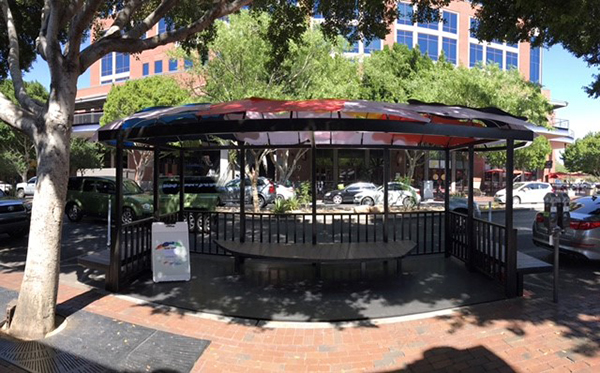
Lawrence Transit bus stop featuring a blue "Bus Stop" sign, covered bus shelter, and a new blue bench donated by the Sunset Hills Neighborhood.

A new bench has been installed at a Lawrence Transit bus stop thanks to the generosity of the Sunset Hills Neighborhood. Located on 9th Street, next to The Merc, the bench was donated in response to concerns about the lack of seating. This project, completed in collaboration with Lawrence Transit and the Self Engineering Leadership Fellows Program (SELF) at the University of Kansas, highlights the power of community-led solutions to enhance the transit experience. Read More.


example #4: enhancing community safety through connected neighborhood design

Neighborhood support and cohesion are key protective factors for preventing sexual and other forms of violence, while low support and social isolation increase risk. In Johnson County, Kansas, 844 residents completed a survey measuring how connected they feel to their community on a scale of 1 (never) to 5 (very often). The average score was 2.6, indicating only moderate community connectedness. To strengthen neighborhood support and trust, a violence prevention coalition launched initiatives to boost community connectedness through improvements to the built environment. In one neighborhood, they focused on a central resource library, a large new park, and an elementary school located close together. With support from City Council members, they aimed to increase resident use of these shared spaces by installing engaging wayfinding signage, assessing and improving crosswalks, conducting walking audits, and planning a nature walking path linking the park and the library. These efforts worked to increase usage of these public spaces and increase social connectedness–and likely also supported goals related to increasing physical activity.

PowerPoint
pschneider Fri, 11/03/2017 - 11:18
File Upload
A PowerPoint presentation summarizing the major points in the section.
Section 2. Improving the Quality of Housing
mloewenstein Wed, 12/12/2012 - 10:45
Main Section
mloewenstein Wed, 12/12/2012 - 10:51

The UN Habitat (United Nations Human Settlements Programme) states:

“By the beginning of the third millennium, it is estimated that 1.1 billion people live in inadequate housing conditions in urban areas alone. In many cities of developing countries, more than half of the population live in informal settlements, without security of tenure and in conditions that can be described as life and health threatening. Among an estimated 100 million homeless people around the world, available data suggest that increasing proportions are women and children.”

These statistics suggest the dire need for quality housing worldwide. Rapid urbanization is necessitating more access to housing—half of humanity now lives in cities. We need to examine how to improve the quality of housing for poor and working class families. This section is about improving the quality of housing. That means making sure that everyone can find safe, decent, affordable housing within reach of where they work, shop, study, and play. We’ll look at ways to make current housing affordable, at ways to build better low- and moderate-income housing, and at using existing buildings to help create a community where everyone has a good place to live.

This video describes neighborhood revitalization efforts in Greater Kansas City, including high-quality housing options, and how the revitalization efforts have improved community life:

What do we mean by improving the quality of housing?

In general, when affluent citizens need their housing improved they have the money to make repairs or renovations. Or, if they’re not satisfied with what they have, they can get themselves something better. Our discussion of improving the quality of housing is largely focused on improving it for those who can’t afford to build, buy, or rent homes that meet their basic needs and provide decent, adequate housing.

An exception to this rule involves environmental considerations, which should apply to all types and budgets of housing. Environmentally responsible construction benefits the community as well as the residents, regardless of its affordability. , Improving the building’s performance, reducing waste, reducing consumption (water, electricity, gas), and using environmentally minded materials in the architectural materials and finishes are several ways to improve the quality of housing as well as the health and wellness of the occupants and the community.

Affordability

Affordable housing is defined by income.  Most agencies and experts agree that housing is affordable if it doesn’t cost more than 30% of household income.  As income goes down, however, the percentage of income spent on housing rises.  Low-income people often spend as much as 60% or more, and what they get for their money can still be poorly maintained, unhealthy, and unsafe.

Looking at some numbers, affordability becomes clearer.  Let’s look at a family of four with an annual income of $28,000.00.  That’s one person working full-time at about $13.50 an hour or, more likely, two people working (perhaps not both full-time) at $7.00 or $8.00 an hour.  30% of that will give that family $700.00 a month for rent.  In or anywhere near most large U.S. cities, it’s difficult to rent anything beyond substandard housing for that amount.  That means that the family will spend considerably more than 30% of its income for rent.  Buying a house is probably out of the question, even if the family is able to budget enough to regularly pay a mortgage, because no bank is likely to loan the money for a down-payment.

Most moderate-income families – those making something close to the median income for their area – find themselves in a similar bind.  Even if they can afford to buy a house, it’s likely to be much smaller than they need, and may have other drawbacks – on a busy street, in a dangerous neighborhood, far from public transportation, etc.  Because this is the case,  moderate- as well as low-income people are included in our examination of improving housing in the community.

Livability

Affordable housing shouldn’t only be inexpensive, however. All housing, regardless of cost, should meet some basic standards of livability.

It should be:

  • Decent, in good repair: no peeling paint or crumbling plaster, functioning plumbing and wiring, operational windows that open and close, sturdy stairs and railings, etc.  In the case of multi-unit buildings, it should also mean regular maintenance: clean hallways, no garbage, no graffiti, and shoveled walks in winter, etc.
  • Big enough for the number of people that live there.
  • Free of hazardous materials – asbestos, formaldehyde, substances high in volatile organic compounds (VOC’s: toxic chemicals given off by many paint products and solvents, cleaners, glues), lead paint, etc. – and other threats to health.
  • Safe.  Locks that work on doors and windows, a locking front door. In multi-apartment buildings, safety may include an intercom-and-buzzer system.  In elderly housing, there may be emergency switches or cords that can alert someone if a resident has fallen or had a medical emergency.
  • Accessible to residents, particularly seniors and people with disabilities.
  • In appropriate areas.  Affordable housing shouldn’t automatically be built in the least desirable areas of a city or community: the only residential building in an industrial area, for instance, or located next to a factory that belches toxic smoke into the air. It shouldn’t be located across the street from the dump, or in a neighborhood where drug dealers and drive-by shootings  are common.
  • With access to shopping, public transportation, recreation, and health and human services. In cities, basic shopping should be in walking distance.

Design

The U.S. Department of Housing and Urban Development (HUD) offers principles of affordable housing design on the web. (While these are aimed at affordable housing, they are, in fact, appropriate for housing at any level.)

There are four basic principles:

  • Housing should meet the needs of its users
  • Understand and respond to its context
  • Enhance its neighborhood
  • Be built to last

Housing should meet the needs of its users

Some of the criteria to be used for meeting needs are similar to those listed above, including:

  • Size: Units should be big enough for the number of people they’re intended for.
  • Layout: Space should be used efficiently (sufficient storage under and behind counters, closets, etc.), rooms or spaces should be arranged in a logical manner (dining area next to kitchen for example), traffic patterns should be easy and natural.  Units should be easy to get to and accessible.
  • Public spaces: Ideally, there should be outdoor space where kids can play safely and/or places to sit in sun and shade. If budgets allow indoor common space, it should be comfortable and adaptable. Hallways and walkways should be maintained and well-lit.
  • Location: Housing, as discussed above, should be near, or allow access to,  transportation, shopping, and recreation. Affordable housing should not be assigned specifically to areas where no one wants to live – next door to a chemical plant, or in a dangerous neighborhood.

Housing should understand and respond to its context

  • This is true for the physical, the historic, and the social context of its site and area. Guidelines below highlight some fundamental aspects of design.  Dwellings  should utilize  the site well. It should be built on dry land, should be oriented in the appropriate direction (toward the sun in cool climates, away from it in warm ones), and take advantage of features to create an attractive space and to minimize the effects of an extreme climate (trees that lose their leaves offer shade in summer and allow sun in winter; a line of evergreens on the north side of a lot can block the winter wind.)
  • Housing should fit in with other nearby buildings. It doesn’t have to look exactly the same as other buildings in the area, but using similar building materials, windows, roof heights, etc. will help it to blend in well, and to increase the appeal of the neighborhood.
  • It should reflect the history and style of its neighborhood or community. The architecture might mirror the historic use of the site.  An apartment block could be faced with the same red brick as the 19th Century textile mill that once occupied its site. A housing complex in a largely Hispanic neighborhood could be built in Spanish style, thus acknowledging the community’s character.

Housing should enhance its neighborhood

There are a number of ways in which housing can add to its neighborhood:

  • It can add to the neighborhood’s attractiveness. Well-designed housing, with colorful or particularly attractive details, can improve the feel of the whole neighborhood, especially if it echoes the interesting features and style of existing buildings.
  • New housing  can add to foot traffic and street life. Setting aside space at street level in an apartment block or other multi-unit development for retail and commercial use will increase the number of people using the street. Activities that draw people out to shop and socialize help to create a sense of community. The more people recognize and talk to one another on the street, the safer and more pleasant the street becomes.
  • It can change the desirability of the neighborhood. An interesting or particularly nice building will attract people to live in it. That, in turn, can make others aware of the existence and advantages of the neighborhood, and draw new residents to it.
  • It can change people’s attitudes. Those who don’t live in the new housing may start to see themselves and their neighborhood differently: Since a developer chose to put this really nice building here, this place must be OK. The result may be people paying more attention to keeping up their own buildings and houses, and a rise in property values and community pride.

Housing should be built to last

The expected life of many houses or apartment buildings in the U.S. is relatively short – not much more than 25 years or so – yet many houses over 100 or even over 200 years old are still lived in, and still solid. How do you build housing that can last for two centuries, rather than two decades?

  • Use good-quality, durable materials suited to the climate. Some materials rot or corrode in wet weather. Others may deteriorate in hot sunlight. Still others are likely to fail after a while under any conditions, simply because they’re not meant to last. Using the proper materials can make a huge difference as to how long a building will stand.
  • Choose materials and construction techniques that are low-maintenance. There are many procedures that will weatherproof various materials, but some are toxic (poisonous), and most have to be continually renewed, like varnish on a wood floor. Using materials that are naturally weather- and insect-resistant cuts down on the possibility of damage, and also on the expense of upkeep.

Although truly durable, low-maintenance materials may be more expensive to buy, they often save money in the long run because of low maintenance costs. Current technology has produced a number of different building materials and methods – often cheaper than traditional ones – that can keep buildings healthier longer. Care must be taken, however, to be sure that these materials don’t contain harmful chemicals. Treated wood, for instance, while it resists rot for decades, is injected with an arsenic compound that can be dangerous. For years, houses were insulated with urea formaldehyde, which turns out to be toxic and especially dangerous when it burns. Do your research: find out what materials are being used, and whether or not they’re safe.

  • Employ high-quality construction techniques. The more solidly and competently a building is put together, the more likely it is to be still standing in 50 or 100 years. It’s worth it not to skimp on construction in order to save money on repairs later.
  • Pay attention to the use of the building. If children use particular areas a lot, it may be worth it to reinforce floors, railings, or other elements of those areas. Corridors and other spaces that bear heavy traffic could have harder flooring surfaces than the rest. Careful planning and analysis when the building is being designed can add many years to its life.

Environmental responsibility

Environmentally responsible development uses resources carefully, preserves and safeguards the environment of the development site and surrounding areas, avoids unhealthy materials and practices, and promotes healthy and environmentally responsible behavior in residents.

There are literally hundreds of ways a building or development can respond to environmental concerns, including:

  • Using recycled, non-toxic building materials.
  • Taking advantage of the site and the climate. This might include installing large, sun-facing windows in cool climates or overhangs to block summer sun in warm climates; angling buildings to catch or avoid sun or wind; using natural features (hills, trees) to block sun or wind; or building partially into a hill or earth mound for insulation.
  • Where appropriate, using super-insulation and thermal windows (windows with two or three panes separated by air pockets, creating an efficient heat- and cold-barrier) to control indoor temperatures.

Super-insulated buildings can come with problems as well. They have to be completely tight, so that air doesn’t pass in and out quickly. In a standard, reasonably well-insulated house, the inside air is exchanged for outside air about once every two to four hours; in a super-insulated house, that exchange may occur only once every 12-24 hours. The result for residents can be exposure to substances in the air that would normally never build up to levels where they would be a concern – they’d cycle out as fresh air cycled in. In a super-insulated building addressing issues of condensation and moisture control is also a prime concern.

  • Installing windows that open and close for ventilation, along with ceiling fans to cut down on or eliminate the need for air conditioning.

A New England university library was built in the 1960’s with large plate-glass windows for passive heat gain, meant to cut down on heating costs in the winter. In fact, the combination of sun streaming in through the windows and the heat of the many bodies of students in the building made it necessary to run the air conditioning year-round.

  • Minimizing energy use by maximizing natural light and installing low-wattage, fluorescent lighting; installing Energy Star appliances; and generating energy on-site with solar hot water collectors and solar- or wind-generated electricity.
  • Installing a green roof – a flat roof covered with earth and planted with grass – that can control water runoff, insulate against heat and cold, and even provide space to plant a garden. If a green roof installation is not feasible, installing a white roof that reflects sunlight in a warm climate will also help to reduce energy coasts. A roof can also be used to harvest (collect) rainwater which can be used for cooling, irrigation, or other purposes.
  • Conserving and reusing water. This can be accomplished through the use of low-flow faucets and showers; the use of “gray water” (collecting waste water from sinks, bathtubs, etc., that can then be reused in toilets, for irrigation, cooling, and other similar uses); and xeriscaping or landscaping with plants native to the climate to minimize or eliminate the need for watering.
  • Locating near public transportation and/or providing shuttles to stations or shopping to discourage unnecessary driving.
  • Creating pedestrian- and bike-friendly spaces, bike and walking/running paths, etc. to encourage exercise and discourage unnecessary driving.
  • Using low-impact construction and land-forming methods (changing the site as little as possible, and minimizing or eliminating the use of heavy machinery). This includes respecting existing landscape features, especially those, such as streams and wetlands, that have an important place in the local ecology.
  • Being careful not to damage or threaten water supplies; not to use toxic materials in building, land-forming, or landscaping; and to dispose of construction waste properly, so that it doesn’t foul anyone else’s backyard, either.
  • Reclaiming brownfields. Brownfields are former industrial sites that are polluted, but cleanable. Using a brownfield site for development can be tricky, in that all the toxic material has to be either removed or cleaned in such a way that it will not endanger residents. If it’s done right, reclaiming a brownfield site has many advantages: it recycles an area that has already been built on rather than clearing new ground and eliminating more open space; it cleans up a polluted area, leaving a healthier environment by removing toxins and hazardous materials; and it turns an eyesore into a community asset.
  • Reclaiming old buildings. Turning an empty mill, warehouse, or vacant school building, for instance, into housing reuses resources, reduces the carbon footprint of a development, and preserves community history as well.
  • Rehabilitating derelict buildings. The structure and foundation of many old buildings are solid under their decaying exterior skin. Rather than being torn down, they can be repurposed into attractive and durable housing. This effort can also rehabilitate whole neighborhoods by eliminating abandoned buildings that may be misused as drug dens or squatter houses, or become dangerous places for children to play.
  • Infilling. This is the practice of building housing throughout a neighborhood on empty lots, rather than all in one place. This uses available space in an already-built area, thus helping to eliminate sprawl.
  • Preserving open space through cluster housing. With cluster housing, housing units are built close together on a large lot, with the rest of the lot left as common open space. Thus, rather than each unit having a small amount of open space, the development as a whole has a large amount to share.

Social effects

Improving housing, particularly affordable housing, can have far-reaching social consequences. If housing for low-income people is placed nowhere but in low-income neighborhoods, those neighborhoods can remain low-income – and ignored – indefinitely. If affordable or public housing is essentially racially segregated – either by design or by location or circumstance – that’s a lost opportunity for people of different races to get to know one another. Some of the ways in which communities and developers try to improve housing with social effects in mind:

  • Mixed-income development. A mixed-income development includes, rather apparently, residents of various income levels. While all the units in a development may be similar in design, a certain number may be subsidized (usually for residents at or below 150-200% of poverty level), others may be low- to moderate-income (with rent or purchase price based on income), and still others may be market-rate (full price for a comparable unit). The intent here is to create a diverse community that spans two or more income levels, with no distinctions made, where cross-cultural and cross-class socializing and friendships are possible. There is an assumption that lower-income people will raise their aspirations, and that the more affluent will gain more understanding of and empathy for those with less. In the ideal, the diversity of the residents removes the stigma and isolation of poverty that often goes with subsidized housing, and encourages all to take pride in maintaining their homes.
  • Mixed-use development. A mixed-use development includes both residential and commercial space, often one above the other. It may also be mixed-income, and/or include residence areas for both seniors and families with children. One advantage of mixed use is that it encourages street life, and creates a “village” feel to the development, making the area safer and more pleasant. It also makes access to shopping or other services easier for residents, especially seniors and people with disabilities, for whom public transportation may be difficult to manage.
  • Housing for seniors and/or people with disabilities. These provide a safe and secure environment for those with limited or impaired physical mobility, and who prefer to know that help is available in an emergency. Senior housing often includes planned activities, and may offer meals as well. It offers elders the chance to remain independent, while at the same time being in a protective and supportive environment.
  • Co-housing. This is a form of housing in which each household has its own living space (either an apartment or a detached house), but all share common open space and a common house. Residents usually help to plan the community, and run it by consensus once it’s established. The common house provides an opportunity for such activities as regular community meals (often once or twice a week), classes, community management meetings, and entertainment. When it works well, co-housing fosters a community where everyone knows her neighbors, where everyone has a say in the governance of the community, and where everyone contributes to maintaining both its physical and social character.
  • Location of housing. Putting affordable housing in a relatively affluent neighborhood, or locating a mixed-income development that includes market-rate units in a low-income one can have a profound effect on both residents and the neighborhood they find themselves in. A well-kept development that includes upscale residents can make both neighborhood residents and outsiders see the neighborhood more positively, as can the presence of rehabilitated houses in a blighted area. It often takes only one or two positive signs – brightly-painted houses, a new restaurant, a few artists’ studios – to start to turn a neighborhood around.

Finding the resources and support for getting it done

Improving the quality of housing often involves policy change, money, and cooperation of a large number of people. The basic ingredients, which we’ll discuss in much greater detail in the last part of this section, are the commitment of the community and government; incentives for and limitations on developers; advocacy; and the involvement of everyone concerned, from developers to potential or actual residents of improved housing.

Why improve the quality of housing?

It sounds like improving the quality of housing can be a big job, demanding a lot of organizing and advocacy in addition to the actual construction or rebuilding work. Why do it?

Most people would like to live in bigger or better housing. It’s the reason homeowners “buy up” as they become more affluent, and the reason renters think about becoming homeowners. Furthermore, improving housing is almost always seen as a positive by the community, and makes a huge difference in the lives of people who can move out of an unsafe, deteriorating apartment into a clean, safe, well-maintained one. There are, in fact, a large number of specific reasons for improving the quality of housing, a few of which are:

  • It adds to the physical and social attractiveness of the area. Better housing looks better, and makes people feel good about moving into the area.
  • It increases property values. This is good for homeowners – who typically have more of their net worth tied up in their home than anywhere else – for developers, who stand to gain more from their investment, and for the community, which increases its tax base, and can therefore offer more services.
  • Improved housing increases pride in the neighborhood for everyone. That attitude often leads to everyone taking better care of their property, whether they own or rent, and can change the character of the neighborhood for the better.
  • Well-built housing is kinder to the environment. If it’s planned and built in an environmentally responsible way, improved housing can conserve energy and resources, provide residents with a healthier and safer place to live, and last generations.
  • Improving the quality of housing is cheaper for both the developer and the community in the long run. Planning and building well will reduce maintenance and repair costs, saving the developer money over time. Improved, well-managed housing is also likely to have social consequences that save money for the community as well – lower violence and vandalism rates, and fewer social problems in general, as well as eventual neighborhood development and increased tax revenues.
  • Improved housing can increase the potential or actual workforce in the area. By providing housing close to area jobs, it increases the number of people available to fill those jobs.
  • It can preserve open space and/or reuse unused, previously-built space. With the use of cluster housing and other strategies, improved housing can preserve or create open space for residents, or even the whole neighborhood, to enjoy. In some cases, it can turn an eyesore into a community asset.

In Atlanta, the site of the defunct Atlantic Steelworks has been turned into a mixed-income, mixed-use housing and commercial development. The Atlantic Station project incorporates affordable housing, environmentally responsible building, brownfield cleanup, a healthy and pedestrian-friendly environment, and easy access to downtown. It also took a crumbling industrial site and transformed it into an attractive neighborhood.

  • It can replace or restore an aging housing stock. Buildings, like people, have a life span, and when it’s over, they need to be replaced. Some are simply in need of a makeover. Others really have reached the end of their useful lives and should be demolished. In either case, the building or site can be turned into improved housing, either via restoration or via rebuilding on or near the original site. This action creates housing that will last through several future generations.
  • Improving the quality of housing can be part of a plan for anticipating the growth of the community. Providing more quality housing will both hedge against and attract population growth. The character of the housing can guide that growth: the affordability, size, and location of housing can help determine who its residents will be.
  • Improving the quality of housing is the right thing to do. Everyone has a right to an adequate, weathertight, and safe place to live. In most developed countries, the free market will supply those places for people who can afford them. For those who can’t afford them, the society should provide basic housing that meets those criteria for all people.

When should you improve the quality of housing?

Improving the quality of housing, as with almost all the topics covered in the Community Tool Box, should be worked at continually. The lack of decent affordable housing is a problem in most mixed-income communities in the U.S., especially on the West Coast and in the Northeast. In those and most other areas of the country, there is enough housing for the population – vacancy rates in most places hover between five and fifteen percent – but affordable housing is another story.

Given that general statement, there are still times when it’s particularly appropriate to work for improved housing.

  • When there’s a community planning or development effort in progress. This is a perfect time for housing advocates and other interested parties to push for affordable housing, environmentally and otherwise responsible design, and positive social impact.
  • When there’s an outcry about the lack of decent housing. Newspaper or TV items about substandard housing or a building collapse or fire, for instance, can bring to the attention of a society the fact that too many people don’t have fit places to live. This awareness can fuel a movement to improve the quality of housing in the community.
  • When there’s a crisis. If people start to notice that there are many more homeless people on the streets, or learn that people are freezing to death in the winter, they’ll act. When elderly residents are dying of the heat or being assaulted in unsafe and poorly maintained apartments, it is time to work for better housing, both because the public is ready to support it, and because it’s desperately needed.

Unfortunately, it’s all too common that you have to wait until there’s a crisis for the public to notice – no matter how loudly and how long you and others may have been telling them – that housing (or anything else) in the community needs improvement. Most people unintentionally ignore problems because finding solutions can be hard and implementing them even more challenging; it takes lots of work and often financial support as well. However, once an issue is brought to attention, , people will feel compelled to address them. For that reason, it’s important to take advantage of the opportunities that arise as a tool to advocate for change. It may be a long while before you get another chance if you don't capitalize quickly on the one you have.

  • When there’s funding available from a federal, state, or foundation initiative. Such an initiative may accompany one of the circumstances above, or it may stand alone. In either case, it may be a great opportunity to build (or create through restoration or rehabilitation of existing buildings) better housing in your community.

Who should be involved in improving the quality of housing?

If it’s done properly, developing good-quality affordable (or environmentally responsible) housing takes a collaborative effort throughout the planning, design, and construction process. Certainly all those directly affected – developers, contractors, lenders or funders, potential residents – should participate, but there are others whose voices are important as well.

A possible list of collaborators:

  • The developer will need to be involved and may be an advocate for improvements, especially if he stands to gain by attending to community needs.
  • The business community, particularly lenders, will also be involved. They can impact who gets loans and may be able to adjust rates to make investing in a community improvement project more appealing. The question of low-interest loans to low- or moderate-income homebuyers may be an issue, as may the question of who is a reasonable borrowing risk and who is not.
  • Local and state officials can offer incentives and place restrictions on the developer to influence the project outcome. The permitting process has to go through local and state boards, there may be public funding involved, the housing will have to be connected to water and sewer lines – all these are reasons to have community officials involved from the very beginning, to eliminate misunderstandings, to get the development the community wants, and to make sure the process goes smoothly.
  • Funders. Given the amount of funding that even a small housing effort requires, funders will probably want to be involved in the process as well.
  • Neighbors. By becoming part of the process, neighbors can get their concerns addressed, and feel included. Furthermore, those who oppose the project can become supporters if they participate in planning, and can feel ownership of the final product.
  • Potential renters or buyers. By including people who are likely to be living in new housing, you can find out what their needs are, what features they consider important, how the buildings are likely to be used, what they like and don’t like about the proposed site, design, etc. In addition, if they take part in planning, they may become vested in the project and want to continue to be involved.
  • The media can help educate the community and persuade it to support an initiative to improve housing.

How do you improve the quality of housing?

Up to now, we’ve largely been discussing various aspects of building quality housing that’s affordable and beneficial to the community. The real work of improving housing in the community, however, is in making all the building and renovation possible: that’s what we’ll tackle in this section.

How do you convince developers – who are usually mainly concerned with profit – to build affordable and/or environmentally friendly housing? How do you get housing built where and how you want it, if you as a community are not paying for it directly? Probably the most effective action you can take is to offer the developer an incentive – i.e. something he wants – in return for something you want. If that isn’t an option you might try restrictions or regulations that get you at least some of what you’re looking for. There are a number of other steps a community can take as well, either alone or with developers, lenders, residents, and others, to power a high-quality housing effort..

The discussion in this section largely assumes that efforts will be conducted by one or more community groups, and that readers of this Tool Box section will be members of those groups. But what if you’re trying to start such a group, or are simply interested, as an individual, in helping to further the development of good-quality affordable housing in your community? There are some things you can do, at least to start with, that can make you an effective housing activist.

  • Learn all you can about the current housing situation, about quality housing in general, and about current and potential incentives and regulations that might relate to the improvement of the housing stock in your community. The more you know, the better you’ll understand the situation, and the more valuable you’ll be to any housing effort.
  • Get to know local and state officials (and their aides) who are responsible for, or who can help with, creating housing policy. Finding an influential champion for improving the quality of housing can go a long way toward helping you realize your goals.
  • Do what you can as an individual to highlight the issue and spur others to take action. Write letters to the Editor, contact the media in other ways, take photos of substandard housing, show officials examples of quality affordable housing, and enlist influential people you know or can meet with. All of these and similar actions can have an effect on the character of housing in the community.
  • Most important, find out what other individuals and groups are doing about improving housing. The chances are that you’ll be most effective if you join with others who have the same concerns. Joining an existing group is a great way to learn about housing issues, and gives you a chance to play a role in determining housing policy. If there isn’t an existing group, you could try to form one with others who want the same results you do.

We’ll begin with some general guidelines for improving community housing quality.

General guidelines

  • Conduct an assessment of community housing needs and assets. Where is housing particularly needed, or where does it need to be significantly improved? What are the drawbacks to that area (gang activity; truly unsalvageable, but still-standing, buildings; already overbuilt)? What are the assets available for improving housing (fundamentally solid, but deteriorating or abandoned buildings; working families; unused empty lots; etc.)? What are the needs of people in the area (elderly housing; housing for families with young children; single-occupancy units)? The first steps in improving housing are assessing the current housing situation and finding out what low- and moderate-income community members see as their needs.
  • Encourage participation. As we discussed above, housing efforts go better if as many of the affected people as possible are involved. If the planning process is a collaboration among officials, the developer, the architect, neighbors, and potential or actual residents, the community is much more likely to get housing that’s not only welcomed, but attractive, functional, livable, well-built, well-kept-up, and truly affordable. Neighbors, who may initially object to the project, will end up feeling ownership of it. A participatory process will also give potential residents a chance to meet and develop relationships with their neighbors before they move in, making it easier to integrate them into the neighborhood. Furthermore, the more people you can engage in the process, the more housing advocates there will be when you need them.
  • Consider diversity. Think carefully about the character of the neighborhood or area in which housing is located, and about the culture, class, and race or ethnicity of those who are likely to occupy it. What can the community do to encourage and support diversity? What will be the impact on the neighborhood of a diverse, or a different, population? What will be the impact on the residents of new housing of moving into a diverse, or homogeneous, situation? How can the community, the developer, neighbors, and residents best prepare for changes, and ensure interaction and comfort? (Here’s where a participatory process can pay huge dividends.)
  • Strive for equity. Plan, design, and build affordable housing with the same consideration that would be given to upscale development. Affordable houses or apartments may not be as big or as fancy as those aimed at the affluent, but there’s no reason that they can’t be as well-designed and livable.
  • Address the impact, especially of a large development, on the area where it’s built. If it’s aimed at families, are there adequate school facilities available? Is there enough safe play space, and access to possibilities for family recreation – parks, sports fields, and movies? Is there shopping, or available space for new markets and retailers to move into? Is there transportation for elderly residents and people with disabilities? What will a jump in population mean to the character of the neighborhood, to vehicle and foot traffic, to the need for more public transportation?
  • Plan, design, and build housing around the needs of residents, not those of the contractor or developer (within reasonable cost limits). Especially where funds are limited, consultation with residents will help determine where to spend and what’s not necessary. If housing meets tenants’ needs, they’re more apt to stay, creating a stable community – good for maintenance and upkeep of the project and also for building social capital among residents and in the neighborhood in general.
  • Be creative. Turn buildings designed for other purposes into housing, for instance; scatter affordable housing throughout a neighborhood; put elders and families with children on different sides of a multi-unit building, with some common space where they can interact; build next to or over a transportation hub. Don’t be limited by the conventional view of housing.
  • Plan for recruiting tenants or buyers. Whom do you want to recruit? What communication channels will you use to reach potential residents? What kind of screening, if any, will there be? What kinds of help with applications, loans, etc. will you give people who are interested?

Provide incentives for developers

The kinds of incentives a community can offer are limited only by the law and the community’s and developer’s creativity:

  • Tax breaks. Many communities will offer a developer freedom from property taxes or a reduced property tax rate for a set number of years after the project is completed. A variation on this is increasing taxes by a small amount each year until they reach the full rate.

Federal and many state governments may offer tax breaks on environmentally-friendly features, such as solar water heaters, electricity-producing solar collectors, high-efficiency furnaces, and similar equipment.

  • Subsidies. Subsidies – payments used to help someone pay for something – can be offered in a number of ways. The most familiar to most of us is offering subsidies to renters, which actually get passed on to landlords. That is, the renter pays only part of the actual rent, and the subsidizer – generally, the local, state, or federal government – pays the rest. Another possibility is to offer subsidies to developers to help pay for projects that the community wants. Still others are to subsidize landlords (or developers) to fix up housing, a certain portion of which will be affordable; to subsidize land costs for developers; or to subsidize connections to local services, such as water and sewer.
  • Grant funding. A community might help a developer in obtaining a grant to pay for part of a project, or the two might jointly apply for a grant that would allow them to shape affordable housing in a particular way.
  • Free or low-cost public land. Developers can be offered land owned by the community, either solely as an incentive, or because the community wants housing in that particular place, or both.
  • Infrastructure support. The community may agree to provide roads, water, electricity, or other services at its own expense as a contribution to an affordable housing development.

The Georgia Department of Transportation constructed the 830-foot-long, bright yellow 17th Street bridge in Atlanta specifically to connect Atlantic Station – a mixed-income, mixed-use, environmentally-friendly development – to downtown.

  • A speed-up of the permit process. Typically, development requires a large number of permits from the community – not only building permits, but ones relating to zoning, water, sewer, roads or driveways, electric lines, etc. Speeding up the process of obtaining these permits can save the developer a great deal of time and some money as well.
  • Hand-holding. This term refers to the practice of a community guiding a developer through every step of the process necessary to get a project under way and built. It’s an extension of the incentive above, but may go as far, in a large city, as assigning an official to work directly with the developer throughout the life of the process, in order to make it as smooth as possible for both developer and community.
  • Waivers of some regulations. A community may grant a waiver – permission to do something other than what the regulation demands – for any number of things. One common waiver is for density: the developer would be allowed to go over the number of units per acre specified in the zoning regulations. Other waivers could be for building height, setback (how far the building has to be from the sidewalk or the edge of the lot), number of parking spaces, etc.
  • Enterprise zones. Enterprise zones are areas designated by the federal government in need of economic and other development. Developing affordable housing in those areas gives the developer a number of specified incentives, often including one or more of those above.

Require returns for incentives

In general, incentives come with strings attached. Sometimes, the only string is the completion of the project itself, if the developer’s plans already satisfy community needs. Often, however, incentives are granted in return for specific actions on the part of the developer.

A short list of possibilities:

  • A mixed-income development will set aside a specified percentage or number of units for low- and moderate-income residents.
  • The developer promises to meet LEED or other environmental standards.

Leadership in Energy and Environmental Design (LEED) is the Green Building Rating System from the U.S. Green Building Council. LEED is not the only environmental rating system for buildings, but it is widely recognized and respected in the United States.

  • The project will meet agreed-upon construction specifications.
  • The developer will clean up a brownfield site as part of the development process.
  • The developer will abide by lower density requirements. This might be required on an environmentally sensitive site.
  • A developer enters into a covenant with the community that the units cannot be sold by the original buyer at a profit or rented at a higher rate (adjusted for inflation) by the developer for a certain length of time, or indefinitely. This requirement is designed to keep the units affordable for the life of the development.
  • A developer builds a certain number of units of affordable housing in one place in return for being allowed to build an upscale housing development in another. In some cases, the upscale development may be one that doesn’t comply with regulations, and the affordable development is the community’s reward for waivering those regulations.
  • A developer agrees to build in a certain neighborhood or area.
  • A developer agrees to provide, or provide a connection to, public transportation.
  • A developer agrees to provide improvements to the area – trees, parks, roadway upgrades, parking, sewer lines, bridges, etc.

Develop and enforce regulations and other limits on developers

Incentives are ideal – they’re generally a win-win proposition, and they make everyone happy. If they’re not possible, however, regulations and limits can be used to improve the quality of housing.

Many regulations relating to housing already exist in any community. There are usually requirements for minimum lot size, density (the number of units per acre), building height, construction quality, the number and types of permits required, waste disposal, etc.. We’ve already discussed how waivers of some of these regulations can be used as incentives. There are also ways that requirements in the regulations can be used to improve housing in the community.

  • Inclusionary zoning. This practice, used in more and more communities, requires that any new development include a certain percentage of affordable units. The level of affordability may be the same for all (say, 10% subsidized, 10% low-income, 10% moderate income), or may be adjusted depending on a number of factors (the location of the development, the median or maximum rent or price of units, etc.)
  • Housing linkage. The linkage here is between the number of units built and the projected cost to the community in increased services (school and other) to families occupying those units. The developer pays a fee per unit to help offset these costs. Another type of linkage regulation charges a fee to industrial, commercial, and office developments to help pay for the costs of new housing that these developments will require because of the workers they attract or bring with them. In some cases, these developers are directly required to supply a certain amount of housing, often at affordable rates. These linkage requirements may come with incentives as well, in order to make it easier for a developer to comply.
  • Taxes or fees on upscale development. A community might impose special taxes or fees on developers whose units are selling or renting above a certain rate. The money thus collected would then go toward improving or creating affordable housing.
  • Developers might be required to meet LEED or other environmentally responsible building standards.

Secure public financing and/or building of housing

There are a number of ways in which the community, state, or federal government can itself contribute to or build affordable housing.

  • Actual publicly-built and -maintained housing. Public housing exists in most large cities. Most was originally intended as mixed-income or veterans’ housing after World War II, but over the past three or four decades, it has largely been left to the poor. The problems with public housing are well-known – much of it is isolated, badly built and maintained, and dangerous. This doesn’t have to be the case, but the construction, management, and maintenance of new developments have to be monitored carefully to make sure they meet health and safety standards. In recent decades, the most successful public housing has been mixed-income, with middle-income residents more willing to hold management accountable for lapses.
  • Community land trusts. A community land trust can be a private non-profit, or can be operated by the community itself. Its purpose is to buy land for community purposes – often for open space protection, but many land trusts also purchase land for affordable housing. The land can then be held until an appropriate developer or adequate funding is found. The community may or may not act as its own developer in this situation.
  • Use of public land. Building on community-owned land can cut down the price of development. The community can use public land as an incentive for a developer (who will finance the project himself), or contract with a developer to have affordable housing built on a community-owned site.

Engage banks and work with low- and moderate-income renters and buyers

  • Engage banks to provide services to low-income people. Communities can use the Community Reinvestment Act (CRA), which mandates that banks provide certain services to communities in which they operate, to obtain low-interest loans for low-income home buyers, or to persuade banks to make loans to developers for affordable housing.
  • Help consumers find affordable low-interest mortgages. Homebuyers may be eligible for Farmer’s Home Administration (FHA) or other low-interest loans.

The U.S. Consumer Credit Protection Act protects borrowers from banks and loan companies that fail to explain clearly all the costs involved in a mortgage or other housing loan. Some unscrupulous lenders intentionally make loans to low-income consumers that they know can’t be repaid. When the borrower defaults (fails to make a certain number of payments), the lender can then take the house, and sell it again. Community- or agency-run housing programs, as part of buyer education, often monitor loans to be sure they’re affordable for the borrower. If there seems to be deception on the part of the lending organization, it’s liable for prosecution under the Act.

  • Provide buyer/renter education. Some communities educate potential residents of affordable housing developments on how to use credit, how to decide what they can actually afford to pay for housing, understanding mortgage rates, what goes into the purchase of a home, etc. The purpose here is to make sure that once an individual or family takes up residence in an affordable house or apartment, they’ll be able to maintain payments and stay for a long period.

In some cases, this education can also include how to care for your home. Residents of Chicago’s infamous Cabrini-Greene project who were chosen to move into the mixed-income development that replaced it were asked to attend classes that taught home maintenance, getting along with neighbors, conflict resolution, and other necessary skills.

  • Utilize sweat equity programs. The community can initiate, or work with existing housing agencies to initiate programs whereby low-income families can pay for part of the cost of a home with “sweat equity,” i.e., their labor. Many of these programs involve a construction supervisor provided and paid by the agency or community, who works with a team of prospective homeowners to collaboratively build houses for each of them. The houses are thus built for the cost of materials alone, except for work that has to be done by a licensed contractor (connecting the house to the electric grid, for instance) or that is simply impossible for the team to do on its own (digging a deep well).

Typically, houses built in this way follow a single or a small number of designs, with plans supplied by the agency or community. Rather than being built one at a time, the houses usually all go up at the same rate, with crews switching from one house to the next from week to week. This is to ensure that everyone helps with all the houses, rather than someone withdrawing when his own house is finished.

A variation here is cooperative housing, involving the rehabilitation or renovation of an existing building into multi-unit housing, which is then owned by the team that did the work. Unlike sweat equity programs, in which one team may build houses in several different locations, the cooperative housing team makes a commitment to live together, or at least in close proximity, when the job is done. Often, rather than each family owning its unit in the building, the whole building is owned by all the residents as a cooperative. In this case, there have to be clear agreements about what happens when a resident leaves, how new residents are selected, etc.

Join in a collaborative development process

We’ve talked about the need for the participation of all affected parties in the planning and development process. That’s necessary for political and social reasons – it leads to ownership and support of the project, creates a connected community, and it’s also practical. The ability to work directly with architects and one another throughout the design process, to work with contractors and suppliers to understand the short- and long-term costs of different methods and materials, and to work with developers and local officials to deal with permits and to resolve any problems that may arise are all beneficial collaborations likely to result in a much better end product, greater satisfaction on the part of residents, neighbors, and the community, and a more stable population over the long run.

Advocate!

Any affordable housing scheme takes both money and community support. On rare occasions, the funds are readily available in the form of a government initiative, a socially responsible developer, or a concerned foundation. Most of the time, someone has to put in much effort to raise money. Community support also takes work: it’s usually the result of public education and persuasion, articles in the media, many one-on-one conversations, and many other actions, events, and spreading of information over a long period.

Advocacy is the way you find public money and public support. Other funding might come through research into foundations and other private sources, but most housing funding, because of the large amounts involved, is public. And, a majority of the time, gaining public funding and support for housing initiatives takes advocacy.

Keep at it as long as people need shelter

Communities that have enough affordable housing are few. Unless the effort you’re involved in or about to start will solve the problem in your community for the foreseeable future, you’ll need to keep working on improving the quality of housing indefinitely. Keep at it, knowing that you are helping individuals and families obtain shelter that is safe, secure, and adequately supports a good quality of life.
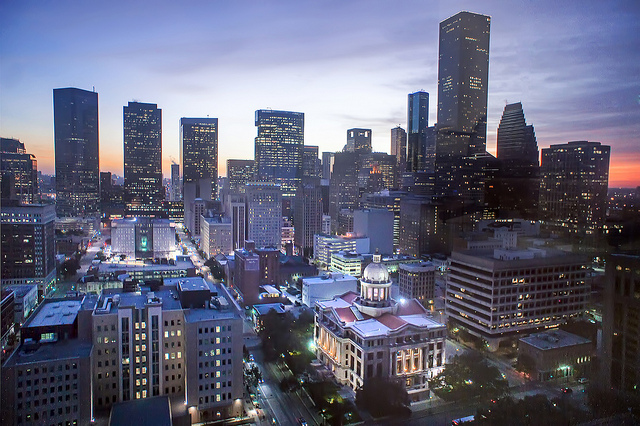
In Summary

For the purposes of this section, improving the quality of housing refers to improving the quality of housing that’s affordable for low- and moderate-income people and encouraging environmentally responsible building and development. That means building housing that’s not only affordable, but livable, well-designed, suited to its location, socially and culturally responsive, and as “green” as possible.

Improving the quality of housing takes a collaborative effort (although there is much an individual can do to help move the process along), involving all those affected by a new development or renovation project. If done well, it can be both a financial and social benefit to its neighborhood and to the community as a whole, a profit-making investment for a developer, and a huge boon to those who occupy it. It won’t happen, however, without vigorous advocacy, and a long-term commitment to continuing the effort to create high-quality affordable housing in the community.

Contributor

Bill Berkowitz

Tim Brownlee

Andrea Glinn

Resources

Online Resources

The mission of the Center for Community Change is to build the power and capacity of low-income people, especially low-income people of color, to have a significant impact in improving their communities and the policies and institutions that affect their lives.

ChangeLab Solutions

Safe, stable, and affordable housing is foundational to health and wellbeing. Discrimination and economic exclusion are reflected in existing housing policies across the country, driving health inequities. 

ChangeLab Solutions offer tools and practical steps to connect housing and health and help communities achieve housing policy goals. 

The Curb-Cut Effect by Angela Glover Blackwell. Laws and programs designed to benefit vulnerable groups, such as the disabled or people of color, often end up benefiting all of society.

Detroit’s Legacy of Housing Inequity Has Caused Long-Term Health Impacts − These Policies Can Help Mitigate That Harm. This article examines the long-lasting health impacts of housing inequity in Detroit, highlighting how discriminatory housing policies have contributed to poor health outcomes for residents. It also suggests policy solutions, including equitable housing reforms and community investments, to mitigate these harms and improve public health.

Development without Displacement Toolkit provides practical lessons, frameworks, and tools that advance equitable development without displacing residents and small businesses.

‘Grandfamily’ Housing Caters to Older Americans Raising Children from The New York Times, shares the stories of intergenerational communities that provide a powerful option for aging family members who take on raising their grandchildren.

Healthy Neighborhoods Study, based in Boston, is the largest resident-driven, participatory action research project in the US about neighborhood change processes, like gentrification and climate change, and their impact on health.

Health In Partnership has created the Root Cause Test tool to advance housing policies that address inequities. Join us in advocating for policy implementation to transform housing and health outcomes.

Healthy, safe housing linked to healthier, longer lives: Housing a social determinant of health is an article by Lindsey Wahowiak from The Nation's Health about the health risks of Americans at home.

Home Sick: Uncovering the Health Harms in Homes of America’s Manufactured Housing Communities, which has outlined unhealthy conditions in these communities and their links to serious health implications.

The Home Usability Network from the University of Montana's Research and Training Center on Disability in Rural Communities (RTC: Rural) is a group of individuals and organizations that bring together their knowledge, resources, and creativity to develop customized solutions to individual usability problems.

This ColorCode “Housing Is Health Care” podcast delves into how housing — and today’s housing crisis — intersects with health. It also explores how racial discrimination has played a part in causing this crisis, as well as present-day housing segregation on Long Island.

Improving Health through Equitable Economic Development and Strategic Partnerships from Roadmaps is a webinar that explores why housing matters to our health and what our Rankings data tells us about housing in your community.

The National Affordable Housing Network was founded to develop resources to provide highly credible research, evaluation, design, education, information and policy and program design assistance to those working to change the way low-cost housing is built for disadvantaged Americans.

The National Center for Healthy Housing (NCHH) is a national nonprofit dedicated to securing healthy homes for all. NCHH provides information, evidence, tools, and ways to build upon the healthy housing movement.

Q&A: Mayor Lovely Warren on Rochester’s Leadership to Address Healthy Housing and a Call to Action from National League of Cities

Reason Foundation - New Approaches to Affordable Housing is an article on affordable housing, and how local governments often make the situation worse in trying to make it better. Written from a conservative point of view, contains interesting ideas.

The U.S. Department of Housing and Urban Development's Regulatory Barriers Clearinghouse database describes and links to ordinances and regulations from around the country that offer incentives or allow waivers to developers in order to encourage the construction of affordable housing.

Rethinking Local Affordable Housing Strategies: Lessons from 70 Years of Policy and Practice is a report that aims to help state and local leaders meet the modern realities of the affordable housing challenge by looking back at the lessons of the past 70 years of housing policies.

Rhode Island Housing and Mortgage Finance Corporation provides low-interest loans to income-eligible home buyers, assistance to developers of affordable housing, buyer education, etc. Includes a neighborhood revitalization program that provided money for neighborhood planning.

Smart Communities Network on how to optimize the safety, systems, livability, health, prosperity, and sustainability of your community.

The United Nations Human Settlements Programme, UN-HABITAT, is the United Nations agency for human settlements. It is mandated by the UN General Assembly to promote socially and environmentally sustainable towns and cities with the goal of providing adequate shelter for all.

Tenants' Rights: A Matter of Health is a podcast episode from the In Solidarity podcast. Dr. Jamila Michener joins hosts Ericka Burroughs-Girardi and Beth Silver to explore how substandard housing conditions exacerbate health inequities, particularly in marginalized communities. The episode highlights the power of tenant organizing as a strategy to improve living conditions, foster community empowerment, and drive broader civic engagement to address systemic housing challenges.

Visualizing Wellbeing: Humane Housing is an article exploring the state of wellbeing in the United States through a collection of data visualizations. Developed in partnership with the Well Being Legacy Initiative and Community Commons. 

EPA info on volatile organic compounds (VOCs) as well as links to information about other indoor pollutants.

Well Building Standard online resource to improving human health and well-building in buildings and communities across the global. 

Checklist
mloewenstein Wed, 12/12/2012 - 10:51

What do we mean by improving the quality of housing?

___Improving the quality of housing refers to increasing the quality and quantity of affordable housing for low- and moderate-income community members, as well as encouraging environmentally responsible construction

___Affordable housing costs no more than 30% of household income

Livable housing should be:

___Decent

___Big enough

___Free of hazardous materials

___Safe

___Accessible for all residents

___In appropriate locations

___Convenient to transportation and services

Housing should be well-designed so that:

___It meets the needs of its users

___It responds to its context

___It enhances it neighborhood

___It is built to last

___Housing itself and its construction and site should be environmentally responsible

___Housing should be built with its social effects in mind (mixed income, mixed use, etc.)

___Improving the quality of housing takes a concerted and collaborative effort, resources, and the use of incentives and regulations

Why improve the quality of housing?

___It adds to the physical and social attractiveness of the area

___It increases property values

___Improved housing increases pride in the neighborhood for everyone

___Well-built housing is kinder to the environment

___Improving the quality of housing is cheaper for both the developer and the community in the long run

___Improved housing can increase the potential or actual workforce in the area

___It can preserve open space and/or reuse unused, previously-built space

___It can replace or restore an aging housing stock

___Improving the quality of housing can be part of a plan for anticipating the growth of the community

___Improving the quality of housing is the right thing to do

When should you try to improve the quality of housing?

___When there’s a community planning or development effort in progress

___When there’s an outcry about the lack of decent housing

___When there’s a crisis

___When there’s funding available from a federal, state, or foundation initiative

Who should be involved in improving the quality of housing?

___The developer

___The business community, particularly lenders 

___Local officials

___Funders 

___Neighbors 

___Potential renters or buyers

How do you improve the quality of housing?

___Assessment

___Participation

___Consider diversity

___Plan, design and build as if this were upscale housing

___Address the impact, especially of a large development, on its area

___Plan, design, and build around the needs of residents

___Be creative

___Plan for recruiting tenants or buyers

___Use incentives for developers

___Expect and specify the returns for those incentives

___Enact regulations and limits on development

___Use public financing or building where it’s appropriate and will be well-managed

___Engage banks and work with low-income renters and buyers

___Use a collaborative development process

___Advocate

___Continue working indefinitely to improve the quality of housing

Examples
pschneider Wed, 12/16/2015 - 09:35

Example #1: Building a Better Future for Liberty City

Carrfour Supportive Housing is expanding efforts to redevelop the Liberty City neighborhood in Miami. Together with its partners, Carrfour is revitalizating one of the largest public housing developments in Miami-Dade County with high-quality, mixed-income housing, creating a cradle-to-college education pipeline, and increasing opportunities for health and physical activity in the neighborhood.

For more than two decades, Carrfour has developed affordable housing with a comprehensive array of on-site services for low-income individuals and families across the Miami region. Through Partners in Progress, Carrfour is bringing together local government leaders, residents, business owners, housing developers, and community organizations to redevelop the Liberty City neighborhood and improve the health care and education in the community. Carrfour is engaging community members in each step of the revitalization process and working with them to address pressing community challenges.


Example #2: Rolling Hills Apartments: Weaving Together Opportunities for Healthier Lives for a Diverse Immigrant Community

Photo of Rolling Hills Apartments

Twin Cities LISC, a local community development financial institution, has partnered with local organizations and city agencies to create quality affordable housing with improved healthcare access, including constructing a Federally Qualified Health Center. LISC also employed community health advocates to weave together the isolated health-related efforts in the neighborhood of focus into a cohesive health agenda. More specifically, they connect and help support existing efforts, identify and help address gaps, and facilitate the conversations and activities that sustain collaboration.

Learn how social determinants of health are being addressed to build healthier lives for immigrants in St. Paul, Minnesota in this Community Close-Up from the Building Healthy Places Network.

Contributed by Lia Thompson, University of Kansas, Community Tool Box Intern.


Example #3: Community Development 2.0—Collective Impact Focuses a Neighborhood Strategy for Health

The East Bay Asian Local Development Corporation (EBALDC) has built health into its strategic plan, and in the neighborhood revitalization work of The San Pablo Collaborative (SPARC), convened by EBALDC, health is the first priority. The San Pablo Area Revitalization Corridor neighborhood that stretches between downtown Oakland and Emeryville is considered to be one of the poorest and most disadvantaged areas of Oakland, California. Life expectancy in this area is up to 20 years lower than the neighboring area, Oakland Hills. SPARC works tirelessly to address the physical, social and economic factors-“social determinants”- that shape residents’ health in the San Pablo Avenue Corridor. SPARC partners work collectively in order to create an overall healthier environment for residents throughout the neighborhood. The California Hotel has been successfully preserved as affordable housing and a grocery store has been brought to this long abandoned neighborhood.

Learn how social determinants of health are being addressed to build healthier lives for the most disadvantaged areas of Oakland, California in this Community Close-Up from the Building Healthy Places Network.

Contributed by Lia Thompson, University of Kansas, Community Tool Box Intern.


Example #4: Under One Roof: Health Care and Social Services in the Same Place

The Chicanos Por La Causa (CPLC) is the largest community development corporation based in Arizona. CPLC is committed to building stronger, healthier communities as a lead advocate, coalition builder, and direct service provider. CPLC helps more than 200,000 people through programs in four areas–housing, economic development, education, and health and human services. CPLC recognizes that the needs of the families it serves are complex as a family rarely approaches the CDC with only one need. As a result, CPLC sought to establish cross-sector partnerships that would more effectively and holistically meet the needs of families.

Read more about CPLC on Rooflines - The Shelterforce Blog, from the National Housing Institute.

Contributed by Lia Thompson, University of Kansas, Community Tool Box Intern.


Example #5: Supporting Childhood Wellness Through Healthy, Affordable Housing

In a low-income Philadelphia community, for-profit and non-profit developers have partnered to create Paseo Verde, a high-quality housing development highlighting resident and community health. The development prides itself on making healthy housing accessible even for families in poverty. This one-, two-, and three-bedroom apartment complex, Paseo Verde, supports children’s health through its environmentally sustainable design, on-site health center and pharmacy, resident service programs, and social service programs.

Read more in the profile from How Housing Matters.

Contributed by Lia Thompson, University of Kansas, Community Tool Box Intern.


Example #6: Communities Driving Health Equity - PUSH Buffalo

PUSH Buffalo (People United for Sustainable Housing) is an organization working to make housing safe, affordable, and energy-efficient for residents of West Buffalo, NY. This spotlight video shows how PUSH Buffalo assists residents in obtaining federal and state grants to revitalize their homes, which are often harmful to live in due to the presence of toxins like mold and lead. PUSH Buffalo listens to and partners with residents, allowing them to make decisions and returning power and agency to their hands as they repair their homes.


Example #7: A RADical Way to Preserve Affordable Housing in San Francisco

A rendering of the new Ping Yuen Community Center to be built for a complex comprising 234 units, which to date has had no public gathering space for residents. A capital campaign is underway to fund the center's construction.

A rendering of the new Ping Yuen Community Center to be built for a complex comprising 234 units, which to date has had no public gathering space for residents. A capital campaign is underway to fund the center's construction.


In order to preserve a major portion of its decaying public housing stock, the City of San Francisco is using HUD’s Rental Assistance Demonstration program to convert thousands of homes to non-profit ownership. LISC has helped guide the rehabilitation of these neglected units, with community developers and residents leading the way.


Example #8: Anti-Racism Sparks Movement for Trauma-Informed Design

Image of Arroyo Village apartment complex.

Arroyo Village is a supportive housing complex in Denver designed for those with traumatic histories. The apartments are soundproofed by design, along with other design elements to promote healing. The growing awareness of the impact of the built environment on our health is one reason for the growth of trauma-informed design — design that includes adaptations to support a strengths-based framework based in an understanding of, and responsiveness to, the impact of trauma. Read more.

PowerPoint
Anonymous (not verified) Wed, 12/12/2012 - 10:51

A PowerPoint presentation summarizing the major points in the section.

Section 3. Providing Affordable Housing for All
mloewenstein Wed, 12/12/2012 - 10:52
Main Section
mloewenstein Wed, 12/12/2012 - 10:53

In their video about the affordable housing crisis, the Urban Land Institute discusses the 20 million working families in the United States who are forced to pay more than half of their total income for housing each month. We know that access to quality affordable housing is a worldwide issue and a crucial aspect in the development of sustainable communities (see Sustainable Development Goal #11: Sustainable Cities and Communities). As housing prices rise, families and individuals in our communities struggle to find and keep places to live, and access to health care, education, and employment is put at risk.

This section of the Community Tool Box discusses affordable housing as a community issue. It first offers reasons why we might be concerned about the situation, supplies some current facts, and describes some types of affordable housing that are available. The bulk of the section, though, is meant to be practical -- it lists many specific actions you and other community members can take to help create affordable housing where you live. Examples are provided, and further resources are cited.

What is affordable housing?

The U.S. Government defines affordable housing as housing that consumes 30 percent or less of a household's income. Using that definition, millions of people in the United States do not have affordable housing; and that number is presently growing.

Why should affordable housing be a concern?

For many Americans, affordable housing may hardly be a concern at all. Homeowners may not think much about renters. Renters living comfortably may not think much about those barely making ends meet. It's a natural human tendency to pay most attention to issues which are immediate and which affect us personally; affordable housing issues may not qualify on either count. The problems of those without affordable housing may not seem imminent.

However, there are several reasons to be concerned about affordable housing. First of all, every person should be able to afford a decent place to live. In times of prosperity, and when the income gap between rich and poor appears to be increasing, low-income individuals are particularly at risk. Greater wealth for the majority unavoidably puts upward pressure on housing prices, squeezing those with less income. So when affordable housing no longer exists we may feel some moral responsibility to help create it. A community, government, or other organization can take steps to stimulate or mandate affordable housing.

Without affordable housing, our communities will become less diverse. We may lose the opportunity to interact with people who may be in different economic or cultural circumstances, to learn from them and to enjoy their company. The community can become richer, and community life ultimately more satisfying when affordable housing is integrated into a community, bringing people of various socio-economic backgrounds together.

Data also links the lack of affordable housing to a variety of negative social outcomes. Substandard housing contributes to childhood health problems, such as asthma, anemia, viral infections, stunted growth, and other health problems, sometimes leading to expensive hospitalizations. Poorly-housed children in these situations are significantly more likely to have behavioral problems and to fall behind housing-stable students in school. When children are forced to move from school to school their academic success is at risk.

What are the facts about affordable housing?

Despite recent economic prosperity for many Americans, affordable housing in the United States is scarce and growing scarcer. Some facts are documented in a report titled "Rental Housing Assistance -- The Worsening Crisis," published in 2000 by the U.S. Department of Housing and Urban Development, and in the "Recent Research Results" newsletter from the HUD. According to these documents:

  • "Despite continued economic expansion, worst case housing needs have reached an all-time high of 5.4 million families, increasing by 4 percent between 1995 and 1997." [Families with worst case needs are defined as having incomes below 50 percent of the local median, paying more than half of income for rent, or living in severely substandard housing.]"Families with worst case housing needs are working harder than ever."
  • "Housing that is affordable to the lowest income Americans continues to shrink." The number of rental units affordable to extremely low-income Americans decreased by 5 percent between 1991 and 1997.
  • "The concentration of worst case housing needs among the poorest families continues to rise."
  • "Worst case housing needs increased dramatically in minority households during the 1990s."
  • "Poor families living in the suburbs most frequently face worst case needs."
  • "[Households with worst case needs] represent 5 percent of the Nation's population and a disturbing one-sixth of all U.S. renters. Without Federal, state, or local housing assistance, these renting families face severe financial pressures -- many are merely a paycheck or unexpected medical bill away from homelessness."

Affordable housing, however, is not only a compelling concern of the very poor. One need not be poor at all to realize that housing costs are high, or that the housing choices open to people with low to moderate incomes are often limited at best. The need for affordable housing is a significant concern at various economic levels.

What types of affordable housing exist?

People live in a very wide range of housing settings; virtually all these settings can be made affordable. Without going into great detail, some types of affordable housing include:

  • Newly built housing developments, in which the entire development is specifically planned to be affordable. (One variety of this type, but not the only one, is government -assisted public housing.) These developments can range from individual houses to apartments to single-room-occupancy facilities.
  • Newly built affordable housing units, as part of a mixed-income development. These units can also take the form of individual houses or apartments.
  • Existing housing units, renovated or converted from their previous use, so as to become affordable.
  • Existing and already-affordable housing units, neither renovated nor converted, but which are intentionally maintained and conserved so that they will remain affordable.

There are also specialized types of affordable housing, such as:

  • Co-housing, or congregate housing, where residents have separate bedrooms, but share common areas such as kitchens or yard spaces.
  • Transitional housing, designed for temporary use by people who are recovering from physical or emotional problems. This type of housing, which may also involve shared space, is often accompanied by support services nearby or on site.
  • Categorical housing - that is, housing for members of certain social groups. Seniors are one of the most common of these groups, but specialized housing has also been constructed for the disabled, for victims of domestic violence, for people living with AIDS, for grandparents serving as parents, and college students. If a specific group has particular housing needs, customized housing can be created to meet them.

The financial arrangements for affordable housing can vary as much as the physical housing itself. The financing to build the housing can come from federal, state, or local government, from quasi-public housing corporations or partnerships, from social agencies, or from purely private developers. Banks can supply loans on varied terms. On the other side, residents of affordable housing units may be partly or fully subsidized by direct government or private subsidies, vouchers, or loans. They may also contribute their own labor or services in return for a reduction in rent.

Some specific funding mechanisms are described within this section. And many combinations of the above financing methods are also possible.

How do affordable housing programs take shape in practice?

Below are just a few cases in point:

Cooperative housing

"Cooperative" here usually means cooperation between residents and a larger housing organization. An example of a nonprofit cooperative housing development is the Homestead Housing Center (HHC) in St. Paul, Minnesota. HHC develops housing cooperatives for seniors. HHC started 12 new senior housing co-ops in the rural, upper Midwest, often in towns with less than 10,000 people. The co-ops allow seniors to retain the advantages of home ownership (tax deductions and equity accumulation) as well as control over budget and monthly living costs. HHC provides development, design, and organizational services and offers partnering opportunities with local sponsors who provide matching funds for community development.

Another cooperative housing example is the Qumbya Cooperative in the Hyde Park neighborhood of Chicago, Illinois. Qumbya (pronounced like the famous song sung at summer camps in the U.S.) maintains two houses: Bowers House (houses 22 people) and Haymarket House (houses 13 people). Members buy a share in the organization, which is returned to them upon leaving the cooperative. Members work on assigned chores, take turns cooking for the house, attend weekly house meetings, and participate in quarterly maintenance chores.

Community land trust (CLT)

Community land trusts are nonprofit organizations that purchase or otherwise protect land and make it available for community purposes. A successful affordable housing example is the Burlington Community Land Trust (BCLT) in Vermont. This project involved the Sarah Cole House in the "Hill" section of the city, which includes many large 19th century homes built by lumber barons and merchants. The Hill had changed dramatically over the past two decades as old homes were converted to college offices, dorms, fraternity houses, apartments, and rooming houses. The changes brought noise, traffic, lack of parking, and poor maintenance to many of the homes.

The local Community and Economic Development Office encouraged the BCLT to develop and manage a single-room occupancy project to serve homeless, low-income, and single women (women at risk of losing their housing). The Sarah Cole House was chosen for the project because of its history as an owner-occupied rooming house. Despite having resident owners, the building had fallen into disrepair. Neighbors first objected to the development as another assault on the neighborhood and protested to the local zoning board. BCLT responded with an appropriate site plan, staffing plan, and house rules. Opposition was dropped and the zoning was approved. After BCLT rehabilitated the house and grounds, area residents expressed satisfaction with the neighborhood improvement.

Community development corporation (CDC)

Community development corporations are nonprofit multi-purpose economic development organizations which serve primarily low-to-moderate-income people and which commonly become involved in local housing issues. One good example is Tenants to Homeowners, Inc. in Lawrence, Kansas. This CDC promotes low-income housing by providing home ownership programs and credit counseling to help people qualify for mortgages. The organization acquires properties to sell to moderate and low-income people and renovate or build homes to sell to people not qualifying for traditional loans. Tenants become homeowners through education, communication, home improvement, and creative financing.

An example of a faith-based nonprofit CDC is Habitat for Humanity International. Founded in 1976 in Americus, Georgia, Habitat has built or rehabilitated more than 80,000 affordable homes for more than 400,000 people around the world through volunteer labor and donations of money and materials. There are nearly 1,900 Habitat affiliates in 64 countries, including the U.S.

Habitat builds and rehabilitates houses with the help of homeowner partner families. The houses are sold to families at no profit and financed with no-interest loans. The families provide a down payment and monthly mortgage payments and invest hundreds of hours of their own labor, "sweat equity," in building their and other Habitat houses. Habitat doesn't get government funding, but involves government through gifts of land, houses for rehabilitation, and infrastructure for streets, utilities, and administrative expenses.

How can we create affordable housing?

Creating affordable housing is a challenging task, more challenging than many of the topics we have considered in the Community Tool Box.

Three reasons may help explain why:

  • Creating affordable housing goes beyond the communication, organizational, and interpersonal skills we have emphasized in this website. Those skills may be relevant here, but so are others. Affordable housing frequently means that new homes are going to be built. So while the affordable housing advocate may need to be excellent at human relations, that advocate may sometimes also need to have at least a passing familiarity with zoning, building code, sewage systems, energy codes, rebates and incentives, and material costs.
  • Creating affordable housing often involves multiple constituencies and multiple social institutions. More is required than simply persuading or satisfying a few people or groups, or even the public at large. Affordable housing activities may need advocates to set the process in motion; developers to acquire the land; architects to design the homes; banks to finance them; local governments to approve the plans; businesses to sell the building materials; construction workers to do the actual building; building inspectors to monitor the construction; agents to sell the homes; and buyers to buy them. To understate the case, the creation of actual affordable housing units takes more than the efforts of a citizen or single group of citizens; it requires highly skilled coordination among many people.
  • Many of these constituencies have financial as well as ideological interests. The developers, landlords, bankers, businesses, and construction workers all need some income from their work, enough income to justify their time spent. While community workers can sometimes serve without pay, builders and bankers rarely do. Their legitimate financial needs must be satisfied, just as the needs of the buyer or renter of the finished home.

So creating affordable housing is challenging indeed. It is a complex and multilevel problem. But the advantage of multilevel problems is that there are multilevel solutions. The flip side of the challenge is that there are many entry points into the problem, many actions to create affordable housing that one can take.

The material below focuses on actions to help create affordable housing that can be taken on different levels and by different groups. They represent a variety of ideas that have been successful in other communities, and could be successful in yours too.

We emphasize that there are many strategies for creating affordable housing, many pathways that can be taken. Google the phrase "creating affordable housing" and you will get millions of hits. We cannot begin to describe all of them here, nor all the housing possibilities, but we can highlight the main action categories.

The task for you as reader is to select those actions that are most appropriate for your own community setting, for your group, and for you personally. There is no one best answer here. Your own answer will depend upon your own time availability and interests, as well as the other resources available in your community.

Many of these actions, especially those on a citizen level, can be taken by people without specific expertise in the housing field. Expertise helps, but an essential co-requisite is caring about creating affordable housing in one's community, and being willing to put in the effort to help make it happen.

The actions below are arranged by category (citizen, local government, social agency, etc.), depending upon who might be most likely to be the primary initiator. Certain actions might be most appropriate for a citizen to take, others for local government or nongovernmental organizations. But we stress that these distinctions, while generally accurate, are loose and approximate. Some duplication and overlap exist. Many of the actions below can be taken by many different kinds of actors, and the listing below is simply a rough guide.

Action steps for citizens

Getting started:

  • Study the types of affordable housing that are possible, as well as successful examples of affordable housing programs in other communities. Such advance study will be helpful to you in knowing your options and shaping your thinking about what might work best where you live.
  • Get involved with an affordable housing group in your own community.
  • If no such group exists, start one yourself. Get together with people you know who care about the issue, recruit others, make plans, and take action.
  • Join forces with other groups in your community -- or representatives of those groups -- whose work is related to affordable housing issues. Use their support and expertise to help you advance your cause. These groups might include:
    • Affirmative action committees
    • Community development corporations (especially)
    • Fair housing committees
    • Human rights committees
    • Minority group organizations
    • Other anti-poverty or advocacy groups in your home area

Working together with other people, even a few others, will strengthen your effectiveness and sustain your own energy.

Once you have connected with the right people, you and your group might consider advocating for specific local affordable housing actions, such as:

  • Survey or meet with prospective residents of affordable housing in your community to learn more about their particular housing needs and preferences. (First, seek out and read any relevant prior studies.) Affordable housing should conform to resident needs and preferences, so it's important to know what they are.
  • Survey or meet with neighbors or neighborhood groups to learn their views about what affordable housing might work best in their neighborhood, and how they might support it.
  • Consult with housing experts to learn their opinions. Those opinions are not directives, but they should generally be considered.
  • Set affordable housing targets for your community. For example, X% of the housing units in your community should be affordable. Then challenge other sectors of the community (e.g., government, agencies, bankers) to meet those targets.
  • Encourage or require developers of new housing to set aside a fixed percentage of units as affordable housing units.
  • Encourage or require developers to contribute fees (sometimes known as "linkage fees") to a local affordable housing fund.
  • Influence local government to provide grants and loans for affordable housing construction.
  • Change local zoning regulations to facilitate affordable housing construction or renovation. These changes might include allowing higher housing densities in certain areas, or allowing residential construction in areas previously designated for other functions.
  • Put pressure on developers and building owners to keep rents of new housing affordable for the majority. While developers are entitled to fair profits for their work, profits should not be so high as to exclude all but the wealthier residents, or wealthy newcomers, from living there.
  • Support the creation of group homes and similar facilities in residential neighborhoods when they are appropriately sited.

Contrary to what some believe, not all neighborhoods reflexively oppose group homes. On a residential street in one suburban neighborhood, the Salvation Army proposed opening a 20-unit single-room-occupancy facility for former alcohol and drug abusers. Initial neighborhood reaction was mixed; but the Salvation Army worked closely with a neighborhood advisory committee and heeded its advice. The facility opened without organized opposition, and has been problem-free ever since.

Action steps for keeping existing housing affordable:

  • Consider rent control provisions or ordinances for your community
  • Ensure that residential property taxes are reasonable in relation to other forms of available local taxation
  • Educate current renters in tenants' rights, so that they will not be subject to unfair rent increases, nor other tactics that might lead to their displacement
  • Form tenants organizations, where tenants can advocate directly and freely for their own interests
  • Make sure that both existing and planned affordable housing opportunities are well publicized and reach the right people

To make these changes, community support will always be desired, and local government help may often be required.

Action steps for local government

  • Stimulate local government to adopt an affordable housing policy for the town, and/or to set up its own affordable housing committee.
  • Undertake campaigns to persuade local government officials to act upon the affordable housing initiatives you are supporting
  • Encourage local government to adopt (a) formal human rights policies, and also (b) written policies which encourage diversity within the town, including members of all races, ethnic groups, and social classes. In some cases, these policies can have legal validity and be written into the town's by-laws. (See also local government actions just following.)
  • Also note: If local government is insufficiently responsive to your affordable housing initiatives, you may choose to run for local government office yourself.
  • In addition, it's also possible to get involved in private efforts to build homes directly. Members of Habitat for Humanity, a worldwide organization, often serve as volunteer construction workers. There are Habitat chapters in many communities, possibly including your own. A similar national organization, emphasizing youth involvement, is YouthBuild. Church groups, AmeriCorps volunteers, and student interns frequently get involved in these efforts as well. In other programs, neighborhood residents themselves help one another with home repairs.

Action steps for local government officials:

  • Create a local Affordable Housing Committee, with the goal of creating more affordable housing in your community. Ideally this committee should have: (a) paid town-funded staffing; (b) a realistic budget; (c) representation from a wide variety of community members (including low-income and minority community members); and (d) clear affordable housing targets and goals that are regularly reviewed and adjusted.
  • Advocate for and facilitate passage of local legislation mandating (for example) developer fees for a local affordable housing fund, affordable housing funding set -asides, inclusionary zoning changes, and other actions previously mentioned.
  • Consider creating a real estate tax increment fund. (This refers to situations where new development in a community increases overall property values, and therefore property tax revenues. Some or all of the increase can be earmarked for affordable housing.)
  • Help secure voter approval of bonds to pay for local affordable housing projects.
  • Consider the imposition or redirection of other taxes, fees, or interest payments that could go to support affordable housing, such as:

Real estate transfer taxes

Taxes on windfall profits from real estate sales, such as those resulting from the sale of previously price-controlled units

Local sales taxes

  • Taxes on business gross receipts
  • Hotel taxes
  • Restaurant taxes
  • Utility taxes
  • Document recording fees
  • Fees in cases where previously affordable housing is demolished, or converted into less affordable units.
  • Fees paid by developers to increase the density of their projects
  • Interest on application deposits
  • Interest from real estate escrow amounts
  • Interest on title escrow amounts
  • Interest from tenant security deposits
  • Interest and penalties paid on delinquent property taxes
  • Provide local tax credits and tax incentives for affordable housing development where possible.
  • For current residents, provide fair and well-publicized abatement procedures for those having difficulty paying property taxes.
  • Create volunteer programs where citizens may provide community service in exchange for a certain amount of property tax reduction.

Several communities in Massachusetts operate these programs, which are usually designed for senior citizens. In one model, town government offices make service jobs open to retired seniors, who can earn up to a $500 tax rebate. Early reports on these programs have been highly favorable.

  • Advocate for and facilitate passage of local anti-discrimination laws and other human rights standards that will create a climate more favorable to affordable housing construction and preservation. When such laws and standards already exist, strengthen them as might be needed, and/or create or monitor structures to ensure appropriate enforcement.
  • In larger communities, begin a program through which abandoned properties, and also properties the city acquires through bankruptcy or foreclosure, are converted into affordable housing units.
  • In rare cases, consider using the legal ability a community might have to take land by eminent domain; in such cases, local government or its designee can acquire targeted land from previous owners for specified purposes and compensate these owners at fair market value.

The Dudley Street Neighborhood Initiative is a major case in point. Operating in one of the poorest neighborhoods in Boston, the Initiative persuaded the City to use its eminent domain powers to acquire a sizable amount of neighborhood acreage, which was then in fact converted into affordable housing units.

  • Vigorously pursue available opportunities for state and federal grants for affordable housing programs, in conjunction with local social service agencies and housing partnerships.

Action steps for a social service agency

Some communities already have agencies or other organizations whose primary mission is the creation and maintenance of affordable housing. When those agencies exist, guide your own agency in working together with them and offering specific support as feasible. When such groups don't exist, join other agencies in your community to create a coalition that will advocate for the construction and maintenance of affordable housing. This coalition, or partnership, can have a more powerful impact than any one agency acting alone; it can also lead to the formation of a new organization specifically dedicated to affordable housing issues.

Agencies can also take affordable housing actions over and above new housing development:

  • Create a centralized listing of affordable housing opportunities in your area. This listing should be accurate, up-to-date, and as comprehensive as possible; ideally, it should be computerized. Such a listing can best be created both through inter -agency collaboration and through cooperation with local realtors and landlords.
  • Contact sources vigorously to locate affordable housing units and to update your list.
  • Publicize that listing extensively, and make it available in both electronic and print copies at multiple sites, especially those that would naturally attract prospective affordable housing tenants.
  • Create a parallel listing of prospective tenants who are interested in affordable housing opportunities when they arise. Prospective tenants should be able to register to get on the list without charge.
  • Publicize that listing to real estate offices, rental agencies, and landlords associations throughout the community.
  • Monitor and evaluate the consequences and overall effectiveness of affordable housing referrals made or received.
  • Ensure that current tenants of affordable housing units know their rights, such as protection from unlawful rent increases, threats, pressures, or evictions. (See item 17.)
  • Publicize information relating to those rights. This can include door-to-door distribution of flyers, creation and distribution of more detailed manuals, and provision of well-advertised information, referral, and direct assistance services for both current and prospective residents with housing problems or concerns.
  • Provide educational sessions and programs for tenants on affordable housing issues.
  • Make those sessions and programs available to the entire community.
  • Sponsor forums and workshops on those issues for community leaders.
  • Offer technical support and consultation to tenants organizations. (See also item 18 on formation of such organizations.)
  • Advocate for local rent control and other local protective legislation when that might be important.
  • Design and implement homeowner assistance programs, including counseling and training, for prospective buyers of affordable housing properties.
  • Provide support services to complement affordable housing already in place.

Residents of affordable housing units can often benefit from other services such as job training, personal counseling, health services, child care, or transportation as well. If those supportive services are available and easily accessible -- sometimes they can be delivered right on site -- residents are more likely to be more satisfied with the living situations, to utilize their abilities more fully, and to make greater community contributions. (Note also that such services need not be delivered by an agency directly; sometimes, neighbors can provide support services themselves, in particular if they are trained to do so.)

 Action steps for a religious institution

Churches, synagogues, or temples can act on affordable housing issues much in the same way as social service agencies. They generally begin with two strong advantages: nonprofit status and community credibility, so, at the least they can:

  • Become involved with affordable housing opportunities for their parishioners, and for the larger community.
  • Join the local housing partnership if there is one, or join together with other churches in the community to form an inter-faith housing partnership. (See also previous examples under social service agencies.)

The Greater Boston Interfaith Organization, a coalition of 87 religious groups, recently started a petition campaign to get 100,000 signatures to convince the state legislature to create a $65 million housing trust fund. While the outcome is as yet unknown, this type of action is an example of what a mobilized faith-based community can undertake.

Action steps as a community planner

Many community planners, both urban and suburban, are incorporating new urbanist planning principles into their work. These principles emphasize mixed use, higher densities, common public spaces, and less reliance on automobiles. Such principles may easily be adapted for affordable housing creation.

Planners can:

  • Design some previously undeveloped areas of the community for mixed residential and commercial use. (This may allow for more residential units compared to areas designated for commercial use alone.)
  • Design or re-design some residential areas to have increased housing densities (e.g., "cluster design").

Action steps as a banker or lender

  • Make, publicize, and uphold anti-redlining and anti-discrimination commitments - i.e., commitments not to deny mortgages, loans, and other banking services to potential residents of affordable housing, nor to discriminate in lending on the basis of race, ethnicity, disability, or neighborhood
  • Provide loans to affordable housing developments at favored rates
  • Consider adopting policies to turn over foreclosed properties to housing organizations for affordable housing use
  • Train other community members in financial skills and practices that will most likely result in local affordable housing production

Action steps as a landlord or building manager

  • Set aside a percentage of housing units you own or control to be affordable housing units
  • Monitor rents in affordable housing units you may already own or control, with a guideline that rent increases should not exceed the rate of inflation

Action steps as a real estate agent

  • Make a commitment to advocate for the construction and preservation of affordable housing units in your community
  • Make a similar commitment to seeking out any affordable housing units in your community and publicizing their availability to segments of the community that might need them
  • Devote a dedicated percentage of your agency's time to both of the above actions
  • Persuade developers in your area to set aside affordable housing units, and to keep rents in existing units affordable
  • Join forces with other real estate agencies in your community to take similar actions to those above
  • Work together with local government and other local agencies or housing partnerships to do the same

Action steps as a business owner or manager

Do businesses have a stake in affordable housing for the community? Yes, they do. A prosperous business needs good employees. New employees must be attracted to the community as well as be able to afford living there. Similarly, current employees who are renters must be able to afford to stay where they are, and not be squeezed out of their homes by rising rents. Wise business owners will therefore take steps to ensure the preservation of affordable housing in the community, by supporting some of the actions listed above.

More specifically, a business owner or manager can also:

  • Become involved in affordable housing partnerships that may exist
  • Encourage other businesses to do the same
  • Advocate for tax advantages for new affordable housing construction
  • Help in the financing of new affordable housing opportunities
  • Build affordable housing directly

Action step for a union leader

  • Consider offering a percentage of union member time below the prevailing wage rate for affordable housing construction

Action steps for a foundation official or other granting agency

  • Consider increasing the degree to which your foundation or granting agency is involved in affordable housing concerns
  • Work together with other leaders in your area to stimulate promising new affordable housing approaches
  • Make direct awards for innovative affordable housing programs in your grant -making area (these may be loans, matching grants, or 100% grants, as appropriate)

Action steps on the state level

For state governments:

  • Place affordable housing high on the list of state government priorities and policy initiatives
  • Allocate sufficient funds in the state budget to subsidize affordable housing for state residents
  • Allocate sufficient funds in the state budget to subsidize promising affordable housing initiatives
  • Make grants to selected affordable housing initiatives
  • Provide low-cost or no-cost loans for such initiatives
  • Base local aid allocation upon the amount or percentage of new local affordable housing units, or upon related indicators of progress, in a given community
  • Pass anti-snob zoning legislation, providing for possible state override of local zoning ordinances in communities where the affordable housing supply falls below a designated percentage
  • Actively pursue federal housing grant programs for affordable housing initiatives
  • Provide tax credits and tax incentives for new affordable housing construction, or other affordable housing set-asides meeting designated standards
  • Allow state income tax credits for individual contributions to affordable housing programs
  • Allow voluntary affordable housing tax check-offs on state income tax forms
  • Pass legislation to stimulate or implement regarding affordable housing initiatives previously mentioned - e.g., affordable housing requirements in new developments, requiring developer fees for affordable housing, changing zoning requirements, rent control
  • Establish a statewide toll-free telephone number (or numbers) to provide information on affordable housing programs - including state and federal affordable housing initiatives - and also to respond to citizen affordable housing concerns
  • Maintain state taxation policies which do not disproportionately rely on property taxes, thus providing greater affordability for prospective new homebuyers, and also ensuring that retired people can continue to live in their own homes
  • More specifically: Pass "circuit-breaker" legislation, capping the percentage of income a resident must pay for property taxes

For other statewide groups:

  • Work together with foundations and corporations to form statewide affordable housing partnerships
  • Work with local housing partnerships and other local initiatives to support affordable housing initiatives in individual communities
  • Create a statewide organization of local housing partnerships, community development corporations, and/or local affordable housing initiatives. These organizations can engage in advocacy, information sharing, and collaborative program development.
  • Provide technical assistance and consultation to such initiatives

Action steps on the federal level

While all the participants previously mentioned can do much to create affordable housing, the federal role in stimulating housing development is paramount. The U.S. government, primarily through the Department of Housing and Urban Development (HUD) spends billions of dollars on affordable housing programs each year. No other group or organization in the United States, and perhaps worldwide, has equivalent resources at its disposal.

The federal budget cutbacks of the mid-1990s reduced HUD's relative impact. Only in the past several years has its budgetary authority resumed increases more proportional to need. Though the role of the federal government in housing assistance can be debated, many would argue that the federal contribution is inadequate as it is. Space does not permit full discussion of this particular point; but we might note HUD's own position in its 2000 report on rental housing assistance previously cited:

"A bold expansion in Federal assistance for affordable housing is needed to help fulfill the Nation's commitment to its neediest citizens for a decent and affordable home in a suitable living environment." (p. 53)

Which suggests that citizens and all of the other groups mentioned can:

Advocate for appropriate federal housing action

In Summary

What are some of the key factors to remember that are linked to affordable housing success? We can highlight a few:

  • Money. Some funding to build, renovate, maintain, and finance affordable housing is essential. The federal government is and will presumably remain the largest single funding source. But state and local governments, foundations, businesses, and bankers, as creators or holders of wealth, also have significant roles to play in generating, leveraging, and targeting needed dollars.
    • Sometimes creative thinking about funding sources can yield positive results. As the Center for Community Change notes: "People are often surprised there is something they can tap into. We can usually come up with something -- funds that no one knew about. The key is finding a new source of money, not stealing a source."
  • Creativity. Creative thought deserves a paragraph of its own. For while money is a key factor, creativity comes into play in generating and using money most effectively. It takes creativity to think of and implement an affordable housing project specifically for child care providers, just for example, or to partially subsidize inner-city loft space to lure artists downtown, or to develop affordable housing in trailer parks. Creativity also means finding new uses for assets a community already has -- abandoned motels, surplus warehouse space, empty vacation cabins, or whatever other real estate a community has to offer. If you and your colleagues can sit down and think about creative housing options in your own community, you will have taken a large step forward.
  • Partnership. As we have mentioned, affordable housing is a complex issue, typically requiring the coordinated efforts of many actors. This coordination can best come about through formal or informal partnership among those concerned. In such partnerships, the members plan, act, evaluate, and share successes together. From a recent article: "... the best affordable housing being created today involves partnerships between community organizations, local governments, corporate and lending institutions, and the philanthropic and religious communities." In other words, partnerships generally are more effective than individuals or groups acting alone. (quote from Faith Schantz, Home Makers, The Neighborhood Works, October/November, 1995, p. 17.)
  • Commitment. But finally, all the money, creativity, and partnership one could imagine will count for little if the commitment to create affordable housing is not in ample supply. As in most successful community actions, commitment is a precondition for success. And as in most life situations, commitment comes from within. This applies to all the groups we have discussed in this section -- citizens, local officials, social service agencies, churches, planners, bankers, lenders, landlords, Realtors, businesses, unions, foundations, and state representatives, as well as others. All have responsibility for finding the needed commitment and the accompanying political will, within themselves.

When commitment has been located and activated, joined with necessary funding, and in creative partnership, the prospects of ensuring affordable housing for all people will be that much brighter.

Contributor

Bill Berkowitz

Tim Brownlee

Andrea Glinn, Editor

Resources

Online Resources

Center for Community Change includes excellent links to other housing sites.

Center on Budget and Policy Priorities researches government programs for low- and moderate-income people; lists publications on low-income housing; offers a list serv for such discussions.

ChangeLab Solutions

Safe, stable, and affordable housing is foundational to health and wellbeing. Discrimination and economic exclusion are reflected in existing housing policies across the country, driving health inequities. 

ChangeLab Solutions offer tools and practical steps to connect housing and health and help communities achieve housing policy goals. 

Cooperative Movement provides extensive information on cooperatives and other housing ideas.

Cruel Musical Chairs (or Why Is Rent So High?) from Sightline delves into the affordable housing crisis and provides imagery on why building more homes is part of the solution.

The Curb-Cut Effect by Angela Glover Blackwell. Laws and programs designed to benefit vulnerable groups, such as the disabled or people of color, often end up benefiting all of society.

The mission of the Department of Agriculture, Rural Development, Rural Housing Service is to help rural individuals, communities and businesses obtain the financial and technical assistance needed to address their diverse and unique needs.

Development without Displacement Toolkit provides practical lessons, frameworks, and tools that advance equitable development without displacing residents and small businesses. 

Enterprise Foundation publishes a free print periodical, Enterprise Quarterly, featuring articles on housing and community development.'

From Homelessness to Housing in San Francisco: Portraits and Oral History. A moving new multi-media art project,” Everyone Deserves a Home”, on display in San Francisco’s Public Library asks 40 formally homeless residents in supportive housing, “what does home mean to you?”

Build Health Places Network's article Green Spaces Can Encourage Social Connectedness in Cities discusses the social benefits of urban green spaces.

Habitat for Humanity International builds homes through volunteer labor.

Healthy Neighborhoods Study, based in Boston, is the largest resident-driven, participatory action research project in the US about neighborhood change processes, like gentrification and climate change, and their impact on health.

Healthy, safe housing linked to healthier, longer lives: Housing a social determinant of health is an article by Lindsey Wahowiak from The Nation's Health about the health risks of Americans at home.

Housing Assistance Council specializes in rural housing.

Housing First, in Arlington, Virginia, is based on the premise that housing is necessary for health, security and wellness, and that people need not meet a long list of prerequisites to access permanent housing.

Housing, Homelessness, and Sexual Violence - Annotated Bibliography from the National Sexual Violence Resource Center is an annotated bibliography highlighting research articles documenting studies on the relationship between sexual violence, housing, and homelessness. From the description: “Current research suggests that people who have experienced homelessness are at an increased risk for experiencing sexual violence, and that sexual violence is a risk factor for homelessness and housing instability.”

Housing in Brief: What is Social Housing? from Backyard, Next City on Housing Equity

This ColorCode “Housing Is Health Care” podcast delves into how housing — and today’s housing crisis — intersects with health. It also explores how racial discrimination has played a part in causing this crisis, as well as present-day housing segregation on Long Island.

Local Housing Solutions provides resources to help cities, towns, and counties develop comprehensive and balanced local housing strategies that enhance affordability, protect low-income residents from displacement, and foster inclusive neighborhoods. The non-partisan site was developed through the National Community of Practice on Local Housing Policy.

Local Initiatives Support Corporation is dedicated to helping community residents transform distressed neighborhoods into healthy and sustainable communities of choice and opportunity.

Manufactured Housing Global Network provides information on mobile housing.

New England Resident Owned Communites (NEROC) from Cooperative Development Institute explains the benefits of resident owned communities in the Northeast.

National Low Income Housing Coalition is perhaps the primary nongovernmental organization devoted to this issue. The website includes an Advocacy Guide, a collection of detailed papers on Meeting America's Housing Needs, Frequently Asked Housing Questions, and many references and links to other housing organizations.

No Justice, No Peace of Mind and Body: The Health Impacts of Housing Insecurity for Black Women from The Nonprofit Quarterly.

OUR HOMES, OUR FUTURE: Building the Power to Win Rent Control for Stable Communities, a comprehensive guide, in support of national rent control campaigns across the country.

Pew Charitable Trusts provides holistic approaches made by partnerships to promote healthy birth outcomes.

Pittsburgh Partnership for Neighborhood creates vibrant communities that benefit their residents and are assets to the region.

Planners Web: Planning Commissioners Journal, Community Land Trust provides articles and postings on a wide range of planning issues, as well as a focus on how citizen planners - especially members of planning commissions and boards - can work most effectively.

Pratt Institute Center for Community and Environmental Development works for a more just, equitable, and sustainable city for all New Yorkers, by empowering communities to plan for and realize their futures. This is done by leveraging professional skills - especially planning, architecture and public policy - to support community-based organizations in their efforts to improve neighborhood quality of life, attack the causes of poverty and inequality, and advance sustainable development.

University of Wisconsin Center for Cooperatives pursues a research, educational, and outreach agenda that examines cooperative issues across multiple business and social sectors. The agenda encompasses all aspects of the cooperative business model, including development, finance, structure, and governance.

U.S. Department of Housing and Urban Development includes a list of current HUD grant programs and a compilation of housing "best practices," with profiles of previous award-winning programs. Additionally, HUD USER is the Department of Housing and Urban Development's publications arm. A search for "how to create affordable housing" turns up over 3000 documents. Some of these publications, such as the report on Rental Housing Assistance cited above, are free. To stay current on HUD' s publications, request a free subscription to its monthly print newsletter, Recent Research Reports.

Visualizing Wellbeing: Humane Housing is an article exploring the state of wellbeing in the United States through a collection of data visualizations. Developed in partnership with the Well Being Legacy Initiative and Community Commons. 

Why Housing and Healthcare Must Join Hands is an article discussing the impact of the nation's health and well-being as a result of a lack of affordable housing and escalating medical costs.

Yes in My Back Yard is an organization of people across the country working to make housing more available and affordable, while building communities that are welcoming and sustainable.

Community-Centered Housing: Aligning Social Practice and Supportive Housing is a policy brief by Fountain House and the Corporation for Supportive Housing introducing the Community-Centered Housing (CCH) model. It explores how integrating social practice into supportive housing can reduce loneliness and strengthen recovery outcomes for people living with serious mental illness.

Print Resources

California Department of Developmental Services. (no date cited). Affordable housing guide: Developing affordable rental housing for advocates. Sacramento, CA: Author.

Community Change (1994). Issue 16, (Summer). This issue of a magazine published by the Center for Community Change in Washington, DC focuses on affordable housing, with special attention to the role of state and local governments and to the creation of housing trust funds. Many helpful references.

Dolbeare, C. N. (1999). Out of reach: The gap between housing costs and income of poor people in the United States. Washington, DC: National Low Income Housing Coalition. An annual publication, emphasizing statistical data. Also available on the Coalition's website (see below).

Fannie Mae Foundation. Maxwell awards of excellence program [annual volume]. Washington, DC. This foundation, a private company, specializes in affordable housing and new housing opportunities. Each year, it solicits nominations for awards; in the annual volumes cited above, it provides brief case studies of the previous year's award winners and finalists.

Journal of real estate finance and economics, v 6, 1993, pp. 5-24.

Kunstler, J. H. (1996). Home from nowhere: Remaking our everyday world for the twenty-first century. New York, NY: Simon & Schuster. Gives an exposition of new urbanist planning principles.

Medoff, P., & Sklar, H. (1994). Streets of hope: The fall and rise of an urban neighborhood. Boston: South End Press. Details an eminent domain land taking to build affordable housing; see also Holding Ground, a powerful award-winning video on this topic.

Norwood, K., & Smith, K. (1995). Rebuilding community in America: Housing for ecological living, personal empowerment, and the new extended family. Berkeley, CA: Shared Living Resource Center. An emphasis on shared housing and housing design, with many drawings and illustrations.

Recent Research Results. (May, 2000). [a newsletter from HUD User], U.S. Department of Housing and Urban Development, pp. 1-2.

Schubert, M. (1999). More than bricks and mortar: Housing that builds community. Charlottesville, VA: Pew Partnership. A detailed case study of comprehensive housing strategies in Santa Fe, New Mexico, with an analysis of what made them successful.

U.S. Department of Housing and Urban Development (1996). Communities that work: Addressing the urban challenge. Washington, DC. Gives 25 profiles of award -winning affordable housing projects from across the country, with a useful integrating introduction.

U.S. Department of Housing and Urban Development (2000). Rental Housing Assistance the worsening crisis: A report to Congress on worst case housing needs. Washington, DC: Details the current affordable housing situation, especially for the very poor. Also provides a good overview of federal housing programs.

U.S. Department of Housing and Urban Development (2000). The state of the cities 2000. Washington, DC: Author. An annual report summarizing general U.S. city status and trends, including some detail on affordable housing, plus many general statistics.


Checklist
mloewenstein Wed, 12/12/2012 - 10:54

Affordable housing:

___30% or less of income

Concerns of affordable housing:

___Everyone should have a decent home

___Communities becoming more uniform

___Negative social outcomes

Facts:

___Bad conditions are rapidly rising

___Poor families in suburbs suffer the worst

___Minority families show the fastest increase in worst case conditions

___Affordable housing is shrinking

Co-housing:

___Families that share living space with separate bedrooms

Transitional housing:

___For people recovering from physical or emotional problems

Categorical housing:

___For social group members

Examples
mloewenstein Wed, 12/12/2012 - 10:53

Example #1: Rolling Hills Apartments: Weaving Together Opportunities for Healthier Lives for a Diverse Immigrant Community

Photo of Rolling Hills Apartments

Twin Cities LISC, a local community development financial institution, has partnered with local organizations and city agencies to create quality affordable housing with improved healthcare access, including constructing a Federally Qualified Health Center. LISC also employed community health advocates to weave together the isolated health-related efforts in the neighborhood of focus into a cohesive health agenda. More specifically, they connect and help support existing efforts, identify and help address gaps, and facilitate the conversations and activities that sustain collaboration.

Learn how social determinants of health are being addressed to build healthier lives for immigrants in St. Paul, Minnesota in this Community Close-Up from the Building Healthy Places Network.

Contributed by Lia Thompson, University of Kansas, Community Tool Box Intern.


Example #2: Community Development 2.0—Collective Impact Focuses a Neighborhood Strategy for Health

The East Bay Asian Local Development Corporation (EBALDC) has built health into its strategic plan, and in the neighborhood revitalization work of The San Pablo Collaborative (SPARC), convened by EBALDC, health is the first priority. The San Pablo Area Revitalization Corridor neighborhood that stretches between downtown Oakland and Emeryville is considered to be one of the poorest and most disadvantaged areas of Oakland, California. Life expectancy in this area is up to 20 years lower than the neighboring area, Oakland Hills. SPARC works tirelessly to address the physical, social and economic factors-“social determinants”- that shape residents’ health in the San Pablo Avenue Corridor. SPARC partners work collectively in order to create an overall healthier environment for residents throughout the neighborhood. The California Hotel has been successfully preserved as affordable housing and a grocery store has been brought to this long abandoned neighborhood.

Learn how social determinants of health are being addressed to build healthier lives for the most disadvantaged areas of Oakland, California in this Community Close-Up from the Building Healthy Places Network.

Contributed by Lia Thompson, University of Kansas, Community Tool Box Intern.


Example #3: From Homelessness to Housing in San Francisco: Portraits and Oral History

As we build collaboration across sectors, storytelling and art that lifts up success stories become more and more important. A moving new multi-media art project called “Everyone Deserves a Home” on display in San Francisco’s Public Library asks 40 formally homeless residents in supportive housing, “what does home mean to you?”


Image of the gallery in San Francisco.


Example #4: A Tour of Mariposa: Equitable Transit-Oriented Development

The Mariposa Project led by the Denver Housing Authority is an affordable and transit-oriented housing development in which health outcomes and community-level improvements are evaluated. The new mixed-income community has revitalized the surrounding areas, breaking down physical barriers between the public housing units and the rest of the community and infusing the area with community-informed retail and services. The Denver Housing Authority has transformed 10th Street into a promenade that connects the rail station to the nearby Art District on Santa Fe, drawing visitors from across the city to an area that was once overlooked.


Photo of DHA Executive Director Ismael Guerrero at the Mariposa development in Denver, Colo.

Contributed by Lia Thompson, University of Kansas, Community Tool Box Intern.


Example #5: The Brandywine Center: In Pennsylvania, Wealthy County’s Poorer Residents Get A Healthy Place To Live

Although Chester County, Pennsylvania, has been considered one of the richest counties in the country, seven percent of its half-million residents live in poverty. Coatesville, a city of 13,000 people, is one such low-income pocket. To combat this problem, the Brandywine Health Foundation (BHF) constructed the Brandywine Center, a community hub. The four-story building houses health and dental services on the first floor, behavioral care on the fourth, and 24 units of affordable senior housing on the two middle floors. The BHF is committed to working toward both improved neighborhood conditions and improved health in this low-income community.

Photo of Brandywine Center.

Contributed by Lia Thompson, University of Kansas, Community Tool Box Intern.


Example #6: Vita Health & Wellness District: Health at the Center of a Neighborhood Transformation

The Vita Health & Wellness District project was established through a partnership between the Stamford housing authority and Stamford hospital to revitalize an impoverished inner city area, in Stamford Connecticut, into a mixed-income community with expanded neighborhood services centered around a sustainable urban farm. Addressing the social determinants of health provide a framework for managing the neighborhood transformation in ways that would support and strengthen the existing community.

The Vita project is a great example of how a hospital can fulfill the Affordable Care Act’s mandate to engage its community by partnering to address the social determinants of health. The project also demonstrates how a forward-thinking community development organization can effectively partner with the health sector to pursue comprehensive community revitalization that could not have been achieved otherwise. These are still early days in what promises to be a fruitful and long-lasting partnership.

Image of the community gardening.

Read more about the Vita Health & Wellness District project on the Building Healthy Places Network blog.

Contributed by Lia Thompson, University of Kansas, Community Tool Box Intern.

Example #7: Grandmas4Housing: How a Tenant-Led Community Land Trust Came to Be

In February 2021, tenant and community activist Jocelyn Foreman learned that her rental home in Pinole California, was up for auction with Wedgewood Inc. winning the bid of $600,000. Using California's SB 1079 law—granting tenants 45-days to match auction offers—Foreman and her support network, "Jocelyn's Corner," moved quickly.

The group successfully raised a $100,000 down payment and partnered with a land trust to secure financing for the purchase. By April, Foreman became the first tenant to purchase her home through SB 1079, proving the potential power of tenant-led initiatives in combating housing insecurity.

Her success sparked broader changes across the state. In July 2021, California Governor Gavin Newsom signed legislation allocating an additional $500 million to support SB 1079 foreclosure acquisitions. Foreman's story shows the important role of community land trusts in housing stability and affordability.

Read more about this story on the Non Profit Quarterly website.
 

Example #8: A Community Creates Denver's First Resident-Owned Mobile Home Park

An 80-family mobile home community in Denver is set to become the city's first resident-owned manufactured housing park. In response to fears of displacement following several nearby park closures, residents of Capital City, now Montevista Comunidad, used Colorado’s Opportunity to Purchase law to collectively buy their park. This cooperative ownership model allows mobile homeowners to manage the land themselves, shielding them from corporate landlords and rising rents. 

The two-year effort was the result of a decade of grassroot organizing and advocacy. In partnership with three non-profits, residents generated enough capital to purchase the park. The City of Denver, once hesitant to support mobile home parks, became one of the largest lenders—reflecting growing pressure from housing advocates.

Montevista Comunidad shows how sustained community action can shift policy and expand access to affordable housing.

Read more about this story on the Non Profit Quarterly website

Example #9: Supporting Childhood Wellness Through Healthy, Affordable Housing

In a low-income Philadelphia community, for-profit and non-profit developers have partnered to create Paseo Verde, a high-quality housing development highlighting resident and community health. The development prides itself on making healthy housing accessible even for families in poverty. This one-, two-, and three-bedroom apartment complex, Paseo Verde, supports children’s health through its environmentally sustainable design, on-site health center and pharmacy, resident service programs, and social service programs.

Read more in the profile from How Housing Matters.

Contributed by Lia Thompson, University of Kansas, Community Tool Box Intern.


Example #10: A Ride to Better Health

The Mariposa project is on the front lines of a rapidly growing movement seeking to reconnect low-income residents to the critical networks — transit, affordable housing, jobs — that are the cornerstones of opportunity. By centering development efforts around a transit stop, planners are hoping to reinvigorate a neighborhood by connecting its residents to integral supports and services, from hospitals to schools to grocery stores , all while paying heed to the risks of gentrification and displacement.


Image of diverse children in an urban garden.


Example #11: Building Strong Neighborhoods with Affordable Housing


The New Settlement Apartments project began in 1990 with the acquisition and restoration of fifteen abandoned buildings, the construction of a new building, in addition to the acquisition of a seventeenth building to provide over 1,022 affordable homes for a community of more than 3,500 people, in which thirty percent are formerly homeless. Presently, the eighteenth building is under construction to provide sixty additional affordable apartments. This project has played a monumental role in transforming one of the worst areas of New York City into a vibrant mixed-income neighborhood.

Read more from the Settlement Housing Fund.

Contributed by Lia Thompson, University of Kansas, Community Tool Box Intern.


Example #12: ‘Housing first’ model making inroads on homelessness


Photo of a mother and daughter hugging on a front porch.

People who are homeless in the Arlington, Virginia, area can turn to the Homeless Services Center at the Arlington Street People’s Assistance Network for the health and support services that they cannot easily access. Medical care, food, shelter, counseling and job training are all available to people who need assistance.

Such wraparound services are vital to people who are homeless, but the “housing first” model is at the heart of the organization’s mission.

Housing first is based on the premise that housing is necessary for health, security, and wellness, and that people need not meet a long list of prerequisites to access permanent housing. While some programs require people to enter treatment programs for addiction or mental health or be employed before they are housed, housing first posits that with the right services and support, such issues can be better addressed after housing is secured. Read more from the Nation's Health.


Example #13: Kansas City Builds Tiny House Village for Homeless Veterans

“Approximately 40 percent of homeless men are veterans, according to The National Coalition for Homeless Veterans. Nearly half of those suffer from mental illness such as post-traumatic stress disorder and another 50 percent struggle with substance use. While government programs do exist to help veterans re-acclimate to civilian life, too many fall through the cracks. So the citizens of Kansas City and other concerned Americans have decided to take matters into their own hands.” Read more.


Example #14:  Chicago Regional Funding Pool Helps the Chronically Homeless Get Off the Street and Into a Permanent Home

A homeless person in a sleeping bag on a city street.

A successful demonstration program lays the foundation for a $13 million funding pool for supportive housing. Homelessness is a health risk at any time, but during the COVID-19 pandemic, it’s an even greater risk. Legislators are looking at ways to better cope with the problem. Read more.


Example #15: The Tiny-House Village That’s Changing Lives

Photo of the tiny houses in a row.

Agape Village is a place where people find community, structure, stability — and a path to permanent housing. Agape Village, located on the grounds of the city’s Central Nazarene Church, consists of 13 simple wooden huts. Sarah Chapman, outreach coordinator at Agape, calls them sleeping pods, but they are more like tiny homes. Read more.


Example #16: Kansas City Adopts a Tenants Bill of Rights

Kansas City skyline.

A group of tenants in Kansas City, Missouri, is celebrating a victory after the city council approved legislation last week creating a tenants’ bill of rights. The bill is a public resource that will help tenants navigate their relationship with landlords, and — just as critically, organizers say — an official expression of solidarity from the local governing body. Read more.


Example #17: Fair Chance Housing in Seattle

Seattle skyline

In August 2017, the City of Seattle passed Fair Chance Housing legislation to help prevent unfair bias in housing against renters with a past criminal record. The new ordinance prevents landlords from unfairly denying applicants housing based on criminal history. It also prohibits the use of advertising language that automatically or categorically excludes people with arrest records, conviction records, or criminal history. Read more.


Example #18: Renter Protection Policies in Minneapolis

Minneapolis skyline

The City of Minneapolis has adopted renter protection policies as part of their Housing Maintenance Code. Violations of these policies may lead to citations or other penalties. Here's what property owners and managers need to know to stay in compliance. Read more.


Example #19: Lawrence Community Shelter to debut tiny home village for families experiencing homelessness

Photo of two tiny homes.

The Lawrence Community Shelter in Lawrence, Kansas, is preparing to open a tiny home village that shelter leaders say will provide a better environment for families experiencing homelessness. The shelter has partnered with the long-running University of Kansas architecture program Studio 804 on the tiny homes project, Monarch Village. Read more.


Example #20: Defining and Unpacking the Social Determinants of Health and Health Equity–A Culture of Health Webinar

Image of two women of color gardening, along with the title of the webinar.

The National Academy of Medicine (NAM) held the first webinar in its Culture of Health Webinar Series on November 29, 2018. The National Academies report Communities in Action: Pathways to Health Equity identified nine social determinants of health and how these determinants impact our health and the health of our communities. It features efforts to grow affordable housing. The report also defines health equity as the state in which everyone has the opportunity to attain full health potential and no one is disadvantaged from achieving this potential because of social position or any other socially defined circumstance. Read more.


Example #21: Dutch prisons turned into welcoming homes for refugees

Woman on a scaffolding, painting the exterior of a prison with bright colors.

Plunging crime rates throughout the Netherlands have left Dutch prisons empty - and a new, creative way has been found to make those empty buildings useful. The government has restyled these former prisons to become temporary homes for refugees and has partnered with an artist group called United Painting to make these buildings beautiful. Partnering with local artists, United Painting has turned these buildings into functional pieces of art, transforming “ this huge complex with six giant grey towers that have long been an eyesore in Amsterdam’s skyline” into a beautiful, welcoming place for refugees. While living in these restyled buildings, refugees practice their Dutch, learn to ride bikes, and create lasting connections. Read more.


Example #22: Tackling homelessness and saving money: Permanent supportive housing

City streets in Denver.

Denver, Colorado, like many U.S. cities, struggles with an ever-growing homeless population. Unlike many other cities, however, Denver has taken a new approach to tackle homelessness, while also saving money. The permanent supportive housing program works not only to house unhoused people, but to help them stay housed by providing them with a skilled support team made up of social workers, nurses, psychiatrists, and peer mentors. This program is also unique in that instead of putting the burden on unhoused people to find and apply for the program, it actively tracks down people that need its services. This program has both decreased Denver’s homeless population and saved them money by lowering the city’s spending on “police, court, emergency medical, ambulance, and jail services.” This program is not without its struggles, however. There is pushback from conservatives, homeowners, and businesses, too many people and not enough beds, and the challenge of finding skilled teams to run the program. But with the statistics in permanent supportive housing’s favor, it’s likely that this program will continue to develop and grow. Read more.


Example #23: California is turning hotels into permanent housing

Abstract art image of a newspaper collage.

Homekey, which was first launched in July 2020 in response to the pandemic with $600 million in funding, provides grants to local municipalities to transition hotels, motels and other commercial housing buildings into permanent residences for Californians experiencing homelessness. Last year’s launch and the first round of funding resulted in the creation of more than 6,000 units. Read more.


Example #24: Putting Faith in a Local—and Ingenious—Solution for Affordable Housing

Group of people of color, standing outside a church.

LISC’s New York Land Opportunity Program is helping churches and other mission-driven groups build capacity and scale the steep learning curve that leads to developing affordable housing on their land. Three years in, the effort is making promising inroads into the city’s affordable housing crisis, and inspiring similar initiatives in communities across the country. Read more.


Example #25: Houston Has Housed 25,000 Homeless People With Apartments of Their Own

Houston skyline.

Houston has reduced homelessness over the last decade by 63% using a housing first approach.  “The logic…is that if someone’s already drowning, it doesn’t help to teach them how to swim first.” Read more.


Example #26: Community-Owned Land Trusts Catch Hospitals’ Eye

Image of house.

As an undocumented immigrant growing up on Chicago’s West Side, Jeisson Apolo and his mother were at the mercy of their landlord. “He saw the fear in our eyes and took advantage of it,” Jeisson said. “He raised the rent every month.”

Jeisson, 28, promised himself he’d never live like that again. After graduating from Cornell with a degree in architecture and another in urban planning, he wanted to sink some roots and buy a home. But in Richmond, Va., where he’d moved after college, prices were already beyond reach. Read more.


Example #27: A first-of-its kind affordable housing complex with childcare center breaks ground

Deidre Schmidt (right), president and CEO of CommonBond Communities, celebrates the groundbreaking of Rise on 7 with staff and crew in St. Louis Park.

A new affordable 120-unit housing complex with a childcare center on the ground floor began construction this week in St. Louis Park. The developers of the Rise on 7 project, CommonBond Communities, hope it can eventually serve 400 residents and up to 60 children in its early learning center.


Example #28: $20 Million Partnership Aims to Co-locate Child Care with Affordable Housing

Black father and child smiling

The Urban Investment Group within Goldman Sachs Asset Management invested $20 million to support LIIF’s innovative new Brighter Futures Fund (the Fund). The Fund aims to create and preserve child care facilities co-located with affordable housing and other community resources.


Example #29: A Johnson County Program Aims to Increase the Number of Landlords Accepting Housing Choice Vouchers

Row of houses with a "Now Leasing" sign in the yard

A new program in Johnson County offers new incentives to landlords accepting housing vouchers, with ten landlords in the county joining the program in the three months since it's launch.

Example #30: Denver Uses Universal Basic Income Strategy for Addressing Homelessness

A camp of tents and tarps under a freeway. Two individuals stand near a cart.

An experiment to pay people who were homeless in Denver with no limits on how they could spend the money led to twice as many people in stable housing, according to researchers who released their one-year report Tuesday. 

One participant, a mother of two named Anita, is now living with a family member after previously living in her car or outside. She told researchers the monthly payments she received were a “leg up” and that she now relies on the payments for hygiene items, child care expenses, transportation and other bills. 

Another participant, a single mom who lives with her parents, said she was able to start a new job, buy a car and enroll in school. She also reported that she was able to make more “happy memories” with her children and is looking into moving into her own housing.

“We believe the first year of the program established a sense of stability for participants, and the second year and beyond is when individuals can experience an even more profound transformation,” Mark Donovan, founder and executive director of the Denver Basic Income Project, said in an emailed news release. “We aim to persuade policymakers to establish permanent funding streams for programs like ours.”

To read more, please click this link to the full artcile on the Colorado Sun website.

Example #31: Together, Renters Triumph: The Power of Organizing in Colorado's Fight for Fair Evictions

Illustration of a diverse group of people standing together. A person in the front holds a sign that reads 'Housing is a Human Right'.

Colorado renters face significant challenges, exacerbated by rapid population growth and rising rental prices. Low-income renters are vulnerable, particularly to corporate landlords who use evictions to drive up rents. This unstable housing environment gave rise to Colorado Homes For All (COHFA), a statewide coalition focused on advancing progressive housing policies that prioritize renters’ rights. COHFA believes that low-income renters are the key to transformative change. In an understanding that together they prevent displacement and discrimination, COHFA’s policy priorities include repealing the rent stabilization ban, passing local rent stabilization policies, and ensuring just cause for evictions.

Check out the case study and learn more about Colorado Homes For All here.

Tools
mloewenstein Mon, 01/07/2013 - 16:31

Tool: The Basics of Affordable Housing in the United States

Public housing

Public housing is low-income housing operated by a local housing authority. Public housing was first provided in the 1930s to provide decent and safe rental housing for eligible low-income families, the elderly, and people with disabilities. There are many types of public housing ranging from scattered single-family house to high -rise apartments. There are approximately 1.3 million households living in public housing units managed by more than 3,300 housing authorities. The U.S. Department of Housing and Urban Development (HUD) administers federal aid to these local housing agencies to manage the affordable housing for low-income residents. HUD furnishes technical assistance in planning, developing, and managing the developments.

Public housing is development-based assistance. This means that assistance is "attached" to a specific housing development that is owned by a public housing authority (PHA). When a vacancy occurs in that development, the PHA offers it to prospective tenants. As long as they live in the apartment the assistance "stays " with them. When the next family moves in, they receive the assistance. Public housing is available for renters who qualify and is contingent on availability.

Section 8 housing

The Section 8 housing program is also a federal program, through the U.S. Department of Housing and Urban Development. It subsidizes housing in the private housing market with certificates or vouchers issued through a PHA. Section 8 assistance is tenant-based. Tenant-based assistance goes with the tenant wherever he or she moves. With the certificate or voucher the tenant finds rental housing on the private housing market and a PHA agrees to assist them with the rent. The housing must meet certain basic quality standards and rent must be reasonable. Public housing and Section 8 programs account for 4.3 million subsidized units in the United States.

In rural communities, the U.S. Department of Agriculture provides rental assistance programs, home improvement and repair loans and grants, and self-help housing loans to low income individuals and families through the Rural Housing Service (RHS). Rental assistance ensures that elderly, disabled, and low-income residents of multi-family dwellings pay no more than 30 percent of their income for housing.

Manufactured housing

A manufactured home (formerly "mobile home") is a transportable, factory-constructed home. They are more affordable than conventional homes and offer many of the same amenities. Owners of manufactured homes rent or buy land on which to place a home. PHAs can subsidize homes for qualifying renters or buyers.

Housing initiatives focusing on home ownership

Cooperative housing

Cooperative housing, (also known as a "co-op"), is a democratic living environment where tenants cooperatively own the building(s) in which they live. Tenants usually form a not-for-profit cooperative organization to which each person or family contributes monthly to pay operating expenses. A co-op is managed by a board of co-op members. Residents buy a membership in the co-op, but the cooperative owns the building(s), land, and common areas. Residents live there as part of membership benefits and pay a fixed amount each month to cover expenses including mortgage, property taxes, maintenance, insurance, utilities, and reserves.

Housing co-ops come in forms ranging from single-family homes, duplexes, townhouses, garden apartment, mid- and high-rise apartments, fraternity and sorority houses, dormitories, rural communities, land subdivisions with sites and utilities, and manufactured homes. More than one million U.S. families of all income levels live in homes owned and operated through co-op associations. Cooperative housing is used in rural areas to provide easier to manage home ownership for seniors. This frees up single-family homes for younger families while maintaining independence for healthy seniors.

Advantages to cooperative housing are:

  • Reasonable monthly charges for taxes and operating costs
  • Tax deductions
  • Ownership equity
  • Members can jointly exert influence on tax rates and utilities prices and obtain improved services from local government
  • Savings due to shared costs of ownership and not-for-profit status
  • Community control
  • Cultural diversity
  • Shared maintenance responsibilities
  • Ownership reduces vandalism and improves shared security

Disadvantage to cooperative housing:

  • Difficulty in financing due to membership consisting of very low-income residents
  • Many low-income co-ops must define minimum income limits for potential members in order to remain financially viable

Community Land Trust (CLT)

A Community Land Trust is a democratically controlled, non-profit corporation with an open membership and an elected board of trustees that makes it feasible for low-income families to be homeowners. A CLT typically acquires or holds land, but sells off commercial or residential buildings on the land. Without property, land cost is minimized or eliminated, making housing more affordable. Community land trusts develop affordable housing, commercial space, and parks while promoting home ownership, historic preservation, local control, and neighborhood revitalization.

CLTs operate in 31 states and the District of Columbia. The modern CLT model was developed in the 1960s by community activists wanting democratically controlled institutions that would hold land for the common good and make it available to individuals through long-term land leases. Many rural CLTs ensure access to land and housing for low -income people and preserve family farms. Urban CLTs often deal with combating the negative effects of speculation and gentrification.

Land speculation and gentrification often result in displacement of low-income residents. Speculation involves a developer buying up property to sell at a high profit for business or new residential development. Gentrification involves many individuals coming into a deteriorating neighborhood, buying property at a low price, rehabilitating it, and residing in the neighborhood. As the rate of gentrification increases, the face of a neighborhood changes radically and property values increase. This sometimes inspires residents to sell the properties at a large profit.

Typically, a CLT project has five or more sources of funding that may include commercial mortgages and construction loans, HUD loans and grants, a state housing finance agency, private foundation loans and grants, tax credits, and pension fund investments. CLT projects must meet strict requirements for housing quality; energy efficiency; historic preservation; handicapped accessibility; lead, asbestos, and other environmental requirements; and levels of affordability. Entire communities benefit from this thorough approach to development.

Community Development Corporation (CDC)

A Community Development Corporation is a nongovernmental development organization run by professional staff and citizen boards. Often the board members live in the community they serve, have a personal interest in improving it, and have intimate knowledge about how to do it. CDCs are funded from private, corporate, and government resources. They create opportunities in their communities through commercial, industrial, and residential initiatives. More than 2,000 nonprofit CDCs exist in the U.S.

Nonprofits are the groups usually most willing to invest the time and work in saving and building affordable housing, and have provided effective solutions to the housing problem. The main problem with relying completely on private developers to supply and restore publicly subsidized housing is that often there is conflict between public goals to provide housing and private interests to profit at taxpayers' expense.

Community Development Block Grants

The Housing and Community Development Act of 1974 authorized the U.S. Department of Housing and Urban Development (HUD) to make Community Development Block Grants (CDBGs). The goal of the program was to rehabilitate the nation's deteriorating urban areas, build community leadership, and empower low-income people to take charge of their neighborhoods and their futures.

A CDBG offers funds to a locality on a competitive basis. They were designed to unite neighborhoods, business leaders, and government in building affordable housing, spurring economic development, creating jobs, and providing essential social services in disadvantaged communities. Twenty years and $60 billion later, the program has been judged as a partial success. Projects revitalized many neighborhoods, but low -income advocates had to wage continual battles to get funding and keep it targeted on needy neighborhoods. After some local governments used CDBG money for projects of questionable benefit to the poor, the program was amended to require that 70 percent of CDBG programs must benefit low- and moderate-income citizens.

PowerPoint
Anonymous (not verified) Wed, 12/12/2012 - 10:54

A PowerPoint presentation summarizing the major points in the section.

Section 4. Ensuring Access for People with Disabilities
mloewenstein Wed, 12/12/2012 - 10:56
Main Section
mloewenstein Wed, 12/12/2012 - 10:56
  • What do we mean by ensuring access for people with disabilities?

  • Why ensure access for people with disabilities?

  • When should you ensure access for people with disabilities?

  • Who should ensure access for people with disabilities?

  • How do you ensure access for people with disabilities?

  • How do you engage in disability advocacy?


Getting around in the physical world is something many of us may take for granted.  Curbs, thresholds, stairs, sidewalk gratings, obstructions, narrow passages – these are barriers we walk over, around, or through many times a day.  We may seldom think about signs, loudspeaker announcements, traffic signals, and other sources that direct us or give us necessary information.

For those of us who have some physical difficulties, however – a curb or a few stairs can be large barriers.  Airport loudspeaker announcements are often difficult to understand for people with perfect hearing; for those who are deaf or hard of hearing, they may not hear them at all.  Signs, no matter how well-placed they are and how much information they carry, do no good for someone who is vision impaired unless they are in predictable places and can be read by touch.

In other words, physical features that people without physical disabilities take for granted can present serious problems for people with different abilities, mostly because their needs haven’t been considered in designing those features.  That lack of consideration can also be extended to the ways people with disabilities can be treated when they seek employment, education, or services.  In over 50 countries, this situation has been recognized and addressed, at least to some extent, by laws that protect people with disabilities from discrimination, and guarantee them at least some degree of access to public facilities, employment, services, education, and/or amenities.

This section is part of a chapter that deals with changing the physical and social character of communities. We will discuss making community changes that ensure that people with disabilities have physical access to buildings and other spaces that are used by the public, as well as changes to ensure their access to employment, services, education, the functions of government, and full civic participation.

What do we mean by ensuring access for people with disabilities?

According to the Americans With Disabilities Act (ADA), “the term ‘disability’ means an individual has a physical or mental impairment that substantially limits one or more of his/her major life activities or an individual is regarded as having such an impairment.”  Caused by injury, disease or medical condition, or neurological, chemical, or developmental factors, severe disabilities affect about 12% of the U.S. population.

About 18% of the population has some level of disability, a figure that expands to 72% for those 80 and older, and shrinks to 11% for children ages 6 to 14. Four percent of the population over age 6 is severely enough disabled to need personal assistance with one or more activities of daily living.

Passed in 1990, ADA is the comprehensive law that covers most issues of accessibility for people with disabilities in the U.S., and disability rights laws in many other countries are based on it.  It applies to all state and local government offices and facilities (federal facilities have been covered by federal law since 1978) and all public facilities – buildings and other spaces that are available to the general public.  ADA guarantees both physical accessibility and non-discrimination in employment and the delivery of goods, services, programs, and education.  We’ll discuss some of the specifics of this and other disability rights laws and their application in more detail later in this section.

A disability is only disabling when it prevents someone from doing what they want or need to do.  A lawyer can be just as effective in a wheelchair as not, as long as she has access to the courtroom and the legal library, as well as to whatever other places and material or equipment that are necessary for her to do her job well.  A person who can’t hear can be a master carpenter or the head of a chemistry lab, if he can communicate with clients and assistants.  A person with mental illness can nonetheless be a brilliant scholar or theorist.  (John Nash, the subject of the movie “A Beautiful Mind,” is a Nobel Prize winner described by some as the most important mathematician of the second half of the 20th Century, despite being schizophrenic.)

Sometimes, on the other hand, a disability truly limits a person's actions and abilities.  If the building is on fire and the elevators aren’t working, a wheelchair user on the 14th floor could be in extreme danger.  In order to function effectively and safely in jobs, education, and everyday life, people with disabilities need to have physical and social access to the same spaces, employment, goods, services, entertainment, and community participation as everyone else.  When people with special needs are accommodated, their disabilities don’t limit their ability to fully participate in life.

Disabilities can be visible or invisible, physical or otherwise. Most can result either from hereditary conditions or pre-birth developmental issues; from injury; from disease; from chemical imbalances; or, in some cases, from environmental factors.

Types of disabilities

Physical

These are what most people think about when they hear the term “disability.”  They are usually visible in one way or another, and can include:

  • Mobility problems. Because individuals who have difficulty with mobility may be stopped by barriers most people don’t notice – a high curb, a flight of stairs – people with mobility problems are the ones who may come to mind when access is mentioned.
  • Limited use of hands and arms.  Difficulty using hands or arms may or may not accompany mobility difficulties. People with this disability can find themselves frustrated in a world where gripping, turning, or pushing something with a finger is required.

Again, it’s only a disability when it gets in the way.  Jim Abbott, who was born without a right hand, had a respectable ten-year pitching career in major league baseball, after starring for his high school baseball and football teams and playing college baseball.  By definition, he has a disability: in reality, he has nothing of the kind.

  • Speech difficulties. Posing challenges to communication may make phone conversation difficult or impossible, and often lead to frustrating exchanges in restaurants, doctors’ offices, and stores.  They can bring with them the sometimes mistaken assumption that someone who doesn’t speak clearly has either a cognitive disability a mental illness.  Causes of speech difficulties may include neurological conditions such as Parkinson’s disease or cerebral palsy, throat-cancer surgery, autism, and developmental disabilities.

In addition to these conditions, there are a number of “invisible” physical disabilities; conditions that aren’t immediately apparent, or that aren’t constantly present, but that can cause considerable difficulty.  As a result, they may be considered disabilities under the law, and are subject to the same regulations as more obvious issues, even if they’re controlled by medication.  Some examples include:

  • Back or joint problems.  Backs, knees, and hips, because of injury, arthritis, or aging, may be fine one day and non-functional the next.  Tripping on a cracked sidewalk or sitting for six hours on a plane might render someone unable to walk.
  • Chronic pain.  Nerve damage from injury, disease, or repetitive motion may cause intense and chronic pain.

Sensory limitations

  • Hearing difficulties or deafness. Some people are born totally or partially deaf. Many others develop hearing problems as the result of exposure to loud noise, injury, disease, infection, or aging.
  • Vision difficulties or blindness. Like deafness, blindness may date from birth, or may be a result of injury or a medical condition. Some people who appear to be sighted are in fact legally blind, but can see enough to avoid common obstacles. People who are totally or nearly blind may use a cane or guide dog to help them get around.

For a person depending on a service animal, such as a “seeing eye” dog, access includes accommodations for the animal as well. The ADA requires businesses and other public facilities to allow service animals to accompany people with disabilities on their premises, and forbids excluding people with service animals or isolating them from other customers. The law includes restaurants, which may be prevented by local or state health regulations from allowing animals. Federal law, however, overrides the others.

Most public facilities recognize guide dogs for the blind, but may be confused by hearing dogs (deaf people may not appear to have a disability), or by other species used as service animals.  Miniature horses and some breeds of pigs have become more popular as guide animals, for instance, and monkeys sometimes serve as personal care attendants for people who are quadriplegic.  All are covered under the law, and even allowed, in most cases, to ride with their handlers on planes.

Neurological

Neurological means having to do with the nervous system. Many physical disabilities are in fact neurological in origin – migraines and cerebral palsy, for instance, spring from problems in the brain, rather than from mechanical problems in muscles, organs, or bones.  Among them:

  • Migraines. Long thought to be psychological, migraine disease is actually a neurological syndrome, the major symptom of which is usually incredibly painful and debilitating headaches, often accompanied by vision disturbances, weakness, and/or nausea. Apparently genetic in origin, migraine headaches can be triggered by weather, hormonal cycles, and/or various environmental factors, such as lighting and odors (the triggers are different for different individuals). The headaches and accompanying symptoms can last for hours or days, and can make work, travel, and other activities nearly impossible
  • Epilepsy and other seizure disorders. People with epilepsy may function normally most of the time, but occasionally may have seizures (technically called convulsions) – episodes in which there are essentially power surges in the electrical impulses in the brain. The result may be as drastic as loss of consciousness and/or motor control, or as minor as an involuntary twitch.  Most people with epilepsy and other similar disorders take anti-seizure medication, but many experience noticeable side effects, such as sleepiness.
  • Tourette syndrome. A neurological condition characterized by uncontrollable tics (twitches) of both body and voice, Tourette is famous because many people’s vocal tics include obscenities. Effects vary from person to person, but are almost always embarrassing and psychologically painful for those who have them, and can create problems at work and in social situations.

Cognitive limitations (including some developmental disabilities)

These disabilities are the result of genetic factors and development, often before birth. They tend to span a range of intellectual and other abilities, so that some people may be able to live independently and work, while others may need lifelong support.  Although aspects of these disabilities may be treatable to some extent by behavioral and/or drug therapy, they are permanent conditions.

  • Autism. Long thought to be a psychological issue, autism has only recently come to be recognized as lifelong, stemming from conditions in the brain, and perhaps other parts of the body as well.  Symptoms generally develop very early in life (by about age 3), and involve a difficulty in processing information that leads to lack of interest in interacting with others (as well as blindness to social cues and norms) and with the environment.  Autistic children and adults may engage in repetitive behavior. Some never learn to speak or interact, while others may, with behavioral therapy and other supports, eventually be able to function very well in their day-to-day lives.
  • Other intellectual limitations. Genetic defects (e.g., Down syndrome), lack of proper brain development, environmental poisoning (from lead paint, for instance), or brain injury can lead to difficulties in taking in and understanding information, acquiring speech, and other reasoning-based activities. Some individuals with such impairments may be able to learn to read and calculate, hold a job, and live on their own.  Others with more profound disabilities may need lifelong support, and may never develop past the intellectual capacity of a young child.

Psychiatric limitations

Many, if not most, of our psychological and emotional states and reactions seem to be the result of brain chemistry. Mental illness is much like physical illness in that it can be influenced by environmental factors and events, and is often treatable with drugs.  In addition, there are environmental factors that are so powerful – childhood abuse, severe physical injury, terrifying events, war, etc. – they can have lifelong psychological effects.

There are periods in almost everyone’s life and personal development that present challenges that can result in acting out, or in temporary states of depression, confusion, or anxiety, all of which may look similar to the symptoms of long-term psychological disabilities.They aren’t actual disabilities, however, because, in most cases, they are resolved relatively quickly through the natural course of living, and although they may cause emotional pain at the time, most people can continue to function as they cope. True psychological disabilities can include:

  • Schizophrenia. A condition once thought to be caused by bad parenting, since it often becomes apparent in adolescence, schizophrenia is usually characterized by an altered reality. Hearing voices is a classic symptom, but the range can include other hallucinations, both visual and auditory; delusions (of persecution, omnipotence, etc.); and dissociation (inability to make logical connections and to respond to reality). Schizophrenia can often be controlled to some extent by medication.
  • Bipolar disorder. Widely known as manic depression, bipolar disorder causes swings between depression and an overly optimistic and agitated state.  In some people, these mood swings are barely detectable, but in others they can be extreme. The manic state can bring feelings of great power and competence. Many people with bipolar disorder can be treated successfully with medication.
  • Chronic depression. Almost everyone gets at least mildly depressed occasionally, due to a life event or for no apparent reason. Those who are chronically depressed may struggle every day to get out of bed or perform the simplest tasks.  Bouts of depression can last for months or years, rendering people incapable of working or participating in family and civic life.  Relationships may suffer, adding to the burden. Many people with depression are treated with medication.

Multiple chemical sensitivity limitations

Multiple chemical sensitivity (MCS) is a condition in which exposure to low levels of common chemicals, such as fragrances, cleaning products, pesticides, or paint fumes, can trigger symptoms including headaches, fatigue, dizziness, respiratory irritation, nausea, and difficulty concentrating. Because these chemicals are common in many indoor and outdoor environments, individuals with MCS may have difficulty working, attending school, shopping, traveling, or participating in social activities. Avoiding exposure often requires significant lifestyle adjustments, which can limit daily functioning and overall quality of life.
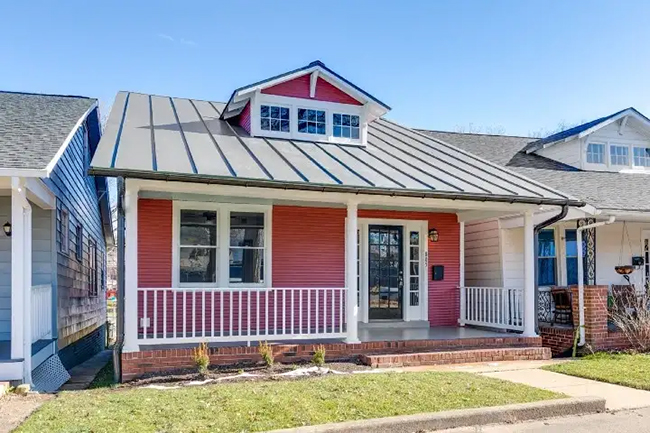
Learning limitations (including some developmental disabilities).

  • Dyslexia and other learning disabilities.  Dyslexia is actually a term that refers to a broad range of neurologically-based learning difficulties, all of which affect an individual’s ability to read and/or calculate.  In addition, there are several other types of learning disabilities, some affecting only a particular area – language learning, for instance – and some affecting learning in broader ways.  These are not connected to intelligence: dyslexics, in fact, tend to be somewhat above average in IQ, and many learn to read well in spite of their disability.  Others – often those not diagnosed in childhood, or those with other problems unrelated to their disability – may continue to struggle.

Access for people with disabilities

Physical access

This means access to buildings, public spaces, and any other place a person might need to go for work, play, education, business, services, etc. Physical access includes things like accessible routes, curb ramps, parking and passenger loading zones, elevators, signage, entrances, and restroom accommodations. For more details: ADA Standards for Accessible Design.

The Centro Ann Sullivan del Peru provides services to children with different abilities, but lacked the technical skills and information to become entirely accessible. With the consultation and help of a colleague, Dr. Glen White, they were able to make the needed modifications and become completely accessible, thereby better serving their children.

Now, Dr. White is working with international colleagues to make San Isidro (a municipality of Lima, Peru) entirely accessible. Architect Sr. Jaime Heurta, a person with paraplegia and also a practicing architect, has been a key player in this movement in San Isidro. Independent Living leaders in the United States are working with colleagues in Peru to set up the first Independent Living Center in Peru, with the ultimate goal of making Peru more accessible to people with different abilities.

Access to communication and information

Signs, public address systems, the Internet, telephones, and many other communication media are oriented toward people who can hear, see and use their hands easily. Making these media accessible to people with disabilities can take some creativity and ingenuity.

Program accessibility

People with disabilities have, in the past, often been denied access to services of various kinds – from  child care or mental health counseling to help in retail stores to entertainment – either due to lack of physical accessibility or because of discomfort, unfamiliarity, or prejudices regarding their disabilities.

Employment

Discrimination in hiring on the basis of disability – as long as the disability doesn’t interfere with a candidate’s ability to perform the tasks of the job in question – is illegal in the U.S. and many other countries, and unfair everywhere.

Education

Everyone has a right to an education appropriate to her talents and needs. The Individuals with Disabilities Education Act (IDEA) in the U.S., as well as laws in many other countries, guarantee education to students with disabilities. In the case of IDEA, that guarantee extends through high school, while ADA covers undergraduate and graduate students (without discrimination) at colleges and universities.

Community access

Everyone should have the right to fully participate in community life, including attending religious services, dining in public restaurants, shopping, enjoying community park facilities, and the like. Even where there are no physical barriers, people with disabilities still sometimes experience differential treatment.

In general, ADA requires that public and government facilities, cities and towns, educational institutions, employers, and service providers make reasonable accommodations to serve people with disabilities. “Reasonable accommodation” means making changes that don’t cause unreasonable hardship to the party making them or to others that party deals with (students, customers, employees, program participants, etc.).

Why ensure access for people with disabilities?

  • In many countries, it’s the law. Fifty-five countries (see Tool #1) have either passed specific laws concerning the rights of people with disabilities, or have enshrined those rights in their constitutions.
  • It’s a matter of fairness and respect. People with disabilities have the same rights as others, including the right to fully participate in community life.
  • Failing to ensure accessibility wastes talent and energy. Many people with disabilities are competent at important jobs and may do remarkable work. Denying people access to employment, education, or services is not only unfair; it wastes human resources and makes society poorer.
  • It makes good business and economic sense. For commercial operations of any kind, accessibility means that people with disabilities can become customers, increasing sales volume and profits.  Furthermore, if a firm is a good place for customers with disabilities to do business, their reputation will be affected positively.
  • Many people with disabilities already have a difficult life. It’s simple human decency not to make people’s lives any harder; as a civilized society it’s our duty to help those in need.
  • People with disabilities add diversity to the community, and that diversity enriches the community. If they can integrate  into the  community, they will have the opportunity to make more friends and more people will have the opportunity to know them.​
    • Access for people with disabilities improves access for everyone. Making public spaces and facilities physically accessible for people with disabilities also makes them more accessible for people who may not have disabilities, including families with baby strollers, skateboarders, and bicycle riders. Making ramps a built-in feature of the environment benefits everyone.

“Baltimore seats,” which came about after a lawsuit for the Paralyzed Veterans of America, are now often included in newly constructed major league baseball stadiums. This type of seating allows for a stadium seat to fold out of the way for wheelchair access when needed. According to the ADA, there should be enough accessible seating to accommodate at least 1% of the capacity of the stadium (so, for example, this would be at least 1,000 accessible seats in a stadium that seats 100,000).

When do you ensure access for people with disabilities?

  • When new public facilities are being designed and/or built. Any new building used as a public facility (e.g., parks, sports stadiums, other public facilities) must be accessible. Minimally, the design should be functional to accommodate people with different abilities, but good design can make accessibility total and essentially invisible.
  • When there’s an addition, renovation, or repair made to a public facility. This is the time to make sure that accessibility means total accessibility. Even buildings and other facilities that fulfill all the requirements of ADA aren’t always totally usable for people with disabilities.  It’s important that designers, builders, and people with disabilities themselves think about how best to provide access.  If over 25% of a building is being remodeled, ADA requires the entire building be made accessible. In addition, some states have a tax incentive for owners who bring their buildings into compliance with ADA.
  • When a historic building is rehabilitated for a public use. This is an easy sell, since not only is it the law to make such a project accessible, but the developer can get back a good bit of the money spent on accessibility improvements through tax credits. Additionally, modifications can be made so that they do not look obvious, helping to maintain the historical building and its façade.
  • When a community group is working on improving or rehabilitating a public facility or space. A grassroots group may be trying to bring back a neighborhood park or restore an abandoned warehouse as a community center.  Especially if the project is being accomplished largely with volunteer labor, it’s important that they think about accessibility. The old entrances to a neighborhood park may have several steps up from the street, for instance: accessible entrances need to be designed that don’t take away from the traditional look and feel of the park, and still make it easy for people with disabilities to enjoy the space.

Don’t forget to solicit help from people with disabilities to help with these projects. Get their input and participation and they will become stakeholders in these projects. They are their public spaces, too.

  • When an organization, institution, or agency that provides services or education is moving or renovating its facility. A move can be one to a more accessible location and building.  A renovation can include accessibility accommodations.
  • When there are complaints about lack of access. For non-federally funded buildings, there are not usually ADA inspections. Often, someone must file a complaint in order for ADA to be enforced.  If you’re connected to an organization that’s getting complaints because it’s not fully accessible, it’s to your advantage to do something about those complaints before someone calls the Department of Justice.  If you’re an advocate or a concerned party – or a person with disabilities – who knows about the problem, you can save everyone a huge amount of trouble by suggesting or brokering reasonable accommodations.

Who should ensure access for people with disabilities?

  • People with disabilities themselves. People with disabilities have often been incredible self-advocates. They can demonstrate how lack of accessibility affects them, and speak eloquently about their experiences.  As participants in planning the design and construction of new buildings and facilities, they can bring their experiences to bear to make projects as accessible and usable as possible.
  • Organizations concerned with disability rights. Besides the fact that ensuring access is one of the reasons these organizations exist, the folks who staff them – often themselves people with disabilities – know both the political and the architectural territory, as well as the laws concerning accessibility.

Centers for Independent Living (CILs) work with many community organizations to make them more accessible. They also teach people with disabilities how to do personal and systems advocacy. See a directory of CILs in your area.

  • Legislators and other public officials. Legislators and other public officials can craft laws and policies that ensure not only access for people with disabilities, but raise consciousness about their issues. This makes political sense as well, since people with disabilities not only contribute to the community, but also vote.
  • Enforcing agencies. The Department of Justice (DOJ) and other agencies concerned with enforcing all or part of ADA can do more than simply respond to complaints.  DOJ, for instance, conducted a survey of state and local governments to determine whether they were in compliance with the law, and then worked with those that were not to draft agreements about how they were going to reach compliance.
  • Employers. It makes sense for employers to make sure they can hire the best person available. Making their workplaces accessible allows them to do just that, without worrying about accommodating a person who happens to have a disability.
  • Educators. Educators, by and large, care about learners, and want them to do well. Accessibility is not only the law, but it vastly increases the chances that learners with disabilities of all kinds will be successful.
  • Organizations that provide public services. These organizations are obliged to be accessible, but they also often act as advocates for participants.  Moreover, being as accessible as possible reflects the value that many of them put on diversity, equity, human rights, and fairness.
  • The court system, when necessary. When an individual or enforcement agency can’t come to a satisfactory agreement about accommodations, a court may have to settle the dispute according to the law.
  • Architects and planners. Architects and planners can incorporate accessibility into all their designs if they’re aware of the issue and attentive to the needs of people with disabilities.
  • Developers. It’s to the advantage of a developer to consider accessibility for a number of reasons. First, it makes economic sense to build it in to begin with, since it’s likely to be less expensive than trying to make over a building or facility later. Second, it increases the value of the project, as well as increasing the number of people who’ll be able to use it as residents, customers, or however the project is intended. And finally, the developer can get a tax credit for part of the expense associated with creating accessibility.

How do you ensure access for people with disabilities?

There are a number of aspects to assuring access for people with disabilities. The obvious one is the physical: designing and building or changing structures and spaces to conform to the needs of all members of the community, including those with disabilities. In addition, however, there are social aspects, such as non-discrimination in employment and service delivery, and equal treatment in all situations of people with and without disabilities. And finally, there are political considerations: working to strengthen and enforce the laws that do exist, and working for laws to protect people with disabilities in countries that don’t have them. Perhaps most important is raising the consciousness of those who design and/or build facilities, employers, and the community and society about the rights and needs of people with disabilities.

When most of us think about a building, a park, or even a sidewalk, we sometimes don’t think about people at all. When we do, we often consider only able-bodied adults, leaving out children, elders, and people of all ages with disabilities. Ensuring access for those with disabilities involves changing attitudes. ADA has started the process simply by mandating access, so that now everyone in the U.S. is used to seeing ramps, handicapped bathrooms, etc. After a certain amount of time, accessible buildings and spaces become the standard in construction  and are no longer an issue.

But that’s only physical access. What about access to job, services, and programs?  What about being treated with respect and being offered assistance in retail stores, restaurants, and theaters?  All of that involves changing attitudes as well. The more people with disabilities are able to access physical facilities, the more they will be part of the general population. Rather than generating embarrassment, discomfort, or even fear, they’ll be seen more and more in the same way as anyone else – as individuals, with unique personalities, strengths, and problems.  That is, after all, the goal: for people with disabilities to be able to live their lives just as everyone else does, struggling with daily challenges, enjoying the high points, and not having to worry about the simple things like getting up a flight of stairs.

How do we ensure various kinds of access?  We’ll examine the different aspects of access one at a time.

Much of the material that follows in this and the last part of the section is based on ADA, because that law is the most comprehensive – it covers most areas of concern to people with disabilities, and attempts to set out clear and specific standards for access.

Physical access

As explained above, this means access to any indoor or outdoor spaces a person needs to use. Under ADA, it is expected that the government body, the owner or tenant of the space, the service provider, the employer, or the school must make a “reasonable accommodation” to enable access for people with disabilities. A reasonable accommodation is an adjustment to whatever barrier prevents access that doesn’t impose an undue hardship on the individual, business, organization, or institution providing the accommodation, or on its other users or participants. Thus, a grassroots human service program isn’t expected to install an elevator, since the cost would be out of the organization’s reach.  It would be expected, however, to try to find some other way to deliver services to a participant who uses a wheelchair (equivalent to those services offered to others).

By the same token, a large corporation might be expected to make over a building, or many buildings (a chain of retail stores, for example), in order to come into compliance with the law, because for such a large business, the expense would be reasonable.

The U.S. government tries to make accommodation (as well as access in new construction or rehabilitation) easier by offering tax incentives for money spent on equipment, materials, and labor leading to increased access for people with disabilities.

The tax credit is available to businesses that have total revenues of $1,000,000 or less in the previous tax year or 30 or fewer full-time employees. This credit can cover 50% of the eligible access expenditures in a year up to $10,250 (maximum credit of $5,000). The tax credit can be used to offset the cost of undertaking barrier removal and alterations to improve accessibility; providing accessible formats such as Braille, large print and audio recording; making available a sign language interpreter or a reader for customers or employees, and for purchasing certain adaptive equipment. The tax deduction is available to all businesses with a maximum deduction of $15,000 per year.  The tax deduction can be claimed for expenses incurred in barrier removal and alterations.  (From the pamphlet “ADA Guide for Small Businesses”).

In addition to accommodations made in existing facilities, new buildings – with some exceptions, such as private residences – are expected to have accessibility designed into them, as are renovations of public facilities, or rehabilitations of industrial, historic, or derelict buildings that are to be used as public facilities. Some architects in the U.S. have become specialists in designing for accessibility, coming up with creative solutions for difficult problems posed by old structures, for instance.

Outdoor spaces also need to be designed for accessibility. The Project for Public Spaces uses accessibility for people with disabilities as one of its criteria for recognizing a great public space.  Accessibility means more than simply being able to get there in a wheelchair.  It implies having features and amenities that are usable by everyone, and being emotionally and socially accessible.

A nature trail in a park can be set up so that it not only can be traversed by someone in a wheelchair, but so that it can be walked – and the informational signs along it read – by a blind person, for instance. Furthermore, it needn’t be singled out and labeled a “handicapped” trail, so that it’s only used by people with disabilities.  If it’s just a “nature trail,” people of all sorts will use it, and the people with disabilities among them won’t be singled out.

A sensory garden can also be created with flowers and herbs to delight the senses (such as the interesting texture of Lamb’s ear and the fragrant leaves of mint and lavender). Plants can be in raised beds, making a hands-on experience easy for pedestrians and wheelchair users.

Spaces that need to be physically accessible include:

Public facilities

These are buildings or spaces generally used by the public. They can include restaurants, retail stores, hotels, conference centers, medical and other offices, theaters, sports stadiums, educational facilities, historic sites and other tourist attractions, etc. Access here includes not only access to the buildings, but also to the specific rooms or halls where events take place or where the public must go to conduct business or receive services.

An important feature of accessibility that may be ignored or forgotten is a plan for dealing with emergencies.  There should be an escape plan for people with disabilities in case of a power failure, or in case the accessible entrances are blocked by fire or rubble. In an actual emergency, adrenalin often takes over and people do whatever seems necessary.  Several people with mobility impairments were carried down many flights of stairs to safety in the World Trade Center disaster on Sept. 11, 2001.  In that case, that was probably about as good an escape plan as could have been devised, but it was strengthened by the fact that, after the less-drastic 1993 World Trade Center bombing, specially designed evacuation chairs were installed in the building for just such an emergency.  One man who is paraplegic stated that he doubted that he would have gotten out in time had it not been for the chair and the people who took him down in it.

Federal, state, and local government facilities

Although federal facilities are covered under a different law than those of other branches, all must be accessible to people with disabilities so that they can transact government business and participate to the full extent in civic life.

That includes voting.  Polling places have to be accessible, and accommodations have to be made for people who are unable to fill out their own ballots because of blindness or inability to manipulate voting machines or paper ballots. Voters with appropriate disabilities can bring another person into the voting booth with them to fill out the ballot for them, although it’s illegal for that person to influence their choices.

Outdoor spaces, such as public parks, monuments, squares, gardens, etc.

It may seem that these kinds of spaces would always be accessible, but, in fact, they often are not.  Parks may have stairs or other obstructions in paths, or be set above sidewalk level. Other spaces may have obstructions as well, and may be surrounded by streets that are difficult to cross, even for people without disabilities.  Paths and sidewalks may be too narrow to allow easy wheelchair passage, and badly maintained or designed paved or gravel paths may make walking difficult for anyone unsteady on his feet or with vision difficulties. Outdoor spaces may need renovations to make them good places for interaction. 

Public ways

Paths, streets and sidewalks, pedestrian passages are all public ways.  Accessibility here may involve curb cuts or ramps, traffic signals that can be both heard and seen, numerous crosswalks, signs, etc.

Public transportation

 People with disabilities are entitled to physical access to public transportation.  This is sometimes provided by lifts for buses, trains, and trolleys which require climbing steps to enter.  In general, subways, trains, and planes, at least at most U.S. facilities, are entered on the level, and elevators and or ramps are available to take people to platforms and gates.

Physical access, according to the ADA, encompasses a large number of very specific design features. The width of hallways (to the inch or centimeter), the size of elevators (and the positioning of elevator buttons), the height of drinking fountains, the size and position of grab bars in restrooms, the shape of door handles, the width and number of handicapped parking spaces, the slope of wheelchair ramps – all of these and many more are explained in detail in the ADA manual, “ADA Standards for Accessible Design,” part of the larger ADA website.  Additionally, the U.S. Access Board is responsible for developing and regulating the Americans with Disabilities Act Accessibility Guidelines (ADAAG) code.

Access to communication and information

Some types of disabilities have no effect on access to communication or information, but others do – some in ways most people without disabilities might not think of.

  • Signs, posters, and other similar features. We expect printed signs in buildings or on streets to tell us what we need to know, but for people who are blind or near-blind, they may not be helpful. Signs with raised letters or Braille, placed at heights that can be easily reached (specified in the ADA Design Standards), can provide an alternative.
  • Announcements. In public places where announcements may be important, and may target individuals – airports, for example – they should be both verbal and visual, so that they can be heard or seen by those with vision and hearing difficulties.

The advent of cell phones that can announce calls with vibration, and that have text-messaging capability, has undoubtedly made life easier for many people with hearing impairments.

  • ASL interpretation. Deaf individuals may need an American Sign Language interpreter for meetings with doctors, lawyers, and other professionals; for lectures and classes; for business transactions; or for public gatherings, such as conferences, performances, or public hearings.
  • Readers. People with learning disabilities or vision difficulties may need readers in order to successfully complete courses. By the same token, deaf individuals may need to be provided with lecture notes, or to have an interpreter in lectures.
  • Internet. According to Section 508 of the Rehabilitation Act, the U.S. government is required by law to make its websites (including those of any organizations or institutions that are federally funded) accessible to the extent possible, and many agencies, organizations and businesses not required to are nonetheless concerned with doing so as well.  Accessibility includes monitoring content to make it is easily understood by software and hardware devices that make it possible for people with visual or hearing difficulties, or for those who can’t use a mouse or keyboard, to have full access to the content of a website. The relevant part of Section 508 is given on a Department of Commerce website, along with information on each of the 16 regulations for Internet access.

Devices used by people with disabilities to access the Web include screen readers, which translate on-screen text into speech, and voice-command software that translates spoken commands into mouse clicks and keyboard strokes.

The relevant part of Section 508 is given on a Department of Commerce website, along with information on each of the 16 regulations for Internet access.

  • Television. Since 1993, all TV sets sold in the U.S. are required to be equipped with closed-captioning receivers that can be turned on through an on-screen menu or a remote.  When turned on, closed captioning displays a text version of what’s being said (as well as relevant non-speech sounds) on the screen, enabling deaf or hearing impaired viewers to experience the any show with captions. Captions can also be helpful to people with some learning disabilities and to literacy learners.
  • Concerts and theater performances. Many venues that house performances, lectures, or public forums offer sound amplifying headphones to those who need them.

Access to services

People with disabilities cannot be denied access to services because of their disabilities, or because the services aren’t physically accessible. If the services can’t be made physically accessible, there has to be an alternative provided that’s equivalent to the basic service.

This issue often arises for human service organizations, but may also be a factor for community institutions such as libraries, and for businesses such as hairdressers and insurance agencies.  In cases where accessibility isn’t economically feasible, services can be provided in an accessible part of the building, for instance, or brought to the person in his home. Rules, such as those referred to earlier that affect service animals, can be changed or disregarded to enable people with disabilities to take advantage of the service.

Other kinds of accommodations can be made as well. Sales staff can provide help they wouldn’t normally provide to other customers – getting items off shelves or counters, or helping people try on clothes, for instance.  Programs can hire sign language interpreters to assist deaf participants, or have some or all of their staff members trained in ASL (or the sign language of their country, if it’s not the U.S. or English-speaking Canada).

ASL, or American Sign Language, is the first language of perhaps a majority of the deaf community in the U.S. Although it is spoken with hand gestures and facial movements and expressions, it is a distinct language, with its own grammar and nuances, as different from English as Japanese, whose grammar it has some things in common. It shares some vocabulary with French sign language, because the first teacher of sign in the U.S. was French.

Sign languages have developed as spoken languages do, and each country or isolated area generates its own.  Interpreters – hearing people who are fluent in sign – provide a linguistic bridge between the signing and speaking worlds, just as language interpreters provide the connection between hearing people who speak different languages.

In some cases, the best and most reasonable accommodation may be to make a programmatic change or rearrange the space (relocate, build a ramp, widen aisles, have the first-floor offices and the second-floor support group program switch places) or to change the way services are delivered for everyone (e.g., distribute more printed matter, as well as giving information verbally).

In addition to being physically accessible, services must be non-discriminatory. Anyone who’s eligible for services in the same way as other participants (by income, for instance) can’t be denied service except for reasons for which anyone else would be denied service. Some of those reasons might include active drug use, abusive behavior, or inappropriateness for the service offered.

A final note: accessibility should also include sensitivity to the concerns of people with disabilities on the part of both the organization as a whole and the people who work in it.  It is important to see every participant as a unique individual, regardless of her physical or mental condition.

Employment

Under the ADA, it is illegal to discriminate against hiring anyone on the basis of a disability unless that disability interferes with the basic job function. A blind person doesn’t have to be considered for a job as a painter, or a deaf person for one as a music critic. Where the job function isn’t in question, however, someone with a disability has to be considered in the same light as all other applicants.  If she’s the most qualified and the best candidate, she should be hired regardless of any disability.

An employer can’t ask candidates if they have disabilities, however, except in the context of making sure that they can do the job.  A firefighter has to be able to carry 100 pounds up and down a ladder.  If a candidate has a bad back, that’s a problem – he may injure himself taking the physical test, or his back may go out on the job at the worst possible time.

Once an employer has hired a person with a disability, he’s under an obligation to make accommodations, to the extent possible, to enable that person to do her job as easily as other employees in similar positions. If she’s in a wheelchair, for example, the employer might ensure that her desk is at an appropriate height for her to work comfortably.   Her work space might be located reasonably near the office entrance, with a clear passage to the elevator, the accessible restroom, meeting rooms, and the offices of colleagues with whom she needs to collaborate. If her job makes it possible, she might be allowed to work from home some of the time. Accommodation also should be made for signage, communication, and other accessibility factors, including an evacuation plan with which her co-workers are familiar.

None of this means that a person with a disability has to be hired – only that she can’t be discriminated against because of her disability.  If she’s clearly the best-qualified candidate, and someone else is hired instead, she can question the decision, or even sue.

By the same token, she can be held to the same performance standard as other employees.  If she’s not doing her job well, she should be treated as any other employee would.  If she’s fired for not performing, that means that any other employee would have been fired for the same level of performance under the same circumstances – the same number of warnings, the same level of support to try to improve performance, etc.  Non-discrimination doesn’t mean favoritism, but it does mean fairness. Accommodations level the playing field so that everyone can play by the same rules.

Education

Federal law requires that any child aged 6 to 21 is entitled to an education appropriate to his needs.  For children with disabilities this usually means an Individual Education Plan (IEP), arrived at with the participation of the school, the parents, and often other professionals, as well as the student, if he’s mature enough.  If the plan includes an alternative placement (in a private school or another public school with special facilities), the cost is borne by the school district, rather than the parents.

Under the Individuals with Disabilities Education Act, a child has the right to be educated “in the least restrictive environment possible,” which means placing children with disabilities in regular classrooms wherever possible.  Thus, a child with a learning disability that affects her math performance might have an individual tutor for math, but still participate with the rest of her class in other subjects.  A child using a wheelchair might have a regular class schedule, with help provided if necessary to get from one class to another (in middle or high school) or to assist with activities (in elementary school).

Institutions of higher education, as public facilities (private institutions) or government entities (public colleges and universities) have an obligation to provide admitted students with whatever accommodations they need in order to learn in the same way as students without disabilities. Thus, ASL interpreters, readers, notetakers, and other accommodations are often required, as long as they propose no undue administrative or economic hardship for the institution, and as long as they don’t disrupt the normal functioning of the educational program for others.

The fact that there are laws in the U.S. and other countries doesn’t mean that they’re enforced. Furthermore, there is still much to be done around the world.  In 1993, the United Nations passed the Standard Rules on the Equalization of Opportunity for Persons with Disabilities, a document that sets out what countries need to do to assure that people with disabilities can live their lives to their full potential.  While over 50 countries have laws or constitutions that guarantee disability rights to some extent, there are still nearly 200 that do not recognize disability rights.  Thus, knowing what needs to be done is only half – perhaps considerably less than half – the battle. The real work is in changing the social climate and in making sure that what needs to be done gets done.

As with most social change, advocacy has to play a large part here. It was aggressive advocacy on the part of people with disabilities and organizations that support them that made possible the passage of the Americans with Disabilities Act, and advocacy continues to be important in refining what equal access and equal opportunity mean for people with disabilities in the United States.  Advocacy is what will change attitudes and laws in the countries that currently don’t recognize disability rights, or that don’t go far enough in pursuing equal opportunity and non-discrimination.

How do you engage in disability advocacy?

Demand enforcement

Where there are laws, they must be enforced in order to have any effect.  In the United States, the law essentially covers what is required for accessibility, but it’s not always enforced.  First of all, there are no ADA inspectors who make random visits to see whether facilities are accessible, although some state agencies may do that for entities they fund or oversee. Thus, in most cases, ADA standards aren’t brought into play until someone challenges a business, agency, or institution in the courts.

Sometimes just the challenge itself is enough to bring about an acceptable accommodation. When there’s a case of real hardship, however (a business that could suffer seriously as a result of the expense of compliance), or when an entity is simply resistant, and the complainant and the entity can’t come to some agreement, the case has to go to court before anything happens.  The more often this occurs, the more various entities pay attention to accessibility, as has been the case over the past several years.

In the case of Lane v. Tennessee, a man who had a crushed hip and pelvis had to crawl up two flights of stairs in order to get to a court hearing.  George Lane was no stranger to the court – he’d had previous trouble with local law enforcement.  When he was offered the opportunity to be carried up the steps, he refused, fearing that court officers, who, he felt, bore him ill will, might drop him on purpose.

When his case wasn’t heard that morning, he crawled down again, but refused to crawl back up to the courtroom after the noon recess.  He was then cited for failure to appear, arrested, and jailed.

When he sued the state of Tennessee for damages, the state claimed that individuals had no right to sue the state.  The trial court and the Court of Appeals both ruled in Lane’s favor, and the state appealed to the U.S. Supreme Court.  The Supreme Court confirmed Lane’s right to access to the courthouse under Title II of the ADA, which grants access to government facilities for persons with disabilities, and also affirmed his right to sue the state for money damages.  Ultimately, the state settled with Lane, and also installed elevators in its previously inaccessible courthouses.

This was a good result for disability rights, and for Mr. Lane and his co-plaintiff, a court reporter who uses a wheelchair and who couldn't get into a number of second-floor courtrooms around the state, a circumstance which limited her ability to do her job.  On the other hand, the case dragged on for years before the Supreme Court ruling in 2004, and the state finally settled the damages in 2005.  Even when someone wins an ADA case, it can create great stress over a long period, and it takes dedication to see the process to the end.

Each state, most state funding agencies, most cities and towns, most corporations, and many other entities have an ADA Coordinator. That person is usually the place to start with a complaint or a demand for enforcement. If you get no satisfaction, go to the next level. If it appears that there’s going to be some major difficulty, find a lawyer who has experience in cases involving disability rights, or a disability rights organization that has such lawyers and others on staff, and let them handle the negotiation. In the worst case, you may end up in court, but most ADA complaints are settled long before it gets to that point.

Enlist other advocates to ensure opportunity for people with disabilities

There are many helpful advocacy organizations out there. To enlist help with your disability advocacy, it may be helpful to contact Client Advocacy Protection services (for clients of Vocational Rehabilitation). Additionally, many states have Disability Rights Centers that are often run by people with disabilities themselves and usually have several lawyers on staff to assist people with disabilities regarding legal situations (e.g., ADA compliance or discrimination).

Work with legislators to pass laws that guarantee equality of access and opportunity to people with disabilities

In the matter of access, it’s likely you can find a legislator who has a family member with a disability, or perhaps one who himself has a disability that occasionally makes life difficult. He may be a good candidate to become a champion on this issue, and can help convince colleagues to work on it as well.

If you or your group can become known as a good source of information– as the experts legislators can call on when they want to know about disability issues – you may be in a good position to persuade the policymakers to pay attention to those issues, and to draft laws to improve the situation of people with disabilities. That means always doing your homework, and always being available to answer questions and to make suggestions.  It also means being honest in your information and dealings, and being willing to say, “I don’t know, but I’ll find out,” and then following up.

An ideal here is to establish a citizen advisory group that includes people with disabilities and others with knowledge of the field.  If that group has a seat at the table when design standards, laws, and other similar issues are being discussed, it is likely that the needs of people with disabilities will be raised and addressed.

Work with architects, developers, building inspectors, etc. to make them aware of the concerns and needs of people with disabilities

Whether you have a disability or not, whether you’re an individual advocate or part of a group, whether your country has laws that address disability rights or not, this tactic can be extremely helpful.  If you can collaborate with those who design, construct, and inspect buildings and public spaces, and educate them about the needs of people with disabilities, they will be more likely to ensure accessibility in their projects.

When accessibility is part of a new construction project, especially if it’s an integral part of the design, it generally costs about the same as, or only slightly more than, an inaccessible design. The more buildings and spaces are designed to be accessible, the more accessibility enters into the public consciousness and becomes expected. When people are accustomed to seeing individuals with disabilities get around easily, they’ll be more inclined to think of access is a right, rather than a privilege or a concession to political correctness.

Enlist the media to help change attitudes and expectations

Using the media is one of the most important – and most effective – activities an advocate can engage in. Human interest stories and radio and TV interviews can put a human face on disability and dispel myths, introducing individuals who become not just “people with disabilities,” but distinct and likable human beings with real needs and real problems. Ignoring such individuals and their needs is harder than ignoring a faceless population of “people with disabilities.” Once the issue of fairness becomes personal, most people will respond positively.

The media can also point out that the real people with disabilities cover a broad swath of society.  Many are people who were born with their disabilities, but many others acquired them through war, car accidents, job-or-sports-related injuries, violence, or the simple business of living (aging probably disables more people than any other single factor).  Most of us will either temporarily or permanently experience a disability at some point in our lives.  A clear understanding of that statistic can change public perceptions very quickly.

Media stories, interviews, and articles can highlight accessibility problems that people with disabilities face every day which most of the general public never thinks about: difficulty opening a restroom door with a doorknob; the impossibility of a hearing-impaired tourist being summoned over an airport loudspeaker; the frustration and terror of a person with a speech problem trying to report a fire in an emergency phone call. Media coverage can inform people about what needs to be done to increase access, and about pending laws and regulations the public can support.

They can also present high-profile spokespersons who themselves have disabilities, such as Max Cleland, former Senator from Georgia, who is a multiple amputee as a result of Vietnam War wounds, or actor Michael J. Fox, who has Parkinson’s Disease.  Perhaps most importantly, they can offer people with disabilities as positive role models: Chief of Detectives Robert Ironside, played by Raymond Burr, solved crimes from a wheelchair every week for eight years in one of the most popular TV shows of the ‘60’s and ‘70’s.

When talking to the media and having them report on issues, it may be helpful to refer to the Research and Training Center on Independent Living's 8th Edition of the Media Guidelines for Writing and Reporting on People with Disabilities. Over one million copies have been distributed.

Call attention to lack of access whether you have a disability or not

As we’ve mentioned, sometimes a mere notice or complaint will be enough to prompt action on the part of a building owner or business. Even if not, you’ve at least made them aware of the issue...and aware that someone else knows about it as well.

Keep at it indefinitely

Until people with disabilities are hardly noticeable as having disabilities, because they have universal physical, social, and political access, disability advocates and people with disabilities themselves need to keep working for a world where everyone’s needs are addressed and met. Even if that is achieved,  it will still take effort to maintain those state of affairs, and to ensure that the world doesn’t return to the olden days when there were places that people in wheelchairs weren’t able to go, messages that individuals with hearing or sight difficulties couldn’t get, and employers, service providers, and businesses who shut out people who weren’t exactly like the general population.

In Summary

In the latter part of the 20th century, the rights and needs of people with disabilities were increasingly understood and addressed.  In 1990, the United States passed the Americans With Disabilities Act, recognizing and codifying those rights and needs into a set of standards for access to both physical areas (the ability to enter, move around freely in, and use the facilities of buildings and public spaces) and opportunity (access to jobs, services, education, entertainment, etc.) for people with disabilities. The U.N. followed in 1993 with the United Nations Standard Rules on Equalization of Opportunity for Persons with Disabilities.  At this writing, over 50 countries worldwide have either passed laws or interpreted or rewritten their constitutions to address disability rights.  More recently, as of 2008, the UN Convention on the Rights of Persons with Disabilities has been ratified by at least 21 countries (although the United States has yet to pass this).

Ensuring accessibility for people with disabilities means more than building ramps and accessible restrooms. It calls for a change in basic attitudes, a change that has been at least partially accomplished in the United States and many other countries, but which hasn’t even started in some others. That attitude change won’t have been accomplished until a great majority of people around the world understand that individuals with disabilities are individuals who are not defined by their disabilities. To achieve that end, we have to demand enforcement of laws and regulations that protect those individuals’ rights, work for policy change and the passage of laws and regulations in places where they don’t exist, collaborate with those who design, build, and fund projects where accessibility can be built in, enlist the media to influence public opinion, and keep at it as long as necessary. Only when people with disabilities can live their lives free of unjust barriers will the work be done.

Contributor

Phil Rabinowitz

Resources

Online Resources

The ADA website has a huge amount of information, including the ADA Standards for Accessible Design.

Access Unlimited provides helpful information on how a low-tech tool can be used by almost anyone to determine if building features such as toilets, door widths, and ramp slopes are in compliance with the Americans With Disabilities Accessibility Guidelines (ADAAG).

The DOJ provides information on Accessibility of State and Local Government websites to people with disabilities, with tips for developers and links to a number of sites with more information.

Anniversary of Americans with Disability Act: July 26 provides facts on disabilities in the U.S. population from the U.S. Census Bureau.

Canadian Charter of Rights and Freedoms (part of Canadian Constitution) provides information on the rights that all people are guaranteed, including for those with disabilities.

Canadian Human Rights Act states that all individuals should have an opportunity equal with other individuals to make for themselves the lives that they are able and wish to have and to have their needs accommodated, consistent with their duties and obligations as members of society, without being hindered in or prevented from doing so by discriminatory practices based on race, national or ethnic origin, colour, religion, age, sex, sexual orientation, marital status, family status, disability or conviction for an offence for which a pardon has been granted or in respect of which a record suspension has been ordered.

Convention on the Rights of Persons with Disabilities was established to promote, protect and ensure the full and equal enjoyment of all human rights and fundamental freedoms by all persons with disabilities, and to promote respect for their inherent dignity.

The Curb-Cut Effect by Angela Glover Blackwell. Laws and programs designed to benefit vulnerable groups, such as the disabled or people of color, often end up benefiting all of society.

The Disability Resource Network of British Columbia offers descriptions and explanations of various kinds of disabilities and conditions, among other resources.

Frequently Asked Questions about ADA.

The Home Usability Network from the University of Montana's Research and Training Center on Disability in Rural Communities (RTC: Rural) is a group of individuals and organizations that bring together their knowledge, resources, and creativity to develop customized solutions to individual usability problems.

Job Accommodations Network offers helpful tips to people with disabilities about the accommodations that they might take advantage of as an employee.

List of various ADA publications detailing regulations and technical assistance.

Making Homes Visitable details how to make homes visitable for those with mobility limitations and why it is important to do so. 

Project Civic Access details settlements with various municipal and state governments concerning accessibility.

SF's New Ballpark: Beautiful Access discusses a recently built ballpark that was created to be accessible for all.

Standards for Website Accessibility is from Section 508 of the Rehabilitation Act, and sets out regulations for Internet Accessibility for government agencies, with links for each regulation to explanations and suggestions for web developers.

United Nations Standard Rules on Equalization of Opportunity for Persons with Disabilities (1993) is an international document intended to focus worldwide attention on the need for equal rights and opportunities for persons with disabilities.

United States Access Board lists the Uniform Federal Accessibility Standards (alternative to ADA Standards for state and local government entities).

The U.S. Equal Employment Opportunities Commission provides information about federal laws that make it illegal to discriminate against a job applicant or an employee because of the person's race, color, religion, sex (including pregnancy), national origin, age (40 or older), disability or genetic information. It also provides information for employers on Prohibited Practices.

Web Accessibility Initiative of the World Wide Web Consortium, with detailed information about accessibility for web developers.

Checklist
mloewenstein Wed, 12/12/2012 - 10:57

What do we mean by ensuring access for people with disabilities?

___According to the Americans with Disabilities Act (ADA), “the term ‘disability’ means an individual has a physical or mental impairment that substantially limits one or more of his/her major life activities or there is a record of such an impairment or an individual is regarded as having such an impairment.”

Types of disabilities include:

___Physical

___Neurological

___Developmental

___Psychological

___Alcoholism

Types of access include:

___Physical access

___Access to communication and information

___Access to services

___Access to employment

___Access to education

Why try to ensure access for people with disabilities?

___In many countries, it’s the law

___It’s a matter of fairness and respect

___Failing to do so wastes talent and energy

___It makes good business and economic sense

___Many people with disabilities already have a difficult life

___People with disabilities add to the diversity of the community, and that diversity makes everyone’s life richer

___Access for people with disabilities improves access for everyone

When should you try to ensure access for people with disabilities?

___When new public facilities are being designed and/or built

___When there’s an addition, renovation, or repair made to a public facility

___When a historic building is rehabilitated for a public use

___When a community group is working on improving or rehabilitating a public facility or space

___When an organization, institution, or agency that provides services or education is moving or renovating its facility

___When there are complaints about lack of access

Who should ensure access for people with disabilities?

___People with disabilities themselves

___Organizations concerned with disability rights

___Legislators other public officials

___Enforcing agencies

___Employers

___Educators 

___Organizations that provide services

___The court system, when necessary

___Architects and planners

___Developers

How do you ensure access for people with disabilities?

___Changing attitudes and educating the public, as well as policymakers, architects and planners, and others about the realities, needs, and rights of people with disabilities may be the most important step

___Demand reasonable accommodation for all types of access

___Tax credits can help make accommodations affordable

___Physical access means access to:

  • Public facilities
  • Federal, state, and local government facilities
  • Outdoor spaces
  • Public ways
  • Public transportation

___Know the design features that constitute physical access

___Access to communication and information means making accessible or providing

  • Signs, posters, and other similar features
  • Announcements
  • Telephones
  • ASL interpretation
  • Readers
  • Internet
  • Television
  • Concerts and theater performances

___In the U.S., people with disabilities cannot be denied access to services for which they’re eligible

___Reasonable accommodations must result in a service that’s equivalent to that which is offered to other eligible participants, although it doesn’t have to be exactly the same in all respects

___Employers cannot refuse to hire someone because of a disability if that person is the best-qualified for a job, except where the disability would make it impossible for the person to do the job

___An employer may fire someone with a disability because of poor job performance if other employees in the same situation would be treated the same way

___Section 508 of the Rehabilitation Act guarantees every child ages 6-21 the right to a free public education that meets his needs in the least restrictive environment possible

___In both public and private post-secondary institutions, ADA requires non-discrimination in admissions and accommodation for admitted undergraduate and graduate students with disabilities

Advocate for the rights and needs of people with disabilities:

___Demand enforcement of existing laws and regulations

___Work with legislators, and their aides to pass laws that guarantee equality of access and opportunity to people with disabilities

___Work with architects, planners, developers, and interior designers to make them aware of the concerns and needs of people with disabilities

___Enlist the media to help change attitudes and expectations

___Call attention to lack of access whether you have a disability or not

___Keep at it indefinitely

Tools
mloewenstein Tue, 01/08/2013 - 09:54

Tool 1: Worldwide Disability Rights Laws

A list of existing disability rights laws from the Disability Rights Education and Defense Fund.  The website has the texts or abstracts of most of these laws, many with an English translation, or with an English summary.  Others may be found on the Internet separately, or may need to be researched in libraries or through the controlling government bodies.

Tool 2: The United Nations Standard Rules on the Equalization of Opportunity for Persons with Disabilities

The United Nations Standard Rules on the Equalization of Opportunity for Persons with Disabilities is available in several languages. The Standard Rules are a comprehensive set of standards for countries to institute disability rights and equal opportunity.

From the U.N. website’s introduction to the Standard Rules on the Equalization of Opportunity for Persons with Disabilities:

People with disabilities - as citizens of their societies - should have the same rights and obligations as all other citizens.

There is an increasing awareness by Governments of their obligation to grant equal rights to all of their citizens. It is ultimately the responsibility of all Governments to ensure that disabled people:

  • live as dignified and independent a life-style as possible within the community;
  • take an active part in the general, social and economic development of society;
  • receive education, medical care and social services within the ordinary structures of their societies.

Governments, through their legal system, can protect the rights of persons with disabilities.

Governments can enact laws to guarantee equality and to prevent discrimination. The cost of denying equal opportunities to persons with disabilities is high not only in financial terms, but in the loss of their contribution to society.

A recent trend emphasizes self-care and puts greater emphasis on increased support to the family and community to provide services for persons with disabilities. In many countries, such services continue to be concentrated in the private sector, financed by voluntary contributions. Such programmes are important, but they do not guarantee equal opportunities for disabled people at all levels of society. Governments should provide disabled people with permanent access to basic public services.

The untapped potential of disabled people will be realized only when Governments ensure that equal opportunities are given to all of their citizens.

Equal opportunities enable disabled persons to govern their own lives with self-respect and personal integrity.

Examples
pschneider Mon, 07/03/2017 - 14:00

Example #1: Chicagoland Add Us in Initiative’s The Learning Garden

The Chicagoland Add Us In Initiative funded by the US Department of Labor Office of Disability Employment Policy, provides opportunities and promotes employment experiences for high school students with disabilities to prepare them for their transition into adult life. The goal for the Learning Garden is to be a place where students can observe and experiment with growing plants, fruits and vegetables while obtaining some invaluable work experience and skills.

Contributed by Lia Thompson, University of Kansas, Community Tool Box Intern.


Example #2: "Stoplights Don't Stop Us!"


“Stoplights Don’t Stop Us!” tells the story of how people with disabilities in Emporia, Kansas, living in a high-rise apartment complex near a dangerous intersection, came together as allies to advocate for change in their community. The changes they achieved enhanced their ability to more fully and safely participate in the community. (The video is also available with audio description.) To learn more about this process for making change to support independent living for all, visit the free publication: Your Action Planning Guide for Promoting Full Community Participation Among People with Disabilities: A Resource for Independent Living Centers and Other Community-based Initiatives.


Example #3: Ed Roberts: Free Wheeling

Photo of Ed Roberts.

Imagine that, as a typical baseball-loving 14-year-old kid, one of your mother’s worst fears is realized: You succumb to the polio epidemic of the 1950s and contract a disease that paralyzes you from the neck down, except for several fingers and toes. 

Your despair is exacerbated when you overhear a doctor tell your mother, “You should hope he dies, because if he lives, he’ll be no more than a vegetable for the rest of his life.” You spend 18 months in hospitals and, upon discharge, attend high school by phone from home, lying flat on your back with only your head emerging from an “iron lung,” a huge box-like device using air pressure to stimulate the breathing that your lungs cannot accomplish. 

How would you respond?

Read more.


PowerPoint
Anonymous (not verified) Wed, 12/12/2012 - 10:58
File Upload
A PowerPoint presentation summarizing the major points in the section.
Section 6. Improving Parks and Other Community Facilities
mloewenstein Wed, 12/12/2012 - 10:59
Main Section
mloewenstein Wed, 12/12/2012 - 10:59

Image of a park with trees at sunset


I grew up in a working class neighborhood in Boston, on a busy street of apartment houses. In back of that block, however, was a city park of about 15 acres, where my friends and I spent most of our time, starting at about age six or seven. It had a name, but it was never known as anything but “the Park.” There were a baseball diamond, cracked asphalt tennis and basketball courts, and skating in the winter (the city flooded the ball field), but we spent much of our time in the rest of the park, particularly in the heavily wooded area just in back of our houses.

To us, the park, in the midst of one of the city’s most densely populated neighborhoods, was the Wild West, the Sahara Desert, the Himalayas. It was hilly, with chunks of granite bedrock poking through here and there, all of which we named, as generations of children before us had undoubtedly done. The three-meter-high rocks became thousand-foot cliffs that we scaled in order to storm the forts on top, or to plant our mountaineers' flags. We rolled down the hills in summer, and sledded on them when there was snow.

Several blocks away was a commercial district where our parents did most of their shopping. For me, however, its main attraction was the local branch of the Boston Public Library. By the time I started school, I already had a library card, and the library was my second home.

When I was a child, in that prehistoric era before computers, a good part of my life revolved around these two community facilities. They exercised my imagination and my body – I regularly walked the half mile or so home from the library with as many books as my arms would hold – and fueled a love for the outdoors and an enthusiasm for literature and learning, both of which I’ve carried with me all my life.

This section is about the importance of parks and other community facilities in the lives of individuals, families, neighborhoods, and communities. Although they are often considered frills when budgets are tight, they can be just as important as fire and police services to the quality of life in a community. We’ll discuss what characteristics make for good parks and community facilities, and how you can create or restore them in your community.


MacKenzie lives in the English Avenue neighborhood of Atlanta. Sixty percent of the homes there have been abandoned, but the youth have not given up on their community. MacKenzie has been involved in rebuilding the parks in English Avenue and in the Vine Street neighborhood. Video courtesy of the Robert Wood Johnson Foundation.


What do we mean by improving parks and other community facilities?

Community facilities enhance the lives of residents in numerous ways. Parks provide green space and room to move for people in crowded city neighborhoods. Libraries, museums, community centers, and performance spaces open doors to knowledge and ideas, culture, and enjoyment. Medical facilities encourage and safeguard health, and public transportation offers mobility and access to other areas. Without these and other community facilities, life could be colorless and difficult, especially for those who can’t afford to travel or to pay high prices for services.

Most communities, even small rural ones, have at least one public park and some other community facilities – a library, a hospital or clinic, a small museum or historic site. Improving those facilities can mean different things for different communities. For some, the issue may be that adequate parks or facilities simply don’t exist, and need to be created. For others, existing facilities may be old, and speak only to the needs of a community that has long since changed. Still others might find themselves with community facilities that are adequate in some ways, but that have become rundown or dangerous, and need to be revitalized. A less obvious situation is one in which community facilities are in good shape and seem to be adequate, but aren’t being used.

What all these circumstances have in common is that improvement will take some resources and require some work. That, of course, raises the questions of where those resources will come from, and who will do the work. It also raises questions of how much responsibility the community as a whole will take, who will plan the building of new facilities or the restoration or renovation of existing ones, and how to make sure that whatever is created or restored actually meets the needs and desires of the community.

Improving community facilities, then, comes down to determining what the community needs and wants, and working – usually over the long term – to provide those facilities that will enhance the quality of life – socially, intellectually, culturally, economically, politically, and psychologically – for everyone.

Community facilities come in a variety of forms, of which parks are only one. In general, a community facility is a physical feature provided – either by the municipality as a public service, or by a private entity – in the community for the benefit of community members. Depending on the source, the use of the facility may be free, or may involve a charge for users.

Parks

Parks can range in size from a few hundred square feet – a bench, some flowers, and a 20 by 20 plot of grass on a busy corner – to millions of acres in the Alaskan wilderness. They can serve many purposes as well, often at the same time. They are the lungs of a city, offering green space and fresh air to people who otherwise might seldom experience anything but concrete and exhaust fumes. They can protect open land, extraordinary landscapes, and historic sites, while also functioning as open-air classrooms and laboratories for school children and others. Some common types:

  • Urban parks. Urban parks can provide formal plantings, grassy lawns, benches, playgrounds, picnic areas, and/or sports fields (as in Central Park in New York or Golden Gate Park in San Francisco) or an experience of the landscape much as it was before the city existed (as in Forest Park in Portland, Oregon). Parks in large cities often have other community facilities located within them or on their margins: Forest Park in St. Louis, for instance, is home to a zoo; the city’s art, science, and history museums; a public golf course; and a theater, among other attractions. They can vary in size from pocket parks tucked into courtyards or the angles of buildings to the 4,100 connected acres of the main property of Fairmount Park in Philadelphia.
  • Small-town parks. Many small towns include a central park area – often, in the Northeast, the former town common – with benches, perhaps a bandstand, and a flagpole: a simple open space for town celebrations and gatherings that may include athletic fields as well.
  • County or regional parks. Depending on the setting, these may be similar to urban parks, or may be more like state parks (see below) with outdoor activities and miles of roadless land. They may contain particular attractions – a view, a beach, a gorge – or simply feature a pleasant landscape with little or no recent human intervention.
  • State parks. Most state parks highlight the natural environment. They may stress nature in and of itself – as a wilderness area, for instance, or because of an outstanding feature, such as a waterfall – or for its recreational value, with the emphasis on a beach, cross-country ski trail, or campground. Some are historical parks as well.

Historical parks exist to commemorate or dramatize a historic event, place, person, or period. Sites of historical parks may be urban or rural; may be tied to specific historic events (battlefields, for example) or figures (buildings where historic figures were born, lived, or worked); may be meant to demonstrate and illustrate the history of a particular place or time (parks in New England mill towns dedicated to industrial history); may take advantage of the aesthetic, architectural, and educational value of a well-preserved or restored historic building; or may feature buildings or other sites that are historic in themselves simply because of their age and quality, and the history they’ve seen. These parks may also be dedicated to the history or heritage of a particular group – Italian immigrants, Native Americans – that occupied the community in the past or live there today. Historical parks may be local, state or national, or may be administered by private non-profit organizations, foundations, or trusts, depending upon who owns and has developed the historic site.

  • National parks and national monuments. National parks are usually large – in the thousands, or even millions of acres – and exist to protect natural areas of significance from development, and to preserve them permanently as wilderness and/or for the enjoyment of the public. National monuments are generally (but not always) smaller than national parks and may serve the same purpose, or they may protect historic or cultural sites.

It may seem that national or state parks don’t belong in a section about community facilities. In fact, these parks may be community facilities for those who live near or in them, or the facility itself creates a community all its own (many large national or state parks include towns on or within their borders.) Acadia National Park in Maine, for example, has an active “Friends of Acadia” group that provides volunteers to perform various tasks within the park (from maintaining trails to guiding nature walks), and raises money to supplement the public park budget. National and state parks, notoriously underfunded, are often more at risk in some ways than local parks. Great Smoky Mountains National Park, for instance, is within a day’s drive of 60% of the population of the United States, and overuse (it hosts nine million visitors a year) is a serious threat to its ecology.

  • Other community facilities. While most parks are publicly funded, other facilities may not be. Some, such as hospitals, might be owned either publicly or privately. Others are almost always public, or almost always private.

In the case of private – or even some public – facilities, it can be difficult to decide when cost prevents something from being considered a community facility. The term “community facility” implies a community asset that’s available to all, or most, residents. When the cost of using such an asset makes it unavailable to a large portion of the population, is it still a community facility?

The Public Theater in New York offers free productions in Central Park in the summer, with tickets on a first-come, first-served basis. It’s available to anyone, regardless of income, who’s willing to wait in line at the appropriate time. In Cambridge, Massachusetts, the American Repertory Theater’s (ART) least expensive tickets are nearly $40.00, putting them out of reach for most low-income residents (and many middle-income residents as well). The Public Theater is clearly a community facility: should the ART be considered one as well?

For the purposes of this section, we’ll consider community facilities those that provide services at no or low cost, so that they can be used by virtually everyone in the community.

Some examples of community facilities may include:

  • Libraries - in addition to public libraries, many college and university libraries are open for public use (although usually not for borrowing privileges)
  • Community centers - these may be publicly funded, or supported by a private organization, such as the YMCA
  • Theaters, both stage and cinema
  • Museums
  • Auditoriums and concert venues
  • Hospitals and other health providers, both public and private
  • Educational facilities (schools, colleges, etc.)
  • Churches, synagogues, mosques, and other religious entities
  • Local, state, and federal government offices meant to serve the public
  • Public and other sports and recreation facilities - these might include both facilities for the use of the general public – ball fields, basketball and tennis courts, etc. – and stadiums for the staging of school and professional contests that the public can watch
  • Walking and biking trails. Your community may already have biking or walking trails by public parks. If not, there are organizations like Rails to Trails, which focuses on creating a nationwide network of trails from former rail lines in order to build healthier community spaces for people to enjoy.
  • Recycling facilities
  • Community gardens
  • Community art centers
  • Child care facilities
  • Playgrounds
  • Fountains and city squares
  • Public lakes, swimming pools, canals, rivers, and waterfalls
  • Boardwalks, beaches, boat houses, and other waterfront attractions
  • Transportation - considerations here might cover the extent of service, both in area (Are all parts of the community served?) and in time (Do subways run all night? Are there frequent buses?); the quality of service (comfort, cleanliness, courtesy, on-time percentage); safety and security of vehicles, stations, and waiting areas; cost; accessibility; and ease of use.

Why improve parks and other community facilities?

  • Good facilities contribute to the general quality of life in the community. A community with good parks and other facilities is a pleasant and sociable place to live, with a lively outdoor and cultural life. Residents spend more time in the community, and therefore are more familiar with one another, and contribute to a sense of community.
  • Good facilities provide exposure to and opportunities for a wide variety of intellectual, cultural, and physical activities. For many citizens, affordable and accessible community facilities have been their introduction to art, a variety of musical styles, the world of books, organized sports, hiking, skating, and any number of other pursuits. People of low income, particularly youth, may have little other chance for these experiences.
  • Good facilities can instill a sense of ownership and community pride in residents. A neighborhood or community rich in opportunities that community facilities can provide is a good place to live, and it engenders pride of place in residents. As a result, they may be more likely to pay attention to the maintenance of the community – keeping it clean and free of vandalism, supporting community events, and generally helping to create a vibrant and satisfying living environment.
  • Good facilities can provide services that help everyone. Public transportation, for instance, can ease the stress of commuting, eliminate air pollution, reduce traffic, and conserve energy. Libraries and museums can enhance the intellectual life of community residents, and expose them to many points of view and ways of looking at the world.
  • Good facilities can help prevent crime and other antisocial behavior. Community facilities can present children and youth, for instance, with places to go and activities to participate in – sports, arts programs, learning and enrichment, etc. – that act as healthy alternatives.
  • Good facilities can increase the level of fairness and equity in a community. When all residents have access to facilities that make life better and more pleasant, regardless of their socio-economic status, communities take a step toward greater equity.
  • Good facilities can help to attract new residents. People are more likely to move to communities with well-kept parks, lively cultural institutions, good schools, and efficient public transportation.
  • Good facilities can improve the economic climate and prospects of the community, by attracting business and tourism. Businesses want to locate in communities with good facilities for the same reasons that individuals do. It helps them attract and keep the best employees, and also tells them something about the management and self-respect of the community. More business means more and better jobs, a higher tax base, and a healthier local economy.
  • Good facilities can make the community more attractive physically. Well-designed parks and buildings, and well-restored historic sites, especially when they’re part of a comprehensive community plan, can add greatly to the pleasant atmosphere of a community.
  • Good facilities can provide gathering places that improve the social character of community life. Parks, plazas, the courtyards or steps of public buildings, even well-designed bus stations, can serve to increase residents’ interaction with one another and create a greater sense of community that reaches across community sectors.

When should you try to improve parks and other community facilities?

Although any time is a good time to work toward creating or improving community facilities, there are some times when it’s either particularly necessary or more likely to be successful.

  • When there is a community need and facilities are simply lacking. A low-income rural community may desperately need safe recreational options for its youth, for instance. Or, it may be important to turn a much-loved piece of open land into a park in order to preserve it from encroaching development. Before starting a project, it’s important to be sure you fully understand the community needs and resources.
  • When facilities are in bad shape or inadequate. The central park, once the pride of the community, has become dilapidated and a haven for drug dealers. The public library is simply not large or well-stocked enough for the current size of the community. These are circumstances that point to a major effort to bring the facility back to the level that the community deserves.
  • When there’s a community development initiative under way. Improvement of community facilities can be built into the development plan. The community can designate a certain percentage of land as a public space or park, for instance, or seek funding to build or add on to a museum or regional theater. It might restore a historic site as a tourist draw. A community plan might include expanded and more energy-efficient public transportation. The possibilities here are limited only by the community’s needs and imagination.
  • When there’s money available – from grants or private sources – that can be used. Grants and other funding often become available as a result of a change in the political climate or a change in the thinking of an individual or foundation. It’s important for communities to keep their eyes open, and to be ready to apply for funds that will allow them to create, upgrade, or maintain facilities.
  • When the community, or at least a group of residents, is ready to take on the task. Sometimes – all too often – the community as a whole, in the person of its officials, may not be ready or willing – or financially able – to take on the task of improving facilities. Grassroots groups may form to take a neighborhood park or derelict building into their own hands, using volunteers and whatever funds they can raise to bring it back to life. The example for Section 8 of this chapter describes how a community group completely revitalized Dufferin Grove Park in Toronto, turning a seldom-used and badly maintained facility into the neighborhood’s living room.
  • When there’s a possibility of acquiring a piece of land or a building for community use. The dilapidated Art Deco office building that could be restored and used as distinctive town offices; the closed-down industrial site that could be reborn as an art museum and riverfront park; the last undeveloped pond in town – all of these and many other similar properties could be revitalized to serve the community. They might be available through the efforts of a community land trust, or might be sold to the municipality or to a non-profit when they seem to no longer be of use. By using historic preservation or land conservation funds, tax incentives, volunteers, and donated labor and materials, the municipality or grassroots groups can often turn them into community assets.
  • When a major development is in the planning or early execution stage. A developer can be offered incentives – tax breaks, permit exceptions, etc. – to set aside a portion of land for a park, or to include particular community facilities – a theater, transportation, a bike path – in the finished development.
  • When there’s a possibility of historic preservation. Historic buildings often fall into disrepair – they’re old, after all – and may be abandoned or ceded to the community for taxes. Yet these buildings are in some ways the heart and soul of the community, embodying its history and its heritage. By getting them listed in the National Register of Historic Places, it’s possible to take advantage of federal tax incentives to preserve them and turn them to community use. Many are rehabilitated as affordable housing, but they can function as libraries, concert halls, museums, transportation hubs, or other public facilities as well, depending upon their location and other characteristics.

Who should be involved in improving parks and other community facilities?

As we’ll discuss in the “how-to” part of this section, the best results for improving community facilities generally come from collaborative efforts that involve people from all sectors of the community. Some of the stakeholders who might be involved:

  • Potential users of the facility. Community residents who will use the facility in question are of primary importance in planning and working on it. They can tell you what they need and want; it’s their sense of ownership that will support the facility over the long term.
  • Community leaders. People who are respected, whose opinions others rely on, are important to get on board. Whether they hold a formal position in the community, or are simply trusted, their support will convince many others to join or support the effort as well.
  • Public officials. In many circumstances, the work of building or restoring a facility is likely to be done by the municipality. Public officials, who’ll approve and oversee it, have to be involved from the beginning – ideally with the understanding that the planning and implementation process is a partnership among stakeholders.

Even if this is a grassroots initiative, and if most of the work will be done by volunteers, or by contractors who are paid through fundraising efforts, it still makes sense to get public officials on board. They can help obtain permissions and clear red tape, generate support for the effort at the municipal level, and take a leadership role in finding resources and recruiting volunteers from various sectors of the community. Depending upon their offices and their clout, they may also be able to free up public money for the effort, or at least to raise the question of public funding for the future.

  • Architects, designers, engineers, developers, and planners. The people who will actually do the work of designing and building or restoring the facility are crucial to the process. Not only can they supply the creative energy and know-how to help the community decide what the facility should be like, but their buy-in will ensure good workmanship and a facility that will last for many years.
  • Community based organizations. These groups may have a direct stake in a new or rehabilitated facility – they might occupy part of the space, for instance – or might simply represent the interests of a group that finds it difficult to speak for itself, such as the homeless or a language minority.
  • Community foundations. These foundations collect and invest money from the community to put back into the community. They often administer several smaller family or corporate foundations, as well as raise money from the general public. They usually have a good deal of flexibility in what they fund, and their grants, as a result, are often available for such efforts as improving facilities in various ways.
  • Community activists. In addition to being residents themselves, community activists may have helped to organize the effort in the first place, may know a great deal about the issue and the facilities in question, and probably also know whom to approach and where to apply political pressure in order to get things done.

How do you improve parks and other community facilities?

Improving parks and other facilities often takes a community effort. In some cases, as we’ve discussed, it may take volunteers and/or donated labor and materials. In others, it may take an initiative that presses the community, or even the state, government to make changes. Often, it takes both, and a good deal of other work besides – assessing, planning, organizing – to get the creation or renovation of a facility off the ground, and then more work to ensure that it’s maintained and managed well over the long term.

We’ll present here a series of logical steps that you can take – as an activist, an official, or simply as a concerned group or individual – to try to improve facilities in your community. These steps assume that you have a certain amount of time to get an effort together, and to do a thorough job on each step. In reality, there’s never enough time, and improving facilities is often a race to fix something before it falls apart altogether, to respond to a disaster that’s already happened, or to take advantage of a funding opportunity. If you’re in one of those situations, take what you need from this part of the section, and use it in whatever way makes the most sense for you. If you have the chance to take your time, however, following these steps can help you get what you need and build a foundation for continuing efforts.

Assess community assets and needs

You may already know what you need: the 80-year-old library is too small and poorly equipped; the neighborhood park is terrifying after dark, filled with the litter of drug paraphernalia, so that no residents want their kids playing there. Even if that’s the case, you still need to decide what the alternatives are. What kind of library do you need, and what already exists in the community that can help you get it? After you clean up the park, how can you keep drug dealers out...and out of the neighborhood? A community assessment can help to answer those questions, as well as to identify other areas of strength and concern, and help you construct a long-term plan for improving facilities.

The ideal assessment here would be a participatory one that involves the community in a number of ways, both as assessors – interviewers, observers, etc. – and as information sources and guides. If they’re involved from the beginning, not only will community members have an obvious stake in the outcome of the project, but they’ll feel ownership of it and work hard to maintain it once it’s finished.

Identify and analyze the parks and other community facilities that exist in the community.

  • Where are they? Are they easily reachable by everyone they’re meant to serve? Are some areas of the community oversupplied and others under supplied? (If so, can anything be done about that? If a neighborhood has very little park space, for instance, are there areas that could be turned into parks, or is the whole area built up so that park space simply isn’t available?)
  • How big are they? Are they adequate to serve all the people that want or need to use them? Will they continue to be large enough for use according to future projections?
  • What kind of shape are they in? Are they well-maintained? Are there parks and facilities that need more than improved maintenance – restoration, or a complete redesign and makeover? What would they need to become useful?
  • What opportunities and services do they provide? Are they well-designed for their intended uses?
  • Who uses them, and in what ways? Are there adequate or good facilities that are underused? Why? How can that be remedied?
  • Are there particular groups that are underserved? If some areas or populations are underserved, what can be done about it?

Are parks in upscale neighborhoods maintained better than those in low-income neighborhoods, for example? If so, why? Is it because those neighborhoods produce community volunteers who put in long hours to keep their parks clean and beautiful, or because the municipality puts more time and money into maintenance in some neighborhoods than it does in others? Each of these possibilities has reasonable, but different, solutions. (In the first case. recruit and organize neighborhood volunteers in low-income neighborhoods, perhaps starting by finding a grant to pay youths to work in the parks; in the second case, advocate with municipal officials for equal park maintenance, and be prepared to organize residents and use the media and direct action to point out discriminatory policies if officials are unresponsive.

  • Are some facilities unsafe?

To feel secure when using facilities, people have to feel safe from accidental injury and safe from attack or harassment by others. Preventing injury means clearing usage areas of harmful plants (poison ivy, nettles), fixing cracked sidewalks, avoiding “sick building” syndrome (which can be caused by a combination of volatile chemicals or mold and inadequate ventilation), providing adequate fire prevention and warning equipment, blocking small children’s unsupervised access to water features, etc. Ensuring personal security might involve increasing usage and traffic flow, eliminating drug dealing, installing more and better lighting, increasing security patrols, and other tactics designed to change the character of the area.

  • What, if anything – positive or negative – is unusual about the community facilities?
  • What kinds of support are provided by the community or by other sources for the establishment and maintenance of parks and other facilities? Is there money available for both capital projects – new buildings, walkways, plantings, etc. – and their upkeep over the long term? Are there volunteers to supply labor for work on the facility if there isn’t adequate funding for a staff (or enough staff)? Is there a commitment from community officials, citizens, or someone else to maintain parks and facilities in good condition? Is anyone paying attention?

Assemble a participatory team to plan for creating, restoring, or upgrading the parks and other facilities

This might be a “Friends of...” or other grassroots group, a public initiative coordinated by the municipality’s planner or Parks Dept., a community-wide citizen initiative funded by grants, a citizen-action coalition, or some other type of effort, depending on who feels the need to organize it and whether there is resistance from the municipality or anyone else.

Whatever its origin, a participatory process is most likely to help it be successful. All the stakeholders – those named above and any others who might be important in your community or in light of a particular project – should be included or represented, and the planning process should be a collaborative one, where everyone has a voice, and is listened to.

Actual users are tremendously important, and a cross-section of them is the ideal. If a park is going to be used by youth, seniors, and families, then of all three should be represented in the planning, so that the park will speak to all of their needs, as well as integrating them where feasible. Dufferin Grove Park in Toronto does this by placing flower beds and chess tables next to basketball courts, pulling basketball-playing teens into playing chess and tending plantings with seniors and young parents.

Municipal or other officials also represent an important element in the planning group. Their support can help obtain public funding and support. They may also be able to provide or help bring in funds for professional designers and planners who can translate the group’s plans into physical reality.

Many parks and facilities – from national parks to local libraries and museums – have “Friends of...” groups, most of which form spontaneously to preserve and support what they see as a valuable local resource or treasure. They might fundraise, supply volunteers, coordinate maintenance and other volunteer efforts, advocate, advise the facility, or all of the above. Some gain a 501(c)(3) structure so that they can solicit tax-deductible donations. They’re often spearheaded by an individual or a small group who loves the facility, and has the drive and skills to mobilize others behind a vision for it.

Some keys in putting together such a group are:

  • Inclusivity. Try to reach out to as many different sectors of the community and groups of people as possible, both because that will broaden your support, and because the more constituencies are represented, the more likely your efforts are to both meet the community’s needs, and be effective.
  • Structure. Even though the group may be small at first, it needs a structure within which to operate, so there is a mechanism for decision-making (although it may be shared), clear oversight to make sure things get done, coordination for volunteer and other activities, a system for communicating, etc.
  • Planning. Use your group to create a strategic plan to identify and accomplish your goals. “We have to do something about getting a community center in this neighborhood” isn’t a plan. You have to know what the community needs and how to go about getting it.
  • Community support. If you can enlist the media early on, it can make the job of gaining public support easier. It’s also important to try to recruit opinion leaders, whose presence will attract others.

Determine what is needed to meet the needs of the community, and plan a top-notch facility around that need

The planning team uses the results of the assessment to design a facility that speaks to them. But a facility’s existence or renovation doesn’t necessarily solve the problem. It has to be appropriate for its users, its site, and its community, as well as being well-designed, well-managed, well-maintained, and well-funded.

Many communities and organizations have formulated criteria for good parks and facilities. (A good example is the Commission for Architecture and the Built Environment (CABE), a British government advisory group).

A set of standards for the development of good community facilities might include:

  • Facilities should meet the needs of the community. Assessment and evaluation should be based not just on numbers (how many park acres or hospital beds per 10,000 residents, for instance), but on how well served a neighborhood or community is, and whether its needs are addressed. Will the facility do what residents hope it will? Can it be used in the ways they want to use it? Is it accessible to all? Is it in the best place for its purpose?
  • Facilities should involve the community in all aspects of their planning and development. Perhaps the best way to ensure that a facility meets community needs is to involve the community in planning and designing it, whether it’s being developed from scratch or renovated or restored. A participatory process in which all stakeholders have a real voice is the best assurance that the community’s needs will be identified and met, and that the community will feel ownership of the finished product and take care of it.
  • Facilities should take advantage of the assets and culture of the community. Any community facility should represent the community. A community center in a predominantly Asian neighborhood, for instance, should highlight the cultures of the countries of origin of its users in the programs it offers and the design of the building itself. Facilities might emphasize the historic character of their buildings; parks might act as agents for the conservation and preservation of unique landscapes.

 Forest Park in Portland, Oregon uses and connects the city to its natural environment, as well as reflecting Portland’s environmental concerns and outdoor lifestyle (elements that led to the protection of the park’s 5,000 acres in the first place.) 

  • Facilities should be designed to be as beautiful, exciting, and functional as they can be, rather than merely adequate, regardless of the resources available. Good design doesn’t necessarily mean expense – it means the best design possible for the use of the facility, given the resources at hand. That takes creativity and an understanding of the community and its needs and desires, as well as a commitment to making sure that every part of the community has facilities that are absolutely first class.
  • Facilities should be accessible and welcoming. Parks, spaces, and buildings should be accessible in all senses – easy to reach, physically accessible, welcoming – to all who want or need to use them. That means that entrances are obvious and look inviting, and that they’re easily reached from the street. Spaces and buildings are accessible for people with disabilities, and have signs in the languages that the facility’s users speak. Where there are historic markers or murals, they should refer to the cultures of the facility’s users as well as others, so that all feel that the place is theirs. Whenever possible, use of the facility should be free, or of low enough cost not to exclude anyone.
  • Facilities should be healthy and safe. They should not be built with hazardous materials or volatile organic chemicals (VOC’s – often found in glues, paints and other similar materials) that could cause health problems. Previously polluted sites should be cleaned up or permanently capped so that they pose no health risks. Playground equipment, water features, and similar elements should be constructed to minimize the risk of serious injury. Consideration should also be given to how to prevent behavior that will threaten the facility’s users, either because of its recklessness – teenagers playing tackle football among picnicking families – or because of its potential or actual violence – drug dealing or gang activity. Resident or police patrols, increased lighting and surveillance, programming that assures a high volume of use and traffic, and recruitment of potential troublemakers as planners and stewards are some of the ways to address this issue.

In Philadelphia, where taggers – teens writing their names in graffiti – were defacing walls, subway cars, and fences throughout the city, Mayor Wilson Goode started the Philadelphia Anti-Graffiti Network in 1984. Soon after, Jane Golden, an artist hired to help staff the program, began teaching local youth, most of them taggers, about mural art. Ultimately, through the Mural Art Program (MAP) that she founded, she has involved thousands of taggers and other children, youth, and adults, in painting hundreds of neighborhood murals on walls around the city. Mural artists sign a pledge not to create graffiti, but, more important, they – and the community – value and protect their work. One project, a 300-foot-long “healing” mural on a railroad retaining wall at the junction of three neighborhoods with different ethnic makeups, attracted painters of all ages and backgrounds. The act of working together creating the mural helped heal racial and ethnic discord among the participants, and to ease them among the neighborhoods, and resulted in a football-field-sized statement of shared humanity painted on a railroad wall.

  • Facilities should be clean and well maintained. This makes them attractive and thereby encourages use. But it also encourages use by showing that the facility gets attention, and is therefore more likely to be safe and healthy, and to serve its purpose. Regular cleaning and maintenance also picks up real and potential problems, keeps the facility in good shape, and encourages users to take care of it.
  • Facilities should be marketed to potential users. Marketing is important here; if a facility wants to attract people, people have to know it exists and what it offers.
  • Facilities should be as flexible as possible. The community’s needs and desires may change over time, and new ideas for a facility’s use may also arise tomorrow. Facilities should be designed to incorporate different kinds of spaces and activities –community gatherings, small meetings, folk dancing, lectures and classes, walking, picnicking, sports, etc. The more possibilities a park or facility can offer, the more it’s likely to be used and supported by a diverse group of community members.
  • Facilities should seek to benefit the community in as many ways as possible. A community theater can do more than presenting performances by offering acting workshops to neighborhood youth (or all residents), presenting programs in schools, etc. Many community facilities provide educational and enrichment programs to the community in addition to their “regular” functions. Even facilities with few resources can usually extend job-shadowing or volunteer opportunities. It’s a two-way street: the more the facility can offer, the more committed the community will be to it and the better its chances of long-term sustainability.
  • Facilities should have a mechanism for regular monitoring and evaluation, and a mechanism to act on their results. Conditions, populations, and communities change, as do the society’s and experts’ ideas about what works best and what is important. Some procedures, financial schemes, and programs work...others don’t. Serious and honest monitoring and evaluation allow a facility to identify and build on its strengths, pick up on and correct its mistakes and weaknesses, and try out new ideas.
  • Facilities should be sustainable over time. Sustainability here can refer to a number of different aspects of a facility. It should be environmentally sustainable – for example, it should use energy and resources efficiently, not require an unreasonable amount of maintenance, and preserve open space where appropriate. It should be able to sustain the use it’s expected to get without damage – playground equipment, for instance, should be tough enough to stand up to years of rough play and abuse. It should be sustainable through the inevitable changes in needs and social norms that come with time – a building or park designed in 2000 should be adaptable enough to still be useful in 2050. And it should be financially sustainable, with money available for maintenance and other ongoing expenses.
  • Facilities should be well managed. Facilities, whether they run on volunteer efforts or with a professional staff, take management to make sure that regular and appropriate maintenance is carried out, that bills are paid, that budgets are developed and followed, and that whatever else has to be done is accomplished well and on time. Someone has to be in charge of keeping an eye on the overall operation and making sure these and other details are attended to.

The question of financial sustainability and fiscal management can raise difficulties. Often, the community will rally around getting a facility built or restored, by helping to raise funds, providing volunteer labor, and advocating with officials and others. But once the initial job is done, people may drift away, not realizing that getting the project built is only the beginning. It takes money and effort to maintain it as well, even if most of the work is done by volunteers (and keeping a volunteer effort going over decades is challenging.)

A responsible fiscal plan for a facility, whether new or revamped, has two parts. The first is for raising the funds to do the initial job – planning, designing, and building or restoring the facility. This may involve applying for grants, seeking donations from businesses and individuals, staging fundraising events, and making general appeals, and it can take time – two to five years isn’t unusual, and many efforts take longer.

The second part of the plan is a strategy for generating regular income over the life of the facility that will cover staffing, maintenance and upkeep, emergency repairs, and whatever updating might be called for – expansion, replacement of worn-out equipment or furnishings, design changes to reflect changes in the neighborhood. It’s often harder to carry out the second part than the first, both because it involves a longer period of time, and also because it’s not as exciting as building or rebuilding something, and doesn’t offer a clear accomplishment or a clear end-point.

There are a number of possible sources of regular income:

  • Public funding
  • Community and individual contributions
  • Foundation or other grants
  • Building Endowments or large individual donations
  • Fundraising events
  • Sale of items or services
  • Money generated by the use of the facility
  • Memberships in return for yearly dues or contributions

Most facilities that manage to survive financially over the long term use some combination of these sources (and may also find others), as well as taking advantage of volunteers and in-kind donations. The point here is that long-term financial sustainability takes energy, planning, creativity, and flexibility, and should be part of any strategy for improving community facilities.

Assess and work to obtain the resources available to you

Assessing resources is actually part of the planning process. Your plan should be for the best facility you can create with the resources you expect to be able to raise.

Assessing resources has to take into account sustainability as well as building or renovation costs. If you can get the funding and other resources to build a gorgeous facility that you then are unable to maintain, you could have a well-designed, expensive ruin on your hands. It’s far better to plan something more modest that serves the community’s needs, and that you know you can maintain in good condition over the long term.
 
Developing a plan for a facility is one thing; carrying it out is another. You’ll have to find the resources to bring your plan to life, or the new or renovated facility will never be more than a drawing or a computer file. Although the term “resources” refers to more than money, funding will almost undoubtedly be important, especially if the issue is the building of a new facility

It’s important to think about how much money you need, how much a given fund-raiser can be expected to produce, and how much work it will take (e.g., bake sales and tag sales can be fun to organize and run, but they often take a lot of work and generate relatively little money).

Another valuable resource – perhaps more valuable even than money – is people. In the case of a public facility, we may be talking about staff (who may be paid by the community, or by a private organization that operates the facility); public employees (such as Parks Department workers); or community volunteers, who may either add to what staff and public employees do, or actually do those jobs in situations where there isn’t money to pay personnel.

A third resource includes materials and equipment – maintenance, office, and educational or program supplies; seeds, plants, and planting supplies; building materials; tools of all kinds; machinery needed for specific jobs; furniture; etc. Some of these may already be available – elsewhere in the city park system, for example, or in another municipal department – or may be in a municipal budget. Others might be obtained from in-kind donations from business and industry or private citizens, or on loan (particularly in the case of heavy machinery and similar items that are only needed for one-time or occasional use) from another municipality or from a business.

Where possible – in seeking major contributions, for example – the best approach is personal. A large donor is more likely to respond to an appeal from someone he knows and likes than to one from a stranger or from a form letter. This doesn’t mean that there isn’t a place for fundraising letters or phone calls: they’re both valuable tools. But you’ll get the best results with a personal approach.

You’ve probably already started gathering resources by assembling a planning group. Another appeal you might make early on, if you don’t have access to the expertise or time needed for the task – is for someone to write grant proposals and/or fundraising materials. You may also be asking people to contribute physical labor (maintaining a park, building a pavilion, shelving books in the library), expertise (meeting facilitation, landscape design), products (brochures, artwork), materials (old office furniture, plants, fabric for theater costumes), or their services in approaching others for donations of time, money or materials.

Don’t forget to contact businesses and industries in the community: they’re community members, too. They’re often more than willing to help, both for the good will it generates, and because their owners and employees will be able to use the facility.

If few resources are available, start on what you can do with what you have

Perhaps the community can’t afford that half-million dollar price tag to make over the park, but a group of volunteers can certainly clean it up. They, or another group, might also be able to collaborate with the police and other municipal officials on strategies to prevent or eliminate dangerous behavior through neighborhood patrols, regularly scheduled “park-ins,” frequent activities that draw large numbers of people to the park, donations of lighting equipment and installation, etc. A group of dedicated volunteers might even take over regular park maintenance.

In a similar vein, a number of small donations could provide the means to buy computers for the library, and the local high school or college might be willing to give students community service credit to provide technical assistance and troubleshooting for them to users and the library staff. Volunteers, small donations, and the use of town land could create a community garden. Stage sets for a community theater are often built by volunteers with donated materials. Projects that start out in this way – with few resources except dedicated volunteers and a small amount of money – can sometimes result in major facilities being created over the long term. Start where you are, and who knows where you’ll go.

Collaborate with other groups and organizations

Partner with other neighborhood groups, churches, community agencies, interest groups, schools, etc. to find ways to use and maintain facilities, to get the word out, to keep a finger on the pulse of community needs, to gain volunteers, and to engage in advocacy.

Enlist the media

Work with the media and on the Internet to publicize your efforts, to drum up support, and to solicit information, donations, and volunteers.

Advocate

One of the most effective things you can do to improve parks and other facilities in your community is to advocate with decision makers and the public. That means getting to know your city councilors, the mayor or town manager, your state representative and state senator, perhaps even your Congressman, and/or their aides. It isn’t hard to make contact with most of these people if you’re a registered voter in their district, or if you represent others who are. They’re the ones who have some say in controlling funding and civic projects, and can be tremendously helpful in getting facilities into public consciousness and making sure they’re funded. But they have to be convinced, and that’s where you come in.

If you’re a 501(c)(3) tax exempt organization, there are rules about what you can and can’t do in the way of lobbying and advocacy. You can’t, on the organization’s time, work to elect a specific candidate, for instance, nor can the organization endorse a specific candidate. Advocacy is allowed, but make sure you know what the limitations are, or you could lose your tax-exempt status.

You may be advocating simply for recognition, for support, or for actual funding. If officials are unresponsive, you may have to advocate with the public to put pressure on them. (Here’s where establishing a relationship with the media comes in handy.) One way or another, they’re the people who have to be swayed if you want any substantive backing from the community in the form of money, public policy, the help of municipal workers, the use of municipal property, etc.

Advocacy can be as low-key as meeting occasionally with your city councilor for breakfast to discuss an initiative to clean up the neighborhood park, or as dramatic as confronting the mayor on the steps of City Hall with hundreds of citizens demanding a branch library. You should usually start with the most collaborative, least confrontational form possible. An advocate’s work is never ongoing, because parks and other facilities, even after they’re established, need support and maintenance if they’re to continue to benefit the community.

Keep at it

And that’s the last word for improving parks and other community facilities as well. Whether it’s a matter of maintaining and extending the progress you’ve made, of realizing and trying to fill the need for other community facilities, or trying out new ideas and programs, your work is never done. If you want the community to continue to receive the benefit of the parks and other facilities you’ve helped to create, you – or someone – must be there for the long term.

In Summary

Parks and other community facilities are important to the life and well-being of communities. These services bring residents together and actually help create the sense of community that defines a place. For that reason, among others, most municipalities fund at least some of these community facilities, but adequate funding for all of them is seldom available. As a result, it sometimes falls to citizens to take the lead in protecting, restoring, or creating needed facilities.

When you’re in that situation, one of the most important aspects of the process to consider is the necessity of involving all stakeholders in the assessment, planning, and design of the facility. That involvement will help ensure that the end result will truly meet the community’s needs. When it’s appropriate, collaborating with other groups and individuals in the process and soliciting help from the media can make the task go more smoothly. And advocacy, with both policymakers and the public should go on not only before and during the process that leads to a facility being restored or created, but throughout its life. Taken together, the actions will lead to community improvement for the benefit of all.

Contributor

Phil Rabinowitz

Resources

Online Resources

Changing the Story About Park and Green Space Equity is a messaging guide to help advocates frame park and green space equity as a vital issue for community well-being and justice.

From 1999 to 2011, Commission for Architecture and the Built Environment (CABE) gave independent advice to help people create better buildings and spaces.

The Common Ground Framework is a resource from the Trust for Public Land. This resource is a community engagement tool that recommends strategies for planning, programming, and design activities that help communities thrive.

The Curb-Cut Effect by Angela Glover Blackwell. Laws and programs designed to benefit vulnerable groups, such as the disabled or people of color, often end up benefiting all of society.

"Designing Environments to Prevent Sexual Violence", is an episode of The National Sexual Violence Resource Center’s podcast, Resource on the Go, that explores Crime Prevention Through Environmental Design (CPTED). During the episode you hear from multiple agencies involved in a CPTED initiative in Kansas City, Kansas.

"Exploring Connections Between Green Spaces & Safer Communities" is an episode from the PreventConnect podcast that explores the connection between green spaces and domestic and sexual violence prevention, specifically in rural areas.

The Fairmount Park Restoration in Philadelphia was a five-year special initiative was initially funded by a $26 million grant from the William Penn Foundation, characterized by a spokesperson for the Park Commission as the largest single gift granted by a private foundation to a public park or recreation agency in the country.

The mission of The Forest Park Conservancy is to protect and foster the ecological health of Forest Park, maintain and enhance the park's extensive trail network, and inspire community appreciation and future stewardship of the splendor of this iconic urban wilderness as a gift for generations.

Frost-Kumpf: Reclamation Art is a series of pictures of reclamation art – “artworks that have been proposed or constructed by contemporary artists as a means to reclaim landscapes that have been damaged by human activities.”

Four takeaways on public space investment for placemakers from Brookings provide commentary on how public space investments work best when they’re designed with equity in mind, governed collaboratively, funded sustainably, and informed by community voices

Build Healthy Places Network's article Green Spaces Can Encourage Social Connectedness in Cities discusses the social benefits of urban green spaces.

Greening: Violence Prevention and Reduction Strategy is a resource provided by PreventConnect that explores Greening as a strategy to advance health equity and prevent sexual and intimate partner violence.

“Hey! I’m Walking Here! How New York (and Other Big Cities) Should Solve the Traffic Problem,” an article by Carolyn Curiel, NYTimes, Sept. 13, 2006 that discusses how transportation alternatives and how to solve the problem of traffic in cities.

Inclusion in the Outdoors - Working to make outdoor spaces more welcoming for all in the Fox Valley (Wisconsin).

The Intersect of Community Development & Mental Health is a handout from the Build Healthy Places Network and NeighborWorks America that highlights common aims and evidence base, and what works for health and community development.

Los Angeles River Revitalization highlights the development of the L.A. River and the amenities it offers, making it a vital public resource that has revitalized the area.

mapjustice.org offers a series of reports on Green Access and Equity for Southern California.

Modifying the physical and social environment, is a resource from Veto Violence, an initiative by the Centers for Disease Control’s Division of Violence Prevention that provides tools, training, and other resources on a wide range of topics. 

Nurturing Healthy Neighborhoods: Communities Affect Health is a resource from the National Institutes of Health about how the environment around us influences our health.

NYC in 2016: High Line is a NY Magazine article on the High Line park development, and how it could revitalize neighborhoods along it.

Privately Owned Public Space discusses public spaces created as a result of the NYC Incentive Zoning Program, granting density bonuses for the creation of public space within or outside of private buildings.

Project for Public Spaces works with communities to transform underperforming spaces into great parks.

Rails to Trails Conservancy is a nonprofit organization based in Washington, D.C., whose mission it is to create a nationwide network of trails from former rail lines and connecting corridors to build healthier places for healthier people.

Crime Prevention Through Environmental Design Overview (pdf), a resource from Respect Together, explores how Rape Prevention Education can help to create a feminist, anti-racist, second generation crime prevention through environmental design approach.

In the video Rigoberta Menchu on Children's Health, Happiness, and Play, the Nobel Peace Laureate, a Mayan woman from Guatemala, calls on public officials to create parks and open space for children's health and happiness, speaking at the Tournament of Peace and Hope by Anahuak Youth Association and The City Project.

Urban Parks from The City Project is a valuable resource featuring many examples.

“Which Direction for Our Parks?” is an essay by Kathy Madden and Benjamin Fried that explores how to create parks that people will love and use.

In Changing the Landscape: People, Parks, and Power, the Prevention Institute and Alessandro Rigolon of the University of Utah propose an approach to addressing park and green space inequities that prioritizes building power among people closest to the problem so that they can drive policy change solutions. 

Checklist
mloewenstein Wed, 12/12/2012 - 11:00

What do we mean by improving parks and other community facilities?

___A community facility is a physical feature provided – either by the municipality as a public service, or by a private entity – in the community for the benefit of community members

___Improving community facilities comes down to determining what the community needs and wants, and working to provide those facilities that will enhance the quality of life – socially, intellectually, culturally, economically, politically, and psychologically – for everyone

___Examples of community facilities include:

  • Parks
  • Libraries
  • Theaters, both stage and cinema
  • Museums
  • Auditoriums and concert venues
  • Hospitals and other health providers, both public and private
  • Educational facilities (schools, colleges, etc.)
  • Churches, synagogues, mosques, and other religious entities
  • Local, state, and federal government offices meant to serve the public
  • Public and other sports and recreation facilities
  • Recycling facilities
  • Community gardens
  • Community art centers
  • Child care facilities
  • Playgrounds
  • Transportation

Why improve parks and other community facilities?

___Good facilities contribute to the general quality of life in the community

___Good facilities provide exposure to and opportunities for a wide variety of intellectual, cultural, and physical activities

___Good facilities can instill a sense of ownership and community pride in residents

___Good facilities can provide services that help everyone

___Good facilities can help prevent crime and other dangerous behavior

___Good facilities can increase the level of fairness and equity in a community

___Good facilities can help to attract new residents

___Good facilities can improve the economic climate and prospects of the community, by attracting business and tourism

___Good facilities can make the community more attractive physically

___Good facilities can provide gathering places that improve the social character of community life

When should you try to improve parks and other community facilities?

___When there is a community need and facilities are simply lacking

___When facilities are in bad shape or inadequate

___When there’s a community development initiative under way

___When there’s money available – from grants or private sources – that can be used for it

___When the community, or at least a group of residents, is ready to take on the task

___When there’s a possibility of acquiring a piece of land or a building for community use

___When a major development is in the planning or early execution stage

___When there’s a possibility of historic preservation

Improving parks and other community facilities should be a participatory process, involving as many stakeholder groups as possible:

___Potential users of the facility

___Community leaders

___Public officials

___Architects, designers, engineers, developers, and planners

___Community based organizations

___Community foundations

___Community activists

How do you improve parks and other community facilities?

___Assess community assets and needs

___Assemble a participatory planning team representing the interests of all stakeholders

___Design the best facility possible, according to the results of your assessment and planning, the available resources, and the guidelines for creating a good community facility

___Guidelines for good community facilities:

  • Facilities should meet the needs of the community
  • Facilities should involve the community in all aspects of their planning and development
  • Facilities should take advantage of the assets and culture of the community
  • Facilities should be designed to be as beautiful, exciting, and functional as they can be, rather than merely adequate, regardless of the resources available
  • Facilities should be accessible and welcoming
  • Facilities should be healthy and safe
  • Facilities should be clean and well maintained
  • Facilities should be marketed to potential users
  • Facilities should be as flexible as possible
  • Facilities should be sustainable over time
  • Facilities should be well managed
  • Facilities should seek to benefit the community in as many ways as possible
  • Facilities should have a mechanism for regular monitoring and evaluation, and a mechanism to act on their results

___Assess and work to obtain potential resources

___Do what you can with the resources you have

___Collaborate with other organizations, local government, etc.

___Enlist help from the media

___Advocate with policymakers, legislators, and the public

___Keep at it indefinitely

Examples
mloewenstein Wed, 12/12/2012 - 10:59

Example #1: Femke Rosenbaum and Spontaneous Celebrations

Improving community facilities can be a long process.  In order to create a new facility and turn it into a community institution, you may have to wait in line as other facilities are developed, make your way through political and interpersonal thickets, and have enormous persistence.  Femke Rosenbaum, founder of Spontaneous Celebrations Community Arts Center, has been able to negotiate all of the above and more to create a neighborhood center that’s now very much a fixture in her community.

Spontaneous Celebrations is a community arts center in the Jamaica Plain neighborhood of Boston, Massachusetts.  It runs programs for youth and adults, provides space for other arts projects, and puts on community festivals..  It is a community facility owned and run by the community itself, and the diverse board includes teens as well as adults, and people from many backgrounds and cultures.

The center reflects the vision of its Dutch-born founder, Femke Rosenbaum.  When she and her husband, Peter (Slug), moved to Jamaica Plain in the early 1970’s, they were looking not only for a place to live, but for a community they could be part of and could raise the family they planned.  They hoped to work for social change, not through protest and confrontation, but through art and the forging of relationships.  They bought a big Victorian house, made affordable by the then less-than-savory reputation of the neighborhood, and settled in for the long haul.

Before coming to Jamaica Plan, Femke had taught in an alternative elementary school in Philadelphia.  She says, “I was influenced by Deschooling Society [by Ivan Illich] and Paulo Freire’s Pedagogy of the Oppressed. I wanted to bring education into the community.” With the hope of connecting schools and community more closely, she started a community art center in her basement.  She hoped to bring together children from many areas of the diverse neighborhood to make art out of recycled materials, and to learn to respect the earth and one another.  Soon the house was filled most afternoons with children making noise and exercising their creativity.  The first seeds of a unique community facility had been sown.

In the decade before the Rosenbaums came, much of the neighborhood had been under threat of being cut in half by the city’s plans to build a portion of a highway through the middle of it.  Hundreds of homes and businesses had already been torn down to make way for the highway, leaving a swath of undeveloped land slicing through the heart of the community.  This wasteland became a magnet for crime, further dividing Jamaica Plain by creating a dangerous barrier between the areas on either side of it.

By 1970, community protest had halted preparations for the highway (it was formally scrapped in 1975), but the devastation of the area – now called the Southwest Corridor – remained.  In 1976, the Southwest Corridor Community Farm formed to develop community gardens on a piece of the wasteland.  The number of gardeners grew quickly, with Femke and Slug prominent among them.  While the community garden flourished, most of the Southwest Corridor was still a garbage-strewn, overgrown moonscape...and more seeds were sown.

Femke, trailed by three small children, still ran art classes in her basement, but had made connections with a number of groups of all sorts, some oriented toward politics, some toward culture, some toward the environment.  One of the groups was led by a woman who taught folklore at a local university, and who was especially interested in festivals and their importance in various societies.  Femke, by now a member of the Jamaica Plain Arts Council, recruited a loosely-organized group to organize a community festival. They worked with the folklorist to define the spring festival traditions of the various groups – Hispanics, Blacks, and working-class Whites of various European backgrounds – in the Jamaica Plain and neighboring Roxbury neighborhoods.  Eventually, the group got a grant to teach traditional dances and other festival activities to kids, who would then perform them at a community spring celebration.

The first Wake Up the Earth Festival, organized by Femke and a few others, took place in May of 1979 on vacant land in the Southwest Corridor next to the community gardens. It was meant to be “a celebration of what can be accomplished when people of all traditions, cultures, ages, and beliefs come together,” to demonstrate and celebrate the use of the wasteland, and to create a community tradition.  Femke, through previous contact with them, was able to convince skeptical Black and Latino organizations in Jamaica Plain and neighboring Roxbury, long accustomed to being used politically, to take part.

Cooperation from the city was not forthcoming. “The morning of the festival, we realized that the lot next to the farm was still covered with garbage, when the city had said they would clean it up.  We swept it all up and put it in Slug’s dump truck, and parked it in back of the greenhouse.  Then when the festival was over, we put it back on the ground – all in a big pile, not scattered.  The city eventually took it away, weeks later.”

Participants paraded through the three neighborhoods representing the different cultures involved and there were spectacular dance performances and food.  A community tradition had indeed been born: May, 2007, marked 29th Wake Up the Earth Festival. The first drew several hundred people, remarkable in itself; festival attendees now regularly number about 10,000 – with no publicity.

Shortly after, partially as a result of the success of Wake Up the Earth, Femke was instrumental in an effort by the Arts Council to acquire the old neighborhood fire station, which was about to be replaced, for a community arts and performance center. Eventually, after much political wrangling, the Firehouse Community Arts Center was born, with Femke a member of the board. That board was split, however, between those who believed in art purely for its own sake, and those who, like Femke, also saw it as a vehicle for social change.

Femke is very clear that she wasn’t particularly interested in political art, but rather in art as a vehicle.  “I was political, but I really wanted to do something positive – that’s what Wake Up the Earth was about.  I saw art as a way to bring people together.”.  She was seen by many as a radical, however, and her relationship with the Firehouse and its director was never comfortable.  But her community-building continued: in 1984, now with four children in tow, she led the first Lantern Festival.  A group of neighborhood residents carried home-made candle lanterns – many constructed in lantern-making workshops at the Firehouse – around 62-acre Jamaica Pond, one of the central features of the neighborhood, on an evening in late October. Another community tradition was born: the Lantern Festival, now more than 20 years old, regularly attracts a procession of about 5,000 stretching over a mile – more than the circumference of the pond – bringing light as the nights grow longer.  A few years later, the midwinter Tropical Festival was initiated as a fundraiser for the Firehouse, and also took on a life of its own.

Femke chafed at the programming restrictions placed on her by her association with the Firehouse. “They wanted me to run a program that was a couple of hours a couple of afternoons a week, just to make stuff for the festivals.  But when the festivals get close, you’re working around the clock, and I wanted to do more than just make costumes or teach stiltwalking. So in 1991, I rented the basement under the name of Spontaneous Celebrations. That was the beginning of Spontaneous – the name on the check in 1991.”

When the Firehouse refused her offer to lease the basement space on a long-term basis, Femke started searching for a building, moving Spontaneous Celebrations into the old German Club a few blocks away in 1995. Since then, the center has become a true community facility. It started with a Festival Arts program for middle school kids, which focused on making costumes and decorations for the festivals, and learning traditional dances, songs, and skills (stiltwalking, for instance).  One group of sixth graders became so enthusiastic that they stayed with the program for three years.  When Spontaneous had no high school program for them to graduate into, they started one themselves – Beantown Society, dedicated to the eradication of teen violence in the still-dangerous neighborhood.

A course in drumming from different traditions has led to the Spontaneous Samba Band, which plays at the Spontaneous festivals, and at other events and locations around the city. La Pinata, a program of the Latin American Family Cultural Network, teaches the traditions of their cultures to Latino children. All in all, Spontaneous Celebrations is a lively place that reflects the faces, cultures, and traditions of all the people in the neighborhood and surrounding areas. It’s a community institution now, synonymous with Jamaica Plain. It serves to introduce children of all cultures to one another and to one another’s art and traditions, to awaken their creativity, and to instill in them the importance of celebrating life.  And now, although Femke has retired from her formal association with it, the project carries on, leading to changed lives and a stronger community.


Example #2: The City Project

Image of mural.

© Judith Baca

The City Project believes that all people should have access to healthy, livable communities. Their multicultural, Latino-led team works with diverse allies to ensure equal access to (1) healthy green land use through planning by and for the community; (2) climate justice; (3) physical education and schools of hope as centers of their communities; (4) health equity and wellness; and (5) economic vitality for all, including jobs and avoiding displacement as communities become greener and more desirable. The mission of The City Project is to achieve equal justice, democracy, and livability for all.

As the next generation civil rights advocates, they pursue myriad strategies. They are problem solvers who use many of the same strategies that corporate or transactional lawyers use on behalf of their clients: planning, data collection and analysis, media, negotiation, policy advocacy, and coalition building are all part of a comprehensive problem-solving strategy. They join forces with clients, experts, and broader coalitions to seek equity and overcome structural barriers to a more equitable society. Their work can be framed as promoting new partners for smart growth, equitable development, ecosystem services, and compliance with civil rights and environmental justice policies and laws.

Goals

1. Healthy Green Land Use, Equitable Development, and Civic Engagement through Planning by and for the Community

The City Project promotes active living and healthy eating in communities that are park poor, income poor, or of color. They engage, educate, and empower diverse allies to plan, create, and preserve multi-benefit healthy green land use and infrastructure projects for active living, climate justice, and clean air, water, land, and habitat protection. This includes joint use of parks, pools, and schools; complete green streets with transit, biking, walking, and safe routes to school; and new partners for smart growth.

They provide multidisciplinary consulting, research, and analyses to inform healthy, sustainable planning by and for the community for generations to come. Their major publication, which reflects community based participatory research, has been influential in planning reports and studies by the federal government and others: Healthy Parks, Schools and Communities: Mapping Green Access and Equity for Southern California (The City Project Policy Report 2011), available at http://www.mapjustice.org. The National Park Service cites their work in recognizing that there is not enough green space for all, there are disparities in park access and health based on race and ethnicity, and park agencies need to address these concerns.

Healthy green land use projects underway with diverse allies and agencies include:

  • Greening the Los Angeles River
  • Creating the San Gabriel Mountains National Recreation Area
  • Greening the San Gabriel River
  • National Parks Service Work Group on Healthy People,
    Healthy Parks Community Engagement Resource Guide
  • California State Parks Forward Initiative
  • Expanding the Santa Monica Mountains National Recreation Area

They implement lessons learned from their successful projects, which include creating or preserving over 1,000 acres of urban green space in:

  • Los Angeles State Historic Park – “a heroic monument” and “a symbol of hope,” according to the L.A. Times
  • Rio de Los Angeles State Park, the starting point for greening the L.A. River
  • Baldwin Hills Park in the historic heart of Black L.A., the largest urban park designed in the US in over a century
  • Ascot Hills Park. Before that park, the largest green space in Northeast L.A. was Evergreen Cemetery, which sent a message to children that if they wanted green space, they had to die first.
  • Vista Hermosa Nature Park, an "L.A. park like no other," according to the L.A. Times, and a best practice for joint use of schools, pools, and parks.
  • Clean water and park multibenefit projects at North Atwater Park, South L.A. Wetlands Park, and Garvanza Park
  • Kellogg Park in Ventura.

The City Project works to ensure everyone has equal access to active living where they live, learn, work, play, and pray. Best practices include:

  • Transit to Trails to take inner city children on fun, educational, and healthy trips to mountains, beaches, and rivers
  • Ensuring public beach access up and down the coast
  • Keeping public trails open including Millard Canyon in the San Gabriels and Canyon Back trail in the Santa Monica Mountains.

They ensure parks reflect the culture, history, and diversity of the community through public monuments and art. Best practices include:

  • Restoring and expanding the Great Wall of Los Angeles along the L.A. River
  • Saving the sacred Native American site of Panhe and San Onofre State Beach
  • Restoring Chicano Park in San Diego
  • Commemorating Bruce's Beach, the historic Black resort.

They bring nontraditional partners to the table. They help build diverse support for statewide park and water bond measures, with over $10 billion in state park and water bonds passed over the past decade. Voters of color and low-income voters can make the difference in passing properly framed resource measures, and must receive their fair share of the benefits.

They ensure compliance with clean water and environmental justice laws. Through a $2 billion agreement under the Clean Water Act between grassroots groups, US EPA, and the City of Los Angeles, they are improving the sewer system city wide, eliminating offensive sewer odors that plagued Black people in Los Angeles for decades, and investing in multi-benefit park and water infrastructure projects.

2. Physical Education and Schools of Hope

The City Project works on compliance with physical education and civil rights laws with public officials statewide. Dr. Robert Ross, President of The California Endowment, has called this work "a best practice example for districts across the state to provide a quality education for the children of California." Half the school districts audited by the state in 2005-2009 were not in compliance with physical education requirements.

They are implementing the Institute of Medicine’s recommendations to provide physical education minutes, monitor compliance, alleviate disparities, improve teacher education, make physical education a core subject, and improve physical activity in the whole school environment.

They work to make schools the centers of their communities. LAUSD has raised $27 billion to build and modernize public schools. The City Project’s Robert García served as Chair of the Citizens’ School Bond Oversight Committee from 2000 to 2005, overseeing planning and implementation, and signing ballot measures to raise local, state, and federal funds. The district has built 130 new schools and modernized hundreds more since 1998. Hundreds of acres of land were cleaned up. The future became brighter for generations of students. Joint use of schools, pools, and parks makes optimal use of scarce land and resources.

3. Health Equity and Wellness in All Policies

The City Project works on health equity and wellness in all policies, alleviating health disparities, and addressing the social determinants of health. The Affordable Care Act’s section 1557 guards against health discrimination based on race, color, national origin, limited English proficiency, sex, disability, and age. The Act protects health and life itself through wellness, prevention, physical activity, and healthy land use, as well as health care. They work with academics and diverse allies in the planning process to develop regulations, guidance, and best practices for the US Department of Health and Human Services to implement these principles. Concretely, we are working with USC to improve the wellness element in the forthcoming general plan for the City of Los Angeles. They are working on eliminating Latino disparities in food stamp programs. They build healthy, active communities through healthy green land use, physical education, and other policies above.

4. Job and Wealth Creation

The City Project seeks triple bottom line infrastructure solutions that promote equity, economics, and the environment. The park, water, and school bond measures above provide billions of dollars for jobs and wealth creation. Each $50 million of the $27 billion in school bonds has created 935 annual jobs, $43 million in wages, and $130 million in local business revenue. Park jobs can help get the nation back to work, and build people’s feelings of self-worth. They support a 21st Century Conservation Corps to provide jobs, contracts for small, women, minority, and veteran- owned enterprises, careers, and environmental benefits.

5. Strategic Communications

  • President’s Award, American Public Health Association, for helping make human health a social justice imperative
  • KCETLink/Union Bank Local Hero Award
  • PODER Magazine, Top 100 Green Latino Leaders in the Nation
  • Hispanic Business Magazine, 100 Most Influential Latino Leaders, "men and women who are changing the nation"
  • City of Los Angeles, L.A. River Award “for extensively publishing research and findings on urban parks and their benefits for the River, receiving national recognition in your efforts to revitalize the River, and for your contribution to the greening of the River.”
  • Public Stewardship Award, American Society of Landscape Architects, SoCal chapter
  • As reported in the New York Times, “The City Project [is] working to broaden access to parks and open space for inner city children, and . . . to fight childhood obesity by guaranteeing that . . . students get enough physical education.”

Major recent publications include:

  • Robert García and Ariel Collins, Celebrate The Civil Rights Revolution: The Struggle Continues Policy Report (The City Project 2014)
  • Michael Rodriguez, MD, MPH, et al., Using Civil Rights Tools to Address Health Disparities Policy Report (The City Project 2014)
  • Robert García, The George Butler Lecture: Social Justice and Leisure 45(1), Journal of Leisure Research 7-22 (Winter 2013)
  • Mariah Lafleur et al., Physical Education and Student Activity: Evaluating Implementation of a New Policy in Los Angeles Public Schools, 45(1) Annals of Behavioral Medicine 122-130 (2013)
  • Robert García and Ramya Sivasubramanian, Environmental Justice for All: Struggle in Baldwin Hills and South Central Los Angeles, Clearinghouse Review: Journal of Poverty Law and Policy (Nov/Dec 2012)
  • Robert García, Physical Activity as a Civil Rights Issue, in Institute of Medicine, Legal Strategies in Childhood Obesity Prevention (Lynn Parker et al., eds. 2011)

Recent videos are available on their web site.

The City Project publishes the Green Justice Blog at KCET Departures online. KCET is the public television station for Los Angeles.

The values at stake. People are coming together to support healthy, safe parks and green space to support the diverse values at stake. These values include the simple joys of playing in the park and school field; improved physical, psychological, and social health; the full development of the child, including improved academics and positive alternatives to crime; economic vitality and local green jobs; conservation values of climate justice, clean air, water, and land, and habitat protection; cultural, art, and spiritual values; and smart, sustainable communities. Equal justice and democracy underlie these other values.


Example #3: Columbia Parc at the Bayou District-New Orleans, LA: Holistic Redevelopment to Bring Lasting Change to a Distressed Neighborhood

Image of Columbia Park at the Bayou.

Learn how social determinants of health are being addressed to build healthier lives, where mixed income housing, new schools, and a sustaining economic anchor completely transformed a once-struggling neighborhood in post-Katrina New Orleans in this Community Close-Up from the Building Healthy Places Network.


Example #4: ‘Active Living Trails’ Give Boost to Public Parks in Northeast Kansas City, KS.

Photo from KU Today: Architecture Professor Nils Gore installs an inspirational sign in KCK's Parkwood Park. Credit: Matt Kleinmann

The Dotte Agency was one of three groups across the nation to receive grants from the new Gehl Institute to try out its cutting-edge tools for measuring activity and value in public space. The agency improved local parks, creating “active living trails” in order to introduce health education, motivation and social connectedness to the community on a modest budget. The project built capacity in the neighborhood and worked to improve the health of the community by improving access to public parks.


Example #5: Revitalizing Buffalo Bayou Park in Houston

Photo of Buffalo Bayou Park

Located within minutes of downtown Houston, Buffalo Bayou Park is a 160-acre, 2.3-mile long public space that has been subjected to years of neglect. Surrounded on both sides by high-use thoroughfares, the park was also difficult for nearby neighborhoods to access. In 2010, the Buffalo Bayou Partnership (BBP) received a $30 million grant from the Kinder Foundation, which served as a fundraising catalyst for the park’s revitalization. In 2012, under the leadership of the BBP Board and President Anne Olson, collaborative partners including the City of Houston, the Harris County Flood Control District (HCFCD), and a variety of non-profit organizations, design firms, and community groups began reconstruction of the park. Read more. 


Example #6: Unity Park - Richmond, California

Groundwork USA, a national network of community-based organizations that enhances the built environment of underserved communities, mobilized local neighborhoods to design and construct an accessible green space for the public. Transforming an underutilized corridor into Unity Park, residents acknowledge that the collaborative infrastructure enabled greater degree of civic engagement, increased bonding, social capital and reduced isolation and loneliness. Read more.


Example #7: Defining and Unpacking the Social Determinants of Health and Health Equity–A Culture of Health Webinar

Image of two women of color gardening, along with the title of the webinar.

The National Academy of Medicine (NAM) held the first webinar in its Culture of Health Webinar Series on November 29, 2018. The National Academies report Communities in Action: Pathways to Health Equity identified nine social determinants of health and how these determinants impact our health and the health of our communities. They mention engaging youth to create a skate park and other community resources. The report also defines health equity as the state in which everyone has the opportunity to attain full health potential and no one is disadvantaged from achieving this potential because of social position or any other socially defined circumstance. Read more.


Example #8: Changing the Landscape: People, Parks, and Power

Image of skateboarder in a park.

In Changing the Landscape: People, Parks, and Power, Prevention Institute and Alessandro Rigolon of the University of Utah propose an approach to addressing park and green space inequities that prioritizes building power among people closest to the problem so that they can drive policy and systems change solutions. The paper includes lessons learned from other public health movements that can benefit the park equity movement as well as examples of promising green space equity policies. It was funded with support from the Robert Wood Johnson Foundation (RWJF). Read more.


Example #9: Jersey Creek Park Trail in Kansas City

Photo of Broderick Crawford in a park.

Broderick Crawford, the executive director of the NBC (New Bethel Church) Community Development Corp., sees possibilities in deterioration. He envisions children biking to the playground, perhaps to play pickup basketball, and families who can enjoy the outdoors in safety.

The NBC Community Development Corp. is one part of a multifaceted coalition that includes Healthy Communities Wyandotte, Community Health Council of Wyandotte County, FreeWheels for Kids, UG Parks and Recreation, the University of Kansas School of Architecture, the Latino Health for All Coalition and other organizations that are working to improve the health of Wyandotte Countians. Read more.


Example #10: People, Parks, and Power: A National Initiative for Green Space, Health Equity, and Racial Justice

Young woman of color planting flowers in a raised bed.

People, Parks, and Power (P3) is the first national funding initiative in the U.S. to support power building by community-based organizations to reverse deep seated park and green space inequities in Black, Latino, and Indigenous communities across the country. P3 is a joint effort of the Robert Wood Johnson Foundation and the Doris Duke Charitable Foundation, led and managed by Prevention Institute. P3 will advance park and green space equity through a national grantmaking program, peer-to-peer learning community, research, network building, and strategic communications. Read more.


example #11: creating space for girls - a community-built playground for equity and inclusion

A girl sticking her head out of a toy strawberry.

A coalition in Johnson County, Kansas, worked to empower girls by creating a community space designed specifically for–and by–them. Local government partnered with youth to design and build a playground to address the lack of spaces that cater to girls’ needs and interests.  This effort provides a supportive place for girls to connect and interact.
 

PowerPoint
mloewenstein Wed, 12/12/2012 - 11:00
File Upload
A PowerPoint presentation summarizing the major points in the section.
Section 7. Encouraging Historic Preservation
mloewenstein Wed, 12/12/2012 - 11:01
Main Section
mloewenstein Wed, 12/12/2012 - 11:02


The Urban Land Institute’s case study of the 21c Museum Hotel in Cincinnati provides an inspiring example of a city’s historic preservation effort succeeding in economically, culturally, and socially revitalizing a previously dangerous and undeveloped neighborhood. The historic downtown building was decrepit and uninhabitable prior to renovation, but the efforts of the Cincinnati Center City Development Corporation have transformed the site into a cultural hub frequented by tourists and locals. 

Historic community buildings, neighborhoods, and landscapes embody the intentions, assumptions, and lives of those who built or lived or worked in them. They have stories to tell about what the community was and how it became what it is, and that help us understand who we are. Preserving those stories can be an important part of building a healthy community. In this section, we’ll look at historic preservation – maintaining and celebrating community history by maintaining the buildings and other elements of the community that are linked to it.

What do we mean by historic preservation?

In simple terms, historic preservation means safeguarding the existence and appearance of historic elements of the community.

Types of historic elements

Structures

Houses, commercial and industrial buildings, barns, bridges, monuments – any man-made structure that has some historical value or significance.

Historical value resides in the historical element itself. It may be valuable as an example of a style of architecture or an industrial process that’s no longer used, or simply for its age.  Many houses that were unremarkable when they were built, for instance, have gained historical value because they’ve lasted, and are among the few left from their time.  A log house in Randolph County, AR, built in the 1820s, is important historically because it’s believed to be the oldest house in the state – one of the few that has survived intact from the early days of white settlement.

Historical significance usually has to do with a link between the element and a particular historical event or series of events. Many historically significant buildings, like the Obecni Dum, are architecturally important as well, but they don’t have to be.  The 18th Century stone farmhouse at Valley Forge, PA that was George Washington’s headquarters through part of the American Revolutionary War is no different from hundreds of other surviving houses of the period in that area, but is important specifically because it was Washington’s headquarters.

Neighborhoods

Neighborhoods may be historically important because of their architecture, or because they still present a picture of a previous era. Some Los Angeles neighborhoods (parts of downtown, Country Club Park) retain the Art Deco style of the 1920s and '30s.  The center of the town of Ainsa in the province of Aragon in northern Spain is an almost perfectly preserved medieval village, with buildings dating from the 11th Century that still function as residences and shops.

In the United States, Acoma Pueblo (also known as sky city) in New Mexico is the oldest continuously inhabited settlement in North America. This mesa-top village and surrounding land-base has more than 250 dwellings and nearly 5,000 tribal members. None of the pueblo dwellings have modern conveniences like electricity or running water; most inhabitants no longer live on the pueblo full-time but maintain their ancestral home and return for special cultural occasions to celebrate their Native American heritage.

Landscapes

A landscape itself may be either historically valuable or historically significant. The modern Tuscan landscape of hilltop villages surrounded by vines and olive groves is little different from the landscapes seen in Renaissance paintings, and is valuable as a window into the past. The battlefield at Gettysburg, PA is historically significant because it was the scene of the turning point of the American Civil War.

Building or landscape features

Neon or tavern signs, 18th or 19th Century wall plaques from insurance companies, pre-World War II gas pumps, stone walls snaking through forests that were once farm fields, 1,000-year-old trees, murals – all of these and many other features may be historically important. A Boston sign that may be the world’s largest steaming teapot (with seemingly real steam) is so distinctive that when its downtown block was rebuilt, the teapot was mounted on the new building that occupied its old spot, where it remains today, even though the tearoom that it advertised has been replaced by a Starbuck’s coffee shop.

Culture

Although historic preservation most commonly refers to the preservation of physical places, it can also apply to aspects of cultural heritage. In the state of Missouri, for instance, the state Humanities Council has recognized the vast impact of German settlers throughout the state, and has named a specific area along the Missouri River the German Heritage Corridor. The corridor was designated to help increase tourism to the communities and small towns in this region, but a larger part of this effort focuses on education, genealogy, and the impact of the mass emigration in the 1800s.

Elements of historic preservation

The term “historic preservation” actually includes four different possible activities, according to the U.S. National Park Service (NPS), which oversees the Dept. of the Interior’s historic preservation program.

Preservation

Preservation is preserving a place as it is in the present. It assumes that all historic features, materials, etc. will be kept where it’s humanly possible to restore or repair them, and will be maintained as they are in the future. Preservation values not only the origin of a building, but its occupants over time and the uses to which it was put, and assumes that all evidence of them will be preserved, as well as the original character of the structure.

Rehabilitation

Rehabilitation fixes up a deteriorated historic property often for a use other than its original one (some former textile mills in the Northeast have been turned into condominiums, for example).  Like preservation, it puts a premium on retaining and repairing historic features, but allows more leeway for repair and replacement of elements that have been severely damaged by time.

According to the NPS, “Both preservation and rehabilitation standards focus on the historic materials and features, finishes, spaces, and spatial relationships that give a property its historic character.”

Restoration

Restoration means putting a building or landscape back the way it was originally, or at a historically significant time in its past. That means eliminating any repairs or alterations that came after that period, including additions to the building and other major features, and re-creating, with historic materials and techniques, missing features that are known or obvious.

Reconstruction

Reconstruction is the creation of a historically accurate copy of either a specific historic property that no longer exists or an example of one from a chosen historical period. The reconstruction may use traditional techniques and materials, but the materials will be new, and therefore different from the actual materials that would be found in an original structure. (Two hundred-year-old pine has often grown so hard that it’s difficult to drive a nail into it, for instance, while new pine is very soft.)

Reconstruction is usually employed as part of a historic exhibit of some kind, although an occasional private homeowner may build a copy of an older house, simply because of preference. A house in New Salem, Massachusetts is an exact copy of a 17th Century house in Old Lyme, Connecticut. The carpenter-restorer who built and lives in it used its construction to refine his understanding and mastery of the 17th-Century building and masonry techniques that went into the original.

Any of these four activities could conceivably be applied to any of the elements of historic places that are candidates for preservation.

There is often real tension between those who favor preservation and those who see restoration as the more appropriate way of dealing with historic places. In one small New England town, there was a three-year struggle over an 1819 house on the common. Its neighbors largely wanted it preserved as it was, with an early 20th Century addition and a balustrade (railing) around the roof.  The historic trust that had purchased the house wanted it restored to its 1819 appearance, and especially wanted to get rid of the inauthentic and disintegrating picket fence that ran along two sides of it.

Most residents saw the fence, covered in the summer with a profusion of rambler roses, as a feature that defined the character of the town. When the trust removed the balustrade, the addition, and the fence, in defiance of the town’s Historic District Commission, neighbors on the common declared war. Ultimately, the house was resold to a private owner who replaced the balustrade and the addition, and allowed the town to rebuild the fence (with money from local fundraising).

Similar controversies are not unusual, and can be difficult to resolve, since there are often good arguments on both sides.

Some factors to be considered might be:

  • The uniqueness of the structure or landscape (either as a historical place or in its current condition or position)
  • Its community significance
  • Its possible future
  • Its current use
  • Its state of repair
  • The cost of preservation vs. that of  restoration
  • The wishes of the community
  • Restrictions imposed by tax incentives or other funding
  • The availability of the expertise to carry out careful preservation or restoration

Why encourage historic preservation?

  • It preserves the historic, architectural, and aesthetic character and heritage of a community or area, and helps to provide a sense of place and continuity. As suburban sprawl and roadside development make more and more places look the same, it becomes important for communities to keep their identities intact. Even one or two striking historic buildings can help to define a community and hint at its past. If whole neighborhoods or rural areas can be preserved, the effect is that much greater. The sense of history can contribute to community pride, and to a better understanding of the community’s present.

Historic preservation may also help to prevent sprawl.  Since historic buildings already exist, and since most are in built-up areas, each one that is rehabilitated and used eliminates the need for a new building in an area that is not yet built up.

  • It is an efficient use of resources. Historic preservation conserves resources, reduces waste, and saves money by repairing and reusing existing buildings instead of tearing them down and building new ones. Reusing a historic structure versus tearing it down and building with new materials helps to greatly reduce the carbon footprint of a building.
  • It preserves old methods of workmanship. Because many modern buildings are built on the assumption that they will only be needed for a relatively short time – 25 to 30 years – before they are replaced, workmanship and building methods of all but the most significant buildings are not as careful or durable as methods used in the past, when buildings were expected to last indefinitely. By working on historic buildings, new generations of craftsmen learn the techniques to improve modern buildings as well.
  • It can add character and/or charm to a community, and emphasize its uniqueness. The preservation of old buildings, neighborhoods, and landscapes can determine the look of a community, and may be an attraction for tourists as well. If these elements are historically significant or unusual, they can also be a source of community pride, and lead to other improvements.
  • It can attract investment and change the nature of a deteriorating neighborhood or area. A rehabilitated historic building or neighborhood might be the focus of a new residential or commercial development. An area restored to its original appearance could serve as a magnet for tourists, and provide jobs for local residents. Local residents could also be employed in rehabilitation or restoration as artisans or workers, if they have the skills, or as trainees. In the latter case, by the end of the project, many may have developed enough competencies as carpenters, masons, or the like to start new careers.

The rehabilitation of an old mill complex in western Massachusetts turned it into the world’s largest modern art museum, and helped to reinvigorate the town of North Adams.  The 13-acre Mass. MoCA (Mass. Museum of Contemporary Art) complex, home in the 19th and early 20th Centuries to a huge fabric-printing business, and more recently (until 1985) to an electronics corporation, has become a tourist destination, and functions as the cornerstone of North Adams’s downtown revitalization.

  • It can provide an opportunity for the imaginative or creative use of a building that has stood empty because it outlived its previous use, and at the same time solve a community problem. An empty historic industrial building turned into an affordable or mixed-income residential development both rescues the building and provides much-needed housing for the area.  An old hotel rehabilitated as a public school might address both overcrowded classrooms and the question of what to do with a large, unused building.
  • It can be a good investment. Historic buildings can be affordable for businesses to rehabilitate because of the possibility of tax incentives, grants, and other support for that activity.  In addition, they may attract business in and of themselves, simply because people are often fascinated by them.  Just as many tourists like to stay in old houses that have been restored as bed-and-breakfasts, others might be excited to stay in a hotel that was once an old mill (or in a restored once-famous hotel, for that matter), or to eat in a restaurant that was a railroad station or a church 100 years ago.  An interesting office or commercial building, by the same token, especially one that clearly started out as something else (a railroad roundhouse or a high school), might attract clients to an architect or designer, or customers to a complex of stores and restaurants.

Two apparently successful examples are the Bourse in Philadelphia, a mall and office complex in the restored 1895 building that was America’s first stock exchange; and the Ferry Building in San Francisco (the old ferry terminal in the days before the Golden Gate Bridge), housing shops, restaurants, and a farmers’ market.

When should you encourage historic preservation?

There are numerous times in a community’s history when the opportunity to encourage historic preservation presents itself. Even if a community already has a policy of preservation, there are a number of circumstances that make that policy easier to act on.  Some particularly good times to address historic preservation:

  • When the community is engaged in creating a comprehensive plan for growth and development. Many communities devise comprehensive plans, based on their visions for the future that are then revisited and revised regularly (usually every five or ten years). If historic preservation is built into the comprehensive plan – especially if the plan includes incentives and/or regulations that relate to it – then it’s always considered when historic buildings are purchased, or when a proposed development includes historic structures or areas.
  • When there’s a neighborhood planning effort. If the neighborhood has a historic character, whether it’s significant or not, residents may want to maintain it.  A neighborhood with housing largely built in the 1950’s may not be architecturally distinguished, for instance, but residents may enjoy its look and feel. Structures that are truly historic – unique, designed by famous architects, extremely old – may anchor the neighborhood and help to define it as a neighborhood. They need to be preserved for that reason as well as their historic value.  Planners and consultants can help residents understand how to preserve the identity of the neighborhood and the physical presence of significant buildings.
  • When there’s a neighborhood revitalization effort under way. Neighborhood revitalization differs from neighborhood planning in that it assumes that a neighborhood has deteriorated physically, economically, and/or socially, and needs a boost to become more livable. The preservation or rehabilitation of old or historic buildings is often an important part of neighborhood revitalization, providing a physical and psychological focus for the neighborhood, and creating jobs and investment opportunities.

This hasn’t always been the case.  In the urban renewal era of the 1950’s and ‘60’s, old and historic buildings and neighborhoods were more often than not destroyed to make way for newer, more sterile structures and environments.  The result was the near-abandonment of central cities by the middle class, which lasted for over 20 years and still hasn’t been entirely remedied.  That was a harsh lesson for city planners and developers, but one that they appear to have learned.

  • When affordable housing or another specific need is clear in an area and historic buildings are available to meet it. The rehabilitation of an abandoned school, library, or hotel for affordable housing can solve two problems: that of what to do with an abandoned building that may be a magnet for vandalism and drug dealing, and that of where to find affordable housing space. The same could be true for turning an old hotel into desperately-needed office space, or an industrial building into a mall or theater complex.
  • When development is planned in an area that includes a historic structure or neighborhood. Developers can be offered incentives to rehabilitate or restore historic properties as part of the overall development scheme, or regulations and limits might be placed on the use of those properties. The rehabilitation might also be part of a larger effort on the developer’s part – a brownfields cleanup, for instance.
  • When there’s a celebration of community history.  If the community is celebrating a significant anniversary of its founding – 150 or 200 years, perhaps – event planners and residents may be eager to restore structures that hark back to the beginning or other meaningful times of its history. When the focus is on community history, the connection between historic properties and community identity stands out, and their importance becomes clear.
  • When a historic property is threatened. Even classic structures are sometimes threatened with demolition. Carnegie Hall in New York has been, since it opened in 1891, one of the world’s most famous and respected concert halls.  It has been the scene of some of the most famous music performances of modern times, as well as the first concert hall where jazz – in the form of the Benny Goodman band – was given respect as an art form.  Yet in 1960, it took a huge public outcry, partially motivated by the efforts of the violin virtuoso Isaac Stern, to save it from the wrecker’s ball.
    • Demolition isn’t the only danger to historic properties, however. Neglect can be just as harmful. Once a building is empty and maintenance stops, water damage and insects can slowly take it down just as surely as an explosive charge or a bulldozer.  If the damage isn’t caught and repaired in time, such a building, even if it’s still standing, may be lost. This is referred to as “demolition by neglect.”
    • A third threat to historic properties is renovation that destroys the historic characteristics that make them important or unusual. Once original features are gone, they can never truly be replaced – only imitated. Thus, if a developer intends to change the face of a historic building, cut it down a story, or gut the inside completely, the historic character of the building can be ruined just as thoroughly as if the building had been demolished.
    • When one of these threats – demolition, decay, or destructive renovation – looms over a historic structure, it’s often possible to mobilize public opinion enough to change the scenario. Officials may be willing to change regulations or policy to keep the building intact, citizens may take action on their own, or the threat of public outcry and bad feeling may convince a developer to agree to preserve the structure in some way.

For instance, when a 200-year-old church on the town common that had also served as the town hall and meetinghouse had stood empty and deteriorating for more than 20 years, a group of residents in the small New England town banded together to save it.  They persuaded the town – the building’s owner – to lease it to them for a dollar a year, raised money locally through contributions, and gained grants from the state Historic Commission and other sources. They rehabilitated the church and turned it into a performance and arts center for the region. Today, maintained and operated by the citizen-run organization that restored it, houses performances by both local and internationally known musicians, and serves as the centerpiece of one of the most beautiful town commons in the state.

  • When the community is engaged in a heritage tourism effort. Heritage tourism, according to the National Trust for Historic Preservation, is “traveling to experience the places, artifacts and activities that authentically represent the stories and people of the past and present (as described with the Missouri German Heritage Corridor above). It includes cultural, historic and natural resources.” (From the National Trust for Historic Preservation website’s heritage tourism page)  Heritage tourism has proven to be an economic shot in the arm for many regions, particularly those with an industrial history but no industrial present.  Attracting heritage tourism is linked to historic preservation, and there is a great deal of funding and technical assistance available from government and non-profit sources to support it.

The Blackstone Valley in Massachusetts and Rhode Island is one of 27 regions designated National Heritage Areas by the national Park Service because of their historic, cultural, or natural significance. With financial help from the federal government, non-profit groups, and local fundraising, a local community development group restored an industrial canal and many of the old mills that stand along it, as well as other attractions that mark the valley as the birthplace of the industrial revolution in the U.S.  As a result, the valley has replaced a portion of its lost manufacturing with heritage tourism, generating jobs, businesses, revenue, and local pride.

  • As part of a job training effort aimed at at-risk populations or individuals. Such a program can accomplish several purposes: preserving a historic element of the community; training preservationists who will then have the skills to work on other projects; and helping individuals, particularly youth, in difficult situations – poverty, recovery from substance use, gang membership, etc. – find a new direction for their lives.

Cornerstones Community Partnerships, based in Santa Fe, New Mexico, takes advantage of a number of these possibilities.  It works with communities to restore historic buildings in the southwestern United States, with a particular emphasis on Hispanic and Native American youth.  According to the organization’s website, “Cornerstones' community-based approach to the preservation of historic structures integrates historic preservation with at-risk youth apprenticeships; on-the-job adult training; the promotion of community collaborations; and economic development through heritage tourism.”

Who should encourage historic preservation?

There are a number of people who might have an interest in encouraging historic preservation:

  • Public officials and planners. Whether for economic or social reasons, those who make policy have an interest in preserving community history and seeing historic resources as a community asset.
  • Owners of historic properties, including developers, businesses and industries, and individual homeowners. The opportunity to preserve, restore, or rehabilitate their properties with funding help, as well as the reasons they own, or chose to buy, those properties in the first place, often motivate owners toward historic preservation.
  • Community developers. For reasons we’ve already discussed, historic properties can bring economic benefits, and can serve to start a turnaround in the fortunes of a community.
  • Those likely to benefit from tourism.  If historic preservation attracts tourists, then those who serve them – hotels, B&Bs, restaurants, museums, shops, gas stations, etc. – stand to benefit.
  • The business community. Anything that draws people to the community, increases community pride and satisfaction, creates jobs, or increases investment is good for business.
  • Community activists, especially those concerned with the cultural heritage of the community. Many historic buildings have social as well as other significance. Houses that were stops on the Underground Railroad, neighborhoods that represent the first settlements of a particular immigrant group in the community, a square where an important event in labor history took place – all of these symbolize not only the history but the hopes and ideals of the community, and its ongoing efforts to live up to them.
  • History buffs. These are folks who are fascinated by history, and who find historic properties important in and of themselves for the window they open into the past.

How do you encourage historic preservation?

There are at least five measures that communities and individuals can take to encourage historic preservation: providing incentives, imposing regulations, providing help and support to those engaged in preservation and for preservation itself, educating the public, and engaging in advocacy.  We’ll look at each of these measures individually.

Incentives

An incentive is a benefit given to someone in order to encourage him to do something specific. There are several kinds of incentives that can be used to encourage historic preservation, most of them related to its cost.

Tax incentives

Tax incentives are “ways of reducing taxes for businesses and individuals in exchange for specific desirable actions or investments.”

They can come in three forms:

  • Tax credits (the money you spend on historic preservation, or some fraction of it, is a reduction subtracted from the taxes you have to pay)
  • Tax deductions (a percentage of the money you spend on historic preservation is subtracted from your tax amount)
  • Tax abatement (the branch of government imposing the tax simply allows you not to pay all, or some fraction, of your taxes, usually for a limited period of time)

Any of these tax breaks could be provided by the federal, state, or local government. The federal government, for example, offers a Historic Preservation Tax Credit of up to 20% (i.e., credit equal to 20% of the money spent on preservation) for the rehabilitation, restoration, or preservation of a historic building. To be eligible for the credit, the building has to be a certified historic structure, and the work on it also has to be certified as historically accurate and as following the Secretary of the Interior’s Standards and Guidelines for Historic Rehabilitation.

The tax credit page of the National Park Service website explains that “a certified historic structure is a building that is listed individually in the National Register of Historic Places —OR— a building that is located in a registered historic district and certified by the National Park Service as contributing to the historic significance of that district.”

Many, but by no means all, state and local governments offer tax incentives as well, but they vary greatly. Some municipalities might forgive property taxes on a preserved property for a period of time, while others might offer nothing, or offer a tax deduction up to a certain amount. The way to find out for sure what the possibilities are in your area is to research them with the government office in question.

As we’ve implied, the U.S. government channels historic preservation through the National Park Service, which, in turn, is part of the Department of the Interior, and which works with the State Historic Preservation Office (SHPO) in each state.  For state incentives, the SHPO is generally the agency in charge.  Local incentives are harder to characterize, and may come from a number of possible sources.

Other incentives

Local governments, particularly, can offer developers or businesses such things as permit waivers (i.e., permission to bypass a regulation or piece of the building code), exceptions to particular regulations in return for certified preservation work, or density bonuses (e.g., permission to turn a historic building into a multi-unit residence in an area zoned for single-family housing).

Governments or organizations might also offer subsidies for bringing old buildings up to code in a historically appropriate manner – e.g., installing insulation without damaging either inside or outside walls.  Areas that might be addressed here include wiring, plumbing, heating/air conditioning, energy conservation, lead paint or asbestos removal, and compliance with ADA (Americans with Disabilities Act) requirements.

Grants and loans

Both government offices at all levels and private organizations and foundations offer grants for various kinds of preservation activities, or for the preservation of specific kinds of structures or properties.  A short list:

  • Historically significant properties. These are structures or properties that are directly connected to specific historic events or figures.
  • Transportation enhancement grants.  While these grants are aimed at transportation enhancement, they can involve the restoration or rehabilitation of historic properties (railroad or subway stations), work on historic roads or bridges, or preservation work associated with widening or improving streets in historic neighborhoods.
  • Scenic byways. These are secondary roads, often with historic interest.  Work on them may entail restoration of historic landscapes and buildings, or of the historic road surface itself (original paving material, for instance).
  • Heritage areas. As mentioned earlier, the federal government recognizes 27 National Heritage Areas. In addition, many states also recognize and support heritage areas of various kinds, most connected to the economic and social history of the region.
  • Tribal properties.  Native American and Alaskan Native areas often contain historic structures or landscapes, as well as burial grounds and other features related to the cultural heritage of the people living there.
  • Miscellaneous federal grants. Among others, there are specific federal grants for preserving battlefields, historic barns, covered bridges, maritime heritage sites, and underground railroad sites.
  • Research into historic properties and historic preservation.
  • Grants from foundations and non-profit organizations. Many foundations and organizations exist specifically to raise and distribute money for historic preservation and related activities.

Regulations

If incentives are the carrot, regulations are the stick that can help to convince developers and others to preserve historic properties. Often the two are used together in order to ensure preservation that is appropriate and competent.  Regulations can be attached to historic preservation in various ways:

Historic districts

These are areas designated by the federal government or the state as historic because of the uniqueness of their architecture; the fact that all the buildings in the area date from a specific period, although none may be architecturally distinct in and of itself; or their association with particular historic events or figures. Some ways which historic districts may be regulated:

  • Building appearance. Design of renovations, paint colors, types of ornamentation or windows, etc., might all have to be approved by an oversight body.
  • Building height or size. There may be a maximum height or size, or buildings may have to be similar in height or size to those around them.
  • Building materials. A new building might be permitted in an all-brick 19th-Century neighborhood, providing that its materials and general appearance blend in with those of the historic buildings surrounding it. Thus, it would have to be built of (preferably old) brick, and similar in its overall shape and size to its neighbors.
  • Landscaping. Regulations may permit only native plants, or only plants that would have been used for landscaping during the historic period the district represents. Trees of a certain size may have to be preserved where possible, or there may be restrictions on where trees can be planted.
  • Restrictions on development. This doesn’t necessarily mean a ban on development (although it could), but rather that any development has to adhere to design, size, location, purpose, or other criteria so as not to compromise the historic character of the district.

Historic buildings and other structures

Several kinds of regulations can protect historic buildings and structures.

  • A developer or homeowner may have to show that the building can’t be repaired before being allowed to tear it down. Developers, contractors, and homebuyers sometimes purchase perfectly solid – and, in some cases, historic – buildings for their location, just to tear them down and erect larger ones. Historic buildings, even some with distinguished histories or unique architecture, can be lost without controls on this activity.
  • Work on a historic building may have to be certified as conforming to the Department of the Interior’s Standards and Guidelines for Historic Preservation, or at least as using appropriate materials and design, so as not to lose the character of the building.
  • Modern features – air conditioning, wiring, energy conservation measures – may have to be hidden or minimized.

There can sometimes be a conflict between the two “goods” of historic preservation and environmental responsibility.  It may take the services of an architect or an engineer – or both – to come up with a creative solution.  Another way to approach the issue is to include environmental responsibility in regulations, with guidelines as to how it can be accomplished while still respecting historical integrity.

Community oversight or neighborhood planning oversight committees

Communities and neighborhoods engaged in planning and development often set up citizen committees (over and above such standing boards as Planning or the Zoning Board of Appeals) to oversee development activity and act as the voice for community residents. These committees can, and often do, take a watchdog role in historic preservation, protecting buildings with historic or community significance from the wrecker’s ball, neglect, or ill-conceived renovation.

Help and support

There are numerous kinds of help and support for historic preservation that don’t involve money directly. Communities, organizations, and individuals can offer time, labor, and other commodities to ease the preservation process.  In addition, they can support the idea and process of preservation itself.

Technical assistance

Most communities, homeowners, developers, and businesses have little experience in historic preservation. Free or subsidized consultation – on architecture, funding procedures, historic background, construction techniques, etc. – can come from a number of sources:

  • Universities. Professors and students in such fields as architecture, archeology, and engineering can both provide valuable services and gain real-world experience by researching, working, and consulting for preservation projects.
  • Volunteer professionals. Architects, engineers, attorneys, and others may be willing to donate professional skills either as a community service, or simply to see the preservation of historic structures.
  • Government agencies and boards. Local government may provide various kinds of support to see a project brought to fruition. State and federal agencies dedicated to historic preservation may provide similar assistance as part of their mandate.
  • Professional or historic preservation associations or organizations. Such organizations have a vested interest in seeing historic preservation go forward, and may supply help from their members on various aspects of a project.  They may also help to spread the word about the importance of historic preservation in general and its impact on the local area in particular.

Community support for and assistance with National Register status and other bureaucratic issues

Community boards often act as liaison with the State Historic Preservation Office, help prepare applications, and otherwise support a project that’s important to them. This can take a major burden off developers, and make them more willing to enter into a preservation project.

Communities may also be interested in historic status for a building or neighborhood for other reasons – community pride, tourism, development, etc. They can take on the task of applying for such status themselves, or support other groups in their efforts.

Volunteer support

Community volunteers interested in historic preservation may not have specific architectural, engineering, or construction skills, but may be more than willing to do research, make phone calls, write applications, help surveyors, assist in public education, or wield a shovel or a hammer.

Public education

An important part of encouraging historic preservation is educating the public about its importance. If a majority or even large minority of a community’s citizens are committed to preservation, the chances that it will become an integral part of the community’s planning are much more likely.

Gaining commitment means getting information out in ways that are likely to capture people's attention. The more ways an idea can be presented, and the more channels that can be used to spread it, the larger the number of people who will be reached and who will become aware of and respond to the issue. The possibilities here are almost limitless; the following are only a few examples.

Acquainting the public with historic buildings and the history of the community or area

This can cover a wide range of activities:

  • Free or inexpensive guided or self-guided tours and walks. These can introduce people to historic sites and help them understand their significance to the community.

Boston’s Freedom Trail consists of nothing more than a red line on the pavement, starting at the Boston Common just outside the door of the Park Street subway station, the hub of public transportation in the city.  The red line leads visitors – and a surprising number of locals – past 16 buildings and sites, many of them national monuments, and all inextricably linked to the history of the city as well as that of the United States.  There are guided tours available, but most people walk the trail by themselves, guided by free brochures with maps and site descriptions, and by the markers and other information at each site. One of the buildings on the Freedom Trail, the Old South Church, site of the meeting that led to the Boston Tea Party, was almost lost to demolition in the mid-19th Century, when its congregation moved to a new building.  A group that included Harriet Beecher Stowe and Ralph Waldo Emerson spearheaded the first successful organized preservation effort in the nation, and launched the historic preservation movement in the U.S.

  • Signs. Signs or plaques on historic buildings or sites can tell passers-by about their age, history, architecture, and significance.  If the signs are eye-catching – composed of  interesting illustrations, maps, and other features – people will stop to read them. Signs could also point out structures and sites undergoing preservation, so that citizens could view the process.
  • Posters and handouts. These could be available either everywhere in the community, so that residents would be attracted to visit historic sites and neighborhoods, or in historic neighborhoods themselves. In the latter case, they might encourage visitors and residents to literally look around and take note of the history they’re seeing.
  • Presentations to clubs and organizations. Service clubs, church groups, and many other organizations devote part of each meeting to a program of community interest.  They present an opportunity to discuss preservation with a group that often includes community and business leaders and other influential citizens.
  • Dramatizations. Community theater, “haunted history” walks at Halloween, period Thanksgiving or Christmas celebrations, performances of period music in halls that might have housed original performances of the same music – all of these can increase the understanding of local history and highlight historic sites and the stories of how they were preserved.

Using the media

Media stories are often the way to reach the largest number of people, although they may have less impact than personal experience. Articles in local newspapers and newsletters, stories or information on local TV and radio stations, as well as on local-access cable TV, can help to spread the word about community history and the importance of historic properties and historic preservation.

Websites and social media

A website can contain enormous amounts of material. The website of a history or preservation organization, a municipal website, or those of the local Chamber of Commerce, the state tourism office, local businesses, libraries, interested individuals, local colleges and universities, even Facebook and Twitter – all of these can serve to distribute information about preservation, local threatened historic properties, properties that have been or are currently being restored, local history, etc.  They can also provide how-to information on all aspects of preservation, including architecture, historic construction methods, funding possibilities, and case studies of successful projects.

Websites have the advantage of multimedia possibilities – virtual video and audio tours of the area, for instance – that can take people to the sites in question, and create a far more immediate experience than a newspaper article, say, or a lecture.  Websites can also link directly to other relevant sites – the National Park Service, the State Historic Preservation Office, the National Trust, etc. – so that users can get the amount and kind of information they want or need.

School curricula

Schools can help to bring the idea and importance of local history and preservation to the next generation. Many colleges and universities (Cornell, Clemson, U. of Kentucky, U. of Virginia, U. of Vermont, among many, many others) have preservation-oriented courses and programs, but most of these are aimed at graduate students, or at undergraduates majoring in architecture or similar areas. The Brooklyn High School of the Arts, on the other hand, offers a Preservation Arts curriculum to high school students.  From ninth grade on, students take part in summer internships and get hands-on preservation experience in a number of different areas.  Many, at graduation, will go on to careers in architecture or historic preservation and restoration.  Others may become artisans who work on various projects.  But all will be aware of preservation issues, will look differently at the buildings around them, and will understand the need for preservation, and the ways it can be achieved.

The vast majority of high school students can’t and shouldn’t be directed into a four-year major in historic preservation...but they can be offered a course in it that explains what it is, why it’s important, and how to look at structures and landscapes with their history in mind.  Such a course doesn’t have to consist of dry lectures: much of it could be taught in the field, with students walking through historic neighborhoods, photographing examples of architectural periods or historic sites in their own neighborhoods, and being conducted through restored buildings by the people who did the restoration.  If the course were taught well, many could emerge with a lifelong interest in preservation that they would bring to their communities.

Advocacy

Every one of the activities suggested above to encourage historic preservation will take some kind of advocacy. Those that depend on government – most incentives and all regulations – have to be translated into policy, and often into law. That means convincing policy makers and/or lawmakers at some level – whether the town Board of Health or the U.S. Congress – that historic preservation is necessary, and that these measures are likely to be effective.

By the same token, volunteers don’t materialize out of thin air – they have to be aware of volunteer opportunities, and they have to be convinced that those opportunities are worth their time and effort.  Very few schools or school districts are likely to come up with a preservation studies curriculum on their own.  And public education is advocacy when its purpose is to help the public understand the importance of your issue.

What all of this comes down to is that you’re not likely to be able to encourage historic preservation in your community on your own, and you’ll have to advocate for it with legislators and other policy makers, businesses and developers, and/or the community at large. The guidelines for advocating for historic preservation are the same as those for other issues: do your homework, understand the culture of those you’re advocating with, refine your message, use a personal approach when possible, prepare for and respect opposition, marshal your allies, and keep at it indefinitely.

In Summary

Historic preservation – of buildings and other structures, neighborhoods, archeological sites, landscapes, and other historic properties – can add to a community’s understanding of and pride in its history, and bring economic and other benefits as well.  It therefore makes sense for communities to encourage the preservation, rehabilitation, or restoration of historic properties.

Rehabilitation – the preservation or restoration of a neglected or derelict historic property so that it can be used, often in a way different from its original use – may be the most common of these possibilities, since it fills a community need while still retaining the historic elements and character of the property in question.  Preservation and restoration are more likely to accompany a heritage tourism campaign or neighborhood revitalization effort, or to be practiced by homeowners.

Communities can encourage preservation by offering incentives of various kinds to offset some of the costs, usually in concert with regulations that require certain kinds of preservation activities in particular situations (historic districts, properties with historical or architectural significance, etc.)  They can also offer historic preservation curriculum in schools.

Individuals and groups concerned with preservation might offer grants or donations, volunteer expertise or labor, educate the public about the importance and benefits of historic preservation, and advocate with both public (government officials) and private (corporate officers) decision-makers for it to be a major consideration in policy decisions.

A community that respects its history respects itself. The preservation of that history through the preservation of sites important to it can help a community realize its strengths and use them to improve the lives of all its residents.

Contributor

Phil Rabinowitz

Resources

Online Resources

Alliance of National Heritage Areas is an organization of the 27 areas designated National Heritage Areas by the U.S. government, along with partners and supporters of “sustainable heritage development.”

CA Office of Historic Preservation gives examples of how California uses tax incentives to encourage historic preservation.

Cornell MA in Historic Preservation Planning is one example among many of a graduate degree program in historic preservation.

Cornerstones Community Partnership is a Santa Fe, New Mexico organization that combines historic preservation with training and personal growth for at-risk youth.

Connecticut Trust for Historic Preservation provides information and links on historic preservation for do-it-yourselfers, members of historic preservation commissions, interested community members, etc.

National Park Service & Historic Preservation provides information on federal Historic Preservation Tax Incentives and a great deal more.

National Trust for Historic Preservation provides lots of info on preservation, as well as photos, or preserved spaces.

National Trust Heritage Tourism page provides assistance ranging from how-to cultural heritage tourism publications to consulting services tailored to meet the needs of individual clients.

The Old House Web offers a series of articles relating to preservation and rehabilitation guidelines.

PreserveNet  provides preservationists with a comprehensive database of regularly updated internet resources and current professional opportunities, as well as grant opportunities.

Secretary of the Interior’s Standards and Guidelines for Historic Rehabilitation provides standards designed to promote responsible preservation practices that help protect our Nation's irreplaceable cultural resources.


Checklist
mloewenstein Wed, 12/12/2012 - 11:02

What do we mean by historic preservation?

___Historic preservation is safeguarding the existence and appearance of historic elements of the community

___Historic elements may include structures, neighborhoods, landscapes, and building or landscape features

___Historic preservation includes four possible activities:

  • Preservation is preserving a place as it is in the present
  • Rehabilitation fixes up a deteriorated historic property, often for a use other than its original one
  • Restoration means putting a building or landscape back the way it was originally, or at a historically significant time in its past
  • ­Reconstruction is the creation of a historically accurate copy of either a specific historic property that no longer exists or an example of one from a chosen historical period

Why encourage historic preservation?

___It preserves the historic, architectural, and aesthetic character and heritage of a community or area, and helps to provide a sense of place and continuity

___It is an efficient use of resources

___It preserves old methods of workmanship

___It can add character and/or charm to a community, and emphasize its uniqueness

___It can attract investment and change the nature of a deteriorating neighborhood or area

___It can provide an opportunity for the imaginative or creative use of a building that has stood empty because it outlived its previous use, and at the same time solve a community problem

___It can be a good investment

When should you encourage historic preservation?

___When the community is engaged in creating a comprehensive plan for growth and development

___When there’s a neighborhood planning effort

___When there’s a neighborhood revitalization effort under way

___When affordable housing or another specific need is clear in an area, and historic buildings are available to meet it

___When development is planned in an area that includes a historic structure or neighborhood

___When there’s a celebration of community history

___When a historic property is threatened

___When the community is engaged in a heritage tourism effort

___As part of a job training effort aimed at at-risk populations or individuals

Who should encourage historic preservation?

___Public officials and planners

___Owners of historic properties, including developers, businesses and industries, and individual homeowners

___Community developers

___Those likely to benefit from tourism

___The business community

___Community activists, especially those concerned with the cultural heritage of the community

___History buffs

How do you encourage historic preservation?

___Use incentives: tax incentives, other incentives, grants and loans

___Use regulations governing the treatment and use of historic properties

___Provide help and support for preservation

___Educate the public on the topic

___Engage in advocacy with governmental and non-governmental decision makers

Tools
mloewenstein Tue, 01/08/2013 - 11:26

Tool:  The Secretary of the Interior’s Standards and Guidelines for Historic Rehabilitation

Under the statute that governs the federal Historic Preservation Tax Incentives program (36 CFR 67), "Rehabilitation" is defined as "the process of returning a property to a state of utility, through repair or alteration, which makes possible an efficient contemporary use while preserving those portions and features of the property which are significant to its historic, architectural, and cultural values."

The Standards:

The standards explain the nature and quality of the work expected of a historic rehabilitation.

  • A property shall be used for its historic purpose or be placed in a new use that requires minimal change to the defining characteristics of the building and its site and environment.

  • The historic character of a property shall be retained and preserved. The removal of historic materials or alteration of features and spaces that characterize a property shall be avoided.

  • Each property shall be recognized as a physical record of its time, place, and use. Changes that create a false sense of historical development, such as adding conjectural features or architectural elements from other buildings, shall not be undertaken.

  • Most properties change over time; those changes that have acquired historic significance in their own right shall be retained and preserved.

  • Distinctive features, finishes, and construction techniques or examples of craftsmanship that characterize a property shall be preserved.

  • Deteriorated historic features shall be repaired rather than replaced. Where the severity of deterioration requires replacement of a distinctive feature, the new feature shall match the old in design, color, texture, and other visual qualities and, where possible, materials. Replacement of missing features shall be substantiated by documentary, physical, or pictorial evidence.

  • Chemical or physical treatments, such as sandblasting, that cause damage to historic materials shall not be used. The surface cleaning of structures, if appropriate, shall be undertaken using the gentlest means possible.

  • Significant archeological resources affected by a project shall be protected and preserved. If such resources must be disturbed, mitigation measures shall be undertaken.

  • New additions, exterior alterations, or related new construction shall not destroy historic materials that characterize the property. The new work shall be differentiated from the old and shall be compatible with the massing, size, scale, and architectural features to protect the historic integrity of the property and its environment.

  • New additions and adjacent or related new construction shall be undertaken in such a manner that if removed in the future, the essential form and integrity of the historic property and its environment would be unimpaired.

The Guidelines:

The guidelines set out the order in which rehabilitation activities must be considered and carried out.  That means that the first of these must be tried and completed to the extent possible before moving on to the second, which in turn must be completed before moving on to the third, etc.  In practice, the architect or contractor in charge will determine beforehand what can be retained, what needs to be protected, what should be repaired, etc.

The order of consideration in rehabilitating historic buildings and building features is:

  • Identify, retain, preserve (any part that’s in good shape).

  • Protect and maintain (anything that’s threatened or needs cleaning or the like).

  • Repair (applied to anything that isn’t so completely deteriorated that it can’t be repaired).

  • Replace (with in-kind materials, design, colors, tools, workmanship, etc., where something has deteriorated past the point of repair).

  • Design for missing features (should conform to what was there, if you know what it was, or can be a new, but appropriate, design when you don’t have direct evidence of what the missing features looked like or were made of).

  • Alterations or additions (must be consistent with the historic materials and/or character of the original).

  • Energy efficiency/Accessibility/Health and Safety. (Work on these areas must respect the historic materials, design, spaces, etc. of the original.  Essentially, this means that installation of any equipment for these purposes can’t involve destruction of any original material or features, or alter the character of the structure.)

Examples
pschneider Mon, 12/21/2015 - 15:31

Example: Community Development 2.0—Collective Impact Focuses a Neighborhood Strategy for Health

The East Bay Asian Local Development Corporation (EBALDC) has built health into its strategic plan, and in the neighborhood revitalization work of The San Pablo Collaborative (SPARC), convened by EBALDC, health is the first priority. The San Pablo Area Revitalization Corridor neighborhood that stretches between downtown Oakland and Emeryville is considered to be one of the poorest and most disadvantaged areas of Oakland, California. Life expectancy in this area is up to 20 years lower than the neighboring area, Oakland Hills. SPARC works tirelessly to address the physical, social and economic factors-“social determinants”- that shape residents’ health in the San Pablo Avenue Corridor. SPARC partners work collectively in order to create an overall healthier environment for residents throughout the neighborhood. The California Hotel has been successfully preserved as affordable housing and a grocery store has been brought to this long abandoned neighborhood.

Learn how social determinants of health are being addressed to build healthier lives for the most disadvantaged areas of Oakland, California in this Community Close-Up from the Building Healthy Places Network.

Contributed by Lia Thompson, University of Kansas, Community Tool Box Intern.


PowerPoint
mloewenstein Wed, 12/12/2012 - 11:03
File Upload
A PowerPoint presentation summarizing the major points in the section.
Section 8. Creating Good Places for Interaction
mloewenstein Wed, 12/12/2012 - 11:03
Main Section
mloewenstein Wed, 12/12/2012 - 11:04

Until fairly recently, most people in the world grew up, lived out their lives, and died within 10 or 20 miles of where they were born. To them, their communities meant what they had always known – families and neighbors, familiar places, a daily rhythm, social systems and customs they understood, work they had done since childhood. Now, with emigration and greater physical and social mobility, many of the world’s people find themselves in places far from home, living in communities defined not by common acquaintance, knowledge, and culture, but by geography or economics. Rather than knowing their neighbors from childhood, they may not know their neighbors at all.

“Community” derives from the Latin “communis,” meaning common. A community was understood to be a group of people who knew one another, and shared common cultural assumptions, interests, concerns, and goals, largely because they lived together and always had. Now, in order to create community, whether in a rural area, a small town, or a large city, it’s often necessary to bring people together so that they can get to know one another, learn about one another’s cultures, and develop common interests, concerns, and goals. Yet, especially in large cities, people often live either in isolation, or surrounded only by others who are similar to themselves in language, culture, and assumptions. How do we build communities that are trusting and supportive, and that can reflect and embrace the diversity of backgrounds, ethnicity, race, and culture that make up much of today’s society?

This can be as much of an issue for communities made up of people with similar backgrounds and experiences as for those that are more diverse.  The isolation of life in a large city, where many residents are transplants from elsewhere, can work against the building of community.

This section is about building community through taking down the physical and psychological barriers that people and municipalities build, often unintentionally, to separate people – particularly, but not always, people in different circumstances – from one another.

By creating spaces where all members of the community can mix naturally and get to know one another as human beings, communities can become communities in the true meaning of the word – places where people not only live together, but care about one another, and share common hopes for themselves and their children.

What do we mean by good places for interaction?

Social interaction is the meaningful contact people have with one another.  “Meaningful” is an important word here, because it implies an exchange that includes real communication, even if only for a moment, and leaves each party feeling that he’s shared something with another human being. Good places for interaction are places where people – often from many parts of the community and/or diverse backgrounds – meet naturally and interact comfortably and often pleasurably because of the nature or attraction of the space and/or the activities associated with it.

Good places for interaction are spaces that make people from different areas and backgrounds want to be there. In order for that to be the case, these spaces need four basic characteristics:

  • There has to be a reason for people to go there
  • There has to be a reason for people to want to stay once they’ve arrived
  • People in the space have to feel safe and comfortable
  • The space has to be welcoming and accessible to everyone

There are many different kinds of spaces, public and private, rural and urban, that can be good places for interaction. Some of the most common:

  • Squares and plazas. In many areas of the world – in the Mediterranean and Latin America, for example – the central square serves as a gathering place for the population.  In Greece, for instance, families take their evening walk around the square or along the seafront, exchanging greetings with others, stopping to talk or snack on ice cream or other street food.

Important squares in cities and villages all over the world often serve as a focus for municipal activity, and as gathering places for residents.  Squares and plazas are the equivalent of the Agora in ancient Athens or the Forum in Rome, where citizens came to do business, engage in politics, and socialize.

  • Public buildings and their surroundings. In many countries, particularly in the democracies of Europe and North America, the steps and surroundings of many state buildings – and often the buildings themselves – serve as the sites for rallies, speeches, and ceremonies. From historic turning points – Martin Luther King, Jr. made his “I Have a Dream” speech from the steps of the Lincoln Memorial in Washington, DC – to local performances, events bring citizens from all walks of life to gather and mix at their public buildings.
  • Pedestrian streets.  Many cities – Copenhagen is a prime example – have streets that are closed to vehicular traffic, either some or all of the time. These pedestrian passages – often lined with stores whose businesses are enhanced by the flow of pedestrians past their doors – allow people to rub shoulders with others from the community to stop for conversation without the noise and other distractions of traffic. They often harbor street performers, outdoor cafes, festivals, and other features that encourage interaction.
  • Streets and boulevards.  Streets with wide sidewalks, canopies of trees that screen those sidewalks from traffic, dramatic views, many places to shop and eat, and interesting streetscapes become outdoor living rooms, destinations in themselves, where it’s fun just to linger or walk, window-shop, and mix with the crowds. The Champs Elysees in Paris is one of the best examples: with its palaces and gardens at one end, the Arc de Triomphe at the other, and its wide, tree-lined sidewalks with innumerable interesting shops and cafes, it invites strolling and conversation.

For all the above-mentioned spaces, and for many of those that follow, the presence of cafes, bars, and restaurants can be a major factor in creating good spaces for interaction.  Eating and drinking together has always been a community-building activity.  It’s why major holidays in most cultures include a traditional meal of some sort, and why important events are often celebrated with a feast or banquet. Cafes and restaurants provide both the space and the excuse for mixing (“That looks good.  What is it?” “I couldn’t help noticing you’re reading ‘La Repubblica.’  We just spent a year in Rome.”)

  • Bridges. It might seem odd to include here places that serve merely to get from one side of a body of water or canyon – or road – to the other. It is their function, however, that can make bridges into good places for interaction.  Many of them command spectacular views – think of the Golden Gate Bridge in San Francisco – or bear much of the traffic between important areas of the community. When these bridges are provided with opportunities for interaction, they can in fact become even more than the natural gathering places they often are.

The Brooklyn Bridge in New York City is a historic and engineering landmark, which has a pedestrian and bicycle pathway set above its lanes of traffic. Tourists and residents alike walk the bridge for the views, the experience, or simply to get from one side of the East River to the other.  In two places, the path widens to accommodate historic markers and viewing areas, and people tend to congregate and mix there.

The 750-year-old Charles Bridge in Prague spans the Vltava River between the Old Town and the Castle district.  Long the main connection between the two sides of the river, it is lined with 17th-Century statues and with artists, mimes and musicians, souvenir hawkers, and peddlers.  In addition to offering one of the most romantic views of the city, the bridge is a center of activity – there’s always something interesting happening, and conversations among strangers and acquaintances are constant.

  • Markets.  Real markets – a square, a street, or a whole neighborhood of pushcarts, temporary booths, and occasional storefronts, displaying a variety of fresh food items, clothing, and other goods – still exist in many communities around the world. The market – a human gathering spot for thousands of years, probably since before cities existed – may be the original good place for interaction.

Although open-air markets and market districts are more common in the developing world, farmers’ markets and urban markets – the Campo dei Fiori in Rome, Pike Place Market in Seattle, Reading Terminal, an indoor market in Philadelphia – still exist, and create the atmosphere and opportunities for interaction among buyers and between buyers and sellers.

  • Public transportation. Good public transportation can encourage interaction in many ways. It is used by riders of every description, and seating patterns often result in conversations among strangers, especially when there’s a delay. Both vehicles and waiting areas can offer inducements to making contact with others – short videos or movies, thought-provoking billboards, interactive games, etc.  Furthermore, many subway stations and bus depots have other attractions – places to eat, newsstands, performers – that invite people to linger, rather than rush out on arrival.
  • Parks. Urban parks can range from 9,200-acre (about 3,723 hectares) Fairmount Park in Philadelphia to a pocket park of a quarter of an acre or less, tucked into an intersection or a nook between the wings of a building.  In addition to providing a quiet green spot amid the concrete and traffic, a city park can serve as a neighborhood focus, with playgrounds, picnic tables and grills, sports fields, and other facilities bringing together adults and children from all corners of the area.

Playgrounds are particularly fertile areas of interaction, where parents have a ready-made topic of conversation – their children – and a vast amount of shared experience.  Furthermore, the same parents are likely to meet at the same playgrounds often, and thus to have the opportunity to develop real relationships.

Another factor in park interaction is the role of dogs.  In most western societies, where dogs are walked regularly, dog owners are as likely as the parents of small children to meet regularly because of the dogs’ need to get acquainted with and greet one another.  Parks that include dog parks – essentially playgrounds for dogs – bring the same dog owners together on a regular basis, and may also result in the formation of real relationships.  Dog ownership is so conducive to interaction that in some large cities – New York, for example – there are dog-rental businesses for people who want to meet others.

State and national parks are also places where significant interaction usually takes place.  Both on hiking trails (see below) and at various attractions – waterfalls, geysers, scenic viewpoints – people seem more comfortable making contact with others than they might be in other settings.  The fact that everyone is there with a common goal – to see the features of the park – makes conversation easier, and creates a sense of shared experience that breaks down social barriers.

  • Walking and biking trails. These trails are used by a wide variety of people, and are a great place for community interaction.

To learn more about creating community trails, visit Rails to Trails, a national organization dedicated to creating a nationwide network of trails from former rail lines to build healthier places for healthier people.

  • Theaters, sports facilities, libraries, museums, and other places where people gather for entertainment and leisure activities. The activities that take place in these spaces attract diverse groups of people and invite them to share and discuss their experiences.
  • Schools.  These can be places where children and youth of different cultures clash, or they can be places where those same kids develop lifelong friendships and learn to cherish their friends’ differences.  It’s never too early to encourage children to make friends across racial, ethnic, class, and cultural lines or to emphasize the common humanity that all share. If there’s an effort on the part of educators to respect each child for who she is and to create an atmosphere of warmth and shared purpose, schools can be the best places of all for interaction. Furthermore, by bringing in people from the community as educational resources, and sending students out to do community service, schools can encourage inter-generational interaction as well.

This was something both sides of the segregation argument knew, and why it took a Supreme Court decision to end school segregation (separate schools for black and white students). The U.S.  Integrationists hoped, and segregationists feared, that if black and white children went to school together, they might forget their differences, become friends, and create a multiracial society.  While the result has been short of that so far, there is no question that, in the American South particularly, the climate of race relations has changed drastically, at least partially because of the fact that many black and white citizens came to know – and respect – each other in school.

  • College and university campuses. These are generally open to the public, and are often enhanced by works of art, massive old trees, and buildings of architectural interest. They may be the sites of concerts, classic films, lectures, and other cultural events as well, and are often just pleasant places to sit and enjoy the surroundings.

A word has to be said here about malls, since they represent one of the most common types of urban and suburban space.  Some people see them as prime places for interaction, but many others find them soulless and impersonal. The truth is that they can be either. Many, perhaps most, are in fact sterile, artificial environments that are conducive to little besides spending money, which is, after all, the purpose for their existence. Others are lively, exciting places that serve to bring diverse groups together.

Faneuil Hall Marketplace in Boston and River Market in Little Rock, Arkansas, are examples of developments that are essentially malls, but function as public gathering  places and centers of activity.  Both include an assortment of interesting and quirky stores, large numbers of food outlets and restaurants of all types, spaces for performances and public or private meetings, and access to parks, walking trails, and other attractions.

Some malls double as walking tracks for elders, pleasant indoor spaces in climates where such spaces are sorely needed, and safe places for pre-teens and teens to gather.  When, like Faneuil Hall and River Market, they occupy locations that are easy to get to, malls can be good interactive spaces.

Even “good” malls cause arguments about whether they are in fact any improvement over what existed before.  Faneuil Hall was the old Boston wholesale food market, a lively, gritty place where you might see a bloodstained worker carrying a side of beef passing an idling Mercedes with a silver-haired Boston Brahmin matron at the wheel.  The new Marketplace is as full of tourists as of locals, and the old market functions only at the edges, within a smaller space and more limited hours of operation than in the past.  Many similar mall developments cater primarily to an upscale clientele, effectively shutting out lower income residents.  Whether a particular mall is actually a good place for interaction or not is often largely a matter of opinion, and dependent on the preconceptions of the observer.

Good places for interaction are spaces that make people from different areas and backgrounds want to be there. In order for that to be the case, these spaces need four basic characteristics:

  • There has to be a reason for people to go there.
  • There has to be a reason for people to want to stay once they’ve arrived.
  • People in the space have to feel safe and comfortable.
  • The space has to be welcoming and accessible to everyone.
  • We’ll discuss these characteristics at length in the “How-to...” part of the section.

Why create good places for interaction?

  • They can help to develop a sense of community pride and ownership. Especially if they’ve worked together to build or improve spaces where people can come together, the people who use them can start to see them as centers of their community, and as belonging to them.
  • They can help build a true sense of community among people of diverse origins, backgrounds, and points of view. By getting to know one another, people with different histories and assumptions can establish relationships and begin to value their differences as well as their similarities.
  • They can expand children’s horizons through interactions with people who have different assumptions and expectations. Through contact with friends with different world views, children can broaden their own, and realize there are different ways of looking at and experiencing life, and different paths that people can take. This interaction may also increase the number of positive adult role models in children’s lives.
  • They can make the community a more pleasant place to live because more people have contact with one another. If you’ve ever lived in a neighborhood or small town where most people know one another, and where you’re constantly greeted as you walk down the street, you know how pleasant that can be. It creates a sense of community, and makes you feel that this is your place and these are your people.
  • They can increase the general enjoyment of life in the community. The sharing of food, traditions, games, festivals, and family celebrations – whether with people from various cultures or with neighbors from similar backgrounds – simply makes life more fun. The opportunity for relaxed conversation with old friends or new acquaintances, a place to sit in the winter sun, a neighborhood festival – all of these enrich our lives.
  • They can increase safety and security. When people in the neighborhood know one another from meeting regularly, they are more likely to look out for one another as well.  That means eyes on the street, a feeling of ownership of the neighborhood, and less tolerance of both crime and unsafe situations (speeding traffic in residential areas, cracked sidewalks where elders might trip, open manholes, etc.)
  • They can improve the livability of neighborhoods. Good places for interaction are also good places to be. They’re generally pleasant, close to or linked to services and shopping, and filled with friends or potential friends.  That in itself improves neighborhood livability, but such spaces may also nurture the kind of neighborhood solidarity and good feeling that leads to neighborhood clean-ups, taking back the streets from drug dealers and gangs, and advocating for increases in services.
  • They can promote individuals’ understanding of one another’s culture and humanity. As people get to know one another, they understand better that we’re all human, with essentially the same hopes and fears, although these may be expressed in different ways, and our attempts to address them may be different. The differences in culture, in most cases, become interesting, rather than threatening, as people become more comfortable and friendly with one another. The sharing of food, traditions, and celebrations help to break down the barriers to the appreciation of diversity.
  • They can provide a forum for the exchange of ideas. The more people interact, and particularly the more they engage in enjoyable or substantive activities together – helping to build a playground in a neighborhood park, participating in a community celebration – the more they find out about one another, and the more they begin to understand that their goals are similar, even though their ideas about how to achieve them may be different. That understanding leads to mutual respect and a broadening of views – although not necessarily to agreement – and strengthens the community as a whole
  • They can increase equity. By encouraging people of different economic levels to mix and develop relationships, the interactive spaces in a community can provide low-income people with some of the social networking opportunities that people higher up the economic ladder take for granted. The ultimate result, in some cases, may be a neighborhood or community presenting a united front in a fight for greater equity. It can also lead to employment opportunities and other possibilities that allow lower-income people to change their lives.
  • They can increase social capital, particularly bridging social capital. Social capital is the sum of the benefit that people build up from their web of relationships. According to Robert Putnam, in Bowling Alone (New York: Simon and Schuster, 2000), there are two kinds. Bonding social capital is the advantage people develop from relationships with those who are essentially similar to themselves.  Bridging social capital is that gained from relationships with people who are quite different, whether in culture, race or ethnicity, economic status, political philosophy, or all of these and more besides.

All social capital comes from constructing networks of acquaintance and friendship through meeting and getting to know others.  The opportunity for that can come from repeated business transactions, from neighborhood events, or simply from meeting on the street day after day in your neighborhood.  Good places for interaction, if they attract people from many areas and/or diverse backgrounds, can increase the chances for building bridging social capital, which is an important part of the glue that holds communities and societies together.

Social capital is somewhat like economic capital.  It’s the social “currency” that’s available for you to spend as a result of your relationships.  It manifests itself as the willingness of your neighbors to look after your dog while you’re away, or to loan you a truck to bring home the sofa you bought at the flea market.  Social capital grows for both participants in almost every interaction, and with every new person added to a network.  Joining an organization or a group often increases it greatly, both because membership may imply certain kinds of obligations that members have to one another, and because it increases social interactions and familiarity with other members, thereby creating a stronger network.

Social capital, like financial capital, flows both ways.  You continue to earn it through various kinds of positive interactions, including acknowledging and fulfilling your obligations to others in the network (helping friends move into a new apartment, or taking care of their dog).  It’s sometimes used when you don’t even know you have it – that neighbor you never say more than “hello” to may keep an eye on your house when you’re on vacation just because you are a neighbor, and seem like a nice enough person.

  • They can increase the chances for concerted community action and social change. The building of a sense of community can also build a sense of shared purpose. It’s much easier to mobilize the community to work for change when there exists among community members a sense of fellowship and mutual respect.

Community action depends on prior interaction. If people do not have a prior relationship, it’s going to be much harder for them to decide to act together for a common cause. In community life, there’s a progression from Seeing to Knowing to Talking to Trusting to Action; and the “talking” part, or interaction, is a basic link in that chain.

When should you create good places for interaction?

Creating good places for interaction should always be kept in mind. The time is especially ripe for creating such places when there is an opening – when the opportunity arises to create a new outdoor or indoor space, or to change an existing one to make it more interactive. Sometimes you can create an opening through civic action, advocacy, or making a suggestion in the right place at the right time; sometimes the opening simply presents itself.

Some of those occasions:

  • When the neighborhood or community is engaged in a planning process. Raising the issue of interactive space in public meetings, with property owners interested in developing their lots, abutters to public parks, planners, etc. can lead to its inclusion in a final plan.
  • When there’s an economic development initiative. Such an initiative can include mixed-use development that produces tree-lined streets with attractive and varied storefronts, pocket parks with benches that invite office workers and others to eat lunch or simply relax in good weather, or – in places where the weather isn’t so nice for most of the year – underground or enclosed spaces that perform the same function.

Montreal, Canada, which can be bitterly cold for several months a year, has a network of underground streets, well-lit and full of stores, restaurants, and access to buildings, throughout the downtown area.  These passages, free of vehicle traffic, out of the weather, and accessible from numerous buildings and from the street, are used daily by half a million people.

  • When there’s a new residential or commercial development or major building going up. This is a good time to confer with both the developer and the officials granting permits about the inclusion of interactive space, inside, outside, or both.  This can be approached as compensation to the neighborhood for the disturbance caused by construction; as a trade-off for zoning exceptions; as a zoning change that would mandate the inclusion of interactive space in any development of a certain size; or as an option that could be encouraged by tax incentives.

As with anything, you have to be careful what you wish for. There are many sad tales of skyscrapers in New York and elsewhere whose developers built the mandated public plaza outside their buildings, but with little attention to interactive characteristics. The result, all too often, turned out to be a barren, windswept space where the main interactions were drug deals and panhandling.

  • When any major municipal project is in process. Whether it is road or bridge repair or construction, new sidewalks, a new public building, or a complete redesign of a city square or park, you can advocate for design that includes or incorporates spaces that encourage interaction.
  • When a neighborhood or community gathering place is, or is in danger of, falling into decay or being overrun by gangs, drug dealers, or others who make it unpleasant and dangerous for the community to use it. The example for this section relates how a diverse group of residents in Toronto revitalized a park in a working-class neighborhood and made it a center of activity that attracts neighborhood residents from all backgrounds, and binds them together in a joint effort to maintain it.
  • When barriers to interaction are proposed. Although it happens less often than in the Urban Renewal era of the ‘60’s and ‘70’s, cities can propose roadways or rail corridors that split neighborhoods, or allow development that blocks natural connecting paths between areas of the community. When this is the case, advocacy is in order, either to stop or relocate the project, or to include in it ways to soften or eliminate its negative effects on community interaction.
  • When an existing good place for interaction is threatened. State or local budget cuts may threaten the closure of a park or a community center. A new owner may decide that public access to the landscaped plaza and art-filled lobby of an office building causes too much wear and tear. Spaces where people come together can be threatened for any number of reasons, and it may take some work on the part of the community to reverse the situation.
  • When there’s tension among different groups that share an area or live in neighboring areas. We’re talking less about gangs here than about groups or cultures that distrust or are suspicious of one another.  Immigrant groups may feel – perhaps rightly – that they are looked down on or misunderstood by their native-born neighbors. Those native-born groups may be worried about immigrants taking their jobs, or simply uncomfortable with unfamiliar customs and language. If there are places where members of these groups can get to know one another and learn about one another’s points of view, customs, and backgrounds, there is a much better chance for understanding and harmony.

Unfortunately, the same isn’t necessarily true when there’s actual violent conflict at issue.  Rival gangs, for example, aren’t likely to forget their differences as a result of a community center or sports field accessible to both of their territories.  Racial tension can sometimes be eased by providing opportunities for the parties to mix; racial violence doesn’t respond so well to that approach, but can, in fact, be stoked by it.  You have to assess the situation carefully when you’re thinking about who will actually interact with whom in a particular place.

Who should be involved in creating good places for interaction?

The real question here is “Who has an interest in having good places for interaction available?” The most important answer to that question is “the people who will use them.” Spaces should be chosen and planned through a participatory process wherever possible, so that the people who’ll use them have a hand in designing in the features they most want. For people with young families, safe and exciting places for children or for family-oriented activities may be important. For youth, it may be sports or game facilities, or the availability of food and drink. For older people, numerous places to sit might be uppermost. For others, it might be interesting things to do, or how the space looks. The best way to design a space that fits the needs of the users is to involve them.

There are others who also might have an interest in creating spaces where interaction takes place. They include:

  • Local officials. Good spaces for interaction improve the quality of life in the community, a goal that most local officials share, and one that is likely to improve the economic climate as well.
  • Planners, architects, and designers. People whose profession involves the design of spaces are trained to think about how people use those spaces. Interaction is a goal in most current thinking about communities, much of which seeks to combine the natural interactive characteristics of the small towns and villages of long ago with a modern understanding of how people use space and how psychological, as well as physical, barriers can be eliminated, and places made welcoming. For professionals, creating good places for interaction is both an interesting challenge and a way to do their jobs well.
  • Developers.  A developer can increase the attractiveness of his property by incorporating spaces that people want to use. In addition, he may be able to take advantage of incentives in return for providing such spaces.
  • Community leaders and opinion makers. These folks – respected community members, clergy, officers of community organizations, etc. – are generally concerned with building community, and understand, or can come to understand, the community-building potential of spaces that draw people together.
  • The business community. Good places for interaction often include businesses, and those that do are almost always good places to do business.  The more such spaces exist in a community, the better business is likely to be.
  • The police and the court system. Good, well-used and well-populated gathering places make the community safer and reduce the overall crime rate by cutting down on the opportunity for crime, particularly violent crime. They thus make the job of the police easier and less dangerous, and ease the burden on the courts.
  • Community activists and community-based organizations. By and large, community building is the aim of these individuals and groups, and supporting interactive places is a natural step toward strengthening community bonds.

How do you create good places for interaction?

There are four aspects of creating good places for interaction:

  • Design: What should a space look like, feel like, and contain in order to be a good place for interaction?
  • Incentives and regulations: How do you convince developers, builders, and businesses to include good spaces for interaction in their projects?
  • Community action: How can community members themselves plan and create a good space for interaction?
  • Advocacy: How do you convince local and other governments to pay attention to and  foster the development of good places for interaction, to include them in their own projects, and to require – or at least support – the inclusion of such spaces in private projects?

As we’ll explain below, the four characteristics of good places for interaction – providing reasons for people to go there; providing reasons to stay; feeling safe and comfortable; being welcoming and accessible – depend largely on design.  It’s important to understand, however, that the design of public spaces is often, if not always, a matter of policy.  Incentives and regulations are the tools by which policy favorable to good public spaces can be implemented; community action and advocacy – as well as the ballot – are ways in which the public can influence the direction of policy in the first place.  They can make design that takes interaction into account part of the civic culture of a community.

We’ll examine each of these in turn, remembering that each contributes to the overall goal of designing and creating community settings that attract people and maximize opportunities for pleasant conversation and interaction.

Design

Until the 20th Century, villages, towns, and cities all were full of natural gathering places. Depending upon the historic time and place, life revolved around the marketplace, the church, the courthouse, the pub, the post office, the town hall, the train station, or the town or village center. People sat on stoops and porches, or in the street, watching and talking to their neighbors and anyone else who passed by. The primary way to communicate with others was face to face: there had to be places in the community where citizens could gather, or they wouldn’t know what was happening in the community, be able to buy everything they needed, or find companionship or entertainment.

With the coming of telephones, radio and TV, and, ultimately, computers, that all changed. People no longer had to gather physically to communicate or find amusement.  In the developed world, the butcher, the baker, and the candlestick maker consolidated and became the supermarket.  Many of the natural spaces where people gathered disappeared under skyscrapers, shopping malls, and corporate headquarters.

One of the community building challenges of the 21st Century is to incorporate natural gathering places – good places for interaction – into the design of everything from cities themselves to ten-unit elderly housing complexes.  If a community actually engages in planning – by no means a given – and if it actually carries out the plan it comes up with, making changes to meet the needs of citizens as it goes – also not a given – it can work with developers, architects, and others to create spaces that bring people together rather than keep them apart.
As we discussed earlier, the characteristics of good spaces for interaction are that they provide reasons for people to go there; reasons to linger once they’re there; safety and security; and a welcome and accessibility to all.  All of these are, to a greater or lesser extent, dependent on design.

Good places for interaction provide reasons for people to go there

Those reasons could be ones of necessity – public transportation hubs, shopping areas, workplaces – or of preference – amusement parks, cafe districts, parks, museums, public squares. In other words, people come there because there’s something there that they either have to or want to do. The activity could be a simple one, like sitting in the sun, or could involve shopping, dinner, and a movie or play.

Some of the features or activities that might attract people to a space include:

  • Cafes and restaurants or food vendors. Establishments that serve food and drink draw people, especially in pleasant areas where they can set out tables on a sidewalk or square in good weather.
  • Grocery shopping. Grocery shopping may seem one of the least interesting of activities, but it doesn't have to be. Central Market, a supermarket in Austin, Texas, in addition to an enormous array of foods of all kinds (with many free samples), features a cafe with a patio shaded by huge trees, and an imaginative children’s playground, all bounded by a park in which concerts and special events are often staged. The atmosphere is so inviting that the market is actually a destination, particularly for young families. Before or after the family shops, the children can get something they like to eat and then play in the playground while the adults enjoy a glass of wine or cup of coffee and a leisurely, relatively uninterrupted conversation.

By the same token, farmers’ markets and other open-air markets can provide a good part of a day’s entertainment.  The variety of products available; the chance to chat with vendors, many of whom may have made or grown what they sell; the opportunity for conversation with friends and strangers; fresh food (either prepared or from market stalls) – all add reasons to spend a morning, rather than an hour at the market.

  • Interesting stores, and/or the possibility of buying many different kinds of items in one place.

Store fronts that bring people onto the street are important for street life.  They make the streetscape interesting, encourage pedestrian traffic, keep the scene lively, provide eyes on the street (i.e., make street activity visible to those inside, reducing the opportunity for crime and improving safety on the street), and generally make for a more vibrant neighborhood.  When they’re replaced, as they have been in so many American cities, by huge buildings with blank walls on the street, pedestrians disappear and the street becomes, at best, empty and alienating, and, at worst, dangerous.

  • Museums, libraries, and similar public-access buildings and their surroundings. Some of these buildings have gathering places built into them – courtyards, lounges, outdoor plazas with seating, etc.

Many of these spaces can be used for events, and thus become destinations.  The courtyard in the Museum of Fine Arts in Boston hosts performances by nationally and internationally known musicians on summer evenings.  The museum also opens its galleries on the first Friday of the month to a social gathering.

  • Transportation. Subway, bus, and train stations and airports can be filled with features that encourage interaction, as well as making them pleasant places to be. That’s an important consideration, because delays can leave people waiting in these locations for long periods.
  • Community festivals and other special events. These might be held in streets closed off to vehicle traffic, in squares and plazas, in parks, or in various kinds of indoor spaces (schools, churches, town halls, convention centers).
  • Music. People are naturally attracted to music, of many different forms, but especially forms that fit with the local culture. There might be a noontime concert in the square, or in a local church; a pickup group might play informally in the late afternoon or evening; in smaller communities, townspeople may gather at the local bandstand. In all these cases, the sound of music has significant drawing power.
  • Street performers. In places as different as the Ramblas in Barcelona and Harvard Square in Cambridge, Massachusetts, street performers – musicians, storytellers, mimes, magicians, and others – draw crowds and create an exciting street scene.
  • Playhouses, concert halls, and movie theaters. A thought-provoking play or movie, or an exceptional or unusual performance can start a conversation within a group, or even among strangers.

Good places for interaction give people a reason to want to stay once they’ve arrived

Particularly for places where the attraction is the place itself, there has to be something to keep people there. You may want to spend time looking at a view, but if there’s no place to sit the chances are you won’t stay too long. The same is true for a pocket park or a dramatic square. That’s one reason that many of the famous great squares in European cities – and nearly all squares in Italy and Spain – are ringed with the outdoor tables of cafes: for the price of a cup of coffee or a glass of wine, you can spend a morning or afternoon sitting with a newspaper or a book, or just watching people and enjoying the day.

Some features that might entice people to spend time in a place once they’ve been drawn there:

  • Seating. As mentioned above, a place to sit is an invitation to stay a while. Movable chairs and tables are by far the best option, since they give people the chance to sit where they like, in whatever groups they choose to, and to face one another or not. The more comfortable people are, the more likely they are to linger. And the more they can face one another, the more likely they are to enter into conversation.

It’s worth noting here that at least in some cultures – in Paris, long associated with the sidewalk café, and in London, often considered the birthplace of the pub – patrons of both cafes and pubs seem to be on the decline. The pace of modern life is a presumed culprit; in any case, those seeking to create god places for interaction must examine the possible barriers to meeting and interacting in a given community setting, and look for ways to surmount them.

  • A mix of sun and shade, if the space is outdoors. Sun beckons in the late fall, winter, and early spring, but is too strong for many people in the warmer months, although umbrellas or canopies can help here.
  • A mix of large and more intimate spaces. People need both places to be alone or to have private conversations with one or two other people, and places where many people can gather. The intimate spaces, at least in some cultures, may be the more important.
  • Food and drink. Offering food and drink and a place to consume them is an obvious method of inducing people to spend time in a place.
  • Pleasant or spectacular views. A quiet meadow with cows lying in the shade; blooming gardens backed by beautiful or unusual buildings; waves crashing on a rocky shore; the glass and steel towers of a modern city – people will happily spend their time gazing pleasing or dramatic vistas.
  • Green space. We’re more apt to want to stay in a place where there are plants, whether it's a large park full of old trees, or a small garden. From our evolutionary beginnings, we’ve been conditioned to respond to green: greenery means water nearby, which means survival – animals to hunt, fruit and nuts to gather, water to drink.  Although most of us no longer hunt down our main course, or climb trees for fruit, we still prefer to spend time in a place where there’s green visible.
  • Water.  Running water either actually cools the air or gives the illusion of doing so in hot weather, and its sound is calming. As mentioned above, water meant survival to our ancestors, and we still seek it out. A natural water feature, such as a stream or lake, can invite us to pause in a park; a fountain can have the same effect in a more confined space or indoors.

The Moors – North African Berbers who ruled much of what is now Spain for centuries – built fountains and other water features into the courtyards and gardens of their palaces to counter the effects of southern Spain’s hot, dry climate.

  • Quiet amid the noise and hurry of a city. Paley and GreenAcre Parks, a few blocks apart in midtown New York City, offer not only oases of green and comfortable movable seating, but man-made waterfalls that drown out the noise of the surrounding streets.
  • Interesting or pleasant places to walk. Sitting in one place is hardly the only way to use a space. Paths that seem to promise a new sight around each curve can draw visitors through a park.  An interesting street scene pulls people along.

Walking may not seem interactive, but it often is.  Many people prefer to walk with companions, often engaging in serious conversation. Parents walking with their children not only interact as a family, but may also meet other families that way – children can be less shy than adults about talking to strangers in safe situations.  People walking alone will often take pleasure from meeting a friend, neighbor, or casual acquaintance by chance, and chatting briefly, or simply greeting them and moving on. And those who are dog owners also often find themselves making acquaintances who are interested in their pets.

  • A mix of different kinds of things to see and do. Some spaces are meant for one specific purpose – quiet contemplation, viewing cultural events, or providing play possibilities for children, for instance. Other spaces retain people and promote interaction by offering a wide variety of activities – shopping, events, a lively street scene, food vendors, places to sit and people-watch, etc.

Good places for interaction feel safe and comfortable

People won’t use a space if they feel threatened by others who occupy it, or if they don’t feel safe in the neighborhood where the space exists. By the same token, they’re usually not interested in spending a lot of time in a place that’s dirty, dark, damp, cold, or full of loud and unpleasant noise, vandalized, or covered with graffiti.

Some of the elements that can help spaces feel safe for their users:

  • The presence of a variety of individuals and groups. When people see families, singles, groups, and people of all ages and backgrounds using a space, they both assume it must be safe, and feel safe themselves, because of the presence of so many others.
  • The presence of women. The Project for Public Spaces has found that women are more discriminating than men about the spaces they use, and that they’re far less likely to frequent places that aren’t safe, or that don’t feel safe.
  • The presence of police or citizen patrols, or police call boxes. Police or citizen patrol presence doesn’t have to be huge or aggressive.  If people know they’re there, they feel safer, and those who might cause trouble are less apt to do so.
  • Proximity to busy streets or places of business. Having a place to retreat to easily, and knowing that there are people nearby, increases the sense of safety.
  • Good lighting.  A proven deterrent to crime, good lighting also adds to safety and to the attractiveness of a space and its usefulness for activities.
  • Eyes on the street.  Storefronts, offices, or residences with street level windows greatly increase the sense of safety and reduce the opportunity for crime.
  • Safe areas for children to play. Areas where children are likely to play need to be reasonably safe for kids, rather than places where an unwatched two-year-old can easily drown, for instance, or where a fall from a swing or slide can result in serious injury.

Paving playground surfaces with recycled rubber rather than gravel or concrete is one method of making a play space safer without cutting down on fun and opportunities for kids to test themselves.

Some elements that can make spaces feel more comfortable:

  • Cleanliness and visible maintenance. People are not likely to want to linger amid litter and graffiti.  The cleaner a space is – and the more obvious it is that it’s kept clean – the more people will return to it.

In the case of a neighborhood park, playground, or other public space, if you enlist local teens to participate in the planning of the space, they might also act as volunteers in keeping it clean.  If they see it as theirs, not only will they not vandalize it, but they’ll pick up after themselves, and keep others from vandalism.

  • Lots of light, particularly natural sunlight (whether indoors or out). Like green space and water, light makes us feel good.  Studies show that we respond positively to light in a number of ways, and spaces with lots of natural light are comfortable for us.
  • Protection or screening from street traffic. A screen of trees or bushes, or a stone wall, even if they’re low, set a space off from traffic and make it feel more like a room.  Greenery can also screen noise, as can setting a space back from the street.
  • Comfortable furniture. Contoured chairs or benches are far more inviting than stone slabs to sit on.  Indoors, upholstered couches or chairs encourage lounging more than straight-backed wooden chairs do. Tables imply that food and drink are welcome, providing another element of comfort.

Good places for interaction are welcoming and accessible to everyone

If people are going to use a particular space in any numbers, they have to feel that the space is intended to be used by people like them.  That means that it has to be in a place they can easily get to, and that they feel welcome when they get there.  Some indications that a space is in fact accessible and welcomes a wide variety of people:

  • Visibility and a welcoming entrance. Does the space invite people in by being visible from the street, for instance? A garden with a high wall and narrow, gated entrance on the street side doesn’t look like a public space, whereas the same garden with a broad, open entranceway and a series of wide steps leading to it from the street gives the opposite impression.
  • Handicap accessibility. If the space is at a different level from the sidewalk (or inside a building), is it easily reachable by someone in a wheelchair, or with limited vision? Ramps, paved or carefully smoothed pathways, and other accessibility features tell individuals with disabilities that the space is meant for everyone.
  • Signs, plaques, statues, murals, etc. in a variety of languages and representing the diversity of the community. A park or community center in a diverse neighborhood should communicate that it belongs to everyone in that neighborhood.  Signs in the languages that are spoken by residents as well as in English, murals showing people of many races and cultures, statues of important figures from the backgrounds of neighborhood residents, and the like tell residents of all backgrounds that this is their place, and that it’s for the use of the whole community.
  • The ease with which the place can be reached. If it’s central, can it be easily reached by public transportation or bicycle from other areas of the community?  Is it easily reachable on foot (e.g., not bounded on all sides by superhighways, and only safely reached by car)?  If it’s a neighborhood facility, can it be reached on foot or by a short ride on public transportation by everyone in the neighborhood?  Is there ample parking and bike storage?
  • Ease of entry and passage.  Is the place easy to get into, or to find your way into (signs or other means of pointing the way)? Unless it’s a room in a building or something similar, it should be easy to find your way in, out, and through. A park, for instance, might have a path that goes from one end to the other. A good space for interaction should have more than one entrance, and entrances shouldn’t be closed or locked at times when the place is open to use. There should be entrances from all parts of the area the space draws people from.
  • Rest rooms, for obvious reasons, especially for parents with young children and for older adults.
  • All parts of the space should be accessible and usable, to the extent possible. That means no “Keep off the grass” signs (except perhaps when it’s just been seeded, and then there should be an explanation attached), no places people can’t sit (unless they’re dangerous), no forbidden activities (unless they are anti-social).

Whether a space is being designed or completely redesigned by architects and engineers, or whether it’s an already-existing space that’s just getting a face-lift, it’s ideal if the intended users of the space are involved in the design process. They can explain what their wants and needs for use are, and they’re more likely to take advantage of and maintain the space if they have ownership of it from the beginning.

Some of the advantages of participatory design are that users can explain their patterns of social interaction (remember the need to include both large and intimate spaces; participants can explain how many of each, and where they might best go). They can suggest elements that would help draw others like them to the space (features that immigrants miss from their homelands, for instance, or picnic spaces with plenty of room for large extended families in one place).  When different groups have different needs or desires, they can either find ways to include both, or, better yet, to combine them in some way, which might increase interaction between those groups at the same time.

In Dufferin Grove Park in Toronto, flower beds placed around the basketball courts have led to positive interactions among the adults who tend the flowers and the teens who play basketball.

Incentives and regulations

Understanding how to design a place so that it encourages interaction obviously isn’t enough. The planners and builders of those spaces have to want or agree to design them in that way.  When the planners and builders are private developers or businesses, the municipality can provide incentives to persuade them to build spaces that are designed to support interaction, and can also create regulations that require them to do so. Both can be effective, although, when it’s financially possible, incentives are usually preferable. Because they’re positive, they create a partnership between the developer and the municipality, and the place that results is likely to satisfy the needs of both.

Incentives

An incentive is a benefit given to someone in order to encourage him to do something specific.

Incentives available to communities to convince developers to include interactive space in projects include:

  • Tax incentives. Communities, either themselves or through state and federal programs, can offer tax deductions, tax credits, or tax abatements to private concerns in return for the inclusion of certain kinds of spaces or features in a project.
  • Subsidies and grants. Communities sometimes help developers or businesses include the features they want by providing financial support for those elements of the project.  They might also apply for grants to use as subsidies for the same purpose.
  • Variances and waivers. In exchange for particular design features, communities may grant developers or businesses the right to erect buildings or change landscapes in ways that would normally not be permitted by regulations.  Some common waivers are for density (allowing a larger number of residential or business units than permitted in a particular area) and height (allowing a taller building than the height regulations specify).
  • Speeding up or facilitating the permit process. Developers and builders need many permits in order to construct a project. By expediting or helping a developer with the process, a community can save the developer a great deal of time and money.
  • Donation or use of public land. A community might give a developer a piece of unused public land, or the use of that land, in return for his turning part of it into a public space.
  • Recognitions, ranging from expensive arrangements such as naming rights, to more modest recognitions such as names on a plaque. In public settings such as libraries, names of donors on a plaque are common in many communities. Variations of this concept include memorial benches or gardens, “adoption” of a piece of public property (with the adopter being responsible for maintenance), or  simple listing of names in media releases or reports.

Regulations

Using incentives to persuade developers and others to include socially desirable features in their projects is ideal, because it’s a win-win situation, and creates a partnership between the developer or business and the community. Incentives, however, are voluntary on the developer’s part, and they don’t always represent enough of a financial advantage to a developer who puts social benefits at the bottom of the list. For that reason, most communities institute regulations on building to ensure that certain minimum standards are met.

Regulations can be used in addition to, or instead of, incentives to make sure private developers and businesses include good spaces for interaction in their projects.

Some possible ways to approach this include:

  • Requiring a percentage of the total area of a project to be given over to public space.

There are a number of ways to do this. The percentage could be based on the total square footage of building area; on the footprint of the building (i.e., the area of ground it covers); or on the total size of the lot, either including or excluding the building square footage.  Public space might be indoors or outdoors, either by regulation, or at the discretion of the owner.

  • Requiring that any new building over a certain size have a plaza or courtyard that includes seating, footpaths, and other specific features.
  • Establishing design requirements that include specifications for interactive public spaces.
  • Requiring that, for lots over a certain size, a specified amount of land is set aside as open space for public use, with further requirements for its design (seating, footpaths, etc.)
  • Requiring gathering places as part of specific kinds of projects, such as senior housing.

For any or all of these, there may also be accessibility requirements, not only to comply with ADA regulations, but for the rest of the community as well.  These requirements might include signs or other features making clear that the public is welcome, open gates, maintenance, etc.

Not all projects are carried out by private developers or businesses. A great deal of construction and renovation in communities is affected either by the community itself, or by another level of government.

A few of the many possibilities of regulation for public projects, besides those listed above, include:

  • Design of parks, squares, and other public spaces that pays attention to the four principles discussed above which constitute good places for interaction: reasons to come, reasons to stay, comfort and safety, and accessibility and welcome. That means including seating, lighting, police presence, and other elements that make spaces safe and user-friendly.
  • Infrastructure: the inclusion of bike paths, traffic screening, wide sidewalks, curb cuts, etc. in road design and as a part of roadway widening or reconstruction projects.
  • Requirements for bridges: pedestrian walkways of particular width, overlooks, bike lanes.
  • Building design that eliminates blank walls at street level, commercial driveways interrupting sidewalks, etc.
  • Traffic regulation to encourage pedestrian activity in appropriate spaces: speed bumps, traffic lights, crosswalks, signage, etc.

Community action

In the case of publicly-owned spaces, the community may be able to take matters into its own hands. When a park is run down and the municipality can’t or won’t do anything about it, citizens can organize and take it upon themselves to change the situation. Many public parks, for instance have “Friends of...” organizations that raise money and recruit volunteers to take on projects or conduct routine maintenance. While the primary purpose of these citizen organizations is usually to supplement municipal maintenance, in some cases they may assume a good part of the maintenance themselves.

Volunteers might assume such tasks as tending plantings, cleaning up litter, cleaning and repainting benches or park buildings, sweeping walks, raking leaves, and staffing information kiosks.  Fundraising can pay for seating, lighting, new buildings, playgrounds, sports fields, special events, and other amenities. A community effort might also be directed toward saving a building that’s beloved because it’s played a part in the life of the neighborhood, or because of its historic connections.

Community action accomplishes several purposes:

  • It brings the community together, often across ethnic, racial, class, and cultural lines, creating the bridging social capital we referred to earlier, and creating a stronger sense of community
  • It helps people understand that they have the resources within the community to solve many of their own problems, and gives them the motivation to do so
  • It creates a foundation for tackling other issues, and for moving toward social change
  • It establishes a base for advocacy when the community can’t do it alone

Advocacy

Many sections in the Community Tool Box stress the importance of advocacy. In this case, the purposes of advocacy would be to convince policy makers to adopt the kinds of incentives and regulations that will encourage private developers and businesses to incorporate good places for interaction into their projects; to gain improvements to a particular neighborhood site, or to all sites of a certain kind (parks, for instance); to publicize and enforce existing incentives and regulations; and to convince policy makers to adhere to or institute design requirements for public projects that encourage the development of good places for interaction..

Some basic guidelines:

Gather your forces

Here’s a great opportunity to assemble a group of people from diverse backgrounds, all of whom will be affected by what you’re advocating for. This could be a way to start a neighborhood action group, or it could grow out of one – either through a Friends organization, or through other volunteers you recruit.

Try to enlist some people with clout as part of your group. City councilors or state representatives may be willing to get involved on behalf of their constituents, or an influential business or other community leader may be just as concerned as you are about the situation, or just as interested in creating people-friendly spaces. Having some of these voices on your team will add to the power of your advocacy.

Do the organizing necessary to get the community behind the concept. Don’t expect that all you have to do is raise your banner and people will flock to it. You’ll have to have many face-to-face conversations, hold meetings in people’s living rooms and other places, and make contact with almost everyone in the neighborhood, or with key people in every part of the community (in the case of a community-wide effort) in order to convince people that they should join in an advocacy effort. They’ll need information about the issues involved, and an understanding of how they’re likely to be affected. They’ll also need to develop enough trust to know that their voices will be listened to.

Do your homework

Make sure you know as much as possible about the design of spaces for interaction, about the particular space you’re concerned with, about the benefits that interactive spaces can have for a community, etc.  If you’ve done the background work, your group can make suggestions about what might be done with the space, what kinds of incentives and/or regulations might be useful, how they could be implemented, what their costs and benefits are likely to be, etc.

If there’s opposition to your plans, know how to counter it. Understand the arguments of those who oppose you, and be able to show why your ideas are better for the community.  (If they’re not, why are you advocating for them?)

Get to know policy makers, legislators, and others who will have some control over whether your advocacy is successful or not

Councilors, legislators, planners, and their aides are the people who will make the decisions about the matters you’re concerned with. The better you know them, and the more you can talk with them face to face, the more apt they are to come around to your point of view.

The ideal is to find a champion among this group to help with her colleagues. She can sponsor legislation or municipal bylaws, hold hearings on the issue, and otherwise help to put together support among those who’ll make the decisions.

Choose your time carefully

Advocacy is much more likely to be successful at a time when your issue is in the public consciousness and when there’s a situation that brings it to the surface. All of the situations in the “When...?” part of this section could be prime times for advocacy.

Use the media

Policy makers listen to public opinion, and public opinion is formed by the information that people have. The media – print, radio, TV, and online sources such as blogs and websites – are where most people get their information.  If they report positively on the issues you’re concerned with, and include stories about how good places for interaction can benefit the community (embracing diversity, fulfilling neighborhood aspirations, etc.), the public will be aware, and inclined to view your advocacy favorably.

Offer your group’s help in coming up with solutions or ideas

If you’ve done your homework well, you and your group should be the authoritative voice on this issue. As such, you can be part of the solution, rather than simply raising a problem.  Your argument is always more powerful if you have something positive to offer.

Depending on the situation, you can also offer the group’s help in implementing a solution. You could, for example, line up volunteers for maintenance, safety patrols, building or maintaining structures, etc.  If the business community is an ally, you may have even more to offer.

To the extent possible, view your advocacy as positive, not adversarial

You and your group want to work in partnership with policy makers, developers, and others to establish places that are good for everyone. Your advocacy should be framed in terms of what it’s for, not what it’s against.

Keep at it indefinitely

Even after you accomplish what you set out to do, you have to maintain your gains. As soon as you stop paying attention, it’s more than possible that what you’ve worked for will disappear.

Maintain your gains, and continue to work for a community where every space is one where all community members can gather and mix.

In Summary

Building a true community takes the establishment of trust, respect, and common purpose among groups and individuals of different races, ethnicities, cultures, and backgrounds. One element of accomplishing this goal is the creation of spaces where people can come together and mix naturally, getting to know one another, or at least getting used to one another’s presence and style.

Such good community gathering places are places where people want to be, and are physically set up to encourage conversation and interaction. They provide reasons to go there and reasons to stay, feel safe and comfortable, and are accessible and welcoming to everyone. It’s to the benefit of any community or neighborhood to have as many of these natural gathering places as possible, since they allow not only for interaction, but for entertainment, cross-cultural learning and the establishment of inter-group harmony, and the building of neighborhood and community pride.

In addition to their social benefits, good places for interaction can also lead to economic development, in that they are often good places to do business as well. Well-planned public outdoor spaces act as magnets, but also as gateways, welcoming and leading people into and through neighborhoods and areas they might otherwise never have seen.

Good spaces for interaction depend first on design, and design depends, in turn on the needs and preferences of the people who’ll be using the spaces. Those people should, to the extent possible, be involved from the beginning in the design or redesign of public spaces.

Making sure that new private and public development, reconstruction or repair projects, park and open space management, etc. are designed with interaction in mind may involve incentives and regulations, economic and otherwise. Community organization may help residents to advocate for tax incentives, design regulations, and other methods to foster the creation of good places for interaction.  Communities or neighborhoods may do best by organizing and using their existing assets to themselves design and create areas that meet their needs.

Contributor

Phil Rabinowitz

Andrea Glinn, Editor

Resources

Online Resources

Action Guide for Building Socially Connected Communities provides a number of guides and resources to help address the needs of communities, as well as a broader six step process for helping to address a communities needs.

Contact Across a Diseased Boundary: Urban Space and Social Interaction During Winnipeg’s Influenza Epidemic, 1918-1919 by Esyltt W. Jones, from the Revue of the Canadian Healthcare Association, 2002. This article examines how interaction between middle and upper-class “nursing” volunteers and lower-class immigrant flu sufferers served in some ways to cement class, gender, and ethnic barriers, and in other ways to break them down.

Build Healthy Places Network's article Green Spaces Can Encourage Social Connectedness in Cities discusses the social benefits of urban green spaces.

Partners for Livable Communities is a national nonprofit organization working to restore and renew our communities with multiple ongoing programs and resources.

The Project for Public Spaces is an international organization based in New York dedicated to the development and preservation of great public spaces of all types. The Urban Parks Institute is a subsidiary organization of the Project for Public Spaces that deals specifically with parks in urban settings.

Rails to Trails Conservancy is a nonprofit organization based in Washington, D.C., whose mission it is to create a nationwide network of trails from former rail lines and connecting corridors to build healthier places for healthier people.

The Regulars, by Andrew Trueblood, highlights how regular participation in local gathering places helps build social connections and stronger communities.

Winter Cities Toolkit - Explore tools and resources to creating more welcoming and inclusive winter cities and public spaces. 


Print Resources

Jacobs, J. The Death and Life of Great American Cities. New York, NY: Vintage (1961). Shows how the city environment can be an excellent place for human interaction. Still a classic in the field, and deservedly so.

Morris, E. (2005). It’s a Sprawl World After All. Gabriola Island, British Columbia, Canada: New Society Publishers. Argues against metropolitan sprawl, which discourages social interaction, and proposes strategies to minimize it.

Oldenburg, R. (1989). The Great Good Place: Cafes, Coffee Shops, Community Centers, Beauty Parlors, General Stores, Bars, Hangouts, and How They Get You Through the Day.  New York, NY, Paragon House.

Putnam, R. (2000). Bowling Alone.  New York, NY: Simon and Schuster.

Register, R. (2006). Ecocities: Rebuilding Cities in Balance with Nature. (Rev. Edn.) Gabriola Island, British Columbia, Canada: New Society Publishers. See especially Chapter 7; also has a good bibliography.

Whyte,  H. (1980). The Social Life of Small Urban Spaces. Washington, DC: The Conservation Foundation. Uses multiple photographs to illustrate principles of urban design and social interaction.

Checklist
mloewenstein Wed, 12/12/2012 - 11:04

What is a good place for interaction?

­­___Good places for interaction are places where people – often from many parts of the community and/or diverse backgrounds – meet naturally and interact because of the nature or attraction of the space and/or the activities associated with it

___Good places for interaction have a reason for people to go there

­___Good places for interaction have a reason for people to want to stay once they’ve arrived

___Good places for interaction feel safe and comfortable

___Good places for interaction  are welcoming and accessible to everyone

Why should you create good places for interaction?

___They can help to develop a sense of community pride and ownership

___They can help build a true sense of community among people of diverse origins, backgrounds, and points of view

___They can expand children’s horizons through interactions with people who have different assumptions and expectations

___They can make the community a more pleasant place to live because more people have contact with one another

__ They can increase the general enjoyment of life in the community

___They can increase safety and security

___They can improve the livability of neighborhoods

___They can promote individuals’ understanding of one another’s culture and humanity

___They can provide a forum for the exchange of ideas

___They can increase equity

___They can increase social capital, particularly bridging social capital

___They can increase the chances for concerted community action and social change

When should you create good places for interaction?

___When the neighborhood or community is engaged in a planning process

___When there’s an economic development initiative

___When there’s a new residential or commercial development or major building going up

___When any major municipal project is in process

___When a neighborhood or community gathering place is, or is in danger of, falling into decay or being overrun by drug dealers or others who make it unpleasant and dangerous for the community to use it

___When barriers to interaction are proposed

___When an existing good place for interaction is threatened

___When there’s tension among different groups that share an area or live in neighboring areas

Who should create good places for interaction?

___The people who are going to use them

___Local officials

___Planners, architects, and designers

___Developers

___Community leaders and opinion makers

___The business community

___The police and the court system

___Community activists and community-based organizations

How do you create good places for interaction?

___You design interaction into them, by giving them:

  • Reasons for people to want to go there (things to see and do)
  • Reasons for people to want to stay there (seating, food, etc.)
  • Comfort and safety (quiet, movable seating, good lighting, lots of other people)
  • Accessibility and a welcoming feeling (ramps, easy access from the street, visibility, wide entrances, signs in different languages, representations of various cultures)

___You use incentives for private developers and businesses

___You pass regulations that mandate the inclusion of interactive spaces into private and public projects

___You advocate for incentives and regulations, and for attention to be paid to spaces in a particular neighborhood or area that you’re concerned with

___You organize the community or neighborhood to use its own assets – people, institutions, physical elements, etc. – to plan and create or restore its own good places for interaction

___You keep at it indefinitely

Examples
pschneider Wed, 08/10/2016 - 10:12

Example #1: Shared-use Roosevelt: Unlocking Opportunities

Through this community-oriented project called Shared-use Roosevelt, made possible through a Health Impact Assessment, we see how a neighborhood benefits when diverse partners work together on a common goal: making school district properties accessible to the community. By opening up a vacant lot, a wellness center, and a greenhouse to the public, neighbors are able to come together, families can access healthier food and recreation opportunities, and a neighborhood can build itself up.


Example #2: A Tour of Mariposa: Equitable Transit-Oriented Development

The Mariposa Project led by the Denver Housing Authority is an affordable and transit-oriented housing development in which health outcomes and community-level improvements are evaluated. The new mixed-income community has revitalized the surrounding areas, breaking down physical barriers between the public housing units and the rest of the community and infusing the area with community-informed retail and services. The Denver Housing Authority has transformed 10th Street into a promenade that connects the rail station to the nearby Art District on Santa Fe, drawing visitors from across the city to an area that was once overlooked.


Photo of DHA Executive Director Ismael Guerrero at the Mariposa development in Denver, Colo.

Contributed by Lia Thompson, University of Kansas, Community Tool Box Intern.


Example #3: Community Health And Literacy Center: A Health, Literacy & Recreation Hub

The Community Health and Literacy Center, formed out of a collaboration between the Children’s Hospital of Philadelphia (CHOP) and the City as unexpected partners, worked together to bring a neglected neighborhood both improved access to health care and health, promoting recreation and literacy opportunities.

The center, which opened in the spring of 2016, is a first-of-its-kind hospital-city partnership. The project includes a CHOP pediatric clinic; a full-service community health center run by the city’s department of public health; a branch of the Free Library of Philadelphia; and a modern recreation center with a playground and green space, run by the city’s Department of Parks and Recreation. It offers welcoming outdoor space for the neighborhood and an indoor community meeting space. The location has excellent public transit access, with a subway stop on site. CHOP and the city are working to integrate services and programming as a way to have more of an impact on improving population health.


Photo of proposed community center.

Contributed by Lia Thompson, University of Kansas, Community Tool Box Intern.


Example #4: Community Development 2.0—Collective Impact Focuses a Neighborhood Strategy for Health

The East Bay Asian Local Development Corporation (EBALDC) has built health into its strategic plan, and in the neighborhood revitalization work of The San Pablo Collaborative (SPARC), convened by EBALDC, health is the first priority. The San Pablo Area Revitalization Corridor neighborhood that stretches between downtown Oakland and Emeryville is considered to be one of the poorest and most disadvantaged areas of Oakland, California. Life expectancy in this area is up to 20 years lower than the neighboring area, Oakland Hills. SPARC works tirelessly to address the physical, social and economic factors-“social determinants”- that shape residents’ health in the San Pablo Avenue Corridor. SPARC partners work collectively in order to create an overall healthier environment for residents throughout the neighborhood. The California Hotel has been successfully preserved as affordable housing and a grocery store has been brought to this long abandoned neighborhood.

Learn how social determinants of health are being addressed to build healthier lives for the most disadvantaged areas of Oakland, California in this Community Close-Up from the Building Healthy Places Network.

Contributed by Lia Thompson, University of Kansas, Community Tool Box Intern.


Example #5: Revitalizing People and Place with a Healthy Food Hub Origin

Photo of woman in grocery store.

Following the devastation of Hurricane Katrina in New Orleans, the founders of what became Broad Community Connections (BCC) began to attend community meetings, and investigate with their fellow community members how to rebuild a city in disarray. These discussions highlighted many of the problems that many central New Orleans resident had faced even before the storm, including but not limited to economic disadvantage, community disinvestment, health disparities, and lack of access to many needed goods and services. BCC was designed to revitalize Broad Street, a commercial thoroughfare running through the heart of the city and to connect several of the central city neighborhoods.

Founded in 2008, BCC set its sights on improving health and improving economic vitality in the area. Ultimately, the ReFresh project provided a high-quality grocery store to a low-income food desert and created a multi-faceted hub to improve healthy food access and local food systems, foster community connectivity, support youth development, and anchor economic development.

Read more about the ReFresh project in New Orleans on the Building Healthy Places Network blog.

Contributed by Lia Thompson, University of Kansas, Community Tool Box Intern.


Example #6: Housing and Soccer: A winning Team in East New York

Photo of kids playing soccer.​

Soccer is more than a game for many residents in a low-income Brooklyn neighborhood, as it has the potential to provide residents with an opportunity to a better life. HELP USA is an organization that provides shelter, housing and jobs to homeless and at risk people across five states. In addition, HELP USA through a partnership is able to provide medical and dental services and an after-school program. In recent years, HELP USA has incorporated soccer into its-after school program through its affiliate, Street Soccer USA (SSUSA). SSUSA and HELP USA’S goals align perfectly, as both organizations seek to improve health, education, and employment outcomes for the disadvantaged by using sports to teach life skills like punctuality and dependability.

Read more about HELP USA on How Housing Matters.

Contributed by Lia Thompson, University of Kansas, Community Tool Box Intern.


Example #7: Building Strong Neighborhoods with community programs

Photo of the New Settlement Community Campus.

The New Settlement Community Campus is a 172,000 sq. ft. community school facility that combines two public schools, special education classrooms, a health clinic, and outdoor play spaces, with an aquatics center, dance studio, green roof learning terrace, cooking classroom and multipurpose spaces. This development addressees the need to alleviate overcrowded schools and the need for space in order to expand the community’s programs for youth and families.

Contributed by Lia Thompson, University of Kansas, Community Tool Box Intern.


Example #8: The Mosque Around the Street

Muslim community leaders in Memphis wanted a commodious place where they could gather for other purposes besides worship, i.e. weddings, parties, holidays, day care services, recreational activities, etc. The Islamic center had purchased 30 acres near the intersection of Humphrey and Houston Levee roads right across the street from a Christian church. As construction of the new Islamic Center progressed slowly the Christian church members decided to share their place of worship and welcome the Muslim community. Out of this simple act of kindness many friendships and relationships were developed and a community became more religiously and culturally tolerant.

Read more about The Mosque Around the Street.

Contributed by Lia Thompson, University of Kansas, Community Tool Box Intern.


Example #9: Tempe Sound Canopy; A Respite for Resident and Performers

Image of Tempe Sound Canopy.

Tempe Sound Canopy. Photo by Jesus Gutierrez.

The summer of 2017 in Tempe, Arizona the director of placemaking, Julie Kent had a dream to use an area downtown that was used for a roll-off dumpster to be transformed into a place to “invite people to hangout and connect with other people they wouldn’t normally connect to.” Home of Arizona State University, students submitted their plans for how to use this new space. An architectural sculpture student was chosen with her “sound canopy” idea to use this space for a stage in the evenings, and seating during the day.  Through the making and installation of the sound canopy, the community came together to support one another. As various restaurants are asking to have it in front of their business, Kent is hoping to continue to unify community members through music and art.

Learn more at Creative Exchange’s Springboard for the Arts.

Contributed by Meagan Ziegler.


Example #10: It’s Not Just About the Buildings: How Community Development Organizations are Promoting Residents’ Mental Health

Around the country, housing and community development groups are increasingly stepping up to partner with residents to improve community well-being by proactively strengthening residents’ emotional and mental health. Read Crosswalk's article on Community Development Organizations on Medium.

Example #11: Culdesac: Banning Cars and Building Community

m

A photo of signs and bicycles

Much of the U.S.’ housing stock alienates people from their communities and each other, however a new housing development in the Southwest is changing that by eliminating cars, and intentional design.


Example #12: "Know your neighbor" cards

Cards that can be filled out that say "Hello, Neighbor!"

The Johnson County, Kansas, Sexual Violence Prevention coalition built a valuable partnership with the emergency preparedness department. Though they have different aims, both groups work to strengthen neighborhood connectedness. Neighborhood connectedness is an important protective factor for both community safety and disaster readiness. Knowing neighbors can help prevent isolation, which lowers the risk of sexual violence, and also ensures people can check on each other during emergencies.
Together, these groups developed a “Know Your Neighbor” campaign to encourage residents to share basic contact details and build relationships with those living close by. The goal is to make it easier for neighbors to support one another in everyday life as well as during crises.
To gather a range of input, they did outreach on the online platform Nextdoor to engage residents with diverse perspectives and ideas for making the campaign as effective as possible.
 

PowerPoint
mloewenstein Wed, 12/12/2012 - 11:05
File Upload
A PowerPoint presentation summarizing the major points in the section.
Section 9. Protecting Environmental Quality
mloewenstein Wed, 12/12/2012 - 11:06
Main Section
mloewenstein Wed, 12/12/2012 - 11:06
  • What do we mean by environmental quality?

  • Why protect environmental quality?

  • When should you act to protect environmental quality?

  • Who should be involved in protecting environmental quality?

  • How do you protect environmental quality?

The Hallsville landfill was getting too big – everyone knew that. Sooner or later, something would have to be done, but nobody wanted to be the one to bring up the issue. Closing and capping the landfill would mean an increase in taxes, to cover both the capping cost and the added annual expense of trucking Hallsville’s garbage elsewhere.

But now the Town Engineer had found that seepage from the dump was threatening the Hallsville Wildlife Refuge, a tract of more than 700 acres on the edge of town.  In addition to being an important stop for migratory waterfowl in the spring and fall, the Refuge was home to many species of mammals, songbirds, and fish.  It was an important destination for birders, and a source of pleasure and recreation to local folks and tourists alike.  More to the point, the pure water from swamps and streams in the Refuge fed the town wells.  No one wanted to see it fouled by toxic drainage from the dump.

The Mayor and Town Council held a series of public meetings to test public opinion and hear ideas about what should be done. It turned out that the Refuge was important to a majority of the town. The meetings were packed, and everyone seemed to have an opinion about strategies for correcting the situation.

After sifting through all the ideas, the Mayor announced a three-pronged strategy: the dump would be capped, and trash would be shipped to another facility; the town would immediately start a recycling project to reduce the amount of trash that had to be shipped, and to try to make back some of the shipping costs; and every household in town that wanted one could buy a composter for $10.00.   The town’s goals were to cut the amount of garbage by 50%, and to get back – from payments for recycled material – 50% of the costs of shipping out what still had to be disposed of.

Soon, blue plastic recycling baskets became a familiar sight at curbside on trash days. Hallsville’s lawns, vegetable gardens, and flowerbeds flourished with the addition of the compost that nearly 60% of households were making – from food waste that they would previously have thrown away – in the black plastic bins in their backyards.  Most important to many people, the water in the Wildlife Refuge remained clean, and the area continued to attract migratory wildfowl and migratory station wagons full of enthusiastic people with binoculars and family-size bottles of insect repellent.

The citizens of Hallsville made a decision to protect the environmental quality of the community. Their decision was a relatively simple one, since they had some control over the source of the problem. Often, protecting environmental quality is much more complex. This section explores some of that complexity, and suggests some ways to make sure that the environment of your community – the built environment as well as the natural – is maintained for the health and enjoyment of generations to come.

What do we mean by environmental quality?

When we think of “environment,” the picture that often arises is one of woods, hills, seashores, meadows, and streams, with few, if any people around. That’s certainly one aspect of what we mean by environment – the wild places that are left to the workings of nature, and that we enter only as visitors. But our environment also encompasses city streets, farms, factories, parks, mines, office buildings, and houses, among other things.

When we talk about environmental quality, then, we’re talking about the quality of our total environment, not just the natural environment.  Environmental quality is a measure of the health of that environment itself (including the plants and animals it supports), and of the effects it has on the health, comfort, and psychological state of the people that inhabit it.

In the broadest terms, our environment consists of the air, water, and land that make up the planet and the plants and animals that live on or in them.  In addition, we have to consider the built environment – the environment we create for ourselves – and how it affects our health and comfort and the health of the natural environment; the natural resources we depend upon to sustain that built environment; the recreational possibilities that the natural environment provides; and aesthetics – the role that natural beauty plays in our relationship with the natural environment.

All of these come into consideration when we examine protecting environmental quality.

Why protect environmental quality?

The reasons for protecting environmental quality span a broad range.

  • To preserve the health of the community and its members. Clean air, water, and soil, adequate open space, abundant resources – all of these, as well as other environmental factors, ensure the health of individuals and contribute to building a healthy community.
  • To preserve community resources. Making sure that the community’s water supply, for example, and the streams, swamps, and other bodies of water that feed it, are kept clean is not just a matter of environmental quality, but one of necessity.
  • To create a more pleasant and better quality of life. The physical attractiveness of the community and its recreational and relaxation opportunities, make life more pleasant for community residents.  A pleasant environment reduces stress and encourages interaction, leading ultimately to a better quality of community life.
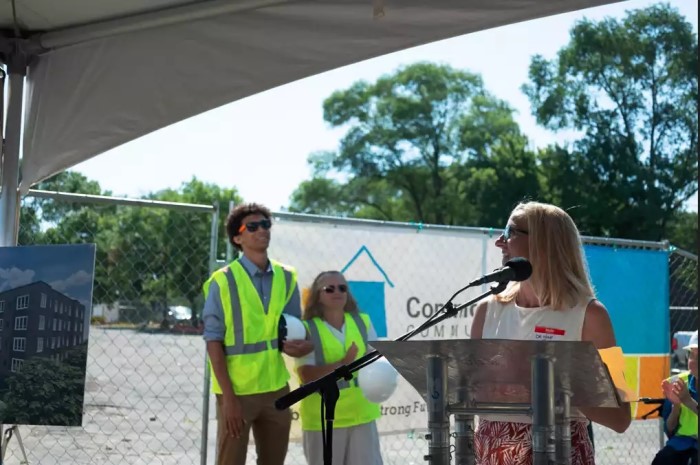
  • To enhance the aesthetic character of the community. Living amidst natural and man-made beauty contributes to health and the quality of life, and also stimulates pride in and a sense of ownership of the community.  It encourages people to maintain the community both physically and socially, and gives them hope.
  • To attract new, environmentally-friendly business and sustain economic health. A community that cares for its environment is an attractive place to live and work, especially for “green” businesses (those that care about, or whose business itself is concerned with, environmental preservation).
  • To attract visitors and new residents. Visitors, like those birders who come to the Hallsville Wildlife Refuge, often seek out places where environmental quality is high for their scenic and recreational value.  People seeking new homes, whether for retirement or for other reasons, look for pleasant and attractive communities.
  • To preserve community history. Protecting historic buildings or districts, and the sites of old settlements or battlefields, or preserving untouched the spot from which the original settlers first viewed the community, can be important to community pride and to the maintenance of social memory.
  • To protect the community from environmental disaster. The large-scale destruction of the coastal marshes in Louisiana in the second half of the 20th Century contributed greatly to the 2005 destruction of much of New Orleans by Hurricane Katrina. Clear-cutting timber on hillsides can lead to mudslides that carry away or bury communities and alter the landscape.
  • To prevent people from taking actions they’ll later regret. If you allow building in a floodplain or on an eroded slope, sooner or later you’ll be sorry.

In the 1950’s, a subdivision in a Massachusetts town was built in the floodplain (the area into which a river expands in heavy rains) of a local river, despite the warnings of engineers.  Not long after, there was, in fact, a flood. Not a dangerous flood – there were no deaths or serious injuries – but virtually all of the houses in the subdivision were ruined by water damage, and none had flood insurance.  As a result, the state soon after passed laws that prohibited building in a floodplain.

  • To protect endangered species. Protecting environmental quality can also protect habitat and help preserve endangered or threatened animals and plants.
  • To maintain ecosystems. Disrupting ecosystems – the interrelated stable systems of landscape, plants, animals, resources, and climate that interact with and sustain the character of the environment in a particular place – generally leads to unforeseen (usually negative) consequences, such as global warming, erosion, and the disappearance of species.

Frogs are dying out in various parts of the world, for reasons that aren’t yet clear.  Scientists suspect, however, that global warming – caused, as far as we know, by human activity – creates conditions that are perfect for the growth of a fungus that infects frogs and kills them quickly.  More than 100 frog species have disappeared worldwide since the 1980’s, and if the trend continues, there will be few, if any, species of frogs left by the end of the 21st Century.  Each frog population that dies out affects numerous other animals – those that they eat, those that eat them, and all the other plants and animals that are affected by the frogs’ predators or prey.

  • To be good stewards of the planet. Earth is, at least for the foreseeable future, the only home we have, and it is both our duty and in our self-interest to take as good care of its natural environment as possible.  If our own species is to survive, we have to pass the planet on to our descendants in at least as good a condition as we found it.

When should you protect environmental quality?

As with most topics in the Tool Box, you should pay attention to environmental quality all the time, but there are occasions when it’s particularly appropriate or favorable to work toward protecting it.

  • When it’s specifically threatened. When the last patch of green space in town is proposed for development, when an important wetland is likely to be polluted by an industrial plant – these are times to point out the consequences of ignoring environmental concerns.
  • When there’s a community development initiative. Rather than having to react to a danger to environmental quality, this is a time to get in on the ground floor and build environmental protection into the development plan.
  • When there’s a new commercial, industrial, or housing development beginning. A developer can be convinced – through incentives and/or regulations – to incorporate environmentally-friendly principles into site selection and preparation, building design and materials, and other aspects of the development.
  • When there’s an environmental crisis. When aquifers start to run dry, when global warming actually begins to show its effects, when local air quality becomes dangerous, or when torrential rains have caused the sewers to back up into the water supply, people tend to be willing to look at environmental quality issues.

It took the Dust Bowl of the 1930’s, when the topsoil in much of the American Midwest blew away, to convince farmers not to plow in straight lines, and to plant cypress and other dense trees at the edges of fields to break the wind.

  • When there’s a publication or media event that calls attention to the environment. The publication of Rachel Carson’s book The Silent Spring in 1962 called attention to the dangers of pouring chemicals into the environment, and essentially started the modern environmental movement in the U.S.
  • When money is available. When local, state, or federal agencies or private foundations offer funding to protect land, start environmental initiatives, or do environmental research, you may be able to realize a long-held intention or to begin a new project related to environmental quality.

A visit by the head of the state environmental agency to a rural Massachusetts town resulted in a partnership between the state and a regional land trust to purchase conservation easements from landowners in the area.  The state provided the money to buy development rights from landowners (meaning their land could never be developed beyond its current condition), while the land trust negotiated the deals and conducted land surveys and other necessary procedures.  Thousands of acres were protected as a result of this funding.

Who should protect environmental quality?

Perhaps a better heading here would be “Who can you persuade to get involved in protecting environmental quality?”  The ideal answer is, of course, “everyone,” but it’s often not that simple.  It can take a great deal of convincing when there are conflicting interests – for instance, between environmental quality and financial profit or simply making a living.  With the right tools – common sense, respect for the other’s position, incentives, regulations, sanctions, enforcement, etc. – you can persuade most people and groups to cooperate in maintaining the environment, at least to a certain extent.

  • Local, state, and federal officials. There are state and federal agencies in most countries that are responsible for the protection of environmental quality. Their effectiveness depends upon their level of funding and upon the level of political support they receive from the government in power. Since most developed, and many developing, countries are quite concerned about the environment, these agencies and officials may be important allies.
  • Local and national and international environmental organizations. Local organizations usually understand the local situation, and know what the real issues are and what tactics are likely to be effective.  Larger organizations, such as the Sierra Club, Greenpeace, Friends of the Earth, or the World Wildlife Fund generally have legal departments, access to funds, and the resources to take on long battles for environmental quality.
  • Community activists. Although it may be only one of many areas these folks are interested in, they can be strong guardians of environmental quality when the issue arises.
  • Those directly affected by environmental quality. This category can include people with very different approaches to the environment.
    • Those whose living depends on it. Although loggers and commercial fishermen, for example, are sometimes seen by activists as enemies of the natural environment, they have as much stake in environmental quality as anyone. If they understand clearly why protecting the environment protects their livelihood – keeping fish stocks healthy, for instance – they can become as concerned about environmental quality as the most avid environmentalist.
    • Those whose business is environmental quality or the study of the environment. Wildlife biologists, botanists, and other life scientists, foresters, hydrologists (water experts), public health professionals, etc. usually care deeply about environmental quality, and are often in a position to provide valuable information about it.
    • People who use the natural environment for recreation and spiritual support.  Hunters and fishermen, birders, hikers, skiers, and others who enjoy the outdoors generally have a strong desire to preserve wilderness and to protect the quality of the natural environment.
    • Architects and environmentally conscious developers.  hese folks are concerned with both the built and natural environment, and are the leaders in encouraging green building and using open space well.
  • Businesses and corporations. Some businesses and corporations are environmentally conscious, and try to support environmental quality and to pay attention to it in their own operations.  Others are induced by incentives or forced by regulation to pay attention to it.  Whatever the reason, if you can make common cause with the business community, or at least parts of it, they can be strong and useful allies.
  • Anyone who is conscious of the effects of environmental quality – or the lack of it – on their lives.  With the proper education, this includes virtually everyone.  Not everyone suffers from environmentally-related conditions, but everyone has to drink water, breathe air, and eat food that is raised in particular conditions.  The cleaner and purer the air, water, soil, and built environment are, the more attention is paid to sustaining resources over time, the better off people dependent on them are.

How do you protect environmental quality?

Protecting environmental quality can mean:

  • Acting before the fact, in order to seize a potential environmental benefit, or to prevent a real or possible threat to environmental quality (e.g., recruiting a “green” developer to develop a blighted urban site, gaining conservation easements on many acres of wild land, preventing a polluting industrial plant from being built).
  • Acting in an ongoing situation, to ensure that an environmental benefit continues, or to stop something that is actually or potentially harmful to environmental quality (working to continue current funding for environmental preservation and research, for instance, or forcing a factory to stop illegal dumping of industrial waste).
  • Acting after the fact, to repair environmental damage, and restore environmental quality (making General Electric clean up PCB’s that it dumped into the Hudson River, for example).

The reason for listing these is that they’re in priority order: i.e., it’s a lot more effective to act before the fact than during or after, if you have the opportunity. For this reason, it’s important to be constantly aware of environmental issues, to anticipate and plan for both possible threats and possible benefits, and to take advantage of every opportunity to act before it’s absolutely necessary.

Protecting environmental quality takes a number of steps

Elements of the environment to consider

Air, water, land, plants, animals, resources, the built environment, recreation, aesthetics – these are the elements we mentioned at the beginning of the section.  We’ll examine them in more detail here.

Air

There are several environmental issues relating to air quality.

  • Air pollution and smog. Air pollution has declined significantly in the U.S. since the passage of the Clean Air Act in 1970, but there are still serious problems worldwide, having to do with population growth, the use of fossil fuels (coal, oil, natural gas) to fuel cars and generate electricity, and numerous other societal factors.
  • The ozone layer. Ozone in the upper atmosphere protects the Earth from ultraviolet (UV) radiation, the part of sunlight that causes sunburn and skin cancer.  In recent years, our use of chlorofluorocarbons (CFC’s) has reduced the ozone layer in the atmosphere, which may injure people in both the short and the long term.
  • Haze.  In the U.S. and elsewhere, many national parks and wilderness areas far from population centers are plagued by haze caused by particles from coal-burning power plants.  Haze from power plants in the Four Corners area – where the states of Arizona, New Mexico, Colorado, and Utah come together – sometimes make it difficult to see across the Grand Canyon, for instance.
  • Acid rain.  Sulfur emissions from power plants and factories in the U.S. Midwest – whose chimneys often rise more than 300 feet to avoid polluting the surrounding area – are carried hundreds of miles eastward on the prevailing winds, and combine with rain to fall as sulfuric acid in New England.  In Europe, many lakes in Sweden and Norway have been emptied of fish by acid rain from plants in Germany.

Pollution blown high in the air by chimneys, steam venting, or natural forces can travel thousands of miles on upper-air currents at speeds of over 200 miles an hour.  It can pollute areas that would otherwise be clean. A dust cloud from a storm in northern China’s Takla-Makan Desert in April of 2002, for example, had, by the beginning of May, been blown across the Pacific, crossed North America and the Atlantic, and settled in the French Alps, a journey of about 18,000 miles.  Air pollution is a global problem.

  • Global Warming. The burning of fossil fuels has led, over the past century, to an increase of carbon dioxide in the upper atmosphere. The carbon dioxide acts like the glass in a greenhouse, keeping heat absorbed from sunlight from escaping, and creating a warming trend (often called the “greenhouse effect”). This climate change is already apparent in many ways, and its effects will grow as the century wears on.

Water

Water quality and supply are two of several water-related problems that are only apt to get worse as the 21st Century progresses.

  • Water pollution. The U.S. Water Pollution Control Act Amendments of 1972  mandated that dumping of industrial waste into water be regulated and ultimately stopped, and that all communities install wastewater treatment plants.  The Act resulted in a dramatic turnaround in U.S. water quality, but that progress has been halted by recent court decisions and actions by government.  Water pollution remains a serious problem, and could get worse.

The main sources of water pollution in the U.S. have been industrial waste – both garbage and the “leftovers” of industrial processes were routinely dumped into rivers for 150 years – human waste – before sewage treatment plants, untreated sewage was simply piped into the nearby river, lake, or ocean – and agriculture – runoff from fertilizers and animal waste are much larger contributors to pollution than most people realize.  Other factors that contribute to water pollution are the paving over of large parts of the country, causing more runoff in storms and floods, and the destruction of wetlands and coastal marshes, which cleanse water of pollutants before it gets to the ocean. Yet another is the simple growth of population (human population has more than doubled in the past 50 years, from 2.5 billion to about 6.5 billion), adding to the volume of both industrial and human waste, as well as to airborne pollution, which, as illustrated by the example of acid rain, can pollute water as well.

Fertilizer runoff causes a peculiar kind of pollution called eutrophication (from a Greek root meaning “well nourished”). Rather than killing the life in the water, fertilizer runoff – and some other substances as well – causes certain kinds of algae to flourish so greatly that they use up enough of the oxygen in the water to suffocate fish and shellfish.

  • Water supply. In many parts of the world, both developed and undeveloped, water is a far more precious liquid than oil, or soon will be.  Much of the world’s population lives in areas where water is in short supply, and recent droughts in sub-Saharan Africa, parts of China, and the western U.S., among other places, have made that problem worse.  Water supply is crucial not only for drinking and cleaning, but for irrigation of crops and for many industrial processes.

A water supply issue that surfaces often is the conflict between increasing the water supply and preserving scenic or other values.  Several huge reservoirs in the western U.S. – Hetch Hetchy in California’s Sierra Nevada, Lake Powell in Arizona and Utah, Lake Mead in Nevada, among others – were created by damming and drowning spectacular landscapes. The damming of Glen Canyon to give birth to Lake Powell was so controversial that it spurred the founding of the modern environmental movement.

At the same time, many dry-climate cities and farms are in danger of running out of water.  The aquifer (underground water source) that feeds Phoenix, Arizona, for instance, is emptying faster than it refills. Los Angeles pipes water hundreds of miles from northern California, and has fought for years with farm interests in the state’s Central Valley and elsewhere over water rights.  Resolving supply issues is not easy, and these issues are likely to get worse worldwide as time goes on.

  • Oceans. The oceans are prey to pollution of various kinds, from land, air, rivers, and ships at sea (ships dump garbage and other waste, tankers spill oil, etc.), but also pose other environmental quality concerns. One is the concentration of toxic (poisonous) pollutants in the fish that we eat, such as tuna and swordfish.  Another is overfishing – many  species of fish that were plentiful only recently are at dangerously low levels because too many have been taken.  Still another concern is the effect of global warming on the ocean itself.  Many scientists think that the Gulf Stream, the warm ocean current that keeps northern Europe temperate, and other major currents could be disrupted, further changing the climate, perhaps in unexpected directions.

Land

Since the land is the part of the earth that humans live on, it bears some of the most serious environmental quality concerns.

  • Pollution. While we often pay more attention to pollution of air and water, earth, too, can be fouled by intentional and unintentional dumping, leakage, and spills of waste and chemicals, often affecting water as well. Many of these dangerous substances persist as poisons for very long periods of time, putting anyone living in the area at risk.
  • Land destruction. In some parts of the world, clear-cutting of forests results in not only the loss of the trees as a resource, but erosion of the bare soil, which can slip in heavy rains and carry away or bury whole towns, dam or divert streams, and cause wholesale environmental and human disaster. Often equally damaging are such practices as strip-mining – in which all the topsoil is stripped off an ore vein, leaving a huge pit – and mountain top removal (MTR),  where a whole mountain is dismantled to get at the coal or minerals inside it.  In the U.S., mining companies are required to restore the land when they’re finished, but seldom obey.

Like the dams in the American west that drowned scenic valleys, this is another example of the conflict between the need for resources – or at least the need for the profits those resources will bring – and environmental quality.  There are other ways to mine than MTR and open-pit and strip-mining, but these methods extract the most ore or coal the fastest, and therefore generate the greatest profits.  Using massive machines, they feed our growing need for energy and the materials used to sustain an industrial and technological society.

  • Agriculture. Agriculture can have huge environmental consequences, far beyond the land-clearing that it requires. In dry areas of the world, herds of sheep and goats can overgraze to the point where they turn marginal grassland into desert.  Slash and burn agriculture can destroy fragile rain forest and deplete the soil.  In more developed countries, chemical fertilizers can also deplete the soil, as well as run off to pollute water.  Big livestock farms and feed lots – often owned and operated by corporations – can cause pollution problems with the mountains of manure they produce.
  • Waste disposal. As populations grow, waste disposal – especially in consumer societies, where excess packaging and a culture of throwing away items after a relatively short time create mountains of trash – becomes more of a problem. Recycling can help address this issue, and can be applied in both small ways (recycling individual soda cans) and large (reclaiming and recycling steel and other materials from a demolished office building or cargo ship).
  • Loss of open space and wilderness. As population and cities expand, more and more wild places are lost to development. This affects plants, animals, and people in numerous ways – habitat loss, loss of potential or actual resources, loss of clean water, loss of the experience of wildness, and even the chance of reduction of oxygen in the atmosphere as the world’s great forests are cut down.

Plants

Both wild and domestic plants can give great pleasure and confer great benefits. As a result, they figure into any discussion of environmental quality.

  • Overharvesting. In many parts of the world, some types of trees have been harvested practically to extinction, often in spite of laws protecting them. In the U.S. and elsewhere, old-growth forests – important  not only for their scenic and historic value, but for the botanical lessons they can teach and for their genetic material – are fast disappearing as a result of logging operations.
  • Habitat loss. As population expands, and more of the world’s land is cleared for settlement and industry, trees and plants that have evolved to live in specific places are being deprived of the places where they can grow. Furthermore, habitat loss that affects the animals and insects that help to fertilize plants harms the plants as well.
  • Pollution. While some plants are resistant to, and even feed on, some pollutants, many are damaged or killed by the same substances that are harmful to people and animals.  Some common chemicals and minerals – road salt, for example – that aren’t considered pollutants can nonetheless be harmful as well. Water plants can fall victim to eutrophication, and herbicides (plant killing chemicals) used to control weeds also kill desirable species.
  • Invasive species. When species of plants and trees that aren’t native to a particular area are introduced there, one of three things can happen: The new plants can fail to survive in their new environment; they can adapt nicely to the new environment, and fit in well with the plants already growing there; or they can find the new environment so comfortable that they are able to take it over from native plants, forcing them out, and, eventually, causing their extinction or near-extinction. Native plants can also be destroyed by invasive species of insects, birds, and animals, which may have no predators to keep them under control in a new environment.

A classic example of an invasive plant species is kudzu, a vine originally imported to the U.S. from the Far East in the late 19th Century as an ornamental garden plant.  It was spread through the American South owing to its use in erosion control and as cattle feed. It now covers millions of acres in the southeastern U.S., strangling trees, covering and overwhelming abandoned buildings and machinery, and even overgrowing empty lots, fences, and buildings in large cities.

The classic invasive, plant-damaging insect is the gypsy moth.  Brought to the U.S. as part of a silkworm-breeding experiment in the late 19th Century, the gypsy moth became a pest when a few insects escaped into the Massachusetts countryside. Gypsy moth populations grow to numbers that can strip whole forests of their leaves in a few days, injuring and killing the trees.  Eventually, when the population reaches a certain density, most of the insects become diseased and die, leaving time for the trees that are left to recover, and for the moths to again increase to forest-destroying numbers.

Animals

Animals – mammals, birds, insects, fish and shellfish, etc. – figure in environmental quality as well, in many of the same ways as plants.

  • Pollution. Air, water, and ground pollution affect animals as well as plants and humans. For example, DDT (dichloro-diphenyl-trichloroethane), a powerful insecticide, affects the shells of the eggs of birds of prey (eagles, hawks, falcons), causing them to break when the birds sit on them.
  • Habitat loss. The paving and settling of wild areas has an enormous impact on wildlife. The transformation of a wood lot into a suburb can remove food sources, protective cover, water, and room to range for various animals. Some adapt well – raccoons quite happily inhabit urban areas, for instance – but many are forced out. Animals with large ranges – bear, wolves, elk – either have trouble finding food – and starve – or are forced to compete with people, and are bound to lose.

For animals that migrate – most songbirds, caribou, monarch butterflies, salmon – habitat lost on either end of the migration or along the way will affect their health and population. As more patches of woodland turn into parking lots along the North American East Coast Flyway, songbirds have a more difficult time finding places to rest in their flights back and forth from the tropics, and many die from exhaustion along the way.  As rivers are dammed and industrialized, migrating salmon disappear. As the trees in which they roost in the winter in Mexico are cut, monarch butterfly numbers decrease.

  • Invasive species. As with plants, some imported animal species, often because they have no predators in their new environment, can increase in numbers and outdo the native species in competition for food, or eat them. On the island of Guam, the brown tree snake, an invader that apparently arrived in a ship’s cargo hold or in the landing gear wells of planes after World War II, has completely devastated the native species, particularly birds. Many of Guam’s bird species are no longer to be found, and many others are nearly gone.

Natural resources

Our civilization depends on fossil fuels, abundant water, minerals, chemicals, plants, and various other materials and substances that are part of, or derived from, the natural environment.  Many of those are limited in quantity: once we run out, there aren’t any more to be had on this planet. We have to conserve what we have and use it wisely, as well as look for alternatives to replace it when it’s gone.

Conservation can take many forms. The simplest is to use less of whatever it is we’re trying to conserve. Small, hybrid, and alternative-fuel cars help to conserve oil, as well as reduce smog.  Low-flow faucets and unwatered native plantings conserve water.

A second method of conservation is to change the ways we do some things in order to take advantage of energy savings. Convincing people to use public transportation instead of private cars, for instance, can save vast amounts of energy. Using recycled materials in building and manufacturing not only reduces trash, but also saves valuable resources.

A third type of conservation is the use of renewable energy sources – energy sources that aren’t going to run out. Examples are solar power, wind, biomass (from plants – wood, ethanol from corn, etc.), and even garbage and food-processing waste.  Some buildings, for instance, include solar panels that generate some or all of the electricity needed in the building. Renewable sources need to be maintained – trees harvested must be replaced by new plantings, for example – if their use is to make a difference.

Converting much of our energy production and other use of resources to alternative, renewable sources is a long and difficult process, involving complex economic and political factors.  Most alternative sources are only practical in certain areas, for instance (you can’t use wind power where there’s little wind), and often aren’t cheap enough to convince lots of people to use them.

Of course, if more people did use them, their production would become cheaper, and prices to the consumer would go down – always an issue with a new technology.

Economic and political factors enter into the conflict between the need to conserve resources and protect the environment, and the impulse to exploit natural resources to the greatest extent possible.  In most countries, the drive for energy, job development, and profit often overpowers any consideration for the value of the natural environment, or the needs of future generations.

One example of this conflict can be seen in the U.S. National Forest system. The National Forest system has, practically since its beginnings, been a battleground of sorts among those who would like to protect the forests from any cutting at all, those who see some cutting as healthy and beneficial to the forests as well as to the public, and those who want to exploit the forests for lumber with little concern for their other uses.

The built environment

The built environment includes anything made or shaped by humans, from houses to highways to city parks to oil-drilling platforms. We may often think of it in opposition to the natural environment, but it. too, is where we live, and we can make it both healthy and pleasant.

  • Open/green space. Almost ever since there have been cities, people have understood the need for open space as well as buildings. In the process of development, communities can address one element of environmental quality by preserving or creating open and green space (conservation or wilderness areas, parks, tree-lined streets, pedestrian areas, etc.)
  • Environmental quality of buildings. Buildings can be constructed, renovated, and repaired with an eye to their effects on the people that occupy them and the environment of the community.  Minimizing or eliminating the use of toxic materials (glues, varnishes and paints, solvents, cleaners, etc.), ensuring adequate air circulation, using non-polluting and passive energy sources (such as large windows to catch winter sun), and proper waste disposal all help to safeguard the health of occupants and the environment.  Designing buildings that minimize energy and water use, positioning them for climate control, using recycled materials where possible, and landscaping with native plants that need little or no fertilizing or irrigation enhance environmental quality in the community.
  • Light pollution. The lights of cities, shopping areas, even small towns are so bright that they can light up areas far from population centers, and block out the stars. Much of this light pollution could be eliminated by the use of shielded lights that reflect the light downward to the ground, where it is needed anyway, rather than into the sky.
  • Noise pollution. Cities are loud. Traffic and construction noise in some places can be loud enough to damage hearing over time. Controlling noise – which can contribute to stress-related diseases as well as hearing loss – is an important contribution to the quality of the built environment.

Recreation

While national, state, and local parks, forests, preserves, and wildlife refuges are often meant to be used for such recreational activities as hiking, boating, and nature study, they can also be threatened by some of these and other uses. Yosemite National Park in California has long been in danger of being loved to death by the huge crowds of summer visitors who come to be dazzled by its natural beauty. Too many visitors – even if they’re all reasonably careful – can erode trails, fill valleys with smog from their cars, and overwhelm waste disposal systems. 

Some types of recreation are simply inappropriate for particular environments. All-terrain vehicles (ATV’s), for example, leave tracks in the desert that remain for decades, in addition to causing noise pollution.  Dirt bikes quickly erode and destroy woodland trails. Yet each of these is allowed on some protected lands because of political considerations. Maintaining environmental quality can mean balancing the recreational value of protected lands with the needs of the land itself.

Aesthetics

One of the ways we evaluate our environment – natural and built – is by how it looks. We value natural beauty – that’s why all those people go to Yosemite in the first place – and we like to see trees and brightly-colored plantings on our city streets.  Yet some of the most beautiful landscapes – high mountains, ocean beaches – also harbor important resources, or are highly desirable places to live. The conflict between environmental quality and resources or development is often one between beauty and economics or necessity. Protecting environmental quality can sometimes mean protecting beauty at the expense of resources...and sometimes vice versa (allowing a wind farm on a hilltop in order to benefit from clean, renewable energy, for instance).

Decide on the issues you can most effectively tackle

This decision should be made with a number of factors in mind:

The actual or potential size and strength of your group. If you’re small, and have little influence, you may be able to take on a local issue, but a national one – unless you’re linked with other groups – is probably beyond your scope.

The profile of the issue. If the issue is one that most people already know and are concerned about, that makes for an easier task than if you have to raise everyone’s awareness that the issue even exists

Resources. A legal or advocacy effort usually takes money, and always takes the work of many people. If these aren’t available, you’re limited in what you can expect to accomplish.

The importance and immediacy of the issue. All that being said, some issues are so important, and the timeline to address them so short, that you simply have to act, regardless of whether or not all the other factors have fallen into place. If a developer is about to build a huge subdivision right next to an undeveloped scenic and well-loved lake, with no clear plan for sewage management; if a cement plant is dumping sludge into the aquifer that feeds the town’s wells; if a heavy metals reprocessing plant is asking for a zoning variance to build next to the school – then it’s necessary to take on the issue.

All these examples actually occurred, or are occurring, in one small area in New England.

Learn what you need to know about the scientific, social, economic, legal, and political realities of the situation

No environmental issue exists in a vacuum. It’s vital to understand the implications of everything you do, and of the situation as a whole.

The history of the situation

Has this come up before?  What happened, and what was the outcome? Does that affect what’s happening now? Who was involved, and where are they now?  Knowing what went before can keep you from repeating others’ mistakes, and can give you a better sense of who your allies might be and why.

The science involved, if any

What exactly are those chemicals that are being dumped into the river, and what are their short- and long-term effects on people’s and animals’ health and on the environment as a whole?  How does solar power actually work, and what are its real costs and benefits?  It’s your job to have the answers to the questions that are likely to be asked about your issue.  That doesn’t mean you have to be a nuclear physicist, but it does mean that you should study the literature about the issue, and find people who are nuclear physicists (or hydrologists, or biologists, or...) who can help you understand the issue better, answer technical questions more fully, and lend their credibility to your effort.

Having the technical information can be crucial.  In the case of the large development by the lake mentioned above, the opposition group engaged an engineer who was able to demonstrate to the Planning Board that the developer had not adequately explained how he was going to deal with water and waste management to protect the lake and the  protected land around it.  The developer was sent back to do a more realistic environmental impact study.

Having the scientific or technical information at hand will both convince others that you know what you’re talking about, and keep you from making mistakes that your opponents can pounce on to show that you don’t understand the situation, or are lying about it.

The social, economic, and political implications of your effort

These are taken together because the social, the economic, and the political are often intertwined, especially when it comes to environmental issues.  We’ve already referred to the balancing of recreational values, the need for resources, and environmental quality, all of which encompass all three of these interconnected areas.  How many jobs in the community does that polluting factory provide? Which politicians did the CEO of that mining company give thousands of dollars to, or go to college with?  How strong are the lobbying efforts of the industry you hope to regulate? How strongly do people in the community feel about the right of a property owner to do whatever she pleases with her own property?  These are the kinds of questions that need to be considered before you come up with a strategy for addressing the issue. They’ll help you understand where your advantages are, what barriers you’re facing, who your allies and opponents might be, and what kinds of tactics could be most effective.

We’ve mentioned opponents more than once. It’s likely that you’ll have some, and they may be extremely powerful  Powerful or not, they may be as convinced as you are that they’re on the right side of the issue, and that their position is in the best interest of the public.  It’s extremely important not to demonize them, but to listen carefully to what they have to say, to accord them the same respect you hope they’ll accord you, and to admit when they make sense. If they are in fact people of good will, perhaps you can convince them that your course is the better one for the community, or come to some compromise that will satisfy, if not entirely please, both of you. It’s much better, at the end of the day, to end up with friends or colleagues than enemies.

By the same token, some opponents care for little but their own advantage and well-being, and will think nothing of lying, using threats, and otherwise acting in underhanded ways to get what they want. If that’s who your opponents are – and make sure you can tell the difference – then you’ll have to be as tough as they are. Use any political clout you can muster (see below), get the dirt on them, call them on their lies in public, and use whatever legal tactics will work to defeat them.

Recruit allies

Protecting environmental quality is not a task for loners. History is full of stories of deep pockets and political power being offset by broad-based grass roots movements. The more people you can educate about the issue (that may be one part of your strategic plan) and involve in your effort, the better your position will be.

In addition to concerned community members, you should look for some experts in the field – scientists, engineers, environmental lawyers – who share your concerns, and can help with technical questions and public education.  Perhaps even more important, seek out local, state, and national politicians who are interested in the issue, and are willing to champion, or at least support, your cause.  A final crucial group to enlist is the media: if you can make friends with reporters and editors at various media outlets, you can make sure your side of the story will be heard.

The three steps referred to so far beg the question of whether or not you have a formal organization of some sort doing this work.  You may already be an environmental organization, you may be an organization of another sort that’s concerned with an environmental issue or with environmental quality in general, or you may be just starting out in reaction to an environmental need.

The bias of the Tool Box here is that an organization of some sort – whether one that already exists, or one that you form as you recruit people to work on the issue – is important.  It can be relatively informal, but an effort needs a coordinating function, and that comes much more easily with some sort of structure.  An organization also gives you an identity and credibility that make it easier for people to recognize and join your effort.

Develop a strategic plan

Now that you’ve decided on and learned about the issues you’ll attend to, and have at least begun attracting people to the cause, it’s time to plan your effort.  As we repeat continually in the Tool Box, the best planning process in most circumstances is participatory, involving as many sectors of the community and as many groups affected by the issues as possible. This type of process brings community ownership of and support for whatever plan emerges, and results in everyone being committed to making the plan work.

Depending on the issues you’re addressing, the timelines involved, and the reasons for mounting this effort, you might need to approach either one or both of two possibilities:

  • A plan for what you want to do. This may be a long-term strategy to enhance or maintain environmental quality in the community over time.It might, for instance, involve protecting areas that aren’t currently threatened, or work on persuading community officials to offer incentives to developers who agree to adhere to environmentally responsible building principles or to LEED standards (Leadership in Energy and Environmental Design, the environmental building standards of the U.S. Green Building Council).  You might decide to try to raise money to purchase sensitive tracts of land before they get developed, or to form a land trust to work with property owners and community officials to preserve open space. The main point here is that these are plans for actions that will work to protect environmental quality, but aren’t reactions to an immediate threat.
  • A plan for what you must do.This represents the other side of the coin: a strategy to stave off looming or already-occurring environmental disaster. There might be a need to stop a polluter from dumping toxic material, for instance, or to stop a developer from paving over a sensitive woodland or wetland. A coal-fired power plant might be scheduled to be built next door to a school or a residential neighborhood. Whatever the issue, it demands action, and fast. Plans here are shorter-term, although your strategy should include what you’ll have to do to maintain or reverse the problem once you get rid of the immediate damage or danger.

There are five elements that should at the very least be considered in your planning:

Advocacy.Virtually any strategic plan for protecting environmental quality must include a plan for advocacy. Whether or not you can persuade a legislator or other politician to champion your cause, you have to advocate constantly with both officials and the public if you expect to make any gains at all. It’s crucial to any successful community action, especially one that may involve legislation or regulation, as environmental issues often do. You should organize for and engage in advocacy as part of any strategy for protecting environmental quality. It can be your most useful tool for putting the first three of the other four elements in place.

Laws, regulations, and policies. One way to make sure that particular environmental benefits are achieved and particular negative actions or consequences are avoided is to get laws passed that protect environmental quality. The Clean Air and Clean Water Acts in the U.S. referred to earlier set standards and established penalties that make it easier for agencies, communities, and citizens to prevent or halt activities that cause pollution or affect water supply.  Many other state and federal laws describe what activities can and can not be carried out on public lands, set aside land for wildlife or as wilderness, regulate vehicle emissions, etc.

Although there are many laws that affect environmental quality, the only effective ones are those that are enforced, and that have penalties that actually hurt.  It’s actually more profitable for many large corporations to ignore environmental laws and pay the small fines called for in the legislation than to obey the law.  Unless environmental behavior is  carefully monitored and enforced, and unless the punishment for breaking the law is significant, lawmakers might as well not have bothered.

Another possible course here is to try to repeal or change existing laws that work against environmental quality.  These may be laws that allow environmentally damaging procedures, or laws that provide no enforcement or no penalties for breaking them.

In addition to specific laws, the regulations and policies of government agencies and communities can set environmental standards as well. They often control such things as what activities are permitted on protected lands, where vehicles are allowed, the number of visitors permitted at a site, etc.

A particular regulation that can have great environmental consequences is the zoning bylaw.  Virtually every community has a zoning code that specifies where in the community businesses can be carried on, how big a house lot must be, how close to the road or the edge of a lot a house can be built, how many people or animals can live in a unit of a given size, etc.  Zoning bylaws can also set aside town land for conservation, watershed protection, or other reasons, and can have a profound influence on the character of the community.  For that reason, participating in the drafting or changing of zoning bylaws can be an important part of protecting environmental quality.

Incentives. To protect environmental quality, offering businesses and industry, developers, and others something positive in return for their cooperation is sometimes more effective than passing regulatory laws (although it may take laws to provide incentives as well). Tax breaks for building green or installing anti-pollution technology, subsidies for using alternative energy, trading a site that needs to be protected for another in a better location for development – all of these and much more can help convince businesses and individuals that protecting environmental quality can be profitable as well as socially responsible.

Education. The more clearly everyone – the public at large, legislators and policy makers, business and industry, developers – understands the real consequences of various courses of action in relation to the environment, the easier it should be to gain public and other support for going in the right direction (or for a public discussion to determine what the right direction is). The media can help here, as can having the best possible scientific and other information. Surveys in the U.S. continually show that a great majority of citizens are concerned about the environment – but few actually have enough information to make informed decisions about it. In general, the more informed they are, the more likely they are to opt for environmental quality over other considerations.

There are, and always will be, exceptions here.  People whose jobs depend on industries that tend to damage the environment can’t be expected to walk away from them, especially if they lack the skills to easily find work elsewhere.  Like so many other things in life – and as we’ve already stated here – protecting environmental quality can be a balancing act – between the short and the long term, between the needs of individuals or groups and the needs of the community, between differing philosophies about what’s in the best interests of all the people, between resources and wilderness, etc.  These balances are hard to resolve and achieve, but the task is somewhat easier if everyone has the same accurate information.

Direct action. This may involve anything from a letter-writing campaign to a public demonstration to civil disobedience to a lawsuit. It’s a matter of getting a large group of people to raise their voices in support or protest of environmentally-related laws, policy decisions, and actions.

Implement your plan

Carry out the activities and strategy you’ve come up with.  It’s often wise to start with something that may be a stretch, but that you know can be achieved. This will build morale, and provide energy for the next task, which may be harder. Don’t lose sight of your long-term strategy, if you have one, or of your ultimate goal, but approach it one step, or one action, at a time.  Spread yourself too thin, and you’ll lose momentum and people.

The exception here is advocacy: it should begin when you do, and continue throughout your effort (and afterwards as well).

Monitor and evaluate your efforts

Each tactic that you use, each action that you take, as well as your overall strategy, should be looked at carefully. Are you doing just what you set out to do?  Is it working as you expected?  What changes should you make – now or in the future – to improve it?  Should you be doing it at all? Were the results what you expected? Was the situation what you judged it to be?  What should you do next, given the results of this action or tactic?

These questions and more will help you to respond to changes in (or your misjudgments about) the situation, and to change your tactics or actions so that you can be more successful next time.  Evaluation should be ongoing throughout the life of the effort.

Maintain your gains, and do it again

Once you’ve accomplished what you’ve set out to do, you’re still not finished.  Protecting environmental quality isn’t a one-time thing – it goes on continually. World population – or the population of your community, in most cases – isn’t getting any smaller, and the tensions between the needs of that expanding population and the need to protect a certain amount and certain kinds of open space, to conserve resources, and to control pollution and other health concerns aren’t going to go away.  You often have to work just as hard to maintain environmental quality as you did to achieve it in the first place.  And you’ll have to fight for it in another situation, and another – guaranteed – indefinitely.

In Summary

The quality of a community’s environment affects the health and well-being of everyone in that community. Environmental quality is inseparable not only from the health of individuals, but from the availability and quality of resources, the safety of the food and water supply, and the psychological and social well-being of the community as a whole.

Protecting environmental quality certainly means, in many cases, preserving open space and stopping or preventing pollution, but it also means addressing habitat reduction for plants and animals, conserving resources (including foodstocks, such as fish populations), seeking alternative energy sources, practicing sustainable development and agriculture, building according to environmentally-responsible principles – in other words, paying attention to environment quality in everything we do.  It also means working – through both political advocacy and direct action – for policies, laws, and regulations that take all these into account, as well as the spiritual, recreational, and aesthetic benefits of open space and wilderness. And it means continuing to maintain environmental protection and continuing to work to ensure that future generations enjoy adequate resources and a healthy environment.

Contributor

Phil Rabinowitz

Resources

Online Resources

Earth First! is a radical environmental movement (not an organization). Loosely organized affinity groups work locally, using direct action, the courts, civil disobedience, and monkeywrenching (i.e. environmental sabotage) to address environmental issues.

Environmental Defense Fund is an environmental protection organization that engages in public education, legislation, and litigation in support of the environment.

The U.S. Environmental Protection Agency provides information on a wide variety of topics, including pollution, air quality, health, sustainable practices, etc.

Friends of the Earth, founded in 1969 by David Brower, is the U.S. arm of its expanded network, Friends of the Earth International.

Recycle City is an EPA site for kids that details how a community can reuse, reprocess, or recycle almost everything.

The Sierra Club, one of the oldest, largest, and most influential grassroots environmental organizations in the United States.

The U.S. Green Building Council, developer of LEED (Leadership in Energy and Environmental Design) standards.

WWF International (originally the World Wildlife Fund), promotes biodiversity, the use of sustainable resources, and the reduction of wasteful consumption and pollution. There is also a United States-based arm.

Print Resource

Carson, Rachel. The Silent Spring.

Checklist
mloewenstein Wed, 12/12/2012 - 11:07

What do we mean by environmental quality?

___Environmental quality is a measure of the health of the environment itself (including the plants and animals it supports), and of the effects it has on the health, comfort, and psychological state of the people that inhabit it

Why protect environmental quality?

___To preserve the health of the community and its members

___To preserve community resources

___To create a more pleasant and better quality of life

___To enhance the aesthetic character of the community

___To attract new, environmentally-friendly business and sustain economic health

___To attract visitors and new residents

___To preserve community history

___To protect the community from environmental disaster

___To prevent people from taking actions they’ll later regret

___To protect endangered species

___To maintain ecosystems

___To be good stewards of the planet

When should you act to protect environmental quality?

___When it’s specifically threatened

___When there’s a community development initiative

___When there’s a new commercial, industrial, or housing development beginning

___When there’s an environmental crisis

___When there’s a publication or media event that calls attention to the environment

___When money is available

Who should be involved in protecting environmental quality?

___Local, state, and federal officials

___Local and national and international environmental organizations

___Community activists

___Those directly affected by environmental quality

___Businesses and corporations

___Anyone who is conscious of the effects of environmental quality – or the lack of it – on their lives

How do you protect environmental quality?

___Make yourself aware of what elements of the environment you should be paying attention to:

  • Air
  • Water
  • Land
  • Plants
  • Animals 
  • Natural resources
  • The built environment
  • Recreation
  • Aesthetics

___Decide on the issues you can most effectively tackle

___Learn what you need to know about the scientific, social, economic, legal, and political realities of the situation

___Recruit allies

___Create, with as broad a range of allies as possible, a strategic plan, and prioritize both the actions you want to take and those you feel you must take

___Implement your plan

___Evaluate your efforts

___Maintain your gains, and do it again

Examples
pschneider Thu, 02/08/2018 - 11:14

Example #1: Creating Social Change with Knowledge

Photo of a crowd of smiling people.


Groundwork USA’s Green Teams

Youth engagement strategies produce economic benefits both to the youth and the communities in which they live. Actively engaging youth in their communities strengthens social ties, fosters a sense of community, weakens the cycle of poverty, and inspires youth to achieve. Groundwork USA’s (GWUSA) Green Team program seeks to do just that by engaging high school-age youth from underserved and marginalized communities in environmental education, job training, stewardship, employment, and leadership opportunities. Read more from Community Science.

Example #2: Chile creates five national parks in historic act of conservation


Photo of a mountain and lake view in Chile.


Chile has created five sprawling national parks to preserve vast tracts of Patagonia – the culmination of more than two decades of land acquisition by the US philanthropists Doug Tompkins and Kristine McDivitt Tompkins and the largest donation of private land to government in South America.

The five parks, spanning 10.3 million acres, were signed into law on Monday by Chile’s president Michelle Bachelet, launching a new 17-park route that stretches down the southern spine of Chile to Cape Horn.

McDivitt Tompkins, the former chief executive of the outdoors company Patagonia, handed over one million acres to help create the new parks. The Chilean government provided the rest in federally controlled land.

'For every dollar you invest in national parks, you get 10 back; it’s more profitable than copper,' Hernán Mladinic, the executive director of Chile’s Fundación Pumalín, told The Guardian last year.

But protected areas can also have a less obvious effect on the local economy in developing countries: They can spur poverty alleviation.

'Research from around the globe suggests that parks can successfully balance conservation and development and are one of the most important mechanisms for permanent protection of natural resources,' said Katharine Sims, an economics and environmental professor at Amherst College."

You can also read more about this in the Huffington Post.

PowerPoint
mloewenstein Wed, 12/12/2012 - 11:07
File Upload
A PowerPoint presentation summarizing the major points in the section.
Section 10. Establishing Neighborhood Beautification Programs
pschneider Mon, 12/18/2017 - 10:43
Main Section
pschneider Mon, 12/18/2017 - 10:47

Image of the two men outside in a pergola, with a garden behind them, from The Fertile Ground Collective

Motor City Blight Busters director John George and
The Fertile Grounds Collective director Cornell Royal.


Let’s take a weekend walk through a neighborhood in each of two smallish cities in a temperate climate. We’ll assume they’re similar in most ways – demographics (age, ethnic and racial background, income, etc.), geography (landscape, distance from the center of town), amount of open space, mix of residential and commercial buildings, and the architecture of those buildings.

As we begin our walk in City A, we notice that many streets lack sidewalks, and the ones that do exist are often cracked and broken. Trash clogs the gutters, covers the neighborhood park, and blows around in the wind. Many lawns have more bare dirt than grass, and there are few flowers or shrubs in anyone’s yard. Trees are noticeably absent from the neighborhood as well, and many of the small but well-built houses have peeling paint or missing siding. Knots of young men huddle and smoke at the edges of the empty park, glaring as we walk by. In the commercial areas, storefronts are dull, but often have huge, garish signs. Traffic roars down the main streets and many of the smaller ones as well, and the noise of it is everywhere, even in residential parts of the neighborhood. The overwhelming impression is of a loud, barren, dirty, charmless place.

In City B, sidewalks and bike lanes in good repair wind throughout the neighborhood, and are well used by residents. The wider streets have central islands alive with flowers, and every house seems to have at least one tree in its yard and another between the sidewalk and the curb, many with flowers and shrubs planted around them. Yards are grassy, and often have well-tended gardens. Houses are neatly painted, many in interesting colors. A city park is full of people picnicking, playing sports, and walking the signed nature trails that lead through woods and by a stream. Businesses on a commercial street are welcoming, with displays outdoors. Smaller streets have speed bumps and other traffic controls, and there are benches and bins of flowers on sidewalks. The noise level is a pleasant hum, giving a sense of a relaxed, enjoyable environment.

These descriptions are obviously extremes, but we’re all familiar with places that are apparently similar, but feel very different. The physical character and the feel of a neighborhood have a great deal to do with each other, and neighborhood beautification isn’t just a matter of impressing the neighbors or trying to make everything “perfect.” It affects the way people interact, and the way they feel not only about their neighborhood, but about themselves and their neighbors. As a result, it can make a huge difference in the quality of life in a neighborhood or a city.

In this section, part of a chapter on enhancing the quality of life in a community by changing the physical and social environment, we’ll discuss neighborhood beautification, and look at how you can often make important changes in your neighborhood or community even if there’s very little money available to do so.

What do we mean by a neighborhood beautification program?

In simplest terms, neighborhood beautification means making a neighborhood look and feel better. While the residents of some neighborhoods may be concerned with forcing their ideas of beauty and acceptability on others, most simply want their neighborhoods to be livable and pleasant. Neighborhood beautification, if it’s approached with the right attitude, can lead to more interaction among neighbors from diverse backgrounds, more neighborhood life, and a neighborhood look and feel that attracts new residents and businesses and supports both economic development and a sense of community.

A neighborhood beautification program isn’t a single event (“Fix Up Your Yard Day”), but rather a strategy to maintain, enhance, and/or change the character of your neighborhood over the long term. You may approach particular elements of the program one at a time, but your focus should be on your long-term vision for the neighborhood.

Neighborhood beautification can take place both on a whole-neighborhood level and on an individual-property level. The ideal is that both come into play, with both larger bodies (neighborhood organizations and coalitions, municipal government) and individual property owners involved.

Depending on the current condition of the neighborhood, beautification may range from addressing a single building or area to a nearly complete makeover of the whole neighborhood. In either case, there are a number of aspects to consider as you think about what might benefit from change.

  • Cleanliness. Even an unattractive neighborhood will look enormously better and be nicer to live in if the streets, sidewalks, parks, grassy areas, and empty lots are free of trash and dog droppings, there are no plastic bags stuck in trees or on electric wires, and both pavement and buildings are free of graffiti and grime.

Almost all graffiti are illegal, and most contribute to a look of disrepair, chaos, and neglect. In most cases, graffiti removal – either by painting over or by sandblasting – is a standard part of neighborhood beautification. There’s an argument to be made, however, that some graffiti have artistic value and actually improve the looks of blank walls, particularly in industrial neighborhoods, and ought to be left alone. That’s a controversial position considering the law, but one that ought to be broached within the community before taking action.

  • Harmony and variety of buildings. Neighborhoods where all the houses look the same are visually boring; those where the buildings have no connection to one another – high-rise apartments or office buildings next to one-story supermarkets next to three-story houses – can be jarring and chaotic. The ideal neighborhood has enough harmony among the buildings that the eye isn’t confused, and still has enough variety that the eye doesn’t get tired looking at them.
     
  • The condition of individual buildings. Nothing proclaims the character of a neighborhood more than the condition of its buildings. This element often reflects the socio-economic level of neighborhood residents, but also affects the neighborhood’s self-image and the way they are perceived by the community at large. A positive change in the physical attractiveness of the neighborhood can have a positive effect on residents’ self-image, and vice versa.
     
    Abandoned buildings are especially detrimental in this regard. An abandoned building indicates a lack of value to the owner or other investors which reflects on the neighborhood as well as on the building itself. If abandoned buildings can either be rehabilitated or replaced, it can greatly improve the look and feel of the neighborhood.

Abandoned buildings, especially if they are old and/or historic, can be a resource rather than a nuisance. Section 7 of this chapter, Encouraging Historic Preservation, discusses why you might want to preserve and recycle a run-down building, and provides both practical information and links to help you do so.

  • Other unused or potentially dangerous sites. Bridges, abandoned industrial sites, out-of-service railroad tracks and yards, decaying docks – these are not features likely to improve life in a neighborhood. If, however, like abandoned buildings, they can be recycled, they may benefit the neighborhood in unexpected ways. Abandoned railroad beds and canal towpaths can be turned into bike and hiking paths (such as the HighLine in New York City and the 606 in Chicago). Brownfields (polluted former industrial sites) can be reclaimed (often with government subsidies and tax incentives) and turned into attractive, eco-friendly residential or mixed use developments.

When a trolley line went out of business in Shelburne Falls, Massachusetts in 1928, the local garden club decided to turn its bridge over the Deerfield River into a garden. Over 80 years later, the Bridge of Flowers, as it came to be called, is still a tourist attraction, and helps to beautify and to bolster the economy of a downtown that supports many craftspeople and artists, good restaurants, and a theater.

  • Greenery and plantings. To early humans, green plants meant survival – water, berries and nuts to eat, animals to hunt. Even though most of us no longer need to stalk our main course, green still makes us feel good. Trees, flowers, grass, and shrubs can help a neighborhood feel welcoming and well-loved.

Planting lush lawns and spreading maple trees is inappropriate in dry climates, where watering plants and lawns consumes a scarce resource. You can, however, plant native species that have evolved to survive and thrive in a dry environment, and that need very little or no care, and these native plantings can still placate our need for biophilia.

  • Parks and other open space. Open space in a neighborhood – parks, lawns, tree-lined plazas, and the like, (not parking lots so much) – provides views, fresh air, room to move, and a feeling of spaciousness. Green space is by nature comforting and relaxing however it must be maintained. If it’s covered with garbage or weeds, it will be an eyesore, not an asset.
     
    Parks require upkeep. If they’re well used, they’ll also show signs of wear. Many neighborhood parks are maintained at least in part by community volunteers. Many parks have also been reclaimed from crime and danger by concerted neighborhood action, and have been turned into frequently used, family-friendly places where neighborhood residents feel comfortable and safe.
     
  • The streetscape. The streetscape is the landscape of the street, the combination of buildings and their facades, paving, plantings, open spaces, traffic patterns, and other features that make up what you see as you move through a neighborhood. A mix of colors, shapes, light and shade, and various objects (walls, benches, planters, etc.) can make for an interesting streetscape, one that entices people to linger or explore. On the other hand, a streetscape that’s too chaotic or too dull and empty can be unpleasant or threatening, and can discourage people from using it.

Starting in the 1960’s, many cities in the U.S. and elsewhere sacrificed interesting and lively streetscapes to enormous buildings with few windows on the lower floors. The streets became uninviting canyons with no street life. These buildings may generate income for the owners and taxes for the city, but they sharply reduce the attractiveness of the neighborhood and the quality of life for residents.

  • Signage. Signs can identify and advertise businesses and public buildings, regulate vehicle traffic and parking, inform people of laws and rules (“no smoking”), guide them to important neighborhood locations, and tell them where they are. Signage can also be a form of environmental art using graphics, color, materiality and design to set a tone and define the personality of a place.
     
    Signs can either contribute to or detract from neighborhood beautification. They should be appropriate for their location, whether in Times Square or a residential area in a small town, when it comes to how the signage is expressed and installed. You wouldn’t want a large flashing neon sign at the entry to a suburban subdivision or a small hand painted sign in front of a hospital. Signs should be attractive, easily visible and legible, , and placed strategically to maximize impact.
     
  • Lighting. Both the appearance and function of street lights and other outdoor lighting fixtures can be issues here. Tall mercury-vapor or sulfur lamps that broadcast green or bright yellow light in all directions obscure the night sky, distort colors, and are out of proportion on most neighborhood streets. Smaller lamps that throw the same amount of white light downward onto the street and sidewalk eliminate all these problems without sacrificing either visibility or safety, and add to the attractiveness of the neighborhood. The same considerations can be applied when lighting businesses, large buildings, residences, or common spaces.
     
  • Traffic. Most neighborhoods have at least one major artery, usually lined with commercial and public buildings, that carries much of the area’s public transportation and automobile traffic. Major arteries are meant to do this and keep all but local traffic away from the smaller streets on which residents live. When the side streets get clogged, the neighborhood starts to feel, sound, and smell more like an industrial or commercial zone.
     
    Where traffic is inevitable – on streets next to a limited-access highway, for example – noise barriers, trees, or other types of screening might be necessary. Where that’s not the case, speed bumps, one-way traffic patterns, and other strategies can be used to keep residential streets clear and quiet.

Noise and smell, as well as visual elements, are beautification concerns. Furthermore, exposure to constant noise, even at a relatively low level, can have negative physical and psychological effects on people. Traffic and industrial fumes can contribute to respiratory disease. Controlling noise and smell in a neighborhood, therefore, may not only make the neighborhood more livable, but also maintain the health of its residents.

  • Parking. Regulating parking can make a huge difference in the attractiveness and livability of a neighborhood. At the same time, large parking lots, especially on the street side of businesses, take up valuable open space and create spaces that are bare and unfriendly to pedestrians.
     
    Solutions to the problem might include above- or underground multi-level garages, landscaped parking lots with tree- and plant-covered islands, rows of trees or bushes that screen parking from the sidewalk, or landscaped or decorative curb cutouts that allow parking out of the flow of traffic.
     
  • Public art. Art in the public realm is inextricably entwined with the history of mankind and civilization. Hundreds of years ago art would tend to be either religious or political, but these days public art can represent almost anything: a memorial to fallen firefighters or to a cultural figure, an abstract sculpture meant to stir the imagination, a mural picturing the ethnic and racial diversity of the neighborhood. Whether these are the work of professional artists or of local amateurs, they should add value and in some way reflect the character of the neighborhood.

Neighborhood beautification can be a simple matter of recruiting volunteers to perform physical tasks that improve the attractiveness of the neighborhood. If you’re concerned with projects that cost a great deal, or with instituting or changing policies, regulations, or laws, however, your program might need to include advocacy.

There are many projects that a neighborhood can successfully complete independently. Some might benefit from municipal involvement but can still be accomplished without it. A partial list:

  • A neighborhood, park, or lot cleanup. The municipality may have a program that loans tools, equipment, and/or city employees to help. (If it doesn’t, you might want to advocate for starting one.)
  • Improvement of individual properties. You can’t force anyone to fix up a home or business, but you can present the opportunity, and offer help from neighborhood volunteers. Youth can be great volunteers for this kind of project, and can sometimes get credit for a middle or high school community service requirement. Volunteers could help with painting, planting or mowing yards, taking away unwanted objects and equipment, and making simple repairs.
  • Clearing trash and brush and/or building trails in a natural area. Here’s another case where the use of municipal equipment would be helpful, but not necessary.
  • Painting over graffiti.
  • Creating a mural or other artwork. Such projects are sometimes spearheaded by neighborhood artists, volunteering their services as designers (i.e. making drawings – often based on a community decision process – which community volunteers then paint). In some cases, a mural can replace unwanted graffiti.
  • Planting borders, trees, median strips, etc.

The issue of design arises here. A mural or decorative planting can best be done with the help from people with an eye for design, although they don’t necessarily have to be professionals. Design is particularly important to a major project. If part of your effort involves installing a piece of public art, for example, or rehabilitating a historic building, a good deal of thought needs to go into what the finished product should look like and how it should fit into its surroundings. Here you might need a professional to advise neighborhood residents.

When neighborhood beautification demands the cooperation or help of the municipality or some other government body (a state agency, for example), your program may need to employ advocacy to get what it needs. There are six chapters in the Community Tool Box (30-35) devoted to advocacy, so we won’t go into the specifics of it here. Let’s look instead at what you might want to advocate for:

  • Help in realizing a neighborhood vision. Whether your effort is part of a city-led neighborhood development initiative, or grew solely from the neighborhood, if you need help from the larger community – street or sidewalk repair, for example, or tree work – you’ll have to approach local officials and persuade them to provide what you need.
     
  • Tax or other incentives to motivate developers and/or businesses to follow specific standards. This may require advocacy with local appointed or elected officials, with state legislators, or with state agencies.

Advocacy might involve help with an application for historic status or other eligibility for a building or neighborhood. Many grants and incentives for historic preservation or environmental restoration have specific requirements, and the funding agencies often assist communities in meeting those requirements. In some cases, the question of eligibility is political as well as practical, and advocacy – often with the help of a state representative or Congressman – may be needed.

  • New laws, regulations, or policies, or changes in existing ones. If laws or regulations already exist, but aren’t being enforced, that calls for one kind of advocacy. Trying to institute new laws or regulations calls for strategies similar to those you’d use to advocate for incentives.
     
  • Cooperation or collaboration from neighborhood businesses or corporations or industries that operate in the neighborhood. The program may call for imaginatively-painted storefronts, for example; that isn’t likely to be realized unless businesses agree to go along. The incentives mentioned above might help merchants to pay for changes related to neighborhood beautification.

Advocacy works best when there is collaboration with officials, agencies, and/or businesses. Always start by approaching the people you’re advocating with as allies. If you can realize your goals by working with officials, policy makers, and business owners without an adversary action, that’s ideal. If you can involve them in planning the program, you may have their cooperation from the very beginning.

When officials or businesses are completely uninterested in participating or cooperating, or refuse to even listen to neighborhood concerns, some sort of social action may be the best course. This might involve petitions, demonstrations, political pressure from another source (a sympathetic congressman, for example), a media campaign, or, as a last resort, a lawsuit. Social action involves organizing the neighborhood to act in a united way. It’s not likely to be successful unless the issue is one that’s really important to people. Use it sparingly, and only after less adversarial methods have failed.

Why establish a neighborhood beautification program?

Neighborhood beautification can be useful in a number of different circumstances. Depending on the character of your neighborhood, you may only be concerned with one or two of the following factors or your vision may embrace them all.

  • A neighborhood beautification program can build neighborhood pride and ownership. Litter in lots and yards, broken windows, dirty walls, obscene graffiti, and barren streets with no street life don’t only make a bad first impression; those attributes also decrease residents pride and sense of community. When residents notice improvements – or better yet help with the changes– they develop neighborhood pride and feel better about their community and home. If they’ve been responsible for the change, they’ll not only take ownership of it and work to sustain it over time, but may feel motivated to change other things in their lives as well.
  • Neighborhood beautification can improve the quality of life of the residents. Living in pleasant surroundings improves daily life. and may help to foster connections among residents When a person has a good quality of life they are happier and relieved of many stressors related to their safety and well-being.
  • Neighborhood beautification can help attract new residents. Neighborhoods remain vital if they continue to attract and retain residents. Being able to attract new residents to replace those that move away is imperative for a healthy community. Regardless of status or the income level of the residents, a neighborhood that’s cared for strengthens the community and makes people want to live there.
  • Neighborhood beautification can help attract new business. Neighborhood businesses are important for many reasons: they provide convenient local shopping and services, they can offer jobs to neighborhood residents, and they can keep the neighborhood alive, contributing to street life and economic development. Most business would prefer to move to areas that are attractive and where residents and other businesses take care of their properties. Well-kept neighborhoods with regular street traffic increases business.
  • Neighborhood beautification can attract entertainment and culture. As with businesses in general, a neighborhood beautification effort can attract attention from the entertainment industry as well: a theater company, a museum, a movie theater, etc.. Cultural attractions provide residents opportunities for recreation and culture, and can only help improve the quality of life.

  • Neighborhood beautification can serve as the base for neighborhood revitalization. Because a neighborhood beautification program can help to attract new residents, businesses, and cultural institutions, it can help turn a dull, mediocre neighborhood into a vibrant, excellent one. It often takes only a small step or two to start a turnaround – a new restaurant, an art gallery, or an experimental theater may signal to the community that the neighborhood is on the upswing.

Revitalization can be a double-edged sword. All too often, a low- or moderate-income neighborhood becomes trendy, developers move in to build luxury housing, and the original residents are forced out unaffordability. When this happens, it doesn’t feel like revitalization or progress. If revitalization is part of a program’s long-term strategy, planning should ensure that the original residents – those who in fact will have brought about the changes that make the neighborhood more desirable – have the chance to enjoy the fruits of their labor.

  • Neighborhood beautification can improve neighborhood and community health. Reduced or adjusted traffic patterns may have a direct impact on health. Trash removal, increased open space, and expanded plantings can all have positive effects on both physical and psychological health.
  • Neighborhood beautification is a way to involve youth and other people who are often overlooked. Both planning and volunteer projects can put to work the abilities and knowledge of youth, elders, and people with disabilities, language minorities, and others who are often ignored. Bringing these folks into the mainstream of neighborhood activity means a stronger and more equitable neighborhood community; more potential volunteers; and a broader and more accurate perspective on neighborhood resources, needs, and possible projects.
  • Neighborhood beautification can build stronger neighborhood relationships. The experience of working with others on a project that everyone is invested in creates bonds. These connections weave a web of social capital, which enrich lives and strengthen the community.

Social capital is somewhat like economic capital. It’s the social “currency” that’s available for people to spend as a result of their relationships. All social capital comes from constructing networks through meeting and getting to know others. These opportunities can come from repeated business transactions, from neighborhood events, or simply from meeting on the street day after day.

Social capital, like financial capital, flows both ways. You continue to earn it through positive interactions, (helping friends move into a new apartment, for example, or chasing down a neighbor’s rebellious dog). Likewise, social capital can be casually redeemed when that neighbor you hardly know keeps an eye on your house when you’re on vacation or a neighbor shovels your walk after a big snow.

According to Robert Putnam, in Bowling Alone (New York: Simon and Schuster, 2000), there are two kinds of social capital. Bonding social capital is the advantage people develop from relationships with those who are essentially similar to themselves. Bridging social capital is that gained from relationships with people who are quite different, whether in culture, race or ethnicity, economic status, politics, or other factors. (Adapted from Chapter 26, Section 8, Creating Good Places for Interaction.)

  • Neighborhood beautification can send a message to the rest of the community about the values of your neighborhood. If your neighborhood is one that has been seen as run-down or undesirable, a neighborhood beautification program can help to change that perception. It proclaims that neighborhood residents have self-respect, that they care about their neighborhood and one another, and that they’re willing to work to make the neighborhood a better place to be.

When should you establish a neighborhood beautification program?

Any time is a good time to establish a neighborhood beautification program, but there are some times and circumstances that might make it easier to mobilize.

  • When a neighborhood group acts as a spearhead. Like most community activities, a neighborhood beautification program is most likely to succeed if the idea and the push for the effort come from the neighborhood itself.
  • When the neighborhood has gone, or is in danger of going, downhill. When people start moving because the neighborhood is no longer comfortable to live in, when drug dealers begin to appear in the area, when buildings are abandoned, it’s time to take action. Neighborhood beautification may not seem like an appropriate response to such circumstances, but it can affect both the character of the neighborhood and the ability of residents to band together to reclaim and rebuild their community.
  • When there’s a specific problem that needs to be tackled. A derelict building that needs to be rehabilitated or a garbage-strewn lot can be reason enough to take action. Addressing these problems can be a gateway to a more extensive neighborhood beautification program.
  • When funding or other support is available. A municipality or state may provide funds specifically for neighborhood beautification, or may loan tools, equipment, and/or manpower for related tasks. When that kind of support is available, initiating a program may be easier.
  • When there is a conjunction with a brownfields cleanup or similar effort. If the government or a developer is engaged in cleaning up a polluted industrial site to reuse it for a park or other purpose, neighborhood beautification is a logical follow-up.
  • When there is a concurrence with other types of neighborhood improvement efforts. Neighborhood beautification can go hand in hand with anti-drug or anti-violence campaigns, or economic development. Addressing the look, sound, and smell of the neighborhood can result in many of the kinds of changes that most residents want and appreciate.

Who should be involved in establishing a neighborhood beautification program?

As we’ll see in the “How-to” part of this section, the Community Tool Box believes that the best way to establish any neighborhood program is to involve as many individual stakeholders and groups as possible. For neighborhood beautification, people from all the groups and backgrounds that make up the neighborhood should be involved, since the effort will have effect everyone, whether they’re directly involved or not. This might include:

  • Homeowners.
  • Renters.
  • Landlords and property owners.
  • Business owners and managers.
  • Local officials including: neighborhood City Council representatives, state legislators, Board of Health members, etc.
  • Youth.
  • Specific populations defined by race, ethnicity, or other common denominator.
  • Neighborhood organizations. Possibilities include: neighborhood associations or councils, a neighborhood watch, block associations, and neighborhood youth groups.
  • Organizations and agencies that serve the neighborhood: a local hospital, the public library, health and human service organizations, cultural institutions.
  • Community services (planning, police and fire, garbage pickup, recycling, etc.)
  • Neighborhood faith communities.
  • Service clubs (Lions, Rotary, etc.)
  • Schools and other educational institutions.

How do you establish a neighborhood beautification program?

There are three phases to establishing a neighborhood beautification program.

  1. Recruiting people to participate in the effort and to determine what needs to be done.
  2. Planning for action, including developing a vision, setting short- and long-term goals, devising a strategy for meeting those goals, and developing an action plan (with a timeline) for each goal.
  3. Presenting the plan to the neighborhood, getting approval, and implementing the first step.

Phase One: Recruiting neighborhood residents as leaders and participants

Recruit people to take the lead. This could be an established neighborhood group, such as a neighborhood association, or simply a number of individuals who are interested or concerned enough to be willing to work on the effort. This group should reflect, to the extent possible, the diversity of the neighborhood in age, ethnicity, race, economic status and interest groups, as described above.

Since you’re establishing a program, not a one-time event, make sure this group has a structure that will keep it going as long as necessary. It should have a mechanism for cultivating new leaders, so that it won’t disappear if current leaders leave.

Conduct outreach to neighborhood residents to inform them about and involve them in the effort. The best way to obtain neighborhood support and ownership of the program is to involve as many residents as possible. Not everyone needs a leadership role, but everyone should at least have the chance to contribute to discussions about the vision (see below), and to take part or be represented in planning.

Outreach that relies mostly on personal contact – door-to-door canvassing, phone calls, personal referrals from friends and acquaintances, people handing out fliers and explaining the effort in public places – is most likely to attract people. Face-to-face or phone contact can be supplemented by signs and posters, public service ads on TV and radio, and media stories.

One important element of outreach is to get people’s names, phone numbers, and e-mail addresses if applicable. Those will come in handy later when you distribute your plan and when you’re looking for volunteers for other kinds of support. It also ties people into a neighborhood network that can build social capital for everyone.

It’s important to reach out to everyone in the neighborhood, particularly those who are usually ignored. Some avenues to use to reach those residents:

  • Go door-to-door and/or make presentations in public housing. If there are tenants’ organizations or tenant advocates, you may get better results by working with them.
  • Visit homeless shelters, particularly family shelters. While many homeless people struggle with substance use and mental health problems, many others – particularly families – are more affected by loss of jobs and lack of social connections. Not only can they help the effort, but participation may help them establish connections as well.
  • Contact probation officers. Many of those on probation may have to perform community service, and could serve as volunteers on beautification projects. As with people who are homeless, their participation can help them regain their connections in the community.
  • Work with schools, Scouts, clubs, gangs, etc. to get youth involved.
  • Make presentations to ethnic churches, service clubs, and organizations.
  • Contact ethnic businesses both through associations (e.g., Chamber of Commerce) and individually.

Phase Two: Developing a plan for neighborhood beautification

The later stages of our process here reflect that chapter’s structure of VMOSA – Vision, Mission, Objectives, Strategy, Action.

Assemble a participatory planning group. This should include representatives of as many significant population and interest groups in the community as possible, as well as interested residents with particular planning (or other skills) and community officials who can help.

Conduct a neighborhood assessment. You can use a variety of techniques to assess the assets and needs of the neighborhood.

  • Tap the knowledge and opinions of the neighborhood residents taking part in the planning group.
  • Conduct interviews, surveys, etc. with other residents, with an attempt to reach all groups in the neighborhood.
  • Conduct observations. Teams of observers armed with pencil and paper or laptops can gather specific information – addresses of trash-strewn lots, the condition of sidewalks, locations of benches in need of repair – as well as general impressions – condition of housing, the amount of street life, etc. All of this data can paint a picture of the neighborhood and identify strengths and areas of concern.
  • Consult with community planners and other knowledgeable people who are willing to help – academics, architects, or engineers, for example. These folks may live or work in the neighborhood, or simply be interested in helping, particularly if the neighborhood is largely low-income or presents an interesting challenge.

Most traditional assessments are based on problems or needs. Often, you can get better results from an asset-based assessment, starting with the neighborhood’s resources and examining how to use and strengthen them to solve problems and meet needs.

Develop a vision for the neighborhood. Based on the assessment and the needs and wishes of residents and businesses, the planning group should draft a vision that represents the ideal of what the neighborhood should be. After discussions to identify key points, a small group might draft a vision statement, and then present it first to the planning group and then to the neighborhood.

A vision statement is a long-term concept of what people would like the neighborhood to look like. Neighborhood beautification may be a long process, involving a series of initiatives over time, depending on what and how much needs to be done. The vision should describe the ideal end point, not the process.

The purpose of having a small group draft the statement is that the more people are involved, the more the group is likely to get bogged down in details of wording. That kind of refining needs to be done, but is more efficiently done once there is a basic statement to work from. When it goes back to the larger planning group and then to the community, the details will be hammered out.

Develop goals. (These are the Objectives in VMOSA.) Your overall goal is to actualize the vision. In order to get there you’ll have to achieve some more smaller milestones along the way. If your vision is too broad, it may be overwhelming and prevent action “A neighborhood with attractive and interesting businesses, colorful and well-cared-for houses and yards, and well-maintained, inviting open space, all enlivened with trees and plantings and public art.” These goals will be many, each covering an element of the vision statement.

It can be helpful in reaching goals if you develop benchmarks and checkpoints that show you’re making progress. A benchmark for “well-maintained, inviting open space,” for example, might be a clean-up of specific empty lots.

Consider carefully what resources you need for each goal, and don’t start on goals until obtaining those resources. You might want to start with something that needs only resources already available in the neighborhood – volunteer labor and transportation, cooperation from community services or agencies (trash collection, loans of tools or equipment, etc.) – so that it’s clear that it can get done. Projects that need money or expertise that’s not immediately available can go into the “We need to work on getting the resources for this” category. If substantial resources are needed, there should be a group whose task is specifically to chase those down. Good sources include: grants, community loans or donations, help from local businesses and corporations or industries that operate in the neighborhood, and advocacy with local and state agencies and officials.

Develop an overall strategy to realize your goals and, ultimately, your vision. Your strategy is a plan for how you’ll reach your goals. If you want to create incentives to persuade merchants to fix up their properties, for example, you may need to advocate with local officials, who can adjust property taxes or provide other incentives. Advocacy would then be one part of your strategy. You might need a different strategy for planting trees: Will you try to convince the municipality to do it? Will you use neighborhood volunteers? Will you apply for a grant?

Another element of strategy is establishing an approach, which goal(s) you’ll tackle first, which next, and so on. The order can make a big difference. It’s important to start with a goal that’s reachable, so that you can begin the effort with a victory. It’s much easier to draw neighborhood residents and businesses to your program if they see it as successful, which will keep the participants enthusiastic and ready for the challenges that more difficult goals might pose.

Your vision is your final destination. Your goals are steps along the way. Your strategy is the map that will get you from goal to goal. Now you have to get started, which you can do by making action plans.

Develop an action plan for each goal. What are you actually going to do to carry out your strategy? Exactly who will do what in how much time? Your action plan should be developed so that each stage of the program is feasible and takes a reasonable amount of time. For example, if the first phase is a clean-up (see Section 11 of this chapter), that can happen in a day or two, with enough volunteers and help from the city, then you are likely going to be off to a good start. Regular clean-ups can then be scheduled (quarterly, perhaps), so that the trash and dirt level stays under control. Other elements of beautification (acquiring and rehabbing abandoned buildings, sodding and planting open areas, controlling traffic, etc.) may take much longer and involve much more information-gathering and advocacy. Don’t try to do everything at once. As we’ve discussed, plan for one victory at a time, so that people maintain their interest and enthusiasm. If each phase is doable, fun, and successful, you’ll attract more volunteers and leaders as time goes on.

Develop a maintenance plan. Don’t forget that even one day of work has to be maintained. You might want to schedule a regular (perhaps monthly, quarterly, or annual, depending on the task) work day to make sure that what you’ve done doesn’t revert to its previous condition.

There are two elements to maintaining a neighborhood beautification program. One is the practical matter of doing whatever needs to be done to keep changes in place – cutting the grass, replanting damaged flowers or trees, trimming bushes, repainting faded signs, continuing your advocacy, etc. The other is social: convincing everyone in the neighborhood that the effort benefits them and the neighborhood as a whole. They’ll then contribute to the effort by helping to keep changes (i.e., not only not adding to trash in the neighborhood but keeping their own property up, picking up trash in the park, and generally helping to keep the neighborhood looking nice), spreading the word about what a good thing the program is, and volunteering for or supporting the next project.

Devise a way to monitor and evaluate your effort. Given that this is likely to be a community-driven and all-volunteer program, it may not have the resources for a formal evaluation. That doesn’t mean, however, that you can’t keep track of what you do. Monitoring what works well and what needs to be changed will make it possible for you to adapt your strategy to keep your program on track. You can record such data as how many residents show up at a meeting advertised in one way as opposed to another, or how many volunteers turn out on different days or for different activities. That kind of information can make the difference between a successful neighborhood beautification program and one that fizzles out without any fanfare.

Phase Three: Presenting the plan to the neighborhood, gaining approval, and implementing the first step

So far, the planning group has been the decision-making body, although with information gleaned from the assessment and other consultation with the neighborhood. Now, neighborhood residents, property owners, and businesses should have an opportunity to see and make suggestions about the plan, so the final version is one that just about everyone in the neighborhood can support.

Several of these steps will be made easier if you have a community website. Even people who don’t own computers can go online in the library or, for kids, at school. As of 2013, more than 80% of homes in the U.S. had computers, with most of those having some sort of Internet connection. A neighborhood website would probably reach a reasonable percentage of the homes in most neighborhoods, although both lack of education and low income appear to be barriers to computer and/or Internet access.

1. Present the plan to the neighborhood. This can be accomplished in a number of ways. The first few are obviously only relevant for those with Internet access:

  • Post the plan on a neighborhood website. Be sure to let people know – through newspapers, radio and TV public service ads, fliers, and word of mouth – that the plan is ready to examine. The information should include the places where those without Internet access can view the plan – the library, local schools, a college computer center, cooperating businesses, etc.
  • Post the plan to a Facebook or other social networking site.
  • Send the plan to the e-mail list you collected in the course of outreach and assessment.
  • Mail or deliver copies to all stakeholders (if you have the resources.)
  • Post or make available copies of the plan in prominent places in the neighborhood – the post office, the supermarket, the laundromat, restaurants, banks, public buildings, the library, etc.

You may be able to persuade some businesses or banks, as well as the library or the public school, to set aside space where people can read the plan or view a PowerPoint presentation of it.

  • Public meetings. Public meetings should be held to give everyone a chance to understand the significant parts of the plan. These meetings can be publicized through the channels that people in the neighborhood pay attention to – a local newspaper, a local-access cable TV station, a Spanish-language radio station, etc.

Make sure to provide the plan in whatever languages are prominent in the neighborhood, if there are one or more language minority populations among residents, and to provide translation at community meetings. As implied above, a PowerPoint or other slide presentation might also help to explain the plan to the neighborhood.

2. Collect feedback. Give people a number of ways to respond and set a deadline. There should be enough time to read and digest the plan and think about what they would add or change. Some of the ways people might give feedback, depending on the resources and skills of the planning group:

  • Post ideas to a neighborhood website, or on a neighborhood Internet forum.
  • Send feedback by e-mail.
  • Post feedback to a Facebook or other social networking site.
  • Give feedback in person at public meetings.
  • Send feedback in writing to a particular address.
  • Deposit written feedback at designated sites around the neighborhood.
  • Fill out a paper or online survey.
  • Participate in a focus group.
  • Provide feedback as part of a telephone sample.

3. Incorporate feedback to the extent possible. It would probably be impossible in any neighborhood to incorporate all the ideas that people have for additions and changes. The goal here is to end up with a plan that everyone can support and that the neighborhood can carry out with the resources it has or can obtain.

4. Present the final plan and ask for neighborhood support. If you’ve done your groundwork well and have taken stakeholders’ feedback seriously, the chances are that the neighborhood will overwhelmingly support the final plan. In general, when people’s opinions are respected and when they feel they’ve been part of the process, they’ll go along with the result, even if it doesn’t include everything they want. Any plan will involve some compromise on everyone’s part, but the significant parts of it are likely to be supported by the whole neighborhood.

Devise a way to declare the plan officially approved. You might do this at a public meeting, where people can signal their approval with a show of hands or, even better, a roar of “Aye.” Such a meeting can also be a media event, announcing to the community the start of your neighborhood beautification program. It can also serve as a kickoff celebration, with refreshments, perhaps a neighborhood band, and an announcement of the implementation of the first stage of your plan.

5. Implement the first stage of the plan. You haven’t truly established a program till you’ve done something. Once you successfully reach your first goal – and it should be one that you can reach – it will be much easier to drum up enthusiasm (and volunteers) to reach the next and the next.

Let’s assume that that first goal is a neighborhood work day of some sort – a yard clean-up, a planting day, a Get-Rid-of-That-Junk-You’ve-Been-Meaning-to-Recycle event. Here’s a possible checklist for how to make it happen:

  • Recruit volunteers. If you don’t really need volunteers, either find a way to use them, or change your activity to one that requires them. The more people you can involve right from the beginning, the better.
  • Arrange for any help you need from the community. As we’ve mentioned, many communities will loan tools and equipment (and the workers to run it) to neighborhood groups for beautification projects. A weekend of volunteer work with the help of chainsaws and a backhoe or dump truck from the municipality can turn that garbage-clogged creek bed surrounded by thickets back into a pleasant stream with grassy banks that allow access from the neighborhood.
  • Obtain any permits you need.
  • Devise and implement a strategy for coordinating the effort. Who will be in charge? How will you assign volunteers to work crews or decide who does what? Who will instruct and supervise volunteers, if necessary?
  • Plan for communication. Who will coordinate communication? How will crews or groups communicate, especially if people are spread throughout an area or throughout the neighborhood? Who will handle the media? (You want to publicize your effort, both for the benefit of neighborhood residents and to let the rest of the community know that your neighborhood is on the move.)
  • Plan for basic needs. How will you handle medical issues or emergencies (of any kind, not just medical – fires, spills, equipment breakdowns, etc.)? What about port-a-potties or other bathroom facilities? Will you have food and drink available during the period of the action, and, if so, where will it be?

Assign someone to take pictures throughout the period of the action, making sure to get before-and-after shots. Having a record of how much was accomplished is really important. Too often, neighborhood beautification projects never get started because they look too daunting. If people understand how little time and effort it actually takes to get things done when many people work together, they’re more likely to attempt other projects in the future, and/or to participate when asked. You can post pictures to a web site or send them to people by e-mail, as well as publicizing them through the media and posting prints around the neighborhood.

  • Alert the media. Media coverage is important to gaining neighborhood and community support.
  • Clean up, if that’s an issue. (If you’ve been doing a cleanup, it may not be.) If you’ve been planting, for example, all loose dirt should be swept up, any unused plants should be stored properly, empty fertilizer bags should be in the trash, tools should be cleaned and put away, etc. No one should know you’ve been there except by the results of your work.
  • Celebrate when you’re done. Now is definitely a time to have food and drink (perhaps donated by neighborhood merchants). Show the pictures of the day, recognize groups and individuals who participated, perhaps hand out humorous “awards” – dirtiest, most paint-splattered. Finish by congratulating everyone on a job well done and announcing what and when the next action will be.

If your plan starts with an advocacy activity, you’ll have to identify the targets of your advocacy, and decide how to contact them. Personal contact is absolutely the best course. Inviting key policy makers to have a conversation about your program and goals might be a good way to start. The ideal would be for them to offer what you hope to ask for.

6. Start working on the next stage of the plan. Recruit volunteers, start cultivating relationships with officials in order to advocate your need – whatever the plan calls for next, now, when neighborhood residents are still fired up by the success of your first stage, is the time to start working on it.

7. Keep the program going for the life of the neighborhood. Like so many community functions, neighborhood beautification programs don’t ever really end. People may throw less trash into the street, but there will still be some, and it will still have to be cleaned up. Plants have to be replanted or pruned or fertilized. Murals have to be repainted from time to time or they’ll disappear. Even if your neighborhood has become exactly what you hoped for, it still has to be maintained if it’s going to stay that way. There’s always more to do, and someone, or some group, has to take charge of making sure that it gets done. Here’s your broom.

In Summary

A neighborhood beautification program should do more than just make the neighborhood look better. Based on a neighborhood-generated vision, beautification can be the basis of a turnaround in the way residents see themselves and their neighborhood, and in the way they’re viewed by the community. It can certainly produce a profound improvement in residents’ surroundings; but it can also lead to economic development, cultural opportunities, and the building of a truly inclusive community held together by a strong web of social capital. A neighborhood with those characteristics is more than a place to live: it’s home.


Contributor
Phil Rabinowitz

Editor
Andrea Glinn


We encourage the reproduction of this material, but ask that you credit the Community Tool Box: /.

Resources

Online Resources

Community Beautification Lifts Spirits, Property Values from Useful Community Development. The benefits of community beautification from boosting morale to increasing property values.

Development without Displacement Toolkit provides practical lessons, frameworks, and tools that advance equitable development without displacing residents and small businesses. 

EcoDistricts Incubator is a “three-day intensive designed to accelerate sustainable urban regeneration from the neighborhood up.”

How Small Towns and Cities Can Use Local Assets to Rebuild Their Economies: Lessons from Successful Places is a series of EPA case studies.

Keep America Beautiful is a national NFP whose mission is to “inspire and educate people to take action to improve and beautify their community environment.”

Nurturing Healthy Neighborhoods: Communities Affect Health is a resource from the National Institutes of Health about how the environment around us influences our health.

Checklist
pschneider Mon, 12/18/2017 - 16:19

What do we mean by a neighborhood beautification program?

__ Neighborhood beautification means making a neighborhood look and feel better.

__ A neighborhood beautification program is a strategy to maintain, enhance, and/or change the character of your neighborhood over the long term.

__ Neighborhood beautification can lead to more interaction among neighbors from diverse backgrounds, more neighborhood life, and a neighborhood that supports both economic development and a sense of community.


Why establish a neighborhood beautification program?

__ A neighborhood beautification program can build neighborhood pride and ownership.

__ It can improve the quality of life in the neighborhood.

__ It can help to attract new residents.

__ It can help to attract new business.

__ It can attract entertainment and culture.

__ It can serve as the base for neighborhood revitalization.

__ It can improve neighborhood and community health.

__ It’s a way to involve youth and other people who are often left out.

__ It can build stronger neighborhood relationships.

__ It can send a message to the rest of the community about the unity and values of your neighborhood.


When should you consider a neighborhood beautification program?

__ When a neighborhood group acts as a spearhead.

__ When the neighborhood has gone, or is in danger of going, downhill.

__ When there’s a specific problem that needs to be tackled.

__ When funding or other support is available.

__ In conjunction with a brownfields cleanup or similar effort.

__ In conjunction with other types of neighborhood improvement efforts.


Who should be involved in neighborhood beautification programs?

__ Homeowners.

__ Renters.

__ Landlords and other property owners.

__ Business owners and managers.

__ Local officials. These would include neighborhood City Council representatives, state legislators that represent the neighborhood, Board of Health members, etc.

__ Youth.

__ Specific populations defined by race, ethnicity, or other common elements.

__ Neighborhood organizations. Some possibilities would include neighborhood associations or councils, a neighborhood watch, block associations, and neighborhood youth groups.

__ Organizations and agencies that serve the neighborhood – a local hospital, the public library, health and human service organizations, cultural institutions.

__ Community services (planning, police and fire, garbage pickup, recycling, etc.)

__ Neighborhood faith communities.

__ Service clubs (Lions, Rotary, etc.)

__ Schools and other educational institutions.


How do you establish a neighborhood beautification program?

Phase One: Recruiting neighborhood residents as leaders and participants

__ Recruit people to take the lead.

__ Conduct outreach to neighborhood residents to inform them about and involve them in the effort.


Phase Two: Developing a plan for neighborhood beautification

__ Assemble a participatory planning group.

__ Conduct a neighborhood assessment.

__ Develop a vision for the neighborhood.

__ Develop goals.

__ Develop an overall strategy to realize your goals and, ultimately, your vision.

__ Develop an action plan for each goal.

__ Develop a plan for maintaining gains.

__ Devise a way to monitor and evaluate your effort.


Phase Three: Presenting the plan to the neighborhood, gaining approval, and implementing the first step

__ Present the plan to the neighborhood.

__ Collect feedback.

__ Incorporate feedback to the extent possible.

__ Present the final plan and ask for neighborhood support.

__ Implement the first stage of the plan.

__ Start working on the next stage of the plan.

__ Keep the program going for the life of the neighborhood.

Examples
pschneider Wed, 12/20/2017 - 12:52

Example #1: The Urban Pioneers Service Project


Motor City Blight Busters (MCBB) has been working to alleviate blight within the city since 1988. The MCBB tears down blighted structures, clears trash, and brings lots to code. Since 2005, the Fertile Ground Collective (FGC) has been an integral part of the MCBB. Once the MCBB has cleared the land, the FGC helps residents in the neighborhood surrounding the lot establish community gardens. In this way, the cleared lots become vital spaces utilized by the community. The goals of the FGC are fourfold: reclaim the dilapidated land, so that it may become fruitful again; repurpose the land from dangerous eyesore to a source of food and enjoyment; training community members in urban agriculture, so that they may grow their own food, thereby helping to bring fresh food to needy people; and connecting the community through the communal act of growing and sharing food. Read more in our Community Story.


Example #2: Monrovia Community Partnership Restores Peace In Troubled Neighborhoods

Incidents on Sherman Avenue prompted the City of Monrovia to develop a Neighborhood Strategy Team (NST) with key staff representing all City services. The purpose of the NST was to review issues, elicit input from the community and apply their expertise toward resolving them. The NST developed the Monrovia Area Partnership (MAP) as a comprehensive approach to address the Sherman Avenue crisis. MAP’s goals are to eliminate crime and blight while empowering neighborhoods by fostering citizen activism, volunteerism and community pride. Police and City staff walked throughout Sherman Avenue and the surrounding neighborhoods speaking with residents and determining their needs. A comprehensive enforcement process was instituted and a gang injunction enacted to suppress crime. MAP home improvement grants were offered to residents to arrest blight. A series of Leadership Empowerment classes were presented to the community. Arrests were made, homes were improved, neighborhood leaders emerged and the community began rebuilding. Read more in our Community Story.


Example #3: Mending Fences Program

Mending Fences Program is a FREE service for qualified homeowners (low-income, senior, vet, disabled) living in houses that need minor repairs, replacements and renovations necessary for home safety. This program is about revitalizing our city and eliminating blight with a community of volunteers, skilled craftspersons, and generous donors through collaboration, partnerships and teamwork, focusing on providing home improvements to provide residents who are in dire need to remain safe, comfortable, and habitable in their own homes. Read more in our Community Story.

PowerPoint
pschneider Wed, 12/20/2017 - 14:45
File Upload
A PowerPoint presentation summarizing the major points in the section.
Section 11. Conducting Neighborhood Cleanup Programs
pschneider Thu, 12/21/2017 - 09:29
Main Section
pschneider Thu, 12/21/2017 - 09:31

Image of young men and women cleaning up a park.


  • What is a neighborhood cleanup program?

  • Why conduct a neighborhood cleanup program?

  • Who should be involved in a neighborhood cleanup program?

  • When should you conduct a neighborhood cleanup program?

  • How do you conduct a neighborhood cleanup program?


In the 1960s, I taught in an alternative school in a large city. One day, my co-teacher and I took our class of seventh, eighth, and ninth graders to a park that ran along a creek to teach an ecology lesson. After the lesson, we had lunch in the park before going back to school. As we started our walk, an eighth grader named Kyle, who had just finished the soda his mother had packed for him, flung the empty bottle off a bridge into the creek.

When the other teacher and I remarked that this was perhaps not an eco-friendly act, and out of keeping with the lesson we had just had, his reply was, "Have you seen my neighborhood? There’s trash everywhere! No one cares about my neighborhood. Why should I care about anyplace else?"

When a neighborhood is awash in trash and litter, when streets and surfaces are dirty and grimy, when graffiti are splattered on every blank wall, the streets can become symbols of the hopelessness of residents' situations, and of the impossibility of improving their lives. Even in more affluent neighborhoods, an abundance of refuse can lower residents' expectations, and work against community economic and social development.

This section is about an activity that may seem of relatively little consequence: getting together a group to clean up a neighborhood on a given day or two. In fact, a neighborhood cleanup can have a serious positive impact, particularly on a low-income neighborhood whose residents don't see anything better in their future. Both the act of engaging in the cleanup and its results can change a neighborhood's culture and self-image, and lead residents to view themselves in a different light.

What is a neighborhood cleanup program?

Some definitions before we begin:

Trash, as the term is used in this section, refers to relatively small pieces of waste that doesn't rot over the short term: paper, glass, cloth, wood, metal, plastic, etc. Most of it is usually made up of broken items – toys or electronics, for instance, or small pieces of furniture – or packaging, bottles, and similar items that are thrown away on the street.

Garbage, on the other hand, is composed of items that do rot quickly or come in liquid form: discarded food, chemical cleaners, oil, dead animals, human and animal excrement, medical waste, etc.

Bulky waste is composed of items such as appliances (refrigerators, washing machines, TV sets), tires, construction debris, concrete, large branches and logs, and other articles that are generally too large or heavy to be hauled away by waste disposal services.

Recyclables are items that the municipality accepts for recycling. In most cases, a recycler either buys this material or hauls it away for free. Among the things that may be recycled in a given community are plastics, glass, paper, metals, and used motor oil. Each community has different standards, depending upon the contracts it has made with a recycler. In a neighborhood cleanup, recyclables may be sorted out by householders or separated from trash and bulky waste by volunteers.

Although the terms are often used interchangeably, there is a difference between a neighborhood cleanup and a neighborhood cleanup program. A neighborhood cleanup is a one-time event. A neighborhood cleanup program is an ongoing project that assumes that effort will be maintained, even if only once a year. Such a program, as we will see later in this section, takes coordination, structure, and a neighborhood commitment to keeping trash and other waste, graffiti, and neighborhood decay under control.

A neighborhood cleanup is just what it sounds like: residents band together to clean up all or part of their neighborhood. The effort may be led by the community, by an organized neighborhood association or council, by a grass roots neighborhood group, or by one or more concerned individuals. There are actually three kinds of neighborhood cleanups, any or all of which can be included in a single event:

  • Public space cleanup. Neighborhood volunteers, usually with simple equipment – brooms, shovels, gloves, trash bags – spend some or all of a day cleaning up part or all of a neighborhood.
  • Household cleanup. On a designated day or week, neighborhood volunteers or the municipality will (usually at no cost to the household) pick up items too large for regular waste disposal or otherwise difficult to get rid of. Residents simply leave the items waiting to be picked up at the edge of the road at an appointed date and time.
  • Community-assisted cleanup. If one of the spots most in need of a cleanup is on private property – a vacant lot in which the owner or others have dumped a large amount of trash and bulky waste, for example – or if there are items, such as abandoned or junked cars, that a neighborhood group simply can't remove, the neighborhood may need help from the larger community. The municipality may be able to provide permits, equipment, and other aids to address the problem.

In many municipalities, the local authorities provide community employees and equipment such as trash compacter trucks, recycling bins, dumpsters, and/or tools to assist in the cleanup. This is especially true where the cleanup is an initiative of the municipality, but may also be an option in other cases. Some communities encourage neighborhood cleanups with an application procedure for this kind of assistance. Eligibility may depend on the level of neighborhood organization, the number of committed volunteers, or the identity of the applicant. (Some communities will only supply manpower and equipment to a registered neighborhood association; others require only a signature of someone who's willing to be responsible.)

Let's take a closer look at the different kinds of neighborhood cleanups.

Public space cleanup

A public space cleanup may start with the municipality. Communities approach this in different ways. In some cases, the municipality will designate a day for the cleanup, and will either be available to pick up the trash and other waste collected, or will supply tools and/or equipment to help with the process. In other cases, the neighborhood can apply for a specific day or weekend; if it's available, the municipality will assist. Aid from the municipality is usually limited to once a year per neighborhood, so that as many neighborhoods as possible can participate.

El Cajon, CA conducts a monthly cleanup, for which the town solicits volunteers to pick up trash, identify graffiti, and clean up in general at a particular place in town.

Where the cleanup is initiated by the neighborhood, there are a number of possibilities. The simplest, of course, is that the neighborhood takes full responsibility on its own. People bring their own tools and garbage bags, drive their own vehicles – pickup trucks are ideal – and use volunteer manpower to handle bulky waste and get it to the landfill or transfer station. If there's a building or heavy equipment contractor among the residents, there may be a dump truck or backhoe available for big jobs, but most neighborhoods make do with hand tools, family vehicles, and volunteer muscle.

A landfill is essentially a dump, but one in which the waste is continuously covered over with earth. Transfer stations exist in communities where landfills don't exist or have been closed. Waste, depending on its nature, is either deposited or recycled at the transfer station, and then transferred to a landfill or recycling facility in another community. Municipalities pay a fee to transfer waste, but are often paid for recyclables.

Many communities will aid in a neighborhood-sponsored cleanup in the same ways as in a municipality-sponsored one. They'll loan tools and/or equipment and operators, or provide special waste pickup for the neighborhood. The event might include a household cleanup as well (see below) or it might be limited to what volunteers can do in public streets and spaces.

Some neighborhood groups – often block or neighborhood associations – are very organized, and are able to muster dozens of volunteers on a regular basis. Others work with a small core group, hoping to attract supporters as they go.

One woman in Los Angeles started small. Andrea Ambrose and her friend John Lobato decided to clean up a trash-strewn block in their neighborhood. On the following weekends, joined by Ambrose's mother, they picked other neighborhood locations. A few people joined them, then a few others. Ambrose and Lobato's spontaneous cleanup turned into LANCUP, the Los Angeles Neighborhood Clean Up Project, with an email list of past and potential volunteers, and a history of cleanups in LA's Silver Lake area. A LANCUP Martin Luther King Day cleanup in 2009 attracted 250 volunteers. In 2015 LA mayor Eric Garcetti launched Clean Streets LA calling the city sanitation bureau to lead the efforts to clean the city neighborhoods. They are distributing 5,000 new trash cans around the city and are cracking down on illegal dumping. Clean Streets LA provides new funding to hire additional Sanitation crews to respond directly to bulky item pickup and reports of illegal dumping. Clean Streets LA partners with nonprofits to provide additional cleanup services including wee, litter and graffiti abatement.

Depending on the number of volunteers and the level of organization, a cleanup can cover an area as small as an intersection or a block, or it might try to encompass a whole city neighborhood. It can also focus on or include a city park or other large public space.

 Volunteers might take on tasks ranging from sweeping streets and sidewalks to picking up and separating trash and recyclables to trimming bushes in a park to hauling bulky waste onto a pickup truck and taking it to the dump. They might paint over graffiti, clean drains, haul away fallen tree branches, or report abandoned vehicles. In the process, they can get to know and bond with their neighbors, learn more about their neighborhood, and accumulate social capital.

Social capital is the mass of good will and obligation that you build by extending good will and fulfilling obligations to others in your sphere. A neighbor might watch your house while you're away, for example, because she knows you volunteer your time to neighborhood causes, or because you took care of her dog while she was on vacation. Even simple daily interaction – a greeting at the bus stop, a nod in the supermarket – serves to build social capital for both parties.

This type of cleanup often ends with a party or meal prepared by other neighborhood volunteers and/or the coordinators. Food and drink may be donated by neighborhood businesses, and the party/meal crew may include elders and others who want to be involved, but aren't capable of the physical labor needed for the cleanup activities.

Household cleanup

A household cleanup may be held as part of a public space cleanup, or may stand on its own. Some household cleanups are the result of a community initiative, and others are neighborhood-initiated. In the first case, the municipality generally designates a day or week for the neighborhood when residents are allowed to put out for disposal waste that isn't normally accepted by the community's trash haulers. This often includes bulky waste, and may also include some or all hazardous waste (paint, solvents, etc.), concrete, glass, used motor oil, and the like.

Municipalities generally have strict rules about what they will and will not take at a landfill or transfer station. Some are able to recycle nearly everything possible, others very little. Some will accept some or all hazardous waste, others none at all. They may suspend some of these rules during a household cleanup, but there are usually still some restrictions on what they will take and how much.

Most communities, for example, require that appliances be emptied of freon (a notorious greenhouse gas that helps to cool refrigerators and air conditioners.) Many will only accept certain materials, hazardous or not: construction debris, large branches and trees, lengths of metal pipe longer than three feet, and concrete are all materials accepted by some communities in neighborhood cleanups and not by others. Many communities limit the amount of bulky and other difficult waste they will take (five yards – 135 cubic feet or nearly five cubic meters – is a common maximum.)

Rules vary greatly from community to community, depending on what it costs them to dispose of various materials. Some communities will take any metal because they can sell it for scrap, whereas others have no market for it, and therefore must pay (by weight) to have it hauled away. The same is true for recyclables and some other items. The limits they set, therefore, depend as much on budget and sorting capacity as on the amount of space or number of trucks available.

A neighborhood-organized household cleanup usually operates similarly to a neighborhood-initiated public space cleanup (and may in fact be part of one, as mentioned above.) Neighborhood volunteers provide information about the cleanup, coordinate and oversee activities, sort household waste into recyclables and trash, and either actually haul it to the dump or transfer station or arrange with the municipality to truck it away on the appropriate days.

Volunteers in this case might help elders and people with disabilities pack up their waste for disposal and get it out to the curb where it can be taken away. They might also cut down broken tree limbs, clean up yards and driveways, and otherwise make it possible for residents with physical difficulties to participate fully in the cleanup.

Community-assisted cleanup

We've already referred to a number of different kinds of community assistance in relation to public space and household cleanups. Here, we're specifically discussing situations where the community itself makes all or part of the cleanup possible. A trash-covered vacant lot or an abandoned building may be not only an eyesore, but also a health hazard, a barrier to neighborhood business, and a magnet for drug use and dealing. If such a neighborhood sore spot is privately owned, residents may need permission from the owner or some official action from the municipality in order to clean it up. The same might be true for abandoned vehicles or the remains of a demolished building that provides an dangerous place for children to play.

Abandoned or junked vehicles can be towed away by the community without much process, and the owner notified after the fact. In the case of a vacant lot, building, or demolition site, however, the municipality may have to contact the owner and go through a process of warnings, sanctions, and impose penalties before anything can be done. Furthermore, whatever is done may have to be done by the municipality itself because of liability issues. The neighborhood may have no recourse but to report the situation and wait for something to happen.

In a situation where a vacant lot or other site poses a real health or safety hazard to the neighborhood and the municipality does nothing about it, social action may be called for. This might start with protests meant to persuade politicians to take action, and escalate into a cleanup as an act of civil disobedience or a lawsuit against the property owner and/or the municipality.

These cleanups may be one-time or annual events, but may also take place much more often, depending on the availability of trash hauling, the enthusiasm of volunteers, and the level of organization of the sponsoring body. Some neighborhoods organize monthly or even weekly cleanups. Large city neighborhoods may have to conduct regular frequent cleanups for maintenance.

Why conduct a neighborhood cleanup program?

  • A neighborhood cleanup program can instill neighborhood pride. A neighborhood that looks good, that's free of trash and clutter, and that allows children to play without fear of being injured by debris or contracting parasites or diseases from rotting waste is one that residents and businesses can be proud of. If they've made the neighborhood that way, they can take pride in themselves and their abilities as well. Furthermore, a cleanup encourages residents to take ownership of the neighborhood and keep it clean and healthy.
  • It can break a cycle of hopelessness and helplessness. In neighborhoods where income is low, crime is a daily concern, and unemployment is common, residents can lose hope if they see no way to change their situation. Once neighborhood volunteers and other residents see how much can be accomplished, even in half a day, with many hands and a minimal level of organization, they may also see that they can address other issues, both in the neighborhood and in their own lives. Children and youth particularly may change their expectations of what's possible as a result of involvement in such an effort.
  • It gives everyone a chance to contribute. No resident is too old, too young, or too physically disabled to help or participate in some way. Children can sweep and pick up litter; frail elders can prepare or distribute food and drink to those doing physical labor. People who are housebound can make phone calls to inform residents of the cleanup and recruit volunteers, or negotiate with the municipality for assistance. No one has to feel left out, and the more volunteers there are, the more they can accomplish.
  • A cleanup program enhances neighborhood quality of life. Living in a clean environment makes life healthier, less stressful, and more pleasant.
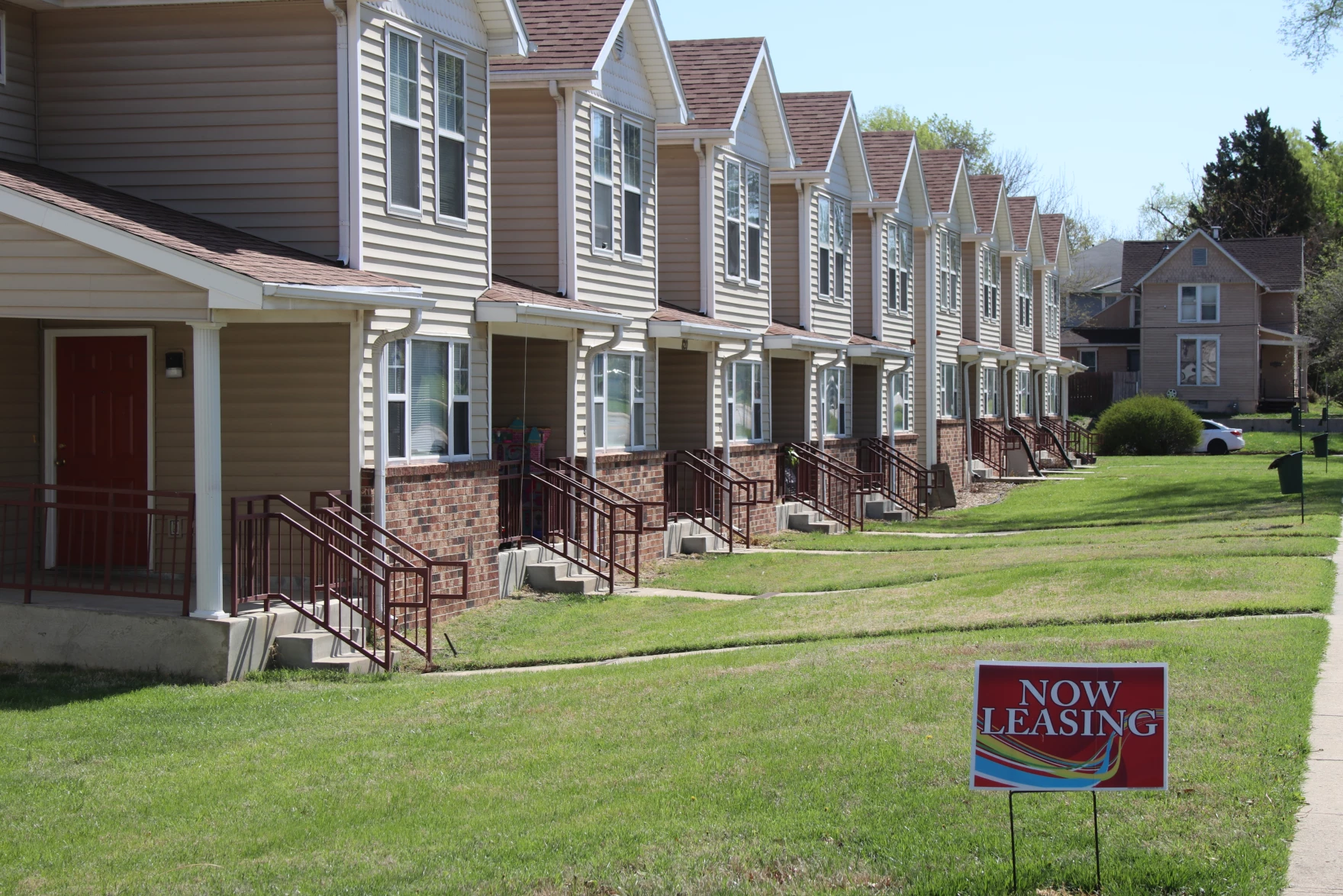
  • It can improve the self-image of residents and of the neighborhood as a whole. A neighborhood that smells like garbage or looks like a dump is an undesirable place to live and work. When that neighborhood is cleaned up, its reputation will improve as well as the residents' quality of life.
  • A neighborhood cleanup program can improve neighborhood health. Large amounts of trash and garbage, abandoned buildings and cars, and other waste – some of it hazardous – can become breeding grounds for rodents and insects, cause pollution, and create unsanitary conditions that encourage the development of health problems and diseases. Such an environment also makes it difficult for children to find a safe place to play, and increases stress for everyone who lives in it. Cleaning it up can provide real and immediate health benefits to neighborhood residents, as well as helping them think about the possibility of neighborhood wellness.
  • It can help to "green" the neighborhood. A cleanup program can not only reduce pollution, but – by sorting neighborhood trash and recycling as much as possible – can help to teach residents about recycling and about activities that will reduce the neighborhood's carbon footprint.

"Carbon footprint" refers to how much carbon-based fuel – petroleum products (oil, gasoline, etc.), natural gas, coal, wood – you're responsible for burning. This is important not only because fossil (carbon-based) fuel becomes scarcer with every bit burned, but also because it contributes carbon dioxide to the atmosphere, adding to global warming. Recycling conserves resources and often – though not always – uses less fuel than making a new product from scratch.

  • It makes the neighborhood more attractive to business. Businesses would almost always prefer to set up in neighborhoods that are attractive and well cared for, simply because people are more likely to visit those neighborhoods and residents are more likely to have money to spend. A neighborhood cleanup program can initiate economic development and attract new shops and services for residents.
  • It can serve as a springboard for other neighborhood actions or activities. A neighborhood cleanup program produces a list of volunteers who may be ready to turn out for other activities as well – block parties, advocacy for better services, violence prevention, mentoring, etc. As mentioned above, the realization of what can be accomplished may make residents more willing to address other issues.
  • It can increase the number of relationships and the amount of social capital within the neighborhood. In shared work for a common cause, people get to know one another and form bonds from their experience. Those bonds form the web of social capital that unifies the neighborhood. That web can help create real, long-term change. When a large number of residents know and care about one another, they are more likely to provide mutual aid and assistance, to try to prevent neighborhood violence and crime, and to accept one another's differences. All of that works not only to further strengthen individual relationships, but to make the neighborhood stronger as well.

The University of Arizona in Tucson conducts a student-led neighborhood cleanup each year in neighborhoods surrounding the campus. The cleanup, involving both students and permanent neighborhood residents, helps to connect students to the neighborhoods and to ease relationships among students and city residents, often strained by students occupying residential neighborhoods.

  • A neighborhood cleanup program can encourage the embrace of diversity. If the neighborhood is diverse, and there's a sincere and effective effort to recruit volunteers from all of the different populations of residents, the bonds of social capital will extend across the borders of those populations. Whether the diversity encompasses economics, politics, class, race, ethnicity, culture, age, sexual preference, or all of these, relationships forged by working together can serve to make a diverse neighborhood into one where everyone is valued, and where the neighborhood sees itself as a coherent body, rather than a collection of separate parts.

Who should be involved in a neighborhood cleanup program?

To be successful, a neighborhood cleanup program should be as participatory as possible. That means involving all groups in the neighborhood in planning and carrying it out. You can and should try to recruit volunteers for the cleanup itself from all sectors of the neighborhood. In addition, planning should involve representation from as many of the demographic and population groups in the neighborhood as possible. Groups that might be involved in planning and implementation of a cleanup program include:

  • Any significant racial or ethnic groups, including the majority group. Those largely composed of recent immigrants may be harder to recruit, but persistent effort can often pay off.
  • Youth. Teens, and some children as young as 10 or 11, might be involved in planning, and even very young children can work as volunteers in some capacity for at least a short time.
  • Elders.
  • People with disabilities. These folks may have a perspective on cleanup that takes into account issues of accessibility that others may not have thought about.
  • Faith communities.
  • Property owners, including absentee owners.
  • Renters.
  • Neighborhood business owners and managers.
  • Neighborhood clubs and associations. These often have a level of organization that allows them to mobilize large numbers of volunteers quickly and effectively.
  • Health and human service organizations that serve the neighborhood.
  • School personnel. These folks may be able to help organize the cleanup by sending notices home with children, creating curriculum around the activity, etc.
  • Neighborhood and/or municipal officials. The local city council member, the precinct police captain or fire chief, the municipality's environmental officer – these and many other officials can bring in help from the larger community. They should be involved in any case, both for their own purposes – positive publicity, getting to know people in the neighborhood who can then be helpful to them in other circumstances – and to put the neighborhood at the front of their minds.

When should you conduct a neighborhood cleanup program?

You can start a neighborhood cleanup program at any time, but there are both some general guidelines for timing the cleanup itself, and some specific times when this activity is particularly appropriate. We'll start with the general and move to the specific.

General guidelines for when to conduct a neighborhood cleanup:

Pay attention to the weather

A cleanup scheduled for mid-winter in a cold climate is probably not going to attract many volunteers. Furthermore, it's difficult and messy to find and collect trash and other waste when it's buried under snow. By the same token, a cleanup in mid-summer in a place where the thermometer soars is an invitation to heatstroke.

If you can count on the weather to some extent – if your area has a rainy season, for instance, and it seldom rains at other times – schedule your cleanup(s) when the weather is likely to be nicest. Spring and fall are best in many areas. Try to have a backup day in case of rain, unbearable heat, or some other problematic weather.

Schedule around volunteers' lives

Unless all potential neighborhood volunteers are retired, weekends are probably the best times for cleanups. If there are no major cultural traditions in your neighborhood to prevent it (see the next paragraph), you can schedule a cleanup for Saturday, with Sunday as an alternative date in case of bad weather.

Avoid national and religious holidays, and be aware of various cultural restrictions that volunteers might have. Don't schedule a cleanup on Saturday in an Orthodox Jewish neighborhood, or on Sunday in a mostly Catholic one. Try not to conflict with most people's vacation schedules as well.

A factory in one New England town always shuts down for the first two weeks of August. Since it's the largest employer in town, many other businesses follow suit, and most residents take their vacations at that time.

Coordinate with the municipality if you can

If the cleanup is initiated by the larger community, or if it can offer tools, equipment, and/or other help, make sure that you schedule your cleanup at the time it specifies, or at a time when it is willing to participate. Make sure as well that the landfill, transfer station, and/or recycling facility can accept the results of your cleanup on the scheduled day or very soon after, so that piles of trash bags or brush won't clutter the streets, waiting to scatter and make your work useless.

Some good times to conduct a neighborhood cleanup program:

  • When open spaces and streets in the neighborhood are covered with waste. If the neighborhood has gotten to the point where dirt and waste are so common that they have become part of the scenery, it's time to take action.
  • When the municipality provides the opportunity. If the municipality has a regular neighborhood cleanup schedule, or offers help to neighborhood groups to organize a cleanup, it's a good time to take advantage of the opportunity. The cleanup will be much easier and probably more effective with the community's help.
  • When waste presents a danger to children or others. Discarded refrigerators with the doors still attached, brush piles that can collapse, demolished buildings, abandoned cars – all of these present appealing places to play, and can also be extremely dangerous. If these kinds of hazards exist in your neighborhood, get rid of them as soon as possible.
  • When waste presents a danger to health. If rats are breeding in a garbage-covered empty lot, if there are chemicals leaching into the soil, if medical waste or used drug needles litter the streets, the health of the neighborhood is at stake. A cleanup will do much more than make the neighborhood look better.
  • When the neighborhood is interested in economic development. A clean neighborhood, as we've discussed, is more likely to attract business.
  • When you want to bring the neighborhood together. A neighborhood cleanup program can involve all the groups in the community, and help to bridge gaps between ethnic populations, age groups, and others.
  • When the neighborhood seems to have lost hope. Both the act of working together and the result of their labor – a cleaner environment – can shift residents' opinion of themselves and of their possibilities.

How do you conduct a neighborhood cleanup program?

A neighborhood cleanup program requires a certain amount of planning and coordination. The larger and more ambitious the cleanup, the more planning and coordination it requires. Neighborhood participation, an absolutely necessary ingredient, can best be gained by involving the neighborhood as much as possible in the planning process. And, as we've mentioned earlier, a neighborhood cleanup program isn't just one cleanup, but an ongoing effort that will ensure further activity and a neighborhood that stays clean and healthy.

Given all that, let's look at the steps you might take to establish both an initial cleanup and a cleanup program.

Recruit or find a core group to begin the effort

Someone has to start the ball rolling. That might be an individual – perhaps the individual reading this section – a group organized specifically for the purpose, or an already-organized neighborhood group, such as a neighborhood association, a club, or a scout troop. It's ideal if the core group mirrors the diversity of the neighborhood, but if that's not possible, it's better to have a non-diverse group to make the first move than to have no one.

Put together a planning group that represents all groups in the neighborhood

If the core group is diverse, this step may not be necessary. If it's not, the first task of the core group should be to reach out to all of the groups listed in the "Who should be involved…?" part of this section and invite them to participate in planning the neighborhood cleanup.

The best approach is always personal. If folks don't know people in a particular group, they can canvass their friends and neighbors for someone who does, or contact a key person within the group in question – the director of an organization, a clergy person, a coach – and ask for help. People are much more likely to respond to a request to participate if it comes from someone they know and trust.

In addition to word of mouth, you can post information in public places, distribute notices to everyone in the neighborhood, (using someone's computer and printer at the cost of a few reams of paper and a couple of toner cartridges), put stories in the local newspaper, and try to place PSAs (public service announcements) on local radio and TV stations.

Assess the neighborhood

Unlike a complete community assessment, this can be a relatively simple procedure of walking or driving around the neighborhood and observing the level of waste, dirt, graffiti, abandoned vehicles, and other cleanup targets in different areas. Members of the planning group could also talk with neighbors about whether a household cleanup is necessary, if this isn't obvious from observation.

Decide what kind of neighborhood cleanup you want to conduct

Your assessment should help you with this step. Depending on the size of the neighborhood, the possibility of help from the municipality, the number of potential volunteers, and the nature and amount of what has to be cleaned, your cleanup might range from a single intersection or a single block to the whole neighborhood. It could be a public space, household, community-assisted cleanup, or all three.

If you're trying to establish a neighborhood cleanup program – i.e., if this cleanup isn't meant to be only a one-time event – it's important to include, if not focus on, a public space cleanup. Volunteers will be out on the street where people can see them, cleaning not just residents' yards or alleys, but the spaces that all neighbors use. That sends a message to the neighborhood that cleanup is everyone's responsibility and benefits everyone as well. Such a message will make recruiting volunteers and organizing future cleanups much easier.

Another issue to consider is how long the cleanup should be. It might range from a half day to two full days. One whole day is probably about right for most neighborhoods, in terms of both what can get done and how much time volunteers are willing to spend. There are, of course, other possibilities such as staging a cleanup of a different limited area every weekend.

Consider your resources

Neighborhood resources generally come in three flavors: money; people (volunteer time); and in-kind contributions (goods and services donated directly to the cleanup). Money may or may not be needed for a neighborhood cleanup. If it is, it's most likely to come from local businesses and banks. It can be used for supplies, equipment, and publicity, among other things, but it's not required in most instances.

People are the most important resource: a true neighborhood cleanup can happen without money, but not without volunteers. Additionally, people bring skills: neighborhood residents might provide first aid and emergency medical help, direct the painting of a mural over graffiti, or drive a piece of heavy equipment that makes the whole cleanup easier. Find out what kinds of human resources exist in the neighborhood, and don't be shy about asking for the use of them for the cleanup program.

In-kind resources can take the place of money in many ways. They can include help from the municipality in the form of equipment, employees, forgiveness of dumping fees, etc. The skills mentioned above can be considered an in-kind resource: residents are donating services they might normally be paid for. Supplies can often be solicited from local businesses – food, drinks, and paper goods from a supermarket or two, trash bags and brooms from the hardware store, paint from the paint store, etc.

It's important to have a clear idea of what resources are available in the course of your planning. The knowledge can help determine the size and character of your cleanup.

Pick an appropriate place, date and time

Remember to pick a date and time that doesn't conflict with holidays or put volunteers out in the worst weather, and that allows for help from the municipality if possible. Ideally, pick a time of year when people would enjoy spending the day outside.

The place you choose should be large enough to accommodate the number of volunteers you intend to recruit and to accept the collected waste (or the dumpsters that it will be stored in) until it can be hauled away. A school parking lot might be a good bet, since the school will be empty on a weekend. The parking lots of office complexes, shopping centers, public buildings, or houses of worship might also serve.

Recruit volunteers

Recruiting volunteers can be difficult if your neighborhood has no tradition of volunteering. Personal contact, once again, is the most effective method. If your planning group is reasonably representative of the neighborhood, the networks of its members should reach just about everyone. As you did for the planning group, put out notices, fliers, PSAs, and newspaper stories to help inform and attract neighborhood residents and other important groups.

For both the planning group and volunteers, if there are many neighborhood residents who are not fluent in the majority language, make sure that any printed or spoken material you put out is in all the languages they speak. That's one important way to let all residents know that they're welcome, and that you've thought about them.

One of the best ways to find volunteers is through the clubs, schools, faith communities, youth groups, sports leagues, and other organized bodies they belong to. Some of these organizations and institutions may adopt the cleanup as an official activity, or use it in other ways (as a fulfillment of a community service requirement for high school students, for example.) You can make presentations to these groups, or establish contact through group leaders.

Emphasize that there are volunteer jobs for everyone, even small children. A four- or five-year-old can't be expected to work for very long, but there are still things they can do, and they'll enjoy themselves and feel that they are part of something grown up and important in the process. For young children, this can be a first lesson in the value of community service, as well as a hands-on demonstration of how improper disposal of waste causes problems for others.

Another important recruitment tactic is making the cleanup fun, and letting people know it. We'll address this further when we discuss planning the event itself.

Organize volunteers

As people volunteer, get their names and contact information, including e-mail if they have it. Make sure everyone knows where they need to be at what time on the day(s) of the cleanup, and what they need to bring. Although it may seem obvious, let people know that they should wear clothes that they don't mind soiling – perhaps permanently – and shoes that are comfortable enough to work in for the length of the cleanup.

Unless the sponsoring organization or the municipality is supplying everything, volunteers might be asked to bring (if they have them):

  • Brooms
  • Work gloves
  • Buckets and sponges
  • Shovels and hoes
  • Rakes
  • Trash bags
  • Cell phones
  • Carts and wheelbarrows
  • Lunch, snacks, and drinks for themselves

In addition, some volunteers may be willing to use their cars or trucks to haul waste or to transport others.

As you sign people up, find out what they can, or are willing to, do. You'll need some people who can do heavy lifting, others to prepare food for the party at the end of the cleanup, others to paint over graffiti, still others to distribute water or to run errands. As discussed earlier, those who are housebound can make phone calls or arrange for trash pickup with municipal officials. Don't turn away anyone who wants to be part of the cleanup.

Plan the cleanup itself

Even if your cleanup is very small – three or four volunteers sweeping up one intersection – there will be some planning to do. If it's larger – and most are – you'll have to plan carefully to ensure success. You will need to:

  • Coordinate the effort. There needs to be an individual or small group (no more than two or three) that keeps track of everything and everyone throughout the day, addresses issues, dispatches volunteers, and is available to handle problems and emergencies. The coordinator may stay in one place or may move throughout the cleanup area, but should be reachable by cell phone at all times. If coordination is shared, one person might be responsible for handling problems, another for assisting volunteers with equipment, information, water, etc. In any case, someone has to see the whole picture at any given moment, and to be able to help or intervene where necessary.

An important part of coordination is maintaining communication among all the groups working on the cleanup. If one crew needs more people and another has people standing around, the coordinator can find that out and see that volunteers from the second crew are transferred to the first. If there's a medical emergency, the coordinator should be informed immediately, and should either dispatch help or decide whether to call an ambulance or drive someone to the emergency room. Communication is also important for publicity (making sure crews know that a media person is about to arrive, dispatching a photographer to a place where something interesting is happening.)

  • Ask for help from the municipality. If your community offers loaned tools, dumpsters, free pickup, or other aids for neighborhood cleanups, you should ask for whatever you need well in advance. In many municipalities, you'll have to plan several months ahead in order to take advantage of the services available.

One service that might be important is a police officer to direct traffic around cleanup crews working in streets. Police presence will also emphasize the "official" character of the cleanup.

  • Get permissions and permits. If you want to use a parking lot as a gathering point and dumping place, you'll have to get permission from the owner. If you want abandoned cars hauled away, you will need to contact the municipality. In some cases, you may need a permit to work in certain areas. All of this should be taken care of well ahead of time, so you don't find yourself with a crowd of volunteers waiting and unable to do anything.
  • Decide what needs to be done. The assessment done earlier should have identified areas of the neighborhood that most need attention. If the event is a household cleanup, the planning group should know which blocks are likely to need the most hauling. A public space cleanup might need to be concentrated in one or more places that pose a health hazard or are particular eyesores. If there are abandoned vehicles to be dealt with, they need to be reported to the municipality. Crews might need to be of different sizes and composed of volunteers with different abilities. Some of the tasks volunteers might do:
    • Sweep
    • Lift and carry heavy objects
    • Pick up trash, either by hand or with shovels or litter sticks
    • Load waste of various kinds into cars or trucks
    • Coordinate with municipal equipment and employees
    • Act as a communications hub in order to dispatch crews and vehicles to places where they're needed
    • Direct traffic
    • Place signs, traffic cones, and other similar items
    • Drive cars or trucks to haul waste and/or transport volunteers
    • Load and push or pull carts or wheelbarrows
    • Wash surfaces
    • Paint over surfaces defaced with graffiti or other markings
    • Shop for needed items – food, paper towels, drinks, brooms, etc.
    • Child care
    • Prepare food
    • Provide entertainment and encouragement
    • Distribute food and drink
    • Provide a sound system and/or play music for the after-cleanup party
    • Offer first aid and emergency medical help (if trained to do so)
  • Manage volunteers. The coordinator of volunteers might be someone other than the overall coordinator. They would assign volunteers to appropriate crews – no people with bad backs carrying refrigerators – that are the right size for the amount of work to be done. If crews are larger than two or three, each would benefit from choosing a captain, who will communicate with the volunteer coordinator, keep track of tools, and help the crew decide what's to be done next by whom. The volunteer coordinator might travel among volunteer crews throughout the cleanup, bring extra water and supplies, check to make sure there are no medical or health issues, solve problems, and generally provide support. They would also be responsible for making sure that volunteers got transportation to their work sites and back, and for placing volunteers in crews close to home where possible.

There's an argument to be made that volunteers should not work close to home, so that they can become familiar with residents from other parts of the neighborhood. That will help build neighborhood solidarity, in addition to broadening residents' connections with the rest of the neighborhood and increasing social capital.

  • Work with the media to gain positive publicity. Be sure to inform the media and keep it informed as your plans for the cleanup develop. Try to place stories about the cleanup in local print and broadcast media, and on the Internet. Designate a person to take pictures throughout the event, both so that you'll have a record of what went on, and so that you can feed pictures to the media, put them up on a website, and share them through social networking sites. Invite media people to the cleanup, and designate someone to accompany them, help them find what they need, introduce them to volunteers, etc. The more helpful you are, the more likely media folks are to get good stories that will then get published, and the more they'll want to highlight your work.
  • Take care of the nitty gritty. If your cleanup involves many volunteers, you'll need portable bathrooms and a large supply of drinking water (and perhaps snacks as well). You may want to offer volunteers morning coffee before they start their work. First aid and emergency medical help is a necessity – a neighbor who's an EMT (emergency medical technician) or health professional and a fully stocked first aid kit. If you have to make announcements, you'll need a bullhorn or a sound system. You'll need a plan for identifying and dealing with hazardous waste – volunteers shouldn't be handling it. You'll also need somewhere to dispose of any trash and recyclables generated by the cleanup itself – food wrappers, empty water bottles, sponges, etc. Paying attention to these kinds of details will help the cleanup go smoothly and reduce stress for everyone.
  • Make the cleanup fun. The more enjoyable you can make the work, the more people will be willing to volunteer again and bring their friends and families. Having a clown or face-painting for kids who volunteer, creating contests around which crew can pick up the most trash, giving printed t-shirts or caps to all volunteers, having a local band go from group to group to serenade them during the day – any or all of these and any number of other activities might make the cleanup seem more like a block party.

Volunteers could wear logo t-shirts or caps while working in order to identify themselves to one another and to neighborhood residents not involved in the cleanup. Such a "uniform" helps to create bonds among volunteers and leaves them with a souvenir of the day. Whether or not this is feasible depends, of course, on your resources.

  • Celebrate when you're done. You should plan a party or neighborhood meal after the cleanup. Volunteers can be recruited specifically to prepare and serve food. (Elders who want to contribute to the effort but are unable to do the physical work necessary might be good candidates for this task, as might faith community groups that are experienced in preparing meals for large numbers of people.) The celebration should include recognition of what was accomplished, recognition of each crew, perhaps some special awards (humorous or otherwise), and a chance to view pictures of the event. A celebration puts a cap on the cleanup, makes participants feel good, acknowledges their work, and helps them understand what they've been able to do in only a short time.

Run the cleanup

It's all planned – now do it.

Monitor and record your efforts

Document what's happening throughout the event, both with pictures and notes, so that you can review later and determine what you need to change and what went well and should be continued.

Create a structure to keep the effort going

If the cleanup was spearheaded by a neighborhood organization that's willing to maintain the effort, it might appoint a Cleanup Committee, composed of at least some of the members of the planning committee for this cleanup, to carry the process forward. If the cleanup was a stand-alone project, the planning committee, or those members who are interested, could become the Neighborhood Cleanup Committee. Whatever the case, the effort is unlikely to continue unless a group takes responsibility for doing so, and appoints a chair or coordinator to keep everything on track. The type of structure doesn't really matter, as long as it works: but having a structure of some sort is absolutely crucial if the program is to continue.

Start planning for the next cleanup

Remember that a cleanup program isn't a one-shot operation. It's an ongoing effort that should cover the whole neighborhood, and be maintained over time. You'll have to keep at it if you want the neighborhood to remain free of waste and litter. The longer you maintain your effort, the more residents will get the idea that it's everyone's responsibility to keep the neighborhood in good shape, both by not throwing anything in the street or elsewhere themselves, and by picking up waste or reporting it when they see it. Once that happens, there will be more volunteers than are needed for every cleanup, and the neighborhood itself will have turned a corner toward a better quality of life for residents and businesses.

In Summary

A neighborhood cleanup can improve the look of your neighborhood, but can do much more as well. Especially in a neighborhood where people residents see themselves as having little reason to hope – where poverty is rife, unemployment is all too common, and crime and decay make life difficult – a successful cleanup can be the beginning of neighborhood regeneration. It can not only make the neighborhood more pleasant to look at, but can improve neighborhood self-image and confidence. Residents have a chance to bond with one another, to cross racial, ethnic, cultural, and other lines and establish neighborhood coherence. Perhaps most important, they can begin to see how much control they can exercise over their lives if they work together with a common purpose.

Establishing a neighborhood cleanup program can be a boon for any neighborhood, simply by increasing connections among neighbors and creating community. When it brings the possibility of improving lives as well, its value can be even greater. For that to happen, however, someone has to take the lead in developing a structure that can keep such a program going over the long term. In order to bring about long-term social change – and that's what we're discussing here – you have to build a structure that will survive the departure of the builders, and benefit the neighborhood indefinitely.


Contributor

Phil Rabinowitz

Editor

Andrea Glinn


We encourage the reproduction of this material, but ask that you credit the Community Tool Box: /.

Resources

Online Resources

Clean Streets L.A. Los Angeles city-wide effort to clean neighborhoods.

Development without Displacement Toolkit provides practical lessons, frameworks, and tools that advance equitable development without displacing residents and small businesses. 

Neighborhood Services. Fort Collins, Colorado, neighborhood cleanup suggestions and rules. The city offers grants to groups for the cost of dumpsters and tipping fees.

Planning and Sustainability. Portland, Oregon, has a spring cleanup with more the 40 scheduled events organized by each neighborhood, with their own coalitions and websites as resources on the events and how to get involved.

Checklist
pschneider Thu, 12/21/2017 - 13:19

Here you will find a checklist summarizing the important points of the section.


What is a neighborhood cleanup program?

__ A neighborhood cleanup program is an ongoing project that assumes that effort will be maintained.

__ There are three kinds of neighborhood cleanups:

  • Public space cleanup: neighborhood volunteers clean public spaces.
  • Household cleanup: households clean up property and put out hard-to-dispose-of waste for special collection.
  • Community-assisted cleanup: the community helps with permits, permissions, removing abandoned vehicles, etc.

__ In any of these cleanups, the community may supply tools, equipment, and/or employees to help neighborhood volunteers.


Why conduct a neighborhood cleanup program?

__ A neighborhood cleanup program can instill neighborhood pride.

__ It can break a cycle of hopelessness and helplessness.

__ It gives everyone a chance to contribute.

__ A cleanup program enhances neighborhood quality of life.

__ It can improve the self-image of residents and of the neighborhood as a whole.

__ A neighborhood cleanup program can improve neighborhood health.

__ It can help to "green" the neighborhood.

__ It makes the neighborhood more attractive to business.

__ It can serve as a springboard for other neighborhood actions or activities.

__ It can increase the number of relationships and the amount of social capital within the neighborhood.

__ A neighborhood cleanup program can encourage the embrace of diversity.


Who should be involved in a neighborhood cleanup program?

__ Any significant racial or ethnic groups, including the majority group.

__ Youth.

__ Elders.

__ People with disabilities.

__ Faith communities.

__ Property owners, including absentee owners.

__ Renters.

__ Neighborhood business owners and managers.

__ Neighborhood clubs and associations.

__ Health and human service organizations that serve the neighborhood.

__ School personnel.

__ Neighborhood and/or municipal officials.


When should you conduct a neighborhood cleanup program?

__ When the weather is good.

__ When volunteers are available.

__ When the municipality can help.

__ When open spaces and streets in the neighborhood are covered with waste.

__ When the municipality provides the opportunity.

__ When waste presents a danger to children or others.

__ When waste presents a danger to health.

__ When the neighborhood is interested in economic development.

__ When you want to bring the neighborhood together.

__ When the neighborhood seems to have lost hope.


How do you conduct a neighborhood cleanup program?

__ Recruit or find a core group to begin the effort.

__ Put together a planning group that represents all groups in the neighborhood.

__ Assess the neighborhood.

__ Decide what kind of neighborhood cleanup you want to conduct.

__ Consider your resources.

__ Pick an appropriate place, date and time.

__ Recruit volunteers.

__ Organize volunteers.

__ Plan the cleanup itself.

  • Coordinate the effort.
  • Ask for help from the municipality.
  • Get permissions and permits.
  • Decide what actually needs to be done.
  • Manage volunteers.
  • Work with the media to gain positive publicity.
  • Take care of the nitty gritty.
  • Make the cleanup fun.
  • Celebrate when you're done.

__ Run the cleanup.

__ Monitor and record your efforts.

__ Create a structure to keep the effort going.

__ Start planning for the next cleanup.

PowerPoint
pschneider Fri, 12/22/2017 - 09:49
File Upload
A PowerPoint presentation summarizing the major points in the section.
Section 12. Promoting Neighborhood Action
mloewenstein Wed, 12/12/2012 - 11:08
Main Section
mloewenstein Wed, 12/12/2012 - 11:08

Rearview of group of diverse friends huddled together in a park.


IndyCAN (the Indianapolis Congregation Action Network, now called Faith in Indiana) is "a catalyst for marginalized peoples and faith communities to act collectively for racial and economic equity in Indiana." This spotlight video shows how they empowered their community to push for integration of mental health services into the criminal justice system in Indiana, and how their organizing contributed to the creation of a facility that will divert the mentally ill to treatment rather than to jail.


In Jacksonville, Florida, a neighborhood hosted 22 block parties at the same time. In Boston, Massachusetts, a neighborhood persuaded city politicians to use eminent domain powers to take over land for affordable housing. In Los Angeles, California, a community garden grew into a "Food from the 'Hood" project, where local manufacturers helped high school students market a salad dressing the students had created. In cities and towns across the country, neighborhoods are setting up their own web sites, with neighborhood bulletin boards, calendars, and chats.

These are just four examples of neighborhood action that gave benefits to the neighborhood residents -- benefits that wouldn't have occurred had individuals acted alone, without people coming together. In other words, neighborhood action counts. It creates positive outcomes for people. In this module, we hope to show how you can promote neighborhood action to bring positive outcomes to the neighborhood where you live.

Let's start by defining our terms, and suggesting why promoting neighborhood action deserves a Community Tool Box section of its own.

What do we mean by neighborhood?

Each of us lives in and is part of a neighborhood, but we may have very different ideas about what that is. We each frame in our minds an image of a "neighborhood " with certain characteristics -- positive, negative, or a mix of both. Take a moment to think about what your mental image of a "neighborhood" is, and compare it to the real thing, or to someone else's image. Also, think about the impact of these perceived and real images on fellow neighbors in pursuing a discussion on promoting neighborhood action. The image of a neighborhood that you frame in your mind may fit one of the following lists or be somewhere in between:

Positive Mode

  • Warm, open, friendly atmosphere
  • Open communications among neighbors
  • Clean, safe areas
  • Bustling with activity, residents interact with other residents (adults, children, older people)
  • Easy, walking access to needed stores and services

Negative Mode

  • Cold, closed, unfriendly environment
  • Everyone keeps to themselves, no one talks to anyone else
  • Filthy, crime-ridden streets
  • Barren streetscapes filled with strangers moving about aimlessly
  • No nearby shops and sources to address basic needs

Whether we are aware of it or not, what we do or don't do affects our neighborhood. The goal is to bring together the varying images of neighborhoods (real and imagined) to form a framework of action to make them something we all want them to be. The process of combining these images can start the process of discussion, assessment, and action planning. Promoting neighborhood action involves lots of neighbor interaction.

What do we mean by promoting neighborhood action?

We use the phrase "promoting neighborhood action" very broadly, defining it to include just about any activity that brings neighbors in contact with one another, or helps them appreciate their neighborhood more.

Often, such activity means neighbors working together for a common goal. That is, neighbors joining to clean up a vacant lot, or to get a crosswalk painted, or to oppose the construction of a new mega-store are clear instances of neighborhood action.

But so are smaller and sometimes less goal-directed activities -- getting to know the people on your block, checking on the elderly person down the street, or planting flowers along a median strip. These types of events, in our view, are also examples of neighborhood actions that should be promoted.

Why is it important to promote neighborhood action?

There's a long list of reasons. Let's mention a few:

  • Neighborhood action is more likely to produce desired results compared to people acting individually. It would be much harder to clean up the vacant lot alone, or to get the crosswalk painted, or to fight the mega-store. The general principle is that people acting together are generally more effective in reaching their goals than people acting by themselves. There is strength in numbers.

Why is this so? Often, it's because neighborhood action involves exerting influence on decision makers (local officials, traffic controllers, private developers, police) to act in the neighbors' behalf. If the decision makers are public officials, they are more likely to respond to the collective voice of many constituents -- for they are accountable to those constituents, directly or indirectly. Even if the decision makers are private citizens, resisting the neighborhood's wishes may not be in their economic, social, or political self-interest.

  • If neighborhood action is successful, it strengthens the chances of more neighborhood action occurring in the future, precisely because there was success the last time. Success is reinforcing; in this case, neighbors will be more likely to take on similar activities again.
  • Success is not only reinforcing; it also brings power. Successful neighborhood action can make neighbors feel powerful, both individually and collectively. They may come to feel that their actions count, that they can control their own destiny. These feelings are inherently valuable; but what is more, outside groups may see the neighborhood as powerful as well, and respect that power accordingly. The famous community organizer Saul Alinsky once said: "Power is not only what you have, but what the enemy thinks you have." He was right.
  • Neighborhood action usually increases liking among people. Through neighborhood action -- through meetings, phone calls, e-mails, and bumping into one another on the street -- neighbors come to know each other better. They may come to realize that they are more similar than they thought before, that they have shared values and common goals. They will tend more to enjoy each other's company, and to seek it out.
  • Neighborhood action usually increases trust. People feel they can rely on others for help, for tasks as mundane as feeding the cat when they are on vacation, or borrowing a tool, or just keeping an eye on the house. According to national polls, trust has been on the decline in American society. Successful neighborhood action helps to restore it. And when trust is confirmed, it is more likely to be reciprocated. If you do feed my cat, I'll be more available to water your plants. I'll then feel freer to ask you for something else later on, and you will be more likely to agree. Through this series of many small reciprocal actions, relationships get built, and neighborhood life gets strengthened.

In addition to trust, what we're describing here is an increase in social connectedness, the strengthening of the web of feelings, actions, and interactions that ties people together. Social connectedness has been identified by research as one of the main social determinants of health, and is and important element in the cohesiveness of society.

  • Neighborhood action usually increases security. If you know, like, and trust your neighbors, you are more likely to feel secure where you live, both physically and psychologically. You will feel safer and more at ease when you walk down the block, or even in your own home, because fewer people are strangers, and you realize others are around to help you if needed. This sense of security is hard to underestimate.
  • Often, neighborhood action simply makes us feel good. It can be wonderful to walk outside and see people you know, to greet them and to be greeted by them, to affirm others and be affirmed in return. A warm and vibrant neighborhood adds richness and meaning to life.

Researchers have recently learned that there are additional, and sometimes more tangible, benefits linked to neighborhood action as well:

  • Neighborhood action can reduce crime. (Think of crime watches, and community policing programs.) Recent studies have shown that cohesive neighborhoods are associated with lower crime levels, with the further suggestion that the cohesion may be responsible for the crime reduction.
  • Neighborhood action can improve health. Through neighborhood action, the social and interpersonal support networks in the community grow stronger. And researchers have learned that people who have strong support networks are not only healthier, they literally live longer.
  • Neighborhood action can produce better outcomes for children. If "it takes a village to raise a child," the neighborhood is a modern day village equivalent. And there is research that suggests that stronger neighborhoods do in fact produce more resilient, more goal-oriented, and better adapted young people.
  • Neighborhood action can stimulate local economic development. It's not just that neighbors can support local merchants, or attract local businesses. It's also that through neighborhood action neighborhood residents expand their available social contacts. Those contacts have economic value, especially if you know someone who might give you a job lead (or a job itself), or a discount on a product, or who can support your loan application, or handle your legal affairs. The simple principle is that the more contacts you have, the more likely you will know someone who can help get you what you need, or who knows someone who can. That pays off in dollars and cents.

For documentation on this and the above points, see especially Putnam, Sampson, and Schorr references in the Resources section.

This is a long list of potential benefits, but a very real one. Our list leads to the conclusion that neighborhoods are undervalued in American society, and underutilized as social resources. In both our professional and personal lives, many of us don't pay very much attention to neighborhoods. Perhaps we should.

When should you promote neighborhood action?

One could say "always," and that might be close to the mark, though perhaps too easy and too glib. Here's another way of looking at it:

  • Some neighborhoods are strong, cohesive, fairly bursting with activity. They supply all the benefits we've described above. Though probably a minority, neighborhoods like this do exist. They don't need more action right now.
  • Other neighborhoods are cold and remote. Neighbors hardly know each other, nor do they care to. They have no time for anything that might lead to another obligation: We've heard people say, "If I get to know my neighbor, he might ask me for something." Those neighborhoods, probably a minority as well, should profit from the right kind of gradual community building steps.
  • In reality, most neighborhoods are somewhere in-between. The people living there may be cordial, pleasant, and willing to help out in a pinch. But their lives are in fact demanding, their obligations are largely outside the neighborhood or inside the home, and they don't pay much attention to neighborhood affairs. For these neighborhoods, which perhaps constitute the majority of neighborhoods in the United States, there is surely room for improvement.

But we can be more specific. There are some circumstances when it is especially desirable to promote neighborhood action, and these are:

  • When there is a live neighborhood issue that is not being acted upon. We can define a neighborhood issue as a local topic that causes both concern and emotion among a significant number of neighborhood residents. Such an issue could be anything ranging from youth gangs to scraggly lawns, from toxic dumping to overnight parking. (More on "neighborhood issues" shortly.)
  • When there is an outside threat to the neighborhood's well being. (Threats are issues, but usually arise from outside the neighborhood rather than from inside it.)

Threats could be anything ranging from a natural disaster (potential or actual), to a recent crime spree, to the threatened closing of a neighborhood fire station, or to a proposed reduction in local service.

  • When there is such an issue or threat, and it is being acted upon, but not being resolved to the neighborhood's satisfaction.
  • When there is conflict among some different groups in the neighborhood, about virtually any topic, especially when that conflict is deeply rooted or strongly felt.

In the examples above, there are prevailing issues. But in the situations below, there are not:

  • When the neighborhood itself is new - it could be a new housing development or subdivision -- and when neighborhood identity is therefore weak, since people have not had much chance to meet one another.
  • When neighbors, for whatever reason, don't know each other very well, and don't have much feeling of liking or trust.
  • When there is simply some dissatisfaction or disquiet among neighborhood residents, either a vague or a more specific feeling that things in the neighborhood could be better.

It's not that promoting neighborhood action in these cases is absolutely necessary, for life will go on. Nor will it always improve neighborhood quality. It's rather that more often than not, if one goes about neighborhood action wisely, it can help make living in the neighborhood, and living in general, a little better. But how, then, does one do the job?

How do you promote neighborhood action?

The best way to go about promoting neighborhood action begins with your answer to the following question: "Do residents believe there is a neighborhood issue that needs to be dealt with and resolved right now?" While the preferred strategies and techniques do overlap, they are also somewhat different in each case, and we'll discuss each one separately a few screens further on.

But before doing so, let us introduce some general (and interrelated) principles you can use to promote neighborhood action that apply in either situation.

Some Preliminary Principles

Increase opportunities for contact among neighborhood residents

Why? Because when neighbors come in contact with each other, they will come to know each other better. More often than not, when you know someone better, the chances are you will like them more. The more you like someone, the more disposed you are to trust them. And the more you trust them, the more likely you are to act together with them in a common cause, a neighborhood cause, or otherwise.

In other words, there is a natural progression in human relationships, which goes from seeing or contacting -- to knowing, to liking, to trusting, to acting. When you increase the opportunities for contact, you stimulate development along the entire relationship chain.

By "contact," we mean the more scheduled kinds of contact that happen at neighborhood meetings and events. (See the examples following.) But we also mean the unscheduled contact that occurs among neighbors informally on the street, at the store, or in the park. Those unplanned contacts are no less important. But even though they are unplanned, it's possible to create a neighborhood climate that will facilitate those kinds of contacts taking place.

For example:

  • You can help design physical spaces or structures that will promote contact among people. What would happen, for instance, if you built a neighborhood bulletin board at the park entrance, so that neighbors would stop and look at it? Or what would happen if more tables and chairs were placed in the lobby of the high-rise apartment building? Or how about some more benches around the children's playground so that parents, and anyone else, could sit and talk? (Town planners, or local businesspeople, might work with you on this last one.)
  • You can hold events whose main purpose is fun (or fund-raising), but that also have the consequence of neighbors meeting and talking with one another, before, during, and after the activity. This is what happens at youth sporting events (e.g., peewee football, youth soccer), 4-H fairs, neighborhood picnics, PTA meetings, block clean-ups, church bazaars, tag sales, and _________________ (name your own event here) all across the country on virtually every day of the year. (For guidelines on holding such events, keep reading this section.)
  • And once those contact spaces and opportunities are established, neighborhood -related services can sometimes be delivered then and there - which is why blood pressure screenings may be held in the common areas of senior citizen housing, or school band collections made in the little league bleachers, or volunteer sign-ups taken at the grade school fair.

Learn about your neighborhood's needs and concerns

Just about every neighborhood has some. And even though those needs or concerns might not call for action at this particular time, at some other time they could. They might become live issues. In any case, you will want to design and carry out actions that will respond to those needs and concerns; for in that way, more people will become involved, and more benefits will be conferred. So if you have a grasp of neighborhood needs and concerns in advance, you will be better prepared to act responsively and effectively.

Those needs and concerns, however, may not be obvious. Even if you know many people where you live, they may not be representative of your whole neighborhood. And even those neighbors you do know may not be motivated to be completely honest with you.

So how do you learn about those needs and concerns? There are many choices, ranging from simple to complex:

  • You can talk informally to neighbors about what's on their minds. This kind of learning may be casual and non-systematic, but still very useful.
  • You can listen to neighbors at parties, coffees, or other natural social occasions, those occasions depending on the local cultural context.
  • You can keep tabs on such informal outlets for opinion, such as bulletin boards, flyers on telephone poles, and letters to the editor.
  • You can attend public hearings and other meetings to learn more around what residents in your neighborhood are concerned about.
  • You can piggyback a short informal survey onto a scheduled neighborhood event -- at the end of a scheduled meeting, for example, or a social function.
  • You can organize your own house meetings or social events, which may then become a form of informal focus group.
  • You can check with your town planning department or library to see if surveys of needs or concerns might have been done in the past.
  • You can ask your planning department or other branch of local government to see if they might be able to conduct a such a survey, guided by your input.
  • You can carry out a more structured survey yourself, if you have the time and resources to do so. Perhaps some students in a nearby college or university might be able to help you.

In learning more about neighborhood needs and concerns, you are not being asked to be a scholar or scientist, even though that kind of knowledge is useful. The idea here instead is to gain as much reliable information as you can, and (don't overlook this) to share it with your neighbors, so that both you and they will be prepared when it comes time to act.

Learn about your neighborhood's resources and assets

This is because neighborhoods not only have needs and concerns, they have resources and assets that can be used to address those needs and concerns. If you know those resources and assets, you can tap into them and use them when you are ready to act.

"Resources and assets" cover a lot of territory, including:

  • The organizations and associations that already exist in the neighborhood (e.g., agencies, clubs, leagues, school and church groups, etc.)
  • The physical resources and assets of the neighborhood -- both human-made (parks, playgrounds, schools, churches, clinics, stores, public buildings) and natural (forests, lakes, streams, rivers, beaches, harbors, temperate climate, clean air)
  • The skills and talents of individual neighborhood residents. For example, if someone in the neighborhood is a graphic artist, that is an asset. Similarly, if someone has special skills in tree care, or tax law, or plumbing, or cake decorating, those are assets too. At present, they may be mostly out of sight. But if you knew them they could be called upon at the right time. The study of assets may be less familiar than the study of needs, but students of neighborhood life now regard it as increasingly important.

Here are some approaches you might take in learning about them:

  • Informally: Walk around the neighborhood. Talk to people you meet. Without doing a detailed study or being intrusive, learn more about who lives in the neighborhood and what their interests are.
  • More formally: Create a "capacity inventory" for the neighborhood, probably together with other neighbors or outside help. Capacity inventories are special kinds of surveys designed to learn more about the skills and abilities of neighborhood residents. There are many models for designing and using such inventories, several of which are displayed and discussed in Kretzmann and McKnight's A guide to capacity inventories: Mobilizing the community skills of local residents

As with needs and concerns, once you or others have compiled resource and asset information, it will help to share it with as many neighbors as possible.

One example of how both informal contact and learning about assets led to solving an important neighborhood problem

In one  neighborhood where the local pond was becoming choked with weeds, but no one seemed to be doing anything about it. Local government was dragging its heels. But that same pond was part of a park where many neighbors walked their dogs. The dog-walkers started talking; and when they did, they found that one of their group was a landscape architect, another an environmental lawyer, another an amateur surveyor, and another an expert on fish. They and other neighbors pooled their collective knowledge; together, they came up with a plan that was better than the one the town had originally proposed. They lobbied the town to accept it, and finally the town did. Eventually, most of the weeds were removed.

All this contact development, and all the needs, concerns, resource, and asset information will serve you well when the time for neighborhood action comes around. The neighborhood will be less fragmented and more cohesive; and you will all have a stronger base of knowledge to build action upon.

But suppose the time for action has in fact now arrived. What do you do then?

When there is an issue

When a significant issue does exist in your neighborhood, chances are you will want to promote neighborhood action by addressing that issue, resolving it, and improving outcomes for everyone.

Much neighborhood action, and possibly most, takes place when issues are present. As we've suggested, most issues are dealt with more effectively when neighbors act together, compared with people acting alone. And to recap an earlier point: When you are bringing people together, it will always help if the neighborhood is already cohesive, if relationships among neighbors are already strong. Neighbors will then be more inclined to trust each other and act together successfully. That's why it's a good idea to stimulate neighborhood contact, for contact usually builds a sense of community.

But beyond that, here are some general steps neighborhood leaders and groups will tend to follow when dealing with neighborhood issues. Each neighborhood, leader, group, and issue is different; however, these steps may provide a framework you can adapt for dealing with the particular issues you face. (The following heading, "When There's No Apparent Issue," gives some further detail.)

Talk about the issue with those close to you

Those people might be your close friends; or those most likely to feel as you do; or those you know will get involved; or those whose judgment you trust and respect; or some combination of the above.

This is a preliminary first step. Its purpose is to learn about other people's perceptions of the issue -- they may well see the issue the same way as you do, but they might not. At this point, you want to listen to other perspectives, to hear different recommendations, to learn who might be willing and able to work with you, and develop some personal support. If it is truly a neighborhood issue, you want to feel some group energy behind it; you surely don't want to go it alone.

Sometimes a neighborhood association may already exist in your neighborhood. If so, this issue may be an excellent one for the association to get involved in. (In which case, talk to the members of the association at the very beginning.) But if not, it's quite possible that an important issue can lead to the formation of such an association, which may also deal with future neighborhood issues as they occur.

Call a larger meeting

Work together with your core group (which might include your neighborhood association, if there is one) to plan and carry this out. Publicize the meeting widely. Extend personal invitations to some of the most influential neighborhood leaders, and ask them to help publicize through their own friends and networks. The meeting, though, should be open to everyone in the neighborhood.

At the meeting, raise the issue once again

Your purpose here is similar to that in your first step, but this time on a broader scale. Tell people what you know about the issue, and ask others what they know; tell them how you feel about the issue, and ask how they feel. Your goals now are to exchange information, share feelings, and build support. Everyone with a point of view should be encouraged to speak. Getting as much information and feeling as possible out in the open will help you when it comes time to plan and carry out action.

Explore possible responses to the issue

It's good to get a number of possible solutions out on the table. Should we meet with a town official? Write a letter? March on city hall? Seek allies from outside the neighborhood? It's also possible to do nothing for the moment until the situation becomes clearer, or to wait until it changes of its own accord. These might all be options. Before you decide on the best response for your situation, you should hear different points of view.

Choose your response

What criteria should you use in doing so?

  • The perceived importance of the issue
  • The speed with which the issue must be resolved
  • The amount of neighborhood support
  • The amount of support from the larger community
  • The perceived difficulty of carrying out your response, especially in terms of probable numbers of people needed, estimated time, projected cost
  • The degree and kind of opposition you may face
  • The perceived likelihood of success -- that the action chosen will get you what you want

So, for example, if the trash collectors have been leaving garbage cans in the middle of the street, a phone call may suffice. If police are slow in responding to 911 calls, that might demand a more forceful response. But if you hear of plans to close your neighborhood elementary school, you might consider, or you might require, a long-term and multi-pronged campaign.

Plan to carry out your response

Before acting, think carefully how you will go about it. Who will draft the letters, post the flyers, call the neighbors, and contact the media, if you choose these or other steps? It's quite likely that your plan will involve a combination of actions, rather than just one. But in any case, decide on the specific actions you will take. Divide up responsibilities. Put them in a timeline. As in any sphere of life, the quality and impact of your actions will be improved by a plan. The more complex the issue, the more this is true.

Act on the matter; implement your response

If you have discussed the issue carefully, gained neighborhood support, weighed your options, and planned your responses, your actions should have good odds of success.

Evaluate the results

What happened as a result of your actions? Did you get the outcomes you wanted? Were your goals achieved? Much of the time, the answers will be obvious -- yet sometimes, the results may not be entirely clear. Your success may have been partial; or you may have reached some of your goals, but not others; or it may take some time before the consequences are entirely known.

To help clarify this question, and get better feedback, you may want to take some measurements. Are people still complaining about the garbage cans? What about the actual response times to those 911 calls? And how do the neighbors feel now about the issue? -- that's certainly an important consideration. Measurements, the more objective the better, can supplement your personal observations, and help you decide where you should go from here.

If you have succeeded, you may want to congratulate each other and go back to normal neighborhood life. Alternatively, your success might buoy you to take on a new neighborhood challenge. But if you have failed, though you could simply quit, you might want to change your strategy, or redouble your efforts, or try a little of both. The conclusions you draw from the feedback you get, whether that feedback be formal or informal, will help shape your course of action in the future.

When there is not an apparent issue

The steps above should be valuable when there's a live issue on the table, especially when there's some neighborhood concern that may require swift and decisive action.

But suppose there is no such issue, at least not at the present time. Suppose things are going along reasonably well in the neighborhood, at least as far as most people think. Suppose crime is not a major concern, people feel safe walking the streets, town services are adequate (or even better), and nobody is complaining very loudly. Nothing seems wrong that you can put a finger on.

This situation is more common than one might believe. Not all neighborhoods have issues at a given moment, and even those that do don't have them all the time. In her studies of suburban neighborhoods (where about 55 percent of Americans live), the sociologist M. P. Baumgartner, in The Moral Order of a Suburb, concludes: "People shun confrontation and show great distaste for the pursuit of grievances or the censure of wrongdoing.... On a day-by-day basis, life is filled with efforts to deny, minimize, contain, and avoid conflict."

The absence of an issue, though, doesn't mean that neighborhood action cannot or should not be promoted.

Then how do you proceed?

  • First, it's possible to get neighbors concerned about an issue, even if they didn't pay much attention to it before. That issue could be quite genuine, but just unrecognized. For example, residents might truly dislike the truck traffic rumbling down the streets after dark, or really want to replace the broken playground equipment, but might never have thought they could do anything about it. But if you raise the topic, and get people thinking about action, it can become a neighborhood issue. The prospects of success then grow brighter.
  • Second, it's possible to bring neighbors together around common interests, rather than issues. For example, folk music might not be a compelling issue in the neighborhood, but many might enjoy it; so who'd like to get together and play?

No one may have talked about planting a neighborhood garden, but if you start the talking, all the gardeners (and maybe others) might say "What a great idea." Or perhaps new immigrants have moved into the neighborhood, who have a common interest in improving their English-language skills, even though they may not yet have identified that as an issue. Okay, then how about meeting once or twice a week?

  • And third, sometimes you might want to bring neighbors together for other reasons, when the main "interest" or "issue" is enjoying each other's company. This is a perfectly legitimate and desirable way of promoting neighborhood action; for part of living together is playing together.
  • So you can organize a neighborhood event just for the sake of having a good time. Your event could be a picnic, a street fair, a rummage sale, a band concert, a basketball tournament -- the list stretches on. The event doesn't have to be fancy or original or complicated; but it does have to provide some relaxation and fun. (Although you can also use the same event to raise money, or even organize around issues.)

Tips for Running a Successful neighborhood event

Successful events are usually well planned, and their planning usually follows a common sequence. Here are some general guidelines, which parallel but also vary from the guidelines for issue organizing, that will help you plan and carry out a successful neighborhood event of your own.

Find some people to work with you

If you are organizing a community event, you probably don't want to do it alone; it's more work by yourself, it's more fun to join with others, and you can draw upon their own ideas and experience. Your group needn't be formal and needn't be large; a few of you around the kitchen table will do fine at the start. You can always expand later -- and you will probably want to.

Explore the event possibilities

At the beginning, keep the doors wide open. You might jot down a list of possible events, without critiquing at the beginning, rather building upon each other's ideas. Don't be constrained by what's happened before. Let your minds run free; at this stage, the sky's the limit.

Choose the event

What should your selection criteria be? First, the event must be something that residents will support. A potluck supper won't work if people won't cook; don't have a marble tournament unless kids play marbles. Second, the event must be one you can carry off, both in terms of money (including start -up money), expertise, and time. If you want to raffle round-trips to Paris, you need to be sure you can purchase the tickets; if you aim to build an affordable home, will enough neighbors do the heavy lifting? Third, the event ought to be energizing and fun for you as the organizers; if it isn't, why do it?

Find more people to help

Once you've selected your event, chances are you will want more people to work with you than your original core group. Those people will need to be recruited. How do you do that? You can think of some prospects and ask them face-to-face, call them on the phone, send them an e-mail, drop them a note, or combine your approaches. You may also want to recruit others from the neighborhood at large; then you may need to distribute flyers and posters, and also to take advantage of the natural communication structures already existing in the neighborhood.

Define the necessary tasks

Your particular tasks will depend upon your particular event. But tasks common to many events include:

  • Publicity - which subdivides into door-to-door outreach, telephone calls, mailings, list-servs, flier distribution, church, club, or school announcements, and general media outreach.
  • Financing - including budgeting, raising start-up money, collecting money at the event, accounting for the money collected, disbursing payments, etc.
  • Activities at the event - among other things, this means set-up, registration, schedules, contact with performers, exhibitors, or presenters, and also clean-up.

Depending upon your chosen event, your tasks might also include site selection and arrangements; rain or snow dates; rentals; permits; contracts; security; liability; transportation; parking; child care; bathrooms; equipment (tables, chairs, etc.); games; decorations; supplies; tickets; entertainment; sound systems; door prizes; food (including cooks, food preparation, food service, utensils, etc.); and -- last but not least -- evaluation of the event.

Divide up the work

The principles here are that (a) everyone should have something to do, and (b) tasks should match up with personal preferences, skills, and available time. Use your task list as a reference point: Your division of labor can then be done formally, by selecting committees and committee chairs, or less formally, by people simply agreeing to take on a certain job. (Those in charge of specific tasks can also recruit their own additional helpers.) Generally, the larger the group, the more complicated the event, the less experienced the group members, and the less well they know each other, the greater the structure (and the more precision) you should probably seek.

Remember too that someone has to coordinate all the work that has been delegated. That someone might be you, or you together with others. Sometimes these coordinators have titles, such as "Coordinator" itself, or event Chairperson, or Steering or Planning Committee. A coordinating group, whatever its name, might also include any committee chairs.

Especially for complex events, that coordinating group should meet regularly. Its meetings, ideally, should be publicized and open. Everyone should have the names and numbers of all key people involved. But the most important things are that the planning and the overall coordination occur, and that the lines of responsibility are clearly drawn.

Prepare a budget and identify possible resources

Based on your needed tasks, the coordinator or finance committee head should make a list of all projected expense types and amounts: printing, supplies, rentals, permits, security, entertainers, food, insurance, equipment, and others. Another list of anticipated sources and amounts of income should be created in parallel. (It's prudent to be liberal with expense estimates, conservative with revenues.) And don't forget other possible resources: Can you get donations to help with expenses, from merchants or other sources?

The two lists should be compared and reviewed by event leaders; plans should be made for dealing with any deficits or special situations. Adjustments can then be made in either expenses or revenues or both, and steps then taken to disburse funds projected or in hand.

Publicity could also be a separate item in itself -- you definitely have to get the word out! Thoughtful publicity planning and action will certainly be worth your while.

Develop a timetable

The goal here is straightforward: Everyone should know who will do what by when. In other words, deadlines for completion should be set (and taken seriously) for each important task, with those deadlines both being monitored and held to. It's everyone's job, but especially the coordinator's, to make sure task completion stays on course.

The dates for each task can be put in a table or chart. Often that chart will have "weeks before the event" running along the top from left to right, counting down from (say) ten weeks before the event to the actual event date. The rows on the chart will list the individual tasks. Each of them may have a line or bar corresponding to the weeks for which that task will be started and completed.

For some people, all this planning and timetable-drafting may seem like too much work. We understand, but we're on the side of the planners. Our reasons are practical: Careful planning leads to more successful events. The more complex the event, the more this is true. Consider also that careful planning will help you avoid last-minute crunches and oversights that could put your event in jeopardy. The truth is, if you've been thinking about your event from the start, drafting a timetable shouldn't take very long. And the limited effort spent in drafting it (and then, following it) will almost always pay off for you.

Do it!

On the event day, it's usually a good idea to meet before the starting time with your event leaders to run through the schedule of the day, to take care of any last-minute details, to answer any last-minute questions, and to prepare for any contingencies (rain, performer no-shows, illness, power outages, equipment malfunction, and undoubtedly others too).

All key people, including those at any registration desk, should know where other key people are going to be at any given time, and also know where to reach outside help in case of emergencies. In complex or higher-stakes events (such as those with significant admission fees), you may want to consider buying or renting two-way communication systems so that leaders can be in touch with one another immediately. If it's a longer event (e.g., an all-day fair), you might also arrange to meet about an hour into the event so that you can make any necessary adjustments.

Good luck with your event!

Clean up

The event isn't over when the audience goes home. Almost any event will have some clean-up attached to it: some on the same day -- taking down the decorations, removing the signs, storing the equipment; and some later on -- paying your bills. So good event planning will also include planning for the tear-down and cleanup

Give thanks

Part of event follow-up always includes giving thanks; we'll focus on the more secular aspects here. Everyone who helped in planning and carrying out the event should be thanked after it is over (ideally, throughout as well), in a manner most appropriate to the event content -- a personal phone call or note, a letter on organization letterhead, an announcement in your newsletter, or perhaps a party just for the event leaders.

Thanking people is important for two basic reasons: First, because it's the right thing to do; and second, because it strengthens the ties of the helpers to your cause in particular and to your neighborhood in general. We never outgrow our need for appreciation. And when people feel appreciated, they are more likely to be available when the next event rolls around. But if they have worked hard and gotten no recognition for it, they may never return.

Conduct an evaluation

The last step in conducting a neighborhood or community event is in some ways the most important. That step is to analyze the event to see how well it did in terms of its goals.

One helpful component of an evaluation is for the leaders to get together shortly following the event, after the dust has cleared, but not entirely settled. At this meeting -- sometimes called a post-mortem, or debriefing -- they can discuss what went well, and what didn't go as well, and what could be done to improve things the next time. For if you are promoting neighborhood action, there will be a next time. It might not be quite the same event, but many of the lessons learned here should apply. When applied, those lessons will make the next event better. This is how skill gets acquired, and how neighborhoods grow stronger.

There is more you can do about evaluation, and sometimes it just means taking simple yet vital measurements. If your goal was to fill the auditorium, how full was it? If you wanted to raise $5000, how much did you come up with? Other times evaluation may be more challenging. You might want to survey people at the event, or to look at new member recruitment, or changes in community support, or other post-event consequences. Look for the most objective measures you can find that relate to the goals of your event -- and of course it will help if these types of evaluation are well-planned beforehand. But they are not usually too difficult to do.

Note: The material above is adapted from a "Community Event Organizer," in "Community Events and How to Organize Them," a 1980 pamphlet, now out of print, published by the National Trust for Historic Preservation.

In Summary

When you have dealt successfully with a neighborhood issue, or when you have held a successful neighborhood event, or when you have linked neighbors together around some common interest, you will have:

  • Tightened neighborhood connections
  • Stimulated neighborhood identity and pride, and
  • Strengthened the foundation for more successful neighborhood activities in the future

Each small act leaves its mark. And each small act should be encouraged; for it will help build a neighborhood that will provide benefits to its residents for years to come.

Contributor

Bill Berkowitz

Resources

Online Resources


Healthy Neighborhoods Study, based in Boston, is the largest resident-driven, participatory action research project in the US about neighborhood change processes, like gentrification and climate change, and their impact on health.

How to Start a Neighborhood Association is an article by Katherine Cusumano, published in the New York Times on June 6, 2020.

National Neighborhood Coalition focuses on national policy issues affecting neighborhoods.

Neighborhoods USA is a national organization of local neighborhood groups.

Where We Thrive provides resources for place-based field advocates to talk about resident-centered neighborhood revitalization and how best to execute it through the lens of racial equity.


Print Resources

Berkowitz, B. (2000) Community and neighborhood organization. In Rappaport, J., & Seidman, E. (Eds.), Handbook of community psychology, pp. 331-357. New York, NY: Kluwer Academic/Plenum Publishers.

Citizens Committee for New York City (no date). Tools and tactics for building neighborhood organizations. New York, NY: Author. [A collection of useful tip sheets on different neighborhood organizing topics; available from the Committee at 305 Seventh Avenue, New York, NY 10001, (212) 989-0909.]

Klingelhofer, K. (1994). Neighborhood organizing: Help yourself! How to use the neighborhood matching fund to build community. Seattle: City of Seattle, Department of Neighborhoods. [A free pamphlet available from the Department at 700 3rd Avenue, 400 Arctic Building, Seattle, WA 98104, (206) 684-0464.]

Kretzmann, J., & McKnight, J. (1994). Building communities from the inside out: A path toward finding and mobilizing a community's assets. Chicago: ACTA Publications.

Kretzmann, J., McKnight, J., & Sheehan, G. (1997). A guide to capacity inventories: Mobilizing the community skills of local residents. Chicago: ACTA Publications.

Leighninger, M., Flavin-McDonald, C., & Ghandour, R. (1998). Building strong neighborhoods: A guide for public dialogue and problem solving. Pomfret, CT: Study Circles Resource Center. [Pamphlet available from the Center at Box 203, Pomfret, CT 06258, (860) 928-2616.]

Mott, A. (1997). Building systems of support for neighborhood change. Washington, D.C.: Center for Community Change. [Available from the Center at 1000 Wisconsin Ave., NW, Washington, D.C., 20007, (202) 342-0567.]

Putnam, R. (2000). Bowling alone: The collapse and revival of American community. New York, NY: Simon & Schuster.

Sampson, R., Raudenbush, S., & Earls, F. (1997). Neighborhoods and violent crime: A multilevel study of collective efficacy. Science, 277 (August 15) 918-924.

Schorr, L. (1997). Common purpose: Strengthening families and neighborhoods to rebuild America. New York, NY: Anchor Books.

Checklist
mloewenstein Wed, 12/12/2012 - 11:09

I understand what neighborhood action is:

___Neighborhood action is any activity that brings neighbors in contact with one another

I understand that neighborhood action is needed because it:

___Creates desired result

___Establishes trust

___Brings success, which brings power

I understand that action should be taken when:

___Outside threats occur

___Internal conflict with certain groups in neighborhood occur

___The neighborhood is new

I understand what to do when issues arise:

___Make others aware

___Call a larger meeting

___Explore possible solutions

___Carry out the solution

___Evaluate results

Examples
mloewenstein Wed, 12/12/2012 - 11:09

Example #1: How Neighborhoods Promote Neighborhood Action and Improve Neighborhood Life

Most of these examples come from the writer's direct experience, and some may be slightly out of the ordinary. They are given in short form and in no particular order; hundreds, and probably thousands, more examples could be compiled. But could some of these examples be adapted and refined to promote neighborhood action where you live? And can you think of some other examples of your own?

  • Block parade. Some years ago, on the 100th anniversary of the Statue of Liberty, kids on the block dressed up with Statue of Liberty headdresses. The parade started at the top of the block: the little kids sat in red wagons; the big kids pulled them; the adults stood on the sidewalk and cheered. After the parade, there was a block barbecue.
  • Block photograph. As part of a neighborhood slide show (later shown both at professional conferences and a local arts festival), the photographer dropped off flyers on the block announcing a block photograph to be taken the next day. ("Meet by the big tree in the middle of the block.") At the appointed time, the photographer was the only person there; but very gradually, doors started to open, people peered out, and then edged onto the street. A few minutes later, neighbors started to fetch other neighbors who hadn't yet shown. A few minutes after that, with almost everyone there, the block photograph was taken; the photographer made sure everyone got a copy.
  • The neighborhood bulletin board. One neighbor took it upon himself to post a different saying on the bulletin board every day for six months. He kept track of how many responses he got, both to his own saying and also new sayings. The longer this exercise continued, the more responses occurred.
  • Neighborhood poems. Another neighbor wrote poetry and posted multiple copies of his most recent work on the bulletin board. Neighbors were encouraged to take a copy and post some poetry of their own.
  • The neighborhood hunt. This event was well publicized by telephone pole flyers and by attractive brochures delivered door-to-door. The hunt itself involved walking through the neighborhood, stopping at designated locations, looking for clues, and writing down answers. There was an optional $5 entry fee, and the person with the most correct answers won a $100 prize. It was fun to watch families roaming the neighborhood checking for clues, and sharpening their awareness too; the hunt also netted a profit for the Neighborhood Newsletter.
  • The Neighborhood Newsletter. This newsletter comes out several times a year, written by neighbors and distributed door-to-door by a network of volunteer distributors to 1300 homes. No money is charged; no subscriptions are offered, no ads are taken. Instead, neighbors are asked to make a donation if they are so inclined. During seven years of operation, there's always been money in the bank.
  • The Spooky Walk. At Halloween, parents decorate the perimeter of the pond with spider webs, witches' costumes, and scary jack-o'-lanterns. Ghostly sounds come from the trees and bushes. At dark, the little kids get a chance to go on the Spooky Walk, with their parents close by or not, depending on their level of fearlessness.
  • Music in the park. There's a lot of musical talent in our neighborhood; the trick is finding it, and encouraging people to come out and play. But at a recent neighborhood picnic, there were two live neighborhood bands.
  • Neighborhood autographs. At another picnic, neighbors were asked to collect autographs of other neighbors there. The instructions said (for example): "Find someone who has lived in the neighborhood for at least 30 years; someone who played high school basketball; someone who has been to China; someone who is pregnant (or thinking about it)." The first person to fill their autograph card won a $25 gift certificate to a local restaurant.
  • Friends of the Park. The park is the centerpiece of one neighborhood, and neighbors have formed a Friends group to supplement the town's sometimes-erratic maintenance. Members of the Friends can sometimes be seen watering the grass and plants, on their own time, with their own extension hoses.
  • Neighborhood list-serv. Anyone can get on the neighborhood list-serv, which is also publicized in the Neighborhood Newsletter. Announcements go out from time to time. Once, when a neighbor's house was struck by fire, the news went out immediately on the list-serv; donations started to pour in within hours.
  • Citywide Neighborhood Council. In one small city, a dozen neighborhood groups organized themselves into a Citywide Neighborhood Council. They join forces to lobby for better neighborhood services, better police protection, and better enforcement of health and zoning regulations; but they also support and learn from one another. A recent pledge walk netted a few thousand dollars per neighborhood. Local politicians might secretly wish the CNC would go away; but publicly they are obliged to respond when it speaks up.
  • An Office of Neighborhood Affairs. Many municipal governments now have them, for neighborhoods are where much of the local action takes place. Local government offices can coordinate much neighborhood activity, help in the exchange of information, and offer moral, technical, and sometimes financial support. Portland (Oregon) and Seattle have two of the best.
  • Neighborhood-police relations. In an effort to build stronger relations between neighborhood kids and the police, the police invited the kids down to the precinct one day a week after school. The kids got tours, refreshments, and mini-lectures; but they also got a trading card, one card per week, with a photo of a police officer on front and a message from that officer on the back. When a kid had collected the whole set of cards, he or she could redeem them for a bicycle, thanks to donations from local merchants.
  • Neighborhood-college relations. Local colleges can work to improve their relationships not only with their communities, but with neighborhoods more directly. One state university has given course reductions to some of its professors who have worked with local neighborhood leaders to strengthen neighborhood groups.
  • Block nurse. One neighborhood has organized itself so that there is a health care provider on every block, who can and does serve as first call for most routine health questions and needs.
  • Treasure chest. Suppose you had some items that you hardly ever used: cross-country skis, an extension ladder, a pasta machine. You could keep hold of them but also let others use them, by putting them in a neighborhood "treasure chest." All you would need to do is to announce their availability to a Treasure Chest coordinator, who'd handle the publicity. Then if someone wanted what you had, they could arrange to borrow it. (This is an easy-to-run version of barter or skills exchanges.)
  • Neighborhood gardens. A homeowner on a quiet residential street turned her own yard into a neighborhood vegetable garden. Much of the produce was donated to the local storefront food cooperative, which sold it back to neighbors nearly at cost.
  • Yard sales. Why have one yard sale when you can have 20? Neighbors along one street came together to hold sidewalk sales outside their houses on the same day, making for small profits, but also greater connectedness among both sellers and buyers.
  • Leadership training
  • A neighborhood with many new immigrants developed a leadership training program for them. Since at least eight different neighborhood languages were spoken, the training was held in eight languages at once, with members of each language group sitting at separate tables, and one bilingual member at each table translating.
  • One neighborhood training model provides cash incentives. A small group of neighbors signs up for six sessions of training and attends the training as a group. When the training is completed, the neighbors receive a small stipend (about $500) to carry out a pre-approved neighborhood project of their choice.
  • "If these houses could talk..." One neighborhood used neighborhood memories as the basis for a theatrical production. Visitors walked through neighborhood streets at dusk. On many of the porches were older neighbors, in spotlights, who told stories about the neighborhood and about their lives to younger neighbors who had never heard them before.

Example #2: A Cincinnati, Ohio neighborhood

"Mohawk-Brighton was divided into thirty-one blocks, each with approximately 500 people. The [coordinating organization] then contacted known supporters in each block area and asked them to initiate a block council. Each block council then elected a block worker to represent and serve them...

The first project, a child health care center, succeeded remarkably. The nursing staff and block workers made some 5,388 visits to 576 babies, of whom over two thirds received full medical examinations... In response to the demand for increased services, the [organization] was sponsoring prenatal care, medical examinations for preschool children, bedside nursing, supervision of local tubercular cases, epidemic disease prevention, and postnatal examinations. In two short years, the Cincinnati Social Unit Organization had established one of the most comprehensive, effective, and cooperative public health programs in the nation."

This took place in 1919. Can you imagine what might be possible today?

Example #3: Building a Better Future for Liberty City

Carrfour Supportive Housing is expanding efforts to redevelop the Liberty City neighborhood in Miami. Together with its partners, Carrfour is revitalizating one of the largest public housing developments in Miami-Dade County with high-quality, mixed-income housing, creating a cradle-to-college education pipeline, and increasing opportunities for health and physical activity in the neighborhood.

For more than two decades, Carrfour has developed affordable housing with a comprehensive array of on-site services for low-income individuals and families across the Miami region. Through Partners in Progress, Carrfour is bringing together local government leaders, residents, business owners, housing developers, and community organizations to redevelop the Liberty City neighborhood and improve the health care and education in the community. Carrfour is engaging community members in each step of the revitalization process and working with them to address pressing community challenges.

Example #4: “Miss Neighbor Lady” Kathy Mouacheupao hosts “Gatherings” in her St. Paul neighborhood

Photo of group eating under a colorful canopy in an outdoor park.

As a long-time “arts administrator,” Kathy Mouacheupao sees her role as one of facilitation and collaboration, working together with artists but understanding her own work as more social practice. 

Her current project is “The Gathering,” a series of food-centered art events held in community gardens throughout her neighborhood of Rondo in Saint Paul. Read more.

Resources

Resources

(Source: Robert Fisher, Let the People Decide: Neighborhood Organizing in America. Boston: G. K. Hall, 1985, pp. 24-25.)

Tools
mloewenstein Tue, 01/08/2013 - 14:33

Tool: Tips for Promoting Neighborhood Action

  • Give everyone a chance to get involved and contribute, in a way that best matches up with their talents, interests, and availability.
  • Aim for small victories. Don't shoot for the moon, at least not the first time around. Other things equal, it's better to have a small success than a larger failure, because your group is more likely to stick together if it succeeds.
  • Don't be afraid to ask for help, especially from people in public office. Public officials represent you; they are accountable to you; and active neighbors are probable voters, a constituency few would want to antagonize.
  • Be concrete. When decisions are made, make them specific -- and make sure everyone knows what they are.
  • Whatever you decide to do, follow through on it. Keep your commitments, to maintain our credibility with both your supporters and your opponents.
  • Keep the lines of communication open, so that everyone knows what's been happening, where matters stand now, what's coming up, and where to go with information or ideas.
  • Finally, learn from experience, and from your mistakes, so that you will do better the next time around
PowerPoint
mloewenstein Wed, 12/12/2012 - 11:09
File Upload
A PowerPoint presentation summarizing the major points in the section.
Section 13. Enhancing the Built Environment through Design
mloewenstein Wed, 12/12/2012 - 11:11
Main Section
mloewenstein Wed, 12/12/2012 - 11:11

Suppose you were designing a new town or city. How would you want people to feel about living there? What would the buildings and spaces have to look like and how should they be laid out in order to make the community as livable as possible? What concerns could you address through the physical structure of the community and the way it was organized? And how would you make sure that your design continued on into the future, and was flexible enough to meet needs that might now be unimaginable?

Or what if you were looking at your own neighborhood or small town? What changes would make it more pleasant and livable? What relatively simple and inexpensive steps could you take to improve residents’ quality of life? How would you approach more complicated possibilities, such as cleaning up a polluted industrial site or encouraging commercial development? And what would you have to do to make any of this legally permissible?

We have previously explored how laws and regulations can be used to shape the physical environment of the community. In this section, we’ll discuss how a specific set of regulations – zoning codes – can be used to shape both the physical and social character of neighborhoods and communities.

What are zoning and neighborhood design, and how do they work together?

Zoning and neighborhood design – and some hard work – can turn into a neighborhood plan that influences how residents use and live in their neighborhood. Let’s look at each in turn, and then examine briefly what happens when you put them together.  We’ll look at their interaction more closely in the “How to...” part of the section as well.

Zoning

Zoning is a set of community laws and regulations that divides a community into various zones, and specifies what kinds of building, development, and economic activity can take place in each zone. Nearly every incorporated community has its own zoning code, although all of them have to adhere to state laws that concern zoning. (Communities that don’t devise zoning codes generally  In general, when a town or city makes a change in its zoning code, the change has to be approved by the state Attorney General, to make sure that it follows the state constitution and state laws.

Zoning codes can be simple or complex.  In general, the major types of zones they describe include:

  • Residential. These may be further divided into single- and/or two-family and multi-family, and by lot size.
  • Commercial. Merchants, services, entertainment, restaurants, lodging.
  • Industrial. Industrial zoning usually distinguishes between light industry, heavy industry, and warehouse and storage.
  • Office.
  • Civic. These are buildings that provide various kinds of public services, including public and private schools and colleges, hospitals, museums, concert halls, community centers, libraries, and government buildings.
  • Open space. Parks and playgrounds, athletic fields, plazas, and wilderness or natural areas (often wetlands or water frontage, or prominent natural features). Open space zoning may also preserve land that’s traditionally been kept open, or provide a buffer (i.e., a protective barrier) between industrial or transportation zones and residential areas.

Forest Park, within the city limits of Portland, Oregon, preserves over 5,000 acres of wooded hills.

  • Transportation. Roads, railroad and trolley tracks, airports, railroad stations, etc.

In some communities, hospitals and other medical facilities may have separate zones as well.

  • Various mixed-use zones are possible and common. Neighborhood zoning may be quite specific, changing from block to block. Some communities may insert mixed-use zones between, say, residential and commercial areas, thereby providing a smooth, gradual transition from one to the other. We’ll discuss mixed-use zones later in the section.

In addition to controlling the kinds of activity that can take place in a given zone, zoning codes can also regulate a number of other factors:

The fact that codes can regulate these factors doesn’t mean that they do. Many towns have only minimal zoning (or none at all), and regulate very little other than the uses permitted in a particular zone. Others regulate all of the elements below, and others besides.

State laws also come into the picture. In Massachusetts, for instance, zoning codes can’t regulate the design of someone’s house, or what color it’s painted. In some other states, they may be able to.

It’s important to note that most zoning regulations have to have a purpose related to the public good. A community can’t simply tell someone that he can’t use his property to his economic advantage because it wants to limit development, for instance, unless the property is zoned to prevent whatever it is the owner wants to do. If zoning limits the owner’s property rights too much, that is legally the same as taking his property without paying for it. A court could throw out the particular zoning ordinance, and might award damages to the property owner as well.

(The community or state can take private property for a public purpose, such as a highway – that’s called eminent domain – but must pay fair market value for it.)

  • Density. The number of square feet of building area allowed per acre. This includes not only the amount of ground the building covers, but the total square footage of its floor area.  If a building is three stories high, and each floor covers 2,000 square feet, the building area is 6,000 square feet.
  • Building height. A whole community or a particular area may disallow buildings above a certain height, either for practical reasons (e.g., earthquake potential), to preserve a unique built environment (an area known for a particular architectural style), or to protect property values (to preserve views from other buildings).
  • Lot size
  • Setbacks. A building’s distance from the street or sidewalk and/or from the edge of the lot. Zoning may dictate either minimum or maximum setbacks, or both.
  • Space between buildings. Zoning may prescribe minimums, maximums, or both.

A special case of zoning is that of a historic district. This is an area of a community with specific historic connections and/or historic value – usually architectural, but sometimes stemming from a direct connection to an important figure, event, or period. In historic districts, there are specific regulations about building styles, additions or renovations to existing structures, and other factors that could change its character. These districts are usually overseen by a citizen board or commission that must pass on any new project, and may change or reject any that threaten the district’s integrity.

  • Variances – permission to ignore some zoning rules for a particular project – are sometimes granted, based on a number of factors. One is usually whether the project is of benefit to the community. Thus, a development that will ultimately provide a number of jobs for local workers may be granted a density variance to allow larger buildings, or one that will allow it to build mixed-use buildings in a residential zone.

In some cases, variances may be offered to developers without their asking in exchange for a community service or benefit – building a certain number of affordable housing units, for example, or cleaning up a polluted site. Such variances might be written right into zoning regulations: the U.S. Dept. of Housing and Urban Development Regulatory Barriers Clearinghouse Solution Database has numerous examples.

  • Neighborhood design. Neighborhood design looks at neighborhoods as the basic units of a community, and considers the design of each neighborhood as a whole. It’s not about designing buildings, although what the neighborhood looks like may be an important part of it; it’s about designing a neighborhood that allows and encourages such qualities as diversity, interaction, easy access to services and amenities, less automobile use, a pleasant and low-stress environment, safety and security, and a high quality of life, regardless of residents’ income.

Most of the material that follows looks at neighborhood design as tied into zoning and working with planners and others to make neighborhood changes that involve government in some way. It should be noted that not all changes in design are necessarily so sweeping. Planting flowers on a median strip can be undertaken by a group of resident volunteers, for instance. Plantings or flower boxes on a town sidewalk may be funded and installed by one or more local businesses or the Chamber of Commerce. Empty lots can be cleaned up and turned into pleasant pocket parks or other community assets by the work of residents who live near them. In other words, government doesn’t have to be directly involved to create positive changes in the neighborhood.

Neighborhood design

Neighborhood design looks at neighborhoods as the basic units of a community, and considers the design of each neighborhood as a whole.  It’s not about designing buildings, although what the neighborhood looks like may be an important part of it; it’s about designing a neighborhood that allows and encourages such qualities as diversity, interaction, easy access to services and amenities, less automobile use, a pleasant and low-stress environment, safety and security, and a high quality of life, regardless of residents’ income.

Most of the material that follows looks at neighborhood design as tied into zoning and working with planners and others to make neighborhood changes that involve government in some way.  It should be noted that not all changes in design are necessarily so sweeping. Planting flowers on a median strip can be undertaken by a group of resident volunteers, for instance. Plantings or flower boxes on a town sidewalk may be funded and installed by one or more local businesses or the Chamber of Commerce. Empty lots can be cleaned up and turned into pleasant pocket parks or other community assets by the work of residents who live near them. In other words, government doesn’t have to be directly involved to create  positive changes in the neighborhood.
 
A neighborhood can be defined by its geography, its ethnic or racial makeup, its architectural style, its history, its function (multi-family housing, for instance), its political status (precinct, school district), its gathering places (pubs, social clubs), its transportation hubs, or its designation by civic authorities.  In addition to its residential component, a neighborhood is made up of the landmarks, historic buildings and monuments, parks, stores and services, municipal or other government offices, transportation features (roads, railroad tracks, bus and subway stops, etc.), and industry contained within its boundaries. All of these elements have to be considered when you address neighborhood design.

Here are only a few of the long list of issues that neighborhood design might encompass:

  • The layout of streets and other transportation arteries. The street layout can encourage or discourage walking or vehicle traffic.

In Barcelona, Spain, boulevards with many lanes of traffic in each direction carry cars across the city, leaving the residential neighborhoods surrounding them relatively car-free.  The famous Avinguda Diagonal (Diagonal Avenue), for example, cuts diagonally through the street grid, allowing easy vehicle access to the far corners of Barcelona, while channeling traffic away from quieter neighborhoods.

  • Parking. Offstreet parking can keep pedestrian-friendly streets clear of driveways, and allow room for onstreet parking for deliveries, visitors, etc.
  • The density of buildings and square footage.  Building densely in central urban areas and areas that are already built up can help to control the sprawl that eats open land around so many American and European cities and suburbs.
  • The position of buildings within their immediate surroundings
  • The architecture of buildings in relation to other buildings in the area and to the history and character of the neighborhood
  • The design and placement of plantings, lawns, and other spaces around buildings
  • The location of both individual merchants and commercial areas
  • The location of government and other civic buildings, including libraries, schools, cultural attractions (theaters, museums), and community centers
  • The placement and use of open space (not only parks, but protected green space, plazas and squares, and empty lots)
  • The location and buffering of necessary facilities

A large wastewater treatment plant in New York City has a public park – grass and all – on its roof

  • The ease and safety of walking, biking, rollerblading, and other human-powered transportation
  • Safety and security in general

New Urbanism

We can’t really discuss neighborhood design without referring to the New Urbanism movement in planning. Growing out of a reaction to uncontrolled growth and sprawl (the tendency for suburban communities to expand outward on large lots, rather than filling in spaces in already-built-up areas and expanding upward in higher rise buildings), New Urbanism in fact looks back to the old urbanism, the way communities functioned in the days before the automobile changed the developed world.

New Urbanists seek to reinstate the neighborhood as the fundamental unit of a community where most things residents need are in walking distance of their homes, or easily accessible by comfortable and efficient public transportation. Open space – both within and outside of cities and suburbs – is preserved by increasing density in already built-up areas, thus avoiding sprawl and the strip development that plagues once-scenic roads and small towns all over America.

The Congress for the New Urbanism (CNU) was founded by a group of architects and planners in 1993, and is the perhaps the leading organization of the movement. In the preamble to its charter, CNU sets out the basic principles of New Urbanist thought:

The Congress for the New Urbanism views disinvestment in central cities, the spread of placeless sprawl, increasing separation by race and income, environmental deterioration, loss of agricultural lands and wilderness, and the erosion of society's built heritage as one interrelated community-building challenge.

We stand for the restoration of existing urban centers and towns within coherent metropolitan regions, the reconfiguration of sprawling suburbs into communities of real neighborhoods and diverse districts, the conservation of natural environments, and the preservation of our built legacy...

We advocate the restructuring of public policy and development practices to support the following principles: neighborhoods should be diverse in use and population; communities should be designed for the pedestrian and transit as well as the car; cities and towns should be shaped by physically defined and universally accessible public spaces and community institutions; urban places should be framed by architecture and landscape design that celebrate local history, climate, ecology, and building practice.

CNU also maintains that Rebuilding neighborhoods, cities, and regions is profoundly interdisciplinary. We believe that community, economics, environment, and design need to be addressed simultaneously through urban design and planning.

Because New Urbanist ideas have been tremendously influential in actual planning over the past several years, much of the material on neighborhood design and neighborhood planning that follows is either based on New Urbanism principles or on the CNU or Newurbanism websites.

Neighborhood design refers not only to the design of buildings, but to the design of the neighborhood as a whole. The layout of the neighborhood, for instance, influences how residents live in it.  If there are many local businesses and food markets, and if the neighborhood is pedestrian- and bike-friendly (sidewalks, bike lanes, trees for shade and windbreaks, etc.), more people will walk or bike to errands and appointments, and there will be less vehicle traffic.  More people on the street – encouraged not only by ease of shopping and walking, but by good street lighting, long views, many doors and windows on the street, businesses open all day and through the evening – also makes for a much safer neighborhood and for more human interaction.

Many of these neighborhood design factors are particularly relevant in the suburban environment that fully half of Americans now inhabit. The frequent adoption by suburbs of single-use zoning – where each zone has one, and only one, permissible use – invites the growth of bedroom-community housing developments and outlying malls and shopping centers. It separates commerce and industry from living areas, and means that residents live far from where they work, shop, go to school, and find recreation. This separation increases automobile use and encourages sprawl.  All of which leads us to...

The interaction of zoning and neighborhood design

Here is where zoning and neighborhood design come together. The type of zoning a community adopts can greatly shape the design of neighborhoods subject to that zoning. Single-use zoning, as we’ve pointed out, can lead to sprawl. Other types of zoning can influence community design in other ways. Zoning for shallow setbacks, for instance, can affect the look and feel of a streetscape (the “room” created by a street, its sidewalks, trees, plantings, lampposts, parking, etc., and the walls formed by the buildings on both sides). Allowing greater density and/or mixed zoning in residential and commercial areas can help to eliminate car traffic in those areas.

Zoning can be flexible, depending on the nature of the development or neighborhood improvement involved, or it can provide incentives for certain types of activity (building affordable housing, for instance). As we’ve mentioned, we’ll explore the role of zoning in neighborhood design further in the “How to...” part of the section.

Why use zoning and neighborhood design to influence the physical structure of your community?

  • They can guide public spending toward the appropriate places by putting money into projects and improvements most needed and wanted by neighborhood residents. As we’ll see when we address neighborhood planning, good neighborhood design arises from the vision of those who actually live in the neighborhood in question.  Using zoning and neighborhood design to help realize that vision increases the chances that the changes involved will actually make a positive difference in residents’ lives.
  • They can foster economic and racial/ethnic diversity. By encouraging the building of affordable housing and/or the renovation of subsidized housing in a mixed-income format (i.e., with housing of different kinds and varying prices intermixed), neighborhood design and zoning can help make or keep a neighborhood diverse, creating a richer experience for all residents.
  • They can foster social interaction and mixing among neighbors, and among neighborhood residents from diverse backgrounds, leading to more community involvement and more effective problem solving. Neighborhood design that places shopping and services within walking distance, and zoning that provides incentives for a wide range of housing bring neighbors into daily contact. At the market, at neighborhood events, at the neighborhood school, and simply walking from one place to another, people meet, exchange greetings, and ultimately get to know one another. This can produce not only good relations and a pleasant atmosphere, but more discussion about community needs and goals, and community action to address them.
  • They can make the chores of daily life easier and more convenient. A neighborhood where people can walk to shopping and services, and where kids can safely and easily walk or bike to school by themselves means that residents spend less time traveling and more actually doing what they need to do. The result is that they also have more time to do other things, and that the chores themselves are made more pleasant by the interactions residents experience in the course of them.
  • They can provide health benefits from walking and biking. More walking and biking in a neighborhood that’s designed to be bike- and pedestrian-friendly leads to better heart health and to residents feeling better.  It also means less automobile pollution, leading to fewer respiratory problems and bad-air days.
  • They can create ease of travel and independence for everyone. Neighborhoods with services and shopping within walking and biking distance and with efficient public transportation afford freedom to those who don’t or can’t drive – the elderly, children, and those who lack the resources to own a vehicle. This results in access for everyone to cultural, educational, medical, recreational, and other facilities.
  • They can provide easy access to jobs. Mixed residential/commercial/ industrial zoning, where appropriate (clean and relatively quiet) industry, producing no threats to health can make it possible for residents to walk to work, saving them and their employers time, money, and stress, and eliminating some of the need for employee parking. For low-income residents, the opportunity to work within walking distance of home may make employment possible
  • They can afford residents savings on transportation. With the ability to walk or bike to work, school, and shopping, neighborhood residents can save large amounts on gas costs and on car service and repair.  Some may decide they don’t need cars at all.
  • They can produce environmental benefits. Less traffic results in cleaner air and less noise pollution, not only for the neighborhood, but for the whole community.  More density in the urban core can mean more open space outside it.  Green buildings conserve energy, as do native plantings.
  • They can foster development that’s energy efficient and environmentally responsible. Zoning can provide incentives or regulations – or both – that encourage energy and water conservation, preservation of (or creation of) open space, the cleanup of polluted sites, connections to public transportation, and adherence to LEED (Leadership in Energy and Environmental Design) standards from the U.S. Green Building Council.
  • They can lead to more profit for developers, and more reasons for them to invest in affordable housing. Increased density is good for developers, since they can build more units on a given lot.  Because urban land is generally extremely expensive, even a few extra units can make a huge difference. Trading density bonuses for affordable housing is one way to encourage developers to build it, but even expediting permits may be enough to do so, given the opportunity for profit in a high-density area.

Many environmentalists and fair-housing advocates are accustomed to thinking of developers as the enemy, but they can, in fact, be allies in the effort to create livable, resident-centered communities.  Some want to do the right thing, as long as they can make some profit – everyone has to live, after all, and very few of us can afford to work for nothing.  Even those developers who aren’t particularly concerned about anything but their bottom line can be convinced – through incentives and regulations, as well as other arrangements – that building affordable housing, or creating a green development is in their self-interest.   If you start with the assumption that your goals and the developer’s can be compatible, you might be surprised at what you can accomplish together.

  • They can create a better commercial environment. When merchants and service providers are local, and can get to know their customers personally – and vice-versa – loyalty develops in both directions.  People shop locally not only because it’s convenient, but because they get personal service and the satisfaction of supporting their friends.  Residents are more likely to get the products and services they want (smart business people give customers what they ask for), and neighborhood business people get a steady flow of business.
  • They can make for a physically and aesthetically more pleasant neighborhood. Tree-lined streets, less traffic, long views, striking architectural features, open space to compensate for density – all of these and a number of other elements that can be produced by design and zoning can make a neighborhood a more pleasant place to live.
  • They can foster safer and more secure neighborhoods. Less traffic means fewer vehicle accidents and fewer risks for pedestrians and bicyclers. More people on the street at all hours means less opportunity for violence and street crime, as does more familiarity with neighbors, better lighting, and more windows on the street.  Increased interaction can assure that elderly residents living alone are checked on daily.  All of these can be promoted through a combination of appropriate design and zoning.
  • They can enhance neighborhood quality of life. A friendlier neighborhood with more interaction, a healthier lifestyle, less traffic, more convenience, lower stress, a cleaner environment, ease of access, more aesthetically pleasing surroundings, safety and security – any of these, or any combination, can contribute to a better quality of life for neighborhood residents. The more of these elements that can be incorporated into neighborhood design, the higher the quality of life residents are likely to experience, regardless of their income or status.
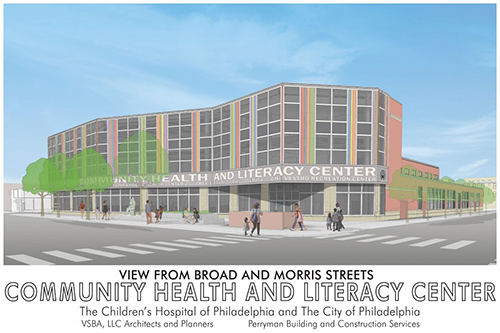
When should you use zoning and neighborhood design?

In many places in the Community Tool Box, the response to the “When...?” question is “All the time.” Here, the answer is a bit different, because, while it’s important to think about these issues all the time, many of the possibilities are limited by political and economic factors. Zoning codes are fully rewritten only occasionally, though they can be revised when necessary.

Neighborhood planning usually needs a spur to get it started. Some projects that would improve neighborhood design are simply not affordable. Advocacy is important here, but so is keeping your eyes open for a chance to raise the subject and start the process.

One way to handle the time question is for neighborhood residents to institute an ongoing participatory planning process, or to appoint a standing neighborhood committee to consider change possibilities.  Since either of these would operate continually, conducting regular meetings and discussions, the neighborhood would always be ready either to generate or to seize the opportunity for improvement.

The editor’s community, for instance, has a citizen-led zoning committee, independent of the Planning Board, that meets regularly to review and make recommendations on town zoning. The Planning Board itself also makes regular recommendations for zoning change. Furthermore, in his town’s system of government, it is possible for citizens to petition for zoning changes, which must then be acted upon by town government.  All of these mechanisms make it more likely that zoning changes that benefit neighborhoods and meet residents’ needs will be considered and enacted.

So the answer is still “All the time,” but that may mean having to work to get to the point where you can use the tools that zoning and neighborhood design provide. Given that, here are some times when using those tools is often possible.

When a zoning code is being developed or reworked

An active Planning Board reexamines zoning regularly, and even longtime zoning codes are revisited eventually, either as part of a larger municipal plan, or on their own. Usually, any new zoning involves community input, at least in the form of public hearings. In some communities, citizens are encouraged to be involved throughout the process.

Whatever the procedure, this is perhaps the best time to find out what residents want and need, raise issues of livability and other elements that might affect zoning, suggest alternatives, etc.  It’s important that everyone know what the alternatives are, and examine the possible effects of each before a code becomes law. Developing zoning can be contentious, but if residents and other interested parties – developers, businesses – go into it with the idea that a code can be written that ultimately benefits everyone, the result can be neighborhoods that work.

A citizen zoning review committee like that described in the editor’s community can help neighborhood residents to be aware of, understand, and influence zoning code revisions that affect them.

When a community strategic planning or neighborhood planning process is in place

Communities, especially those that expect significant growth in the foreseeable future, often turn to a strategic planning or neighborhood planning process to try to control the effects of that growth.  Sometimes, the process can be a response to a mandate from a higher level of government (Seattle started its neighborhood planning process in response to the state of Washington’s Growth Management Act, for instance). In other cases, it may be a response to events (see the description of the Austin, Texas, Neighborhood Planning Process later in the section).  In either case, it’s an opportunity to engage in a discussion of neighborhood design and zoning that can lead to positive change.

When a major development that could change the character of the neighborhood is proposed

Generally, any kind of major development, whether residential, commercial, or industrial (or civic, for that matter), has to be approved through a process that involves public hearings, permits, the submission of various reports and applications, etc.  Whether the development has the potential for harm or benefit to the neighborhood (or both – not an unusual possibility), people are likely to have strong opinions about it.  This situation provides an excellent chance to raise issues of zoning and neighborhood design, and to help residents consider how the development could be turned to the neighborhood’s advantage.

Turning the development to the neighborhood’s advantage is the ideal.  Everyone – residents, the developer, the larger community – benefits, and conflict is minimized.  That ideal isn’t always possible, however, and the neighborhood may also have to be mobilized to preserve itself by resisting development, or demanding changes in the developer’s plan.  In either case, the issues of zoning and design are ripe for discussion.

When a community or neighborhood development effort is under way

Although the intent here may be largely economic, the results are likely to have a large impact on zoning and neighborhood design. It’s important that those issues be raised at the beginning of the effort, so that it can include well-thought-out plans for incentives to development, and for what the neighborhood will receive in return.

When a community or neighborhood appears to be in a downward spiral

When the future looks bleakest can be the best time to institute planning for change, since most people are willing to admit that the situation is unacceptable. When jobs have gone elsewhere, when housing has deteriorated and crime has become rampant, residents may be more than willing to reconsider the design of their neighborhoods, and to advocate for changes in zoning and other areas.

When a neighborhood is in the midst of or threatened by changes in population

The classic examples here are those of urban neighborhoods in which the racial composition is changing (people of color moving in, whites fleeing to the suburbs), or rural towns suddenly overwhelmed by the expansion of suburbia (housing values quickly skyrocketing out of reach of lifelong residents, new residents demanding services the town has never considered before).  If residents face the issue squarely, they can often – through careful design and zoning – maintain their neighborhood’s character while still absorbing a new population.

In the late 1950’s, the West Mount Airy neighborhood of Philadelphia was a target of real estate blockbusting.  This is the unscrupulous real-estate-agent practice of frightening White homeowners with threats of Black people moving in and lowering property values, thus convincing the Whites to sell cheaply to the agents.  The agents then sell at an inflated price to Black homebuyers, thus turning the neighborhood from exclusively White to Black, often nearly overnight.

Instead of engaging in panic selling, West Mount Airy residents banded together to resist real estate agents’ pitches, and to welcome the Black homebuyers in the neighborhood.  The result is that today, West Mount Airy is a fully integrated neighborhood, and one of the most desirable places to live in Philadelphia.  Its residents of all races continue to be active in community affairs, and to maintain the inclusiveness that preserved the neighborhood 50 years ago.

As the final edit of this section takes place (2008), economic contraction highlights a new set of problems, having to do with trying to maintain neighborhood quality of life with reduced resources. This too calls for neighborhood planning and design, keeping dollars closer to the forefront, but also with an eye toward involving more residents in planning for and helping to sustain their own neighborhoods into the future.

Who should use zoning and neighborhood design?

A well-run neighborhood design process should involve all the stakeholders in a participatory effort.  Many cities that have embarked on formal neighborhood planning efforts have used that model (we’ve mentioned Seattle and Austin, but others include Norfolk, Virginia, Syracuse, New York, and Atlanta, Georgia), for three main reasons:

  • It is a basic tenet of the New Urbanist philosophy on which much current neighborhood design and planning is based
  • It is the fairest and most respectful way to approach designing or redesigning a neighborhood
  • Most important, it is effective in creating neighborhoods that meet the needs of residents

A participatory neighborhood planning process produces plans that start with a shared neighborhood vision, receive input from all stakeholders, and are therefore owned by the whole neighborhood.  No one is left feeling the plan was imposed from outside, and everyone works to support the plan and implement it properly. Such a process doesn’t just happen, however – it requires leadership and commitment on the part of at least a core group of residents, and support from the neighborhood and/or the larger community as well.

Between 1980 and 1990, the city of Austin, Texas grew in population by more than a third, from about 345,000 to 465,000.  Projected growth for the next ten years was even higher (the actual 1990-2000 growth rate was about 41%, to over 650,000), based on the growth of high-tech industries and other economic factors, and on the general shift of the U.S. population toward the south and west of the country.  As a result, the city appointed a citizen review board to recommend a plan to manage that growth.

The result, in the mid-1990’s, was the Neighborhood Planning Process, originally conceived as part of the city’s Austin Tomorrow Comprehensive Plan.  The city is divided into neighborhood planning areas, and the residents and other stakeholders of each neighborhood are asked to participate in designing their neighborhood’s future.  Austinites voice their ideas in surveys and in person, and those ideas are then turned over to neighborhood planning groups – one for each of several issues, such as land use, environment, and transportation – made up of neighborhood stakeholders.

Ultimately, the Neighborhood Planning staff uses the input from surveys and planning groups to craft a plan that often reflects the vision of a diverse collection of stakeholders.  Each plan is then turned into a Future Land Use zoning map, goals based on the neighborhood vision, and a set of specific recommendations, which are reviewed by the neighborhood and by City of Austin staff.  Finally – after revisions to the recommendations, after appropriate zoning amendments are suggested and approved, and the plan is deemed by everyone to be both workable and a reasonable reflection of the neighborhood’s vision – it is reviewed by the Planning Commission, which sends it to the City Council with a recommendation (usually for approval).  After a public hearing and possible further adjustment, it is approved by the City Council as an amendment to the Austin Tomorrow plan.

Several Austin neighborhoods are still engaged in the planning process. If needed, plans can be revised every five years.

Zoning is a legal tool and is usually encoded by the appropriate government or citizen body – often a Planning Board. Depending on local laws, it then has to be approved either by voters or by a governing body (or sometimes both) before it becomes law.  Thus, those who write and approve zoning codes must also, in some way, be part of the neighborhood design process, so that necessary zoning changes can be made as smoothly as possible.

In the case of Austin, the Neighborhood Planning Process staff serves as the neighborhoods’ connection to the city government, and provides information about what kinds of zoning changes, if any, are needed in each area in order to carry out the neighborhood plan.  Where zoning changes are necessary and deemed appropriate, they are accepted as part of the approved plan, so that plans can be implemented without further steps.  (There is also a mechanism for those who oppose zoning changes to their property to appeal and negotiate.)

An alternative to this kind of process would be one where the liaison to city government was provided by a citizen group.  There are advantages and disadvantages to both approaches: a citizen group would better reflect the concerns of the neighborhood, and be more likely to try to find ways to address them.  The Neighborhood Planning Process staff have better access to officials and government bodies, know the existing regulations, and may carry more clout if they choose to argue in favor of neighborhood priorities.

Stakeholders who should be involved in neighborhood design efforts include:

  • Neighborhood residents.
  • Neighborhood business owners and professionals (i.e. those who make their living in the neighborhood, although they may not live there).
  • Industries with facilities in the neighborhood.
  • Those with financial interests in the neighborhood (landowners, developers with current plans).

It may seem a bad idea to include those whose only interest in the neighborhood is financial, but it is important for at least three reasons: they have legal rights in the area, as well as the right to be treated with the same respect as anyone else; they may have good ideas for neighborhood development that benefit residents as well as themselves; and if they’re part of the planning process, they won’t feel they’ve been unfairly treated, and will have no reason to try to hold up implementation of the plan once it’s finalized.

  • Neighborhood health and community service providers.
  • Civil servants – police, firefighters, etc.
  • Local government representatives and agencies that serve the neighborhood – city councilors, state representatives, municipal recreation agencies, public transportation, etc.
  • Cultural organizations with a venue or base in the neighborhood – museums, libraries, performing arts centers.
  • Educational institutions, both public and private.
  • Neighborhood houses of worship.

How do you implement zoning and neighborhood design?

Because it calls for a participatory effort, a good neighborhood design and zoning process takes time and organization.  If it’s done right, however, it can have positive effects for decades or longer.  So how do you do it right?  Each community and neighborhood is different, with different populations, different attitudes, different amounts of knowledge, different skills, different landscapes – the list could go on and on. The process should be one that’s appropriate for the neighborhood and for the situation in question.

That said, there are some general rules that we believe are helpful, as well as lots of actual efforts to use as models (many can be found on the Internet, and we’ll list several of those under “Resources”).  We’ll present a set of guidelines to follow here, but be aware that we don’t mean to imply that this is the only way to proceed.

In order to put some flesh on the bones of neighborhood design, we’ll use the Austin, Texas Neighborhood Planning Process for examples of how various steps can be implemented.  Austin’s is not necessarily the best process available, but it is coherent and participatory to a large extent, and is being used in a city that is experiencing rapid growth, transportation and education problems, and population changes – issues that are common among 21st Century American cities.

Your city may be entirely different – or may not be a city at all, but rather a small town or rural area.  Spread-out, low-rise, largely single-family Austin neighborhoods are very different from neighborhoods in New York or other older cities, where multi-family dwellings are the rule, rather than the exception.  If some of what you find in the Austin example makes sense, by all means use it; but remember that it’s just an example.

Create a neighborhood design plan

This is where the participatory neighborhood planning process comes into play. The first step in implementing neighborhood design and zoning is to create a plan that reflects a shared neighborhood vision and a way to realize it. And it will be even more effective in the long run if this participatory planning process is institutionalized, so that it doesn’t have to be recreated every time a planning issue surfaces.

Reach out and recruit stakeholders

To carry out a participatory planning process, it’s important to involve as many stakeholders as possible from the beginning, which means making them aware of the process and recruiting them to participate.  Many communities start with a community survey or meeting to solicit ideas about the neighborhood’s future. Outreach – to neighborhood residents (both homeowners and renters), businesses, property owners, organizations, and institutions – about such a survey or meeting can happen in a number of ways:

  • Direct mail to every address in the neighborhood
  • Mail or e-mail to a selected list
  • Announcements on a community website
  • Flyers and posters in appropriate places – supermarkets, laundromats, community bulletin boards, institutions, lampposts, neighborhood gathering places, etc.
  • Announcements through existing organizations, agencies, and institutions (Chamber of Commerce, neighborhood association, local hospital, welfare office, houses of worship, etc.)
  • Phone calls to a list of community leaders or contacts
  • Personal contact - this might include such strategies as enlisting neighborhood merchants and service providers (grocers, barbers and beauticians, bartenders, hardware store owners, restaurant owners, medical personnel, etc.) to recruit their customers
  • Press releases and press conferences
  • Notices in local newspapers and newsletters
  • Radio and TV spots
  • Announcements at neighborhood or community events
  • Notices sent home with kids from school

Solicit stakeholders’ ideas about the ideal future for the neighborhood

A neighborhood survey or public meeting, asking for both the answers to specific questions (“How important are neighborhood schools?”) and general comments and ideas, could produce a set of basic principles to serve as the base for future discussion.

In Austin, the Neighborhood Planning Process starts with a neighborhood survey, asking about neighborhood strengths and challenges, and about what aspects of the neighborhood are important to stakeholders, now and in the future.  The survey is followed up by a meeting to which all stakeholders – residents, businesses and industries, property owners, and neighborhood organizations and institutions – are invited to discuss the survey results and learn about the neighborhood planning process.

Hold a series of public meetings where stakeholders can discuss their initial ideas and develop a shared vision for the neighborhood

These meetings can serve a number of functions:

  • Laying the ground rules for discussion. This is important, since the mix of participants at these meetings is likely to produce disagreement and a number of different conceptions about what the neighborhood’s future should be.  If everyone can accept rules about listening carefully to everyone else’s point of view (which includes allowing others to speak uninterrupted), responding respectfully, focusing on ideas rather than personalities, and actively seeking common ground and mutually beneficial solutions, these meetings can be enormously productive.

There might also be discussion about factors to consider in the planning process, particularly the feasibility and affordability of recommendations; the need for diversity of participation in the process; the need for open and clear communication among participants; and the fact that neighborhood development is a shared responsibility, and implies a shared concern for the interests of all who live, work, and own property in the neighborhood.

  • Education of participants about important concepts of neighborhood design and planning, including principles of neighborhood design, environmental concerns and green building, various conceptions of “neighborhood,” zoning and how it works, and current neighborhood zoning.

Austin uses city staff to make initial contact and to present at an initial, all-community meeting a neighborhood profile including demographics, land use and zoning, transportation, etc.

  • Assessment of the neighborhood’s assets and challenges, and how they fit into a vision of the future.

Initial meetings (called “workshops”) in the Austin planning process use a PARK exercise, asking participants to identify those neighborhood elements they want to Preserve, Add, Remove, and Keep out in the future.

  • Drafting of a shared vision statement for the neighborhood, incorporating what they’ve learned about neighborhood design and zoning.  This statement should probably be fairly general, while stating clearly the neighborhood’s priorities.

After the initial meeting, the Austin process calls for “focus groups” – actually working groups that focus on a specific area or task.  One of these groups takes the information from the community and from city staff and develops a general vision statement and a set of goals designed to realize the vision described in the vision statement.  Here are examples of vision statements from two quite different neighborhoods:

Crestview/Wooten, several miles north of the city center, is a largely working and middle class, majority white (although with a growing Hispanic population, particularly in the Wooten district) neighborhood that includes some public housing and one large former industrial site, and that appears to be in the process of gentrification.  Its response to the neighborhood development process was enthusiastic (the initial meeting drew the largest number of people to attend any such meeting up to that point), and went fairly smoothly.Its vision:

  • Preserve the character of the neighborhood by encouraging owner-occupied single-family housing offering diversity, pride of ownership, and a sense of community. Promote small neighborhood-oriented businesses and services where appropriate.  Maintain and encourage accessible, quiet, clean, safe and pedestrian and bike friendly neighborhoods, with tree-lined streets and a park-like feel.
  • Govalle/Johnston Terrace, in East Austin, is a low-income to working class, overwhelmingly Hispanic neighborhood, with a small but significant Black population left from the days when the area was zoned for “colored housing.”  One of the legacies of that era is a large amount of industry in or near the neighborhood, including a power plant and a now-retired tank farm.  Like Crestview/Wooten, a majority of residents are homeowners, but there is far more commercial and industrial land in this neighborhood than in the other.  It took two tries four years apart and a fair amount of negotiation to get the neighborhood planning process off the ground in Govalle/Johnston Terrace because of disagreements among stakeholders as to who would take the lead in the process.  Ultimately, the process was successful, and produced this vision statement:
    • The Govalle/Johnston Terrace Neighborhood will be an affordable, family-oriented neighborhood with a strong sense of community and a place where people want and are able to live their entire life. The neighborhood will be pedestrian oriented with a well-balanced mix of residential and business uses, shops that serve neighborhood needs, and public spaces where the community comes together.  The neighborhood will protect and emphasize its natural environmental features, historic character and residential areas.  The neighborhood will be a safe, healthy, clean, well-maintained place, with unique cultural opportunities and quality schools.

Flesh out the vision statement with outcome goals

Once a vision statement has been developed and approved by stakeholders, it may make sense, rather than continuing to meet as one large group, to break up into working groups to examine and set goals for each of the concerns raised in the vision (land use, transportation, etc.)  These working groups are more likely to be efficient than a larger group, and also let people work on the topic they’re most interested in.

A vision statement is only the beginning of the neighborhood design process. The next step is to decide what outcomes would indicate that you’d realized your vision, and to put those outcomes in the form of goals to accomplish. For instance, if your vision statement, like both of those quoted above, calls for a bike- and pedestrian-friendly neighborhood, some goals might be to create or expand a network of bikepaths in (and perhaps also outside of) the neighborhood, build and maintain sidewalks on all streets, improve public transportation, etc.

Many of the transportation goals in the Crestview/Wooten neighborhood plan address bike- and pedestrian-friendly streets:

  • Increase alternatives to driving by improving routes and facilities, access for pedestrians, bicycles, and public transportation.
  • Preserve and improve routes for pedestrians, bicycles and public transportation.
  • Maintain a transportation network that allows all residents to travel safely throughout the neighborhood by improving safety on major corridors and preserving and enhancing neighborhood-friendly streets.
  • Provide safe accessible routes for residents of all mobility levels.
  • Encourage the use of major corridors by all traffic generated outside the neighborhood, and discourage that traffic from using interior streets.
  • Provide better connection between corridors to reduce neighborhood cut through traffic.

Generate concrete objectives tied to specific actions to achieve outcome goals

Each of your goals has to be considered in light of the reality of your neighborhood.  What would you have to do to create bike paths that served most areas of the neighborhood, for instance?  What parts of those paths already exist, and what parts would require construction, new traffic patterns, or other changes? Your objectives should be the specific, rather than general, outcomes you want to achieve.  They should be tied to recommended actions, the projects you actually want to carry out. These should be as specific as possible, with regard both to place (the northwest corner of Main and Johnson) and to action (install a curb cut to connect the street to the existing bike path through the park.)

Transportation objective #1 in the Crestview/Wooten plan reads: Improve pedestrian safety and general walkability in the Crestview-Wooten neighborhoods.  Recommended actions include adding sidewalks along a number of specific streets, repairing broken sidewalks on others, adding crosswalks in specific places, and generally improving the pedestrian climate with the addition of “landscaping and other amenities that make walking safe, desirable, and efficient.”

Some of the other transportation objectives concern bike-friendliness, public transportation, and traffic reduction, with specific recommended actions (installing bike racks in named locations and adding bike lanes to specific streets, for instance, or adding traffic controls at particular intersections) for each.

Prioritize the lists of goals, objectives, and recommendations

You have to acknowledge the probability that not everything you plan for will be possible – at least not right away, and perhaps not ever. For reasons of cost, demographics, state law, municipal comprehensive plans, or just plain politics, some of your ideas may simply not be feasible.

You should be clear, therefore, on what’s really important to the neighborhood, and what you can live without. You’ll almost undoubtedly have to do some negotiating with civic authorities, whether it’s a small-town public works department or a number of big-city boards and commissions, in order to get approval for the recommendations you’ve made. Knowing which of them you’re willing to give up and which you’ll fight strongly for will make those negotiations much easier.

It can also make the process easier if you confer with adjacent neighborhood groups, especially if you’re part of a city-wide planning effort. If there’s a shared concern among a number of neighborhoods (an interconnecting, car-free bike path, for example), the city is more likely to pay attention.

By the same token, it may simply make sense for neighborhoods to coordinate plans, so that various concerns and land use options can be discussed and shared.  A commercial/residential mixed-use area might be located where it overlaps two neighborhoods, for instance, so that each might take advantage of the convenience and streetscape improvements it will bring.

Where possible, you might want to confer throughout the planning process with the appropriate community departments or boards, so that you’ll know what they have planned, and what they consider possible.  In Austin, the Neighborhood Planning staff either consults with city officials or brings them into community work groups to discuss issues and recommendations.  All recommendations are reviewed by the appropriate departments.  If they’re rejected, that’s known immediately to the planning group, and the reasons for the rejection are explained and included in the appendix to the final plan.

Identify and implement zoning changes necessary to realize the plan’s goals and objectives

Identify the necessary zoning changes

This may be a large or a small job, depending on the differences between the planned and current land use in the neighborhood. In some cases, almost every lot in a neighborhood may have to be rezoned; in others there will need to be very little change in zoning.

Zoning changes start with current zoning. Each lot or section of the neighborhood is zoned for a particular use (or uses, through mixed-use zoning). Any community that has a zoning code has a land-use map to go with it that shows the zoning of all the land in town covered by the code.  A small rural town may be divided into only two or three zones (residential/agricultural and residential/commercial, for instance). The zoning map of a city neighborhood may have ten or fifteen different zoning categories (each usually identified by a different color, explained in a map insert), and depicts every lot in the neighborhood.

Zoning may be single-use or mixed-use.  Single-use zoning may be further broken down into even smaller categories (lot size, building height, number of units, etc.) There may be many options for neighborhood zoning, and they may sometimes be confusing. This is clearly a time when conferring with city departments and boards can be helpful.

In general, looking at the current land-use map, if it’s not overly complicated, will make it relatively simple to understand what changes have to be made. If the plan calls for an abandoned industrial site to be turned into a mixed-use residential/commercial development, the site will have to be rezoned to make that possible. If a row of abandoned houses is seen as a possible commercial area, those lots will have to be rezoned. The same is true for undeveloped areas that are meant to be kept open, but are currently zoned for industrial use; or for undeveloped areas zoned for residences that are slated for mixed or commercial uses.

Ultimately, the planning group should prepare a future land-use map that reflects the changes called for in the plan. (This can usually be done by GIS mapping, either by the municipality, by a private firm, or by someone in the neighborhood with the proper expertise.  If the planning process is part of a municipal effort, the map will certainly be made by the planning office. Once the approved zoning changes are made, this will become the new land use map for the neighborhood.

The Austin Neighborhood Planning staff researches the zoning issues and suggests the appropriate zoning changes as the neighborhood plan develops.

Implement the necessary zoning changes

There are two stages to planning the rezoning for a neighborhood. The first is the technical one we’ve been discussing: understanding what the zoning needs to be for each part of the neighborhood in order for the overall zoning map to match the neighborhood plan. The second, and often more difficult, stage comes in convincing all the relevant parties that the proposed changes should actually be put into effect.

To address this second stage, you have to know the relevant decision-making structure in your particular neighborhood or community. How do decisions get made, and who are the people who make them? Understanding the decision-making structure and players will help you persuade those who need to be persuaded to support your neighborhood vision.
We’ve mentioned, for instance, how many suburbs (and other municipalities as well) favor single-use zoning.  Yet, in many cases, mixed-use zoning can result in more walkable streetscapes, and can allow such conveniences as the ability to walk to work and shopping, or permit more affordable housing. Convincing municipalities to be flexible in considering zoning changes, however, can run into a “But-we’ve-always-done-it-that-way” attitude that can be hard to change, or can threaten existing political or economic interests.

There is also, of course, the possibility that the municipality’s reasons for challenging your proposed changes are perfectly reasonable. Many neighborhoods may request zoning changes that would effectively keep out affordable housing, for instance, or bar all commercial activity. The community has obvious reasons to reject such proposals. Make sure that what you argue for is defensible.

To win over civic authorities, first make sure you clearly understand the issues and zoning in general, so that you can argue rationally and convincingly for the neighborhood’s point of view. If reason doesn’t help, the answer here is often advocacy.  What kind of advocacy really depends on a number of factors, among them the overall importance of the changes you’re requesting, the level of the municipality’s resistance to change, the reasonableness of the arguments against you, and the amount of neighborhood support. Your advocacy can range from private conversations with public officials to orchestrated testimony by many people at public hearings to media publicity to some sort of direct action to a community organizing campaign.

In addition to whatever resistance you may encounter from municipal authorities, there may be resistance from neighborhood property owners about the rezoning of their property. The owner of an industrial-zoned parcel may balk at having its zoning changed to commercial, for instance, because of his development plans for that piece of land. Homeowners may not want multi-family zoning on their block or the next. Some neighborhood residents may challenge the whole plan, or the rezoning that affects them. While they certainly have the right to do so, it may be easier to get a plan approved and implemented if you can resolve these differences during the planning process.

We’ve already emphasized the importance of including in the planning process everyone with interests in the neighborhood. Ideally, that means that all those interests are considered from the beginning, and that decisions can be reached that leave everyone feeling reasonably satisfied with and reasonably unhurt by the final plan. In practice, this will probably only work some of the time.  Some residents or property owners will be able to negotiate something that’s acceptable both to them and to the neighborhood at large; others won’t, and will contest or challenge at least the portion of the zoning they object to. In that case, you and they simply have to be prepared to argue your points of view to civic authorities, and let them decide.

Many of Austin’s neighborhood plans have been approved except for the zoning of  contested lots or parcels. Those have then been decided by the City Council on a case-by-case basis, with the resultant zoning added to the future land use map and incorporated into the neighborhood plan.

Implement the plan in order to realize your objectives and reach your goals

Once a neighborhood design plan and its necessary zoning changes are approved, the plan has to be carried out.  The goals and objectives the neighborhood has chosen are only useful if there’s an effort to turn them into reality.  Some ways to do that:

Choose a neighborhood design committee or other body to coordinate the effort

Such a committee might be made up of some of the people who were most enthusiastically involved in the neighborhood planning effort, or might be made up of both neighborhood stakeholders and community officials. Whatever its composition, its main task should be keeping track of how well the specific actions meant to accomplish objectives are being carried out. That means communicating with the appropriate municipal departments and boards, as well as coordinating the work of community volunteers. Without some sort of coordinating body – in some communities, this may be a civic entity, such as a planning office – it’s unlikely that the plan will be realized.

Each Austin neighborhood with an active plan has a Neighborhood Planning Team/Neighborhood Contact Team that works with the Neighborhood Planning and Zoning office to monitor the work to be done by the city as a result of the neighborhood plan recommendations, and to discuss any necessary changes in scheduling or scope.

A committee or other coordinating body might also work with municipal officials to communicate the concerns and pulse of the community, warning of potential problems and helping to devise solutions before they become serious. It might also help in finding private or grant money for projects the neighborhood wants, but that are simply too expensive for the municipality to take on.

Keep in close contact with everyone involved in changing the physical structure of the neighborhood

Much of the actual work in changing physical structure – especially in the case of a neighborhood plan that is part of a larger community effort – is likely to be done either by the municipality or by developers. Such activities as neighborhood clean-ups or yard beautification, on the other hand, are the province of community volunteers and residents. Whoever is responsible, the neighborhood – in the form of a committee, if there is one, or in some other way – needs to monitor the work to make sure it gets done within a reasonable time frame and in a reasonable way. If there are delays – because of funding problems, emergencies in other areas, permitting, etc. – it can eliminate a lot of potential problems if the neighborhood knows and understands about them.

If necessary, work with the municipality and developers to attract businesses and residents to the neighborhood

If the plan involves commercial development, storefronts or new office buildings have to be filled for the community to benefit. Developers and city agencies often run public relations campaigns for this purpose, and the neighborhood may want to be involved in these in some way (testimonials from residents and current business owners, for instance, to be used in ads).

Encourage neighborhood events, use of new bike and walking paths, public transportation, etc.

There should be some mechanism to build on the changes to physical structure that will help to establish the neighborhood as a friendly and vital place. Events and campaigns that encourage the use of the neighborhood’s physical advantages – public spaces, trails, public transportation, new or rehabilitated buildings, etc. – can both highlight positive changes for neighborhood stakeholders and begin to alter the way the neighborhood is used.

Deliver regular progress reports to the neighborhood on work toward specific objectives and goals

Annual or semi-annual meetings to discuss the state of ongoing and scheduled work and to keep the community informed can do a great deal to keep relations friendly and to enlist neighborhood stakeholders in advocacy where necessary.  They also serve to keep the neighborhood plan in people’s consciousness, and to make sure that it maintains momentum.

Revisit the neighborhood plan regularly, and revise it as needed

Circumstances change, populations shift, and neighborhoods grow.  No plan is likely to be perfect forever, and most need to be adjusted from time to time.  In addition, some original suggested changes may turn out to be less than ideal, and may need to be changed before they’re carried out.

Every year or two, the plan should be reevaluated to make sure that its elements are still relevant, and that the work being done in fact helps the neighborhood toward its original vision.  If priorities have changed – because of an emergency (earthquake, flood), because of changing conditions (gentrification, population growth), or because of unforeseen needs (building deterioration, road repair) – then the plan should change to reflect that.

Austin’s neighborhood plans are meant to be reevaluated and reapproved every five years, with the assumptions that, by then, much of the initial work called for in the plan will be completed, and stakeholders will have a chance to see how it works.  At that point, the neighborhood may be ready to recommend the next round of work to be done to sustain the plan, or to suggest new directions.

By the same token, plans can’t be changed until at least a year has passed, although they can be amended at any time at the request of the Neighborhood Planning team.

This is the point where we tell you to keep at it indefinitely. A neighborhood plan is still only a plan. If it’s based on solid neighborhood design principles, the chances are that it will result in a livable, pleasant neighborhood...but only if the elements of the plan are carried out and supported by the neighborhood. (An unused bike path is no better than an unbuilt bike path, after all.)  Making sure work is done that leads the neighborhood toward its vision, encouraging continuing involvement and continuing communication among stakeholders, regularly reevaluating and readjusting the plan to respond to changes in the neighborhood and larger community – all these are necessary to maintain a high neighborhood quality of life, and they have to continue for the life of the neighborhood.

In Summary

Careful attention to the design of neighborhoods can lead to zoning changes that make them more pleasant and livable for residents of all income levels.  Taking the neighborhood (which may encompass the whole community in the case of a small rural town), rather than individual buildings, as the target of design makes it possible to use zoning codes to shape the neighborhood to the advantage of residents and other stakeholders.

Current ideas of neighborhood design – based to a large extent on the work of the New Urbanists – considers residents first, and encourages healthy neighborhoods where residents can walk and bicycle to most services and shopping, where efficient and comfortable public transportation will take them to other parts of the municipality, where streets are safe and secure, and where street life encourages interaction and creates a lively and stimulating atmosphere.

In order to bring this picture to reality, it makes sense to institute a neighborhood planning effort. A participatory planning process, based on sound principles of neighborhood design, and working with the municipality to use zoning to shape the character of the neighborhood, can turn a neighborhood vision into the actuality of safe, pedestrian-friendly streets lined with trees and neighborhood businesses, and populated by neighbors who know one another and work together to keep their neighborhood a good place to live.

Contributor

Bill Berkowitz

Resources

Online Resources

Active Design Guidelines: Promoting Physical Activity and Health in Design from The New York City Departments of Design and Construction (DDC) seeks to educate designers about opportunities to increase daily physical activity, including measures such as making stairs more visible and providing inviting streetscapes for pedestrians and bicyclists.

Building Healthy Places Toolkit from the Urban Land Institute outlines opportunities to enhance health through changes in approaches to buildings and projects. It provides 21 evidence-based recommendations that are supported by action-oriented evidence-based and best practice strategies.

Congress for the New Urbanism is organization promoting walkable, mixed-use neighborhood development, sustainable communities and healthier living conditions.

The Curb-Cut Effect by Angela Glover Blackwell. Laws and programs designed to benefit vulnerable groups, such as the disabled or people of color, often end up benefiting all of society.

Build Healthy Places Network's article Green Spaces Can Encourage Social Connectedness in Cities discusses the social benefits of urban green spaces.

Housing and Community Development Advisory Board a neighborhood planning board for the town of Blacksburg, Virginia.

“Involving the Community in Neighborhood Planning” is a report from the Urban Land Institute about collaborative neighborhood planning, including the benefits and challenges.

Neighborhood Design Center is one of several non-profit (in this case, volunteer) neighborhood design centers around the country started in the late ‘60’s in response to a speech to the American Institute of Architects by Urban League Director Whitney Young. It is still going – meant as a seed organization, doing the groundwork which can then leverage further support and funding (architectural/engineering studies, e.g.).

The City of Austin's Neighborhood Planning website details the neighborhood planning process, including much general information and specific plans from neighborhoods that have completed the process.

Raleigh, North Carolina's Neighborhood Planning Strategy.

Neighborhood Planning and Urban Growth Strategies is a good resource on neighborhood planning from Louis Colombo and Ken Balizer, two long-time Albuquerque, New Mexico-area planners. Lots of information on planning history, New Urbanism, and general neighborhood planning and design.

Neighborhood Transformation Initiative is Philadelphia’s neighborhood planning process.

New Urbanism provides lots of information and links on New Urbanist thought and practice.

Nurturing Healthy Neighborhoods: Communities Affect Health is a resource from the National Institutes of Health about how the environment around us influences our health.

“Open Space Zoning: What it is and why it works,” is an article by Randall Arendt that describes cluster zoning

Seattle Neighborhood Plan offers information on existing neighborhood plans, efforts to update existing plans, and how to get involved.

Vivek H. Murthy, MD, MPH, USA Surgeon General - APHA 2015 is an online video interview conducted by APHA TV of the US Surgeon General Dr. Vivek Murthy, to learn about his Call to Action to promote more walkable communities in the United States.

A Wikipedia article on zoning, explaining its origins and possibilities.

Print Resources

Bressi, T., & Davis, R.  (Eds.) (2002). The Seaside debates: A critique of the new urbanism. New York, NY: Rizzoli international Publishers.

Duany, A., Plater-Zyberk, E., & Speck, J. (2000). Suburban nation: The rise of sprawl and the decline of the American dream. New York, NY: North Point Press.

Jacobs, J. (1961). The death and life of great American cities. New York, NY: Random House.

Kunstler, J. (1996). Home from nowhere: Remaking our everyday world for the twenty-first century. New York, NY: Simon & Schuster.

Morris, D. (2005). It’s a sprawl world after all: The human cost of unplanned growth – and visions of a better future. Gabriola Island, British Columbia, New Society Publishers.


Checklist
mloewenstein Wed, 12/12/2012 - 11:12

What are zoning and neighborhood design, and how do they work together?

___Zoning is a set of community laws and regulations that divides a community into various zones, and specifies what kinds of building, development, and economic activity can take place in each zone

___Neighborhood design refers not only to the design of buildings, but to the design of the neighborhood as a whole

___The type of zoning a community adopts can greatly shape the design of neighborhoods subject to that zoning

Why use zoning and neighborhood design to influence the physical structure of your community?

___They can guide public spending toward the appropriate places by putting money into projects and improvements most needed and wanted by neighborhood residents

___They can foster economic and racial/ethnic diversity

___They can foster social interaction and mixing among neighbors, and among neighborhood residents from diverse backgrounds

___They can make the chores of daily life easier and more convenient

___They can provide health benefits from walking and biking

___They can create ease of travel and independence for everyone

___They can provide easy access to jobs

___They can afford residents savings on transportation

___They can produce environmental benefits

___They can foster development that’s energy efficient and environmentally responsible

___They can lead to more profit for developers, and more reasons for them to invest in affordable housing

___They can create a better commercial environment

___They can make for a physically and aesthetically more pleasant neighborhood

___They can foster safer and more secure neighborhoods

___They can enhance neighborhood quality of life

When should you use zoning and neighborhood design?

___When a zoning code is being revisited or developed

___When a community strategic planning or neighborhood planning process is in place

___When a major development that could change the character of the neighborhood is proposed

___When a community or neighborhood development effort is under way

___When a community or neighborhood appears to be in a downward spiral

___When a neighborhood is in the midst of, or threatened by, changes in population

Who should use zoning and neighborhood design?

___Residents

___Neighborhood business owners and professionals (i.e. those who make their living in the neighborhood, although they may not live there)

___Industries with facilities in the neighborhood

___Those with financial interests in the neighborhood (landowners, developers with current plans)

___Neighborhood health and community service providers

___Civil servants – police, firefighters, etc.

___Local government representatives and agencies that serve the neighborhood – city councilors, state representatives, municipal recreation agencies, public transportation, etc.

___Cultural organizations with a venue or base in the neighborhood – museums, libraries, performing arts centers

___Educational institutions, both public and private

___Neighborhood houses of worship

How do you implement zoning and neighborhood design?

___Reach out and recruit stakeholders

___Solicit stakeholders’ ideas about the ideal future for the neighborhood

___Hold a series of public meetings where stakeholders can discuss their initial ideas and develop a shared vision for the neighborhood

___Flesh out the vision statement with outcome goals

___Generate concrete objectives tied to specific actions to achieve outcome goals

___Prioritize the lists of goals, objectives, and recommendations

___Identify the necessary zoning changes

___Implement the necessary zoning changes

___Choose a neighborhood design committee or other body to coordinate the effort

___Keep in close contact with everyone involved in changing the physical structure of the neighborhood

___If necessary, work with the municipality and developers to attract businesses and residents to the neighborhood

___Encourage neighborhood events, use of new bike and walking paths, public transportation, etc.

___Deliver regular progress reports to the neighborhood on work toward specific objectives and goals

___Revisit the neighborhood plan regularly and revise it as needed

___Maintain momentum indefinitely

Examples
mloewenstein Wed, 12/12/2012 - 11:12

Example #1:  America’s "Worst City for Walking" Gets Back on its Feet

Image of ladies with hiking gear walking down a rural, woodsy lane.

Oklahoma City—which was named as the “worst US walking city” in a 2008 study of 500 communities by Prevention magazine and the American Podiatric Medical Association—is embarking on big plans to become more walkable. An ambitious $18-million sidewalk improvement fund was approved by voters as part of a tax increase that also included money for parks, transit, bike trails and senior wellness centers around town.  Four busy streets heading into downtown are now being narrowed, with new “smart intersections” that provide walkers more safety with “refuge island” medians in the middle of streets and clearly marked crosswalks. Read the story.


Example #2: Columbia Parc at the Bayou District-New Orleans, LA: Holistic Redevelopment to Bring Lasting Change to a Distressed Neighborhood

Image of Columbia Park at the Bayou.

Learn how social determinants of health are being addressed to build healthier lives, where mixed income housing, new schools, and a sustaining economic anchor completely transformed a once-struggling neighborhood in post-Katrina New Orleans in this Community Close-Up from the Building Healthy Places Network.


Example #3: A Holistic Approach to Community Development in Minneapolis-St. Paul

Learn how community developers are impacting the health of residents in a low-income housing complex in St. Paul and a senior center in Minneapolis, through two Local Initiatives Support Corporation (LISC)-supported projects.


Example #4:  The Austin Neighborhood Planning Process

Thanks to Mark Walters, Principal Planner in the Austin Neighborhood Planning and Zoning Department, for explaining the Austin Neighborhood Planning Process.

In 1996, as part of its Austin Tomorrow Comprehensive Plan, Austin, Texas instituted a Neighborhood Planning Process, designed to manage the city’s rapid growth and keep neighborhoods livable. The city was divided into approximately 60 neighborhoods, many of which were combined with others for planning purposes in 2002.

Neighborhood plans are developed by neighborhood stakeholders working with staff from the city’s Neighborhood Planning and Zoning office.  Since the city’s resources aren’t great enough to engage all neighborhoods in planning at once, neighborhoods are targeted for planning based on Neighborhood Planning staff analysis of their current or projected need for it.  Factors used to prioritize neighborhoods include (but aren’t limited to) projected growth, current problems, and need for services.

NPP starts the planning process in a particular neighborhood with a neighborhood survey mailed to every household, business, and other property owner in the planning area.  The survey is a general one relating to perceptions of the neighborhood, its strengths and challenges, and stakeholders’ ideas for its future.  Surveys are mailed or e-mailed to the Neighborhood Planning office and tabulated, and the survey is then followed by a community meeting to which all neighborhood stakeholders are invited (again, by direct mail to all stakeholders).

At this meeting, the results of the survey are presented, along with a profile of the neighborhood (demographic, geographic, and land use information) and an explanation of the neighborhood planning process.  Participants ask questions and comment about the process and about issues of concern to them. A SOC (Strengths, Opportunities, Challenges) exercise is conducted, and the results of that and the survey are used as a basis for continuing discussions.

The initial meeting gives everyone a chance to understand how neighborhood planning works, and to decide what parts of the process they want to put their energy into.   Smaller, follow-up meetings focus on specific areas of planning – vision and goals, land use, transportation, quality of life.  Members of each of these tightly focused groups are recruited from those who expressed interest in each of the areas in question. Out of these groups come the goals and objectives for each element in the plan, and the specific recommendations relating to each goal and objective – in other words, the substance of the plan itself.

Neighborhood Planning staff convene and work with these groups, explaining the realities of the city’s capacity and budget, conducting research on zoning and bringing in staff from other city departments to inform the neighborhood about existing capital projects and work plans for the area, and to discuss the feasibility of stakeholders’ suggestions and recommendations, which are then reviewed by the departments themselves. Recommendations that are not deemed feasible or affordable, or are set aside for more study by the city, are nonetheless included in the appendix to the plan, with the reasons why they weren’t approved. The involvement of the relevant city departments throughout the process means that the final plan is realistic, and has already been approved by the departments that will need to do the work of its recommendations.

One aspect of the planning process is a services forum, which convenes representatives of city services departments (transportation, Code Enforcement, etc.) to explain what they do and how they serve the area, and to address stakeholders’ concerns.

Once all the specific-issues groups have finished meeting, the Neighborhood Planning staff prepares an online final survey (distributed by mail to those who don’t have Internet access) that includes a draft of the plan and asks for comments. The staff then makes final adjustments to the plan based on these comments, and calls a final meeting, before which the plan is distributed online (and again, by mail to those who request it). At the meeting, neighborhood stakeholders have one last opportunity to comment on the plan through the final survey, and to approve the final version.

The plan then goes to the Planning Commission (a nine-member appointed body), which reviews it and makes any necessary modifications – usually to land use provisions (i.e., zoning). The Commission then passes the plan on to the City Council with a recommendation for approval or rejection. (At this writing, all submitted plans have been recommended for approval.)  The City Council generally accepts the Commission’s recommendation as is.

For the plan to go into effect, the City Council – which has the sole power to make zoning changes – must approve it as an amendment to the city’s Ausin Tomorrow Comprehensive Plan. A hearing accompanies the approval process, and usually results in the plan being adopted as a whole, except for any contested sections (almost always zoning changes being contested by those whose property is affected). These contested sections are settled on a case-by-case basis over time by the City Council.

How smoothly the approval hearing goes depends to a certain extent on the smoothness of the planning process up to that time.  Some hearings take an hour or less; others may go till the wee hours of the morning.
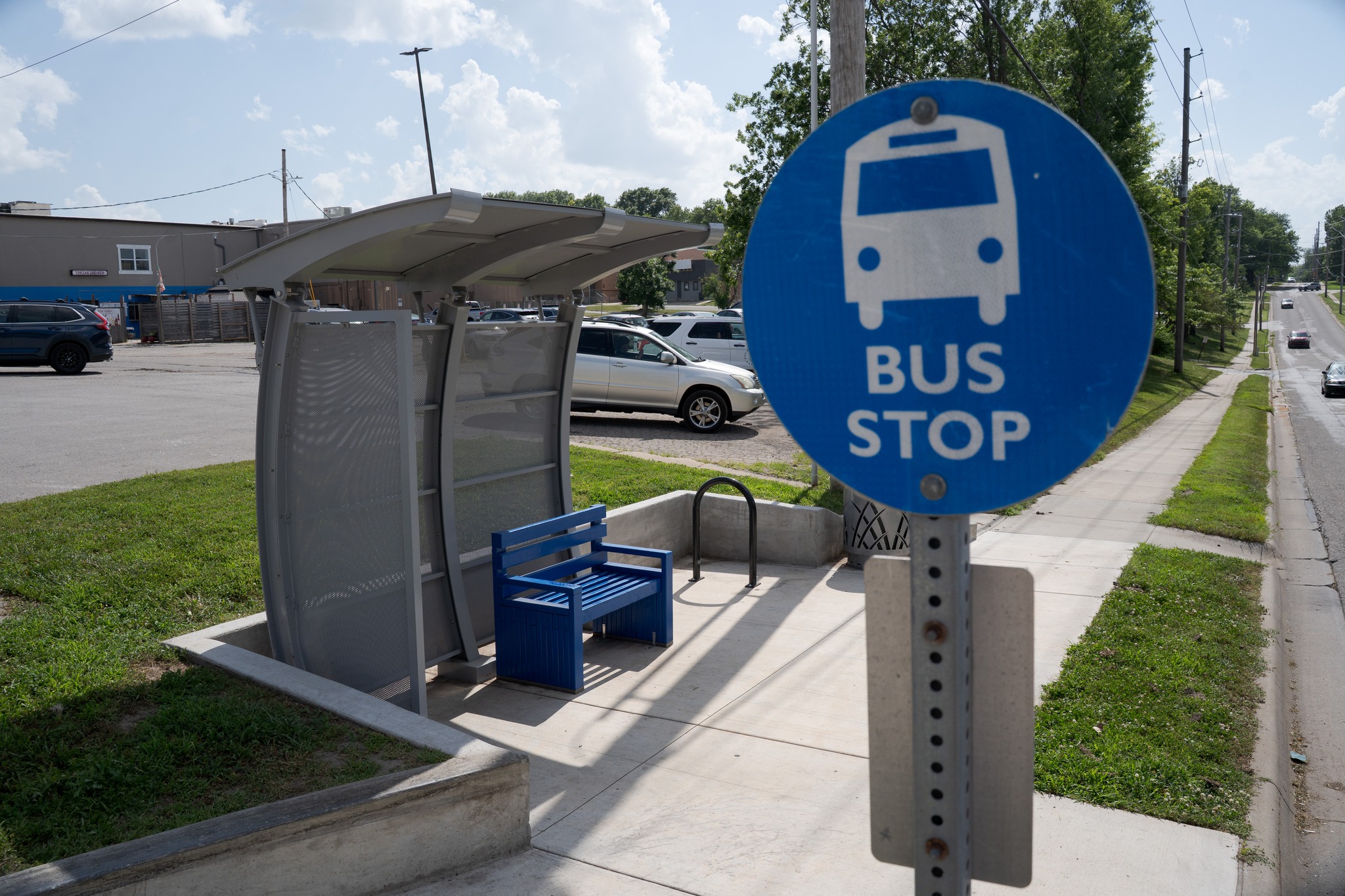
Once a plan is approved, it can’t be changed for a year, although it can be amended at any time at the request of the Neighborhood Planning Team.  A Neighborhood Planning Team/Neighborhood Contact Team – usually self-selected, and often composed of people with zoning interests and leaders of neighborhood associations and the like – acts as liaison between the Neighborhood Planning staff and the community on issues having to do with the plan.

Neighborhood Planning suggests that plans be revisited, revised, and reapproved every five years to assure that they’re addressing the current and real needs of the neighborhood.

Example #5: A Ride to Better Health

The Mariposa project is on the front lines of a rapidly growing movement seeking to reconnect low-income residents to the critical networks — transit, affordable housing, jobs — that are the cornerstones of opportunity. By centering development efforts around a transit stop, planners are hoping to reinvigorate a neighborhood by connecting its residents to integral supports and services, from hospitals to schools to grocery stores , all while paying heed to the risks of gentrification and displacement.


Image of diverse children in an urban garden.

Example #6: Community By Design Walkthrough

In July 2024, WyCo-SAP and Downtown Shareholders organized a community walkthrough in downtown Kansas City, Kansas. The walkthrough relied on Crime Prevention Through Environmental Design (CPTED) to assess safety and accessibility of public spaces. 

Residents, local business owners, and employees joined the effort to identify the environmental factors that impact how people experience the area.

During the walkthrough, participants observed poor lighting, inadequate signage, and general maintenance issues. They also explored possible solutions, such as activating underutilized spaces, improving lighting and signage, and investing in community beautification.

The community identified next steps that include conducting a professional CPTED safety assessment and increasing engagement with local officials to ensure long-term, sustainable improvements.

Click here to read the full report.

Contributor

Mark Walters

Tools
mloewenstein Tue, 01/08/2013 - 15:53

Tool 1: Principles and benefits of New Urbanist neighborhood design

Principles

Walkability

  • Most things within a 10-minute walk of home and work
  • Pedestrian friendly street design (buildings close to street; porches, windows & doors; tree-lined streets; on street parking; hidden parking lots; garages in rear lane; narrow, slow speed streets)
  • Pedestrian streets free of cars in special cases

Connectivity

  • Interconnected street grid network disperses traffic & eases walking
  • A hierarchy of narrow streets, boulevards, and alleys
  • High quality pedestrian network and public realm makes walking pleasurable

Mixed-Use & Diversity

  • A mix of shops, offices, apartments, and homes on site. Mixed-use within neighborhoods, within blocks, and within buildings
  • Diversity of people - of ages, income levels, cultures, and races

Mixed Housing

  • A range of types, sizes and prices in closer proximity

Quality Architecture & Urban Design

  • Emphasis on beauty, aesthetics, human comfort, and creating a sense of place; Special placement of civic uses and sites within community. Human scale architecture & beautiful surroundings nourish the human spirit

Traditional Neighborhood Structure

  • Discernable center and edge
  • Public space at center
  • Importance of quality public realm; public open space designed as civic art
  • Contains a range of uses and densities within 10-minute walk
  • Transect planning: Highest densities at town center; progressively less dense towards the edge. The transect is an analytical system that conceptualizes mutually reinforcing elements, creating a series of specific natural habitats and/or urban lifestyle settings. The Transect integrates environmental methodology for habitat assessment with zoning methodology for community design. The professional boundary between the natural and man-made disappears, enabling environmentalists to asses the design of the human habitat and the urbanists to support the viability of nature. This urban-to-rural transect hierarchy has appropriate building and street types for each area along the continuum.

Increased Density

  • More buildings, residences, shops, and services closer together for ease of walking, to enable a more efficient use of services and resources, and to create a more convenient, enjoyable place to live
  • New Urbanism design principles are applied at the full range of densities from small towns, to large cities

Smart Transportation

  • A network of high-quality trains connecting cities, towns, and neighborhoods together
  • Pedestrian-friendly design that encourages a greater use of bicycles, rollerblades, scooters, and walking as daily transportation

Sustainability

  • Minimal environmental impact of development and its operations
  • Eco-friendly technologies, respect for ecology and value of natural systems
  • Energy efficiency
  • Less use of finite fuels
  • More local production
  • More walking, less driving

Quality of Life

  • Taken together these add up to a high quality of life well worth living, and create places that enrich, uplift, and inspire the human spirit

Benefits

Benefits to residents

Higher quality of life; Better places to live, work, & play; Higher, more stable property values; Less traffic congestion & less driving; Healthier lifestyle with more walking, and less stress; Close proximity to main street retail & services; Close proximity to bike trails, parks, and nature; Pedestrian friendly communities offer more opportunities to get to know others in the neighborhood and town, resulting in meaningful relationships with more people, and a friendlier town; More freedom and independence to children, elderly, and the poor in being able to get to jobs, recreation, and services without the need for a car or someone to drive them; Great savings to residents and school boards in reduced busing costs from children being able to walk or bicycle to neighborhood schools; More diversity and smaller, unique shops and services with local owners who are involved in community; Big savings by driving less, and owning less cars; Less ugly, congested sprawl to deal with daily; Better sense of place and community identity with more unique architecture; More open space to enjoy that will remain open space; More efficient use of tax money with less spent on spread out utilities and roads

Benefits to businesses

Increased sales due to more foot traffic & people spending less on cars and gas; More profits due to spending less on advertising and large signs; Better lifestyle by living above shop in live-work units - saves the stressful & costly commute; Economies of scale in marketing due to close proximity and cooperation with other local businesses; Smaller spaces promote small local business incubation; Lower rents due to smaller spaces & smaller parking lots; Healthier lifestyle due to more walking and being near healthier restaurants; More community involvement from being part of community and knowing residents

Benefits to developers

More income potential from higher density mixed-use projects due to more leasable square footage, more sales per square foot, and higher property values and selling prices; Faster approvals in communities that have adopted smart growth principles resulting in cost / time savings; Cost savings in parking facilities in mixed-use properties due to sharing of spaces throughout the day and night, resulting in less duplication in providing parking; Less need for parking facilities due to mix of residences and commercial uses within walking distance of each other; Less impact on roads / traffic, which can result in lower impact fees; Lower cost of utilities due to compact nature of New Urbanist design; Greater acceptance by the public and less resistance from NIMBYS; Faster sell out due to greater acceptance by consumers from a wider product range resulting in wider market share

Benefits to municipalities

Stable, appreciating tax base; Less spent per capita on infrastructure and utilities than typical suburban development due to compact, high-density nature of projects; Increased tax base due to more buildings packed into a tighter area; Less traffic congestion due to walkability of design; Less crime and less spent on policing due to the presence of more people day and night; Less resistance from community; Better overall community image and sense of place; Less incentive to sprawl when urban core area is desirable; Easy to install transit where it's not, and improve it where it is; Greater civic involvement of population leads to better governance.

Tool 2: Good Practice Guide to Public Engagement in Development Schemes

The freely available Public Engagement Good Practice Guide helps developers, communities and decision-makers ensure that public engagement is undertaken in a meaningful way. This guide is intended to provide practical advice for all those involved in public engagement in development schemes which require planning consent. It is illustrated by real examples of good practice and provides information and assistance to those planning, engaging in, or assessing community consultation.

Tool 3: MOCSA Empowers Kansas City Neighbors with CPTED Toolkit

MOCSA's prevention department supports community coalitions in Missouri and Kansas by conducting Crime Prevention Through Environmental Design (CPTED) assessments using the Community by Design Safety Toolkit. This toolkit empowers residents to enhance neighborhood safety through environmental modifications like improved lighting and clean-ups, fostering community cohesion. Residents can perform assessments independently with the toolkit or in collaborator with MOCSA and the Housing Authority of Kansas City, Missouri. The toolkit outlines six CPTED principles: natural surveillance, clear wayfinding, defined space usage, maintenance, neighborhood connectivity, and fostering a sense of community. It offers practical strategies for residents to address local issues and strengthen communal bonds.

Read more on the MOCSA website.

PowerPoint
mloewenstein Wed, 12/12/2012 - 11:12
File Upload
A PowerPoint presentation summarizing the major points in the section.
https://ctb.ku.edu/en/table-of-contents/implement/physical-social-environment
CC BY-NC-SA 4.0
© 1994-2026 The University of Kansas. All Rights Reserved.