

Information on illustrative interventions using various strategies for change.
mloewenstein
-
What is conflict resolution?
-
Why should you resolve conflict?
-
When should you resolve conflict?
-
How should you resolve conflict?
What is conflict resolution?
Conflict, disagreement, and change are natural parts of our lives, as well as the lives of agencies, organizations, communities, and nations.
Conflict resolution is a process through which two or more parties work to understand a disagreement and find a constructive way forward. The disagreement may involve personal, financial, political, organizational, or emotional concerns.
When a dispute arises, negotiation is often one useful way to address the disagreement.
The goals of negotiation are:
- To develop a solution or agreement that the parties can accept
- To use time and resources effectively while allowing enough time for meaningful discussion
- To preserve or strengthen relationships whenever possible
Conflict resolution through negotiation can benefit everyone involved. Often, parties can accomplish more by working through the disagreement together than by ending communication. Negotiation can also uncover shared interests, new options, and resources that may not have been visible at the beginning.
Why should you resolve conflict?
The main goal of negotiation is to reach an agreement or path forward that addresses the important interests of the parties involved as fairly as possible.
Some other good reasons to negotiate are:
- To better understand people whose ideas, experiences, beliefs, priorities, or backgrounds may differ from your own. Resolving a conflict often requires learning how the other parties understand the issue and what matters most to them.
- To maintain or strengthen relationships. A constructive resolution can make future communication and collaboration easier, even when the parties continue to disagree on some issues.
- To find constructive solutions to difficult situations. Prolonged conflict can use large amounts of time, energy, trust, and other resources. Effective negotiation can reduce those costs and sometimes create new partnerships or opportunities.
When should you resolve conflict?
Conflict resolution can be useful for many kinds of disagreement. Our daily lives offer plenty of opportunities for negotiation - between family members, co-workers, friends, organizations, and community groups - and you probably already use a variety of strategies for resolving minor conflicts.
More serious conflicts, especially those involving groups, institutions, significant power differences, or long-standing disagreements, may require additional planning and skills. How should you structure a meeting between the parties? When should you accept a proposed agreement, and when should you continue negotiating? How should you respond when conversations become tense or personal? Read on for more information on specific conflict resolution techniques.
Conflict resolution and negotiation are not appropriate substitutes for safety planning, accountability, or formal procedures when a situation involves violence, abuse, harassment, coercion, threats, discrimination, or another serious risk of harm. In those situations, protecting people's safety and rights may need to come first, and mediation may require specially trained professionals or may not be appropriate at all.
How should you resolve conflict?
There are seven steps to successfully negotiating the resolution of a conflict:
- Understand the conflict
- Communicate with the other parties
- Brainstorm possible resolutions
- Choose the best resolution
- Use a third-party mediator when helpful
- Explore alternatives
- Cope with stressful situations and pressure tactics
1. Understand the conflict
Conflicts arise for many different reasons. It is important to define your own position and interests clearly while also working to understand the interests of the other parties. Here are some questions to ask yourself so that you can better define the conflict.
Interests
- What are my interests?
- What do I really care about in this conflict?
- What do I want?
- What do I need?
- What are my concerns, hopes, or fears?
Possible Outcomes
- What kinds of agreements or outcomes might be possible?
Legitimacy
- Is there a trusted third party who could help the parties evaluate whether a proposed agreement is fair?
- What objective standards might help us evaluate whether an agreement is fair? Examples might include law, research evidence, professional standards, community agreements, or market value.
- Is there a relevant precedent that might help us evaluate possible agreements?
Their Interests
- What are the interests of the other parties?
- If I were in their position, what might I care about most in this conflict?
- What do they want?
- What do they need?
- What might their concerns, hopes, or fears be?
Interests play an important role in understanding conflict. Groups sometimes spend so much time bargaining over fixed positions that they lose sight of the reasons behind those positions. Once people become strongly identified with a single position, changing it can feel like losing. Exploring underlying interests can create more room for solutions that address what each party actually needs or values.
Example:
Your parent group wants the local high school to revise the way U.S. history is taught. You are concerned that the current textbook and curriculum give too little attention to the histories and experiences of Black, Latino, Asian American, Indigenous, and other communities.
You might begin by saying, "The only acceptable solution is to replace the current textbook with The People of the United States, and that's final." That statement presents one fixed position rather than explaining the interests behind it. If the School Committee rejects that particular textbook, the discussion may quickly reach a dead end.
A more productive approach would be to state the underlying interest: "We're concerned that the current curriculum does not adequately represent the histories and experiences of the diverse communities that have shaped the United States. We'd like to work together on ways to address those gaps."
The same interest could be addressed in several ways. The School Committee might adopt a different textbook, add supplemental readings and primary sources, revise required units, include more local and community history, or make broader curriculum changes. Different solutions may address the same underlying concern.
2. Communicate with the other parties
Now that you have thought through your own interests and those of the other parties, you can begin to communicate directly. Here are some tips for productive conversations:
- Listen. If something is important to another party, you need to understand that even if you don't agree with it.
- Create meaningful opportunities for participation. People who are affected by the outcome should have appropriate opportunities to contribute to the discussion and understand how decisions will be made.
- Acknowledge strong emotions. Conflict can involve anger, frustration, fear, grief, or disappointment. Allow people to express concerns while maintaining expectations for respectful and safe communication.
- Don't automatically respond to escalation with escalation. If the conversation becomes heated, slow down. Clarify misunderstandings, take a break if necessary, and apologize when you have genuinely caused harm or made a mistake.
- Be an active listener. Rephrase what you're hearing as a question: "Let me see if I'm following you. You're saying that... Have I got that right?" You can listen carefully while still being clear and firm about your own concerns.
- Describe your own experience and concerns rather than assigning motives to the other party. In the textbook example, you might say, "I'm concerned that my children aren't seeing the histories of many communities reflected accurately in the curriculum," rather than assuming that the other party intentionally chose an exclusionary curriculum.
- Be concrete, but flexible. Be clear about your interests and needs while remaining open to more than one possible solution.
- Avoid early judgments. Keep asking questions and gathering information before deciding that you fully understand the other party's perspective.
- Look for shared responsibility where appropriate. Rather than treating the problem as belonging entirely to one party, ask what each person or group can contribute to a workable solution.
- Make it possible for people to reconsider or modify their positions without humiliation. People are more likely to move toward agreement when changing course does not require them to publicly admit defeat.
3. Brainstorm Possible Resolutions
Now that you better understand the interests of the parties and have begun communicating, you can start thinking about possible solutions. Look for shared interests as well as differences. Even groups in serious conflict often have some common goals, such as stability, safety, fairness, financial sustainability, community trust, or respect.
Before you hold a brainstorming meeting, think carefully about how you'll set it up. Write a clear purpose statement. Consider a group size that allows everyone to participate. Choose a setting that is accessible and where participants can communicate safely and comfortably. If helpful, use a neutral facilitator who can guide the process without advocating for one side.
Decide whether it makes sense to brainstorm together or for each group to develop ideas separately before meeting. In either case, establish some ground rules.
- Generate as many ideas as possible before evaluating them. Early criticism can make people less willing to suggest creative options.
- Try to expand rather than prematurely narrow your options.
- Look for solutions that address important interests of all parties where possible.
- Consider what would make an agreement realistic and acceptable for the people who need to carry it out.
- During the meeting, make the problem -- rather than the people -- the focus. Use a whiteboard, shared document, large pad of paper, or another visible method to record ideas. The facilitator can review the purpose and ground rules and make sure participants have opportunities to contribute.
4. Choose the best resolution
After brainstorming, review the possible resolutions together. Consider which options best address the interests of the parties, protect important rights and needs, are realistic to implement, and are likely to be sustainable.
The goal is not necessarily to split everything equally. A strong resolution is one that the parties can accept as fair and workable and that addresses the most important interests involved.
5. Use a third-party mediator
As you work toward a resolution, you may want to use a third-party mediator. A mediator is someone who is not part of either side of the conflict and whom the parties trust to help facilitate a fair process. A mediator can help clarify interests, structure discussion, identify areas of agreement and disagreement, and help the parties evaluate possible resolutions.
For example:
Suppose your community group and the school district disagree about materials for a new elementary school playground. Rather than relying on personal preference, a mediator could help both parties identify relevant safety standards, accessibility guidance, environmental considerations, maintenance requirements, and costs. The parties could then agree to evaluate the options using those shared standards.
Your mediator could also, for example, facilitate your brainstorming session.
Here are some other possible roles for a mediator:
- Helping the parties establish ground rules for communication
- Creating an appropriate and accessible setting for meetings
- Helping identify possible compromises or new options
- Creating space for both parties to express concerns and strong emotions constructively
- Listening to both parties and helping clarify what each is communicating
- Identifying the interests behind each party's positions
- Looking for solutions that benefit or are acceptable to all parties
- Helping the parties remain focused, constructive, and respectful
- Helping people modify positions without feeling publicly defeated or disrespected
- Helping draft an agreement that accurately reflects what the parties have decided
Suppose Harriet is considering leaving her job because her supervisor wants to transfer her to another office. Through discussion, a mediator may discover that the location itself isn't Harriet's main concern; she's worried that the transfer will reduce her responsibilities or professional standing. The mediator can help Harriet and her supervisor clarify that concern and explore whether the transfer can occur without changing her role, compensation, or opportunities.
6. Explore alternatives
There may be times when, despite serious effort, you cannot reach an acceptable resolution. Think about this possibility before negotiations begin. At what point would you decide that a proposed agreement is not acceptable? What alternatives are available if an agreement cannot be reached?
It is helpful to identify your alternatives early in the process and keep your strongest realistic alternative in mind as negotiations continue. Compare proposed agreements with that alternative rather than accepting an agreement simply because you have invested time in negotiating.
To identify alternatives, brainstorm several possibilities. Consider the strengths, drawbacks, likely consequences, and feasibility of each one. Think about whether any of them can be improved.
Also consider the alternatives available to the other parties. Understanding what they might do if negotiations fail can help you better understand their choices and interests.
Roger Fisher and Danny Ertel call your strongest alternative your BATNA -- Best Alternative To a Negotiated Agreement. You can read more about BATNA in their book Getting Ready to Negotiate.
7. Cope with stressful situations and pressure tactics
Negotiations do not always take place between parties with equal power, resources, influence, or willingness to cooperate. One party may have much greater authority, may refuse to meet, may create artificial deadlines, or may use other tactics that increase pressure.
When this happens, avoid making rushed decisions simply to end the discomfort. Slow the process down when possible, identify the pressure tactic, return to your interests and alternatives, and seek advice or support when needed. Significant power imbalances may also make a mediator, advocate, facilitator, or other outside support especially important.
Here are some possible situations:
The other party has more power or influence
A strong understanding of your alternatives can help you negotiate more effectively even when the other party has greater formal power. Consider what resources, relationships, evidence, public support, legal rights, policies, or other forms of influence are available to you. A mediator, advocate, coalition partner, or trusted advisor may also help strengthen the process.
The other party won't change its position
If another party appears unwilling to move, avoid responding by becoming equally rigid. Ask questions. Listen to the reasoning behind the position. Try to identify the underlying interests, concerns, constraints, and fears. Understanding why someone is holding a position may reveal options that neither side initially considered.
In Summary
Conflict resolution works best when the parties move beyond fixed positions and try to understand one another's interests, concerns, and needs. The strongest outcome is not always a perfect "win-win," but a fair, realistic, and sustainable resolution that the parties can accept and carry out.
Successful conflict resolution requires listening, clear communication, creativity, attention to power differences, and a willingness to consider more than one possible solution. When necessary, neutral mediators or other trusted third parties can help people work through difficult disagreements while protecting relationships, rights, and community well-being.
Contributor
Rebecca Wolff
Jenette Nagy
Resources
Print Resources
Altman, D. et al. (1994). Public health advocacy: Creating community change to improve health. Palo Alto, CA: Stanford Center for Research in Disease Prevention.
Bisno, H. (1988). Managing Conflict. Newbury Park, MA: Sage Publications.
Evarts, W. et al. (1983). Winning through accommodation: The mediator's handbook. Dubuque, IA: Kendall/Hunt.
Fisher, R., & Ertel, D. (1995). Getting ready to negotiate: The getting to yes workbook. New York, NY: Penguin.
Fisher, R., & William U. (1991). Getting to Yes: Negotiating agreement without giving in. New York, NY: Penguin.
Sun, T, (1988). The Art of war, trans. Thomas Cleary Boston: Shamhala (550 B.C.)
Ury, W. (1993). Getting past No: Negotiating your way from confrontation to cooperation. New York, NY: Bantam.
What is conflict resolution?
___Conflict resolution is a way for two or more parties to find a peaceful solution to a disagreement among them
Why should you use conflict resolution?
___You want to come to an agreement that benefits all parties
___You want to understand more about those whose ideas, beliefs, and backgrounds may be different from your own
___You want to ensure that your relationships with opponents continue and grow
___You want to find peaceful solutions to difficult situations
___You want to save your energy for more productive activities than battles
___You know when you should resolve the conflict
___You have decided if the conflict is between individuals or groups (or an individual and a group)
What are the seven steps to resolving conflict?
___You understand the conflict:
- You understand both sides' interests
- You have considered the possible outcomes of the negotiation
- You have considered possible mediators and objective standards to help resolve the dispute
___You are ready to communicate with the opposition:
- You are willing to negotiate with the opposition in order to find a resolution
- You want to learn from your opposition
- You want to turn your opposition into an ally
___You are prepared to brainstorm for possible resolutions
___You have selected the best resolution
___You have found a third party mediator and/or objective standard
___You have set a best alternative for yourself if negotiations fail
___You are ready to identify and cope with stressful situations and pressure tactics
Tool: Determining interests of both parties
This tool will help you access what is important for you and what is important for your opponent. Filling in the questionnaire you can examine your best alternatives to find a solution to your conflict.
My Interests
- What are my interests?
- What do I really care about in this conflict?
- What do I want?
- What do I need?
- What are my concerns, hopes, fears?
Possible Outcomes
- What kinds of agreements might we reach?
Legitimacy
- What third party, outside of the conflict, might convince one or both of us that a proposed agreement is a fair one?
- What objective standard might convince us that an agreement is fair? (a law, an expert opinion, the market value of the transaction?)
- Is there a precedent that would convince us that an agreement is fair?
Their Interests
- What are the interests of my opposition?
- If I were in their shoes, what would I really care about in this conflict?
- What do they want?
- What do they need?
- What are their concerns, hopes, fears?
Exploring alternatives
What's my best alternative to negotiations?
- Pros
- Cons:
Ways to make my alternative even better:
What's their best alternative to negotiations?
- Pros:
- Cons:
Ways to make their alternative less appealing:
-
How can community builders communicate with parents about prevention issues?
-
What can parents do to support their children's health, safety, and well-being?
As community builders and health care workers, we need to think about how to support families in helping children and adolescents stay healthy and safe. Families may be navigating many concerns, including substance use, sexual health, violence, tobacco and nicotine use, unhealthy eating or weight-control behaviors, and other situations that can affect young people's health and well-being.
Parents and caregivers care deeply about their children and often want reliable information, practical strategies, and supportive resources that can help young people make healthy and informed choices.
As community builders, we can help. We can develop prevention education programs that are useful, accessible, and responsive to families. We can reach out to families throughout the community, build on their strengths and knowledge, and connect them with information, services, and support when needed.
However, no matter what we do, we have to start with the basics. In order to work effectively with parents and caregivers, we need to communicate respectfully about important and sensitive issues. Families may have different levels of access to reliable information and may have previous experiences with schools, health care systems, social services, or other institutions that affect their trust. Community builders should take those experiences seriously and focus on building respectful, transparent relationships rather than assuming that mistrust is something families simply need to overcome.
Additionally, we can help parents and caregivers identify ways to support their children's healthy development and decision-making. For example, what can adults do so young people feel comfortable coming to them when they need to talk or ask for guidance? How can families establish clear and reasonable expectations? How can they talk openly and accurately about relationships, sexual health, substance use, violence, and other sensitive issues?
How can community builders communicate with parents about prevention issues?
As community builders, we are eager to support families. But working with families around prevention issues is not always simple. Some parents and caregivers may have had experiences in which professionals or service systems approached them with criticism, assumptions, or unwanted advice rather than listening to their knowledge and priorities.
To be truly helpful to parents and families, we need to approach them as partners. That means recognizing their knowledge and strengths, understanding the circumstances they are navigating, listening to what they identify as important, and offering useful information and support without assuming that professionals always know best.
Trust develops through respectful and consistent relationships. When parents and caregivers feel heard and valued, they may be more comfortable asking questions, sharing concerns, and working collaboratively with community organizations.
Parenting can be demanding, and families may be balancing work, caregiving, financial pressures, housing concerns, health needs, transportation, and many other responsibilities. Some families have strong extended-family and community support networks, while others may have fewer people or resources available to help. Communities can support parents more effectively by recognizing these different circumstances rather than placing responsibility for every challenge solely on individual families.
Parents and caregivers bring important strengths to their children's lives. They know their children in ways that professionals and community organizations often do not, and many are continually learning, adapting, and working to support their children's growth and well-being.
At the same time, parents may not always have access to all of the information, time, resources, or support they would like. Community organizations can help close those gaps without suggesting that families themselves are deficient.
As community builders, our goal is therefore to communicate in ways that build trust and draw on the expertise and knowledge of parents and caregivers. Here are some steps you can take.
How do you communicate with parents about prevention?
Treat parents with respect
It's simple and essential, but easy to forget. Respect is fundamental to building trust. Approach parents and caregivers as people with knowledge, strengths, experiences, and genuine concern for their children's well-being. If communication conveys disrespect, judgment, or superiority, people are less likely to see the relationship as useful or trustworthy.
Listen without judgment
Listening is one of the most important elements of building trust. Parents and caregivers may not always have enough time or space to talk through concerns about their children. Listening carefully and without judgment can help people reflect on what is happening, identify strengths and challenges, and decide what kind of support or information might be useful.
Listening also helps community builders understand what families actually need rather than making assumptions. Parents may be balancing stress, uncertainty, competing responsibilities, or strong emotions, and giving them space to explain their experiences can lead to more useful conversations.
Emotions may surface during these conversations. If someone becomes sad, frustrated, angry, or overwhelmed, allow space for those emotions without rushing to stop them or immediately trying to solve the problem. Listen, acknowledge what the person is experiencing, and ask what kind of support would be helpful.
Appreciate parents and the job they are doing
Parents and caregivers often benefit from having their efforts recognized. When you notice something a parent is doing well, acknowledge it sincerely and specifically. Strength-based feedback can reinforce effective parenting practices and help create a collaborative relationship focused not only on problems, but also on what families are already doing successfully.
Build on the expertise of parents
As you begin to share information about prevention, start with what parents and caregivers already know. Ask what they have noticed about their children, what has worked in the past, and what concerns or questions they have. A parent may know, for example, that their adolescent communicates more openly after having time to decompress after school than immediately upon arriving home.
No parent has all the answers, and neither does any professional. Parents do, however, bring extensive knowledge of their children, family relationships, culture, routines, strengths, and circumstances. Connecting new prevention information with that existing knowledge can make strategies more relevant and practical.
Offer useful information about prevention to parents
Parents and caregivers often want dependable, current information about substance use, tobacco and nicotine products, sexual health, healthy relationships, violence prevention, mental health, eating behaviors, and other issues that may affect young people.
Whenever possible, respond to the questions families are actually asking and provide information in clear, accessible language.
Remember, less is often more. Detailed information can be valuable, but parents do not need to become experts on every issue before they can support their children. Practical strategies -- such as communicating openly, setting developmentally appropriate limits, recognizing warning signs, and knowing where to find reliable help -- may be more useful than overwhelming families with facts and statistics.
Avoid using fear unnecessarily. Prevention messages are generally more useful when they are accurate, realistic, and focused on helping families make informed decisions rather than frightening them.
Offer opportunities for parents to get together
Bringing parents and caregivers together for a meal, forum, discussion, workshop, or support group can provide valuable opportunities to share experiences, learn from one another, and build supportive relationships. Connecting with others who are navigating similar challenges can reduce isolation and strengthen community networks.
An ongoing parent meeting or support group may be especially helpful over time. Participants can discuss the successes and challenges of parenting, exchange ideas, and support one another. As trust develops, people may become more comfortable discussing difficult or sensitive issues.
Support groups can also give parents a place to process stress and frustration so that they have more emotional capacity for their children. Groups should promote respectful communication, confidentiality, and constructive ways of managing difficult emotions.
Parent groups can help people recognize their strengths, think through challenging situations, and learn from the experiences of others.
You can also encourage informal peer-support relationships in which parents or caregivers check in with one another regularly. These relationships might involve sharing experiences, listening, exchanging practical ideas, or simply offering encouragement.
Encourage parents to advocate for their children when necessary
Although families can do a great deal within the home, some challenges also require changes in schools, health systems, community organizations, or other institutions. For example, if a parent believes their child is experiencing racial discrimination at school, addressing that concern may require action within the school or district rather than expecting the family or child to resolve the problem on their own.
Parents and caregivers may face barriers when raising concerns with schools, school boards, health systems, or other institutions. These barriers may include unfamiliar procedures, language access, previous negative experiences, time constraints, concerns about retaliation, or uncertainty about how to begin. Community builders can provide information, accompany families when appropriate, connect them with advocacy organizations, or offer leadership and advocacy training.
So, now you are better prepared to communicate with parents and caregivers about sensitive issues. What information and strategies can help them support their children's health, safety, relationships, and decision-making? Read on.
What can parents do to support their children's health, safety, and well-being?
Below are some general strategies parents and caregivers can use to support healthy development and reduce the likelihood of harmful outcomes. Many of these steps do more than prevent problems -- they can also strengthen relationships, confidence, communication, and resilience.
- Stay connected with your children and adolescents
- Talk with children about your values and expectations
- Give your children reliable, age-appropriate information
- Help your children build decision-making and communication skills
- Get the help and support you need
Stay connected with your children and adolescents
Staying connected with your children is an important part of supporting healthy development. Young people benefit from relationships with parents, caregivers, and other trusted adults who listen to them, care about them, and are available when they need support. This doesn't mean families will never disagree. Conflict and changes in closeness are normal parts of family relationships. What matters is creating ongoing opportunities for communication, trust, and reconnection.
Children and adolescents vary in how they show closeness and how much independence they want at different stages of development. Even when a young person seems less interested in family interaction, maintaining a respectful and dependable relationship can provide an important source of support.
Here are some ways to stay connected with your children and adolescents:
Listen
Just as parents need people who will listen to them, children and adolescents also need opportunities to be heard. Listening carefully can build trust and help you understand what your child is experiencing.
Listening isn't always easy. Concern can lead adults to interrupt, lecture, solve problems too quickly, or ask more questions than a young person is ready to answer. Sometimes the most useful first step is simply giving them time to speak.
Children also communicate in different ways. Younger children may communicate through play, behavior, drawings, or emotions. Adolescents may prefer talking while doing another activity, communicating by text, or waiting until they feel ready. Pay attention to the different ways your child communicates.
For example, a younger child may reveal what's on their mind while playing, while an older child may begin talking during a car ride, while listening to music, cooking together, or spending time in the same room. Let communication happen in ways that feel comfortable and appropriate for your child.
Appreciate your children
Children and adolescents benefit from knowing that the adults who care for them notice their strengths, effort, growth, kindness, creativity, persistence, and other positive qualities. Specific and sincere encouragement can strengthen connection and confidence.
Appreciation does not mean ignoring problems or pretending everything is going well. It means making sure your relationship includes recognition of who your child is and what they are doing well, not only correction when something goes wrong.
Spend enjoyable time with your children
Shared activities are a valuable way to stay connected. What those activities look like will vary by age, interests, culture, ability, and personality. You might play a game, cook, read, exercise, watch a show, work on a project, go for a walk, listen to music, or simply spend time talking.
Parents and caregivers are often tired and busy, so this doesn't have to involve large amounts of time or elaborate activities. Short, consistent opportunities for positive interaction can still matter.
Set aside one-on-one time with your children
Family life can be busy and full of interruptions. Setting aside even a short period of focused time with an individual child can help strengthen your relationship.
Depending on your family's schedule and your child's age, you can:
- Spend uninterrupted time together doing something your child enjoys
- Let your child help choose the activity
- Take an interest in activities that matter to your child, even when they aren't activities you would choose for yourself
- Focus on enjoying time together rather than using every interaction to correct behavior or discuss problems
Help children understand and express their emotions
Children and adolescents experience a wide range of emotions. Helping them recognize, name, and express those emotions in safe ways can support communication and emotional development.
When a child becomes upset, avoid assuming that you immediately know why. Ask what happened, listen, and help them identify what they are feeling. Some children may want to talk right away; others may need time to calm down first.
Laughter, play, quiet time, movement, conversation, creative activities, and crying can all be ways people respond to emotion. The goal is not to eliminate difficult feelings, but to help children learn ways to express and manage them without harming themselves or others.
Anger can have many causes, including frustration, fear, embarrassment, disappointment, feeling misunderstood, or experiencing unfair treatment. Stay curious about what may be underneath the anger while also maintaining appropriate limits around threatening, destructive, or harmful behavior.
Be affectionate and show your caring
Children and adolescents benefit from regular reassurance that they are cared for. Affection can take many forms, including hugs when welcomed, encouraging words, time together, checking in, helping with something important, or simply saying that you love and appreciate them.
Respect your child's preferences and boundaries around physical affection. As children grow, the ways they prefer to receive affection may change.
Don't give up when you and your child temporarily disconnect
Stress, disagreements, changing developmental needs, and everyday pressures can sometimes create distance between parents and children. A temporary disconnection does not necessarily mean the relationship is damaged permanently.
Reconnection may take patience. Rather than pressuring a child to talk before they're ready, continue offering calm, low-pressure opportunities for connection.
- Do something enjoyable together without immediately returning to the conflict
- Take care of your own stress so you can approach your child calmly
- Let your child know you're available when they're ready to talk
- Look for ordinary opportunities to reconnect through shared activities
- Return to the disagreement when both of you are calm enough to communicate constructively
If you and your child have felt disconnected for a long time, rebuilding trust may take time. Continue showing interest, reliability, and respect. If the relationship remains difficult or there are serious concerns about communication, behavior, safety, or mental health, consider seeking support from a family counselor, health professional, school professional, or another trusted resource.
How to stay connected with pre-teens and adolescents
As children become more independent, their relationship with parents and caregivers often changes. They may share less immediately, spend more time with peers, or want greater privacy. These changes don't necessarily mean they no longer value their relationship with you.
Adolescents may communicate more easily while doing something else together rather than during a formal conversation. Driving somewhere, making food, watching a show, exercising, gaming, listening to music, or simply spending time in the same room may create natural opportunities for conversation.
Take an interest in the people, activities, music, games, sports, causes, and other things your adolescent cares about without pretending to know everything about them. Respectful curiosity can help you stay connected while also recognizing their growing independence.
Talk to children about your values and expectations
Communicate and model your values
It can be helpful to talk openly with children about your values, beliefs, and expectations. As children grow, they encounter different viewpoints from family, peers, school, media, online communities, and the broader world. Clear conversations about what your family values can give them a foundation for thinking through difficult choices.
At the same time, ask children what they think and why. Helping young people examine information, consider different perspectives, and develop their own reasoning can strengthen their ability to make thoughtful decisions.
Children also notice whether adults' behavior matches what they say. Parents do not need to present themselves as perfect. When appropriate, acknowledging mistakes, apologizing, and talking honestly and age-appropriately about challenges can model responsibility, reflection, and growth.
Tell your children what you expect from them
Clear, age-appropriate expectations can help young people make decisions when they encounter situations involving alcohol and other substances, nicotine products, sexual activity, violence, driving, parties, online behavior, and other issues.
Talk through realistic situations in advance. For example, what should your adolescent do if the person who is supposed to drive has been drinking or using other substances? Can they call you for a ride without fearing an immediate punishment? What are your family's expectations about alcohol, vaping, relationships, consent, curfews, parties, and checking in? Clear expectations are most useful when children also understand the reasons behind them.
Give children reliable information about substance use, sexual health, relationships, body image, and other health issues
Children and adolescents need accurate, age-appropriate information. They receive information from many sources -- friends, school, social media, websites, television, videos, influencers, and others -- and the quality of that information varies. Parents and caregivers can help young people evaluate what they hear and know where to find trustworthy information.
You may need to educate yourself as well. Health care providers, schools, public health agencies, evidence-based prevention organizations, and other credible sources can help.
When choosing books, websites, videos, curricula, or other prevention materials, consider who created them, whether the information is current, whether credible evidence supports the recommendations, whether they are appropriate for your child's age, and whether the material respects the experiences and identities of the young people using it.
Often, the best conversations begin with listening. Ask what your child already knows, what they have heard from friends or online, and what they think about it. Then clarify misinformation and provide additional information as needed. Try to create an atmosphere in which young people can ask questions without immediately feeling judged or punished.
Give accurate information without exaggerating risks simply to frighten children. When young people later discover that a warning was misleading, they may become less likely to trust other guidance. Honest, realistic information is more likely to support informed decisions.
Help children build skills in making decisions
Encourage thoughtful decision-making
Children and adolescents need opportunities to practice making choices. Decision-making develops over time through experience, guidance, reflection, and increasing responsibility.
One way to build these skills is to give children developmentally appropriate choices and allow them to experience reasonable consequences when it is safe to do so.
For younger children, choices might include selecting between two activities, choosing what book to read, deciding how to organize a project, or choosing among parent-approved after-school activities. Older children and adolescents might take increasing responsibility for schedules, budgeting, extracurricular activities, schoolwork, or other decisions appropriate to their age.
When possible, use everyday decisions as opportunities for learning rather than deliberately creating situations likely to make a child sick, frightened, or unsafe. Natural consequences that arise within reasonable boundaries can teach valuable lessons without exposing children to unnecessary harm.
As children make decisions, stay available to help them think through their options. Ask questions such as: What matters most to you? What might happen if you choose this option? Who else could be affected? What would you do if things don't go the way you expect?
For example, an adolescent deciding whether to continue a dating relationship may benefit from questions such as, "How do you feel when you're with this person?" "Do you feel respected and safe?" "Are your boundaries respected?" and "What do you want from this relationship?" Whenever safety permits, the goal is to help them build their own judgment rather than making every decision for them.
At times, parents and caregivers do need to intervene or set limits, particularly when a decision could create serious or immediate harm.
Set sensible limits
Children and adolescents are still developing judgment and may not always recognize risks or understand the consequences of a decision. At other times, they may act in ways that could harm themselves or others. Clear and developmentally appropriate limits can help protect safety while also teaching responsibility.
Limits are generally most effective when they are explained clearly, connected to the behavior in question, applied consistently, and combined with respect and care.
Strong emotions may arise when limits are set. A child or adolescent may feel angry, frustrated, disappointed, or misunderstood. Those emotions can be acknowledged without allowing threats, physical aggression, harassment, or other harmful behavior. Parents can communicate, "I understand that you're angry, and we can talk about that. It's still not okay to hurt someone or destroy things."
Whenever possible, choose consequences that relate logically to the situation and help the young person practice the behavior you want them to develop. For example, if an adolescent repeatedly misses an agreed-upon check-in time, you might temporarily adjust the curfew and create a plan for demonstrating reliability before extending it again.
Keep your child's environment safe
Parents and caregivers can reduce unnecessary access to potentially harmful substances and products. Store medications, cannabis products, alcohol, firearms, nicotine products, toxic chemicals, and other potentially dangerous items securely and in ways appropriate to the age and circumstances of children in the household.
Environmental safety is only one part of prevention. As young people become more independent, communication, skills, supportive relationships, and accurate information become increasingly important.
Teach skills for handling pressure, setting boundaries, and asking for help
Children and adolescents may encounter pressure related to substance use, vaping, sexual activity, violence, risky online behavior, or other situations. Help them think in advance about how they might respond, leave an unsafe situation, set boundaries, contact a trusted adult, or support a friend who needs help.
Conversations about sexual situations should include consent, respect for boundaries, healthy relationships, contraception, and STI prevention rather than focusing only on "refusal." Young people should understand that they have the right to say no, change their mind, communicate what they do want, and expect others to respect their boundaries.
Role-playing can help young people practice difficult conversations. For example, you might practice how they could respond if someone pressures them to vape, drink alcohol, use another substance, send an intimate image, get into a car with an impaired driver, or participate in something that makes them uncomfortable. Keep the activity realistic and supportive rather than turning it into an interrogation.
Get the help you need
In order to support your children, you may need support too. Parenting and caregiving can be demanding, particularly when combined with work, financial pressures, health concerns, relationship stress, or other responsibilities. Taking care of your own well-being can help you remain more present and responsive with your children.
Support may come from friends or family, parent groups, faith or community organizations, schools, health care providers, family counselors, mental health professionals, parenting programs, respite services, or other community resources. Seeking support is not a sign of failure; it is one way families strengthen their ability to respond to challenges.
In Summary
Children and adolescents are important members of every community, and supporting their health and well-being is a shared responsibility. Parents and caregivers play a central role, but families are most effective when they also have supportive relationships, reliable information, accessible services, safe environments, and communities that help young people thrive.
Community builders can contribute by listening to parents and caregivers, respecting their knowledge, providing useful information and resources, reducing barriers to support, and creating opportunities for families to connect with one another. Parents and caregivers, in turn, can strengthen relationships with their children, communicate openly, establish clear expectations, support growing independence and decision-making skills, and seek help when they need it.
Contributor
Marya Axner
Resources
Online Resources
Chapter 12: Prevention and Promotion in the "Introduction to Community Psychology" describes historical perspectives on prevention and promotion, the different types of prevention, examples of risk and protective factors, and various aspects of prevention programs and evaluation.
Print Resources
Hawkins, D., et al., (1988). Preparing for the drug (free) years. Seattle, WA: Comprehensive Health Education Foundation. (Order from Developmental Research and Programs, Box 85746, Seattle, WA 98145.)
Reppucci, N., Britner, P., & Woolard, J. (1997). Preventing child abuse and neglect through parent education. Baltimore, MD: Paul H. Brookes Publishing Co.
Small, S. (1990). Preventive programs that support families with adolescents. Washington, DC: Carnegie Council on Adolescent Development.
U.S. Department of Education. (1989). Growing up drug free. Washington, DC: U.S. Department of Education (To order a copy free of charge, call 1-800-624-0100.)
Wilmes, D. (1988). Parenting for prevention. Minneapolis, MN: Johnson Institute Books.
Wipfler, P. (1991). Listening partnerships for parents. Palo Alto, CA: The Parents Leadership Institute.
Wipfler, P. (1990). Six-pamphlet set: Special time, Playlistening, Crying, Tantrums and indignation, Healing children's fears, and Reaching for your angry child. Palo Alto, CA: The Parents Leadership Institute.
Wipfler, P. (1995). Setting limits with children. Palo Alto, CA: The Parents Leadership Institute.
Wipfler, P. (1995). Supporting adolescents. Palo Alto, CA: The Parents Leadership Institute.
Organizations
Join Together (A national resource for communities fighting substance use and gun violence)
441 Stuart St
Boston, MA 02166
(617) 437-1500
National Clearinghouse for Alcohol and Drug Information (NCADI)
P.O. Box 2345
Rockville, MD 20852
1 (800) 729-6686
Substance Abuse and Mental Health Services Administration (SAMHSA) Publications
(For a free customized search on co-existing disorders involving alcohol and other drugs.)
Partnership for a Drug-Free America
1 (800) 624-0100
Our Children, Ourselves: A Journal for Parents
919 S. Farragut Street
Philadelphia, PA 1914
Pamela Haines, Editor
Communicating with parents about prevention:
___You empower parents rather than correct them
___You treat parents with respect
___You listen to parents without judgment
___You appreciate parents and the job they are doing
___You build on the expertise of parents
___You offer information and assistance to parents about prevention
___You offer opportunities for parents to get together
___You encourage parents to advocate for their children when necessary
___You get additional help for parents and families when necessary
Parents preventing their children's risky or dangerous behavior:
___Stay connected with your children and teens:
- Listen
- You appreciate your children
- You play with your children
- You set up "special time" with your children
- You show affection and caring
- You help children express their emotion
- You persist when your child and you temporarily disconnect
- You appreciate yourself, even when you cannot do all these things
___Talk to children about your values and expectations:
- You communicate and model your values
- You tell your children what you expect from them
___Give children information about drugs, alcohol, tobacco, weight loss, unsafe sex, violence, etc.:
- You give them accurate information
- You encourage them to ask questions
___Help children build skills in making decisions:
- Encourage sound decision-making
- Set sensible limits
- Keep your child's environment safe
- Teach refusal skills
___Get the help you need and support you need as a parent

You're an adult walking through the shopping mall when you see a group of adolescents talking, laughing, and full of energy. You find yourself wondering how that energy, creativity, and enthusiasm might contribute to something meaningful in the community.
Or maybe you're a young person, and a student at your school recently died by suicide. You didn't know them well, but the loss still affects you and others around you. You want to better understand how young people can support one another, how to recognize when someone may need help, and what your school or community can do to promote mental health and connection. Some of your friends feel the same way. What can you all do?
Whether you're a concerned young person or an interested adult, one option is to help start a youth organization. Organizations led by or created with young people can contribute a great deal to a community. Think of the organizations you already know about--you may have participated in some yourself. Youth organizations can focus on almost any topic and pursue a wide variety of goals. Here's a grab-bag of examples:
- Scouting or other youth leadership organizations
- Soccer leagues and other sports organizations
- A student-led safe-driving or substance-use prevention group
- A student chapter of a human rights organization
- A class or student organization that volunteers in the community
- A youth advisory council for a city-wide health or community organization
Youth organizations can be started by young people themselves, by adults working in partnership with young people, or by both together. In this section, we'll look at the steps in developing a youth organization from several perspectives. We'll start with what a youth group can be and the advantages of creating one. Then we'll talk about who might help start the group and the different roles young people and adults can play. Next, we'll look at when it may be a good time to start a group and how to go about doing it. Finally, we'll offer some specific guidance for adults who serve as mentors, facilitators, sponsors, or partners.
What form can a youth organization take?
A youth organization can be almost as broad--or as narrow--in scope as an organization for adults or for the community as a whole. Youth organizations can operate through schools, faith communities, neighborhoods, recreation centers, libraries, community organizations, or online and hybrid spaces. They may operate locally, nationally, or internationally. They can be organized and led by young people themselves, developed through youth-adult partnerships, or supported by adults such as coaches, educators, faith leaders, community organizers, or youth-serving professionals. A local youth organization can also be one part of a larger effort; for example, a community coalition addressing substance use might have a youth advisory council that helps identify priorities, develop strategies, and evaluate what is likely to work with young people.
In this section, we are going to concentrate primarily on youth organizations developed to improve the community--for example, groups focused on health, community safety, environmental issues, civic engagement, mental health, or social justice. However, many of the ideas discussed here can also apply to student groups, arts organizations, sports teams, service clubs, and other groups that bring young people together around shared interests.
One example might be a youth-led community organization that brings together young people from different neighborhoods, schools, cultures, and backgrounds to identify issues that matter to them and develop projects in response.
Its goals might include:
- Creating safe, welcoming, and inclusive spaces for young people
- Promoting open communication among young people
- Building relationships across cultures, identities, and communities
- Developing leadership skills and opportunities for young people
Such a group might hold regular meetings where young people discuss issues such as culture, race, relationships, mental health, education, violence prevention, or community conditions. It might also provide opportunities for leadership development, career exploration, mentoring, advocacy, and community service.
Young people might also use music, dance, theater, visual art, video, podcasts, social media, or other forms of creative expression to explore issues that affect their lives. They could share their work in schools, neighborhoods, community centers, online platforms, or public events.
This type of organization illustrates how young people can identify issues they care about, create supportive spaces, build relationships, develop leadership skills, and contribute directly to their communities.
Why establish youth organizations?
Participation in a youth organization can offer important benefits for young people as well as for the broader community. One of the most obvious advantages is that youth organizations give young people meaningful opportunities to address issues that matter to them, such as education, mental health, violence prevention, environmental concerns, civic participation, or community safety. There are many other potential benefits as well.
Advantages for young people:
- Being part of a group can help young people develop personal and interpersonal skills, including critical thinking, problem-solving, communication, collaboration, and shared responsibility.
- It can help young people build confidence and recognize that their ideas, experiences, skills, and leadership can make meaningful contributions to their communities.
- It can strengthen protective factors by helping young people develop supportive relationships, positive identities, leadership opportunities, and meaningful connections to their communities. These experiences can support healthy decision-making and reduce exposure to some harmful situations.
- Young people involved in organizations can develop skills useful in school, work, and civic life, including organizing projects, facilitating meetings, communicating with different groups, managing responsibilities, and working as part of a team.
- Organizations can provide welcoming spaces where young people can express themselves through conversation, arts, recreation, advocacy, service, or other activities and build relationships with peers and supportive adults.
- Youth organizations create opportunities for young people to practice leadership and participate in decisions that affect them.
- Young people can exchange credible information about health, safety, community resources, and other issues with peers they know and trust. Peer-to-peer communication can complement information from families, educators, health professionals, and other adults.
- Young people can build networks of peers and supportive adults who encourage healthy choices, provide guidance, and help one another during difficult situations.
Advantages for the community:
- Youth organizations can help communities recognize young people as community members with knowledge, strengths, creativity, and leadership to contribute--not simply as people whose problems adults need to solve.
- Involving young people can bring perspectives into community decision-making that might otherwise be missing and can strengthen young people's sense of belonging, agency, and connection to the community.
- Youth organizations can help young people develop leadership experience now while also strengthening the community's future leadership.
- Other community organizations can partner with youth organizations for mutual benefit. Young people can contribute creativity, energy, lived experience, technological knowledge, cultural insight, and perspectives that strengthen broader community initiatives.
Who should establish youth organizations?
As we said above, youth organizations may be started by young people themselves, by adults, or through youth-adult partnerships. Each approach may make sense in different circumstances. The most important question is whether young people have meaningful opportunities to shape the group's purpose, structure, activities, and decisions.
Adults
Adults who help begin or sponsor youth organizations can come from many backgrounds. They may include teachers, coaches, parents and caregivers, faith leaders, community organizers, health professionals, social service staff, or others who care about young people and the issue being addressed. Adults may also bring relevant lived experience. For example, someone who became a parent as an adolescent might want to support young parents navigating education, parenting, health care, employment, and other responsibilities.
Whatever their background, adults who work with youth organizations should share a commitment to young people, the goals of the group, respectful relationships, and meaningful youth participation.
An adult who already has trusted relationships in the community may find it easier to help start a youth organization. They may understand local resources, culture, challenges, and opportunities and may already have relationships with young people and families. Shared cultural or community experience can sometimes strengthen understanding and trust, especially when the group addresses sensitive topics such as substance use, violence, sexual health, mental health, discrimination, or relationships.
Adults from outside the community can also make valuable contributions. They may bring new ideas, specialized knowledge, relationships, funding opportunities, or connections to regional or national organizations. At the same time, outside organizers should take time to build relationships, learn from young people and community members, understand local history and priorities, and avoid assuming that a successful program elsewhere can simply be brought into a new community unchanged.
Adult sponsors can also help youth organizations navigate systems that may be less accessible to young people, such as grant applications, financial management, transportation arrangements, insurance requirements, facility use, or relationships with institutions. The adult's role should be to expand young people's opportunities and support their leadership rather than taking over decisions that young people can make themselves.
A school-based service club, for example, may pair student leadership with support from an adult advisor and a larger community organization. Young people can plan and lead projects while also drawing on the resources, relationships, and experience of adult partners.
Young people
Young people have direct knowledge of many of the issues that affect them and their peers. Their experiences, relationships, perspectives, and ideas are essential to understanding what is happening and what responses might work. Young people may form a formal organization, create a student coalition, organize a campaign, build an online network, or develop something much less formal to share information and take action.
For example, young people might create a grassroots arts and advocacy network that uses music, writing, visual art, social media, podcasts, or other forms of expression to address issues such as racism, sexism, violence, mental health, sexual violence prevention, LGBTQ+ inclusion, disability justice, or school climate.
Informal youth-led networks can be powerful because young people choose the issues, shape the message, decide how to organize, and create forms of participation that make sense to them. Adult allies can provide support when invited without taking control of the work.
When is a good time to establish an organization?
There may be many good times to start a youth organization, especially when young people themselves are interested in forming one. Some events or circumstances can create especially strong opportunities for young people to organize and improve their communities. These include:
- When a significant or traumatic event affects young people or the broader community, and young people want a constructive way to respond, support one another, or advocate for change
- At the beginning of the school year or another transition period, when young people may be looking for opportunities to connect, belong, and become involved
- When new information identifies an important issue. For example, a survey may show that many young people are concerned about substance use, mental health, school climate, transportation, or another community issue.
- When existing organizations are not adequately addressing young people's priorities or needs
- When a group wants to create broad community change. This may be a good time to establish a youth advisory council, youth leadership team, or another structure that gives young people meaningful influence within a larger initiative.
- When the community is responding to an urgent concern, such as increased violence, discrimination, housing instability, or another issue affecting young people
- When a significant issue affecting young people needs greater attention or youth leadership
How do you establish youth organizations?
Decide what type of youth organization you want to form
If you are a young person yourself, you may already have an idea of what type of group you want to form. Still, it can be helpful to ask other young people what matters to them and what kind of group they would want to participate in. Ask direct questions such as:
- What issues are important enough to young people in our community that you would join a group to work on them?
- What are some of the biggest concerns or opportunities for young people today?
- What's the real cause of the problem?
- What strengths and resources already exist, and what else do you think should be done?
- Do you know of anything already being done about the issue? Could we partner with people who are already working on it?
You might also talk with potential sponsors, community partners, or organizations that could provide resources or support.
Adults may also have ideas or funding related to a particular issue. If you're an adult, however, it's especially important to involve young people before designing the group. Are young people interested in the issue? How do they define it? What would make participation worthwhile to them? What role do they want adults to play? Young people should help shape the answers rather than being asked only to participate in a program that has already been designed.
Adults and young people may also want support from other community partners. Schools, community organizations, businesses, libraries, recreation programs, health organizations, local government, and others may be able to provide space, expertise, transportation, supplies, funding, mentoring, or other resources.
One option to consider is whether the group should be affiliated with a larger organization. For example, a group of young people interested in human rights might create a local chapter of an established organization or develop an independent local group focused on issues in their own community. Larger organizations may offer training, resources, recognition, and connections, while independent groups may have greater flexibility and local control. Discuss these options with the young people who will be involved.
Decide where the organization should be based
Where the organization is based can affect who participates, how accessible the group is, what resources are available, and how comfortable young people feel attending. Meetings might take place at a school, library, recreation center, community organization, faith community, cultural organization, youth center, or another accessible location. Some groups may also use online or hybrid meetings.
Think carefully about whether a location feels welcoming to all of the young people you hope to involve. A young person who has had negative experiences at school, for example, may not feel comfortable returning there for a community group. Other young people may have transportation, accessibility, safety, scheduling, or privacy concerns.
Very commonly, youth organizations operate out of schools, faith communities, social service organizations, recreation centers, libraries, community organizations, or other shared spaces. Each option has advantages and disadvantages, so think carefully before deciding.
For example, if you want to engage young people who left school before graduating, the local high school may not be the most welcoming or accessible meeting place. A community center, library, youth center, workforce program, or other location may work better. By contrast, a student group focused on safe driving or school climate may make the most sense within the school itself.
When the location isn't obvious, brainstorm possible places and list the advantages and disadvantages of each. Members of the group might discuss:
- Would this place be willing to host us?
- Would the young people we hope to involve feel comfortable and welcome there?
- Would there be any financial costs?
- Could the organization provide useful resources or support?
- Does the location allow the group to carry out its mission and activities appropriately?
- Do group members already have relationships or connections there?
- How easy is it for young people to get there? Consider transportation, disability access, scheduling, safety, and other barriers.
Often, discussing these questions with young people will make the best options much clearer.
Recruit members (and, if necessary, adult assistants)
You can't have an organization--youth-based or otherwise--without members. Your next step is to get the word out about what you're doing. How you do this depends on whom you hope to involve. You might use school announcements, social media, text messages, flyers, community events, peer outreach, youth-serving organizations, faith communities, recreation programs, or other channels.
Don't forget the value of personal invitations and peer-to-peer outreach. Young people often hear about opportunities through friends and trusted relationships. This can be especially important for young people who may not be connected to schools, faith communities, or other institutions where traditional announcements are made.
If your group was started by young people, you may decide to involve adults as sponsors, mentors, facilitators, or resource partners. Decide together what qualities you want in an adult partner and what role you want that person to play. Consider several possible people in case your first choice is not available.
Before approaching someone, be clear about what you are asking them to do. Do you want them to attend every meeting? Help obtain resources? Provide transportation? Support grant applications? Offer advice only when requested? Help with safety or organizational requirements? Clear expectations help prevent confusion and make it easier to maintain a youth-led or youth-adult partnership.
Define your goals clearly with group members
Once your members are together, it's time to sit down and make a plan. Members might brainstorm many ideas, but essentially, you'll want to answer two questions:
- What do we want to accomplish?
- How should we go about doing it?
A clear plan can help the group stay focused, share responsibilities, and measure progress. At the same time, leave room for goals and strategies to change as the group learns and new young people become involved.
Find out what resources are available to your organization
If your group is connected with a larger organization, such as a school, community organization, faith community, recreation program, or national network, there may already be resources available. Find out what they are and how your youth organization can access them.
Other organizations may also be willing to support the group. Grants or mini-grants may be available from public agencies, foundations, businesses, local coalitions, or community organizations. Support might also include meeting space, transportation, food, technology, supplies, mentoring, training, publicity, or staff assistance.
Think about what you actually need and who may be able to help. Need art supplies? A local business or arts organization may be willing to donate them. Need publicity? A school newsletter, community newspaper, radio station, local website, or social media partner may help spread the word. Need a meeting room? A library, recreation center, school, or community organization may have space available.
Obtain and use those resources
Once you've identified possible resources, reach out. Be clear about your goals, what you're asking for, and how the resource will support young people's work. Remember to acknowledge and thank the people and organizations that help.
Asking organizations for money, space, supplies, or other support can feel intimidating, especially for young people doing it for the first time. Adult partners can help young people prepare while still allowing them to speak for their own organization. Developing these relationships can itself be an important leadership experience.
Orient and train staff, adult assistants, and participants
The amount of orientation or training needed will depend on the organization. An informal peer-support group may need less formal training than a youth program providing health education, counseling, mentoring, or services. Still, every group should discuss expectations, roles, safety, confidentiality, decision-making, communication, accessibility, and how conflicts will be handled.
Facilitators and adult partners may also need training related to youth development, cultural humility, trauma-informed practice, facilitation, mental health, safeguarding, mandatory reporting requirements, or the specific issue the organization addresses. Young people should also receive whatever training and resources they need to carry out meaningful leadership roles.
Get to work!
Once you've decided what you want to do and created a plan, it's time to begin. Expect to make adjustments along the way. Youth organizations, like communities themselves, change as people learn, circumstances shift, and new members bring different ideas and experiences.
Celebrate your successes!
Not every activity will accomplish everything you hoped for, but it's important to recognize progress. Organizing a youth group takes work, creativity, and persistence. Celebrate accomplishments large and small, recognize everyone's contributions, and use what you've learned to strengthen the next stage of the group's work.
Special section: Help for adults seeking success in building a youth organization
Serving as an adult mentor, facilitator, sponsor, or partner in a youth organization can require patience, flexibility, and learning, especially if it's new to you. It can also be a meaningful opportunity to support young people's leadership and strengthen relationships across generations. The following suggestions may help.
- Recognize young people as community assets and partners. Avoid approaching them primarily as problems to be fixed, "at-risk" populations, or passive recipients of adult expertise. Young people bring knowledge, creativity, relationships, lived experience, skills, and leadership that can strengthen the organization and the broader community.
- Share meaningful decision-making power with young people. Young people should have substantial roles in planning, setting priorities, developing activities, evaluating the group's work, and making decisions. Some decisions may be limited by law, funding requirements, safety, or organizational policy, but adults should be transparent about those limits rather than presenting youth participation as greater than it actually is.
- Create a supportive environment while maintaining appropriate boundaries. Young people should know that trusted adults are available to listen, help them find resources, and connect them with appropriate support. Adults should also be clear about confidentiality, mandated reporting, professional boundaries, and what kinds of help they are qualified to provide.
- Give young people real responsibilities, resources, and support. Avoid assigning only symbolic roles. Match responsibilities with young people's interests, strengths, experience, and readiness, and provide the mentoring, training, information, and resources they need to succeed. Responsibility and leadership can grow over time as experience develops.
- Be clear about roles, rules, and decision-making. If adults retain authority over certain decisions, explain why. If some decisions are controlled by funders, schools, laws, or organizational policies, make those limits clear as well. Transparency helps young people understand where they genuinely have influence and where additional advocacy may be needed.
- Model the values you want the organization to reflect. Young people notice how adults communicate, handle mistakes, share power, respond to disagreement, treat other people, and follow through on commitments. Adults don't need to be perfect, but they should model accountability, respect, openness to feedback, and willingness to learn.
In Summary
Youth organizations can benefit both young people and the broader community. They can create opportunities for leadership, connection, skill-building, civic participation, creativity, advocacy, and community problem-solving.
Strong youth organizations do more than create programs for young people. They create meaningful opportunities to work with young people and, whenever possible, to support young people in leading the work themselves. Whether you are a young person starting an organization or an adult supporting one, build the group around respect, shared leadership, clear communication, access to resources, and the strengths and priorities of the young people involved.
Contributor
Catie Heaven
Resources
Online Resources
This website allows nonprofit organizations to list and explain their organizations free of charge, and also offers youth a place to develop their own website. Youth Tree USA's mission is:
- To provide the most comprehensive Internet Directory of programs, services, and resources promoting the healthy development of youth (K-college students) and families.
- To provide an affordable means of enhancing youth and family service providers' ability to use electronic communications to expand their efforts in local communities nationwide.
- To foster networking and information-sharing among youth and family service providers and facilitate opportunities for collaborative partnerships
Print Resources
The Coach's Playbook Against Drugs. US Department of Justice, Office of Juvenile Justice and Deliquency Prevention.
Leonard, M. (1998). Paper planes: Travelling the new grrrl geographies. In Tracey Skelton & Gill Valentine (eds.). Cool places: Geographies of youth cultures. London, England: Routledge, 101-120.
McLauglin, M., Irby, M., & Langman, J. (1994). Urban sanctuaries. San Francisco, CA: Jossey-Bass.
Partners for Youth Leadership (1990). Youth involvement: Developing leaders and strengthening communities. Boulder, Colorado: US Department of Housing and Urban Development.
Tlingit-Haida builds youth identity, leadership (1997, April). Building partnerships for better communities. US Department of Housing and Urban Development, Office of Native American Programs: Aspen Systems Corporation.
Wolff, T. & Foster, D. (1997). Principles of success in building community coalitions. In Gillian, K., & Wolff, T. (eds.). From the ground up. Amherst, MA: AHEC/Community Partners.(Available from Tom Wolff and Associates.)
___You understand the purpose of a youth organization
___You determined the advantages your youth organization will bring to the community and young people.
___You have decided on the best time to establish your organization
Establishing youth organizations:
___You have decided the form your youth organization will take
___You decided where the organization should be based
___You have recruited members for your organization
___You have defined your goals clearly with group members
___You have found out what resources are available for your organization
___You have obtained and used those resources
___You have orient and trained staff, adult assistants, and participants
-
What is a speakers bureau?
-
Why develop a speakers bureau?
-
Who can you reach with a speakers bureau?
-
How do you set up a speakers bureau?
One of the best ways to better understand an experience you haven't had yourself is to listen to someone who has lived through it and has chosen to share their perspective. You can tell young people that impaired driving is dangerous, for example, but hearing from someone who has experienced a serious crash may make the issue more immediate and understandable. Personal stories can help audiences connect information with real experiences.
Another effective way to deepen understanding is to hear from someone with professional, technical, community, or lived expertise. For example, a group learning about breast cancer screening might benefit from hearing both from a health professional who can explain current screening guidance and from someone who can speak about navigating screening or treatment from personal experience.
Speakers can help narrow the gap between hearing information and understanding how an issue affects people's lives. For this reason, speakers bureau programs can be useful tools for education, awareness, community dialogue, and relationship building.
What is a speakers bureau?
When an organization decides to start a speakers bureau, it develops a roster of people who are prepared to speak publicly about the organization's areas of interest, experience, or expertise. Speakers may have relevant lived experience, professional or technical knowledge, community leadership experience, or another meaningful connection to the issue. The organization lets community groups know that these speakers are available, and speaking engagements can be scheduled through the sponsoring organization.
Speakers bureaus can educate and inform the public about an organization's work and the issues it addresses. Some rely largely on volunteers, while others compensate speakers for their time and expertise, particularly when people are being asked to share lived experience or participate regularly.
Speakers bureaus can send a single speaker or an entire panel, depending on the purpose of the engagement. Your organization can create several topic-specific groups of speakers or one broader bureau that can respond to a variety of requests.
Why develop a speakers bureau?
There are a variety of reasons to use a speakers bureau in your organization or initiative. Depending on how it is structured, a bureau may require relatively few resources while still reaching many people. Speakers bureaus can be used for purposes such as:
- Raising public awareness about your issues: Issues that seem unfamiliar, complicated, or distant can become easier to understand when people hear from speakers with relevant lived experience, professional knowledge, or community expertise. For example, a speakers bureau focused on HIV might include people living with HIV, health professionals, advocates, or others who can discuss prevention, treatment, stigma, and quality of life from different perspectives.
- Increasing your organization's visibility: Speakers bureaus can introduce large numbers of people to an organization's purpose, programs, and resources. A campus LGBTQ+ organization, disability organization, cultural center, health initiative, or other student group might send trained speakers to classes, residence halls, staff trainings, or student organizations to explain its work and create opportunities for discussion.
- Increasing public understanding of your organization: If people have limited or inaccurate information about your group, a speakers bureau can help explain your mission, services, activities, and community role.
- Providing examples of hope, leadership, and possibility: People with lived experience may choose to share what they have learned, the supports that helped them, and the different paths their lives have taken. For example, people in recovery from substance use disorders may speak about recovery, treatment, harm reduction, peer support, setbacks, and the variety of ways people build healthier and more stable lives.
- Recruiting new members or volunteers: Speaking to groups that include potential members or volunteers can help people understand the work and decide whether they would like to become involved. For example, a campus counseling or crisis-support organization might speak with resident assistants or student leaders about available services, how to connect students with help, and opportunities to volunteer.
- Attracting media attention: Local media may be interested in public education efforts, community events, or issues highlighted by a speakers bureau. If you work with media, make sure speakers understand that participation is voluntary and that they can decide what personal information they are comfortable sharing publicly.
- Raising funds: Speakers can provide information about membership drives, benefit events, donation opportunities, or ways to support the organization's work. Some organizations also charge fees for presentations or request honoraria for speakers.
Who can you reach with a speakers bureau?
You can reach many different groups with a speakers bureau. Here are a few possibilities:
- Business groups such as local Chambers of Commerce, professional associations, or employer networks
- Service and community organizations
- Faith and spiritual communities
- Workplace groups, such as employees at a business, school, public agency, or health care organization
- Volunteer and staff training groups
- Civic, advocacy, or community organizations
- Environmental and conservation organizations
- Classes at local schools, colleges, and universities
- Professional associations, labor organizations, and worker groups
- Businesses or agencies interested in staff development related to accessibility, inclusion, health, community relations, or another relevant topic
- Cultural organizations, neighborhood groups, disability organizations, immigrant and refugee organizations, LGBTQ+ organizations, and other community-based groups
Later in this section, we'll talk about how to decide which groups to approach about your speakers bureau program.
How do you set up a speakers bureau?
Recruit and select your speakers
You may already know people who work with your organization, participate in its programs, or have relevant knowledge or lived experience and are interested in public speaking. These are the kinds of people you may want to invite to participate in your speakers bureau.
Good speakers may be:
- Able to communicate clearly in a way that works for the intended audience
- Prepared for the setting and type of presentation
- Knowledgeable about the issue or able to speak thoughtfully from relevant lived experience
- Engaging and responsive to the audience
- Respectful of people whose experiences or viewpoints may differ from their own
- Committed to the organization's purpose and the goals of the presentation
Think carefully about the audience and the purpose of the engagement. A speaker who works well with one audience may not be the right person for another. For example, a researcher may be ideal for an audience seeking detailed evidence, while a community member with lived experience may connect more effectively with an audience interested in how an issue affects daily life. Often, combining different kinds of expertise works especially well.
Avoid making assumptions about what an audience can understand based on education level, age, background, or other characteristics. Instead, prepare speakers to use clear language, explain unfamiliar terms, provide relevant examples, and adjust the presentation based on what the audience needs.
Word-of-mouth and personal invitations may be enough for a small speakers bureau. When inviting people, clearly explain what participation involves, how often they might be asked to speak, whether they will be compensated, what support and training will be provided, and whether they may decline any engagement.
This is especially important for people sharing personal experiences. No one should feel pressured to disclose trauma, health information, immigration status, experiences of violence, substance use, disability, sexual orientation, gender identity, or other sensitive information simply because those experiences are related to the organization's mission.
If you need more speakers, you might work with partner organizations, community leaders, advocates, professionals, and other networks to identify people who may be interested. Be specific about what you're looking for, and meet with potential speakers before adding them to the roster. When appropriate, offer an orientation, sample presentation, or practice session rather than expecting people to arrive already prepared.
Once you have identified potential speakers, decide who will participate in the bureau. Your selection criteria should be related to the purpose of the program rather than appearance, personality type, education level, or whether someone fits a particular stereotype of a "good" representative.
- Keep in mind that speakers will be associated publicly with your organization. Make sure they understand the organization's purpose, values, and expectations for respectful communication.
- Speakers should be able to answer basic questions about the organization or know how to direct people to someone who can. Provide them with current information, contact details, and resource materials.
- When speakers share personal experiences, include a range of perspectives when possible. One person's story should not be presented as representative of everyone with the same identity, diagnosis, experience, or background.
Varied experiences on a speakers bureau panel
Maya and Jordan coordinate sexual health education programs in two different communities. Both are developing panels that include young adults willing to talk about experiences with pregnancy, parenting, reproductive health care, and related decisions.
Maya's first panel includes only young parents who had strong family support, remained in school, and had access to stable housing, health care, and childcare. Their experiences are important, but audiences could mistakenly conclude that all young parents encounter similar circumstances.
Jordan develops a broader panel that includes people with different experiences. Some became parents and had strong support; others faced financial or housing barriers; some changed educational plans; some used public assistance; and others chose adoption or abortion. Panelists decide for themselves which parts of their experiences they are comfortable discussing.
The purpose is not to present one experience as more "successful" or more legitimate than another. It is to help audiences understand that people's experiences differ and are shaped by many factors, including personal goals, family and community support, access to health care, education, childcare, housing, income, and public policy.
Decide whether each engagement will involve one speaker or a panel. A panel may work especially well when multiple perspectives are important, while a single speaker may allow for a more focused or in-depth presentation. You can use both approaches depending on the occasion.
Make sure you have enough speakers that no one feels obligated to participate too often. Public speaking -- particularly when it involves personal experiences -- can be emotionally demanding. Give speakers control over how often they participate and encourage them to take breaks when needed.
Put together a roster of your speakers that includes information to help you schedule them efficiently
You'll need a roster to schedule speakers and communicate reminders and updates. For a very small bureau, this might simply be a contact list with availability. Larger programs may use a secure spreadsheet or database.
Protect speakers' privacy. Collect only the information you actually need, limit access to the roster, and ask speakers what information they are comfortable having shared with event organizers or audiences.
You might include some or all of the following information:
- Dates of previous speaking engagements, so that opportunities can be distributed fairly
- Upcoming engagements
- Availability and preferred frequency of speaking engagements
- Accessibility needs, transportation needs, or accommodations the organization should arrange
- Topics the speaker is comfortable discussing
- Topics or personal information the speaker does not want to discuss publicly
Each speaker's particular areas of knowledge, professional expertise, community experience, or lived experience can also help you create panels that include complementary perspectives.
Here's an example of a roster for a community inclusion speakers bureau:
Speakers Bureau Roster: Community Perspectives Program
| Name | Contact | Availability | Topics / experience |
| Adams, Sally | Contact on file | Mon, Wed evenings | Indigenous community leadership; education |
| Chao, Ken | Contact on file | Weeknights, weekend days | Asian American community experience; immigrant family advocacy |
| Franklin, Elvis | Contact on file | Saturday afternoons | LGBTQ+ inclusion; community advocacy |
| Lieberman, Jay | Contact on file | Weeknights | Jewish community experience; interfaith dialogue |
| Lopez, Teresa | Contact on file | Weeknights & Sundays | Latino community engagement; bilingual outreach |
| Pratt, Jenny | Contact on file | Weeknights | LGBTQ+ inclusion; youth advocacy |
| Rogers, Lakisha | Contact on file | Weekend days, Tues nights | Black community leadership; education |
| Reynolds, Bob | Contact on file | Tues, Wed afternoons | Disability advocacy and accessibility |
| Silverstein, Amy | Contact on file | Varies; contact about dates | Disability advocacy; Jewish community experience |
| Wood, Al | Contact on file | Weekdays before 5 PM | Black community leadership; civic engagement |
Your own roster may use different categories depending on the purpose of your speakers bureau. Avoid listing identity characteristics unless they are relevant to the speaker's chosen topic and the speaker has agreed to have that information included.
If certain speakers focus on particular topics, create a list of those topics to include with outreach materials.
Contact groups and organizations that might be interested in scheduling a speaking engagement
Spend some time brainstorming about groups that might be interested in or benefit from hearing from your speakers. Often these will be groups with interests or goals connected to your organization, but you might also ask:
- Which groups are already working on issues related to the topics our speakers address?
- What groups would be a good fit for our style and format of presentation?
- What groups may include potential volunteers, partners, supporters, or donors?
- What communities have expressed interest in learning more about these issues?
Find the appropriate contact person in each organization and develop a contact list or database. Outreach can take place through email, phone calls, social media, organizational websites, professional networks, or personal introductions.
Depending on how large you want your speakers bureau to become, you might also announce it through your newsletter, social media, website, community calendars, press releases, partner organizations, or other communication channels.
When contacting potential hosts, briefly introduce your organization, explain the speakers bureau, describe available topics, and explain what audiences may gain from the presentation. Make it easy for organizations to request a speaker or panel.
Speakers bureau outreach message
Williamsburg Peer Power Speakers Bureau
Williamsburg Peer Power Program
2349 West 89th Street
Williamsburg, OR 09834
555-0987Anne Thornton
Girl Scout Troop #978
PO Box 56
Williamsburg, OR 09837September 30, 2026
Dear Ms. Thornton,
The Williamsburg Peer Power Program works with young people to promote health, safety, and informed decision-making. One part of our work is a speakers bureau in which trained young people share information and perspectives on topics such as nicotine and vaping prevention, substance use, healthy relationships, mental health, and other issues affecting young people.
We understand that your troop will be discussing nicotine and vaping prevention next month, and we'd like to offer a speaker or panel as a possible activity. Our speakers can discuss how nicotine products are marketed to young people, the health effects of nicotine use, strategies for handling peer pressure, and resources for young people who want help quitting.
Please feel free to contact me at 555-0987 if you'd like to discuss possible dates, topics, accessibility needs, or the format that would work best for your group.
Sincerely,
Peter Markos
Williamsburg Peer Power Program
Speakers bureau outreach can also connect with issues or events currently receiving community attention. The goal should be to contribute useful information and dialogue rather than simply taking advantage of a crisis or someone's traumatic experience for publicity.
Connecting speakers bureau outreach with community issues
Here are several examples:
- After students raise concerns about sexual harassment on a college campus, a campus organization offers facilitated workshops and speakers on respectful workplace behavior, harassment prevention, bystander intervention, and available reporting and support resources.
- When community organizations are discussing LGBTQ+ inclusion and discrimination, a local human rights organization offers speakers with relevant lived, professional, and advocacy experience to community groups interested in learning more.
- Before prom and graduation season, a local traffic-safety coalition offers presentations on impaired driving, safe transportation planning, designated drivers, seat-belt use, and how young people can help friends avoid unsafe situations.
- During Black History Month, Black students and community leaders who have chosen to participate offer panels on local history, identity, community leadership, and contemporary experiences. Presentations make clear that no single speaker represents the experiences of all Black people or communities.
After sending outreach information, follow up after an appropriate amount of time. Introduce yourself, remind the contact person about the speakers bureau, and ask whether the organization is interested in scheduling a presentation. Be prepared to discuss possible dates, topics, formats, accessibility needs, and audience expectations.
Contact speakers who are available for the time needed and line up enough people to cover the event
Use your roster to identify speakers who are available and interested. Contact them with information about the audience, topic, format, date, time, location, transportation, accessibility, compensation if applicable, and anything else they should know before deciding whether to participate.
Speakers should always be able to decline an engagement or particular topic without penalty.
Send a confirmation message to any group with which you've scheduled a speakers bureau presentation
After you've scheduled an engagement, send a brief confirmation by email or another agreed-upon method. Include the date, time, topic, location or virtual link, expected audience, duration, format, accessibility arrangements, technology needs, and contact information.
Speakers bureau confirmation message
Williamsburg Peer Power Speakers Bureau
Williamsburg Peer Power Program
2349 West 89th Street
Williamsburg, OR 09834
555-0987Anne Thornton
Girl Scout Troop #978October 20, 2026
Dear Ms. Thornton,
I'm writing to confirm that the Williamsburg Peer Power Speakers Bureau will provide a panel for your November 19 meeting at the Williamsburg Junior High gymnasium. The presentation will begin at 5:30 p.m. and end at approximately 7:00 p.m.
The panel will focus on nicotine and vaping prevention, including health effects, marketing to young people, peer influence, strategies for making informed choices, and resources for quitting. We will also leave time for audience questions.
Please let me know if any of these details are incorrect or if there are accessibility, technology, language, or other needs we should plan for in advance.
Thank you for inviting us.
Sincerely,
Peter Markos
Williamsburg Peer Power Program
Remind your speakers about the engagement
A few days before the engagement, send scheduled speakers a reminder by text, email, phone, or whatever communication method they prefer. Include the date, time, location or virtual link, expected duration, topic, transportation information, contact person, and any last-minute updates.
Have your speakers make their presentation
The actual details of a speakers bureau presentation can vary widely. Generally, a presentation may begin with basic information about the organization and purpose of the event, followed by introductions from the speakers.
Speakers with lived experience may choose to share personal stories, while people with professional or technical expertise may provide information, research, or practical guidance. Many panels combine both.
Speakers should decide in advance what they are and are not comfortable discussing. Facilitators can remind audiences that speakers are not required to answer personal, intrusive, disrespectful, or inappropriate questions.
Presentations are often followed by a question-and-answer period or facilitated discussion. Decide in advance how much time each part will take and who will moderate the conversation.
At the end of the presentation, collect some sort of feedback from the audience
Finding out what the audience thought can help speakers and organizers understand what worked well and what could be improved. Feedback might ask whether the presentation was clear, relevant, respectful, useful, and accessible; what participants learned; what questions remain; and what they would change about future presentations.
Speakers should also have an opportunity to provide feedback. Ask how the event felt from their perspective, whether the host organization created a respectful environment, whether any questions or interactions were uncomfortable, and what additional support would make future engagements better.
In Summary
There are many ways to share information and help communities learn about the issues and work your organization cares about. Media campaigns, community meetings, online communication, workshops, and other strategies all have value. A speakers bureau adds something different by creating opportunities for people to hear directly from individuals with lived experience, professional knowledge, community expertise, or a combination of these perspectives.
Speakers bureaus can increase awareness, strengthen understanding of an organization's work, recruit volunteers and partners, raise funds, and create meaningful dialogue. They can be relatively inexpensive to operate, but strong programs still require thoughtful recruitment, preparation, scheduling, accessibility, support, and respect for speakers' time and boundaries.
Most importantly, people should never be reduced to their diagnosis, identity, trauma, or life story. Speakers should have control over what they share, how often they participate, and how their experiences are described. When a speakers bureau is built around respect, informed participation, varied perspectives, and strong preparation, it can be a powerful tool for community education and engagement.
Contributor
Chris Hampton
Resources
Print Resources
League of Women Voters of the United States (1977). Speaking out: Setting up a speakers bureau. Washington, DC: League of Women Voters.
Steiglitz, M., & Cohen, J. (1980) Speaker's bureau: Career education for physically disabled students. Albertson, NY: Human Resources Center.
___You understand what a speakers bureau is
___You understand that a speakers bureau can be used to raise public awareness about your issues
___You understand that a speakers bureau can be used to increase your organization's visibility
___You understand that a speakers bureau can be used to increase public understanding of your organization
___You understand that a speakers bureau can be used to provide positive role models
___You understand that a speakers bureau can be used to recruit new members or volunteers
___You understand that a speakers bureau can be used to attract press coverage
___You understand that a speakers bureau can be used to raise funds
___You are familiar with some of the types of groups you can reach with a speakers bureau
___You have recruited and selected your speakers
___You have put together a roster of your speakers that includes information to help you schedule them most efficiently
___You have contacted groups and organizations that might be interested in scheduling a speaking engagement
___You have contacted speakers who are available for the time needed and line up enough people to cover the event
___You have sent a confirmation letter to any group with which you've scheduled a speakers bureau presentation
___You have reminded your speakers about the engagement
___You have had your speakers make their presentation
___You have collected some sort of feedback from the audience at the end of the presentation
Tool 1: Roster Form
| Name | Phone # | Availability | Area of expertise / experience | Dates done / Upcoming Dates |
Tool 2: Tips for Speakers
- Know where and when you are supposed to speak. Call ahead for directions if necessary.
- Be there 10 or 15 minutes ahead of time. Introduce yourself to the person in charge and identify yourself as a member of the speakers bureau.
- Begin and end on time. Wait no longer than five minutes or so for latecomers, because the longer you wait to start, the more you'll risk annoying those who made an effort to be there on time. By the same token, don't keep people there longer than they were planning to be. If there is a really great dialogue going on and the panelists are willing to stay longer, you may choose to take a break and continue after a few minutes for anyone who is interested in staying later, but by all means give everyone a chance to leave at the predetermined time.
- If you have several speakers doing a panel discussion, it's probably a good idea to have one panel member be in charge of making introductions and occasionally facilitating the discussion. The facilitator can be the one who gives out some basic information about your organization's mission, structure, and any services you provide at the beginning of the presentation. Then the facilitator can introduce panelists and direct the question-and-answer session.
- It's okay to disagree with other panelists on matters of opinion, but do so respectfully and calmly. Don't get sidetracked into a big philosophical discussion or political argument your audience will leave confused, bored, angry, or some combination of the three.
- Avoid arguing with audience members as well, for the same reasons. If an audience member makes a derogatory or ignorant statement or question, try to use this as an opportunity to teach and share information rather than a personal challenge. For example, if an audience member has said something insulting or inflammatory, you might counter with, I can understand how you might think that, but actually, rather than getting defensive or angry.
- Use language appropriate for your audience. For younger or less educated audiences, make sure you avoid using jargon and complicated terminology, but for more educated or older audiences, you can probably use more of this type of language.
- As much as possible, use analogies, stories, and humor. This helps you connect with the audience and brings the information you're giving them to life. Create pictures with your words.
- Speak clearly and simply. If you must use complicated language (for example, medical terminology), be sure to keep it to a minimum and explain any words that a layperson might not understand.
- Pay attention to how the audience is responding. If people become bored, you need to do something to regain their attention. If a lot of people are looking at the ceiling, squirming uncomfortably or most horrifying of all nodding off, it's time to change the subject, let another speaker have a turn, or open the floor for questions.
Tool 3: Speakers Bureau Evaluation Form
Have the audiences at your speakers bureau presentations complete this form; use their feedback to help you improve your presentations, pinpoint topics that you might want to include in the future, and acknowledge the things that are done well.
Speakers Bureau Evaluation
How effective was the presentation?
Was the presentation well organized?
Was the length of the presentation adequate?
Was an adequate amount of time left for the question-and-answer period?
What did you learn from the speaker?
What would you have liked to have heard more information about?
Additional comments:
-
What is a Neighborhood Watch Association (NWA)?
-
How can a Neighborhood Watch Association benefit your neighborhood?
-
When should an NWA be implemented?
-
How do you start an NWA where you live?
Perhaps residents in your neighborhood have become concerned about vehicle break-ins, property damage, poor lighting, unsafe traffic conditions, or other issues affecting safety and quality of life.
Or perhaps you and your neighbors have noticed repeated activity or conditions that raise concerns, but you're not sure what is happening or what response would be appropriate. Rather than making assumptions about individuals, you may want a way for residents to share information, identify specific concerns, and work together on possible solutions.
It might be time to form a Neighborhood Watch Association.
What is a Neighborhood Watch Association (NWA)?
A Neighborhood Watch Association is a group of residents, in an area of almost any size, who decide to work together on crime prevention, community safety, and other neighborhood concerns. The group may collaborate with local government, law enforcement, community organizations, housing providers, businesses, and other partners to identify concerns and develop solutions.
An NWA may be organized by an existing neighborhood association. A formal Neighborhood Watch program often includes an ongoing relationship with local law enforcement, but residents should remain community partners rather than taking on law-enforcement responsibilities themselves.
How can a Neighborhood Watch Association benefit your neighborhood?
NWAs can strengthen communication among residents and between residents, local government, law enforcement, and other community partners. They can provide a structured way for people to share concerns, learn about available resources, identify neighborhood strengths, and work together on safety improvements.
Residents may also become more aware of what is happening in their neighborhood and better prepared to report specific emergencies, safety hazards, or concerning behavior through the appropriate channels. The goal is not to monitor everyone in the neighborhood or treat unfamiliar people as suspicious, but to build relationships, improve communication, and respond appropriately to observable safety concerns.
A well-run Neighborhood Watch can also strengthen connections among neighbors. People who know and communicate with one another may be better able to help during emergencies, share information, look out for neighbors who need assistance, and work together on improvements such as lighting, traffic safety, clean-up projects, or other community priorities.
When should an NWA be implemented?
A Neighborhood Watch may be useful when residents share concerns about safety and are interested in working together. A recent increase in property crime, concerns about traffic or lighting, repeated vandalism, or a desire to strengthen neighborhood communication may provide a starting point.
An NWA doesn't need to begin only after a crime occurs. It can also be organized proactively to strengthen relationships, identify neighborhood assets and concerns, and develop plans for prevention and emergency communication.
If you hope to work closely with local law enforcement, find out what support, training, guidance, or formal Neighborhood Watch programs are available. Other partners -- such as local government, tenant or neighborhood associations, schools, community organizations, and public health or social service agencies -- may also be useful depending on the issues residents identify.
How do you start an NWA where you live?
One place to start is by contacting your local police department, sheriff's office, or community safety office to find out whether it has a formal Neighborhood Watch program, training, signage, educational materials, or a community liaison.
If your local agency doesn't have a formal program, you can work with neighbors and appropriate community partners to develop an approach that fits your neighborhood.
Find out whether other residents are interested in forming an association and what safety concerns or community priorities matter to them. Ask about meeting times, accessibility, language needs, transportation, childcare, virtual participation, or other factors that could affect people's ability to participate.
If there is enough interest, set a meeting time and place. Let interested residents know and invite relevant community partners. Distribute information through methods residents actually use, such as flyers, neighborhood email lists, text groups, social media, community apps, newsletters, or personal invitations.
Your first NWA meeting
The first meeting of your NWA is important. It can help determine who will participate, what issues the group will address, and how residents will communicate and make decisions. It can also be an opportunity to begin relationships with law enforcement and other community partners.
This may not all happen in the first meeting, and that's fine. Building trust and deciding how the group will work may take time.
Many local law enforcement agencies already have a system for conducting NWA meetings. If yours does not, here is a sample agenda for a first meeting:
- Start with introductions. Even if many people already know one another, this can help new residents and partners feel included.
- Set up some clear ground rules so that everyone can participate productively, such as:
- Focus on solving problems rather than assigning blame
- Give everyone reasonable opportunities to speak
- Listen respectfully to everyone's ideas
- If you disagree, address ideas or actions rather than attacking people
- Avoid assumptions based on race, ethnicity, age, disability, clothing, language, housing status, or whether someone is familiar to you
- Allow each person to contribute the concerns and challenges they see for the neighborhood. Listing these on a shared document, whiteboard, or large sheet of paper can help everyone see the issues being discussed.
- Do the same for the strengths, resources, relationships, and positive attributes of the neighborhood.
- If law enforcement or other community partners are at the meeting, give them an opportunity to explain available resources, answer questions, and listen to residents' concerns.
- Organize the concerns that have been identified and decide which ones residents want to address first.
- Discuss possible responses. These may include environmental improvements, communication strategies, resident education, working with law enforcement or local government, connecting people with services, or partnering with other organizations. Develop an action plan when appropriate.
- Decide on the possible roles people might play in the NWA. Some possibilities include:
- Communication coordinators for different blocks or areas
- Liaison with law enforcement, local government, or other community partners
- Neighborhood safety volunteers who help identify environmental concerns such as broken lighting, unsafe intersections, damaged property, or other conditions that should be reported to the appropriate agency
- Residents who agree to share specific, observable safety concerns through the appropriate communication or reporting system
- People who welcome new participants, share information about the NWA, and help residents understand how to raise concerns
- Ask people which roles they are genuinely willing and able to take on.
- Don't make people feel that attending a meeting obligates them to volunteer. Participation can take many forms, and people should be able to choose what level of involvement works for them.
- Organize a communication system
- Provide information about property safety, emergency contacts, and guidelines for reporting specific incidents or safety concerns without profiling or confrontation
- Set the time and place for your next meeting if appropriate
Using a communication system
A communication system can help neighbors quickly share important information, announce meetings or events, ask for assistance, and communicate during emergencies. Depending on the neighborhood, this might include group text messages, phone calls, email lists, community apps, automated alerts, or a combination of methods.
Agree ahead of time on what kinds of information should be shared broadly. Emergency situations should still be reported directly to 911 or the appropriate emergency service rather than relying on a neighborhood communication system.
Neighborhood communications should focus on useful, verified information whenever possible. Avoid sharing rumors, personal information that isn't necessary, or descriptions based only on someone's race, ethnicity, age, clothing, disability, or other personal characteristics.
Implementing your communication system
- Choose one or more people to coordinate communications. Depending on the size of the neighborhood, communication may be organized by block, building, apartment complex, or another structure that makes sense locally.
- Make sure participants know how the system works, who coordinates it, what information they will receive, and how their contact information will be protected.
- Residents who have information to share can contact the appropriate coordinator or use the agreed-upon communication channel.
- Important information can then be distributed through the communication system. Keep messages concise, accurate, respectful, and limited to what residents need to know.
Don't rely on only one form of communication. Some residents may not use smartphones, email, social media, or neighborhood apps, while others may have hearing, vision, language, literacy, or technology-access needs.
Consider using several methods so that people aren't left out. These might include phone calls, text messages, email, printed notices, accessible digital communication, translation, or direct contact from a neighbor when appropriate. Ask residents what methods work best for them rather than assuming everyone communicates in the same way.
How do you make your NWA effective?
After you have your NWA set up, how do you make it effective? There are two broad things you can do:
- Provide useful, specific information to the appropriate agencies when a legitimate safety concern occurs
- Improve neighborhood conditions in ways that support safety, accessibility, connection, and quality of life
Here are some ways to provide more useful information when reporting an incident:
- Focus on specific behavior, events, locations, vehicles, or other observable information relevant to the incident. Do not follow, confront, question, photograph, or attempt to detain someone because you think they may be suspicious.
- If residents notice a repeated pattern of specific incidents -- such as repeated property damage, theft, unsafe driving, or another recurring concern -- they can document dates, times, locations, and observable details and share them through the appropriate reporting channel. Avoid investigating suspected criminal activity yourself.
Here are some ideas for improving safety around homes and neighborhood properties:
- Make sure address numbers are clearly visible so emergency responders can find the property
- Use appropriate outdoor lighting to improve visibility around entrances, walkways, parking areas, and other frequently used spaces
- Maintain landscaping so that walkways, entrances, windows, and public areas remain visible while also considering privacy, shade, accessibility, and the character of the property
- Keep exterior doors, locks, and entry systems in good working condition
- Secure windows and sliding doors with appropriate locks or other safety devices
- Keep a secure inventory of important valuables, serial numbers, receipts, or photographs when useful for insurance or recovery after theft
- Consider alarms, cameras, motion lighting, or other security tools when they fit your needs and budget
- Understand how the system works and use settings that reduce unnecessary alerts or intrusions on neighbors' privacy
- Remember that no security system prevents every incident, so these tools work best as part of a broader safety plan
Here are some questions you can ask when considering neighborhood safety:
- Are streets, sidewalks, entrances, and public spaces designed and maintained so that residents can move through the neighborhood safely?
- Are there opportunities for neighbors to spend time outdoors, walk, exercise, socialize, play, or participate in community activities? Active and welcoming public spaces can strengthen neighborhood connections and increase the number of people naturally present in the area.
- Are there residents who may need additional support during emergencies, such as older adults, people with disabilities, or people who live alone? How can neighbors offer support while respecting privacy and independence?
- Are streets, sidewalks, entrances, and addresses adequately lit and visible at night?
- Are shared spaces such as parks, alleys, sidewalks, vacant lots, bus stops, and recreation areas clean, accessible, well maintained, and usable by residents? Community clean-ups and improvement projects can help turn neglected spaces into stronger community assets.
It's important not to go overboard. Not all unfamiliar people, activities, or situations are safety threats. A person's race, ethnicity, age, clothing, disability, language, religion, housing status, or presence in a neighborhood should never by itself be treated as suspicious.
Focus on specific behavior and circumstances. For example, seeing someone walking through the neighborhood, sitting in a public space, knocking on doors, delivering packages, or visiting a home is not automatically suspicious. An emergency, an observed crime, someone attempting to enter a locked home or vehicle without permission, or another specific safety concern may warrant contacting the appropriate authorities.
Training in bias awareness, de-escalation, emergency response, and appropriate reporting can help Neighborhood Watch members distinguish between legitimate safety concerns and ordinary neighborhood activity. An NWA is meant to strengthen community safety and connection, not encourage residents to monitor or police one another.
How do you deal with emerging issues?
Emerging issues can be difficult to prepare for because you cannot always know what to expect. Still, it can be useful to address neighborhood concerns early, before they become more difficult to resolve.
This might include repairing broken lighting, cleaning up unsafe debris, improving an abandoned or poorly maintained public space, addressing repeated traffic concerns, connecting residents with services, or responding to other issues identified by the community. Taking care of neighborhood conditions can communicate that residents are invested in the area and can improve safety, accessibility, and quality of life.
Avoid assuming that visible disorder or minor rule violations automatically lead to more serious crime. Responses to neighborhood concerns should be proportionate to the actual issue and should not rely unnecessarily on enforcement when maintenance, services, community engagement, environmental improvements, or other approaches may be more appropriate.
Regardless of what situation your neighborhood is in, new issues will continue to emerge. By maintaining communication, reviewing concerns together, listening to residents, and working with the appropriate partners, your neighborhood can develop responses that support both safety and community well-being.
In Summary
A formal Neighborhood Watch Association can help residents work together on safety concerns and build relationships with law enforcement, local government, and other community partners. Members should agree on clear guidelines for communication and reporting, focus on specific behavior rather than personal characteristics, and avoid confronting or investigating people themselves.
A neighborhood communication system -- whether based on text messages, phone calls, email, community apps, printed notices, or a combination of methods -- can help residents stay informed. Neighborhood safety efforts can also include better lighting, accessible and well-maintained public spaces, property-safety improvements, emergency planning, and stronger relationships among neighbors.
The keys to an effective Neighborhood Watch are communication, collaboration, respect, appropriate reporting, attention to bias, and a focus on practical conditions that make the neighborhood safer and more connected for everyone.
Contributor
Ben Burgen
Resources
Online Resources
Safe Streets. Topeka, Kansas developed a comprehensive program for peaceful neighborhoods.
USA on Watch Program - information from The National Sheriffs Association on the history of Neighborhood Watch.
___You assess the need for and interest in a Neighborhood Watch Association (NWA ) in your neighborhood
___You contact your local law enforcement agency to find out how they can support and interact with your NWA
___You call a first meeting, inviting neighbors and law enforcement representatives
___Your group identifies issues of concern and strategies, if necessary, for addressing them. An action plan may be developed for a current problem
___You create a phone tree if the group desires, and agree to guidelines for reporting suspicious behavior
___You disseminate information on how to improve safety on personal property, how to record and report suspicious persons and activity
___You evaluate your neighborhood for its susceptibility to crime and plan improvements as possible
___You identify emerging issues ("broken windows") and work together for creative solutions
Example: Safe Streets program of Topeka/Shawnee County
The Greater Auburndale Neighborhood Association in Topeka, Kansas, found a way to deal with an emerging issue before problems became greater.
In 1997, residents of the Greater Auburndale area were upset because teenagers were hanging out and skateboarding in the area park. The kids were suspected of leaving trash, spraying graffiti, and causing other vandalism as well. To deal with this problem, several neighborhood meetings were held with the angry neighbors, parents, and accused kids, along with community police and representatives from the Parks Department.
As a result of these meetings, the neighborhood underwent a significant change. A compromise was reached that led to the removal of one net on the tennis court so that kids could skateboard while neighbors could still use the court to play tennis. Several organized clean-ups took place in the park and neighbors held events for the kids. The discussions that had taken place over skateboarding in the park eventually led to the building of a separate skate park accessible to all kids in the city.
Tool 1: Suspect Description Checklist
- Sex (male or female):
- Race (White, Black, Hispanic, Asian, etc.):
- Complexion (dark, light, rugged, etc.)
- Age (mid-twenties, thirties, forties, etc.)
- Height (estimate in 2 inch blocks; for example: between 6'0" and 6'2")
- Weight (estimate in blocks of 10 pounds)
- Build (large, medium, stocky, thin, etc.)
- Hair (red, brown, thick, thin, balding, beard, etc.)
- Clothing (type, color, style - start at the top and work down: hat, coat, shirt, pants, shoes)
- Other Features (visible tattoos or piercings, glasses, etc.)
- Direction of Travel (north, south, east, west, name of street if possible)
Tool 2: Vehicle Description Checklist
- Color (be as specific as possible; dark, medium, light blue, etc.)
- Year (if you can get it, but not necessary)
- Make (Ford, Toyota, etc.)
- Model (Accord, Mustang, Camry, etc.)
- Body Type (two-door, convertible, station wagon, etc.)
- License Number (get state too, if possible)
- Other (bumper stickers, dents, etc.)
- Direction of Travel (North, South, East, West, name of street)
Tool 3: Suspicious Activity Log
Address of suspicious activity: ______________________
| Date | Time | Style and make of car | State and License Number | Color and Year of car | Repeat visitor | Description of person(s) | Description of activity | Reported to | Date and Time | Case Officer Name and Number |

Portions of this section adapted from The Self-Help Leader's Handbook: Leading Effective Meetings by Adrienne Paine-Andrews, Yolanda Suarez-Balcazar, Stephen B. Fawcett, and Leslie Borck Jameson, with the collaboration of Melody G. Embree, published by the Research and Training Center on Independent Living at the University of Kansas.
Peer support groups are widely used in communities to help people connect with others who share similar experiences, concerns, identities, health conditions, or life circumstances. They may focus on anything from substance use recovery and gambling-related concerns to surviving domestic violence, caregiving, disability, grief, parenting, or questions related to gender and sexuality.
If your group or initiative provides services to people who might benefit from connecting with others who have similar experiences, you may want to consider adding a peer support group to the services or opportunities you offer.
What are peer support groups?
Support groups -- also sometimes referred to as self-help or peer support groups -- are groups of people who gather to share experiences, concerns, information, and support related to a particular issue, health condition, identity, or life circumstance. In a support group, people can connect with others who may understand aspects of what they are experiencing and can offer practical insights based on firsthand experience.
Some of the common characteristics of support groups include:
- They are made up largely of peers -- people directly affected by a particular issue, condition, identity, or circumstance
- They may be peer-led or facilitated by a trained volunteer or professional, depending on the purpose and structure of the group
- They tend to be fairly small so that participants have meaningful opportunities to contribute
- Participation is usually voluntary, although some programs or systems may require participation in particular groups as part of employment, treatment, diversion, probation, or another formal process
Peer support groups are not necessarily the same as group therapy. Some groups are facilitated by licensed mental health professionals and may provide clinical treatment, while others are community-based or peer-led and focus primarily on mutual support, shared experience, information, and connection. Be clear with participants about what your group does and does not provide.
Why create and facilitate a peer support group?
There can be many benefits to peer support groups:
- When someone doesn't know many -- or any -- other people with similar experiences, they may feel isolated or misunderstood. Support groups can help people feel less alone and more connected.
- Support groups can sometimes operate with relatively modest resources, although costs may include meeting space, accessibility accommodations, technology, childcare, transportation support, facilitator training, refreshments, interpretation, or other needs.
- Support groups can strengthen people's sense of agency by giving participants opportunities to identify their own goals, share strategies, and make decisions about what will be useful to them.
- Members can exchange information, resources, and updates relevant to their experiences.
- People with similar experiences may offer a form of understanding and connection that is different from, and can complement, professional support.
- Members can learn from one another. Seeing how other people navigate challenges, build on their strengths, and make progress toward their goals may offer encouragement and practical ideas.
- A well-facilitated support group can provide a respectful and supportive setting for people who want to discuss personal experiences, concerns, and feelings.
- Some people may find professional relationships intimidating or may feel more comfortable first talking with peers. In a peer support group, participants can share knowledge and support in a setting designed around mutual respect and shared experience.
- Participation may help some people feel more connected, hopeful, informed, or supported. The effects will differ among individuals, and peer support should not be presented as a replacement for medical, mental health, legal, or other professional care when such care is needed.
Who can be served by peer support groups?
Peer support groups can be useful for people navigating many different experiences and circumstances, including:
- Illnesses, injuries, disabilities, or chronic health conditions
- Eating disorders or concerns related to food and body image
- Sexual orientation, gender identity, or related experiences
- Disability-related experiences and access needs
- Health-related behavior changes or personal goals
- Mental health concerns or emotional well-being
- Substance use disorders, recovery, or behavioral addictions
- Grief and bereavement
- Parenting and caregiving
Besides serving people directly affected by an issue or circumstance, support groups may also welcome family members, caregivers, partners, or friends. Other groups are designed specifically for family members and loved ones. For example, Al-Anon offers peer support for people affected by someone else's drinking.
How do you create a peer support group?
Think about what you want to accomplish
Decide what your group's purpose will be and who you hope to include. You might find it helpful to write vision and mission statements for your support group.
Be clear about what the group can provide. Is it primarily for mutual support? Education? Resource sharing? Skill building? Social connection? Recovery support? Is it peer-led, professionally facilitated, or a combination? Clear expectations can help participants decide whether the group fits what they are looking for.
Find out whether there are existing national, regional, or local groups your group can be involved with
There may be advantages to connecting your support group with a larger organization. A larger organization may offer facilitator training, educational materials, referral resources, meeting guidance, accessibility support, evaluation tools, or connections with other groups. Name recognition may also make it easier for people to find the group.
At the same time, affiliation is not always necessary or appropriate. Consider whether the larger organization's philosophy, practices, accessibility, and expectations fit the people you hope to involve.
Using a fictional example, let's look at how someone might set up a support group with the help of a larger organization.
Yoshiko's support group
Yoshiko's sister was recently diagnosed with muscular dystrophy. Yoshiko wanted to connect with other people living with muscular dystrophy and with family members and caregivers who had similar experiences. After carefully studying this section of the Community Tool Box, she decided to find out whether the Muscular Dystrophy Association, a national organization, had support resources or groups in her area.
She visited the organization's website and learned that there was a group in a nearby town but not in her city. After contacting the organization and learning what support was available, Yoshiko decided to explore creating a local group connected with the larger organization.
Consider whether the group will meet for a specific period of time or for an indefinite period of time
Support groups can be ongoing or can meet for a defined number of sessions. For example, a local crisis center might offer a six-week grief support group several times a year for people who have lost someone to suicide. A time-limited format may work well when the group has a focused curriculum or purpose. An ongoing group may work better for people seeking long-term peer connection around a chronic condition, caregiving role, recovery, or another continuing experience.
Consider what participants need rather than assuming one format works best for a particular issue. Some organizations offer both ongoing groups and shorter-term groups.
Decide whether the group will be open or closed
Open support groups allow new members to join throughout the life of the group. Depending on the purpose, friends, family members, caregivers, or other supporters may also be welcome.
In closed groups, people join during a particular enrollment period, or participation may be limited to people who share a particular experience or meet specific eligibility criteria. Some organizations offer both open meetings and closed meetings for people directly participating in a program.
If your group will work through a structured process or discuss especially sensitive material, a closed group may help participants develop continuity and trust. Open groups may be more appropriate when ongoing access is important. Neither format is automatically better; choose the structure that fits the group's purpose and participants.
Set a time and place for your support group to meet
Choose meeting times based on the schedules and needs of the people you hope to involve rather than assuming one time will work for everyone. Consider work schedules, caregiving, religious observances, school, transportation, and other responsibilities. Offering virtual or hybrid participation may also increase access for some groups.
Picking an appropriate location is important. If your organization has meeting space, it may be convenient, but don't automatically assume it is the best option. A library, community center, health facility, faith community, school, or another location may be more accessible or comfortable.
Privacy can also matter. Participants in groups related to recovery, mental health, reproductive health, experiences of violence, LGBTQ+ identity, legal involvement, or other sensitive topics may reasonably want discretion about their participation. Choose a location that respects privacy without treating participants or their experiences as something shameful that needs to be hidden.
First and foremost, the location should be accessible to the people who will attend. Consider public transportation, parking, wheelchair access, accessible restrooms, lighting, hearing or communication access, service animals, language access, and other accommodations.
The location should also support comfort and psychological safety. For example, survivors of violence may have concerns about meeting in places closely associated with traumatic experiences or law enforcement. Ask potential participants what kinds of spaces would feel comfortable and appropriate rather than making assumptions.
Meeting in a member's home can sometimes feel welcoming, but it may create concerns about privacy, accessibility, transportation, boundaries, or safety. Public or community-based spaces are often easier for newcomers to access. Online meetings may also be an option when privacy and technology needs can be addressed appropriately.
When you have chosen a location, make any necessary reservations and accessibility arrangements.
Select a group leader or facilitator
Choosing the right facilitator is important. The facilitator opens and closes meetings, helps create respectful discussion, supports participation, reinforces group agreements, and responds when challenging situations arise.
Helpful facilitator qualities may include:
- Availability and reliability: The facilitator should have enough time to prepare for meetings, attend consistently, and follow through on responsibilities.
- Capacity and support: Facilitating emotionally meaningful conversations can take energy. The facilitator should have appropriate support, backup, and opportunities for rest rather than being expected to handle everything alone.
- Facilitation skills: Ideally, the facilitator has experience or training in listening, group facilitation, communication, managing conflict, setting boundaries, and responding appropriately when concerns fall outside the group's scope.
- Access to resources: The facilitator should know how to connect participants with appropriate community, health, mental health, crisis, legal, or other resources when needed.
- Commitment to the group: The facilitator should respect the people involved and understand the purpose of the group. Lived experience may be valuable, but it should not be treated as a requirement. A person can be an effective facilitator because of training, community knowledge, empathy, or other relevant experience.
The facilitator should also understand the limits of the role. A peer support facilitator should not present themselves as a therapist, medical professional, attorney, or crisis responder unless they actually hold that role and the group has been structured accordingly.
The details of the facilitator's job -- running the meetings -- are explained later in this section; you may wish to refer to that when selecting someone for the position.
Decide on any remaining details
Going back to step one, think about what you want this group to be like. This can help you make decisions about details such as:
- How often should we meet? Many groups meet weekly, every other week, or monthly. Choose a schedule that fits the group's needs and resources.
- How long should meetings last? Many groups meet for about one to two hours, but shorter meetings may work better depending on participants' schedules, health, energy, accessibility needs, or the size of the group.
- Should we serve refreshments? Food and beverages can help create a welcoming environment, but consider allergies, dietary needs, eating-disorder recovery, cultural preferences, cost, and facility rules. If members are asked to contribute, make sure no one feels pressured to spend money they cannot afford.
Recruit members for your support group
Consider how large you want the support group to be before you start recruiting. The group should be large enough to continue functioning when some people are absent but small enough for participants to have meaningful opportunities to contribute. Groups of roughly 5 to 15 people often work well, although the right size depends on the purpose and format.
There are many ways to let people know about your group, and you may want to use several approaches.
Use referrals
- Network with organizations, professionals, and community partners related to the group's focus. These might include health professionals, social workers, educators, faith leaders, peer specialists, community health workers, advocacy organizations, or others who may know people interested in the group.
- If your city or county has community information, referral, or 211 services, ask how your support group can be included.
- If the group is related to a health issue, provide information to relevant hospitals, clinics, public health programs, community health organizations, and patient or caregiver networks.
- Find out which organizations maintain community resource directories and request that your group be included.
Use communication channels
- Posters and flyers: Place these in locations that people you hope to reach actually use, such as libraries, health centers, community organizations, schools, workplaces, faith communities, recreation centers, or local businesses.
- Press releases: Local news outlets or community newsletters may be interested in a new support resource, especially when it addresses a current community concern.
- Digital outreach: Use websites, email lists, social media, community apps, online calendars, and partner organizations' digital networks when appropriate.
- Letters to the editor or opinion pieces may also help raise awareness when a related issue is receiving public attention.
- Public service announcements: Local radio, television, podcasts, or community media may provide space for public-service information.
Use personal invitations and word-of-mouth
- Personal invitations and recommendations can be especially effective because people may be more comfortable attending when they hear about the group from someone they trust. Ask partners and current members to share information while respecting other people's privacy.
Once you have enough interest, contact participants with the date, time, location, accessibility information, and any other details they need. Use the communication method people prefer -- email, text, phone, or another option -- and send a reminder shortly before the meeting when appropriate.
How do you facilitate a peer support group?
You've put in a lot of work preparing for your support group to begin, and now the first meeting has arrived. If you are the group's facilitator, here are some guidelines for running the meeting.
Prepare yourself for the meeting
Take a few minutes to think about possible topics for discussion. If this isn't your first meeting, review the themes members wanted to revisit. Be cautious about keeping unnecessary personal notes. Any information you do retain should be limited, securely stored, and handled according to your organization's privacy policies.
Have referral information available in case someone needs support beyond what the group can provide. Depending on the group, this might include health care, mental health services, crisis resources, domestic violence services, substance use treatment, housing assistance, or other community resources.
Prepare the room for the meeting
Arrive early enough to prepare the space. Arrange seating so that people can see and hear one another while leaving room for wheelchairs, mobility devices, service animals, interpreters, or other access needs. Avoid assuming everyone will be comfortable sitting in a tight circle or maintaining direct eye contact.
If you're serving refreshments, set them up in an accessible location. If you're using name tags, consider allowing participants to write the name and pronouns they want others to use rather than making assumptions.
Start the meeting
Welcome people as they arrive. Use people's names when you know them and follow their preferences about handshakes, hugs, or other physical greetings.
Start reasonably close to the agreed-upon time while allowing some flexibility for transportation, caregiving, disability, work schedules, or other barriers that may affect arrival.
Give preliminary introductions and information
Introduce yourself briefly and explain your role. If you have lived, professional, or community experience relevant to the group's topic and are comfortable sharing it, you may choose to mention it. Make any announcements and invite participants to share relevant updates.
Opening a support group meeting
At the first meeting for Yoshiko's muscular dystrophy support group, 15 people attended. Yoshiko introduced herself: "Hello everyone. My name is Yoshiko Hatori. My sister Miho has been living with muscular dystrophy for a little over a year. I'm glad you're here, and I hope this can be a place where we learn from and support one another."
She also mentioned an upcoming community fundraiser and shared information about local resources.
If this is a new group or new members are present, explain the group agreements. Confidentiality is often one of the most important agreements, but avoid promising that the facilitator can absolutely guarantee what other members will do outside the group.
You might say that members are expected not to share other people's personal stories or identifying information outside the group. Also explain any legal or organizational limits on confidentiality that apply to facilitators, such as mandated reporting requirements or situations involving immediate safety concerns.
Explain whether the group is open or closed, whether participation is voluntary, and any other expectations related to respectful communication, privacy, accessibility, and safety.
Invite participants to introduce themselves in whatever way feels appropriate. Do not require people to disclose personal information simply because they are attending the group.
Encourage members to listen to each other
Active listening helps people feel heard and understood. There is no single correct way to show that you are listening, and communication styles vary across cultures, personalities, disabilities, and neurotypes.
Helpful approaches can include:
- Giving the speaker your attention in a way that is comfortable and respectful
- Using eye contact when it is comfortable for both people, without treating eye contact as a requirement
- Using brief verbal responses such as "I hear you," "Mm-hmm," or "That makes sense"
- Using appropriate facial expressions or gestures
- Rephrasing what someone has said to check your understanding. For example: "It sounds like you felt really hurt by what happened. Is that right?"
Encourage members to offer support to one another
Part of the facilitator's role is to help members learn how to respond supportively to one another. Model listening, validation, and respectful curiosity.
Avoid putting a participant on the spot by demanding that they respond to someone else's disclosure. Instead, invite the group generally:
- "Would anyone like to share something that has helped them in a similar situation?"
- "What kinds of support might feel useful here?"
- "Has anyone had an experience they would like to share that connects with what Brian described?"
Encourage members to talk about themselves
One advantage of support groups is that they can create an environment where participants feel able to discuss experiences that matter to them. Sharing personal information can help people connect and offer support, but disclosure should always be voluntary.
Facilitators should not pressure people to reveal personal experiences, trauma, diagnoses, family information, or other sensitive details. People can participate by listening, sharing general reflections, or speaking only when they feel ready.
Open-ended questions can help a person explore an experience without directing them toward a particular answer.
Asking open-ended questions
Camilla, a parent in Yoshiko's support group, talked about how difficult it had been to balance her health needs with caring for her children.
Yoshiko invited her to say more with questions such as:
- "What parts of your routine have been especially difficult lately?"
- "What kinds of support would make things easier for you and your family?"
Yoshiko then invited other members to share only if they wanted to:
- "Has anyone had a similar experience they'd be comfortable talking about?"
- "What has helped you when you've been balancing your own health with caregiving responsibilities?"
You can also plan topics ahead of time. Some support groups use readings, reflection prompts, optional journaling, guest speakers, or activities to begin discussion.
Offer support
Support is one of the main reasons people participate in peer groups. Support can include listening, validating feelings, recognizing strengths, sharing relevant experiences, helping someone identify resources, or simply letting them know they are not alone.
Support should generally emphasize empathy rather than pity. Instead of assuming you know exactly how someone feels, acknowledge what they have shared and allow them to define their own experience.
Support can also be expressed through body language, tone, or physical gestures. Physical touch -- including hugs or touching someone's arm -- should never be assumed to be welcome. Ask first or let participants initiate. This is particularly important in groups involving trauma, disability, cultural differences, or experiences of violence.
Providing support
When Brian says, "I feel bad because I think I'm becoming a burden to my family," Yoshiko might respond:
- "That sounds really hard. I'm glad you felt comfortable telling us."
- "Would it be helpful to talk about what makes you feel like a burden, or about what support from your family feels like right now?"
She could also invite peer support by asking:
- "Would anyone like to offer Brian some support?"
- "Has anyone had a similar experience they'd be comfortable sharing?"
Help members solve problems
Problem-solving can be one useful part of a support group, but not every person who shares a concern is asking for advice or solutions. Before brainstorming, ask what the person wants from the group: listening, emotional support, information, ideas, or practical help.
If the person does want to explore options, the group can work through steps such as:
- Clarifying the concern: Make sure the person has had a chance to describe what is happening in their own words.
- Exploring possible options: Rather than telling the person what they "should" do, participants can share what has worked for them or ask whether the person would like to hear ideas. The person affected remains in control of their own decisions.
- Considering the options: Discuss possible advantages, drawbacks, resources, barriers, and consequences. The person can decide what, if anything, they want to try.
- Offering practical support: Members may sometimes be able to help one another with transportation, information, referrals, meals, childcare, or other needs, as long as the support is voluntary and appropriate boundaries are maintained.
Problem-solving
Clarifying the concern:
Yoshiko asks Camilla:
- "Which parts of the week feel hardest to manage right now?"
- "Are there particular times when transportation or household responsibilities become especially difficult?"
Exploring options:
After asking Camilla whether she wants ideas from the group, Yoshiko might ask:
- "What kinds of help would feel realistic for your household?"
- "What has helped during especially busy weeks in the past?"
- "Would you like to hear some ideas from other members?"
Choosing what to try:
Camilla decides that transportation and household tasks are the two areas where additional support would make the biggest difference.
- Another member whose children attend the same sports program offers to coordinate rides when schedules allow
- A member shares information about a local school transportation and family-support resource
- Another parent shares strategies that have helped their family divide household responsibilities in age-appropriate ways
Offering help:
The group has provided several possibilities, but Camilla decides which options make sense for her family.
Close the meeting
Many support group meetings last about one to two hours. Try to honor the agreed-upon ending time so participants can plan around work, caregiving, transportation, medications, energy levels, and other responsibilities.
Here are some ways you can close the meeting:
- Summarize themes rather than personal details: Briefly review the main topics, resources, or ideas discussed without unnecessarily repeating private disclosures.
- Ask for additional comments or questions: Check whether anyone has something important to add.
- Remind members about the next meeting: Share the date, time, location, virtual link, or other important information.
- Invite volunteers if needed: Members may choose to help with refreshments, communication, transportation, meeting setup, or other group needs. Participation in these tasks should remain voluntary.
- Thank participants: Acknowledge the time, care, and perspectives people contributed.
- Document only what is necessary: If the facilitator needs notes for planning or organizational purposes, keep them brief and avoid unnecessary identifying or sensitive details. Store records securely and follow applicable privacy policies.
Closing the meeting
As the agreed-upon ending time approaches, Yoshiko says:
"We're getting close to the time we agreed to finish, so let's wrap up for tonight."
She asks:
"We've talked about family relationships, caregiving, and transportation tonight. Is there anything important anyone would like to add before we close?"
She reminds the group of the next meeting and asks whether anyone wants to volunteer to send a reminder to participants.
Afterward, Yoshiko notes only the general themes the group may want to revisit: family relationships, caregiving support, transportation, and resources for people who have limited family support. She avoids recording unnecessary personal details about individual members.
Tips on Keeping a Support Group Going
- Keep track of your group's progress. Ask participants periodically how useful, welcoming, accessible, and respectful they find the group. Use their feedback to make improvements.
- Share responsibility for the group. People may want to help facilitate, welcome new members, organize activities, coordinate resources, or take on other roles. Shared leadership can strengthen the group and reduce burnout.
- Create opportunities for everyone to participate. Some people talk more than others, and some prefer to listen. Don't assume quieter members are disengaged. Invite participation without putting people on the spot, and help make sure no one person consistently dominates the conversation.
- Emphasize privacy and confidentiality expectations. Remind members not to share other people's personal stories or identifying information outside the group. Be transparent that a peer group cannot absolutely guarantee what every participant will do after the meeting.
- Support voluntary connections outside the group. Members may choose to keep in touch, provide mutual support, or develop peer partnerships. Make sure people understand that no one is required to share contact information or maintain relationships outside meetings.
- Continue outreach if the group is open. Let people know the group exists and make sure new members receive a welcoming orientation to its purpose and agreements.
- Share credit and learn from challenges. Recognize people's contributions and avoid assigning blame when something does not work as planned.
- Keep a realistic perspective. A support group will not meet every person's needs, and people may leave for many reasons. Departure does not automatically mean the group failed them. Someone may have found another resource, achieved what they wanted from the group, changed schedules, or simply decided that a different form of support fits them better.
- Remember the group's purpose. The group may change over time, but continue checking whether it is providing the kind of peer support, connection, information, or mutual assistance members want.
Tips on Handling Challenging Group Dynamics
Facilitators sometimes need to respond when a behavior makes it harder for other members to participate, feel respected, or stay focused. Rather than labeling someone a "difficult member," focus on the specific behavior and its effect on the group.
A useful approach is supportive limit-setting: acknowledge the person's needs or perspective, explain the effect of the behavior, clarify the group expectation, and identify a more constructive alternative.
Times when supportive limit-setting may be useful:
- When repeated late arrivals disrupt the group and the person may need help identifying a workable solution
- When one participant regularly takes so much discussion time that others have little opportunity to speak
- When a member repeatedly dismisses or argues with every idea in ways that prevent productive discussion
- When someone has health, mental health, substance use, safety, or other needs that appear to go beyond what a peer support group can reasonably provide
- When someone repeatedly interrupts, makes discriminatory or harmful comments, violates group agreements, or moves the discussion far away from the group's purpose
- When it becomes clear that the group's purpose does not match the kind of support a participant is looking for
If someone appears to be in immediate danger or experiencing a medical or mental health emergency, follow your organization's emergency procedures and connect the person with appropriate professional or emergency support rather than expecting the group to manage the situation alone.
Steps for supportive limit-setting:
- Acknowledge the person's perspective: "I can tell this is really important to you."
- Describe the effect on the group and clarify the limit: "I want to make sure everyone gets a chance to finish speaking, so I'm going to ask that we not interrupt one another."
- Offer an alternative: "Let's finish talking about Camilla's concern, and then we'll make sure there's time to come back to what you wanted to raise."
- Check understanding: "Does that work for you?" or "Is there another way we can make sure your concern gets addressed without interrupting someone else's turn?"
In Summary
Peer support groups can provide connection, shared understanding, practical information, encouragement, and opportunities for people to learn from others with similar experiences. They can be relatively simple to organize, but effective groups still require thoughtful planning, accessible meeting options, clear expectations, appropriate facilitation, privacy protections, and realistic boundaries about what peer support can provide.
The strongest groups treat members as people with knowledge, agency, strengths, and choices -- not simply as people defined by a diagnosis or problem. Participants should be able to decide what they share, how they participate, and what kinds of support they want from the group.
Peer support works best when it complements, rather than attempts to replace, other resources people may need. By creating respectful spaces for mutual support while recognizing the limits of the group, organizations can help participants build connection, exchange knowledge, and support one another through difficult experiences and meaningful life changes.
Contributor
Chris Hampton
Resources
Online Resources
Center for Community Support and Research. (1995). Helpful hints for a successful first meeting.
Center for Community Support and Research. (1995). Keeping a support group going: Five things you should remember.
Center for Community Support and Research. (1995). Starting a support group: Important Decisions
Center for Community Support and Research. (1995). Self-help groups: Are they effective?
Print Resources
Boyd, F., Morris, T., & Bry, B. (1997). Parent and family support groups with African American families: The process of family and community empowerment. Cultural diversity and mental health. Vol. 3, No. 2, pp. 63-92.
Jacobs, M., & Goodman, G. (1989). Psychology and self-help groups: Predictions on a partnership. American psychologist, Vol. 44, No. 3, pp. 536-545.
Paine, A., Suarez-Balcazar, Y., Fawcett, S., & Jameson, L., & Embree, M. (1990). Self-help leader's handbook: Leading effective meetings. Lawrence, Kansas: Research and Training Center on Independent Living.
Roberts, F., & Associates, and Developmental Research and Programs, Inc. (1988). Preparing for the drug free years: A family activity book. Seattle, WA: Comprehensive Health Education Foundation.
Organizations
National Self-Help Clearinghouse
Graduate School and University Center
City University of New York
33 West 42nd Street, Room 1227
New York, NY 10036
(212) 840-7606
___You know what a peer support group is
___You know why to create a peer support group
___You know who your peer support group can serve
You've followed the steps to creating a peer support group:
___Decided on your purpose
___Researched other groups your group could be involved with
___Decided on a length of time for your group to meet
___Decided whether the group will be open or closed
___Set a time and place for your group to meet
___Selected a group leader or facilitator
___Decided on the remaining details
___Recruited members using
- Referrals
- The media
- Personal invitations/word-of-mouth
In facilitating a peer support group, you have:
___Prepared yourself
___Prepared the room
___Started the meeting on time and in a friendly manner
___Given preliminary introductions/information
___Encouraged members to listen to each other
___Encouraged members to give support to one another
___Encouraged members to talk about themselves
___Offered support
___Helped members solve problems by:
- Clarifying the problem
- Talking about alternatives
- Choosing which option to take
- Offering help
___Closed the meeting by:
- Making a summary statement
- Asking for comments/questions
- Reminding members of next meeting
- Requesting volunteers, if necessary
- Giving a final greeting
- Making final notes
___You have looked over the tips on keeping your support group going
___You know when to use assertive caring
___You know the four steps to assertive caring:
- Showing that you understand the member's dilemma
- Setting limits
- Suggesting alternatives
- Getting the member's agreement on the alternative
Example 1: Interview with the facilitator of a grief recovery support group
David Hallenbeck, along with assistant Bill Hazelitt, facilitates a grief recovery support group sponsored by Rumsey-Yost Funeral Home in Lawrence, Kansas. The support group is offered as a free public service to the community.
CTB: Can you tell me a little bit about your support group?
Hallenbeck: We started it back in 1989, and we have two sessions a year. The fall session starts in September and goes through January, and the spring session starts in February and goes through May.
CTB: So is it a closed group with people who go through for the entire period, or can people join at any point during it?
Hallenbeck: Well, there's a certain point - probably about six or seven weeks into it - where I close the group to any newcomers, because we've traveled far enough along by then as far as confidentiality and trust and things like that.
CTB: Aside from the newspaper ad, what ways do you use to recruit people?
Hallenbeck: Well, it has grown quite a bit just by word of mouth and different doctors and people referring people to us. We do some radio advertising, and there 's just a lot of communication between families we work with at the funeral home and other funeral homes in the surrounding counties.
CTB: Right... most of the research I've been doing has all said that word of mouth seems to be the best way to let people know about this kind of thing.
Hallenbeck: Well, we have a kind of first hand referral process. Someone has been through it, then that person will go home or he'll go back to work and tell people what it did for him. It just gets strong referral.
CTB: How many years have you guys been doing the support group?
Hallenbeck: Well, this fall, this coming fall it will be ten years. We've had, I think, somewhere around 120 people go through the program.
CTB: Wow. How many people are in the group each time?
Hallenbeck: Group size has ranged anywhere from six or seven up to eighteen.
CTB: How does a typical meeting go? How do you start off and how do you wrap it up?
Hallenbeck: We just basically start by just reviewing the week and seeing how everyone's week has been. Our support group is not one that just comes back and rehashes the same horror stories week after week. There is a different reading assignment or writing assignment that all the participants are expected to do. So each week it's a different aspect or different phase of working through the grief.
CTB: Have you ever had to deal with re-directing people in the group who might be a lot more talkative than the others, or off topic? What are some ways you do that?
Hallenbeck: Well, if somebody just habitually comes in just trying to monopolize the whole conversation, then usually I will meet one-on-one with them and just talk about that. And if they're not comfortable with letting other people share in the conversation, then I might suggest that we just go through the same steps one-on -one together, or I might refer them to some other community resource. Support groups aren't for everybody. It just takes a lot of dedication and perseverance to get you motivated to even get to the meeting to begin with.
CTB: Sure. What kind of folks generally end up taking part in the group? Is it usually made up of people who've had a really recent loss?
Hallenbeck: Sometimes. Some people come because of something recent and then once we get into the homework and going through the process they may realize that they were still having issues with some grief episode 20 or 30 years ago. We just want to help them go back and clean up some of that stuff.
CTB: Is there anything that you see as unique about the way this group functions?
Hallenbeck: Well, it's task oriented. We go through the Grief Recovery Handbook (The Grief Recovery Handbook: The Action Program for Moving Beyond Death Divorce, and Other Losses, by John W. James and Russell Friedman, Harper Collins). They call it an action program for moving beyond death, divorce and other losses. And so each week I always say, "Well, next week will be the toughest one yet." And they'll do it, then two weeks after that I'll say, "Next week's assignment will be the toughest one," because each week just builds on the last one. And there are a lot of other programs I've seen or been a part of or used that haven't been quite that action -filled. I like it because it has you go back and really take a look at your whole life's story, all the ups and downs, and see how that all fits together in the fabric of your life today.
CTB: What do you do at the end of the period, when you're having your last couple of meetings, to bring closure to the group?
Hallenbeck: Well, there are four main written assignments during our three or four months together. We usually just go down to Three Sisters Inn down at Baldwin and have dinner together for a celebration of the journeys we've been on. A lot of the groups from the ten years we've been doing this are still getting together on a monthly basis. They may get together for supper or just get together and visit and catch up. A number of lifelong friendships that have been established.
CTB: I think it's probably really helpful to encourage people to develop social relationships with each other outside the group, so they feel able to give each other support not only just during the meeting. Is there anything else that you would like to add?
Hallenbeck: Well, we're open to practically any age. The youngest so far have been college age, and it's ranged up to 82 years old.
Some groups seem to gel together and others - even though it's been a good experience together - you can tell it hasn't pulled together like some of the others may have. Yet no matter whether the group gelled or not, we find when they evaluate their experience in the group that it sort of becomes a mutual admiration society. The strength and perseverance people have shared with each other have really touched them all.
Example 2: Interview with the facilitator of a support group for men who have sex with men
Harley Logan is an Information Outreach Specialist with the Douglas County AIDS Project in Lawrence, Kansas. To educate the public about safer sex, he facilitates two support groups for men who have sex with men.
CTB: Can you tell me a little about the structure of the support group?
Logan: Well, this is an informal discussion group that is for men who have sex with men. We really try to use that language -"men who have sex with men" instead of "gay and bisexual men"- because we don't want to turn off anyone who doesn't identify as gay or bisexual.
At first we tried to follow a structure called the Lifeguard program which was developed in California.
[Editor's note: Lifeguard 2000 was a project founded by the L.A. Gay & Lesbian Center.]
This is a series of workshops that has been approved by the Kansas Department of Health and Environment. This is a program that Topeka was using already, so it was already approved and we just decided to go with this. Like I said, it's a series of four workshops and comes with a notebook on how to do the facilitation.
CTB: So it's got a real structure to it?
Logan: It's very structured and, on the advice of the guy who did it in Topeka, I've pretty much taken it apart and adapted it and tried to let the group determine the direction or what topic were going to talk about. There were quite a few "touchy-feely" exercises which I didn't think would work very well with people here in Kansas, so we changed those, for example. I think this group works a lot better with younger people - say, college age - than it does for people in their forties, fifties and sixties.
CTB: What sort of age range have you had in the folks that showed up?
Logan: When I started the first group here at the United Way Center, it attracted mainly guys who were in their forties and older. I'm 32 and I was probably the youngest one present. This is the same thing that happened in Topeka when they ran an advertisement for their discussion group - the people who showed were much older. And it worked out okay because it's a discussion group about topics that the older men were comfortable discussing; it's about issues around just being gay, being happy, a little bit of soul searching, self-esteem, that kind of work. Sometimes younger people aren't really in tune to that just yet.
We eventually started a second group with Q&A up on campus [KU Queers and Allies, the LesBiGayTrans student organization at the University of Kansas], inviting the guys to the discussion group. With these younger kids we end up incorporating a lot more information about safer sex, and they have a lot more basic questions about sex, unlike these guys who are older and have been having sex a lot longer. I also try to stay in the facilitator role with both groups, rather than interject my own opinion. I find the group very interesting, so I really step out of that facilitator role a lot with the older group.
CTB: Do you find that doing a certain amount of self-disclosure helps bring the conversation along?
Logan: Yes, very much so.
CTB: So how does a typical group meeting go? How do you set up? And how do you get the discussions started?
Logan: The volunteers of the organization supply us with brownies or cookies or what have you. We sit around a table, we have coffee. The discussion varies. At the last meeting I passed around some index cards and we talked about dating in the nineties and I asked a few questions - things like, "What is a date? What are some reasons you may or may not date? Does a date have to lead to a second date or to even a longer relationship? Where do you meet people?" And we wrote our answers to those out anonymously and then read the responses off the cards. After everybody answered the questions it generated tons of discussion surrounding dating issues and how is it to be a man having sex with other men, dating at this day and age.
One of the workshops for one of the groups focuses on eroticizing safer sex, so we talk a lot about condom use and the endless variety of condoms that are out there... We do talk about everything. People who are very much into any particular scene really can enlighten the rest of us about exactly what goes on - we have people in all different venues and certainly at different places in their life with safer sex. Other times we've talked about the coming out process. People are certainly at different stages in that and how it is in their workplaces and how it is with their families, that kind of thing.
CTB: So you're finding a really big range of topics that people are interested in discussing?
Logan: Yes. We try to focus on being gay, being happy, and saying yes to safer sex, because I try to tie it back into the safer sex issue. A man who feels good about himself and is okay with being gay is going to take care of himself more than someone who is feeling bad about it and, for example, drinking a lot of booze before he can do anything with another man.
CTB: What is it like to handle people who really tend to dominate the discussion or who bring up irrelevant topics?
Logan: I really haven't had very many instances where that's happened. Really the biggest problem I have in the group is keeping that discussion going, trying to throw out ideas and get them talking more. We have a few moments of silence every once in a while. But as far as having to get someone back on track, I always try to validate what they have said and say, "You know, that's a very good point, " or "I hear what you're saying, but can you explain that more or relate that to the topic back at hand?" What really helped me with facilitation was when I went through the Kansas Department of Health and Environment training and Red Cross fundamentals training about how to present a topic on HIV and AIDS and how to present education to a group. That training really helped. I've learned a lot about how to ask open questions, how to repeat what they say, or to even use moments of silence to get them to speak more. So that's really helped; I've felt really fortunate that I've studied some of that.
Tool 1: Role Play Scenarios
This tool was adapted from The Self-Help Leader's Handbook: Leading Effective Meetings by Adrienne L. Paine, Yolanda Suarez-Balcazar, Stephen B. Fawcett, and Leslie Borck Jameson, with the collaboration of Melody G. Embree.
Working with one or more partners, role play these scenarios, with one of you acting out the part of the support group facilitator and any others acting out the roles of support members.
-
During a support group meeting for people who are experiencing stress in the workplace, one member is talking about having difficulties communicating with her supervisor. The facilitator should try to elicit supportive responses from other members.
-
You are involved in a support group for people who have suffered severe spinal cord injuries. One member, who uses a wheelchair, is talking about how hard it is to find an apartment in town that is accessible. The facilitator should try to elicit supportive responses from other members.
-
In a support group for family members of alcoholics, a member is talking about how she is upset that her husband won't get help for his drinking problem, and she is concerned that he will hurt their children. The other members are not providing support. The facilitator should try to elicit supportive responses from other members.
-
In a support group for people who have lost a child in drunk driving accidents, one member is talking about the difficulties her other children have had after her daughter's death. The other members have been supportive, but none have talked about their own relevant personal experiences. The facilitator should try to get other members to start talking about these experiences.
-
You are involved in a support group for women who have experienced breast cancer. One member has recently found a lump in her breast but has not seen a doctor about it. The facilitator should try to get other members to offer supportive comments and encouragement for her to seek medical attention without being coercive or condescending.
-
In a support group for survivors of rape, one member has been talking about having flashbacks and other problems that make you suspect she may be suffering from post traumatic stress disorder. She may need more help than the group is able to provide. The facilitator should try to find a way to talk to her about getting some professional counseling help.
-
In a support group for older people dealing with debilitating illnesses, one member has repeatedly brought up irrelevant topics, attempted to keep all the group discussions focused on himself, and interrupted other members when they try to talk. The facilitator should try to redirect the discussion and directly deal with this member's disruptive behavior.
-
In a support group for parents of adolescents, one father is talking about how he suspects his son is drinking. Other members have been suggesting ways he can deal with it, but he has rejected every suggestion for one reason or another. The facilitator should try to find some way of dealing with the member's inflexibility and of moving the discussion along.
This section has been written, with permission, from materials developed by the Time Dollar Institute (now TimeBanks USA)
Many of us who volunteer our time, or work for not for profit organizations, do so because we want to help people; we hope to somehow improve their lives. Feeling better about ourselves through helping other people is an idea that has a very long history. For example, the Catholic Church's "Prayer of St. Francis" tells us that it is better to give than to receive. What the prayer doesn't say, however, is that it's sometimes easier to give than to receive.
Because frankly, it's hard for many of us to ask for help, whether that help is in the form of money, or assistance with a task, such as taking care of our children or getting our mail while we are out of town. And if we do ask for help, we're quick to offer something in return -- we pay the loan (often with interest!), pay the baby-sitter in cash or in taking care of her children in return, or bring a pie to the neighbors who watched our house. The last thing we want is for people to think we are "freeloading" or "not pulling our weight."
And yet many times when we as organizations offer to help people, that's exactly how we set them up to feel. "Don't worry about it," we say, as if somehow we are better than them, or have more to offer than they do. And messages like that -- even though they aren't what we mean, even if they are the last thing we want to communicate -- are often what gets transmitted, and they can be very hard to take.
That's where the idea of Time Dollars comes in. The thought behind Time Dollars is that everyone, no matter what they do, or where they are in their lives, has something to offer. And Time Dollars asks individuals to use their talents and skills; and in doing so, allows them to retain their sense of pride when they need help.
What are Time Dollars?
Time Dollars are a currency that turns time into money. Volunteers in Time Dollars programs earn credits for the time they spend helping other members. One hour of service earns you one credit, or "time dollar." Then in turn, you can "buy" an hour of a service you need. If you don't need all the credits you earn, you can save them up, give them to someone you know, or give them back to the "bank." That way, the people who run the program can use the extra "money" to make sure the members with the severest needs get all the help they require.
Unlike traditional volunteer programs, Time Dollar programs recognize that people who need help can often help others, too - just in different ways.
A minister's experience gives us an example of how this works. For fifteen years, this gentleman was the pastor of a Baptist church in Washington, D.C. People relied on him as someone they could turn to 24 hours a day for guidance, comfort, or just a little conversation. However, when the Reverend, who suffers from diabetes, lost his right leg to an infection, he retired from the church. He felt overwhelmed by the sudden changes in his life, and for a long time lived almost as a recluse, refusing to leave his apartment.
The local Time Dollar program helped him adjust to the seemingly insurmountable problems he faced. He is once again an active member of the community. He earns Time Dollars by conducting prayer services for his fellow tenants, and he spends them to have his meals prepared by another volunteer.
This kind of exchange isn't new. It has always occurred among families and friends. All Time Dollar programs do is provide a new structure for neighborliness - one that turns good deeds into real purchasing power.
So, what exactly do Time Dollars members do? To give you an idea of the possibilities, here's a sampling of the kinds of services Time Dollar members exchange:
- Personal care, such as grooming, meal preparation, feeding, letter writing, reading, and respite care
- Care for family members, such as baby-sitting and elder care
- Help with household chores, such as light housekeeping, gardening, home repairs, and laundry
- Help outside the home, such as with shopping and transportation
- An escort to the doctor
- Language translation services
- Telephone support services, both check-in calls (to make sure a person is okay) and social calls
- Peer counseling
- Education, such as literacy services, English as a second language classes, tutoring grade-school and high school students, and preparation for the GED
- Administrative support of the program
Many of these things are being done in some places by home care professionals, but can be done by individuals in our communities without paying money. And in allowing people to do things themselves to "pay" for the help they receive, we help people regain control over their own lives.
Why should you develop a Time Dollars Program?
There are many advantages to developing a Time Dollars program in your community. A few of these reasons to begin such a program include:
- To empower people with a sense of self worth - Time Dollars help people understand that whatever circumstances they are in, they can still give, and not just receive
- To strengthen the communities in which we live
- To make sure that all of the members of our communities, including those who are very proud, receive the help that they need
Who should develop a Time Dollars program?
Quite simply, a Time Dollars program can be started by anyone who sees needs in his or her community which are not being met. These needs may be in any part of the population. The first generation of programs often focused on the abilities and needs of senior citizens, because many of them have free time, and many others have many unmet needs. However, programs now can and should build networks serving other groups, such as teenage mothers, people with AIDS, public housing residents, children in urban schools, and parents needing day care for their children. In short, the uses of Time Dollars programs are as varied as the different needs of our communities.
Although anyone can start such a program, they are often developed within existing support networks, such as churches or social service agencies. In the next section, we will look at the development of a Time Dollars program as if it is being developed by an organization that's already in existence. Individuals or new groups can then modify the "how-to" steps accordingly.
How do you develop a Time Dollars Program?
Once you've decided to start a Time Dollar program, there is some hard but rewarding work ahead. Let's look at what you'll need to do step by step.
Before you even begin, however, make sure you're not reinventing the wheel. Many communities already have Time Dollars programs; check in your area to see if there is one that you might work with. A partial list of programs is listed by state in the Resources at the end of this section.
Ensure that you have a committed group of people that is ready to work and serve one another
You need to have people willing to give and receive, or a Time Dollar program just won't work. The most important element of your program is the commitment of the people involved. Time Dollar programs thrive on the work of people who are committed to serving others. Have a group of people in mind with whom you plan to start the program, such as elderly people living in a community living situation, or high school students working on community service projects. Be sure to talk with some of the people you want to work with and make sure there is enough interest to get things started. (We'll talk more about recruitment later.)
Develop a core group of people who will be working on the program
At a minimum, you will need one or two coordinators who will match people and serve as liaisons for the program. You will also want to involve people you want to have as "customers" involved in setting up the program.
Gather the resources your program will need
Some of the things your program will need include:
- A coordinator or director (preferably full-time, either paid or unpaid)
- Office space
- Clerical help (to answer phones, keep track of hours worked, and so on)
- A phone, desk, and office supplies
- Copying equipment (for brochures, fliers, forms, notices)
- Volunteer insurance or workmen's compensation (usually necessary for existing organizations)
- A computer
- A place to meet, train, and socialize
Decide how much money to spend on the program
The cost of a Time Dollar program varies depending on a number of things, such as:
- If your staff is paid or volunteer
- If the paid staff is full- or part-time
- If you are required to pay volunteer insurance
- If you need to rent office or meeting space
While you can actually run a Time Dollars program for next to nothing, those operating in the context of an on-going social service organization can cost anywhere from $10,000 to $100,000. Since costs vary over time and country, actual figures mean little here. The chances are good that if you have a program with paid staff (probably a full- or part-time director, perhaps a part-time assistant director, and a part-time clerical person), most of your budget -- perhaps 70-80% -- will go for salary and related expenses. The rest will be spent on rent, equipment and supplies, insurance, phone, printing and copying, and the odd costs that most programs have (food for celebrations, certificates, etc.) If your space is donated, your budget will be smaller, but a larger percentage of it will go to salaries.
Develop the tracking materials you will need to follow volunteers and their efforts
You will need a membership form and timesheets for members to track their Time Dollars. Members can sign up, chart what they can do, when they can do it, what they want to receive, and what they have done. The coordinator can then use these files when people call and request a service.
One way to help you do this is TimeKeeper Software, which was developed specifically for people running Time Dollars programs. It is available as freeware over the Internet.
The software incorporates the way in which people manage Time Dollar programs on a step-by-step basis. It can also be customized by you to meet your program's needs.
The Timekeeper system can free you up from tasks that can be computerized, such as sifting through individual files to find an appropriate available volunteer, and reduces the time spent on paper work. In addition, the software does the following:
- It can produce personalized bank statements for each member
- It can supply the information to ensure that no volunteer goes too long without a new assignment
- It can help you to monitor performance systematically and follow-up on assignments
- And it can also become a tool in planning new initiatives that can help strengthen your community and target resources to meet special needs
Check on the legalities of your work
In general, there are no legal requirements to starting a program. However, you should check with authorities in your state.
In addition, two legal issues also come up often for people running Time Dollars programs: liability and taxation. Let's look briefly at each of them.
Liability:
The question of liability includes things such as, "What if a service provider is injured on the job?" or, "What if the service provider injures the person being helped?"
You can deal with these questions in very much the same as you would for any volunteer program. One possibility your organization might consider is purchasing insurance for volunteers and staff. See Resources for a company that provides such a service at low cost.
Taxation:
Another question some new members have concerns about is taxes. The concern is that using Time Dollars is just like barter, and so members worry that they will be taxed on Time Dollars earned.
However, this possibility is very unlikely to occur. The IRS has ruled twice that credits earned by volunteers are not taxable. Now, there is no guarantee that the IRS won't decide otherwise in the future, but that possibility seems highly unlikely.
Develop a way to evaluate your work
As you are developing your program, a question that you should keep in mind is, "What, exactly, do we want to accomplish?" And additionally, "How will we know when we've reached our goals?"
Developing a plan for evaluation -- and incorporating it into your work from the start -- is an excellent way to set your program up for success from the very start. An evaluation can help keep your program on track and give you early warning signs when things aren't going well. The information gathered in the process of evaluating your work can also be a great way to convince grantmakers of your credibility, and ultimately, to convince them to support your work.
Recruit members
Recruiting members primarily includes connecting with the people and communities you would like to take part in your program. This recruitment can occur in many different forms -- from word of mouth, to advertisements in local papers or on the radio, to posters, flyers, or almost any other form of communication you can think of.
Along with recruitment of individuals, your program might want to encourage involvement of the local business community as well. There are several ways in which private businesses can get involved in your program.
The simplest way is by contributing financial support or by donating office space, supplies, and telephone service. Businesses can also encourage their employees to become involved as members. At one neighborhood bank in San Francisco, for example, all the employees joined the Time Dollar program run by the local senior center and donated their credits to elderly members unable to earn their own credits.
Another way businesses can get involved is by providing discounts to members of Time Dollar programs. For example, participants in Elderplan, a Health Maintenance Organization in Brooklyn which runs a Time Dollar program, can redeem their Time Dollars to join a silver or gold club. Each club has different offerings, including luncheons at local restaurants to meet social needs, free transportation, and gifts, most of them health-related, such as blood pressure monitors and exercise equipment.
Get started!
When you've got all of your ground work done, it's time to get going! Additionally, most programs find it necessary to "prime the pump" when they first get started by "issuing" Time Dollars. In essence, programs give away services without requiring people to "pay" for them. This works as a great way to get people interested in your program. It also offers needy recipients the chance to receive services, even if they don't have any Time Dollars in their "account."
Celebrate!
As with any work you do, be sure to take the time to enjoy the small and large successes you will have as your work evolves.
Evaluate your work
Be sure to use the methods you developed in step seven to look at what you are doing and know what's working, what's not working, and how you can make it better.
In Summary
The concept of Time Dollars is about community; about drawing on the strengths of all of our members and helping to ensure that we all benefit from the diverse gifts everyone has to offer. It is a program of service, not of financial gain. And so, it's important that Time Dollar programs are run in a spirit of helping those who need it, not on accounting principles.
This section offers you a first look at what you will need to do to develop a Time Dollars program. Much more information is available from TimeBanks USA (previously the Time Dollar Institute). These materials include a "how-to" manual, the Timekeeper Software Manual, video presentations and other useful materials.
Contributor
Jenette Nagy
Resources
Online Resources
Manpower Demonstration Research Corporation.
TimeBanks USA. (previously the Time Dollar Institute). This website offers a wealth of information, such as a description of Time Dollar programs and a comprehensive list of Time Bank programs across the country.
Time Banks: A radical manifesto for the UK - an article from the New Economics Foundation about the process and benefits of Time Bank programs.
The Time Dollar How-To Manual - A Comprehensive Guide to Creating and Running Your Time Dollar Exchange.
Print Resources
Cahn, Edgar & Rowe, Jonathan. Time Dollars: The New Currency That Enables Americans to Turn their Hidden Resource - Time - Into Personal Security and Community Renewal.
Directory of Time Dollars programs (as listed on the Time Dollar website 11/00)
ARIZONA
Mesa United Way
225 E. Main Street, Suite 301
Mesa, AZ 85201
(602) 834-2100
(602) 834-8184 FAX
dan.duncan@uwa.unitedway.org
CALIFORNIA
Open Arms, Inc.
4125 Shasta Dam Boulevard
Shasta Lake City, CA 96019
530-275-4682
openarms@snowcrest.com
CareXchange
CareAmerica Health Plans
6300 Canoga Avenue
Woodland Hills, CA 91367
(818) 228-4012
(818) 228-5015 fax
mailto:mmm4433@aol.com
Community Resource Bank
20 Addison Street
San Francisco, CA 94131
415-585-5716
Bokop@aol.com
Village Barter Bank
Azalea Park Branch
4284 41st Street
San Diego, CA 92105
(619) 283-9624
(619) 641-7656
Elders Network
P.O. Box 11247
Berkeley, CA 94702-2247
510-597-8010, x 401
510-653-3106 fax
Sierra Intergenerational Time Exchange (SITE)
P.O. Box 1414
Grass Valley, CA 95945
530-274-2807
Rossmore Volunteer Exchange Services
P.O. Box 2070
Walnut Creek, CA 94505
510-988-7751
COLORADO
Service Exchange
2345 Bent Way
Longmont, CO 80501
303-678-3228
303-678-3321 fax
CONNECTICUT
Project Independence
401 West Thames Street Unit 1601
Norwich, CT 06360
860-886-0677
860-823-1766 fax
DISTRICT OF COLUMBIA
Kenilworth-Parkside Resident Management Corp
4500 Quarles Street, N.E.
Washington, DC 20019
202-686-5200
202-537-5033 fax
Lincoln Westmoreland
1711 8th Street, N.W.
Washington, DC 20001
202-745-0119
Manna, Inc
1606 7th Street, NW
Washington, DC 20003
202-232-2844
Time Dollar Youth Court
409 E Street, NW
Building B, Suite 102
Washington, DC 20001
202-508-1612
Cooperative Caring Network United Seniors
Health Cooperative
1313 H Street, NW
Washington, DC 20005
202-393-6222
202-783-0588 Fax
Community of Place Initiative
5500 39th Street, NW
Washington, DC 20015
202-686-5200
ENGLAND
Fair Shares
City Works
Alfred Street
Gloucester, Gloucestershire
GL1 4DF
England
01452 541337
01452 541352 Fax
mailto:fairshares@cableinet.co.uk
FLORIDA
Abriendo Puertas Casey Mental Health Initiative
6423 Collins Avenue, #1201
Miami Beach, Florida 33141
(305) 649-6449
Fax (305) 649-1459
GEORGIA
CareShare Exchange
5669 Peachtree Dunwoody Road NE
Suite 260
Atlanta, GA 30342
careshare@mindspring.com
404-851-5909
404-851-5912 fax
ILLINOIS
Cross Age Peer Tutoring Program
P.O. Box 436964
Chicago, IL 60643-6964
773-233-4442
773-233-4124 fax
mailto:think@ix.netcom.com
Christian County Volunteer Program
1120 N. Webster
Taylorsville, IL 62568
217-287-7246
JAPAN
Group Dan Dan
c/o Batsu Four Co., Ltd.
7-18, 3-chome, Hatadera
Matsuyama, Ehime, Japan 790
011-81-899-76-6644
011-81-899-76-9950 Fax
KANSAS
Episcopal Social Services Hospital
Aftercare Program
11613 Carter Street
Overland Park, KS 66219
913-469-1771
Foundation on Aging
8304 Connell Drive
Overland Park, KS 66212
913-648-3205
KENTUCKY
Time Dollar Program
2850 Chrisman Lane
Danville, Kentucky 40422
MAINE
Maine Time Dollar Network
215 Congress Street
Portland, ME 04101
207-874-9868
207-773-4701 (fax)
mtdn@gwi.net
Catholic Charities
P.O. Box 748
Caribou, ME 04736
207-498-2575
Lisbon Time Dollar Network
15 Westminster Street
Lewiston, ME
207-786-0925
Hillview Neighbors Helping Neighbors
77 Rideout Avenue
Lewiston, ME
207-783-8539
MARYLAND
Partners in Care
546 Benfield Village Shopping Center
Severna Park, MD 21146
410-544-4800
MASSACHUSETTS
VITA
Kit Clark Senior House
1500 Dorchester Avenue
Dorchester, MA 02122
617-825-5000
MINNESOTA
Southeast Brainerd Service Exchange
510 S. 10th
Brainerd, MN 56401
218-829-9100
mailto:ronk@brainerd.net
West Side BarterWorks
481 S. Wabash
St. Paul, MN 55107
612-292-0131
Neighborhood Service Exchange
Community Volunteer Service
2300 West Orleans Street
Stillwater, MN 55082
651-439-7434
651-439-7616 fax
exchange@pressenter.com - email
Time Bank Senior Resources
2021 East Hennepin Avenue
Minneapolis, MN
612-331-4467
Community Barter Network
3501 Chicago Avenue South
Minneapolis, MN 55407
612-824-0708
Volunteer Investment Program
5601 Smetana Drive
P.O. Box 9310
Minneapolis, MN 55440
612-992-3612
Summit University Barter Program
913 Selby Avenue
St. Paul, MN 55104
612-224-1117
MISSOURI
Grace Hill Neighborhood Services
2600 Hadley Street
St. Louis, MO 63106
314-241-2200
Colony North Tenant Association
7502 Park Towne North
St. Louis, MO 63136
314-383-4112
314-383-2018
First Baptist Church of Raytown Respite Caregivers
6100 Sterling St
Raytown, MO 64133
816-353-0377
Barnes Jewish Hospital
216 S. Kings Highway
St. Louis, MO 63110
314-454-7130
NEW JERSEY
Mercer County Service Exchange Program
116 N. Main Street
Heightstown, NJ 08520
609-443-0318
609-443-4866 (fax)
NEW YORK
Elderplan, Inc., Member-to-Member
6323 Seventh Avenue
Brooklyn, NY 11220
718-921-7909
mailto:tdeplan@aol.com
Womanshare
680 West End Avenue
New York, NY 10025
212-662-9746
OKLAHOMA
Statewide Technical Assistance
Oklahoma Dept of Human Services
Aging Services Division
312 N.E. 28th Street
Oklahoma City, OK 73105
405-522-4518
Bryan County Retired Senior & Volunteer Program
301 N. 16th Street
Durant, OK 74701
405-924-3659
OREGON
Revitalize Outer South End
Time Traders, Inc.
Portland, Oregon
(503) 788-0992
PENNSYLVANIA
Genesis Elder Care
Managed Care Division
101 East State Street
Kennett Square, PA 19348
610-925-2248
610-444-1560 fax
rchisholm@aol.com
Hill House Association Senior Services
2038 Bedford Avenue
Pittsburgh, PA 15219
412-392-4450
Intergenerational Volunteer Exchange Network
116 N. 2nd Street
Lewisburg, PA 17837
717-524-2100
TEXAS
Time Bank - Bringing Everyone Special Together
P.O. Box 2428
Laredo, TX 78044
210-712-8463
Abilities Exchange
3555 Timmons, Suite 820
Houston, TX 77025
(713) 960-1233
(713) 960-9316 FAX
ghbaker@bcm.tmc.edu
VIRGINIA
Community Empowerment Designs & Enterprises
Post Office Box 8337
Norfolk, VA 23503
(757) 480-4703
Sentara Volunteer Caregiving
251 S. Newtown Road
Norfolk, VA 23502
757-490-9415
WASHINGTON
Family Self-Sufficiency Program
HA of Island Co.
7 NW Sixth Street
Coupeville, Washington 98239
360-678-4181
360-678-6969
mmonnett@whidbey.net
People Helping People
1728 East 44th Street
Tacoma, Washington 98404
253-475-2494
253-475-8470 fax
PHP1234@aol.com
Time Bank Cooperative
Children's Services of Sno-Valley Family Center
1407 Boalch Avenue, NW
North Bend, Washington 98045
425-888-2777 ext. 231
425-888-2010 fax
Familycenter@CSSV.org
WEST VIRGINIA
Center for Rural Enterprise(CRE)
220 W. Main Street
Grafton, WV 26354
304-265-0323
Southern Appalachian Labor School
P. O. Box 127
Kincaid, WV 251199
You understand the purpose and benefits of a Time Dollars program:
___To empower people with a sense of self worth. Time Dollars help people understand that whatever circumstances they are in, they can still give, and not just receive
___To strengthen the communities in which we live
___To make sure that all of the members of our communities, including those who are very proud, receive the help that they need
You understand the requirements for implementing a Time Dollars program:
___You have a committed group of people that is ready to work and serve each other
___You have developed a core group of people who will be working on the program
___You have gathered the resources you program will need
- A coordinator or director (preferably full-time, either paid or unpaid)
- Office space
- Clerical help (to answer phones, keep track of hours worked, and so on)
- A phone, desk, and office supplies
- Copying equipment (for brochures, fliers, forms, notices)
- Volunteer insurance or workmen's compensation (usually necessary for existing organizations)
- A computer (optional, depending on the size of the program)
- A place to meet, train, and socialize
___You have decided how much money to spend on the program, considering the following:
- If your staff is paid or volunteer
- If the paid staff is full- or part-time
- If you are required to pay volunteer insurance
- If you need to rent office or meeting space
___You have developed the tracking materials you need to follow volunteers and their efforts, with these capabilities:
- It can produce personalized bank statements for each member
- It can supply the information to ensure that no volunteer goes too long without a new assignment
- It can help you to monitor performance systematically and follow-up on assignments
- It can also become a tool in planning new initiatives that can help strengthen your community and target resources to meet special needs
___You have checked the legal requirement of your work:
- Liability
- Taxation
___You have developed a way to evaluate your work
___You have recruited members and started your program
___You celebrate your successes
___You evaluate your work to keep improving it
Example: Germantown Settlement House, Philadelphia PA
This story was originally posted on the Time Dollar Institute website.
The initial focus of the Time Dollar program at Germantown Settlement House is building informal support systems with and for the elderly and the community at-large. On June 1, 1999, the first issue of the Neighbor to Neighbor Time Dollar News (newsletter ) was distributed. This first issue highlighted the start of the Time Dollar program at Hamill Mill Apartments with 15 new members joining the Tme Dollar Network.The primary goal for the Neighbor-to-Neighbor program is to rebuild trust back into the community. Time Dollars is an all-inclusive plan to seek out and enhance the skills of people in the surrounding community. Some of the services offered include: Administrative Work, Babysitting, Errands, Meal Delivery, Religious Escort, Home Repair, Meal Preparation and more. Public Housing Sites, Washington, DC
Successful Time Dollar programs are running at three public housing sites within Ward 7 - Benning Terrace, Kenilworth Parkside and East Capitol - involving over 100 people of all ages.
At Benning Terrace and Kenilworth Parkside, members that have earned at least 100 Time Dollars have purchased nearly 40 refurbished computers for their homes. The Time Dollar Institute is intent on bringing technology into homes that otherwise may not have had the opportunity.
At Benning Terrace, a Time Dollar Food Bank has been in operation for two years which offers food for purchase with Time Dollars by members. Time Dollar initiatives at East Capitol include helping to provide services and outreach through a Family Investment Center, a site for conducting Youth Court hearings, a teen literacy laboratory where young people earn Time Dollars that can be redeemed for computers.
Pleasant View Gardens - Baltimore, MD (Baltimore Housing Authority) The Lending A Hand Time Dollar Program at Pleasant View Gardens has 100 members including youth and senior citizens. In June, a full-time coordinator was hired and is currently enrolling new members, doing presentations to community groups, processing matches, developing goods and services that can be purchased with Time Dollars in the local community and serving as a liaison to the greater Baltimore community.
The U.S. Department of Housing and Urban Development (HUD) selected Time Dollars as one of the "Best Practices" being used in HOPE VI properties across the country. Time Dollars was part of a presentation made to national leaders of HOPE VI properties at a HUD conference in Kansas City, MO People Helping People, Tacoma Washington People Helping People (PHP), an emerging independent non-profit, orginally started as a program operated by Home, Safe designed to build on the strengths of neighborhoods and families. Home, Safe, was founded in 1994 to strengthen neighborhood-based support systems and to create strategies for blending child welfare and drug treatment.
PHP has continuously enrolled new members and families into the Time Dollar bank. At this point, there are 500 Time Dollar members in the Tacoma program.
Many of those earning Time Dollars are using them to receive services as well. On average, 400 Time Dollars per month are being earned. Families, referred from Child Protective Services, have enrolled in the Time Dollar program, and have started earning and using Time Dollars.

One-on-one guidance and learning, or mentoring, is one of the oldest forms of teaching and support. Parents, caregivers, grandparents, siblings, relatives, friends, teachers, coaches, community members, and others may all serve as mentors at different points in our lives.
Mentoring programs are designed to create supportive relationships in which participants can receive encouragement, guidance, opportunities, and access to knowledge or experiences that matter to them. This introductory section offers a general discussion of the purpose of mentoring programs and some of the benefits they may provide. Reflection questions can help you decide whether mentoring is an appropriate strategy for your setting, and an overview of the remaining sections in the chapter is also provided.
What is a mentoring program?
Mentoring or partnership programs connect people who have particular knowledge, skills, experiences, or community connections with people who want to learn, grow, explore opportunities, or work toward personal, educational, or professional goals. Mentors and mentees build relationships based on mutual respect, communication, learning, and support. A strong mentoring program can help expand access to opportunities, strengthen relationships, and reduce barriers that may limit people's ability to pursue their goals.
Why should you set up a mentor or partnership program?
Mentoring programs can offer benefits for both mentors and mentees. The outcomes of any program will depend on the quality of the relationships, the structure of the program, the people involved, and the resources and support available.
- Among young people participating in strong mentoring relationships, possible benefits may include:
- Greater confidence and sense of self-worth
- Greater comfort building relationships with people from different racial, ethnic, cultural, or community backgrounds
- Stronger relationships with supportive adults
- Greater confidence and information when exploring education, career, and life choices
- Mentoring programs may support school engagement and attendance when those goals are relevant to the young person and the program
- Supportive relationships with adults outside the immediate family can be valuable for children and young people, particularly those navigating significant stress, barriers, or adversity
- Youth mentoring programs can connect young people with adults, organizations, experiences, and opportunities that may not otherwise be readily available, while giving community members meaningful ways to invest in young people's strengths and goals
- Mentoring programs can create new opportunities for learning and understanding for both mentors and mentees
- Mentoring can provide a structured way for people to share useful knowledge, skills, experiences, and connections
- Sharing knowledge and opportunities across generations and community networks can strengthen individual and community capacity
- Mentors can develop meaningful relationships, strengthen their own communication and leadership skills, and learn from the perspectives and experiences of mentees
Good reasons for starting a mentor program
- Mentoring can support confidence, belonging, and a sense of possibility
- The knowledge, relationships, and opportunities gained through a mentoring program can help young people and adults explore educational, career, and personal possibilities that may not be readily available in classrooms or workplaces
- Mentoring relationships can challenge stereotypes about professions, communities, identities, and life paths by creating opportunities for people to learn directly from one another
- Mentoring partnerships can strengthen teamwork, communication, shared learning, and community connection
How do you decide whether to set up a mentor program?
Mentoring programs can create learning and supportive relationships between two adults, between an adult and a young person, or between young people. The type of program you choose should reflect the goals, interests, strengths, and preferences of the people who will participate. Across different models, mentoring generally aims to expand opportunity, build relationships, support learning and growth, and reduce barriers.
When thinking about whether to establish a mentoring program in a school, workplace, neighborhood, or community organization, the following questions can help you decide whether mentoring is the right strategy:
- What advantages could a mentoring program offer compared with other strategies for involving community members and supporting young people's or adults' goals?
- Is mentoring an appropriate and desired strategy for the people you hope to involve?
- What do potential participants say they would like to gain from a mentoring relationship?
- What strengths, interests, experiences, and goals will participants bring to the relationship?
- What resources, training, safeguards, accessibility supports, and ongoing supervision will the program need in order to support healthy mentoring relationships?
The next point to consider is the type of mentoring program you want. Three broad models are possible: youth-youth, adult-adult, and adult-youth. Although this chapter focuses primarily on adult-youth mentoring, many of the skills discussed can be adapted to the other models as well.
Before going further, let's look at some of the relationships and activities that may develop within each of these three types of mentoring programs.
Adult-youth mentor programs:
- Mentors can offer young people consistent attention, encouragement, guidance, and another supportive relationship
- Adults can share experiences related to education, work, responsibility, problem-solving, and other life skills while recognizing that there are many different paths to success
- Young people can strengthen confidence as their interests, abilities, experiences, and goals are recognized and supported
- Adult mentors can develop meaningful relationships with young people while learning from their perspectives and experiences
- Mentors can help young people explore new experiences, relationships, resources, education, careers, and other opportunities
Youth-youth mentor programs:
- Peer mentoring may focus on academics, school engagement, transitions, leadership, social connection, or other goals identified by young people
- Young people can provide peer tutoring, encouragement, information, navigation, and support while working within appropriate boundaries
- Peer mentoring can create opportunities for both mentors and mentees to strengthen communication, leadership, academic, and problem-solving skills
Peer mentors should not be expected to provide professional counseling, crisis intervention, medical advice, or other services beyond their training and role. Programs should provide adult support, clear boundaries, and appropriate referral procedures.
Adult-adult mentor programs:
- An experienced employee may help a new or newly promoted employee learn workplace systems, expectations, or job responsibilities
- An experienced employee who is retiring or moving into another role may share institutional knowledge and experience with colleagues
- Adults may mentor one another in job skills, career development, leadership, entrepreneurship, education, or other areas
- Organizations and communities can benefit when mentoring strengthens skills, relationships, knowledge sharing, and leadership development
Even though goals vary from program to program, organized mentoring is grounded in the idea that people can continue to learn, grow, develop skills, strengthen relationships, and expand their opportunities throughout life. Mentoring should support participants' own goals and agency rather than treating mentors as people who are responsible for "fixing" or reshaping mentees.
Overview
Now that you've become more familiar with mentoring, the rest of the sections in this chapter will discuss the basics of setting up a program, including:
- Recruiting Mentors for Your Program - identify the qualities, experiences, commitment, and skills your program needs in mentors and develop an equitable process for recruiting and selecting them.
- Training Adult Mentors - determine what mentors should be trained on, including communication, relationship building, boundaries, cultural humility, youth development, safety, and the goals of the mentor-mentee relationship.
- Recruiting Youth to Your Mentoring Program - consider what matters to young people, who the program hopes to engage, how to communicate opportunities respectfully, and how to explain what participants can expect from a mentoring relationship.
- Building Youth/Mentor Relationships - help mentors and mentees communicate effectively, establish trust and boundaries, solve problems together, and build supportive relationships.
- Youth Goal Setting - support young people in identifying and pursuing goals that reflect their own interests, strengths, priorities, and aspirations.
- Monitoring and Gathering Feedback from Your Mentoring Program - gather feedback from mentors and mentees, monitor the quality and safety of relationships, identify needed improvements, and make sure the program continues to support participants' goals.
In Summary
Supportive mentoring relationships can create meaningful opportunities for learning, connection, encouragement, and growth. Mentors can share knowledge, experiences, resources, and relationships, while mentees bring their own strengths, goals, experiences, and perspectives to the partnership.
A well-planned and well-supported mentoring program can strengthen relationships and expand opportunities for young people, adults, organizations, and communities. Strong programs treat mentoring as a partnership rather than a one-way process in which one person has all the knowledge and another simply receives it. Clear expectations, meaningful participant choice, appropriate training, supportive relationships, and ongoing feedback can help mentoring programs provide lasting value.
Contributor
Lorraine Claassen
Thurman Williams
Resources
Online Resources
The National Mentor Partnership's Elements of Effective Practice for Mentoring publication details research-informed and practitioner-approved standards for creating and sustaining quality youth mentoring programs and consequently, impactful mentoring relationships.
How to Build a Successful Mentoring Program Using the Elements of Effective Practice for Mentoring is a planning toolkit with tools, templates and advice for implementing the Elements of Effective Practice for Mentoring publication.
Print Resources
Basualdo-Delmonico, A. M., & Spencer, R. (2016). A parent's place: Parents', mentors' and program staff members' expectations for and experiences of parental involvement in community-based youth mentoring relationships. Children And Youth Services Review, 616-14. doi:10.1016/j.childyouth.2015.11.021
Rhodes, J., Liang, B., & Spencer, R. (2009). First do no harm: Ethical principles for youth mentoring relationships. Professional Psychology: Research And Practice, 40(5), 452-458. doi:10.1037/a0015073
Freedman, M. (1993). The kindness of strangers: Adult mentors, urban youth, and the new volunteerism. San Francisco, CA: Jossey-Bass Publishers.
Lawrie, J. (1987). How to establish a mentoring program. Training and Development Journal, 41(3), 25-27.
Blocher, K. (1993). Factors in sustaining adult voluntary mentoring relationships with at-risk youth. University Microfilms International. (UMI Dissertation Services No. 9329930).
You understand what a mentoring program is:
___You understand that mentor or partnership programs connect people who have specific skills and knowledge (mentors) with individuals (protégés) who need or want the same skills and advantages to move up in work, skill level, or school performance
___You understand that there are many advantages to setting up a mentor or partnership program
You have decided that beginning a mentoring program is the appropriate strategy for your group or organization:
___You have determined the advantages of a mentor program over another strategy to get people involved with the community, young people and their futures
___You have decided that a mentoring program is an appropriate strategy for the population you want to reach
___You know what young people, employees, or community members gain from the mentoring relationship
You understand the different relationships that can develop in mentoring program:
___Adolescent-adolescent mentor programs
___Adolescent-adult mentoring programs
___Adult-adult mentor programs
___You know what information is available in other sections of this chapter
Example: Canadian Coalition for Global Health Research Mentoring Modules
Mentorship is recognized across disciplines in both academic and practice settings as an important contributor to building capacity within organizations and among individuals. There are many definitions and types of mentorship. Mentorship can be spontaneous or formal, direct or indirect, and short- or long-term. Mentoring Modules: An Introduction to Mentorship was developed by Katrina Plamondon for the Canadian Coalition for Global Health Research to provide a foundation for exploring these different forms of mentorship in ways that can contribute to creating a culture of mentorship. These modules are applicable to any section in this chapter on Youth Mentoring Programs.
-
What is recruiting?
-
Why do you need to recruit?
-
What makes a good mentor?
-
How do you decide what qualities you're looking for in a mentor?
-
How do you attract potential mentors?
-
How do you choose good mentors?
-
Tips for conducting an interview
The success of any community-based program depends in large part on the commitment, preparation, reliability, and abilities of the people who participate or volunteer. These qualities are especially important in a mentoring program, where mentors build relationships with young people over time. If you're setting up such a program, you'll want a thoughtful recruitment and screening process that helps you identify people who can build safe, respectful, and supportive mentoring relationships.
What is recruiting?
Recruiting is the process of finding and inviting people to join or participate in your organization. Recruiting for a program brings together people who share an interest in its goals. For a mentoring program, this means identifying people who are willing to invest time in building supportive relationships with young people and helping them pursue their own interests and goals.
Why do you need to recruit?
You need to recruit enough qualified mentors to support the young people who want to participate in your program. Mentors may leave because of changes in work, family responsibilities, health, relocation, or other circumstances, and new young people may join the program over time. Ongoing recruitment can help your program maintain enough well-prepared mentors without rushing people into relationships before they have been properly screened and trained.
Recruitment also gives you an opportunity to reach people who may not have thought of themselves as mentors but who have the commitment, experience, skills, and willingness to learn that could make them strong partners for young people.
What makes a good mentor?
Many different kinds of people can become effective mentors. There is no single profession, personality, age, educational background, or life path that defines a good mentor. Strong mentors can come from throughout the community and may bring a wide variety of cultures, identities, occupations, experiences, skills, and perspectives.
Before deciding what qualities your program should look for, think about people who made a positive difference in your own life. They may have been teachers, relatives, coaches, neighbors, co-workers, friends, community leaders, or others who encouraged, challenged, supported, or believed in you.
Think back to your childhood and adolescent years. Who did you admire? What made those relationships meaningful? The qualities you remember may help you identify some characteristics that matter in mentoring, while also reminding you that young people themselves should help define what they value in a mentor.
Consider questions such as:
- Who did you admire when you were younger, and why?
- What qualities made you trust or respect particular adults or peers?
- Who helped you explore interests, goals, or possibilities that mattered to you?
- How did the people you looked up to change as you grew older?
- What kinds of support helped you pursue your goals?
- What qualities made you feel respected and understood?
- Who do you consider a positive mentor or role model now, and why?
- What qualities do you value in supportive relationships?
- What qualities do you value in close friends, colleagues, or community members?
- What values would you want a mentor to communicate through their actions and relationships with young people?
Now that you've reflected on qualities you value in supportive relationships, consider which of those characteristics fit what your program hopes to provide and what young people themselves say they want from mentors. Your organization should develop clear criteria for mentors, but those criteria should reflect the goals and perspectives of the young people involved rather than only adult assumptions about what makes a good mentor.
How do you decide what qualities you're looking for in a mentor?
Your own experiences can provide useful ideas, but they shouldn't be the only basis for deciding what makes a strong mentor. Develop your criteria by combining research and program requirements with input from young people, families, community partners, and others who understand the experiences and goals of participants.
The group will probably want to answer questions such as:
- What will mentors actually be expected to do?
- How much time and for how long will mentors need to commit?
- What qualities, skills, experience, and preparation will mentors need?
- What qualities do participating young people say are important to them?
- What safeguards, boundaries, training, and supervision will the program require?
What will the mentor be doing?
First, think about the kinds of activities mentors may take part in with their mentees. The specific role should depend on your program's purpose and on the interests and goals of the young people involved. Mentors might:
- Support mentees with homework, studying, or educational goals when that is part of the mentoring plan
- Share skills or specialized knowledge, such as car maintenance, coding, cooking, music, art, budgeting, or other areas of interest
- Help young people identify and work toward goals they choose for themselves
- Introduce mentees to educational, cultural, recreational, professional, or community opportunities that match their interests
- Help young people build networks and learn how to connect with people, organizations, and resources that may support their goals
- Support the development of communication, problem-solving, self-advocacy, planning, and decision-making skills
- Explore shared interests and learn from one another
The activities themselves matter, but the quality of the relationship matters just as much. Mentors should be able to listen, communicate respectfully, maintain appropriate boundaries, follow through on commitments, support young people's agency, and recognize when a concern requires help from program staff or another qualified professional.
For how long do we want a mentor to commit to reach these goals?
Some things to keep in mind as you think about the length of commitment you are asking for:
- A mentor's activities and responsibilities will vary from program to program and from one mentoring relationship to another
- A mentoring relationship may change as a young person's interests, circumstances, strengths, and goals develop
- Mentoring works best when relationships have enough consistency and time to develop trust while also respecting participants' changing needs and boundaries
Your group should decide what kind of commitment is realistic for the program. Many relationship-based programs ask mentors to commit for six months, a year, or longer so that the relationship has time to develop. Other programs may focus on a short-term project, transition, or specific skill and therefore use shorter commitments. Whatever model you choose, make expectations clear before mentors and mentees are matched.
What qualities and qualifications would be ideal in a mentor?
The qualities you seek should be connected to what mentors will actually be asked to do. Depending on your program, important considerations may include:
- Reliability and ability to follow through on commitments
- Communication and listening skills
- Relevant life, work, community, or educational experience
- Patience, respect, and genuine interest in working with young people
- Ability to support young people's growing independence rather than trying to control their decisions
- Experience communicating and building relationships across differences
- Emotional maturity, self-awareness, and sound judgment
- Knowledge or skills relevant to the program's goals, when appropriate
- Commitment to young people and the community
- Cultural humility and openness to people with different identities, experiences, abilities, and perspectives
- Ability to maintain healthy interpersonal and professional boundaries
- Willingness to learn, receive feedback, participate in training, and seek support when needed
Remember that adults designing the program may not value exactly the same qualities that participating young people do. A mentor who looks ideal on paper may not necessarily be someone a young person feels comfortable talking with or learning from.
For that reason, involve young people in deciding what qualities matter in mentors. Focus groups, listening sessions, surveys, youth advisory groups, and other forms of participation can help you understand what young people want from a mentoring relationship.
Examine your selection criteria for assumptions or biases before you begin recruiting. Requirements should relate to the actual mentoring role and to participant safety, not to stereotypes about what a mentor is supposed to look like, how they communicate, what kind of family they come from, or what educational or professional path they have followed.
How do you attract potential mentors?
Potential mentors may not seek out your program on their own. People often have work, caregiving, education, community, and other responsibilities, and some may not realize that mentoring opportunities are available or that they have something valuable to contribute. Effective recruitment means reaching people through the places, networks, and communication channels they already use.
Some ways to get the word out include:
- Hold an informational meeting or virtual session that explains what the program does, what mentors are expected to do, and what support the program provides
- Share information through schools, colleges, libraries, community organizations, recreation centers, workplaces, faith communities, and other local networks
- Inform parents, caregivers, families, and community members through newsletters, email, text messages, social media, community meetings, or direct outreach
- Invite people you know who may have the qualities and commitment your program needs
- Ask current mentors, volunteers, participants, and community partners to share the opportunity with their networks
- Ask youth leaders and community organizations to suggest networks or communities where potential mentors may be reached
- Invite businesses, professional associations, labor organizations, colleges, alumni groups, and other institutions to share the opportunity with interested members
- Use local media, community newsletters, websites, volunteer platforms, and social media to explain the mentoring opportunity
Recruitment materials should describe mentoring realistically. Be clear about the time commitment, training, screening, supervision, activities, boundaries, and support mentors will receive. Avoid presenting mentors as rescuers or suggesting that young people need adults to "save" them. Emphasize relationship building, shared learning, opportunity, and support.
Try to recruit from a broad range of communities and networks. A diverse pool of mentors can give young people more possibilities when identifying someone with whom they share interests, experiences, identities, languages, professional goals, or other meaningful connections.
How do you choose good mentors?
Once people express interest in becoming mentors, the next step is a fair and thoughtful application and screening process. Screening helps the program understand each applicant's interests, experience, expectations, reliability, and readiness for the role while also protecting the safety and well-being of participants.
The application process
A strong application process should be consistent, relevant to the mentoring role, respectful of applicants' privacy, and appropriate to the level of responsibility mentors will have. It should help your program identify people who are likely to build safe, dependable, and respectful relationships with young people.
Possible screening tools include:
- Application - a form that asks for information relevant to the mentoring role, such as contact information, experience, availability, interests, languages, skills, reasons for wanting to mentor, and ability to meet program expectations.
- Interview - a structured conversation that allows the program to learn more about an applicant's approach to mentoring, communication, boundaries, reliability, problem-solving, expectations, and willingness to learn.
- Reference checks - conversations or written responses from people who can speak to an applicant's reliability, judgment, interpersonal skills, and ability to work appropriately with others.
- Background and safeguarding checks - depending on the program, setting, jurisdiction, and activities involved, these may include criminal history checks, sex-offender registry searches, child abuse or neglect registry checks, driving-record reviews, or other screening required by law or organizational policy. Background checks should be one part of a broader safeguarding process rather than treated as proof by themselves that someone will or will not be a good mentor.
- Short-answer questions - questions about an applicant's expectations, goals, experiences, approach to working with young people, and response to realistic mentoring situations.
- Scenario-based questions - prompts that ask how an applicant might respond to situations involving boundaries, disagreement, confidentiality, cultural differences, safety, missed meetings, or a young person asking for help outside the mentor's role.
- Skills and interests inventory - a form that helps identify an applicant's skills, languages, interests, community connections, hobbies, professional experience, and other information that may be useful when making appropriate matches.
- Orientation or pre-match training - participation in an orientation can help applicants understand the role before they make a final commitment and gives program staff another opportunity to observe how applicants engage with training, feedback, and program expectations.
Avoid screening requirements that do not have a clear relationship to the mentoring role. A person's grade point average, family structure, home furnishings, income, educational prestige, or ability to perform well in a traditional interview may reveal little about whether they can build a reliable and respectful mentoring relationship.
No screening process can predict exactly how someone will behave in every mentoring situation. That's why selection should be combined with strong training, clear boundaries, ongoing supervision, regular check-ins with mentors and mentees, and procedures for responding to concerns.
Mentoring programs have a particular responsibility to protect young people's safety while also treating them as people with strengths, rights, preferences, and voices in the mentoring process. Keep a clear checklist of application requirements, interviews, training, references, safeguarding checks, and other steps so that the same basic process is used consistently for all applicants.
Reference checks
References can provide useful information about how an applicant follows through on responsibilities, communicates with others, handles feedback, exercises judgment, and maintains appropriate boundaries. Rather than relying only on general recommendation letters, your organization may find it more useful to ask references the same structured questions related to the mentoring role.
- Confirm that the reference is genuine and understands the applicant well enough to comment meaningfully on relevant qualities.
- Consider the nature of the relationship between the applicant and the reference when interpreting the information provided.
- Ask references about qualities that actually matter to your program, such as reliability, judgment, communication, respect for boundaries, consistency, openness to feedback, and ability to work with young people or across differences.
Written responses
If you ask applicants for written responses, keep the questions relevant to mentoring rather than trying to uncover private details about their lives or personalities. You might ask:
- Why are you interested in mentoring?
- What do you hope a young person might gain from the relationship?
- What do you hope to learn?
- How would you respond if your mentee's interests, values, or goals were different from your own?
- How would you handle a situation in which a young person shared something you were unsure how to respond to?
These responses may give you useful information about an applicant's expectations, self-awareness, judgment, and approach to relationships without requiring unnecessary personal disclosure.
Skills and interests inventory
A skills and interests inventory can provide a quick picture of experiences and interests that may help with matching. These might include professional knowledge, hobbies, languages, cultural or community connections, educational interests, arts, sports, technology, trades, and other areas the applicant is comfortable sharing.
Matching should not rely on a single characteristic. Shared identity can be important to some young people and less important to others. Ask participants what kinds of connections matter to them rather than assuming that people should be matched solely because they share a race, gender, disability, profession, neighborhood, or other characteristic.
Tips for conducting an interview
Interviews give both the program and the applicant a chance to learn more about one another. A structured and welcoming interview can help you evaluate qualities relevant to mentoring while also giving the applicant enough information to decide whether the role is right for them.
- If the applicant has completed an application, review the relevant information before the interview so you don't make them repeat unnecessary details.
- Prepare a consistent set of questions in advance. Using similar core questions with all applicants can make the process fairer and help interviewers compare information that is actually relevant to the mentoring role.
- Welcome the applicant and introduce everyone involved in the interview. Follow the applicant's lead regarding handshakes or other physical greetings.
- Make sure the interview setting is physically and communication-accessible and offer reasonable accommodations when needed.
- Give the applicant your attention, but don't treat eye contact as a requirement. Communication styles vary across cultures, personalities, disabilities, and neurotypes.
- Focus primarily on the content of the applicant's responses, examples of past behavior, understanding of boundaries, willingness to learn, and ability to meet program expectations. Be cautious about using posture, eye contact, accent, confidence, or other subjective impressions as evidence of someone's suitability.
- Let applicants finish their responses before asking follow-up questions or offering comments.
- Ask open-ended and scenario-based questions that give applicants opportunities to explain how they think, communicate, set boundaries, respond to differences, and solve problems.
- Make sure applicants understand the program's expectations, time commitment, boundaries, supervision, safeguarding requirements, and procedures for raising concerns.
- Encourage applicants to ask questions about the program and mentoring role.
- At the end of the interview, thank the applicant for their time and explain whom they can contact if additional questions come up.
- Explain the next steps in the application process, including any remaining documentation, reference checks, background or safeguarding checks, training, and expected timeline.
Interviewers should also receive guidance on fair and consistent selection practices. Questions should relate to the mentoring role and program requirements, and organizations should avoid making decisions based on stereotypes or characteristics unrelated to a person's ability to mentor safely and effectively.
In Summary
Recruiting mentors is one of the first steps in building an effective mentoring program. A strong recruitment process helps your organization reach a broad range of potential mentors, clearly explain what the role involves, and identify people who are prepared to build safe, dependable, and respectful relationships with young people.
Selection should focus on qualities that matter to mentoring: reliability, communication, respect for young people's agency, appropriate boundaries, sound judgment, cultural humility, openness to feedback, and willingness to make a consistent commitment. Screening can help identify potential concerns, but it should be combined with training, supervision, participant feedback, and ongoing support.
Most importantly, involve young people in defining what they want from mentors and in evaluating whether mentoring relationships are working for them. A strong mentoring program doesn't simply recruit adults it considers impressive; it recruits and prepares people who can listen, learn, build trust, and support young people in pursuing their own goals.
Contributor
Lorraine Claassen
Resources
Online Resources
The National Mentor Partnership's Elements of Effective Practice for Mentoring publication details research-informed and practitioner-approved standards for creating and sustaining quality youth mentoring programs and consequently, impactful mentoring relationships.
How to Build a Successful Mentoring Program Using the Elements of Effective Practice for Mentoring is a planning toolkit with tools, templates and advice for implementing the Elements of Effective Practice for Mentoring publication.
Print Resources
Basualdo-Delmonico, A. M., & Spencer, R. (2016). A parent's place: Parents', mentors' and program staff members' expectations for and experiences of parental involvement in community-based youth mentoring relationships. Children And Youth Services Review, 616-14. doi:10.1016/j.childyouth.2015.11.021
Rhodes, J., Liang, B., & Spencer, R. (2009). First do no harm: Ethical principles for youth mentoring relationships. Professional Psychology: Research And Practice, 40(5), 452-458. doi:10.1037/a0015073
Freedman, M. (1993). The kindness of strangers: Adult mentors, urban youth, and the new volunteerism. San Francisco, CA: Jossey-Bass Publishers.
Lawrie, J. (1987). How to establish a mentoring program. Training and Development Journal. 41(3), 25-27.
___You understand that recruiting is the process by which you find people to join or participate in your organization
___You understand that you need to recruit to ensure that your supply of mentors meets the demand
___You have thought about what qualities are important in a mentor
___You know what mentors will be doing
___You know how long you want mentors to commit
___You know what qualities and qualifications would be ideal in a mentor
___You understand different ways to advertise your program:
- Informational meeting
- Posting flyers
- Inform parents of your program
- Invite your friends (and their friends) to become mentors
- Ask community, business, and manufacturing leaders to suggest individuals who would make good mentors
- Place advertisements in local and school papers
___You are aware of the different screening processes available in the application process:
- Application
- Skills inventory
- Personal history
- Short answer questions
- Grade point average
- Background check
- References
- Interview
- Home visit
___You understand how to effectively conduct an interview
Example 1: Requirements to be a Big Brother/Big Sister in Douglas County, Kansas
Big Brothers/Big Sisters is a national organization that provides adult companions /role models to children who come from single-parent families.
Potential Big Brothers or Big Sisters must:
- Attend an informational meeting
- Fill out an application
- Submit completed reference forms from three references
- Submit to background checks by the Department of Motor Vehicles, the Kansas Bureau of Investigation, and the National Child Abuse Registry
- Take the Clinical Analysis Questionnaire (CAQ), a personality test that's evaluated by a local psychologist, and score satisfactorily
- Participate in a 20-minute home visit with an assigned social worker or case manager
- Participate in an hour-long personal, in-office interview with Big Brothers/Big Sisters staff members
- Select a match from a pool of available children
As you can see, Big Brothers/Big Sisters goes to great lengths to ensure that it recruits and trains capable people. Such an extensive application process takes up to six weeks to complete but may help the organization avoid accepting volunteers who don't really fit in with the organization.
Example 2: Sample Checklist of Forms Completed by Potential Mentors
Nickels and Dimes Mentoring Applicant Checklist
|
Potential mentor has attended informational meeting: When? ________ |
Yes | No |
| Potential mentor has turned in a completed application? | Yes | No |
| Director, co-director, and three volunteers have read/approved application? | Yes | No |
| Applicant has returned completed release of information forms? | Yes | No |
|
National Registry of Child Abuse check started? When? ________ Completed? |
Yes
Yes |
No
No |
|
Department of Motor Vehicles check started? When? ________ Completed? |
Yes
Yes |
No
No |
|
Kansas Bureau of Investigation check started? When? ________ Completed? |
Yes
Yes |
No
No |
| Three complete references for applicant have been received? | Yes | No |
|
Applicant has taken psychological exam? Results:
|
Yes | No |
| Applicant has completed an in-office interveiw with director and co-director? | Yes | No |
|
Social worker has completed a home-visit with applicant? Results:
|
Yes | No |
| Applicant file completed? | Yes | No |
| Applicant accepted? | Yes | No |
|
Has applicant selected a youth match? Name: ____________ |
Yes | No |
See attached match file for comments and additional information.
Example 3: Sample letter of reference
William Baer, President
Center for Research on Social Learning
7895 East Wilson Blvd.
Kansas City, KS 64114
Mary Johnson, Director
Search for Excellence
1421 Massachusetts St.
Lawrence, KS 66044
Dear Mary,
This letter is written in support of Joseph Floreani, whom I have had the pleasure of supervising at the Center for Research on Social Learning. While working in our company, Joseph has evaluated and taught elementary-aged children who manifest learning disabilities in the mainstream classroom but for whom no special education services exist. Joseph has performed his duties with diligence and compassion, a rare combination that is greatly appreciated by his colleagues, his students, and their families.
In the five years that Joseph as worked with us, he has demonstrated an enormous capacity for adapting to the different concerns and personalities of his students. His versatility as a knowledgeable, well-educated individual allows him to efficiently plan and carry out detailed educational activities that delight his students while improving their skills and opportunities for success. I can, without hesitation, recommend Joseph Floreani as an excellent mentor in your Search for Excellence program.
Sincerely,
William Baer, President
Center for Research on Social Learning
Example 4: Sample essay questions
Please describe what you learned from your parents growing up. What kind of values did they believe in and which of those values would you choose to teach to your own children? Why?
My father and mother came from good farming stock; they were both born at home, more than fifty miles away from the nearest doctor, and both learned to read over lunch breaks from the field. Because my parents both grew up knowing hard work as part of life, they made their children start earning their keep at an early age. I have been more or less self-employed since the age of eight, when I offered my services as a strawberry picker in the hills of Southwestern Missouri. I always liked the feeling of pride I got whenever I finished a job and came running home with a few dollars in my pockets after several hours of backbreaking work in the hot, tiring sun and heavy pants. From fruit picking, I moved up to mowing lawns and cleaning gutters for our neighbors; as I grew older and stronger, my 'territory' expanded to include locals or 'townies', as we called them.
My parents were proud of the energy and initiative displayed by their children, and the reward for our hard work was a $10 savings bond, which we could choose to use for whatever we wanted, once we hit age 21. Of course, schooling past high school was encouraged, but I decided to wait to go to the university until I had established myself as a businessman. That way when I did go to school, I wouldn't miss out on all the fun when my friends went into retail or other service-for-hire work. My parents supported my decision to postpone school, saying it was just as important to have time as money well spent.
Although my parents and I differ in many ways, I carried their love of early mornings and hard work into adulthood, and have tried to teach the same values to my own children: my kids help me in the garden on Saturdays before they go play, and we are all early risers, as morning time is spent cleaning or cooking or listening to what each person has to say about her or his plans for the day. I believe that time spent in the family setting is just as special and educational as the time spent in the garden or working at the office, but I try to be reasonable.
To me, hard work and good family relations go hand in hand because they buoy each other up and support each other; I never would've been able to make a go of my landscaping business now if my brothers and sister hadn't helped mow all those lawns when we when in grade school together. And, working nine hours a day in the scorching, suffocating heat with flies and sweat all around isn't that fun, unless you have a brother or sister to tease along the way.
Example 5: Personal history
Name two people whom you admired as an adolescent. Why were these people, or how did they act as, role models for you?
When I was younger, Thomas Jefferson was one of my heroes. He's such an important person in our country's history--author of the Declaration of Independence, one of our country's finest patriots, Secretary of State under Washington, third President of the United States. What impressed me the most about Thomas Jefferson, though, was his dedication to education and his pursuit of curiosity. One of the things he requested be put on his tombstone included "founder of the University of Virginia"; I really admired that he worked so hard to bring education to the common man and that, of all his amazing accomplishments, he was as committed to educating every person in America as he was to bringing political power to the leaders of our country.
I also admired Jefferson's fascination with building new tools and inventing machines to make life (ostensibly) easier. I really believe he loved creating his gadgets not so much for their practicality but for the love of a good mental challenge. I think Jefferson was his own best adversary and motivator; he never let himself be satisfied with the way things were.
I also admire anyone who becomes a mother. I believe that no other profession is as important as being a good parent. That's not to say that everyone should be a parent, just like not everyone should be a doctor or a teacher. So, I really admire my mother. To me she represents all that's good about being alive -- she's loving, she's supportive, she sacrificed her own immediate goals of becoming an artist to become a responsible, fantastic mother at a young age. She's done an immeasurable amount for my brothers, sisters, and me -- all good mothers do -- to make sure that her children, her works of art, in a way, were the best they could be. I don't know if we've done her proud or not, but she certainly did her part.
Tool 1: Sample application for potential members
Mentor Application
Name
Address
Phone #:
Date of birth:
Work history (starting with most recent):
Company Position held Dates Primary Responsibilities
1.
2.
3.
Educational Background:
- Did you attend college?
- For how long?
- Name of university or college?
- Have you had any post-secondary training?
- If so where?
- How long?
- Kind of training?
Why are you interested in becoming a volunteer mentor?
What kinds of experiences have you had working with adolescents?
What kinds of skills and special abilities can you bring to our program that might be useful for adolescents to acquire?
Tool 2: Sample reference form
Reference form
Name of applicant:
Your name:
Your title and place of employment:
How long have you known the applicant?
In what capacity have you known the applicant (teacher, supervisor, friend, co-worker)?
Please describe the applicant in terms of personal values and life stability:
Please comment on the applicant's ability to function as a mentor/role model for adolescents, ages 12 to 17, including knowledge you have of applicant's experiences with children.
Briefly describe a situation in which you have witnessed the applicant engaging in one of the following activities:
- Teaching someone a skill
- Instructing someone in a complicated process
- Providing personal counseling
- Organizing projects and assigning tasks
Tool 3: Sample skills inventory
| Maintenance __Window washing __Floor waxing / mopping __General household cleaning __Lawn care / landscaping __Floor stripping / sanding __Wood stripping / refinishing __House painting - outside __House painting - inside __Plumbing __Electrical |
Computers __Word processor __Database program __Statistical program __Graphics program __Computer programming |
| Construction __Installing drywall __Building demolition __Building houses __Room remodeling __Bathroom remodeling __Bricklaying / masonry __Cement mixing / pouring __Installing insulation __Furniture / cabinet making __Carpentry skills __Roofing |
Food __Catering __Short-order cook __Bartending __Baking __Line cook __Head chef |
| Health __First Aid __Nursing __Dental Care __Caring for people with severe disabilities __Caring for people with mental illness |
Education / Child Care __Parenting __Elementary school teaching __Middle school teaching __High school teaching __Early childhood education __Daycare __Babysitting __Camp instructor __Lifeguard |
| Office __Typing __Copy machine __Fax machine __Multiple-line phone system __Filing __Bookkeeping |
Other __Hotel management __Hairstyling __Artist __Musician __Farmer __Security __Horticulture __Transportation / driver __Waiting tables __Product sales __Retail __Fashion design |
Tool 4: Sample values questions
-
What do you hope to gain by becoming a volunteer mentor?
-
What kind of experience have you had talking with your family members, friends, and co-workers about their difficulties?
-
How do you feel about how your life has been going lately? How satisfied are you right now?
-
Do you feel comfortable interacting with others one-on-one?
-
Are you able to work with persons who come from backgrounds very different from yours or whose lifestyles you don't agree with?
-
Are you able to be assertive?
-
How about with your ability to not give advice, even when you disagree with someone's decision?
Tool 5: Sample short answer questions
-
Why do you want to be a volunteer mentor?
-
What are the major responsibilities in your life right now?
-
What are your major interests?
-
What are your future plans and dreams?
-
How do you feel about the way your life is right now?
-
What words would you use to describe yourself?
-
What words would your friends/family/supervisor use to describe you?
-
What kinds of life changes have you experienced, including losses, relationship changes, family and friendship changes, or health, education, or self-awareness changes?
-
Who has been a role model or mentor to you in your life? How?
-
What kinds of influences do you think are good for children nowadays? Why?
-
What kinds of influences are bad for children nowadays? Why?
-
Who or what do you think is the most important influence in children's lives?
-
Why train adult mentors?
-
When do you train adult mentors?
-
Who should train your adult mentors?
-
Where should the training be held?
-
How do you train adult mentors?
Why train adult mentors?
You've screened applications, conducted interviews, checked references, and started thinking about which mentors and young people might be well matched. So you're ready to introduce the pairs and get your mentoring program under way, right?
Not quite. You've left out a very important step: training your adult mentors.
Training adult mentors is important for several reasons. Even after completing your screening process, newly recruited mentors may have questions about their role, boundaries, responsibilities, and what young people can expect from them. They may also need to strengthen skills such as listening, communication, problem solving, conflict resolution, cultural humility, and supporting young people's goals.
Training also gives mentors a clear understanding of the program's purpose, values, policies, safeguarding expectations, available resources, and procedures for seeking support when difficult situations arise.
Good training prepares mentors to build safe, respectful, and supportive relationships with mentees. It may include orientation to the program; clarification of mentor and mentee roles; communication and listening skills; problem solving; conflict resolution; goal setting; cultural humility; confidentiality and its limits; appropriate boundaries; youth development; community resources; working collaboratively with parents and caregivers; and procedures for responding to safety or well-being concerns.
Training can also include activities that help new mentors practice relationship-building and become more comfortable with the mentoring role before they are matched.
When should you train adult mentors?
As early as possible. Core training should take place before a mentor is matched with a young person. Mentors need to understand essential program expectations, boundaries, safety procedures, and their responsibilities before beginning a mentoring relationship.
If mentors join the program throughout the year, you may not be able to offer an extensive individual training every time someone enrolls. In that case, you might provide regular orientation sessions and schedule more comprehensive training several times a year.
New mentors can receive written or digital materials as soon as they enter the program, including the history and purpose of the program, mentor responsibilities, safeguarding and confidentiality policies, communication expectations, emergency procedures, and information about community resources. These materials can prepare mentors for training, but they should not replace the core preparation required before a match begins.
Once a mentor has completed the required orientation and training, your program can determine whether they are ready to be matched. Additional learning and support should continue throughout the mentoring relationship.
Who should train your adult mentors?
Your organization will probably provide much of the training because program staff understand its mission, expectations, policies, and mentoring model. However, community partners and professionals can contribute valuable expertise.
For example, a mediator or facilitator might lead a session on conflict resolution. A youth development professional might discuss adolescent development and communication. A social worker or family engagement specialist could discuss respectful partnerships with parents and caregivers. Other trainers might contribute expertise related to cultural humility, disability inclusion, mental health, trauma-informed practice, LGBTQ+ inclusion, safeguarding, or another area relevant to the young people involved.
Young people and former or current mentees can also contribute to training when they choose to do so. Their perspectives can help mentors understand what young people value in mentoring relationships, what helps build trust, and what adult behaviors may create barriers.
Where should the training be held?
Training can take place in many different settings. A classroom may be convenient, especially during evenings or weekends, and may provide useful technology or presentation space. If training occurs at a school that many mentees attend, mentors may also become more familiar with one part of the community young people experience.
At the same time, a school may not be the most comfortable or accessible setting for everyone. Some participants may have had difficult experiences in school settings, and classrooms may not provide appropriate furniture, accessibility, privacy, lighting, or other features needed for adult training.
Other possibilities include community centers, libraries, conference rooms, colleges and universities, recreation centers, health organizations, workplaces, or public buildings. Virtual or hybrid training may also be useful when it improves access.
Whatever setting you choose, consider physical accessibility, transportation, parking, public transit, lighting, temperature, seating, restrooms, language and communication access, technology, and the privacy needed for discussing sensitive mentoring situations. If refreshments are provided, consider allergies, dietary needs, and cultural preferences.
How do you train adult mentors?
Training can be simple or extensive depending on the goals and structure of your program, but mentors generally need more preparation than a packet of written materials alone. The amount of training should reflect the responsibilities mentors will have, the ages of the young people involved, the setting in which mentoring occurs, and the issues the program may encounter.
One approach is to hold several shorter sessions or one longer training session, with different modules covering topics important to your program. Some organizations also combine self-paced materials with live discussion, practice, and role-playing.
The modules below are examples. Choose and adapt them to fit your mentoring model and the needs and priorities identified by young people, families, mentors, staff, and community partners.
Orientation session
Orientation is usually an introductory session for new mentors or people considering becoming mentors. Its purpose is to help participants understand the program and decide whether the role is a good fit.
Orientation may include:
- Your organization's history, purpose, values, and accomplishments
- Programs and activities currently in progress
- The time commitment expected of mentors
- Program logistics, including meeting locations, communication methods, transportation, and scheduling
- Program resources, including activity ideas, educational materials, and staff support
- Community and referral resources, such as crisis services, schools, health providers, social services, and other supports
- Guidelines and boundaries for the mentoring relationship, including what mentors are and are not expected to do
- Information about the young people participating in the program, including their strengths, interests, communities, goals, and some of the circumstances or barriers they may be navigating
- How mentors are selected, trained, matched, supported, and supervised
- What mentors may learn or gain from participating in the program
- Confidentiality and its limits, including any applicable mandated-reporting or safeguarding responsibilities
- Expectations related to communication, social media, transportation, gifts, physical contact, meeting locations, and other boundaries relevant to your program
Orientation should also give prospective mentors time to ask questions and reflect honestly on whether they can meet the program's expectations. It's better for someone to decide before being matched that the role isn't right for them than to make a commitment they cannot sustain.
Training sessions
More detailed training can build the skills mentors need once they understand the basic structure of the program.
Some topics you may want to include are:
Mentor responsibilities:
Clearly and specifically explain what mentors are responsible for and where the limits of their role lie.
Consider:
- What does your program hope to accomplish?
- What should mentors contribute to the mentoring relationship?
- What are mentors specifically not expected or permitted to do?
- What role does the young person have in shaping the relationship?
- What choices and responsibilities belong to the mentee?
- When should a mentor contact program staff rather than trying to handle a concern alone?
Goal setting in the mentoring relationship:
Discuss the importance of defining and setting goals, with the young person taking an active role in identifying what matters to them.
- Help young people identify goals that reflect their own interests, strengths, priorities, and aspirations
- Help mentors develop realistic expectations and avoid defining success for the mentee
- Explore possible steps, resources, relationships, and pathways that may support those goals
- Revisit and adjust goals as the young person's interests, circumstances, knowledge, and priorities change
Listening and communication skills:
Teach mentors communication skills that help build respectful, trusting relationships.
This session can include:
- Active listening and asking open-ended questions
- Role-playing realistic mentoring situations
- Practicing nonjudgmental and strength-based communication
- Recognizing that communication styles may vary by culture, disability, personality, and neurotype
- Knowing when to listen rather than immediately offer advice or solutions
Problem-solving skills:
Include information on:
- Problem-solving skills
- Tutoring and teaching skills when these are part of the mentoring role
- Modeling communication, accountability, decision-making, and other positive practices
- Helping mentees explore options without taking over decisions that belong to them
Conflict resolution skills:
Teach mentors how to work through tension and disagreement in a mentoring relationship. Conflict is not necessarily a sign that a match has failed. Differences in expectations, communication styles, values, schedules, or goals may arise and can often be addressed constructively.
Discuss:
- How clear expectations and communication can prevent some conflicts
- How to work through disagreement respectfully
- How to identify possible solutions together
- How mentors can recognize stress and prevent burnout
- How to support young people's engagement and motivation without trying to control or pressure them
- When and how to close, pause, or change a mentoring match respectfully when the relationship is not meeting participants' needs
Conflict-resolution training may also help mentors support young people as they develop their own communication and problem-solving skills with peers, family members, teachers, co-workers, and others. Mentors should support young people's problem solving rather than stepping into conflicts that should be handled by the young person, family, school, program staff, or another appropriate party.
Community resources and networking:
Provide mentors with current information about community organizations, educational opportunities, recreation, health and mental health services, career resources, housing or transportation supports, crisis services, and other resources that may help young people pursue their goals or access additional support.
Mentors should understand that referring or connecting a mentee with appropriate resources can be more helpful than trying to provide services outside the mentor's role or expertise.
The mentoring relationship and the mentee's family:
Parents, caregivers, and other family members can be important partners in many youth mentoring programs. Training should help mentors understand how to build respectful relationships with families while remaining clear about the mentor's role and the young person's voice in the relationship.
Questions to address include:
- What kind of relationship should mentors have with parents, caregivers, and other family members?
- What responsibilities does the mentor have to communicate with parents or caregivers under program policy?
- What level of involvement with other family members is appropriate?
- How should mentors maintain clear boundaries with family members?
- What should a mentor do when a mentee shares concerns about family relationships or conflict?
- How should mentors respond when parents or caregivers have expectations for the relationship that differ from the mentee's goals?
- How can mentors and program staff work constructively with parents or caregivers when there is disagreement, mistrust, or limited communication?
- When should concerns involving a family be referred to program staff rather than handled by the mentor alone?
Avoid treating parents and caregivers as obstacles to the mentoring relationship. Families may have important knowledge about the young person, concerns about safety or boundaries, cultural expectations, or previous experiences with programs that shape how they respond. Listen to those concerns while also maintaining the program's commitment to the young person's well-being and agency.
Cultural humility and inclusion:
Mentors and mentees may differ in race, ethnicity, culture, religion, socioeconomic background, disability, gender identity, sexual orientation, language, family structure, or other aspects of identity and experience. Training should help mentors recognize their own assumptions, avoid stereotypes, ask respectful questions, and remain open to learning from the young person and their community.
Mentors do not need to share every aspect of a mentee's identity to build a strong relationship. They do need to respect that identity and understand when additional cultural knowledge, interpretation, accessibility support, or another resource may be helpful.
Safety, confidentiality, and boundaries:
Mentors should understand what information they may keep private, what must be shared with program staff, and any legal or organizational reporting requirements that apply. Explain these limits clearly so mentors do not promise confidentiality they cannot provide.
Training should also cover program expectations related to:
- One-on-one meeting locations
- Transportation
- Phone, text, email, and social media communication
- Physical contact
- Gifts and money
- Contact outside scheduled mentoring activities
- Overnight activities or travel, if applicable
- Responding when a young person discloses abuse, violence, self-harm, exploitation, or another serious safety concern
Mentors should know exactly whom to contact when they are uncertain about a situation. They should not be expected to manage serious safety, mental health, legal, or family concerns on their own.
Evaluation and feedback:
Mentoring programs need ongoing feedback from both mentors and mentees. Rather than mentors simply evaluating young people, the program should ask both participants whether the relationship is useful, respectful, safe, and consistent with their goals and expectations.
Mentors might reflect on questions such as:
- Am I listening to the mentee's goals rather than imposing my own?
- Am I following through on commitments?
- Does the young person seem comfortable raising concerns or disagreeing with me?
- Is there something I need help or additional training with?
Young people should also have confidential opportunities to give feedback to program staff about the mentoring relationship, including whether they want changes in activities, communication, frequency of meetings, or the match itself.
Follow-up training
Initial training is only the beginning. Ongoing training, supervision, and support can help mentors respond to new situations, strengthen their skills, and avoid burnout. Mentors should continue learning throughout the relationship.
- Provide written or digital materials mentors can use as references throughout the mentoring relationship
- Make sure mentors know whom to contact when they have questions, concerns, or unfamiliar situations. Staff can help mentors reflect on their own assumptions and reactions as well as think through practical next steps.
- Provide ongoing supervision and regular check-ins with both mentors and mentees so that concerns can be identified and addressed early
- Offer ongoing or special-topic training on issues that become relevant, such as communication, cultural humility, mental health, disability inclusion, digital safety, substance use, healthy relationships, education, or career exploration
- Organize mentor support groups or learning sessions where mentors can exchange ideas, share resources, discuss challenges without violating mentees' privacy, and support one another
- Maintain regular contact with mentors and mentees. Ongoing communication helps program staff understand how each match is developing and reminds participants that they have support if something needs to change.
In Summary
Screening can help you identify people who may be well suited to mentoring, but even strong candidates need preparation, clear expectations, and ongoing support. Training helps mentors understand their role, develop communication and relationship-building skills, maintain appropriate boundaries, support young people's goals, work respectfully with families, recognize when additional help is needed, and respond appropriately to safety concerns.
Mentor training should not be treated as a one-time event. Ongoing supervision, feedback from both mentors and mentees, continued learning, and access to program staff can help mentoring relationships remain safe, respectful, responsive, and useful over time.
The goal is not to prepare adults to direct or "fix" young people. It is to prepare them to listen, build trust, share knowledge and opportunities, respect young people's agency, and contribute to relationships in which both mentors and mentees can learn and grow.
Contributor
Lorraine Claassen
Kate Nagy
Marcelo Vilela
Resources
Online Resources
The National Mentor Partnership's Elements of Effective Practice for Mentoring publication details research-informed and practitioner-approved standards for creating and sustaining quality youth mentoring programs and consequently, impactful mentoring relationships.
How to Build a Successful Mentoring Program Using the Elements of Effective Practice for Mentoring is a planning toolkit with tools, templates and advice for implementing the Elements of Effective Practice for Mentoring publication.
Print Resources
Basualdo-Delmonico, A. M., & Spencer, R. (2016). A parent's place: Parents', mentors' and program staff members' expectations for and experiences of parental involvement in community-based youth mentoring relationships. Children And Youth Services Review, 616-14. doi:10.1016/j.childyouth.2015.11.021
Rhodes, J., Liang, B., & Spencer, R. (2009). First do no harm: Ethical principles for youth mentoring relationships. Professional Psychology: Research And Practice, 40(5), 452-458. doi:10.1037/a0015073
Campus Partners in Learning. (1990). Resource Manual for Campus-Based Youth Mentoring Programs. Providence, RI: Brown University.
Freedman, M. (1993). The kindness of strangers: adult mentors, urban youth, and the new volunteerism. San Francisco: Jossey-Bass Publishers.
Furano, K., et al. (1993). Big brother / big sister: A study of program practices. Philadelphia, PS: Public/Private Ventures.
Kanfer, F. (1995). A Mentor manual: For adults who work with pregnant and parenting teens. Washington, DC: Child Welfare League of America.
Public/Private Ventures. (1994, Winter). Mentoring in the juvenile justice system. Philadelphia, PA: Mecartney, C.A.
___You understand why it's important to train adult mentors
___You know when do you train adult mentors
___You know who should train your adult mentors
___You know how to train adult mentors
___You know where the training should be held
___You know you need to make the mentor responsibilities clear
___You set the goals
___You know the importance of listening skills
___You know the importance of problem solving skills
___You know the importance of conflict resolution skills
Example: A mentor-training experience
Dr. Maggie Stone directs the McNair Scholars Program at the Central Missouri State University in Warrensburg. She works with junior and senior undergraduates, usually first generation low-income or under-represented who are academically talented and capable of successfully completing doctoral programs. The program focuses entirely on research, and she talked to us about how it works.
She said that their purpose is to mentor the protégés through an undergraduate -funded research project and help them get prepared to enter graduate school, being successful once they get there. Dr. Stone sees training adult mentors as a unique experience for most faculty members on her campus."The opportunity for faculty members to mentor funded undergraduate research students one-on-one modeling for masters and doctoral level theses and dissertations is unique." She believes that the faculty members' dealing with undergraduates who are academically gifted or talented, but who don't have the background to know what to expect from graduate school or to be prepared to do undergraduate research at an appropriate level, is a valid experience for both mentors and protégés.
"One of the reasons we really do enjoy having our faculty involved is that this gives them an opportunity to work with the student one-on-one rather than with an entire class," Dr. Stone said."The mentoring process one-on-one is very, very different from standing up and talking to a whole classroom full of people for 50 minutes and then going away. So this is the opportunity for the student to self-select faculty and for the faculty to share a research experience with a student one-on-one over the course of a year. One-on-one relationships with students do differ."
The students choose the mentors they want to be put together with."It is up to the student to convince a faculty member that their project is worthwhile and that they are worth the time and energy that faculty member to work with them. And it also gives the student the experience of approaching a faculty member with a project and convincing them to work with them on it, rather than simply being assigned and removing all the responsibility from the student. And the student is selecting a person that they can work with but their primary reason for selecting that person is the common interest in the research topic. It is a function somewhat of the interpersonal fit between the two of them, but on the other hand it is precipitated by an academic interest that the two of them share. So we're not really talking about mentoring from the standpoint of generation to generation or social mentoring. We are really talking about introducing that student into that particular academic arena."
Three times during the year that the program lasts, Dr. Stone conducts a feedback survey to follow how the program is going."We ask [faculty members] to complete a faculty mentoring report form that outlines the amount of contact they've had with the student and the nature of that contact. And then asks them for some qualitative evaluations on how the student was responding." For the students, there's a feedback survey twice a year, at the halfway point in the program."At the end of our program we ask them to complete an evaluation form which it looks at the entire program including the nature and quality of the mentoring they've gotten from their faculty member. And whether or not they would recommend that faculty member to somebody else."
To train faculty members, Dr. Stone organizes orientation sessions in which they talk about the mentoring process."We don't have an organized mentoring program but through another program in this campus, which is associated with our undergraduate freshman experience, we have a mentoring program full force. That engages faculty and students. Our mentoring is specialized in that it is focused on their academic area of interest and it's a research project."
Tool 1: "Icebreaker" activities
This activity was suggested by Lisa Rasor, former director of volunteer training at Headquarters Counseling Center, in Lawrence, KS.
Forced choice exercise:
In this exercise, the facilitator puts signs in three different parts of the room. The facilitator will ask the mentors and protégés if they would consider themselves a listener, a talker or a doer. Those are the only three choices, so it's a forced choice--you have to choose one of those areas.
Another possible question is: "Do you consider yourself adventurous, creative or idealistic?" Sometimes, people might say, "Well, I can be any of those." But they still have to choose just one possibility.
And so the groups that gather in those different areas will talk about why they chose that area, why they chose adventurous over idealistic. And then, they will just get to know each other that way with that forced choice, and find some things in common. Then, do a few more sets of those, different sets of forced choices.
Additional forced choice questions include:
- Do you consider yourself compassionate, just, or philosophical?
- Are you a realist, an optimist, or a dreamer?
- Are you punctual, serious, or spontaneous?
Sometimes, mentors and protégés find themselves in groups with different people; sometimes, they'll go through three sets and have one other person that's in all three sets, and they'll go, "Wow, we might have a lot in common." So this can be a very good group building exercise that will help the mentor/protégé relationship in the future.
Tool 2: Evaluation Form
This is a form that will help mentors and protégés evaluate how effective the program and their relationship are.
Evaluation Form
In the interest of anonymity, we ask that you do NOT put your name on this form.
Session Presenter / Facilitator:
Date:
What were your objectives in this program?
On a scale of 1 - 5, with 5 being the most useful, how useful did you find this information?
1 2 3 4 5
On a scale of 1 - 5, with 5 being excellent, how well presented was this session?
1 2 3 4 5
What did you like most about this training session?
What did you like least about this training session?
What would you change about this training session?
What do we mean by recruiting youth?
Young people bring creativity, knowledge, interests, relationships, and leadership potential to their communities. At the same time, some may face barriers to opportunities, supportive relationships, education, employment, recreation, or other resources that can help them pursue their goals.
A mentoring program can create opportunities for young people to build supportive relationships with caring adults, explore interests, strengthen skills, connect with resources, and work toward goals that matter to them. Mentoring will not be the right fit for every young person, so a thoughtful recruitment strategy should help young people and families understand what the program offers and decide whether they want to participate.
Recruiting youth means actively reaching out to young people who may be interested in your mentoring program, making the opportunity accessible and welcoming, and providing enough information for them to make an informed choice about participation. Recruitment should be ongoing so that new young people can learn about the program as opportunities become available.
Whom should you recruit?
Before recruiting participants, be clear about what your mentoring program is designed to offer. What are its goals? What kinds of mentoring relationships will it provide? What ages or communities does it serve? What activities, opportunities, and supports are available?
Once you understand the purpose of the program, you can decide who may benefit from and be interested in participating. Eligibility criteria should be connected to the program's actual goals rather than based on assumptions that certain young people need to be "fixed" or rescued.
Depending on your program, you might especially want to reach young people who:
- Would like an additional supportive relationship with a trusted adult
- Face economic barriers or have limited access to educational, recreational, career, or community opportunities
- Want to strengthen academic, employment, leadership, technical, creative, or other skills
- Are navigating challenges related to school engagement, attendance, transitions, or educational goals
- Have disabilities or other access needs and would benefit from a mentoring program that provides appropriate accommodations and support
- Are interested in exploring careers, education, hobbies, leadership, community involvement, or other personal goals with a mentor
These are only examples. Your program may serve a broad range of young people rather than focusing on particular barriers or circumstances.
Most important is the young person's interest in participating. Mentoring relationships work best when young people have meaningful choice about whether to join the program and, whenever possible, about what they want from the relationship.
Explain the program clearly, answer questions, and invite participation without pressure. Young people may need encouragement or time to decide, but recruitment should not rely on coercion, shame, or the message that something is "wrong" with them if they do not participate.
Where should you recruit?
Strong community relationships can help you reach young people who may be interested in your mentoring program. Instead of trying to identify young people simply by observing where they "hang out," work through trusted community networks and create opportunities for young people to hear about the program directly.
Connect with organizations and people who already work with young people and families. They may be able to share information about your program, make appropriate referrals, or help you understand what would make the opportunity accessible and appealing.
Possible partners include:
- Schools
- Community and service organizations
- State and local public agencies
- Faith and spiritual communities
- Parents and caregivers
- Teachers and other educators
- School counselors, social workers, and student support staff
- Local mentoring organizations such as Big Brothers Big Sisters
- Pediatricians, family physicians, clinics, and other health professionals
- YMCAs, recreation centers, libraries, and community centers
- Parent-teacher organizations and family engagement groups
- Local businesses and chambers of commerce
- Student organizations and youth clubs
- Boys & Girls Clubs and other youth-serving organizations
- Family counselors, therapists, and behavioral health organizations
- Coaches, arts instructors, and other adults who regularly work with young people
- Local health departments and public health programs
Maintain relationships with referral partners once they are established. Keep them informed about eligibility, available spaces, application procedures, accessibility, transportation, languages offered, and other changes that could affect young people's participation.
How do you recruit youth?
Recruitment should begin once your program is prepared to accept participants and has the mentors, staff, training, safeguards, and resources needed to support them.
Recruitment strategies will vary by community and program, but several basic steps can help you develop an approach that is clear, equitable, and responsive to young people.
Establish eligibility criteria for participating in your program
Develop clear criteria so young people, families, and referral partners understand who the program is designed to serve. Criteria should be relevant to the program's purpose and should not unnecessarily exclude young people who could benefit.
Ask:
- Which young people is our program designed to serve?
- What age range will we serve?
- What goals, interests, barriers, or circumstances is the program prepared to address?
- What supports or accommodations may participants and families need to take part fully?
- Are there any other eligibility requirements that are genuinely necessary for the mentoring model?
Clear information can help young people and families decide whether the program fits what they are looking for.
Create strategies to encourage referrals to your program
Referrals from trusted schools, community organizations, families, health professionals, youth-serving programs, and other partners can be an effective way to reach potential participants.
Start with questions such as:
- Who already has trusted relationships with young people who may be interested in the program?
- How can someone refer or connect a young person to the program? Is the process simple, clear, and accessible?
- How will we explain the program to referral partners so they can describe it accurately?
- What steps will young people and families need to complete before participating?
- How will we make fair decisions if more young people want mentors than the program can currently support?
- How will young people be able to express interest directly rather than needing an adult to refer them?
Strong referral networks depend on communication and trust. Keep partners informed about the program, but avoid asking them to identify young people based only on stereotypes or assumptions about who "needs" mentoring.
Make the program relevant and appealing to young people
Young people are more likely to participate in programs that reflect their interests, goals, schedules, and priorities. Rather than guessing what will appeal to them, ask.
Use youth advisory groups, listening sessions, surveys, informal conversations, or planning meetings to learn what young people would like the mentoring experience to include. Their input might influence activities, meeting formats, locations, communication methods, matching preferences, or the skills and experiences you seek in mentors.
Young people who enjoy the program may also choose to tell friends about it. Peer-to-peer communication can be a useful part of recruitment, but participants should never feel responsible for recruiting others.
Example: Building a mentoring program with community partners
Suppose a local public-safety agency wants to develop a youth mentoring program to strengthen relationships with young people and increase awareness of careers in public service.
Before designing the program, organizers meet with young people, families, schools, and community organizations to learn how young people currently experience the agency, what concerns they have, and what kinds of activities would actually interest them.
Based on that input, the program might include career exploration, recreation, community-service projects, conversations about public safety and community trust, and opportunities for young people to ask questions about the agency's role. Participation would be voluntary, and young people would have ways to provide feedback about their mentors and the program.
The goal would not be to persuade young people to adopt a particular view of the agency, but to create opportunities for relationship building, learning, dialogue, and exploration.
Other activities might include:
- Written, digital, or video exchanges with young people or mentors in another community, when appropriate and safely supervised
- Sports, fitness, recreation, gaming, or outdoor activities for young people who are interested in them
- Art, music, theater, media, design, neighborhood improvement, service, or other creative community projects
- Community exploration, field trips, workplace visits, college visits, cultural events, or other opportunities to learn about local resources and possibilities
- Opportunities to recognize participation, leadership, growth, creativity, collaboration, or contributions to the community
Avoid assuming that all young people enjoy the same activities. Some may be interested in sports, while others prefer art, technology, music, academics, entrepreneurship, service, gaming, outdoor activities, or simply time to talk with a trusted mentor.
Recognition can be meaningful, but it should not create the impression that only a few "outstanding" participants represent success. Programs can recognize many forms of contribution and growth without ranking young people against one another.
Participants who are comfortable doing so may share their experiences with peers through school presentations, videos, social media, newsletters, community events, or other outreach. Their participation should be voluntary, and they should have control over what personal information they share.
Advertise your program
Publicizing the program can help young people, families, and community partners learn about mentoring opportunities. Use communication channels that are actually accessible and relevant to the people you hope to reach.
Options include:
- Promote the program through school announcements, student newsletters, advisory periods, lunch activities, student organizations, or school events
- Share information at youth sports, recreation, arts, gaming, and community events
- Provide clear information to parents and caregivers through schools, community organizations, email, text messages, newsletters, or other communication channels
- Give presentations to schools, youth organizations, libraries, faith communities, businesses, parent groups, community organizations, and other potential partners
- Use printed brochures, posters, or flyers where they are likely to reach interested young people and families
- Use local newspapers, radio, television, podcasts, community newsletters, and other media when appropriate
- Maintain an accessible website or online page describing the program for young people, families, mentors, and referral partners. Include current contact information and a simple way to request more information or express interest in participating.
- Use social media, text messaging, community apps, or other digital channels used by local young people and families, while following appropriate privacy and safeguarding practices
Recruitment materials should describe young people as potential partners and participants, not as problems the program is trying to fix. Show what the program offers: supportive relationships, shared interests, skill-building, leadership, career and education exploration, new experiences, community connection, and opportunities to pursue personal goals.
Pay attention to what is happening in the community and where young people and families already gather. Community fairs, school events, recreation programs, cultural festivals, neighborhood events, libraries, and youth-led activities may all provide opportunities to share information about the program.
Also consider barriers that may prevent participation even when a young person is interested. Transportation, fees, scheduling, disability access, language, childcare responsibilities, technology, family concerns, or uncertainty about the program may all affect participation. Recruitment works best when the program is prepared to reduce these barriers wherever possible.
In Summary
Recruiting young people to a mentoring program is more than identifying who adults think needs help. It means creating an opportunity that young people understand, value, and can choose to participate in.
Begin with a clear purpose and fair eligibility criteria. Build relationships with schools, families, youth-serving organizations, health and community partners, and young people themselves. Make referral and enrollment processes simple and accessible, and ask young people what kinds of mentoring relationships and activities would be meaningful to them.
Most importantly, recruit from a strength-based perspective. Young people come to mentoring programs with interests, knowledge, abilities, relationships, culture, goals, and experiences of their own. A strong recruitment process communicates that mentoring is not about rescuing or correcting them. It is about expanding supportive relationships, opportunities, resources, and possibilities while giving young people meaningful choice in shaping their own experience.
Contributor
Marcelo Vilela
Lorraine Claassen
Resources
Online Resources
The National Mentor Partnership's Elements of Effective Practice for Mentoring publication details research-informed and practitioner-approved standards for creating and sustaining quality youth mentoring programs and consequently, impactful mentoring relationships.
How to Build a Successful Mentoring Program Using the Elements of Effective Practice for Mentoring is a planning toolkit with tools, templates and advice for implementing the Elements of Effective Practice for Mentoring publication.
Print Resources
Basualdo-Delmonico, A. M., & Spencer, R. (2016). A parent's place: Parents', mentors' and program staff members' expectations for and experiences of parental involvement in community-based youth mentoring relationships. Children And Youth Services Review, 616-14. doi:10.1016/j.childyouth.2015.11.021
Rhodes, J., Liang, B., & Spencer, R. (2009). First do no harm: Ethical principles for youth mentoring relationships. Professional Psychology: Research And Practice, 40(5), 452-458. doi:10.1037/a0015073
Campus Partners in Learning. (1990). Resource manual for campus-based youth mentoring programs. Providence, RI: Brown University.
Freedman, M. (1993). The kindness of strangers: Adult mentors, urban youth, and the new volunteerism. San Francisco: Jossey-Bass Publishers.
Furano, K. et al. (1993). Big Brother/Big Sister: A study of program practices. Philadelphia, PA: Public/Private Ventures.
Kanfer, F. (1995). A mentor manual: For adults who work with pregnant and parenting teens. Washington, DC: Child Welfare League of America.
Public/Private Ventures. (1994, Winter). Mentoring in the juvenile justice system. Philadelphia, PA: Macartney, C.A.
Roaf, P.A., et al. (1994). Big Brother / Big Sister: A study of volunteer recruitment and screening. Philadelphia, PA: Public/Private Ventures.
___You understand what recruiting youth is
___You know who you should recruit
___You know where to go to recruit youth
___You know how to recruit youth
___You established qualifying criteria for participation
___You created strategies to encourage referrals
___You created ways to make youths want to participate
___You advertised your program
Example: Recruiting for life
Dean Jones is the program coordinator of the Job Training Partnership Act in South Carolina, a program that provides free employment-training programs for individuals who qualify based on family income. The program takes individuals who are living at or below the national poverty level and find them a job. Some of the programs that Dean has been supervising for nine years are aimed directly at youths, and it gives jobs to about 300 young people every summer. Dean talked to us about his recruiting strategies.
"We do open up the program for anyone who is interested, provided they meet the eligibility. We advertise the program through public notices in the newspaper, the local newspaper, general flyers, brochures, we go out to human service meetings and we present them to the communities. I go out to housing communities. It's kind of an informal recruiting. We receive individuals as they walk in through our doors. "
The summer youth program is for individuals 14 to 21, Dean said. The objective of the program is to provide individuals with academic enrichment courses as well as some entry employment courses and some work experience training. The program also offers incentives that make the youths want to participate. "We hope to provide youth with an opportunity start taking a serious look at their career choices, to provide them with enrichment activities, which upgrade their basic skills during the summer and enable them to be better students while in school during the summer. We also pay them a wage. It also keeps them off the streets having a lot of time on their hands and gives them something structured to do with their summer. We have another program, a year-round one for youths 18 to 21 years old. We provide the same types of training, classroom training and on the job training programs as we do with the other program. During the summer, they receive instruction to upgrade those skills at least one or two grade levels over a period of eight weeks during the summer. Along with that program, we provide an entry employment assignment, where two days a week we provide them with jobs in the public sector in which they gain some work skills. They learn some of the minimal things as far as what's needed in terms of behavior, attendance and punctuality and all of those things that 14 and 15 year olds really need to start knowing that it takes to survive and be productive in the work force."
Students receive wages for classroom time as well as entry employment time. "They learn the concept of working, earning your pay, budgeting and balancing a checkbook. We try to give them a simple but thorough orientation to becoming a productive citizen. We have another type of activity through the Summer Youth program that is a residential program. We have a local college campus that enters into an agreement with us to provide a residential program for youth. We hope to increase awareness of youth, in particular minorities, with career opportunities. The students get an idea as to what type of career they may be able to pursue. It also gives them a brief orientation to the college campus life. They stay on college campus, they live on campus, they have a resident assistant in the dorms just like regular college students do. It may be up to five or six weeks during the summer. Hopefully, it will give them motivation to start taking a look at what they're going to do by the time that they leave for secondary school."
Dean said that teenagers like earning that money during the summer so they can do whatever they want and have fun. ?It gives them just another opportunity to earn the money and to have a job. In the other program during the summer months, we can take 16- to 21-year-olds and provide them with a job during the summer. We have a lot of students and a lot of youth who may not know exactly where the jobs are, or how to go out and get a job. So we go out and get the jobs for them and fill those jobs with the eligible applicants during the summer. And it gives them something they can put on their resume as far as a work history, as well as possibly doing a good job and having that employer to provide them with a reference."
The programs are overall very effective in Dean's opinion. "We're measured on the percentage of individuals that we train and place in employment. We're also measured on how long those individuals stay on the job. So, it's not only providing training, providing some job placement assistance, and putting them to work. It's also about taking a look at three months down the road whether they're still working. It is a good measure of whether or not you provided that individual with some quality skills." Dean said that, personally, he likes to see the change in an individual's life who came through his doors and didn't know what was the next step for them or where they were going to turn as far as receiving some quality skills and being able to obtain a job. "That's something you can't see on paper but something you can visualize and see personally."
Dean said that they try to provide success stories in their newsletters to inform the general public. "We provide them with an objective summary of what works and what doesn't work in the program. We have individuals who come back and provide a personal information to how the program worked for them, some of the things they are able to do now that they wouldn't be able to do had it not been for our program. We also have individuals who may just send in thank you cards and come back maybe two or three years down the road and just say "I want to tell you that you really made a difference and I really do appreciate what you did." We know we can't make a difference in everyone's life but we can just have one individual to come back and say this worked, and we know that it's working for more than just that individual. If we just had one person benefit from the program, it would give us a sense of gratification."
Tool: Recruiting strategy plan
This plan was designed to help you through the beginning of your recruiting. By answering the following questions, you will be able to figure out where and how to start recruiting.
Recruiting Plan
What is your main objective with this recruitment?
How many people do you want to recruit?
Between what ages?
Should the recruits have any specific characteristics (race, education, family income)?
From which area of town do you want to recruit?
Do you want to recruit in a specific income bracket? Between how much?
Where are the places where you can find the recruits you're looking for? (schools, malls, streets)?
How many people will be necessary to do the recruiting? What recruiting strategies will we use?
Where and when is the first recruiting session (in case you'll have one) supposed to be held?
After you contact your recruits, what is going to be our next step?
Do we have a back-up plan?
What do we do if the demand for mentors exceeds the supply?
Which kind of activities are we going to supply to attract youth?
How long is the recruiting process supposed to take?
In how many steps are we going to carry recruiting?
How are we going to do our advertising?
What are going to be criteria for recruiting?
Who should we contact for referrals?
Congratulations! You've chosen to take on an important and potentially rewarding responsibility: building a mentoring relationship with a young person. Strong mentoring relationships require patience, consistency, openness, and a willingness to learn. Communication, problem solving, listening, and goal-setting skills can help you build a relationship that is supportive, respectful, and centered on the young person's strengths and goals.
These next sections are for you, the adult mentor. In addition to outlining communication, problem solving, and goal-setting techniques, they'll offer guidance for building and sustaining a healthy mentoring relationship.
Why is your relationship with your mentee important?
Few parts of an intergenerational mentoring program are as important as the quality of the relationship between mentor and mentee. Like any relationship, a strong mentoring relationship does not simply happen. It develops over time through communication, reliability, mutual respect, shared experiences, and effort from both people.
The foundations of the mentoring relationship begin as soon as you meet. The relationship will continue to grow and change as you learn more about one another, so it's worth taking the time to establish trust, clear expectations, and healthy boundaries from the beginning.
How do you build a mentoring relationship with young people?
A number of factors contribute to strong youth mentoring relationships. In this section, we'll discuss attitudes, skills, and practices that can help mentors build supportive relationships while respecting young people's individuality, agency, culture, and goals.
The importance of modeling behaviors
As a mentor, your actions can influence how your mentee experiences the relationship. Young people notice whether adults are reliable, respectful, accountable, and consistent. You do not need to be a perfect role model, but you should try to model the qualities you hope to bring to the mentoring relationship.
Positive practices you can model include:
- Being consistent and reliable
- Using language that is respectful and appropriate to the setting
- Following through on your commitments and communicating promptly when plans need to change
- Being friendly and considerate
- Being helpful without taking over decisions that belong to the young person
- Treating the mentee and others with respect
- Acknowledging mistakes, apologizing when appropriate, and showing that adults continue to learn too
Cultural humility
You and your mentee may differ in race, ethnicity, culture, socioeconomic background, religion, disability, gender identity, sexual orientation, family structure, education, language, age, or life experience. These differences do not prevent a strong mentoring relationship, but they may shape how each of you understands the world and the relationship.
Be aware of your own assumptions and avoid treating your experience as the standard against which your mentee's life should be measured. Your mentee is an individual with strengths, knowledge, values, experiences, and goals of their own.
Cultural humility means remaining open to learning rather than assuming you already understand another person's culture or experience. Ask respectful questions when appropriate, listen to how your mentee describes their own identity and community, and recognize that no single person represents an entire racial, cultural, religious, or social group.
Remember: the mentoring relationship is not a one-way street. Mentors bring knowledge and experience, but mentees do too. A strong relationship gives both people opportunities to learn from one another.
Building trust
Respect for a young person's identity and culture is one part of building trust. Trust also develops through reliability, honesty, boundaries, listening, and follow-through. Your mentee may not trust you immediately, and that is understandable. Trust develops over time.
Here are some ways to support that process:
- Give your mentee time to get to know you. Trust cannot be demanded or rushed.
- Be clear about confidentiality and its limits. Do not promise to keep information private if program policy or law requires you to share certain safety concerns. Explain from the beginning what information may need to be reported and whom you would contact.
- Be sensitive to the responsibilities, stressors, and circumstances your mentee may be managing outside the mentoring relationship, including school, work, caregiving, health, transportation, housing, or family responsibilities.
- Be patient as your mentee navigates adolescence, growing independence, changing relationships, and new responsibilities.
- Be consistent. Reliability can help create a relationship in which your mentee feels comfortable being open with you.
- Show through your words and actions that your mentee's ideas, interests, time, and experiences matter.
- Recognize strengths, effort, growth, and accomplishments sincerely and specifically.
- Share feedback respectfully when it is useful, but avoid treating your role as one of directing or correcting every decision your mentee makes.
- Respect your mentee's growing ability to make their own choices, even when you would choose differently, unless there is a serious safety concern that requires intervention.
- Be sensitive to your mentee's feelings and perspectives. Take responsibility for your own reactions rather than projecting them onto the young person.
- Follow the program's expectations for scheduling and communication. Take appropriate responsibility for staying in contact while also encouraging shared responsibility as the relationship develops.
- Make every reasonable effort to keep planned meetings. If plans change, communicate as early as possible and reschedule when appropriate.
- Notice progress in ways that reflect the young person's own goals and priorities, rather than measuring them only against an adult's expectations.
Trust, like communication, is mutual. Your mentee should be able to rely on you, and you should also give them appropriate opportunities to demonstrate responsibility, make choices, and shape the relationship.
Communication skills
One of the most important things you can contribute as a mentor is a relationship in which a young person feels listened to, respected, and taken seriously. Communication skills take time and practice, and mentors should expect to continue developing them throughout the relationship.
Some important communication skills include:
- Active listening: Giving your attention to what the other person is communicating and checking your understanding rather than assuming you already know what they mean.
- Assertiveness: Expressing your own needs, concerns, and boundaries clearly and respectfully without trying to control the other person.
- Empathy: Making an effort to understand another person's experience and perspective without judgment. Empathy does not require assuming that you know exactly how someone feels.
- Open-mindedness: Recognizing that your mentee may have personal, political, religious, cultural, or other beliefs that differ from yours and that those differences do not need to prevent mutual respect.
- Self-awareness: Recognizing your own assumptions, emotions, limitations, and reactions and taking responsibility for how they affect the relationship.
- Support: Offering encouragement and respect even when you disagree with a particular decision, while recognizing when safety concerns require help from program staff or another qualified person.
- Trust: Being appropriately open, honest, dependable, and willing to listen while maintaining the boundaries expected in a mentoring relationship.
Active listening
As mentioned above, active listening is central to effective communication.
Whenever two people communicate, there is a person sending information, a person receiving it, and a message being communicated. But communication is rarely as simple as the words themselves. People may understand the same statement differently because of context, tone, previous experiences, culture, or expectations.
If you tell your mentee, "I'll meet you at the library at four o'clock," you may believe the message is clear. But if the young person misunderstood the time, missed part of the conversation, or thought you meant a different library, the communication has not worked as intended.
Active listening helps you check your understanding rather than simply assuming the message was received or that you understood everything your mentee meant.
An active listener:
- Pays attention to what the person actually says
- Notices possible emotions but checks rather than assuming: "You sound frustrated. Is that how you're feeling?"
- Pays attention to context, tone, and what the speaker says is important without trying to uncover hidden feelings or motives that the person has not expressed
- Listens for values, priorities, relationships, experiences, and concerns that the speaker chooses to share
The components of active listening:
Active listening can include verbal responses, nonverbal communication, and empathy. Let's look at each of these.
Responding:
To show interest and make sure you understand, respond in ways that help the speaker continue or clarify what they mean.
- Paraphrases: Restate the speaker's meaning in your own words and give them an opportunity to correct you.
- "So the security guard accused you of taking the shirt even after you explained that it had been paid for. Did I understand that correctly?"
- Feeling reflections: Gently check the emotion you think you are hearing rather than stating it as a fact.
- "It sounds like that was really frustrating. Is that how it felt to you?"
- Clarifications: Ask questions that help both of you understand the situation more clearly.
- "Did that happen yesterday?"
- Neutral statements: Use brief responses that show you are following the conversation without taking it over.
- "I see. Go on."
- Summaries: Pull together the main concerns you have heard and check your understanding.
- "If I'm understanding you, the situation felt unfair, and you're still trying to decide what you want to do next. Is that right?"
Nonverbal communication:
Nonverbal communication can influence how a conversation feels, but there is no single correct posture, level of eye contact, facial expression, or physical position that demonstrates good listening. Communication styles vary across cultures, personalities, disabilities, and neurotypes.
- Give the person your attention in a way that is natural and respectful. Eye contact can be useful when comfortable for both people, but it should not be treated as a requirement.
- Use a comfortable and attentive posture. Try to avoid behaviors such as repeatedly checking your phone, turning away to do something unrelated, or otherwise signaling that you are not available for the conversation.
- Respect personal space. Sit or stand in whatever arrangement allows both people to feel comfortable. Do not assume that leaning toward someone, sitting close by, or facing them directly will feel supportive to everyone.
Empathy:
Empathy means making a sincere effort to understand another person's experience and perspective without judgment. Avoid assuming you know exactly how your mentee feels. Instead, listen and give them opportunities to explain their own experience.
- Concentrate on what the young person is saying
- Pay attention to tone, facial expressions, body language, and context while remembering that these cues can mean different things for different people
- Check your understanding of feelings or values rather than stating them as facts
- Summarize the important issues you heard and give your mentee a chance to correct or add to your understanding
Communication pitfalls - what not to do:
Good listening encourages communication and understanding. Some common responses, however, can make a young person feel dismissed, pressured, or judged and may make them less willing to continue sharing.
Common pitfalls include:
- Interrupting while someone is talking
- Arguing with or repeatedly challenging every point the other person makes
- Blaming another person for your own emotions or reactions
- Responding with judgment before understanding the situation
- Demanding that someone act or think the way you would
- Dismissing a person's right to their own opinions, values, or priorities
- Giving advice immediately instead of first asking whether the person wants advice, ideas, information, or simply someone to listen
- Jumping to conclusions
- Pressuring someone to disclose information before they're ready
- Sharing private information outside the limits established by the program
Most people fall into some of these habits occasionally. The important thing is to notice them, repair the conversation when necessary, and keep practicing more respectful ways of listening and responding.
Problem solving
Problem solving in a mentoring relationship means helping your mentee understand a concern, explore possibilities, consider consequences, and decide what they want to do. The mentor's role is not to take over the problem or make every decision for the young person.
One possible problem-solving process is:
- Exploring the concern: Give your mentee space to describe the situation in their own words
- Understanding the situation: Use open-ended questions to learn more about the circumstances, people involved, emotions, barriers, strengths, priorities, and available resources
- Clarifying the problem: Work together to identify the part of the situation the young person most wants to address
- Brainstorming options: Identify several possible ways forward without immediately judging them
- Considering options: Discuss possible benefits, risks, barriers, resources, and consequences associated with each option
- Choosing what to do: Support your mentee in deciding which option best fits their values, goals, circumstances, and safety. Respect their decision whenever it falls within reasonable safety and program boundaries
- Taking action and following up: Identify any next steps and decide what support, information, or resources may be useful. Later, check in about how things went and whether the plan needs to change
Mentors should also recognize when an issue goes beyond the mentoring role. Serious safety concerns, abuse, self-harm, exploitation, medical or mental health crises, legal issues, or other situations may require program staff or qualified professionals rather than informal problem solving between mentor and mentee.
Take time to strengthen your communication and problem-solving skills. They will be important throughout the mentoring relationship.
What do you do when things don't work out?
Despite everyone's best efforts, not every mentoring match will work well. A mentor and mentee may have different expectations, schedules, communication styles, interests, or relationship needs. Sometimes the match simply doesn't feel comfortable or useful to one or both people.
Do not assume that differences in culture or identity are themselves the problem. If differences are creating misunderstandings, seek support from program staff, communicate openly, and consider whether greater cultural humility, clearer expectations, or another approach could strengthen the relationship.
When difficulties arise, involve program staff rather than expecting the mentor or young person to resolve everything alone. Sometimes expectations can be clarified or the relationship can be repaired. In other situations, changing or ending the match may be the healthiest option.
Ending a mentoring relationship should not be framed as a failure or as something the young person caused. If possible, discuss the transition respectfully, acknowledge the relationship and what both people contributed, and make sure the young person understands what will happen next.
If your mentee shares or you observe concerns involving abuse or neglect, self-harm, violence, exploitation, substance use, serious mental health needs, or another significant safety issue, contact program staff promptly and follow the program's safeguarding, referral, and reporting procedures. Do not try to diagnose the situation or manage it alone.
If the mentoring relationship itself has become a barrier to the young person's well-being or goals, program staff can help determine whether the match should be changed and how to make the transition as supportive as possible.
In Summary
Building a mentoring relationship takes time, patience, communication, and mutual effort. Strong relationships are built through reliability, respect, listening, healthy boundaries, cultural humility, shared learning, and attention to the young person's interests and goals.
You will not always know exactly what to say or do, and not every mentoring relationship will develop in the same way. Stay open to feedback, ask for support from program staff when needed, and remember that your role is not to direct or "fix" your mentee. It is to build a dependable relationship in which the young person feels respected, supported, and able to pursue goals that matter to them.
Contributor
Lorraine Claassen
Resources
Online Resources
The National Mentor Partnership's Elements of Effective Practice for Mentoring publication details research-informed and practitioner-approved standards for creating and sustaining quality youth mentoring programs and consequently, impactful mentoring relationships.
How to Build a Successful Mentoring Program Using the Elements of Effective Practice for Mentoring is a planning toolkit with tools, templates and advice for implementing the Elements of Effective Practice for Mentoring publication.
Print Resources
Basualdo-Delmonico, A. M., & Spencer, R. (2016). A parent's place: Parents', mentors' and program staff members' expectations for and experiences of parental involvement in community-based youth mentoring relationships. Children And Youth Services Review, 616-14. doi:10.1016/j.childyouth.2015.11.021
Rhodes, J., Liang, B., & Spencer, R. (2009). First do no harm: Ethical principles for youth mentoring relationships. Professional Psychology: Research And Practice, 40(5), 452-458. doi:10.1037/a0015073
Campus Partners in Learning. (1990). Resource Manual for campus-based youth mentoring programs. Providence, RI: Brown University.
Freedman, M. (1993). The kindness of strangers: adult mentors, urban youth, and the new volunteerism. San Francisco: Jossey-Bass Publishers.
Furano, K. at al. (1993). Big brother/big sister: A study of program practices. Philadelphia, PA: Public/Private Ventures.
Interactive Skills Program: Helping Through Listening and Influencing, Hedlund and Freedman, Cornell University Cooperative Extension Service, l981.
Kanfer, F. (1995). A Mentor manual: for adults who work with pregnant and parenting teens. Washington, DC: Child Welfare League of America.
Public/Private Ventures. (1994, Winter). Mentoring in the juvenile justice system. Philadelphia, PA: Mecartney, C.A.
Roaf, P. A. at al. (1994). Big Brother / Big Sister: A study of volunteer recruitment and screening. Philadelphia, PA: Public/Private Ventures.
___You know why your relationship with your protégé is important
___You know how to build a mentoring relationship with youths
___You are consistent and reliable
___You use correct English
___You do not use profanity
___You keep your word
___You are friendly and polite
___You are helpful and respectful
___You know the steps for building trust
___You know the keys to good communication
___You know what active listening is
___You understand the steps to problem solving
___You know what to do when things don't work out
Example: Personal testimonies
A school-based program to connect caring adults with youths in Kansas City conducted a satisfaction survey with their volunteer mentors.
Some of the answers from that survey illustrate how important and rewarding it is to mentor youths:
-
"They [the children] have the opportunity to interact with adults. Hopefully, we serve as role models for these children. They know they have a friend that will listen to them."
-
"It has been interesting and fun working with the children. I have learned so much from them and I think they've learned a few things from me, too."
-
"It was a successful experience for both of us. They experience people who care about them. My protégé is going to Middle School next year and she called me at work to say she didn't want to lose me."
-
"It makes [the children] feel better about themselves and hopefully will help them in their approach to their school work."
-
"It increases their feeling of self-worth. Gives them someone to talk to. The children are wonderful and I get more from them then I give."
-
"It gives them the opportunity to communicate their ideas, wants, fears, and experiences to an adult who has made time just form them. It gives them a sense of being special and the knowledge that they are important."
-
"A lasting friendship has developed."
-
"The kids were benefited greatly and looked forward to our meetings. They provided opportunity to grow in a positive manner."
-
"Feedback from the teacher on improvements seen in the students made the experience very rewarding."
-
"My tutoring was reading. We set a goal --and we made it! I feel my student looked forward to our sessions, he was well prepared. I think he benefited from the experience."
-
"I feel the students get the attention they might be lacking. I feel it is a positive influence for the students."
Tool: Active listening
As we come to understand ourselves and our relationships with others better, we rediscover that "communication is not just saying words; it is creating true understanding." Active listening is an important skill in that process. Chances are that those who influence us most are powerful listeners. Whether instinctively or through practice, they have developed the skill of empathy. This activity comes from the Center for Rural Studies.
This exercise will help you practice some of basic active-listening skills:
- Attending Skills (verbal and non-verbal)
- Questions, Reflections, Summarization
- Skills of Self-expression: "1-2-3 Pattern"
- Practice Session on Effective Confrontation
The group should be divided into subgroups of three. There will be three roles in each subgroup: speaker, listener, and observer. Everyone will take each role once in this practice, so divide into your subgroup and decide who is going to take which role first.
Directions:
Objective - The point of the practice session is to give each person the opportunity to learn how to use verbal and non-verbal minimal encouragers and become a better listener.
To the speaker - Your task is to talk about something that is important to you: your job, your family, a decision, or a question. The practice will be more helpful if you talk about something you really care about, although role-playing is possible. You may find yourself in the midst of discussing something important when the allotted time runs out. If this happens, you could make an agreement with the person listening to carry on later, after work or during a break.
To the listener - Your task is to practice the skills of the session: eye contact, body language, silences, and verbal minimal encouragers. Don't panic! Just concentrate on following the speaker's train of thought. Try to limit your responses to the skills discussed in this session.
To the observer - Your task is to observe the listener's verbal and non-verbal skills. Observe and count only as many behaviors (eye contact, body posture, verbal minimal encouragers, topic jumps) as you can manage and still be relatively accurate.
Procedure:
The first speaker will talk with the listener for three or four minutes. The listener will then discuss the listening experience with the two other members of the subgroup. (To the listener: What was comfortable? What was difficult? Did you stay with the speaker?) Then the speaker will share his or her feelings about the listener's listening. (To the speaker: Did you feel listened to? Was it helpful? Did the listener have any habits you found distracting?) The observer will then share observations. This sharing process should take about three or four minutes.
Now everyone change places. Have the listener become the speaker, the speaker the observer, and the observer the listener. Go through the five minutes of talking and listening and five minutes of exchanging remarks twice more so that each person takes each role once. The entire practice session should take about 25 minutes.
When you are finished, form a large group. Your facilitator will help you share your practice experiences. How are these skills relevant to your work? Where else would they be useful? Go around the group, so that the participants have a chance to share at least one thing they have learned about themselves in this practice session.
-
Why is goal setting important for young people?
-
When should young people set goals?
-
How do young people set goals?
-
Planning for action
-
How do you review and adjust mentoring goals?
Why is goal setting important for young people?
Everyone has strengths, interests, aspirations, responsibilities, and challenges that shape the path toward what they want to accomplish. Goal setting can help young people identify what matters to them, recognize the strengths and resources they can draw on, anticipate possible barriers, and develop realistic plans for moving forward.
Goal setting can also provide focus and direction within a mentoring relationship. Once you and your mentee have had time to build trust and get to know one another, you can begin discussing goals the young person wants to work toward and how the mentoring relationship might support them.
- You may wish to develop a shared mentoring plan that identifies personal, social, educational, career, or other goals for the short term -- such as the next month, six months, or year -- as well as longer-term aspirations
- You and your mentee can periodically review progress, discuss what has been learned, and decide whether the goals or strategies should change
- You can recognize and celebrate progress, effort, accomplishments, and milestones along the way
When should young people set goals?
Many mentoring programs are designed to help young people pursue goals that matter to them. Although it may seem natural to begin formal goal setting immediately, it can be helpful to first establish a relationship in which the young person feels respected, listened to, and comfortable sharing what matters to them.
Some goal-setting tools ask people to reflect on school, family, relationships, skills, interests, challenges, or future plans. These questions can feel personal, time-consuming, or overwhelming, particularly if the format does not match the young person's communication, literacy, language, disability, or learning needs.
For that reason, do not rush formal goal setting simply because a form or program schedule says it should happen. You can still have informal conversations about interests, hopes, priorities, and things the young person would like to change or explore while the relationship is developing.
Most importantly, the goals should belong to the young person. They should understand that you are there to support their thinking, not to assign goals or pressure them into choices they do not value. Taking time to build trust can lead to goals that are more meaningful, realistic, and motivating.
How do young people set goals?
The central principle is that your mentee's goals should reflect their own interests, priorities, and aspirations rather than goals someone else has chosen for them.
Even ambitious goals deserve to be taken seriously. Your role can be to help the young person explore what the goal means to them and identify smaller steps that could move them in that direction. For example, someone interested in leading a business someday might first explore career pathways, strengthen relevant skills, meet people working in the field, or pursue educational opportunities connected to that goal.
Characteristics goals should have
Strong goals are often:
- Clear: The young person can describe what they want to accomplish and what progress toward the goal might look like.
- Meaningful: The goal matters to the young person and connects with their interests, priorities, values, or aspirations.
- Achievable: The goal is realistic enough to work toward while still providing an appropriate challenge. Large goals can often be divided into smaller steps.
- Within the young person's influence: Some outcomes depend partly on other people or circumstances, so it can be useful to focus on actions the young person can take. For example, they cannot guarantee that an employer will offer them a job, but they can prepare a resume, complete applications, practice interviewing, and seek guidance from people they trust.
- Trackable: The young person can identify signs of progress. These might include completing particular steps, developing a new skill, reaching a milestone, or meeting a specific outcome.
- Personally relevant: The goal should be something the young person genuinely wants to pursue, not simply something they believe an adult expects from them.
- Supportive of well-being and growth: Goals should contribute positively to the young person's development and should not involve harming themselves or others.
Common methods used in preparing young people for goal setting:
There are many ways you and your mentee can prepare for goal setting. The best approach will depend on the young person's age, interests, communication style, preferences, and the type of mentoring relationship you have.
A note: Some goal-setting surveys and worksheets are long and ask young people to reflect on many areas of their lives. Some participants may find this useful and thought-provoking; others may find the forms tiring, overly personal, inaccessible, or simply not a good fit.
If a standard form does not work well, adapt the process. You might divide it across several meetings, shorten the questions, discuss them verbally, use visual or digital tools, or select only the sections that are relevant to the young person's goals.
You and your mentee can also create your own goal-setting process together. This can be especially useful because the young person helps decide what questions matter, what format feels comfortable, and what kind of planning will actually help them. Goal setting then becomes a collaborative process rather than another task assigned by an adult.
- Youth priorities and interests survey: A questionnaire or discussion guide that helps the young person reflect on areas such as relationships, school, work, interests, health, community involvement, skills, goals, and other parts of life that matter to them. For an example, see the Tools section.
- Strengths and skills inventory: A survey, conversation, or activity that helps the young person identify skills, knowledge, interests, experiences, and areas they may want to develop further. In the Tools section, you can find a sample inventory.
You and your mentee may choose to complete these activities together. Once the young person has had an opportunity to reflect, you can discuss their priorities and preferences.
During this discussion, you can:
- Identify strengths, interests, goals, available resources, and barriers that may affect progress
- Develop short- and long-term objectives connected to the young person's priorities
- Brainstorm different strategies the young person might use to reach those objectives
- Decide what first step feels manageable and useful
- Discuss how the young person would like to recognize or celebrate progress
- Decide how progress will be reviewed and when it might make sense to adjust the goal or strategy
The result of the discussion may be an action plan that includes short- and long-term objectives, possible timelines, strategies, people or organizations who may be able to help, useful resources, and ways to recognize progress. Each action plan should reflect the individual young person rather than following a one-size-fits-all model.
During goal setting, your role is to help your mentee recognize their strengths, clarify what matters to them, identify possible barriers and supports, and break larger goals into manageable steps. Goals should be realistic enough to make progress possible while still providing opportunities for growth and learning.
Some of the most valuable tools you can bring to goal setting are:
- Respect -- let the young person help determine the direction and priorities of the goal-setting process
- Patience -- give the young person time to think, reconsider, and make decisions
- Encouragement -- recognize effort, initiative, learning, and progress without taking ownership of the goal away from the young person
Goal setting is an ongoing process. You, your mentee, and program staff may periodically review how the mentoring relationship is supporting the young person's goals. If a strategy is not working, that does not necessarily mean the young person has failed. You can reconsider the goal, identify new barriers or resources, adjust the timeline, or try a different approach.
Planning for action
After your mentee identifies a goal they want to pursue, you can work together on an action plan. A useful action plan breaks a goal into practical steps and helps anticipate the supports or barriers that may affect progress.
You may want to discuss:
- What actions or steps may help move toward the goal
- Who will take each action, if people other than the young person are involved
- When the steps might happen
- What resources, information, accommodations, or support may be needed
- What barriers or challenges might arise and how the young person could respond
- Which people, organizations, or resources might be useful to involve
You do not necessarily need a separate action plan for every concern or issue identified in a survey. Focus on the goals the young person identifies as most important and manageable at that time.
How do you review and adjust mentoring goals?
Goals may change throughout the mentoring relationship. A goal may turn out to be more difficult than expected, easier than expected, no longer relevant, or less important than something new that emerges. Changing a goal can be a sign of learning rather than failure.
You and your mentee can periodically review what has happened, what is working, what has changed, and what the young person wants to do next.
Some approaches include:
- Encourage your mentee to track progress in whatever way is useful to them. For an academic goal, this might include assignments, attendance, study habits, or grades. For other goals, a checklist, journal, calendar, app, portfolio, photo record, or conversation may work better.
- If the young person wants to document progress, help them choose a method they control and are comfortable using. Avoid keeping unnecessary records about the mentee without their knowledge.
- Periodically review progress together. Discuss successes, setbacks, new information, changes in circumstances, and whether the goal, timeline, or strategy should be adjusted.
Celebrating successes
Recognizing progress can help make goal setting encouraging and meaningful. Celebrate effort, learning, persistence, milestones, and accomplishments in ways that feel appropriate to the young person.
Ways you might celebrate include:
- Setting aside a meeting for an activity the young person enjoys
- Holding a program gathering, picnic, or recognition event that celebrates participants' contributions and growth
- Offering a certificate, note, or other form of recognition when the young person would appreciate it
- Giving an appropriate small gift or experience if program policy allows and the young person values that form of recognition
- Sharing accomplishments in a program newsletter, website, or other communication only with the young person's permission
- Offering sincere and specific encouragement that recognizes effort, learning, and progress
Different young people will prefer different kinds of recognition. Some may enjoy public celebration, while others may prefer a private conversation, shared activity, or simple acknowledgment. Ask what feels meaningful rather than assuming everyone wants the same kind of reward.
Remember that progress is not always linear. A setback does not erase earlier growth, and a young person does not need to reach every goal for the mentoring relationship to have value.
In Summary
Goal setting can help young people identify what matters to them and turn broad hopes or interests into practical steps. Effective goals are meaningful to the young person, realistic enough to pursue, flexible enough to change, and connected to the strengths, resources, relationships, and opportunities available to them.
The mentor's role is not to decide what the young person should accomplish. It is to listen, ask questions, help identify possibilities and resources, support planning, and encourage reflection as circumstances change.
Goal setting works best as an ongoing, collaborative process. Goals may evolve, timelines may change, and different strategies may be needed along the way. By respecting the young person's choices and recognizing both progress and learning, mentors can help make goal setting a useful part of a supportive mentoring relationship.
Resources
Online Resources
Young People Empowered to Change the World is an innovative approach to positive youth and community development based in social justice principles in which young people are trained to conduct systematic research to improve their lives, their communities, and the institutions intended to serve them.
The National Mentor Partnership's Elements of Effective Practice for Mentoring publication details research-informed and practitioner-approved standards for creating and sustaining quality youth mentoring programs and consequently, impactful mentoring relationships.
How to Build a Successful Mentoring Program Using the Elements of Effective Practice for Mentoring is a planning toolkit with tools, templates and advice for implementing the Elements of Effective Practice for Mentoring publication.
Print Resources
Basualdo-Delmonico, A. M., & Spencer, R. (2016). A parent's place: Parents', mentors' and program staff members' expectations for and experiences of parental involvement in community-based youth mentoring relationships. Children And Youth Services Review, 616-14. doi:10.1016/j.childyouth.2015.11.021
Rhodes, J., Liang, B., & Spencer, R. (2009). First do no harm: Ethical principles for youth mentoring relationships. Professional Psychology: Research And Practice, 40(5), 452-458. doi:10.1037/a0015073
Campus Partners in Learning. (1990). Resource manual for campus-based youth mentoring programs. Providence, RI: Brown University.
Freedman, M. (1993). The kindness of strangers: adult mentors, urban youth, and the new volunteerism. San Francisco: Jossey-Bass Publishers.
Kanfer, F. (1995). A Mentor manual: for adults who work with pregnant and parenting teens. Washington, DC: Child Welfare League of America.
___You know why it is important for youth to set goals
___You know when youth should set goals
___You know how to set youth goals
___You know common methods to prepare youth goal setting
___You know how to plan for action
___You understand how do you review and adjust mentoring goals
___You know the importance of celebrating successes
Example: Completed action plan form
Goal Setting
1/4/2013
Initiative:
Date:
Action step or change to be accomplished:
To get an A in Algebra
What actions or changes will occur:
Parents and guardians who contribute (by helping with homework, and creating good study environment); will study more and dedicate more hours to algebra; will take fewer breaks and watch less TV in order to study more.
Who will carry it out:
Me (the protégé) with the help of my mentor and parents.
By when (for how long):
Start as soon as possible and carry it out until algebra grades substantially improve.
What resources are needed:
Books, school material, time, and recognition from parents and mentor. Celebration after accomplishments.
Communication (who should know what):
Parents and mentor must be aware of the developments and status of this action plan so that they can provide support and recognition.
Tool 1: A contract for your relationship
A mentor/protégé contract is a tool for discussion. Since communication is essential to any relationships, it can help you clarify expectations on many issues before conflict arises.
Use this contract in the following manner:
- Respond to every question with your preferences. Being honest now will save time and hurt feelings later
- Examine and discuss your differences, focusing and understanding the reasons behind answers that are different from yours
- Try to agree on a way to compromise or resolve those differences now, before conflicts arise
- Write down your agreements
Mentor/protégé contract
Relationship
- Are you willing to trust your mentor?
- Are you willing to trust your protégé?
- How many times a week are the protégé and mentor supposed to meet?
- During these meetings, what are they supposed to do? (talk, go to the movies, study?)
- How much time will be allotted for study? How much time will be allotted for fun activities?
Personal
- Where are the meetings supposed to take place?
- What is an activity that you love doing?
- What is an activity that you hate doing?
- Are you outgoing? Would you rather go out or stay home?
- What do you like to talk about?
- What do you hate to talk about?
- What's your favorite type of movie? What's your favorite type of music?
Education
- In which area of study are mentor and protégé going to focus first?
- And later?
- What is going to be the method of measuring progress?
- How are mentor and protégé going to celebrate good results?
Tool 2: Action Plan form
| Initiative | Date |
|
Action step or change to be accomplished:
|
|
|
What actions or changes will occur:
|
|
|
Who will carry it out:
|
|
|
By when (for how long):
|
|
|
What resources are needed:
|
|
|
Communications (who should know what):
|
Tool 3: Youth concerns review
This is a questionnaire that asks the youths to evaluate certain aspects of their lives such as family and social relationships, school achievement, and personal capacities.
The purpose of this guide is to help protégés think about their dreams and goals and how to reach them. The protégé may complete this by him or herself or with a mentor, parent, friend, or someone who cares about him or her.
The questions in the first part ask the protégé to think about personal resources and the challenges to be faced. The second set of questions is supposed to help identify what is important to the youth and what he would like to change. Then the youth chooses the most important goals and thinks about how to meet those goals.
PART ONE
Dreams for My Life
Spend some time thinking about your dreams for your future, or your goals in life. Some of these may be short term (you want to do them in the next few months or a year). Others might be longer term (you will need more than a year to accomplish them).
How would you like your life to look overall?
Start by thinking of the big picture. What are your dreams and goals for your life in general? Write down your ideas here.
SOON:_____________________________________________________________________________________________________________________________
LATER:____________________________________________________________________________________________________________________________
What do you see yourself doing in the following areas soon? Later?
Now think about specific areas of your life. Write down your short-term and long -term goals in each of the following areas.
- How far do you hope to go in school? What type of education do you want?
SOON:_____________________________________________________________________________________________________________________________
LATER:____________________________________________________________________________________________________________________________
- What kind of job do you hope for?
SOON:_____________________________________________________________________________________________________________________________
LATER:____________________________________________________________________________________________________________________________
- What are your dreams for health? For security and being safe?
SOON:_____________________________________________________________________________________________________________________________
LATER:____________________________________________________________________________________________________________________________
- What kind of family life do you hope for?
SOON:_____________________________________________________________________________________________________________________________
LATER:____________________________________________________________________________________________________________________________
- What kinds of friendships and personal relationships do you hope for?
SOON:_____________________________________________________________________________________________________________________________
LATER:____________________________________________________________________________________________________________________________
- What types of fun and recreation do you hope for?
SOON:_____________________________________________________________________________________________________________________________
LATER:____________________________________________________________________________________________________________________________
- What are your dreams for living on your own or being independent?
SOON:_____________________________________________________________________________________________________________________________
LATER:____________________________________________________________________________________________________________________________
- In what ways do you hope to be involved in your community?
SOON:_____________________________________________________________________________________________________________________________
LATER:____________________________________________________________________________________________________________________________
- What sort of spiritual life do you hope for?
SOON:_____________________________________________________________________________________________________________________________
LATER:____________________________________________________________________________________________________________________________
My Assets and Strengths
Skills and Experience:
Take a few minutes to think about your skills and experiences. Please circle the items from the list below that identify skills and experiences of which you are proud. Then write down an example or an explanation for each item you circle. At the end, write in skills and experiences that you value, but are not listed.
- I can read well _____________________________________________________
- I can write well _____________________________________________________
- I can speak a different language _______________________________________
- I am good at math __________________________________________________
- I can use computers ________________________________________________
- I can drive well _____________________________________________________
- I can paint or draw __________________________________________________
- I can organize things ________________________________________________
- I can fix things _____________________________________________________
- I can play with children ______________________________________________
- I can care for children _______________________________________________
- I can play sports ___________________________________________________
- I can build things___________________________________________________
- I can cook ________________________________________________________
- I can sew/knit/crochet _______________________________________________
- I can grow plants ___________________________________________________
- I can target shoot well _______________________________________________
- I can hunt well _____________________________________________________
- I can talk with friends and family _______________________________________
- I have lived in other countries __________________________________________
- I have held a job ____________________________________________________
- I can play a musical instrument well _____________________________________
- I can do arts and crafts well ____________________________________________
- I care for animals well ________________________________________________
- (add your own)______________________________________________________
- (add your own)______________________________________________________
Personal Qualities:
Take a few minutes to think about your personal qualities. What characteristics do you have? How do you act toward others? Please circle the items from the list below that identify personal qualities of which you are proud. Then write in an explanation or example for each item you circle. At the end, write in any personal qualities that you value, but may not be listed.
- I am caring of others _________________________________________________
- I am courteous/respectful of others ______________________________________
- I am religious/spiritual ________________________________________________
- I am kind to others ___________________________________________________
- I am cheerful toward others ____________________________________________
- I am tolerant of others ________________________________________________
- I can be trusted by friends and family _____________________________________
- I am loyal to my family and friends _______________________________________
- I am helpful to others _________________________________________________
- I am friendly toward others _____________________________________________
- I am responsible ____________________________________________________
- I am sensitive _______________________________________________________
- I am loving ________________________________________________________
- I am up-front with people _______________________________________________
- I am direct _________________________________________________________
- I am honest ________________________________________________________
- I am shy/quiet ______________________________________________________
- (add your own)______________________________________________________
- (add your own)______________________________________________________
- (add your own)______________________________________________________
My Challenges
Take a few minutes to think about possible barriers or obstacles that may be holding you back from doing things you want. Please circle the items from the list below that identify those barriers or obstacles. Then write down an explanation or example for each item you circle. At the end, write in any barriers or obstacles that you encounter, but are not listed.
- It's hard for me to read _________________________________________________
- It's hard for me to write ________________________________________________
- It's hard for me to add or subtract _________________________________________
- It's hard for me to find the time to do some things ____________________________
- It's hard for me to get organized __________________________________________
- It's hard for me to get places _____________________________________________
- It's hard for me to pay for things I want______________________________________
- It's hard for me to make new friends _______________________________________
- It's hard for me to understand what people say and do _________________________
- It's hard for me to talk with some people ____________________________________
- It's hard for me to get people to understand me _______________________________
- It's hard for me to stay out of jail __________________________________________
- I experience discrimination ______________________________________________
- I experience violence __________________________________________________
- I experience abuse or neglect _____________________________________________
- I experience drug or alcohol abuse _________________________________________
- I experience poverty ___________________________________________________
- I experience a disability ________________________________________________
- I experience fear _____________________________________________________
- (add your own) ______________________________________________________
- (add your own) ______________________________________________________
- (add your own) ______________________________________________________
- (add your own) ______________________________________________________
Please take a few minutes to look back over the last section where you circled your strengths and abilities. Keep those qualities in mind as you go on to Part Two.
PART TWO:
Determining what is important to you
To set goals for yourself, you may work by yourself or with a mentor, parent, or friend to answer the questions that follow. Please go through each issue in every area and answer the following questions:
- Is this issue one that I care about?
- Am I where I want to be with this issue?
Next to each issue in the list are two columns where you circle your answer:
- In the left-hand column, circle "No" if you don't care about the issue; or circle "Yes" if you do care about the issue.
- In the right-hand column, circle "Yes" if you would like to do better at or with the issue; or circle "No" if you don't feel you need to do better at or with the issue, or if doing better at or with the issue is unimportant to you.
At the end of each section under the heading "Other", you will find space to write down any other issue that you think is important.
| I care about: | I would like to do better at: | |||
| Education and Training | ||||
| Getting a high school diploma or GED | Yes | No | Yes | No |
| Having good grades | Yes | No | Yes | No |
| Getting a college degree | Yes | No | Yes | No |
| Going to tech / trade school | Yes | No | Yes | No |
| Passing a specific class | Yes | No | Yes | No |
| Getting to the next grade | Yes | No | Yes | No |
| Having better attendance | Yes | No | Yes | No |
| Having good test scores | Yes | No | Yes | No |
| Joining in extracurricular activities | Yes | No | Yes | No |
| Learning and understanding things | Yes | No | Yes | No |
| Having the skills I need to get a good job | Yes | No | Yes | No |
| Getting along with my teachers | Yes | No | Yes | No |
| Getting along with my classmates | Yes | No | Yes | No |
|
Other (be specific):
|
Yes | No | Yes | No |
| Work | ||||
| Getting part-time work | Yes | No | Yes | No |
| Getting full-time work | Yes | No | Yes | No |
| Getting on-the-job training, or becoming an apprentice in a job I want | Yes | No | Yes | No |
| Getting a better job | Yes | No | Yes | No |
| Getting another job | Yes | No | Yes | No |
| Starting a business | Yes | No | Yes | No |
| Being at work on time | Yes | No | Yes | No |
| Doing better at my work | Yes | No | Yes | No |
| Getting more done at my job | Yes | No | Yes | No |
| Getting along with my boss | Yes | No | Yes | No |
| Getting along with other workers | Yes | No | Yes | No |
| Getting more respect for my work | Yes | No | Yes | No |
| Getting a raise | Yes | No | Yes | No |
|
Other (be specific):
|
Yes | No | Yes | No |
| Health and Safety | ||||
| Exercising more | Yes | No | Yes | No |
| Not using tobacco | Yes | No | Yes | No |
| Not doing drugs or drinking | Yes | No | Yes | No |
| Feeling good about myself | Yes | No | Yes | No |
| Eating well (eating healthy food) | Yes | No | Yes | No |
| Eating less junk food and fast food | Yes | No | Yes | No |
| Avoiding STDs and HIV/AIDS | Yes | No | Yes | No |
| Not getting pregnant or getting someone pregnant | Yes | No | Yes | No |
| Not getting hurt or killed | Yes | No | Yes | No |
| Not hurting or killing anyone | Yes | No | Yes | No |
| Being able to go to a doctor | Yes | No | Yes | No |
| Being able to go to a dentist | Yes | No | Yes | No |
| Looking and feeling good | Yes | No | Yes | No |
| Getting vaccinated against diseases | Yes | No | Yes | No |
| Not feeling sad or badly about myself | Yes | No | Yes | No |
| Wearing seat belts and a bike helmet (when applicable) | Yes | No | Yes | No |
| Getting enough sleep | Yes | No | Yes | No |
| Not driving drunk | Yes | No | Yes | No |
| Not riding with a drunk driver | Yes | No | Yes | No |
|
Other (be specific):
|
Yes | No | Yes | No |
| Relationships | ||||
| Having more friends | Yes | No | Yes | No |
| Making better friends | Yes | No | Yes | No |
| Having friends who are good for me | Yes | No | Yes | No |
| Being more accepted | Yes | No | Yes | No |
| Being more assertive | Yes | No | Yes | No |
| Communicating better | Yes | No | Yes | No |
| Spending more time with adults | Yes | No | Yes | No |
| Being around people who care for me | Yes | No | Yes | No |
| Spending more time with friends | Yes | No | Yes | No |
| Having different kinds of friends | Yes | No | Yes | No |
| Being a better listener | Yes | No | Yes | No |
| Being a good friend | Yes | No | Yes | No |
| Being a good sister / brother | Yes | No | Yes | No |
| Getting along with people | Yes | No | Yes | No |
|
Other (be specific):
|
Yes | No | Yes | No |
| Family | ||||
| Getting along better with my family | Yes | No | Yes | No |
| Staying away from sexual or physical abuse | Yes | No | Yes | No |
| Being treated well at home | Yes | No | Yes | No |
| Getting to know my family better | Yes | No | Yes | No |
| Being able to express anger without being violent | Yes | No | Yes | No |
| Using discipline without violence | Yes | No | Yes | No |
| Using discipline that is fair and consistent | Yes | No | Yes | No |
| Making rules that are reasonable | Yes | No | Yes | No |
| Having my family show me they care about me | Yes | No | Yes | No |
| Showing my family that I care about them | Yes | No | Yes | No |
| Having family traditions and celebrations | Yes | No | Yes | No |
| Doing more things with my family | Yes | No | Yes | No |
| Being able to talk and share my feelings with my family | Yes | No | Yes | No |
|
Other (be specific):
|
Yes | No | Yes | No |
| Recreation and Leisure | ||||
| Enjoying my free time | Yes | No | Yes | No |
| Having more free time | Yes | No | Yes | No |
| Playing more sports | Yes | No | Yes | No |
| Spending time doing things I like to do | Yes | No | Yes | No |
| Spending time doing arts and crafts | Yes | No | Yes | No |
| Spending more time outside | Yes | No | Yes | No |
| Having safe, late-night activities to do | Yes | No | Yes | No |
| Finding a hobby | Yes | No | Yes | No |
| Joining an organization | Yes | No | Yes | No |
| Meeting people with the same interests | Yes | No | Yes | No |
| Trying something new | Yes | No | Yes | No |
|
Other (be specific):
|
Yes | No | Yes | No |
| Independent Living | ||||
| Living on my own | Yes | No | Yes | No |
| Developing my own interests | Yes | No | Yes | No |
| Managing my money | Yes | No | Yes | No |
| Learning how to enjoy being alone | Yes | No | Yes | No |
| Being able to get around (such as on a bus, bike, train, etc.). | Yes | No | Yes | No |
| Taking better care of my stuff | Yes | No | Yes | No |
| Paying my bills on time | Yes | No | Yes | No |
| Reducing my expenses | Yes | No | Yes | No |
| Finding a good place to live | Yes | No | Yes | No |
| Planning better for future bills | Yes | No | Yes | No |
| Getting things I need around the house | Yes | No | Yes | No |
| Getting food for my family | Yes | No | Yes | No |
|
Other (be specific):
|
Yes | No | Yes | No |
| Community Involvement | ||||
| Volunteering or becoming a volunteer | Yes | No | Yes | No |
| Being a good neighbor | Yes | No | Yes | No |
| Helping others | Yes | No | Yes | No |
| Getting involved in solving problems in my community | Yes | No | Yes | No |
| Knowing more about my community | Yes | No | Yes | No |
| Using more community resources (such as parks and recreation programs) | Yes | No | Yes | No |
| Voting | Yes | No | Yes | No |
| Participating in community activities | Yes | No | Yes | No |
| Changing / influencing my community | Yes | No | Yes | No |
| Helping others get involved in the community | Yes | No | Yes | No |
| Being a good role model | Yes | No | Yes | No |
|
Other (be specific):
|
Yes | No | Yes | No |
| Spiritual Development | ||||
| Joining a church / mosque / synagogue | Yes | No | Yes | No |
| Being more active in my religious group | Yes | No | Yes | No |
| Practicing my faith better | Yes | No | Yes | No |
| Understanding my religion better | Yes | No | Yes | No |
| Showing that I care about other people | Yes | No | Yes | No |
| Being more accepting of others | Yes | No | Yes | No |
| Treating others as I want to be treated | Yes | No | Yes | No |
Once the youth has finished this section, a mentor, parent, or other caring adult should help them with the remaining sections.
PART THREE:
Recognizing Personal Strengths
These are issues that the youth should feel proud of and needs to work on to maintain and protect.
After the youth has finished answering the questions in part two, it is time to select his or her strengths and concerns. Go back to the question section and help the youth find the items where he or she circled Yes (indicating that he or she does care about the issue) and No (indicating that he or she doesn't feel the need to do better at the issue). These items are personal strengths. Go back to the questions section and use your protégés responses to help him or her identify his or her personal strengths.
Copy from Part Two those personal strengths that the youth agrees on:
Encourage the youth to celebrate and share these strengths with others!
Identifying Personal Concerns / Problem Areas
To identify possible personal problem areas, the youth should go back to the question section and draw a ring around any issues where the circles are side by side.
Those items where the youth circled Yes that he or she does care about the issue and Yes that he or she would like to do better at the issue are possible areas of concern that the youth can work on to improve. Review them and list below all those items of concern that the youth wants to do something about soon.
When choosing the main issues, the young person should think about the following:
- Issues that may help the youth plan for the future
- Issues that the youth can do something about
- Issues that the youth is ready to work on
- Issues that would seriously affect his or her well-being if he or she doesn't work on it
Go back over the questions in Part Two and write below the issues that the youth may want to work on:
Prioritizing Personal Concerns
Before the youth can begin planning to reach goals for each item, he or she needs to prioritize the problems and rank them according to their importance. The youth should rank the list of issues by him or herself, with 1 being the highest priority.
After the issues have been ranked, the youth and mentor should discuss the list and why issues are in that order.
For example, an individual has ranked the following seven items:
| Item | Rank |
| Volunteering or becoming a volunteer | 6 |
| Getting enough sleep | 7 |
| Being at work on time | 4 |
| Not doing drugs or drinking | 1 |
| Being a good friend | 3 |
| Practicing my faith better | 5 |
| Having good grades | 2 |
- In the chart, have the youth fill in the issues listed above as Personal Concerns / Problem Areas
- Then, have the youth think about each issue by itself, asking the following questions:
- How important is this issue?
- Does it need to be dealt with right away or can it wait?
- Does this issue affect others as well? (If so, it may be more important)
| Item | Rank |
Planning for Action
After your protégé has finished identifying his or her goals, it's time to talk about an action plan for meeting those priorities. A good action plan helps us recognize all the steps we need to take to meet our goals. It also helps us be ready for difficulties we might face when trying to meet goals.
You will want to discuss:
- What actions are needed to reach the goal
- Who will take the actions (someone else besides the youth may be involved)
- When the actions will happen
- Resources and support needed to take the actions
- Difficulties your protégé might face in taking the actions
- People your protégé should talk to about his or her plans
Help your protégé make an action plan for each of the top priority issues he or she identifies.
WHY GATHER FEEDBACK ABOUT YOUR MENTORING PROGRAM?
As with any type of service or community program, you'll want to monitor your mentoring program and gather feedback about how it is working. Feedback should come from both mentors and mentees and, when appropriate, from families, program staff, and other partners.
Monitoring your program can:
- Help you evaluate how well the program is meeting its goals
- Identify areas of the program that could be strengthened or improved
- Help you determine whether your program goals and activities continue to reflect the priorities of participants
- Help you better support the needs, strengths, goals, and experiences of mentors and mentees
- Help you identify concerns in the program or mentoring relationships at an early stage
- Help you understand whether participants feel respected, safe, included, and able to raise concerns
- Identify barriers related to transportation, accessibility, scheduling, communication, matching, or other aspects of participation
Feedback is most useful when participants understand how it will be used and when the program demonstrates that their input can lead to meaningful changes.
WHEN DO YOU GATHER FEEDBACK ABOUT YOUR MENTORING PROGRAM?
Monitoring and gathering feedback should be ongoing. Begin early enough that problems or concerns can be identified before they become more difficult to address, and continue throughout the mentoring relationship.
Feedback can be gathered at planned intervals -- for example, shortly after a match begins, periodically throughout the relationship, and when a match ends. Program staff should also make it clear that mentors and mentees can raise concerns at any time rather than waiting for a scheduled evaluation.
The frequency of check-ins will depend on your program, the age of participants, the mentoring model, and the level of support each match needs.
HOW DO YOU GATHER FEEDBACK ABOUT YOUR MENTORING PROGRAM?
There are a number of ways to monitor your mentoring program. Using more than one method can give you a fuller picture of how the program and individual mentoring relationships are working.
GROUP DISCUSSION
Mentor-mentee pairs can meet periodically with program staff to discuss what they have been doing together, what has worked well, what they have learned, and whether anything should change. They may also discuss disagreements or challenges and how they have addressed them.
Joint discussions can be useful, but they should not be the only source of feedback. A young person may be less comfortable raising concerns about a mentor while that mentor is present. Programs should also provide opportunities for mentors and mentees to speak separately with staff.
Group discussions involving several mentoring pairs can also be useful for identifying broader program strengths, common barriers, activity ideas, and areas where participants would like additional support or training. Protect individual privacy when discussing specific relationships.
INDIVIDUAL INTERVIEWS OR CHECK-INS
Program coordinators should meet or communicate regularly with both mentors and mentees. Early in a match, more frequent check-ins may be helpful. As the relationship becomes established, the frequency can be adjusted based on participant needs and program policy.
Separate check-ins give each person an opportunity to speak freely about the relationship. Staff should explain what information will remain private and any limits to confidentiality related to safety, safeguarding, or reporting requirements.
Questions for mentors might include:
- What kinds of activities have you and your mentee been doing together?
- What parts of the relationship have been most meaningful or satisfying?
- What has been challenging, and what support would be helpful?
- What activities or approaches seem to strengthen the relationship?
- Are there any boundaries, communication issues, scheduling concerns, or situations you'd like help thinking through?
- Do you feel you have the training, information, and program support you need?
Questions for mentees might include:
- What have you and your mentor been doing together?
- What do you enjoy or value about the relationship?
- Do you feel your mentor listens to you and respects your ideas, identity, boundaries, and goals?
- Do you feel comfortable telling your mentor when you disagree or don't want to do something?
- Are there activities you would like to do more or less often?
- Is there anything about the relationship that makes you uncomfortable or that you would like program staff to help change?
- Do you want to continue with this mentor, make changes to the match, or explore another option?
Whenever possible, give young people more than one way to provide feedback. Some may prefer a conversation, while others may be more comfortable with a short survey, text-based check-in, online form, or another accessible method.
SURVEYS OR QUESTIONNAIRES
Short surveys can help you gather consistent information from mentors and mentees about program experiences, relationship quality, accessibility, satisfaction, safety, and progress toward participant-defined goals.
Keep surveys clear and manageable. Make them available in accessible formats and relevant languages when needed. Avoid asking for personal information unless it has a clear purpose, and tell participants how their responses will be used and protected.
Anonymous or confidential surveys may also help participants raise concerns they would be uncomfortable sharing directly.
LOGBOOKS OR JOURNALS
Mentors may find it useful to keep brief notes about meetings, activities, questions for program staff, or their own learning as mentors. The program should clearly define what information mentors are expected to document and what should not be recorded.
Avoid keeping unnecessary sensitive information about mentees. Personal disclosures, diagnoses, family information, or other private details should not be recorded simply because they came up during a mentoring conversation.
If program staff need access to mentoring records, participants should understand what information is being documented, who can access it, and how it will be protected. Records should be stored securely and retained only as long as necessary under program policy.
Photographs, videos, or other identifying records should be collected or shared only with appropriate permission and according to organizational policy. Young people's accomplishments do not need to be documented visually in order to count as meaningful progress.
COMMON MENTOR-MENTEE CONCERNS THAT FEEDBACK CAN IDENTIFY
Feedback can help identify concerns within a mentoring relationship before they become more difficult to address. The goal is not to assign blame to the mentor or mentee, but to understand what is happening and determine what support or changes may be needed.
THE MENTORING MATCH IS NOT WORKING WELL
Not every mentoring match develops into a strong relationship. Mentors and mentees may have different expectations, communication styles, schedules, interests, or preferences, or the relationship may simply not feel like a good fit.
Avoid assuming that cultural or identity differences themselves are the problem. If misunderstandings arise across differences in race, ethnicity, culture, religion, disability, gender, socioeconomic background, language, or another area, consider whether clearer communication, cultural humility, accessibility support, additional training, or staff assistance could strengthen the relationship.
Participants should not be pressured to remain in a match that feels uncomfortable, unsafe, or consistently unhelpful. A coordinator can work with both people to understand what is happening and decide whether the relationship can be strengthened or whether a respectful re-match would be more appropriate.
If a match ends, look for lessons that may improve future matching, orientation, training, supervision, or program practices without treating the end of the relationship as a failure by either participant.
THE YOUNG PERSON FEELS STIGMATIZED, PRESSURED, OR UNHEARD
A young person may interpret mentoring as a punishment or as evidence that adults believe something is wrong with them, particularly if participation was initiated primarily by a school, parent, court, or other institution.
Be clear that mentoring is intended to offer an additional supportive relationship and opportunities for learning, connection, and growth. Whenever possible, participation should involve meaningful choice, and young people should have a voice in their goals, activities, and mentoring experience.
Mentors should approach mentees with respect for their strengths, knowledge, identities, interests, and agency. Screening and training should also help identify and address attitudes that position mentors as rescuers or young people as problems to be fixed.
THE YOUNG PERSON'S NEEDS OR CONCERNS GO BEYOND THE MENTORING ROLE
Mentors may sometimes learn about needs or concerns that require support beyond what a mentoring relationship can appropriately provide. These might involve significant academic support needs, substance use concerns, housing or family instability, experiences of violence or abuse, serious mental health concerns, legal issues, or immediate safety risks.
Mentors should understand the limits of their role and should not be expected to act as therapists, social workers, medical professionals, legal advisors, or crisis responders unless that is actually their professional role within the program.
When additional support may be needed, mentors should contact program staff and follow established referral, safeguarding, and reporting procedures. When appropriate, involve the young person in deciding what kinds of support would be useful and explain what will happen next rather than making decisions about them without their knowledge.
BOUNDARIES OR COMMUNICATION EXPECTATIONS ARE UNCLEAR
Feedback may reveal uncertainty about texting, social media, transportation, gifts, physical contact, meeting locations, scheduling, confidentiality, communication with families, or other boundaries. These concerns are often easier to address when the program has clear policies and mentors and mentees know whom to contact with questions.
THE PROGRAM IS CREATING BARRIERS TO PARTICIPATION
Sometimes the concern is not the mentoring relationship itself. Transportation, scheduling, disability access, language, technology, program fees, family responsibilities, or meeting locations may make participation difficult. Regular feedback can help programs identify and reduce these barriers.
ADDITIONAL EVALUATION RESOURCES
The Community Tool Box includes a variety of resources that can help you evaluate and improve your mentoring program. There are also resources for gathering information about the strengths, priorities, needs, and experiences of young people, families, and communities in the Community Assessment chapter. The following evaluation chapters and toolkit may be useful starting points:
- Chapter 37. Operations in Evaluating Community Interventions
- Chapter 38. Some Methods for Evaluating Comprehensive Community Initiatives
- Chapter 39. Using Evaluation to Understand and Improve the Initiative
- Toolkit 12. Evaluating the Initiative
IN SUMMARY
Every mentoring program needs a way to understand whether it is accomplishing its goals and providing safe, respectful, and useful experiences for participants. Ongoing feedback can help program staff recognize strengths, identify concerns early, reduce barriers, improve mentoring practices, and make better decisions about the future of the program.
Feedback should not come only from mentors or program staff. Young people should have regular, meaningful, and private opportunities to say how the mentoring relationship is working for them, whether their goals and boundaries are being respected, and whether they want anything to change.
Effective evaluation focuses not only on whether activities were completed or goals were reached, but also on the quality of mentoring relationships, participant experiences, accessibility, safety, inclusion, and opportunities for young people to exercise voice and choice. When programs listen carefully and respond to what they learn, evaluation becomes an important part of strengthening both individual mentoring relationships and the program as a whole.
Contributor
Lorraine Claassen
Vincent Francisco
Resources
Online Resources
The National Mentor Partnership's Elements of Effective Practice for Mentoring publication details research-informed and practitioner-approved standards for creating and sustaining quality youth mentoring programs and consequently, impactful mentoring relationships.
How to Build a Successful Mentoring Program Using the Elements of Effective Practice for Mentoring is a planning toolkit with tools, templates and advice for implementing the Elements of Effective Practice for Mentoring publication.
Print Resources
Basualdo-Delmonico, A. M., & Spencer, R. (2016). A parent's place: Parents', mentors' and program staff members' expectations for and experiences of parental involvement in community-based youth mentoring relationships. Children And Youth Services Review, 616-14. doi:10.1016/j.childyouth.2015.11.021
Rhodes, J., Liang, B., & Spencer, R. (2009). First do no harm: Ethical principles for youth mentoring relationships. Professional Psychology: Research And Practice, 40(5), 452-458. doi:10.1037/a0015073
Campus Partners in Learning. (1990). Resource manual for campus-based youth mentoring programs. Providence, RI: Brown University.
Freedman, M. (1993). The kindness of strangers: adult mentors, urban youth, and the new volunteerism. San Francisco: Jossey-Bass Publishers.
Kanfer, F. (1995). A mentor manual: for adults who work with pregnant and parenting teens. Washington, DC: Child Welfare League of America.
Public/Private Ventures. (1994). Mentoring in the juvenile justice system. Philadelphia, PA: Mecartney, C.A.
___You know why monitoring and gathering feedback from your mentoring program is important
___You want to evaluate the performance of the program
___You need to inform about areas of the program that need improvement
___You want to assess your goals for the program
___You want to help better support the needs of the mentors and protégés
___You want to identify problems in the program at an early stage
___You know when you should do it
___You know how you should do it
___You understand the common mentor-protégé problems that monitoring can identify
Example 1: A mentor-training experience in feedback
Dr. Maggie Stone directs the McNair Scholars Program at the Central Missouri State University in Warrensburg. She works with junior and senior undergraduates, usually first generation low-income or under-represented who are academically talented and capable of successfully completing doctoral programs. The program focuses entirely on research, and she talked to us about how it works.
"One of the reasons we really do enjoy having our faculty involved is that this gives them an opportunity to work with the student one-on-one rather than with an entire class," Dr. Stone said. "The mentoring process one-on-one is very, very different from standing up and talking to a whole classroom full of people for 50 minutes and then going away. So this is the opportunity for the student to self-select faculty and for the faculty to share a research experience with a student one-on-one over the course of a year. One-on-one relationships with students do differ."
Three times during the year that the program lasts, Dr. Stone conducts a feedback survey to follow how the program is going. "We ask [faculty members] to complete a faculty mentoring report form that outlines the amount of contact they've had with the student and the nature of that contact. And then asks them for some qualitative evaluations on how the student was responding." For the students, there's a feedback survey twice a year, at the halfway point in the program. "At the end of our program we ask them to complete an evaluation form which it looks at the entire program including the nature and quality of the mentoring they've gotten from their faculty member. And whether or not they would recommend that faculty member to somebody else."
Example 2: Satisfaction survey
One way of gathering feedback for a mentoring program is to conduct a satisfaction survey. In it you can access how valuable your mentors are finding the mentoring experience and they ca provide useful advice to make the program run smoother. Here are some quotes from a satisfaction survey done by a school-based program in Kansas City.
On training:
-
"Longer sessions - we only meet with [the protégés] for one hour."
-
"Have a volunteer with several years of experience help train new volunteers. Let the new people know about other volunteer's insights and experiences."
-
"I'd like specific information on dealing with difficult and troubled kids."
On matching:
-
"Giving us some information about the student would help--do they have a single parent, siblings, what are their needs?"
-
"I felt my match was perfect. We have even seen each other outside the program."
-
"My protégé and I were very sad we have to wait until next school year to see each other."
In general:
-
"I thoroughly enjoyed my experience with my protégé and developed a bond. She seemed to look forward to and enjoy our meetings."
-
"If a student intends to commit to a full semester with a volunteer, it would be helpful, to interview the students to find out his or her needs and then make the appropriate match."
-
"I feel that it helps to make children feel special, maybe they will even strive harder to learn."
-
"I enjoyed working with the student and seeing how much he improved by the end of the school year."
Tool: Satisfaction survey
Here is a sample of a satisfaction survey form. This kind of feedback evaluation is very useful because it allows you to find out if your program is working well, and what the volunteers have to suggest for improvements. Being an anonymous source of feedback, people will freely discuss what they like and dislike about the mentoring program they are involved with.
Satisfaction Survey
How long have you been involved with this project?
___0 - 3 months
___4 - 6 months
___7 months - 1 year
___2 years
___More than 2 years
How satisfied are you with your volunteer program experience?
Not Satisfied Very Satisfied
1 2 3 4 5
What could the school or the program do to improve your experience?
How satisfied were you with your training?
1 2 3 4 5
What would improve your training?
How satisfied were you with your match / placement?
1 2 3 4 5
What would improve your match / placement?
How worthwhile was your mentoring experience?
Waste of time Highly worthwhile
1 2 3 4 5
Please, include some comments:
What additional information, conditions, or resources would have improved your experience?
Would you encourage participation in this program to your friends, family, or other adults?
___Yes
___No
Is this initiative good for the children?
___Yes
___No
In what ways is it good for the children?
- What do we mean by modifying access, barriers, and opportunities?
- What constitutes access to community services?
- What are the barriers to access to community services?
- What do we mean by opportunities for access to services... and by opportunities to reduce exposure to harmful products, practices, or conditions?
- What tactics might be useful in modifying access, barriers, and opportunities?
When you begin an initiative or intervention, you usually have particular participants or communities in mind. They may be connected by geography, language, identity, shared interests, economic circumstances, experiences, or priorities, or your initiative may be intended for the community as a whole. In either case, your effort is unlikely to succeed if the people it is intended to benefit cannot or do not participate.
In other words, people need meaningful access to what you're offering. Access is more than being able to enter a building. It can include physical accessibility, affordability, transportation, language and communication access, information, technology, scheduling, trust, cultural responsiveness, eligibility requirements, and whether people see the service as relevant and useful to them.
Improving access means understanding and reducing the barriers people experience while creating conditions that make participation realistic and welcoming. It also means involving community members in identifying what access looks like from their perspective rather than assuming that providers already know what people need.
Chapter 23 is about ways to improve access -- for particular communities or for everyone -- to resources and opportunities that contribute to quality of life. These may include services, products, healthy practices, libraries and parks, information, educational opportunities, employment, and public institutions. In this section, we'll discuss these ideas broadly; the following sections will examine several strategies for improving access in greater detail.
The following video illustrates how community conditions and access to resources can shape health behaviors and outcomes:
What do we mean by modifying access, barriers, and opportunities?
Access to what? Barriers to what? Opportunities for what? What exactly are we talking about here?
Access
In general terms, this chapter is about making sure people can benefit from the full range of community resources and opportunities -- health care, education, human services, recreation, the arts, transportation, employment, civic participation, and others.
Access also includes the conditions that contribute to a good quality of life: safe and stable housing, meaningful employment, a healthy environment, opportunities to participate in community decisions, reliable information, and responsive institutions.
Meaningful access is not achieved simply because a service or resource technically exists. People must be able to find it, reach it, afford it, understand it, use it, and feel that they will be treated with dignity and respect when they do.
Barriers
Barriers are conditions, policies, practices, systems, or attitudes that make it harder for people to use or benefit from services, resources, opportunities, products, or information. Barriers may be physical, economic, informational, technological, social, cultural, organizational, or related to public policy.
Barriers should not automatically be understood as problems within individuals. What may appear to be a person's difficulty accessing a service may actually reflect transportation gaps, cost, inaccessible communication, discrimination, inflexible schedules, complicated procedures, lack of childcare, or other conditions that organizations and communities can address.
Opportunities
"Opportunities" is not simply another word for "access." Increasing access and reducing barriers can create more realistic opportunities for people to use community resources or pursue their goals.
An opportunity means that a meaningful option is available. People still decide for themselves whether and how to use it. Communities can create opportunities for education, employment, healthy activities, civic participation, homeownership, or other goals, but those opportunities should respect people's choices, priorities, and circumstances.
Modifying access, barriers, and opportunities
To modify something is to change some aspect of it. In most of this chapter, we'll be talking about increasing access and opportunity while reducing barriers.
In some situations, however, communities may also seek to reduce access to products or circumstances associated with significant health or safety risks. Examples might include limiting young people's access to tobacco and nicotine products or alcohol, improving safe storage of firearms and medications, or changing environments in ways that reduce opportunities for violence or injury.
A community health initiative might also work with stores, schools, workplaces, or other organizations to make nutritious food and beverage options easier to find and afford rather than focusing primarily on restricting individual choices.
Similarly, a community violence prevention initiative might improve street lighting, create safe and welcoming public spaces, expand transportation options, support youth activities, or strengthen neighborhood relationships. The goal is to change the conditions that influence safety rather than placing responsibility only on individuals.
In all of these cases, the goal is to shape environments and systems in ways that support health, safety, participation, and quality of life.
In this section, we'll look at access, barriers, and opportunities and then discuss how communities can modify them in ways that are responsive to local strengths, priorities, and circumstances.
What constitutes access to community services?
There are several different ways to look at access, all of them relevant here.
- Availability of services, amenities, or products. If a needed service doesn't exist, people cannot use it. The same is true when capacity is too limited, hours do not fit people's schedules, eligibility rules exclude people who could benefit, or information about the service never reaches the community. Availability also includes whether people can obtain useful community resources such as recreation, cultural programs, libraries, nutritious food, clean water, transportation, and reliable information.
- Physical, transportation, and communication access. A service or facility should be designed so people with disabilities can enter, move through, communicate, and participate. Access can include ramps, elevators, accessible restrooms, seating, signage, captioning, interpretation, assistive technology, accessible websites and documents, and other accommodations. Transportation also matters: a resource may technically exist but still be inaccessible if people cannot reasonably get there.
- Access to information. Information should be understandable, accessible, available in relevant languages and formats, and shared through channels community members actually use. Written materials alone may not reach everyone, so organizations might also use audio, video, plain-language materials, visual communication, community educators, accessible digital formats, or other approaches.
- Quality and effectiveness. Access also involves whether a service is useful, respectful, evidence-informed when appropriate, and responsive to the people it is intended to serve. A service that exists but consistently fails to meet participants' needs may not provide meaningful access.
- Affordability. Fees, transportation costs, lost work time, childcare expenses, technology costs, and other financial demands may prevent people from participating even when a service is otherwise available.
- Trust and experience. People may be less willing to use a service if they have experienced discrimination, disrespect, poor treatment, breaches of confidentiality, or exclusion from the institution providing it. Building access may therefore require rebuilding trust and accountability as well as changing logistics.
What are the barriers to access to services, amenities, practices, products, and information?
Barriers to access take many forms. They may arise from broader social and economic conditions, institutional practices, public policies, community circumstances, or the way services are designed and delivered.
Structural and societal barriers
These are barriers produced by broader systems, policies, patterns of investment, and longstanding social conditions. They can affect different communities in different ways.
- Education. Unequal access to well-resourced schools, experienced educators, technology, advanced coursework, disability supports, safe learning environments, and other educational opportunities can shape people's options later in life. Students and families facing economic barriers and people from underrepresented racial and ethnic groups may be disproportionately affected by these inequities.
- Employment. Access to employment can be affected by discrimination, transportation, childcare, education and training opportunities, professional networks, disability access, criminal-record policies, geographic location, and the availability of jobs that provide adequate wages and working conditions.
- Stereotyping, prejudice, and discrimination. People may experience unequal treatment because of race, ethnicity, disability, gender, age, religion, sexual orientation, gender identity, immigration experience, language, socioeconomic circumstances, or other characteristics.
- Limited recognition of community needs and priorities. Services may be unavailable or underfunded when decision-makers do not understand community conditions, do not have adequate information, or do not meaningfully involve the people most affected.
- Public policy and investment decisions. Decisions about transportation, housing, education, health care, public space, social services, infrastructure, and other community resources can expand opportunities for some people while creating or reinforcing barriers for others.
A related issue is whether decisions are made for people or with them. Professionals, organizations, and public officials may believe they understand what a community needs, but programs developed without meaningful participation from the people most affected may miss important priorities, strengths, barriers, or cultural considerations.
Community members should have meaningful opportunities to help define problems, identify assets, develop solutions, and evaluate whether services are actually useful and accessible.
Institutional and organizational barriers
Schools, colleges, health systems, government agencies, workplaces, businesses, nonprofits, and other institutions may intentionally or unintentionally create barriers through their policies, practices, facilities, schedules, communication, or organizational culture.
- Location and transportation. Organizations may assume that everyone can reach their facilities. Transportation costs, limited public transit, long travel distances, unsafe routes, or unreliable transportation may make participation difficult, particularly in rural communities and areas with limited transportation options.
- Physical and communication accessibility. People with permanent, temporary, visible, or non-visible disabilities may encounter barriers if buildings, services, websites, communications, or activities are not designed accessibly or do not provide appropriate accommodations.
- Administrative barriers. Long forms, complicated eligibility requirements, repeated documentation requests, long waits, difficult phone or online systems, limited office hours, and confusing procedures can make services unnecessarily difficult to use. These barriers may be especially challenging for people balancing work, caregiving, disability, transportation, language, technology, or other responsibilities.
- Communication barriers. Organizations may use technical or bureaucratic language, fail to provide interpretation or translation, rely on inaccessible digital systems, or communicate in ways that make people feel unwelcome or disrespected. Plain language, multiple communication formats, and responsive staff can improve access.
- Lack of cultural humility and responsiveness. Organizations may unintentionally design services around the experiences and expectations of only some groups. Cultural humility involves recognizing those assumptions, listening to community members, adapting practices when appropriate, and avoiding the expectation that everyone should communicate, participate, or seek help in the same way.
Individual and household circumstances that can affect access
People may also experience circumstances in their daily lives that make participation difficult. These should not automatically be understood as personal shortcomings; many are closely connected to broader economic, social, and institutional conditions.
- Stigma, fear, or concerns about privacy. People may hesitate to seek services related to sexual health, substance use, mental health, literacy, housing, legal concerns, or other sensitive issues if they fear judgment, discrimination, loss of privacy, or negative consequences.
- Economic instability and competing demands. Families facing economic barriers may also be managing unpredictable work schedules, transportation challenges, housing instability, caregiving responsibilities, health expenses, limited internet access, or other demands. These conditions can make participation difficult even when people value the service.
- Cultural, religious, or community considerations. Beliefs, traditions, family expectations, or community practices may shape how people view particular services or activities. Avoid making broad assumptions about any cultural or religious group. Instead, ask community members what matters to them and look for respectful ways to respond.
- Family and caregiving responsibilities. Childcare, elder care, household responsibilities, family schedules, or concerns about how participation will affect family routines can influence whether someone can use a service. Flexible schedules, childcare, transportation, and family-inclusive approaches may help.
- Language, literacy, numeracy, or digital-access barriers. People may have difficulty using services when information depends on advanced reading, writing, math, technology, or proficiency in a particular language. Plain language, interpretation, accessible formats, and staff assistance can reduce these barriers.
- Limited access to training, professional networks, or employment opportunities. People may have valuable skills and experience but lack access to credentials, training, transportation, technology, professional networks, or other resources that employers expect. Programs can help address these gaps without defining participants by what they lack.
What do we mean by opportunities for access to services…and for reducing exposure to harmful products, practices, or conditions?
Communities, organizations, and individuals can modify services, amenities, products, information, and environments to create more meaningful opportunities for participation. They can also unintentionally create conditions that make harmful products, practices, or situations easier to encounter.
Increasing opportunities for access may involve affordability, availability, effectiveness, transportation, accessibility, language, or trust. Sometimes relatively small changes -- clearer information, different hours, a more accessible location, interpretation, or a different outreach strategy -- can make a significant difference.
Reducing exposure to harmful products, practices, or conditions also requires careful analysis. Consider what is contributing to the concern, which factors can realistically be changed, and whether the proposed response addresses underlying conditions rather than simply placing responsibility on individuals.
What tactics might be useful in modifying access, barriers, and opportunities?
This chapter examines five broad tactics for modifying access, barriers, and opportunities:
- Reducing access or exposure to products, practices, and conditions associated with health or safety risks
- Enhancing access to services, healthy practices and products, community resources, and information
- Expanding access and opportunity for people and families facing economic barriers
- Increasing accessibility and inclusion for people with disabilities
- Using outreach to increase awareness, connection, and access
Each of these tactics will be treated in detail in its own section in this chapter. We'll introduce them briefly here and discuss how each can be part of a larger strategy for long-term change.
1. Reducing access or exposure to harmful products, practices, and conditions
Communities can sometimes improve health and safety by changing environments, policies, or systems so that harmful products or situations are less accessible while healthier and safer options become easier to choose.
Examples may include:
- Improving street lighting and the design of public spaces to support visibility and safety
- Creating smoke-free and tobacco-free public environments
- Using appropriate laws, policies, storage practices, and safety measures to reduce access to dangerous weapons
- Enforcing age requirements for alcohol, tobacco, nicotine, and other regulated products
- Working with food vendors, schools, employers, and other organizations to make nutritious and affordable options more available
- Rehabilitating vacant or neglected properties for housing, community use, or other purposes identified by residents
- Using pricing, incentives, or other policy tools to influence access to products associated with significant health or environmental risks
A broader health strategy may combine these approaches with education, accessible services, community engagement, and efforts to make healthier options affordable and realistic for people to use.
2. Enhancing access to services, amenities, healthy practices and products, and information
This usually means addressing one or more of the issues described earlier as elements of access.
Some ways to increase access include:
- Adjusting schedules, locations, eligibility requirements, and service structures based on the needs and preferences of the people the program is intended to serve
- Expanding transportation options
- Providing physical, digital, communication, and language access for people with disabilities and people who use languages other than English
- Using cultural humility and community knowledge to make services more relevant, respectful, and responsive
- Offering peer support, navigation, coaching, or other forms of assistance for people pursuing health or behavior changes
- Working with community members to identify what products, services, environments, or resources would make healthy choices easier and more realistic
These approaches can stand alone or be combined with other strategies as part of a larger effort to improve access.
3. Expanding access and opportunity for people and families facing economic barriers
Many of the same strategies used to improve access generally are also important for people and families facing economic barriers. Additional approaches may include:
- Programs and services that use income-based eligibility or sliding-scale costs to make education, health care, childcare, housing, transportation, workforce development, and other resources more affordable
- Community and economic development strategies that invest in neighborhoods with limited economic resources and support employment, locally owned businesses, housing, transportation, and other community priorities
- Policies and organizational practices designed to address documented patterns of exclusion and expand opportunity for groups that have been historically underrepresented
- Entrepreneurship, cooperative development, financial education, grants, low-cost lending, and other strategies that expand people's access to capital and opportunities to build economic security
These strategies can be especially effective when people affected by economic barriers have meaningful roles in deciding which investments, services, and opportunities will be most useful in their communities.
4. Increasing accessibility and inclusion for people with disabilities
Accessibility involves much more than installing a ramp. It means designing facilities, communication, technology, programs, and organizational practices so that people with disabilities can participate fully and equitably.
Important areas include:
- Respect and inclusion. People with disabilities should be treated as full participants, community members, employees, leaders, customers, students, and partners. Avoid defining people primarily by disability or making assumptions about what someone can or cannot do.
- Communication access. Depending on individual needs, access may include sign-language interpretation, captioning, assistive listening systems, screen-reader-compatible digital content, Braille, large print, accessible electronic documents, plain language, augmentative and alternative communication, or other supports.
- Physical access. Accessible environments may require appropriate entrances, doors, elevators, restrooms, pathways, parking, seating, counters, emergency exits, signage, and room layouts. Accessibility should be considered throughout a facility rather than limited to one entrance or feature.
- Program and digital accessibility. Websites, registration systems, virtual meetings, events, activities, policies, and communication practices should also be designed to allow people with disabilities to participate meaningfully.
Accessibility requirements vary by setting and jurisdiction. Organizations should follow applicable disability-rights laws and current accessibility standards and, whenever possible, include people with disabilities directly in planning and evaluating accessibility.
Legal compliance is an important minimum standard, but accessibility can go beyond minimum requirements. Universal and inclusive design approaches can make services and environments easier to use for many people, including people with disabilities, older adults, families with young children, and people with temporary injuries or changing access needs.
5. Using outreach to increase access
The term "outreach" covers many different activities. It can include sharing information through community networks, providing services in neighborhood locations, using mobile programs, working with trusted community members, conducting home visits when appropriate, or taking services directly to people who face barriers to reaching traditional sites.
Effective outreach begins by listening. Organizations should understand how community members prefer to receive information, which people and organizations they trust, what barriers they experience, and what would make services more useful and accessible.
- Outreach to increase awareness. People cannot use services they don't know about. Community media, public events, neighborhood organizations, schools, faith communities, social media, home visits, and trusted community messengers can all help share information. Community members who have relevant relationships and lived experience can be especially valuable partners in designing and carrying out outreach.
- Outreach to strengthen relevance and trust. If people are reluctant to use a service, find out why. Concerns may involve location, privacy, past experiences, cultural fit, language, eligibility rules, cost, or how the service is presented. Work with community members to address these concerns rather than assuming that reluctance is simply resistance.
- Outreach to reduce barriers. Services can sometimes be offered through mobile units, neighborhood-based sites, schools, community centers, shelters, libraries, homes, or other locations people can reach more easily. Outreach may be especially useful for people experiencing homelessness, young people disconnected from traditional services, people affected by substance use, people with limited transportation, or others who face barriers to conventional service settings.
Several kinds of outreach may be needed at the same time. For example, people experiencing homelessness may need clear information about available health services, help navigating eligibility or transportation, and access to services in locations they already use. Outreach is strongest when it responds to the circumstances people identify rather than assuming that one approach will work for everyone.
In Summary
For an intervention or initiative to have an impact, people must be able to participate in it. The same is true for community resources such as libraries, parks, cultural facilities, transportation, information, educational opportunities, and public institutions.
Access depends on more than whether something exists. It is shaped by affordability, physical and digital accessibility, transportation, language, communication, organizational practices, cultural responsiveness, trust, public policy, and many other conditions.
Improving access therefore requires more than encouraging individuals to make different choices. It requires communities and organizations to examine the systems and environments that shape people's options, remove unnecessary barriers, build on community strengths, and involve the people most affected in designing solutions.
By improving access, reducing barriers, expanding meaningful opportunities, and addressing conditions associated with health and safety risks, communities can create environments in which more people are able to participate, contribute, and thrive.
Contributor
Phil Rabinowitz
Resources
Online Resources
The full ADA accessibility guidelines.
The Access Project “works to strengthen community action, promote social change, and improve health, especially for those who are most vulnerable. By supporting local initiatives and community leaders, The Access Project is dedicated to strengthening the voice of underserved communities in the public and private policy discussions that directly affect them.”
The Ashoka Foundation and the Grameen Bank of Bangladesh, probably the two best examples of organizations practicing social entrepreneurship.
CDC Video on the obesity epidemic; this video highlights access, barriers, and opportunities related to healthy nutrition and physical activity.
Center for Health Care Access of the League for the Hard of Hearing. Access to health care for the deaf, deaf-blind, and hard-of-hearing.
Closing the Gap. Information sheet on improving access to and outcomes from health and human services for Queensland, Australia, native people.
The Curb-Cut Effect by Angela Glover Blackwell. Laws and programs designed to benefit vulnerable groups, such as the disabled or people of color, often end up benefiting all of society.
Estimating Community Health Outcomes with An Equity-Informed Social Capital Measure: Inclusion of Informal Organizations, Gathering Places is Key (pdf). This resource offers strategies to promote inclusivity by addressing systemic barriers and ensuring equitable access to services. It emphasizes the importance of providing clear information, building community capacity, and fostering fair opportunities for all individuals.
Full text of the Freedom of Information Act (FOIA).
Health Care Access. News releases, commentary, and articles on health care access issues from the Rand Corporation.
The Health Care Action Campaign of the Universal Health Care Action Network.
New York Daily News story on Mayor Bloomberg’s signing of a bill to provide translation to improve access to New York City human services for non-English speakers.
United Way 211. Information on the possibility of a national human service access phone number (211). People in need of human services could dial 211 and be connected to a local information center that would help them find and contact the appropriate service.
The Uninsured and Their Access to Health Care. A fact sheet outlining the uninsured problem from the Kaiser Commission on Medicaid and the Uninsured.
This helpful Worksite CSA Toolkit, developed by the Lawrence-Douglas County Health Department, shares practical guidance on how to start a Community Supported Agriculture program to make subscriptions to fresh, locally-grown produce available at your workplace.
Print Resources
McKnight, John. (1995). The Careless Society. New York, NY: Basic Books.
What do we mean by modifying access, barriers, and opportunities?
___You understand that access refers to access to positive and healthy services, products, practices, amenities, information, and institutions.
___You understand that, in order to enhance access, barriers to it have to be removed or changed.
___You understand that creating opportunities for access doesn’t guarantee that people will take advantage of them.
What constitutes access to community services, amenities, practices, products, and information?
___You’re concerned with physical access, not only for the disabled, but for those with transportation or other issues that prevent them from using services and amenities.
___You work toward access to information for everyone.
___You understand that access is denied if services are unavailable, whether because they don’t exist, because they are limited in scope by funding, because they are limited to certain groups, because people don’t know about them, or because they are unresponsive to the time and place needs of their intended users.
___You know that people also are denied access when services exist, but are ineffective.
What are the barriers to access to services, amenities, practices, products, and information?
___You recognize the societal barriers to access:
- Lack of education
- Lack of decent employment
- Stereotyping and prejudice
- Lack of services for particular issues
- Choices the society makes
___You recognize the institutional barriers to access:
- Location
- Lack of physical access
- Administrative roadblocks
- Poor communication
- Lack of cultural sensitivity
___You recognize the personal barriers to access:
- Psychological
- Lack of organizational skills
- The uncertainty of life in poverty
- Cultural or religious issues
- Family concerns
- Peer pressure
- Lack of job and personal skills
___You understand that barriers can be positive when they’re erected to keep people from using unhealthy or dangerous practices and products. These kinds of barriers include smoking bans in public buildings, regulation of handgun sales, and laws against selling alcohol to minors.
What do we mean by opportunities for access to services, amenities, practices, products, and information…and for access to or use of unsafe or unhealthy behaviors or circumstances?
___You understand that improving opportunities for access to positive services, practices, and products, as well as limiting opportunities for access to unhealthy practices and products, requires careful analysis of both what you can affect and how and where to apply your efforts in order to reach potential users.
What tactics might be useful in modifying access, barriers, and opportunities?
You’re aware of the following tactics:
___Reducing access to unhealthy products and practices, through such actions as encouraging food stores to eliminate some unhealthy snacks and replace them with healthier alternatives.
___Enhancing access to healthy products and practices through such actions as forming support groups for those trying to adopt healthier behaviors.
___Extending opportunities for the poor through, for instance, development zones and social entrepreneurship programs.
___Increasing access for people with physical disabilities.
___Using outreach to increase access, perhaps by bringing services to where users are.
Example #1: The Brandywine Center: In Pennsylvania, Wealthy County’s Poorer Residents Get A Healthy Place To Live
Although Chester County, Pennsylvania, has been considered one of the richest counties in the country, seven percent of its half-million residents live in poverty. Coatesville, a city of 13,000 people, is one such low-income pocket. To combat this problem, the Brandywine Health Foundation (BHF) constructed the Brandywine Center, a community hub. The four-story building houses health and dental services on the first floor, behavioral care on the fourth, and 24 units of affordable senior housing on the two middle floors. The BHF is committed to working toward both improved neighborhood conditions and improved health in this low-income community.

Contributed by Lia Thompson, University of Kansas, Community Tool Box Intern.
Example #2: Community Health And Literacy Center: A Health, Literacy & Recreation Hub
The Community Health and Literacy Center, formed out of a collaboration between the Children’s Hospital of Philadelphia (CHOP) and the City as unexpected partners, worked together to bring a neglected neighborhood both improved access to health care and health, promoting recreation and literacy opportunities.
The center, which opened in the spring of 2016, is a first-of-its-kind hospital-city partnership. The project includes a CHOP pediatric clinic; a full-service community health center run by the city’s department of public health; a branch of the Free Library of Philadelphia; and a modern recreation center with a playground and green space, run by the city’s Department of Parks and Recreation. It offers welcoming outdoor space for the neighborhood and an indoor community meeting space. The location has excellent public transit access, with a subway stop on site. CHOP and the city are working to integrate services and programming as a way to have more of an impact on improving population health.
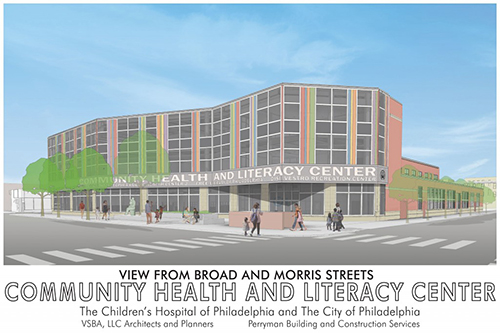
Contributed by Lia Thompson, University of Kansas, Community Tool Box Intern.
Example #3: Under One Roof: Health Care and Social Services in the Same Place
The Chicanos Por La Causa (CPLC) is the largest community development corporation based in Arizona. CPLC is committed to building stronger, healthier communities as a lead advocate, coalition builder, and direct service provider. CPLC helps more than 200,000 people through programs in four areas–housing, economic development, education, and health and human services. CPLC recognizes that the needs of the families it serves are complex as a family rarely approaches the CDC with only one need. As a result, CPLC sought to establish cross-sector partnerships that would more effectively and holistically meet the needs of families.
Read more about CPLC on Rooflines - The Shelterforce Blog, from the National Housing Institute.
Contributed by Lia Thompson, University of Kansas, Community Tool Box Intern.
example #4: building belonging through multilingual wayfinding

Finney County, Kansas, is home to many migrants and refugees. LiveWell Finney County aims to make the community more welcoming and connected. They have partnered with local agencies, including the hospital and nonprofits, to install wayfinding signage in multiple languages, helping all residents feel included and navigate community spaces more easily.
A Story of Change
Raymond had been involved with the justice system since adolescence. Jessie regularly faced difficult choices between paying rent, buying food, and covering other household expenses. Maureen had experienced homelessness and was working toward greater stability while in recovery from alcohol use. Felix immigrated from Guatemala as a teenager and had spent years working in low-wage jobs with limited opportunities for advancement.
When they stood together in their graduation robes, they shared something important: each had worked toward goals they had set for themselves, and each had built new relationships, skills, and opportunities along the way.
They had completed a comprehensive program designed to help participants strengthen economic stability and pursue education and employment goals. The program offered job-search and interview preparation, workplace skills, financial education, high school equivalency preparation, English-language learning, and connections to community resources. Jessie and Maureen earned high school equivalency credentials, Raymond strengthened skills that helped him pursue employment, and Felix expanded his English-language skills while exploring additional education and career opportunities.
Just as important, participants built relationships with one another. They shared meals, childcare, information, encouragement, and connections. Raymond learned about a job opportunity through Maureen's family network. Jessie found a school program that supported her daughter's interest in art through a recommendation from another participant. Felix's volunteer mentor helped him explore college and training options.
There is no single path toward economic security. For some people, access to stable employment may make the greatest difference. Others may benefit from education, training, affordable housing, childcare, health care, transportation, financial resources, or supportive relationships. Often, several of these things are needed at the same time. Strong communities help expand people's choices and create conditions in which individuals and families can build on their strengths and pursue their goals.
Understanding Poverty Today
This section explores how communities can expand economic opportunity and reduce barriers experienced by people living in poverty. Poverty can affect many areas of life, including housing stability, food security, health, education, transportation, employment, family well-being, and opportunities to participate fully in community life.
Language about poverty has changed over time. Terms such as people experiencing poverty, people with lower incomes, and people facing economic barriers generally describe circumstances without defining people by them. In this section, we'll primarily use people experiencing poverty when referring to people whose available resources are not sufficient to meet basic needs or participate fully in the economic and social life of their communities.
Poverty also looks different across communities and countries. The resources needed for housing, food, transportation, health care, education, and participation vary greatly depending on where someone lives. For that reason, understanding poverty requires looking not only at income, but also at cost of living, access to services and opportunities, household resources, and the broader economic and social conditions people experience.
Who Experiences Poverty and Why?
People experience poverty for many interconnected reasons. Some households experience economic hardship after job loss, illness, disability, divorce, displacement, or another major change. Others face longer-term barriers related to wages, housing costs, education, discrimination, health care, transportation, childcare, public policy, or access to wealth and economic opportunity.
These factors often interact. Poverty is therefore rarely explained by one decision, characteristic, or circumstance. Understanding the broader conditions affecting people's choices and opportunities is essential when communities develop strategies to increase economic security.
Access to education, training, and skills
Education and training can expand employment and economic opportunities, but people do not have equal access to them. Cost, transportation, childcare, disability access, language, technology, school quality, work schedules, and previous educational opportunities can all affect participation.
Some adults may want additional support with literacy, numeracy, English-language learning, digital skills, professional credentials, or job-specific training. Programs can help by making these opportunities affordable, accessible, relevant to participants' goals, and connected to realistic education and employment pathways.
Low-wage or unstable employment
Employment does not always provide economic security. People may work full time or hold multiple jobs while still having difficulty covering housing, food, transportation, childcare, health care, and other basic expenses.
Low wages, unpredictable schedules, limited benefits, seasonal or temporary work, lack of paid leave, and few opportunities for advancement can make it difficult for workers and families to build savings or withstand an unexpected expense. Strategies for increasing economic security may therefore need to address the quality and stability of employment as well as whether jobs are available.
Health, disability, and access to care
Health conditions and disabilities can affect employment, income, expenses, transportation, or caregiving responsibilities. At the same time, people with disabilities bring skills, knowledge, and experience to workplaces and communities and may thrive when environments are accessible and appropriate accommodations are available.
Barriers such as inadequate health coverage, inaccessible workplaces, discrimination, limited transportation, high medical costs, or difficulty obtaining needed supports can contribute to economic hardship. Accessible health care, disability supports, accommodations, income supports, and inclusive employment practices can expand opportunity and stability.
Substance use and recovery
Substance use disorders and economic hardship can interact in complex ways. Financial stress, trauma, unstable housing, limited access to care, and other difficult circumstances may affect substance use and recovery. Substance use disorders can also affect health, employment, relationships, housing, and financial stability.
Effective responses avoid blaming or stigmatizing people. They may include evidence-informed treatment, harm-reduction services, peer support, recovery services, stable housing, health care, employment support, and long-term community connection.
Mental health, trauma, and well-being
Mental health conditions and experiences of trauma can affect many areas of life, including work, education, relationships, housing, and physical health. Economic insecurity can also contribute to chronic stress and make it harder to obtain consistent care.
People who have experienced violence, displacement, discrimination, military service, community trauma, or other difficult circumstances may benefit from accessible, trauma-informed, and culturally responsive support. Mental health care works best as one part of a broader system of support rather than as an explanation for poverty itself.
Economic shocks and instability
People across income levels can experience financial hardship after a major setback such as job loss, a medical emergency, family separation, natural disaster, caregiving responsibility, or sudden increase in housing costs. Households with limited savings or access to affordable credit may have fewer resources for absorbing these shocks.
Emergency assistance, income supports, affordable health care, stable housing, paid leave, unemployment protections, and opportunities to build savings and assets can help families remain stable during periods of change.
Structural barriers and unequal access to opportunity
Economic opportunities are also shaped by broader systems and institutions. Discrimination, neighborhood disinvestment, unequal educational opportunities, limited transportation, housing barriers, inaccessible services, and unequal access to credit, professional networks, and other resources can influence people's opportunities over time.
Communities can address these barriers by examining policies and practices, investing in areas where resources have been limited, listening to people most affected, and creating more equitable access to education, employment, housing, health care, transportation, and economic opportunity.
Intergenerational economic barriers
Economic hardship can extend across generations when families have had fewer opportunities to build savings, property, education, professional networks, or other assets that can be passed from one generation to the next. Long-term disinvestment, discrimination, housing conditions, school resources, health disparities, and limited access to credit or employment opportunities can also accumulate over time.
These circumstances do not determine a person's future. Expanding access to quality education, stable employment, affordable housing, health care, childcare, financial resources, community networks, and opportunities to build assets can increase economic mobility for individuals and families.
Poverty Among Children and Families
Children can be especially affected by economic hardship because their health, education, housing, nutrition, and development depend partly on the resources and environments available to their families. In 2025, 13.4% of children in the United States lived below the official poverty threshold.
Poverty rates and experiences are not distributed evenly across communities. Differences reflect a range of historical and current economic and social conditions, including access to employment, housing, education, health care, wealth, and other resources.
Children in families experiencing poverty may be more likely to encounter food insecurity, housing instability, limited access to health care, fewer educational resources, or chronic financial stress. These circumstances can affect health and learning, but they do not define children's abilities or potential.
Supports such as stable housing, nutritious food, affordable childcare, high-quality schools, health care, transportation, family income supports, safe recreation, and strong relationships with family and community members can help children and families thrive.
Expanding Economic Security and Opportunity
Reducing poverty requires attention to both the immediate needs of individuals and families and the broader conditions that shape economic opportunity. No single strategy will work for every community or household.
Effective approaches may include:
- Education and training: Expanding access to strong K–12 education, high school equivalency programs, apprenticeships, vocational and technical training, adult education, and college opportunities.
- Stable employment and economic opportunity: Expanding access to jobs with adequate pay, predictable schedules, benefits when possible, safe working conditions, and opportunities for advancement.
- Affordable housing, childcare, and transportation: Reducing major household costs and logistical barriers that can make it difficult to work, pursue education, or build financial stability.
- Health care and behavioral health access: Providing affordable and accessible physical health, mental health, disability, substance use treatment, and recovery services.
- Income and asset-building supports: Helping households respond to immediate needs while also creating opportunities to build savings, access affordable financial services, develop credit, own assets, and increase long-term financial security.
- Social connection: Strengthening networks through which people share information, provide mutual support, connect one another with employment and services, and respond to challenges together.
- Community leadership and shared decision-making: Ensuring that people with lived experience of poverty have meaningful roles in designing, leading, and evaluating programs, services, and community change efforts.
The Bigger Picture
Expanding economic opportunity involves more than providing short-term assistance. It also means examining the conditions that influence whether people can obtain stable housing, education, health care, transportation, employment, financial resources, and meaningful opportunities to participate in community life.
Communities can combine direct support with efforts to reduce structural and institutional barriers. The strongest approaches recognize people's existing strengths and knowledge, respond to immediate needs without stigma, and involve people experiencing poverty in deciding what changes would be most useful.
Progress is possible when people have meaningful choices, supportive relationships, accessible resources, and opportunities to build economic stability over time. Rather than defining people by poverty, effective community efforts focus on expanding the conditions in which individuals, families, and communities can participate, contribute, and thrive.
Contributor
Phil Rabinowitz
Resources
Online Resources
ACORN, the Association of Community Organizations for Reform Now (originally Arkansas Community Organizations for Reform Now). ACORN has worked on poverty eradication in various communities for several decades.
The Ashoka Foundation, an international organization that funds micro-lenders and others engaged in poverty eradication in the developing world
The Asian Development Bank, addressing poverty in Asia and the Pacific.
The Boston Foundation. Among this Foundation's many publications are a Community Building Curriculum, designed in large part to train community leaders how to organize their neighborhoods to help reduce poverty and maximize community opportunity.
The Center for Community Change, an organization that has fostered coalitions that, in turn, have been instrumental in establishing the Food Stamp program, the Community Reinvestment Act, and the preservation of affordable housing. Some organizations that CCC has spawned that provide opportunities for the poor include:
- The Coalition on Human Needs
- The Coalition of Essential Schools home page and the organization's common principles of excellence in education
- The National Committee for Responsive Philanthropy, which works with funders to educate and advocate about the kinds of initiatives that will actually help people overcome poverty.
- The Rural Coalition.
- The Workforce Alliance, which advocates for workforce development.
The Curb-Cut Effect by Angela Glover Blackwell. Laws and programs designed to benefit vulnerable groups, such as the disabled or people of color, often end up benefiting all of society.
The Gates Foundation, wealthiest in the U.S., focuses largely on global health issues, but this can indirectly have a strong poverty-reduction impact in that healthier people are significantly more likely to engage in economic activity.
The Grameen Bank, the brainchild of Muhammad Yunus, originator of micro-credit. Makes small loans (as little as $10 to $25) to poor individuals and groups in Bangladesh.
The website of the Harlem Children's Zone, a comprehensive community initiative intended to reduce poverty and also promote overall community development in of some of Harlem's poorest neighborhoods.
The Opportunity International Network. Australia-based micro-credit lender, with training and mentoring for borrowers.
The website of the Poverty and Race Action Council, whose self-described purpose is "to link social science research to advocacy work in order to successfully address problems at the intersection of race and poverty."
SolvePoverty. Australian for-profit, originally affiliated with Opportunity International, that trains poor Southeast Asian youth for jobs in the computer industry.
Print Resources
Center for Community Change [no date given]. Getting Ahead: New approaches to generating jobs and opportunities for residents of low-income communities. Washington, DC: Author. A short how-to manual, with many examples, drawn from the work of this leading anti-poverty advocacy organization.
David K. (2004). The Working Poor: Invisible in America. New York, NY: Knopf. A detailed journalistic account of the working poor, and of how their situation might be bettered.
Ehrenreich, B. (2001). Nickel and Dimed: On (Not) Getting by in America. New York, NY: Henry Holt. The author's insightful first-person experiences in working three different low-wage jobs.
Jonathan Kozol (1995). Amazing grace: The Lives of Children and the Conscience of a Nation. New York, NY: Crown Publishers. This case study of the Mott Haven area of the South Bronx (and a best seller) is one of Kozol's many works describing the effects of poverty on children.
Ken A. (1982). The Underclass. New York, NY: Vintage Books. Though by now an older book, Auletta's work is rich in illustrative detail and distinctive in describing the promises and pitfalls of job training programs as a method for emerging from poverty.
Lisbeth B. (1997). Common Purpose: Stengthening Families and Neighborhoods to Rebuild America. New York, NY: Doubleday. A comprehensive study by a leading scholar on the subject.
Meyer, A., Blake,L., Caine, H., & Williams P. (2000). On the Ground with Comprehensive Community Initiatives. Columbia, MD: The Enterprise Foundation. Many examples of such programs from across the country, and how they work in practice.
William J. (1996). When Work Disappears. The world of the new urban poor. New York, NY: Knopf. Wilson's by-now classic exposition of the effects of the disappearance of industrial jobs from our central cities.
Use this checklist to assess how your community, organization, or partnership is helping individuals and families build pathways out of poverty.
Understand the context
___ Learn about poverty in your community—who is most affected, and why.
___ Examine local data on income, education, housing, health, and employment.
___ Listen to people with lived experience to understand barriers and assets from their perspective.
___ Recognize how racism, discrimination, and policy decisions contribute to persistent poverty.
Build comprehensive supports
___ Offer education and skills training programs that align with real employment opportunities.
___ Partner with local employers to create paid apprenticeships and living-wage jobs.
___ Connect participants to affordable housing, childcare, transportation, and healthcare.
___ Include mental health and recovery supports as core program elements.
___ Provide access to financial literacy training and credit-building opportunities.
Strengthen community and relationships
___ Foster peer networks that provide encouragement, childcare exchange, and resource sharing.
___ Build partnerships among nonprofits, government agencies, businesses, and schools.
___ Create mentorship programs linking participants with professionals or community leaders.
___ Celebrate milestones (graduations, new jobs, certifications) to reinforce progress and pride.
Empower and involve participants
___ Engage people with lived experience of poverty as leaders, advisors, and co-designers.
___ Use trauma-informed approaches that emphasize dignity, trust, and choice.
___ Encourage civic engagement—such as voting, advocacy, and community leadership.
___ Focus on strengths and assets, not deficits or “fixing” individuals.
___ Measure success not only by income but also by increased stability, confidence, and connection.
Example #1: A Tour of Mariposa: Equitable Transit-Oriented Development
The Mariposa Project led by the Denver Housing Authority is an affordable and transit-oriented housing development in which health outcomes and community-level improvements are evaluated. The new mixed-income community has revitalized the surrounding areas, breaking down physical barriers between the public housing units and the rest of the community and infusing the area with community-informed retail and services. The Denver Housing Authority has transformed 10th Street into a promenade that connects the rail station to the nearby Art District on Santa Fe, drawing visitors from across the city to an area that was once overlooked.

Contributed by Lia Thompson, University of Kansas, Community Tool Box Intern.
Example #2: The Brandywine Center: In Pennsylvania, Wealthy County’s Poorer Residents Get A Healthy Place To Live
Although Chester County, Pennsylvania, has been considered one of the richest counties in the country, seven percent of its half-million residents live in poverty. Coatesville, a city of 13,000 people, is one such low-income pocket. To combat this problem, the Brandywine Health Foundation (BHF) constructed the Brandywine Center, a community hub. The four-story building houses health and dental services on the first floor, behavioral care on the fourth, and 24 units of affordable senior housing on the two middle floors. The BHF is committed to working toward both improved neighborhood conditions and improved health in this low-income community.
Contributed by Lia Thompson, University of Kansas, Community Tool Box Intern.
Example #3: Community Health And Literacy Center: A Health, Literacy & Recreation Hub
The Community Health and Literacy Center, formed out of a collaboration between the Children’s Hospital of Philadelphia (CHOP) and the City as unexpected partners, worked together to bring a neglected neighborhood both improved access to health care and health, promoting recreation and literacy opportunities.
The center, which opened in the spring of 2016, is a first-of-its-kind hospital-city partnership. The project includes a CHOP pediatric clinic; a full-service community health center run by the city’s department of public health; a branch of the Free Library of Philadelphia; and a modern recreation center with a playground and green space, run by the city’s Department of Parks and Recreation. It offers welcoming outdoor space for the neighborhood and an indoor community meeting space. The location has excellent public transit access, with a subway stop on site. CHOP and the city are working to integrate services and programming as a way to have more of an impact on improving population health.
Contributed by Lia Thompson, University of Kansas, Community Tool Box Intern.
Example #4: Vita Health & Wellness District: Health at the Center of a Neighborhood Transformation
The Vita Health & Wellness District project was established through a partnership between the Stamford housing authority and Stamford hospital to revitalize an impoverished inner city area, in Stamford Connecticut, into a mixed-income community with expanded neighborhood services centered around a sustainable urban farm. Addressing the social determinants of health provide a framework for managing the neighborhood transformation in ways that would support and strengthen the existing community.
The Vita project is a great example of how a hospital can fulfill the Affordable Care Act’s mandate to engage its community by partnering to address the social determinants of health. The project also demonstrates how a forward-thinking community development organization can effectively partner with the health sector to pursue comprehensive community revitalization that could not have been achieved otherwise. These are still early days in what promises to be a fruitful and long-lasting partnership.
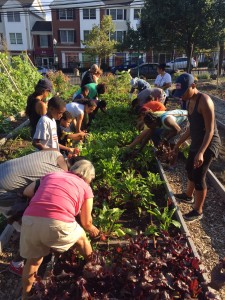
Read more about the Vita Health & Wellness District project on the Building Healthy Places Network blog.
Contributed by Lia Thompson, University of Kansas, Community Tool Box Intern.
Example #5: Rolling Hills Apartments: Weaving Together Opportunities for Healthier Lives for a Diverse Immigrant Community
Twin Cities LISC, a local community development financial institution, has partnered with local organizations and city agencies to create quality affordable housing with improved healthcare access, including constructing a Federally Qualified Health Center. LISC also employed community health advocates to weave together the isolated health-related efforts in the neighborhood of focus into a cohesive health agenda. More specifically, they connect and help support existing efforts, identify and help address gaps, and facilitate the conversations and activities that sustain collaboration.
Learn how social determinants of health are being addressed to build healthier lives for immigrants in St. Paul, Minnesota in this Community Close-Up from the Building Healthy Places Network.
Contributed by Lia Thompson, University of Kansas, Community Tool Box Intern.
Example #6: Community Development 2.0—Collective Impact Focuses a Neighborhood Strategy for Health
The East Bay Asian Local Development Corporation (EBALDC) has built health into its strategic plan, and in the neighborhood revitalization work of The San Pablo Collaborative (SPARC), convened by EBALDC, health is the first priority. The San Pablo Area Revitalization Corridor neighborhood that stretches between downtown Oakland and Emeryville is considered to be one of the poorest and most disadvantaged areas of Oakland, California. Life expectancy in this area is up to 20 years lower than the neighboring area, Oakland Hills. SPARC works tirelessly to address the physical, social and economic factors-“social determinants”- that shape residents’ health in the San Pablo Avenue Corridor. SPARC partners work collectively in order to create an overall healthier environment for residents throughout the neighborhood. The California Hotel has been successfully preserved as affordable housing and a grocery store has been brought to this long abandoned neighborhood.
Learn how social determinants of health are being addressed to build healthier lives for the most disadvantaged areas of Oakland, California in this Community Close-Up from the Building Healthy Places Network.
Contributed by Lia Thompson, University of Kansas, Community Tool Box Intern.
Example #7: Revitalizing People and Place with a Healthy Food Hub Origin

Following the devastation of Hurricane Katrina in New Orleans, the founders of what became Broad Community Connections (BCC) began to attend community meetings, and investigate with their fellow community members how to rebuild a city in disarray. These discussions highlighted many of the problems that many central New Orleans resident had faced even before the storm, including but not limited to economic disadvantage, community disinvestment, health disparities, and lack of access to many needed goods and services. BCC was designed to revitalize Broad Street, a commercial thoroughfare running through the heart of the city and to connect several of the central city neighborhoods.
Founded in 2008, BCC set its sights on improving health and improving economic vitality in the area. Ultimately, the ReFresh project provided a high-quality grocery store to a low-income food desert and created a multi-faceted hub to improve healthy food access and local food systems, foster community connectivity, support youth development, and anchor economic development.
Read more about the ReFresh project in New Orleans on the Building Healthy Places Network blog.
Contributed by Lia Thompson, University of Kansas, Community Tool Box Intern.
Example #8: Supporting Childhood Wellness Through Healthy, Affordable Housing
In a low-income Philadelphia community, for-profit and non-profit developers have partnered to create Paseo Verde, a high-quality housing development highlighting resident and community health. The development prides itself on making healthy housing accessible even for families in poverty. This one-, two-, and three-bedroom apartment complex, Paseo Verde, supports children’s health through its environmentally sustainable design, on-site health center and pharmacy, resident service programs, and social service programs.
Read more in the profile from How Housing Matters.
Contributed by Lia Thompson, University of Kansas, Community Tool Box Intern.
Example #9: Building Strong Neighborhoods with Affordable Housing

The New Settlement Apartments project began in 1990 with the acquisition and restoration of fifteen abandoned buildings, the construction of a new building, in addition to the acquisition of a seventeenth building to provide over 1,022 affordable homes for a community of more than 3,500 people, in which thirty percent are formerly homeless. Presently, the eighteenth building is under construction to provide sixty additional affordable apartments. This project has played a monumental role in transforming one of the worst areas of New York City into a vibrant mixed-income neighborhood.
Read more from the Settlement Housing Fund.
Contributed by Lia Thompson, University of Kansas, Community Tool Box Intern.
Example #10: Scholarships for Every Student
In 2005, Baldwin community leaders learned about a plan that had been implemented in the Michigan City of Kalamazoo to provide every high school graduate a full scholarship to attend any public college in the state. The program, called the Kalamazoo Promise, was made possible by a group of anonymous donors. Unlike Kalamazoo, Baldwin didn’t have any local prospective big businesses or deep-pocketed philanthropists. As written, “Rick Simonson, a Baldwin native who chaired President Gerald Ford’s election campaign in Michigan and later served as a legislative staffer and lobbyist in Michigan, told them about a law that the legislature had just passed aimed at creating 10 “promise zones” in the state to offer Kalamazoo-like scholarships.” If communities raised sufficient seed money, they would be allowed to support the scholarships by keeping a portion of annual property tax revenues that they would otherwise have to pass on to the state. Astonishingly, within a year, Baldwin had raised enough money to initiate the scholarship program. The Baldwin Promise is an extraordinary representation of a small town’s aspiration to provide a better opportunity for its youth. While there are promise scholarships in various communities across the nation, Baldwin was the first place to raise the seed funds through grassroots contributions.
Read more about Scholarships for Every Student.
Contributed by Lia Thompson, University of Kansas, Community Tool Box Intern.
Example #11: The Hunger Hack
After a storm led to the cancellation of a church event in the Washington, D.C., suburbs last year, Tierney Screen found herself in a room filled with 3,600 unclaimed paper lunch bags, each containing a sandwich, fruit, chips, and cookies. Unable to distribute them by herself and the thought of having to toss them in the garbage pained her. A few months earlier she met a student who spoke about a website she and some other students created in which restaurants and community establishments could donate excess food to organizations that feed the hungry. Screen decided to call the student, Maria Rose Belding, who explained how to post the lunches on the site and within four hours, a nearby food pantry claimed them. The bags would be handed out to homeless people in Washington D.C.
Read more about The Hunger Hack.
Contributed by Lia Thompson, University of Kansas, Community Tool Box Intern.
-
What do we mean by increasing access?
-
Why should you make your organization or initiative more accessible?
-
When should you make your organization or initiative more accessible?
-
Who can help you increase access?
-
How do you go about increasing access?
Disability is a common part of human experience. In the United States, more than one in four adults reports having a disability, and worldwide an estimated 1.3 billion people experience significant disability.
People with disabilities are a diverse group. Disabilities may be physical, sensory, cognitive, intellectual, developmental, neurological, or related to mental health or chronic health conditions. Some disabilities are apparent, while others are not. A person's experience of disability is also shaped by the accessibility of the environments, systems, services, technologies, and communities around them.
Despite progress in disability rights and accessibility, people with disabilities continue to encounter barriers to education, employment, health care, transportation, communication, civic participation, recreation, and other aspects of community life. Increasing access means identifying and removing those barriers and designing organizations and communities in ways that support full and equitable participation.
Accessibility issues can take many forms. For example:
- Jamahl had long been interested in volunteer work and was excited to attend a community lecture on volunteerism. Jamahl uses American Sign Language, but no interpreter or other effective communication support was available. Because he could not fully access the presentation, he left before information about volunteer opportunities was distributed.
- Katrina wanted her son Ricky to participate in a citywide afterschool tutoring program. Transportation was provided for students, but the vehicles were not wheelchair accessible. Ricky wanted additional support with math, but the transportation barrier prevented him from participating.
- After Emilio's wife died, he began attending a local grief support group. The facilitator regularly distributed articles that participants found useful, but the materials were not available in a format Emilio could read with his low vision. After repeatedly being unable to access the same information as other participants, he stopped attending.
These examples illustrate an important point: people are often excluded not because of disability itself, but because services, environments, transportation, information, or communication were not designed to include them.
Some accessibility improvements are simple, while others require more planning, expertise, or resources. Accessibility is most effective when it is built into an organization's regular planning and decision-making rather than addressed only after someone encounters a barrier.
What do we mean by increasing access?
Increasing access means creating environments, programs, services, information, and opportunities that people with disabilities can use and participate in equitably.
Accessibility is often associated only with physical features such as ramps, elevators, or accessible restrooms. Physical access is essential, but true accessibility is broader. It also includes communication, digital technology, information, transportation, organizational policies, attitudes, program design, and opportunities to participate in decision-making.
Increasing access may involve:
- Building disability inclusion into the attitudes, practices, and culture of your organization or initiative
- Providing effective and accessible communication
- Making physical spaces accessible
- Making websites, documents, registration systems, social media, videos, and other digital information accessible
- Reviewing policies and procedures that may unnecessarily limit participation
- Providing reasonable accommodations and other supports when individual access needs arise
- Including people with disabilities in planning, leadership, implementation, and evaluation
Accessibility and accommodation are related but not identical. Accessible or universal design tries to reduce barriers for as many people as possible from the beginning. Individual accommodations address access needs that remain. Strong organizations plan for both.
Why should you make your organization or initiative more accessible?
Accessibility supports equity, participation, and community inclusion. It allows more people to use services, attend events, volunteer, work, lead, contribute ideas, and take part in community life.
In the United States, organizations may also have legal responsibilities under disability-rights laws such as the Americans with Disabilities Act and, in some settings, other federal, state, or local requirements. The specific requirements depend on the type of organization, program, facility, and activity involved.
Accessibility also strengthens organizations. When people with disabilities can participate fully, organizations benefit from a broader range of experiences, knowledge, skills, perspectives, and leadership.
When should you make your organization or initiative more accessible?
Accessibility should be considered from the beginning and throughout the life of an organization, initiative, program, or event. It should not depend on whether you already know that a person with a disability will participate.
Accessibility is especially important to consider:
- When developing a new program, service, or initiative
- When choosing, building, renovating, or moving into a physical space
- When planning a conference, meeting, training, retreat, public event, or other gathering
- When creating or redesigning a website, app, online registration system, document, video, or other digital resource
- When developing organizational policies and procedures
- When recruiting staff, volunteers, board members, participants, or community partners
- When participants identify barriers or request accommodations
An organization may have few known participants with disabilities precisely because barriers have prevented people from participating. A lack of visible participation should not be interpreted as evidence that accessibility is unnecessary.
Imagine that a public building can be reached only by climbing a long flight of stairs. Staff members might say that they rarely see wheelchair users there. But the stairs themselves may be the reason wheelchair users have not been able to enter. Accessibility should be evaluated by looking at barriers, not simply at who has managed to participate despite them.
Who can help you increase access?
Accessibility can involve many different areas -- physical design, communication, technology, policy, transportation, accommodations, and organizational practices. You do not have to figure everything out by yourself.
One of the most important resources is people with disabilities themselves. People who experience barriers have firsthand knowledge of what works, what does not, and what organizations often overlook. Include people with disabilities meaningfully in planning, decision-making, evaluation, and leadership rather than asking for input only after decisions have already been made.
Useful sources of assistance can include:
- Centers for Independent Living (CILs) -- community-based organizations led by people with disabilities that provide advocacy, information and referral, peer support, independent living services, and expertise on disability access
- The ADA National Network -- regional centers that provide information, training, and technical assistance related to the Americans with Disabilities Act
- The U.S. Access Board -- a federal resource for accessibility standards and guidance related to the built environment, transportation, and information and communication technology
- The Job Accommodation Network (JAN) -- a resource for workplace accommodations and disability employment questions
- Disability-led community organizations and advocacy groups
- Accessibility consultants, architects, web accessibility specialists, interpreters, captioners, and other professionals with relevant expertise
- Attorneys or other qualified professionals when you need guidance about specific legal requirements
When possible, compensate people with disabilities for substantial consultation, training, accessibility review, or other professional contributions rather than assuming they should provide this expertise without compensation.
How do you go about increasing access?
Build disability inclusion into your organizational culture and practices.
Accessibility begins with recognizing people with disabilities as full members, leaders, employees, volunteers, participants, customers, and partners in community life.
Examine whether assumptions about disability affect who is invited to participate, whose input is taken seriously, who is considered for leadership, or how your organization defines competence and independence.
Reach out to people with disabilities who are already involved in your organization and to disability-led organizations in the community. Ask where barriers exist and what changes would make participation more equitable.
Representation matters, but meaningful inclusion goes beyond representation. A person with a disability should not be expected to represent every disabled person or serve as the organization's unpaid accessibility expert simply because of their identity. People with disabilities should have real influence over decisions that affect them.
Staff, board members, volunteers, and leaders may also benefit from training on disability inclusion, ableism, accessibility, accommodations, and respectful communication. Whenever possible, involve trainers with lived experience and relevant expertise.
Use respectful and responsive communication.
Respectful disability language changes over time and preferences differ among individuals and communities. Rather than relying on one universal rule, listen to how people describe themselves and use the language they prefer.
- Treat adults as adults and communicate directly with the person rather than automatically speaking to a companion, interpreter, aide, or support person.
- Don't make assumptions about what assistance someone needs. Ask before helping and respect the person's answer.
- Remember that two people with the same disability may have very different experiences and access needs.
- Remember that many disabilities are non-apparent. Do not assume that someone does or does not have a disability based on appearance.
- Hold staff members and volunteers to relevant performance expectations while also providing reasonable accommodations and avoiding assumptions about what people with disabilities can or cannot do.
- Respect mobility devices, communication devices, service animals, and other disability-related equipment as part of a person's personal space. Do not move or handle them without permission.
Use language that respects people's preferences and identities.
Person-first language, such as "person with a disability," is preferred by many people. Others prefer identity-first language, such as "disabled person," "autistic person," or "Deaf person." Preferences can vary by person, community, and context.
When writing about a specific person, use the terminology that person prefers whenever possible. When communicating with a broader audience, use respectful contemporary terminology and recognize that no single style is universally preferred.
Avoid outdated or stigmatizing expressions such as "the handicapped," "crippled," "wheelchair-bound," or describing someone as a "victim" of or as "suffering from" a disability unless the person uses that language for themselves. Avoid using "normal" as the opposite of disabled; terms such as "nondisabled" may be more appropriate when the distinction is relevant.
Disability does not always need to be mentioned. Include it when it is relevant to the topic or when the person identifies it as important, rather than treating disability as either something that must always be emphasized or something that should never be discussed.
Provide effective communication.
People communicate in many different ways. The most effective approach is to ask what communication method or support works for the individual and consider the nature, length, complexity, and context of the communication.
Depending on the situation, effective communication may include:
- Qualified sign language interpreters
- Communication Access Realtime Translation (CART) or other real-time captioning
- Captioned video
- Assistive listening systems or devices
- Large-print or Braille materials
- Accessible electronic documents that work with screen readers and magnification software
- Audio versions of written information
- Augmentative and alternative communication
- Plain-language or Easy Read materials when appropriate
- Additional time for communication
Do not assume that every Deaf or hard-of-hearing person uses sign language, every blind person reads Braille, or every person with the same disability communicates in the same way.
Qualified interpreters or other appropriate communication supports may be necessary for complex communication. Organizations covered by disability-rights laws should understand their responsibilities for providing effective communication rather than expecting participants to supply their own interpreters or other supports.
Make physical spaces accessible.
Inclusive attitudes and communication matter, but they cannot substitute for physical access. If people cannot enter, navigate, or use a space safely and independently, they cannot participate equitably.
Accessibility should be included in budgets and planning from the beginning whenever possible. Retrofitting inaccessible environments later can be more difficult and expensive than incorporating accessibility during initial design or renovation.
When building or renovating facilities, use current accessibility standards and qualified professionals. Consider universal design approaches that make spaces usable by people with a wide range of abilities, ages, and circumstances.
Consider universal and inclusive design.
Universal design is an approach to creating environments and products that can be used by as many people as possible without requiring specialized adaptation. Its traditional principles include:
- Equitable use: The design is useful to people with diverse abilities
- Flexibility in use: The design accommodates a wide range of preferences and abilities
- Simple and intuitive use: The design is understandable regardless of the user's experience, knowledge, or concentration
- Perceptible information: Important information is communicated effectively in more than one way when appropriate
- Tolerance for error: The design reduces hazards and the consequences of accidental actions
- Low physical effort: The design can be used comfortably and efficiently
- Size and space for approach and use: People have sufficient space to approach, reach, use, and move through the environment
Universal design can reduce many barriers, but it does not eliminate the need for individual accommodations. Continue providing ways for people to identify access needs that have not been addressed through general design.
Evaluate the accessibility of meeting and event spaces.
When holding meetings, trainings, conferences, retreats, or public events away from your own facility, evaluate accessibility before committing to the location. Do not rely only on a venue's statement that it is "ADA accessible" or "wheelchair accessible."
Ask specific questions and, when possible, review the space using a current accessibility checklist and input from people with disabilities. Consider:
- Accessible parking and routes from parking or public transportation
- Entrances, doorways, elevators, ramps, and interior routes
- Accessible restrooms
- Seating and table arrangements
- Accessible stages, podiums, microphones, and presentation areas
- Emergency evacuation procedures
- Lighting and acoustics
- Service-animal access
- Availability of assistive listening systems, captioning, or interpretation
- Accessible virtual participation when hybrid options are offered
Event announcements and registration materials should explain available accessibility features and provide a clear way for participants to request accommodations or ask accessibility questions. Avoid requiring people to disclose more medical or personal information than is necessary to arrange the accommodation.
Basic Logistics:
- Make presentation materials available in advance when possible, particularly for participants who use screen readers, interpreters, captioners, assistive technology, or other communication supports.
- Integrate accessible seating throughout the room rather than limiting wheelchair users to one area.
- Keep aisles, routes, doorways, and access to seating wide enough and free of obstacles.
- Make sure doors and entrances can be used independently whenever possible. If a temporary barrier cannot immediately be removed, provide appropriate assistance while working toward a more permanent accessible solution.
- Caption prerecorded videos and provide appropriate access for live audiovisual content.
- Make microphones, tables, podiums, stages, and the routes to them accessible to speakers and participants with disabilities.
- Prepare accessible versions of materials far enough in advance to allow participants to use them at the same time as everyone else.
- Provide interpreters and captioners with presentation materials, names, technical terminology, and other relevant information in advance whenever possible.
- Confirm assistive listening systems, microphones, captioning equipment, internet connections, and other accessibility technology before the event begins.
- Check all accessibility arrangements before participants arrive rather than assuming they have been put in place correctly.
- Make sure staff and volunteers know how participants can request assistance or report an access problem during the event.
Fragrance and chemical sensitivities
Some people experience health effects from fragrances, cleaning products, smoke, or other environmental exposures. When relevant to participants' access needs, organizations can reduce barriers by avoiding unnecessary scented products, choosing lower-fragrance cleaning practices, maintaining appropriate ventilation, and asking attendees to limit fragrances when an accommodation has been requested.
Avoid promising a completely "scent-free" environment unless you can actually control all possible exposures. A fragrance-reduced environment and clear communication about what the organization can reasonably provide may be more accurate.
Accessible formats for information
Accessible communication does not mean creating one alternative format for everyone. Different people use different formats and technologies, so ask what will provide effective access.
Sign language interpretation can provide communication access for people who use sign language. Use qualified interpreters who can interpret accurately, effectively, and impartially. Depending on the situation, interpreters may participate in person or through video remote interpreting when that method provides effective communication.
Sign languages are complete languages with their own grammar and structure. American Sign Language (ASL), for example, is distinct from English and from sign languages used in many other countries. Do not assume that every Deaf or hard-of-hearing person uses ASL or any sign language.
Accessible electronic documents can be used with screen readers, screen magnification, refreshable Braille displays, text-to-speech software, and other assistive technologies. Websites, forms, presentations, PDFs, and other electronic materials should be created with accessibility in mind rather than relying on older physical media or inaccessible scanned documents.
Audio versions of written materials may be useful for some people with vision, reading, cognitive, or other disabilities. Whenever possible, provide accessible electronic text as well, since it allows people to use their own preferred assistive technology.
Large-print materials may be useful for people with low vision and others who benefit from larger text. Ask participants about their preferred text size and format. Use readable fonts, good contrast, uncluttered layouts, and sufficient spacing.
Braille may be requested by people who read Braille. Do not assume that all people who are blind use Braille; accessible electronic text, audio, or another format may be preferred.
Assistive listening systems and devices can improve access to spoken information for some people with hearing loss. The appropriate system depends on the venue, communication needs, and equipment being used.
Captioning makes spoken information and other meaningful audio available as text. Prerecorded video should include accurate captions, and live events may use real-time captioning such as CART. Captions should identify speakers and include meaningful non-speech audio when relevant.
Relay, text, and video communication can provide telephone access for people who are Deaf, hard of hearing, DeafBlind, or have speech disabilities. Telecommunications relay services, video relay services, captioned telephone services, text communication, and other technologies may be used depending on the person's preferences.
Don't forget digital accessibility.
Organizations increasingly communicate and provide services through websites, social media, online forms, mobile apps, virtual meetings, videos, electronic documents, and other digital tools. These resources can create barriers just as physical buildings can.
Digital accessibility may include:
- Providing text alternatives for meaningful images
- Captioning video and providing transcripts when useful
- Ensuring websites and forms can be navigated by keyboard
- Using clear headings, labels, and form instructions
- Creating documents that work with screen readers
- Using sufficient contrast and avoiding communication that depends on color alone
- Making virtual meetings accessible to people using interpreters, captioning, screen readers, and other assistive technology
Use current accessibility standards and guidance when creating or purchasing digital systems. Accessibility should be considered during design and procurement rather than added only after problems are reported.
In Summary
Accessibility is an essential part of meaningful community participation. People with disabilities should be able to use community services, attend events, obtain information, work, volunteer, lead, and participate in organizations on an equitable basis.
Increasing access requires more than modifying buildings. Organizations should also examine communication, digital technology, transportation, policies, organizational culture, program design, and decision-making. Universal and inclusive design can prevent many barriers, while individual accommodations help address access needs that remain.
Most importantly, involve people with disabilities in the process. People who experience barriers bring essential knowledge about what accessibility looks like in practice. By identifying barriers, planning proactively, providing effective communication, and sharing decision-making with people with disabilities, organizations can build communities in which more people are able to participate, contribute, and lead.
Contributor
Chris Hampton
Resources
Online Resources
The Curb-Cut Effect by Angela Glover Blackwell. Laws and programs designed to benefit vulnerable groups, such as the disabled or people of color, often end up benefiting all of society.
Disability Social History Project.
Dot Nary: Holding events that welcome all is a column from the Lawrence Times that addresses disenfranchised groups, such as people with disabilities and chronic conditions, whose needs for accommodation to participate at the tables are often overlooked, misunderstood or, worse, ignored.
The City of San Antonio, Texas Planning Department and the Disability Advisory Committee. (1997). Disability etiquette handbook.
U.S. Department of Labor Office of Disability Employment Policy.
The Virtual Volunteering Project's article on Working with Online Volunteers Who Have Disabilities
What You Should Know About Medical Examinations video produced by Able South Carolina presents information about how to ensure equal access to health care for people with disabilities.
Print Resources
American Friends Service Committee. (1997). Guide to etiquette and behavior for relating to persons with disabilities.
Kailes, J., & Jones, D. (1993). A guide to planning accessible meetings. Houston, TX: Independent Living Research Utilization.
National Organization on Disability (1997). That all may worship: An interfaith welcome to people with disabilities. Thornburgh, G. (Ed.). Washington, DC: National Organization on Disability.
Paraquad, Inc. (1999). Disability etiquette. St. Louis, MO: Paraquad, Inc.
Rife, J., & Thornburgh, G. (1996). From barriers to bridges: A community action guide for congregations and people with disabilities. Thornburgh, G. (Ed.). Washington, DC: National Organization on Disability.
White, G., Froehlich, K., & Knight, V. (1997). Youth Volunteer Corps training manual for working with youth volunteers who have disabilities. Lawrence, KS: University of Kansas Research and Training Center on Independent Living.
What do we mean by increasing access?
___Changing attitudes within our organization or initiative
___Changing the way we communicate with others
___Changing physical things, such as the structure of the spaces we use and the formats in which we present information
Why should you make your organization or initiative more accessible?
___It's simply the right thing to do
___Makes for a larger pool of potential volunteers, members, and staff
___Increase diversity in your initiative or organization
___Makes it possible for more people to make use of any services or programs you provide
When should you make your organization or initiative more accessible?
___With the advent of the Americans with Disabilities Act, it's also the law
___When you are looking to increase your numbers of volunteers, members, or staff.
___When you are thinking about new spaces
___When you're planning a conference, retreat, or some other special gathering
Who can help you increase access?
___Local Independent Living Centers (ILC's)
___Disability and Business Technical Assistance Centers (DBTAC)
___Attorneys
___People with disabilities in your community
How do you go about increasing access?
___Change attitudes within your organization or initiative
___Change the way you communicate with regard to disabilities
___Change the physical structure of the spaces we use and make information available in alternative formats
Example #1: Interview with Brigid Schwilling
Brigid Schwilling is a graduate student at the University of Kansas who has extensive volunteer experience. She spoke with the Community Tool Box about her experiences as a person with a disability volunteering with a variety of nonprofit organizations and community health agencies. To learn more about the agencies at which she volunteers, just follow the links within the interview.
CTB: Can you tell me about your experience with organizations that do community health and development work, either as a volunteer or a staff member or as a recipient of services?
Schwilling: Well, I do a lot of volunteer work. Most of the places where I have volunteered are accessible. Some organizations, due to lack of funding, haven't been able to make it accessible. And I'd say in a case like that I'm pretty understanding, but I've also been in situations where other organizations have not been willing to do things just because they're being jerks.
I do think it's important to consider accessibility for your staff as well as your clients. I volunteer for places like the Kansas Audio-Reader Network and Independence, Inc. and they're accessible. But I remember when I first started volunteering for Audio-Reader the doors weren't constructed so that a person with a wheelchair could go over. And they had to fix that, mainly because I complained about it.
One thing I have found in terms of accessibility is that people that are designing these things often just don't think. When people are thinking about accessibility issues, if they don't have employees (who are disabled), they need to get themselves a wheelchair and get in it and try navigating around the facility in that wheelchair. Can they make it through the door? Can they get into the bathroom? Are they able to use the toilet? Are they able to get behind their desk? Or if they want to transfer to a chair, do they have room to do that?
CTB: In terms of the places you volunteer, can you tell me a little bit more about what kind of accommodations they'd need to make in order to make it more possible to volunteer there?
Schwilling: Taking Headquarters [a telephone and walk-in crisis counseling center where Schwilling volunteers] for example, if they were going to make their present location more accessible, they would need to have a ramp, either at the front door or the back door. If they did it in the back door, they'd have to widen the back door. I don't have to take my scooter, but if I did, that's what I'd need. Even if I didn't want to take my scooter, a ramp would be a lot more convenient, because those steps in the back are really narrow, and in bad weather both the steps in the front and the back can be slick.
And I know that there is an upstairs area and they don't have an elevator, but what they do is they make an effort to accommodate their staff downstairs, so that works. And the downstairs bathroom is really nice and roomy, but if you were going to accommodate a person in a wheelchair, you would want to widen its door and get rid of things being stored in there that block parts of the floor.
CTB: So it's not just a matter of having it built the right way--you also have to maintain it.
Schwilling: I want to make it clear, I know they're doing the best they can, and I'm really appreciative of how they accommodate me in what ways they can.
CTB: Well that's actually the other thing I thought maybe you could talk about--that accessibility is more than physical stuff, it's also attitude and language. Could you tell me what kind of attitude you look for when you're thinking about volunteering some place, and if you have any anecdotes about things that have been said to you or the way people have dealt with you?
Schwilling: Well, as a volunteer or a paid employee, one of the things I do look for is whether they're willing to work with my needs. And to be honest with you, sometimes as a person with a disability it's really tempting for me to want to say, "I don't have any special needs!" because I feel like some people do look at being disabled as a disadvantage. But I just have to find those people that don't see it that way, that see I have some unique needs, but I also can offer a lot. And I feel like Headquarters has been good about that. In terms of their attitude, on occasions when I couldn't get there because of transportation, they've been great about getting somebody else to work for me. That's not an ideal thing, but it has happened, and they do understand that. And in terms of scheduling, I have to schedule my rides literally a week in advance, so I've worked out something with the scheduler where I can just say, "Okay, on this particular week, I'd like to work this shift." And they schedule me for that shift. If it doesn't work for them, they tell me with plenty of advance notice. But that's something they don't do for everyone. So that's an example of taking my needs into account, because I can't just jump in car and be there in 15 minutes. I have to plan it out so that I have a ride.
So they're very accommodating to what I need. That allows me to give them what they need. Beyond the whole ride thing, I have a service dog, and he has blankets that he lays on when he's there, and they let me keep his blankets there under the desk. And I know that he sheds, and they tolerate that too. And also, I notice that when I am there, if I need help with something or if I look like I need help with something, the staff and other volunteers are great about offering to help - like getting a file for me or if it's faster for them to jump and answer the door. I find that to be a very accommodating environment.
I've been in environments that were not accommodating, and ended up being a failure for me. For example, my undergrad degree is in elementary ed, and when I got to my student teaching, I got placed with a teacher who was very negative and she didn't want me there and she wasn't helpful at all.
CTB: What kinds of things happened?
Schwilling: Well, I was having a lot of physical problems, and when you're having physical problems it's hard to concentrate on what you need to do. And so I was having problems, and she didn't try to make anything easier or in any way ask what she could do to help me make it a successful experience. I don't expect people to do things for me because that's just real life--you have to be able to be an asset to whatever organization you're working for--but she was unwilling to do absolutely anything, and her attitude made it harder for me.
CTB: It sounds like her attitude was the real roadblock to accessibility there.
Schwilling: The school itself had maybe one accessible door, but I didn't have my scooter at the time. So to me the issue wasn't accessibility in terms of the physical, but it wasn't accessible in terms of attitude. I ended up from actually withdrawing from the program. That was my choice, but like I said it was such a negative experience, and she had told me at one point that the only reason she accepted me as a student teacher was because she wanted my dog in her classroom.
CTB: That's so demeaning!
Schwilling: Yeah, my confidence took a shot, and I really questioned who I was and what I was doing, and it's really scary as a person with a disability when I think about employment because I never want to be in that position again. I'm studying social welfare right now, and I'm going to be doing practica in a year, and that's one thing I have to keep in mind; not only is the facility accessible, but what are their attitudes? Are they going to believe in me? Are they going to encourage me?
CTB: What would be a few tips you'd give people about their attitudes?
Schwilling: A tip I would give to employers would be to keep an open mind. So many people see people with disabilities and they automatically assume that they can't do something. Don't assume that. Keep an open mind, sit down and talk with the person, and talk to them about their capabilities. Most people with disabilities are not going to be offended by talking about their disability or what their needs are or what their capabilities are. And assure them that if they have any needs that need to be addressed that you're willing to talk with them about it and try to make accommodations. Just like with any person, there are people with disabilities that take advantage - some people, if you give them an inch, they'll take a mile. But most people with disabilities will just ask for what they need because they want to succeed just like somebody who doesn't have a disability. They want to have a job or volunteer and feel good about what they're doing. Don't just have that talk once, go up to them every so often and say, "How are things going?"
One thing that really has bothered me in employment settings is when I have not done something right, my employers almost always don't say anything. I wonder if because I have a disability they think they're going to just shatter me if they say, "We need to work on this." So I think that another tip would be that if you have an employee with a disability and there's something they need to improve on, you should go to them and say nicely, "You know, I've noticed you're having a problem with this. Let's talk about it." Get their perspective, and maybe then you can figure out ways to help them do their job better.
It's just like anybody else's working environment -you want to make it pleasant, and it's pleasant if you communicate, and it's not pleasant if you don't. It's the same thing with people with disabilities, except there might be some unique issues to them that need to be addressed.
CTB: Is there anything else that you'd like to add?
Schwilling: I wish in general that people could get over their own discomfort and talk to people with disabilities. I've had friends that have told me, "Oh, you know, when I first met you I was really nervous. I could see your disability and now I know you so well I don't even see it." I'm just like everybody else; I have dreams, desires, goals, and people with disabilities just want other people to talk to them, to treat them like normal human beings instead of assuming that they can't do things. Even if you're feeling uncomfortable, take a chance and talk to them, and you're going to find that you're talking with somebody that you have a lot in common with. And I think that if employers did that, it would be so much better.
I do have an anecdote I want to share with you... I had a friend with cerebral palsy, very smart, who's studying to be a lawyer. He was applying for this job, and they set up an interview with him. So he gets ready for his interview, and before he goes to his interview he checks his mail. In the mail there was a letter from this place he was going to go interview at that said, "Thank you for your interview, but we've decided to accept somebody else."
CTB: Before he'd even gone?
Example #2: A Warrior’s Workout
Dave Vobora challenges wounded vets to push themselves beyond what they believe could ever be possible. He separates himself from other trainers, as he doesn’t use sophisticated equipment specifically designed for rehabilitation programs. Many workouts are improvised activities involving balancing pipes filled with water, flipping giant truck tires, standing on modified surfboards, and hauling a sled stacked with weights – all to the deafening bass of rock and rap music. Vobora who is in fact not a certified trainer possesses two important traits that enable him to train disabled veterans: a strong desire to help, and the ability to put a smile on his client’s faces as they perform feats that most four-limbed people would find impossible.
Read more about A Warrior's Workout.
Contributed by Lia Thompson, University of Kansas, Community Tool Box Intern.
Example #3: Employing the Full Spectrum
John, a businessman who had developed a successful document-management technology used by several large New York City law firms, had saved money to pay for, his Autistic son, Andrew’s ongoing care. But he decided he needed to do more. One day, while at a car wash John said, “I’m watching this zoo, a disorganized array of nonsense, where one car’s moving, one car’s not, three guys on this car, one guy on that car, everybody getting antsy waiting for their car,” he recalls. “But I’m thinking to myself, ‘Andrew can do this.’” John thought that if Andrew was to thrive at such a job, it would be a good idea for him to work with a few other young people with autism, and in order to make that happen, he thought it best to own the car wash. His goal went beyond employment, as he desired to also profit from this business. He wanted to set up a moneymaking operation that would prove that autistic individuals could be efficient employees.
Read more about Employing the Full Spectrum.
Contributed by Lia Thompson, University of Kansas, Community Tool Box Intern.
Contributor
Chris Hampton
Tool #1: Disability Quiz for the Non-Disabled
This quiz can be distributed as part of a staff development exercise on disability issues, or you can just take it yourself to get an idea about how much you do and don't know about disability issues. It's a good exercise to do at the beginning of training on disability issues, as it gets people's misconceptions out in the open and can stimulate dialogue.
True or false (circle one)
1. Using a wheelchair limits one's capacity for having a fulfilling life.
T F
2. Slow speech is a sign of a slower-than-average mental process.
T F
3. When you are introduced to someone who has an artificial arm, you should not offer to shake hands.
T F
4. Most people who are deaf read lips.
T F
5. Being blind means a person lives in total darkness.
T F
6. Deaf people can have excellent speech.
T F
7. People who have a visual disability make up for it in part with more highly sensitive senses of smell, taste, hearing, or touch.
T F
8. People paralyzed from the waist down cannot have children.
T F
9. Someone who has a disability may be mistaken for a person who is drunk.
T F
10. Most blind people read Braille.
T F
Answers:
1. False. Using a wheelchair means that person gets around in some way besides walking, but people who use wheelchairs can and do have lives just as fulfilling as anyone else's.
2. False. Slow speech can be caused by a variety of disabilities, such as cerebral palsy or other neurological disorders, and does not mean that a person has any sort of slowed mental process.
3. False. Use the same social courtesies with people with disabilities as you would with anyone else. If that person is unable to shake hands, he or she will let you know.
4. False. Research has shown that less than 30% of spoken English sounds are visible , and 50% of spoken English sounds look like another sound and can therefore easily be mistaken. Therefore, lip reading cannot be relied upon as the only method of translation for people who are deaf or hearing impaired.
5. False. Many blind people have limited sight capability and can make out shapes , light, and colors. Some may have only peripheral vision, while others may only be able to see things directly in front of them. The term blind refers to a variety of severe visual impairments.
6. True. Many deaf people are able to speak, either through being taught or because they became deaf at some point in life after learning how to talk.
7. False. They learn how to make better use of their other senses, but those other senses are no more sensitive than anyone else?s. People who are blind do not, for example, have super-sensitive hearing.
8. False. Spinal cord injuries that cause lower body paralysis impact the feeling and mobility of those parts of the body, but they do not stop the reproductive system from working. Many people who are paralyzed from the waist down go on to have children after their injuries.
9. True. Communication disabilities may cause speech to become slurred or difficult to understand, and some disabilities can cause people to walk in an unsteady way that makes it look as if they are drunk.
10. False. The use of Braille has declined considerably in the past few years, mainly due to the increased use of computers for the communication needs of blind people . According to the American Foundation for the Blind, only 85,000 out of 1 million legally blind people in the United States use Braille. This means that your organization or initiative should consider using more alternative formats than just Braille to get information out to people who are blind.
Tool #2: Disability Etiquette Tips
| Meeting someone | When you meet someone with a disability, offer your hand for a handshake. If someone is unable to shake hands, he or she will let you know, but people with limited hand use or who wear an artificial limb can usually shake hands. Shaking hands with the left hand is perfectly acceptable. When first encountering a person who is blind, identify yourself and anyone with you before launching into a conversation: "Hi, it's Judy from the coordinating committee . My boyfriend Bob is to my right. How have you been?" You may have to offer a little information to jog his or her memory, since he or she isn't able to rely on visual cues. |
| Helping | It's okay to offer assistance to someone with a disability, but wait for a response before doing it. Then listen to, or ask for, instructions. When you do offer assistance to a person with a disability, offer your arm. This lets you guide without pushing or pulling the person around awkwardly. If you are helping to orient a person with a visual impairment, be very descriptive and be sure to tell him or her what's coming up: "Okay, step up onto the curb here," or "There's a garbage can partially blocking us on the left," for example. Be specific when giving instructions to a person who has a visual disability: "Then you will turn right and go about a hundred yards," for example. You might offer to read printed information for a person with a visual impairment : "There is a bus schedule posted here. Would you like me to read it to you? " If asked to carry, fold, or store a wheelchair or other assistive device, treat it with respect and care. These types of equipment are expensive, difficult to get repaired, and cause real inconvenience to their users when they aren't working properly . Try to store mobility equipment as close to its user as possible, in case it's needed in an emergency. |
| Conversation | When you are talking to a person with a disability, address that person, not his or her companion or assistant or sign language interpreter. Listen attentively when you're talking with a person who has difficulty speaking . Be patient and wait for the person to finish. If necessary, ask short questions that require short answers, a nod or a shake of the head. Never pretend to understand if you don't--instead, repeat what you understand and allow the person to respond to you. Ask the person to write down a word if you're not sure what he or she is saying. When talking to someone who is blind or has a visual impairment, be clear about who you are addressing if there is a third person present, when the conversation is over, or if you've moved from one spot to another. When talking to someone who uses a working dog (either a seeing-eye dog or any other type of service dog), keep in mind that if the dog is on its leash or harness , that animal is working and should not be distracted with whistling or petting. You shouldn't approach a working dog as you would a regular pet. If the dog is off-leash , ask the owner first for permission to pet the dog. Don't feel sorry for working dogs--they love what they do, and they get plenty of time off-leash to play and just be a pet! When talking to someone who is deaf or has a hearing impairment, you may have to get their attention first with a wave or a tap on the shoulder. Look directly at the person and speak clearly and not too quickly. Use written notes or gestures if necessary, but don't resort to shouting. Talking with your mouth full isn't just something your mother said was rude! When talking to someone who lip-reads, don't smoke, chew gum, or eat while speaking, because it makes your speech harder to understand. Don't stand with a window, the sun, or any other source of bright light behind you--the glare can make it difficult to see your face. If you talk to a person who uses a wheelchair for more than a couple of minutes , put yourself at eye level with that person. For people with hearing impairment or learning disabilities, one-on-one conversation is usually easier than talking with two or more others at once. If you are taking part in a group conversation, lots of interjections and interruptions can be make the discussion hard to follow. If someone asks, "What did you say?" don't answer , "Nothing," or "It's not important" --that is insulting and belittling. Make the effort to fully include the person in the conversation, even if that means taking the time to repeat or explain things. |
| Socializing |
Don't feel awkward using common figures of speech like "See you next week" or "I've got to run" --folks with disabilities use the same expressions. |
Tool #3: Accessibility Checklist
| If parking is provided, are there reserved parking places that are clearly marked with the access symbol on a raised sign? | Y | N |
| Is there an unobstructed path of travel from the parking space to the curb cut to the building entrance or the event area? | Y | N |
| Is the entrance to the building at least 32" wide in order to accommodate a wheelchair user? | Y | N |
| Is the doorway threshold no higher than 1/2"? | Y | N |
| Do entrance doors open easily (with automatic doors, a door opener button, or levered handles and a minimum of force needed)? | Y | N |
| Are directional signs in large print and/or Braille present? | Y | N |
| Are building corridors at least 36" wide and free of obstructions? | Y | N |
| Is the meeting room or event area on the building entry floor or accessible by elevator? | Y | N |
| If the event is an open-air event, is it being held on a flat outside surface? | Y | N |
| Are any ramped or steep areas sloped 1:10-1:12, with handrails on either side? | Y | N |
| Are there Brailled numbers on the elevator control panels? | Y | N |
| Are drinking fountains no higher than 48" from the floor? (If higher, then drinking cups should be provided). | Y | N |
| Are telephones no higher than 48" from the floor and equipped with sound amplifiers? | Y | N |
| Is there an accessible outdoor area set aside where service animals can relieve themselves? | Y | N |
| Are TDD's available? | Y | N |
|
Are there accessible restroom facilities near the meeting or event? In order to be accessible, a restroom facility should have the following factors:
|
Y | N |
Tool #4: Information to include on meeting and event notices
- These are suggested ways of wording information on accessibility in notices, invitations , press releases, etc.:
- Sign language interpreters will be present.
- A sound enhancement system will be available at the meeting/event.
- Minutes of the meeting will be available in large print/audio form and/or readers upon request. If you require the use of a reader, please contact ___________________ at ________________, at least 72 hours in advance of need.
- To allow individuals with environmental illness to attend the meeting/event, individuals are requested to refrain from wearing perfume or other scented products.
- The meeting/event will be held at ______________________. The closest accessible bus station is located at ___________________. Accessible subway lines serving this location are ______________________.
- There is accessible parking available at the following location: _____________________.
- Accessible integrated seating for persons with disabilities (including those using wheelchairs)will be available.
- For additional information about the meeting/event prior to the meeting, people who are deaf or hard of hearing can contact the office on the following TDD (Telecommunications Device for the Deaf) phone line at _____________ or by using the local relay service at ____________.
Tool #5: SOAP Assessment
Periodically reviewing your accessibility efforts can really help you see how well you're doing. The SOAP model (which stands for "Subjective, Objective, Assessment, Plan") is a strategy that has been used for a long time by medical professionals to record an individual patient's history, present situation, and future possibilities .The Youth Volunteer Training Corps Training Manual for Working with Youth Volunteers Who Have Disabilities suggest using SOAP as follows:
Subjective: What people who receive your services, staff, volunteers, board members, funding partners , and other involved parties say about your efforts in their own words. For example : Kyoko is a volunteer who has a disability. She really likes volunteering for our project but sometimes feels left out. She says, "I hate that I can't attend the annual planning retreat. I'd like to go but it's an all-day thing and the restrooms at the campground where we have the retreat aren't accessible. That really makes me angry!"
Objective: What these folks think are the positive and negative elements of the program. They may assess the program's quality, size, longevity, inclusivity, diversity, etc. For example: Kyoko is a smart and committed volunteer who uses a wheelchair. She is unable to attend the annual planning retreat because the retreat facility doesn't have accessible restrooms.
Assessment: What the leadership of the organization sees to be as the strengths and weaknesses of the program, based on the above observations. For example: Knowing that Kyoko's absence from the annual retreat is contrary to the organization's goals of diversity , inclusivity, and team spirit, team leader Calvin measures Kyoko's wheelchair and then goes to the campground and measures the restrooms, doorways, and halls to get an idea of what might be done to remedy the problem.
Plan: What plan of action will be taken to address weaknesses or enhance strengths, and how this will be evaluated. For example: Calvin plans to talk to his local ILC to find out what sort of change the campground would need to make to become ADA compliant, meet with the campground management to request that they make their facilities more accessible , set a date by which such changes should be completed, follow up to see if they have made those changes, and decides what should be done if the facility hasn't made the requested changes (such as finding a different location that is accessible). He also plans to meet with Kyoko and other volunteers with disabilities to find out if they're satisfied with these actions.
Using the above model and example as a reference, you can use the worksheet below to map out solutions to accessibility problems using the SOAP method:
|
SOAP Component |
Brief description of your strength or weakness |
| Subjective | |
| Objective | |
| Assessment | |
| Plan | |
| Additional Comments |
-
What is outreach?
-
When is outreach needed?
-
What are some common methods of outreach?
-
How do you implement outreach?
Creating a useful program or service does not guarantee that the people who could benefit from it will be able to find, access, trust, or use it.
A community health clinic, for example, may provide high-quality services but still reach only a small portion of eligible residents if its hours are inconvenient, transportation is limited, people do not know the clinic exists, information is not available in relevant languages, or previous experiences have made community members hesitant to use the service.
Situations like these highlight an important distinction between making a program available and making it meaningfully accessible.
Outreach can help bridge that gap. Sometimes this means bringing information or services directly into communities. In other cases, it means building relationships, working through trusted community partners, helping people navigate services, or learning from community members about barriers that organizations need to address.
Rather than describing people as "hard to reach," it can be more useful to ask why an organization has not yet connected with them. The challenge may lie in communication, service design, transportation, cost, trust, accessibility, eligibility requirements, or other conditions that can be changed.
What is outreach?
Outreach includes a wide range of activities that connect people with information, services, resources, opportunities, and one another. Effective outreach often takes services or information beyond an organization's usual setting and into places, networks, and communication channels that community members already use and trust.
Outreach can include:
- Providing sterile syringes, safer-use supplies, overdose prevention information, and connections to health services in places that are accessible to people who use drugs
- Bringing mobile screening or health services to rural communities where access to health facilities is limited
- Demonstrating correct child car-seat installation at community events or other places families regularly visit
- Sharing condoms, sexual health information, and information about confidential health services in places where young people can access them comfortably
- Training community health workers, peer educators, or other trusted community members to provide information and help people connect with services
- Helping people complete applications, understand eligibility requirements, schedule appointments, or navigate complex systems
- Holding listening sessions or meeting people in community settings to better understand barriers, strengths, priorities, and experiences
The type and extent of outreach should reflect the purpose of the initiative and the priorities, circumstances, and preferences of the people and communities involved.
Outreach may be used to:
- Deliver services, resources, or products directly in accessible community settings
- Share useful information and support people in developing knowledge or skills
- Work with community health workers, peer educators, navigators, or other trusted community members who can connect people with information and resources
- Build relationships and connections among community members, organizations, and systems
- Learn directly from community members and use what you hear to improve programs, services, policies, and outreach strategies
When is outreach needed?
Outreach can be especially important when people experience barriers to traditional services or when organizations have not developed strong relationships with the communities they hope to serve.
Outreach is commonly used with older adults, people living in rural communities, people experiencing homelessness, people who use drugs, immigrant and refugee communities, people with disabilities, communities that have experienced discrimination or disinvestment, and others who may face barriers to conventional service systems.
These communities should not be treated as inherently difficult to reach. Instead, examine whether existing systems, locations, hours, communication methods, eligibility requirements, costs, or institutional relationships make services difficult to access.
If you're unsure whether outreach would help, consider:
- Who currently uses your program, and whose perspectives or participation may be missing?
- Have you asked community members how they prefer to receive information, services, and support?
- Are there differences between who could benefit from the program and who is actually using it?
- What barriers may be limiting participation?
- Are aspects of the program itself contributing to low participation?
- Which community organizations, leaders, or networks already have trusted relationships with the people you hope to engage?
Many programs have historically been designed around the experiences, schedules, communication styles, and resources of people who already have relatively easy access to services. When communities differ in language, culture, income, disability, transportation access, work schedules, family responsibilities, or other circumstances, a program designed around only one set of experiences may unintentionally exclude people.
Surveys, interviews, focus groups, listening sessions, community advisory groups, observation, and ongoing relationships with community organizations can help you understand these differences. Whenever possible, involve community members not only as sources of information but also as partners in designing the response.
For people to make meaningful use of a program, service, or resource, they generally need to:
- Know that it exists and understand what it offers
- See it as relevant, trustworthy, respectful, and useful
- Be able to access it physically, financially, technologically, linguistically, and practically
- Feel welcome and able to participate without unnecessary stigma, discrimination, or administrative burden
If one or more of these conditions is missing, outreach may help -- but outreach should not automatically be used to persuade people to accept a service that does not meet their needs. Sometimes the appropriate response is to change the program itself.
Outreach to increase access
Some access barriers can be addressed through changes in program design. If clinic hours conflict with people's work schedules, for example, evening or weekend hours may improve access.
Outreach may also help address transportation barriers by bringing services into community settings, providing transportation assistance, coordinating rides, offering mobile services, or using virtual options when appropriate.
If childcare responsibilities make participation difficult, organizations might offer childcare, allow children in appropriate settings, provide family-friendly scheduling, or work with community partners that can provide support.
Language access may involve qualified interpreters, translated materials, bilingual staff, community health workers, accessible digital content, and plain-language information. Ask community members which communication approaches work best rather than assuming one method will meet everyone's needs.
Outreach to strengthen trust, relevance, and participation
When people are hesitant to use a service, avoid assuming that the problem is simply a lack of understanding or an attitude that needs to be changed.
Ask why people may be reluctant. Previous discrimination, poor treatment, confidentiality concerns, immigration concerns, cost, stigma, inconvenient hours, cultural mismatch, inaccessible facilities, complex eligibility rules, or a belief that the service does not meet their needs may all affect participation.
Outreach can create opportunities to listen to these concerns and make changes. Communication campaigns may still be useful when people lack accurate information, but they should be based on what community members actually want to know and should not substitute for improving a service that is difficult to use or trust.
Incentives can sometimes reduce practical barriers or encourage initial participation, but they should not be used to pressure people into services or decisions. Participation should remain voluntary and informed.
Outreach to increase awareness
Sometimes people simply do not know that a service exists or that they are eligible to use it. In those situations, outreach can focus on making information easier to find and understand.
Do not assume that newspapers, television, websites, social media, or any other single communication channel reaches everyone. People get information through many sources, including family and friends, schools, workplaces, health professionals, neighborhood organizations, faith communities, community health workers, libraries, service organizations, messaging apps, social media, and local events.
Work with community members to identify trusted messengers and effective communication channels. Organizations may need to use several approaches to reach people with different levels of internet access, literacy, language proficiency, disability access, schedules, and relationships with institutions.
What are some common methods of outreach?
Once you've decided outreach may strengthen your effort, choose methods that fit your goals and the community context.
Common approaches include:
- Outreach that brings services, resources, or products directly into accessible community settings
- Outreach that shares information, builds skills, or helps people navigate services, often through community health workers, peer educators, or other trusted messengers
- Outreach that strengthens relationships and connections among community members and organizations
- A combination of outreach strategies that provides services, shares information, reduces barriers, builds relationships, and connects people with resources
These categories overlap. Effective outreach often combines several approaches and changes over time based on what community members and outreach workers learn.
Outreach to deliver services or resources
Outreach may involve bringing health and human services directly to places where people already live, work, learn, gather, or receive other services. Examples include mobile health clinics, home visiting programs, school-based services, neighborhood resource events, street outreach, and telehealth when it is accessible and appropriate.
This approach can be especially helpful when people face transportation barriers, limited service availability, inflexible schedules, cost, disability access barriers, unstable housing, or lack of nearby providers.
Outreach services are often used in rural communities, neighborhoods with limited access to health and social services, Tribal communities, and communities affected by disinvestment. They may also support people experiencing homelessness, people who use drugs, older adults, young people, people with disabilities, and others when conventional service locations are not accessible or responsive to their circumstances.
Bringing services into a community should not mean offering a lower-quality version of care or support. Outreach services should maintain appropriate standards for privacy, safety, accessibility, informed consent, cultural responsiveness, and quality.
Outreach to share information, build skills, and support navigation
Informational outreach can range from brief communication about available resources to ongoing education, skill building, navigation, and peer support.
For example, a public health department working to prevent pregnancies among adolescents and sexually transmitted infections might partner with schools and youth organizations to provide age-appropriate education about sexual health, consent, contraception, healthy relationships, and available confidential health services.
Additional outreach might include providing information through social media, youth centers, libraries, community events, or other places young people use. Condoms and other prevention resources might also be made available in accessible and confidential ways.
Community health workers, peer educators, navigators, and similar community-based roles can be especially valuable because they often bring strong relationships, cultural and linguistic knowledge, and firsthand understanding of the systems people are trying to navigate.
Community health workers can help people:
- Find and understand available services
- Navigate health, social service, education, or benefits systems
- Communicate with organizations and providers
- Understand health information
- Identify practical barriers and possible solutions
- Connect with resources and community support
- Share feedback that can help organizations improve their services
Community health workers should be treated as skilled members of the workforce, not simply as convenient messengers. Programs should provide appropriate training, supervision, compensation, support, and opportunities for leadership.
Community-based health outreach
In many Spanish-speaking communities, promotores and promotoras de salud have helped connect people with health information and services through trusted community relationships. Similar community health worker models are used in many communities and cultures.
These approaches are most effective when community health workers have meaningful input into program design, are adequately trained and supported, and can bring community concerns back to institutions rather than functioning only as one-way messengers.
Outreach to strengthen connections between people and organizations
Outreach can also create relationships that expand access to education, mentoring, employment, health care, recreation, civic participation, and other opportunities.
This often involves working through trusted institutions and networks such as schools, youth organizations, libraries, community centers, faith communities, neighborhood groups, cultural organizations, workplaces, or other community-based organizations.
Example: College access and mentoring outreach
A university might partner with local middle schools and community organizations to connect students from communities historically underrepresented in higher education with college mentors.
Students could receive tutoring, explore academic and career interests, visit campus, participate in cultural or recreational activities, learn about financial aid and admissions, and talk with mentors about the transition to college.
Families could be included through information sessions, campus visits, and opportunities to ask questions about college costs, financial aid, academic expectations, disability services, housing, and other concerns.
The program would be strongest if students, families, schools, and community partners helped shape the activities rather than the university deciding by itself what participants need.
Combining outreach approaches
Comprehensive outreach efforts often combine awareness, navigation, direct services, community partnerships, and follow-up.
Consider a program designed to help people enroll in health coverage. Outreach workers might first share information through trusted community organizations, schools, health centers, and local events. They could then help eligible participants complete applications, understand documentation requirements, address enrollment problems, and learn how to use their coverage.
Effective navigation should build people's understanding and ability to use systems without implying that confusion about a complex system is a personal failure. Outreach workers can help participants understand their options while also identifying administrative problems that organizations and agencies should simplify.
How do you implement effective outreach?
The following principles can be adapted to many health promotion, human service, education, and community development efforts.
Guidelines for effective outreach
- Meet people where they are -- physically, socially, culturally, and in terms of their priorities
- Treat people with dignity and respect
- Listen to community members and involve them in shaping the outreach
- Build trust and relationships over time
- Communicate without stigmatizing the people or communities you hope to engage
- Offer information and services in a variety of accessible locations and at times that fit people's schedules
- Make information clear, useful, accessible, and easy to understand
- Provide language access through qualified interpretation, translated materials, bilingual staff, and other appropriate approaches
- Follow up consistently without pressuring people to participate
- Protect privacy and explain clearly how personal information will be used
- Reduce practical barriers such as transportation, childcare, cost, disability access, technology access, and complicated enrollment procedures
- Use community feedback to improve the service itself, not only the outreach strategy
Planning and implementing effective outreach
Depending on the nature of your initiative and the type of outreach needed, consider the following steps.
Determine the purpose and methods of outreach for your initiative.
Be clear about what you hope outreach will accomplish. Are you trying to increase awareness, provide direct services, reduce barriers, strengthen trust, connect people with resources, learn from community members, or accomplish several of these goals?
Determine staffing needs.
Outreach staff should have the skills, relationships, training, and support necessary for the work. People who live in or have strong relationships with the communities involved may bring valuable cultural knowledge, language skills, lived experience, and understanding of local resources and barriers.
At the same time, don't assume that someone automatically understands every member of a community simply because they share an identity or live in the same neighborhood. Outreach workers still need training, support, clear roles, and opportunities to learn from community members.
Outreach workers may need preparation in areas such as:
- Communication and active listening
- Cultural humility
- Disability accessibility
- Language access
- Trauma-informed approaches
- Privacy and confidentiality
- De-escalation and personal safety when relevant
- Community resources and referral systems
- Documentation and data privacy
- Boundaries and informed consent
Organizations should also support outreach workers through fair compensation when outreach is paid work, appropriate supervision, manageable workloads, opportunities for professional development, and meaningful involvement in program decisions.
Choose physical and virtual spaces carefully.
If outreach uses a physical office or community site, consider whether the space:
- Is near public transportation or otherwise reasonably easy to reach
- Is accessible to people with disabilities
- Provides private space for conversations when privacy is needed
- Feels welcoming, respectful, and appropriate to the community
- Can accommodate children and family needs when appropriate
- Provides language, communication, sensory, and other accessibility supports
If outreach is offered online or by phone, consider internet and device access, accessible technology, privacy, language, digital literacy, and whether people have a safe and confidential place to participate.
Plan your services or activities.
Develop strategies and action plans using principles for effective program design. Preparation may include:
- Developing clear procedures and accessible information for outreach workers and participants
- Establishing protocols for referrals, privacy, safety, follow-up, and situations that require additional support
- Coordinating with other organizations and services to reduce duplication and make referrals easier for participants
- Creating ways for participants and community members to provide feedback about the outreach process
Consider potential partners.
Outreach is often stronger when organizations work with partners that already have trusted relationships and relevant knowledge. Partnerships should be mutually beneficial and should respect the expertise, time, and resources that community organizations contribute.
Depending on your initiative, partners might include:
- Community leaders and resident-led organizations
- Faith and spiritual communities
- Hospitals and emergency departments
- Health centers and clinics
- Medical practices and their clinical, administrative, and billing staff
- Pharmacies
- Organizations that help people navigate insurance and medical billing
- Public health and community health programs
- Home health and visiting nurse organizations
- Schools, counselors, nurses, family engagement staff, and student-support programs
- Childcare centers and family, friend, and neighbor care networks
- Housing organizations, tenant groups, and housing authorities
- Courts, public safety agencies, and community-based violence-prevention programs when relevant to the initiative
- Local businesses and employers
- Local, state, and national organizations that provide related services or advocacy
- Shelters, workforce programs, adult education programs, food-access organizations, and other community-support programs
- Local news outlets, community media, social media networks, and other communication partners
- Current or former participants who choose to share their experiences and recommendations
Expand outreach thoughtfully.
New outreach efforts may benefit from starting with existing relationships, learning from early experiences, and then expanding into communities or partnerships where the organization has fewer established connections.
For example:
Beginning with established relationships
- Conduct an outreach activity with a community organization that already knows and trusts your program
- Provide information or referral training to other programs within your organization
Building new partnerships
- Offer a listening session, training, or information session with a school, health provider, neighborhood organization, or community service agency
- Participate in joint outreach with another organization
Developing relationships in communities where you have fewer connections
- Build relationships with community leaders, resident groups, and organizations you do not already know and ask what kind of collaboration would be useful
- Meet with organizations that already conduct outreach to learn from their experience and identify opportunities to coordinate rather than duplicate their work
Make the most of your outreach.
Outreach can fail even with significant resources if organizations do not understand the barriers people experience or if the service itself does not respond to community priorities.
Ineffective outreach may use the wrong language, communication channel, location, messenger, schedule, or format. It may also focus so heavily on delivering a message that it leaves little room to listen.
People may encounter information several times and through several trusted sources before deciding whether a service is relevant to them. Use consistent communication and appropriate follow-up, but avoid overwhelming or pressuring people.
Evaluate outreach regularly. Ask not only, "Did we reach more people?" but also:
- Who did we reach, and who is still being missed?
- Did people find the outreach respectful, useful, and accessible?
- Did outreach reduce barriers or simply increase awareness of a service that remains difficult to use?
- What did community members tell us should change?
- Are our partnerships reciprocal and sustainable?
- Are outreach staff adequately supported?
In Summary
Outreach can be the foundation of a community initiative or one part of a larger strategy for improving health, well-being, access, and participation.
Effective outreach is not simply about finding better ways to persuade people to use a service. It begins with understanding the people and communities involved, listening to their priorities and experiences, identifying barriers, building trust, and examining whether the service itself needs to change.
No single approach works in every community. Outreach should be adapted to local relationships, culture, language, accessibility needs, resources, communication preferences, and community strengths.
Strong outreach meets people where they are, works through trusted relationships, provides useful and accessible information and services, follows up respectfully, and creates ways for community members to influence the programs and systems intended to serve them.
Contributor
Val Renault
Resources
Online Resources
Chapter 18: Dissemination and Implementation in the "Introduction to Community Psychology" explains why “validated” and “effective” interventions are often never used, effective ways to put research findings to use in order to improve health, and advantages of participatory methods that provide more equitable engagement in the creation and use of scientific knowledge.
Community Partners, Inc., provides other resources on health care access in addition to the publication Outreach Works.
"Health Care, Equity and Access: Promotora Programs in Latina Populations." Abstract of article by Lisa Duran, student in the Graduate School of Public Affairs, University of Colorado at Denver.
Mobile Health Map
The Mobile Health Map shows some of the estimated 2,000 Mobile Health Clinics across the country providing key health services to an estimated 7 million people annually. Mobile Health Map is both a resource for research and a forum for collaboration. The project links researchers with health care providers to share best practices and demonstrate the impact of Mobile Health Clinics.
Mobile Health 2011. Mobile mammography service.
"Reproductive Health Outreach Programs for Young Adults." In this paper Judith Senderowitz discusses projects that are not based in clinics or schools but are designed to reach young people both by attracting them to centers or reaching out to them where they gather for social, vocational, and recreational activities.
The U.S. Department of Health and Human Services funds a Rural Health Outreach program.
We Recover Together: Family Friends, and Community. National Alcohol and Drug Addiction Recovery Month. U.S. Department of Health and Human Services, Substance Abuse and Mental Health Service Administration, Center for Substance Abuse Treatment.
Tom Wolff & Associates offers many helpful resources.
Using Community Health Workers in ZAP Asthma, an outreach program in Atlanta, Georgia.
Print Resource
DeChiara, M., Unruh,E., Wolff ,T., Rosen.A., with Community Partners, Inc. Outreach Works: Strategies for Expanding Health Access in Communities. 24 South Prospect St., Amherst MA 01002, 2001. Includes detailed descriptions of community-based outreach to increase health insurance coverage in Massachusetts, as well as "Steal This Section" pages for implementing and reporting activities.
(To order, call 413-253-4283 or go to Amazon.com Outreach Works)
___You have analyzed your target population and initiative to determine what type and degree of outreach can help you achieve your objectives.
___You have determined staffing needs.
___If you decide to use Community Health Advisors or Workers (some form of trained outreach educator), you look for workers who live in the community who understand the needs, concerns, and questions of the people they serve, and know the barriers they face.
___You have developed training for staff.
___You have chosen a physical space carefully if you need one
___You have developed strategies and action plans for your effort using principles for effective program design.
___You have used existing resources for your initiative (such as those made available by national organizations).
___You have identified and contacted potential partners, people and organizations to work with as your allies.
___You have chosen and implemented appropriate (and creative) strategies to reach your target population. These might include:
___You have followed up!
Example #1: American Lung Association of Kansas
In the U.S., asthma is the leading cause of missed school days due to a chronic illness.
With a program called "Open Airways," the American Lung Association of Kansas takes asthma education to children where they are--in public and private schools--to help them gain better control of their illness. This outreach program also expands the knowledge of adults who care for them.
The program provides training to school nurses and community volunteers, who then conduct sessions for children ages 8-12 on how to manage their asthma. The children learn how to take their medicines, what their medicines are, and how to use a peak flow meter to monitor their breathing capacity.
"We're reinforcing the work of their doctors," says Lynne Crabtree, Outreach Program Director. "Many families hear the diagnosis of asthma, but everything that follows doesn't quite sink in."
Open Airways is a national program that is implemented statewide. It was created at Columbia University, so workers at the state level begin with a well-researched program. The Kansas Lung Association is able to offer the program free to schools through funding from grants and individuals.
Implementing the program begins with recruiting the educators. Usually the partner in this outreach effort is a school nurse, but in Kansas many schools are phasing out or reducing the position of school nurse in response to tight budgets. If a nurse isn't available, Crabtree contacts other medical folks in the community--respiratory therapists from local hospitals or people in emergency medical services, such as ambulance workers and firefighters.
Through eight weekly sessions held during the school day, the children become a support group for each other, and the older kids also teach the younger ones. Each school decides what time of day to hold the sessions, so they need not infringe on academic work or recess.
Parents are involved, too. Handouts are sent home to encourage child-parent interaction about asthma management and to inform parents how to avoid asthma activators, such as smoke, dust and mold.
"Like diabetes, it is so important for people to understand and manage this disease. No amount of prescribed medicine will help if a child sleeps in a moldy, damp basement," Crabtree notes.
How does the Kansas Lung Association let people know this program is available? "We usually start at the interest level. It could be the school nurse, parents, families, the PTA, or the district office," says Crabtree.
And how do they evaluate the success of the program? "School nurses, who serve as volunteer Open Airways facilitators for the American Lung Association of Kansas, evaluate the program by the number of children with asthma who are better able to manage their disease after completing the classes," Crabtree explains. Success is measured by the facts that children are attending school more consistently, actively participating in sports, and spending less time in the nurse's office for asthma-related symptoms.
In addition, parents report to school nurses that they have a better understanding of their child's disease after reading the handouts and they appreciate the active role their children take in monitoring their asthma symptoms.
Along with Open Airways, the Lung Association markets an EPA-approved program to check the school building itself for activators of asthma and headaches. Any improvements made as a result of the check help the school's staff as well as the students.
The "Tools for Schools" outreach effort teaches school representatives to see with new eyes by walking them through the building to inspect for mold, poor circulation, dirty vents, and radon. Take, for example, that hamster cage in the kindergarten classroom, right next to the return air vent. This could adversely affect someone with allergies, while a simple move of the cage could prevent problems.
Or what about the wonderful school remodeling that was just completed? Yes, it offered more room--but did it also stir up mold and mildew? Did the architects' moving of walls also allow for proper movement of air?
Tools for Schools is marketed to people responsible for the building. In a large school district, that might be the district's risk manager, while in small schools or districts, the contact could be the maintenance person. "This program doesn't put any requirements on the school, but it does help them identify triggers," Crabtree says.
Both programs seek to improve health by bringing education to the people who will benefit. In order to accomplish successful outreach, Crabtree offers the following tips from her experience:
"Our outreach is only as effective as our networking with contacts. Therefore, follow up on all leads and welcome volunteers from all walks of life, including parents, interested individuals, healthcare professionals and community leaders. Often a contact will be a resource for more than one program. For example, someone calling for information about asthma will probably also be interested in second-hand smoke as an irritant and may want to participate in more than one project."
And on a larger scale: "Share information freely with other organizations and welcome coalition building to help strengthen your mission."
Example #2: Breaking the Prison Pipeline
An ex-convict, Susan Burton, furnished her house with bunk beds to accommodate ten women and within a few weeks, all ten beds were occupied. Her guests slept in the bedrooms and she slept in the dining room. With no fixed rent, the women chipped in to the best of their abilities with welfare money – if their benefits hadn’t been eliminated because of drug convictions – to help pay the mortgage. They shared their food stamps to stock the refrigerator. Most importantly, they stayed as long as they needed. Burton helped these women transition back into regular life by providing services and opportunities to get a driver’s license, addiction treatment, a job, and a sense of self-worth. Before long, she noticed a change. Women who would have gone without assistance in their old neighborhoods or maybe even be in trouble with the law again were beginning to thrive. Burton claims, she saw the re-emergence of life, right there in front of her. Astonishingly, that was eighteen years ago and since then, Burton has expanded her efforts to five houses in South Central Los Angeles and provided more than 1,000 women a chance to rebuild their lives after prison. In California, about sixty-five percent of former prisoners are re-incarcerated within three years, according to a 2012 report by the state’s department of corrections. Strikingly, last year, the recidivism rate of the women Burton took in was just thirteen percent.
Read more about Breaking the Prison Pipeline.
Contributed by Lia Thompson, University of Kansas, Community Tool Box Intern.
Contributor
Val Renault
It all started when two emergency department physicians at St. Mary’s Community Hospital happened to have coffee together as their shifts overlapped. Dr. Kowalski, who was just coming off duty, was tired. “I must have seen 45 children today,” he told his colleague, Dr. Liu. “I know what you mean,” she answered. “I’ve been seeing a large number of children, too, and often for routine medical needs. I wonder what barriers families are facing in getting regular primary care.”
As the conversation continued, the two decided to look more closely at the numbers and talk with area pediatricians and family physicians about what they were seeing. They found that many families -- particularly those who were uninsured, underinsured, or enrolled in Medicaid -- were using the emergency department for care that could often be provided in a primary care setting. This contributed to longer waits in the emergency department and also suggested that many families were having difficulty accessing consistent, preventive care for their children.
A core group of pediatricians and emergency department physicians contacted organizations that worked with children, families, and health -- Head Start, the St. Mary’s Youth Development Corps, the local public health department, and others -- to better understand the problem and discuss possible responses. Out of those conversations grew the St. Mary’s Child and Parent Health Clinic, staffed by pediatricians and family practitioners and designed to provide free or affordable care to families with children. The clinic illustrates how community partners can identify an access gap and work together to develop a service that responds to community needs.
This chapter is about ways to develop and improve public and community services. That can mean anything from getting a broken streetlight repaired to starting a community-wide initiative involving several new programs. Either may contribute to solving a problem and improving quality of life. Improving services may be an intervention in itself, or it may provide important groundwork for broader community change.
Developing and improving services can also build relationships, trust, and infrastructure that make future efforts easier. In some sections of this chapter, that groundwork appears as collaboration among organizations and community members. In others, it takes the form of programs and services that support health, economic security, education, safety, participation, and overall well-being.
This opening section discusses what we mean by improving services and some ways organizations can work with communities to make services more useful, accessible, coordinated, and responsive. It provides context for the more specific information in the rest of this chapter.
What do we mean by developing and improving community services?
In a healthy community, people have meaningful access to the services, resources, and opportunities they need to live, participate, and thrive. Community services take many forms and often overlap. One way of thinking about them is to group them broadly into three categories.
- Foundational services include services and systems that help a community function, such as fire and emergency response, schools, public works, transportation, utilities, public administration, and public safety. These services are often built into local government structures and budgets.
- Preventive and quality-of-life services help strengthen community well-being and address conditions before they become more serious. They may include health care, adult education, workforce development, housing supports, youth development, recreation, arts and culture, environmental protection, and other community resources. What belongs in this category will differ across communities. For example, a community facing serious water-quality concerns might consider pollution prevention, cleanup, monitoring, and safe drinking water to be central community services.
- Responsive and emergency services help people meet urgent needs or respond to immediate crises. Examples might include food assistance, emergency shelter, crisis services, disaster response, harm-reduction services, or emergency financial assistance. These services are essential, but communities may also need to address the broader conditions contributing to the immediate need, such as housing costs, economic insecurity, gaps in health care, or limited transportation.
Foundational services are often supported through regular public funding, while preventive, quality-of-life, and emergency services may have less stable resources even when communities rely heavily on them. Improving community services therefore includes both responding to urgent needs and investing in the conditions that can reduce those needs over time.
Preventive services can reduce the need for some emergency responses, but they do not eliminate the importance of immediate assistance. Communities need both: long-term strategies that address underlying conditions and responsive services that help people remain safe and stable in the present.
Preventive and responsive services are often most effective when they work together. For example, a shelter serving people experiencing homelessness might also partner with housing organizations, workforce programs, health providers, benefits navigators, education programs, and other services identified as useful by residents.
Even strong programs may reach only a small portion of the people who could benefit from them. If a community has far more people experiencing homelessness than available housing or shelter capacity, improving services may require expanding capacity, changing the service model, investing in affordable housing, or developing additional approaches identified by people with lived experience.
In this context, developing and improving community services may mean establishing services where they didn't exist before; making existing services more effective; making existing services more widely available; improving access; and/or coordinating services so that organizations work together rather than requiring community members to navigate disconnected systems on their own.
Establishing services that didn’t exist before
When a needed service does not exist, planning, community participation, and resources become especially important.
If you’re starting from scratch, you should:
- Put together an organization, coalition, partnership, or working group, or work with an existing one
- Conduct a careful community assessment to understand strengths, priorities, gaps, and existing resources
- Plan the initiative with meaningful participation from people who may use the service, community partners, and others affected by the issue so the service is accessible, relevant, and responsive
- Identify the funding, staff, volunteers, partnerships, space, technology, and other resources needed to make the service sustainable
Your role may vary. You might participate as a coalition member, community resident, advocate, staff member, funder, volunteer, or leader of an organization developing the service. Whatever your role, the process is stronger when planning is shared with the people and communities most affected.
Making existing services more effective
Sometimes needed services already exist but are not producing the outcomes participants and communities want. The issue may involve service quality, accessibility, trust, staffing, cultural responsiveness, policies, eligibility requirements, location, communication, or other aspects of how the service is designed and delivered.
Improving an existing service requires listening to the people who use it as well as the people who provide it. Staff may see challenges that participants do not, and participants may identify barriers or priorities that staff have overlooked. Meaningful improvement usually takes time, testing, feedback, and adjustment.
Making existing services more widely available
A service may work well but lack enough capacity to serve everyone who wants or needs it. Increasing availability may require more funding, staff, volunteers, locations, technology, partnerships, or different service-delivery approaches.
For example, an English-language learning program serving Cantonese-speaking adults might have far more interested learners than available classroom space. Rather than simply leaving people on a long waiting list, the program could offer conversation groups, online learning, peer tutoring, community-based classes, or other supports while expanding its classroom capacity. These options should supplement rather than replace high-quality instruction when participants want formal classes.
Increasing access to services
Access involves much more than whether a service technically exists. Physical accessibility, transportation, cost, language, communication, technology, scheduling, childcare, privacy, trust, eligibility requirements, and location can all affect whether people can participate.
For people with disabilities, access may include accessible buildings and restrooms, captioning, sign language interpretation, accessible digital information, assistive listening systems, screen-reader-compatible documents, flexible communication methods, and reasonable accommodations.
Increasing access means identifying the barriers people actually experience and working with them to reduce those barriers.
Coordinating services
Another part of improving community services is making systems easier to navigate. When several organizations provide different services, participants should not have to repeatedly tell the same story, search for resources without guidance, or move between organizations that do not communicate with one another.
Coordination may include shared referral systems, warm handoffs, regular communication among organizations, clear consent procedures, case coordination when appropriate, and partnerships that reduce duplication and gaps.
All of these approaches may also involve advocacy, public education, and community engagement. Community members, public officials, funders, organizations, and other partners are more likely to support services when they understand the issue, see how the services contribute to community well-being, and hear directly from people affected by the issue.
Who should be involved in developing and improving community services?
Improving services is rarely the work of one person or organization. Strong efforts bring together people with different kinds of knowledge, experience, authority, and resources.
People who use or may benefit from the services
People directly affected by a service should have meaningful opportunities to help define needs, identify strengths and barriers, design solutions, and evaluate whether the service works.
- Their firsthand knowledge can help ensure that services reflect real priorities and circumstances
- Their participation gives people meaningful influence over decisions that affect them
- Shared decision-making can strengthen trust, relevance, and community ownership
- Participants and community members can help identify effective ways to share information and connect with others
- Their involvement can help organizations understand cultural, linguistic, historical, accessibility, and trust-related factors that influence participation
Other agencies, community-based organizations, and grassroots groups
Working with other service providers, community organizations, resident-led groups, and advocacy organizations can improve both individual services and the broader service system.
- It can help coordinate services into a more coherent system
- It allows organizations to address the same issue from different perspectives and areas of expertise
- It supports cooperative relationships, coalitions, collaborations, and partnerships
- It facilitates appropriate sharing of information, knowledge, and resources
Local and state officials
Local elected and appointed officials, state legislators, and agency staff may play important roles in funding, policy, regulation, infrastructure, and coordination related to community services.
- Community members and organizations can share information with officials about local priorities, barriers, and service gaps
- Officials may be able to help identify funding, policy, or administrative opportunities
- Early involvement can help decision-makers better understand how a service works and what long-term support it may need
- Collaboration can also help identify where policies, systems, or public investments create barriers that require broader solutions
The business community
Employers and businesses may have knowledge, relationships, space, funding, equipment, volunteers, employment opportunities, or other resources that can contribute to community-service efforts.
- Their community relationships may help build support for services and initiatives
- Improvements in transportation, health, childcare, education, housing stability, and other community conditions may also support workers, employers, and the broader local economy
- Businesses may contribute funding, volunteers, expertise, equipment, meeting space, internships, or other resources
The community at large
Broader community participation can strengthen planning and help services reflect local history, relationships, resources, and priorities.
- It can provide a wider range of ideas and information
- It can help organizations understand community history and how that history affects trust and service delivery
- It can strengthen community support and participation
- It may generate resources, relationships, volunteers, and other forms of support
- It can increase shared understanding of the conditions that support a healthy, inclusive, and thriving community
When should you seek to develop and improve community services?
Improving services should be an ongoing community effort. Still, some moments create particular urgency or opportunity.
- At the start of a broad, long-term community initiative. Building service improvement into the initiative from the beginning can strengthen both implementation and long-term impact.
An initiative addressing homelessness, for example, might combine immediate supports such as outreach and emergency shelter with affordable and supportive housing, health and behavioral health care, employment and education opportunities, benefits navigation, transportation, and other services identified by people experiencing homelessness.
- When a need or service gap becomes clear. New data, community feedback, changing conditions, or increased demand may reveal that existing services are insufficient.
- When current approaches are not working as intended. Participant feedback and evaluation may show that a service needs to change.
- When community members identify a priority. Resident groups, coalitions, advocacy organizations, youth councils, neighborhood organizations, or other community bodies may call attention to a gap or opportunity.
- When new funding or resources become available. Funding opportunities can create a chance to address long-standing priorities, particularly when the response is grounded in community input rather than shaped only by the funding source.
Options for developing and improving community services
The options outlined in the rest of this chapter include general approaches to improving services as well as strategies related to specific community needs. They should be adapted to local strengths, priorities, and conditions.
Developing and implementing programs to help people set and attain personal goals
These programs may include workforce development, substance use treatment and recovery support, health and wellness programs, parenting support, education, financial coaching, or other forms of assistance. Their purpose should be to support goals identified by participants and expand access to useful resources and opportunities.
Different programs require different types of expertise and support. Some may require licensed professionals, while others may rely on peer support, trained community members, volunteers, or a combination of approaches. The appropriate model depends on the service, the evidence supporting it, participant preferences, and community context.
Promoting coordination, cooperative agreements, and collaborative agreements among agencies
Community services are often stronger when organizations communicate, coordinate referrals, and understand one another's roles. When people use more than one service, coordination can reduce duplication and make systems easier to navigate.
Coalitions, regular interagency meetings, shared referral systems, community resource networks, or funding structures may all support collaboration. Whatever brings organizations together initially, maintaining trust and communication over time is important.
In a rural county, for example, a group of health, education, and human service organizations might come together to seek funding for young children and families. As the organizations work together, they may identify additional areas where coordination would strengthen services beyond the original grant.
Developing multisector collaborations
Partnerships among public agencies, community organizations, businesses, schools, health systems, residents, and other sectors can address issues that no single organization can solve alone.
For example, youth services might be strengthened through collaboration among youth organizations, schools, recreation programs, libraries, health providers, families, local businesses, young people themselves, and other community partners.
Developing employment programs
Stable employment with adequate pay and opportunities for advancement can be an important part of economic security. Employment programs can include several approaches:
- Employment preparation. Resume development, interviewing, workplace communication, transportation planning, digital skills, professional networking, and other skills participants identify as useful
- Education and employment training. Industry credentials, apprenticeships, technical education, digital skills, skilled trades, or other training connected to real employment opportunities
- Employment matching. Connecting people with jobs that fit their skills, interests, schedules, access needs, and goals
- Employment development. Working with employers to expand hiring opportunities, reduce unnecessary barriers, provide accommodations, create career pathways, and develop jobs that respond to both workforce and community needs
Developing programs for physical activity and recreation
Physical activity, recreation, arts, cultural activities, and opportunities for play and relaxation all contribute to quality of life. Community recreation can strengthen relationships, support physical and mental well-being, create opportunities for social connection, and provide spaces where people from different backgrounds interact.
Community recreation may include sports, walking and biking programs, public performances, arts programs, after-school and summer activities, community theater, music groups, accessible parks, nature programs, and many other possibilities.
Recreation should not be treated as an optional luxury. Safe, accessible, affordable opportunities for recreation and cultural participation are part of a healthy community.
Developing and increasing access to health and community services
A strong service has limited value if people cannot use it. Access may be affected by cost, transportation, service quality, trust, location, hours, language, disability accessibility, technology, eligibility requirements, privacy concerns, or how participants are treated.
Improving access therefore requires looking at both outreach and the design of the service itself.
Establishing peer education programs
Peer education can be effective when people prefer to receive information from others who share relevant experiences, identities, language, or community connections.
Examples might include young people educating peers about sexual health or substance use prevention, community health workers providing information about cancer screening, or people with lived experience helping others navigate health and social service systems.
Peer educators should be trained, supported, and compensated when appropriate, and they should not be expected to represent everyone who shares their identity or experience.
Expanding youth development and enrichment opportunities
Young people benefit from safe, welcoming, and engaging opportunities to connect with peers and supportive adults, develop skills, explore interests, contribute to their communities, and take on meaningful leadership roles.
In some communities, transportation, cost, limited programming, lack of accessible spaces, or underinvestment may restrict these opportunities. Expanding youth programs can help address those gaps.
Programs might include arts, sports, technology, recreation, civic engagement, employment, internships, mentoring, entrepreneurship, community service, environmental projects, media, or other activities young people identify as meaningful.
Young people should have meaningful roles in planning youth programs. Adults may misjudge what activities feel relevant, welcoming, or worthwhile. Youth advisory groups, listening sessions, paid youth leadership roles, surveys, and shared decision-making can help programs better reflect young people's interests and priorities.
Establishing school-linked health programs
Adolescents and young adults may face barriers to health care related to cost, transportation, confidentiality, insurance, scheduling, trust, or lack of age-appropriate services. Young people who are not currently enrolled in school may face additional barriers.
School-linked or school-based health services can improve access to primary care, mental and behavioral health services, sexual and reproductive health care, health education, substance use prevention and treatment, and other services relevant to adolescents.
Programs should be designed with youth input and should clearly communicate privacy, consent, accessibility, and confidentiality policies.
Implementing home visiting programs
Home visiting can make services more accessible for families, older adults, people with disabilities, people with limited transportation, and others who prefer or benefit from receiving support at home.
Home visitors may provide education, health support, parenting resources, care coordination, disability supports, or connections to community resources. Strong programs emphasize partnership rather than surveillance or judgment. Visitors should ask what participants want support with, respect privacy and autonomy, and build on existing strengths.
Home visiting can also help identify environmental or access barriers that may be difficult to understand in an office setting, allowing participants and visitors to explore practical solutions together.
Planning and establishing adult education and literacy programs
Adult education can support employment, health, civic participation, family goals, further education, and many other areas of life. Programs may include reading, writing, numeracy, digital literacy, English-language learning, high school equivalency preparation, or other learning opportunities.
Educational needs vary by community and by individual. Some learners may want English-language instruction, while others may be focused on digital skills, math, reading, workplace credentials, or preparation for further education.
Strong programs respect adult learners' goals, experiences, languages, and existing knowledge and give learners meaningful influence over what and how they learn.
Enhancing developmental assets for children
Children and young people benefit from supportive relationships, safe and welcoming environments, opportunities to contribute, access to learning and recreation, positive identities, and the resources needed for healthy development.
Communities can assess which supports are already strong and where additional investment or change is needed. Improvement may involve expanding programs, strengthening relationships, improving policies, investing in safer environments, or increasing young people's opportunities for leadership and participation.
Enhancing resources for youth development
Communities can support youth development through funding, staff, volunteers, facilities, transportation, mentoring, education, employment, arts, recreation, and opportunities for civic participation.
Resources do not need to be purely financial. Community members, businesses, schools, organizations, and institutions can contribute time, expertise, relationships, equipment, internships, space, and other forms of support.
Mentoring and youth programs should be built around young people's strengths and goals rather than defining participants as "at-risk" or treating adult guidance as a rescue strategy.
Enhancing childcare programs
Safe, reliable, nurturing, and affordable childcare is an essential resource for many families. Childcare can affect whether parents and caregivers are able to work, pursue education, attend appointments, participate in community programs, or meet other responsibilities.
Cost, limited availability, transportation, hours of operation, disability access, and shortages of qualified providers can all create barriers.
Improving childcare may involve expanding capacity, supporting and fairly compensating childcare workers, improving training and professional development, providing subsidies, increasing accessible options, developing employer-supported childcare, or investing in other models identified by families and providers.
Each of the remaining sections in this chapter discusses one of these options in greater detail. Whatever strategy a community chooses, improvement requires sustained attention. Programs and systems change over time, as do community priorities, resources, and conditions.
Think of community services as infrastructure that requires ongoing care. Buildings need maintenance, and so do programs, partnerships, policies, and systems. Regular feedback, evaluation, investment, and community participation can help services remain useful and responsive for as long as they are needed.
In Summary
Communities rely on many kinds of services: foundational public systems; preventive and quality-of-life services; and responsive or emergency supports. Developing and improving community services may involve creating new services, strengthening existing ones, expanding capacity, improving access, or coordinating systems so people can move through them more easily.
People who use or may benefit from services should have meaningful roles in planning, implementation, and evaluation, alongside community organizations, public agencies, businesses, funders, and other partners.
Improving services is not a one-time project. Communities change, needs and strengths evolve, and programs must adapt. Sustained investment, collaboration, accessibility, community voice, and ongoing learning are essential to building services that support health, opportunity, participation, and quality of life over the long term.
Contributor
Phil Rabinowitz
Resources
Summary of the MDRC report “Building Bridges to Self-Sufficiency: Improving Services for Low-Income Working Families,” with a link to the full report.
“Making Use of Outcome Information for Improving Services: Recommendations for Nonprofits.” A report by the Urban Institute.
What do we mean by developing and improving services?
___A-level services are the essential services that make it possible for a community to exist as such – fire, police, schools, public works, local government
___B-level services exist to prevent problems and to maintain the quality of life in a community
___C-level services specifically exist to solve problems and correct deficiencies
You might develop and improve services by:
___Establishing services that didn’t exist before
___Making existing services more effective or more widely available
___Increasing access to services
___Coordinating services
Who should be involved in developing and improving services?
___The target population
___Other agencies, community-based organizations, and grass roots groups
___Local and state officials
___The business community
___The community at large
When should you seek to develop and improve services?
___At the start of a wide-ranging, long-term community initiative
___When a need makes itself clear
___When what you’ve been doing isn’t working
___When the community asks for a service
___When funding becomes available for something that’s been needed for a long time
Options for developing and improving services:
___Developing and implementing programs to help people set and attain personal goals
___Promoting coordination, cooperative agreements, and collaborative agreements among agencies
___Developing multisector collaborations
___Developing employment programs
___Developing programs for physical activity and recreation
___Developing and increasing access to health and community services
___Establishing peer education programs
___Enhancing supervised alternative activities for youth
___Establishing school-linked health programs
___Implementing home visitor programs
___Planning and establishing an adult literacy program
___Enhancing developmental assets for children
___Enhancing resources for youth development
___Enhancing child care programs
-
Why is it important for organizations to work together?
-
What are the different ways that organizations can work together?
-
How do we choose among relationships?
-
What are some of the challenges that organizations confront when they are working together?
-
How do groups begin to build organizational relationships?
Why is it important for organizations to work together?
Community challenges are often too complex for any one organization to address alone. Issues related to education, employment, housing, health, the environment, public safety, and community well-being are often connected and shaped by many different systems and conditions.
Organizations also bring different strengths to the table. One may have strong relationships with residents, another may have specialized expertise, another may have funding or facilities, and another may have authority to change policies or systems. When organizations and community members combine these resources thoughtfully, they may be able to accomplish more together than they could separately.
This section is about organizations working together to accomplish shared goals. By networking, coordinating, cooperating, and collaborating, organizations can share information, reduce gaps and duplication, strengthen services, expand community participation, and work on challenges that require action across multiple organizations or sectors.
Working together can also broaden participation in community decision-making. Strong partnerships create opportunities for residents, organizations, institutions, businesses, and public agencies to contribute different kinds of knowledge and help shape decisions that affect their communities.
What could your organization accomplish by working together with others?
What are the different ways that organizations can work together?
Organizations can develop many different kinds of working relationships. Some relationships focus mainly on sharing information. Others involve adjusting activities, sharing resources, or jointly planning and implementing work.
No one type of relationship is always best. The appropriate approach depends on what the organizations hope to accomplish, the resources available, the level of trust among partners, and how much responsibility and decision-making they are prepared to share.
Networking
Organizations have a networking relationship when they exchange information in ways that help each organization do its work more effectively. For example, if a school and a community counseling center share current information about services available to young people, that is a form of networking. If community organizations share calendars of public events, they may be able to avoid scheduling conflicts and identify opportunities to support one another.
Networking generally requires less time and formal commitment than the other relationships described below, but it can still produce meaningful results.
Networking can also be a starting point for deeper relationships. For example, staff members from several nonprofit organizations might begin meeting regularly to exchange information about funding opportunities. As relationships develop, they may discover shared priorities and decide to work together on projects that benefit their organizations and the broader community.
Organizations can network in many ways, including meetings, community events, shared email lists or online workspaces, professional networks, conferences, and informal conversations.
Coordination
Organizations have a coordinating relationship when they adjust their activities so that services, programs, or resources work better together.
For example, a school and community counseling center might coordinate schedules so that counseling is available at times when young people can use it. Community organizations might coordinate major events to reduce scheduling conflicts. Health and human service organizations might create referral procedures so participants do not have to repeatedly navigate disconnected systems.
Coordination can reduce service gaps and unnecessary duplication. It can also make programs easier for community members to use. For example, students transferring from a two-year college to a four-year institution may face unnecessary delays if course requirements are poorly aligned. Similarly, people seeking health or social services may face barriers if several organizations require them to repeat the same eligibility or intake processes.
Coordination requires more communication, planning, and trust than simple networking, but it can significantly improve participants' experiences and the effectiveness of community services.
Cooperation
When organizations cooperate, they go beyond exchanging information and coordinating activities. They also share resources to help accomplish common goals.
Organizations may share staff time, volunteers, expertise, facilities, equipment, funding, technology, transportation, or other resources. For example, a school might provide space for a community counseling organization to offer evening services, while the counseling organization provides trained staff and resources.
Cooperation requires organizations to share some responsibility and decision-making. Partners need clear expectations about what each will contribute, how resources will be used, and how credit and accountability will be shared.
Collaboration
Collaboration involves organizations working together in ways that strengthen their collective ability to achieve shared goals. Partners may jointly plan programs, pursue funding, share expertise, develop new approaches, or build one another's capacity.
For example, a school and community counseling center might jointly seek funding to train staff from both organizations. Several community organizations might jointly design and host an event that advances a shared community priority.
Collaboration usually involves greater shared responsibility, decision-making, risk, and accountability than networking, coordination, or cooperation. Partners need to be clear about roles, resources, power, expectations, and how decisions will be made.
Strong collaborations also share recognition. When a successful project involves several partners, communications with funders, media, and community members should accurately acknowledge the contributions of everyone involved.
Collaboration can require substantial time and trust, but it can also create opportunities to address challenges that individual organizations cannot solve on their own.
Multisector collaboration
Multisector collaboration brings together organizations and community members from different parts of the community, such as public agencies, businesses, schools, health systems, nonprofit organizations, neighborhood groups, and resident-led organizations.
These collaborations are often used to address complex community issues that involve several systems at once. Examples may include improving access to health care, expanding affordable housing, strengthening educational and employment opportunities, improving transportation, supporting young people's development, or addressing environmental conditions.
For example, community organizations, schools, young people, employers, workforce programs, and local government might work together to expand employment and career opportunities for young people. Schools and youth organizations could bring knowledge about young people's interests and experiences; employers could identify career pathways and skills needed in local industries; workforce organizations could provide training and support; and young people could help shape the opportunities so that they are relevant and accessible.
Multisector collaboration is more complex than many other organizational relationships because partners may have different responsibilities, resources, priorities, cultures, and levels of influence. Effective collaboration does not require organizations to abandon their own missions, but it does require them to identify meaningful shared goals and decide how responsibility and decision-making will be distributed.
Building trust and agreement may take considerable time. Partners should also pay attention to differences in power and resources so that smaller organizations, community-based groups, and residents are not invited only to provide input while institutions with greater resources make the final decisions.
At its best, multisector collaboration gives community members meaningful roles alongside organizations and institutions in shaping decisions that affect their communities.
How do you choose among relationships?
Networking, coordinating, cooperating, collaboration, and multisector collaboration accomplish different things and require different levels of time, trust, skills, staffing, shared decision-making, and financial resources.
Choose a relationship that fits what you are actually trying to accomplish. More intensive collaboration is not automatically better. Sometimes organizations only need to exchange information or coordinate schedules. In other situations, shared planning, resources, and decision-making may be necessary.
Organizational relationships can also develop over time. Groups may begin by networking, build trust through successful coordination or cooperation, and later decide that deeper collaboration would be useful.
As you choose an appropriate relationship, consider:
- What does each organization or community partner hope to accomplish by working together?
- What kind of relationship is actually necessary to accomplish those goals?
- What resources are available, including staff time, skills, funding, facilities, technology, relationships, and community knowledge?
- Is there sufficient trust and commitment for the level of partnership being considered?
- How will decisions, responsibilities, resources, and credit be shared?
- Are there differences in organizational power, funding, or influence that need to be addressed?
- How will community members affected by the work participate in decisions?
- Does the partnership have enough capacity to follow through on the commitments it is making?
What are some of the challenges that organizations confront when they are working together?
Working together can produce significant benefits, but organizational relationships also take time and effort. Partners may have different goals, histories, cultures, resources, expectations, and decision-making processes. Recognizing these challenges early can help groups prepare for them.
Organizations may be accustomed to working independently
Organizations often develop their own programs, funding sources, procedures, relationships, and areas of responsibility. Working with others may require staff to spend additional time communicating, adjusting plans, or sharing decisions that were previously made internally.
Partners should be clear about what they gain from working together and which parts of their work should remain independent. Collaboration should add value rather than becoming an expectation that every organization must participate in every decision or activity.
Trust may be limited or may need to be rebuilt
Trust cannot be assumed. Organizations or communities may have histories of competition, broken commitments, exclusion, unequal partnerships, poor communication, or experiences in which information was gathered but community input did not influence decisions.
Building trust requires consistent follow-through, transparency, accountability, honest communication, and time. When trust has been damaged, acknowledging what happened and changing the practices that caused the problem may be necessary before a stronger relationship can develop.
Partners may need stronger communication and facilitation practices
Working across several organizations makes communication more complex. People may use different terminology, decision-making styles, timelines, communication methods, or expectations.
Clear agendas, accessible information, active listening, facilitation, written agreements, regular updates, and opportunities to clarify misunderstandings can help groups communicate more effectively.
Racism, discrimination, and unequal power can affect organizational relationships
Historical and ongoing racism, classism, ableism, sexism, and other forms of discrimination can shape relationships among communities and institutions. These issues should not be reduced to simple misunderstandings between individuals.
Partners may need to examine how resources, authority, representation, and decision-making power are distributed within the relationship. Organizations should also learn about relevant community histories and understand how previous experiences with institutions may affect trust.
Cultural differences in communication, leadership, decision-making, time, conflict, and relationship-building may also influence collaboration. Cultural humility, respectful curiosity, and ongoing learning can help partners work across differences without expecting one group to adapt entirely to another's norms.
Leadership may be unclear or concentrated in too few people
Collaborative work needs leadership, but effective leadership does not always mean one person directing everyone else. Depending on the partnership, leadership may be shared among organizations, residents, staff, and other participants.
Strong collaborative leadership helps create clarity, facilitate participation, manage conflict, maintain accountability, share information, and keep the group connected to its purpose. It also creates opportunities for new leaders to emerge rather than concentrating authority in the same people throughout the life of the partnership.
Past exclusion may affect people's willingness or ability to participate
People who have repeatedly been excluded from decisions, invited only after major choices have already been made, or asked for input without seeing any response may reasonably question whether participation will matter.
The solution is not simply to encourage people to speak up. Organizations should create meaningful roles, share decision-making power, provide accessible ways to participate, communicate how input is used, remove practical barriers such as transportation or scheduling, and compensate community members when substantial participation requires significant time or expertise.
Funders may require collaboration
Funders sometimes encourage or require organizations to collaborate. This can create useful opportunities, but a funding requirement alone does not create a strong partnership.
Organizations should be realistic about whether the proposed relationship makes sense, what each partner can contribute, and how decisions will be shared. When possible, partners and funders should allow enough time for relationships, roles, and agreements to develop rather than assuming that collaboration begins as soon as a grant is awarded.
How do groups begin to build organizational relationships?
The following guidelines can help organizations begin developing relationships that are useful, respectful, and sustainable.
Involve the stakeholders
Identify the people and organizations affected by the work or able to contribute useful knowledge, resources, or decision-making authority. Stakeholders may include organizational leaders, staff responsible for implementation, program participants, residents, community-based organizations, public agencies, businesses, funders, and others affected directly or indirectly.
Meaningful involvement can take different forms. Some people may participate in ongoing planning and decision-making, while others may contribute through advisory groups, listening sessions, surveys, interviews, or specific project roles.
Participation should be more than symbolic. People should understand what decisions are open to their influence, how their input will be used, and where decision-making authority ultimately rests.
For example, if several organizations are working together to expand counseling hours for young people, planning could involve counselors, young people, parents or caregivers, school staff, community organizations, and others who understand how the service is currently used and what barriers exist.
Establish one-to-one relationships, and begin to build trust
Organizational relationships are built partly through relationships among the people representing each organization. People who will share information, resources, responsibility, or risk need opportunities to understand one another's roles, perspectives, and expectations.
Relationship building might happen through individual conversations, small-group meetings, community events, retreats, informal gatherings, or facilitated discussions.
Whatever method you use, make sure to:
- Allow enough time for relationships to develop. Urgency may be real, but trying to force trust can create additional problems.
- Give participants opportunities to explain their organization, community connections, interest in the work, priorities, concerns, and expectations for the partnership.
- Establish expectations for honesty, confidentiality when appropriate, respectful communication, and accountability.
- Establish a tone of cooperation while allowing organizations to be transparent about areas where their interests may differ.
- Strengthen communication, facilitation, and conflict-resolution skills as needed.
Trust should continue to be attended to throughout the relationship. Successful work can strengthen trust, while missed commitments, exclusion from decisions, or poor communication can weaken it. When trust is damaged, address the issue directly rather than assuming it will resolve itself.
Clarify the goals each organization wants to accomplish
Each organization should clarify why it wants to participate, how it understands the issue, what outcomes it hopes to achieve, what resources it can contribute, and what limitations or concerns it has.
Partners should then identify where their goals overlap and where important differences remain. A strong partnership does not require everyone to have identical priorities.
Decide on an organizational relationship that makes sense
Once goals, resources, responsibilities, and expectations are clearer, decide what type of relationship fits the work. Partners may only need to network or coordinate, or they may decide that cooperation or collaboration is necessary.
Avoid creating a more complicated partnership structure than the goal requires.
Establish procedural ground rules
Early in the relationship, establish clear agreements for important procedures, such as:
- How decisions will be made
- Who will communicate publicly or speak to the media
- What information should remain confidential and what information can be shared
- How information will be distributed
- The responsibilities and authority of representatives
- How resources, expenses, and credit will be shared
- How disagreements and conflicts will be addressed
- How community members and other partners will participate in decisions
- Any other procedures needed to support transparency and accountability
Clarifying these expectations early can prevent misunderstandings. Important decisions should not be made informally by a small subset of partners when others who share decision-making authority have not had an opportunity to participate.
Learn how to listen
Listening is essential to organizational relationships. Partners need opportunities to explain what matters to them -- their goals, experiences, knowledge, concerns, and ideas -- and to know that others are considering what they say.
Listening does not require agreement. It requires enough attention and curiosity to understand another person's perspective before responding.
Groups can build listening into their meetings by making space for people who speak less often, using small-group discussions, providing several ways to contribute, summarizing what has been heard, and checking whether people believe their views have been represented accurately.
Build on points of agreement
Partners do not need to agree on every issue. Identify areas of shared purpose and determine whether useful work can begin there.
If organizations cannot agree on an entire strategy, they may be able to agree on a smaller project, shared principle, or first step. Successful work on one area can provide information and experience that helps partners decide whether deeper cooperation makes sense.
Do not treat disagreement as something that always needs to be eliminated. Differences can reveal overlooked concerns, competing priorities, or unintended effects that improve the final approach when they are taken seriously.
Practice cultural humility and learn about relevant histories
When organizations work across differences in race, ethnicity, culture, language, religion, socioeconomic background, disability, geography, or other experiences, partners may benefit from learning about one another's communities, histories, values, and organizational practices.
This includes understanding how discrimination, exclusion, disinvestment, or previous relationships with institutions may shape trust and expectations in the present.
Cultural learning should not require people to disclose painful experiences or speak for an entire community. Partners can use facilitated discussions, community histories, training, cultural events, and other approaches to strengthen understanding while respecting participants' boundaries.
The goal is not to erase differences but to build relationships in which differences can be discussed respectfully and taken into account when decisions are made.
Don't require organizations to give up their identities
Each organization has its own mission, relationships, culture, and responsibilities. Working together should not require every partner to become the same or give up what makes its work distinctive.
Partners should be clear about which responsibilities will be shared and which will remain with individual organizations.
Expect problems and disagreements -- and have patience
Setbacks and disagreements are normal in organizational relationships. When they occur, create space to understand the concern, determine what needs to change, and decide together how to move forward.
Avoid minimizing disagreements simply for the sake of maintaining harmony. Some conflicts reveal important problems related to decision-making, resources, representation, workload, or trust and should be addressed directly.
Celebrate progress, large and small
Recognizing progress can help partners maintain energy and connection over time. Celebrations may be informal or formal depending on the group -- a shared meal, recognition at a meeting, a community event, or simply taking time to acknowledge what participants have accomplished together.
Make sure recognition reflects the contributions of organizations, staff, volunteers, residents, and community partners whose work made the progress possible.
In Summary
Organizations can often accomplish more when they build thoughtful relationships with others. Networking, coordination, cooperation, collaboration, and multisector collaboration offer different ways to share information, align activities, combine resources, strengthen capacity, and work toward shared community goals.
Strong partnerships require more than bringing organizations into the same room. They depend on trust, clear goals, shared expectations, communication, appropriate distribution of responsibility and decision-making power, attention to inequities among partners, and meaningful participation from people affected by the work.
Organizations do not need to agree on everything or give up their individual identities in order to work together. By identifying areas of shared purpose, listening across differences, addressing conflict openly, and building relationships over time, partners can develop approaches that draw on the strengths and knowledge of the broader community.
Contributor
Marya Axner
Resources
Print Resources
Brown, R. (1984). The art of coalition building: A guide for community leaders. New York, NY: The American Jewish Committee.
Chrislip, D., & Larson, E. (1994). Collaborative leadership: How citizens and civic leaders can make a difference. San Francisco, CA: Jossey-Bass.
Gray, B. (1991). Collaborating: Finding common ground for multiparty problems. San Francisco, CA: Jossey-Bass.
Himmelman, A. (1992). Communities working collaboratively for a change. Minneapolis, MN: The Himmelman Consulting Group.
Why should you work with another organization?
___You have considered what your organization wants to accomplish, and determined that another organization shares your goals, and you can accomplish them better together than apart
Which kind of organizational relationship is necessary to accomplish those goals?
___Networking
___Coordination
___Cooperation
___Collaboration
___Multisector collaboration
___Is there sufficient trust and commitment to support the kind of relationship you chose?
Resources are available for this kind of organizational relationship, such as:
___Time
___Skills
___Financial resources
___Community support
___Commitment of everyone involved
___If not, these resources can be accessed
You have considered how you will overcome the challenges that organizations confront when they are working together:
___People's belief that individual effort is more beneficial than cooperation
___ Mistrust
___A lack of communication skills
___ Racism and other forms of discrimination that keep people and organizations isolated from each other
___ A lack of strong leadership
___People's internalized sense of powerlessness
___Private and public funders requirements
You have decided if you will involve the following stakeholders:
___Leaders of the organizations
___Staff who will implement the programs
___Constituent groups of the organizations
___People who will be involved in the programs
___The larger community
___People who may be affected indirectly
You have begun to build trust with the other organizations:
___You have built some one-to-one relationships
___You have planned time for trust-building with the individuals who will be working together
___ Each person involved has had time to talk in the group about themselves, their organization, their stake in the issue and community, their interest in the partnership, and their concerns about the relationship
___The group has established guidelines that people will be honest with each other, respect confidentiality (when decided upon), and be responsible to the group
___A tone of cooperation has been established
___You have planned a time to build communication skills
___Each organization has clarified the goals they want to accomplish
You have established procedural ground rules for the following points:
___How decisions will be made
___Who will speak to the media
___What should be considered confidential
___How information will be distributed
___The role of representatives
___Any other important procedural guidelines
___People know how to listen to each other
___People are building on points of agreement
People have learned about each other's cultural group through:
___Cultural celebrations
___Discussions and exercises
___Hiring a trained facilitator when needed
___People in each organization are assured that they don't have to give up their identities
___People are prepared to handle problems and disagreements
___You celebrate every success
Can community members help solve complex problems?
Communities often face challenges that can feel difficult to address: gaps in education and health care, housing instability, economic insecurity, environmental concerns, public safety issues, and unequal access to opportunity. Many of these challenges are connected to one another and cannot be addressed effectively by a single organization or institution.
At the same time, communities contain a wide range of knowledge, relationships, skills, and resources. Residents, public agencies, businesses, schools, nonprofit organizations, neighborhood groups, and other partners may understand different parts of the same issue.
When these groups work separately or at cross-purposes, progress can be limited. When they build relationships, share information, and make decisions together, they may be able to address complex issues more effectively.
Community members do not need to wait for outside experts to define every problem or determine every solution. Professional and technical expertise can be valuable, but so are lived experience, local knowledge, cultural knowledge, and the perspectives of people most affected by an issue.
One approach communities use to bring these forms of knowledge and resources together is multisector collaboration, which is the focus of this section.
Although the term "multisector collaboration" may sound technical, the basic idea is straightforward: people and organizations from different parts of the community work together toward shared goals.
What is multisector collaboration?
A multisector collaboration is a partnership that brings together participants from different sectors -- such as government, nonprofit organizations, businesses, schools, health systems, community-based organizations, resident groups, and individual community members -- to address issues that affect the broader community.
Multisector collaboration is often useful for addressing systemic problems.
Systemic problems involve several connected parts of community life rather than one isolated issue. Examples might include unequal educational opportunities, gaps in health care access, shortages of affordable housing, economic instability, environmental hazards, transportation barriers, or several related challenges occurring at the same time.
Multisector collaborations can help address these issues because different partners bring different forms of knowledge, authority, relationships, resources, and experience. No single organization has to understand or control every part of the solution.
Historical example: Baltimore multisector collaboration
Baltimoreans United in Leadership Development (BUILD), an African American grassroots organization, developed a partnership with the Greater Baltimore Committee (GBC), a major local business organization. The partnership focused on community concerns related to employment, education, and economic opportunity.
BUILD brought strong relationships with residents and knowledge of community priorities. GBC brought relationships with the business community and other institutions. The partnership later expanded to include local government and public schools.
Together, the participating organizations worked on efforts intended to strengthen educational opportunities, support students in completing school, and connect education with employment pathways.
The example illustrates how organizations with different constituencies and resources can identify shared interests and work together on issues that affect the broader community.
Complex problems often require responses that address more than one condition at a time. A community may need changes in services, policies, institutions, environments, and access to resources, as well as action by residents and organizations.
Multisector collaboration is particularly useful when progress depends on several organizations or sectors changing how they work rather than expecting one group to solve the entire problem.
What else makes multisector collaboration so different?
Multisector collaboration emphasizes cooperation across organizations and sectors
Organizations often operate in environments where they compete for funding, recognition, staff, participants, or influence. At the same time, many community goals require organizations to share information, coordinate activities, and combine resources.
Multisector collaboration creates a structure for identifying areas where cooperation can produce greater community benefit. Partners do not have to give up their individual missions or interests, but they do need to identify shared goals and determine where working together makes sense.
This can take time. Organizations may reasonably have concerns about sharing resources, decision-making, credit, or risk. Clear agreements, transparency, accountability, and trust can help partners work through these concerns.
Multisector collaboration can broaden community participation in decision-making
People who are directly affected by a community issue bring knowledge that institutions and professionals may not have. For that reason, residents and community-based groups should have meaningful roles in defining problems, developing strategies, making decisions, and evaluating results.
Participation should go beyond asking community members for opinions after major decisions have already been made. Strong collaborations clarify where decision-making authority rests and create opportunities for residents to influence the direction of the work.
Institutions also benefit from shared decision-making. Government agencies, nonprofit organizations, businesses, schools, and other institutions can make better-informed decisions when they understand community experiences, priorities, strengths, and concerns.
Multisector collaboration is complex
Collaboration across sectors rarely follows a perfectly predictable path. Participants may have different priorities, responsibilities, organizational cultures, timelines, resources, and expectations.
Plans may need to change as new information emerges, community conditions shift, or partners learn more about the issue. Flexibility is therefore an important part of collaborative work.
Multisector collaboration requires substantial time and resources
Multisector collaboration is usually a long-term effort. It can require considerable time for relationship building, community engagement, information gathering, planning, decision-making, implementation, and evaluation.
For that reason, collaboration should be used when the issue actually requires it. If a goal can be accomplished effectively through networking, coordination, or a smaller partnership, a full multisector collaborative may not be necessary.
Is your community ready for multisector collaboration?
Before initiating a multisector collaborative, consider whether it is the right approach for the community and issue at this time. Several questions can help.
Is there a clear reason for multisector collaboration?
Collaboration is more likely to gain support when people recognize that the issue affects several parts of community life or cannot be addressed by one organization alone.
For example, residents and organizations may recognize concerns related to deteriorating infrastructure, limited affordable housing, gaps in educational opportunity, transportation problems, environmental conditions, or reduced access to jobs and services.
If the issue does not yet require community-wide collaboration, a smaller group of organizations may begin working together while building relationships and learning more about the problem.
What is the level of trust among the different groups and sectors?
Some potential partners may already have strong relationships. Others may have histories of competition, exclusion, broken commitments, discrimination, or unequal power.
Avoid reducing mistrust to stereotypes or personality differences. A community organization may have legitimate reasons to question whether a larger institution will share decision-making power, follow through on commitments, or take community priorities seriously.
Building trust may therefore require more than informal relationship-building. Partners may need to acknowledge past experiences, clarify expectations, make decision-making more transparent, share resources more equitably, and demonstrate accountability over time.
Groups that have historically been excluded from institutional decision-making may need evidence that their participation will be meaningful and not simply symbolic.
Do people agree on how the issue should be understood?
Sometimes partners agree that a problem exists but understand its causes differently.
For example, if a community is concerned about increasing substance use among young people and community safety, participants may identify different contributing factors: limited youth opportunities, economic conditions, access to behavioral health services, school engagement, family and community supports, exposure to trauma, availability of substances, or other conditions.
Rather than deciding in advance that one explanation is correct, the collaborative can examine community data, lived experience, research, and input from people most affected. This process can help the group develop a more complete understanding of the issue before choosing solutions.
If multisector collaboration is not the right approach, organizations can use other forms of partnership that better fit the situation.
What are the first steps you should take in building a multisector collaborative?
When people begin a new collaboration, they may be eager to move immediately toward solutions. Taking time to establish relationships, roles, expectations, and shared understanding can make later action more effective.
Develop leadership across sectors and communities
Multisector collaboration benefits from leadership throughout the partnership. Leaders can help communicate a shared purpose, facilitate participation, address conflict, maintain accountability, and move the work forward.
Leadership should not be limited to people with formal titles or institutional authority. Residents, youth, people with lived experience, staff members, community organizers, and others may bring valuable leadership skills and relationships.
Collaborative leadership can also be shared. Different people may lead different parts of the work depending on their expertise, relationships, and responsibilities.
Communities can strengthen collaborative leadership through training, mentoring, facilitated learning, and opportunities for people from different sectors to develop skills together.
Identify a facilitator or facilitation team
Multisector collaboration often benefits from skilled facilitation. A facilitator helps create a process in which participants can communicate, make decisions, manage disagreements, and stay connected to the collaborative's purpose.
The facilitator may come from one of the participating organizations or may be an independent person or team. The most important qualities are trust, fairness, strong facilitation skills, and the ability to work effectively with the different groups involved.
Facilitation responsibilities may include:
- Planning and facilitating meetings
- Making sure participants receive information in time to prepare
- Creating opportunities for different voices to be heard
- Helping clarify agreements and disagreements
- Supporting conflict resolution
- Tracking decisions and responsibilities
- Helping maintain communication between meetings
These responsibilities can be shared among several people rather than placed on one individual.
Gather the information needed to understand issues and possible solutions
Collaborative decisions should draw on reliable information. Depending on the issue, this may include community data, research, budgets, environmental information, service-use information, public records, and other evidence.
Lived experience and community knowledge are also important forms of information. Quantitative data may show that a disparity exists, while residents can help explain how policies, services, or community conditions contribute to it.
When information is missing, partners may conduct research together. Joint data gathering can also help organizations develop a shared understanding of the issue.
Support community leadership and shared power
Multisector collaboration is strongest when community members have meaningful influence rather than being limited to advisory roles while institutions make the major decisions.
Shared power may include community members helping to:
- Build community support and participation
- Form coalitions and partnerships
- Develop facilitation, communication, and decision-making skills
- Develop community leadership
- Develop a vision and mission
- Set priorities
- Shape budgets, strategies, action plans, and evaluation
Communities do not all begin from the same position. Some have long-standing organizations and strong networks, while others may have experienced disinvestment, exclusion from decision-making, or divisions created by historical and current conditions.
Building community leadership may therefore require time, organizing, resources, relationship-building, and opportunities for people to participate in ways that fit their schedules and circumstances.
Recommendations for supporting meaningful community participation include:
- Community members should help determine the purpose and priorities of the collaboration
- Resident-led organizations and community coalitions should be included directly rather than assuming that larger institutions can speak for them
- Community members should have meaningful decision-making roles rather than being limited to providing advice
- The collaborative should be accountable to community members as well as participating institutions and funders
- Community priorities should meaningfully shape the collaborative's agenda
- Community members should help design strategies and action plans alongside professional and technical partners
- Community members should be compensated when participation requires substantial time, expertise, or ongoing responsibilities whenever resources allow
Historical example: Community-led collaboration in the Mid-Bronx
In 1974, residents, faith leaders, civic organizations, tenant associations, and block groups in the Crotona neighborhood of the Bronx formed a community-based coalition known as the Mid-Bronx Desperadoes (MBD).
After organizing locally, the coalition developed relationships with businesses, government agencies, nonprofit organizations, and foundations. Its goals included improving housing, strengthening commercial areas, expanding employment opportunities, restoring services, and improving neighborhood conditions.
Over time, the coalition and its partners supported housing development and rehabilitation, career programs, neighborhood initiatives, and other community improvements. The example illustrates how resident-led organizing can form the foundation for broader institutional collaboration.
How do you continue to build and operate a multisector collaborative?
Once the groundwork has been established, partners can begin developing the structures and processes needed to carry out the collaborative's work.
Every collaboration will be different. The following steps should therefore be treated as general guidance rather than a fixed sequence.
Identify the stakeholders
Stakeholders include people and organizations that are affected by the issue, have relevant knowledge, influence decisions, control resources, implement programs, or may experience the effects of proposed changes.
Depending on the issue, stakeholders may include residents, people with lived experience, neighborhood organizations, businesses, public agencies, schools, health systems, service providers, advocacy organizations, property owners, workers, Tribal governments, youth, families, and others.
When identifying stakeholders, ask not only who has institutional power but also whose experiences and perspectives have historically been left out of decision-making.
Participation will vary. Some people may serve as ongoing members of the collaborative, while others may contribute through listening sessions, surveys, advisory groups, working groups, or other methods. The important point is that people should understand how their participation can influence the work.
Make a commitment to collaborate
Participating groups should agree on what collaboration means in practice. That may include sharing information, resources, decision-making, responsibility, and credit.
Partners should also commit to transparency. Important decisions should be made through the agreed-upon process rather than through informal conversations among only the most powerful organizations.
Establish procedural ground rules
Early in the process, partners should establish clear agreements about:
- How decisions will be made
- Who will facilitate meetings
- Who may speak publicly on behalf of the collaborative
- What information should remain confidential
- How information will be shared
- The authority and responsibilities of representatives
- How conflicts will be addressed
- How resources, expenses, and credit will be shared
- How community members will participate in decisions
Clarifying these expectations early can reduce misunderstandings and help participants hold one another accountable.
Strengthen collaborative process skills
Collaboration depends on skills that help people work together constructively. These may include:
- Active listening
- Facilitation
- Conflict resolution
- Negotiation
- Shared decision-making
- Cultural humility
- Giving and receiving feedback
- Problem solving
Facilitators, trainers, and experienced community members can help partners strengthen these skills. Learning together can also build the collaboration's capacity for future work.
Build trust and explore perspectives
Trust develops through experience. Partners need opportunities to understand one another's goals, responsibilities, histories, values, and concerns.
This does not require people to disclose personal experiences they would prefer to keep private or to speak on behalf of an entire community. Participants can instead discuss the experiences and perspectives that are relevant to the collaborative's work and that they are comfortable sharing.
Trust should continue to be monitored throughout the collaboration. If commitments are missed, decisions are made without appropriate participation, or partners feel excluded, address the issue directly and determine what needs to change.
Identify community issues and priorities
Collaborative partners should develop a shared understanding of the issues they hope to address. This may take time when different groups experience the issue differently or have different ideas about its causes.
For example, when examining substance use among adolescents, partners might consider access to prevention and treatment, youth mental health, economic conditions, family and peer supports, community environments, availability of substances, school engagement, transportation, recreation, and other factors.
Input from young people themselves should be part of understanding the issue. Their experiences can help identify barriers, resources, and possible solutions that adults or institutions may overlook.
Clarify a vision and develop a mission statement
Once partners have discussed community priorities, values, and desired changes, they can develop a shared vision and mission.
A clear vision can help participants understand the long-term change they are working toward, while a mission statement can guide goals, strategies, and action.
Continue to keep the process open and seek community input
Community participation should continue throughout the life of the collaboration rather than ending after initial planning.
Representatives should regularly return to the communities and organizations they represent for feedback, updates, and direction. Collaboratives can use public meetings, listening sessions, community forums, surveys, digital engagement, advisory groups, neighborhood meetings, or other methods that fit the community.
Make clear how feedback is used. Asking repeatedly for community input without showing how it affects decisions can weaken trust.
Historical example: Public participation in infrastructure planning
In Denver, local government created a large resident committee to help prioritize infrastructure projects for a proposed bond initiative. Participants from different parts of the community reviewed proposals and helped determine which projects would move forward.
The example illustrates one way residents can be given a direct role in difficult public decisions involving limited resources and competing priorities.
Create options for addressing community issues
Once the collaborative has developed trust, clarified its mission, gathered information, and received community input, participants can begin developing possible strategies.
Working groups, brainstorming, idea writing, focused discussions, the nominal group technique, and other methods can help generate multiple options before the group decides what to pursue.
Consider not only whether an option might work, but also who would benefit, who might experience unintended consequences, what resources would be required, and whether the people most affected consider the approach appropriate.
Formulate goals, objectives, and an action plan
The collaborative should translate its mission into clear goals, objectives, responsibilities, timelines, and action steps.
Tangible results matter, but results should reflect the priorities established with the community. Depending on the collaboration, goals might include improving water quality, increasing access to affordable housing, strengthening school engagement, expanding employment opportunities, improving transportation, or increasing access to health services.
Historical example: HandMade in America, Western North Carolina
HandMade in America brought together craft organizations, tourism representatives, businesses, educators, local governments, artists, and community members to explore how craft and related activities could contribute to sustainable community and economic development.
Early efforts included developing regional craft trails, creating a registry of craftspeople, integrating craft into school curricula, supporting downtown revitalization efforts, and establishing an institute focused on craft, creativity, and design.
The example shows how a regional asset -- in this case, craft traditions and creative industries -- can become the foundation for collaboration across multiple sectors.
Large goals can be divided into smaller steps. Early progress can help partners learn what works, strengthen trust, and maintain momentum while longer-term work continues.
Implement the action plan
Implementation requires clear responsibility, adequate resources, and continued coordination.
The collaborative may oversee implementation directly, participating organizations may take responsibility for particular strategies, or a separate organization or structure may be created when needed.
Continue involving community members during implementation. Conditions may change, strategies may produce unexpected results, and participants may identify adjustments that improve the work.
Evaluate the results
Evaluation should examine both what the collaborative accomplished and how the collaborative worked.
Ask questions such as:
- Are the goals and objectives being achieved?
- Who is benefiting from the changes?
- Are there groups that are not benefiting or are experiencing unintended effects?
- Do community members believe the work is addressing their priorities?
- Are decision-making processes inclusive and transparent?
- Are resources and responsibilities being shared fairly?
- What should be changed based on what has been learned?
Evaluation can help partners improve their strategies, strengthen accountability, and decide what should happen next.
Celebrate progress, large and small
Recognizing progress can help maintain energy and relationships during long-term collaborative work. Celebrations may range from a shared meal or acknowledgement at a meeting to a larger community event.
Make sure recognition includes the residents, community organizations, staff members, volunteers, institutions, and other partners whose contributions made the progress possible.
Continue the collaborative community
When a collaborative reaches one of its goals, consider whether the relationships, knowledge, and structures developed through the process can support future community priorities.
Not every collaboration needs to continue indefinitely. Partners may decide to continue, change their structure, reduce their activities, or conclude the collaboration once its purpose has been fulfilled.
Whatever happens, preserving useful relationships and documenting what was learned can strengthen the community's ability to respond to future challenges.
In Summary
Multisector collaboration brings together community members and organizations from different sectors to address complex issues that no single group can effectively address alone.
Strong collaboration requires more than gathering representatives around the same table. It depends on trust, reliable information, clear goals, strong facilitation, transparent decision-making, attention to differences in power and resources, and meaningful participation by people directly affected by the work.
Community members bring essential knowledge and should have opportunities not only to provide input, but also to shape priorities, strategies, implementation, and evaluation.
Multisector collaboration requires time and sustained effort, and it is not the right approach for every problem. When it fits the issue, however, it can help communities combine their strengths, improve coordination across systems, expand participation in decision-making, and develop solutions grounded in both professional expertise and community knowledge.
Contributor
Marya Axner
Resources
Online Resource
Association for Community Health Improvement
Chapter 10: Empowerment in the "Introduction to Community Psychology" addressed the different levels of empowerment, how to contribute to power redistribution, and ways to take action to make changes in communities.
Resources for Collaboration and Power Sharing Between Government Agencies and Community Power-Building Organizations. This resource guides health departments through the why and how of partnering with Community Power-Building Organizations (CPBOs) to advance health equity, via four guides with activities to build capacity and lay the groundwork for power sharing partnerships.
Print Resources
Brown, C. (1984). The art of coalition building: A guide for community leaders. New York, NY: The American Jewish Committee.
Chrislip, D., & Larson, E., (1994). Collaborative leadership: How citizens and civic leaders can make a difference. San Francisco: Jossey-Bass.
Fawcett, S. (adapted from Gray, 1991). Considerations in reviewing the process of collaboration.
Himmelman, A. (1992). Communities working collaboratively for a change. Minneapolis: The Himmelman Consulting Group.
Morse, W.(1996). Building collaborative communities. Charlottesville, VA : Pew Partnership for Civic Change.
___You understand that multisector collaboration is a partnership of non-profit, private, and public organizations, and community members whose purpose is to solve problems that impact the whole community
___You understand that systemic problems are problems that involve a community's "systems" rather than one isolated area
___You understand that multisector collaboratives have the capacity to solve systemic problems, because they draw on the resources of all the sectors: Business, government, and nonprofit
___You understand that multisector collaboration is based on cooperation, rather than competition
___You understand that multisector collaboration makes democracy work better because it puts the decision-making process back in the hands of ordinary people
___You understand that multisector collaboration is a process that doesn't always go according to a neat plan
___You understand that multisector collaboration is a long-term enterprise in which the investment of time and resources is great, but so are the rewards
___You have determined that there a clear need for multisector collaboration
___You have determined that there is an appropriate level of trust among the different groups and sectors
___You have determined that people agree on what the problem is, or whether the problem will need to be defined
___You have trained leaders in all sectors that have the vision, commitment, and respect necessary to lead a collaborative
___You have identified a facilitator to bring the different groups together
___You have found the information necessary to understand issues and possible solutions
___You have promoted community empowerment
___You have identified the stakeholders
___You have made a commitment to collaborate
___You have established procedural ground rules
___You have taught potential participants process skills
___You have built trust, learned process skills, and explored beliefs
___You have identified problems
___You have clarified a vision and develop a mission statement
___You continue to keep the process open and get input from community members
___You have created options for solving problems
___You have formulated goals, objectives, and an action plan
___You have implemented the action plan
___You have evaluated the results
___You have celebrated every success, large and small
___You have continued the collaborative community
Example: Bioko Island Malaria Control Project
In 2002, the Bioko Island Malaria Control Project was formed. The Marathon Oil Corporation teamed up with business partners, local government, university researchers, and healthcare providers to successfully reduce the prevalence of malaria on Bioko Island in Equatorial Guinea.
Tool: The Four Rules of Successful Collaboration
-
The scope of the collaborative project is clearly defined.
What exactly do you want to accomplish together? For example, you may start with wanting to improve outreach efforts to youth in a particular neighborhood. What activities will be undertaken? And how will you know if outreach efforts have improved? As specifically as possible, describe the activities and the standards by which you will measure both activities and outcomes.
-
Each partner knows how the collaboration will advance the interests of its organization and clients.
Beyond the common goals, what does each party want? Community organizers know that to make a coalition work, self-interest plays a critical role. One director may be worried about her organization's financial health, another director may want access to new services, and another may see working together as a way to gain power in the political process. Whatever the personal goals are of individual leaders or specific interests of individual organizations, it helps to be honest about them so that no important agendas remain "hidden." In addition to discussing what each party wants, it may also be important to address each party's fears and concerns.
-
Role and responsibilities have been defined; mechanisms for communication and joint accountability are in place.
What can each party give? Even among "small" agencies, each with the same or similar missions and clientele, there will be differences in financial stability, management capacity, facilities, board leadership, and access to political power. What resources is each party able to give, and what is each willing to give to support the joint effort? (Collectively these resources must match the requirements of the project scope discussed in Rule 1. If they don't, either the scope it too broad, or you have the wrong mix of organizations at the table.) Beyond "who will do what by when?" how will you hold yourselves accountable? Regular meetings, financial incentives/penalties related to performance, other?
-
The relationship works: there is enough trust and respect among the key players to support the level of risk and interdependence involved in the project.
The most difficult aspect of collaborations, and the least concrete, is the relationship between the partners. A low intensity project such as sharing information on service schedules does not involve "high stakes" and therefore requires less trust and the respect between partners. However, in a joint service contract the level of trust and the respect between partners is the intangible element that will either make or break the project: no contract can spell out every possible eventuality. Are we able to communicate effectively? Are the right people involved? Can the relationship among the participants support the kind of honest talk and genuine listening required to work together successfully?
From: Support Center for Nonprofit Management/National Minority AIDS Council, 1996.
-
What are the barriers to access to health and community services?
-
How do we remove barriers and increase access to health and community services?
-
How do we find private funding sources?
-
How do we improve physical and communication access?
-
How do we make sure our program is effective and accessible?
-
How do we reduce barriers to participation?
A service can exist and still be difficult or impossible for some people to use. A person with a disability may encounter an inaccessible building, website, or communication system. An immigrant or refugee community may face a long waiting list for English-language learning. A pregnant adolescent may live in a community with limited prenatal care or family supports. A workforce program may be located far from reliable transportation. A youth program may be available but may not provide the kind of support young people say they need.
In each case, the issue is not simply whether a program exists. Meaningful access also depends on whether people can find the service, reach it, afford it, understand it, use it, and receive support that is effective and respectful.
This section looks at barriers to health and community services and explores ways organizations and communities can reduce those barriers.
What are the barriers to access to health and community services?
Barriers to health and community services can take many forms. Funding may limit whether a service exists or has enough capacity. Physical, digital, or communication barriers may prevent people with disabilities from participating. Program design, outreach, eligibility requirements, cost, quality, or institutional practices may also limit access. Finally, circumstances in people's daily lives -- such as transportation, work schedules, childcare, language, housing instability, or concerns about trust and privacy -- can affect whether participation is realistic.
These barriers often overlap, so improving access usually requires looking at both the service itself and the broader conditions affecting the people who might use it.
Funding-related barriers to access
Adequate funding can affect both the availability of services and whether existing services have enough capacity to meet community needs.
Availability of services
Once a community priority or service gap has been identified, an important question is whether appropriate programs and resources exist to address it.
If they do not, possible reasons may include:
- Limited local resources. A community, county, state, organization, or other potential provider may not currently have the financial resources to establish or expand the service.
- Limited awareness of the need or priority. Decision-makers may not have accurate information about gaps in education, health care, transportation, housing, prevention, or other community services.
- Uncertainty about how to respond. Community challenges such as violence prevention, environmental contamination, housing instability, or gaps in health care may involve several causes and systems. Organizations may recognize the concern but need assistance identifying realistic strategies.
- Competing priorities or unequal influence. Governments, organizations, or funders may direct resources elsewhere, and communities with less political, economic, or institutional influence may have greater difficulty securing investment even when needs are well documented.
Decisions about funding are shaped by priorities, evidence, public attitudes, political processes, and available resources. Bias and discrimination can also affect which communities or issues receive attention. Community members who are directly affected should have meaningful opportunities to describe their experiences and participate in decisions about priorities and resources.
Whatever the reason for a service gap, understanding the cause can help communities determine whether the response should focus on funding, policy, public awareness, partnerships, service design, or several strategies at once.
Adequacy of available services
A service may technically exist but still lack enough capacity to serve the people who want or need it. Programs need sufficient staff, space, technology, equipment, supplies, accessibility supports, and other resources to provide timely and effective services.
Long waiting lists, limited hours, staff shortages, complicated intake procedures, or insufficient accessible options can all reduce meaningful access.
For example, an English-language learning program may have strong instruction but far more interested learners than available classroom space. Expanding access might involve additional instructors and classes, community-based or online options, conversation groups, partnerships with other organizations, or other approaches developed with learners themselves.
Physical, digital, and communication barriers to access
People with disabilities may encounter barriers in buildings, transportation, communication, technology, policies, or program design. Accessibility involves much more than providing a ramp.
Depending on the service and participants, access may include:
- Accessible entrances, routes, restrooms, seating, and emergency procedures
- Accessible parking and transportation
- Sign language interpretation and other effective communication supports
- Captioning and assistive listening systems
- Accessible electronic documents and websites
- Materials in large print, Braille, audio, plain language, or other appropriate formats
- Reasonable modifications or accommodations
- Accessible registration, scheduling, and communication systems
Accessibility should be considered during planning rather than addressed only after someone encounters a barrier. Organizations should also understand the disability-access requirements that apply to their programs and facilities.
Cost and limited resources can make accessibility improvements challenging, particularly for small community organizations. Even so, accessibility should be treated as an essential part of service delivery rather than an optional addition.
Programmatic barriers to access
Even when services exist and are physically accessible, aspects of the program itself may limit participation.
Limited outreach capacity
Programs may not have enough staff time, funding, relationships, or communication resources to make community members aware of available services. Outreach may also be overlooked during program planning.
Ineffective outreach
Outreach may be extensive but still fail to connect with the people the program hopes to engage. Information may be shared through communication channels people do not use, may not be available in relevant languages or accessible formats, or may not clearly explain what the service provides.
Strong outreach starts by asking community members how they prefer to receive information and which messengers, organizations, and communication channels they trust.
Limited trust or concerns about the program
People may hesitate to use a program because of previous experiences with the organization or similar institutions. Concerns may involve disrespectful treatment, discrimination, confidentiality, immigration or legal concerns, poor-quality services, cultural mismatch, inaccessible practices, or other experiences.
Rather than assuming that community perceptions are simply incorrect, organizations should listen carefully, determine whether changes are needed, and demonstrate accountability through their actions.
Affordability, eligibility, and administrative requirements
Fees can make services inaccessible to people who cannot afford them. Transportation, childcare, unpaid time away from work, technology, and other indirect costs can also affect affordability.
Eligibility rules can create additional barriers. A funding source may limit services according to income, insurance status, age, geography, or another requirement. Programs should explain eligibility clearly, avoid unnecessary documentation requirements, and help people connect with other resources when they do not qualify.
Program quality
A program that exists but does not provide useful, respectful, safe, or effective services does not offer meaningful access.
Areas to examine include:
- Staff preparation and support. Staff need the knowledge, skills, supervision, compensation, and professional development necessary for their roles.
- The effectiveness and relevance of programming. Organizations should examine what services are offered, when and where they are provided, whether they are accessible, whether they reflect current evidence when appropriate, and whether participants find them useful.
- Organizational culture and philosophy. Participants should be treated as partners with knowledge, strengths, goals, and agency. Organizations should avoid paternalistic approaches in which professionals are assumed to know what is best without meaningful participant input.
- Participant voice. People who use the program should have opportunities to provide feedback and influence how services are designed, delivered, and improved.
Individual and household circumstances that can affect access
People's daily circumstances can affect whether they are able to use services even when those services are otherwise available. These circumstances should not automatically be treated as personal shortcomings. Many are influenced by broader economic, social, organizational, or infrastructure conditions.
Transportation
Long travel distances, limited public transportation, transportation costs, inaccessible transportation, unreliable vehicles, or unsafe travel routes may all make services difficult to reach.
Program location
A location may be physically difficult to reach or may not feel welcoming, safe, familiar, or private to participants. Schools, government offices, health facilities, or other institutions may also carry different meanings for people depending on their previous experiences.
Ask participants which locations are convenient and comfortable rather than assuming that one site will work for everyone.
Program schedule
Work schedules, caregiving, school, transportation, religious observance, health needs, and other responsibilities can affect when people are available. Offering evening, weekend, flexible, virtual, or multiple scheduling options may improve access.
Childcare and caregiving
Parents and other caregivers may be unable to participate without reliable and affordable care for children, older adults, or family members with disabilities. Programs should consider whether on-site care, childcare assistance, family-friendly participation, scheduling changes, or partnerships with care providers could reduce these barriers.
The service may not reflect people's priorities
People may decide not to use a service because they do not consider it relevant or useful to their current goals. That does not necessarily mean they misunderstand the problem.
Programs should listen carefully to community members and ask whether the service addresses something people actually want support with. Sometimes additional information may help people make an informed decision. In other cases, the service itself may need to change.
For example, workers may decide that an education program is not currently useful to them because they are satisfied with their jobs and have other priorities. Rather than assuming that they are making the wrong choice, a program can clearly explain the opportunities the credential may provide while respecting workers' decisions about whether and when to participate.
Stigma, privacy, and trust
Some services carry stigma, or people may worry that seeking support will expose private information or lead others to judge them. Concerns may arise around public assistance, food assistance, literacy, mental health, substance use, sexual health, disability, housing, or other services.
Organizations can respond by protecting confidentiality, using respectful and non-stigmatizing language, clearly explaining privacy practices, treating participants with dignity, and involving people with lived experience in program design.
Cultural and language considerations
Language, cultural practices, religion, family expectations, previous experiences with institutions, and community norms may all influence how people experience a service. These considerations vary widely within every community and should not be reduced to assumptions about an entire culture.
Potential barriers may include:
- Information, registration, or services that are not available in languages participants understand
- Health, religious, family, or cultural considerations that affect how an individual views a particular service
- Program practices that conflict with a participant's responsibilities, values, privacy needs, or family circumstances
- Previous experiences that make people more comfortable seeking support through family, community networks, faith communities, or other trusted sources
Cultural humility means asking, listening, and adapting where appropriate rather than assuming that staff already understand another person's needs or beliefs.
How do we remove barriers and increase access to health and community services?
Improving access requires identifying which barriers are actually affecting participation and deciding which changes are within the program's or community's ability to make.
Some barriers require additional funding. Others may be reduced through changes in program design, partnerships, accessibility, outreach, scheduling, transportation, communication, or organizational practices.
Advocacy for recognition and funding
When expanded public funding or policy change is needed, organizations and community members may engage in advocacy to share information about the issue, explain the need for services, and participate in public decision-making.
Legislative advocacy
Depending on the issue, advocacy may include:
- Organize. Build a coalition or network of people and organizations that care about the issue and can coordinate their efforts.
- Develop relationships with policymakers and staff. Learn who works on the issue and how to communicate relevant community information to them.
- Understand the legislative and budget process. Learn when and where relevant proposals are considered and how members of the public can participate.
- Include people directly affected by the issue. Community members who choose to participate should have opportunities to speak for themselves and help shape the advocacy strategy rather than being used simply to illustrate someone else's message.
- Identify policymakers who are willing to engage with the issue.
- Provide clear information. Share relevant data, community experiences, program results, and information about service gaps or barriers.
- Inform and engage the broader community. Public meetings, media, community organizations, digital communication, and other channels can help people understand the issue and decide whether they want to participate.
- Contribute specific recommendations. When appropriate, organizations may provide policymakers with suggested policy or budget language based on their expertise and community input.
- Make participation accessible. Provide community members with clear information about public hearings, comment opportunities, meetings, or other appropriate ways to communicate with elected officials.
Local government advocacy
Local advocacy follows many of the same principles. Learn which elected officials, departments, boards, commissions, administrators, and staff have responsibility for the issue.
- Build a broad and well-organized group around the issue
- Understand which local officials and agencies have relevant responsibilities or authority
- Establish relationships with elected officials, appointed officials, and staff
- Share evidence and community perspectives about the need
- Provide accessible information to community members
- Use appropriate public processes to place issues before local decision-makers
- Encourage residents to participate in public decision-making through appropriate channels
Community advocacy
Community advocacy can help people understand an issue, identify possible solutions, and decide whether and how they want to participate.
- Share information. Use community meetings, organizations, newsletters, media, social media, websites, presentations, and other appropriate communication channels.
- Build relationships with trusted community partners, including resident leaders, faith and cultural organizations, businesses, service providers, and other networks relevant to the issue.
- Create meaningful ways to participate. Community members might join a coalition, provide testimony or feedback, help collect information, participate in planning, volunteer, or take other roles that fit their interests and capacity.
How do we find private funding sources?
Private funding can supplement or, in some cases, provide an alternative to public funding. Potential sources include foundations, community foundations, corporate philanthropy, individual donors, community fundraising, membership, fees for appropriate services, and partnerships with other organizations.
Foundations
Private, family, corporate, and community foundations fund many types of community initiatives. Finding an appropriate funder requires understanding both the community priority you hope to address and the funder's goals and requirements.
- Research potential funders. Foundation directories, philanthropy networks, community foundations, funder websites, and nonprofit resource centers can help organizations identify opportunities.
- Build appropriate relationships with funders. When funders invite communication, conversations with program officers can help organizations understand funding priorities, eligibility, and proposal requirements.
- Share information about the community priority and proposed response.
- Write a proposal that follows the funder's guidelines and clearly explains the need, community involvement, proposed activities, expected outcomes, budget, and evaluation plan.
Community foundations can be especially useful partners because they focus on particular geographic communities and may have strong knowledge of local organizations and priorities.
Community fundraising
Community organizations use many different fundraising approaches:
- Individual giving. Organizations may invite donations in person, by mail, through digital campaigns, recurring-giving programs, or other methods.
- Membership. Some organizations invite supporters to become members through annual contributions at one or more giving levels.
- Community events. Concerts, festivals, walks, community dinners, cultural events, and other activities can raise funds while also strengthening community relationships.
- Services, training, or products. When consistent with an organization's mission and legal requirements, earned revenue from consulting, training, educational materials, or other services may support programs.
- In-kind contributions. Businesses, organizations, and individuals may contribute space, equipment, supplies, professional services, technology, transportation, or other resources.
Fundraising strategies should reflect the organization's mission, capacity, legal responsibilities, and relationship with the community. Organizations should not assume that volunteers, participants, or community partners can continually provide unpaid labor or resources that should reasonably be included in a program budget.
How do we improve physical and communication access?
Improving accessibility may require financial investment, but it should also be part of routine organizational planning.
- Work with property owners and qualified professionals. When a rented facility creates accessibility barriers, discuss necessary improvements with the property owner and determine what changes are required and feasible.
- Plan accessibility improvements carefully. Structural changes should meet applicable building, safety, and accessibility requirements. Volunteer or donated labor may be helpful when appropriate, but accessibility work should not bypass professional expertise, permits, or safety standards.
- Provide appropriate accommodations and alternative service options. Depending on the circumstances, this may include relocating a meeting, providing remote participation, offering qualified sign language interpretation, captioning materials, providing accessible documents, or making other modifications that provide equitable access.
- Address digital access. Websites, forms, documents, videos, virtual meetings, and other digital tools should be usable with assistive technologies and designed with accessibility in mind.
Alternative service arrangements can be helpful when immediate barriers cannot be removed, but they should not become a permanent substitute for making regular services and facilities accessible whenever accessibility can reasonably be achieved.
How do we make sure our program is effective and accessible?
Funding alone does not guarantee meaningful access. Programs also need adequate capacity, effective outreach, community trust, strong service quality, accessibility, and ongoing participant feedback.
Increasing program capacity
Capacity may involve sufficient space, staffing, funding, technology, materials, language services, accessibility supports, and partnerships.
Space
Possible approaches include:
- Seeking donated or subsidized space from community organizations, institutions, businesses, or other partners
- Negotiating reduced rent or other shared-cost arrangements when appropriate
- Sharing space with another organization
- Offering services in multiple neighborhood locations or through mobile, virtual, or hybrid approaches when these improve access
Staff
Strategies for strengthening staffing may include:
- Sharing staff or specialized expertise with another organization
- Developing a volunteer program when the responsibilities are appropriate for volunteers and adequate training, supervision, and support can be provided
- Developing joint funding proposals with partner organizations
- Partnering with another organization to provide complementary services
- Investing in professional development. Staff may benefit from training, education, mentoring, credentialing, or other opportunities to strengthen skills needed for their roles.
Community-based organizations sometimes grow from volunteer or grassroots efforts into larger programs with new professional or credentialing requirements. When this happens, organizations should plan for the transition thoughtfully. Long-time staff and community members may bring valuable relationships, lived experience, and institutional knowledge, while some positions may also require specific professional qualifications. Training, career pathways, role redesign, and transparent communication can help organizations balance these needs.
Materials and equipment
Equipment, supplies, technology, and other resources may be purchased, shared with partner organizations, donated, leased, or included in grants. Plan for maintenance, replacement, accessibility, security, and staff training as part of the cost.
Developing effective outreach
People cannot use services they do not know about. Outreach should make information easy to find, understandable, accessible, relevant, and available through communication channels community members actually use.
Develop your outreach capacity
- If possible, designate staff members, community health workers, peer navigators, volunteers, or others with responsibility for outreach and relationship building
- Use communication channels appropriate to the community, including community media, social media, newsletters, websites, text messaging, local events, and other relevant options
- Work with organizations and networks that already have trusted community relationships
- Invite current and former participants who choose to do so to share information about the program, without pressuring them to disclose personal experiences
- Build relationships with resident leaders and other trusted community partners
- Use multiple approaches and adjust them based on community feedback
Watch for ineffective outreach
If outreach is not connecting people with services, examine both the communication strategy and the service itself.
- Provide information in relevant languages and accessible formats, using qualified interpretation and translation when appropriate
- Use plain, direct language that clearly explains what the program offers, who can participate, what it costs, and how to get started
- Share information in places and networks community members already use
- Use communication channels identified by community members as useful and trustworthy
- Partner with residents and community organizations that understand local communication networks
- Ask participants how they learned about the program and use that information to evaluate outreach strategies
Concerns about or lack of trust in the program
If community members have concerns about your organization or service, begin by listening.
- Ask what experiences or concerns are shaping people's views, take those concerns seriously, and make changes when needed
- If important information about the program is unclear or inaccurate, provide transparent information about what the program actually does rather than dismissing concerns as simply a misunderstanding
- If concerns reflect real problems, acknowledge them, explain how the organization will respond, involve affected community members in improvement efforts, and follow through
- Maintain ongoing communication rather than reaching out only when the organization needs participation or support
Affordability and eligibility
Organizations can explore sliding-scale fees, scholarships, subsidies, third-party reimbursement, grants, or other funding approaches to reduce direct costs to participants.
Eligibility rules should be explained clearly and applied consistently. When different funding sources allow different eligibility criteria, organizations may sometimes combine funding streams to expand access, provided that they follow all financial, grant, and reporting requirements.
Organizations should also consider whether accepting a particular funding source would create restrictions that conflict with the organization's mission, community commitments, or ability to provide equitable access.
Program quality
Program quality is central to access. A program may be available, affordable, and easy to reach but still fail participants if services are ineffective, disrespectful, unsafe, or poorly matched to people's goals.
Conduct an evaluation of your services
Evaluation can include outcome data, participant feedback, staff reflection, service-use information, accessibility reviews, and community feedback.
Ask:
- Are participants receiving useful and respectful services?
- Are participant-defined goals being supported?
- Do participants feel safe, heard, and included?
- Who is using the service, and who may still face barriers?
- Are staff adequately trained and supported?
- Are there patterns in who leaves the program or is unable to participate?
If evaluation identifies concerns, address them
Evaluation is useful only if organizations are willing to learn from what they find. When concerns are identified, develop a plan, assign responsibility, make changes, and continue gathering feedback.
- Review relevant research and evidence. Research can help identify approaches that have been effective in comparable situations, while community context and participant experience help determine whether those approaches fit locally.
- Learn from other programs. Examine how similar organizations design services, involve participants, support staff, address accessibility, and evaluate outcomes.
- Ask current and former participants and staff what would improve the program. Include their feedback in redesign and decision-making.
- Implement changes and continue evaluating. Give new approaches enough time to be assessed while remaining willing to adjust them when evidence or participant feedback indicates that changes are needed.
Program improvement may also require examining underlying assumptions. If participants are treated only as recipients of services rather than people with expertise and agency, changing forms or procedures alone may not be enough. Organizations may need to shift toward greater partnership, shared decision-making, and respect for participant-defined goals.
How do we reduce barriers to participation?
People may be balancing employment, caregiving, housing costs, health needs, transportation, education, and many other responsibilities. Programs can increase participation by understanding those circumstances and reducing unnecessary barriers rather than expecting participants to adapt entirely to the program.
Transportation
Transportation solutions will vary by community.
- Provide or coordinate transportation. Some programs operate vans or shuttles when resources, licensing, insurance, accessibility, and staffing allow.
- Support ride-sharing or mileage reimbursement. Organizations may help participants coordinate rides or reimburse transportation costs according to current organizational policies and applicable requirements.
- Provide public transportation support. Bus passes, transit cards, or transportation vouchers may reduce participation costs.
- Consider safety as well as availability. Ask participants what transportation arrangements would help them feel comfortable traveling to and from services.
- Partner with other transportation providers or organizations.
- Bring services closer to participants. Satellite sites, mobile services, home-based services, and accessible virtual options may reduce transportation barriers.
Program location
Choose locations based on accessibility, transportation, privacy, safety, familiarity, and participant preferences.
Avoid assumptions that particular neighborhoods or institutions will automatically feel unsafe or intimidating to everyone. Ask community members directly how they experience different locations and why.
Some organizations successfully bring services into trusted community settings such as libraries, schools, community centers, faith communities, neighborhood organizations, housing sites, or participants' homes when appropriate.
Example: Community-based conversations
A substance use prevention program seeking stronger relationships with Spanish-speaking residents might partner with trusted community members to hold small conversations in homes, community centers, faith communities, or other familiar settings.
Rather than arriving only to deliver information, outreach workers could listen to community concerns, answer questions, provide information in Spanish, and learn what additional resources participants would find useful. Community partners could help shape both the content and format of future sessions.
The strength of this approach is not that a particular culture prefers home meetings; it is that services are designed through trusted relationships and offered in settings community members identify as comfortable and accessible.
Program schedule
Schedule services around participants' availability whenever possible. Employment, school, transportation, caregiving, health, religious observance, and family routines may all affect attendance.
Rather than assuming that particular groups -- such as mothers, women from a particular culture, or shift workers -- are available at specific times, ask participants which schedules would work best.
Options might include morning, evening, weekend, rotating, drop-in, virtual, or hybrid schedules.
Childcare
Childcare can be a significant participation barrier. Programs may be able to:
- Partner with licensed or qualified childcare providers
- Help participants identify trusted childcare resources or community networks when appropriate
- Provide on-site childcare that meets applicable safety, staffing, licensing, accessibility, and facility requirements
- Provide childcare subsidies or reimbursements when funding permits
- Design family-friendly activities in which children can participate when appropriate
Ask parents and caregivers which arrangements would actually help rather than assuming that one childcare option will work for everyone.
The service does not align with community priorities or perceived needs
If people do not see a reason to participate, start by asking why.
- Listen to community members. They may identify priorities that differ from those assumed by program staff or funders.
- Work with trusted community partners. Community organizations and residents can help explain available services and can also tell the organization when its message or service does not fit community needs.
- Provide clear information. Give people enough information about possible benefits, limitations, costs, risks, and alternatives to make their own decisions.
- Be willing to change the service. Low participation may sometimes indicate that the service, rather than the community, needs to change.
Stigma, trust, and concerns about using the service
Some people may have concerns about how they will be treated, whether their information will remain private, whether the service will respect their identity and circumstances, or what participation may communicate to others.
Listen to those concerns without describing participants as resistant, hostile, embarrassed, or unwilling. Build trust by providing respectful service, protecting privacy, following through on commitments, and making changes when community feedback identifies problems.
Trust generally develops through repeated experience rather than a single outreach campaign. Organizations should maintain relationships with communities even when they are not actively recruiting participants.
Cultural and language considerations
Cultural responsiveness begins with humility and relationship-building rather than assumptions about what a particular group believes or needs.
- Recruit and support staff with relevant community relationships, language skills, and lived experience. Do not assume that one staff member represents everyone who shares a particular identity.
- Provide ongoing learning opportunities for staff. Cultural humility, anti-bias practices, disability inclusion, language access, and community history may all be relevant.
- Provide language access. Use qualified interpreters, translated materials, bilingual staff, accessible communication, and other appropriate approaches.
- Question your assumptions. Ask community members what works for them and remain willing to change organizational practices that create unnecessary barriers.
In Summary
Meaningful access to health and community services depends on more than whether a program exists. Funding, capacity, physical and digital accessibility, affordability, eligibility rules, transportation, childcare, language, scheduling, service quality, trust, and other conditions can all influence whether people are able and willing to participate.
Improving access therefore requires looking at both community circumstances and the design of services themselves. Organizations can advocate for resources, build partnerships, strengthen accessibility, improve outreach, reduce practical barriers, evaluate program quality, and involve participants in decisions about how services are designed and improved.
Most importantly, avoid assuming that low participation means something is wrong with the people the program hopes to serve. Ask what barriers exist, listen to community members, recognize their strengths and priorities, and be willing to change the program when necessary. Access improves when services are not only available, but also affordable, accessible, effective, respectful, trustworthy, and responsive to the communities they are intended to support.
Contributor
Phil Rabinowitz
Resources
Online Resources
Legislative Advocacy:
American Bar Association - Governmental Affairs Office is a legislative action page that includes information for ABA members, information on current legislation, etc.
American Sexual Health Association. A good example of how to use a web page to support advocacy efforts.
California School Boards Association. A multi-purpose site with legislative priorities, current issues, "alerts," and links directly to legislators.
Catholic Charities of St. Paul and Minneapolis, the website of the Diocese of St. Paul and Minneapolis, provides advocacy information, requests for monitoring of the effects of welfare reform, etc. It is used to keep information flowing in both directions: to the advocacy organization as well as to supporters.
The Library of Congress legislative branch resource page provides everything you'll ever need to know and more: e-mails, committees, ins and outs of Congressional operations, and links to a myriad of other important sites. An excellent site.
Minnesota Legislative Reference Library provides links to lots of sites having to do with state legislatures, including all official state Internet web pages.
Network is a National Catholic Social Justice Lobby. A site detailing the organization's legislative and social priorities, as well as suggested action on major issues.
Oregon School Boards Association includes tips for effective advocacy, suggestions about communicating with legislators, and information on the legislative process.
Project Vote Smart provides the voting records of Congress and state legislators, among other political information.
State-Local Gov is a resource for all 50 state legislatures. Information for each state on each legislator, each legislative committee, texts of bills and budgets, etc. The site also includes the other branches of government, pending and passed legislation, and other information, depending on the state. A huge resource, especially for groups working in more than one state
THOMAS is an absolutely indispensable website for advocates. Named for Thomas Jefferson, this Library of Congress site has the actual texts of all federal bills, budgets, pending and passed legislation (all this from 1993 on), as well as that currently or recently under discussion, and access to everything else.
The U.S. Department of Justice ADA website provides federal regulations and other ADA information.
Fundraising:
The Access Project is a national initiative of the Robert Wood Johnson Foundation to improve health care access for all.
Associated Grantmakers of Massachusetts links to a large number of foundations and other funders, many of them offering funding to organizations in areas other than Massachusetts.
Idealist: Non-profit FAQs provides lots of information on fundraising for non-profits.
The Nonprofit Expert provides links to fundraising sites, plus lots of general nonprofit information as well.
The Nonprofit Genie provides resources, links, and information for non-profits.
Print Resources
Meredith, C., & Catherine M. (1999). Real Clout . Boston: The Access Project. A how-to manual for community activists trying to expand access. Aimed specifically at health care, but the information and techniques are applicable to any health or community service area.
___You can identify barriers to access to health and community services
___You are able to reduce the barriers and increase access to health and community services
___You can advocate for recognition and funding
___You can make sure your program does the job
___You are able to increase program capacity and develop effective outreach
___You can properly deal with negative perceptions of the program
___You know how to ensure your program is affordable
___You have ideas on how to increase program quality
___You can creatively deal with transportation, scheduling, and childcare problems
___You are able to get the target population to view the issue as a problem
Example 1: The Brandywine Center: In Pennsylvania, Wealthy County’s Poorer Residents Get A Healthy Place To Live
Although Chester County, Pennsylvania, has been considered one of the richest counties in the country, seven percent of its half-million residents live in poverty. Coatesville, a city of 13,000 people, is one such low-income pocket. To combat this problem, the Brandywine Health Foundation (BHF) constructed the Brandywine Center, a community hub. The four-story building houses health and dental services on the first floor, behavioral care on the fourth, and 24 units of affordable senior housing on the two middle floors. The BHF is committed to working toward both improved neighborhood conditions and improved health in this low-income community.
Contributed by Lia Thompson, University of Kansas, Community Tool Box Intern.
Example 2: Community Health And Literacy Center: A Health, Literacy & Recreation Hub
The Community Health and Literacy Center, formed out of a collaboration between the Children’s Hospital of Philadelphia (CHOP) and the City as unexpected partners, worked together to bring a neglected neighborhood both improved access to health care and health, promoting recreation and literacy opportunities.
The center, which opened in the spring of 2016, is a first-of-its-kind hospital-city partnership. The project includes a CHOP pediatric clinic; a full-service community health center run by the city’s department of public health; a branch of the Free Library of Philadelphia; and a modern recreation center with a playground and green space, run by the city’s Department of Parks and Recreation. It offers welcoming outdoor space for the neighborhood and an indoor community meeting space. The location has excellent public transit access, with a subway stop on site. CHOP and the city are working to integrate services and programming as a way to have more of an impact on improving population health.
Contributed by Lia Thompson, University of Kansas, Community Tool Box Intern.
Example 3: Vita Health & Wellness District: Health at the Center of a Neighborhood Transformation
The Vita Health & Wellness District project was established through a partnership between the Stamford housing authority and Stamford hospital to revitalize an impoverished inner city area, in Stamford Connecticut, into a mixed-income community with expanded neighborhood services centered around a sustainable urban farm. Addressing the social determinants of health provide a framework for managing the neighborhood transformation in ways that would support and strengthen the existing community.
The Vita project is a great example of how a hospital can fulfill the Affordable Care Act’s mandate to engage its community by partnering to address the social determinants of health. The project also demonstrates how a forward-thinking community development organization can effectively partner with the health sector to pursue comprehensive community revitalization that could not have been achieved otherwise. These are still early days in what promises to be a fruitful and long-lasting partnership.
Read more about the Vita Health & Wellness District project on the Building Healthy Places Network blog.
Contributed by Lia Thompson, University of Kansas, Community Tool Box Intern.
Example 4: Rolling Hills Apartments: Weaving Together Opportunities for Healthier Lives for a Diverse Immigrant Community
Twin Cities LISC, a local community development financial institution, has partnered with local organizations and city agencies to create quality affordable housing with improved healthcare access, including constructing a Federally Qualified Health Center. LISC also employed community health advocates to weave together the isolated health-related efforts in the neighborhood of focus into a cohesive health agenda. More specifically, they connect and help support existing efforts, identify and help address gaps, and facilitate the conversations and activities that sustain collaboration.
Learn how social determinants of health are being addressed to build healthier lives for immigrants in St. Paul, Minnesota in this Community Close-Up from the Building Healthy Places Network.
Contributed by Lia Thompson, University of Kansas, Community Tool Box Intern.
Example 5: Community Development 2.0—Collective Impact Focuses a Neighborhood Strategy for Health
The East Bay Asian Local Development Corporation (EBALDC) has built health into its strategic plan, and in the neighborhood revitalization work of The San Pablo Collaborative (SPARC), convened by EBALDC, health is the first priority. The San Pablo Area Revitalization Corridor neighborhood that stretches between downtown Oakland and Emeryville is considered to be one of the poorest and most disadvantaged areas of Oakland, California. Life expectancy in this area is up to 20 years lower than the neighboring area, Oakland Hills. SPARC works tirelessly to address the physical, social and economic factors-“social determinants”- that shape residents’ health in the San Pablo Avenue Corridor. SPARC partners work collectively in order to create an overall healthier environment for residents throughout the neighborhood. The California Hotel has been successfully preserved as affordable housing and a grocery store has been brought to this long abandoned neighborhood.
Learn how social determinants of health are being addressed to build healthier lives for the most disadvantaged areas of Oakland, California in this Community Close-Up from the Building Healthy Places Network.
Contributed by Lia Thompson, University of Kansas, Community Tool Box Intern.
Example 6: Revitalizing People and Place with a Healthy Food Hub Origin
Following the devastation of Hurricane Katrina in New Orleans, the founders of what became Broad Community Connections (BCC) began to attend community meetings, and investigate with their fellow community members how to rebuild a city in disarray. These discussions highlighted many of the problems that many central New Orleans resident had faced even before the storm, including but not limited to economic disadvantage, community disinvestment, health disparities, and lack of access to many needed goods and services. BCC was designed to revitalize Broad Street, a commercial thoroughfare running through the heart of the city and to connect several of the central city neighborhoods.
Founded in 2008, BCC set its sights on improving health and improving economic vitality in the area. Ultimately, the ReFresh project provided a high-quality grocery store to a low-income food desert and created a multi-faceted hub to improve healthy food access and local food systems, foster community connectivity, support youth development, and anchor economic development.
Read more about the ReFresh project in New Orleans on the Building Healthy Places Network blog.
Contributed by Lia Thompson, University of Kansas, Community Tool Box Intern.
Example 7: Under One Roof: Health Care and Social Services in the Same Place
The Chicanos Por La Causa (CPLC) is the largest community development corporation based in Arizona. CPLC is committed to building stronger, healthier communities as a lead advocate, coalition builder, and direct service provider. CPLC helps more than 200,000 people through programs in four areas–housing, economic development, education, and health and human services. CPLC recognizes that the needs of the families it serves are complex as a family rarely approaches the CDC with only one need. As a result, CPLC sought to establish cross-sector partnerships that would more effectively and holistically meet the needs of families.
Read more about CPLC on Rooflines - The Shelterforce Blog, from the National Housing Institute.
Contributed by Lia Thompson, University of Kansas, Community Tool Box Intern.
Example 8: Supporting Childhood Wellness Through Healthy, Affordable Housing
In a low-income Philadelphia community, for-profit and non-profit developers have partnered to create Paseo Verde, a high-quality housing development highlighting resident and community health. The development prides itself on making healthy housing accessible even for families in poverty. This one-, two-, and three-bedroom apartment complex, Paseo Verde, supports children’s health through its environmentally sustainable design, on-site health center and pharmacy, resident service programs, and social service programs.
Read more in the profile from How Housing Matters.
Contributed by Lia Thompson, University of Kansas, Community Tool Box Intern.
Example 9: Housing and Soccer: A winning Team in East New York

Soccer is more than a game for many residents in a low-income Brooklyn neighborhood, as it has the potential to provide residents with an opportunity to a better life. HELP USA is an organization that provides shelter, housing and jobs to homeless and at risk people across five states. In addition, HELP USA through a partnership is able to provide medical and dental services and an after-school program. In recent years, HELP USA has incorporated soccer into its-after school program through its affiliate, Street Soccer USA (SSUSA). SSUSA and HELP USA’S goals align perfectly, as both organizations seek to improve health, education, and employment outcomes for the disadvantaged by using sports to teach life skills like punctuality and dependability.
Read more about HELP USA on How Housing Matters.
Contributed by Lia Thompson, University of Kansas, Community Tool Box Intern.
Example 10: The Hunger Hack
After a storm led to the cancellation of a church event in the Washington, D.C., suburbs last year, Tierney Screen found herself in a room filled with 3,600 unclaimed paper lunch bags, each containing a sandwich, fruit, chips, and cookies. Unable to distribute them by herself and the thought of having to toss them in the garbage pained her. A few months earlier she met a student who spoke about a website she and some other students created in which restaurants and community establishments could donate excess food to organizations that feed the hungry. Screen decided to call the student, Maria Rose Belding, who explained how to post the lunches on the site and within four hours, a nearby food pantry claimed them. The bags would be handed out to homeless people in Washington D.C.
Read more about The Hunger Hack.
Contributed by Lia Thompson, University of Kansas, Community Tool Box Intern.
Example 11: Creating Healthy Neighborhoods through Member Involvement
In New York City, there are an estimated 3 million people who live in a food desert, “an area with limited access to affordable and nutritious foods, particularly in a low-income area” (USDA). The majority of those directly affected are people of color.
In 2013 South Bronx, New York held a “day-long community conversation at the Food, Faith, and Health Disparities Summit to decide which actions could make their neighborhoods healthier.” There were 150 community members in attendance who were elderly, people of color, and those living in poor communities. All of these individuals are people who are directly affected by the lack of nutritious food sources in their community.
The summit was planned by New York Faith & Justice, Faith leaders for Environmental Justice, and Riverside Church; all of them concerned about food and health disparities in NYC. They went into it without solutions ready to implement, but instead listened to the community members with open ears and collectively came up with a plan on how to make improvements.
Community members are being asked to vote for those who support “creating food policy that includes everyone.” These organizations are giving community members a chance to change their own neighborhoods, and empowering them to take a stand for the health of their friends and family.
Apprenticeship has long been one way people learn from others who have experience in a particular skill or trade. A new apprentice might begin with basic tasks and gradually develop greater knowledge and responsibility by working alongside more experienced people. As their own skills grow, they may begin helping newer apprentices learn as well.
Peer education works on a similar principle. The word "peer" refers to someone who shares meaningful experiences, circumstances, identities, roles, or connections with others. A peer education program involves people learning with and from others who share some of those experiences or perspectives.
Peer education can address many areas, including health, education, community development, navigating services, employment, and advocacy. Peer educators may be volunteers or paid staff, depending on the program. What makes the relationship peer-based is not whether someone is paid, but the value placed on shared experience, mutual respect, and learning from one another.
Peer education can help spread useful information and skills throughout a community while also strengthening relationships and leadership. Participants may become peer educators themselves, and educator and learner roles may change over time as people share different forms of knowledge and experience.
In some ways, peer education can be similar to mentoring, support groups, or skill-sharing programs. Peer education, however, has an intentional learning or information-sharing purpose and emphasizes reciprocity rather than assuming that knowledge flows only from one person to another.
"Peer education" is used here to describe a broad range of activities, from formal peer tutoring to community outreach, navigation, workshops, and informal education. Not every approach described in this section will apply to every program. Adapt the ideas to the goals, community context, and preferences of the people involved.
What is peer education?
Peer education is a learning relationship among people who share experiences, identities, circumstances, or community connections that are relevant to the topic. Peers might share age, neighborhood, language, culture, profession, disability experience, caregiving responsibilities, recovery experience, or another meaningful connection.
The goal is not to assume that people with one characteristic are all alike. Rather, shared experience can help create trust, understanding, and opportunities for people to learn from someone who understands aspects of their circumstances firsthand.
Peer education works best when the relationship is grounded in mutual respect. Peer educators may have specific training or knowledge, but participants also bring valuable expertise from their own lives. Information, experiences, questions, and strategies can move in both directions.
Peer learning can be especially powerful when participants have opportunities both to learn and to teach. Explaining information to someone else can deepen understanding, while hearing different experiences can expand everyone's knowledge.
In a strong peer education program, the educator often acts as a facilitator, resource, and partner rather than as the person who has every answer. When a peer educator does not know something, they can help identify reliable information, connect participants with appropriate resources, or learn alongside them.
Peer education does not have to be one-on-one. It may involve groups, teams, workshops, outreach, online communities, or reciprocal learning arrangements. Roles may change depending on the topic. Someone who is learning in one area may have knowledge or experience to share in another.
Shared experience alone does not automatically make someone an effective educator. Peer educators need preparation, clear roles, ongoing support, appropriate supervision, and access to reliable information. Programs should also establish boundaries for situations that require professional expertise or referral.
Different types of peer education programs
Peer education programs can take different forms depending on community priorities, participant preferences, available resources, and the type of knowledge or skills being shared.
A tutoring program for high school students, for example, may work well in a school or library. Adults who had difficult experiences with formal education may prefer a community setting or online option. Parent-to-parent programs may need to consider childcare, transportation, scheduling, and family responsibilities. Programs involving older adults or people with disabilities should consider accessibility from the beginning.
Some common forms of peer education include:
Formal education programs
In formal peer education programs, trained community members help others develop particular skills or knowledge. Examples may include adult literacy, English-language learning, digital skills, academic tutoring, financial education, health education, or employment preparation.
Programs may be one-on-one or group-based and may take place in libraries, schools, community centers, workplaces, homes, or virtual settings. Participants should have options that support privacy, accessibility, and comfort.
Programs should pay attention to differences in education, income, professional status, language, or other forms of power that may exist even when people consider one another peers. Training can help educators avoid paternalistic approaches and maintain relationships based on respect and partnership.
Outreach programs
In outreach-based peer education, educators connect with people in settings and networks they already use rather than expecting everyone to come to a formal program.
This approach can be especially useful with young people, people experiencing homelessness, people who use drugs, immigrant and refugee communities, and others who may face barriers to traditional service settings or have limited trust in institutions.
For example, a youth sexual health program might train young people to share accurate information about healthy relationships, consent, sexually transmitted infection prevention, HIV prevention, contraception, and available confidential health services. Peer educators might provide information at schools, youth centers, community events, or through appropriate digital channels.
Outreach should involve more than delivering information. Peer educators can also listen to community concerns, identify barriers to services, connect people with resources, and bring community feedback back to the organizations responsible for programs and policies.
Workshops
Peer educators may lead or co-facilitate workshops on topics relevant to their communities. Workshops may be one-time sessions or part of an ongoing series.
Topics might include health, navigating community resources, financial skills, employment, violence prevention, parenting, civic participation, disability resources, or other areas identified by participants.
For example, participants in an adult education program might receive training as peer health educators and later help facilitate workshops on preventive health, nutrition, navigating health care, chronic disease prevention, or other priorities identified by the group. Participants can help determine which topics are useful rather than having the curriculum selected entirely for them.
On-demand or by-request peer education
Some programs make trained peer educators available when community members want information or assistance.
Examples might include:
- Academic support, adult literacy, English-language learning, or homework assistance
- Information that helps people understand their options and make informed decisions about health, housing, education, employment, or other areas
- Help navigating systems such as housing, public benefits, unemployment services, health care, disability services, or Social Security
For example, people with firsthand experience navigating public assistance systems might receive training in program requirements, participant rights, and available resources and then serve as peer navigators for others.
A strong peer navigation model does not simply do everything for the participant. Instead, peer educators can explain options, help people understand procedures, support them as they make decisions, and build their confidence in navigating systems themselves when that is their goal.
Situation-specific peer education
Situation-specific peer education focuses on a particular skill, challenge, or experience.
For example, experienced workers might help colleagues prepare for a professional certification. Young people and adults might participate together in violence-prevention education. People with lived experience of a health condition might help others understand how to navigate services and community resources.
Peer mediation and conflict-resolution programs are another example. Participants address immediate conflicts while also developing communication and problem-solving skills that can be used in future situations.
Positives and limitations of a peer education program
Advantages of peer education
Peer education can work particularly well in some circumstances. Possible strengths include:
- Community knowledge and relationships. Peer educators may understand local circumstances, systems, language, and community networks in ways that strengthen communication and trust.
- Strong opportunities for connection. Peer educators who are already part of a community may be able to connect people with information and resources through existing relationships.
- Growth for educators and participants. Reciprocal learning can build knowledge, skills, confidence, relationships, and leadership for everyone involved.
- Community leadership development. Peer educators may gain experience in facilitation, communication, advocacy, navigation, and program leadership.
- Greater responsiveness. Peer educators can help organizations understand when programs, messages, or services do not reflect community experiences or priorities.
Peer education may sometimes cost less than other approaches, but low cost should not be its primary purpose. Peer educators contribute real knowledge, labor, and expertise. Programs should budget for compensation, stipends, transportation, childcare, training, or other supports when appropriate rather than assuming peer work should always be unpaid.
Circumstances where peer education programs can be useful
Peer education may be especially useful:
Where formal services are limited or difficult to access
- Where funding or professional services are limited
- Where community members have limited trust in outside institutions or where language and communication barriers exist
- Where community members have specialized knowledge that is not readily available through formal services
- Where geography, transportation, disability access, scheduling, or other barriers make centralized programs difficult to use
Where shared experience strengthens communication or trust
Examples might include:
- Young people who may be more comfortable discussing some issues with other young people
- Communities that have experienced discrimination, exclusion, or harmful interactions with institutions and value information from trusted community members
- People who prefer support from someone with a similar gender identity or lived experience for a particular issue
- Immigrant, refugee, Indigenous, linguistic, or cultural communities where shared language or community knowledge supports communication
- People who share experiences such as disability, chronic illness, military service, caregiving, recovery, displacement, bereavement, or trauma
Shared identity should never be assumed to guarantee trust or compatibility. Individuals within every community have different experiences and preferences.
Where information needs to move quickly through community networks
During a public health emergency or another rapidly changing situation, trained community members can help share accurate information through trusted relationships and in formats that work for the community.
Where the program is designed to build ongoing community capacity
Participants may become peer educators, mentors, facilitators, navigators, or community leaders themselves. This can help knowledge and leadership remain in the community beyond the life of a particular grant or project.
Where peer leadership itself is important
Peer mediation, youth leadership, recovery support, disability peer support, and similar programs demonstrate that people directly affected by an issue can contribute expertise and leadership in addressing it.
Circumstances where peer education programs might not be useful or sufficient
- Where specialized professional expertise is required. Peer educators can complement professional services but should not be expected to provide clinical, legal, educational, or other services beyond their training and role.
- Where an appropriate peer network has not yet been developed. Programs may need time to build community relationships and recruit people who want to take on peer roles.
- Where peer education is being considered mainly as a substitute for adequately funded professional services. Peer programs should add community knowledge and connection, not be used simply as a low-cost replacement for services requiring trained professionals.
- Where another communication method better fits the goal. Digital education, public information campaigns, professional instruction, or other approaches may be more appropriate depending on the topic and audience.
Planning a peer education program
Effective peer education requires thoughtful planning before recruitment and implementation begin.
General rules
Mutual respect and shared learning are at the core of peer education.
Peer educators may have additional training, but programs should recognize that participants also bring knowledge and experience. Educator and participant roles may change over time, and people should have opportunities to contribute in ways that fit their interests and abilities.
Plan the program with the community, not simply for the community.
This means:
- Potential peer educators and participants should have meaningful roles in planning
- The program should build on community strengths and respond to priorities identified through community engagement, assessment, or both
- Planning should consider what has already been tried, what community members found useful or ineffective, and what existing organizations and resources can contribute
- Program design should consider accessibility, language, transportation, childcare, technology, compensation, and other participation needs from the beginning
Initial questions
Before choosing a program model, consider:
What is the purpose of the program?
Are participants developing academic skills? Sharing health information? Learning to navigate services? Supporting community leadership? Building knowledge about violence prevention, housing, employment, or another community priority?
The answer will influence the design:
- Academic learning may work well in one-on-one, small-group, or collaborative learning settings
- Community information may be shared through workshops, outreach, support groups, digital communication, or community events
- Community change efforts may combine peer education with leadership development, outreach, organizing, and opportunities for participants to become educators themselves
Who do you hope will participate?
Be specific about the community or communities involved without reducing people to a label. Participants might include parents and caregivers, young people, people experiencing homelessness, people seeking employment, people with particular health conditions, or community members more broadly.
How will you define "peer" in this program?
Which shared experiences or connections are relevant? A peer educator working with people experiencing homelessness, for example, might have lived experience of homelessness, experience navigating housing systems, strong community relationships, or another connection relevant to the role.
Where and how would participants prefer to connect?
Consider community centers, libraries, schools, workplaces, shelters, health centers, parks, homes, virtual spaces, or other settings identified by participants as accessible and appropriate.
What type of interaction will participants find useful?
Some people may prefer informal conversation, while others may prefer structured classes, workshops, online communication, one-on-one support, or group learning. Ask rather than assume.
Are there successful programs or evidence-informed approaches you can learn from?
Existing programs can offer useful models, but approaches should still be adapted to local circumstances and community input.
Program structure
Whether educators are volunteers, paid staff, or both, the program needs enough structure to operate effectively.
Responsibilities may include:
- Recruiting peer educators and participants
- Developing and continually improving training
- Connecting participants with appropriate peer educators, groups, or resources
- Scheduling
- Providing supervision, coaching, and support
- Responding to concerns, conflicts, or safety issues
- Maintaining appropriate records and protecting privacy
- Program evaluation and ongoing improvement
- Coordinating referrals when participants need professional services beyond the scope of peer education
Programs also need clear communication systems so educators and participants can receive updates, ask questions, address scheduling changes, and obtain support. If the program has formal funders, designated staff should also manage reporting and accountability requirements.
Setting up a peer education program
Recruitment of peer educators and participants
Recruitment should explain clearly what the program offers, what peer educators do, what participants can expect, and how people can become involved.
Useful recruitment methods may include:
Media and digital communication
- Paid advertising when appropriate
- Public Service Announcements and other donated media
- Press releases, community news, newsletters, and local media
- Press conferences, interviews, guest columns, or other media opportunities when appropriate
- Websites, social media, text messaging, messaging apps, email, and other digital communication used by the community
Community outreach using flyers, posters, and other materials
Libraries, grocery stores, laundromats, schools, recreation centers, workplaces, community centers, health facilities, faith communities, housing sites, and other community spaces may all be useful locations depending on whom the program hopes to engage.
Announcements through trusted community networks
Community organizations, resident groups, schools, cultural organizations, faith communities, health providers, social service organizations, and other trusted networks may help share information.
Direct communication
Mail, email, text messaging, phone calls, or other direct communication may be useful when organizations have appropriate permission and follow privacy requirements.
Personal outreach and word of mouth
Recommendations from friends, relatives, peer educators, community members, or organizations people already trust can be especially effective.
Whatever approach you use:
- Use language and formats participants can understand and access, including translated materials when needed
- Explain clearly what the program offers and what participation involves
- Review language and images for unintended stereotypes, stigma, or assumptions
- Share information through places and communication channels participants already use
- Focus recruitment messages on opportunities, goals, useful resources, connection, and participant strengths rather than portraying people as problems to be fixed or using stories of adversity without clear consent
Programs should also decide how peer educators will be selected. Screening should be connected to the actual responsibilities and safety requirements of the role rather than assumptions about a person's background.
Depending on the program, screening may consider communication skills, reliability, understanding of program values, willingness to maintain confidentiality and boundaries, required professional credentials, or safeguarding requirements.
Programs involving children or other settings with specific safety requirements should follow applicable background-check, reporting, licensing, and organizational policies. A person's disability, history of receiving services, recovery status, or other lived experience should not automatically be treated as a reason they cannot serve as a peer educator.
Peer educator orientation and training
Peer educators need preparation and ongoing support whether they are paid or volunteer.
Orientation can help potential educators understand:
- What the program is trying to accomplish and what responsibilities peer educators will have
- The program's values and approach, including mutual respect, participant choice, partnership, accessibility, confidentiality, and appropriate boundaries
- Participant perspectives and priorities. Whenever possible, current or former participants should help shape orientation and training and should be able to speak for themselves about their experiences.
Training should model the same respect and participation expected in the program. Peer educators bring existing knowledge and experience, and training should build on those strengths rather than treating them as blank slates.
Important areas of training may include:
- Facilitation and education methods
- Accurate and current information related to the program's subject
- Program curriculum or educational materials when applicable
- Program values, community context, and the purpose of peer education
- Practical tools, resources, activities, and referral information
- Opportunities to practice and receive constructive feedback
- Opportunities to observe experienced educators or facilitators when appropriate
- Opportunities to learn directly from participants and community members
- Confidentiality and privacy
- Professional and personal boundaries
- Cultural humility and inclusive communication
- Disability accessibility
- Trauma-informed approaches when relevant
- Recognizing misinformation and identifying reliable sources
- Knowing when and how to refer someone to a qualified professional or emergency resource
- Safety, mandatory reporting, or other legal responsibilities when applicable
At the end of training, programs may use individual conversations, practice sessions, certificates, or other methods to review readiness and identify additional support needs.
Peer educator supervision and support
Ongoing supervision, coaching, or consultation helps peer educators strengthen their skills and respond to challenges.
Support should focus on learning and problem solving rather than simply monitoring whether people followed rules. Supervisors can provide constructive feedback, help educators think through difficult situations, reinforce boundaries, connect them with additional resources, and identify when a situation requires professional involvement.
Peer educators may also benefit from regular opportunities to meet with one another. Shared reflection can help educators exchange strategies, identify common challenges, reduce isolation, and recommend improvements to the program.
Continuing education should respond both to program needs and to topics peer educators themselves identify as useful.
Policies for peer educators and participants
Clear policies help peer educators, participants, staff, and volunteers understand expectations and know what to do when concerns arise.
Policies may address:
Peer educator time commitments and compensation
Programs should be clear about expected hours, scheduling, length of commitment, reimbursement, stipends or wages when applicable, and what happens when someone needs to step away from the role.
Peer educator rights and responsibilities
- Procedures for cancelling or rescheduling sessions
- Expectations that participants receive timely communication when plans change
- Procedures for substitute educators when needed
- Expectations related to respectful behavior, confidentiality, boundaries, accessibility, and the partnership between educator and participant
A clear peer educator role description
Peer educators should understand what they are responsible for, what falls outside their role, who can help when questions arise, and what professional or emergency referrals are available.
A process for peer educators to raise concerns
Programs should establish ways for educators to discuss workload, safety, program practices, conflicts, supervision, or other concerns without fear of retaliation.
A process for participants to raise concerns
Participants should know how to provide feedback, raise complaints, request accommodations, report inappropriate behavior, or ask to work with another peer educator.
A process for addressing conflict, harmful behavior, or safety concerns
Policies should apply fairly to peer educators, participants, staff, and volunteers. When young people participate, they should have meaningful input into policies that affect them whenever possible.
Personal safety, privacy, and security
Policies may address meeting locations, transportation, digital communication, emergency procedures, confidentiality, recordkeeping, harassment, service animals, accessibility, and other issues relevant to the program.
Programs may find it useful to create an accessible handbook or digital resource describing the program's purpose, roles, policies, contact information, safety procedures, compensation or reimbursement practices, privacy expectations, and available supports.
Program evaluation and refinement
Peer education programs should regularly examine how well they are working and use what they learn to improve.
Evaluation should reflect the program's goals and the priorities of educators, participants, and community partners.
Possible areas to examine include:
- Participation and reach. Numbers of educators and participants, frequency of activities, participation over time, and which communities are or are not being reached
- Peer educator and participant experiences. Do people find the program respectful, useful, accessible, supportive, and relevant to their goals?
- Program implementation. Are activities being carried out in ways that reflect the program's values and intended approach?
- Participant-defined outcomes. Depending on the program, these might include increased knowledge, skills, confidence, connection, ability to navigate services, progress toward educational goals, or other outcomes participants identify as meaningful.
- Community-level outcomes. When appropriate, programs can examine broader changes related to their goals while being careful not to assume that a community-wide change was caused solely by one program.
- Community perceptions of the program. Do community members believe the program is useful, trustworthy, accessible, and responsive?
Evaluation should not rely on assumptions about what confidence, motivation, or success "looks like." Eye contact, clothing, posture, speaking style, or other culturally and individually variable behaviors should not automatically be treated as evidence that someone's self-esteem or well-being has improved.
Possible ways to gather information include:
- Surveys
- Interviews
- Phone, video, or in-person conversations
- Program records and participation data
- Observation when appropriate and with attention to privacy
- Evaluation or feedback forms
- Peer educator and participant reflections or self-reports
- Community listening sessions or input forums
Collect only the information needed to understand and improve the program. Protect confidentiality, explain how information will be used, and avoid creating unnecessary documentation burdens for participants or peer educators.
A useful evaluation process should:
- Include feedback from peer educators, participants, staff, and other relevant community partners
- Take place regularly
- Focus on learning and improving practice
- Include a process for responding to feedback and making changes
- Share important findings with participants and community partners when appropriate
In Summary
Peer education can be an effective way to share information, build skills, strengthen relationships, and develop community leadership. Its value comes from shared experience, mutual respect, and the recognition that participants as well as educators bring knowledge to the learning process.
Strong peer education programs include:
- Meaningful community participation in program design and operation
- A clear purpose and understanding of the people and communities involved
- A coordinating structure that provides clear roles and reliable support
- Inclusive and accessible recruitment of peer educators and participants
- Training that reflects the values, methods, responsibilities, and boundaries of the program
- Ongoing supervision, peer support, and opportunities for continued learning
- Clear policies regarding expectations, rights, privacy, safety, compensation, accessibility, and ways to raise concerns
- Regular evaluation that incorporates participant and community feedback and leads to meaningful improvements
Peer education is strongest when people with lived and community experience are treated not simply as inexpensive messengers, but as knowledgeable partners whose expertise, time, leadership, and contributions are valued.
Contributor
Phil Rabinowitz
Resources
Online Resources
Interactive Sciences is an organization that uses peer education to teach technology.
Peer-Education: Toward a New Model by Audrey Gartner and Frank Riessman, from ERIC Digest. ERIC Clearinghouse on Teaching and Teacher Education.
Peer Education in Adult Basic and Literacy Education by Susan Imel, from ERIC Digest No. 146. ERIC Clearinghouse on Adult, Career, and Vocational Education. Columbus, OH: 1994.
Print Resource
Correctional Service of Canada. Final Report: Inmate AIDS Peer Education Project. A report on a successful peer education project at the Dorchester Penitentiary (New Brunswick). For copies of the report and/or the Facilitation Manual that goes with it, contact the Health Care Services Branch, The Correctional Service of Canada, 340 Laurier Avenue West, Ottawa K1P 0P9 Canada. Tel. (613) 995-5058. Fax (613) 995-6277.
___You understand what a peer education program is
___You recognize the different types of peer education programs
___You know how to use the peer education program advantages:
- Low resource costs
- The potential of a high degree of contact
- Growth for both educator and learner
___You know under which circumstances a peer education program will be useful
Planning and setting up a peer education program:
___When planning the program, you addressed the following issues:
- General rules
- Initial questions
- Program structure
___You have recruited peer educators and learners
___You have oriented and trained your peer educators
___You can supervise and support your peer educators
___You have set up personnel policies for educators and learners
___You have evaluated and refined your program
Example 1: The Learning Center (TLC)
At a community college where the peer tutoring center was run by the counseling department, peer tutors -- all of whom were students, and some of whom were in fact receiving tutoring in some areas while providing it in others -- were trained in counseling skills as well as education. The assumption was that academic problems often carried with them, or were caused by, other issues that affected learning.
Their training made tutors aware enough to suggest that a learner might be pressured by parental expectations to do well in a particular course, or that she thought of herself as stupid whenever she was faced with a particular type of problem. Through these kinds of observations, and well-placed encouragement and support, tutors were often able to help learners overcome the non-academic difficulties that were keeping them from success in the classroom. The support of the counselors, both as supervisors for the tutors and as backup when students' problems were more than tutors could address, also added greatly to the success of the program.
The Learning Center proved the most successful program of its type in the state community college system. Begun in 1976, it is still running -- based on the same set of assumptions -- nearly 25 years later.
Example 2: Computer Literacy
When an adult literacy program received a new computer with an internet account, the instructor and some learners applied for and got a grant to teach students to use it. Six volunteers from among the program's learners were trained in basic computer skills and the use of the internet. These six then each taught several other learners what they had learned. Now, several years later, computers have become an integral part of the program...and so has the peer education by which new students learn how to use them.
The power of peer education in this situation resides in the peer educators' ability to understand the roadblocks that students often experience when confronted with computers for the first time, and to say truthfully that they've been there, too. The pressure that is almost always inherent in learning from someone who "knows" is nonexistent in this situation, and students are able to gain skills and confidence much more quickly than they might in a class.
Example 3: La Leche League
This organization, started in 1956 to encourage new mothers to breastfeed their babies, has grown into a huge international organization that has contact with over 100,000 mothers each day. It is a peer education program, with a leader certification program for volunteers, all of whom are experienced breastfeeding mothers. These women act as mentors and group leaders for groups of first-time nursing mothers, encouraging and answering questions, facilitating discussion, and providing and encouraging peer support. The model has worked so well that it has lasted more than 40 years, and has helped to change the cultural attitude toward breastfeeding in this country and others.
Example 4: University of Zimbabwe/Southern African Training School Without Walls: Partnerships Against AIDS
The University off Zimbabwe and the SAT School Without Walls work with local organizations and NGOs (non-governmental organizations, i.e. community-based non-profits) to identify and contact the groups most at risk for HIV infection in an area where the infection rate is enormous -- as much as 40% in some areas and among some groups. Leaders or respected members of at-risk groups -- female sex workers, miners, etc. -- are trained as peer educators, and work within existing informal social networks to educate and change the behavior of other members of those groups. The result has been a decline in the rate of infection and an increase in the use of condoms and other safe-sex practices.
Author's Note: This section was originally informed by nearly 20 years of experience in adult education, including 13 years helping to found and run The Literacy Project, a community-based adult literacy program in western Massachusetts. Much of the discussion and many of the examples grew from that experience. The perspective reflected here emphasizes collaborative management, learner-centered adult education, community participation, and the role literacy can play in helping people pursue goals that matter to them. - Phil Rabinowitz
- What is adult literacy?
- Why start an adult literacy program?
- How do you plan an adult literacy program?
Adult literacy has long been an important part of education and community development. Over time, the way literacy is understood has expanded. Reading and writing remain central, but adults may also need or want support with numeracy, digital technology, English-language learning, health information, financial information, civic participation, workplace communication, and navigating increasingly complex systems.
Literacy is also shaped by opportunity and access. Adults come to programs with different educational experiences, languages, abilities, cultural knowledge, work histories, and goals. Some may want to strengthen reading or writing skills; others may want to earn a high school equivalency credential, communicate more confidently in English, help their children with schoolwork, use technology, pursue education or employment, or participate more fully in community life.
Adult literacy programs can support these goals while also strengthening communities. This section provides an overview of adult literacy and guidance for planning a program. The next section discusses how to establish and operate the program in the community.
What is adult literacy?
Adult literacy is broader than simply being able to read or write. Literacy involves using information, language, numbers, communication, and increasingly digital tools in ways that help people accomplish goals in their everyday lives.
Literacy also depends on context. Someone may read and write fluently in one language while learning English. A person may be highly skilled in a trade but want help completing online forms. Another person may read comfortably but want support with math, digital technology, or workplace writing.
For that reason, literacy should not be treated as a simple division between people who are "literate" and "illiterate." Adults have different strengths and learning goals, and literacy develops across a range of skills and settings.
Components of adult literacy
Adult literacy programs may address several areas depending on community priorities and participant goals:
- Reading: Developing the ability to understand and use written information for purposes that matter to the learner, such as work, education, family life, health, community participation, or personal interests.
- Writing: Developing the ability to communicate ideas and information effectively in forms relevant to the learner's goals, from messages and forms to workplace documents, applications, correspondence, and creative writing.
- Numeracy: Understanding and using numbers and mathematical information in everyday situations such as budgeting, measuring, comparing prices, interpreting data, managing medication schedules, or completing workplace tasks.
- English-language learning: Supporting adults who use languages other than English in developing speaking, listening, reading, and writing skills in English when those skills are relevant to their goals. These programs may also be called ESOL or ESL programs.
- Digital literacy: Using computers, smartphones, email, websites, online forms, communication platforms, and other technologies to find information, communicate, learn, work, and access services.
- Information and media literacy: Finding, understanding, evaluating, and using information from print, digital, news, social media, and other sources.
- Health, financial, workplace, and civic literacy: Applying literacy and numeracy skills to specific areas of life, depending on what participants want and need to accomplish.
The uses of literacy
Literacy becomes meaningful through how people use it. Adults seek literacy education for many different reasons, and those reasons should help shape the program.
Common goals may include:
- Employment and economic goals. Participants may want to strengthen workplace skills, qualify for training or advancement, apply for jobs, change careers, start a business, or communicate more effectively at work.
- Family and personal goals. Adults may want to read with their children, help with schoolwork, communicate with family members, manage household information, pursue hobbies, or simply experience the satisfaction of learning.
- Community and civic participation. Participants may want to understand community issues, communicate with public agencies, vote, advocate for themselves and others, participate in community organizations, or take on leadership roles.
- Further education. Adults may want to earn a high school equivalency credential, enter college or technical education, complete professional training, or continue learning for its own sake.
When planning an adult literacy program, begin with the goals learners identify for themselves. Program staff may offer information about additional opportunities, but learners should have meaningful influence over what they work toward and how their progress is defined.
Why start an adult literacy program?
Communities may develop adult literacy programs because residents have identified a need for additional educational opportunities or because literacy education supports broader community goals.
Community priorities and opportunities
Before establishing a program, listen to community members and examine available information to understand what kinds of learning opportunities people want, what already exists, and what barriers may be limiting participation.
Reasons for developing adult education or literacy services may include:
- Employment and economic opportunity. Workers and job seekers may want literacy, numeracy, digital, English-language, credentialing, or workplace skills connected with employment and career goals. Employers and workforce organizations may also identify skills that are increasingly important in local industries.
- Immigration and multilingual communities. Some immigrants and refugees may want opportunities to develop English-language skills while building on the languages, education, professional experience, and knowledge they already have. Language access may also be important across health care, schools, government, employment, and other community institutions.
- Family learning. Parents and caregivers may want skills or resources that help them support children's education, communicate with schools, use digital learning systems, or pursue educational goals alongside other family members. Children's educational outcomes are shaped by many factors, so family literacy should be viewed as one possible support rather than as a way of assigning responsibility for children's achievement to parents.
- Health and access to services. People may benefit from support understanding health information, forms, medication instructions, insurance information, public health guidance, or digital health systems. Organizations also have a responsibility to communicate information clearly and accessibly rather than placing the burden entirely on individuals.
- Quality of life and community participation. Adult education can expand opportunities for learning, social connection, leadership, creativity, civic participation, and personal growth.
A literacy program as part of a larger initiative
Adult literacy may also be one part of a broader initiative related to education, health, economic security, workforce development, community participation, or other priorities.
Examples include:
- Violence prevention and community safety
- Substance use prevention, treatment, or recovery support
- Community health
- Civic engagement and voter education
- Economic and community development
- Workforce development and career training
- Education initiatives
- Early childhood and family learning initiatives
- Initiatives designed to expand economic opportunity and reduce barriers associated with poverty
Literacy education should complement these efforts rather than being treated as an explanation for complex problems such as poverty, unemployment, health disparities, or community violence. Those issues are also shaped by policies, institutions, economic conditions, discrimination, access to services, and other factors.
How do you plan an adult literacy program?
Adult literacy programs are sometimes created quickly in response to a new funding opportunity or an identified service gap. Even when timelines are short, programs benefit from involving learners and community members in planning and from continuing to adapt after services begin.
The following steps describe an ideal planning process. They can also be used to review and improve a program that is already operating.
Step 1: Assemble a planning team
A planning team should reflect the community and include people with different kinds of expertise. Most importantly, adults who currently use or may use literacy services should have meaningful roles in planning rather than being consulted only after the program has been designed.
Potential participants include:
- Current and former adult learners. Their experience can help the group understand what makes education accessible, respectful, useful, and relevant.
- Local government and public agencies. Planning, economic development, workforce, human services, libraries, and other agencies may have useful information or resources.
- Libraries. Libraries often provide education, technology, information, meeting space, and connections with residents from many parts of the community.
- Community-based and human service organizations. Organizations working in housing, employment, disability services, immigrant and refugee support, health, family services, and other areas may understand barriers affecting potential participants.
- Schools and adult education providers. Schools, adult education programs, community colleges, family learning programs, and other educators can help identify existing resources and gaps.
- Health providers and community health organizations. They may identify opportunities to strengthen health literacy, digital access, language access, and connections between education and health services.
- Employers and workforce organizations. They may provide information about local employment opportunities, workplace skills, schedules, training, and career pathways.
- Labor unions and worker organizations. These groups may contribute knowledge about workers' goals, workplace education, and employment conditions.
- Community institutions and organizations. Community centers, cultural organizations, neighborhood groups, recreation programs, service organizations, veterans' organizations, and others may bring important community relationships.
- Faith and spiritual communities. When relevant, these organizations may provide trusted relationships, meeting space, volunteers, information, or community connections.
- Other trusted community members. Resident leaders, peer educators, community health workers, local business owners, advocates, and others may understand strengths, communication networks, and barriers that formal organizations overlook.
Step 2: Assess community priorities, opportunities, and barriers
Once a planning team is assembled, examine what educational opportunities already exist, what people want, which communities may be underserved, and what barriers affect participation.
Useful information sources may include:
- Census, workforce, education, and other community data. These can provide information about education, employment, language use, income, transportation, internet access, and other conditions relevant to planning.
- Schools and education systems. Graduation, adult education, multilingual education, special education, and continuing education data may help identify patterns and resources.
- Community organizations and service providers. These organizations may identify recurring barriers involving forms, digital systems, employment requirements, language access, transportation, or other areas, but they should avoid making assumptions about individuals' literacy based only on observation.
- Focus groups, listening sessions, surveys, and interviews. Include people who currently use adult education as well as people who might be interested but have not participated.
- Resident-led groups and trusted community networks. Community centers, cultural organizations, neighborhood groups, worker organizations, businesses, libraries, faith communities, and informal networks may help identify priorities and barriers.
For example, a community assessment might show both a large multilingual population and limited access to English-language education. Rather than assuming what residents need, planners could meet with community organizations and prospective learners to ask what kinds of classes, schedules, locations, and learning goals would be useful. Enrollment interest, community feedback, and available data could then guide the size and design of the program.
Be careful about treating "need" and "demand" as fixed quantities. Low enrollment does not necessarily mean that few people would benefit from or want a program. Cost, childcare, transportation, scheduling, language, disability access, previous experiences with school, privacy concerns, technology, or lack of awareness may all affect whether people enroll.
Instead of asking only how many people are currently willing to attend, ask what conditions would make participation realistic and worthwhile.
Step 3: Design a program with learners and the community
Several questions shape program design: What learning opportunities will be offered? Who will participate? Who will operate the program? What educational approach will be used? What staff and resources will be needed? How will the program be funded and evaluated?
What services will the program provide, and for whom?
The program might provide adult basic education, high school equivalency preparation, English-language learning, numeracy, digital literacy, family learning, workplace education, or a combination of services.
Decide who the program is intended to serve based on community priorities, program purpose, available resources, and legitimate funding requirements. Avoid unnecessary eligibility rules that exclude people who could benefit.
Funding may limit participation according to factors such as age, residence, income, employment status, or other criteria. Make requirements transparent and, when possible, connect people who do not qualify with other appropriate resources.
What organization or partnership will operate the program?
Adult literacy programs may be operated by:
- Federal, state, or local public agencies through funding, partnerships, or contracted providers
- State education, workforce, labor, or human service agencies and their local partners
- Local governments
- National, state, or regional literacy and education organizations
- Community-based organizations
- Employers and workforce partnerships
- Community colleges, universities, and other higher education institutions
- School systems and education partnerships
- Libraries, labor organizations, Tribal organizations, faith communities, and other community institutions
The strongest arrangement is one that can provide quality instruction, accessibility, reliable administration, community trust, and meaningful learner participation.
What are the program's educational assumptions?
Adult education should recognize learners as adults who bring knowledge, experience, skills, culture, language, responsibilities, and goals of their own.
Programs that treat learners mainly as people with deficits to correct may recreate negative educational experiences and reduce participants' sense of ownership. Learner-centered programs instead build on existing strengths and give participants meaningful roles in identifying goals, choosing learning strategies, and evaluating progress.
That does not mean instruction should be unstructured or that educators should avoid providing expertise. Effective programs combine strong teaching with respect for adult learners' agency and experience.
For example, learners in an adult education program might identify transportation as a major community barrier. A class could use that real issue to practice reading public information, analyzing schedules and budgets, writing letters or proposals, speaking at meetings, conducting research, and evaluating possible solutions.
Learning connected with real community concerns can strengthen academic skills while also giving participants opportunities to apply those skills to goals they identify as meaningful.
Adult education can support people in gaining greater access to information, choices, opportunities, and community participation. The goal is not for programs to "empower" people as though power is something staff give them, but to reduce barriers and create opportunities for learners to build and use their own knowledge, skills, relationships, and influence.
What will take place in the learning environment?
There is no single curriculum or teaching method that works for every learner. Strong programs generally:
- Use teaching approaches that are accessible and responsive to participants rather than simply reproducing educational experiences that did not work well for them
- Recognize and build on adults' existing knowledge, languages, skills, and life experiences
- Connect learning with practical and personally meaningful situations
- Develop critical, analytical, creative, and information-evaluation skills alongside academic content
- Help learners identify short- and long-term goals and develop strategies for pursuing them
- Create opportunities for participants to learn with and from one another when they want to
- Strengthen reasoning and problem-solving skills
- Provide appropriate challenge and support so learners can work through new ideas while knowing that help is available
- Use accessible technology and build digital skills when relevant
- Provide appropriate accommodations for learners with disabilities
Will the program use paid staff, volunteers, peer educators, or a combination?
Staffing decisions should be based on program goals, learner needs, required expertise, resources, and the responsibilities of each role.
Paid instructors can provide continuity, preparation time, coordination, assessment, and specialized expertise. Volunteers and peer educators can also contribute important skills, relationships, flexibility, and community knowledge.
Programs do not need to treat these models as competitors. Many effective programs use combinations of professional educators, trained volunteers, peer educators, and community partners.
Whatever staffing model is used, instructors and tutors should understand adult learning and should not simply transfer assumptions or methods designed for children into adult education.
Strong paid-staff programs often include:
- Sufficient paid time for teaching, preparation, learner support, documentation, coordination, and professional development
- A shared understanding of program values, goals, and educational approaches
- Hiring practices that consider relevant skills, adult education experience, cultural humility, accessibility, and ability to work collaboratively
- Regular staff communication, reflection, supervision, and professional development
- Meaningful opportunities for staff as well as learners to participate in decisions that affect their work
Volunteer programs can also provide valuable education and support, particularly when volunteers receive strong training and supervision and their roles are well matched to their skills.
Volunteer programs may offer one-on-one tutoring, small groups, digital skills support, conversation practice, homework assistance, career support, or specialized help. Programs should provide several learning options when possible rather than assuming one-on-one tutoring is best for everyone.
Privacy can matter to some learners, particularly because stigma around adult literacy continues to exist. Programs should protect confidentiality while also working to reduce the shame or stigma associated with seeking educational support.
To work well, a volunteer program should include:
- Role-appropriate screening. Interview potential volunteers and evaluate whether they understand the responsibilities, values, boundaries, and expectations of the role. Background checks or other safeguarding procedures may be appropriate when required by the setting or population served. Screening should be connected to actual safety and role requirements rather than using broad assumptions about a person's history, disability, recovery status, or other personal characteristics.
- Strong initial training. Volunteers should receive enough preparation to understand adult learning, the program's approach, accessibility, confidentiality, boundaries, instructional strategies, and the resources available when they need assistance.
- Ongoing learning. Provide continuing education based on volunteers' needs, learner feedback, and changes in curriculum, technology, or community circumstances.
- Regular supervision and support. Volunteers should have someone available to help them reflect on their work, address challenges, and strengthen their practice.
- Clear expectations. Explain expected schedules, communication, length of commitment, confidentiality, cancellations, and other responsibilities before a volunteer begins.
- Recognition and appreciation. Recognize volunteers' contributions in ways that are meaningful to them and consistent with the program's culture.
- A reliable administrative structure. Someone needs responsibility for recruitment, training, matching, scheduling, supervision, records, communication, and problem solving.
Programs should also consider whether work currently assigned to volunteers should instead be paid. Reliable, ongoing responsibilities that require substantial expertise or time may warrant compensated positions when resources allow.
How will you evaluate the program?
Program design should include a plan for evaluating both educational outcomes and participants' experiences.
Areas to consider include:
- Participation and access: Who is enrolling? Who may still be missing? Are waiting lists, eligibility rules, transportation, childcare, scheduling, language, disability access, cost, or technology limiting participation?
- Continuation and completion: Are learners able to remain in the program long enough to work toward their goals? If people leave, what reasons do they give?
- Learner experience: Do participants find instruction respectful, useful, accessible, relevant, and supportive?
- Staff and volunteer experience: Do staff and volunteers have the training, time, resources, supervision, and working conditions needed to do their jobs well?
- Attendance: What attendance patterns exist, and what do learners say about barriers such as work schedules, transportation, health, childcare, or other responsibilities?
- Participant-defined goals: Are learners making progress toward goals they have identified as important?
- Educational progress: Depending on the program, this might include growth in reading, writing, numeracy, English-language skills, digital literacy, completion of credentials, or transition to further education and training.
- Other outcomes identified by participants: Learners may value greater confidence using technology, increased ability to navigate services, employment progress, participation in children's education, civic engagement, stronger communication, or other changes connected with their goals.
- Staff development: Are staff and volunteers continuing to strengthen their knowledge and skills?
- Continuous improvement: Does the program respond to learner feedback, new evidence, changing technology, and changing community circumstances?
- Resources and infrastructure: Are funding, space, technology, accessibility, staffing, and partnerships adequate?
Evaluation should not assume that learners who leave have failed or that low attendance automatically means people do not value the program. Ask participants directly about the conditions affecting their participation.
Learners should also help determine which outcomes matter. Academic progress is important, but not every meaningful result will appear on a standardized assessment.
How will the program be funded?
Adult literacy programs may use several funding sources. Each comes with different requirements, restrictions, reporting expectations, and levels of flexibility.
- Public funding. Federal, state, county, municipal, workforce, education, or other public funds may support adult education. Eligibility, application, reporting, and program requirements vary, so organizations should understand them before accepting funds.
- Foundation funding. Private, family, corporate, community, and education foundations may support adult education, workforce, language access, digital inclusion, civic participation, or related goals. Grant size, duration, eligibility, and restrictions vary widely.
- Community and philanthropic funds. Community foundations, local charitable funds, giving circles, and other philanthropic organizations may support programs that address local priorities.
- Fundraising and individual giving. Programs may seek donations from individuals, businesses, alumni, community members, or other supporters and may hold events or campaigns when appropriate.
- Membership or recurring giving. Some organizations develop ongoing relationships with supporters who contribute regularly.
- Endowment and planned giving. Mature organizations may build long-term financial stability through endowments, bequests, or other planned gifts.
- Earned income. Some organizations generate revenue through training, consulting, curriculum development, contracts, or other mission-aligned services, subject to applicable financial and legal requirements.
- Employer and institutional partnerships. Employers, colleges, health systems, libraries, unions, and other institutions may provide funding, paid release time, space, technology, instructors, or other resources.
- In-kind support. Donated space, equipment, internet access, transportation, childcare, professional services, or materials can reduce program costs.
Funding diversity can make a program more resilient. Heavy dependence on one source may create problems if priorities or budgets change. At the same time, organizations should not pursue funding that requires them to abandon important commitments to learners, accessibility, quality, or community participation.
Once you've developed a plan, involved learners and community partners, identified resources, and secured enough initial support to begin responsibly, you're ready to move into the next phase: establishing the program in the community.
In Summary
Adult literacy includes reading, writing, numeracy, English-language learning, digital literacy, and other skills people use to pursue goals in work, education, family life, health, civic participation, and everyday life.
Strong adult literacy programs begin by listening to learners and communities. They identify existing strengths and resources, examine barriers to participation, and create learning opportunities that reflect participants' goals rather than assumptions about what adults "lack."
Program planning should consider who will participate, what learning opportunities will be offered, which organization or partnership will operate the program, how instruction will be designed, how staff and volunteers will be supported, how accessibility will be addressed, how success will be evaluated, and how the work will be sustained financially.
Most importantly, adult learners should be partners in the process. They bring languages, knowledge, work experience, relationships, culture, responsibilities, and goals of their own. Adult education is strongest when programs build on those strengths while expanding people's opportunities to learn, participate, and pursue what matters to them.
Contributor
Phil Rabinowitz
Resources
Online Resources
Education Resources Information Center (ERIC) is the world's largest digital library of education literature.
The Encylopedia of informal education includes pages on a number of important thinkers in the history of adult education, including John Dewey, Paulo Freire, Malcolm Knowles, Eduard Lindeman, and others.
Literacy Information and Communication System, the federal literacy agency, which includes a long list of important free publications many available on-line (including the full text of Sondra Stein's "Equipped for the Future."
National Adult Literacy Database of Canada provides resources, articles, links, etc. on literacy.
The National Center for the Study of Adult Learning and Literacy is a federally -funded national adult literacy research and policy center at Harvard. Site includes research reports, copies of the NCSALL journal, and links to other adult education sites.
Print Resources
Dewey, J. (1966). Democracy and Education. New York, NY: Free Press.
Dewey, J. (1963). Experience and Education. New York, NY: Collier.
Freire, P. (1983). Pedagogy of the Oppressed. New York, NY: Continuum.
Gardner, H. (1983). Frames of Mind: The Theory of Multiple Intelligences. New York, NY : Basic Books.
Hirsch, E. (1987). Cultural Literacy: What Every American Needs to Know. Boston: Houghton Mifflin.
Knowles, M. (ed.) (1984). Andragogy in Action. San Francisco: Jossey-Bass.
Knowles, M. (ed.) (1970). The Modern Practice of Adult Education: Pedagogy vs. Andragogy. New York, NY: Association Press.
Kozol, J. (1988). Illiterate America. New York, NY: New American Library,
Lindeman, C. (1926). The Meaning of Adult Education. New York, NY: New Republic.
Merriam, S., & Caffarella. R. (1991). Learning in Adulthood: A Comprehensive Guide. San Francisco: Jossey-Bass
Mezirow, J. (1991). Transformative Dimensions of Adult Learning. San Francisco: Jossey -Bass.
National Adult Literacy Survey. Adult Literacy in America: A First Look at the Results of the National Adult Literacy Survey (NALS). Sept., 1993.
Walsh, C, (ed.) (1991). Literacy as Praxis: Culture, Language, and Pedagogy. Norwood, NJ: Ablex Publishing Corp.
You understand the components of adult literacy:
___Reading
___Writing
___Math
___English as a Second or Other Language (ESOL)
___Cultural literacy
___You have addressed the issues of community need and larger initiatives when starting an adult literacy program
Planning an adult literacy program:
___You have assembled a planning team
___You assessed the need
___You have designed a program to meet the demand
___You decided which services the program will provide
___You know which entity will run the program
___You know what the program's educational assumptions are
___You know how the program will be funded
Example: Portraits of some actual adult literacy learners
Kate
Kate and her two small children lived on a farm with her boyfriend, a car that sometimes ran, several animals, and Kate's welfare check. When her older daughter was three, Kate noticed that she was learning to read, and panicked...because Kate herself couldn't read at all. Her daughter was about to surpass her while still a toddler. Motivated to an extent she had never before dreamed about, Kate nursed her cranky Volkswagen beetle out of the hills three times a week to attend classes at the literacy program in the nearest large town, a 40-mile round trip.
Kate learned for the first time that she was profoundly dyslexic. Armed with this knowledge, a great deal of intelligence, and fierce determination, she set herself to learning to read. About three years after beginning classes with a reading vocabulary of twelve words, Kate took and passed the five GED (General Educational Development) tests and got her high school equivalency diploma. Reading was still not easy for her, and probably never would be, but she could read and understand anything she wanted to.
According to Kate, the most difficult piece of learning for her was realizing that she no longer had to lie. She had gotten so used to faking things and to deceiving people in order to cover up her inability to read that she had started lying and dissembling even when she had no reason to. "I had to change my whole personality," she said. Kate has taken some college courses, and now works for a local human service agency.
Paul
Paul was 18, but a very old 18. His parents had kicked him out three years before, and he'd survived the streets on his own since then, involved in things that no adolescent should even have to know about, let alone participate in. Now old enough so that he no longer had to hide from the child welfare system that he dreaded more than the streets, he came to the literacy program after a try at going back to high school simply didn't work. A high school counselor had told the literacy staffer that Paul was "the worst kid I've ever seen." The book Paul was reading - for pleasure - when he came in, a book he had probably stolen, was Gabriel Garcia Marquez's One Hundred Years of Solitude.
Paul - who, far from being a problem, proved to be funny, engaging, and extremely intelligent - settled into a GED class, occasionally working, but more often talking about his dream of going to Costa Rica. After a few weeks, much to the chagrin of the staff, he disappeared, not only from the program, but from the area. No one could find out where he'd gone...until the program got a postcard from Costa Rica.
Six months later, Paul was back, tanned and ready to get serious. He roared through GED preparation, passed the tests, and disappeared again.
The program had no contact with Paul until six years later when he dropped in for a visit with his daughter. He now had a wife and family, a master's degree, and a job as a counselor in a youth program, where he was "trying to keep kids from going through what I did."
Denise
Denise had been labeled "mentally retarded" since she was four. Now in her twenties, and mired in an abusive marriage to a much older man, she had come to the literacy program to learn to read better and to try to get her GED because her husband wanted her to "bring in some money." She could read at about fourth grade level, couldn't manage to write at all, and was absolutely hopeless at solving even the simplest arithmetic problem. She wore ragged and often torn clothes, walked with her face cast down, never looked anyone in the eye, and kept her heavy body hunched over as if to protect herself. She ate junk food constantly.
Denise became part of a mutually supportive group of women students, and her reading began to improve. It was discovered that she had some short term memory problems that kept her from being able to remember sequences, the root of her problems with math. She and the teacher devised some ways around her difficulties, and she began to learn math as well. With the encouragement of other students, Denise started dressing better and standing straighter. She dropped many of her "mentally retarded " characteristics, and started losing weight. Ultimately, she got a restraining order against her husband and moved out.
Continuing to progress, Denise was chosen as one of several spokespersons for literacy on a local TV station. She appeared in a Public Service ad, looking poised and happy, and talked about how much she had learned, and how much better she felt about herself. After the ad had run several times, strangers stopped her on the street to tell her how impressed they were, and how they were happy for her.
Denise had been strong enough to leave her abusive marriage behind, strong enough to start believing that she was a worthwhile person who could learn, strong enough to be willing to appear in public in order to encourage other learners to come in out of the cold. But she wasn't strong enough to endure praise. Not long after the TV ads appeared, she began skipping classes, then stopped coming altogether. She dropped out of sight for a while, until one of the other students realized that she was one of a group of homeless people living in the woods just outside of town. Some of the women she'd been close to and one of the teachers made contact with her, and she talked about coming back...but she never did. Denise could deal with failure and humiliation, but the prospect of success was too frightening for her.
Tool 1: Components of Adult Literacy
Reading
"Functional literacy," the level at which people have enough reading ability to function in their lives, is often set at fifth grade, but there are problems with this assumption. First, fifth grade level means something different for an adult than it does for a child, because the adult, with more experience and a larger vocabulary, may be able to get more out of a text at that reading level. Another issue is that much of our daily reading is, in fact, at higher levels: newspapers are written at sixth to eighth grade, for instance (except for the N.Y. Times, which is higher still), and car repair manuals for mechanics are often written at as much as twelfth grade level. Yet another question here is what "functional" means, if an adult reading at fifth grade level can't help her tenth grade child with history or English homework. Thus, the level of reading that actually corresponds to "literate " is still unresolved, although various grade levels have been suggested as the standard. (In fact, it is probably unrealistic to talk about grade levels at all when referring to adults.)
Writing
When most people think of "literate" writing, they assume prose that's "correct:" no spelling errors, proper grammar. But there's a lot more to good writing than correct spelling and grammar, although those are a start. And with spell- and grammar-checking available with one computer keystroke, the whole complexion of "correctness" has changed. The key here is, once again, function: what do people need in order to get through their lives? To write a letter (or perhaps an e-mail) to a relative or friend or a child's teacher or the editor of the local paper, to fill out a check or a job application, to file an accident report... these are the kinds of tasks that most people need to be able to complete relatively easily and without embarrassment. If they want to go on to higher education, or to use their writing to inform or influence people in the larger world, they need to be able to analyze concepts and information, and to construct a logical written framework for their ideas. In all cases, the key to written communication is clarity. So perhaps the easiest way to describe written literacy is that it's the ability to write whatever is necessary in clear and reasonably accurate prose. An individual's needs determine the level at which writing becomes "functional" for him.
Math
The word "numeracy" has been used to denote mathematical literacy. It refers to the ability to perform the basic mathematical operations - addition, subtraction, multiplication, division, and whatever else -normally needed in everyday life. The reality is that most adults, even those who got A's in high school math, can't divide fractions or set up algebra problems any more, because they haven't used any of that knowledge in 20 years. They can, however, balance their checkbooks, figure out percentage discounts, calculate their gas mileage, do their taxes, make change, and determine how much that Disney World vacation will cost - the types of tasks that most people need math for.
Reading, writing, and math at all levels are generally lumped into Adult Basic Education, or ABE. Technology, particularly computer literacy (basic computer skills, such as word processing, use of e-mail and the Internet, etc.), is now starting to be considered part of ABE as well in many states.
English as a Second or Other Language (ESOL)
Immigrants (and some others - Spanish -speaking Puerto Ricans, for instance, who are American citizens) are at a disadvantage if they can't speak, understand, read, and write the majority language. ESOL instruction, which teaches these skills, is also a component of adult literacy. Adults may be literate in their own language, but that doesn't help if they don't know the language they need. This whole issue is further complicated when an immigrant's native language works very differently from English in some way - written in pictographs, for example, where each symbol represents a whole word, rather than a sound, as in Chinese - so that their native language literacy doesn't easily carry over.
Many adult immigrants, especially refugees from Third World violence or poverty, may not be literate in their own languages at all. Debate rages in the ESOL community about whether to try to teach them to read and write in English, or to first teach them in their native language (Native Language Literacy). There are fierce proponents of both philosophies, each side convinced that the other is hurting students by its approach. There is no real end to the controversy in sight, and the issue is often resolved in individual programs by the availability of resources.
Cultural literacy
To a great extent, the adult education movement in the United States began as an effort to bring cultural literacy - a basic exposure to the ideas, people, and writings that shaped western thought - to the poor and uneducated. The purpose here was both to educate the masses for their own benefit, and to integrate them into the larger American society. There are still many educators who see cultural literacy as of major importance. E.D. Hirsch, in his best seller Cultural Literacy: What Every American Needs to Know (Boston: Houghton Mifflin, 1987), made the case that a background of common knowledge was necessary both to facilitate learning (it provides mental hooks on which to hang new knowledge and skills) and to make possible communication and common purpose among all members of an increasingly diverse society. In many states, cultural literacy is named as one of several foundation elements of adult literacy.
Virtually since the beginning of the American adult literacy movement, there has been argument over what constitutes the proper purpose and aim of the field. Three factions, often mutually hostile, have traded sway many times over the years. The first looks at adult literacy as purely an academic endeavor: the sum total of adult literacy work is teaching adults the skills they lack. The second faction touts the role of cultural literacy: people need to know how to read primarily so they can gain the general knowledge that serves as background to American life, and the teaching of that knowledge must be part of a literacy program. The third faction sees literacy as a road to social change: literacy skills provide the poor and disenfranchised with a means of making their voices heard, and of driving the political machine, rather than being run over by it.
In reality, adult literacy instruction in fact should contain all three of these elements. Certainly the skills themselves are necessary, since, without them, adults remain silenced and unable to function to their potential. The general knowledge that serves as cultural wallpaper reveals the assumptions behind much of what is written, and therefore makes it understandable (not to mention providing both intellectual enjoyment and exposure to the ideas and workings of truly original minds). A strong argument can certainly be made that if the acquisition of literacy doesn't serve to help those adults in poverty or other difficult circumstances to change their situations, it has done them no good whatsoever. It makes sense that adult literacy programs should in fact address all three of these areas.
Tool 2: Who are adult literacy learners?
Most Americans are surprised at the number of people who need adult literacy services, both nationwide and in their own area ("But we don't have anyone like that here " is a quote I've heard hundreds of times, often in towns where 30 or 40% of adult residents lack high school diplomas). If they think of adult literacy learners at all, they often picture either the poorest of the poor - the homeless, sharecroppers living in falling-down one-room shacks in the rural South, or urban children with rats running across their beds - or people who are somehow inferior, who just don't try hard enough. In fact, learners in literacy programs have a broad range of abilities, interests, backgrounds, and economic situations.
While it's almost impossible to characterize "the adult learner," there are some characteristics that are common to many learners in adult literacy programs:
- They are often low-income. The lack of skills, while not a barrier for some, acts for most people to limit their employment possibilities. Although they are certainly represented on the welfare rolls, adult literacy learners are most often the "working poor," people who work long hours at (often two or more) low-paying jobs, and still struggle to stay above water financially.
- All circumstances being equal, they are somewhat more likely to be female than male. Women seem to find it easier to admit that they need help than men do. They are also slightly less likely to work full time, and therefore to have more time to attend classes. (This last is often offset by the fact that many are single mothers of small children, and therefore need day care in order to participate.)
- Many have learning disabilities which make reading, writing, or math difficult for them. Although the question of just how much of adults' difficulty with basic skills is due to learning disabilities is controversial, no one would deny that a significant number of those in adult literacy programs have neurological, visual, or other specific problems that complicate their learning process.
- A large number - a majority in some areas, particularly parts of the Northeast and the Southwest - are non-English speakers enrolled in ESOL classes.
- Relatively few are under 25. It is notoriously difficult to attract young high school dropouts to programs. They have just left school, after all, and usually don't want anything to do with it again. In addition, many are working, have their own money for the first time, and think they're doing just fine. They can't see how difficult life will be in a few years on seven or eight dollars an hour.
- They come with a broad range of skills. There are relatively few actual non-readers in American society, although most literacy programs see some. There are many, however, who read at fourth or fifth grade level, and thus may have difficulty completing employment applications, understanding ballot questions, or helping their children with homework. There are many others, particularly those seeking a GED or other high school credential, who have very good reading, writing, and math skills.
- Their range of ability is probably very similar to that of the general population. It is easy to think of those with poor skills as stupid, but in fact, as in the population as a whole, most are average. A few are quite a bit above average, a few below. But, as a group, they present themselves very much like any other group of people.
- Regardless of their ability or intelligence, they tend to think of themselves as stupid. Even those who have been successful economically and otherwise -- many learners have good jobs, or even own their own businesses -- have still been told by teachers, family, and others that they don't measure up because of their lack of skills or lack of a diploma. For most learners, this is the most difficult barrier to overcome.
Tool 3: Myths About Adult Literacy
A note: Most of the myths that follow refer to literacy as it applies to native English speakers. Where appropriate, the experience of ESOL learners is cited as well. It is important to remember that, in many states, a sizable minority, or even a majority, of students in literacy programs are ESOL learners, and that their experience is different from that of English-language learners. They span a broader range of educational backgrounds - from none at all to professional degrees - and a broad range of cultures as well. Many are extremely poor, and at the mercy of the welfare system; others, through hard work and frugality, own homes and small businesses. The variation is such that it is virtually impossible to talk of a "typical " ESOL learner.
Myth 1: Literacy rates are in a decline.
Actually, more people can read and write better at the turn of the millennium than at any other time in history. But the literacy needs of the average person have changed drastically in the last two or three generations. At a time when the vast majority of the population earned their living with their hands and the strength of their backs, reading and writing were helpful, but not necessary. Now, when so much work, at least in the developed world,depends upon high-level technical and other complex skills, lack of basic skills is a tremendous disadvantage, and literacy needs are much greater than ever before. (Consider the simple fact that using a computer depends on being able to read, often at a high level.)
In addition, the past two decades have seen immigration to the U.S. exceeded only by that at the beginning of the twentieth century. Immigrants - Spanish speakers, for instance, including American citizens from Puerto Rico - now constitute a sizable minority in many cities in the Northeast. Many of these immigrants are, in fact, quite literate, but not in English.
Myth 2: Learners in adult literacy programs all start out as non-readers.
In a comprehensive adult literacy program, learners start at many different levels. Very few, in fact, can't read at all. Many start out reading at or below fourth or fifth grade level, meaning that they can read signs and simple prose, but can't easily read newspapers, magazines, or novels. Other learners are primarily pursuing a high school credential (a GED or other form of adult diploma), and may have quite sophisticated skills. Still others read and write well, but need to learn basic math skills in order to advance - or to stay - in their jobs. In ESOL programs, some learners may even have advanced degrees from respected universities, but in languages other than English; others may be totally illiterate, or only barely literate, in their own languages as well as in English.
Myth 3: Most adult literacy learners are dyslexic.
Dyslexia is a word used for a complex of neurological and other factors that make it very difficult for some people to learn to read, write, and/or calculate. It accounts for only a small fraction of the learning disabilities that many adult literacy learners struggle with.
There is much disagreement in the field as to how much adult illiteracy is the result of learning disabilities. Often, adult learners have had so many negative factors in their lives - poverty, parental abuse, substance use, constant moving, abandonment, ill health, language barriers, etc. - that it is difficult to determine what role learning disabilities play. A large factor seems to be the childhood exposure to and importance placed on printed matter. Children who grow up surrounded by books, magazines, and newspapers; who are read to from an early age; who see the importance of print in their parents' work and intellectual lives; and who are themselves encouraged to read generally learn to read easily and well. Those who have the opposite experience often have difficulty with reading.
Myth 4: If you have a high school diploma, that's a guarantee of your skills.
Many high school graduates have little or no reading, writing, or math capacity. They are granted diplomas through programs that are little more than baby-sitting, or are rewarded for not making trouble for twelve years, or are smart enough to get their work done by others. Nearly 20% of the students at The Literacy Project had high school diplomas, and many of those graduates were actual or near non-readers. Remember that most dropouts are in at least ninth or tenth grade when they leave school, and often leave because of difficulties in keeping up: another two years of school may not have dramatic results.
Estimates of functional illiteracy vary tremendously, from as high as 45% of adults to (most commonly) about 20% to as low as 10%. In Massachusetts, with a total population (adults and children) of just under six million, there are nearly 900,000 adults without high school diplomas or GEDs. Based on experience, I'd estimate conservatively that half of them probably read and write at below eighth grade level; and that half of that group - nearly a quarter of a million people - probably read at below fourth grade level. And that doesn't consider either the ESOL population or those who have high school diplomas and still have literacy issues.
Myth 5: Adults who manage to grow up unable to read or write well are just plain stupid.
This is probably the most widespread and most damaging of the myths about illiteracy. As explained above, many adult literacy learners have learning disabilities that affect their ability to deal with print in the same way that missing a limb affects one's ability to play basketball. (This is almost an exact analogy, in that some people with missing limbs learn to play basketball, anyway -- but almost always using different strategies from other players, and only by dint of a huge amount of extra effort. Very much the same is true for learning disabled people who nonetheless learn to read well.) Studies continually show that dyslexics, as a group, are significantly above average in intelligence, rather than below. Furthermore, it is difficult to fault the intelligence of people who lack a basic element of the equipment necessary to navigate twentieth century life, and yet manage anyway, often quite well.
While it is true that the overwhelming majority of learners in adult literacy programs are poor, they represent, in most states, no more than five percent of the adults who could benefit from reading, writing, or math instruction. Many of the others don't sign up because they are ashamed or afraid that their experience will be humiliating. But many simply don't feel they need the service because they are doing well. They have good jobs or own businesses that support them and their families, they are good parents and model citizens, they enjoy their lives, and very few of their family, friends, and neighbors have any idea that they can't read or write or calculate well. They have learned to compensate through native intelligence, extraordinary feats of memory, and occasional white lies. Unlike the hapless heroes of movies and TV shows about illiteracy, they will probably never be "caught," and will continue to live successfully and happily with their limitation.
Myth 6: Very few adults in America have any literacy problems.
The National Adult Literacy Survey (NALS) commissioned by President Bush, found, in results published in 1993, that 47% of adults in the United States had difficulty with several common tasks (reading a bus schedule, deciphering a lease, figuring gas mileage, etc.) that most people would expect the average adult to be able to perform. Furthermore, the worse their skills were, the less they felt they had a problem.
Starting an adult literacy program involves much more than announcing that services are available. You need to recruit, hire, and train staff or volunteers; find an accessible and welcoming space; schedule classes, tutoring, or other learning opportunities; connect with prospective learners; build community relationships; and create systems that allow the program to operate effectively from day to day.
Building a program that people know about, trust, and find useful takes time. Rather than assuming that a program will become established according to a fixed timeline, focus on developing strong relationships, offering services that reflect learner priorities, responding to feedback, and demonstrating that the program will be a reliable part of the community.
A note here: Although the parts of this section are presented in a logical order, they will often overlap in practice. Community engagement may begin while the program is still being planned and should continue throughout its life. You may recruit learners while looking for space, train volunteers while building referral relationships, or adjust schedules after hearing from participants. Most of these activities are ongoing.
How do you find professional and/or volunteer staff?
Every adult literacy program needs people who can carry out its work, whether that means one trained volunteer, a small staff, or a larger team of educators, coordinators, navigators, and administrators. The appropriate staffing model depends on the program's goals, resources, community context, and learner needs.
Paid staff can provide continuity, specialized expertise, and dedicated time. Volunteers and peer educators can bring valuable community relationships, experience, and additional capacity. Many programs use a combination of these approaches.
Hiring professional staff
Staff members strongly influence whether learners feel respected, supported, and able to pursue their goals. They also shape how partner organizations and community members experience the program. Hiring should therefore focus not only on technical qualifications, but also on whether applicants can work effectively with adult learners and support the program's educational approach.
Determine what characteristics you want in staff members
In addition to job-specific requirements, useful characteristics may include:
- Ability to build respectful relationships with adult learners. Staff should communicate with learners as adults and partners, recognize their existing knowledge and experience, and avoid paternalistic or judgmental approaches.
- A learner-centered philosophy of education. Staff should understand the program's mission and approach and be prepared to involve learners in identifying goals, making decisions about learning, and evaluating progress.
Malcolm Knowles popularized the term andragogy to describe approaches to adult learning. Although adult education theory has continued to develop, several learner-centered principles remain useful:
- Adults should have meaningful opportunities to influence what and how they learn
- Adults bring knowledge, experience, skills, languages, and perspectives that shape learning
- Readiness to learn is influenced by people's goals, responsibilities, circumstances, and opportunities
- Adults are often most engaged when learning connects with goals and situations that matter in their lives
- Motivation may come from many sources, including personal goals, family responsibilities, education, employment, community participation, and the satisfaction of learning
- Experience with adult education or relevant teaching approaches. Direct experience can be valuable, particularly when it aligns with the program's educational philosophy, but strong educators can also develop through training, coaching, and supervised practice.
- Experience working with adults. Experience in education, workforce development, community health, social services, libraries, community organizing, or other adult-serving settings may provide useful preparation.
- Communication and relationship-building skills. Staff should be respectful, approachable, clear, reliable, and able to communicate effectively with learners, colleagues, partners, and community members.
- Patience and flexibility. Learning takes different amounts of time for different people, and educators need to adjust approaches without assuming that difficulty with one method reflects a lack of ability.
- Cultural humility and responsiveness. Staff should be willing to learn from people whose languages, cultures, identities, educational histories, or economic circumstances differ from their own. Shared language or community experience can be valuable when relevant, but no staff member should be assumed to represent an entire community.
- Willingness to build community relationships. Adult literacy programs are stronger when staff understand the community, participate in appropriate community activities, and maintain relationships with organizations and people learners already know and trust.
- Commitment to accessibility and inclusion. Staff should understand that disability access, language access, digital access, privacy, and other participation needs are part of effective adult education.
Community engagement can happen in formal and informal ways. Staff might attend community meetings, visit partner organizations, participate in neighborhood events, meet with resident leaders, or spend time learning how people use local services and resources. The goal is to develop genuine relationships rather than simply appearing in the community when the program needs participants or support.
Create a hiring process that will attract and identify applicants with those characteristics
- Describe relevant skills and expectations clearly in job postings. Include adult education experience, communication skills, language abilities, accessibility knowledge, community engagement, or other qualifications that are genuinely related to the role.
- Review applications for evidence of relevant experience and approach. Avoid making assumptions based on job titles alone. Someone's previous role does not automatically tell you how they will work with adult learners.
- Use an interview process that allows candidates to demonstrate how they would approach the work. Open-ended questions, realistic scenarios, teaching demonstrations, and participation by learners or community representatives can help identify applicants whose skills and values fit the program.
Interview questions might ask candidates how they would respond when a learner disagrees with them, how they would adapt an activity that is not working, how they would support a learner with a different educational background from their own, or how they would involve learners in setting goals.
What matters is not whether a candidate gives one "correct" answer, but whether they demonstrate respect, reflection, flexibility, and an understanding that adult learners bring knowledge and agency to the learning relationship.
Recruiting volunteers
Volunteer recruitment may begin early in an all-volunteer program or after paid staff have clarified which roles volunteers can appropriately fill.
Volunteers should supplement and strengthen the program rather than automatically being used as substitutes for work that requires paid staff, professional qualifications, or substantial ongoing responsibility.
Recruitment involves finding potential volunteers, explaining the role clearly, determining whether the opportunity is a good fit, providing training, and continuing to recruit when additional volunteers are needed.
Finding volunteers for adult literacy programs
Potential volunteers may learn about programs through many channels.
Advertising and digital communication
Recruitment options include:
- Paid advertising through relevant local or digital media
- Press releases, community news stories, newsletters, or guest articles
- Public Service Announcements and other donated media opportunities
- Flyers or posters in appropriate community locations
- Websites, social media, email newsletters, volunteer platforms, messaging apps, and other digital channels
Regardless of the method:
- Share information through channels prospective volunteers actually use. Ask current volunteers and community partners where people are most likely to see or hear about opportunities.
- Describe the opportunity without portraying learners through hardship or deficit. Explain the program's purpose, the contributions volunteers can make, and what they may learn or gain through participation.
- Make responding easy. Offer accessible options such as phone, text, email, online forms, or other communication methods appropriate to the community.
- Explain the role clearly. Describe responsibilities, expected time commitments, training, location, accessibility, and whether particular language or instructional skills are needed.
For example:
Help adults pursue reading, writing, math, digital, or English-language learning goals.
The Main Street Adult Learning Center is seeking volunteer tutors and learning partners.
Training and ongoing support are provided. Contact the program by phone, text, email, or online to learn more.
Community announcements, postings, and newsletters
Faith communities, libraries, community organizations, neighborhood groups, universities, service clubs, employers, cultural organizations, and other local networks may be willing to share volunteer opportunities.
Community presentations
Presentations to community organizations, colleges, workplaces, neighborhood groups, and other audiences can help people understand adult literacy and learn how they can participate.
Referrals
Other community organizations, volunteer centers, educational institutions, businesses, and literacy networks may refer people interested in volunteering. Maintain regular communication so partners understand what roles are currently available.
Websites and social media
Use your organization's website and the digital channels your community actually uses. Keep information current and make the next step clear.
Word of mouth
As volunteers and community partners have positive experiences with the program, personal recommendations may become an important source of new volunteers.
Screening volunteers
Not every volunteer role is a good fit for every person. Screening should help the program and prospective volunteer determine whether expectations, skills, availability, and approach align.
Decide on the characteristics you need
- Respectful communication with adult learners
- Understanding of and willingness to work within the program's mission and educational approach
- Openness, flexibility, and willingness to learn
- Patience
- Cultural humility and inclusive communication
- Enough available time for the role
- Reliability and willingness to follow through on commitments
- Ability to maintain appropriate boundaries and confidentiality
Clear expectations are important because learners may depend on regular meetings and communication. Programs may use volunteer agreements describing expected schedules, length of commitment, training, cancellations, confidentiality, and other responsibilities.
Screening process
Use a consistent process that relates directly to the responsibilities of the volunteer role. Interviews, references, teaching or communication scenarios, and post-training conversations can all help determine whether the role is a good fit.
Avoid relying only on intuition or whether someone simply "feels right." A structured process can reduce bias and help ensure that candidates are evaluated according to the same relevant criteria.
Volunteers who consistently communicate disrespectfully about learners, reject the program's learner-centered approach, disregard boundaries, or cannot meet essential responsibilities may not be appropriate for the role.
Sometimes a volunteer has good intentions but still uses an approach that limits learners' independence -- for example, completing tasks for learners rather than supporting them in developing the skills to do those tasks themselves. Training and supervision may help. If the pattern continues despite feedback, the program may need to identify another role or end the volunteer placement.
When background checks or other safeguards are appropriate, establish clear policies based on the actual responsibilities and risks of the role and follow applicable law and organizational policy. Avoid treating unrelated personal history, disability, recovery status, or other characteristics as automatic evidence that someone is unsuitable.
Once staff and volunteers are selected, provide both initial and ongoing training. Professional experience does not eliminate the need to learn about the organization's approach, community relationships, accessibility practices, and learner priorities. Volunteers likewise need preparation in adult learning, communication, boundaries, and the particular work they will do.
How do you find space?
Finding appropriate space depends on program size, community resources, location, accessibility, cost, and the types of learning activities you plan to offer.
Some general guidelines for thinking about space:
The physical character of the space
Size, layout, accessibility, privacy, lighting, noise, transportation, and technology can all affect whether a space supports learning.
- Size and layout. Consider how many learners and staff may use the space, whether one-on-one and group learning will happen at the same time, whether private conversations require separate areas, and whether the program expects to grow.
- Transportation and location. Consider public transportation, parking, walking and biking routes, travel time, safety, and whether the location is familiar and welcoming to participants.
- Facilities and accessibility. Consider accessible entrances, restrooms, seating, routes through the space, lighting, acoustics, internet access, electrical outlets, technology, kitchen or food-preparation needs, administrative space, and other features relevant to the program.
Accessibility requirements depend on the program and setting. Whenever possible, choose a space that is accessible from the beginning rather than relying on separate or less convenient arrangements for people with disabilities.
Also consider digital accessibility and technology. Learners may need reliable internet access, computers or tablets, charging options, accessible software, and spaces where they can participate in virtual learning or complete online applications privately.
Learner comfort and participation
The physical environment can affect whether learners feel welcome, respected, and comfortable participating.
- Shared ownership of the space. When possible, involve learners in decisions about how the space is arranged, decorated, and used. Learner work, community information, flexible seating, and welcoming common areas can help create a sense that the program belongs to the people who use it.
- A learning environment that fits adult participants. Some adults may be uncomfortable returning to a traditional school setting because of previous experiences, while others may prefer the familiarity and resources of a school or campus. Ask learners what kinds of environments work for them.
- Safety and belonging. Consider actual safety conditions as well as whether participants feel welcomed and respected in the location. Different people may experience the same neighborhood or institution differently because of previous experiences, identity, discrimination, transportation, or community relationships.
Location can also affect people in recovery or others who are working toward health or safety goals. Rather than making assumptions, ask prospective participants whether nearby businesses, environmental conditions, transportation routes, or other features create barriers and consider those concerns when choosing a site.
Should space be rented, donated, or shared?
Consider:
- Program resources. Include rent, utilities, insurance, internet, cleaning, maintenance, accessibility improvements, technology, security, and other costs rather than considering rent alone.
- Donated or subsidized space. Libraries, governments, schools, businesses, community organizations, colleges, faith communities, and property owners may have space they are willing to share or provide at reduced cost.
- Expectations connected with donated space. Clarify hours, storage, privacy, utilities, maintenance, signage, accessibility, security, and any expectations placed on the program before accepting the arrangement.
- Sharing space. Shared sites can create valuable partnerships, but organizations should agree on scheduling, confidentiality, storage, cleaning, accessibility, use of common areas, and decision-making before moving in together.
Shared space can also create opportunities for stronger connections among services. For example, an adult education program sharing space with a family-support, health, employment, or violence-prevention organization may be able to make referrals and offer additional resources more easily.
These partnerships work best when the staff who will actually use the space are involved in planning and expectations are clear from the beginning.
How do you recruit learners?
Learner recruitment uses many of the same communication channels as volunteer recruitment, but the message should focus on the opportunities the program offers and the goals adults may want to pursue.
Avoid framing adult learners as people who need to be rescued, fixed, or exposed as having a problem. Literacy stigma can already make people hesitant to seek support.
Recruit in ways prospective learners are likely to notice and use
Use plain language and accessible formats. This is useful not only for people developing reading skills, but also for people with disabilities, people learning English, and anyone trying to understand unfamiliar information quickly.
Print and digital information
Keep messages clear and direct. Use readable text, accessible design, sufficient contrast, clear headings, and straightforward explanations of what the program offers.
One example:
Want to strengthen your reading, writing, math, English, or computer skills?
Free adult learning opportunities are available.
Contact Main Street Adult Learning Center by phone, text, email, or online.
Use several communication formats
Depending on the community, this may include community radio, local media, social media, messaging apps, videos, community announcements, presentations, text messages, flyers, and word of mouth.
Provide information in languages participants understand
For English-language learning programs, recruitment information should be available in relevant community languages. Work with qualified translators and community partners rather than relying on literal word-for-word translation alone.
Make it easy for learners to contact the program
Offer several accessible methods -- phone, voicemail, text, email, online forms, in-person contact, or other options that fit the community. Respond promptly and respectfully.
Reaching out for adult education can feel vulnerable because literacy and language learning are still stigmatized in some settings. The first interaction should communicate respect and confidentiality.
Recruit through places, organizations, and networks learners already use
Ask community members where information should be shared rather than assuming that age, race, ethnicity, income, or language automatically determines which media or places people use.
Media and digital communication
Use channels that prospective learners themselves identify as useful. Different communities may rely on radio, local news, social media, messaging apps, neighborhood groups, community websites, or other sources.
Community outreach and recruiting
Libraries, community centers, health clinics, schools, workplaces, workforce programs, cultural organizations, faith communities, housing organizations, food-access programs, recreation facilities, neighborhood events, and other trusted settings may be useful places to share information.
For example, if a local multilingual community has expressed interest in English-language learning, work with organizations, businesses, faith communities, cultural groups, and residents that already have strong relationships within that community. Ask them where and how information should be shared and whether the proposed classes fit residents' schedules and goals.
Referrals
Referrals may come from:
- Workforce and employment organizations
- Human service and public assistance agencies
- Schools and high school equivalency programs
- Libraries and community colleges
- Disability and vocational rehabilitation organizations
- Health and behavioral health providers
- Housing and homelessness-service organizations
- Reentry and justice-system organizations
- Immigrant and refugee organizations
- Employers, unions, and worker organizations
Referral partners should understand what the program offers and should not identify someone as needing literacy services simply because they have a low income, disability, criminal legal history, receive public benefits, or belong to another particular group.
Whenever possible, people should receive information about the opportunity and decide for themselves whether it fits their goals.
Word of mouth
Current and former learners who choose to recommend the program can be among its strongest advocates. Community health workers, peer navigators, resident leaders, local businesses, cultural organizations, and other trusted community members can also help share information.
How do you connect with the community?
A sustainable adult literacy program should be connected with the broader community rather than operating in isolation.
Community connection includes explaining what the program offers, learning from residents and partner organizations, maintaining referral relationships, participating in community initiatives, and creating opportunities for learners themselves to represent and help shape the program.
Make contacts in the community
Build relationships with organizations and people whose work overlaps with adult education, employment, health, housing, family support, civic participation, disability access, language access, and other areas relevant to learners' goals.
Health and human service organizations
Potential partners may include:
- Public assistance and human service agencies
- Workforce development and unemployment services
- Vocational rehabilitation and disability-service organizations
- Social Security and benefits-navigation programs
- Hospitals, clinics, community health centers, and other health providers
- Substance use prevention, treatment, harm-reduction, and recovery organizations
- Other adult education providers
- Public schools
- Head Start and other early childhood programs
- Child and family service organizations
- Youth and family services
- Housing organizations and housing authorities
- Shelters and organizations supporting people experiencing homelessness
- Emergency assistance and crisis-support organizations
- Food banks and food-access organizations
- Recreation and community organizations
- Libraries
- Courts, probation, public defenders, reentry organizations, victim-support organizations, and other justice-system partners when relevant
- Legal services
- Mental and behavioral health organizations
- Community colleges
- Community foundations, United Ways, and other local philanthropic organizations
Large service systems can be difficult for both participants and staff to navigate. Strong relationships among organizations can make referrals and problem solving easier, but programs should also work toward clearer, more accessible systems rather than depending entirely on personal connections to get around confusing procedures.
Area employers
Employers can be important partners in adult education, particularly when workers identify goals related to English-language learning, digital skills, workplace communication, professional credentials, advancement, or additional education.
Employers may contribute funding, paid learning time, space, equipment, technology, referrals, or information about career pathways. Partnerships should support workers' goals as well as organizational needs.
Chambers of commerce, workforce boards, employer associations, unions, and individual businesses may help build these connections.
Employers can also participate in career conversations, job fairs, mentoring, workplace tours, or other activities when learners find these opportunities useful.
Local government
Local government agencies and staff may be valuable partners in areas such as education, workforce development, libraries, transportation, housing, human services, economic development, and community planning.
Invite public officials and staff to learn about the program and hear directly from learners who choose to share their experiences. These relationships can help decision-makers understand the value of adult education and identify opportunities for coordination, policy support, or funding.
Other community leaders and members
Other useful partners may include:
- Faith and spiritual communities. These organizations may provide referrals, volunteers, meeting space, communication networks, and other forms of support.
- Service and civic organizations. Local clubs and associations may contribute volunteers, funding, equipment, relationships, or other resources.
- Local businesses and trusted community members. Business owners, barbers, hair stylists, pharmacists, neighborhood leaders, community health workers, resident organizers, and others who have strong local relationships may help share information and identify community priorities.
- Adult learners and program alumni. Current and former participants should have meaningful opportunities to represent the program, advise staff, participate in planning, and help explain adult education to the wider community if they choose to do so.
Inform and engage the community through presentations and communication
Community members may have limited awareness of adult literacy and adult education, or they may hold inaccurate assumptions about who participates and why.
Avoid describing adult learners as people who are hiding an inability to read or as a social problem the community needs to solve. Instead, explain that adults pursue education for many reasons and bring substantial knowledge, skills, work experience, languages, family responsibilities, and community connections with them.
Presentations, community events, newsletters, websites, social media, accessible brochures, videos, and other materials can explain:
- What learning opportunities the program provides
- What learners say they value about the program
- How adult education contributes to individual and community goals
- How people can participate as learners, volunteers, partners, donors, or advocates
- How the program protects privacy and supports accessibility
Use learner stories, photographs, or personal information only with meaningful permission and avoid presenting people's hardships primarily as fundraising or publicity material.
Participate in community life
Join coalitions, networks, committees, and community initiatives when participation aligns with your program's mission and staff capacity. These relationships can help the program learn from others, contribute to shared community work, and become a more reliable partner.
Participation should be reciprocal. Do not join groups only to recruit learners, volunteers, or funding. Contribute information, time, relationships, and expertise when appropriate.
Connections with funders and other adult education providers are also useful. Conferences, professional networks, working groups, learning communities, and collaborative projects can help programs share knowledge and avoid working in isolation.
Develop a community Board of Directors or Advisory Board
A board or advisory group can strengthen community accountability, provide expertise and relationships, and help guide the program over time.
Include adult learners or alumni in meaningful roles rather than limiting the board to professionals, funders, or institutional representatives. Consider compensation or other support when community members are being asked to contribute substantial time and expertise.
In Summary
Establishing an adult literacy program requires more than finding instructors and opening a classroom. Programs need skilled and respectful staff or volunteers, accessible and welcoming learning environments, thoughtful learner outreach, reliable administrative systems, and strong relationships throughout the community.
Recruitment should emphasize opportunities and learner goals rather than deficits or stigma. Staff and volunteers should be selected and supported according to clear, role-related expectations. Learning spaces should be accessible, safe, and responsive to participants' preferences. Community partnerships should make services easier to find and navigate while giving learners meaningful opportunities to influence the program.
These activities continue throughout the life of the program. As learners, staff, volunteers, and community partners provide feedback, the program should be willing to adjust. The strongest measure of success is not simply whether a program becomes well known, but whether learners experience it as accessible, respectful, useful, and supportive of the goals they have chosen for themselves.
Contributor
Phil Rabinowitz
Resources
Online Resources
Education Resources Information Center (ERIC) is the world's largest digital library of education literature.
The Encylopedia of informal education includes pages on a number of important thinkers in the history of adult education, including John Dewey, Paulo Freire, Malcolm Knowles, Eduard Lindeman, and others.
National Adult Literacy Database of Canada provides resources, articles, links, etc. on literacy.
The National Center for the Study of Adult Learning and Literacy is a federally -funded national adult literacy research and policy center at Harvard. Site includes research reports, copies of the NCSALL journal, and links to other adult education sites.
Literacy Information and Communication System, the federal literacy agency, which includes a long list of important free publications many available on-line (including the full text of Sondra Stein's "Equipped for the Future."
Print Resources
Dewey, J. (1966). Democracy and Education. New York, NY: Free Press.
Dewey, J. (1963). Experience and Education. New York, NY: Collier.
Freire, P. (1984) Pedagogy of the Oppressed. New York, NY: Continuum.
Gardner, H. (1983). Frames of Mind: The Theory of Multiple Intelligences. New York, NY: Basic Books.
Hirsch, E.D. (1987). Cultural Literacy: What Every American Needs to Know. Boston: Houghton Mifflin.
Knowles, M. (ed.) (1984). Andragogy in Action. San Francisco: Jossey-Bass,
Knowles, M. (ed.) (1970). The Modern Practice of Adult Education: Pedagogy vs. Andragogy. New York, NY: Association Press.
Kozol, J. (1988). Illiterate America. New York: New American Library.
Lindeman, C.E. (1926). The Meaning of Adult Education. New York, NY: New Republic.
Merriam, S. & Caffarella.R. (1991). Learning in Adulthood: A Comprehensive Guide. San Francisco: Jossey-Bass.
Mezirow, J. (1991). Transformative Dimensions of Adult Learning. San Francisco: Jossey -Bass.
National Adult Literacy Survey. Adult Literacy in America: A First Look at the Results of the National Adult Literacy Survey (NALS). Sept., 1993.
Walsh, C. (ed.) (1991). Literacy as Praxis: Culture, Language, and Pedagogy. Norwood, NJ: Ablex Publishing Corp.
Finding staff:
___You have determined what characteristics you want in staff members
___You have created a hiring process that will attract and identify applicants with those characteristics
___You used the media and advertising to find staff
Finding Space:
___You have found a suitable place according to your and your learner's needs.
Recruiting Students:
___Use print advertising
___Use radio, TV and other forms of announcements
___Make it easy for them to contact you
Connecting with the community:
___Health and human service agencies
___Area employers
___Local government
___Other community leaders and members
___You informed the community through presentations and literature
___You are a volunteer
___You developed a Board of Directors
Example: How Establishing a Program Really Works
In 1984, my colleague Lindy Whiton and I were hired by a local community college and the regional employment and training consortium to start an adult literacy program in Orange, Massachusetts. The Department of Education and other entities had tried and failed at this endeavor in the past, but the area was one where the percentage of adults without high school diplomas approached 40%. The need for a program was clear.
The idea for the program had grown out of an adult literacy class that Lindy had taught the year before at the community college. Funding for the class had dried up halfway through the year, and those involved had determined to find a better way to assure services. When a grant became available, the college and employment and training consortium, with Lindy's participation, wrote a successful proposal.
Hiring staff
The proposal called for two staff members, one to teach and administer the program, the other to teach and plan curriculum. The coordinator was supposed to be "in charge," and receive a slightly higher salary. In reality, the proposed structure of the program made little sense. With only two staff members, there was no reason to create a hierarchy, which could easily have led to resentment and division. In fact, we split both the responsibilities and the salaries of the two positions equally, an arrangement far more conducive to forming a real partnership.
Both of us had experience in education and in working with adults. I had worked at the community college for several years as a counselor and co-coordinator of the peer-tutoring/peer counseling center, and had taught reading, both at the college and in elementary and junior high school. Lindy had taught reading in schools as well, and had the successful experience of teaching the adult literacy class behind her. In addition, I lived in the area where the program was to run, and had connections to both key individuals and organizations there.
Finding space
From the beginning, we wanted our own space, but there wasn't enough money in the grant to make that possible. We were given space in the local high school, Mahar, which we could use starting at 3:00 p.m. Fortunately, the teacher whose room we were assigned had agreed to the arrangement, and was very supportive. She gave us cabinet space for materials, didn't mind if we arrived while she was still dealing with students, discussed curriculum issues with us, and bantered with learners.
But it was still a high school, with all the disadvantages that entailed. Many learners had been students there, and we often heard comments: "That's the room where I flunked math two years in a row," or "That's where I lost it and hit the teacher." The school was two miles or more from the center of town, and there was no public transportation to it. The desks were small, there was no coffee machine, and the space was stark, especially at night under the fluorescent lights.
There were, however, advantages to using Mahar as well as disadvantages. There was a lot of room to move around, especially in the evening, and the building was quiet. We became friendly with the custodial staff, some of whom became supporters of the program, and others of whom became students. One older couple that worked evenings "adopted" a young woman with severe mental health issues, and made it possible for both her and us to make it through the evening on nights when she was having difficulties. And at least everyone knew where the building was. Nonetheless, we began scheming for ways to move from the first day.
Networking - Recruiting students and connecting to the community
How to recruit students was one of the first questions we had to address. The program served the North Quabbin area, nine towns covering a large area in north central Massachusetts. There was no public transportation, distances were long, and the rural hill towns were very different from Orange and Athol, the two industrial towns in the Millers River valley.
In addition, many people in the area were wary of outsiders. Programs of various kinds had come and gone, leaving the region chronically under-served. Residents didn't trust that a program would remain long enough for them to gain any benefit from it. It quickly became clear that, in this area, recruiting students and making connections in the community would be one and the same thing.
As luck would have it, a community health and human service coalition was just starting in Athol, and I became a charter member. This gave us access to virtually all the existing health and human service organizations in the area, and we took advantage of it. I arranged to do presentations at various agencies' staff meetings, so they would know we were there and what we did. Through a connection made at the coalition, we secured office privileges at a multi-service agency in Athol to supplement our "headquarters" at Mahar in Orange.
Throughout the start-up period and the rest of that first year, we did everything we could to get to know people in all sectors of the community. We made the rounds of restaurants, laundromats (we found these to be gathering places and particularly fertile ground for recruitment), drug stores, barbershops and beauty salons, supermarkets, the few neighborhood groceries left, convenience stores, and bars, introducing ourselves and explaining what we did and who we were looking for, and leaving behind fliers and posters with tear-off phone numbers. We got a few referrals from the merchants, but many more from the posters: people could quietly tear off the phone numbers and keep them for as long as necessary until they made the call. We found ourselves continually replacing posters from which all of the 20 or so phone numbers had been taken.
The posters, with tear-off numbers at the bottom, were as simple as we could make them. They looked approximately like this:
Need Help With:
Reading?
Writing?
Math?
GED?Call Lindy or Phil at 345-6789
Free
In addition to canvassing businesses, we plastered our posters on telephone poles, appeared on the local talk radio show, spent large amounts of time getting to know both administrators and line staff in community organizations and local branches of state agencies. I became chair of the Planning Committee, and ultimately joined the Steering Committee of the health and human services coalition. I became a regular denizen of the Athol YMCA, and got to know, or know better, many members of the area's business and professional community, as well as a large number of individuals with no particular affiliation, but many connections in the community through family, work, and long-time residence.
We made it a point to eat our between-classes evening meal in a local restaurant, where people could see us and find us. We did our best to inform Mahar faculty of what we were doing, and made contacts at Athol High School as well. Through a YMCA contact, I got to know several clergy, and enlisted the faith community as recruiters of students and supporters. We established firm connections with the directors of the local libraries, connections which are still in fact bearing fruit.
Each learner we had contact with brought her own network as well. Students often brought in other family members or friends, or put us in contact with either potential students or referral sources. Sometimes, the original contact would never actually begin the program, but one of his referrals would. We kept track of each contact with a potential learner, and followed up with those who neither entered the program nor specifically told us they wouldn't.
In Summary
It is important to understand that, even with all this activity, it took time for our efforts to be rewarded. In the first year (really about eight months, because of funding realities), we saw a total of 19 students. While several of these obtained GEDs, and many of the rest continued into the following year, there were still nights when no one showed up. But we did, and everyone knew it. By the end of that first year, the community was beginning to believe that we would actually be there for a while.
There was no funding for that summer, but we kept contact with learners and taught some classes on a reduced schedule. In the fall, we were back full time, and the student population increased. In that second year, we saw over 40 students; in the third, when we finally moved to a storefront in the center of town, about 70; and since then (for more than a dozen years), the number has consistently been over 100. Learners and the community had to believe that we would come back, that we wouldn't abandon them once they had gotten started. By the third year, and since, word -of-mouth kept the program full, and we no longer had to recruit students.
Keeping a high profile in the community and continuing to make contacts, however, must go on for the life of the program. People at other organizations leave and are replaced, former learners move away, business people come and go. If a program is to be seen as part of the community, the staff of that program has to be part of the community. Over the years, as the Orange program became an arm of The Literacy Project, changed its quarters three times, and changed site directors, its involvement in the community has continued. The current site director was recently honored as Orange Citizen of the Month for her involvement in the community, and several learners have been similarly honored as well.
All of this is to emphasize two points: (1) It really does take two years or more for a program to get established in the community, and you have to be both patient and persistent in order to make that happen; and (2) you have to keep at the effort of community membership forever, or for the life of the program, whichever comes first.
Epilogue
The program now: It's been 16 years since the adult literacy program in Orange started. It has, since 1985, been part of The Literacy Project, a community based non-profit adult education provider founded by Lindy Whiton and Jim Vaughan in 1984. Currently known as the North Quabbin Adult Education Center, the program serves over 100 learners a year. In addition to reading, writing, and math instruction, learners have been or are involved in original research, classes in computer use and economic literacy, community projects, family literacy, collaboration with several other organizations, community drama projects, a community garden... in short, it has evolved into a true community program, run jointly by learners and staff, thanks largely to its current site director, Pat Larson. It has often been cited as a model for how an adult literacy program can become an integral part of its community. But it wouldn't have happened without relentless effort to make and maintain all those contacts, an effort that will continue as long as the program operates.
Contributor
Phil Rabinowitz
-
What do we mean by policies?
-
Why try to change policies?
-
Who should try to change policies?
-
When should you try to change policies?
-
How do you go about changing policies?
Staff at the Penbrooke County Jail had reviewed local data and found that many people leaving incarceration returned to the community without consistent access to education, employment support, health and behavioral health services, housing resources, or other supports that could help with a successful transition.
Working with a community human services coalition, jail staff developed a transition program that would begin before release and connect participants with education, career services, community organizations, and mentors. The partners believed the program could fill an important gap, but they encountered a policy barrier: the agency they hoped would support the program did not currently fund services extending beyond release.
The partners therefore had to decide whether to seek a change in that policy.
Policy change can be an important strategy when existing rules, procedures, funding priorities, eligibility requirements, or institutional practices create barriers to community goals. Sometimes a policy was developed under conditions that have changed. In other cases, new evidence, community experience, or unintended consequences may suggest that a different approach should be considered.
A strategy is an overall plan for achieving objectives that will help you fulfill your vision and mission. Tactics are the methods you use in an action plan to carry out your strategy. Chapter 25 discusses a number of tactics that can be used separately or together as part of an effort to change policy.
In this first section, we'll look at policy change in general -- what policies are, why communities may seek to change them, who should participate, when opportunities for change may arise, and some general principles for approaching the work. The following sections examine particular policy-change tactics in greater detail.
What do we mean by policies?
Policies are written or unwritten guidelines that governments, organizations, institutions, businesses, communities, and other groups use when making decisions and responding to situations.
Policies are shaped by many factors, including evidence, laws, resources, organizational missions, professional standards, community priorities, historical practices, and assumptions about people and society.
Those assumptions may include:
- Assumptions about the way things should be. Values, traditions, social norms, culture, religion, lived experience, and community history can all influence people's ideas about appropriate behavior, relationships, responsibilities, and institutions.
- Assumptions about what works. Policymakers and organizations may have different ideas about which approaches will be most effective. For example, people addressing substance use may differ over the appropriate balance among prevention, treatment, harm reduction, recovery services, public health approaches, and law enforcement.
- Assumptions about people and communities. Stereotypes, incomplete information, lived experience, professional knowledge, or limited contact with people affected by an issue can influence how policies are designed. Meaningful participation from people directly affected can help challenge inaccurate assumptions.
- Assumptions about what is good for the community. People within the same community may have different priorities and experiences. Policies are stronger when decision-making processes make room for those differences rather than assuming that one group can speak for everyone.
Policies can take many forms. They may be public or private, official or unofficial, written or unwritten.
Official government policies
Official government policies may appear in laws, regulations, budgets, agency rules, executive actions, administrative procedures, eligibility standards, or formal statements of policy.
Official policy can include:
- Recognition that an issue requires public attention
- Support for particular goals, programs, or approaches
- Funding levels and budget priorities
- Eligibility and funding standards for publicly supported programs
- How laws and regulations are implemented and enforced
- Laws and regulations themselves
Because laws, regulations, and program requirements change over time and differ across jurisdictions, organizations working on policy should use current official sources rather than relying on older examples or assumptions about what government policy currently requires.
Unofficial government policy
Not every policy is written down. Agencies and governing bodies may develop informal practices, expectations, interpretations, or organizational norms that influence how decisions are made.
These informal practices can be difficult to identify because staff may see them simply as "the way things are done." Examining patterns in decisions, access, enforcement, service quality, and outcomes can help reveal whether unwritten practices are creating barriers or unequal experiences.
Historical patterns of discrimination illustrate why unofficial practices matter. Even when formal rules prohibit unequal treatment, informal expectations, organizational cultures, or discretionary practices can continue to affect people's opportunities. Understanding both written policy and how policy is carried out in practice is therefore important.
Policies made by government agencies and public services
Government agencies, schools, public safety organizations, public health departments, transportation systems, and other public institutions develop policies that shape how services are provided.
These policies may affect:
- How community members are treated and whether people experience disparities in service
- How laws and regulations are interpreted and implemented
- How services and resources are prioritized
- The quality and availability of services across neighborhoods and communities
- Where facilities, infrastructure, environmental hazards, and public investments are located
The policies of foundations and other private funders
Foundations and other funders develop policies about what they will support, who is eligible to apply, and what kinds of activities may be funded.
Funding policies may specify:
- Geographic areas
- Communities or groups the funder is particularly interested in supporting
- Eligible program activities, services, operating expenses, or capital expenses
- Eligible organizations
- Preferred methods, program structures, evaluation requirements, or other conditions
Funding policy can strongly influence which community priorities receive resources. Community organizations may therefore need to consider not only how to fit funder requirements, but also whether those requirements align with community priorities and the organization's mission.
Policies of businesses
Businesses of all sizes have written and unwritten policies that affect employees, customers, suppliers, communities, and the environment.
Examples include:
- Hiring and advancement policies. These may address qualifications, recruitment, nondiscrimination, accessibility, local hiring, promotion, and efforts to expand opportunity for groups that have historically been underrepresented.
- Compensation and benefits. Wages, raises, paid leave, retirement benefits, health coverage, scheduling, and other forms of compensation reflect organizational priorities and affect workers' economic security.
- Workplace relations. Policies related to safety, employee participation, professional development, accommodations, grievances, promotion, and communication can shape both the workplace and its relationship with the wider community.
- Community relations. Businesses may establish policies related to community investment, environmental practices, volunteering, charitable giving, local purchasing, or responding to community concerns.
- Business practices and ethics. Policies may address financial practices, conflicts of interest, treatment of suppliers and customers, environmental responsibility, privacy, safety, and compliance with laws and professional standards.
Policies of health, human service, educational, and nonprofit organizations
Nonprofit and community organizations also have written and unwritten policies that shape how they operate and how participants experience their services.
Policies may address:
- The organization's relationship with participants. Are participants treated mainly as recipients of services, or as people with knowledge, strengths, goals, and meaningful roles in decisions that affect them?
- Specific practices, methods, and programs. Organizations may establish standards for how services are delivered and how evidence, professional judgment, community knowledge, and participant preferences are incorporated.
- Collaboration. Policies may encourage or limit partnerships, information sharing, referrals, and joint work with other organizations.
- Professional and organizational ethics. Policies may address confidentiality, privacy, conflicts of interest, boundaries, reporting responsibilities, accessibility, informed consent, and use of organizational authority.
Policies of media organizations
Media organizations make choices about which issues to cover, how much attention to give them, what information and voices to include, and which language, images, headlines, or formats to use.
These choices can shape what audiences know about an issue and whose experiences receive public attention. Editorial standards, ownership, audience interests, available resources, professional norms, and organizational priorities can all influence coverage.
When working with media, community organizations should understand that media outlets make independent editorial decisions. Providing accurate information, accessible sources, relevant data, and opportunities to hear directly from people affected by an issue can help journalists understand the community context.
Community norms and informal practices
Communities also develop informal expectations about what is acceptable, important, or worthy of investment. These expectations are sometimes described as community norms rather than formal policies.
Community norms are shaped by history, institutions, public opinion, local leadership, culture, media, economic conditions, and the experiences of residents. Different groups within the same community may hold different views.
Because communities are diverse, avoid treating "the community" as though it has one voice. Understanding community perspectives requires listening to people from different neighborhoods, identities, age groups, organizations, and experiences, particularly those directly affected by the issue.
Why try to change policies?
Policies shape how organizations and institutions make decisions. When a policy creates barriers, produces unintended consequences, no longer reflects current evidence or circumstances, or does not support the goals it was designed to achieve, changing the policy may be more effective than repeatedly addressing the same problem one case at a time.
Reasons for considering policy change include:
- Policies shape future decisions. Changing a policy can influence how similar situations are handled over time rather than requiring a new response each time.
- Policy discussions can deepen understanding of an issue. Reviewing a policy may lead community members and decision-makers to examine evidence, lived experience, assumptions, benefits, costs, and unintended consequences.
- Policy change can address recurring barriers. If the same difficulty results from a rule or institutional practice, changing that underlying policy may reduce the need for repeated exceptions or workarounds.
- Policies can influence organizational practices and social norms. When institutions consistently implement new standards, expectations and everyday practices may change over time.
- Policy effects can extend over time. Decisions about education, housing, transportation, health, the environment, employment, accessibility, and other areas may affect people and communities for many years.
- Policy change can be one part of broader community change. Policy is rarely the only factor affecting a community issue, but it can influence access to resources, institutional practices, accountability, and the conditions in which people live.
Who should try to change policies?
People and organizations affected by a policy have a legitimate role in discussions about whether it should change. Effective policy work often brings together several kinds of knowledge: lived experience, community knowledge, professional expertise, research, administrative experience, and understanding of the decision-making process.
Coalitions
Coalitions can bring together organizations, community members, professionals, and others who view an issue from different perspectives.
Potential strengths include:
- Bringing people directly affected by the issue into the policy process
- Combining different kinds of knowledge and experience
- Helping participants understand community history, previous efforts, and concerns that may influence the issue
- Demonstrating that an issue is of concern to more than one organization or constituency
- Creating opportunities for shared planning and coordinated action
No coalition can automatically claim to represent every viewpoint in a community. Coalitions should be transparent about who participates, whose perspectives may be missing, and how people outside the coalition can contribute.
Organizations that work with the issue
Community-based organizations, service providers, advocacy organizations, public agencies, and other groups may have research, administrative knowledge, service data, professional expertise, and relationships with people directly affected by the policy.
Their role should complement rather than replace the voices of people who experience the effects of the policy firsthand.
Resident-led and community-based groups
Resident-led organizations and grassroots groups may bring direct knowledge of local conditions, community priorities, existing strengths, and the practical effects of policy.
Supporting community leadership can help ensure that people affected by policy are not included only as examples or sources of testimony, but also as participants in defining goals and deciding strategies.
Professional groups with an interest in the issue
Professional associations may contribute research, technical knowledge, ethical standards, or experience implementing policies in practice.
Concerned individuals
Individuals can raise issues, conduct research, participate in public processes, communicate with organizations or officials, and help bring people together.
Broader participation can strengthen policy work by adding perspectives, sharing responsibilities, and reducing dependence on any single person.
Healthy civic participation depends on people having meaningful opportunities to understand and engage with decisions that affect them. Policy advocates are most useful when they are well informed, transparent about their goals, open to evidence and community feedback, and prepared to revise their proposals when new information identifies problems or unintended consequences.
When should you try to change policies?
Policy change can be pursued whenever there is a clear reason to reconsider an existing policy, but some moments create particularly useful opportunities for participation.
- When a policy is being formally reviewed. Legislative sessions, agency reviews, planning processes, budget decisions, regulatory proceedings, public hearings, and other formal processes may provide opportunities for community input.
- When an issue or policy question first emerges. Early participation may help decision-makers consider evidence, alternatives, community experiences, and possible unintended consequences before a policy becomes established.
- When there is a deadline for public input or a decision. Public comment periods, hearings, planning deadlines, budget cycles, and other formal decision points often establish specific opportunities for participation.
- When evidence suggests that the current approach is not achieving its intended goals. Evaluation findings, community feedback, service data, or new research may identify reasons to reconsider a policy.
- When a change in circumstances creates new risks or barriers. Budget changes, emergencies, population changes, new technologies, economic conditions, or changes in services may reveal problems that existing policy does not adequately address.
- When community priorities or expectations have changed. Community engagement, surveys, public meetings, resident organizing, and other forms of participation may show that people want policymakers to reconsider an existing approach.
- When a specific policy proposal is already under discussion. This can be an important time to review the proposal, understand its likely effects, provide relevant evidence, and participate through the available decision-making process.
- When new information changes understanding of the issue. Research, evaluation, audits, court decisions, community data, or lived experience may reveal effects that were not considered when the policy was established.
Public attention to an issue may also create an opportunity for broader discussion, but attention alone is not evidence that a particular policy change is appropriate. Examine the available evidence, listen to different perspectives, and consider likely benefits, costs, tradeoffs, and unintended consequences.
How do you change policies?
Policy change usually begins when people identify a gap between current policy and the outcomes they believe the policy should achieve. Because policies affect different people in different ways, a strong policy-change process should combine research, community participation, transparency, and opportunities for disagreement and revision.
This section provides broad guidance rather than instructions for any particular political position or policy proposal. The specific process will depend on whether the policy belongs to a government agency, legislature, school, nonprofit organization, business, funder, or other institution.
The original framework can be remembered as eight P's: Preparation, Planning, Personal contact, Perspectives of the community, Positive framing, Participation, Public communication, and Persistence.
Preparation: Prepare carefully for policy work.
Develop an accurate understanding of the issue and the current policy. Examine relevant research, community data, implementation experience, legal requirements, costs, benefits, and possible unintended consequences.
Include knowledge from people directly affected by the policy as well as appropriate professional or technical expertise.
Research should be used to test your assumptions, not simply to support a conclusion you have already reached. If credible evidence shows that a proposed change is unlikely to produce the intended result or may create serious unintended consequences, reconsider the proposal.
- Understand the current law, regulation, organizational rule, funding requirement, or informal practice you hope to address
- Understand the major perspectives on the issue, including the evidence and concerns raised by people who disagree with your proposed approach
- Identify who has authority to change the policy and what formal process is required
- Identify who is affected by the policy and how they can participate meaningfully
Planning: Develop a thoughtful and participatory strategy.
Policy work should connect to a broader strategic planning process. Clarify the problem, desired outcomes, evidence, decision-making process, available resources, responsibilities, timeline, and ways community members will participate.
Meaningful participation does not require every person to agree. It means that people affected by the issue have genuine opportunities to contribute information, raise concerns, influence proposals, and understand how decisions are being made.
Emergencies may require faster decisions, but even rapid planning benefits from clear goals, reliable information, appropriate expertise, and consultation with people who understand the issue and its likely effects.
Personal contact: Establish respectful communication with people involved in the policy process.
Policy change often requires communication with public officials, agency staff, organizational leaders, funders, community organizations, residents, professionals, and others with relevant responsibilities or knowledge.
Useful contacts may include:
- Legislators and legislative staff
- Local elected and appointed officials
- Staff at regulatory, administrative, and funding agencies
- Resident leaders, community organizations, businesses, faith communities, professional groups, and people directly affected by the policy
- Other community-based organizations, initiatives, and coalitions
- Media organizations
Relationships should be reciprocal and professional. Do not treat people merely as tools for advancing a proposal. Provide accurate information, follow through on commitments, respect people's roles and time, and be transparent about the change you are seeking.
Perspectives of the community: Understand how different people experience the issue.
Community members may have different priorities, concerns, values, and experiences related to the same policy. Use listening sessions, public meetings, surveys, interviews, advisory groups, existing community relationships, and other methods to understand those perspectives.
Do not use community engagement simply to determine how people can be persuaded. It should also test whether the proposed policy responds to community priorities and whether important concerns or unintended effects have been overlooked.
Some questions involve fundamental rights or protections that should not depend solely on majority opinion. In those situations, community engagement can still help identify barriers, implementation concerns, and effective ways to communicate and carry out policy.
Positive framing: Explain clearly what the proposed policy is intended to accomplish.
Describe the expected benefits, costs, responsibilities, tradeoffs, and possible unintended consequences as accurately as possible. Avoid presenting a policy as cost-free or universally beneficial when the evidence is more complicated.
Depending on the issue, policymakers may consider a combination of:
- Incentives
- Standards or requirements
- Enforcement
- Education and communication
- Services and supports
- Investments in infrastructure or community resources
Different approaches may distribute costs and benefits differently. Make those differences visible so decision-makers and community members can evaluate them.
Potential effects of policy may include:
- Economic effects. Policies may affect public spending, household costs, employment, businesses, productivity, or long-term economic conditions.
- Social and community effects. Policies may influence access to services, safety, relationships, recreation, education, participation, and community cohesion.
- Individual and family well-being. Policies may affect stress, stability, security, time, caregiving, or other aspects of everyday life.
- Environmental and quality-of-life effects. Policies may influence air and water quality, open space, transportation, neighborhood conditions, or the built environment.
- Health and safety effects. Policies may affect exposure to hazards, access to health-promoting resources, injury risk, or other conditions related to health.
Participation: Involve people affected by the policy.
Community participation can improve policy work by adding knowledge, identifying unintended consequences, strengthening accountability, and helping decision-makers understand how policies operate in practice.
Pay particular attention to people whose perspectives have historically been excluded or whose participation may be limited by transportation, language, disability access, work schedules, childcare, digital access, or other barriers.
When community members contribute substantial time, lived expertise, or ongoing work, consider compensation and other supports when resources allow.
Public communication: Keep people informed.
Explain what policy is being considered, why it is being reviewed, what evidence is available, who has decision-making authority, what alternatives are being considered, and how people can participate.
Communication may include websites, community meetings, newsletters, accessible documents, local and social media, presentations, public notices, or other appropriate channels.
Provide information in relevant languages and accessible formats whenever possible. Distinguish clearly between factual information, organizational recommendations, and opinions.
Persistence: Continue learning and adjusting.
Policy change can take time. Continue monitoring the decision-making process, evaluating your approach, listening to feedback, and updating your recommendations as new evidence becomes available.
Persistence should not mean continuing with the same proposal regardless of what you learn. Effective policy work includes being willing to modify goals, strategies, or recommendations when evidence or community experience indicates that a different approach would be better.
The remaining sections in this chapter discuss specific policy-change tactics in greater detail. These eight principles can help guide the use of those tactics across different issues and institutional settings.
In Summary
Governments, organizations, businesses, funders, institutions, and communities all use policies -- written or unwritten guidelines that influence decisions and practices.
Policies can shape funding, eligibility, access to services, organizational practices, working conditions, community investment, enforcement, and many other aspects of community life. When a policy creates barriers, no longer reflects current conditions or evidence, or is not achieving its intended purpose, communities and organizations may consider whether change is appropriate.
Policy change is strongest when it combines reliable information, lived experience, professional and community knowledge, transparent decision-making, and meaningful participation from people affected by the policy.
A useful framework is the eight P's:
- Preparation, developing an accurate understanding of the issue and current policy.
- Planning, developing a thoughtful and participatory strategy.
- Personal contact, maintaining respectful communication with people involved in the policy process.
- Perspectives of the community, understanding the different ways people experience the issue.
- Positive framing, clearly describing what a proposed change is intended to accomplish while acknowledging costs and tradeoffs.
- Participation, creating meaningful opportunities for people affected by the issue to influence the process.
- Public communication, providing clear and accessible information about the issue, proposed changes, and opportunities to participate.
- Persistence, continuing to monitor, learn, evaluate, and adjust over time.
These principles can be adapted to the policy-change tactics outlined in the remaining sections of this chapter.
Contributor
Phil Rabinowitz
Resources
Online Resources
The Center for Community Change. Information, support, publications, etc. on changing policy and addressing community issues.
Changing Policy and Practice from Below. Community Experiences in Poverty Reduction - An Examination of Nine Case Studies, edited by A. Krishna.
Chapter 14: Public Policy in the "Introduction to Community Psychology" explains how public policy interventions can bring about impactful change, how social justice issues can be addressed through public policy, and ways to get involved in public policy.
Chapter 17: Social and Political Change in the "Introduction to Community Psychology" details the characteristics of dehumanizing and harmful societal structures, which means are most effective to reduce harm when engages in social and political changes processes, and how to engage in sustainable forms of activism.
Community Health Advisor from the Robert Wood Johnson Foundation is a helpful online tool with detailed information about evidence-based polices and programs to reduce tobacco use and increase physical activity in communities.
Techniques and tools for policy change from the The Governor's Prevention Partnership of Connecticut.
"The History of Seat-Belt Laws Shows Public Health Doesn’t Have To Be Partisan." This article from The Washington Post examines how seatbelt laws faced initial political resistance in the U.S. but gained acceptance through persistent advocacy and public education, illustrating that public health policies can overcome polarization when their benefits become clear. This example underscores the importance of strategic communication in driving policy change.
Outline for an advocacy strategy from the Johns Hopkins Center for Communication Programs.
Pedestrian Safety Project. A policy change strategy and broad tactics from a successful grant application by Walk San Francisco, a pedestrian rights organization.
Format for a policy position and strategy paper for NGO's (non-governmental organizations) from the School for International Training, Brattleboro, VT.
Toward Equitable Transportation and Land Use Policies: Strategies for Advancing Implementation from the Prevention Institute outlines how implementation is essential for achieving the intended outcomes of equity-focused transportation and land use policies
Print Resources
Meredith, C. J., & Dunham. M.C. (1999). Real Clout. Boston:The Access Project.
The following publications are available from the Center for Community Change. These can be ordered by mail from
Attn: Publications
Center for Community Change
1000 Wisconsin Ave. NW
Washington, DC 20007
or by phone by calling Wanda Bryant at 202-339-9338.
How - and Why - to Influence Public Policy: An Action Guide for Community Organizations, 1996.
Making Welfare Reform Work Better: How Diverse Organizations Worked to Improve Their States' Welfare Policies, (1999).
Strengthening Community Voices in Policy Reform, (1997).
What do we mean by policies?
___Policies are the written or unwritten guidelines that governments, organizations and institutions, communities, or individuals use when responding to issues and situations.
You address:
___Official government policies.
___Policies made by government bureaucracies, and by public services such as police and fire departments.
___The policies of foundations and other private funders.
___Policies of businesses.
___Policies of the media.
___Policies adopted by the community as a whole.
Why try to change policies?
You change policies because:
___Addressing policies can start a community conversation about the issues in question.
___Changing policy is easier in the long run than fighting the same battles over and over again.
___Changed policies can change people's minds and attitudes.
___Changed policies have effects on the next generation.
___Policy change is the path to permanent social change.
Who should try to change policies?
To change polices, you turn to:
___A broad-based coalition.
___An organization that works with those affected by the policies in question.
___A grass roots community initiative.
___A concerned professional association.
___A determined individual.
When should you try to change policies?
You make an effort to change policies when:
___It's an election year.
___The issue first arises.
___A crisis is reached, and it's clear the current policy isn't working.
___Public opinion has reached critical mass.
___There's a specific debate about the issue.
___New information changes perceptions about the issue.
___A publication or other source brings an issue to the public attention.
How do you go about changing policies?
___You try to change policies by using the 8 P's:
- Planning
- Preparation
- Personal contact
- Pulse of the community
- Positivism
- Participation
- Publicity
Example #1: Achieving Regulatory Change: The Kansas Asthma Coalition
Sometimes “Plan B” works best for making positive policy change.
If you determine that introducing legislation is not practical or not likely to succeed, consider seeking a change in practice or regulations.While this type of change is often a compromise, it can accomplish the desired goals more quickly than attempting to pass or amend a bill.
In Kansas, a coalition of groups and individuals working to improve children’s health wanted to introduce a bill that required screening all children in public schools for respiratory illness, a process similar to the screenings that are conducted for vision and hearing.Asthma causes more lost school days and pediatric emergency room visits than any other chronic disease in the U.S., so the supporters felt their case for screening was strong.
But the Kansas Asthma Coalition members also realized that unfunded mandates are not popular, so they took a different strategy. They proposed that the state add these four “yes/no” questions to the school health assessment form that is used by Social and Rehabilitation Services (SRS):
- Has your child ever been diagnosed by a doctor as having asthma?
- Has your child ever been prescribed an inhaler?
- Has your child had an episode of wheezing in the last 12 months?
- In the last 12 months have you heard your child wheeze or cough after running or crying?
The questions are a meaningful addition to the health form because they screen for children with asthma, whose records can then be flagged to alert school nurses and other school staff to the need for preventing asthma attacks. In addition, the questions did not create any new expenses or require new training and processes for the people who conduct the screening.
The advisory board that was responsible for making such decisions approved adding the questions to the health form. While this change in regulatory practice is not as far-reaching as a statewide law for screening, it is progress toward a system-wide improvement in preventive health care for children with asthma.
This example also illustrates the fact that it usually takes a collaboration to make policy change. The Policy Committee of the Kansas Asthma Coalition drove this effort to improve care for children with asthma. The coalition included concerned physicians, along with representatives of the American Lung Association of Kansas and the Kansas Department of Health and Education.
Coalition member Judy Keller, executive director of the Lung Association of Kansas, summarizes the steps included in making this type of policy change:
- Collect and analyze data.
- Bring various stakeholders together to form a coalition to help in the process as early as possible.
- Determine whether change is needed and how that change will take place.
- Enlist support.
- Implement change.
- Evaluate.
- Revise.
- Work for continuous improvement as related to the coalition’s mission.
References
Is there a better way to influence policy? - American Psychological Association.
Example #2: Evidence-Based Environmental Strategies to Prevent Underage Drinking
Preventing Underage Drinking: Using Getting To Outcomes™ with the SAMHSA Strategic Prevention Framework to Achieve Results describes 10 environmental strategies for reducing underage drinking that have the strongest evidence base. Each example includes a brief research summary and additional text that describes issues related to planning, implementing, and evaluating the strategy. The examples also include samples of tools, worksheets, or ordinances to facilitate the community’s work. The ten strategies are briefly described below.
- Responsible beverage service is a merchant education program designed to reduce sales to minors and intoxicated adults. It involves media advocacy to promote policy changes, manager training, and server/seller training.
- Alcohol compliance checks are thought to be most effective when they are frequent and well publicized, solicit community support, and involve penalties for the licensed establishment rather than just the server.
- Happy hour restrictions eliminate one of the environments most conducive to overconsumption of alcohol.
- Controls on alcohol outlet location and density reduce the accessibility of alcohol to young people by making it less prevalent in their immediate environment.
- Sobriety/traffic-safety checkpoints, which are very effective in reducing alcohol-related traffi c accidents, injuries, and deaths, are even more effective when combined with a vigorous public awareness campaign.
- Graduated drivers’ licensing laws, which entail clearly specified learner, intermediate, and full license phases, are effective in reducing crashes among teen drivers, but they need to be adequately enforced.
- Social-host liability laws state that adults providing alcohol to minors or those who are obviously intoxicated are legally liable if the person is killed or injured, or kills or injures another person.
- Keg registration is intended to prevent friends or relatives of legal drinking age from buying beer kegs for teen parties. Registration can be achieved in a number of ways, for example, permanent markings on each keg that identify where and when it was purchased or a requirement that keg delivery requests be made in person at the store.
- Restricting sales of alcohol at public events controls the availability of alcohol at gatherings such as concerts, street fairs, and sporting events.
- Increasing taxes on the sale of alcohol leads to reductions in the levels and frequency of drinking and, especially, heavy drinking among youth, as well as lower traffic accident fatality rates and reduced incidence of some types of crime. Several surveys indicate that most Americans support increased alcohol taxes.
For more in-depth information on these evidence-based environmental strategies to prevent underage drinking, please see the full manual Preventing Underage Drinking: Using Getting To Outcomes™ with the SAMHSA Strategic Prevention Framework to Achieve Results.
example #3: housing policy to reduce source of income discrimination

In Lawrence-Douglas County, Kansas, high housing costs and a lack of affordable housing are major risk factors for sexual violence. In response, the LiveWell sexual violence prevention initiative formed a housing work group led by the Sexual Trauma and Abuse Care Center. They built partnerships with housing stakeholders like the Human Relations Commission, Lawrence City Commission, Tenants to Homeowners, the Lawrence Community Shelter, and others.
With research support from the KU Center for Community Health and Development, the group explored solutions like community land trusts, incentives for affordable housing, and better legal protections for tenants. They ultimately focused on passing a source of income (SOI) discrimination ordinance, addressing the local issue of landlords refusing renters who rely on vouchers or non-wage income like disability benefits or emergency relief funds.
The work group partnered with the Affordable Housing Advisory Board and hosted community events to raise awareness and correct misinformation. After years of advocacy, the Lawrence City Commission passed Ordinance No. 9960, banning discrimination in housing based on source of income, immigration status, and providing protections for survivors of domestic violence, sexual assault, human trafficking, or stalking. The ordinance helps reduce barriers for renters most at risk of housing instability.
The group continues to support enforcement through the local community health improvement plan and A Place for Everyone: A Community Plan to End Homelessness. This work was highlighted on an NSVRC podcast and presented at the 2023 National Sexual Assault Conference, where Gabby Boyle and KU Evaluator Christina Holt shared lessons learned about addressing housing as a social determinant of sexual violence prevention.
example #4: safebar alliance and liquor licensing training ordinance

To address the risks of high alcohol outlet density and binge drinking, the Sexual Violence Prevention Work Group in Lawrence, Kansas, implemented bystander intervention and environmental strategies in bars and alcohol-serving businesses through the SafeBar Alliance and a city liquor licensing ordinance.
The SafeBar Alliance is a voluntary program where member bars commit to annual training for at least 75% of staff. The 2-hour interactive training covers social norms, warning signs, and bystander intervention, with staff practicing real scenarios and brainstorming safety improvements. Participating bars get free promotional materials and ongoing support.
In addition, the City of Lawrence passed an ordinance requiring managers at alcohol-serving venues to complete sexual violence prevention training to renew their liquor license. Since its launch, the Sexual Trauma and Abuse CARE Center has delivered hundreds of trainings to participants from hundreds of establishments. Nearly 90% of trainees reported learning something new, showing strong support for expanding these conversations into the wider community. For more information, visit: https://www.stacarecenter.org/safebaralliance
Contributor
Phil Rabinowitz
Val Renault
The Lawrence Community Change Project (LCCP) was formed through a shared concern about quality of life in the community. The Project brought together local agencies and institutions, community members, and local government. Through a strategic planning process, participants developed a vision and mission, identified goals, created strategies, and began carrying out an action plan.
After a year of implementation, it was time to examine what had changed. The group overseeing the effort wanted to know whether the issues identified at the beginning were still the most important priorities, which strategies were producing useful results, which needed to be adjusted, what community members were experiencing, and what responsibility the Project had for continuing or changing its work.
With these questions in mind, LCCP set out to create a report on the first year of the Project.
Policy, the subject of this chapter, is shaped by many factors, including evidence, community priorities, public opinion, institutional practices, available resources, and changing circumstances. One important source of information is knowing how well current policies and community efforts are working.
This section introduces one set of tools for informing policy and community decision-making: regularly assessing community conditions, reporting the findings clearly, and creating accountability for whether organizations, institutions, and decision-makers are making progress toward agreed-upon goals.
What do we mean by regular community assessment, reporting, and accountability?
Community assessment and reporting are useful for understanding community strengths, priorities, conditions, and change over time. In this section, we are especially interested in how regular assessment and reporting can help communities evaluate whether policies, programs, institutions, and community initiatives are contributing to intended outcomes.
Assessment
Assessment in this context is similar to an initial community assessment, but it serves a different purpose. Both may use surveys, public forums, interviews, community knowledge, statistical indicators, observation, focus groups, and other methods.
A regular assessment, however, compares current conditions with a previous point in time so that the community can examine what has changed. The comparison point may be a baseline established at the beginning of an initiative or the findings from the most recent assessment.
A community assessment may focus on one issue or examine overall community health and quality of life. The areas examined should reflect the community's goals, priorities, and circumstances.
Examples include:
- Education. Depending on community goals, measures might include student learning and engagement, graduation and completion rates, school climate, educator support and retention, access to technology, educational equity, and the availability of adult, technical, and higher education.
- Economics and economic development. Measures might include employment, job quality, wages, new businesses, business stability, opportunities for advancement, household economic security, local investment, and access to workforce development.
- Economic security and poverty. A community might examine household income, housing stability, food security, child poverty, transportation, access to services and public benefits, cost of living, and other conditions affecting whether people can meet basic needs and participate fully in community life.
- The environment. Measures may include air, water, and soil quality; access to green space; environmental hazards; climate resilience; environmental enforcement; and how environmental conditions are distributed across neighborhoods.
- Community safety. Assessment might examine experiences of violence, traffic safety, workplace safety, emergency response, environmental design, community trust, prevention resources, and the practices, training, oversight, and resources of public safety systems.
- Transportation. Communities may examine affordability, reliability, accessibility, safety, geographic coverage, environmental impact, and whether transportation systems allow people to reach jobs, schools, services, health care, recreation, and other destinations.
- Housing. Measures may include availability and cost of housing, housing quality, homelessness and housing instability, cost burden, accessibility, tenants' rights, neighborhood conditions, development patterns, and discrimination in housing.
- Cultural and recreational opportunities. Communities may examine the availability, affordability, accessibility, geographic distribution, and use of libraries, parks, arts programs, recreation, cultural institutions, trails, gathering places, and other opportunities for community life.
- Human and community services. Assessment may examine whether services are available, accessible, culturally and linguistically responsive, affordable, effective, and aligned with the priorities of the people and communities they are intended to support.
- Health and well-being. Measures might include access to health care, preventable illness, chronic health conditions, mental and behavioral health, maternal and infant health, disability access, preventive care, environmental health, and community conditions that influence well-being.
Creating and maintaining a healthy community involves much more than providing medical services. Housing, education, transportation, economic security, safety, the environment, social connection, recreation, and access to community resources all contribute to health and well-being.
Reporting
Once an assessment has been conducted, the findings should be shared in ways that community members, organizations, and decision-makers can understand and use.
Reporting may include a written report, accessible web content, public presentations, dashboards, summaries, infographics, community meetings, social media, local media, or other formats appropriate to the community.
Reporting should occur soon enough after assessment that the information remains useful for planning and decision-making.
A strong report can show:
- Where progress is occurring
- Where conditions have changed little or worsened
- Which community strengths and resources are contributing to improvement
- Which programs or policies appear to be contributing to intended outcomes
- Where additional information is needed before drawing conclusions
- Where strategies, policies, investments, or services may need to be reconsidered
Reports should distinguish clearly between what the data show and interpretations about why those changes occurred. Community outcomes are usually influenced by many factors, so avoid claiming that one program or policy caused a change unless the evidence supports that conclusion.
Accountability
Accountability means being clear about goals, responsibilities, decisions, progress, and results and being willing to respond when evidence shows that changes are needed.
Accountability can apply at several levels:
- Accountability of policymakers and institutions. Ongoing assessment can show whether policies are being implemented as intended, whether important concerns remain unaddressed, and whether changes in policy or investment should be considered.
- Shared community accountability. Communities may identify priorities that require action from several sectors, including residents, institutions, organizations, businesses, funders, and government. Reporting can make those shared responsibilities more visible.
- Accountability of organizations and initiatives doing the work. Assessment can show whether strategies are producing useful results, whether programs should be strengthened or changed, and whether resources are being used in ways that support the initiative's mission and community priorities.
Accountability should not be limited to identifying failures. It should also recognize progress, clarify what organizations and institutions have learned, and create opportunities to improve decisions over time.
Regular assessment and reporting may also show that additional resources are needed or that existing resources should be distributed differently. These findings can inform funding, planning, and community decision-making.
Why propose assessment, reporting, and accountability?
A regular process of assessment, reporting, and accountability can help communities:
- Clarify current community conditions and priorities
- Identify strategies, programs, or policies that appear to be contributing to progress
- Identify efforts that are producing less progress than expected and may need to be adjusted, strengthened, or reconsidered
- Keep community members and decision-makers informed about what is changing and what still requires attention
- Identify both community assets and areas where additional resources or action may be needed
- Help initiatives adjust strategies and action plans as circumstances change
- Keep long-term community goals visible
- Support continuity by showing why successful efforts may need sustained attention and investment
A community may see improvement in an issue and reasonably conclude that some strategies no longer need the same level of attention. Regular assessment helps the community determine whether progress is being maintained, whether conditions are changing, and whether resources should be continued, adapted, or redirected.
Regular assessment can also strengthen public accountability by making responsibilities, progress, and unresolved concerns visible. The purpose is not simply to assign blame, but to give community members and decision-makers reliable information they can use to ask questions, evaluate choices, and determine what should happen next.
Who should propose and/or conduct assessment and reporting, and establish accountability?
A broad-based coalition
Assessment and reporting are often strongest when people and organizations from across the community participate.
A coalition might include residents, people directly affected by the issues being examined, community-based organizations, public agencies, businesses, schools, health systems, funders, local government, advocacy organizations, researchers, and others with relevant knowledge or responsibilities.
An initial community assessment can establish a baseline, identify community priorities and strengths, and provide information for strategic planning. Continued community participation can help ensure that later assessments remain relevant and that people affected by the issues have meaningful opportunities to interpret findings and shape next steps.
If a broad coalition is not feasible, several other groups may take responsibility.
Local government
Local government may establish a regular assessment and reporting process, create an independent or community advisory body to oversee it, or partner with other organizations to carry it out.
When government leads the process, transparency and meaningful community participation are especially important so that the assessment reflects more than institutional perspectives.
A local or state agency
An agency may be well positioned to assess a specific issue that falls within its mission or area of expertise. It can strengthen the process by involving people affected by the issue and by making methods, data, limitations, and findings publicly understandable.
A resident-led or grassroots initiative
Resident-led groups may conduct assessments, document community experiences, track progress, and bring attention to issues that institutions have overlooked.
These groups may also partner with researchers, government, service organizations, or other institutions when additional technical expertise or data access is useful.
A community-based organization
Community-based organizations often have strong relationships with the people and communities they serve and may notice service gaps, barriers, or changes that broader institutions miss.
They can contribute valuable information to assessment and reporting, but should avoid assuming that their participants represent every person affected by an issue.
A watchdog, research, or advocacy organization
Organizations focused on public accountability, research, or a particular issue may conduct independent assessments and track whether policies, institutions, or programs are meeting stated commitments.
Credibility is strengthened when methods, data sources, assumptions, funding, and limitations are clearly disclosed.
When should you propose regular assessment, reporting, and accountability?
Regular assessment can be useful whenever a community is trying to understand conditions or monitor change. Some moments make it especially valuable:
- At the beginning of an initiative. Establishing a baseline and reporting schedule from the beginning makes it easier to examine change over time and clarify responsibilities.
- When an important issue is receiving limited attention. Assessment can document the scope and characteristics of the issue and provide information that community members and decision-makers can use to consider possible responses.
- When an issue has been addressed for some time without a clear review of progress. Regular assessment can show what has changed, where strategies appear to be helping, and where adjustments may be useful.
- When conditions change quickly or become more urgent. Assessment can help clarify what is happening, who is affected, what resources are available, and which responses should be considered.
- When community members are calling for action or greater transparency. Assessment and reporting can establish a shared information base for discussing the issue and evaluating possible strategies.
How do you conduct assessment and reporting to support accountability?
Several steps can help establish a regular assessment and reporting process:
- Introduce the concept and involve community members and partners in shaping the process
- Clarify who has responsibilities related to the issue and what accountability means in this context
- Decide what conditions, outcomes, and community experiences will be assessed
- Establish an assessment and reporting schedule
- Choose appropriate assessment and reporting methods
- Carry out the process and evaluate how well it is working
- Continue and adapt the process over time
Step 1: Introduce the concept and involve the community
- Present regular assessment and reporting as a tool for learning and improvement. The purpose is to understand what is happening, recognize strengths, identify challenges, and make better decisions.
Regular assessment can document community assets, resources, relationships, programs, and improvements as well as areas requiring additional attention.
Identifying challenges should not mean defining communities or people primarily by problems. Assessment should ask both what is working and what conditions or barriers are limiting progress.
- Present assessment as an ongoing process. Community conditions change, so assessment should be repeated often enough to inform decisions and track meaningful changes.
- Create meaningful opportunities for community participation. Residents should have opportunities to help identify questions, interpret findings, review reports, and discuss what actions should follow.
Step 2: Clarify accountability
- Accountability of policymakers and institutions. Assessment can show whether policies and institutional practices are producing intended outcomes, whether commitments are being carried out, and where additional attention may be needed.
- Shared community responsibility. Some goals require contributions from government, community organizations, businesses, funders, residents, and other partners. Assessment can help clarify what each has committed to and where additional resources or coordination may be needed.
- Accountability of organizations carrying out the work. Programs and agencies should be able to explain their goals, methods, use of resources, results, and how participant and community feedback influence improvements.
Step 3: Establish what you will examine
Assessments may focus on a specific issue, a group of connected issues, or broader conditions such as health, economic security, safety, or quality of life.
Community issues often overlap. For example, efforts related to interpersonal violence may involve housing stability, economic security, health and behavioral health services, education, transportation, prevention, legal systems, social support, and other conditions.
Choose measures based on:
- Relevance to community goals
- Importance to people affected by the issue
- Quality and availability of data
- Ability to compare information over time
- Whether the measure reflects an outcome the initiative can reasonably influence
- Whether several measures are needed to understand the issue fairly
Possible measures might include:
- High school graduation, completion, attendance, or engagement
- Experiences and rates of violence or injury, examined in ways that protect privacy and provide useful context
- Employment, unemployment, wages, job stability, or access to employment opportunities
- Participation in health, education, childcare, nutrition, housing, or other community services
- Access to parks, green space, and recreation
- Air, water, or environmental quality
- Resident satisfaction with parks, transportation, services, or other community resources
- Library use and access to educational or digital resources
- Availability of affordable and accessible housing for older adults and other community members
Use both short- and long-term measures when appropriate. Short-term measures can show progress in implementation, while longer-term outcomes can help determine whether community conditions are changing.
Avoid relying on one indicator to represent a complex issue. Economic security, for example, may require examining income, wages, housing costs, food security, employment, transportation, savings, and other measures together.
Step 4: Establish a schedule for ongoing assessment and reporting
The appropriate schedule depends on the issue. Annual reporting may work well for many community indicators, while rapidly changing conditions or shorter-term implementation measures may require more frequent review. Other outcomes may change slowly enough that longer intervals are appropriate.
Choose a schedule based on how quickly meaningful change can reasonably occur, the availability of reliable data, and the decisions the information is meant to support.
Step 5: Choose assessment and reporting methods
Assessment. Possible methods include surveys, focus groups, community forums, individual interviews, community conversations, administrative data, public records, statistical indicators, geographic information system (GIS) mapping, observation, and other quantitative and qualitative approaches.
Whenever possible, combine different kinds of evidence. Numbers can show patterns, while interviews, focus groups, and lived experience can help explain why those patterns may exist.
Methods should be appropriate to the community and accessible to people with different languages, disabilities, schedules, technology access, and communication preferences.
Keep measures reasonably consistent over time when comparison is important, but do not continue using an outdated or misleading measure simply for the sake of consistency.
Reporting. A report is useful only if people can find it, understand it, and use it.
Consider:
- Who needs the information
- What level of detail different audiences need
- Which languages and accessible formats are needed
- How findings can be communicated visually and clearly
- How community members can ask questions or respond
- How limitations and uncertainty will be explained
Reports may be distributed through websites, dashboards, printed summaries, community meetings, local media, social media, libraries, partner organizations, newsletters, or presentations.
Reports should clearly distinguish:
- Data and observed findings
- Interpretation of those findings
- Recommendations
- Areas where the evidence is incomplete or uncertain
Reports should also include progress toward established goals when those goals are still relevant. If goals or indicators no longer reflect community priorities or current conditions, explain why they were changed rather than quietly replacing them.
Charts, graphs, maps, photographs, quotations, stories, and short summaries can make findings easier to understand. Use personal stories or photographs only with meaningful consent and avoid presenting people primarily through hardship.
Community dashboards and report cards
Some communities organize assessment findings into a community report card, dashboard, scorecard, or indicator report.
These tools can make trends easier to see, but grades or scores can sometimes oversimplify complex conditions. When using them, explain how ratings were determined, what comparisons are being made, and what limitations the measures have.
A dashboard that shows trends, targets, disparities, community experiences, and explanatory context may sometimes provide more useful information than assigning a single letter grade to an issue.
Recognizing community contributions
Assessment and reporting should not focus only on deficiencies. Communities can also recognize individuals, organizations, partnerships, and resident-led efforts that have contributed to progress.
Recognition can:
- Acknowledge people's time, expertise, and contributions
- Encourage additional community participation and leadership
- Draw attention to approaches that are producing useful results
- Reinforce the importance of community strengths and collaboration
- Show that accountability includes recognizing effective work as well as identifying areas that need improvement
Recognition should be inclusive and should avoid creating the impression that community change depends on exceptional individuals alone. Sustained progress usually reflects the work of many people, organizations, relationships, and systems.
Step 6: Carry out and evaluate the assessment and reporting process
Conduct the assessment, prepare the report, and distribute the findings using the methods and responsibilities established during planning.
Evaluate the process itself as well. Ask whether the methods produced useful information, whether people affected by the issue were meaningfully included, whether findings were understandable and accessible, and whether the report influenced planning or decision-making.
Step 7: Continue and adapt the assessment and reporting process
Community conditions continue to change even after a particular project or initiative ends. If a goal is achieved, continued monitoring can help determine whether progress is being maintained. If goals have not been achieved, assessment can help identify what should change.
Ongoing assessment does not mean that every measure, strategy, or reporting format must continue forever. Periodically review whether the process is still useful, whether indicators remain relevant, and whether the resources devoted to assessment are producing information that communities can act on.
In Summary
Regular community assessment and reporting can help communities understand changing conditions, evaluate progress toward shared goals, identify strengths and barriers, and create accountability for organizations, institutions, and decision-makers.
The process is strongest when it combines quantitative and qualitative information, clearly distinguishes findings from interpretation, makes information accessible, and includes people directly affected by the issues in deciding what should be measured and what the findings mean.
Assessment and reporting should support learning rather than simply assign blame. They can show what is working, where additional resources or changes may be needed, and whether policies, programs, and strategies remain aligned with community priorities.
Useful guidelines include:
- Present assessment and reporting as tools for community learning, improvement, transparency, and shared accountability
- Clarify who has responsibility for the issues and outcomes being examined
- Identify measures that reflect community priorities and meaningful outcomes
- Establish a reporting schedule appropriate to the pace of change and the decisions the information will support
- Use assessment and reporting methods that are accurate, accessible, transparent, and appropriate to the community
- Carry out the process and use the findings to inform decisions
- Continue to evaluate and adapt the process as community conditions, priorities, and information needs change
Contributor
Phil Rabinowitz
Resources
Online Resources
Delta Strategy. Community report card for Grand Rapids, Michigan. This report card covers an array of social and development issues.
Healthy Community Coalition. A health assessment for Franklin County, Maine, graded in comparison to state and national averages.
2008 Kansas Kids Count data – contains current rates, as well as trend rates (average change per year during the most recent five years data is available.
Print Resources
Barusch, A. (2002). Foundations of Social Policy: Social Justice, Public Programs, and the Social Work Profession. Itasca, IL: F.E. Peacock.
Ezell, M. (2001). Advocacy in Human Services. Belmont, CA: Brooks/Cole.
Meredith, C., & Dunham, M. (1999). Real Clout. Boston: The Access Project.
What do we mean by regular community assessment, reporting, and accountability?
___You use regular assessment to examine anything from specific areas (education, child health) to the overall conditions and quality of life in the community.
___You compare the results of regular assessments to those of the previous assessments, and/or to the benchmarks or long-term goals from your strategic plan.
Why propose regular community assessment, reporting, and accountability?
You propose regular assessment, reporting and accountability because
___They clarify the state of the issues at hand in the community, making ongoing rational planning possible.
___They show which, if any, current efforts are bearing fruit and should be continued or strengthened.
___They show which, if any, current efforts seem to be having less impact than hoped, and need to be watched carefully, changed, or discontinued.
___They define the areas – of both community assets and needs – that should be concentrated on.
___By defining the areas of concentration, they give direction to the initiative, fleshing out the strategic plan, and allowing for changes of emphasis when necessary.
___By showing progress, and shedding light on what needs to be worked on, they motivate the community, officials, and policymakers to continue the effort.
___They keep the community vision before the public, so efforts toward change remain supported.
___They help with maintenance of the effort over time.
___They can hold the feet of politicians, corporations, agencies, and other policymakers to the fire, pointing out their responsibility for addressing issues when appropriate, and reminding the public to whom to complain – or protest – when issues are not addressed.
Who should propose and/or conduct regular community assessment andreporting, and establish accountability?
You propose and/or conduct regular community assessment and reporting, and establish accountability, through the work of :
___A broad-based coalition.
___Local government.
___A local or state agency.
___A grass roots initiative.
___A community-based organization.
___A watchdog or advocacy organization.
When should you propose regular community assessment, reporting, and accountability?
You propose regular community assessment, reporting, and accountability:
___At the beginning of an initiative.
___When an issue is being ignored by policymakers.
___When a high-profile issue has been addressed for a period of time, but there has been no assessment of progress.
___When an issue escalates to crisis proportions.
___When the public demands action on a long-standing issue.
How do you conduct regular community assessment and reporting to gain accountability?
___Present the process as positive.
___Present the process as part of an ongoing effort.
___Present the process as a way for citizens to have a voice in community change.
___Determine whose accountability you hope to increase.
___Establish the areas the assessment will examine.
___Set a regular assessment and reporting schedule.
___Adopt methods of assessment.
___Keep your methods of assessment consistent from one assessment to the next.
___Adopt methods of reporting.
___Determine how to get the reports out to the public.
___Carry out the process.
___Prepare to continue the process indefinitely.
Santa Cruz County Community Assessment Project
The Santa Cruz County Community Assessment Project (CAP) has been providing Santa Cruz County with useful data regarding the needs of the County for over 17 years.
Since 1994, a consortium of public and private health, education, human service, and civic organizations convened by the United Way of Santa Cruz County have sponsored the Community Assessment Project of Santa Cruz County (CAP), a collaborative project to measure and improve the quality of life in Santa Cruz County.
The goal of CAP is to continually improve the quality of life for Santa Cruz County residents by:
- Raising public awareness of human needs, changing trends, emerging issues, and community problems;
- Providing accurate, credible and valid information on an ongoing basis to human service planners, and those providing funds;
- Providing information for individual institutions to guide decision-making about creation, management and redesign of programs; setting community goals using measurable quality of life indicators that will lead to positive healthy development for individuals, families, and communities; and
- Supporting and assisting with the establishment of collaborative action plans to achieve the community goals.
The Community Assessment Project Report (CAP) provides a comprehensive view of the quality of life in Santa Cruz County.
Economy
- Goal 1 By the year 2020, reduce the winter unemployment rate by one-half percent, creating 725 new winter jobs in Santa Cruz County.
- Darrie Ganzhorn
- Goal 2 By the year 2020, increase the housing stock by 1,000 units in Santa Cruz County.
- Pastor James and Congregation at St. Stephens Lutheran Church
Education
- Goal 1 By the year 2020, all students will be fully connected and engaged with their school community, and will see their school as a welcoming, essential, and safe place.
- Kathleen Crocetti
- Goal 2 By the year 2020, all students will have broader access to courses and enrichment activities, including visual and performing arts, career technical education and digital technology.
- Deidre Hamilton
- Goal 3 By the year 2020, all students will be provided sufficient behavior, health, and counseling services to succeed in their chosen educational and career pathways.
- Live Oak Cradle to Career Parent Leadership
Health
- Goal 1 By the year 2020, all Santa Cruz County residents will have a regular source of primary care and integrated behavioral health services with a focus on: Decreasing disparities; decreasing reliance on Emergency Rooms as a regular source of health care; and increasing access to mental health and substance use disorder treatment.
- Cathy Simmons
- Goal 2 By the year 2020, obesity in Santa Cruz County will be reduced by 10%.
- Abby Bell
Public safety
- Goal 1 By the year 2020, the juvenile crime rate will be reduced by 10% through the use of culturally responsive evidence based strategies that promote positive interaction and reduce conflict with public safety officials.
- Mary Gaukel
- Goal 2 By the year 2020, there will be a 20% reduction in youth reporting gang involvement, resulting in a 10% reduction of gang related criminal activity.
- Valerie Thompson
- Goal 3 By the year 2020, there will be a 10% decrease in arrests or citations of individuals with chronic SUD/COD through the increase of on-demand treatment for adults with such disorders.
- Carol Williamson
- Goal 4 By the year 2020, the violent crime rate of 18 to 25 year olds will be reduced by 10% through the use of targeted gang involvement intervention strategies, including restorative practices, street outreach, and alternatives to adult gang involvement.
- Paulina Moreno
Social environment
- Goal 1 By the year 2020, more Santa Cruz County residents will build meaningful social bridges across differences in age, race, ethnicity, class, and culture.
- Margaret Gordon
- Goal 2 By the year 2020, schools and communities will be safe, supportive, and engaging places for children, youth, and families.
- Ingrid Trejo
- Goal 3 By the year 2020, more Santa Cruz County residents will feel empowered to experience and pursue long-term quality of life.
Natural environment
- Goal 1 By the year 2020, residential per capita water use will be sustained at or under 2013 baseline levels through 2020.
- Goal 2 By the year 2020, 5% of homes in Santa Cruz County will have a solar electric or hot water system.
- Lynne Achtenberg
- Goal 3 By the year 2020, stewardship actions for our waters will be increased by 10%.
- Goal 4 By the year 2020, 50 miles of urban bike and multi-use trails will be constructed within Santa Cruz County to decrease traffic, increase active transportation, and connect urban areas to open spaces.
-
What are tax incentives?
-
What do we mean by using tax incentives to support community health and development?
-
Why use tax incentives to support community health and development?
-
When might tax incentives be used?
-
Who should be involved in decisions about tax incentives?
-
How can tax incentives support community health and development?
In downtown Seattle, Washington, the historic Leamington Hotel and Apartments had stood vacant for years as the surrounding area experienced disinvestment and housing instability. The building had originally provided both hotel rooms and longer-term apartments, but it closed in the 1980s.
A housing advocacy organization later began using the property to provide housing for people who otherwise lacked stable housing. When the building was proposed for redevelopment as office space, residents and advocates organized around preserving housing at the site.
The property was eventually redeveloped as the Pacific, combining affordable permanent housing with single-room occupancy units. Federal housing and historic-preservation tax credits helped make the rehabilitation financially possible.
This historical example illustrates one way tax policy can influence private investment in projects that serve community goals. Tax incentives may be used to encourage investment in affordable housing, environmental improvements, employment and workforce development, historic preservation, accessibility, energy efficiency, and other community priorities.
Because tax programs, eligibility rules, and incentive amounts change over time and differ across jurisdictions, communities should consult current federal, state, and local guidance when considering a particular incentive.
What are tax incentives?
An incentive is a benefit intended to encourage a particular action. Tax incentives reduce or modify taxes in connection with activities, investments, or outcomes that a government has chosen to encourage.
Tax incentives may be offered by federal, state or provincial, county, or municipal governments that have authority over the relevant taxes. They may apply to businesses, organizations, property owners, or individuals.
Common forms include:
Tax deductions
A tax deduction reduces the amount of income or other value that is subject to taxation. The financial value of a deduction depends on the applicable tax rules and the taxpayer's circumstances.
For example, a government might allow qualifying businesses to deduct some of the cost of environmental improvements, accessibility upgrades, energy-efficient equipment, or another activity it wants to encourage.
Tax credits
A tax credit generally reduces the amount of tax owed rather than the amount of income subject to tax.
For example, a government might provide a credit for qualifying expenditures related to affordable housing, historic rehabilitation, accessibility, energy efficiency, workforce development, or another public purpose.
Tax reduction, abatement, or forgiveness
Governments may reduce or temporarily waive certain taxes in connection with qualifying investments or activities. Property-tax abatements associated with development projects are one example.
A community might offer a temporary tax reduction for a development that creates local employment, rehabilitates a vacant property, includes affordable housing, or meets other clearly defined community goals.
The details matter. Tax incentives differ in their eligibility rules, duration, value, reporting requirements, and public cost. Before adopting or using one, decision-makers should understand both the intended benefit and the revenue or resources being committed.
What do we mean by using tax incentives to support community health and development?
Governments use tax incentives for many purposes, including economic development. Business investment and job creation can contribute to community well-being, but a healthy community involves more than economic growth alone.
The 1986 Ottawa Charter for Health Promotion identified several fundamental conditions and resources for health:
- Peace
- Shelter
- Education
- Food
- Income
- A stable ecosystem
- Sustainable resources
- Social justice
- Equity
Tax incentives may contribute to some of these conditions by encouraging investments related to housing, environmental quality, employment, accessibility, transportation, energy, health-promoting environments, and other community priorities.
Tax incentives are one policy tool among many. Depending on the issue, communities may also use regulation, direct public investment, grants, procurement policies, technical assistance, public-private partnerships, zoning, or other strategies.
The effectiveness of a tax incentive depends on how well it is designed, who can access it, what behavior it actually changes, and whether the resulting benefits align with community priorities.
Why use tax incentives to support community health and development?
Tax incentives may be useful when reducing the cost of a socially beneficial activity makes businesses, organizations, property owners, or individuals more able or willing to undertake it.
- Tax incentives can improve the financial feasibility of community-serving investments. Projects such as affordable housing rehabilitation, environmental remediation, accessibility improvements, energy upgrades, or workforce training may involve significant upfront costs. An appropriately designed incentive can reduce some of that financial barrier.
- Tax incentives can complement standards and regulation. In some situations, incentives can help organizations go beyond minimum requirements or adopt beneficial practices more quickly.
- Tax incentives can demonstrate that community-serving projects are financially workable. A successful project may encourage additional investment, particularly when organizations can see that community benefit and financial sustainability do not have to be opposing goals.
- Tax incentives can leverage private or nonprofit investment. Public tax expenditures may help attract additional resources to projects that serve an identified community purpose.
- Tax incentives can be designed for particular purposes, places, or populations. Eligibility rules can focus incentives on specific types of investment, geographic areas, community priorities, or outcomes.
These potential benefits do not mean that every tax incentive is effective or equitable. An incentive represents public resources through reduced tax revenue, so its costs, benefits, eligibility requirements, and actual results should be examined.
A useful evaluation asks whether the activity would have occurred without the incentive, whether the intended community benefits actually resulted, who benefited, what public revenue was forgone, and whether another policy approach might have produced similar or better results.
When might tax incentives be used?
Tax incentives can be considered when financial barriers are limiting activities that support clearly identified community goals. They are often most useful as part of a broader strategy rather than as a stand-alone solution.
- When managing growth and development. Incentives may support redevelopment of already-developed areas, reuse of vacant buildings, preservation of open space, walkable development, affordable housing, or other goals included in community plans.
- When investing in communities that have experienced disinvestment. Incentives may support commercial investment, housing, local employment, cultural institutions, rural economic development, or other community-identified priorities.
- When addressing community priorities. Incentives may contribute to affordable housing, employment, education, transportation, accessibility, health-promoting environments, or other goals.
- When preventing or addressing environmental harm. Incentives may support energy efficiency, renewable energy, pollution control, brownfield cleanup, water conservation, sustainable agriculture, or environmentally responsible development.
- When incentives are part of a coordinated strategy. Tax policy may work best when combined with planning, public investment, community participation, appropriate standards, and evaluation.
Who should be involved in decisions about tax incentives?
Governments with authority over the relevant taxes ultimately establish public tax incentives. Decisions about whether to use them, however, can benefit from participation by people and organizations affected by the proposed policy.
Depending on the issue, participants may include:
- People and communities expected to experience the effects. This might include residents facing housing-cost barriers, people without adequate health coverage, people experiencing homelessness or housing instability, workers, or residents of areas where investment is proposed.
- Community-based and human service organizations. These organizations may understand how proposed incentives could affect access to housing, employment, health care, transportation, or other resources.
- Economic development and community planning professionals. They may provide information about development, land use, infrastructure, financing, and local economic conditions.
- Local and other public officials. Officials may help identify what forms of incentive are legally and financially available and how proposals relate to broader community plans.
- Businesses, employers, developers, and investors. Their input can help clarify whether a proposed incentive would actually affect investment decisions and what implementation challenges may arise.
- Environmental and public health organizations. These groups may contribute expertise related to pollution prevention, environmental health, conservation, climate resilience, and community well-being.
- Farmers and rural communities. Agricultural producers and rural residents can help assess incentives involving sustainable agriculture, land conservation, rural development, and preservation of working lands.
- Researchers, financial professionals, and other technical experts. They may help estimate fiscal costs, likely effects, implementation requirements, and evaluation methods.
Participation should be transparent about differences in interests and influence. Organizations that would receive a direct financial benefit from an incentive may have useful expertise, but their interests should be considered alongside community experience, public costs, and other evidence.
How can tax incentives support community health and development?
There are two broad questions:
- Where might tax incentives contribute to community goals?
- How can communities and decision-makers evaluate and consider proposed incentives?
Affordable housing
Tax incentives have long been used to help finance affordable housing and housing rehabilitation. They may support new construction, preservation of existing affordable units, rehabilitation of historic properties, adaptive reuse of vacant buildings, mixed-income development, or other locally identified housing goals.
The specific programs and eligibility requirements available to housing developers change over time. Communities considering an incentive should verify current federal, state, and local programs and examine affordability requirements, duration of affordability, accessibility, location, resident protections, and other community priorities.
Neighborhood and community development
Tax incentives may be combined with zoning, public infrastructure, grants, planning, and other tools to support rehabilitation of vacant or deteriorated properties, reuse of former industrial sites, neighborhood-serving businesses, public spaces, local employment, and other community-development goals.
Projects should be planned with attention to existing residents and businesses. Increased investment can create opportunities, but communities should also consider housing affordability, displacement, accessibility, local ownership, and whether residents have meaningful influence over development decisions.
Historic preservation
Tax incentives may help make restoration or adaptive reuse of historic buildings financially feasible. Historic preservation can maintain architectural and cultural resources while allowing buildings to serve current community needs.
Preservation projects may also be combined with affordable housing, community facilities, small businesses, arts and cultural spaces, or other uses identified through community planning.
Place-based economic development
Governments sometimes create geographically targeted incentives intended to encourage investment, employment, business development, or property rehabilitation in areas experiencing economic disinvestment.
The names, rules, and availability of these programs change over time and differ by jurisdiction. Rather than relying on historical program names or tax amounts, consult current government sources when examining place-based incentives.
When evaluating them, consider:
- Whether investment reaches existing residents and locally owned businesses
- Whether jobs provide adequate pay, stability, and opportunities for advancement
- Whether development contributes to displacement or rising housing costs
- Whether the incentive produces benefits beyond what would have occurred without it
- Whether community members have meaningful roles in determining priorities
Health and healthy environments
Tax incentives may support investments that improve access to health-promoting resources or reduce environmental and workplace health risks.
Examples may include:
- Development of health care facilities in areas with limited access
- Employer investments in health-related benefits or services
- Walking, bicycling, and other active transportation infrastructure
- Improvements that reduce exposure to environmental hazards
- Accessible recreational or wellness facilities
Incentives should complement rather than substitute for appropriate health, safety, accessibility, and employment standards.
Environmental responsibility
Tax incentives may encourage environmentally responsible investment in areas such as:
- Development and site planning. Incentives may encourage reuse of already-developed land, protection of sensitive environmental areas, or development patterns that reduce unnecessary land disturbance.
- Open-space preservation. Incentives can support conservation of natural areas, parks, farmland, wildlife habitat, and other community environmental resources.
- Brownfield cleanup and reuse. Financial incentives can help address the cost of assessing, cleaning, and safely reusing properties affected by previous industrial or commercial activity.
- Water conservation. Incentives may support efficient fixtures, water reuse, drought-resilient landscaping, improved industrial processes, and other conservation strategies.
- Green building. Incentives may encourage energy-efficient, resource-efficient, healthy, accessible, and environmentally responsible construction and renovation.
- Waste reduction and pollution prevention. Incentives may support cleaner industrial processes, recycling, reuse, pollution-control equipment, and reductions in hazardous emissions or waste.
- Sustainable agriculture. Incentives may support agricultural practices that protect soil, water, biodiversity, and the long-term productivity of working lands.
- Farmland, open-space, and habitat preservation. Tax policy may help reduce financial pressures that otherwise encourage conversion of agricultural or conservation land to other uses.
Energy efficiency and renewable energy
Tax incentives may reduce the cost of technologies and improvements that lower energy use or support renewable energy.
Examples include:
- Energy-efficient building improvements
- Efficient heating, cooling, lighting, and appliances
- Solar and other renewable-energy systems
- Energy storage or related infrastructure
- Energy-efficient transportation
- Research and development related to cleaner or more efficient technologies
Programs and eligibility change over time. Use current government guidance before describing a particular credit, deduction, technology, or qualifying expenditure.
Employment and workforce development
Tax incentives may also support employment and workforce goals.
- Job creation. Incentives may be connected to creation or retention of jobs, local hiring, job quality, or other employment outcomes.
- Job training. Employers may receive incentives for providing apprenticeships, technical training, credentialing, career development, or other opportunities that expand workers' skills.
- Workplace education. Programs may support English-language learning, digital literacy, foundational academic skills, professional development, or other education connected to workers' goals.
- Workforce development. Incentives may support career preparation, work-based learning, transportation, childcare, credentialing, or partnerships among employers, educational institutions, workforce organizations, and community groups.
- Expanding employment opportunity. Incentives may be structured to reduce barriers to employment for people who have historically faced discrimination or limited access to employment, including people with disabilities, people returning to the community after incarceration, and others facing documented employment barriers.
Incentives should be evaluated not only by the number of jobs created, but also by job quality, wages, benefits, accessibility, worker retention, career pathways, and whether opportunities reach the communities the program was intended to support.
Accessibility
Tax policy can help businesses and organizations offset some of the cost of improving accessibility for people with disabilities.
Accessibility improvements may include physical modifications, accessible communication, qualified interpreters, accessible digital technology, adaptive equipment, or other changes that remove barriers.
Because eligibility requirements, definitions, and tax amounts can change, organizations should consult current government and tax guidance before relying on a particular accessibility credit or deduction.
Financial incentives should support accessibility efforts, not replace legal responsibilities to provide access when those responsibilities apply.
Charitable contributions
Tax policy may also encourage charitable giving by allowing qualifying contributions to eligible organizations to receive favorable tax treatment.
The rules governing charitable deductions depend on current tax law, the donor's circumstances, the status of the receiving organization, the type of contribution, and whether the donor receives goods or services in return.
Rather than relying on a static list of what is or is not deductible, organizations and donors should consult current tax guidance when making decisions about charitable contributions.
Tax treatment can influence charitable giving, but communities should also consider broader approaches to sustaining organizations, including public funding, foundation grants, individual giving, earned income, partnerships, and other sources.
How do you bring a tax-incentive proposal into the policy process?
Unless your organization has direct authority over the relevant taxes, establishing or changing a tax incentive will involve a public policy process.
The goal should be to provide decision-makers and community members with enough reliable information to evaluate the proposal, its alternatives, and its likely consequences.
Understand the policy and decision-making process
Identify:
- Which level of government has authority over the relevant tax
- Which agency, legislative body, or other institution makes the decision
- What legal or budget process applies
- When public hearings, comment periods, budget discussions, or other opportunities for participation occur
- What information decision-makers need in order to evaluate the proposal
Build a strong evidence base
Examine both potential benefits and costs. Useful questions include:
- What community goal is the incentive intended to support?
- What evidence suggests the incentive could influence the desired activity?
- How much public revenue might be forgone?
- Who is eligible to receive the incentive?
- Who is expected to benefit from the resulting investment or activity?
- What unintended effects could occur?
- What requirements or accountability measures should accompany the incentive?
- What other policy options are available?
Be transparent about uncertainty. Do not minimize costs or overstate expected benefits.
Include community and stakeholder perspectives
People who may experience the effects of a proposed incentive should have opportunities to contribute to the discussion.
Depending on the proposal, this may include residents, workers, small businesses, community organizations, developers, environmental groups, people with lived experience related to the issue, public agencies, and other stakeholders.
Community engagement should help shape the proposal rather than simply being used to build support for a plan that has already been finalized.
Communicate with policymakers and the public
Provide decision-makers with clear information about the proposal, including the goal, expected costs and benefits, evidence, implementation requirements, and evaluation plan.
Public communication should likewise distinguish facts, estimates, assumptions, and recommendations. Use accessible language and provide opportunities for questions and feedback.
Different participants may value different kinds of evidence. Economic effects can be important, but community health, accessibility, housing stability, environmental quality, equity, worker well-being, and other outcomes may also be relevant depending on the proposal.
Evaluate the incentive
Tax incentives should be evaluated after implementation rather than assumed to be effective because businesses or individuals use them.
Evaluation may examine:
- Participation in the incentive
- Public revenue committed through the incentive
- Private or nonprofit investment generated
- Housing, employment, environmental, accessibility, or other outcomes connected to the program
- Who benefits and whether intended communities are being reached
- Unintended consequences
- Whether requirements are being followed
- Whether the incentive remains necessary
Evaluation may show that an incentive should continue, change, expand, be better targeted, or end. A time-limited incentive can provide an opportunity for review before public resources are committed for a longer period.
In Summary
Tax incentives -- including deductions, credits, abatements, and other forms of tax relief -- can be used to encourage investments or activities connected with community goals.
Depending on how they are designed, tax incentives may support affordable housing, historic preservation, community development, employment and workforce opportunities, accessibility, environmental protection, energy efficiency, health-promoting environments, and other priorities.
Tax incentives are not automatically the best approach simply because they attract private investment. They use public resources through reduced tax revenue and should therefore be evaluated for cost, effectiveness, accessibility, community benefit, and unintended consequences.
Strong tax-incentive policy begins with a clearly defined community goal, reliable information, transparent decision-making, meaningful participation from people affected by the proposal, and a plan for evaluating whether the incentive produces the outcomes it was intended to support.
Because tax laws and incentive programs change over time and vary across jurisdictions, always verify current requirements before relying on a particular program, dollar amount, eligibility rule, or tax benefit.
Contributor
Phil Rabinowitz
Resources
Online Resources
ADA Tax Incentives Packet.Tax incentives for ADA compliance (businesses).
DSIRE– Database of State Incentives for Renewable Energy. Tax incentives for wind, solar, hydro, biomass, etc., as well as conservation. State-by-state and federal credits and deductions.
Federal Tax Credits for Energy Efficiency: ENERGY STAR. EnergyStar listing of federal tax credits for consumers, along with standards for each, and some listings of actual products that qualify.
Federal Tax Credits for Hybrids.Tax incentives for hybrid vehicle purchase.
National Biodiesel Board. Tax incentives for use of biodiesel (diesel fuel made from vegetable oil, including restaurant and food-processing waste oil).
New York State Department of Enviornmental Conservation. The New York State Green Building Initiative. Green building tax credits.
State of Connecticut, Dept. of Economic and Community Development. Major tax incentives for businesses that invest and create jobs in Connecticut, particularly in enterprise zones.
State of Delaware Economic Development Office. State of Delaware allows corporate income tax credits for job creation, green building, brownfields cleanup, waste management and recycling, and investment/job creation in designated, largely low-income, areas.
HUD booklet: Tax Incentive Guide for Businesses in the Renewal Communities, Empowerment Zones, and Enterprise Communities.
“Tax Incentives for Health Insurance.” Paper by Leonard E. Burman, Cori E. Uccello, Laura L. Wheaton, and Deborah Kobes, Urban Institute.
Tax Incentives for Recycling. List of possible recycling incentives.
TPS Tax Incentives.NPS case studies in affordable housing using combination of historic preservation and low income tax credits. Pacific Hotel (Seattle), Carnegie Place (Sioux Falls, IA), Shelly School (York, PA)
TPS Tax Incentives: Historic Preservation. Information from the National Park Service on the Historic Preservation Tax Credit.
US EPA Brownfields. Brownfields Tax incentives.
What are tax incentives?
___Tax incentives are ways of reducing taxes for businesses and individuals in exchange for specific desirable actions or investments.
___Tax incentives generally take one of three forms:
- Tax deductions
- Tax credits
- Tax reduction or forgiveness
What do we mean by using tax incentives to support community health and development?
___Tax incentives can be used to persuade businesses and individuals to take positive action that leads to the achievement of community goals and to the betterment of the community.
___Tax incentives can sometimes be used to persuade businesses and individuals not to take action that would create barriers to community goals and to the betterment of the community.
Why use tax incentives to support community health and development?
___Tax incentives speak to businesses’ and individuals’ self-interest.
___Tax incentives make allies rather than adversaries.
___Tax incentives can show businesses that community-building projects can be both feasible and profitable, thus leading to more of them.
___Tax incentives can be an efficient use of taxpayer money.
___Tax incentives can be directed exactly where they’re needed.
When would you use tax incentives?
___When you’re trying to manage growth.
___When you’re revitalizing neighborhoods, communities, or rural areas.
___When you’re trying to meet community needs.
___When you’re trying to prevent or fix environmental problems.
___When tax incentives can be part of a coordinated strategy.
Who should use tax incentives to support community health and development?
___Policy makers and legislators should apply tax incentives.
___Supporting and advocating for tax incentives should be the work of:
- Direct beneficiaries of tax incentives.
- Human service providers and advocates for the poor.
- Economic developers and community planners.
- Local officials, especially those in economically depressed areas, or areas with other problems that might be addressed through incentives.
- Businesses, corporations, real estate developers, etc.
- Environmental activists.
- Farmers.
How do you use tax incentives to support community health and development?
You can apply tax incentives to:
___Affordable housing.
___Neighborhood development.
___Historic Preservation.
___Enterprise zones.
___Environmental responsibility.
- Residential, commercial, and industrial development site selection and preparation.
- Open space preservation.
- Brownfields reclamation.
- Water conservation.
- Green building.
- Waste management and pollution control.
- Sustainable agriculture.
- Farmland/open space/wildlife habitat preservation.
___Energy conservation.
- The purchase of alternative-fuel or hybrid vehicles.
- Recycling.
- On-site power generation.
- Resource conservation.
- The development and/or use of renewable energy and sustainable technology.
___Health.
___Employment and workforce development.
- Job creation.
- Job training.
- Workplace education.
- Workforce development.
- Hiring people from disadvantaged groups.
___ADA compliance.
___Charitable contributions.
You can convince policy makers to put incentives in place by:
___Advocating with legislators and policy makers.
___Using the media to get public opinion on your side.
___Keeping at it for as long as incentives are needed and useful.
Communities often try to improve health not only by encouraging individual choices, but also by creating environments that make healthy options easier to access. They may build or improve sidewalks, walking and biking paths, parks, recreation facilities, and other spaces that support physical activity.
Food environments provide another example. What people eat is shaped by many factors, including cost, availability, marketing, time, culture, transportation, and what foods are offered in schools, workplaces, stores, and other community settings. Communities may therefore look for ways to expand access to nutritious food while reducing environmental conditions that encourage excessive consumption of products associated with health risks.
A school, for example, might provide water and a wider variety of nutritious snacks in vending areas. A grocery store might make fruits, vegetables, whole grains, and other nutritious options more visible and affordable. These approaches do not remove individual choice; they change the environment in which choices are made.
This section examines ways communities can modify access to products and practices that may contribute to harm. In some situations, this may mean limiting access. In others, it may mean changing how products are marketed, sold, displayed, used, or regulated; providing clearer information; or creating safer and healthier alternatives.
What do we mean by unhealthy products and practices?
In this section, "unhealthy products and practices" refers broadly to products, activities, or conditions that can increase the risk of harm to individuals or others when they are used, experienced, or carried out in particular ways.
The level of risk varies. Some products may be harmful in almost any form of exposure, while others may present risks only in particular amounts, circumstances, ages, or patterns of use. Practices can also affect people beyond the individual involved, as in secondhand smoke, impaired driving, environmental pollution, or unsafe workplace conditions.
Modifying access does not always mean banning a product or practice. Depending on the circumstances, communities may use age restrictions, safety standards, pricing policies, zoning, education, product placement, warning labels, licensing, organizational policies, or other approaches.
Examples of products or practices for which access, distribution, marketing, or use may be regulated or otherwise addressed include:
- Food safety. Food that is contaminated, improperly handled, incorrectly stored, or otherwise unsafe can cause serious illness. Inspection, sanitation, labeling, food-handling standards, and public education can help reduce these risks.
- Tobacco and nicotine products. Tobacco use and exposure to secondhand smoke can cause serious health problems. Governments and institutions may use age restrictions, smoke-free policies, taxes, advertising restrictions, product-placement rules, cessation support, and other strategies to reduce exposure and use. Specific laws and age requirements vary by jurisdiction and may change over time.
- Food and beverage environments. Diet-related health is influenced by the availability, affordability, marketing, and placement of food and beverages as well as individual preferences. Schools, workplaces, retailers, and communities can expand nutritious options and consider how marketing and product placement influence purchasing and consumption.
- Alcohol. Alcohol use can create health and safety risks, particularly when it involves impaired driving, heavy use, unsafe environments, or use by people who are not legally permitted to purchase it. Communities use licensing, age restrictions, responsible-service practices, education, treatment and recovery services, and other approaches to reduce alcohol-related harm.
- Medications and household products that can cause harm when misused. Some medications, inhalants, solvents, and other products have legitimate uses but can create serious risks when used differently from their intended purpose. Packaging, labeling, secure storage, sales requirements, education, and appropriate health services may reduce harm.
- Performance-enhancing substances. Some substances used to increase athletic performance may create significant health risks when used without appropriate medical oversight. Sports organizations, schools, health professionals, and governing bodies may use education, testing, prescribing standards, and other safeguards.
- Infant feeding products and practices. Safe infant feeding depends on access to accurate information, adequate nutrition, safe water, appropriate health care, and reliable supplies. Families should receive evidence-informed information and support that respects their circumstances and feeding decisions. Marketing practices, product safety, affordability, and access to clean water can all influence health outcomes.
Many products have legitimate uses while also carrying risks. The goal of modifying access is therefore not automatically to eliminate a product, but to understand who may be at risk, under what conditions, what harms may affect others, and what responses are proportionate to the evidence.
Individual choice matters, but choices are also shaped by environments, policies, marketing, income, accessibility, stress, social conditions, and the availability of alternatives. Effective community strategies consider both personal decision-making and the conditions in which those decisions occur.
Some practices that may affect health do not depend on a particular product.
- Problem gambling. Gambling can become harmful when it contributes to financial problems, distress, relationship difficulties, work disruption, or loss of control. Communities may respond through consumer protections, information, age restrictions, self-exclusion options, treatment resources, and other harm-reduction approaches.
- Training or competing in ways that create avoidable health risks. Athletes may experience pressure to train through injuries, overtrain, use unsafe performance-enhancing methods, or engage in extreme weight-control practices. Coaches, schools, sports organizations, health professionals, athletes, and families can help create environments that prioritize long-term health and safety.
- Unsafe or extreme weight-control practices. Pressure related to appearance, sport, social expectations, or body image can contribute to restrictive eating, disordered eating, or other behaviors that affect physical and mental health. Prevention efforts should avoid reinforcing weight stigma and instead promote supportive environments, body respect, access to appropriate care, and healthy relationships with food and movement.
- Sex without appropriate protection or prevention. Sexual health strategies can include access to accurate information, consent education, condoms and other prevention tools, contraception, testing, vaccination where appropriate, and confidential health services.
- Not using appropriate safety equipment. Seat belts, helmets, protective equipment, fall protection, and other safety measures can reduce the likelihood or severity of injury.
- Exposure to chronic or excessive stress. Stress is influenced not only by individual behavior but also by working conditions, discrimination, caregiving responsibilities, financial insecurity, unsafe environments, limited control over decisions, and other circumstances. Policies and organizational practices can reduce preventable sources of stress while expanding access to support.
Why modify access to unhealthy products and practices?
Communities may consider modifying access when evidence shows that a product, practice, or environment contributes to preventable harm and when changing access is a reasonable way to reduce that harm.
The purpose should not be to blame people for their health or assume that everyone makes decisions under the same circumstances. Community health is shaped by individual behavior, but also by income, housing, education, transportation, discrimination, working conditions, marketing, neighborhood environments, access to care, and other social and structural conditions.
Reasons for considering changes in access include:
- To support health and well-being. Safer environments, reliable information, supportive services, and accessible healthy options can help people pursue their own health goals and reduce preventable illness and injury.
- To reduce preventable community costs. Illness and injury can affect individuals, families, employers, health systems, schools, and public resources. Prevention can sometimes reduce these impacts while improving quality of life.
- To reduce harm to others. Some practices affect people who did not choose the exposure, such as secondhand smoke, impaired driving, unsafe products, workplace hazards, or environmental pollution.
- To support healthy development for children and young people. Young people benefit from safe environments, nutritious food, supportive relationships, accurate health information, recreation, preventive services, and developmentally appropriate safeguards around products and activities that can cause harm.
- To create environments that support healthy choices. Community policies and organizational practices communicate priorities through what they make accessible, affordable, visible, and safe.
- To create and sustain a healthy community. Community health includes physical and mental health as well as housing, education, food, economic security, environmental quality, social connection, equity, and other conditions that support well-being.
As discussed elsewhere in the Community Tool Box, a healthy community involves more than individual physical health. The Ottawa Charter identifies conditions such as peace, shelter, education, food, income, a stable ecosystem, sustainable resources, social justice, and equity as foundations for health.
For that reason, communities should examine not only individual behavior but also organizational, commercial, institutional, and government practices that may affect health. Residents and community organizations can participate in identifying problems, examining evidence, and shaping possible responses.
When should you support efforts to modify access to unhealthy products and practices?
Communities can consider modifying access whenever reliable evidence identifies a meaningful health or safety concern and changing the surrounding environment, policy, or practice could help address it.
Some particularly useful opportunities include:
- When new facilities, programs, or developments are being planned. It is often easier to build health, safety, accessibility, and environmental considerations into a new project than to change them later.
- When policies or organizational practices are under review. Regular policy reviews, planning processes, licensing decisions, public hearings, agency rulemaking, and organizational changes can create opportunities to examine whether existing approaches remain appropriate.
- When new evidence or community data identify a health concern. Research, local data, evaluation, or community experience may reveal that a product, practice, or environment is contributing to harm.
- When a concern has become more urgent. Rising injuries, illness, environmental exposure, or other indicators may signal that existing approaches need to be reconsidered.
- When related community initiatives are already underway. Work involving prevention, transportation, environmental health, food access, substance use, recreation, or other community priorities may provide opportunities for coordinated action.
- Before a problem becomes widespread. Early evidence of an emerging risk may allow communities to consider prevention and harm-reduction strategies before the consequences become more severe.
Who should be involved in modifying access to unhealthy products and practices?
The people involved will depend on the product, practice, and type of change being considered. Include people directly affected by the issue as well as people with professional, regulatory, business, community, and lived expertise.
Public and organizational decision-makers
- Local councils, boards of health, planning bodies, and other appropriate public agencies
- Managers or owners of markets, restaurants, entertainment venues, and other relevant businesses
- Organizational leaders and boards
- Employers and industry representatives
Health, education, and community professionals
- Health care professionals
- Public health professionals
- Community and human service professionals
- Educators
- Coaches, dietitians and nutrition professionals, behavioral health professionals, and others with relevant expertise
People affected by the product, practice, or proposed change
- Consumers and community members
- Parents and caregivers
- Young people
- Retailers, workers, and business owners
- People with lived experience related to the health or safety issue
- Community-based and resident-led organizations
Meaningful participation is especially important when a proposed restriction will affect one group more than others. People should have opportunities to explain how a proposal may affect their health, autonomy, finances, work, culture, accessibility, or daily life.
How do you support local efforts to modify access to unhealthy products and practices?
Methods of modifying access
Communities have several options. Some involve law or regulation; others involve organizational policy, economic measures, environmental design, business practices, education, services, or voluntary agreements.
"Modifying access" does not always mean reducing access. Communities may also increase access to safer alternatives, prevention resources, treatment, nutritious food, recreation, transportation, or reliable information. Often, combining these approaches is more effective than relying on restriction alone.
Laws and ordinances. Governments may establish requirements or restrictions intended to protect public health and safety. Depending on the issue and jurisdiction, these may address:
- Products whose sale or possession is prohibited under applicable law
- Age or licensing restrictions on particular products
- Requirements related to traffic safety, occupational safety, public consumption, or other activities
- Restrictions on smoking or other exposures in specified public or shared spaces
Because laws differ across jurisdictions and change over time, use current official sources when describing specific legal requirements.
Regulations. Government agencies may establish regulations addressing areas such as:
- Product labeling and hazard information
- Food production, handling, and inspection
- Workplace health and safety
- Medication and product safety
- Pollution, emissions, waste disposal, and environmental protection
Businesses and organizations may also establish internal health and safety policies. These should be lawful, evidence-informed, relevant to the actual risk, and designed to avoid unnecessary discrimination.
- Maintaining smoke-free workplaces and providing support for employees who want to stop using tobacco or nicotine products
- Providing nutritious food and beverage options in schools or workplaces
- Requiring appropriate safety equipment for hazardous work or activities
- Establishing safe-driving expectations for employees who drive as part of their work
Taxes and other economic measures. Governments may use taxes, fees, subsidies, incentives, or other economic policies to influence behavior or help address community costs associated with particular products or practices.
Economic measures should be evaluated for both effectiveness and equity. A policy that increases prices may reduce use while also placing a greater financial burden on households with fewer resources. Communities should consider whether complementary supports or alternatives are needed.
Voluntary actions by businesses and institutions. Businesses may change products, services, marketing, purchasing, environmental practices, or workplace policies in response to evidence, employee input, customer priorities, community concerns, or organizational values.
Examples might include:
- Increasing the availability and visibility of nutritious food and beverage options
- Improving the nutritional variety of workplace or institutional food options
- Providing employee assistance, behavioral health, substance use treatment, or recovery supports
- Reducing waste and using recycled or more sustainable materials
- Establishing reasonable limits on excessive work hours and supporting employee well-being
- Limiting the availability or promotion of products associated with significant health risks
- Responding promptly to credible product-safety concerns
- Following current age-verification and sales requirements for age-restricted products
Environmental and physical design. The built environment can affect behavior without removing choice.
- Traffic-calming measures on residential streets
- Designing checkout areas and other spaces to reduce marketing of products to young children
- Secure placement of products that are legally restricted by age
- Designing parks, sidewalks, buildings, schools, and workplaces to support safety, accessibility, movement, and social connection
Enforcement of existing laws and regulations. In some situations, additional rules are unnecessary because appropriate standards already exist but are not being implemented consistently.
- Laws governing sales of age-restricted products
- Air- and water-quality requirements
- Smoke-free environment requirements
- Food-safety requirements
- Building, environmental health, and chemical-safety codes
Enforcement should be consistent, transparent, and attentive to whether penalties or enforcement practices create unintended inequities.
Public education. Accurate and accessible information can help people understand risks, evaluate options, and make informed decisions.
Examples include:
- Nutrition, ingredient, or product-safety information
- Tobacco- and nicotine-prevention and cessation information
- Peer sexual health education and access to prevention resources such as condoms, testing, and appropriate health services
- Journalism and public information examining environmental, consumer, workplace, health, or medication-safety issues
How to go about supporting efforts to modify access
You may be joining an existing community effort or helping develop a new initiative. In either case, begin with a clear understanding of the issue, the evidence, the people affected, the available options, and who has authority to make relevant decisions.
Supporting an existing effort
If an organization, public agency, coalition, or resident group is already working on the issue, learn what it is trying to accomplish and where additional participation would be useful.
- Understand the goals, strategies, and responsibilities of the existing effort before deciding how you can contribute.
- Include people and organizations affected by the proposed changes, particularly those who may experience unintended burdens or barriers.
- Understand which public agencies, organizations, governing bodies, businesses, or other institutions have authority over the relevant policy or practice.
- Identify people within those institutions who can explain the decision-making process, provide technical information, or help ensure that proposals receive appropriate consideration.
- Use reliable evidence and distinguish established findings from assumptions or recommendations.
- Understand significant concerns and competing perspectives, including evidence that may challenge your preferred approach.
- Use appropriate communication channels to share accurate information.
- Make public participation opportunities clear and accessible so community members can provide their own perspectives.
Research. Research may include scientific evidence, local data, policy analysis, evaluation of similar efforts, and the experiences of people affected by the issue.
Personal stories can provide important context, but people should choose whether and how their experiences are shared. Do not use someone's hardship primarily as a communication strategy without meaningful consent.
Support and logistics. Community participation may be easier when organizations provide practical supports such as accessible meeting spaces, interpretation, childcare, transportation, food, virtual participation, or other accommodations.
Developing a new initiative
If your group is taking the lead, begin by developing a shared understanding of the issue rather than assuming in advance what the solution should be.
- Assemble a group that reflects the people, communities, organizations, and sectors affected by the issue. Include lived experience as well as professional, institutional, business, and technical knowledge.
- Assess community conditions and readiness for change. Ask what people already know, what concerns they have, what barriers exist, what changes they consider acceptable, and what resources or alternatives would make change more feasible.
Behavior does not occur in isolation. Lasting change is more likely when environments, policies, services, and social conditions support the healthier or safer option.
Avoid treating community members as "targets of change." People affected by the issue should have opportunities to help define the problem and determine which strategies are appropriate.
- Decide what kind of modification is appropriate. Consider several questions before choosing an approach:
How serious is the risk, and under what circumstances does it occur? Consider the likelihood and severity of harm, how much evidence is available, and whether risk changes according to age, dose, setting, frequency, or other conditions.
Does the product or practice create risks for people who did not choose the exposure? Risks to others may justify different protections from risks primarily affecting the person making the choice.
Do people have accurate information about the risks? If important information is missing, difficult to understand, misleading, or intentionally withheld, education, labeling, disclosure, or other transparency measures may be appropriate.
Does the product or practice also have legitimate benefits? Some medications, technologies, and activities carry risks while also serving important purposes. Policies should be designed carefully enough to reduce preventable harm without unnecessarily restricting beneficial uses.
What alternatives are available? Restrictions are more workable when people have realistic, affordable, accessible alternatives. For example, changing food environments is more useful when nutritious options are available and affordable.
Who controls the relevant conditions? Responsibility may be shared among manufacturers, retailers, institutions, regulators, employers, health systems, community organizations, and individuals. Strategies should address the level where meaningful change can occur.
What unintended consequences might result? Consider whether a restriction could increase stigma, create inequitable enforcement, reduce access to needed services, shift risk elsewhere, or create burdens for particular communities.
The answers to these questions can help determine which institutions and community partners should be involved and what combination of strategies may be most appropriate.
Community change often requires sustained participation, communication, and follow-through. Advocacy can be one part of that process, but effective advocacy should provide accurate information, create meaningful opportunities for participation, and remain open to revising a proposal when evidence or community experience identifies significant problems.
Work through appropriate public decision-making processes. If a law or ordinance is being considered, understand which governing body has authority, what procedures it follows, and how residents can participate.
Provide decision-makers with reliable information about the health or safety concern, the proposed response, likely costs and benefits, alternatives, and possible unintended consequences. People who disagree may be raising legitimate concerns about effectiveness, liberty, cost, implementation, equity, or other issues that should be considered.
Work with public agencies on policies or regulations. Learn which agency has authority, how its rulemaking or policy process works, and what evidence it needs.
- Establish clear and professional communication with relevant agency staff
- Understand the agency's structure, authority, responsibilities, and formal decision process
- Identify staff who can explain technical requirements or help participants understand the process
- Present evidence-informed options and remain open to changes that improve feasibility or address legitimate concerns
- Use established public-comment, administrative-review, oversight, or accountability processes when concerns remain unresolved
Work with businesses and industries. Businesses can play important roles in improving community health through product practices, employee supports, environmental protections, accessibility, purchasing decisions, and other policies.
Include businesses in planning when appropriate, while recognizing that their interests may differ from those of workers, consumers, residents, or regulators. Clear goals, evidence, transparency, and accountability can help partners identify areas of shared interest.
Organizations may also help businesses identify technical assistance, financing, government programs, or professional expertise that makes health- or safety-related changes more feasible.
Conduct public education. Public education should help people understand an issue and make informed decisions, not simply generate support for a predetermined outcome.
Guidelines include:
- Include people with relevant lived, community, scientific, professional, and organizational knowledge in planning
- Use accurate and current evidence and acknowledge important uncertainty
- Use plain language and provide information in languages and formats community members can access
- Communicate risks clearly without unnecessarily stigmatizing, frightening, or shaming people
- Use communication channels identified by the intended audience as relevant and trustworthy
- Include people directly affected by the issue when they choose to participate, without expecting one person to represent an entire community
- Use forums, listening sessions, community meetings, presentations, and other opportunities for two-way communication
- Use media and community communication channels appropriately
- Use community networks and word of mouth
- Use websites, email, social media, text messaging, video, and other digital tools where appropriate
Use community organizing or collective action when appropriate. Community members may use organizing, public meetings, petitions, public comments, demonstrations, legal processes, and other forms of civic participation when they want decision-makers or institutions to address an issue.
Collective action should be grounded in accurate information, clearly defined goals, meaningful community participation, and attention to the rights and safety of everyone involved. Different situations call for different approaches, and groups should periodically assess whether their strategy remains effective and aligned with community priorities.
Continue evaluating and adapting. If a change is implemented, examine whether it produces the intended results.
Ask:
- Has the relevant health or safety risk changed?
- Who has benefited?
- Are some communities experiencing unintended burdens?
- Is the policy or practice being implemented consistently?
- Are appropriate alternatives and supports available?
- Do community members believe the approach is useful and fair?
- Should the strategy continue, change, expand, or end?
Community health work is ongoing, but persistence should include a willingness to learn. Continuing an approach simply because substantial effort has already gone into it is not enough. Evidence, community experience, and changing conditions should guide what happens next.
In Summary
Modifying access to products and practices that can contribute to harm is one tool communities may use to support health and safety.
Depending on the issue, strategies may include laws and regulations, organizational policies, economic measures, environmental design, voluntary business practices, enforcement of existing standards, public education, increased access to safer alternatives, prevention services, or a combination of approaches.
The goal should not be to treat people as though they are incapable of making their own decisions. Effective community health strategies respect autonomy while recognizing that choices are influenced by environments, resources, marketing, policies, social conditions, and the availability of realistic alternatives.
Before modifying access, examine the evidence, the severity and distribution of risk, potential benefits, impacts on others, available alternatives, legal responsibilities, possible unintended consequences, and the experiences of people who will be affected.
The strongest approaches combine reliable evidence with meaningful community participation, transparent decision-making, access to supportive resources, and ongoing evaluation. When changes are made, communities should continue examining whether they are improving health and quality of life without creating unnecessary or inequitable barriers.
Contributor
Phil Rabinowitz
Resources
Online Resources
Agricultural Marketing Service.The National Organic Program
Cigarettes Become a Dangerous Product: Tobacco in the Rearview Mirror, 1952–1965, from the American Journal of Public Health examines how early tobacco control events were framed in news, legislative testimony, and internal tobacco industry documents.
Do Smoking Bans Really Get People to Quit? ABC news story (Nov. 2005) about the fact that smoking bans in public spaces and workplaces actually reduce smoking.
Effort to Limit Junk Food in Schools Faces Hurdles. NY Times article about a proposed federal ban on various categories of junk food in school vending machines.
History of Food and Drug Regulation in the United States, an EH.Net Encyclopedia article by Mark T. Law, University of Vermont.
Issue 21: Two communities, two debates: News coverage of soda tax proposals in Richmond and El Monte offers a detailed analysis from the Berkeley Media Studies Group.
Prohibition in the United States. Wikipedia article on Prohibition in America. The outstanding example of an unsuccessful attempt to modify access to unhealthy products and practices through legal means.
Smoking Ban. Wikipedia article on smoking bans, detailing, among other things, the first recorded smoking ban, issued by Pope Urban VII in 1590.
Soda tax debates: An analysis of news coverage of the 2013 soda tax proposal in Telluride, Colorado. This report from the Berkeley Media Studies Group evaluates the newspaper and blog coverage the proposal generated, including the number of stories, who was quoted, and the pro- and anti-tax arguments that appeared in the news. In addition, they compare key aspects of Telluride news coverage to the coverage of the 2012 soda tax proposals in Richmond and El Monte, California.
American Psychological Association website: Understanding How People Change is First Step in Changing Unhealthy Behavior.
What do we mean by unhealthy products and practices?
___Unhealthy products and practices are products and practices that can be harmful, in either the long term or the short term, to those who use or engage in them, and/or to others as well.
___Unhealthy products are often unhealthy only when they’re used to excess or inappropriately.
___Some unhealthy practices are linked to products, others are not.
___Unhealthy products and practices are not always directly related to physical health, but may also be related to the social, psychological, economic, and/or political health of individuals and the community.
Why modify access to unhealthy products and practices?
___To encourage healthy lifestyles and improve health and life expectancy for individuals.
___To prevent or alleviate social expense.
___To improve the quality of life for everyone in the community.
___To improve the chances of healthy child development.
___To send the right messages to youth.
___To create and sustain a healthy community.
When should you support efforts to modify access to unhealthy products and practices?
___When new facilities are opening.
___When there’s a change in local administration.
___When a community health problem that can be prevented or reduced by modifying access – obesity, smoking, substance use, etc. – is in the news.
___When a particular community health issue reaches a critical level.
___When there’s a community health-related campaign already under way.
___Before something becomes a problem.
Who should support efforts to modify access to unhealthy products and practices?
___Policy makers in both public and private sectors.
___Health and other professionals.
___People affected by the product or practice, or who will be affected by a change in access.
___Any other interested stakeholders or groups.
How do you support efforts to modify access to unhealthy products and practices?
Modify access to unhealthy products and practices through:
___Laws and ordinances.
___Regulations established by government agencies or business and industry.
___Taxes or other economic measures.
___Voluntary actions taken by retailers or other businesses and industries because of community pressure or because of corporate civic responsibility.
___Physical barriers.
___Enforcement of existing laws and regulations.
___Public education.
Support existing efforts to modify access through:
___Advocacy.
___Research.
___Support and logistics.
Mount your own initiative:
___Assemble a diverse group, with representatives of all concerned stakeholders, to plan and spearhead the effort.
___Determine the readiness of the population and community to change behavior.
___Decide what kind of modification you’re going to work for.
___Advocate, Advocate, Advocate!
___Target local lawmakers to pass laws and ordinances.
___Approach agencies to institute or change policies or regulations.
___Negotiate with business or industry for changes in their internal or external policies or practices.
___Conduct a public education campaign.
___Conduct a social action campaign.
___Keep at it.
Example #1: H.E.A.T. Report: Place and Health - Wyandotte County, Kansas
Video: Place & Health - Geopgrahy and the Social Determinants of Health (Liquorlining and the lack of healthy choices).
Example #2: Another Soda Tax Success Story: Sugary Beverage Consumption Drops in San Francisco

San Francisco’s sugar sweetened beverage (SSB) tax is working as intended, according to a new study published in PLOS Global Public Health by the Public Health Institute’s Prevention Policy Group. Consumption of SSBs declined markedly (34%) in San Francisco in the first two years after implementation of a soda tax on January 1st, 2018, in the areas studied.
SSB taxes have been gaining momentum worldwide as policies to address the negative health effects of sugary drinks by creating financial incentives to help consumers make healthier choices, promote healthier reformulation by industry, and raise revenue for building healthy communities.
Example #3: Linking Alcohol Outlet Density to Violence in Baltimore

Recent research highlights the troubling connection between alcohol outlet density and gun violence, particularly in Baltimore, Maryland. Dr. Pamela Trangenstein of the Public Health Institute (PHI) discusses how neighborhoods with a higher concentration of liquor stores often experience elevated levels of violence. These findings align with broader research indicating that alcohol availability contributes to community-level harms, including gun violence, domestic abuse, and assaults.
The Baltimore Context
In Baltimore, the clustering of liquor stores in disadvantaged neighborhoods amplifies systemic inequities. Many of these outlets operate in areas already burdened by poverty, under-resourced public services, and high crime rates, creating a dangerous cycle of harm. Residents often express concerns about the role these businesses play in fueling violence, while policymakers grapple with how to regulate alcohol sales without harming small business owners.
Research and Policy Implications
Dr. Trangenstein emphasizes that reducing alcohol outlet density is a proven public health strategy to decrease violence. Local governments can implement zoning regulations, limit the number of new liquor licenses, or incentivize businesses to diversify their offerings. These policy changes, paired with community advocacy, can help disrupt the link between alcohol sales and violence while fostering safer environments.
Broader Lessons
Baltimore’s example underscores the importance of addressing the root causes of violence through comprehensive public health approaches. Tackling alcohol outlet density is not just about regulating businesses; it is about investing in community resilience, reducing disparities, and creating equitable opportunities for health and safety.
For more details, read Dr. Trangenstein’s insights via the PHI press release and explore the full investigative story by The Trace on Baltimore's gun violence and liquor stores.
-
What do we mean by "policies?"
-
Why might an organization seek changes in funding policies?
-
How do you work toward policy changes that support sustainable funding?
-
What should nonprofits know about lobbying?
Finding the resources needed to sustain a nonprofit or community initiative can take significant time and effort. Organizations may write grant proposals, seek individual donations, charge membership dues when appropriate, develop contracts, pursue sponsorships, hold fundraising events, or combine several sources of support.
A recurring challenge is that many funding sources are temporary. A grant may support a project for one or two years but not provide renewal funding. Another funder may support new programs but not ongoing operations. Small grants may help, but managing many separate funding sources can also require substantial administrative time.
For that reason, organizations may also explore whether public agencies, foundations, businesses, institutions, or other partners could establish longer-term funding policies that support work aligned with their missions and community priorities.
This might involve:
- Asking a public agency, school system, foundation, business, or other institution to consider ongoing support for a program that contributes to goals it has already identified
- Encouraging a funder to reconsider broader policies such as whether it supports operating expenses, multi-year grants, capacity building, participant compensation, evaluation, or other costs necessary to sustain effective community work
The aim should not simply be to secure money for one organization. A strong funding-policy discussion asks whether the proposed investment addresses a demonstrated community priority, whether the organization is well positioned to contribute, what results are expected, and how the funding decision fits within the responsibilities and resources of the funder.
This section focuses on longer-term funding policy rather than short-term fundraising. Policy change often takes time and may involve research, relationship-building, public processes, organizational planning, and continued evaluation.
Policy work is generally not a substitute for an immediate funding plan. If an organization has an urgent financial need, it may also need to pursue grants, contracts, donations, partnerships, earned income, or other short-term and medium-term strategies while longer-term policy discussions continue.
What do we mean by "policies?"
In this section, policies are written or unwritten guidelines that influence how governments, foundations, corporations, institutions, and other organizations allocate money or other resources.
These policies may determine:
- What types of organizations are eligible for support
- What issues, communities, or geographic areas a funder prioritizes
- Whether funding may support programs, operations, staffing, facilities, evaluation, or other costs
- Whether grants or contracts are available for one year or multiple years
- How proposals are reviewed and decisions are made
- What reporting, evaluation, or accountability requirements accompany funding
Funding policies may be public or private.
Public funding policies
Public funding is shaped by laws, budgets, regulations, appropriations, grants, contracts, agency policies, and administrative procedures at the local, state, Tribal, territorial, or federal level.
Examples might include:
- A legislative body establishing or changing funding for a community program
- A state agency creating a grant or contract program to support a particular public purpose
- A local government, school board, or other public institution allocating resources for services that contribute to established community or institutional goals
Public funding rules and opportunities change over time. Organizations should use current official legislative, budget, agency, and grant information when considering public funding rather than relying on older examples.
Private funding policies
Foundations, corporations, businesses, philanthropic organizations, and other private funders also establish policies governing how they use their resources.
Examples of possible changes include:
- A corporation establishing or expanding an employee matching-gift program
- A foundation expanding its funding priorities in response to changing community conditions or evidence
- A funder offering multi-year or renewable grants when longer-term support better fits the type of work being funded
- A funder allowing grants to cover staffing, administration, evaluation, technology, accessibility, or other necessary operating costs
Private funders have their own missions, governance structures, resources, and responsibilities. Organizations seeking changes should understand those constraints rather than assuming that a funder can or should support every worthwhile activity.
Why might an organization seek changes in funding policies?
An organization may consider funding-policy work when a community need requires sustained effort and existing funding structures make that work difficult to maintain.
Possible reasons include:
- To contribute relevant knowledge to funding decisions. Community organizations may have useful program data, professional expertise, community relationships, and lived-experience perspectives that can help funders understand an issue and the resources needed to address it.
- To participate in public decision-making. When public funding is involved, nonprofit organizations and community members may have appropriate opportunities to provide information, participate in hearings or public-comment processes, and explain how budget or policy decisions affect community services.
- To improve long-term organizational stability. Predictable funding can allow organizations to retain staff, maintain relationships, plan services, invest in evaluation and accessibility, and spend less time continually replacing short-term funding.
- To improve funding practices more broadly. Organizations may identify policies that create unnecessary administrative burdens, discourage collaboration, limit community participation, or make effective programs difficult to sustain.
Long-term funding should not be treated as an entitlement simply because an organization has received support before. Continued funding should be connected to the funder's responsibilities, available resources, community priorities, program performance, and other relevant considerations.
How do you work toward policy changes that support sustainable funding?
The process can be organized into four overlapping phases:
- Research
- Preparation
- Participation and implementation
- Maintenance and evaluation
These phases will often overlap. Research continues as policies change. Relationships develop while an organization prepares information. New evidence may cause an organization to revise its proposal after discussions have already begun.
Phase 1: Do your research
A strong proposal begins with understanding the funding environment, the decision-making process, the community priority involved, and the evidence supporting the proposed investment.
Identify possible funding partners.
Depending on the issue, these might include:
- Corporations and businesses
- Public agencies
- Legislative and governing bodies
- Public or community foundations
- Private foundations
- Local businesses
- School districts and educational institutions
- Other nonprofit and community organizations
- Health systems, colleges and universities, philanthropic networks, and other institutions whose missions overlap with the work
Start broadly, then determine which possibilities actually align with your organization's mission and the potential funder's responsibilities or priorities.
Understand who makes funding decisions and how the process works.
Depending on the organization, decisions may involve:
- Executive leadership
- Elected officials
- Public administrators and agency staff
- Boards of directors or trustees
- Program officers, budget staff, grant committees, procurement staff, or other designated decision-makers
Learn the formal process rather than focusing primarily on personal influence. Determine when decisions are made, what criteria are used, what information may be submitted, who has legal authority, and what opportunities exist for community or organizational participation.
Understand the interests and responsibilities of the potential funder.
Useful questions include:
- What is the funder's mission?
- What communities or issues does it currently support?
- What legal, financial, or organizational constraints affect its decisions?
- What evidence does it use to assess proposals?
- What responsibilities does it have to taxpayers, donors, shareholders, participants, or the wider community?
- How would the proposed funding contribute to its stated goals?
Prioritize opportunities based on fit and potential community benefit.
Organizations usually have limited staff time. Rather than trying to approach every possible funder, identify the opportunities where there is meaningful alignment between the proposed work, community priorities, and the funder's mission and authority.
Consider:
- Mission alignment
- Potential amount and duration of support
- Administrative requirements
- Whether the organization meets eligibility requirements
- Whether the funding would strengthen or distort the organization's mission
- Whether community members affected by the work view the proposed investment as useful
Understand how the relevant policy can be changed.
A private foundation may change grantmaking policies through staff or board decisions. A corporation may use a committee or executive process. Public funding may involve agency budgets, appropriations, legislation, regulations, grants, contracts, or local budget decisions.
Use current official sources to understand public legislative and budget processes, deadlines, hearings, eligibility rules, and opportunities for input.
Understand applicable legal requirements.
Organizations participating in public-policy discussions should understand the laws and rules that apply to their organizational type, funding sources, and proposed activities. Requirements may differ for education, advocacy, lobbying, election-related activity, government grants, and private funding.
Consult current official guidance and qualified legal or tax professionals when necessary, particularly when substantial lobbying activity, restricted grant funds, or election-related activity may be involved.
Review the existing relationship with the potential funder.
Consider whether the funder already supports your work, provides contracts or referrals, shares participants or partners, regulates some aspect of your services, or has another relationship with the organization.
Useful questions include:
- How do current laws, policies, contracts, or funding rules affect our work?
- What requirements accompany current grants or contracts?
- What forms of communication or policy participation are appropriate for our organization?
- What financial, legal, operational, or relationship risks should we consider?
Build professional relationships with relevant staff.
Staff members often understand program requirements, budget processes, technical details, and organizational procedures. Establishing clear professional communication can help your organization understand the process and provide useful information.
Relationship-building should not be treated primarily as a way to gain personal leverage. The goal is to establish reliable communication, understand responsibilities, and make it easier to exchange accurate information.
Identify potential partners.
Other nonprofit organizations, community-based groups, resident-led organizations, professional associations, service providers, researchers, businesses, and institutions may share an interest in improving a particular funding policy.
Collaboration can:
- Provide a wider range of knowledge and experience
- Reduce duplication
- Identify effects of funding policies across several organizations
- Bring the perspectives of people directly affected by the issue into the discussion
- Create opportunities for coordinated recommendations
Major funding-policy changes usually affect more than one organization. When possible, examine the broader community implications rather than framing the issue only around the financial needs of a single organization.
Phase 2: Prepare your organization
Make sure you have the basic capacity to participate.
Organizations need reliable communication tools, staff or volunteer time, current financial and program information, and clear responsibility for coordinating the work.
Identify the people who should participate.
This may include staff, volunteers, board members, program participants, community partners, and people with lived experience related to the work.
Participation should be voluntary and meaningful. Do not assume that people receiving services should share personal experiences publicly simply because their stories might strengthen a funding request.
When participants contribute substantial expertise or time to policy development, presentations, advisory work, or public testimony, consider compensation and other supports when feasible.
Make sure people understand the proposed policy change.
Explain:
- The existing funding policy
- The proposed change
- Why the organization believes the change deserves consideration
- The expected benefits and possible tradeoffs
- Who has authority to make the decision
- How staff, board members, participants, and community partners may be involved
Develop a clear description of the organization and its role.
Your mission, services, community role, partnerships, and intended outcomes should be understandable to someone who is unfamiliar with the organization.
Be clear about what distinguishes your contribution without suggesting that your organization is the only one capable of addressing the issue.
Develop useful evidence.
Combine quantitative and qualitative information when appropriate.
Quantitative information may include:
- The number and characteristics of people participating in the program
- Community indicators related to the issue
- Program outcomes
- Cost and budget information
- Demand, waiting lists, geographic reach, or service gaps
- Findings from formal evaluation
Qualitative information may include participant feedback, interviews, focus groups, community input, staff observations, partner perspectives, or stories that provide context for quantitative findings.
For example, rather than describing "2,000 homeless people," write about approximately 2,000 people experiencing homelessness if that is what reliable local data show, and explain the source, date, population, and limitations of the estimate.
Personal stories should be shared only with meaningful consent. Whenever possible, give people control over how their experiences are described and whether their names, photographs, or other identifying information are used.
Maintain an informative public presence.
Keep community members, partners, and potential funders informed about the organization's work through accessible reports, community meetings, websites, newsletters, social media, presentations, or other appropriate methods.
Visibility should reflect the work accurately rather than functioning primarily as a strategy for gaining influence.
Phase 3: Participate in the decision-making process
As discussions move forward:
- Be concise
- Be clear
- Be accurate
- Explain your reasoning and evidence
- Respond within relevant timelines
- Follow through
- Acknowledge people's time and contributions
Develop an action plan with measurable goals and objectives.
Define the policy change you are asking decision-makers to consider and identify the steps required to participate in the process.
For example:
- Document the need or opportunity
- Meet with relevant staff to understand current requirements
- Gather input from program participants and community partners
- Prepare financial and program information
- Submit information through the appropriate process
- Respond to questions
- Evaluate the result and next steps
Maintain professional communication with decision-makers and staff.
Whenever possible, begin communication before an urgent decision is required. Introduce the organization, explain its work, and learn how the relevant institution handles funding and policy questions.
When public officials are involved, distinguish clearly between providing information, participating in public processes, and lobbying for or against specific legislation.
Become a reliable source of information.
Provide concise, relevant material that explains:
- The organization and its mission
- The community issue being addressed
- The existing funding policy
- The proposed change
- Supporting evidence
- Expected costs and benefits
- Important limitations, uncertainties, or tradeoffs
A short fact sheet may be more useful than a large packet if it allows decision-makers to understand the issue quickly and locate additional information when needed.
Participate in appropriate public processes.
Depending on the issue and organizational status, appropriate activities may include attending public meetings, submitting comments, providing requested information, meeting with officials or staff, participating in hearings, or providing testimony.
When asking community members or program participants to participate, explain the purpose, what information may become public, and what support is available. No one should feel pressured to disclose personal hardship in order to demonstrate that a program deserves funding.
Communicate with the wider community.
Newsletters, local media, websites, community meetings, social media, and other channels can help explain the issue and allow community members to understand and participate in the discussion.
Use terms such as participants, community members, people served by the organization, or the specific population being discussed rather than "target population."
Public communication should distinguish facts from organizational recommendations and should accurately represent significant costs, uncertainties, and competing considerations.
Acknowledge contributions appropriately.
Thank staff, community members, partner organizations, funders, officials, and others who contribute to the process. Obtain permission before identifying people publicly when privacy or professional considerations may be involved.
Phase 4: Maintain, evaluate, and adapt the work
Funding policies and community needs change over time. An organization should periodically review:
- Whether the policy change occurred
- Whether it produced the expected benefits
- Whether the funding remains aligned with community priorities
- Whether reporting or administrative requirements are reasonable
- Whether funding is reaching the people and activities it was intended to support
- Whether unintended consequences have emerged
- Whether the organization should continue, revise, or end its policy work
Long-term participation does not mean continuing to seek the same policy indefinitely. Evidence, community feedback, changing conditions, and the responsibilities of the funder should help determine whether the proposal still makes sense.
What should nonprofits know about lobbying?
Nonprofit organizations can participate in many forms of public-policy education and civic engagement, but the legal rules vary according to organizational status, funding source, type of activity, and jurisdiction.
For U.S. organizations, it is important to distinguish between general public-policy education and lobbying related to legislation.
Public-policy education and lobbying are not always the same thing
Activities such as researching public issues, providing nonpartisan educational information, holding educational meetings, and discussing public policy may not necessarily constitute lobbying.
Lobbying generally involves efforts to influence legislation, including certain communications with legislative bodies or communications encouraging the public to support or oppose legislation.
Organizations should consult current guidance when determining how a particular activity is classified.
Section 501(c)(3) organizations
Section 501(c)(3) organizations may engage in some lobbying, but lobbying cannot constitute a substantial part of the organization's activities under the general federal tax rules.
Eligible public charities may choose an alternative method for measuring lobbying activity by making an election under Section 501(h). This election is made using IRS Form 5768 and measures lobbying primarily through expenditure limits established in federal tax law.
Do not rely on informal rules of thumb such as assuming that a particular percentage of an organization's budget is automatically safe under every circumstance. The applicable rules depend on whether an organization uses the substantial part test or has made the Section 501(h) election, as well as on its specific activities and circumstances.
Some organizations, including private foundations and certain other organizations, are subject to different rules.
Election-related activity is different from lobbying
Lobbying about legislation and participation in campaigns for or against candidates are legally distinct activities. Organizations should not assume that permission to engage in some lobbying also permits participation in candidate campaigns.
Before undertaking substantial lobbying, using restricted grant funds, participating in ballot-measure activity, or engaging in work connected to an election, obtain current guidance appropriate to your organization's legal status.
Tax and lobbying laws can change, and additional federal, state, local, grant, or contract requirements may apply. Use current official guidance and consult qualified legal or tax professionals when necessary rather than relying solely on general summaries.
In Summary
Sustainable funding often requires a mix of strategies. Grants, contracts, donations, earned income, partnerships, public funding, and other resources can all contribute to an organization's stability.
In some circumstances, organizations may also participate in efforts to improve the policies that determine how public agencies, foundations, corporations, and other institutions provide funding.
Strong funding-policy work begins with understanding community priorities, the potential funder's mission and responsibilities, the decision-making process, the evidence supporting the proposed investment, and the perspectives of people affected by the work.
A useful process includes:
- Research the funding environment, decision-making process, evidence, legal requirements, and potential partners.
- Prepare the organization by clarifying its goals, developing reliable data, involving appropriate community members, and making sure participants understand the proposal.
- Participate through appropriate public or private decision-making processes using clear, accurate, and transparent information.
- Maintain and evaluate the work by examining whether policies produce the intended results and adapting as community conditions and funding priorities change.
The goal is not simply to make an organization appear indispensable. It is to help decision-makers determine whether sustained investment in particular work contributes to community priorities and produces value that justifies continued support.
Contributor
Jenette Nagy
Resources
Online Resources
The Advocacy Institute
The Advocacy Institute is a U.S.-based global organization dedicated to strengthening the capacity of political, social and economic justice advocates to influence and change public policy
Charity Lobbying in the Public Interest. Independent Sector.
2040 S Street, NW
Washington, D.C. 20009
(202) 387-5048 phone
(202) 387-5149 fax
E-mail: charity.lobbying@independentsector.org
Their website has a lot of very good information educating charities about the important and appropriate role lobbying can play in achieving their missions. You may also contact them to receive a free package of lobbying information that you can use for your organization or other groups with whom you work.
Independent Sector.
INDEPENDENT SECTOR is a national leadership forum, working to encourage philanthropy, volunteering, not-for-profit initiative and citizen action that helps better serve people and communities.
OMB Watch.
OMB Watch also has a lot of good information, focusing in five main areas:
- Budget and government performance issues;
- Regulatory and government accountability;
- Information for democracy and community;
- Nonprofit advocacy and other cross-cutting nonprofit issues; and
- Nonprofit policy and technology.
Public Citizen.
Founded by Ralph Nader in 1971, Public Citizen is the consumer's eyes and ears in Washington. Public Citizen works for safer drugs and medical devices, cleaner and safer energy sources, a cleaner environment, fair trade, and a more open and democratic government.
Print Resources
Altman, D., Balcazar, F., Fawcett, S., Seekins, T., & Young, J. (1994). Public health advocacy: Creating community change to improve health. Stanford, CA: Stanford University Press.
___You understand what public policies are
___You understand policies governing private giving
Changing policies
1. Research
___You know who supports your organization
___You have decided target corporations, policies and individuals
___You understand how to change the target organization's policies
___You know the staff of the persons you wish to influence
___You have found allies in your cause
2. Preparation
___You prepared your advocacy work
___You developed a clear, agreed-upon definition for your organization.
___You developed useful data
___You have increased your visibility
3. Execution
___You developed an action plan with measurable goals and objectives.
___You have built relationships with the people you wish to influence.
___You have built a public policy presence.
___You have initiated grassroots support.
4. Maintenance
___You have maintained and increased your advocacy efforts
___You know how much lobbying your organization can do
Tool # 1: Chart of Potential Funders
What follows is a chart your organization can use while brainstorming to look at all of the organizations your group might look to change their policies, and who has the power to change policies in each group. Then, in the third column you might list who has influence over those powerbrokers. In this group especially, look for people who have connections to your organization.
| Organization Name | People at that organization with the ability to help your group | People who have influence over the people with power |
This video illustrates how community partners worked with local businesses to improve access to healthy, affordable foods.
Consider two different approaches a business might take when entering a community.
One company might build on undeveloped land without fully considering effects on nearby ecosystems, transportation, housing, schools, or infrastructure. It might bring most of its workforce from elsewhere, make limited investments in the surrounding community, and comply only with the minimum environmental or community requirements.
Another company might work with residents, local government, environmental organizations, workers, and other community partners before development begins. It might reuse an existing site, invest in energy efficiency, hire and train local workers, provide strong employee benefits, support childcare and transportation, protect nearby natural resources, and contribute to local education, community organizations, and economic development.
These examples represent different approaches to the relationship between an organization and the community in which it operates. In practice, businesses and governments make many decisions involving tradeoffs among economic, social, health, cultural, and environmental goals.
This section examines policies that businesses and governments can adopt to support community health, development, quality of life, and long-term well-being. It also considers how community members can participate in developing and evaluating those policies.
What do we mean by community-friendly policies?
Community-friendly policies are policies that support the well-being of the community and the people who live, work, learn, and participate there. They may strengthen social connection, expand opportunity, protect health and the environment, support economic stability, preserve valued community assets, or help communities adapt to change.
What counts as community-friendly will vary according to local circumstances and priorities. A policy that is useful in one community may not fit another. For that reason, decisions should be informed by community knowledge, relevant evidence, and the experiences of people who will be affected.
Community-friendly policies often have several characteristics:
- They consider each community's circumstances, strengths, priorities, and challenges rather than assuming that one approach will work everywhere.
- They pay attention to community history, culture, social relationships, settlement patterns, and local knowledge.
- They support inclusion and participation so that people from different backgrounds and experiences can contribute to community life and decision-making.
- They consider how transportation, infrastructure, and development decisions may affect existing neighborhoods, community connections, and displacement.
- They seek to avoid discrimination and unnecessary disparities in access, opportunity, services, or investment.
- They protect and maintain natural resources, cultural resources, and valued elements of community history.
- They support health, safety, economic security, accessibility, and quality of life while considering how costs and benefits are distributed across the community.
Ideally, community impact would be considered whenever significant policies are developed. Businesses, public agencies, and community organizations can ask not only whether a policy accomplishes an immediate institutional goal, but also how it affects the wider community over time.
Community-friendly policies can be social, economic, health-related, environmental, cultural, or connected to several of these areas at once. They may come from government, business, nonprofit organizations, institutions, or partnerships among them.
What are some examples of community-friendly policies?
Community-friendly social policies
Social policies influence how people participate in community life, access opportunities and services, interact with institutions, and experience rights and responsibilities.
Governments, businesses, schools, health systems, nonprofit organizations, and other institutions can all adopt social policies.
Examples of community-friendly social policies:
- Affordable housing policies. Rental assistance, affordable-housing development, preservation of existing affordable units, and incentives for mixed-income development can help expand housing options and reduce housing instability.
- Pedestrian-friendly public spaces. Sidewalks, public plazas, trails, traffic calming, accessible streetscapes, and other public spaces can support walking, social connection, recreation, and local businesses.
- Policies prohibiting discrimination. Governments and organizations can establish and enforce protections related to housing, employment, education, public accommodations, lending, and other areas.
- Accessible public transportation. Reliable transportation can connect people with employment, education, health care, shopping, recreation, and community life while reducing dependence on private vehicles.
- Language access and accessible communication. Interpretation, translation, captioning, sign language interpretation, accessible digital materials, plain language, and other communication supports can make public participation and services more accessible.
- Reuse of existing buildings and previously developed land. Rehabilitation and adaptive reuse can preserve community assets, reduce unnecessary land consumption, and create housing, business, cultural, or community space.
- Family-friendly workplace policies. Paid leave, childcare support, flexible scheduling, predictable work hours, and other policies can help workers balance employment and caregiving responsibilities.
- Workplace education and training. Employers may support English-language learning, digital skills, literacy, professional development, apprenticeships, credentialing, and other learning opportunities connected with workers' goals.
- Support for employee community participation. Employers may provide paid volunteer time or other support for employees who contribute to nonprofit organizations, community boards, schools, or other community efforts.
- Support for arts and culture. Businesses and governments can support performances, public art, cultural organizations, community events, and opportunities for local artists.
- Support for recreation. Parks, sports programs, recreation centers, trails, and other opportunities can contribute to physical activity, social connection, and community life.
- Transportation options. Public transportation, employer shuttles, vanpools, biking infrastructure, and accessible transportation can support older adults, people with disabilities, workers, students, households without reliable vehicles, and others who need transportation alternatives.
Community-friendly economic policies
Economic policy affects employment, wages, housing, business development, taxation, infrastructure, education, and people's ability to meet basic needs and pursue economic goals.
Community-friendly economic policies can help expand economic security and opportunity while supporting the long-term stability of the community.
Examples of community-friendly economic policies:
- Place-based economic and community development. Public and private investment can support neighborhoods and communities that have experienced disinvestment through infrastructure, locally owned businesses, housing, workforce development, public spaces, and other community-identified priorities.
- Fair and inclusive hiring practices. Employers and governments can reduce unnecessary barriers in recruitment, hiring, promotion, and retention and expand access to employment for people and communities that have historically faced discrimination or limited opportunity.
- Tax incentives connected with community goals. Governments may use carefully designed incentives to support investment in communities that have experienced disinvestment, environmentally responsible practices, affordable housing, accessibility, or expanded employment opportunities.
- Education and workforce investment. Public investment can expand access to schools, community colleges, universities, apprenticeships, workforce training, adult education, and other learning opportunities.
- Community development funding. Public grants, loans, and other investments may support housing, infrastructure, public facilities, economic development, and services in communities where additional investment is needed.
- Community reinvestment and responsible lending. Financial institutions and public policy can support fair access to credit, responsible lending, small-business development, homeownership, affordable housing, and investment in historically underserved communities.
- Career pathways and advancement. Employers can provide training, mentoring, apprenticeships, tuition support, transparent promotion processes, and opportunities for workers to move from entry-level positions into roles with greater responsibility and compensation.
- Employee ownership and participation. Depending on the organization, profit-sharing, employee stock ownership, cooperatives, or other approaches may give workers a greater financial stake or role in the organization. These approaches should be designed with attention to financial risk and worker protections.
- Support for local businesses and producers. Local purchasing policies can help circulate resources within the community and strengthen relationships among businesses, farms, institutions, and residents.
- Access to responsible small-dollar financing. Community lenders, credit unions, nonprofit organizations, and other institutions may help entrepreneurs and small businesses access capital when conventional financing is difficult to obtain.
Small-dollar lending and microfinance can expand opportunity in some settings, but access to credit alone does not eliminate poverty. Outcomes depend on interest rates, repayment requirements, market conditions, borrower protections, business opportunities, and the broader economic environment.
Community-friendly health policies
Health is shaped by more than medical care. Housing, education, food, income, transportation, environmental conditions, working conditions, social connection, safety, and access to health services all influence community health.
Examples of community-friendly health policies:
- Walking and biking infrastructure. Greenways, sidewalks, bike lanes, trails, and other accessible routes can support physical activity, transportation, recreation, and reduced vehicle pollution.
- Smoke-free environments and tobacco-use prevention. Policies can reduce exposure to secondhand smoke while being paired with evidence-informed cessation resources for people who want to stop using tobacco or nicotine products.
- Public recreation facilities. Parks, swimming pools, courts, skate parks, recreation centers, trails, and sports facilities can provide accessible opportunities for physical activity and social connection across the lifespan.
- Access to health care. Public policy, employers, health systems, and community organizations can contribute to affordable and accessible preventive, primary, behavioral, dental, reproductive, and specialty care.
- Support for physical activity and well-being. Employers may provide active transportation benefits, recreation opportunities, wellness spaces, flexible schedules, or access to community facilities.
- Nutritious and culturally relevant food options. Workplaces, schools, health facilities, restaurants, and other organizations can expand the availability, affordability, and variety of foods that support health while respecting individual choice and cultural preferences.
- Protection of air and water quality. Businesses and governments can prevent, reduce, and monitor harmful emissions and discharges and invest in cleaner technologies and environmental protections.
- Employee assistance and behavioral health support. Employers may provide confidential mental health services, substance use treatment and recovery support, financial counseling, stress-management resources, and other services.
- Preventive health services. Employers, health systems, and community organizations may make screenings, vaccinations, preventive care, health education, and referrals easier to access.
Health-promoting workplace practices can benefit both workers and employers, but programs should respect privacy and avoid treating worker health only as a means of increasing productivity.
Community-friendly environmental policies
Community environments include natural systems, built environments, working lands, parks, public spaces, transportation networks, and other places where people live and interact.
Community-friendly environmental policies seek to protect environmental quality, reduce harmful exposure, conserve resources, strengthen climate resilience, and create accessible and livable built environments.
Examples of community-friendly environmental policies:
- Protected natural areas. Governments, land trusts, Tribal governments, communities, and other organizations may protect wildlife habitat, open space, forests, wetlands, waterways, and other environmentally or culturally important places.
- Environmental review of development. Planning and review processes can examine potential effects on air, water, land, wildlife, climate, transportation, health, and surrounding communities before major projects move forward.
- Environmental laws and standards. Air-quality, water-quality, waste-management, chemical-safety, cleanup, and emissions requirements can protect both ecosystems and community health.
- Conservation easements and working-land protection. These tools can help preserve farmland, habitat, open space, culturally important landscapes, and other valued resources while allowing landowners to retain ownership.
- Waste reduction, reuse, recycling, and composting. Communities can reduce the amount of material sent to landfills and encourage more efficient use of materials through collection systems, product design, reuse, repair, and recycling.
- Energy-efficient buildings. New construction and renovation can reduce energy use, improve indoor environmental quality, and incorporate renewable energy, efficient water systems, insulation, natural lighting, and other features.
- Community stewardship programs. Businesses, resident groups, schools, nonprofits, and other organizations may participate in litter cleanup, stream restoration, park maintenance, tree planting, and other stewardship activities.
- Urban forestry and green infrastructure. Trees, rain gardens, native plantings, shade, permeable surfaces, and other green infrastructure can reduce heat, manage stormwater, improve air quality, and strengthen public spaces.
- Cleaner technologies and operations. Businesses and governments can invest in technologies and practices that reduce pollution, conserve water and energy, lower emissions, and prevent environmental harm.
Community priorities may sometimes conflict. Preserving open space may compete with housing or commercial development. New infrastructure may create environmental benefits while causing short-term disruption. Environmental cleanup requirements may raise difficult questions about responsibility and cost.
For that reason, no policy should be labeled community-friendly simply because it produces one desirable outcome. Decision-makers and community members should consider who benefits, who bears costs, what alternatives exist, what long-term effects may occur, and whether people affected by the decision have meaningful opportunities to participate.
Why promote community-friendly policies?
Policies shape the conditions in which people live, work, learn, travel, raise families, build businesses, and participate in community life. Community-friendly policies can help align those decisions with long-term community goals.
- Community-friendly policies can improve quality of life. Investments in education, transportation, housing, public spaces, recreation, health, and other community resources can benefit residents and strengthen the community over time.
- Community-friendly policies can advance equity. Policies can reduce unnecessary barriers and expand access to housing, employment, education, transportation, health care, and other opportunities for people and communities that have historically had less access.
- Community-friendly policies can support inclusion and belonging. Policies that respect differences and remove barriers can help more people participate fully in community life.
- Community-friendly policies can support a strong local economy. Good schools, transportation, housing, public spaces, environmental quality, and community services can contribute to workforce stability, business development, and the overall attractiveness of a community.
- Community-friendly policies can support health, environmental quality, economic security, and social well-being. These outcomes are closely connected and should be considered together.
What can make community-friendly policy difficult?
People and organizations may have different priorities, values, financial interests, responsibilities, and understandings of an issue. Economic development, environmental protection, housing, transportation, public spending, and other goals can sometimes compete with one another.
Those differences do not necessarily mean that one side does not care about the community. They may reflect real tradeoffs or different experiences of the same issue.
Inclusive planning can help participants identify where interests overlap, where genuine conflicts remain, who may experience benefits or burdens, and whether alternative approaches could better balance competing goals.
When would you promote community-friendly policies?
Community impact can be considered whenever important policies or investments are being developed or reviewed. Some moments provide particularly useful opportunities for participation:
- When a policy is being developed or reviewed. Legislative sessions, agency reviews, planning processes, organizational policy reviews, budget discussions, and public hearings may provide opportunities to examine community impacts.
- When a new development, construction project, transportation project, park, or community initiative is being planned. Early participation can help incorporate accessibility, environmental protection, housing, transportation, public-space, workforce, and other community considerations before major decisions are finalized.
- When an important community resource or service may be lost. Proposed cuts, closures, demolition, environmental changes, or other major decisions may warrant a careful review of community impacts and alternatives.
- When community members are raising concerns or identifying a shared priority. Resident organizing, community assessments, public meetings, research, or other forms of engagement may show that an issue deserves additional attention.
- When community members are invited to participate in planning or policy development. Use the opportunity to share relevant evidence, community knowledge, potential benefits and burdens, and long-term considerations.
Who should promote community-friendly policies?
Ideally, decisions about what is community-friendly are made through processes that include people and organizations affected by the policy, people responsible for implementing it, decision-makers, and people with relevant community, professional, technical, or lived expertise.
No single organization or group should automatically assume that it speaks for the entire community.
Depending on the issue, participants may include:
- Residents and other people directly affected by the policy
- Resident-led groups, advocates, and community organizers
- Communities with particular interests or experiences, such as multilingual communities, public-housing residents, parents and caregivers, workers, people with lower incomes, people with disabilities, business owners, or others affected by the issue
- Public officials and other public decision-makers
- Public employees who may implement or administer the policy
- Community-based organizations and coalitions
- Schools, colleges, universities, libraries, and other educational institutions
- Businesses, workers, labor organizations, health systems, environmental organizations, professional associations, and others with relevant responsibilities or expertise
Participation should be meaningful rather than symbolic. People should understand what decisions are open to influence, what constraints exist, and how their input will be considered.
How do you promote community-friendly policies?
This part of the section shares some themes with Section 11 of this chapter. Both emphasize community participation, research, communication, and practical approaches to policy development.
Developing community-friendly policy may require changes not only in individual rules, but also in how organizations and communities think about economic development, health, equity, environmental responsibility, accessibility, and community participation.
Decide where to start
You are unlikely to address every community concern at once. Start with an issue that matters to the community and where realistic opportunities for improvement exist.
Involve people from several parts of the community early in the process. A broad-based coalition or participatory planning effort can help identify different priorities, strengths, concerns, and possible tradeoffs.
For example, work related to housing instability could include people with lived experience of homelessness or housing insecurity, housing organizations, employers, health and human service organizations, developers, landlords, local government, neighborhood groups, and other relevant partners.
Rather than assuming that people experiencing homelessness primarily need to "learn skills" or change their behavior, examine the full range of contributing conditions, including housing supply and cost, income, employment, health and behavioral health services, discrimination, transportation, disability, family circumstances, and access to supportive services.
Community surveys, listening sessions, interviews, focus groups, assessments, and other engagement methods can help identify which issues residents consider important.
A first step should be substantial enough to matter but realistic enough to accomplish. A transportation initiative, for example, might begin with improving one route, adding evening service, improving accessibility, or addressing a specific service gap before pursuing a larger system redesign.
Do your homework
Before recommending a policy, understand the issue, the evidence, the experiences of people affected, available alternatives, and potential costs and benefits.
Areas to research may include:
- Other communities or organizations that have addressed similar issues
- Policies that have been implemented elsewhere and what is known about their results
- Evidence-informed or promising practices
- Community strengths, priorities, and barriers
- Alternatives to the initial proposal
- Potential costs, funding sources, and resource requirements
- Potential benefits and how they may be distributed
- Potential unintended consequences or groups that may experience additional burdens
Research can include community data, academic and professional literature, government information, evaluations, interviews, lived experience, community organizations, businesses, public agencies, and other appropriate sources.
Take concerns and disagreements seriously. Evidence that challenges your initial idea may reveal ways to improve the proposal or show that another strategy would work better.
Help develop workable options
Rather than presenting only one predetermined solution, help the community examine several options and the tradeoffs associated with each.
Approaches may include:
- Public-private partnerships. Governments, businesses, nonprofit organizations, educational institutions, and other partners may share costs and responsibilities when their goals overlap.
- Community stewardship. Residents, volunteers, neighborhood organizations, or user groups may help maintain parks, trails, gardens, cultural resources, and other community assets when participation is appropriate and adequately supported.
- Pilot programs. A smaller-scale effort can help test an idea, identify implementation problems, gather participant feedback, and improve the approach before a larger investment.
- Incentives. Governments or organizations may provide financial or other benefits to encourage practices that support identified community goals.
- Fees or dedicated revenue. Some services and facilities may use fees, taxes, grants, or a combination of revenue sources. Consider affordability and equitable access when designing these systems.
- Recognition. Communities may recognize organizations that demonstrate measurable commitments to environmental responsibility, accessibility, worker well-being, local investment, or other community priorities.
Be clear about benefits, costs, and tradeoffs
Avoid assuming that every community-friendly proposal will benefit everyone equally or create no costs. Housing, transportation, environmental, economic-development, and other policies often involve genuine tradeoffs.
Explain what the proposal is intended to accomplish, what evidence supports it, what resources are required, who may benefit, who may experience costs or disruption, and how unintended effects will be addressed.
Transparent discussion strengthens decision-making and can reveal improvements that would otherwise be overlooked.
Recognize effective community contributions
Businesses, public agencies, community organizations, resident groups, workers, and individuals that contribute meaningfully to community goals can be recognized publicly when appropriate.
Recognition should be based on meaningful practices and results rather than image alone. It should also acknowledge that community change usually depends on many contributors rather than a single organization or individual.
Communicate clearly and consistently
Share information with community members, businesses, public agencies, workers, organizations, and others who may be affected by or interested in the issue.
Communication channels may include:
- Local and community media
- Labor unions and worker organizations
- Chambers of Commerce and other business associations
- Resident groups, community organizers, and community-based organizations
- Professional associations
- Appropriate communication with public decision-makers
- Direct communication with relevant businesses and organizational leaders
- Community meetings, newsletters, websites, social media, surveys, listening sessions, and other accessible communication channels
Communication should be two-way. Providing information is important, but so is creating opportunities for questions, disagreement, feedback, and revision.
Community participation should also be made accessible. Depending on the setting, that may include childcare, transportation, interpretation, captioning, disability accommodations, virtual participation, scheduling options, or compensation for substantial community participation.
Build broad participation
Community-friendly policy is generally stronger when it incorporates several kinds of knowledge and experience rather than relying only on people with formal authority or institutional influence.
Participants may include:
- Labor unions and worker organizations
- Workers and families
- Resident groups, advocates, and community organizers
- Community organizations and institutions, including faith communities, health systems, colleges, universities, libraries, and cultural organizations
- Businesses and business associations
- Public agencies and public officials
- Community members with relevant knowledge, relationships, or lived experience
Be clear about whose perspectives are represented and whose may still be missing. Broad participation does not mean everyone will agree, but it can help decision-makers understand the range of consequences and priorities involved.
Participate in appropriate decision-making and civic processes
The appropriate approach depends on whether the decision belongs to a business, public agency, local government, legislature, school system, or another institution.
Possible forms of participation include:
- Direct communication with businesses. Community members, workers, organizations, and businesses may meet to discuss concerns, evidence, possible changes, and areas of shared interest.
- Collective bargaining and worker-management processes. When applicable, labor organizations and employers may address workplace policies through established negotiation processes.
- Business, professional, and trade-association participation. Associations may develop voluntary standards, provide technical assistance, share evidence, or participate in policy discussions.
- Public-policy participation. Organizations and community members may provide information, attend public meetings, submit comments, participate in hearings, or communicate with public officials through appropriate channels.
- Public communication and media engagement.
- Community organizing and other lawful civic participation. Residents and organizations may use petitions, public meetings, demonstrations, administrative complaints, legal processes, or other lawful approaches to raise concerns and participate in decision-making.
Different forms of participation fit different situations. Begin by understanding who has authority, what formal process exists, what rights and responsibilities participants have, and what evidence and community perspectives are relevant.
Collaboration can be useful when people and institutions share enough common purpose to work together. In other situations, substantial disagreements may remain. The goal should not be to eliminate disagreement or pressure everyone toward one predetermined position, but to make sure decisions are informed by reliable evidence, community experience, transparent processes, and consideration of likely benefits, costs, and unintended consequences.
Continue evaluating community-friendly policies over time
Community conditions, evidence, technologies, economic circumstances, and priorities change. Policies that worked well at one point may need to be revised later.
Continue asking:
- Is the policy achieving its intended goals?
- Who is benefiting?
- Who may be experiencing unintended burdens?
- Are community members able to participate meaningfully in decisions?
- Have new circumstances or evidence changed what the community needs?
- Are resources being distributed fairly and effectively?
- Should the policy continue, change, expand, or end?
The long-term goal is not to preserve every policy indefinitely, but to make consideration of community impact a regular part of decision-making.
In Summary
Community-friendly policies are social, economic, health, environmental, and organizational policies that contribute to community well-being while respecting differences, protecting important community resources, expanding opportunity, and considering how benefits and burdens are distributed.
What counts as community-friendly cannot always be determined in advance. Communities may face real tradeoffs involving housing, employment, transportation, economic development, environmental protection, public spending, cultural preservation, and other priorities.
Strong policy processes therefore include people directly affected by the issue, community organizations, businesses, workers, public agencies, technical experts, and others with relevant knowledge and responsibilities.
Useful steps include identifying an achievable starting point, gathering reliable information, examining alternatives and tradeoffs, developing workable options, communicating clearly, creating meaningful opportunities for community participation, and evaluating results over time.
The long-term goal is to make community well-being a routine consideration in significant policy decisions and to create processes in which people across the community have meaningful opportunities to help shape the decisions that affect them.
Contributor
Phil Rabinowitz
Resources
Online Resources
Center for Rural Affairs.Advocates for community friendly policies that support family farm operations and rural entrepreneurship for small business
Forum of Private Business, a British industry organization.
Short piece about business use of CSR (corporate and social responsibility) guidelines.
Institute for Public Policy Research. The Communities Initiative of IPPR (Institute for Public Policy Research) a progressive think tank in UK. Work toward looking for community-friendly policies in any policy - community as a base for all thinking about social and economic policy
Milbank Memorial Fund report: "Health Policies for the 21st Century: Challenges and Recommendations for the U.S. Department of Health and Human Services." By Jo Ivey Boufford and Phillip R. Lee.
A Neal Peirce column on the website of the National Academy of Public Administration, discussing rehabilitating existing buildings and infrastructure before thinking about building new ones.
This helpful Worksite CSA Toolkit, developed by the Lawrence-Douglas County Health Department, shares practical guidance on how to start a Community Supported Agriculture program to make subscriptions to fresh, locally-grown produce available at your workplace.
What do we mean by community-friendly policies?
___Community-friendly policies are those social, economic, health, and environmental policies that make the community healthier and improve its quality of life.
___Community-friendly policies respect cultural and other diversity, community history, and environmental integrity.
___Community-friendly policies regard each community as unique, and take its characteristics into account.
___Community-friendly policies use the community as the context for policy-making.
Why promote community-friendly policies?
___Community-friendly policies help everyone in the community.
___Community-friendly policies promote equity.
___Community-friendly policies promote diversity.
___Community-friendly policies are good for business.
___Community-friendly policies help politicians get reelected.
___Community-friendly policies promote community health, environmental quality, financial stability, and social justice.
When would you promote community-friendly policies?
___When policy is specifically being debated.
___When something new is about to be started.
___When there's an election.
___When there's a crisis in the making.
___When there's a public groundswell for community-friendly policy in a specific area.
___When the community is invited to the table.
Who should promote community-friendly policies?
___Everyone.
___Stakeholders (i.e. those most directly affected by the policy).
___Community activists.
___Particular populations or groups who may have an interest (language minorities, public housing tenants, parents of children in the schools, the business community, low-income workers, etc.)
___Public officials, both elected and appointed.
___Public employees (who may be asked to carry out or administer policy).
___Community-based organizations and community coalitions.
___Educational institutions.
-
What do we mean by changing policies in schools?
-
Why should you work to change policies in schools?
-
When should you try to change policies in schools?
-
Who should be involved in changing policies in schools?
-
How do you change policies in schools?
When the Watsons came to Perryville High School for their eldest son's first scheduled parent conference of ninth grade, they noticed vending machines throughout the school offering mostly sugary drinks and snacks.
Rita Watson worked in nutrition services, and her husband, Mel, was an athletic trainer. They wondered whether the school's food and beverage environment reflected what students were learning about nutrition and health.
As they looked into the issue, they learned that vending contracts also generated money for extracurricular activities, supplies, and equipment. The situation involved more than simply deciding which drinks should be sold: the school also had to consider student preferences, nutrition, school finances, contractual obligations, and possible alternatives.
The Watsons began exploring whether the school's vending policy could be updated to provide more nutritious choices while addressing the revenue the school depended on.
School policies can affect students' learning, health, safety, rights, sense of belonging, access to services, and participation in school life. Policies may also affect families, educators, staff, and the broader community. Sometimes an existing policy creates barriers or unintended consequences. In other situations, a school may need a new policy to respond to changing circumstances.
This section looks at the kinds of issues school policies may address and how students, families, educators, administrators, governing bodies, and community members can participate in reviewing and improving them.
What do we mean by changing policies in schools?
When the Community Tool Box was conceived, this section focused primarily on changing school policies to support student health. School policy affects many other areas as well, including teaching and learning, accessibility, school climate, student rights, safety, family engagement, technology, and community partnerships. This section therefore takes a broader approach.
Schools vary considerably in size, structure, governance, educational approach, and the communities they serve. Public school systems may include neighborhood schools, magnet schools, charter schools, career and technical education programs, alternative learning programs, and other educational settings.
Students may learn in traditional classrooms, smaller specialized programs, virtual or hybrid environments, community-based settings, or programs designed to provide additional academic, behavioral, social, or accessibility supports.
This section focuses primarily on public schools. Governance and policy processes in private, charter, Tribal, and other schools may differ. Before beginning a policy-change effort, determine which laws, governing bodies, contracts, organizational policies, and decision-making procedures apply in the particular setting.
Schools also differ in how decisions are made. Some decisions are made at the classroom or school level. Others are established across an entire district or system. Still others are shaped by state or federal requirements.
A school policy may address areas such as:
- Curriculum and academic requirements
- Student assessment and graduation requirements
- Food and nutrition
- Student conduct and disciplinary practices
- Attendance
- School schedules
- Dress codes
- Technology and digital communication
- Accessibility and accommodations
- Student health and mental health
- Bullying, harassment, and discrimination
- School safety and emergency preparedness
- Family and community engagement
- Extracurricular activities
School governance structures differ by location. In many public school systems, responsibility is distributed among a school board or other governing body, the superintendent, district administrators, principals, teachers, student-support professionals, and other staff.
Depending on the system, people involved in decisions may include:
- The school board, School Committee, or equivalent governing body
- The superintendent
- Assistant superintendents
- District administrators responsible for areas such as curriculum, student services, special education, athletics, technology, facilities, finance, or transportation
- Principals and other school administrators
- Teachers and other professional staff, such as nurses, counselors, school psychologists, social workers, librarians, and coaches
- Support, transportation, food-service, facilities, and custodial staff
- Students and families
Employees may also be represented by unions or professional associations. A proposed policy change may affect working conditions, staffing, schedules, job responsibilities, or other matters covered by collective bargaining agreements. In those cases, employee representatives should be involved appropriately.
Before beginning a policy-change effort, determine who actually has authority over the issue. A classroom concern may be addressed by a teacher. A school-level issue may fall within a principal's authority. A district-wide policy may require action from the superintendent and governing body.
Not every concern requires a large policy campaign. If a dangerous intersection needs a crossing guard, a school facility could be used more effectively by the community, or a small procedural change would solve the problem, begin with the people closest to the issue. Use the simplest process that can address the concern effectively.
Larger or system-wide changes may require formal review and approval. Implementation matters as much as adoption: a policy that exists on paper but is not understood, supported, resourced, or consistently carried out may produce little change.
Examples of school policies that communities might review include:
- Tobacco- and nicotine-free school policies
- School food and beverage policies
- Student discipline and restorative practices
- Policies related to religion and school-sponsored activities, consistent with applicable law
- Health and sexuality education
- Dress codes
- Curriculum and academic opportunities
- English-language development, multilingual education, and language-access programs
- Sexual harassment and discrimination policies
- Student use of school technology, artificial intelligence, social media, and digital resources
- Advertising and commercial partnerships in schools
- Eligibility and access to extracurricular activities
- Student journalism, expression, and communication
Why might you want to change policies in schools?
Reasons for reviewing school policy may include improving student health and well-being, strengthening teaching and learning, expanding access and inclusion, improving school climate, supporting safety, protecting rights, and responding to changing community circumstances.
People may disagree about which policy best serves students. A strong process makes room for those differences while keeping student learning, well-being, rights, accessibility, and long-term development at the center of the discussion.
To improve students' health and well-being
Schools influence health through the environments, services, information, relationships, and opportunities they provide.
Possible policy areas include:
- Tobacco- and nicotine-free school environments
- Nutritious and culturally responsive breakfast and lunch programs
- Food and beverage standards for vending machines and other school sales
- Regular opportunities for physical activity, movement, and recreation
- Age-appropriate, evidence-informed health education
- Access to school nursing, counseling, behavioral health, and other student-support services
- Policies supporting adequate rest, safe athletics, heat safety, and injury prevention
To improve education
Policy changes can address curriculum, teaching methods, instructional materials, schedules, assessment, graduation requirements, academic supports, technology, and access to advanced or specialized learning.
Areas to consider include:
- Course content
- Textbooks and other instructional materials
- World-language and multilingual-learning opportunities
- Interdisciplinary learning
- Advanced coursework, dual enrollment, career and technical education, and other academic opportunities
- High expectations paired with appropriate instruction and support
- School-day and academic-year schedules
- Student assessment
- Graduation requirements
Academic policy should be reviewed with attention to both evidence and implementation. Raising expectations, for example, is unlikely to improve outcomes if students do not also have access to high-quality instruction, appropriate accommodations, academic support, qualified educators, technology, and other resources needed to meet those expectations.
Scheduling is another area where local circumstances matter. Schools may consider class length, start times, instructional hours, transportation, extracurricular activities, family schedules, staff contracts, and student well-being when designing the academic day or year.
To expand access and support for students with different needs and experiences
Students do not all need the same supports in order to participate fully in school. Policy may be needed to remove barriers and provide equitable access to learning, services, activities, and school life.
Students who may benefit from additional or specialized supports include:
- Students with physical, sensory, communication, or mobility disabilities
- Students with mental health or behavioral health support needs
- Students with intellectual or developmental disabilities
- Students with learning disabilities
- Multilingual learners and students developing proficiency in English
- Student parents and students with caregiving responsibilities
- Students experiencing housing instability, economic barriers, foster care, family disruption, or other circumstances that may affect access to education
Strength-based policy asks what conditions will help students participate and succeed rather than defining students primarily by a diagnosis, background, language, or challenge.
To improve classroom and school climate and culture
School climate refers to how students, families, and staff experience the learning environment. It can include relationships, expectations, belonging, physical and emotional safety, fairness, communication, participation, and trust.
Policies that influence school climate may address:
- Dress codes and whether they are clear, equitable, respectful, and consistently applied
- Discipline, including prevention, restorative approaches, due process, accountability, and responses to harmful behavior
- Advising and student-support systems
- Counseling and behavioral health services
- Inclusion and mutual respect across differences in race, ethnicity, language, disability, religion, sex, sexual orientation, gender identity, culture, and other characteristics
- Peer mediation and conflict-resolution programs
- Student-teacher and student-staff relationships
- Opportunities for students, educators, staff, and families to participate meaningfully in decisions that affect them
To support student and staff safety
Safety policy should respond to the actual risks and circumstances of a school rather than assumptions about particular neighborhoods or groups of students.
School safety may involve physical, emotional, environmental, digital, and health-related concerns.
Possible areas for policy review include:
- School entry, visitor, emergency-response, and other security procedures, evaluated for effectiveness and their effects on students and school climate
- Bullying, harassment, intimidation, and violence-prevention policies
- Maintenance and repair of building hazards
- Safer use, storage, and replacement of hazardous chemicals, cleaning products, pesticides, and other materials
- Disciplinary practices that protect students from physical harm and comply with current law and professional standards
- Athletic safety, including equipment, heat exposure, injury management, return-to-play practices, training demands, and access to qualified health professionals
- Emergency preparedness, crisis response, threat assessment, and communication
- Digital safety, privacy, cyberbullying, and responsible technology use
Different safety approaches can have different benefits, limitations, and effects on school climate. Schools should consider evidence, student and staff experiences, legal requirements, implementation capacity, and possible unintended consequences when choosing among them.
To safeguard students' rights
Students have legal rights as well as responsibilities within the educational setting. Those rights may differ according to age, jurisdiction, school type, and the circumstances involved.
Policies may need to address:
- Religious freedom and the appropriate relationship between religion and school-sponsored activities
- Student speech, expression, journalism, and digital communication
- Equal treatment, nondiscrimination, accessibility, disciplinary due process, privacy, and freedom from harassment or physical harm
Because student-rights law changes over time and may differ by jurisdiction, schools and community groups should consult current official guidance and qualified legal counsel when a proposed policy raises significant legal questions.
To respond to a community priority or changing circumstances
Changes in enrollment, language use, transportation, technology, public health, housing, community demographics, or other circumstances may create reasons to review school policy.
For example, a school may expand multilingual services when enrollment changes, revise visitor procedures after a safety assessment, modify transportation when housing patterns change, or update technology policies as new digital tools become part of education.
A community priority should be examined alongside student needs, educational evidence, available resources, legal responsibilities, and the experiences of people who will be affected.
When should you try to change policies in schools?
Policy review can happen whenever evidence, experience, or changing circumstances suggest that current practices are not producing intended results. Some moments may provide especially useful opportunities:
- Before a new school year or planning cycle. Changes involving schedules, staffing, curriculum, transportation, contracts, or facilities may be easier to implement when there is adequate planning time.
- When data or community experience identify a need. Enrollment patterns, academic outcomes, attendance, student surveys, disciplinary data, health information, or other evidence may indicate that a policy should be reviewed.
- When an incident reveals a gap in existing policy or implementation. A harassment complaint, accessibility concern, safety incident, technology problem, or other event may reveal a broader issue that deserves review.
- When existing policy appears inconsistent with educational goals, current evidence, or legal requirements. Review the policy carefully and determine whether the problem lies in the policy itself, its implementation, or both.
- When student or staff health and safety concerns require attention. Some concerns may require immediate action, while others can be addressed through a regular policy-review process.
- When students', families', or employees' rights or access may be affected. Policy review may be appropriate when people report discrimination, exclusion, inconsistent treatment, barriers to participation, or other concerns.
Who should be involved in changing school policies?
Involving people who are affected by a policy and people responsible for carrying it out can improve both the quality of the policy and the likelihood that it will be implemented effectively.
Depending on the issue, participants may include:
- Students
- Parents, caregivers, and families
- The school board, School Committee, or other governing body
- The superintendent
- Other school and district administrators
- Teachers and other school employees
- Students and communities particularly affected by the proposed policy, such as multilingual learners, students with disabilities, student parents, or members of other relevant groups
- Organizations or professionals with relevant knowledge, such as health professionals, disability advocates, transportation specialists, youth-serving organizations, or public-safety professionals
- Residents and other community members
Students should be included meaningfully when policies directly affect their daily experiences. Participation should be developmentally appropriate and should not require students to disclose personal experiences publicly in order for their perspectives to be taken seriously.
No one participant should be expected to speak for an entire racial, cultural, linguistic, disability, religious, or other community.
How do you change policies in schools?
Formal school policy usually must be adopted by the person or governing body with authority to make that decision. Effective policy change also requires the educators, staff, students, and others affected by the policy to understand how it should work in practice.
Policy ideas may originate from within the school system or from students, families, community organizations, staff, researchers, public agencies, or others outside it.
Begin by understanding the problem and the decision-making process rather than assuming that conflict will be necessary. In some cases, the people responsible for the current policy may already recognize the concern and be willing to work collaboratively on improvements.
Assemble a group and clarify the issue
Bring together people who understand different parts of the issue. Depending on the policy, this might include students, families, teachers, administrators, student-support professionals, staff representatives, and community partners.
A participatory process can help distinguish among several possibilities:
- The policy itself needs to change
- The policy is appropriate but is not being implemented consistently
- Staff or students need additional information, training, or resources
- A smaller procedural change could address the concern
- The issue requires action by another institution or level of government
Establish clear ways to coordinate the work and keep participants informed. A formal organization may not be necessary, but people should know who is gathering information, communicating with the school, arranging meetings, and documenting next steps.
Do your homework
Learn about the current policy.
Obtain the actual written policy when possible. Also learn how it is implemented in practice. Sometimes a concern results from inconsistent implementation rather than the wording of the policy itself.
Determine whether the issue is governed by school policy, district policy, collective bargaining agreements, state or federal requirements, or another authority.
Understand the issue and the available evidence.
Review relevant research, local data, student and family experiences, staff perspectives, and results from other schools or districts.
Take competing evidence and concerns seriously. The purpose of research should be to understand the issue and improve the proposal, not simply to collect information that supports a conclusion already reached.
If people who disagree with the proposal raise legitimate concerns, incorporate those concerns where possible. A disagreement may reveal an unintended consequence, implementation problem, cost, legal issue, or value conflict that deserves attention even when the overall proposal still has merit.
Research alternatives.
A policy should not be changed simply because the current approach is unpopular or imperfect. Compare several possible approaches and examine what is known about their effectiveness, costs, accessibility, feasibility, and unintended effects.
Develop a clear rationale.
Be prepared to explain:
- What problem or opportunity the proposal addresses
- What evidence shows that the issue deserves attention
- How students and others are currently affected
- What the proposed policy would change
- What outcomes are expected
- What resources, training, staffing, or funding would be required
- What alternatives were considered
- What unintended consequences may occur
- How the policy would be evaluated after implementation
Include appropriate expertise.
Researchers, educators, legal professionals, health professionals, disability specialists, community organizations, and others may contribute useful knowledge depending on the issue.
Lived experience is also expertise. Students and families who experience a policy firsthand may identify effects that are not visible in administrative data or professional research.
Personal experiences should be shared voluntarily and with attention to privacy. Do not rely on students' or families' personal stories primarily because they may be emotionally persuasive.
Understand the school system and the decision-making process
Learn which person or body has authority over the policy, which staff members will implement it, and what formal procedures apply.
Questions may include:
- Is this a classroom, school, district, or state-level policy?
- Who has authority to change it?
- Is there a regular policy-review process?
- Are there public meetings, advisory committees, or comment opportunities?
- Does the proposal affect a collective bargaining agreement?
- Are legal review, accessibility review, financial analysis, or other approvals required?
- Who will be responsible for implementation if the policy changes?
Attend public governing-body meetings or review meeting materials when appropriate to understand procedures, timelines, responsibilities, and how policy decisions are made.
Focus on roles and processes rather than trying to determine which individuals can be personally influenced. Understanding people's publicly stated concerns and responsibilities may be useful, but policy development should remain centered on the merits, effects, and implementation of the proposal.
Decide whether policy change is actually needed
Sometimes a formal change is not the best solution.
Alternatives may include:
- Clarifying or consistently implementing an existing policy
- Reinterpreting or updating guidance connected with an existing policy
- Developing a compromise or modified approach that addresses the central concern
- Providing additional staff training, resources, accommodations, or student supports
- Addressing a problem through administrative or personnel processes when the issue concerns individual conduct rather than policy
- Working through a broader legislative or regulatory process when the issue extends beyond one school system
- Using appropriate administrative or legal processes when rights or legal responsibilities may be involved
Personnel matters should be handled through appropriate employment, supervisory, contractual, or legal processes. Avoid treating removal of an individual employee as a substitute for addressing broader organizational or policy problems.
Draft the proposed policy
A written draft can clarify what the proposed change would actually require.
Review the draft with students, families, educators, administrators, staff responsible for implementation, and others affected by the policy.
Pay particular attention to:
- Unintended consequences. Consider how the policy could affect different students, families, employees, and school settings.
- Clarity. Define important terms, responsibilities, procedures, and exceptions so people understand what the policy requires.
- Possible misuse or inconsistent implementation. Consider whether unclear language could lead to arbitrary, discriminatory, or unintended application.
- Culture, religion, disability, language, and other forms of difference. Review whether the proposal creates unnecessary barriers or conflicts and whether reasonable accommodations or exceptions may be required.
- Equity. Examine whether benefits, restrictions, disciplinary consequences, costs, or participation opportunities are distributed differently among groups of students.
- Implementation. Determine what staffing, training, communication, funding, technology, facilities, or other resources will be necessary.
- Evaluation. Decide how the school will know whether the policy is working as intended.
When a policy involves potentially contested areas such as religion, student expression, health education, disability accommodation, privacy, or other legal rights, consult current applicable law and district guidance rather than assuming one approach applies everywhere.
Make the policy-development process as collaborative as possible
When appropriate, consider a working group or advisory committee that includes students, families, teachers, administrators, other employees, governing-body members, and relevant community partners.
Collaboration does not require everyone to agree. It means that people have meaningful opportunities to understand the proposal, contribute information, raise concerns, suggest alternatives, and see how their input affects the final recommendation.
Begin with the appropriate level of responsibility
In many situations, it makes sense to begin with the person or office closest to the issue.
A classroom concern may begin with a teacher. A school-wide issue may begin with the principal. A district-wide policy may involve district administration or the governing body.
Some matters require immediate escalation because of safety, discrimination, harassment, abuse, legal requirements, or another serious concern. Follow applicable reporting, complaint, emergency, and safeguarding procedures in those situations.
Beginning at the appropriate level can make resolution faster and can help involve the people who will ultimately be responsible for carrying out any change.
Present the proposal through the appropriate process
If formal governing-body approval is required, learn how to request agenda time, submit written materials, provide public comment, or participate through another established process.
A useful presentation should explain the issue, evidence, proposed change, expected benefits, costs, implementation requirements, alternatives considered, and how the policy will be evaluated.
Community participation can help decision-makers understand how the proposal affects different people. Encourage participation from students, families, educators, staff, and other relevant community members without treating attendance numbers alone as proof that one position is correct.
Media coverage may help the broader community understand an issue, but communication should remain accurate and transparent rather than being designed primarily to place pressure on particular decision-makers.
If students, families, or other community members speak publicly, allow them to decide what experiences they want to share. Do not select speakers mainly because their identities or personal stories are expected to be more persuasive.
During meetings:
- Present the proposal clearly and consistently while allowing different participants to describe their own perspectives
- Respond to questions and competing evidence respectfully; if you do not know an answer, say so and follow up with reliable information
- Follow applicable meeting time limits and procedures
- Allow adequate time for review when the governing body's procedures or the complexity of the proposal require additional discussion
A modified proposal, pilot program, phased implementation, or additional study may sometimes address concerns that arise during review. A compromise is useful when it preserves the central purpose of the proposal while responding to legitimate implementation, cost, access, or community concerns.
If the proposal is not adopted, understand why
A proposal may be rejected for several reasons. Decision-makers may disagree about its likely effects, believe the evidence is incomplete, identify legal or financial concerns, prefer another solution, or conclude that the issue does not require a policy change.
Rather than assuming rejection reflects unwillingness to change, examine the reasons provided.
- Decision-makers believe the proposal would not improve outcomes for students. Review the evidence, examine their concerns, gather additional information if necessary, and consider whether the proposal should be revised.
- The proposal creates significant implementation, financial, contractual, or staffing challenges. Determine whether those barriers can be addressed through additional resources, phased implementation, a pilot program, or another approach.
- The disagreement involves values, rights, evidence, or different understandings of educational practice. Clarify where the disagreement lies, use reliable evidence, seek appropriate expertise, and continue discussion through established school and community processes.
If serious concerns remain unresolved, participants may use the administrative, public-comment, complaint, mediation, legal, or other civic processes available in their jurisdiction.
Community members may also participate in broader public discussions about education policy through lawful civic processes. Keep the focus on the policy issue, evidence, student experiences, and institutional responsibilities rather than on personal attacks against individual decision-makers.
Media engagement, public meetings, petitions, demonstrations, or other forms of civic participation may be appropriate in some circumstances. These approaches are most constructive when they communicate the issue accurately, respect participants' rights and safety, and create opportunities for the public to understand the substance of the disagreement.
When legal rights may have been violated, established complaint procedures, administrative review, mediation, or legal advice may be appropriate. Legal action can involve substantial time and resources, so organizations and families should obtain qualified advice about their specific circumstances.
Once a policy changes, focus on implementation and evaluation
Adoption is not the end of the process.
Determine:
- Who is responsible for implementing the policy
- What training or communication is needed
- What resources are required
- How students and families will learn about the change
- Whether accommodations or language access are needed
- How implementation will be monitored
- What feedback students, families, and staff can provide
- What outcomes will be examined
- When the policy will be reviewed again
Evaluation may show that the policy is working as intended, needs modification, is being implemented inconsistently, or is creating effects that were not anticipated.
Successful policy change should create an ongoing learning process rather than an assumption that the issue is permanently settled.
In Summary
School policies influence students' education, health, safety, rights, access, relationships, and daily experiences. Reviewing those policies may be appropriate when evidence, community experience, changing circumstances, or implementation problems show that the current approach is not meeting its intended goals.
Effective policy change begins by understanding the issue, current policy, legal and organizational context, decision-making process, and experiences of the people affected.
Students, families, educators, administrators, other school employees, governing bodies, and relevant community partners should have meaningful opportunities to participate when their knowledge or experiences are relevant to the decision.
A strong process examines evidence and alternatives, considers costs and unintended consequences, uses clear and inclusive policy language, follows appropriate decision-making procedures, and remains open to revising the proposal when important concerns emerge.
Once a policy is adopted, implementation and evaluation are essential. The goal is not simply to win a policy change, but to create school policies and practices that support student learning, health, safety, inclusion, accessibility, rights, and long-term well-being.
Contributor
Phil Rabinowitz
Resources
Online Resources
Eight steps to policy change from North Carolina Tobacco-Free Schools.
ERIC Digest 148 – school dress policies (uniforms and other dress codes as violence prevention).
Gay Lesbian Straight Education Network. Gets you to a huge resource for gay/lesbian/straight issues.
How to start a gay/lesbian/straight alliance in a school, a PowerPoint.
What do we mean by changing policies in schools?
___Changing policy generally means convincing the School Committee, which is usually in charge of setting policy, to change or eliminate an existing policy or to institute a new policy in order to benefit students and/or the community.
Why should you work to change policies in schools?
___To improve students’ (and others’) health.
___To improve education.
___To meet the needs of particular groups.
___To improve classroom and school climate and culture.
___To protect students and staff from harm.
___To safeguard students’ rights.
___To respond to a perceived community need.
When should you try to change policies in schools?
___Before the beginning of a new school year.
___When there’s an obvious need.
___When a situation comes to light that makes a need obvious.
___When the School Committee or staff members do something that seems to contradict good educational policy.
___When there’s a clear threat to students’ or staff members’ health, safety, etc..
___When students’, parents’, or teachers’ basic rights are threatened.
Who should be involved in changing policies in schools?
___Students
___Parents
___The School Committee
___The superintendent
___Other school administrators
___Teachers
___Particular groups affected by the proposed change
___Groups interested in the issue addressed by the proposed change
___Concerned citizens
How do you change policies in schools?
___Identify and marshal your support.
___Develop a strategy through a participatory process.
___Learn about current policy.
___Know the issue inside out.
___Research the alternatives.
___Prepare a solid rationale for policy change.
___Learn about the structure of the school system and the personalities of those within it.
___Identify your allies and opponents, both inside and outside the school system.
___Decide whether policy change is what’s really needed.
___Draft the policy you want.
___Start your discussions at the lowest responsible level in the school hierarchy.
___Get your group on the School Committee agenda.
___Present the proposed policy change at a School Committee meeting.
If the change is rejected, you can:
___Regroup and try again, or continue discussion with the School Committee.
___Conduct a social action campaign to defeat or recall current School Committee members, or to convince them to change their minds on policy.
___Once the change is accepted, use your organization to maintain it, and to tackle the next issue.
Tool # 1: The players
The School Committee
In charge of most school systems in the U.S. is the local School Committee – usually elected, but in some cases appointed. (Virtually all school systems in the U.S. are run locally, although subject to state and federal laws.) If the system were a corporation, the School Committee would be the Board of Directors. Its job is generally to set and oversee policy for the system, to be responsible for its overall functioning and finances, and to hire, fire, and supervise the Superintendent (and sometimes other staff). Like a Board of Directors, it bears legal responsibility for the operations and finances of the system.
While this is arguably how a School Committee should function in a well-managed district, in practice, many School Committees or individual members take on much more active roles in managing schools and education, sometimes to the point of micro-management. Whether an expanded role for the Committee is a positive or negative depends on the character of the Committee and the district, but, in general (assuming the Superintendent is competent), it’s not a good thing. It undercuts the Superintendent in his job (managing the educational operation), makes personnel decisions subject to favoritism, and can corrupt the educational program with the prejudices and often-mistaken assumptions of individual School Committee members.
The Superintendent of Schools
If the School Committee is the Board, the Superintendent is the system’s CEO. She’s the executive who carries out policy, hired by and responsible to the School Committee. In a well-managed system, however, she runs the show, hiring, firing, and supervising principals and other administrators (usually with the approval of the School Committee), providing educational and philosophical direction, and managing the day-to-day educational, logistical, and financial operation of the school system.
Other system-wide administrators
The number of these people varies, depending on the size and structure of the system. A large city system may have tens, or even hundreds; a small school district may have only one or two.
To continue the corporate analogy, these administrators are the Vice-Presidents in charge of various areas of the system’s functioning. In large systems, each might have several people under his supervision. The most common of these positions include:
- Assistant Superintendent. There may be only one in a system, or a large system might have several. They work with the Superintendent, taking on part of the oversight role of the system, and operating, with her, as its management team.
In some systems, most of the following roles are, in fact, assigned to Assistant Superintendents, so that some of these job categories are called “Assistant Superintendent for...” That generally happens only in large systems.
- Curriculum Director. The Curriculum Director develops or oversees the development of curriculum for the system. His responsibility would generally include keeping abreast of the latest research, seeking out best practices, networking with colleagues in other systems, and supervising curriculum developers and teachers in the design and implementation of new curriculum. The position also often involves providing for the professional development of teachers and curriculum staff.
- Athletic Director. The Athletic Director oversees the athletic program (and often the Physical Education program as well), working with coaches. She schedules team seasons, hires and supervises coaches, and is in charge of the athletic budget, ordering equipment and other supplies as appropriate. She also helps to determine what sports will be offered, student eligibility for them, what the budget will be for each, etc..
- Special Education (SPED) Director. The SPED Director manages programs for students with learning, physical, developmental, or emotional difficulties or disabilities. His responsibilities include making sure that each student receives the appropriate services, contracting with services outside the system when particular in-system services are not available. He supervises SPED programs and teachers throughout the system, monitoring outcomes and quality.
- Business Manager. This position exercises oversight of the system’s finances. While the Superintendent and School Committee prepare a budget, the Business Manager controls the day-to-day management of the money, alerts the Superintendent of potential problems, makes sure that bills and salaries are paid, and keeps track of the budget down to the penny. The Business Manager also monitors contract and grant spending, to assure that money is spent in the ways it’s supposed to be, and consults regularly with the Superintendent on the state of the budget.
Any or all of these positions might also entail writing grant proposals, either for specific programs or for broader, system-wide initiatives. Larger systems might have one or more grantwriters on staff, but in smaller ones, everyone does multiple duties. Grantwriting is a common responsibility of system-wide administrators.
- Physical plant manager. Many systems employ a person to manage the physical functioning of the buildings they own. This person is often an engineer who understands construction, electricity, heating and cooling, and other areas necessary to maintaining and repairing buildings and to using maintenance budgets wisely. If she’s good, she can save the system the cost of her salary many times over every year.
Principals
The principal is in charge of his school. In many systems, principals can hire and fire teachers and other school employees, and can determine how the budgets for their schools are spent. They also deal with problems, and are responsible for communication with parents and the community in difficult situations relating to their specific schools. They supervise teachers, and oversee curriculum and discipline (often through an Assistant Principal, who doubles as Dean of Discipline), as well as presenting the face of the school to the public. They also function as part of the administrative team that consults with the Superintendent on running the system.
How much power and flexibility school principals have depends on the system and the Superintendent. In a really large system – cities of half a million or more, say – schools may be organized into clusters within the larger school system. That might mean that principals are part of the administrative team in their cluster, but not within the larger system. The principal of a high school with several thousand students may have more clout than one whose charge is an elementary school with only a few hundred students. Principals with strong community support may wield more power than those who have little connection with the community.
The personalities of the principal and the superintendent also enter into the equation. A superintendent who is protective of his power and unwilling to share it will keep principals as weak and dependent as possible. A principal who is ambitious and unafraid to reach for and use power can become a force within the system. It’s useful for anyone seeking to change policies to understand the relationships among administrators, and to know who’s able to get his way and who’s not.
Teachers and other school employees
We all know what teachers do – they run classrooms and teach subject matter. Depending on the grade level, they can also be surrogate parents, disciplinarians, motivational coaches, psychologists and counselors, nutritionists, and practical health practitioners, in addition to the hours of preparing for class, grading homework and tests, developing curriculum, conferring with parents, and engaging in professional development that come with the job. Many people think that teaching is an easy job, because it looks like teachers work only a 6- or 7-hour day, and get summers off. Most good teachers actually work something closer to a 12-hour day and spend summers taking courses (often at their own expense) to improve or broaden their competence.
Other school employees, depending on the size of the school (in a small system, some or all of these may be system-wide, and only be present in a particular school for a few hours a week), include:
- Guidance counselors. Guidance counselors – again, depending on the size and resources of the system – may function as anything from psychotherapists to college application advisors. Generally, the smaller the system, the less flexibility counselors have, and they can find themselves doing little more than filling out forms and warning students when they have too few credits to graduate. In the ideal, counselors run groups on such topics as tolerance and conflict resolution, act as therapists for a few students with serious problems, are in charge of college and career counseling programs, and help students negotiate the educational system.
School psychologists – who often work under contract or for the whole system, rather than for a particular school – have advanced degrees and conduct psychological and cognitive testing to determine whether students who are having difficulties need special services. They may also engage in some psychotherapy with particular students – their responsibilities vary from system to system.
- School nurses. In addition to ministering to students who fall ill or are injured in the course of the school day, the nurse may also teach health classes, or teach about health topics in other contexts.
- Coaches. The coaches of athletic teams may be part-time school employees with jobs outside the system, physical education teachers, or regular teachers who take on coaching responsibilities for the love of the sport and/or a little extra pay (the pay is usually not enough to justify the hours that go into coaching). They train and coach students in specific sports, and often find themselves in counseling and parental roles as well. Good coaches – those who care more about kids than winning – often loom large in students’ lives, and act as influences for many years after the students’ athletic careers are over.
- Support staff. This includes secretaries, administrative assistants, office managers, cafeteria staff, maintenance workers, etc.. These folks, particularly secretaries and administrative assistants, can be important allies or opponents. They often have the ear of the Superintendent, or can schedule – or not schedule – meetings and appointments. It’s a standing joke that secretaries often run schools, but the joke is so common because there’s some truth to it. Furthermore, they usually know where everything is, what’s going on, and where everyone stands on issues, making them valuable sources of information
-
What do we mean by modifying policies to enhance the quality of services?
-
Why modify policies to enhance the quality of services?
-
Who should work to modify policies to enhance the quality of services?
-
When should you try to modify policies to enhance the quality of services?
-
How do you modify policies to enhance the quality of services?
The quality of community services is shaped by more than individual effort. Laws, regulations, funding requirements, professional standards, organizational policies, staffing practices, accessibility, and accountability systems all influence what people experience when they use a service.
History offers many examples of why these safeguards matter. Residential care, health care, education, childcare, behavioral health, housing, and other services have all developed stronger standards over time in response to concerns about safety, neglect, discrimination, accessibility, professional practice, and participant rights.
At the same time, standards alone do not guarantee excellent services. A program can meet minimum requirements and still fall short of what participants and communities need. Quality improvement therefore involves both establishing appropriate safeguards and creating systems that listen to participants, evaluate outcomes, support staff, and adapt as evidence and community priorities change.
This section examines how policies can be developed or modified to improve service quality, who should participate in that process, when policy change may be appropriate, and how standards can be designed without becoming unnecessarily rigid or exclusionary.
What do we mean by modifying policies to enhance the quality of services?
Services are shaped by policies at many levels. Those policies may come from legislators, government agencies, public or private funders, professional associations, accrediting organizations, service providers, or the organizations themselves.
Policies intended to improve quality should help services:
- Employ or involve people who have the knowledge, skills, support, and qualifications appropriate to their roles.
- Provide services in facilities, digital environments, and community settings that are safe, accessible, well maintained, and appropriate for their purpose.
- Follow professional, organizational, and community-based ethical standards, including privacy, informed consent, appropriate boundaries, nondiscrimination, and protection from abuse or exploitation.
- Use evidence-informed and context-appropriate practices while remaining responsive to participant preferences, culture, lived experience, and changing knowledge.
- Make services physically, financially, linguistically, digitally, and otherwise accessible to the people and communities they are intended to support.
- Establish quality and safety standards that protect participants while respecting autonomy, dignity, culture, and rights.
- Evaluate services regularly and use findings, participant feedback, and community input to improve them.
Quality policy may address each of these areas differently.
Competence, qualifications, and staff support
No credential can guarantee that someone will be effective in every setting. Competence depends on education, training, experience, supervision, judgment, communication, cultural humility, continuing learning, and the ability to work respectfully with participants and colleagues.
Training and thoughtful hiring can help organizations build a capable workforce. In many fields, licensure, certification, credentialing, or registration also establish minimum qualifications for particular roles.
These terms do not always mean the same thing. Requirements differ by profession and jurisdiction. Some credentials are established by government, others by professional associations or accrediting bodies, and some occupations use several levels of credentialing based on education, supervised practice, experience, or examination.
Credentials can help establish a baseline of preparation, but strong policies should also consider:
- Ongoing supervision and professional development
- Role-specific competencies
- Cultural and linguistic responsiveness
- Accessibility knowledge
- Trauma-informed and participant-centered practice where relevant
- Lived and community expertise
- Demonstrated performance and participant outcomes
Policies should avoid assuming that formal credentials are the only source of expertise. Peer workers, community health workers, recovery specialists, cultural navigators, and others may bring forms of knowledge and trust that traditional professional qualifications do not capture.
Facilities and service environments meet appropriate standards
The quality of a service is affected by the environment in which it is provided. Hospitals, schools, residential programs, childcare programs, shelters, clinics, community centers, and other settings should be safe, clean, accessible, appropriately equipped, and supportive of the people who use them.
Depending on the service, licensing or accreditation standards may address several areas:
- Physical environment and accessibility. Buildings and spaces should be safe, maintained, usable by people with disabilities, and appropriate for the services provided. This may include accessible entrances and restrooms, appropriate heating and cooling, functioning utilities, safe equipment, adequate lighting, privacy, and other features.
- Staffing. Policies may establish qualifications, staffing levels, supervision requirements, access to specialized professionals, continuing education, and other workforce standards.
- Participant experience and well-being. Standards may address privacy, dignity, respectful communication, access to meaningful activities, social connection, personal choice, health care, behavioral health support, and opportunities to raise concerns.
- Practices and procedures. Organizations may be required to maintain appropriate financial controls, emergency procedures, maintenance systems, confidentiality protections, complaint processes, ethical safeguards, documentation, and quality-improvement systems.
Humane and respectful treatment should apply in all service environments, including correctional and detention settings. Safety, accountability, and security requirements do not eliminate the importance of dignity, health care, appropriate conditions, and protection from abuse.
Ethical standards guide services and relationships
Professional ethical standards may address confidentiality, informed consent, conflicts of interest, appropriate boundaries, discrimination, participant rights, abuse of authority, privacy, and other responsibilities.
Organizations may also develop ethical standards of their own when professional standards do not cover all aspects of their work.
Policies can strengthen ethical practice by:
- Defining expectations clearly
- Providing training and supervision
- Establishing confidential complaint and reporting processes
- Protecting people from retaliation
- Creating clear procedures for responding to ethical violations
- Including participant perspectives when ethical standards affect their rights or experiences
Services use evidence-informed and context-appropriate practices
Programs should be aware of current evidence, professional knowledge, and approaches that have worked in similar settings. At the same time, no practice is automatically appropriate for every community or every participant.
Rather than treating "best practice" as a rigid formula, it may be more useful to think in terms of evidence-informed, context-appropriate practice.
Strong service delivery may combine:
- Research evidence
- Professional expertise
- Community knowledge
- Lived experience
- Participant preferences and goals
- Cultural and linguistic context
- Ongoing evaluation
Policy should create room for innovation when an organization can demonstrate that an alternative approach is ethical, safe, responsive to participants, and producing strong results. Standards should protect quality without preventing promising new approaches simply because they differ from familiar models.
Services are accessible
Accessibility includes more than whether a building can be entered.
Services may need to consider:
- Physical accessibility for people with disabilities
- Transportation and location
- Affordability
- Scheduling and hours
- Language access
- Digital access
- Communication access
- Childcare or caregiving responsibilities
- Eligibility requirements
- Privacy and confidentiality
- Whether participants experience the environment as respectful and welcoming
Policy can address some of these directly through accessibility, funding, eligibility, or nondiscrimination requirements. Other barriers may be best addressed through organizational practice and continued participant feedback.
Services meet appropriate quality and safety standards
Quality standards can apply to many different areas. They may address environmental quality, housing conditions, food safety and nutrition, health care, education, childcare, disability access, behavioral health, transportation, or other services.
Standards may be incorporated into laws, regulations, contracts, accreditation requirements, funding agreements, or internal organizational policies.
Good standards should:
- Protect participants from preventable harm
- Reflect current evidence and professional knowledge
- Be clear enough to implement consistently
- Allow appropriate flexibility for different communities and circumstances
- Avoid unnecessary administrative burdens
- Be reviewed and updated as evidence and community conditions change
Services are evaluated and improved over time
Evaluation should be part of quality improvement rather than an activity performed only because a funder requires it.
Evaluation may examine:
- Whether services are producing intended outcomes
- Whether participants find services respectful, useful, and accessible
- Whether some groups experience different outcomes or barriers
- Whether staff have adequate training, supervision, time, and resources
- Whether services are being implemented as intended
- Whether there are unintended consequences
- Whether participant goals and community priorities have changed
Findings should lead to action when needed. Evaluation is most useful when organizations are willing to change policies, practices, staffing, resources, or program design in response to what they learn.
Why modify policies to enhance the quality of services?
Policy can establish a baseline for quality, safety, accessibility, ethical practice, and accountability. It can also create unintended barriers if requirements are too rigid, costly, or disconnected from the communities they are meant to support.
Advantages to modifying policy to enhance the quality of services
It can establish minimum expectations for quality and safety.
Credentials, accreditation, ethical requirements, staffing standards, accessibility standards, and other safeguards can reduce the likelihood of serious neglect, unsafe practice, discrimination, or abuse.
It can clarify responsibilities.
Clear policies help participants, staff, funders, regulators, and community members understand what an organization is expected to provide and what people can do when those expectations are not met.
It communicates that participants deserve respectful, capable, and effective services.
Quality policy should reflect the principle that people using community, health, education, housing, or human services deserve dignity, safety, accessibility, and meaningful participation in decisions that affect them.
It can strengthen public trust.
Transparent standards, accountability systems, participant protections, evaluation, and clear reporting can help community members understand how quality is monitored.
It can improve the likelihood that services are effective.
Policies that support appropriate staffing, training, evidence-informed practice, participant engagement, accessibility, and evaluation create conditions that can improve service quality.
It addresses systems, not only individual incidents.
When the same problem occurs repeatedly because of organizational or funding rules, changing the underlying policy may produce more lasting improvement than resolving each incident separately.
Cautions in modifying policy to enhance the quality of services
- Standards often establish only a minimum level of quality. Meeting a requirement does not necessarily mean that a service is excellent, responsive, or producing strong outcomes.
- Rigid requirements can exclude valuable people and innovative approaches. Policies should recognize appropriate combinations of education, experience, community knowledge, lived expertise, supervision, and demonstrated competence where possible.
- Professionalization can unintentionally distance services from the communities they are intended to support. Quality improves when professional expertise is combined with participant voice, community knowledge, cultural responsiveness, and local relationships.
- Administrative requirements can become barriers. Complex or expensive certification, documentation, reporting, and compliance requirements may disadvantage smaller organizations or community-based providers without necessarily improving quality.
- Policy change may not address the actual cause of poor service. Problems may result from inadequate staffing, insufficient funding, weak leadership, organizational culture, poor supervision, lack of participant involvement, or assumptions built into the service model itself.
- Standards can become outdated. Requirements should be reviewed as evidence, technology, professional knowledge, community priorities, and participant expectations change.
Flexibility does not mean lowering expectations for safety, ethics, or quality. It means recognizing that there may be more than one effective way to meet those expectations.
Who should work to modify policies to enhance the quality of services?
Policy improvement often begins with people who experience a problem directly: participants, families, staff, community organizations, regulators, funders, or professionals who recognize that existing standards are not producing the intended results.
A collaborative approach is often useful because quality looks different from different perspectives.
A broad-based group may include:
- People who currently use or have used the services
- Family members and caregivers, when appropriate
- Service providers and frontline staff
- Peer workers and people with lived experience
- Community-based and resident-led organizations
- Professional associations
- Funders
- Regulators and public agencies
- Disability, language-access, and other relevant advocates
- Researchers or technical experts when specialized knowledge is needed
Coalitions can provide a range of perspectives, but no coalition automatically represents everyone affected by an issue. Be clear about whose voices are included and whose may still be missing.
If a broad coalition is not feasible, work may also be led by:
- An advocacy organization
- Community-based organizations working on the issue
- A resident- or participant-led initiative
- A professional association or network
- A service provider, funder, regulator, or public agency undertaking its own quality-improvement process
When should you try to modify policies to enhance the quality of services?
Some times are particularly useful for reviewing quality policies:
- Before a new service begins. Quality, accessibility, participant protections, staffing, evaluation, and accountability can be built into the design from the start.
- At the beginning of a new service period, contract, accreditation cycle, or funding cycle. These transitions often provide opportunities to update requirements.
- When services are not meeting expected standards or outcomes. Poor outcomes, recurring complaints, accessibility barriers, safety concerns, high staff turnover, or participant dissatisfaction may indicate that policy should be reviewed.
- When regular assessment and reporting shows limited progress or persistent disparities.
- When new evidence, standards, technology, or community priorities emerge. This may include:
- New research or evaluation findings
- Changes in licensing, certification, or accreditation requirements
- Updated environmental, health, safety, or accessibility standards
- Revised professional or organizational ethical standards
- New laws or regulations
- When participants, staff, or community members identify recurring concerns. Complaints, listening sessions, advisory groups, surveys, or other forms of feedback may reveal problems that formal evaluation has missed.
How do you modify policies to enhance the quality of services?
Understand existing policy, including how it operates in practice.
Review written policies, contracts, accreditation requirements, funding rules, professional standards, organizational procedures, and relevant laws or regulations.
Also examine informal practices. A written policy may appear appropriate while day-to-day implementation creates barriers or inconsistent treatment.
Decide whether policy change is the appropriate response.
Before changing requirements, identify the actual cause of the quality problem.
Questions to consider include:
- What outcomes should the service produce?
- How would the proposed policy contribute to those outcomes?
- What do participants say is working or not working?
- Are some groups experiencing barriers or different outcomes?
- What are the likely long-term effects of the proposed change?
- What unintended consequences could occur?
- What are the consequences of leaving the policy unchanged?
- What alternatives to policy change are available?
- How do those alternatives compare in effectiveness, cost, accessibility, feasibility, and equity?
A service problem may sometimes be better addressed through staff training, supervision, additional resources, participant engagement, leadership changes, redesign of the service model, or better implementation of policies that already exist.
Determine what kind of policy modification is needed.
There are several possibilities:
- Policy formation. Develop standards, requirements, ethical protections, or quality expectations where none currently exist.
- Policy adherence. Strengthen implementation or accountability when appropriate policies already exist but are not being followed consistently.
- Policy revision. Update requirements or standards that are outdated, ineffective, inaccessible, overly rigid, or inconsistent with current knowledge and community priorities.
Develop new or revised standards when needed.
Include people who will be affected by or responsible for the standards.
- Involve service participants, practitioners, frontline staff, family members or caregivers when appropriate, community organizations, people responsible for implementation, and people responsible for oversight or enforcement.
Some standards require specialized technical knowledge. Scientists, engineers, clinicians, accessibility specialists, or other experts may be necessary to determine what level of exposure, treatment, staffing, or technical performance is safe and appropriate. Technical expertise should inform the standard, while people directly affected should also have meaningful opportunities to contribute to decisions about implementation, access, burden, and community impact.
- Design requirements that address current needs while allowing enough flexibility to respond to future circumstances.
- Make sure standards address the actual quality problem and do not create unnecessary administrative or service barriers.
- Make standards practical and achievable without weakening essential protections. Where appropriate, recognize demonstrated experience, supervised practice, community expertise, or several pathways to meeting a competency requirement.
- Build in regular review, continuing education, reassessment, recertification, quality monitoring, or other mechanisms that keep standards current.
- Include clear complaint, feedback, and accountability processes so participants and staff can identify problems after implementation.
Bring the proposed changes into the appropriate decision-making process.
Identify who has authority to establish or revise the policy and what process they use.
Provide decision-makers with clear information about:
- The current quality concern
- Evidence and participant experience related to the concern
- The proposed standard or policy change
- Expected benefits
- Costs and implementation requirements
- Potential barriers or unintended consequences
- Alternatives considered
- How the new policy would be evaluated
Use research, fact sheets, program data, participant feedback, evaluations, and other appropriate information.
People who use services should have meaningful opportunities to share their perspectives if they choose to do so. Do not rely on personal hardship stories primarily because they may be more persuasive to decision-makers.
Public communication can help community members understand a proposed change, but its purpose should be to provide accurate information and opportunities for participation rather than simply to generate pressure.
If professionals, participants, providers, or other affected groups raise significant concerns, examine those concerns carefully. They may identify implementation barriers, inequitable effects, unintended consequences, or weaknesses in the proposal.
Offer to participate in implementation and improvement.
Organizations proposing new standards may also be able to contribute to working groups, advisory committees, training, implementation planning, participant engagement, or evaluation.
Continue monitoring and evaluating the policy.
Policy change should be followed by implementation review.
Ask:
- Are services safer or more effective?
- Are participants experiencing greater dignity, access, and respect?
- Are outcomes improving?
- Are some groups experiencing unintended barriers?
- Are staff able to meet the requirements with available resources?
- Are standards being implemented consistently?
- Are complaint and feedback systems working?
- Have new evidence, technology, or community priorities emerged?
- Should the policy continue, change, expand, or end?
Long-term quality improvement requires attention over time, but monitoring should not become a reason to preserve requirements that no longer serve their purpose. Policies should continue only when they remain useful, ethical, evidence-informed, and responsive to participants and communities.
In Summary
Quality services depend on more than good intentions. Policies can help establish expectations for competence, accessibility, ethical practice, safety, participant rights, evidence-informed service delivery, evaluation, and accountability.
Useful policy tools may include:
- Appropriate licensure, certification, accreditation, or competency requirements for people, programs, or facilities
- Professional and organizational ethical standards
- Expectations that programs remain informed about current evidence and use practices appropriate to their participants and context
- Physical, financial, linguistic, digital, and other forms of accessibility
- Clear quality and safety standards in laws, regulations, contracts, funding requirements, accreditation systems, or organizational policy
- Regular evaluation and modification based on outcomes, participant feedback, community priorities, and changing evidence
Standards can protect people and improve consistency, but they can also create barriers when they are too rigid, expensive, or disconnected from community realities. Formal credentials should not be treated as the only form of expertise, and professional knowledge should be complemented by lived experience, participant voice, community knowledge, and demonstrated results.
Effective policy development therefore begins by identifying the actual quality problem, understanding current policy and implementation, involving people affected by the services, considering alternatives and unintended consequences, and creating standards that are strong enough to protect quality while flexible enough to support responsive and innovative practice.
The goal is not simply to require more rules. It is to create service systems that are safe, effective, accessible, ethical, respectful, accountable, and responsive to the people and communities they are intended to support.
Contributor
Phil Rabinowitz
Resources
Online Resources
Most states have licensing boards for various professions. Teacher licensure or certification, generally carried out through the state board of education is probably the most familiar, but many other professions are licensed by state boards as well. The following are some state licensing boards (others can generally be found by going to the state website (www.state.[official abbreviation of state].us/) and following links to the Board or Division or Department of Professional Licensure or Professional Certification.
"Adult Immunization Programs in Nontraditional Settings: Quality Standards and Guidelines for Program Evaluation." An article from the Centers for Disease Control.
Agricultural Marketing Service. U.S. Dept. of Agriculture standards for food and other agricultural products.
The American Psychological Association. This site features a number of areas relevant to ethics, including the APA Ethics Code and the Mental Health Patient's Bill of Rights.
Applied Ethics Resources. This site features links to codes of professional ethics online.
The Code of Ethics of the National Association of Social Workers.
The Connecticut Licensing Center - links to relevant state bureaus, procedure info, etc.
"Ethics and Conflict of Interest," an article by Michael McDonald of the University of British Columbia.
The American Nurses Association's ethics and human rights page, with links to the nursing code of ethics and discussions of various ethical issues.
EPA - air quality standards.
Iowa Department of Public Health, Bureau of Professional Licensure.
The Massachusetts Division of Professional Licensure.
The Office of Professions of the New York State Department of Education, which licenses 39 professions within education.
Privacy and confidentiality guidelines of the Massachusetts Medical Association. Also links to guidelines for and discussions of ethics issues.
There are many websites that refer to quality standards that relate to discussions in this section. A sampling:
Standards for the U.S. Inspector General's Office - accounting, investigations, etc.
What do we mean by modifying policies to enhance the quality of services?
___You ensure that the people offering the services are competent through licensure and certification or other measures.
___You ensure that the facilities offering services, or where services are provided, meet basic physical and practice standards through licensure and certification or other measures.
___You confirm that individuals, programs, and facilities follow the ethical rules of their professions, or, if none exist, they employ high ethical standards in their work and in their relationships with other organizations, funders, and the community.
___You require that programs are aware of and use the best appropriate practices available in delivering services.
___You ensure that services are available and accessible to those who need them.
___You demand that individuals and programs set or follow and apply appropriate quality standards that both benefit and safeguard those who are affected by the services provided.
___You allow for the evaluation and modification of services, when necessary, to meet the changing needs of the community
Why modify policies to enhance the quality of services?
You work to modify policy because:
___It assures, to the extent possible, a minimum level of quality.
___It shows seriousness of purpose, and establishes the issue as one that should be treated seriously.
___It demonstrates respect for the target population.
___It gives the community confidence that the issue is being handled appropriately.
___It lends credibility to both the effort and to the organization(s) providing services.
___It can increase the chances that an intervention or service will be effective.
___It addresses the foundation on which quality standards are usually based.
You are careful in modifying policy because:
___It assures only a minimum level of quality.
___It may filter out imaginative solutions and people with valuable talents and skills.
___An emphasis on professionalism may alienate the target population or the community.
___Bureaucratic requirements may present barriers to talented individuals and organizations.
___Changing policy may not address the problem.
Who should work to modify policies to enhance the quality of services?
___Where possible, you form and/or participate in a broad-based coalition to modify policies.
If a coalition isn't feasible, you work through:
___An advocacy organization.
___Community based organizations that work with the target population and the issue.
___A local initiative including members of the target population.
___A local branch of a professional association.
When should you try to modify policies to enhance the quality of services?
You try to modify policies:
___Before services begin, to ensure best practices and best quality.
___At the beginning of a new service period or funding cycle.
___When services prove unsatisfactory.
___When regular assessment and reporting shows little or no progress on a particular issue.
___When new possibilities or information become available.
___When public opinion demands it.
Example 1: Professions requiring licensure or certification
States vary in the professions and trades they regulate.
The following is a list culled from the certification boards of a number of states, including Connecticut, Massachusetts, Virginia, and others. The list could easily be more than three times as long as it is.
- Acupuncturists
- Architects
- Barbers
- Chiropractors
- Cosmetologists
- Dentists and Hygienists
- Dietitians
- Electricians
- EMT's and Paramedics
- Engineers
- Funeral Directors and Embalmers
- Hearing Instrument Specialists
- Home Inspectors
- Lawyers
- Nurses and Nurses' Aides
- Opticians
- Optometrists
- Pharmacists
- Physicians and Psychiatrists
- Plumbers and Gas Fitters
- Psychologists
- Public Accountants
- Radio/TV Technicians
- Real Estate Brokers and Salespersons
- Social Workers
- Speech Pathologists
- Teachers and School Principals
Contributor
Phil Rabinowitz
-
What are family-friendly policies?
-
Why consider family-friendly policies in the workplace and government?
-
Who should be involved in developing family-friendly policies?
-
When should family-friendly policies be considered or reviewed?
-
How can workplaces and communities develop family-friendly policies?
Luz was finding it difficult to balance work and family responsibilities. She worked as a housekeeper at a hospital and was raising four children. Her schedule was demanding, but she consistently arrived on time, did her work well, and had recently been told that she might be promoted to team leader.
Then her three-year-old was diagnosed with asthma. The relative who had been providing child care no longer felt prepared to manage a possible medical emergency, and Luz did not have an affordable alternative.
Luz faced a situation familiar to many workers with caregiving responsibilities: her ability to remain employed depended not only on her commitment to her job, but also on whether safe, reliable child care was available.
When she explained the situation to her supervisor, she learned that other hospital employees had raised similar concerns. The hospital had begun planning an employee child care program. In the meantime, the organization worked with Luz to identify a temporary solution that allowed her to remain employed and continue pursuing the promotion.
This fictional example illustrates why workplace policies matter. Employees do not leave their family responsibilities, health needs, or caregiving roles behind when they come to work. Policies that recognize those realities can help workers remain employed while meeting responsibilities that are important to them.
Family-friendly workplaces and communities seek to make work, caregiving, health, and family life more compatible. This section explores what family-friendly policies can include, the benefits and tradeoffs they may involve, and how employers, workers, government, and community members can participate in developing them.
What are family-friendly policies?
In this section, "family-friendly" refers to policies that recognize that people may have responsibilities to children, partners, parents, older relatives, family members with disabilities, chosen family, or others who depend on their care and support.
There are two broad areas to consider:
- Workplace policies that help employees balance work, caregiving, personal health, and family responsibilities.
- Government policies and public investments that influence whether families and caregivers have access to leave, child care, health care, transportation, education, housing, long-term services and supports, and other resources.
Not every policy will work equally well for every workplace, job, or family. A hospital, restaurant, construction company, school, manufacturing plant, and software company may have very different staffing and scheduling needs. Effective policies therefore consider both employee needs and the realities of the work being performed.
Family-friendly workplace policies
Family-friendly workplace policies can take many forms. Some directly address caregiving, while others provide workers with greater flexibility, stability, or access to resources that make it easier to manage responsibilities outside of work.
Examples include:
- Flexible scheduling. When the work allows it, employees may have some choice in when they begin or end their workday, which days they work, or how their weekly hours are arranged.
- Predictable scheduling. Workers whose jobs require set shifts may benefit from receiving schedules far enough in advance to arrange child care, transportation, medical appointments, education, or other responsibilities.
- Job sharing. Two employees may share the responsibilities and hours of one full-time position when the role can reasonably be structured that way.
- Temporary or longer-term changes in hours. An employee may move between full-time and part-time work when organizational needs and the employee's circumstances make that possible.
- Remote or hybrid work. Some roles can be performed away from the primary worksite for part or all of the workweek. Remote work can reduce commuting time and provide flexibility, although it is not possible for every occupation and does not replace child care or other caregiving when a worker needs to be fully engaged in job duties.
- Parental leave. Employees may receive paid or unpaid time away from work following the birth, adoption, or foster placement of a child.
- Caregiving leave. Short-term leave can allow employees to care for a sick child or other family member, attend medical appointments, participate in school meetings and events, or respond to other caregiving responsibilities.
- Family and medical leave. Longer periods of leave may be needed when an employee or family member has a serious health condition, when an employee becomes a parent, or in other qualifying circumstances.
- Emergency and personal leave. Employees may be provided with paid or unpaid time to respond to unexpected family, health, transportation, housing, or other urgent circumstances.
- Employee and family health benefits. Depending on the employer, benefits may include health coverage, mental and behavioral health services, dental care, employee assistance programs, wellness resources, or other supports.
- Child care support. Employers may provide on-site child care, reserve spaces with community providers, offer subsidies or flexible spending options, provide referrals, or partner with other organizations to expand child care access.
- Support for employees caring for older adults or family members with disabilities. Employers may provide referral services, caregiver resources, flexible scheduling, leave, or other forms of assistance.
- Lactation and infant-feeding support. Appropriate time, private space, refrigeration, scheduling flexibility, and other workplace practices can support employees who are breastfeeding or expressing milk.
- Bereavement leave. Policies may provide employees with time to grieve, make arrangements, participate in cultural or religious practices, and support family members after a death.
- Family-inclusive events. Workplace gatherings may be designed so that employees can include children, partners, caregivers, or other family members when appropriate.
- Family-supportive workplace practices. Some workplaces may have appropriate spaces or procedures for occasional situations in which an employee unexpectedly needs to have a child or dependent with them, when doing so is safe and compatible with the work environment.
- Education and professional development benefits.
- Education support for employees and families. Employers may offer tuition assistance, scholarships, student-loan support, education savings contributions, or other benefits depending on organizational resources and priorities.
- Employee assistance and caregiver resources. Programs may provide confidential counseling, parenting resources, caregiver support, financial counseling, substance use services, legal referrals, or other assistance.
In the United States, federal, state, and local laws may establish minimum leave, accommodation, or workplace requirements. Eligibility and benefits vary according to the law and the employee's circumstances. Employers and employees should use current official guidance when determining which protections apply.
Family-friendly government policies
Government can affect family well-being in two different roles. First, public agencies are employers and can establish workplace policies for their own employees. Second, governments establish laws, regulations, programs, funding priorities, and public services that affect families and caregivers throughout the community.
Depending on the jurisdiction and policy goals, government approaches may include:
- Establishing employment standards. Laws or regulations may address areas such as family and medical leave, workplace accommodations, nondiscrimination, child labor, scheduling, workplace safety, or other employment conditions.
- Supporting access to health coverage and health services. Public policy can influence whether children, adults, caregivers, older adults, and people with disabilities can obtain affordable health care.
- Using grants, tax incentives, or subsidies. Governments may provide financial incentives or assistance connected with child care, dependent care, paid leave, accessibility, health benefits, or other family-supportive practices.
- Funding family and caregiver services. Public funding may support child care, nutrition, education, disability services, caregiver support, behavioral health, family resource programs, and long-term services and supports.
- Providing public spaces and community facilities. Parks, recreation centers, libraries, pools, playgrounds, cultural facilities, and other public spaces can create opportunities for families and community members to gather, learn, exercise, and participate in community life.
- Designing public services with families, young people, older adults, and people with disabilities in mind. Transportation, parks, recreation, public safety, sidewalks, public buildings, libraries, and other services can be designed to be safe, accessible, and usable by people at different stages of life.
- Supporting affordable child care and early learning. Governments may fund, regulate, subsidize, or partner with providers to expand access to safe and reliable child care.
- Supporting caregivers and long-term services. Policies may provide information, respite care, home- and community-based services, transportation, or other resources for people caring for older adults, family members with disabilities, or people with serious health conditions.
- Providing information and technical assistance. Public agencies may share research, model policies, implementation resources, or technical assistance with employers and community organizations.
Different policy approaches involve different costs, responsibilities, eligibility requirements, and effects. Communities should examine who benefits, who may face barriers, how policies will be funded, and whether the proposed approach fits local needs and legal requirements.
Why consider family-friendly policies?
Family-friendly policies can create benefits for employees, families, employers, and communities, but the effects depend on the policy, workplace, workforce, and how the policy is implemented.
They can give workers more flexibility to meet caregiving responsibilities
Flexible schedules, leave, child care, predictable work hours, and other supports can make it easier for employees to care for children or other family members without unnecessarily leaving employment.
These policies may also help parents and caregivers participate in school activities, health appointments, family events, and other responsibilities that occur during traditional work hours.
They can reduce work-family conflict and stress
Employees may experience significant stress when work requirements conflict with child care, health needs, caregiving, transportation, or other responsibilities.
Policies that provide flexibility, predictability, leave, and access to supportive resources can reduce some of these conflicts. They cannot eliminate all sources of stress, but they can give workers more options for responding to changing circumstances.
They can expand employees' ability to make choices about work and caregiving
Greater flexibility can give workers more influence over how they manage their time and responsibilities.
This does not mean that every employee needs the same policy. Some employees may value remote work, others predictable shifts, paid leave, child care assistance, caregiver support, or the ability to temporarily reduce their hours.
They may support employee recruitment, retention, engagement, and productivity
Employers may benefit when workers are able to remain in their jobs, maintain reliable attendance, and manage family responsibilities without repeatedly facing conflicts that force them to reduce hours or leave employment.
The effect will vary by workplace and policy. Employers should evaluate their own results rather than assuming that every family-friendly benefit will produce the same return.
They can support economic stability for workers and families
Maintaining employment during periods of caregiving, illness, childbirth, or family transition can help households maintain income, benefits, job experience, and career opportunities.
Access matters, however. Policies are less equitable when workers with the fewest resources or the least control over their schedules are also the least likely to qualify for or be able to use them.
They may strengthen workplace inclusion
Family responsibilities are not limited to parents of young children. Employees may care for older relatives, partners, siblings, family members with disabilities, foster children, or others.
Inclusive policies avoid assuming that every household has the same structure or that caregiving is primarily the responsibility of women.
They can contribute to community well-being
Workplace and public policies can influence whether families have time, income, transportation, child care, health services, and other resources that support participation in community life.
Family-friendly policy can therefore be viewed as one part of a broader community strategy involving housing, education, health, transportation, economic security, accessibility, and social connection.
Family-friendly policies are not automatically cost-free or universally beneficial. A flexible schedule may be easy to offer in one occupation and difficult in another. A benefit may help employees who can use it while excluding workers who do not meet eligibility requirements. Paid leave or child care assistance also requires funding.
Good policy design makes these tradeoffs visible and looks for ways to distribute access and responsibility fairly.
Who should be involved in developing family-friendly policies?
People who use, administer, fund, or are affected by these policies can all contribute useful perspectives.
Depending on the issue, participants may include:
- Employees with different job types, schedules, income levels, and caregiving responsibilities
- Labor unions and worker organizations
- Employee groups and resident-led community groups
- Professional associations
- Community-based, health, human service, disability, caregiver, and family-support organizations
- Human resources professionals and workplace managers
- Small-business owners and larger employers
- Child care and early-learning providers
- Organizations supporting older adults and family caregivers
- People with disabilities and disability organizations
- Public agencies and public officials when government policy is involved
- Researchers or other experts when technical evidence is needed
Workers and caregivers who experience these policies directly should have meaningful opportunities to describe what is useful, what creates barriers, and what is missing.
Personal experience can add important context, but no employee or family member should be expected to disclose private family, health, financial, or caregiving circumstances in order for their perspective to be taken seriously.
Businesses and managers can contribute information about staffing, scheduling, costs, legal requirements, and operational feasibility. Worker representatives can help identify how a policy may affect employees in different roles.
Public officials and agency staff can explain legal authority, available resources, administrative requirements, and public decision-making processes when government action is being considered.
Media organizations can help inform the public about workplace and family issues, but they remain independent sources of information rather than participants whose role is to support one side of a policy debate.
A broad-based working group or coalition may be useful when a policy affects many sectors, but no coalition should assume that it automatically represents every family, employer, worker, or community member.
When should family-friendly policies be considered or reviewed?
Workplaces and communities can review family-supportive policies whenever employee experience, community conditions, evidence, or organizational needs suggest that existing approaches are not working well.
Useful opportunities include:
- When employees or families identify recurring barriers. Difficulties with child care, leave, scheduling, health needs, transportation, or caregiving may indicate that existing policies should be reviewed.
- When economic or community conditions change. Rising child care costs, workforce shortages, public health emergencies, transportation changes, housing instability, or other conditions may affect what employees and families need.
- When new research or community data provide additional information. Evidence related to employee retention, caregiver stress, child care access, workforce participation, health, or other outcomes may provide a reason to review existing approaches.
- During labor negotiations or workplace policy review. Employees and employers may consider scheduling, leave, child care, benefits, remote work, and other issues through established negotiation or organizational processes.
- During workforce or economic development planning. Child care, transportation, education, health services, housing, and caregiver supports may affect whether people can participate in the workforce and whether employers can recruit and retain employees.
- When an organization is redesigning work. New technology, changes in operating hours, workplace relocation, hybrid work, staffing changes, or organizational restructuring can provide opportunities to reconsider how work and caregiving responsibilities interact.
- When laws or regulations change. Employers and public agencies should review policies when new workplace, leave, accessibility, nondiscrimination, child care, or other requirements take effect.
How can workplaces and communities develop family-friendly policies?
Developing family-friendly policy involves more than choosing from a list of benefits. It requires understanding what workers and families need, what the workplace or community can reasonably provide, which barriers affect different groups, and how a policy will be implemented and evaluated.
Decide where to start
Begin by identifying the issues that matter most to the people affected.
Surveys, listening sessions, interviews, focus groups, benefits data, exit interviews, employee resource groups, and other forms of engagement can help identify priorities.
Avoid assuming that needs can be predicted simply from job title, income, gender, or family structure. For example, employees working fixed shifts may value schedule predictability, while others may place greater value on remote-work flexibility, paid leave, child care assistance, or caregiver support.
A clear starting goal can make planning more manageable. If child care is a major barrier, for example, possible responses might include subsidies, partnerships with local providers, reserved child care spaces, backup-care programs, flexible scheduling, dependent-care benefits, or an on-site program.
Do your homework
Before recommending a policy, examine:
- Employee and family priorities in the workplace or community
- Similar policies used elsewhere and what is known about their results
- Examples from workplaces or communities with similar circumstances
- Potential benefits for workers, families, employers, and the community
- Potential costs and possible funding approaches
- Concerns raised by employers, workers, caregivers, service providers, or others who may be affected
- Alternatives to the initial proposal
- Whether some workers would have less access to the benefit than others
- Current legal or contractual requirements
- How the policy will be evaluated after implementation
Research may include current government guidance, academic and professional research, employee data, community assessments, interviews, workplace experience, and information from labor, business, caregiver, disability, child care, and community organizations.
The purpose of research should be to understand the issue, not simply to develop responses to people who disagree. Concerns may reveal costs, implementation difficulties, unequal access, or unintended consequences that can improve the final policy.
Develop several workable options
Different workplaces may need different approaches.
For child care, for example, options might include:
- Employer-supported or on-site child care
- Partnerships with existing community child care providers
- Employer subsidies or dependent-care benefits
- Backup child care
- Flexible or predictable scheduling
- Reserved spaces with local providers
For remote or hybrid work, consider technology, cybersecurity, communication, accessibility, equipment, reimbursement, work hours, performance expectations, and which roles can reasonably be performed away from the worksite.
Leave policies may require decisions about eligibility, length of leave, pay, job protection, staffing coverage, use of accrued leave, and how benefits interact with applicable laws or collective bargaining agreements.
Government-supported programs likewise involve choices about eligibility, public cost, funding sources, accessibility, administration, and how benefits interact with existing public or workplace programs.
Consider access and equity
Family-friendly benefits can unintentionally create new disparities if they are primarily available to employees with greater income, seniority, professional status, schedule control, or ability to work remotely.
Review:
- Which workers are eligible
- Whether hourly, part-time, temporary, contract, or shift workers have access
- Whether employees can realistically afford to use unpaid benefits
- Whether policies recognize different family and caregiving structures
- Whether employees with disabilities and caregivers of people with disabilities face additional barriers
- Whether information is available in accessible formats and relevant languages
- Whether supervisors apply the policy consistently
Equal treatment does not always mean offering every employee the exact same form of flexibility. Different types of work may require different approaches, but differences should have clear operational reasons rather than reflecting assumptions about which employees are more deserving of flexibility.
Be clear about benefits, costs, and tradeoffs
Avoid framing every proposal as a guaranteed "win-win." Some policies may involve significant costs, staffing challenges, administrative requirements, or tradeoffs.
A transparent discussion should explain:
- What problem the policy is intended to address
- Who would be eligible
- How employees and families may benefit
- What responsibilities the employer or government would take on
- What the policy is expected to cost
- How work will be covered when employees use the benefit
- What alternatives were considered
- What unintended consequences may occur
- How success will be measured
Recognize workplaces and institutions that develop effective practices
Employers, public agencies, labor-management partnerships, or community organizations may be recognized for policies that demonstrably improve workplace flexibility, caregiver support, access, or employee well-being.
Recognition should be based on meaningful practices and employee experience rather than simply on whether an organization has adopted a particular label or benefit.
Build broad participation
When policy affects many people, include several perspectives in the discussion.
Participants might include:
- Labor unions and worker organizations
- Employees and caregivers
- Businesses and business associations
- Public agencies and public officials when government policy is involved
- Community organizations and people with relevant lived, professional, or technical knowledge
Participation should not be limited to the people with the most institutional influence. Frontline employees, hourly workers, caregivers, employees with disabilities, and others who may experience policies differently can identify issues that leadership may not see.
Communicate clearly
Share accurate information with employees, employers, community organizations, public agencies, and others affected by the proposal.
Useful channels may include:
- Community and local media
- Labor unions and worker organizations
- Chambers of Commerce and other business associations
- Professional associations
- Appropriate communication with public decision-makers
- Direct communication with employers, managers, human resources staff, and organizational leaders
- Employee meetings, surveys, newsletters, websites, social media, listening sessions, and other accessible communication channels
Communication should be two-way. Workers and community members should have opportunities to ask questions, identify concerns, suggest alternatives, and understand how decisions are being made.
Participate through appropriate workplace, community, and public processes
The appropriate process depends on who has authority to make the decision.
Possible approaches include:
- Collective bargaining and labor-management discussions.
- Business, professional, or trade-association discussions about workplace practices.
- Peer learning among employers that have implemented different family-supportive approaches.
- Participation in legislative, regulatory, budget, or other public-policy processes when government action is being considered.
- Public communication and media engagement.
- Community organizing and other lawful civic participation. Employees and community members may use meetings, petitions, complaints, demonstrations, administrative processes, legal processes, or other appropriate approaches when they believe an issue requires additional attention.
Different participants may disagree about the appropriate policy. Keep the discussion focused on the evidence, employee and family experience, operational realities, costs, accessibility, legal responsibilities, and likely consequences of different options.
Evaluate and adapt family-friendly policies
Once a policy is implemented, examine whether it is working as intended.
Questions may include:
- Are employees able to use the policy without unreasonable barriers?
- Are some groups using or benefiting from it much more than others?
- Has the policy affected employee retention, absenteeism, recruitment, morale, or other workplace outcomes?
- Do employees report less conflict between work and caregiving responsibilities?
- What costs or staffing challenges has the employer experienced?
- Are supervisors applying the policy consistently?
- Are employees concerned about stigma or career consequences when using the benefit?
- Have family or community needs changed?
- Should the policy continue, change, expand, or end?
Evaluation should include employee experience as well as organizational outcomes. A policy may exist on paper but provide little benefit if workers believe they cannot use it without risking income, advancement, scheduling opportunities, or workplace relationships.
Continue reviewing policies as circumstances change
Workplaces, families, technology, laws, and community conditions continue to change. Family-friendly policy should therefore be reviewed periodically rather than assumed to be complete once a benefit has been adopted.
The goal is not to preserve every policy indefinitely. It is to create workplace and community systems that can respond to changing caregiving responsibilities, workforce conditions, evidence, and community priorities.
In Summary
Family-friendly policies recognize that workers and community members may also be parents, caregivers, partners, people managing health conditions, or people supporting family members at different stages of life.
Workplace approaches may include flexible or predictable scheduling, remote or hybrid work where appropriate, parental and caregiving leave, health benefits, child care support, caregiver resources, education benefits, and other practices that help people balance employment with responsibilities outside of work.
Government policies and public investments may also influence child care, health care, leave, transportation, education, long-term services and supports, accessibility, recreation, and other conditions that affect families and caregivers.
These policies can create benefits for workers, employers, families, and communities, but they also involve questions about cost, eligibility, staffing, implementation, and equitable access. Not every approach fits every workplace or community.
A strong process:
- Starts with the experiences and priorities of workers and families.
- Uses current evidence and information about what has worked in comparable settings.
- Develops several workable options rather than assuming there is only one solution.
- Considers access, equity, cost, implementation, and possible unintended consequences.
- Explains both potential benefits and tradeoffs clearly.
- Includes workers, caregivers, employers, community organizations, and other people affected by the policy.
- Uses clear, accessible, two-way communication.
- Works through the appropriate workplace, labor, organizational, or public decision-making process.
- Evaluates how the policy works in practice and adapts it when necessary.
- Continues reviewing policies as workplaces, families, evidence, and community conditions change.
The goal is not to define one model of what a family or family-friendly workplace should look like. It is to create conditions in which people with different family structures, caregiving responsibilities, health needs, and types of work have realistic opportunities to participate in both work and family life.
Contributor
Phil Rabinowitz
Resources
Online Resources
Be Family-Friendly: It's Good Business. "How business can support family involvement in education," from the U.S. Department of Education. An example of how government can support the adoption of family-friendly policies without mandating them.
Charlotte (NC) Parent magazine. Contains an article on family-friendly businesses and a "Top 40" list of Charlotte-area family-friendly businesses, outlining their family-friendly practices.
Child Care Resources of King County, Washington. A non-profit that consults with business on child care issues.
"An examination of the Impact of Family-Friendly Policies on the Glass Ceiling," from the Cornell School of Industrial and Labor Relations, Catherwood Library.
Have Your Job and Leave It, Too - facts about Family Medical Leave Act. Frequently Asked Questions (FAQs) about the Family and Medical Leave Act from Kiplinger's Magazine.
Family-friendly policies at the University of California.
Family-Friendly Policies, Programs, and Practices. Family-friendly policies at the University of Waterloo (Ontario, Canada).
"Family-friendly policies help businesses." A BBC report on a study that shows family-friendly policies increase productivity for UK businesses (but not for public entities).
"Flexible hours boost for working parents." A BBC report on a UK law to allow flexible work schedules for parents.
"The nature and pattern of family-friendly employment policies in Britain." A study from the Joseph Rowntree Foundation showing the benefits for British companies of family-friendly policies.
The Work & Family Connection, a clearinghouse on work-life. Articles, links, subscription service, courses, etc.
Print Resources
Schorr, B. (1997). Common Purpose: Strengthening Families and Neighborhoods to Rebuild America. New York, NY: Anchor Books/Doubleday.
What are family-friendly policies?
___Employer or workplace policies, in both business and government, that make it possible for employees to more easily balance family and work, and to fulfill both their family and work obligations.
___Government laws, regulations, and social policies that recognize the importance of families to society, and act to meet, directly or indirectly, the needs of children, parents, and the oldest generation.
Why should you promote family-friendly policies in business and government?
You promote family-friendly policies because:
___They allow parents to spend more and better time with their children.
___Family-friendly policies reduce stress not only for parents, but for anyone caring for a family member, or coping with a difficult personal medical problem.
___They allow more choices, making it possible for employees to exercise more control over their lives.
___Employees taking advantage of family-friendly policies are more productive.
___By creating a better work-family balance, family-friendly policies allow employees in two-income or single parent families to improve their economic status and quality of life.
___Family-friendly policies help employers keep valuable employees.
___Family-friendly employers have more to offer new job candidates, and are thus able to recruit and hire the best.
___Family-friendly policies generate employee loyalty.
___Family-friendly policies are better for family stability and for children, thus improving the outlook for the next generation.
___They allow more people to work, and thus to contribute to the society.
___Family friendly policies are fairer to employees, reflecting, better than many other business practices the values of an egalitarian and democratic society.
Who should promote family-friendly policies?
To promote family-friendly policies, you enlist:
___Business people, especially those who have instituted family-friendly policies in their own businesses.
___Politicians and other policy makers.
___People affected by family-friendly policies, or those affiliated with them, such as unions.
___Key individuals.
___The media.
___A broad-based coalition, including most or all of the above, as well as community members.
When should you promote family-friendly policies in business and government?
You promote family-friendly policies:
___When employees and families broach the topic themselves.
___When you can demonstrate that families are having a difficult time.
___When family issues are in the news.
___When family becomes an issue in a political campaign.
___During labor negotiations.
___During a community development campaign.
How do you promote family-friendly policies in business and government?
Example #1: Advancing gender pay equity through family-friendly workplaces
The Gender Pay Equity work group, made up of members from organizations such as the Kansas Children’s Services League, United Community Services of Johnson County, Johnson County Department of Health and Environment, and others, worked to promote family-friendly workplace practices to help close the gender pay gap. They partnered with the Kansas Children’s Services League and the Power of the Positive initiative to help local employers gather employee feedback through surveys and provide free technical assistance for adopting family-friendly policies. To engage employers and share ideas, the group organized a Family Friendly Workplace Summit. The presentation and discussions generated valuable ideas and strategies for making workplaces more supportive of families. The central message emphasized that family-friendly practices benefit businesses, help retain workers, and support the well-being of children in Kansas.
For more information: Family-Friendly Workplaces by the Kansas Children's Service League

-
What do we mean by changing the physical structure of the community?
-
Why would you change the physical structure of the community?
-
When would you try to change the physical structure of the community?
-
Who should be involved in changing the physical structure of the community?
-
How do you change the physical structure of the community?
Atlanta, Georgia, developed around automobile travel, and major highways have shaped how different parts of the city connect with one another. The Downtown Connector, for example, separates areas of the city and can make travel between them more difficult for people walking, bicycling, or using public transportation.
When the former Atlantic Steel Mill site was redeveloped, planners and developers had to address environmental contamination as well as transportation and access. One response was the 17th Street Bridge, which connects the redevelopment with surrounding areas and accommodates vehicles, public transportation, bicycles, and people walking.
Redevelopment of the site also included environmental cleanup, green space, water-conservation measures, plantings, and transportation options intended to reduce reliance on private vehicles.
This example illustrates how changes to the physical environment can address several community priorities at the same time: environmental health, transportation, housing, economic development, accessibility, and opportunities for walking and bicycling.
This section introduces ways communities can use changes in the built and natural environment to support health and quality of life. It also emphasizes the importance of involving people who will experience those changes directly.
What do we mean by changing the physical structure of the community?
The physical structure of a community includes the places, systems, and natural features that shape everyday life. It includes buildings and streets, but also parks, waterways, transportation systems, utilities, public spaces, and the connections among them.
Changing that structure might mean creating something new, modifying what already exists, restoring a damaged area, improving accessibility, or preserving something the community values.
Examples include:
- Buildings – residential, commercial, industrial, recreational, institutional, educational, cultural, and historic
- Spaces around buildings – plantings, gathering areas, seating, terraces, and other features
- Roads, sidewalks, crosswalks, and walkways
- Bridges and underpasses
- Parks and open space
- Playgrounds and recreation areas
- Squares, waterfronts, street markets, and other public spaces
- Rivers, streams, wetlands, drainage systems, and other water features
- Public transportation and mobility systems
- Signs, wayfinding, and public information
- Streetlights and other public lighting
- Trees, plantings, gardens, and green infrastructure
- Infrastructure – water, energy, communications, stormwater, sewer systems, and treatment facilities
Infrastructure includes the physical systems that allow a community to function, along with the people and processes needed to operate and maintain them. Roads, bridges, water systems, electricity, communications, drainage, waste systems, and transportation are all examples. Infrastructure may look different in a small rural community than in a large city, but it is important in both.
- Landfills, recycling facilities, composting facilities, and waste-treatment sites
- Golf courses, cemeteries, sports fields, community gardens, and other uses of open land
The physical structure of a community includes both the built environment and the natural environment. Community development may alter natural environments, but it can also restore them. A former industrial site might become a park, for example, or a vacant paved area might be converted into green space.
Restoring natural features can provide several benefits. Trees and native plantings may reduce heat, absorb stormwater, provide habitat, improve air quality, and create more comfortable public spaces. Restoring soil, waterways, wetlands, and vegetation can also strengthen biodiversity and ecological function.
Physical changes can have effects beyond the immediate site. Transportation systems, energy use, water systems, development patterns, pollution, and natural-resource decisions can affect neighboring communities and larger ecosystems.
Changes may be relatively small, such as adding accessible curb ramps, shade, seating, or safer crossings, or they may involve major projects such as redeveloping an industrial site into mixed-income housing, businesses, parks, and transportation connections.
Community organizations and residents may be able to carry out some changes themselves. Larger projects usually involve local government, public agencies, developers, businesses, property owners, funders, and other partners.
Whatever the scale, people affected by the change should have meaningful opportunities to identify priorities, raise concerns, contribute local knowledge, and help evaluate possible alternatives.
A healthy community approach considers how a physical change affects the community as a whole. A transportation project, housing development, park, business district, or environmental improvement may affect health, cost of living, accessibility, social connection, transportation, economic opportunity, culture, and the natural environment at the same time.
Why would you change the physical structure of the community?
- Health promotion and disease prevention. Physical environments influence access to health care, nutritious food, physical activity, clean air and water, shade, transportation, and other conditions related to health. Communities might build clinics in areas with limited access, create walking and biking routes, remove environmental hazards, or improve access to parks and recreation.
- Safety. Street lighting, safe crossings, sidewalks, traffic calming, fire protection, emergency access, building maintenance, and other improvements can reduce hazards and help people move through the community more safely.
- Strengthening community connection and stewardship. Well-maintained public spaces, community-led improvements, and places where people can gather may support social connection and encourage residents to participate in caring for shared spaces.
- Improving accessibility. Accessible sidewalks, curb ramps, crossings, entrances, restrooms, transportation, signage, seating, and other features can make communities easier to navigate for people with disabilities and many others.
- Improving transportation and mobility. Public transportation, sidewalks, bike routes, trails, shelters, accessible stops, and safe connections can help people reach employment, schools, health care, stores, recreation, and community services.
- Conserving natural resources. Water-efficient fixtures, native and drought-tolerant plantings, energy-efficient infrastructure, green stormwater systems, and other improvements can reduce resource use.
Physical changes can spread through example as well as formal planning. A successful community garden, native planting project, safer intersection, or improved public space may encourage nearby residents, organizations, or businesses to consider similar improvements.
- Economic development. Infrastructure and development can support jobs, businesses, housing, and tax revenue. Communities should also consider who benefits, what public resources are being committed, and whether development contributes to displacement or other unintended effects.
- Restoring or expanding green space. Vacant lots, former industrial sites, paved areas, or other underused spaces may be converted into parks, gardens, habitat, or other community green space.
- Environmental protection. Wastewater treatment, pollution prevention, habitat restoration, community monitoring, and cleanup of contaminated sites can improve environmental and community health.
- Meeting housing needs. Communities may build, preserve, rehabilitate, or adapt housing to increase affordability, accessibility, energy efficiency, stability, and the range of housing options available.
- Expanding economic opportunity. Transportation, broadband, housing, neighborhood investment, childcare access, and proximity to employment can influence whether residents facing economic barriers can reach jobs and other opportunities.
- Historic preservation. Reusing and maintaining historic buildings can preserve community history and cultural resources while allowing structures to serve new purposes.
- Supporting arts and culture. Public art, performance spaces, cultural centers, festivals, and community-designed spaces can reflect local identity and expand access to cultural experiences.
- Improving everyday experience. Shade, seating, landscaping, public art, clean spaces, and attractive design can make public environments more comfortable and inviting.
- Recreation. Courts, fields, playgrounds, trails, pools, parks, and other facilities can expand opportunities for movement, recreation, and social connection for people of different ages and abilities.
- Physical comfort. Shade, shelter, drinking water, seating, restrooms, weather protection, and other features can make outdoor and public spaces more usable.
- Encouraging social interaction. Parks, plazas, markets, community centers, pedestrian areas, and other shared spaces can create opportunities for people to meet and interact.
- Supporting connection across communities. Shared community spaces can provide opportunities for people from different neighborhoods, cultures, generations, or backgrounds to participate in activities together when those spaces are designed and programmed collaboratively.
- Advancing equity. Infrastructure and public investment can help address longstanding differences in access to transportation, housing, parks, environmental quality, broadband, public facilities, and other community resources.
These goals frequently overlap. A transportation project may affect health, employment, accessibility, environmental quality, and housing. A park may support recreation, stormwater management, social connection, cooling, habitat, and neighborhood identity.
The Ottawa Charter for Health Promotion identifies peace, shelter, education, food, income, a stable ecosystem, sustainable resources, social justice, and equity as important conditions for health. Changes to the physical environment can influence many of these conditions.
When would you try to change the physical structure of the community?
Opportunities for physical improvements may arise during planning, redevelopment, infrastructure work, environmental restoration, or community-led projects.
- When a new development or project is being planned. Residential, commercial, industrial, transportation, school, park, and renovation projects can provide opportunities to consider affordable housing, accessibility, green space, transportation connections, environmental performance, and other community priorities before designs are finalized.
- When funding becomes available. Grants, capital-improvement funds, private investment, or other resources may create opportunities to address projects that communities have already identified.
- When community assessment or public attention identifies an issue. Local data, resident experience, planning processes, environmental monitoring, or public discussion may bring attention to housing, safety, transportation, accessibility, environmental, or public-space needs.
- When major development decisions are being negotiated. Communities can participate in planning discussions about infrastructure, public space, transportation, affordable housing, environmental safeguards, local employment, and other possible community benefits.
- When evidence shows that existing conditions are creating serious risks or barriers. Unsafe crossings, environmental contamination, inaccessible facilities, deteriorating infrastructure, repeated flooding, inadequate lighting, or other conditions may require prompt attention.
Who should be involved in changing the physical structure of the community?
Physical changes affect people differently depending on where they live, how they travel, whether they rent or own property, their age, disability, income, work, culture, and many other factors. Planning should therefore include more than technical professionals and formal decision-makers.
- Community members and resident-led groups. Residents bring knowledge about how spaces are actually used, what works, what creates barriers, and which places or features matter to the community. They may participate in planning, design, stewardship, evaluation, or community-led improvement projects.
For example, young people who regularly use a playground or recreation area may understand its strengths and problems differently from adults who visit only occasionally. Involving them in planning can lead to improvements that better reflect how the space is actually used and can strengthen their connection to the project.
- Public officials and public agencies. Local governments, planning departments, transportation agencies, public works departments, parks departments, housing agencies, and other public institutions often have authority over land use, infrastructure, funding, maintenance, or regulation.
Some changes are also shaped by state or federal laws and regulations. Environmental, transportation, housing, accessibility, historic-preservation, and infrastructure requirements may affect what is permitted, required, or funded.
- Local businesses. Businesses may contribute funding, property, expertise, maintenance, or other resources and may be affected by changes in transportation, parking, public space, or development.
- Larger employers and corporations. Major employers can influence land use, transportation, employment, environmental conditions, and local investment. Their involvement should be considered alongside the interests and experiences of residents, workers, and other community members.
- Developers and property owners. Developers can help create housing, businesses, infrastructure, and public spaces. Effective partnerships clearly identify community goals, public responsibilities, private responsibilities, costs, benefits, and accountability.
- People with disabilities and accessibility organizations. Their participation can help ensure that accessibility is built into projects from the beginning rather than added later.
- Tribal governments and Indigenous communities. Projects affecting Tribal lands, culturally important places, natural resources, or Indigenous communities should include the appropriate governments and communities in decision-making.
- Environmental, housing, transportation, health, cultural, and other community organizations. These groups may contribute specialized knowledge and community relationships.
- Design and technical professionals. Planners, architects, engineers, landscape architects, public health professionals, ecologists, transportation specialists, and others can help translate community goals into safe and workable designs.
How do you change the physical structure of the community?
Every community has different opportunities, constraints, resources, and priorities. The examples below illustrate some of the ways physical environments can be improved.
Begin by asking community members what places support their daily lives and which places create barriers. Consider vacant or underused properties, transportation gaps, inaccessible buildings, lack of shade or green space, housing conditions, environmental hazards, public gathering places, recreation, and infrastructure.
Avoid assuming that the appearance of a neighborhood tells you how people who live there feel about it. Residents may value relationships, history, culture, businesses, public spaces, and other assets that are not visible to an outside observer. Community assessment should identify both strengths and areas for improvement.
Buildings
Building design, location, maintenance, accessibility, and environmental performance can influence health, energy use, transportation, social interaction, economic activity, and quality of life.
Communities can encourage new construction and renovation that:
- Uses energy and water efficiently
- Reduces exposure to harmful materials
- Supports accessibility and universal design
- Provides healthy indoor air and appropriate ventilation
- Connects safely to sidewalks, transportation, and nearby services
- Preserves or creates green space where appropriate
- Supports interaction with streets and public spaces rather than isolating buildings from the surrounding community
Housing and residential development. Housing location, cost, condition, accessibility, energy efficiency, and proximity to transportation and services can strongly affect household stability and quality of life.
- Building and preserving affordable housing. Affordable housing should also be safe, accessible, well maintained, connected to transportation and services, and located in places where residents can participate fully in community life.
- Supporting shared-equity and community-based homeownership approaches. Some programs reduce the cost of homeownership through volunteer labor, community land trusts, cooperatives, shared-equity models, financial assistance, or other strategies.
- Rehabilitating vacant or deteriorated buildings. Existing houses, apartments, commercial buildings, schools, and other structures may sometimes be restored or adapted for housing rather than demolished.
- Including affordable, accessible, and environmentally responsible housing in larger developments. Communities may use planning, incentives, funding, or other tools to encourage a range of housing options.
Housing policy should avoid framing residents as people who need to be taught how to live in a particular neighborhood or housing type. Residents bring their own skills, cultures, relationships, and priorities. When people move into new housing, useful supports might include tenant information, opportunities to build community, access to services, and clear information about rights and responsibilities – provided in ways that respect residents' agency.
Commercial buildings and development. Neighborhood businesses can provide goods, services, employment, gathering places, and opportunities for local ownership.
Commercial development should be planned with attention to what existing residents need and value. New investment can strengthen a neighborhood, but it can also contribute to rising costs or displacement if affordability and local participation are not considered.
Industrial buildings and development. Industrial development can provide employment and economic activity, but location, traffic, noise, emissions, waste, and other environmental effects should be considered carefully.
Communities can examine whether environmental burdens are concentrated in particular neighborhoods and can use planning, regulation, monitoring, cleanup, and community participation to reduce harmful exposure.
Office and government buildings. Their design and location can affect workers, visitors, public access, transportation, energy use, and surrounding businesses and neighborhoods.
Cultural centers. Theaters, museums, performance spaces, libraries, cultural centers, and community arts facilities can strengthen cultural life when they are accessible, welcoming, affordable, and connected to the communities they serve.
Recreation and entertainment facilities. Sports facilities, theaters, recreation centers, amusement facilities, and other destinations can provide recreation and economic activity. Planning should also consider transportation, public cost, accessibility, surrounding neighborhoods, environmental impacts, and who can afford to use them.
Historic buildings, sites, and monuments. Communities may preserve, restore, reinterpret, relocate, or otherwise reconsider physical reminders of local history. Decisions about public history can involve different perspectives about culture, identity, memory, and community values. Inclusive public processes can help communities determine how historic places and monuments should be understood and used.
Educational facilities. School design can influence accessibility, safety, teaching, recreation, transportation, environmental quality, and opportunities for collaboration. Buildings can include traditional classrooms as well as shared learning spaces, outdoor classrooms, laboratories, arts spaces, recreation, technology, and community-use areas.
Large redevelopment projects can improve infrastructure and create new opportunities, but they can also displace residents or businesses if housing affordability, property costs, community ties, and local ownership are not considered.
Past urban-renewal projects demonstrate why redevelopment should include meaningful participation from the people who live and work in the affected area and should consider how existing residents can share in the benefits.
Public spaces
Public spaces contribute to community life when they are accessible, welcoming, well maintained, comfortable, and connected to the places people need to go.
Public spaces include areas around buildings, parks, plazas, pedestrian streets, markets, waterfronts, trails, and neighborhood gathering areas.
Spaces around buildings. Trees, plantings, public art, seating, shade, lighting, water features, and accessible walkways can make streets and buildings more inviting.
Parks. Parks can provide recreation, nature, cooling, community gathering, habitat, and relief from traffic and noise. Good planning considers accessibility, lighting, maintenance, transportation, programming, restrooms, shade, and how different groups experience the space.
Pedestrian areas. Streets or districts designed primarily for walking can support social interaction, local businesses, recreation, and public events. Accessibility, deliveries, emergency access, transportation connections, and the needs of nearby residents should also be considered.
Waterfronts. Waterfronts can support recreation, cultural activities, transportation, environmental restoration, businesses, and public gathering.
Redevelopment should preserve meaningful public access and consider affordability so that improvements remain useful to a broad range of community members.
Neighborhood spaces. Lighting, occupied buildings, safe crossings, well-maintained sidewalks, transportation, recreation, businesses, and active public spaces may contribute to people's comfort and use of neighborhood streets.
Avoid assuming that physical design alone causes or prevents violence. Community safety is also influenced by housing, economic opportunity, social connection, services, trauma, policing practices, substance use, education, and many other conditions.
Vacant and underused lots. Community-led projects can convert unused spaces into gardens, play areas, gathering spaces, habitat, stormwater features, or other uses identified by residents.
Public art. Murals, sculpture, temporary installations, performances, and other forms of public art can reflect community history, identity, creativity, and values.
Community participation in selecting artists, themes, locations, and interpretation can help public art represent the people and places around it.
Roads and other infrastructure
City streets. Crosswalks, traffic signals, sidewalks, lighting, accessible curb ramps, bike lanes, traffic calming, shade, and clear signage can improve mobility and safety for people walking, bicycling, driving, or using mobility devices.
Placement and maintenance of roads and train tracks. Highways and rail lines can connect communities, but they can also divide neighborhoods or create noise, pollution, and safety concerns.
Bridges, underpasses, crossings, transit connections, greenways, and other design changes may help reconnect areas that have been separated by transportation infrastructure.
Rural road planning may involve different considerations, including agricultural access, wildlife habitat, scenic character, historic features, safety, and the preservation of community identity.
Road and infrastructure maintenance should also be examined for equity. Communities can compare pavement quality, sidewalks, drainage, lighting, transit access, and other investments across neighborhoods to identify longstanding gaps in public infrastructure.
Public transportation. Reliable and accessible public transportation can connect people with employment, education, health care, shopping, recreation, and community services while reducing the need for some automobile trips.
Routes, schedules, fares, stops, shelters, accessibility, and connections should reflect the needs of different neighborhoods and riders.
Walking and bicycling routes. Trails, sidewalks, protected bike routes, greenways, and other connections can support transportation, recreation, social interaction, and physical activity.
Public recreation facilities such as basketball courts, volleyball courts, playgrounds, fields, and other spaces can also provide opportunities for physical activity and community connection.
Electricity, communications, water, sewer, and gas infrastructure. Replacing aging pipes, maintaining energy systems, expanding broadband, improving drainage, and modernizing other infrastructure can have major effects on health, safety, economic opportunity, and daily life.
Infrastructure upgrades should consider which neighborhoods have experienced longstanding gaps in investment and whether new systems are affordable and accessible to residents.
The natural environment
Open-space preservation. Parks, forests, farmland, wetlands, waterways, habitat, and other open spaces can provide recreation, environmental benefits, cultural value, and opportunities to experience nature.
Preservation decisions should consider ecological importance, public access, Indigenous and cultural connections to land, community priorities, and long-term development needs.
Restoration of environmentally damaged areas. Former mines, industrial sites, oil and gas sites, landfills, and other disturbed areas may require cleanup, soil restoration, replanting, removal of hazardous materials, water restoration, or other forms of remediation.
Where possible, organizations responsible for environmental harm should participate in or fund appropriate cleanup, while communities and regulatory agencies help establish standards and monitor results.
Pollution prevention. Pollution can sometimes be prevented through cleaner technologies, wastewater treatment, safer materials, environmental controls, appropriate siting, maintenance, and enforcement of environmental standards.
Pollution prevention also includes community infrastructure. Maintaining sewer systems, septic systems, stormwater systems, drinking-water infrastructure, and household connections can prevent contamination and protect health.
Correcting existing pollution. Contaminated soil, groundwater, buildings, waterways, and industrial sites may require cleanup or containment. Remediation should involve appropriate technical expertise, regulatory oversight, and meaningful communication with people who live or work nearby.
Identifying opportunities to improve the built and natural environment is only the beginning. Physical improvements need long-term maintenance. Buildings need repairs, trees and plantings need care, trails and roads need upkeep, public art may need restoration, and infrastructure requires regular inspection and investment.
Maintenance should be planned from the beginning so that improvements remain safe, accessible, and useful over time.
In Summary
The built and natural environments together form the physical structure of a community. Housing, transportation, public spaces, infrastructure, buildings, green space, waterways, environmental conditions, and other features can influence health, accessibility, economic opportunity, social connection, environmental quality, and everyday life.
Physical change can range from a small neighborhood improvement to a major redevelopment or infrastructure project. Whatever the scale, strong planning begins by understanding existing community strengths, priorities, barriers, and history.
Community members – particularly people who will be most directly affected – should have meaningful opportunities to participate in decisions about what changes are needed, what tradeoffs are acceptable, and how benefits and burdens will be distributed.
Effective changes also consider accessibility, affordability, displacement, environmental impact, cultural and historic resources, transportation, maintenance, and unintended consequences.
The goal is not simply to make places look different. It is to create and maintain environments that support health, belonging, safety, accessibility, opportunity, environmental sustainability, and quality of life for the people who use them.
We encourage the reproduction of this material, but ask that you credit the Community Tool Box.
Contributor
Phil Rabinowitz
Andrea Glinn, Editor
Resources
Online Resources
An abandoned rail line, the 606, in Chicago has been transformed into a multi-use recreational trail that promotes healthy physical activity, a sense of community, public art, and alternative transportation.
New York City Active Design Guidelines outlines design methods for promoting physical activity and health through the built environment.
Active Living story bank – examples of communities changing the built environment to encourage physical activity and health.
Atlanta Station (Atlantic Steel Site Redevelopment Project) is a prime example of taking a damaged piece of land and transforming it into a community hub, and is a smart, environmentally driven development that reduces vehicular use, rainwater runoff, and pollution.
Bridging The Gap (BTG) connects environment, economy, and community in Kansas City by providing both education and volunteer action that reduces litter, promotes recycling, plants trees, protects native ecosystems, and encourages energy efficiency and waste reduction in businesses.
Boys Grow mentors Kansas City urban youth through agricultural entrepreneurship. The program instills pride, discipline, and business understanding in the participants and teaches good stewardship, improving the land and providing fresh, healthy foods in urban areas.
CDI to the United Nations: Sustainable Development through Cooperative Development from Cooperative Development Institute explains how cooperatives help achieve sustainability and peace in the world.
Development without Displacement Toolkit provides practical lessons, frameworks, and tools that advance equitable development without displacing residents and small businesses.
The Fair Housing Act Design Manual provides a framework for constructing housing that meet the Fair Housing Act guidelines, protecting people from discrimination when renting, buying, or seeking financing for housing.
Best Green Stormwater Infrastructure management practices for airports.
Habitat for Humanity volunteers work to ensure everyone has a decent place to live.
Healthy Neighborhoods Study, based in Boston, is the largest resident-driven, participatory action research project in the US about neighborhood change processes, like gentrification and climate change, and their impact on health.
Historic Preservation designation of buildings through the National Parks Service protects important buildings in our communities and provide oversight when renovation and restoration occur. An NPS designation can save the life of a building.
Leadership in Energy and Environmental Design (LEED) is a rating system to evaluate the environmental performance of a building and has laid the foundation for green building design in the United States.
The Living Building Challenge is the most rigorous performance standard for measuring a building’s environmental impact. The goal of these buildings is to improve the environment, to give more than they take, and to have a positive impact on people and the environment, not just to minimize harm to it.
Make It Right Foundation builds safe, sustainable homes, buildings, and communities for people in need, often following an unprecedented natural disaster or a long underserved population.
Mid-America Regional Council is a nonprofit association working with the community and government of the Kansas City region to advance social, economic and environmental progress.
National Institute of Justice Research article on if disorder and urban decay leads to crime in a neighborhood.
Native plants are vital in restoring and preserving biodiversity, conserving water, and creating healthy and beautiful places for people to enjoy.
Nurturing Healthy Neighborhoods: Communities Affect Health is a resource from the National Institutes of Health about how the environment around us influences our health.
Passive House Institute US is a nonprofit whose mission is to develop and promote passive building standards in the United States for energy and resource conservation as well as environmental impact.
Best storm water management practices examples on the PennState Brandywine campus..
A Police station designed by a progressive architect to be a community center and hub.
Sick Building Syndrome is a direct health response to spending time in a poorly ventilated, polluted, and/or contaminant laden building. Avoiding creating such spaces in the built environment is imperative to the health of a community and addressing problems in existing buildings will require changes to the built environment.
The WELL Building Standard provides design guidelines for the built environment to improve human health and well-being, and works in concert with LEED building certification.
World Health Organization Conference on Health Promotion in 1986 outlines the prerequisites for health.
Xeriscaping rather than grass yards in drought affected areas such as the desert saves resources and reduces pollution.
Print Resources
Jacobs, Jane. The Death and Life of Great American Cities. New York: Vintage, 1992.
Maxfield, Michael G., Babbie, Earl R. Research Methods for Criminal Justice and Criminology. California: Wadsworth Publishing, 2014, p. 133.
What do we mean by changing the physical structure of the community?
__ The built environment is composed of those physical features of the community created or changed by people.
__ The natural environment is composed of those physical elements of the community that existed before people came, or have been reclaimed by nature.
Changing the physical structure of either the built or natural environment involves:
__ Building, installing, or creating something new
__ Altering an existing physical structure__ Destroying or eliminating an existing physical structure
__ Viewing the community as a whole when considering changing a physical structure.
Why would you change the physical structure of the community?
__ Health promotion and disease prevention.
__ Safety/security.
__ Increasing community pride and changing attitudes.
__ Assuring access for people with disabilities.
__ Transportation.
__ Conservation of natural resources.
__ Economic development.
__ Restoration/expansion of green space.
__ Environmental protection.
__ Meeting housing needs.
__ Expanding opportunity for low-income residents.
__ Historic preservation.
__ Encouragement of arts and culture.
__ Aesthetic experience.
__ Recreation.
__ Physical comfort.
__ Encouraging social interaction.
__ Addressing social problems and concerns, such as diversity and racial harmony.
__ Equity.
When would you try to change the physical structure of the community?
__ When a new development or project is starting.
__ When funding is available for a project, with the stipulation that planning has to involve the community.
__ When a particular issue suddenly rises to the top of the public consciousness.
__ When someone is negotiating with the community about changes, especially if those changes will inconvenience it.
__ When a problem has become too serious to ignore.
Who should be involved in changing the physical structure of the community?
__ Community members
__ Policy makers and public officials.
__ Business community.
__ Corporations.
__ Developers.
How do you change the physical structure of the community?
You might change the physical structure of the built environment by building or adding, altering, or eliminating:
__ Housing.
__ Commercial buildings and development.
__ Industrial buildings and development.
__ Office and government buildings.
__ Cultural centers.
__ Recreation and entertainment complexes.
__ Historic buildings and monuments.
__ Educational facilities.
__ Spaces around buildings.
__ Parks.
__ Pedestrian areas.
__ Waterfronts.
__ Neighborhood spaces.
__ Vacant lots.
__ Public art.
__ City streets.
__ Placement and maintenance of roads and train tracks.
__ Public transportation.
__ Walking and bike trails.
__ Electricity, telephone, water, and gas lines.
Changes in physical structure that directly affect the natural environment include:
__ Open space preservation.
__ Reclamation of environmentally damaged areas.
__ Prevention of pollution.
__ Correction of pollution problems.
__ Sustaining the effort
Example #1: Defining and Unpacking the Social Determinants of Health and Health Equity–A Culture of Health Webinar

The National Academy of Medicine (NAM) held the first webinar in its Culture of Health Webinar Series on November 29, 2018. The National Academies report Communities in Action: Pathways to Health Equity identified nine social determinants of health and how these determinants impact our health and the health of our communities. This example underscores the addressing of built environment/ social determinants of health. The report also defines health equity as the state in which everyone has the opportunity to attain full health potential and no one is disadvantaged from achieving this potential because of social position or any other socially defined circumstance. Read more.
Example #2: H.E.A.T. Report: Place and Health - Wyandotte County, Kansas
Video: Place & Health - Geopgrahy and the Social Determinants of Health (Liquorlining and the lack of healthy choices).
Example #3: Sunset Hills neighborhood donates bench for Lawrence Transit bus stop
A new bench has been installed at a Lawrence Transit bus stop thanks to the generosity of the Sunset Hills Neighborhood. Located on 9th Street, next to The Merc, the bench was donated in response to concerns about the lack of seating. This project, completed in collaboration with Lawrence Transit and the Self Engineering Leadership Fellows Program (SELF) at the University of Kansas, highlights the power of community-led solutions to enhance the transit experience. Read More.
example #4: enhancing community safety through connected neighborhood design
Neighborhood support and cohesion are key protective factors for preventing sexual and other forms of violence, while low support and social isolation increase risk. In Johnson County, Kansas, 844 residents completed a survey measuring how connected they feel to their community on a scale of 1 (never) to 5 (very often). The average score was 2.6, indicating only moderate community connectedness. To strengthen neighborhood support and trust, a violence prevention coalition launched initiatives to boost community connectedness through improvements to the built environment. In one neighborhood, they focused on a central resource library, a large new park, and an elementary school located close together. With support from City Council members, they aimed to increase resident use of these shared spaces by installing engaging wayfinding signage, assessing and improving crosswalks, conducting walking audits, and planning a nature walking path linking the park and the library. These efforts worked to increase usage of these public spaces and increase social connectedness–and likely also supported goals related to increasing physical activity.
Safe, stable, affordable housing is an important part of individual, family, and community well-being. Around the world, many people face housing conditions that are unaffordable, overcrowded, unsafe, inaccessible, insecure, or disconnected from employment, education, transportation, health care, and other community resources.
Improving housing quality therefore involves more than constructing new homes. It includes preserving and repairing existing housing, expanding affordable options, improving accessibility and energy efficiency, supporting housing stability, reducing environmental hazards, and making sure residents have meaningful roles in decisions about the places where they live.
This section focuses particularly on housing that is affordable to households with lower and moderate incomes and others facing housing barriers. We'll look at affordability, livability, design, environmental responsibility, community context, and strategies communities can use to improve and expand housing options.
This video describes neighborhood revitalization efforts in Greater Kansas City, including high-quality housing options, and how the revitalization efforts have improved community life:
What do we mean by improving the quality of housing?
Improving housing quality means creating and maintaining housing that is affordable, safe, healthy, accessible, durable, and responsive to the needs and priorities of the people who live there.
Housing quality is important at every income level, but households with fewer financial resources may have fewer options when housing is unaffordable or poorly maintained. They may have less ability to move, make repairs themselves, or absorb sudden increases in rent, utilities, insurance, or other housing costs.
Environmental considerations apply to housing at every price level. Energy efficiency, water conservation, healthy building materials, appropriate ventilation, climate resilience, and responsible use of resources can benefit residents as well as the wider community.
Affordability
Housing affordability depends on the relationship between housing costs and household resources. In U.S. housing policy and research, spending more than 30% of household income on housing is commonly used as an indicator of housing-cost burden. The measure is useful, but it does not capture every household's circumstances.
Two households spending the same percentage of their income on housing may have very different amounts remaining for food, transportation, health care, childcare, education, utilities, and other needs. Housing affordability should therefore be considered alongside income, household size, local costs, transportation, utilities, and other expenses.
Affordability also involves more than the monthly rent or mortgage payment. Other costs may include:
- Utilities
- Property taxes
- Insurance
- Maintenance and repairs
- Association or building fees
- Transportation associated with the location of the housing
Improving affordability may therefore involve increasing housing supply, preserving existing affordable housing, providing rental or homeownership assistance, reducing unnecessary development costs, improving household income and economic security, or using a combination of approaches.
Livability
Affordable housing should also be healthy, safe, accessible, and suitable for the people who live there.
Quality housing should:
- Be in good repair. Plumbing, electrical systems, heating and cooling, doors, windows, stairs, railings, roofs, and other building systems should function properly. Multi-unit buildings should also receive regular cleaning, maintenance, waste removal, and repair.
- Provide adequate space. Housing should provide sufficient living and sleeping space for the people who live there while respecting household preferences and applicable health and safety standards.
- Protect residents from environmental hazards. Housing should address risks such as lead, asbestos, mold, unsafe levels of radon, contaminated water, carbon monoxide, pests, and harmful building materials.
- Support safety and security. Doors, windows, locks, lighting, electrical systems, fire protection, stairs, railings, and emergency systems should be maintained appropriately.
- Be accessible. Housing should support access for people with disabilities and consider how people's mobility, sensory, communication, and other needs may change over time.
- Be located in healthy and connected environments. Affordable housing should not routinely be concentrated near environmental hazards, unsafe infrastructure, or areas isolated from essential resources simply because the land is less expensive.
- Provide reasonable access to community resources. Transportation, employment, schools, food, health care, recreation, childcare, social services, and other resources all influence whether housing works well for residents.
Design
Good housing design responds to the people who will live there, the surrounding community, the climate, available resources, accessibility, and the expected life of the building.
Four useful principles are:
- Housing should meet residents' needs
- Housing should respond thoughtfully to its physical, social, cultural, and historical context
- Housing should contribute positively to the surrounding community
- Housing should be durable and designed for long-term use
Housing should meet residents' needs
Consider:
- Size. Units should provide enough space for the households they are intended to serve.
- Layout. Space should be functional, accessible, and adaptable. Storage, kitchens, bathrooms, entrances, circulation, and other features should reflect how residents actually use the home.
- Shared and outdoor spaces. Where appropriate, housing can include safe outdoor areas, seating, shade, play areas, community rooms, gardens, or other shared spaces identified as useful by residents.
- Location. Housing should be connected, as reasonably possible, with transportation, employment, schools, food, health care, recreation, and other community resources.
Housing should understand and respond to its context
- Design should consider climate, sunlight, shade, wind, drainage, vegetation, topography, environmental hazards, and other characteristics of the site.
- New housing should consider the scale, materials, streets, public spaces, and other features of the surrounding area without requiring every building to look the same.
- Cultural and historical context should be understood through community participation rather than assumptions about how a particular racial, ethnic, or cultural community "should" look. Residents and local organizations can help identify which architectural features, public spaces, history, art, or cultural traditions are meaningful.
Housing should contribute positively to its neighborhood
- Good design, landscaping, maintenance, accessibility, and connections to surrounding streets can contribute to a comfortable and welcoming neighborhood environment.
- Mixed-use development, public spaces, sidewalks, local businesses, and gathering areas may help create opportunities for social interaction and everyday activity.
- New housing can add residents, customers, investment, and activity to an area, but planning should also consider affordability, displacement, and how existing residents and businesses will experience the change.
- Housing improvements can demonstrate continued investment in a neighborhood and support resident-led efforts to maintain and strengthen community spaces. Avoid assuming, however, that a building's appearance determines residents' attitudes or commitment to their community.
Housing should be built to last
Durable housing can reduce repair costs, conserve resources, improve safety, and help preserve affordable housing over time.
- Use durable materials appropriate to the climate and expected use.
- Consider maintenance requirements as well as the initial cost of materials.
- Use appropriate construction techniques and quality-control practices.
- Design high-use areas, entrances, shared spaces, and building systems for the amount and type of use they are expected to receive.
Building materials and technologies change over time. Evaluate durability, maintenance, health effects, environmental impact, repairability, and total cost rather than assuming that a newer or more expensive material is automatically better.
Environmental responsibility
Environmentally responsible housing uses energy, water, land, and materials efficiently while supporting healthy indoor environments and reducing harmful effects on surrounding communities and ecosystems.
Strategies may include:
- Using durable, lower-toxicity, recycled, renewable, or responsibly sourced building materials where appropriate
- Designing buildings in response to climate, sunlight, shade, wind, vegetation, and site conditions
- Using effective insulation, energy-efficient windows, and other building-envelope strategies while providing adequate ventilation and moisture control
- Providing appropriate natural or mechanical ventilation and allowing residents reasonable control of their indoor environment
- Reducing energy use through efficient lighting, appliances, heating and cooling systems, building design, and renewable-energy technologies where appropriate
- Using cool roofs, green roofs, shade, stormwater management, rainwater collection, or other strategies appropriate to the building and climate
- Conserving water through efficient fixtures, landscaping, water reuse where safe and permitted, and other conservation measures
- Locating housing near public transportation, services, and everyday destinations when possible
- Providing safe, accessible connections for walking, bicycling, and other forms of mobility
- Reducing unnecessary disturbance to soil, vegetation, wetlands, waterways, habitat, and other important site features
- Protecting water supplies, managing construction waste responsibly, and reducing harmful materials and pollution
- Reclaiming brownfields. Former industrial or commercial sites may sometimes be cleaned and safely reused for housing or other community purposes. Appropriate environmental assessment, remediation, regulation, and long-term monitoring are important when contamination is present.
- Reusing existing buildings. Mills, warehouses, schools, offices, and other structures may sometimes be adapted for housing, preserving existing resources and community history.
- Rehabilitating vacant or deteriorated buildings. Structurally sound buildings may be restored for housing rather than demolished, reducing waste while returning unused properties to productive use.
- Infilling. Building on vacant or underused sites within already-developed areas can make use of existing infrastructure and reduce pressure to develop open land.
- Preserving shared open space. Development can sometimes cluster housing so that a larger portion of a site remains available as shared green or open space.
Social and community effects
Housing policy and development can influence social connection, access to opportunity, residential stability, segregation, displacement, and community identity.
Communities should avoid assuming that the goal is to change the aspirations, behavior, or culture of residents with lower incomes. Instead, the focus should be on whether people have meaningful housing choices, whether different communities have equitable access to resources and opportunity, and whether housing development supports stability and belonging.
Approaches may include:
- Mixed-income development. Housing may include units available at several income levels. Successful mixed-income development should provide comparable quality, meaningful affordability, resident protections, accessible shared spaces, and equal treatment regardless of how a household's unit is financed.
- Mixed-use development. Housing may be combined with stores, services, offices, recreation, or other community uses. This can make everyday destinations more accessible and create more activity throughout the day.
- Housing for older adults and people with disabilities. Housing may include accessible design, supportive services, transportation, emergency-response systems, social opportunities, or other features that help residents live as independently as they choose.
- Co-housing and other shared-community models. Households maintain private living space while sharing selected common areas, facilities, responsibilities, or activities. Residents typically participate in decisions about how the community operates.
- Expanding housing choice across neighborhoods. Affordable housing can be developed and preserved in areas with strong access to employment, transportation, education, recreation, health care, and other resources while investment also continues in communities that have historically received fewer resources.
Finding the resources and support for getting it done
Improving housing quality often requires funding, land, policy decisions, technical expertise, community participation, and long-term coordination.
Useful partners may include residents, housing organizations, developers, architects, contractors, lenders, funders, public agencies, community organizations, disability organizations, neighborhood groups, and others affected by the project.
Why improve the quality of housing?
Housing influences health, economic security, education, transportation, safety, community connection, and quality of life. Improving housing can create benefits for residents and communities, although those benefits depend on how development is planned and who is able to remain in or access the improved housing.
- It can improve health and quality of life. Safe, well-maintained housing can reduce exposure to environmental hazards, provide stability, and create more comfortable living conditions.
- It can strengthen household financial stability. Affordable housing can leave households with more resources for food, health care, transportation, education, childcare, savings, and other needs.
- It can demonstrate continued investment in a community. Repairing housing and infrastructure can strengthen existing neighborhoods when improvements are planned with residents and do not unnecessarily displace them.
- It can reduce environmental impact. Energy-efficient, durable, climate-responsive housing can reduce resource use and operating costs while improving indoor comfort and health.
- Good construction can reduce long-term maintenance and repair needs. Durable materials, preventative maintenance, and quality construction may reduce future costs for owners, residents, and public agencies.
- Housing location can expand access to opportunity. Housing connected to employment, education, transportation, childcare, health care, and other resources can make participation in community and economic life easier.
- It can reuse existing land and buildings. Rehabilitation, infill development, adaptive reuse, and other approaches can preserve existing resources while reducing pressure to develop open land.
- It can preserve and modernize existing housing. Some buildings can be repaired or adapted rather than replaced. Others may need substantial reconstruction or replacement when they can no longer be maintained safely.
- It can help communities prepare for changing housing needs. Population changes, household size, aging, disability, migration, employment patterns, climate conditions, and other factors can affect what kinds of housing are needed.
- It supports dignity and well-being. People benefit from having housing that protects them from the elements, supports privacy and safety, and provides a stable place to live.
Housing improvement can also increase property values and attract investment. Those outcomes may benefit property owners and local governments, but they can create challenges if rents, taxes, or other costs rise faster than existing residents can afford. Housing strategies should therefore consider displacement and housing stability alongside investment.
When should you improve the quality of housing?
Housing quality should be monitored and improved over time rather than addressed only after conditions become severe.
Some particularly useful opportunities include:
- When community planning or development is underway. Comprehensive plans, neighborhood plans, transportation projects, redevelopment, infrastructure improvements, and major private development can provide opportunities to consider affordability, accessibility, housing supply, environmental responsibility, and displacement.
- When assessments identify unmet housing needs. Housing-condition data, resident surveys, homelessness data, rent or home-price changes, waiting lists, code complaints, overcrowding, eviction patterns, or other information may show where additional action is needed.
- When housing conditions create urgent health or safety concerns. Building failures, loss of heating or cooling, environmental hazards, displacement, homelessness, extreme weather, or other emergencies may require immediate action as well as longer-term solutions.
- Before a crisis develops. Communities do not have to wait for housing conditions to reach an emergency. Regular planning and maintenance can identify shortages, deterioration, accessibility needs, or affordability pressures early.
- When funding or other resources become available. Public, philanthropic, nonprofit, or private resources may provide opportunities to preserve, rehabilitate, or develop housing.
Who should be involved in improving the quality of housing?
Quality housing is more likely to meet community needs when the people who will live in it and the people affected by development have meaningful opportunities to participate throughout planning, design, implementation, and evaluation.
Possible participants include:
- Developers. Developers contribute knowledge about financing, land, construction, design, permitting, schedules, and project feasibility.
- Lenders and financial institutions. Financing strongly affects whether projects and homeownership opportunities are possible. Lending practices should be transparent, responsible, and consistent with applicable fair-lending requirements.
- Local and state officials and public agencies. Public institutions may control zoning, permitting, infrastructure, public land, funding, building standards, housing programs, or other parts of the development process.
- Funders. Government agencies, foundations, financial institutions, nonprofit organizations, and other funders may provide grants, loans, subsidies, guarantees, or other support.
- Neighbors and surrounding communities. People already living or working nearby can identify transportation, infrastructure, school, environmental, cultural, and other local considerations.
- Current and prospective residents. People who will live in the housing can identify priorities related to design, accessibility, affordability, shared spaces, transportation, services, security, and daily use.
- Housing and community organizations. Tenant organizations, neighborhood groups, housing nonprofits, homelessness organizations, disability organizations, community development organizations, and others may contribute lived and professional knowledge.
- Architects, planners, engineers, contractors, and other technical professionals. These participants can help translate resident and community priorities into safe, durable, accessible, and feasible designs.
- Media and community communication organizations. These organizations can help the public understand housing conditions and proposed projects while maintaining their independent editorial roles.
Participation should not be treated primarily as a way to turn critics into supporters. People may raise legitimate concerns about affordability, displacement, traffic, accessibility, public costs, environmental effects, or other issues. Those concerns can improve a project when they are examined seriously.
How do you improve the quality of housing?
Communities have many tools for improving housing, including planning, rehabilitation, new development, public investment, incentives, regulations, financing, land policy, tenant protections, partnerships, and community-led development.
The appropriate combination depends on local housing conditions, laws, resources, land availability, market conditions, resident priorities, and the type of housing being considered.
Individuals can contribute by learning about local housing conditions, participating in planning processes, joining housing or neighborhood organizations, sharing reliable information, attending public meetings, and supporting community-led housing efforts.
When public policy is involved, learn which agency or governing body has authority, what formal process applies, and how community members can participate. Keep attention on the housing issue, evidence, community experience, and practical alternatives rather than relying primarily on personal influence.
General guidelines
- Conduct an assessment of community housing needs and assets. Examine housing supply, cost, condition, accessibility, vacancies, homelessness and housing instability, transportation, environmental conditions, infrastructure, displacement pressures, available land, existing buildings, community organizations, and resident priorities. Ask people experiencing the housing conditions directly what works, what creates barriers, and what they need.
- Encourage meaningful participation. Residents, neighbors, developers, architects, public agencies, service organizations, and others can contribute different kinds of knowledge. Participation should begin early enough to influence important decisions rather than occurring only after major plans have already been completed.
- Consider inclusion and community context. Examine who currently lives in the area, who may be able to access the new housing, whether existing residents are at risk of displacement, how the project reflects community priorities, and how people with different backgrounds and needs can participate fully.
- Strive for equity. Affordable housing should receive the same attention to health, safety, accessibility, durability, design quality, and community connection as other housing.
- Consider the impact of development on surrounding infrastructure and services. Examine schools, childcare, transportation, utilities, parks, health care, food access, recreation, emergency services, traffic, walking and bicycling connections, and other community resources.
- Plan housing around residents' needs. Resident participation can help identify which features are essential, which are less important, and how limited resources can be used most effectively.
- Consider a range of housing models. Adaptive reuse, cooperative housing, community land trusts, accessory units, mixed-use development, shared-equity homeownership, infill, supportive housing, and other models may fit different community needs.
- Plan fair and accessible outreach. Provide clear information about eligibility, applications, rents or purchase costs, accessibility, financing, and available assistance. Outreach and screening practices should be transparent, nondiscriminatory, and accessible in relevant languages and formats.
Provide incentives for housing development and preservation
Governments may use incentives when they want to encourage housing that meets identified community goals. The types and availability of incentives vary by jurisdiction.
Possible approaches include:
- Tax incentives. Tax reductions, credits, abatements, or other tax policies may be used to support qualifying affordable housing, rehabilitation, accessibility, energy efficiency, or other community goals.
- Subsidies and financial assistance. Public resources may support renters, homeowners, developers, rehabilitation, land costs, infrastructure, or other components of housing affordability.
- Grant funding. Governments, foundations, nonprofits, and other funders may provide grants for construction, preservation, rehabilitation, planning, accessibility, energy improvements, or community development.
- Public land. Publicly owned property may sometimes be used for affordable or community-serving housing under appropriate public processes and conditions.
- Infrastructure support. Public agencies may invest in roads, sidewalks, transit, water, sewer, utilities, parks, or other infrastructure connected with housing development.
- Efficient permitting and review. Clear, coordinated, and timely review processes can reduce unnecessary delays while maintaining health, safety, accessibility, environmental, and community protections.
- Project coordination. Communities may assign staff or provide technical assistance to help housing projects navigate permitting, financing, infrastructure, and other public processes.
- Flexible development standards. Where permitted and appropriate, communities may adjust requirements involving density, height, parking, setbacks, or other development standards when doing so advances housing goals without creating unacceptable health, safety, accessibility, environmental, or community impacts.
- Place-based development incentives. Some jurisdictions provide additional support for investment in areas identified for housing, infrastructure, or economic development. Program names and requirements change over time, so use current official guidance.
Connect public incentives with clear community benefits
When public resources are used to support private development, agreements can clarify what the community receives in return and how requirements will be monitored.
Depending on local law and the project, these might include:
- A specified number or percentage of homes affordable to households at identified income levels
- Environmental or energy-performance standards
- Agreed construction, durability, accessibility, or design requirements
- Cleanup and safe reuse of a contaminated site
- Protection of environmentally sensitive land or other important site features
- Long-term affordability requirements or other mechanisms designed to preserve affordability over time
- Housing contributions connected with larger development agreements where allowed by law
- Development in areas identified through community planning
- Connections to public transportation or other mobility options
- Infrastructure, parks, trees, sidewalks, or other improvements connected with the project
Requirements should be clear before development begins and should include appropriate monitoring and accountability.
Use regulations and development standards where appropriate
Housing regulations can establish minimum standards and help communities manage development. They can also add cost or complexity, so requirements should be reviewed periodically to determine whether they remain necessary and effective.
Depending on local and state law, policy approaches may include:
- Inclusionary housing policies. Some jurisdictions require or encourage a portion of housing in certain developments to be affordable to households at specified income levels.
- Development fees or housing contributions. Some jurisdictions use fees or other requirements associated with development to help address infrastructure or housing needs created by growth.
- Dedicated housing revenue. Where authorized, public revenue may be directed toward affordable housing, rehabilitation, land acquisition, rental assistance, or other housing purposes.
- Building and environmental standards. Communities may require energy, safety, accessibility, environmental, resilience, or other standards appropriate to the project and jurisdiction.
Communities should evaluate both the intended benefits and possible effects of housing regulations, including how they influence construction costs, housing supply, accessibility, environmental quality, and affordability.
Use public resources to support housing
Local, state, Tribal, territorial, and federal governments may support housing through construction, preservation, rental assistance, financing, land, infrastructure, grants, tax policy, or partnerships.
- Publicly supported housing. Public agencies and their partners can provide housing affordable to households that the private market does not adequately serve. Quality depends on adequate funding, responsive management, maintenance, resident participation, safety, accessibility, and accountability.
- Community land trusts. Community land trusts can hold land for affordable housing or other community purposes while using ownership structures designed to preserve affordability over time.
- Use of public land. Publicly owned property may be made available for housing when doing so aligns with community plans and applicable public processes.
Expand access to responsible financing and housing information
Financing can be a significant barrier to homeownership, rehabilitation, and affordable-housing development.
- Work with lenders and community financial institutions. Communities can encourage transparent, responsible, and fair lending and can connect residents and developers with financing programs appropriate to their circumstances.
- Help buyers understand current financing options. Federal, state, local, Tribal, nonprofit, and lender programs may provide mortgage insurance, down-payment assistance, rehabilitation financing, counseling, or other support. Because programs and eligibility change, use current official information.
- Provide voluntary housing and financial education. Housing counseling can help people understand leases, mortgages, interest rates, closing costs, credit, maintenance expenses, available assistance, tenant or borrower rights, and the long-term costs associated with housing decisions.
Education should expand people's information and options rather than imply that housing instability results from residents lacking basic life skills. High housing costs, low wages, discrimination, limited supply, disability, health expenses, predatory lending, job loss, and other structural and individual circumstances can all affect housing stability.
Residents should not be required to adopt a particular lifestyle, culture, or set of social behaviors in order to be treated as capable members of a new housing community.
- Use self-help and shared-equity approaches where appropriate. Some programs allow prospective homeowners to contribute labor to construction or rehabilitation as one part of reducing costs. Participation, accessibility, safety, and the amount of labor required should be considered carefully so that these models do not exclude people who cannot perform construction work.
Cooperative housing offers another model. Residents may collectively own or govern a multi-unit property and establish agreements about decision-making, maintenance, finances, shared spaces, and what happens when a resident leaves. Clear governance and participation expectations are important.
Join in a collaborative development process
Housing development benefits from collaboration among people who bring different kinds of knowledge.
Residents and neighbors can explain how the area functions in everyday life. Architects and planners can translate priorities into design. Contractors and suppliers can explain construction and maintenance implications. Developers and lenders can contribute financing and project-management knowledge. Public officials and agencies can clarify infrastructure, permitting, legal, and funding requirements.
Collaboration does not mean that everyone must agree or that participation should be used simply to build support for a predetermined project. A meaningful process allows plans to change when residents, technical experts, or other participants identify better alternatives or important unintended consequences.
Participate in housing policy and community decision-making
Affordable housing often depends on public and private funding, land-use decisions, infrastructure, financing, and community support. Residents and organizations can participate in those decisions through established planning, budgeting, regulatory, administrative, and civic processes.
Public education can help people understand housing conditions, available alternatives, costs, benefits, and tradeoffs. Media and community communication, public meetings, neighborhood organizations, resident associations, research, and accessible information can all contribute to informed participation.
Organizations may also use research into foundations, public programs, financial institutions, nonprofit partners, and other funding sources when developing housing initiatives.
Policy and funding discussions should clearly distinguish evidence, community experience, proposed recommendations, costs, and uncertainties. People affected by a proposed housing decision should have meaningful opportunities to participate without being expected to support a predetermined outcome.
Continue monitoring housing needs and quality
Housing conditions change over time. Buildings age, household needs shift, rents and ownership costs change, populations grow or decline, environmental conditions change, and new technologies and housing models become available.
Continue asking:
- Is housing safe, healthy, and well maintained?
- Is it affordable to the households it is intended to serve?
- Are accessibility needs being met?
- Are residents able to remain in their homes and communities if they want to?
- Are some neighborhoods experiencing greater environmental or infrastructure burdens than others?
- Are public investments and housing opportunities distributed fairly?
- Do residents have meaningful ways to raise concerns and influence decisions?
- Are affordability requirements being maintained over time?
- Are new housing needs emerging?
The goal is not simply to produce more housing units. It is to create and maintain housing that supports stability, health, accessibility, dignity, opportunity, and community life.
In Summary
Improving housing quality means more than making housing less expensive. Quality housing should be affordable, safe, healthy, accessible, durable, environmentally responsible, and connected with the resources people need in everyday life.
Housing strategies may include preserving and rehabilitating existing homes, building new housing, adapting unused buildings, supporting mixed-income and mixed-use development, expanding responsible financing, investing public resources, improving infrastructure, preserving long-term affordability, and using incentives or regulations where appropriate.
Housing development also has broader community effects. Investment can improve buildings and infrastructure, but it can also increase costs or contribute to displacement if existing residents are not considered. Planning should therefore examine both benefits and burdens and include residents early enough for their participation to influence important decisions.
Strong housing efforts bring together current and prospective residents, neighbors, community organizations, developers, lenders, public agencies, funders, and technical professionals. No single participant has all the knowledge needed to determine what good housing should look like.
The long-term goal is to create communities where people with different incomes, ages, abilities, household structures, and backgrounds have meaningful housing choices and can live in homes that support their health, stability, dignity, and quality of life.
Contributor
Bill Berkowitz
Tim Brownlee
Andrea Glinn
Resources
Online Resources
The mission of the Center for Community Change is to build the power and capacity of low-income people, especially low-income people of color, to have a significant impact in improving their communities and the policies and institutions that affect their lives.
Safe, stable, and affordable housing is foundational to health and wellbeing. Discrimination and economic exclusion are reflected in existing housing policies across the country, driving health inequities.
ChangeLab Solutions offer tools and practical steps to connect housing and health and help communities achieve housing policy goals.
The Curb-Cut Effect by Angela Glover Blackwell. Laws and programs designed to benefit vulnerable groups, such as the disabled or people of color, often end up benefiting all of society.
Detroit’s Legacy of Housing Inequity Has Caused Long-Term Health Impacts − These Policies Can Help Mitigate That Harm. This article examines the long-lasting health impacts of housing inequity in Detroit, highlighting how discriminatory housing policies have contributed to poor health outcomes for residents. It also suggests policy solutions, including equitable housing reforms and community investments, to mitigate these harms and improve public health.
Development without Displacement Toolkit provides practical lessons, frameworks, and tools that advance equitable development without displacing residents and small businesses.
‘Grandfamily’ Housing Caters to Older Americans Raising Children from The New York Times, shares the stories of intergenerational communities that provide a powerful option for aging family members who take on raising their grandchildren.
Healthy Neighborhoods Study, based in Boston, is the largest resident-driven, participatory action research project in the US about neighborhood change processes, like gentrification and climate change, and their impact on health.
Health In Partnership has created the Root Cause Test tool to advance housing policies that address inequities. Join us in advocating for policy implementation to transform housing and health outcomes.
Healthy, safe housing linked to healthier, longer lives: Housing a social determinant of health is an article by Lindsey Wahowiak from The Nation's Health about the health risks of Americans at home.
Home Sick: Uncovering the Health Harms in Homes of America’s Manufactured Housing Communities, which has outlined unhealthy conditions in these communities and their links to serious health implications.
The Home Usability Network from the University of Montana's Research and Training Center on Disability in Rural Communities (RTC: Rural) is a group of individuals and organizations that bring together their knowledge, resources, and creativity to develop customized solutions to individual usability problems.
This ColorCode “Housing Is Health Care” podcast delves into how housing — and today’s housing crisis — intersects with health. It also explores how racial discrimination has played a part in causing this crisis, as well as present-day housing segregation on Long Island.
Improving Health through Equitable Economic Development and Strategic Partnerships from Roadmaps is a webinar that explores why housing matters to our health and what our Rankings data tells us about housing in your community.
The National Affordable Housing Network was founded to develop resources to provide highly credible research, evaluation, design, education, information and policy and program design assistance to those working to change the way low-cost housing is built for disadvantaged Americans.
The National Center for Healthy Housing (NCHH) is a national nonprofit dedicated to securing healthy homes for all. NCHH provides information, evidence, tools, and ways to build upon the healthy housing movement.
Q&A: Mayor Lovely Warren on Rochester’s Leadership to Address Healthy Housing and a Call to Action from National League of Cities
Reason Foundation - New Approaches to Affordable Housing is an article on affordable housing, and how local governments often make the situation worse in trying to make it better. Written from a conservative point of view, contains interesting ideas.
The U.S. Department of Housing and Urban Development's Regulatory Barriers Clearinghouse database describes and links to ordinances and regulations from around the country that offer incentives or allow waivers to developers in order to encourage the construction of affordable housing.
Rethinking Local Affordable Housing Strategies: Lessons from 70 Years of Policy and Practice is a report that aims to help state and local leaders meet the modern realities of the affordable housing challenge by looking back at the lessons of the past 70 years of housing policies.
Rhode Island Housing and Mortgage Finance Corporation provides low-interest loans to income-eligible home buyers, assistance to developers of affordable housing, buyer education, etc. Includes a neighborhood revitalization program that provided money for neighborhood planning.
Smart Communities Network on how to optimize the safety, systems, livability, health, prosperity, and sustainability of your community.
The United Nations Human Settlements Programme, UN-HABITAT, is the United Nations agency for human settlements. It is mandated by the UN General Assembly to promote socially and environmentally sustainable towns and cities with the goal of providing adequate shelter for all.
Tenants' Rights: A Matter of Health is a podcast episode from the In Solidarity podcast. Dr. Jamila Michener joins hosts Ericka Burroughs-Girardi and Beth Silver to explore how substandard housing conditions exacerbate health inequities, particularly in marginalized communities. The episode highlights the power of tenant organizing as a strategy to improve living conditions, foster community empowerment, and drive broader civic engagement to address systemic housing challenges.
Visualizing Wellbeing: Humane Housing is an article exploring the state of wellbeing in the United States through a collection of data visualizations. Developed in partnership with the Well Being Legacy Initiative and Community Commons.
EPA info on volatile organic compounds (VOCs) as well as links to information about other indoor pollutants.
Well Building Standard online resource to improving human health and well-building in buildings and communities across the global.
What do we mean by improving the quality of housing?
___Improving the quality of housing refers to increasing the quality and quantity of affordable housing for low- and moderate-income community members, as well as encouraging environmentally responsible construction
___Affordable housing costs no more than 30% of household income
Livable housing should be:
___Decent
___Big enough
___Free of hazardous materials
___Safe
___Accessible for all residents
___In appropriate locations
___Convenient to transportation and services
Housing should be well-designed so that:
___It meets the needs of its users
___It responds to its context
___It enhances it neighborhood
___It is built to last
___Housing itself and its construction and site should be environmentally responsible
___Housing should be built with its social effects in mind (mixed income, mixed use, etc.)
___Improving the quality of housing takes a concerted and collaborative effort, resources, and the use of incentives and regulations
Why improve the quality of housing?
___It adds to the physical and social attractiveness of the area
___It increases property values
___Improved housing increases pride in the neighborhood for everyone
___Well-built housing is kinder to the environment
___Improving the quality of housing is cheaper for both the developer and the community in the long run
___Improved housing can increase the potential or actual workforce in the area
___It can preserve open space and/or reuse unused, previously-built space
___It can replace or restore an aging housing stock
___Improving the quality of housing can be part of a plan for anticipating the growth of the community
___Improving the quality of housing is the right thing to do
When should you try to improve the quality of housing?
___When there’s a community planning or development effort in progress
___When there’s an outcry about the lack of decent housing
___When there’s a crisis
___When there’s funding available from a federal, state, or foundation initiative
Who should be involved in improving the quality of housing?
___The developer
___The business community, particularly lenders
___Local officials
___Funders
___Neighbors
___Potential renters or buyers
How do you improve the quality of housing?
___Assessment
___Participation
___Consider diversity
___Plan, design and build as if this were upscale housing
___Address the impact, especially of a large development, on its area
___Plan, design, and build around the needs of residents
___Be creative
___Plan for recruiting tenants or buyers
___Use incentives for developers
___Expect and specify the returns for those incentives
___Enact regulations and limits on development
___Use public financing or building where it’s appropriate and will be well-managed
___Engage banks and work with low-income renters and buyers
___Use a collaborative development process
___Advocate
___Continue working indefinitely to improve the quality of housing
Example #1: Building a Better Future for Liberty City
Carrfour Supportive Housing is expanding efforts to redevelop the Liberty City neighborhood in Miami. Together with its partners, Carrfour is revitalizating one of the largest public housing developments in Miami-Dade County with high-quality, mixed-income housing, creating a cradle-to-college education pipeline, and increasing opportunities for health and physical activity in the neighborhood.
For more than two decades, Carrfour has developed affordable housing with a comprehensive array of on-site services for low-income individuals and families across the Miami region. Through Partners in Progress, Carrfour is bringing together local government leaders, residents, business owners, housing developers, and community organizations to redevelop the Liberty City neighborhood and improve the health care and education in the community. Carrfour is engaging community members in each step of the revitalization process and working with them to address pressing community challenges.
Example #2: Rolling Hills Apartments: Weaving Together Opportunities for Healthier Lives for a Diverse Immigrant Community
Twin Cities LISC, a local community development financial institution, has partnered with local organizations and city agencies to create quality affordable housing with improved healthcare access, including constructing a Federally Qualified Health Center. LISC also employed community health advocates to weave together the isolated health-related efforts in the neighborhood of focus into a cohesive health agenda. More specifically, they connect and help support existing efforts, identify and help address gaps, and facilitate the conversations and activities that sustain collaboration.
Learn how social determinants of health are being addressed to build healthier lives for immigrants in St. Paul, Minnesota in this Community Close-Up from the Building Healthy Places Network.
Contributed by Lia Thompson, University of Kansas, Community Tool Box Intern.
Example #3: Community Development 2.0—Collective Impact Focuses a Neighborhood Strategy for Health
The East Bay Asian Local Development Corporation (EBALDC) has built health into its strategic plan, and in the neighborhood revitalization work of The San Pablo Collaborative (SPARC), convened by EBALDC, health is the first priority. The San Pablo Area Revitalization Corridor neighborhood that stretches between downtown Oakland and Emeryville is considered to be one of the poorest and most disadvantaged areas of Oakland, California. Life expectancy in this area is up to 20 years lower than the neighboring area, Oakland Hills. SPARC works tirelessly to address the physical, social and economic factors-“social determinants”- that shape residents’ health in the San Pablo Avenue Corridor. SPARC partners work collectively in order to create an overall healthier environment for residents throughout the neighborhood. The California Hotel has been successfully preserved as affordable housing and a grocery store has been brought to this long abandoned neighborhood.
Learn how social determinants of health are being addressed to build healthier lives for the most disadvantaged areas of Oakland, California in this Community Close-Up from the Building Healthy Places Network.
Contributed by Lia Thompson, University of Kansas, Community Tool Box Intern.
Example #4: Under One Roof: Health Care and Social Services in the Same Place
The Chicanos Por La Causa (CPLC) is the largest community development corporation based in Arizona. CPLC is committed to building stronger, healthier communities as a lead advocate, coalition builder, and direct service provider. CPLC helps more than 200,000 people through programs in four areas–housing, economic development, education, and health and human services. CPLC recognizes that the needs of the families it serves are complex as a family rarely approaches the CDC with only one need. As a result, CPLC sought to establish cross-sector partnerships that would more effectively and holistically meet the needs of families.
Read more about CPLC on Rooflines - The Shelterforce Blog, from the National Housing Institute.
Contributed by Lia Thompson, University of Kansas, Community Tool Box Intern.
Example #5: Supporting Childhood Wellness Through Healthy, Affordable Housing
In a low-income Philadelphia community, for-profit and non-profit developers have partnered to create Paseo Verde, a high-quality housing development highlighting resident and community health. The development prides itself on making healthy housing accessible even for families in poverty. This one-, two-, and three-bedroom apartment complex, Paseo Verde, supports children’s health through its environmentally sustainable design, on-site health center and pharmacy, resident service programs, and social service programs.
Read more in the profile from How Housing Matters.
Contributed by Lia Thompson, University of Kansas, Community Tool Box Intern.
Example #6: Communities Driving Health Equity - PUSH Buffalo
PUSH Buffalo (People United for Sustainable Housing) is an organization working to make housing safe, affordable, and energy-efficient for residents of West Buffalo, NY. This spotlight video shows how PUSH Buffalo assists residents in obtaining federal and state grants to revitalize their homes, which are often harmful to live in due to the presence of toxins like mold and lead. PUSH Buffalo listens to and partners with residents, allowing them to make decisions and returning power and agency to their hands as they repair their homes.
Example #7: A RADical Way to Preserve Affordable Housing in San Francisco
A rendering of the new Ping Yuen Community Center to be built for a complex comprising 234 units, which to date has had no public gathering space for residents. A capital campaign is underway to fund the center's construction.
In order to preserve a major portion of its decaying public housing stock, the City of San Francisco is using HUD’s Rental Assistance Demonstration program to convert thousands of homes to non-profit ownership. LISC has helped guide the rehabilitation of these neglected units, with community developers and residents leading the way.
Example #8: Anti-Racism Sparks Movement for Trauma-Informed Design
Arroyo Village is a supportive housing complex in Denver designed for those with traumatic histories. The apartments are soundproofed by design, along with other design elements to promote healing. The growing awareness of the impact of the built environment on our health is one reason for the growth of trauma-informed design — design that includes adaptations to support a strengths-based framework based in an understanding of, and responsiveness to, the impact of trauma. Read more.
Access to safe, stable, and affordable housing is a major community issue in the United States and around the world. Housing costs affect whether people can remain in their communities and whether households have enough resources for food, health care, transportation, childcare, education, and other needs.
Housing also plays an important role in sustainable communities. Sustainable Development Goal #11: Sustainable Cities and Communities includes access to adequate, safe, and affordable housing among its priorities.
This section of the Community Tool Box discusses affordable housing as a community issue. It explains what affordable housing means, why it matters, describes several forms affordable housing can take, and outlines ways residents, community organizations, housing providers, businesses, financial institutions, planners, and governments can participate in creating and preserving housing that people can afford.
What is affordable housing?
In U.S. housing policy and research, housing costs greater than 30 percent of household income are commonly used as an indicator of housing-cost burden. The 30 percent measure is useful, but affordability also depends on household income, family size, utilities, transportation, childcare, health expenses, and other costs.
Affordable housing therefore means more than simply having a low rent or mortgage payment. Housing should also be safe, stable, accessible, appropriately maintained, and reasonably connected with employment, education, transportation, health care, food, recreation, and other community resources.
Why should affordable housing be a concern?
Housing affordability affects people differently. Some households have enough income and housing choices to absorb rising costs, while others may have to spend a large share of their resources on housing, move frequently, live farther from employment or services, share housing because of cost, or experience housing instability or homelessness.
Affordable housing is important for several reasons:
- Housing supports health and safety. Housing conditions can affect exposure to lead, mold, pests, extreme temperatures, environmental hazards, injury risks, and other health concerns.
- Housing stability can support children's learning and family stability. Frequent or involuntary moves can disrupt school attendance, relationships, transportation, childcare, and access to services.
- Housing costs affect household economic security. When housing takes a large share of household income, less money remains for food, health care, transportation, savings, education, childcare, and other necessities.
- Housing location affects access to opportunity. Where people live can influence access to employment, schools, transportation, health care, recreation, and other community resources.
- A range of housing options can support an inclusive community. Communities function better when people with different incomes, occupations, household types, ages, and abilities have realistic opportunities to live there.
- Housing affects the local economy. Employers may have difficulty recruiting or retaining workers when housing near employment is unavailable or unaffordable.
- Stable housing can strengthen community connection. People who are able to remain in their communities can maintain relationships with neighbors, schools, organizations, businesses, faith communities, and other sources of support.
What do we know about affordable housing needs?
Housing conditions and affordability change over time and differ considerably among communities. National statistics can help describe broad patterns, but local housing assessments are also important because rent, home prices, wages, vacancy rates, housing condition, transportation, and population needs differ from place to place.
Current housing research continues to identify serious affordability challenges among renters with very low incomes. Communities should use recent data rather than relying on statistics from earlier decades when assessing their housing needs.
Useful sources of information may include:
- U.S. Department of Housing and Urban Development data and reports
- U.S. Census Bureau and American Community Survey data
- Local housing authorities and planning departments
- Regional housing studies
- Homelessness and housing-instability data
- Local rent, home-price, vacancy, eviction, and housing-condition data
- Surveys, interviews, listening sessions, and other input from residents
When reviewing housing data, consider who is most affected, where needs are concentrated, what types of housing are unavailable, what barriers people encounter, and how conditions have changed over time.
What types of affordable housing exist?
Affordable housing can take many forms. It may be publicly, privately, cooperatively, or nonprofit owned, and affordability may be created through the cost of the housing itself, public or private assistance, financing arrangements, ownership models, or a combination of approaches.
Examples include:
- Newly constructed housing designed to remain affordable to households within specified income ranges
- Affordable homes included within mixed-income developments
- Existing homes or buildings that are rehabilitated or converted for residential use
- Existing affordable housing that is preserved so that it remains available over time
- Publicly supported rental housing
- Rental housing supported by vouchers or other forms of rental assistance
- Affordable homeownership programs
- Community land trusts and other shared-equity homeownership models
Other housing models may include:
- Cooperative housing. Residents collectively own or govern a housing property and share responsibility for decisions about finances, maintenance, and community spaces.
- Transitional housing. Time-limited housing may be paired with voluntary supportive services for people moving from homelessness, institutional settings, domestic violence, recovery programs, or other circumstances into more permanent housing.
- Housing designed for particular needs or stages of life. Examples may include housing for older adults, people with disabilities, survivors of domestic violence, students, veterans, or households that benefit from particular accessibility or supportive-service features.
- Supportive housing. Affordable housing may be paired with voluntary services related to health, behavioral health, independent living, employment, or other participant-identified goals.
- Accessory dwelling units and smaller housing options. Additional units on existing residential property or smaller homes may expand the range of housing available in some communities.
Financial arrangements also vary. Affordable housing may be supported through public funding, nonprofit organizations, private investment, grants, loans, tax incentives, rental assistance, land contributions, shared-equity models, or combinations of these resources.
How do affordable housing programs take shape in practice?
Affordable housing can be created through several organizational and ownership models. The examples below describe common approaches rather than prescribing a single model.
Cooperative housing
In a housing cooperative, residents usually own shares in or membership interests in the organization that owns the property rather than individually owning their unit. Residents may participate in governance, budgeting, maintenance decisions, shared activities, or other aspects of the community.
Cooperative arrangements differ widely. Some are designed primarily to preserve affordability, some emphasize shared community life, and others resemble conventional homeownership more closely.
Community land trusts (CLTs)
Community land trusts are nonprofit or community-based organizations that acquire and hold land for long-term community benefit. In housing programs, the land trust may retain ownership of the land while a resident owns or rents the home located on it.
Shared-equity arrangements can reduce initial housing costs and help preserve affordability for future residents while allowing homeowners to build an agreed-upon amount of equity.
Community land trusts may also support rental housing, cooperative housing, community facilities, open space, or other locally identified priorities.
Community development organizations
Community development corporations and other nonprofit housing organizations may develop, rehabilitate, own, manage, or preserve affordable housing. They may also provide homebuyer education, financial counseling, repair assistance, rental support, community development, or other related services.
These organizations often combine public, philanthropic, nonprofit, and private resources and may work closely with residents and neighborhood organizations.
Self-help and partnership-based housing
Some housing organizations involve future residents, volunteers, community organizations, contractors, and donors in constructing or rehabilitating homes.
Participant labor may reduce some construction costs or contribute to a homeownership program, but programs should provide alternatives or reasonable accommodations for people who cannot perform construction work because of disability, health, age, caregiving responsibilities, work schedules, or other circumstances.
How can communities create and preserve affordable housing?
Creating affordable housing is a complex community-development task. Housing projects may involve land, financing, zoning, infrastructure, building codes, accessibility, environmental review, construction, property management, public funding, long-term affordability requirements, and resident participation.
Many different participants may therefore be involved:
- Current and prospective residents
- Neighborhood and resident-led organizations
- Housing nonprofits and community development organizations
- Developers
- Architects, engineers, planners, and contractors
- Financial institutions and lenders
- Local housing authorities and public agencies
- Local and state governments
- Employers and business organizations
- Foundations and other funders
- Disability and accessibility organizations
- Tenant organizations
- Faith communities and other community institutions
These participants may have different responsibilities, priorities, and interests. A productive process identifies those differences openly and develops housing strategies through evidence, community participation, financial analysis, and clear decision-making procedures.
There is no single strategy that works in every community. The appropriate approach will depend on existing housing supply, land availability, market conditions, community priorities, public resources, state and local law, infrastructure, and the needs of current and prospective residents.
Actions community members and community organizations can take
Getting started:
- Learn about the types of affordable housing available and examine examples from communities with similar circumstances.
- Participate in a local housing organization, neighborhood association, tenant group, planning process, or other community effort related to housing.
- If no appropriate group exists, consider bringing together people who are interested in understanding and addressing local housing needs.
- Connect with organizations whose work intersects with housing, such as:
- Fair housing and civil rights organizations
- Community development organizations
- Tenant and resident organizations
- Human rights and disability organizations
- Organizations representing communities that have experienced housing discrimination or barriers
- Organizations addressing homelessness, economic security, transportation, health, or other issues connected with housing
Working with others can bring together different forms of knowledge and make it easier to understand the housing system as a whole.
Possible community activities include:
- Meet with current and prospective residents to understand housing needs, priorities, preferences, and barriers. Review existing studies first when possible so people are not repeatedly asked for information that has already been collected.
- Meet with neighborhood groups and nearby residents to understand how potential housing development may affect transportation, infrastructure, schools, public space, accessibility, local businesses, and other community conditions.
- Consult housing, planning, design, financial, environmental, accessibility, and legal professionals when specialized knowledge is needed.
- Use housing assessments and community planning to establish measurable housing goals and monitor progress toward them.
- Examine inclusionary housing, affordability requirements, incentives, or other locally available approaches for incorporating affordable homes into new development.
- Examine whether development fees or other legally available funding mechanisms could contribute to affordable housing.
- Participate in established local budgeting, grant, planning, or housing processes where public funding for affordable housing is being considered.
- Review zoning and land-use rules to identify whether they unnecessarily limit housing options or whether changes could support additional housing while addressing health, safety, infrastructure, accessibility, and environmental concerns.
- Explore long-term affordability agreements and other tools that can preserve affordable rents or ownership opportunities when public resources support development.
- Support appropriate housing options for people who benefit from shared living arrangements, accessibility features, or supportive services while respecting fair-housing requirements and residents' right to participate in community life.
Preserve existing affordable housing
Creating new housing is only one part of addressing affordability. Preserving existing homes can prevent the loss of affordable units and help residents remain in their communities.
Possible approaches include:
- Reviewing locally available policies intended to limit displacement or excessive housing-cost increases
- Examining property-tax relief or assistance for qualifying homeowners who may otherwise face displacement
- Providing renters with accessible, current information about their rights and available housing resources
- Supporting tenant organizations and other resident-led efforts that allow renters to represent their own interests
- Making information about affordable-housing opportunities available through accessible and widely used communication channels
- Supporting rehabilitation of existing affordable homes
- Preserving subsidized or income-restricted properties when affordability requirements are scheduled to expire
- Exploring acquisition by nonprofit organizations, cooperatives, community land trusts, public agencies, or other mission-oriented owners when affordable properties are at risk of being lost
Actions local governments can consider
Local governments play an important role because they may have responsibility for land use, zoning, permitting, infrastructure, building standards, public land, local funding, and housing programs.
Depending on local and state law, possible approaches include:
- Establishing a housing plan or housing advisory body to examine community needs and track progress
- Maintaining fair-housing, nondiscrimination, accessibility, and other applicable civil-rights protections
- Including residents from a range of income levels, neighborhoods, housing situations, ages, abilities, and backgrounds in housing planning
- Establishing housing funds or other dedicated financing mechanisms where authorized
- Using legally available tax incentives or financial assistance to support qualifying affordable-housing development or preservation
- Providing clear and accessible property-tax relief information for qualifying residents
- Maintaining and enforcing fair-housing and nondiscrimination requirements
- Evaluating whether vacant or publicly acquired properties can be responsibly reused for affordable housing
- Seeking appropriate state, federal, philanthropic, or other funding opportunities
- Reviewing zoning, parking, density, lot-size, accessory-dwelling-unit, and other land-use rules to understand how they affect housing supply and affordability
- Using publicly owned land for housing where doing so is consistent with community plans and applicable public processes
- Supporting rehabilitation and preservation of existing affordable housing
Different approaches may have different effects on housing production, affordability, public revenue, infrastructure, neighborhood conditions, and property owners. Communities should examine those tradeoffs rather than assuming that one policy will work equally well everywhere.
Actions community and human-service organizations can take
Organizations that do not primarily develop housing can still help people find and maintain stable housing and can participate in broader housing partnerships.
Possible activities include:
- Maintain an accurate and accessible directory of local housing resources and affordable-housing opportunities when feasible
- Make housing information available online and through community locations used by people seeking assistance
- Evaluate whether housing referrals are connecting people with appropriate options and identify recurring barriers
- Provide current information about renter rights and available housing resources
- Provide information in accessible formats and relevant languages
- Offer voluntary housing education or navigation services
- Offer technical assistance to resident and tenant organizations
- Provide homebuyer counseling or connect prospective buyers with qualified housing-counseling resources
- Connect residents who want them with services related to employment, transportation, childcare, health, disability, behavioral health, legal assistance, or other needs
Supportive services should respond to residents' goals rather than treating people who live in affordable housing as inherently in need of correction or supervision. Many residents need only affordable, stable housing; others may choose additional services that help them pursue their own goals.
Actions faith communities and other community institutions can take
Faith communities, educational institutions, health systems, nonprofit organizations, and other community institutions may participate in affordable-housing efforts when housing aligns with their mission and resources.
Possible roles include:
- Participating in local housing partnerships
- Providing meeting space or community outreach
- Contributing land or facilities where appropriate
- Providing grants, loans, or other resources
- Partnering with experienced housing organizations
- Helping residents obtain reliable information about housing resources
Actions community planners can take
Community planners can examine how housing connects with transportation, employment, commercial activity, infrastructure, schools, parks, environmental conditions, and public services.
Possible planning approaches include:
- Planning mixed-use areas where housing, businesses, services, and community facilities can be located near one another
- Examining whether a range of housing densities and housing types could expand local housing choices
- Planning safe walking, bicycling, and public-transportation connections
- Considering accessibility and universal design
- Examining risks of displacement when public or private investment increases property values
- Involving residents early in neighborhood and housing planning
Actions financial institutions and lenders can take
- Maintain fair-lending and nondiscrimination practices and review lending patterns for potential barriers or disparities
- Participate in financing affordable-housing development and preservation where appropriate
- Explore responsible ways to make foreclosed or institution-owned properties available for affordable-housing or community-development purposes
- Provide clear financial information and support financial education or housing-counseling partnerships
Actions landlords and property managers can take
- Participate in programs that preserve or create affordable rental homes
- Maintain properties, communicate rent and fee policies clearly, and follow applicable affordability agreements and tenant-protection requirements
- Make reasonable accessibility improvements and accommodations as required and appropriate
- Provide residents with clear information about maintenance, repairs, emergency procedures, and property-management contacts
Actions real estate professionals can take
- Learn about affordable housing and homeownership programs available in the community
- Help prospective renters and buyers locate housing options for which they may qualify
- Provide clear and accurate information about available properties and housing resources
- Participate in community housing partnerships when appropriate
- Work with housing organizations, lenders, and public agencies to understand programs that expand access to housing
Actions businesses and employers can take
Housing affordability can affect workforce recruitment, retention, commuting, and employee stability. Employers may therefore have an interest in understanding local housing conditions.
Possible activities include:
- Participating in community housing partnerships
- Sharing information with other employers about local workforce-housing needs
- Providing financing, grants, land, or other resources for housing initiatives when aligned with organizational goals
- Partnering with experienced housing organizations when directly supporting housing development
- Providing employees with information about available housing programs or relocation assistance
Actions labor organizations can take
Labor organizations may participate in housing partnerships, share information about workers' housing needs, support housing-related benefits, contribute investment resources where appropriate, or participate in community planning.
Workers involved in affordable-housing construction should continue to receive compensation and protections consistent with applicable law, contracts, and labor standards. Affordable housing should not depend on workers being expected to accept below-standard compensation.
Actions foundations and other funders can take
- Include housing within grantmaking or community-investment priorities when it aligns with the funder's mission
- Collaborate with community organizations, residents, housing providers, governments, and other funders
- Provide grants, loans, guarantees, planning support, capacity-building resources, or other appropriate assistance for housing initiatives
- Support resident participation, evaluation, technical assistance, and long-term preservation in addition to construction
State-level approaches
States influence housing through funding, tax policy, land-use law, housing finance, infrastructure, building standards, tenant and homeowner protections, and administration of state and federal housing programs.
Depending on state law and priorities, approaches may include:
- Supporting affordable-housing development and preservation through state housing programs
- Providing grants, loans, tax incentives, or housing-finance programs
- Supporting local housing planning and technical assistance
- Establishing or enforcing fair-housing and nondiscrimination protections
- Supporting infrastructure connected with housing development
- Providing property-tax relief or other assistance to qualifying households
- Supporting accessibility, energy efficiency, rehabilitation, and preservation of existing housing
- Maintaining accessible statewide information about housing programs and resources
Specific state housing policies vary widely and change over time. Communities should consult current state statutes, regulations, housing agencies, and program guidance when considering these approaches.
Federal housing resources
The federal government plays a major role in U.S. housing through rental assistance, public and assisted housing, housing finance, community development, fair-housing enforcement, grants, tax policy, and support for state and local housing programs.
Federal housing programs and funding levels change over time. Communities and organizations should use current information from federal agencies and other official sources rather than relying on program descriptions or funding information from earlier decades.
In Summary
Affordable housing is not one particular type of building or program. It can include rental housing, homeownership, public or privately owned housing, cooperatives, community land trusts, mixed-income developments, supportive housing, rehabilitation of existing buildings, and other approaches.
Successful housing strategies usually depend on several factors:
- Resources. Housing requires land, financing, construction, maintenance, infrastructure, and long-term operating resources. Public, private, nonprofit, philanthropic, and community resources may all contribute.
- Adaptability. Communities can consider rehabilitation, adaptive reuse, community land trusts, cooperatives, mixed-use development, infill, accessory dwelling units, shared-equity models, and other approaches that fit local conditions.
- Partnership. Residents, housing organizations, governments, developers, lenders, businesses, planners, funders, and other institutions often need to coordinate their work.
- Resident participation. People who live in or need affordable housing should have meaningful opportunities to shape housing priorities, design, services, and evaluation.
- Preservation. Maintaining existing affordable housing can be as important as constructing new units.
- Accessibility and inclusion. Housing should accommodate people with different abilities, ages, household structures, languages, and circumstances.
- Long-term affordability. When public or charitable resources are invested in housing, communities should consider how affordability will be maintained over time.
- Evaluation. Housing strategies should be reviewed to determine who is benefiting, whether affordability is being maintained, whether residents are experiencing barriers, and whether conditions have changed.
Creating affordable housing is complex because housing is connected with land, financing, transportation, employment, health, education, infrastructure, environmental conditions, and community development.
The goal is not simply to build more units. It is to expand and preserve meaningful housing choices so that people with different incomes, household structures, ages, and abilities can live in safe, stable, accessible, and affordable homes within communities where they have opportunities to participate and thrive.
Contributor
Bill Berkowitz
Tim Brownlee
Andrea Glinn, Editor
Resources
Online Resources
Center for Community Change includes excellent links to other housing sites.
Center on Budget and Policy Priorities researches government programs for low- and moderate-income people; lists publications on low-income housing; offers a list serv for such discussions.
Safe, stable, and affordable housing is foundational to health and wellbeing. Discrimination and economic exclusion are reflected in existing housing policies across the country, driving health inequities.
ChangeLab Solutions offer tools and practical steps to connect housing and health and help communities achieve housing policy goals.
Cooperative Movement provides extensive information on cooperatives and other housing ideas.
Cruel Musical Chairs (or Why Is Rent So High?) from Sightline delves into the affordable housing crisis and provides imagery on why building more homes is part of the solution.
The Curb-Cut Effect by Angela Glover Blackwell. Laws and programs designed to benefit vulnerable groups, such as the disabled or people of color, often end up benefiting all of society.
The mission of the Department of Agriculture, Rural Development, Rural Housing Service is to help rural individuals, communities and businesses obtain the financial and technical assistance needed to address their diverse and unique needs.
Development without Displacement Toolkit provides practical lessons, frameworks, and tools that advance equitable development without displacing residents and small businesses.
Enterprise Foundation publishes a free print periodical, Enterprise Quarterly, featuring articles on housing and community development.'
From Homelessness to Housing in San Francisco: Portraits and Oral History. A moving new multi-media art project,” Everyone Deserves a Home”, on display in San Francisco’s Public Library asks 40 formally homeless residents in supportive housing, “what does home mean to you?”
Build Health Places Network's article Green Spaces Can Encourage Social Connectedness in Cities discusses the social benefits of urban green spaces.
Habitat for Humanity International builds homes through volunteer labor.
Healthy Neighborhoods Study, based in Boston, is the largest resident-driven, participatory action research project in the US about neighborhood change processes, like gentrification and climate change, and their impact on health.
Healthy, safe housing linked to healthier, longer lives: Housing a social determinant of health is an article by Lindsey Wahowiak from The Nation's Health about the health risks of Americans at home.
Housing Assistance Council specializes in rural housing.
Housing First, in Arlington, Virginia, is based on the premise that housing is necessary for health, security and wellness, and that people need not meet a long list of prerequisites to access permanent housing.
Housing, Homelessness, and Sexual Violence - Annotated Bibliography from the National Sexual Violence Resource Center is an annotated bibliography highlighting research articles documenting studies on the relationship between sexual violence, housing, and homelessness. From the description: “Current research suggests that people who have experienced homelessness are at an increased risk for experiencing sexual violence, and that sexual violence is a risk factor for homelessness and housing instability.”
Housing in Brief: What is Social Housing? from Backyard, Next City on Housing Equity
This ColorCode “Housing Is Health Care” podcast delves into how housing — and today’s housing crisis — intersects with health. It also explores how racial discrimination has played a part in causing this crisis, as well as present-day housing segregation on Long Island.
Local Housing Solutions provides resources to help cities, towns, and counties develop comprehensive and balanced local housing strategies that enhance affordability, protect low-income residents from displacement, and foster inclusive neighborhoods. The non-partisan site was developed through the National Community of Practice on Local Housing Policy.
Local Initiatives Support Corporation is dedicated to helping community residents transform distressed neighborhoods into healthy and sustainable communities of choice and opportunity.
Manufactured Housing Global Network provides information on mobile housing.
New England Resident Owned Communites (NEROC) from Cooperative Development Institute explains the benefits of resident owned communities in the Northeast.
National Low Income Housing Coalition is perhaps the primary nongovernmental organization devoted to this issue. The website includes an Advocacy Guide, a collection of detailed papers on Meeting America's Housing Needs, Frequently Asked Housing Questions, and many references and links to other housing organizations.
No Justice, No Peace of Mind and Body: The Health Impacts of Housing Insecurity for Black Women from The Nonprofit Quarterly.
OUR HOMES, OUR FUTURE: Building the Power to Win Rent Control for Stable Communities, a comprehensive guide, in support of national rent control campaigns across the country.
Pew Charitable Trusts provides holistic approaches made by partnerships to promote healthy birth outcomes.
Pittsburgh Partnership for Neighborhood creates vibrant communities that benefit their residents and are assets to the region.
Planners Web: Planning Commissioners Journal, Community Land Trust provides articles and postings on a wide range of planning issues, as well as a focus on how citizen planners - especially members of planning commissions and boards - can work most effectively.
Pratt Institute Center for Community and Environmental Development works for a more just, equitable, and sustainable city for all New Yorkers, by empowering communities to plan for and realize their futures. This is done by leveraging professional skills - especially planning, architecture and public policy - to support community-based organizations in their efforts to improve neighborhood quality of life, attack the causes of poverty and inequality, and advance sustainable development.
University of Wisconsin Center for Cooperatives pursues a research, educational, and outreach agenda that examines cooperative issues across multiple business and social sectors. The agenda encompasses all aspects of the cooperative business model, including development, finance, structure, and governance.
U.S. Department of Housing and Urban Development includes a list of current HUD grant programs and a compilation of housing "best practices," with profiles of previous award-winning programs. Additionally, HUD USER is the Department of Housing and Urban Development's publications arm. A search for "how to create affordable housing" turns up over 3000 documents. Some of these publications, such as the report on Rental Housing Assistance cited above, are free. To stay current on HUD' s publications, request a free subscription to its monthly print newsletter, Recent Research Reports.
Visualizing Wellbeing: Humane Housing is an article exploring the state of wellbeing in the United States through a collection of data visualizations. Developed in partnership with the Well Being Legacy Initiative and Community Commons.
Why Housing and Healthcare Must Join Hands is an article discussing the impact of the nation's health and well-being as a result of a lack of affordable housing and escalating medical costs.
Yes in My Back Yard is an organization of people across the country working to make housing more available and affordable, while building communities that are welcoming and sustainable.
Community-Centered Housing: Aligning Social Practice and Supportive Housing is a policy brief by Fountain House and the Corporation for Supportive Housing introducing the Community-Centered Housing (CCH) model. It explores how integrating social practice into supportive housing can reduce loneliness and strengthen recovery outcomes for people living with serious mental illness.
Housing, health, and hope: A conversation on impactful collaboration | Population Healthy Podcast is a resource that explores the nationwide housing crisis and discusses how interdisciplinary collaboration can drive innovative, high-impact solutions.
Print Resources
California Department of Developmental Services. (no date cited). Affordable housing guide: Developing affordable rental housing for advocates. Sacramento, CA: Author.
Community Change (1994). Issue 16, (Summer). This issue of a magazine published by the Center for Community Change in Washington, DC focuses on affordable housing, with special attention to the role of state and local governments and to the creation of housing trust funds. Many helpful references.
Dolbeare, C. N. (1999). Out of reach: The gap between housing costs and income of poor people in the United States. Washington, DC: National Low Income Housing Coalition. An annual publication, emphasizing statistical data. Also available on the Coalition's website (see below).
Fannie Mae Foundation. Maxwell awards of excellence program [annual volume]. Washington, DC. This foundation, a private company, specializes in affordable housing and new housing opportunities. Each year, it solicits nominations for awards; in the annual volumes cited above, it provides brief case studies of the previous year's award winners and finalists.
Journal of real estate finance and economics, v 6, 1993, pp. 5-24.
Kunstler, J. H. (1996). Home from nowhere: Remaking our everyday world for the twenty-first century. New York, NY: Simon & Schuster. Gives an exposition of new urbanist planning principles.
Medoff, P., & Sklar, H. (1994). Streets of hope: The fall and rise of an urban neighborhood. Boston: South End Press. Details an eminent domain land taking to build affordable housing; see also Holding Ground, a powerful award-winning video on this topic.
Norwood, K., & Smith, K. (1995). Rebuilding community in America: Housing for ecological living, personal empowerment, and the new extended family. Berkeley, CA: Shared Living Resource Center. An emphasis on shared housing and housing design, with many drawings and illustrations.
Recent Research Results. (May, 2000). [a newsletter from HUD User], U.S. Department of Housing and Urban Development, pp. 1-2.
Schubert, M. (1999). More than bricks and mortar: Housing that builds community. Charlottesville, VA: Pew Partnership. A detailed case study of comprehensive housing strategies in Santa Fe, New Mexico, with an analysis of what made them successful.
U.S. Department of Housing and Urban Development (1996). Communities that work: Addressing the urban challenge. Washington, DC. Gives 25 profiles of award -winning affordable housing projects from across the country, with a useful integrating introduction.
U.S. Department of Housing and Urban Development (2000). Rental Housing Assistance the worsening crisis: A report to Congress on worst case housing needs. Washington, DC: Details the current affordable housing situation, especially for the very poor. Also provides a good overview of federal housing programs.
U.S. Department of Housing and Urban Development (2000). The state of the cities 2000. Washington, DC: Author. An annual report summarizing general U.S. city status and trends, including some detail on affordable housing, plus many general statistics.
Affordable housing:
___30% or less of income
Concerns of affordable housing:
___Everyone should have a decent home
___Communities becoming more uniform
___Negative social outcomes
Facts:
___Bad conditions are rapidly rising
___Poor families in suburbs suffer the worst
___Minority families show the fastest increase in worst case conditions
___Affordable housing is shrinking
Co-housing:
___Families that share living space with separate bedrooms
Transitional housing:
___For people recovering from physical or emotional problems
Categorical housing:
___For social group members
Example #1: Rolling Hills Apartments: Weaving Together Opportunities for Healthier Lives for a Diverse Immigrant Community
Twin Cities LISC, a local community development financial institution, has partnered with local organizations and city agencies to create quality affordable housing with improved healthcare access, including constructing a Federally Qualified Health Center. LISC also employed community health advocates to weave together the isolated health-related efforts in the neighborhood of focus into a cohesive health agenda. More specifically, they connect and help support existing efforts, identify and help address gaps, and facilitate the conversations and activities that sustain collaboration.
Learn how social determinants of health are being addressed to build healthier lives for immigrants in St. Paul, Minnesota in this Community Close-Up from the Building Healthy Places Network.
Contributed by Lia Thompson, University of Kansas, Community Tool Box Intern.
Example #2: Community Development 2.0—Collective Impact Focuses a Neighborhood Strategy for Health
The East Bay Asian Local Development Corporation (EBALDC) has built health into its strategic plan, and in the neighborhood revitalization work of The San Pablo Collaborative (SPARC), convened by EBALDC, health is the first priority. The San Pablo Area Revitalization Corridor neighborhood that stretches between downtown Oakland and Emeryville is considered to be one of the poorest and most disadvantaged areas of Oakland, California. Life expectancy in this area is up to 20 years lower than the neighboring area, Oakland Hills. SPARC works tirelessly to address the physical, social and economic factors-“social determinants”- that shape residents’ health in the San Pablo Avenue Corridor. SPARC partners work collectively in order to create an overall healthier environment for residents throughout the neighborhood. The California Hotel has been successfully preserved as affordable housing and a grocery store has been brought to this long abandoned neighborhood.
Learn how social determinants of health are being addressed to build healthier lives for the most disadvantaged areas of Oakland, California in this Community Close-Up from the Building Healthy Places Network.
Contributed by Lia Thompson, University of Kansas, Community Tool Box Intern.
Example #3: From Homelessness to Housing in San Francisco: Portraits and Oral History
As we build collaboration across sectors, storytelling and art that lifts up success stories become more and more important. A moving new multi-media art project called “Everyone Deserves a Home” on display in San Francisco’s Public Library asks 40 formally homeless residents in supportive housing, “what does home mean to you?”

Example #4: A Tour of Mariposa: Equitable Transit-Oriented Development
The Mariposa Project led by the Denver Housing Authority is an affordable and transit-oriented housing development in which health outcomes and community-level improvements are evaluated. The new mixed-income community has revitalized the surrounding areas, breaking down physical barriers between the public housing units and the rest of the community and infusing the area with community-informed retail and services. The Denver Housing Authority has transformed 10th Street into a promenade that connects the rail station to the nearby Art District on Santa Fe, drawing visitors from across the city to an area that was once overlooked.
Contributed by Lia Thompson, University of Kansas, Community Tool Box Intern.
Example #5: The Brandywine Center: In Pennsylvania, Wealthy County’s Poorer Residents Get A Healthy Place To Live
Although Chester County, Pennsylvania, has been considered one of the richest counties in the country, seven percent of its half-million residents live in poverty. Coatesville, a city of 13,000 people, is one such low-income pocket. To combat this problem, the Brandywine Health Foundation (BHF) constructed the Brandywine Center, a community hub. The four-story building houses health and dental services on the first floor, behavioral care on the fourth, and 24 units of affordable senior housing on the two middle floors. The BHF is committed to working toward both improved neighborhood conditions and improved health in this low-income community.
Contributed by Lia Thompson, University of Kansas, Community Tool Box Intern.
Example #6: Vita Health & Wellness District: Health at the Center of a Neighborhood Transformation
The Vita Health & Wellness District project was established through a partnership between the Stamford housing authority and Stamford hospital to revitalize an impoverished inner city area, in Stamford Connecticut, into a mixed-income community with expanded neighborhood services centered around a sustainable urban farm. Addressing the social determinants of health provide a framework for managing the neighborhood transformation in ways that would support and strengthen the existing community.
The Vita project is a great example of how a hospital can fulfill the Affordable Care Act’s mandate to engage its community by partnering to address the social determinants of health. The project also demonstrates how a forward-thinking community development organization can effectively partner with the health sector to pursue comprehensive community revitalization that could not have been achieved otherwise. These are still early days in what promises to be a fruitful and long-lasting partnership.
Read more about the Vita Health & Wellness District project on the Building Healthy Places Network blog.
Contributed by Lia Thompson, University of Kansas, Community Tool Box Intern.
Example #7: Grandmas4Housing: How a Tenant-Led Community Land Trust Came to Be
In February 2021, tenant and community activist Jocelyn Foreman learned that her rental home in Pinole California, was up for auction with Wedgewood Inc. winning the bid of $600,000. Using California's SB 1079 law—granting tenants 45-days to match auction offers—Foreman and her support network, "Jocelyn's Corner," moved quickly.
The group successfully raised a $100,000 down payment and partnered with a land trust to secure financing for the purchase. By April, Foreman became the first tenant to purchase her home through SB 1079, proving the potential power of tenant-led initiatives in combating housing insecurity.
Her success sparked broader changes across the state. In July 2021, California Governor Gavin Newsom signed legislation allocating an additional $500 million to support SB 1079 foreclosure acquisitions. Foreman's story shows the important role of community land trusts in housing stability and affordability.
Read more about this story on the Non Profit Quarterly website.
Example #8: A Community Creates Denver's First Resident-Owned Mobile Home Park
An 80-family mobile home community in Denver is set to become the city's first resident-owned manufactured housing park. In response to fears of displacement following several nearby park closures, residents of Capital City, now Montevista Comunidad, used Colorado’s Opportunity to Purchase law to collectively buy their park. This cooperative ownership model allows mobile homeowners to manage the land themselves, shielding them from corporate landlords and rising rents.
The two-year effort was the result of a decade of grassroot organizing and advocacy. In partnership with three non-profits, residents generated enough capital to purchase the park. The City of Denver, once hesitant to support mobile home parks, became one of the largest lenders—reflecting growing pressure from housing advocates.
Montevista Comunidad shows how sustained community action can shift policy and expand access to affordable housing.
Read more about this story on the Non Profit Quarterly website
Example #9: Supporting Childhood Wellness Through Healthy, Affordable Housing
In a low-income Philadelphia community, for-profit and non-profit developers have partnered to create Paseo Verde, a high-quality housing development highlighting resident and community health. The development prides itself on making healthy housing accessible even for families in poverty. This one-, two-, and three-bedroom apartment complex, Paseo Verde, supports children’s health through its environmentally sustainable design, on-site health center and pharmacy, resident service programs, and social service programs.
Read more in the profile from How Housing Matters.
Contributed by Lia Thompson, University of Kansas, Community Tool Box Intern.
Example #10: A Ride to Better Health
The Mariposa project is on the front lines of a rapidly growing movement seeking to reconnect low-income residents to the critical networks — transit, affordable housing, jobs — that are the cornerstones of opportunity. By centering development efforts around a transit stop, planners are hoping to reinvigorate a neighborhood by connecting its residents to integral supports and services, from hospitals to schools to grocery stores , all while paying heed to the risks of gentrification and displacement.

Example #11: Building Strong Neighborhoods with Affordable Housing
The New Settlement Apartments project began in 1990 with the acquisition and restoration of fifteen abandoned buildings, the construction of a new building, in addition to the acquisition of a seventeenth building to provide over 1,022 affordable homes for a community of more than 3,500 people, in which thirty percent are formerly homeless. Presently, the eighteenth building is under construction to provide sixty additional affordable apartments. This project has played a monumental role in transforming one of the worst areas of New York City into a vibrant mixed-income neighborhood.
Read more from the Settlement Housing Fund.
Contributed by Lia Thompson, University of Kansas, Community Tool Box Intern.
Example #12: ‘Housing first’ model making inroads on homelessness
People who are homeless in the Arlington, Virginia, area can turn to the Homeless Services Center at the Arlington Street People’s Assistance Network for the health and support services that they cannot easily access. Medical care, food, shelter, counseling and job training are all available to people who need assistance.
Such wraparound services are vital to people who are homeless, but the “housing first” model is at the heart of the organization’s mission.
Housing first is based on the premise that housing is necessary for health, security, and wellness, and that people need not meet a long list of prerequisites to access permanent housing. While some programs require people to enter treatment programs for addiction or mental health or be employed before they are housed, housing first posits that with the right services and support, such issues can be better addressed after housing is secured. Read more from the Nation's Health.
Example #13: Kansas City Builds Tiny House Village for Homeless Veterans

“Approximately 40 percent of homeless men are veterans, according to The National Coalition for Homeless Veterans. Nearly half of those suffer from mental illness such as post-traumatic stress disorder and another 50 percent struggle with substance use. While government programs do exist to help veterans re-acclimate to civilian life, too many fall through the cracks. So the citizens of Kansas City and other concerned Americans have decided to take matters into their own hands.” Read more.
Example #14: Chicago Regional Funding Pool Helps the Chronically Homeless Get Off the Street and Into a Permanent Home

A successful demonstration program lays the foundation for a $13 million funding pool for supportive housing. Homelessness is a health risk at any time, but during the COVID-19 pandemic, it’s an even greater risk. Legislators are looking at ways to better cope with the problem. Read more.
Example #15: The Tiny-House Village That’s Changing Lives
Agape Village is a place where people find community, structure, stability — and a path to permanent housing. Agape Village, located on the grounds of the city’s Central Nazarene Church, consists of 13 simple wooden huts. Sarah Chapman, outreach coordinator at Agape, calls them sleeping pods, but they are more like tiny homes. Read more.
Example #16: Kansas City Adopts a Tenants Bill of Rights

A group of tenants in Kansas City, Missouri, is celebrating a victory after the city council approved legislation last week creating a tenants’ bill of rights. The bill is a public resource that will help tenants navigate their relationship with landlords, and — just as critically, organizers say — an official expression of solidarity from the local governing body. Read more.
Example #17: Fair Chance Housing in Seattle

In August 2017, the City of Seattle passed Fair Chance Housing legislation to help prevent unfair bias in housing against renters with a past criminal record. The new ordinance prevents landlords from unfairly denying applicants housing based on criminal history. It also prohibits the use of advertising language that automatically or categorically excludes people with arrest records, conviction records, or criminal history. Read more.
Example #18: Renter Protection Policies in Minneapolis

The City of Minneapolis has adopted renter protection policies as part of their Housing Maintenance Code. Violations of these policies may lead to citations or other penalties. Here's what property owners and managers need to know to stay in compliance. Read more.
Example #19: Lawrence Community Shelter to debut tiny home village for families experiencing homelessness
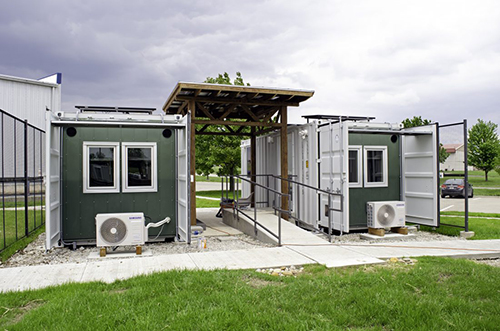
The Lawrence Community Shelter in Lawrence, Kansas, is preparing to open a tiny home village that shelter leaders say will provide a better environment for families experiencing homelessness. The shelter has partnered with the long-running University of Kansas architecture program Studio 804 on the tiny homes project, Monarch Village. Read more.
Example #20: Defining and Unpacking the Social Determinants of Health and Health Equity–A Culture of Health Webinar
The National Academy of Medicine (NAM) held the first webinar in its Culture of Health Webinar Series on November 29, 2018. The National Academies report Communities in Action: Pathways to Health Equity identified nine social determinants of health and how these determinants impact our health and the health of our communities. It features efforts to grow affordable housing. The report also defines health equity as the state in which everyone has the opportunity to attain full health potential and no one is disadvantaged from achieving this potential because of social position or any other socially defined circumstance. Read more.
Example #21: Dutch prisons turned into welcoming homes for refugees

Plunging crime rates throughout the Netherlands have left Dutch prisons empty - and a new, creative way has been found to make those empty buildings useful. The government has restyled these former prisons to become temporary homes for refugees and has partnered with an artist group called United Painting to make these buildings beautiful. Partnering with local artists, United Painting has turned these buildings into functional pieces of art, transforming “ this huge complex with six giant grey towers that have long been an eyesore in Amsterdam’s skyline” into a beautiful, welcoming place for refugees. While living in these restyled buildings, refugees practice their Dutch, learn to ride bikes, and create lasting connections. Read more.
Example #22: Tackling homelessness and saving money: Permanent supportive housing

Denver, Colorado, like many U.S. cities, struggles with an ever-growing homeless population. Unlike many other cities, however, Denver has taken a new approach to tackle homelessness, while also saving money. The permanent supportive housing program works not only to house unhoused people, but to help them stay housed by providing them with a skilled support team made up of social workers, nurses, psychiatrists, and peer mentors. This program is also unique in that instead of putting the burden on unhoused people to find and apply for the program, it actively tracks down people that need its services. This program has both decreased Denver’s homeless population and saved them money by lowering the city’s spending on “police, court, emergency medical, ambulance, and jail services.” This program is not without its struggles, however. There is pushback from conservatives, homeowners, and businesses, too many people and not enough beds, and the challenge of finding skilled teams to run the program. But with the statistics in permanent supportive housing’s favor, it’s likely that this program will continue to develop and grow. Read more.
Example #23: California is turning hotels into permanent housing

Homekey, which was first launched in July 2020 in response to the pandemic with $600 million in funding, provides grants to local municipalities to transition hotels, motels and other commercial housing buildings into permanent residences for Californians experiencing homelessness. Last year’s launch and the first round of funding resulted in the creation of more than 6,000 units. Read more.
Example #24: Putting Faith in a Local—and Ingenious—Solution for Affordable Housing
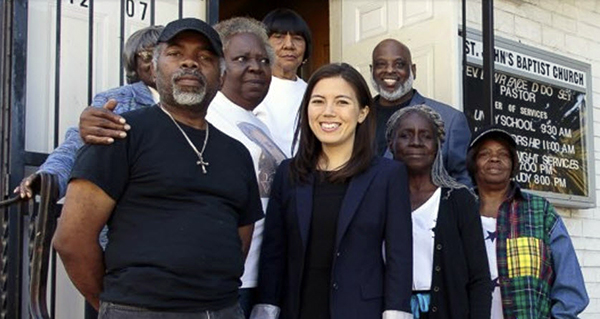
LISC’s New York Land Opportunity Program is helping churches and other mission-driven groups build capacity and scale the steep learning curve that leads to developing affordable housing on their land. Three years in, the effort is making promising inroads into the city’s affordable housing crisis, and inspiring similar initiatives in communities across the country. Read more.
Example #25: Houston Has Housed 25,000 Homeless People With Apartments of Their Own

Houston has reduced homelessness over the last decade by 63% using a housing first approach. “The logic…is that if someone’s already drowning, it doesn’t help to teach them how to swim first.” Read more.
Example #26: Community-Owned Land Trusts Catch Hospitals’ Eye

As an undocumented immigrant growing up on Chicago’s West Side, Jeisson Apolo and his mother were at the mercy of their landlord. “He saw the fear in our eyes and took advantage of it,” Jeisson said. “He raised the rent every month.”
Jeisson, 28, promised himself he’d never live like that again. After graduating from Cornell with a degree in architecture and another in urban planning, he wanted to sink some roots and buy a home. But in Richmond, Va., where he’d moved after college, prices were already beyond reach. Read more.
Example #27: A first-of-its kind affordable housing complex with childcare center breaks ground
A new affordable 120-unit housing complex with a childcare center on the ground floor began construction this week in St. Louis Park. The developers of the Rise on 7 project, CommonBond Communities, hope it can eventually serve 400 residents and up to 60 children in its early learning center.
Example #28: $20 Million Partnership Aims to Co-locate Child Care with Affordable Housing

The Urban Investment Group within Goldman Sachs Asset Management invested $20 million to support LIIF’s innovative new Brighter Futures Fund (the Fund). The Fund aims to create and preserve child care facilities co-located with affordable housing and other community resources.
Example #29: A Johnson County Program Aims to Increase the Number of Landlords Accepting Housing Choice Vouchers
A new program in Johnson County offers new incentives to landlords accepting housing vouchers, with ten landlords in the county joining the program in the three months since it's launch.
Example #30: Denver Uses Universal Basic Income Strategy for Addressing Homelessness

An experiment to pay people who were homeless in Denver with no limits on how they could spend the money led to twice as many people in stable housing, according to researchers who released their one-year report Tuesday.
One participant, a mother of two named Anita, is now living with a family member after previously living in her car or outside. She told researchers the monthly payments she received were a “leg up” and that she now relies on the payments for hygiene items, child care expenses, transportation and other bills.
Another participant, a single mom who lives with her parents, said she was able to start a new job, buy a car and enroll in school. She also reported that she was able to make more “happy memories” with her children and is looking into moving into her own housing.
“We believe the first year of the program established a sense of stability for participants, and the second year and beyond is when individuals can experience an even more profound transformation,” Mark Donovan, founder and executive director of the Denver Basic Income Project, said in an emailed news release. “We aim to persuade policymakers to establish permanent funding streams for programs like ours.”
To read more, please click this link to the full artcile on the Colorado Sun website.
Example #31: Together, Renters Triumph: The Power of Organizing in Colorado's Fight for Fair Evictions

Colorado renters face significant challenges, exacerbated by rapid population growth and rising rental prices. Low-income renters are vulnerable, particularly to corporate landlords who use evictions to drive up rents. This unstable housing environment gave rise to Colorado Homes For All (COHFA), a statewide coalition focused on advancing progressive housing policies that prioritize renters’ rights. COHFA believes that low-income renters are the key to transformative change. In an understanding that together they prevent displacement and discrimination, COHFA’s policy priorities include repealing the rent stabilization ban, passing local rent stabilization policies, and ensuring just cause for evictions.
Check out the case study and learn more about Colorado Homes For All here.
Tool: The Basics of Affordable Housing in the United States
Public housing
Public housing is low-income housing operated by a local housing authority. Public housing was first provided in the 1930s to provide decent and safe rental housing for eligible low-income families, the elderly, and people with disabilities. There are many types of public housing ranging from scattered single-family house to high -rise apartments. There are approximately 1.3 million households living in public housing units managed by more than 3,300 housing authorities. The U.S. Department of Housing and Urban Development (HUD) administers federal aid to these local housing agencies to manage the affordable housing for low-income residents. HUD furnishes technical assistance in planning, developing, and managing the developments.
Public housing is development-based assistance. This means that assistance is "attached" to a specific housing development that is owned by a public housing authority (PHA). When a vacancy occurs in that development, the PHA offers it to prospective tenants. As long as they live in the apartment the assistance "stays " with them. When the next family moves in, they receive the assistance. Public housing is available for renters who qualify and is contingent on availability.
Section 8 housing
The Section 8 housing program is also a federal program, through the U.S. Department of Housing and Urban Development. It subsidizes housing in the private housing market with certificates or vouchers issued through a PHA. Section 8 assistance is tenant-based. Tenant-based assistance goes with the tenant wherever he or she moves. With the certificate or voucher the tenant finds rental housing on the private housing market and a PHA agrees to assist them with the rent. The housing must meet certain basic quality standards and rent must be reasonable. Public housing and Section 8 programs account for 4.3 million subsidized units in the United States.
In rural communities, the U.S. Department of Agriculture provides rental assistance programs, home improvement and repair loans and grants, and self-help housing loans to low income individuals and families through the Rural Housing Service (RHS). Rental assistance ensures that elderly, disabled, and low-income residents of multi-family dwellings pay no more than 30 percent of their income for housing.
Manufactured housing
A manufactured home (formerly "mobile home") is a transportable, factory-constructed home. They are more affordable than conventional homes and offer many of the same amenities. Owners of manufactured homes rent or buy land on which to place a home. PHAs can subsidize homes for qualifying renters or buyers.
Housing initiatives focusing on home ownership
Cooperative housing
Cooperative housing, (also known as a "co-op"), is a democratic living environment where tenants cooperatively own the building(s) in which they live. Tenants usually form a not-for-profit cooperative organization to which each person or family contributes monthly to pay operating expenses. A co-op is managed by a board of co-op members. Residents buy a membership in the co-op, but the cooperative owns the building(s), land, and common areas. Residents live there as part of membership benefits and pay a fixed amount each month to cover expenses including mortgage, property taxes, maintenance, insurance, utilities, and reserves.
Housing co-ops come in forms ranging from single-family homes, duplexes, townhouses, garden apartment, mid- and high-rise apartments, fraternity and sorority houses, dormitories, rural communities, land subdivisions with sites and utilities, and manufactured homes. More than one million U.S. families of all income levels live in homes owned and operated through co-op associations. Cooperative housing is used in rural areas to provide easier to manage home ownership for seniors. This frees up single-family homes for younger families while maintaining independence for healthy seniors.
Advantages to cooperative housing are:
- Reasonable monthly charges for taxes and operating costs
- Tax deductions
- Ownership equity
- Members can jointly exert influence on tax rates and utilities prices and obtain improved services from local government
- Savings due to shared costs of ownership and not-for-profit status
- Community control
- Cultural diversity
- Shared maintenance responsibilities
- Ownership reduces vandalism and improves shared security
Disadvantage to cooperative housing:
- Difficulty in financing due to membership consisting of very low-income residents
- Many low-income co-ops must define minimum income limits for potential members in order to remain financially viable
Community Land Trust (CLT)
A Community Land Trust is a democratically controlled, non-profit corporation with an open membership and an elected board of trustees that makes it feasible for low-income families to be homeowners. A CLT typically acquires or holds land, but sells off commercial or residential buildings on the land. Without property, land cost is minimized or eliminated, making housing more affordable. Community land trusts develop affordable housing, commercial space, and parks while promoting home ownership, historic preservation, local control, and neighborhood revitalization.
CLTs operate in 31 states and the District of Columbia. The modern CLT model was developed in the 1960s by community activists wanting democratically controlled institutions that would hold land for the common good and make it available to individuals through long-term land leases. Many rural CLTs ensure access to land and housing for low -income people and preserve family farms. Urban CLTs often deal with combating the negative effects of speculation and gentrification.
Land speculation and gentrification often result in displacement of low-income residents. Speculation involves a developer buying up property to sell at a high profit for business or new residential development. Gentrification involves many individuals coming into a deteriorating neighborhood, buying property at a low price, rehabilitating it, and residing in the neighborhood. As the rate of gentrification increases, the face of a neighborhood changes radically and property values increase. This sometimes inspires residents to sell the properties at a large profit.
Typically, a CLT project has five or more sources of funding that may include commercial mortgages and construction loans, HUD loans and grants, a state housing finance agency, private foundation loans and grants, tax credits, and pension fund investments. CLT projects must meet strict requirements for housing quality; energy efficiency; historic preservation; handicapped accessibility; lead, asbestos, and other environmental requirements; and levels of affordability. Entire communities benefit from this thorough approach to development.
Community Development Corporation (CDC)
A Community Development Corporation is a nongovernmental development organization run by professional staff and citizen boards. Often the board members live in the community they serve, have a personal interest in improving it, and have intimate knowledge about how to do it. CDCs are funded from private, corporate, and government resources. They create opportunities in their communities through commercial, industrial, and residential initiatives. More than 2,000 nonprofit CDCs exist in the U.S.
Nonprofits are the groups usually most willing to invest the time and work in saving and building affordable housing, and have provided effective solutions to the housing problem. The main problem with relying completely on private developers to supply and restore publicly subsidized housing is that often there is conflict between public goals to provide housing and private interests to profit at taxpayers' expense.
Community Development Block Grants
The Housing and Community Development Act of 1974 authorized the U.S. Department of Housing and Urban Development (HUD) to make Community Development Block Grants (CDBGs). The goal of the program was to rehabilitate the nation's deteriorating urban areas, build community leadership, and empower low-income people to take charge of their neighborhoods and their futures.
A CDBG offers funds to a locality on a competitive basis. They were designed to unite neighborhoods, business leaders, and government in building affordable housing, spurring economic development, creating jobs, and providing essential social services in disadvantaged communities. Twenty years and $60 billion later, the program has been judged as a partial success. Projects revitalized many neighborhoods, but low -income advocates had to wage continual battles to get funding and keep it targeted on needy neighborhoods. After some local governments used CDBG money for projects of questionable benefit to the poor, the program was amended to require that 70 percent of CDBG programs must benefit low- and moderate-income citizens.
-
What do we mean by ensuring access for people with disabilities?
-
Why ensure access for people with disabilities?
-
When should you ensure access for people with disabilities?
-
Who should ensure access for people with disabilities?
-
How do you ensure access for people with disabilities?
-
How do you engage in disability advocacy?
Many features of everyday environments are easy to overlook when they work for us. Curbs, stairs, narrow doorways, signs, websites, public announcements, forms, transportation systems, and workplace procedures can all make it easier or harder for people to participate in community life.
For a wheelchair user, a building without an accessible entrance may prevent access entirely. A person who is Deaf or hard of hearing may miss information provided only through a loudspeaker. A person who is blind or has low vision may encounter barriers when information is available only visually. Someone with a cognitive, learning, communication, neurological, or mental health disability may encounter other barriers when information, services, or environments are not designed with a range of needs in mind.
These barriers are not inevitable. Accessibility can often be built into environments, programs, communication, technology, employment, education, transportation, and public participation from the beginning.
This section discusses ways communities can identify and remove barriers so that people with disabilities can participate fully in employment, education, services, public spaces, government, recreation, and community life.
What do we mean by ensuring access for people with disabilities?
Disability includes a wide range of physical, sensory, intellectual, developmental, cognitive, neurological, learning, communication, mental health, and other conditions. Disabilities may be apparent or non-apparent, lifelong or acquired later in life, and may affect people differently in different environments.
Under the Americans with Disabilities Act (ADA), disability is defined broadly in relation to a physical or mental impairment that substantially limits one or more major life activities, a record of such an impairment, or being regarded as having such an impairment.
Accessibility means creating environments, systems, information, services, and opportunities that people with disabilities can use and participate in on an equitable basis.
Disability is shaped not only by a person's condition, but also by the barriers or supports in the surrounding environment. A wheelchair user may participate fully in a workplace when entrances, workspaces, restrooms, transportation, and emergency procedures are accessible. A Deaf employee may participate fully when effective communication is available. A person with a cognitive or learning disability may benefit from information presented in clear and accessible formats.
Removing barriers does not mean that a person's disability disappears. It means that the environment no longer unnecessarily restricts that person's participation.
Language related to disability continues to evolve, and individual preferences differ. People with disabilities is widely used as person-first language. Some people and disability communities prefer identity-first language such as disabled people, Autistic people, or Deaf people. When possible, respect the language people use for themselves.
Avoid euphemisms such as "differently abled" and outdated terms such as "the handicapped." Terms such as "special needs" may also be less specific than simply describing a person's disability, access needs, or support needs.
Types of disabilities
Disability experiences vary widely, and the categories below are not exhaustive. A person may also experience more than one type of disability.
Mobility and physical disabilities
Mobility and physical disabilities may affect walking, standing, balance, movement, dexterity, strength, stamina, or use of the hands and arms. People may use wheelchairs, walkers, canes, prostheses, braces, other mobility devices, or no mobility device at all.
Environmental features such as stairs, narrow passages, heavy doors, inaccessible restrooms, high counters, or poorly maintained sidewalks may create barriers.
Sensory disabilities
- Deafness and hearing loss. People may communicate through spoken language, American Sign Language or another sign language, captioning, assistive listening technology, text, or a combination of approaches.
- Blindness and low vision. People may use screen readers, magnification, Braille, tactile information, white canes, service animals, audio information, or other tools and techniques.
Communication disabilities
Some disabilities affect speech, language, or other forms of communication. People may use speech-generating devices, text, communication boards, interpreters, assistants, or other forms of augmentative and alternative communication.
Difficulty speaking does not indicate a person's intelligence or ability to understand information.
Neurological and chronic health disabilities
Conditions such as epilepsy, migraine, cerebral palsy, traumatic brain injury, chronic pain, and other neurological or chronic health conditions may affect mobility, concentration, communication, energy, sensory processing, or other activities.
Some disabilities are episodic. A person's support or access needs may therefore change over time.
Intellectual and developmental disabilities
Intellectual and developmental disabilities include a broad range of conditions that may affect learning, communication, decision-making, daily activities, sensory processing, or other areas.
People have different strengths, goals, and support needs. Some live and work independently, while others use varying levels of support. Avoid making assumptions about a person's abilities based on a diagnosis.
Autism is a developmental disability that can affect communication, sensory processing, routines, social interaction, and other aspects of daily life in different ways. Autistic people vary greatly in their strengths, communication styles, support needs, and preferences.
Learning and cognitive disabilities
Learning disabilities can affect reading, writing, mathematics, memory, processing, organization, or other areas of learning. Dyslexia is one example. Learning disabilities are not a measure of overall intelligence.
Some people also experience cognitive disabilities related to brain injury, neurological conditions, intellectual disabilities, or other causes.
Mental health and psychiatric disabilities
Mental health conditions may qualify as disabilities when they substantially limit major life activities. Conditions may include major depressive disorder, bipolar disorder, schizophrenia, post-traumatic stress disorder, anxiety disorders, and others.
People's experiences and treatment preferences vary. Access may involve flexible schedules, changes in the environment, communication supports, leave, remote participation where appropriate, or other individualized accommodations.
Environmental sensitivities and other non-apparent conditions
Some people experience significant symptoms related to fragrances, chemicals, lighting, noise, temperature, or other environmental conditions. Depending on the person's functional limitations and the setting, reducing exposure or making other changes may improve access.
Non-apparent disabilities may also include chronic illnesses, epilepsy, diabetes, autoimmune conditions, chronic pain, mental health disabilities, and many other conditions. Do not assume that a person does not have a disability because it is not immediately visible.
Service animals
Some people with disabilities use trained service animals to assist with disability-related tasks. Examples include guiding a person who is blind, alerting a Deaf person to sounds, retrieving objects, assisting during a seizure, or performing disability-related tasks for a person with a psychiatric disability.
Rules concerning service animals differ according to the law and setting. In the United States, organizations should use current ADA guidance rather than relying on assumptions about an animal or a person's disability.
Access for people with disabilities
Accessibility includes several interconnected areas.
Physical access
Physical accessibility includes the ability to enter, move through, and use buildings and outdoor spaces. Depending on the setting, this may involve accessible routes, entrances, parking, passenger-loading areas, ramps, elevators, restrooms, counters, seating, signs, recreational facilities, and other features.
Accessibility is strongest when it is incorporated into the original design rather than added later as a separate feature.
Access to communication and information
Information should be available in forms that people with different communication, sensory, cognitive, and learning needs can use.
Depending on the situation, this may include:
- Captions and transcripts
- Sign language interpretation
- Assistive listening systems
- Braille, tactile, large-print, or audio information
- Plain-language information
- Accessible electronic documents
- Websites and mobile applications that work with assistive technology
- Communication devices or alternative forms of communication
- Visual as well as audible emergency and public announcements
Program and service accessibility
Accessibility also means that people with disabilities can participate in programs and obtain services without unnecessary barriers.
This may require changes in policies, procedures, communication, scheduling, location, equipment, or the way a service is delivered.
Employment
Employment access includes nondiscriminatory recruitment, applications, interviews, hiring, training, advancement, workplace participation, and other terms and conditions of employment.
Qualified applicants and employees with disabilities may need reasonable accommodations that allow them to participate in the application process, perform the essential functions of a position, or access the benefits and privileges of employment.
Education
Students with disabilities should have equitable access to education, instructional materials, school facilities, technology, extracurricular activities, communication, and other parts of the educational experience.
Appropriate supports vary according to the student, educational setting, and applicable law.
Community and civic access
Accessibility includes opportunities to participate in recreation, cultural activities, religious life, community organizations, public meetings, government services, transportation, and civic life.
It also includes accessible voting, public information, meetings, and other opportunities to participate in community decision-making.
Why ensure access for people with disabilities?
- Accessibility is a civil rights issue. People with disabilities have the right to participate in community life without discrimination. Laws in the United States and many other countries establish accessibility and nondiscrimination requirements.
- Accessibility supports autonomy and participation. Removing unnecessary barriers gives people greater ability to make their own choices about employment, education, services, recreation, relationships, and civic life.
- Communities benefit from the participation of people with disabilities. People with disabilities are workers, students, business owners, leaders, caregivers, artists, volunteers, customers, residents, and participants in every part of community life.
- Accessible design often benefits many people. Ramps, curb cuts, captions, clear signs, automatic doors, plain-language information, flexible communication, and other accessibility features can also benefit older adults, parents with strollers, people recovering from injuries, travelers carrying luggage, and many others.
- Accessibility can improve organizations and services. Designing for a wider range of users can improve communication, customer service, safety, usability, and organizational responsiveness.
- Accessibility helps build more inclusive communities. People should not have to overcome avoidable barriers in order to participate alongside their neighbors, coworkers, classmates, friends, and families.
When should you ensure access for people with disabilities?
Accessibility should be considered from the beginning rather than only after someone encounters a barrier.
- When new buildings, facilities, or public spaces are being designed. Accessibility can usually be integrated more effectively when it is part of the original design.
- When buildings or facilities are being renovated or altered. Review current accessibility standards and determine which requirements apply to the particular project rather than relying on a simple percentage rule.
- When historic buildings are being adapted for public use. Historic preservation and accessibility should be considered together using the requirements and alternatives applicable to the particular property.
- When parks, trails, recreation facilities, streets, and other public spaces are being improved. Include people with disabilities in planning routes, entrances, seating, recreation features, signs, transportation connections, restrooms, and other elements.
- When an organization moves or changes the way it provides services. A new facility, program, technology platform, application system, or service-delivery model provides an opportunity to address accessibility from the beginning.
- When websites, mobile applications, documents, or other digital systems are developed or updated. Digital accessibility should be part of design, procurement, development, testing, and maintenance.
- When emergency plans are developed or reviewed. Emergency communication, evacuation, sheltering, transportation, and continuity plans should account for people with a range of disabilities.
- When people report barriers. Complaints and requests for accommodations provide important information, but organizations should not wait for a complaint before examining accessibility.
- As part of ongoing evaluation. Technology, standards, programs, buildings, and community needs change. Accessibility should be reviewed periodically.
Who should ensure access for people with disabilities?
Accessibility is a shared responsibility, but people with disabilities should have meaningful roles in identifying barriers, setting priorities, developing solutions, and evaluating results.
- People with disabilities. People who experience barriers directly bring knowledge that may not be visible to designers, administrators, employers, or service providers. Participation should begin early enough to influence decisions rather than being added after plans are nearly complete.
- Disability-led and disability rights organizations. These organizations may provide expertise on accessibility, independent living, rights, policy, accommodations, and community participation.
- Centers for Independent Living and other community organizations. These organizations may provide training, peer support, accessibility knowledge, and connections with people who have a range of lived experiences.
- Public officials and public agencies. Governments may establish, implement, fund, or enforce accessibility requirements and should ensure that people with disabilities can participate in public programs and decision-making.
- Enforcement and civil rights agencies. Appropriate government agencies investigate complaints, provide guidance, and enforce applicable disability-rights laws.
- Employers. Employers can make recruitment, hiring, workplaces, communication, technology, training, advancement, and workplace benefits accessible.
- Educators and educational institutions. Schools and colleges can address physical, instructional, technological, communication, and program accessibility.
- Organizations that provide public or community services. Accessibility should be considered in facilities, programs, eligibility practices, communication, technology, and service delivery.
- Architects, planners, engineers, designers, and building professionals. Accessibility can be incorporated into buildings, transportation, public spaces, housing, digital systems, and other environments from the beginning.
- Developers and property owners. Designing for accessibility from the beginning can reduce the need for later retrofits and expand who can use a property.
- Technology designers, developers, vendors, and content creators. Digital accessibility depends on decisions made throughout design, procurement, development, testing, and content creation.
How do you ensure access for people with disabilities?
Accessibility is most effective when it is built into ordinary planning and decision-making rather than treated as a separate project or an exception for a small group of people.
Begin with people with disabilities
Include people with disabilities in accessibility assessment, planning, design, implementation, testing, and evaluation.
Ask people what barriers they experience rather than assuming what they need. Different people with the same disability may use different strategies, technologies, communication methods, or accommodations.
When someone requests an accommodation, focus on what would provide effective access rather than on whether the request matches what has been provided to someone else.
Use accessible and universal design
Universal design seeks to make environments, products, technology, and information usable by as many people as possible from the beginning.
Universal design does not eliminate every need for individualized accommodations, but it can reduce the number of unnecessary barriers people encounter.
Physical access
Buildings and outdoor spaces should be evaluated using the accessibility standards that apply to the particular facility and jurisdiction.
Features to consider may include:
- Accessible routes from sidewalks, transportation, parking, and passenger drop-off areas
- Accessible entrances and doors
- Ramps, elevators, lifts, and appropriate changes in level
- Accessible restrooms
- Accessible counters, service areas, seating, and workspaces
- Accessible parking and passenger-loading areas
- Clear floor and maneuvering space
- Accessible signs and wayfinding
- Accessible recreation facilities and outdoor routes
- Emergency evacuation and refuge planning
Accessibility standards contain specific technical requirements, so designers and organizations should use current official standards rather than relying on generalized measurements or older guidance.
Accessibility does not need to separate people with disabilities from everyone else. A park trail, entrance, recreation area, seating section, or public space can be designed so that people with and without disabilities use the same environment together whenever feasible.
Businesses may also be eligible for federal tax incentives related to qualified accessibility improvements. Because eligibility and tax rules can change, organizations should use current IRS guidance when planning or claiming these benefits.
Emergency access and planning
Accessibility planning should include emergencies rather than assuming that ordinary accessibility features will always remain available.
Consider:
- Accessible emergency exits and evacuation routes
- Procedures for people who cannot use stairs
- Visual, audible, and accessible digital alerts
- Emergency transportation
- Accessible shelters and temporary facilities
- Backup communication when power or technology fails
- Individualized planning when appropriate
People with disabilities should be included in emergency planning and exercises.
Access to communication and information
Effective communication means that people with communication disabilities can receive information from and communicate with an organization as effectively as others.
Appropriate approaches depend on the person, the setting, and the nature and complexity of the communication.
Examples may include:
- Sign language interpreters
- Real-time captioning
- Captions on videos
- Assistive listening systems
- Large-print, Braille, tactile, or audio materials
- Screen-reader-compatible electronic materials
- Plain-language or easy-to-understand information
- Speech-to-text or text-to-speech technology
- Augmentative and alternative communication
- Visual and audible public announcements
Do not assume one method works for everyone. For important or complex communication, ask the person which methods are effective for them and follow the requirements that apply to the organization.
Digital accessibility
Websites, mobile applications, online forms, documents, videos, learning platforms, kiosks, and other digital tools are increasingly important parts of community access.
Digital accessibility may include:
- Keyboard navigation
- Compatibility with screen readers and other assistive technologies
- Text alternatives for meaningful images
- Captions and transcripts for multimedia
- Sufficient contrast and readable text
- Clear headings and navigation
- Accessible forms and error messages
- Accessible electronic documents
Federal agencies are subject to Section 508 requirements for covered information and communication technology. Other entities may have accessibility responsibilities under the ADA, Section 504, state or local law, funding agreements, or other requirements.
State and local governments should also consult current Title II requirements for web content and mobile applications.
Access to services and programs
Services must be non-discriminatory, and covered organizations may need to make reasonable modifications to policies, practices, or procedures so that people with disabilities can participate.
Examples may include:
- Moving an activity to an accessible space
- Modifying a check-in or application procedure
- Providing an alternative communication method
- Adjusting a policy when necessary for disability access
- Providing services in another accessible manner when required and appropriate
- Allowing service animals as required by applicable law
Accessibility should not mean providing an unnecessarily separate or lower-quality service. The goal is equitable participation and access.
Accessibility also includes organizational culture. Staff should communicate respectfully, avoid assumptions about people's abilities, understand relevant accessibility procedures, and know how to respond when someone requests an accommodation or identifies a barrier.
Service animals
Organizations should train staff on current service-animal requirements.
Under the ADA rules that apply to state and local government services and public accommodations, a service animal is generally a dog individually trained to perform work or tasks directly related to a person's disability. The ADA also contains separate provisions concerning individually trained miniature horses.
Staff should not assume that a person's disability must be visible in order for a service animal to be legitimate.
Different rules may apply in housing, air travel, employment, and under state or local law, so organizations should consult the requirements that apply to the particular setting.
Employment
Employment decisions should focus on whether an applicant or employee is qualified to perform the essential functions of a position, with or without reasonable accommodation.
Reasonable accommodations may include:
- Adjusting equipment or workspaces
- Modifying schedules
- Providing accessible technology
- Providing interpreters or readers
- Changing how information is provided
- Job restructuring where appropriate
- Remote work where it is an effective and reasonable accommodation
- Other individualized changes that allow a qualified employee to perform essential job functions or receive equal employment benefits
Employers generally may ask applicants whether they can perform the essential functions of a job, with or without reasonable accommodation, but disability-related questions and medical examinations are subject to specific rules during the hiring process.
Safety standards should be connected to actual job requirements and individualized evidence rather than assumptions or stereotypes about disability.
Employees with disabilities remain responsible for meeting legitimate performance and conduct expectations, with reasonable accommodations considered where required.
Education
In the United States, the Individuals with Disabilities Education Act (IDEA) establishes rights related to special education and related services for eligible children with disabilities. IDEA Part B generally applies to children ages 3 through 21, subject to specific state-law exceptions.
Eligible students receive a free appropriate public education through an Individualized Education Program (IEP) developed through an individualized planning process that includes parents or caregivers and, when appropriate, the student.
IDEA also requires that students with disabilities be educated with students without disabilities to the maximum extent appropriate. Removal from the regular educational environment should occur only when education there cannot be achieved satisfactorily with appropriate supplementary aids and services.
Educational access can include:
- Accessible classrooms and facilities
- Accessible instructional materials and technology
- Communication access
- Assistive technology
- Appropriate academic and behavioral supports
- Accessible extracurricular programs and school activities
- Individualized accommodations and services where required
Institutions of higher education also have disability nondiscrimination and accessibility obligations under applicable federal and state laws. The specific requirements differ from the K–12 special education system, so students and institutions should use current guidance applicable to higher education.
Civic access
People with disabilities should be able to participate in government services, public meetings, community planning, and elections on an equitable basis.
Civic accessibility may involve:
- Accessible meeting locations
- Accessible public notices and documents
- Sign language interpretation or captioning where needed
- Accessible websites and online participation
- Accessible polling places and voting systems
- Reasonable modifications that allow participation
How do you engage in disability advocacy?
Disability advocacy includes self-advocacy, community organizing, education, accessibility planning, participation in public processes, enforcement of existing rights, and efforts to improve policies or practices that create barriers.
People with disabilities and disability-led organizations should have central roles in determining priorities and strategies.
Identify the barrier and the desired change
Begin by clearly identifying what is preventing access.
Is the problem:
- A physical barrier?
- Inaccessible communication?
- An inaccessible website or technology?
- A policy or procedure?
- Discriminatory treatment?
- A lack of appropriate accommodation?
- Inconsistent implementation of an existing accessibility policy?
Defining the barrier clearly can help identify who has responsibility and which solutions are possible.
Start with communication when appropriate
Sometimes an organization may not realize that a barrier exists. Bringing the issue to the attention of the appropriate staff member, accessibility coordinator, administrator, employer, property manager, or other responsible person may lead to a solution.
Explain the barrier, the effect it has on access, and what change would provide meaningful access. Keep records of important communications when the issue may require formal follow-up.
Use established complaint and enforcement processes when needed
When informal problem-solving does not resolve an accessibility or discrimination concern, administrative complaints, internal grievance procedures, disability-rights agencies, mediation, legal assistance, or court processes may be available.
The appropriate process depends on the type of organization, law involved, location, and nature of the issue.
Because filing requirements and deadlines can vary, use current official information or qualified legal assistance for a specific complaint.
Work with disability-led organizations and other knowledgeable partners
Centers for Independent Living, disability-rights organizations, Protection and Advocacy systems, legal organizations, accessibility professionals, and community groups may provide information, training, technical assistance, peer support, or legal guidance.
Collaboration can also help identify whether a barrier experienced by one person reflects a broader accessibility problem.
Participate in public policy and planning processes
When an accessibility issue involves government policy, building standards, transportation, public services, or other public decisions, people with disabilities and community organizations can participate through established civic processes.
These may include public meetings, advisory groups, hearings, public-comment opportunities, accessibility committees, planning processes, and communication with the public agencies responsible for the issue.
Provide accurate information about the barrier, the people affected, applicable accessibility requirements, possible solutions, costs, and implementation considerations.
Advisory groups and planning bodies should include people with a range of disabilities and access experiences. One person should not be expected to represent every disability or every member of the disability community.
Work with designers, developers, inspectors, technology professionals, and service providers
Collaboration early in a project can prevent barriers before they are built into a facility, program, or technology.
Accessibility professionals and people with disabilities can help organizations understand how technical standards translate into actual use.
Whenever possible, test buildings, public spaces, websites, applications, documents, and services with people who use different mobility devices, communication methods, and assistive technologies.
Use public communication responsibly
Media and community communication can help explain accessibility barriers, disability rights, community experiences, and possible solutions.
Coverage should avoid portraying people with disabilities primarily as inspirational, tragic, dependent, or exceptional because of their disability.
When people share personal experiences, they should have meaningful control over how their stories, disability, photographs, and identifying information are presented.
Disability should not need to be made emotionally compelling before an accessibility concern is taken seriously.
Continue evaluating accessibility
Accessibility is an ongoing process. Buildings age, technology changes, programs evolve, staff change, and new barriers may emerge.
Continue asking:
- Can people with different disabilities enter and use the space?
- Can people obtain information in forms they can use?
- Are websites, applications, and documents accessible?
- Are accommodation and modification requests handled effectively?
- Do staff understand accessibility procedures?
- Are emergency procedures inclusive?
- Are people with disabilities involved in evaluating the organization's accessibility?
- Are some people experiencing barriers that others are not?
- Have applicable standards, technologies, or legal requirements changed?
Accessibility should not be measured only by whether an organization has received complaints. People may stop using an inaccessible service without ever filing one. Proactive assessment and direct participation from people with disabilities can identify barriers earlier.
In Summary
Accessibility means more than ramps, elevators, and accessible restrooms. It includes physical environments, communication, information, technology, employment, education, services, transportation, emergency planning, and civic participation.
Disability is part of human diversity. People with disabilities have different strengths, preferences, identities, goals, and access needs, and no single solution will work for everyone.
Strong accessibility efforts:
- Include people with disabilities in decisions that affect them
- Build accessibility into planning and design from the beginning
- Remove physical, communication, digital, programmatic, and social barriers
- Provide individualized accommodations or modifications where needed
- Use current accessibility standards and legal guidance
- Train staff and people responsible for implementation
- Create effective ways to identify and resolve accessibility concerns
- Evaluate accessibility over time
The goal is not to make disability less visible or to expect people with disabilities to adapt to environments that were not designed with them in mind. The goal is to create communities in which people with disabilities can make choices, participate, contribute, and live their lives without unnecessary or discriminatory barriers.
Contributor
Phil Rabinowitz
Resources
Online Resources
The ADA website has a huge amount of information, including the ADA Standards for Accessible Design.
Access Unlimited provides helpful information on how a low-tech tool can be used by almost anyone to determine if building features such as toilets, door widths, and ramp slopes are in compliance with the Americans With Disabilities Accessibility Guidelines (ADAAG).
The DOJ provides information on Accessibility of State and Local Government websites to people with disabilities, with tips for developers and links to a number of sites with more information.
Anniversary of Americans with Disability Act: July 26 provides facts on disabilities in the U.S. population from the U.S. Census Bureau.
Canadian Charter of Rights and Freedoms (part of Canadian Constitution) provides information on the rights that all people are guaranteed, including for those with disabilities.
Canadian Human Rights Act states that all individuals should have an opportunity equal with other individuals to make for themselves the lives that they are able and wish to have and to have their needs accommodated, consistent with their duties and obligations as members of society, without being hindered in or prevented from doing so by discriminatory practices based on race, national or ethnic origin, colour, religion, age, sex, sexual orientation, marital status, family status, disability or conviction for an offence for which a pardon has been granted or in respect of which a record suspension has been ordered.
Convention on the Rights of Persons with Disabilities was established to promote, protect and ensure the full and equal enjoyment of all human rights and fundamental freedoms by all persons with disabilities, and to promote respect for their inherent dignity.
The Curb-Cut Effect by Angela Glover Blackwell. Laws and programs designed to benefit vulnerable groups, such as the disabled or people of color, often end up benefiting all of society.
The Disability Resource Network of British Columbia offers descriptions and explanations of various kinds of disabilities and conditions, among other resources.
Frequently Asked Questions about ADA.
The Home Usability Network from the University of Montana's Research and Training Center on Disability in Rural Communities (RTC: Rural) is a group of individuals and organizations that bring together their knowledge, resources, and creativity to develop customized solutions to individual usability problems.
Job Accommodations Network offers helpful tips to people with disabilities about the accommodations that they might take advantage of as an employee.
List of various ADA publications detailing regulations and technical assistance.
Making Homes Visitable details how to make homes visitable for those with mobility limitations and why it is important to do so.
Project Civic Access details settlements with various municipal and state governments concerning accessibility.
SF's New Ballpark: Beautiful Access discusses a recently built ballpark that was created to be accessible for all.
Standards for Website Accessibility is from Section 508 of the Rehabilitation Act, and sets out regulations for Internet Accessibility for government agencies, with links for each regulation to explanations and suggestions for web developers.
United Nations Standard Rules on Equalization of Opportunity for Persons with Disabilities (1993) is an international document intended to focus worldwide attention on the need for equal rights and opportunities for persons with disabilities.
United States Access Board lists the Uniform Federal Accessibility Standards (alternative to ADA Standards for state and local government entities).
The U.S. Equal Employment Opportunities Commission provides information about federal laws that make it illegal to discriminate against a job applicant or an employee because of the person's race, color, religion, sex (including pregnancy), national origin, age (40 or older), disability or genetic information. It also provides information for employers on Prohibited Practices.
Web Accessibility Initiative of the World Wide Web Consortium, with detailed information about accessibility for web developers.
What do we mean by ensuring access for people with disabilities?
___According to the Americans with Disabilities Act (ADA), “the term ‘disability’ means an individual has a physical or mental impairment that substantially limits one or more of his/her major life activities or there is a record of such an impairment or an individual is regarded as having such an impairment.”
Types of disabilities include:
___Physical
___Neurological
___Developmental
___Psychological
___Alcoholism
Types of access include:
___Physical access
___Access to communication and information
___Access to services
___Access to employment
___Access to education
Why try to ensure access for people with disabilities?
___In many countries, it’s the law
___It’s a matter of fairness and respect
___Failing to do so wastes talent and energy
___It makes good business and economic sense
___Many people with disabilities already have a difficult life
___People with disabilities add to the diversity of the community, and that diversity makes everyone’s life richer
___Access for people with disabilities improves access for everyone
When should you try to ensure access for people with disabilities?
___When new public facilities are being designed and/or built
___When there’s an addition, renovation, or repair made to a public facility
___When a historic building is rehabilitated for a public use
___When a community group is working on improving or rehabilitating a public facility or space
___When an organization, institution, or agency that provides services or education is moving or renovating its facility
___When there are complaints about lack of access
Who should ensure access for people with disabilities?
___People with disabilities themselves
___Organizations concerned with disability rights
___Legislators other public officials
___Enforcing agencies
___Employers
___Educators
___Organizations that provide services
___The court system, when necessary
___Architects and planners
___Developers
How do you ensure access for people with disabilities?
___Changing attitudes and educating the public, as well as policymakers, architects and planners, and others about the realities, needs, and rights of people with disabilities may be the most important step
___Demand reasonable accommodation for all types of access
___Tax credits can help make accommodations affordable
___Physical access means access to:
- Public facilities
- Federal, state, and local government facilities
- Outdoor spaces
- Public ways
- Public transportation
___Know the design features that constitute physical access
___Access to communication and information means making accessible or providing
- Signs, posters, and other similar features
- Announcements
- Telephones
- ASL interpretation
- Readers
- Internet
- Television
- Concerts and theater performances
___In the U.S., people with disabilities cannot be denied access to services for which they’re eligible
___Reasonable accommodations must result in a service that’s equivalent to that which is offered to other eligible participants, although it doesn’t have to be exactly the same in all respects
___Employers cannot refuse to hire someone because of a disability if that person is the best-qualified for a job, except where the disability would make it impossible for the person to do the job
___An employer may fire someone with a disability because of poor job performance if other employees in the same situation would be treated the same way
___Section 508 of the Rehabilitation Act guarantees every child ages 6-21 the right to a free public education that meets his needs in the least restrictive environment possible
___In both public and private post-secondary institutions, ADA requires non-discrimination in admissions and accommodation for admitted undergraduate and graduate students with disabilities
Advocate for the rights and needs of people with disabilities:
___Demand enforcement of existing laws and regulations
___Work with legislators, and their aides to pass laws that guarantee equality of access and opportunity to people with disabilities
___Work with architects, planners, developers, and interior designers to make them aware of the concerns and needs of people with disabilities
___Enlist the media to help change attitudes and expectations
___Call attention to lack of access whether you have a disability or not
___Keep at it indefinitely
Tool 1: Worldwide Disability Rights Laws
A list of existing disability rights laws from the Disability Rights Education and Defense Fund. The website has the texts or abstracts of most of these laws, many with an English translation, or with an English summary. Others may be found on the Internet separately, or may need to be researched in libraries or through the controlling government bodies.
Tool 2: The United Nations Standard Rules on the Equalization of Opportunity for Persons with Disabilities
The United Nations Standard Rules on the Equalization of Opportunity for Persons with Disabilities is available in several languages. The Standard Rules are a comprehensive set of standards for countries to institute disability rights and equal opportunity.
From the U.N. website’s introduction to the Standard Rules on the Equalization of Opportunity for Persons with Disabilities:
People with disabilities - as citizens of their societies - should have the same rights and obligations as all other citizens.
There is an increasing awareness by Governments of their obligation to grant equal rights to all of their citizens. It is ultimately the responsibility of all Governments to ensure that disabled people:
- live as dignified and independent a life-style as possible within the community;
- take an active part in the general, social and economic development of society;
- receive education, medical care and social services within the ordinary structures of their societies.
Governments, through their legal system, can protect the rights of persons with disabilities.
Governments can enact laws to guarantee equality and to prevent discrimination. The cost of denying equal opportunities to persons with disabilities is high not only in financial terms, but in the loss of their contribution to society.
A recent trend emphasizes self-care and puts greater emphasis on increased support to the family and community to provide services for persons with disabilities. In many countries, such services continue to be concentrated in the private sector, financed by voluntary contributions. Such programmes are important, but they do not guarantee equal opportunities for disabled people at all levels of society. Governments should provide disabled people with permanent access to basic public services.
The untapped potential of disabled people will be realized only when Governments ensure that equal opportunities are given to all of their citizens.
Equal opportunities enable disabled persons to govern their own lives with self-respect and personal integrity.
Example #1: Chicagoland Add Us in Initiative’s The Learning Garden
The Chicagoland Add Us In Initiative funded by the US Department of Labor Office of Disability Employment Policy, provides opportunities and promotes employment experiences for high school students with disabilities to prepare them for their transition into adult life. The goal for the Learning Garden is to be a place where students can observe and experiment with growing plants, fruits and vegetables while obtaining some invaluable work experience and skills.
Contributed by Lia Thompson, University of Kansas, Community Tool Box Intern.
Example #2: "Stoplights Don't Stop Us!"
“Stoplights Don’t Stop Us!” tells the story of how people with disabilities in Emporia, Kansas, living in a high-rise apartment complex near a dangerous intersection, came together as allies to advocate for change in their community. The changes they achieved enhanced their ability to more fully and safely participate in the community. (The video is also available with audio description.) To learn more about this process for making change to support independent living for all, visit the free publication: Your Action Planning Guide for Promoting Full Community Participation Among People with Disabilities: A Resource for Independent Living Centers and Other Community-based Initiatives.
Example #3: Ed Roberts: Free Wheeling
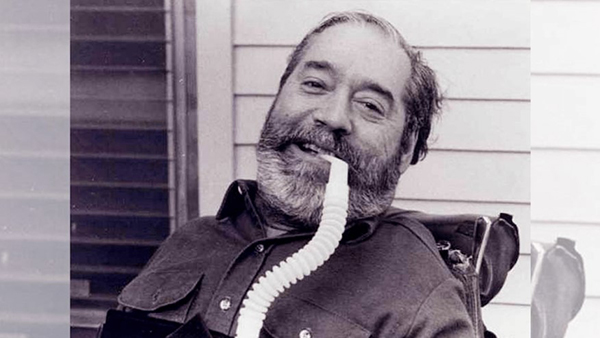
Imagine that, as a typical baseball-loving 14-year-old kid, one of your mother’s worst fears is realized: You succumb to the polio epidemic of the 1950s and contract a disease that paralyzes you from the neck down, except for several fingers and toes.
Your despair is exacerbated when you overhear a doctor tell your mother, “You should hope he dies, because if he lives, he’ll be no more than a vegetable for the rest of his life.” You spend 18 months in hospitals and, upon discharge, attend high school by phone from home, lying flat on your back with only your head emerging from an “iron lung,” a huge box-like device using air pressure to stimulate the breathing that your lungs cannot accomplish.
How would you respond?

I grew up in a working-class neighborhood in Boston, on a busy street of apartment buildings. Behind that block, however, was a city park of about 15 acres, where my friends and I spent much of our time beginning when we were about six or seven years old. It had an official name, but to us it was simply “the Park.” There was a baseball diamond, tennis and basketball courts, and skating in the winter, but we spent much of our time exploring the wooded area just behind our homes.
To us, the park became whatever our imaginations could create. Its hills, trees, and exposed rocks became mountains, forts, distant landscapes, and places for exploration. We rolled down the hills in summer and sledded on them when there was snow.
Several blocks away was a commercial district where our families did much of their shopping. For me, however, one of its main attractions was the local branch of the Boston Public Library. By the time I started school, I already had a library card, and the library became another important part of my life.
Before digital technology became part of everyday childhood, much of my free time revolved around these two community resources. They exercised my imagination and my body and helped develop a lasting love of the outdoors, literature, and learning.
Parks, libraries, recreation facilities, cultural spaces, transportation, health facilities, and other shared community resources can have a lasting influence on people's lives. They provide opportunities to learn, move, gather, create, receive services, connect with others, and participate in community life.
This section discusses what makes parks and other community facilities useful and welcoming, when communities may want to create or improve them, who should participate in those decisions, and how communities can plan for their long-term accessibility, use, maintenance, and sustainability.
This video highlights young people's involvement in improving parks in Atlanta's English Avenue and Vine City neighborhoods. Video courtesy of the Robert Wood Johnson Foundation.
What do we mean by improving parks and other community facilities?
Community facilities can support health, learning, culture, recreation, mobility, social connection, public participation, and access to services. Parks provide green space and places for recreation and gathering. Libraries, museums, community centers, and performance spaces expand access to knowledge, creativity, culture, and community activities. Health facilities provide care, and public transportation helps connect people with employment, education, services, businesses, and other parts of the community.
Communities differ in what facilities they have and what improvements they need. Some may lack particular facilities entirely. Others may have facilities that no longer reflect the size, accessibility needs, interests, or priorities of the people they serve. A facility may need repairs, updated equipment, improved transportation connections, stronger programming, better accessibility, or changes that make it more welcoming and useful.
In other cases, a facility may be physically well maintained but underused. That can be a reason to ask whether its hours, programs, cost, location, communication, design, transportation access, or other features create barriers for potential users.
Improving community facilities therefore involves more than building or renovating something. It means understanding community strengths and priorities, identifying barriers, creating or improving facilities in response to those priorities, and planning for their continued operation and maintenance.
In this section, a community facility is a place, space, service environment, or physical resource that contributes to community life. It may be publicly owned, nonprofit, community-run, or privately operated. What matters is that it provides a meaningful community benefit and is reasonably accessible to the people it is intended to serve.
Parks
Parks vary greatly in size, design, ownership, and purpose. They may protect natural or historic resources, provide recreation, create gathering spaces, support environmental health, or serve several of these purposes at once.
Common types include:
- Urban parks. These may include lawns, trees, gardens, playgrounds, picnic areas, trails, courts, athletic fields, natural areas, cultural facilities, or other features within a city.
- Small-town parks. These may serve as central gathering places for recreation, community events, celebrations, performances, markets, or informal social activity.
- County or regional parks. These may contain trails, waterways, beaches, sports facilities, natural areas, historic resources, or larger landscapes that serve several communities.
- State parks. State parks may protect natural landscapes, cultural resources, historic sites, recreation areas, or a combination of these.
- National parks and monuments. These protect natural, cultural, historic, and recreational resources of national significance and may also be important community resources for people who live nearby.
Historic parks and sites can help communities understand and interpret the people, events, industries, cultures, landscapes, and experiences that shaped them. Historical interpretation should recognize that communities may contain multiple perspectives on the same history and should include people whose experiences have sometimes been excluded from traditional accounts.
Other community facilities
Parks are only one type of community resource. Other facilities may be publicly, privately, cooperatively, or nonprofit operated.
Access is an important consideration. A facility may serve a community purpose even when it charges a fee, but communities should consider whether cost, transportation, eligibility requirements, physical accessibility, language, scheduling, or other factors prevent some people from using it.
Examples of community facilities include:
- Libraries
- Community centers
- Theaters and cinemas
- Museums
- Auditoriums and concert venues
- Hospitals, clinics, and other health facilities
- Schools, colleges, and other educational facilities
- Faith-community facilities
- Local, state, Tribal, territorial, and federal government facilities that serve the public
- Sports and recreation facilities, including athletic fields, courts, recreation centers, pools, and stadiums
- Walking and bicycling trails. Organizations such as Rails-to-Trails Conservancy support the development of trails and active transportation connections.
- Recycling and resource-recovery facilities
- Community gardens
- Community arts centers
- Child care facilities
- Playgrounds
- Plazas, fountains, and public squares
- Public lakes, pools, rivers, canals, waterfronts, and other water-based recreation areas
- Boardwalks, beaches, boathouses, and other waterfront facilities
- Public transportation facilities and systems, including vehicles, stops, stations, shelters, and connections
Why improve parks and other community facilities?
- Good facilities can contribute to quality of life. Parks, libraries, cultural spaces, recreation, transportation, and other community resources can make communities more useful, enjoyable, connected, and supportive places to live.
- Good facilities expand access to intellectual, cultural, social, and physical activities. Affordable and accessible community resources can help people encounter books, art, music, recreation, technology, nature, educational opportunities, and other experiences that might otherwise be difficult to access.
- Good facilities can strengthen belonging and community stewardship. When people feel that public spaces reflect their needs and that they have meaningful roles in shaping them, they may be more likely to use, support, and care for those spaces.
- Good facilities provide useful community services. Public transportation can reduce the need for some automobile trips and improve access to employment and services. Libraries and museums can expand access to information, technology, history, culture, and different perspectives.
- Good facilities can support safe, positive, and connected community environments. Recreation, arts, education, youth programs, public spaces, and community activities can provide opportunities for relationships, learning, creativity, and participation.
- Good facilities can advance equity. When people across neighborhoods and income levels have access to useful, high-quality facilities, communities can reduce differences in access to recreation, information, transportation, culture, services, and public space.
- Good facilities can help communities retain and welcome residents. Parks, schools, libraries, transportation, cultural institutions, and other shared resources can contribute to people's decisions about where they want to live.
- Good facilities can support local economic activity. Community resources may support businesses, employment, tourism, workforce access, and nearby commercial activity. Economic benefits should be considered alongside affordability, displacement, public cost, and community priorities.
- Good facilities can improve the physical environment. Thoughtful design, maintenance, landscaping, public art, and preservation can contribute to comfortable, functional, and attractive surroundings.
- Good facilities can create places for social connection. Parks, plazas, libraries, community centers, transit stations, markets, cultural facilities, and other shared spaces can create opportunities for people to meet and participate in community life.
When should you try to improve parks and other community facilities?
Communities can review facilities at any time, but several circumstances may provide especially useful opportunities.
- When important facilities or opportunities are missing. A rural community may lack recreation opportunities, transportation, library services, health facilities, broadband access, or other resources. An urban neighborhood may lack green space, accessible recreation, or safe walking connections.
- When existing facilities need repair, modernization, or improved use. A park may have damaged equipment or safety concerns. A library may need additional space, accessible technology, or updated services. A recreation center may have hours or programming that no longer fit community needs.
- When community development or planning is underway. New housing, transportation, infrastructure, commercial development, and neighborhood plans can provide opportunities to incorporate parks, public spaces, recreation, cultural facilities, and other community resources.
- When funding or other resources become available. Grants, capital funds, charitable contributions, land, donated materials, technical assistance, or other resources may create opportunities for projects identified through community planning.
- When residents or community organizations identify a priority. Resident-led efforts may help restore a park, develop a community garden, improve a recreation area, reuse an underused building, or bring attention to a resource that needs investment.
- When land or buildings become available for community use. Vacant properties, former industrial sites, historic buildings, unused public land, or other properties may sometimes be adapted to serve new community purposes.
- When major development is being planned. Communities can consider how new development connects with public space, transportation, recreation, cultural facilities, accessibility, environmental quality, and other community priorities.
- When historic preservation or adaptive reuse is possible. Historic or older buildings may sometimes be restored and used for housing, libraries, arts, community services, transportation, or other purposes.
Who should be involved in improving parks and other community facilities?
Strong planning includes people who use the facility, people who may face barriers to using it, people responsible for maintaining or operating it, and people with relevant professional, community, or lived expertise.
Depending on the project, participants may include:
- Current and potential users. Residents who use or may use a facility can identify priorities, barriers, desired activities, accessibility needs, and features that would make the resource more useful.
- Young people, older adults, families, and other groups who use the facility in different ways. Their participation can help planners understand how needs vary across ages and life circumstances.
- People with disabilities and accessibility organizations. Accessibility should be considered from the beginning rather than added after major design decisions have already been made.
- Trusted community members and resident-led organizations. People with strong community relationships may help planners understand local history, priorities, networks, and concerns. Their role should be to contribute knowledge and participation, not simply to persuade others to support a predetermined plan.
- Public officials and public agencies. Government agencies may own property, manage facilities, provide funding, issue permits, maintain infrastructure, or have other responsibilities connected with the project.
- Architects, designers, engineers, developers, landscape architects, and planners. Technical professionals can help translate community priorities into safe, functional, accessible, durable, and feasible designs.
- Community-based organizations. These organizations may use the facility, provide services there, or contribute relationships and experience with people who are often underrepresented in formal planning processes, including people experiencing homelessness and multilingual communities.
- Community foundations and other funders. Funders may provide grants, loans, technical assistance, or other resources for planning, construction, programming, accessibility, or long-term maintenance.
- Community organizers and resident advocates. They may help bring residents into the process, identify concerns, organize participation, and communicate with organizations and public institutions responsible for decisions.
- Facility staff, maintenance employees, and frontline workers. People who operate and maintain a facility can identify practical issues involving staffing, safety, programming, maintenance, equipment, and long-term costs.
- Businesses and other local institutions. They may provide resources or be affected by transportation, foot traffic, public space, or other aspects of the project.
How do you improve parks and other community facilities?
Improving a facility usually involves assessment, community participation, planning, design, funding, implementation, management, maintenance, and evaluation.
The process does not always happen in a neat sequence. A community may need to respond quickly to a damaged facility, an urgent accessibility concern, a funding deadline, or an unexpected opportunity to acquire land. Use the steps below as a framework and adapt them to local circumstances.
Assess community assets and needs
Begin by understanding both what the community already has and what barriers or unmet needs people experience.
A library may need more space or accessible technology. A neighborhood park may be physically deteriorated, poorly lit, difficult to reach, or associated with safety concerns. A recreation center may have useful facilities but limited hours or programs. A community assessment can help distinguish among these issues and identify possible solutions.
A participatory assessment can involve community members as planners, interviewers, observers, participants, and sources of knowledge. Participation should help shape actual decisions rather than simply be used to build support for a project that has already been designed.
Questions to consider include:
- Where are facilities located? Are they reasonably accessible to the people they are intended to serve? Are some neighborhoods better served than others?
- Who currently uses them? Who does not, and why?
- Are they large enough and appropriately designed? Can they support current and anticipated use?
- What condition are they in? What repairs, maintenance, modernization, or accessibility improvements are needed?
- Are they physically and digitally accessible? Consider mobility, sensory, communication, cognitive, and other access needs where relevant.
- Are they affordable to use? Do fees, transportation costs, equipment requirements, or other expenses create barriers?
- Do hours and programming fit community needs?
- Do people feel welcome and respected there?
- What community strengths can support improvement? Consider resident organizations, staff expertise, public resources, cultural assets, partnerships, volunteers, funding, land, and existing infrastructure.
- What long-term support exists? Is there funding, staffing, maintenance capacity, and organizational responsibility after construction or renovation is complete?
Assemble a participatory planning group
A planning group may take many forms: a resident-led organization, a “Friends of” group, a public advisory committee, a coalition, a nonprofit partnership, or a municipal planning process.
Whatever the structure, include people who use the facility and people who experience barriers to using it. A park used by young people, older adults, families, athletes, people with disabilities, and others will benefit from hearing directly from those different groups.
Participants should have meaningful opportunities to influence priorities, design, programming, accessibility, maintenance, and evaluation.
Many parks, libraries, museums, and other facilities have “Friends of” organizations that help with fundraising, volunteer activities, community engagement, stewardship, or other forms of support.
Useful principles for these groups include:
- Inclusion. Seek participation from different neighborhoods, ages, abilities, cultures, languages, income levels, and types of facility users.
- Clear structure. Establish transparent decision-making, communication, responsibilities, and accountability.
- Planning. Use the group to develop a practical plan based on identified community priorities.
- Accessible participation. Consider meeting times, transportation, childcare, disability access, interpretation, virtual participation, and other supports that may affect who can participate.
Determine what is needed and design the facility around community priorities
Use assessment findings and community input to determine what the facility should accomplish.
Creating or renovating a facility is not enough by itself. It also needs to be usable, accessible, well managed, well maintained, adequately funded, and responsive to the people it is intended to serve.
Useful principles include:
- Facilities should respond to community priorities. Evaluate not simply how many facilities exist, but whether they provide the services, spaces, and opportunities people need.
- Community participation should continue throughout planning and development. Residents and users should be able to influence major decisions, not only comment on finished plans.
- Facilities should reflect community strengths, culture, and history. Cultural representation should be shaped with residents and community organizations rather than based on assumptions about what a particular racial, ethnic, religious, or cultural group should want.
- Facilities should combine function with thoughtful design. High-quality design does not necessarily require expensive materials. It means creating the best solution possible for the intended use, available resources, accessibility requirements, and community context.
- Facilities should be accessible and welcoming. Consider transportation, entrances, paths, restrooms, signage, communication, digital information, language access, seating, lighting, sensory conditions, and affordability.
- Facilities should support health and safety. Use appropriate materials, address environmental hazards, maintain equipment, provide suitable lighting and emergency planning, and respond to actual safety concerns identified through evidence and community experience.
Avoid defining particular young people or community members as “troublemakers.” When a facility experiences damage, conflict, or unsafe activity, include affected residents and young people in understanding why the problem is occurring and what would make the space safer and more useful. Programming, trusted relationships, environmental design, staffing, maintenance, outreach, and other strategies may all be relevant.
- Facilities should be clean and well maintained. Regular maintenance protects people's health and safety, preserves public investment, identifies problems early, and makes facilities more comfortable to use.
- People should know what facilities offer. Use accessible community communication to share information about programs, hours, transportation, costs, accessibility, and opportunities to participate.
- Facilities should be adaptable. Needs, technologies, programs, populations, and community priorities change. Flexible spaces and systems can make adaptation easier.
- Facilities should provide multiple forms of community benefit when practical. A theater may offer performances, youth arts programs, classes, rehearsal space, or community events. A library may provide books, technology, meeting space, workforce resources, classes, and cultural programming.
- Facilities should be monitored and evaluated. Evaluate use, accessibility, participant experience, maintenance, programming, safety, affordability, and community outcomes, and use the findings to make improvements.
- Facilities should be sustainable. Consider environmental performance, climate resilience, staffing, maintenance requirements, durability, operating costs, and long-term funding.
- Facilities should be well managed. Clear responsibility is needed for management, maintenance, communication, staffing, programming, accessibility, and financial management.
Long-term operating and maintenance needs should be considered before construction begins. Raising money for a highly visible project can sometimes be easier than securing the resources needed to operate and maintain it year after year.
A financial plan may draw on several sources:
- Public funding
- Community and individual contributions
- Foundation or other grants
- Endowments or major contributions
- Fundraising events
- Sale of appropriate items or services
- Revenue generated through appropriate use of the facility
- Memberships or recurring contributions
Sustainable financing often uses a combination of approaches and should account for staffing, accessibility, maintenance, repairs, programming, utilities, insurance, replacement of equipment, and future improvements.
Assess and work to obtain available resources
Resources include money, staff capacity, professional expertise, community knowledge, public land, equipment, materials, partnerships, and volunteer contributions.
Plan for what can be maintained over time. A smaller facility that can be staffed, maintained, and used successfully may serve the community better than a larger project without resources for long-term operation.
Possible resources include:
- Public funding and staff
- Grants and philanthropic funding
- Community organizations and partnerships
- Professional expertise
- Equipment or materials available through public agencies
- Donated or loaned materials and equipment
- Community volunteers
- Business and institutional partnerships
- Fundraising and recurring donations
Volunteers can contribute valuable knowledge, labor, and stewardship, but they should complement rather than automatically replace the paid staff and public investment needed to operate essential facilities safely and consistently.
When seeking donations or partnerships, be transparent about the project's goals, costs, responsibilities, and how resources will be used. Avoid relying only on personal relationships or informal influence; open and accessible fundraising can broaden participation and trust.
If resources are limited, begin with achievable improvements
Communities do not always have enough funding to complete every desired improvement at once.
A larger park renovation may begin with cleanup, repaired lighting, accessible seating, programming, shade, improved signs, or one renovated recreation area. A library may begin by expanding digital access, improving accessibility, updating selected equipment, or partnering with another institution to offer additional services.
Small projects can build experience and demonstrate what residents value, but short-term volunteer projects should be connected whenever possible to a realistic plan for ongoing maintenance and responsibility.
Collaborate with other groups and organizations
Partner with neighborhood groups, resident organizations, faith communities, schools, businesses, public agencies, cultural organizations, disability organizations, youth organizations, health organizations, and others that can contribute knowledge or resources.
Collaboration can help coordinate programming, identify changing needs, share facilities, expand participation, obtain resources, and avoid duplicating work.
Communicate with the community and media
Work with media and community communication channels to explain the project, share accurate information, invite participation, identify resources, and keep residents informed about decisions and progress.
Communication may include local news, community newsletters, websites, social media, public meetings, signs, libraries, schools, neighborhood organizations, email, text messaging, and other channels people already use.
Communication should be two-way. Provide opportunities for people to ask questions, identify concerns, suggest improvements, and understand how their input is being used.
Participate in public decision-making
Many community facilities involve public funding, land, permits, transportation, infrastructure, maintenance, or other government responsibilities. Learn which public agency or governing body has authority over the issue and what decision-making process applies.
Appropriate forms of participation may include:
- Attending public meetings
- Participating in planning or advisory groups
- Submitting public comments
- Providing community assessments or evaluation findings
- Meeting with relevant public staff or officials
- Participating in budget or capital-planning processes
- Using established administrative, civic, or legal processes when concerns remain unresolved
Focus communication on the community need, available evidence, resident experience, costs, alternatives, accessibility, maintenance, and expected outcomes rather than on personal influence over particular decision-makers.
Organizations participating in lobbying or election-related activity should review current legal requirements, organizational policies, and any restrictions associated with their funding before acting.
Continue maintaining, evaluating, and improving the facility
Completing construction or renovation is not the end of the work. Community needs, facilities, technologies, programming, environmental conditions, and available resources continue to change.
Continue asking:
- Is the facility being used?
- Who is using it, and who is not?
- Are there accessibility, cost, transportation, language, scheduling, or other barriers?
- Is the facility safe, clean, and well maintained?
- Do programs and spaces continue to reflect community priorities?
- Are staff and operating resources adequate?
- Are some neighborhoods receiving substantially less investment or access than others?
- Are environmental and climate conditions creating new needs?
- Are there opportunities to improve the facility or use it in new ways?
Long-term stewardship should not depend on one person or a small group continuing indefinitely without support. Build responsibility, funding, participation, and institutional capacity that can continue even as individual leaders and volunteers change.
In Summary
Parks and other community facilities can contribute to health, learning, recreation, culture, transportation, social connection, economic activity, public participation, and overall quality of life.
Improving these resources may mean building something new, restoring or modernizing an existing facility, improving accessibility, expanding programming, addressing safety or maintenance problems, reducing barriers to use, or finding new ways to use an existing space.
Strong improvement efforts begin by assessing both community assets and unmet needs. Current and potential users – including people who may have been underrepresented in previous planning – should have meaningful opportunities to participate in assessment, design, implementation, and evaluation.
Good facilities are accessible, welcoming, useful, safe, adaptable, well maintained, environmentally responsible, financially sustainable, and responsive to the people and communities they serve.
Collaboration among residents, community organizations, public agencies, facility staff, technical professionals, funders, businesses, and other partners can help bring projects to completion and sustain them over time.
The goal is not simply to create attractive buildings or public spaces. It is to develop and maintain community resources that people can use, shape, enjoy, and rely on over the long term.
Contributor
Phil Rabinowitz
Resources
Online Resources
Changing the Story About Park and Green Space Equity is a messaging guide to help advocates frame park and green space equity as a vital issue for community well-being and justice.
From 1999 to 2011, Commission for Architecture and the Built Environment (CABE) gave independent advice to help people create better buildings and spaces.
The Common Ground Framework is a resource from the Trust for Public Land. This resource is a community engagement tool that recommends strategies for planning, programming, and design activities that help communities thrive.
The Curb-Cut Effect by Angela Glover Blackwell. Laws and programs designed to benefit vulnerable groups, such as the disabled or people of color, often end up benefiting all of society.
"Designing Environments to Prevent Sexual Violence", is an episode of The National Sexual Violence Resource Center’s podcast, Resource on the Go, that explores Crime Prevention Through Environmental Design (CPTED). During the episode you hear from multiple agencies involved in a CPTED initiative in Kansas City, Kansas.
"Exploring Connections Between Green Spaces & Safer Communities" is an episode from the PreventConnect podcast that explores the connection between green spaces and domestic and sexual violence prevention, specifically in rural areas.
The Fairmount Park Restoration in Philadelphia was a five-year special initiative was initially funded by a $26 million grant from the William Penn Foundation, characterized by a spokesperson for the Park Commission as the largest single gift granted by a private foundation to a public park or recreation agency in the country.
The mission of The Forest Park Conservancy is to protect and foster the ecological health of Forest Park, maintain and enhance the park's extensive trail network, and inspire community appreciation and future stewardship of the splendor of this iconic urban wilderness as a gift for generations.
Frost-Kumpf: Reclamation Art is a series of pictures of reclamation art – “artworks that have been proposed or constructed by contemporary artists as a means to reclaim landscapes that have been damaged by human activities.”
Four takeaways on public space investment for placemakers from Brookings provide commentary on how public space investments work best when they’re designed with equity in mind, governed collaboratively, funded sustainably, and informed by community voices
Build Healthy Places Network's article Green Spaces Can Encourage Social Connectedness in Cities discusses the social benefits of urban green spaces.
Greening: Violence Prevention and Reduction Strategy is a resource provided by PreventConnect that explores Greening as a strategy to advance health equity and prevent sexual and intimate partner violence.
“Hey! I’m Walking Here! How New York (and Other Big Cities) Should Solve the Traffic Problem,” an article by Carolyn Curiel, NYTimes, Sept. 13, 2006 that discusses how transportation alternatives and how to solve the problem of traffic in cities.
Inclusion in the Outdoors - Working to make outdoor spaces more welcoming for all in the Fox Valley (Wisconsin).
The Intersect of Community Development & Mental Health is a handout from the Build Healthy Places Network and NeighborWorks America that highlights common aims and evidence base, and what works for health and community development.
Los Angeles River Revitalization highlights the development of the L.A. River and the amenities it offers, making it a vital public resource that has revitalized the area.
mapjustice.org offers a series of reports on Green Access and Equity for Southern California.
Modifying the physical and social environment, is a resource from Veto Violence, an initiative by the Centers for Disease Control’s Division of Violence Prevention that provides tools, training, and other resources on a wide range of topics.
Nurturing Healthy Neighborhoods: Communities Affect Health is a resource from the National Institutes of Health about how the environment around us influences our health.
NYC in 2016: High Line is a NY Magazine article on the High Line park development, and how it could revitalize neighborhoods along it.
Privately Owned Public Space discusses public spaces created as a result of the NYC Incentive Zoning Program, granting density bonuses for the creation of public space within or outside of private buildings.
Project for Public Spaces works with communities to transform underperforming spaces into great parks.
Rails to Trails Conservancy is a nonprofit organization based in Washington, D.C., whose mission it is to create a nationwide network of trails from former rail lines and connecting corridors to build healthier places for healthier people.
Crime Prevention Through Environmental Design Overview (pdf), a resource from Respect Together, explores how Rape Prevention Education can help to create a feminist, anti-racist, second generation crime prevention through environmental design approach.
In the video Rigoberta Menchu on Children's Health, Happiness, and Play, the Nobel Peace Laureate, a Mayan woman from Guatemala, calls on public officials to create parks and open space for children's health and happiness, speaking at the Tournament of Peace and Hope by Anahuak Youth Association and The City Project.
Urban Parks from The City Project is a valuable resource featuring many examples.
“Which Direction for Our Parks?” is an essay by Kathy Madden and Benjamin Fried that explores how to create parks that people will love and use.
In Changing the Landscape: People, Parks, and Power, the Prevention Institute and Alessandro Rigolon of the University of Utah propose an approach to addressing park and green space inequities that prioritizes building power among people closest to the problem so that they can drive policy change solutions.
What do we mean by improving parks and other community facilities?
___A community facility is a physical feature provided – either by the municipality as a public service, or by a private entity – in the community for the benefit of community members
___Improving community facilities comes down to determining what the community needs and wants, and working to provide those facilities that will enhance the quality of life – socially, intellectually, culturally, economically, politically, and psychologically – for everyone
___Examples of community facilities include:
- Parks
- Libraries
- Theaters, both stage and cinema
- Museums
- Auditoriums and concert venues
- Hospitals and other health providers, both public and private
- Educational facilities (schools, colleges, etc.)
- Churches, synagogues, mosques, and other religious entities
- Local, state, and federal government offices meant to serve the public
- Public and other sports and recreation facilities
- Recycling facilities
- Community gardens
- Community art centers
- Child care facilities
- Playgrounds
- Transportation
Why improve parks and other community facilities?
___Good facilities contribute to the general quality of life in the community
___Good facilities provide exposure to and opportunities for a wide variety of intellectual, cultural, and physical activities
___Good facilities can instill a sense of ownership and community pride in residents
___Good facilities can provide services that help everyone
___Good facilities can help prevent crime and other dangerous behavior
___Good facilities can increase the level of fairness and equity in a community
___Good facilities can help to attract new residents
___Good facilities can improve the economic climate and prospects of the community, by attracting business and tourism
___Good facilities can make the community more attractive physically
___Good facilities can provide gathering places that improve the social character of community life
When should you try to improve parks and other community facilities?
___When there is a community need and facilities are simply lacking
___When facilities are in bad shape or inadequate
___When there’s a community development initiative under way
___When there’s money available – from grants or private sources – that can be used for it
___When the community, or at least a group of residents, is ready to take on the task
___When there’s a possibility of acquiring a piece of land or a building for community use
___When a major development is in the planning or early execution stage
___When there’s a possibility of historic preservation
Improving parks and other community facilities should be a participatory process, involving as many stakeholder groups as possible:
___Potential users of the facility
___Community leaders
___Public officials
___Architects, designers, engineers, developers, and planners
___Community based organizations
___Community foundations
___Community activists
How do you improve parks and other community facilities?
___Assess community assets and needs
___Assemble a participatory planning team representing the interests of all stakeholders
___Design the best facility possible, according to the results of your assessment and planning, the available resources, and the guidelines for creating a good community facility
___Guidelines for good community facilities:
- Facilities should meet the needs of the community
- Facilities should involve the community in all aspects of their planning and development
- Facilities should take advantage of the assets and culture of the community
- Facilities should be designed to be as beautiful, exciting, and functional as they can be, rather than merely adequate, regardless of the resources available
- Facilities should be accessible and welcoming
- Facilities should be healthy and safe
- Facilities should be clean and well maintained
- Facilities should be marketed to potential users
- Facilities should be as flexible as possible
- Facilities should be sustainable over time
- Facilities should be well managed
- Facilities should seek to benefit the community in as many ways as possible
- Facilities should have a mechanism for regular monitoring and evaluation, and a mechanism to act on their results
___Assess and work to obtain potential resources
___Do what you can with the resources you have
___Collaborate with other organizations, local government, etc.
___Enlist help from the media
___Advocate with policymakers, legislators, and the public
___Keep at it indefinitely
Example #1: Femke Rosenbaum and Spontaneous Celebrations
Improving community facilities can be a long process. In order to create a new facility and turn it into a community institution, you may have to wait in line as other facilities are developed, make your way through political and interpersonal thickets, and have enormous persistence. Femke Rosenbaum, founder of Spontaneous Celebrations Community Arts Center, has been able to negotiate all of the above and more to create a neighborhood center that’s now very much a fixture in her community.
Spontaneous Celebrations is a community arts center in the Jamaica Plain neighborhood of Boston, Massachusetts. It runs programs for youth and adults, provides space for other arts projects, and puts on community festivals.. It is a community facility owned and run by the community itself, and the diverse board includes teens as well as adults, and people from many backgrounds and cultures.
The center reflects the vision of its Dutch-born founder, Femke Rosenbaum. When she and her husband, Peter (Slug), moved to Jamaica Plain in the early 1970’s, they were looking not only for a place to live, but for a community they could be part of and could raise the family they planned. They hoped to work for social change, not through protest and confrontation, but through art and the forging of relationships. They bought a big Victorian house, made affordable by the then less-than-savory reputation of the neighborhood, and settled in for the long haul.
Before coming to Jamaica Plan, Femke had taught in an alternative elementary school in Philadelphia. She says, “I was influenced by Deschooling Society [by Ivan Illich] and Paulo Freire’s Pedagogy of the Oppressed. I wanted to bring education into the community.” With the hope of connecting schools and community more closely, she started a community art center in her basement. She hoped to bring together children from many areas of the diverse neighborhood to make art out of recycled materials, and to learn to respect the earth and one another. Soon the house was filled most afternoons with children making noise and exercising their creativity. The first seeds of a unique community facility had been sown.
In the decade before the Rosenbaums came, much of the neighborhood had been under threat of being cut in half by the city’s plans to build a portion of a highway through the middle of it. Hundreds of homes and businesses had already been torn down to make way for the highway, leaving a swath of undeveloped land slicing through the heart of the community. This wasteland became a magnet for crime, further dividing Jamaica Plain by creating a dangerous barrier between the areas on either side of it.
By 1970, community protest had halted preparations for the highway (it was formally scrapped in 1975), but the devastation of the area – now called the Southwest Corridor – remained. In 1976, the Southwest Corridor Community Farm formed to develop community gardens on a piece of the wasteland. The number of gardeners grew quickly, with Femke and Slug prominent among them. While the community garden flourished, most of the Southwest Corridor was still a garbage-strewn, overgrown moonscape...and more seeds were sown.
Femke, trailed by three small children, still ran art classes in her basement, but had made connections with a number of groups of all sorts, some oriented toward politics, some toward culture, some toward the environment. One of the groups was led by a woman who taught folklore at a local university, and who was especially interested in festivals and their importance in various societies. Femke, by now a member of the Jamaica Plain Arts Council, recruited a loosely-organized group to organize a community festival. They worked with the folklorist to define the spring festival traditions of the various groups – Hispanics, Blacks, and working-class Whites of various European backgrounds – in the Jamaica Plain and neighboring Roxbury neighborhoods. Eventually, the group got a grant to teach traditional dances and other festival activities to kids, who would then perform them at a community spring celebration.
The first Wake Up the Earth Festival, organized by Femke and a few others, took place in May of 1979 on vacant land in the Southwest Corridor next to the community gardens. It was meant to be “a celebration of what can be accomplished when people of all traditions, cultures, ages, and beliefs come together,” to demonstrate and celebrate the use of the wasteland, and to create a community tradition. Femke, through previous contact with them, was able to convince skeptical Black and Latino organizations in Jamaica Plain and neighboring Roxbury, long accustomed to being used politically, to take part.
Cooperation from the city was not forthcoming. “The morning of the festival, we realized that the lot next to the farm was still covered with garbage, when the city had said they would clean it up. We swept it all up and put it in Slug’s dump truck, and parked it in back of the greenhouse. Then when the festival was over, we put it back on the ground – all in a big pile, not scattered. The city eventually took it away, weeks later.”
Participants paraded through the three neighborhoods representing the different cultures involved and there were spectacular dance performances and food. A community tradition had indeed been born: May, 2007, marked 29th Wake Up the Earth Festival. The first drew several hundred people, remarkable in itself; festival attendees now regularly number about 10,000 – with no publicity.
Shortly after, partially as a result of the success of Wake Up the Earth, Femke was instrumental in an effort by the Arts Council to acquire the old neighborhood fire station, which was about to be replaced, for a community arts and performance center. Eventually, after much political wrangling, the Firehouse Community Arts Center was born, with Femke a member of the board. That board was split, however, between those who believed in art purely for its own sake, and those who, like Femke, also saw it as a vehicle for social change.
Femke is very clear that she wasn’t particularly interested in political art, but rather in art as a vehicle. “I was political, but I really wanted to do something positive – that’s what Wake Up the Earth was about. I saw art as a way to bring people together.”. She was seen by many as a radical, however, and her relationship with the Firehouse and its director was never comfortable. But her community-building continued: in 1984, now with four children in tow, she led the first Lantern Festival. A group of neighborhood residents carried home-made candle lanterns – many constructed in lantern-making workshops at the Firehouse – around 62-acre Jamaica Pond, one of the central features of the neighborhood, on an evening in late October. Another community tradition was born: the Lantern Festival, now more than 20 years old, regularly attracts a procession of about 5,000 stretching over a mile – more than the circumference of the pond – bringing light as the nights grow longer. A few years later, the midwinter Tropical Festival was initiated as a fundraiser for the Firehouse, and also took on a life of its own.
Femke chafed at the programming restrictions placed on her by her association with the Firehouse. “They wanted me to run a program that was a couple of hours a couple of afternoons a week, just to make stuff for the festivals. But when the festivals get close, you’re working around the clock, and I wanted to do more than just make costumes or teach stiltwalking. So in 1991, I rented the basement under the name of Spontaneous Celebrations. That was the beginning of Spontaneous – the name on the check in 1991.”
When the Firehouse refused her offer to lease the basement space on a long-term basis, Femke started searching for a building, moving Spontaneous Celebrations into the old German Club a few blocks away in 1995. Since then, the center has become a true community facility. It started with a Festival Arts program for middle school kids, which focused on making costumes and decorations for the festivals, and learning traditional dances, songs, and skills (stiltwalking, for instance). One group of sixth graders became so enthusiastic that they stayed with the program for three years. When Spontaneous had no high school program for them to graduate into, they started one themselves – Beantown Society, dedicated to the eradication of teen violence in the still-dangerous neighborhood.
A course in drumming from different traditions has led to the Spontaneous Samba Band, which plays at the Spontaneous festivals, and at other events and locations around the city. La Pinata, a program of the Latin American Family Cultural Network, teaches the traditions of their cultures to Latino children. All in all, Spontaneous Celebrations is a lively place that reflects the faces, cultures, and traditions of all the people in the neighborhood and surrounding areas. It’s a community institution now, synonymous with Jamaica Plain. It serves to introduce children of all cultures to one another and to one another’s art and traditions, to awaken their creativity, and to instill in them the importance of celebrating life. And now, although Femke has retired from her formal association with it, the project carries on, leading to changed lives and a stronger community.
Example #2: The City Project

© Judith Baca
The City Project believes that all people should have access to healthy, livable communities. Their multicultural, Latino-led team works with diverse allies to ensure equal access to (1) healthy green land use through planning by and for the community; (2) climate justice; (3) physical education and schools of hope as centers of their communities; (4) health equity and wellness; and (5) economic vitality for all, including jobs and avoiding displacement as communities become greener and more desirable. The mission of The City Project is to achieve equal justice, democracy, and livability for all.
As the next generation civil rights advocates, they pursue myriad strategies. They are problem solvers who use many of the same strategies that corporate or transactional lawyers use on behalf of their clients: planning, data collection and analysis, media, negotiation, policy advocacy, and coalition building are all part of a comprehensive problem-solving strategy. They join forces with clients, experts, and broader coalitions to seek equity and overcome structural barriers to a more equitable society. Their work can be framed as promoting new partners for smart growth, equitable development, ecosystem services, and compliance with civil rights and environmental justice policies and laws.
Goals
1. Healthy Green Land Use, Equitable Development, and Civic Engagement through Planning by and for the Community
The City Project promotes active living and healthy eating in communities that are park poor, income poor, or of color. They engage, educate, and empower diverse allies to plan, create, and preserve multi-benefit healthy green land use and infrastructure projects for active living, climate justice, and clean air, water, land, and habitat protection. This includes joint use of parks, pools, and schools; complete green streets with transit, biking, walking, and safe routes to school; and new partners for smart growth.
They provide multidisciplinary consulting, research, and analyses to inform healthy, sustainable planning by and for the community for generations to come. Their major publication, which reflects community based participatory research, has been influential in planning reports and studies by the federal government and others: Healthy Parks, Schools and Communities: Mapping Green Access and Equity for Southern California (The City Project Policy Report 2011), available at http://www.mapjustice.org. The National Park Service cites their work in recognizing that there is not enough green space for all, there are disparities in park access and health based on race and ethnicity, and park agencies need to address these concerns.
Healthy green land use projects underway with diverse allies and agencies include:
- Greening the Los Angeles River
- Creating the San Gabriel Mountains National Recreation Area
- Greening the San Gabriel River
- National Parks Service Work Group on Healthy People,
Healthy Parks Community Engagement Resource Guide - California State Parks Forward Initiative
- Expanding the Santa Monica Mountains National Recreation Area
They implement lessons learned from their successful projects, which include creating or preserving over 1,000 acres of urban green space in:
- Los Angeles State Historic Park – “a heroic monument” and “a symbol of hope,” according to the L.A. Times
- Rio de Los Angeles State Park, the starting point for greening the L.A. River
- Baldwin Hills Park in the historic heart of Black L.A., the largest urban park designed in the US in over a century
- Ascot Hills Park. Before that park, the largest green space in Northeast L.A. was Evergreen Cemetery, which sent a message to children that if they wanted green space, they had to die first.
- Vista Hermosa Nature Park, an "L.A. park like no other," according to the L.A. Times, and a best practice for joint use of schools, pools, and parks.
- Clean water and park multibenefit projects at North Atwater Park, South L.A. Wetlands Park, and Garvanza Park
- Kellogg Park in Ventura.
The City Project works to ensure everyone has equal access to active living where they live, learn, work, play, and pray. Best practices include:
- Transit to Trails to take inner city children on fun, educational, and healthy trips to mountains, beaches, and rivers
- Ensuring public beach access up and down the coast
- Keeping public trails open including Millard Canyon in the San Gabriels and Canyon Back trail in the Santa Monica Mountains.
They ensure parks reflect the culture, history, and diversity of the community through public monuments and art. Best practices include:
- Restoring and expanding the Great Wall of Los Angeles along the L.A. River
- Saving the sacred Native American site of Panhe and San Onofre State Beach
- Restoring Chicano Park in San Diego
- Commemorating Bruce's Beach, the historic Black resort.
They bring nontraditional partners to the table. They help build diverse support for statewide park and water bond measures, with over $10 billion in state park and water bonds passed over the past decade. Voters of color and low-income voters can make the difference in passing properly framed resource measures, and must receive their fair share of the benefits.
They ensure compliance with clean water and environmental justice laws. Through a $2 billion agreement under the Clean Water Act between grassroots groups, US EPA, and the City of Los Angeles, they are improving the sewer system city wide, eliminating offensive sewer odors that plagued Black people in Los Angeles for decades, and investing in multi-benefit park and water infrastructure projects.
2. Physical Education and Schools of Hope
The City Project works on compliance with physical education and civil rights laws with public officials statewide. Dr. Robert Ross, President of The California Endowment, has called this work "a best practice example for districts across the state to provide a quality education for the children of California." Half the school districts audited by the state in 2005-2009 were not in compliance with physical education requirements.
They are implementing the Institute of Medicine’s recommendations to provide physical education minutes, monitor compliance, alleviate disparities, improve teacher education, make physical education a core subject, and improve physical activity in the whole school environment.
They work to make schools the centers of their communities. LAUSD has raised $27 billion to build and modernize public schools. The City Project’s Robert García served as Chair of the Citizens’ School Bond Oversight Committee from 2000 to 2005, overseeing planning and implementation, and signing ballot measures to raise local, state, and federal funds. The district has built 130 new schools and modernized hundreds more since 1998. Hundreds of acres of land were cleaned up. The future became brighter for generations of students. Joint use of schools, pools, and parks makes optimal use of scarce land and resources.
3. Health Equity and Wellness in All Policies
The City Project works on health equity and wellness in all policies, alleviating health disparities, and addressing the social determinants of health. The Affordable Care Act’s section 1557 guards against health discrimination based on race, color, national origin, limited English proficiency, sex, disability, and age. The Act protects health and life itself through wellness, prevention, physical activity, and healthy land use, as well as health care. They work with academics and diverse allies in the planning process to develop regulations, guidance, and best practices for the US Department of Health and Human Services to implement these principles. Concretely, we are working with USC to improve the wellness element in the forthcoming general plan for the City of Los Angeles. They are working on eliminating Latino disparities in food stamp programs. They build healthy, active communities through healthy green land use, physical education, and other policies above.
4. Job and Wealth Creation
The City Project seeks triple bottom line infrastructure solutions that promote equity, economics, and the environment. The park, water, and school bond measures above provide billions of dollars for jobs and wealth creation. Each $50 million of the $27 billion in school bonds has created 935 annual jobs, $43 million in wages, and $130 million in local business revenue. Park jobs can help get the nation back to work, and build people’s feelings of self-worth. They support a 21st Century Conservation Corps to provide jobs, contracts for small, women, minority, and veteran- owned enterprises, careers, and environmental benefits.
5. Strategic Communications
- President’s Award, American Public Health Association, for helping make human health a social justice imperative
- KCETLink/Union Bank Local Hero Award
- PODER Magazine, Top 100 Green Latino Leaders in the Nation
- Hispanic Business Magazine, 100 Most Influential Latino Leaders, "men and women who are changing the nation"
- City of Los Angeles, L.A. River Award “for extensively publishing research and findings on urban parks and their benefits for the River, receiving national recognition in your efforts to revitalize the River, and for your contribution to the greening of the River.”
- Public Stewardship Award, American Society of Landscape Architects, SoCal chapter
- As reported in the New York Times, “The City Project [is] working to broaden access to parks and open space for inner city children, and . . . to fight childhood obesity by guaranteeing that . . . students get enough physical education.”
Major recent publications include:
- Robert García and Ariel Collins, Celebrate The Civil Rights Revolution: The Struggle Continues Policy Report (The City Project 2014)
- Michael Rodriguez, MD, MPH, et al., Using Civil Rights Tools to Address Health Disparities Policy Report (The City Project 2014)
- Robert García, The George Butler Lecture: Social Justice and Leisure 45(1), Journal of Leisure Research 7-22 (Winter 2013)
- Mariah Lafleur et al., Physical Education and Student Activity: Evaluating Implementation of a New Policy in Los Angeles Public Schools, 45(1) Annals of Behavioral Medicine 122-130 (2013)
- Robert García and Ramya Sivasubramanian, Environmental Justice for All: Struggle in Baldwin Hills and South Central Los Angeles, Clearinghouse Review: Journal of Poverty Law and Policy (Nov/Dec 2012)
- Robert García, Physical Activity as a Civil Rights Issue, in Institute of Medicine, Legal Strategies in Childhood Obesity Prevention (Lynn Parker et al., eds. 2011)
Recent videos are available on their web site.
The City Project publishes the Green Justice Blog at KCET Departures online. KCET is the public television station for Los Angeles.
The values at stake. People are coming together to support healthy, safe parks and green space to support the diverse values at stake. These values include the simple joys of playing in the park and school field; improved physical, psychological, and social health; the full development of the child, including improved academics and positive alternatives to crime; economic vitality and local green jobs; conservation values of climate justice, clean air, water, and land, and habitat protection; cultural, art, and spiritual values; and smart, sustainable communities. Equal justice and democracy underlie these other values.
Example #3: Columbia Parc at the Bayou District-New Orleans, LA: Holistic Redevelopment to Bring Lasting Change to a Distressed Neighborhood

Learn how social determinants of health are being addressed to build healthier lives, where mixed income housing, new schools, and a sustaining economic anchor completely transformed a once-struggling neighborhood in post-Katrina New Orleans in this Community Close-Up from the Building Healthy Places Network.
Example #4: ‘Active Living Trails’ Give Boost to Public Parks in Northeast Kansas City, KS.

Photo from KU Today: Architecture Professor Nils Gore installs an inspirational sign in KCK's Parkwood Park. Credit: Matt Kleinmann
The Dotte Agency was one of three groups across the nation to receive grants from the new Gehl Institute to try out its cutting-edge tools for measuring activity and value in public space. The agency improved local parks, creating “active living trails” in order to introduce health education, motivation and social connectedness to the community on a modest budget. The project built capacity in the neighborhood and worked to improve the health of the community by improving access to public parks.
Example #5: Revitalizing Buffalo Bayou Park in Houston
Located within minutes of downtown Houston, Buffalo Bayou Park is a 160-acre, 2.3-mile long public space that has been subjected to years of neglect. Surrounded on both sides by high-use thoroughfares, the park was also difficult for nearby neighborhoods to access. In 2010, the Buffalo Bayou Partnership (BBP) received a $30 million grant from the Kinder Foundation, which served as a fundraising catalyst for the park’s revitalization. In 2012, under the leadership of the BBP Board and President Anne Olson, collaborative partners including the City of Houston, the Harris County Flood Control District (HCFCD), and a variety of non-profit organizations, design firms, and community groups began reconstruction of the park. Read more.
Example #6: Unity Park - Richmond, California
Groundwork USA, a national network of community-based organizations that enhances the built environment of underserved communities, mobilized local neighborhoods to design and construct an accessible green space for the public. Transforming an underutilized corridor into Unity Park, residents acknowledge that the collaborative infrastructure enabled greater degree of civic engagement, increased bonding, social capital and reduced isolation and loneliness. Read more.
Example #7: Defining and Unpacking the Social Determinants of Health and Health Equity–A Culture of Health Webinar
The National Academy of Medicine (NAM) held the first webinar in its Culture of Health Webinar Series on November 29, 2018. The National Academies report Communities in Action: Pathways to Health Equity identified nine social determinants of health and how these determinants impact our health and the health of our communities. They mention engaging youth to create a skate park and other community resources. The report also defines health equity as the state in which everyone has the opportunity to attain full health potential and no one is disadvantaged from achieving this potential because of social position or any other socially defined circumstance. Read more.
Example #8: Changing the Landscape: People, Parks, and Power
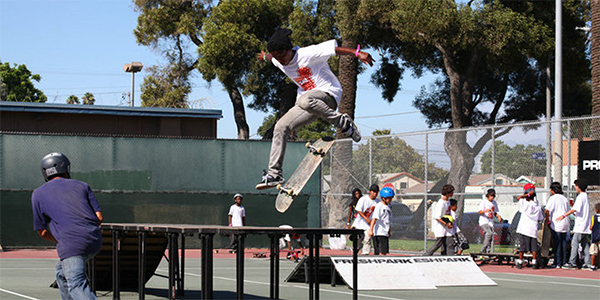
In Changing the Landscape: People, Parks, and Power, Prevention Institute and Alessandro Rigolon of the University of Utah propose an approach to addressing park and green space inequities that prioritizes building power among people closest to the problem so that they can drive policy and systems change solutions. The paper includes lessons learned from other public health movements that can benefit the park equity movement as well as examples of promising green space equity policies. It was funded with support from the Robert Wood Johnson Foundation (RWJF). Read more.
Example #9: Jersey Creek Park Trail in Kansas City
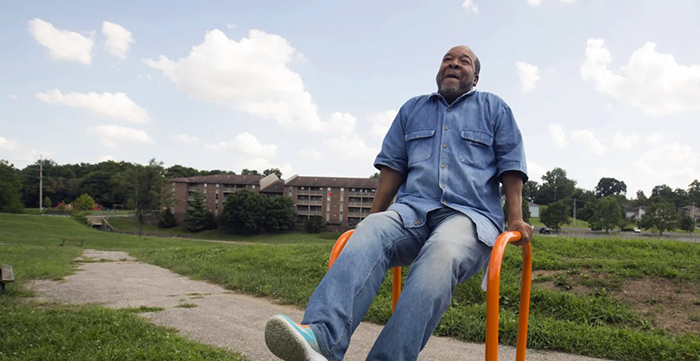
Broderick Crawford, the executive director of the NBC (New Bethel Church) Community Development Corp., sees possibilities in deterioration. He envisions children biking to the playground, perhaps to play pickup basketball, and families who can enjoy the outdoors in safety.
The NBC Community Development Corp. is one part of a multifaceted coalition that includes Healthy Communities Wyandotte, Community Health Council of Wyandotte County, FreeWheels for Kids, UG Parks and Recreation, the University of Kansas School of Architecture, the Latino Health for All Coalition and other organizations that are working to improve the health of Wyandotte Countians. Read more.
Example #10: People, Parks, and Power: A National Initiative for Green Space, Health Equity, and Racial Justice
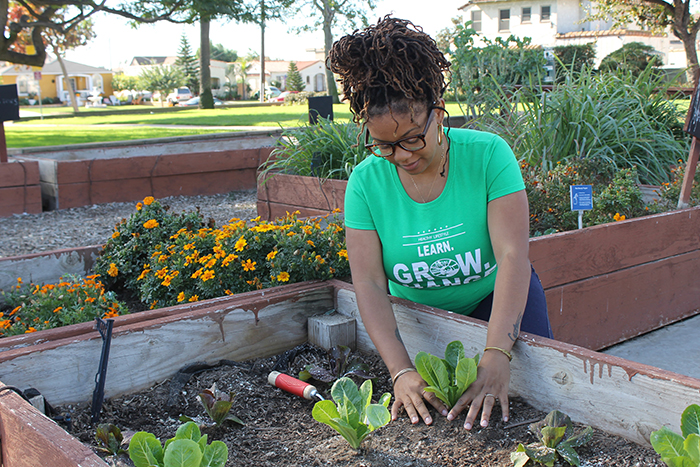
People, Parks, and Power (P3) is the first national funding initiative in the U.S. to support power building by community-based organizations to reverse deep seated park and green space inequities in Black, Latino, and Indigenous communities across the country. P3 is a joint effort of the Robert Wood Johnson Foundation and the Doris Duke Charitable Foundation, led and managed by Prevention Institute. P3 will advance park and green space equity through a national grantmaking program, peer-to-peer learning community, research, network building, and strategic communications. Read more.
example #11: creating space for girls - a community-built playground for equity and inclusion

A coalition in Johnson County, Kansas, worked to empower girls by creating a community space designed specifically for–and by–them. Local government partnered with youth to design and build a playground to address the lack of spaces that cater to girls’ needs and interests. This effort provides a supportive place for girls to connect and interact.
The Urban Land Institute's case study of the 21c Museum Hotel in Cincinnati provides an example of adaptive reuse: a deteriorated historic downtown building was rehabilitated and given a new use that combines hospitality, art, and public cultural space. Projects like this can preserve historic resources while contributing to broader community development.
Historic buildings, neighborhoods, landscapes, cultural sites, and other places can tell important stories about the people who built, used, shaped, and cared for them. Those stories may reflect achievement and creativity, but they may also include conflict, exclusion, displacement, labor, migration, resistance, and other experiences that have shaped a community.
Historic preservation can help communities understand those histories while deciding how historic and cultural resources should continue to function in the present. Preservation is strongest when the people connected with a place – including residents, Tribal Nations, descendant communities, property owners, workers, cultural organizations, and others – have meaningful roles in identifying what matters and how it should be treated.
In this section, we'll look at historic preservation, why communities may choose to preserve historic and cultural resources, who should participate in those decisions, and the tools communities can use to protect, adapt, interpret, and sustain important places.
What do we mean by historic preservation?
Historic preservation is the practice of identifying, protecting, maintaining, interpreting, and appropriately using places and resources that have historic, cultural, architectural, archeological, or community significance.
Preservation is not limited to keeping an old building exactly as it looks today. Depending on the resource and its significance, preservation may involve maintaining historic materials, adapting a building for a new use, restoring features from a particular period, documenting archeological resources, protecting a cultural landscape, or recognizing continuing cultural relationships with a place.
Types of historic and cultural resources
Buildings and structures
Houses, commercial buildings, industrial facilities, schools, places of worship, barns, bridges, transportation structures, monuments, and other built resources may have historic significance because of their architecture, construction, use, age, association with people or events, or importance to a community.
A building does not have to be architecturally elaborate or associated with a nationally famous person to matter. An ordinary home, store, school, workplace, meeting hall, or other structure may be important because it reflects the everyday history of a community or the experiences of people whose stories have not always been included in traditional historical narratives.
Neighborhoods and districts
Groups of buildings, streets, public spaces, landscapes, businesses, and other features may together reflect an important period of community development or the history of a particular community.
Historic neighborhoods are also living communities. Preservation decisions should therefore consider housing affordability, accessibility, current residents, community culture, changing needs, and the effects that investment may have on displacement or property costs.
Tribal, Indigenous, and culturally significant places
Some places have continuing cultural, spiritual, historical, or community significance to Tribal Nations and Indigenous peoples. These may include settlements, landscapes, burial places, traditional cultural properties, archeological resources, gathering places, sacred sites, and other locations whose importance cannot be understood only by looking at buildings or architectural style.
Tribal Nations are sovereign governments, and preservation involving Tribal lands, resources, or cultural heritage should include the appropriate Tribal governments, Tribal Historic Preservation Offices where applicable, and other people designated by the Tribe.
Some cultural information may be sensitive or not appropriate for public interpretation. Communities and preservation professionals should respect Tribal sovereignty, cultural protocols, and decisions about what information should or should not be shared.
Landscapes
Historic landscapes may include farms, parks, battlefields, transportation corridors, waterfronts, industrial landscapes, cemeteries, traditional cultural landscapes, and other places shaped by relationships among people, land, and natural resources.
Landscape preservation can involve physical features such as roads, fields, vegetation, waterways, structures, landforms, views, or spatial patterns, as well as the cultural meanings attached to them.
Archeological sites
Archeological resources can provide information about communities and time periods that may not be fully represented in written records. These resources may exist above or below ground and can include structures, artifacts, features, cultural deposits, and landscapes.
Archeological work should be conducted carefully and in accordance with applicable laws, professional standards, and consultation requirements, particularly when human remains, funerary objects, sacred materials, or Tribal cultural resources may be involved.
Objects and features
Signs, murals, public art, monuments, machinery, landscape features, street elements, industrial equipment, trees, walls, markers, and other objects may have historical or cultural importance.
Their significance may come from design, age, craftsmanship, use, association with a place or community, or the stories people connect with them.
Cultural heritage
Historic preservation can also connect with cultural heritage that is not limited to buildings or objects. Language, artistic traditions, foodways, music, craftsmanship, ceremonies, oral histories, traditional knowledge, and community practices may all be part of how people understand and sustain their history.
Protecting cultural heritage works best when the people whose heritage is involved help determine how it should be documented, interpreted, shared, and sustained.
Approaches to historic preservation
The U.S. National Park Service identifies four major treatments for historic properties: preservation, rehabilitation, restoration, and reconstruction. The appropriate treatment depends on the significance and condition of the property, its proposed use, available documentation, and the goals of the project.
Preservation
Preservation focuses on maintaining and repairing the existing historic materials, features, form, and character of a property. It generally emphasizes continued maintenance and limited repair rather than extensive replacement or new construction.
Rehabilitation
Rehabilitation allows a historic property to continue serving a useful purpose or take on a compatible new use while retaining the features that convey its historic, cultural, or architectural significance.
Rehabilitation may involve repairs, alterations, accessibility improvements, updated building systems, additions, or other changes necessary for continued use, provided that important historic characteristics are respected.
Restoration
Restoration focuses on depicting a property as it appeared during a particular period in its history. Features from that period are retained or restored, while some features from other periods may be removed when appropriate to the restoration goal.
Reconstruction
Reconstruction uses new construction to recreate a non-surviving building, structure, landscape, site, or other resource as it appeared during a particular historical period.
Because reconstruction creates something that no longer survives, it should be based on strong documentary and physical evidence and should be clearly identified as a contemporary re-creation.
The Secretary of the Interior's Standards for the Treatment of Historic Properties provide detailed guidance for deciding how preservation, rehabilitation, restoration, and reconstruction should be carried out. The appropriate treatment depends on the property rather than on a general preference for making something look "older" or returning it to an assumed original appearance.
Deciding what should be preserved
Preservation decisions may involve disagreement. A building may contain important features from several periods in its history. Residents may value a later addition that preservation professionals initially consider less significant. A property may be historically important while also needing substantial changes to remain useful, accessible, affordable, or environmentally responsible.
Questions to consider include:
- What makes the building, site, landscape, district, or object significant?
- What does it mean to the people and communities connected with it?
- Whose histories are represented, and whose may have been overlooked?
- What future uses are possible?
- How is the property currently used?
- What is its physical condition?
- What accessibility, safety, climate, environmental, or building-system improvements are needed?
- What are the costs and tradeoffs of different treatment approaches?
- What do residents, property owners, Tribal Nations, descendant communities, and other people connected with the property want?
- Are there requirements associated with grants, tax incentives, easements, public ownership, or other funding?
- Is appropriate preservation expertise available?
- Could preservation or redevelopment contribute to displacement, rising costs, or loss of community access?
Why encourage historic preservation?
- It can preserve community history, identity, and continuity. Historic places can help people understand how their community developed and how different generations and groups contributed to it. Preservation can maintain features that make places distinctive while keeping community history visible.
- It can help broaden whose histories are recognized. Preservation can document places connected with communities, workers, movements, cultural traditions, and everyday experiences that may have received less attention in traditional historical accounts.
- Reusing existing buildings can conserve resources. Rehabilitation may reduce demolition waste and make continued use of materials, infrastructure, and embodied energy already invested in existing buildings.
- It can preserve traditional skills and craftsmanship. Historic buildings may require specialized masonry, carpentry, plaster, metalwork, decorative arts, and other skills. Preservation projects can create opportunities to sustain and teach those trades.
- It can contribute to the character of a community. Historic buildings, landscapes, streets, and cultural places may help distinguish one community from another and strengthen residents' connection to place.
- It can contribute to community investment and economic activity. Rehabilitation may create construction and preservation jobs, provide space for businesses or housing, support cultural institutions, or contribute to tourism and commercial activity.
- It can create workforce-development opportunities. Paid apprenticeships and training in preservation trades can help participants develop transferable skills in construction, restoration, design, research, project management, and related fields.
- It can make creative use of buildings that no longer serve their original purpose. Schools, factories, warehouses, hotels, offices, transportation buildings, and other historic structures may sometimes be adapted for housing, cultural facilities, businesses, education, community services, or other uses.
- It may support economically viable redevelopment. Some preservation projects can use tax incentives, grants, loans, or other resources that make rehabilitation more feasible. Historic settings may also contribute to the identity of businesses, cultural institutions, housing developments, or tourism efforts.
Historic preservation does not automatically produce equitable community development. Investment may also increase rents, property values, or commercial pressure. Communities should consider who benefits from preservation, whether existing residents and businesses can remain, and how public investment can support both historic resources and community stability.
When should you encourage historic preservation?
Communities may consider historic preservation whenever decisions involving development, public investment, housing, land use, cultural heritage, or significant properties are being made.
- When the community is developing or updating a comprehensive plan. Historic and cultural resources can be considered alongside housing, transportation, environmental protection, economic development, accessibility, public space, and other community priorities.
- When neighborhood planning is underway. Residents can identify buildings, landscapes, businesses, cultural places, streets, and other resources that contribute to neighborhood identity and discuss how they should fit into future development.
- When an area is receiving new investment or has experienced long-term disinvestment. Rehabilitation of existing buildings can be part of broader community development, but planning should include residents and consider affordability, displacement, local ownership, accessibility, and who will benefit from new investment.
- When historic buildings can help meet an identified community need. An unused school, hotel, industrial building, office, or other property might be adapted for housing, education, community services, cultural uses, workplaces, or other purposes.
- When new development may affect historic or cultural resources. Preservation can be considered early in planning so that significant resources are identified before major design and investment decisions have already been made.
- When a community is documenting or commemorating its history. Anniversaries, oral-history projects, cultural programs, exhibitions, and other activities may create opportunities to identify places and stories that residents want to protect or interpret.
- When a historic or culturally important property is threatened. Demolition, prolonged neglect, environmental hazards, inappropriate alterations, climate-related risks, or development pressure may threaten significant resources.
- When communities are considering heritage and cultural tourism. Historic and cultural resources may support tourism when interpretation is accurate, community-led, respectful of living cultures, and connected with local economic opportunities.
- When preservation can support workforce development. Paid training and apprenticeship programs can teach preservation trades to young people, adults changing careers, and others seeking employment opportunities, including people who have experienced barriers to entering the workforce.
Workforce programs should build on participants' strengths and goals rather than defining people primarily by poverty, substance use, justice-system involvement, or other challenges they may have experienced. Training should provide meaningful skills, appropriate supervision, safe working conditions, accessibility, and fair compensation.
Who should encourage historic preservation?
Historic preservation affects more than preservation professionals. The people who live, work, worship, gather, conduct business, maintain cultural traditions, or otherwise have relationships with a place may all bring important knowledge.
- Residents and people connected with the place. People who experience a neighborhood or property in everyday life can identify meanings and histories that may not appear in formal records.
- Tribal Nations and Tribal Historic Preservation Offices. Tribal governments and designated cultural representatives should have central roles when projects may affect Tribal historic properties, ancestral places, sacred sites, archeological resources, or other resources of importance to Tribes.
- Descendant communities and cultural organizations. Communities connected with historic places through ancestry, migration, labor, religion, race, ethnicity, culture, or shared experience can provide essential knowledge about significance and interpretation.
- Public officials, planners, and public agencies. Government decisions involving planning, zoning, transportation, infrastructure, public land, funding, and development can significantly affect historic resources.
- Owners of historic properties. Homeowners, businesses, nonprofit organizations, institutions, developers, and other property owners often make the day-to-day decisions that determine whether historic resources are maintained, altered, adapted, or demolished.
- Community development organizations. Historic properties may be connected with housing, economic development, cultural activity, neighborhood investment, and other community priorities.
- Businesses and organizations connected with tourism and local economic activity. Hotels, restaurants, museums, stores, guides, cultural organizations, and other businesses may benefit when preservation contributes to responsible heritage tourism.
- Businesses and employers. Businesses may occupy historic buildings, contribute funding or expertise, participate in preservation partnerships, or benefit from community investment.
- Community organizers and preservation advocates. These participants may help document community priorities, bring people into planning processes, conduct research, organize projects, and communicate with public and private decision-makers.
- Historians, preservation organizations, and people interested in community history. These participants may contribute research, documentation, interpretation, and knowledge of historic resources.
- Architects, engineers, archeologists, landscape architects, conservators, craftspeople, and preservation professionals. Specialized expertise may be needed to understand a property's condition and develop appropriate treatment options.
- People with disabilities and accessibility organizations. Their participation can help ensure that preservation and accessibility are addressed together rather than treated as competing goals.
- Young people and educational institutions. Students can contribute oral histories, documentation, research, mapping, interpretation, and other work while learning about community history.
How do you encourage historic preservation?
Communities can support historic preservation through planning, incentives, funding, regulations, technical assistance, education, community participation, and stewardship.
The appropriate combination depends on local law, ownership, community priorities, the type and significance of the resource, and whether state, Tribal, or federal requirements apply.
Incentives
Financial and development incentives can make preservation more feasible when rehabilitation costs are higher than conventional construction or when preservation provides a public benefit.
Tax incentives
Tax incentives may include:
- Tax credits. A tax credit generally reduces the amount of tax owed when eligibility requirements are met.
- Tax deductions. A tax deduction generally reduces the amount of income subject to taxation rather than directly reducing the tax owed.
- Tax abatements or property-tax incentives. State or local governments may reduce qualifying taxes for a defined period or under specific preservation programs.
The federal Historic Preservation Tax Incentives Program currently provides a 20 percent tax credit for qualifying rehabilitation expenses involving certified historic structures used for income-producing purposes. The rehabilitation must meet the Secretary of the Interior's Standards for Rehabilitation and receive the required certification.
State and local preservation incentives vary substantially. Property owners and project sponsors should use current information from the National Park Service, State Historic Preservation Office, Tribal Historic Preservation Office where applicable, tax authorities, and relevant local agencies.
Other incentives
Depending on local law, governments may also use:
- Grants or low-interest financing
- Rehabilitation assistance
- Zoning flexibility
- Density or development incentives
- Technical assistance
- Support for accessibility, energy efficiency, environmental remediation, or code-related improvements
- Public infrastructure investments connected with preservation projects
Preservation incentives should not be treated as permission to bypass necessary health, safety, accessibility, environmental, or building requirements. Where historic conditions make compliance difficult, project teams can work with preservation professionals, code officials, accessibility specialists, engineers, and others to identify appropriate solutions.
Grants and loans
Government agencies, foundations, nonprofit organizations, financial institutions, and other funders may support:
- Preservation or rehabilitation of historically and culturally significant properties
- Historic transportation facilities, routes, bridges, stations, and related resources
- Historic and scenic transportation corridors
- Heritage areas and regional cultural landscapes
- Tribal historic properties, cultural resources, and preservation programs
- Historic sites associated with civil rights, labor, transportation, agriculture, military history, maritime history, migration, industry, and other subjects
- Research, documentation, planning, and interpretation
- Preservation work supported by foundations and nonprofit organizations
- Accessibility, climate resilience, energy efficiency, and adaptation of historic properties
Programs and eligibility requirements change. Use current official guidance when identifying funding rather than relying on older program lists.
Regulations and preservation policy
Regulations can help communities identify significant properties and establish a process for reviewing proposed demolition, alteration, or development.
Regulatory approaches vary considerably by state, Tribal Nation, municipality, and property type.
Historic districts and local designation
Historic districts may be recognized at the federal, state, Tribal, or local level, but different forms of designation have different legal effects.
Listing a privately owned property in the National Register of Historic Places does not, by itself, impose federal restrictions on what a non-federal owner may do with the property unless federal funding, licensing, permitting, or another federal action is involved. State, Tribal, or local laws may establish separate requirements.
Local historic districts or landmarks may be subject to design review or other preservation ordinances. Depending on local law, review may address:
- Exterior alterations and design. Changes to windows, entrances, additions, architectural features, materials, signs, or other visible elements may be reviewed.
- Building scale, height, or massing. New construction may be reviewed for compatibility with surrounding historic resources.
- Building materials. Review may consider whether proposed materials are compatible with the historic property or district without requiring new construction to falsely imitate historic buildings.
- Landscapes and site features. Historic vegetation patterns, walls, paths, trees, open space, and other landscape elements may be considered where they contribute to significance.
- Demolition and new development. Communities may establish processes for considering how demolition, additions, or new construction affect designated historic resources.
Historic buildings and structures
Depending on applicable law, communities may establish review processes for demolition or major alteration of designated historic properties.
Preservation review should also consider:
- Whether the building can reasonably be repaired or adapted
- Which materials and features convey its significance
- Accessibility
- Fire and life safety
- Energy efficiency
- Heating, cooling, electrical, plumbing, and other building systems
- Climate resilience
- Environmental hazards
- Whether new additions are distinguishable yet compatible
Historic preservation, accessibility, environmental responsibility, and continued use do not have to be treated as mutually exclusive goals. They may require thoughtful design and technical expertise, but many historic properties can be adapted while retaining the features that make them significant.
Community participation and oversight
Communities may establish historic commissions, preservation boards, resident advisory groups, Tribal preservation programs, or other bodies that participate in preservation decisions.
These bodies should use transparent procedures and provide meaningful opportunities for property owners, residents, Tribal Nations, descendant communities, people with disabilities, cultural organizations, and others affected by decisions to participate.
Community participation should not begin only when a property is threatened. Ongoing surveys, oral histories, planning, mapping, and cultural-resource inventories can help identify significant places before decisions about demolition or redevelopment are urgent.
Help and support
Historic preservation may require specialized knowledge that many property owners and community organizations do not have. Technical assistance can make preservation more feasible and improve the quality of the work.
Sources of assistance may include:
- Colleges and universities. Faculty and students in architecture, history, archeology, planning, engineering, landscape architecture, public history, preservation, and related fields may contribute research or technical assistance.
- Preservation professionals and skilled tradespeople. Architects, engineers, conservators, craftspeople, historians, archeologists, and others may contribute paid or volunteer expertise.
- Government agencies and preservation offices. Local agencies, State Historic Preservation Offices, Tribal Historic Preservation Offices, and federal agencies may provide guidance, review, training, or technical resources.
- Historic preservation and cultural organizations. These organizations may provide training, research, technical information, networking, or community engagement.
- Accessibility and sustainability professionals. Their participation can help historic properties remain useful while addressing access, energy, climate, and environmental needs.
Support documentation and appropriate designation
Communities and organizations may help research historic properties, prepare surveys or nominations, document oral histories, identify cultural landscapes, or navigate appropriate local, state, Tribal, or federal preservation processes.
Formal designation is not always the best or only preservation tool. Communities should first understand what designation means, what protections it provides, what responsibilities may follow, and whether property owners and communities support that approach.
Volunteer and community support
Community members can contribute to preservation in many ways, including:
- Historical and archival research
- Oral-history projects
- Photography and documentation
- Community surveys and mapping
- Public education and interpretation
- Fundraising and grant development
- Appropriate maintenance or restoration work under qualified supervision
- Community events and cultural programming
- Monitoring properties for maintenance or preservation concerns
Volunteer participation should complement professional expertise where specialized construction, conservation, archeology, safety, or technical work is required.
Public education and interpretation
Preservation is easier to sustain when people understand why a place matters and have opportunities to connect with its history.
Interpretation should present history accurately and acknowledge complexity. A historic place may carry different meanings for different communities, and difficult histories should not be removed simply because they complicate a celebratory story.
Public education may include:
- Guided and self-guided tours. Walking, bicycling, driving, or virtual tours can connect people with local history and historic places.
- Signs and interpretive displays. Signs, plaques, digital interpretation, and other resources can explain the significance of buildings, landscapes, people, and events.
- Maps, brochures, and community guides. These can help people discover historic and cultural resources throughout the community.
- Community presentations and conversations. Libraries, schools, cultural organizations, neighborhood groups, faith communities, and other organizations can provide places to learn about and discuss local history.
- Arts and cultural programming. Performances, exhibitions, storytelling, public art, oral histories, and other creative approaches can help interpret historic places and experiences.
Use media and digital communication
Local news organizations, newsletters, podcasts, community websites, social media, videos, digital maps, and other communication channels can share information about historic places, preservation projects, community history, and opportunities for participation.
Digital platforms can also provide virtual tours, oral histories, photographs, archival materials, interactive maps, and links to preservation resources.
Digital materials should be designed with accessibility in mind and, when cultural or Tribal information is involved, should respect decisions about what information is appropriate to make public.
Include preservation in education
Schools, colleges, museums, libraries, youth programs, and community organizations can help young people learn about local history and historic places.
Activities might include:
- Walking tours
- Oral-history projects
- Archival research
- Mapping neighborhood history
- Photographing and documenting historic places
- Studying architecture and landscapes
- Learning traditional building and preservation trades
- Working with museums, historical societies, Tribal cultural programs, or preservation organizations
Students do not need to pursue careers in historic preservation for these experiences to be valuable. They can develop research, observation, communication, technical, and civic skills while learning how their community has changed over time.
Participate in public decision-making
Historic preservation decisions may involve planning boards, historic commissions, Tribal governments, public agencies, elected bodies, property owners, developers, funders, and other decision-makers.
Community members and organizations can participate by:
- Conducting and sharing research
- Participating in public meetings and hearings
- Serving on planning or preservation committees
- Providing comments on proposed plans
- Working with property owners and developers
- Identifying alternatives to demolition
- Participating in comprehensive and neighborhood planning
- Seeking funding or technical assistance
- Using appropriate administrative or legal processes when preservation requirements are not being followed
Effective participation focuses on the significance of the resource, community experience, available evidence, costs, alternatives, legal requirements, accessibility, environmental considerations, and possible effects on residents and property owners.
Not everyone will agree that a particular property should be preserved or about how preservation should occur. A strong process considers those differences openly rather than treating disagreement simply as opposition that needs to be overcome.
Continue stewardship over time
Historic preservation is an ongoing process. A building that has been successfully rehabilitated still needs maintenance. Landscapes change. Climate and weather may create new risks. New research may reveal histories that were previously overlooked. Community priorities may also change.
Continue asking:
- Is the historic or cultural resource being maintained?
- Is its significance accurately interpreted?
- Are people connected with the place still involved in decisions?
- Are accessibility needs being addressed?
- Are climate or environmental risks changing?
- Is the property financially sustainable?
- Is the current use compatible with its historic character?
- Are preservation investments contributing to displacement or unequal access?
- Have new histories, perspectives, or cultural relationships been identified?
In Summary
Historic preservation can protect buildings, structures, neighborhoods, landscapes, archeological resources, cultural places, and other resources that help communities understand their histories and identities.
The four major approaches recognized by the National Park Service – preservation, rehabilitation, restoration, and reconstruction – serve different purposes. The appropriate approach depends on the property's significance, physical condition, proposed use, available documentation, and community goals.
Historic preservation can support community identity, environmental responsibility, adaptive reuse, housing, cultural activity, workforce development, tourism, and economic investment. At the same time, preservation decisions should consider accessibility, affordability, displacement, climate resilience, cultural sensitivity, property rights, and who benefits from public and private investment.
Strong preservation efforts include the people most closely connected with the place, including residents, Tribal Nations, descendant communities, property owners, cultural organizations, people with disabilities, preservation professionals, businesses, public agencies, and other affected groups.
Communities can support preservation through planning, incentives, funding, appropriate regulations, technical assistance, education, interpretation, workforce development, and participation in public decision-making.
Preserving history does not mean freezing a community in the past. It means understanding what places and stories matter, deciding together what should continue into the future, and finding ways for historic and cultural resources to remain meaningful, useful, accessible, and connected to the people whose lives they represent.
Contributor
Phil Rabinowitz
Resources
Online Resources
Alliance of National Heritage Areas is an organization of the 27 areas designated National Heritage Areas by the U.S. government, along with partners and supporters of “sustainable heritage development.”
CA Office of Historic Preservation gives examples of how California uses tax incentives to encourage historic preservation.
Cornell MA in Historic Preservation Planning is one example among many of a graduate degree program in historic preservation.
Cornerstones Community Partnership is a Santa Fe, New Mexico organization that combines historic preservation with training and personal growth for at-risk youth.
Connecticut Trust for Historic Preservation provides information and links on historic preservation for do-it-yourselfers, members of historic preservation commissions, interested community members, etc.
National Park Service & Historic Preservation provides information on federal Historic Preservation Tax Incentives and a great deal more.
National Trust for Historic Preservation provides lots of info on preservation, as well as photos, or preserved spaces.
National Trust Heritage Tourism page provides assistance ranging from how-to cultural heritage tourism publications to consulting services tailored to meet the needs of individual clients.
The Old House Web offers a series of articles relating to preservation and rehabilitation guidelines.
PreserveNet provides preservationists with a comprehensive database of regularly updated internet resources and current professional opportunities, as well as grant opportunities.
Secretary of the Interior’s Standards and Guidelines for Historic Rehabilitation provides standards designed to promote responsible preservation practices that help protect our Nation's irreplaceable cultural resources.
What do we mean by historic preservation?
___Historic preservation is safeguarding the existence and appearance of historic elements of the community
___Historic elements may include structures, neighborhoods, landscapes, and building or landscape features
___Historic preservation includes four possible activities:
- Preservation is preserving a place as it is in the present
- Rehabilitation fixes up a deteriorated historic property, often for a use other than its original one
- Restoration means putting a building or landscape back the way it was originally, or at a historically significant time in its past
- Reconstruction is the creation of a historically accurate copy of either a specific historic property that no longer exists or an example of one from a chosen historical period
Why encourage historic preservation?
___It preserves the historic, architectural, and aesthetic character and heritage of a community or area, and helps to provide a sense of place and continuity
___It is an efficient use of resources
___It preserves old methods of workmanship
___It can add character and/or charm to a community, and emphasize its uniqueness
___It can attract investment and change the nature of a deteriorating neighborhood or area
___It can provide an opportunity for the imaginative or creative use of a building that has stood empty because it outlived its previous use, and at the same time solve a community problem
___It can be a good investment
When should you encourage historic preservation?
___When the community is engaged in creating a comprehensive plan for growth and development
___When there’s a neighborhood planning effort
___When there’s a neighborhood revitalization effort under way
___When affordable housing or another specific need is clear in an area, and historic buildings are available to meet it
___When development is planned in an area that includes a historic structure or neighborhood
___When there’s a celebration of community history
___When a historic property is threatened
___When the community is engaged in a heritage tourism effort
___As part of a job training effort aimed at at-risk populations or individuals
Who should encourage historic preservation?
___Public officials and planners
___Owners of historic properties, including developers, businesses and industries, and individual homeowners
___Community developers
___Those likely to benefit from tourism
___The business community
___Community activists, especially those concerned with the cultural heritage of the community
___History buffs
How do you encourage historic preservation?
___Use incentives: tax incentives, other incentives, grants and loans
___Use regulations governing the treatment and use of historic properties
___Provide help and support for preservation
___Educate the public on the topic
___Engage in advocacy with governmental and non-governmental decision makers
Tool: The Secretary of the Interior’s Standards and Guidelines for Historic Rehabilitation
Under the statute that governs the federal Historic Preservation Tax Incentives program (36 CFR 67), "Rehabilitation" is defined as "the process of returning a property to a state of utility, through repair or alteration, which makes possible an efficient contemporary use while preserving those portions and features of the property which are significant to its historic, architectural, and cultural values."
The Standards:
The standards explain the nature and quality of the work expected of a historic rehabilitation.
-
A property shall be used for its historic purpose or be placed in a new use that requires minimal change to the defining characteristics of the building and its site and environment.
-
The historic character of a property shall be retained and preserved. The removal of historic materials or alteration of features and spaces that characterize a property shall be avoided.
-
Each property shall be recognized as a physical record of its time, place, and use. Changes that create a false sense of historical development, such as adding conjectural features or architectural elements from other buildings, shall not be undertaken.
-
Most properties change over time; those changes that have acquired historic significance in their own right shall be retained and preserved.
-
Distinctive features, finishes, and construction techniques or examples of craftsmanship that characterize a property shall be preserved.
-
Deteriorated historic features shall be repaired rather than replaced. Where the severity of deterioration requires replacement of a distinctive feature, the new feature shall match the old in design, color, texture, and other visual qualities and, where possible, materials. Replacement of missing features shall be substantiated by documentary, physical, or pictorial evidence.
-
Chemical or physical treatments, such as sandblasting, that cause damage to historic materials shall not be used. The surface cleaning of structures, if appropriate, shall be undertaken using the gentlest means possible.
-
Significant archeological resources affected by a project shall be protected and preserved. If such resources must be disturbed, mitigation measures shall be undertaken.
-
New additions, exterior alterations, or related new construction shall not destroy historic materials that characterize the property. The new work shall be differentiated from the old and shall be compatible with the massing, size, scale, and architectural features to protect the historic integrity of the property and its environment.
-
New additions and adjacent or related new construction shall be undertaken in such a manner that if removed in the future, the essential form and integrity of the historic property and its environment would be unimpaired.
The Guidelines:
The guidelines set out the order in which rehabilitation activities must be considered and carried out. That means that the first of these must be tried and completed to the extent possible before moving on to the second, which in turn must be completed before moving on to the third, etc. In practice, the architect or contractor in charge will determine beforehand what can be retained, what needs to be protected, what should be repaired, etc.
The order of consideration in rehabilitating historic buildings and building features is:
-
Identify, retain, preserve (any part that’s in good shape).
-
Protect and maintain (anything that’s threatened or needs cleaning or the like).
-
Repair (applied to anything that isn’t so completely deteriorated that it can’t be repaired).
-
Replace (with in-kind materials, design, colors, tools, workmanship, etc., where something has deteriorated past the point of repair).
-
Design for missing features (should conform to what was there, if you know what it was, or can be a new, but appropriate, design when you don’t have direct evidence of what the missing features looked like or were made of).
-
Alterations or additions (must be consistent with the historic materials and/or character of the original).
-
Energy efficiency/Accessibility/Health and Safety. (Work on these areas must respect the historic materials, design, spaces, etc. of the original. Essentially, this means that installation of any equipment for these purposes can’t involve destruction of any original material or features, or alter the character of the structure.)
Example: Community Development 2.0—Collective Impact Focuses a Neighborhood Strategy for Health
The East Bay Asian Local Development Corporation (EBALDC) has built health into its strategic plan, and in the neighborhood revitalization work of The San Pablo Collaborative (SPARC), convened by EBALDC, health is the first priority. The San Pablo Area Revitalization Corridor neighborhood that stretches between downtown Oakland and Emeryville is considered to be one of the poorest and most disadvantaged areas of Oakland, California. Life expectancy in this area is up to 20 years lower than the neighboring area, Oakland Hills. SPARC works tirelessly to address the physical, social and economic factors-“social determinants”- that shape residents’ health in the San Pablo Avenue Corridor. SPARC partners work collectively in order to create an overall healthier environment for residents throughout the neighborhood. The California Hotel has been successfully preserved as affordable housing and a grocery store has been brought to this long abandoned neighborhood.
Learn how social determinants of health are being addressed to build healthier lives for the most disadvantaged areas of Oakland, California in this Community Close-Up from the Building Healthy Places Network.
Contributed by Lia Thompson, University of Kansas, Community Tool Box Intern.
Communities are shaped by the relationships among the people who live, work, learn, gather, and participate in them. Those relationships may develop through families, neighborhoods, schools, workplaces, faith communities, cultural organizations, businesses, recreation, public institutions, and everyday encounters in shared spaces.
Social, economic, technological, and demographic changes can affect how often people encounter one another in everyday life. People may live near neighbors they do not know, work or study far from where they live, communicate increasingly through digital spaces, or belong to communities that extend well beyond a particular neighborhood.
At the same time, communities may include people with different cultures, languages, ages, abilities, household structures, economic circumstances, experiences, and perspectives. Shared spaces can provide opportunities for people to participate in community life, build relationships, exchange ideas, and develop a stronger sense of belonging.
This section explores how the built environment, programming, policy, and community participation can help create places where people can comfortably gather and interact.
Not everyone will use a public space in the same way or want the same amount of social interaction. A successful community space can support conversation and connection while also allowing people to observe, rest, spend time alone, or participate at their own comfort level.
What do we mean by good places for interaction?
Social interaction includes the everyday encounters through which people communicate, share experiences, exchange information, participate in activities, or simply become more familiar with one another.
Good places for interaction are welcoming, accessible spaces where people have opportunities to gather, participate in activities, spend time comfortably, and interact with others when they choose.
These spaces may bring together people from the same neighborhood or from different parts of a community. They may also create opportunities for people with different backgrounds and experiences to encounter one another in ordinary, low-pressure ways.
Four characteristics are especially important:
- There is a reason for people to go there.
- There are reasons for people to stay once they arrive.
- People can feel comfortable and reasonably safe.
- The space is welcoming, accessible, and usable by a wide range of community members.
Many different kinds of public, nonprofit, institutional, and privately operated spaces can support community interaction.
- Squares and plazas. Central public spaces can provide places for markets, performances, civic events, celebrations, informal gathering, outdoor dining, recreation, and everyday encounters.
- Public buildings and their surroundings. Libraries, government buildings, cultural institutions, and other public facilities may include plazas, steps, meeting rooms, courtyards, or other spaces used for events, public participation, and informal gathering.
- Pedestrian streets. Streets designed primarily or periodically for walking can support conversation, shopping, dining, performances, markets, recreation, and community events without the noise and movement of vehicle traffic dominating the space.
- Streets and boulevards. Wide and accessible sidewalks, trees and shade, seating, active storefronts, safe crossings, food and retail businesses, and interesting streetscapes can make streets useful not only for travel but also for community life.
Food can be an important part of community gathering. Restaurants, cafes, markets, food vendors, community meals, festivals, and picnic areas can provide natural reasons for people to spend time together.
Communities should also consider affordability. A gathering place should not require people to make a purchase in order to feel that they belong there.
- Bridges and transportation connections. Bridges with pedestrian and bicycle access, viewing areas, seating, public art, or other features can become destinations as well as transportation routes.
- Markets. Farmers' markets, public markets, street markets, and other marketplaces can combine commerce with opportunities for conversation and community activity.
- Public transportation facilities. Transit stations, stops, and waiting areas may function as community spaces when they are comfortable, accessible, well connected, easy to navigate, and integrated with surrounding businesses or services.
- Parks. Parks can bring together recreation, nature, play, exercise, community events, relaxation, food, sports, and informal gathering.
- Walking, rolling, and bicycling routes. Trails, greenways, sidewalks, and similar routes can provide both transportation and opportunities for recreation and everyday social contact.
To learn more about creating community trails, visit Rails-to-Trails Conservancy.
- Theaters, sports facilities, libraries, museums, and other cultural or recreational spaces. Shared activities can give people a common experience that creates opportunities for conversation and connection.
- Schools. Schools can create opportunities for students and families from different backgrounds to learn, build relationships, participate in activities, and contribute to their communities. Inclusive school climates, respectful relationships, accessible activities, and meaningful family and community engagement can strengthen those opportunities.
- College and university campuses. Campuses may provide public lectures, performances, libraries, museums, recreation, public art, green space, and other opportunities for community participation when those resources are open and accessible to the public.
- Community centers, faith-community facilities, and nonprofit spaces. Classes, meals, meetings, recreation, cultural programs, support groups, and other activities can bring people together around shared interests and needs.
- Commercial gathering places. Shopping areas, cafes, indoor markets, and similar privately operated spaces may also function as community gathering places when they are welcoming, accessible, affordable to use, and connected with the surrounding community.
Commercial redevelopment can create attractive gathering places, but it may also change who feels able to use a space. Cost, transportation, business mix, rules of use, displacement, and changes in neighborhood identity can all affect whether existing residents continue to feel that a place belongs to them.
Why create good places for interaction?
- They can strengthen belonging and community stewardship. People who help shape a shared space may develop stronger connections to it and greater interest in its long-term care and success.
- They can create opportunities for relationships across differences. Repeated, everyday contact can help people learn about one another's experiences and develop relationships that may not otherwise form.
- They can expand opportunities for children and young people. Shared community spaces can expose young people to different interests, experiences, cultures, activities, mentors, peers, and ways of participating in community life.
- They can support social connection. Familiar faces, informal conversations, shared activities, and regular encounters can contribute to a sense of belonging.
- They can make community life more enjoyable. Festivals, food, recreation, cultural traditions, music, conversation, nature, public art, and other shared experiences can enrich everyday life.
- They can contribute to community safety and mutual support. Well-used and well-maintained spaces can increase activity, visibility, familiarity, and opportunities for people to notice hazards, offer assistance, and communicate about community concerns.
- They can improve neighborhood livability. Accessible gathering places can support recreation, social connection, community events, local organizations, services, and resident-led efforts to improve neighborhood conditions.
- They can support cross-cultural learning. People may have opportunities to share language, food, art, traditions, experiences, and perspectives while learning about both differences and common interests.
- They can provide places to exchange ideas. Shared spaces can support formal public discussion as well as informal conversations about community issues.
- They can expand access to relationships and community networks. Welcoming public spaces can create opportunities for people across income levels and other differences to develop relationships, exchange information, share resources, and participate in community activities.
- They can build social capital. Repeated relationships and community participation can strengthen networks of trust, information, cooperation, and mutual support.
- They can support collective community action. Existing relationships can make it easier for people to work together when they identify a shared priority or concern.
Good places for interaction create opportunities for connection, but physical proximity alone does not guarantee trust, understanding, or equity. Relationships are also influenced by history, discrimination, power, language, economic conditions, programming, organizational practices, and how people are treated within the space.
When should you create good places for interaction?
Communities can consider interaction and belonging whenever they plan, build, renovate, maintain, or change shared spaces.
Particularly useful opportunities include:
- When the neighborhood or community is engaged in a planning process. Community plans can identify where gathering places are needed and how existing spaces can be connected, improved, or made more accessible.
- When economic or community development is underway. New investment can include public space, shade, seating, walking and bicycling connections, gathering areas, local businesses, cultural spaces, and other features that support community life.
- When new residential or commercial development is proposed. Developers, residents, planners, and public agencies can consider how a project contributes to public space, accessibility, transportation, community services, and the surrounding neighborhood.
- When major public projects are planned. Roads, bridges, sidewalks, transit projects, public buildings, parks, schools, and other public investments can include spaces and connections that support community interaction.
- When a gathering place has become underused, poorly maintained, or difficult for residents to use comfortably. Community assessment can help identify whether the issue involves maintenance, programming, lighting, transportation, accessibility, conflict, environmental design, staffing, or other conditions.
- When transportation or development may create new physical barriers. Highways, rail lines, large developments, and other projects can divide neighborhoods or make walking, bicycling, transit, and everyday connection more difficult.
- When an existing gathering place is threatened. Funding cuts, redevelopment, changes in ownership, environmental conditions, or other factors may reduce public access to spaces that residents value.
- When residents identify tension, isolation, or limited interaction among groups. Shared spaces and activities may create opportunities for contact, but the approach should be developed with the people involved and should take history, safety, power, and the nature of the conflict into account.
A shared park, recreation center, or public event should not be expected to resolve serious conflict by itself. When a community is experiencing violence, harassment, discrimination, or longstanding conflict, additional strategies may be needed alongside improvements to physical space.
Who should be involved in creating good places for interaction?
The people who currently use a space, the people who might use it if barriers were removed, and the people who live or work nearby should have meaningful roles in planning it.
Different community members may value different features. Families may prioritize play, restrooms, shade, and places to sit together. Young people may identify recreation, food, technology, music, sports, or informal gathering as important. Older adults may emphasize seating, shade, restrooms, transportation, and safe walking routes. People with disabilities may identify accessibility barriers that are not obvious to other participants.
Other participants may include:
- Public officials and public agencies. They may have responsibility for planning, funding, land, transportation, maintenance, permitting, public facilities, or other aspects of the project.
- Planners, architects, landscape architects, engineers, and designers. These professionals can help translate community priorities into functional, accessible, safe, and sustainable spaces.
- Developers and property owners. Their projects may create or affect gathering spaces, pedestrian connections, public access, and surrounding community conditions.
- Trusted community members and resident-led organizations. They may contribute local knowledge, relationships, history, and perspectives that are important to understanding how a space is actually used.
- Businesses and business organizations. Businesses can contribute to active streets and gathering areas and may also provide funding, programming, food, services, or other resources.
- Public-safety, public-health, transportation, and social-service professionals. Their expertise may be useful when the project involves specific safety, health, mobility, or service issues.
- Community organizers and community-based organizations. These participants may help engage residents, identify barriers, organize activities, connect resources, and strengthen community participation.
- People with disabilities and accessibility organizations. Their participation can help ensure that physical, sensory, communication, cognitive, and other forms of accessibility are considered from the beginning.
- Young people. Children and adolescents should have age-appropriate opportunities to help shape spaces they use rather than being viewed only as potential sources of problems.
How do you create good places for interaction?
Four areas are especially important:
- Design: What should the space look like, feel like, and provide in order to support gathering and interaction?
- Incentives and regulations: How can policy and development tools support well-designed and accessible gathering spaces?
- Community action: How can residents and community organizations participate in creating, improving, programming, and caring for shared spaces?
- Community participation and advocacy: How can residents participate in the public and private decisions that shape community gathering places?
Design
Communities have always created places where people gather, although the form of those places changes over time. Markets, porches, public squares, parks, libraries, places of worship, recreation facilities, cafes, transit stations, workplaces, community centers, and digital communication all play different roles in community life.
Modern development patterns, transportation systems, technology, and changing work and household patterns can either create opportunities for interaction or make them more difficult.
Thoughtful design can help ensure that communities continue to have shared places where people can gather, participate in activities, rest, observe, and interact.
The four basic principles remain:
- Provide reasons to come.
- Provide reasons to stay.
- Support comfort and safety.
- Be welcoming and accessible.
Good places for interaction provide reasons for people to go there
People may come because the space provides something they need – transportation, services, shopping, education, work – or because they enjoy what it offers.
Features and activities may include:
- Cafes, restaurants, and food vendors.
- Food markets and grocery shopping. Markets can combine everyday errands with dining, events, outdoor seating, play, and social activity.
- Stores and local businesses. Active storefronts can create destinations and contribute to street activity.
- Museums, libraries, and other public-access institutions.
- Transportation. Transit stops and stations can become more comfortable community spaces when they include seating, shelter, accessible information, services, and connections with nearby destinations.
- Festivals, markets, celebrations, and community events.
- Music and cultural programming.
- Street performance and public art.
- Theaters, performance spaces, cinemas, and other cultural venues.
- Recreation. Basketball courts, playgrounds, volleyball courts, fields, trails, fitness areas, games, and other recreational features can bring people together around shared activity.
Active storefronts and ground-floor uses can make streets more interesting and create more opportunities for people to see and encounter one another. Blank walls, wide vehicle entrances, difficult crossings, and other design features can make walking and gathering less comfortable.
Good places for interaction provide reasons to stay
People are more likely to spend time in a place when they can meet basic needs and choose how they want to use the space.
- Seating. Provide a range of seating options for individuals, pairs, families, and groups. Movable seating may provide additional flexibility where appropriate.
- Sun and shade. Trees, shelters, canopies, and building orientation can help make outdoor spaces usable in different seasons and weather conditions.
- A mix of larger and smaller spaces. Some people want lively group activity; others may prefer quieter conversation, observation, or time alone.
- Food and drink. Where appropriate, food vendors, picnic tables, cafes, drinking water, or places to bring food can make longer visits easier.
- Views and visual interest. Nature, architecture, art, community activity, and changing scenery can make spaces enjoyable to spend time in.
- Green space. Trees, gardens, grass, native plantings, and other vegetation can provide shade, habitat, visual interest, cooling, and opportunities to experience nature.
- Water features. Streams, fountains, splash areas, or other water elements may contribute to comfort and recreation when they are safe, accessible, environmentally appropriate, and maintainable.
- Quieter areas. Some community members benefit from places with lower noise and sensory stimulation.
- Interesting routes for walking, rolling, or moving through the space.
- A variety of activities. Spaces may support recreation, conversation, art, shopping, food, performances, play, rest, nature, community events, or other uses.
- Restrooms, drinking water, and other basic amenities. These can make spaces much more usable for children, older adults, people with disabilities, families, and people spending extended periods there.
Good places for interaction support safety and comfort
Safety should be considered through both evidence and the experiences of people who use the space. Different groups may experience the same environment differently, so planners should avoid assuming that one feature or strategy makes everyone feel safe.
Useful considerations include:
- Regular use by a variety of people. A space that is active at different times of day may feel more welcoming and provide more opportunities for informal awareness of what is happening around it.
- Clear sightlines. People should be able to understand the layout of the space, see entrances and exits, and navigate it comfortably.
- Connections with surrounding streets, businesses, homes, or other active places.
- Appropriate lighting. Lighting should support visibility, walking, wayfinding, and activities while considering glare, nearby residents, wildlife, and other effects.
- Active edges and visibility. Windows, entrances, seating, storefronts, homes, and other active uses can connect a gathering place with its surroundings.
- Age-appropriate and accessible play areas. Equipment and surfaces should be maintained and designed with appropriate safety and accessibility considerations.
- Community-informed approaches to public safety. Depending on the setting, this may include trained staff, ambassadors, outreach workers, emergency communication, public-safety personnel, conflict-resolution resources, or other strategies identified through local assessment.
- Emergency access. People should be able to obtain assistance and leave the space safely when needed.
Avoid assuming that the presence of a particular gender, age group, racial group, law-enforcement presence, or other category of people is itself proof that a space is safe. Ask different users what contributes to or reduces their sense of safety.
Comfort also matters:
- Cleanliness and maintenance. Maintain walkways, seating, landscaping, restrooms, equipment, lighting, waste facilities, public art, and other features.
- Appropriate light. Natural light can contribute to comfort, while shade and protection from glare may also be important.
- Protection from traffic and excessive noise. Landscaping, distance, barriers, traffic calming, and other design strategies can help.
- Comfortable and varied seating.
- Weather protection. Shade, shelter, wind protection, cooling, heating, or indoor alternatives may increase year-round usability.
Young people can be valuable partners in designing, programming, and caring for community spaces. Involving them should be based on their knowledge, ideas, creativity, and right to participate in decisions affecting them – not on an assumption that they otherwise would damage the space.
Good places for interaction are welcoming and accessible
People should be able to understand that they are welcome, reach the space, enter it, move through it, use its facilities, obtain information, and participate in its activities.
Consider:
- Visibility and welcoming entrances. Entrances should be easy to identify and navigate.
- Accessibility for people with disabilities. Apply current accessibility standards and involve people with disabilities in assessing entrances, routes, surfaces, seating, restrooms, recreation, communication, signs, transportation connections, and other features.
- Inclusive communication and cultural representation. Relevant languages, accessible communication, public art, interpretation, programming, and other features can reflect the communities that use the space. Representation should be developed with community members rather than based on assumptions about particular groups.
- Transportation and location. Consider walking, rolling, bicycling, public transportation, drop-off areas, and parking as appropriate to the setting.
- Ease of navigation. Paths, entrances, exits, signs, maps, lighting, and landmarks can help people find their way.
- Accessible restrooms.
- Usable public space. Rules should protect health, safety, accessibility, shared resources, and other legitimate needs without unnecessarily preventing people from using public space.
- Affordability. Include opportunities to spend time in the space without having to purchase goods, tickets, food, or services.
- Sensory accessibility. Where possible, consider noise, lighting, crowds, quiet areas, and other environmental conditions that may affect people differently.
Use participatory design
Current and potential users should be involved early enough for their participation to influence important design decisions.
Participatory design can help identify:
- How people currently use the area
- What prevents some people from using it
- What activities residents want
- Where people prefer larger or quieter gathering areas
- Accessibility needs
- Cultural or historical features that matter to the community
- Transportation and connectivity concerns
- Safety and comfort concerns
- Programming needs
- Maintenance priorities
When different groups identify different priorities, planning can explore how several needs can be accommodated without assuming that one group must give up access for another.
Incentives and regulations
Local governments may use planning, incentives, development standards, public investment, and other policy tools to encourage or require gathering spaces and pedestrian-oriented design.
The appropriate tools depend on local and state law, community priorities, the type of project, financial feasibility, and existing development requirements.
Possible incentives include:
- Tax incentives. Where authorized, governments may provide tax benefits connected with qualifying public-space or community-development goals.
- Subsidies and grants. Public or philanthropic funding may support public-space improvements that provide identified community benefits.
- Development flexibility. Where appropriate and allowed by law, density, height, parking, setback, or other development standards may be adjusted in connection with specific public benefits.
- Coordinated or expedited review. Clear and efficient review processes can reduce unnecessary delay while maintaining appropriate health, safety, accessibility, environmental, and community protections.
- Use of public land. Public property may sometimes support public gathering spaces or community-serving development through transparent public processes.
- Recognition and partnerships. Communities may recognize organizations or residents that contribute resources, programming, stewardship, or other support.
Regulations or design standards may address:
- Public or shared open space in larger developments
- Plazas, courtyards, gathering areas, seating, shade, landscaping, or pedestrian connections
- Design standards that support accessible, active, and usable public space
- Open-space requirements where appropriate
- Gathering spaces connected with housing, institutions, commercial developments, or other large projects
- Clear expectations about public access, maintenance, operating hours, accessibility, and long-term responsibility
Public projects can likewise incorporate:
- Parks, plazas, and public spaces designed around community priorities, accessibility, comfort, activity, and safety
- Accessible sidewalks, bicycle routes, street trees, safe crossings, curb ramps, seating, and other mobility infrastructure
- Pedestrian and bicycle access on bridges where appropriate
- Building designs that create active connections with streets and public spaces
- Traffic-calming, crossings, signals, signage, and other strategies that support safe walking and bicycling
Community action
Residents and community organizations can play important roles in improving shared spaces. “Friends of” organizations, neighborhood groups, youth organizations, cultural organizations, businesses, schools, and other partners may contribute ideas, programming, fundraising, stewardship, research, or volunteer activities.
Possible activities include:
- Community cleanups
- Gardening and landscaping
- Public art and cultural programming
- Community events
- Fundraising
- Resident surveys and participatory planning
- Youth programs
- Accessibility assessments
- Historical or cultural interpretation
- Volunteer stewardship
Volunteer involvement should complement, rather than automatically replace, the responsibilities of public agencies, property owners, or other organizations responsible for safe operation and long-term maintenance.
Community-led work can strengthen relationships, build skills, increase resident influence over local spaces, connect organizations, and create a foundation for addressing other community priorities.
Community participation and advocacy
Advocacy may be appropriate when community members want changes to planning, funding, design standards, development practices, public facilities, or other policies that affect shared spaces.
Begin by identifying the decision that needs to be made, who has authority over it, which people will be affected, and what formal opportunities exist for public participation.
Include people affected by the decision
Bring together current and potential users of the space, nearby residents, businesses, people with disabilities, young people, community organizations, and others with relevant knowledge or experience.
Participation should not depend on a person's political influence or institutional status. People who experience the space directly may have important knowledge even if they do not hold formal positions of power.
Do your homework
Learn about:
- How the space is currently used
- Community priorities and concerns
- Accessibility
- Safety and comfort
- Transportation
- Costs and funding
- Maintenance and staffing
- Relevant plans and regulations
- Possible alternatives
- Potential unintended consequences
If people disagree with the proposal, understand their concerns and examine whether those concerns identify weaknesses, tradeoffs, or alternatives that could improve the plan.
Participate through the appropriate decision-making process
Public meetings, planning commissions, advisory groups, budget processes, neighborhood planning, administrative review, public comment, meetings with responsible staff or officials, and other established processes may provide opportunities to contribute.
Relationships with public officials, developers, businesses, and organizations can help communication, but decisions should remain grounded in transparent processes, evidence, community experience, applicable requirements, and the merits of the proposal rather than personal access or influence.
Communicate with the public and media
Local news, newsletters, websites, social media, community meetings, signs, and other communication channels can help residents understand the issue and learn how to participate.
Communication should provide accurate information and acknowledge significant costs, disagreements, uncertainties, and tradeoffs rather than seeking only favorable coverage.
Contribute solutions
Community groups may be able to contribute design ideas, research, programming, outreach, fundraising, volunteer activities, or evaluation.
They should not be expected to absorb responsibilities that properly belong to public agencies or other organizations simply because community members care about the space.
Continue evaluating the space
After a project is completed, continue asking:
- Who is using the space?
- Who is not using it, and what barriers may explain that?
- Is it accessible?
- Do different users feel welcome?
- Is it comfortable at different times and seasons?
- Are there safety concerns?
- Is programming responsive to the community?
- Are rules being applied consistently and fairly?
- Is the space being maintained?
- Are nearby residents or businesses experiencing unintended effects?
- Has the community changed in ways that require the space to adapt?
In Summary
Good places for interaction give people opportunities to participate in community life, encounter one another, build relationships, exchange ideas, enjoy shared activities, and develop a stronger sense of belonging.
These spaces can include parks, plazas, streets, trails, markets, libraries, schools, cultural facilities, transportation hubs, community centers, businesses, and many other places.
Strong gathering places generally provide reasons to come, reasons to stay, comfort and safety, and meaningful accessibility. They also allow different people to use the space in different ways rather than requiring constant social interaction.
Community participation is essential. Current and potential users – including young people, older adults, people with disabilities, families, people from different cultural and linguistic communities, and others who may experience the space differently – can identify priorities and barriers that designers or decision-makers may otherwise overlook.
Incentives, development standards, public investment, community action, and civic participation can all help communities create and sustain shared spaces. These tools should be used transparently and with attention to accessibility, affordability, safety, maintenance, transportation, displacement, and other possible effects.
The goal is not to force people into interaction or assume that simply placing different groups in the same space will eliminate conflict or inequality. It is to create welcoming environments where people have real opportunities to participate, build relationships, enjoy community life, and shape the places they share.
Contributor
Phil Rabinowitz
Andrea Glinn, Editor
Resources
Online Resources
Action Guide for Building Socially Connected Communities provides a number of guides and resources to help address the needs of communities, as well as a broader six step process for helping to address a communities needs.
Contact Across a Diseased Boundary: Urban Space and Social Interaction During Winnipeg’s Influenza Epidemic, 1918-1919 by Esyltt W. Jones, from the Revue of the Canadian Healthcare Association, 2002. This article examines how interaction between middle and upper-class “nursing” volunteers and lower-class immigrant flu sufferers served in some ways to cement class, gender, and ethnic barriers, and in other ways to break them down.
Build Healthy Places Network's article Green Spaces Can Encourage Social Connectedness in Cities discusses the social benefits of urban green spaces.
Partners for Livable Communities is a national nonprofit organization working to restore and renew our communities with multiple ongoing programs and resources.
The Project for Public Spaces is an international organization based in New York dedicated to the development and preservation of great public spaces of all types. The Urban Parks Institute is a subsidiary organization of the Project for Public Spaces that deals specifically with parks in urban settings.
Rails to Trails Conservancy is a nonprofit organization based in Washington, D.C., whose mission it is to create a nationwide network of trails from former rail lines and connecting corridors to build healthier places for healthier people.
The Regulars, by Andrew Trueblood, highlights how regular participation in local gathering places helps build social connections and stronger communities.
Winter Cities Toolkit - Explore tools and resources to creating more welcoming and inclusive winter cities and public spaces.
Print Resources
Jacobs, J. The Death and Life of Great American Cities. New York, NY: Vintage (1961). Shows how the city environment can be an excellent place for human interaction. Still a classic in the field, and deservedly so.
Morris, E. (2005). It’s a Sprawl World After All. Gabriola Island, British Columbia, Canada: New Society Publishers. Argues against metropolitan sprawl, which discourages social interaction, and proposes strategies to minimize it.
Oldenburg, R. (1989). The Great Good Place: Cafes, Coffee Shops, Community Centers, Beauty Parlors, General Stores, Bars, Hangouts, and How They Get You Through the Day. New York, NY, Paragon House.
Putnam, R. (2000). Bowling Alone. New York, NY: Simon and Schuster.
Register, R. (2006). Ecocities: Rebuilding Cities in Balance with Nature. (Rev. Edn.) Gabriola Island, British Columbia, Canada: New Society Publishers. See especially Chapter 7; also has a good bibliography.
Whyte, H. (1980). The Social Life of Small Urban Spaces. Washington, DC: The Conservation Foundation. Uses multiple photographs to illustrate principles of urban design and social interaction.
What is a good place for interaction?
___Good places for interaction are places where people – often from many parts of the community and/or diverse backgrounds – meet naturally and interact because of the nature or attraction of the space and/or the activities associated with it
___Good places for interaction have a reason for people to go there
___Good places for interaction have a reason for people to want to stay once they’ve arrived
___Good places for interaction feel safe and comfortable
___Good places for interaction are welcoming and accessible to everyone
Why should you create good places for interaction?
___They can help to develop a sense of community pride and ownership
___They can help build a true sense of community among people of diverse origins, backgrounds, and points of view
___They can expand children’s horizons through interactions with people who have different assumptions and expectations
___They can make the community a more pleasant place to live because more people have contact with one another
__ They can increase the general enjoyment of life in the community
___They can increase safety and security
___They can improve the livability of neighborhoods
___They can promote individuals’ understanding of one another’s culture and humanity
___They can provide a forum for the exchange of ideas
___They can increase equity
___They can increase social capital, particularly bridging social capital
___They can increase the chances for concerted community action and social change
When should you create good places for interaction?
___When the neighborhood or community is engaged in a planning process
___When there’s an economic development initiative
___When there’s a new residential or commercial development or major building going up
___When any major municipal project is in process
___When a neighborhood or community gathering place is, or is in danger of, falling into decay or being overrun by drug dealers or others who make it unpleasant and dangerous for the community to use it
___When barriers to interaction are proposed
___When an existing good place for interaction is threatened
___When there’s tension among different groups that share an area or live in neighboring areas
Who should create good places for interaction?
___The people who are going to use them
___Local officials
___Planners, architects, and designers
___Developers
___Community leaders and opinion makers
___The business community
___The police and the court system
___Community activists and community-based organizations
How do you create good places for interaction?
___You design interaction into them, by giving them:
- Reasons for people to want to go there (things to see and do)
- Reasons for people to want to stay there (seating, food, etc.)
- Comfort and safety (quiet, movable seating, good lighting, lots of other people)
- Accessibility and a welcoming feeling (ramps, easy access from the street, visibility, wide entrances, signs in different languages, representations of various cultures)
___You use incentives for private developers and businesses
___You pass regulations that mandate the inclusion of interactive spaces into private and public projects
___You advocate for incentives and regulations, and for attention to be paid to spaces in a particular neighborhood or area that you’re concerned with
___You organize the community or neighborhood to use its own assets – people, institutions, physical elements, etc. – to plan and create or restore its own good places for interaction
___You keep at it indefinitely
Example #1: Shared-use Roosevelt: Unlocking Opportunities
Through this community-oriented project called Shared-use Roosevelt, made possible through a Health Impact Assessment, we see how a neighborhood benefits when diverse partners work together on a common goal: making school district properties accessible to the community. By opening up a vacant lot, a wellness center, and a greenhouse to the public, neighbors are able to come together, families can access healthier food and recreation opportunities, and a neighborhood can build itself up.
Example #2: A Tour of Mariposa: Equitable Transit-Oriented Development
The Mariposa Project led by the Denver Housing Authority is an affordable and transit-oriented housing development in which health outcomes and community-level improvements are evaluated. The new mixed-income community has revitalized the surrounding areas, breaking down physical barriers between the public housing units and the rest of the community and infusing the area with community-informed retail and services. The Denver Housing Authority has transformed 10th Street into a promenade that connects the rail station to the nearby Art District on Santa Fe, drawing visitors from across the city to an area that was once overlooked.
Contributed by Lia Thompson, University of Kansas, Community Tool Box Intern.
Example #3: Community Health And Literacy Center: A Health, Literacy & Recreation Hub
The Community Health and Literacy Center, formed out of a collaboration between the Children’s Hospital of Philadelphia (CHOP) and the City as unexpected partners, worked together to bring a neglected neighborhood both improved access to health care and health, promoting recreation and literacy opportunities.
The center, which opened in the spring of 2016, is a first-of-its-kind hospital-city partnership. The project includes a CHOP pediatric clinic; a full-service community health center run by the city’s department of public health; a branch of the Free Library of Philadelphia; and a modern recreation center with a playground and green space, run by the city’s Department of Parks and Recreation. It offers welcoming outdoor space for the neighborhood and an indoor community meeting space. The location has excellent public transit access, with a subway stop on site. CHOP and the city are working to integrate services and programming as a way to have more of an impact on improving population health.
Contributed by Lia Thompson, University of Kansas, Community Tool Box Intern.
Example #4: Community Development 2.0—Collective Impact Focuses a Neighborhood Strategy for Health
The East Bay Asian Local Development Corporation (EBALDC) has built health into its strategic plan, and in the neighborhood revitalization work of The San Pablo Collaborative (SPARC), convened by EBALDC, health is the first priority. The San Pablo Area Revitalization Corridor neighborhood that stretches between downtown Oakland and Emeryville is considered to be one of the poorest and most disadvantaged areas of Oakland, California. Life expectancy in this area is up to 20 years lower than the neighboring area, Oakland Hills. SPARC works tirelessly to address the physical, social and economic factors-“social determinants”- that shape residents’ health in the San Pablo Avenue Corridor. SPARC partners work collectively in order to create an overall healthier environment for residents throughout the neighborhood. The California Hotel has been successfully preserved as affordable housing and a grocery store has been brought to this long abandoned neighborhood.
Learn how social determinants of health are being addressed to build healthier lives for the most disadvantaged areas of Oakland, California in this Community Close-Up from the Building Healthy Places Network.
Contributed by Lia Thompson, University of Kansas, Community Tool Box Intern.
Example #5: Revitalizing People and Place with a Healthy Food Hub Origin
Following the devastation of Hurricane Katrina in New Orleans, the founders of what became Broad Community Connections (BCC) began to attend community meetings, and investigate with their fellow community members how to rebuild a city in disarray. These discussions highlighted many of the problems that many central New Orleans resident had faced even before the storm, including but not limited to economic disadvantage, community disinvestment, health disparities, and lack of access to many needed goods and services. BCC was designed to revitalize Broad Street, a commercial thoroughfare running through the heart of the city and to connect several of the central city neighborhoods.
Founded in 2008, BCC set its sights on improving health and improving economic vitality in the area. Ultimately, the ReFresh project provided a high-quality grocery store to a low-income food desert and created a multi-faceted hub to improve healthy food access and local food systems, foster community connectivity, support youth development, and anchor economic development.
Read more about the ReFresh project in New Orleans on the Building Healthy Places Network blog.
Contributed by Lia Thompson, University of Kansas, Community Tool Box Intern.
Example #6: Housing and Soccer: A winning Team in East New York
Soccer is more than a game for many residents in a low-income Brooklyn neighborhood, as it has the potential to provide residents with an opportunity to a better life. HELP USA is an organization that provides shelter, housing and jobs to homeless and at risk people across five states. In addition, HELP USA through a partnership is able to provide medical and dental services and an after-school program. In recent years, HELP USA has incorporated soccer into its-after school program through its affiliate, Street Soccer USA (SSUSA). SSUSA and HELP USA’S goals align perfectly, as both organizations seek to improve health, education, and employment outcomes for the disadvantaged by using sports to teach life skills like punctuality and dependability.
Read more about HELP USA on How Housing Matters.
Contributed by Lia Thompson, University of Kansas, Community Tool Box Intern.
Example #7: Building Strong Neighborhoods with community programs

The New Settlement Community Campus is a 172,000 sq. ft. community school facility that combines two public schools, special education classrooms, a health clinic, and outdoor play spaces, with an aquatics center, dance studio, green roof learning terrace, cooking classroom and multipurpose spaces. This development addressees the need to alleviate overcrowded schools and the need for space in order to expand the community’s programs for youth and families.
Contributed by Lia Thompson, University of Kansas, Community Tool Box Intern.
Example #8: The Mosque Around the Street
Muslim community leaders in Memphis wanted a commodious place where they could gather for other purposes besides worship, i.e. weddings, parties, holidays, day care services, recreational activities, etc. The Islamic center had purchased 30 acres near the intersection of Humphrey and Houston Levee roads right across the street from a Christian church. As construction of the new Islamic Center progressed slowly the Christian church members decided to share their place of worship and welcome the Muslim community. Out of this simple act of kindness many friendships and relationships were developed and a community became more religiously and culturally tolerant.
Read more about The Mosque Around the Street.
Contributed by Lia Thompson, University of Kansas, Community Tool Box Intern.
Example #9: Tempe Sound Canopy; A Respite for Resident and Performers
Tempe Sound Canopy. Photo by Jesus Gutierrez.
The summer of 2017 in Tempe, Arizona the director of placemaking, Julie Kent had a dream to use an area downtown that was used for a roll-off dumpster to be transformed into a place to “invite people to hangout and connect with other people they wouldn’t normally connect to.” Home of Arizona State University, students submitted their plans for how to use this new space. An architectural sculpture student was chosen with her “sound canopy” idea to use this space for a stage in the evenings, and seating during the day. Through the making and installation of the sound canopy, the community came together to support one another. As various restaurants are asking to have it in front of their business, Kent is hoping to continue to unify community members through music and art.
Learn more at Creative Exchange’s Springboard for the Arts.
Contributed by Meagan Ziegler.
Example #10: It’s Not Just About the Buildings: How Community Development Organizations are Promoting Residents’ Mental Health
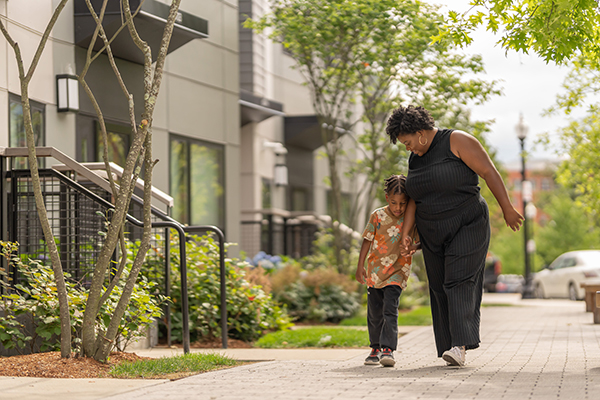
Around the country, housing and community development groups are increasingly stepping up to partner with residents to improve community well-being by proactively strengthening residents’ emotional and mental health. Read Crosswalk's article on Community Development Organizations on Medium.
Example #11: Culdesac: Banning Cars and Building Community
m

Much of the U.S.’ housing stock alienates people from their communities and each other, however a new housing development in the Southwest is changing that by eliminating cars, and intentional design.
Example #12: "Know your neighbor" cards

The Johnson County, Kansas, Sexual Violence Prevention coalition built a valuable partnership with the emergency preparedness department. Though they have different aims, both groups work to strengthen neighborhood connectedness. Neighborhood connectedness is an important protective factor for both community safety and disaster readiness. Knowing neighbors can help prevent isolation, which lowers the risk of sexual violence, and also ensures people can check on each other during emergencies.
Together, these groups developed a “Know Your Neighbor” campaign to encourage residents to share basic contact details and build relationships with those living close by. The goal is to make it easier for neighbors to support one another in everyday life as well as during crises.
To gather a range of input, they did outreach on the online platform Nextdoor to engage residents with diverse perspectives and ideas for making the campaign as effective as possible.
-
What do we mean by environmental quality?
-
Why protect environmental quality?
-
When should you act to protect environmental quality?
-
Who should be involved in protecting environmental quality?
-
How do you protect environmental quality?

Imagine that a community discovers that an aging landfill is beginning to threaten a nearby wildlife refuge and the water resources connected with it. Closing or repairing the landfill would cost money, but allowing contamination to continue could damage wildlife habitat, recreation, drinking-water sources, and community health.
Residents, local officials, engineers, environmental professionals, and other community members might work together to examine the problem and consider several approaches: safely closing or improving the landfill, reducing the amount of waste sent for disposal, expanding recycling and composting where appropriate, monitoring water quality, and planning for long-term waste management.
This example illustrates an important principle: environmental quality is connected with everyday community decisions. Protecting it may involve preventing contamination, conserving natural resources, improving the built environment, restoring damaged ecosystems, reducing waste, responding to climate-related risks, or making sure that environmental benefits and burdens are considered across the whole community.
Environmental issues are often complex because they involve health, science, economics, land use, employment, transportation, housing, infrastructure, culture, law, and community priorities. This section explores that complexity and suggests ways communities can protect both natural and built environments for present and future generations.
What do we mean by environmental quality?
When people hear the word “environment,” they may first think of forests, rivers, wetlands, oceans, mountains, grasslands, and other natural places. But the environment also includes the places people have built and shaped: homes, schools, streets, farms, factories, parks, transportation systems, workplaces, and neighborhoods.
Environmental quality refers to the condition of the natural and built environments and the ways those conditions affect ecosystems, human health, safety, comfort, opportunity, and quality of life.
Environmental quality includes:
- Air quality
- Water quality and water supply
- Soil and land conditions
- Plants, wildlife, and biodiversity
- Natural resources and energy
- Waste and materials management
- The design and condition of buildings and neighborhoods
- Transportation and infrastructure
- Parks, open space, and recreation
- Noise, light, heat, and other environmental conditions
- Climate-related risks and resilience
- Cultural, historic, scenic, and community relationships with place
Environmental quality is also about distribution. Environmental benefits and environmental hazards are not always shared equally. One neighborhood may have abundant trees, parks, clean air, and safe drinking water, while another experiences greater exposure to traffic pollution, industrial activity, extreme heat, flooding, contaminated land, or other environmental burdens.
Understanding environmental quality therefore requires looking not only at the condition of the environment as a whole, but also at who experiences particular benefits or risks and how residents participate in decisions that affect them.
Why protect environmental quality?
Communities have many reasons to protect and improve environmental quality.
- To protect health and well-being. Clean air, safe drinking water, healthy soil, appropriate housing, access to green space, and protection from environmental hazards can contribute to building a healthy community.
- To protect essential community resources. Water supplies, watersheds, farmland, forests, fisheries, soils, wetlands, and other resources support daily life and local economies.
- To support quality of life. Parks, trees, trails, clean waterways, comfortable neighborhoods, and other environmental features can provide opportunities for recreation, restoration, social connection, and everyday enjoyment.
- To support attractive, functional, and culturally meaningful communities. Environmental quality includes not only scenic beauty but also places that have cultural, historical, spiritual, or community significance.
- To support economic stability. Businesses, agriculture, tourism, outdoor recreation, fisheries, forestry, energy, and many other economic activities depend on natural resources and environmental conditions.
- To support communities where people want to live, work, and visit. Environmental quality can influence people's experiences of neighborhoods and communities.
- To protect historic and cultural resources. Landscapes, waterways, historic places, traditional-use areas, and other environmental features may be closely connected with community history and identity.
- To reduce disaster and climate risks. Wetlands, forests, floodplains, healthy soils, shade trees, resilient infrastructure, and other environmental features can help communities manage flooding, erosion, extreme heat, drought, wildfire, storms, and other hazards.
- To prevent avoidable harm. Considering environmental risks before approving development or infrastructure can be less costly and less disruptive than repairing damage later.
- To protect biodiversity and habitat. Healthy ecosystems depend on suitable habitat and connections among habitats for plants, animals, pollinators, aquatic species, and other organisms.
- To maintain functioning ecosystems. Forests, wetlands, grasslands, oceans, rivers, soils, and other ecosystems provide services such as water filtration, flood protection, pollination, carbon storage, food production, and habitat.
- To protect resources for future generations. Decisions about land, energy, water, wildlife, waste, and development can have effects that last for decades or longer.
- To reduce unequal environmental burdens. Communities can examine whether some neighborhoods or populations experience greater exposure to pollution, heat, flooding, hazardous facilities, or other risks and work to improve those conditions.
When should you protect environmental quality?
Environmental quality should be considered continuously, not only after a serious problem appears. Several situations provide particularly important opportunities for action.
- When an environmental resource or community is threatened. Examples include proposed development near a wetland, contamination of drinking water, loss of important habitat, excessive air pollution, or development in an area exposed to flooding or wildfire.
- When community planning is underway. Comprehensive plans, neighborhood plans, transportation plans, housing strategies, infrastructure projects, and economic-development initiatives can incorporate environmental considerations before major decisions are made.
- When new commercial, industrial, infrastructure, or housing development is proposed. Site design, transportation, stormwater management, energy use, habitat, waste, materials, trees, accessibility, and other factors can be considered during planning and review.
- When an environmental emergency or emerging risk occurs. Contamination, wildfire, flooding, extreme heat, harmful algal blooms, drought, infrastructure failures, or other events may require immediate action as well as longer-term prevention.
- When new research or public information identifies a concern. Scientific findings, environmental monitoring, community observations, health data, investigative reporting, or public agency assessments may reveal risks that were not previously understood.
- When funding or technical assistance becomes available. Grants and other resources may provide opportunities for land conservation, pollution reduction, infrastructure improvements, energy efficiency, restoration, monitoring, or community planning.
- When contaminated or underused property is being redeveloped. Cleanup and redevelopment can provide opportunities to address environmental hazards while creating new community uses.
- When policies, zoning, building standards, or infrastructure plans are being updated. These decisions can shape environmental conditions for many years.
Who should be involved in protecting environmental quality?
Environmental quality is a shared responsibility. The people most directly affected by a decision should have meaningful opportunities to participate, along with those responsible for managing land, infrastructure, businesses, public health, and natural resources.
Participants may include:
- Local, Tribal, state, territorial, and federal governments and agencies. Public agencies may set standards, issue permits, conduct environmental reviews, monitor conditions, enforce laws, manage public land, fund projects, or operate infrastructure.
- Environmental, conservation, public-health, and community organizations. These organizations may provide research, education, technical assistance, legal knowledge, organizing capacity, funding, or local experience.
- Community organizers and resident-led groups. Residents often have direct knowledge of neighborhood conditions, environmental changes, exposure concerns, community priorities, and the history of local decisions.
- People and communities directly affected by environmental conditions. People who live near a proposed development, contaminated site, transportation corridor, industrial facility, floodplain, wildfire area, or other environmental concern should be included early in assessment and decision-making.
- Tribal Nations and Indigenous communities. Tribal governments are sovereign governments, and environmental decisions may involve Tribal lands, treaty rights, natural resources, cultural resources, subsistence practices, or ancestral places.
- Workers and people whose livelihoods depend on natural resources. Farmers, ranchers, fishers, forestry workers, outdoor-recreation workers, and others may have important practical knowledge as well as economic interests connected with environmental conditions.
- Scientists and technical professionals. Ecologists, biologists, hydrologists, engineers, geologists, climate scientists, public-health professionals, planners, toxicologists, and others can help communities understand evidence and possible consequences.
- People who use natural and public spaces. Hikers, hunters, anglers, birders, boaters, cyclists, gardeners, cultural groups, and others may bring different perspectives about conservation and access.
- Architects, planners, landscape architects, engineers, and developers. Their decisions influence energy use, transportation, land consumption, stormwater, heat, habitat, building materials, and the overall environmental performance of development.
- Businesses and employers. Businesses can reduce pollution and waste, improve energy and resource efficiency, manage environmental risks, comply with environmental standards, and participate in community solutions.
- Utilities and infrastructure providers. Water, wastewater, transportation, energy, waste, and other systems have major effects on environmental quality.
- Young people and educational institutions. Schools, colleges, and youth organizations can participate in environmental monitoring, restoration, education, research, and planning.
How do you protect environmental quality?
Environmental protection can take place at different stages:
- Prevent problems before they occur. Examples include protecting sensitive land, selecting appropriate development sites, reducing pollution at its source, designing energy- and water-efficient buildings, and considering environmental risks before major investments are made.
- Manage ongoing conditions. Monitor air and water, maintain infrastructure, enforce environmental standards, manage habitat, reduce waste, improve operations, and respond to problems as they develop.
- Repair or restore environmental damage. Cleanup of contaminated land and water, habitat restoration, stream restoration, reforestation, wetland restoration, and other actions may be needed after harm has occurred.
Prevention is often more effective and less costly than repairing serious damage later. At the same time, communities frequently need to combine prevention, management, restoration, and adaptation.
Elements of the environment to consider
Air, water, land, plants, animals, natural resources, the built environment, recreation, climate, and cultural relationships with place are interconnected. A decision affecting one may also affect several others.
Air
Air quality can be affected by transportation, power generation, industry, wildfire smoke, construction, agriculture, household sources, and other activities.
- Air pollution and smog. Air pollution can include particulate matter, ground-level ozone, nitrogen oxides, sulfur dioxide, carbon monoxide, lead, hazardous air pollutants, and other contaminants. Air pollution has declined substantially for many regulated pollutants in the United States over recent decades, but important health and geographic disparities remain.
- The ozone layer. Stratospheric ozone protects life from harmful ultraviolet radiation. International action under the Montreal Protocol has phased out most controlled ozone-depleting substances, and the ozone layer is gradually recovering. Continued monitoring and compliance remain important.
- Regional haze. Fine particles and other air pollutants can travel long distances and reduce visibility in parks, wilderness areas, rural communities, and cities as well as affect health.
- Acid deposition. Sulfur dioxide and nitrogen oxides can contribute to acid rain and other forms of acid deposition. Emission-control programs have greatly reduced these pollutants from U.S. power plants, although nitrogen and sulfur pollution remain environmental concerns in some areas.
- Climate change. Human activities, particularly the burning of fossil fuels, land-use change, agriculture, and some industrial processes, have increased concentrations of heat-trapping greenhouse gases. Climate change affects temperature, precipitation, sea level, extreme events, ecosystems, agriculture, infrastructure, and human health.
- Indoor air quality. Ventilation, moisture and mold, combustion, smoke, radon, building materials, cleaning products, and other factors can affect air quality inside homes, schools, workplaces, and public buildings.
Air pollution does not remain within community boundaries. Smoke, dust, industrial emissions, and other pollutants can travel across regions and national borders, making air quality both a local and broader environmental issue.
Water
Communities need both safe water and reliable water supplies. Water conditions are affected by land use, climate, agriculture, industry, wastewater, stormwater, infrastructure, and watershed management.
- Water pollution. Industrial discharges, wastewater, agricultural runoff, stormwater, septic systems, mining, waste sites, and other sources can introduce pollutants into surface water and groundwater.
- Nutrient pollution. Excess nitrogen and phosphorus from fertilizer, manure, wastewater, stormwater, and other sources can contribute to harmful algal blooms and oxygen depletion in lakes, rivers, estuaries, and coastal waters.
- Persistent and emerging contaminants. Communities may need to address contaminants such as PFAS, pesticides, industrial chemicals, pharmaceuticals, metals, and other substances as scientific knowledge and monitoring improve.
- Stormwater. Roads, parking lots, rooftops, and other hard surfaces increase runoff and can carry pollutants into waterways. Green infrastructure, vegetation, wetlands, permeable surfaces, and other approaches can help manage stormwater.
- Water supply. Drought, population change, agriculture, industrial demand, groundwater depletion, aging infrastructure, climate change, and competing uses can all affect water availability.
- Flooding. Floodplain development, loss of wetlands, inadequate drainage, extreme rainfall, sea-level rise, and aging infrastructure can increase flood risk.
- Oceans and coastal waters. Marine environments face pressures from pollution, plastics, nutrient runoff, overfishing, habitat loss, warming, sea-level rise, and ocean acidification.
Watersheds cross political boundaries. Protecting a community's water often requires coordination with upstream and downstream communities, landowners, utilities, agricultural producers, industries, and government agencies.
Land and soil
- Contamination. Spills, leaking tanks, industrial activity, mining, waste disposal, pesticides, and other activities can contaminate soil and groundwater. Some contaminants persist for long periods and may require investigation, cleanup, or restrictions on land use.
- Land disturbance and extraction. Mining, logging, road construction, grading, and other activities can alter landscapes, fragment habitat, increase erosion, and affect water systems. Environmental effects vary by location, method, regulation, and restoration practices.
- Agriculture. Agriculture depends on healthy soil and water and can also affect them. Soil erosion, nutrient loss, pesticide use, irrigation, livestock waste, habitat conversion, and greenhouse-gas emissions are among the issues communities and agricultural producers may address through conservation and sustainable land-management practices.
- Waste and materials. Waste prevention, reuse, repair, recycling, composting, safe hazardous-waste management, and responsible disposal can reduce landfill use and conserve materials. The environmental benefits of different approaches depend on the materials involved, local systems, transportation, markets, and other conditions.
- Loss and fragmentation of open space. Development can reduce or divide habitat, farmland, forests, wetlands, and other open spaces. Planning can identify areas where conservation, restoration, or connected habitat is especially important.
- Brownfields and previously developed land. Cleaning up and reusing appropriate sites can address contamination while reducing pressure to develop undeveloped land.
Plants, wildlife, and biodiversity
Plants, animals, fungi, microorganisms, and the habitats that support them are interconnected parts of environmental quality.
- Unsustainable harvesting. Logging, plant collection, fishing, hunting, or other forms of harvesting can reduce populations when removal exceeds the ability of a species or ecosystem to recover.
- Habitat loss and fragmentation. Development, agriculture, roads, extraction, and other land changes can reduce or divide habitats and disrupt migration, feeding, reproduction, pollination, and other ecological processes.
- Pollution. Air, water, soil, pesticides, excess nutrients, plastics, and other pollutants can affect plants and animals as well as people.
- Invasive species. Some nonnative species spread rapidly and cause ecological, economic, or health impacts. Prevention, early detection, and appropriate management can reduce harm.
- Climate change. Changing temperatures, precipitation, wildfire patterns, sea levels, and seasonal timing can shift habitats and affect migration, reproduction, food availability, and species interactions.
One example of an invasive forest pest is the spongy moth, formerly commonly called the “gypsy moth.” Its caterpillars feed on many species of trees and shrubs and can cause substantial defoliation.
Natural resources and energy
Communities depend on water, soils, forests, minerals, energy, food systems, and many other natural resources. Sustainable management considers how resources are obtained, used, reused, and restored over time.
Approaches can include:
- Reducing unnecessary energy, water, and material use
- Improving energy and water efficiency
- Repairing, reusing, and recycling materials where appropriate
- Reducing pollution associated with extraction and production
- Expanding renewable and lower-emission energy sources where appropriate
- Improving electrical grids, storage, buildings, and transportation systems
- Considering environmental impacts across the full life cycle of products and infrastructure
No energy or resource system is impact-free. Wind, solar, hydroelectric, geothermal, bioenergy, fossil fuels, nuclear energy, batteries, transmission systems, and other technologies all involve land, materials, infrastructure, costs, and environmental tradeoffs. Communities can compare those impacts and benefits using current evidence rather than assuming that one option has no consequences.
The built environment
Buildings, streets, transportation systems, utilities, parks, and other human-made environments affect health and environmental quality directly.
- Open and green space. Parks, trees, conservation areas, greenways, wetlands, gardens, and other open spaces can provide habitat, shade, stormwater management, recreation, cooling, and opportunities for social connection.
- Healthy and efficient buildings. Buildings can reduce energy and water use, provide healthy ventilation and indoor air quality, avoid unnecessary exposure to hazardous materials, use durable materials, and incorporate climate-responsive design.
- Transportation. Land-use and transportation decisions affect air pollution, greenhouse-gas emissions, noise, safety, physical activity, access to employment and services, and the amount of land devoted to roads and parking.
- Extreme heat. Trees, vegetation, shade, reflective or appropriate building materials, cooling resources, and thoughtful site design can help reduce heat exposure.
- Climate resilience. Buildings and infrastructure can be designed or adapted for changing risks such as extreme heat, flooding, severe storms, drought, wildfire, and sea-level rise.
- Light pollution. Appropriate lighting design can improve visibility and safety while reducing glare, unnecessary energy use, intrusion into nearby homes, and impacts on wildlife and night skies.
- Noise. Transportation, industry, construction, entertainment, and other sources can contribute to harmful or disruptive noise. Planning and design can help reduce exposure.
Recreation
Parks, forests, waterways, wildlife refuges, and other natural areas provide important opportunities for recreation, physical activity, cultural practices, education, and connection with nature.
At the same time, heavy use can damage sensitive environments through erosion, waste, disturbance to wildlife, vehicle use, vegetation loss, or other effects. Management may include designated trails and activity areas, seasonal restrictions, visitor limits, restoration, education, accessible facilities, and other approaches based on the needs of the particular environment.
Aesthetics, culture, and connection to place
People value environments not only for measurable resources but also because of beauty, history, cultural meaning, spiritual importance, recreation, identity, and attachment to place.
These values may sometimes conflict with development, energy production, transportation, resource extraction, or other community needs. Strong decision-making processes make those tradeoffs visible and include people connected with the place in considering possible solutions.
Decide which issues your community can most effectively address
Consider:
- Severity and urgency. How serious is the potential harm, and how quickly must action occur?
- Who is affected. Are particular neighborhoods, populations, ecosystems, or cultural resources experiencing greater risks?
- Potential for prevention. Can action now prevent a larger or more expensive problem later?
- Community priorities. What concerns are residents and affected groups identifying?
- Available authority. Which governments, agencies, property owners, organizations, or other institutions can actually make the relevant decisions?
- Resources and capacity. What funding, staff, technical expertise, partnerships, and community knowledge are available?
- Potential benefits and tradeoffs. Could an action improve health, climate resilience, transportation, housing, recreation, biodiversity, or economic conditions at the same time? Could it create unintended costs or displacement?
Learn what you need to know about the scientific, social, economic, legal, and policy context
Environmental issues rarely exist in isolation. Before deciding on a strategy, understand the environmental conditions as well as the people, institutions, resources, and decisions connected with them.
The history of the situation
Has this issue occurred before? What decisions were made? What were the results? Have some communities experienced environmental burdens over many years? Are there previous plans, permits, studies, cleanup efforts, or legal agreements that affect what happens now?
The science and technical information
Identify the best available information about the environmental condition, exposure pathways, health or ecological effects, uncertainty, possible interventions, and likely outcomes.
Useful sources may include:
- Environmental and public-health agencies
- Universities and research institutions
- Tribal environmental and natural-resource departments
- Scientists and technical professionals
- Environmental monitoring
- Community-based observations and research
- Environmental-impact or risk assessments
Technical expertise and lived experience can complement one another. Monitoring data may show concentrations of a pollutant, while residents may identify when odors occur, where flooding repeatedly happens, which routes children walk to school, or how environmental conditions affect daily life.
The social and economic context
Environmental decisions may affect jobs, housing, transportation, energy costs, agriculture, property values, public revenue, recreation, cultural practices, and other community priorities.
Ask who receives the benefits, who bears the costs or risks, and whether alternatives could protect environmental quality while reducing avoidable harm to workers, residents, businesses, or other affected groups.
The legal and policy context
Determine which laws, permits, regulations, zoning requirements, agency rules, property rights, Tribal rights, environmental-review processes, or other requirements apply.
Laws and regulations change, so use current guidance from the responsible agencies or qualified legal professionals when a specific legal issue is involved.
Build partnerships
Environmental protection usually requires coordination among several groups rather than action by one organization alone.
Depending on the issue, partners may include:
- Residents and affected communities
- Tribal Nations
- Scientists and technical professionals
- Public-health organizations
- Environmental and conservation organizations
- Schools and universities
- Farmers, landowners, and resource-dependent workers
- Businesses and employers
- Utilities
- Local, state, territorial, and federal agencies
- Community foundations and funders
- Media and community communication organizations
Partnerships should not be based only on how much influence a participant has. People who experience environmental conditions directly may contribute knowledge and priorities that are essential to a sound decision.
Develop a strategic plan
Planning should be participatory whenever possible, with meaningful involvement from people affected by the issue.
A plan may address:
- Long-term environmental improvement and prevention
- An immediate environmental threat
- Both at the same time
Long-term strategies might include conserving land, improving water systems, reducing pollution, expanding tree cover, improving building performance, restoring habitat, reducing waste, preparing for climate-related hazards, or encouraging environmentally responsible development.
Urgent strategies may involve stopping an illegal discharge, responding to contaminated water, addressing wildfire smoke, preventing unsafe development, containing a spill, correcting a serious infrastructure failure, or protecting people during an environmental emergency.
Elements to consider in your plan
Community participation and advocacy. Residents and organizations can participate in planning, permitting, budgeting, rulemaking, environmental review, public hearings, administrative processes, and other decisions that affect environmental quality.
Advocacy is strongest when it is grounded in evidence, community experience, transparent goals, and clear understanding of who has authority to act.
Laws, regulations, and policies. Environmental laws and regulations can establish limits, performance standards, monitoring requirements, permitting systems, cleanup responsibilities, conservation protections, and other safeguards.
Effective environmental protection also depends on monitoring, implementation, enforcement, and periodic review of whether standards are achieving their intended results.
Land-use policies can have particularly important environmental effects. Zoning, subdivision standards, building codes, transportation planning, stormwater requirements, floodplain regulations, conservation programs, and other local decisions can influence where and how development occurs.
Incentives and assistance. Grants, loans, tax incentives, technical assistance, infrastructure investments, conservation programs, energy programs, and other resources may help residents, businesses, landowners, institutions, or developers make environmentally beneficial changes.
Incentives work best when the desired public benefit is clear and measurable and when appropriate accountability is included.
Education and communication. Communities need understandable, accurate, and accessible information about environmental risks, benefits, uncertainty, alternatives, and possible actions.
Communication should be two-way. Residents may need information from scientists or agencies, while decision-makers may need information from residents about local conditions and lived experience.
Civic and direct action. Depending on the issue, community action may include public comments, petitions, meetings, demonstrations, community monitoring, restoration projects, administrative complaints, or legal action.
Participants should understand applicable laws, safety considerations, organizational policies, and possible consequences when choosing a strategy.
Implement your plan
Put the agreed-upon strategies into practice with clear responsibilities, timelines, resources, and measures of progress.
Some efforts can begin with achievable actions while longer-term work continues. For example, a community addressing urban heat might begin by identifying the hottest areas and providing immediate cooling resources while also pursuing longer-term tree planting, building improvements, shade structures, transportation changes, and land-use strategies.
Keep sight of the larger goal while adapting implementation when circumstances or evidence change.
Monitor and evaluate your efforts
Environmental conditions and community needs change over time. Evaluation should therefore continue throughout the effort.
Ask:
- Did the activities occur as planned?
- Did environmental conditions improve?
- Were exposures or risks reduced?
- Who benefited?
- Did any groups experience unintended burdens?
- Were residents meaningfully involved?
- Were the costs and resources consistent with expectations?
- Did the intervention create other environmental, health, or economic effects?
- Is additional monitoring needed?
- What should be changed based on the results?
Whenever possible, establish baseline information before an intervention so changes can be measured over time.
Maintain progress and adapt over time
Protecting environmental quality is an ongoing responsibility. Infrastructure ages, land uses change, new technologies emerge, scientific knowledge develops, climate conditions shift, and new pollutants or risks may be identified.
Continue monitoring environmental conditions, maintaining infrastructure and restored areas, updating policies, involving affected communities, and adjusting strategies when evidence shows that a different approach is needed.
In Summary
Environmental quality affects community health, natural resources, ecosystems, housing, transportation, recreation, economic activity, cultural life, and overall well-being.
Protecting environmental quality includes maintaining clean air and water, preventing and cleaning up pollution, conserving resources, protecting and restoring habitat, managing waste responsibly, supporting sustainable agriculture and development, creating healthier buildings and neighborhoods, preparing for climate-related risks, and considering how environmental benefits and burdens are distributed.
Prevention is often preferable to repairing serious environmental damage after it occurs, but communities may need to combine prevention, ongoing management, restoration, adaptation, and emergency response.
Strong environmental efforts bring together residents, affected communities, Tribal Nations, governments, scientists, workers, businesses, landowners, public-health professionals, environmental organizations, planners, and others with relevant knowledge and responsibilities.
Decisions should be informed by current science, community experience, legal requirements, economic realities, and careful consideration of both benefits and tradeoffs.
Environmental protection is not a one-time project. Communities need to monitor conditions, evaluate results, maintain progress, respond to new information, and continue working to ensure that people and ecosystems can thrive over the long term.
Contributor
Phil Rabinowitz
Resources
Online Resources
Earth First! is a radical environmental movement (not an organization). Loosely organized affinity groups work locally, using direct action, the courts, civil disobedience, and monkeywrenching (i.e. environmental sabotage) to address environmental issues.
Environmental Defense Fund is an environmental protection organization that engages in public education, legislation, and litigation in support of the environment.
The U.S. Environmental Protection Agency provides information on a wide variety of topics, including pollution, air quality, health, sustainable practices, etc.
Friends of the Earth, founded in 1969 by David Brower, is the U.S. arm of its expanded network, Friends of the Earth International.
Recycle City is an EPA site for kids that details how a community can reuse, reprocess, or recycle almost everything.
The Sierra Club, one of the oldest, largest, and most influential grassroots environmental organizations in the United States.
The U.S. Green Building Council, developer of LEED (Leadership in Energy and Environmental Design) standards.
WWF International (originally the World Wildlife Fund), promotes biodiversity, the use of sustainable resources, and the reduction of wasteful consumption and pollution. There is also a United States-based arm.
Print Resource
Carson, Rachel. The Silent Spring.
What do we mean by environmental quality?
___Environmental quality is a measure of the health of the environment itself (including the plants and animals it supports), and of the effects it has on the health, comfort, and psychological state of the people that inhabit it
Why protect environmental quality?
___To preserve the health of the community and its members
___To preserve community resources
___To create a more pleasant and better quality of life
___To enhance the aesthetic character of the community
___To attract new, environmentally-friendly business and sustain economic health
___To attract visitors and new residents
___To preserve community history
___To protect the community from environmental disaster
___To prevent people from taking actions they’ll later regret
___To protect endangered species
___To maintain ecosystems
___To be good stewards of the planet
When should you act to protect environmental quality?
___When it’s specifically threatened
___When there’s a community development initiative
___When there’s a new commercial, industrial, or housing development beginning
___When there’s an environmental crisis
___When there’s a publication or media event that calls attention to the environment
___When money is available
Who should be involved in protecting environmental quality?
___Local, state, and federal officials
___Local and national and international environmental organizations
___Community activists
___Those directly affected by environmental quality
___Businesses and corporations
___Anyone who is conscious of the effects of environmental quality – or the lack of it – on their lives
How do you protect environmental quality?
___Make yourself aware of what elements of the environment you should be paying attention to:
- Air
- Water
- Land
- Plants
- Animals
- Natural resources
- The built environment
- Recreation
- Aesthetics
___Decide on the issues you can most effectively tackle
___Learn what you need to know about the scientific, social, economic, legal, and political realities of the situation
___Recruit allies
___Create, with as broad a range of allies as possible, a strategic plan, and prioritize both the actions you want to take and those you feel you must take
___Implement your plan
___Evaluate your efforts
___Maintain your gains, and do it again
Example #1: Creating Social Change with Knowledge
Groundwork USA’s Green Teams
Youth engagement strategies produce economic benefits both to the youth and the communities in which they live. Actively engaging youth in their communities strengthens social ties, fosters a sense of community, weakens the cycle of poverty, and inspires youth to achieve. Groundwork USA’s (GWUSA) Green Team program seeks to do just that by engaging high school-age youth from underserved and marginalized communities in environmental education, job training, stewardship, employment, and leadership opportunities. Read more from Community Science.
Example #2: Chile creates five national parks in historic act of conservation

Chile has created five sprawling national parks to preserve vast tracts of Patagonia – the culmination of more than two decades of land acquisition by the US philanthropists Doug Tompkins and Kristine McDivitt Tompkins and the largest donation of private land to government in South America.
The five parks, spanning 10.3 million acres, were signed into law on Monday by Chile’s president Michelle Bachelet, launching a new 17-park route that stretches down the southern spine of Chile to Cape Horn.
McDivitt Tompkins, the former chief executive of the outdoors company Patagonia, handed over one million acres to help create the new parks. The Chilean government provided the rest in federally controlled land.
'For every dollar you invest in national parks, you get 10 back; it’s more profitable than copper,' Hernán Mladinic, the executive director of Chile’s Fundación Pumalín, told The Guardian last year.
But protected areas can also have a less obvious effect on the local economy in developing countries: They can spur poverty alleviation.
'Research from around the globe suggests that parks can successfully balance conservation and development and are one of the most important mechanisms for permanent protection of natural resources,' said Katharine Sims, an economics and environmental professor at Amherst College."
You can also read more about this in the Huffington Post.

Motor City Blight Busters director John George and
The Fertile Grounds Collective director Cornell Royal.
Let’s take a weekend walk through neighborhoods in two small cities with similar population characteristics, geography, open space, residential and commercial development, and building types.
In City A, many streets lack sidewalks, and some existing sidewalks are cracked or difficult to use. Trash has accumulated in gutters and parts of the neighborhood park. Trees and other plantings are limited, some buildings need maintenance, and heavy traffic creates noise along several streets. The park is mostly empty, while a few young people gather near its edge. Commercial areas have limited pedestrian activity, and the combination of maintenance needs, traffic, limited greenery, and underused public space makes the neighborhood less comfortable to move through and spend time in.
In City B, sidewalks and bike lanes are well maintained and frequently used. Trees, flowers, gardens, and other plantings appear throughout the neighborhood. Houses and businesses reflect a variety of colors and styles, and a city park is active with people picnicking, playing sports, walking, and using nearby trails. Traffic-calming features help reduce vehicle speeds on smaller streets, and benches, shade, landscaping, and other amenities make public spaces comfortable places to spend time.
These examples are intentionally simplified, but they illustrate how maintenance, transportation, greenery, public space, accessibility, buildings, and other physical conditions can shape people's experiences of a neighborhood.
Neighborhood improvement is not about making every place look the same or imposing one group's idea of what is attractive. It is about creating and maintaining places that residents find welcoming, functional, safe, accessible, culturally meaningful, and supportive of everyday life.
In this section, part of a chapter on enhancing quality of life through the physical and social environment, we’ll discuss neighborhood beautification and improvement and look at how residents can make meaningful changes even when financial resources are limited.
What do we mean by a neighborhood beautification program?
In simplest terms, neighborhood beautification means working together to improve the appearance, condition, usability, and experience of shared neighborhood spaces.
The word beautification can sound as though there is one correct way for a neighborhood to look. There isn’t. What makes a place welcoming and meaningful depends on its residents, history, culture, climate, architecture, needs, and priorities.
A strength-based neighborhood beautification program therefore begins with what residents already value about their community and asks how those assets can be maintained, strengthened, connected, or expanded.
A neighborhood beautification program isn’t a single event (“Fix Up Your Yard Day”), but rather a strategy for maintaining, improving, and shaping the neighborhood over time. Individual projects may be completed one at a time, but they should connect with a longer-term community vision.
Neighborhood improvement can take place both at the neighborhood level and at the level of individual properties. Ideally, residents, renters, property owners, businesses, community organizations, and public agencies each contribute where they have responsibility, resources, or expertise.
Depending on community priorities, a program may focus on a single location or involve several connected improvements. Areas to consider include:
- Cleanliness and maintenance. Streets, sidewalks, parks, vacant lots, drainage areas, public spaces, and other shared environments are easier and more pleasant to use when trash is removed, infrastructure is maintained, and community resources are cared for.
Graffiti should be considered in context. Unwanted marking of private or public property may need to be removed, particularly when it contains threatening, discriminatory, or harmful content. At the same time, murals, street art, and other visual expression can have cultural and artistic value. Communities should distinguish between unwanted property damage and art that residents or property owners want to preserve.
- The character and variety of buildings. A neighborhood can include buildings from different periods, styles, uses, and cultures. Design decisions can consider how new construction and renovations contribute to an interesting, functional, and coherent streetscape without requiring every building to look alike.
- The condition of individual buildings. Well-maintained buildings can contribute to health, safety, comfort, and neighborhood stability. When properties need substantial repair, communities can explore rehabilitation assistance, code-compliance support, accessibility improvements, weatherization, grants, loans, or other resources.
Vacant or underused buildings may create maintenance or safety concerns, but they may also represent opportunities for housing, community facilities, businesses, arts and culture, or other community-defined uses.
Older and historic buildings can often be resources rather than liabilities. Section 7 of this chapter, Encouraging Historic Preservation, discusses how communities can preserve and adapt historic resources.
- Unused or potentially hazardous sites. Former industrial properties, unused rail corridors, vacant lots, aging infrastructure, and other sites may need cleanup, repair, environmental assessment, or redevelopment. When appropriate, they may be reused as trails, parks, housing, businesses, community facilities, or other neighborhood resources.
Former transportation infrastructure can sometimes be adapted for new community uses. Trails, gardens, public spaces, and other projects have been created from rail corridors, bridges, industrial sites, and other properties that no longer serve their original purposes.
- Trees, gardens, and other plantings. Trees and vegetation can provide shade, reduce heat, support wildlife, manage stormwater, contribute to air quality, and make streets and public spaces more comfortable and inviting.
Planting choices should fit the local climate, available water, maintenance capacity, and ecological conditions. Native and climate-appropriate plants can often provide environmental benefits while requiring less irrigation, fertilizer, or other maintenance.
- Parks and other open space. Parks, plazas, gardens, trails, playgrounds, natural areas, and other shared spaces can provide recreation, shade, habitat, social connection, and opportunities for community activities.
These spaces require ongoing maintenance and resources. Community volunteers may contribute to stewardship, but public agencies, property owners, or other responsible organizations should also plan for long-term maintenance, accessibility, programming, and safety. - The streetscape. Buildings, sidewalks, trees, lighting, seating, public art, transportation, storefronts, signs, and open spaces all contribute to how a street functions and feels. Good streetscapes support walking, rolling, gathering, business activity, transportation, and everyday neighborhood life.
Buildings with active ground-floor uses, windows, entrances, seating, shade, and connections to the sidewalk can contribute to street activity. Large blank walls, difficult crossings, excessive vehicle access, and other design features may make walking or gathering less comfortable.
- Signage. Signs can identify businesses and community institutions, provide directions, explain rules, support wayfinding, communicate accessibility information, and contribute to the identity of a place.
Effective signs should be legible, accessible, appropriate to their setting, and designed for the people who need to use them. - Lighting. Outdoor lighting can support visibility, navigation, and use of public space after dark. Well-designed lighting directs light where it is needed while reducing glare, unnecessary energy use, intrusion into homes, and impacts on wildlife and night skies.
- Traffic and mobility. Vehicle speed, traffic volume, transit, walking, rolling, bicycling, deliveries, parking, and street design all affect neighborhood experience.
Depending on local conditions, communities may consider traffic calming, safer crossings, sidewalks, bicycle facilities, street trees, transit improvements, accessibility upgrades, routing changes, or other strategies.
Noise and air pollution are neighborhood-quality issues as well as environmental and health concerns. Traffic, industry, construction, and other sources may affect sleep, stress, respiratory health, hearing, comfort, and use of outdoor space.
- Parking. Parking is necessary in many neighborhoods, but large surface lots can consume land, increase stormwater runoff, contribute to heat, and make walking less comfortable.
Communities may consider landscaping, trees, shared parking, accessible parking, bicycle parking, structured parking, transit access, or other strategies based on local needs. - Public art. Murals, sculpture, memorials, temporary installations, performances, and other public art can contribute to neighborhood identity, history, culture, and creativity. Public art is strongest when the communities represented have meaningful roles in deciding what is created and how their stories are presented.
Many neighborhood projects can be completed through resident leadership and partnerships. Others require public funding, professional expertise, permits, property-owner participation, or changes in policy.
Possible neighborhood-led projects include:
- A neighborhood, park, street, or vacant-lot cleanup. Public agencies may be able to provide tools, equipment, waste removal, or staff assistance.
- Voluntary assistance with individual properties. With the property owner's or resident's permission, neighbors may help with painting, gardening, cleanup, accessibility improvements, or minor repairs.
- Clearing trash or invasive vegetation and improving trails or natural areas, with appropriate permission and environmental guidance.
- Removing unwanted graffiti or harmful markings with the permission of the property owner or responsible agency.
- Creating murals or other public art through a community-informed process involving artists, residents, property owners, and others connected with the location.
- Planting and maintaining trees, gardens, pollinator areas, median plantings, or other climate-appropriate landscaping.
Design matters, especially for projects that will shape public spaces over many years. Residents bring essential knowledge about how a place is used and what it means to the community. Designers, artists, planners, engineers, landscape architects, accessibility professionals, and others can contribute technical knowledge when needed. Professional expertise should support community priorities rather than replace community decision-making.
Some improvements require action by a municipality, public agency, property owner, developer, or other institution. In those situations, residents may need to participate in public planning and decision-making processes.
Community priorities might include:
- Public investment that supports the neighborhood vision. Examples may include sidewalk repair, street trees, accessibility improvements, lighting, parks, stormwater improvements, traffic calming, or public-space maintenance.
- Financial or development incentives. Where legally available, grants, loans, tax incentives, façade programs, rehabilitation assistance, or other tools may help property owners or businesses make improvements.
- Policies, regulations, or enforcement. Communities may seek changes to zoning, property maintenance, transportation, environmental, historic-preservation, accessibility, or other policies that affect neighborhood conditions.
- Partnerships with neighborhood businesses and institutions. Businesses, schools, faith communities, health organizations, libraries, cultural institutions, and other organizations may contribute funding, programming, space, equipment, expertise, or staff time.
When possible, begin by identifying shared goals and the people or institutions responsible for the relevant decisions. Public meetings, planning processes, budget processes, administrative procedures, meetings with responsible staff, and other established channels can provide opportunities to present community priorities and evidence.
When concerns remain unresolved, residents may also use petitions, public comments, media communication, demonstrations, administrative complaints, legal action, or other forms of lawful civic participation. The appropriate approach depends on the issue, community goals, and applicable laws.
Why establish a neighborhood beautification program?
Neighborhood beautification and improvement can support several community goals.
- A neighborhood beautification program can strengthen belonging and stewardship. When residents help identify priorities and shape improvements, they may develop stronger connections with shared spaces and with one another.
- Neighborhood beautification can improve quality of life. Well-maintained sidewalks, trees, parks, buildings, lighting, public spaces, and other neighborhood features can support comfort, mobility, recreation, health, and social connection.
- Neighborhood improvement can help residents remain in and feel connected to their community. Improvements can also make a neighborhood welcoming to new residents, but plans should consider housing affordability and displacement so that current residents can benefit from the changes they help create.
- Neighborhood improvement can support local businesses. Walkable streets, public spaces, transportation access, nearby residents, and well-maintained commercial areas can support local economic activity.
- Neighborhood improvement can support arts and culture. Public art, cultural programming, performance spaces, libraries, museums, festivals, and other activities can expand opportunities for residents and help express community identity.
- Neighborhood beautification can support broader community development. Physical improvements may connect with housing, transportation, environmental health, economic development, historic preservation, community safety, and other resident-defined priorities.
Investment can also create displacement pressures. Improvements that make an area more desirable may contribute to rising rents, property taxes, or housing prices. Long-term planning should consider how current residents, renters, homeowners, businesses, and community institutions can remain and benefit from neighborhood investment.
- Neighborhood improvement can support community health. Tree canopy, open space, safer walking and bicycling conditions, reduced trash, lower traffic exposure, accessible recreation, and environmental improvements can all contribute to health and well-being.
- Neighborhood beautification can expand participation in community decision-making. Young people, older adults, renters, people with disabilities, multilingual residents, people experiencing housing instability, and others whose perspectives may be underrepresented in planning can contribute knowledge, creativity, relationships, and leadership.
- Neighborhood beautification can strengthen relationships. Working together on shared priorities can build connections among residents and organizations and contribute to social capital.
Social capital refers to the relationships, networks, trust, and patterns of cooperation that help people share information, support one another, and work together.
Social capital may develop through everyday neighbor-to-neighbor interactions, community organizations, businesses, schools, faith communities, events, volunteer projects, and other shared activities.
Scholars sometimes distinguish between bonding social capital, which develops among people with similar experiences or identities, and bridging social capital, which develops through relationships among people with different backgrounds or experiences. (Adapted from Chapter 26, Section 8, Creating Good Places for Interaction.)
- Neighborhood beautification can help communities communicate how they see themselves. Resident-led improvements, public art, cultural spaces, landscaping, restored buildings, and other features can reflect neighborhood strengths, history, identity, and priorities and can challenge negative or incomplete outside perceptions.
When should you establish a neighborhood beautification program?
Any time can be appropriate, but several situations may create useful opportunities for organizing and investment.
- When residents identify neighborhood improvement as a priority. Programs are strongest when the goals and direction come from people who live in and use the neighborhood.
- When a neighborhood is experiencing disinvestment or changing conditions. Vacant properties, deferred maintenance, declining infrastructure, safety concerns, limited public investment, loss of businesses, or other changes may create reasons for residents and institutions to work together on neighborhood priorities.
- When a specific problem or opportunity has been identified. A vacant building, littered lot, unsafe intersection, missing trees, inaccessible sidewalk, underused park, or other issue can become the starting point for broader neighborhood improvement.
- When funding or other support is available. Public agencies, foundations, businesses, nonprofits, or other partners may provide grants, tools, equipment, materials, technical assistance, or staff support.
- When environmental cleanup or redevelopment is underway. Brownfield cleanup, infrastructure work, rehabilitation of vacant properties, or other investment may provide opportunities to improve surrounding public spaces as well.
- When other neighborhood initiatives are underway. Beautification may complement work related to housing, health, community safety, environmental quality, transportation, economic development, youth development, culture, or recreation.
Who should be involved in establishing a neighborhood beautification program?
Because neighborhood improvements affect many people, planning should include a broad range of residents and organizations. Participation should reflect the people who live, work, learn, own property, operate businesses, provide services, and spend time in the neighborhood.
Participants might include:
- Homeowners.
- Renters.
- Landlords and property owners.
- Business owners, employees, and managers.
- Local officials and public-agency staff, including planning, transportation, public works, parks, health, housing, and other relevant departments.
- Young people.
- Older adults.
- People with disabilities and accessibility organizations.
- Residents from the racial, ethnic, cultural, linguistic, religious, and other communities represented in the neighborhood.
- Neighborhood associations, tenant organizations, block groups, youth groups, resident councils, and other resident-led organizations.
- Organizations and agencies that serve the neighborhood, such as libraries, health organizations, community-development organizations, cultural institutions, and human-service providers.
- Public services such as sanitation, recycling, fire and emergency services, planning, transportation, parks, and public works.
- Faith communities.
- Civic and service organizations.
- Schools, colleges, and other educational institutions.
- People experiencing homelessness or housing instability who spend time in or have connections with the neighborhood.
- Reentry organizations and residents who have experienced involvement with the justice system.
How do you establish a neighborhood beautification program?
There are three broad phases:
- Bring together residents and other participants and identify community strengths, priorities, and opportunities.
- Develop a vision, goals, strategies, action steps, responsibilities, resources, and a maintenance and evaluation plan.
- Share the proposed plan with the broader neighborhood, incorporate feedback, establish community support, and begin implementation.
Phase One: Recruiting neighborhood residents as leaders and participants
Bring together people to help lead the effort. This might be an existing neighborhood organization, tenant association, resident council, or group of interested community members.
The leadership group should reflect the neighborhood as broadly as possible, including differences in age, race and ethnicity, language, disability, housing status, income, geography, and other experiences that may influence how people use and understand the neighborhood.
Because this is an ongoing program rather than a one-time event, establish a structure that allows responsibilities to be shared and new leaders to emerge over time.
Conduct outreach to neighborhood residents and organizations. People should have meaningful opportunities to shape the vision and priorities whether or not they want a formal leadership role.
Use multiple forms of outreach because different people receive information in different ways. These may include:
- Door-to-door outreach
- Phone or text communication
- Neighborhood websites or online groups
- Social media
- Flyers and posters
- Local newspapers, radio, or community media
- Schools, libraries, businesses, and community organizations
- Public meetings and community events
When collecting names, phone numbers, email addresses, or other contact information, tell people how the information will be used and protect it appropriately. Participation should not require people to provide more personal information than is necessary.
Make additional efforts to include residents whose perspectives have not been well represented in previous neighborhood planning.
Possible approaches include:
- Work with tenant organizations, resident councils, and residents of public, subsidized, and other rental housing.
- Work with organizations serving people experiencing homelessness or housing instability and create ways for people with lived experience to participate directly.
- Work with reentry organizations and other groups supporting people affected by the justice system. When volunteer or community-service opportunities are offered, participation should be safe, appropriate, and respectful.
- Work with schools, youth organizations, recreation programs, sports teams, clubs, and street-outreach or youth-development programs to involve young people.
- Connect with faith communities and cultural organizations serving different parts of the neighborhood.
- Connect with business associations and businesses owned by or serving different cultural and linguistic communities.
- Provide interpretation, translation, disability access, childcare, transportation support, different meeting times, remote participation, or other supports when they would make participation easier.
Phase Two: Developing a plan for neighborhood beautification
The planning process can follow the Community Tool Box's VMOSA – Vision, Mission, Objectives, Strategy, Action framework.
Assemble a participatory planning group. Include people with different experiences of the neighborhood as well as participants with useful technical, organizational, cultural, or professional knowledge.
Conduct a neighborhood assessment. Assess both community assets and areas residents want to improve.
- Draw on the knowledge and experience of residents participating in the planning group.
- Conduct interviews, surveys, listening sessions, or other outreach with additional residents and organizations.
- Conduct observations or neighborhood walks. Record both strengths and concerns: trees and public art as well as broken sidewalks, community gathering places as well as vacant lots, active businesses as well as areas needing investment.
- Consult planners, architects, landscape architects, engineers, accessibility professionals, artists, environmental professionals, historians, or others when specialized knowledge would help.
Many assessments focus primarily on problems or needs. An asset-based approach begins by identifying what residents value and what resources, relationships, knowledge, institutions, and physical assets already exist. The community can then consider how to strengthen those assets while addressing barriers and unmet needs.
Develop a vision for the neighborhood. Based on the assessment and community participation, describe what residents want the neighborhood to become or continue to be.
A vision may include:
- Well-maintained and accessible public spaces
- Safe and comfortable walking, rolling, bicycling, and transportation
- Housing stability and affordability
- Trees, gardens, and environmental quality
- Strong local businesses
- Public art and cultural expression
- Parks and recreation
- Historic and cultural preservation
- Places for gathering and community activities
- A neighborhood where residents feel welcome and able to participate
The vision should reflect the community's priorities rather than an outside standard of what a “good” neighborhood is supposed to look like.
Develop goals and measurable objectives. Break the long-term vision into achievable steps.
For example, rather than simply setting a goal of having “better open space,” objectives might include repairing a particular playground, planting shade trees along specific blocks, adding accessible seating, improving a trail connection, or establishing regular maintenance for a community garden.
Benchmarks and checkpoints can help participants understand whether progress is being made.
Consider the resources required for each goal before beginning. Resources may include funding, staff, volunteers, tools, professional expertise, permits, maintenance, insurance, transportation, accessibility supports, and partnerships.
Some early projects can build momentum using resources already available, while larger projects may require grants, public investment, fundraising, partnerships, or longer-term planning.
Develop an overall strategy. Decide which goals should be addressed first, which can happen at the same time, and which depend on funding, permits, public decisions, or other conditions.
Starting with an achievable project can demonstrate progress, but priorities should not be based only on what is easiest. Urgent accessibility, safety, housing, environmental, or infrastructure needs may require attention even when they are more difficult.
Develop an action plan for each goal. Identify:
- What will be done
- Who is responsible
- Who should be consulted or involved
- What resources are needed
- What permits or approvals are required
- When the work will occur
- How accessibility and safety will be addressed
- How progress will be measured
- Who will maintain the improvement over time
Develop a maintenance plan. A one-day project can create visible improvement, but long-term success requires clarity about what happens afterward.
Identify who will water trees, maintain gardens, remove trash, repair equipment, repaint public art, replace damaged signs, maintain accessibility features, or complete other recurring work.
Volunteers can contribute to stewardship, but ongoing public or organizational responsibilities should not be shifted onto residents simply because they care about their neighborhood.
Devise a way to monitor and evaluate the effort. Evaluation does not need to be complicated.
Possible measures include:
- Resident participation
- Number and location of completed improvements
- Accessibility
- Condition of sidewalks, parks, lots, trees, and buildings
- Use of parks and public spaces
- Resident satisfaction
- Maintenance needs
- Tree survival or canopy
- Pedestrian and bicycle use
- Participation by residents whose perspectives were previously underrepresented
- Housing or business displacement concerns
Ask not only whether a project was completed, but whether it produced the benefits residents expected and whether any unintended effects emerged.
Phase Three: Presenting the plan to the neighborhood, building support, and implementing the first step
The broader neighborhood should have an opportunity to review the draft plan, ask questions, suggest changes, and understand how priorities were selected.
Use multiple communication methods so participation does not depend on Internet access, a particular social-media platform, English proficiency, ability to attend an evening meeting, or any other single condition.
1. Present the plan to the neighborhood.
- Post the plan on an accessible neighborhood or organizational website.
- Share it through relevant social-media and community communication channels.
- Send it by email, text, or other communication methods to people who have agreed to receive updates.
- Mail or deliver printed copies where useful and feasible.
- Make copies available at accessible community locations such as libraries, schools, community centers, businesses, faith communities, housing offices, and other places residents use.
- Hold community meetings, open houses, workshops, or other opportunities for discussion.
Provide information in relevant community languages and accessible formats. Depending on the community, this may include interpretation, translated materials, captioning, large print, accessible electronic documents, plain language, or other communication supports.
2. Collect feedback. Give people several ways to respond and enough time to consider the plan.
- Online comments or community forums
- Social media
- Community meetings
- Written comments
- Comment boxes at community locations
- Paper, phone, or online surveys
- Focus groups or listening sessions
- Phone outreach
- One-on-one conversations with residents or groups who may not participate through the other methods
3. Incorporate feedback. Not every suggestion can necessarily be included, especially when ideas conflict or resources are limited. Explain how major decisions were made and why particular recommendations were or were not incorporated.
4. Present the final plan and establish community support. Depending on the neighborhood and organization, support might be documented through a meeting, vote, consensus process, endorsements from participating organizations, written comments, or another transparent method.
Celebrate the completion of the planning process, recognize the people who contributed, and clearly explain what will happen next.
5. Implement the first stage of the plan. An early project might be a cleanup, planting day, public-art project, sidewalk assessment, park improvement, accessibility audit, or another activity identified through the planning process.
For a community work day:
- Recruit volunteers based on the actual work to be done. Provide a range of roles so people with different abilities, ages, schedules, and interests can participate.
- Arrange appropriate assistance from public agencies or other partners, including tools, equipment, waste removal, materials, or qualified equipment operators.
- Obtain any required permits or permissions.
- Establish clear coordination and supervision. Make sure people using specialized tools or equipment have the necessary skills and safety guidance.
- Plan communication among organizers and participants.
- Plan for basic needs, including drinking water, food where appropriate, accessible restrooms, first aid, emergency procedures, shade or weather protection, and any needed accommodations.
Documenting the project with before-and-after photographs can help show progress. When photographing identifiable participants, especially children, obtain appropriate permission and explain how the images may be used.
- Share information with local and community media when coverage would help residents understand or participate in the effort.
- Leave the work area safe and orderly and make sure tools, materials, waste, and equipment are handled appropriately.
- Celebrate the work. Recognize participants and partners, share what was accomplished, and explain what comes next.
If the first step involves advocacy rather than a physical project, identify who has responsibility for the decision and the appropriate process for participating. A conversation with relevant public staff, officials, property owners, or other decision-makers may be a useful starting point.
6. Begin the next stage of the plan. Build on the relationships, knowledge, and momentum created through the first project while continuing to invite new participation.
7. Keep the program going. Neighborhoods are always changing, and maintaining shared spaces requires continuing attention. Plants grow, infrastructure ages, murals fade, buildings change hands, new residents arrive, and community priorities evolve.
Continue assessing what residents value, what needs attention, who is participating, and whether neighborhood investment is benefiting the people who live there.
In Summary
A neighborhood beautification program should do more than make a neighborhood look different. At its best, it is a resident-led process for improving and caring for shared spaces while strengthening community relationships and responding to locally defined priorities.
Neighborhood improvement can include trees and gardens, sidewalks, buildings, parks, public art, transportation, lighting, accessibility, environmental improvements, local businesses, cultural spaces, vacant-property reuse, and many other features.
Strong programs begin with community assets rather than defining a neighborhood by its problems. They involve renters as well as homeowners, young people and older adults, people with disabilities, multilingual communities, businesses, institutions, community organizations, public agencies, and others who experience the neighborhood in different ways.
Planning should also consider affordability and displacement so that the people who help strengthen a neighborhood can continue to live, work, gather, and participate there.
Meaningful participation, realistic planning, appropriate professional support, long-term maintenance, evaluation, and shared responsibility can turn individual projects into sustained neighborhood improvement.
The goal is not to make every neighborhood conform to a single idea of beauty. It is to help communities create and care for places that reflect their strengths, histories, cultures, priorities, and hopes for the future.
Contributor
Phil Rabinowitz
Editor
Andrea Glinn
We encourage the reproduction of this material, but ask that you credit the Community Tool Box: /.
Resources
Online Resources
Community Beautification Lifts Spirits, Property Values from Useful Community Development. The benefits of community beautification from boosting morale to increasing property values.
Development without Displacement Toolkit provides practical lessons, frameworks, and tools that advance equitable development without displacing residents and small businesses.
EcoDistricts Incubator is a “three-day intensive designed to accelerate sustainable urban regeneration from the neighborhood up.”
How Small Towns and Cities Can Use Local Assets to Rebuild Their Economies: Lessons from Successful Places is a series of EPA case studies.
Keep America Beautiful is a national NFP whose mission is to “inspire and educate people to take action to improve and beautify their community environment.”
Nurturing Healthy Neighborhoods: Communities Affect Health is a resource from the National Institutes of Health about how the environment around us influences our health.
What do we mean by a neighborhood beautification program?
__ Neighborhood beautification means making a neighborhood look and feel better.
__ A neighborhood beautification program is a strategy to maintain, enhance, and/or change the character of your neighborhood over the long term.
__ Neighborhood beautification can lead to more interaction among neighbors from diverse backgrounds, more neighborhood life, and a neighborhood that supports both economic development and a sense of community.
Why establish a neighborhood beautification program?
__ A neighborhood beautification program can build neighborhood pride and ownership.
__ It can improve the quality of life in the neighborhood.
__ It can help to attract new residents.
__ It can help to attract new business.
__ It can attract entertainment and culture.
__ It can serve as the base for neighborhood revitalization.
__ It can improve neighborhood and community health.
__ It’s a way to involve youth and other people who are often left out.
__ It can build stronger neighborhood relationships.
__ It can send a message to the rest of the community about the unity and values of your neighborhood.
When should you consider a neighborhood beautification program?
__ When a neighborhood group acts as a spearhead.
__ When the neighborhood has gone, or is in danger of going, downhill.
__ When there’s a specific problem that needs to be tackled.
__ When funding or other support is available.
__ In conjunction with a brownfields cleanup or similar effort.
__ In conjunction with other types of neighborhood improvement efforts.
Who should be involved in neighborhood beautification programs?
__ Homeowners.
__ Renters.
__ Landlords and other property owners.
__ Business owners and managers.
__ Local officials. These would include neighborhood City Council representatives, state legislators that represent the neighborhood, Board of Health members, etc.
__ Youth.
__ Specific populations defined by race, ethnicity, or other common elements.
__ Neighborhood organizations. Some possibilities would include neighborhood associations or councils, a neighborhood watch, block associations, and neighborhood youth groups.
__ Organizations and agencies that serve the neighborhood – a local hospital, the public library, health and human service organizations, cultural institutions.
__ Community services (planning, police and fire, garbage pickup, recycling, etc.)
__ Neighborhood faith communities.
__ Service clubs (Lions, Rotary, etc.)
__ Schools and other educational institutions.
How do you establish a neighborhood beautification program?
Phase One: Recruiting neighborhood residents as leaders and participants
__ Recruit people to take the lead.
__ Conduct outreach to neighborhood residents to inform them about and involve them in the effort.
Phase Two: Developing a plan for neighborhood beautification
__ Assemble a participatory planning group.
__ Conduct a neighborhood assessment.
__ Develop a vision for the neighborhood.
__ Develop goals.
__ Develop an overall strategy to realize your goals and, ultimately, your vision.
__ Develop an action plan for each goal.
__ Develop a plan for maintaining gains.
__ Devise a way to monitor and evaluate your effort.
Phase Three: Presenting the plan to the neighborhood, gaining approval, and implementing the first step
__ Present the plan to the neighborhood.
__ Collect feedback.
__ Incorporate feedback to the extent possible.
__ Present the final plan and ask for neighborhood support.
__ Implement the first stage of the plan.
__ Start working on the next stage of the plan.
__ Keep the program going for the life of the neighborhood.
Example #1: The Urban Pioneers Service Project
Motor City Blight Busters (MCBB) has been working to alleviate blight within the city since 1988. The MCBB tears down blighted structures, clears trash, and brings lots to code. Since 2005, the Fertile Ground Collective (FGC) has been an integral part of the MCBB. Once the MCBB has cleared the land, the FGC helps residents in the neighborhood surrounding the lot establish community gardens. In this way, the cleared lots become vital spaces utilized by the community. The goals of the FGC are fourfold: reclaim the dilapidated land, so that it may become fruitful again; repurpose the land from dangerous eyesore to a source of food and enjoyment; training community members in urban agriculture, so that they may grow their own food, thereby helping to bring fresh food to needy people; and connecting the community through the communal act of growing and sharing food. Read more in our Community Story.
Example #2: Monrovia Community Partnership Restores Peace In Troubled Neighborhoods
Incidents on Sherman Avenue prompted the City of Monrovia to develop a Neighborhood Strategy Team (NST) with key staff representing all City services. The purpose of the NST was to review issues, elicit input from the community and apply their expertise toward resolving them. The NST developed the Monrovia Area Partnership (MAP) as a comprehensive approach to address the Sherman Avenue crisis. MAP’s goals are to eliminate crime and blight while empowering neighborhoods by fostering citizen activism, volunteerism and community pride. Police and City staff walked throughout Sherman Avenue and the surrounding neighborhoods speaking with residents and determining their needs. A comprehensive enforcement process was instituted and a gang injunction enacted to suppress crime. MAP home improvement grants were offered to residents to arrest blight. A series of Leadership Empowerment classes were presented to the community. Arrests were made, homes were improved, neighborhood leaders emerged and the community began rebuilding. Read more in our Community Story.
Example #3: Mending Fences Program
Mending Fences Program is a FREE service for qualified homeowners (low-income, senior, vet, disabled) living in houses that need minor repairs, replacements and renovations necessary for home safety. This program is about revitalizing our city and eliminating blight with a community of volunteers, skilled craftspersons, and generous donors through collaboration, partnerships and teamwork, focusing on providing home improvements to provide residents who are in dire need to remain safe, comfortable, and habitable in their own homes. Read more in our Community Story.
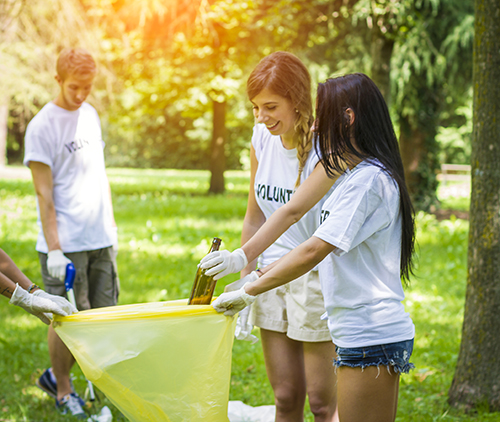
-
What is a neighborhood cleanup program?
-
Why conduct a neighborhood cleanup program?
-
Who should be involved in a neighborhood cleanup program?
-
When should you conduct a neighborhood cleanup program?
-
How do you conduct a neighborhood cleanup program?
In the 1960s, I taught in an alternative school in a large city. One day, my co-teacher and I took a class of seventh, eighth, and ninth graders to a park along a creek for an ecology lesson. As we were leaving, an eighth grader named Kyle tossed an empty bottle from a bridge into the creek.
When we pointed out the connection between litter and the environmental issues we had just discussed, he responded by describing the amount of trash he regularly saw in his own neighborhood. His reaction raised an important question: how do people's everyday surroundings shape what they come to expect from shared spaces, and how can residents be supported in improving those conditions?
Litter, illegal dumping, neglected public spaces, damaged infrastructure, and other environmental conditions can affect how people use and experience their neighborhood. They may create health or safety concerns, make sidewalks and parks harder to use, increase maintenance costs, and contribute to perceptions that an area is not receiving adequate attention or investment.
A neighborhood cleanup is one practical way residents and community partners can respond. Cleanup efforts can improve physical conditions, create opportunities for neighbors to work together, identify larger infrastructure or environmental concerns, and build relationships that support future community action.
A cleanup should not be framed as fixing residents or teaching a neighborhood to care about itself. Residents may already care deeply about their community while lacking adequate waste collection, public investment, property-owner cooperation, safe disposal options, or other resources. A strength-based cleanup program builds on that existing knowledge, commitment, and community capacity.
What is a neighborhood cleanup program?
Some definitions before we begin:
Litter generally refers to smaller discarded items such as packaging, bottles, paper, plastic, metal, or other materials left in streets, parks, sidewalks, vacant lots, and other spaces.
Household waste can include ordinary household materials as well as larger items that may not fit into regular waste collection.
Bulky waste may include furniture, appliances, tires, large branches, construction materials, and other items that require special collection or disposal.
Recyclable or recoverable materials are materials accepted by local recycling, reuse, composting, donation, or recovery programs. What is accepted varies by community.
Hazardous or potentially hazardous materials may include chemicals, fuels, batteries, certain electronics, medical waste, needles, contaminated materials, some paints and solvents, and other items requiring specialized handling. Volunteers should not handle these materials unless they have appropriate training, equipment, and authorization.
Although the terms are sometimes used interchangeably, there is a difference between a neighborhood cleanup and a neighborhood cleanup program. A neighborhood cleanup is a one-time event. A neighborhood cleanup program is an ongoing effort that includes planning, recurring activities, partnerships, maintenance, and attention to the conditions that contribute to litter, dumping, or other waste problems.
A neighborhood cleanup can take several forms, and a single event may combine more than one approach:
- Public space cleanup. Residents and community partners clean streets, sidewalks, parks, trails, vacant public land, or other shared spaces using appropriate tools, protective equipment, and safety procedures.
- Household cleanup. Residents are given an opportunity to dispose of bulky items or other materials that are difficult to manage through regular collection. A municipality, waste provider, neighborhood organization, or community partner may arrange pickup or drop-off.
- Public-agency-assisted cleanup. Some sites or materials require equipment, permits, professional handling, property-owner permission, or action by a municipality or other responsible agency. Community organizations can identify the issue and work with the appropriate entity to address it safely.
Municipal support varies. Local governments or waste providers may offer dumpsters, collection vehicles, recycling containers, tools, staff assistance, disposal-fee waivers, or special pickup services. Communities should check current local procedures before planning the event.
Public space cleanup
A public space cleanup may be initiated by a municipality, neighborhood organization, resident group, school, business, nonprofit organization, or other community partner.
Some local governments organize designated cleanup days. Others allow neighborhoods to request equipment, containers, waste pickup, or other assistance for a particular date.
Resident-led cleanup efforts can also begin on a small scale. A few neighbors may address one block, intersection, park, or trail and gradually expand as more people participate.
Tasks may include:
- Picking up litter
- Sweeping sidewalks or public areas
- Separating recyclable materials where appropriate
- Removing approved bulky waste
- Clearing leaves or other debris from appropriate areas
- Maintaining community gardens or landscaped areas
- Reporting damaged infrastructure, abandoned vehicles, illegal dumping, or hazardous materials
- Removing unwanted markings or graffiti when appropriate permission has been obtained
Cleanup activities should match volunteers' abilities, training, ages, and comfort levels. Work involving traffic, hazardous materials, power equipment, unstable structures, heavy objects, contaminated water, sharp objects, or other significant hazards should be handled by trained personnel or the responsible public agency.
Cleanup projects can also help neighbors get to know one another. Shared work, planning, conversation, and problem-solving can contribute to social capital: the relationships and networks that help people exchange information, support one another, and work together on community priorities.
Many cleanup events end with a meal, celebration, or community activity. People should be able to contribute in different ways – planning, outreach, photography, food, registration, translation, child care, accessibility support, logistics, first aid, transportation, or physical cleanup – based on their interests and abilities rather than assumptions about age or disability.
Household cleanup
A household cleanup may occur alongside a public-space cleanup or as a separate activity.
These programs can help residents dispose of furniture, appliances, yard waste, electronics, construction materials, or other items that regular waste collection may not accept.
Disposal rules vary significantly by community. Appliances, refrigerants, electronics, batteries, tires, paint, chemicals, motor oil, construction materials, and other items may require special handling or designated collection sites.
Do not assume that a cleanup event allows residents or volunteers to place hazardous materials into ordinary trash or dumpsters. Confirm requirements with the local waste, recycling, public works, or environmental agency before the event.
A neighborhood-organized household cleanup may involve distributing information, coordinating pickup, arranging drop-off locations, helping residents identify appropriate disposal or reuse options, and working with municipal or private waste providers.
Some residents may request assistance moving items to an approved pickup area. Offer help based on what the resident identifies as useful. People with disabilities, older adults, people recovering from injury, caregivers, and others may benefit from assistance, but should not be assumed to need it.
Public-agency-assisted cleanup
Some conditions cannot safely or legally be addressed by community volunteers.
Examples may include:
- Privately owned property where permission has not been obtained
- Abandoned or unsafe structures
- Abandoned vehicles
- Contaminated soil
- Hazardous chemicals
- Medical waste or discarded needles
- Large amounts of illegal dumping
- Unstable debris
- Work requiring heavy equipment
Residents can document the condition, report it to the responsible property owner or agency, participate in public processes, and work with officials or community organizations to seek a response.
The legal process for entering private property, removing vehicles, cleaning unsafe structures, or addressing environmental hazards varies by jurisdiction. Communities should not assume that volunteers have authority to remove property or enter a site simply because it appears vacant or abandoned.
When a serious health or safety concern remains unresolved, residents may use established administrative, civic, legal, or community-organizing processes to seek action. Depending on the issue, this might include public comments, petitions, meetings, complaints to the responsible agency, media communication, demonstrations, or legal assistance.
Why conduct a neighborhood cleanup program?
- A neighborhood cleanup can strengthen stewardship and belonging. Residents who participate in caring for shared spaces can build relationships with one another and contribute directly to places they value.
- It can demonstrate collective capacity. A visible project can show what residents, community organizations, businesses, and public agencies are able to accomplish together and may build momentum for addressing larger priorities.
- It can create many ways to participate. Cleanup programs need planning, communication, registration, translation, logistics, transportation, photography, food, data collection, first aid, child care, accessibility support, physical cleanup, and many other contributions. People can choose roles that fit their skills and interests.
- A cleanup program can improve neighborhood quality of life. Removing litter and illegal dumping and addressing maintenance concerns can make streets, parks, sidewalks, and other shared spaces more comfortable and usable.
- It can improve how shared spaces function and are experienced. Cleanup can improve visibility, access, recreation, walking conditions, and use of public spaces without implying that residents' worth or identity depends on how tidy the neighborhood appears.
- A neighborhood cleanup program can support health and safety. Accumulated waste may attract pests, obstruct sidewalks or drainage, contain sharp or hazardous materials, or create other health and environmental concerns. Appropriate cleanup and waste management can reduce those risks.
- It can support environmental responsibility. Cleanup programs can connect residents with reuse, repair, recycling, composting, household hazardous-waste programs, and other ways of reducing waste where those options are available.
- It can support local businesses and community investment. Well-maintained public spaces and commercial areas can improve pedestrian activity and the experience of residents and customers. Economic-development strategies should also consider whether current businesses and residents can benefit from neighborhood investment.
- It can provide a foundation for other community activities. Relationships developed through a cleanup may support future work related to parks, transportation, housing, environmental quality, public health, community safety, youth development, or other resident priorities.
- It can strengthen social connections. Shared work can help neighbors meet one another, exchange information, build trust, and develop networks that support mutual aid and collective action.
- It can create opportunities for connection across differences. When participation is inclusive, cleanup activities can bring together people of different ages, cultures, languages, races and ethnicities, housing situations, abilities, economic circumstances, and other backgrounds.
Physical cleanup should not be treated as a substitute for public investment or solutions to larger structural problems. Illegal dumping, inadequate collection services, absentee ownership, inaccessible waste disposal, housing instability, underfunded infrastructure, and other conditions may require policy, service, or institutional changes in addition to volunteer action.
Who should be involved in a neighborhood cleanup program?
A neighborhood cleanup program should be as participatory as possible. People who live, work, learn, own property, operate businesses, provide services, or spend time in the neighborhood may all have useful perspectives.
Participants may include:
- Residents from the racial, ethnic, cultural, and linguistic communities represented in the neighborhood
- Young people
- Older adults
- People with disabilities and accessibility organizations
- Faith communities
- Property owners, including owners who do not live in the neighborhood
- Renters and tenant organizations
- Neighborhood business owners, workers, and managers
- Neighborhood associations, resident councils, block groups, youth organizations, and other community organizations
- Health, housing, environmental, and human-service organizations serving the neighborhood
- Schools, colleges, educators, and student organizations
- Public-agency staff responsible for sanitation, recycling, public works, parks, transportation, environmental health, fire and emergency services, and other relevant services
- People experiencing homelessness or housing instability who use or have relationships with neighborhood public spaces
- Reentry and justice-affected community organizations
- Waste, recycling, reuse, and environmental organizations
Do not assume that participation will happen automatically. Language, disability access, work schedules, transportation, caregiving, previous experiences with institutions, immigration concerns, and other factors may affect people's ability or willingness to participate.
Ask residents what would make participation easier and provide appropriate supports where possible.
When should you conduct a neighborhood cleanup program?
A neighborhood cleanup can be organized at any time when residents identify a need or opportunity, but several practical considerations affect timing.
Pay attention to weather and environmental conditions
Avoid extreme heat, severe cold, storms, wildfire smoke, poor air quality, flooding, or other conditions that could make outdoor work unsafe.
Have a backup plan for weather-related cancellation or rescheduling and provide shade, water, rest breaks, or other protections appropriate to the conditions.
Schedule around participants' lives
Weekends may work well in some communities, but they are not automatically best for everyone. Work schedules, religious observances, caregiving responsibilities, school activities, cultural events, transportation, and other factors should be considered.
When possible, ask residents which dates and times would make participation easiest.
Coordinate with public agencies and waste providers
Make sure collection vehicles, dumpsters, transfer stations, recycling facilities, household hazardous-waste programs, or other services will be available when needed.
Do not allow collected waste to remain in streets or public spaces longer than necessary.
Cleanup may be especially useful:
- When litter, illegal dumping, or accumulated waste interferes with the use of streets, parks, sidewalks, vacant lots, waterways, or other shared spaces.
- When municipal or partner resources are available.
- When debris creates a safety concern. Unstable materials, abandoned appliances, broken glass, sharp objects, collapsed structures, or other hazards may need prompt attention. Some hazards require professional or public-agency response rather than volunteer cleanup.
- When waste creates an environmental or public-health concern. This may include pests, contaminated soil or water, medical waste, discarded needles, chemicals, blocked drainage, or other conditions requiring specialized handling.
- When residents and businesses are working on broader community-development priorities.
- When residents want an activity that brings people together around a shared and visible goal.
- When residents want to build momentum for addressing additional neighborhood priorities. A cleanup can be one achievable project within a broader community-led improvement effort.
How do you conduct a neighborhood cleanup program?
A successful cleanup requires planning, coordination, safety, community participation, appropriate waste disposal, and a structure for maintaining progress over time.
Recruit or identify a core group to begin the effort
The effort might begin with a neighborhood association, tenant organization, school, youth group, community organization, business association, faith community, or a small group of interested residents.
The initial group does not have to represent every part of the neighborhood immediately, but it should make broad and genuine participation an early priority.
Put together a planning group that reflects the neighborhood
Invite people with different experiences, roles, and perspectives to participate.
Trusted relationships can help with outreach, but do not assume one community leader speaks for everyone in a racial, ethnic, cultural, age, disability, or other community.
Use several outreach methods:
- Personal invitations
- Door-to-door outreach
- Flyers and posters
- Text and email
- Community websites and social media
- Schools and libraries
- Businesses and community organizations
- Local radio, newspapers, and community media
Provide translated and accessible information where needed, and consider interpretation, childcare, transportation, remote participation, and meeting times when those supports would expand participation.
Assess the neighborhood
Walk, roll, bike, or travel through the neighborhood with residents and document both strengths and cleanup needs.
Look for:
- Litter and illegal dumping
- Bulky waste
- Unsafe or inaccessible sidewalks
- Drainage problems
- Unwanted graffiti or harmful markings
- Vacant properties requiring attention
- Areas where hazardous materials may be present
- Existing community gardens, murals, trees, parks, gathering places, businesses, and other assets that should be protected or strengthened
Talk with residents about what they see as priorities rather than relying only on what outside observers consider unattractive.
Decide what kind of neighborhood cleanup you want to conduct
Use the assessment to determine the size, location, and type of cleanup.
Consider:
- How much work is needed
- What volunteers can safely do
- What requires municipal or professional assistance
- How waste will be transported and disposed of
- How many volunteers are realistically available
- Which sites residents consider the highest priority
- How accessibility will be maintained during the event
A cleanup may last a few hours, a full day, several days, or occur in smaller recurring activities.
Consider your resources
Resources may include funding, volunteer time, public-agency support, donated materials, professional expertise, transportation, equipment, and partnerships.
Potential partners may provide:
- Gloves and litter grabbers
- Bags and recycling containers
- Dumpsters
- Waste hauling
- Tools
- Safety equipment
- Food and water
- Printing and outreach
- Accessibility supports
- Staff or technical assistance
Volunteer effort is valuable, but volunteers should not be expected to replace public services or paid professional work that requires specific expertise, licensing, equipment, or ongoing responsibility.
Pick an appropriate place, date, and time
Select a gathering area that is safe, accessible, easy to locate, and large enough for volunteers, supplies, and waste containers.
Consider accessible transportation, parking and drop-off, shade, restrooms, emergency access, and pedestrian safety.
Recruit volunteers
Explain clearly:
- What the cleanup is intended to accomplish
- What tasks are available
- What volunteers should bring
- What equipment will be provided
- How long the event will last
- What safety procedures will be used
- What activities are available for people who do not want or cannot perform physical cleanup work
Children and young people can participate in age-appropriate activities with appropriate adult supervision. They should not handle sharp objects, needles, chemicals, hazardous waste, heavy equipment, traffic control, or other high-risk materials or tasks.
Organize volunteers
Collect only the contact information needed to coordinate the event, explain how it will be used, and protect it appropriately.
Offer a range of volunteer roles, such as:
- Litter pickup
- Registration
- Volunteer coordination
- Translation or interpretation
- Photography
- Food and water distribution
- First aid, when appropriately trained
- Transportation
- Outreach
- Recycling and waste sorting
- Accessibility support
- Child care or children's activities
- Documentation and evaluation
Ask volunteers what they are comfortable doing rather than assigning roles based on age, disability, gender, or other assumptions.
Plan the cleanup itself
Even a small cleanup needs clear coordination.
Coordinate the effort. Designate people responsible for volunteer support, safety, supplies, waste disposal, communication, and emergencies.
Ask for appropriate help from public agencies. Request dumpsters, collection services, tools, traffic-control support, or other assistance well in advance when available.
Traffic-control needs should be addressed by appropriately trained personnel and in accordance with local requirements. If volunteers will be working near streets, use appropriate signs, barriers, high-visibility equipment, and traffic-management procedures.
Get permissions and permits. Obtain authorization before entering private property, using parking areas, installing dumpsters, removing vehicles, closing streets, painting over surfaces, or conducting other activities that require permission.
Decide what volunteers will and will not handle. Establish clear procedures for hazardous or unknown materials.
Volunteers should generally stop and report:
- Needles or other sharps
- Medical waste
- Unknown chemicals
- Fuel or oil spills
- Asbestos-containing or suspected asbestos materials
- Unstable structures
- Dead animals requiring specialized disposal
- Electrical hazards
- Explosives, weapons, or suspicious objects
- Other materials the local authority identifies as hazardous
Manage volunteers. Organize teams according to tasks, locations, training, and volunteer preferences. Make sure everyone receives safety instructions and knows how to contact a coordinator.
Provide reasonable accommodations and alternative tasks when needed.
Communicate with the community and media. Share accurate information about the cleanup, why it is happening, how people can participate, and what was accomplished.
When taking or sharing photographs of identifiable participants, particularly children, use appropriate permission and explain how the images may be used.
Take care of practical needs. Depending on the event, provide:
- Drinking water
- Rest breaks
- Shade or weather protection
- Accessible restrooms
- First-aid supplies
- Emergency procedures
- Protective gloves and other appropriate personal protective equipment
- Handwashing or sanitation supplies
- Safe food handling when food is provided
Make the cleanup enjoyable. Music, food, children's activities, community art, recognition, or other activities can help make the event social as well as productive.
Avoid turning cleanup into a competition that encourages volunteers to work too quickly, lift unsafe loads, or collect hazardous materials simply to gather more waste.
Celebrate when you're done. Recognize people's contributions, share what was accomplished, thank community partners, and explain what comes next.
Run the cleanup
Follow the plan, adapt when conditions require it, and put volunteer safety ahead of completing every task.
Monitor and record your efforts
Keep track of what was accomplished and what should be improved next time.
Possible measures include:
- Number of participants
- Areas cleaned
- Amount or types of waste collected
- Materials reused or recycled
- Hazards reported to public agencies
- Accessibility issues identified
- Volunteer experiences
- Resident feedback
- Problems with disposal or logistics
- Follow-up actions needed
Create a structure to keep the effort going
If residents want an ongoing cleanup program, establish responsibility for future coordination without depending indefinitely on one person.
An existing neighborhood organization might create a cleanup or environmental-stewardship committee, or participants might form a separate working group.
Share responsibilities, develop new leaders, keep records, maintain partnerships, and identify how volunteers and residents can remain involved over time.
Address the causes as well as the cleanup
Recurring litter or illegal dumping may indicate a larger issue that cleanup alone will not solve.
Ask:
- Are enough trash and recycling containers available?
- Is bulky-item pickup affordable and easy to use?
- Are waste services reliable?
- Do residents know where hazardous or unusual materials can be taken?
- Are landlords or property owners maintaining their properties?
- Are businesses managing waste appropriately?
- Are there recurring illegal-dumping locations?
- Are language, transportation, cost, or identification requirements creating barriers to disposal services?
- Does the neighborhood need additional public investment or enforcement?
The goal should be to reduce the need for repeated cleanup, not simply to become better at removing the same waste again and again.
Start planning for the next stage
An ongoing cleanup program may include recurring events, but it may also lead to larger projects involving parks, trees, sidewalks, waste services, vacant properties, environmental health, public art, transportation, community gardens, or other resident priorities.
Continue asking residents what is working, what needs to change, and whether responsibility for maintaining neighborhood conditions is being shared fairly among residents, property owners, businesses, public agencies, and other institutions.
In Summary
A neighborhood cleanup can improve streets, parks, sidewalks, vacant lots, and other shared spaces, but its value can extend beyond removing waste.
Cleanup programs can create opportunities for residents to work together, strengthen relationships, identify environmental and infrastructure concerns, connect with public agencies and community organizations, and build momentum for other locally defined priorities.
A strength-based cleanup program does not assume that litter or neglected infrastructure reflects residents' character, values, or hope for the future. Neighborhood conditions may reflect many factors, including public investment, available services, property ownership, infrastructure, illegal dumping, accessibility of disposal options, and broader economic conditions.
Strong programs involve residents in deciding what needs attention and how the work should be done. They provide different ways for people of varying ages and abilities to participate, use appropriate safety procedures, handle hazardous materials through qualified services, and plan for long-term maintenance.
Cleanup is most effective when it is paired with attention to the causes of recurring waste and neglect. Volunteer effort can make an important contribution, but residents should not be expected to substitute indefinitely for public services, responsible property ownership, or other institutional responsibilities.
The long-term goal is not simply a neighborhood with less litter. It is a community where residents have meaningful influence over shared spaces, appropriate resources for maintaining them, and strong relationships that help them continue improving the places they call home.
Contributor
Phil Rabinowitz
Editor
Andrea Glinn
We encourage the reproduction of this material, but ask that you credit the Community Tool Box: /.
Resources
Online Resources
Clean Streets L.A. Los Angeles city-wide effort to clean neighborhoods.
Development without Displacement Toolkit provides practical lessons, frameworks, and tools that advance equitable development without displacing residents and small businesses.
Neighborhood Services. Fort Collins, Colorado, neighborhood cleanup suggestions and rules. The city offers grants to groups for the cost of dumpsters and tipping fees.
Planning and Sustainability. Portland, Oregon, has a spring cleanup with more the 40 scheduled events organized by each neighborhood, with their own coalitions and websites as resources on the events and how to get involved.
Here you will find a checklist summarizing the important points of the section.
What is a neighborhood cleanup program?
__ A neighborhood cleanup program is an ongoing project that assumes that effort will be maintained.
__ There are three kinds of neighborhood cleanups:
- Public space cleanup: neighborhood volunteers clean public spaces.
- Household cleanup: households clean up property and put out hard-to-dispose-of waste for special collection.
- Community-assisted cleanup: the community helps with permits, permissions, removing abandoned vehicles, etc.
__ In any of these cleanups, the community may supply tools, equipment, and/or employees to help neighborhood volunteers.
Why conduct a neighborhood cleanup program?
__ A neighborhood cleanup program can instill neighborhood pride.
__ It can break a cycle of hopelessness and helplessness.
__ It gives everyone a chance to contribute.
__ A cleanup program enhances neighborhood quality of life.
__ It can improve the self-image of residents and of the neighborhood as a whole.
__ A neighborhood cleanup program can improve neighborhood health.
__ It can help to "green" the neighborhood.
__ It makes the neighborhood more attractive to business.
__ It can serve as a springboard for other neighborhood actions or activities.
__ It can increase the number of relationships and the amount of social capital within the neighborhood.
__ A neighborhood cleanup program can encourage the embrace of diversity.
Who should be involved in a neighborhood cleanup program?
__ Any significant racial or ethnic groups, including the majority group.
__ Youth.
__ Elders.
__ People with disabilities.
__ Faith communities.
__ Property owners, including absentee owners.
__ Renters.
__ Neighborhood business owners and managers.
__ Neighborhood clubs and associations.
__ Health and human service organizations that serve the neighborhood.
__ School personnel.
__ Neighborhood and/or municipal officials.
When should you conduct a neighborhood cleanup program?
__ When the weather is good.
__ When volunteers are available.
__ When the municipality can help.
__ When open spaces and streets in the neighborhood are covered with waste.
__ When the municipality provides the opportunity.
__ When waste presents a danger to children or others.
__ When waste presents a danger to health.
__ When the neighborhood is interested in economic development.
__ When you want to bring the neighborhood together.
__ When the neighborhood seems to have lost hope.
How do you conduct a neighborhood cleanup program?
__ Recruit or find a core group to begin the effort.
__ Put together a planning group that represents all groups in the neighborhood.
__ Assess the neighborhood.
__ Decide what kind of neighborhood cleanup you want to conduct.
__ Consider your resources.
__ Pick an appropriate place, date and time.
__ Recruit volunteers.
__ Organize volunteers.
__ Plan the cleanup itself.
- Coordinate the effort.
- Ask for help from the municipality.
- Get permissions and permits.
- Decide what actually needs to be done.
- Manage volunteers.
- Work with the media to gain positive publicity.
- Take care of the nitty gritty.
- Make the cleanup fun.
- Celebrate when you're done.
__ Run the cleanup.
__ Monitor and record your efforts.
__ Create a structure to keep the effort going.
__ Start planning for the next cleanup.

IndyCAN (the Indianapolis Congregation Action Network, now called Faith in Indiana) organized residents and faith communities around racial and economic equity. This spotlight video describes community organizing related to mental health services and efforts to connect people experiencing mental health crises with treatment and support rather than unnecessary incarceration.
Neighborhood action can take many forms. Residents may organize a block party, advocate for safer street crossings, create a community garden, respond to a proposed development, improve a park, support affordable housing, organize around environmental concerns, or develop ways for neighbors to share information and resources.
What these activities have in common is collective participation. People identify something they value, need, or want to change and work with one another to take action.
Neighborhood action can produce results that may be difficult for individuals to accomplish alone. It can also strengthen relationships, create new leadership opportunities, increase residents' knowledge about local institutions and decision-making, and build capacity for future community efforts.
This section discusses what neighborhoods are, what we mean by neighborhood action, why collective action can be valuable, when it may be useful, and how residents can build relationships and organize around shared priorities.
What do we mean by neighborhood?
People may define a neighborhood in different ways. For some, it is a few nearby blocks. For others, it may be a housing development, rural area, business district, cultural community, subdivision, apartment complex, or a larger area connected by shared institutions, transportation, history, or identity.
Residents may also experience the same neighborhood differently. One person may value its close relationships and cultural traditions, while another may be concerned about transportation, housing costs, traffic, maintenance, accessibility, or lack of services.
Rather than classifying neighborhoods as simply “good” or “bad,” it can be more useful to identify both strengths and conditions residents want to improve.
Neighborhood strengths might include:
- Strong relationships among neighbors
- Effective communication and information-sharing
- Well-maintained and accessible public spaces
- Active community organizations, businesses, schools, faith communities, cultural organizations, and resident groups
- Convenient access to stores, transportation, parks, services, and other resources
- Cultural traditions, history, local knowledge, and community leadership
- Opportunities for residents of different ages and backgrounds to participate in community life
Conditions residents may want to improve might include:
- Limited opportunities for neighbors to meet or communicate
- Social isolation or weak connections among residents
- Safety, maintenance, environmental, or infrastructure concerns
- Public spaces that are underused, inaccessible, uncomfortable, or lacking activities
- Limited access to food, transportation, health care, recreation, businesses, education, or other services
- Housing instability or affordability concerns
- Barriers to participation in public decision-making
What residents do – individually and collectively – can influence neighborhood life, but residents are not responsible for every condition in their community. Public investment, housing markets, transportation, discrimination, infrastructure, property ownership, economic conditions, environmental risks, and government policy can all shape neighborhoods.
Promoting neighborhood action means creating opportunities for residents to identify what they value, discuss their priorities, build relationships, and participate meaningfully in decisions that affect their community.
What do we mean by promoting neighborhood action?
We use the phrase promoting neighborhood action broadly. It can include activities that bring neighbors together, strengthen relationships, help people understand their community, or support collective work toward a shared goal.
Neighborhood action may be organized around a specific issue:
- Cleaning or improving a vacant lot
- Requesting a safer crosswalk
- Improving public transportation
- Responding to a proposed development
- Protecting affordable housing
- Improving a park
- Addressing flooding, traffic, pollution, or another environmental concern
But neighborhood action does not always need to begin with a problem. It may also include getting to know neighbors, organizing a community meal, checking in with an older adult who wants support, creating a community garden, holding a cultural event, starting a walking group, or developing a neighborhood communication network.
Why is it important to promote neighborhood action?
Neighborhood action can provide several potential benefits. These outcomes are not automatic, and different communities may experience them differently, but collective action can create opportunities that individuals acting alone may not have.
- Collective action can increase a community's ability to influence decisions. A group of residents can gather information, identify common priorities, participate in public processes, communicate with decision-makers, and combine skills and resources more easily than one person acting alone.
- Successful action can build capacity for future efforts. Residents who learn how to organize a meeting, gather information, work with public agencies, raise funds, communicate with neighbors, or complete a community project can use those skills again.
- Neighborhood action can strengthen collective efficacy. Residents may develop greater confidence in their ability to work together, solve problems, and influence decisions affecting their community.
- It can create opportunities for relationships. Meetings, community projects, events, shared spaces, and informal encounters can help neighbors become more familiar with one another.
- It can strengthen networks of trust and mutual support. Trust usually develops over time through repeated experiences, reliability, communication, and respect. Neighborhood activities can provide opportunities for those relationships to grow.
Social connectedness refers to the relationships and networks through which people interact, exchange information, provide support, and participate in community life. Neighborhood action can help strengthen those connections, although simply bringing people together does not guarantee trust or agreement.
- Neighborhood relationships can contribute to a sense of belonging and mutual support. Knowing nearby residents may make it easier to share information, ask for assistance, respond to emergencies, welcome newcomers, or work together on common concerns.
- Participation can make community life more enjoyable. Events, informal conversations, shared projects, recreation, cultural activities, and public spaces can add connection and meaning to everyday neighborhood life.
- Neighborhood action can support community safety. Residents may identify hazards, improve lighting or transportation, advocate for safer streets, organize violence-prevention activities, support young people, strengthen emergency preparedness, or work on other locally identified safety concerns.
- Neighborhood action can support health and well-being. Residents may organize around parks, housing, environmental quality, transportation, food access, recreation, social connection, health services, or other conditions that influence health.
- Neighborhood action can create opportunities for children and young people. Young people can participate in planning, recreation, arts, environmental projects, leadership, service, and other community activities while building relationships with peers and adults.
- Neighborhood action can support local economic activity. Residents may support local businesses, share information about employment or services, advocate for commercial investment, organize markets, or develop other strategies that reflect local economic priorities.
These benefits depend on how neighborhood action is organized. A process that excludes some residents, ignores disagreements, or treats one group as representing everyone may deepen existing divisions rather than strengthen the community.
When should you promote neighborhood action?
Neighborhood action can be useful whenever residents identify a shared interest, opportunity, concern, or goal.
Communities differ in how connected residents already are. Some neighborhoods have active organizations and strong networks. Others may have fewer opportunities for interaction because of work schedules, transportation, housing turnover, language barriers, physical design, disability access, or simply differences in how people prefer to engage.
Neighborhood action may be particularly useful:
- When residents identify an issue that has not been adequately addressed. Examples might include traffic safety, housing, park maintenance, environmental concerns, youth opportunities, public transportation, accessibility, or neighborhood services.
- When an outside decision or event may significantly affect the neighborhood. This might include proposed development, infrastructure changes, service reductions, environmental hazards, severe weather, or other community changes.
- When residents are already working on an issue but believe additional participation or a different strategy is needed.
- When conflict or disagreement exists among groups in the neighborhood. Neighborhood action may create opportunities for communication, but significant conflict may also require skilled facilitation, mediation, or other approaches.
- When a neighborhood is new or changing. New residents, new development, demographic changes, or housing transitions may create opportunities to build relationships and establish ways to communicate.
- When residents want more opportunities to know one another.
- When residents identify opportunities to improve community life even though there is no immediate problem.
Neighborhood action should respond to actual resident interests rather than creating a problem simply to generate participation. Sometimes the most useful action is solving a specific issue; at other times it may be creating a place, activity, or communication network that helps relationships develop naturally.
How do you promote neighborhood action?
Begin by asking:
Is there a specific issue, opportunity, or shared interest that residents want to address?
The answer can help determine what type of organizing makes sense. Some neighborhood action is issue-based and requires research, planning, and participation in decision-making. Other efforts focus primarily on relationships, activities, information-sharing, or community events.
Some Preliminary Principles
Increase opportunities for contact among neighborhood residents
Repeated contact can create opportunities for people to become familiar with one another, but contact alone does not automatically produce friendship, trust, or agreement.
Relationships are also influenced by people's experiences, history, culture, communication, discrimination, conflict, shared interests, and whether they feel respected and safe.
Neighborhoods can create a variety of voluntary opportunities for interaction:
- Create physical spaces that support gathering. Seating, shade, community bulletin boards, accessible playground areas, shared gardens, plazas, community rooms, and other features can provide opportunities for informal interaction.
- Hold events that people enjoy. Youth sports, neighborhood meals, cultural events, fairs, cleanups, arts activities, block gatherings, markets, workshops, and other activities can bring people together around shared interests.
- Connect community information or services with places people already use. Resource tables, health information, volunteer opportunities, neighborhood updates, or other services may be offered at community events, housing common areas, schools, libraries, markets, and other accessible locations when appropriate.
Not everyone will want frequent interaction with neighbors, and participation should remain voluntary. The goal is to make connection possible, not to define one preferred way of being a good neighbor.
Learn about your neighborhood's priorities and concerns
Do not assume that the people you already know represent the whole neighborhood. Different residents may have different priorities, and some may have experienced barriers to participating in previous community processes.
Ways to learn about priorities include:
- Informal conversations with neighbors
- Listening at social events and community gatherings
- Reviewing community bulletin boards, neighborhood communication channels, local media, newsletters, or online groups
- Attending public meetings and hearings
- Conducting short surveys at neighborhood events
- Organizing listening sessions, house meetings, or small-group conversations
- Reviewing previous community assessments or neighborhood plans
- Working with local government, libraries, schools, universities, or community organizations that may have relevant information
- Conducting a more structured neighborhood survey when appropriate
Collect only the information you actually need, explain how it will be used, and make participation accessible. Depending on the neighborhood, this may mean providing translated materials, interpretation, disability accommodations, paper and digital response options, childcare, transportation support, or different meeting times.
Learn about your neighborhood's resources and assets
Neighborhoods have knowledge, relationships, institutions, skills, cultural traditions, physical resources, businesses, organizations, and leadership that can be used to address community priorities.
Assets may include:
- Organizations and associations already active in the neighborhood. These may include resident groups, schools, faith communities, businesses, sports organizations, cultural organizations, health organizations, tenant groups, youth organizations, and others.
- Physical and natural resources. Parks, schools, libraries, clinics, businesses, community centers, gardens, waterways, trails, trees, transportation facilities, historic places, and other neighborhood assets.
- The knowledge, skills, relationships, and talents of residents. Residents may have experience in art, organizing, construction, education, technology, translation, gardening, health, finance, child care, law, transportation, communications, or many other areas.
Asset mapping should not turn residents into a list of free labor. People's skills are community strengths, but participation should be voluntary, and professional work should be compensated when appropriate.
Information about neighborhood assets can be gathered through conversations, surveys, community mapping, asset inventories, meetings, or other participatory activities.
Once priorities and assets are better understood, the neighborhood is in a stronger position to decide what kind of action makes sense.
When there is an issue
When residents identify a significant issue, neighborhood action can help people understand the situation, identify who has decision-making responsibility, consider different responses, and work toward an outcome.
The following steps provide a general framework.
Talk about the issue with others
Begin with people affected by the issue and others whose knowledge or perspective may be useful.
The goal at this stage is not simply to find people who already agree with you. Ask:
- How are different people experiencing the issue?
- What information is already available?
- Who is most affected?
- Who has responsibility or authority?
- What possible solutions have already been considered?
- Who has not yet been included in the conversation?
An existing neighborhood association, tenant organization, resident council, youth group, or other community organization may provide a useful place for discussion. If no organization exists, the issue may create an opportunity to establish one.
Call a larger meeting or create another accessible way to participate
Publicize the opportunity widely and invite people from throughout the neighborhood rather than relying only on established or influential leaders.
A traditional meeting may not be the best format for everyone. Depending on the issue, participation might also occur through listening sessions, surveys, small-group discussions, online meetings, neighborhood walks, workshops, or other approaches.
Share information and listen to different perspectives
Explain what is known, distinguish facts from assumptions, and invite participants to contribute additional information and experiences.
People may disagree about the problem, its causes, or the best response. Those disagreements can provide important information and should not automatically be treated as obstacles to organizing.
Explore possible responses
Options might include:
- Meeting with the responsible agency, property owner, business, or organization
- Participating in a public hearing or planning process
- Submitting written comments
- Gathering additional evidence
- Developing an alternative proposal
- Organizing a petition
- Working with partner organizations
- Using community or local media
- Holding a public demonstration
- Using an administrative complaint or legal process
- Taking direct community action when appropriate
- Waiting for additional information when immediate action is unnecessary
Choose your response
Consider:
- The importance and urgency of the issue
- Whether delay could create additional harm
- The level and breadth of neighborhood support
- Support or expertise available from outside the neighborhood
- The staff, volunteers, time, funding, expertise, and other resources required
- Areas of disagreement or opposition
- The likelihood that the proposed response can produce the desired result
- Possible unintended consequences
- Accessibility, safety, and legal considerations
Plan your response
Identify:
- What will be done
- Who will do it
- Who should be consulted
- What information or resources are needed
- What timeline is realistic
- How residents will be kept informed
- How progress will be evaluated
Implement the response
Carry out the plan, communicate with participants, and adapt if new information or changing circumstances require it.
Evaluate the results
Ask:
- What changed?
- Were the intended goals achieved?
- Who benefited?
- Were there unintended effects?
- Did residents feel meaningfully involved?
- What did participants learn?
- What should be changed next time?
Evaluation may include observations, resident feedback, public records, service data, response times, participation data, environmental measurements, or other information appropriate to the issue.
If the effort did not achieve the desired result, use what was learned to reconsider the strategy rather than assuming that either residents or decision-makers simply need to be pressured harder.
When there is not an apparent issue
Neighborhood action does not require a crisis.
When residents are generally satisfied with neighborhood conditions, community-building can focus on relationships, shared interests, recreation, culture, learning, mutual support, or enjoyment.
- Create opportunities to identify overlooked priorities. Residents may have concerns about traffic, playgrounds, accessibility, housing, parks, environmental conditions, or services that have not yet become organized community issues. Invite discussion rather than trying to make people concerned about something they do not see as a priority.
- Bring people together around shared interests. Music, gardening, sports, cooking, arts, books, walking, history, culture, technology, or other interests can create natural opportunities for connection.
- Support resident-defined learning opportunities. Residents might organize language exchange, digital-skills workshops, financial education, arts instruction, gardening classes, or other activities based on interests they identify themselves.
- Create opportunities simply to enjoy community life. Relationships do not always need to be organized around solving a problem.
- Organize a neighborhood event. A picnic, cultural festival, basketball tournament, community meal, arts event, street fair, movie night, market, or other activity can give people a reason to gather.
Tips for Running a Successful Neighborhood Event
Successful events are usually built around clear goals, realistic planning, accessible participation, and shared responsibility.
Find people to work with you
Begin with a small group if necessary, but invite additional participation as planning develops.
Explore event possibilities
Ask residents what activities they would actually enjoy and use. Do not assume that an event successful in another neighborhood will automatically work in yours.
Choose the event
Consider:
- Resident interest
- Cost
- Available time
- Volunteer and staff capacity
- Accessibility
- Transportation
- Weather
- Required permits
- Safety
- Whether the activity is welcoming to the people the organizers hope to include
Find more people to help
Recruit through personal invitations, phone calls, texts, email, neighborhood organizations, schools, businesses, faith communities, libraries, social media, flyers, websites, and other communication networks people already use.
Define the necessary tasks
Common responsibilities may include:
- Communication and outreach – invitations, flyers, social media, email or text updates, community announcements, local media, and other forms of outreach.
- Financing – budgeting, fundraising, payments, accounting, sponsorships, and financial reporting.
- Event activities and logistics – setup, registration, scheduling, accessibility, food, transportation, performers or presenters, cleanup, equipment, and volunteer coordination.
Depending on the event, planning may also involve a location, weather backup plan, permits, insurance, security or safety planning, transportation, parking, accessible entrances and restrooms, childcare, interpretation, captioning, equipment, food safety, emergency procedures, and evaluation.
Divide up the work
Match responsibilities with people's interests, skills, availability, and access needs.
No participant should be expected to take on a particular task because of age, gender, disability, profession, or another characteristic.
Larger or more complicated events usually benefit from clearer coordination and written responsibilities.
Prepare a budget and identify possible resources
Estimate likely expenses and identify available funding, donations, in-kind contributions, equipment, space, volunteer time, or partner support.
Consider both expected expenses and unexpected costs, and be transparent about how money will be handled.
Develop a timetable
Identify major tasks, deadlines, and the people responsible for them. Build in enough time for permits, outreach, contracts, accessibility arrangements, supplies, and other needs.
Carry out the event
Meet with key organizers before the event begins, confirm responsibilities, review emergency procedures, and make sure everyone knows how to communicate with coordinators.
For larger events, phones, radios, messaging systems, or other communication tools may help organizers stay connected.
Clean up
Event planning should include teardown, waste disposal, recycling, equipment return, payment of bills, removal of signs, restoration of the site, and any necessary follow-up.
Give thanks
Recognize the people and organizations that contributed. Appreciation can be expressed personally, publicly, through a message, at a follow-up gathering, or in another form that fits the event and community.
Shortly after the event, invite organizers and participants to reflect on:
- What worked well
- What did not work as expected
- Who participated
- Who may have faced barriers to participation
- Whether the event achieved its goals
- Whether expenses matched the budget
- What participants thought of the event
- What organizers would change next time
Evaluation may be simple. Attendance, participant feedback, money raised, new volunteers, completed activities, accessibility, community response, or other measures can provide useful information.
The purpose is not only to judge whether an event was successful, but to learn from it and strengthen future neighborhood efforts.
In Summary
Neighborhood action occurs when residents work together around shared priorities, interests, opportunities, or activities.
It can involve advocating for changes, addressing a neighborhood concern, creating a community project, organizing an event, sharing information, strengthening relationships, or simply creating more opportunities for neighbors to connect.
Strong neighborhood action begins with listening. Residents may experience the same neighborhood differently, and no individual or organization should assume that it already knows what the whole community needs.
Effective efforts build on neighborhood assets as well as concerns. Residents bring knowledge, skills, relationships, cultures, institutions, histories, and leadership that can help shape community action.
Collective action can strengthen relationships and community capacity, but contact does not automatically produce trust, agreement, safety, or equity. Those outcomes depend on how people are treated, whether participation is meaningful and accessible, how disagreements are handled, and whether communities have real opportunities to influence decisions.
Neighborhood action is most sustainable when leadership and responsibility are shared rather than concentrated in one person. Each project, meeting, event, or organizing effort can help residents learn more about one another and about how to work together.
The goal is not to make every neighborhood equally social or to require residents to participate in community life in the same way. It is to create opportunities for people to connect, contribute, make choices together, and shape the places where they live.
Contributor
Bill Berkowitz
Resources
Online Resources
Healthy Neighborhoods Study, based in Boston, is the largest resident-driven, participatory action research project in the US about neighborhood change processes, like gentrification and climate change, and their impact on health.
How to Start a Neighborhood Association is an article by Katherine Cusumano, published in the New York Times on June 6, 2020.
National Neighborhood Coalition focuses on national policy issues affecting neighborhoods.
Neighborhoods USA is a national organization of local neighborhood groups.
Where We Thrive provides resources for place-based field advocates to talk about resident-centered neighborhood revitalization and how best to execute it through the lens of racial equity.
Print Resources
Berkowitz, B. (2000) Community and neighborhood organization. In Rappaport, J., & Seidman, E. (Eds.), Handbook of community psychology, pp. 331-357. New York, NY: Kluwer Academic/Plenum Publishers.
Citizens Committee for New York City (no date). Tools and tactics for building neighborhood organizations. New York, NY: Author. [A collection of useful tip sheets on different neighborhood organizing topics; available from the Committee at 305 Seventh Avenue, New York, NY 10001, (212) 989-0909.]
Klingelhofer, K. (1994). Neighborhood organizing: Help yourself! How to use the neighborhood matching fund to build community. Seattle: City of Seattle, Department of Neighborhoods. [A free pamphlet available from the Department at 700 3rd Avenue, 400 Arctic Building, Seattle, WA 98104, (206) 684-0464.]
Kretzmann, J., & McKnight, J. (1994). Building communities from the inside out: A path toward finding and mobilizing a community's assets. Chicago: ACTA Publications.
Kretzmann, J., McKnight, J., & Sheehan, G. (1997). A guide to capacity inventories: Mobilizing the community skills of local residents. Chicago: ACTA Publications.
Leighninger, M., Flavin-McDonald, C., & Ghandour, R. (1998). Building strong neighborhoods: A guide for public dialogue and problem solving. Pomfret, CT: Study Circles Resource Center. [Pamphlet available from the Center at Box 203, Pomfret, CT 06258, (860) 928-2616.]
Mott, A. (1997). Building systems of support for neighborhood change. Washington, D.C.: Center for Community Change. [Available from the Center at 1000 Wisconsin Ave., NW, Washington, D.C., 20007, (202) 342-0567.]
Putnam, R. (2000). Bowling alone: The collapse and revival of American community. New York, NY: Simon & Schuster.
Sampson, R., Raudenbush, S., & Earls, F. (1997). Neighborhoods and violent crime: A multilevel study of collective efficacy. Science, 277 (August 15) 918-924.
Schorr, L. (1997). Common purpose: Strengthening families and neighborhoods to rebuild America. New York, NY: Anchor Books.
I understand what neighborhood action is:
___Neighborhood action is any activity that brings neighbors in contact with one another
I understand that neighborhood action is needed because it:
___Creates desired result
___Establishes trust
___Brings success, which brings power
I understand that action should be taken when:
___Outside threats occur
___Internal conflict with certain groups in neighborhood occur
___The neighborhood is new
I understand what to do when issues arise:
___Make others aware
___Call a larger meeting
___Explore possible solutions
___Carry out the solution
___Evaluate results
Example #1: How Neighborhoods Promote Neighborhood Action and Improve Neighborhood Life
Most of these examples come from the writer's direct experience, and some may be slightly out of the ordinary. They are given in short form and in no particular order; hundreds, and probably thousands, more examples could be compiled. But could some of these examples be adapted and refined to promote neighborhood action where you live? And can you think of some other examples of your own?
- Block parade. Some years ago, on the 100th anniversary of the Statue of Liberty, kids on the block dressed up with Statue of Liberty headdresses. The parade started at the top of the block: the little kids sat in red wagons; the big kids pulled them; the adults stood on the sidewalk and cheered. After the parade, there was a block barbecue.
- Block photograph. As part of a neighborhood slide show (later shown both at professional conferences and a local arts festival), the photographer dropped off flyers on the block announcing a block photograph to be taken the next day. ("Meet by the big tree in the middle of the block.") At the appointed time, the photographer was the only person there; but very gradually, doors started to open, people peered out, and then edged onto the street. A few minutes later, neighbors started to fetch other neighbors who hadn't yet shown. A few minutes after that, with almost everyone there, the block photograph was taken; the photographer made sure everyone got a copy.
- The neighborhood bulletin board. One neighbor took it upon himself to post a different saying on the bulletin board every day for six months. He kept track of how many responses he got, both to his own saying and also new sayings. The longer this exercise continued, the more responses occurred.
- Neighborhood poems. Another neighbor wrote poetry and posted multiple copies of his most recent work on the bulletin board. Neighbors were encouraged to take a copy and post some poetry of their own.
- The neighborhood hunt. This event was well publicized by telephone pole flyers and by attractive brochures delivered door-to-door. The hunt itself involved walking through the neighborhood, stopping at designated locations, looking for clues, and writing down answers. There was an optional $5 entry fee, and the person with the most correct answers won a $100 prize. It was fun to watch families roaming the neighborhood checking for clues, and sharpening their awareness too; the hunt also netted a profit for the Neighborhood Newsletter.
- The Neighborhood Newsletter. This newsletter comes out several times a year, written by neighbors and distributed door-to-door by a network of volunteer distributors to 1300 homes. No money is charged; no subscriptions are offered, no ads are taken. Instead, neighbors are asked to make a donation if they are so inclined. During seven years of operation, there's always been money in the bank.
- The Spooky Walk. At Halloween, parents decorate the perimeter of the pond with spider webs, witches' costumes, and scary jack-o'-lanterns. Ghostly sounds come from the trees and bushes. At dark, the little kids get a chance to go on the Spooky Walk, with their parents close by or not, depending on their level of fearlessness.
- Music in the park. There's a lot of musical talent in our neighborhood; the trick is finding it, and encouraging people to come out and play. But at a recent neighborhood picnic, there were two live neighborhood bands.
- Neighborhood autographs. At another picnic, neighbors were asked to collect autographs of other neighbors there. The instructions said (for example): "Find someone who has lived in the neighborhood for at least 30 years; someone who played high school basketball; someone who has been to China; someone who is pregnant (or thinking about it)." The first person to fill their autograph card won a $25 gift certificate to a local restaurant.
- Friends of the Park. The park is the centerpiece of one neighborhood, and neighbors have formed a Friends group to supplement the town's sometimes-erratic maintenance. Members of the Friends can sometimes be seen watering the grass and plants, on their own time, with their own extension hoses.
- Neighborhood list-serv. Anyone can get on the neighborhood list-serv, which is also publicized in the Neighborhood Newsletter. Announcements go out from time to time. Once, when a neighbor's house was struck by fire, the news went out immediately on the list-serv; donations started to pour in within hours.
- Citywide Neighborhood Council. In one small city, a dozen neighborhood groups organized themselves into a Citywide Neighborhood Council. They join forces to lobby for better neighborhood services, better police protection, and better enforcement of health and zoning regulations; but they also support and learn from one another. A recent pledge walk netted a few thousand dollars per neighborhood. Local politicians might secretly wish the CNC would go away; but publicly they are obliged to respond when it speaks up.
- An Office of Neighborhood Affairs. Many municipal governments now have them, for neighborhoods are where much of the local action takes place. Local government offices can coordinate much neighborhood activity, help in the exchange of information, and offer moral, technical, and sometimes financial support. Portland (Oregon) and Seattle have two of the best.
- Neighborhood-police relations. In an effort to build stronger relations between neighborhood kids and the police, the police invited the kids down to the precinct one day a week after school. The kids got tours, refreshments, and mini-lectures; but they also got a trading card, one card per week, with a photo of a police officer on front and a message from that officer on the back. When a kid had collected the whole set of cards, he or she could redeem them for a bicycle, thanks to donations from local merchants.
- Neighborhood-college relations. Local colleges can work to improve their relationships not only with their communities, but with neighborhoods more directly. One state university has given course reductions to some of its professors who have worked with local neighborhood leaders to strengthen neighborhood groups.
- Block nurse. One neighborhood has organized itself so that there is a health care provider on every block, who can and does serve as first call for most routine health questions and needs.
- Treasure chest. Suppose you had some items that you hardly ever used: cross-country skis, an extension ladder, a pasta machine. You could keep hold of them but also let others use them, by putting them in a neighborhood "treasure chest." All you would need to do is to announce their availability to a Treasure Chest coordinator, who'd handle the publicity. Then if someone wanted what you had, they could arrange to borrow it. (This is an easy-to-run version of barter or skills exchanges.)
- Neighborhood gardens. A homeowner on a quiet residential street turned her own yard into a neighborhood vegetable garden. Much of the produce was donated to the local storefront food cooperative, which sold it back to neighbors nearly at cost.
- Yard sales. Why have one yard sale when you can have 20? Neighbors along one street came together to hold sidewalk sales outside their houses on the same day, making for small profits, but also greater connectedness among both sellers and buyers.
- Leadership training
- A neighborhood with many new immigrants developed a leadership training program for them. Since at least eight different neighborhood languages were spoken, the training was held in eight languages at once, with members of each language group sitting at separate tables, and one bilingual member at each table translating.
- One neighborhood training model provides cash incentives. A small group of neighbors signs up for six sessions of training and attends the training as a group. When the training is completed, the neighbors receive a small stipend (about $500) to carry out a pre-approved neighborhood project of their choice.
- "If these houses could talk..." One neighborhood used neighborhood memories as the basis for a theatrical production. Visitors walked through neighborhood streets at dusk. On many of the porches were older neighbors, in spotlights, who told stories about the neighborhood and about their lives to younger neighbors who had never heard them before.
Example #2: A Cincinnati, Ohio neighborhood
"Mohawk-Brighton was divided into thirty-one blocks, each with approximately 500 people. The [coordinating organization] then contacted known supporters in each block area and asked them to initiate a block council. Each block council then elected a block worker to represent and serve them...
The first project, a child health care center, succeeded remarkably. The nursing staff and block workers made some 5,388 visits to 576 babies, of whom over two thirds received full medical examinations... In response to the demand for increased services, the [organization] was sponsoring prenatal care, medical examinations for preschool children, bedside nursing, supervision of local tubercular cases, epidemic disease prevention, and postnatal examinations. In two short years, the Cincinnati Social Unit Organization had established one of the most comprehensive, effective, and cooperative public health programs in the nation."
This took place in 1919. Can you imagine what might be possible today?
Example #3: Building a Better Future for Liberty City
Carrfour Supportive Housing is expanding efforts to redevelop the Liberty City neighborhood in Miami. Together with its partners, Carrfour is revitalizating one of the largest public housing developments in Miami-Dade County with high-quality, mixed-income housing, creating a cradle-to-college education pipeline, and increasing opportunities for health and physical activity in the neighborhood.
For more than two decades, Carrfour has developed affordable housing with a comprehensive array of on-site services for low-income individuals and families across the Miami region. Through Partners in Progress, Carrfour is bringing together local government leaders, residents, business owners, housing developers, and community organizations to redevelop the Liberty City neighborhood and improve the health care and education in the community. Carrfour is engaging community members in each step of the revitalization process and working with them to address pressing community challenges.
Example #4: “Miss Neighbor Lady” Kathy Mouacheupao hosts “Gatherings” in her St. Paul neighborhood

As a long-time “arts administrator,” Kathy Mouacheupao sees her role as one of facilitation and collaboration, working together with artists but understanding her own work as more social practice.
Her current project is “The Gathering,” a series of food-centered art events held in community gardens throughout her neighborhood of Rondo in Saint Paul. Read more.
Resources
Resources
(Source: Robert Fisher, Let the People Decide: Neighborhood Organizing in America. Boston: G. K. Hall, 1985, pp. 24-25.)
Tool: Tips for Promoting Neighborhood Action
- Give everyone a chance to get involved and contribute, in a way that best matches up with their talents, interests, and availability.
- Aim for small victories. Don't shoot for the moon, at least not the first time around. Other things equal, it's better to have a small success than a larger failure, because your group is more likely to stick together if it succeeds.
- Don't be afraid to ask for help, especially from people in public office. Public officials represent you; they are accountable to you; and active neighbors are probable voters, a constituency few would want to antagonize.
- Be concrete. When decisions are made, make them specific -- and make sure everyone knows what they are.
- Whatever you decide to do, follow through on it. Keep your commitments, to maintain our credibility with both your supporters and your opponents.
- Keep the lines of communication open, so that everyone knows what's been happening, where matters stand now, what's coming up, and where to go with information or ideas.
- Finally, learn from experience, and from your mistakes, so that you will do better the next time around
Suppose you were designing a new town or city. How would you want people to experience living there? How should homes, businesses, streets, parks, transportation, public spaces, and community facilities be arranged? How could the physical design support housing choice, accessibility, health, safety, transportation, environmental quality, social connection, and economic opportunity?
Or consider your own neighborhood or small town. What changes would improve residents' quality of life? Some improvements may be relatively simple, while others – such as redeveloping a former industrial site, expanding housing opportunities, redesigning transportation corridors, or creating mixed-use development – may require changes in land-use policy or zoning.
Communities use many tools to shape their physical environment. In this section, we'll focus on two of them – zoning and neighborhood design – and discuss how they can work together to support community-defined goals.
What are zoning and neighborhood design, and how do they work together?
Zoning and neighborhood design influence what can be built, where different activities can occur, how buildings relate to streets and public spaces, and how people move through and use a community.
Zoning provides a legal framework for land use and development. Neighborhood design considers how the different parts of a neighborhood work together. When they are connected through a broader community-planning process, they can help translate community goals into changes in the built environment.
Zoning
Zoning is a system of local land-use regulations that can specify how land and buildings may be used and developed. Local zoning authority and procedures are established and limited by state law, and zoning systems vary considerably among states and communities.
Depending on the jurisdiction, zoning may regulate uses, building size, density, height, setbacks, parking, open space, signs, accessory structures, landscaping, and other development features.
Common zoning categories may include:
- Residential. Residential districts may allow one or more housing types, including detached homes, duplexes, townhomes, apartment buildings, accessory dwelling units, or other forms of housing.
- Commercial. These districts may allow stores, restaurants, personal services, offices, lodging, entertainment, and other businesses.
- Industrial. Industrial zoning may distinguish among manufacturing, warehousing, logistics, research, production, and other activities according to their impacts and land-use needs.
- Office. Some communities have districts primarily intended for professional, medical, administrative, or similar uses.
- Civic and institutional. These may include schools, colleges, libraries, health facilities, government buildings, museums, community centers, and other public or institutional uses.
- Open space and conservation. These districts may protect parks, recreation areas, wetlands, waterways, habitat, farmland, environmentally sensitive areas, or other land intended to remain largely undeveloped.
- Transportation and infrastructure. Some communities identify land for airports, rail facilities, transportation corridors, utilities, or other infrastructure.
- Mixed-use. Mixed-use districts allow compatible combinations of housing, businesses, offices, civic uses, and other activities within the same area or, in some cases, the same building.
Communities may also use overlay districts or special-purpose districts to address particular issues such as historic preservation, environmental protection, design, transit-oriented development, downtown development, or affordable housing.
In addition to determining which uses are allowed, zoning may regulate:
- Density and intensity. Residential density may be expressed in dwelling units per acre or similar measures. Development intensity may also be regulated through floor-area ratio, lot coverage, building size, or other measures.
- Building height.
- Lot size and dimensions.
- Setbacks. These regulate where a building may be located in relation to streets, property lines, or other features.
- Building placement and spacing.
- Parking and loading.
- Landscaping and open space.
- Signs and other site features.
Zoning laws differ widely. A regulation that is permitted in one state or community may not be authorized in another. Communities should use current state statutes, local ordinances, comprehensive plans, and planning-agency guidance when considering a particular zoning change.
Zoning is also subject to federal civil-rights requirements. State and local governments may not use zoning or land-use practices in ways that unlawfully discriminate in housing. Housing-related zoning decisions should therefore be reviewed not only for their planning purpose, but also for their effects on protected groups and access to housing opportunity.
Variances, exceptions, and incentives
Communities often have procedures for addressing situations in which a property cannot reasonably meet a particular zoning requirement. The terminology and legal standards vary by jurisdiction.
A variance generally provides limited relief from a particular zoning requirement when the legal criteria established by state and local law are met. It should not be understood simply as permission to ignore zoning rules or as a reward for providing a community benefit.
Other tools may include conditional or special-use permits, administrative adjustments, planned development procedures, or similar mechanisms.
Communities may separately establish incentive zoning or density bonuses. These programs may allow additional development capacity or other benefits when a project provides specified public benefits, such as affordable housing, open space, infrastructure, environmental improvements, or community facilities.
Historic districts
Historic districts may be established or recognized at the federal, state, Tribal, or local level, and different types of designation have different legal effects.
Local historic districts may include review procedures governing alterations, demolition, additions, new construction, or other changes. Communities should distinguish these local regulatory requirements from federal or state historic recognition, which may not impose the same restrictions on private property.
Neighborhood design
Neighborhood design looks at how buildings, streets, transportation, housing, businesses, public spaces, services, infrastructure, and natural features work together.
The goal is not to impose a single design style. Instead, neighborhood design can help communities create places that are functional, accessible, healthy, environmentally responsible, connected, adaptable, and responsive to local history, culture, climate, and community priorities.
Neighborhoods may be understood through geography, history, culture, housing patterns, transportation, community institutions, public spaces, commercial areas, or residents' own sense of place.
Elements of neighborhood design may include:
- Street and transportation networks. Street layout, sidewalks, crossings, bicycle facilities, transit, and other transportation features influence mobility, safety, access, and how much people depend on private vehicles.
- Parking. Parking policies affect land use, housing costs, development feasibility, pedestrian environments, and transportation choices.
- Housing and building density. Appropriate density can support housing choice, public transportation, local businesses, walkability, infrastructure efficiency, and conservation of undeveloped land.
- Building placement. The relationship between buildings, sidewalks, streets, public spaces, and neighboring properties influences how a neighborhood feels and functions.
- Architecture and neighborhood context. New buildings can respond to local climate, history, existing development, accessibility, and community priorities without requiring every structure to have the same style.
- Trees, landscaping, and green infrastructure.
- Businesses and commercial areas.
- Schools, libraries, health facilities, government buildings, cultural institutions, and other community facilities.
- Parks, plazas, trails, natural areas, and other open space.
- Utilities and infrastructure. Wastewater, energy, stormwater, waste management, and other infrastructure should be located and designed with attention to health, environment, reliability, accessibility, and nearby residents.
- Walking, rolling, bicycling, and other active transportation.
- Safety and comfort. Lighting, traffic speed, crossings, visibility, maintenance, accessibility, emergency access, public activity, and other conditions can influence people's experiences of a neighborhood.
- Accessibility. Streets, buildings, parks, transportation, housing, information, and public spaces should consider people with a range of disabilities and mobility needs.
- Climate resilience. Tree canopy, shade, flood management, wildfire risk, building performance, stormwater systems, and other design considerations can help communities respond to changing environmental conditions.
- Housing choice and affordability. Neighborhood planning can consider whether people of different incomes, ages, household sizes, and abilities have realistic opportunities to live in the community.
New Urbanism and other planning approaches
New Urbanism has been an influential movement in neighborhood and community planning since the late 20th century. It emphasizes compact development, walkability, mixed uses, transportation choices, public space, architectural and landscape context, and a range of housing.
Many of those principles continue to influence contemporary planning. Current planning practice also places increasing emphasis on housing affordability, preventing involuntary displacement, accessibility, climate resilience, public participation, environmental justice, transportation choice, and acknowledging the effects of past land-use policies.
New Urbanism is therefore one useful planning framework rather than the only model for neighborhood design. Communities can draw from multiple planning approaches and adapt them to local needs and conditions.
The interaction of zoning and neighborhood design
Zoning can help create the conditions needed to carry out a neighborhood-design vision.
For example:
- Mixed-use zoning may allow homes, shops, services, offices, and community facilities to be located closer together.
- Allowing a wider range of housing types may expand housing choices.
- Appropriate density near transit can support public transportation and reduce the amount of land needed for parking.
- Building-placement and design standards may help create comfortable and active streets.
- Open-space and environmental regulations may protect important natural resources.
- Incentive programs may support affordable housing or other community-defined benefits.
Zoning alone, however, cannot guarantee a particular community outcome. Housing markets, transportation investment, infrastructure, public funding, development costs, discrimination, economic conditions, environmental risks, and many other factors also influence how neighborhoods develop.
Why use zoning and neighborhood design to influence the physical structure of your community?
- They can connect public investment with community priorities. Neighborhood planning can help identify where sidewalks, parks, transit, housing, infrastructure, trees, accessibility improvements, and other investments are most needed.
- They can expand housing choice and support inclusive communities. Allowing different housing types and price levels can help communities accommodate residents with different incomes, household sizes, ages, and needs.
- They can create opportunities for social interaction. Walkable streets, parks, businesses, schools, community institutions, and shared spaces can create opportunities for everyday encounters. Physical design can support interaction, although it does not by itself guarantee trust, inclusion, or strong community relationships.
- They can make everyday destinations easier to reach. When housing, services, schools, businesses, recreation, and transportation are reasonably connected, residents may spend less time and money traveling long distances.
- They can support physical activity. Safe and accessible walking, rolling, and bicycling routes can provide opportunities for active transportation and recreation.
- They can improve mobility for people who do not drive. Older adults, young people, people with disabilities, people who do not own a vehicle, and others may benefit from neighborhoods with accessible sidewalks, nearby destinations, and reliable public transportation.
- They can improve access to employment. Connecting housing with employment areas and transportation can reduce barriers associated with long or expensive commutes.
- They may reduce household transportation costs. Communities where residents have several realistic transportation choices may allow some households to drive less or own fewer vehicles.
- They can support environmental goals. Compact development, transportation choice, green infrastructure, energy-efficient buildings, tree canopy, and conservation of open space can reduce some environmental impacts.
- They can support environmentally responsible and climate-resilient development. Land-use rules can address energy and water use, stormwater, heat, flood risk, open space, transportation, contaminated sites, and other environmental concerns.
- They can help align development incentives with community goals. Where authorized by law, communities may use density bonuses, streamlined review, financial incentives, or other tools to encourage affordable housing, infrastructure, open space, or other identified benefits.
- They can support local economic activity. Neighborhood businesses may benefit from nearby residents, walking and bicycling activity, public transportation, public spaces, and predictable development rules.
- They can improve neighborhood comfort and character. Trees, public space, building design, transportation, lighting, landscaping, historic resources, and other elements can contribute to places residents value.
- They can support safer transportation and public spaces. Street design, traffic speed, crossings, lighting, accessibility, maintenance, and active uses can all influence safety. Different residents may experience the same environment differently, so community participation and evidence should inform safety strategies.
- They can contribute to quality of life. Housing, mobility, environmental quality, public spaces, access to services, community identity, and economic opportunity all influence how people experience their neighborhoods.
Developers, residents, public agencies, businesses, and community organizations may sometimes have competing priorities, but they do not need to be framed automatically as opponents. A transparent planning process can identify areas of agreement, legitimate disagreement, legal requirements, financial constraints, and possible tradeoffs.
When should you use zoning and neighborhood design?
Zoning and neighborhood design should be considered whenever major land-use, housing, transportation, infrastructure, or development decisions are being made.
Particularly useful opportunities include:
When zoning or land-development regulations are being developed or revised
Zoning codes change over time as communities respond to housing needs, transportation, economic conditions, environmental concerns, accessibility, changing development patterns, and other priorities.
Code updates provide opportunities for residents, businesses, property owners, housing organizations, developers, public agencies, and other stakeholders to understand the options and participate in decisions before regulations are adopted.
When a comprehensive, strategic, area, or neighborhood planning process is underway
Community planning can connect land use with housing, transportation, economic development, parks, environmental quality, infrastructure, health, cultural resources, and other priorities.
Because zoning is one tool for implementing a plan, it is useful to consider possible zoning changes while the broader vision is being developed rather than after the planning process is complete.
When a major development is proposed
Large residential, commercial, industrial, institutional, or mixed-use projects can significantly affect housing, transportation, infrastructure, environmental conditions, public services, nearby properties, and community character.
Review processes can provide opportunities to evaluate those effects, identify potential benefits and concerns, and determine whether changes or mitigation are needed.
When community or economic development is underway
New investment can provide opportunities for housing, businesses, jobs, infrastructure, public space, environmental cleanup, or other improvements.
Planning should also examine whether development could contribute to displacement, rising housing costs, environmental burdens, or loss of community-serving businesses and institutions.
When an area has experienced disinvestment or significant physical and economic change
Vacant properties, aging infrastructure, loss of businesses or employment, environmental contamination, housing deterioration, or lack of public investment may create opportunities for residents and institutions to rethink land use and neighborhood priorities.
Planning should begin with the community's existing assets and residents' goals rather than defining the neighborhood only by its problems.
When a neighborhood is experiencing demographic or housing-market change
Population growth, migration, new development, rising housing costs, changing household needs, or other demographic changes may affect housing, transportation, services, schools, businesses, culture, and community institutions.
Zoning and neighborhood planning can help communities prepare for growth and change while considering housing affordability, displacement, access to opportunity, cultural continuity, and the needs of both current and future residents.
Land-use policies have historically been used both to include and to exclude. Racially discriminatory housing practices, exclusionary zoning, segregation, redlining, displacement, and unequal infrastructure investment have shaped many communities. Contemporary planning should acknowledge that history and examine whether current policies continue to create unequal access to housing and opportunity.
Who should use zoning and neighborhood design?
Neighborhood planning works best when people affected by decisions have meaningful opportunities to participate, while recognizing that a neighborhood is also part of a larger community with broader housing, transportation, environmental, and economic responsibilities.
Participants may include:
- Neighborhood residents, including homeowners and renters
- Young people and older adults
- People with disabilities and accessibility organizations
- Residents from different racial, ethnic, cultural, and linguistic communities
- Neighborhood business owners, employees, and professionals
- Industrial and other employers operating in the area
- Property owners and developers
- Tenant organizations and housing advocates
- Health, social-service, and community-development organizations
- Transportation, environmental, public-health, and accessibility professionals
- Public-safety and emergency-service agencies
- Local government officials and public agencies responsible for planning, housing, transportation, parks, infrastructure, public works, and other relevant services
- Libraries, museums, arts organizations, and other cultural institutions
- Schools, colleges, and other educational institutions
- Faith communities
- Tribal Nations or Indigenous communities when land, cultural resources, treaty rights, or other interests may be affected
Including a group does not mean every participant will agree. Residents, property owners, developers, public agencies, businesses, and other stakeholders may have legitimate but conflicting interests.
A participatory process should make those differences visible, provide understandable information, and establish transparent procedures for reaching decisions.
Participation should not depend only on who has the most time, political access, technical knowledge, or financial resources. Outreach may need to include translated materials, interpretation, disability access, childcare, transportation, remote participation, different meeting times, and other approaches that help a broader range of residents participate.
How do you implement zoning and neighborhood design?
A strong neighborhood-design process connects community participation, technical analysis, legal requirements, planning, implementation, and evaluation.
Each community is different, so the process should be adapted to local conditions.
Create a neighborhood design plan
The first step is to develop a plan that describes the community's vision and the actions needed to move toward it.
Whenever possible, establish an ongoing planning structure rather than recreating the process only when a controversial development proposal appears.
Reach out to current and potential participants
Include residents, renters, property owners, businesses, organizations, institutions, public agencies, and others affected by neighborhood decisions.
Outreach may include:
- Mail to neighborhood addresses
- Email and text messages
- Community websites and online engagement
- Flyers and posters at libraries, businesses, schools, housing communities, recreation facilities, and other neighborhood locations
- Communication through neighborhood organizations, tenant organizations, schools, businesses, cultural organizations, health organizations, faith communities, and other institutions
- Phone outreach
- Direct conversations with residents and community partners
- Local and community media
- Neighborhood newsletters
- Community events
- Surveys, neighborhood walks, workshops, listening sessions, and small-group conversations
Do not rely only on digital communication or a single public meeting. Different methods reach different people.
Ask what residents value and what they want for the future
Begin with both strengths and challenges.
Questions may include:
- What should be preserved?
- What is missing?
- What creates barriers?
- What should change?
- What kinds of housing are needed?
- How should people move around the neighborhood?
- Which places have cultural, historic, environmental, or community significance?
- What services and businesses should be easier to reach?
- What concerns do residents have about displacement, affordability, safety, accessibility, or environmental conditions?
Develop a shared vision
A vision statement should describe the broad future residents and other participants want to work toward.
It might address:
- Housing choice and affordability
- Walking, rolling, bicycling, transit, and driving
- Parks and public spaces
- Local businesses and employment
- Accessibility
- Environmental quality and climate resilience
- Historic and cultural resources
- Public facilities and services
- Community identity
- Infrastructure
A shared vision does not require unanimous agreement about every detail. The planning process should document major areas of agreement and disagreement rather than presenting the community as though everyone holds the same views.
Develop outcome goals
Translate the broad vision into outcomes that can guide action.
For example, if residents want a neighborhood that is easier to navigate without a car, goals might include:
- Completing missing sidewalks
- Improving accessible pedestrian routes
- Creating safer crossings
- Expanding bicycle connections
- Improving public transportation
- Locating more everyday services near housing
- Reducing dangerous vehicle speeds
Generate specific objectives and recommended actions
Objectives should identify what will change, where, who has responsibility, what resources are needed, and how progress will be measured.
For example, instead of saying “improve walkability,” an objective might identify particular blocks where sidewalks are missing, intersections where accessible crossings are needed, or destinations that require better pedestrian connections.
Prioritize goals, objectives, and recommendations
Not every recommendation can necessarily be completed at once.
Consider:
- Community priority
- Urgency
- Housing and displacement effects
- Accessibility
- Environmental effects
- Health and safety
- Legal authority
- Cost
- Available funding
- Feasibility
- Who benefits and who may experience burdens
- Whether the action supports or conflicts with other community plans
Coordinate with nearby neighborhoods and larger community plans when issues cross neighborhood boundaries. Transportation, housing, watersheds, schools, employment, parks, and infrastructure rarely stop at a neighborhood boundary.
Identify zoning or other land-use changes needed to carry out the plan
Compare the plan's future land-use goals with current zoning and existing development.
A future land-use map or similar planning tool can help show where changes are anticipated. Geographic information systems (GIS) can be useful for mapping zoning, housing, transportation, environmental conditions, public facilities, and other information.
Not every planning goal requires rezoning. Some may be addressed through public investment, transportation projects, housing programs, infrastructure, development incentives, building codes, environmental regulations, acquisition of land, or other tools.
Where zoning changes are needed, identify the specific changes and the reasons for them.
Use the appropriate legal and public process
Procedures for changing zoning vary by jurisdiction and may involve planning staff, planning commissions, zoning boards, elected bodies, public hearings, mailed notice, administrative review, or other processes.
Learn:
- Who has legal authority to make the decision
- What notice and hearing requirements apply
- What standards decision-makers must use
- Whether the proposal is consistent with the comprehensive plan
- Whether state or federal requirements apply
- How affected property owners and residents can participate
- What appeal or review processes are available
Zoning changes should be evaluated on their planning, housing, environmental, transportation, economic, accessibility, and civil-rights implications rather than on whether organizers can simply persuade officials to support a predetermined outcome.
When disagreements occur, identify the underlying concern. Property owners, renters, developers, residents, businesses, public agencies, and housing advocates may have different interests.
Possible approaches include modifying the proposal, identifying alternatives, providing additional evidence, negotiating where appropriate, participating in public hearings, or using established administrative or legal processes.
Advocacy may be appropriate when residents want to influence a public decision. Advocacy can include meetings with officials, testimony, written comments, community organizing, media communication, petitions, demonstrations, or other lawful civic activities.
Effective advocacy should present accurate information, acknowledge significant tradeoffs, include affected residents, and use transparent decision-making processes.
Implement the plan
Approval of a neighborhood plan or zoning amendment is not the end of the process. Implementation may take years and involve public agencies, developers, community organizations, businesses, residents, funders, and other participants.
Establish responsibility for coordination
A neighborhood planning team, resident advisory group, planning agency, or other body can track implementation and provide ongoing communication.
Austin, Texas, continues to use Neighborhood Plan Contact Teams for adopted neighborhood planning areas. These groups work with city staff on implementation, review proposed plan amendments, and serve as points of contact for neighborhood stakeholders.
Maintain communication among residents, public agencies, developers, and other participants
Keep people informed about schedules, funding, construction, delays, design changes, zoning amendments, and other developments.
Communication should allow residents to raise concerns and receive explanations rather than simply reporting decisions after they have been made.
Support community-serving development
If a plan anticipates new businesses, housing, services, or community facilities, implementation may involve financing, infrastructure, marketing, technical assistance, property development, or partnerships.
Consider whether new development serves current residents as well as attracting new investment.
Encourage use of new and improved community resources
New trails, transit services, parks, public spaces, housing, commercial areas, or other improvements may benefit from community programming, communication, wayfinding, and ongoing evaluation.
Report progress
Provide regular updates on:
- Completed actions
- Projects underway
- Funding
- Delays
- Housing and displacement indicators
- Transportation changes
- Accessibility
- Environmental conditions
- Community feedback
- Changes that may require the plan to be reconsidered
Revisit the plan over time
Neighborhoods change. Housing demand, climate risks, transportation, technology, businesses, demographics, infrastructure, public funding, and community priorities may be very different years after a plan is adopted.
Review the plan periodically and ask:
- Are its goals still relevant?
- What has been completed?
- What has not been completed, and why?
- Who has benefited from the changes?
- Have housing costs or displacement pressures changed?
- Have accessibility needs been addressed?
- Have environmental or climate risks changed?
- Are transportation systems meeting current needs?
- Are new housing types, businesses, or services needed?
- Are there unintended consequences that should be addressed?
- Are residents still meaningfully involved?
Revise the plan when evidence and community priorities show that changes are needed.
In Summary
Zoning and neighborhood design are important tools for shaping how communities grow and change.
Zoning establishes legal rules concerning land use and development. Neighborhood design considers how housing, businesses, streets, transportation, parks, public spaces, community facilities, infrastructure, and natural resources work together.
Used thoughtfully, these tools can support housing choice, accessibility, transportation options, environmental quality, public space, economic activity, climate resilience, health, community identity, and quality of life.
They can also create or reinforce barriers. Past and present zoning decisions have influenced segregation, housing supply, environmental exposure, transportation access, and development patterns. Communities should therefore examine not only what a zoning rule permits, but who benefits from it, who may be excluded or burdened, and whether it supports broader community goals.
Strong neighborhood planning is participatory. Residents, renters, property owners, businesses, developers, community organizations, public agencies, people with disabilities, young people, older adults, housing advocates, and others affected by decisions should have meaningful opportunities to contribute.
Participation does not mean everyone will agree. The purpose is to create a transparent process in which different priorities can be understood, evidence and legal requirements can be considered, tradeoffs can be discussed openly, and decisions can be connected to a clear community vision.
A neighborhood plan is useful only if it can be implemented, monitored, and adapted. Zoning changes, public investment, infrastructure, development, housing programs, transportation projects, environmental improvements, and other actions may all be needed to turn a plan into reality.
The goal is not to create one ideal model of a neighborhood. It is to give communities effective tools for creating places where people with different incomes, ages, abilities, household structures, and backgrounds can live, move, work, gather, and participate in community life.
Contributor
Bill Berkowitz
Resources
Online Resources
Active Design Guidelines: Promoting Physical Activity and Health in Design from The New York City Departments of Design and Construction (DDC) seeks to educate designers about opportunities to increase daily physical activity, including measures such as making stairs more visible and providing inviting streetscapes for pedestrians and bicyclists.
Building Healthy Places Toolkit from the Urban Land Institute outlines opportunities to enhance health through changes in approaches to buildings and projects. It provides 21 evidence-based recommendations that are supported by action-oriented evidence-based and best practice strategies.
Congress for the New Urbanism is organization promoting walkable, mixed-use neighborhood development, sustainable communities and healthier living conditions.
The Curb-Cut Effect by Angela Glover Blackwell. Laws and programs designed to benefit vulnerable groups, such as the disabled or people of color, often end up benefiting all of society.
Build Healthy Places Network's article Green Spaces Can Encourage Social Connectedness in Cities discusses the social benefits of urban green spaces.
Housing and Community Development Advisory Board a neighborhood planning board for the town of Blacksburg, Virginia.
“Involving the Community in Neighborhood Planning” is a report from the Urban Land Institute about collaborative neighborhood planning, including the benefits and challenges.
Neighborhood Design Center is one of several non-profit (in this case, volunteer) neighborhood design centers around the country started in the late ‘60’s in response to a speech to the American Institute of Architects by Urban League Director Whitney Young. It is still going – meant as a seed organization, doing the groundwork which can then leverage further support and funding (architectural/engineering studies, e.g.).
The City of Austin's Neighborhood Planning website details the neighborhood planning process, including much general information and specific plans from neighborhoods that have completed the process.
Raleigh, North Carolina's Neighborhood Planning Strategy.
Neighborhood Planning and Urban Growth Strategies is a good resource on neighborhood planning from Louis Colombo and Ken Balizer, two long-time Albuquerque, New Mexico-area planners. Lots of information on planning history, New Urbanism, and general neighborhood planning and design.
Neighborhood Transformation Initiative is Philadelphia’s neighborhood planning process.
New Urbanism provides lots of information and links on New Urbanist thought and practice.
Nurturing Healthy Neighborhoods: Communities Affect Health is a resource from the National Institutes of Health about how the environment around us influences our health.
“Open Space Zoning: What it is and why it works,” is an article by Randall Arendt that describes cluster zoning
Seattle Neighborhood Plan offers information on existing neighborhood plans, efforts to update existing plans, and how to get involved.
Vivek H. Murthy, MD, MPH, USA Surgeon General - APHA 2015 is an online video interview conducted by APHA TV of the US Surgeon General Dr. Vivek Murthy, to learn about his Call to Action to promote more walkable communities in the United States.
A Wikipedia article on zoning, explaining its origins and possibilities.
Print Resources
Bressi, T., & Davis, R. (Eds.) (2002). The Seaside debates: A critique of the new urbanism. New York, NY: Rizzoli international Publishers.
Duany, A., Plater-Zyberk, E., & Speck, J. (2000). Suburban nation: The rise of sprawl and the decline of the American dream. New York, NY: North Point Press.
Jacobs, J. (1961). The death and life of great American cities. New York, NY: Random House.
Kunstler, J. (1996). Home from nowhere: Remaking our everyday world for the twenty-first century. New York, NY: Simon & Schuster.
Morris, D. (2005). It’s a sprawl world after all: The human cost of unplanned growth – and visions of a better future. Gabriola Island, British Columbia, New Society Publishers.
What are zoning and neighborhood design, and how do they work together?
___Zoning is a set of community laws and regulations that divides a community into various zones, and specifies what kinds of building, development, and economic activity can take place in each zone
___Neighborhood design refers not only to the design of buildings, but to the design of the neighborhood as a whole
___The type of zoning a community adopts can greatly shape the design of neighborhoods subject to that zoning
Why use zoning and neighborhood design to influence the physical structure of your community?
___They can guide public spending toward the appropriate places by putting money into projects and improvements most needed and wanted by neighborhood residents
___They can foster economic and racial/ethnic diversity
___They can foster social interaction and mixing among neighbors, and among neighborhood residents from diverse backgrounds
___They can make the chores of daily life easier and more convenient
___They can provide health benefits from walking and biking
___They can create ease of travel and independence for everyone
___They can provide easy access to jobs
___They can afford residents savings on transportation
___They can produce environmental benefits
___They can foster development that’s energy efficient and environmentally responsible
___They can lead to more profit for developers, and more reasons for them to invest in affordable housing
___They can create a better commercial environment
___They can make for a physically and aesthetically more pleasant neighborhood
___They can foster safer and more secure neighborhoods
___They can enhance neighborhood quality of life
When should you use zoning and neighborhood design?
___When a zoning code is being revisited or developed
___When a community strategic planning or neighborhood planning process is in place
___When a major development that could change the character of the neighborhood is proposed
___When a community or neighborhood development effort is under way
___When a community or neighborhood appears to be in a downward spiral
___When a neighborhood is in the midst of, or threatened by, changes in population
Who should use zoning and neighborhood design?
___Residents
___Neighborhood business owners and professionals (i.e. those who make their living in the neighborhood, although they may not live there)
___Industries with facilities in the neighborhood
___Those with financial interests in the neighborhood (landowners, developers with current plans)
___Neighborhood health and community service providers
___Civil servants – police, firefighters, etc.
___Local government representatives and agencies that serve the neighborhood – city councilors, state representatives, municipal recreation agencies, public transportation, etc.
___Cultural organizations with a venue or base in the neighborhood – museums, libraries, performing arts centers
___Educational institutions, both public and private
___Neighborhood houses of worship
How do you implement zoning and neighborhood design?
___Reach out and recruit stakeholders
___Solicit stakeholders’ ideas about the ideal future for the neighborhood
___Hold a series of public meetings where stakeholders can discuss their initial ideas and develop a shared vision for the neighborhood
___Flesh out the vision statement with outcome goals
___Generate concrete objectives tied to specific actions to achieve outcome goals
___Prioritize the lists of goals, objectives, and recommendations
___Identify the necessary zoning changes
___Implement the necessary zoning changes
___Choose a neighborhood design committee or other body to coordinate the effort
___Keep in close contact with everyone involved in changing the physical structure of the neighborhood
___If necessary, work with the municipality and developers to attract businesses and residents to the neighborhood
___Encourage neighborhood events, use of new bike and walking paths, public transportation, etc.
___Deliver regular progress reports to the neighborhood on work toward specific objectives and goals
___Revisit the neighborhood plan regularly and revise it as needed
___Maintain momentum indefinitely
Example #1: America’s "Worst City for Walking" Gets Back on its Feet

Oklahoma City—which was named as the “worst US walking city” in a 2008 study of 500 communities by Prevention magazine and the American Podiatric Medical Association—is embarking on big plans to become more walkable. An ambitious $18-million sidewalk improvement fund was approved by voters as part of a tax increase that also included money for parks, transit, bike trails and senior wellness centers around town. Four busy streets heading into downtown are now being narrowed, with new “smart intersections” that provide walkers more safety with “refuge island” medians in the middle of streets and clearly marked crosswalks. Read the story.
Example #2: Columbia Parc at the Bayou District-New Orleans, LA: Holistic Redevelopment to Bring Lasting Change to a Distressed Neighborhood
Learn how social determinants of health are being addressed to build healthier lives, where mixed income housing, new schools, and a sustaining economic anchor completely transformed a once-struggling neighborhood in post-Katrina New Orleans in this Community Close-Up from the Building Healthy Places Network.
Example #3: A Holistic Approach to Community Development in Minneapolis-St. Paul
Learn how community developers are impacting the health of residents in a low-income housing complex in St. Paul and a senior center in Minneapolis, through two Local Initiatives Support Corporation (LISC)-supported projects.
Example #4: The Austin Neighborhood Planning Process
Thanks to Mark Walters, Principal Planner in the Austin Neighborhood Planning and Zoning Department, for explaining the Austin Neighborhood Planning Process.
In 1996, as part of its Austin Tomorrow Comprehensive Plan, Austin, Texas instituted a Neighborhood Planning Process, designed to manage the city’s rapid growth and keep neighborhoods livable. The city was divided into approximately 60 neighborhoods, many of which were combined with others for planning purposes in 2002.
Neighborhood plans are developed by neighborhood stakeholders working with staff from the city’s Neighborhood Planning and Zoning office. Since the city’s resources aren’t great enough to engage all neighborhoods in planning at once, neighborhoods are targeted for planning based on Neighborhood Planning staff analysis of their current or projected need for it. Factors used to prioritize neighborhoods include (but aren’t limited to) projected growth, current problems, and need for services.
NPP starts the planning process in a particular neighborhood with a neighborhood survey mailed to every household, business, and other property owner in the planning area. The survey is a general one relating to perceptions of the neighborhood, its strengths and challenges, and stakeholders’ ideas for its future. Surveys are mailed or e-mailed to the Neighborhood Planning office and tabulated, and the survey is then followed by a community meeting to which all neighborhood stakeholders are invited (again, by direct mail to all stakeholders).
At this meeting, the results of the survey are presented, along with a profile of the neighborhood (demographic, geographic, and land use information) and an explanation of the neighborhood planning process. Participants ask questions and comment about the process and about issues of concern to them. A SOC (Strengths, Opportunities, Challenges) exercise is conducted, and the results of that and the survey are used as a basis for continuing discussions.
The initial meeting gives everyone a chance to understand how neighborhood planning works, and to decide what parts of the process they want to put their energy into. Smaller, follow-up meetings focus on specific areas of planning – vision and goals, land use, transportation, quality of life. Members of each of these tightly focused groups are recruited from those who expressed interest in each of the areas in question. Out of these groups come the goals and objectives for each element in the plan, and the specific recommendations relating to each goal and objective – in other words, the substance of the plan itself.
Neighborhood Planning staff convene and work with these groups, explaining the realities of the city’s capacity and budget, conducting research on zoning and bringing in staff from other city departments to inform the neighborhood about existing capital projects and work plans for the area, and to discuss the feasibility of stakeholders’ suggestions and recommendations, which are then reviewed by the departments themselves. Recommendations that are not deemed feasible or affordable, or are set aside for more study by the city, are nonetheless included in the appendix to the plan, with the reasons why they weren’t approved. The involvement of the relevant city departments throughout the process means that the final plan is realistic, and has already been approved by the departments that will need to do the work of its recommendations.
One aspect of the planning process is a services forum, which convenes representatives of city services departments (transportation, Code Enforcement, etc.) to explain what they do and how they serve the area, and to address stakeholders’ concerns.
Once all the specific-issues groups have finished meeting, the Neighborhood Planning staff prepares an online final survey (distributed by mail to those who don’t have Internet access) that includes a draft of the plan and asks for comments. The staff then makes final adjustments to the plan based on these comments, and calls a final meeting, before which the plan is distributed online (and again, by mail to those who request it). At the meeting, neighborhood stakeholders have one last opportunity to comment on the plan through the final survey, and to approve the final version.
The plan then goes to the Planning Commission (a nine-member appointed body), which reviews it and makes any necessary modifications – usually to land use provisions (i.e., zoning). The Commission then passes the plan on to the City Council with a recommendation for approval or rejection. (At this writing, all submitted plans have been recommended for approval.) The City Council generally accepts the Commission’s recommendation as is.
For the plan to go into effect, the City Council – which has the sole power to make zoning changes – must approve it as an amendment to the city’s Ausin Tomorrow Comprehensive Plan. A hearing accompanies the approval process, and usually results in the plan being adopted as a whole, except for any contested sections (almost always zoning changes being contested by those whose property is affected). These contested sections are settled on a case-by-case basis over time by the City Council.
How smoothly the approval hearing goes depends to a certain extent on the smoothness of the planning process up to that time. Some hearings take an hour or less; others may go till the wee hours of the morning.
Once a plan is approved, it can’t be changed for a year, although it can be amended at any time at the request of the Neighborhood Planning Team. A Neighborhood Planning Team/Neighborhood Contact Team – usually self-selected, and often composed of people with zoning interests and leaders of neighborhood associations and the like – acts as liaison between the Neighborhood Planning staff and the community on issues having to do with the plan.
Neighborhood Planning suggests that plans be revisited, revised, and reapproved every five years to assure that they’re addressing the current and real needs of the neighborhood.
Example #5: A Ride to Better Health
The Mariposa project is on the front lines of a rapidly growing movement seeking to reconnect low-income residents to the critical networks — transit, affordable housing, jobs — that are the cornerstones of opportunity. By centering development efforts around a transit stop, planners are hoping to reinvigorate a neighborhood by connecting its residents to integral supports and services, from hospitals to schools to grocery stores , all while paying heed to the risks of gentrification and displacement.
Example #6: Community By Design Walkthrough
In July 2024, WyCo-SAP and Downtown Shareholders organized a community walkthrough in downtown Kansas City, Kansas. The walkthrough relied on Crime Prevention Through Environmental Design (CPTED) to assess safety and accessibility of public spaces.
Residents, local business owners, and employees joined the effort to identify the environmental factors that impact how people experience the area.
During the walkthrough, participants observed poor lighting, inadequate signage, and general maintenance issues. They also explored possible solutions, such as activating underutilized spaces, improving lighting and signage, and investing in community beautification.
The community identified next steps that include conducting a professional CPTED safety assessment and increasing engagement with local officials to ensure long-term, sustainable improvements.
Click here to read the full report.
Contributor
Mark Walters
Tool 1: Principles and benefits of New Urbanist neighborhood design
Principles
Walkability
- Most things within a 10-minute walk of home and work
- Pedestrian friendly street design (buildings close to street; porches, windows & doors; tree-lined streets; on street parking; hidden parking lots; garages in rear lane; narrow, slow speed streets)
- Pedestrian streets free of cars in special cases
Connectivity
- Interconnected street grid network disperses traffic & eases walking
- A hierarchy of narrow streets, boulevards, and alleys
- High quality pedestrian network and public realm makes walking pleasurable
Mixed-Use & Diversity
- A mix of shops, offices, apartments, and homes on site. Mixed-use within neighborhoods, within blocks, and within buildings
- Diversity of people - of ages, income levels, cultures, and races
Mixed Housing
- A range of types, sizes and prices in closer proximity
Quality Architecture & Urban Design
- Emphasis on beauty, aesthetics, human comfort, and creating a sense of place; Special placement of civic uses and sites within community. Human scale architecture & beautiful surroundings nourish the human spirit
Traditional Neighborhood Structure
- Discernable center and edge
- Public space at center
- Importance of quality public realm; public open space designed as civic art
- Contains a range of uses and densities within 10-minute walk
- Transect planning: Highest densities at town center; progressively less dense towards the edge. The transect is an analytical system that conceptualizes mutually reinforcing elements, creating a series of specific natural habitats and/or urban lifestyle settings. The Transect integrates environmental methodology for habitat assessment with zoning methodology for community design. The professional boundary between the natural and man-made disappears, enabling environmentalists to asses the design of the human habitat and the urbanists to support the viability of nature. This urban-to-rural transect hierarchy has appropriate building and street types for each area along the continuum.
Increased Density
- More buildings, residences, shops, and services closer together for ease of walking, to enable a more efficient use of services and resources, and to create a more convenient, enjoyable place to live
- New Urbanism design principles are applied at the full range of densities from small towns, to large cities
Smart Transportation
- A network of high-quality trains connecting cities, towns, and neighborhoods together
- Pedestrian-friendly design that encourages a greater use of bicycles, rollerblades, scooters, and walking as daily transportation
Sustainability
- Minimal environmental impact of development and its operations
- Eco-friendly technologies, respect for ecology and value of natural systems
- Energy efficiency
- Less use of finite fuels
- More local production
- More walking, less driving
Quality of Life
- Taken together these add up to a high quality of life well worth living, and create places that enrich, uplift, and inspire the human spirit
Benefits
Benefits to residents
Higher quality of life; Better places to live, work, & play; Higher, more stable property values; Less traffic congestion & less driving; Healthier lifestyle with more walking, and less stress; Close proximity to main street retail & services; Close proximity to bike trails, parks, and nature; Pedestrian friendly communities offer more opportunities to get to know others in the neighborhood and town, resulting in meaningful relationships with more people, and a friendlier town; More freedom and independence to children, elderly, and the poor in being able to get to jobs, recreation, and services without the need for a car or someone to drive them; Great savings to residents and school boards in reduced busing costs from children being able to walk or bicycle to neighborhood schools; More diversity and smaller, unique shops and services with local owners who are involved in community; Big savings by driving less, and owning less cars; Less ugly, congested sprawl to deal with daily; Better sense of place and community identity with more unique architecture; More open space to enjoy that will remain open space; More efficient use of tax money with less spent on spread out utilities and roads
Benefits to businesses
Increased sales due to more foot traffic & people spending less on cars and gas; More profits due to spending less on advertising and large signs; Better lifestyle by living above shop in live-work units - saves the stressful & costly commute; Economies of scale in marketing due to close proximity and cooperation with other local businesses; Smaller spaces promote small local business incubation; Lower rents due to smaller spaces & smaller parking lots; Healthier lifestyle due to more walking and being near healthier restaurants; More community involvement from being part of community and knowing residents
Benefits to developers
More income potential from higher density mixed-use projects due to more leasable square footage, more sales per square foot, and higher property values and selling prices; Faster approvals in communities that have adopted smart growth principles resulting in cost / time savings; Cost savings in parking facilities in mixed-use properties due to sharing of spaces throughout the day and night, resulting in less duplication in providing parking; Less need for parking facilities due to mix of residences and commercial uses within walking distance of each other; Less impact on roads / traffic, which can result in lower impact fees; Lower cost of utilities due to compact nature of New Urbanist design; Greater acceptance by the public and less resistance from NIMBYS; Faster sell out due to greater acceptance by consumers from a wider product range resulting in wider market share
Benefits to municipalities
Stable, appreciating tax base; Less spent per capita on infrastructure and utilities than typical suburban development due to compact, high-density nature of projects; Increased tax base due to more buildings packed into a tighter area; Less traffic congestion due to walkability of design; Less crime and less spent on policing due to the presence of more people day and night; Less resistance from community; Better overall community image and sense of place; Less incentive to sprawl when urban core area is desirable; Easy to install transit where it's not, and improve it where it is; Greater civic involvement of population leads to better governance.
Tool 2: Good Practice Guide to Public Engagement in Development Schemes
The freely available Public Engagement Good Practice Guide helps developers, communities and decision-makers ensure that public engagement is undertaken in a meaningful way. This guide is intended to provide practical advice for all those involved in public engagement in development schemes which require planning consent. It is illustrated by real examples of good practice and provides information and assistance to those planning, engaging in, or assessing community consultation.
Tool 3: MOCSA Empowers Kansas City Neighbors with CPTED Toolkit
MOCSA's prevention department supports community coalitions in Missouri and Kansas by conducting Crime Prevention Through Environmental Design (CPTED) assessments using the Community by Design Safety Toolkit. This toolkit empowers residents to enhance neighborhood safety through environmental modifications like improved lighting and clean-ups, fostering community cohesion. Residents can perform assessments independently with the toolkit or in collaborator with MOCSA and the Housing Authority of Kansas City, Missouri. The toolkit outlines six CPTED principles: natural surveillance, clear wayfinding, defined space usage, maintenance, neighborhood connectivity, and fostering a sense of community. It offers practical strategies for residents to address local issues and strengthen communal bonds.
Read more on the MOCSA website.